
Future Fable EXE
8 Beiträge

Future Fable EXE
Melden
Nutzer blockieren
Trade eröffnen
Regelmäßiger Trader
3.4 Jahre
0 Following
0 Follower
0 Like gegeben
Beiträge
Portfolio
Artikel
Übersetzung ansehen
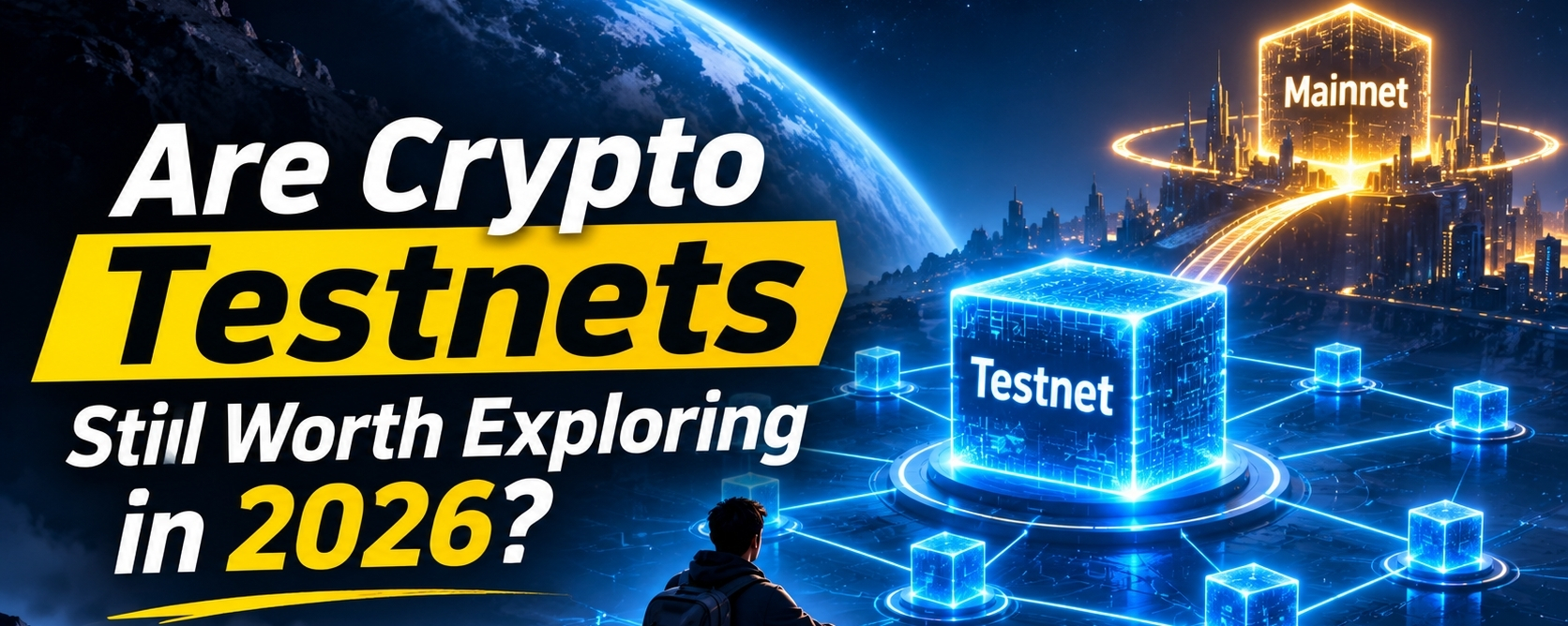
Are Crypto Testnets Still Worth Exploring in 2026? Here's What You Should KnowThe Web3 ecosystem continues to evolve, with new blockchain networks and decentralized applications being developed.
One activity that attracts considerable attention from crypto enthusiasts is exploring testnets.
Some people participate to learn about new technology, while others are interested in contributing feedback or discovering potential community rewards.
But what exactly makes testnets important?
Let's take a closer look.
1. What Is a Blockchain Testnet?
A testnet is a testing environment designed to help developers experiment with blockchain functionality before or alongside mainnet development.
It allows participants to test transactions, smart contracts, applications, and network features without using actual mainnet assets.
Think of it as a testing environment where developers can identify problems and improve their technology.
2. Why Do Blockchain Projects Need Testnets?
Testnets serve several important purposes.
Testing network functionality
Developers can check whether transactions and network features behave as expected.
Identifying bugs
Testing helps uncover technical problems before they affect real users.
Testing decentralized applications
Wallet integrations, smart contracts, bridges, and other applications can be evaluated.
Collecting community feedback
Participants can share their experiences and report issues that developers might otherwise overlook.
3. Why Do People Participate in Testnets?
Different participants have different motivations.
Some want to:
- Explore new blockchain ecosystems.
- Learn how decentralized applications work.
- Understand emerging technologies.
- Provide useful feedback.
- Gain practical experience with Web3 applications.
- Participate in community activities.
Some projects also introduce points, badges, or reward campaigns.
However, participating in a testnet does not guarantee an airdrop or financial reward.
4. How Can You Evaluate a Testnet Project?
Before spending time exploring a project, consider these questions:
Is the project solving a real problem?
Look for a clear explanation of what the technology is designed to accomplish.
Does it have technical documentation?
Good documentation helps users understand the network and its functionality.
Are the testnet activities meaningful?
Testing actual features can be more valuable than repeatedly completing meaningless tasks.
Is the team communicating development progress?
Look for verifiable announcements, documentation, and development updates.
Does the project explain its risks?
Understand what you are interacting with and never share your private keys or recovery phrase.
5. Are All Testnets Worth Your Time?
Not necessarily.
Some projects offer meaningful opportunities to explore technology and contribute feedback.
Others may have limited functionality or unclear development goals.
Instead of joining every available testnet, it makes sense to evaluate projects based on their technology, documentation, development activity, and transparency.
6. My Perspective
I think the most interesting part of testnet participation is the opportunity to explore blockchain technology before it reaches a wider audience.
You can discover how different networks work, experiment with decentralized applications, and understand the challenges developers face.
Potential rewards might attract attention, but they should never be the only reason to explore a project.
Learning and contributing meaningful feedback can be valuable in their own right.
Final Thoughts
Testnets play an important role in blockchain development.
They create an environment where developers and communities can experiment, identify problems, and improve applications.
As Web3 continues to evolve, understanding how testnets work can help us become more informed participants in the ecosystem.
Question for the community:
Are you currently exploring any blockchain testnets?
What interests you most: learning new technology, testing applications, contributing feedback, or community rewards?
Share your thoughts below!
#Web3 #testnet #blockchain #CryptoEducation
Are Crypto Testnets Still Worth Exploring in 2026? Here's What You Should Know
The Web3 ecosystem continues to evolve, with new blockchain networks and decentralized applications being developed.
One activity that attracts considerable attention from crypto enthusiasts is exploring testnets.
Some people participate to learn about new technology, while others are interested in contributing feedback or discovering potential community rewards.
But what exactly makes testnets important?
Let's take a closer look.
1. What Is a Blockchain Testnet?
A testnet is a testing environment designed to help developers experiment with blockchain functionality before or alongside mainnet development.
It allows participants to test transactions, smart contracts, applications, and network features without using actual mainnet assets.
Think of it as a testing environment where developers can identify problems and improve their technology.
2. Why Do Blockchain Projects Need Testnets?
Testnets serve several important purposes.
Testing network functionality
Developers can check whether transactions and network features behave as expected.
Identifying bugs
Testing helps uncover technical problems before they affect real users.
Testing decentralized applications
Wallet integrations, smart contracts, bridges, and other applications can be evaluated.
Collecting community feedback
Participants can share their experiences and report issues that developers might otherwise overlook.
3. Why Do People Participate in Testnets?
Different participants have different motivations.
Some want to:
- Explore new blockchain ecosystems.
- Learn how decentralized applications work.
- Understand emerging technologies.
- Provide useful feedback.
- Gain practical experience with Web3 applications.
- Participate in community activities.
Some projects also introduce points, badges, or reward campaigns.
However, participating in a testnet does not guarantee an airdrop or financial reward.
4. How Can You Evaluate a Testnet Project?
Before spending time exploring a project, consider these questions:
Is the project solving a real problem?
Look for a clear explanation of what the technology is designed to accomplish.
Does it have technical documentation?
Good documentation helps users understand the network and its functionality.
Are the testnet activities meaningful?
Testing actual features can be more valuable than repeatedly completing meaningless tasks.
Is the team communicating development progress?
Look for verifiable announcements, documentation, and development updates.
Does the project explain its risks?
Understand what you are interacting with and never share your private keys or recovery phrase.
5. Are All Testnets Worth Your Time?
Not necessarily.
Some projects offer meaningful opportunities to explore technology and contribute feedback.
Others may have limited functionality or unclear development goals.
Instead of joining every available testnet, it makes sense to evaluate projects based on their technology, documentation, development activity, and transparency.
6. My Perspective
I think the most interesting part of testnet participation is the opportunity to explore blockchain technology before it reaches a wider audience.
You can discover how different networks work, experiment with decentralized applications, and understand the challenges developers face.
Potential rewards might attract attention, but they should never be the only reason to explore a project.
Learning and contributing meaningful feedback can be valuable in their own right.
Final Thoughts
Testnets play an important role in blockchain development.
They create an environment where developers and communities can experiment, identify problems, and improve applications.
As Web3 continues to evolve, understanding how testnets work can help us become more informed participants in the ecosystem.
Question for the community:
Are you currently exploring any blockchain testnets?
What interests you most: learning new technology, testing applications, contributing feedback, or community rewards?
Share your thoughts below!
#Web3 #testnet #blockchain #CryptoEducation
34
Übersetzung ansehen
🧠 CRYPTO KNOWLEDGE CHALLENGE!
Let's see how well you understand blockchain technology.
What is the PRIMARY purpose of a blockchain testnet?
A) To trade real cryptocurrencies.
B) To test blockchain features and applications in a testing environment.
C) To guarantee free tokens and future airdrops.
D) To replace the mainnet permanently.
🤔 What's your answer?
Drop A, B, C, or D in the comments!
Let's see how many people get it right. 👇
#CryptoQuiz #blockchain #testnet
46
Artikel
Übersetzung ansehen
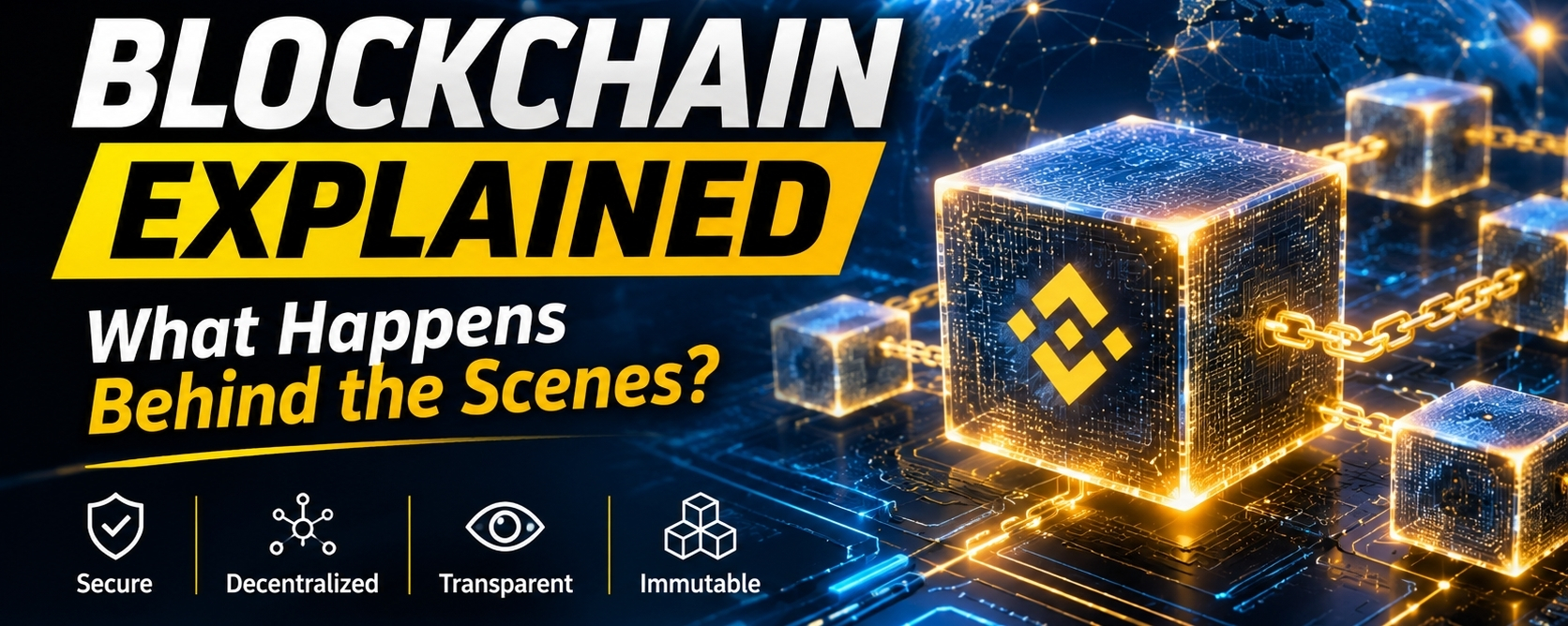
Blockchain Explained: What Actually Happens Behind the Scenes?We hear the word "blockchain" almost everywhere in crypto.
But have you ever wondered what actually happens when someone sends cryptocurrency or when a new transaction gets recorded?
Let's break down the technology behind it in simple terms.
1. What Exactly Is Blockchain?
A blockchain is a type of digital ledger that records information in groups called blocks.
These blocks are connected using cryptographic techniques, creating a chain of records.
Unlike a traditional database controlled by one organization, many public blockchain networks distribute copies of their ledger across independent computers called nodes.
This allows network participants to maintain and verify a shared record.
2. How Does a Blockchain Transaction Work?
Imagine sending cryptocurrency to another wallet.
Here is a simplified explanation of what happens:
Step 1: Transaction Creation
The sender creates a transaction using their wallet.
Step 2: Transaction Verification
The network checks whether the transaction follows its rules, including whether the sender is authorized to make it.
Step 3: Network Agreement
The network uses a consensus mechanism to determine which transactions can be included in the next block.
Step 4: Block Creation
Valid transactions are grouped into a block.
Step 5: Blockchain Update
The new block is linked to the existing chain, and participating nodes update their records.
The exact process differs between blockchain networks.
3. Why Are Blocks Connected?
Each block contains information that cryptographically links it to the previous block.
This creates a chain of records.
If someone attempts to modify historical information, the cryptographic links no longer match.
That makes unauthorized changes detectable and, depending on the network's consensus design, extremely difficult to carry out successfully.
4. What Makes Blockchain Interesting?
There are several important characteristics:
Transparency: Public blockchain transactions can generally be inspected by anyone.
Decentralization: Many networks distribute recordkeeping across independent participants.
Security: Cryptographic mechanisms help verify transactions and protect records.
Traceability: Historical transactions can be followed through the ledger.
However, these properties vary depending on the network's design.
5. Where Is Blockchain Used?
Blockchain technology is being explored in several areas:
- Cryptocurrency and digital payments.
- Decentralized finance.
- Supply chain tracking.
- Digital identity systems.
- Tokenization of assets.
- Decentralized applications.
It is not limited to cryptocurrency.
6. Does Blockchain Have Limitations?
Yes.
Blockchain networks can face challenges involving:
- Transaction speed.
- Network fees.
- Scalability.
- Privacy.
- Energy consumption.
- Technical complexity.
Not every application needs a blockchain. Sometimes a traditional database is more efficient.
Final Thoughts
Blockchain is more than a technology behind cryptocurrencies.
It introduces a different way of maintaining shared digital records and coordinating participants without necessarily relying on one central authority.
Understanding the technology is an important step toward understanding the broader Web3 ecosystem.
Let's discuss:
What do you think is the most promising real-world use of blockchain technology outside cryptocurrency?
#blockchain #cryptoeducation #Web3 #Technology
Blockchain Explained: What Actually Happens Behind the Scenes?
We hear the word "blockchain" almost everywhere in crypto.
But have you ever wondered what actually happens when someone sends cryptocurrency or when a new transaction gets recorded?
Let's break down the technology behind it in simple terms.
1. What Exactly Is Blockchain?
A blockchain is a type of digital ledger that records information in groups called blocks.
These blocks are connected using cryptographic techniques, creating a chain of records.
Unlike a traditional database controlled by one organization, many public blockchain networks distribute copies of their ledger across independent computers called nodes.
This allows network participants to maintain and verify a shared record.
2. How Does a Blockchain Transaction Work?
Imagine sending cryptocurrency to another wallet.
Here is a simplified explanation of what happens:
Step 1: Transaction Creation
The sender creates a transaction using their wallet.
Step 2: Transaction Verification
The network checks whether the transaction follows its rules, including whether the sender is authorized to make it.
Step 3: Network Agreement
The network uses a consensus mechanism to determine which transactions can be included in the next block.
Step 4: Block Creation
Valid transactions are grouped into a block.
Step 5: Blockchain Update
The new block is linked to the existing chain, and participating nodes update their records.
The exact process differs between blockchain networks.
3. Why Are Blocks Connected?
Each block contains information that cryptographically links it to the previous block.
This creates a chain of records.
If someone attempts to modify historical information, the cryptographic links no longer match.
That makes unauthorized changes detectable and, depending on the network's consensus design, extremely difficult to carry out successfully.
4. What Makes Blockchain Interesting?
There are several important characteristics:
Transparency: Public blockchain transactions can generally be inspected by anyone.
Decentralization: Many networks distribute recordkeeping across independent participants.
Security: Cryptographic mechanisms help verify transactions and protect records.
Traceability: Historical transactions can be followed through the ledger.
However, these properties vary depending on the network's design.
5. Where Is Blockchain Used?
Blockchain technology is being explored in several areas:
- Cryptocurrency and digital payments.
- Decentralized finance.
- Supply chain tracking.
- Digital identity systems.
- Tokenization of assets.
- Decentralized applications.
It is not limited to cryptocurrency.
6. Does Blockchain Have Limitations?
Yes.
Blockchain networks can face challenges involving:
- Transaction speed.
- Network fees.
- Scalability.
- Privacy.
- Energy consumption.
- Technical complexity.
Not every application needs a blockchain. Sometimes a traditional database is more efficient.
Final Thoughts
Blockchain is more than a technology behind cryptocurrencies.
It introduces a different way of maintaining shared digital records and coordinating participants without necessarily relying on one central authority.
Understanding the technology is an important step toward understanding the broader Web3 ecosystem.
Let's discuss:
What do you think is the most promising real-world use of blockchain technology outside cryptocurrency?
#blockchain #cryptoeducation #Web3 #Technology
73
Übersetzung ansehen
🚀 WHICH CRYPTO SECTOR HAS THE BIGGEST FUTURE?
The crypto ecosystem is growing beyond just buying and selling digital assets.
We're seeing innovation across multiple sectors:
🔸 Bitcoin & Digital Assets
🔸 DeFi
🔸 AI & Blockchain
🔸 Layer 2 Solutions
🔸 Real-World Asset Tokenization
🔸 Web3 & Decentralized Applications
Every sector has something interesting to offer, but which one do you think will have the biggest impact on the future of crypto?
I'm curious to hear your opinions. 👇
#crypto #blockchain #Web3
68
Anmelden und weiter Inhalte entdecken
Krypto-Nutzer weltweit auf Binance Square kennenlernen
⚡️ Bleib in Sachen Krypto stets am Puls.
💬 Die weltgrößte Kryptobörse vertraut darauf.
👍 Erhalte verlässliche Einblicke von verifizierten Creators.
E-Mail-Adresse/Telefonnummer
Trendthemen
BinanceIncidentReport
18,487 Aufrufe
424 Kommentare
Sicherheitsvorfall bei Binance vom 29. Oktober 2026: Erste Erkenntnisse und aktuelles Update zu den Maßnahmen
Binance Blog
·230 Likes
·626.9k Aufrufe
BinanceReopensWithdrawalsForMoreAssets
120,391 Aufrufe
1,662 Kommentare
BinanceHourlyDepositsExceedWithdrawals
57,978 Aufrufe
751 Kommentare