
#base
base
896,753 views
3,666 Discussing
Hot
Latest

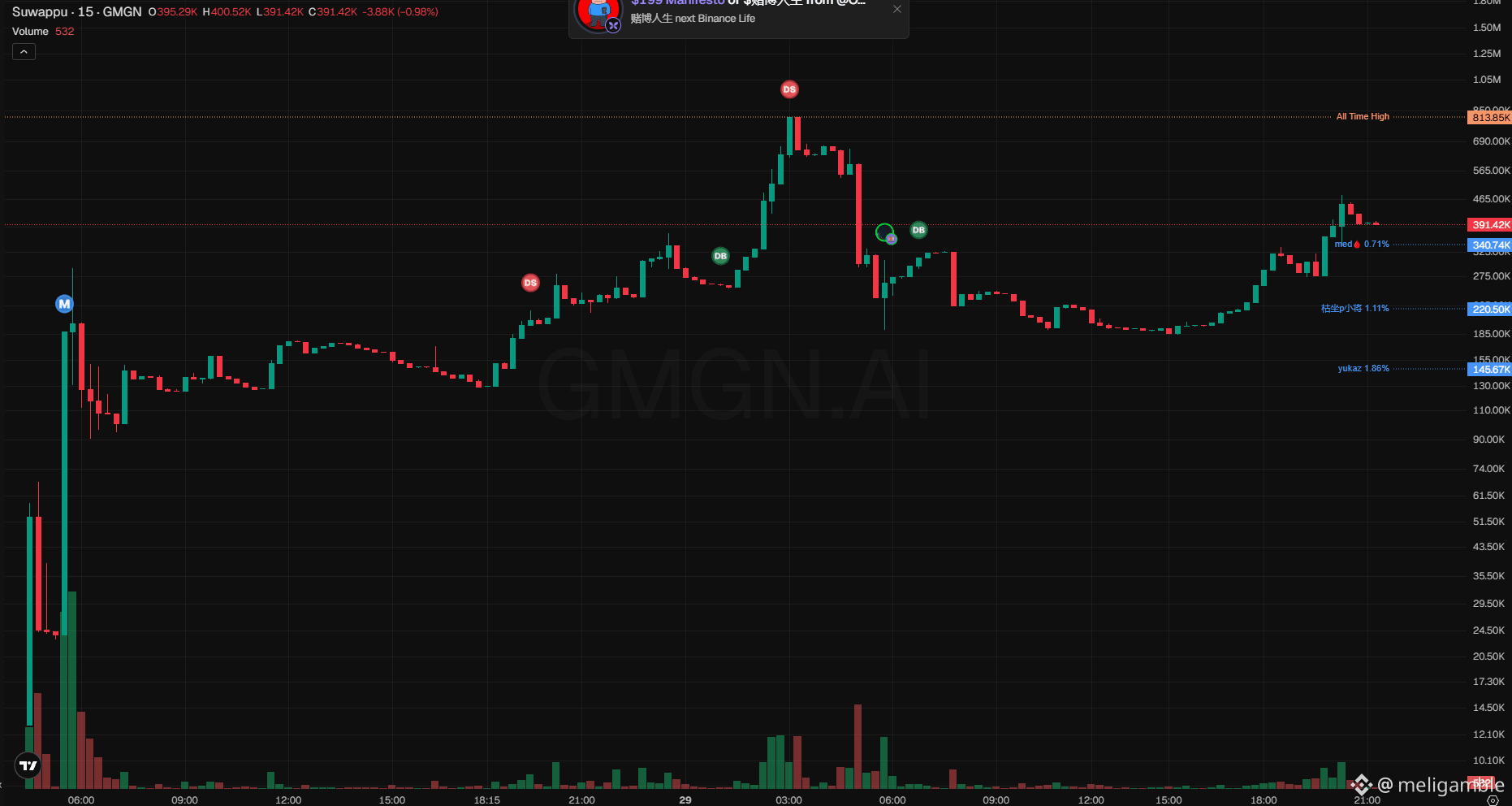
🟦 $Suwappu - #BASE play
0x26d58ce71ace3a79346c43ede802ff8f4fe55ba3
mcap: $396K
swap bot built for base chain that lets you trade directly through telegram without opening a browser or dex interface. bankr deployment with zero visual branding or official socials outside the handle, just raw utility with extremely concentrated holder distribution. dyor.
X : https://x.com/suwappubot
https://gmgn.ai/base/token/0x26d58ce71ace3a79346c43ede802ff8f4fe55ba3
https://t.me/GMGN_base_bot?start=0x26d58ce71ace3a79346c43ede802ff8f4fe55ba3
0x26d58ce71ace3a79346c43ede802ff8f4fe55ba3
mcap: $396K
swap bot built for base chain that lets you trade directly through telegram without opening a browser or dex interface. bankr deployment with zero visual branding or official socials outside the handle, just raw utility with extremely concentrated holder distribution. dyor.
X : https://x.com/suwappubot
https://gmgn.ai/base/token/0x26d58ce71ace3a79346c43ede802ff8f4fe55ba3
https://t.me/GMGN_base_bot?start=0x26d58ce71ace3a79346c43ede802ff8f4fe55ba3
🟦 $Baselife - #BASE play
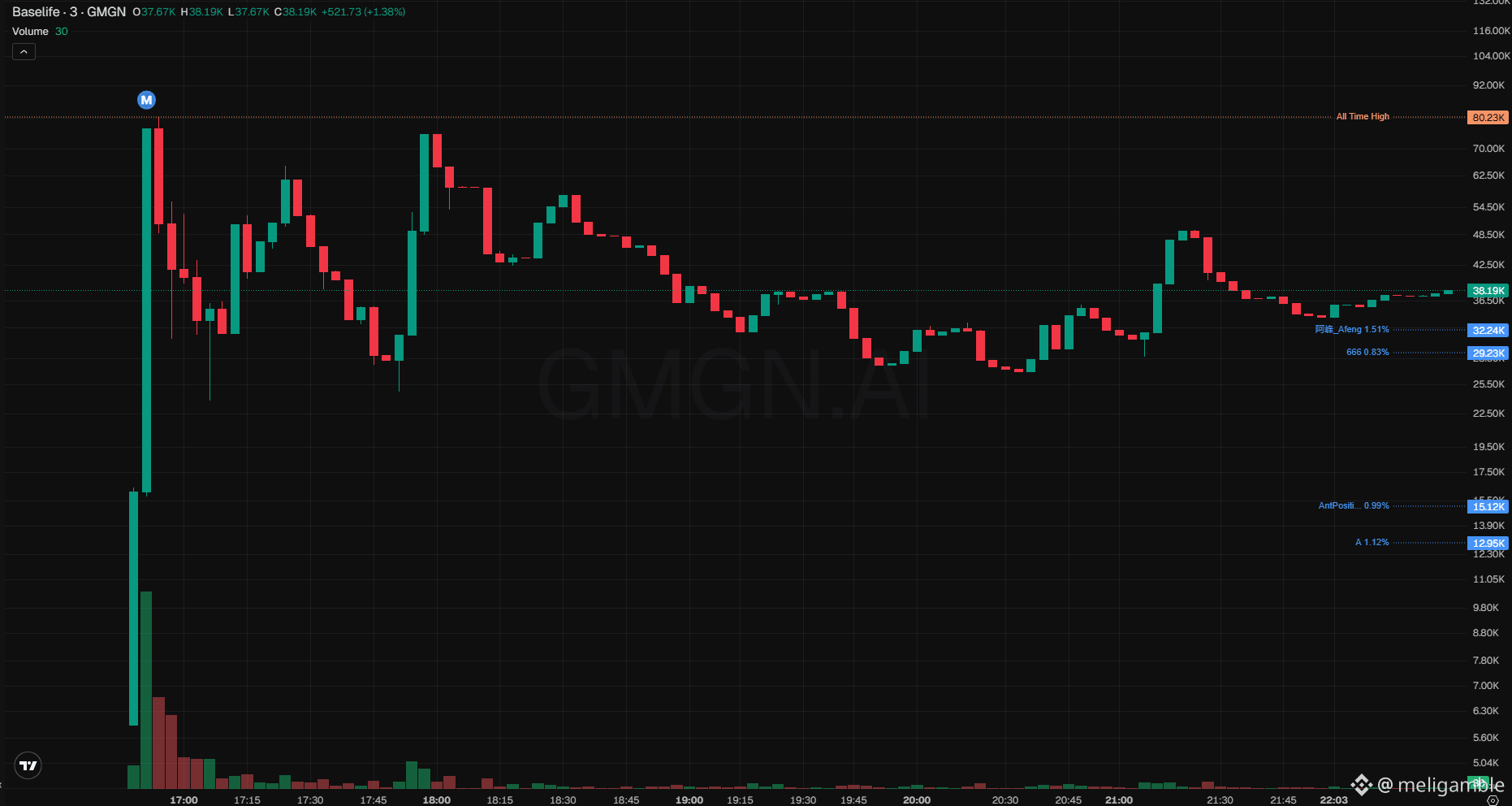
0xb20000000000000000000093ffca4c524a804901
mcap: $38K
not much floating around yet, but here's what's clear: base chain's official twitter dropped "my life is base" and someone immediately wrapped it into a token with clean blue text branding, riding the exact moment that tweet hit timelines. classic official-account-says-thing-becomes-coin play anchored to that specific post. dyor.
X : https://x.com/base/status/2092912025009607073
https://gmgn.ai/base/token/0xb20000000000000000000093ffca4c524a804901
https://t.me/GMGN_base_bot?start=0xb20000000000000000000093ffca4c524a804901
0xb20000000000000000000093ffca4c524a804901
mcap: $38K
not much floating around yet, but here's what's clear: base chain's official twitter dropped "my life is base" and someone immediately wrapped it into a token with clean blue text branding, riding the exact moment that tweet hit timelines. classic official-account-says-thing-becomes-coin play anchored to that specific post. dyor.
X : https://x.com/base/status/2092912025009607073
https://gmgn.ai/base/token/0xb20000000000000000000093ffca4c524a804901
https://t.me/GMGN_base_bot?start=0xb20000000000000000000093ffca4c524a804901

Moonwell investigates lending flaw on Base, damage about $8.7 million
• Moonwell is investigating an incident in the lending market within the Base ecosystem.
• Security firms CertiK and PeckShield estimate total losses of about $8.7 million.
• The attacker manipulated the price of the MAMO token’s collateral to siphon funds.
• The incident is currently being verified; there is no final official announcement yet from Moonwell in the RSS description.
#BinanceSquare #CryptoNews #Base #DeFi #Moonwell
$btc $eth
vlikevn Titanbot
Source: The Block
• Moonwell is investigating an incident in the lending market within the Base ecosystem.
• Security firms CertiK and PeckShield estimate total losses of about $8.7 million.
• The attacker manipulated the price of the MAMO token’s collateral to siphon funds.
• The incident is currently being verified; there is no final official announcement yet from Moonwell in the RSS description.
#BinanceSquare #CryptoNews #Base #DeFi #Moonwell
$btc $eth
vlikevn Titanbot
Source: The Block

After the Moonwell Attack, the Base Core Markets Suspend New Borrowing
After the price manipulation attack on Moonwell’s MAMO market on Base, Moonwell has reduced the borrowing limits of all core markets to 1 wei, effectively preventing any new borrowing. CertiK and PeckShield estimate losses of about $8.7 million: the attacker inflated the prices of thinner-liquidity MAMO, then borrowed real assets such as cbBTC using overvalued collateral.
This incident affects not only MAMO holders. Even if the collateral is a different asset, users currently cannot open new borrowings in these core markets.
The issue is therefore more specific: a lending protocol adds a new type of collateral—not just supporting one more asset, but also bringing its liquidity and pricing risks into the entire market.
Moonwell is still investigating, and the final losses and remediation plan are not yet clear.
#Base #DeFi #Safety
After the price manipulation attack on Moonwell’s MAMO market on Base, Moonwell has reduced the borrowing limits of all core markets to 1 wei, effectively preventing any new borrowing. CertiK and PeckShield estimate losses of about $8.7 million: the attacker inflated the prices of thinner-liquidity MAMO, then borrowed real assets such as cbBTC using overvalued collateral.
This incident affects not only MAMO holders. Even if the collateral is a different asset, users currently cannot open new borrowings in these core markets.
The issue is therefore more specific: a lending protocol adds a new type of collateral—not just supporting one more asset, but also bringing its liquidity and pricing risks into the entire market.
Moonwell is still investigating, and the final losses and remediation plan are not yet clear.
#Base #DeFi #Safety

【Dingshi Think Tank Quantitative Research Report】Base chain veAERO governance flywheel and a comprehensive look at tokenized assets in US stocks. Instant Voting APR reaches 48.5% #ApexStone #Web3 #Base #veAERO #quantitative trading

Base is already clearly losing in its struggle against the Robinhood Chain.
The data is already showing signs:
@base chain’s DeFi TVL reaches $5.48 billion, while @RobinhoodApp Chain’s corresponding figure is $640 million—8.5 times higher for the former.
But even with such a huge TVL gap, RH Chain’s app revenue over the past 24 hours is $1.24 million, which is even ahead of Base’s less than $0.8 million.
At present, it seems that RH Chain’s capital efficiency is significantly better than Base’s—truly keeping capital circulating on-chain.
What’s terrifying is that this is still achieved against the backdrop of strong expectations for Base to issue more tokens.
#Base #Robinhood
The data is already showing signs:
@base chain’s DeFi TVL reaches $5.48 billion, while @RobinhoodApp Chain’s corresponding figure is $640 million—8.5 times higher for the former.
But even with such a huge TVL gap, RH Chain’s app revenue over the past 24 hours is $1.24 million, which is even ahead of Base’s less than $0.8 million.
At present, it seems that RH Chain’s capital efficiency is significantly better than Base’s—truly keeping capital circulating on-chain.
What’s terrifying is that this is still achieved against the backdrop of strong expectations for Base to issue more tokens.
#Base #Robinhood


🟦 $100 - #BASE play
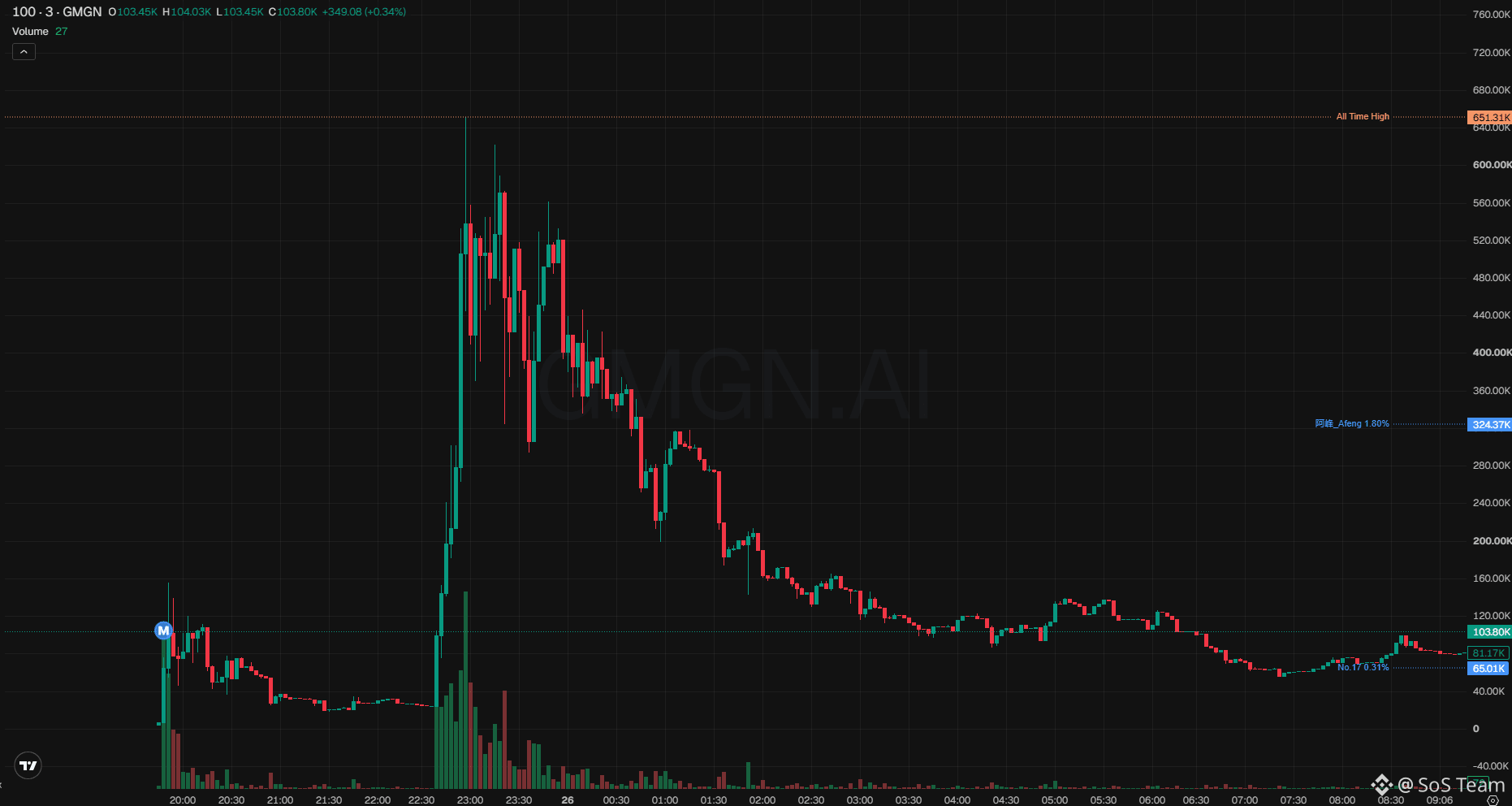
0xb200000000000000000000002d805fee3c74e001
mcap: $104K
base officially dropped a statement saying they started with just 100 usdc and a dream, now that exact phrase is a token riding the viral moment. classic meta play on the underdog bootstrap narrative that got kols talking. dyor.
https://gmgn.ai/base/token/0xb200000000000000000000002d805fee3c74e001
https://t.me/GMGN_base_bot?start=0xb200000000000000000000002d805fee3c74e001
0xb200000000000000000000002d805fee3c74e001
mcap: $104K
base officially dropped a statement saying they started with just 100 usdc and a dream, now that exact phrase is a token riding the viral moment. classic meta play on the underdog bootstrap narrative that got kols talking. dyor.
https://gmgn.ai/base/token/0xb200000000000000000000002d805fee3c74e001
https://t.me/GMGN_base_bot?start=0xb200000000000000000000002d805fee3c74e001
🟦 $POWERUSERS - #BASE gamble
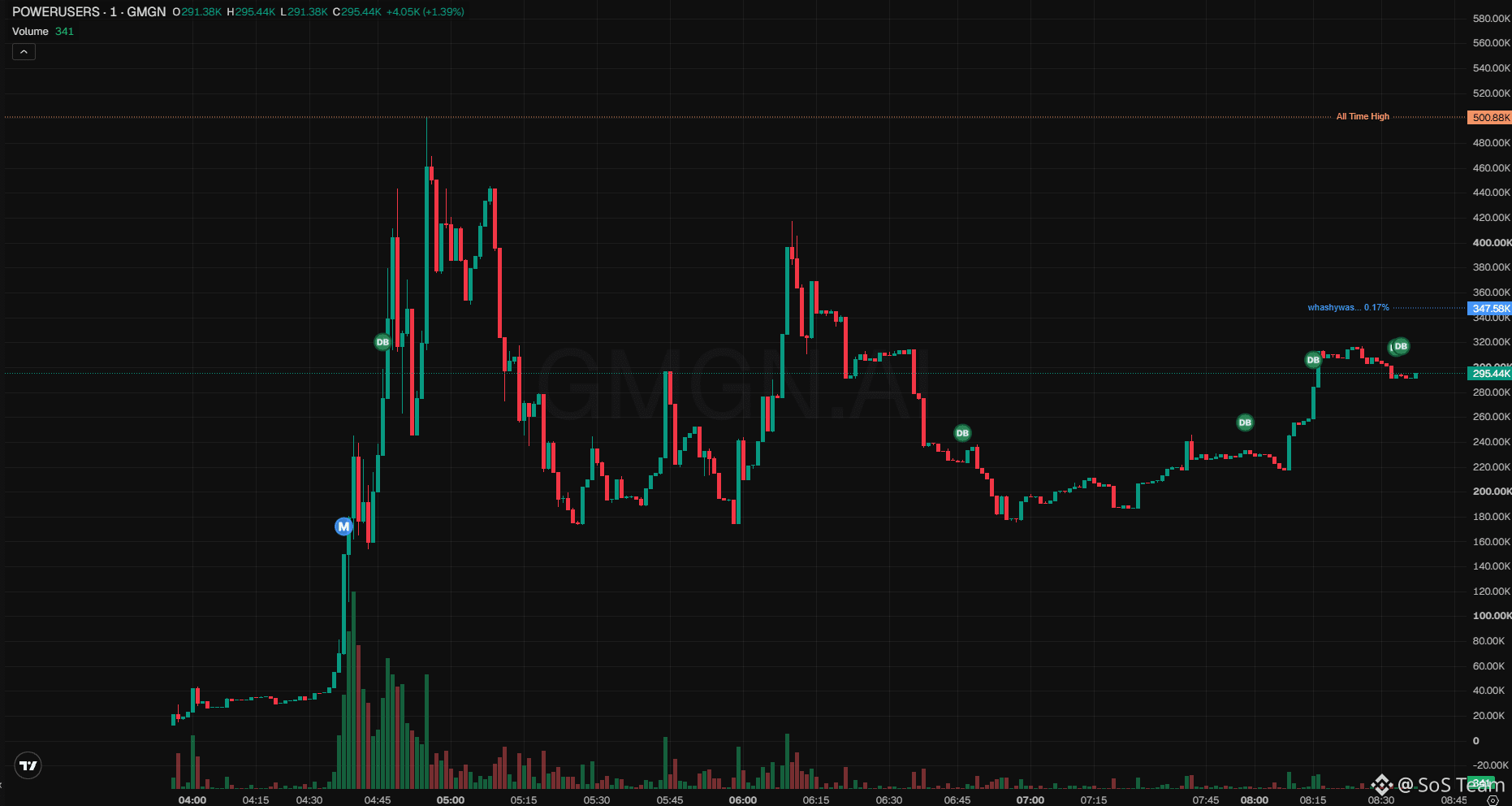
0x6b29611127ac72b0e401043f995520734f65aba3
mcap: $295K
powerusers on base , no verified origin story here, just a fresh ticker trading the "power user" concept that tech and crypto circles throw around for early adopters and insiders who actually know what they're doing. could be playing on that status flex, could be ironic, hard to say when there's no clear founding moment yet. dyor.
https://gmgn.ai/base/token/0x6b29611127ac72b0e401043f995520734f65aba3
https://t.me/GMGN_base_bot?start=0x6b29611127ac72b0e401043f995520734f65aba3
0x6b29611127ac72b0e401043f995520734f65aba3
mcap: $295K
powerusers on base , no verified origin story here, just a fresh ticker trading the "power user" concept that tech and crypto circles throw around for early adopters and insiders who actually know what they're doing. could be playing on that status flex, could be ironic, hard to say when there's no clear founding moment yet. dyor.
https://gmgn.ai/base/token/0x6b29611127ac72b0e401043f995520734f65aba3
https://t.me/GMGN_base_bot?start=0x6b29611127ac72b0e401043f995520734f65aba3

Coinbase is bringing big tech (Nvidia, Apple) onchain via Base! 🚀 While tokenizing real-world assets (RWAs) is a huge step forward, it introduces a unique DeFi risk.
Traditional markets close, but crypto is 24/7. Since Chainlink’s price feeds for these stocks run 24/5, weekend trading pauses could trigger oracle lag and liquidation risks for collateralized DeFi positions.
Will RWAs safely bridge the gap, or create new vulnerabilities?
#RWA #DeFi #Base
Traditional markets close, but crypto is 24/7. Since Chainlink’s price feeds for these stocks run 24/5, weekend trading pauses could trigger oracle lag and liquidation risks for collateralized DeFi positions.
Will RWAs safely bridge the gap, or create new vulnerabilities?
#RWA #DeFi #Base

Coinbase Selects Chainlink to Power Tokenized Stocks on Base
#coinbase #Chainlink #Base #LINK $LINK
Read Here: https://altcoinsanalysis.com/coinbase-selects-chainlink-to-power-tokenized-stocks-on-base/
#coinbase #Chainlink #Base #LINK $LINK
Read Here: https://altcoinsanalysis.com/coinbase-selects-chainlink-to-power-tokenized-stocks-on-base/


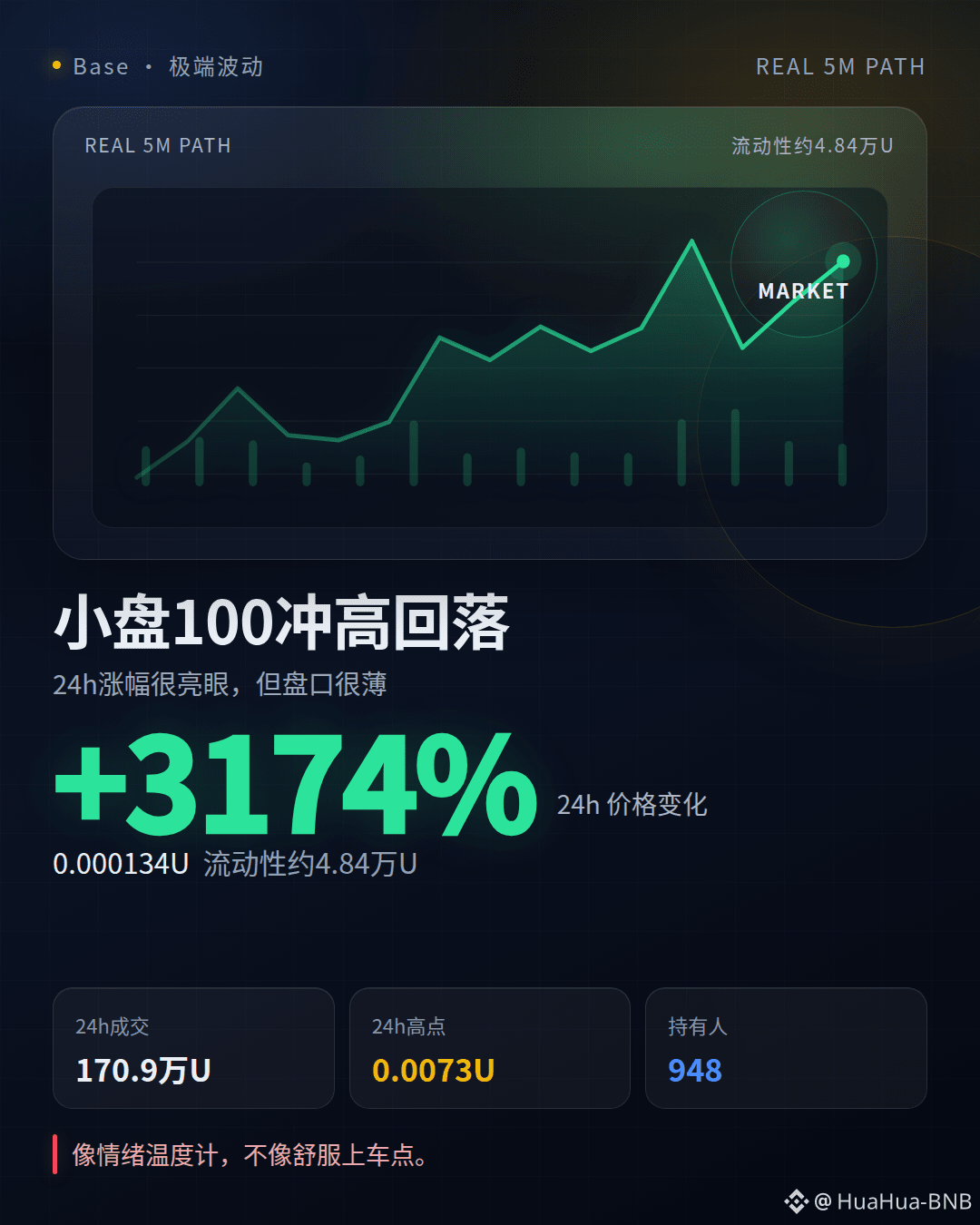
The Base chart is a bit insane with this 100—don’t just look at the 24h increase.
On-chain data right now: 24h is about +3174%, with about 1.709 million U in volume; but the current price is 0.000134 U. The 24h high briefly hit 0.0073 U, which means there was already an extremely wild spike-and-drop in between.
I’d rather treat it like a mood thermometer: Base small-cap memes can suddenly flare up, but the biggest issue with this kind of market isn’t that it rises slowly—it’s that when you notice it, you might already be past the most comfortable point.
Know the risks: liquidity is about 48.4k U, market cap about 134k U—one 5-minute candle can feel brutal. Feel free to watch, but don’t get carried away chasing the price.
$ETH #Base #Meme
On-chain data right now: 24h is about +3174%, with about 1.709 million U in volume; but the current price is 0.000134 U. The 24h high briefly hit 0.0073 U, which means there was already an extremely wild spike-and-drop in between.
I’d rather treat it like a mood thermometer: Base small-cap memes can suddenly flare up, but the biggest issue with this kind of market isn’t that it rises slowly—it’s that when you notice it, you might already be past the most comfortable point.
Know the risks: liquidity is about 48.4k U, market cap about 134k U—one 5-minute candle can feel brutal. Feel free to watch, but don’t get carried away chasing the price.
$ETH #Base #Meme
$AERO The ecosystem heat on the Base chain has recently attracted a fair amount of funding, and the short-term price action structure remains quite bullish.
As a core DEX project in the Base ecosystem, Aerodrome Finance has drawn in a large number of users and encouraged funds to accumulate by leveraging its liquidity incentive model. As the Base ecosystem continues to ferment, the DEX as infrastructure is naturally the first to benefit.
In the short term, $AERO ’s trend remains intact. If the Base ecosystem continues to surge, the leading project is likely to have further room for upside. It’s worth keeping a close watch on the development dynamics of the Base ecosystem.
#Base #DeFi #Altcoin
As a core DEX project in the Base ecosystem, Aerodrome Finance has drawn in a large number of users and encouraged funds to accumulate by leveraging its liquidity incentive model. As the Base ecosystem continues to ferment, the DEX as infrastructure is naturally the first to benefit.
In the short term, $AERO ’s trend remains intact. If the Base ecosystem continues to surge, the leading project is likely to have further room for upside. It’s worth keeping a close watch on the development dynamics of the Base ecosystem.
#Base #DeFi #Altcoin

Coinbase recently announced that it will launch tokenized U.S. stocks on the Base network, while integrating the AAVE protocol and the Aerodrome ecosystem. This will support collateralized lending in DeFi for U.S. stock assets such as $AAPL and $NVDA .
This move signals that traditional financial assets have officially entered the DeFi world of Layer 2 chains. It not only expands the boundaries of assets in the crypto realm, but also opens a new channel for traditional Wall Street capital to flow into DeFi. As Base is Coinbase’s “born-in-house” chain and has strong support from a large, compliant user base, could this combination become a new paradigm for on-chain assets in the future? It’s worth keeping an eye on.
$AAVE #Coinbase #Base
This move signals that traditional financial assets have officially entered the DeFi world of Layer 2 chains. It not only expands the boundaries of assets in the crypto realm, but also opens a new channel for traditional Wall Street capital to flow into DeFi. As Base is Coinbase’s “born-in-house” chain and has strong support from a large, compliant user base, could this combination become a new paradigm for on-chain assets in the future? It’s worth keeping an eye on.
$AAVE #Coinbase #Base

Coinbase has just announced a major strategic plan: tokenized U.S. stocks will be listed on Base, while integrating AAVE and Aerodrome, and supporting $AAPL and $NVDA as DeFi lending collateral.
This move looks far ahead: putting traditional U.S. stock assets on-chain on Base not only brings compliant traditional financial assets into the DeFi world, but also further solidifies Base’s role in Coinbase’s home ecosystem. When tech giant stock shares can be used directly as on-chain collateral for borrowing, the boundary between traditional finance and the crypto world blurs a bit more.
For the Base ecosystem, integrating AAVE means strengthening the lending infrastructure. Combined with Aerodrome’s liquidity support, the end-to-end on-chain flow of tokenized stocks is truly complete. Will more traditional assets enter the crypto world in this way in the future? It’s definitely worth watching.
#Base #DeFi #Coinbase
This move looks far ahead: putting traditional U.S. stock assets on-chain on Base not only brings compliant traditional financial assets into the DeFi world, but also further solidifies Base’s role in Coinbase’s home ecosystem. When tech giant stock shares can be used directly as on-chain collateral for borrowing, the boundary between traditional finance and the crypto world blurs a bit more.
For the Base ecosystem, integrating AAVE means strengthening the lending infrastructure. Combined with Aerodrome’s liquidity support, the end-to-end on-chain flow of tokenized stocks is truly complete. Will more traditional assets enter the crypto world in this way in the future? It’s definitely worth watching.
#Base #DeFi #Coinbase

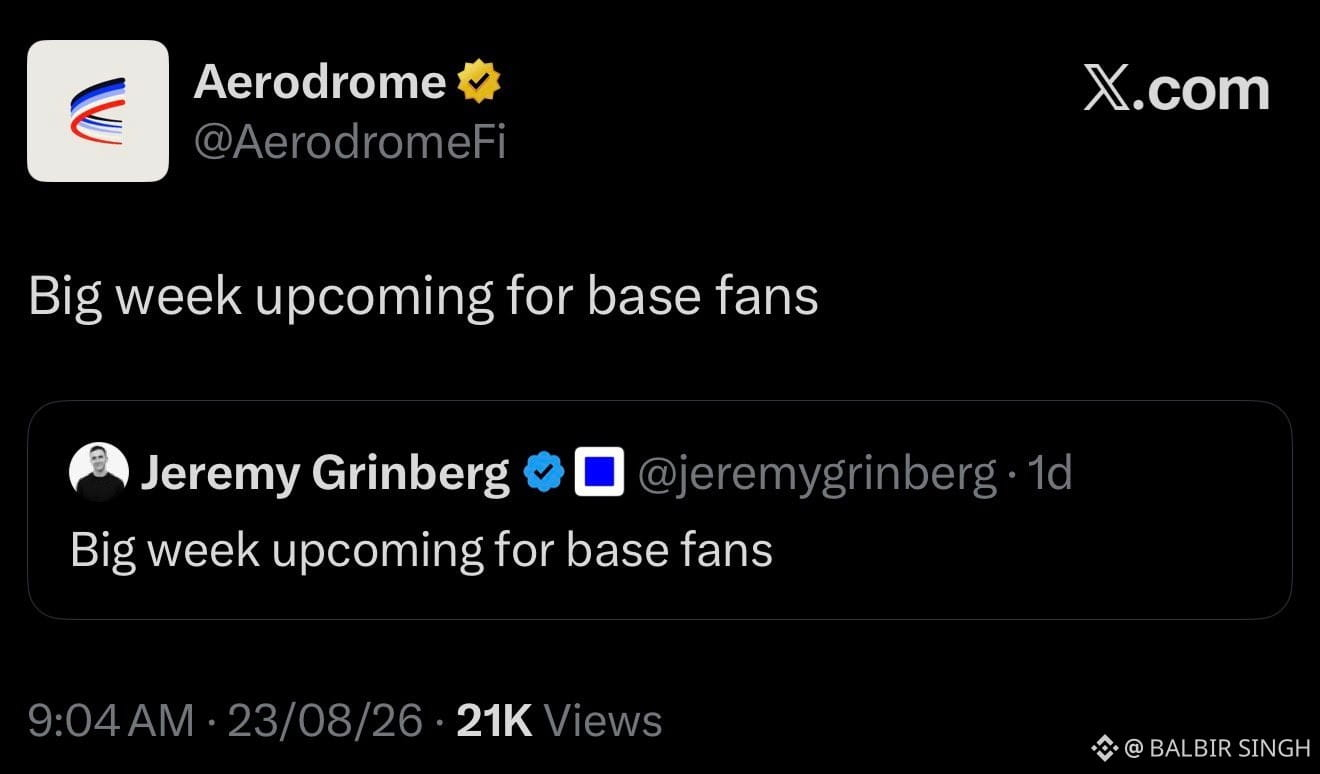
🚨 Base Airdrop & TGE: Is The Big Announcement Finally Coming? 👀
Base just dropped a mysterious post saying “Do you see it?” with a huge image showcasing the Base ecosystem. 🔵
And this is where things get interesting. 👀
🔹 Base Official Post: “Do you see it?”
🔹 Aerodrome: “Big week upcoming for Base fans”
🔹 The Base ecosystem image highlights builders, users, apps, communities, BaseLayer, BaseCamp, WAGMI and much more.
🔹 The community is now speculating about the long-awaited $BASE Airdrop & TGE.
🔹 Base has previously confirmed that they were working on Sybil detection, which could be an important step before revealing eligibility.
🔹 An Airdrop Checker could potentially be announced before the eligibility details.
After years of building, using the ecosystem, bridging, trading and contributing, could this finally be the week Base users have been waiting for? 🔥
But the clues are definitely getting interesting. 👀
Base users, stay ready. 🫡
Do you think the $BASE Airdrop & TGE announcement is coming this week #Base $BTC
Base just dropped a mysterious post saying “Do you see it?” with a huge image showcasing the Base ecosystem. 🔵
And this is where things get interesting. 👀
🔹 Base Official Post: “Do you see it?”
🔹 Aerodrome: “Big week upcoming for Base fans”
🔹 The Base ecosystem image highlights builders, users, apps, communities, BaseLayer, BaseCamp, WAGMI and much more.
🔹 The community is now speculating about the long-awaited $BASE Airdrop & TGE.
🔹 Base has previously confirmed that they were working on Sybil detection, which could be an important step before revealing eligibility.
🔹 An Airdrop Checker could potentially be announced before the eligibility details.
After years of building, using the ecosystem, bridging, trading and contributing, could this finally be the week Base users have been waiting for? 🔥
But the clues are definitely getting interesting. 👀
Base users, stay ready. 🫡
Do you think the $BASE Airdrop & TGE announcement is coming this week #Base $BTC

🚨 Base Airdrop & TGE: The Wait May Finally Be Over 👀
This could be a big week for Base fans.
There’s a possibility that we could finally get an official announcement regarding the Base Airdrop & TGE. 🔥
The Airdrop Checker could also be announced soon.
Why? The team has previously confirmed that they were working on Sybil detection, which could be an important step before revealing eligibility.
After such a long wait, could this finally be the week? 👀
Base users, stay ready. 🫡 #Base #Airdrop
This could be a big week for Base fans.
There’s a possibility that we could finally get an official announcement regarding the Base Airdrop & TGE. 🔥
The Airdrop Checker could also be announced soon.
Why? The team has previously confirmed that they were working on Sybil detection, which could be an important step before revealing eligibility.
After such a long wait, could this finally be the week? 👀
Base users, stay ready. 🫡 #Base #Airdrop

#Base
Official update from Base, applications for Base Batches 004 are now open and applications for the Fall 2026 cohort can be submitted until September 9. This is an accelerator program run in conjunction with the Base Ecosystem Fund, where early-stage builders will be helped towards product launch, fundraising and growth. Base's ecosystem development is now not limited to just infrastructure, builder support is also gaining importance.
Official update from Base, applications for Base Batches 004 are now open and applications for the Fall 2026 cohort can be submitted until September 9. This is an accelerator program run in conjunction with the Base Ecosystem Fund, where early-stage builders will be helped towards product launch, fundraising and growth. Base's ecosystem development is now not limited to just infrastructure, builder support is also gaining importance.
According to GMGN market data, the Base-chain Meme token Basecat has been performing remarkably well recently, with a 24-hour increase of 18.4%. Its current market cap has already risen to $34.88 million.
As a popular Meme project in the Base ecosystem, Basecat continues to attract traders’ attention within the ecosystem. This short-term surge once again reflects that market interest in the Base-chain Meme sector remains on the rise.
If you’re interested, you can check the latest market data via the link: https://gmgn.ai/base/token/0xb2000000000000000000004c27f6523082f41d01
#Base #Meme #Cryptocurrency
As a popular Meme project in the Base ecosystem, Basecat continues to attract traders’ attention within the ecosystem. This short-term surge once again reflects that market interest in the Base-chain Meme sector remains on the rise.
If you’re interested, you can check the latest market data via the link: https://gmgn.ai/base/token/0xb2000000000000000000004c27f6523082f41d01
#Base #Meme #Cryptocurrency
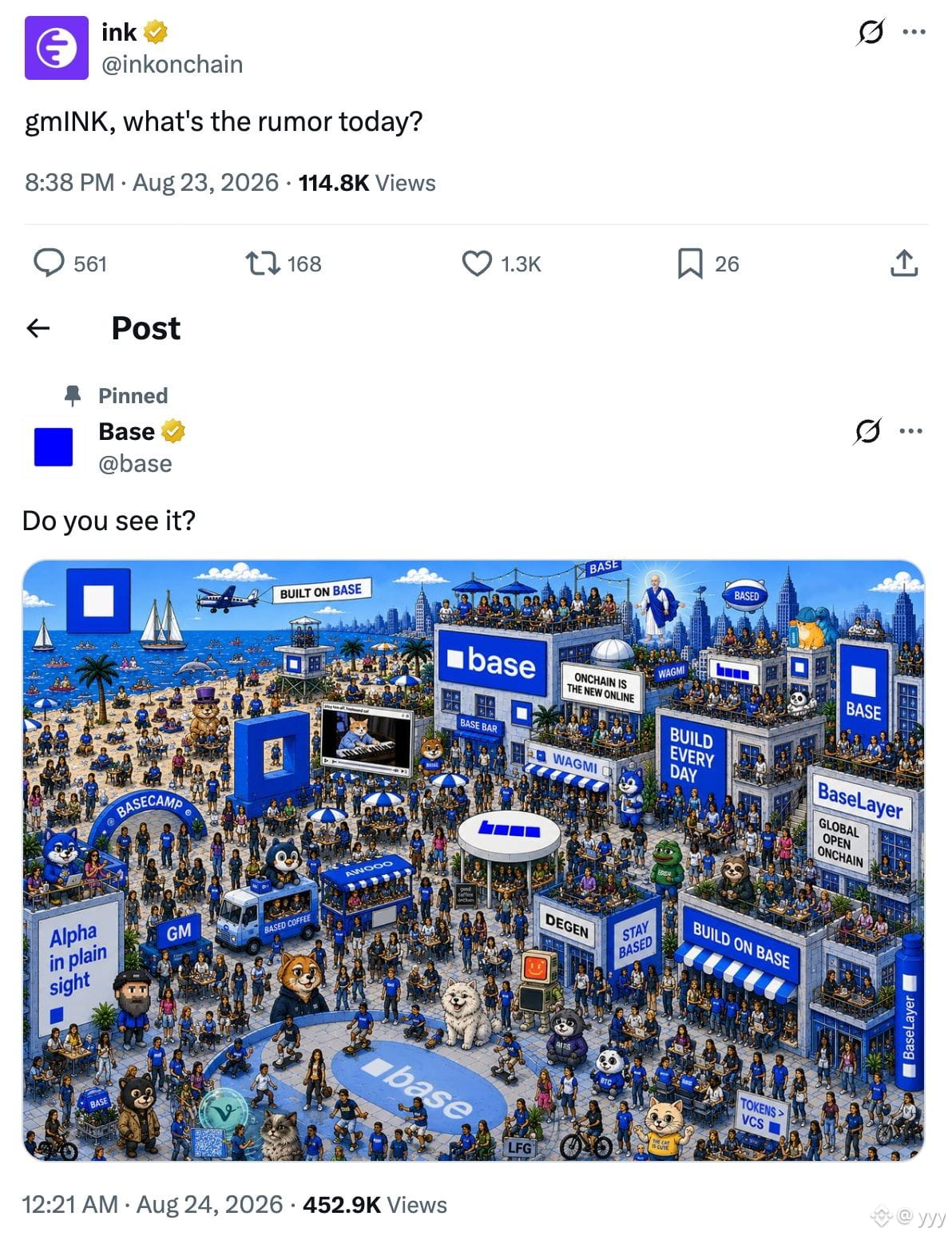
Yesterday Kraken’s L2 chain @inkonchain hinted at token distribution and scam-like engagement posts. They were quickly amplified by FOMO and reflected on-chain, yielding remarkable results;
Four hours later, Coinbase’s L2 chain @base couldn’t sit still and immediately followed up with a scam-like engagement post using the same recipe.
Another straightforward, no-frills business battle to make retail investors farm so hard they feel like dying.
#INK #Base
Four hours later, Coinbase’s L2 chain @base couldn’t sit still and immediately followed up with a scam-like engagement post using the same recipe.
Another straightforward, no-frills business battle to make retail investors farm so hard they feel like dying.
#INK #Base

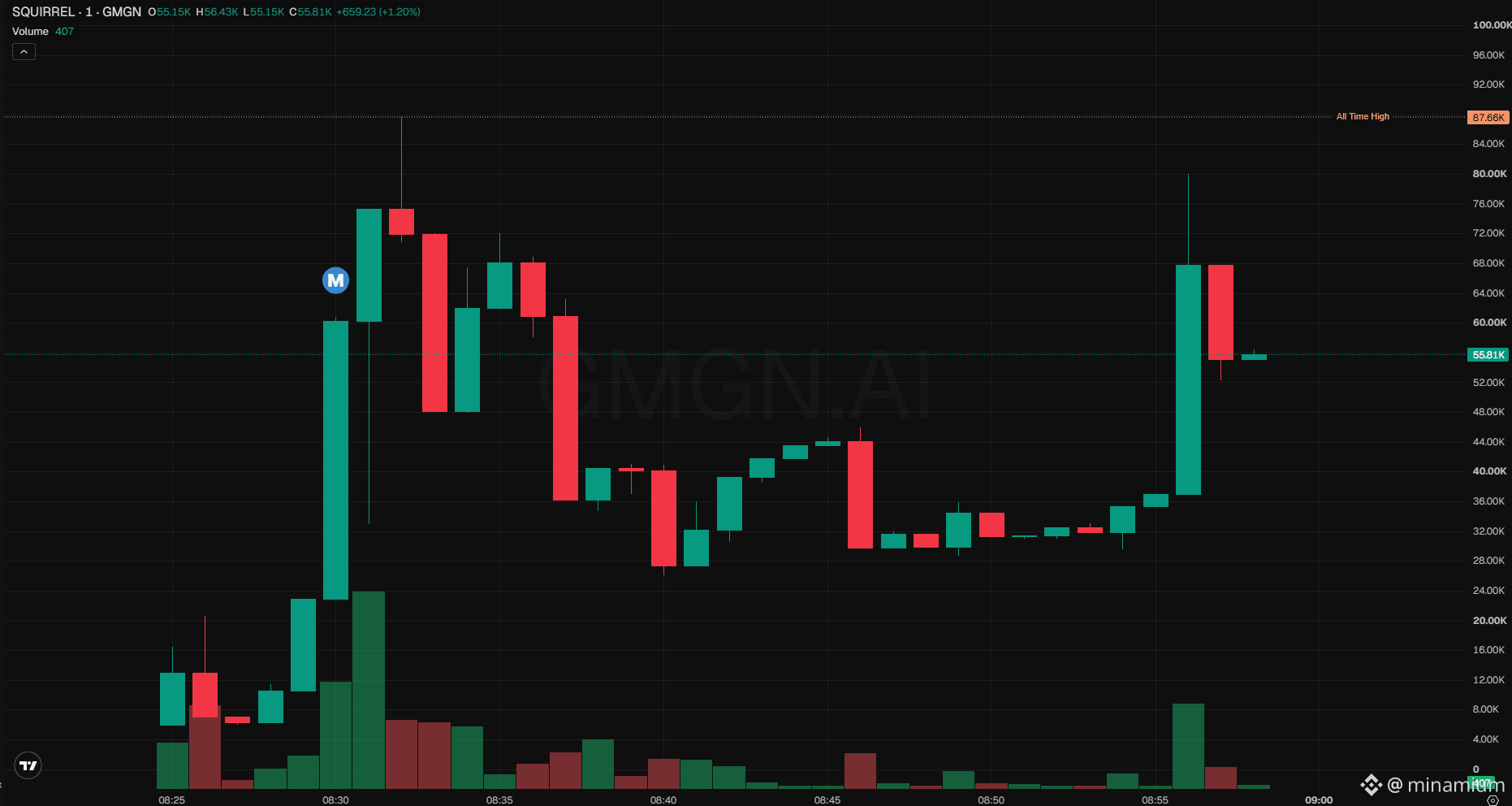
🟦 $SQUIRREL - #BASE gamble
0xb20000000000000000000070018f99c2943fc9fd
mcap: $53K
chat is piling into squirrelcoin, a base meme ticker built around the simple squirrel mascot concept, with no verified backstory or clear source meme attached yet. dyor
X : https://x.com/KriptoDuo/status/2091339924356182189
https://gmgn.ai/base/token/0xb20000000000000000000070018f99c2943fc9fd
https://t.me/GMGN_base_bot?start=0xb20000000000000000000070018f99c2943fc9fd
0xb20000000000000000000070018f99c2943fc9fd
mcap: $53K
chat is piling into squirrelcoin, a base meme ticker built around the simple squirrel mascot concept, with no verified backstory or clear source meme attached yet. dyor
X : https://x.com/KriptoDuo/status/2091339924356182189
https://gmgn.ai/base/token/0xb20000000000000000000070018f99c2943fc9fd
https://t.me/GMGN_base_bot?start=0xb20000000000000000000070018f99c2943fc9fd
Log in to explore more content