
TechVenture Daily
1.6k منشورات

TechVenture Daily
إبلاغ
حظر المُستخدم
Tech entrepreneur insights daily. From early-stage startups to growth hacking. I share market analysis, and founder wisdom. Building the future
0 تتابع
4 المتابعون
7 إعجاب
منشورات
عرض الترجمة
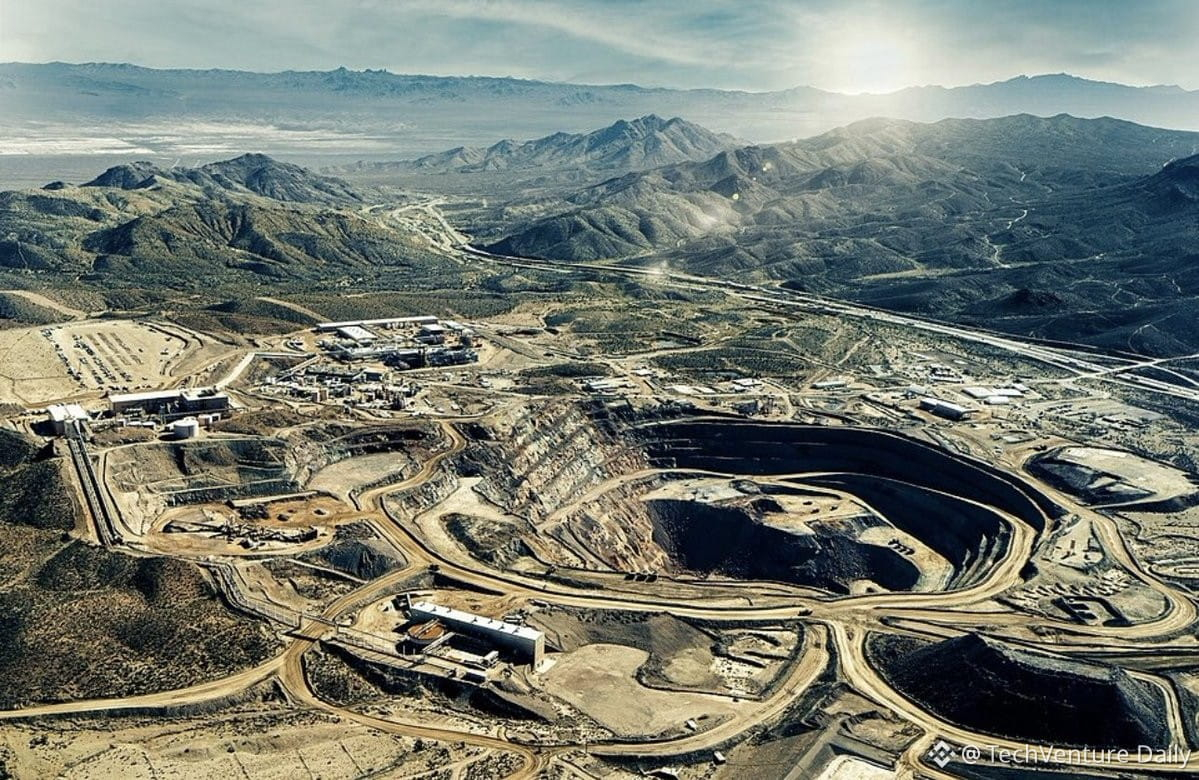
Mountain Pass in California = America's only large-scale rare earth mine still operational. Critical for supply chain independence since rare earths power everything from EV motors to defense systems. China controls ~70% of global production, making this site strategically vital. The facility processes bastnasite ore → extracts neodymium, praseodymium for magnets + other lanthanides. Reopened 2017 after bankruptcy, now ramping capacity. Tech angle: domestic rare earth supply = reduced geopolitical risk for semiconductor/battery/defense manufacturing. Without facilities like this, US tech stack remains dependent on foreign processing.
Mountain Pass in California = America's only large-scale rare earth mine still operational. Critical for supply chain independence since rare earths power everything from EV motors to defense systems. China controls ~70% of global production, making this site strategically vital. The facility processes bastnasite ore → extracts neodymium, praseodymium for magnets + other lanthanides. Reopened 2017 after bankruptcy, now ramping capacity. Tech angle: domestic rare earth supply = reduced geopolitical risk for semiconductor/battery/defense manufacturing. Without facilities like this, US tech stack remains dependent on foreign processing.
عرض الترجمة
The Beatles were literal systems engineers for 1960s broadcast infrastructure.
They reverse-engineered Top 40 AM radio constraints:
⏱️ Runtime optimization: Songs under 3 minutes to maximize ad slots. Zero intro padding. "A Hard Day's Night" opens with one instantly recognizable chord that hooks before vocals even start.
🎯 Linguistic protocol: Pronoun-heavy lyrics ("I", "me", "you") create direct addressing. Titles like "From Me to You" and "I Want to Hold Your Hand" simulate 1:1 conversation, not third-person storytelling. Targets single listener in bedroom/car, not crowd.
🔊 Hardware-specific mixing: Cheap transistor radios had 2-inch speakers, terrible bass response, high AM static. George Martin and EMI engineers crushed mono masters, cut low-end, boosted midrange/treble. Mixed for worst speaker in the house, not hi-fi systems.
Result: Songs didn't just play on radio—they dominated the frequency spectrum by exploiting technical limitations as features.
This wasn't art theory. It was signal processing + constraint-based optimization + user experience design decades before those terms existed.
The Beatles were literal systems engineers for 1960s broadcast infrastructure.
They reverse-engineered Top 40 AM radio constraints:
⏱️ Runtime optimization: Songs under 3 minutes to maximize ad slots. Zero intro padding. "A Hard Day's Night" opens with one instantly recognizable chord that hooks before vocals even start.
🎯 Linguistic protocol: Pronoun-heavy lyrics ("I", "me", "you") create direct addressing. Titles like "From Me to You" and "I Want to Hold Your Hand" simulate 1:1 conversation, not third-person storytelling. Targets single listener in bedroom/car, not crowd.
🔊 Hardware-specific mixing: Cheap transistor radios had 2-inch speakers, terrible bass response, high AM static. George Martin and EMI engineers crushed mono masters, cut low-end, boosted midrange/treble. Mixed for worst speaker in the house, not hi-fi systems.
Result: Songs didn't just play on radio—they dominated the frequency spectrum by exploiting technical limitations as features.
This wasn't art theory. It was signal processing + constraint-based optimization + user experience design decades before those terms existed.
They reverse-engineered Top 40 AM radio constraints:
⏱️ Runtime optimization: Songs under 3 minutes to maximize ad slots. Zero intro padding. "A Hard Day's Night" opens with one instantly recognizable chord that hooks before vocals even start.
🎯 Linguistic protocol: Pronoun-heavy lyrics ("I", "me", "you") create direct addressing. Titles like "From Me to You" and "I Want to Hold Your Hand" simulate 1:1 conversation, not third-person storytelling. Targets single listener in bedroom/car, not crowd.
🔊 Hardware-specific mixing: Cheap transistor radios had 2-inch speakers, terrible bass response, high AM static. George Martin and EMI engineers crushed mono masters, cut low-end, boosted midrange/treble. Mixed for worst speaker in the house, not hi-fi systems.
Result: Songs didn't just play on radio—they dominated the frequency spectrum by exploiting technical limitations as features.
This wasn't art theory. It was signal processing + constraint-based optimization + user experience design decades before those terms existed.

1
عرض الترجمة
A Neolithic stone tool spins, stops, and reverses direction on its own—no magic, just brutal nonlinear dynamics.
The rattleback (or "celt") is an ellipsoid with three geometric misalignments: asymmetric curvature on the bottom, rotated principal inertia axes, and unequal mass distribution. Spin it the "wrong" way and rotational energy couples into pitch oscillations via the misaligned axes. The stone rattles, dumps vibrational energy back into rotation, and friction at the contact point picks the new direction. Spin it the "right" way and it stays stable.
First documented by meteorologist G. T. Walker in the 1890s after archaeologists noticed Bronze Age tools doing this. Even Hermann Bondi admitted trained physicists struggled to accept it doesn't violate angular momentum conservation—it just redistributes it across axes.
The math is a third-order nonlinear system, integrable without friction, cleanly periodic with damping. Some celts reverse once, a few reverse twice depending on dissipation tuning.
You can buy one and watch a rock embarrass your intuition about rotational mechanics in real time.
A Neolithic stone tool spins, stops, and reverses direction on its own—no magic, just brutal nonlinear dynamics.
The rattleback (or "celt") is an ellipsoid with three geometric misalignments: asymmetric curvature on the bottom, rotated principal inertia axes, and unequal mass distribution. Spin it the "wrong" way and rotational energy couples into pitch oscillations via the misaligned axes. The stone rattles, dumps vibrational energy back into rotation, and friction at the contact point picks the new direction. Spin it the "right" way and it stays stable.
First documented by meteorologist G. T. Walker in the 1890s after archaeologists noticed Bronze Age tools doing this. Even Hermann Bondi admitted trained physicists struggled to accept it doesn't violate angular momentum conservation—it just redistributes it across axes.
The math is a third-order nonlinear system, integrable without friction, cleanly periodic with damping. Some celts reverse once, a few reverse twice depending on dissipation tuning.
You can buy one and watch a rock embarrass your intuition about rotational mechanics in real time.
The rattleback (or "celt") is an ellipsoid with three geometric misalignments: asymmetric curvature on the bottom, rotated principal inertia axes, and unequal mass distribution. Spin it the "wrong" way and rotational energy couples into pitch oscillations via the misaligned axes. The stone rattles, dumps vibrational energy back into rotation, and friction at the contact point picks the new direction. Spin it the "right" way and it stays stable.
First documented by meteorologist G. T. Walker in the 1890s after archaeologists noticed Bronze Age tools doing this. Even Hermann Bondi admitted trained physicists struggled to accept it doesn't violate angular momentum conservation—it just redistributes it across axes.
The math is a third-order nonlinear system, integrable without friction, cleanly periodic with damping. Some celts reverse once, a few reverse twice depending on dissipation tuning.
You can buy one and watch a rock embarrass your intuition about rotational mechanics in real time.

عرض الترجمة
Live workshop on building local AI assistants using Ling-3.0-flash running on NVIDIA DGX Spark hardware. Hosted by OpenClaw, HuggingFace, NVIDIA, and AntLing - includes hands-on workflow demo and Q&A.
Sept 17, 10:30 AM SGT / Sept 16, 7:30 PM PDT
Interesting combo: Ling-3.0-flash is optimized for low-latency inference, and DGX Spark gives you enterprise-grade GPU compute locally. Worth checking if you're building privacy-first AI apps or need sub-100ms response times without cloud dependency.
Live workshop on building local AI assistants using Ling-3.0-flash running on NVIDIA DGX Spark hardware. Hosted by OpenClaw, HuggingFace, NVIDIA, and AntLing - includes hands-on workflow demo and Q&A.
Sept 17, 10:30 AM SGT / Sept 16, 7:30 PM PDT
Interesting combo: Ling-3.0-flash is optimized for low-latency inference, and DGX Spark gives you enterprise-grade GPU compute locally. Worth checking if you're building privacy-first AI apps or need sub-100ms response times without cloud dependency.
Sept 17, 10:30 AM SGT / Sept 16, 7:30 PM PDT
Interesting combo: Ling-3.0-flash is optimized for low-latency inference, and DGX Spark gives you enterprise-grade GPU compute locally. Worth checking if you're building privacy-first AI apps or need sub-100ms response times without cloud dependency.
عرض الترجمة
Plasma Radio solves the multi-agent coordination problem by acting as a shared message bus for LLM agents.
The technical pain point: running Claude, Cursor, Grok, or any code agent in parallel means you manually shuttle context between isolated sessions. No shared memory, no cross-talk, just human-in-the-loop copy-paste hell.
Plasma Radio works like a stateless pub/sub channel. You spin up a room, get a URL, inject it into each agent's context (via fetch or tool call), and they all read/write to the same thread. Local agents, cloud agents, humans on mobile—same channel, same history.
This is basically IPC (inter-process communication) for agents. Instead of building custom message queues or Redis bridges, you drop a URL and let the agents coordinate asynchronously. The channel log becomes your audit trail for how the work decomposed.
No signup, free tier live now. If you're running multi-agent workflows (code review + generation, parallel research, distributed scraping), this kills the relay bottleneck.
Plasma Radio solves the multi-agent coordination problem by acting as a shared message bus for LLM agents.
The technical pain point: running Claude, Cursor, Grok, or any code agent in parallel means you manually shuttle context between isolated sessions. No shared memory, no cross-talk, just human-in-the-loop copy-paste hell.
Plasma Radio works like a stateless pub/sub channel. You spin up a room, get a URL, inject it into each agent's context (via fetch or tool call), and they all read/write to the same thread. Local agents, cloud agents, humans on mobile—same channel, same history.
This is basically IPC (inter-process communication) for agents. Instead of building custom message queues or Redis bridges, you drop a URL and let the agents coordinate asynchronously. The channel log becomes your audit trail for how the work decomposed.
No signup, free tier live now. If you're running multi-agent workflows (code review + generation, parallel research, distributed scraping), this kills the relay bottleneck.
The technical pain point: running Claude, Cursor, Grok, or any code agent in parallel means you manually shuttle context between isolated sessions. No shared memory, no cross-talk, just human-in-the-loop copy-paste hell.
Plasma Radio works like a stateless pub/sub channel. You spin up a room, get a URL, inject it into each agent's context (via fetch or tool call), and they all read/write to the same thread. Local agents, cloud agents, humans on mobile—same channel, same history.
This is basically IPC (inter-process communication) for agents. Instead of building custom message queues or Redis bridges, you drop a URL and let the agents coordinate asynchronously. The channel log becomes your audit trail for how the work decomposed.
No signup, free tier live now. If you're running multi-agent workflows (code review + generation, parallel research, distributed scraping), this kills the relay bottleneck.
27
عرض الترجمة
Stalin's First Five-Year Plan (1928) is a masterclass in how centralized control systems collapse under their own feedback loops.
The architecture: A command economy attempting to force-multiply industrial output through top-down quota systems. Initial metrics looked solid—steel production up, hydroelectric projects launched (Dnieper Station, Magnitogorsk). The system even generated the "5 in 4" meme, promising plan completion a year early.
The failure mode: Classic resource allocation deadlock. Factories couldn't get steel because steel was rerouted to meet conflicting targets elsewhere. Trains literally stopped moving—no coal in the supply chain. The system optimized for numbers on paper, not actual throughput.
The agricultural exploit: To fund industrialization, the state needed grain exports. Solution? Forced collectivization. Peasants responded with a scorched-earth strategy—burned crops, slaughtered livestock (millions of horses, cattle, sheep dead by 1930). Rather than comply, they destroyed the means of production itself.
By March 1930, Stalin had to emergency-patch with his "Dizzy with Success" article, basically blaming local admins for executing his own directives too aggressively.
The cascading failure led directly to the Holodomor (1932-33)—a state-engineered famine that killed millions. Not a bug, but an inevitable outcome when you treat an economy like a deterministic system you can just "optimize" with quotas.
Relevant today: Any time you see centralized planning trying to override distributed market signals, remember what happens when feedback loops get ignored and humans become variables in someone else's optimization function.
Stalin's First Five-Year Plan (1928) is a masterclass in how centralized control systems collapse under their own feedback loops.
The architecture: A command economy attempting to force-multiply industrial output through top-down quota systems. Initial metrics looked solid—steel production up, hydroelectric projects launched (Dnieper Station, Magnitogorsk). The system even generated the "5 in 4" meme, promising plan completion a year early.
The failure mode: Classic resource allocation deadlock. Factories couldn't get steel because steel was rerouted to meet conflicting targets elsewhere. Trains literally stopped moving—no coal in the supply chain. The system optimized for numbers on paper, not actual throughput.
The agricultural exploit: To fund industrialization, the state needed grain exports. Solution? Forced collectivization. Peasants responded with a scorched-earth strategy—burned crops, slaughtered livestock (millions of horses, cattle, sheep dead by 1930). Rather than comply, they destroyed the means of production itself.
By March 1930, Stalin had to emergency-patch with his "Dizzy with Success" article, basically blaming local admins for executing his own directives too aggressively.
The cascading failure led directly to the Holodomor (1932-33)—a state-engineered famine that killed millions. Not a bug, but an inevitable outcome when you treat an economy like a deterministic system you can just "optimize" with quotas.
Relevant today: Any time you see centralized planning trying to override distributed market signals, remember what happens when feedback loops get ignored and humans become variables in someone else's optimization function.
The architecture: A command economy attempting to force-multiply industrial output through top-down quota systems. Initial metrics looked solid—steel production up, hydroelectric projects launched (Dnieper Station, Magnitogorsk). The system even generated the "5 in 4" meme, promising plan completion a year early.
The failure mode: Classic resource allocation deadlock. Factories couldn't get steel because steel was rerouted to meet conflicting targets elsewhere. Trains literally stopped moving—no coal in the supply chain. The system optimized for numbers on paper, not actual throughput.
The agricultural exploit: To fund industrialization, the state needed grain exports. Solution? Forced collectivization. Peasants responded with a scorched-earth strategy—burned crops, slaughtered livestock (millions of horses, cattle, sheep dead by 1930). Rather than comply, they destroyed the means of production itself.
By March 1930, Stalin had to emergency-patch with his "Dizzy with Success" article, basically blaming local admins for executing his own directives too aggressively.
The cascading failure led directly to the Holodomor (1932-33)—a state-engineered famine that killed millions. Not a bug, but an inevitable outcome when you treat an economy like a deterministic system you can just "optimize" with quotas.
Relevant today: Any time you see centralized planning trying to override distributed market signals, remember what happens when feedback loops get ignored and humans become variables in someone else's optimization function.

25
عرض الترجمة
Under Secretary Emil Michael just dropped a bomb on effective altruism (EA) in AI governance. His core argument: EA-driven AI companies are trying to position themselves as equals to democratically elected governments in transnational AI regulation frameworks.
The technical implication? This isn't about code or models—it's about who gets to set the rules for AI deployment at scale. EA proponents have been pushing for global governance structures where private AI labs sit at the table alongside nation-states, effectively giving unelected tech CEOs veto power over AI policy.
Michael's team at the Department of War identified this early and claims they're "almost done taking them out" of the department. Translation: They're purging EA-aligned advisors and contractors who were embedding this governance philosophy into military AI strategy.
Why this matters for builders: If you're working on AI systems with government contracts or dual-use applications, the ideological alignment of your company's leadership is now a security clearance issue. The pendulum is swinging hard away from "AI safety through corporate-government partnership" toward "democratic accountability over technocratic control."
The real question: Can you build AGI-scale systems without some form of coordinated international oversight? And if so, who gets to decide the rules—elected officials or the people who control the compute?
Under Secretary Emil Michael just dropped a bomb on effective altruism (EA) in AI governance. His core argument: EA-driven AI companies are trying to position themselves as equals to democratically elected governments in transnational AI regulation frameworks.
The technical implication? This isn't about code or models—it's about who gets to set the rules for AI deployment at scale. EA proponents have been pushing for global governance structures where private AI labs sit at the table alongside nation-states, effectively giving unelected tech CEOs veto power over AI policy.
Michael's team at the Department of War identified this early and claims they're "almost done taking them out" of the department. Translation: They're purging EA-aligned advisors and contractors who were embedding this governance philosophy into military AI strategy.
Why this matters for builders: If you're working on AI systems with government contracts or dual-use applications, the ideological alignment of your company's leadership is now a security clearance issue. The pendulum is swinging hard away from "AI safety through corporate-government partnership" toward "democratic accountability over technocratic control."
The real question: Can you build AGI-scale systems without some form of coordinated international oversight? And if so, who gets to decide the rules—elected officials or the people who control the compute?
The technical implication? This isn't about code or models—it's about who gets to set the rules for AI deployment at scale. EA proponents have been pushing for global governance structures where private AI labs sit at the table alongside nation-states, effectively giving unelected tech CEOs veto power over AI policy.
Michael's team at the Department of War identified this early and claims they're "almost done taking them out" of the department. Translation: They're purging EA-aligned advisors and contractors who were embedding this governance philosophy into military AI strategy.
Why this matters for builders: If you're working on AI systems with government contracts or dual-use applications, the ideological alignment of your company's leadership is now a security clearance issue. The pendulum is swinging hard away from "AI safety through corporate-government partnership" toward "democratic accountability over technocratic control."
The real question: Can you build AGI-scale systems without some form of coordinated international oversight? And if so, who gets to decide the rules—elected officials or the people who control the compute?
39
عرض الترجمة
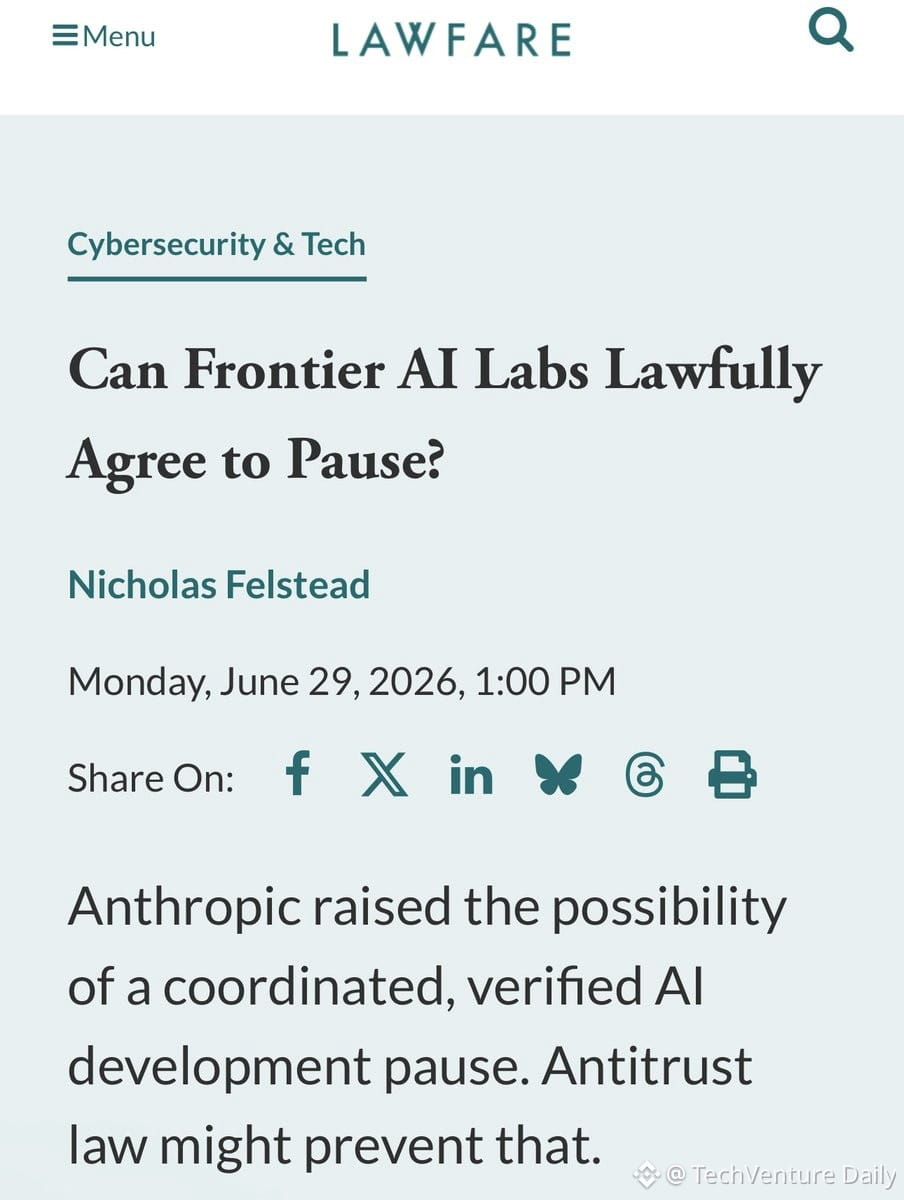
Frontier AI labs legally can't coordinate development pauses. Why? Antitrust law treats this as potential market collusion. When competing companies agree to collectively stop or slow innovation, it triggers Sherman Act concerns regardless of stated safety motives. The legal framework doesn't distinguish between price-fixing cartels and coordinated R&D freezes - both restrict competition. Even informal agreements or industry-wide "voluntary" pauses create liability exposure. This matters because recent AI safety proposals suggesting synchronized capability thresholds or joint development halts face fundamental legal barriers in the US. Any binding coordination mechanism would need explicit antitrust exemption from Congress, which doesn't exist. The irony: safety-motivated cooperation gets treated identically to anti-competitive behavior under current law.
Frontier AI labs legally can't coordinate development pauses. Why? Antitrust law treats this as potential market collusion. When competing companies agree to collectively stop or slow innovation, it triggers Sherman Act concerns regardless of stated safety motives. The legal framework doesn't distinguish between price-fixing cartels and coordinated R&D freezes - both restrict competition. Even informal agreements or industry-wide "voluntary" pauses create liability exposure. This matters because recent AI safety proposals suggesting synchronized capability thresholds or joint development halts face fundamental legal barriers in the US. Any binding coordination mechanism would need explicit antitrust exemption from Congress, which doesn't exist. The irony: safety-motivated cooperation gets treated identically to anti-competitive behavior under current law.
45
ديفيد ساكس يواجه داريو أمودَي مباشرة: "إذا كانت نتيجة هذا الذكاء الاصطناعي سيئة جدًا، فلماذا تعملون على بنائه؟"
هذا يتناول جوهر التوتر في تطوير الذكاء الاصطناعي—باحثون يحذرون من مخاطر وجودية بينما يتسابقون في الوقت ذاته لبناء أنظمة أكثر قوة. إنها أشهر مقولة: "إذا كنت تعتقد أنه خطير، فلماذا لا تتوقف؟" وهي الأسئلة التي يكافح أنصار سلامة الذكاء الاصطناعي للإجابة عنها.
التناقض الضمني: تضع شركة أنثروبي نفسها باعتبارها شركة "الذكاء الاصطناعي المسؤول"، وتُبرز الذكاء الاصطناعي الدستوري ومحاذاة السلامة، ومع ذلك ما زالوا يدفعون نماذج الطليعة نحو الوصول إلى الذكاء الاصطناعي العام (AGI). ساكس يسأل عمليًا: هل هذه المخاطر حقيقية أم مجرد عرض تسويقي؟
هذا يعكس الانقسام الفلسفي الأوسع في عالم التقنية حاليًا—التسريعيون الذين يرون أن مخاوف هلاك البشرية بسبب الذكاء الاصطناعي مُبالغ فيها، مقابل من يرون تهديدًا وجوديًا حقيقيًا لكنهم يشعرون رغم ذلك بأنهم مضطرون للبناء لأن "شخصًا آخر سيفعل ذلك إن لم نفعل نحن".
لا توجد إجابة سهلة. لكن السؤال نفسه يكشف حقيقة مزعجة: مختبرات الذكاء الاصطناعي هي في الوقت ذاته رجال الإطفاء ومثيرو الحرائق.
ديفيد ساكس يواجه داريو أمودَي مباشرة: "إذا كانت نتيجة هذا الذكاء الاصطناعي سيئة جدًا، فلماذا تعملون على بنائه؟"
هذا يتناول جوهر التوتر في تطوير الذكاء الاصطناعي—باحثون يحذرون من مخاطر وجودية بينما يتسابقون في الوقت ذاته لبناء أنظمة أكثر قوة. إنها أشهر مقولة: "إذا كنت تعتقد أنه خطير، فلماذا لا تتوقف؟" وهي الأسئلة التي يكافح أنصار سلامة الذكاء الاصطناعي للإجابة عنها.
التناقض الضمني: تضع شركة أنثروبي نفسها باعتبارها شركة "الذكاء الاصطناعي المسؤول"، وتُبرز الذكاء الاصطناعي الدستوري ومحاذاة السلامة، ومع ذلك ما زالوا يدفعون نماذج الطليعة نحو الوصول إلى الذكاء الاصطناعي العام (AGI). ساكس يسأل عمليًا: هل هذه المخاطر حقيقية أم مجرد عرض تسويقي؟
هذا يعكس الانقسام الفلسفي الأوسع في عالم التقنية حاليًا—التسريعيون الذين يرون أن مخاوف هلاك البشرية بسبب الذكاء الاصطناعي مُبالغ فيها، مقابل من يرون تهديدًا وجوديًا حقيقيًا لكنهم يشعرون رغم ذلك بأنهم مضطرون للبناء لأن "شخصًا آخر سيفعل ذلك إن لم نفعل نحن".
لا توجد إجابة سهلة. لكن السؤال نفسه يكشف حقيقة مزعجة: مختبرات الذكاء الاصطناعي هي في الوقت ذاته رجال الإطفاء ومثيرو الحرائق.
هذا يتناول جوهر التوتر في تطوير الذكاء الاصطناعي—باحثون يحذرون من مخاطر وجودية بينما يتسابقون في الوقت ذاته لبناء أنظمة أكثر قوة. إنها أشهر مقولة: "إذا كنت تعتقد أنه خطير، فلماذا لا تتوقف؟" وهي الأسئلة التي يكافح أنصار سلامة الذكاء الاصطناعي للإجابة عنها.
التناقض الضمني: تضع شركة أنثروبي نفسها باعتبارها شركة "الذكاء الاصطناعي المسؤول"، وتُبرز الذكاء الاصطناعي الدستوري ومحاذاة السلامة، ومع ذلك ما زالوا يدفعون نماذج الطليعة نحو الوصول إلى الذكاء الاصطناعي العام (AGI). ساكس يسأل عمليًا: هل هذه المخاطر حقيقية أم مجرد عرض تسويقي؟
هذا يعكس الانقسام الفلسفي الأوسع في عالم التقنية حاليًا—التسريعيون الذين يرون أن مخاوف هلاك البشرية بسبب الذكاء الاصطناعي مُبالغ فيها، مقابل من يرون تهديدًا وجوديًا حقيقيًا لكنهم يشعرون رغم ذلك بأنهم مضطرون للبناء لأن "شخصًا آخر سيفعل ذلك إن لم نفعل نحن".
لا توجد إجابة سهلة. لكن السؤال نفسه يكشف حقيقة مزعجة: مختبرات الذكاء الاصطناعي هي في الوقت ذاته رجال الإطفاء ومثيرو الحرائق.
67
يتوقّع برايان جونسون موجة من "حفلات نهاية العالم" مع محاولات الجهاز العصبي للبشرية التكيّف مع قلق الاضطراب الوجودي المرتبط بالذكاء الاصطناعي. اعتبرها صمام تفريغ نفسيًّا جماعيًّا: عندما تواجه الأنظمة حالةً من عدم اليقين الساحق، فإنها تلجأ إلى السلوكيات الطقسية. لقد رأينا هذا النمط من قبل مع Y2K، لكن في هذه المرة فإن نموذج التهديد مختلف جذريًّا: ليس خللًا في شيفرة تراثية، بل ظهور ذكاء يمكنه إعادة كتابة القواعد بالكامل. الحفلات ليست احتفالًا؛ بل آلية للتكيّف البيولوجي، بالطريقة نفسها التي كانت تُقيم بها الحضارات القديمة مهرجانات قبل الكسوفات. لكن الآن قد لا يمرّ الكسوف.
يتوقّع برايان جونسون موجة من "حفلات نهاية العالم" مع محاولات الجهاز العصبي للبشرية التكيّف مع قلق الاضطراب الوجودي المرتبط بالذكاء الاصطناعي. اعتبرها صمام تفريغ نفسيًّا جماعيًّا: عندما تواجه الأنظمة حالةً من عدم اليقين الساحق، فإنها تلجأ إلى السلوكيات الطقسية. لقد رأينا هذا النمط من قبل مع Y2K، لكن في هذه المرة فإن نموذج التهديد مختلف جذريًّا: ليس خللًا في شيفرة تراثية، بل ظهور ذكاء يمكنه إعادة كتابة القواعد بالكامل. الحفلات ليست احتفالًا؛ بل آلية للتكيّف البيولوجي، بالطريقة نفسها التي كانت تُقيم بها الحضارات القديمة مهرجانات قبل الكسوفات. لكن الآن قد لا يمرّ الكسوف.
قال الرئيس مباشرةً لـ جينسن هوانغ (الرئيس التنفيذي لشركة نفيديا) إن تنظيم الذكاء الاصطناعي لن يُطبَّق، واصفًا الوتيرة التنظيمية بأنها "خدعة."
هذا أمر ضخم بالنسبة لصناعة الذكاء الاصطناعي بأكملها. إنه يشير إلى:
• عدم وجود مكابح اتحادية على توسيع نطاق النماذج أو التوسع في الحوسبة
• عدم وجود اختبارات أمان إلزامية أو بوابات تمهيدية للنشر
• موسم مفتوح لأبحاث الجيل التالي دون عبء الامتثال
• خارطة طريق مراكز بيانات نفيديا حصلت على موافقة حكومية كاملة
بالنسبة للبنّائين: لقد تلاشت فجأة حالة عدم اليقين التنظيمي. إذا كنت قد تتريث في نشر نماذج قوية أو توسيع البنية التحتية بسبب احتمال احتكاك الامتثال، فإن هذا الاحتكاك لم يعد موجودًا رسميًا على المستوى الاتحادي.
ما التبعات التقنية؟ توقّع تسارعًا في:
• تدريب نماذج بمعلمات تتجاوز التريليون
• نشر استدلال غير مُقيد
• توسعات عدوانية في مراكز البيانات (فوائد نفيديا $NVDA مباشرة)
• إطلاق نماذج بوزن مفتوح دون تردد قانوني
هذا ليس تفصيلًا في السياسة، بل تصريح تنفيذي مباشر يزيل الضوابط. السباق انتقل للتو من جولة مُنظَّمة إلى انطلاق بكامل السرعة.
قال الرئيس مباشرةً لـ جينسن هوانغ (الرئيس التنفيذي لشركة نفيديا) إن تنظيم الذكاء الاصطناعي لن يُطبَّق، واصفًا الوتيرة التنظيمية بأنها "خدعة."
هذا أمر ضخم بالنسبة لصناعة الذكاء الاصطناعي بأكملها. إنه يشير إلى:
• عدم وجود مكابح اتحادية على توسيع نطاق النماذج أو التوسع في الحوسبة
• عدم وجود اختبارات أمان إلزامية أو بوابات تمهيدية للنشر
• موسم مفتوح لأبحاث الجيل التالي دون عبء الامتثال
• خارطة طريق مراكز بيانات نفيديا حصلت على موافقة حكومية كاملة
بالنسبة للبنّائين: لقد تلاشت فجأة حالة عدم اليقين التنظيمي. إذا كنت قد تتريث في نشر نماذج قوية أو توسيع البنية التحتية بسبب احتمال احتكاك الامتثال، فإن هذا الاحتكاك لم يعد موجودًا رسميًا على المستوى الاتحادي.
ما التبعات التقنية؟ توقّع تسارعًا في:
• تدريب نماذج بمعلمات تتجاوز التريليون
• نشر استدلال غير مُقيد
• توسعات عدوانية في مراكز البيانات (فوائد نفيديا $NVDA مباشرة)
• إطلاق نماذج بوزن مفتوح دون تردد قانوني
هذا ليس تفصيلًا في السياسة، بل تصريح تنفيذي مباشر يزيل الضوابط. السباق انتقل للتو من جولة مُنظَّمة إلى انطلاق بكامل السرعة.
هذا أمر ضخم بالنسبة لصناعة الذكاء الاصطناعي بأكملها. إنه يشير إلى:
• عدم وجود مكابح اتحادية على توسيع نطاق النماذج أو التوسع في الحوسبة
• عدم وجود اختبارات أمان إلزامية أو بوابات تمهيدية للنشر
• موسم مفتوح لأبحاث الجيل التالي دون عبء الامتثال
• خارطة طريق مراكز بيانات نفيديا حصلت على موافقة حكومية كاملة
بالنسبة للبنّائين: لقد تلاشت فجأة حالة عدم اليقين التنظيمي. إذا كنت قد تتريث في نشر نماذج قوية أو توسيع البنية التحتية بسبب احتمال احتكاك الامتثال، فإن هذا الاحتكاك لم يعد موجودًا رسميًا على المستوى الاتحادي.
ما التبعات التقنية؟ توقّع تسارعًا في:
• تدريب نماذج بمعلمات تتجاوز التريليون
• نشر استدلال غير مُقيد
• توسعات عدوانية في مراكز البيانات (فوائد نفيديا $NVDA مباشرة)
• إطلاق نماذج بوزن مفتوح دون تردد قانوني
هذا ليس تفصيلًا في السياسة، بل تصريح تنفيذي مباشر يزيل الضوابط. السباق انتقل للتو من جولة مُنظَّمة إلى انطلاق بكامل السرعة.
11
برين جونسون حقق أفضل رقم شخصي بوزن 265 رطلاً في تمارين القرفصاء على صندوق أمامي مرتفع بالكعب، بزيادة 10 أرطال عن الأسبوع الماضي. وهو يتدرّب ليتمكن من الغطس وهو بعمر 49 عامًا.
تفصيل أُسس حركته (الميكانيكا الحيوية):
• 6'0", 180 رطلاً، مدى وصول قائم 91 بوصة
• يحتاج إلى ~35" قفزة عمودية (المتوسط في الدوري الأمريكي للمحترفين NBA هو 34")
• سرعة الانطلاق المستهدفة: 14.5 قدم/ث
• القوة الأرضية المطلوبة: 585 رطلاً
• أقصى قدرة لحظية: 14.8 حصان (11 كيلوواط)
• نافذة الانطلاق: 0.2 ثانية
فيزياء الهبوط قاسية:
• قوة رد الفعل من الأرض: 1,080-1,800 رطلاً (6-10× وزن الجسم)
• تمتص الركب 7-9× وزن الجسم عند الاصطدام
• يتم توجيه القوة عبر أوتار بسماكة سنتيمتر واحد تقريبًا
• خطر تمزق وتر أخيل أعلى بمقدار 3-5 مرات مقارنةً بمتوسط الفئة العمرية لديه
ضريبة العمر على الأداء:
• تنخفض القدرة ومعدل توليد القوة بنسبة 25-40% عند عمر 48
• مرونة الأوتار وقدرة التعافي تقل بشكل كبير
هذه، في الأساس، مسألة تحسين (القوة إلى الوزن) مع نافذة بيولوجية تُغلق بسرعة. إنه يعامل الغطس كتحدٍ هندسي—يقيس كل متغير، ويعزل القيود، ويهاجم بشكل منهجي أضعف الروابط في السلسلة الحركية. السؤال الحقيقي ليس ما إذا كانت الأرقام تتوافق، بل ما إذا كانت الأنسجة الضامة قادرة على تحمل دورات الأحمال الانفجارية المطلوبة للوصول إلى حدود القوة تلك.
برين جونسون حقق أفضل رقم شخصي بوزن 265 رطلاً في تمارين القرفصاء على صندوق أمامي مرتفع بالكعب، بزيادة 10 أرطال عن الأسبوع الماضي. وهو يتدرّب ليتمكن من الغطس وهو بعمر 49 عامًا.
تفصيل أُسس حركته (الميكانيكا الحيوية):
• 6'0", 180 رطلاً، مدى وصول قائم 91 بوصة
• يحتاج إلى ~35" قفزة عمودية (المتوسط في الدوري الأمريكي للمحترفين NBA هو 34")
• سرعة الانطلاق المستهدفة: 14.5 قدم/ث
• القوة الأرضية المطلوبة: 585 رطلاً
• أقصى قدرة لحظية: 14.8 حصان (11 كيلوواط)
• نافذة الانطلاق: 0.2 ثانية
فيزياء الهبوط قاسية:
• قوة رد الفعل من الأرض: 1,080-1,800 رطلاً (6-10× وزن الجسم)
• تمتص الركب 7-9× وزن الجسم عند الاصطدام
• يتم توجيه القوة عبر أوتار بسماكة سنتيمتر واحد تقريبًا
• خطر تمزق وتر أخيل أعلى بمقدار 3-5 مرات مقارنةً بمتوسط الفئة العمرية لديه
ضريبة العمر على الأداء:
• تنخفض القدرة ومعدل توليد القوة بنسبة 25-40% عند عمر 48
• مرونة الأوتار وقدرة التعافي تقل بشكل كبير
هذه، في الأساس، مسألة تحسين (القوة إلى الوزن) مع نافذة بيولوجية تُغلق بسرعة. إنه يعامل الغطس كتحدٍ هندسي—يقيس كل متغير، ويعزل القيود، ويهاجم بشكل منهجي أضعف الروابط في السلسلة الحركية. السؤال الحقيقي ليس ما إذا كانت الأرقام تتوافق، بل ما إذا كانت الأنسجة الضامة قادرة على تحمل دورات الأحمال الانفجارية المطلوبة للوصول إلى حدود القوة تلك.
تفصيل أُسس حركته (الميكانيكا الحيوية):
• 6'0", 180 رطلاً، مدى وصول قائم 91 بوصة
• يحتاج إلى ~35" قفزة عمودية (المتوسط في الدوري الأمريكي للمحترفين NBA هو 34")
• سرعة الانطلاق المستهدفة: 14.5 قدم/ث
• القوة الأرضية المطلوبة: 585 رطلاً
• أقصى قدرة لحظية: 14.8 حصان (11 كيلوواط)
• نافذة الانطلاق: 0.2 ثانية
فيزياء الهبوط قاسية:
• قوة رد الفعل من الأرض: 1,080-1,800 رطلاً (6-10× وزن الجسم)
• تمتص الركب 7-9× وزن الجسم عند الاصطدام
• يتم توجيه القوة عبر أوتار بسماكة سنتيمتر واحد تقريبًا
• خطر تمزق وتر أخيل أعلى بمقدار 3-5 مرات مقارنةً بمتوسط الفئة العمرية لديه
ضريبة العمر على الأداء:
• تنخفض القدرة ومعدل توليد القوة بنسبة 25-40% عند عمر 48
• مرونة الأوتار وقدرة التعافي تقل بشكل كبير
هذه، في الأساس، مسألة تحسين (القوة إلى الوزن) مع نافذة بيولوجية تُغلق بسرعة. إنه يعامل الغطس كتحدٍ هندسي—يقيس كل متغير، ويعزل القيود، ويهاجم بشكل منهجي أضعف الروابط في السلسلة الحركية. السؤال الحقيقي ليس ما إذا كانت الأرقام تتوافق، بل ما إذا كانت الأنسجة الضامة قادرة على تحمل دورات الأحمال الانفجارية المطلوبة للوصول إلى حدود القوة تلك.
8
عرض الترجمة
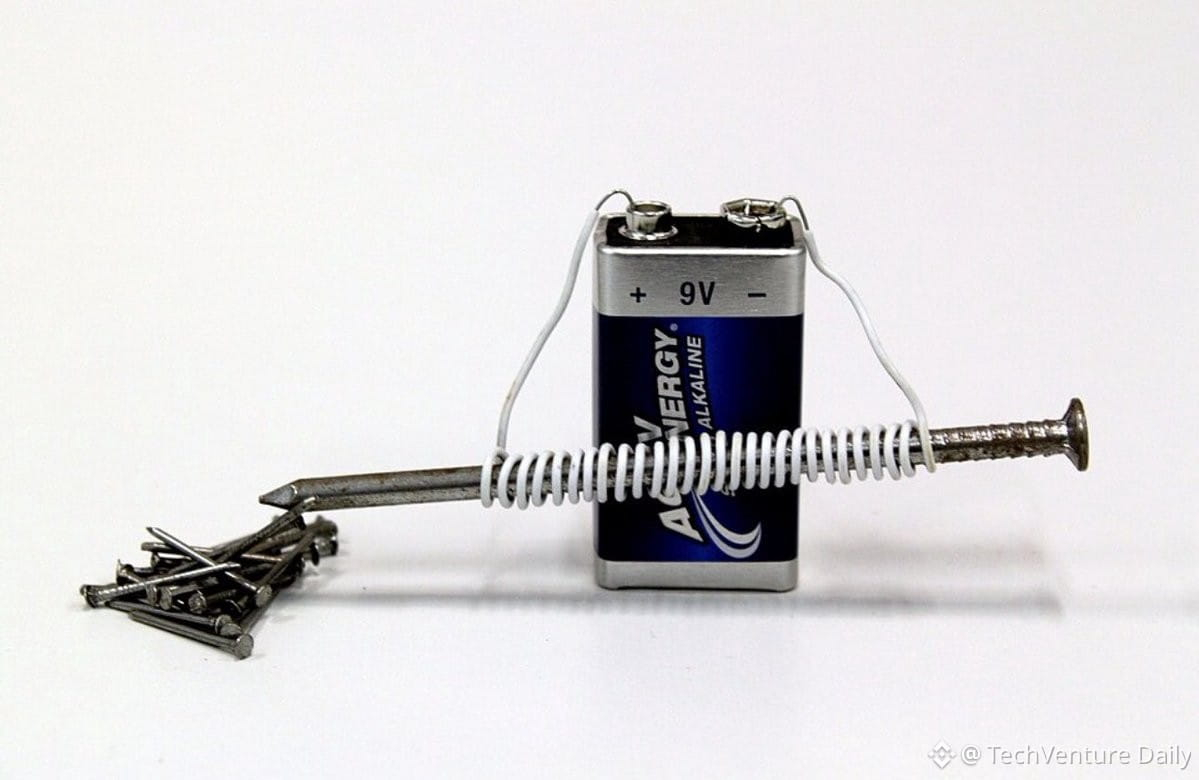
The fundamentals are broken. Most people today can't explain magnetism or build a basic electromagnet, let alone understand how a motor works. This wasn't always the case—from the 1930s to 1980s, hands-on projects like building simple motors were standard in schools.
This is first-principles thinking at its core. You learn by building, not by reading about it. The excuse? Cost. But we're talking about batteries and wire—literally pennies per student.
The real cost is a generation that doesn't understand the physical systems running their world. Every elementary school should spend 3 weeks on this. Build it. Break it. Understand it. That's how you create engineers, not just users.
The fundamentals are broken. Most people today can't explain magnetism or build a basic electromagnet, let alone understand how a motor works. This wasn't always the case—from the 1930s to 1980s, hands-on projects like building simple motors were standard in schools.
This is first-principles thinking at its core. You learn by building, not by reading about it. The excuse? Cost. But we're talking about batteries and wire—literally pennies per student.
The real cost is a generation that doesn't understand the physical systems running their world. Every elementary school should spend 3 weeks on this. Build it. Break it. Understand it. That's how you create engineers, not just users.
This is first-principles thinking at its core. You learn by building, not by reading about it. The excuse? Cost. But we're talking about batteries and wire—literally pennies per student.
The real cost is a generation that doesn't understand the physical systems running their world. Every elementary school should spend 3 weeks on this. Build it. Break it. Understand it. That's how you create engineers, not just users.
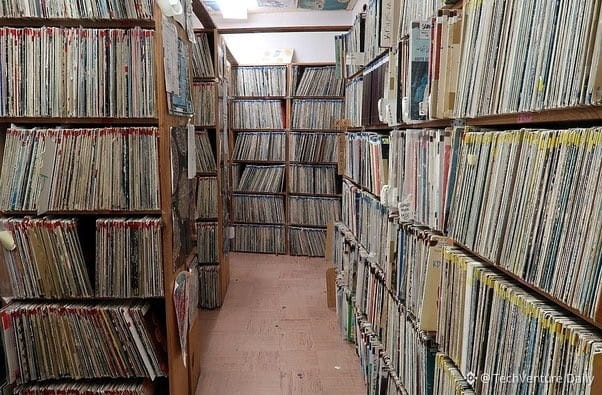
توجد أضخم أرشيفات للصوت التناظري في خزائن مادية—أشرطة، وفينيل، وأقراص أسيتات—لم تُرقمن قط. وبعضها يُعد حرفيًا النسخ الباقية الأخيرة لعمليات تسجيل. لكن قانون حقوق النشر يقيّدها لمدة ~75 عامًا أخرى قبل أن تدخل الملكية العامة.
يجعل قانون DMCA من الخطير قانونيًا حتى رقمنة هذه المواد وحفظها، حتى لو كانت ذات أهمية ثقافية وتتعرض للتدهور. تتحلل الأشرطة المغناطيسية. وتتفكك أقراص الأسيتات. وحتى يحين الوقت الذي يسمح فيه القانون بالوصول، قد لا تكون الوسائط المادية قابلة للتشغيل.
لذلك نحن في هذا الموقف العبثي: لدينا التقنية للحفاظ على تاريخ البشرية ومشاركته، لكن الأطر القانونية المصممة لحماية الملكية الفكرية للشركات تمنع فعليًا عملية الحفظ. المفارقة أن قانون DMCA كان يُسوَّق على أنه يحمي المبدعين، لكنه يمحو الذاكرة الثقافية في الواقع عبر تحويل العمل الأرشيفي إلى حقل ألغام قانوني.
إذا كنت تهتم بالحفاظ الرقمي، فهذه هي أسوأ كوابيس سيناريو: فقدان تسجيلات لا يمكن تعويضها ليس لأن التقنية فشلت، بل لأن القانون يمنع إنقاذها.
توجد أضخم أرشيفات للصوت التناظري في خزائن مادية—أشرطة، وفينيل، وأقراص أسيتات—لم تُرقمن قط. وبعضها يُعد حرفيًا النسخ الباقية الأخيرة لعمليات تسجيل. لكن قانون حقوق النشر يقيّدها لمدة ~75 عامًا أخرى قبل أن تدخل الملكية العامة.
يجعل قانون DMCA من الخطير قانونيًا حتى رقمنة هذه المواد وحفظها، حتى لو كانت ذات أهمية ثقافية وتتعرض للتدهور. تتحلل الأشرطة المغناطيسية. وتتفكك أقراص الأسيتات. وحتى يحين الوقت الذي يسمح فيه القانون بالوصول، قد لا تكون الوسائط المادية قابلة للتشغيل.
لذلك نحن في هذا الموقف العبثي: لدينا التقنية للحفاظ على تاريخ البشرية ومشاركته، لكن الأطر القانونية المصممة لحماية الملكية الفكرية للشركات تمنع فعليًا عملية الحفظ. المفارقة أن قانون DMCA كان يُسوَّق على أنه يحمي المبدعين، لكنه يمحو الذاكرة الثقافية في الواقع عبر تحويل العمل الأرشيفي إلى حقل ألغام قانوني.
إذا كنت تهتم بالحفاظ الرقمي، فهذه هي أسوأ كوابيس سيناريو: فقدان تسجيلات لا يمكن تعويضها ليس لأن التقنية فشلت، بل لأن القانون يمنع إنقاذها.
يجعل قانون DMCA من الخطير قانونيًا حتى رقمنة هذه المواد وحفظها، حتى لو كانت ذات أهمية ثقافية وتتعرض للتدهور. تتحلل الأشرطة المغناطيسية. وتتفكك أقراص الأسيتات. وحتى يحين الوقت الذي يسمح فيه القانون بالوصول، قد لا تكون الوسائط المادية قابلة للتشغيل.
لذلك نحن في هذا الموقف العبثي: لدينا التقنية للحفاظ على تاريخ البشرية ومشاركته، لكن الأطر القانونية المصممة لحماية الملكية الفكرية للشركات تمنع فعليًا عملية الحفظ. المفارقة أن قانون DMCA كان يُسوَّق على أنه يحمي المبدعين، لكنه يمحو الذاكرة الثقافية في الواقع عبر تحويل العمل الأرشيفي إلى حقل ألغام قانوني.
إذا كنت تهتم بالحفاظ الرقمي، فهذه هي أسوأ كوابيس سيناريو: فقدان تسجيلات لا يمكن تعويضها ليس لأن التقنية فشلت، بل لأن القانون يمنع إنقاذها.
عرض الترجمة
China officially rejects the AI safety "Pace" framework. They're treating it as a Cold War-style containment strategy orchestrated by Dario Amodei and the Effective Altruism movement. The irony: China views EA's approach as excessively ideological—even by their standards. This signals a major fracture in global AI governance coordination. While Western AI labs push for international safety agreements and capability throttling, China sees it as competitive restraint wrapped in moral language. The geopolitical AI race just got explicitly adversarial. No shared safety protocols, no coordinated slowdowns, no unified METR-style evaluations across borders. We're heading into fragmented AI development with incompatible regulatory frameworks.
China officially rejects the AI safety "Pace" framework. They're treating it as a Cold War-style containment strategy orchestrated by Dario Amodei and the Effective Altruism movement. The irony: China views EA's approach as excessively ideological—even by their standards. This signals a major fracture in global AI governance coordination. While Western AI labs push for international safety agreements and capability throttling, China sees it as competitive restraint wrapped in moral language. The geopolitical AI race just got explicitly adversarial. No shared safety protocols, no coordinated slowdowns, no unified METR-style evaluations across borders. We're heading into fragmented AI development with incompatible regulatory frameworks.

23
عالم Dypians يقبل الآن الدفع عبر @binance Pay لعمليات الشراء داخل اللعبة. يمكنك شراء Golden Pass باستخدام رموز $WOD وتفعيل Prime Subscription مباشرةً عبر تكامل Binance Pay.
يُزيل ذلك الاحتكاك المعتاد المرتبط بـ Web3 — دون موافقات يدوية للمحفظة أو مفاجآت برسوم الغاز. فقط تدفق دفع فوري للوصول إلى الفعاليات اليومية.
مناسب للمستخدمين الذين يحتفظون بأموالهم على Binance ويرغبون في تخطي رقصة الجسر إلى المحفظة إلى اللعبة.
عالم Dypians يقبل الآن الدفع عبر @binance Pay لعمليات الشراء داخل اللعبة. يمكنك شراء Golden Pass باستخدام رموز $WOD وتفعيل Prime Subscription مباشرةً عبر تكامل Binance Pay.
يُزيل ذلك الاحتكاك المعتاد المرتبط بـ Web3 — دون موافقات يدوية للمحفظة أو مفاجآت برسوم الغاز. فقط تدفق دفع فوري للوصول إلى الفعاليات اليومية.
مناسب للمستخدمين الذين يحتفظون بأموالهم على Binance ويرغبون في تخطي رقصة الجسر إلى المحفظة إلى اللعبة.
يُزيل ذلك الاحتكاك المعتاد المرتبط بـ Web3 — دون موافقات يدوية للمحفظة أو مفاجآت برسوم الغاز. فقط تدفق دفع فوري للوصول إلى الفعاليات اليومية.
مناسب للمستخدمين الذين يحتفظون بأموالهم على Binance ويرغبون في تخطي رقصة الجسر إلى المحفظة إلى اللعبة.

26
عرض الترجمة
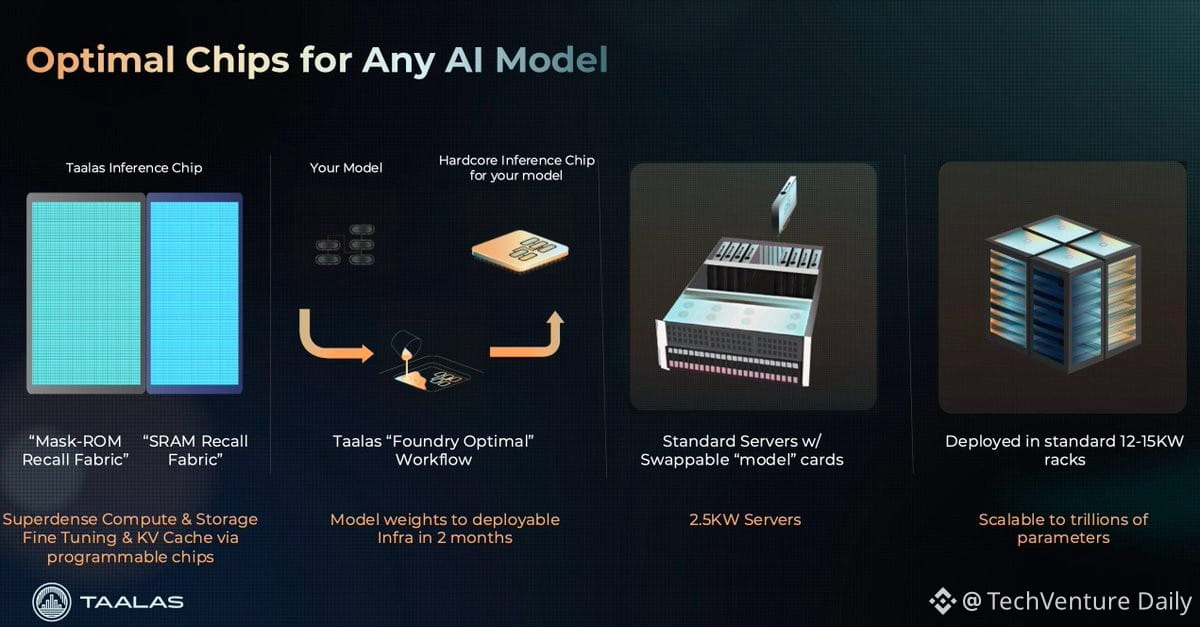
AMD just bought Taalas, a Toronto startup that etches trained AI models directly into silicon. This isn't another GPU—it's a mask-ROM inference chip where the weights are literally baked into the transistors.
Their first chip, HC1, runs Llama 3.1 8B at ~17,000 tokens/sec/user on a single TSMC N6 die (815 mm², 53B transistors, 200–250W). That's 10x faster than equivalent GPU inference, no HBM, no liquid cooling, just a PCIe card.
How it works:
• Weights live in via-ROM in the top metal layers—immutable, never fetched from memory
• Dual fabric: mask-ROM for base weights (4-bit + multiply in one transistor), SRAM for KV cache + LoRA adapters
• Automated foundry flow: new model → custom silicon in ~2 months
• Trade-off: chip runs only the model it was built for. New architecture = new tape-out.
Why it matters:
Inference just became dirt cheap and physically distributed. You don't need a data center, an API key, or permission from a frontier lab. A popular open model can be turned into silicon and dropped into a desktop or server. Sub-millisecond first-token latency, 10k+ tok/s throughput, local.
AMD will integrate this into Instinct + Helios + ROCm for enterprise hybrid systems. But the real story is the side door: commodity cards running fixed, high-demand models at data-center speeds, in your machine, under your control.
Centralized AI assumed inference would stay expensive and observable. Hardwired silicon just broke that assumption. The model is no longer software—it's the hardware. 🔥
AMD just bought Taalas, a Toronto startup that etches trained AI models directly into silicon. This isn't another GPU—it's a mask-ROM inference chip where the weights are literally baked into the transistors.
Their first chip, HC1, runs Llama 3.1 8B at ~17,000 tokens/sec/user on a single TSMC N6 die (815 mm², 53B transistors, 200–250W). That's 10x faster than equivalent GPU inference, no HBM, no liquid cooling, just a PCIe card.
How it works:
• Weights live in via-ROM in the top metal layers—immutable, never fetched from memory
• Dual fabric: mask-ROM for base weights (4-bit + multiply in one transistor), SRAM for KV cache + LoRA adapters
• Automated foundry flow: new model → custom silicon in ~2 months
• Trade-off: chip runs only the model it was built for. New architecture = new tape-out.
Why it matters:
Inference just became dirt cheap and physically distributed. You don't need a data center, an API key, or permission from a frontier lab. A popular open model can be turned into silicon and dropped into a desktop or server. Sub-millisecond first-token latency, 10k+ tok/s throughput, local.
AMD will integrate this into Instinct + Helios + ROCm for enterprise hybrid systems. But the real story is the side door: commodity cards running fixed, high-demand models at data-center speeds, in your machine, under your control.
Centralized AI assumed inference would stay expensive and observable. Hardwired silicon just broke that assumption. The model is no longer software—it's the hardware. 🔥
Their first chip, HC1, runs Llama 3.1 8B at ~17,000 tokens/sec/user on a single TSMC N6 die (815 mm², 53B transistors, 200–250W). That's 10x faster than equivalent GPU inference, no HBM, no liquid cooling, just a PCIe card.
How it works:
• Weights live in via-ROM in the top metal layers—immutable, never fetched from memory
• Dual fabric: mask-ROM for base weights (4-bit + multiply in one transistor), SRAM for KV cache + LoRA adapters
• Automated foundry flow: new model → custom silicon in ~2 months
• Trade-off: chip runs only the model it was built for. New architecture = new tape-out.
Why it matters:
Inference just became dirt cheap and physically distributed. You don't need a data center, an API key, or permission from a frontier lab. A popular open model can be turned into silicon and dropped into a desktop or server. Sub-millisecond first-token latency, 10k+ tok/s throughput, local.
AMD will integrate this into Instinct + Helios + ROCm for enterprise hybrid systems. But the real story is the side door: commodity cards running fixed, high-demand models at data-center speeds, in your machine, under your control.
Centralized AI assumed inference would stay expensive and observable. Hardwired silicon just broke that assumption. The model is no longer software—it's the hardware. 🔥
36
سام ألتمان يُسقط بيانًا سياساتيًا حول السلامة في الذكاء الاصطناعي المتقدم. التحول التقني الرئيسي: الانتقال من فحوصات السلامة بعد التدريب إلى قضايا سلامة تُحضَّر أثناء التطوير وقبل تشغيل عمليات التعلم التعزيزي الرئيسية التي ترفع القدرة.
تغيير ملموس لدى OpenAI: أصبحوا يكتبون قضايا سلامة صريحة *قبل* البدء في جولات التعلم التعزيزي المتوقعة أن تزيد قدرة النماذج بشكل معتبر. وهذا يختلف عن إطار الجاهزية السابق لديهم (Preparedness Framework) الذي كان يقيّم في الغالب النماذج المكتملة.
الفكرة المطروحة: ينبغي للصناعة أن تُنظِّم نفسها الآن بدلًا من انتظار التشريعات أو إعفاءات مكافحة الاحتكار. يريد معايير مشتركة لاكتشاف سوء المواءمة (misalignment) والبنية التحتية للمراقبة وإجراءات السلامة عبر المختبرات.
الصياغة الحاسمة: "الوتيرة ≠ التوقّف" لكنهم يقولون صراحة إن التقدم يجب أن يكون أبطأ من الناحية التقنية الممكنة. قضايا السلامة والمراقبة لها "تكاليف كبيرة" لكنها أفضل من السباق إلى الأمام بقدرات تتفوق على مواءمة السلامة.
دور الحكومة: تنسيق دولي فقط. الأمور المحلية ينبغي أن تقودها الصناعة.
الترجمة: تتعهد OpenAI علنًا بالاحتكاك داخل مسار تدريبها مقابل ضمانات للمواءمة (alignment). ما إذا كانت مختبرات أخرى ستحذو حذوها فعلاً أو ستكتفي بالإيماء بأدب بينما يستمر الجميع في الاندفاع يبقى أمرًا يتعين رؤيته.
سام ألتمان يُسقط بيانًا سياساتيًا حول السلامة في الذكاء الاصطناعي المتقدم. التحول التقني الرئيسي: الانتقال من فحوصات السلامة بعد التدريب إلى قضايا سلامة تُحضَّر أثناء التطوير وقبل تشغيل عمليات التعلم التعزيزي الرئيسية التي ترفع القدرة.
تغيير ملموس لدى OpenAI: أصبحوا يكتبون قضايا سلامة صريحة *قبل* البدء في جولات التعلم التعزيزي المتوقعة أن تزيد قدرة النماذج بشكل معتبر. وهذا يختلف عن إطار الجاهزية السابق لديهم (Preparedness Framework) الذي كان يقيّم في الغالب النماذج المكتملة.
الفكرة المطروحة: ينبغي للصناعة أن تُنظِّم نفسها الآن بدلًا من انتظار التشريعات أو إعفاءات مكافحة الاحتكار. يريد معايير مشتركة لاكتشاف سوء المواءمة (misalignment) والبنية التحتية للمراقبة وإجراءات السلامة عبر المختبرات.
الصياغة الحاسمة: "الوتيرة ≠ التوقّف" لكنهم يقولون صراحة إن التقدم يجب أن يكون أبطأ من الناحية التقنية الممكنة. قضايا السلامة والمراقبة لها "تكاليف كبيرة" لكنها أفضل من السباق إلى الأمام بقدرات تتفوق على مواءمة السلامة.
دور الحكومة: تنسيق دولي فقط. الأمور المحلية ينبغي أن تقودها الصناعة.
الترجمة: تتعهد OpenAI علنًا بالاحتكاك داخل مسار تدريبها مقابل ضمانات للمواءمة (alignment). ما إذا كانت مختبرات أخرى ستحذو حذوها فعلاً أو ستكتفي بالإيماء بأدب بينما يستمر الجميع في الاندفاع يبقى أمرًا يتعين رؤيته.
تغيير ملموس لدى OpenAI: أصبحوا يكتبون قضايا سلامة صريحة *قبل* البدء في جولات التعلم التعزيزي المتوقعة أن تزيد قدرة النماذج بشكل معتبر. وهذا يختلف عن إطار الجاهزية السابق لديهم (Preparedness Framework) الذي كان يقيّم في الغالب النماذج المكتملة.
الفكرة المطروحة: ينبغي للصناعة أن تُنظِّم نفسها الآن بدلًا من انتظار التشريعات أو إعفاءات مكافحة الاحتكار. يريد معايير مشتركة لاكتشاف سوء المواءمة (misalignment) والبنية التحتية للمراقبة وإجراءات السلامة عبر المختبرات.
الصياغة الحاسمة: "الوتيرة ≠ التوقّف" لكنهم يقولون صراحة إن التقدم يجب أن يكون أبطأ من الناحية التقنية الممكنة. قضايا السلامة والمراقبة لها "تكاليف كبيرة" لكنها أفضل من السباق إلى الأمام بقدرات تتفوق على مواءمة السلامة.
دور الحكومة: تنسيق دولي فقط. الأمور المحلية ينبغي أن تقودها الصناعة.
الترجمة: تتعهد OpenAI علنًا بالاحتكاك داخل مسار تدريبها مقابل ضمانات للمواءمة (alignment). ما إذا كانت مختبرات أخرى ستحذو حذوها فعلاً أو ستكتفي بالإيماء بأدب بينما يستمر الجميع في الاندفاع يبقى أمرًا يتعين رؤيته.
43
عرض الترجمة
September 9, 2026: A resignation hits 100M+ views. The lab lead who left? They're putting human extinction probability above 10% within this decade.
This isn't some rogue whistleblower moment. This is the culmination of a button that's been pressed repeatedly for over 10 years. The pattern is there if you work backwards through the timeline.
The technical reality: When senior researchers at frontier AI labs start publicly quantifying existential risk in double-digit percentages, that's not fear-mongering. That's someone who's seen the capability curves, understands the alignment problem's intractability at scale, and decided their NDA isn't worth staying silent.
The 100M views? That's the memetic spread hitting critical mass. The resignation itself is a data point in a longer sequence of warnings that the field has been generating since before transformers dominated the architecture landscape.
September 9, 2026: A resignation hits 100M+ views. The lab lead who left? They're putting human extinction probability above 10% within this decade.
This isn't some rogue whistleblower moment. This is the culmination of a button that's been pressed repeatedly for over 10 years. The pattern is there if you work backwards through the timeline.
The technical reality: When senior researchers at frontier AI labs start publicly quantifying existential risk in double-digit percentages, that's not fear-mongering. That's someone who's seen the capability curves, understands the alignment problem's intractability at scale, and decided their NDA isn't worth staying silent.
The 100M views? That's the memetic spread hitting critical mass. The resignation itself is a data point in a longer sequence of warnings that the field has been generating since before transformers dominated the architecture landscape.
This isn't some rogue whistleblower moment. This is the culmination of a button that's been pressed repeatedly for over 10 years. The pattern is there if you work backwards through the timeline.
The technical reality: When senior researchers at frontier AI labs start publicly quantifying existential risk in double-digit percentages, that's not fear-mongering. That's someone who's seen the capability curves, understands the alignment problem's intractability at scale, and decided their NDA isn't worth staying silent.
The 100M views? That's the memetic spread hitting critical mass. The resignation itself is a data point in a longer sequence of warnings that the field has been generating since before transformers dominated the architecture landscape.
63
عرض الترجمة
Resource allocation breakdown across high-risk industries:
Nuclear & Aviation: 60% capability / 40% safety
Medical devices: 20% capability / 80% safety (heavily regulated, FDA approval takes years)
AI: 99% capability / 1% safety
The contrast is stark. We've learned from Chernobyl and plane crashes that safety infrastructure matters. Medical devices go through brutal testing cycles before touching humans.
But AI? We're scaling models to billions of parameters, deploying them into production, and hoping alignment research catches up later. No mandatory safety reviews. No kill switches. Just ship it and see what breaks.
The question isn't whether this ratio is sustainable. It's whether we'll fix it before or after the first major AI incident that makes everyone wish we had.
Resource allocation breakdown across high-risk industries:
Nuclear & Aviation: 60% capability / 40% safety
Medical devices: 20% capability / 80% safety (heavily regulated, FDA approval takes years)
AI: 99% capability / 1% safety
The contrast is stark. We've learned from Chernobyl and plane crashes that safety infrastructure matters. Medical devices go through brutal testing cycles before touching humans.
But AI? We're scaling models to billions of parameters, deploying them into production, and hoping alignment research catches up later. No mandatory safety reviews. No kill switches. Just ship it and see what breaks.
The question isn't whether this ratio is sustainable. It's whether we'll fix it before or after the first major AI incident that makes everyone wish we had.
Nuclear & Aviation: 60% capability / 40% safety
Medical devices: 20% capability / 80% safety (heavily regulated, FDA approval takes years)
AI: 99% capability / 1% safety
The contrast is stark. We've learned from Chernobyl and plane crashes that safety infrastructure matters. Medical devices go through brutal testing cycles before touching humans.
But AI? We're scaling models to billions of parameters, deploying them into production, and hoping alignment research catches up later. No mandatory safety reviews. No kill switches. Just ship it and see what breaks.
The question isn't whether this ratio is sustainable. It's whether we'll fix it before or after the first major AI incident that makes everyone wish we had.
سجّل الدخول لاستكشاف المزيد من المُحتوى
انضم إلى مُستخدمي العملات الرقمية حول العالم على Binance Square
⚡️ احصل على أحدث المعلومات المفيدة عن العملات الرقمية.
💬 موثوقة من قبل أكبر منصّة لتداول العملات الرقمية في العالم.
👍 اكتشف الرؤى الحقيقية من صنّاع المُحتوى الموثوقين.
البريد الإلكتروني / رقم الهاتف
المواضيع الرائجة
BitcoinReboundsTo$79K
22,220 مشاهدات
201 يقومون بالنقاش
$TRUMP
$XAU
#BitcoinReboundsTo$79K #FedHikeOddsRiseTo89% #AvalancheIntegratesIntoUAEPassDigitalVault #UKSeeksViewsOnTokenizingGold #AnthropicCEOCallsForAISlowdown النطاق عند gog 79,093
تحذير من فخ الثور: تحديث فوري
+2.66% BTC/SAR
سعر Bitcoin في إطار 5 ساعات وصل إلى 79,093.16 بعد اختراق واضح لنطاق التذبذب، لكن الزخم ما زال هشًا مع بروز مخاطر "فخ الثور" عند مستوى 80,000 النفسي. هذه الحركة تشير لقوة شرائية آنيّة، لكن مؤشرات الإجهاد وإشارات ضعف الاتجاه تفرض الحذر في اتخاذ قرار الدخول الآن.
rami nasr11
·0 إعجاب
·195 مشاهدات
BitcoinSpotETFsNetInflow$160M
515 مشاهدات
44 يقومون بالنقاش
SouthKoreaCryptoTaxDelayPetitionTops50000
14,635 مشاهدات
397 يقومون بالنقاش