

Just_Mike
39 Bài đăng

Just_Mike
Báo cáo
Chặn người dùng
7 Đang theo dõi
22 Người theo dõi
41 Đã thích
Bài đăng
Tất cả
Trích dẫn
·
--
Xem bản dịch
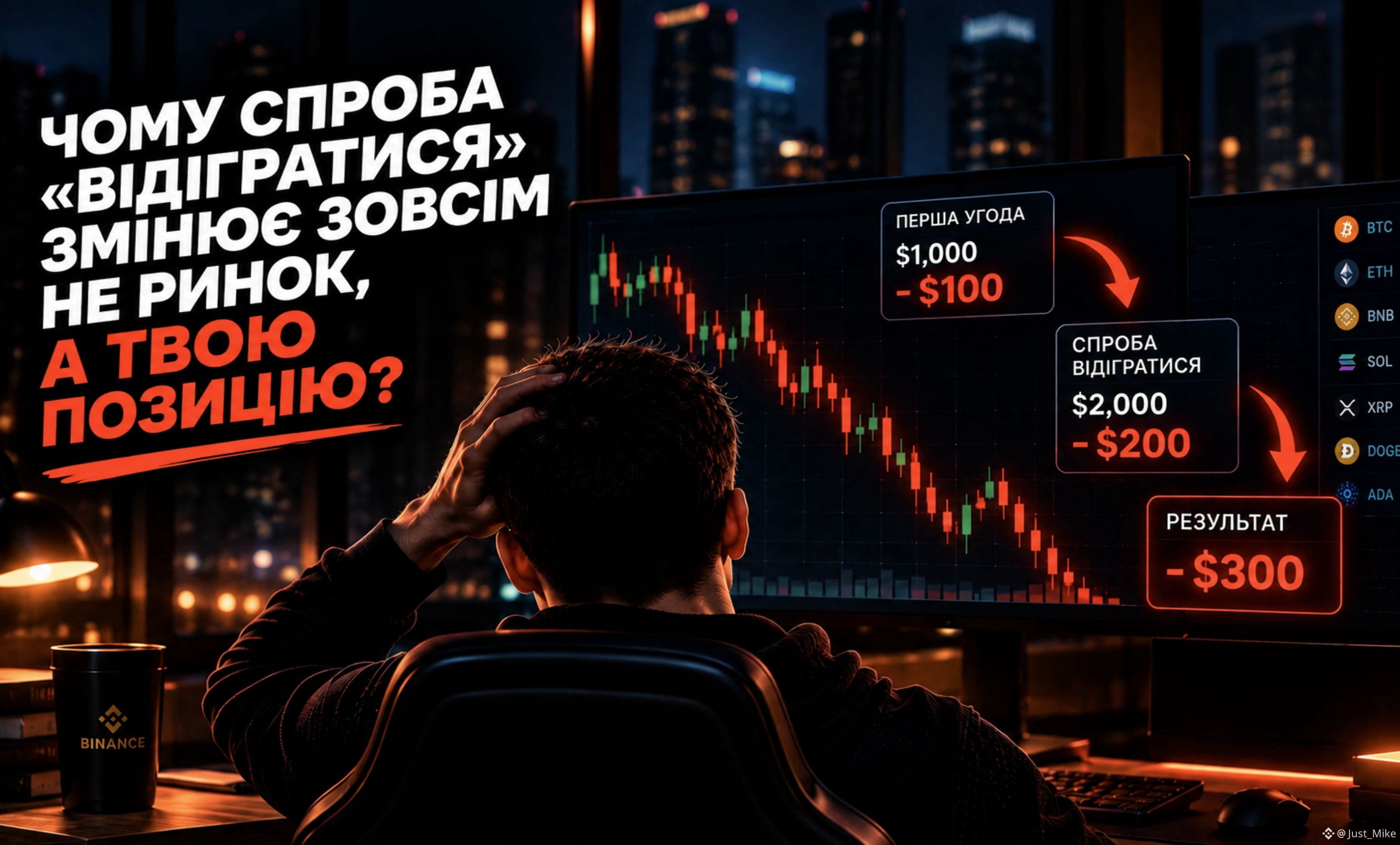
Чому спроба «відігратися» змінює зовсім не ринок, а твою позицію?
Уявімо:
Ти відкрив угоду на $1 000 і втратив $100.
Перша думка може бути:
«Треба повернути ці $100 наступною угодою».
І тут часто змінюється не ринок, а твоя поведінка.
Замість позиції на $1 000 ти відкриваєш уже на $2 000.
Ринок при цьому нічого не знає про твої попередні збитки.
Але твій ризик змінився.
Якщо наступна позиція також піде проти тебе на 10%:
−$100 → ще −$200 = −$300.
Тобто бажання «відігратися» не збільшує твої шанси повернути збиток. Воно може просто збільшити суму, яку ти готовий втратити в наступній угоді.
І тут важливо розділяти:
ринок → рухається незалежно від твоєї попередньої угоди;
позиція → змінюється залежно від того, як ти вирішив торгувати далі.
Тому після збитку головне питання не:
«Як швидше повернути ці гроші?»
а:
«Чи змінився мій ризик через бажання їх повернути?»
#Trading #RiskManagement
Чому спроба «відігратися» змінює зовсім не ринок, а твою позицію?
Уявімо:
Ти відкрив угоду на $1 000 і втратив $100.
Перша думка може бути:
«Треба повернути ці $100 наступною угодою».
І тут часто змінюється не ринок, а твоя поведінка.
Замість позиції на $1 000 ти відкриваєш уже на $2 000.
Ринок при цьому нічого не знає про твої попередні збитки.
Але твій ризик змінився.
Якщо наступна позиція також піде проти тебе на 10%:
−$100 → ще −$200 = −$300.
Тобто бажання «відігратися» не збільшує твої шанси повернути збиток. Воно може просто збільшити суму, яку ти готовий втратити в наступній угоді.
І тут важливо розділяти:
ринок → рухається незалежно від твоєї попередньої угоди;
позиція → змінюється залежно від того, як ти вирішив торгувати далі.
Тому після збитку головне питання не:
«Як швидше повернути ці гроші?»
а:
«Чи змінився мій ризик через бажання їх повернути?»
#Trading #RiskManagement
Уявімо:
Ти відкрив угоду на $1 000 і втратив $100.
Перша думка може бути:
«Треба повернути ці $100 наступною угодою».
І тут часто змінюється не ринок, а твоя поведінка.
Замість позиції на $1 000 ти відкриваєш уже на $2 000.
Ринок при цьому нічого не знає про твої попередні збитки.
Але твій ризик змінився.
Якщо наступна позиція також піде проти тебе на 10%:
−$100 → ще −$200 = −$300.
Тобто бажання «відігратися» не збільшує твої шанси повернути збиток. Воно може просто збільшити суму, яку ти готовий втратити в наступній угоді.
І тут важливо розділяти:
ринок → рухається незалежно від твоєї попередньої угоди;
позиція → змінюється залежно від того, як ти вирішив торгувати далі.
Тому після збитку головне питання не:
«Як швидше повернути ці гроші?»
а:
«Чи змінився мій ризик через бажання їх повернути?»
#Trading #RiskManagement
100
·
--
Xem bản dịch
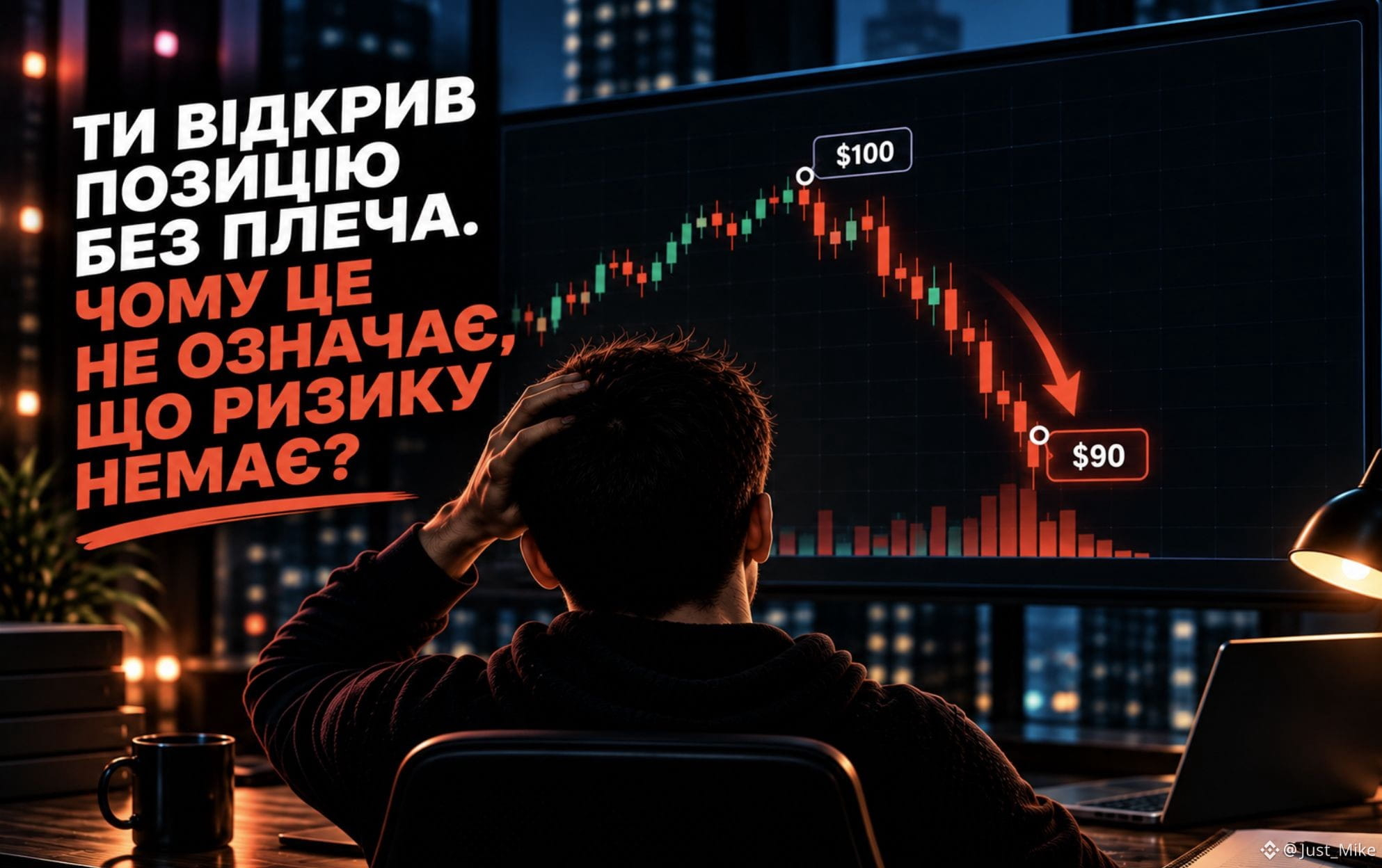
Ти відкрив позицію без плеча. Чому це не означає, що ризику немає?
Многие считают:
«Я не використовую плече → отже, мене не можуть ліквідувати → значить, ризику майже немає».
Перша частина логіки справді правильна: без плеча немає ризику ліквідації, характерного для leveraged futures-позицій. Але це не означає, що сама позиція безпечна.
Уявімо:
Ти купив активів на $1 000.
Актив падає на 10% → твоя позиція коштує вже $900.
Плеча не було. Ліквідації немає. Але $100 вартості позиції ти все одно втратив.
І тут залишаються інші ризики:
🔹 Ризик ціни — актив може падати далі.
🔹 Ризик розміру позиції — 10% від $100 і від $10 000 — це зовсім різні суми.
🔹 Ризик ліквідності — з великої позиції може бути складніше вийти за бажаною ціною, що може призвести до slippage.
Тому «без плеча» ≠ «без ризику».
Плечо додає ще один шар ризику — збільшує експозицію відносно власного капіталу та може наблизити ліквідацію.
Але навіть без нього варто запитати себе:
скільки я можу втратити, якщо ціна піде проти мене?
#Trading #RiskManagement
Ти відкрив позицію без плеча. Чому це не означає, що ризику немає?
Многие считают:
«Я не використовую плече → отже, мене не можуть ліквідувати → значить, ризику майже немає».
Перша частина логіки справді правильна: без плеча немає ризику ліквідації, характерного для leveraged futures-позицій. Але це не означає, що сама позиція безпечна.
Уявімо:
Ти купив активів на $1 000.
Актив падає на 10% → твоя позиція коштує вже $900.
Плеча не було. Ліквідації немає. Але $100 вартості позиції ти все одно втратив.
І тут залишаються інші ризики:
🔹 Ризик ціни — актив може падати далі.
🔹 Ризик розміру позиції — 10% від $100 і від $10 000 — це зовсім різні суми.
🔹 Ризик ліквідності — з великої позиції може бути складніше вийти за бажаною ціною, що може призвести до slippage.
Тому «без плеча» ≠ «без ризику».
Плечо додає ще один шар ризику — збільшує експозицію відносно власного капіталу та може наблизити ліквідацію.
Але навіть без нього варто запитати себе:
скільки я можу втратити, якщо ціна піде проти мене?
#Trading #RiskManagement
Многие считают:
«Я не використовую плече → отже, мене не можуть ліквідувати → значить, ризику майже немає».
Перша частина логіки справді правильна: без плеча немає ризику ліквідації, характерного для leveraged futures-позицій. Але це не означає, що сама позиція безпечна.
Уявімо:
Ти купив активів на $1 000.
Актив падає на 10% → твоя позиція коштує вже $900.
Плеча не було. Ліквідації немає. Але $100 вартості позиції ти все одно втратив.
І тут залишаються інші ризики:
🔹 Ризик ціни — актив може падати далі.
🔹 Ризик розміру позиції — 10% від $100 і від $10 000 — це зовсім різні суми.
🔹 Ризик ліквідності — з великої позиції може бути складніше вийти за бажаною ціною, що може призвести до slippage.
Тому «без плеча» ≠ «без ризику».
Плечо додає ще один шар ризику — збільшує експозицію відносно власного капіталу та може наблизити ліквідацію.
Але навіть без нього варто запитати себе:
скільки я можу втратити, якщо ціна піде проти мене?
#Trading #RiskManagement
599
·
--
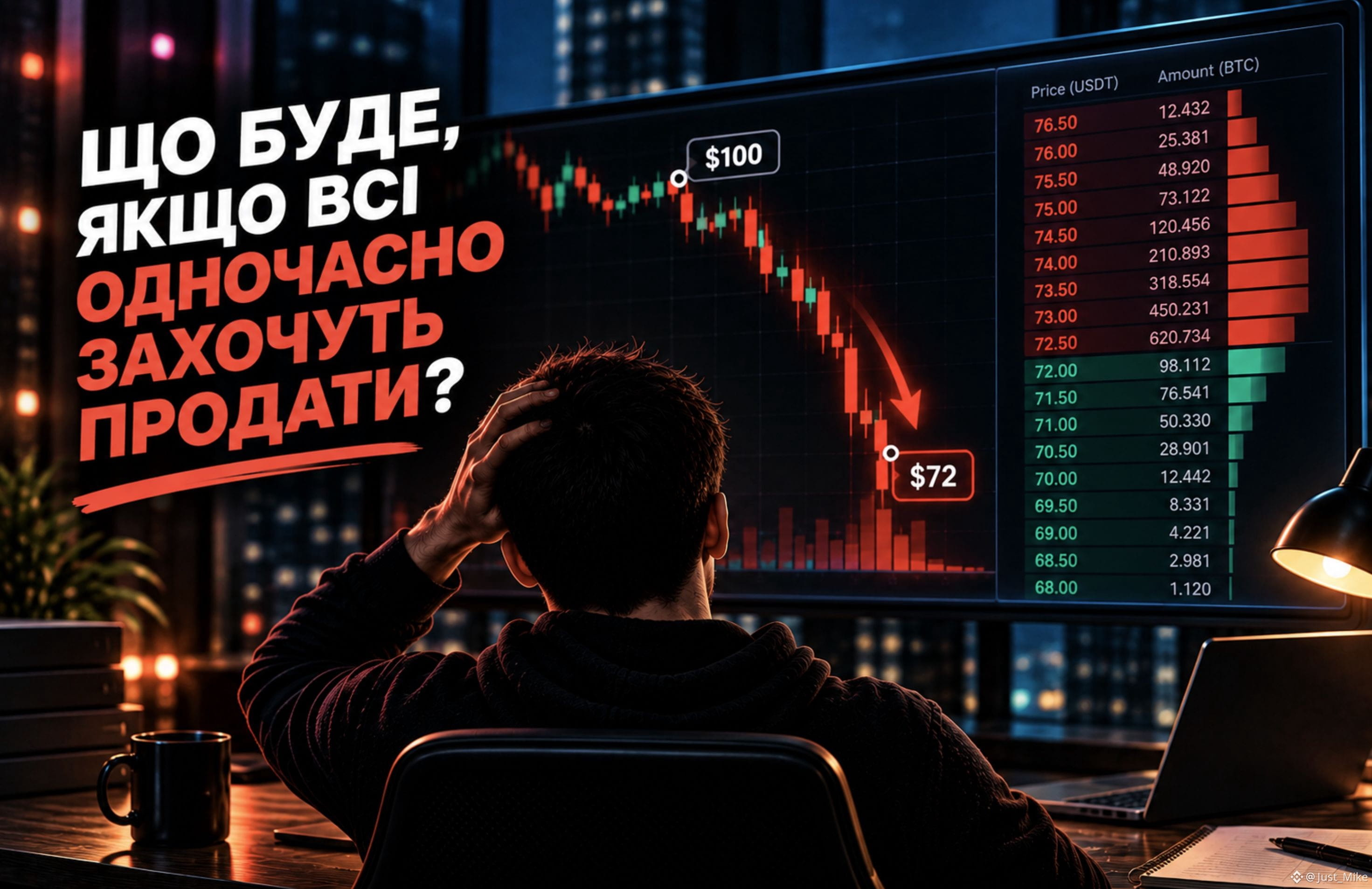
Điều gì sẽ xảy ra nếu tất cả mọi người cùng lúc muốn bán?
Hãy hình dung một tình huống:
bạn mua một tài sản với giá 100 đô la.
Và sau đó, trên thị trường, đồng thời xuất hiện rất nhiều người bán.
Điều gì xảy ra?
Có thể sẽ không đủ người mua ở mức giá 100 đô la để hấp thụ toàn bộ khối lượng bán.
Khi đó, người bán bắt đầu hạ giá các lệnh mua xuống dưới:
100 → 99 → 98 → 95…
Và giá có thể giảm rất nhanh.
Chính tại đây, tính thanh khoản là điều quan trọng.
Tính thanh khoản cho thấy việc mua hoặc bán một tài sản dễ dàng đến mức nào mà không làm ảnh hưởng đáng kể đến giá của nó.
📉 Thanh khoản cao → nhiều lệnh trên thị trường, có thể thực hiện khối lượng lớn với mức tác động nhỏ đến giá.
📉 Thanh khoản thấp → ít lệnh hơn, nên ngay cả một lệnh tương đối lớn cũng có thể đẩy mạnh giá đi xuống.
Vì vậy, sự sụt giảm đột ngột — không phải lúc nào cũng có nghĩa là tài sản bỗng nhiên trở nên “xấu” hơn.
Đôi khi vấn đề nằm ở chỗ khác:
người bán nhiều hơn rất nhiều so với số người sẵn sàng mua ở các mức giá hiện tại.
Đó là lý do vì sao trong các biến động mạnh, điều quan trọng là không chỉ nhìn vào giá của tài sản mà còn phải xem thị trường có bao nhiêu tính thanh khoản.
#Trading #Liquidity
Điều gì sẽ xảy ra nếu tất cả mọi người cùng lúc muốn bán?
Hãy hình dung một tình huống:
bạn mua một tài sản với giá 100 đô la.
Và sau đó, trên thị trường, đồng thời xuất hiện rất nhiều người bán.
Điều gì xảy ra?
Có thể sẽ không đủ người mua ở mức giá 100 đô la để hấp thụ toàn bộ khối lượng bán.
Khi đó, người bán bắt đầu hạ giá các lệnh mua xuống dưới:
100 → 99 → 98 → 95…
Và giá có thể giảm rất nhanh.
Chính tại đây, tính thanh khoản là điều quan trọng.
Tính thanh khoản cho thấy việc mua hoặc bán một tài sản dễ dàng đến mức nào mà không làm ảnh hưởng đáng kể đến giá của nó.
📉 Thanh khoản cao → nhiều lệnh trên thị trường, có thể thực hiện khối lượng lớn với mức tác động nhỏ đến giá.
📉 Thanh khoản thấp → ít lệnh hơn, nên ngay cả một lệnh tương đối lớn cũng có thể đẩy mạnh giá đi xuống.
Vì vậy, sự sụt giảm đột ngột — không phải lúc nào cũng có nghĩa là tài sản bỗng nhiên trở nên “xấu” hơn.
Đôi khi vấn đề nằm ở chỗ khác:
người bán nhiều hơn rất nhiều so với số người sẵn sàng mua ở các mức giá hiện tại.
Đó là lý do vì sao trong các biến động mạnh, điều quan trọng là không chỉ nhìn vào giá của tài sản mà còn phải xem thị trường có bao nhiêu tính thanh khoản.
#Trading #Liquidity
Hãy hình dung một tình huống:
bạn mua một tài sản với giá 100 đô la.
Và sau đó, trên thị trường, đồng thời xuất hiện rất nhiều người bán.
Điều gì xảy ra?
Có thể sẽ không đủ người mua ở mức giá 100 đô la để hấp thụ toàn bộ khối lượng bán.
Khi đó, người bán bắt đầu hạ giá các lệnh mua xuống dưới:
100 → 99 → 98 → 95…
Và giá có thể giảm rất nhanh.
Chính tại đây, tính thanh khoản là điều quan trọng.
Tính thanh khoản cho thấy việc mua hoặc bán một tài sản dễ dàng đến mức nào mà không làm ảnh hưởng đáng kể đến giá của nó.
📉 Thanh khoản cao → nhiều lệnh trên thị trường, có thể thực hiện khối lượng lớn với mức tác động nhỏ đến giá.
📉 Thanh khoản thấp → ít lệnh hơn, nên ngay cả một lệnh tương đối lớn cũng có thể đẩy mạnh giá đi xuống.
Vì vậy, sự sụt giảm đột ngột — không phải lúc nào cũng có nghĩa là tài sản bỗng nhiên trở nên “xấu” hơn.
Đôi khi vấn đề nằm ở chỗ khác:
người bán nhiều hơn rất nhiều so với số người sẵn sàng mua ở các mức giá hiện tại.
Đó là lý do vì sao trong các biến động mạnh, điều quan trọng là không chỉ nhìn vào giá của tài sản mà còn phải xem thị trường có bao nhiêu tính thanh khoản.
#Trading #Liquidity
143
·
--
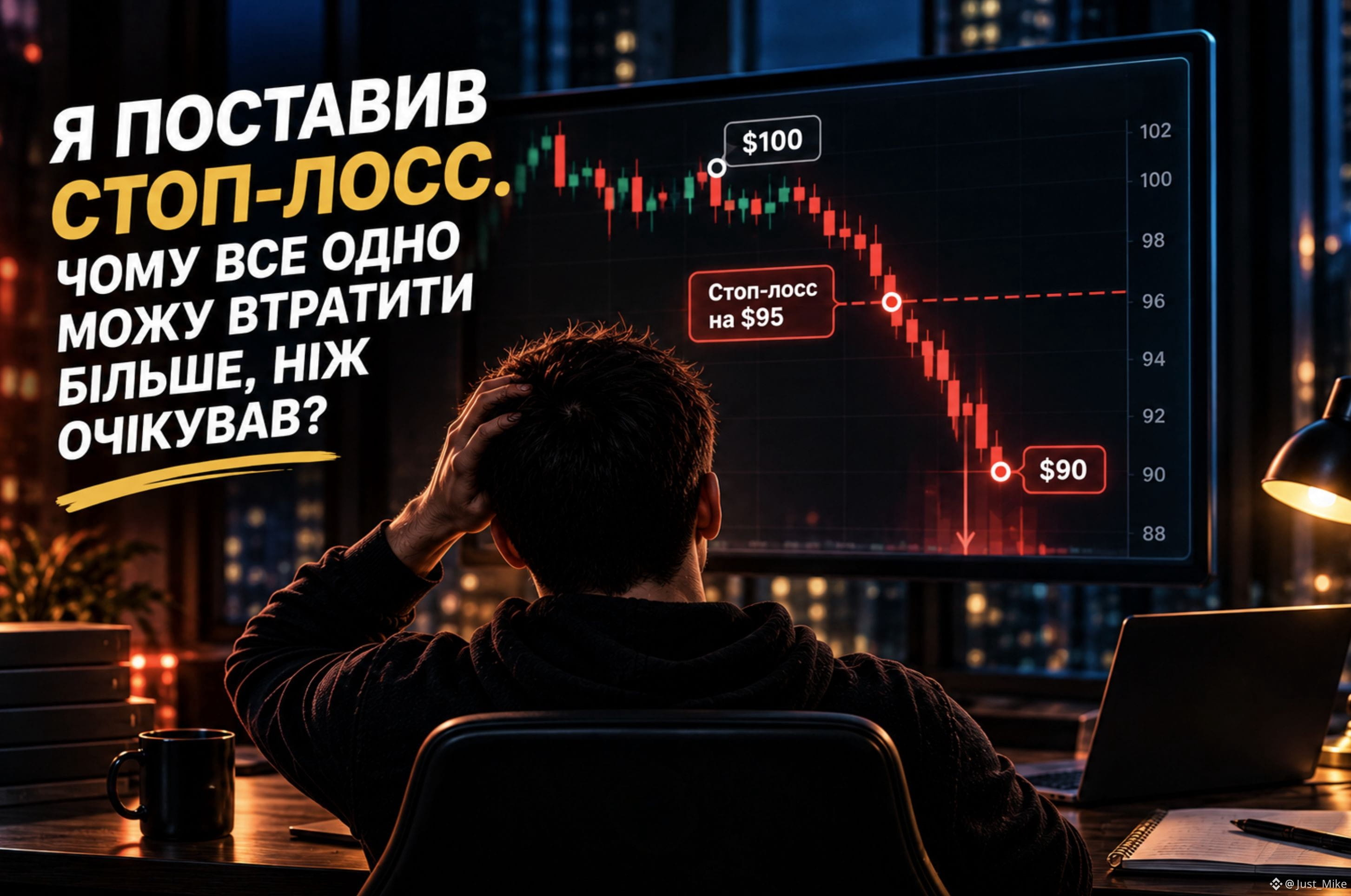
Tôi đã đặt lệnh cắt lỗ. Tại sao dù sao tôi vẫn có thể thua nhiều hơn mức tôi dự tính?
Hãy hình dung:
Bạn mua một tài sản với giá 100 USD và đặt cắt lỗ ở mức 95 USD.
Logic rất đơn giản:
“Ta dự tính sẽ lỗ khoảng 5%”.
Nhưng thị trường không phải lúc nào cũng di chuyển theo cách mượt mà.
Nếu giá giảm mạnh đột ngột:
100 → 95 → 90
thì lệnh cắt lỗ có thể không được khớp đúng ở mức 95.
Với lệnh dừng-thị trường (stop-market), sau khi kích hoạt, lệnh sẽ được khớp theo giá có sẵn. Khi biến động cao, khoảng chênh giữa giá kích hoạt và giá khớp thực tế có thể tạo ra hiện tượng trượt giá (slippage).
Còn với lệnh dừng-giới hạn (stop-limit) thì khác: bạn kiểm soát giá thực hiện, nhưng nếu giá biến động quá nhanh, lệnh có thể không được khớp.
Tức là cắt lỗ không phải là sự đảm bảo:
“Ta chắc chắn sẽ không lỗ quá 5%”.
Đó là công cụ quản lý rủi ro, nhưng cách khớp lệnh cũng quan trọng.
Vì vậy trước khi đặt stop, bạn nên hiểu không chỉ:
“Ta sẽ thoát ở đâu?”
mà còn:
“Điều gì sẽ xảy ra nếu giá vượt qua mức này trong một giây?”
#Trading #RiskManagement
Tôi đã đặt lệnh cắt lỗ. Tại sao dù sao tôi vẫn có thể thua nhiều hơn mức tôi dự tính?
Hãy hình dung:
Bạn mua một tài sản với giá 100 USD và đặt cắt lỗ ở mức 95 USD.
Logic rất đơn giản:
“Ta dự tính sẽ lỗ khoảng 5%”.
Nhưng thị trường không phải lúc nào cũng di chuyển theo cách mượt mà.
Nếu giá giảm mạnh đột ngột:
100 → 95 → 90
thì lệnh cắt lỗ có thể không được khớp đúng ở mức 95.
Với lệnh dừng-thị trường (stop-market), sau khi kích hoạt, lệnh sẽ được khớp theo giá có sẵn. Khi biến động cao, khoảng chênh giữa giá kích hoạt và giá khớp thực tế có thể tạo ra hiện tượng trượt giá (slippage).
Còn với lệnh dừng-giới hạn (stop-limit) thì khác: bạn kiểm soát giá thực hiện, nhưng nếu giá biến động quá nhanh, lệnh có thể không được khớp.
Tức là cắt lỗ không phải là sự đảm bảo:
“Ta chắc chắn sẽ không lỗ quá 5%”.
Đó là công cụ quản lý rủi ro, nhưng cách khớp lệnh cũng quan trọng.
Vì vậy trước khi đặt stop, bạn nên hiểu không chỉ:
“Ta sẽ thoát ở đâu?”
mà còn:
“Điều gì sẽ xảy ra nếu giá vượt qua mức này trong một giây?”
#Trading #RiskManagement
Hãy hình dung:
Bạn mua một tài sản với giá 100 USD và đặt cắt lỗ ở mức 95 USD.
Logic rất đơn giản:
“Ta dự tính sẽ lỗ khoảng 5%”.
Nhưng thị trường không phải lúc nào cũng di chuyển theo cách mượt mà.
Nếu giá giảm mạnh đột ngột:
100 → 95 → 90
thì lệnh cắt lỗ có thể không được khớp đúng ở mức 95.
Với lệnh dừng-thị trường (stop-market), sau khi kích hoạt, lệnh sẽ được khớp theo giá có sẵn. Khi biến động cao, khoảng chênh giữa giá kích hoạt và giá khớp thực tế có thể tạo ra hiện tượng trượt giá (slippage).
Còn với lệnh dừng-giới hạn (stop-limit) thì khác: bạn kiểm soát giá thực hiện, nhưng nếu giá biến động quá nhanh, lệnh có thể không được khớp.
Tức là cắt lỗ không phải là sự đảm bảo:
“Ta chắc chắn sẽ không lỗ quá 5%”.
Đó là công cụ quản lý rủi ro, nhưng cách khớp lệnh cũng quan trọng.
Vì vậy trước khi đặt stop, bạn nên hiểu không chỉ:
“Ta sẽ thoát ở đâu?”
mà còn:
“Điều gì sẽ xảy ra nếu giá vượt qua mức này trong một giây?”
#Trading #RiskManagement
139
·
--
Nếu perpetual đi theo giá của cổ phiếu, vậy tại sao nó lại cần funding?
Thoạt nhìn, funding có vẻ chỉ là một khoản phí bổ sung.
Nhưng vai trò của nó hoàn toàn khác.
TradFi Perpetual bám theo giá của tài sản cơ sở, nhưng bản thân hợp đồng lại được giao dịch riêng. Vì vậy, giá của nó có thể lệch so với underlying.
Và khi đó nảy sinh câu hỏi:
làm sao để kéo hai mức giá này xích lại gần nhau, nếu perpetual không có ngày hết hạn?
Chính vì điều đó mà cần funding.
Nếu perpetual giao dịch cao hơn giá underlying, funding sẽ dương — vị thế long trả cho vị thế short.
Nếu perpetual giao dịch thấp hơn, funding có thể trở thành âm — short trả cho long.
Logic rất đơn giản:
giá quá cao → short được nhận thanh toán → xuất hiện động lực để bán
giá quá thấp → long được nhận thanh toán → xuất hiện động lực để mua
Như vậy, funding giúp giữ cho giá perpetual gần với underlying hơn.
Và ở đây có một điểm quan trọng:
funding không phải là khoản Binance thu của tôi vì tôi giữ vị thế.
Đó là cơ chế thanh toán qua lại giữa long và short, giúp duy trì mối liên hệ với tài sản cơ sở.
Binance cho biết các khoản thanh toán funding chuyển giữa các trader, chứ không bị sàn thu như một loại phí.
Vì vậy, perpetual không có ngày hết hạn, nhưng funding lại giúp duy trì mối liên hệ của nó với underlying.
#TradFi
Nếu perpetual đi theo giá của cổ phiếu, vậy tại sao nó lại cần funding?
Thoạt nhìn, funding có vẻ chỉ là một khoản phí bổ sung.
Nhưng vai trò của nó hoàn toàn khác.
TradFi Perpetual bám theo giá của tài sản cơ sở, nhưng bản thân hợp đồng lại được giao dịch riêng. Vì vậy, giá của nó có thể lệch so với underlying.
Và khi đó nảy sinh câu hỏi:
làm sao để kéo hai mức giá này xích lại gần nhau, nếu perpetual không có ngày hết hạn?
Chính vì điều đó mà cần funding.
Nếu perpetual giao dịch cao hơn giá underlying, funding sẽ dương — vị thế long trả cho vị thế short.
Nếu perpetual giao dịch thấp hơn, funding có thể trở thành âm — short trả cho long.
Logic rất đơn giản:
giá quá cao → short được nhận thanh toán → xuất hiện động lực để bán
giá quá thấp → long được nhận thanh toán → xuất hiện động lực để mua
Như vậy, funding giúp giữ cho giá perpetual gần với underlying hơn.
Và ở đây có một điểm quan trọng:
funding không phải là khoản Binance thu của tôi vì tôi giữ vị thế.
Đó là cơ chế thanh toán qua lại giữa long và short, giúp duy trì mối liên hệ với tài sản cơ sở.
Binance cho biết các khoản thanh toán funding chuyển giữa các trader, chứ không bị sàn thu như một loại phí.
Vì vậy, perpetual không có ngày hết hạn, nhưng funding lại giúp duy trì mối liên hệ của nó với underlying.
#TradFi
Thoạt nhìn, funding có vẻ chỉ là một khoản phí bổ sung.
Nhưng vai trò của nó hoàn toàn khác.
TradFi Perpetual bám theo giá của tài sản cơ sở, nhưng bản thân hợp đồng lại được giao dịch riêng. Vì vậy, giá của nó có thể lệch so với underlying.
Và khi đó nảy sinh câu hỏi:
làm sao để kéo hai mức giá này xích lại gần nhau, nếu perpetual không có ngày hết hạn?
Chính vì điều đó mà cần funding.
Nếu perpetual giao dịch cao hơn giá underlying, funding sẽ dương — vị thế long trả cho vị thế short.
Nếu perpetual giao dịch thấp hơn, funding có thể trở thành âm — short trả cho long.
Logic rất đơn giản:
giá quá cao → short được nhận thanh toán → xuất hiện động lực để bán
giá quá thấp → long được nhận thanh toán → xuất hiện động lực để mua
Như vậy, funding giúp giữ cho giá perpetual gần với underlying hơn.
Và ở đây có một điểm quan trọng:
funding không phải là khoản Binance thu của tôi vì tôi giữ vị thế.
Đó là cơ chế thanh toán qua lại giữa long và short, giúp duy trì mối liên hệ với tài sản cơ sở.
Binance cho biết các khoản thanh toán funding chuyển giữa các trader, chứ không bị sàn thu như một loại phí.
Vì vậy, perpetual không có ngày hết hạn, nhưng funding lại giúp duy trì mối liên hệ của nó với underlying.
#TradFi

77
·
--
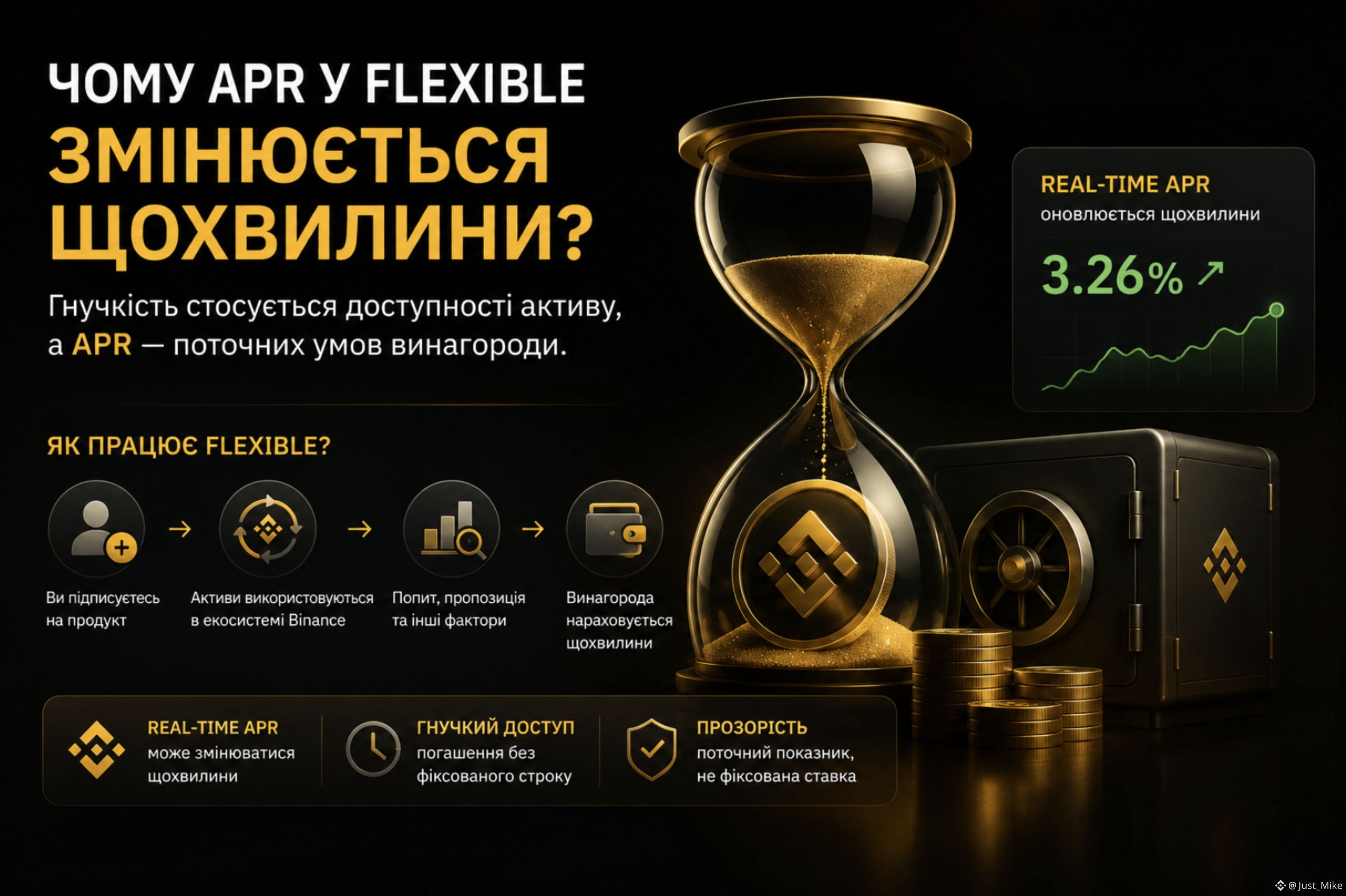
Nếu tài sản trong Flexible có thể được thanh toán/thu hồi mà không bị ràng buộc bởi một kỳ hạn cố định,
thì tại sao APR của nó lại thay đổi mỗi phút?
Trước đây, tôi hiểu Earn khá đơn giản:
gửi tài sản ➞ nhận lợi suất ➞ khi cần thì rút tài sản.
Nhưng trong Flexible Products có một chi tiết thú vị.
Binance gọi mức lãi suất này là Real-Time APR — nó có thể thay đổi từng phút, và phần thưởng được tính theo từng phút.
Và ở đây tôi nảy sinh câu hỏi:
nếu kỳ hạn không cố định, vậy lợi suất hiện tại phụ thuộc vào điều gì?
Hóa ra cơ chế này thú vị hơn nhiều so với việc chỉ đơn giản là “Binance trả lãi phần trăm vì bạn giữ tài sản”.
Theo thông tin từ Binance, các tài sản trong Flexible Products có thể được dùng cho các hoạt động, bao gồm cả việc cho vay thông qua Margin và Loan. Real-Time APR cho token sẽ tính đến nhu cầu, cung và các yếu tố khác.
Nói cách khác, APR ở đây không phải là một cam kết về lãi suất cố định.
Đó là chỉ số phần thưởng đang diễn ra, có thể thay đổi cùng với các điều kiện tác động đến việc sử dụng tài sản.
Và chính điều này làm tôi thấy Flexible hấp dẫn nhất:
sự linh hoạt liên quan đến tính sẵn có của tài sản, còn APR phản ánh các điều kiện phần thưởng hiện tại.
Vì vậy, chỉ nhìn vào con số APR là chưa đủ.
Quan trọng hơn là hiểu nó được hình thành từ đâu và vì sao có thể thay đổi ngay sau khi bạn vừa thấy nó.
#BinanceEarn #SimpleEarn
Nếu tài sản trong Flexible có thể được thanh toán/thu hồi mà không bị ràng buộc bởi một kỳ hạn cố định,
thì tại sao APR của nó lại thay đổi mỗi phút?
Trước đây, tôi hiểu Earn khá đơn giản:
gửi tài sản ➞ nhận lợi suất ➞ khi cần thì rút tài sản.
Nhưng trong Flexible Products có một chi tiết thú vị.
Binance gọi mức lãi suất này là Real-Time APR — nó có thể thay đổi từng phút, và phần thưởng được tính theo từng phút.
Và ở đây tôi nảy sinh câu hỏi:
nếu kỳ hạn không cố định, vậy lợi suất hiện tại phụ thuộc vào điều gì?
Hóa ra cơ chế này thú vị hơn nhiều so với việc chỉ đơn giản là “Binance trả lãi phần trăm vì bạn giữ tài sản”.
Theo thông tin từ Binance, các tài sản trong Flexible Products có thể được dùng cho các hoạt động, bao gồm cả việc cho vay thông qua Margin và Loan. Real-Time APR cho token sẽ tính đến nhu cầu, cung và các yếu tố khác.
Nói cách khác, APR ở đây không phải là một cam kết về lãi suất cố định.
Đó là chỉ số phần thưởng đang diễn ra, có thể thay đổi cùng với các điều kiện tác động đến việc sử dụng tài sản.
Và chính điều này làm tôi thấy Flexible hấp dẫn nhất:
sự linh hoạt liên quan đến tính sẵn có của tài sản, còn APR phản ánh các điều kiện phần thưởng hiện tại.
Vì vậy, chỉ nhìn vào con số APR là chưa đủ.
Quan trọng hơn là hiểu nó được hình thành từ đâu và vì sao có thể thay đổi ngay sau khi bạn vừa thấy nó.
#BinanceEarn #SimpleEarn
thì tại sao APR của nó lại thay đổi mỗi phút?
Trước đây, tôi hiểu Earn khá đơn giản:
gửi tài sản ➞ nhận lợi suất ➞ khi cần thì rút tài sản.
Nhưng trong Flexible Products có một chi tiết thú vị.
Binance gọi mức lãi suất này là Real-Time APR — nó có thể thay đổi từng phút, và phần thưởng được tính theo từng phút.
Và ở đây tôi nảy sinh câu hỏi:
nếu kỳ hạn không cố định, vậy lợi suất hiện tại phụ thuộc vào điều gì?
Hóa ra cơ chế này thú vị hơn nhiều so với việc chỉ đơn giản là “Binance trả lãi phần trăm vì bạn giữ tài sản”.
Theo thông tin từ Binance, các tài sản trong Flexible Products có thể được dùng cho các hoạt động, bao gồm cả việc cho vay thông qua Margin và Loan. Real-Time APR cho token sẽ tính đến nhu cầu, cung và các yếu tố khác.
Nói cách khác, APR ở đây không phải là một cam kết về lãi suất cố định.
Đó là chỉ số phần thưởng đang diễn ra, có thể thay đổi cùng với các điều kiện tác động đến việc sử dụng tài sản.
Và chính điều này làm tôi thấy Flexible hấp dẫn nhất:
sự linh hoạt liên quan đến tính sẵn có của tài sản, còn APR phản ánh các điều kiện phần thưởng hiện tại.
Vì vậy, chỉ nhìn vào con số APR là chưa đủ.
Quan trọng hơn là hiểu nó được hình thành từ đâu và vì sao có thể thay đổi ngay sau khi bạn vừa thấy nó.
#BinanceEarn #SimpleEarn
152
·
--
Một giám tuyển có thể trông như người quyết định dòng vốn Vault sẽ đi đến đâu.
Nhưng có bao nhiêu trong số quyết định đó thực sự được thực hiện trước khi giám tuyển chọn một thị trường?
Một Vault đa thị trường không bắt đầu với một danh sách thị trường vô hạn.
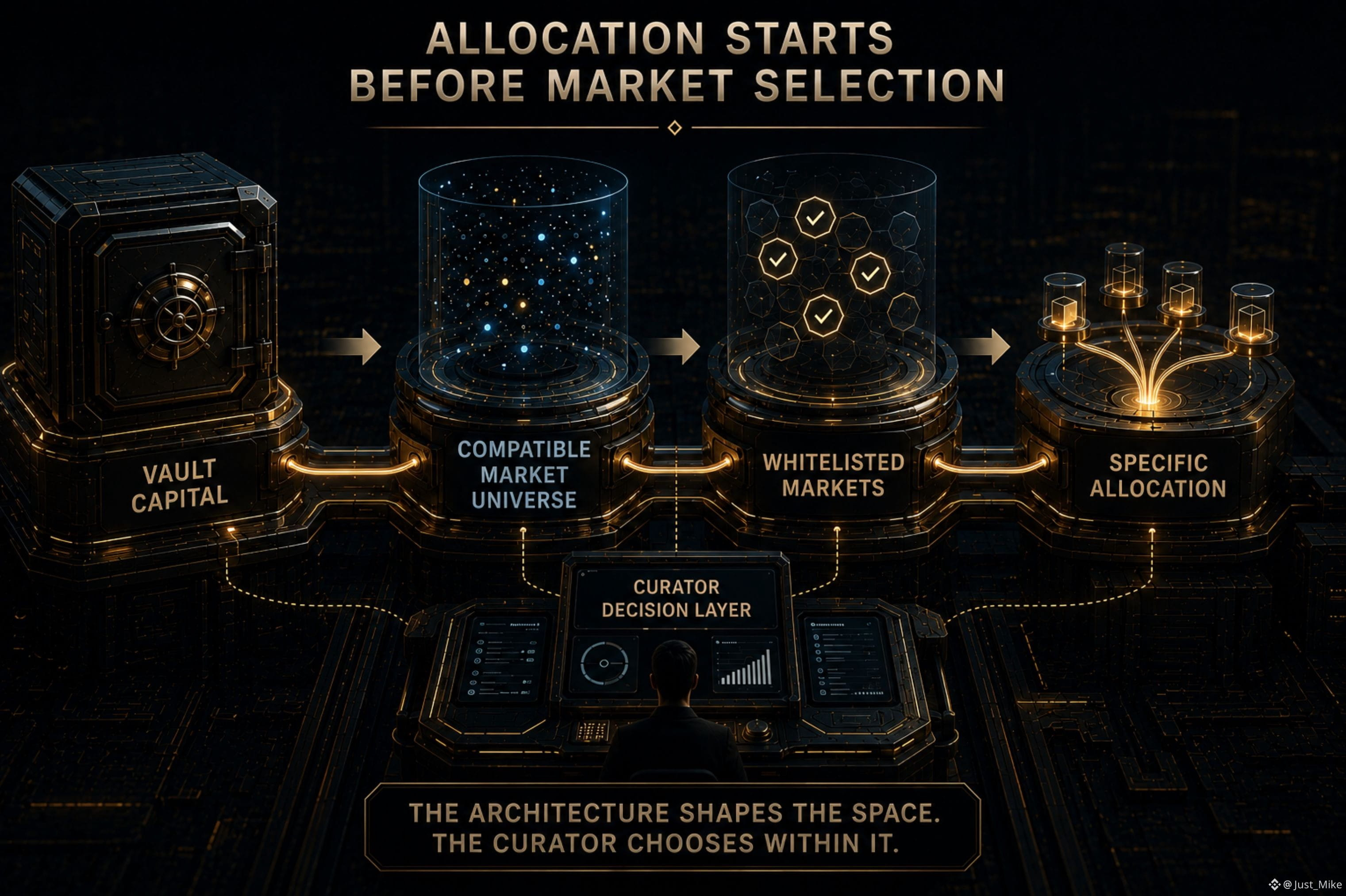
Kiến trúc của nó đã đặt sẵn điều kiện cho biết những thị trường nào có thể được kết nối: các thị trường trong cùng một Vault phải sử dụng cùng một Debt Token.
Danh sách trắng thị trường sau đó lại xác định rõ trong số các thị trường đó, thị trường nào thực sự có thể được dùng để đặt lệnh.
Chỉ sau khi các ranh giới đó đã tồn tại, giám tuyển mới đưa ra quyết định phân bổ cụ thể.
Vì vậy, quy trình sẽ gần hơn với:
Vốn của Vault
→ vũ trụ thị trường tương thích
→ các thị trường được đưa vào danh sách trắng
→ phân bổ cụ thể
Điều này thay đổi cách tôi nghĩ về việc phân bổ trong Vault.
Giám tuyển vẫn là người chọn nơi dòng vốn sẽ đi.
Nhưng lựa chọn đó được thực hiện trong một vũ trụ thị trường mà kiến trúc giao thức đã định nghĩa một phần trước.
Nói cách khác:
Phân bổ ≠ chỉ đơn giản là chọn một thị trường.
Phân bổ = lựa chọn trong một vũ trụ thị trường được định nghĩa bởi kiến trúc.
Có lẽ câu hỏi thú vị hơn không chỉ là giám tuyển đặt vốn vào đâu.
Mà là: bao nhiêu phần của lựa chọn đó đã tồn tại trước khi lựa chọn được đưa ra.
#termmax @termmax
Một giám tuyển có thể trông như người quyết định dòng vốn Vault sẽ đi đến đâu.
Nhưng có bao nhiêu trong số quyết định đó thực sự được thực hiện trước khi giám tuyển chọn một thị trường?
Một Vault đa thị trường không bắt đầu với một danh sách thị trường vô hạn.
Kiến trúc của nó đã đặt sẵn điều kiện cho biết những thị trường nào có thể được kết nối: các thị trường trong cùng một Vault phải sử dụng cùng một Debt Token.
Danh sách trắng thị trường sau đó lại xác định rõ trong số các thị trường đó, thị trường nào thực sự có thể được dùng để đặt lệnh.
Chỉ sau khi các ranh giới đó đã tồn tại, giám tuyển mới đưa ra quyết định phân bổ cụ thể.
Vì vậy, quy trình sẽ gần hơn với:
Vốn của Vault
→ vũ trụ thị trường tương thích
→ các thị trường được đưa vào danh sách trắng
→ phân bổ cụ thể
Điều này thay đổi cách tôi nghĩ về việc phân bổ trong Vault.
Giám tuyển vẫn là người chọn nơi dòng vốn sẽ đi.
Nhưng lựa chọn đó được thực hiện trong một vũ trụ thị trường mà kiến trúc giao thức đã định nghĩa một phần trước.
Nói cách khác:
Phân bổ ≠ chỉ đơn giản là chọn một thị trường.
Phân bổ = lựa chọn trong một vũ trụ thị trường được định nghĩa bởi kiến trúc.
Có lẽ câu hỏi thú vị hơn không chỉ là giám tuyển đặt vốn vào đâu.
Mà là: bao nhiêu phần của lựa chọn đó đã tồn tại trước khi lựa chọn được đưa ra.
#termmax @TermMax
Nhưng có bao nhiêu trong số quyết định đó thực sự được thực hiện trước khi giám tuyển chọn một thị trường?
Một Vault đa thị trường không bắt đầu với một danh sách thị trường vô hạn.
Kiến trúc của nó đã đặt sẵn điều kiện cho biết những thị trường nào có thể được kết nối: các thị trường trong cùng một Vault phải sử dụng cùng một Debt Token.
Danh sách trắng thị trường sau đó lại xác định rõ trong số các thị trường đó, thị trường nào thực sự có thể được dùng để đặt lệnh.
Chỉ sau khi các ranh giới đó đã tồn tại, giám tuyển mới đưa ra quyết định phân bổ cụ thể.
Vì vậy, quy trình sẽ gần hơn với:
Vốn của Vault
→ vũ trụ thị trường tương thích
→ các thị trường được đưa vào danh sách trắng
→ phân bổ cụ thể
Điều này thay đổi cách tôi nghĩ về việc phân bổ trong Vault.
Giám tuyển vẫn là người chọn nơi dòng vốn sẽ đi.
Nhưng lựa chọn đó được thực hiện trong một vũ trụ thị trường mà kiến trúc giao thức đã định nghĩa một phần trước.
Nói cách khác:
Phân bổ ≠ chỉ đơn giản là chọn một thị trường.
Phân bổ = lựa chọn trong một vũ trụ thị trường được định nghĩa bởi kiến trúc.
Có lẽ câu hỏi thú vị hơn không chỉ là giám tuyển đặt vốn vào đâu.
Mà là: bao nhiêu phần của lựa chọn đó đã tồn tại trước khi lựa chọn được đưa ra.
#termmax @TermMax
93
·
--
Ai là người đưa ra quyết định nào?
Một thị trường lãi suất cố định có thể trông như một mối quan hệ đơn giản:
bên cho vay ↔ bên đi vay
Nhưng TermMax tách ra nhiều quyết định hơn thế.
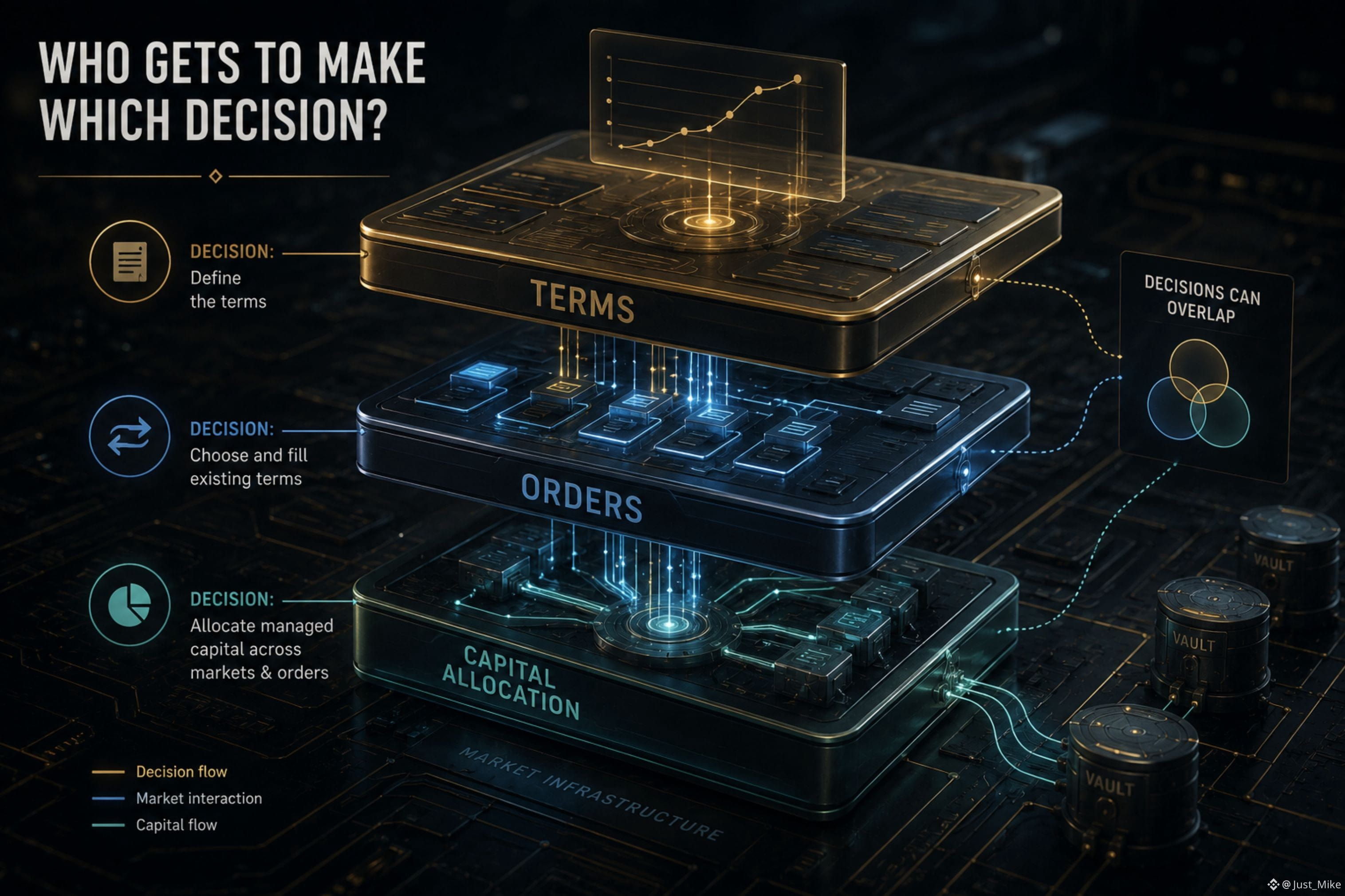
Một người tham gia có thể xác định các điều khoản của Lệnh theo Biên (Range Order). Một người khác có thể chọn thực hiện theo các điều khoản đã tồn tại đó. Và một người quản lý Vault (Vault curator) có thể quyết định nơi vốn được quản lý sẽ được triển khai giữa các thị trường và các lệnh.
Sự khác biệt này quan trọng vì đây là các quyết định khác nhau.
Việc thiết lập điều khoản không giống với việc chấp nhận điều khoản.
Và cũng không giống với việc quyết định nơi vốn gộp nên được triển khai.
Phần thú vị nằm ở chỗ các chức năng này được tách biệt về mặt khái niệm, nhưng không nhất thiết phải tách biệt giữa ba bên hoàn toàn độc lập.
Ví dụ, một curator có thể quản lý vốn của Vault đồng thời tạo và quản lý các lệnh được hỗ trợ.
Vì vậy, tôi sẽ không nghĩ về TermMax đơn giản như:
bên cho vay gặp bên đi vay.
Tôi sẽ nghĩ về nó như một số lớp quyết định tương tác:
điều khoản được xác định
↓
lệnh được thực hiện
↓
vốn được quản lý được phân bổ
Điều đó tạo ra một cách đọc thị trường khác.
Câu hỏi quan trọng không chỉ là ai cung cấp thanh khoản.
Mà là:
ai là người được quyết định các điều khoản, ai quyết định có chấp nhận chúng hay không, và ai quyết định nơi vốn được quản lý sẽ đi tới?
Sự tách biệt các quyết định này có thể là một trong những phần thú vị hơn trong cấu trúc thị trường của TermMax.
#termmax @termmax
Ai là người đưa ra quyết định nào?
Một thị trường lãi suất cố định có thể trông như một mối quan hệ đơn giản:
bên cho vay ↔ bên đi vay
Nhưng TermMax tách ra nhiều quyết định hơn thế.
Một người tham gia có thể xác định các điều khoản của Lệnh theo Biên (Range Order). Một người khác có thể chọn thực hiện theo các điều khoản đã tồn tại đó. Và một người quản lý Vault (Vault curator) có thể quyết định nơi vốn được quản lý sẽ được triển khai giữa các thị trường và các lệnh.
Sự khác biệt này quan trọng vì đây là các quyết định khác nhau.
Việc thiết lập điều khoản không giống với việc chấp nhận điều khoản.
Và cũng không giống với việc quyết định nơi vốn gộp nên được triển khai.
Phần thú vị nằm ở chỗ các chức năng này được tách biệt về mặt khái niệm, nhưng không nhất thiết phải tách biệt giữa ba bên hoàn toàn độc lập.
Ví dụ, một curator có thể quản lý vốn của Vault đồng thời tạo và quản lý các lệnh được hỗ trợ.
Vì vậy, tôi sẽ không nghĩ về TermMax đơn giản như:
bên cho vay gặp bên đi vay.
Tôi sẽ nghĩ về nó như một số lớp quyết định tương tác:
điều khoản được xác định
↓
lệnh được thực hiện
↓
vốn được quản lý được phân bổ
Điều đó tạo ra một cách đọc thị trường khác.
Câu hỏi quan trọng không chỉ là ai cung cấp thanh khoản.
Mà là:
ai là người được quyết định các điều khoản, ai quyết định có chấp nhận chúng hay không, và ai quyết định nơi vốn được quản lý sẽ đi tới?
Sự tách biệt các quyết định này có thể là một trong những phần thú vị hơn trong cấu trúc thị trường của TermMax.
#termmax @TermMax
Một thị trường lãi suất cố định có thể trông như một mối quan hệ đơn giản:
bên cho vay ↔ bên đi vay
Nhưng TermMax tách ra nhiều quyết định hơn thế.
Một người tham gia có thể xác định các điều khoản của Lệnh theo Biên (Range Order). Một người khác có thể chọn thực hiện theo các điều khoản đã tồn tại đó. Và một người quản lý Vault (Vault curator) có thể quyết định nơi vốn được quản lý sẽ được triển khai giữa các thị trường và các lệnh.
Sự khác biệt này quan trọng vì đây là các quyết định khác nhau.
Việc thiết lập điều khoản không giống với việc chấp nhận điều khoản.
Và cũng không giống với việc quyết định nơi vốn gộp nên được triển khai.
Phần thú vị nằm ở chỗ các chức năng này được tách biệt về mặt khái niệm, nhưng không nhất thiết phải tách biệt giữa ba bên hoàn toàn độc lập.
Ví dụ, một curator có thể quản lý vốn của Vault đồng thời tạo và quản lý các lệnh được hỗ trợ.
Vì vậy, tôi sẽ không nghĩ về TermMax đơn giản như:
bên cho vay gặp bên đi vay.
Tôi sẽ nghĩ về nó như một số lớp quyết định tương tác:
điều khoản được xác định
↓
lệnh được thực hiện
↓
vốn được quản lý được phân bổ
Điều đó tạo ra một cách đọc thị trường khác.
Câu hỏi quan trọng không chỉ là ai cung cấp thanh khoản.
Mà là:
ai là người được quyết định các điều khoản, ai quyết định có chấp nhận chúng hay không, và ai quyết định nơi vốn được quản lý sẽ đi tới?
Sự tách biệt các quyết định này có thể là một trong những phần thú vị hơn trong cấu trúc thị trường của TermMax.
#termmax @TermMax
86
·
--
Phần thú vị của một TermMax Vault có thể không nằm ở những gì người quản lý (curator) có thể làm.
Mà có thể nằm ở những gì người quản lý không thể làm.
Người quản lý quản lý chiến lược, nhưng quyền kiểm soát đó không phải là vô hạn.
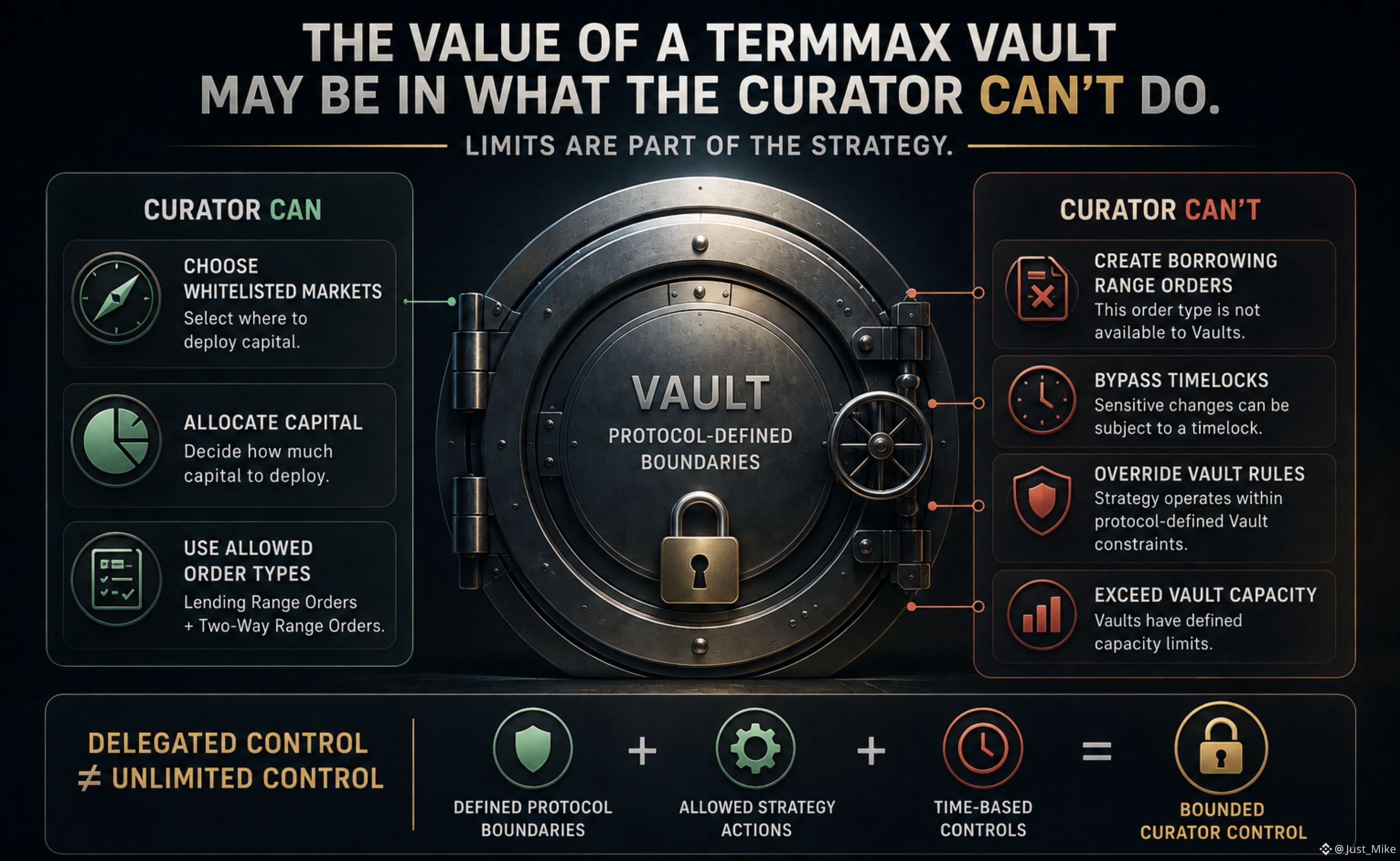
Trước hết, vốn chỉ có thể được triển khai vào các thị trường nằm trong danh sách cho phép (whitelisted).
Sau đó có giới hạn về năng lực (capacity), giới hạn số lượng vốn mà Vault có thể chấp nhận và giúp ngăn ngừa tình trạng tập trung quá mức.
Ràng buộc thú vị hơn nằm ở việc Vault thực sự có thể làm gì bên trong các thị trường đó.
Vault có thể sử dụng Lending Range Orders và Two-Way Range Orders, nhưng không thể tạo Borrowing Range Orders.
Và ngay cả với một Two-Way Order, Vault cũng không thể đơn giản dùng tài sản làm tài sản đảm bảo (collateralize) rồi vay. Vault phải cho vay trước, sau đó mới có thể vay bằng cách bán FT thu được thông qua hoạt động cho vay đó.
Cuối cùng, những thay đổi nhạy cảm không nhất thiết diễn ra ngay lập tức. Chúng có thể đi qua cơ chế timelock, cho phép Guardian có thời gian xem xét và hủy một thay đổi đang chờ.
Tóm lại, những điều này không chỉ là các tính năng Vault tách rời.
Chúng xác định một không gian quyết định bị giới hạn cho người quản lý:
→ vốn có thể đi đến đâu
→ số lượng vốn tối đa có thể được triển khai
→ loại lệnh nào có thể được tạo
→ chiến lược có thể thay đổi các tham số nhanh đến mức nào
Điểm rút ra của tôi là một Vault do curator quản lý không đơn giản chỉ là việc ủy quyền quyền kiểm soát.
Đó là quyền kiểm soát được ủy quyền, nhưng nằm trong một tập ranh giới do giao thức (protocol) quy định.
Và có lẽ đó là cách thú vị hơn để suy nghĩ về thiết kế Vault.
#termmax @termmax
Phần thú vị của một TermMax Vault có thể không nằm ở những gì người quản lý (curator) có thể làm.
Mà có thể nằm ở những gì người quản lý không thể làm.
Người quản lý quản lý chiến lược, nhưng quyền kiểm soát đó không phải là vô hạn.
Trước hết, vốn chỉ có thể được triển khai vào các thị trường nằm trong danh sách cho phép (whitelisted).
Sau đó có giới hạn về năng lực (capacity), giới hạn số lượng vốn mà Vault có thể chấp nhận và giúp ngăn ngừa tình trạng tập trung quá mức.
Ràng buộc thú vị hơn nằm ở việc Vault thực sự có thể làm gì bên trong các thị trường đó.
Vault có thể sử dụng Lending Range Orders và Two-Way Range Orders, nhưng không thể tạo Borrowing Range Orders.
Và ngay cả với một Two-Way Order, Vault cũng không thể đơn giản dùng tài sản làm tài sản đảm bảo (collateralize) rồi vay. Vault phải cho vay trước, sau đó mới có thể vay bằng cách bán FT thu được thông qua hoạt động cho vay đó.
Cuối cùng, những thay đổi nhạy cảm không nhất thiết diễn ra ngay lập tức. Chúng có thể đi qua cơ chế timelock, cho phép Guardian có thời gian xem xét và hủy một thay đổi đang chờ.
Tóm lại, những điều này không chỉ là các tính năng Vault tách rời.
Chúng xác định một không gian quyết định bị giới hạn cho người quản lý:
→ vốn có thể đi đến đâu
→ số lượng vốn tối đa có thể được triển khai
→ loại lệnh nào có thể được tạo
→ chiến lược có thể thay đổi các tham số nhanh đến mức nào
Điểm rút ra của tôi là một Vault do curator quản lý không đơn giản chỉ là việc ủy quyền quyền kiểm soát.
Đó là quyền kiểm soát được ủy quyền, nhưng nằm trong một tập ranh giới do giao thức (protocol) quy định.
Và có lẽ đó là cách thú vị hơn để suy nghĩ về thiết kế Vault.
#termmax @TermMax
Mà có thể nằm ở những gì người quản lý không thể làm.
Người quản lý quản lý chiến lược, nhưng quyền kiểm soát đó không phải là vô hạn.
Trước hết, vốn chỉ có thể được triển khai vào các thị trường nằm trong danh sách cho phép (whitelisted).
Sau đó có giới hạn về năng lực (capacity), giới hạn số lượng vốn mà Vault có thể chấp nhận và giúp ngăn ngừa tình trạng tập trung quá mức.
Ràng buộc thú vị hơn nằm ở việc Vault thực sự có thể làm gì bên trong các thị trường đó.
Vault có thể sử dụng Lending Range Orders và Two-Way Range Orders, nhưng không thể tạo Borrowing Range Orders.
Và ngay cả với một Two-Way Order, Vault cũng không thể đơn giản dùng tài sản làm tài sản đảm bảo (collateralize) rồi vay. Vault phải cho vay trước, sau đó mới có thể vay bằng cách bán FT thu được thông qua hoạt động cho vay đó.
Cuối cùng, những thay đổi nhạy cảm không nhất thiết diễn ra ngay lập tức. Chúng có thể đi qua cơ chế timelock, cho phép Guardian có thời gian xem xét và hủy một thay đổi đang chờ.
Tóm lại, những điều này không chỉ là các tính năng Vault tách rời.
Chúng xác định một không gian quyết định bị giới hạn cho người quản lý:
→ vốn có thể đi đến đâu
→ số lượng vốn tối đa có thể được triển khai
→ loại lệnh nào có thể được tạo
→ chiến lược có thể thay đổi các tham số nhanh đến mức nào
Điểm rút ra của tôi là một Vault do curator quản lý không đơn giản chỉ là việc ủy quyền quyền kiểm soát.
Đó là quyền kiểm soát được ủy quyền, nhưng nằm trong một tập ranh giới do giao thức (protocol) quy định.
Và có lẽ đó là cách thú vị hơn để suy nghĩ về thiết kế Vault.
#termmax @TermMax
89
·
--
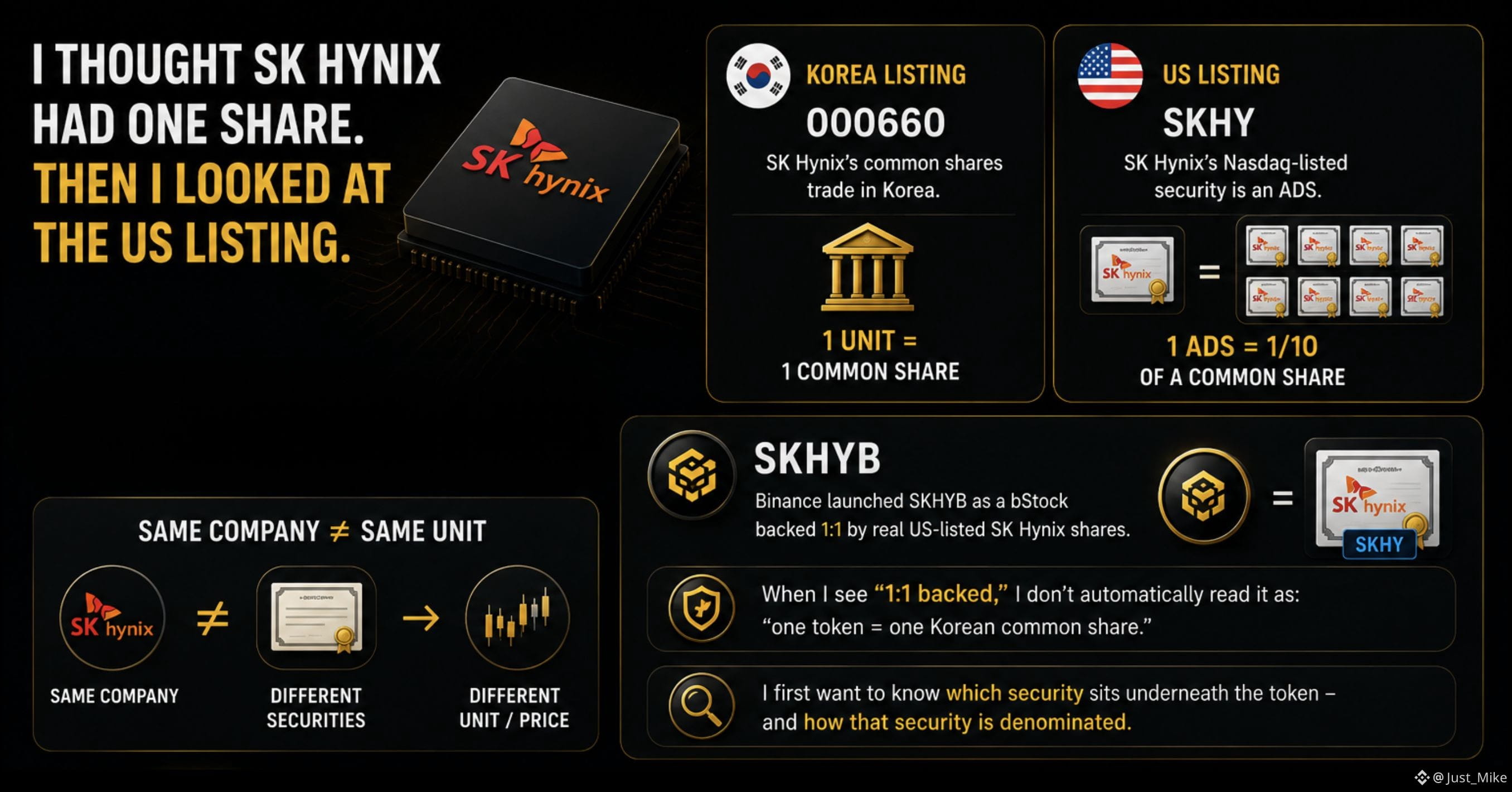
Tôi cứ nghĩ SK Hynix chỉ có một loại cổ phiếu. Rồi tôi xem niêm yết ở Mỹ.
Cổ phiếu phổ thông của SK Hynix giao dịch tại Hàn Quốc với mã 000660.
Còn chứng khoán được niêm yết trên Nasdaq của hãng, SKHY, là một ADS — và 1 ADS đại diện cho 1/10 một cổ phiếu phổ thông.
Nghe có vẻ chỉ là một chi tiết kỹ thuật.
Nhưng nó làm thay đổi cách tôi đọc giá.
Một mức giá chỉ có ý nghĩa khi tôi biết “một đơn vị” đó đại diện cho cái gì.
Rồi còn có SKHYB.
Binance ra mắt SKHYB dưới dạng bStock được hỗ trợ 1:1 bởi các cổ phiếu SK Hynix thật sự đang được niêm yết tại Mỹ.
Vậy nên khi tôi thấy “được hỗ trợ 1:1”, tôi không tự động hiểu nó theo kiểu:
“một token = một cổ phiếu phổ thông của Hàn Quốc.”
Đó là lý do “được hỗ trợ 1:1” chỉ là điểm bắt đầu đối với tôi — tôi còn muốn biết chính xác “1” đó đang nói đến loại chứng khoán nào.
Trước hết, tôi muốn biết chứng khoán nằm dưới lớp token là gì — và chứng khoán đó được định danh theo đơn vị như thế nào.
Cùng một công ty ≠ cùng một đơn vị.
Đó là cách kiểm tra hữu ích của tôi:
trước khi so sánh giá, hãy kiểm tra một đơn vị thực sự đại diện cho điều gì.
#bstockscis @BinanceCIS
Tôi cứ nghĩ SK Hynix chỉ có một loại cổ phiếu. Rồi tôi xem niêm yết ở Mỹ.
Cổ phiếu phổ thông của SK Hynix giao dịch tại Hàn Quốc với mã 000660.
Còn chứng khoán được niêm yết trên Nasdaq của hãng, SKHY, là một ADS — và 1 ADS đại diện cho 1/10 một cổ phiếu phổ thông.
Nghe có vẻ chỉ là một chi tiết kỹ thuật.
Nhưng nó làm thay đổi cách tôi đọc giá.
Một mức giá chỉ có ý nghĩa khi tôi biết “một đơn vị” đó đại diện cho cái gì.
Rồi còn có SKHYB.
Binance ra mắt SKHYB dưới dạng bStock được hỗ trợ 1:1 bởi các cổ phiếu SK Hynix thật sự đang được niêm yết tại Mỹ.
Vậy nên khi tôi thấy “được hỗ trợ 1:1”, tôi không tự động hiểu nó theo kiểu:
“một token = một cổ phiếu phổ thông của Hàn Quốc.”
Đó là lý do “được hỗ trợ 1:1” chỉ là điểm bắt đầu đối với tôi — tôi còn muốn biết chính xác “1” đó đang nói đến loại chứng khoán nào.
Trước hết, tôi muốn biết chứng khoán nằm dưới lớp token là gì — và chứng khoán đó được định danh theo đơn vị như thế nào.
Cùng một công ty ≠ cùng một đơn vị.
Đó là cách kiểm tra hữu ích của tôi:
trước khi so sánh giá, hãy kiểm tra một đơn vị thực sự đại diện cho điều gì.
#bstockscis @BinanceCIS
Cổ phiếu phổ thông của SK Hynix giao dịch tại Hàn Quốc với mã 000660.
Còn chứng khoán được niêm yết trên Nasdaq của hãng, SKHY, là một ADS — và 1 ADS đại diện cho 1/10 một cổ phiếu phổ thông.
Nghe có vẻ chỉ là một chi tiết kỹ thuật.
Nhưng nó làm thay đổi cách tôi đọc giá.
Một mức giá chỉ có ý nghĩa khi tôi biết “một đơn vị” đó đại diện cho cái gì.
Rồi còn có SKHYB.
Binance ra mắt SKHYB dưới dạng bStock được hỗ trợ 1:1 bởi các cổ phiếu SK Hynix thật sự đang được niêm yết tại Mỹ.
Vậy nên khi tôi thấy “được hỗ trợ 1:1”, tôi không tự động hiểu nó theo kiểu:
“một token = một cổ phiếu phổ thông của Hàn Quốc.”
Đó là lý do “được hỗ trợ 1:1” chỉ là điểm bắt đầu đối với tôi — tôi còn muốn biết chính xác “1” đó đang nói đến loại chứng khoán nào.
Trước hết, tôi muốn biết chứng khoán nằm dưới lớp token là gì — và chứng khoán đó được định danh theo đơn vị như thế nào.
Cùng một công ty ≠ cùng một đơn vị.
Đó là cách kiểm tra hữu ích của tôi:
trước khi so sánh giá, hãy kiểm tra một đơn vị thực sự đại diện cho điều gì.
#bstockscis @BinanceCIS
72
·
--
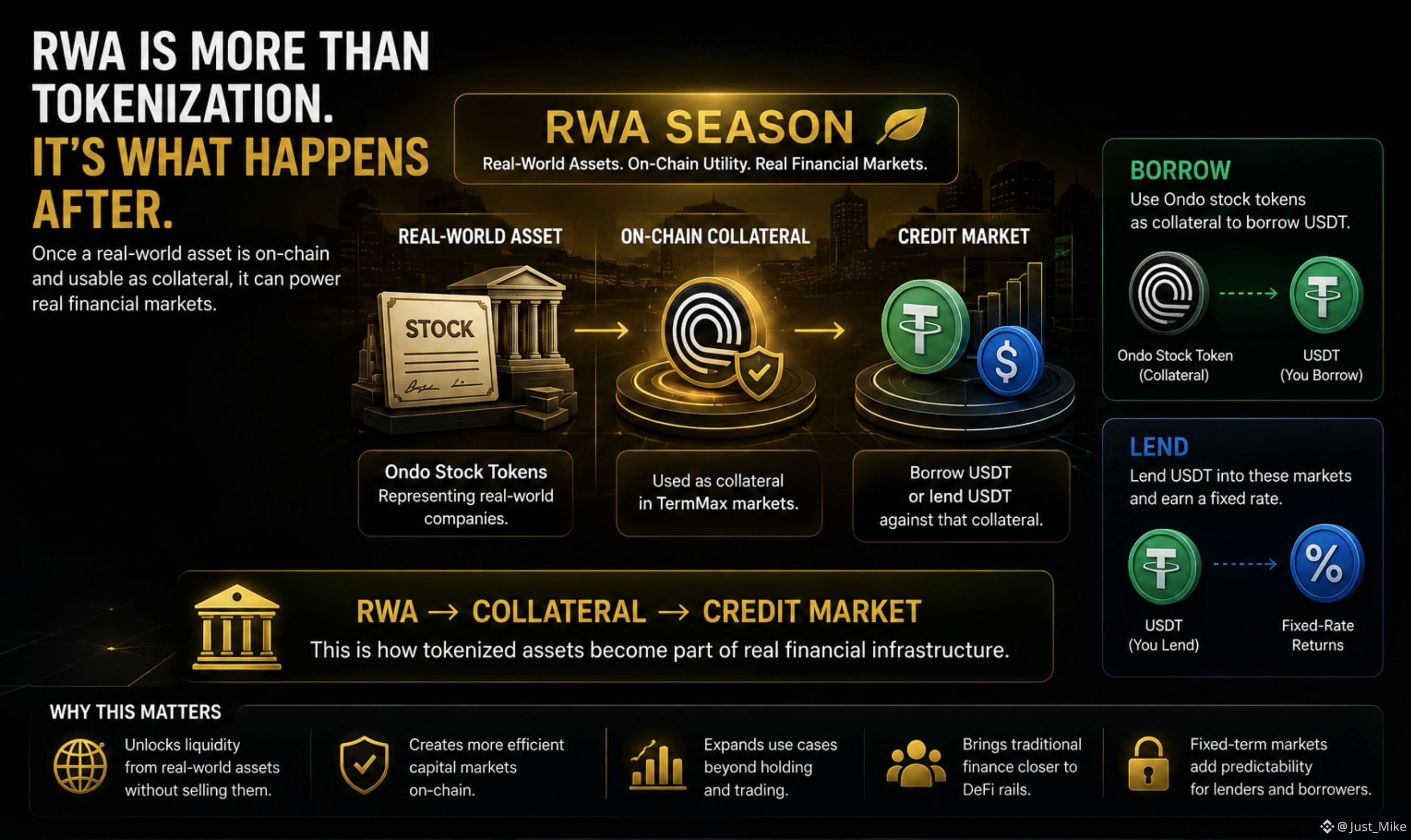
Token hóa một tài sản trong thế giới thực chỉ là bước khởi đầu.
Câu hỏi thú vị hơn là bạn có thể làm gì với nó khi đã được đưa lên on-chain.
Mùa RWA hiện tại của TermMax là một ví dụ khá thực tiễn.
Các token cổ phiếu Ondo có thể được dùng làm tài sản thế chấp để vay USDT trên BNB Chain.
Và ở chiều ngược lại, người dùng có thể cho USDT vay vào các thị trường đó.
Vì vậy, cấu trúc sẽ trở thành:
RWA → thế chấp → thị trường tín dụng
Đó là một ý tưởng lớn hơn nhiều so với việc chỉ đơn giản đặt một cổ phiếu đã token hóa vào một chiếc ví.
Khi một tài sản trở thành tài sản thế chấp có thể sử dụng, nó có thể trở thành một phần của thị trường tài chính thực sự.
Và đây là chỗ tôi nghĩ RWA trở nên thú vị.
Không phải:
“Chúng ta có thể token hóa tài sản này không?”
Mà là:
“Tài sản có thể làm được gì sau khi nó được token hóa?”
TermMax đang thử nghiệm một câu trả lời khả dĩ: vay và cho vay kỳ hạn cố định xoay quanh các tài sản đã token hóa.
#termmax @termmax
Token hóa một tài sản trong thế giới thực chỉ là bước khởi đầu.
Câu hỏi thú vị hơn là bạn có thể làm gì với nó khi đã được đưa lên on-chain.
Mùa RWA hiện tại của TermMax là một ví dụ khá thực tiễn.
Các token cổ phiếu Ondo có thể được dùng làm tài sản thế chấp để vay USDT trên BNB Chain.
Và ở chiều ngược lại, người dùng có thể cho USDT vay vào các thị trường đó.
Vì vậy, cấu trúc sẽ trở thành:
RWA → thế chấp → thị trường tín dụng
Đó là một ý tưởng lớn hơn nhiều so với việc chỉ đơn giản đặt một cổ phiếu đã token hóa vào một chiếc ví.
Khi một tài sản trở thành tài sản thế chấp có thể sử dụng, nó có thể trở thành một phần của thị trường tài chính thực sự.
Và đây là chỗ tôi nghĩ RWA trở nên thú vị.
Không phải:
“Chúng ta có thể token hóa tài sản này không?”
Mà là:
“Tài sản có thể làm được gì sau khi nó được token hóa?”
TermMax đang thử nghiệm một câu trả lời khả dĩ: vay và cho vay kỳ hạn cố định xoay quanh các tài sản đã token hóa.
#termmax @TermMax
Câu hỏi thú vị hơn là bạn có thể làm gì với nó khi đã được đưa lên on-chain.
Mùa RWA hiện tại của TermMax là một ví dụ khá thực tiễn.
Các token cổ phiếu Ondo có thể được dùng làm tài sản thế chấp để vay USDT trên BNB Chain.
Và ở chiều ngược lại, người dùng có thể cho USDT vay vào các thị trường đó.
Vì vậy, cấu trúc sẽ trở thành:
RWA → thế chấp → thị trường tín dụng
Đó là một ý tưởng lớn hơn nhiều so với việc chỉ đơn giản đặt một cổ phiếu đã token hóa vào một chiếc ví.
Khi một tài sản trở thành tài sản thế chấp có thể sử dụng, nó có thể trở thành một phần của thị trường tài chính thực sự.
Và đây là chỗ tôi nghĩ RWA trở nên thú vị.
Không phải:
“Chúng ta có thể token hóa tài sản này không?”
Mà là:
“Tài sản có thể làm được gì sau khi nó được token hóa?”
TermMax đang thử nghiệm một câu trả lời khả dĩ: vay và cho vay kỳ hạn cố định xoay quanh các tài sản đã token hóa.
#termmax @TermMax
107
·
--
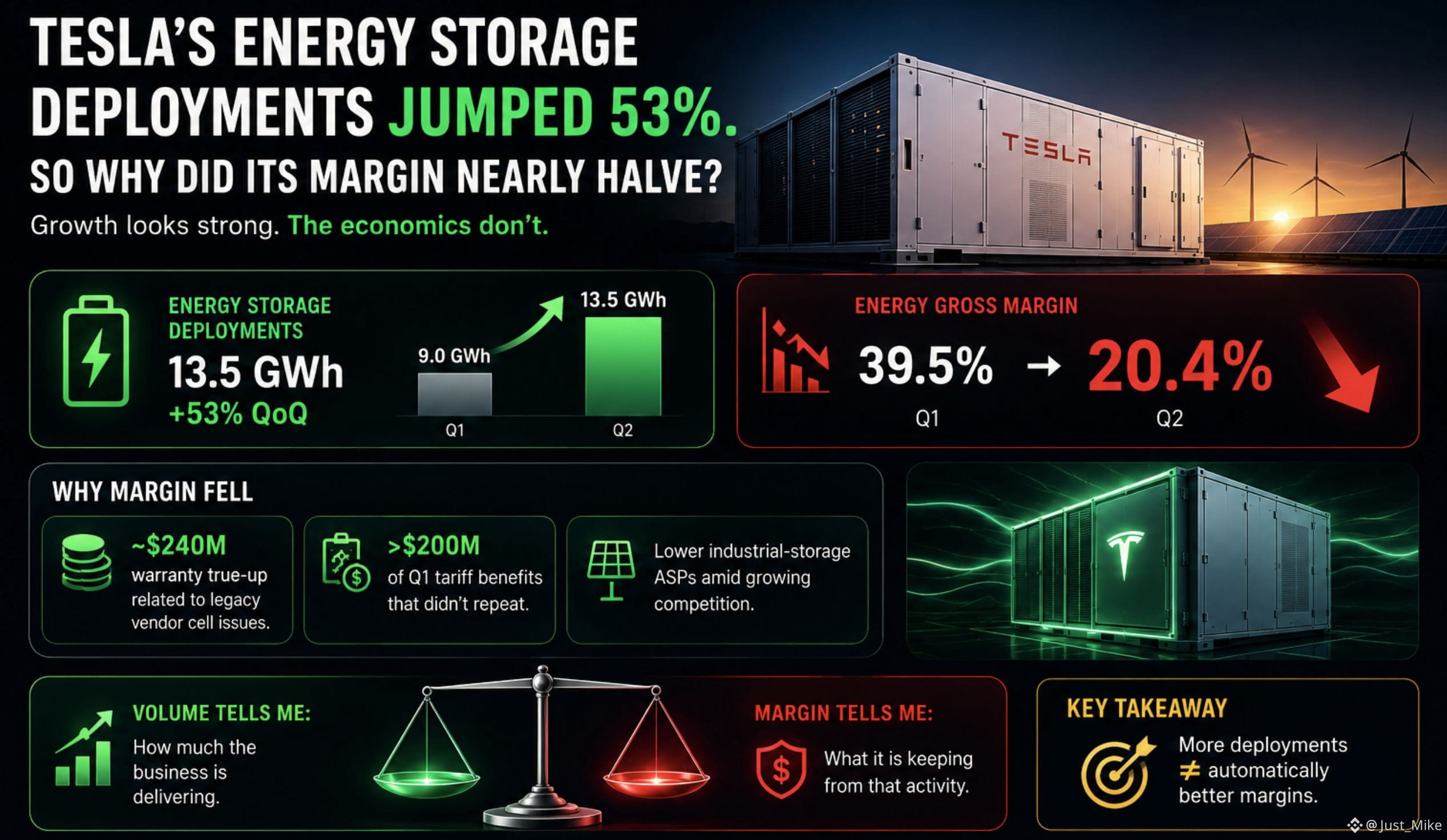
Triển khai hệ thống lưu trữ năng lượng của Tesla đã tăng 53%. Vậy vì sao biên lợi nhuận của hãng lại gần như giảm một nửa?
Hệ thống kinh doanh năng lượng của Tesla thu hút sự chú ý của tôi vì một lý do không hề rõ ràng từ tiêu đề về tốc độ tăng trưởng.
Trong Q2, Tesla đã triển khai 13,5 GWh lưu trữ năng lượng, tăng 53% so với quý trước (QoQ).
Nghe có vẻ đúng là những gì bạn muốn thấy ở một doanh nghiệp đang tăng trưởng.
Nhưng rồi tôi xem xét biên lợi nhuận.
Biên lợi nhuận gộp mảng năng lượng giảm từ 39,5% xuống còn 20,4%.
Điều đó đã làm thay đổi cách tôi đọc con số triển khai.
Lời giải thích không đơn giản chỉ là “tăng trưởng thì tốn kém”.
Tesla cho biết có một số yếu tố:
một khoản điều chỉnh bảo hành ước tính khoảng 240 triệu USD liên quan đến các vấn đề về pin của nhà cung cấp cũ,
hơn 200 triệu USD lợi ích thuế quan ở Q1 nhưng không lặp lại trong kỳ sau,
và giá bán trung bình (ASP) của mảng lưu trữ quy mô công nghiệp giảm xuống khi cạnh tranh gia tăng.
Vì vậy, doanh nghiệp đã triển khai đáng kể nhiều hơn, trong khi hiệu quả kinh tế của từng đồng doanh thu trong mảng đó lại kém thuận lợi hơn trong quý.
Đó là điều tôi thấy thú vị về TSLAB như một bStock.
Câu hỏi hiển nhiên là:
“Doanh nghiệp năng lượng của Tesla đang tăng trưởng nhanh đến mức nào?”
Tôi cũng sẽ hỏi:
“Điều gì đang xảy ra với hiệu quả kinh tế của sự tăng trưởng đó?”
Đối với tôi:
Triển khai nhiều hơn ≠ tự động biên lợi nhuận tốt hơn.
Khối lượng cho tôi biết doanh nghiệp đang cung cấp được bao nhiêu.
Biên lợi nhuận cho tôi biết họ giữ lại được bao nhiêu từ hoạt động đó.
#bstockscis @BinanceCIS
Triển khai hệ thống lưu trữ năng lượng của Tesla đã tăng 53%. Vậy vì sao biên lợi nhuận của hãng lại gần như giảm một nửa?
Hệ thống kinh doanh năng lượng của Tesla thu hút sự chú ý của tôi vì một lý do không hề rõ ràng từ tiêu đề về tốc độ tăng trưởng.
Trong Q2, Tesla đã triển khai 13,5 GWh lưu trữ năng lượng, tăng 53% so với quý trước (QoQ).
Nghe có vẻ đúng là những gì bạn muốn thấy ở một doanh nghiệp đang tăng trưởng.
Nhưng rồi tôi xem xét biên lợi nhuận.
Biên lợi nhuận gộp mảng năng lượng giảm từ 39,5% xuống còn 20,4%.
Điều đó đã làm thay đổi cách tôi đọc con số triển khai.
Lời giải thích không đơn giản chỉ là “tăng trưởng thì tốn kém”.
Tesla cho biết có một số yếu tố:
một khoản điều chỉnh bảo hành ước tính khoảng 240 triệu USD liên quan đến các vấn đề về pin của nhà cung cấp cũ,
hơn 200 triệu USD lợi ích thuế quan ở Q1 nhưng không lặp lại trong kỳ sau,
và giá bán trung bình (ASP) của mảng lưu trữ quy mô công nghiệp giảm xuống khi cạnh tranh gia tăng.
Vì vậy, doanh nghiệp đã triển khai đáng kể nhiều hơn, trong khi hiệu quả kinh tế của từng đồng doanh thu trong mảng đó lại kém thuận lợi hơn trong quý.
Đó là điều tôi thấy thú vị về TSLAB như một bStock.
Câu hỏi hiển nhiên là:
“Doanh nghiệp năng lượng của Tesla đang tăng trưởng nhanh đến mức nào?”
Tôi cũng sẽ hỏi:
“Điều gì đang xảy ra với hiệu quả kinh tế của sự tăng trưởng đó?”
Đối với tôi:
Triển khai nhiều hơn ≠ tự động biên lợi nhuận tốt hơn.
Khối lượng cho tôi biết doanh nghiệp đang cung cấp được bao nhiêu.
Biên lợi nhuận cho tôi biết họ giữ lại được bao nhiêu từ hoạt động đó.
#bstockscis @BinanceCIS
Hệ thống kinh doanh năng lượng của Tesla thu hút sự chú ý của tôi vì một lý do không hề rõ ràng từ tiêu đề về tốc độ tăng trưởng.
Trong Q2, Tesla đã triển khai 13,5 GWh lưu trữ năng lượng, tăng 53% so với quý trước (QoQ).
Nghe có vẻ đúng là những gì bạn muốn thấy ở một doanh nghiệp đang tăng trưởng.
Nhưng rồi tôi xem xét biên lợi nhuận.
Biên lợi nhuận gộp mảng năng lượng giảm từ 39,5% xuống còn 20,4%.
Điều đó đã làm thay đổi cách tôi đọc con số triển khai.
Lời giải thích không đơn giản chỉ là “tăng trưởng thì tốn kém”.
Tesla cho biết có một số yếu tố:
một khoản điều chỉnh bảo hành ước tính khoảng 240 triệu USD liên quan đến các vấn đề về pin của nhà cung cấp cũ,
hơn 200 triệu USD lợi ích thuế quan ở Q1 nhưng không lặp lại trong kỳ sau,
và giá bán trung bình (ASP) của mảng lưu trữ quy mô công nghiệp giảm xuống khi cạnh tranh gia tăng.
Vì vậy, doanh nghiệp đã triển khai đáng kể nhiều hơn, trong khi hiệu quả kinh tế của từng đồng doanh thu trong mảng đó lại kém thuận lợi hơn trong quý.
Đó là điều tôi thấy thú vị về TSLAB như một bStock.
Câu hỏi hiển nhiên là:
“Doanh nghiệp năng lượng của Tesla đang tăng trưởng nhanh đến mức nào?”
Tôi cũng sẽ hỏi:
“Điều gì đang xảy ra với hiệu quả kinh tế của sự tăng trưởng đó?”
Đối với tôi:
Triển khai nhiều hơn ≠ tự động biên lợi nhuận tốt hơn.
Khối lượng cho tôi biết doanh nghiệp đang cung cấp được bao nhiêu.
Biên lợi nhuận cho tôi biết họ giữ lại được bao nhiêu từ hoạt động đó.
#bstockscis @BinanceCIS
3
3
110
·
--
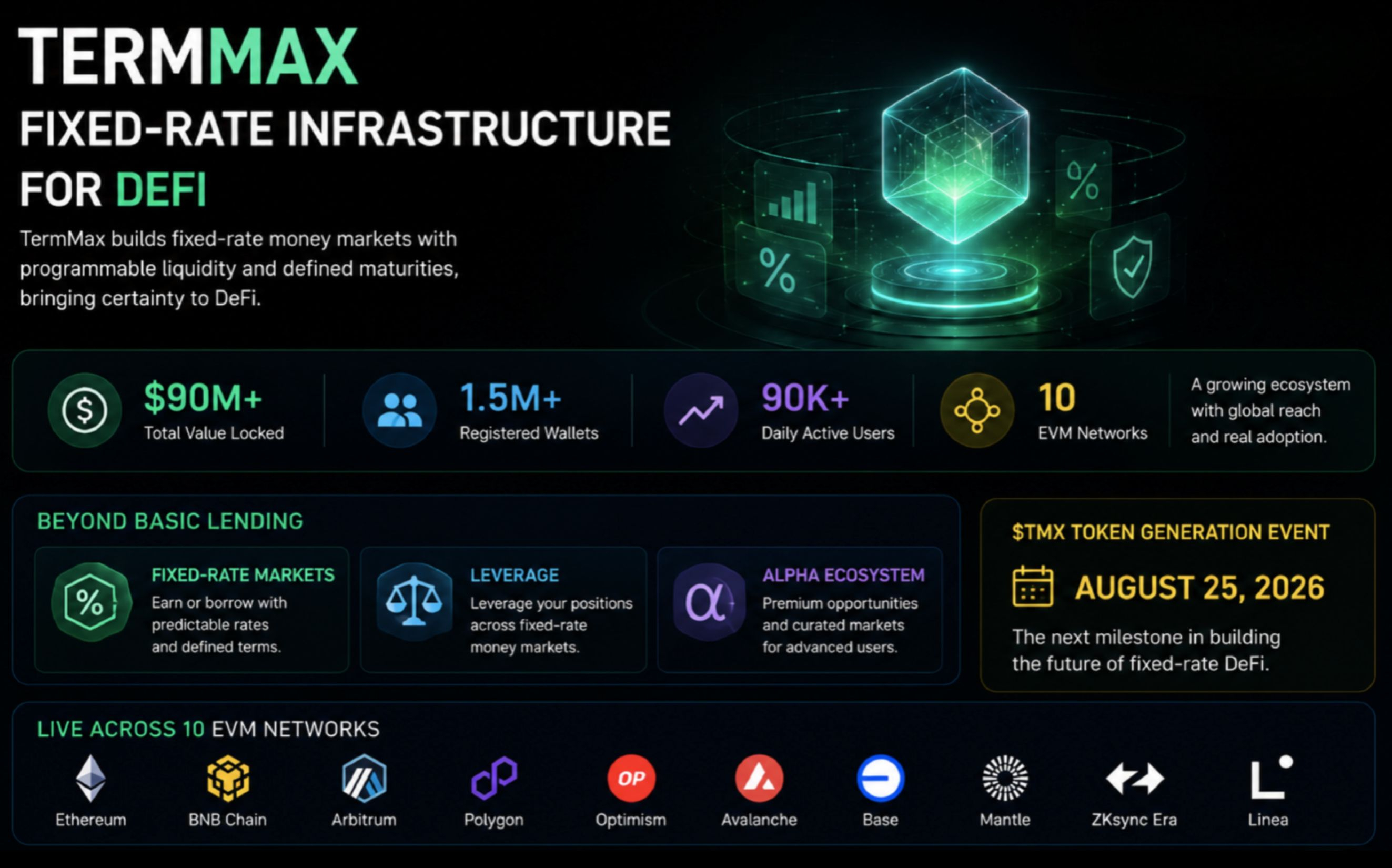
Tôi đã xem xét TermMax vượt ra ngoài câu chuyện quen thuộc “một nền tảng cho vay DeFi khác”.
Ý tưởng lớn nằm ở hạ tầng lãi suất cố định cho DeFi: các thị trường được xây dựng quanh thời hạn xác định, các vị thế lãi suất cố định và thanh khoản có thể lập trình.
Một vài con số từ dự án hiện đang nổi bật:
• TVL hơn $90M
• hơn 1,5M ví đã đăng ký
• hơn 90K người dùng hoạt động hằng ngày
• triển khai trên 10 mạng EVM
Và sản phẩm không dừng lại ở cho vay cơ bản: có các thị trường lãi suất cố định, đòn bẩy và hệ sinh thái Alpha của mình.
Một mốc khác đáng chú ý: TermMax đã công bố TGE $TMX của mình vào ngày 25 tháng 8.
Điều khiến tôi quan tâm nhiều nhất là liệu các thị trường lãi suất cố định có thể trở thành một lớp hạ tầng DeFi thực sự hữu ích hay chỉ là thêm một sản phẩm cho vay nữa.
#termmax @termmax
Tôi đã xem xét TermMax vượt ra ngoài câu chuyện quen thuộc “một nền tảng cho vay DeFi khác”.
Ý tưởng lớn nằm ở hạ tầng lãi suất cố định cho DeFi: các thị trường được xây dựng quanh thời hạn xác định, các vị thế lãi suất cố định và thanh khoản có thể lập trình.
Một vài con số từ dự án hiện đang nổi bật:
• TVL hơn $90M
• hơn 1,5M ví đã đăng ký
• hơn 90K người dùng hoạt động hằng ngày
• triển khai trên 10 mạng EVM
Và sản phẩm không dừng lại ở cho vay cơ bản: có các thị trường lãi suất cố định, đòn bẩy và hệ sinh thái Alpha của mình.
Một mốc khác đáng chú ý: TermMax đã công bố TGE $TMX của mình vào ngày 25 tháng 8.
Điều khiến tôi quan tâm nhiều nhất là liệu các thị trường lãi suất cố định có thể trở thành một lớp hạ tầng DeFi thực sự hữu ích hay chỉ là thêm một sản phẩm cho vay nữa.
#termmax @TermMax
Ý tưởng lớn nằm ở hạ tầng lãi suất cố định cho DeFi: các thị trường được xây dựng quanh thời hạn xác định, các vị thế lãi suất cố định và thanh khoản có thể lập trình.
Một vài con số từ dự án hiện đang nổi bật:
• TVL hơn $90M
• hơn 1,5M ví đã đăng ký
• hơn 90K người dùng hoạt động hằng ngày
• triển khai trên 10 mạng EVM
Và sản phẩm không dừng lại ở cho vay cơ bản: có các thị trường lãi suất cố định, đòn bẩy và hệ sinh thái Alpha của mình.
Một mốc khác đáng chú ý: TermMax đã công bố TGE $TMX của mình vào ngày 25 tháng 8.
Điều khiến tôi quan tâm nhiều nhất là liệu các thị trường lãi suất cố định có thể trở thành một lớp hạ tầng DeFi thực sự hữu ích hay chỉ là thêm một sản phẩm cho vay nữa.
#termmax @TermMax
92
·
--
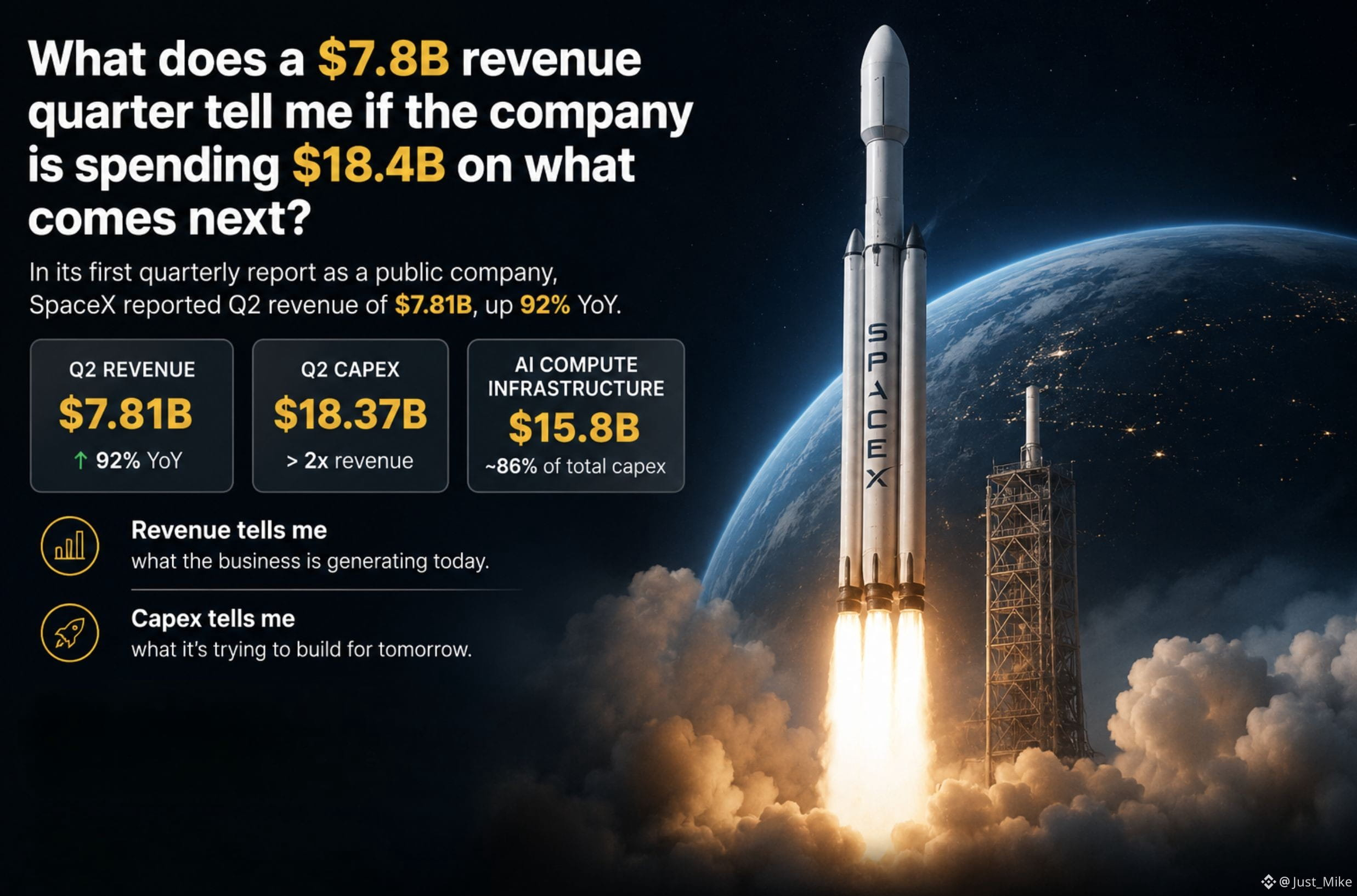
Một quý doanh thu 7,8B đô la nói lên điều gì liệu công ty đang chi 18,4B đô la cho phần tiếp theo?
Trong báo cáo quý đầu tiên của mình với tư cách công ty đại chúng, SpaceX đã báo cáo doanh thu quý 2 đạt 7,81B đô la, tăng 92% so với cùng kỳ năm trước.
Sau đó tôi xem xét chi tiêu vốn (capex):
18,37B đô la cho quý đó.
Con số này lớn hơn gấp hơn 2 lần doanh thu theo quý của công ty.
Và nó đã thay đổi cách tôi đọc con số đầu tiên.
Doanh thu cho tôi biết quy mô của hoạt động kinh doanh hiện tại.
Capex cho tôi biết công ty đang cam kết bao nhiêu vốn để xây dựng cho giai đoạn tăng trưởng tiếp theo.
Khoảng 15,8B đô la trong số capex của quý 2 đó đã được dùng cho hạ tầng AI.
Điều đó không tự động có nghĩa là việc chi tiêu kém hiệu quả — capex là một khoản đầu tư, không phải một khoản chi phí.
Nhưng nó cho tôi biết một điều mà chỉ tăng trưởng doanh thu không nói được:
công ty đang đầu tư tích cực đến mức nào cho giai đoạn tăng trưởng tiếp theo.
Đó là điều tôi thấy thú vị về SPCXB như một bStock.
Mã chứng khoán giúp tôi tiếp cận với SpaceX.
Nhưng thay vì chỉ hỏi:
“Doanh thu tăng nhanh đến đâu?”
Tôi cũng sẽ hỏi:
“Công ty đang chi bao nhiêu để tạo điều kiện cho giai đoạn tăng trưởng tiếp theo có thể diễn ra?”
Với tôi:
Doanh thu cho tôi biết doanh nghiệp đang tạo ra gì hôm nay.
Capex cho tôi biết doanh nghiệp đang cố gắng xây dựng điều gì cho ngày mai.
#bstockscis @BinanceCIS
Một quý doanh thu 7,8B đô la nói lên điều gì liệu công ty đang chi 18,4B đô la cho phần tiếp theo?
Trong báo cáo quý đầu tiên của mình với tư cách công ty đại chúng, SpaceX đã báo cáo doanh thu quý 2 đạt 7,81B đô la, tăng 92% so với cùng kỳ năm trước.
Sau đó tôi xem xét chi tiêu vốn (capex):
18,37B đô la cho quý đó.
Con số này lớn hơn gấp hơn 2 lần doanh thu theo quý của công ty.
Và nó đã thay đổi cách tôi đọc con số đầu tiên.
Doanh thu cho tôi biết quy mô của hoạt động kinh doanh hiện tại.
Capex cho tôi biết công ty đang cam kết bao nhiêu vốn để xây dựng cho giai đoạn tăng trưởng tiếp theo.
Khoảng 15,8B đô la trong số capex của quý 2 đó đã được dùng cho hạ tầng AI.
Điều đó không tự động có nghĩa là việc chi tiêu kém hiệu quả — capex là một khoản đầu tư, không phải một khoản chi phí.
Nhưng nó cho tôi biết một điều mà chỉ tăng trưởng doanh thu không nói được:
công ty đang đầu tư tích cực đến mức nào cho giai đoạn tăng trưởng tiếp theo.
Đó là điều tôi thấy thú vị về SPCXB như một bStock.
Mã chứng khoán giúp tôi tiếp cận với SpaceX.
Nhưng thay vì chỉ hỏi:
“Doanh thu tăng nhanh đến đâu?”
Tôi cũng sẽ hỏi:
“Công ty đang chi bao nhiêu để tạo điều kiện cho giai đoạn tăng trưởng tiếp theo có thể diễn ra?”
Với tôi:
Doanh thu cho tôi biết doanh nghiệp đang tạo ra gì hôm nay.
Capex cho tôi biết doanh nghiệp đang cố gắng xây dựng điều gì cho ngày mai.
#bstockscis @BinanceCIS
Trong báo cáo quý đầu tiên của mình với tư cách công ty đại chúng, SpaceX đã báo cáo doanh thu quý 2 đạt 7,81B đô la, tăng 92% so với cùng kỳ năm trước.
Sau đó tôi xem xét chi tiêu vốn (capex):
18,37B đô la cho quý đó.
Con số này lớn hơn gấp hơn 2 lần doanh thu theo quý của công ty.
Và nó đã thay đổi cách tôi đọc con số đầu tiên.
Doanh thu cho tôi biết quy mô của hoạt động kinh doanh hiện tại.
Capex cho tôi biết công ty đang cam kết bao nhiêu vốn để xây dựng cho giai đoạn tăng trưởng tiếp theo.
Khoảng 15,8B đô la trong số capex của quý 2 đó đã được dùng cho hạ tầng AI.
Điều đó không tự động có nghĩa là việc chi tiêu kém hiệu quả — capex là một khoản đầu tư, không phải một khoản chi phí.
Nhưng nó cho tôi biết một điều mà chỉ tăng trưởng doanh thu không nói được:
công ty đang đầu tư tích cực đến mức nào cho giai đoạn tăng trưởng tiếp theo.
Đó là điều tôi thấy thú vị về SPCXB như một bStock.
Mã chứng khoán giúp tôi tiếp cận với SpaceX.
Nhưng thay vì chỉ hỏi:
“Doanh thu tăng nhanh đến đâu?”
Tôi cũng sẽ hỏi:
“Công ty đang chi bao nhiêu để tạo điều kiện cho giai đoạn tăng trưởng tiếp theo có thể diễn ra?”
Với tôi:
Doanh thu cho tôi biết doanh nghiệp đang tạo ra gì hôm nay.
Capex cho tôi biết doanh nghiệp đang cố gắng xây dựng điều gì cho ngày mai.
#bstockscis @BinanceCIS
2
1
124
·
--
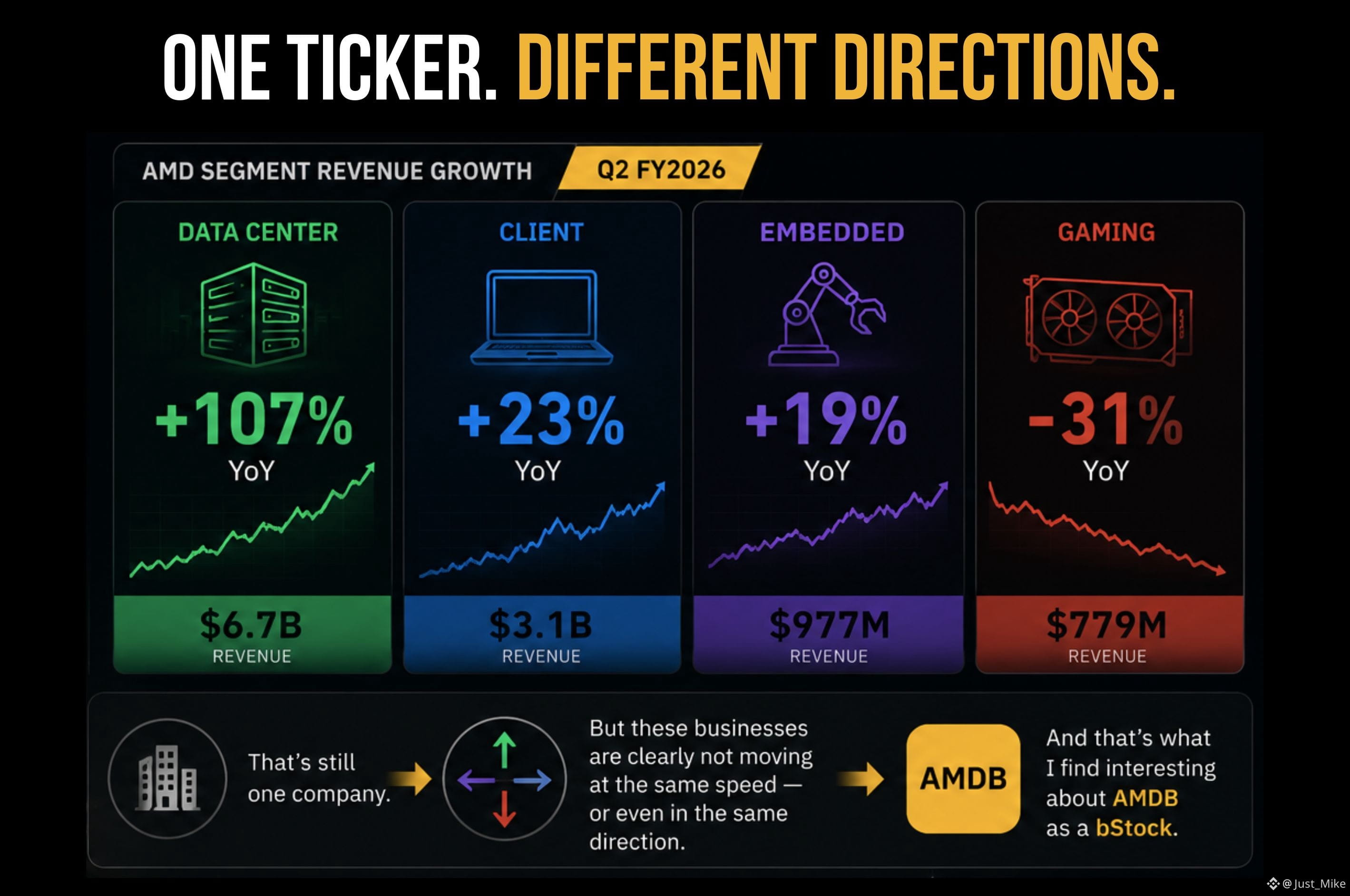
Một mã chứng khoán có thể bao gồm các doanh nghiệp đang đi theo những hướng ngược nhau.
Khi tôi thấy AMDB, thật dễ hình dung đây là một câu chuyện tăng trưởng lớn của AMD.
Nhưng các số liệu mới nhất của AMD khiến tôi nhìn về mã này theo cách khác.
Trong Q2 FY2026:
Data Center: +107% YoY
Client: +23%
Embedded: +19%
Gaming: −31%
Vẫn là một công ty.
Nhưng rõ ràng các mảng này không di chuyển cùng tốc độ — thậm chí không đi cùng một hướng.
Và đó là điều khiến tôi thấy hứng thú với AMDB như một bStock.
Mã chứng khoán cho tôi biết tôi đang được tiếp xúc với công ty nào.
Cơ cấu kinh doanh cho tôi biết chính xác điều gì đang tạo ra sự tiếp xúc đó.
Vì vậy, khi tôi thấy “tăng trưởng của AMD”, tôi không muốn dừng lại ở tiêu đề.
Tôi muốn tự hỏi:
Phần nào của AMD thực sự đang tăng trưởng?
Với tôi, đó là cách đọc một mã chứng khoán đơn lẻ hữu ích hơn nhiều.
#bstockscis @BinanceCIS
Một mã chứng khoán có thể bao gồm các doanh nghiệp đang đi theo những hướng ngược nhau.
Khi tôi thấy AMDB, thật dễ hình dung đây là một câu chuyện tăng trưởng lớn của AMD.
Nhưng các số liệu mới nhất của AMD khiến tôi nhìn về mã này theo cách khác.
Trong Q2 FY2026:
Data Center: +107% YoY
Client: +23%
Embedded: +19%
Gaming: −31%
Vẫn là một công ty.
Nhưng rõ ràng các mảng này không di chuyển cùng tốc độ — thậm chí không đi cùng một hướng.
Và đó là điều khiến tôi thấy hứng thú với AMDB như một bStock.
Mã chứng khoán cho tôi biết tôi đang được tiếp xúc với công ty nào.
Cơ cấu kinh doanh cho tôi biết chính xác điều gì đang tạo ra sự tiếp xúc đó.
Vì vậy, khi tôi thấy “tăng trưởng của AMD”, tôi không muốn dừng lại ở tiêu đề.
Tôi muốn tự hỏi:
Phần nào của AMD thực sự đang tăng trưởng?
Với tôi, đó là cách đọc một mã chứng khoán đơn lẻ hữu ích hơn nhiều.
#bstockscis @BinanceCIS
Khi tôi thấy AMDB, thật dễ hình dung đây là một câu chuyện tăng trưởng lớn của AMD.
Nhưng các số liệu mới nhất của AMD khiến tôi nhìn về mã này theo cách khác.
Trong Q2 FY2026:
Data Center: +107% YoY
Client: +23%
Embedded: +19%
Gaming: −31%
Vẫn là một công ty.
Nhưng rõ ràng các mảng này không di chuyển cùng tốc độ — thậm chí không đi cùng một hướng.
Và đó là điều khiến tôi thấy hứng thú với AMDB như một bStock.
Mã chứng khoán cho tôi biết tôi đang được tiếp xúc với công ty nào.
Cơ cấu kinh doanh cho tôi biết chính xác điều gì đang tạo ra sự tiếp xúc đó.
Vì vậy, khi tôi thấy “tăng trưởng của AMD”, tôi không muốn dừng lại ở tiêu đề.
Tôi muốn tự hỏi:
Phần nào của AMD thực sự đang tăng trưởng?
Với tôi, đó là cách đọc một mã chứng khoán đơn lẻ hữu ích hơn nhiều.
#bstockscis @BinanceCIS
4
3
105
·
--
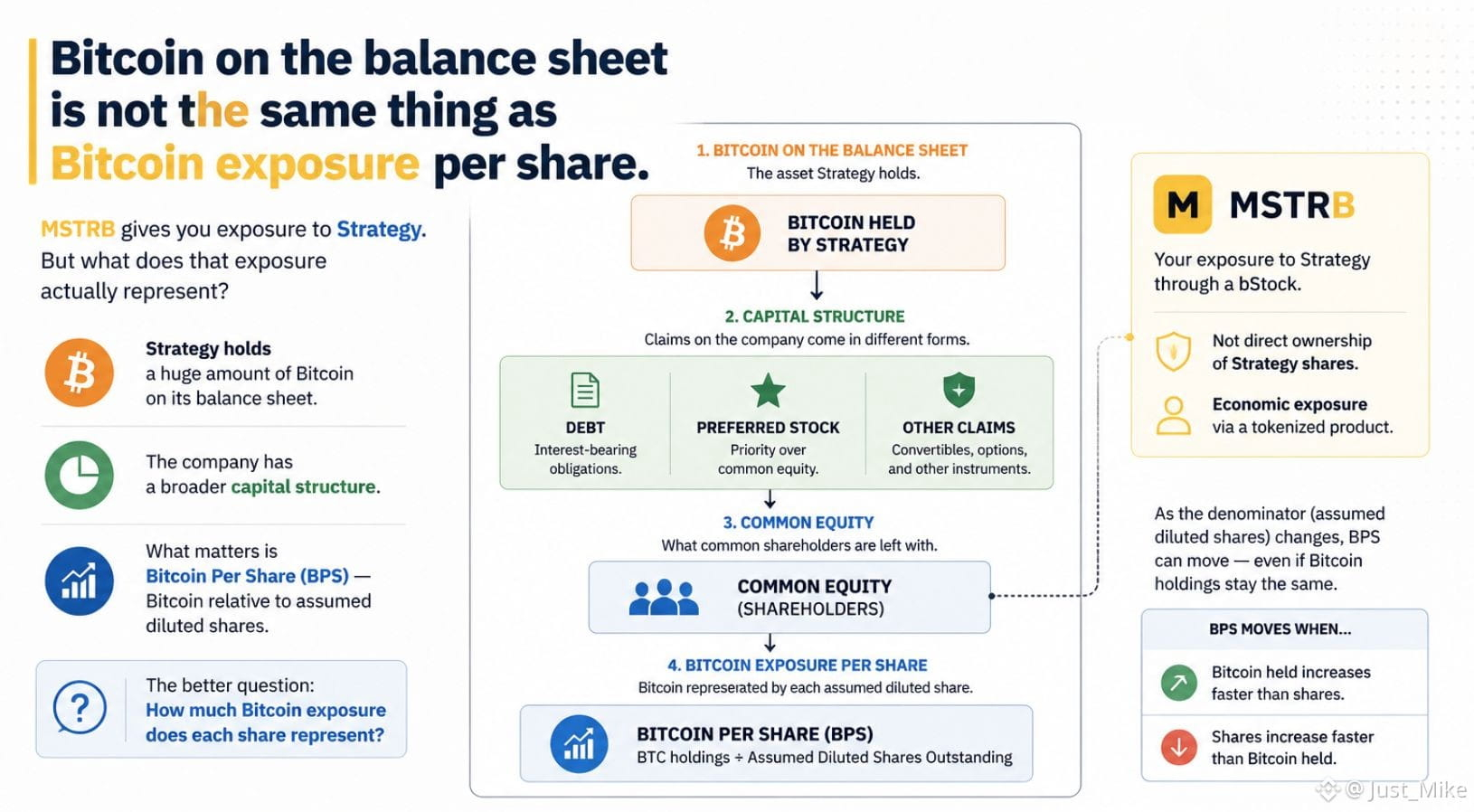
Bitcoin trên bảng cân đối kế toán không giống với mức độ tiếp xúc Bitcoin trên mỗi cổ phiếu.
Chiến lược nắm giữ một lượng Bitcoin rất lớn trên bảng cân đối kế toán của mình.
Vì vậy, thoạt nhìn, việc sở hữu MSTRB có thể trông như một cách đơn giản để có được mức độ tiếp xúc với Bitcoin thông qua một công ty.
Nhưng vẫn còn một lớp khác để xem xét.
Bản thân Strategy đo lường Bitcoin Per Share (BPS) — lượng Bitcoin được đại diện cho mỗi cổ phiếu pha loãng giả định.
Và tỷ lệ này quan trọng vì tử số và mẫu số có thể biến động độc lập.
Nếu Strategy bổ sung Bitcoin, BPS có thể tăng.
Nhưng nếu công ty tăng số lượng cổ phiếu pha loãng giả định mà không bổ sung Bitcoin theo cùng tốc độ, thì BPS có thể đi theo hướng ngược lại.
Đó là lý do tôi thấy MSTRB thú vị hơn việc chỉ nói rằng:
“Strategy sở hữu rất nhiều Bitcoin.”
Câu hỏi hay hơn là:
Mỗi cổ phiếu thực sự đại diện cho mức độ tiếp xúc với bao nhiêu Bitcoin?
Và đây cũng là điều khiến tôi thấy mức độ tiếp xúc được token hóa trở nên hấp dẫn.
Với một bStock như MSTRB, bạn đang nhận được mức độ tiếp xúc với công ty đứng đằng sau thông qua một sản phẩm được token hóa — chứ không phải trực tiếp sở hữu Bitcoin nằm trên bảng cân đối kế toán của Strategy.
Vì vậy, thực sự có hai lớp cần nghĩ đến:
Bitcoin công ty nắm giữ.
Bitcoin mức độ tiếp xúc được thể hiện bởi chứng khoán.
Tài sản xuất hiện trên tiêu đề chỉ mới là lớp đầu tiên.
Khi một công ty trở thành phương tiện (vehicle) cho một tài sản, hãy xem cấu trúc nằm giữa bạn và nó.
#bstockscis @BinanceCIS
Bitcoin trên bảng cân đối kế toán không giống với mức độ tiếp xúc Bitcoin trên mỗi cổ phiếu.
Chiến lược nắm giữ một lượng Bitcoin rất lớn trên bảng cân đối kế toán của mình.
Vì vậy, thoạt nhìn, việc sở hữu MSTRB có thể trông như một cách đơn giản để có được mức độ tiếp xúc với Bitcoin thông qua một công ty.
Nhưng vẫn còn một lớp khác để xem xét.
Bản thân Strategy đo lường Bitcoin Per Share (BPS) — lượng Bitcoin được đại diện cho mỗi cổ phiếu pha loãng giả định.
Và tỷ lệ này quan trọng vì tử số và mẫu số có thể biến động độc lập.
Nếu Strategy bổ sung Bitcoin, BPS có thể tăng.
Nhưng nếu công ty tăng số lượng cổ phiếu pha loãng giả định mà không bổ sung Bitcoin theo cùng tốc độ, thì BPS có thể đi theo hướng ngược lại.
Đó là lý do tôi thấy MSTRB thú vị hơn việc chỉ nói rằng:
“Strategy sở hữu rất nhiều Bitcoin.”
Câu hỏi hay hơn là:
Mỗi cổ phiếu thực sự đại diện cho mức độ tiếp xúc với bao nhiêu Bitcoin?
Và đây cũng là điều khiến tôi thấy mức độ tiếp xúc được token hóa trở nên hấp dẫn.
Với một bStock như MSTRB, bạn đang nhận được mức độ tiếp xúc với công ty đứng đằng sau thông qua một sản phẩm được token hóa — chứ không phải trực tiếp sở hữu Bitcoin nằm trên bảng cân đối kế toán của Strategy.
Vì vậy, thực sự có hai lớp cần nghĩ đến:
Bitcoin công ty nắm giữ.
Bitcoin mức độ tiếp xúc được thể hiện bởi chứng khoán.
Tài sản xuất hiện trên tiêu đề chỉ mới là lớp đầu tiên.
Khi một công ty trở thành phương tiện (vehicle) cho một tài sản, hãy xem cấu trúc nằm giữa bạn và nó.
#bstockscis @BinanceCIS
Chiến lược nắm giữ một lượng Bitcoin rất lớn trên bảng cân đối kế toán của mình.
Vì vậy, thoạt nhìn, việc sở hữu MSTRB có thể trông như một cách đơn giản để có được mức độ tiếp xúc với Bitcoin thông qua một công ty.
Nhưng vẫn còn một lớp khác để xem xét.
Bản thân Strategy đo lường Bitcoin Per Share (BPS) — lượng Bitcoin được đại diện cho mỗi cổ phiếu pha loãng giả định.
Và tỷ lệ này quan trọng vì tử số và mẫu số có thể biến động độc lập.
Nếu Strategy bổ sung Bitcoin, BPS có thể tăng.
Nhưng nếu công ty tăng số lượng cổ phiếu pha loãng giả định mà không bổ sung Bitcoin theo cùng tốc độ, thì BPS có thể đi theo hướng ngược lại.
Đó là lý do tôi thấy MSTRB thú vị hơn việc chỉ nói rằng:
“Strategy sở hữu rất nhiều Bitcoin.”
Câu hỏi hay hơn là:
Mỗi cổ phiếu thực sự đại diện cho mức độ tiếp xúc với bao nhiêu Bitcoin?
Và đây cũng là điều khiến tôi thấy mức độ tiếp xúc được token hóa trở nên hấp dẫn.
Với một bStock như MSTRB, bạn đang nhận được mức độ tiếp xúc với công ty đứng đằng sau thông qua một sản phẩm được token hóa — chứ không phải trực tiếp sở hữu Bitcoin nằm trên bảng cân đối kế toán của Strategy.
Vì vậy, thực sự có hai lớp cần nghĩ đến:
Bitcoin công ty nắm giữ.
Bitcoin mức độ tiếp xúc được thể hiện bởi chứng khoán.
Tài sản xuất hiện trên tiêu đề chỉ mới là lớp đầu tiên.
Khi một công ty trở thành phương tiện (vehicle) cho một tài sản, hãy xem cấu trúc nằm giữa bạn và nó.
#bstockscis @BinanceCIS
102
·
--
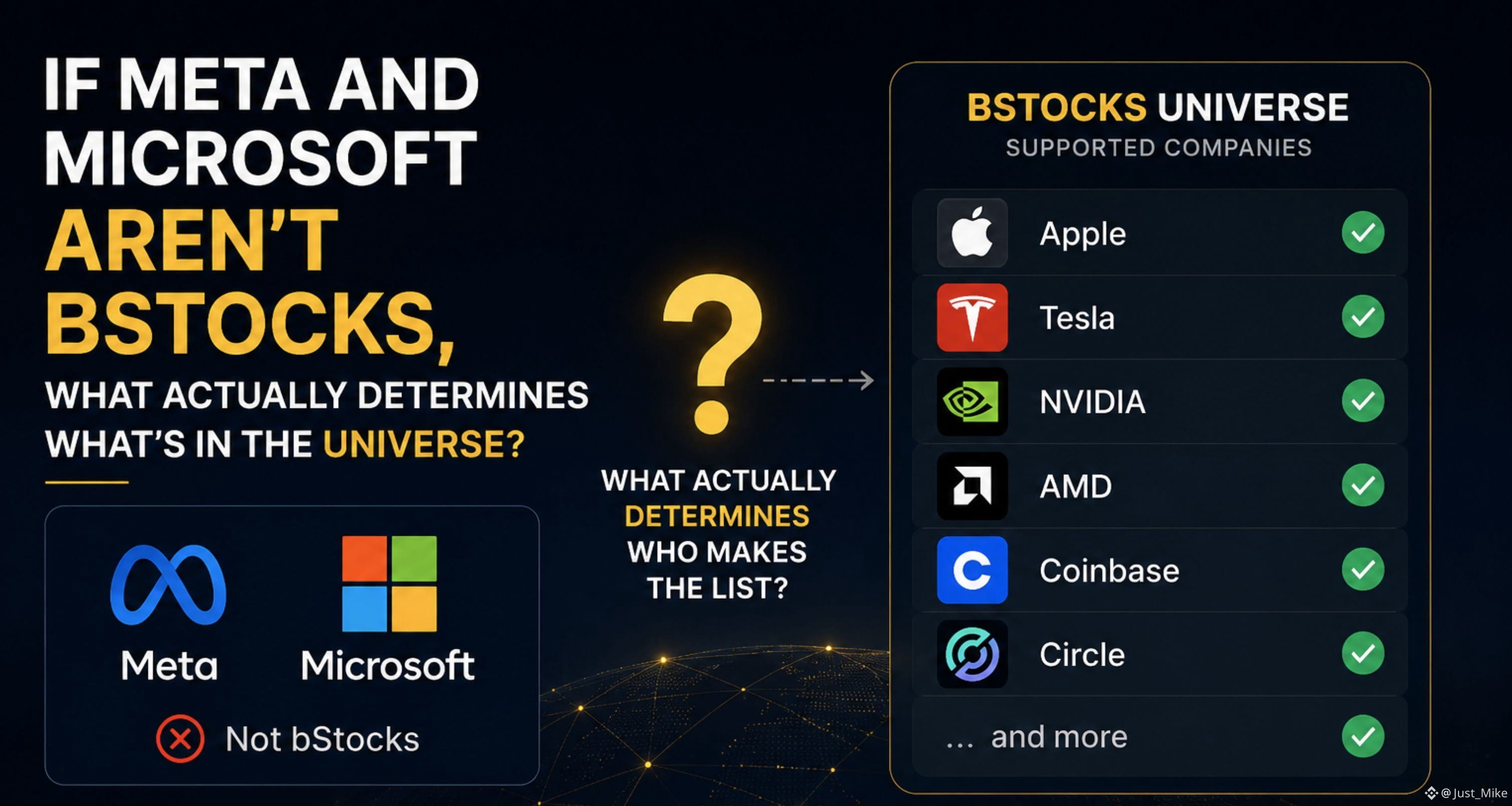
Nếu Meta và Microsoft không phải là bStocks, thì điều gì thực sự quyết định ai được đưa vào danh sách?
Khi lần đầu tôi xem thế giới bStocks, tôi đã đưa ra một giả định đơn giản.
Nếu một công ty là một công ty đại chúng lớn, nổi tiếng, tôi kỳ vọng rằng nó sẽ có sẵn dưới dạng bStock.
Rồi tôi phát hiện ra một điều gì đó thách thức giả định đó:
Meta và Microsoft không phải là bStocks.
Cả hai đều là những công ty đại chúng lớn.
Nhưng việc là một công ty đại chúng lớn và việc có sẵn dưới dạng bStock rõ ràng không phải là cùng một chuyện.
Điều đó khiến tôi nhìn danh sách Các công ty được Hỗ trợ theo một cách khác.
Thay vì hỏi:
“Vì sao Meta không có ở đây?”
Tôi bắt đầu hỏi:
“Điều gì thực sự quyết định liệu một tài sản có trở thành một phần của hệ sinh thái bStocks hay không?”
Vì danh sách này không chỉ đơn giản là bản sao của những công ty mà tôi vốn đã biết từ thị trường chứng khoán Mỹ.
Đó là một tập hợp cụ thể các hình thức phơi nhiễm cổ phiếu token hóa được hỗ trợ.
Và tôi nghĩ sự khác biệt đó là quan trọng.
Khi tôi nhìn vào một bStock bây giờ, tôi không muốn cho rằng sự quen thuộc với công ty đứng sau nó sẽ nói cho tôi biết liệu mức phơi nhiễm đó có sẵn hay không.
Tôi muốn bắt đầu với một câu hỏi đơn giản hơn:
Tài sản này có thực sự được hỗ trợ dưới dạng bStock hay không?
#bstockscis @BinanceCIS
Nếu Meta và Microsoft không phải là bStocks, thì điều gì thực sự quyết định ai được đưa vào danh sách?
Khi lần đầu tôi xem thế giới bStocks, tôi đã đưa ra một giả định đơn giản.
Nếu một công ty là một công ty đại chúng lớn, nổi tiếng, tôi kỳ vọng rằng nó sẽ có sẵn dưới dạng bStock.
Rồi tôi phát hiện ra một điều gì đó thách thức giả định đó:
Meta và Microsoft không phải là bStocks.
Cả hai đều là những công ty đại chúng lớn.
Nhưng việc là một công ty đại chúng lớn và việc có sẵn dưới dạng bStock rõ ràng không phải là cùng một chuyện.
Điều đó khiến tôi nhìn danh sách Các công ty được Hỗ trợ theo một cách khác.
Thay vì hỏi:
“Vì sao Meta không có ở đây?”
Tôi bắt đầu hỏi:
“Điều gì thực sự quyết định liệu một tài sản có trở thành một phần của hệ sinh thái bStocks hay không?”
Vì danh sách này không chỉ đơn giản là bản sao của những công ty mà tôi vốn đã biết từ thị trường chứng khoán Mỹ.
Đó là một tập hợp cụ thể các hình thức phơi nhiễm cổ phiếu token hóa được hỗ trợ.
Và tôi nghĩ sự khác biệt đó là quan trọng.
Khi tôi nhìn vào một bStock bây giờ, tôi không muốn cho rằng sự quen thuộc với công ty đứng sau nó sẽ nói cho tôi biết liệu mức phơi nhiễm đó có sẵn hay không.
Tôi muốn bắt đầu với một câu hỏi đơn giản hơn:
Tài sản này có thực sự được hỗ trợ dưới dạng bStock hay không?
#bstockscis @BinanceCIS
Khi lần đầu tôi xem thế giới bStocks, tôi đã đưa ra một giả định đơn giản.
Nếu một công ty là một công ty đại chúng lớn, nổi tiếng, tôi kỳ vọng rằng nó sẽ có sẵn dưới dạng bStock.
Rồi tôi phát hiện ra một điều gì đó thách thức giả định đó:
Meta và Microsoft không phải là bStocks.
Cả hai đều là những công ty đại chúng lớn.
Nhưng việc là một công ty đại chúng lớn và việc có sẵn dưới dạng bStock rõ ràng không phải là cùng một chuyện.
Điều đó khiến tôi nhìn danh sách Các công ty được Hỗ trợ theo một cách khác.
Thay vì hỏi:
“Vì sao Meta không có ở đây?”
Tôi bắt đầu hỏi:
“Điều gì thực sự quyết định liệu một tài sản có trở thành một phần của hệ sinh thái bStocks hay không?”
Vì danh sách này không chỉ đơn giản là bản sao của những công ty mà tôi vốn đã biết từ thị trường chứng khoán Mỹ.
Đó là một tập hợp cụ thể các hình thức phơi nhiễm cổ phiếu token hóa được hỗ trợ.
Và tôi nghĩ sự khác biệt đó là quan trọng.
Khi tôi nhìn vào một bStock bây giờ, tôi không muốn cho rằng sự quen thuộc với công ty đứng sau nó sẽ nói cho tôi biết liệu mức phơi nhiễm đó có sẵn hay không.
Tôi muốn bắt đầu với một câu hỏi đơn giản hơn:
Tài sản này có thực sự được hỗ trợ dưới dạng bStock hay không?
#bstockscis @BinanceCIS
1
110
·
--
Điều gì xảy ra khi cổ phiếu đứng sau một bStock trả cổ tức?
Trước đây tôi nghĩ cổ tức là một trong những phần đơn giản nhất của việc sở hữu cổ phiếu.
Công ty trả cổ tức.
Cổ đông nhận được.
Đơn giản.
Nhưng sau đó tôi bắt đầu tìm hiểu cách cổ tức hoạt động với bStocks.
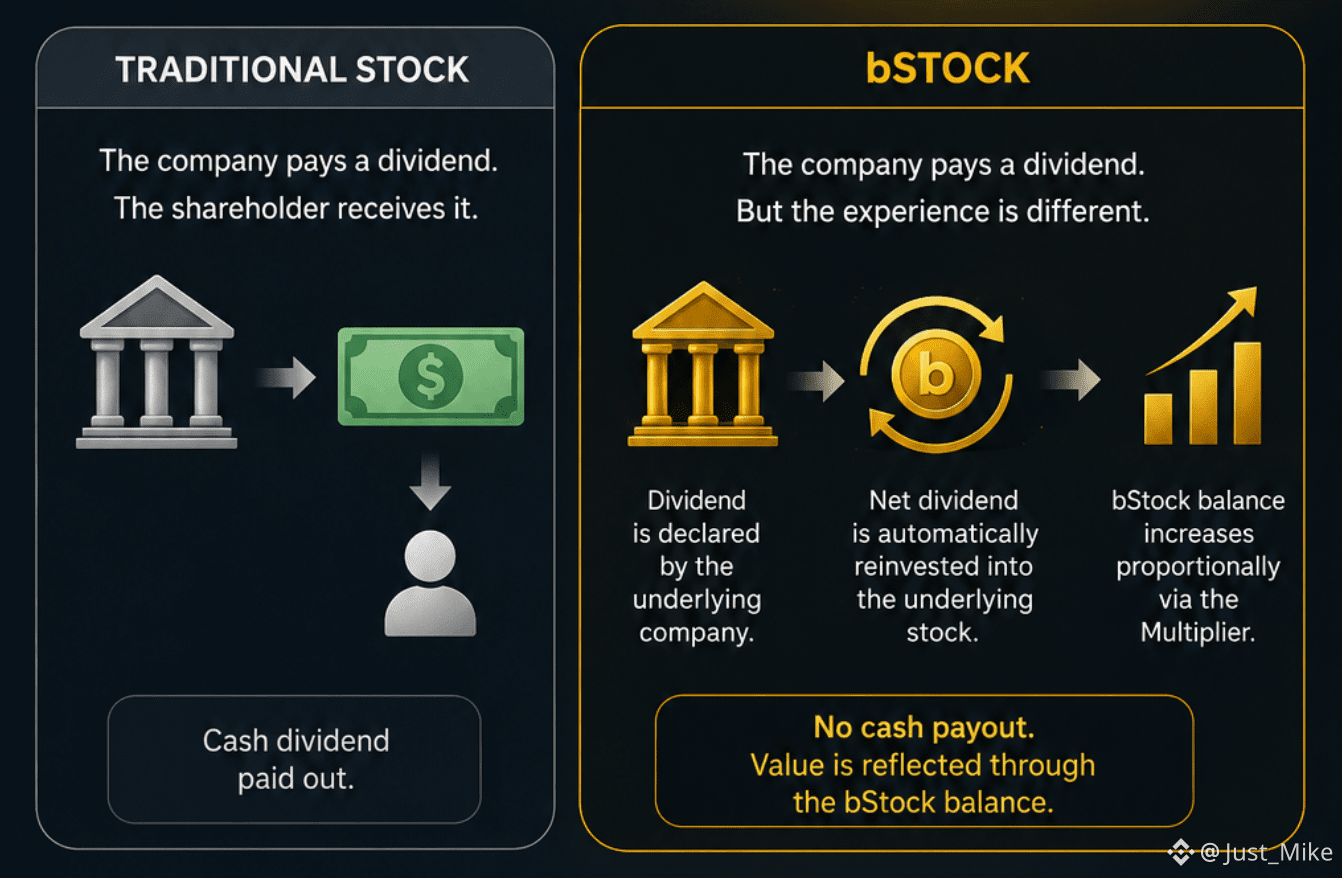
Cổ phiếu cơ sở vẫn có thể trả cổ tức, nhưng trải nghiệm không giống như khi tự mình nắm giữ cổ phiếu đó.
Với bStocks, khoản cổ tức ròng không được chi trả dưới dạng tiền mặt.
Thay vào đó, nó được tự động tái đầu tư vào cổ phiếu cơ sở, và giá trị được phản ánh thông qua mức tăng tương ứng trong số dư bStock nhờ Multiplier.
Điều đó khiến tôi nghĩ về một vấn đề mà trước đây tôi chưa từng cân nhắc.
Có tiếp xúc với cùng một công ty không nhất thiết đồng nghĩa với việc sẽ trải nghiệm mọi sự kiện doanh nghiệp theo cùng một cách.
Công ty cơ sở có thể là như nhau.
Lợi ích kinh tế vẫn có thể được phản ánh.
Nhưng cách mà lợi ích đó đến với tôi có thể hoàn toàn khác.
Và tôi nghĩ đây là một trong những điều thú vị hơn về các tài sản được token hóa.
Cùng công ty cơ sở không nhất thiết nghĩa là cùng trải nghiệm của nhà đầu tư.
#bstockscis @BinanceCIS
Điều gì xảy ra khi cổ phiếu đứng sau một bStock trả cổ tức?
Trước đây tôi nghĩ cổ tức là một trong những phần đơn giản nhất của việc sở hữu cổ phiếu.
Công ty trả cổ tức.
Cổ đông nhận được.
Đơn giản.
Nhưng sau đó tôi bắt đầu tìm hiểu cách cổ tức hoạt động với bStocks.
Cổ phiếu cơ sở vẫn có thể trả cổ tức, nhưng trải nghiệm không giống như khi tự mình nắm giữ cổ phiếu đó.
Với bStocks, khoản cổ tức ròng không được chi trả dưới dạng tiền mặt.
Thay vào đó, nó được tự động tái đầu tư vào cổ phiếu cơ sở, và giá trị được phản ánh thông qua mức tăng tương ứng trong số dư bStock nhờ Multiplier.
Điều đó khiến tôi nghĩ về một vấn đề mà trước đây tôi chưa từng cân nhắc.
Có tiếp xúc với cùng một công ty không nhất thiết đồng nghĩa với việc sẽ trải nghiệm mọi sự kiện doanh nghiệp theo cùng một cách.
Công ty cơ sở có thể là như nhau.
Lợi ích kinh tế vẫn có thể được phản ánh.
Nhưng cách mà lợi ích đó đến với tôi có thể hoàn toàn khác.
Và tôi nghĩ đây là một trong những điều thú vị hơn về các tài sản được token hóa.
Cùng công ty cơ sở không nhất thiết nghĩa là cùng trải nghiệm của nhà đầu tư.
#bstockscis @BinanceCIS
Trước đây tôi nghĩ cổ tức là một trong những phần đơn giản nhất của việc sở hữu cổ phiếu.
Công ty trả cổ tức.
Cổ đông nhận được.
Đơn giản.
Nhưng sau đó tôi bắt đầu tìm hiểu cách cổ tức hoạt động với bStocks.
Cổ phiếu cơ sở vẫn có thể trả cổ tức, nhưng trải nghiệm không giống như khi tự mình nắm giữ cổ phiếu đó.
Với bStocks, khoản cổ tức ròng không được chi trả dưới dạng tiền mặt.
Thay vào đó, nó được tự động tái đầu tư vào cổ phiếu cơ sở, và giá trị được phản ánh thông qua mức tăng tương ứng trong số dư bStock nhờ Multiplier.
Điều đó khiến tôi nghĩ về một vấn đề mà trước đây tôi chưa từng cân nhắc.
Có tiếp xúc với cùng một công ty không nhất thiết đồng nghĩa với việc sẽ trải nghiệm mọi sự kiện doanh nghiệp theo cùng một cách.
Công ty cơ sở có thể là như nhau.
Lợi ích kinh tế vẫn có thể được phản ánh.
Nhưng cách mà lợi ích đó đến với tôi có thể hoàn toàn khác.
Và tôi nghĩ đây là một trong những điều thú vị hơn về các tài sản được token hóa.
Cùng công ty cơ sở không nhất thiết nghĩa là cùng trải nghiệm của nhà đầu tư.
#bstockscis @BinanceCIS
72
·
--
Nếu tôi giao dịch một bStock trên Binance, thì ai thực sự phát hành nó?
Khi tôi lần đầu xem xét bStocks, tôi đương nhiên liên hệ sản phẩm này với Binance.
Tôi thấy mã giao dịch trên Binance.
Tôi giao dịch nó trên Binance.
Tôi quản lý vị thế thông qua Binance.
Vì vậy, tôi bắt đầu thắc mắc:
Ai thực sự là người phát hành chứng chỉ mà tôi đang nắm giữ?
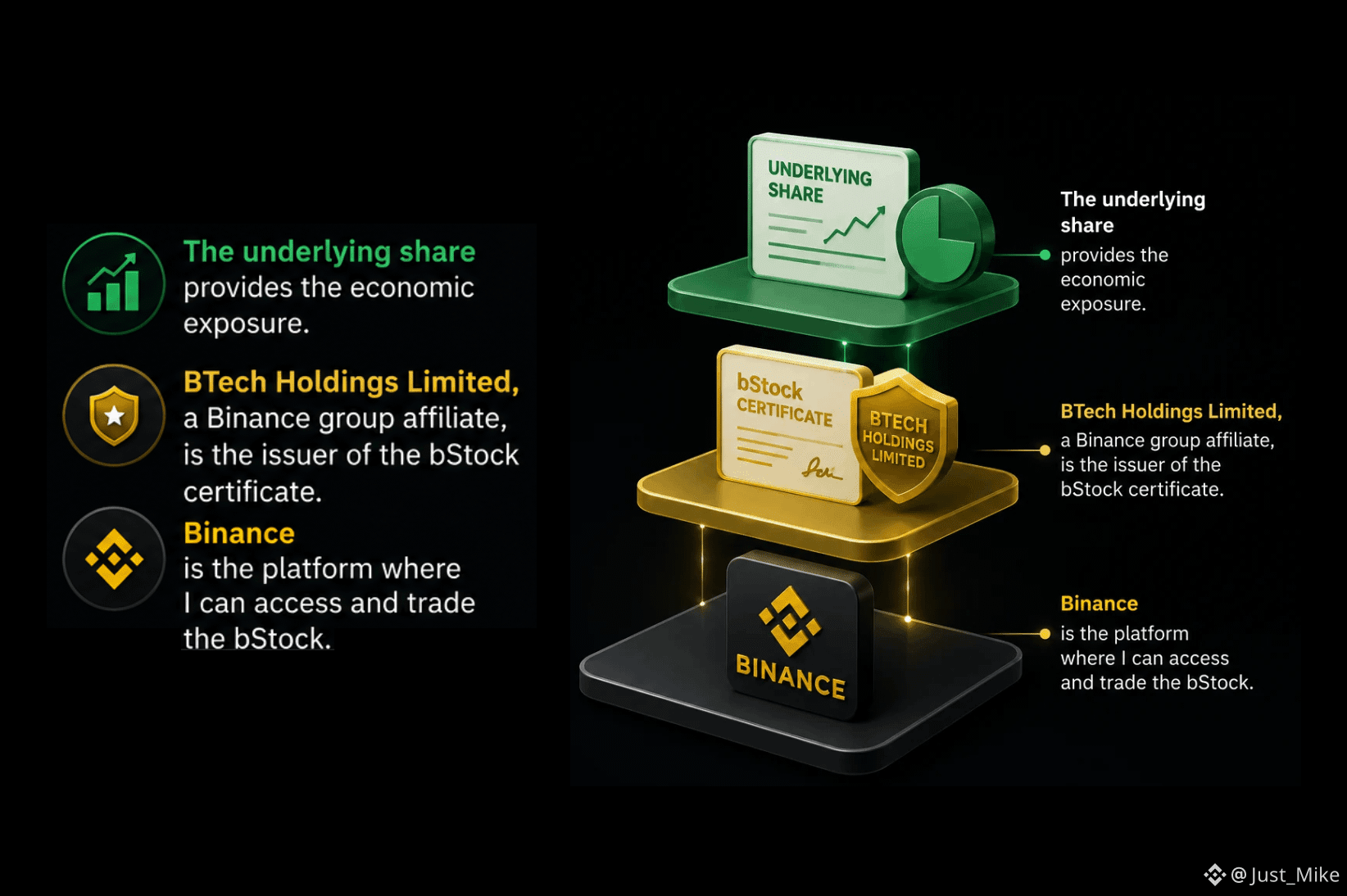
Câu trả lời làm tôi hơi bất ngờ: BTech Holdings Limited, một công ty liên kết thuộc nhóm Binance, là bên phát hành.
Và sự khác biệt đó thu hút sự chú ý của tôi.
Binance là nơi tôi truy cập và giao dịch tài sản.
BTech Holdings là bên phát hành chứng chỉ bStock.
Hai điều đó rất dễ để gộp lại trong đầu khi mọi thứ đều xuất hiện trong cùng một giao diện.
Nhưng chúng mô tả các phần khác nhau của cấu trúc.
Và tôi nghĩ đây là một câu hỏi quan trọng khi tìm hiểu các tài sản được mã hóa.
Khi tôi thấy một tài sản bên trong một sàn giao dịch, tôi không nên tự động cho rằng chính sàn giao dịch đó là bên phát hành.
Vì vậy, bây giờ, bên cạnh:
“Được bảo chứng bởi cái gì?”
Tôi cũng đang hỏi:
“Chính xác thì ai đã phát hành chứng chỉ mà tôi đang nắm giữ?”
Đối với tôi, điều đó bổ sung thêm một lớp hiểu biết về việc một tài sản được mã hóa thực sự là gì.
Mã giao dịch cho tôi biết tôi đang nhận được mức độ phơi nhiễm nào.
Bên phát hành cho tôi biết ai là người phát hành chứng chỉ đại diện cho mức độ phơi nhiễm đó.
#bstockscis @BinanceCIS
Nếu tôi giao dịch một bStock trên Binance, thì ai thực sự phát hành nó?
Khi tôi lần đầu xem xét bStocks, tôi đương nhiên liên hệ sản phẩm này với Binance.
Tôi thấy mã giao dịch trên Binance.
Tôi giao dịch nó trên Binance.
Tôi quản lý vị thế thông qua Binance.
Vì vậy, tôi bắt đầu thắc mắc:
Ai thực sự là người phát hành chứng chỉ mà tôi đang nắm giữ?
Câu trả lời làm tôi hơi bất ngờ: BTech Holdings Limited, một công ty liên kết thuộc nhóm Binance, là bên phát hành.
Và sự khác biệt đó thu hút sự chú ý của tôi.
Binance là nơi tôi truy cập và giao dịch tài sản.
BTech Holdings là bên phát hành chứng chỉ bStock.
Hai điều đó rất dễ để gộp lại trong đầu khi mọi thứ đều xuất hiện trong cùng một giao diện.
Nhưng chúng mô tả các phần khác nhau của cấu trúc.
Và tôi nghĩ đây là một câu hỏi quan trọng khi tìm hiểu các tài sản được mã hóa.
Khi tôi thấy một tài sản bên trong một sàn giao dịch, tôi không nên tự động cho rằng chính sàn giao dịch đó là bên phát hành.
Vì vậy, bây giờ, bên cạnh:
“Được bảo chứng bởi cái gì?”
Tôi cũng đang hỏi:
“Chính xác thì ai đã phát hành chứng chỉ mà tôi đang nắm giữ?”
Đối với tôi, điều đó bổ sung thêm một lớp hiểu biết về việc một tài sản được mã hóa thực sự là gì.
Mã giao dịch cho tôi biết tôi đang nhận được mức độ phơi nhiễm nào.
Bên phát hành cho tôi biết ai là người phát hành chứng chỉ đại diện cho mức độ phơi nhiễm đó.
#bstockscis @BinanceCIS
Khi tôi lần đầu xem xét bStocks, tôi đương nhiên liên hệ sản phẩm này với Binance.
Tôi thấy mã giao dịch trên Binance.
Tôi giao dịch nó trên Binance.
Tôi quản lý vị thế thông qua Binance.
Vì vậy, tôi bắt đầu thắc mắc:
Ai thực sự là người phát hành chứng chỉ mà tôi đang nắm giữ?
Câu trả lời làm tôi hơi bất ngờ: BTech Holdings Limited, một công ty liên kết thuộc nhóm Binance, là bên phát hành.
Và sự khác biệt đó thu hút sự chú ý của tôi.
Binance là nơi tôi truy cập và giao dịch tài sản.
BTech Holdings là bên phát hành chứng chỉ bStock.
Hai điều đó rất dễ để gộp lại trong đầu khi mọi thứ đều xuất hiện trong cùng một giao diện.
Nhưng chúng mô tả các phần khác nhau của cấu trúc.
Và tôi nghĩ đây là một câu hỏi quan trọng khi tìm hiểu các tài sản được mã hóa.
Khi tôi thấy một tài sản bên trong một sàn giao dịch, tôi không nên tự động cho rằng chính sàn giao dịch đó là bên phát hành.
Vì vậy, bây giờ, bên cạnh:
“Được bảo chứng bởi cái gì?”
Tôi cũng đang hỏi:
“Chính xác thì ai đã phát hành chứng chỉ mà tôi đang nắm giữ?”
Đối với tôi, điều đó bổ sung thêm một lớp hiểu biết về việc một tài sản được mã hóa thực sự là gì.
Mã giao dịch cho tôi biết tôi đang nhận được mức độ phơi nhiễm nào.
Bên phát hành cho tôi biết ai là người phát hành chứng chỉ đại diện cho mức độ phơi nhiễm đó.
#bstockscis @BinanceCIS
1
1
101
·
--
Nếu ước tính khoảng 73% cổ đông trong nỗ lực giao dịch cổ phiếu rộng hơn của Binance đến từ các thị trường mới nổi, thì quyền tiếp cận vốn chủ sở hữu có nên hoạt động theo cách tương tự ở mọi nơi không?
Một con số trong tài liệu bStocks đã thu hút sự chú ý của tôi:
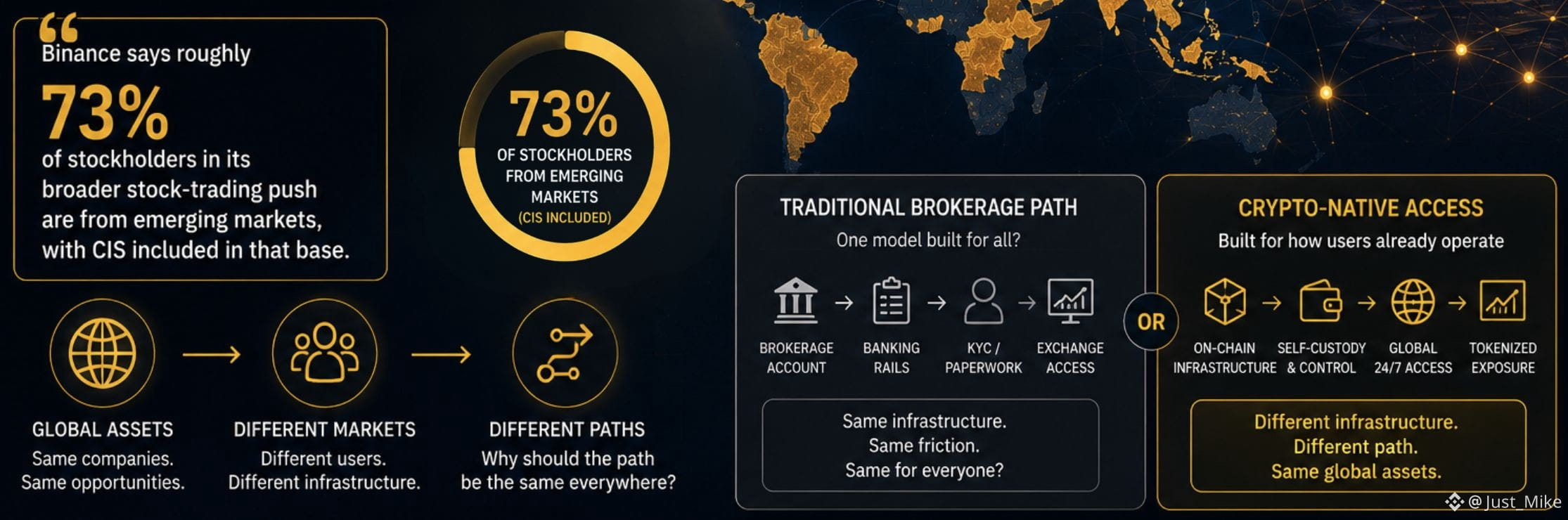
Binance cho biết ước tính khoảng 73% cổ đông trong nỗ lực giao dịch cổ phiếu rộng hơn của họ đến từ các thị trường mới nổi, trong đó CIS cũng được đưa vào cơ sở tính toán.
Điều đó khiến tôi nghĩ về việc token hóa theo một cách khác.
Chúng ta thường coi việc tiếp cận cổ phiếu toàn cầu như thể cơ sở hạ tầng đứng sau sự tiếp cận đó phải trông giống nhau ở mọi nơi.
Tôi không chắc nó nên như vậy.
Nếu người dùng đã vận hành thông qua hạ tầng crypto, thì tại sao việc tiếp cận vốn chủ sở hữu lại nhất thiết phải đi theo cùng một lộ trình như trong một thị trường môi giới truyền thống?
Vì vậy, câu hỏi thú vị không chỉ là:
“Có thể đưa cổ phiếu lên on-chain không?”
Mà còn là:
“Vì sao lộ trình dẫn đến cổ phiếu toàn cầu lại phải giống nhau ở mọi nơi?”
Và tôi nghĩ con số 73% khiến câu hỏi đó trở nên thú vị hơn.
Có lẽ tương lai của việc tiếp cận vốn chủ sở hữu sẽ không phải là một mô hình phổ quát.
Có thể các thị trường khác nhau sẽ dùng những lộ trình khác nhau để tiếp cận cùng các tài sản toàn cầu.
#bstockscis @BinanceCIS
Nếu ước tính khoảng 73% cổ đông trong nỗ lực giao dịch cổ phiếu rộng hơn của Binance đến từ các thị trường mới nổi, thì quyền tiếp cận vốn chủ sở hữu có nên hoạt động theo cách tương tự ở mọi nơi không?
Một con số trong tài liệu bStocks đã thu hút sự chú ý của tôi:
Binance cho biết ước tính khoảng 73% cổ đông trong nỗ lực giao dịch cổ phiếu rộng hơn của họ đến từ các thị trường mới nổi, trong đó CIS cũng được đưa vào cơ sở tính toán.
Điều đó khiến tôi nghĩ về việc token hóa theo một cách khác.
Chúng ta thường coi việc tiếp cận cổ phiếu toàn cầu như thể cơ sở hạ tầng đứng sau sự tiếp cận đó phải trông giống nhau ở mọi nơi.
Tôi không chắc nó nên như vậy.
Nếu người dùng đã vận hành thông qua hạ tầng crypto, thì tại sao việc tiếp cận vốn chủ sở hữu lại nhất thiết phải đi theo cùng một lộ trình như trong một thị trường môi giới truyền thống?
Vì vậy, câu hỏi thú vị không chỉ là:
“Có thể đưa cổ phiếu lên on-chain không?”
Mà còn là:
“Vì sao lộ trình dẫn đến cổ phiếu toàn cầu lại phải giống nhau ở mọi nơi?”
Và tôi nghĩ con số 73% khiến câu hỏi đó trở nên thú vị hơn.
Có lẽ tương lai của việc tiếp cận vốn chủ sở hữu sẽ không phải là một mô hình phổ quát.
Có thể các thị trường khác nhau sẽ dùng những lộ trình khác nhau để tiếp cận cùng các tài sản toàn cầu.
#bstockscis @BinanceCIS
Một con số trong tài liệu bStocks đã thu hút sự chú ý của tôi:
Binance cho biết ước tính khoảng 73% cổ đông trong nỗ lực giao dịch cổ phiếu rộng hơn của họ đến từ các thị trường mới nổi, trong đó CIS cũng được đưa vào cơ sở tính toán.
Điều đó khiến tôi nghĩ về việc token hóa theo một cách khác.
Chúng ta thường coi việc tiếp cận cổ phiếu toàn cầu như thể cơ sở hạ tầng đứng sau sự tiếp cận đó phải trông giống nhau ở mọi nơi.
Tôi không chắc nó nên như vậy.
Nếu người dùng đã vận hành thông qua hạ tầng crypto, thì tại sao việc tiếp cận vốn chủ sở hữu lại nhất thiết phải đi theo cùng một lộ trình như trong một thị trường môi giới truyền thống?
Vì vậy, câu hỏi thú vị không chỉ là:
“Có thể đưa cổ phiếu lên on-chain không?”
Mà còn là:
“Vì sao lộ trình dẫn đến cổ phiếu toàn cầu lại phải giống nhau ở mọi nơi?”
Và tôi nghĩ con số 73% khiến câu hỏi đó trở nên thú vị hơn.
Có lẽ tương lai của việc tiếp cận vốn chủ sở hữu sẽ không phải là một mô hình phổ quát.
Có thể các thị trường khác nhau sẽ dùng những lộ trình khác nhau để tiếp cận cùng các tài sản toàn cầu.
#bstockscis @BinanceCIS
2
1
104
Đăng nhập để khám phá thêm nội dung
Tham gia cùng người dùng tiền mã hóa toàn cầu trên Binance Square
⚡️ Nhận thông tin mới nhất và hữu ích về tiền mã hóa.
💬 Được tin cậy bởi sàn giao dịch tiền mã hóa lớn nhất thế giới.
👍 Khám phá những thông tin chuyên sâu thực tế từ những nhà sáng tạo đã xác minh.
Email / Số điện thoại
Chủ đề thịnh hành
TheoDõiFOMC
106,403 lượt xem
629 đang thảo luận
#TheoDõiFOMC $BTC $ETH
FOMC không chỉ là một cuộc họp về lãi suất.
Đây là nơi mà hướng đi của “tiền lớn” có thể bắt đầu thay đổi.
Một câu nói từ Fed có thể trở thành tín hiệu cho thị trường.
Lãi suất có thể không đổi, nhưng kỳ vọng của nhà đầu tư có thể thay đổi trước.
Với Bitcoin, câu hỏi thực sự không phải lúc nào cũng là:
“Fed sẽ tăng hay cắt giảm lãi suất?”
Mà là:
“Fed muốn thị trường tin điều gì?”
Trong crypto, giá thường biến động trước cả tin tức.
Vì vậy, trước mỗi kỳ FOMC, đừng chỉ nhìn vào biểu đồ.
Hãy theo dõi kỳ vọng, thanh khoản và tâm lý thị trường.
🌊 Thị trường không chỉ phản ứng với những gì Fed làm.
Mà nó phản ứng với những gì thị trường tin rằng Fed sẽ làm.
#FOMC #Bitcoin #Crypto #Fed #BinanceSquare
Cristore-trading
·1 lượt thích
·100 lượt xem
TinFed
88,483 lượt xem
431 đang thảo luận
AnthropicIPOProspectusCouldValueItOver$2T
36 lượt xem
20 đang thảo luận