
Naveed Haider Malik
20 Postlar

Naveed Haider Malik
Shikoyat qilish
Foydalanuvchini bloklash
Crypto Analyst 📈 | Decoding the Next Rally 🚀 | BTC - ETH - Altcoins | Daily Insights | Binance Creator 🇵🇰 | NHM_official
1 Kuzatilmoqda
3 Kuzatuvchilar
2 Yoqdi
Postlar
71
See translation
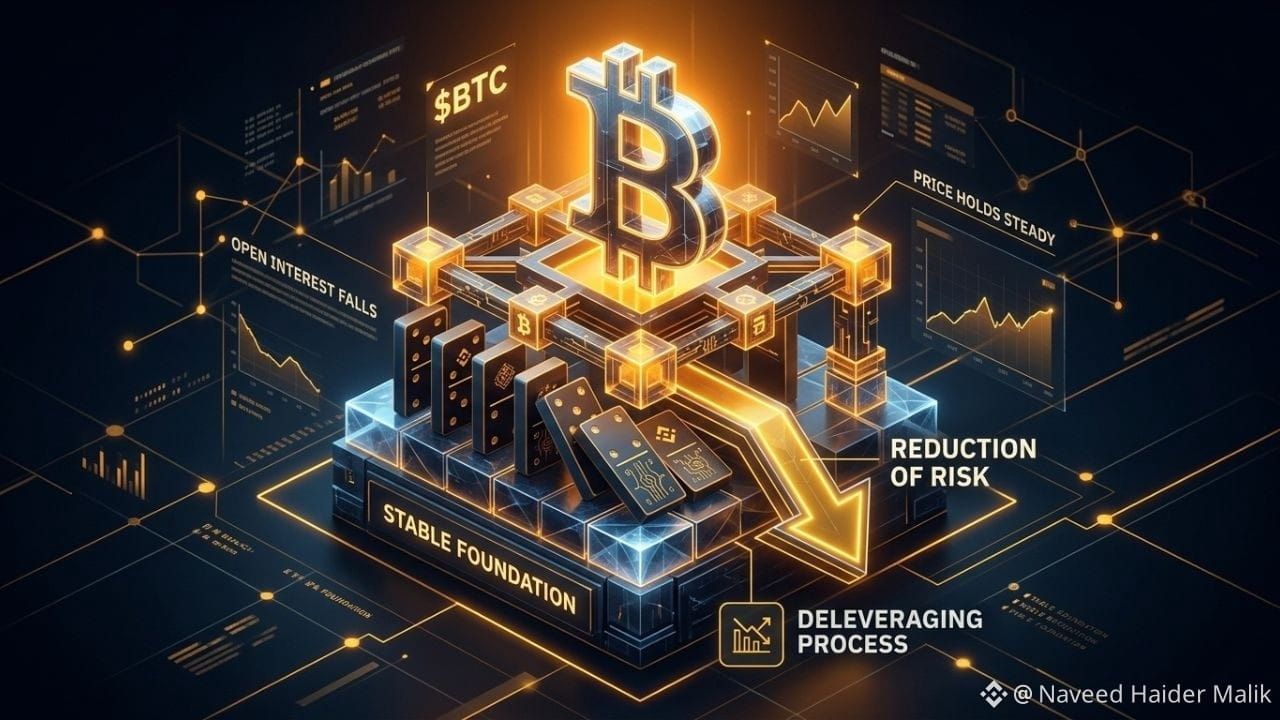
Bitcoin Open Interest Drops by 13,600 BTC ($BTC) Why This Deleveraging Is Bullish.
When traders see Open Interest (OI) drop sharply, many instinctively panic, assuming capital is fleeing the market. But reading derivatives data that way overlooks how leverage actually resets.
What Open Interest Actually Means.
Open Interest simply tracks the total number of active futures and perpetual contracts on exchanges. When OI falls while the price of Bitcoin ($BTC) holds steady, it means speculative leverage is closing out without triggering panic selling.
In speculative crypto cycles, high leverage creates a fragile market. When too many traders open over-leveraged positions, even a small $500 price move can trigger a cascade of forced liquidations causing sudden market crashes or artificial spikes.
Over 13,600 BTC in leverage evaporated while Bitcoin held its ground. This shows the market is self-cleaning. Instead of an explosive liquidation cascade, high-risk positions closed orderly.
This does not guarantee an instant explosion to new all-time highs tomorrow. Clearing out leverage simply resets the board. It eliminates the structural risk of sudden liquidation cascades and allows real spot-market demand to dictate the next direction rather than leveraged gamblers.
Stop treating falling Open Interest during price consolidation as a weakness. A quiet reset in leverage gives Bitcoin a much stronger, safer foundation for its next leg up.
$BTC #CryptoForBeginners
Bitcoin Open Interest Drops by 13,600 BTC ($BTC ) Why This Deleveraging Is Bullish.
When traders see Open Interest (OI) drop sharply, many instinctively panic, assuming capital is fleeing the market. But reading derivatives data that way overlooks how leverage actually resets.
What Open Interest Actually Means.
Open Interest simply tracks the total number of active futures and perpetual contracts on exchanges. When OI falls while the price of Bitcoin ($BTC ) holds steady, it means speculative leverage is closing out without triggering panic selling.
In speculative crypto cycles, high leverage creates a fragile market. When too many traders open over-leveraged positions, even a small $500 price move can trigger a cascade of forced liquidations causing sudden market crashes or artificial spikes.
Over 13,600 BTC in leverage evaporated while Bitcoin held its ground. This shows the market is self-cleaning. Instead of an explosive liquidation cascade, high-risk positions closed orderly.
This does not guarantee an instant explosion to new all-time highs tomorrow. Clearing out leverage simply resets the board. It eliminates the structural risk of sudden liquidation cascades and allows real spot-market demand to dictate the next direction rather than leveraged gamblers.
Stop treating falling Open Interest during price consolidation as a weakness. A quiet reset in leverage gives Bitcoin a much stronger, safer foundation for its next leg up.
$BTC #CryptoForBeginners
When traders see Open Interest (OI) drop sharply, many instinctively panic, assuming capital is fleeing the market. But reading derivatives data that way overlooks how leverage actually resets.
What Open Interest Actually Means.
Open Interest simply tracks the total number of active futures and perpetual contracts on exchanges. When OI falls while the price of Bitcoin ($BTC ) holds steady, it means speculative leverage is closing out without triggering panic selling.
In speculative crypto cycles, high leverage creates a fragile market. When too many traders open over-leveraged positions, even a small $500 price move can trigger a cascade of forced liquidations causing sudden market crashes or artificial spikes.
Over 13,600 BTC in leverage evaporated while Bitcoin held its ground. This shows the market is self-cleaning. Instead of an explosive liquidation cascade, high-risk positions closed orderly.
This does not guarantee an instant explosion to new all-time highs tomorrow. Clearing out leverage simply resets the board. It eliminates the structural risk of sudden liquidation cascades and allows real spot-market demand to dictate the next direction rather than leveraged gamblers.
Stop treating falling Open Interest during price consolidation as a weakness. A quiet reset in leverage gives Bitcoin a much stronger, safer foundation for its next leg up.
$BTC #CryptoForBeginners
68
Maqola
See translation
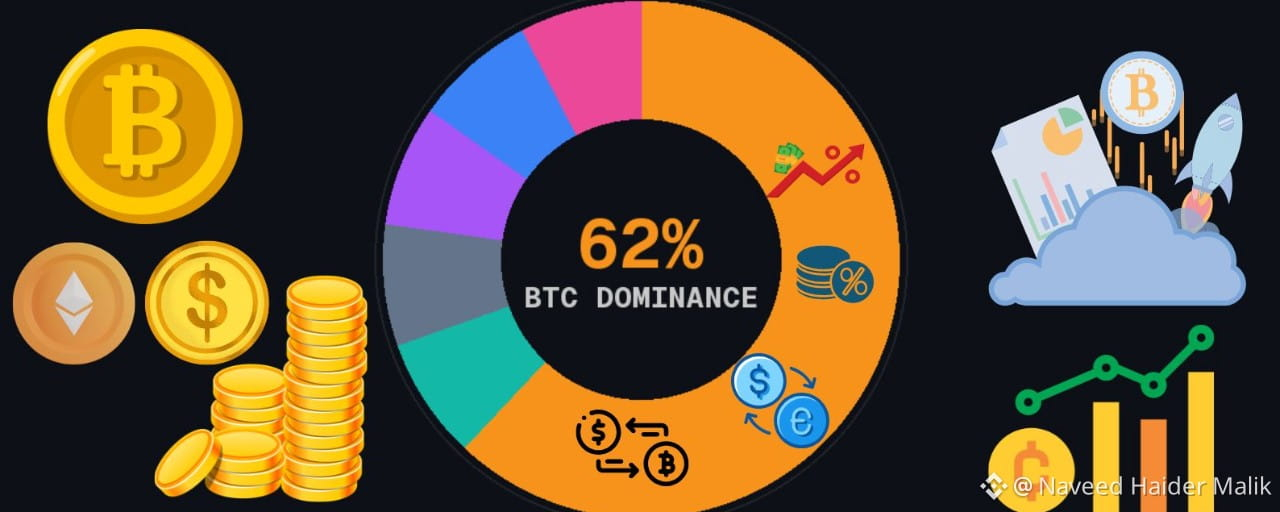
Bitcoin Dominance Says the Altcoin Season Story Is BrokenBitcoin dominance has sat in the high 50s for over a year now, well above the ~39% low of the 2021 altcoin season, and it hasn't given that ground back. If you've been waiting for "all season" based on how the last two cycles played out, I think you're waiting on a pattern that isn't repeating this time.
Worth being precise here: dominance isn't in a straight climb right now. It's cooled a few points over the past few months, down from a recent high near 60% to the high 50s today. But "cooled slightly" and "reversing into an alt-season" are very different things, and the gap between those two stories is exactly what most trading content glosses over.
Here's what dominance actually measures, quickly: it's Bitcoin's market cap divided by the total crypto market cap. When it stays elevated, capital is staying concentrated in Bitcoin rather than spreading out. A few points of monthly wobble doesn't undo over a year of sustained elevation.
In 2017 and again in 2021, high Bitcoin dominance eventually broke hard, and capital rotated into altcoins, $BNB included, delivering the kind of "altseason" that gets talked about for years afterward. That's the pattern most trading content assumes will just repeat because dominance ticked down a few points. I don't think it will play out the same way, and here's my actual reasoning, not just a chart pattern.
This cycle's Bitcoin demand has come largely from ETF and institutional allocation, not retail speculation looking for the next 100x. That kind of capital doesn't rotate into altcoins the way retail money historically did. It buys Bitcoin specifically, because that's the product being allocated to, and it mostly stays there. The mechanism that used to cause altseason (retail profit-taking from BTC gains, then chasing smaller caps) is structurally weaker when the marginal buyer is a fund executing a mandate, not a person chasing a narrative.
That doesn't mean altcoins are dead money, and it doesn't mean dominance can't fall further from here. It means treating every few-point pullback as the start of the old rotation, because that's the story everyone knows, is lazy analysis. Historically, dominance has swung between roughly 35% (deep altcoin seasons) and 70% (Bitcoin-concentrated periods). We're still sitting closer to the top of that range than the bottom, even after the recent cooldown.
If you're holding altcoins waiting for the old rotation to kick in automatically, I'd actually pressure-test that assumption instead of assuming a few points of dominance decline means history is repeating on schedule. Watch whether dominance actually breaks meaningfully below its year-long range, not whether it wobbled this month.
The dominance number isn't a prediction. It's a measurement of where capital is sitting right now, and right now, even after cooling off, it's still sitting mostly in Bitcoin.
Note: Bitcoin dominance figures vary slightly by data source and calculation methodology. Verify the current reading directly before publishing, as this metric moves week to week.
$BTC $ETH $SOL
#BTC #CryptoForBeginners #Binance
Bitcoin Dominance Says the Altcoin Season Story Is Broken
Bitcoin dominance has sat in the high 50s for over a year now, well above the ~39% low of the 2021 altcoin season, and it hasn't given that ground back. If you've been waiting for "all season" based on how the last two cycles played out, I think you're waiting on a pattern that isn't repeating this time.
Worth being precise here: dominance isn't in a straight climb right now. It's cooled a few points over the past few months, down from a recent high near 60% to the high 50s today. But "cooled slightly" and "reversing into an alt-season" are very different things, and the gap between those two stories is exactly what most trading content glosses over.
Here's what dominance actually measures, quickly: it's Bitcoin's market cap divided by the total crypto market cap. When it stays elevated, capital is staying concentrated in Bitcoin rather than spreading out. A few points of monthly wobble doesn't undo over a year of sustained elevation.
In 2017 and again in 2021, high Bitcoin dominance eventually broke hard, and capital rotated into altcoins, $BNB included, delivering the kind of "altseason" that gets talked about for years afterward. That's the pattern most trading content assumes will just repeat because dominance ticked down a few points. I don't think it will play out the same way, and here's my actual reasoning, not just a chart pattern.
This cycle's Bitcoin demand has come largely from ETF and institutional allocation, not retail speculation looking for the next 100x. That kind of capital doesn't rotate into altcoins the way retail money historically did. It buys Bitcoin specifically, because that's the product being allocated to, and it mostly stays there. The mechanism that used to cause altseason (retail profit-taking from BTC gains, then chasing smaller caps) is structurally weaker when the marginal buyer is a fund executing a mandate, not a person chasing a narrative.
That doesn't mean altcoins are dead money, and it doesn't mean dominance can't fall further from here. It means treating every few-point pullback as the start of the old rotation, because that's the story everyone knows, is lazy analysis. Historically, dominance has swung between roughly 35% (deep altcoin seasons) and 70% (Bitcoin-concentrated periods). We're still sitting closer to the top of that range than the bottom, even after the recent cooldown.
If you're holding altcoins waiting for the old rotation to kick in automatically, I'd actually pressure-test that assumption instead of assuming a few points of dominance decline means history is repeating on schedule. Watch whether dominance actually breaks meaningfully below its year-long range, not whether it wobbled this month.
The dominance number isn't a prediction. It's a measurement of where capital is sitting right now, and right now, even after cooling off, it's still sitting mostly in Bitcoin.
Note: Bitcoin dominance figures vary slightly by data source and calculation methodology. Verify the current reading directly before publishing, as this metric moves week to week.
$BTC $ETH $SOL
#BTC #CryptoForBeginners #Binance
Worth being precise here: dominance isn't in a straight climb right now. It's cooled a few points over the past few months, down from a recent high near 60% to the high 50s today. But "cooled slightly" and "reversing into an alt-season" are very different things, and the gap between those two stories is exactly what most trading content glosses over.
Here's what dominance actually measures, quickly: it's Bitcoin's market cap divided by the total crypto market cap. When it stays elevated, capital is staying concentrated in Bitcoin rather than spreading out. A few points of monthly wobble doesn't undo over a year of sustained elevation.
In 2017 and again in 2021, high Bitcoin dominance eventually broke hard, and capital rotated into altcoins, $BNB included, delivering the kind of "altseason" that gets talked about for years afterward. That's the pattern most trading content assumes will just repeat because dominance ticked down a few points. I don't think it will play out the same way, and here's my actual reasoning, not just a chart pattern.
This cycle's Bitcoin demand has come largely from ETF and institutional allocation, not retail speculation looking for the next 100x. That kind of capital doesn't rotate into altcoins the way retail money historically did. It buys Bitcoin specifically, because that's the product being allocated to, and it mostly stays there. The mechanism that used to cause altseason (retail profit-taking from BTC gains, then chasing smaller caps) is structurally weaker when the marginal buyer is a fund executing a mandate, not a person chasing a narrative.
That doesn't mean altcoins are dead money, and it doesn't mean dominance can't fall further from here. It means treating every few-point pullback as the start of the old rotation, because that's the story everyone knows, is lazy analysis. Historically, dominance has swung between roughly 35% (deep altcoin seasons) and 70% (Bitcoin-concentrated periods). We're still sitting closer to the top of that range than the bottom, even after the recent cooldown.
If you're holding altcoins waiting for the old rotation to kick in automatically, I'd actually pressure-test that assumption instead of assuming a few points of dominance decline means history is repeating on schedule. Watch whether dominance actually breaks meaningfully below its year-long range, not whether it wobbled this month.
The dominance number isn't a prediction. It's a measurement of where capital is sitting right now, and right now, even after cooling off, it's still sitting mostly in Bitcoin.
Note: Bitcoin dominance figures vary slightly by data source and calculation methodology. Verify the current reading directly before publishing, as this metric moves week to week.
$BTC $ETH $SOL
#BTC #CryptoForBeginners #Binance
90
See translation
$ETH hits $2,600 for first time in 7 months 🚀
Now $2,570.50 +4.18% | 24h High $2,665.99
Driver: Core CPI fell to lowest in 5+ years (NS3.AI)
Flow check: Spot ETH ETFs -$19.30M outflows thru Thu, Fri pending
Price: Binance ETH/$USDT • Analysis: NS3
$ETH hits $2,600 for first time in 7 months 🚀
Now $2,570.50 +4.18% | 24h High $2,665.99
Driver: Core CPI fell to lowest in 5+ years (NS3.AI)
Flow check: Spot ETH ETFs -$19.30M outflows thru Thu, Fri pending
Price: Binance ETH/$USDT • Analysis: NS3
Now $2,570.50 +4.18% | 24h High $2,665.99
Driver: Core CPI fell to lowest in 5+ years (NS3.AI)
Flow check: Spot ETH ETFs -$19.30M outflows thru Thu, Fri pending
Price: Binance ETH/$USDT • Analysis: NS3

79
See translation
$70M LONG LIQUIDATED 😹
$BTC tapped $76,046 after CPI, liq at $76,308. -$1.6M, would've been +$830k.
Same whale apes back $13.68M at $77,875. Cato says: don't fight liquidity.
Source: Binance News
$70M LONG LIQUIDATED 😹
$BTC tapped $76,046 after CPI, liq at $76,308. -$1.6M, would've been +$830k.
Same whale apes back $13.68M at $77,875. Cato says: don't fight liquidity.
Source: Binance News
$BTC tapped $76,046 after CPI, liq at $76,308. -$1.6M, would've been +$830k.
Same whale apes back $13.68M at $77,875. Cato says: don't fight liquidity.
Source: Binance News

62

Maqola
See translation
PAXG Gold Holds $4,315 Before CPI - Will Fed Trigger Rate Hike Tomorrow?Spot trader focused on PAXG Gold and BTC macro moves. Currently no open position, tracking charts before major data events. Sharing chart observations, not financial advice.
What are Federal Reserve Policies
1. Interest Rate Policy: When CPI is hot, Fed can hike rates to make borrowing expensive and slow inflation. When CPI is cold, Fed can cut rates.
2. Monetary Policy (QT/QE): Fed controls money supply. Tighter policy supports dollar short-term and can pressure Gold. Looser policy weakens dollar and usually supports Gold like PAXG.
Gold is directly sensitive to these policies. If Fed hints at a rate hike tomorrow after hot CPI, Gold can see short-term selling but long-term it remains an inflation hedge.
CPI data is scheduled for tomorrow and
Gold is already showing hesitation.
PAXG is holding above $4,300 but
momentum has slowed down before the
news. This is typical behavior - Gold and
BTC both wait for inflation data before
picking a direction.
PAXG/USDT 1D chart - Gold retracing from $4,689 high, holding $4,315 before CPI - Source: Binance
What the chart shows
PAXG hit a high of $4,689.00 then had a sharp red candle selloff. Now it is consolidating around $4,315.26 down -0.98% today.Support is visible around $4,286.97 and resistance near $4,561. Last few candles are small, showing indecision before CPI.This is not random. Gold is a hedge against inflation. If CPI comes hot, Fed may hint at rate hike - that usually pressures Gold short-term but supports it long-term. If CPI comes cold, rate cut hopes rise and Gold can bounce.
Two scenarios for tomorrow
1. Hot CPI > Expected: PAXG could test $4,286 support first, then watch for Fed reaction. Volatility will be high. 2. Cold CPI < Expected: PAXG has room to push back to $4,414 and $4,561. The consolidation we see now could be accumulation.
The chart matters more than prediction right now. Gold holding $4,300 before CPI is itself a signal that buyers are still present.
What is your bias for PAXG after CPI? Bullish or bearish?
Note: Do your own research before doing trade! This is not financial advice.
$PAXG $BTC $XAUT
#CPIWatch #BTC #crypto
PAXG Gold Holds $4,315 Before CPI - Will Fed Trigger Rate Hike Tomorrow?
Spot trader focused on PAXG Gold and BTC macro moves. Currently no open position, tracking charts before major data events. Sharing chart observations, not financial advice.
What are Federal Reserve Policies
1. Interest Rate Policy: When CPI is hot, Fed can hike rates to make borrowing expensive and slow inflation. When CPI is cold, Fed can cut rates.
2. Monetary Policy (QT/QE): Fed controls money supply. Tighter policy supports dollar short-term and can pressure Gold. Looser policy weakens dollar and usually supports Gold like PAXG.
Gold is directly sensitive to these policies. If Fed hints at a rate hike tomorrow after hot CPI, Gold can see short-term selling but long-term it remains an inflation hedge.
CPI data is scheduled for tomorrow and
Gold is already showing hesitation.
PAXG is holding above $4,300 but
momentum has slowed down before the
news. This is typical behavior - Gold and
BTC both wait for inflation data before
picking a direction.
PAXG/USDT 1D chart - Gold retracing from $4,689 high, holding $4,315 before CPI - Source: Binance
What the chart shows
PAXG hit a high of $4,689.00 then had a sharp red candle selloff. Now it is consolidating around $4,315.26 down -0.98% today.Support is visible around $4,286.97 and resistance near $4,561. Last few candles are small, showing indecision before CPI.This is not random. Gold is a hedge against inflation. If CPI comes hot, Fed may hint at rate hike - that usually pressures Gold short-term but supports it long-term. If CPI comes cold, rate cut hopes rise and Gold can bounce.
Two scenarios for tomorrow
1. Hot CPI > Expected: PAXG could test $4,286 support first, then watch for Fed reaction. Volatility will be high. 2. Cold CPI < Expected: PAXG has room to push back to $4,414 and $4,561. The consolidation we see now could be accumulation.
The chart matters more than prediction right now. Gold holding $4,300 before CPI is itself a signal that buyers are still present.
What is your bias for PAXG after CPI? Bullish or bearish?
Note: Do your own research before doing trade! This is not financial advice.
$PAXG $BTC $XAUT
#CPIWatch #BTC #crypto
What are Federal Reserve Policies
1. Interest Rate Policy: When CPI is hot, Fed can hike rates to make borrowing expensive and slow inflation. When CPI is cold, Fed can cut rates.
2. Monetary Policy (QT/QE): Fed controls money supply. Tighter policy supports dollar short-term and can pressure Gold. Looser policy weakens dollar and usually supports Gold like PAXG.
Gold is directly sensitive to these policies. If Fed hints at a rate hike tomorrow after hot CPI, Gold can see short-term selling but long-term it remains an inflation hedge.
CPI data is scheduled for tomorrow and
Gold is already showing hesitation.
PAXG is holding above $4,300 but
momentum has slowed down before the
news. This is typical behavior - Gold and
BTC both wait for inflation data before
picking a direction.
PAXG/USDT 1D chart - Gold retracing from $4,689 high, holding $4,315 before CPI - Source: Binance
What the chart shows
PAXG hit a high of $4,689.00 then had a sharp red candle selloff. Now it is consolidating around $4,315.26 down -0.98% today.Support is visible around $4,286.97 and resistance near $4,561. Last few candles are small, showing indecision before CPI.This is not random. Gold is a hedge against inflation. If CPI comes hot, Fed may hint at rate hike - that usually pressures Gold short-term but supports it long-term. If CPI comes cold, rate cut hopes rise and Gold can bounce.
Two scenarios for tomorrow
1. Hot CPI > Expected: PAXG could test $4,286 support first, then watch for Fed reaction. Volatility will be high. 2. Cold CPI < Expected: PAXG has room to push back to $4,414 and $4,561. The consolidation we see now could be accumulation.
The chart matters more than prediction right now. Gold holding $4,300 before CPI is itself a signal that buyers are still present.
What is your bias for PAXG after CPI? Bullish or bearish?
Note: Do your own research before doing trade! This is not financial advice.
$PAXG $BTC $XAUT
#CPIWatch #BTC #crypto
175
Maqola
See translation
DeFi vs Traditional Finance: 5 Key DifferencesPicture this. It's Saturday night and you need to send $500 to a friend. With your bank, it lands Monday morning, minus a fee, after passing through a chain of middlemen you never see. With a wallet, you send USDT on-chain and it lands in under a minute for less than a dollar, at 11 PM on a weekend.
Same goal. Completely different systems underneath. That gap is what this article is about.
DeFi and traditional finance (TradFi) aren't just two flavors of the same thing. They are built on opposite assumptions about who should control your money. Once you see these five differences, the rest of DeFi finally clicks.
As of early September 2026, DeFiLlama shows DeFi total value locked (TVL) around $114 billion after falling from a near $172 billion peak in October 2025, with September estimates ranging from $70 billion to $133 billion depending on market moves. Stablecoin supply is more stable around $303.8 billion as of early August, down from a $320.8 billion peak in May, and sitting near $305.6 billion on September 6. That's real capital choosing to sit in smart contracts instead of bank accounts.
Quick Snapshot: The Numbers Behind the Comparison
DeFi vs Traditional Finance - Quick Snapshot (Sep 2026) | Source: DeFiLlama | Educational content, not financial advice
Who Actually Holds Your Money
In TradFi, your money legally sits with an intermediary. Your bank holds your deposit. Your broker holds your shares in "street name." You own a claim on the asset, not the asset itself. That's why bank runs and broker insolvencies can directly impact your funds.In DeFi, if you're using a non-custodial wallet, you hold the private keys. The assets sit directly under your control on chain. No one can freeze your wallet or block a withdrawal like a bank can freeze an account. When you supply $ETH to Aave, that ETH is locked in a smart contract you can inspect not handed to a company that reinvests it behind closed doors.
The trade-off is real. There's no support line if you lose your seed phrase, and no FDIC insurance standing behind a DeFi wallet like there is for many US bank accounts. Self-custody removes the middleman, but it also removes the safety net. You get control in exchange for personal responsibility.
When You Can Actually Use It
Traditional finance runs on business hours. Wires, ACH transfers, and stock trades pause on weekends, holidays, and after 5 PM ET. Cross-border transfers can take days to clear compliance checks.DeFi runs on blockchains, and blockchains don't close. A lending market like Aave or a swap on PancakeSwap works at 3 AM on Sunday exactly like it does at noon on Tuesday, from anywhere with the internet. This is huge if you live outside New York or London hours, or in a country where local banking is unreliable.The flip side? 24/7 markets don't pause for you. Traditional exchanges halt trading during extreme volatility. A DeFi protocol keeps running through a crash at 4 AM. That's why liquidations in DeFi can happen faster than most beginners expect.
Who Decides If You're Allowed In
Opening a brokerage account or getting a bank loan means applications, credit checks, and approvals that can take days and can end in a flat "no," especially if you live where that institution doesn't want to operate.DeFi is permissionless by design. Connect a wallet that holds USDT, USDC, ETH, or $BNB , and you can supply liquidity, borrow against collateral, or trade without asking permission. This is why it matters for the roughly quarter of adults worldwide who are unbanked or underbanked. A farmer with USDC and a trader in Singapore follow the exact same rules.But permissionless also means no loan officer checking if a position is too risky for you. Most DeFi lending solves this by requiring overcollateralization you deposit more than you borrow. That protects the protocol, not you.
Who Executes The Transaction
Every TradFi trade passes through a stack of intermediaries: your bank, a clearinghouse, a correspondent bank. Each adds a fee and a delay. A stock trade that looks instant on your screen is often still settling behind the scenes.In DeFi, a smart contract is the intermediary. It's code, not a department. When you swap on an automated market maker like Uniswap, the contract executes automatically the second conditions are met. No human approval needed. A swap between ETH and USDC settles in the same transaction.Fewer intermediaries usually means lower fees and faster settlement, but a bug in the contract becomes everyone's problem at once. A bank's software bug gets patched quietly. A bug in a widely used DeFi contract can be exploited in minutes. That's why you should always check if a protocol has been audited by a reputable third party before depositing.
How You Verify Anything Happened
If you want to verify a bank's solvency, you're relying on quarterly statements and regulatory filings you can't personally check in real time.DeFi flips this. TVL, reserves, and transaction history are visible on chain to anyone. DeFiLlama aggregates that public data. When Aave shows $18B+ in TVL, that number comes directly from what's sitting in its contracts right now, not from a press release.Transparency doesn't mean safety, though. On-chain data tells you what is happening, not whether the code handling it is safe.
Risks Worth Knowing Before You Dive In
Smart contract risk: Even audited protocols have been exploited.No deposit insurance: If a protocol is hacked or a stablecoin depegs, no FDIC-like fund makes you whole.You are your own security team: Lose your seed phrase or click a phishing link and there is no fraud department to call.Volatility and liquidations: Overcollateralized loans can be liquidated automatically within minutes, with no grace period.Regulatory uncertainty: Rules around DeFi are still evolving and affect taxes and access.
Common Misconceptions
"DeFi has no rules." It has no central authority, but the rules are written into the smart contract code and enforced identically for everyone. What's missing is a human who can make exceptions.
"TradFi is always safer." TradFi is more regulated and often insured, but bank failures still happen. DeFi trades institutional risk for smart contract and self-custody risk.
"You need to be technical." Swapping on a DEX or depositing stablecoins into a lending protocol is now a few clicks in a wallet app, similar to online banking. Understanding what you're clicking matters more.
So Which Is Better?
Neither replaces the other yet. TradFi still offers legal recourse, deposit insurance, and dispute resolution that DeFi doesn't have. DeFi offers access, speed, and transparency that TradFi structurally can't match. Most people in crypto use both a bank account for payroll and legal protection, and a wallet for what DeFi does better, like earning yield on stablecoins or trading outside business hours.
FAQ
Is DeFi legal? In most countries, yes, but regulation and tax treatment vary widely. Check your local rules.Can I lose everything? Yes through exploits, lost keys, or liquidation. Start with a small amount you can afford to lose.Do I need a bank account to use DeFi? No. You just need a wallet and some crypto or stablecoins like USDT or USDC.Which is cheaper? DeFi is often cheaper for cross-border transfers because it cuts out intermediaries, but network gas fees can spike during busy periods.
Try It Yourself
The easiest way to feel the difference is to try it. Open a non-custodial wallet, move a small amount of USDT or USDC, and do a basic swap or supply on Aave, Uniswap, or PancakeSwap. You'll notice the 24/7 access and no approval step immediately. If you're starting with BNB, ETH, USDT, or USDC, check the live price and order book on Binance before moving funds on-chain.
What still feels most unfamiliar to you self-custody, permissionless access, or trusting a smart contract over a bank? Let me know in the comments.
#Write2Earn #defi #BNB_Market_Update
DeFiLlama, early September 2026. TVL and stablecoin figures change constantly. This is educational content, not financial advice.
DeFi vs Traditional Finance: 5 Key Differences
Picture this. It's Saturday night and you need to send $500 to a friend. With your bank, it lands Monday morning, minus a fee, after passing through a chain of middlemen you never see. With a wallet, you send USDT on-chain and it lands in under a minute for less than a dollar, at 11 PM on a weekend.
Same goal. Completely different systems underneath. That gap is what this article is about.
DeFi and traditional finance (TradFi) aren't just two flavors of the same thing. They are built on opposite assumptions about who should control your money. Once you see these five differences, the rest of DeFi finally clicks.
As of early September 2026, DeFiLlama shows DeFi total value locked (TVL) around $114 billion after falling from a near $172 billion peak in October 2025, with September estimates ranging from $70 billion to $133 billion depending on market moves. Stablecoin supply is more stable around $303.8 billion as of early August, down from a $320.8 billion peak in May, and sitting near $305.6 billion on September 6. That's real capital choosing to sit in smart contracts instead of bank accounts.
Quick Snapshot: The Numbers Behind the Comparison
DeFi vs Traditional Finance - Quick Snapshot (Sep 2026) | Source: DeFiLlama | Educational content, not financial advice
Who Actually Holds Your Money
In TradFi, your money legally sits with an intermediary. Your bank holds your deposit. Your broker holds your shares in "street name." You own a claim on the asset, not the asset itself. That's why bank runs and broker insolvencies can directly impact your funds.In DeFi, if you're using a non-custodial wallet, you hold the private keys. The assets sit directly under your control on chain. No one can freeze your wallet or block a withdrawal like a bank can freeze an account. When you supply $ETH to Aave, that ETH is locked in a smart contract you can inspect not handed to a company that reinvests it behind closed doors.
The trade-off is real. There's no support line if you lose your seed phrase, and no FDIC insurance standing behind a DeFi wallet like there is for many US bank accounts. Self-custody removes the middleman, but it also removes the safety net. You get control in exchange for personal responsibility.
When You Can Actually Use It
Traditional finance runs on business hours. Wires, ACH transfers, and stock trades pause on weekends, holidays, and after 5 PM ET. Cross-border transfers can take days to clear compliance checks.DeFi runs on blockchains, and blockchains don't close. A lending market like Aave or a swap on PancakeSwap works at 3 AM on Sunday exactly like it does at noon on Tuesday, from anywhere with the internet. This is huge if you live outside New York or London hours, or in a country where local banking is unreliable.The flip side? 24/7 markets don't pause for you. Traditional exchanges halt trading during extreme volatility. A DeFi protocol keeps running through a crash at 4 AM. That's why liquidations in DeFi can happen faster than most beginners expect.
Who Decides If You're Allowed In
Opening a brokerage account or getting a bank loan means applications, credit checks, and approvals that can take days and can end in a flat "no," especially if you live where that institution doesn't want to operate.DeFi is permissionless by design. Connect a wallet that holds USDT, USDC, ETH, or $BNB , and you can supply liquidity, borrow against collateral, or trade without asking permission. This is why it matters for the roughly quarter of adults worldwide who are unbanked or underbanked. A farmer with USDC and a trader in Singapore follow the exact same rules.But permissionless also means no loan officer checking if a position is too risky for you. Most DeFi lending solves this by requiring overcollateralization you deposit more than you borrow. That protects the protocol, not you.
Who Executes The Transaction
Every TradFi trade passes through a stack of intermediaries: your bank, a clearinghouse, a correspondent bank. Each adds a fee and a delay. A stock trade that looks instant on your screen is often still settling behind the scenes.In DeFi, a smart contract is the intermediary. It's code, not a department. When you swap on an automated market maker like Uniswap, the contract executes automatically the second conditions are met. No human approval needed. A swap between ETH and USDC settles in the same transaction.Fewer intermediaries usually means lower fees and faster settlement, but a bug in the contract becomes everyone's problem at once. A bank's software bug gets patched quietly. A bug in a widely used DeFi contract can be exploited in minutes. That's why you should always check if a protocol has been audited by a reputable third party before depositing.
How You Verify Anything Happened
If you want to verify a bank's solvency, you're relying on quarterly statements and regulatory filings you can't personally check in real time.DeFi flips this. TVL, reserves, and transaction history are visible on chain to anyone. DeFiLlama aggregates that public data. When Aave shows $18B+ in TVL, that number comes directly from what's sitting in its contracts right now, not from a press release.Transparency doesn't mean safety, though. On-chain data tells you what is happening, not whether the code handling it is safe.
Risks Worth Knowing Before You Dive In
Smart contract risk: Even audited protocols have been exploited.No deposit insurance: If a protocol is hacked or a stablecoin depegs, no FDIC-like fund makes you whole.You are your own security team: Lose your seed phrase or click a phishing link and there is no fraud department to call.Volatility and liquidations: Overcollateralized loans can be liquidated automatically within minutes, with no grace period.Regulatory uncertainty: Rules around DeFi are still evolving and affect taxes and access.
Common Misconceptions
"DeFi has no rules." It has no central authority, but the rules are written into the smart contract code and enforced identically for everyone. What's missing is a human who can make exceptions.
"TradFi is always safer." TradFi is more regulated and often insured, but bank failures still happen. DeFi trades institutional risk for smart contract and self-custody risk.
"You need to be technical." Swapping on a DEX or depositing stablecoins into a lending protocol is now a few clicks in a wallet app, similar to online banking. Understanding what you're clicking matters more.
So Which Is Better?
Neither replaces the other yet. TradFi still offers legal recourse, deposit insurance, and dispute resolution that DeFi doesn't have. DeFi offers access, speed, and transparency that TradFi structurally can't match. Most people in crypto use both a bank account for payroll and legal protection, and a wallet for what DeFi does better, like earning yield on stablecoins or trading outside business hours.
FAQ
Is DeFi legal? In most countries, yes, but regulation and tax treatment vary widely. Check your local rules.Can I lose everything? Yes through exploits, lost keys, or liquidation. Start with a small amount you can afford to lose.Do I need a bank account to use DeFi? No. You just need a wallet and some crypto or stablecoins like USDT or USDC.Which is cheaper? DeFi is often cheaper for cross-border transfers because it cuts out intermediaries, but network gas fees can spike during busy periods.
Try It Yourself
The easiest way to feel the difference is to try it. Open a non-custodial wallet, move a small amount of USDT or USDC, and do a basic swap or supply on Aave, Uniswap, or PancakeSwap. You'll notice the 24/7 access and no approval step immediately. If you're starting with BNB, ETH, USDT, or USDC, check the live price and order book on Binance before moving funds on-chain.
What still feels most unfamiliar to you self-custody, permissionless access, or trusting a smart contract over a bank? Let me know in the comments.
#Write2Earn #defi #BNB_Market_Update
DeFiLlama, early September 2026. TVL and stablecoin figures change constantly. This is educational content, not financial advice.
Same goal. Completely different systems underneath. That gap is what this article is about.
DeFi and traditional finance (TradFi) aren't just two flavors of the same thing. They are built on opposite assumptions about who should control your money. Once you see these five differences, the rest of DeFi finally clicks.
As of early September 2026, DeFiLlama shows DeFi total value locked (TVL) around $114 billion after falling from a near $172 billion peak in October 2025, with September estimates ranging from $70 billion to $133 billion depending on market moves. Stablecoin supply is more stable around $303.8 billion as of early August, down from a $320.8 billion peak in May, and sitting near $305.6 billion on September 6. That's real capital choosing to sit in smart contracts instead of bank accounts.
Quick Snapshot: The Numbers Behind the Comparison
DeFi vs Traditional Finance - Quick Snapshot (Sep 2026) | Source: DeFiLlama | Educational content, not financial advice
Who Actually Holds Your Money
In TradFi, your money legally sits with an intermediary. Your bank holds your deposit. Your broker holds your shares in "street name." You own a claim on the asset, not the asset itself. That's why bank runs and broker insolvencies can directly impact your funds.In DeFi, if you're using a non-custodial wallet, you hold the private keys. The assets sit directly under your control on chain. No one can freeze your wallet or block a withdrawal like a bank can freeze an account. When you supply $ETH to Aave, that ETH is locked in a smart contract you can inspect not handed to a company that reinvests it behind closed doors.
The trade-off is real. There's no support line if you lose your seed phrase, and no FDIC insurance standing behind a DeFi wallet like there is for many US bank accounts. Self-custody removes the middleman, but it also removes the safety net. You get control in exchange for personal responsibility.
When You Can Actually Use It
Traditional finance runs on business hours. Wires, ACH transfers, and stock trades pause on weekends, holidays, and after 5 PM ET. Cross-border transfers can take days to clear compliance checks.DeFi runs on blockchains, and blockchains don't close. A lending market like Aave or a swap on PancakeSwap works at 3 AM on Sunday exactly like it does at noon on Tuesday, from anywhere with the internet. This is huge if you live outside New York or London hours, or in a country where local banking is unreliable.The flip side? 24/7 markets don't pause for you. Traditional exchanges halt trading during extreme volatility. A DeFi protocol keeps running through a crash at 4 AM. That's why liquidations in DeFi can happen faster than most beginners expect.
Who Decides If You're Allowed In
Opening a brokerage account or getting a bank loan means applications, credit checks, and approvals that can take days and can end in a flat "no," especially if you live where that institution doesn't want to operate.DeFi is permissionless by design. Connect a wallet that holds USDT, USDC, ETH, or $BNB , and you can supply liquidity, borrow against collateral, or trade without asking permission. This is why it matters for the roughly quarter of adults worldwide who are unbanked or underbanked. A farmer with USDC and a trader in Singapore follow the exact same rules.But permissionless also means no loan officer checking if a position is too risky for you. Most DeFi lending solves this by requiring overcollateralization you deposit more than you borrow. That protects the protocol, not you.
Who Executes The Transaction
Every TradFi trade passes through a stack of intermediaries: your bank, a clearinghouse, a correspondent bank. Each adds a fee and a delay. A stock trade that looks instant on your screen is often still settling behind the scenes.In DeFi, a smart contract is the intermediary. It's code, not a department. When you swap on an automated market maker like Uniswap, the contract executes automatically the second conditions are met. No human approval needed. A swap between ETH and USDC settles in the same transaction.Fewer intermediaries usually means lower fees and faster settlement, but a bug in the contract becomes everyone's problem at once. A bank's software bug gets patched quietly. A bug in a widely used DeFi contract can be exploited in minutes. That's why you should always check if a protocol has been audited by a reputable third party before depositing.
How You Verify Anything Happened
If you want to verify a bank's solvency, you're relying on quarterly statements and regulatory filings you can't personally check in real time.DeFi flips this. TVL, reserves, and transaction history are visible on chain to anyone. DeFiLlama aggregates that public data. When Aave shows $18B+ in TVL, that number comes directly from what's sitting in its contracts right now, not from a press release.Transparency doesn't mean safety, though. On-chain data tells you what is happening, not whether the code handling it is safe.
Risks Worth Knowing Before You Dive In
Smart contract risk: Even audited protocols have been exploited.No deposit insurance: If a protocol is hacked or a stablecoin depegs, no FDIC-like fund makes you whole.You are your own security team: Lose your seed phrase or click a phishing link and there is no fraud department to call.Volatility and liquidations: Overcollateralized loans can be liquidated automatically within minutes, with no grace period.Regulatory uncertainty: Rules around DeFi are still evolving and affect taxes and access.
Common Misconceptions
"DeFi has no rules." It has no central authority, but the rules are written into the smart contract code and enforced identically for everyone. What's missing is a human who can make exceptions.
"TradFi is always safer." TradFi is more regulated and often insured, but bank failures still happen. DeFi trades institutional risk for smart contract and self-custody risk.
"You need to be technical." Swapping on a DEX or depositing stablecoins into a lending protocol is now a few clicks in a wallet app, similar to online banking. Understanding what you're clicking matters more.
So Which Is Better?
Neither replaces the other yet. TradFi still offers legal recourse, deposit insurance, and dispute resolution that DeFi doesn't have. DeFi offers access, speed, and transparency that TradFi structurally can't match. Most people in crypto use both a bank account for payroll and legal protection, and a wallet for what DeFi does better, like earning yield on stablecoins or trading outside business hours.
FAQ
Is DeFi legal? In most countries, yes, but regulation and tax treatment vary widely. Check your local rules.Can I lose everything? Yes through exploits, lost keys, or liquidation. Start with a small amount you can afford to lose.Do I need a bank account to use DeFi? No. You just need a wallet and some crypto or stablecoins like USDT or USDC.Which is cheaper? DeFi is often cheaper for cross-border transfers because it cuts out intermediaries, but network gas fees can spike during busy periods.
Try It Yourself
The easiest way to feel the difference is to try it. Open a non-custodial wallet, move a small amount of USDT or USDC, and do a basic swap or supply on Aave, Uniswap, or PancakeSwap. You'll notice the 24/7 access and no approval step immediately. If you're starting with BNB, ETH, USDT, or USDC, check the live price and order book on Binance before moving funds on-chain.
What still feels most unfamiliar to you self-custody, permissionless access, or trusting a smart contract over a bank? Let me know in the comments.
#Write2Earn #defi #BNB_Market_Update
DeFiLlama, early September 2026. TVL and stablecoin figures change constantly. This is educational content, not financial advice.
85
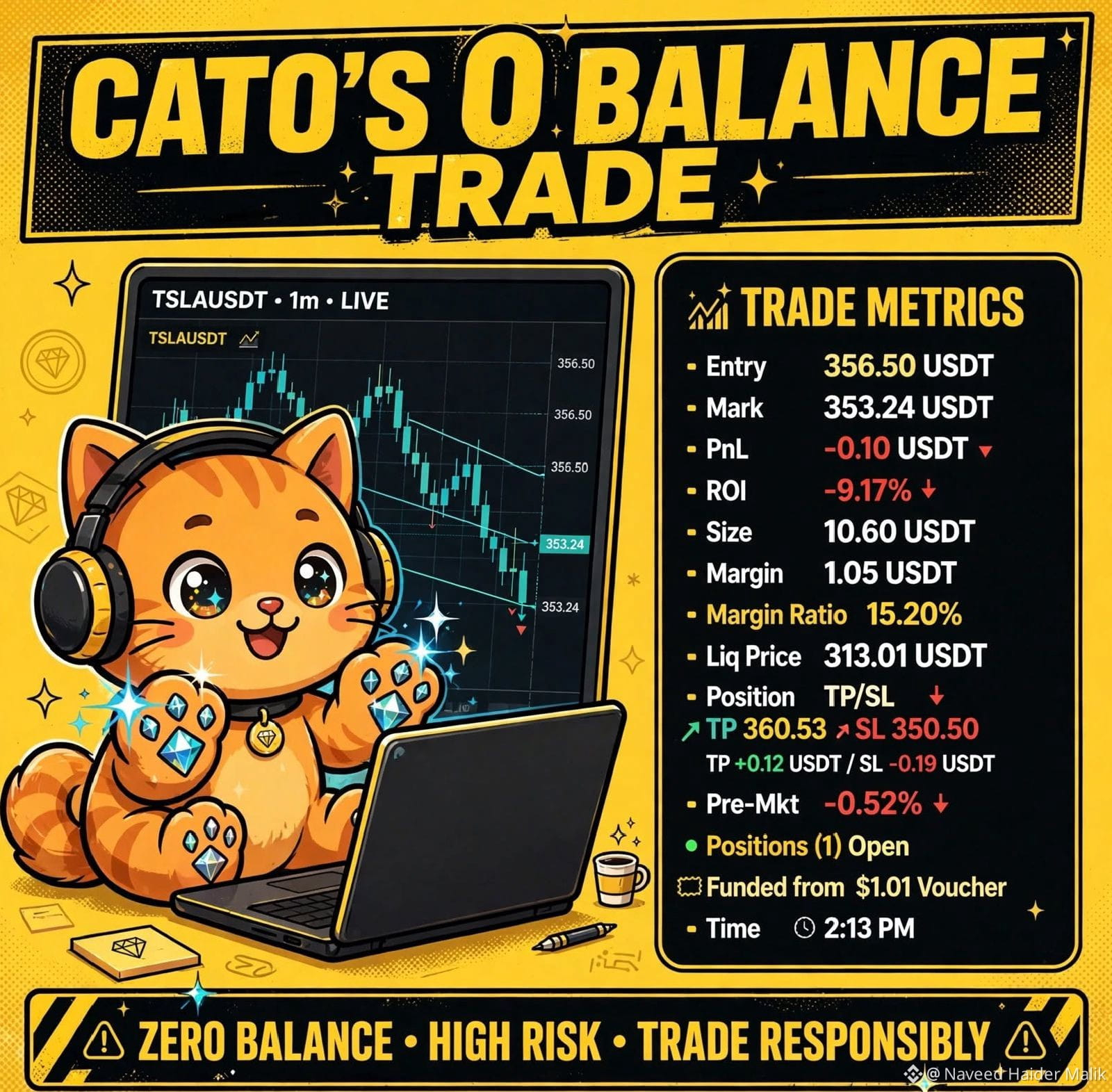
CATO'NING 0 BALANS TREYDI 🐾💎
Kiruv: 356.50 | Belgi: 353.24
PnL: -0.10 USDT (-9.17%)
Hali ham ushlab turibdi. Pre-Mkt -0.52% past, lekin Cato olmos barmoqlarga ega. PK bo‘yicha 18:30 da AQSH bozori ochilishini kutyapti.
TP: 360.53 (+0.12) / SL: 350.50 (-0.19)
Margin: 1.05 | Hajm: 10.60 | $1.01 Voucher hisobidan mablag‘ ajratildi
Nol balans. Yuqori risk. Mas’uliyat bilan savdo qiling. #ZeroBalance
$TSLAB
CATO'NING 0 BALANS TREYDI 🐾💎
Kiruv: 356.50 | Belgi: 353.24
PnL: -0.10 USDT (-9.17%)
Hali ham ushlab turibdi. Pre-Mkt -0.52% past, lekin Cato olmos barmoqlarga ega. PK bo‘yicha 18:30 da AQSH bozori ochilishini kutyapti.
TP: 360.53 (+0.12) / SL: 350.50 (-0.19)
Margin: 1.05 | Hajm: 10.60 | $1.01 Voucher hisobidan mablag‘ ajratildi
Nol balans. Yuqori risk. Mas’uliyat bilan savdo qiling. #ZeroBalance
$TSLAB
Kiruv: 356.50 | Belgi: 353.24
PnL: -0.10 USDT (-9.17%)
Hali ham ushlab turibdi. Pre-Mkt -0.52% past, lekin Cato olmos barmoqlarga ega. PK bo‘yicha 18:30 da AQSH bozori ochilishini kutyapti.
TP: 360.53 (+0.12) / SL: 350.50 (-0.19)
Margin: 1.05 | Hajm: 10.60 | $1.01 Voucher hisobidan mablag‘ ajratildi
Nol balans. Yuqori risk. Mas’uliyat bilan savdo qiling. #ZeroBalance
$TSLAB
116

Maqola
See translation
What Is DeFi? A Plain English Guide for BeginnersIf you've spent any time around crypto, you've probably seen the term "DeFi" thrown around constantly. It sounds technical, maybe even intimidating. But the core idea behind it is actually simple: DeFi is about doing financial things saving, lending, borrowing, trading without a bank, broker, or middleman standing in the way.
Let's break down what that actually means, and why it's grown into a market holding roughly $200 billion in deposited assets as of 2026, according to tracking data from DefiLlama.
DeFi Stands for Decentralized Finance
In traditional finance, almost everything runs through an institution. Want to save money? You use a bank. Want a loan? You apply through a bank or lender, and they decide if you qualify. Want to trade stocks? You go through a broker.
In each case, a company sits in the middle, controls the process, and takes a cut.
DeFi removes that middle layer. Instead of a bank approving your loan, a piece of software a smart contract — handles it automatically, based on rules anyone can inspect. Instead of a broker executing your trade, code on a blockchain does it directly between you and the other party.
The Building Blocks of DeFi.
A few core pieces make DeFi work:
Blockchains the public, shared record keeping systems (like Ethereum or BNB Chain) that DeFi applications run on. Every transaction is recorded openly, so no single company controls the ledger.
Smart contracts self executing pieces of code that carry out an agreement automatically once conditions are met. Think of them as vending machines: put in the right input, and the output happens without anyone needing to approve it manually.
Wallets instead of a bank account, you hold your funds in a crypto wallet that only you control. This is often called self custody, and it's one of the biggest philosophical differences between DeFi and traditional finance: you're responsible for your own funds, with no institution to call if something goes wrong.
What Can You Actually Do in DeFi?
DeFi isn't one single thing it's a whole category of applications. Some of the most common ones:
Lending and borrowing. Platforms let you lend out crypto like $ETH or $BNB and earn interest, or borrow against crypto you already hold, all without a credit check. Trading. Decentralized exchanges (DEXs) let people swap one token for another directly, without a centralized order book run by a company.
Earning yield. By depositing assets into liquidity pools, users can earn a share of trading fees or rewards often referred to as yield farming or providing liquidity. Stablecoins. Tokens like USDT and USDC are designed to hold a steady value, usually pegged to the US dollar, which makes it easier to use DeFi without full exposure to crypto price swings.
If any of those terms sound new, that's normal. Most people start on the trading side, swapping a stablecoin for something like BNB or ETH to get a feel for how a DEX works, before moving into lending or liquidity pools once they're comfortable.
Why People Are Drawn to DeFi
A few reasons keep coming up:
Access: Anyone with an internet connection and a wallet can use DeFi no approval process, no minimum balance, no geographic restrictions in most cases.
Transparency: Because everything runs on public blockchains, you can actually verify how a protocol works instead of trusting a company's word for it.
Control: Your funds sit in your own wallet, not in an account a company can freeze or restrict.
The Trade Offs You Should Know
DeFi isn't without downsides, and it's worth being upfront about them:
No safety net. If you send funds to the wrong address or lose your wallet's private key, there's no customer service line to call. Self custody means self responsibility.
Smart contract risk. Code can have bugs. Even well audited protocols have been exploited in the past, so funds in DeFi carry a different kind of risk than a bank deposit.
Real example: On Sep 6, Liquid's sidechain halted after ∼4,000 BTC (∼$320M) was withdrawn via SideSwap due to a software bug - the key wasn't even hacked.
Complexity. The learning curve is real. Terms like liquidity pools, impermanent loss, and gas fees take time to understand properly before diving in with real money.
Volatility. Crypto asset prices can move sharply, and that affects everything built on top of them, including DeFi positions.
Getting Started the Right Way
If you're new to DeFi, the most useful first step isn't jumping into a protocol, it's understanding the vocabulary and mechanics first. Concepts like wallets, gas fees, liquidity pools, and smart contracts each deserve their own deep dive before you put real funds to work.
A practical way to start: open a wallet, move a small amount of a stable-coin like $USDC into it, and try a single swap on a DEX so you can see the mechanics play out with money you're comfortable experimenting with. That one small transaction will teach you more about how DeFi works than reading ten more explainers.
DeFi represents a genuinely different way of thinking about finance: open, transparent, and permissionless. Whether that's a better system or simply a different one is still being written. Understanding how it actually works is the first step to forming your own view, and trying a small, real transaction is the step after that.
What part of DeFi are you most curious to try first: lending, swapping, or earning yield? Drop it in the comments.
This article is for educational purposes only and is not financial advice. DeFi carries real risks, including smart contract vulnerabilities and price volatility. Always do your own research before using any protocol.
What Is DeFi? A Plain English Guide for Beginners
If you've spent any time around crypto, you've probably seen the term "DeFi" thrown around constantly. It sounds technical, maybe even intimidating. But the core idea behind it is actually simple: DeFi is about doing financial things saving, lending, borrowing, trading without a bank, broker, or middleman standing in the way.
Let's break down what that actually means, and why it's grown into a market holding roughly $200 billion in deposited assets as of 2026, according to tracking data from DefiLlama.
DeFi Stands for Decentralized Finance
In traditional finance, almost everything runs through an institution. Want to save money? You use a bank. Want a loan? You apply through a bank or lender, and they decide if you qualify. Want to trade stocks? You go through a broker.
In each case, a company sits in the middle, controls the process, and takes a cut.
DeFi removes that middle layer. Instead of a bank approving your loan, a piece of software a smart contract — handles it automatically, based on rules anyone can inspect. Instead of a broker executing your trade, code on a blockchain does it directly between you and the other party.
The Building Blocks of DeFi.
A few core pieces make DeFi work:
Blockchains the public, shared record keeping systems (like Ethereum or BNB Chain) that DeFi applications run on. Every transaction is recorded openly, so no single company controls the ledger.
Smart contracts self executing pieces of code that carry out an agreement automatically once conditions are met. Think of them as vending machines: put in the right input, and the output happens without anyone needing to approve it manually.
Wallets instead of a bank account, you hold your funds in a crypto wallet that only you control. This is often called self custody, and it's one of the biggest philosophical differences between DeFi and traditional finance: you're responsible for your own funds, with no institution to call if something goes wrong.
What Can You Actually Do in DeFi?
DeFi isn't one single thing it's a whole category of applications. Some of the most common ones:
Lending and borrowing. Platforms let you lend out crypto like $ETH or $BNB and earn interest, or borrow against crypto you already hold, all without a credit check. Trading. Decentralized exchanges (DEXs) let people swap one token for another directly, without a centralized order book run by a company.
Earning yield. By depositing assets into liquidity pools, users can earn a share of trading fees or rewards often referred to as yield farming or providing liquidity. Stablecoins. Tokens like USDT and USDC are designed to hold a steady value, usually pegged to the US dollar, which makes it easier to use DeFi without full exposure to crypto price swings.
If any of those terms sound new, that's normal. Most people start on the trading side, swapping a stablecoin for something like BNB or ETH to get a feel for how a DEX works, before moving into lending or liquidity pools once they're comfortable.
Why People Are Drawn to DeFi
A few reasons keep coming up:
Access: Anyone with an internet connection and a wallet can use DeFi no approval process, no minimum balance, no geographic restrictions in most cases.
Transparency: Because everything runs on public blockchains, you can actually verify how a protocol works instead of trusting a company's word for it.
Control: Your funds sit in your own wallet, not in an account a company can freeze or restrict.
The Trade Offs You Should Know
DeFi isn't without downsides, and it's worth being upfront about them:
No safety net. If you send funds to the wrong address or lose your wallet's private key, there's no customer service line to call. Self custody means self responsibility.
Smart contract risk. Code can have bugs. Even well audited protocols have been exploited in the past, so funds in DeFi carry a different kind of risk than a bank deposit.
Real example: On Sep 6, Liquid's sidechain halted after ∼4,000 BTC (∼$320M) was withdrawn via SideSwap due to a software bug - the key wasn't even hacked.
Complexity. The learning curve is real. Terms like liquidity pools, impermanent loss, and gas fees take time to understand properly before diving in with real money.
Volatility. Crypto asset prices can move sharply, and that affects everything built on top of them, including DeFi positions.
Getting Started the Right Way
If you're new to DeFi, the most useful first step isn't jumping into a protocol, it's understanding the vocabulary and mechanics first. Concepts like wallets, gas fees, liquidity pools, and smart contracts each deserve their own deep dive before you put real funds to work.
A practical way to start: open a wallet, move a small amount of a stable-coin like $USDC into it, and try a single swap on a DEX so you can see the mechanics play out with money you're comfortable experimenting with. That one small transaction will teach you more about how DeFi works than reading ten more explainers.
DeFi represents a genuinely different way of thinking about finance: open, transparent, and permissionless. Whether that's a better system or simply a different one is still being written. Understanding how it actually works is the first step to forming your own view, and trying a small, real transaction is the step after that.
What part of DeFi are you most curious to try first: lending, swapping, or earning yield? Drop it in the comments.
This article is for educational purposes only and is not financial advice. DeFi carries real risks, including smart contract vulnerabilities and price volatility. Always do your own research before using any protocol.
Let's break down what that actually means, and why it's grown into a market holding roughly $200 billion in deposited assets as of 2026, according to tracking data from DefiLlama.
DeFi Stands for Decentralized Finance
In traditional finance, almost everything runs through an institution. Want to save money? You use a bank. Want a loan? You apply through a bank or lender, and they decide if you qualify. Want to trade stocks? You go through a broker.
In each case, a company sits in the middle, controls the process, and takes a cut.
DeFi removes that middle layer. Instead of a bank approving your loan, a piece of software a smart contract — handles it automatically, based on rules anyone can inspect. Instead of a broker executing your trade, code on a blockchain does it directly between you and the other party.
The Building Blocks of DeFi.
A few core pieces make DeFi work:
Blockchains the public, shared record keeping systems (like Ethereum or BNB Chain) that DeFi applications run on. Every transaction is recorded openly, so no single company controls the ledger.
Smart contracts self executing pieces of code that carry out an agreement automatically once conditions are met. Think of them as vending machines: put in the right input, and the output happens without anyone needing to approve it manually.
Wallets instead of a bank account, you hold your funds in a crypto wallet that only you control. This is often called self custody, and it's one of the biggest philosophical differences between DeFi and traditional finance: you're responsible for your own funds, with no institution to call if something goes wrong.
What Can You Actually Do in DeFi?
DeFi isn't one single thing it's a whole category of applications. Some of the most common ones:
Lending and borrowing. Platforms let you lend out crypto like $ETH or $BNB and earn interest, or borrow against crypto you already hold, all without a credit check. Trading. Decentralized exchanges (DEXs) let people swap one token for another directly, without a centralized order book run by a company.
Earning yield. By depositing assets into liquidity pools, users can earn a share of trading fees or rewards often referred to as yield farming or providing liquidity. Stablecoins. Tokens like USDT and USDC are designed to hold a steady value, usually pegged to the US dollar, which makes it easier to use DeFi without full exposure to crypto price swings.
If any of those terms sound new, that's normal. Most people start on the trading side, swapping a stablecoin for something like BNB or ETH to get a feel for how a DEX works, before moving into lending or liquidity pools once they're comfortable.
Why People Are Drawn to DeFi
A few reasons keep coming up:
Access: Anyone with an internet connection and a wallet can use DeFi no approval process, no minimum balance, no geographic restrictions in most cases.
Transparency: Because everything runs on public blockchains, you can actually verify how a protocol works instead of trusting a company's word for it.
Control: Your funds sit in your own wallet, not in an account a company can freeze or restrict.
The Trade Offs You Should Know
DeFi isn't without downsides, and it's worth being upfront about them:
No safety net. If you send funds to the wrong address or lose your wallet's private key, there's no customer service line to call. Self custody means self responsibility.
Smart contract risk. Code can have bugs. Even well audited protocols have been exploited in the past, so funds in DeFi carry a different kind of risk than a bank deposit.
Real example: On Sep 6, Liquid's sidechain halted after ∼4,000 BTC (∼$320M) was withdrawn via SideSwap due to a software bug - the key wasn't even hacked.
Complexity. The learning curve is real. Terms like liquidity pools, impermanent loss, and gas fees take time to understand properly before diving in with real money.
Volatility. Crypto asset prices can move sharply, and that affects everything built on top of them, including DeFi positions.
Getting Started the Right Way
If you're new to DeFi, the most useful first step isn't jumping into a protocol, it's understanding the vocabulary and mechanics first. Concepts like wallets, gas fees, liquidity pools, and smart contracts each deserve their own deep dive before you put real funds to work.
A practical way to start: open a wallet, move a small amount of a stable-coin like $USDC into it, and try a single swap on a DEX so you can see the mechanics play out with money you're comfortable experimenting with. That one small transaction will teach you more about how DeFi works than reading ten more explainers.
DeFi represents a genuinely different way of thinking about finance: open, transparent, and permissionless. Whether that's a better system or simply a different one is still being written. Understanding how it actually works is the first step to forming your own view, and trying a small, real transaction is the step after that.
What part of DeFi are you most curious to try first: lending, swapping, or earning yield? Drop it in the comments.
This article is for educational purposes only and is not financial advice. DeFi carries real risks, including smart contract vulnerabilities and price volatility. Always do your own research before using any protocol.
69
Maqola
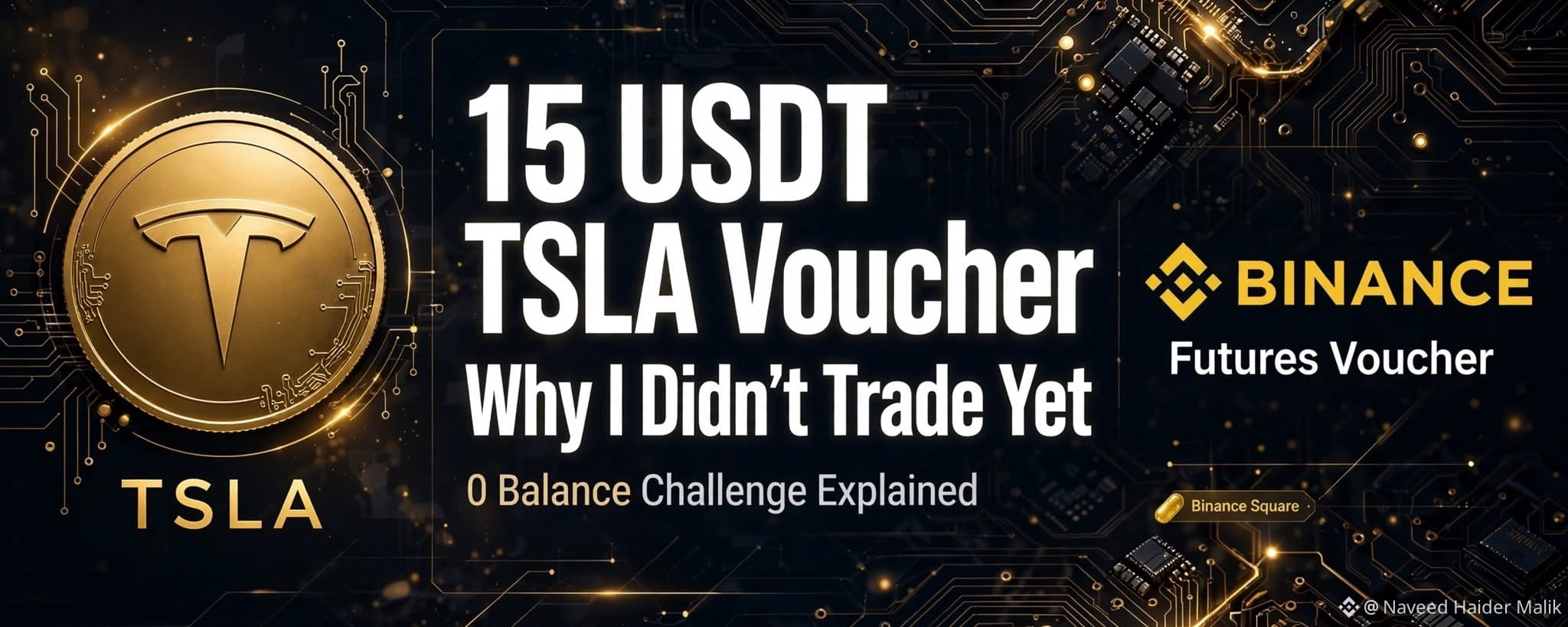
Balans 0 bo‘lsa ham 15 USDT TSLA Vaucherini oldim, lekin hali savdo qilmadim — sababi $TSLAKecha men 15 USDT TSLA Position Voucherini oldim. Spot balansim esa hali ham 0.00 USDT. Men hali savdo qilmaganman.
“Vaucher”da 9-sentabr, 10X leverage, TSLA margin muddati ko‘rsatilgan. Hozir Redeem qilib olishim mumkin edi, lekin to‘xtadim. Avval o‘rganmoqchi edim.
Mana men 1 kun ichida savdo qilishDAN OLDIN nimani o‘rgandim:
1. Bu BEPUL naqd pul EMAS. Bu BEPUL POZISIYA. Agar foyda bo‘lsa, foyda meniki. Agar zarar bo‘lsa, faqat vaucher yo‘qoladi. Mening pullarim kerak emas, lekin noto‘g‘ri bo‘lsa vaucher nolga tushadi.
2. TSLAUSDT BTC emas. Bu Binance’dagi Tesla aktsiyasi narxi. U faqat AQSh bozori 19:30 (Pokiston vaqti) da ochilganda harakat qiladi, kriptodagi kabi 24 soat emas. Agar AQSh bozori yopiq bo‘lsa, narx o‘zgarmaydi.
Balans 0 bo‘lsa ham 15 USDT TSLA Vaucherini oldim, lekin hali savdo qilmadim — sababi $TSLA
Kecha men 15 USDT TSLA Position Voucherini oldim. Spot balansim esa hali ham 0.00 USDT. Men hali savdo qilmaganman.
“Vaucher”da 9-sentabr, 10X leverage, TSLA margin muddati ko‘rsatilgan. Hozir Redeem qilib olishim mumkin edi, lekin to‘xtadim. Avval o‘rganmoqchi edim.
Mana men 1 kun ichida savdo qilishDAN OLDIN nimani o‘rgandim:
1. Bu BEPUL naqd pul EMAS. Bu BEPUL POZISIYA. Agar foyda bo‘lsa, foyda meniki. Agar zarar bo‘lsa, faqat vaucher yo‘qoladi. Mening pullarim kerak emas, lekin noto‘g‘ri bo‘lsa vaucher nolga tushadi.
2. TSLAUSDT BTC emas. Bu Binance’dagi Tesla aktsiyasi narxi. U faqat AQSh bozori 19:30 (Pokiston vaqti) da ochilganda harakat qiladi, kriptodagi kabi 24 soat emas. Agar AQSh bozori yopiq bo‘lsa, narx o‘zgarmaydi.
“Vaucher”da 9-sentabr, 10X leverage, TSLA margin muddati ko‘rsatilgan. Hozir Redeem qilib olishim mumkin edi, lekin to‘xtadim. Avval o‘rganmoqchi edim.
Mana men 1 kun ichida savdo qilishDAN OLDIN nimani o‘rgandim:
1. Bu BEPUL naqd pul EMAS. Bu BEPUL POZISIYA. Agar foyda bo‘lsa, foyda meniki. Agar zarar bo‘lsa, faqat vaucher yo‘qoladi. Mening pullarim kerak emas, lekin noto‘g‘ri bo‘lsa vaucher nolga tushadi.
2. TSLAUSDT BTC emas. Bu Binance’dagi Tesla aktsiyasi narxi. U faqat AQSh bozori 19:30 (Pokiston vaqti) da ochilganda harakat qiladi, kriptodagi kabi 24 soat emas. Agar AQSh bozori yopiq bo‘lsa, narx o‘zgarmaydi.
1
461
Maqola
See translation
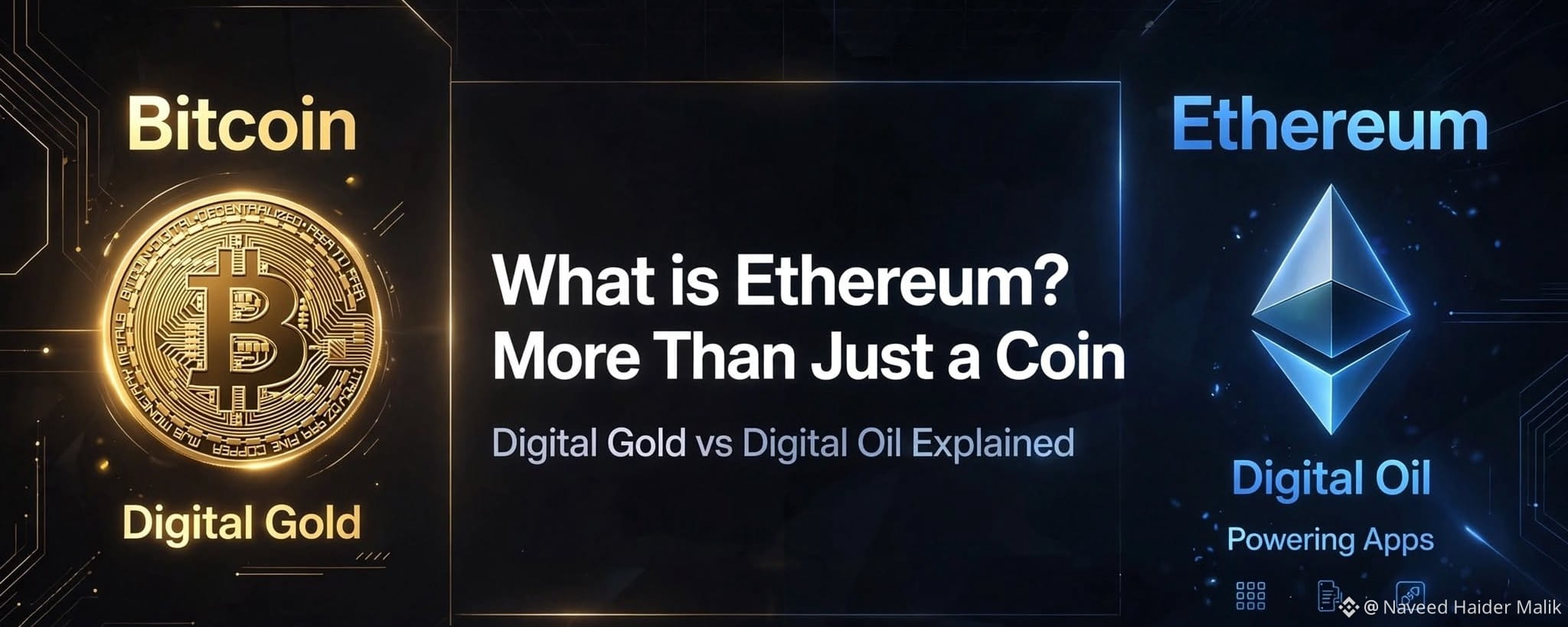
What is Ethereum? More Than Just a Coin. Ethereum It's Not Just a Coin.
Think of Ethereum as a platform, like Android or iOS. Just like you install apps on your phone, developers build apps on Ethereum. We call them DApps (Decentralized Apps).
ETH is the fuel that runs these apps. No ETH, no app runs.
Why Do Developers Use Ethereum? Smart Contracts.
{spot}(ETHUSDT)
BTC is like a calculator - it does one job (send money) very well.
ETH is like a smartphone - you can build anything on it.
Developers use ETH to build DeFi (lending without a bank), NFTs, Games, and 1000s of other apps.
That is why it holds Rank #2 with $299.58B Market Cap and 11.25% Dominance real usage, not hype.
BTC vs ETH (Super Simple):
BTC = Digital Gold
Launched in 2009. Main job: Store of value, like gold. Supply limited to 21M. Slow but very secure.
ETH = Digital Oil
Launched in 2015. Issue price $0.308 → ATH $4,953.73 (Aug 25, 2025). Main job: Power apps, like oil powers machines. Powers all DApps. Faster and more programmable.
The chart shows the journey: 2014 $0.308 → 2025 $4,953 → Today $2,454. Real growth, not a +185% trap coin.
So next time someone says ETH and BTC are the same, you know: One is Gold, the other is Oil. Both are needed.
Which do you think is more important for the future Gold or Oil? Comment below.
Note: You can trade both BTC and ETH against BNB and other pairs directly on Binance, which is why understanding these fundamentals helps when using the Binance ecosystem.
$ETH $BTC $BNB
#CryptoForBeginners #Ethereum
What is Ethereum? More Than Just a Coin.
Ethereum It's Not Just a Coin.
Think of Ethereum as a platform, like Android or iOS. Just like you install apps on your phone, developers build apps on Ethereum. We call them DApps (Decentralized Apps).
ETH is the fuel that runs these apps. No ETH, no app runs.
Why Do Developers Use Ethereum? Smart Contracts.
BTC is like a calculator - it does one job (send money) very well.
ETH is like a smartphone - you can build anything on it.
Developers use ETH to build DeFi (lending without a bank), NFTs, Games, and 1000s of other apps.
That is why it holds Rank #2 with $299.58B Market Cap and 11.25% Dominance real usage, not hype.
BTC vs ETH (Super Simple):
BTC = Digital Gold
Launched in 2009. Main job: Store of value, like gold. Supply limited to 21M. Slow but very secure.
ETH = Digital Oil
Launched in 2015. Issue price $0.308 → ATH $4,953.73 (Aug 25, 2025). Main job: Power apps, like oil powers machines. Powers all DApps. Faster and more programmable.
The chart shows the journey: 2014 $0.308 → 2025 $4,953 → Today $2,454. Real growth, not a +185% trap coin.
So next time someone says ETH and BTC are the same, you know: One is Gold, the other is Oil. Both are needed.
Which do you think is more important for the future Gold or Oil? Comment below.
Note: You can trade both BTC and ETH against BNB and other pairs directly on Binance, which is why understanding these fundamentals helps when using the Binance ecosystem.
$ETH $BTC $BNB
#CryptoForBeginners #Ethereum
Think of Ethereum as a platform, like Android or iOS. Just like you install apps on your phone, developers build apps on Ethereum. We call them DApps (Decentralized Apps).
ETH is the fuel that runs these apps. No ETH, no app runs.
Why Do Developers Use Ethereum? Smart Contracts.
BTC is like a calculator - it does one job (send money) very well.
ETH is like a smartphone - you can build anything on it.
Developers use ETH to build DeFi (lending without a bank), NFTs, Games, and 1000s of other apps.
That is why it holds Rank #2 with $299.58B Market Cap and 11.25% Dominance real usage, not hype.
BTC vs ETH (Super Simple):
BTC = Digital Gold
Launched in 2009. Main job: Store of value, like gold. Supply limited to 21M. Slow but very secure.
ETH = Digital Oil
Launched in 2015. Issue price $0.308 → ATH $4,953.73 (Aug 25, 2025). Main job: Power apps, like oil powers machines. Powers all DApps. Faster and more programmable.
The chart shows the journey: 2014 $0.308 → 2025 $4,953 → Today $2,454. Real growth, not a +185% trap coin.
So next time someone says ETH and BTC are the same, you know: One is Gold, the other is Oil. Both are needed.
Which do you think is more important for the future Gold or Oil? Comment below.
Note: You can trade both BTC and ETH against BNB and other pairs directly on Binance, which is why understanding these fundamentals helps when using the Binance ecosystem.
$ETH $BTC $BNB
#CryptoForBeginners #Ethereum
116
See translation
If No Bank Owns Bitcoin, Why Is It Still Working After 15 Years? $BTC.
{spot}(BTCUSDT)
In my first post I asked a simple question.
If no bank and no government owns $BTC and controls it, why is it still working?
I searched and found the answer. It's actually simple.
Bitcoin works because a bank is replaced by 3 things:
1. A shared notebook called Blockchain
Imagine a Google Sheet copied on thousands of computers worldwide.
When you send $BTC, all computers write it at the same time. No one can erase it because everyone has a copy.
2. Thousands of computers checking, not one manager. In a bank, one manager checks.In Bitcoin, thousands of computers check your transaction. If one computer lies, the other 9999 rejects it.
3. Rules are in code, not made by a person
Bitcoin's rules are written in software - only 21 million $BTC will ever exist, no fake coins can be made.
No single person can change these rules. More than 50% of all computers in the world must agree to change it. That's almost impossible.
So no one owns Bitcoin, but everyone follows the same rules. That's why it is still working since 2009.
Like the Internet no one owns the Internet but it still works.
But remember because there is no bank, if you lose your password or send to wrong address, no one will refund you. That's the real risk.
This is for education only, not financial advice.
Do you also think this is the reason $BTC is trusted? What do you think about $ETH and $BNB - are they also like this?
⚠️ RISK WARNING ⚠️
Crypto is volatile. Prices can go up or down.
This is for education only, not financial advice.
Do your own research. Only invest what you can afford to lose.
#CryptoForBeginners #ScamAwareness
If No Bank Owns Bitcoin, Why Is It Still Working After 15 Years? $BTC.
In my first post I asked a simple question.
If no bank and no government owns $BTC and controls it, why is it still working?
I searched and found the answer. It's actually simple.
Bitcoin works because a bank is replaced by 3 things:
1. A shared notebook called Blockchain
Imagine a Google Sheet copied on thousands of computers worldwide.
When you send $BTC, all computers write it at the same time. No one can erase it because everyone has a copy.
2. Thousands of computers checking, not one manager. In a bank, one manager checks.In Bitcoin, thousands of computers check your transaction. If one computer lies, the other 9999 rejects it.
3. Rules are in code, not made by a person
Bitcoin's rules are written in software - only 21 million $BTC will ever exist, no fake coins can be made.
No single person can change these rules. More than 50% of all computers in the world must agree to change it. That's almost impossible.
So no one owns Bitcoin, but everyone follows the same rules. That's why it is still working since 2009.
Like the Internet no one owns the Internet but it still works.
But remember because there is no bank, if you lose your password or send to wrong address, no one will refund you. That's the real risk.
This is for education only, not financial advice.
Do you also think this is the reason $BTC is trusted? What do you think about $ETH and $BNB - are they also like this?
⚠️ RISK WARNING ⚠️
Crypto is volatile. Prices can go up or down.
This is for education only, not financial advice.
Do your own research. Only invest what you can afford to lose.
#CryptoForBeginners #ScamAwareness
In my first post I asked a simple question.
If no bank and no government owns $BTC and controls it, why is it still working?
I searched and found the answer. It's actually simple.
Bitcoin works because a bank is replaced by 3 things:
1. A shared notebook called Blockchain
Imagine a Google Sheet copied on thousands of computers worldwide.
When you send $BTC, all computers write it at the same time. No one can erase it because everyone has a copy.
2. Thousands of computers checking, not one manager. In a bank, one manager checks.In Bitcoin, thousands of computers check your transaction. If one computer lies, the other 9999 rejects it.
3. Rules are in code, not made by a person
Bitcoin's rules are written in software - only 21 million $BTC will ever exist, no fake coins can be made.
No single person can change these rules. More than 50% of all computers in the world must agree to change it. That's almost impossible.
So no one owns Bitcoin, but everyone follows the same rules. That's why it is still working since 2009.
Like the Internet no one owns the Internet but it still works.
But remember because there is no bank, if you lose your password or send to wrong address, no one will refund you. That's the real risk.
This is for education only, not financial advice.
Do you also think this is the reason $BTC is trusted? What do you think about $ETH and $BNB - are they also like this?
⚠️ RISK WARNING ⚠️
Crypto is volatile. Prices can go up or down.
This is for education only, not financial advice.
Do your own research. Only invest what you can afford to lose.
#CryptoForBeginners #ScamAwareness
64
$USDC — bu stablecoin.
Uning narxi 1 AQSh dollariga yaqin bo‘lib turishi uchun yaratilgan. $BTC’dan farqli o‘laroq, u tez-tez ko‘tarilib-tushishi uchun mo‘ljallanmagan.
Nega Binance uni to‘lovlar uchun ishlatadi?
1. Barqaror qiymat
2. P2P’da PKR ga o‘tkazish oson
3. Butun dunyoda qabul qilinadi
Agar kimdir sizning $USDC yoki $BTC cashtag’ingizni bosib, 7 kun ichida savdo qilsa, siz $USDC ishlaysiz. To‘lov haftalik, dushanbadan yakshanbagacha hisoblanadi va payshanbagacha Funding Wallet’ingizga to‘lanadi. Kamida 0.1 USDC kerak.
Men stablecoinlar haqida o‘rganayapman. Bu moliyaviy maslahat emas.
#LearnFromMistakes #Stablecoins
$USDC — bu stablecoin.
Uning narxi 1 AQSh dollariga yaqin bo‘lib turishi uchun yaratilgan. $BTC’dan farqli o‘laroq, u tez-tez ko‘tarilib-tushishi uchun mo‘ljallanmagan.
Nega Binance uni to‘lovlar uchun ishlatadi?
1. Barqaror qiymat
2. P2P’da PKR ga o‘tkazish oson
3. Butun dunyoda qabul qilinadi
Agar kimdir sizning $USDC yoki $BTC cashtag’ingizni bosib, 7 kun ichida savdo qilsa, siz $USDC ishlaysiz. To‘lov haftalik, dushanbadan yakshanbagacha hisoblanadi va payshanbagacha Funding Wallet’ingizga to‘lanadi. Kamida 0.1 USDC kerak.
Men stablecoinlar haqida o‘rganayapman. Bu moliyaviy maslahat emas.
#LearnFromMistakes #Stablecoins
Uning narxi 1 AQSh dollariga yaqin bo‘lib turishi uchun yaratilgan. $BTC’dan farqli o‘laroq, u tez-tez ko‘tarilib-tushishi uchun mo‘ljallanmagan.
Nega Binance uni to‘lovlar uchun ishlatadi?
1. Barqaror qiymat
2. P2P’da PKR ga o‘tkazish oson
3. Butun dunyoda qabul qilinadi
Agar kimdir sizning $USDC yoki $BTC cashtag’ingizni bosib, 7 kun ichida savdo qilsa, siz $USDC ishlaysiz. To‘lov haftalik, dushanbadan yakshanbagacha hisoblanadi va payshanbagacha Funding Wallet’ingizga to‘lanadi. Kamida 0.1 USDC kerak.
Men stablecoinlar haqida o‘rganayapman. Bu moliyaviy maslahat emas.
#LearnFromMistakes #Stablecoins
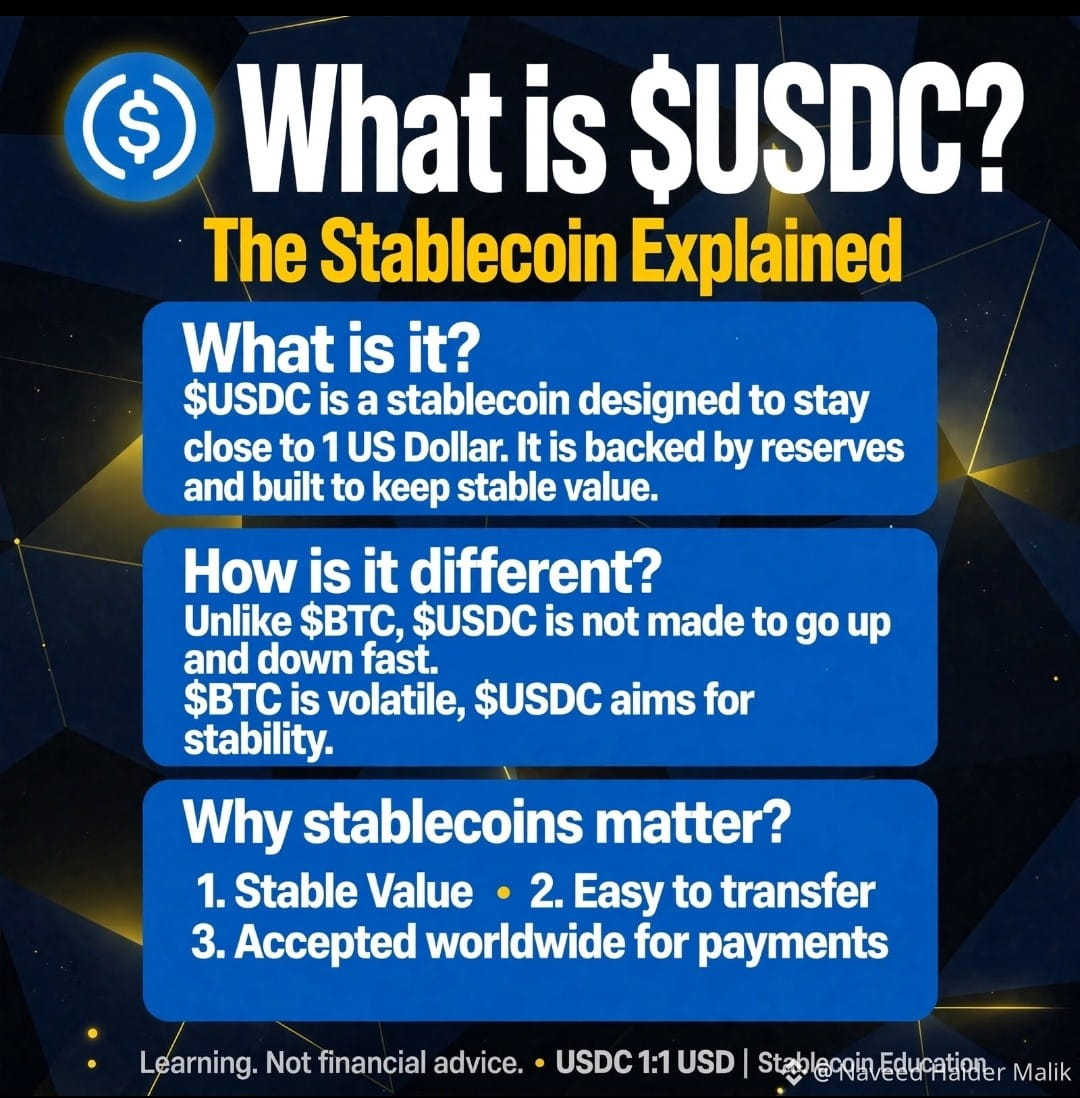
91
See translation
What is Bitcoin ($BTC) in simple words? For complete Beginners.
The world's first digital money.
No bank or government controls it.
but the question comes if no one owns and controls it why this is still working ?
3 simple facts:
1. Only 21 million $BTC will ever exist .
2.Borderless! you can send it to anyone in the world.
3. Decentralized : it turn on thousands of computers not one company.
this is for(beginner) education only. not financial advice.
Next will be on $ETH and $BNB
#CryptoForBeginners
What is Bitcoin ($BTC) in simple words? For complete Beginners.
The world's first digital money.
No bank or government controls it.
but the question comes if no one owns and controls it why this is still working ?
3 simple facts:
1. Only 21 million $BTC will ever exist .
2.Borderless! you can send it to anyone in the world.
3. Decentralized : it turn on thousands of computers not one company.
this is for(beginner) education only. not financial advice.
Next will be on $ETH and $BNB
#CryptoForBeginners
The world's first digital money.
No bank or government controls it.
but the question comes if no one owns and controls it why this is still working ?
3 simple facts:
1. Only 21 million $BTC will ever exist .
2.Borderless! you can send it to anyone in the world.
3. Decentralized : it turn on thousands of computers not one company.
this is for(beginner) education only. not financial advice.
Next will be on $ETH and $BNB
#CryptoForBeginners
116
Men kriptoda yangiman.
Bir marta BTC sotib olishga urinib ko‘rdim, lekin aldanib qoldim 😔
Shundan beri hech qanday savdo qilganim yo‘q. Juda qo‘rqaman.
Hozirgina Binance’ga to‘g‘ri o‘rganish va "Write to Earn"ni sinab ko‘rish uchun qo‘shildim.
Sizni aldanib qolishdan saqlab qolgan #1 xavfsizlik qoidasi nima?
Boshlovchilar men kabi bir xil xatoga yo‘l qo‘ymasliklari uchun maslahatlaringizni pastda izohda qoldiring 🙏
#CryptoPK #BinanceSquareFamily #ScamAwareness #writetoearn #Pakistan
Men kriptoda yangiman.
Bir marta BTC sotib olishga urinib ko‘rdim, lekin aldanib qoldim 😔
Shundan beri hech qanday savdo qilganim yo‘q. Juda qo‘rqaman.
Hozirgina Binance’ga to‘g‘ri o‘rganish va "Write to Earn"ni sinab ko‘rish uchun qo‘shildim.
Sizni aldanib qolishdan saqlab qolgan #1 xavfsizlik qoidasi nima?
Boshlovchilar men kabi bir xil xatoga yo‘l qo‘ymasliklari uchun maslahatlaringizni pastda izohda qoldiring 🙏
#CryptoPK #BinanceSquareFamily #ScamAwareness #writetoearn #Pakistan
Bir marta BTC sotib olishga urinib ko‘rdim, lekin aldanib qoldim 😔
Shundan beri hech qanday savdo qilganim yo‘q. Juda qo‘rqaman.
Hozirgina Binance’ga to‘g‘ri o‘rganish va "Write to Earn"ni sinab ko‘rish uchun qo‘shildim.
Sizni aldanib qolishdan saqlab qolgan #1 xavfsizlik qoidasi nima?
Boshlovchilar men kabi bir xil xatoga yo‘l qo‘ymasliklari uchun maslahatlaringizni pastda izohda qoldiring 🙏
#CryptoPK #BinanceSquareFamily #ScamAwareness #writetoearn #Pakistan
1
1
407
Ko‘proq kontentni ko‘rish uchun tizimga kiring
Binance Square'da global kriptovalyuta foydalanuvchilariga qo‘shiling
⚡️ Kriptovalyuta haqida eng so‘nggi va foydali ma’lumotlarni oling.
💬 Dunyoning eng yirik kriptovalyuta birjasi tomonidan ishonchli deb topilgan.
👍 Tasdiqlangan mualliflardan haqiqiy tahlillarni kashf eting.
Email / telefon raqami
Trenddagi mavzular
BitcoinReboundsTo$79K
11,252 marta koʻrilgan
111 muhokama qilmoqda
🚨 $BTC yuqoriga ko‘tarilmoqda.
Bitcoin hozirda $78,804 atrofida savdo qilmoqda, taxminan 1.9% ga o‘sdi; $78K zonasini qayta egallaganidan keyin. Kuzatish kerak bo‘lgan keyingi daraja — intraday maksimumi: $78,905 yaqinida.
Agar shu darajadan yuqorida aniq tanaffus bo‘lsa, $79K–$80K tomon yo‘l ochilishi mumkin. Agar BTC rad etilsa, qo‘llab-quvvatlash $78,300 atrofida, keyin esa $77,975 da turadi.
Bqalarning impulsi bor, lekin BTC $78K dan yuqorida ushlashi kerak.
#Bitcoin #BTC #CryptoTrading #CryptoMarket #CryptoAnalysis
PulseON
·11 ta layk
·11.4k marta koʻrilgan
RussianCentralBankFlagsCryptoAsFinancialRisk
0 marta koʻrilgan
0 muhokama qilmoqda
GrayscalePutsXRPAt26.11%InAdvisorPortfolio
1,853 marta koʻrilgan
107 muhokama qilmoqda