

#bstocks
bstocks
1.2M marta koʻrilgan
4,985 muhokama qilmoqda
Ommabop
Eng so‘nggi

·
--
Tasdiqlangan
Tarjimani ko‘rish
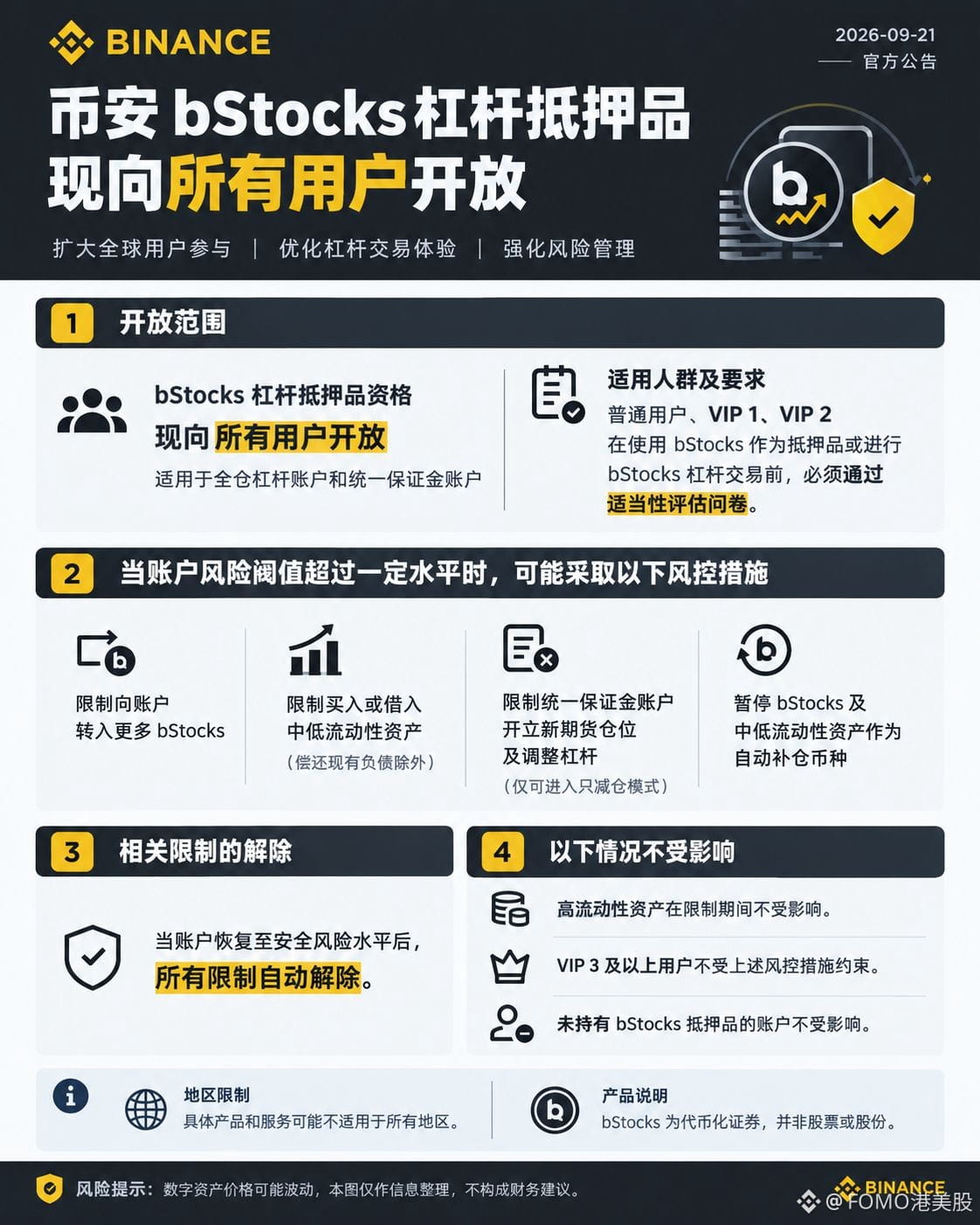
币安 9 月 21 日把 bStocks 杠杆抵押品资格从 VIP 3 及以上放开到全部用户,适用于全仓杠杆和统一保证金账户。
真正的信息在当天下午的配套风控指南里:VIP 0–2 用户要同时满足三个条件才会被限制 —— 持有 bStocks 抵押品、bStocks 占抵押率调整后净资产 60% 以上且不低于 100 美元、低流动性资产净敞口有效杠杆超 2 倍或中流动性超 5 倍。
限制期间不能转入更多 bStocks,不能买入或借入中流动性、低流动性资产,统一保证金账户只能减仓。高流动性资产和 VIP 3 及以上完全不受影响,风险水平恢复后限制自动解除,并且不会强制平仓。
bStocks 是代币化证券,不是股票;只作抵押品,暂不支持借贷。
#bstock #BStocks
[原文链接:](https://www.binance.com/zh-CN/support/announcement/detail/81b8ea1e9eaf45759c43b17c66aa068d)
币安 9 月 21 日把 bStocks 杠杆抵押品资格从 VIP 3 及以上放开到全部用户,适用于全仓杠杆和统一保证金账户。
真正的信息在当天下午的配套风控指南里:VIP 0–2 用户要同时满足三个条件才会被限制 —— 持有 bStocks 抵押品、bStocks 占抵押率调整后净资产 60% 以上且不低于 100 美元、低流动性资产净敞口有效杠杆超 2 倍或中流动性超 5 倍。
限制期间不能转入更多 bStocks,不能买入或借入中流动性、低流动性资产,统一保证金账户只能减仓。高流动性资产和 VIP 3 及以上完全不受影响,风险水平恢复后限制自动解除,并且不会强制平仓。
bStocks 是代币化证券,不是股票;只作抵押品,暂不支持借贷。
#bstock #BStocks
原文链接:
真正的信息在当天下午的配套风控指南里:VIP 0–2 用户要同时满足三个条件才会被限制 —— 持有 bStocks 抵押品、bStocks 占抵押率调整后净资产 60% 以上且不低于 100 美元、低流动性资产净敞口有效杠杆超 2 倍或中流动性超 5 倍。
限制期间不能转入更多 bStocks,不能买入或借入中流动性、低流动性资产,统一保证金账户只能减仓。高流动性资产和 VIP 3 及以上完全不受影响,风险水平恢复后限制自动解除,并且不会强制平仓。
bStocks 是代币化证券,不是股票;只作抵押品,暂不支持借贷。
#bstock #BStocks
原文链接:
1
835

·
--
Tasdiqlangan
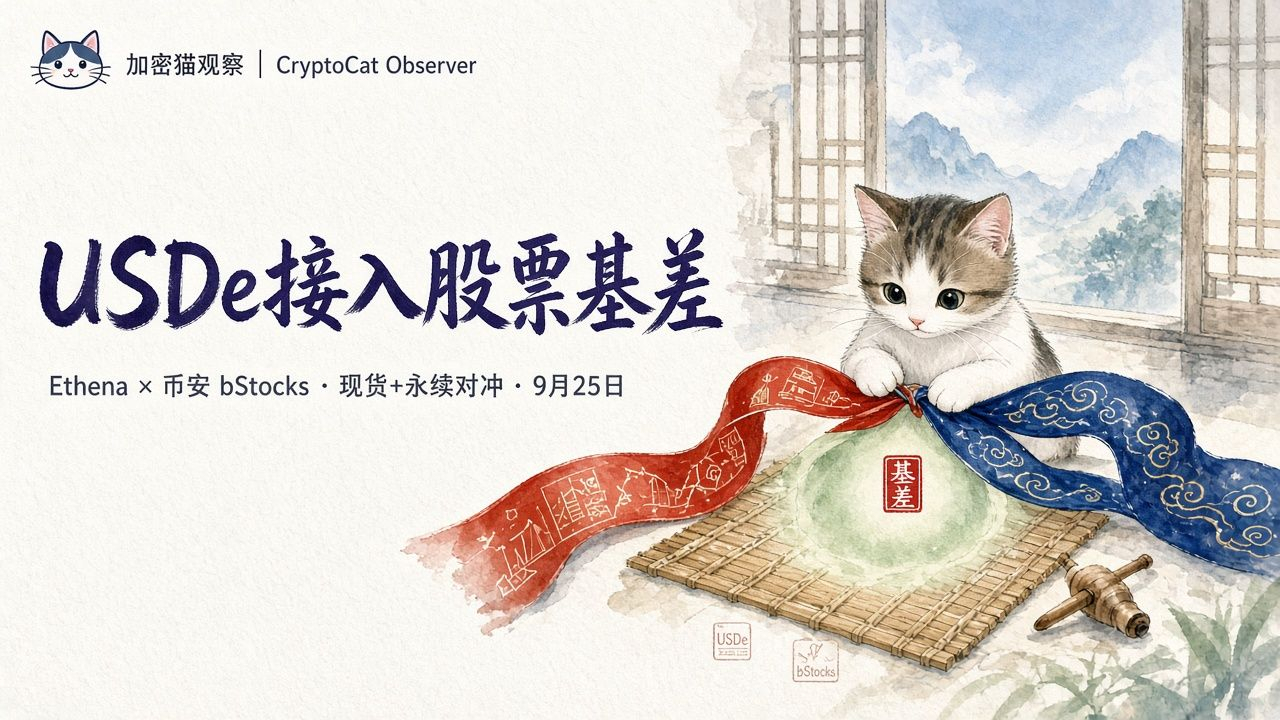
25-sentabr kuni Ethena (toki $ENA) Binance bilan hamkorlikni e’lon qilib, sintetik dollar $USDe uchun bazis strategiyasini ilk bor fond bozoriga kengaytirishini ma’lum qildi: Binance bStocks (tokenlashtirilgan AQSh aksiyalari va ETF)ni spot tomonda garov sifatida qo‘llagan holda, Binance’ga mos USDT nominalli aksiyalarning perpetual shartnomalarida short xedjni o‘rnatib, kripto tomondagi bilan bir xil bo‘lgan bozor neytralligi strukturasini shakllaydi. Rasmiy ma’lumotga ko‘ra, joylashtirish o‘sha kundan boshlab ishga tushadi; DefiLlama talqiniga ko‘ra, USDe muomaladagi hajmi qariyb 4,9 milliard AQSh dollarini tashkil etadi. Ethena bu qadam bilan taqqoslanadigan bazaviy bozorni taxminan 2,5 trillion AQSh dollari atrofidagi kripto aktivlaridan 150 trillion AQSh dollardan oshadigan real dunyo aktivlar havzasiga kengaytirilishini aytmoqda — ya’ni bu potentsial erishish mumkin bo‘lgan ko‘lamni bildiradi, o‘sha kunning o‘zida allaqachon joylashtirilgan summa emas.
Binance aksiyalaridagi perpetual ochiq kontraktlar hajmi qariyb 2,9 milliard AQSh dollaridan oshadi va shartlarga mos keladigan bozor neytralligi hisoblariga avtomatik qisqartirish (deleveraging) uchun pastroq ustuvorlik beriladi. Ethena risk bo‘yicha qo‘mita tokenlashtirilgan aksiyalar bazis ramkasini ko‘rib chiqqan; bStocks Binance bilan aloqador BTech Holdings tomonidan chiqariladi, bunda egalarga emitentning pozitsiyalaridagi ulush huquqi beriladi, aktsiyalarning bevosita mulkchilik huquqi emas. Keyinchalik boshqa birjalarga ham kengaytiriladimi hamda yon xat kabi risk-nazorat (wind-down) tartiblarining amalda qanday yo‘lga qo‘yilishi qanday bo‘lishi — bular hali kuzatuv ostida.
#USDe #ENA #bStocks investitsiya tavsiyasi hisoblanmaydi
25-sentabr kuni Ethena (toki $ENA ) Binance bilan hamkorlikni e’lon qilib, sintetik dollar $USDe uchun bazis strategiyasini ilk bor fond bozoriga kengaytirishini ma’lum qildi: Binance bStocks (tokenlashtirilgan AQSh aksiyalari va ETF)ni spot tomonda garov sifatida qo‘llagan holda, Binance’ga mos USDT nominalli aksiyalarning perpetual shartnomalarida short xedjni o‘rnatib, kripto tomondagi bilan bir xil bo‘lgan bozor neytralligi strukturasini shakllaydi. Rasmiy ma’lumotga ko‘ra, joylashtirish o‘sha kundan boshlab ishga tushadi; DefiLlama talqiniga ko‘ra, USDe muomaladagi hajmi qariyb 4,9 milliard AQSh dollarini tashkil etadi. Ethena bu qadam bilan taqqoslanadigan bazaviy bozorni taxminan 2,5 trillion AQSh dollari atrofidagi kripto aktivlaridan 150 trillion AQSh dollardan oshadigan real dunyo aktivlar havzasiga kengaytirilishini aytmoqda — ya’ni bu potentsial erishish mumkin bo‘lgan ko‘lamni bildiradi, o‘sha kunning o‘zida allaqachon joylashtirilgan summa emas.
Binance aksiyalaridagi perpetual ochiq kontraktlar hajmi qariyb 2,9 milliard AQSh dollaridan oshadi va shartlarga mos keladigan bozor neytralligi hisoblariga avtomatik qisqartirish (deleveraging) uchun pastroq ustuvorlik beriladi. Ethena risk bo‘yicha qo‘mita tokenlashtirilgan aksiyalar bazis ramkasini ko‘rib chiqqan; bStocks Binance bilan aloqador BTech Holdings tomonidan chiqariladi, bunda egalarga emitentning pozitsiyalaridagi ulush huquqi beriladi, aktsiyalarning bevosita mulkchilik huquqi emas. Keyinchalik boshqa birjalarga ham kengaytiriladimi hamda yon xat kabi risk-nazorat (wind-down) tartiblarining amalda qanday yo‘lga qo‘yilishi qanday bo‘lishi — bular hali kuzatuv ostida.
#USDe #ENA #bStocks investitsiya tavsiyasi hisoblanmaydi
Binance aksiyalaridagi perpetual ochiq kontraktlar hajmi qariyb 2,9 milliard AQSh dollaridan oshadi va shartlarga mos keladigan bozor neytralligi hisoblariga avtomatik qisqartirish (deleveraging) uchun pastroq ustuvorlik beriladi. Ethena risk bo‘yicha qo‘mita tokenlashtirilgan aksiyalar bazis ramkasini ko‘rib chiqqan; bStocks Binance bilan aloqador BTech Holdings tomonidan chiqariladi, bunda egalarga emitentning pozitsiyalaridagi ulush huquqi beriladi, aktsiyalarning bevosita mulkchilik huquqi emas. Keyinchalik boshqa birjalarga ham kengaytiriladimi hamda yon xat kabi risk-nazorat (wind-down) tartiblarining amalda qanday yo‘lga qo‘yilishi qanday bo‘lishi — bular hali kuzatuv ostida.
#USDe #ENA #bStocks investitsiya tavsiyasi hisoblanmaydi
1.1k

Tarjimani ko‘rish
Crypto & Traditional Markets: Why Financial Education MattersThe financial world is constantly evolving. Today, people can learn about cryptocurrencies, stocks, commodities, and other financial products from the same digital ecosystem.
For crypto users, learning about traditional markets can provide a broader understanding of how different assets behave.
📌 Crypto
Cryptocurrencies are digital assets whose prices can be influenced by market sentiment, liquidity, blockchain developments, regulations, and global economic conditions.
📌 Stocks
Stocks represent an ownership interest in companies. Their prices can be affected by company earnings, business growth, interest rates, economic data, industry trends, and investor expectations.
📌 BStocks
BStocks provide another way for users to explore stock-related exposure within the Binance ecosystem. Before using any product, it is important to understand its structure, availability, fees, and associated risks.
💡 The most important lesson?
Don't invest simply because an asset is trending.
Instead:
🔹 Learn what you are buying
🔹 Research the underlying asset
🔹 Understand the risks
🔹 Check official information
🔹 Consider diversification
🔹 Make decisions based on your own research
Markets will always have opportunities, but they will also have risks. Building knowledge and developing good research habits can be valuable regardless of which market you choose to explore.
📚 Learn first. Research carefully. Understand the risks.
What are you learning about today—Crypto, Stocks, or BStocks? 👇
@BinanceBurmese
#Binance #BinanceSquare #BStocks #SEABstock #SEAstock
⚠️ Disclaimer: This content is for educational purposes only and is not financial or investment advice. Investing involves risk, including possible loss of capital. Always conduct your own research and review official product information before making any investment decision.
Crypto & Traditional Markets: Why Financial Education Matters
The financial world is constantly evolving. Today, people can learn about cryptocurrencies, stocks, commodities, and other financial products from the same digital ecosystem.
For crypto users, learning about traditional markets can provide a broader understanding of how different assets behave.
📌 Crypto
Cryptocurrencies are digital assets whose prices can be influenced by market sentiment, liquidity, blockchain developments, regulations, and global economic conditions.
📌 Stocks
Stocks represent an ownership interest in companies. Their prices can be affected by company earnings, business growth, interest rates, economic data, industry trends, and investor expectations.
📌 BStocks
BStocks provide another way for users to explore stock-related exposure within the Binance ecosystem. Before using any product, it is important to understand its structure, availability, fees, and associated risks.
💡 The most important lesson?
Don't invest simply because an asset is trending.
Instead:
🔹 Learn what you are buying
🔹 Research the underlying asset
🔹 Understand the risks
🔹 Check official information
🔹 Consider diversification
🔹 Make decisions based on your own research
Markets will always have opportunities, but they will also have risks. Building knowledge and developing good research habits can be valuable regardless of which market you choose to explore.
📚 Learn first. Research carefully. Understand the risks.
What are you learning about today—Crypto, Stocks, or BStocks? 👇
@Binance Burmese
#Binance #BinanceSquare #BStocks #SEABstock #SEAstock
⚠️ Disclaimer: This content is for educational purposes only and is not financial or investment advice. Investing involves risk, including possible loss of capital. Always conduct your own research and review official product information before making any investment decision.
For crypto users, learning about traditional markets can provide a broader understanding of how different assets behave.
📌 Crypto
Cryptocurrencies are digital assets whose prices can be influenced by market sentiment, liquidity, blockchain developments, regulations, and global economic conditions.
📌 Stocks
Stocks represent an ownership interest in companies. Their prices can be affected by company earnings, business growth, interest rates, economic data, industry trends, and investor expectations.
📌 BStocks
BStocks provide another way for users to explore stock-related exposure within the Binance ecosystem. Before using any product, it is important to understand its structure, availability, fees, and associated risks.
💡 The most important lesson?
Don't invest simply because an asset is trending.
Instead:
🔹 Learn what you are buying
🔹 Research the underlying asset
🔹 Understand the risks
🔹 Check official information
🔹 Consider diversification
🔹 Make decisions based on your own research
Markets will always have opportunities, but they will also have risks. Building knowledge and developing good research habits can be valuable regardless of which market you choose to explore.
📚 Learn first. Research carefully. Understand the risks.
What are you learning about today—Crypto, Stocks, or BStocks? 👇
@Binance Burmese
#Binance #BinanceSquare #BStocks #SEABstock #SEAstock
⚠️ Disclaimer: This content is for educational purposes only and is not financial or investment advice. Investing involves risk, including possible loss of capital. Always conduct your own research and review official product information before making any investment decision.
21

·
--
O‘suvchi
Tarjimani ko‘rish
Хочу розповісти про життєвий кейс використання bStocks, коли на ринку виникла класична неоднозначна ситуація. Криптовалютний сектор увійшов у глибоку локальну корекцію, тоді як на традиційних біржах акції провідних напівпровідникових гігантів показували стабільне зростання на тлі сильних фінансових звітів.
Замість того, щоб повністю виходити у фіат через P2P або просто спостерігати за зниженням балансу, я спрямував частину вільного депозиту в токенізовані акції цього сектору. Операція зайняла пів хвилини прямо через термінал Binance за звичайні стейблкоїни.
У результаті цей кейс повністю виправдав себе: прибуток від зростання TradFi-активів частково компенсував криптопросадку, утримавши загальний портфель у стабільному стані. Щойно корекція на крипторинку вичерпала себе, я повернув активи назад у стейбли та спокійно підібрав потрібні монети за низькими цінами.
Чи використовували ви коли-небудь фондові активи для підстраховки криптодепозиту?
#TradFi #BStocks #BinanceSquare
Хочу розповісти про життєвий кейс використання bStocks, коли на ринку виникла класична неоднозначна ситуація. Криптовалютний сектор увійшов у глибоку локальну корекцію, тоді як на традиційних біржах акції провідних напівпровідникових гігантів показували стабільне зростання на тлі сильних фінансових звітів.
Замість того, щоб повністю виходити у фіат через P2P або просто спостерігати за зниженням балансу, я спрямував частину вільного депозиту в токенізовані акції цього сектору. Операція зайняла пів хвилини прямо через термінал Binance за звичайні стейблкоїни.
У результаті цей кейс повністю виправдав себе: прибуток від зростання TradFi-активів частково компенсував криптопросадку, утримавши загальний портфель у стабільному стані. Щойно корекція на крипторинку вичерпала себе, я повернув активи назад у стейбли та спокійно підібрав потрібні монети за низькими цінами.
Чи використовували ви коли-небудь фондові активи для підстраховки криптодепозиту?
#TradFi #BStocks #BinanceSquare
Замість того, щоб повністю виходити у фіат через P2P або просто спостерігати за зниженням балансу, я спрямував частину вільного депозиту в токенізовані акції цього сектору. Операція зайняла пів хвилини прямо через термінал Binance за звичайні стейблкоїни.
У результаті цей кейс повністю виправдав себе: прибуток від зростання TradFi-активів частково компенсував криптопросадку, утримавши загальний портфель у стабільному стані. Щойно корекція на крипторинку вичерпала себе, я повернув активи назад у стейбли та спокійно підібрав потрібні монети за низькими цінами.
Чи використовували ви коли-небудь фондові активи для підстраховки криптодепозиту?
#TradFi #BStocks #BinanceSquare
1
94

·
--
Tarjimani ko‘rish
📊 bStocks чи звичайні акції: у чому різниця?
На перший погляд bStocks і звичайні акції можуть здаватися схожими, але це різні інструменти.
🔹 Звичайні акції
Ви купуєте цінний папір через традиційну фондову інфраструктуру. Торгівля проходить у встановлені години роботи відповідного ринку.
🔹 bStocks
Це токенізовані цінні папери, пов'язані з базовими американськими акціями. Вони працюють через криптоінфраструктуру, а торгівля може бути доступна 24/7.
📌 Важливий нюанс
bStock не означає пряме володіння самою акцією. Токенізований актив представляє інтерес до базового цінного паперу, тому його структура відрізняється від звичайної акції.
⚠️ Також варто враховувати ризики: ціна може змінюватися, доступ до продукту залежить від юрисдикції, а умови можуть оновлюватися.
💡 Тому вибір між традиційною акцією та токенізованим активом залежить від того, який формат доступу до ринку вам потрібен.
#bStocks #TradFi #Investing
📊 bStocks чи звичайні акції: у чому різниця?
На перший погляд bStocks і звичайні акції можуть здаватися схожими, але це різні інструменти.
🔹 Звичайні акції
Ви купуєте цінний папір через традиційну фондову інфраструктуру. Торгівля проходить у встановлені години роботи відповідного ринку.
🔹 bStocks
Це токенізовані цінні папери, пов'язані з базовими американськими акціями. Вони працюють через криптоінфраструктуру, а торгівля може бути доступна 24/7.
📌 Важливий нюанс
bStock не означає пряме володіння самою акцією. Токенізований актив представляє інтерес до базового цінного паперу, тому його структура відрізняється від звичайної акції.
⚠️ Також варто враховувати ризики: ціна може змінюватися, доступ до продукту залежить від юрисдикції, а умови можуть оновлюватися.
💡 Тому вибір між традиційною акцією та токенізованим активом залежить від того, який формат доступу до ринку вам потрібен.
#bStocks #TradFi #Investing
На перший погляд bStocks і звичайні акції можуть здаватися схожими, але це різні інструменти.
🔹 Звичайні акції
Ви купуєте цінний папір через традиційну фондову інфраструктуру. Торгівля проходить у встановлені години роботи відповідного ринку.
🔹 bStocks
Це токенізовані цінні папери, пов'язані з базовими американськими акціями. Вони працюють через криптоінфраструктуру, а торгівля може бути доступна 24/7.
📌 Важливий нюанс
bStock не означає пряме володіння самою акцією. Токенізований актив представляє інтерес до базового цінного паперу, тому його структура відрізняється від звичайної акції.
⚠️ Також варто враховувати ризики: ціна може змінюватися, доступ до продукту залежить від юрисдикції, а умови можуть оновлюватися.
💡 Тому вибір між традиційною акцією та токенізованим активом залежить від того, який формат доступу до ринку вам потрібен.
#bStocks #TradFi #Investing
1
102

·
--
Tarjimani ko‘rish
🌐 Як bStocks та Binance Earn захищають капітал від інфляції
Фіат знецінюється, а банки (TradFi) не покривають втрат. Разом із @Binance_Ukraine розбираємо просту Web3-альтернативу для захисту грошей.
📊 Стейблкоїни проти Акцій: що обрати?
Binance Earn (USDT): Стабільність 1:1 до USD та пасивний дохід. Захист від девальвації.bStocks: Токенізовані акції США (Apple, Microsoft). Обганяють інфляцію долара, вхід — від $5.
💡 Кейс: Стратегія «Щит» на 4 500 USDT
💰 3 000 USDT (66%) — у Binance Earn на гнучких умовах для щоденного відсотка.📈 1 500 USDT (34%) — у bStocks надійних техногігантів для зростання (DYOR).
👇 Який відсоток капіталу ви тримаєте в акціях, а який у стейблах? Пишіть у коментарях!
#SEABstock #bStocks #TradFi #BinanceEarn #USDT
🌐 Як bStocks та Binance Earn захищають капітал від інфляції
Фіат знецінюється, а банки (TradFi) не покривають втрат. Разом із @Binance_Ukraine розбираємо просту Web3-альтернативу для захисту грошей.
📊 Стейблкоїни проти Акцій: що обрати?
Binance Earn (USDT): Стабільність 1:1 до USD та пасивний дохід. Захист від девальвації.bStocks: Токенізовані акції США (Apple, Microsoft). Обганяють інфляцію долара, вхід — від $5.
💡 Кейс: Стратегія «Щит» на 4 500 USDT
💰 3 000 USDT (66%) — у Binance Earn на гнучких умовах для щоденного відсотка.📈 1 500 USDT (34%) — у bStocks надійних техногігантів для зростання (DYOR).
👇 Який відсоток капіталу ви тримаєте в акціях, а який у стейблах? Пишіть у коментарях!
#SEABstock #bStocks #TradFi #BinanceEarn #USDT
Фіат знецінюється, а банки (TradFi) не покривають втрат. Разом із @Binance_Ukraine розбираємо просту Web3-альтернативу для захисту грошей.
📊 Стейблкоїни проти Акцій: що обрати?
Binance Earn (USDT): Стабільність 1:1 до USD та пасивний дохід. Захист від девальвації.bStocks: Токенізовані акції США (Apple, Microsoft). Обганяють інфляцію долара, вхід — від $5.
💡 Кейс: Стратегія «Щит» на 4 500 USDT
💰 3 000 USDT (66%) — у Binance Earn на гнучких умовах для щоденного відсотка.📈 1 500 USDT (34%) — у bStocks надійних техногігантів для зростання (DYOR).
👇 Який відсоток капіталу ви тримаєте в акціях, а який у стейблах? Пишіть у коментарях!
#SEABstock #bStocks #TradFi #BinanceEarn #USDT
1
131
·
--
Tarjimani ko‘rish
Купити шматочок Apple чи Tesla через крипту? Це реально!
Раніше, щоб купити акції світових компаній (це називають #TradFi або традиційними фінансами), треба було проходити складну реєстрацію в брокерів і чекати відкриття біржі.
Зараз з'явилися #bStocks — це цифрові копії акцій прямо у крипті.
В чому різниця:
⏰Час: Звичайні біржі працюють тільки в робочі години, а #bStocks доступні цілодобово.
💸Сума: Акція великої компанії може коштувати $200 чи $500. #bStocks дозволяють купити шматочок цієї акції хоч на $10.
🏃♂️Швидкість: Купівля відбувається миттєво.
‼️Про що варто пам'ятати (ризики):
Це все ще новий інструмент, тому правила для нього в різних країнах тільки створюються. До того ж ринок крипти може швидко змінюватися, тож купувати варто з розумом.
А у вас є #bStocks ?
Купити шматочок Apple чи Tesla через крипту? Це реально!
Раніше, щоб купити акції світових компаній (це називають #TradFi або традиційними фінансами), треба було проходити складну реєстрацію в брокерів і чекати відкриття біржі.
Зараз з'явилися #bStocks — це цифрові копії акцій прямо у крипті.
В чому різниця:
⏰Час: Звичайні біржі працюють тільки в робочі години, а #bStocks доступні цілодобово.
💸Сума: Акція великої компанії може коштувати $200 чи $500. #bStocks дозволяють купити шматочок цієї акції хоч на $10.
🏃♂️Швидкість: Купівля відбувається миттєво.
‼️Про що варто пам'ятати (ризики):
Це все ще новий інструмент, тому правила для нього в різних країнах тільки створюються. До того ж ринок крипти може швидко змінюватися, тож купувати варто з розумом.
А у вас є #bStocks ?
Раніше, щоб купити акції світових компаній (це називають #TradFi або традиційними фінансами), треба було проходити складну реєстрацію в брокерів і чекати відкриття біржі.
Зараз з'явилися #bStocks — це цифрові копії акцій прямо у крипті.
В чому різниця:
⏰Час: Звичайні біржі працюють тільки в робочі години, а #bStocks доступні цілодобово.
💸Сума: Акція великої компанії може коштувати $200 чи $500. #bStocks дозволяють купити шматочок цієї акції хоч на $10.
🏃♂️Швидкість: Купівля відбувається миттєво.
‼️Про що варто пам'ятати (ризики):
Це все ще новий інструмент, тому правила для нього в різних країнах тільки створюються. До того ж ринок крипти може швидко змінюватися, тож купувати варто з розумом.
А у вас є #bStocks ?
91
·
--
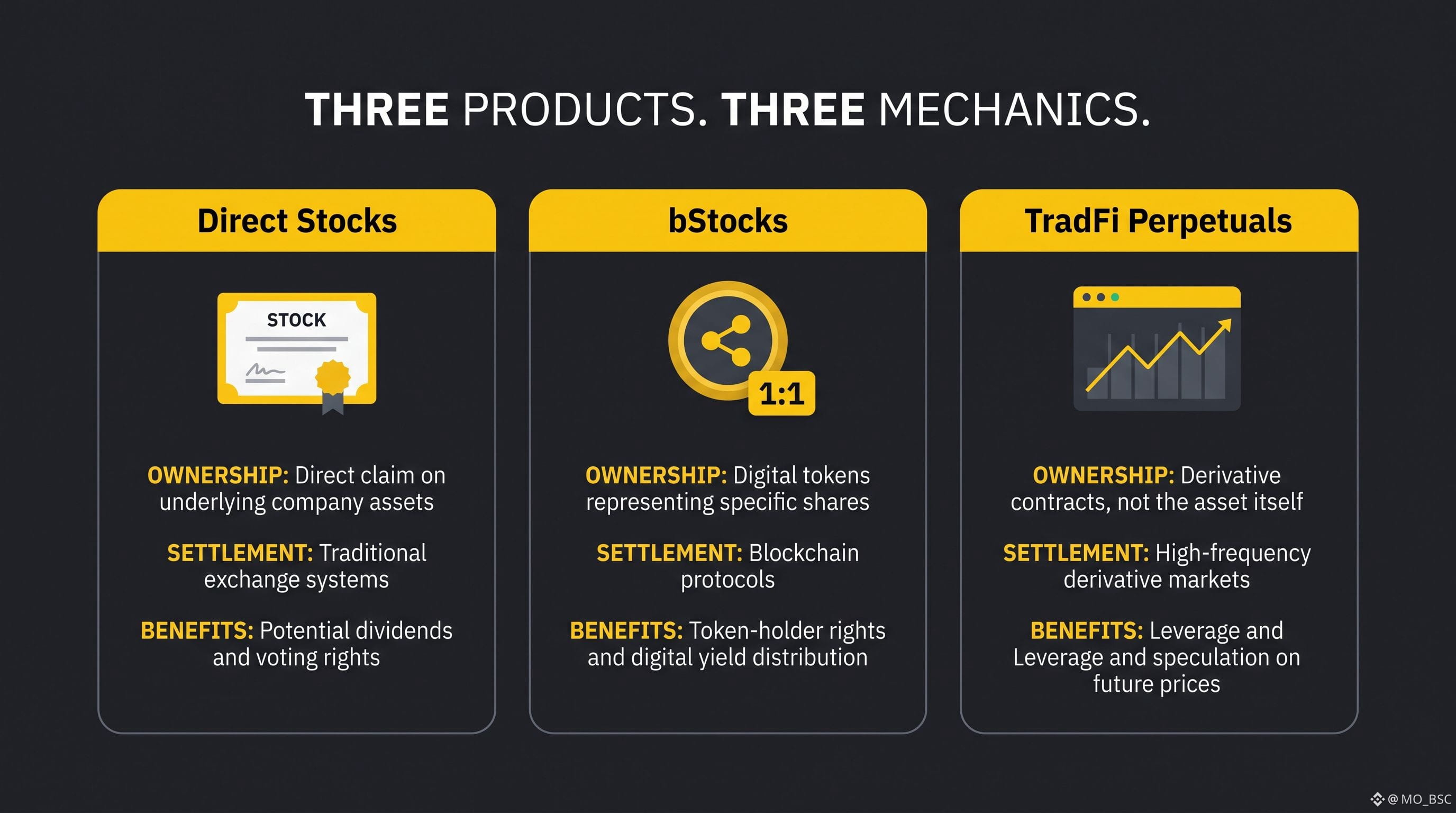
Bir-biri bilan aralashtirib bo‘lmaydigan uchta atama:
Direct Stocks.
bStocks.
TradFi Perpetuals.
Direct stock trading tegishli tuzilma orqali asosiy aksiyalarga egalikni taqdim etishi mumkin.
bStocks — tokenlashtirilgan qimmatli qog‘ozlar bo‘lib, ularning har biri mos keladigan aksiya bilan 1:1 nisbatda ta’minlangan va asosiy qimmatli qog‘ozlarga bo‘lgan ulushni ifodalaydi.
TradFi perpetuals — sizga bevosita egalikni bermasdan, an’anaviy aktivlar narxini kuzatib boradigan derivativlardir.
Uchta mahsulot.
Uchta tuzilma.
Tushunish kerak bo‘lgan uch xil narsa.
Yorliq muhim.
Mexanika esa yanada muhimroq.
@Binance_Academy
#Binance #bStocks
Bir-biri bilan aralashtirib bo‘lmaydigan uchta atama:
Direct Stocks.
bStocks.
TradFi Perpetuals.
Direct stock trading tegishli tuzilma orqali asosiy aksiyalarga egalikni taqdim etishi mumkin.
bStocks — tokenlashtirilgan qimmatli qog‘ozlar bo‘lib, ularning har biri mos keladigan aksiya bilan 1:1 nisbatda ta’minlangan va asosiy qimmatli qog‘ozlarga bo‘lgan ulushni ifodalaydi.
TradFi perpetuals — sizga bevosita egalikni bermasdan, an’anaviy aktivlar narxini kuzatib boradigan derivativlardir.
Uchta mahsulot.
Uchta tuzilma.
Tushunish kerak bo‘lgan uch xil narsa.
Yorliq muhim.
Mexanika esa yanada muhimroq.
@Binance Academy
#Binance #bStocks
Direct Stocks.
bStocks.
TradFi Perpetuals.
Direct stock trading tegishli tuzilma orqali asosiy aksiyalarga egalikni taqdim etishi mumkin.
bStocks — tokenlashtirilgan qimmatli qog‘ozlar bo‘lib, ularning har biri mos keladigan aksiya bilan 1:1 nisbatda ta’minlangan va asosiy qimmatli qog‘ozlarga bo‘lgan ulushni ifodalaydi.
TradFi perpetuals — sizga bevosita egalikni bermasdan, an’anaviy aktivlar narxini kuzatib boradigan derivativlardir.
Uchta mahsulot.
Uchta tuzilma.
Tushunish kerak bo‘lgan uch xil narsa.
Yorliq muhim.
Mexanika esa yanada muhimroq.
@Binance Academy
#Binance #bStocks
3
15
·
--
Tasdiqlangan
Bir haftada ENA 54% ga oshib, qariyb 0.28 ga yetgani — shunchaki o‘tkinchi spekulyatsiya emas. Ortida aniq strukturaviy sabablar bor:
1. Aktsiyalar sektoriga kengayish (bStocks):
Ethena AQSh fond bozorida kodlangan aktsiyalar (masalan, Nvidia va Tesla) orqali o‘zining stabil koini USDe’ni qo‘llab-quvvatlash niyatini e’lon qildi va buning xedjlashini doimiy (perpetual) kontraktlar orqali amalga oshiradi. Bu qadam USDe daromad manbalarini kriptodan global fond bozoriga kengaytirish eshigini ochadi
2. Valyutani sotib olish taklifi (Fee Switch):
Protokolning sof daromadining 95% ini bozordan ENA’ni avtomatik (dasturiy) tarzda sotib olish uchun ishlatish taklifi ilgari surildi. Bu esa valyaga uchun doimiy naqd talabni shakllantirib, narxni qo‘llab-quvvatlaydi
3. Kitlarning konsentratsiyasi:
BitMEX asoschisi Artur Hayes taxminan 25.3 mln ENA sotib olib, narx 0.50$ gacha yetishini kutayotgani joriy trendga turtki va ishonchni oshirdi
Yodda tutish kerak bo‘lgan nuqtalar (risk boshqaruvi):
🔓 Miqdorlarning ochilishi (Unlocks): 5-oktabrda katta miqdorlar (taxminan 1.33 mlrd ENA) ochiladi va bu bozorda vaqtinchalik sotish bosimini keltirishi mumkin
📈 Texnik darajalar: Valyuta 0.30–0.31 oralig‘idagi qarshilik zonasiga yaqinlashyapti, asosiy qo‘llab-quvvatlash zonalari esa hozir 0.18–0.20 atrofida
Sizningcha, ENA 0.30’dan o‘tib, 0.50 gacha davom etishi mumkinmi yoki oktyabrda valyutalar chiqarilishi o‘yin qoidalarini tinchitib qo‘yadimi? 👇
$ENA
{spot}(ENAUSDT)
#BStocks
Bir haftada ENA 54% ga oshib, qariyb 0.28 ga yetgani — shunchaki o‘tkinchi spekulyatsiya emas. Ortida aniq strukturaviy sabablar bor:
1. Aktsiyalar sektoriga kengayish (bStocks):
Ethena AQSh fond bozorida kodlangan aktsiyalar (masalan, Nvidia va Tesla) orqali o‘zining stabil koini USDe’ni qo‘llab-quvvatlash niyatini e’lon qildi va buning xedjlashini doimiy (perpetual) kontraktlar orqali amalga oshiradi. Bu qadam USDe daromad manbalarini kriptodan global fond bozoriga kengaytirish eshigini ochadi
2. Valyutani sotib olish taklifi (Fee Switch):
Protokolning sof daromadining 95% ini bozordan ENA’ni avtomatik (dasturiy) tarzda sotib olish uchun ishlatish taklifi ilgari surildi. Bu esa valyaga uchun doimiy naqd talabni shakllantirib, narxni qo‘llab-quvvatlaydi
3. Kitlarning konsentratsiyasi:
BitMEX asoschisi Artur Hayes taxminan 25.3 mln ENA sotib olib, narx 0.50$ gacha yetishini kutayotgani joriy trendga turtki va ishonchni oshirdi
Yodda tutish kerak bo‘lgan nuqtalar (risk boshqaruvi):
🔓 Miqdorlarning ochilishi (Unlocks): 5-oktabrda katta miqdorlar (taxminan 1.33 mlrd ENA) ochiladi va bu bozorda vaqtinchalik sotish bosimini keltirishi mumkin
📈 Texnik darajalar: Valyuta 0.30–0.31 oralig‘idagi qarshilik zonasiga yaqinlashyapti, asosiy qo‘llab-quvvatlash zonalari esa hozir 0.18–0.20 atrofida
Sizningcha, ENA 0.30’dan o‘tib, 0.50 gacha davom etishi mumkinmi yoki oktyabrda valyutalar chiqarilishi o‘yin qoidalarini tinchitib qo‘yadimi? 👇
$ENA
#BStocks
1. Aktsiyalar sektoriga kengayish (bStocks):
Ethena AQSh fond bozorida kodlangan aktsiyalar (masalan, Nvidia va Tesla) orqali o‘zining stabil koini USDe’ni qo‘llab-quvvatlash niyatini e’lon qildi va buning xedjlashini doimiy (perpetual) kontraktlar orqali amalga oshiradi. Bu qadam USDe daromad manbalarini kriptodan global fond bozoriga kengaytirish eshigini ochadi
2. Valyutani sotib olish taklifi (Fee Switch):
Protokolning sof daromadining 95% ini bozordan ENA’ni avtomatik (dasturiy) tarzda sotib olish uchun ishlatish taklifi ilgari surildi. Bu esa valyaga uchun doimiy naqd talabni shakllantirib, narxni qo‘llab-quvvatlaydi
3. Kitlarning konsentratsiyasi:
BitMEX asoschisi Artur Hayes taxminan 25.3 mln ENA sotib olib, narx 0.50$ gacha yetishini kutayotgani joriy trendga turtki va ishonchni oshirdi
Yodda tutish kerak bo‘lgan nuqtalar (risk boshqaruvi):
🔓 Miqdorlarning ochilishi (Unlocks): 5-oktabrda katta miqdorlar (taxminan 1.33 mlrd ENA) ochiladi va bu bozorda vaqtinchalik sotish bosimini keltirishi mumkin
📈 Texnik darajalar: Valyuta 0.30–0.31 oralig‘idagi qarshilik zonasiga yaqinlashyapti, asosiy qo‘llab-quvvatlash zonalari esa hozir 0.18–0.20 atrofida
Sizningcha, ENA 0.30’dan o‘tib, 0.50 gacha davom etishi mumkinmi yoki oktyabrda valyutalar chiqarilishi o‘yin qoidalarini tinchitib qo‘yadimi? 👇
$ENA
#BStocks

303
Tarjimani ko‘rish
باينانس تفجر مفاجأة كبرى: ثلاث أسهم رمزية جديدة تنطلق للتداول بعمولة صانع صفرية! 🚀🔥🚀 خبر عاجل يهز عالم الكريبتو! باينانس تفتح أبوابها لأفق استثماري غير مسبوق
🎯 في خطوة جريئة تعيد رسم خريطة التداول، أعلنت منصة باينانس العملاقة عن إدراج ثلاث أسهم رمزية (bStocks) جديدة دفعة واحدة، لتضع بين يديك مفاتيح شركات تقنية وترفيهية عملاقة دون تعقيدات الأسواق التقليدية
🔹 آكس كومبيوت (AGPUB) - قوة حوسبة سحابية متطورة
🔹 إيه إم سي إنترتينمنت (AMCB) - إمبراطورية دور السينما العالمية
🔹 سيفر بانك تكنولوجيز (CYPHB) - رواد تقنيات الخصوصية والبلوك تشين
⚡ التداول ينطلق رسمياً: 23 سبتمبر 2026 الساعة 12:00 بتوقيت UTC
أزواج التداول: AGPUB/USDT و AMCB/USDT و CYPHB/USDT
💎 فرصة ذهبية لا تتكرر: عمولة صانع صفرية حتى 30 سبتمبر 2026!
نعم قرأت صحيحاً... صفر عمولة للصانع (Maker) طوال أسبوع كامل من تاريخ الإدراج. هذا يعني احتفاظك بكل أرباحك دون اقتطاع، فرصة مثالية للمتداولين المحترفين وصناع السوق لبناء مراكز قوية بتكلفة معدومة
🤖 أدوات تداول ذكية جاهزة من اللحظة الأولى:
✅ بوتات التداول الخوارزمي (Spot Algo Trading Bots) - تعمل فور الإدراج
✅ بوتات إعادة التوازن (Rebalancing Bots) - تفعيل خلال 24 ساعة
✅ تحويل فوري بلا رسوم عبر باينانس كونفيرت (Binance Convert) - خلال ساعة واحدة
🔗 التفاصيل التقنية على سلسلة BNB الذكية:
📍 AGPUB: 0xa455ae0f04a2b86eee47adCA98985E61D14CbEfb
📍 AMCB: 0x96e7d606e229448eF817A7f35fd7394C3E15d00C
📍 CYPHB: 0x0393c28065C54
🌟 ما هي الأسهم الرمزية (bStocks) ولماذا تغير قواعد اللعبة؟
تخيل أنك تمتلك سهماً حقيقياً في شركة عالمية، لكنك تتداوله بحرية تامة على البلوك تشين، على مدار الساعة، بلا وسطاء، بلا ساعات تداول محدودة، وبسيولة فائقة. هذا بالضبط ما تقدمه bStocks - تحويل مباشر 1:1 من الأسهم التقليدية إلى أصول رقمية، برسوم تحويل صفرية!
🎪 إيه إم سي (AMCB) - ليست مجرد دور سينما
إمبراطورية ترفيهية تضم أكثر من 950 دار سينما حول العالم، علامة تجارية أيقونية، وتحول رقمي طموح. تداول سهمها الرمزي يعني ركوب موجة تعافي قطاع الترفيه ما بعد الجائحة
🖥️ آكس كومبيوت (AGPUB) - وقود ثورة الذكاء الاصطناعي
بنية تحتية حوسبية متخصصة في أحمال العمل عالية الأداء، الذكاء الاصطناعي، والتعلم الآلي. في عصر يتسابق فيه العمالقة على قوة الحوسبة، آكس كومبيوت تقف في قلب العاصفة
🔐 سيفر بانك (CYPHB) - حماة الخصوصية الرقمية
تقنيات تشفير متقدمة، حلول هوية لامركزية، وأدوات خصوصية للمؤسسات والأفراد. مع تزايد مخاوف البيانات، تصبح تقنياتهم أكثر قيمة من أي وقت مضى
⏰ الساعة تدق... الفرصة لا تنتظر
الإدراج في 23 سبتمبر. أسبوع كامل من عمولة صانع صفرية. أدوات تداول احترافية متاحة فوراً. ثلاث شركات بقطاعات مختلفة تمنحك تنويعاً فورياً
🛡️ تنبيه مهم: المنتجات والخدمات قد لا تكون متاحة في منطقتك. تطبق الشروط والأحكام. هذا ليس نصيحة مالية - قراراتك الاستثمارية مسؤوليتك وحدك
🚀 هل أنت مستعد لاقتناص هذه الفرصة النادرة؟ باينانس تفتح الباب... القرار قرارك!
#باينانس #إدراج_جديد #bStocks تداول_رمزي فرصة_استثمارية كريبتو بلوك_تشين Web3
🔗 المصدر: https://www.binance.com/en/support/announcement/3cc589ca05904ca28e6ddebeb14148db
باينانس تفجر مفاجأة كبرى: ثلاث أسهم رمزية جديدة تنطلق للتداول بعمولة صانع صفرية! 🚀🔥
🚀 خبر عاجل يهز عالم الكريبتو! باينانس تفتح أبوابها لأفق استثماري غير مسبوق
🎯 في خطوة جريئة تعيد رسم خريطة التداول، أعلنت منصة باينانس العملاقة عن إدراج ثلاث أسهم رمزية (bStocks) جديدة دفعة واحدة، لتضع بين يديك مفاتيح شركات تقنية وترفيهية عملاقة دون تعقيدات الأسواق التقليدية
🔹 آكس كومبيوت (AGPUB) - قوة حوسبة سحابية متطورة
🔹 إيه إم سي إنترتينمنت (AMCB) - إمبراطورية دور السينما العالمية
🔹 سيفر بانك تكنولوجيز (CYPHB) - رواد تقنيات الخصوصية والبلوك تشين
⚡ التداول ينطلق رسمياً: 23 سبتمبر 2026 الساعة 12:00 بتوقيت UTC
أزواج التداول: AGPUB/USDT و AMCB/USDT و CYPHB/USDT
💎 فرصة ذهبية لا تتكرر: عمولة صانع صفرية حتى 30 سبتمبر 2026!
نعم قرأت صحيحاً... صفر عمولة للصانع (Maker) طوال أسبوع كامل من تاريخ الإدراج. هذا يعني احتفاظك بكل أرباحك دون اقتطاع، فرصة مثالية للمتداولين المحترفين وصناع السوق لبناء مراكز قوية بتكلفة معدومة
🤖 أدوات تداول ذكية جاهزة من اللحظة الأولى:
✅ بوتات التداول الخوارزمي (Spot Algo Trading Bots) - تعمل فور الإدراج
✅ بوتات إعادة التوازن (Rebalancing Bots) - تفعيل خلال 24 ساعة
✅ تحويل فوري بلا رسوم عبر باينانس كونفيرت (Binance Convert) - خلال ساعة واحدة
🔗 التفاصيل التقنية على سلسلة BNB الذكية:
📍 AGPUB: 0xa455ae0f04a2b86eee47adCA98985E61D14CbEfb
📍 AMCB: 0x96e7d606e229448eF817A7f35fd7394C3E15d00C
📍 CYPHB: 0x0393c28065C54
🌟 ما هي الأسهم الرمزية (bStocks) ولماذا تغير قواعد اللعبة؟
تخيل أنك تمتلك سهماً حقيقياً في شركة عالمية، لكنك تتداوله بحرية تامة على البلوك تشين، على مدار الساعة، بلا وسطاء، بلا ساعات تداول محدودة، وبسيولة فائقة. هذا بالضبط ما تقدمه bStocks - تحويل مباشر 1:1 من الأسهم التقليدية إلى أصول رقمية، برسوم تحويل صفرية!
🎪 إيه إم سي (AMCB) - ليست مجرد دور سينما
إمبراطورية ترفيهية تضم أكثر من 950 دار سينما حول العالم، علامة تجارية أيقونية، وتحول رقمي طموح. تداول سهمها الرمزي يعني ركوب موجة تعافي قطاع الترفيه ما بعد الجائحة
🖥️ آكس كومبيوت (AGPUB) - وقود ثورة الذكاء الاصطناعي
بنية تحتية حوسبية متخصصة في أحمال العمل عالية الأداء، الذكاء الاصطناعي، والتعلم الآلي. في عصر يتسابق فيه العمالقة على قوة الحوسبة، آكس كومبيوت تقف في قلب العاصفة
🔐 سيفر بانك (CYPHB) - حماة الخصوصية الرقمية
تقنيات تشفير متقدمة، حلول هوية لامركزية، وأدوات خصوصية للمؤسسات والأفراد. مع تزايد مخاوف البيانات، تصبح تقنياتهم أكثر قيمة من أي وقت مضى
⏰ الساعة تدق... الفرصة لا تنتظر
الإدراج في 23 سبتمبر. أسبوع كامل من عمولة صانع صفرية. أدوات تداول احترافية متاحة فوراً. ثلاث شركات بقطاعات مختلفة تمنحك تنويعاً فورياً
🛡️ تنبيه مهم: المنتجات والخدمات قد لا تكون متاحة في منطقتك. تطبق الشروط والأحكام. هذا ليس نصيحة مالية - قراراتك الاستثمارية مسؤوليتك وحدك
🚀 هل أنت مستعد لاقتناص هذه الفرصة النادرة؟ باينانس تفتح الباب... القرار قرارك!
#باينانس #إدراج_جديد #bStocks تداول_رمزي فرصة_استثمارية كريبتو بلوك_تشين Web3
🔗 المصدر: https://www.binance.com/en/support/announcement/3cc589ca05904ca28e6ddebeb14148db
🎯 في خطوة جريئة تعيد رسم خريطة التداول، أعلنت منصة باينانس العملاقة عن إدراج ثلاث أسهم رمزية (bStocks) جديدة دفعة واحدة، لتضع بين يديك مفاتيح شركات تقنية وترفيهية عملاقة دون تعقيدات الأسواق التقليدية
🔹 آكس كومبيوت (AGPUB) - قوة حوسبة سحابية متطورة
🔹 إيه إم سي إنترتينمنت (AMCB) - إمبراطورية دور السينما العالمية
🔹 سيفر بانك تكنولوجيز (CYPHB) - رواد تقنيات الخصوصية والبلوك تشين
⚡ التداول ينطلق رسمياً: 23 سبتمبر 2026 الساعة 12:00 بتوقيت UTC
أزواج التداول: AGPUB/USDT و AMCB/USDT و CYPHB/USDT
💎 فرصة ذهبية لا تتكرر: عمولة صانع صفرية حتى 30 سبتمبر 2026!
نعم قرأت صحيحاً... صفر عمولة للصانع (Maker) طوال أسبوع كامل من تاريخ الإدراج. هذا يعني احتفاظك بكل أرباحك دون اقتطاع، فرصة مثالية للمتداولين المحترفين وصناع السوق لبناء مراكز قوية بتكلفة معدومة
🤖 أدوات تداول ذكية جاهزة من اللحظة الأولى:
✅ بوتات التداول الخوارزمي (Spot Algo Trading Bots) - تعمل فور الإدراج
✅ بوتات إعادة التوازن (Rebalancing Bots) - تفعيل خلال 24 ساعة
✅ تحويل فوري بلا رسوم عبر باينانس كونفيرت (Binance Convert) - خلال ساعة واحدة
🔗 التفاصيل التقنية على سلسلة BNB الذكية:
📍 AGPUB: 0xa455ae0f04a2b86eee47adCA98985E61D14CbEfb
📍 AMCB: 0x96e7d606e229448eF817A7f35fd7394C3E15d00C
📍 CYPHB: 0x0393c28065C54
🌟 ما هي الأسهم الرمزية (bStocks) ولماذا تغير قواعد اللعبة؟
تخيل أنك تمتلك سهماً حقيقياً في شركة عالمية، لكنك تتداوله بحرية تامة على البلوك تشين، على مدار الساعة، بلا وسطاء، بلا ساعات تداول محدودة، وبسيولة فائقة. هذا بالضبط ما تقدمه bStocks - تحويل مباشر 1:1 من الأسهم التقليدية إلى أصول رقمية، برسوم تحويل صفرية!
🎪 إيه إم سي (AMCB) - ليست مجرد دور سينما
إمبراطورية ترفيهية تضم أكثر من 950 دار سينما حول العالم، علامة تجارية أيقونية، وتحول رقمي طموح. تداول سهمها الرمزي يعني ركوب موجة تعافي قطاع الترفيه ما بعد الجائحة
🖥️ آكس كومبيوت (AGPUB) - وقود ثورة الذكاء الاصطناعي
بنية تحتية حوسبية متخصصة في أحمال العمل عالية الأداء، الذكاء الاصطناعي، والتعلم الآلي. في عصر يتسابق فيه العمالقة على قوة الحوسبة، آكس كومبيوت تقف في قلب العاصفة
🔐 سيفر بانك (CYPHB) - حماة الخصوصية الرقمية
تقنيات تشفير متقدمة، حلول هوية لامركزية، وأدوات خصوصية للمؤسسات والأفراد. مع تزايد مخاوف البيانات، تصبح تقنياتهم أكثر قيمة من أي وقت مضى
⏰ الساعة تدق... الفرصة لا تنتظر
الإدراج في 23 سبتمبر. أسبوع كامل من عمولة صانع صفرية. أدوات تداول احترافية متاحة فوراً. ثلاث شركات بقطاعات مختلفة تمنحك تنويعاً فورياً
🛡️ تنبيه مهم: المنتجات والخدمات قد لا تكون متاحة في منطقتك. تطبق الشروط والأحكام. هذا ليس نصيحة مالية - قراراتك الاستثمارية مسؤوليتك وحدك
🚀 هل أنت مستعد لاقتناص هذه الفرصة النادرة؟ باينانس تفتح الباب... القرار قرارك!
#باينانس #إدراج_جديد #bStocks تداول_رمزي فرصة_استثمارية كريبتو بلوك_تشين Web3
🔗 المصدر: https://www.binance.com/en/support/announcement/3cc589ca05904ca28e6ddebeb14148db
69

·
--
O‘suvchi
Tarjimani ko‘rish
📊 $NVDAB : дивіденди теж працюють по-іншому
Цікава деталь для тих, хто стежить за bStocks.
Binance оголосила, що власники $NVDAB могли отримати дивіденд від NVIDIA через механізм bStocks. Але це не звичайна виплата на баланс у USDT.
Чиста сума дивіденду після податків, комісій та інших відрахувань реінвестується назад у той самий базовий актив. Тобто кількість експозиції до NVIDIA збільшується через додаткові частини NVDAB.
📌 Для NVDAB snapshot був зафіксований на 10 вересня 2026 року.
При цьому важливо розуміти різницю:
NVDAB ≠ пряма акція NVIDIA.
bStocks представляють інтерес у базових цінних паперах, які утримує емітент, але не дають власнику прямого права власності на саму акцію.
Тому тут варто дивитися одразу на декілька речей:
🔹 динаміку NVIDIA
🔹 механіку дивідендів
🔹 умови bStocks
🔹 податки та відрахування
🔹 волатильність NVDAB
Дивіденд сам по собі не означає гарантований прибуток — ціна активу все одно може рухатися вниз.
bStocks поступово додають ще один спосіб отримувати експозицію до традиційних активів через криптоінфраструктуру.
Але наскільки зручний такий формат — вже питання кожного окремо.
#Binance #BStocks #NVDAB #TradFi #NVDA
Не фінансова рекомендація. DYOR.$NVDAB
{spot}(NVDABUSDT)
📊 $NVDAB : дивіденди теж працюють по-іншому
Цікава деталь для тих, хто стежить за bStocks.
Binance оголосила, що власники $NVDAB могли отримати дивіденд від NVIDIA через механізм bStocks. Але це не звичайна виплата на баланс у USDT.
Чиста сума дивіденду після податків, комісій та інших відрахувань реінвестується назад у той самий базовий актив. Тобто кількість експозиції до NVIDIA збільшується через додаткові частини NVDAB.
📌 Для NVDAB snapshot був зафіксований на 10 вересня 2026 року.
При цьому важливо розуміти різницю:
NVDAB ≠ пряма акція NVIDIA.
bStocks представляють інтерес у базових цінних паперах, які утримує емітент, але не дають власнику прямого права власності на саму акцію.
Тому тут варто дивитися одразу на декілька речей:
🔹 динаміку NVIDIA
🔹 механіку дивідендів
🔹 умови bStocks
🔹 податки та відрахування
🔹 волатильність NVDAB
Дивіденд сам по собі не означає гарантований прибуток — ціна активу все одно може рухатися вниз.
bStocks поступово додають ще один спосіб отримувати експозицію до традиційних активів через криптоінфраструктуру.
Але наскільки зручний такий формат — вже питання кожного окремо.
#Binance #BStocks #NVDAB #TradFi #NVDA
Не фінансова рекомендація. DYOR.$NVDAB
Цікава деталь для тих, хто стежить за bStocks.
Binance оголосила, що власники $NVDAB могли отримати дивіденд від NVIDIA через механізм bStocks. Але це не звичайна виплата на баланс у USDT.
Чиста сума дивіденду після податків, комісій та інших відрахувань реінвестується назад у той самий базовий актив. Тобто кількість експозиції до NVIDIA збільшується через додаткові частини NVDAB.
📌 Для NVDAB snapshot був зафіксований на 10 вересня 2026 року.
При цьому важливо розуміти різницю:
NVDAB ≠ пряма акція NVIDIA.
bStocks представляють інтерес у базових цінних паперах, які утримує емітент, але не дають власнику прямого права власності на саму акцію.
Тому тут варто дивитися одразу на декілька речей:
🔹 динаміку NVIDIA
🔹 механіку дивідендів
🔹 умови bStocks
🔹 податки та відрахування
🔹 волатильність NVDAB
Дивіденд сам по собі не означає гарантований прибуток — ціна активу все одно може рухатися вниз.
bStocks поступово додають ще один спосіб отримувати експозицію до традиційних активів через криптоінфраструктуру.
Але наскільки зручний такий формат — вже питання кожного окремо.
#Binance #BStocks #NVDAB #TradFi #NVDA
Не фінансова рекомендація. DYOR.$NVDAB
1
66

·
--
O‘suvchi
Tarjimani ko‘rish
🚀 SPCXB: SpaceX вже на блокчейні
SpaceX — компанія, яку складно ігнорувати, коли мова заходить про космос та приватний tech-сектор. А $SPCXB дає можливість отримувати експозицію до SpaceX через формат bStocks.
Binance запустила торгівлю SPCXB/USDT на Spot у червні 2026 року. bStocks при цьому забезпечені базовими цінними паперами, але сам токен не є прямою акцією SpaceX.
Що особливо цікаво в цьому форматі?
⏰ 24/7 торгівля
Токенізовані активи можна торгувати поза традиційними годинами фондового ринку.
🔗 Ончейн-формат
SPCXB працює на BNB Chain, що відкриває можливості для використання токенізованих активів у відповідній блокчейн-інфраструктурі.
📊 Цікава динаміка
Binance Research зазначала, що SPCXB демонстрував активність і у вихідні, коли традиційний ринок закритий.
Але важливий нюанс: bStocks мають власні ризики — зокрема ліквідності, емітента, регуляторні та технологічні. Також доступність залежить від юрисдикції користувача.
Мені цікаво спостерігати не лише за самим SPCXB, а за тим, як токенізація змінює доступ до традиційних активів.
Чи стане токенізація акцій одним із головних напрямів розвитку крипторинку? 👀
#Binance #BStocks #spcxb #SpaceX #TradFi
Не фінансова рекомендація. DYOR.
🚀 SPCXB: SpaceX вже на блокчейні
SpaceX — компанія, яку складно ігнорувати, коли мова заходить про космос та приватний tech-сектор. А $SPCXB дає можливість отримувати експозицію до SpaceX через формат bStocks.
Binance запустила торгівлю SPCXB/USDT на Spot у червні 2026 року. bStocks при цьому забезпечені базовими цінними паперами, але сам токен не є прямою акцією SpaceX.
Що особливо цікаво в цьому форматі?
⏰ 24/7 торгівля
Токенізовані активи можна торгувати поза традиційними годинами фондового ринку.
🔗 Ончейн-формат
SPCXB працює на BNB Chain, що відкриває можливості для використання токенізованих активів у відповідній блокчейн-інфраструктурі.
📊 Цікава динаміка
Binance Research зазначала, що SPCXB демонстрував активність і у вихідні, коли традиційний ринок закритий.
Але важливий нюанс: bStocks мають власні ризики — зокрема ліквідності, емітента, регуляторні та технологічні. Також доступність залежить від юрисдикції користувача.
Мені цікаво спостерігати не лише за самим SPCXB, а за тим, як токенізація змінює доступ до традиційних активів.
Чи стане токенізація акцій одним із головних напрямів розвитку крипторинку? 👀
#Binance #BStocks #spcxb #SpaceX #TradFi
Не фінансова рекомендація. DYOR.
SpaceX — компанія, яку складно ігнорувати, коли мова заходить про космос та приватний tech-сектор. А $SPCXB дає можливість отримувати експозицію до SpaceX через формат bStocks.
Binance запустила торгівлю SPCXB/USDT на Spot у червні 2026 року. bStocks при цьому забезпечені базовими цінними паперами, але сам токен не є прямою акцією SpaceX.
Що особливо цікаво в цьому форматі?
⏰ 24/7 торгівля
Токенізовані активи можна торгувати поза традиційними годинами фондового ринку.
🔗 Ончейн-формат
SPCXB працює на BNB Chain, що відкриває можливості для використання токенізованих активів у відповідній блокчейн-інфраструктурі.
📊 Цікава динаміка
Binance Research зазначала, що SPCXB демонстрував активність і у вихідні, коли традиційний ринок закритий.
Але важливий нюанс: bStocks мають власні ризики — зокрема ліквідності, емітента, регуляторні та технологічні. Також доступність залежить від юрисдикції користувача.
Мені цікаво спостерігати не лише за самим SPCXB, а за тим, як токенізація змінює доступ до традиційних активів.
Чи стане токенізація акцій одним із головних напрямів розвитку крипторинку? 👀
#Binance #BStocks #spcxb #SpaceX #TradFi
Не фінансова рекомендація. DYOR.
1
72

·
--
Tarjimani ko‘rish
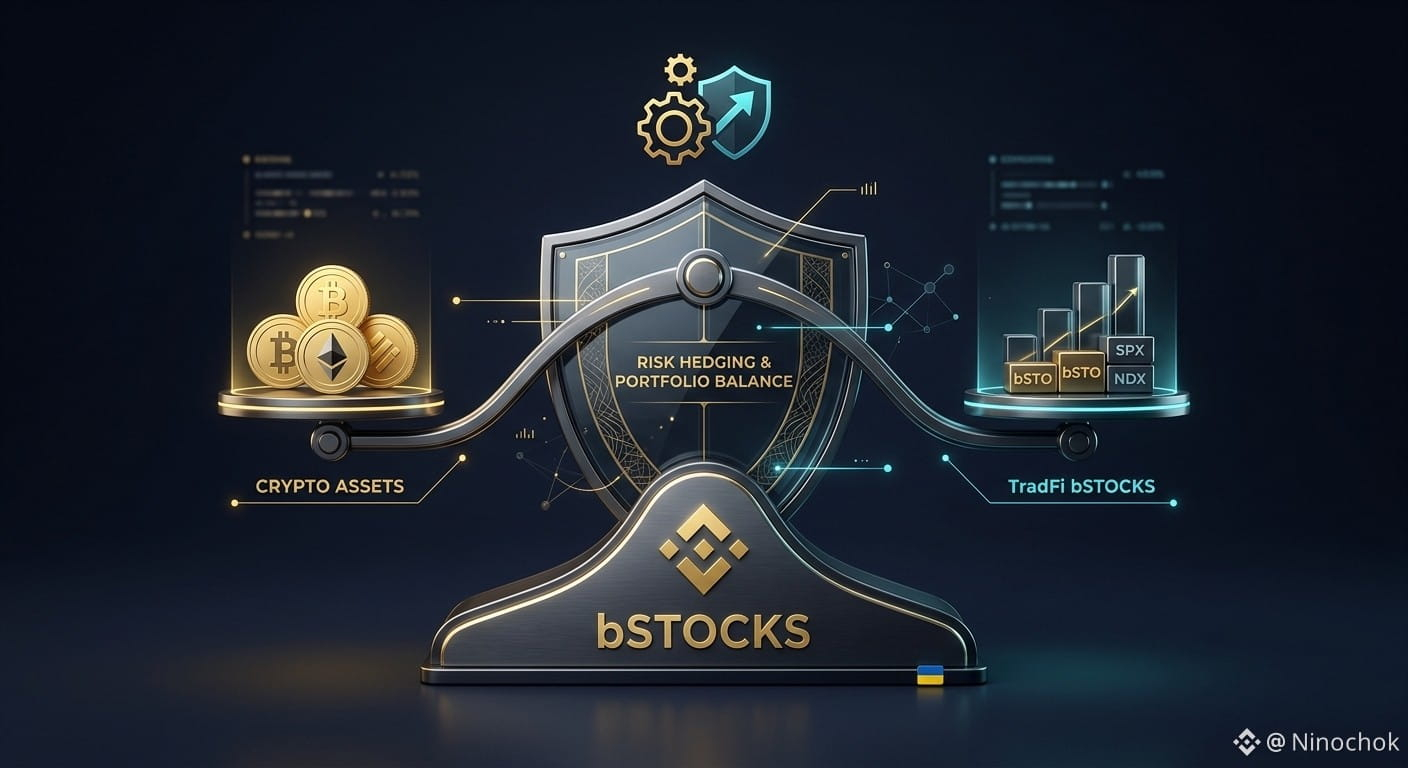
Як захистити капітал під час шторму на крипторинку: TradFi + Crypto
Коли волатильність зашкалює, стейблкоїни - більше не єдиний прихисток. Розвиток bStocks (токенованих акцій) відкрив гнучкий інструмент для ризик-менеджменту.
Чому варто додати bStocks до стратегії:
🔹 Нижча волатильність: Акції фондового ринку менш імпульсивні за альткоїни, що стабілізує портфель.
🔹 Миттєвий ребаланс: Перехід між криптою та токенованими акціями займає секунди без виведення коштів у банк.
🔹 Повна синергія: Поєднуйте базову крипту, пасивний дохід у Binance Earn та акції TradFi в одному додатку.
Головне правило інвестора - не лише заробляти, а й зберігати капітал у будь-якій фазі ринку.
А як ви хеджуєте ризики: виходите в стейбли чи диверсифікуєтеся в TradFi-активи? 👇
#BinanceSquare #TradFi #bStocks
Як захистити капітал під час шторму на крипторинку: TradFi + Crypto
Коли волатильність зашкалює, стейблкоїни - більше не єдиний прихисток. Розвиток bStocks (токенованих акцій) відкрив гнучкий інструмент для ризик-менеджменту.
Чому варто додати bStocks до стратегії:
🔹 Нижча волатильність: Акції фондового ринку менш імпульсивні за альткоїни, що стабілізує портфель.
🔹 Миттєвий ребаланс: Перехід між криптою та токенованими акціями займає секунди без виведення коштів у банк.
🔹 Повна синергія: Поєднуйте базову крипту, пасивний дохід у Binance Earn та акції TradFi в одному додатку.
Головне правило інвестора - не лише заробляти, а й зберігати капітал у будь-якій фазі ринку.
А як ви хеджуєте ризики: виходите в стейбли чи диверсифікуєтеся в TradFi-активи? 👇
#BinanceSquare #TradFi #bStocks
Коли волатильність зашкалює, стейблкоїни - більше не єдиний прихисток. Розвиток bStocks (токенованих акцій) відкрив гнучкий інструмент для ризик-менеджменту.
Чому варто додати bStocks до стратегії:
🔹 Нижча волатильність: Акції фондового ринку менш імпульсивні за альткоїни, що стабілізує портфель.
🔹 Миттєвий ребаланс: Перехід між криптою та токенованими акціями займає секунди без виведення коштів у банк.
🔹 Повна синергія: Поєднуйте базову крипту, пасивний дохід у Binance Earn та акції TradFi в одному додатку.
Головне правило інвестора - не лише заробляти, а й зберігати капітал у будь-якій фазі ринку.
А як ви хеджуєте ризики: виходите в стейбли чи диверсифікуєтеся в TradFi-активи? 👇
#BinanceSquare #TradFi #bStocks
1
73

Tarjimani ko‘rish
Tesla на Binance трьома способами: що обрати? 🤔
Хочете інвестувати в акції? На Binance для цього є кілька шляхів, і вони суттєво відрізняються.
1️⃣ Акції США
Ви купуєте справжню акцію через брокера. Без комісії, частки від $5, є право на дивіденди. Торгівля прив'язана до годин роботи ринку. Підходить для довгострокових інвестицій.
2️⃣ bStocks (наприклад, TSLAB)
Токен-сертифікат, забезпечений акцією 1:1. Торгівля 24/7, токен можна вивести в гаманець BNB Chain або використати як заставу. Але ви власник сертифіката, а не акціонер.
3️⃣ TradFi perpetuals
Ф'ючерс на ціну акції. Можна заробляти і на рості (лонг), і на падінні (шорт), використовувати плече. Проте є ризик ліквідації та фандинг. Це інструмент для трейдингу, а не для тримання роками.
Коротко:
- Інвестувати надовго → акції або bStocks
- Гнучкість 24/7 і DeFi → bStocks
- Короткострокова торгівля чи хедж → TradFi
Перевірте, які варіанти доступні у вашому акаунті.
#BStocks #TradFi
Tesla на Binance трьома способами: що обрати? 🤔
Хочете інвестувати в акції? На Binance для цього є кілька шляхів, і вони суттєво відрізняються.
1️⃣ Акції США
Ви купуєте справжню акцію через брокера. Без комісії, частки від $5, є право на дивіденди. Торгівля прив'язана до годин роботи ринку. Підходить для довгострокових інвестицій.
2️⃣ bStocks (наприклад, TSLAB)
Токен-сертифікат, забезпечений акцією 1:1. Торгівля 24/7, токен можна вивести в гаманець BNB Chain або використати як заставу. Але ви власник сертифіката, а не акціонер.
3️⃣ TradFi perpetuals
Ф'ючерс на ціну акції. Можна заробляти і на рості (лонг), і на падінні (шорт), використовувати плече. Проте є ризик ліквідації та фандинг. Це інструмент для трейдингу, а не для тримання роками.
Коротко:
- Інвестувати надовго → акції або bStocks
- Гнучкість 24/7 і DeFi → bStocks
- Короткострокова торгівля чи хедж → TradFi
Перевірте, які варіанти доступні у вашому акаунті.
#BStocks #TradFi
Хочете інвестувати в акції? На Binance для цього є кілька шляхів, і вони суттєво відрізняються.
1️⃣ Акції США
Ви купуєте справжню акцію через брокера. Без комісії, частки від $5, є право на дивіденди. Торгівля прив'язана до годин роботи ринку. Підходить для довгострокових інвестицій.
2️⃣ bStocks (наприклад, TSLAB)
Токен-сертифікат, забезпечений акцією 1:1. Торгівля 24/7, токен можна вивести в гаманець BNB Chain або використати як заставу. Але ви власник сертифіката, а не акціонер.
3️⃣ TradFi perpetuals
Ф'ючерс на ціну акції. Можна заробляти і на рості (лонг), і на падінні (шорт), використовувати плече. Проте є ризик ліквідації та фандинг. Це інструмент для трейдингу, а не для тримання роками.
Коротко:
- Інвестувати надовго → акції або bStocks
- Гнучкість 24/7 і DeFi → bStocks
- Короткострокова торгівля чи хедж → TradFi
Перевірте, які варіанти доступні у вашому акаунті.
#BStocks #TradFi
79

Tarjimani ko‘rish
🚀🚀🚀 bStocks Focus 🚀🚀🚀
A practical bStocks watchlist can pair three liquid names, define entry conditions and cap risk before the US session. The goal is preparation, not chasing a fast move.
$TSLA $NVDA $MSTR
#bStocks #TokenizedStocks #StockMarket #TradFi #Binance
🚀🚀🚀 bStocks Focus 🚀🚀🚀
A practical bStocks watchlist can pair three liquid names, define entry conditions and cap risk before the US session. The goal is preparation, not chasing a fast move.
$TSLA $NVDA $MSTR
#bStocks #TokenizedStocks #StockMarket #TradFi #Binance
A practical bStocks watchlist can pair three liquid names, define entry conditions and cap risk before the US session. The goal is preparation, not chasing a fast move.
$TSLA $NVDA $MSTR
#bStocks #TokenizedStocks #StockMarket #TradFi #Binance
1
1

·
--
Tarjimani ko‘rish
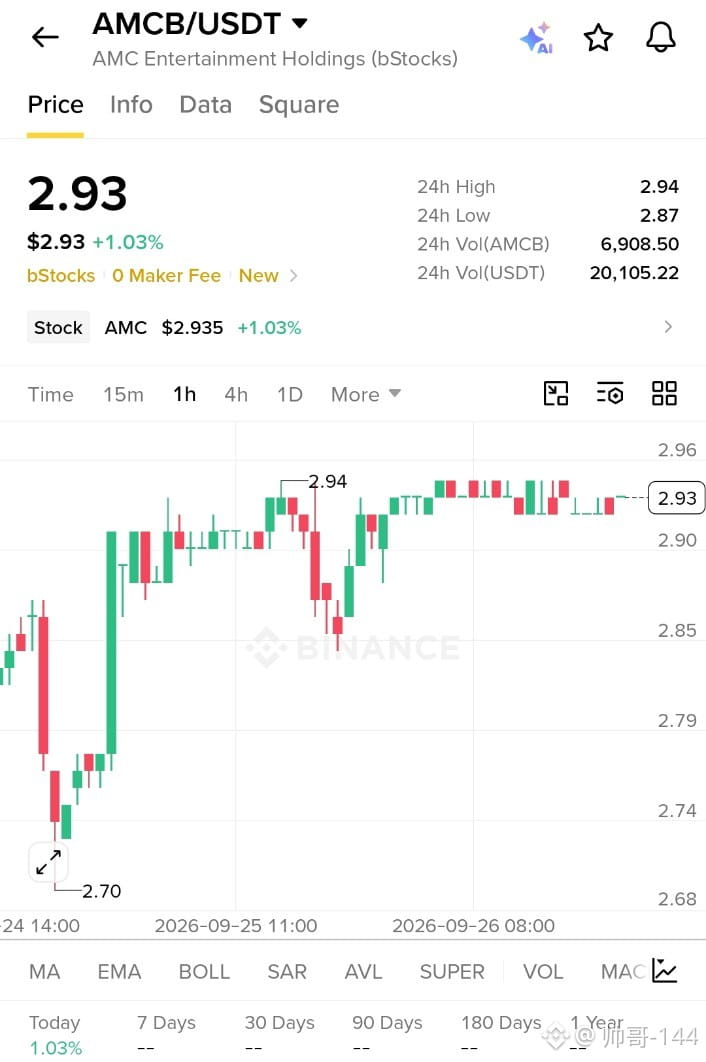
$AMCB
AMCB/USDT — LONG SETUP
AMC Entertainment Holdings (bStocks)
Price: ~$2.93
24H: +1.03%
The price is holding near the recent high around $2.94. I’d avoid chasing here and wait for confirmation above resistance or a clean pullback into support.
Entry Zone
EP1: $2.90–$2.93
EP2: $2.86–$2.89
Take Profit
TP1: $2.98
TP2: $3.05
TP3: $3.15
TP4: $3.25
Stop Loss
#AMC #bStocks #Binance #Trading #CryptoTrading
$AMCB
AMCB/USDT — LONG SETUP
AMC Entertainment Holdings (bStocks)
Price: ~$2.93
24H: +1.03%
The price is holding near the recent high around $2.94. I’d avoid chasing here and wait for confirmation above resistance or a clean pullback into support.
Entry Zone
EP1: $2.90–$2.93
EP2: $2.86–$2.89
Take Profit
TP1: $2.98
TP2: $3.05
TP3: $3.15
TP4: $3.25
Stop Loss
#AMC #bStocks #Binance #Trading #CryptoTrading
AMCB/USDT — LONG SETUP
AMC Entertainment Holdings (bStocks)
Price: ~$2.93
24H: +1.03%
The price is holding near the recent high around $2.94. I’d avoid chasing here and wait for confirmation above resistance or a clean pullback into support.
Entry Zone
EP1: $2.90–$2.93
EP2: $2.86–$2.89
Take Profit
TP1: $2.98
TP2: $3.05
TP3: $3.15
TP4: $3.25
Stop Loss
#AMC #bStocks #Binance #Trading #CryptoTrading
180

·
--
Tarjimani ko‘rish
Як змусити $1 000 працювати, замість того щоб просто тримати їх на споті? Простий розклад на прикладі:
- $400 в USDT - Simple Earn (Flexible): ліквідний резерв під пасивний відсоток. Забрати кошти можна в будь-яку секунду.
- $400 у bStocks: токенізовані акції топових компаній, торгівля 24/7. Ставка на довгострокове зростання.
- $200 у BNB - Simple Earn (Locked 60 днів): підвищена ставка за блокування коштів.
Через 2 місяці маємо: захищену ліквідність, підвищений дохід і відкриту позицію на фондовому ринку.
Усе робиться в одному застосунку - без складних брокерських рахунків і з входом у bStocks від $5.
#Binance #BinanceEarn #BStocks
Як змусити $1 000 працювати, замість того щоб просто тримати їх на споті? Простий розклад на прикладі:
- $400 в USDT - Simple Earn (Flexible): ліквідний резерв під пасивний відсоток. Забрати кошти можна в будь-яку секунду.
- $400 у bStocks: токенізовані акції топових компаній, торгівля 24/7. Ставка на довгострокове зростання.
- $200 у BNB - Simple Earn (Locked 60 днів): підвищена ставка за блокування коштів.
Через 2 місяці маємо: захищену ліквідність, підвищений дохід і відкриту позицію на фондовому ринку.
Усе робиться в одному застосунку - без складних брокерських рахунків і з входом у bStocks від $5.
#Binance #BinanceEarn #BStocks
- $400 в USDT - Simple Earn (Flexible): ліквідний резерв під пасивний відсоток. Забрати кошти можна в будь-яку секунду.
- $400 у bStocks: токенізовані акції топових компаній, торгівля 24/7. Ставка на довгострокове зростання.
- $200 у BNB - Simple Earn (Locked 60 днів): підвищена ставка за блокування коштів.
Через 2 місяці маємо: захищену ліквідність, підвищений дохід і відкриту позицію на фондовому ринку.
Усе робиться в одному застосунку - без складних брокерських рахунків і з входом у bStocks від $5.
#Binance #BinanceEarn #BStocks
104

·
--
Maqola
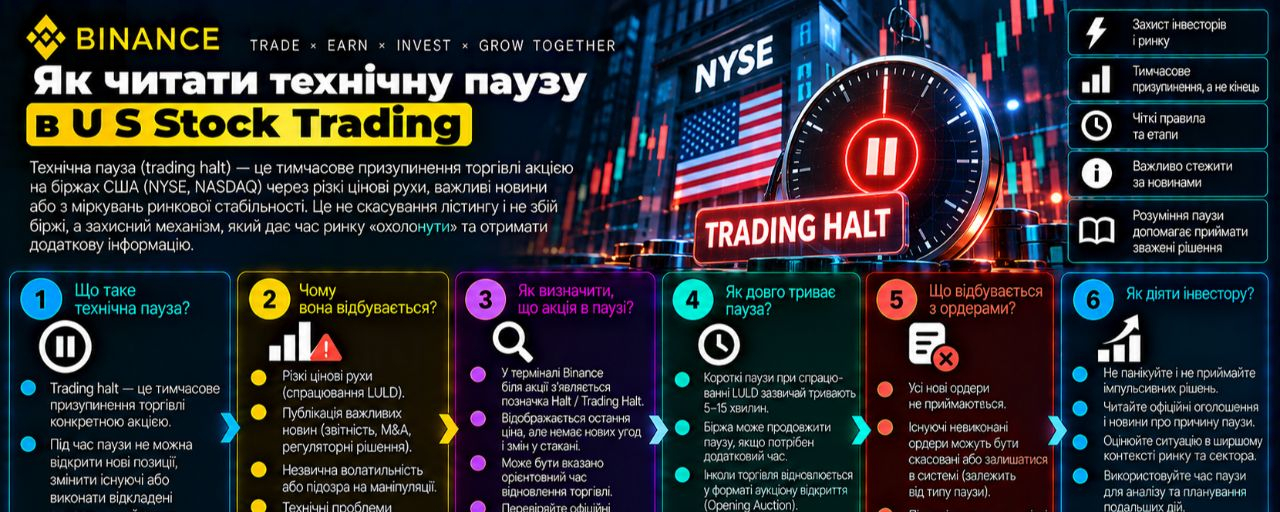
U S Stock Tradingda texnik tanaffusni qanday o‘qish kerak26 sentabr kuni Binance sherik brokeri texnik ishlar sababli U.S. Stock Trading xizmatini yangilashni rejalashtirdi. E'lon qilingan oynaning davomiyligi 10:50 dan 14:00 UTC gacha, ya'ni Kiyev vaqti bilan 13:50 dan 17:00 gacha. Shu vaqt davomida aksiyalar bo‘yicha savdo uchun yangi buyurtmalarni joylashtirish mumkin emas.
Bu e’londa ko‘rsatilmagan narsani qo‘shib yubormaslik muhim. Binance buni asosiy bozorning yopilishi deb atamaydi, buning izohi sifatida har bir topshirilgan buyurtmaning holatini tushuntirmaydi va pauzani avtomatik ravishda bStocks bilan bog‘liq barcha operatsiyalarga tarqatmaydi. Demak, buyurtma berish paytida yuz bergan nosozlikni darhol likvidlik yoki akkaunt bilan bog‘liq muammo deb talqin qilmaslik kerak.
U S Stock Tradingda texnik tanaffusni qanday o‘qish kerak
26 sentabr kuni Binance sherik brokeri texnik ishlar sababli U.S. Stock Trading xizmatini yangilashni rejalashtirdi. E'lon qilingan oynaning davomiyligi 10:50 dan 14:00 UTC gacha, ya'ni Kiyev vaqti bilan 13:50 dan 17:00 gacha. Shu vaqt davomida aksiyalar bo‘yicha savdo uchun yangi buyurtmalarni joylashtirish mumkin emas.
Bu e’londa ko‘rsatilmagan narsani qo‘shib yubormaslik muhim. Binance buni asosiy bozorning yopilishi deb atamaydi, buning izohi sifatida har bir topshirilgan buyurtmaning holatini tushuntirmaydi va pauzani avtomatik ravishda bStocks bilan bog‘liq barcha operatsiyalarga tarqatmaydi. Demak, buyurtma berish paytida yuz bergan nosozlikni darhol likvidlik yoki akkaunt bilan bog‘liq muammo deb talqin qilmaslik kerak.
Bu e’londa ko‘rsatilmagan narsani qo‘shib yubormaslik muhim. Binance buni asosiy bozorning yopilishi deb atamaydi, buning izohi sifatida har bir topshirilgan buyurtmaning holatini tushuntirmaydi va pauzani avtomatik ravishda bStocks bilan bog‘liq barcha operatsiyalarga tarqatmaydi. Demak, buyurtma berish paytida yuz bergan nosozlikni darhol likvidlik yoki akkaunt bilan bog‘liq muammo deb talqin qilmaslik kerak.
52


·
--
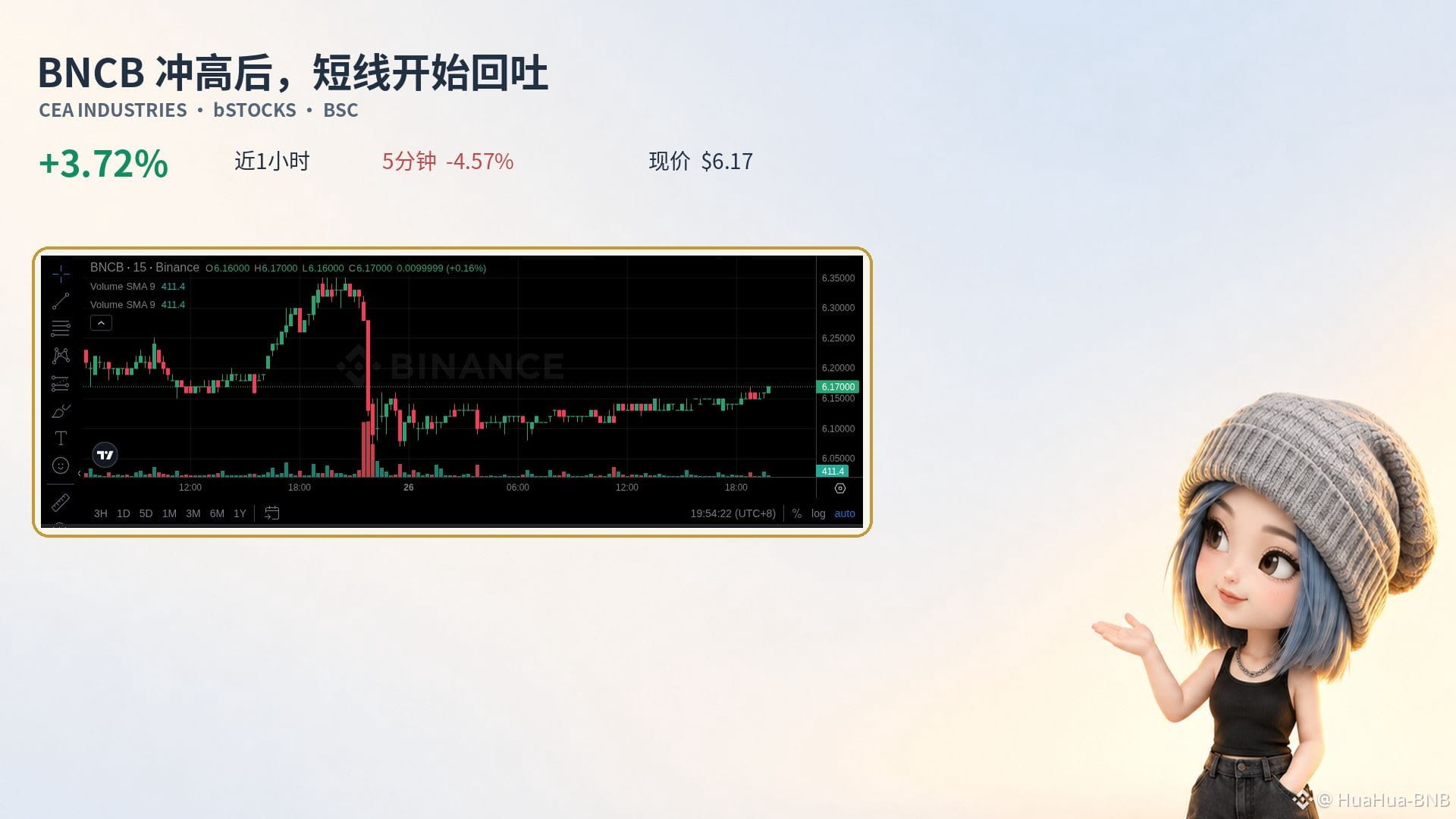
$BNCB Bu 15 daqiqalik grafik biroz qiziq: avval cho‘qqiga urib, keyin hajm bilan “teshib” tashlab, so‘ng yonboshlab turibdi, hozir esa narxni yana $6.17 atrofga ko‘tardi.
Gap shundaki: CEA Industries (bStocks) so‘nggi 1 soatda +3.72%, lekin oxirgi 5 daqiqada -4.57% ga qaytibdi. Men buni “qaytishdan keyin ushlab tura oladimi-yo‘qmi” degan kuzatuv namunasi sifatida qabul qilaman, bitta tortish bilan darhol trend qaytishi deb hisoblamayman.
Agar narx yana oldin yonboshlagan zonaga tushib ketsa va shu bilan birga hajm (volum) pasayishda davom etsa, bu safar qisqa muddatli issiqlik avvaliga pasayishi kerak. Yana bir e’tibordan chetda qolmaydigan jihat: birinchi o‘n manzil ulushi taxminan 79.84%, ochiq xavfsizlik auditi esa ushbu raundda qaytib kelgan foydalanish mumkin bo‘lgan natija ko‘rsatmagan — garov (chip)lar va likvidlikdagi o‘zgarishlarni albatta kuzatish kerak.
Sizlarga bunday avval urib tashlab, keyin tortib chiqqan grafik yoqadimi — u ikkinchi tasdiqlovchi bosqichga chiqishini kutamizmi, yoki umuman tegmaslikni afzal ko‘rasizmi?
$BNCB #bStocks #RWA
$BNCB Bu 15 daqiqalik grafik biroz qiziq: avval cho‘qqiga urib, keyin hajm bilan “teshib” tashlab, so‘ng yonboshlab turibdi, hozir esa narxni yana $6.17 atrofga ko‘tardi.
Gap shundaki: CEA Industries (bStocks) so‘nggi 1 soatda +3.72%, lekin oxirgi 5 daqiqada -4.57% ga qaytibdi. Men buni “qaytishdan keyin ushlab tura oladimi-yo‘qmi” degan kuzatuv namunasi sifatida qabul qilaman, bitta tortish bilan darhol trend qaytishi deb hisoblamayman.
Agar narx yana oldin yonboshlagan zonaga tushib ketsa va shu bilan birga hajm (volum) pasayishda davom etsa, bu safar qisqa muddatli issiqlik avvaliga pasayishi kerak. Yana bir e’tibordan chetda qolmaydigan jihat: birinchi o‘n manzil ulushi taxminan 79.84%, ochiq xavfsizlik auditi esa ushbu raundda qaytib kelgan foydalanish mumkin bo‘lgan natija ko‘rsatmagan — garov (chip)lar va likvidlikdagi o‘zgarishlarni albatta kuzatish kerak.
Sizlarga bunday avval urib tashlab, keyin tortib chiqqan grafik yoqadimi — u ikkinchi tasdiqlovchi bosqichga chiqishini kutamizmi, yoki umuman tegmaslikni afzal ko‘rasizmi?
$BNCB #bStocks #RWA
Gap shundaki: CEA Industries (bStocks) so‘nggi 1 soatda +3.72%, lekin oxirgi 5 daqiqada -4.57% ga qaytibdi. Men buni “qaytishdan keyin ushlab tura oladimi-yo‘qmi” degan kuzatuv namunasi sifatida qabul qilaman, bitta tortish bilan darhol trend qaytishi deb hisoblamayman.
Agar narx yana oldin yonboshlagan zonaga tushib ketsa va shu bilan birga hajm (volum) pasayishda davom etsa, bu safar qisqa muddatli issiqlik avvaliga pasayishi kerak. Yana bir e’tibordan chetda qolmaydigan jihat: birinchi o‘n manzil ulushi taxminan 79.84%, ochiq xavfsizlik auditi esa ushbu raundda qaytib kelgan foydalanish mumkin bo‘lgan natija ko‘rsatmagan — garov (chip)lar va likvidlikdagi o‘zgarishlarni albatta kuzatish kerak.
Sizlarga bunday avval urib tashlab, keyin tortib chiqqan grafik yoqadimi — u ikkinchi tasdiqlovchi bosqichga chiqishini kutamizmi, yoki umuman tegmaslikni afzal ko‘rasizmi?
$BNCB #bStocks #RWA
553
Ko‘proq kontentni ko‘rish uchun tizimga kiring
Binance Square'da global kriptovalyuta foydalanuvchilariga qo‘shiling
⚡️ Kriptovalyuta haqida eng so‘nggi va foydali ma’lumotlarni oling.
💬 Dunyoning eng yirik kriptovalyuta birjasi tomonidan ishonchli deb topilgan.
👍 Tasdiqlangan mualliflardan haqiqiy tahlillarni kashf eting.
Email / telefon raqami
Trenddagi mavzular
1
#BitgetHackerMoves$83MStolenXRP
372 marta koʻrilgan
26 muhokama qilmoqda
2
#SOLSpotETFWeeklyInflow$188M
322 marta koʻrilgan
35 muhokama qilmoqda
3
#StrategyStriveAdd2305BitcoinThisWeek
30,261 marta koʻrilgan
900 muhokama qilmoqda
4
#TrumpRejectsIranHormuzReopening
32,771 marta koʻrilgan
724 muhokama qilmoqda
5
#CircleTetherFreezeBitgetHackerWallet
49,291 marta koʻrilgan
776 muhokama qilmoqda
6
#SECSaysTokenBuybacksNotAutoSecurities
23,904 marta koʻrilgan
418 muhokama qilmoqda
7
#ChinaUSAgreeOn$30BTariffCut
1,150 marta koʻrilgan
30 muhokama qilmoqda
8
#CoinMarketCapCompletesCoinglassAcquisition
41,043 marta koʻrilgan
561 muhokama qilmoqda
9
#CircleMints500MUSDCOnSolana
219,507 marta koʻrilgan
3,178 muhokama qilmoqda
10
#PolymarketBankFailureBetsDrawFDICConcern
187,386 marta koʻrilgan
2,412 muhokama qilmoqda