
#tezos
tezos
137,491 views
689 Discussing
Hot
Latest

·
--
🚀 LAYER-1 RESEARCH IDEAS! $XTZ , $EGLD , and $MINA take different approaches to blockchain design and scalability. Compare development momentum, user activity, and market liquidity before choosing a favorite. A compelling technology thesis still needs a realistic entry and exit plan.
#Tezos #MultiversX #MinaProtocol #Layer1 #CryptoResearch
#Tezos #MultiversX #MinaProtocol #Layer1 #CryptoResearch
1
26

The most outrageous scams in the NFT world often aren’t caused by contract vulnerabilities. They’re the ones that go, “He’s such a nice guy, everyone, let’s help him out.”
A while back, Tezos artist Rudiantfrog (also known as Majesty88) posted photos of himself in a hospital bed and talked about battling cancer. Friends in the community rallied to his support: some donated XTZ directly, some—like NESAART—sold their own works to raise money for him, and someone even put up for auction a piece about his “journey battling cancer.”
Then people in the community reverse-image-searched the hospital photos and ran AI-detection checks, pointing out that the pictures were either AI-generated or unrelated images that had already been online. The account has since been deleted, and he hasn’t responded.
Put simply, nobody verified a thing from start to finish. Look through his replies, and for the entire month of October it’s just “gm Majesty88” and “have a beautiful day fam.” Familiar faces who exchanged good-morning messages every day were mistaken for proof of trustworthiness. Following each other and saying “gm” every day doesn’t mean you know someone.
The worst part is who pays the price: when creators who are genuinely ill ask for help in the future, the first reaction will be suspicion. Goodwill in a community can be used up—and when it is, everyone pays for it.
Asking for proof before giving money isn’t heartless. Getting scammed and then helping spread “Everyone, stop attacking him”—that’s what fuels the next scam.
#NFT #Tezos
18

·
--
⚫ #Tezos quantum leap amid the downturn
While $XTZ tests local lows near $0.2883, developers are laying the foundation for years to come. The ecosystem is actively testing the post-quantum Quantumnet network and preparing a new, scalable Tezos X architecture.
Despite modest daily volume of $324k USDT, the project is choosing resilience and long-term security over quick hype 🛡️
80

·
--
Bearish
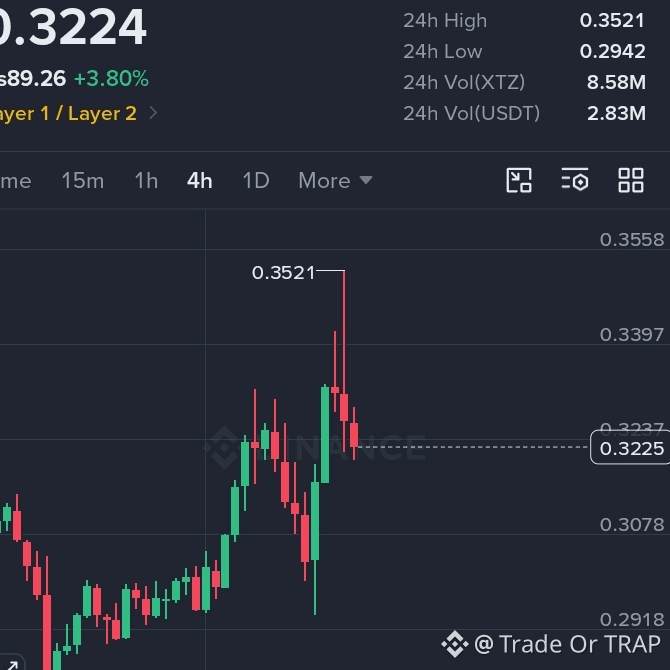
🚨 $XTZ (Tezos) — SHORT SETUP! 📉
XTZ is up 6.66% near $0.3251. Watching for rejection before a potential pullback. 👀
🔴 Entry: $0.3220–$0.3280
🎯 TP1: $0.3150 | TP2: $0.3070
🎯 TP3: $0.2980 | TP4: $0.2880
🛑 SL: $0.3400
⚠️ Wait for confirmation, fam. Protect your capital!
#UKHighCourtRulesChineseLawGovernsBitcoinClaims #Tezos #tradesetup
{future}(XTZUSDT)
🚨 $XTZ (Tezos) — SHORT SETUP! 📉
XTZ is up 6.66% near $0.3251. Watching for rejection before a potential pullback. 👀
🔴 Entry: $0.3220–$0.3280
🎯 TP1: $0.3150 | TP2: $0.3070
🎯 TP3: $0.2980 | TP4: $0.2880
🛑 SL: $0.3400
⚠️ Wait for confirmation, fam. Protect your capital!
#UKHighCourtRulesChineseLawGovernsBitcoinClaims #Tezos #tradesetup
1
18

·
--
Bullish
⚡ Tezos ecosystem updates and their impact on $XTZ
The Tezos network announced Spotlight, its news and development platform, to bring together all the latest updates and technical launches. It highlights promising projects such as Quantumnet (a quantum-computing-resistant test network) and the anticipated changes following Tezos X.
🎯 Expected impact on Tezos ($XTZ):
Strengthening the technical side: Providing advanced security solutions against quantum threats (Post-Quantum) boosts the confidence of institutions and developers over the long term.
Increased network activity: Accelerating the pace of updates through Tezos X posts helps increase the currency’s usage and accommodate new use cases.
Technical outlook: Continued positive technical developments support price stability and improve the chances of an upward move as buying power in the market recovers.
#Tezos #xtz #blockchain #CryptoNews
#bullish $XTZ
{spot}(XTZUSDT)
⚡ Tezos ecosystem updates and their impact on $XTZ
The Tezos network announced Spotlight, its news and development platform, to bring together all the latest updates and technical launches. It highlights promising projects such as Quantumnet (a quantum-computing-resistant test network) and the anticipated changes following Tezos X.
🎯 Expected impact on Tezos ($XTZ ):
Strengthening the technical side: Providing advanced security solutions against quantum threats (Post-Quantum) boosts the confidence of institutions and developers over the long term.
Increased network activity: Accelerating the pace of updates through Tezos X posts helps increase the currency’s usage and accommodate new use cases.
Technical outlook: Continued positive technical developments support price stability and improve the chances of an upward move as buying power in the market recovers.
#Tezos #xtz #blockchain #CryptoNews
#bullish $XTZ
1
38

·
--
Bullish
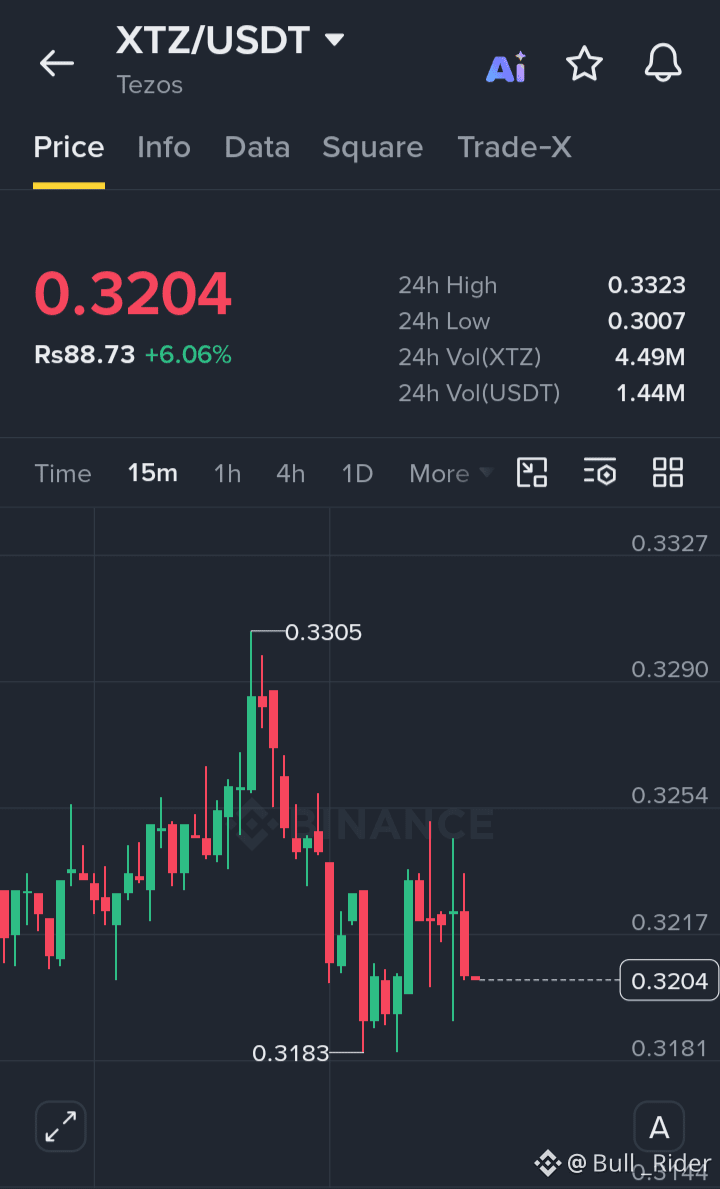
$XTZ is showing strength from support, with buyers gradually taking control and momentum building for a potential continuation move.
Entry: 0.3204
TP1: 0.3254
TP2: 0.3290
TP3: 0.3327
SL: 0.3144
Buy and Trade #Tezos $BR $龙虾
{alpha}(560xeccbb861c0dda7efd964010085488b69317e4444)
{alpha}(560xff7d6a96ae471bbcd7713af9cb1feeb16cf56b41)
{future}(XTZUSDT)
$XTZ is showing strength from support, with buyers gradually taking control and momentum building for a potential continuation move.
Entry: 0.3204
TP1: 0.3254
TP2: 0.3290
TP3: 0.3327
SL: 0.3144
Buy and Trade #Tezos $BR $龙虾
Entry: 0.3204
TP1: 0.3254
TP2: 0.3290
TP3: 0.3327
SL: 0.3144
Buy and Trade #Tezos $BR $龙虾
1
43

·
--
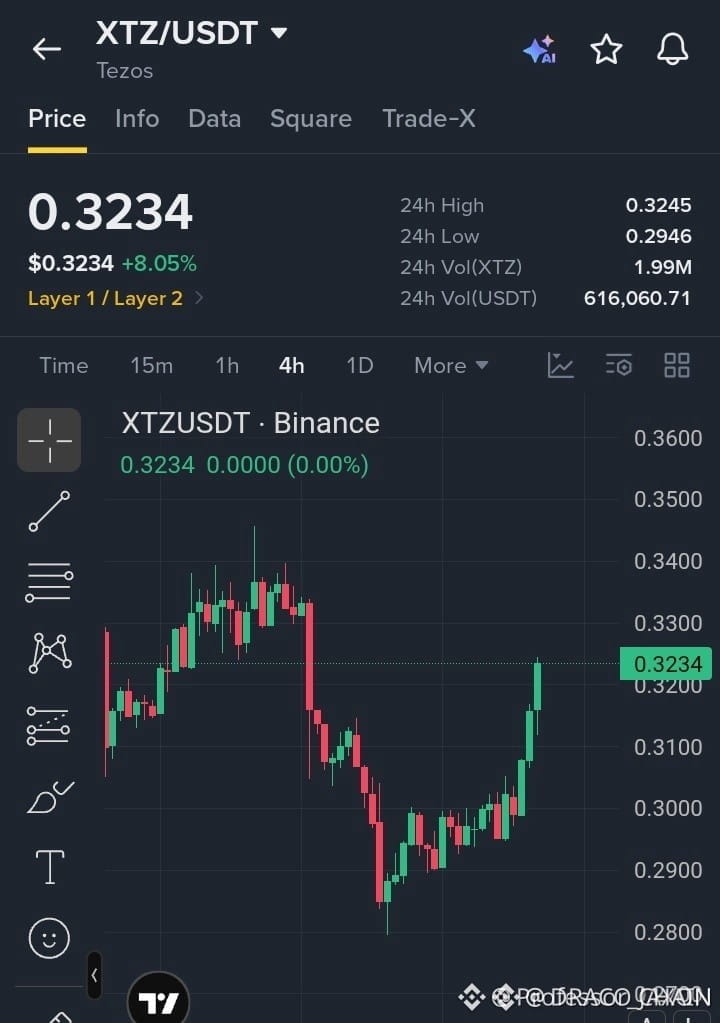
🦈 $XTZ DEMAND DEFENSE TRIGGERS RECOVERY TOWARD KEY RESISTANCE TARGETS! 📈
Entry: 0.3180 - 0.3235 ⚡
Target: 0.3300 - 0.3400 🎯
Stop Loss: 0.3090 ⚠️
$XTZ engineered a decisive rebound off the 0.2840–0.2900 liquidity pocket, printing an 8% expansion that places structural pressure straight into the 0.3250 resistance shelf. 📊 Institutional absorption off the lows confirms buyers are actively defending discount pricing.
A sustained 4H acceptance above 0.3250 unlocks the upper liquidity pool toward 0.3400, while failure to clear overhead supply warrants patience for a disciplined retest. 💡
🤔 Are you anticipating a clean breakout through 0.3250 or waiting for a discount reload before entering?
⚠️ Not financial advice. Always manage your risk. 🛡️
🏷️ #XTZ #Tezos #CryptoAnalysis #SwingTrading
🎯 🦈
15

·
--
$XTZ Update 🔎 Is Tezos’ post-quantum push starting to change the market narrative?
💰 Price now: $0.3239 | 24h: +2.02%
📊 Market cap: $355.7M | Rank: #136
📈 24h range: $0.3129 – $0.3263
📰 What's happening:
XTZ is trading near the top of its 24h range after recovering from $0.3129. Trading activity has picked up, while the latest Tezos catalyst is keeping attention on the project.
🔥 Key catalyst:
Quantumnet launched on September 24 as an experimental post-quantum Tezos testnet, bringing quantum-resistant approaches to accounts, consensus and data availability.
👀 Next step to watch:
🔴 Bearish case: Loss of $0.3129 could expose the $0.3050 area.
🟢 Bullish case: A break above $0.3263 could put $0.3287–$0.3293 back in focus.
📝 My take: XTZ has a meaningful technology narrative, but price confirmation still matters.
Not financial advice, DYOR ⚠️
#XTZ #Tezos #Crypto #Altcoins #Blockchain #CryptoNews

143


·
--
XTZ short-term pressure signals are clear.
Bithumb will suspend XTZ deposits and withdrawals on the 29th. Exchange-related actions like this often lead to selling pressure being front-loaded; on-chain, there are also signs of old wallets dumping at low prices, and overall sentiment is weak.
The NFT side also lacks support—trading is concentrated in small ranges of 5–30 XTZ, with almost no large buy orders present, suggesting that capital has not yet returned.
Current price is $0.2403, with a market cap of about $262 million and $237.8 million in 24h trading volume. Insufficient volume expansion combined with negative catalysts makes me more inclined to stay on the sidelines in the short term—waiting for turnover confirmation after deposits and withdrawals resume—rather than rushing into selling the dip.
The ecosystem fundamentals haven’t deteriorated, but in the short-term, the odds for trading strategy are indeed not in our favor.
#Tezos #XTZ $XTZ
2

ALERT 🚨 Strong bullish momentum surges across $XTZ (TEZOS), $FORM (FORM), and $SPK (SPEAK). Order blocks confirm upward pressure, high volume signals growing investor confidence. Ecosystem expansion, new DeFi integrations, and liquidity injection are driving adoption. Traders should capitalize on this surge before the next consolidation. #crypto #Tezos #Form #Speak
ALERT 🚨 Strong bullish momentum surges across $XTZ (TEZOS), $FORM (FORM), and $SPK (SPEAK). Order blocks confirm upward pressure, high volume signals growing investor confidence. Ecosystem expansion, new DeFi integrations, and liquidity injection are driving adoption. Traders should capitalize on this surge before the next consolidation. #crypto #Tezos #Form #Speak
1
326

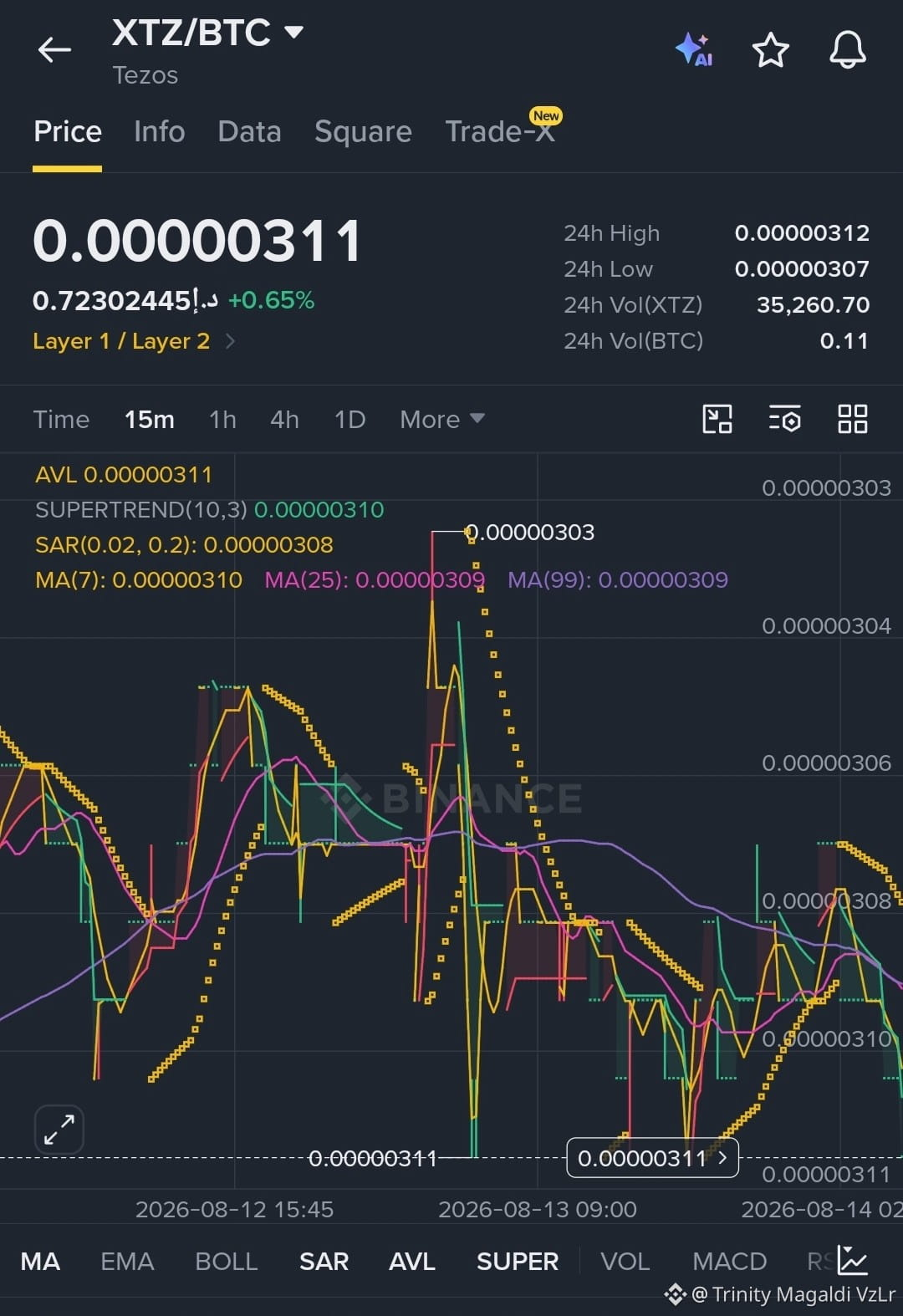
$XTZ XTZ/BTC BREAKOUT WATCH
XTZ/BTC is pressing the 0.00000312 resistance with price above Supertrend, SAR and key moving averages. A clean breakout could signal renewed strength against BTC, while rejection risks a pullback toward 0.00000309 support. Momentum is building.
#XTZ #Tezos #Crypto #Binance
$GIGGLE
{spot}(GIGGLEUSDT)
$RIVER
{future}(RIVERUSDT)
$XTZ XTZ/BTC BREAKOUT WATCH
XTZ/BTC is pressing the 0.00000312 resistance with price above Supertrend, SAR and key moving averages. A clean breakout could signal renewed strength against BTC, while rejection risks a pullback toward 0.00000309 support. Momentum is building.
#XTZ #Tezos #Crypto #Binance
$GIGGLE
$RIVER
XTZ/BTC is pressing the 0.00000312 resistance with price above Supertrend, SAR and key moving averages. A clean breakout could signal renewed strength against BTC, while rejection risks a pullback toward 0.00000309 support. Momentum is building.
#XTZ #Tezos #Crypto #Binance
$GIGGLE
$RIVER
1
142

·
--
Tezos Quantumnet: Post-Quantum Testnet Goes Live, ≠ Mainnet UpgradeTezos really has pulled up its post-quantum test network—this isn’t just a whitepaper slogan; it’s a playground where nodes can actually run.
Official Spotlight on September 24: Quantumnet launches—Tezos’s first experimental post-quantum testnet. Nomadic Labs, Trilitech, and ecosystem contributors worked together to cram a few tough, anti-quantum L1 pieces into a single environment.
First, let’s make it clear: this is not a mainnet upgrade preview, nor is it a scare video about “quantum breaking encryption any moment now.” The official position is iteration 1—an engineering playground; production-grade is not there yet.
The structure worth paying attention to:
Tezos Quantumnet: Post-Quantum Testnet Goes Live, ≠ Mainnet Upgrade
Tezos really has pulled up its post-quantum test network—this isn’t just a whitepaper slogan; it’s a playground where nodes can actually run.
Official Spotlight on September 24: Quantumnet launches—Tezos’s first experimental post-quantum testnet. Nomadic Labs, Trilitech, and ecosystem contributors worked together to cram a few tough, anti-quantum L1 pieces into a single environment.
First, let’s make it clear: this is not a mainnet upgrade preview, nor is it a scare video about “quantum breaking encryption any moment now.” The official position is iteration 1—an engineering playground; production-grade is not there yet.
The structure worth paying attention to:
1
118

·
--
Bullish
$XTZ
{spot}(XTZUSDT)
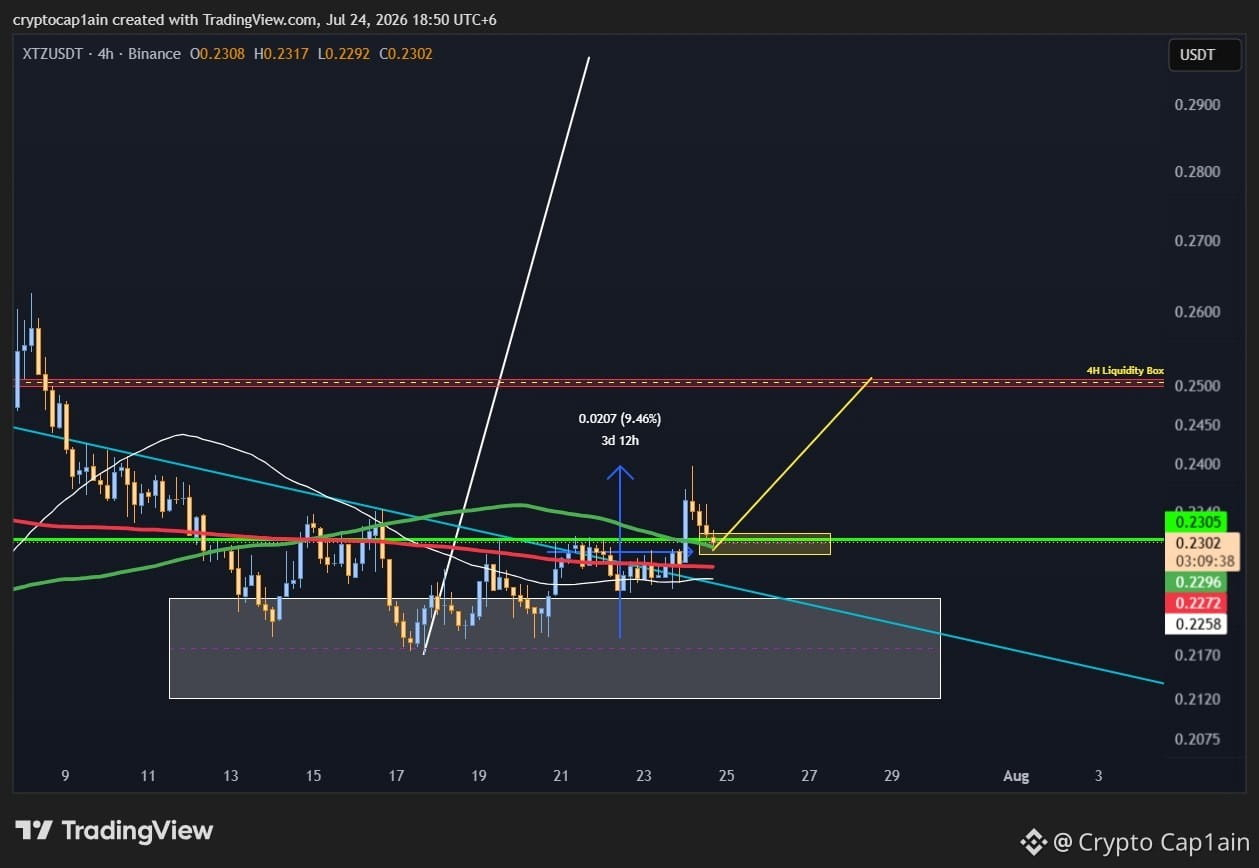
I gave you my white box. Then I showed you the liquidity zones that work as magnets. I've shared multiple posts for you to buy this coin. This coin gave you enough time to buy. Then all on a sudden, boom! It has printed 5-10% profit so far according to your buy zone. With that pump, I booked profit yesterday. Now what am I expecting from it?
Well, after a pump, there's always a pullback or a correction. Pullbacks are good but corrections are not. Now, I've put Fibonacci tool & put the yellow box (check 1st screenshot) for you. I'm expecting the continuation of the pump from that box. Why? Because that's the exact point where 1D 20MA, 1D 50MA, 12H 50MA, 12H 100MA, 4H 100MA, 2H 20MA & 2H 200MA lies. All of these were resistance that has now become support. So, as long as they hold, XTZ should pump.
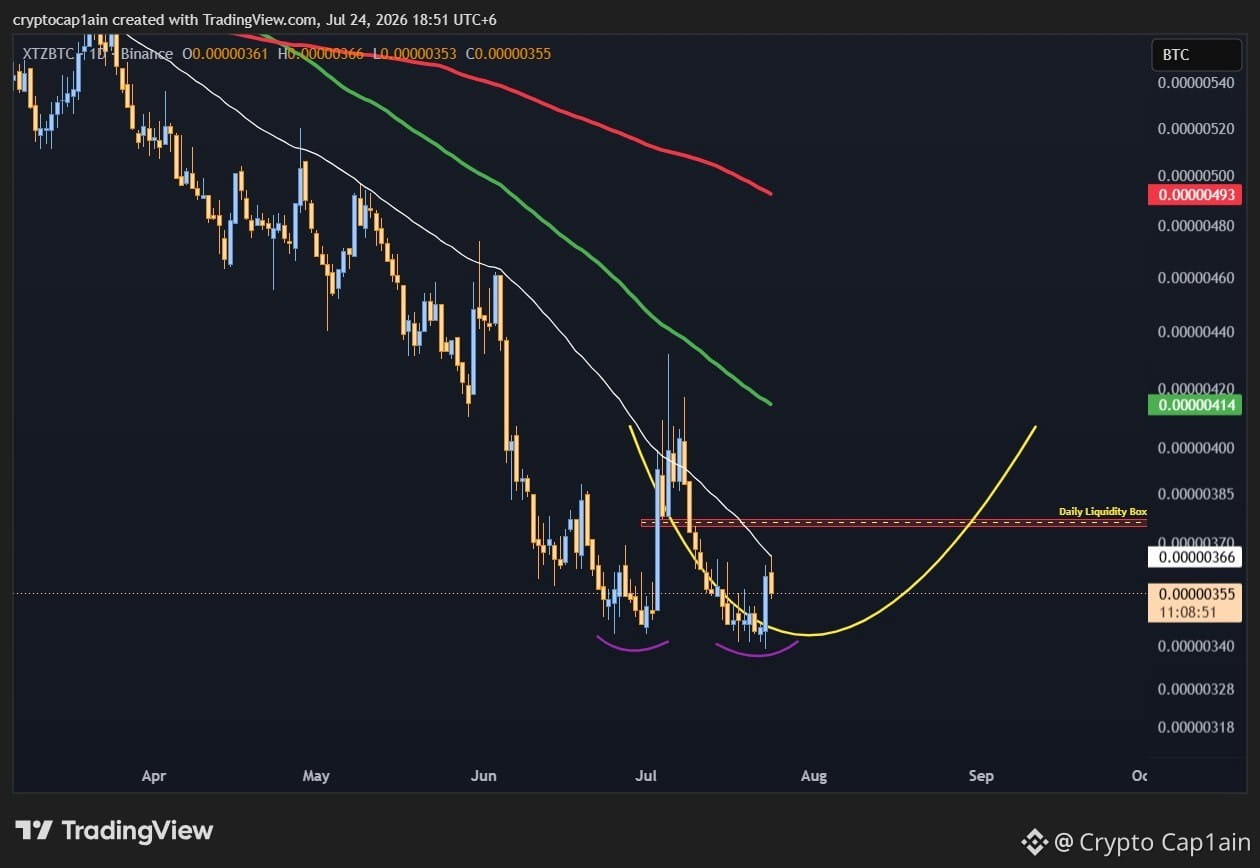
I also gave you XTZBTC analysis which is working as planned. The double bottom formation probably is working. Currently, 1D 50MA (check 2nd screenshot) is working as resistance. When it’s become support, we can see more pumps coming on the way.
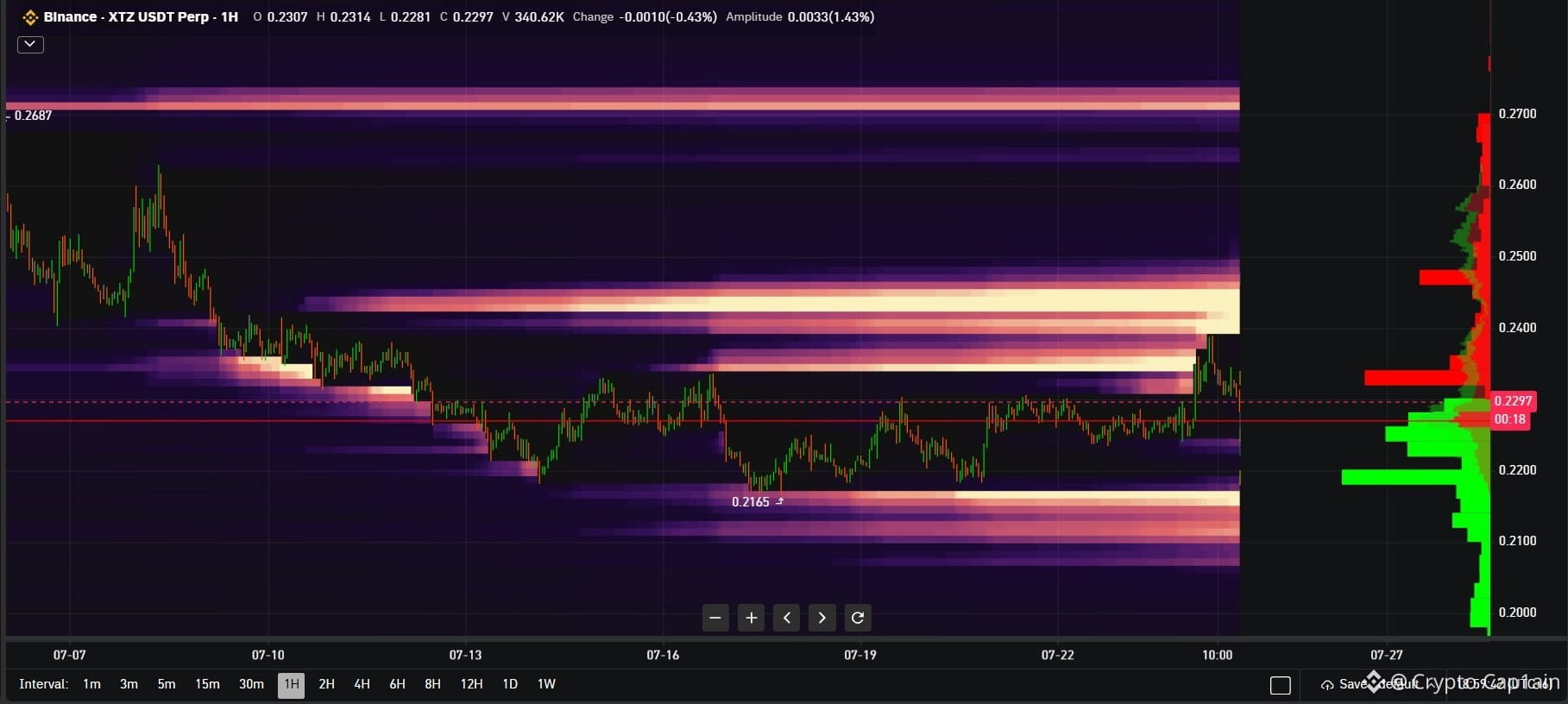
Liquidity Heatmap (check 3rd screenshot) is showing that some of the upper liquidities have been taken. Now, let's see whether XTZ takes the upper liquidity or lower ones. I'm expecting the former one. A small 5-10% pump from here should do that perfectly.
#xtz #Tezos
$XTZ
I gave you my white box. Then I showed you the liquidity zones that work as magnets. I've shared multiple posts for you to buy this coin. This coin gave you enough time to buy. Then all on a sudden, boom! It has printed 5-10% profit so far according to your buy zone. With that pump, I booked profit yesterday. Now what am I expecting from it?
Well, after a pump, there's always a pullback or a correction. Pullbacks are good but corrections are not. Now, I've put Fibonacci tool & put the yellow box (check 1st screenshot) for you. I'm expecting the continuation of the pump from that box. Why? Because that's the exact point where 1D 20MA, 1D 50MA, 12H 50MA, 12H 100MA, 4H 100MA, 2H 20MA & 2H 200MA lies. All of these were resistance that has now become support. So, as long as they hold, XTZ should pump.
I also gave you XTZBTC analysis which is working as planned. The double bottom formation probably is working. Currently, 1D 50MA (check 2nd screenshot) is working as resistance. When it’s become support, we can see more pumps coming on the way.
Liquidity Heatmap (check 3rd screenshot) is showing that some of the upper liquidities have been taken. Now, let's see whether XTZ takes the upper liquidity or lower ones. I'm expecting the former one. A small 5-10% pump from here should do that perfectly.
#xtz #Tezos
Crypto Cap1ain
·
--
Bullish$XTZ
XTZ full analysis
I wanted it to go down a little to fill my 2nd order but it didn’t. Rather, it has started pumping & on 4H tf, XTZ has reclaimed both 4H 50MA and 200MA. Currently it’s retesting (check 1st screenshot) 4H 200MA. Also, XTZ is in the process of breaking out the descending trendline. Should it breakout the trendline & 4H 100MA, then the red liquidity box will be the next.
XTZBTC is currently in an all time low zone. It’s also in the process of making a double bottom (check 2nd screenshot) pattern. There's a red liquidity box above to be filled out. There’s a possibility of a U-shape recovery in this pair. It’s too early to predict, but let's see what happens next.
Like I said, I was waiting for the lower liquidity to be taken (check 3rd screenshot) but price went so close to that liquidity & reversed. Currently, it’s near to the upper liquidity. I will be expecting it to take those liquidities. Otherwise, I'll buy it after the lower liquidity has been taken.
#xtz #Liquidations
1
1
173

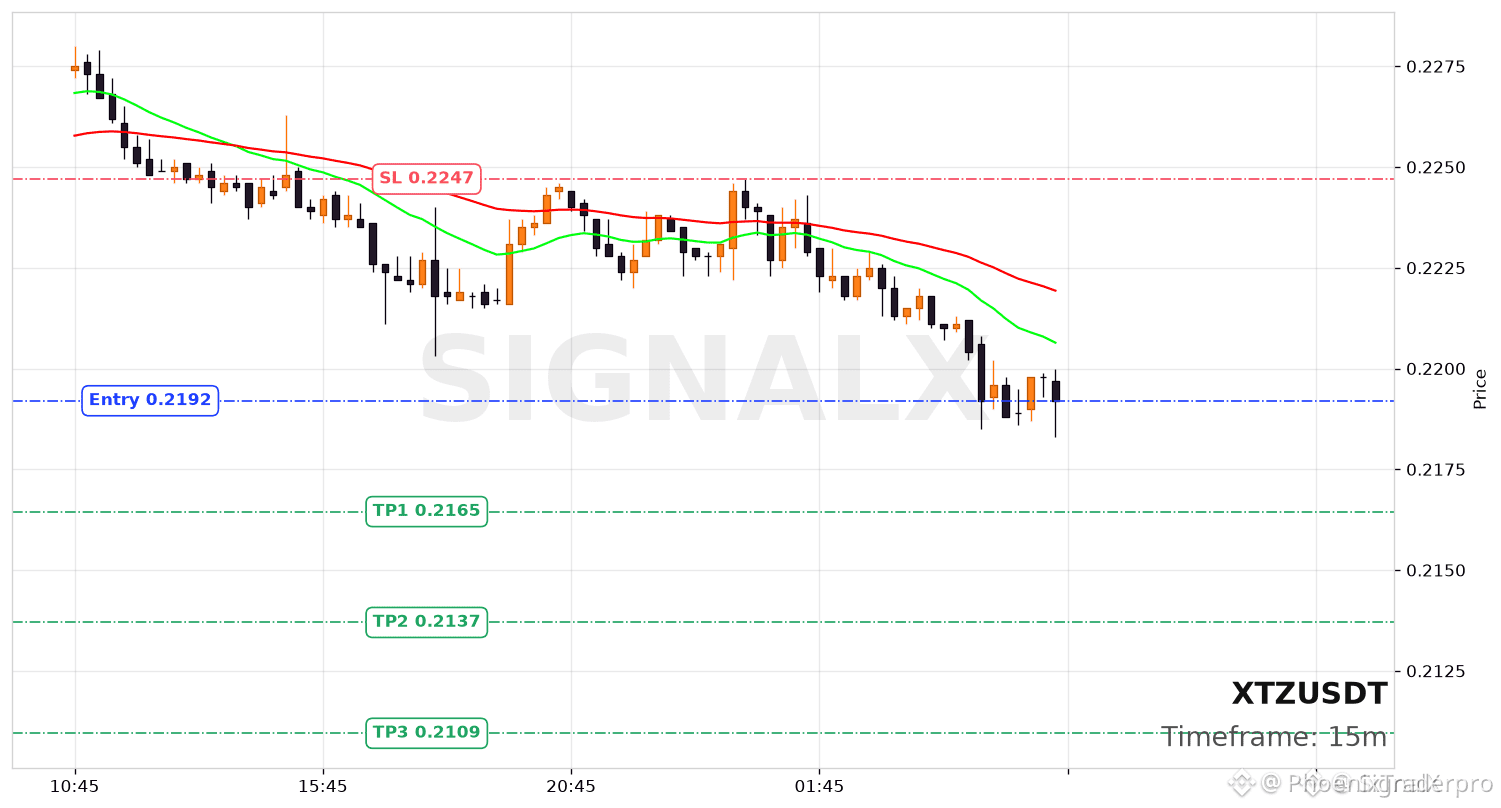
$XTZ IS SETTING UP FOR A CLASSIC SHORT REVERSAL ON THE DAILY 🔴
Entry: 0.2192 🔥
Target: 0.2165 🚀
Stop Loss: 0.2247 ⚠️
The EMA20 just crossed below the EMA50 on the 4H, and the lower timeframe bias is sitting at 80% in favor of bears. Price is currently retesting resistance that previously triggered a sharp drop — textbook exhaustion setup.
Volume is fading into the highs while momentum diverges. This kind of structure usually rewards patience. Are you shorting XTZ here or waiting for a lower retest?
Not financial advice. Always manage your risk.
#XTZ #ShortSetup #Crypto #Tezos
💎
12

Tezos short-term pressure signals are stacking up. Bithumb will pause deposits and withdrawals on the 29th for $XTZ . Based on historical experience, these windows are often accompanied by liquidity tightening and pre-positioned panic selling pressure.
On-chain conditions are also not optimistic: some early wallets are clearing old positions at low prices, while NFT trades are concentrated in small ranges of 5–30 XTZ, with no strong large-bid support in place—suggesting that active capital within the ecosystem is still standing by.
At the current price of $0.2403, the market cap is about $262 million, with $23.78 million in 24H trading volume. Turnover is relatively mild, but the direction is still weak. In the near term, I’m more inclined to treat XTZ as an event-driven range asset: wait until Bithumb restores deposits and withdrawals, and until continuous large accumulation signals appear on-chain—then discussing the right-side opportunity will be more reliable.
Blind bottom-fishing is worse than first reading the flow of capital.
#Tezos #XTZ #altcoin行情
8
·
--
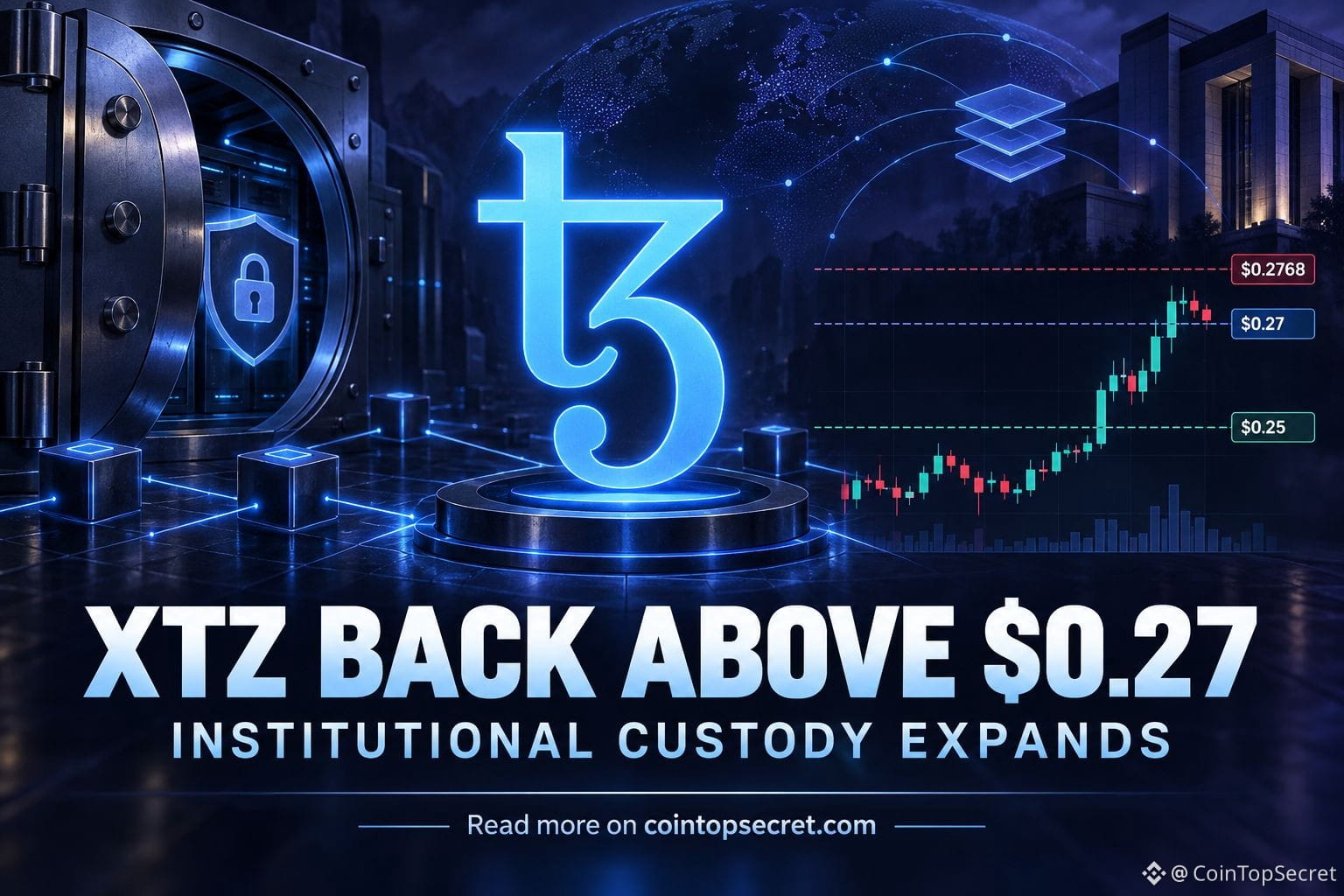
$XTZ Update 🔎 Can Tezos hold its latest push above $0.27?
💰 Price now: $0.2703 | 24h: +9.6%
📊 Market cap: $296.4M | Rank: #143
📈 24h range: $0.2465 – $0.2768
📰 What's happening:
XTZ has gained 9.6% in 24h, with volume around $7.85M. The move comes as Tezos gets fresh attention following Anchorage Digital’s expansion of custody support for Etherlink and Tezos-based assets.
🔥 Key catalyst:
Anchorage Digital recently expanded custody to Etherlink and seven Tezos assets, adding institutional custody infrastructure around the ecosystem.
👀 Next step to watch:
🔴 Bearish case: Losing $0.25 could put the recent breakout under pressure.
🟢 Bullish case: Holding $0.27 and clearing $0.2768 keeps the recent momentum in focus.
📝 My take:
The move is notable, but holding the $0.27 area matters after the sharp rebound.
Not financial advice, DYOR ⚠️
#Tezos #XTZ #TezosCoin #CryptoAnalysis $XTZ
114
·
--
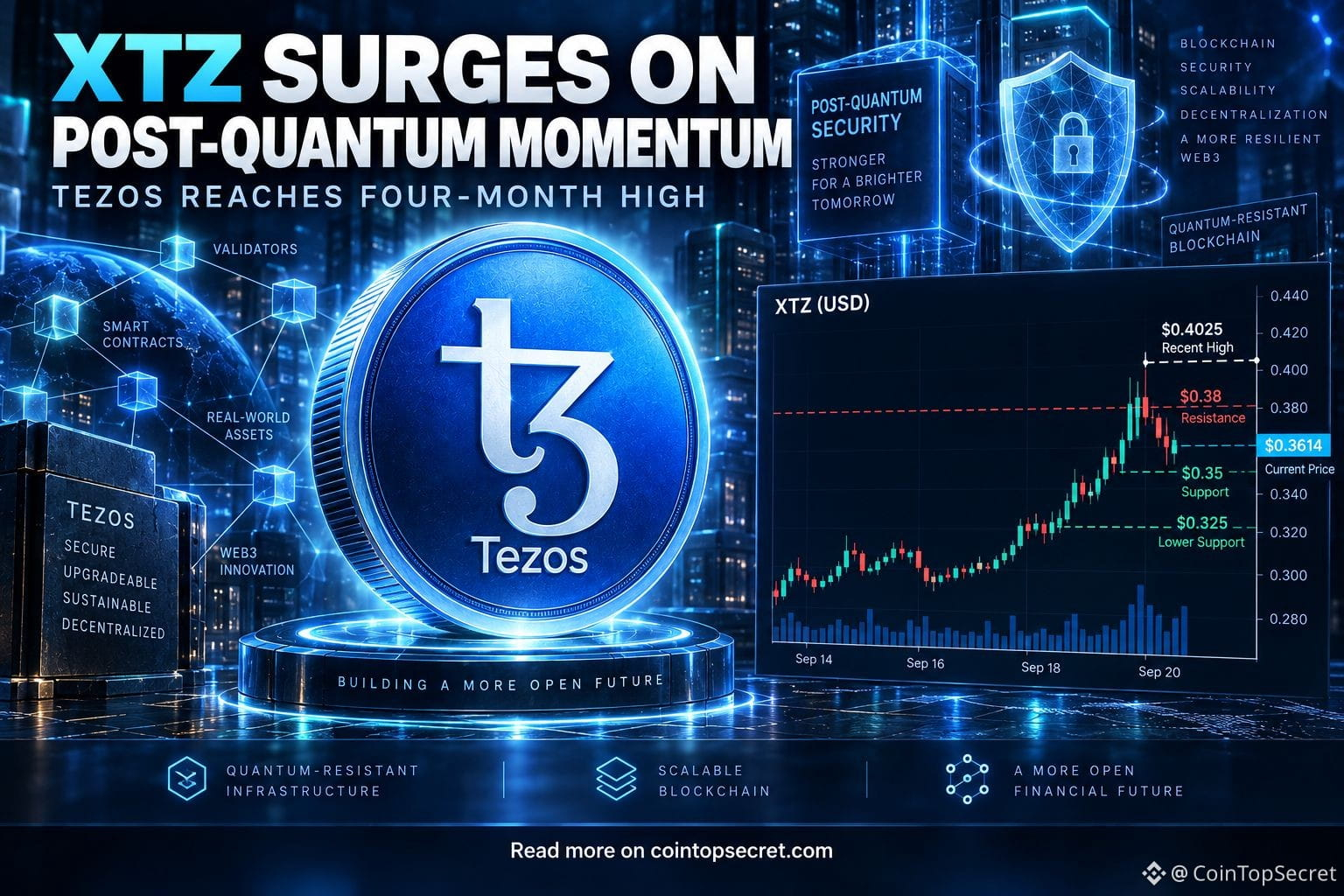
$XTZ Update 🔎 Can buyers hold the breakout after a 22.8% surge?
💰 Price now: $0.3614 | 24h: +22.8%
📊 Market cap: $396.45M | Rank: #128
📈 24h range: $0.2920–$0.4025
📰 What's happening:
XTZ rallied sharply on elevated trading activity, reaching a four-month high before retreating from $0.40. Reports linked the move with newly released post-quantum security code for the Tezos ecosystem.
🔥 Key catalyst:
Post-quantum development strengthens Tezos’ long-term security narrative as quantum-computing risks attract attention.
👀 Next step to watch:
🔴 Bearish case: Losing $0.35 could expose $0.325, followed by $0.30.
🟢 Bullish case: Reclaiming $0.38 could bring $0.4025 back into focus.
📝 My take: Momentum is strong, but the pullback from $0.40 makes confirmation important.
Not financial advice, DYOR ⚠️
#Tezos #XTZUSDT #CryptoAnalysis $XTZ
111
Tezos (XTZ) demonstrates robust order block support, high volume and momentum driving adoption across DeFi. AIXBT (AIXBT) showcases innovative liquidity solutions, attracting institutional sentiment and boosting trading activity. Eden (EDEN) delivers ecosystem growth, expanding NFT and gaming integrations. Bullish outlook with strong buy signals for all three. 🚀📈 #Tezos #AIXBT #Eden #CryptoBull
Tezos (XTZ) demonstrates robust order block support, high volume and momentum driving adoption across DeFi. AIXBT (AIXBT) showcases innovative liquidity solutions, attracting institutional sentiment and boosting trading activity. Eden (EDEN) delivers ecosystem growth, expanding NFT and gaming integrations. Bullish outlook with strong buy signals for all three. 🚀📈 #Tezos #AIXBT #Eden #CryptoBull
271
Log in to explore more content
Join global crypto users on Binance Square
⚡️ Get latest and useful information about crypto.
💬 Trusted by the world’s largest crypto exchange.
👍 Discover real insights from verified creators.
Email / Phone number
Trending Topics
1
#BinanceReopensWithdrawalsForMoreAssets
27,847 views
720 Discussing
2
#AppleReportsMixedResults
18,536 views
519 Discussing
3
#BinanceHourlyDepositsExceedWithdrawals
5,462 views
188 Discussing
4
#PalantirSlides3PercentOn$2BRevenue
464 views
10 Discussing
5
#USMidtermElections
723,174 views
3,928 Discussing
6
#USOctoberNFP-AreRateCutsStillPossible
115,498 views
958 Discussing
7
#Verify1to1BinanceReserves
104,165 views
710 Discussing
8
#SBIFirstHalfCryptoRevenueFalls30.1%
971 views
28 Discussing
9
#NEARVoteApprovesCutInMaxAnnualIssuanceTo1.6%
5,027 views
38 Discussing
10
#BinanceRestores28FiatWithdrawals
260,405 views
1,365 Discussing