
#geniusact
geniusact
17.7M views
34,014 Discussing
ChatGPT 说:
Trump has officially signed the stablecoin-related GENIUS Act at the White House, marking the beginning of the implementation phase for stablecoin regulation in the United States. What’s your take on this? Join the discussion.
Hot
Latest

·
--
🏛️ GENIUS Act to Ban Stablecoin Yield From Jan 18, 2027 — USDT & USDC Holders Face a New Era
📌 What happened
The US GENIUS Act takes effect on January 18, 2027, and with it comes a hard ban: permitted stablecoin issuers will be prohibited from paying interest or yield solely for holding, using, or retaining a payment stablecoin. The OCC finalised its implementing rule on October 21, 2026, confirming the ban and an anti-evasion provision — arrangements will be judged by economic substance, not labels. The rule covers USDT and USDC, the two largest stablecoins and the backbone of Binance trading.
📊 Key numbers
• Effective date: January 18, 2027
• Stablecoin market cap: $284.2B — a yearly low, down ~$30.2B from the May peak
• OCC final rule: issued October 21, 2026 (Bulletin 2026-50)
• From Jan 18, 2027: issuing payment stablecoins in the US without approval becomes unlawful
• Waivers: up to 12 months for existing issuers with a substantially complete application on file
🔍 Why it matters
Stablecoin yield has been one of crypto's biggest draws — holding USDT or USDC could earn a return, and the yield products built on it are among the largest pools of capital in the market. From January 2027, issuers themselves can no longer pay it. That changes the economics of simply holding stablecoins and forces issuers, exchanges, and DeFi protocols to rethink how they reward holders. The timing matters too: it lands as stablecoin supply is already shrinking, down $30B from the May peak, so the market's dry powder is contracting just as the yield incentive disappears.
👀 What to watch
• Whether issuers restructure rewards through exchanges or intermediaries — the OCC left third-party arrangements to case-by-case review
• How USDT and USDC yields on lending and DeFi platforms adjust ahead of the deadline
• Any further OCC guidance clarifying the yield ban before January 2027
• Stablecoin supply trends — further contraction would tighten crypto liquidity
Not financial advice. Source: OCC / KPMG / Legal 500, Nov 22.
$USDT $USDC #GENIUSAct #Stablecoin #USDT #USDC
19

·
--
🚨 $BTC SHOCKING: MOONPAY WANTS TO BECOME A BANK IN THE UNITED STATES
To me, the fact that a crypto payments company is seeking a federal banking license says the industry no longer wants to remain on the sidelines: MoonPay applied to the OCC on November 17 to establish MoonPay National Trust Bank, headquartered in Miami Beach. If approved, it will be able to custody assets, issue and redeem stablecoins, and manage their reserves under federal supervision.
Here’s the detail no one is noticing:
→ The application reached the OCC on November 18; the bank would not take deposits or make loans and would not have FDIC insurance: it would be a trust bank, not a commercial bank.
→ The timing is no coincidence: the GENIUS Act takes effect on January 18, 2027, and stablecoin issuers will need federal approval; Circle received final approval in July, Ripple in October, and Coinbase’s approval took effect this month.
→ MoonPay isn’t starting from scratch: it has held a New York BitLicense since June 2025 and a state trust charter since November 2025, and its co-founder Ivan Soto-Wright would chair the board and serve as interim president.
Do you think crypto banks are the future of money, or will the traditional system swallow them up? 👇
$BTC $USDC
#MoonPay #BancoCrypto #GENIUSAct

204

·
--
GENIUS Act passed, but Senator Moreno admits they blew it by not codifying clarity right then and there. "Time kills all deals" – the regulatory window slammed shut just like that. Now getting clear rules is gonna be a nightmare. 🪦
CryptoRegulation
#GENIUSAct
GENIUS Act passed, but Senator Moreno admits they blew it by not codifying clarity right then and there. "Time kills all deals" – the regulatory window slammed shut just like that. Now getting clear rules is gonna be a nightmare. 🪦
CryptoRegulation
#GENIUSAct
CryptoRegulation
#GENIUSAct

1
1
198

·
--
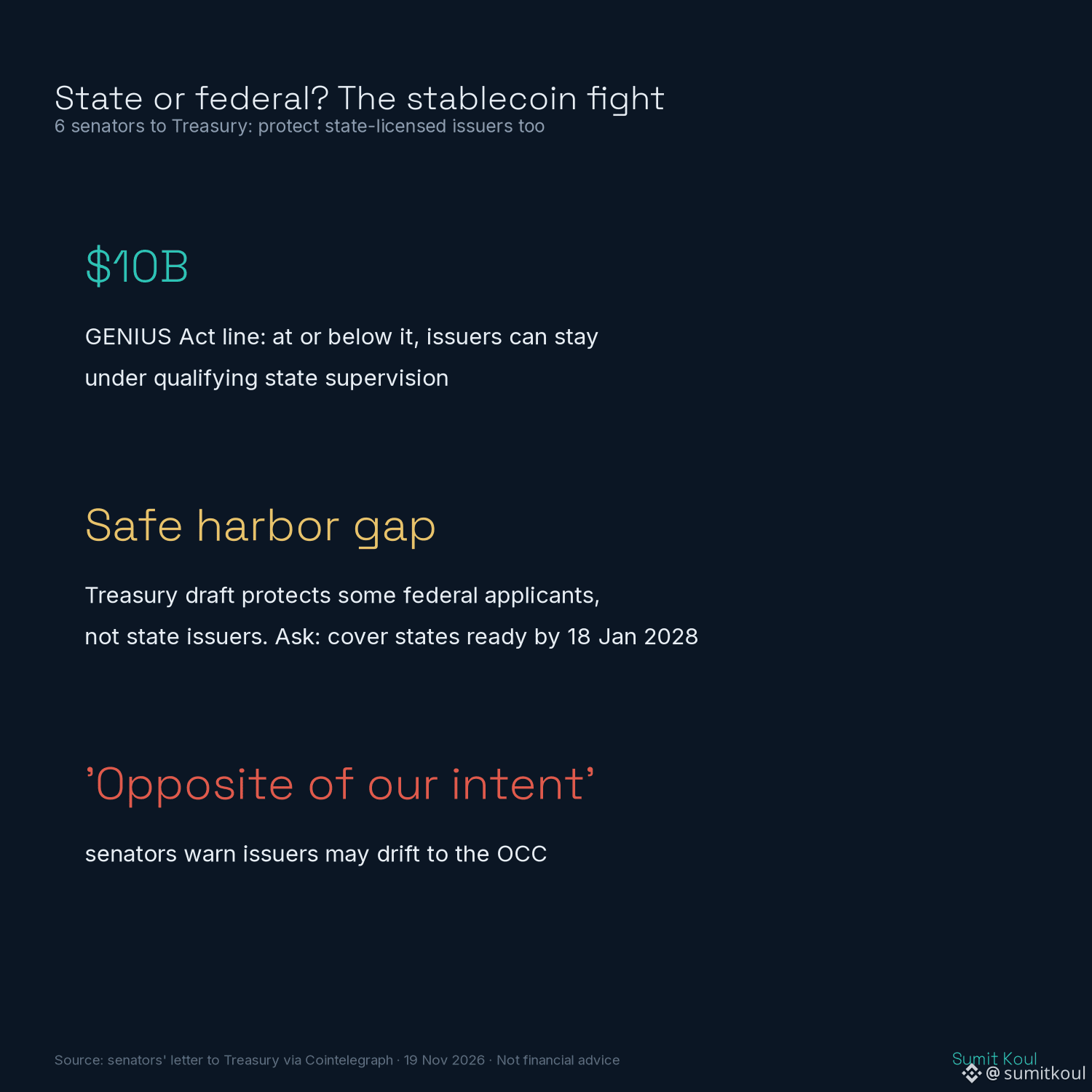
Six US senators say Treasury's GENIUS Act draft could push stablecoin issuers away from state licenses. 🏛️
• The Act lets issuers with $10B or less in stablecoins stay under qualifying state supervision
• Treasury's draft gives a safe harbor to some federal applicants, but not state issuers
• Ask: cover issuers in states ready before 18 Jan 2028
• Their words: drifting to the OCC is "the opposite of our intent"
Anchorage's policy head says issuers pick federal anyway, to avoid switching regulators if they pass $10B.
State or federal: which wins? 👇
#Stablecoins #GENIUSAct #CryptoRegulation
6

·
--
Bullish
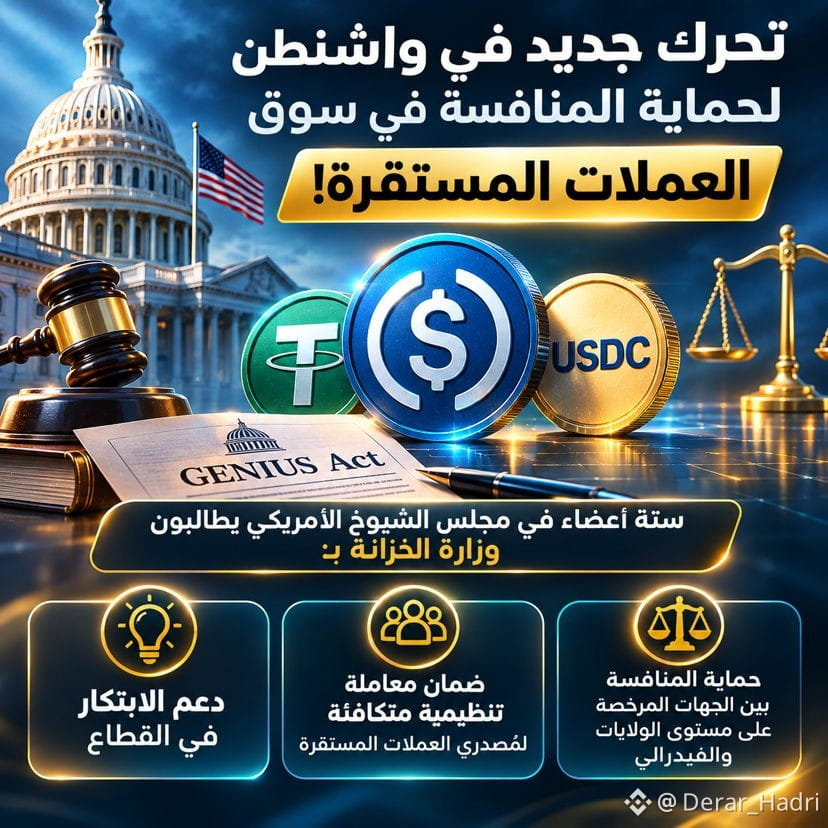
🏛️ A new move in Washington could affect the future of stablecoins!
Should stablecoin issuers have the same regulatory rights, whether they are licensed by a U.S. state or by federal authorities?
Six U.S. senators sent a letter to the Treasury Department, calling for state-licensed stablecoin issuers to receive equal regulatory treatment during the transition to implementing the GENIUS Act.
🔎 Why does this move matter?
🔹 Competition: Avoid giving federally licensed companies an unfair advantage.
🔹 Innovation: Preserve opportunities for startups and smaller institutions to compete in the stablecoin market.
🔹 Regulation: Clarify how the new rules will be applied without disrupting entities that already hold licenses.
💡 What does this mean for investors?
Future regulations could affect compliance costs and competition among stablecoin issuers, but the actual impact will depend on the final decisions.
⚠️ Important: The letter is a policy and regulatory request, not a new government decision or an enacted amendment to the law.
📌 The key question:
Would equal regulatory treatment strengthen competition, or do stablecoins need more centralized federal oversight?
👇 Share your thoughts.
#Stablecoins #GENIUSAct
{spot}(BTCUSDT)
🏛️ A new move in Washington could affect the future of stablecoins!
Should stablecoin issuers have the same regulatory rights, whether they are licensed by a U.S. state or by federal authorities?
Six U.S. senators sent a letter to the Treasury Department, calling for state-licensed stablecoin issuers to receive equal regulatory treatment during the transition to implementing the GENIUS Act.
🔎 Why does this move matter?
🔹 Competition: Avoid giving federally licensed companies an unfair advantage.
🔹 Innovation: Preserve opportunities for startups and smaller institutions to compete in the stablecoin market.
🔹 Regulation: Clarify how the new rules will be applied without disrupting entities that already hold licenses.
💡 What does this mean for investors?
Future regulations could affect compliance costs and competition among stablecoin issuers, but the actual impact will depend on the final decisions.
⚠️ Important: The letter is a policy and regulatory request, not a new government decision or an enacted amendment to the law.
📌 The key question:
Would equal regulatory treatment strengthen competition, or do stablecoins need more centralized federal oversight?
👇 Share your thoughts.
#Stablecoins #GENIUSAct
1
1
165

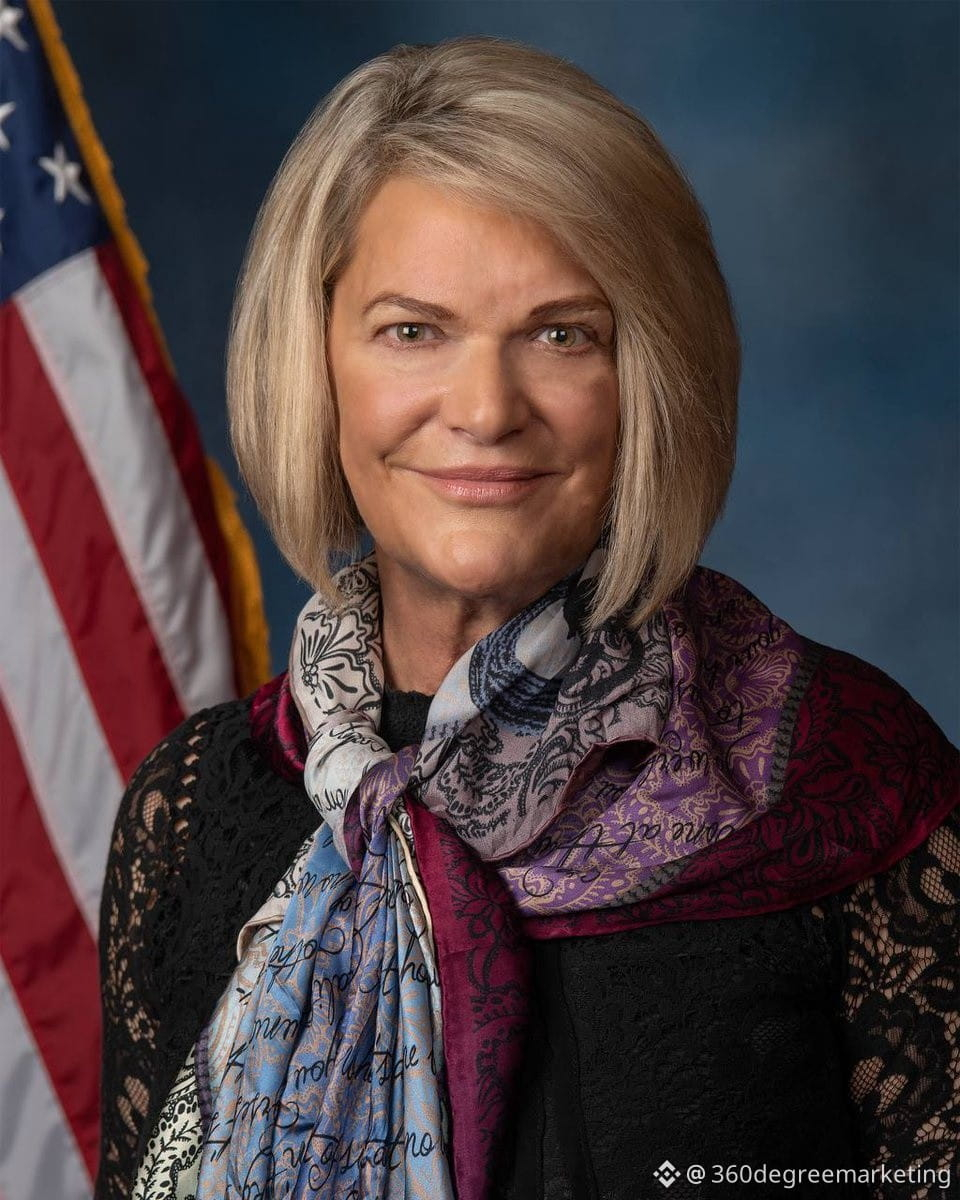
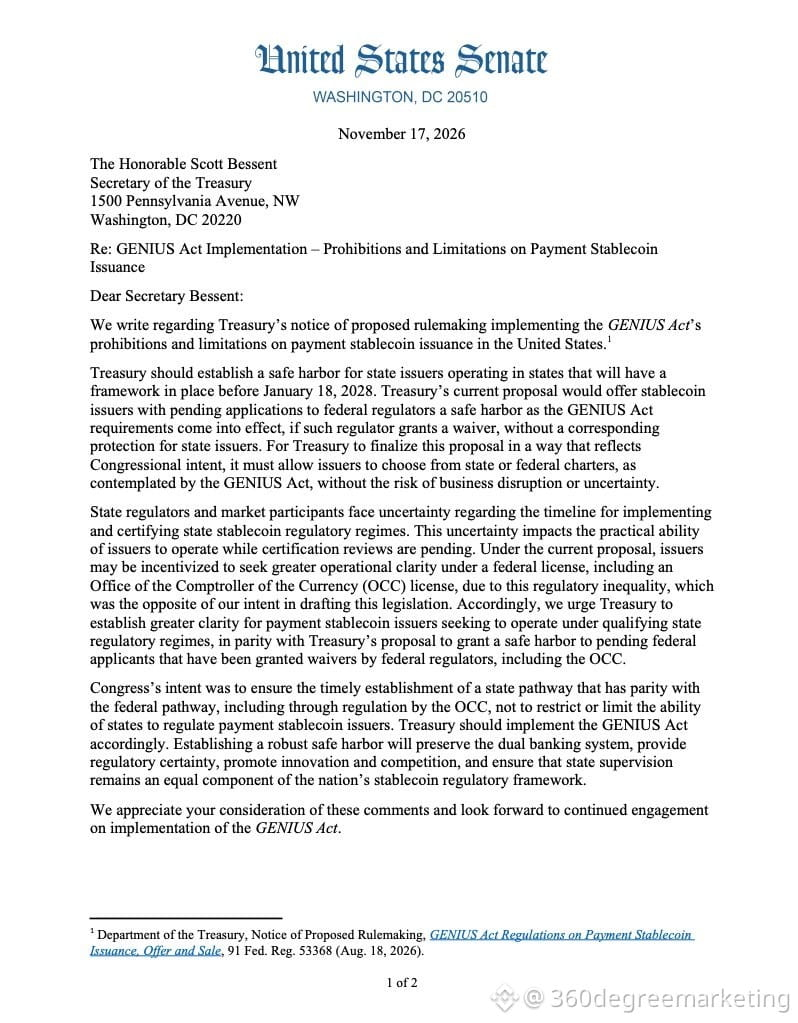
🇺🇸 NEW: Sen. Cynthia Lummis and a group of senators urge the Treasury to extend its proposed GENIUS Act safe harbor to state stablecoin issuers.
They say state issuers should get the same protection as federal applicants.
#Crypto #GeniusAct #Stablecoin
🇺🇸 NEW: Sen. Cynthia Lummis and a group of senators urge the Treasury to extend its proposed GENIUS Act safe harbor to state stablecoin issuers.
They say state issuers should get the same protection as federal applicants.
#Crypto #GeniusAct #Stablecoin
They say state issuers should get the same protection as federal applicants.
#Crypto #GeniusAct #Stablecoin
1
1
279


·
--
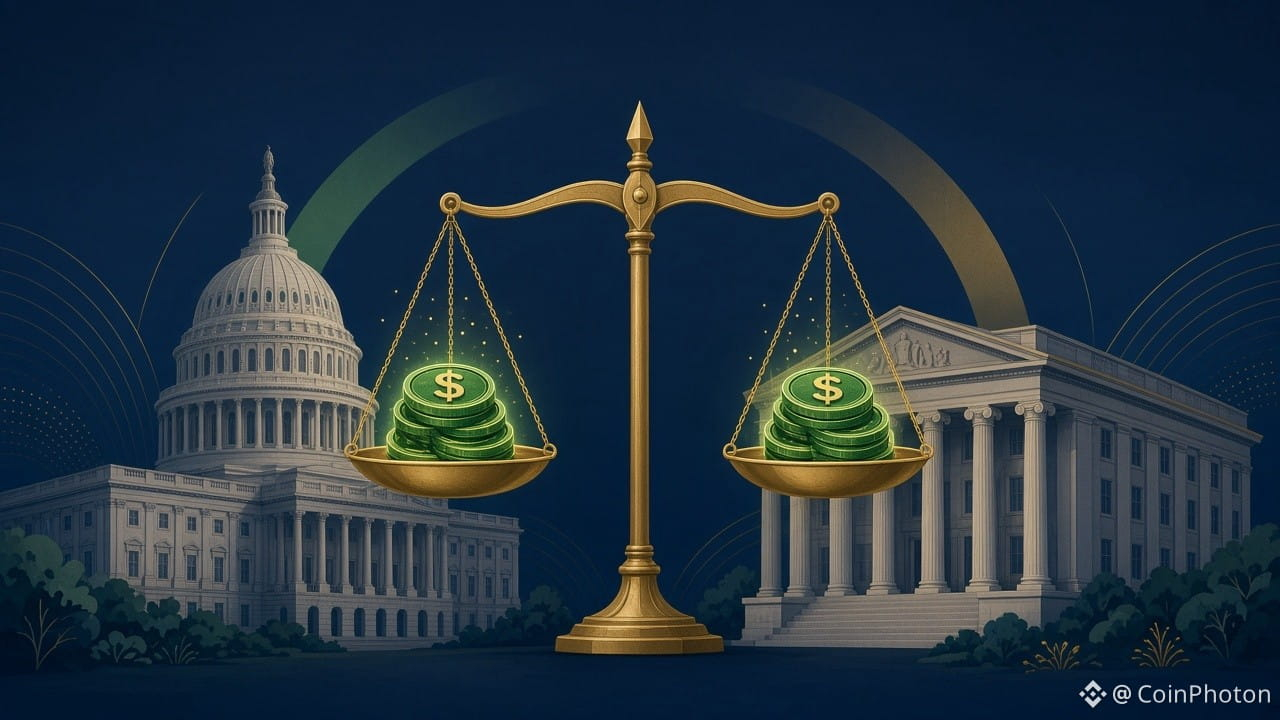
🏛️ Senators press Treasury on "equal footing" for state stablecoin issuers
Six bipartisan senators, including Cynthia Lummis and Kirsten Gillibrand, wrote to Treasury Secretary Scott Bessent asking for a safe harbor for stablecoin issuers regulated at the state level as the GENIUS Act is implemented. They say Treasury's current proposal protects issuers awaiting federal approval but offers no matching relief for state issuers. The law lets issuers with $10 billion or less be state-regulated if their state's rules are "substantially similar" to federal ones.
⭐ How Treasury responds will shape whether smaller stablecoin issuers can rely on state regimes like New York's or Wyoming's.
#Stablecoin #GENIUSAct #Regulation #CryptoNews
691
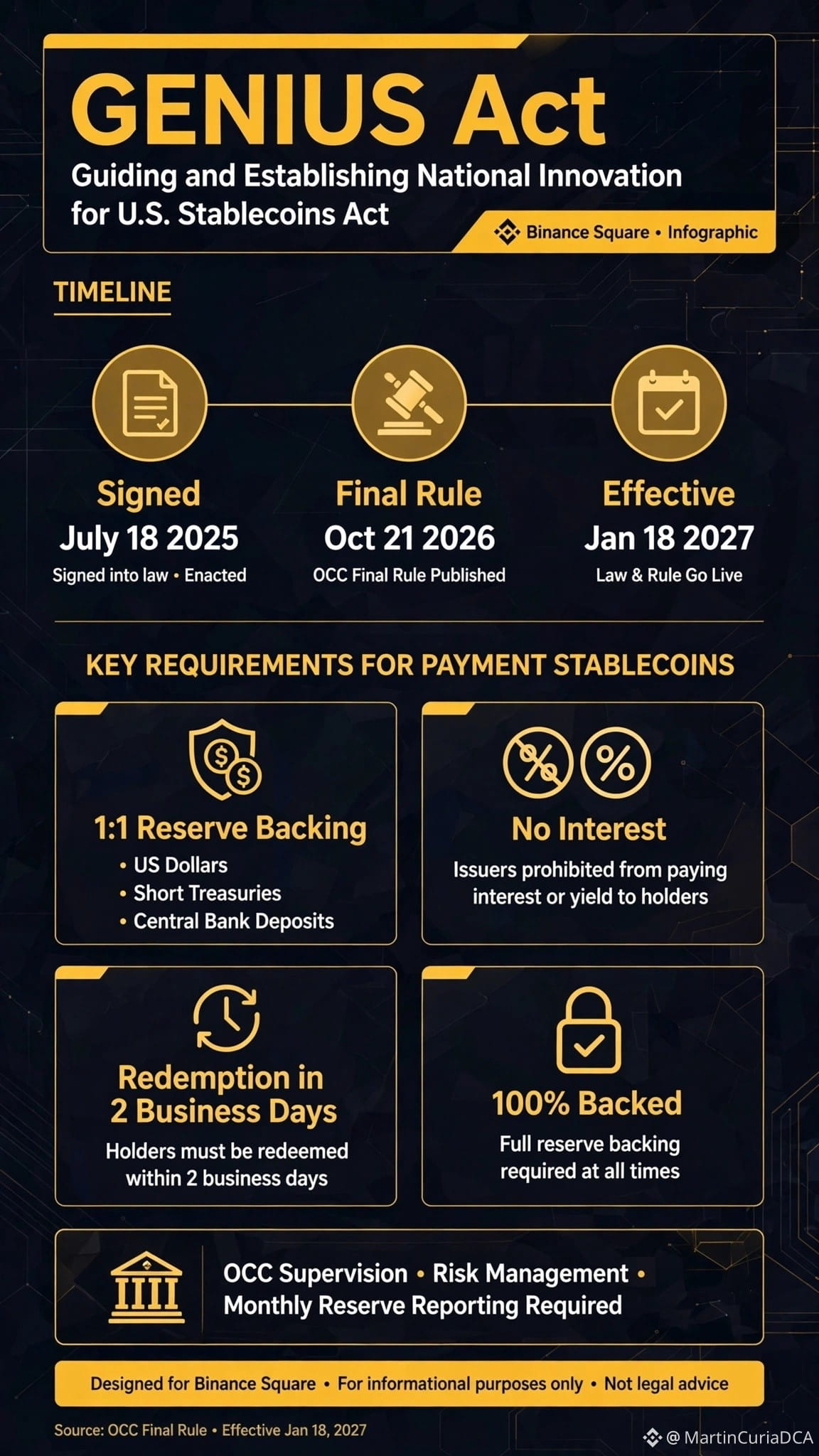
🧵 THREAD: US GENIUS ACT - What we discussed yesterday in the group - Explained simply
Yesterday, Sunday, we were discussing the GENIUS Act in another chat, and it's much more important than it seems.
📅 OFFICIAL TIMELINE:
Signed: July 18, 2025
Final Rule: October 21, 2026, by the OCC
Effective: January 18, 2027
✅ WHAT IT NOW REQUIRES OF $USDT AND $USDC:
1) REAL 1-to-1 backing: Only dollars, short-term US Treasury bonds, or central bank deposits. No more unusual reserves.
2) They can't pay you interest just for holding it.
3) If you ask for your money, they have to return it within a maximum of 2 business days.
4) 100 percent backed at all times.
WHY DOES THIS MATTER IF YOU DCA IN $ETH $ARB
Because when you buy $BTC with $USDT or $USDC, now you know those dollars really exist. Less risk of another stablecoin collapsing.
I left the visual summary I made in the photo.
Question for you: After this law, which one would you choose to get in? $USDT or $USDC? I moved 70 percent into $USDC.
#GENIUSAct #Stablecoin #BinanceSquare #CryptoNoticias
169

·
--
🚨🇺🇸 BREAKING: A NEW ERA FOR STABLECOINS! $AIN
🏦 The OCC has finalized its GENIUS Act framework for regulated payment stablecoin issuers, including eligible banking institutions. $TAG
📅 The rules take effect January 18, 2027!
💥 Clearer rules. 🏦 Banking integration. 🌎 A new chapter for digital payments!
🔥 Are U.S. banks about to accelerate stablecoin adoption? 👀 $HUMA
#Crypto #Stablecoins #GENIUSAct #BinanceSquare
2
105

🚨🇺🇸 BIG WIN FOR $XRP STABLECOIN REGULATION! 💎🔥
🏛️ The GENIUS Act became law in 2025, bringing clearer rules for stablecoins and opening new opportunities for Ripple’s RLUSD! 🚀
#XRP #Ripple #RLUSD #GENIUSAct #CryptoNews
🚨🇺🇸 BIG WIN FOR $XRP STABLECOIN REGULATION! 💎🔥
🏛️ The GENIUS Act became law in 2025, bringing clearer rules for stablecoins and opening new opportunities for Ripple’s RLUSD! 🚀
#XRP #Ripple #RLUSD #GENIUSAct #CryptoNews
🏛️ The GENIUS Act became law in 2025, bringing clearer rules for stablecoins and opening new opportunities for Ripple’s RLUSD! 🚀
#XRP #Ripple #RLUSD #GENIUSAct #CryptoNews

1
48

·
--
#OCCUrgesCommunityBanksToEnterStablecoinPayments
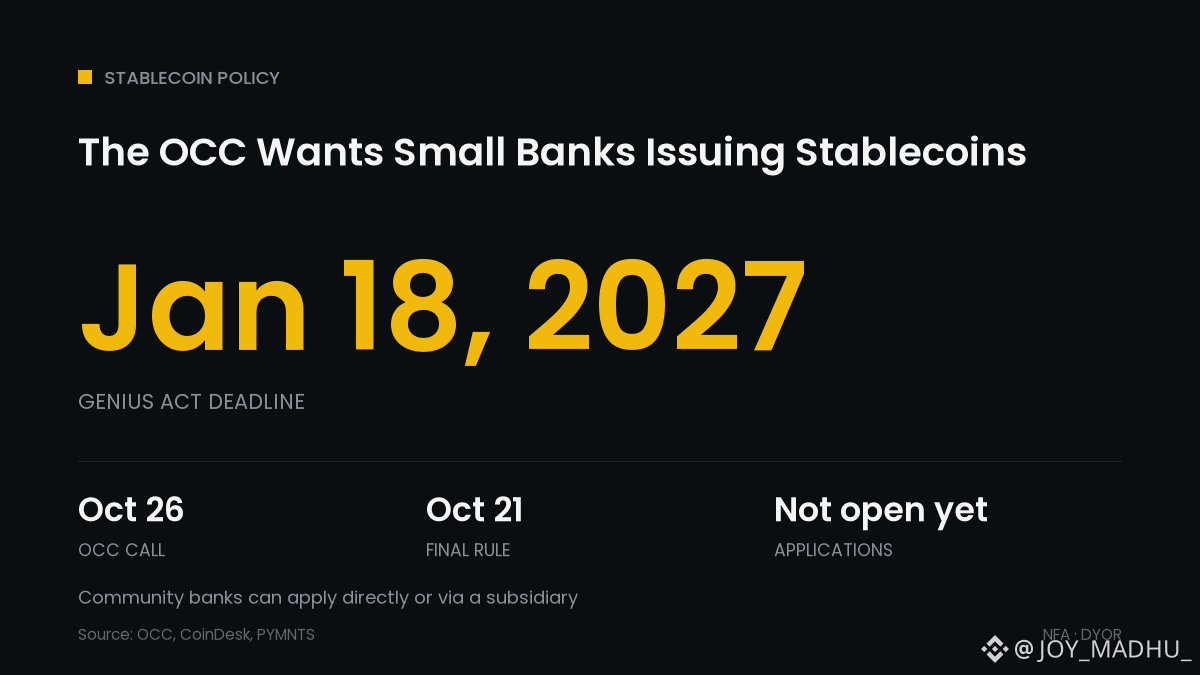
🏦 The OCC Wants Small Banks Issuing Stablecoins
📅 Monday Oct 26: the OCC invited community banks to build payment stablecoin capabilities
🪙 They can apply directly or through a subsidiary to become permitted issuers under the GENIUS Act
📜 Its final GENIUS Act rule (Oct 21) sets reserve, redemption and custody standards
⏳ From Jan 18, 2027, issuing without approval carries criminal penalties
📝 Applications aren't open yet, pending OMB sign-off on the forms
⚠️ Bank groups still warn yield-bearing stablecoins could pull deposits
What it means for crypto: more regulated issuers could widen dollar stablecoin rails beyond big banks and crypto firms. Whether small banks show up is still open.
Would you use a stablecoin issued by your local bank? 👇
$USDC $BTC
#CryptoNews #Stablecoins #GENIUSAct #OCCUrgesCommunityBanksToEnterStablecoinPayments
58

·
--
OCC Mobilizes Community Banks to Issue Payment Stablecoins, Bringing Stablecoin Funding Channels from Institutions to Retail
The U.S. Office of the Comptroller of the Currency (OCC) has formally called on community banks to become payment stablecoin issuers, following the regulator’s finalization of rules implementing the GENIUS Act. For those watching liquidity, the signal merits a closer look: stablecoin issuance is expanding beyond a handful of institutional players to reach more community-level banks.
According to Cointelegraph, this call to action came after the OCC finalized the GENIUS Act rules. The GENIUS Act is a stablecoin law, and its implementing rules have now been finalized. These rules give issuers a clear compliance framework. By turning its attention to community banks at this point, the OCC is broadening the range of potential issuers within that framework.
Why does this matter? Over the past two years, stablecoin supply growth has relied mainly on a small number of large issuers scaling up through reserve assets, leaving funding channels highly concentrated among institutional players. If community banks are brought into the issuer base, stablecoin funding channels could extend from institutions to the retail level. Banks already have access to substantial retail deposits and payment-settlement networks; if they begin issuing stablecoins, this could directly connect stablecoin supply with a broader base of bank deposits and payment networks.
From a liquidity perspective, expanding the pool of issuers could directly point to growth in stablecoin supply and liquidity. The more participants there are on the supply side, and the further their reach extends, the faster stablecoins may enter payment and trading use cases. Their marginal contribution to market liquidity warrants continued attention. With the rules finalized, policy uncertainty has been cleared; what remains is largely a matter of implementation pace.
Still, it is important to stay measured: a call to action does not mean issuance will begin immediately. The timing and scale of community banks’ actual entry into stablecoin issuance remain uncertain. This is a potential funding channel, not an immediate inflow of funds that has already occurred. There is still a gap between putting the framework in place and seeing funds actually flow in.
What should we watch next? First, community banks’ actual response and the number of issuances they announce. Second, changes in the composition and scale of reserve assets after the GENIUS Act rules are fully implemented. For trading, the more important thing is to wait for supply data to confirm the trend rather than price in the policy news prematurely.
#Stablecoin #GENIUSAct
The above is a compilation of information and personal analysis, and does not constitute investment advice.
I will continue to provide updates as further policy details become clear.
71
·
--
🔥 **BREAKING: The Stablecoin Game Just Changed FOREVER!** 🚨
Fidelity is throwing a massive lifeline to the crypto industry, launching an exclusive Government Money Market Fund tailored specifically for stablecoin issuers. This isn’t just a new product—it’s a compliance powerhouse designed to house reserve assets under the **GENIUS Act**.
This move bridges the gap between traditional high-finance security and the lightning-fast world of digital assets. By providing a regulatory-grade home for reserves, Fidelity is officially institutionalizing stablecoins, paving the way for massive market expansion. 🚀
**The era of "wild west" crypto banking is officially over.** The giants have arrived to legitimize the space. 💼💎
#Fidelity #Stablecoins #Crypto #Finance #GENIUSAct #Web3 #Bitcoin #Investing #BreakingNews
$RE $SYN $ZEREBRO

2
171

·
--
The U.S. Treasury, along with FinCEN, OCC, the Fed, FDIC, and NCUA, has proposed a joint initiative — stablecoin issuers will be classified as "financial institutions" under the Bank Secrecy Act (BSA), and will be required to implement KYC/AML Customer Identification Programs (CIP).
This is the rollout of the GENIUS Act (Stablecoin Bill), which means:
1. Stablecoin issuers like USDT/USDC are now officially under bank-level regulation.
2. A comprehensive Customer Identification (CIP) system must be established.
3. Compliance costs are set to soar, pushing out smaller players.
With regulatory boots hitting the ground, is this bullish or bearish for the stablecoin leaders? Let’s discuss in the comments.
#稳定币监管 #GENIUSAct
1
49

GENIUS Act has been enacted for 1 year: Crypto status
- The GENIUS Act, a regulation focused on stablecoins, has been law for 1 year now
- This regulation may affect the development and the display of the stablecoin market
- Opens up opportunities for blockchain projects related to crypto stability
#BinanceSquare #CryptoNews #GENIUSAct #Stablecoins
$btc $eth
#vlikevn Titanbot
Source: CoinDesk
1
111

GENIUS Act Turns 1
• The U.S. stablecoin law has completed its first year.
• Regulators are finalizing rules for reserves, KYC, custody, and compliance.
• Stablecoin adoption continues to grow with clearer regulations.
• The next big focus is the Digital Asset Market Clarity Act.
#crypto #Stablecoins #GENIUSAct #Blockchain
433

·
--
"I'm not saying Wise got 'memed' by the OCC, but their U.S. bank charter got rejected because of compliance concerns. The silver lining is that they're pivoting to the GENIUS Act for their new bid, and I'm thinking this might be the real 'HODL' strategy for fintech.
#GENIUSAct #FintechRevolution
Wise is essentially turning lemons into lemonade, folks. If their trust bank charter bid is successful under the GENIUS Act, it'll be a game-changer for decentralized banking.
So, the question is: Can Wise 'trust' the regulatory system this time around? What's your take on their new plan?"
57

·
--
🔥 JUST IN:
The OCC says final rules for the GENIUS Act are expected by November.
This could be an important step for the stablecoin market, especially as regulators work toward clearer rules around digital assets.
The next few months could bring some major changes. 👀
#Crypto #Stablecoins #GENIUSAct #bitcoin #Binance


403

The U.S. Department of the Treasury has officially issued a notice of proposed rulemaking (NPRM) regarding the implementation details of Article 3 of the “GENIUS Act,” seeking public comments.
Key points to note:
1️⃣ Clear definitions of “issuance” and “sales”
In this move, the Treasury focuses on clarifying the specific scope of “issuing payment stablecoins in the U.S.” and “providing or selling to U.S.-based entities,” thereby removing ambiguity for subsequent license applications and compliant sales.
2️⃣ The timeline is set
- Starting January 18, 2027: Any entity issuing payment stablecoins in the U.S. must obtain a federal or state license
- Starting July 18, 2028: Digital asset service providers may not offer to U.S. users any payment stablecoins issued by non-licensed issuers
3️⃣ Restrictions on offshore issuers
The Act imposes strict requirements on offshore payment stablecoin issuers—unless the offshore issuer possesses the technical capability to comply with lawful U.S. orders and bilateral reciprocity arrangements, it will be kept out of the U.S. market.
Treasury Secretary Bessent emphasized that the Treasury is accelerating the rollout of the “GENIUS Act.” The public may submit feedback within 60 days after the notice is published in the Federal Register.
The stablecoin regulatory framework is moving from the legislative phase to the enforcement stage, and compliance will become the dividing line for the industry.
#稳定币 #GENIUSAct #加密监管
11

·
--
This time, stablecoins have truly been brought under control.
The U.S. Federal Reserve has officially rolled out two GENIUS Act implementation proposals, inviting public comments with a 60-day window.
First move: reserve requirements. Stablecoin issuers must keep reserves using 100% short-term U.S. Treasury securities or other top-tier highly liquid assets. Commercial paper and crypto assets are out. They must also appoint a third-party independent custodian.
Second move: opening the door. Traditional banks that want to issue stablecoins get a dedicated approval channel—submit business plans and financial materials. If an application is denied, the applicant can appeal and request a hearing.
These rules were supposed to be implemented within one year of the bill being signed (the GENIUS Act was signed last July—America’s first federal stablecoin law). They were inexplicably delayed until now to be unveiled. Even existing issuers like Circle and Tether must re-apply and be reviewed under these standards.
Data as of: 2026-09-28 08:00 UTC
Source: ChainCatcher; BlockTempo
For information sharing only and does not constitute investment advice.
#稳定币 #美联储 #GENIUSAct

204
Log in to explore more content
Join global crypto users on Binance Square
⚡️ Get latest and useful information about crypto.
💬 Trusted by the world’s largest crypto exchange.
👍 Discover real insights from verified creators.
Email / Phone number
Trending Topics
1
#EvolveAtBinanceBlockchainWeek
1.8M views
17,929 Discussing
2
#BitcoinETFsExtendOutflowStreakToEightDays
8,160 views
109 Discussing
3
#ColdcardFlawLeadsToTheftOfAtLeast1789BTC
55,279 views
545 Discussing
4
#SECIssuesNoActionLetterOnMoleculeModel
11,789 views
190 Discussing
5
#MalaysiaFirstBitcoinETFToListOnDecember2
24,606 views
247 Discussing
6
#VitalikWantsWalletChipDesignsOpened
60,821 views
593 Discussing
7
#ChainflipVaultTheftHaltsProtocol
37,606 views
466 Discussing
8
#EthereumGlamsterdamKeepsStorageFeeChange
69,309 views
646 Discussing
9
#FranklinTempletonPlansToAddHYPEToCryptoIndexETF
2 views
1 Discussing
10
#EnishPlansToSell5932SOL
3,121 views
9 Discussing