

#eigenlayer
eigenlayer
363,021 views
884 Discussing
Hot
Latest

·
--
Are you selling $EIGEN with the weekly issuance or buying the dip?
🏭 2.36 million EIGEN are minted every week, and the price keeps slipping
Slow bleed: millions of new EIGEN are minted every week.
It closed at $0.2516 in mid-October; today it’s at $0.201.
Weekly issuance is crushing the price → new supply never stops.
Selling pressure is flowing in → only 46.5% of trades were buys in the last hour.
The money agrees: open interest at $7.06M (-4.5%), funding at +0.0040%: shorts get paid while they wait.
The market is cooling → DEX volume fell 13.3% in 24h.
Whales are 68.1% long, yet the price is still falling: even smart money can’t hold it up.
There’s a divergence: whales are long, price is down.
EIGEN is trading 10.8% below its 4h EMA50 ($0.22457), RSI at 43.3, 24h volume of $8.5M.
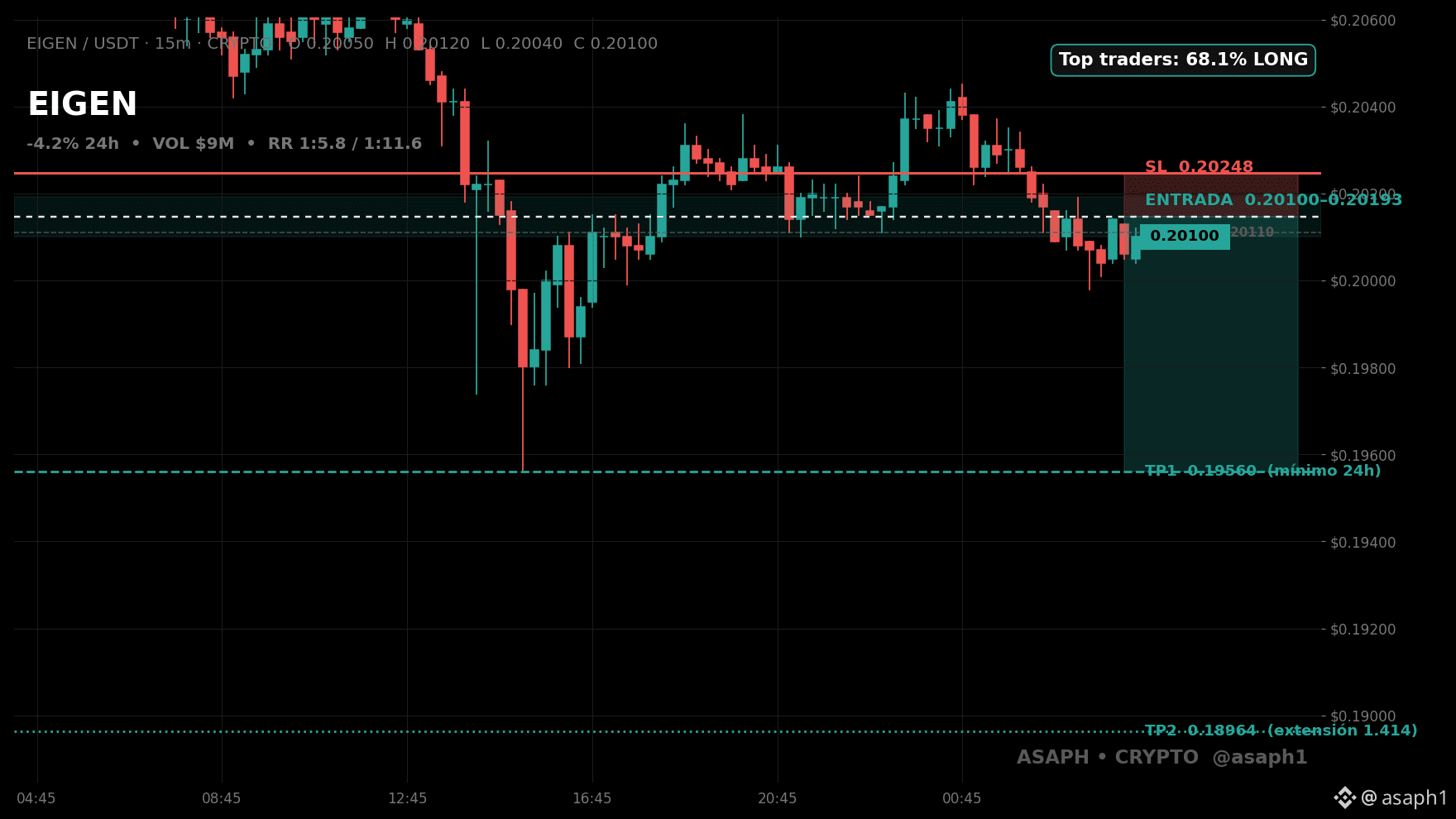
📊 EIGEN SHORT signal
📍 Current price: $0.2010
🎯 Zone: $0.2010–$0.2019 (dist. 0.0%)
Enter with a limit order in the zone: half at $0.2010 and half at $0.2019.
🛑 Stop loss: $0.20248, -0.51% from the average entry, confirmed BEFORE entering.
✅ TP1, the first take profit: $0.1956, +2.9%: take profit on 50% and move risk to zero.
🏁 TP2: $0.18964, +5.9%: the 1.414 extension measuring the drop since mid-October.
R/R: 1:5.8 · 1:11.6
Risk per trade: 2% of capital
⏳ Valid: next 8h / as long as it doesn’t break above $0.20248
Follow the profile and watch the live price here 👇 EIGEN
EIGEN #Ballenas #EigenLayer #Crypto
This is a plan, not financial advice.
26

·
--
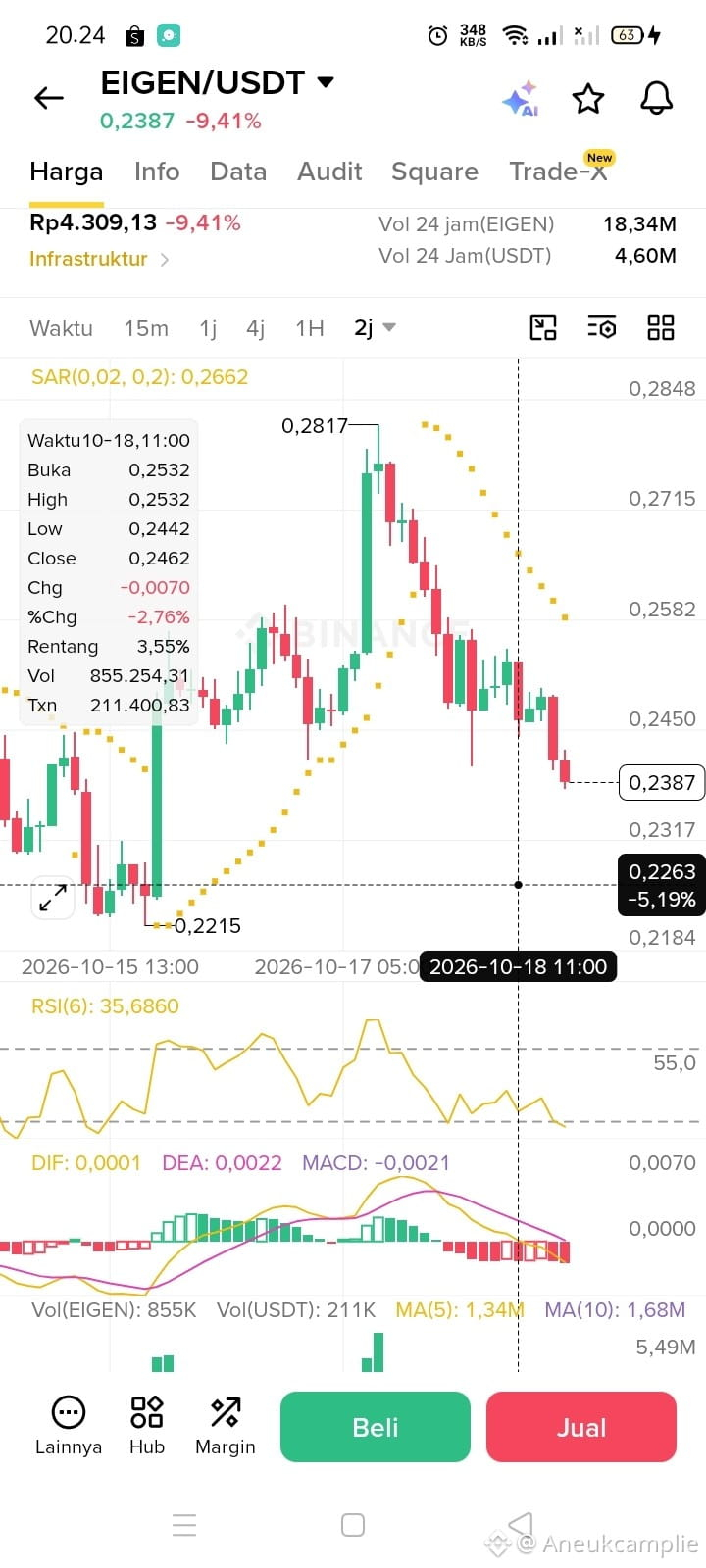
$EIGEN Just go short. Quick scalping with large capital. Take profit and close immediately. Keep the stop loss tight. Seize the big opportunity. The trend is bearish on all TFs.#eigen #Eigenlayer公布空投计划 #Eigenlayer #BearishPattern
{spot}(EIGENUSDT)
$EIGEN Just go short. Quick scalping with large capital. Take profit and close immediately. Keep the stop loss tight. Seize the big opportunity. The trend is bearish on all TFs.#eigen #Eigenlayer公布空投计划 #Eigenlayer #BearishPattern
1
144

ZRO, ASTER and EIGEN: Infrastructure Tokens Under Pressure as Volume Stays Active
ZRO is trading near $1.869, down about 8.7% in the latest 24-hour session after moving between $1.842 and $2.052. The price is holding close to its daily low, showing that sellers remain in control for now. LayerZero’s cross-chain infrastructure narrative remains important, but the market is waiting for stronger demand to reverse the current weakness.
ASTER is trading around $0.7017, down roughly 0.8%, with a daily range between $0.6914 and $0.7144. Compared with ZRO and EIGEN, ASTER is showing a more stable intraday structure. Consistent trading activity suggests that market interest is still present, although the token needs to reclaim the upper end of its range to show stronger momentum.
EIGEN is near $0.2500, lower by about 0.5% after trading between $0.2406 and $0.2817. The wide session range highlights elevated volatility, while the return close to the opening level signals a market still searching for direction. EigenLayer remains closely linked to restaking and Ethereum infrastructure, making broader ecosystem sentiment especially relevant.
The current picture is realistic rather than euphoric: ZRO is facing heavier pressure, ASTER is comparatively resilient, and EIGEN is consolidating after a volatile session. For all three, sustained volume and the ability to defend intraday lows will matter more than short-lived spikes.
#LayerZero #Aster #EigenLayer #CryptoMarket #Altcoins
$ZRO
{spot}(ZROUSDT)
$ASTER
{spot}(ASTERUSDT)
$EIGEN
{spot}(EIGENUSDT)
ZRO, ASTER and EIGEN: Infrastructure Tokens Under Pressure as Volume Stays Active
ZRO is trading near $1.869, down about 8.7% in the latest 24-hour session after moving between $1.842 and $2.052. The price is holding close to its daily low, showing that sellers remain in control for now. LayerZero’s cross-chain infrastructure narrative remains important, but the market is waiting for stronger demand to reverse the current weakness.
ASTER is trading around $0.7017, down roughly 0.8%, with a daily range between $0.6914 and $0.7144. Compared with ZRO and EIGEN, ASTER is showing a more stable intraday structure. Consistent trading activity suggests that market interest is still present, although the token needs to reclaim the upper end of its range to show stronger momentum.
EIGEN is near $0.2500, lower by about 0.5% after trading between $0.2406 and $0.2817. The wide session range highlights elevated volatility, while the return close to the opening level signals a market still searching for direction. EigenLayer remains closely linked to restaking and Ethereum infrastructure, making broader ecosystem sentiment especially relevant.
The current picture is realistic rather than euphoric: ZRO is facing heavier pressure, ASTER is comparatively resilient, and EIGEN is consolidating after a volatile session. For all three, sustained volume and the ability to defend intraday lows will matter more than short-lived spikes.
#LayerZero #Aster #EigenLayer #CryptoMarket #Altcoins
$ZRO
$ASTER
$EIGEN
1
20

·
--
Bearish
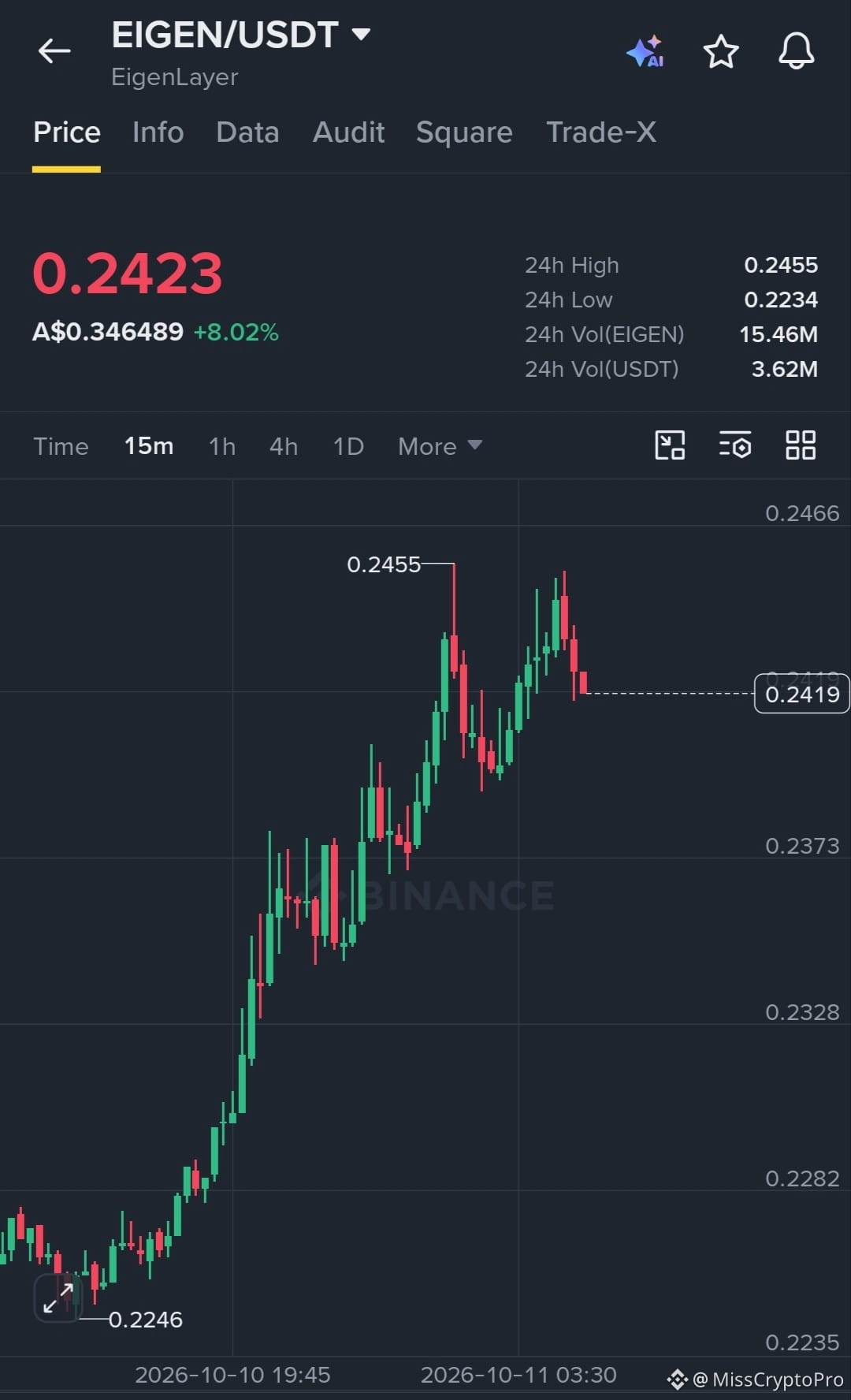
$EIGEN Faces Resistance — Bears Target $0.2328
Trade Setup: SHORT
Entry Zone: $0.2420–$0.2435
TP1: $0.2373
TP2: $0.2328
TP3: $0.2282
SL: $0.2466
EIGEN is up 8.02% and trading near $0.2423, with resistance around $0.2455–$0.2466.
A rejection from this zone could trigger a pullback toward $0.2373 and $0.2328, while a breakout above resistance may invalidate the short setup.
Trade Here On $EIGEN
#EIGEN #EigenLayer #CryptoTrading #BinanceSquare
{spot}(EIGENUSDT)
$EIGEN Faces Resistance — Bears Target $0.2328
Trade Setup: SHORT
Entry Zone: $0.2420–$0.2435
TP1: $0.2373
TP2: $0.2328
TP3: $0.2282
SL: $0.2466
EIGEN is up 8.02% and trading near $0.2423, with resistance around $0.2455–$0.2466.
A rejection from this zone could trigger a pullback toward $0.2373 and $0.2328, while a breakout above resistance may invalidate the short setup.
Trade Here On $EIGEN
#EIGEN #EigenLayer #CryptoTrading #BinanceSquare
76

·
--
Bullish
UPDATE: ALTCOIN GEMS FOR 2027 💎
$EIGEN
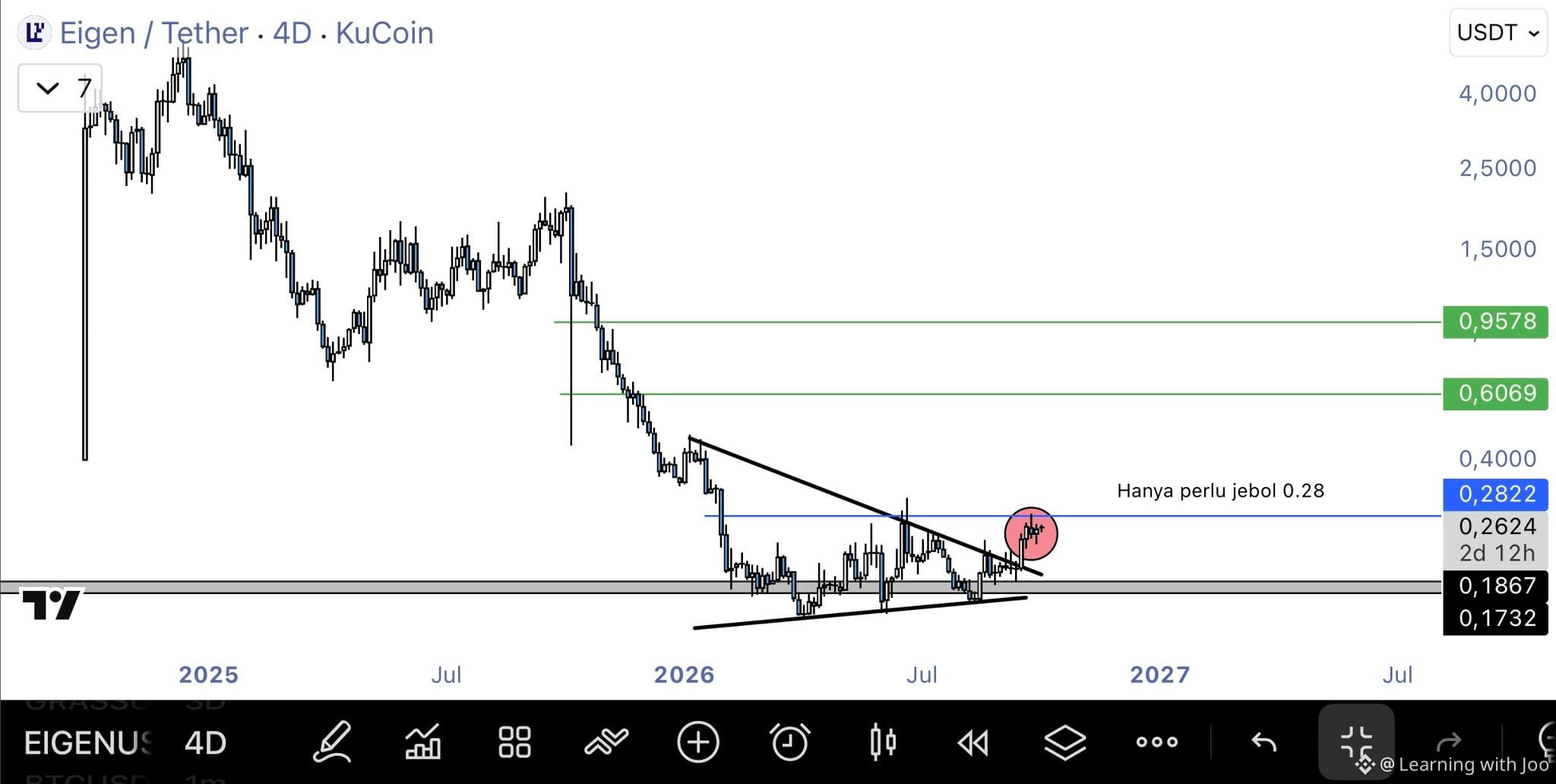
Even from the beginning of last month? it hasn't risen significantly compared to other altcoins that have already averaged gains of: 30-100%
From a chart perspective: $EIGEN has already broken out, just waiting for the retest, I'm ? still very bullish on
DCA Area: 0.24-0.19
If $EIGEN break key level at 0.28, it will be a massive pump after.
Dyor guyss
#Eigenlayer
2
230

·
--
Verified
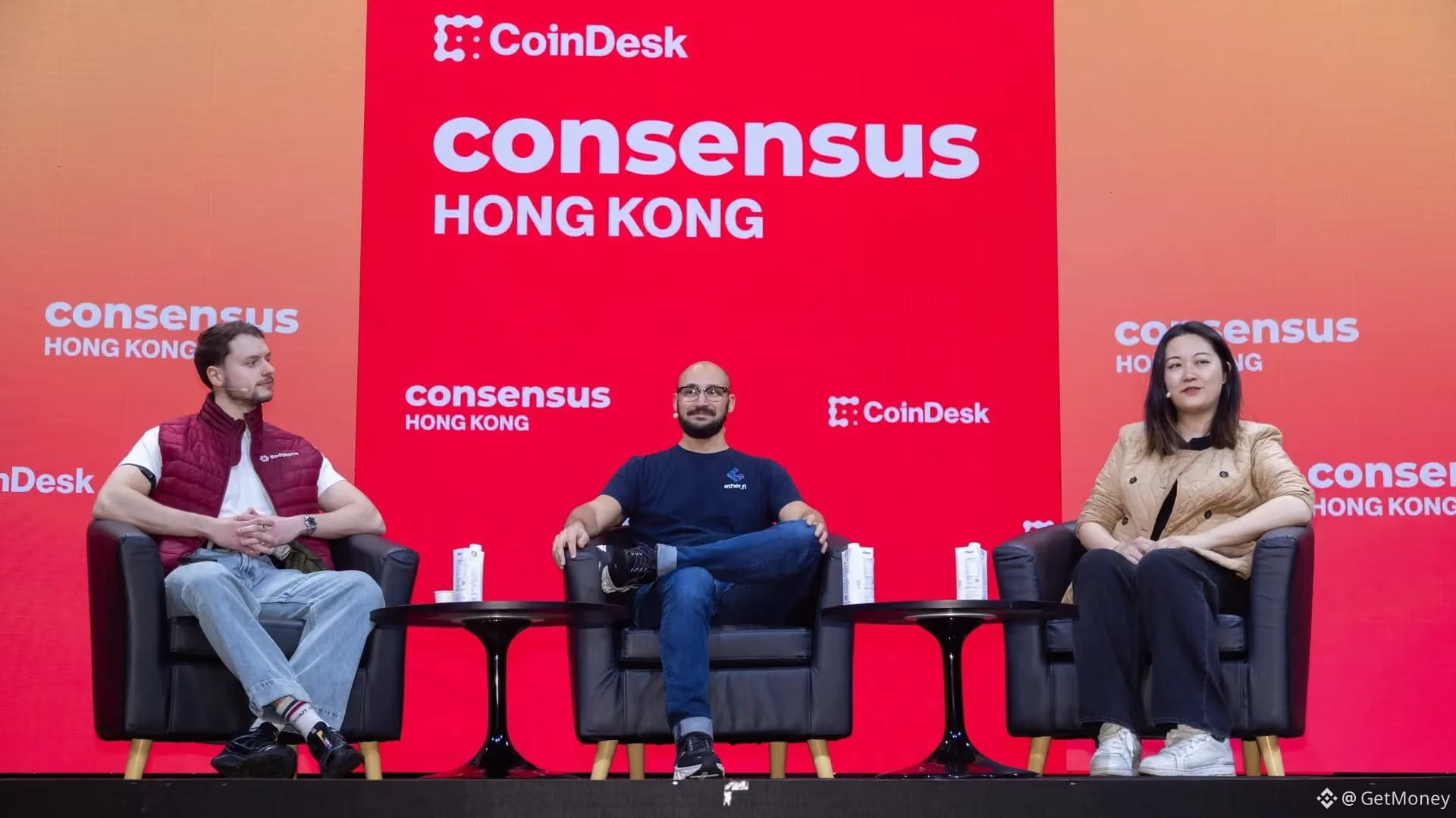
📰 ether.fi is going to unbind from EigenLayer. By the end of this quarter, it will remove the final structural binding between staked tokens and the restaking protocol, and EigenPod withdrawal credentials are also planned to be removed by year-end. At that point, assets participating in restaking will be less than 1%.
🔥 Honestly, the reason isn’t complicated: it takes on an extra layer of risk without getting the corresponding returns. In the data from September 8, the restaking segment’s weekly fees were about $100,000, while liquid staking totaled about $27.35 million. At roughly similar scale, ordinary staking rewards are about 53 times those of restaking.
👀 On top of that, as the 2025 points incentive programs wind down and a penalty-and-forfeiture mechanism goes live, what was once merely theoretical risk could turn into real losses. In April 2026, the KelpDAO cross-chain bridge was attacked, and the forged rsETH was then used to borrow real ETH. The issue isn’t that EigenLayer’s core mechanism fails—it’s that the tradeable wrapped credentials add an extra layer of contract risk and cross-chain risk.
💡 ether.fi already separated restaking from weETH in August, shifting toward crypto consumption cards, lending, treasuries, and tokenized assets. This is really a practical problem: when the original business isn’t profitable, the project has to find new sources of income; but whether the new business can truly stand on its own depends on how actual revenue and risk are balanced.
🤔 Would you rather take the returns from regular staking, or accept the risks of restaking and wrapped tokens for the possible additional upside?
#etherfi #EigenLayer #再质押 #DeFi
435

·
--
🎯 $10B shield for the market; only $100K collected in a week
📰 ether.fi has completely cut ties with EigenLayer this season. Re-staking is now less than 1%; $10B locked in, and after seven days the fees are only $100K—an efficiency drop of 53x
💬 The narrative is hyped to the sky, and the ledger doesn’t lie. Security budgets can’t support the returns—once the story is over, they pull the liquidity. The next buyers haven’t come yet. This kind of track record at the twilight of a sector is worth remembering
🏷️ #EigenLayer #再质押 #etherfi #DeFi
69

·
--
Bullish
EIGEN short positions just got wiped out! ⚡ Bears pushed their luck a bit too far and got caught in a swift liquidity cascade. Always respect the order book! 🚀
$EIGEN
{future}(EIGENUSDT)
🟢 LIQUIDITY ZONE HIT 🟢
Short liquidation spotted 🧨
$1.40K cleared at $0.2770
Upside liquidity swept — Price squeezing up towards key resistance levels, watch for volatility 👀
🎯 Targets: $0.2880, $0.3020
#EIGEN #EigenLayer #CryptoTrading
EIGEN short positions just got wiped out! ⚡ Bears pushed their luck a bit too far and got caught in a swift liquidity cascade. Always respect the order book! 🚀
$EIGEN
🟢 LIQUIDITY ZONE HIT 🟢
Short liquidation spotted 🧨
$1.40K cleared at $0.2770
Upside liquidity swept — Price squeezing up towards key resistance levels, watch for volatility 👀
🎯 Targets: $0.2880, $0.3020
#EIGEN #EigenLayer #CryptoTrading
$EIGEN
🟢 LIQUIDITY ZONE HIT 🟢
Short liquidation spotted 🧨
$1.40K cleared at $0.2770
Upside liquidity swept — Price squeezing up towards key resistance levels, watch for volatility 👀
🎯 Targets: $0.2880, $0.3020
#EIGEN #EigenLayer #CryptoTrading
136

ALERT 🚨 Order blocks on $EIGEN (EIGEN LAYER) signal bullish momentum, supported by rising volume and growing ecosystem adoption. $SMCIB (SMCIB) showcases strong liquidity and innovative staking, attracting active trading activity. $OMNI (OMNI) remains a cornerstone, with expanding cross chain integration boosting investor sentiment. Strong buy across all three. 📈💪🚀 #CryptoTrading #SMC #EigenLayer #Omni #Buy
ALERT 🚨 Order blocks on $EIGEN (EIGEN LAYER) signal bullish momentum, supported by rising volume and growing ecosystem adoption. $SMCIB (SMCIB) showcases strong liquidity and innovative staking, attracting active trading activity. $OMNI (OMNI) remains a cornerstone, with expanding cross chain integration boosting investor sentiment. Strong buy across all three. 📈💪🚀 #CryptoTrading #SMC #EigenLayer #Omni #Buy
43

·
--
$EIGEN is one of the more interesting infrastructure plays I’ve been following. Restaking introduced a new way of thinking about security, capital efficiency, and network coordination.
Whether the model succeeds at scale remains to be seen, but it’s definitely pushing blockchain infrastructure into new territory.
#eigen #Eigenlayer #restaking #Ethereum #Crypto $EIGEN
Whether the model succeeds at scale remains to be seen, but it’s definitely pushing blockchain infrastructure into new territory.
#eigen #Eigenlayer #restaking #Ethereum #Crypto $EIGEN
1
143

Polychain unlocks 122 million EIGEN tokens, yet the price remains unmoved. Is this a sign of market maturity or are we just lulled into complacency? In contrast to the 30% drop following the 2023 LDO unlock, EIGEN's resilience is notable, but on-chain data reveals a truth that's likely more complex than it appears.
1️⃣ On-chain data: Selling pressure hasn't vanished; it just took on a different form.
Polychain has unlocked 122 million tokens (about 7% of total supply) from EigenCloud, but on-chain tracking shows that these tokens haven't flooded into exchanges. Instead, most have been restaked into the EigenLayer protocol, converted into restaking receipts (like eETH). This means the unlock doesn't equal a sell-off; rather, it's transformed into a "buffer" for on-chain liquidity. But be cautious: the liquidity of restaking receipts can still be instantly realized in the secondary market. Once prices trigger liquidations or panic, hidden selling pressure could erupt. Currently, EIGEN is oscillating in the $3.2-$3.5 range, without experiencing a cliff-like drop similar to LDO. However, the open interest (OI) on-chain has risen from $210 million on the unlock day to $240 million, indicating that leveraged funds are speculating on direction.
2️⃣ Funding rates and position structure: Divergence between bulls and bears intensifies.
The perpetual contract funding rate is currently hovering around 0.005% (neutral to bullish), yet open interest (OI) has increased by 14% after the unlock, showing that both bulls and bears are doubling down. Bears see the unlock as a "delayed bomb," while bulls are betting that EigenLayer's AVS ecosystem is on the verge of value capture. The key divergence point is that EigenLayer's TVL is expected to grow to $18 billion by Q4 2024, but the actual earnings from AVS services have yet to be fully distributed to EIGEN token holders. If the market interprets the unlock as a long-term staking release rather than selling pressure, then the current price implies expectations of "future AVS earnings discounting." However, if the Q1 2025 AVS data falls short of expectations, this premium could evaporate rapidly.
3️⃣ Macro narrative: The restaking space is undergoing a "valuation reset."
Unlike the macro environment during the 2023 LDO unlock, the current market narrative around the restaking space has shifted from "liquidity mining" to "infrastructure layer." EigenLayer's AVS ecosystem has integrated over 10 active validation services (such as cross-chain bridges and oracles), but the EIGEN token has yet to directly capture fees from these services. Polychain's unlocking behavior is interpreted by some market participants as "long-term staking to support protocol governance" rather than short-term cashing out. The risk lies in the possibility that if Polychain opts to reduce its stake in the secondary market, it could trigger a "secondary selling pressure," though on-chain data has yet to show signs of such a reduction.
4️⃣ Risk points: Mismatch between unlock scale and market liquidity.
122 million EIGEN tokens account for about 12% of the current circulating supply. Even if most are staked, there are still around 15 million tokens that could be released in the short term (the unstaking cycle for restaking receipts is 7 days). Meanwhile, EIGEN's average daily trading volume is only $80 million. If unlocked tokens start migrating to exchanges, the price could rapidly fall below the $3.0 support level. In comparison, after LDO's unlock in May 2023, the price dropped from $2.2 to $1.5 (a decline of 32%) within 30 days. Currently, EIGEN’s "stasis" seems more like a temporary balance of bullish and bearish forces rather than a fundamental reversal.
Conclusion: Polychain's unlock isn't the endpoint; it's the starting point for a stress test. The market's choice to overlook short-term selling pressure stems from a gamble that EigenLayer's AVS ecosystem will capture value by Q1 2025. However, if on-chain restaking receipts begin to net flow out to exchanges, or if AVS earnings data falls below expectations, the current price equilibrium will be disrupted. In the $3.2-$3.5 range, going long requires continuous growth of TVL and a decrease in OI, while going short necessitates waiting for on-chain selling pressure signals.
#EIGEN #EigenLayer #Crypto
85

·
--
Bullish
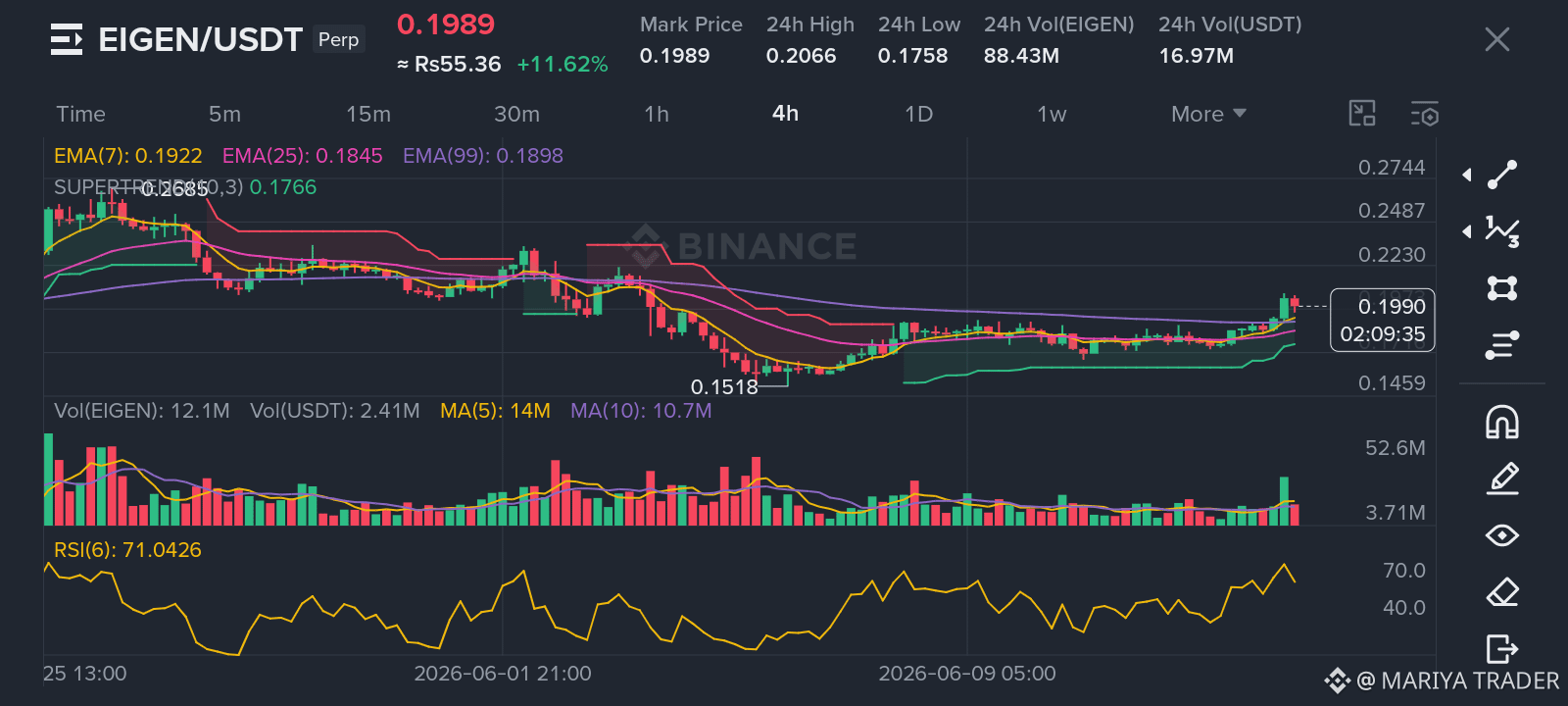
$EIGEN is maintaining a bullish structure after a clean breakout, with a controlled pullback into support offering a continuation entry opportunity.
Entry: 0.1940 - 0.1990
SL: 0.1860
TP: 0.2100 | 0.2260 | 0.2420
Trade $EIGEN here and show your support 👇👇
{future}(EIGENUSDT)
#Eigenlayer #Eigenlayer’s
$EIGEN is maintaining a bullish structure after a clean breakout, with a controlled pullback into support offering a continuation entry opportunity.
Entry: 0.1940 - 0.1990
SL: 0.1860
TP: 0.2100 | 0.2260 | 0.2420
Trade $EIGEN here and show your support 👇👇
#Eigenlayer #Eigenlayer’s
Entry: 0.1940 - 0.1990
SL: 0.1860
TP: 0.2100 | 0.2260 | 0.2420
Trade $EIGEN here and show your support 👇👇
#Eigenlayer #Eigenlayer’s
48

·
--
Bullish
$EIGEN has established a strong bullish recovery on the 1-hour chart, locking in a solid 13.41% gain over the past 24 hours. After finding a definitive bottom near the daily low of 0.1884, steady buying volume triggered a sharp V-shaped reversal, pushing the price aggressively up to its current level of 0.2284—just a fraction away from its 24-hour high of 0.2291. The sustained momentum and lack of immediate selling pressure indicate that the market is eyeing a breakthrough. If buyers successfully clear this local overhead resistance, it could ignite a fresh rally toward higher psychological targets.
Target 1: 0.2450
Target 2: 0.2680
Target 3: 0.2950
#EIGEN #EigenLayer #CryptoInfrastructure
{spot}(EIGENUSDT)
$EIGEN has established a strong bullish recovery on the 1-hour chart, locking in a solid 13.41% gain over the past 24 hours. After finding a definitive bottom near the daily low of 0.1884, steady buying volume triggered a sharp V-shaped reversal, pushing the price aggressively up to its current level of 0.2284—just a fraction away from its 24-hour high of 0.2291. The sustained momentum and lack of immediate selling pressure indicate that the market is eyeing a breakthrough. If buyers successfully clear this local overhead resistance, it could ignite a fresh rally toward higher psychological targets.
Target 1: 0.2450
Target 2: 0.2680
Target 3: 0.2950
#EIGEN #EigenLayer #CryptoInfrastructure
Target 1: 0.2450
Target 2: 0.2680
Target 3: 0.2950
#EIGEN #EigenLayer #CryptoInfrastructure

1
325

🚀 New Coin Alert: $EIGEN (EigenLayer)
🔥 A fresh new opportunity is gaining massive attention, $EIGEN is becoming one of the hottest projects in crypto!
💡 Why EIGEN?
✔ Leading restaking protocol on Ethereum
✔ Expanding DeFi infrastructure
✔ Strong developer & investor interest
✔ Growing ecosystem adoption
📊 Market Insight:
$EIGEN is showing strong trading activity and rising volume. Momentum is building fast, but always DYOR before entering.
⚡ Potential:
With restaking becoming a major trend in Web3, EIGEN could play a huge role in the future of Ethereum scalability and security
💬 What do you think about EIGEN?
Long-term gem or still early?
#EIGEN #EigenLayer #CryptoUpdate #Altcoins #CryptoTrading

1
145

Verified
ether.fi has fully removed restaking exposure from its flagship weETH token, turning it into a pure liquid staking token. All restaking activity now sits in a separate weETHs product powered by Symbiotic. The move ends the protocol’s long-running role as the biggest player built on EigenLayer’s restaking model and gives users a cleaner choice between simple staking yield and extra restaking risk.
{spot}(EIGENUSDT)
$EIGEN $ETH #NewNews #CoinVahini #DeFi #etherfi #EigenLayer
ether.fi has fully removed restaking exposure from its flagship weETH token, turning it into a pure liquid staking token. All restaking activity now sits in a separate weETHs product powered by Symbiotic. The move ends the protocol’s long-running role as the biggest player built on EigenLayer’s restaking model and gives users a cleaner choice between simple staking yield and extra restaking risk.
$EIGEN $ETH #NewNews #CoinVahini #DeFi #etherfi #EigenLayer
$EIGEN $ETH #NewNews #CoinVahini #DeFi #etherfi #EigenLayer
1
149

·
--
Bullish
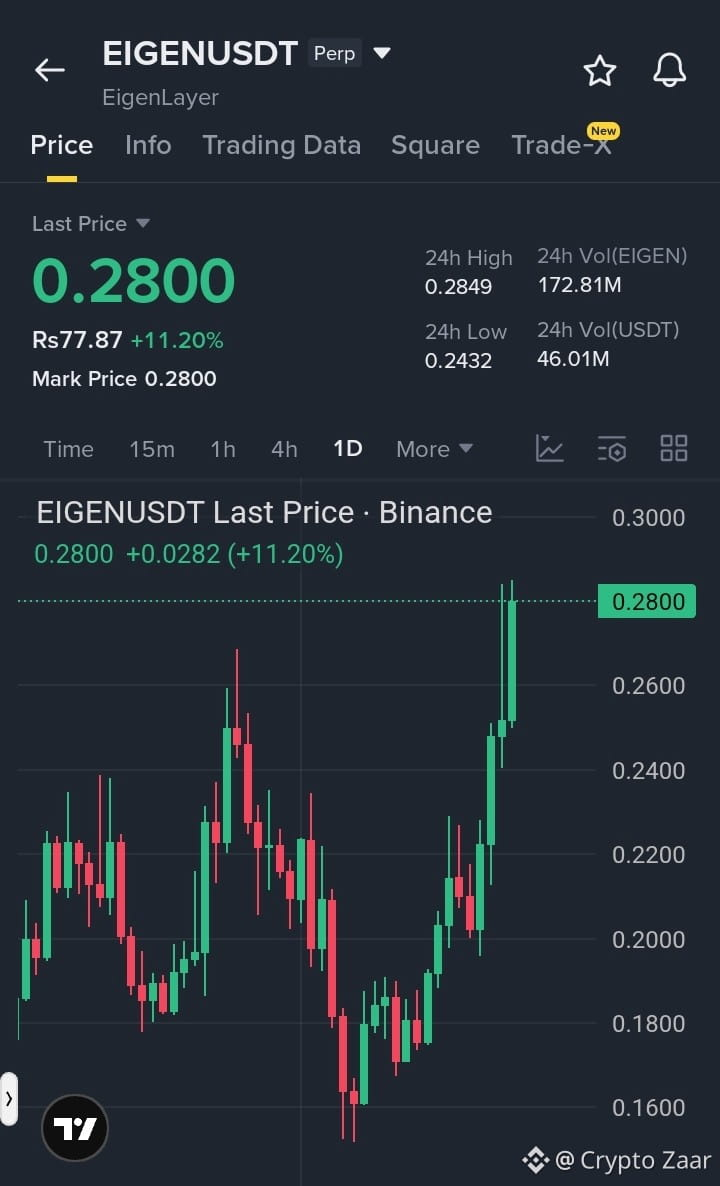
$EIGEN
{future}(EIGENUSDT)
just ripped +11% and is pressing into key resistance near $0.30. If bulls flip this level into support, the next leg could catch many sidelined traders off guard. Momentum is building, and the market is finally paying attention.
#EIGEN #EigenLayer #Crypto
Target: $0.35
$ZEC
{future}(ZECUSDT)
$RIVER
{alpha}(560xda7ad9dea9397cffddae2f8a052b82f1484252b3)
$EIGEN
just ripped +11% and is pressing into key resistance near $0.30. If bulls flip this level into support, the next leg could catch many sidelined traders off guard. Momentum is building, and the market is finally paying attention.
#EIGEN #EigenLayer #Crypto
Target: $0.35
$ZEC
$RIVER
just ripped +11% and is pressing into key resistance near $0.30. If bulls flip this level into support, the next leg could catch many sidelined traders off guard. Momentum is building, and the market is finally paying attention.
#EIGEN #EigenLayer #Crypto
Target: $0.35
$ZEC
$RIVER
1
228

·
--
🔒 Security Could Become Blockchain's Greatest Competitive Advantage
Innovation attracts users.
Security keeps them.
Restaking is opening new possibilities for decentralized security, allowing blockchain ecosystems to strengthen trust while supporting emerging applications.
The next generation of Web3 may be built on shared security rather than isolated networks.
$EIGEN $ETH
#EigenLayer #Restaking #Blockchain #Web3 #CryptoInnovation

83

·
--
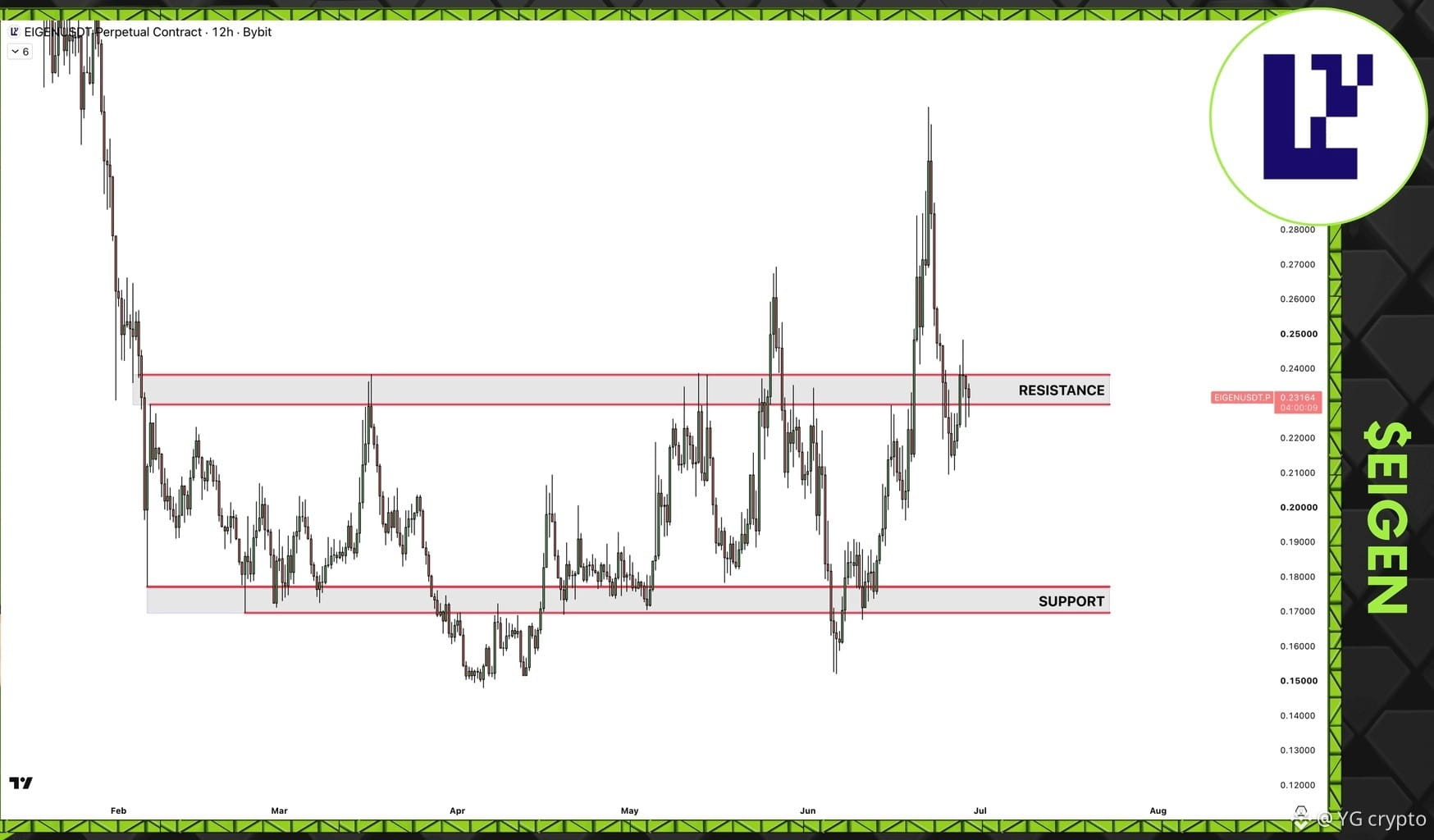
$EIGEN has been a very strong performer lately.
Now the price has reached a key junction:
either we bounce above this resistance level and continue to uptrend, or we might fully deviate back into this range and visit the support zone at a much lower price.
#Eigenlayer
$EIGEN has been a very strong performer lately.
Now the price has reached a key junction:
either we bounce above this resistance level and continue to uptrend, or we might fully deviate back into this range and visit the support zone at a much lower price.
#Eigenlayer
Now the price has reached a key junction:
either we bounce above this resistance level and continue to uptrend, or we might fully deviate back into this range and visit the support zone at a much lower price.
#Eigenlayer
302
·
--
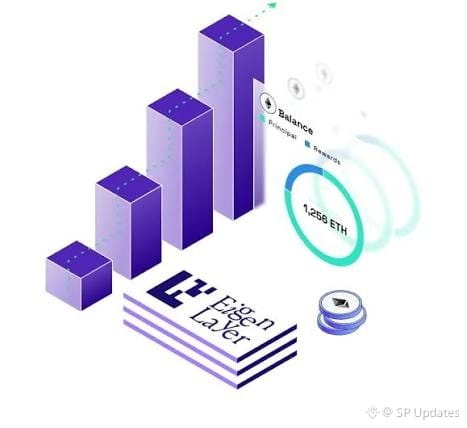
⚡ #EigenLayer (EIGEN): Expanding Ethereum Security
EigenLayer introduces the concept of restaking, allowing Ethereum validators to help secure additional decentralized services. This innovation has generated significant interest because it aims to improve capital efficiency while supporting new blockchain applications.
As the Ethereum ecosystem evolves, infrastructure projects like EigenLayer could play a larger role in decentralized security. Monitor ecosystem integrations, developer adoption, and protocol updates to understand long-term potential.
Technology adoption often matters more than short-term market fluctuations.
Not financial advice. Always DYOR.
#EigenLayer #EIGEN #BinanceSquare
76

ALERT 🚨 EigenLayer ( $EIGEN ), Cati ( $CATI ), and Mantra ( $MANTRA ) are surging as order blocks reveal bullish momentum. 📈 Rising volume and liquidity support a strong buy stance. Adoption across DeFi ecosystems fuels ecosystem growth. Investor sentiment remains optimistic, driving trading activity and innovation. #Crypto #EigenLayer #Cati #Mantra
ALERT 🚨 EigenLayer ( $EIGEN ), Cati ( $CATI ), and Mantra ( $MANTRA ) are surging as order blocks reveal bullish momentum. 📈 Rising volume and liquidity support a strong buy stance. Adoption across DeFi ecosystems fuels ecosystem growth. Investor sentiment remains optimistic, driving trading activity and innovation. #Crypto #EigenLayer #Cati #Mantra
1
455
Log in to explore more content
Join global crypto users on Binance Square
⚡️ Get latest and useful information about crypto.
💬 Trusted by the world’s largest crypto exchange.
👍 Discover real insights from verified creators.
Email / Phone number
Trending Topics
1
#CanMicrosoftDeliverOnAI
109,005 views
838 Discussing
2
#CanGoogleDefindItsCore
51,487 views
601 Discussing
3
#FOMCWatch
9.1M views
28,082 Discussing
4
#EthereumDropsBelow$2300
11,800 views
161 Discussing
5
#BitcoinSlipsBelow$80KAgain
33,096 views
129 Discussing
6
#ThailandLaunchesWORPTStablecoinToQRPaymentApp
69,116 views
838 Discussing
7
#StrategySkipsBitcoinPurchasesSpends$205MOnSTRCBuybacks
12,943 views
99 Discussing
8
#BitmineAdds10452ETH
117,225 views
1,251 Discussing
9
#SouthKoreaConsidersEducationTaxOnCryptoExchanges
73,277 views
870 Discussing
10
#OCCUrgesCommunityBanksToEnterStablecoinPayments
47,267 views
618 Discussing