

#sec
sec
333.9M views
1.4M Discussing
Hot
Latest

·
--
📢 For the first time in decades, the U.S. SEC has begun modernizing its rules for transfer agents—the institutions responsible for keeping track of securities owners and registering property rights.
The existing regulatory framework was built back in the era of paper certificates and faxes, turning it into the primary operational bottleneck on Wall Street's path toward massive blockchain adoption and the tokenization of real-world assets (RWAs). Ultra-fast blockchain settlements are colliding with outdated regulatory requirements for recording ownership, creating the risk of systemic failures as the volume of tokenized securities grows.
Updating these rules will allow transfer agents to legally use distributed ledgers and smart contracts as official record-keeping systems. This removes a crucial legal barrier for major institutional players, enabling them to fully integrate traditional financial market infrastructure with cryptographic settlement networks without the risk of drowning in bureaucratic conflicts.
#SEC #RWA #SECToClarifyOnChainFundraisingRules $USDC
{future}(USDCUSDT)
📢 For the first time in decades, the U.S. SEC has begun modernizing its rules for transfer agents—the institutions responsible for keeping track of securities owners and registering property rights.
The existing regulatory framework was built back in the era of paper certificates and faxes, turning it into the primary operational bottleneck on Wall Street's path toward massive blockchain adoption and the tokenization of real-world assets (RWAs). Ultra-fast blockchain settlements are colliding with outdated regulatory requirements for recording ownership, creating the risk of systemic failures as the volume of tokenized securities grows.
Updating these rules will allow transfer agents to legally use distributed ledgers and smart contracts as official record-keeping systems. This removes a crucial legal barrier for major institutional players, enabling them to fully integrate traditional financial market infrastructure with cryptographic settlement networks without the risk of drowning in bureaucratic conflicts.
#SEC #RWA #SECToClarifyOnChainFundraisingRules $USDC
The existing regulatory framework was built back in the era of paper certificates and faxes, turning it into the primary operational bottleneck on Wall Street's path toward massive blockchain adoption and the tokenization of real-world assets (RWAs). Ultra-fast blockchain settlements are colliding with outdated regulatory requirements for recording ownership, creating the risk of systemic failures as the volume of tokenized securities grows.
Updating these rules will allow transfer agents to legally use distributed ledgers and smart contracts as official record-keeping systems. This removes a crucial legal barrier for major institutional players, enabling them to fully integrate traditional financial market infrastructure with cryptographic settlement networks without the risk of drowning in bureaucratic conflicts.
#SEC #RWA #SECToClarifyOnChainFundraisingRules $USDC
1.1k


#sectoclarifyonchainfundraisingrules
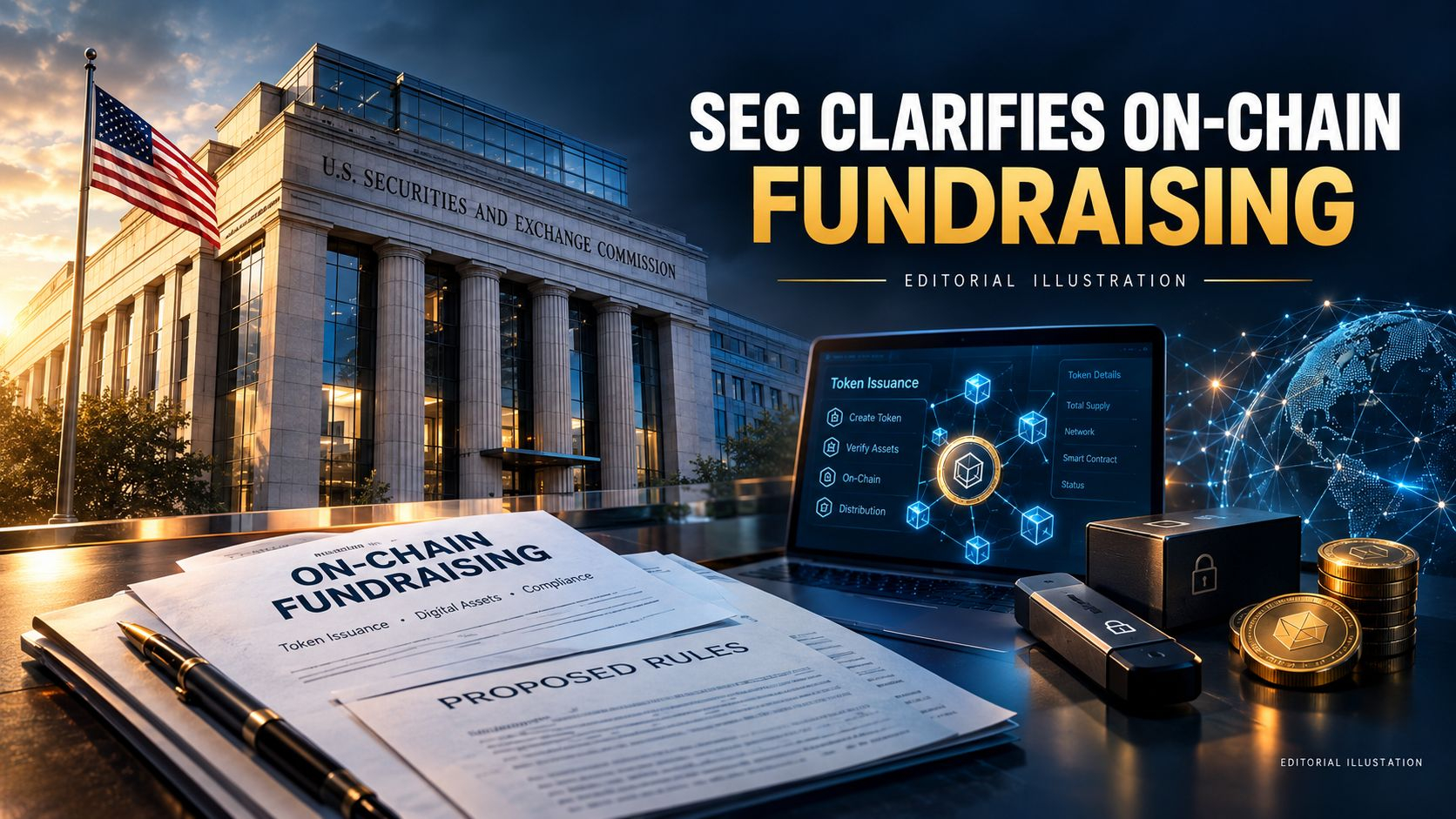
SEC Chair Says On-Chain Fundraising Rules Are Still Moving Forward
The failure of a U.S. crypto market-structure bill may not stop the SEC from creating a clearer path for token-based fundraising.
SEC Chair Paul Atkins said the agency is proceeding within its existing legal authority to clarify how companies can raise capital on-chain, despite Congress failing to advance the CLARITY Act. His comments point to regulatory action—not a new law—as the next major step for U.S. crypto fundraising.news.bitcoin+1
The SEC has already proposed Regulation Crypto Assets, which includes two potential exemptions. A startup exemption would allow eligible offerings of up to $5 million over four years, while a broader fundraising exemption would permit up to $75 million during a 12-month period. Both would require tailored disclosures, and the larger pathway would include financial statements and ongoing reporting.sec+1
The proposal also contains a conditional safe harbor that could allow a crypto asset to become separated from an associated investment contract after the issuer completes or ends the essential managerial efforts it promised to undertake. However, these provisions remain proposals, not final rules.
My take: A workable on-chain fundraising framework could bring more capital formation back to the U.S. and reduce reliance on offshore structures. But disclosure standards, eligibility, enforcement boundaries and the final safe-harbor conditions will determine whether this becomes genuine clarity or another layer of complexity.
Will SEC-led rulemaking be enough without congressional legislation?
#SEC #CryptoRegulation #Tokenization
$MOVR $AGT $NOM
{future}(NOMUSDT)
{future}(AGTUSDT)
{future}(MOVRUSDT)
#sectoclarifyonchainfundraisingrules
SEC Chair Says On-Chain Fundraising Rules Are Still Moving Forward
The failure of a U.S. crypto market-structure bill may not stop the SEC from creating a clearer path for token-based fundraising.
SEC Chair Paul Atkins said the agency is proceeding within its existing legal authority to clarify how companies can raise capital on-chain, despite Congress failing to advance the CLARITY Act. His comments point to regulatory action—not a new law—as the next major step for U.S. crypto fundraising.news.bitcoin+1
The SEC has already proposed Regulation Crypto Assets, which includes two potential exemptions. A startup exemption would allow eligible offerings of up to $5 million over four years, while a broader fundraising exemption would permit up to $75 million during a 12-month period. Both would require tailored disclosures, and the larger pathway would include financial statements and ongoing reporting.sec+1
The proposal also contains a conditional safe harbor that could allow a crypto asset to become separated from an associated investment contract after the issuer completes or ends the essential managerial efforts it promised to undertake. However, these provisions remain proposals, not final rules.
My take: A workable on-chain fundraising framework could bring more capital formation back to the U.S. and reduce reliance on offshore structures. But disclosure standards, eligibility, enforcement boundaries and the final safe-harbor conditions will determine whether this becomes genuine clarity or another layer of complexity.
Will SEC-led rulemaking be enough without congressional legislation?
#SEC #CryptoRegulation #Tokenization
$MOVR $AGT $NOM
SEC Chair Says On-Chain Fundraising Rules Are Still Moving Forward
The failure of a U.S. crypto market-structure bill may not stop the SEC from creating a clearer path for token-based fundraising.
SEC Chair Paul Atkins said the agency is proceeding within its existing legal authority to clarify how companies can raise capital on-chain, despite Congress failing to advance the CLARITY Act. His comments point to regulatory action—not a new law—as the next major step for U.S. crypto fundraising.news.bitcoin+1
The SEC has already proposed Regulation Crypto Assets, which includes two potential exemptions. A startup exemption would allow eligible offerings of up to $5 million over four years, while a broader fundraising exemption would permit up to $75 million during a 12-month period. Both would require tailored disclosures, and the larger pathway would include financial statements and ongoing reporting.sec+1
The proposal also contains a conditional safe harbor that could allow a crypto asset to become separated from an associated investment contract after the issuer completes or ends the essential managerial efforts it promised to undertake. However, these provisions remain proposals, not final rules.
My take: A workable on-chain fundraising framework could bring more capital formation back to the U.S. and reduce reliance on offshore structures. But disclosure standards, eligibility, enforcement boundaries and the final safe-harbor conditions will determine whether this becomes genuine clarity or another layer of complexity.
Will SEC-led rulemaking be enough without congressional legislation?
#SEC #CryptoRegulation #Tokenization
$MOVR $AGT $NOM
1
1.4k

·
--
🇺🇸 SEC SIGNAL:
U.S. Wants More Clarity for Innovation
The SEC is signaling a shift toward clearer marketplace rules so innovative technologies can continue developing in the U.S.
For crypto and blockchain, this could be important.
Builders and companies need to know what rules apply before they commit serious capital, launch products, or scale operations. Regulatory uncertainty can push innovation offshore, while clearer frameworks could give businesses more confidence to build onshore.
But clarity is only useful if the final rules are practical and consistent.
I’ll be watching how this develops — because the real impact will come from what the SEC actually allows, not just what it says today.
$SOON $QNT $MOVR
#Crypto #Bitcoin #blockchain #SEC #DigitalAssets
🇺🇸 SEC SIGNAL:
U.S. Wants More Clarity for Innovation
The SEC is signaling a shift toward clearer marketplace rules so innovative technologies can continue developing in the U.S.
For crypto and blockchain, this could be important.
Builders and companies need to know what rules apply before they commit serious capital, launch products, or scale operations. Regulatory uncertainty can push innovation offshore, while clearer frameworks could give businesses more confidence to build onshore.
But clarity is only useful if the final rules are practical and consistent.
I’ll be watching how this develops — because the real impact will come from what the SEC actually allows, not just what it says today.
$SOON $QNT $MOVR
#Crypto #Bitcoin #blockchain #SEC #DigitalAssets
U.S. Wants More Clarity for Innovation
The SEC is signaling a shift toward clearer marketplace rules so innovative technologies can continue developing in the U.S.
For crypto and blockchain, this could be important.
Builders and companies need to know what rules apply before they commit serious capital, launch products, or scale operations. Regulatory uncertainty can push innovation offshore, while clearer frameworks could give businesses more confidence to build onshore.
But clarity is only useful if the final rules are practical and consistent.
I’ll be watching how this develops — because the real impact will come from what the SEC actually allows, not just what it says today.
$SOON $QNT $MOVR
#Crypto #Bitcoin #blockchain #SEC #DigitalAssets

548

·
--
Bullish
⚠️ $US Crypto Regulation Faces a Major Leadership Gap!
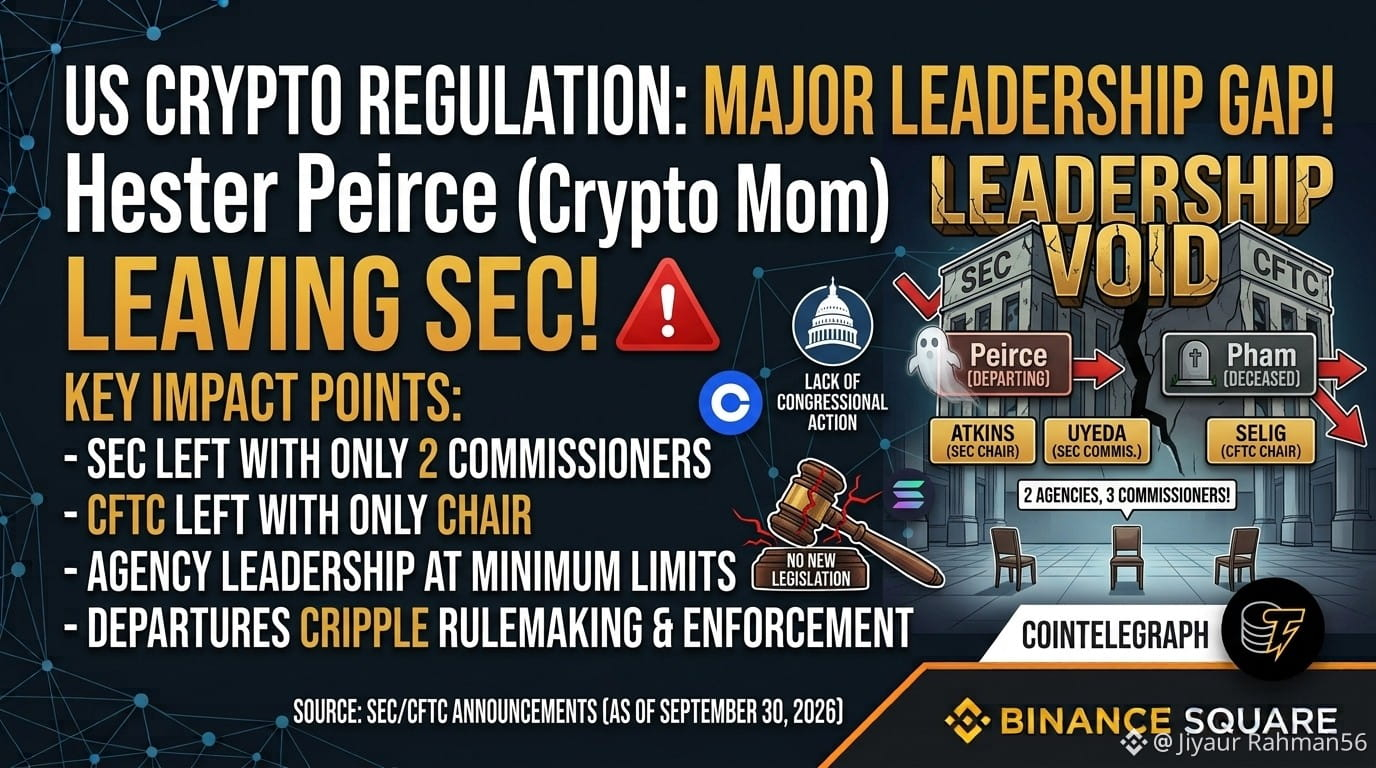
Significant shifts are taking place across key U.S. financial regulatory bodies. Hester Peirce—widely known as "Crypto Mom"—will officially step down from the SEC on October 2 after roughly eight years of service.
🏛️ The Regulatory Landscape Breakdown:
SEC Shortage: Peirce's departure leaves Chair Paul Atkins and Mark Uyeda as the SEC's only remaining commissioners.
CFTC Constraints: The CFTC currently operates with just a single commissioner, Chair Michael Selig, following Caroline Pham’s exit.
3 Commissioners Total: Only 3 commissioners combined now oversee two major federal agencies responsible for U.S. financial and crypto oversight.
With Congress yet to pass comprehensive crypto legislation, both agencies are continuing to shape digital asset rules despite shrinking leadership teams.
How do you think this leadership void will impact crypto regulations and enforcement in the United States?
Share your thoughts in the comments below! 👇
#SEC #CFTC #CryptoRegulation #BinanceSquare
{spot}(USDCUSDT)
⚠️ $US Crypto Regulation Faces a Major Leadership Gap!
Significant shifts are taking place across key U.S. financial regulatory bodies. Hester Peirce—widely known as "Crypto Mom"—will officially step down from the SEC on October 2 after roughly eight years of service.
🏛️ The Regulatory Landscape Breakdown:
SEC Shortage: Peirce's departure leaves Chair Paul Atkins and Mark Uyeda as the SEC's only remaining commissioners.
CFTC Constraints: The CFTC currently operates with just a single commissioner, Chair Michael Selig, following Caroline Pham’s exit.
3 Commissioners Total: Only 3 commissioners combined now oversee two major federal agencies responsible for U.S. financial and crypto oversight.
With Congress yet to pass comprehensive crypto legislation, both agencies are continuing to shape digital asset rules despite shrinking leadership teams.
How do you think this leadership void will impact crypto regulations and enforcement in the United States?
Share your thoughts in the comments below! 👇
#SEC #CFTC #CryptoRegulation #BinanceSquare
Significant shifts are taking place across key U.S. financial regulatory bodies. Hester Peirce—widely known as "Crypto Mom"—will officially step down from the SEC on October 2 after roughly eight years of service.
🏛️ The Regulatory Landscape Breakdown:
SEC Shortage: Peirce's departure leaves Chair Paul Atkins and Mark Uyeda as the SEC's only remaining commissioners.
CFTC Constraints: The CFTC currently operates with just a single commissioner, Chair Michael Selig, following Caroline Pham’s exit.
3 Commissioners Total: Only 3 commissioners combined now oversee two major federal agencies responsible for U.S. financial and crypto oversight.
With Congress yet to pass comprehensive crypto legislation, both agencies are continuing to shape digital asset rules despite shrinking leadership teams.
How do you think this leadership void will impact crypto regulations and enforcement in the United States?
Share your thoughts in the comments below! 👇
#SEC #CFTC #CryptoRegulation #BinanceSquare
41

·
--
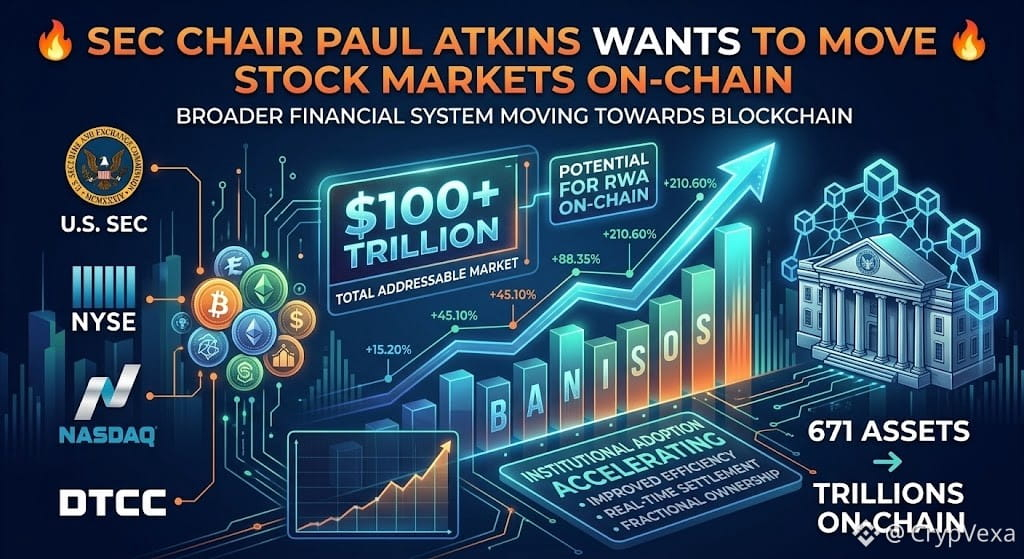
⚡ SEC Chair Paul Atkins Wants U.S. Stock Markets to Move On-Chain
🇺🇸 SEC Chair Paul Atkins has said the goal of the SEC’s “Project Crypto” is to modernize U.S. financial markets and enable them to move on-chain.
📈 The SEC has already taken a concrete step by allowing certain tokenized U.S. stocks to trade on approved on-chain venues under a temporary, conditional exemption.
🔗 What could change?
• 24/7-style trading infrastructure
• Faster settlement and transfers
• Tokenized ownership of traditional assets
• Greater integration between traditional finance and blockchain
⚠️ The current framework is limited and temporary, so a broader shift would depend on future regulation and market adoption.
👀 Could on-chain markets become a major part of traditional finance?
#Tokenization #Blockchain #SEC #CryptoNews
⚡ SEC Chair Paul Atkins Wants U.S. Stock Markets to Move On-Chain
🇺🇸 SEC Chair Paul Atkins has said the goal of the SEC’s “Project Crypto” is to modernize U.S. financial markets and enable them to move on-chain.
📈 The SEC has already taken a concrete step by allowing certain tokenized U.S. stocks to trade on approved on-chain venues under a temporary, conditional exemption.
🔗 What could change?
• 24/7-style trading infrastructure
• Faster settlement and transfers
• Tokenized ownership of traditional assets
• Greater integration between traditional finance and blockchain
⚠️ The current framework is limited and temporary, so a broader shift would depend on future regulation and market adoption.
👀 Could on-chain markets become a major part of traditional finance?
#Tokenization #Blockchain #SEC #CryptoNews
🇺🇸 SEC Chair Paul Atkins has said the goal of the SEC’s “Project Crypto” is to modernize U.S. financial markets and enable them to move on-chain.
📈 The SEC has already taken a concrete step by allowing certain tokenized U.S. stocks to trade on approved on-chain venues under a temporary, conditional exemption.
🔗 What could change?
• 24/7-style trading infrastructure
• Faster settlement and transfers
• Tokenized ownership of traditional assets
• Greater integration between traditional finance and blockchain
⚠️ The current framework is limited and temporary, so a broader shift would depend on future regulation and market adoption.
👀 Could on-chain markets become a major part of traditional finance?
#Tokenization #Blockchain #SEC #CryptoNews
1
72

·
--
The U.S. Crypto Rulebook Is Still Being Written 🎯
Crypto regulation remains one of the biggest themes shaping the market.
Recent policy discussions continue to focus on where the boundary sits between the SEC and CFTC, how tokenized securities should operate, and what stablecoin issuers and trading platforms must do to comply.
$XRP
{future}(XRPUSDT)
The direction is becoming clearer: policymakers are moving from broad debate toward practical rules for market structure, disclosure, custody, stablecoins, and tokenized assets.
$DOGE
{future}(DOGEUSDT)
That does not mean every question has been resolved.
Different regulators, lawmakers, and market participants still disagree on how quickly rules should be implemented and how much flexibility crypto businesses should have.
$ENA
{future}(ENAUSDT)
For the industry, regulatory clarity could affect how products are launched, how institutions participate, and how tokenized markets develop over time.
#CryptoRegulation #SEC #CFTC #Write2Earn
Follow For more Update News...
@5ur1d
@Square-Creator-4f1968b4bd55
@Square-Creator-e36956b8e5e4f
@crypto_inquiad
The U.S. Crypto Rulebook Is Still Being Written 🎯
Crypto regulation remains one of the biggest themes shaping the market.
Recent policy discussions continue to focus on where the boundary sits between the SEC and CFTC, how tokenized securities should operate, and what stablecoin issuers and trading platforms must do to comply.
$XRP
The direction is becoming clearer: policymakers are moving from broad debate toward practical rules for market structure, disclosure, custody, stablecoins, and tokenized assets.
$DOGE
That does not mean every question has been resolved.
Different regulators, lawmakers, and market participants still disagree on how quickly rules should be implemented and how much flexibility crypto businesses should have.
$ENA
For the industry, regulatory clarity could affect how products are launched, how institutions participate, and how tokenized markets develop over time.
#CryptoRegulation #SEC #CFTC #Write2Earn
Follow For more Update News...
@TAJBI
@Marco cryptos
@NIRJHOR CRYPTO
@CRYPTO INQUIAD
Crypto regulation remains one of the biggest themes shaping the market.
Recent policy discussions continue to focus on where the boundary sits between the SEC and CFTC, how tokenized securities should operate, and what stablecoin issuers and trading platforms must do to comply.
$XRP
The direction is becoming clearer: policymakers are moving from broad debate toward practical rules for market structure, disclosure, custody, stablecoins, and tokenized assets.
$DOGE
That does not mean every question has been resolved.
Different regulators, lawmakers, and market participants still disagree on how quickly rules should be implemented and how much flexibility crypto businesses should have.
$ENA
For the industry, regulatory clarity could affect how products are launched, how institutions participate, and how tokenized markets develop over time.
#CryptoRegulation #SEC #CFTC #Write2Earn
Follow For more Update News...
@TAJBI
@Marco cryptos
@NIRJHOR CRYPTO
@CRYPTO INQUIAD
1
238

·
--
Bullish
#sectoclarifyonchainfundraisingrules
🇺🇸🚨 SEC TO CLARIFY THE RULES FOR ON-CHAIN FUNDRAISING!
The U.S. Securities and Exchange Commission (SEC) is expected to provide more clarity around how securities can be raised and issued on blockchain networks.
🔗 On-chain fundraising
🏦 Tokenized securities
📋 Regulatory clarity
⚡ More institutions exploring blockchain
Clearer rules could help traditional finance better understand how capital raising and securities issuance can move on-chain. 👀
Could this accelerate the tokenization trend? 🚀
#SEC #RWA #crypto
#sectoclarifyonchainfundraisingrules
🇺🇸🚨 SEC TO CLARIFY THE RULES FOR ON-CHAIN FUNDRAISING!
The U.S. Securities and Exchange Commission (SEC) is expected to provide more clarity around how securities can be raised and issued on blockchain networks.
🔗 On-chain fundraising
🏦 Tokenized securities
📋 Regulatory clarity
⚡ More institutions exploring blockchain
Clearer rules could help traditional finance better understand how capital raising and securities issuance can move on-chain. 👀
Could this accelerate the tokenization trend? 🚀
#SEC #RWA #crypto
🇺🇸🚨 SEC TO CLARIFY THE RULES FOR ON-CHAIN FUNDRAISING!
The U.S. Securities and Exchange Commission (SEC) is expected to provide more clarity around how securities can be raised and issued on blockchain networks.
🔗 On-chain fundraising
🏦 Tokenized securities
📋 Regulatory clarity
⚡ More institutions exploring blockchain
Clearer rules could help traditional finance better understand how capital raising and securities issuance can move on-chain. 👀
Could this accelerate the tokenization trend? 🚀
#SEC #RWA #crypto
183

·
--
Bullish
{spot}(ENAUSDT)
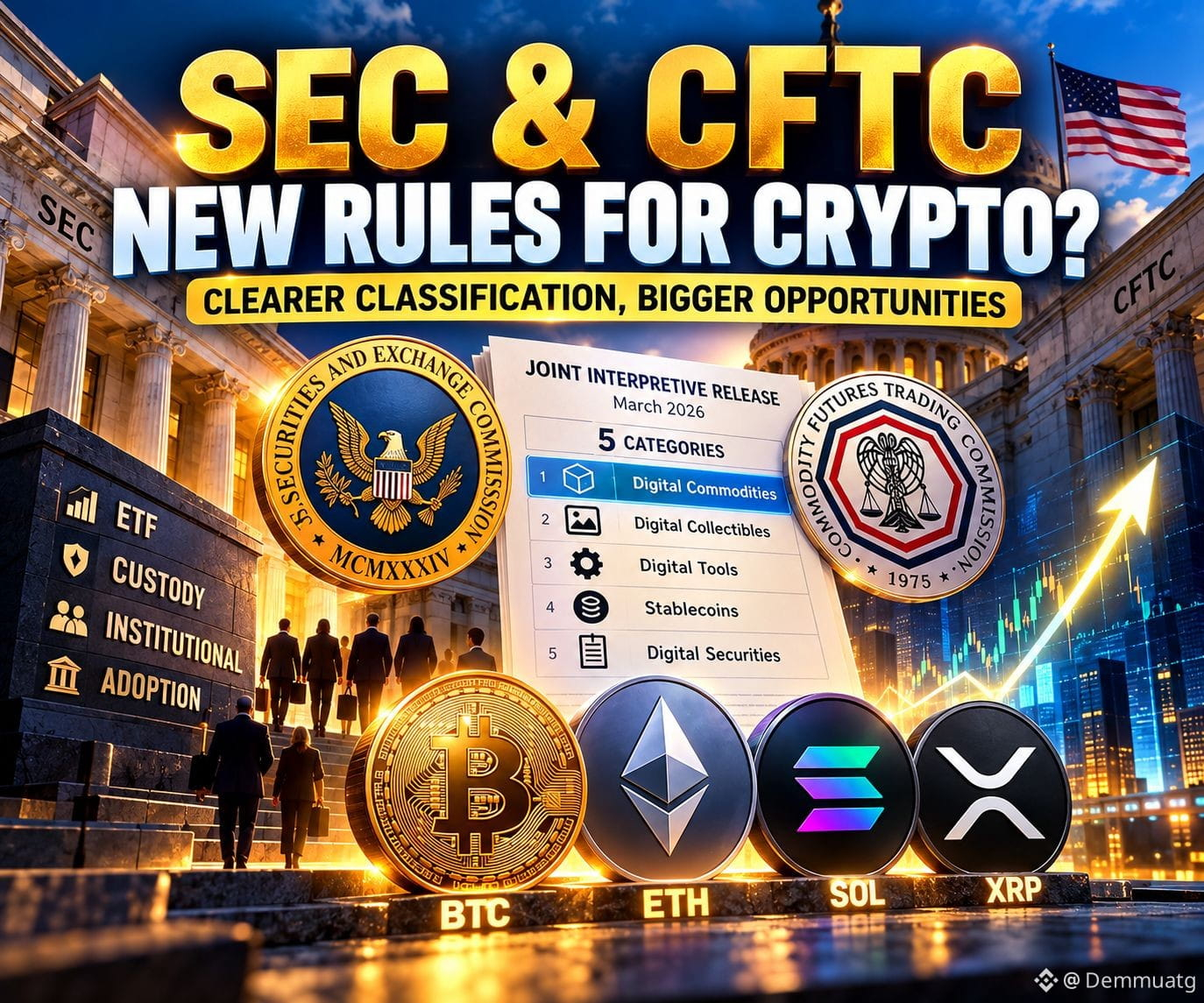
🚨 SEC & CFTC JUST CLARIFIED THE RULES FOR CRYPTO — WHERE DOES THE BIG MONEY GO NEXT?
In March 2026, U.S. regulators provided greater clarity on how digital assets can be classified, including Digital Commodities.
🔥 Why does this matter?
For institutions, volatility isn’t the only risk.
Regulatory uncertainty has been one of crypto’s biggest barriers.
Clearer rules could support the expansion of ETFs, custody solutions and institutional crypto products.
The key question is shifting from:
“Is crypto too risky to enter?”
to:
👉 “Where will institutional capital flow next?”
$BTC | $ETH | $SOL
Which one leads Q4? 👇
#Bitcoin❗ #Ethereum #Solana #SEC #CFTC
🚨 SEC & CFTC JUST CLARIFIED THE RULES FOR CRYPTO — WHERE DOES THE BIG MONEY GO NEXT?
In March 2026, U.S. regulators provided greater clarity on how digital assets can be classified, including Digital Commodities.
🔥 Why does this matter?
For institutions, volatility isn’t the only risk.
Regulatory uncertainty has been one of crypto’s biggest barriers.
Clearer rules could support the expansion of ETFs, custody solutions and institutional crypto products.
The key question is shifting from:
“Is crypto too risky to enter?”
to:
👉 “Where will institutional capital flow next?”
$BTC | $ETH | $SOL
Which one leads Q4? 👇
#Bitcoin❗ #Ethereum #Solana #SEC #CFTC
In March 2026, U.S. regulators provided greater clarity on how digital assets can be classified, including Digital Commodities.
🔥 Why does this matter?
For institutions, volatility isn’t the only risk.
Regulatory uncertainty has been one of crypto’s biggest barriers.
Clearer rules could support the expansion of ETFs, custody solutions and institutional crypto products.
The key question is shifting from:
“Is crypto too risky to enter?”
to:
👉 “Where will institutional capital flow next?”
$BTC | $ETH | $SOL
Which one leads Q4? 👇
#Bitcoin❗ #Ethereum #Solana #SEC #CFTC
123


Article
SEC Chair Wants Stock Markets On-Chain: Inside the DTCC Tokenization Green LightPaul Atkins just let the DTCC tokenize the Russell 1000, major ETFs, and Treasuries. Here's what "Project Crypto" actually means for you.
🏛️ When the regulator who oversees American stock markets starts pushing them onto a blockchain, that's not a small statement, it's a genuine shift in direction.
SEC Chair Paul Atkins reaffirmed the agency's push to move US financial markets on-chain, building on an initiative he calls Project Crypto. This time, it came with something more concrete than a speech.
📄 Here's the actual regulatory step behind the headline.
The SEC issued a no-action letter to a subsidiary of the DTCC, the Depository Trust and Clearing Corporation, which handles clearing and settlement for the vast majority of US securities transactions. That letter lets the DTCC offer a new tokenization service covering the Russell 1000 index, major ETFs tracking large indexes, and US Treasury bills and bonds.
🧠 Why does a "no-action letter" actually matter?
It's the SEC formally telling a company it won't pursue enforcement action for a specific activity, effectively regulatory permission without a lengthy rulemaking process. That's meaningfully faster than waiting for new legislation, and it signals the SEC is actively choosing to enable tokenization rather than simply tolerating it.
Atkins called this an "important step towards on chain capital markets," and said on-chain markets will bring "greater predictability, transparency, and efficiency for investors."
🌐 These fits directly into a much bigger picture you've likely been tracking.
Project Crypto isn't a new idea, Atkins first announced it in 2025, framing it as modernizing securities rules to let America's financial markets move on chain rather than watching innovation happen overseas. Since then, the SEC has also been preparing for 24-hour equity trading, holding a public roundtable specifically on operational readiness for continuous markets.
Put together with everything else happening right now, Binance's own bStocks letting people trade tokenized equities around the clock, the UK bank tokenized deposit pilot, the US Clearing House's tokenized deposit network, Quant's role powering both, this is the same underlying trend showing up at the regulatory level too. Traditional finance isn't just experimenting with tokenization anymore; its own regulator is actively clearing the path for it.
✅ What this means for you
If you're trading tokenized stocks already, like the bStocks products on Binance, this regulatory direction is genuinely supportive, the SEC signaling comfort with tokenized securities reduces the regulatory risk hanging over that entire product category.
If you're trying to understand where crypto infrastructure is actually headed, this is one of the clearest signals, yet that on-chain finance isn't staying confined to crypto-native assets. The infrastructure being built for Bitcoin and Ethereum is increasingly the same infrastructure traditional markets are choosing to adopt.
If you're evaluating crypto infrastructure tokens, projects that provide the technical rails for this kind of institutional tokenization, similar to what Quant has captured, are worth watching closely as this regulatory path clears further. Infrastructure providers tend to benefit disproportionately when adoption expands across many institutions at once.
🟢 Bullish scenario
The DTCC's tokenization service launches smoothly, more institutions follow with their own tokenized products under this regulatory framework, and on-chain markets genuinely start becoming a normal part of how US securities trade.
🔴 Risk scenario
Implementation proves more complex than the announcement suggested, adoption stays limited to pilot programs, and "Project Crypto" remains more vision than reality for an extended period.
👀 Three things to watch
1️⃣ DTCC's tokenization rollout
Does the actual service launch and see real usage, or does it stay theoretical for now?
2️⃣ 24-hour trading progress
Does the SEC's roundtable on continuous trading translate into concrete rule changes?
3️⃣ Broader institutional response
Do more traditional finance players follow the DTCC's lead now that this regulatory path is clearer?
💡 The key takeaway
This isn't a crypto exchange pushing tokenization, it's the actual regulator of US stock markets clearing a real, specific path for it. That distinction matters enormously for how seriously the broader market should take this trend.
The question isn't whether traditional finance is interested in tokenization anymore, the DTCC, major banks, and now the SEC itself all say yes. It's how fast this theoretical green light turns into products people are actually using.
That is the part worth watching.
This post is for informational and educational purposes only and is not financial advice. Crypto markets are volatile. Always conduct your own research before making financial decisions.
#BinanceSquare #SEC #Tokenization #DTCC #Crypto
SEC Chair Wants Stock Markets On-Chain: Inside the DTCC Tokenization Green Light
Paul Atkins just let the DTCC tokenize the Russell 1000, major ETFs, and Treasuries. Here's what "Project Crypto" actually means for you.
🏛️ When the regulator who oversees American stock markets starts pushing them onto a blockchain, that's not a small statement, it's a genuine shift in direction.
SEC Chair Paul Atkins reaffirmed the agency's push to move US financial markets on-chain, building on an initiative he calls Project Crypto. This time, it came with something more concrete than a speech.
📄 Here's the actual regulatory step behind the headline.
The SEC issued a no-action letter to a subsidiary of the DTCC, the Depository Trust and Clearing Corporation, which handles clearing and settlement for the vast majority of US securities transactions. That letter lets the DTCC offer a new tokenization service covering the Russell 1000 index, major ETFs tracking large indexes, and US Treasury bills and bonds.
🧠 Why does a "no-action letter" actually matter?
It's the SEC formally telling a company it won't pursue enforcement action for a specific activity, effectively regulatory permission without a lengthy rulemaking process. That's meaningfully faster than waiting for new legislation, and it signals the SEC is actively choosing to enable tokenization rather than simply tolerating it.
Atkins called this an "important step towards on chain capital markets," and said on-chain markets will bring "greater predictability, transparency, and efficiency for investors."
🌐 These fits directly into a much bigger picture you've likely been tracking.
Project Crypto isn't a new idea, Atkins first announced it in 2025, framing it as modernizing securities rules to let America's financial markets move on chain rather than watching innovation happen overseas. Since then, the SEC has also been preparing for 24-hour equity trading, holding a public roundtable specifically on operational readiness for continuous markets.
Put together with everything else happening right now, Binance's own bStocks letting people trade tokenized equities around the clock, the UK bank tokenized deposit pilot, the US Clearing House's tokenized deposit network, Quant's role powering both, this is the same underlying trend showing up at the regulatory level too. Traditional finance isn't just experimenting with tokenization anymore; its own regulator is actively clearing the path for it.
✅ What this means for you
If you're trading tokenized stocks already, like the bStocks products on Binance, this regulatory direction is genuinely supportive, the SEC signaling comfort with tokenized securities reduces the regulatory risk hanging over that entire product category.
If you're trying to understand where crypto infrastructure is actually headed, this is one of the clearest signals, yet that on-chain finance isn't staying confined to crypto-native assets. The infrastructure being built for Bitcoin and Ethereum is increasingly the same infrastructure traditional markets are choosing to adopt.
If you're evaluating crypto infrastructure tokens, projects that provide the technical rails for this kind of institutional tokenization, similar to what Quant has captured, are worth watching closely as this regulatory path clears further. Infrastructure providers tend to benefit disproportionately when adoption expands across many institutions at once.
🟢 Bullish scenario
The DTCC's tokenization service launches smoothly, more institutions follow with their own tokenized products under this regulatory framework, and on-chain markets genuinely start becoming a normal part of how US securities trade.
🔴 Risk scenario
Implementation proves more complex than the announcement suggested, adoption stays limited to pilot programs, and "Project Crypto" remains more vision than reality for an extended period.
👀 Three things to watch
1️⃣ DTCC's tokenization rollout
Does the actual service launch and see real usage, or does it stay theoretical for now?
2️⃣ 24-hour trading progress
Does the SEC's roundtable on continuous trading translate into concrete rule changes?
3️⃣ Broader institutional response
Do more traditional finance players follow the DTCC's lead now that this regulatory path is clearer?
💡 The key takeaway
This isn't a crypto exchange pushing tokenization, it's the actual regulator of US stock markets clearing a real, specific path for it. That distinction matters enormously for how seriously the broader market should take this trend.
The question isn't whether traditional finance is interested in tokenization anymore, the DTCC, major banks, and now the SEC itself all say yes. It's how fast this theoretical green light turns into products people are actually using.
That is the part worth watching.
This post is for informational and educational purposes only and is not financial advice. Crypto markets are volatile. Always conduct your own research before making financial decisions.
#BinanceSquare #SEC #Tokenization #DTCC #Crypto
🏛️ When the regulator who oversees American stock markets starts pushing them onto a blockchain, that's not a small statement, it's a genuine shift in direction.
SEC Chair Paul Atkins reaffirmed the agency's push to move US financial markets on-chain, building on an initiative he calls Project Crypto. This time, it came with something more concrete than a speech.
📄 Here's the actual regulatory step behind the headline.
The SEC issued a no-action letter to a subsidiary of the DTCC, the Depository Trust and Clearing Corporation, which handles clearing and settlement for the vast majority of US securities transactions. That letter lets the DTCC offer a new tokenization service covering the Russell 1000 index, major ETFs tracking large indexes, and US Treasury bills and bonds.
🧠 Why does a "no-action letter" actually matter?
It's the SEC formally telling a company it won't pursue enforcement action for a specific activity, effectively regulatory permission without a lengthy rulemaking process. That's meaningfully faster than waiting for new legislation, and it signals the SEC is actively choosing to enable tokenization rather than simply tolerating it.
Atkins called this an "important step towards on chain capital markets," and said on-chain markets will bring "greater predictability, transparency, and efficiency for investors."
🌐 These fits directly into a much bigger picture you've likely been tracking.
Project Crypto isn't a new idea, Atkins first announced it in 2025, framing it as modernizing securities rules to let America's financial markets move on chain rather than watching innovation happen overseas. Since then, the SEC has also been preparing for 24-hour equity trading, holding a public roundtable specifically on operational readiness for continuous markets.
Put together with everything else happening right now, Binance's own bStocks letting people trade tokenized equities around the clock, the UK bank tokenized deposit pilot, the US Clearing House's tokenized deposit network, Quant's role powering both, this is the same underlying trend showing up at the regulatory level too. Traditional finance isn't just experimenting with tokenization anymore; its own regulator is actively clearing the path for it.
✅ What this means for you
If you're trading tokenized stocks already, like the bStocks products on Binance, this regulatory direction is genuinely supportive, the SEC signaling comfort with tokenized securities reduces the regulatory risk hanging over that entire product category.
If you're trying to understand where crypto infrastructure is actually headed, this is one of the clearest signals, yet that on-chain finance isn't staying confined to crypto-native assets. The infrastructure being built for Bitcoin and Ethereum is increasingly the same infrastructure traditional markets are choosing to adopt.
If you're evaluating crypto infrastructure tokens, projects that provide the technical rails for this kind of institutional tokenization, similar to what Quant has captured, are worth watching closely as this regulatory path clears further. Infrastructure providers tend to benefit disproportionately when adoption expands across many institutions at once.
🟢 Bullish scenario
The DTCC's tokenization service launches smoothly, more institutions follow with their own tokenized products under this regulatory framework, and on-chain markets genuinely start becoming a normal part of how US securities trade.
🔴 Risk scenario
Implementation proves more complex than the announcement suggested, adoption stays limited to pilot programs, and "Project Crypto" remains more vision than reality for an extended period.
👀 Three things to watch
1️⃣ DTCC's tokenization rollout
Does the actual service launch and see real usage, or does it stay theoretical for now?
2️⃣ 24-hour trading progress
Does the SEC's roundtable on continuous trading translate into concrete rule changes?
3️⃣ Broader institutional response
Do more traditional finance players follow the DTCC's lead now that this regulatory path is clearer?
💡 The key takeaway
This isn't a crypto exchange pushing tokenization, it's the actual regulator of US stock markets clearing a real, specific path for it. That distinction matters enormously for how seriously the broader market should take this trend.
The question isn't whether traditional finance is interested in tokenization anymore, the DTCC, major banks, and now the SEC itself all say yes. It's how fast this theoretical green light turns into products people are actually using.
That is the part worth watching.
This post is for informational and educational purposes only and is not financial advice. Crypto markets are volatile. Always conduct your own research before making financial decisions.
#BinanceSquare #SEC #Tokenization #DTCC #Crypto
1
1
59

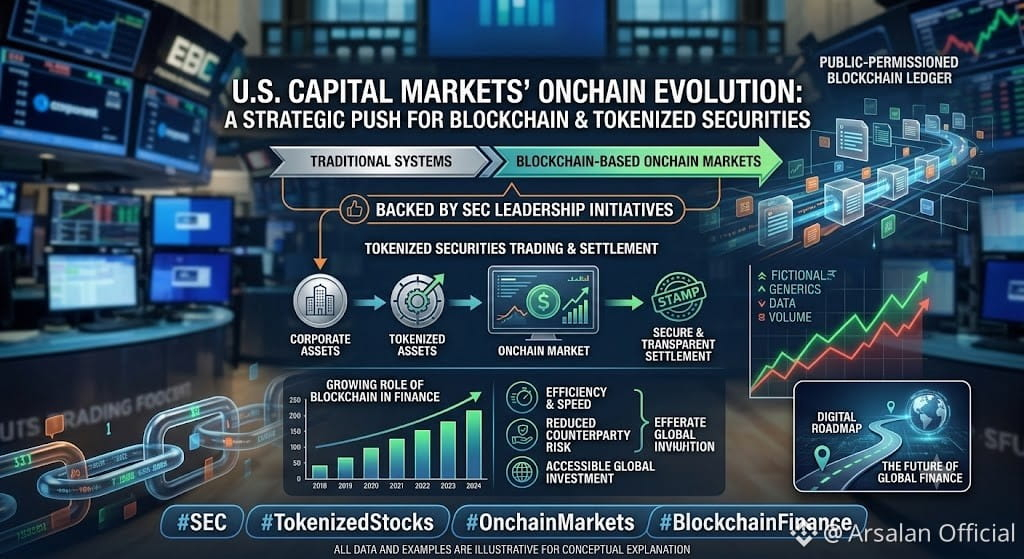
#SECChairWantsStockMarketsOnChain SEC Chairman Paul Atkins has backed the development of onchain U.S. capital markets, highlighting the growing role of blockchain technology in trading and settlement of tokenized securities. 📊⛓️
#SEC #TokenizedStocks #OnchainMarkets #BlockchainFinance
#SECChairWantsStockMarketsOnChain SEC Chairman Paul Atkins has backed the development of onchain U.S. capital markets, highlighting the growing role of blockchain technology in trading and settlement of tokenized securities. 📊⛓️
#SEC #TokenizedStocks #OnchainMarkets #BlockchainFinance
#SEC #TokenizedStocks #OnchainMarkets #BlockchainFinance
1
57

·
--
Bullish
Verified
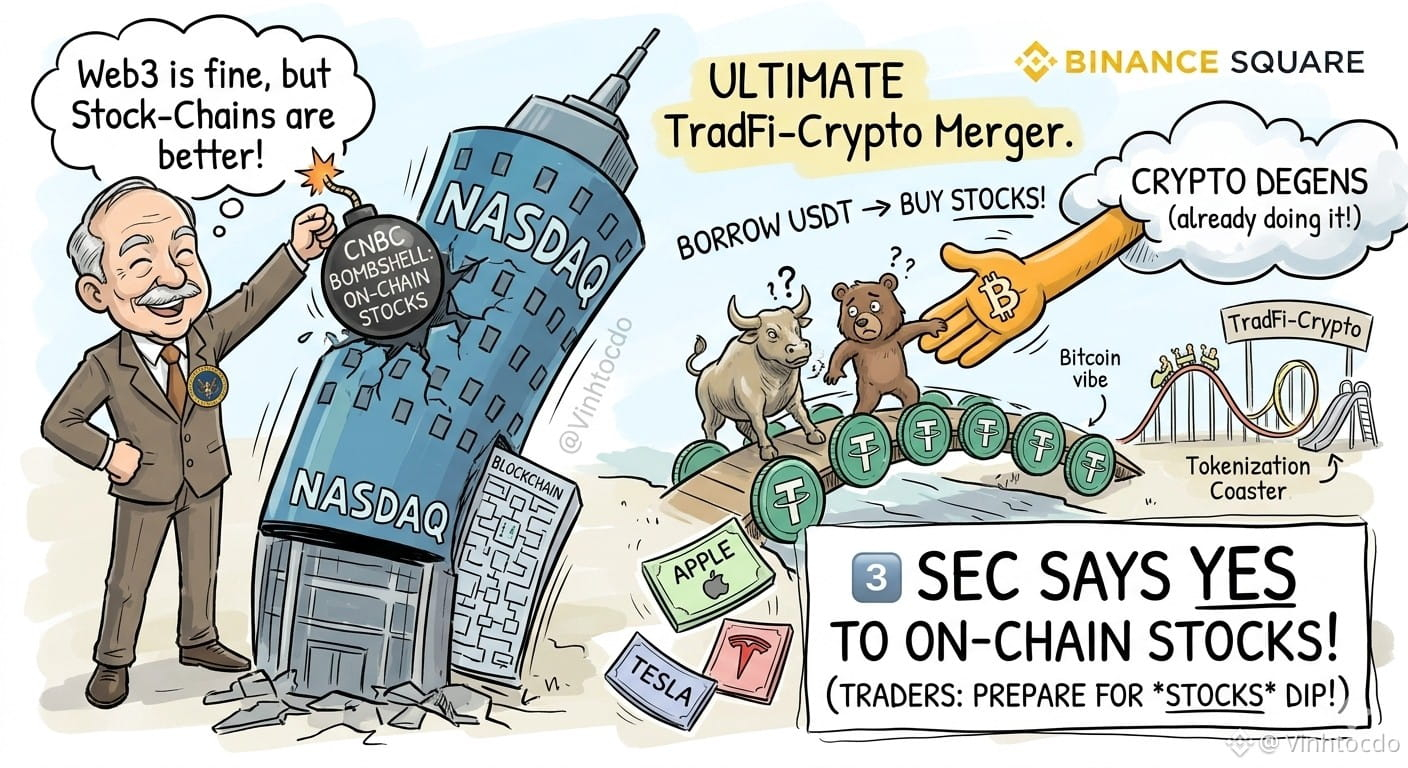
🚀 Wait, are we dreaming?! #secchairwantsstockmarketsonchain is actually happening! SEC Chair Paul Atkins just dropped a bombshell on CNBC: he wants the entire US stock market to move on-chain! They even introduced an "innovation waiver" for tokenized US stocks.
Wait... aren't we crypto degens already doing this? Time to borrow some USDT to buy tokenized Apple or Tesla shares soon! The traditional financial system is finally bending the knee to Bitcoin vibes!
What should traders do?
1️⃣ Get your wallets ready for the ultimate TradFi-Crypto merger.
2️⃣ Watch out for compliant tokenization platforms.
3️⃣ Don't over-leverage trying to buy the stock dip!
⚠️ This is not financial advice.
New here? Sign up with code VINHTOCDO or link: [https://www.binance.com/register?ref=VINHTOCDO](https://www.binance.com/register?ref=VINHTOCDO)
Click trade below to support me! 👇
$NVDAB
{spot}(NVDABUSDT)
$AAPLB
{spot}(AAPLBUSDT)
$SPCXB
{spot}(SPCXBUSDT)
#SEC #PaulAtkins #Tokenization #VINHTOCDO #TradFi #CryptoNews
🚀 Wait, are we dreaming?! #secchairwantsstockmarketsonchain is actually happening! SEC Chair Paul Atkins just dropped a bombshell on CNBC: he wants the entire US stock market to move on-chain! They even introduced an "innovation waiver" for tokenized US stocks.
Wait... aren't we crypto degens already doing this? Time to borrow some USDT to buy tokenized Apple or Tesla shares soon! The traditional financial system is finally bending the knee to Bitcoin vibes!
What should traders do?
1️⃣ Get your wallets ready for the ultimate TradFi-Crypto merger.
2️⃣ Watch out for compliant tokenization platforms.
3️⃣ Don't over-leverage trying to buy the stock dip!
⚠️ This is not financial advice.
New here? Sign up with code VINHTOCDO or link: https://www.binance.com/register?ref=VINHTOCDO
Click trade below to support me! 👇
$NVDAB
$AAPLB
$SPCXB
#SEC #PaulAtkins #Tokenization #VINHTOCDO #TradFi #CryptoNews
Wait... aren't we crypto degens already doing this? Time to borrow some USDT to buy tokenized Apple or Tesla shares soon! The traditional financial system is finally bending the knee to Bitcoin vibes!
What should traders do?
1️⃣ Get your wallets ready for the ultimate TradFi-Crypto merger.
2️⃣ Watch out for compliant tokenization platforms.
3️⃣ Don't over-leverage trying to buy the stock dip!
⚠️ This is not financial advice.
New here? Sign up with code VINHTOCDO or link: https://www.binance.com/register?ref=VINHTOCDO
Click trade below to support me! 👇
$NVDAB
$AAPLB
$SPCXB
#SEC #PaulAtkins #Tokenization #VINHTOCDO #TradFi #CryptoNews
3
317

·
--
🇺🇸 Breaking 🚨: Just 3 People Will Control U.S. Crypto Now
Crypto Mom Hester Peirce leaves the SEC on Oct 2.
SEC: 2 members left
CFTC: 1 member left
7 seats EMPTY
No successor named.
$BTC : Bullish. Commodity status safe, crackdown risk low.
$ETH : Neutral. Staking and ETF clarity may slow down.
$BNB : Volatile. Altcoin rules delayed, but new enforcement unlikely.
This is not a crackdown. This is regulatory paralysis.
And paralysis historically favors bulls.
#SEC #CryptoNews
🇺🇸 Breaking 🚨: Just 3 People Will Control U.S. Crypto Now
Crypto Mom Hester Peirce leaves the SEC on Oct 2.
SEC: 2 members left
CFTC: 1 member left
7 seats EMPTY
No successor named.
$BTC : Bullish. Commodity status safe, crackdown risk low.
$ETH : Neutral. Staking and ETF clarity may slow down.
$BNB : Volatile. Altcoin rules delayed, but new enforcement unlikely.
This is not a crackdown. This is regulatory paralysis.
And paralysis historically favors bulls.
#SEC #CryptoNews
Crypto Mom Hester Peirce leaves the SEC on Oct 2.
SEC: 2 members left
CFTC: 1 member left
7 seats EMPTY
No successor named.
$BTC : Bullish. Commodity status safe, crackdown risk low.
$ETH : Neutral. Staking and ETF clarity may slow down.
$BNB : Volatile. Altcoin rules delayed, but new enforcement unlikely.
This is not a crackdown. This is regulatory paralysis.
And paralysis historically favors bulls.
#SEC #CryptoNews
Bullish
80%
Bearish
20%
5 votes • Voting closed
155
Article
SEC Staff: Token Buybacks Alone Don't Make a Security. Here's the Real RuleIt's guidance, not a binding rule, and it landed the same week as the Fed's stablecoin proposal. Here's what actually changed.
🚀 On Friday, the SEC's Division of Corporation Finance published an updated FAQ release addressing a question that's shaped token design for years: does announcing a buyback program turn a crypto asset into a security?
The short answer, for an already functioning network, is no. Not by itself.
📋 Here's the actual distinction the SEC drew, and it matters more than the headline suggests.
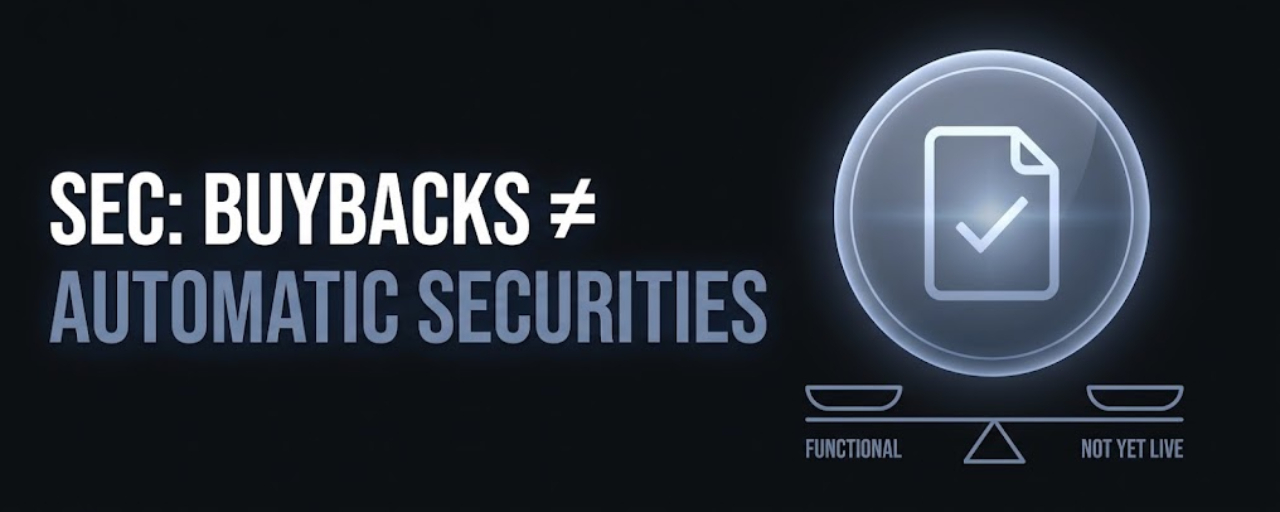
Announcing a buyback for a token on a network that's already live and functioning wouldn't, on its own, create an investment contract under the Howey test. But that protection doesn't automatically extend to a network that isn't functional yet, where issuers pitch a future buyback as a reason to expect returns. The line the SEC is drawing isn't "buybacks are fine," it's "buybacks on top of something that already works are different from buybacks used to sell people on something that doesn't exist yet."
🔧 The guidance went further than just buybacks.
The FAQ also addressed ongoing development after launch. Once a crypto system is functional, staff said, work to secure, maintain, improve, or enhance that system, or to facilitate its network effects, wouldn't count as the kind of managerial effort that makes something a security under Howey. Marketing a network's existing uses also generally wouldn't create an expectation of profit, and neither would statement about future features, as long as those statements don't promote the potential for profit itself.
🏛️ Why has this specific question mattered so much for so long?
Because the SEC previously treated buybacks as functionally similar to dividends or share repurchases, close enough to an investment contract that large US-based protocols, Uniswap and Compound among them, built their entire tokenomics around avoiding the appearance of profit-sharing. Uniswap's long-dormant "fee switch" is a direct example of a mechanism that sat unused for years partly because of exactly this regulatory ambiguity. If a functioning network's buyback genuinely falls outside investment contract territory now, that changes the calculus for protocols that have been sitting on similar mechanisms out of caution.
⚠️ The word "staff" is doing real work in this story, and it's worth taking seriously.
This is FAQ guidance from the Division of Corporation Finance, not a rule adopted by the full Commission, and not law. It reflects the SEC staff's current interpretation, and staff guidance can be revised, narrowed, or walked back without going through the formal rulemaking process a binding rule would require. That doesn't make it meaningless, it's a real signal of how the agency is currently thinking, and it gives builders something concrete to point to. But it's not the same thing as legal certainty.
🏦 This landed in the same window as a related move from the Fed.
The Federal Reserve proposed its own formal rules for payment stablecoins under the GENIUS Act around the same time, covering 100% reserve requirements and a bank application process for stablecoin issuance. Put side by side, the pattern is: the Fed is building clearer rules for how banks issue digital dollars, while the SEC is clarifying where functional crypto tokens sit outside securities law. Neither move deregulates crypto. Both push it further into a defined, rule-based relationship with the existing financial system rather than leaving it in a gray zone.
✅ What this means for you
If you hold tokens from projects with dormant buyback or fee-switch mechanisms, this guidance is worth watching for follow-through, does anything actually change in how those protocols behave now that the regulatory risk around activating them looks lower, at least at the staff-guidance level.
If you're building or evaluating a token project, the functional-versus-not-yet-functional distinction is the detail to internalize. A live network with a buyback is treated differently than a pre-launch project using a promised future buyback to sell tokens today.
If you're trying to read regulatory direction generally, treat this as one data point in a broader pattern rather than a finished picture. Staff guidance, an SEC FAQ, a Fed proposal still in a comment period, none of these are final law yet, but together they show where the current agencies are leaning.
🟢 What would confirm this has real staying power
More protocols with dormant fee-switch or buyback mechanisms formally activate them, the guidance survives without being narrowed or withdrawn, and it eventually gets reflected in a Commission-level rule rather than just staff FAQ language.
🔴 What would suggest it's less significant than it looks
The guidance gets quietly walked back or narrowed in a future update, protocols remain cautious despite the clarification because staff guidance doesn't fully remove legal risk, or a future enforcement action treats a specific buyback differently than the FAQ implies it would.
👀 Three things to watch
1️⃣ Protocol response
Do previously cautious projects like Uniswap or Compound make any moves toward activating buyback or fee-switch mechanisms following this guidance?
2️⃣ Whether this becomes a formal rule
Does the SEC take further steps to codify this interpretation beyond staff-level FAQ guidance, or does it stay informal?
3️⃣ How it interacts with the Fed's stablecoin proposal
Do these two tracks, SEC clarity on functional tokens and Fed rules for bank-issued stablecoins, continue developing in parallel, or does one move faster than the other?
💡 The key takeaway
The SEC didn't say buybacks are always fine. It said a buyback on an already-functioning network isn't automatically an investment contract, while the same mechanism used to sell an unfinished project still can be.
That's a meaningful clarification for a question that's shaped years of cautious token design, but it's staff guidance, not settled law, and the real test is whether protocols actually change their behavior because of it.
That is the part worth watching.
This post is for informational and educational purposes only and is not financial advice. Crypto markets are volatile. Always conduct your own research before making financial decisions.
#BinanceSquare #SEC #Crypto #Regulation #DeFi
{spot}(UNIUSDT)
SEC Staff: Token Buybacks Alone Don't Make a Security. Here's the Real Rule
It's guidance, not a binding rule, and it landed the same week as the Fed's stablecoin proposal. Here's what actually changed.
🚀 On Friday, the SEC's Division of Corporation Finance published an updated FAQ release addressing a question that's shaped token design for years: does announcing a buyback program turn a crypto asset into a security?
The short answer, for an already functioning network, is no. Not by itself.
📋 Here's the actual distinction the SEC drew, and it matters more than the headline suggests.
Announcing a buyback for a token on a network that's already live and functioning wouldn't, on its own, create an investment contract under the Howey test. But that protection doesn't automatically extend to a network that isn't functional yet, where issuers pitch a future buyback as a reason to expect returns. The line the SEC is drawing isn't "buybacks are fine," it's "buybacks on top of something that already works are different from buybacks used to sell people on something that doesn't exist yet."
🔧 The guidance went further than just buybacks.
The FAQ also addressed ongoing development after launch. Once a crypto system is functional, staff said, work to secure, maintain, improve, or enhance that system, or to facilitate its network effects, wouldn't count as the kind of managerial effort that makes something a security under Howey. Marketing a network's existing uses also generally wouldn't create an expectation of profit, and neither would statement about future features, as long as those statements don't promote the potential for profit itself.
🏛️ Why has this specific question mattered so much for so long?
Because the SEC previously treated buybacks as functionally similar to dividends or share repurchases, close enough to an investment contract that large US-based protocols, Uniswap and Compound among them, built their entire tokenomics around avoiding the appearance of profit-sharing. Uniswap's long-dormant "fee switch" is a direct example of a mechanism that sat unused for years partly because of exactly this regulatory ambiguity. If a functioning network's buyback genuinely falls outside investment contract territory now, that changes the calculus for protocols that have been sitting on similar mechanisms out of caution.
⚠️ The word "staff" is doing real work in this story, and it's worth taking seriously.
This is FAQ guidance from the Division of Corporation Finance, not a rule adopted by the full Commission, and not law. It reflects the SEC staff's current interpretation, and staff guidance can be revised, narrowed, or walked back without going through the formal rulemaking process a binding rule would require. That doesn't make it meaningless, it's a real signal of how the agency is currently thinking, and it gives builders something concrete to point to. But it's not the same thing as legal certainty.
🏦 This landed in the same window as a related move from the Fed.
The Federal Reserve proposed its own formal rules for payment stablecoins under the GENIUS Act around the same time, covering 100% reserve requirements and a bank application process for stablecoin issuance. Put side by side, the pattern is: the Fed is building clearer rules for how banks issue digital dollars, while the SEC is clarifying where functional crypto tokens sit outside securities law. Neither move deregulates crypto. Both push it further into a defined, rule-based relationship with the existing financial system rather than leaving it in a gray zone.
✅ What this means for you
If you hold tokens from projects with dormant buyback or fee-switch mechanisms, this guidance is worth watching for follow-through, does anything actually change in how those protocols behave now that the regulatory risk around activating them looks lower, at least at the staff-guidance level.
If you're building or evaluating a token project, the functional-versus-not-yet-functional distinction is the detail to internalize. A live network with a buyback is treated differently than a pre-launch project using a promised future buyback to sell tokens today.
If you're trying to read regulatory direction generally, treat this as one data point in a broader pattern rather than a finished picture. Staff guidance, an SEC FAQ, a Fed proposal still in a comment period, none of these are final law yet, but together they show where the current agencies are leaning.
🟢 What would confirm this has real staying power
More protocols with dormant fee-switch or buyback mechanisms formally activate them, the guidance survives without being narrowed or withdrawn, and it eventually gets reflected in a Commission-level rule rather than just staff FAQ language.
🔴 What would suggest it's less significant than it looks
The guidance gets quietly walked back or narrowed in a future update, protocols remain cautious despite the clarification because staff guidance doesn't fully remove legal risk, or a future enforcement action treats a specific buyback differently than the FAQ implies it would.
👀 Three things to watch
1️⃣ Protocol response
Do previously cautious projects like Uniswap or Compound make any moves toward activating buyback or fee-switch mechanisms following this guidance?
2️⃣ Whether this becomes a formal rule
Does the SEC take further steps to codify this interpretation beyond staff-level FAQ guidance, or does it stay informal?
3️⃣ How it interacts with the Fed's stablecoin proposal
Do these two tracks, SEC clarity on functional tokens and Fed rules for bank-issued stablecoins, continue developing in parallel, or does one move faster than the other?
💡 The key takeaway
The SEC didn't say buybacks are always fine. It said a buyback on an already-functioning network isn't automatically an investment contract, while the same mechanism used to sell an unfinished project still can be.
That's a meaningful clarification for a question that's shaped years of cautious token design, but it's staff guidance, not settled law, and the real test is whether protocols actually change their behavior because of it.
That is the part worth watching.
This post is for informational and educational purposes only and is not financial advice. Crypto markets are volatile. Always conduct your own research before making financial decisions.
#BinanceSquare #SEC #Crypto #Regulation #DeFi
🚀 On Friday, the SEC's Division of Corporation Finance published an updated FAQ release addressing a question that's shaped token design for years: does announcing a buyback program turn a crypto asset into a security?
The short answer, for an already functioning network, is no. Not by itself.
📋 Here's the actual distinction the SEC drew, and it matters more than the headline suggests.
Announcing a buyback for a token on a network that's already live and functioning wouldn't, on its own, create an investment contract under the Howey test. But that protection doesn't automatically extend to a network that isn't functional yet, where issuers pitch a future buyback as a reason to expect returns. The line the SEC is drawing isn't "buybacks are fine," it's "buybacks on top of something that already works are different from buybacks used to sell people on something that doesn't exist yet."
🔧 The guidance went further than just buybacks.
The FAQ also addressed ongoing development after launch. Once a crypto system is functional, staff said, work to secure, maintain, improve, or enhance that system, or to facilitate its network effects, wouldn't count as the kind of managerial effort that makes something a security under Howey. Marketing a network's existing uses also generally wouldn't create an expectation of profit, and neither would statement about future features, as long as those statements don't promote the potential for profit itself.
🏛️ Why has this specific question mattered so much for so long?
Because the SEC previously treated buybacks as functionally similar to dividends or share repurchases, close enough to an investment contract that large US-based protocols, Uniswap and Compound among them, built their entire tokenomics around avoiding the appearance of profit-sharing. Uniswap's long-dormant "fee switch" is a direct example of a mechanism that sat unused for years partly because of exactly this regulatory ambiguity. If a functioning network's buyback genuinely falls outside investment contract territory now, that changes the calculus for protocols that have been sitting on similar mechanisms out of caution.
⚠️ The word "staff" is doing real work in this story, and it's worth taking seriously.
This is FAQ guidance from the Division of Corporation Finance, not a rule adopted by the full Commission, and not law. It reflects the SEC staff's current interpretation, and staff guidance can be revised, narrowed, or walked back without going through the formal rulemaking process a binding rule would require. That doesn't make it meaningless, it's a real signal of how the agency is currently thinking, and it gives builders something concrete to point to. But it's not the same thing as legal certainty.
🏦 This landed in the same window as a related move from the Fed.
The Federal Reserve proposed its own formal rules for payment stablecoins under the GENIUS Act around the same time, covering 100% reserve requirements and a bank application process for stablecoin issuance. Put side by side, the pattern is: the Fed is building clearer rules for how banks issue digital dollars, while the SEC is clarifying where functional crypto tokens sit outside securities law. Neither move deregulates crypto. Both push it further into a defined, rule-based relationship with the existing financial system rather than leaving it in a gray zone.
✅ What this means for you
If you hold tokens from projects with dormant buyback or fee-switch mechanisms, this guidance is worth watching for follow-through, does anything actually change in how those protocols behave now that the regulatory risk around activating them looks lower, at least at the staff-guidance level.
If you're building or evaluating a token project, the functional-versus-not-yet-functional distinction is the detail to internalize. A live network with a buyback is treated differently than a pre-launch project using a promised future buyback to sell tokens today.
If you're trying to read regulatory direction generally, treat this as one data point in a broader pattern rather than a finished picture. Staff guidance, an SEC FAQ, a Fed proposal still in a comment period, none of these are final law yet, but together they show where the current agencies are leaning.
🟢 What would confirm this has real staying power
More protocols with dormant fee-switch or buyback mechanisms formally activate them, the guidance survives without being narrowed or withdrawn, and it eventually gets reflected in a Commission-level rule rather than just staff FAQ language.
🔴 What would suggest it's less significant than it looks
The guidance gets quietly walked back or narrowed in a future update, protocols remain cautious despite the clarification because staff guidance doesn't fully remove legal risk, or a future enforcement action treats a specific buyback differently than the FAQ implies it would.
👀 Three things to watch
1️⃣ Protocol response
Do previously cautious projects like Uniswap or Compound make any moves toward activating buyback or fee-switch mechanisms following this guidance?
2️⃣ Whether this becomes a formal rule
Does the SEC take further steps to codify this interpretation beyond staff-level FAQ guidance, or does it stay informal?
3️⃣ How it interacts with the Fed's stablecoin proposal
Do these two tracks, SEC clarity on functional tokens and Fed rules for bank-issued stablecoins, continue developing in parallel, or does one move faster than the other?
💡 The key takeaway
The SEC didn't say buybacks are always fine. It said a buyback on an already-functioning network isn't automatically an investment contract, while the same mechanism used to sell an unfinished project still can be.
That's a meaningful clarification for a question that's shaped years of cautious token design, but it's staff guidance, not settled law, and the real test is whether protocols actually change their behavior because of it.
That is the part worth watching.
This post is for informational and educational purposes only and is not financial advice. Crypto markets are volatile. Always conduct your own research before making financial decisions.
#BinanceSquare #SEC #Crypto #Regulation #DeFi
1
1
39

Nine years on the clock and crypto crypto crypto regulation just shifted. ⏱️ SEC Commissioner Hester Peirce is officially clearing out her desk this week. Why it matters: she was the steady voice pushing for clarity while the agency stalled. Watch how leadership transitions impact pending ETF filings and policy tone next. #Write2Earn $BTC $ETH #SEC #CryptoRegulation
Nine years on the clock and crypto crypto crypto regulation just shifted. ⏱️ SEC Commissioner Hester Peirce is officially clearing out her desk this week. Why it matters: she was the steady voice pushing for clarity while the agency stalled. Watch how leadership transitions impact pending ETF filings and policy tone next. #Write2Earn $BTC $ETH #SEC #CryptoRegulation

48

#SECSaysDecentralizedTokenBuybacksNotInvestment Contracts “SEC says token buybacks aren’t securities” is way too broad.
The actual guidance is conditional: functional network, non-security token, and no promise of yield/returns.
So are people celebrating regulatory clarity… or just reading the headline and skipping the conditions? 👀
#CryptoNewss #SEC #TokenBuybacks
#SECSaysDecentralizedTokenBuybacksNotInvestment Contracts “SEC says token buybacks aren’t securities” is way too broad.
The actual guidance is conditional: functional network, non-security token, and no promise of yield/returns.
So are people celebrating regulatory clarity… or just reading the headline and skipping the conditions? 👀
#CryptoNewss #SEC #TokenBuybacks
The actual guidance is conditional: functional network, non-security token, and no promise of yield/returns.
So are people celebrating regulatory clarity… or just reading the headline and skipping the conditions? 👀
#CryptoNewss #SEC #TokenBuybacks
1
44

·
--
The SEC has just proposed crypto custody rules for advisers and funds.
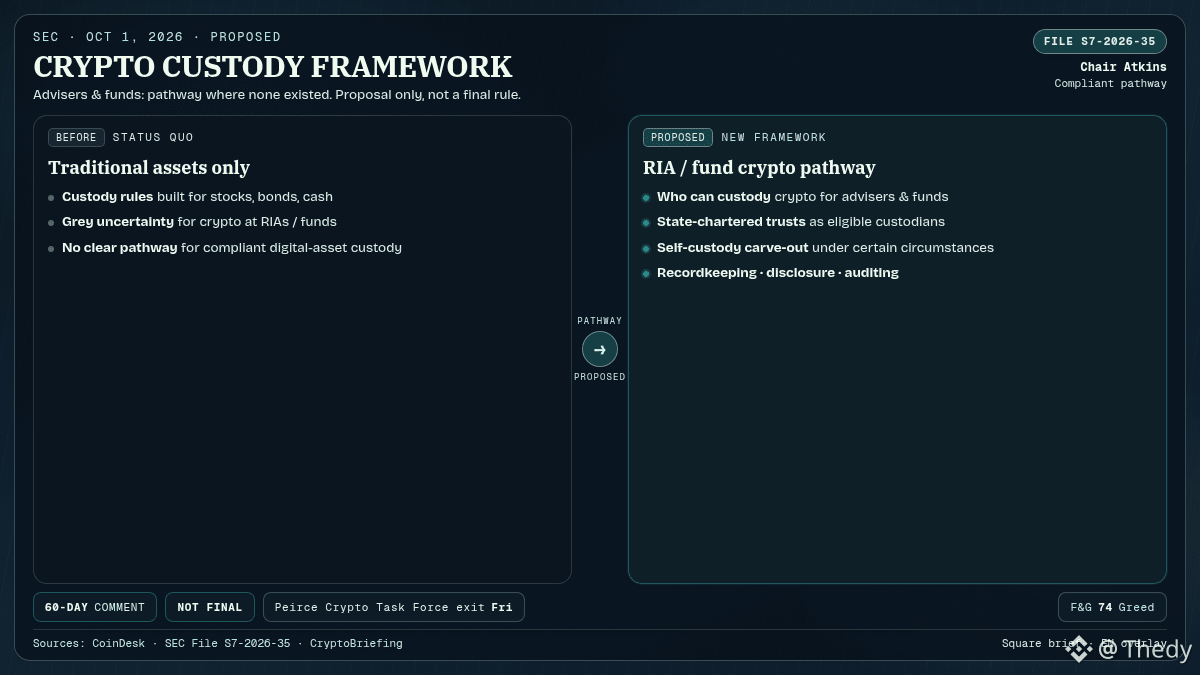
Thursday 01/10 (evening UTC), the US regulator published a proposal (file S7-2026-35, “Adviser and Regulated Fund Custody Rules; Crypto Custody Rules”). Chair Paul Atkins talks about a “clear regulatory framework” and a “compliant pathway where none existed before”: existing rules mainly target traditional assets, leaving a gray area for crypto on the RIA and regulated funds side. Reported by CoinDesk / CryptoBriefing.
Facts (proposal, not final rule):
• Clarify who may custody crypto for advisers / funds
• Recordkeeping, disclosure, auditing
• Self-custody “under certain circumstances”
• State-chartered trusts as possible custodians
• 60 days for public comments after publication in the Federal Register
• Same week: Hester Peirce (Crypto Task Force) leaves on Friday
Interpretation: another milestone in Atkins’ digital assets agenda. Institutions that want to build RIA / fund exposure need to know who holds the assets, how custody is audited, and where the gray area ends. As long as it’s only proposed, nothing is mandatory.
Scenarios:
• Adoption after comment: operational pathway for RIA/fund custody, state trusts, and carve-out self-custody
• Revision / withdrawal: history of SEC proposals that move or slow down under feedback
Institutional custody or self-custody—who really wins for $BTC et $ETH ?
#Bitcoin #SEC #Crypto
The SEC has just proposed crypto custody rules for advisers and funds.
Thursday 01/10 (evening UTC), the US regulator published a proposal (file S7-2026-35, “Adviser and Regulated Fund Custody Rules; Crypto Custody Rules”). Chair Paul Atkins talks about a “clear regulatory framework” and a “compliant pathway where none existed before”: existing rules mainly target traditional assets, leaving a gray area for crypto on the RIA and regulated funds side. Reported by CoinDesk / CryptoBriefing.
Facts (proposal, not final rule):
• Clarify who may custody crypto for advisers / funds
• Recordkeeping, disclosure, auditing
• Self-custody “under certain circumstances”
• State-chartered trusts as possible custodians
• 60 days for public comments after publication in the Federal Register
• Same week: Hester Peirce (Crypto Task Force) leaves on Friday
Interpretation: another milestone in Atkins’ digital assets agenda. Institutions that want to build RIA / fund exposure need to know who holds the assets, how custody is audited, and where the gray area ends. As long as it’s only proposed, nothing is mandatory.
Scenarios:
• Adoption after comment: operational pathway for RIA/fund custody, state trusts, and carve-out self-custody
• Revision / withdrawal: history of SEC proposals that move or slow down under feedback
Institutional custody or self-custody—who really wins for $BTC et $ETH ?
#Bitcoin #SEC #Crypto
Thursday 01/10 (evening UTC), the US regulator published a proposal (file S7-2026-35, “Adviser and Regulated Fund Custody Rules; Crypto Custody Rules”). Chair Paul Atkins talks about a “clear regulatory framework” and a “compliant pathway where none existed before”: existing rules mainly target traditional assets, leaving a gray area for crypto on the RIA and regulated funds side. Reported by CoinDesk / CryptoBriefing.
Facts (proposal, not final rule):
• Clarify who may custody crypto for advisers / funds
• Recordkeeping, disclosure, auditing
• Self-custody “under certain circumstances”
• State-chartered trusts as possible custodians
• 60 days for public comments after publication in the Federal Register
• Same week: Hester Peirce (Crypto Task Force) leaves on Friday
Interpretation: another milestone in Atkins’ digital assets agenda. Institutions that want to build RIA / fund exposure need to know who holds the assets, how custody is audited, and where the gray area ends. As long as it’s only proposed, nothing is mandatory.
Scenarios:
• Adoption after comment: operational pathway for RIA/fund custody, state trusts, and carve-out self-custody
• Revision / withdrawal: history of SEC proposals that move or slow down under feedback
Institutional custody or self-custody—who really wins for $BTC et $ETH ?
#Bitcoin #SEC #Crypto
86

·
--
SEC encryption custody new rules are here! Investment advisors and funds are about to change. Crypto-friendly Hester Peirce leaves — a major loss for the industry. $BTC #CryptoRegulation #SEC
SEC's crypto custody rules shakeup! Advisors & funds brace for impact. Crypto-friendly commissioner Hester Peirce exits - big loss! $BTC #CryptoRegulation #SEC
SEC encryption custody new rules are here! Investment advisors and funds are about to change. Crypto-friendly Hester Peirce leaves — a major loss for the industry. $BTC #CryptoRegulation #SEC
SEC's crypto custody rules shakeup! Advisors & funds brace for impact. Crypto-friendly commissioner Hester Peirce exits - big loss! $BTC #CryptoRegulation #SEC
SEC's crypto custody rules shakeup! Advisors & funds brace for impact. Crypto-friendly commissioner Hester Peirce exits - big loss! $BTC #CryptoRegulation #SEC
134

·
--
Paul Atkins posted a tweet saying this is the "trillion-level" institutional gateway.
After hearing it, Bitcoin went from $84,600 to $84,700—unchanged. What’s lively is the talk; the chart doesn’t react.
What this SEC proposal (IA-7023) does is very specific: it opens up more compliant custody options for regulated funds and investment advisers, allows limited self-custody, recognizes state-registered trust companies as custodians, and adds a 60-day public comment period. This is a regulatory process step-by-step.
The story making the rounds in the market is that an "institutional flood" is coming. More precisely: funds have been given "the option to buy," not that they have already been given "the money that can be used to buy"—approvals by investment committees, liquidity, valuation, and final rules taking effect are all still required.
This rule is not as broad as people have been saying. The SEC is mainly focused on crypto assets that themselves fall under the category of funds, securities, or similar—it's not loosening the leash for the whole tail of low-quality altcoins. Self-custody is not a get-out-of-jail-free card either; obligations for cybersecurity, custody, and disclosure still apply.
"Trillion-level institutions entering" sounds frightening, but put it next to the spot market chart that remains still—it doesn’t hold up. On my side, I’m leaning toward a range-bound outlook; I won’t change it without real evidence of new capital. If I do change my mind, I’ll wait until a major fund publicly announces actual allocations—rather than celebrate with another tweet.
$BTC #SEC #Regulation
Paul Atkins posted a tweet saying this is the "trillion-level" institutional gateway.
After hearing it, Bitcoin went from $84,600 to $84,700—unchanged. What’s lively is the talk; the chart doesn’t react.
What this SEC proposal (IA-7023) does is very specific: it opens up more compliant custody options for regulated funds and investment advisers, allows limited self-custody, recognizes state-registered trust companies as custodians, and adds a 60-day public comment period. This is a regulatory process step-by-step.
The story making the rounds in the market is that an "institutional flood" is coming. More precisely: funds have been given "the option to buy," not that they have already been given "the money that can be used to buy"—approvals by investment committees, liquidity, valuation, and final rules taking effect are all still required.
This rule is not as broad as people have been saying. The SEC is mainly focused on crypto assets that themselves fall under the category of funds, securities, or similar—it's not loosening the leash for the whole tail of low-quality altcoins. Self-custody is not a get-out-of-jail-free card either; obligations for cybersecurity, custody, and disclosure still apply.
"Trillion-level institutions entering" sounds frightening, but put it next to the spot market chart that remains still—it doesn’t hold up. On my side, I’m leaning toward a range-bound outlook; I won’t change it without real evidence of new capital. If I do change my mind, I’ll wait until a major fund publicly announces actual allocations—rather than celebrate with another tweet.
$BTC #SEC #Regulation
After hearing it, Bitcoin went from $84,600 to $84,700—unchanged. What’s lively is the talk; the chart doesn’t react.
What this SEC proposal (IA-7023) does is very specific: it opens up more compliant custody options for regulated funds and investment advisers, allows limited self-custody, recognizes state-registered trust companies as custodians, and adds a 60-day public comment period. This is a regulatory process step-by-step.
The story making the rounds in the market is that an "institutional flood" is coming. More precisely: funds have been given "the option to buy," not that they have already been given "the money that can be used to buy"—approvals by investment committees, liquidity, valuation, and final rules taking effect are all still required.
This rule is not as broad as people have been saying. The SEC is mainly focused on crypto assets that themselves fall under the category of funds, securities, or similar—it's not loosening the leash for the whole tail of low-quality altcoins. Self-custody is not a get-out-of-jail-free card either; obligations for cybersecurity, custody, and disclosure still apply.
"Trillion-level institutions entering" sounds frightening, but put it next to the spot market chart that remains still—it doesn’t hold up. On my side, I’m leaning toward a range-bound outlook; I won’t change it without real evidence of new capital. If I do change my mind, I’ll wait until a major fund publicly announces actual allocations—rather than celebrate with another tweet.
$BTC #SEC #Regulation
128

·
--
📰 In this batch of news, the most eye-catching isn’t a particular new coin, but the simultaneous acceleration of regulation and AI. The U.S. CFTC has delivered a verdict in the Fundsz fraud case, and two key members were sentenced to pay more than $30 million. The SEC has also sued two private equity funds, alleging that they raised money using pre-IPO shares of companies like OpenAI and SpaceX, while allegedly providing false information and misappropriating funds.
🔥 Honestly, the names of popular projects are increasingly starting to look like fundraising tools. OpenAI and SpaceX come with built-in halo effects, but what investors actually get is whether they truly have the real allocations—or a story wrapped in packaging—ordinary people can hardly verify. Primary-market opportunities sound tempting, but the lack of transparency is precisely where people are most likely to get burned.
👀 On the other side, SoftBank has just completed its third round of a $10 billion investment in OpenAI. Previously announced additional investments of $30 billion have also been fully completed. Real money continues to go deeper into AI stacks. At the same time, GMI Cloud also secured $668 million in financing, with NVIDIA participating.
💡 One side is big players continuing to put heavier bets on AI; the other is people using hot company names to carry out false sales. This contrast is pretty realistic. The hotter the track, the easier it is for real and fake projects to get mixed together. Just looking at “who was invested in” isn’t enough anymore—you also need to find out where the money went and whether the rights actually exist.
🤔 If someone comes to you right now holding OpenAI or SpaceX pre-IPO allocation shares, which proof would you check first?
#OpenAI #加密监管 #SEC #Artificial Intelligence
📰 In this batch of news, the most eye-catching isn’t a particular new coin, but the simultaneous acceleration of regulation and AI. The U.S. CFTC has delivered a verdict in the Fundsz fraud case, and two key members were sentenced to pay more than $30 million. The SEC has also sued two private equity funds, alleging that they raised money using pre-IPO shares of companies like OpenAI and SpaceX, while allegedly providing false information and misappropriating funds.
🔥 Honestly, the names of popular projects are increasingly starting to look like fundraising tools. OpenAI and SpaceX come with built-in halo effects, but what investors actually get is whether they truly have the real allocations—or a story wrapped in packaging—ordinary people can hardly verify. Primary-market opportunities sound tempting, but the lack of transparency is precisely where people are most likely to get burned.
👀 On the other side, SoftBank has just completed its third round of a $10 billion investment in OpenAI. Previously announced additional investments of $30 billion have also been fully completed. Real money continues to go deeper into AI stacks. At the same time, GMI Cloud also secured $668 million in financing, with NVIDIA participating.
💡 One side is big players continuing to put heavier bets on AI; the other is people using hot company names to carry out false sales. This contrast is pretty realistic. The hotter the track, the easier it is for real and fake projects to get mixed together. Just looking at “who was invested in” isn’t enough anymore—you also need to find out where the money went and whether the rights actually exist.
🤔 If someone comes to you right now holding OpenAI or SpaceX pre-IPO allocation shares, which proof would you check first?
#OpenAI #加密监管 #SEC #Artificial Intelligence
🔥 Honestly, the names of popular projects are increasingly starting to look like fundraising tools. OpenAI and SpaceX come with built-in halo effects, but what investors actually get is whether they truly have the real allocations—or a story wrapped in packaging—ordinary people can hardly verify. Primary-market opportunities sound tempting, but the lack of transparency is precisely where people are most likely to get burned.
👀 On the other side, SoftBank has just completed its third round of a $10 billion investment in OpenAI. Previously announced additional investments of $30 billion have also been fully completed. Real money continues to go deeper into AI stacks. At the same time, GMI Cloud also secured $668 million in financing, with NVIDIA participating.
💡 One side is big players continuing to put heavier bets on AI; the other is people using hot company names to carry out false sales. This contrast is pretty realistic. The hotter the track, the easier it is for real and fake projects to get mixed together. Just looking at “who was invested in” isn’t enough anymore—you also need to find out where the money went and whether the rights actually exist.
🤔 If someone comes to you right now holding OpenAI or SpaceX pre-IPO allocation shares, which proof would you check first?
#OpenAI #加密监管 #SEC #Artificial Intelligence

114

·
--
SEC plans to broaden private placement access for investors by investor exams; crypto private placement thresholds may tighten or loosen
According to CNBC, the U.S. Securities and Exchange Commission (SEC) has approved a new program intended to expand the definition of “qualified investors” through measures such as investor testing, making it easier for retail investors to enter the private placement market. If this proposal is implemented, it could change the access structure for crypto private placements and tokenized assets.
In the past, the private placement market mainly relied on income and net-asset thresholds to screen qualified investors. By proposing to use exams to replace or supplement traditional standards, the SEC could allow some retail investors who have financial knowledge but limited asset size to gain eligibility to participate in private placements. For the crypto industry, private token offerings, private funds, and tokenized assets have long been constrained by the qualified investor rules; changes to these thresholds could directly expand the potential pool of capital.
In terms of market impact, this represents a medium-to-long-term structural change. It may not immediately bring a significant inflow of funds in the short term, but if the rules take effect, improving the accessibility of private crypto products could attract more non-institutional capital, which may in turn affect liquidity and valuation logic for related assets. Meanwhile, allowing retail investors into private placements also means that risk-bearing capacity and information disclosure requirements need to be recalibrated.
What to watch is that this mechanism is still at the proposal stage. The specific exam standards, the scope of applicability, and the timeline for implementation are all uncertain. If the implementing details are too lenient, they could amplify retail investors’ risks; if they are too strict, they may provide limited real momentum to private placement capital flows. Going forward, it will be important to monitor whether the SEC publishes the implementing rules, and whether crypto private placement products adjust their access requirements first.
#SEC #CryptoMarket
The above is an information roundup and my personal analysis, and does not constitute investment advice.
SEC plans to broaden private placement access for investors by investor exams; crypto private placement thresholds may tighten or loosen
According to CNBC, the U.S. Securities and Exchange Commission (SEC) has approved a new program intended to expand the definition of “qualified investors” through measures such as investor testing, making it easier for retail investors to enter the private placement market. If this proposal is implemented, it could change the access structure for crypto private placements and tokenized assets.
In the past, the private placement market mainly relied on income and net-asset thresholds to screen qualified investors. By proposing to use exams to replace or supplement traditional standards, the SEC could allow some retail investors who have financial knowledge but limited asset size to gain eligibility to participate in private placements. For the crypto industry, private token offerings, private funds, and tokenized assets have long been constrained by the qualified investor rules; changes to these thresholds could directly expand the potential pool of capital.
In terms of market impact, this represents a medium-to-long-term structural change. It may not immediately bring a significant inflow of funds in the short term, but if the rules take effect, improving the accessibility of private crypto products could attract more non-institutional capital, which may in turn affect liquidity and valuation logic for related assets. Meanwhile, allowing retail investors into private placements also means that risk-bearing capacity and information disclosure requirements need to be recalibrated.
What to watch is that this mechanism is still at the proposal stage. The specific exam standards, the scope of applicability, and the timeline for implementation are all uncertain. If the implementing details are too lenient, they could amplify retail investors’ risks; if they are too strict, they may provide limited real momentum to private placement capital flows. Going forward, it will be important to monitor whether the SEC publishes the implementing rules, and whether crypto private placement products adjust their access requirements first.
#SEC #CryptoMarket
The above is an information roundup and my personal analysis, and does not constitute investment advice.
According to CNBC, the U.S. Securities and Exchange Commission (SEC) has approved a new program intended to expand the definition of “qualified investors” through measures such as investor testing, making it easier for retail investors to enter the private placement market. If this proposal is implemented, it could change the access structure for crypto private placements and tokenized assets.
In the past, the private placement market mainly relied on income and net-asset thresholds to screen qualified investors. By proposing to use exams to replace or supplement traditional standards, the SEC could allow some retail investors who have financial knowledge but limited asset size to gain eligibility to participate in private placements. For the crypto industry, private token offerings, private funds, and tokenized assets have long been constrained by the qualified investor rules; changes to these thresholds could directly expand the potential pool of capital.
In terms of market impact, this represents a medium-to-long-term structural change. It may not immediately bring a significant inflow of funds in the short term, but if the rules take effect, improving the accessibility of private crypto products could attract more non-institutional capital, which may in turn affect liquidity and valuation logic for related assets. Meanwhile, allowing retail investors into private placements also means that risk-bearing capacity and information disclosure requirements need to be recalibrated.
What to watch is that this mechanism is still at the proposal stage. The specific exam standards, the scope of applicability, and the timeline for implementation are all uncertain. If the implementing details are too lenient, they could amplify retail investors’ risks; if they are too strict, they may provide limited real momentum to private placement capital flows. Going forward, it will be important to monitor whether the SEC publishes the implementing rules, and whether crypto private placement products adjust their access requirements first.
#SEC #CryptoMarket
The above is an information roundup and my personal analysis, and does not constitute investment advice.
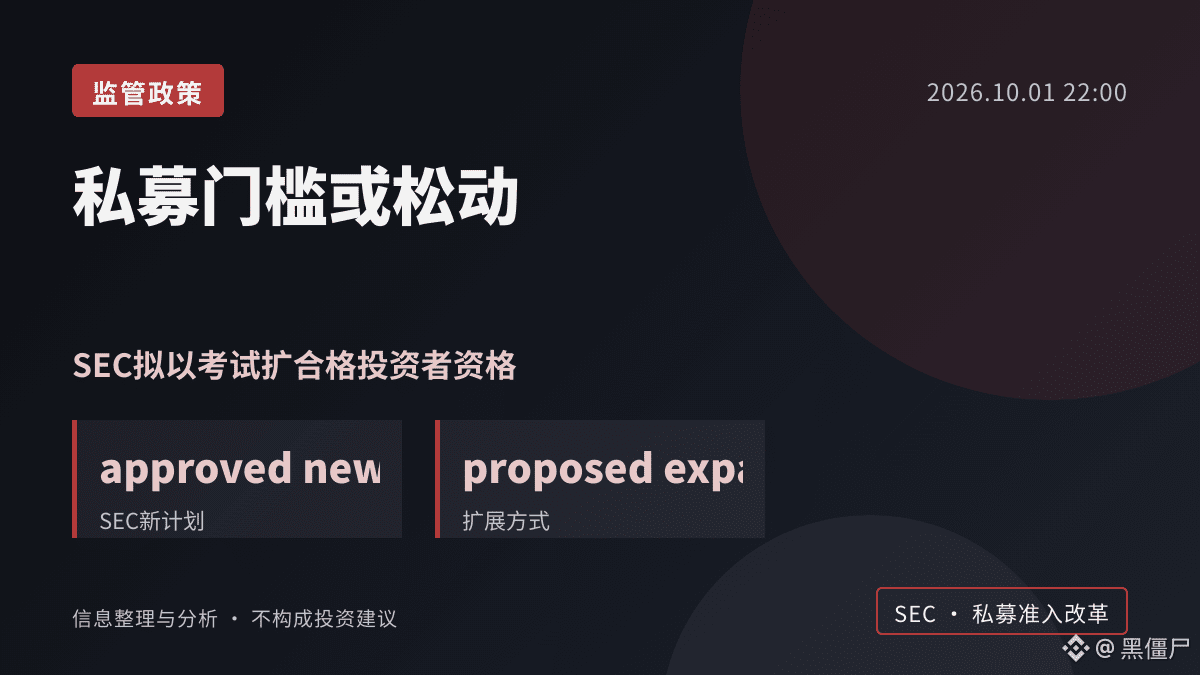
7
Log in to explore more content
Join global crypto users on Binance Square
⚡️ Get latest and useful information about crypto.
💬 Trusted by the world’s largest crypto exchange.
👍 Discover real insights from verified creators.
Email / Phone number
Trending Topics
1
#EtherGains70.9%InQ3
148,820 views
1,128 Discussing
2
#TreasuryLetsStatesFileStablecoinCertificationsEarly
8,145 views
79 Discussing
3
#US10YearYieldNears5.3%
148,491 views
1,122 Discussing
4
#DollarIndexHitsHighestSinceMay2025
37,426 views
598 Discussing
5
#USWeeklyJoblessClaimsFallTo197000
34,042 views
499 Discussing
6
#BitcoinETFsTake$6.34BillionInQ3
9,612 views
77 Discussing
7
#KoreaProposesTokenizingStocksAndBonds
70,921 views
822 Discussing
8
#MetaMaskExitsLidoValidatorsAfterSecurityIncident
169,938 views
1,546 Discussing
9
#MicronBeatsEarningsLiftsGuidance
86,114 views
1,116 Discussing
10
#CFTCSubmitsTwoEventContractRulesToWhiteHouse
59,109 views
833 Discussing