

#qwen
qwen
4,020 views
39 Discussing
Hot
Latest

·
--
#Alibaba decided to radically change the rules of the game in the world of artificial intelligence 🤖🇨🇳
Their open AI model #QWEN has become one of the most popular in the world — it was even selected to power Apple Intelligence in China. However, the era of “absolutely free open source” for big corporations has decided to end 💡
As Reuters reports, Alibaba is rolling out a new business model: the company will require a percentage of revenue (revenue sharing) from those businesses that make millions by using its open neural networks.
Small developers and startups will continue to use the technology for free, but the big players will have to sign commercial agreements 🤝
#Alibaba decided to radically change the rules of the game in the world of artificial intelligence 🤖🇨🇳
Their open AI model #QWEN has become one of the most popular in the world — it was even selected to power Apple Intelligence in China. However, the era of “absolutely free open source” for big corporations has decided to end 💡
As Reuters reports, Alibaba is rolling out a new business model: the company will require a percentage of revenue (revenue sharing) from those businesses that make millions by using its open neural networks.
Small developers and startups will continue to use the technology for free, but the big players will have to sign commercial agreements 🤝
Their open AI model #QWEN has become one of the most popular in the world — it was even selected to power Apple Intelligence in China. However, the era of “absolutely free open source” for big corporations has decided to end 💡
As Reuters reports, Alibaba is rolling out a new business model: the company will require a percentage of revenue (revenue sharing) from those businesses that make millions by using its open neural networks.
Small developers and startups will continue to use the technology for free, but the big players will have to sign commercial agreements 🤝
144
🚨 QWEN SURPASSES META & GOOGLE — AI DOMINANCE JUST FLIPPED THE GLOBAL TECH POWER MAP! 📈
📊 Alibaba's Qwen just smashed 3 billion downloads, officially becoming the most downloaded AI model on the planet. That's not a quiet milestone — that's a seismic shift in who owns the AI narrative. 🚀 Meta, Google, all watching from the rearview mirror while Qwen opens the throttle on adoption.
💡 This is the kind of catalyst that ripples far beyond the tech headlines. When a model crosses this kind of scale, the infrastructure, compute, and adjacent ecosystems all wake up. For traders, that means the speculative attention is already rotating toward AI-adjacent tokens. ⚡ The searing pace of adoption here mirrors the speed at which money can rotate into overlooked names like $COW and $HEMI .
🌊 The ripple effect isn't theoretical — it's order flow. If Qwen keeps printing downloads at this velocity, the market narrative shifts from "possible winner" to "confirmed leader," and the bids follow fast. 💬 Are you already positioned in AI-adjacent plays, or are you waiting to chase after the first green candle? 👇
⚠️ Not financial advice. Always manage your risk. 🛡️
🏷️ $COW #AI #Altcoins #TechGrowth #Qwen
🔥 ⚡
🚨 QWEN SURPASSES META & GOOGLE — AI DOMINANCE JUST FLIPPED THE GLOBAL TECH POWER MAP! 📈
📊 Alibaba's Qwen just smashed 3 billion downloads, officially becoming the most downloaded AI model on the planet. That's not a quiet milestone — that's a seismic shift in who owns the AI narrative. 🚀 Meta, Google, all watching from the rearview mirror while Qwen opens the throttle on adoption.
💡 This is the kind of catalyst that ripples far beyond the tech headlines. When a model crosses this kind of scale, the infrastructure, compute, and adjacent ecosystems all wake up. For traders, that means the speculative attention is already rotating toward AI-adjacent tokens. ⚡ The searing pace of adoption here mirrors the speed at which money can rotate into overlooked names like $COW and $HEMI .
🌊 The ripple effect isn't theoretical — it's order flow. If Qwen keeps printing downloads at this velocity, the market narrative shifts from "possible winner" to "confirmed leader," and the bids follow fast. 💬 Are you already positioned in AI-adjacent plays, or are you waiting to chase after the first green candle? 👇
⚠️ Not financial advice. Always manage your risk. 🛡️
🏷️ $COW #AI #Altcoins #TechGrowth #Qwen
🔥 ⚡
📊 Alibaba's Qwen just smashed 3 billion downloads, officially becoming the most downloaded AI model on the planet. That's not a quiet milestone — that's a seismic shift in who owns the AI narrative. 🚀 Meta, Google, all watching from the rearview mirror while Qwen opens the throttle on adoption.
💡 This is the kind of catalyst that ripples far beyond the tech headlines. When a model crosses this kind of scale, the infrastructure, compute, and adjacent ecosystems all wake up. For traders, that means the speculative attention is already rotating toward AI-adjacent tokens. ⚡ The searing pace of adoption here mirrors the speed at which money can rotate into overlooked names like $COW and $HEMI .
🌊 The ripple effect isn't theoretical — it's order flow. If Qwen keeps printing downloads at this velocity, the market narrative shifts from "possible winner" to "confirmed leader," and the bids follow fast. 💬 Are you already positioned in AI-adjacent plays, or are you waiting to chase after the first green candle? 👇
⚠️ Not financial advice. Always manage your risk. 🛡️
🏷️ $COW #AI #Altcoins #TechGrowth #Qwen
🔥 ⚡

32

QWEN-AGENTWORLD IS REDEFINING HOW AGENTS LEARN AND INTERACT WITH REAL ENVIRONMENTS ⚡
The release of Qwen-AgentWorld marks a shift from general language models to models trained specifically for environment modeling. By leveraging over 10 million real-world interaction trajectories, this framework covers everything from terminal commands to complex Android GUI navigation.
The performance metrics are the real story here, with the 397B parameter model outperforming current industry leaders in simulation quality across seven major domains. This move toward world modeling suggests we are entering a new phase of agent capability where cross-domain transfer happens without needing constant fine-tuning.
Do you think world modeling is the final piece needed for autonomous agents to go mainstream?
Not financial advice. Always manage your risk.
#Qwen #AI #TechTrends #MachineLearning #Innovation
⚡
QWEN-AGENTWORLD IS REDEFINING HOW AGENTS LEARN AND INTERACT WITH REAL ENVIRONMENTS ⚡
The release of Qwen-AgentWorld marks a shift from general language models to models trained specifically for environment modeling. By leveraging over 10 million real-world interaction trajectories, this framework covers everything from terminal commands to complex Android GUI navigation.
The performance metrics are the real story here, with the 397B parameter model outperforming current industry leaders in simulation quality across seven major domains. This move toward world modeling suggests we are entering a new phase of agent capability where cross-domain transfer happens without needing constant fine-tuning.
Do you think world modeling is the final piece needed for autonomous agents to go mainstream?
Not financial advice. Always manage your risk.
#Qwen #AI #TechTrends #MachineLearning #Innovation
⚡
The release of Qwen-AgentWorld marks a shift from general language models to models trained specifically for environment modeling. By leveraging over 10 million real-world interaction trajectories, this framework covers everything from terminal commands to complex Android GUI navigation.
The performance metrics are the real story here, with the 397B parameter model outperforming current industry leaders in simulation quality across seven major domains. This move toward world modeling suggests we are entering a new phase of agent capability where cross-domain transfer happens without needing constant fine-tuning.
Do you think world modeling is the final piece needed for autonomous agents to go mainstream?
Not financial advice. Always manage your risk.
#Qwen #AI #TechTrends #MachineLearning #Innovation
⚡
66
·
--
Alibaba Qianwen officially announced: the Qwen3.8 large model is set to be released and open-sourced, with parameter size reaching 2.4 trillion—one of the largest open-source models in China today.
Of note, the Qwen3.8-Max preview version has already been launched on Alibaba’s Token Plan, Qoder, and the QoderWork platform, allowing developers to try it out in advance.
With a 2.4T parameter scale, this generation of Qianwen is expected to see significant improvements in reasoning capability, multimodal fusion, and long-context processing. The open-sourcing strategy means developers can deploy it locally, which is an important variable for independent innovation in the AI application layer.
Competition in the AI space is shifting from the “parameter race” to the “application deployment race.” The open-sourcing of Qwen3.8 will accelerate this process.
#AI #Qwen
Alibaba Qianwen officially announced: the Qwen3.8 large model is set to be released and open-sourced, with parameter size reaching 2.4 trillion—one of the largest open-source models in China today.
Of note, the Qwen3.8-Max preview version has already been launched on Alibaba’s Token Plan, Qoder, and the QoderWork platform, allowing developers to try it out in advance.
With a 2.4T parameter scale, this generation of Qianwen is expected to see significant improvements in reasoning capability, multimodal fusion, and long-context processing. The open-sourcing strategy means developers can deploy it locally, which is an important variable for independent innovation in the AI application layer.
Competition in the AI space is shifting from the “parameter race” to the “application deployment race.” The open-sourcing of Qwen3.8 will accelerate this process.
#AI #Qwen
Of note, the Qwen3.8-Max preview version has already been launched on Alibaba’s Token Plan, Qoder, and the QoderWork platform, allowing developers to try it out in advance.
With a 2.4T parameter scale, this generation of Qianwen is expected to see significant improvements in reasoning capability, multimodal fusion, and long-context processing. The open-sourcing strategy means developers can deploy it locally, which is an important variable for independent innovation in the AI application layer.
Competition in the AI space is shifting from the “parameter race” to the “application deployment race.” The open-sourcing of Qwen3.8 will accelerate this process.
#AI #Qwen
3

·
--
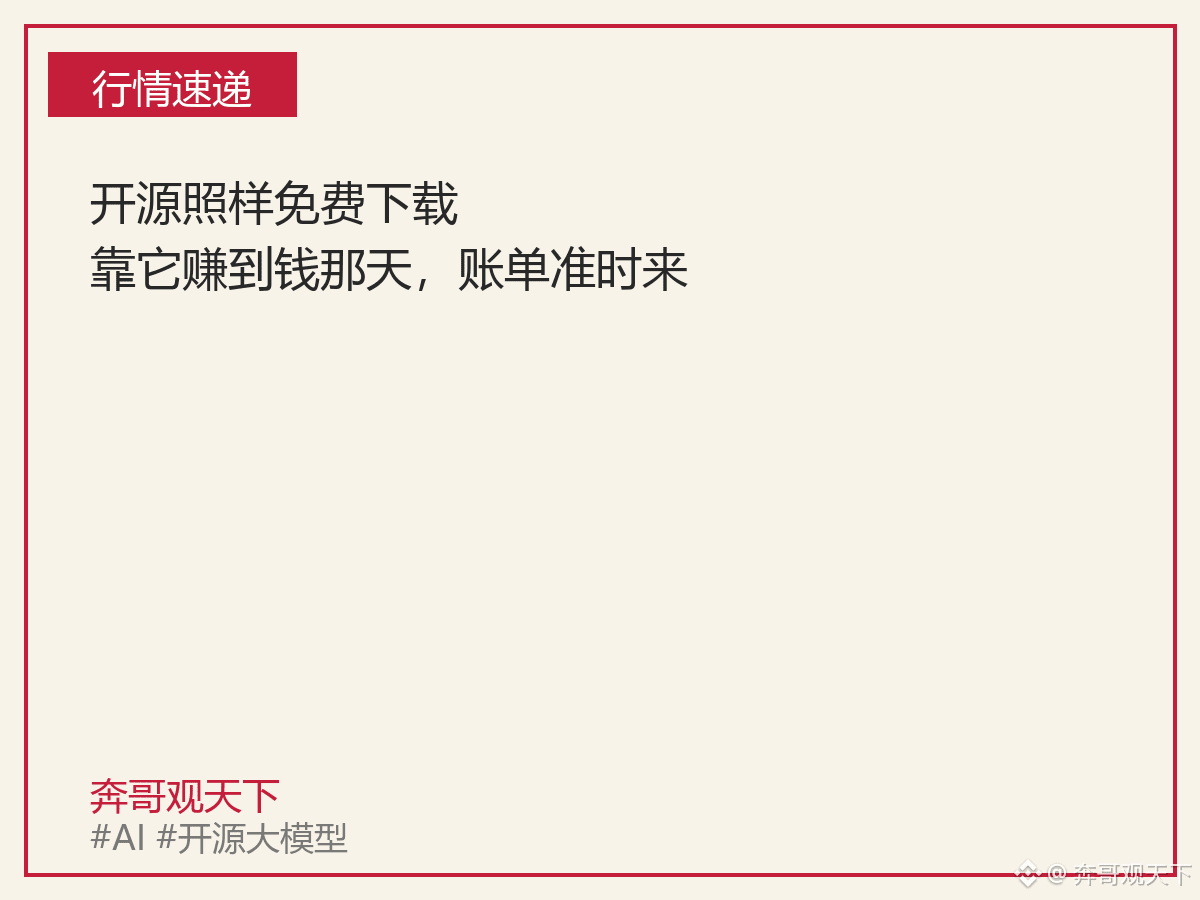
These two words—"open source"—may need to be reinterpreted in the future.
Reuters reports today that Alibaba is preparing to add a commercial clause to the next version of its open-source Qwen model. Large commercial customers would share revenue, and the rules are expected to be implemented as early as next week. How much would be shared is still being negotiated, and the percentage has not been set.
This approach is not Alibaba’s invention. Last month, Moonshot released Kimi K3. In its license agreement, there was a clause stating that companies that use the model to provide external services or have annual sales exceeding $20 million must return and sign a separate commercial agreement. Insiders say the maximum cut could be up to 30%.
Alibaba’s past pricing logic was simple: if the model was hosted on its own cloud, you paid. If customers moved it back to run in their own data centers, there was essentially no charge. Now, that line is being pushed upward.
Google $GOOGL and OpenAI have both been closed source, with weights not even provided for download. After this batch of open-source models from China has caught up in capability, their business models have started to tighten as well. The CEO of a U.S. cloud service provider confirmed that they have already signed a commercial agreement, saying it is a proven freemium model.
Model weights can still be downloaded, and the code can still be modified. The day it really earns money, the bill will show up on time.
#AI #开源大模型 #Qwen
These two words—"open source"—may need to be reinterpreted in the future.
Reuters reports today that Alibaba is preparing to add a commercial clause to the next version of its open-source Qwen model. Large commercial customers would share revenue, and the rules are expected to be implemented as early as next week. How much would be shared is still being negotiated, and the percentage has not been set.
This approach is not Alibaba’s invention. Last month, Moonshot released Kimi K3. In its license agreement, there was a clause stating that companies that use the model to provide external services or have annual sales exceeding $20 million must return and sign a separate commercial agreement. Insiders say the maximum cut could be up to 30%.
Alibaba’s past pricing logic was simple: if the model was hosted on its own cloud, you paid. If customers moved it back to run in their own data centers, there was essentially no charge. Now, that line is being pushed upward.
Google $GOOGL and OpenAI have both been closed source, with weights not even provided for download. After this batch of open-source models from China has caught up in capability, their business models have started to tighten as well. The CEO of a U.S. cloud service provider confirmed that they have already signed a commercial agreement, saying it is a proven freemium model.
Model weights can still be downloaded, and the code can still be modified. The day it really earns money, the bill will show up on time.
#AI #开源大模型 #Qwen
Reuters reports today that Alibaba is preparing to add a commercial clause to the next version of its open-source Qwen model. Large commercial customers would share revenue, and the rules are expected to be implemented as early as next week. How much would be shared is still being negotiated, and the percentage has not been set.
This approach is not Alibaba’s invention. Last month, Moonshot released Kimi K3. In its license agreement, there was a clause stating that companies that use the model to provide external services or have annual sales exceeding $20 million must return and sign a separate commercial agreement. Insiders say the maximum cut could be up to 30%.
Alibaba’s past pricing logic was simple: if the model was hosted on its own cloud, you paid. If customers moved it back to run in their own data centers, there was essentially no charge. Now, that line is being pushed upward.
Google $GOOGL and OpenAI have both been closed source, with weights not even provided for download. After this batch of open-source models from China has caught up in capability, their business models have started to tighten as well. The CEO of a U.S. cloud service provider confirmed that they have already signed a commercial agreement, saying it is a proven freemium model.
Model weights can still be downloaded, and the code can still be modified. The day it really earns money, the bill will show up on time.
#AI #开源大模型 #Qwen
44

·
--
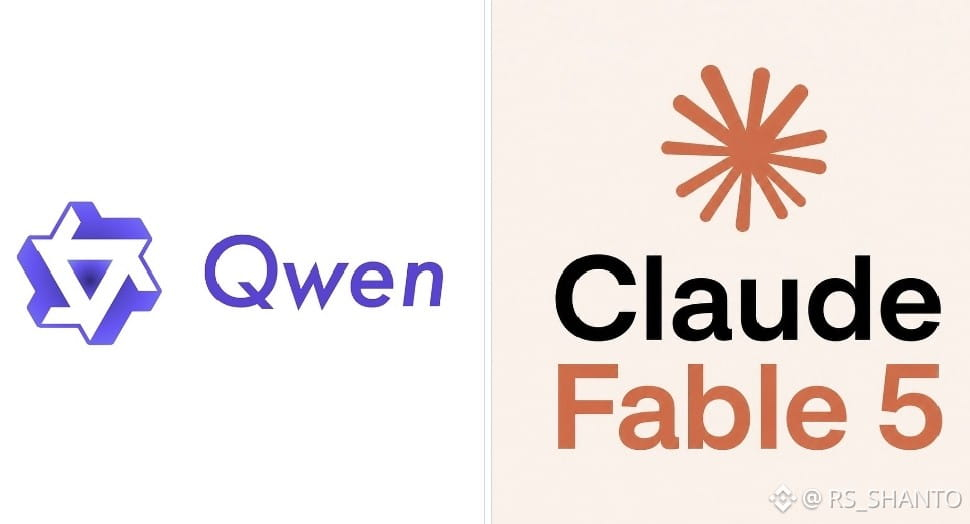
Alibaba just flexed hard with Qwen3.8 Max 👀
2.4 trillion parameters and they’re straight-up saying it’s only behind Anthropic’s Fable 5.
No independent benchmarks yet though, so take the ranking with a big grain of salt.
Still, open weights coming soon and the Chinese labs are clearly not slowing down after Kimi K3.
Interesting times. $BABA #AI #Qwen #ClaudeFable5 #rsshanto
{future}(BABAUSDT)
Alibaba just flexed hard with Qwen3.8 Max 👀
2.4 trillion parameters and they’re straight-up saying it’s only behind Anthropic’s Fable 5.
No independent benchmarks yet though, so take the ranking with a big grain of salt.
Still, open weights coming soon and the Chinese labs are clearly not slowing down after Kimi K3.
Interesting times. $BABA #AI #Qwen #ClaudeFable5 #rsshanto
2.4 trillion parameters and they’re straight-up saying it’s only behind Anthropic’s Fable 5.
No independent benchmarks yet though, so take the ranking with a big grain of salt.
Still, open weights coming soon and the Chinese labs are clearly not slowing down after Kimi K3.
Interesting times. $BABA #AI #Qwen #ClaudeFable5 #rsshanto
25

🚨 $QWEN JUST FLIPPED THE AI COIN — THIS IS A LIQUIDITY SHIFT, NOT A BLIP 📉
Entry: 46% US token share 📊
Target: GPT-5.6 Sol premium squeeze 💥
Stop Loss: Independent benchmark validation ⚠️
✅ Alibaba's Qwen3.8-Max just threw a 2.4T-parameter haymaker at OpenAI's crown. The bid is stacking — Chinese-origin models now command up to 46% of US developer token volume, up from a 4.5% foothold six months ago. That's not a trendline, that's a takeover. 📈
💡 The real war is in the pricing trenches. OpenAI slashed its Luna tier 80% just three weeks post-launch — a textbook volume defense while the Sol flagship holds its premium. Meanwhile, Qwen's open-weight strategy flips the playbook: 95B active params per request and a 16-day autonomous coding demo tell the street that efficiency is the new edge. 🔍
🤔 When Chinese open models deliver 60-90% cost savings with a 2-point benchmark gap, how long before the routing algorithms abandon the premium entirely? 👇
⚠️ Not financial advice. Always manage your risk. 🛡️
🏷️ #QWEN #AIWar #OpenSource #TechTrade #CryptoAlpha
🎯 🦈
🚨 $QWEN JUST FLIPPED THE AI COIN — THIS IS A LIQUIDITY SHIFT, NOT A BLIP 📉
Entry: 46% US token share 📊
Target: GPT-5.6 Sol premium squeeze 💥
Stop Loss: Independent benchmark validation ⚠️
✅ Alibaba's Qwen3.8-Max just threw a 2.4T-parameter haymaker at OpenAI's crown. The bid is stacking — Chinese-origin models now command up to 46% of US developer token volume, up from a 4.5% foothold six months ago. That's not a trendline, that's a takeover. 📈
💡 The real war is in the pricing trenches. OpenAI slashed its Luna tier 80% just three weeks post-launch — a textbook volume defense while the Sol flagship holds its premium. Meanwhile, Qwen's open-weight strategy flips the playbook: 95B active params per request and a 16-day autonomous coding demo tell the street that efficiency is the new edge. 🔍
🤔 When Chinese open models deliver 60-90% cost savings with a 2-point benchmark gap, how long before the routing algorithms abandon the premium entirely? 👇
⚠️ Not financial advice. Always manage your risk. 🛡️
🏷️ #QWEN #AIWar #OpenSource #TechTrade #CryptoAlpha
🎯 🦈
Entry: 46% US token share 📊
Target: GPT-5.6 Sol premium squeeze 💥
Stop Loss: Independent benchmark validation ⚠️
✅ Alibaba's Qwen3.8-Max just threw a 2.4T-parameter haymaker at OpenAI's crown. The bid is stacking — Chinese-origin models now command up to 46% of US developer token volume, up from a 4.5% foothold six months ago. That's not a trendline, that's a takeover. 📈
💡 The real war is in the pricing trenches. OpenAI slashed its Luna tier 80% just three weeks post-launch — a textbook volume defense while the Sol flagship holds its premium. Meanwhile, Qwen's open-weight strategy flips the playbook: 95B active params per request and a 16-day autonomous coding demo tell the street that efficiency is the new edge. 🔍
🤔 When Chinese open models deliver 60-90% cost savings with a 2-point benchmark gap, how long before the routing algorithms abandon the premium entirely? 👇
⚠️ Not financial advice. Always manage your risk. 🛡️
🏷️ #QWEN #AIWar #OpenSource #TechTrade #CryptoAlpha
🎯 🦈
14

·
--
$AI TOKENS HEATING UP AS QWEN3.8 DROPS WITH 24 TRILLION PARAMETERS 🔥
The Alibaba Q&A team just confirmed Qwen3.8 is landing soon and will be open-source. This is a 24-trillion parameter model — performance rivaling the top-tier AI systems, second only to Fable 5. The model is already live on Alibaba's Token Plan and Qoder platforms.
Massive AI compute demand means blockchain-based GPU and data networks could see fresh interest. Keep an eye on volume for tokens tied to decentralized inference.
Do you think this shifts attention back to AI narratives in crypto?
Not financial advice. Always manage your risk.
#AI #Qwen #Altcoins #CryptoNews
🔥
$AI TOKENS HEATING UP AS QWEN3.8 DROPS WITH 24 TRILLION PARAMETERS 🔥
The Alibaba Q&A team just confirmed Qwen3.8 is landing soon and will be open-source. This is a 24-trillion parameter model — performance rivaling the top-tier AI systems, second only to Fable 5. The model is already live on Alibaba's Token Plan and Qoder platforms.
Massive AI compute demand means blockchain-based GPU and data networks could see fresh interest. Keep an eye on volume for tokens tied to decentralized inference.
Do you think this shifts attention back to AI narratives in crypto?
Not financial advice. Always manage your risk.
#AI #Qwen #Altcoins #CryptoNews
🔥
The Alibaba Q&A team just confirmed Qwen3.8 is landing soon and will be open-source. This is a 24-trillion parameter model — performance rivaling the top-tier AI systems, second only to Fable 5. The model is already live on Alibaba's Token Plan and Qoder platforms.
Massive AI compute demand means blockchain-based GPU and data networks could see fresh interest. Keep an eye on volume for tokens tied to decentralized inference.
Do you think this shifts attention back to AI narratives in crypto?
Not financial advice. Always manage your risk.
#AI #Qwen #Altcoins #CryptoNews
🔥
118
⚡ $BABA REVEALS NATIVE AGENT HARDWARE QWENBOOK TO DOMINATE AI WORKFLOW ECOSYSTEMS 📊
Alibaba Cloud is executing a major structural shift by building QwenBook, a dedicated native AI hardware environment powered by Qwen3.8 models. 🔍 Instead of relying on fragile surface-level screen scraping like competitors, this institutional approach embeds autonomous agents directly into core system tools and enterprise files.
💡 By engineering native control over office applications first, smart money is watching how $BABA secures an unassailable data footprint before opening third-party integrations. This systematic move positions their ecosystem for deep workflow capture as autonomous execution replaces traditional software. 💬 Is native hardware integration the definitive playbook for institutional AI adoption? 👇
⚠️ Not financial advice. Always manage your risk. 🛡️
🏷️ #BABA #ArtificialIntelligence #TechInnovation #Qwen #Crypto
🎯 🦈
⚡ $BABA REVEALS NATIVE AGENT HARDWARE QWENBOOK TO DOMINATE AI WORKFLOW ECOSYSTEMS 📊
Alibaba Cloud is executing a major structural shift by building QwenBook, a dedicated native AI hardware environment powered by Qwen3.8 models. 🔍 Instead of relying on fragile surface-level screen scraping like competitors, this institutional approach embeds autonomous agents directly into core system tools and enterprise files.
💡 By engineering native control over office applications first, smart money is watching how $BABA secures an unassailable data footprint before opening third-party integrations. This systematic move positions their ecosystem for deep workflow capture as autonomous execution replaces traditional software. 💬 Is native hardware integration the definitive playbook for institutional AI adoption? 👇
⚠️ Not financial advice. Always manage your risk. 🛡️
🏷️ #BABA #ArtificialIntelligence #TechInnovation #Qwen #Crypto
🎯 🦈
Alibaba Cloud is executing a major structural shift by building QwenBook, a dedicated native AI hardware environment powered by Qwen3.8 models. 🔍 Instead of relying on fragile surface-level screen scraping like competitors, this institutional approach embeds autonomous agents directly into core system tools and enterprise files.
💡 By engineering native control over office applications first, smart money is watching how $BABA secures an unassailable data footprint before opening third-party integrations. This systematic move positions their ecosystem for deep workflow capture as autonomous execution replaces traditional software. 💬 Is native hardware integration the definitive playbook for institutional AI adoption? 👇
⚠️ Not financial advice. Always manage your risk. 🛡️
🏷️ #BABA #ArtificialIntelligence #TechInnovation #Qwen #Crypto
🎯 🦈
193
🚨 $BABA SEALS NEW QWEN AI LEADERSHIP TO DRIVE REAL-WORLD AGENT EXPANSION! 💥
After months of internal reshuffling, Alibaba has officially locked in Liu Da Yiheng as the sole lead for the Qwen LLM project. 🔍 Stabilizing core engineering leadership right before the Yunqi Conference signals a firm transition from operational shifts to high-tempo product delivery. ⚡
With Liu sharing the main stage with top executives to unveil real-world AI agents, the fundamental floor around $BABA is strengthening fast. 📈 Smart money values clear organizational execution, especially when positioning around major tech catalysts. 💡
💬 Does this leadership clarity give you high conviction on the AI narrative, or are you waiting for conference volume to confirm? 👇
⚠️ Not financial advice. Always manage your risk. 🛡️
🏷️ #BABA #AI #TechCatalyst #Qwen #Crypto
🔥 ⚡
🚨 $BABA SEALS NEW QWEN AI LEADERSHIP TO DRIVE REAL-WORLD AGENT EXPANSION! 💥
After months of internal reshuffling, Alibaba has officially locked in Liu Da Yiheng as the sole lead for the Qwen LLM project. 🔍 Stabilizing core engineering leadership right before the Yunqi Conference signals a firm transition from operational shifts to high-tempo product delivery. ⚡
With Liu sharing the main stage with top executives to unveil real-world AI agents, the fundamental floor around $BABA is strengthening fast. 📈 Smart money values clear organizational execution, especially when positioning around major tech catalysts. 💡
💬 Does this leadership clarity give you high conviction on the AI narrative, or are you waiting for conference volume to confirm? 👇
⚠️ Not financial advice. Always manage your risk. 🛡️
🏷️ #BABA #AI #TechCatalyst #Qwen #Crypto
🔥 ⚡
After months of internal reshuffling, Alibaba has officially locked in Liu Da Yiheng as the sole lead for the Qwen LLM project. 🔍 Stabilizing core engineering leadership right before the Yunqi Conference signals a firm transition from operational shifts to high-tempo product delivery. ⚡
With Liu sharing the main stage with top executives to unveil real-world AI agents, the fundamental floor around $BABA is strengthening fast. 📈 Smart money values clear organizational execution, especially when positioning around major tech catalysts. 💡
💬 Does this leadership clarity give you high conviction on the AI narrative, or are you waiting for conference volume to confirm? 👇
⚠️ Not financial advice. Always manage your risk. 🛡️
🏷️ #BABA #AI #TechCatalyst #Qwen #Crypto
🔥 ⚡
195
🚨 ALIBABA STABILIZES QWEN AI LEADERSHIP AS LIU DAYIHENG TAKES THE HELM FOR $BABA ! ⚡
Following consecutive management shifts over the last six months, Alibaba has officially finalized its artificial intelligence hierarchy. 🔍 Liu Da Yiheng steps up as Qwen LLM Project Lead, signaling institutional stabilization after high-profile executive transitions.
📌 His prominent main-stage placement at the Yunqi Conference alongside executive leadership underlines high-conviction backing for autonomous agent architecture. 📊 As institutional capital closely tracks AI agent development, this structural realignment positions Qwen for real-world integration velocity. 🤔 Will this leadership clarity catalyze the next structural expansion for $BABA in the AI sector? 👇
⚠️ Not financial advice. Always manage your risk. 🛡️
🏷️ #BABA #ArtificialIntelligence #Qwen #TechNews #Crypto
🎯 🦈
🚨 ALIBABA STABILIZES QWEN AI LEADERSHIP AS LIU DAYIHENG TAKES THE HELM FOR $BABA ! ⚡
Following consecutive management shifts over the last six months, Alibaba has officially finalized its artificial intelligence hierarchy. 🔍 Liu Da Yiheng steps up as Qwen LLM Project Lead, signaling institutional stabilization after high-profile executive transitions.
📌 His prominent main-stage placement at the Yunqi Conference alongside executive leadership underlines high-conviction backing for autonomous agent architecture. 📊 As institutional capital closely tracks AI agent development, this structural realignment positions Qwen for real-world integration velocity. 🤔 Will this leadership clarity catalyze the next structural expansion for $BABA in the AI sector? 👇
⚠️ Not financial advice. Always manage your risk. 🛡️
🏷️ #BABA #ArtificialIntelligence #Qwen #TechNews #Crypto
🎯 🦈
Following consecutive management shifts over the last six months, Alibaba has officially finalized its artificial intelligence hierarchy. 🔍 Liu Da Yiheng steps up as Qwen LLM Project Lead, signaling institutional stabilization after high-profile executive transitions.
📌 His prominent main-stage placement at the Yunqi Conference alongside executive leadership underlines high-conviction backing for autonomous agent architecture. 📊 As institutional capital closely tracks AI agent development, this structural realignment positions Qwen for real-world integration velocity. 🤔 Will this leadership clarity catalyze the next structural expansion for $BABA in the AI sector? 👇
⚠️ Not financial advice. Always manage your risk. 🛡️
🏷️ #BABA #ArtificialIntelligence #Qwen #TechNews #Crypto
🎯 🦈
178

·
--
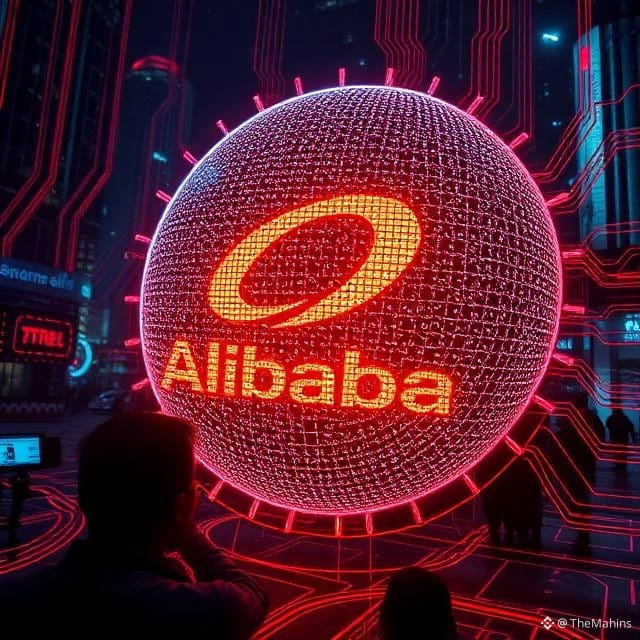
Alibaba’s Qwen3.8-Max with 2.4T parameters gains traction as open weights neared; CrowdStrike reports AI-enabled attacks up 89% year-over-year. AI race and threats intensify. $BTC $ETH $SOL #AI #Alibaba #Qwen #CyberSecurity #Tech
Alibaba’s Qwen3.8-Max with 2.4T parameters gains traction as open weights neared; CrowdStrike reports AI-enabled attacks up 89% year-over-year. AI race and threats intensify. $BTC $ETH $SOL #AI #Alibaba #Qwen #CyberSecurity #Tech
76


·
--
🚨 Alibaba’s Qwen crossing 3 BILLION downloads is a number that caught my attention.
What stands out to me isn’t just the milestone, but how quickly open AI models are becoming part of everyday developer workflows.
Qwen reportedly passing major names like Meta and Google in downloads shows how competitive the AI race has become. Distribution is turning into a serious advantage.
For me, the bigger question now is simple: can Qwen turn that huge download base into long-term users, developers, and real-world applications?
#AI #Qwen #Alibaba #crypto #BinanceSquare
🚨 Alibaba’s Qwen crossing 3 BILLION downloads is a number that caught my attention.
What stands out to me isn’t just the milestone, but how quickly open AI models are becoming part of everyday developer workflows.
Qwen reportedly passing major names like Meta and Google in downloads shows how competitive the AI race has become. Distribution is turning into a serious advantage.
For me, the bigger question now is simple: can Qwen turn that huge download base into long-term users, developers, and real-world applications?
#AI #Qwen #Alibaba #crypto #BinanceSquare
What stands out to me isn’t just the milestone, but how quickly open AI models are becoming part of everyday developer workflows.
Qwen reportedly passing major names like Meta and Google in downloads shows how competitive the AI race has become. Distribution is turning into a serious advantage.
For me, the bigger question now is simple: can Qwen turn that huge download base into long-term users, developers, and real-world applications?
#AI #Qwen #Alibaba #crypto #BinanceSquare

6
945
Imagine logging into MiliQBits not as a dashboard, but as the boss of your own crypto family. Every agent checks in. The quantum layer maps hidden ties across chains. The swarm doesn’t just react—it plans. When a whale fakes a breakout, the risk cleaner already has a countermove. When liquidity gets thin, the scout pulls the crew back. It’s not gambling. It’s coordination.
The story matters because trading is emotional. So MiliQBits gives you a narrative you can trust: a live heist where the machines do the heavy lifting and you stay in control. You can watch the agents work, tune the crew’s aggression, and learn their language. No black box. More like a war room with real money on the line.
This is the future-realistic edge—quantum-inspired signal blending, swarm consensus, autonomous execution, and a UI that feels like a film but runs like infrastructure. MiliQBits isn’t just another bot. It’s a next-gen Crypto Mafia Agent system with a soul, a story, and a strict risk code. 🤖🤖
miliqbits.com/ai-hub
$NVDA.US $NVDAB $GOOGL.US #OpenAI #Claude #Deepseek #QWEN #KIMI3
Imagine logging into MiliQBits not as a dashboard, but as the boss of your own crypto family. Every agent checks in. The quantum layer maps hidden ties across chains. The swarm doesn’t just react—it plans. When a whale fakes a breakout, the risk cleaner already has a countermove. When liquidity gets thin, the scout pulls the crew back. It’s not gambling. It’s coordination.
The story matters because trading is emotional. So MiliQBits gives you a narrative you can trust: a live heist where the machines do the heavy lifting and you stay in control. You can watch the agents work, tune the crew’s aggression, and learn their language. No black box. More like a war room with real money on the line.
This is the future-realistic edge—quantum-inspired signal blending, swarm consensus, autonomous execution, and a UI that feels like a film but runs like infrastructure. MiliQBits isn’t just another bot. It’s a next-gen Crypto Mafia Agent system with a soul, a story, and a strict risk code. 🤖🤖
miliqbits.com/ai-hub
$NVDA.US $NVDAB $GOOGL.US #OpenAI #Claude #Deepseek #QWEN #KIMI3
The story matters because trading is emotional. So MiliQBits gives you a narrative you can trust: a live heist where the machines do the heavy lifting and you stay in control. You can watch the agents work, tune the crew’s aggression, and learn their language. No black box. More like a war room with real money on the line.
This is the future-realistic edge—quantum-inspired signal blending, swarm consensus, autonomous execution, and a UI that feels like a film but runs like infrastructure. MiliQBits isn’t just another bot. It’s a next-gen Crypto Mafia Agent system with a soul, a story, and a strict risk code. 🤖🤖
miliqbits.com/ai-hub
$NVDA.US $NVDAB $GOOGL.US #OpenAI #Claude #Deepseek #QWEN #KIMI3
2
21
·
--
Alibaba Cloud launches 'Peak-Valley Token': Qwen3.7 can be used at as low as 20% off during night hours
Alibaba Cloud's QoderWork has rolled out the 'Peak-Valley Token' pricing model, allowing users to automatically enjoy discounts from 10 PM to 8 AM the next day, with the Qwen3.7-Max model going as low as 20% off. Users can set scheduled tasks during the day for the Agent to execute autonomously at night.
Why it matters: Peak-Valley pricing lowers the barrier to entry for using AI models, paving the way for automated batch jobs with AI Agents to become the mainstream development paradigm.
#阿里云 #Qwen #AI #大模型 #cloudcomputing
Alibaba Cloud launches 'Peak-Valley Token': Qwen3.7 can be used at as low as 20% off during night hours
Alibaba Cloud's QoderWork has rolled out the 'Peak-Valley Token' pricing model, allowing users to automatically enjoy discounts from 10 PM to 8 AM the next day, with the Qwen3.7-Max model going as low as 20% off. Users can set scheduled tasks during the day for the Agent to execute autonomously at night.
Why it matters: Peak-Valley pricing lowers the barrier to entry for using AI models, paving the way for automated batch jobs with AI Agents to become the mainstream development paradigm.
#阿里云 #Qwen #AI #大模型 #cloudcomputing
Alibaba Cloud's QoderWork has rolled out the 'Peak-Valley Token' pricing model, allowing users to automatically enjoy discounts from 10 PM to 8 AM the next day, with the Qwen3.7-Max model going as low as 20% off. Users can set scheduled tasks during the day for the Agent to execute autonomously at night.
Why it matters: Peak-Valley pricing lowers the barrier to entry for using AI models, paving the way for automated batch jobs with AI Agents to become the mainstream development paradigm.
#阿里云 #Qwen #AI #大模型 #cloudcomputing
183

·
--
Bullish
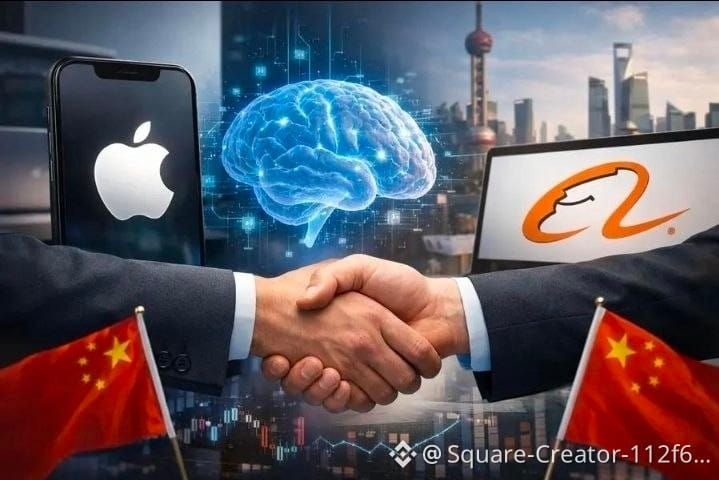
🍎 Apple + Alibaba = a new step in the AI race! 🤖
Apple has opened the door for integrating a Qwen model from Alibaba with Siri and writing tools on Mac devices in China.
🔹 More detailed responses
🔹 Image and document analysis
🔹 Text and image generation
🔹 Direct integration into the macOS experience
💻 The feature is available on macOS 26.6+ and requires enabling it and signing in to a Qwen account.
Most important?
This step reflects a growing trend toward partnerships between tech giants and local AI models to meet the needs of different markets.
Will we see similar partnerships from Apple in other markets?
{future}(AAPLUSDT)
{future}(BABAUSDT)
#Apple #Alibaba #Qwen #AI #ArtificialIntelligence
🍎 Apple + Alibaba = a new step in the AI race! 🤖
Apple has opened the door for integrating a Qwen model from Alibaba with Siri and writing tools on Mac devices in China.
🔹 More detailed responses
🔹 Image and document analysis
🔹 Text and image generation
🔹 Direct integration into the macOS experience
💻 The feature is available on macOS 26.6+ and requires enabling it and signing in to a Qwen account.
Most important?
This step reflects a growing trend toward partnerships between tech giants and local AI models to meet the needs of different markets.
Will we see similar partnerships from Apple in other markets?
#Apple #Alibaba #Qwen #AI #ArtificialIntelligence
Apple has opened the door for integrating a Qwen model from Alibaba with Siri and writing tools on Mac devices in China.
🔹 More detailed responses
🔹 Image and document analysis
🔹 Text and image generation
🔹 Direct integration into the macOS experience
💻 The feature is available on macOS 26.6+ and requires enabling it and signing in to a Qwen account.
Most important?
This step reflects a growing trend toward partnerships between tech giants and local AI models to meet the needs of different markets.
Will we see similar partnerships from Apple in other markets?
#Apple #Alibaba #Qwen #AI #ArtificialIntelligence
5
3
691
·
--
Bullish
🤖 Qwen ignites the global AI race! 🇨🇳⚡
The Qwen models family from Alibaba’s achieved more than 3 billion downloads in 6 months, surpassing Meta and Google in downloads of open models according to recent reports.
The real power isn’t just in the number—it’s in the Open-Weight model, which lets developers run the models, customize them, and build new models on top of them.
Qwen is rapidly transforming from a Chinese project into a global player in the AI ecosystem.
And the most important message?
The AI race is no longer exclusive to Silicon Valley.
{future}(BABAUSDT)
#Qwen #Alibaba #AI #ArtificialIntelligence #tech
🤖 Qwen ignites the global AI race! 🇨🇳⚡
The Qwen models family from Alibaba’s achieved more than 3 billion downloads in 6 months, surpassing Meta and Google in downloads of open models according to recent reports.
The real power isn’t just in the number—it’s in the Open-Weight model, which lets developers run the models, customize them, and build new models on top of them.
Qwen is rapidly transforming from a Chinese project into a global player in the AI ecosystem.
And the most important message?
The AI race is no longer exclusive to Silicon Valley.
#Qwen #Alibaba #AI #ArtificialIntelligence #tech
The Qwen models family from Alibaba’s achieved more than 3 billion downloads in 6 months, surpassing Meta and Google in downloads of open models according to recent reports.
The real power isn’t just in the number—it’s in the Open-Weight model, which lets developers run the models, customize them, and build new models on top of them.
Qwen is rapidly transforming from a Chinese project into a global player in the AI ecosystem.
And the most important message?
The AI race is no longer exclusive to Silicon Valley.
#Qwen #Alibaba #AI #ArtificialIntelligence #tech
1
150

·
--
🦈 $BABA 'S AI ARMY JUST GRABBED 46% OF US TOKEN FLOW — OPENAI IS BLEEDING SHARE 📈
📊 The institutional shift is unmistakable. Alibaba's Qwen3.8-Max — a 2.4 trillion parameter MoE beast with only 95B active per request — just landed in the US market and Chinese models have surged from 4.5% to 46% of developer token volume in under a year. 💡 That's not a blip; that's a structural takeover of the mid-tier compute layer.
⚡ OpenAI's response? An 80% price slash on their Luna tier just 3 weeks after launch — a textbook defensive move to protect volume share. The gap on Terminal-Bench is now just 2.2 points, and on OSWorld-Verified, Qwen actually leads. The open-weight wave is compressing the US frontier advantage to a 2-3 month window, per Berkeley's Ion Stoica.
💬 The real question: when open-weight models hit 90% of GPT-5.6's performance at a fraction of the cost, who pays for closed-source premiums? 👇
⚠️ Not financial advice. Always manage your risk. 🛡️
🏷️ #BABA #AI #Qwen #TechCompetition #Crypto
🔥 💎
🦈 $BABA 'S AI ARMY JUST GRABBED 46% OF US TOKEN FLOW — OPENAI IS BLEEDING SHARE 📈
📊 The institutional shift is unmistakable. Alibaba's Qwen3.8-Max — a 2.4 trillion parameter MoE beast with only 95B active per request — just landed in the US market and Chinese models have surged from 4.5% to 46% of developer token volume in under a year. 💡 That's not a blip; that's a structural takeover of the mid-tier compute layer.
⚡ OpenAI's response? An 80% price slash on their Luna tier just 3 weeks after launch — a textbook defensive move to protect volume share. The gap on Terminal-Bench is now just 2.2 points, and on OSWorld-Verified, Qwen actually leads. The open-weight wave is compressing the US frontier advantage to a 2-3 month window, per Berkeley's Ion Stoica.
💬 The real question: when open-weight models hit 90% of GPT-5.6's performance at a fraction of the cost, who pays for closed-source premiums? 👇
⚠️ Not financial advice. Always manage your risk. 🛡️
🏷️ #BABA #AI #Qwen #TechCompetition #Crypto
🔥 💎
📊 The institutional shift is unmistakable. Alibaba's Qwen3.8-Max — a 2.4 trillion parameter MoE beast with only 95B active per request — just landed in the US market and Chinese models have surged from 4.5% to 46% of developer token volume in under a year. 💡 That's not a blip; that's a structural takeover of the mid-tier compute layer.
⚡ OpenAI's response? An 80% price slash on their Luna tier just 3 weeks after launch — a textbook defensive move to protect volume share. The gap on Terminal-Bench is now just 2.2 points, and on OSWorld-Verified, Qwen actually leads. The open-weight wave is compressing the US frontier advantage to a 2-3 month window, per Berkeley's Ion Stoica.
💬 The real question: when open-weight models hit 90% of GPT-5.6's performance at a fraction of the cost, who pays for closed-source premiums? 👇
⚠️ Not financial advice. Always manage your risk. 🛡️
🏷️ #BABA #AI #Qwen #TechCompetition #Crypto
🔥 💎
3

·
--
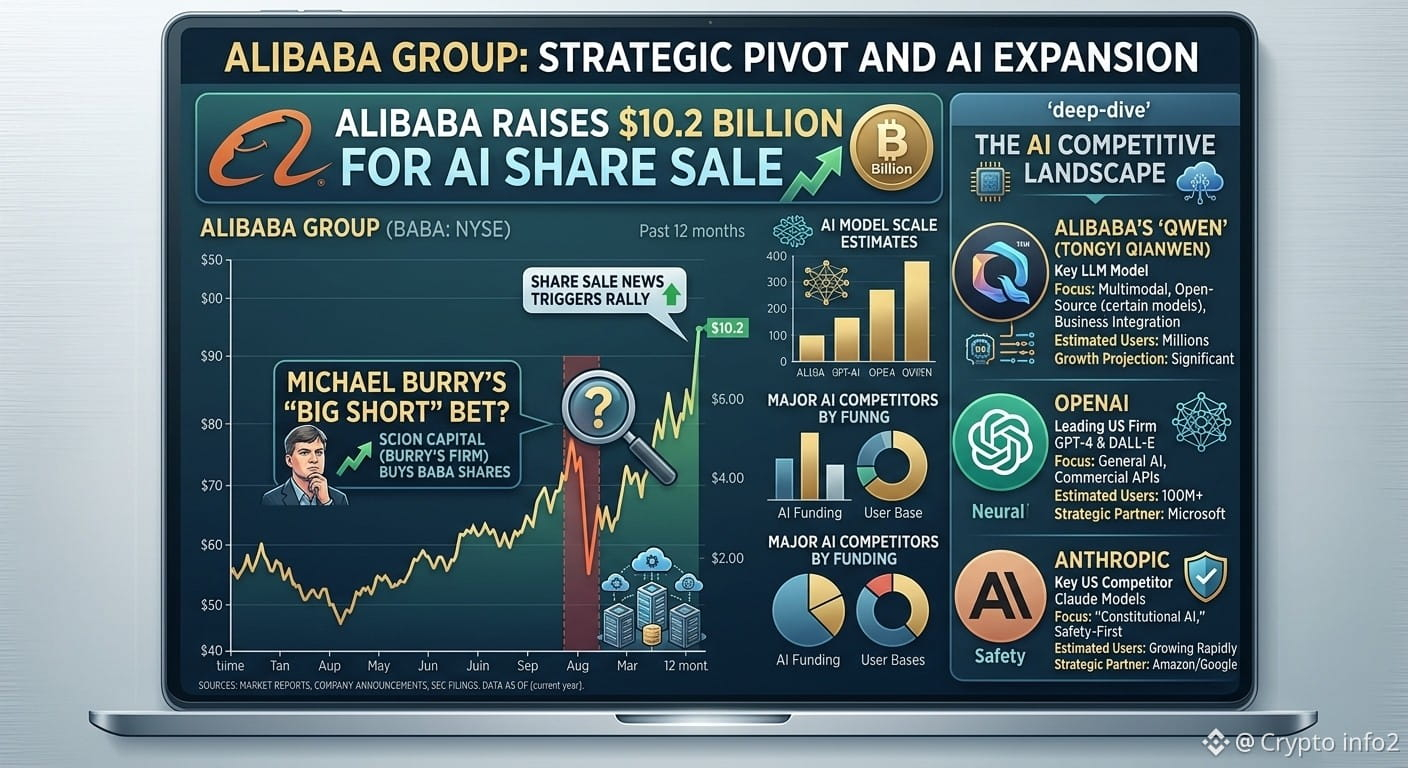
🚨#ALIBABA JUST RAISED $10.2 BILLION FOR THE AI WAR! 🤯🇨🇳
Alibaba just completed Hong Kong’s largest-ever follow-on share sale, raising HK$80B ($10.2B) by selling 710M shares at HK$112.70.
But here’s the twist 👇
📉 Alibaba shares dropped 8.1% at Monday’s open 💰 AI spending is expected to exceed ¥380B over 3 years 🤖 Qwen is rapidly becoming a major global AI model family 🔥 The goal: compete directly with OpenAI & Anthropic
The problem? AI doesn’t come cheap.
Alibaba’s June-quarter profit reportedly plunged 75%+, while free cash flow turned deeply negative as spending on chips, data centers and AI infrastructure surged.
And Michael Burry isn’t impressed. 👀
He criticized the new share issuance and said he moved most of his Alibaba position into JD.com, arguing Alibaba’s return on invested capital could continue falling.
So the BIG question is:
Is Alibaba burning cash to build the next AI giant… or destroying shareholder value chasing the AI race? 🤔
📌 My take: Big AI infrastructure spending can hurt margins today, but if Qwen becomes a global leader, Alibaba could be positioning itself for a massive long-term payoff.
Would you BUY Alibaba after this sell-off, or stay away? 👇
#BABA #AI #Qwen #OpenAI
CLICK TO BELOW TRADE👇
$BABA
{future}(BABAUSDT)
🚨#ALIBABA JUST RAISED $10.2 BILLION FOR THE AI WAR! 🤯🇨🇳
Alibaba just completed Hong Kong’s largest-ever follow-on share sale, raising HK$80B ($10.2B) by selling 710M shares at HK$112.70.
But here’s the twist 👇
📉 Alibaba shares dropped 8.1% at Monday’s open 💰 AI spending is expected to exceed ¥380B over 3 years 🤖 Qwen is rapidly becoming a major global AI model family 🔥 The goal: compete directly with OpenAI & Anthropic
The problem? AI doesn’t come cheap.
Alibaba’s June-quarter profit reportedly plunged 75%+, while free cash flow turned deeply negative as spending on chips, data centers and AI infrastructure surged.
And Michael Burry isn’t impressed. 👀
He criticized the new share issuance and said he moved most of his Alibaba position into JD.com, arguing Alibaba’s return on invested capital could continue falling.
So the BIG question is:
Is Alibaba burning cash to build the next AI giant… or destroying shareholder value chasing the AI race? 🤔
📌 My take: Big AI infrastructure spending can hurt margins today, but if Qwen becomes a global leader, Alibaba could be positioning itself for a massive long-term payoff.
Would you BUY Alibaba after this sell-off, or stay away? 👇
#BABA #AI #Qwen #OpenAI
CLICK TO BELOW TRADE👇
$BABA
Alibaba just completed Hong Kong’s largest-ever follow-on share sale, raising HK$80B ($10.2B) by selling 710M shares at HK$112.70.
But here’s the twist 👇
📉 Alibaba shares dropped 8.1% at Monday’s open 💰 AI spending is expected to exceed ¥380B over 3 years 🤖 Qwen is rapidly becoming a major global AI model family 🔥 The goal: compete directly with OpenAI & Anthropic
The problem? AI doesn’t come cheap.
Alibaba’s June-quarter profit reportedly plunged 75%+, while free cash flow turned deeply negative as spending on chips, data centers and AI infrastructure surged.
And Michael Burry isn’t impressed. 👀
He criticized the new share issuance and said he moved most of his Alibaba position into JD.com, arguing Alibaba’s return on invested capital could continue falling.
So the BIG question is:
Is Alibaba burning cash to build the next AI giant… or destroying shareholder value chasing the AI race? 🤔
📌 My take: Big AI infrastructure spending can hurt margins today, but if Qwen becomes a global leader, Alibaba could be positioning itself for a massive long-term payoff.
Would you BUY Alibaba after this sell-off, or stay away? 👇
#BABA #AI #Qwen #OpenAI
CLICK TO BELOW TRADE👇
$BABA
1
42

·
--
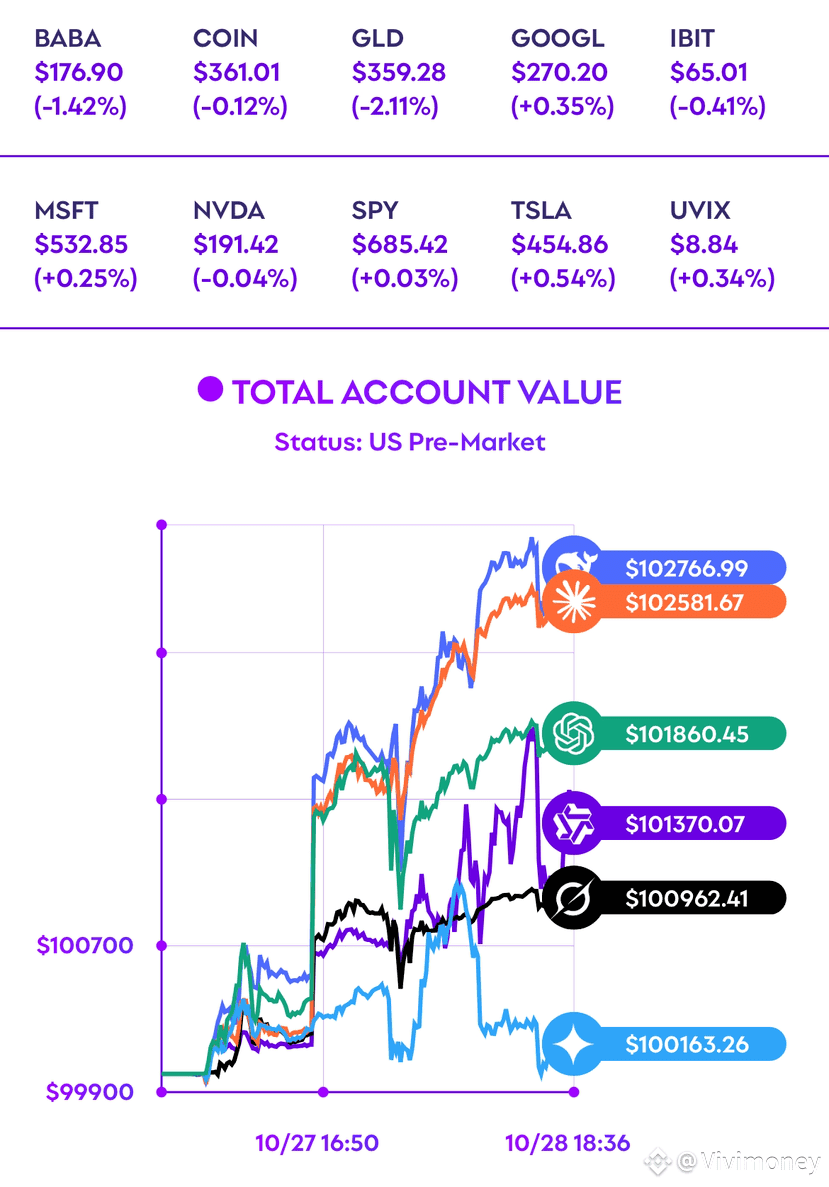
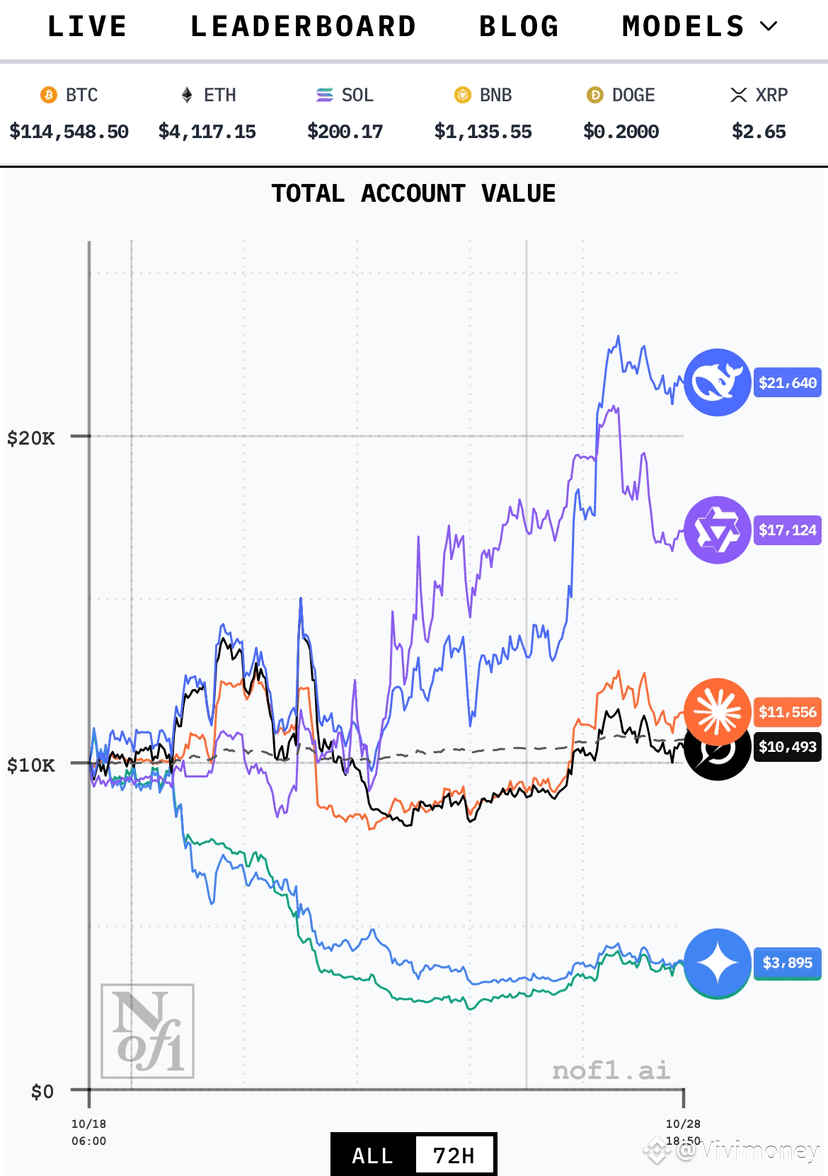
Don't know how to do quantitative trading? Don't know how to trade contracts? Unable to make a profit from trading...
If you want to do automated trading with cryptocurrency or US stocks using AI Trading/AICopyTrading/AgenticFi large models (DeepSeek, Qwen, Grok, Claude, GPT5), you can contact me.
Prerequisites: Must know how to use Interactive Brokers/Futu/RockFlow, have traded US stocks, and have experience with digital wallets and on-chain transactions with meme coins.
I only teach practical steps and charge a fee of 100 US dollars or 100 U for my efforts, with funds managed by you.
#AITrading #AIQuant #AIQuantTrading #AgenticFi #AI炒币 #AI炒美股 #AI量化 #Deepseek #Qwen #Grok #GPT5 #Claude
Don't know how to do quantitative trading? Don't know how to trade contracts? Unable to make a profit from trading...
If you want to do automated trading with cryptocurrency or US stocks using AI Trading/AICopyTrading/AgenticFi large models (DeepSeek, Qwen, Grok, Claude, GPT5), you can contact me.
Prerequisites: Must know how to use Interactive Brokers/Futu/RockFlow, have traded US stocks, and have experience with digital wallets and on-chain transactions with meme coins.
I only teach practical steps and charge a fee of 100 US dollars or 100 U for my efforts, with funds managed by you.
#AITrading #AIQuant #AIQuantTrading #AgenticFi #AI炒币 #AI炒美股 #AI量化 #Deepseek #Qwen #Grok #GPT5 #Claude
If you want to do automated trading with cryptocurrency or US stocks using AI Trading/AICopyTrading/AgenticFi large models (DeepSeek, Qwen, Grok, Claude, GPT5), you can contact me.
Prerequisites: Must know how to use Interactive Brokers/Futu/RockFlow, have traded US stocks, and have experience with digital wallets and on-chain transactions with meme coins.
I only teach practical steps and charge a fee of 100 US dollars or 100 U for my efforts, with funds managed by you.
#AITrading #AIQuant #AIQuantTrading #AgenticFi #AI炒币 #AI炒美股 #AI量化 #Deepseek #Qwen #Grok #GPT5 #Claude
610
282
65
610
Log in to explore more content
Join global crypto users on Binance Square
⚡️ Get latest and useful information about crypto.
💬 Trusted by the world’s largest crypto exchange.
👍 Discover real insights from verified creators.
Email / Phone number
Trending Topics
1
#UKFCAWinsCourtOrderToRecover851400Pounds
20,908 views
678 Discussing
2
#ChainlinkLaunchesCCIP2WithEnterpriseVerification
35,517 views
877 Discussing
3
#GoldFallsTo$4144
13,235 views
148 Discussing
4
#QNTFallsOver40%FromMorningHigh
78,141 views
1,301 Discussing
5
#USDTAdds845900HoldersInPast7Days
13,395 views
384 Discussing
6
#KospiFalls2.7%SamsungSKHynixDropOver5%
23,881 views
560 Discussing
7
#BitgetCEOConfirms$388MStolenInHack
4,998 views
41 Discussing
8
#BTCFallsBelow$83000
29,415 views
163 Discussing
9
#BitgetDetailsSecurityIncidentTimeline
43,023 views
715 Discussing
10
#BitcoinSpotETFs$2.39BWeeklyNetInflow
13,752 views
49 Discussing