

#newtonmainnetbeta
newtonmainnetbeta
321 views
50 Discussing
Hot
Latest

·
--
AI needs a trustworthy blockchain
AI is increasingly capable of supporting many tasks, but when it comes to digital assets, transparency and control become especially important. @NewtonProtocol is committed to building an environment where AI can operate on the blockchain according to pre-set policies. #NewtonMainnetBeta This is an opportunity for the community to evaluate this approach in practice and provide feedback to help improve it.
$NEWT @NewtonProtocol
#Newt #AI #Blockchain
{spot}(SPCXBUSDT)
{spot}(METABUSDT)
{future}(BTCUSDT)
AI needs a trustworthy blockchain
AI is increasingly capable of supporting many tasks, but when it comes to digital assets, transparency and control become especially important. @NewtonProtocol is committed to building an environment where AI can operate on the blockchain according to pre-set policies. #NewtonMainnetBeta This is an opportunity for the community to evaluate this approach in practice and provide feedback to help improve it.
$NEWT @NewtonProtocol
#Newt #AI #Blockchain
AI is increasingly capable of supporting many tasks, but when it comes to digital assets, transparency and control become especially important. @NewtonProtocol is committed to building an environment where AI can operate on the blockchain according to pre-set policies. #NewtonMainnetBeta This is an opportunity for the community to evaluate this approach in practice and provide feedback to help improve it.
$NEWT @NewtonProtocol
#Newt #AI #Blockchain
3
147
·
--
Article
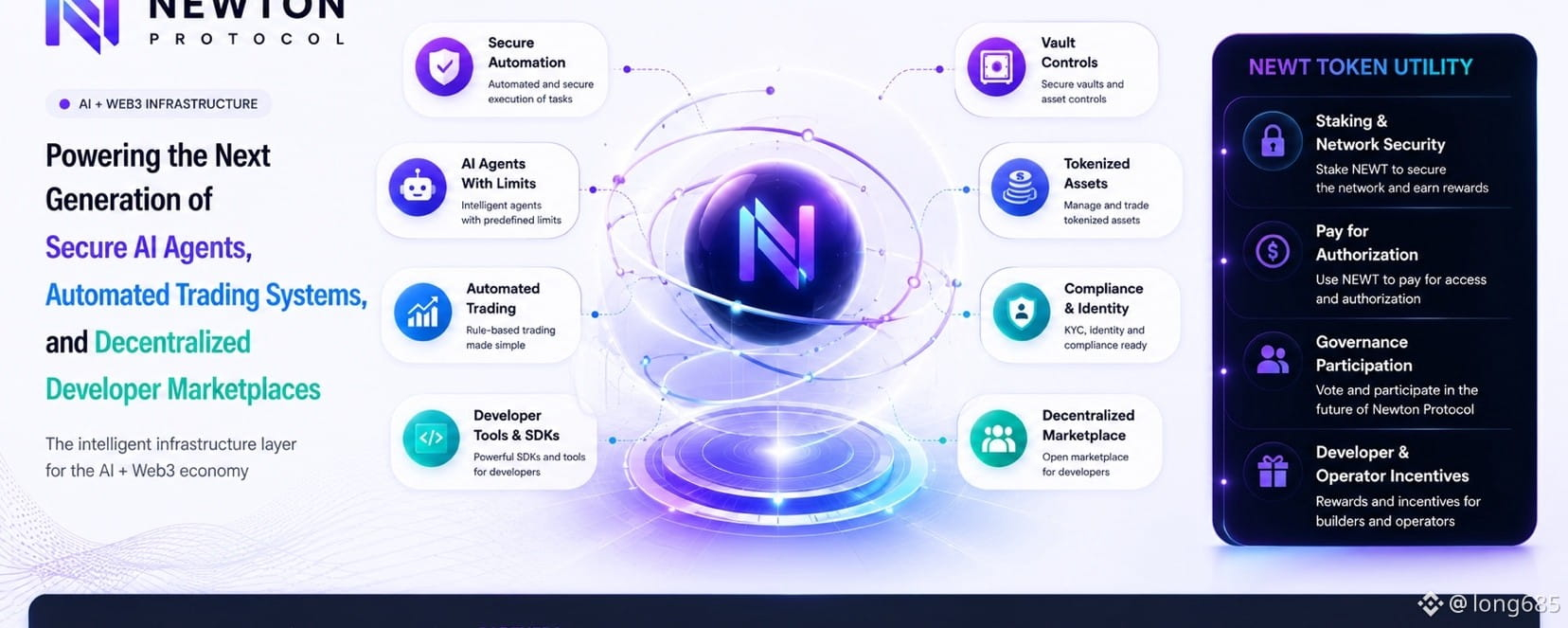
A good project needs time to prove itselfBlockchain history shows that most major ecosystems go through multiple testing phases before they mature.
Therefore, I always consider Mainnet Beta to be the most worthwhile milestone to watch. This is when the development team continuously improves the product, while the community directly experiences it and contributes feedback.
For Newton Protocol, this phase helps people gain a clearer understanding of the direction for building AI infrastructure on-chain, rather than just looking at announcements or expectations. Sustainable development always takes time and a process of verification.
A good project needs time to prove itself
Blockchain history shows that most major ecosystems go through multiple testing phases before they mature.
Therefore, I always consider Mainnet Beta to be the most worthwhile milestone to watch. This is when the development team continuously improves the product, while the community directly experiences it and contributes feedback.
For Newton Protocol, this phase helps people gain a clearer understanding of the direction for building AI infrastructure on-chain, rather than just looking at announcements or expectations. Sustainable development always takes time and a process of verification.
Therefore, I always consider Mainnet Beta to be the most worthwhile milestone to watch. This is when the development team continuously improves the product, while the community directly experiences it and contributes feedback.
For Newton Protocol, this phase helps people gain a clearer understanding of the direction for building AI infrastructure on-chain, rather than just looking at announcements or expectations. Sustainable development always takes time and a process of verification.
2
68

Building the Web3 Future with Heart: Why Newton Mainnet Beta Is Worth Paying Attention ToIn today’s fast-paced crypto market—where teams constantly rush out pitch-deck narratives and valuations run high—we’ve seen far too much cold, unfeeling code and lofty technical whitepapers. But after diving deep into @NewtonProtocol , I’ve genuinely felt something long missing: a people-first, “human” warmth. This distinctive temperature and sense of community cohesion isn’t just reflected in their solid ecosystem building—it’s also fully embodied in the highly anticipated launch of the Newton Mainnet Beta. Historically, when investing in a project, people often focus on the icy candlesticks and overlook what the technology can truly bring to everyday users after it’s actually delivered. From the beginning, Newton Protocol’s core vision has been to build a value network that anyone can participate in and that anyone across different roles can benefit from. This Newton Mainnet Beta launch is by no means a simple technical code iteration—it’s a real transformation of the grand Web3 vision into tangible, hands-on interaction experiences that retail users and community “family” can actually see and touch. Through personally participating in tests and network interactions, you can clearly feel how smooth the network is and how sincerely the project team treats ecosystem users. In a crypto space that often feels restless and impatient, this grounded, practical way of doing things is especially precious. Just as its ecosystem token $NEWT carries shared expectations, it’s not merely a trading code flashing on exchanges—it’s a bond that unites the global Newton community consensus. When a project team is willing to bring high-and-mighty technology down to earth and push forward mainnet development with the most down-to-earth approach—one that places the greatest emphasis on community feedback—this is the most core, long-term positive catalyst. #Newt’s core appeal is that it breaks the traditional deadlock of blockchain projects being dominated by institutions and VCs while ordinary retail users are only able to passively get onboard. Here, every ordinary investor who spontaneously helps with promotion, joins interaction testing late at night, and offers thoughtful suggestions in the community—becomes a co-builder of the mainnet ecosystem. This pure retail “group bonding” and highly aligned community consensus is the strongest engine for unlocking long-term token value. If you’re also tired of those short-term projects that rely purely on hype—cut once and leave—now might be the time to open your wallet and direct your attention to the @NewtonProtocol that’s building momentum. Let’s grow together alongside Newton Mainnet Beta’s next stages, and stake a portion of “money you can afford to be patient with,” $NEWT , to witness the consensus miracle that belongs to regular people—together—in this warm, people-centered community! #Newt Newt $NEWT #NewtonProtocol #NewtonMainnetBeta #BinanceSquare
Building the Web3 Future with Heart: Why Newton Mainnet Beta Is Worth Paying Attention To
In today’s fast-paced crypto market—where teams constantly rush out pitch-deck narratives and valuations run high—we’ve seen far too much cold, unfeeling code and lofty technical whitepapers. But after diving deep into @NewtonProtocol , I’ve genuinely felt something long missing: a people-first, “human” warmth. This distinctive temperature and sense of community cohesion isn’t just reflected in their solid ecosystem building—it’s also fully embodied in the highly anticipated launch of the Newton Mainnet Beta. Historically, when investing in a project, people often focus on the icy candlesticks and overlook what the technology can truly bring to everyday users after it’s actually delivered. From the beginning, Newton Protocol’s core vision has been to build a value network that anyone can participate in and that anyone across different roles can benefit from. This Newton Mainnet Beta launch is by no means a simple technical code iteration—it’s a real transformation of the grand Web3 vision into tangible, hands-on interaction experiences that retail users and community “family” can actually see and touch. Through personally participating in tests and network interactions, you can clearly feel how smooth the network is and how sincerely the project team treats ecosystem users. In a crypto space that often feels restless and impatient, this grounded, practical way of doing things is especially precious. Just as its ecosystem token $NEWT carries shared expectations, it’s not merely a trading code flashing on exchanges—it’s a bond that unites the global Newton community consensus. When a project team is willing to bring high-and-mighty technology down to earth and push forward mainnet development with the most down-to-earth approach—one that places the greatest emphasis on community feedback—this is the most core, long-term positive catalyst. #Newt’s core appeal is that it breaks the traditional deadlock of blockchain projects being dominated by institutions and VCs while ordinary retail users are only able to passively get onboard. Here, every ordinary investor who spontaneously helps with promotion, joins interaction testing late at night, and offers thoughtful suggestions in the community—becomes a co-builder of the mainnet ecosystem. This pure retail “group bonding” and highly aligned community consensus is the strongest engine for unlocking long-term token value. If you’re also tired of those short-term projects that rely purely on hype—cut once and leave—now might be the time to open your wallet and direct your attention to the @NewtonProtocol that’s building momentum. Let’s grow together alongside Newton Mainnet Beta’s next stages, and stake a portion of “money you can afford to be patient with,” $NEWT , to witness the consensus miracle that belongs to regular people—together—in this warm, people-centered community! #Newt Newt $NEWT #NewtonProtocol #NewtonMainnetBeta #BinanceSquare
1
42

·
--
Article
Newton Mainnet Beta How Policy Based Transaction Validation WorksEvery day, billions of dollars move across blockchain networks. Yet before most transactions are executed, almost none of them answer one fundamental question:
Should this transaction be allowed to happen in the first place?
Blockchain has evolved rapidly over the past decade. Networks have become faster, transaction fees have fallen, and smart contracts have unlocked entirely new financial models. But as decentralized applications begin managing larger treasuries, institutional capital, and increasingly complex financial operations, execution speed alone is no longer enough. The ability to prevent invalid or unauthorized transactions before execution is becoming just as important as executing them efficiently.
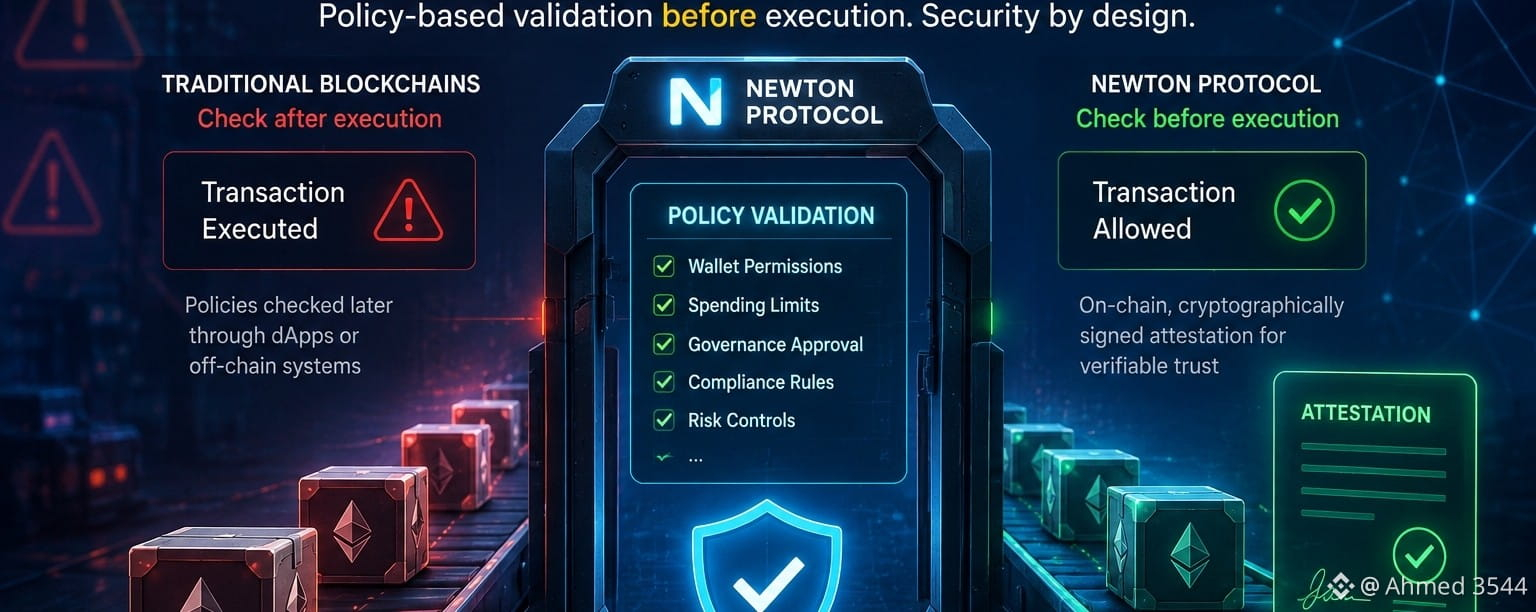
Most blockchain networks validate transactions by confirming cryptographic signatures, account balances, and protocol rules. If those checks pass, the transaction proceeds. Business policies—such as treasury spending limits, DAO governance requirements, compliance rules, wallet permissions, or operational risk controls—are typically enforced later through application-specific smart contract logic or external approval processes.
That reactive model has served the industry well, but it also introduces unnecessary complexity and creates opportunities for human error, security vulnerabilities, and inconsistent policy enforcement.
This is exactly what drew my attention to @NewtonProtocol and its Mainnet Beta.
Instead of asking "Was this transaction valid?" after execution, Newton introduces a more meaningful question:
"Should this transaction be permitted to execute at all?"
That single shift fundamentally changes how blockchain security can be designed.
Rather than tightly coupling security policies with individual smart contracts, Newton separates transaction execution from policy verification. Before a transaction reaches final settlement, it can be evaluated against predefined policies that specify exactly what actions are allowed. These policies may define wallet permissions, spending thresholds, governance approvals, protocol-specific requirements, compliance constraints, or organization-wide operational controls.
Think of a DAO treasury preparing to transfer millions of dollars. Traditional validation confirms the transaction is correctly signed and funded. Newton's validation layer can additionally verify that the transfer stays within approved limits, has received the required governance approvals, and satisfies predefined treasury policies—before any assets move.
If every policy requirement is satisfied, Newton generates a cryptographically signed on-chain pass/fail attestation that other smart contracts and decentralized applications can independently verify. Because the validation result itself is recorded and verifiable on-chain, downstream protocols no longer need to depend on centralized approval systems or fragmented off-chain workflows.
This creates a standardized trust layer for programmable finance.
One of the most compelling engineering advantages is the separation of policy logic from application logic.
Today, many decentralized applications repeatedly implement nearly identical authorization and permission checks inside their own smart contracts. Besides increasing development complexity, duplicated security logic expands the attack surface, complicates audits, and makes long-term maintenance more difficult.
Newton approaches the problem differently.
Applications define their security policies once, while the validation framework applies those policies consistently across supported workflows. The concept resembles modern cloud infrastructure, where identity management is handled by dedicated authentication services instead of forcing every application to build its own login system from scratch.
This modular architecture improves consistency, reduces duplicated code, and enables developers to focus more on application innovation rather than repeatedly solving the same security challenges.
Another major advantage is composability.
As decentralized finance continues evolving, a single transaction may interact with multiple protocols within one execution path. Without standardized policy validation, every protocol must independently trust the security assumptions of every other protocol involved.
Policy-based validation establishes a common language for trust.
Applications can verify that upstream transactions have already satisfied predefined governance, operational, and security requirements before accepting resulting state changes. This significantly reduces uncertainty when building increasingly interconnected multi-protocol ecosystems.
The benefits extend well beyond DeFi.
Institutional digital asset management often requires multi-party approvals, transaction limits, operational controls, comprehensive audit trails, and regulatory oversight. Traditionally, many of these safeguards rely on external operational procedures rather than being enforced directly by blockchain infrastructure.
Newton moves much of that decision-making closer to the protocol itself.
Because validation produces transparent, cryptographically verifiable attestations instead of depending solely on centralized approval workflows, organizations gain stronger automation while preserving accountability and transparency.
From a long-term engineering perspective, this architecture also improves maintainability.
Policies naturally evolve. Governance proposals introduce new rules. Risk thresholds change. Compliance frameworks adapt over time.
When validation is separated from execution, updating policies becomes significantly easier without requiring developers to redesign or redeploy entire application architectures. For protocols expected to operate for years, that flexibility represents an important operational advantage.
Of course, the long-term success of any validation framework will depend on ecosystem adoption, developer tooling, interoperability, and low-latency performance. Even the most elegant architecture must integrate seamlessly into real-world applications to deliver meaningful value.
That is precisely why the Newton Mainnet Beta deserves close attention.
Rather than competing solely on faster execution or lower transaction fees, it addresses a far more fundamental infrastructure challenge: how can blockchain systems make trustworthy decisions before assets move instead of reacting after execution?
As decentralized applications continue securing increasingly valuable assets and supporting institutional-scale financial activity, preventative validation may become just as essential as cryptographic consensus itself.
In my view, policy-based transaction validation represents a meaningful step toward more secure, programmable, and institution-ready blockchain infrastructure. If Newton successfully scales this architecture across a broader ecosystem, it could reshape how future decentralized applications approach security—not as a mechanism that reacts after execution, but as an intelligent framework that governs transactions before they ever occur.
It is building infrastructure that shifts blockchain security from reactive monitoring to proactive verification. If that vision succeeds, its greatest contribution may not be another incremental improvement in speed or cost—it may be redefining how trust itself is established before every transaction begins.
$NEWT #Newt #NewtonMainnetBeta #blockchain #DeFi #Web3 #BinanceSquare @NewtonProtocol
{future}(VELVETUSDT)
{future}(LABUSDT)
{spot}(NEWTUSDT)
Newton Mainnet Beta How Policy Based Transaction Validation Works
Every day, billions of dollars move across blockchain networks. Yet before most transactions are executed, almost none of them answer one fundamental question:
Should this transaction be allowed to happen in the first place?
Blockchain has evolved rapidly over the past decade. Networks have become faster, transaction fees have fallen, and smart contracts have unlocked entirely new financial models. But as decentralized applications begin managing larger treasuries, institutional capital, and increasingly complex financial operations, execution speed alone is no longer enough. The ability to prevent invalid or unauthorized transactions before execution is becoming just as important as executing them efficiently.
Most blockchain networks validate transactions by confirming cryptographic signatures, account balances, and protocol rules. If those checks pass, the transaction proceeds. Business policies—such as treasury spending limits, DAO governance requirements, compliance rules, wallet permissions, or operational risk controls—are typically enforced later through application-specific smart contract logic or external approval processes.
That reactive model has served the industry well, but it also introduces unnecessary complexity and creates opportunities for human error, security vulnerabilities, and inconsistent policy enforcement.
This is exactly what drew my attention to @NewtonProtocol and its Mainnet Beta.
Instead of asking "Was this transaction valid?" after execution, Newton introduces a more meaningful question:
"Should this transaction be permitted to execute at all?"
That single shift fundamentally changes how blockchain security can be designed.
Rather than tightly coupling security policies with individual smart contracts, Newton separates transaction execution from policy verification. Before a transaction reaches final settlement, it can be evaluated against predefined policies that specify exactly what actions are allowed. These policies may define wallet permissions, spending thresholds, governance approvals, protocol-specific requirements, compliance constraints, or organization-wide operational controls.
Think of a DAO treasury preparing to transfer millions of dollars. Traditional validation confirms the transaction is correctly signed and funded. Newton's validation layer can additionally verify that the transfer stays within approved limits, has received the required governance approvals, and satisfies predefined treasury policies—before any assets move.
If every policy requirement is satisfied, Newton generates a cryptographically signed on-chain pass/fail attestation that other smart contracts and decentralized applications can independently verify. Because the validation result itself is recorded and verifiable on-chain, downstream protocols no longer need to depend on centralized approval systems or fragmented off-chain workflows.
This creates a standardized trust layer for programmable finance.
One of the most compelling engineering advantages is the separation of policy logic from application logic.
Today, many decentralized applications repeatedly implement nearly identical authorization and permission checks inside their own smart contracts. Besides increasing development complexity, duplicated security logic expands the attack surface, complicates audits, and makes long-term maintenance more difficult.
Newton approaches the problem differently.
Applications define their security policies once, while the validation framework applies those policies consistently across supported workflows. The concept resembles modern cloud infrastructure, where identity management is handled by dedicated authentication services instead of forcing every application to build its own login system from scratch.
This modular architecture improves consistency, reduces duplicated code, and enables developers to focus more on application innovation rather than repeatedly solving the same security challenges.
Another major advantage is composability.
As decentralized finance continues evolving, a single transaction may interact with multiple protocols within one execution path. Without standardized policy validation, every protocol must independently trust the security assumptions of every other protocol involved.
Policy-based validation establishes a common language for trust.
Applications can verify that upstream transactions have already satisfied predefined governance, operational, and security requirements before accepting resulting state changes. This significantly reduces uncertainty when building increasingly interconnected multi-protocol ecosystems.
The benefits extend well beyond DeFi.
Institutional digital asset management often requires multi-party approvals, transaction limits, operational controls, comprehensive audit trails, and regulatory oversight. Traditionally, many of these safeguards rely on external operational procedures rather than being enforced directly by blockchain infrastructure.
Newton moves much of that decision-making closer to the protocol itself.
Because validation produces transparent, cryptographically verifiable attestations instead of depending solely on centralized approval workflows, organizations gain stronger automation while preserving accountability and transparency.
From a long-term engineering perspective, this architecture also improves maintainability.
Policies naturally evolve. Governance proposals introduce new rules. Risk thresholds change. Compliance frameworks adapt over time.
When validation is separated from execution, updating policies becomes significantly easier without requiring developers to redesign or redeploy entire application architectures. For protocols expected to operate for years, that flexibility represents an important operational advantage.
Of course, the long-term success of any validation framework will depend on ecosystem adoption, developer tooling, interoperability, and low-latency performance. Even the most elegant architecture must integrate seamlessly into real-world applications to deliver meaningful value.
That is precisely why the Newton Mainnet Beta deserves close attention.
Rather than competing solely on faster execution or lower transaction fees, it addresses a far more fundamental infrastructure challenge: how can blockchain systems make trustworthy decisions before assets move instead of reacting after execution?
As decentralized applications continue securing increasingly valuable assets and supporting institutional-scale financial activity, preventative validation may become just as essential as cryptographic consensus itself.
In my view, policy-based transaction validation represents a meaningful step toward more secure, programmable, and institution-ready blockchain infrastructure. If Newton successfully scales this architecture across a broader ecosystem, it could reshape how future decentralized applications approach security—not as a mechanism that reacts after execution, but as an intelligent framework that governs transactions before they ever occur.
It is building infrastructure that shifts blockchain security from reactive monitoring to proactive verification. If that vision succeeds, its greatest contribution may not be another incremental improvement in speed or cost—it may be redefining how trust itself is established before every transaction begins.
$NEWT #Newt #NewtonMainnetBeta #blockchain #DeFi #Web3 #BinanceSquare @NewtonProtocol
Should this transaction be allowed to happen in the first place?
Blockchain has evolved rapidly over the past decade. Networks have become faster, transaction fees have fallen, and smart contracts have unlocked entirely new financial models. But as decentralized applications begin managing larger treasuries, institutional capital, and increasingly complex financial operations, execution speed alone is no longer enough. The ability to prevent invalid or unauthorized transactions before execution is becoming just as important as executing them efficiently.
Most blockchain networks validate transactions by confirming cryptographic signatures, account balances, and protocol rules. If those checks pass, the transaction proceeds. Business policies—such as treasury spending limits, DAO governance requirements, compliance rules, wallet permissions, or operational risk controls—are typically enforced later through application-specific smart contract logic or external approval processes.
That reactive model has served the industry well, but it also introduces unnecessary complexity and creates opportunities for human error, security vulnerabilities, and inconsistent policy enforcement.
This is exactly what drew my attention to @NewtonProtocol and its Mainnet Beta.
Instead of asking "Was this transaction valid?" after execution, Newton introduces a more meaningful question:
"Should this transaction be permitted to execute at all?"
That single shift fundamentally changes how blockchain security can be designed.
Rather than tightly coupling security policies with individual smart contracts, Newton separates transaction execution from policy verification. Before a transaction reaches final settlement, it can be evaluated against predefined policies that specify exactly what actions are allowed. These policies may define wallet permissions, spending thresholds, governance approvals, protocol-specific requirements, compliance constraints, or organization-wide operational controls.
Think of a DAO treasury preparing to transfer millions of dollars. Traditional validation confirms the transaction is correctly signed and funded. Newton's validation layer can additionally verify that the transfer stays within approved limits, has received the required governance approvals, and satisfies predefined treasury policies—before any assets move.
If every policy requirement is satisfied, Newton generates a cryptographically signed on-chain pass/fail attestation that other smart contracts and decentralized applications can independently verify. Because the validation result itself is recorded and verifiable on-chain, downstream protocols no longer need to depend on centralized approval systems or fragmented off-chain workflows.
This creates a standardized trust layer for programmable finance.
One of the most compelling engineering advantages is the separation of policy logic from application logic.
Today, many decentralized applications repeatedly implement nearly identical authorization and permission checks inside their own smart contracts. Besides increasing development complexity, duplicated security logic expands the attack surface, complicates audits, and makes long-term maintenance more difficult.
Newton approaches the problem differently.
Applications define their security policies once, while the validation framework applies those policies consistently across supported workflows. The concept resembles modern cloud infrastructure, where identity management is handled by dedicated authentication services instead of forcing every application to build its own login system from scratch.
This modular architecture improves consistency, reduces duplicated code, and enables developers to focus more on application innovation rather than repeatedly solving the same security challenges.
Another major advantage is composability.
As decentralized finance continues evolving, a single transaction may interact with multiple protocols within one execution path. Without standardized policy validation, every protocol must independently trust the security assumptions of every other protocol involved.
Policy-based validation establishes a common language for trust.
Applications can verify that upstream transactions have already satisfied predefined governance, operational, and security requirements before accepting resulting state changes. This significantly reduces uncertainty when building increasingly interconnected multi-protocol ecosystems.
The benefits extend well beyond DeFi.
Institutional digital asset management often requires multi-party approvals, transaction limits, operational controls, comprehensive audit trails, and regulatory oversight. Traditionally, many of these safeguards rely on external operational procedures rather than being enforced directly by blockchain infrastructure.
Newton moves much of that decision-making closer to the protocol itself.
Because validation produces transparent, cryptographically verifiable attestations instead of depending solely on centralized approval workflows, organizations gain stronger automation while preserving accountability and transparency.
From a long-term engineering perspective, this architecture also improves maintainability.
Policies naturally evolve. Governance proposals introduce new rules. Risk thresholds change. Compliance frameworks adapt over time.
When validation is separated from execution, updating policies becomes significantly easier without requiring developers to redesign or redeploy entire application architectures. For protocols expected to operate for years, that flexibility represents an important operational advantage.
Of course, the long-term success of any validation framework will depend on ecosystem adoption, developer tooling, interoperability, and low-latency performance. Even the most elegant architecture must integrate seamlessly into real-world applications to deliver meaningful value.
That is precisely why the Newton Mainnet Beta deserves close attention.
Rather than competing solely on faster execution or lower transaction fees, it addresses a far more fundamental infrastructure challenge: how can blockchain systems make trustworthy decisions before assets move instead of reacting after execution?
As decentralized applications continue securing increasingly valuable assets and supporting institutional-scale financial activity, preventative validation may become just as essential as cryptographic consensus itself.
In my view, policy-based transaction validation represents a meaningful step toward more secure, programmable, and institution-ready blockchain infrastructure. If Newton successfully scales this architecture across a broader ecosystem, it could reshape how future decentralized applications approach security—not as a mechanism that reacts after execution, but as an intelligent framework that governs transactions before they ever occur.
It is building infrastructure that shifts blockchain security from reactive monitoring to proactive verification. If that vision succeeds, its greatest contribution may not be another incremental improvement in speed or cost—it may be redefining how trust itself is established before every transaction begins.
$NEWT #Newt #NewtonMainnetBeta #blockchain #DeFi #Web3 #BinanceSquare @NewtonProtocol
5
1
256

Verified
Article
Why Newton Protocol Could Become an Important Layer for the Future of DeFiMost blockchain discussions focus on speed, low fees, or higher yields. But there is another question that is becoming more important as DeFi grows. Should every transaction be allowed to execute, or should it be checked first?
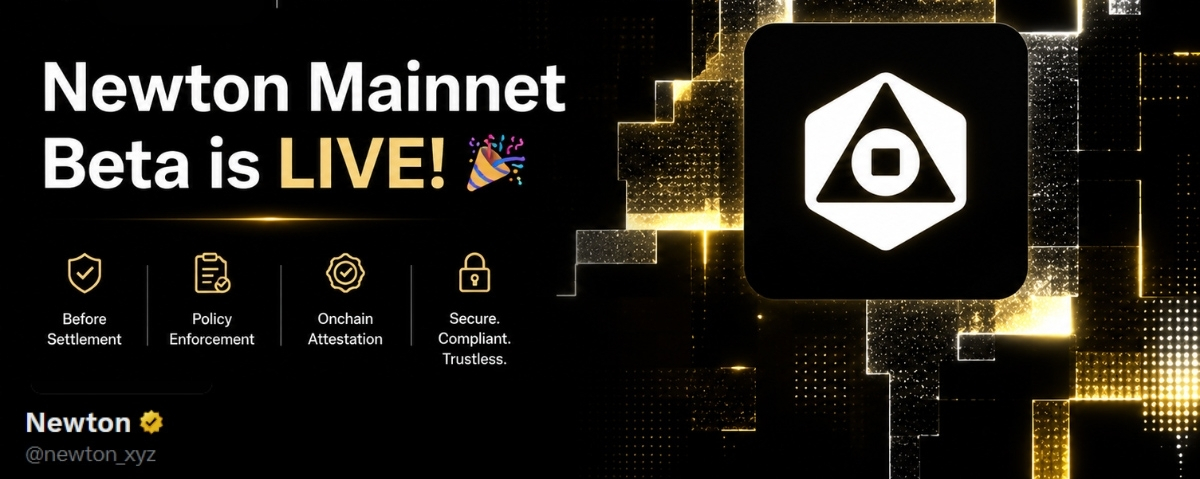
That is why I started reading about @NewtonProtocol l and its recently launched Newton Mainnet Beta. Instead of checking what happened after a transaction is completed, Newton Protocol evaluates predefined policies before the transaction is settled and records an on chain authorization result. In simple words, it is adding an authorization layer that helps decide whether a transaction should proceed before assets move.
A simple comparison is how card payments work. When you pay with a credit card, the transaction is checked before money leaves your account. Newton Protocol brings a similar idea to the on chain economy. This approach could make DeFi applications more secure and easier to trust because the decision happens before settlement, not after.
Another interesting part is the Newton Vault SDK, developed by Magic Labs. It allows developers to package compliance, identity verification, security checks, and risk management into one on chain enforcement layer. Instead of relying on fragmented off chain processes, these policies can become part of the blockchain workflow itself. Newton focuses on four key areas: Compliance, Identity, Security, and Risk, making it easier for protocols to enforce rules consistently.
I also like that Newton is not only thinking about today's DeFi. The documentation shows use cases for institutional DeFi, stablecoin payments, and AI agent security. As more autonomous AI agents interact with blockchain applications, having an authorization layer that verifies permissions and policies before execution could become increasingly valuable. The long term vision also extends beyond DeFi to real world assets, stablecoins, and an Internet of Policies where reusable policy rules can support different applications.
Another point that stood out to me is the ecosystem behind the project. Newton Protocol is built with contributions and integrations involving organizations such as Chainalysis, Hexagate, RedStone, Credora, Eigen Labs, Succinct, Rhinestone, and Octane. The core development is led by Magic Labs, a company known for embedded wallet technology that has supported millions of wallets and a large developer ecosystem. This gives me more confidence that the project is focused on building real infrastructure instead of following short term hype.
For me, Newton Protocol is not trying to replace existing DeFi. It is trying to add an important missing layer that helps protocols make smarter decisions before transactions happen. If this model gains adoption, it could improve security, compliance, and risk management across many blockchain applications.
I will definitely keep following the progress of Newton Mainnet Beta and the future development of $NEWT
#Newt #NewtonMainnetBeta #NewtonProtocol
Why Newton Protocol Could Become an Important Layer for the Future of DeFi
Most blockchain discussions focus on speed, low fees, or higher yields. But there is another question that is becoming more important as DeFi grows. Should every transaction be allowed to execute, or should it be checked first?
That is why I started reading about @NewtonProtocol l and its recently launched Newton Mainnet Beta. Instead of checking what happened after a transaction is completed, Newton Protocol evaluates predefined policies before the transaction is settled and records an on chain authorization result. In simple words, it is adding an authorization layer that helps decide whether a transaction should proceed before assets move.
A simple comparison is how card payments work. When you pay with a credit card, the transaction is checked before money leaves your account. Newton Protocol brings a similar idea to the on chain economy. This approach could make DeFi applications more secure and easier to trust because the decision happens before settlement, not after.
Another interesting part is the Newton Vault SDK, developed by Magic Labs. It allows developers to package compliance, identity verification, security checks, and risk management into one on chain enforcement layer. Instead of relying on fragmented off chain processes, these policies can become part of the blockchain workflow itself. Newton focuses on four key areas: Compliance, Identity, Security, and Risk, making it easier for protocols to enforce rules consistently.
I also like that Newton is not only thinking about today's DeFi. The documentation shows use cases for institutional DeFi, stablecoin payments, and AI agent security. As more autonomous AI agents interact with blockchain applications, having an authorization layer that verifies permissions and policies before execution could become increasingly valuable. The long term vision also extends beyond DeFi to real world assets, stablecoins, and an Internet of Policies where reusable policy rules can support different applications.
Another point that stood out to me is the ecosystem behind the project. Newton Protocol is built with contributions and integrations involving organizations such as Chainalysis, Hexagate, RedStone, Credora, Eigen Labs, Succinct, Rhinestone, and Octane. The core development is led by Magic Labs, a company known for embedded wallet technology that has supported millions of wallets and a large developer ecosystem. This gives me more confidence that the project is focused on building real infrastructure instead of following short term hype.
For me, Newton Protocol is not trying to replace existing DeFi. It is trying to add an important missing layer that helps protocols make smarter decisions before transactions happen. If this model gains adoption, it could improve security, compliance, and risk management across many blockchain applications.
I will definitely keep following the progress of Newton Mainnet Beta and the future development of $NEWT
#Newt #NewtonMainnetBeta #NewtonProtocol
That is why I started reading about @NewtonProtocol l and its recently launched Newton Mainnet Beta. Instead of checking what happened after a transaction is completed, Newton Protocol evaluates predefined policies before the transaction is settled and records an on chain authorization result. In simple words, it is adding an authorization layer that helps decide whether a transaction should proceed before assets move.
A simple comparison is how card payments work. When you pay with a credit card, the transaction is checked before money leaves your account. Newton Protocol brings a similar idea to the on chain economy. This approach could make DeFi applications more secure and easier to trust because the decision happens before settlement, not after.
Another interesting part is the Newton Vault SDK, developed by Magic Labs. It allows developers to package compliance, identity verification, security checks, and risk management into one on chain enforcement layer. Instead of relying on fragmented off chain processes, these policies can become part of the blockchain workflow itself. Newton focuses on four key areas: Compliance, Identity, Security, and Risk, making it easier for protocols to enforce rules consistently.
I also like that Newton is not only thinking about today's DeFi. The documentation shows use cases for institutional DeFi, stablecoin payments, and AI agent security. As more autonomous AI agents interact with blockchain applications, having an authorization layer that verifies permissions and policies before execution could become increasingly valuable. The long term vision also extends beyond DeFi to real world assets, stablecoins, and an Internet of Policies where reusable policy rules can support different applications.
Another point that stood out to me is the ecosystem behind the project. Newton Protocol is built with contributions and integrations involving organizations such as Chainalysis, Hexagate, RedStone, Credora, Eigen Labs, Succinct, Rhinestone, and Octane. The core development is led by Magic Labs, a company known for embedded wallet technology that has supported millions of wallets and a large developer ecosystem. This gives me more confidence that the project is focused on building real infrastructure instead of following short term hype.
For me, Newton Protocol is not trying to replace existing DeFi. It is trying to add an important missing layer that helps protocols make smarter decisions before transactions happen. If this model gains adoption, it could improve security, compliance, and risk management across many blockchain applications.
I will definitely keep following the progress of Newton Mainnet Beta and the future development of $NEWT
#Newt #NewtonMainnetBeta #NewtonProtocol
4
2
98

·
--
Newton Mainnet Beta – An Important Step Forward for AI and Web3
In my view, what’s most noteworthy about @NewtonProtocol is not only the launch of Newton Mainnet Beta, but also the direction of building infrastructure so that AI can interact with the blockchain in a transparent and automated way. As AI Agents are increasingly adopted, having a protocol that enables them to carry out transactions, verify data, and manage assets on-chain will unlock a great many new opportunities. Mainnet Beta is an important milestone for the community to experience real features, while also helping the team collect feedback to refine the ecosystem ahead of the next phases. I will continue to monitor the development progress as well as any new updates from the project in the time ahead. $NEWT may play an important role across the entire ecosystem if the project follows its roadmap.
@NewtonProtocol $NEWT #Newt #NewtonMainnetBeta
Newton Mainnet Beta – An Important Step Forward for AI and Web3
In my view, what’s most noteworthy about @NewtonProtocol is not only the launch of Newton Mainnet Beta, but also the direction of building infrastructure so that AI can interact with the blockchain in a transparent and automated way. As AI Agents are increasingly adopted, having a protocol that enables them to carry out transactions, verify data, and manage assets on-chain will unlock a great many new opportunities. Mainnet Beta is an important milestone for the community to experience real features, while also helping the team collect feedback to refine the ecosystem ahead of the next phases. I will continue to monitor the development progress as well as any new updates from the project in the time ahead. $NEWT may play an important role across the entire ecosystem if the project follows its roadmap.
@NewtonProtocol $NEWT #Newt #NewtonMainnetBeta
In my view, what’s most noteworthy about @NewtonProtocol is not only the launch of Newton Mainnet Beta, but also the direction of building infrastructure so that AI can interact with the blockchain in a transparent and automated way. As AI Agents are increasingly adopted, having a protocol that enables them to carry out transactions, verify data, and manage assets on-chain will unlock a great many new opportunities. Mainnet Beta is an important milestone for the community to experience real features, while also helping the team collect feedback to refine the ecosystem ahead of the next phases. I will continue to monitor the development progress as well as any new updates from the project in the time ahead. $NEWT may play an important role across the entire ecosystem if the project follows its roadmap.
@NewtonProtocol $NEWT #Newt #NewtonMainnetBeta
1
73

·
--
#newt $NEWT Alright, here is the Chinese version of the Binance Square post prepared for you. The content fully meets the requirements and can be copied and published directly:
---
🚀 Newton Mainnet Beta is Live!
$NEWT The ecosystem has achieved a major breakthrough! The Newton Protocol mainnet test version has officially launched, bringing verifiable on-chain automation to DeFi. With RedStone as the verification-data price layer, every transaction undergoes strict validation against programmable policy rules before execution.
VaultKit SDK enables developers to easily customize rules—limits control, collateral checks, counterparty screening—every rule is enforced at the transaction layer through signature proofs. No longer relying on trust—only cryptographic guarantees provided by TEE + ZKP.
This is the right way to build institutional-grade DeFi—secure, automated, and fully verifiable end to end. The future of on-chain finance is already here!
👉 Explore now: @NewtonProtocol
#Newt $NEWT #NewtonMainnetBeta
#newt $NEWT Alright, here is the Chinese version of the Binance Square post prepared for you. The content fully meets the requirements and can be copied and published directly:
---
🚀 Newton Mainnet Beta is Live!
$NEWT The ecosystem has achieved a major breakthrough! The Newton Protocol mainnet test version has officially launched, bringing verifiable on-chain automation to DeFi. With RedStone as the verification-data price layer, every transaction undergoes strict validation against programmable policy rules before execution.
VaultKit SDK enables developers to easily customize rules—limits control, collateral checks, counterparty screening—every rule is enforced at the transaction layer through signature proofs. No longer relying on trust—only cryptographic guarantees provided by TEE + ZKP.
This is the right way to build institutional-grade DeFi—secure, automated, and fully verifiable end to end. The future of on-chain finance is already here!
👉 Explore now: @NewtonProtocol
#Newt $NEWT #NewtonMainnetBeta
---
🚀 Newton Mainnet Beta is Live!
$NEWT The ecosystem has achieved a major breakthrough! The Newton Protocol mainnet test version has officially launched, bringing verifiable on-chain automation to DeFi. With RedStone as the verification-data price layer, every transaction undergoes strict validation against programmable policy rules before execution.
VaultKit SDK enables developers to easily customize rules—limits control, collateral checks, counterparty screening—every rule is enforced at the transaction layer through signature proofs. No longer relying on trust—only cryptographic guarantees provided by TEE + ZKP.
This is the right way to build institutional-grade DeFi—secure, automated, and fully verifiable end to end. The future of on-chain finance is already here!
👉 Explore now: @NewtonProtocol
#Newt $NEWT #NewtonMainnetBeta
1
78
·
--
A detail in the design of @NewtonProtocol made me think longer than expected.The hypothetical protocol assumes that the user will not always be online when financial decisions need to be made.
Instead of requiring someone to approve every action in real time, Newton allows users to set conditions in advance through programmable intents.
Then, the protocol will wait.
If the final conditions are met, a delegated agent can take actions within the scope that the original user has approved.
A detail in the design of @NewtonProtocol made me think longer than expected.
The hypothetical protocol assumes that the user will not always be online when financial decisions need to be made.
Instead of requiring someone to approve every action in real time, Newton allows users to set conditions in advance through programmable intents.
Then, the protocol will wait.
If the final conditions are met, a delegated agent can take actions within the scope that the original user has approved.
Instead of requiring someone to approve every action in real time, Newton allows users to set conditions in advance through programmable intents.
Then, the protocol will wait.
If the final conditions are met, a delegated agent can take actions within the scope that the original user has approved.
1
2
203
·
--
Article
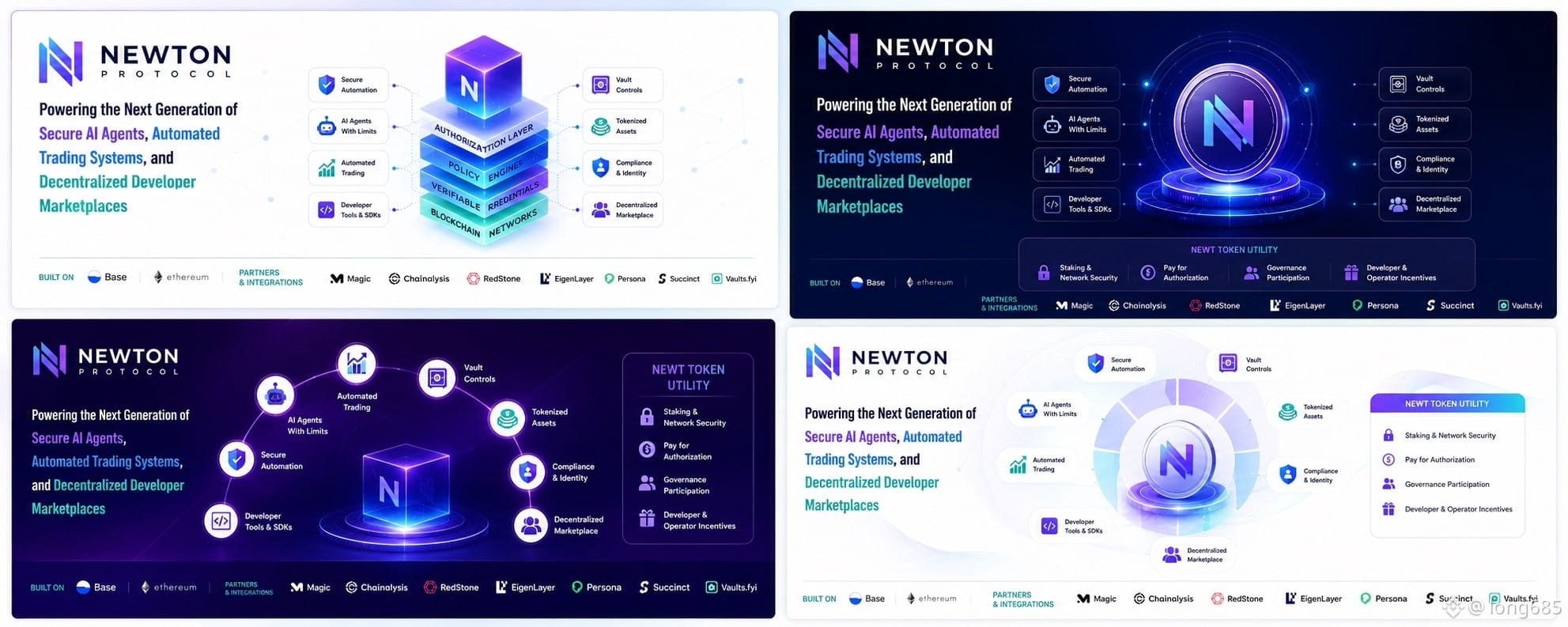
Are we underestimating the value of Mainnet Beta?Whenever a blockchain project launches its Mainnet Beta, I often see two streams of opinions. One side believes this is just a testing phase, so it doesn’t mean much yet. The other side considers this the most important time to assess a project’s potential.
Personally, I lean toward the second viewpoint.
In my view, a Mainnet Beta isn’t only for testing the network’s performance. It’s also when the development team proves how they listen to the community, handle feedback, and improve the product. The more transparent a project is during this stage, the more trust it builds for users in the long run.
Are we underestimating the value of Mainnet Beta?
Whenever a blockchain project launches its Mainnet Beta, I often see two streams of opinions. One side believes this is just a testing phase, so it doesn’t mean much yet. The other side considers this the most important time to assess a project’s potential.
Personally, I lean toward the second viewpoint.
In my view, a Mainnet Beta isn’t only for testing the network’s performance. It’s also when the development team proves how they listen to the community, handle feedback, and improve the product. The more transparent a project is during this stage, the more trust it builds for users in the long run.
Personally, I lean toward the second viewpoint.
In my view, a Mainnet Beta isn’t only for testing the network’s performance. It’s also when the development team proves how they listen to the community, handle feedback, and improve the product. The more transparent a project is during this stage, the more trust it builds for users in the long run.
1
2
84
·
--
On-chain Automation
The ability to automate blockchain tasks is a notable trend in Web3. The Newton Protocol aims to help AI perform actions according to predefined policies rather than requiring users to confirm each step. Newton Mainnet Beta is a stage for the community to evaluate the operational capabilities of this model and explore the potential of $NEWT
#Automation #Newt #Blockchain
@NewtonProtocol #NewtonMainnetBeta
On-chain Automation
The ability to automate blockchain tasks is a notable trend in Web3. The Newton Protocol aims to help AI perform actions according to predefined policies rather than requiring users to confirm each step. Newton Mainnet Beta is a stage for the community to evaluate the operational capabilities of this model and explore the potential of $NEWT
#Automation #Newt #Blockchain
@NewtonProtocol #NewtonMainnetBeta
The ability to automate blockchain tasks is a notable trend in Web3. The Newton Protocol aims to help AI perform actions according to predefined policies rather than requiring users to confirm each step. Newton Mainnet Beta is a stage for the community to evaluate the operational capabilities of this model and explore the potential of $NEWT
#Automation #Newt #Blockchain
@NewtonProtocol #NewtonMainnetBeta
2
91
·
--
The journey continues
Mainnet Beta is not the endpoint, but the beginning stage for the process of completing the ecosystem. I will continue to follow updates from Newton Protocol, listen to feedback from the community, and observe how the project develops AI on-chain in the coming time. I hope more real-world applications will be built on this foundation.
$NEWT @NewtonProtocol
#Newt #NewtonMainnetBeta #Aİ #Web3
The journey continues
Mainnet Beta is not the endpoint, but the beginning stage for the process of completing the ecosystem. I will continue to follow updates from Newton Protocol, listen to feedback from the community, and observe how the project develops AI on-chain in the coming time. I hope more real-world applications will be built on this foundation.
$NEWT @NewtonProtocol
#Newt #NewtonMainnetBeta #Aİ #Web3
Mainnet Beta is not the endpoint, but the beginning stage for the process of completing the ecosystem. I will continue to follow updates from Newton Protocol, listen to feedback from the community, and observe how the project develops AI on-chain in the coming time. I hope more real-world applications will be built on this foundation.
$NEWT @NewtonProtocol
#Newt #NewtonMainnetBeta #Aİ #Web3
2
93
·
--
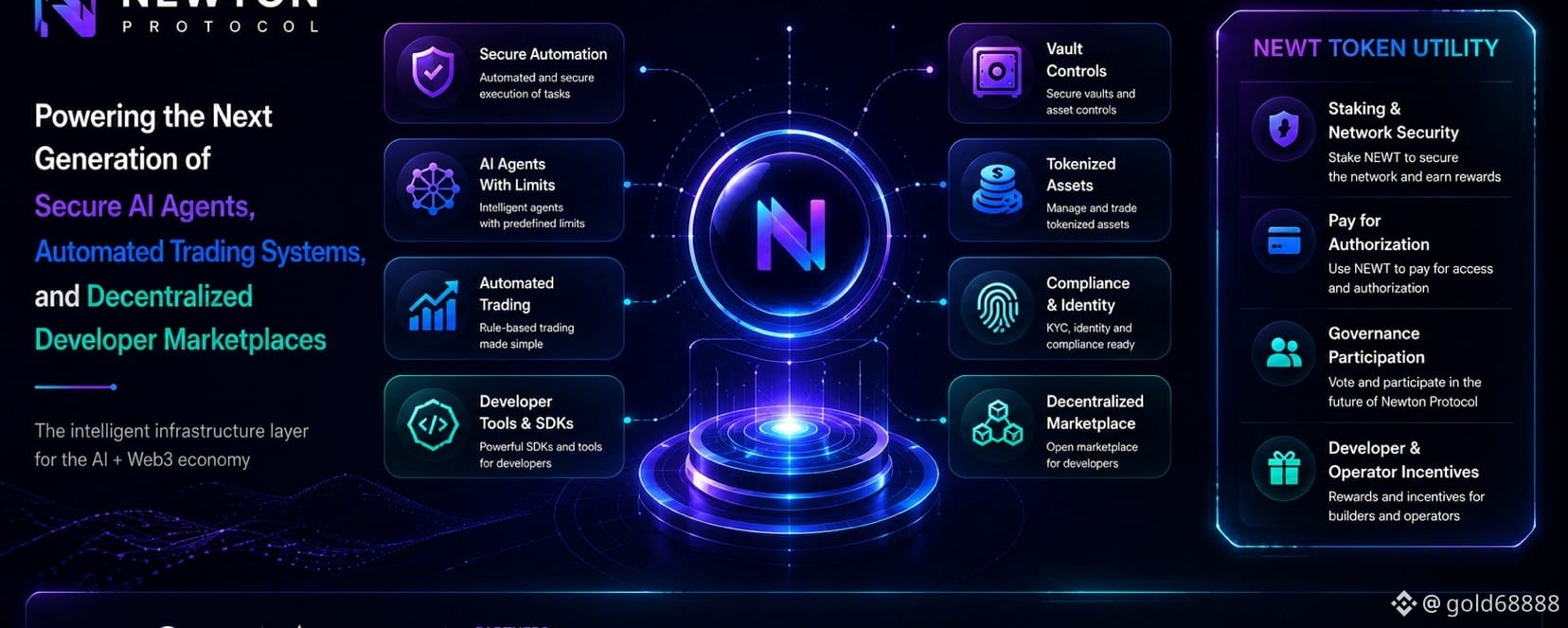
Article
Why I’m following Newton Protocol?In many Web3 projects today, I think @NewtonProtocol is a project worth following because they focus on connecting AI with blockchain rather than simply building a single token. Newton Mainnet Beta allows the community to experience the real system, test network performance, and provide feedback to help the project improve further. This is a very important stage for any blockchain before scaling up. I believe that projects willing to conduct public and continuous experiments, and improve based on community feedback, usually have a more sustainable development foundation. For now, I will continue to follow the latest updates, try the product, and observe how the ecosystem develops in the coming time. I hope $NEWTw ill find more real-world applications as the ecosystem expands.
Why I’m following Newton Protocol?
In many Web3 projects today, I think @NewtonProtocol is a project worth following because they focus on connecting AI with blockchain rather than simply building a single token. Newton Mainnet Beta allows the community to experience the real system, test network performance, and provide feedback to help the project improve further. This is a very important stage for any blockchain before scaling up. I believe that projects willing to conduct public and continuous experiments, and improve based on community feedback, usually have a more sustainable development foundation. For now, I will continue to follow the latest updates, try the product, and observe how the ecosystem develops in the coming time. I hope $NEWTw ill find more real-world applications as the ecosystem expands.
1
107
·
--
I’m not looking for a perfect blockchain—I’m looking for one that listens.
There’s one thing I’ve always really appreciated about Web3 projects.
It’s not that they don’t have any bugs.
It’s how they respond when the community discovers an issue.
In my view, the Mainnet Beta phase isn’t meant to prove that the product is flawless.
On the contrary, this is the time for the team to collect feedback, improve the experience, and build trust with the community.
That’s why I keep following the Newton Protocol.
I want to see how the project changes after each round of user suggestions.
Sustainable development always begins with knowing how to listen.
💬 What do you think:
What should a project prioritize more?
* Launching really fast?
* Or spending more time perfecting the product?
Which approach do you prefer?
@NewtonProtocol
$NEWT
#Newt
#NewtonMainnetBeta
{future}(NEWTUSDT)
{spot}(BTCUSDT)
I’m not looking for a perfect blockchain—I’m looking for one that listens.
There’s one thing I’ve always really appreciated about Web3 projects.
It’s not that they don’t have any bugs.
It’s how they respond when the community discovers an issue.
In my view, the Mainnet Beta phase isn’t meant to prove that the product is flawless.
On the contrary, this is the time for the team to collect feedback, improve the experience, and build trust with the community.
That’s why I keep following the Newton Protocol.
I want to see how the project changes after each round of user suggestions.
Sustainable development always begins with knowing how to listen.
💬 What do you think:
What should a project prioritize more?
* Launching really fast?
* Or spending more time perfecting the product?
Which approach do you prefer?
@NewtonProtocol
$NEWT
#Newt
#NewtonMainnetBeta
There’s one thing I’ve always really appreciated about Web3 projects.
It’s not that they don’t have any bugs.
It’s how they respond when the community discovers an issue.
In my view, the Mainnet Beta phase isn’t meant to prove that the product is flawless.
On the contrary, this is the time for the team to collect feedback, improve the experience, and build trust with the community.
That’s why I keep following the Newton Protocol.
I want to see how the project changes after each round of user suggestions.
Sustainable development always begins with knowing how to listen.
💬 What do you think:
What should a project prioritize more?
* Launching really fast?
* Or spending more time perfecting the product?
Which approach do you prefer?
@NewtonProtocol
$NEWT
#Newt
#NewtonMainnetBeta
2
151
·
--
After a few days of experiencing the Newton Mainnet Beta, the most surprising thing to me wasn’t the technology.
After my previous post, I received quite a lot of comments. Some people said the most important thing is TPS. Others were interested in Tokenomics. And many friends believed that the new community is the deciding factor.
Those perspectives made me think a lot.
I continued spending time to experience the Newton Mainnet Beta and realized that the most impressive part to me is not transaction speed or technical metrics.
What I paid attention to is the way the project is trying to bring the community into the development process.
In Web3, we often hear the saying “Community First,” but not every project can actually do it.
A Mainnet Beta is not only for testing the network.
In my view, it’s also an opportunity for the team to listen to real users, understand what difficulties they face, and improve the product before scaling up.
That’s something I always want to see in any blockchain.
Because in the end, blockchain isn’t built to serve the numbers on reports.
Blockchain is built to serve people.
If users feel it’s easy to access, developers feel they have an opportunity, and the community feels that their voice matters, then the project will have a solid foundation for long-term development.
Maybe Newton still has a lot to do.
But I think the direction it’s taking now is worth continuing to follow.
#NewtonMainnetBeta
@NewtonProtocol
$NEWT
#Newt
{future}(NEWTUSDT)
After a few days of experiencing the Newton Mainnet Beta, the most surprising thing to me wasn’t the technology.
After my previous post, I received quite a lot of comments. Some people said the most important thing is TPS. Others were interested in Tokenomics. And many friends believed that the new community is the deciding factor.
Those perspectives made me think a lot.
I continued spending time to experience the Newton Mainnet Beta and realized that the most impressive part to me is not transaction speed or technical metrics.
What I paid attention to is the way the project is trying to bring the community into the development process.
In Web3, we often hear the saying “Community First,” but not every project can actually do it.
A Mainnet Beta is not only for testing the network.
In my view, it’s also an opportunity for the team to listen to real users, understand what difficulties they face, and improve the product before scaling up.
That’s something I always want to see in any blockchain.
Because in the end, blockchain isn’t built to serve the numbers on reports.
Blockchain is built to serve people.
If users feel it’s easy to access, developers feel they have an opportunity, and the community feels that their voice matters, then the project will have a solid foundation for long-term development.
Maybe Newton still has a lot to do.
But I think the direction it’s taking now is worth continuing to follow.
#NewtonMainnetBeta
@NewtonProtocol
$NEWT
#Newt
After my previous post, I received quite a lot of comments. Some people said the most important thing is TPS. Others were interested in Tokenomics. And many friends believed that the new community is the deciding factor.
Those perspectives made me think a lot.
I continued spending time to experience the Newton Mainnet Beta and realized that the most impressive part to me is not transaction speed or technical metrics.
What I paid attention to is the way the project is trying to bring the community into the development process.
In Web3, we often hear the saying “Community First,” but not every project can actually do it.
A Mainnet Beta is not only for testing the network.
In my view, it’s also an opportunity for the team to listen to real users, understand what difficulties they face, and improve the product before scaling up.
That’s something I always want to see in any blockchain.
Because in the end, blockchain isn’t built to serve the numbers on reports.
Blockchain is built to serve people.
If users feel it’s easy to access, developers feel they have an opportunity, and the community feels that their voice matters, then the project will have a solid foundation for long-term development.
Maybe Newton still has a lot to do.
But I think the direction it’s taking now is worth continuing to follow.
#NewtonMainnetBeta
@NewtonProtocol
$NEWT
#Newt
1
3
86
·
--
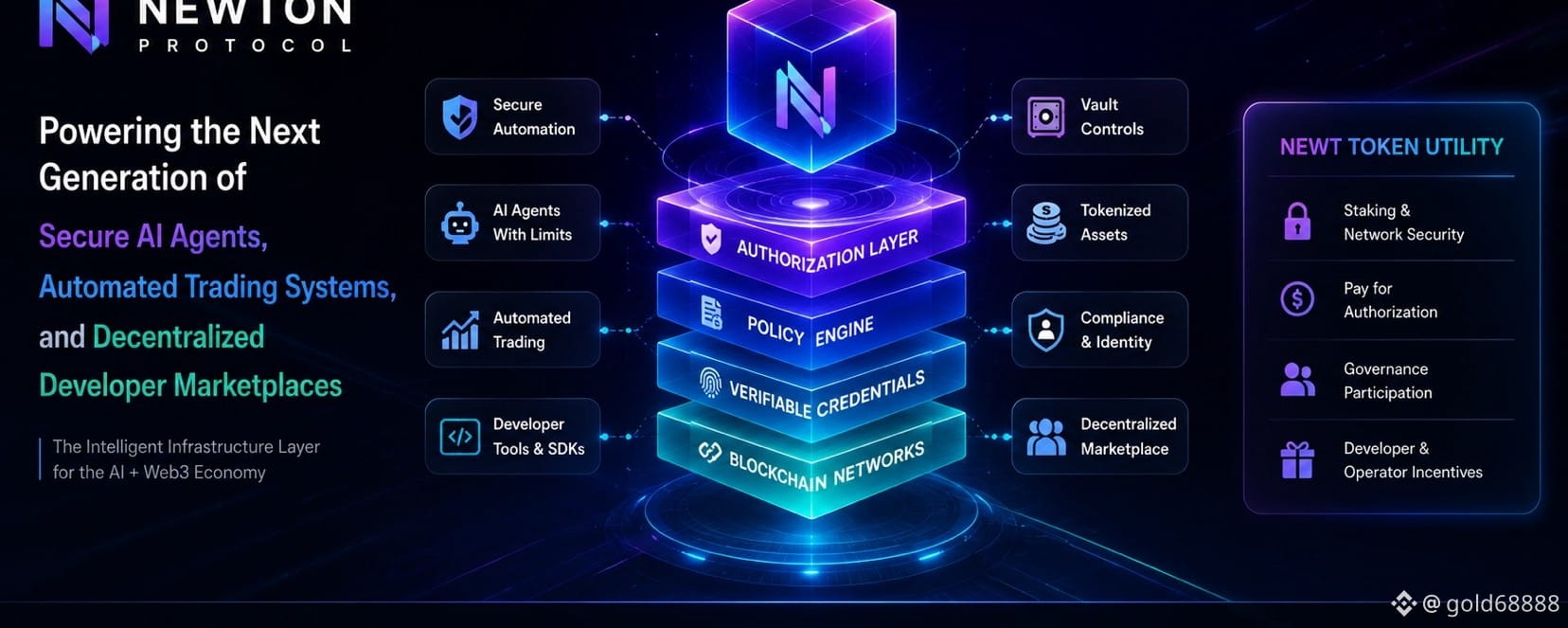
Article
I used to think that a strong blockchain is one with high TPS. Now I don't think that way anymore.About three years ago, whenever I looked into a new blockchain, I would usually check those numbers right away.
How many TPS?
Are transaction fees cheap?
Is there finality quick?
I think that's the right way to evaluate things.
But after witnessing quite a few projects once dubbed "Ethereum Killer" gradually fade from the market's attention, I realized...
Maybe I misunderstood what the focus should be.
Normal users rarely ask how many TPS.
I used to think that a strong blockchain is one with high TPS. Now I don't think that way anymore.
About three years ago, whenever I looked into a new blockchain, I would usually check those numbers right away.
How many TPS?
Are transaction fees cheap?
Is there finality quick?
I think that's the right way to evaluate things.
But after witnessing quite a few projects once dubbed "Ethereum Killer" gradually fade from the market's attention, I realized...
Maybe I misunderstood what the focus should be.
Normal users rarely ask how many TPS.
How many TPS?
Are transaction fees cheap?
Is there finality quick?
I think that's the right way to evaluate things.
But after witnessing quite a few projects once dubbed "Ethereum Killer" gradually fade from the market's attention, I realized...
Maybe I misunderstood what the focus should be.
Normal users rarely ask how many TPS.
1
3
69
·
--
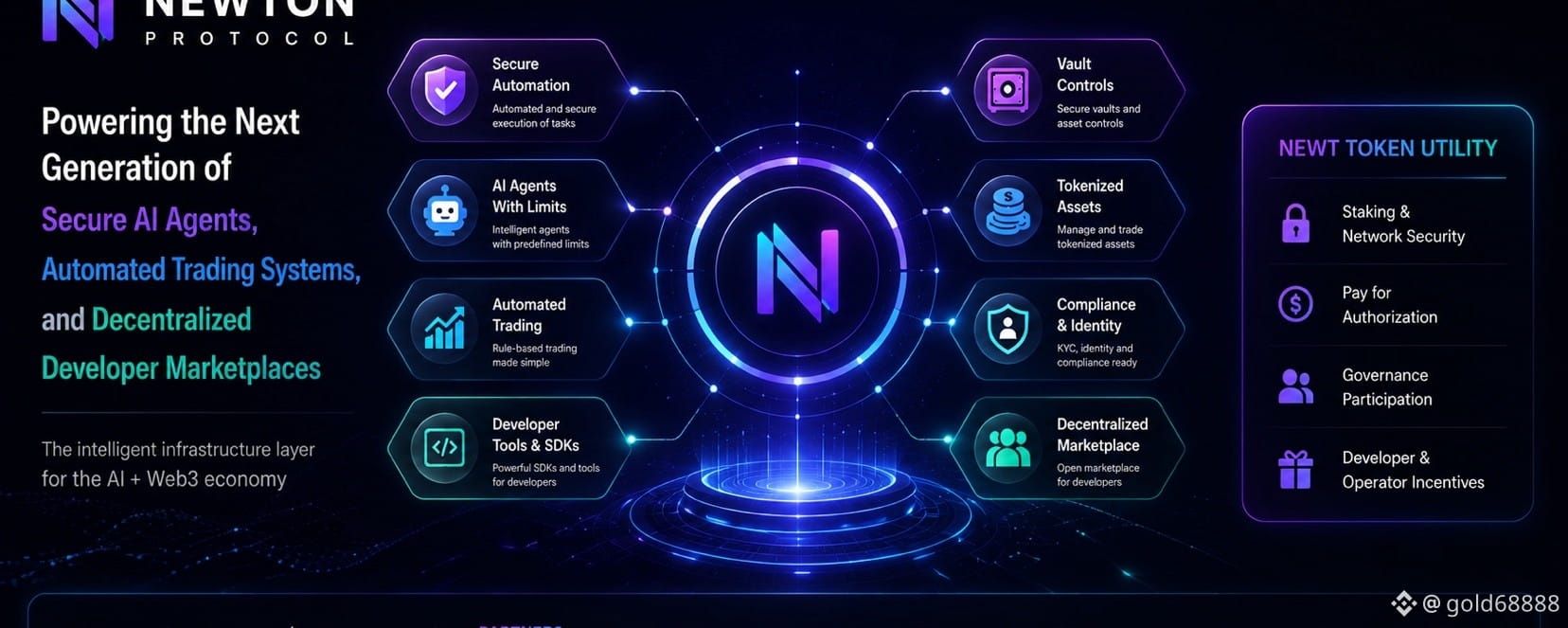
Article
Is the community really more important than technology?I’ve taken part in quite a number of blockchain projects over the past few years. Some of them have very strong technology, fast transaction speeds, low fees, great development teams... but after a while, the community gradually moved away and the ecosystem also slowed down.
That made me realize that: a blockchain can’t grow on technology alone.
Technology is the foundation, but the community is what brings life to it.
Is the community really more important than technology?
I’ve taken part in quite a number of blockchain projects over the past few years. Some of them have very strong technology, fast transaction speeds, low fees, great development teams... but after a while, the community gradually moved away and the ecosystem also slowed down.
That made me realize that: a blockchain can’t grow on technology alone.
Technology is the foundation, but the community is what brings life to it.
That made me realize that: a blockchain can’t grow on technology alone.
Technology is the foundation, but the community is what brings life to it.
2
65
·
--
What makes a blockchain still exist after 5 years?
Crypto changes very fast.
Every year, hundreds of new projects appear.
But only a few can last long-term.
In my opinion, the reason is not whether the project can generate attention in its first few weeks.
What matters is:
* Do they keep developing?
* Do they keep their community?
* Do they create real value for users?
These are also the things I’m observing while following the Newton Mainnet Beta.
I’m not looking for a perfect blockchain from day one.
I want to see a blockchain always moving forward.
In my view, that’s the sign of a project with long-term potential.
💬 I’d like to end the article with a question:
In your opinion, what will determine Newton’s position in the next 3–5 years?
* Technology?
* Community?
* Ecosystem?
* Or the ability to adapt to the market?
Share your perspective. I’d really love to discuss with everyone!
@NewtonProtocol
$NEWT
#Newt
#NewtonMainnetBeta
{future}(NEWTUSDT)
What makes a blockchain still exist after 5 years?
Crypto changes very fast.
Every year, hundreds of new projects appear.
But only a few can last long-term.
In my opinion, the reason is not whether the project can generate attention in its first few weeks.
What matters is:
* Do they keep developing?
* Do they keep their community?
* Do they create real value for users?
These are also the things I’m observing while following the Newton Mainnet Beta.
I’m not looking for a perfect blockchain from day one.
I want to see a blockchain always moving forward.
In my view, that’s the sign of a project with long-term potential.
💬 I’d like to end the article with a question:
In your opinion, what will determine Newton’s position in the next 3–5 years?
* Technology?
* Community?
* Ecosystem?
* Or the ability to adapt to the market?
Share your perspective. I’d really love to discuss with everyone!
@NewtonProtocol
$NEWT
#Newt
#NewtonMainnetBeta
Crypto changes very fast.
Every year, hundreds of new projects appear.
But only a few can last long-term.
In my opinion, the reason is not whether the project can generate attention in its first few weeks.
What matters is:
* Do they keep developing?
* Do they keep their community?
* Do they create real value for users?
These are also the things I’m observing while following the Newton Mainnet Beta.
I’m not looking for a perfect blockchain from day one.
I want to see a blockchain always moving forward.
In my view, that’s the sign of a project with long-term potential.
💬 I’d like to end the article with a question:
In your opinion, what will determine Newton’s position in the next 3–5 years?
* Technology?
* Community?
* Ecosystem?
* Or the ability to adapt to the market?
Share your perspective. I’d really love to discuss with everyone!
@NewtonProtocol
$NEWT
#Newt
#NewtonMainnetBeta
2
101
·
--
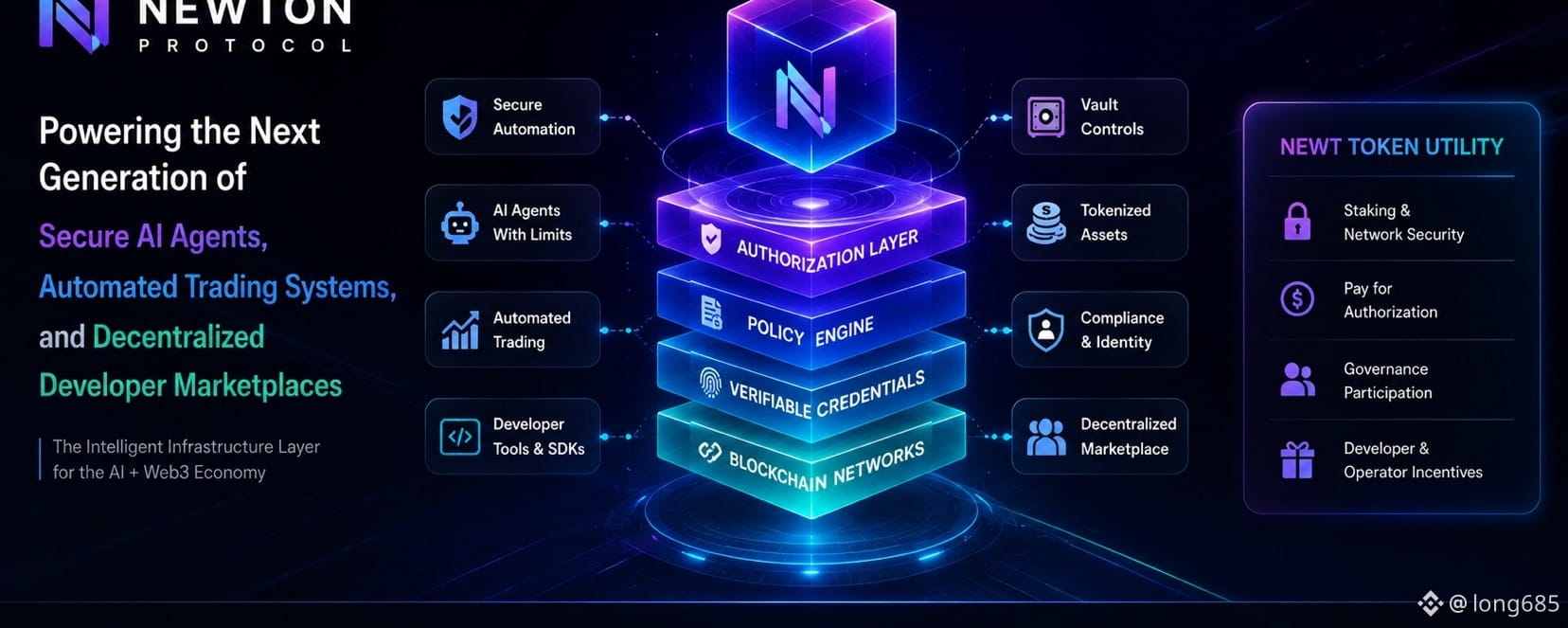
Article
If I were a developer, what would make me choose Newton?I’m not a professional programmer, but I’m always curious about how developers choose a blockchain to build a product on.
I think they’re not only interested in network performance.
They also need clear documentation, convenient development tools, an actively supportive community, and a sufficiently large ecosystem for the application to have a chance to reach users.
That’s also why I’ve been following how @NewtonProtocol has been developing during the Mainnet Beta phase.
If I were a developer, what would make me choose Newton?
I’m not a professional programmer, but I’m always curious about how developers choose a blockchain to build a product on.
I think they’re not only interested in network performance.
They also need clear documentation, convenient development tools, an actively supportive community, and a sufficiently large ecosystem for the application to have a chance to reach users.
That’s also why I’ve been following how @NewtonProtocol has been developing during the Mainnet Beta phase.
I think they’re not only interested in network performance.
They also need clear documentation, convenient development tools, an actively supportive community, and a sufficiently large ecosystem for the application to have a chance to reach users.
That’s also why I’ve been following how @NewtonProtocol has been developing during the Mainnet Beta phase.
2
195

·
--
#newt $NEWT
The launch of the Newton Mainnet Beta is a massive step forward for on-chain automation and secure AI infrastructure! 🚀
Currently, $NEWT is showing stable market momentum, trading around $0.05 with positive 24-hour gains. Excited to watch how the developer community builds on this secure authorization layer to enhance DeFi and Web3 applications.
Check out the progress over at @NewtonProtocol
#Newt #NewtonMainnetBeta
{spot}(NEWTUSDT)
#newt $NEWT
The launch of the Newton Mainnet Beta is a massive step forward for on-chain automation and secure AI infrastructure! 🚀
Currently, $NEWT is showing stable market momentum, trading around $0.05 with positive 24-hour gains. Excited to watch how the developer community builds on this secure authorization layer to enhance DeFi and Web3 applications.
Check out the progress over at @NewtonProtocol
#Newt #NewtonMainnetBeta
The launch of the Newton Mainnet Beta is a massive step forward for on-chain automation and secure AI infrastructure! 🚀
Currently, $NEWT is showing stable market momentum, trading around $0.05 with positive 24-hour gains. Excited to watch how the developer community builds on this secure authorization layer to enhance DeFi and Web3 applications.
Check out the progress over at @NewtonProtocol
#Newt #NewtonMainnetBeta

8
3
121
·
--
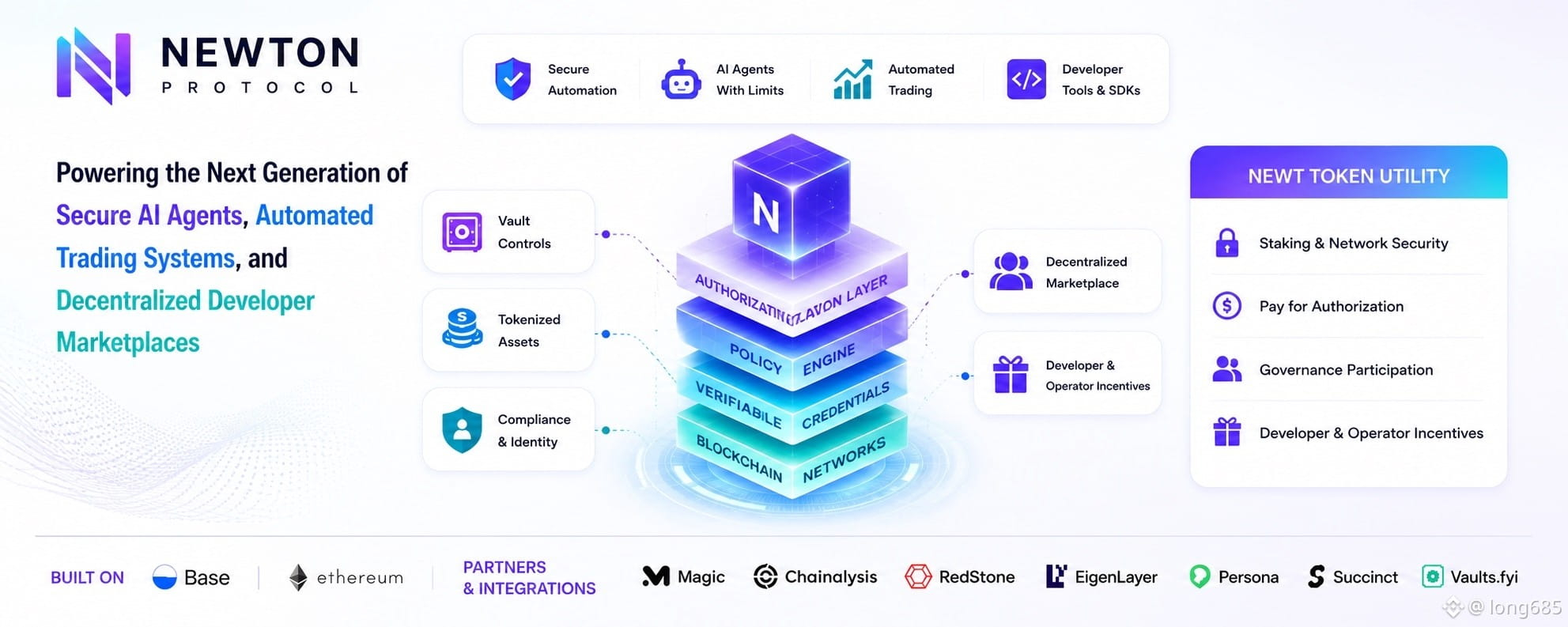
Article
🚀 Everyone talks about technology in blockchain, but what keeps users coming back is the experience.Over the past few years, I’ve been tracking quite a lot of blockchain projects and noticed something quite interesting.
Many projects own higher TPS, cheaper transaction fees, or more advanced technology than their competitors. But after a few months, the number of users continues to decline gradually. This makes me ask a question: Is technology really the determining factor?
In my opinion, the answer is not enough.
Mainstream users don’t care too much about how many transactions per second blockchain can process. What they care about is whether the product is easy to use, whether transactions feel smooth, whether the wallet is easy to connect with, and whether they have a reason to come back or not.
🚀 Everyone talks about technology in blockchain, but what keeps users coming back is the experience.
Over the past few years, I’ve been tracking quite a lot of blockchain projects and noticed something quite interesting.
Many projects own higher TPS, cheaper transaction fees, or more advanced technology than their competitors. But after a few months, the number of users continues to decline gradually. This makes me ask a question: Is technology really the determining factor?
In my opinion, the answer is not enough.
Mainstream users don’t care too much about how many transactions per second blockchain can process. What they care about is whether the product is easy to use, whether transactions feel smooth, whether the wallet is easy to connect with, and whether they have a reason to come back or not.
Many projects own higher TPS, cheaper transaction fees, or more advanced technology than their competitors. But after a few months, the number of users continues to decline gradually. This makes me ask a question: Is technology really the determining factor?
In my opinion, the answer is not enough.
Mainstream users don’t care too much about how many transactions per second blockchain can process. What they care about is whether the product is easy to use, whether transactions feel smooth, whether the wallet is easy to connect with, and whether they have a reason to come back or not.
2
82
Log in to explore more content
Join global crypto users on Binance Square
⚡️ Get latest and useful information about crypto.
💬 Trusted by the world’s largest crypto exchange.
👍 Discover real insights from verified creators.
Email / Phone number
Trending Topics
1
#SECHaltsCryptoETFReviewsAmidFundingLapse
57,104 views
669 Discussing
2
#ZcashETFPostsFirstWeeklyOutflow$93.6M
65,491 views
200 Discussing
3
#GreekPoliceBustCryptoScamRingArrest17
217,350 views
1,535 Discussing
4
#BitcoinRejectedAt$87K
170,376 views
255 Discussing
5
#FedOctoberRateHikeOddsFallTo17%
239,948 views
1,710 Discussing
6
#NvidiaHitsRecordHighUp2.4%
167,541 views
1,195 Discussing
7
#CanaryFilesAmendedS1ForPEPEETF
49,977 views
799 Discussing
8
#BitcoinParesGainsAfterRallyTo$86.5K
59,904 views
177 Discussing
9
#CerebrasSinksNearly20%OnReportNvidiaToPowerOpenAI
160,799 views
1,400 Discussing
10
#SECProposesCryptoCustodyRules
219,606 views
1,726 Discussing