

#globalstockfundssee
globalstockfundssee
606 views
23 Discussing
Hot
Latest

#GlobalStockFundsSee
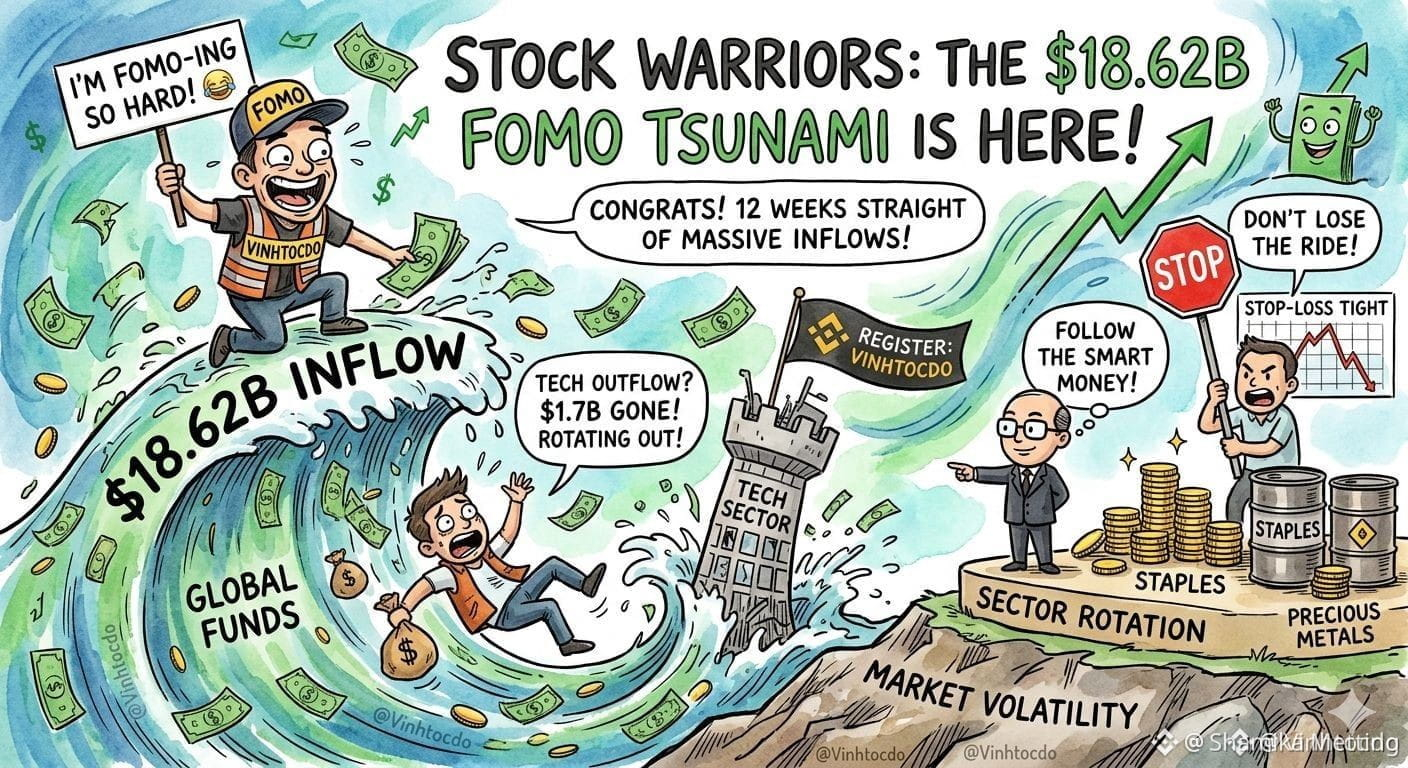
Congratulations to all stock warriors! 🎉 Global stock funds have just pulled in an additional $18.62 billion, marking 12 straight weeks of massive inflows! Total insanity recently: $237.57 billion! 💸
After a huge green week, even I couldn’t resist the ultimate FOMO! So it makes sense that global liquidity is exploding! 😂 But wait— the technology sector saw an outflow of $1.7 billion. Investors are leaving tech and moving into other sectors! 🔄
What should traders do?
1️⃣ Watch the shift: Money is moving. Don’t blindly buy the fall in technology; follow the smart capital as it heads toward consumer goods or precious metals! 🧭
2️⃣ Ride the momentum: Global stocks are at high record levels, but keep a tight stop-loss. Don’t let FOMO turn into losses! 📈
Not financial advice!
Please stay tuned
#stockmarket #FOMO #FinanceNews $SNDK
{future}(SNDKUSDT)
$SPCX
{future}(SPCXUSDT)
$BTC
{future}(BTCUSDT)
#GlobalStockFundsSee
Congratulations to all stock warriors! 🎉 Global stock funds have just pulled in an additional $18.62 billion, marking 12 straight weeks of massive inflows! Total insanity recently: $237.57 billion! 💸
After a huge green week, even I couldn’t resist the ultimate FOMO! So it makes sense that global liquidity is exploding! 😂 But wait— the technology sector saw an outflow of $1.7 billion. Investors are leaving tech and moving into other sectors! 🔄
What should traders do?
1️⃣ Watch the shift: Money is moving. Don’t blindly buy the fall in technology; follow the smart capital as it heads toward consumer goods or precious metals! 🧭
2️⃣ Ride the momentum: Global stocks are at high record levels, but keep a tight stop-loss. Don’t let FOMO turn into losses! 📈
Not financial advice!
Please stay tuned
#stockmarket #FOMO #FinanceNews $SNDK
$SPCX
$BTC
Congratulations to all stock warriors! 🎉 Global stock funds have just pulled in an additional $18.62 billion, marking 12 straight weeks of massive inflows! Total insanity recently: $237.57 billion! 💸
After a huge green week, even I couldn’t resist the ultimate FOMO! So it makes sense that global liquidity is exploding! 😂 But wait— the technology sector saw an outflow of $1.7 billion. Investors are leaving tech and moving into other sectors! 🔄
What should traders do?
1️⃣ Watch the shift: Money is moving. Don’t blindly buy the fall in technology; follow the smart capital as it heads toward consumer goods or precious metals! 🧭
2️⃣ Ride the momentum: Global stocks are at high record levels, but keep a tight stop-loss. Don’t let FOMO turn into losses! 📈
Not financial advice!
Please stay tuned
#stockmarket #FOMO #FinanceNews $SNDK
$SPCX
$BTC
1
141

·
--
Last week, the interesting part wasn’t crypto pumping, it was global stock funds quietly pulling attention while crypto traders sat in fear.
That’s the painful setup most investors know too well: you wait in $USDT because sentiment feels weak, then capital rotates somewhere else and you’re left wondering if you missed the real move. With the Fear & Greed Index around 38, the market is not euphoric. It’s cautious.
Case study: when traditional markets look safer, money often moves there first. We saw similar behavior during past risk-on cycles, where equities started leading before crypto caught a bid. In 2020 and parts of 2023, $BTC lagged at first, then followed once traders felt confident that liquidity was coming back.
The comparison matters because crypto is no longer trading in its own little bubble. If global stock funds keep attracting capital while $ETH and majors chop sideways, it may signal investors want risk, but with more “institutional comfort” first. That doesn’t kill the crypto thesis. It just changes the timing.
The lesson: watch rotation, not just candles. When stocks lead and stablecoin searches stay hot, the market may be telling us people are interested, but not fully deployed yet. Is this another delayed crypto catch-up setup, or is capital choosing equities over coins this time? #GlobalStockFundsSee #SP500TopsRecord7800 #SECCancelsCryptoRulemakingMeeting
Last week, the interesting part wasn’t crypto pumping, it was global stock funds quietly pulling attention while crypto traders sat in fear.
That’s the painful setup most investors know too well: you wait in $USDT because sentiment feels weak, then capital rotates somewhere else and you’re left wondering if you missed the real move. With the Fear & Greed Index around 38, the market is not euphoric. It’s cautious.
Case study: when traditional markets look safer, money often moves there first. We saw similar behavior during past risk-on cycles, where equities started leading before crypto caught a bid. In 2020 and parts of 2023, $BTC lagged at first, then followed once traders felt confident that liquidity was coming back.
The comparison matters because crypto is no longer trading in its own little bubble. If global stock funds keep attracting capital while $ETH and majors chop sideways, it may signal investors want risk, but with more “institutional comfort” first. That doesn’t kill the crypto thesis. It just changes the timing.
The lesson: watch rotation, not just candles. When stocks lead and stablecoin searches stay hot, the market may be telling us people are interested, but not fully deployed yet. Is this another delayed crypto catch-up setup, or is capital choosing equities over coins this time? #GlobalStockFundsSee #SP500TopsRecord7800 #SECCancelsCryptoRulemakingMeeting
That’s the painful setup most investors know too well: you wait in $USDT because sentiment feels weak, then capital rotates somewhere else and you’re left wondering if you missed the real move. With the Fear & Greed Index around 38, the market is not euphoric. It’s cautious.
Case study: when traditional markets look safer, money often moves there first. We saw similar behavior during past risk-on cycles, where equities started leading before crypto caught a bid. In 2020 and parts of 2023, $BTC lagged at first, then followed once traders felt confident that liquidity was coming back.
The comparison matters because crypto is no longer trading in its own little bubble. If global stock funds keep attracting capital while $ETH and majors chop sideways, it may signal investors want risk, but with more “institutional comfort” first. That doesn’t kill the crypto thesis. It just changes the timing.
The lesson: watch rotation, not just candles. When stocks lead and stablecoin searches stay hot, the market may be telling us people are interested, but not fully deployed yet. Is this another delayed crypto catch-up setup, or is capital choosing equities over coins this time? #GlobalStockFundsSee #SP500TopsRecord7800 #SECCancelsCryptoRulemakingMeeting

15

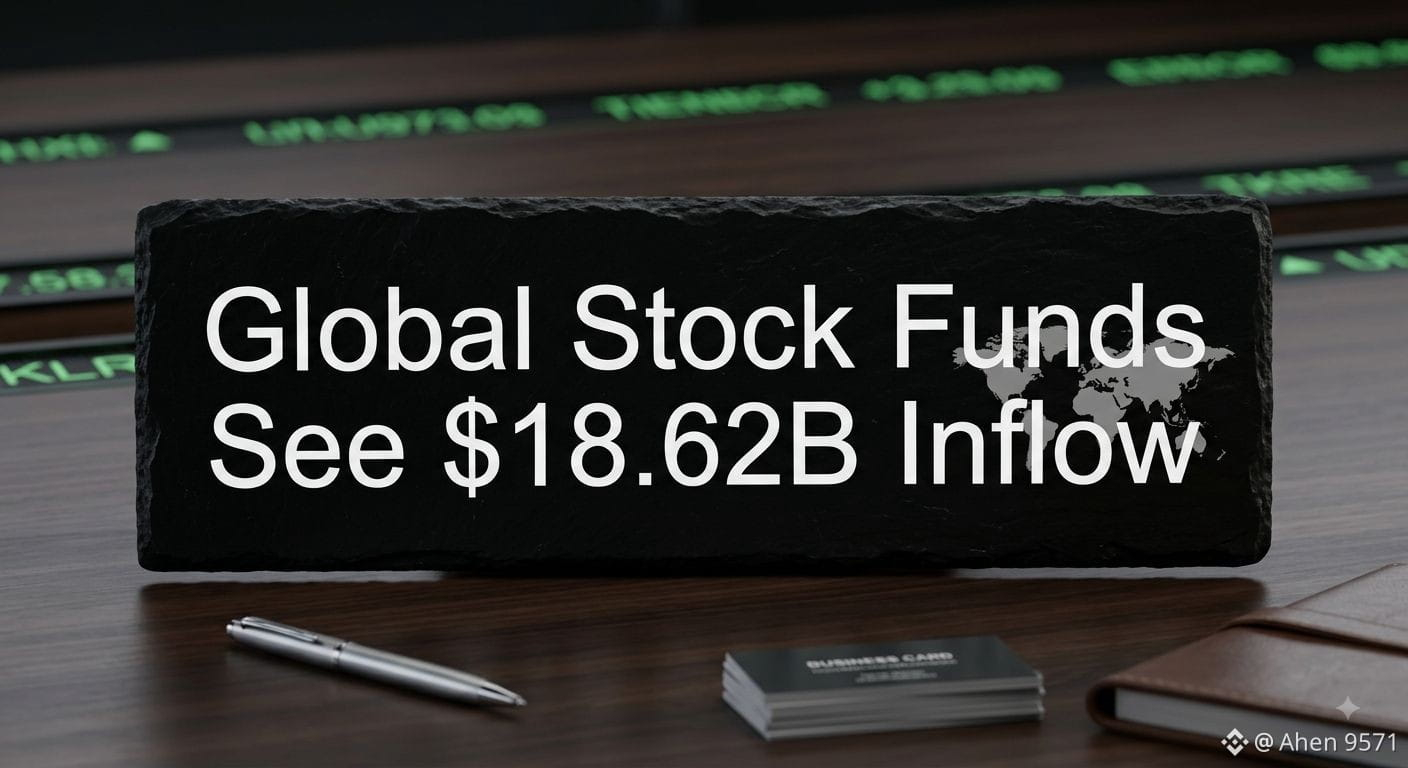
Global equity funds pulled in a net $18.62 billion for the week ending Aug 12, 2026, extended an impressive 12 week streak of consecutive positive inflow.
According to data tracked by LSEG Lipper, this ongoing risk on-wave has injected a Commutative $237.57 billion into global stock over the last three months, fueled by cooled inflation numbers and a resilient corporate earning season.
🌏 Geography of the Inflows
The latest Multi-million dollar influx was heavily led by international market, signalling a strong performance puts outside the United States.
📰✍🏼Europe: Captured the lion's share with +$13.52 billion in fresh capital.
📰✍🏼Asia: Placed second, attracting a net $4.13 billion.
📰✍🏼United States: Trialled behind with the modest
+$2.58 billion, reflecting a more cautious stance from domestic stock Buyers.
$G
{spot}(GUSDT)
$FF
{spot}(FFUSDT)
$ADA
{spot}(ADAUSDT)
#GlobalStockFundsSee
#GlobalStockFundsSee$18.62Binflow
🚨 follow me to remain updated 💖 🤩
Global equity funds pulled in a net $18.62 billion for the week ending Aug 12, 2026, extended an impressive 12 week streak of consecutive positive inflow.
According to data tracked by LSEG Lipper, this ongoing risk on-wave has injected a Commutative $237.57 billion into global stock over the last three months, fueled by cooled inflation numbers and a resilient corporate earning season.
🌏 Geography of the Inflows
The latest Multi-million dollar influx was heavily led by international market, signalling a strong performance puts outside the United States.
📰✍🏼Europe: Captured the lion's share with +$13.52 billion in fresh capital.
📰✍🏼Asia: Placed second, attracting a net $4.13 billion.
📰✍🏼United States: Trialled behind with the modest
+$2.58 billion, reflecting a more cautious stance from domestic stock Buyers.
$G
$FF
$ADA
#GlobalStockFundsSee
#GlobalStockFundsSee$18.62Binflow
🚨 follow me to remain updated 💖 🤩
According to data tracked by LSEG Lipper, this ongoing risk on-wave has injected a Commutative $237.57 billion into global stock over the last three months, fueled by cooled inflation numbers and a resilient corporate earning season.
🌏 Geography of the Inflows
The latest Multi-million dollar influx was heavily led by international market, signalling a strong performance puts outside the United States.
📰✍🏼Europe: Captured the lion's share with +$13.52 billion in fresh capital.
📰✍🏼Asia: Placed second, attracting a net $4.13 billion.
📰✍🏼United States: Trialled behind with the modest
+$2.58 billion, reflecting a more cautious stance from domestic stock Buyers.
$G
$FF
$ADA
#GlobalStockFundsSee
#GlobalStockFundsSee$18.62Binflow
🚨 follow me to remain updated 💖 🤩
1
18
Global Stock Funds See $18.62B Inflow 🚀📈
A huge $18.62 billion just flowed into global stock funds — and that’s a signal smart traders should not ignore.
Why? Because when big money starts moving aggressively into risk assets, it often means market confidence is rising. And when confidence returns, capital doesn’t always stop at stocks — it can rotate into crypto, especially majors like $BTC and $ETH , and then into higher-volatility alts.
That doesn’t guarantee anything, but it does tell us one thing clearly: liquidity is entering the market, and traders should be paying attention.
Why this matters for crypto:
Strong equity inflows can reflect a broader risk-on mood
Risk-on sentiment can support crypto momentum
BTC often becomes a key asset to watch when macro confidence improves
If volume expands, short-term trading opportunities may increase
What I’m watching now:
Whether these inflows continue in the next few sessions
Whether BTC and ETH start responding with stronger momentum
Whether altcoins begin to attract faster rotation
Whether macro news supports or weakens this risk-on setup
Bottom line:
Capital is moving. When institutional money becomes more active, traders who spot the shift early usually gain the best perspective. This is the kind of macro signal worth keeping on your radar if you trade crypto seriously.
Question for the market:
Do you think this risk-on wave will push more money into $BTC first, or will altcoins react faster?
#GlobalStockFundsSee $18.62BInflow
{spot}(BTCUSDT)
{spot}(ETHUSDT)
Global Stock Funds See $18.62B Inflow 🚀📈
A huge $18.62 billion just flowed into global stock funds — and that’s a signal smart traders should not ignore.
Why? Because when big money starts moving aggressively into risk assets, it often means market confidence is rising. And when confidence returns, capital doesn’t always stop at stocks — it can rotate into crypto, especially majors like $BTC and $ETH , and then into higher-volatility alts.
That doesn’t guarantee anything, but it does tell us one thing clearly: liquidity is entering the market, and traders should be paying attention.
Why this matters for crypto:
Strong equity inflows can reflect a broader risk-on mood
Risk-on sentiment can support crypto momentum
BTC often becomes a key asset to watch when macro confidence improves
If volume expands, short-term trading opportunities may increase
What I’m watching now:
Whether these inflows continue in the next few sessions
Whether BTC and ETH start responding with stronger momentum
Whether altcoins begin to attract faster rotation
Whether macro news supports or weakens this risk-on setup
Bottom line:
Capital is moving. When institutional money becomes more active, traders who spot the shift early usually gain the best perspective. This is the kind of macro signal worth keeping on your radar if you trade crypto seriously.
Question for the market:
Do you think this risk-on wave will push more money into $BTC first, or will altcoins react faster?
#GlobalStockFundsSee $18.62BInflow
A huge $18.62 billion just flowed into global stock funds — and that’s a signal smart traders should not ignore.
Why? Because when big money starts moving aggressively into risk assets, it often means market confidence is rising. And when confidence returns, capital doesn’t always stop at stocks — it can rotate into crypto, especially majors like $BTC and $ETH , and then into higher-volatility alts.
That doesn’t guarantee anything, but it does tell us one thing clearly: liquidity is entering the market, and traders should be paying attention.
Why this matters for crypto:
Strong equity inflows can reflect a broader risk-on mood
Risk-on sentiment can support crypto momentum
BTC often becomes a key asset to watch when macro confidence improves
If volume expands, short-term trading opportunities may increase
What I’m watching now:
Whether these inflows continue in the next few sessions
Whether BTC and ETH start responding with stronger momentum
Whether altcoins begin to attract faster rotation
Whether macro news supports or weakens this risk-on setup
Bottom line:
Capital is moving. When institutional money becomes more active, traders who spot the shift early usually gain the best perspective. This is the kind of macro signal worth keeping on your radar if you trade crypto seriously.
Question for the market:
Do you think this risk-on wave will push more money into $BTC first, or will altcoins react faster?
#GlobalStockFundsSee $18.62BInflow
82

·
--
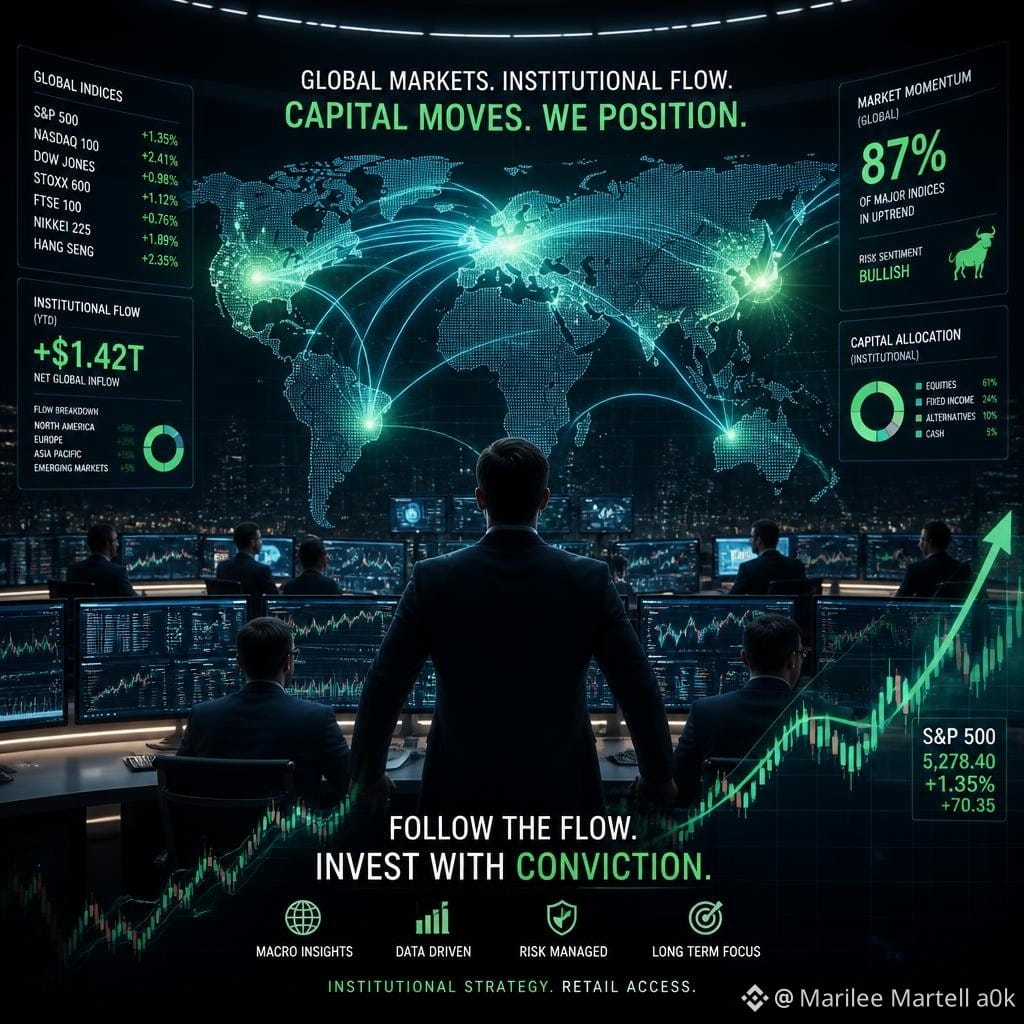
#GlobalStockFundsSee $18.62BInflowGlobal stock funds are seeing a strong $18.62B inflow, showing solid investor demand across equity markets. This fresh capital could support market momentum and boost confidence. 📈💰 #GlobalStocks #StockMarket #Investing #Markets #FinanceSector
#GlobalStockFundsSee $18.62BInflowGlobal stock funds are seeing a strong $18.62B inflow, showing solid investor demand across equity markets. This fresh capital could support market momentum and boost confidence. 📈💰 #GlobalStocks #StockMarket #Investing #Markets #FinanceSector

74
·
--
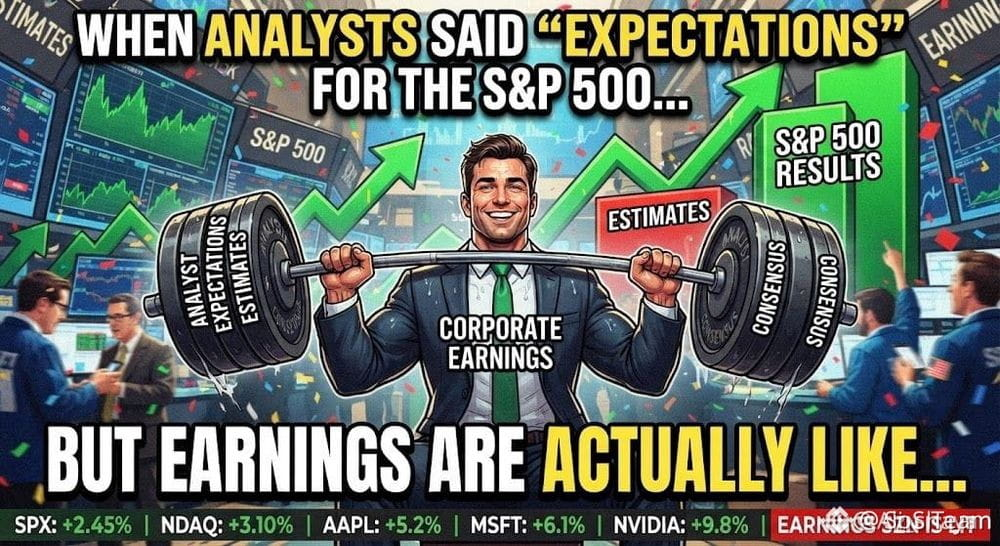
If you're still treating strong S&P 500 earnings like “just TradFi noise,” stop now.
Crypto traders get hurt when they stare only at candles and ignore the liquidity weather report. A good earnings season can pull risk appetite back into the room, but it can also bait late longs right before macro reality taps the mic.
The S&P 500 beating expectations feels a bit like those past “soft landing” rallies where $BTC and $ETH suddenly started acting like high-beta tech with worse sleep schedules. When equities look healthy, capital gets braver, stablecoins like $USDT stop hiding in the bunker, and narratives rotate faster than a memecoin Telegram admin after launch.
But comparison matters. In 2021, strong growth data added fuel to the party. In 2023, good earnings often meant “rates may stay higher,” which capped the upside. Now with Fear & Greed sitting in fear territory, the market is basically saying: “I want to believe, but I’ve been rugged by macro before.”
So is this earnings strength a real risk-on signal for crypto, or just another beautiful trap with a Wall Street suit on? #SP500EarningsBeatExpectations #GlobalStockFundsSee #SECCancelsCryptoRulemakingMeeting
If you're still treating strong S&P 500 earnings like “just TradFi noise,” stop now.
Crypto traders get hurt when they stare only at candles and ignore the liquidity weather report. A good earnings season can pull risk appetite back into the room, but it can also bait late longs right before macro reality taps the mic.
The S&P 500 beating expectations feels a bit like those past “soft landing” rallies where $BTC and $ETH suddenly started acting like high-beta tech with worse sleep schedules. When equities look healthy, capital gets braver, stablecoins like $USDT stop hiding in the bunker, and narratives rotate faster than a memecoin Telegram admin after launch.
But comparison matters. In 2021, strong growth data added fuel to the party. In 2023, good earnings often meant “rates may stay higher,” which capped the upside. Now with Fear & Greed sitting in fear territory, the market is basically saying: “I want to believe, but I’ve been rugged by macro before.”
So is this earnings strength a real risk-on signal for crypto, or just another beautiful trap with a Wall Street suit on? #SP500EarningsBeatExpectations #GlobalStockFundsSee #SECCancelsCryptoRulemakingMeeting
Crypto traders get hurt when they stare only at candles and ignore the liquidity weather report. A good earnings season can pull risk appetite back into the room, but it can also bait late longs right before macro reality taps the mic.
The S&P 500 beating expectations feels a bit like those past “soft landing” rallies where $BTC and $ETH suddenly started acting like high-beta tech with worse sleep schedules. When equities look healthy, capital gets braver, stablecoins like $USDT stop hiding in the bunker, and narratives rotate faster than a memecoin Telegram admin after launch.
But comparison matters. In 2021, strong growth data added fuel to the party. In 2023, good earnings often meant “rates may stay higher,” which capped the upside. Now with Fear & Greed sitting in fear territory, the market is basically saying: “I want to believe, but I’ve been rugged by macro before.”
So is this earnings strength a real risk-on signal for crypto, or just another beautiful trap with a Wall Street suit on? #SP500EarningsBeatExpectations #GlobalStockFundsSee #SECCancelsCryptoRulemakingMeeting
7
·
--
Everyone thinks AI-politics headlines only matter for tech stocks, but actually they can quietly move crypto liquidity before traders notice.
The mistake is chasing AI-related pumps like they live in a vacuum. When countries are pressured to pick sides between US and China AI coalitions, markets start repricing risk, and late buyers often become the exit liquidity.
1) Watch the “macro umbrella,” not just the candle. If global funds get nervous, capital usually runs toward safer parking spots first, which is why $USDT demand and $BTC dominance can tell you more than a random green AI token chart.
2) Don’t confuse narrative with confirmation. A headline can make anything with “AI” in the pitch look attractive for 24 hours, but if volume fades and the broader market is still in Fear around 37, that’s like buying an umbrella after the storm already passed.
3) Check who actually benefits. Infrastructure chains, data networks, and compliance-friendly projects may react differently than meme-style AI plays, while tokens like $POL can move more on ecosystem flows than the headline itself. Simple rule: if you can’t explain the link in one sentence, the market probably won’t hold the pump for long.
Are you treating this AI coalition story as a real crypto catalyst or just another short-term narrative trade? #USToPressNationsToPickUSOrChinaAICoalition #GlobalStockFundsSee #SECCancelsCryptoRulemakingMeeting
Everyone thinks AI-politics headlines only matter for tech stocks, but actually they can quietly move crypto liquidity before traders notice.
The mistake is chasing AI-related pumps like they live in a vacuum. When countries are pressured to pick sides between US and China AI coalitions, markets start repricing risk, and late buyers often become the exit liquidity.
1) Watch the “macro umbrella,” not just the candle. If global funds get nervous, capital usually runs toward safer parking spots first, which is why $USDT demand and $BTC dominance can tell you more than a random green AI token chart.
2) Don’t confuse narrative with confirmation. A headline can make anything with “AI” in the pitch look attractive for 24 hours, but if volume fades and the broader market is still in Fear around 37, that’s like buying an umbrella after the storm already passed.
3) Check who actually benefits. Infrastructure chains, data networks, and compliance-friendly projects may react differently than meme-style AI plays, while tokens like $POL can move more on ecosystem flows than the headline itself. Simple rule: if you can’t explain the link in one sentence, the market probably won’t hold the pump for long.
Are you treating this AI coalition story as a real crypto catalyst or just another short-term narrative trade? #USToPressNationsToPickUSOrChinaAICoalition #GlobalStockFundsSee #SECCancelsCryptoRulemakingMeeting
The mistake is chasing AI-related pumps like they live in a vacuum. When countries are pressured to pick sides between US and China AI coalitions, markets start repricing risk, and late buyers often become the exit liquidity.
1) Watch the “macro umbrella,” not just the candle. If global funds get nervous, capital usually runs toward safer parking spots first, which is why $USDT demand and $BTC dominance can tell you more than a random green AI token chart.
2) Don’t confuse narrative with confirmation. A headline can make anything with “AI” in the pitch look attractive for 24 hours, but if volume fades and the broader market is still in Fear around 37, that’s like buying an umbrella after the storm already passed.
3) Check who actually benefits. Infrastructure chains, data networks, and compliance-friendly projects may react differently than meme-style AI plays, while tokens like $POL can move more on ecosystem flows than the headline itself. Simple rule: if you can’t explain the link in one sentence, the market probably won’t hold the pump for long.
Are you treating this AI coalition story as a real crypto catalyst or just another short-term narrative trade? #USToPressNationsToPickUSOrChinaAICoalition #GlobalStockFundsSee #SECCancelsCryptoRulemakingMeeting

92
·
--
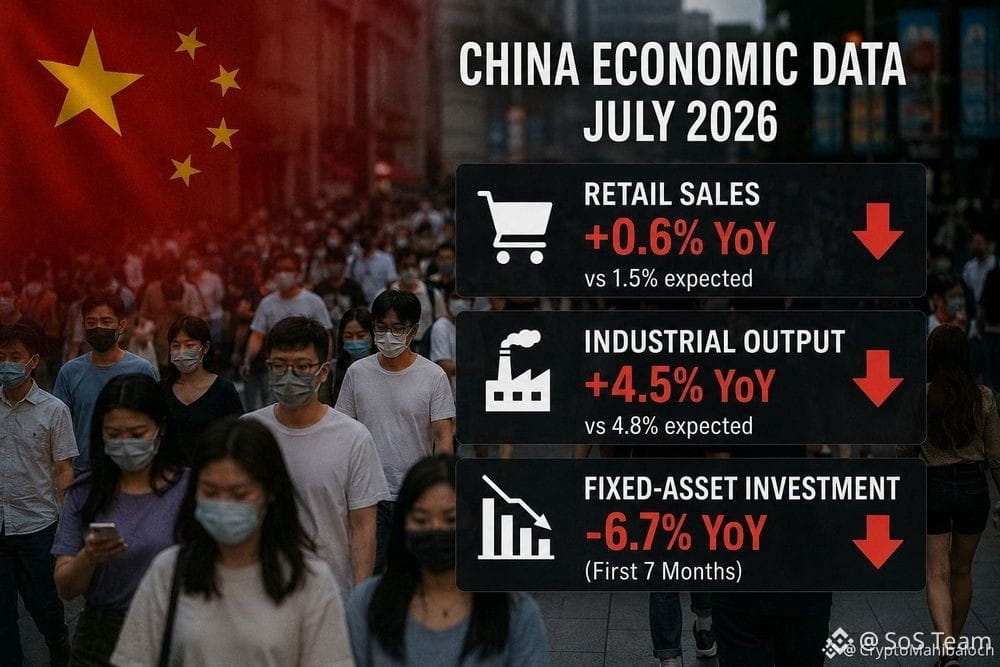
Have you noticed how every weak China data print gets treated as “bad news,” when it’s actually a trading filter?
The pain is simple: traders see output, retail sales, and investment miss expectations, then either panic-sell late or FOMO into the first bounce. That’s how you get chopped up, especially with Fear & Greed sitting in fear territory.
My take: weak China data is not automatically bearish for crypto. It means liquidity expectations start shifting. If markets believe Beijing has to support growth, risk assets can catch a bid before the real economy improves. That gap is where disciplined traders find setups, not certainty.
Here’s the guide I’d use: keep a higher $USDT balance until $BTC confirms strength above key resistance, watch whether alts like $POL follow with volume instead of just one candle pumps, and avoid buying “China stimulus” narratives after they’ve already run. Macro fear creates entries, but only if price confirms.
The mainstream view says bad data means run away. I think bad data means slow down, wait for liquidity signals, and let impatient traders donate their positions. What’s your take from here? #ChinaJulyOutputRetailInvestmentAllMiss #GlobalStockFundsSee #USToPressNationsToPickUSOrChinaAICoalition
Have you noticed how every weak China data print gets treated as “bad news,” when it’s actually a trading filter?
The pain is simple: traders see output, retail sales, and investment miss expectations, then either panic-sell late or FOMO into the first bounce. That’s how you get chopped up, especially with Fear & Greed sitting in fear territory.
My take: weak China data is not automatically bearish for crypto. It means liquidity expectations start shifting. If markets believe Beijing has to support growth, risk assets can catch a bid before the real economy improves. That gap is where disciplined traders find setups, not certainty.
Here’s the guide I’d use: keep a higher $USDT balance until $BTC confirms strength above key resistance, watch whether alts like $POL follow with volume instead of just one candle pumps, and avoid buying “China stimulus” narratives after they’ve already run. Macro fear creates entries, but only if price confirms.
The mainstream view says bad data means run away. I think bad data means slow down, wait for liquidity signals, and let impatient traders donate their positions. What’s your take from here? #ChinaJulyOutputRetailInvestmentAllMiss #GlobalStockFundsSee #USToPressNationsToPickUSOrChinaAICoalition
The pain is simple: traders see output, retail sales, and investment miss expectations, then either panic-sell late or FOMO into the first bounce. That’s how you get chopped up, especially with Fear & Greed sitting in fear territory.
My take: weak China data is not automatically bearish for crypto. It means liquidity expectations start shifting. If markets believe Beijing has to support growth, risk assets can catch a bid before the real economy improves. That gap is where disciplined traders find setups, not certainty.
Here’s the guide I’d use: keep a higher $USDT balance until $BTC confirms strength above key resistance, watch whether alts like $POL follow with volume instead of just one candle pumps, and avoid buying “China stimulus” narratives after they’ve already run. Macro fear creates entries, but only if price confirms.
The mainstream view says bad data means run away. I think bad data means slow down, wait for liquidity signals, and let impatient traders donate their positions. What’s your take from here? #ChinaJulyOutputRetailInvestmentAllMiss #GlobalStockFundsSee #USToPressNationsToPickUSOrChinaAICoalition
47
·
--
Why is nobody talking about SpaceX’s rising private valuation as a liquidity signal for risk assets?
Crypto traders keep getting trapped by the same mistake: waiting for confirmation after the move already happened. When fear is still visible in the market and everyone is hiding in $USDT, the best clues often come from outside crypto first.
SpaceX shares moving higher is not just a “space stock” story. It shows that serious capital is still willing to price long-duration, high-conviction growth aggressively, even while public markets act nervous. That matters for crypto because $BTC and major alts often benefit when investors start tolerating risk again.
The mainstream take is that private tech valuations are disconnected from crypto. I disagree. The same liquidity that chases scarce private equity can eventually rotate into scarce digital assets, especially when sentiment is weak and positioning is defensive.
Look at the setup: Fear & Greed sitting in fear, searches clustered around safety and rotation names like $USDT and $POL, while real-world growth assets keep attracting bids. That is usually when the market is quietly deciding who has conviction and who is just reacting.
Is SpaceX’s rise a warning that risk appetite is coming back before crypto traders notice it? #SpaceXSharesRiseTo #BitcoinHoldsNear #GlobalStockFundsSee
Why is nobody talking about SpaceX’s rising private valuation as a liquidity signal for risk assets?
Crypto traders keep getting trapped by the same mistake: waiting for confirmation after the move already happened. When fear is still visible in the market and everyone is hiding in $USDT, the best clues often come from outside crypto first.
SpaceX shares moving higher is not just a “space stock” story. It shows that serious capital is still willing to price long-duration, high-conviction growth aggressively, even while public markets act nervous. That matters for crypto because $BTC and major alts often benefit when investors start tolerating risk again.
The mainstream take is that private tech valuations are disconnected from crypto. I disagree. The same liquidity that chases scarce private equity can eventually rotate into scarce digital assets, especially when sentiment is weak and positioning is defensive.
Look at the setup: Fear & Greed sitting in fear, searches clustered around safety and rotation names like $USDT and $POL , while real-world growth assets keep attracting bids. That is usually when the market is quietly deciding who has conviction and who is just reacting.
Is SpaceX’s rise a warning that risk appetite is coming back before crypto traders notice it? #SpaceXSharesRiseTo #BitcoinHoldsNear #GlobalStockFundsSee
Crypto traders keep getting trapped by the same mistake: waiting for confirmation after the move already happened. When fear is still visible in the market and everyone is hiding in $USDT, the best clues often come from outside crypto first.
SpaceX shares moving higher is not just a “space stock” story. It shows that serious capital is still willing to price long-duration, high-conviction growth aggressively, even while public markets act nervous. That matters for crypto because $BTC and major alts often benefit when investors start tolerating risk again.
The mainstream take is that private tech valuations are disconnected from crypto. I disagree. The same liquidity that chases scarce private equity can eventually rotate into scarce digital assets, especially when sentiment is weak and positioning is defensive.
Look at the setup: Fear & Greed sitting in fear, searches clustered around safety and rotation names like $USDT and $POL , while real-world growth assets keep attracting bids. That is usually when the market is quietly deciding who has conviction and who is just reacting.
Is SpaceX’s rise a warning that risk appetite is coming back before crypto traders notice it? #SpaceXSharesRiseTo #BitcoinHoldsNear #GlobalStockFundsSee
41
Log in to explore more content
Join global crypto users on Binance Square
⚡️ Get latest and useful information about crypto.
💬 Trusted by the world’s largest crypto exchange.
👍 Discover real insights from verified creators.
Email / Phone number
Trending Topics
1
#IMFApproves$139MDisbursementToElSalvador
0 views
1 Discussing
2
#AnthropicTargetsIPOAsSoonAsMidNovember
475 views
31 Discussing
3
#EtherGains70.9%InQ3
192,686 views
1,265 Discussing
4
#TreasuryLetsStatesFileStablecoinCertificationsEarly
13,208 views
99 Discussing
5
#US10YearYieldNears5.3%
167,008 views
1,216 Discussing
6
#DollarIndexHitsHighestSinceMay2025
52,691 views
676 Discussing
7
#USWeeklyJoblessClaimsFallTo197000
40,685 views
543 Discussing
8
#BitcoinETFsTake$6.34BillionInQ3
10,820 views
77 Discussing
9
#KoreaProposesTokenizingStocksAndBonds
78,508 views
856 Discussing
10
#MetaMaskExitsLidoValidatorsAfterSecurityIncident
179,566 views
1,583 Discussing