

#escalabilidad
escalabilidad
2,901 views
32 Discussing
Hot
Latest

·
--
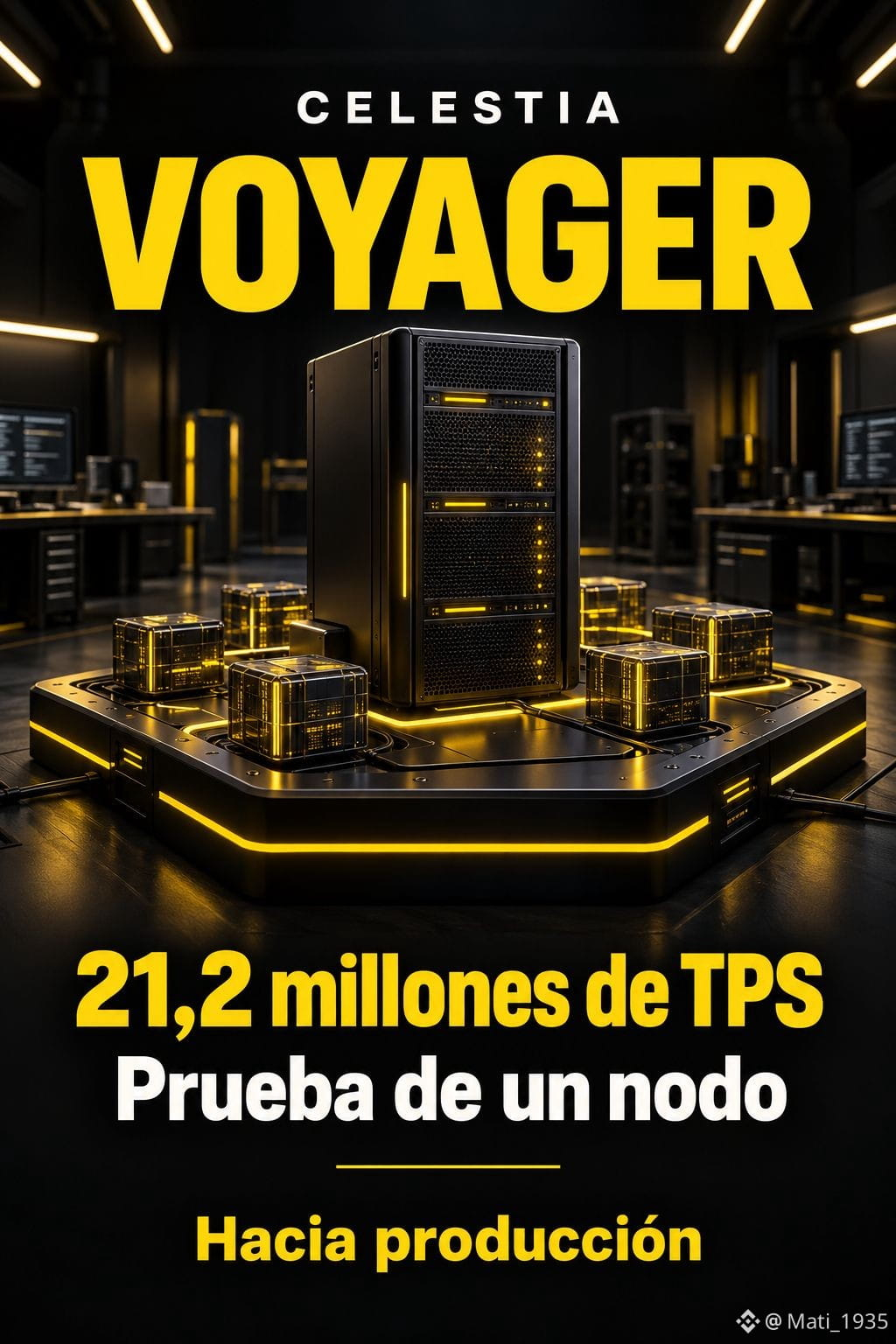
Voyager: What the 21.2 Million TPS Test Measures
On October 29, 2026, Celestia Labs introduced Voyager, an architecture for payments between AI agents. According to the team, its test recorded an average of 21.2 million transactions per second over five hours, with transfers between 100 million accounts.
The scope matters: only a single node was measured. The test did not include calculating cryptographic state summaries, replication between machines, or real-time queries at that volume.
The team says it is moving Voyager toward production and will publish more technical details. The figure describes a performance test; on its own, it does not demonstrate that this volume of payments from real users is possible.
Market context: at 12:13 UTC on October 30, TIA was trading on Binance at 0.4643 USDT (-12.66% in 24h) and 0.4636 USDC (-12.89%).
Market perspective: reproducibility, outstanding features, and actual adoption matter when assessing progress. Greater technical capacity does not guarantee demand for TIA or a price increase; nor does it allow today's price movement to be attributed to the announcement.
Sources: Celestia's official blog and Binance's public API.
$TIA $USDT $USDC
Educational Content. Not financial advice.
#Celestia #Voyager #TIA #Escalabilidad #FinancialEducation
91
·
--
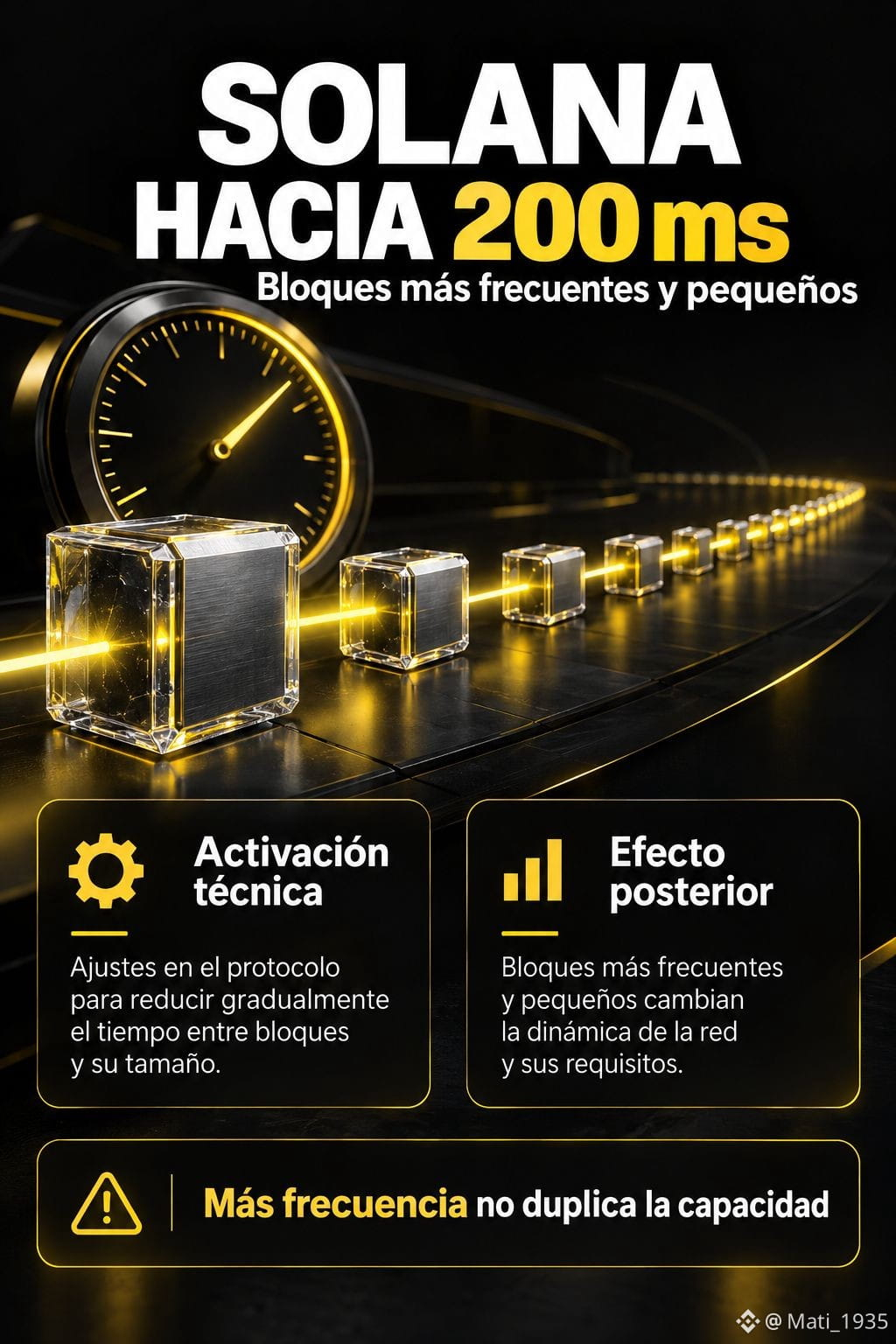
Solana toward 200 ms: more frequent blocks, with limits
On October 9, 2026, Solana’s slot reduction is appearing among Square’s trends. The change stems from SIMD-0525, created on May 1, and is part of a gradual rollout from 400 to 200 milliseconds.
A slot is the interval assigned to a validator to produce a block. According to the official dashboard, the 350, 300, and 250 ms steps are already live on mainnet. The 200 ms target refers to that cadence, not a guarantee that every transaction will be finalized within that time.
Verified status: at 10:42 UTC, a public network query showed epoch 1052, with the 200 ms change activated from its start. SIMD-0525 stipulates that it takes effect one epoch later, in epoch 1053. Technical activation and coming into effect are distinct moments.
The design proportionally reduces the work permitted per block: there will be more frequent opportunities, but smaller blocks. This adjustment alone does not double total capacity per second.
Tracking skipped blocks is key before moving forward. Also, deadlines measured in slots pass more quickly: applications must review their time calculations, and users may have less time to sign before a transaction expires.
Market snapshot: at 10:41 UTC, SOL was trading on Binance spot at 109.82 USDT (-4.05% in 24h); ETH, as a cross-platform reference, was at 2,496.46 USDT (-2.23%). USDT indicates the quoted currency. Technical improvements need stability and real usage; these changes do not prove a reaction to the update or predict returns.
$SOL $ETH $USDT
Educational Content. Not financial advice.
#Solana #Blockchain #Escalabilidad #Infraestructura #Crypto
74
·
--
Ethereum tests Glamsterdam on Sepolia: what’s changing and what remains
Glamsterdam activated on Sepolia, an Ethereum test network, on October 6, 2026, at 13:53 UTC. Alchemy confirmed the deployment in its update that day; the Ethereum Foundation had published the schedule on September 28.
Two key changes: ePBS brings the separation between block proposers and builders into the protocol, reducing reliance on intermediaries. Block access lists record the accounts and data used to facilitate parallel reads and validation.
The goal is to expand execution capacity. The test is not equivalent to a mainnet upgrade: the sources reviewed still show the Hoodi and mainnet dates as pending.
Gas calculations are also changing. Creating state, for example when deploying contracts, may require more gas; developers should review estimates and fixed limits. More capacity does not mean that all transactions will cost less.
According to the Ethereum Foundation, anyone who simply holds ETH on mainnet does not need to take any action because of this test.
Market snapshot: Binance spot showed ETH at 2,618.65 USDT on 10/7 at 02:36 UTC (−3.17% in 24 hours), BTC at −1.87%, and ARB at −8.19%. The technical progress is taking place alongside declines; these movements do not make it possible to attribute a specific reaction to Glamsterdam or predict its impact on prices.
Sources: Ethereum Foundation and Alchemy.
$ETH $BTC $ARB
Educational content. Not financial advice.
#Ethereum #Glamsterdam #Sepolia #Escalabilidad #BinanceSquare

210
Log in to explore more content
Join global crypto users on Binance Square
⚡️ Get latest and useful information about crypto.
💬 Trusted by the world’s largest crypto exchange.
👍 Discover real insights from verified creators.
Email / Phone number
Trending Topics
1
#UniswapA16zSeekDeFiExemptionFromIllinoisCryptoTax
36,969 views
884 Discussing
2
#HKDollarStablecoinHKDAPToLaunchOnSolana
26,737 views
573 Discussing
3
#$1.5BInLeveragedCryptoBetsLiquidated
55,611 views
268 Discussing
4
#TrezorSaysCryptoBilisSoldWalletMayContainMaliciousComponents
4,834 views
84 Discussing
5
#KOSPIFalls3.53%BackBelow6000
72,488 views
1,169 Discussing
6
#AmazonSharesFallAbout7%InPremarketTrading
35,364 views
645 Discussing
7
#USMidtermElections
282,262 views
2,433 Discussing
8
#StrategySTRCReaches$99.95ForFirstTimeIn165Days
37,120 views
96 Discussing
9
#BinanceWillListPredictPREDICT
110,378 views
1,461 Discussing
10
#SwitzerlandFirstSpotBitcoinETFExpectedToTradeInNovember
3,452 views
117 Discussing