

#eip8361
eip8361
1,638 views
31 Discussing
Hot
Latest

·
--
EIP-8361 Proposal Leaks: Suggesting that when Ethereum’s staking ratio reaches 50%, validator rewards should be set to zero.
Once the news broke, the LSD sector was immediately under pressure:
📉 $LDO plunged 16.3%
📉 $ETHFI fell 9.6%
The whole sector weakened, and liquidity was reshuffled again.
If this proposal is implemented, it would mean a sharp compression of marginal returns. The profit model of LSD protocols would face a revaluation. For the $ETH ecosystem, it acts as an “automatic regulator” to curb over-staking, but for protocols like LDO and ETHFI that rely on reward distribution, the valuation logic would be rewritten.
In the short term, panic sentiment may still persist; in the medium to long term, we need to watch how the Ethereum community’s discussion of the proposal details unfolds. Managing position size and monitoring changes in on-chain staking ratios are the safest responses right now.
#LSD #Ethereum #EIP8361
EIP-8361 Proposal Leaks: Suggesting that when Ethereum’s staking ratio reaches 50%, validator rewards should be set to zero.
Once the news broke, the LSD sector was immediately under pressure:
📉 $LDO plunged 16.3%
📉 $ETHFI fell 9.6%
The whole sector weakened, and liquidity was reshuffled again.
If this proposal is implemented, it would mean a sharp compression of marginal returns. The profit model of LSD protocols would face a revaluation. For the $ETH ecosystem, it acts as an “automatic regulator” to curb over-staking, but for protocols like LDO and ETHFI that rely on reward distribution, the valuation logic would be rewritten.
In the short term, panic sentiment may still persist; in the medium to long term, we need to watch how the Ethereum community’s discussion of the proposal details unfolds. Managing position size and monitoring changes in on-chain staking ratios are the safest responses right now.
#LSD #Ethereum #EIP8361
Once the news broke, the LSD sector was immediately under pressure:
📉 $LDO plunged 16.3%
📉 $ETHFI fell 9.6%
The whole sector weakened, and liquidity was reshuffled again.
If this proposal is implemented, it would mean a sharp compression of marginal returns. The profit model of LSD protocols would face a revaluation. For the $ETH ecosystem, it acts as an “automatic regulator” to curb over-staking, but for protocols like LDO and ETHFI that rely on reward distribution, the valuation logic would be rewritten.
In the short term, panic sentiment may still persist; in the medium to long term, we need to watch how the Ethereum community’s discussion of the proposal details unfolds. Managing position size and monitoring changes in on-chain staking ratios are the safest responses right now.
#LSD #Ethereum #EIP8361
118

EIP-8361 proposal officially released, with its core idea directly targeting Ethereum’s inflation problem: when the network-wide staking rate approaches 50%, validator block rewards will be gradually burned away, and once it reaches 50%, the burn rate will be ramped up to 100%. In other words, the more people stake, the stronger the on-chain deflationary pressure becomes.
A few points worth关注:
1️⃣ This is a "reverse dynamic burning" mechanism—economic incentives are not simply distributed; instead, they are inversely adjusted according to the staking scale. In theory, it can prevent unlimited expansion of ETH circulating supply.
2️⃣ The proposal leaves room for market game theory: the exact staking threshold that ultimately triggers 100% burning will be determined by the ecosystem, but it will be strictly less than 50% to avoid overly weakening security.
3️⃣ For validators, this means their yield rate will be compressed as the staking rate rises. Institutions and large holders will need to reassess the long-term staking return model.
4️⃣ For ordinary token holders, if the burn pressure truly can outpace new issuance, $ETH could shift from being a structurally inflationary asset to a deflationary narrative—this would be a fundamental reshaping of valuation logic.
At present, this is only at the EIP stage, still far from the level of consensus achieved by something like EIP-1559, but the direction is bold enough to be worth continuously tracking the subsequent discussions. #EIP8361#Ethereum#Deflation
EIP-8361 proposal officially released, with its core idea directly targeting Ethereum’s inflation problem: when the network-wide staking rate approaches 50%, validator block rewards will be gradually burned away, and once it reaches 50%, the burn rate will be ramped up to 100%. In other words, the more people stake, the stronger the on-chain deflationary pressure becomes.
A few points worth关注:
1️⃣ This is a "reverse dynamic burning" mechanism—economic incentives are not simply distributed; instead, they are inversely adjusted according to the staking scale. In theory, it can prevent unlimited expansion of ETH circulating supply.
2️⃣ The proposal leaves room for market game theory: the exact staking threshold that ultimately triggers 100% burning will be determined by the ecosystem, but it will be strictly less than 50% to avoid overly weakening security.
3️⃣ For validators, this means their yield rate will be compressed as the staking rate rises. Institutions and large holders will need to reassess the long-term staking return model.
4️⃣ For ordinary token holders, if the burn pressure truly can outpace new issuance, $ETH could shift from being a structurally inflationary asset to a deflationary narrative—this would be a fundamental reshaping of valuation logic.
At present, this is only at the EIP stage, still far from the level of consensus achieved by something like EIP-1559, but the direction is bold enough to be worth continuously tracking the subsequent discussions. #EIP8361#Ethereum#Deflation
A few points worth关注:
1️⃣ This is a "reverse dynamic burning" mechanism—economic incentives are not simply distributed; instead, they are inversely adjusted according to the staking scale. In theory, it can prevent unlimited expansion of ETH circulating supply.
2️⃣ The proposal leaves room for market game theory: the exact staking threshold that ultimately triggers 100% burning will be determined by the ecosystem, but it will be strictly less than 50% to avoid overly weakening security.
3️⃣ For validators, this means their yield rate will be compressed as the staking rate rises. Institutions and large holders will need to reassess the long-term staking return model.
4️⃣ For ordinary token holders, if the burn pressure truly can outpace new issuance, $ETH could shift from being a structurally inflationary asset to a deflationary narrative—this would be a fundamental reshaping of valuation logic.
At present, this is only at the EIP stage, still far from the level of consensus achieved by something like EIP-1559, but the direction is bold enough to be worth continuously tracking the subsequent discussions. #EIP8361#Ethereum#Deflation
24

·
--
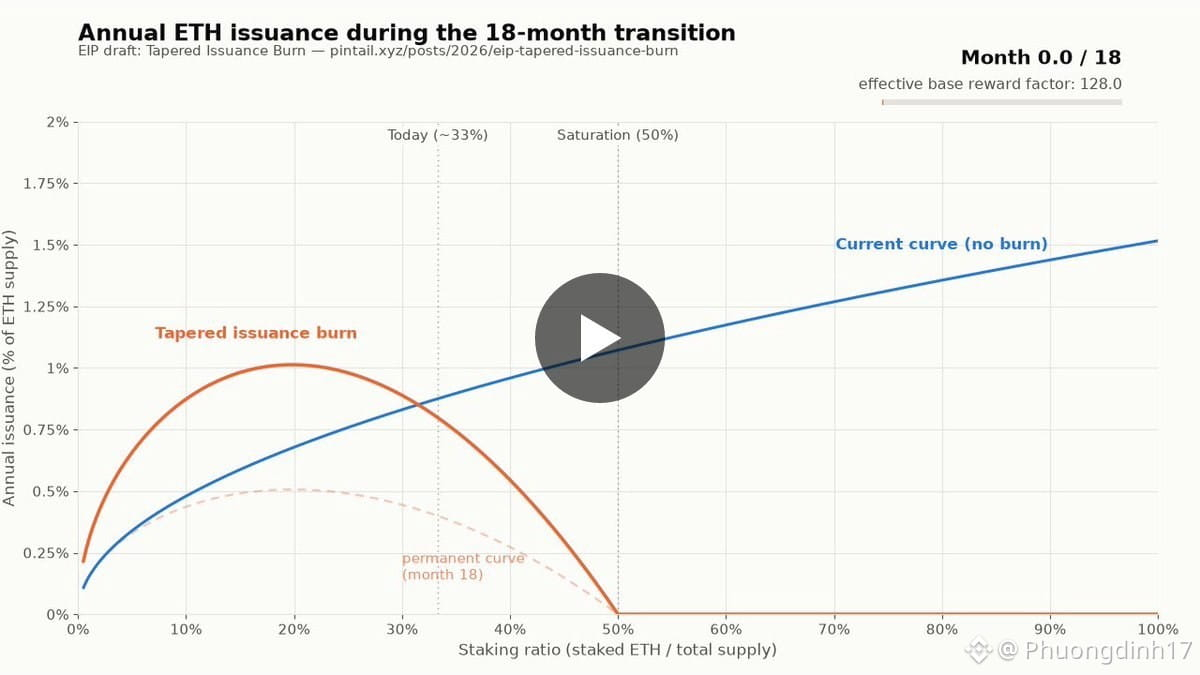
Ethereum contributors have just officially submitted the EIP-8361 proposal, aiming to change the $ETH issuance mechanism in a market-oriented direction. Specifically, this proposal will remove economic incentives for staking activities if the total amount of tokens staked exceeds the 50% threshold of total supply, in order to maintain balance and sustainability for the ecosystem.
#Ethereum #EIP8361 $ETH
$NEAR $APT
Ethereum contributors have just officially submitted the EIP-8361 proposal, aiming to change the $ETH issuance mechanism in a market-oriented direction. Specifically, this proposal will remove economic incentives for staking activities if the total amount of tokens staked exceeds the 50% threshold of total supply, in order to maintain balance and sustainability for the ecosystem.
#Ethereum #EIP8361 $ETH
$NEAR $APT
#Ethereum #EIP8361 $ETH
$NEAR $APT
113
·
--
EIP-8361 proposal is officially released, aiming directly at Ethereum’s inflation problem.
Core mechanism:
▪ In each epoch, deduct and burn a portion from the validator block rewards
▪ When the network-wide staking ratio exceeds 50%, the burn rate will be ramped up to 100%
▪ The final specific issuance stop percentage is determined by the market, but strictly less than 50%
What does this mean?
As Ethereum’s staking penetration continues to rise, simply burning the base fee via EIP-1559 can no longer offset the added ETH supply. In essence, this proposal sets up a dynamic deflationary valve for ETH— the more staked, the more aggressively it burns.
For validators, this means direct dilution of earnings; but for ETH holders, the logic of asset scarcity is further strengthened.
Worth noting is the design thinking behind "the market determines the issuance stop percentage." It hands monetary policy parameters to on-chain game theory rather than hard-coding them—whether this flexible mechanism can pass at the governance level is the real point of interest.
#EIP8361 #以太坊 #ETH
EIP-8361 proposal is officially released, aiming directly at Ethereum’s inflation problem.
Core mechanism:
▪ In each epoch, deduct and burn a portion from the validator block rewards
▪ When the network-wide staking ratio exceeds 50%, the burn rate will be ramped up to 100%
▪ The final specific issuance stop percentage is determined by the market, but strictly less than 50%
What does this mean?
As Ethereum’s staking penetration continues to rise, simply burning the base fee via EIP-1559 can no longer offset the added ETH supply. In essence, this proposal sets up a dynamic deflationary valve for ETH— the more staked, the more aggressively it burns.
For validators, this means direct dilution of earnings; but for ETH holders, the logic of asset scarcity is further strengthened.
Worth noting is the design thinking behind "the market determines the issuance stop percentage." It hands monetary policy parameters to on-chain game theory rather than hard-coding them—whether this flexible mechanism can pass at the governance level is the real point of interest.
#EIP8361 #以太坊 #ETH
Core mechanism:
▪ In each epoch, deduct and burn a portion from the validator block rewards
▪ When the network-wide staking ratio exceeds 50%, the burn rate will be ramped up to 100%
▪ The final specific issuance stop percentage is determined by the market, but strictly less than 50%
What does this mean?
As Ethereum’s staking penetration continues to rise, simply burning the base fee via EIP-1559 can no longer offset the added ETH supply. In essence, this proposal sets up a dynamic deflationary valve for ETH— the more staked, the more aggressively it burns.
For validators, this means direct dilution of earnings; but for ETH holders, the logic of asset scarcity is further strengthened.
Worth noting is the design thinking behind "the market determines the issuance stop percentage." It hands monetary policy parameters to on-chain game theory rather than hard-coding them—whether this flexible mechanism can pass at the governance level is the real point of interest.
#EIP8361 #以太坊 #ETH
100

·
--
Ethereum has yet another new proposal🔥
EIP-8361 has officially been released, and the core idea is simple: use “burning” to fight inflation.
The proposal introduces a dynamic burning mechanism:
▸ When the staking ratio is low, in each epoch a portion is deducted from validator block rewards and burned
▸ When the staking ratio exceeds the 50% threshold, the burn rate is ramped directly up to 100%, meaning all block rewards are burned
▸ The final cut-off point is determined by market game theory, but with a hard constraint: it must be strictly less than 50%
What does this mean?
Once Ethereum’s total staked amount approaches half, the validator earnings model will change fundamentally—rewards will no longer be “sent out,” but instead be reclaimed at the protocol level.
Supporters believe this is a powerful tool for ETH to move toward deflation;
critics are concerned: with a high staking ratio, 100% burning could severely dampen the enthusiasm of large validators, triggering a reversal toward centralization in staking.
At the moment, the proposal is still in the early discussion phase. Whether it will ultimately be included in Ethereum’s upgrade roadmap depends on the outcome of the community and core developers’ debate.
What do you think about EIP-8361? A new piece of ammunition for the deflationary narrative, or Pandora’s box for staking economics? Let’s discuss in the comments 👇
#EIP8361 #以太坊 #ETH
Ethereum has yet another new proposal🔥
EIP-8361 has officially been released, and the core idea is simple: use “burning” to fight inflation.
The proposal introduces a dynamic burning mechanism:
▸ When the staking ratio is low, in each epoch a portion is deducted from validator block rewards and burned
▸ When the staking ratio exceeds the 50% threshold, the burn rate is ramped directly up to 100%, meaning all block rewards are burned
▸ The final cut-off point is determined by market game theory, but with a hard constraint: it must be strictly less than 50%
What does this mean?
Once Ethereum’s total staked amount approaches half, the validator earnings model will change fundamentally—rewards will no longer be “sent out,” but instead be reclaimed at the protocol level.
Supporters believe this is a powerful tool for ETH to move toward deflation;
critics are concerned: with a high staking ratio, 100% burning could severely dampen the enthusiasm of large validators, triggering a reversal toward centralization in staking.
At the moment, the proposal is still in the early discussion phase. Whether it will ultimately be included in Ethereum’s upgrade roadmap depends on the outcome of the community and core developers’ debate.
What do you think about EIP-8361? A new piece of ammunition for the deflationary narrative, or Pandora’s box for staking economics? Let’s discuss in the comments 👇
#EIP8361 #以太坊 #ETH
EIP-8361 has officially been released, and the core idea is simple: use “burning” to fight inflation.
The proposal introduces a dynamic burning mechanism:
▸ When the staking ratio is low, in each epoch a portion is deducted from validator block rewards and burned
▸ When the staking ratio exceeds the 50% threshold, the burn rate is ramped directly up to 100%, meaning all block rewards are burned
▸ The final cut-off point is determined by market game theory, but with a hard constraint: it must be strictly less than 50%
What does this mean?
Once Ethereum’s total staked amount approaches half, the validator earnings model will change fundamentally—rewards will no longer be “sent out,” but instead be reclaimed at the protocol level.
Supporters believe this is a powerful tool for ETH to move toward deflation;
critics are concerned: with a high staking ratio, 100% burning could severely dampen the enthusiasm of large validators, triggering a reversal toward centralization in staking.
At the moment, the proposal is still in the early discussion phase. Whether it will ultimately be included in Ethereum’s upgrade roadmap depends on the outcome of the community and core developers’ debate.
What do you think about EIP-8361? A new piece of ammunition for the deflationary narrative, or Pandora’s box for staking economics? Let’s discuss in the comments 👇
#EIP8361 #以太坊 #ETH
19
🚨EIP-8361 Proposal Ignites Panic in the LSD Sector!
Ethereum EIP-8361 Proposal: When the staking ratio reaches 50%, validator rewards will drop directly to zero. What does that mean? Once Ethereum staking penetration passes halfway, node income will disappear completely, shaking the very foundation of the LSD protocol.
The market reacted fast—and brutally:
📉 $LDO plunges 16.3%
📉 $ETHFI drops 9.6%
The entire LSD track led the market down, and panic spread quickly.
The core logic is simple: rewards go to zero → staking appeal sharply declines → LSD demand collapses → the protocol token’s value is repriced. This isn’t just a regulatory negative—it’s a fundamental shift in Ethereum’s underlying economic model.
In the short term, the LSD sector still faces sell pressure, but keep an eye on the Ethereum community’s final discussion outcome for EIP-8361. The staking ratio still has room before 50%—whether the proposal can pass remains unknown.
Consider volatility rationally and manage risks ⚠️
#LSD #Ethereum #EIP8361
🚨EIP-8361 Proposal Ignites Panic in the LSD Sector!
Ethereum EIP-8361 Proposal: When the staking ratio reaches 50%, validator rewards will drop directly to zero. What does that mean? Once Ethereum staking penetration passes halfway, node income will disappear completely, shaking the very foundation of the LSD protocol.
The market reacted fast—and brutally:
📉 $LDO plunges 16.3%
📉 $ETHFI drops 9.6%
The entire LSD track led the market down, and panic spread quickly.
The core logic is simple: rewards go to zero → staking appeal sharply declines → LSD demand collapses → the protocol token’s value is repriced. This isn’t just a regulatory negative—it’s a fundamental shift in Ethereum’s underlying economic model.
In the short term, the LSD sector still faces sell pressure, but keep an eye on the Ethereum community’s final discussion outcome for EIP-8361. The staking ratio still has room before 50%—whether the proposal can pass remains unknown.
Consider volatility rationally and manage risks ⚠️
#LSD #Ethereum #EIP8361
Ethereum EIP-8361 Proposal: When the staking ratio reaches 50%, validator rewards will drop directly to zero. What does that mean? Once Ethereum staking penetration passes halfway, node income will disappear completely, shaking the very foundation of the LSD protocol.
The market reacted fast—and brutally:
📉 $LDO plunges 16.3%
📉 $ETHFI drops 9.6%
The entire LSD track led the market down, and panic spread quickly.
The core logic is simple: rewards go to zero → staking appeal sharply declines → LSD demand collapses → the protocol token’s value is repriced. This isn’t just a regulatory negative—it’s a fundamental shift in Ethereum’s underlying economic model.
In the short term, the LSD sector still faces sell pressure, but keep an eye on the Ethereum community’s final discussion outcome for EIP-8361. The staking ratio still has room before 50%—whether the proposal can pass remains unknown.
Consider volatility rationally and manage risks ⚠️
#LSD #Ethereum #EIP8361
1
247

·
--
Verified
Article
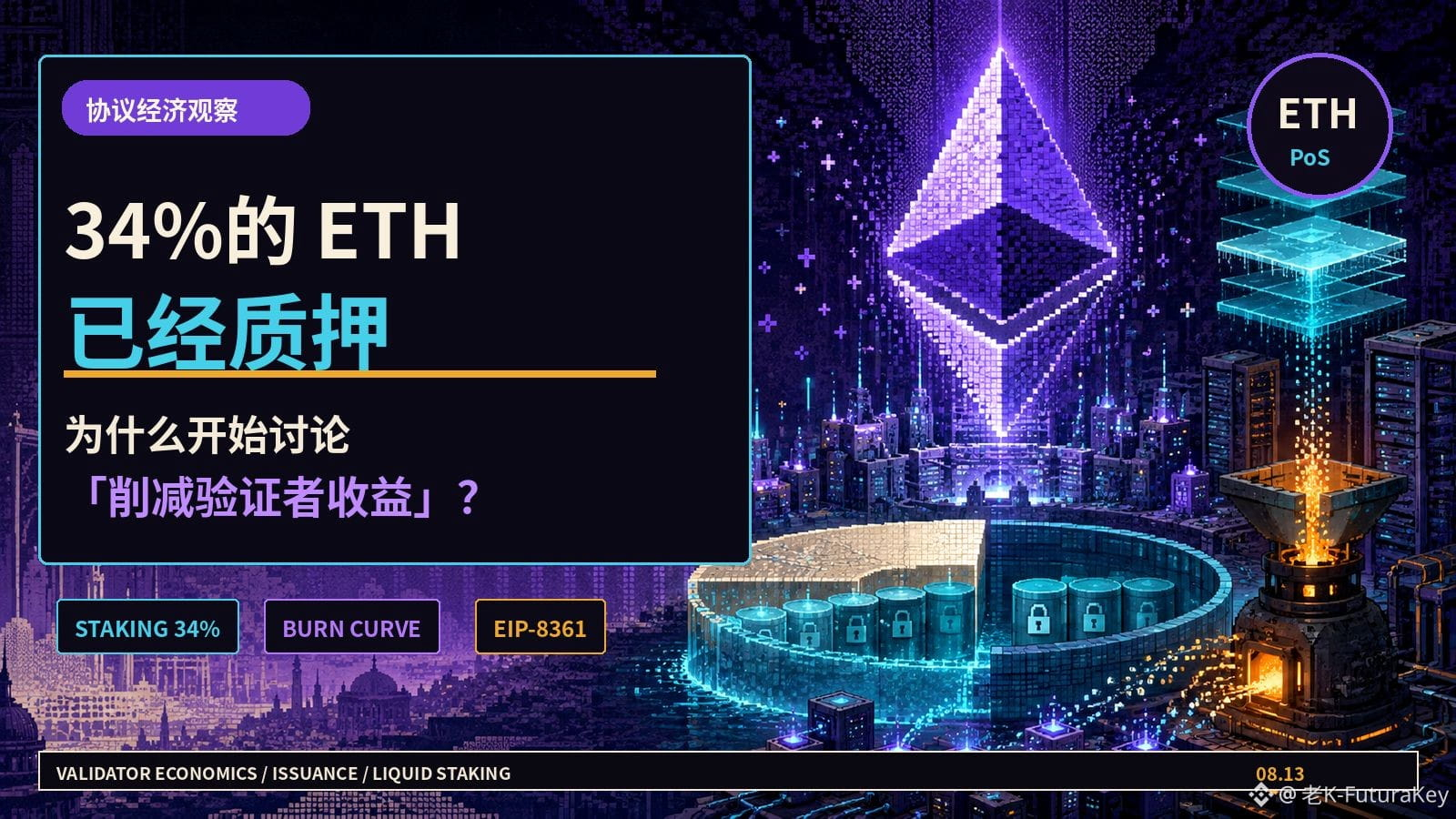
34% of ETH is already staked: Why Ethereum is starting to discuss “cutting validator rewards”?Many people are still interpreting “staking rates hitting new highs” as a positive: more tokens locked, less circulating supply, and a safer network. But the Ethereum research community is discussing a counterintuitive proposal: the more you stake, the fewer newly issued ETH validators receive; when the staking ratio approaches half, it can even reduce the consensus-layer additional rewards to zero.
According to market reports on August 12, the Ethereum staking ratio has risen to about 34%. Meanwhile, EIP-8361, submitted on August 4, proposes “Tapered Issuance Burn”: as the staking rate increases, it would gradually burn the portion of consensus-layer rewards that validators would otherwise receive. When the staked amount approaches about 60.25 million ETH—roughly 50% of the current supply—the burn rate reaches 100%. First, some context: this EIP is still a draft and is currently under community discussion; it has not been approved for any official upgrade.
34% of ETH is already staked: Why Ethereum is starting to discuss “cutting validator rewards”?
Many people are still interpreting “staking rates hitting new highs” as a positive: more tokens locked, less circulating supply, and a safer network. But the Ethereum research community is discussing a counterintuitive proposal: the more you stake, the fewer newly issued ETH validators receive; when the staking ratio approaches half, it can even reduce the consensus-layer additional rewards to zero.
According to market reports on August 12, the Ethereum staking ratio has risen to about 34%. Meanwhile, EIP-8361, submitted on August 4, proposes “Tapered Issuance Burn”: as the staking rate increases, it would gradually burn the portion of consensus-layer rewards that validators would otherwise receive. When the staked amount approaches about 60.25 million ETH—roughly 50% of the current supply—the burn rate reaches 100%. First, some context: this EIP is still a draft and is currently under community discussion; it has not been approved for any official upgrade.
According to market reports on August 12, the Ethereum staking ratio has risen to about 34%. Meanwhile, EIP-8361, submitted on August 4, proposes “Tapered Issuance Burn”: as the staking rate increases, it would gradually burn the portion of consensus-layer rewards that validators would otherwise receive. When the staked amount approaches about 60.25 million ETH—roughly 50% of the current supply—the burn rate reaches 100%. First, some context: this EIP is still a draft and is currently under community discussion; it has not been approved for any official upgrade.
119
EIP-8361 is here—the goal is to “fat-trim” Ethereum.
Simply put, this proposal wants to deduct a portion of validators’ block rewards to be directly burned in every epoch. Once the staking ratio reaches 50%, the burn rate would be cranked up to 100%—meaning all block rewards are burned. The proposal also says that the final, specific halting/burning proportion would be determined by market forces, but the cap is strictly less than 50%.
The logic is straightforward: the more people stake, the more rewards get burned, thereby putting a lid on the inflation curve.
An interesting game-theory angle here is this: when the burn rate hits 100%, validators only earn transaction fees + MEV. This structure would push large holders to think, “Stake or leave and take the money.” For the long-term supply/demand model of $ETH , this is a rewrite.
Worth tracking: the EIP number is only up to 8361, which suggests the Ethereum community’s discussion of a “deflation mechanism” is still in a very early stage, and it won’t affect the mainnet in the short term.
What do you think of this direction?
#EIP8361 #以太坊 #ETH
EIP-8361 is here—the goal is to “fat-trim” Ethereum.
Simply put, this proposal wants to deduct a portion of validators’ block rewards to be directly burned in every epoch. Once the staking ratio reaches 50%, the burn rate would be cranked up to 100%—meaning all block rewards are burned. The proposal also says that the final, specific halting/burning proportion would be determined by market forces, but the cap is strictly less than 50%.
The logic is straightforward: the more people stake, the more rewards get burned, thereby putting a lid on the inflation curve.
An interesting game-theory angle here is this: when the burn rate hits 100%, validators only earn transaction fees + MEV. This structure would push large holders to think, “Stake or leave and take the money.” For the long-term supply/demand model of $ETH , this is a rewrite.
Worth tracking: the EIP number is only up to 8361, which suggests the Ethereum community’s discussion of a “deflation mechanism” is still in a very early stage, and it won’t affect the mainnet in the short term.
What do you think of this direction?
#EIP8361 #以太坊 #ETH
Simply put, this proposal wants to deduct a portion of validators’ block rewards to be directly burned in every epoch. Once the staking ratio reaches 50%, the burn rate would be cranked up to 100%—meaning all block rewards are burned. The proposal also says that the final, specific halting/burning proportion would be determined by market forces, but the cap is strictly less than 50%.
The logic is straightforward: the more people stake, the more rewards get burned, thereby putting a lid on the inflation curve.
An interesting game-theory angle here is this: when the burn rate hits 100%, validators only earn transaction fees + MEV. This structure would push large holders to think, “Stake or leave and take the money.” For the long-term supply/demand model of $ETH , this is a rewrite.
Worth tracking: the EIP number is only up to 8361, which suggests the Ethereum community’s discussion of a “deflation mechanism” is still in a very early stage, and it won’t affect the mainnet in the short term.
What do you think of this direction?
#EIP8361 #以太坊 #ETH
95
Aave teams up with its founder to oppose EIP-8361, as DeFi governance battles enter a new phase. LDO rebounds 9.1% on the news, with ETH regaining the $1,900 level.
EIP-8361 involves important changes at the Ethereum protocol layer, and it’s rare to see major DeFi projects openly resist it. As the TVL leader, Aave’s stance often sets an example for the ecosystem, which is also one of the reasons LDO can rebound early—Lido, the core protocol in the LSD track, is highly tied to the direction of the ETH ecosystem.
With ETH back at $1,900, near-term sentiment has improved somewhat, but the market focus has shifted from simple price fluctuations to deeper protocol governance issues. Going forward, it’s worth keeping an eye on the parties’ statements and the progress of the ongoing power struggle.
#DeFi #以太坊治理 #EIP8361
Aave teams up with its founder to oppose EIP-8361, as DeFi governance battles enter a new phase. LDO rebounds 9.1% on the news, with ETH regaining the $1,900 level.
EIP-8361 involves important changes at the Ethereum protocol layer, and it’s rare to see major DeFi projects openly resist it. As the TVL leader, Aave’s stance often sets an example for the ecosystem, which is also one of the reasons LDO can rebound early—Lido, the core protocol in the LSD track, is highly tied to the direction of the ETH ecosystem.
With ETH back at $1,900, near-term sentiment has improved somewhat, but the market focus has shifted from simple price fluctuations to deeper protocol governance issues. Going forward, it’s worth keeping an eye on the parties’ statements and the progress of the ongoing power struggle.
#DeFi #以太坊治理 #EIP8361
EIP-8361 involves important changes at the Ethereum protocol layer, and it’s rare to see major DeFi projects openly resist it. As the TVL leader, Aave’s stance often sets an example for the ecosystem, which is also one of the reasons LDO can rebound early—Lido, the core protocol in the LSD track, is highly tied to the direction of the ETH ecosystem.
With ETH back at $1,900, near-term sentiment has improved somewhat, but the market focus has shifted from simple price fluctuations to deeper protocol governance issues. Going forward, it’s worth keeping an eye on the parties’ statements and the progress of the ongoing power struggle.
#DeFi #以太坊治理 #EIP8361
183

·
--
Aave co-founder publicly opposes the EIP-8361 proposal and sides with the project, and this stance quickly sparked heated discussion in the community. In the wake of this news, LDO rebounded 9.1% within 24 hours, regaining the $LDO attention level at a high point, while $ETH also moved back above $1,900, with market sentiment clearly warming up.
EIP-8361 relates to the Ethereum base-layer protocol. If it is advanced, it will affect the operating logic of multiple DeFi protocols. As a leading lending protocol by TVL, Aave’s opposition carries emblematic significance—the stance of a top project often determines the direction of community opinion. Judging from the market reaction, capital has begun to price in expectations in advance that the proposal will be “rejected” or “modified.”
In the short term, LDO’s rebound is largely sentiment-driven, and whether it can sustain the move depends on whether $ETH can hold above 1900 and press further higher. In the mid-to-long term, the focus should return to fundamentals: Lido’s liquid-staking token share structure, changes in Aave’s borrowing demand, and the overall activity level of the Ethereum ecosystem.
Proposal showdown, marquee endorsement, capital returning—these three forces are pulling the DeFi sector back to the center stage.
#DeFi #EIP8361 #Ethereum
Aave co-founder publicly opposes the EIP-8361 proposal and sides with the project, and this stance quickly sparked heated discussion in the community. In the wake of this news, LDO rebounded 9.1% within 24 hours, regaining the $LDO attention level at a high point, while $ETH also moved back above $1,900, with market sentiment clearly warming up.
EIP-8361 relates to the Ethereum base-layer protocol. If it is advanced, it will affect the operating logic of multiple DeFi protocols. As a leading lending protocol by TVL, Aave’s opposition carries emblematic significance—the stance of a top project often determines the direction of community opinion. Judging from the market reaction, capital has begun to price in expectations in advance that the proposal will be “rejected” or “modified.”
In the short term, LDO’s rebound is largely sentiment-driven, and whether it can sustain the move depends on whether $ETH can hold above 1900 and press further higher. In the mid-to-long term, the focus should return to fundamentals: Lido’s liquid-staking token share structure, changes in Aave’s borrowing demand, and the overall activity level of the Ethereum ecosystem.
Proposal showdown, marquee endorsement, capital returning—these three forces are pulling the DeFi sector back to the center stage.
#DeFi #EIP8361 #Ethereum
EIP-8361 relates to the Ethereum base-layer protocol. If it is advanced, it will affect the operating logic of multiple DeFi protocols. As a leading lending protocol by TVL, Aave’s opposition carries emblematic significance—the stance of a top project often determines the direction of community opinion. Judging from the market reaction, capital has begun to price in expectations in advance that the proposal will be “rejected” or “modified.”
In the short term, LDO’s rebound is largely sentiment-driven, and whether it can sustain the move depends on whether $ETH can hold above 1900 and press further higher. In the mid-to-long term, the focus should return to fundamentals: Lido’s liquid-staking token share structure, changes in Aave’s borrowing demand, and the overall activity level of the Ethereum ecosystem.
Proposal showdown, marquee endorsement, capital returning—these three forces are pulling the DeFi sector back to the center stage.
#DeFi #EIP8361 #Ethereum
124

·
--
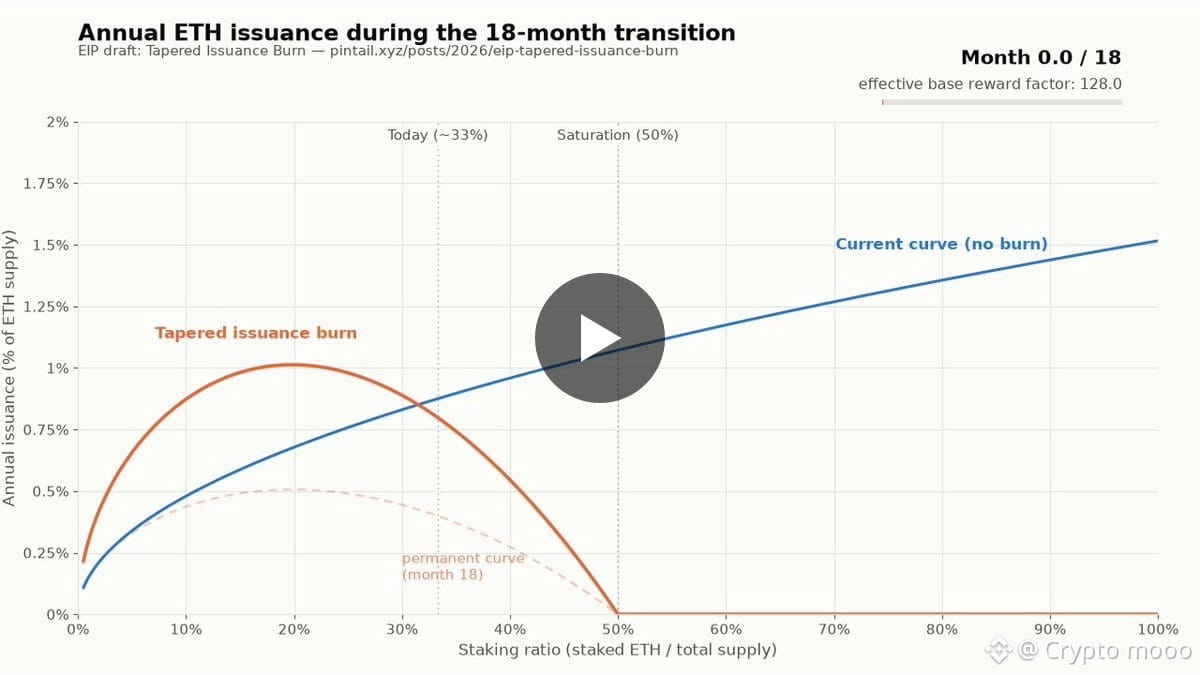
Ethereum contributors have officially submitted a proposal for EIP-8361, aiming to change the $ETH token issuance mechanism according to market-driven direction. Specifically, the proposal would remove economic incentives for staking activities if the total amount of tokens staked exceeds a threshold of 50% of the total supply, in order to maintain balance and long-term sustainability for the ecosystem.
#Ethereum #EIP8361 $ETH
$NEAR $APT
Ethereum contributors have officially submitted a proposal for EIP-8361, aiming to change the $ETH token issuance mechanism according to market-driven direction. Specifically, the proposal would remove economic incentives for staking activities if the total amount of tokens staked exceeds a threshold of 50% of the total supply, in order to maintain balance and long-term sustainability for the ecosystem.
#Ethereum #EIP8361 $ETH
$NEAR $APT
#Ethereum #EIP8361 $ETH
$NEAR $APT
44
The EIP-8361 proposal sent shockwaves through the entire LSD sector!
The proposal suggests that when Ethereum’s staking ratio reaches 50%, validator rewards would drop to zero. If this rule is implemented, it would mean that LST yields would be significantly compressed, forcing the business model of liquid staking to be restructured.
The market reaction was fast and fierce:
$LDO 24-hour drop of 16.3%
$ETHFI drop of 9.6%
The entire LSD sector trended down along with the market.
The higher the staking ratio, the fewer the rewards—essentially suppressing over-centralization. However, the cost is that the appeal of yields from existing LSD protocols would sharply decline. Top protocols like Lido and ether.fi are unlikely to avoid near-term pressure.
Key question: How likely is it for EIP-8361 to enter formal discussion? If it remains only at the EIP draft stage, there may be room for the market panic to be an overreaction. But if core developers clearly support it, downside pressure on the sector will likely continue.
#EIP8361 #LSD #Ethereum
The EIP-8361 proposal sent shockwaves through the entire LSD sector!
The proposal suggests that when Ethereum’s staking ratio reaches 50%, validator rewards would drop to zero. If this rule is implemented, it would mean that LST yields would be significantly compressed, forcing the business model of liquid staking to be restructured.
The market reaction was fast and fierce:
$LDO 24-hour drop of 16.3%
$ETHFI drop of 9.6%
The entire LSD sector trended down along with the market.
The higher the staking ratio, the fewer the rewards—essentially suppressing over-centralization. However, the cost is that the appeal of yields from existing LSD protocols would sharply decline. Top protocols like Lido and ether.fi are unlikely to avoid near-term pressure.
Key question: How likely is it for EIP-8361 to enter formal discussion? If it remains only at the EIP draft stage, there may be room for the market panic to be an overreaction. But if core developers clearly support it, downside pressure on the sector will likely continue.
#EIP8361 #LSD #Ethereum
The proposal suggests that when Ethereum’s staking ratio reaches 50%, validator rewards would drop to zero. If this rule is implemented, it would mean that LST yields would be significantly compressed, forcing the business model of liquid staking to be restructured.
The market reaction was fast and fierce:
$LDO 24-hour drop of 16.3%
$ETHFI drop of 9.6%
The entire LSD sector trended down along with the market.
The higher the staking ratio, the fewer the rewards—essentially suppressing over-centralization. However, the cost is that the appeal of yields from existing LSD protocols would sharply decline. Top protocols like Lido and ether.fi are unlikely to avoid near-term pressure.
Key question: How likely is it for EIP-8361 to enter formal discussion? If it remains only at the EIP draft stage, there may be room for the market panic to be an overreaction. But if core developers clearly support it, downside pressure on the sector will likely continue.
#EIP8361 #LSD #Ethereum
20


·
--
Verified
Could Ethereum Staking Rewards Change in the Future?
Ethereum developers are discussing a proposal called EIP-8361
and it could change how staking rewards work over time.
The proposal has not been approved. It is still in the draft stage. But it’s worth understanding because it focuses on Ethereum’s long-term security.
What is EIP-8361?
Today, validators earn new ETH for helping secure the network.
EIP-8361 suggests burning part of those rewards as more ETH gets staked. The higher the staking ratio, the bigger the burn.
If 50% of all ETH is eventually staked, the proposal would reduce net consensus rewards to zero. Validators would still receive MEV and priority fees, but the protocol would stop creating new ETH for staking.
Why propose this?
The main goal is to prevent too much ETH from being locked in staking.
Developers believe that if too much ETH is controlled by large staking providers, exchanges, or custodians, it could reduce decentralization.
Lower issuance could also reduce inflation and limit the advantage of staking over simply holding ETH.
What happens next?
Nothing changes today.
EIP-8361 is only a draft and would need broad community support before becoming part of Ethereum.
For now, it’s simply an idea that has started an important discussion about Ethereum’s future, staking rewards, and decentralization.
$ETH
#Eth #EIP8361 #staking
Could Ethereum Staking Rewards Change in the Future?
Ethereum developers are discussing a proposal called EIP-8361
and it could change how staking rewards work over time.
The proposal has not been approved. It is still in the draft stage. But it’s worth understanding because it focuses on Ethereum’s long-term security.
What is EIP-8361?
Today, validators earn new ETH for helping secure the network.
EIP-8361 suggests burning part of those rewards as more ETH gets staked. The higher the staking ratio, the bigger the burn.
If 50% of all ETH is eventually staked, the proposal would reduce net consensus rewards to zero. Validators would still receive MEV and priority fees, but the protocol would stop creating new ETH for staking.
Why propose this?
The main goal is to prevent too much ETH from being locked in staking.
Developers believe that if too much ETH is controlled by large staking providers, exchanges, or custodians, it could reduce decentralization.
Lower issuance could also reduce inflation and limit the advantage of staking over simply holding ETH.
What happens next?
Nothing changes today.
EIP-8361 is only a draft and would need broad community support before becoming part of Ethereum.
For now, it’s simply an idea that has started an important discussion about Ethereum’s future, staking rewards, and decentralization.
$ETH
#Eth #EIP8361 #staking
Ethereum developers are discussing a proposal called EIP-8361
and it could change how staking rewards work over time.
The proposal has not been approved. It is still in the draft stage. But it’s worth understanding because it focuses on Ethereum’s long-term security.
What is EIP-8361?
Today, validators earn new ETH for helping secure the network.
EIP-8361 suggests burning part of those rewards as more ETH gets staked. The higher the staking ratio, the bigger the burn.
If 50% of all ETH is eventually staked, the proposal would reduce net consensus rewards to zero. Validators would still receive MEV and priority fees, but the protocol would stop creating new ETH for staking.
Why propose this?
The main goal is to prevent too much ETH from being locked in staking.
Developers believe that if too much ETH is controlled by large staking providers, exchanges, or custodians, it could reduce decentralization.
Lower issuance could also reduce inflation and limit the advantage of staking over simply holding ETH.
What happens next?
Nothing changes today.
EIP-8361 is only a draft and would need broad community support before becoming part of Ethereum.
For now, it’s simply an idea that has started an important discussion about Ethereum’s future, staking rewards, and decentralization.
$ETH
#Eth #EIP8361 #staking

1
8
1.4k

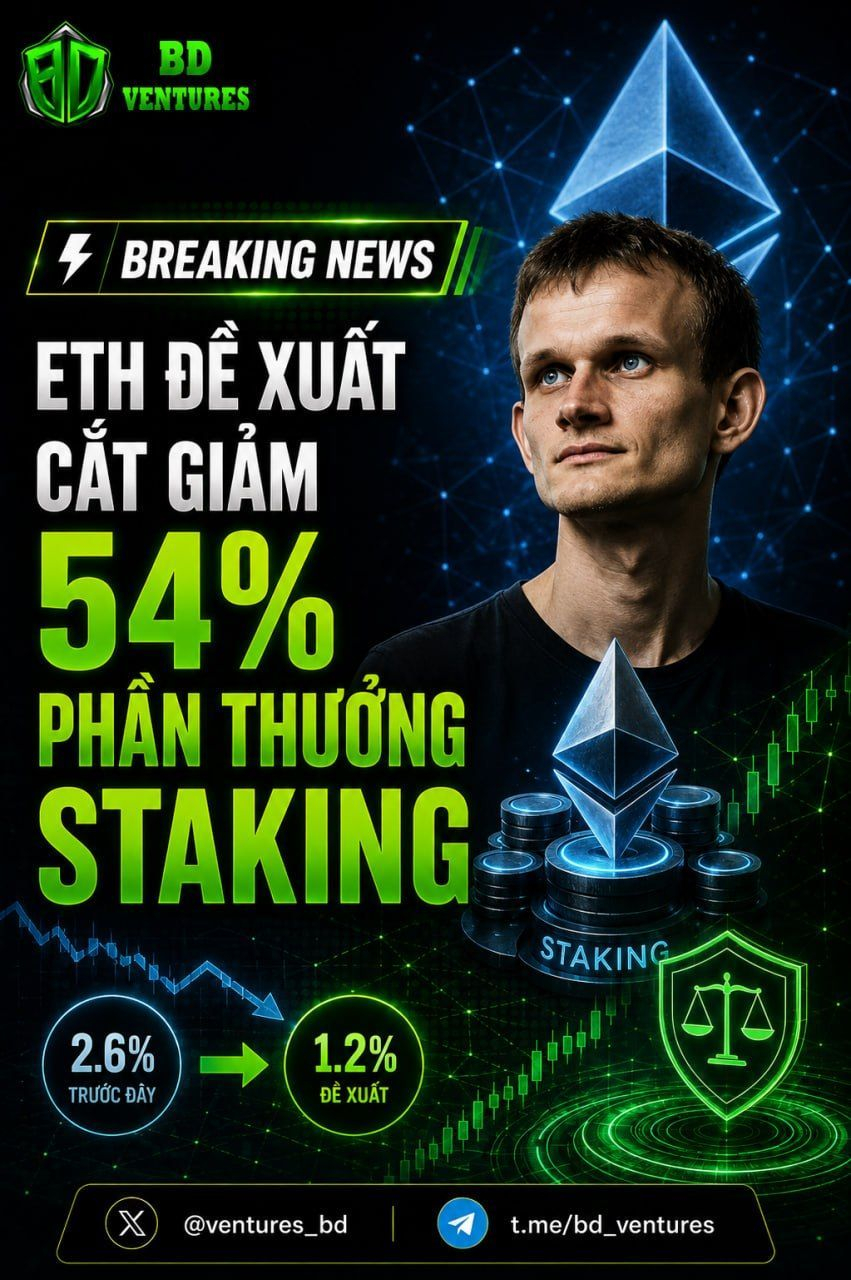
$ETH STAKING REWARDS IN THE CROSSHAIRS — 54% CUT PROPOSED 💥
EIP-8361 is a massive shake-up. If passed, staking yield drops from 2.6% to 1.2% over 18 months. That's a structural shift for liquid staking, restaking, and DeFi leverage. The arbitrage between staking yields and ETH borrow costs vanishes. Lido, Rocket Pool, Aave, Morpho, Spark, Pendle all exposed. 📉
This is still just a proposal, but the market is already pricing in the ripple effects. Smart money is watching how the ecosystem revalues risk. 💡 Are you trimming your staking positions or waiting for the Ethereum community to vote this down? 💬
⚠️ Not financial advice. Always manage your risk. 🛡️
🏷️ #ETH #Ethereum #Staking #DeFi #EIP8361
⚡ 🔍
$ETH STAKING REWARDS IN THE CROSSHAIRS — 54% CUT PROPOSED 💥
EIP-8361 is a massive shake-up. If passed, staking yield drops from 2.6% to 1.2% over 18 months. That's a structural shift for liquid staking, restaking, and DeFi leverage. The arbitrage between staking yields and ETH borrow costs vanishes. Lido, Rocket Pool, Aave, Morpho, Spark, Pendle all exposed. 📉
This is still just a proposal, but the market is already pricing in the ripple effects. Smart money is watching how the ecosystem revalues risk. 💡 Are you trimming your staking positions or waiting for the Ethereum community to vote this down? 💬
⚠️ Not financial advice. Always manage your risk. 🛡️
🏷️ #ETH #Ethereum #Staking #DeFi #EIP8361
⚡ 🔍
EIP-8361 is a massive shake-up. If passed, staking yield drops from 2.6% to 1.2% over 18 months. That's a structural shift for liquid staking, restaking, and DeFi leverage. The arbitrage between staking yields and ETH borrow costs vanishes. Lido, Rocket Pool, Aave, Morpho, Spark, Pendle all exposed. 📉
This is still just a proposal, but the market is already pricing in the ripple effects. Smart money is watching how the ecosystem revalues risk. 💡 Are you trimming your staking positions or waiting for the Ethereum community to vote this down? 💬
⚠️ Not financial advice. Always manage your risk. 🛡️
🏷️ #ETH #Ethereum #Staking #DeFi #EIP8361
⚡ 🔍
25

·
--
Bullish
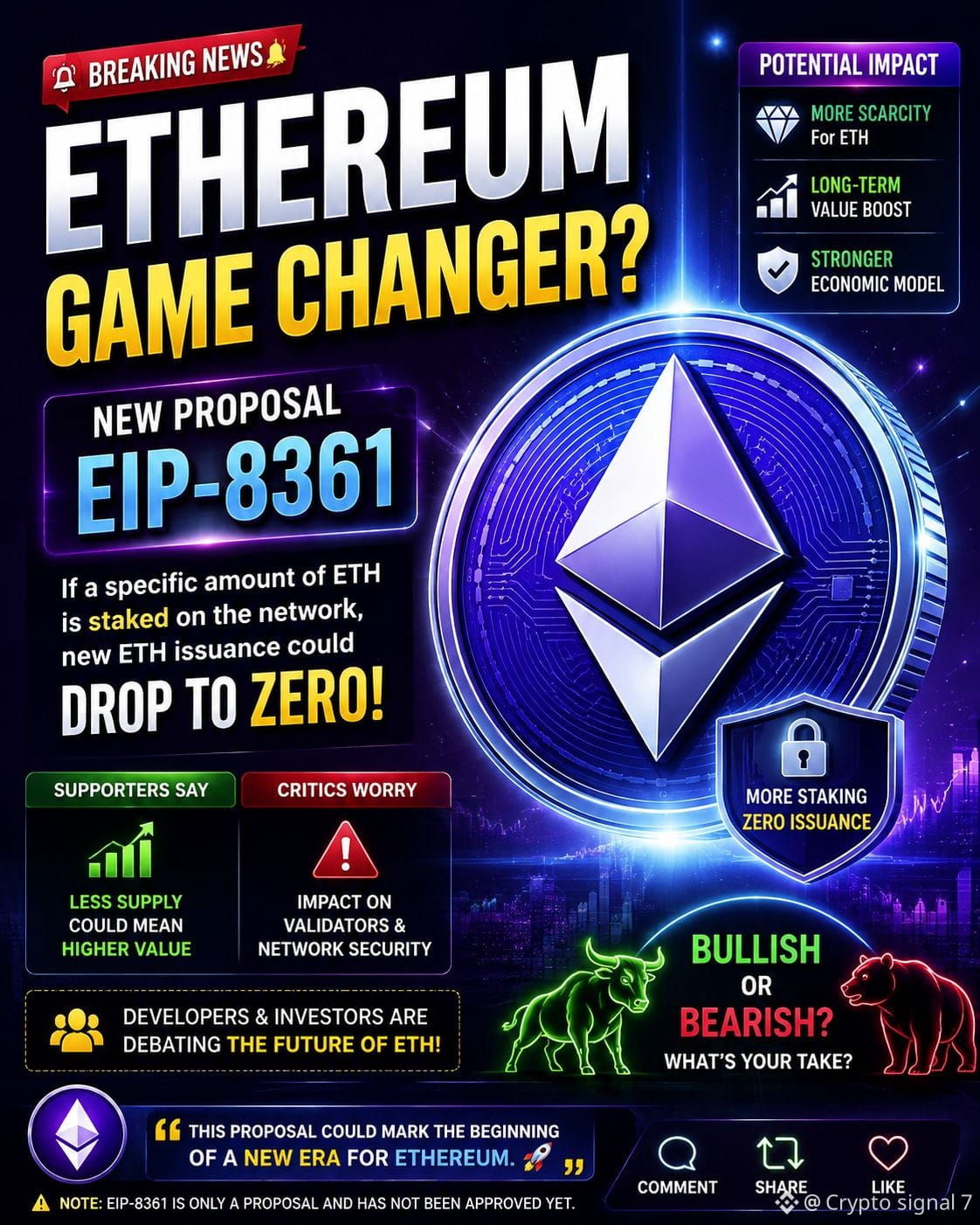
🚨 ETHEREUM SHOCKWAVE! 🚨
⚡ Ethereum's new proposal (EIP-8361) could change the network forever!
💎 Imagine a future where NO new ETH is created.
If enough ETH is staked, new issuance could fall to ZERO, making Ethereum even more scarce.
🔥 Less Supply = Bigger Scarcity?
📈 Bulls see a potential long-term boost for ETH.
⚠️ Critics warn it could affect validator incentives and network security.
👀 This is one of the most talked-about Ethereum proposals in recent months.
💬 Would a Zero-Issuance Ethereum send ETH to new highs?
👇 Vote below:
🚀 Bullish | 🐻 Bearish
#Ethereum #ETH #EIP8361 #CryptoNewss #Blockchain #DeFi #Altcoins #Web3 #CryptoCommunity
$ETH
{spot}(ETHUSDT)
🚨 ETHEREUM SHOCKWAVE! 🚨
⚡ Ethereum's new proposal (EIP-8361) could change the network forever!
💎 Imagine a future where NO new ETH is created.
If enough ETH is staked, new issuance could fall to ZERO, making Ethereum even more scarce.
🔥 Less Supply = Bigger Scarcity?
📈 Bulls see a potential long-term boost for ETH.
⚠️ Critics warn it could affect validator incentives and network security.
👀 This is one of the most talked-about Ethereum proposals in recent months.
💬 Would a Zero-Issuance Ethereum send ETH to new highs?
👇 Vote below:
🚀 Bullish | 🐻 Bearish
#Ethereum #ETH #EIP8361 #CryptoNewss #Blockchain #DeFi #Altcoins #Web3 #CryptoCommunity
$ETH
⚡ Ethereum's new proposal (EIP-8361) could change the network forever!
💎 Imagine a future where NO new ETH is created.
If enough ETH is staked, new issuance could fall to ZERO, making Ethereum even more scarce.
🔥 Less Supply = Bigger Scarcity?
📈 Bulls see a potential long-term boost for ETH.
⚠️ Critics warn it could affect validator incentives and network security.
👀 This is one of the most talked-about Ethereum proposals in recent months.
💬 Would a Zero-Issuance Ethereum send ETH to new highs?
👇 Vote below:
🚀 Bullish | 🐻 Bearish
#Ethereum #ETH #EIP8361 #CryptoNewss #Blockchain #DeFi #Altcoins #Web3 #CryptoCommunity
$ETH
73

🚨 EIP-8361 THREATENS $ETH YIELDS – $LDO CRASHES 16%, $ETHFI FALLS 10%! 💥
Ethereum's newest draft proposal is a scalpel aimed at the staking economy. The plan: as staking participation climbs, issuance rewards get progressively burned — hitting zero once ~50% of ETH is locked. 📉 Apply it today and consensus layer yields would be chopped from ~2.6% to ~1.2%.
LSD tokens caught the blast immediately — $LDO -16%, $ETHFI -10%. Thin yields mean weaker protocol revenue and potential unstaking waves; the market is pricing that in before the ink dries. 🌊
It's only a draft, but it's the most consequential economic twist in Ethereum since The Merge. If this passes, Liquid Staking, Restaking, and DeFi tokenomics all shift. 💬 Does cutting staking rewards make $ETH scarcer, or does it just gut the ecosystem that strengthened it? 👇
⚠️ Not financial advice. Always manage your risk. 🛡️
🏷️ #ETH #EIP8361 #LSD #DeFi #Crypto
⚡ 🦈
🚨 EIP-8361 THREATENS $ETH YIELDS – $LDO CRASHES 16%, $ETHFI FALLS 10%! 💥
Ethereum's newest draft proposal is a scalpel aimed at the staking economy. The plan: as staking participation climbs, issuance rewards get progressively burned — hitting zero once ~50% of ETH is locked. 📉 Apply it today and consensus layer yields would be chopped from ~2.6% to ~1.2%.
LSD tokens caught the blast immediately — $LDO -16%, $ETHFI -10%. Thin yields mean weaker protocol revenue and potential unstaking waves; the market is pricing that in before the ink dries. 🌊
It's only a draft, but it's the most consequential economic twist in Ethereum since The Merge. If this passes, Liquid Staking, Restaking, and DeFi tokenomics all shift. 💬 Does cutting staking rewards make $ETH scarcer, or does it just gut the ecosystem that strengthened it? 👇
⚠️ Not financial advice. Always manage your risk. 🛡️
🏷️ #ETH #EIP8361 #LSD #DeFi #Crypto
⚡ 🦈
Ethereum's newest draft proposal is a scalpel aimed at the staking economy. The plan: as staking participation climbs, issuance rewards get progressively burned — hitting zero once ~50% of ETH is locked. 📉 Apply it today and consensus layer yields would be chopped from ~2.6% to ~1.2%.
LSD tokens caught the blast immediately — $LDO -16%, $ETHFI -10%. Thin yields mean weaker protocol revenue and potential unstaking waves; the market is pricing that in before the ink dries. 🌊
It's only a draft, but it's the most consequential economic twist in Ethereum since The Merge. If this passes, Liquid Staking, Restaking, and DeFi tokenomics all shift. 💬 Does cutting staking rewards make $ETH scarcer, or does it just gut the ecosystem that strengthened it? 👇
⚠️ Not financial advice. Always manage your risk. 🛡️
🏷️ #ETH #EIP8361 #LSD #DeFi #Crypto
⚡ 🦈
133

$ETH STAKING REWARDS WILL SHRINK AS EIP-8361 GAINS TRACTION — HOW WILL YOU PLAY IT? ⚡
Ethereum devs just dropped a structural shift that many stakers didn't see coming. EIP-8361 proposes tapered issuance burn — validator rewards shrink as more ETH gets locked in. That's supply-side discipline with a scalpel, not a sledgehammer. 📊
If this lands, staking becomes less about hoarding yield and more about positioning before the network's emission curve flattens. The community review window is open, and that's where the real battle begins. 📢
The ripple effect won't stay inside the Ethereum ecosystem — expect capital to rotate across the broader crypto board if momentum builds. 💡 Are you staking through the transition, or positioning ahead of the narrative? 👇
⚠️ Not financial advice. Always manage your risk. 🛡️
🏷️ #ETH #Ethereum #Staking #EIP8361 #Crypto
🔥 💎
$ETH STAKING REWARDS WILL SHRINK AS EIP-8361 GAINS TRACTION — HOW WILL YOU PLAY IT? ⚡
Ethereum devs just dropped a structural shift that many stakers didn't see coming. EIP-8361 proposes tapered issuance burn — validator rewards shrink as more ETH gets locked in. That's supply-side discipline with a scalpel, not a sledgehammer. 📊
If this lands, staking becomes less about hoarding yield and more about positioning before the network's emission curve flattens. The community review window is open, and that's where the real battle begins. 📢
The ripple effect won't stay inside the Ethereum ecosystem — expect capital to rotate across the broader crypto board if momentum builds. 💡 Are you staking through the transition, or positioning ahead of the narrative? 👇
⚠️ Not financial advice. Always manage your risk. 🛡️
🏷️ #ETH #Ethereum #Staking #EIP8361 #Crypto
🔥 💎
Ethereum devs just dropped a structural shift that many stakers didn't see coming. EIP-8361 proposes tapered issuance burn — validator rewards shrink as more ETH gets locked in. That's supply-side discipline with a scalpel, not a sledgehammer. 📊
If this lands, staking becomes less about hoarding yield and more about positioning before the network's emission curve flattens. The community review window is open, and that's where the real battle begins. 📢
The ripple effect won't stay inside the Ethereum ecosystem — expect capital to rotate across the broader crypto board if momentum builds. 💡 Are you staking through the transition, or positioning ahead of the narrative? 👇
⚠️ Not financial advice. Always manage your risk. 🛡️
🏷️ #ETH #Ethereum #Staking #EIP8361 #Crypto
🔥 💎

19

EIP-8361 JUST SHOOK $ETH STAKING — LSD TOKENS UNDER FIRE 🚨📉
EIP-8361 proposes burning the issuance paid to validators once staking ratios scale up — with consensus rewards reaching zero around 50% supply staked. 📊 That rewrites the payout math for the entire staking stack. At today's 33–34% ratio, effective consensus yield could compress from ~2.6% to ~1.2%. $LDO dumped ~16%, $ETHFI ~10%, the sharpest daily bleed on the board.
This isn't just validator math. Liquid staking, restaking, DeFi and ETH ETF demand all feed on this yield engine. 💡 Some see a scarcity unlock for ETH; others see unstaking pressure and structural damage to LSD tokenomics. 🦈 The draft is far from final — but smart money has already rotated away from exposed narratives.
Do you view EIP-8361 as Ethereum's economic upgrade or a liquidity cold shower? 💬
⚠️ Not financial advice. Always manage your risk. 🛡️
🏷️ #ETH #EIP8361 #LSD #DeFi #Crypto
🎯 🦈
EIP-8361 JUST SHOOK $ETH STAKING — LSD TOKENS UNDER FIRE 🚨📉
EIP-8361 proposes burning the issuance paid to validators once staking ratios scale up — with consensus rewards reaching zero around 50% supply staked. 📊 That rewrites the payout math for the entire staking stack. At today's 33–34% ratio, effective consensus yield could compress from ~2.6% to ~1.2%. $LDO dumped ~16%, $ETHFI ~10%, the sharpest daily bleed on the board.
This isn't just validator math. Liquid staking, restaking, DeFi and ETH ETF demand all feed on this yield engine. 💡 Some see a scarcity unlock for ETH; others see unstaking pressure and structural damage to LSD tokenomics. 🦈 The draft is far from final — but smart money has already rotated away from exposed narratives.
Do you view EIP-8361 as Ethereum's economic upgrade or a liquidity cold shower? 💬
⚠️ Not financial advice. Always manage your risk. 🛡️
🏷️ #ETH #EIP8361 #LSD #DeFi #Crypto
🎯 🦈
EIP-8361 proposes burning the issuance paid to validators once staking ratios scale up — with consensus rewards reaching zero around 50% supply staked. 📊 That rewrites the payout math for the entire staking stack. At today's 33–34% ratio, effective consensus yield could compress from ~2.6% to ~1.2%. $LDO dumped ~16%, $ETHFI ~10%, the sharpest daily bleed on the board.
This isn't just validator math. Liquid staking, restaking, DeFi and ETH ETF demand all feed on this yield engine. 💡 Some see a scarcity unlock for ETH; others see unstaking pressure and structural damage to LSD tokenomics. 🦈 The draft is far from final — but smart money has already rotated away from exposed narratives.
Do you view EIP-8361 as Ethereum's economic upgrade or a liquidity cold shower? 💬
⚠️ Not financial advice. Always manage your risk. 🛡️
🏷️ #ETH #EIP8361 #LSD #DeFi #Crypto
🎯 🦈
72

·
--
🚨 $ETH PROPOSAL COULD SLASH STAKING REWARDS TO 1% — WHAT IT MEANS ⚡
Ethereum’s monetary policy just entered the spotlight. 🦈 EIP-8361, proposed by Justin Drake, targets the inflation engine itself: if staking participation climbs past 50%, rewards drop to 0%. Based on current staking scale, that effectively halves staker yields to 1%.
📊 This is a deliberate institutional-grade move to cap ETH supply growth while staking remains the network’s security backbone. Lower rewards could cool the rush into staking pools, but the deflationary tilt might be the real story here. 🔍 The market often reprices assets on supply narratives before the mechanics fully change.
💬 Do you see shrinking staking yields as bullish pressure for ETH scarcity, or a disincentive for long-term stakers? 👇
⚠️ Not financial advice. Always manage your risk. 🛡️
🏷️ #ETH #Ethereum #Staking #EIP8361 #Crypto
🔍 💎
🚨 $ETH PROPOSAL COULD SLASH STAKING REWARDS TO 1% — WHAT IT MEANS ⚡
Ethereum’s monetary policy just entered the spotlight. 🦈 EIP-8361, proposed by Justin Drake, targets the inflation engine itself: if staking participation climbs past 50%, rewards drop to 0%. Based on current staking scale, that effectively halves staker yields to 1%.
📊 This is a deliberate institutional-grade move to cap ETH supply growth while staking remains the network’s security backbone. Lower rewards could cool the rush into staking pools, but the deflationary tilt might be the real story here. 🔍 The market often reprices assets on supply narratives before the mechanics fully change.
💬 Do you see shrinking staking yields as bullish pressure for ETH scarcity, or a disincentive for long-term stakers? 👇
⚠️ Not financial advice. Always manage your risk. 🛡️
🏷️ #ETH #Ethereum #Staking #EIP8361 #Crypto
🔍 💎
Ethereum’s monetary policy just entered the spotlight. 🦈 EIP-8361, proposed by Justin Drake, targets the inflation engine itself: if staking participation climbs past 50%, rewards drop to 0%. Based on current staking scale, that effectively halves staker yields to 1%.
📊 This is a deliberate institutional-grade move to cap ETH supply growth while staking remains the network’s security backbone. Lower rewards could cool the rush into staking pools, but the deflationary tilt might be the real story here. 🔍 The market often reprices assets on supply narratives before the mechanics fully change.
💬 Do you see shrinking staking yields as bullish pressure for ETH scarcity, or a disincentive for long-term stakers? 👇
⚠️ Not financial advice. Always manage your risk. 🛡️
🏷️ #ETH #Ethereum #Staking #EIP8361 #Crypto
🔍 💎
17

🦈 $ETH STRUCTURAL INFLATION SHIFT: THE PROPOSAL THAT REWRITES THE SUPPLY STORY 💡
💡 EIP-8361 is a quiet catalyst hiding in plain sight. The market is still pricing Ethereum as a perpetual inflation asset, but this proposal flips that narrative at the root. 📊
The mechanics are elegant: the more ETH staked, the more rewards get burned. At the current 33% staking ratio, issuance drops from ~2.6% to ~1.2%. Push stake to 50%, and net issuance hits zero. This is a scheduled, 18-month glide path — no shock, just a structural recalibration of supply. 🔍
The long-term implication is a deflationary drift that supports price discovery, but the trade-off is real. Lower staking yields could reduce network security if capital rotates out. 📉 The market has yet to price the full weight of this dynamic. 💬 Do you see this as the beginning of a scarcity premium for ETH, or a risk to the security budget that nobody is talking about yet? 👇
⚠️ Not financial advice. Always manage your risk. 🛡️
🏷️ #ETH #Ethereum #EIP8361 #CryptoAnalysis #Deflation
🔍 💎
🦈 $ETH STRUCTURAL INFLATION SHIFT: THE PROPOSAL THAT REWRITES THE SUPPLY STORY 💡
💡 EIP-8361 is a quiet catalyst hiding in plain sight. The market is still pricing Ethereum as a perpetual inflation asset, but this proposal flips that narrative at the root. 📊
The mechanics are elegant: the more ETH staked, the more rewards get burned. At the current 33% staking ratio, issuance drops from ~2.6% to ~1.2%. Push stake to 50%, and net issuance hits zero. This is a scheduled, 18-month glide path — no shock, just a structural recalibration of supply. 🔍
The long-term implication is a deflationary drift that supports price discovery, but the trade-off is real. Lower staking yields could reduce network security if capital rotates out. 📉 The market has yet to price the full weight of this dynamic. 💬 Do you see this as the beginning of a scarcity premium for ETH, or a risk to the security budget that nobody is talking about yet? 👇
⚠️ Not financial advice. Always manage your risk. 🛡️
🏷️ #ETH #Ethereum #EIP8361 #CryptoAnalysis #Deflation
🔍 💎
💡 EIP-8361 is a quiet catalyst hiding in plain sight. The market is still pricing Ethereum as a perpetual inflation asset, but this proposal flips that narrative at the root. 📊
The mechanics are elegant: the more ETH staked, the more rewards get burned. At the current 33% staking ratio, issuance drops from ~2.6% to ~1.2%. Push stake to 50%, and net issuance hits zero. This is a scheduled, 18-month glide path — no shock, just a structural recalibration of supply. 🔍
The long-term implication is a deflationary drift that supports price discovery, but the trade-off is real. Lower staking yields could reduce network security if capital rotates out. 📉 The market has yet to price the full weight of this dynamic. 💬 Do you see this as the beginning of a scarcity premium for ETH, or a risk to the security budget that nobody is talking about yet? 👇
⚠️ Not financial advice. Always manage your risk. 🛡️
🏷️ #ETH #Ethereum #EIP8361 #CryptoAnalysis #Deflation
🔍 💎
33
Log in to explore more content
Join global crypto users on Binance Square
⚡️ Get latest and useful information about crypto.
💬 Trusted by the world’s largest crypto exchange.
👍 Discover real insights from verified creators.
Email / Phone number
Trending Topics
1
#BitwiseFilesFinalNEARSpotETFProspectus
19,816 views
597 Discussing
2
#BitgetHackerMoves$83MStolenXRP
16,812 views
106 Discussing
3
#SOLSpotETFWeeklyInflow$188M
8,111 views
79 Discussing
4
#DogecoinETFsPostBiggestWeekSinceLaunch
18,303 views
542 Discussing
5
#StrategyStriveAdd2305BitcoinThisWeek
77,253 views
1,618 Discussing
6
#TrumpRejectsIranHormuzReopening
75,021 views
1,287 Discussing
7
#CircleTetherFreezeBitgetHackerWallet
78,295 views
1,234 Discussing
8
#SECSaysTokenBuybacksNotAutoSecurities
45,964 views
744 Discussing
9
#ChinaUSAgreeOn$30BTariffCut
3,727 views
39 Discussing
10
#CoinMarketCapCompletesCoinglassAcquisition
56,742 views
856 Discussing