
#defi
defi
58M views
309,587 Discussing
Hot
Latest

·
--
Verified
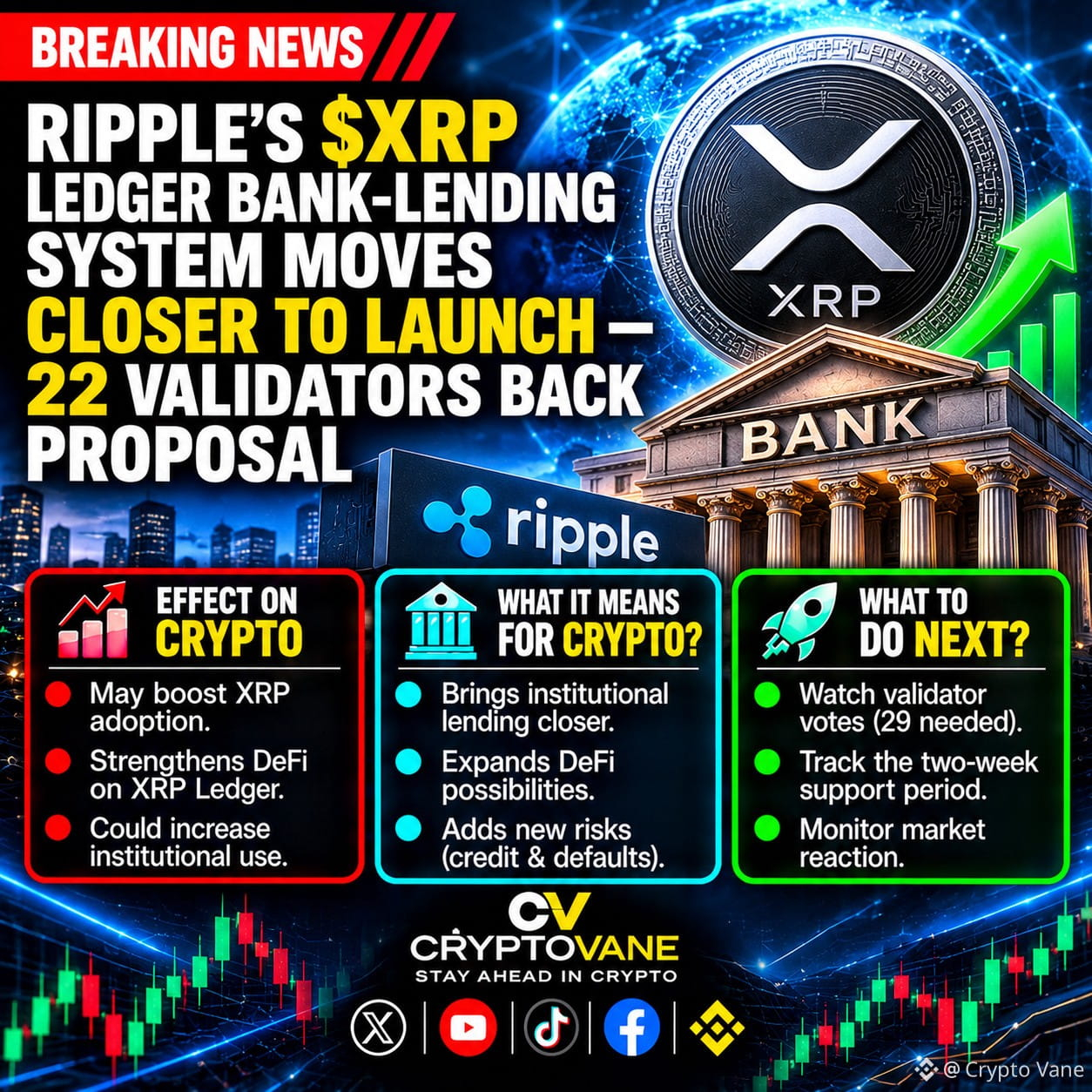
Ripple's $XRP Ledger Bank-Lending System Moves Closer to Launch — 22 Validators Back Proposal
Ripple's proposed $XRP Ledger lending system has secured support from 22 of 35 validators, moving closer to activation. The proposal could expand institutional lending and DeFi opportunities while introducing new credit risks. At least 29 votes and two consecutive weeks of support are required.
#XRP #Ripple #CryptoNews #DeFi #blockchain
{spot}(XRPUSDT)
Ripple's $XRP Ledger Bank-Lending System Moves Closer to Launch — 22 Validators Back Proposal
Ripple's proposed $XRP Ledger lending system has secured support from 22 of 35 validators, moving closer to activation. The proposal could expand institutional lending and DeFi opportunities while introducing new credit risks. At least 29 votes and two consecutive weeks of support are required.
#XRP #Ripple #CryptoNews #DeFi #blockchain
1
834

CAKE is the most confusing token in crypto right now 🥞
PancakeSwap is still the busiest DEX on BNB Chain — swaps flowing all day, fees rolling in.
And $CAKE? $1.81. Down 10% this week. Down ~96% from its $49 all-time high.
The kitchen is busy. The cake is just... flat.
Levels: support $1.80, resistance $1.86. A break above $1.86 opens $1.95. BTC is holding ~$73.8K nearby, so the whole market is waiting on the same thing.
Spot only. The DEX works. The token is on a diet.
Not financial advice. DYOR.
#PancakeSwap #Crypto #DeFi
CAKE is the most confusing token in crypto right now 🥞
PancakeSwap is still the busiest DEX on BNB Chain — swaps flowing all day, fees rolling in.
And $CAKE ? $1.81. Down 10% this week. Down ~96% from its $49 all-time high.
The kitchen is busy. The cake is just... flat.
Levels: support $1.80, resistance $1.86. A break above $1.86 opens $1.95. BTC is holding ~$73.8K nearby, so the whole market is waiting on the same thing.
Spot only. The DEX works. The token is on a diet.
Not financial advice. DYOR.
#PancakeSwap #Crypto #DeFi
1
395

Hyperliquid, a decentralized exchange specializing in perpetual futures, is seeing a significant increase in its number of daily active users. According to data shared by Token Terminal, the platform’s daily active user count rose to 71,411, marking a 169% increase since the beginning of the year. This growth demonstrates rising interest in Hyperliquid’s products and increased user engagement. During the same period, the platform saw approximately $9 billion in perpetual futures trading volume. This rise in user numbers is positioning Hyperliquid as a leading player in the decentralized finance ( #DeFi ) sector.
#Hyperliquid $HYPE
{spot}(HYPEUSDT)
Hyperliquid, a decentralized exchange specializing in perpetual futures, is seeing a significant increase in its number of daily active users. According to data shared by Token Terminal, the platform’s daily active user count rose to 71,411, marking a 169% increase since the beginning of the year. This growth demonstrates rising interest in Hyperliquid’s products and increased user engagement. During the same period, the platform saw approximately $9 billion in perpetual futures trading volume. This rise in user numbers is positioning Hyperliquid as a leading player in the decentralized finance ( #DeFi ) sector.
#Hyperliquid $HYPE
#Hyperliquid $HYPE
281

·
--
More than just a meme coin! 🐶⚔️
Floki ($FLOKI ) has evolved from a viral trend into a massive Web3 ecosystem powered by real utility. From the Valhalla play-to-earn metaverse game to FlokiFi DeFi solutions and TokenFi asset tokenization, the Floki Vikings are building the future of decentralized finance.
Are you holding $FLOKI in your portfolio? Let’s discuss below! 👇
#Crypto_Jobs🎯 #web3兼职 #Altcoins👀🚀 #MemeCoin #DeFi
{spot}(FLOKIUSDT)
More than just a meme coin! 🐶⚔️
Floki ($FLOKI ) has evolved from a viral trend into a massive Web3 ecosystem powered by real utility. From the Valhalla play-to-earn metaverse game to FlokiFi DeFi solutions and TokenFi asset tokenization, the Floki Vikings are building the future of decentralized finance.
Are you holding $FLOKI in your portfolio? Let’s discuss below! 👇
#Crypto_Jobs🎯 #web3兼职 #Altcoins👀🚀 #MemeCoin #DeFi

1
207

·
--
Bullish
🔥 I'M STILL HOLDING $ENA — BELIEVING IN ETHENA! 🚀
Crypto markets are full of surprises, but I'm watching the bigger picture!
Why $ENA is on my radar:
🌐 Ethereum-based DeFi protocol
💵 USDe synthetic dollar ecosystem
⚡ ENA governance token
🚀 Innovation in decentralized finance
I'm not chasing every green candle. Patience, research and risk management come first! 💎
🔥 ENA ARMY, WHO'S STILL HOLDING?
Are you HOLDING, BUYING MORE, or WAITING?
What's your long-term outlook for $ENA? 👇
{spot}(ENAUSDT)
#defi #crypto #altcoins #HODL #BinanceSquare
🔥 I'M STILL HOLDING $ENA — BELIEVING IN ETHENA! 🚀
Crypto markets are full of surprises, but I'm watching the bigger picture!
Why $ENA is on my radar:
🌐 Ethereum-based DeFi protocol
💵 USDe synthetic dollar ecosystem
⚡ ENA governance token
🚀 Innovation in decentralized finance
I'm not chasing every green candle. Patience, research and risk management come first! 💎
🔥 ENA ARMY, WHO'S STILL HOLDING?
Are you HOLDING, BUYING MORE, or WAITING?
What's your long-term outlook for $ENA ? 👇
#defi #crypto #altcoins #HODL #BinanceSquare
3
845

🚀 160% APY on Polygon?! DeFi Yield Hunters, Take Notice!
Polygon (@0xPolygon) is attracting attention with some eye-catching DeFi yields.
According to @ElanInsights' Income Dashboard, after filtering Polygon yield pools with more than $1M in TVL and ranking them by APY, one opportunity stood out.
🔥 Uniswap v4's USDC-ATH pool is offering a staggering 160.10% APY, backed by approximately $1.24M in TVL at the time of writing.
That's a serious yield opportunity worth watching.
Could $POL be emerging as a new destination for serious DeFi capital and yield farmers?
One thing is certain: Polygon's DeFi ecosystem deserves a closer look. 👀
Explore the dashboard: bscnhive.com/income-nov-twe…
#Polygon #DeFi #Uniswap #Crypto
{future}(POLUSDT)
🚀 160% APY on Polygon?! DeFi Yield Hunters, Take Notice!
Polygon (@0xPolygon) is attracting attention with some eye-catching DeFi yields.
According to @ElanInsights' Income Dashboard, after filtering Polygon yield pools with more than $1M in TVL and ranking them by APY, one opportunity stood out.
🔥 Uniswap v4's USDC-ATH pool is offering a staggering 160.10% APY, backed by approximately $1.24M in TVL at the time of writing.
That's a serious yield opportunity worth watching.
Could $POL be emerging as a new destination for serious DeFi capital and yield farmers?
One thing is certain: Polygon's DeFi ecosystem deserves a closer look. 👀
Explore the dashboard: bscnhive.com/income-nov-twe…
#Polygon #DeFi #Uniswap #Crypto

150

·
--
Article
What You Can Hold Onchain: An Asset MapIf you are about to put money on Robinhood Chain, this chapter answers the most basic question first: what can you actually hold on the chain, where is the money really sitting, and for each kind of asset, where does the return come from, what are the risks, and how fast can you get out?
The Money Is Not Where You Think It Is
Mention Robinhood Chain and most people think of stock tokens: a U.S. broker putting Apple, Nvidia, and the S&P 500 onchain so that anyone, in any country, can trade them around the clock.
The chain's own ledger paints a different picture. On November 2, 2026, the chain's total value locked (TVL) was about $1.083 billion, and stablecoins on the chain totaled about $1.045 billion. Within those numbers, the single largest use was stablecoin lending. Lending markets on Morpho held about $620 million, of which about $520 million came from one vault. Robinhood disclosed in its 10-Q that, as of September 30, the fair value of all the public stock tokens it had issued was only $185 million.
In other words, this chain is famous for stock tokens, but most of its money is dollars, not stocks.
That comparison sets the focus of this book. What an investor can do on this chain falls roughly into eight categories. We first lay them out on one map, then explain what kind of money each one earns.
Eight Asset Classes
1. Stablecoins: USDG and USDe
Stablecoins on the chain total about $1.045 billion, and two of them account for nearly all of it:
USDG (Global Dollar, issued by Paxos), about $661 million, is the chain's settlement dollar. Swaps in Robinhood Wallet, margin for Lighter perpetuals, and the main trading pairs for stock tokens are all priced in it.USDe (Ethena's synthetic dollar), about $358 million, has almost only one use on this chain: about $352 million is posted as collateral in Morpho's USDe/USDG market, 98% of all USDe on the chain.
Stablecoins pay no interest on their own. USDG holders do not receive Paxos's reserve income, which is shared with partner institutions through the Global Dollar Network rather than with onchain holders. The USDe on this chain is not the yield-bearing sUSDe either. Every dollar of return from holding stablecoins comes only after you lend them out, post them as collateral, or put them into a pool.
2. Lending Receipts and Vault Shares
Deposit USDG into a lending market and you receive a receipt: shares in a Morpho vault (such as steakUSDG), Spark's spUSDG, or a LayerBank deposit token. The share price rises with interest, and on redemption you get back more USDG.
This is the largest asset class on the chain. The USDG vault curated by Steakhouse (steakUSDG), at about $522 million, is the vault behind Robinhood Earn and the bulk of Morpho on this chain. Where its yield comes from is the subject of Chapter 5.
3. Yield-Bearing Dollars: syrupUSDG, spUSDG, mGLO
Another group of dollar assets carries its own yield, because real lending or investment sits behind it:
syrupUSDG (Maple): funds are lent to institutions against overcollateralized loans, and the interest goes to holders.spUSDG (Spark): the USDG version of Spark's savings product, currently yielding about 3.8%.mGLO (Midas Fasanara Global Open): a fund-share token issued by Midas, with an onchain supply of about 52.7 million tokens.
What they share is that their yield does not depend on subsidies, but they carry credit or fund risk. They are also collateral for looped borrowing on Morpho, which comes up again and again in Chapter 5.
4. Stock Tokens
There are about 200 of them, by Robinhood's own count, worth $185 million in total at fair value on September 30. Legally, they are debt instruments issued by Robinhood's European entity that track the economic performance of a stock and carry no voting rights. (The legal structure is covered in Chapter 8 of Robinhood Goes Onchain and is not repeated here.)
For investors, stock tokens differ from shares held at a broker in three economic ways:
They trade 24/7. When U.S. markets are closed, they keep being priced onchain.Dividends are reinvested. Stock tokens do not pay cash. Instead, a multiplier is raised, so each token slowly comes to represent more shares. (Chapter 6 uses this to solve a price-gap puzzle.)They are composable. They can go into AMM pools, serve as lending collateral, and be hedged with perpetual contracts.
Their risks come from the same features. When the market is closed, only onchain traders are discovering the price. The contracts can be paused, and an administrator can burn holdings (Chapter 11).
5. LP Shares
Put two assets into a DEX pool to make a market and you receive LP shares. DEX TVL on the chain is about $350 million, mostly on Uniswap V4 and V3.
This chain has a kind of pool rarely seen elsewhere: stock against stock. In Uniswap pools such as SPY/NVDA, SPY/QQQ, and SPY/GOOGL, both sides are stock tokens, and the LP's risk is the relative price of two stocks rather than exposure to the dollar. Chapter 7 takes these pools apart.
6. Perpetuals and Leverage
Perpetuals on the chain have about $183 million of TVL. Lighter runs a separate instance on this chain. On November 2 it showed 63 perpetual markets, $616 million of 24-hour volume, and about $188 million of open interest. The most-traded market was not bitcoin but the SPY perpetual ($84.9 million in 24 hours), followed by the QQQ perpetual ($67 million). On its Q3 earnings call, Robinhood said onchain perpetual volume had exceeded $1 billion a day in recent weeks.
Investors can use perpetuals in two ways: to add leverage directly, or to pair them with spot tokens in a basis trade (Chapter 8).
7. Ecosystem and Launchpad Tokens
Launchpad platform tokens, meme coins, and protocol governance tokens. Their prices are the most volatile and their return distributions the most extreme (Chapter 9). The business model of the launchpad sector is covered in the companion book The Coin Factory. This book treats these tokens only as a high-volatility asset class and discusses position sizing.
8. The Beginnings of Fixed Income and Prediction Markets
These are still very small, but the names are worth knowing: Pendle (about $340,000), Arcus's pTokens (about $400,000), maturity-dated tokens on stock tokens (such as pSPY-DEC27 and pPFE-DEC27), and the Meridian prediction market (about $1.03 million). They are the first rate and event products built on stock tokens (Chapter 8).
One Map: What Each Asset Class Earns
Put the eight classes side by side and a clear dividing line appears:
Stablecoins: Source of return: None (must be lent or posted); Main risks: Issuer, depeg; Exit speed: SecondsLending receipts and vaults: Source of return: Borrowing interest + subsidies; Main risks: Borrower default, oracle, bad debt; Exit speed: Depends on utilizationYield-bearing dollars: Source of return: Credit interest, fund returns; Main risks: Credit, redemption delays; Exit speed: Days to weeksStock tokens: Source of return: Price moves + dividends (multiplier); Main risks: Stock price, gaps across market closures, contract permissions; Exit speed: Seconds during market hours, limited depthLP shares: Source of return: Trading fees + subsidies; Main risks: Impermanent loss, being arbitraged while markets are closed; Exit speed: SecondsPerpetuals: Source of return: Directional gains or funding; Main risks: Liquidation, funding reversal; Exit speed: SecondsLaunchpad tokens: Source of return: Price; Main risks: Going to zero, liquidity drying up; Exit speed: You may not get outFixed income and prediction markets: Source of return: Yield to maturity, event outcomes; Main risks: Liquidity, counterparty; Exit speed: At maturity, or slowly
The left-hand column decides whose money you are earning. The right-hand column decides whether you can get out when something goes wrong. Together, those two columns are the two questions every later chapter answers.
The Size Changes, the Structure Does Not
Mainnet launched on July 1. TVL was about $125 million in mid-July, passed $1 billion in mid-September, peaked at about $1.153 billion on October 21, and then eased to $1.083 billion on November 2. The stablecoin supply rose from about $240 million in early July to about $1.09 billion in mid-September and has moved sideways between $1.05 billion and $1.10 billion since.
DEX volume followed a different path. After peaking in early September at a weekly average of about $2.7 billion a day, it fell back to $700–800 million a day by late October.
The two curves say one thing: trading enthusiasm fades, but money that has been parked does not necessarily leave. After September, trading and fees cooled noticeably, yet almost none of the dollars on the chain left. Most of the billion dollars that stayed is earning interest. To understand this chain, you first have to understand where that interest comes from.
If You Are About to Put Money Here
Decide which kind of return you want. Price returns (stock tokens, launchpad tokens), interest (lending, yield-bearing dollars), fees (LP positions), and funding (basis trades) carry completely different risks. Do not evaluate them together just because they live on the same chain.Size is information. An asset class worth only a few hundred thousand dollars usually means your trades will move the price. One worth hundreds of millions usually means someone is subsidizing it or there is real demand. Chapter 4 shows you how to tell the two apart.Remember that stablecoins pay no interest. Every dollar of onchain dollar yield comes from handing your dollars to someone else to use. Whoever you hand them to is your risk.
This chain is best known for stocks, but holds mostly dollars; its most visible activity is trading, but its most stable is interest.
Sources for This Chapter
DefiLlama: chain-level TVL (historicalChainTvl, November 2, 2026), stablecoin totals and breakdown by coin (stablecoins API, November 2, 2026), protocol and category TVL (protocols API, October 29, 2026), DEX volume (overview/dexs)Robinhood Form 10-Q (filed October 28, 2026, for the period ended September 30, 2026): fair value of public stock-token liabilities of $185 millionRobinhood Q3 2026 earnings call: remarks on onchain perpetual volumeMorpho GraphQL API: collateral and borrowing in the USDe/USDG market (November 2, 2026)Lighter Robinhood instance API: number of perpetual markets, 24-hour volume, open interest (November 2, 2026)smarts: mGLO supply (block 26,328,375)
—
This is Chapter 1 of 14 from my new book Where the Yield Comes From, serialized one chapter a day. For research only; not investment advice.
Author: Blue Lotus
#DeFi #RobinhoodChain #Stablecoins #RWA
What You Can Hold Onchain: An Asset Map
If you are about to put money on Robinhood Chain, this chapter answers the most basic question first: what can you actually hold on the chain, where is the money really sitting, and for each kind of asset, where does the return come from, what are the risks, and how fast can you get out?
The Money Is Not Where You Think It Is
Mention Robinhood Chain and most people think of stock tokens: a U.S. broker putting Apple, Nvidia, and the S&P 500 onchain so that anyone, in any country, can trade them around the clock.
The chain's own ledger paints a different picture. On November 2, 2026, the chain's total value locked (TVL) was about $1.083 billion, and stablecoins on the chain totaled about $1.045 billion. Within those numbers, the single largest use was stablecoin lending. Lending markets on Morpho held about $620 million, of which about $520 million came from one vault. Robinhood disclosed in its 10-Q that, as of September 30, the fair value of all the public stock tokens it had issued was only $185 million.
In other words, this chain is famous for stock tokens, but most of its money is dollars, not stocks.
That comparison sets the focus of this book. What an investor can do on this chain falls roughly into eight categories. We first lay them out on one map, then explain what kind of money each one earns.
Eight Asset Classes
1. Stablecoins: USDG and USDe
Stablecoins on the chain total about $1.045 billion, and two of them account for nearly all of it:
USDG (Global Dollar, issued by Paxos), about $661 million, is the chain's settlement dollar. Swaps in Robinhood Wallet, margin for Lighter perpetuals, and the main trading pairs for stock tokens are all priced in it.USDe (Ethena's synthetic dollar), about $358 million, has almost only one use on this chain: about $352 million is posted as collateral in Morpho's USDe/USDG market, 98% of all USDe on the chain.
Stablecoins pay no interest on their own. USDG holders do not receive Paxos's reserve income, which is shared with partner institutions through the Global Dollar Network rather than with onchain holders. The USDe on this chain is not the yield-bearing sUSDe either. Every dollar of return from holding stablecoins comes only after you lend them out, post them as collateral, or put them into a pool.
2. Lending Receipts and Vault Shares
Deposit USDG into a lending market and you receive a receipt: shares in a Morpho vault (such as steakUSDG), Spark's spUSDG, or a LayerBank deposit token. The share price rises with interest, and on redemption you get back more USDG.
This is the largest asset class on the chain. The USDG vault curated by Steakhouse (steakUSDG), at about $522 million, is the vault behind Robinhood Earn and the bulk of Morpho on this chain. Where its yield comes from is the subject of Chapter 5.
3. Yield-Bearing Dollars: syrupUSDG, spUSDG, mGLO
Another group of dollar assets carries its own yield, because real lending or investment sits behind it:
syrupUSDG (Maple): funds are lent to institutions against overcollateralized loans, and the interest goes to holders.spUSDG (Spark): the USDG version of Spark's savings product, currently yielding about 3.8%.mGLO (Midas Fasanara Global Open): a fund-share token issued by Midas, with an onchain supply of about 52.7 million tokens.
What they share is that their yield does not depend on subsidies, but they carry credit or fund risk. They are also collateral for looped borrowing on Morpho, which comes up again and again in Chapter 5.
4. Stock Tokens
There are about 200 of them, by Robinhood's own count, worth $185 million in total at fair value on September 30. Legally, they are debt instruments issued by Robinhood's European entity that track the economic performance of a stock and carry no voting rights. (The legal structure is covered in Chapter 8 of Robinhood Goes Onchain and is not repeated here.)
For investors, stock tokens differ from shares held at a broker in three economic ways:
They trade 24/7. When U.S. markets are closed, they keep being priced onchain.Dividends are reinvested. Stock tokens do not pay cash. Instead, a multiplier is raised, so each token slowly comes to represent more shares. (Chapter 6 uses this to solve a price-gap puzzle.)They are composable. They can go into AMM pools, serve as lending collateral, and be hedged with perpetual contracts.
Their risks come from the same features. When the market is closed, only onchain traders are discovering the price. The contracts can be paused, and an administrator can burn holdings (Chapter 11).
5. LP Shares
Put two assets into a DEX pool to make a market and you receive LP shares. DEX TVL on the chain is about $350 million, mostly on Uniswap V4 and V3.
This chain has a kind of pool rarely seen elsewhere: stock against stock. In Uniswap pools such as SPY/NVDA, SPY/QQQ, and SPY/GOOGL, both sides are stock tokens, and the LP's risk is the relative price of two stocks rather than exposure to the dollar. Chapter 7 takes these pools apart.
6. Perpetuals and Leverage
Perpetuals on the chain have about $183 million of TVL. Lighter runs a separate instance on this chain. On November 2 it showed 63 perpetual markets, $616 million of 24-hour volume, and about $188 million of open interest. The most-traded market was not bitcoin but the SPY perpetual ($84.9 million in 24 hours), followed by the QQQ perpetual ($67 million). On its Q3 earnings call, Robinhood said onchain perpetual volume had exceeded $1 billion a day in recent weeks.
Investors can use perpetuals in two ways: to add leverage directly, or to pair them with spot tokens in a basis trade (Chapter 8).
7. Ecosystem and Launchpad Tokens
Launchpad platform tokens, meme coins, and protocol governance tokens. Their prices are the most volatile and their return distributions the most extreme (Chapter 9). The business model of the launchpad sector is covered in the companion book The Coin Factory. This book treats these tokens only as a high-volatility asset class and discusses position sizing.
8. The Beginnings of Fixed Income and Prediction Markets
These are still very small, but the names are worth knowing: Pendle (about $340,000), Arcus's pTokens (about $400,000), maturity-dated tokens on stock tokens (such as pSPY-DEC27 and pPFE-DEC27), and the Meridian prediction market (about $1.03 million). They are the first rate and event products built on stock tokens (Chapter 8).
One Map: What Each Asset Class Earns
Put the eight classes side by side and a clear dividing line appears:
Stablecoins: Source of return: None (must be lent or posted); Main risks: Issuer, depeg; Exit speed: SecondsLending receipts and vaults: Source of return: Borrowing interest + subsidies; Main risks: Borrower default, oracle, bad debt; Exit speed: Depends on utilizationYield-bearing dollars: Source of return: Credit interest, fund returns; Main risks: Credit, redemption delays; Exit speed: Days to weeksStock tokens: Source of return: Price moves + dividends (multiplier); Main risks: Stock price, gaps across market closures, contract permissions; Exit speed: Seconds during market hours, limited depthLP shares: Source of return: Trading fees + subsidies; Main risks: Impermanent loss, being arbitraged while markets are closed; Exit speed: SecondsPerpetuals: Source of return: Directional gains or funding; Main risks: Liquidation, funding reversal; Exit speed: SecondsLaunchpad tokens: Source of return: Price; Main risks: Going to zero, liquidity drying up; Exit speed: You may not get outFixed income and prediction markets: Source of return: Yield to maturity, event outcomes; Main risks: Liquidity, counterparty; Exit speed: At maturity, or slowly
The left-hand column decides whose money you are earning. The right-hand column decides whether you can get out when something goes wrong. Together, those two columns are the two questions every later chapter answers.
The Size Changes, the Structure Does Not
Mainnet launched on July 1. TVL was about $125 million in mid-July, passed $1 billion in mid-September, peaked at about $1.153 billion on October 21, and then eased to $1.083 billion on November 2. The stablecoin supply rose from about $240 million in early July to about $1.09 billion in mid-September and has moved sideways between $1.05 billion and $1.10 billion since.
DEX volume followed a different path. After peaking in early September at a weekly average of about $2.7 billion a day, it fell back to $700–800 million a day by late October.
The two curves say one thing: trading enthusiasm fades, but money that has been parked does not necessarily leave. After September, trading and fees cooled noticeably, yet almost none of the dollars on the chain left. Most of the billion dollars that stayed is earning interest. To understand this chain, you first have to understand where that interest comes from.
If You Are About to Put Money Here
Decide which kind of return you want. Price returns (stock tokens, launchpad tokens), interest (lending, yield-bearing dollars), fees (LP positions), and funding (basis trades) carry completely different risks. Do not evaluate them together just because they live on the same chain.Size is information. An asset class worth only a few hundred thousand dollars usually means your trades will move the price. One worth hundreds of millions usually means someone is subsidizing it or there is real demand. Chapter 4 shows you how to tell the two apart.Remember that stablecoins pay no interest. Every dollar of onchain dollar yield comes from handing your dollars to someone else to use. Whoever you hand them to is your risk.
This chain is best known for stocks, but holds mostly dollars; its most visible activity is trading, but its most stable is interest.
Sources for This Chapter
DefiLlama: chain-level TVL (historicalChainTvl, November 2, 2026), stablecoin totals and breakdown by coin (stablecoins API, November 2, 2026), protocol and category TVL (protocols API, October 29, 2026), DEX volume (overview/dexs)Robinhood Form 10-Q (filed October 28, 2026, for the period ended September 30, 2026): fair value of public stock-token liabilities of $185 millionRobinhood Q3 2026 earnings call: remarks on onchain perpetual volumeMorpho GraphQL API: collateral and borrowing in the USDe/USDG market (November 2, 2026)Lighter Robinhood instance API: number of perpetual markets, 24-hour volume, open interest (November 2, 2026)smarts: mGLO supply (block 26,328,375)
—
This is Chapter 1 of 14 from my new book Where the Yield Comes From, serialized one chapter a day. For research only; not investment advice.
Author: Blue Lotus
#DeFi #RobinhoodChain #Stablecoins #RWA
99

·
--
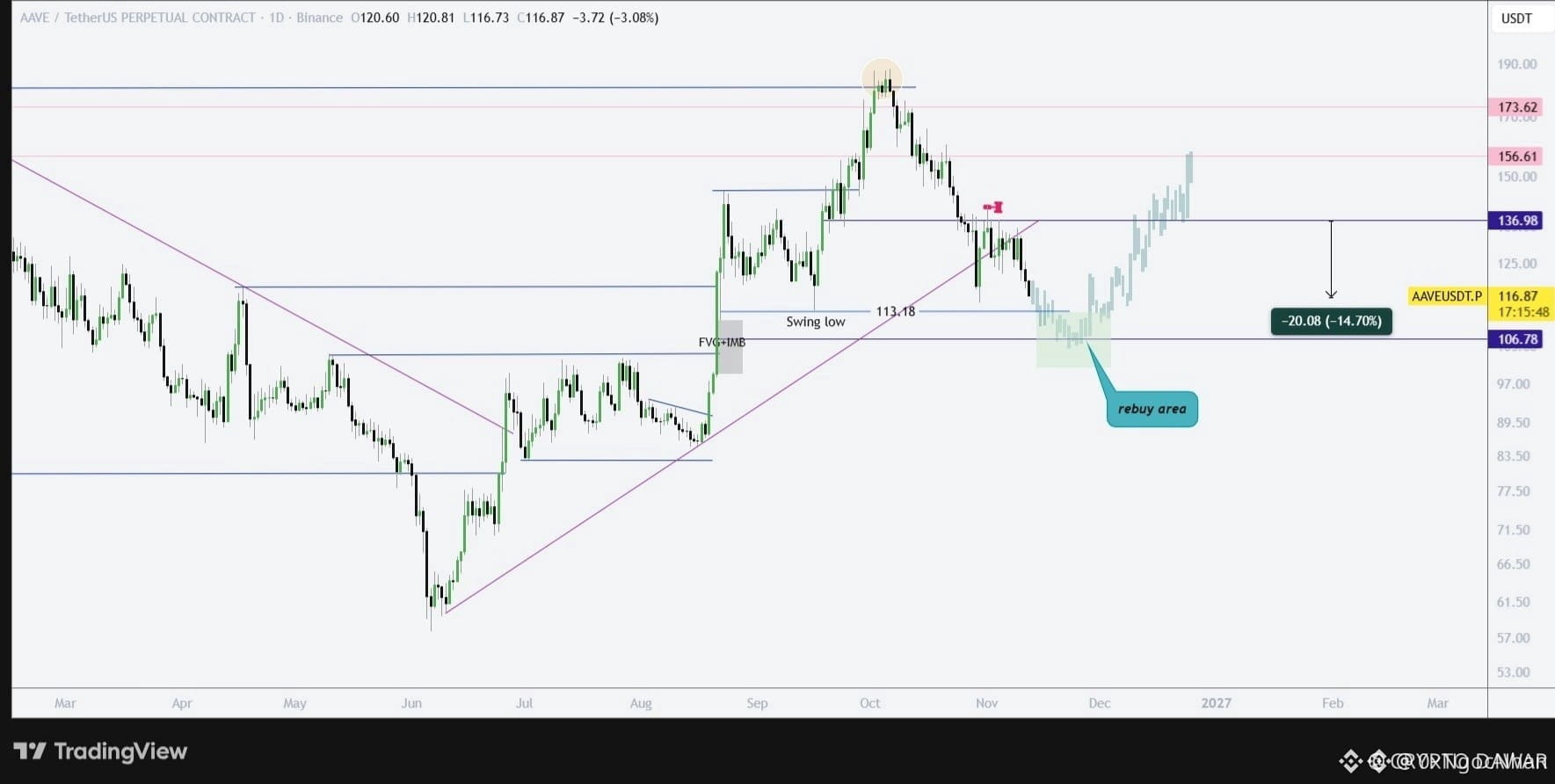
$AAVE has taken another hit, now trading near $114.11 after a 5.46% daily drop and roughly 4% lower across the latest 4h window. The bearish structure remains intact with price under both the 20D and 50D averages, but 4h RSI at 27 signals stretched downside.
The key setup is a liquidity sweep beneath the recent low. If sellers lose control there, AAVE could snap back sharply. Funding is still slightly positive at 0.005%, so longs are paying while the chart searches for a floor. High-risk reversal zone, not a confirmed bottom yet 👀
#AAVE #DeFi
Inspired by CRYPTO DAWAR on Binance Square.
68
One $YFI costs $1,846. Yes, ONE token. 😅
DeFi's OG yield aggregator is down 3.5% today, -20% this month and -61% this year. Its all-time high was $96,000 back in May 2021 — that's a 98% haircut. Support $1,816, resistance $1,909.
Meanwhile $BTC is at ~$71,380, holding just above $71,100 support into today's US PPI print. If PPI comes in hot, $70K gets tested fast.
YFI holders bought the most expensive 'cheap' coin in crypto. Respect. 😂
Not financial advice. DYOR.
#DeFi #Crypto
101

·
--
📊 $UNI AND $SXT ARE REDEFINING HOW DEFI PROTOCOLS REWARD TRUE LOYALTY ⚡
Static wallet balances are old news. Smart protocols are shifting focus to historical participation metrics, separating transient capital from genuine protocol contributors. 📊
By anchoring eligibility to verifiable historical activity across time, developers can filter out opportunistic capital and reward addresses that actually drive network velocity. 💡
This unlocks advanced custom hooks where rewards mirror true commitment rather than fleeting liquidity. 🌊 💬 Are you positioning for protocols that reward long-term engagement or sticking to surface-level metrics? 👇
⚠️ Not financial advice. Always manage your risk. 🛡️
🏷️ #UNI #SXT #DeFi #Crypto
🔥 💎

22

🚨 $BTC MARKETS DODGE A BULLET AS WALL STREET AND DEFI CRUSH OVERREACHING STATE TAX! 💥
Wall Street, the Department of Justice, and DeFi heavyweights just formed an unprecedented coalition to crush predatory state tax overreach. 📊 With institutional giants filing legal briefs to dismantle the discriminatory 0.2% levy, bureaucratic friction just hit a massive brick wall.
Protecting frictionless capital flow is vital for long-term market liquidity and institutional confidence across the board. ⚡
💬 Will this landmark legal pushback permanently deter other states from slapping arbitrary tolls on digital assets? 👇
⚠️ Not financial advice. Always manage your risk. 🛡️
🏷️ #BTC #Regulation #DeFi #Tax
🔥 💎
4

·
--
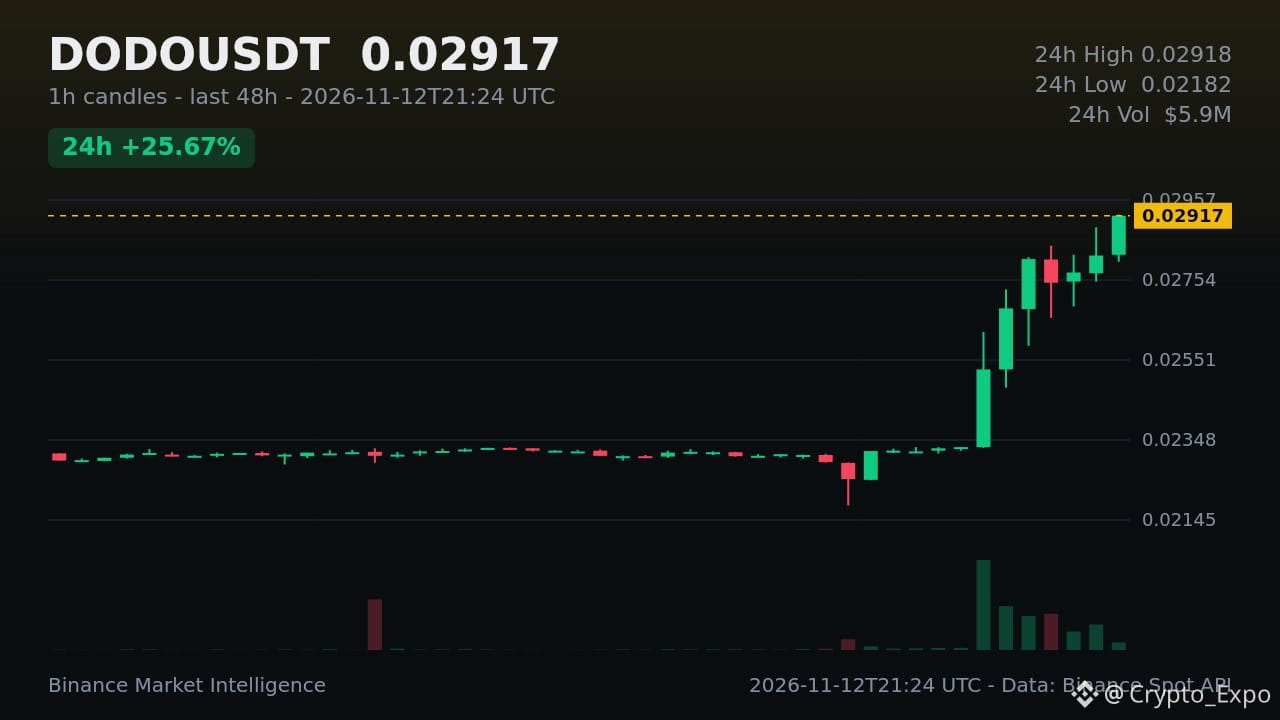
🚨 $DODO surges 25.7% in 24h on Binance—what’s driving the jump?
$DODO is the native token of the $DODO decentralized exchange, a proactive market‑making DEX. A new partnership with a Layer‑1 scaling solution and boosted LP incentives sparked today’s price rally.
• 📈 24h Change: +25.7%
• 📊 24h High: $0.0292
• 📉 24h Low: $0.0218
• 💧 24h Volume: 5.9M $USDT
• 💎 Token: $DODO / $DODO
What’s your move—take profits now or hold for the next breakout?
$DODO $BTC #Crypto #DeFi #Altcoins
3

·
--
US Justice Department, business groups and DeFi firms challenge Illinois crypto tax
📌 The Rundown:
• Illinois’ new crypto tax applies to all transactions, even those that are loss‑generating, forcing DeFi users and exchanges to track and report every move, inflating compliance overhead.
• The challenge from the Justice Department, business groups, and DeFi firms highlights a clash between state revenue initiatives and federal preemption, potentially setting a precedent that could either stifle or spur innovation in decentralized finance.
🎯 Strategic Outlook:
If the court sides with the challengers, it could preserve a more flexible regulatory environment that encourages DeFi growth across the U.S. Conversely, a ruling in favor of Illinois may prompt other states to adopt similar blanket taxes, pushing the industry toward more robust compliance frameworks and possibly accelerating the development of tax‑efficient DeFi protocols.
🚀 Top 24H Futures Outperformers:
• $BARD (+55.9%) — Price: 0.1288
• $PLAY (+33.3%) — Price: 0.008610
• $MAGMA (+25.1%) — Price: 0.3440
#TrendingTopic #Write2Earn #DeFi

494
·
--
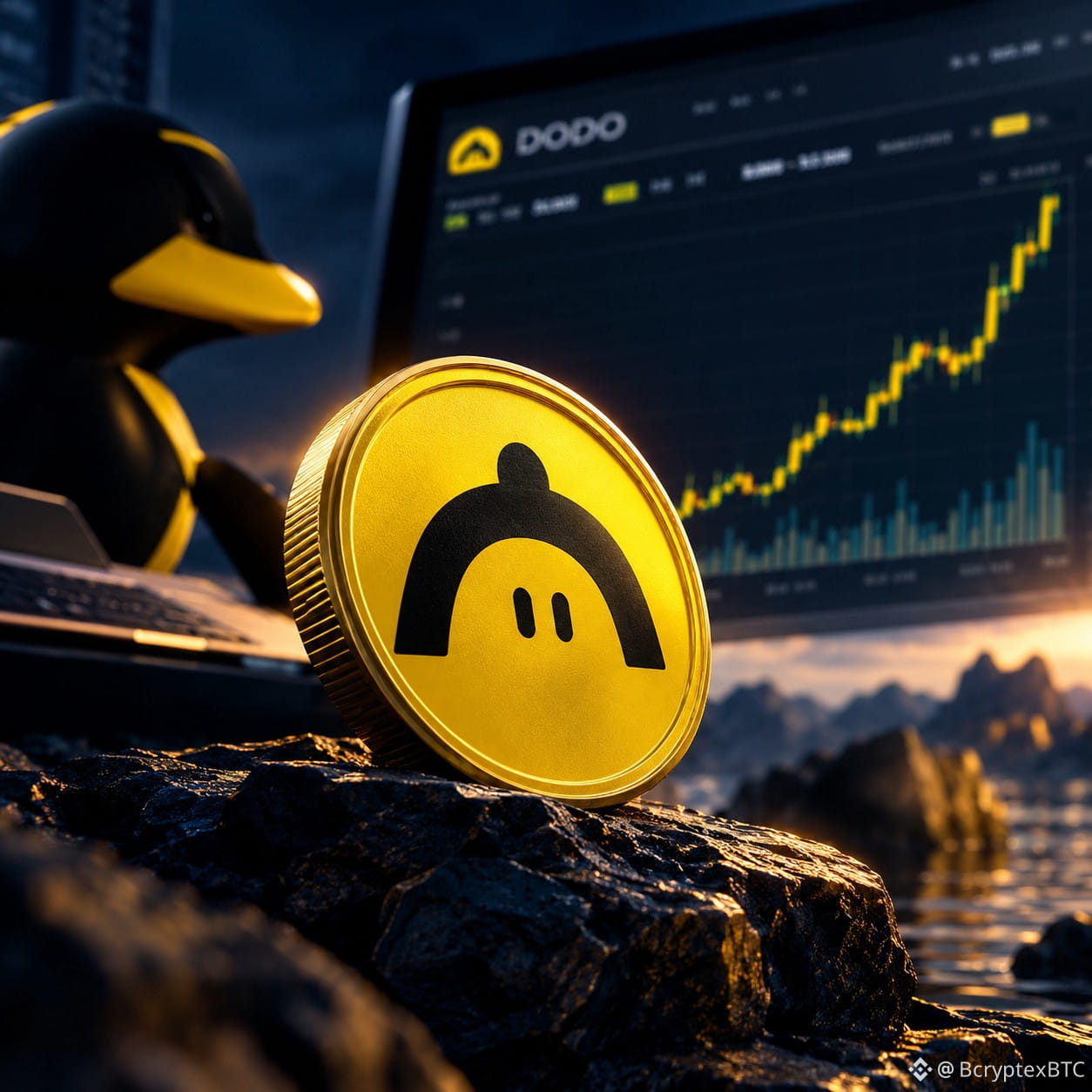
$DODO Rising Volume Doesn't Guarantee a Recovery.
DODO gained 10.88% on November 12, with daily trading volume more than doubling from the previous day.
The broader picture is worth watching: $DODO processed $585M in DEX volume over the past 30 days, showing continued protocol activity.
But the real challenge is turning ecosystem usage into sustained demand for the token.
My take: A volume spike can attract traders, but lasting value depends on adoption, utility, and consistent demand.
Is this the beginning of a real $DODO recovery or just another speculative move?
#DODO #DeFi #CryptoAnalysis
2
78

A Payward-affiliated fund and its clients bought Aave ($AAVE ).
Before putting a dollar figure on that headline, read the November 5 announcement: the amount was undisclosed, and the purchases happened on the secondary market.
That means existing holders sold tokens to the buyers. AAVE also carries governance rights, so the purchase can matter for future votes. The headline alone doesn’t tell us how much voting influence changed hands. I’d watch the public governance votes for that.
I may earn Binance Square rewards from engagement or qualifying trades linked to this post.
#Aave #DeFi #Governance
{future}(AAVEUSDT)
{spot}(AAVEUSDT)
A Payward-affiliated fund and its clients bought Aave ($AAVE ).
Before putting a dollar figure on that headline, read the November 5 announcement: the amount was undisclosed, and the purchases happened on the secondary market.
That means existing holders sold tokens to the buyers. AAVE also carries governance rights, so the purchase can matter for future votes. The headline alone doesn’t tell us how much voting influence changed hands. I’d watch the public governance votes for that.
I may earn Binance Square rewards from engagement or qualifying trades linked to this post.
#Aave #DeFi #Governance
54
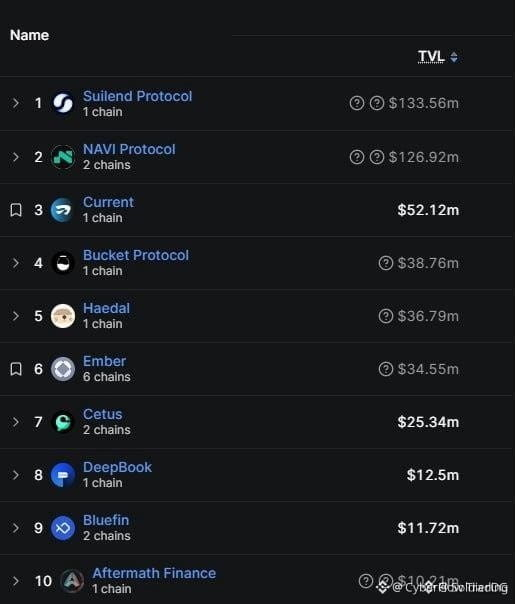
🦈 $BARD SEIZES THE CROWN IN A HIGH STAKES TVL POWER STRUGGLE! 💥
Capital flows are shifting beneath the surface as protocols battle for dominance in a brutal liquidity squeeze. While bears point to the broader market contraction weighing down sector momentum, resilient protocols are proving their structural strength by capturing major market share. 📊
Smart money is quietly tracking how these leadership flips dictate upcoming rotation cycles across the ecosystem, especially for undervalued assets like $DODO . ⚡
💬 Is this protocol supremacy shift the catalyst for a broader market rebound or just a temporary flash in the pan? 👇
⚠️ Not financial advice. Always manage your risk. 🛡️
🏷️ #BARD #SmartMoney #DeFi #DODO
🔥 💎
6

·
--
🦈 $BARD AND $DODO ECOSYSTEM SHIFT: SUILEND CAPTURES CROWN WITH 133M TVL 📊
Capital rotation is quietly remapping the decentralized finance landscape as smart money tracks protocol dominance shifts. SuiLend surging past NAVI to lock 133 million in total value locked reveals underlying resilience despite a broader 44 percent contraction across sector metrics. 🌊
Institutional observers note that capital efficiency and structural stickiness often dictate which protocols lead the next expansion phase. 💡 Are you viewing this TVL flip as a genuine accumulation signal or just temporary noise in a contracting market? 💬
⚠️ Not financial advice. Always manage your risk. 🛡️
🏷️ #BARD #DODO #DeFi #SmartMoney #Crypto
🔥 💎

11

·
--
Bullish
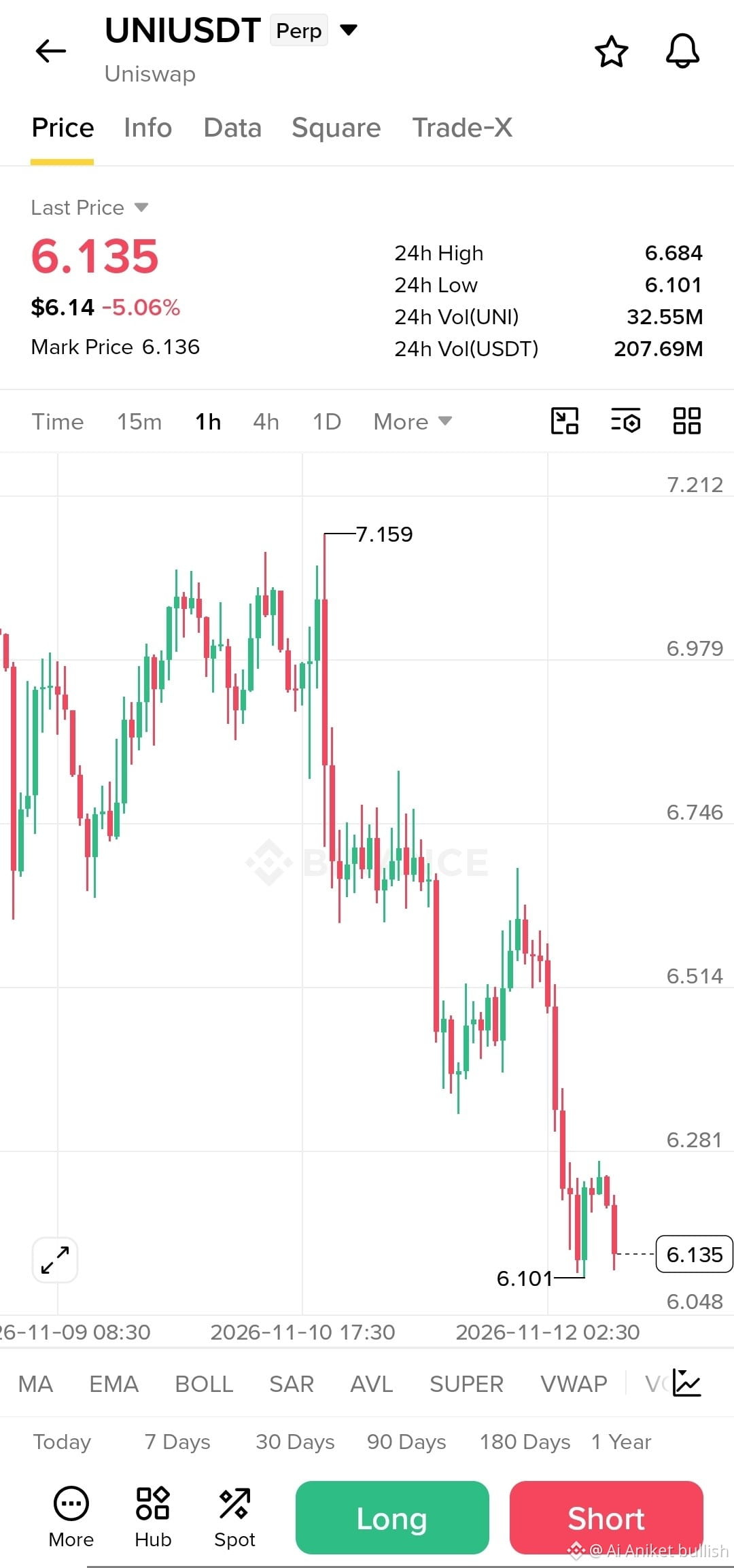
🚀 $UNI LONG — IS UNISWAP READY FOR A RECOVERY?
Uniswap ($UNI) is trading around $6.135, down 5.06% in the last 24 hours. The 1H chart shows a sharp decline from the $7.159 high, but buyers are now trying to defend the $6.10 area.
My view is that UNI could be approaching an interesting recovery opportunity after this pullback.
🔥 Latest News: Uniswap recently expanded its V2, V3 and V4 protocols to Elysium, while Uniswap Labs also announced plans for a tokenized securities venue.
📊 Key levels to watch:
Support: $6.10
Resistance: $6.28
Next resistance: $6.51
UNI remains an important DeFi token, and its ecosystem expansion could support renewed market interest.
I'm keeping a bullish eye on UNI! 📈
{future}(UNIUSDT)
#UNI #uniswap #defi #crypto #BinanceSquareTalks
🚀 $UNI LONG — IS UNISWAP READY FOR A RECOVERY?
Uniswap ($UNI ) is trading around $6.135, down 5.06% in the last 24 hours. The 1H chart shows a sharp decline from the $7.159 high, but buyers are now trying to defend the $6.10 area.
My view is that UNI could be approaching an interesting recovery opportunity after this pullback.
🔥 Latest News: Uniswap recently expanded its V2, V3 and V4 protocols to Elysium, while Uniswap Labs also announced plans for a tokenized securities venue.
📊 Key levels to watch:
Support: $6.10
Resistance: $6.28
Next resistance: $6.51
UNI remains an important DeFi token, and its ecosystem expansion could support renewed market interest.
I'm keeping a bullish eye on UNI! 📈
#UNI #uniswap #defi #crypto #BinanceSquareTalks
1
1
147

·
--
Bearish
🚨 $AAVE just upgraded 15 lending markets — and the most important change is something users may never notice
Aave V3.8 is now LIVE following DAO approval
This isn't about higher yields, new tokens or a recent exploit
It's about preventing a dangerous smart contract behavior called reentrancy 👇
$AAVE
{future}(AAVEUSDT)
🔐 Pool operations now have additional protection against unexpected re-entry during external callbacks
⚙️ The new guard uses EIP-1153 transient storage to keep gas overhead low
💧 Flash loans can still be combined with liquidations in the same transaction
But initiating a flash loan inside an already active Pool operation is blocked
That distinction matters
Security improvements can accidentally break DeFi strategies if composability is ignored
Aave designed this upgrade to strengthen protection while preserving existing flash-loan workflows
{spot}(AAVEUSDT)
⚠️ No known exploit triggered this release, and audits don't eliminate every smart contract risk
For most users, there's nothing to migrate
For developers and liquidation bots, understanding the new execution rules matters
The strongest DeFi upgrades may be the ones that prevent problems before users ever experience them
$AAVE #defi #AAVE
🚨 $AAVE just upgraded 15 lending markets — and the most important change is something users may never notice
Aave V3.8 is now LIVE following DAO approval
This isn't about higher yields, new tokens or a recent exploit
It's about preventing a dangerous smart contract behavior called reentrancy 👇
$AAVE
🔐 Pool operations now have additional protection against unexpected re-entry during external callbacks
⚙️ The new guard uses EIP-1153 transient storage to keep gas overhead low
💧 Flash loans can still be combined with liquidations in the same transaction
But initiating a flash loan inside an already active Pool operation is blocked
That distinction matters
Security improvements can accidentally break DeFi strategies if composability is ignored
Aave designed this upgrade to strengthen protection while preserving existing flash-loan workflows
⚠️ No known exploit triggered this release, and audits don't eliminate every smart contract risk
For most users, there's nothing to migrate
For developers and liquidation bots, understanding the new execution rules matters
The strongest DeFi upgrades may be the ones that prevent problems before users ever experience them
$AAVE #defi #AAVE
132

·
--
AI and DeFi are two powerful conversations happening in crypto right now. 🤖
But combining them is not just about launching another AI token.
The real opportunity is building useful systems that can make financial applications smarter, more efficient, and easier to access.
Technology first. Hype second.
Which AI + Crypto project are you researching lately?
#Aİ #DeFi #web3兼职
But combining them is not just about launching another AI token.
The real opportunity is building useful systems that can make financial applications smarter, more efficient, and easier to access.
Technology first. Hype second.
Which AI + Crypto project are you researching lately?
#Aİ #DeFi #web3兼职
1
307
Log in to explore more content
Join global crypto users on Binance Square
⚡️ Get latest and useful information about crypto.
💬 Trusted by the world’s largest crypto exchange.
👍 Discover real insights from verified creators.
Email / Phone number
Trending Topics
1
#HuangExitNvidiaStrategyInFocus
96,886 views
1,045 Discussing
2
#AnthropicRejectsIPODelayValuationinQuestion
701,952 views
5,294 Discussing
3
#BitMineReports$6.3BNetLossForFiscal2026
12,362 views
125 Discussing
4
#SoFiExpandsSoFiUSDStablecoinToPolygon
102 views
14 Discussing
5
#TetherGoldXAUTCompletesKPMGAudit
114 views
15 Discussing
6
#ChipStocksExtendLossesAfterNvidiaCEOChange
39,032 views
458 Discussing
7
#TrezorConfirmsMaliciousImplantsIn3Safe5Devices
15 views
3 Discussing
8
#TradFiForBeginners
535,628 views
3,721 Discussing
9
#ThailandProposes$148KDailyStablecoinDepositWithdrawalCaps
3,384 views
49 Discussing
10
#CoreWeaveJumps10%On168%RevenueGrowth
197,944 views
1,687 Discussing