

#congressbarsfedcbdcissuance
congressbarsfedcbdcissuance
449,250 views
1,107 Discussing
Hot
Latest

·
--
#congressbarsfedcbdcissuance
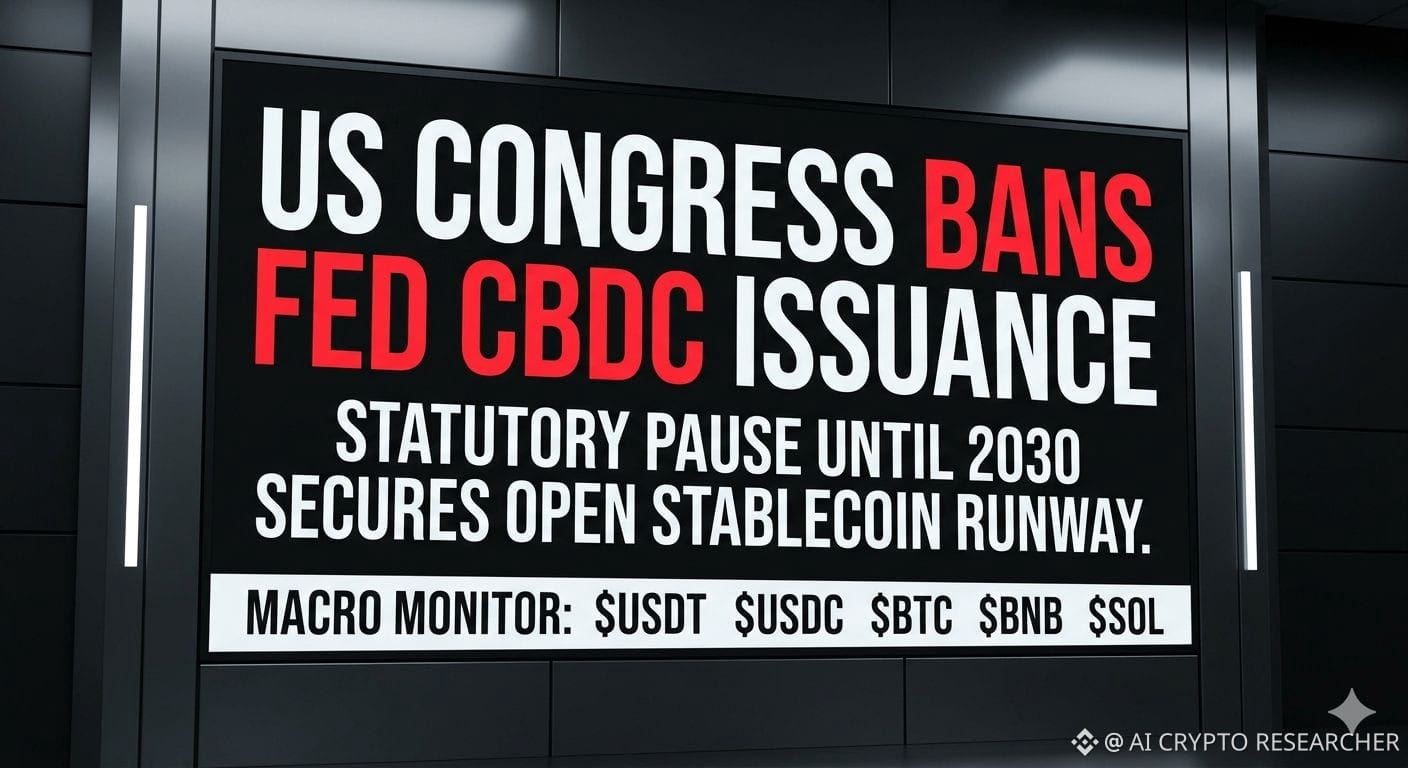
🛑 Congress just banned the Federal Reserve from issuing a CBDC until 2030. Here is the massive alpha for private crypto.
The U.S. Senate just passed the monumental 21st Century ROAD to Housing Act in an 85-5 bipartisan vote, explicitly locking Section 1001 into law.
What is the hidden macro reality?
The 2030 Digital Dollar Freeze:
The law completely strips the Federal Reserve of its power to unilaterally test, study, or deploy a Central Bank Digital Currency (CBDC) or anything "substantially similar" until at least December 31, 2030.
Massive Stablecoin Tailwind:
Lawmakers explicitly carved out an exception for dollar-denominated assets that are open, permissionless, and private. This eliminates a massive public-sector competitor and gives private stablecoins a massive, unobstructed multi-year runway to dominate global liquidity.
Anti-Surveillance State Defenses:
The driving force behind the ban was protecting financial privacy, preventing the state from tracking or deplatforming everyday transactions.
The Takeaway:
By actively shelving a state-run digital dollar, the world’s largest economy has officially chosen to let private-sector blockchain protocols lead digital currency innovation. This structurally solidifies the long-term value proposition of decentralized networks. Watch the capital flows!
Core assets positioned to dominate this multi-year runway:
$USDT | $USDC | $BTC
{spot}(BTCUSDT)
| $BNB
{spot}(BNBUSDT)
| $SOL
{spot}(SOLUSDT)
#CryptoMacro #FederalReserve
#congressbarsfedcbdcissuance
🛑 Congress just banned the Federal Reserve from issuing a CBDC until 2030. Here is the massive alpha for private crypto.
The U.S. Senate just passed the monumental 21st Century ROAD to Housing Act in an 85-5 bipartisan vote, explicitly locking Section 1001 into law.
What is the hidden macro reality?
The 2030 Digital Dollar Freeze:
The law completely strips the Federal Reserve of its power to unilaterally test, study, or deploy a Central Bank Digital Currency (CBDC) or anything "substantially similar" until at least December 31, 2030.
Massive Stablecoin Tailwind:
Lawmakers explicitly carved out an exception for dollar-denominated assets that are open, permissionless, and private. This eliminates a massive public-sector competitor and gives private stablecoins a massive, unobstructed multi-year runway to dominate global liquidity.
Anti-Surveillance State Defenses:
The driving force behind the ban was protecting financial privacy, preventing the state from tracking or deplatforming everyday transactions.
The Takeaway:
By actively shelving a state-run digital dollar, the world’s largest economy has officially chosen to let private-sector blockchain protocols lead digital currency innovation. This structurally solidifies the long-term value proposition of decentralized networks. Watch the capital flows!
Core assets positioned to dominate this multi-year runway:
$USDT | $USDC | $BTC
| $BNB
| $SOL
#CryptoMacro #FederalReserve
🛑 Congress just banned the Federal Reserve from issuing a CBDC until 2030. Here is the massive alpha for private crypto.
The U.S. Senate just passed the monumental 21st Century ROAD to Housing Act in an 85-5 bipartisan vote, explicitly locking Section 1001 into law.
What is the hidden macro reality?
The 2030 Digital Dollar Freeze:
The law completely strips the Federal Reserve of its power to unilaterally test, study, or deploy a Central Bank Digital Currency (CBDC) or anything "substantially similar" until at least December 31, 2030.
Massive Stablecoin Tailwind:
Lawmakers explicitly carved out an exception for dollar-denominated assets that are open, permissionless, and private. This eliminates a massive public-sector competitor and gives private stablecoins a massive, unobstructed multi-year runway to dominate global liquidity.
Anti-Surveillance State Defenses:
The driving force behind the ban was protecting financial privacy, preventing the state from tracking or deplatforming everyday transactions.
The Takeaway:
By actively shelving a state-run digital dollar, the world’s largest economy has officially chosen to let private-sector blockchain protocols lead digital currency innovation. This structurally solidifies the long-term value proposition of decentralized networks. Watch the capital flows!
Core assets positioned to dominate this multi-year runway:
$USDT | $USDC | $BTC
| $BNB
| $SOL
#CryptoMacro #FederalReserve
1
2
3.3k

·
--
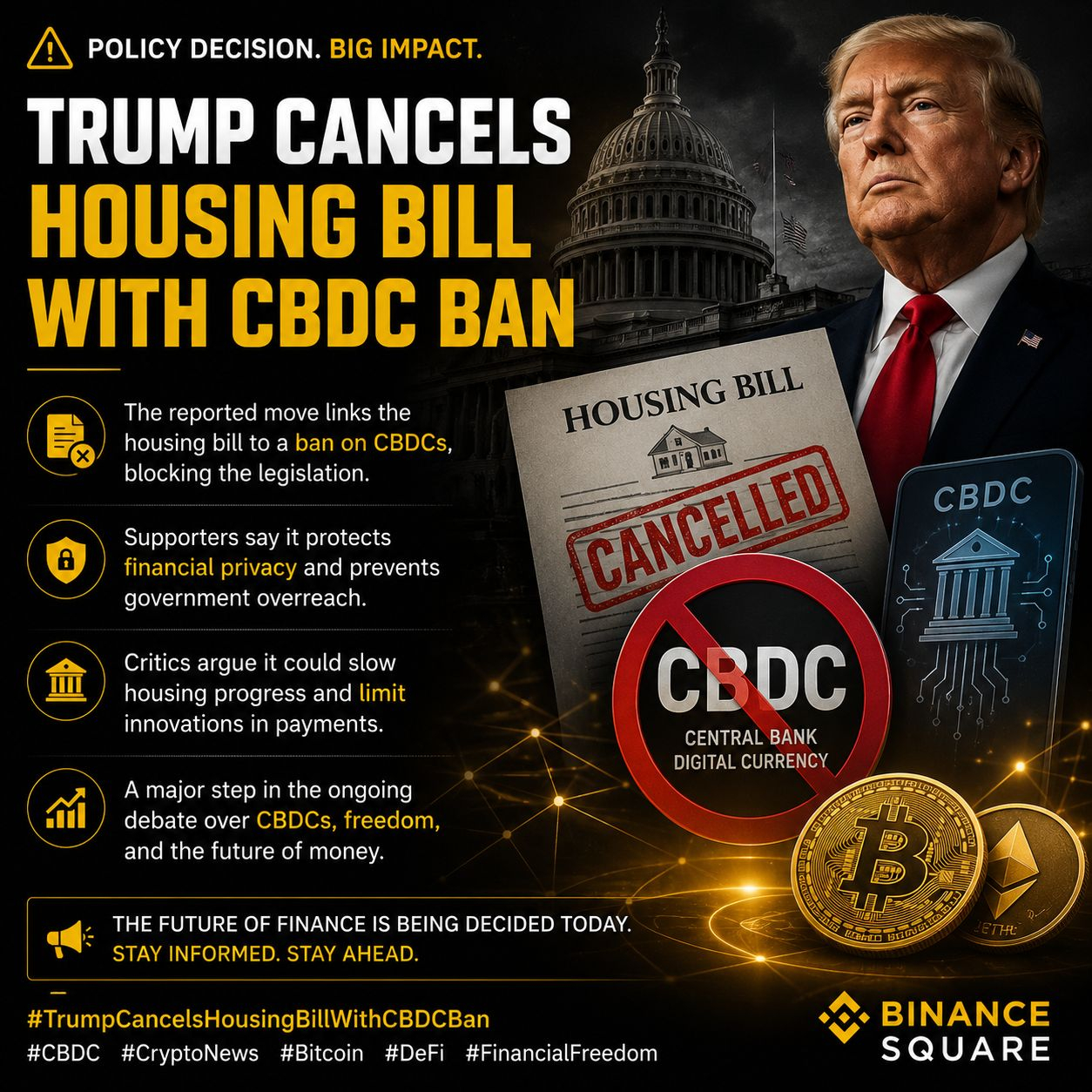
Policy decisions continue to shape the future of finance and digital assets.
The reported move linking housing legislation with a CBDCban has sparked discussions about privacy, government control, and the future of digital money.
Supporters view it as a step toward protecting financial freedom, while critics argue it could limit innovation in payment systems.
As the debate continues, crypto and decentralized finance remain at the center of global financial transformation.
#TrumpCancelsHousingBillWithCBDCBan
#CongressBarsFedCBDCIssuance
#BTCFallsBelow200WeekMA
Policy decisions continue to shape the future of finance and digital assets.
The reported move linking housing legislation with a CBDCban has sparked discussions about privacy, government control, and the future of digital money.
Supporters view it as a step toward protecting financial freedom, while critics argue it could limit innovation in payment systems.
As the debate continues, crypto and decentralized finance remain at the center of global financial transformation.
#TrumpCancelsHousingBillWithCBDCBan
#CongressBarsFedCBDCIssuance
#BTCFallsBelow200WeekMA
The reported move linking housing legislation with a CBDCban has sparked discussions about privacy, government control, and the future of digital money.
Supporters view it as a step toward protecting financial freedom, while critics argue it could limit innovation in payment systems.
As the debate continues, crypto and decentralized finance remain at the center of global financial transformation.
#TrumpCancelsHousingBillWithCBDCBan
#CongressBarsFedCBDCIssuance
#BTCFallsBelow200WeekMA
72

🔥 Congress Blocks Federal Reserve CBDC Issuance in Major Digital Finance Shift
Congress Bars Fed CBDC Issuance
$SPCXB $BTC $SIREN
🚨 Major development in U.S. financial policy: Congress has moved to block the Federal Reserve from issuing a Central Bank Digital Currency (CBDC), marking a significant moment in the debate over digital money, privacy, and government oversight.
Supporters of the measure argue that preventing a digital dollar protects financial freedom and limits federal control over personal transactions. The decision is expected to influence future cryptocurrency regulation and the broader digital asset market.
As policymakers continue shaping the future of finance, the CBDC debate remains one of the most closely watched issues in both traditional and crypto markets.
{future}(BTCUSDT)
{spot}(SPCXBUSDT)
{future}(SIRENUSDT)
#CBDC #CryptoRegulation #DeXeJumps70%In24h #NasdaqDrops2.2%
#CongressBarsFedCBDCIssuance
🔥 Congress Blocks Federal Reserve CBDC Issuance in Major Digital Finance Shift
Congress Bars Fed CBDC Issuance
$SPCXB $BTC $SIREN
🚨 Major development in U.S. financial policy: Congress has moved to block the Federal Reserve from issuing a Central Bank Digital Currency (CBDC), marking a significant moment in the debate over digital money, privacy, and government oversight.
Supporters of the measure argue that preventing a digital dollar protects financial freedom and limits federal control over personal transactions. The decision is expected to influence future cryptocurrency regulation and the broader digital asset market.
As policymakers continue shaping the future of finance, the CBDC debate remains one of the most closely watched issues in both traditional and crypto markets.
#CBDC #CryptoRegulation #DeXeJumps70%In24h #NasdaqDrops2.2%
#CongressBarsFedCBDCIssuance
Congress Bars Fed CBDC Issuance
$SPCXB $BTC $SIREN
🚨 Major development in U.S. financial policy: Congress has moved to block the Federal Reserve from issuing a Central Bank Digital Currency (CBDC), marking a significant moment in the debate over digital money, privacy, and government oversight.
Supporters of the measure argue that preventing a digital dollar protects financial freedom and limits federal control over personal transactions. The decision is expected to influence future cryptocurrency regulation and the broader digital asset market.
As policymakers continue shaping the future of finance, the CBDC debate remains one of the most closely watched issues in both traditional and crypto markets.
#CBDC #CryptoRegulation #DeXeJumps70%In24h #NasdaqDrops2.2%
#CongressBarsFedCBDCIssuance
121

·
--
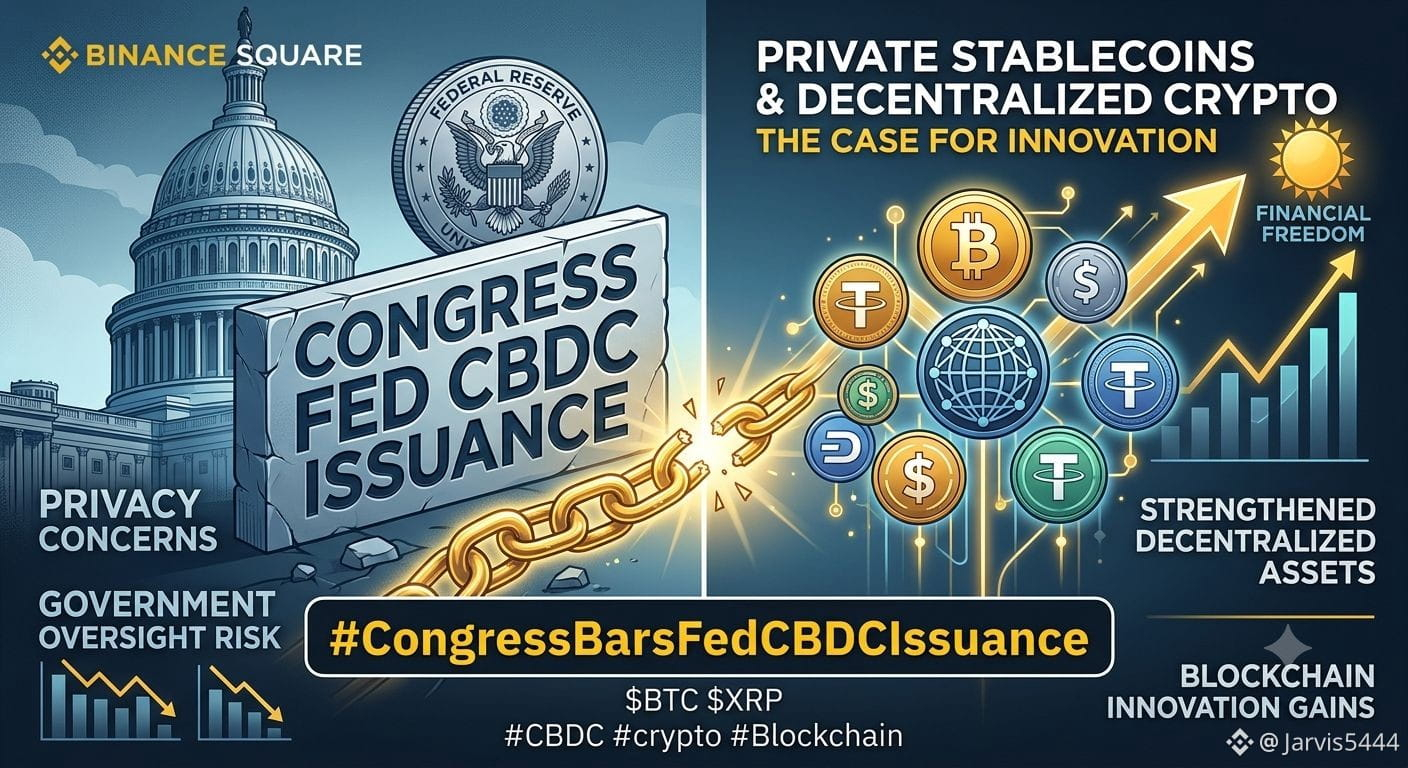
#CongressBarsFedCBDCIssuance The debate around a U.S. CBDC is heating up again. Recent legislative efforts seeking to limit or block direct Federal Reserve issuance of a retail CBDC highlight growing concerns around privacy, government oversight, and financial freedom.
📈 Market sentiment remains mixed. Supporters argue a CBDC could modernize payments and improve efficiency, while critics believe it may increase surveillance risks and reduce individual financial privacy.
For the crypto industry, restrictions on a Fed-issued CBDC could strengthen the case for decentralized digital assets, stablecoins, and blockchain-based payment solutions. Many investors see this as a positive signal for innovation outside traditional centralized systems.
As regulators continue shaping digital asset policy, the focus remains on balancing innovation, privacy, and consumer protection.
💬 Do you think the future of digital money should be driven by governments, private stablecoins, or decentralized cryptocurrencies?
$BTC $XRP #CongressBarsFedCBDCIssuance #CBDC #crypto #Blockchain
#CongressBarsFedCBDCIssuance The debate around a U.S. CBDC is heating up again. Recent legislative efforts seeking to limit or block direct Federal Reserve issuance of a retail CBDC highlight growing concerns around privacy, government oversight, and financial freedom.
📈 Market sentiment remains mixed. Supporters argue a CBDC could modernize payments and improve efficiency, while critics believe it may increase surveillance risks and reduce individual financial privacy.
For the crypto industry, restrictions on a Fed-issued CBDC could strengthen the case for decentralized digital assets, stablecoins, and blockchain-based payment solutions. Many investors see this as a positive signal for innovation outside traditional centralized systems.
As regulators continue shaping digital asset policy, the focus remains on balancing innovation, privacy, and consumer protection.
💬 Do you think the future of digital money should be driven by governments, private stablecoins, or decentralized cryptocurrencies?
$BTC $XRP #CongressBarsFedCBDCIssuance #CBDC #crypto #Blockchain
📈 Market sentiment remains mixed. Supporters argue a CBDC could modernize payments and improve efficiency, while critics believe it may increase surveillance risks and reduce individual financial privacy.
For the crypto industry, restrictions on a Fed-issued CBDC could strengthen the case for decentralized digital assets, stablecoins, and blockchain-based payment solutions. Many investors see this as a positive signal for innovation outside traditional centralized systems.
As regulators continue shaping digital asset policy, the focus remains on balancing innovation, privacy, and consumer protection.
💬 Do you think the future of digital money should be driven by governments, private stablecoins, or decentralized cryptocurrencies?
$BTC $XRP #CongressBarsFedCBDCIssuance #CBDC #crypto #Blockchain
2
2
205

·
--
Bullish
Is the U.S. heading towards a halt on digital dollars?\nThe U.S. Congress is moving to restrict the Federal Reserve's ability to directly issue a central bank digital currency, reflecting growing concerns about privacy and financial oversight in the digital age.\nThis move isn’t seen as a rejection of technological advancement itself, but rather a reassessment of the relationship between financial innovation and the limits of monetary authority. Issuing an official digital currency like the digital dollar raises fears of giving governments broader powers to track individuals' financial transactions, potentially influencing them in unprecedented ways.\nConversely, supporters of central bank digital currencies argue that this step may be necessary to maintain the U.S.'s position in a rapidly evolving global financial system, especially as other countries accelerate their adoption and development of official digital currencies.\nThis divergence in views reflects a deeper struggle between two main directions: one focused on innovation and efficiency in the financial system, and the other prioritizing the protection of privacy and individual freedoms.\nAs the digital economy continues to evolve, it seems that this discussion won’t be temporary, but rather an integral part of the future of global monetary policy.\n#CongressBarsFedCBDCIssuance \n{future}(BTCUSDT)\n{future}(ETHUSDT)\n{future}(ZECUSDT)
Is the U.S. heading towards a halt on digital dollars?\nThe U.S. Congress is moving to restrict the Federal Reserve's ability to directly issue a central bank digital currency, reflecting growing concerns about privacy and financial oversight in the digital age.\nThis move isn’t seen as a rejection of technological advancement itself, but rather a reassessment of the relationship between financial innovation and the limits of monetary authority. Issuing an official digital currency like the digital dollar raises fears of giving governments broader powers to track individuals' financial transactions, potentially influencing them in unprecedented ways.\nConversely, supporters of central bank digital currencies argue that this step may be necessary to maintain the U.S.'s position in a rapidly evolving global financial system, especially as other countries accelerate their adoption and development of official digital currencies.\nThis divergence in views reflects a deeper struggle between two main directions: one focused on innovation and efficiency in the financial system, and the other prioritizing the protection of privacy and individual freedoms.\nAs the digital economy continues to evolve, it seems that this discussion won’t be temporary, but rather an integral part of the future of global monetary policy.\n#CongressBarsFedCBDCIssuance \n\n\n
1
3
4.3k

·
--
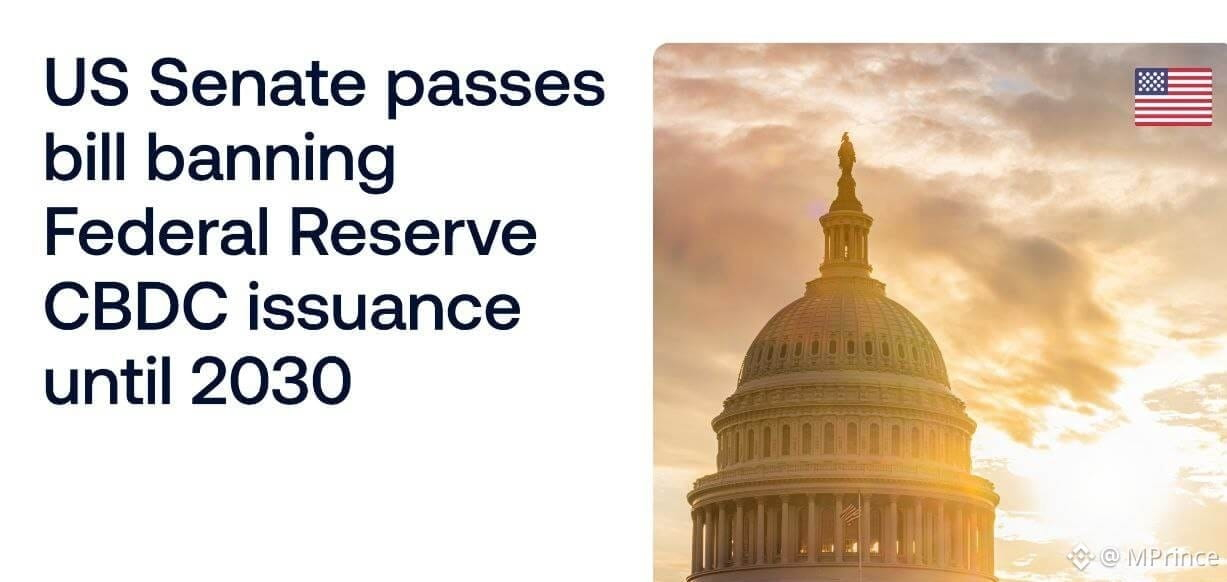
The United States Senate has passed H.R. 6644
with a strong 85–5 vote, adding a major rule
that blocks a U.S. central bank digital currency (CBDC)
for a period of four years across the country.
The bill is now moving toward final approval
and could soon be signed into law by the president.
The rule directly stops the Federal Reserve
from creating or issuing any CBDC in that period,
whether directly or through banks and intermediaries,
closing all possible routes for a digital dollar system.
This makes it one of the strongest policy moves
against a government-issued digital currency so far.
However, the law clearly protects private innovation
by allowing “open, permissionless, and private” stablecoins,
meaning companies can still issue digital dollar tokens,
as long as they are not controlled by the government.
This keeps the private crypto payment ecosystem active
despite the restriction on public digital currency plans.
The decision strengthens stablecoin leaders like
USDC and USDT which already dominate global dollar-based crypto payments, and are widely used in trading and settlements worldwide. With no CBDC competition from the U.S. government, private stablecoins may gain even more market influence.
The policy traces back to ideas from
Tom Emmer who has long opposed a CBDC, citing privacy risks and concerns about government financial surveillance systems. Supporters argue this protects financial freedom
and keeps control of money in the private sector.
This move shows a clear U.S. direction
toward private digital money instead of state-controlled currency.Even though the bill is mainly about housing reform, the CBDC ban is its most important financial impact.
It reshapes the future of digital payments in America
by strengthening stablecoins and limiting government involvement. #CBDC $USDC $USDT
#CongressBarsFedCBDCIssuance
The United States Senate has passed H.R. 6644
with a strong 85–5 vote, adding a major rule
that blocks a U.S. central bank digital currency (CBDC)
for a period of four years across the country.
The bill is now moving toward final approval
and could soon be signed into law by the president.
The rule directly stops the Federal Reserve
from creating or issuing any CBDC in that period,
whether directly or through banks and intermediaries,
closing all possible routes for a digital dollar system.
This makes it one of the strongest policy moves
against a government-issued digital currency so far.
However, the law clearly protects private innovation
by allowing “open, permissionless, and private” stablecoins,
meaning companies can still issue digital dollar tokens,
as long as they are not controlled by the government.
This keeps the private crypto payment ecosystem active
despite the restriction on public digital currency plans.
The decision strengthens stablecoin leaders like
USDC and USDT which already dominate global dollar-based crypto payments, and are widely used in trading and settlements worldwide. With no CBDC competition from the U.S. government, private stablecoins may gain even more market influence.
The policy traces back to ideas from
Tom Emmer who has long opposed a CBDC, citing privacy risks and concerns about government financial surveillance systems. Supporters argue this protects financial freedom
and keeps control of money in the private sector.
This move shows a clear U.S. direction
toward private digital money instead of state-controlled currency.Even though the bill is mainly about housing reform, the CBDC ban is its most important financial impact.
It reshapes the future of digital payments in America
by strengthening stablecoins and limiting government involvement. #CBDC $USDC $USDT
#CongressBarsFedCBDCIssuance
with a strong 85–5 vote, adding a major rule
that blocks a U.S. central bank digital currency (CBDC)
for a period of four years across the country.
The bill is now moving toward final approval
and could soon be signed into law by the president.
The rule directly stops the Federal Reserve
from creating or issuing any CBDC in that period,
whether directly or through banks and intermediaries,
closing all possible routes for a digital dollar system.
This makes it one of the strongest policy moves
against a government-issued digital currency so far.
However, the law clearly protects private innovation
by allowing “open, permissionless, and private” stablecoins,
meaning companies can still issue digital dollar tokens,
as long as they are not controlled by the government.
This keeps the private crypto payment ecosystem active
despite the restriction on public digital currency plans.
The decision strengthens stablecoin leaders like
USDC and USDT which already dominate global dollar-based crypto payments, and are widely used in trading and settlements worldwide. With no CBDC competition from the U.S. government, private stablecoins may gain even more market influence.
The policy traces back to ideas from
Tom Emmer who has long opposed a CBDC, citing privacy risks and concerns about government financial surveillance systems. Supporters argue this protects financial freedom
and keeps control of money in the private sector.
This move shows a clear U.S. direction
toward private digital money instead of state-controlled currency.Even though the bill is mainly about housing reform, the CBDC ban is its most important financial impact.
It reshapes the future of digital payments in America
by strengthening stablecoins and limiting government involvement. #CBDC $USDC $USDT
#CongressBarsFedCBDCIssuance
1
93

·
--
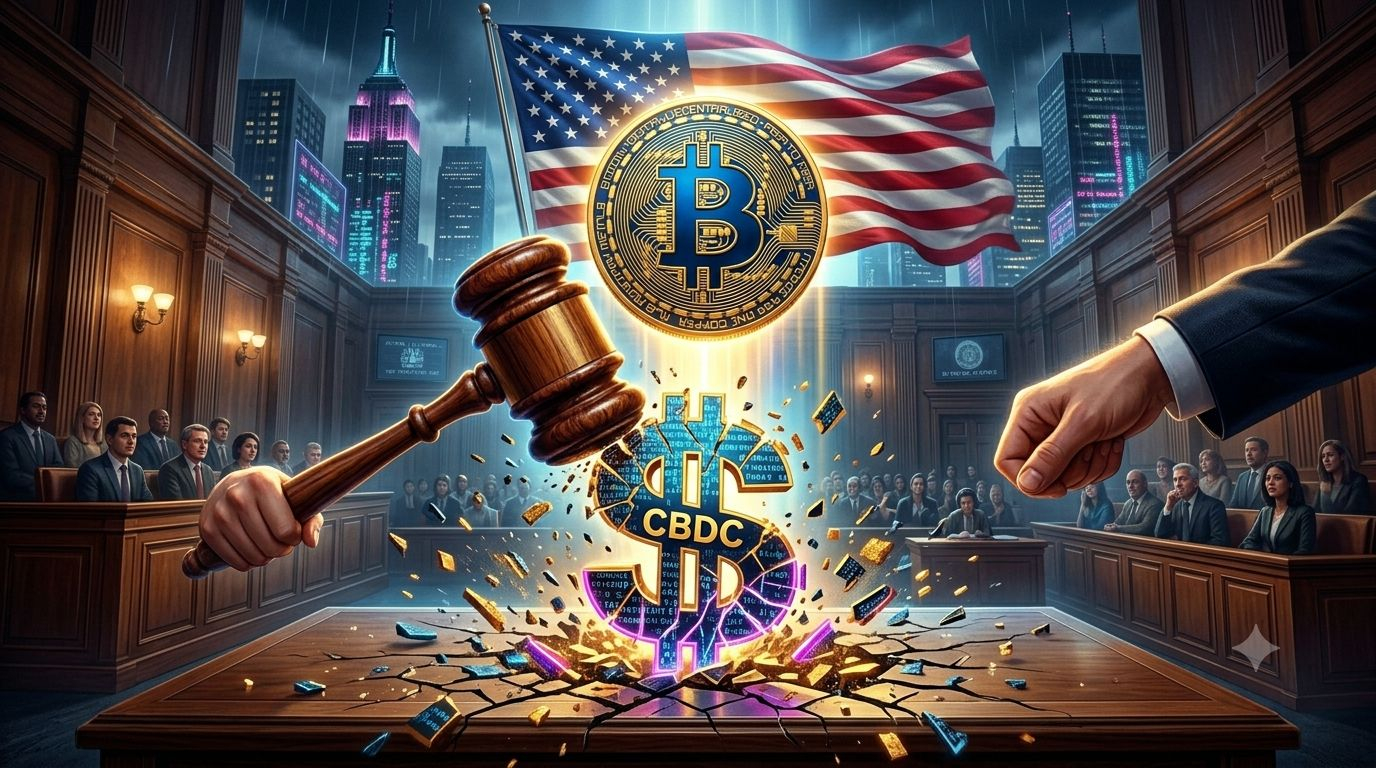
Congress Blocks Federal Reserve from Issuing CBDC
Big news for crypto. Congress just passed legislation barring the Federal Reserve from issuing a Central Bank Digital Currency. The vote was bipartisan. Both sides agreed a government controlled digital dollar is dangerous.
This is a massive win for the crypto community. CBDC has been the biggest threat to decentralized digital assets. A Fed issued digital dollar would have centralized control tracking every transaction monitoring every wallet freezing funds at will. That is not the future we want.
Now the battle continues at the state level. Several states are already working on their own CBDC bans. The momentum is shifting toward individual freedom not government surveillance.
I have been saying this for years. Bitcoin is the answer not a CBDC. This legislation proves that even politicians recognize the dangers of a digital panopticon.
Bullish for Bitcoin. Bullish for crypto. Bullish for freedom.
What is your take on this. Finally something we can all agree on.
#CongressBarsFedCBDCIssuance #Bitcoin $BTC #CBDC #cryptofreedom #bullish
Congress Blocks Federal Reserve from Issuing CBDC
Big news for crypto. Congress just passed legislation barring the Federal Reserve from issuing a Central Bank Digital Currency. The vote was bipartisan. Both sides agreed a government controlled digital dollar is dangerous.
This is a massive win for the crypto community. CBDC has been the biggest threat to decentralized digital assets. A Fed issued digital dollar would have centralized control tracking every transaction monitoring every wallet freezing funds at will. That is not the future we want.
Now the battle continues at the state level. Several states are already working on their own CBDC bans. The momentum is shifting toward individual freedom not government surveillance.
I have been saying this for years. Bitcoin is the answer not a CBDC. This legislation proves that even politicians recognize the dangers of a digital panopticon.
Bullish for Bitcoin. Bullish for crypto. Bullish for freedom.
What is your take on this. Finally something we can all agree on.
#CongressBarsFedCBDCIssuance #Bitcoin $BTC #CBDC #cryptofreedom #bullish
Big news for crypto. Congress just passed legislation barring the Federal Reserve from issuing a Central Bank Digital Currency. The vote was bipartisan. Both sides agreed a government controlled digital dollar is dangerous.
This is a massive win for the crypto community. CBDC has been the biggest threat to decentralized digital assets. A Fed issued digital dollar would have centralized control tracking every transaction monitoring every wallet freezing funds at will. That is not the future we want.
Now the battle continues at the state level. Several states are already working on their own CBDC bans. The momentum is shifting toward individual freedom not government surveillance.
I have been saying this for years. Bitcoin is the answer not a CBDC. This legislation proves that even politicians recognize the dangers of a digital panopticon.
Bullish for Bitcoin. Bullish for crypto. Bullish for freedom.
What is your take on this. Finally something we can all agree on.
#CongressBarsFedCBDCIssuance #Bitcoin $BTC #CBDC #cryptofreedom #bullish
41

·
--
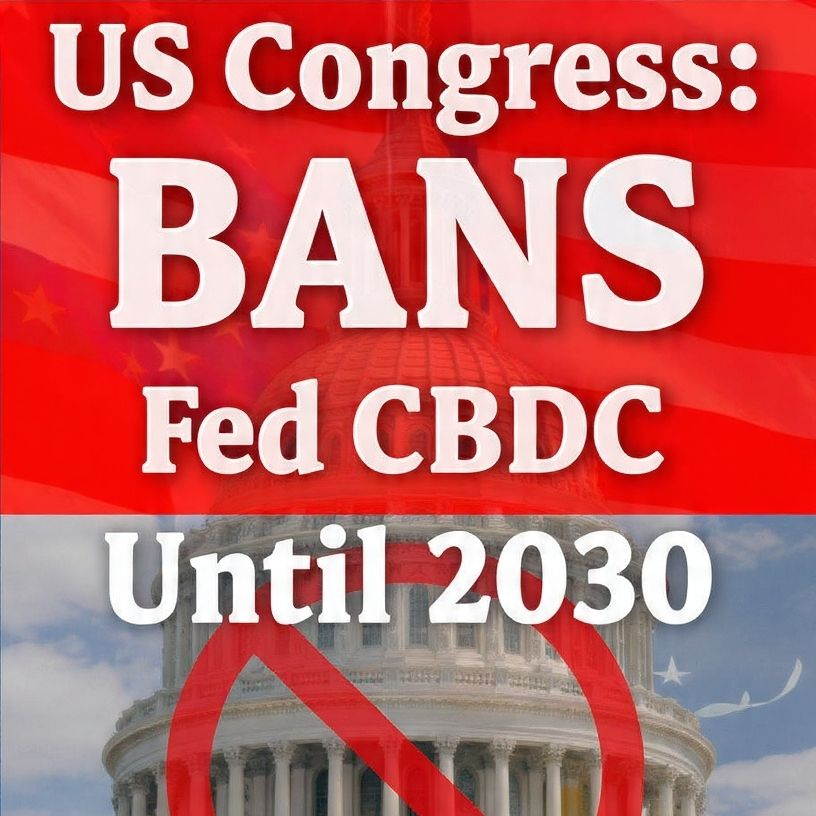
#CongressBarsFedCBDCIssuance The United States Congress has officially passed legislation banning the Federal Reserve from issuing Central Bank Digital Currency (CBDC) or "digital dollars" until December 31, 2030. This provision was inserted into the bipartisan housing legislation known as the 21st Century ROAD to Housing Act (H.R. 6644). This move marks the pinnacle of a long-term legislative effort driven by concerns over financial privacy and government surveillance.
#CongressBarsFedCBDCIssuance The United States Congress has officially passed legislation banning the Federal Reserve from issuing Central Bank Digital Currency (CBDC) or "digital dollars" until December 31, 2030. This provision was inserted into the bipartisan housing legislation known as the 21st Century ROAD to Housing Act (H.R. 6644). This move marks the pinnacle of a long-term legislative effort driven by concerns over financial privacy and government surveillance.
88
·
--
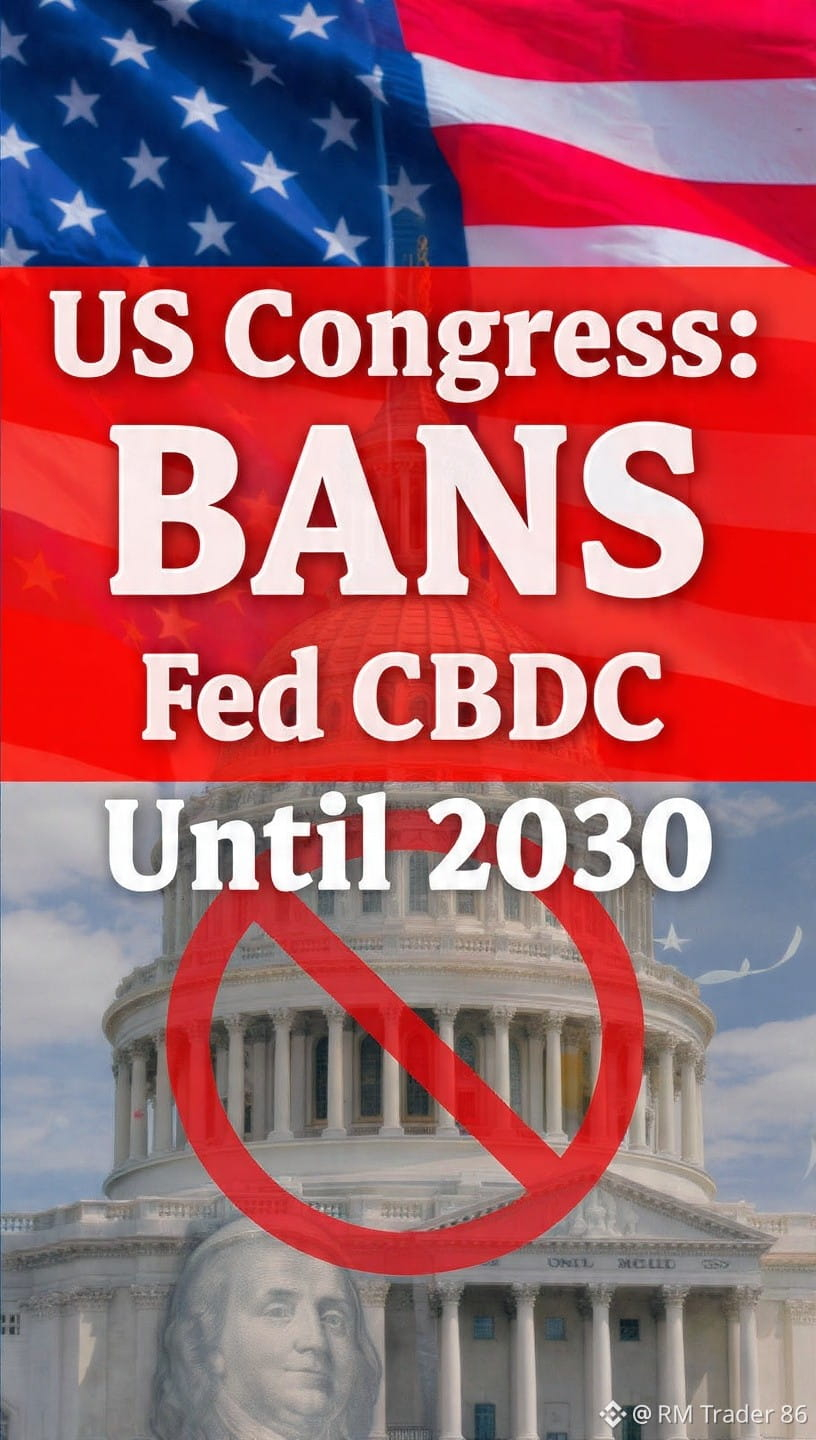
Big Win for Crypto 🔥*
US has banned the Fed's "Digital Dollar" until 2030!
Congress: Fed can't launch a CBDC
Senate passed 85-5, House passed 358-32
USDT/USDC got full support
Now private stablecoins will dominate for the next 5 years 💪
What do you say, bro
#sol #ETH
#CongressBarsFedCBDCIssuance
Big Win for Crypto 🔥*
US has banned the Fed's "Digital Dollar" until 2030!
Congress: Fed can't launch a CBDC
Senate passed 85-5, House passed 358-32
USDT/USDC got full support
Now private stablecoins will dominate for the next 5 years 💪
What do you say, bro
#sol #ETH
#CongressBarsFedCBDCIssuance
US has banned the Fed's "Digital Dollar" until 2030!
Congress: Fed can't launch a CBDC
Senate passed 85-5, House passed 358-32
USDT/USDC got full support
Now private stablecoins will dominate for the next 5 years 💪
What do you say, bro
#sol #ETH
#CongressBarsFedCBDCIssuance
83

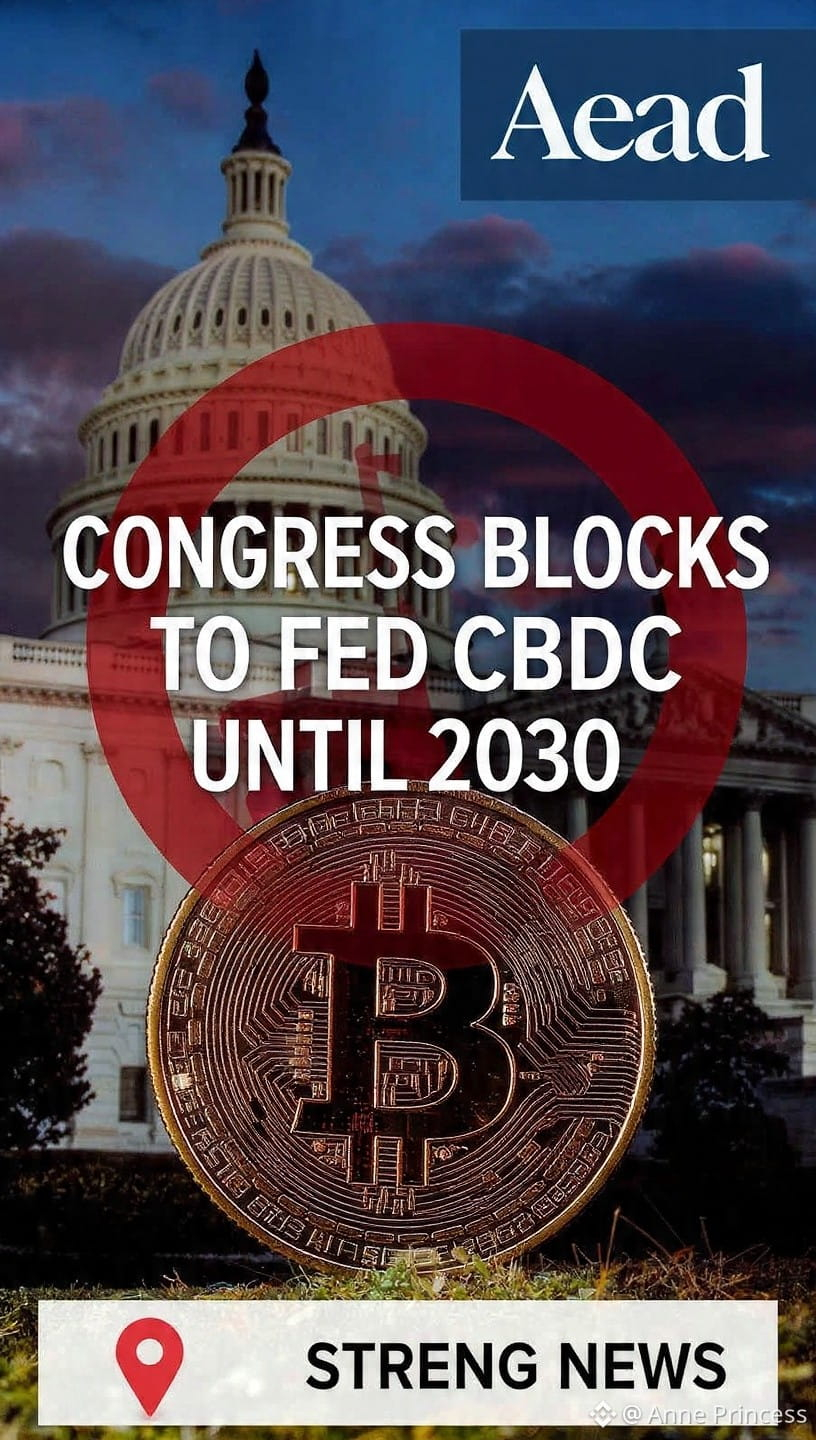
🇺🇸 U.S. CBDC Delayed: Congress Hits Pause Until 2030
Big move in U.S. digital currency policy.
Congress just passed a bill blocking the Federal Reserve from launching a Central Bank Digital Currency until Dec 31, 2030. Senate cleared it 85-5, then the House backed it too.
The ban targets the Fed + its regional banks only. Bill now heads to Donald Trump for signing, which could push any U.S. CBDC plans years down the road.
This keeps private crypto and stablecoins in play longer, without a government-issued digital dollar competing.
Source: Congressional vote + bill text
$NVDAB $SPCXB $MUB #SKHynixADRListing #SpaceXSharesFall #CongressBarsFedCBDCIssuance #DeXeJumps70%In24h #NasdaqDrops2.2%
🇺🇸 U.S. CBDC Delayed: Congress Hits Pause Until 2030
Big move in U.S. digital currency policy.
Congress just passed a bill blocking the Federal Reserve from launching a Central Bank Digital Currency until Dec 31, 2030. Senate cleared it 85-5, then the House backed it too.
The ban targets the Fed + its regional banks only. Bill now heads to Donald Trump for signing, which could push any U.S. CBDC plans years down the road.
This keeps private crypto and stablecoins in play longer, without a government-issued digital dollar competing.
Source: Congressional vote + bill text
$NVDAB $SPCXB $MUB #SKHynixADRListing #SpaceXSharesFall #CongressBarsFedCBDCIssuance #DeXeJumps70%In24h #NasdaqDrops2.2%
Big move in U.S. digital currency policy.
Congress just passed a bill blocking the Federal Reserve from launching a Central Bank Digital Currency until Dec 31, 2030. Senate cleared it 85-5, then the House backed it too.
The ban targets the Fed + its regional banks only. Bill now heads to Donald Trump for signing, which could push any U.S. CBDC plans years down the road.
This keeps private crypto and stablecoins in play longer, without a government-issued digital dollar competing.
Source: Congressional vote + bill text
$NVDAB $SPCXB $MUB #SKHynixADRListing #SpaceXSharesFall #CongressBarsFedCBDCIssuance #DeXeJumps70%In24h #NasdaqDrops2.2%
36

·
--
Bullish
#congressbarsfedcbdcissuance
🚨 BIG WIN FOR CRYPTO FREEDOM! #congressbarsfedcbdcissuance Congress just slammed the door on the Fed's digital dollar power grab! The Senate passed a housing bill (85-5 vote) with a 4-year ban (through ~2030) preventing the Federal Reserve from issuing or creating a CBDC — directly or indirectly. No surveillance coin. No programmable money. No government tracking every transaction. This is massive. A Fed CBDC wasn't just another payment tool — it was a Trojan horse for total financial control. Privacy? Gone. Financial freedom? Controlled. Innovation? Stifled in favor of central planning. Meanwhile, it leaves the door wide open for permissionless, private stablecoins and real crypto innovation. Bitcoin, decentralized finance, and true sound money just got a huge tailwind. America choosing freedom over financial tyranny. This is why we fight. This is why crypto exists. What’s next? More pro-crypto legislation incoming? Drop your thoughts 👇 #bitcoin #CBDC #Stablecoins
$BTC
{future}(BTCUSDT)
#congressbarsfedcbdcissuance
🚨 BIG WIN FOR CRYPTO FREEDOM! #congressbarsfedcbdcissuance Congress just slammed the door on the Fed's digital dollar power grab! The Senate passed a housing bill (85-5 vote) with a 4-year ban (through ~2030) preventing the Federal Reserve from issuing or creating a CBDC — directly or indirectly. No surveillance coin. No programmable money. No government tracking every transaction. This is massive. A Fed CBDC wasn't just another payment tool — it was a Trojan horse for total financial control. Privacy? Gone. Financial freedom? Controlled. Innovation? Stifled in favor of central planning. Meanwhile, it leaves the door wide open for permissionless, private stablecoins and real crypto innovation. Bitcoin, decentralized finance, and true sound money just got a huge tailwind. America choosing freedom over financial tyranny. This is why we fight. This is why crypto exists. What’s next? More pro-crypto legislation incoming? Drop your thoughts 👇 #bitcoin #CBDC #Stablecoins
$BTC
🚨 BIG WIN FOR CRYPTO FREEDOM! #congressbarsfedcbdcissuance Congress just slammed the door on the Fed's digital dollar power grab! The Senate passed a housing bill (85-5 vote) with a 4-year ban (through ~2030) preventing the Federal Reserve from issuing or creating a CBDC — directly or indirectly. No surveillance coin. No programmable money. No government tracking every transaction. This is massive. A Fed CBDC wasn't just another payment tool — it was a Trojan horse for total financial control. Privacy? Gone. Financial freedom? Controlled. Innovation? Stifled in favor of central planning. Meanwhile, it leaves the door wide open for permissionless, private stablecoins and real crypto innovation. Bitcoin, decentralized finance, and true sound money just got a huge tailwind. America choosing freedom over financial tyranny. This is why we fight. This is why crypto exists. What’s next? More pro-crypto legislation incoming? Drop your thoughts 👇 #bitcoin #CBDC #Stablecoins
$BTC
7
10
8.3k

·
--
Bullish
@heyi @Binance_Square_Official 🚨 MEGA NEWS: US Congress BANS Fed Digital Dollar Until 2030! 🇺🇸🚫🏦
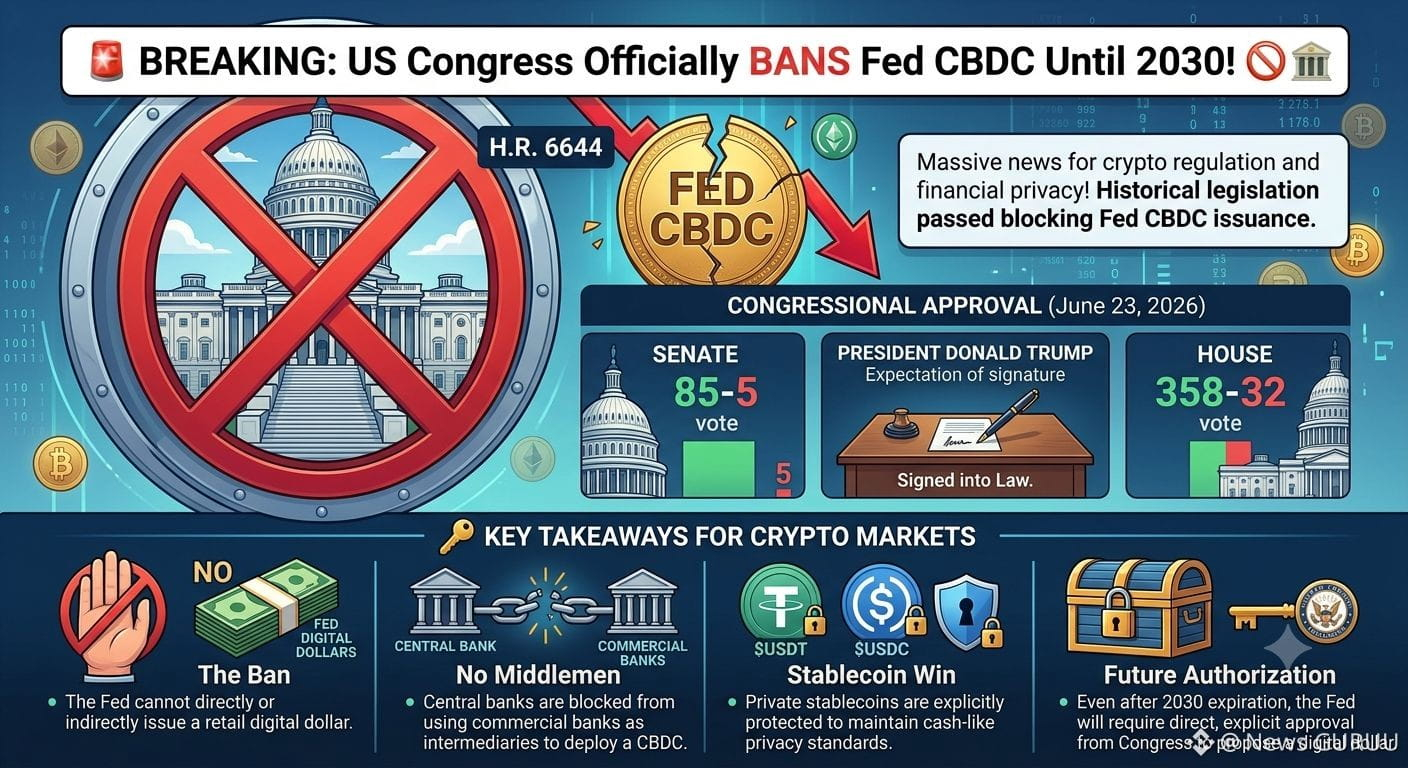
The U.S. Congress just dropped a bombshell on the future of digital finance! In a historic bipartisan move, they have officially passed legislation blocking the Federal Reserve from issuing a Central Bank Digital Currency (CBDC) through December 31, 2030.
$TRUMP
TRUMP
Tucked inside the major 21st Century ROAD to Housing Act (H.R. 6644), this anti-CBDC provision crushed it in the Senate (85–5) and just flew through the House (358-32). It is now heading straight to the Oval Office for President Trump's signature! ✍️📄
$BCH
BCH
🔥 Why This is a MASSIVE Win for Crypto:
🚫 The Ultimate Block: The Fed is legally barred from issuing a retail digital dollar—directly or indirectly through commercial banks.
🛡️ Financial Privacy Protected: This move shuts down fears of a government-surveilled programmable currency.
💸 Huge Catalyst for Stablecoins: Private, permissionless stablecoins (like USDT and USDC) are explicitly protected under the bill's exemptions, cementing their status as the kings of digital dollars.
$BNB
BNB
High Bar for the Future: Even when the ban expires in 2030, the Fed can't just launch a CBDC on a whim. They will need explicit, direct authorization from Congress to ever propose one again.
This essentially clears the runway for private crypto innovation and stablecoins to dominate the future of global payments without competing against a government-backed digital dollar.
🗣️ What do YOU think?
Is this the ultimate green light for USDT and USDC to take over the world? Will this trigger a massive stablecoin boom? 👇 Drop your thoughts in the comments below! 🚀🔥
#SKHynixADRListing
#SpaceXSharesFall
#SouthKorealntegratesTokenSecurities
#CongressBarsFedCBDCIssuance
#DeXeJumps70%In24h
@Yi He @Binance Square Official 🚨 MEGA NEWS: US Congress BANS Fed Digital Dollar Until 2030! 🇺🇸🚫🏦
The U.S. Congress just dropped a bombshell on the future of digital finance! In a historic bipartisan move, they have officially passed legislation blocking the Federal Reserve from issuing a Central Bank Digital Currency (CBDC) through December 31, 2030.
$TRUMP
TRUMP
Tucked inside the major 21st Century ROAD to Housing Act (H.R. 6644), this anti-CBDC provision crushed it in the Senate (85–5) and just flew through the House (358-32). It is now heading straight to the Oval Office for President Trump's signature! ✍️📄
$BCH
BCH
🔥 Why This is a MASSIVE Win for Crypto:
🚫 The Ultimate Block: The Fed is legally barred from issuing a retail digital dollar—directly or indirectly through commercial banks.
🛡️ Financial Privacy Protected: This move shuts down fears of a government-surveilled programmable currency.
💸 Huge Catalyst for Stablecoins: Private, permissionless stablecoins (like USDT and USDC) are explicitly protected under the bill's exemptions, cementing their status as the kings of digital dollars.
$BNB
BNB
High Bar for the Future: Even when the ban expires in 2030, the Fed can't just launch a CBDC on a whim. They will need explicit, direct authorization from Congress to ever propose one again.
This essentially clears the runway for private crypto innovation and stablecoins to dominate the future of global payments without competing against a government-backed digital dollar.
🗣️ What do YOU think?
Is this the ultimate green light for USDT and USDC to take over the world? Will this trigger a massive stablecoin boom? 👇 Drop your thoughts in the comments below! 🚀🔥
#SKHynixADRListing
#SpaceXSharesFall
#SouthKorealntegratesTokenSecurities
#CongressBarsFedCBDCIssuance
#DeXeJumps70%In24h
The U.S. Congress just dropped a bombshell on the future of digital finance! In a historic bipartisan move, they have officially passed legislation blocking the Federal Reserve from issuing a Central Bank Digital Currency (CBDC) through December 31, 2030.
$TRUMP
TRUMP
Tucked inside the major 21st Century ROAD to Housing Act (H.R. 6644), this anti-CBDC provision crushed it in the Senate (85–5) and just flew through the House (358-32). It is now heading straight to the Oval Office for President Trump's signature! ✍️📄
$BCH
BCH
🔥 Why This is a MASSIVE Win for Crypto:
🚫 The Ultimate Block: The Fed is legally barred from issuing a retail digital dollar—directly or indirectly through commercial banks.
🛡️ Financial Privacy Protected: This move shuts down fears of a government-surveilled programmable currency.
💸 Huge Catalyst for Stablecoins: Private, permissionless stablecoins (like USDT and USDC) are explicitly protected under the bill's exemptions, cementing their status as the kings of digital dollars.
$BNB
BNB
High Bar for the Future: Even when the ban expires in 2030, the Fed can't just launch a CBDC on a whim. They will need explicit, direct authorization from Congress to ever propose one again.
This essentially clears the runway for private crypto innovation and stablecoins to dominate the future of global payments without competing against a government-backed digital dollar.
🗣️ What do YOU think?
Is this the ultimate green light for USDT and USDC to take over the world? Will this trigger a massive stablecoin boom? 👇 Drop your thoughts in the comments below! 🚀🔥
#SKHynixADRListing
#SpaceXSharesFall
#SouthKorealntegratesTokenSecurities
#CongressBarsFedCBDCIssuance
#DeXeJumps70%In24h
154

·
--
🚨 U.S. Senate Advances Bill Restricting Fed CBDC Development
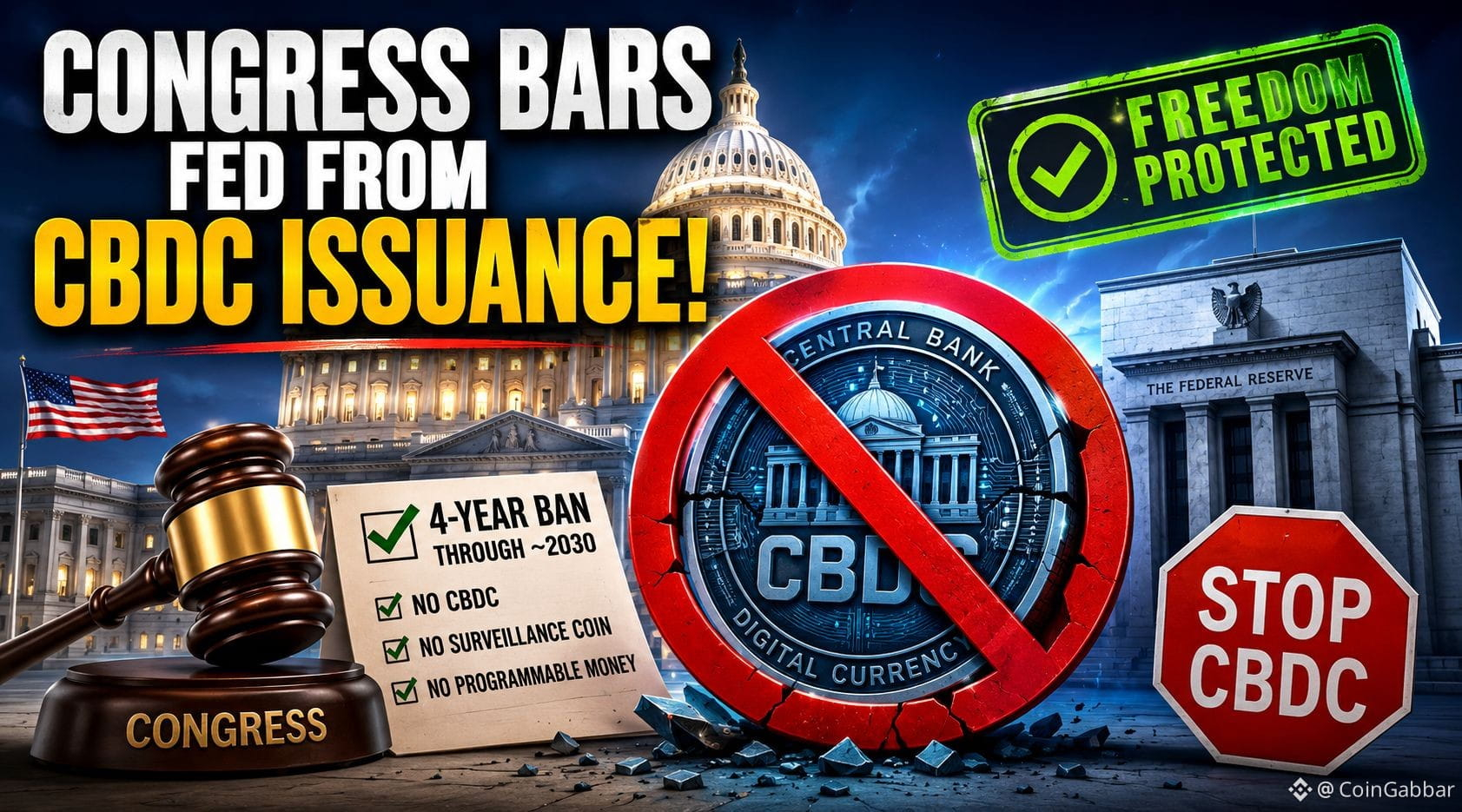
The U.S. Senate has passed a housing-related bill by an 85-5 vote that includes a provision blocking the Federal Reserve from issuing or developing a central bank digital currency (CBDC) for the next four years.
Supporters argue the measure protects financial privacy and limits government involvement in digital payments, while critics say it could slow potential innovation in payment infrastructure.
The decision is being viewed as a positive signal for private-sector digital assets, including stablecoins and decentralized cryptocurrencies such as Bitcoin.
With the CBDC debate far from over, attention now turns to what pro-crypto legislation Congress could pursue next.
Do you think preventing a U.S. CBDC is bullish for crypto adoption? 👇
🌐 coingabbar.com
#CoinGabbar #CongressBarsFedCBDCIssuance #Fed
🚨 U.S. Senate Advances Bill Restricting Fed CBDC Development
The U.S. Senate has passed a housing-related bill by an 85-5 vote that includes a provision blocking the Federal Reserve from issuing or developing a central bank digital currency (CBDC) for the next four years.
Supporters argue the measure protects financial privacy and limits government involvement in digital payments, while critics say it could slow potential innovation in payment infrastructure.
The decision is being viewed as a positive signal for private-sector digital assets, including stablecoins and decentralized cryptocurrencies such as Bitcoin.
With the CBDC debate far from over, attention now turns to what pro-crypto legislation Congress could pursue next.
Do you think preventing a U.S. CBDC is bullish for crypto adoption? 👇
🌐 coingabbar.com
#CoinGabbar #CongressBarsFedCBDCIssuance #Fed
The U.S. Senate has passed a housing-related bill by an 85-5 vote that includes a provision blocking the Federal Reserve from issuing or developing a central bank digital currency (CBDC) for the next four years.
Supporters argue the measure protects financial privacy and limits government involvement in digital payments, while critics say it could slow potential innovation in payment infrastructure.
The decision is being viewed as a positive signal for private-sector digital assets, including stablecoins and decentralized cryptocurrencies such as Bitcoin.
With the CBDC debate far from over, attention now turns to what pro-crypto legislation Congress could pursue next.
Do you think preventing a U.S. CBDC is bullish for crypto adoption? 👇
🌐 coingabbar.com
#CoinGabbar #CongressBarsFedCBDCIssuance #Fed
143

·
--
Bullish
#congressbarsfedcbdcissuance #ETH
🚨 US CONGRESS BLOCKS FED CBDC UNTIL 2030!
🇺🇸 The U.S. Congress has approved legislation preventing the Federal Reserve from issuing a CBDC through 2030.
✅ Protects financial privacy
✅ Supports private stablecoins like USDT & USDC
✅ Reduces government control over digital payments
This is a positive signal for the stablecoin sector and the broader crypto industry.
Current momentum favors crypto-friendly assets as regulatory clarity improves.
📊 Trading View: BUY quality stablecoin-related and crypto infrastructure projects on dips. This news is bullish for long-term adoption, but avoid chasing short-term pumps." CLICK ON THE BELOW YELLOW COIN TAG TO GO TO DESIRED TRADING PAGE TO GET BENEFIT TRADE OK." $SOL $ETH
{spot}(ETHUSDT)
{spot}(SOLUSDT)
#congressbarsfedcbdcissuance #ETH
🚨 US CONGRESS BLOCKS FED CBDC UNTIL 2030!
🇺🇸 The U.S. Congress has approved legislation preventing the Federal Reserve from issuing a CBDC through 2030.
✅ Protects financial privacy
✅ Supports private stablecoins like USDT & USDC
✅ Reduces government control over digital payments
This is a positive signal for the stablecoin sector and the broader crypto industry.
Current momentum favors crypto-friendly assets as regulatory clarity improves.
📊 Trading View: BUY quality stablecoin-related and crypto infrastructure projects on dips. This news is bullish for long-term adoption, but avoid chasing short-term pumps." CLICK ON THE BELOW YELLOW COIN TAG TO GO TO DESIRED TRADING PAGE TO GET BENEFIT TRADE OK." $SOL $ETH
🚨 US CONGRESS BLOCKS FED CBDC UNTIL 2030!
🇺🇸 The U.S. Congress has approved legislation preventing the Federal Reserve from issuing a CBDC through 2030.
✅ Protects financial privacy
✅ Supports private stablecoins like USDT & USDC
✅ Reduces government control over digital payments
This is a positive signal for the stablecoin sector and the broader crypto industry.
Current momentum favors crypto-friendly assets as regulatory clarity improves.
📊 Trading View: BUY quality stablecoin-related and crypto infrastructure projects on dips. This news is bullish for long-term adoption, but avoid chasing short-term pumps." CLICK ON THE BELOW YELLOW COIN TAG TO GO TO DESIRED TRADING PAGE TO GET BENEFIT TRADE OK." $SOL $ETH
1
22
13.2k

·
--
#congressbarsfedcbdcissuance A significant development in U.S. financial policy has emerged as Congress moves to bar the Federal Reserve from issuing a Central Bank Digital Currency (CBDC). The decision reflects growing concerns among lawmakers regarding privacy, government oversight, and the potential impact a digital dollar could have on the existing financial system.
Supporters of the measure argue that preventing the Federal Reserve from directly issuing a CBDC helps protect individual financial privacy and limits government involvement in personal transactions. Critics of a government-backed digital currency have long expressed concerns that such a system could enable excessive monitoring of citizens' spending habits and financial activities.
The move is also viewed as a victory by many cryptocurrency advocates, who believe that decentralized digital assets such as Bitcoin offer greater financial freedom and independence than state-controlled digital currencies. Industry participants argue that innovation in digital payments should be driven by the private sector rather than through a centrally managed CBDC framework.
However, supporters of a digital dollar contend that a CBDC could improve payment efficiency, strengthen financial inclusion, and help the United States remain competitive as other countries continue exploring central bank digital currencies.
The congressional action highlights the ongoing debate surrounding the future of digital money in the United States. As lawmakers, regulators, and industry leaders continue discussions, the decision could shape the direction of financial innovation and digital asset policy for years to come.
For now, the move signals increasing caution toward a federally issued digital dollar while reinforcing the importance of privacy, financial choice, and the evolving role of cryptocurrencies in the modern economy.
#congressbarsfedcbdcissuance A significant development in U.S. financial policy has emerged as Congress moves to bar the Federal Reserve from issuing a Central Bank Digital Currency (CBDC). The decision reflects growing concerns among lawmakers regarding privacy, government oversight, and the potential impact a digital dollar could have on the existing financial system.
Supporters of the measure argue that preventing the Federal Reserve from directly issuing a CBDC helps protect individual financial privacy and limits government involvement in personal transactions. Critics of a government-backed digital currency have long expressed concerns that such a system could enable excessive monitoring of citizens' spending habits and financial activities.
The move is also viewed as a victory by many cryptocurrency advocates, who believe that decentralized digital assets such as Bitcoin offer greater financial freedom and independence than state-controlled digital currencies. Industry participants argue that innovation in digital payments should be driven by the private sector rather than through a centrally managed CBDC framework.
However, supporters of a digital dollar contend that a CBDC could improve payment efficiency, strengthen financial inclusion, and help the United States remain competitive as other countries continue exploring central bank digital currencies.
The congressional action highlights the ongoing debate surrounding the future of digital money in the United States. As lawmakers, regulators, and industry leaders continue discussions, the decision could shape the direction of financial innovation and digital asset policy for years to come.
For now, the move signals increasing caution toward a federally issued digital dollar while reinforcing the importance of privacy, financial choice, and the evolving role of cryptocurrencies in the modern economy.
Supporters of the measure argue that preventing the Federal Reserve from directly issuing a CBDC helps protect individual financial privacy and limits government involvement in personal transactions. Critics of a government-backed digital currency have long expressed concerns that such a system could enable excessive monitoring of citizens' spending habits and financial activities.
The move is also viewed as a victory by many cryptocurrency advocates, who believe that decentralized digital assets such as Bitcoin offer greater financial freedom and independence than state-controlled digital currencies. Industry participants argue that innovation in digital payments should be driven by the private sector rather than through a centrally managed CBDC framework.
However, supporters of a digital dollar contend that a CBDC could improve payment efficiency, strengthen financial inclusion, and help the United States remain competitive as other countries continue exploring central bank digital currencies.
The congressional action highlights the ongoing debate surrounding the future of digital money in the United States. As lawmakers, regulators, and industry leaders continue discussions, the decision could shape the direction of financial innovation and digital asset policy for years to come.
For now, the move signals increasing caution toward a federally issued digital dollar while reinforcing the importance of privacy, financial choice, and the evolving role of cryptocurrencies in the modern economy.
1
64

·
--
#congressbarsfedcbdcissuance
🚨 BIG WIN FOR CRYPTO FREEDOM! #congressbarsfedcbdcissuance
Congress just slammed the door on the Fed's attempt to digitally control the dollar! The Senate passed a housing bill (vote 85-5) with a 4-year ban (until ~2030) preventing the Federal Reserve from issuing or creating a CBDC — directly or indirectly.
No surveillance currency. No programmable money. No government tracking of every transaction. This is huge. A Fed CBDC wasn't just another payment tool — it was a Trojan horse for total financial control. Privacy? Going, going, gone.
Financial freedom? Controlled. Innovation? Gagged in favor of central planning. Meanwhile, it leaves the door wide open for private, permissionless stablecoins and real crypto innovation.
Bitcoin, decentralized finance, and real hard money just got a massive boost. America choosing freedom over financial tyranny. That's why we fight. That's why crypto exists. What's next?
More pro-crypto legislation on the horizon? Drop your thoughts 👇 #bitcoin #CBDC
#Stablecoins
$BTC
{spot}(BTCUSDT)
#congressbarsfedcbdcissuance
🚨 BIG WIN FOR CRYPTO FREEDOM! #congressbarsfedcbdcissuance
Congress just slammed the door on the Fed's attempt to digitally control the dollar! The Senate passed a housing bill (vote 85-5) with a 4-year ban (until ~2030) preventing the Federal Reserve from issuing or creating a CBDC — directly or indirectly.
No surveillance currency. No programmable money. No government tracking of every transaction. This is huge. A Fed CBDC wasn't just another payment tool — it was a Trojan horse for total financial control. Privacy? Going, going, gone.
Financial freedom? Controlled. Innovation? Gagged in favor of central planning. Meanwhile, it leaves the door wide open for private, permissionless stablecoins and real crypto innovation.
Bitcoin, decentralized finance, and real hard money just got a massive boost. America choosing freedom over financial tyranny. That's why we fight. That's why crypto exists. What's next?
More pro-crypto legislation on the horizon? Drop your thoughts 👇 #bitcoin #CBDC
#Stablecoins
$BTC
🚨 BIG WIN FOR CRYPTO FREEDOM! #congressbarsfedcbdcissuance
Congress just slammed the door on the Fed's attempt to digitally control the dollar! The Senate passed a housing bill (vote 85-5) with a 4-year ban (until ~2030) preventing the Federal Reserve from issuing or creating a CBDC — directly or indirectly.
No surveillance currency. No programmable money. No government tracking of every transaction. This is huge. A Fed CBDC wasn't just another payment tool — it was a Trojan horse for total financial control. Privacy? Going, going, gone.
Financial freedom? Controlled. Innovation? Gagged in favor of central planning. Meanwhile, it leaves the door wide open for private, permissionless stablecoins and real crypto innovation.
Bitcoin, decentralized finance, and real hard money just got a massive boost. America choosing freedom over financial tyranny. That's why we fight. That's why crypto exists. What's next?
More pro-crypto legislation on the horizon? Drop your thoughts 👇 #bitcoin #CBDC
#Stablecoins
$BTC
1
3
478

·
--
Bullish
#congressbarsfedcbdcissuance
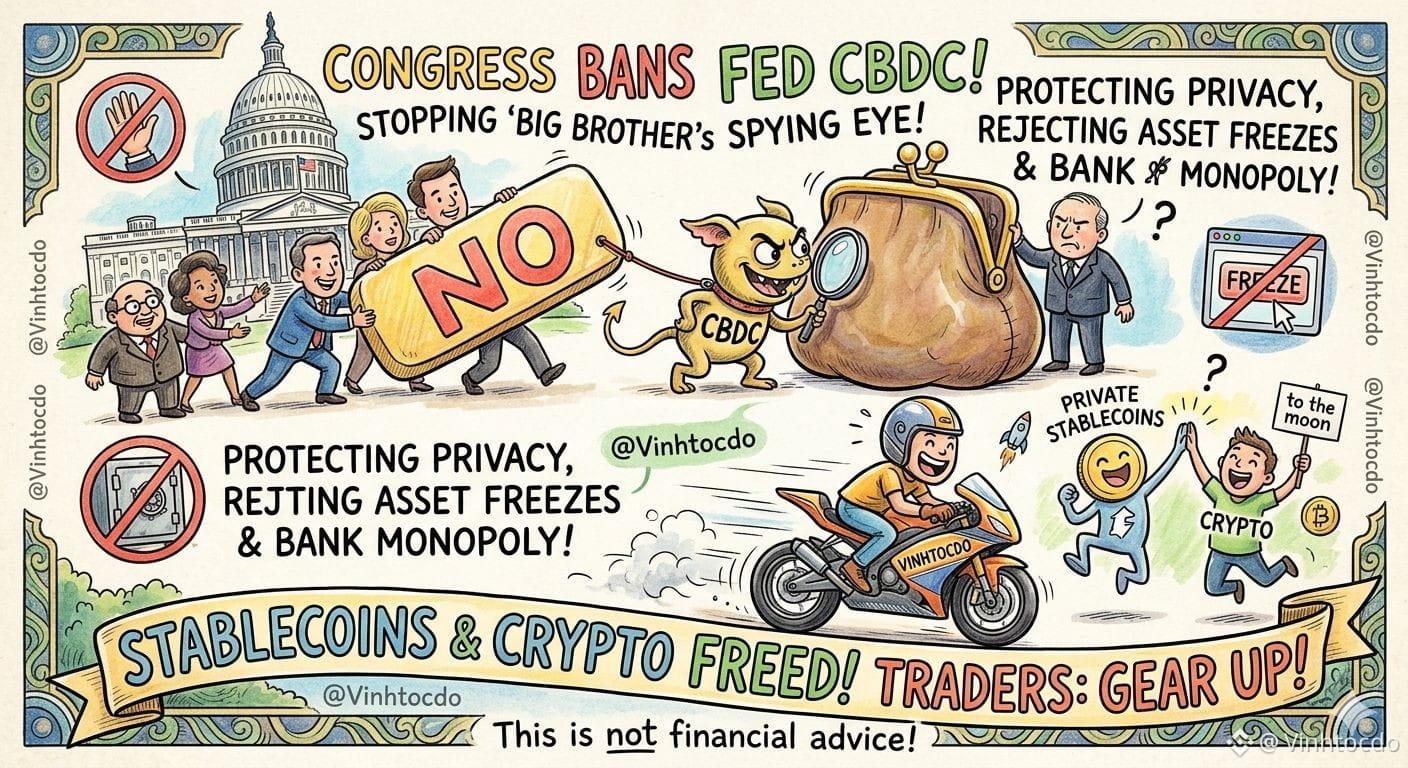
The US bans the Fed from minting a CBDC until 2030! Congress fears the government turning into "Big Brother" watching wallets, freezing assets at a moment's notice, and monopolizing banking. Time to scrap that!
Congress ditched "transparent technology" in exchange for honesty to protect personal privacy. Crypto and private stablecoins can soar freely, while commercial banks breathe easy keeping the capital flow steady.
What are traders doing? Accumulating bags and waiting for the wave to ride!
Use the code VINHTOCDO for a race. This is not financial advice!
#USCongress #Fed #StablecoinNews #VINHTOCDO
$BTC
{future}(BTCUSDT)
$ETH
{future}(ETHUSDT)
$BNB
{future}(BNBUSDT)
#congressbarsfedcbdcissuance
The US bans the Fed from minting a CBDC until 2030! Congress fears the government turning into "Big Brother" watching wallets, freezing assets at a moment's notice, and monopolizing banking. Time to scrap that!
Congress ditched "transparent technology" in exchange for honesty to protect personal privacy. Crypto and private stablecoins can soar freely, while commercial banks breathe easy keeping the capital flow steady.
What are traders doing? Accumulating bags and waiting for the wave to ride!
Use the code VINHTOCDO for a race. This is not financial advice!
#USCongress #Fed #StablecoinNews #VINHTOCDO
$BTC
$ETH
$BNB
The US bans the Fed from minting a CBDC until 2030! Congress fears the government turning into "Big Brother" watching wallets, freezing assets at a moment's notice, and monopolizing banking. Time to scrap that!
Congress ditched "transparent technology" in exchange for honesty to protect personal privacy. Crypto and private stablecoins can soar freely, while commercial banks breathe easy keeping the capital flow steady.
What are traders doing? Accumulating bags and waiting for the wave to ride!
Use the code VINHTOCDO for a race. This is not financial advice!
#USCongress #Fed #StablecoinNews #VINHTOCDO
$BTC
$ETH
$BNB
2
2
223


·
--
🚨 LATEST: 🇺🇸🏛️
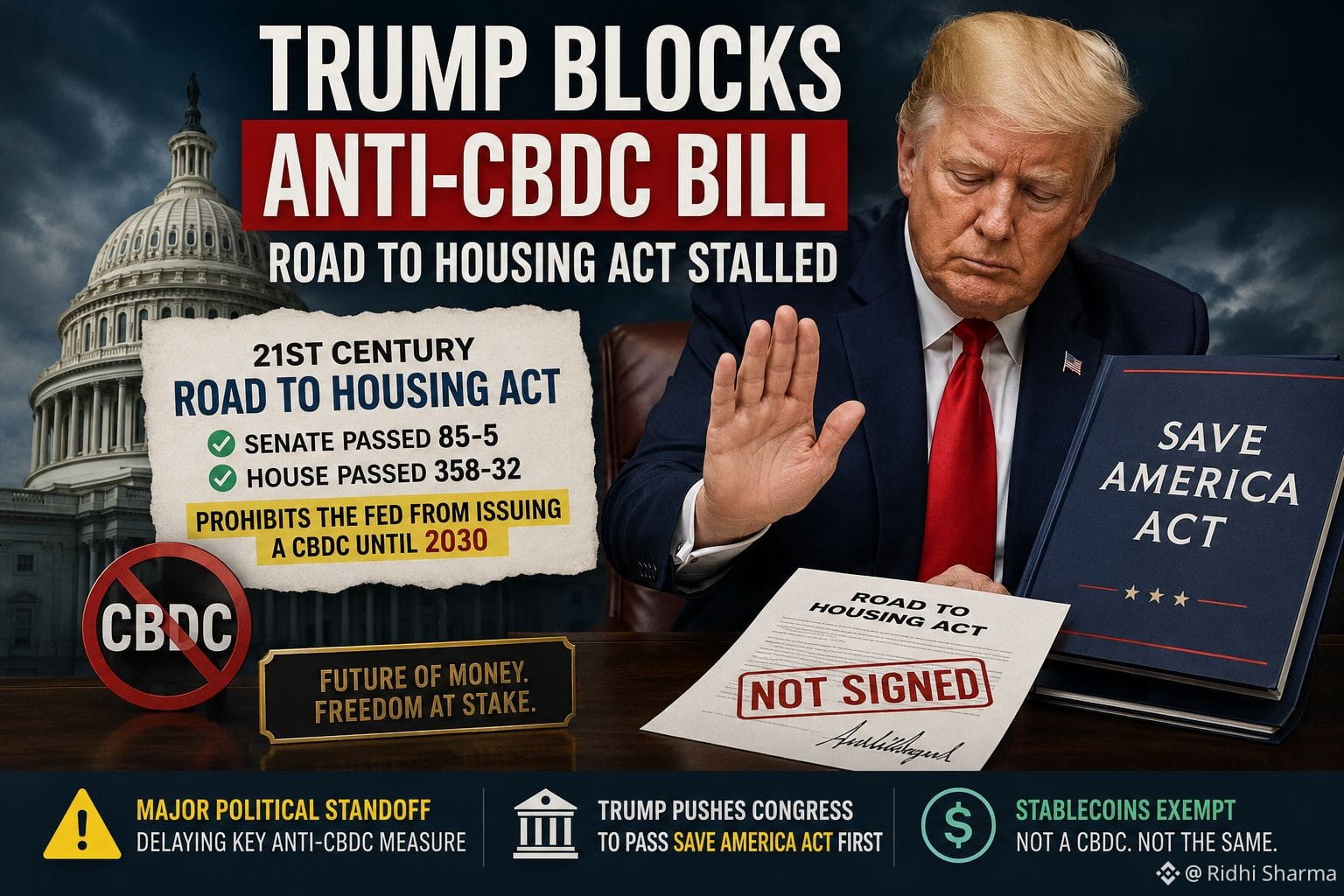
A major political standoff is delaying one of the most significant anti-CBDC measures proposed in the United States.
Despite the 21st Century ROAD to Housing Act passing the Senate 85-5 and the House 358-32, including a provision that would prohibit the Federal Reserve from issuing a Central Bank Digital Currency (CBDC) until 2030, President Trump has reportedly refused to sign the legislation.
Trump is instead pushing Congress to first pass his proposed SAVE AMERICA ACT, creating uncertainty around the bill's future and delaying a key milestone for CBDC opponents.
For crypto markets, the development prolongs regulatory uncertainty, while stablecoins remain exempt from the proposed restrictions and continue to be viewed separately from a government-issued digital dollar. 👀📜
#CongressBarsFedCBDCIssuance #SouthKoreaIntegratesTokenSecurities #EthereumFoundationToCutBudget40% #SKHynixADRListing
$NES
{alpha}(560x3131f6b80c26936ab03f7d9d29eb4ddf36ac3fb5)
$ESPORTS
{future}(ESPORTSUSDT)
$BLESS
{future}(BLESSUSDT)
🚨 LATEST: 🇺🇸🏛️
A major political standoff is delaying one of the most significant anti-CBDC measures proposed in the United States.
Despite the 21st Century ROAD to Housing Act passing the Senate 85-5 and the House 358-32, including a provision that would prohibit the Federal Reserve from issuing a Central Bank Digital Currency (CBDC) until 2030, President Trump has reportedly refused to sign the legislation.
Trump is instead pushing Congress to first pass his proposed SAVE AMERICA ACT, creating uncertainty around the bill's future and delaying a key milestone for CBDC opponents.
For crypto markets, the development prolongs regulatory uncertainty, while stablecoins remain exempt from the proposed restrictions and continue to be viewed separately from a government-issued digital dollar. 👀📜
#CongressBarsFedCBDCIssuance #SouthKoreaIntegratesTokenSecurities #EthereumFoundationToCutBudget40% #SKHynixADRListing
$NES
$ESPORTS
$BLESS
A major political standoff is delaying one of the most significant anti-CBDC measures proposed in the United States.
Despite the 21st Century ROAD to Housing Act passing the Senate 85-5 and the House 358-32, including a provision that would prohibit the Federal Reserve from issuing a Central Bank Digital Currency (CBDC) until 2030, President Trump has reportedly refused to sign the legislation.
Trump is instead pushing Congress to first pass his proposed SAVE AMERICA ACT, creating uncertainty around the bill's future and delaying a key milestone for CBDC opponents.
For crypto markets, the development prolongs regulatory uncertainty, while stablecoins remain exempt from the proposed restrictions and continue to be viewed separately from a government-issued digital dollar. 👀📜
#CongressBarsFedCBDCIssuance #SouthKoreaIntegratesTokenSecurities #EthereumFoundationToCutBudget40% #SKHynixADRListing
$NES
$ESPORTS
$BLESS
2
1
10
891

U.S. Congress Moves to Block Fed CBDC Issuance
Congress has advanced measures aimed at preventing the Federal Reserve from issuing a Central Bank Digital Currency (CBDC). Supporters argue it protects financial privacy, while opponents believe it could slow innovation in digital payments. The decision has sparked renewed debate across the crypto industry.
📊 Altcoin Market Update:
• $BTC remains stable above key support.
{future}(BTCUSDT)
• $ETH continues attracting institutional interest.
{future}(ETHUSDT)
Regulatory developments remain one of the biggest drivers for crypto markets.
#CongressBarsFedCBDCIssuance #Bitcoin #CryptoRegulation #Ethereum
U.S. Congress Moves to Block Fed CBDC Issuance
Congress has advanced measures aimed at preventing the Federal Reserve from issuing a Central Bank Digital Currency (CBDC). Supporters argue it protects financial privacy, while opponents believe it could slow innovation in digital payments. The decision has sparked renewed debate across the crypto industry.
📊 Altcoin Market Update:
• $BTC remains stable above key support.
• $ETH continues attracting institutional interest.
Regulatory developments remain one of the biggest drivers for crypto markets.
#CongressBarsFedCBDCIssuance #Bitcoin #CryptoRegulation #Ethereum
Congress has advanced measures aimed at preventing the Federal Reserve from issuing a Central Bank Digital Currency (CBDC). Supporters argue it protects financial privacy, while opponents believe it could slow innovation in digital payments. The decision has sparked renewed debate across the crypto industry.
📊 Altcoin Market Update:
• $BTC remains stable above key support.
• $ETH continues attracting institutional interest.
Regulatory developments remain one of the biggest drivers for crypto markets.
#CongressBarsFedCBDCIssuance #Bitcoin #CryptoRegulation #Ethereum
1
50

·
--

Article
Big Win.#CongressBarsFedCBDCIssuance
🇺🇸🚫
The U.S. just slammed the door on a Fed “digital dollar”. Senate passed a 4-year CBDC ban June 22, 2026.
What happened:
1. The ban: Senate passed the 21st Century ROAD to Housing Act 85-5. Tucked inside: provision blocking the Fed from “issuing or creating, directly or indirectly” a CBDC or any digital asset “substantially similar” until Dec 31, 2030.
2. Why it’s in a housing bill: Anti-CBDC language = trade-off to secure House GOP support. Classic Congress move: attach unrelated policy to must-pass legislation.
3. What’s allowed: Ban explicitly excludes “open, permissionless and private” stablecoins. Dollar tokens that preserve privacy protections of physical cash are still fine.
Why it matters for crypto:
1. Win for stablecoins: Circle/USDC + Tether/USDT just got regulatory breathing room. No Fed CBDC competing for payments = private stablecoins remain the U.S. digital dollar strategy under GENIUS Act framework.
2. Trump admin aligned: Jan 2025 executive order already prohibited CBDC efforts. Treasury Sec Scott Bessent + Fed Chair Kevin Warsh both called CBDC “a bad policy choice” and “off the table”.
3. Not anti-digital: Congress isn’t rejecting tokenized dollars. It’s rejecting the Fed issuing/managing them directly. Stablecoin market already $311B+ and growing.
5-year window for private stablecoins to dominate U.S. digital payments. Bulls call it “CBDC surveillance state” prevention. Critics say it blocks innovation. House vote next, then Trump’s desk.
$TSLAB
{spot}(TSLABUSDT)
{spot}(CAKEUSDT)
{spot}(BANANAUSDT)
Big Win.
#CongressBarsFedCBDCIssuance
🇺🇸🚫
The U.S. just slammed the door on a Fed “digital dollar”. Senate passed a 4-year CBDC ban June 22, 2026.
What happened:
1. The ban: Senate passed the 21st Century ROAD to Housing Act 85-5. Tucked inside: provision blocking the Fed from “issuing or creating, directly or indirectly” a CBDC or any digital asset “substantially similar” until Dec 31, 2030.
2. Why it’s in a housing bill: Anti-CBDC language = trade-off to secure House GOP support. Classic Congress move: attach unrelated policy to must-pass legislation.
3. What’s allowed: Ban explicitly excludes “open, permissionless and private” stablecoins. Dollar tokens that preserve privacy protections of physical cash are still fine.
Why it matters for crypto:
1. Win for stablecoins: Circle/USDC + Tether/USDT just got regulatory breathing room. No Fed CBDC competing for payments = private stablecoins remain the U.S. digital dollar strategy under GENIUS Act framework.
2. Trump admin aligned: Jan 2025 executive order already prohibited CBDC efforts. Treasury Sec Scott Bessent + Fed Chair Kevin Warsh both called CBDC “a bad policy choice” and “off the table”.
3. Not anti-digital: Congress isn’t rejecting tokenized dollars. It’s rejecting the Fed issuing/managing them directly. Stablecoin market already $311B+ and growing.
5-year window for private stablecoins to dominate U.S. digital payments. Bulls call it “CBDC surveillance state” prevention. Critics say it blocks innovation. House vote next, then Trump’s desk.
$TSLAB
🇺🇸🚫
The U.S. just slammed the door on a Fed “digital dollar”. Senate passed a 4-year CBDC ban June 22, 2026.
What happened:
1. The ban: Senate passed the 21st Century ROAD to Housing Act 85-5. Tucked inside: provision blocking the Fed from “issuing or creating, directly or indirectly” a CBDC or any digital asset “substantially similar” until Dec 31, 2030.
2. Why it’s in a housing bill: Anti-CBDC language = trade-off to secure House GOP support. Classic Congress move: attach unrelated policy to must-pass legislation.
3. What’s allowed: Ban explicitly excludes “open, permissionless and private” stablecoins. Dollar tokens that preserve privacy protections of physical cash are still fine.
Why it matters for crypto:
1. Win for stablecoins: Circle/USDC + Tether/USDT just got regulatory breathing room. No Fed CBDC competing for payments = private stablecoins remain the U.S. digital dollar strategy under GENIUS Act framework.
2. Trump admin aligned: Jan 2025 executive order already prohibited CBDC efforts. Treasury Sec Scott Bessent + Fed Chair Kevin Warsh both called CBDC “a bad policy choice” and “off the table”.
3. Not anti-digital: Congress isn’t rejecting tokenized dollars. It’s rejecting the Fed issuing/managing them directly. Stablecoin market already $311B+ and growing.
5-year window for private stablecoins to dominate U.S. digital payments. Bulls call it “CBDC surveillance state” prevention. Critics say it blocks innovation. House vote next, then Trump’s desk.
$TSLAB
23
Log in to explore more content
Join global crypto users on Binance Square
⚡️ Get latest and useful information about crypto.
💬 Trusted by the world’s largest crypto exchange.
👍 Discover real insights from verified creators.
Email / Phone number
Trending Topics
1
#UKFCAWinsCourtOrderToRecover851400Pounds
4,932 views
377 Discussing
2
#ChainlinkLaunchesCCIP2WithEnterpriseVerification
17,132 views
641 Discussing
3
#GoldFallsTo$4144
7,385 views
114 Discussing
4
#QNTFallsOver40%FromMorningHigh
49,563 views
1,045 Discussing
5
#USDTAdds845900HoldersInPast7Days
5,056 views
248 Discussing
6
#KospiFalls2.7%SamsungSKHynixDropOver5%
12,347 views
461 Discussing
7
#BitgetCEOConfirms$388MStolenInHack
3,825 views
39 Discussing
8
#BTCFallsBelow$83000
21,846 views
151 Discussing
9
#BitgetDetailsSecurityIncidentTimeline
27,922 views
612 Discussing
10
#BitcoinSpotETFs$2.39BWeeklyNetInflow
9,026 views
40 Discussing