

#blockchaingovernance
blockchaingovernance
143,474 views
124 Discussing
Hot
Latest

·
--
🚨 Vitalik Buterin suggests crypto’s anti-collusion mechanisms could help prevent harmful coordination in autonomous AI systems.
This cross-disciplinary insight highlights blockchain governance as a potential model for AI safety frameworks.
Market implication: Projects focused on decentralized AI, agent coordination, or on-chain governance may gain strategic relevance as AI autonomy grows.
What role will crypto-native coordination tools play in shaping safe AI development?
#AI #BlockchainGovernance
$TON #TradingSignal #CryptoAnalysis
🚨 Vitalik Buterin suggests crypto’s anti-collusion mechanisms could help prevent harmful coordination in autonomous AI systems.
This cross-disciplinary insight highlights blockchain governance as a potential model for AI safety frameworks.
Market implication: Projects focused on decentralized AI, agent coordination, or on-chain governance may gain strategic relevance as AI autonomy grows.
What role will crypto-native coordination tools play in shaping safe AI development?
#AI #BlockchainGovernance
$TON #TradingSignal #CryptoAnalysis
This cross-disciplinary insight highlights blockchain governance as a potential model for AI safety frameworks.
Market implication: Projects focused on decentralized AI, agent coordination, or on-chain governance may gain strategic relevance as AI autonomy grows.
What role will crypto-native coordination tools play in shaping safe AI development?
#AI #BlockchainGovernance
$TON #TradingSignal #CryptoAnalysis

1

·
--
Most traders track price. Compliance teams track governance.
The institutions building on-chain right now — JPMorgan, Fidelity, Samsung, the entire GENIUS Act stablecoin wave — have legal teams that sign off on chain selection. And legal teams don't care about your TPS benchmarks.
They care about auditability, upgrade transparency, and who controls protocol parameters.
DOT's JAM upgrade is a complete architecture redesign with documented on-chain governance. ADA Voltaire routes every protocol change through 1,000+ staking pool operators. XRP Ledger runs without a miner extraction layer. $BNB has quarterly burns any auditor can verify on-chain.
The Clarity Act's July 4 deadline doesn't just push legislation forward — it forces every legal team at a bank or fund to finally answer: "Can we verify the rules of this network?"
That's a very different question from "will this token pump?"
The chains with clean answers are building institutional moats that won't show up in a weekend chart. This is where infrastructure-first positioning pays off — the premium gets priced in after compliance teams sign off, not before.
#CryptoInvesting #BlockchainGovernance #InstitutionalAdoption #Altcoins #ClarityAct
Most traders track price. Compliance teams track governance.
The institutions building on-chain right now — JPMorgan, Fidelity, Samsung, the entire GENIUS Act stablecoin wave — have legal teams that sign off on chain selection. And legal teams don't care about your TPS benchmarks.
They care about auditability, upgrade transparency, and who controls protocol parameters.
DOT's JAM upgrade is a complete architecture redesign with documented on-chain governance. ADA Voltaire routes every protocol change through 1,000+ staking pool operators. XRP Ledger runs without a miner extraction layer. $BNB has quarterly burns any auditor can verify on-chain.
The Clarity Act's July 4 deadline doesn't just push legislation forward — it forces every legal team at a bank or fund to finally answer: "Can we verify the rules of this network?"
That's a very different question from "will this token pump?"
The chains with clean answers are building institutional moats that won't show up in a weekend chart. This is where infrastructure-first positioning pays off — the premium gets priced in after compliance teams sign off, not before.
#CryptoInvesting #BlockchainGovernance #InstitutionalAdoption #Altcoins #ClarityAct
The institutions building on-chain right now — JPMorgan, Fidelity, Samsung, the entire GENIUS Act stablecoin wave — have legal teams that sign off on chain selection. And legal teams don't care about your TPS benchmarks.
They care about auditability, upgrade transparency, and who controls protocol parameters.
DOT's JAM upgrade is a complete architecture redesign with documented on-chain governance. ADA Voltaire routes every protocol change through 1,000+ staking pool operators. XRP Ledger runs without a miner extraction layer. $BNB has quarterly burns any auditor can verify on-chain.
The Clarity Act's July 4 deadline doesn't just push legislation forward — it forces every legal team at a bank or fund to finally answer: "Can we verify the rules of this network?"
That's a very different question from "will this token pump?"
The chains with clean answers are building institutional moats that won't show up in a weekend chart. This is where infrastructure-first positioning pays off — the premium gets priced in after compliance teams sign off, not before.
#CryptoInvesting #BlockchainGovernance #InstitutionalAdoption #Altcoins #ClarityAct
1
122

·
--
Bullish
@OpenGradient
Is decentralization just a convenient marketing shield in Web3? Too many blockchain projects use the term as a catchy buzzword while quietly retaining total centralized control behind the scenes.
When a protocol operates like an opaque black box the community is left completely in the dark. These hidden architectures mean you cannot truly verify what is happening under the hood. This lack of transparency leaves users exposed to massive security vulnerabilities smart contract risks and offers zero real voice in actual governance decisions. The industry cannot grow if users are constantly forced to rely on blind trust.
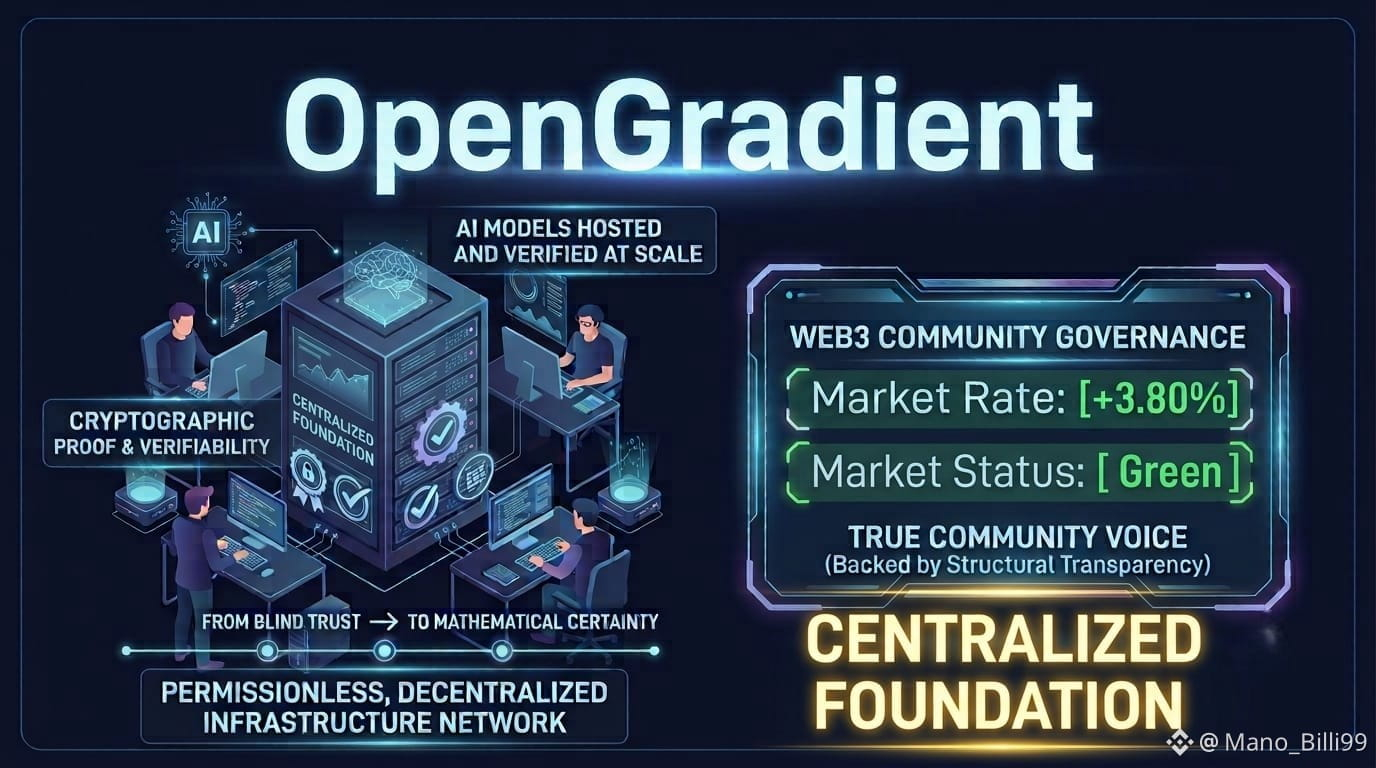
Real decentralization requires genuine cryptographic proof and verifiable infrastructure. That is exactly what OpenGradient is tackling. By building a permissionless, decentralized network designed to host and verify machine learning models at scale OpenGradient eliminates the reliance on empty promises.
Shifting to mathematical certainty forces actual structural accountability back into the ecosystem. This ensures that community governance is backed by verifiable truth rather than corporate slogans, giving power back to the people who build it.
Current Market Rate: +3.80%
$OPG
{future}(OPGUSDT)
True decentralization is built on code, not trust. Let's build a transparent future together.
#OpenGradient #DeAI #BlockchainGovernance #decentralization
@OpenGradient
Is decentralization just a convenient marketing shield in Web3? Too many blockchain projects use the term as a catchy buzzword while quietly retaining total centralized control behind the scenes.
When a protocol operates like an opaque black box the community is left completely in the dark. These hidden architectures mean you cannot truly verify what is happening under the hood. This lack of transparency leaves users exposed to massive security vulnerabilities smart contract risks and offers zero real voice in actual governance decisions. The industry cannot grow if users are constantly forced to rely on blind trust.
Real decentralization requires genuine cryptographic proof and verifiable infrastructure. That is exactly what OpenGradient is tackling. By building a permissionless, decentralized network designed to host and verify machine learning models at scale OpenGradient eliminates the reliance on empty promises.
Shifting to mathematical certainty forces actual structural accountability back into the ecosystem. This ensures that community governance is backed by verifiable truth rather than corporate slogans, giving power back to the people who build it.
Current Market Rate: +3.80%
$OPG
True decentralization is built on code, not trust. Let's build a transparent future together.
#OpenGradient #DeAI #BlockchainGovernance #decentralization
Is decentralization just a convenient marketing shield in Web3? Too many blockchain projects use the term as a catchy buzzword while quietly retaining total centralized control behind the scenes.
When a protocol operates like an opaque black box the community is left completely in the dark. These hidden architectures mean you cannot truly verify what is happening under the hood. This lack of transparency leaves users exposed to massive security vulnerabilities smart contract risks and offers zero real voice in actual governance decisions. The industry cannot grow if users are constantly forced to rely on blind trust.
Real decentralization requires genuine cryptographic proof and verifiable infrastructure. That is exactly what OpenGradient is tackling. By building a permissionless, decentralized network designed to host and verify machine learning models at scale OpenGradient eliminates the reliance on empty promises.
Shifting to mathematical certainty forces actual structural accountability back into the ecosystem. This ensures that community governance is backed by verifiable truth rather than corporate slogans, giving power back to the people who build it.
Current Market Rate: +3.80%
$OPG
True decentralization is built on code, not trust. Let's build a transparent future together.
#OpenGradient #DeAI #BlockchainGovernance #decentralization
4
3
91

·
--
$1.2B in market cap wiped out in 24 hours: NEAR governance just voted to scrap its developer gas rebate, sending all network gas fees to be burned rather than rebated to smart-contract owners. This move affects not only dev incentives but also smart contract owners, potentially impacting token holders like yourself - what does this mean for your NEAR positions.
In the past 6 months, developer activity on NEAR has been declining steadily, down 15% despite growing adoption of its Proof-of-Stake architecture, according to on-chain metrics. With this proposal, the protocol is looking to optimize resources and cut costs.
If you look at other successful protocols like Cosmos, they've also seen a rise in their token prices after burning their own inflationary tokens or removing incentives - could NEAR be on a similar path?
The decision is effective immediately, making this a prime time to gauge NEAR's market reaction - will the token break through $3, or plummet further?
#NEAR #BlockchainGovernance #DeFiOptimizations
$1.2B in market cap wiped out in 24 hours: NEAR governance just voted to scrap its developer gas rebate, sending all network gas fees to be burned rather than rebated to smart-contract owners. This move affects not only dev incentives but also smart contract owners, potentially impacting token holders like yourself - what does this mean for your NEAR positions.
In the past 6 months, developer activity on NEAR has been declining steadily, down 15% despite growing adoption of its Proof-of-Stake architecture, according to on-chain metrics. With this proposal, the protocol is looking to optimize resources and cut costs.
If you look at other successful protocols like Cosmos, they've also seen a rise in their token prices after burning their own inflationary tokens or removing incentives - could NEAR be on a similar path?
The decision is effective immediately, making this a prime time to gauge NEAR's market reaction - will the token break through $3, or plummet further?
#NEAR #BlockchainGovernance #DeFiOptimizations
In the past 6 months, developer activity on NEAR has been declining steadily, down 15% despite growing adoption of its Proof-of-Stake architecture, according to on-chain metrics. With this proposal, the protocol is looking to optimize resources and cut costs.
If you look at other successful protocols like Cosmos, they've also seen a rise in their token prices after burning their own inflationary tokens or removing incentives - could NEAR be on a similar path?
The decision is effective immediately, making this a prime time to gauge NEAR's market reaction - will the token break through $3, or plummet further?
#NEAR #BlockchainGovernance #DeFiOptimizations
47
·
--
Cryptocurrency Governance Systems: Don't Let the Door Hit You on the Way OutAre you ready to have your eyes opened to a critical vulnerability in the world of cryptocurrency governance systems? A recent incident has exposed the risks associated with these systems, with consequences that are nothing short of devastating. An attacker has successfully hijacked an abandoned on-chain governance system, draining a staggering $72,000 worth of STRONG and STRNGR tokens in the process. This is a stark reminder of the importance of secure governance systems and the dangers of neglecting security protocols.
Let's break down the concept of governance systems in cryptocurrency: #BlockchainGovernance #CryptoSecurity
Imagine a company holding a shareholder meeting, but instead of in-person attendees, it's a virtual gathering on a blockchain. This is essentially what governance systems do, allowing token holders to make decisions for the project, set goals, and vote on proposals. These systems are designed to be secure, transparent, and community-driven.
However, the recent incident involving StrongBlock highlights the risks associated with abandoned or unsecured governance systems. An attacker was able to infiltrate the system, exploit the lack of security measures, and siphon off valuable tokens. This is a clear example of how neglecting security protocols can lead to catastrophic consequences.
The real-world example of StrongBlock's governance system being hijacked serves as a wake-up call for all cryptocurrency projects and investors. It's essential for these projects to maintain strict security measures and stay on top of governance system updates.
So, what can you do to minimize your exposure to such risks? Start by educating yourself on the importance of secure governance systems and stay vigilant about updates and security measures.
What do you think is the most critical aspect of cryptocurrency governance systems? Share your thoughts in the comment section below. Don't let another StrongBlock incident happen to you!
Cryptocurrency Governance Systems: Don't Let the Door Hit You on the Way Out
Are you ready to have your eyes opened to a critical vulnerability in the world of cryptocurrency governance systems? A recent incident has exposed the risks associated with these systems, with consequences that are nothing short of devastating. An attacker has successfully hijacked an abandoned on-chain governance system, draining a staggering $72,000 worth of STRONG and STRNGR tokens in the process. This is a stark reminder of the importance of secure governance systems and the dangers of neglecting security protocols.
Let's break down the concept of governance systems in cryptocurrency: #BlockchainGovernance #CryptoSecurity
Imagine a company holding a shareholder meeting, but instead of in-person attendees, it's a virtual gathering on a blockchain. This is essentially what governance systems do, allowing token holders to make decisions for the project, set goals, and vote on proposals. These systems are designed to be secure, transparent, and community-driven.
However, the recent incident involving StrongBlock highlights the risks associated with abandoned or unsecured governance systems. An attacker was able to infiltrate the system, exploit the lack of security measures, and siphon off valuable tokens. This is a clear example of how neglecting security protocols can lead to catastrophic consequences.
The real-world example of StrongBlock's governance system being hijacked serves as a wake-up call for all cryptocurrency projects and investors. It's essential for these projects to maintain strict security measures and stay on top of governance system updates.
So, what can you do to minimize your exposure to such risks? Start by educating yourself on the importance of secure governance systems and stay vigilant about updates and security measures.
What do you think is the most critical aspect of cryptocurrency governance systems? Share your thoughts in the comment section below. Don't let another StrongBlock incident happen to you!
Let's break down the concept of governance systems in cryptocurrency: #BlockchainGovernance #CryptoSecurity
Imagine a company holding a shareholder meeting, but instead of in-person attendees, it's a virtual gathering on a blockchain. This is essentially what governance systems do, allowing token holders to make decisions for the project, set goals, and vote on proposals. These systems are designed to be secure, transparent, and community-driven.
However, the recent incident involving StrongBlock highlights the risks associated with abandoned or unsecured governance systems. An attacker was able to infiltrate the system, exploit the lack of security measures, and siphon off valuable tokens. This is a clear example of how neglecting security protocols can lead to catastrophic consequences.
The real-world example of StrongBlock's governance system being hijacked serves as a wake-up call for all cryptocurrency projects and investors. It's essential for these projects to maintain strict security measures and stay on top of governance system updates.
So, what can you do to minimize your exposure to such risks? Start by educating yourself on the importance of secure governance systems and stay vigilant about updates and security measures.
What do you think is the most critical aspect of cryptocurrency governance systems? Share your thoughts in the comment section below. Don't let another StrongBlock incident happen to you!
4

·
--
Updating a blockchain protocol can be complex. Governance mechanisms, such as token holder votes, make it possible to decide on upgrades. This ensures a secure and decentralized evolution of the network. #BlockchainGovernance #ProtocolUpdates #Web3
Updating a blockchain protocol can be complex. Governance mechanisms, such as token holder votes, make it possible to decide on upgrades. This ensures a secure and decentralized evolution of the network. #BlockchainGovernance #ProtocolUpdates #Web3
73
·
--
Imagine you're a validator on the Ethereum network, working hard to secure transactions and maintain the integrity of the blockchain. Now imagine getting a surprise bonus from your hard work - but instead of it all going into your wallet, a portion of it goes back into the ecosystem to fund public goods and services.
#EthereumStaking #BlockchainGovernance
The concept is called "redirecting staking rewards" and it's a proposal that's sparking debate in the Ethereum Research forum. Essentially, validators would be able to vote on how a portion of their staking rewards are allocated - up to 10% could be redirected to fund public goods and services.
For example, let's say you're a validator on Ethereum and you're earning $100,000 in staking rewards per year. If validators vote to redirect 1% of those rewards, you could potentially earn an additional $1,000 to fund a local community project or support a decentralized development initiative.
The takeaway is this - as an Ethereum validator, you have a say in how your rewards are allocated and can potentially make a positive impact on the ecosystem by voting to redirect a portion of your earnings.
What do you think - will this proposal be a game-changer for Ethereum's ecosystem?
Imagine you're a validator on the Ethereum network, working hard to secure transactions and maintain the integrity of the blockchain. Now imagine getting a surprise bonus from your hard work - but instead of it all going into your wallet, a portion of it goes back into the ecosystem to fund public goods and services.
#EthereumStaking #BlockchainGovernance
The concept is called "redirecting staking rewards" and it's a proposal that's sparking debate in the Ethereum Research forum. Essentially, validators would be able to vote on how a portion of their staking rewards are allocated - up to 10% could be redirected to fund public goods and services.
For example, let's say you're a validator on Ethereum and you're earning $100,000 in staking rewards per year. If validators vote to redirect 1% of those rewards, you could potentially earn an additional $1,000 to fund a local community project or support a decentralized development initiative.
The takeaway is this - as an Ethereum validator, you have a say in how your rewards are allocated and can potentially make a positive impact on the ecosystem by voting to redirect a portion of your earnings.
What do you think - will this proposal be a game-changer for Ethereum's ecosystem?
#EthereumStaking #BlockchainGovernance
The concept is called "redirecting staking rewards" and it's a proposal that's sparking debate in the Ethereum Research forum. Essentially, validators would be able to vote on how a portion of their staking rewards are allocated - up to 10% could be redirected to fund public goods and services.
For example, let's say you're a validator on Ethereum and you're earning $100,000 in staking rewards per year. If validators vote to redirect 1% of those rewards, you could potentially earn an additional $1,000 to fund a local community project or support a decentralized development initiative.
The takeaway is this - as an Ethereum validator, you have a say in how your rewards are allocated and can potentially make a positive impact on the ecosystem by voting to redirect a portion of your earnings.
What do you think - will this proposal be a game-changer for Ethereum's ecosystem?
22
·
--
Most traders watch the Ethereum price, but savvy investors watch how the Ethereum Foundation restructures its board, and I've got the latest evidence.
#Ethereum #BlockchainGovernance
The Ethereum Foundation has quietly added a prominent figure to its board, Pascal Caversaccio, co-founder of SEAL 911. This move signals a major shift in the organization's focus towards privacy and security. What this means for privacy-centric layer-2 solutions like Optimism and Polygon, is a key question in the coming months.
The interpretation of this move is clear: increased emphasis on private transactions. As the ecosystem evolves, users will prioritize projects that can deliver secure and private experiences.
Keep an eye on how Caversaccio shapes the Ethereum Foundation's priorities in the coming weeks.
What impact will the Ethereum Foundation's new focus on privacy have on the adoption of private transactions in the Ethereum ecosystem?
Most traders watch the Ethereum price, but savvy investors watch how the Ethereum Foundation restructures its board, and I've got the latest evidence.
#Ethereum #BlockchainGovernance
The Ethereum Foundation has quietly added a prominent figure to its board, Pascal Caversaccio, co-founder of SEAL 911. This move signals a major shift in the organization's focus towards privacy and security. What this means for privacy-centric layer-2 solutions like Optimism and Polygon, is a key question in the coming months.
The interpretation of this move is clear: increased emphasis on private transactions. As the ecosystem evolves, users will prioritize projects that can deliver secure and private experiences.
Keep an eye on how Caversaccio shapes the Ethereum Foundation's priorities in the coming weeks.
What impact will the Ethereum Foundation's new focus on privacy have on the adoption of private transactions in the Ethereum ecosystem?
#Ethereum #BlockchainGovernance
The Ethereum Foundation has quietly added a prominent figure to its board, Pascal Caversaccio, co-founder of SEAL 911. This move signals a major shift in the organization's focus towards privacy and security. What this means for privacy-centric layer-2 solutions like Optimism and Polygon, is a key question in the coming months.
The interpretation of this move is clear: increased emphasis on private transactions. As the ecosystem evolves, users will prioritize projects that can deliver secure and private experiences.
Keep an eye on how Caversaccio shapes the Ethereum Foundation's priorities in the coming weeks.
What impact will the Ethereum Foundation's new focus on privacy have on the adoption of private transactions in the Ethereum ecosystem?
64
·
--
Bullish
@OpenGradient
Let's be honest for a second: how many blockchain projects are actually decentralized and how many are just using the word as a marketing shield for centralized control? At Open Gradient we believe governance should be verifiable not just promised because the reality behind the code often tells a very different story than the landing page.
It is incredibly easy to slap decentralized onto a whitepaper. However when a project relies on opaque protocols hidden multi sigs or deeply concentrated token ownership. It’s not a revolution. It is just the old Web2 playbook wearing a Web3 mask.
The risks here aren't theoretical. They are a systemic threat to users. When a community has no real voice they are left entirely exposed to sudden governance overrides unexpected protocol changes, and structural vulnerabilities. True decentralization isn't just about distributing nodes across a network. It's about distributed power and radical transparency. Without that you're not participating in a trustless ecosystem you're just trusting a small group of insiders behind a curtain.
It's time to demand absolute transparency. If the power structure isn't verifiable on chain it isn't decentralized. Period.
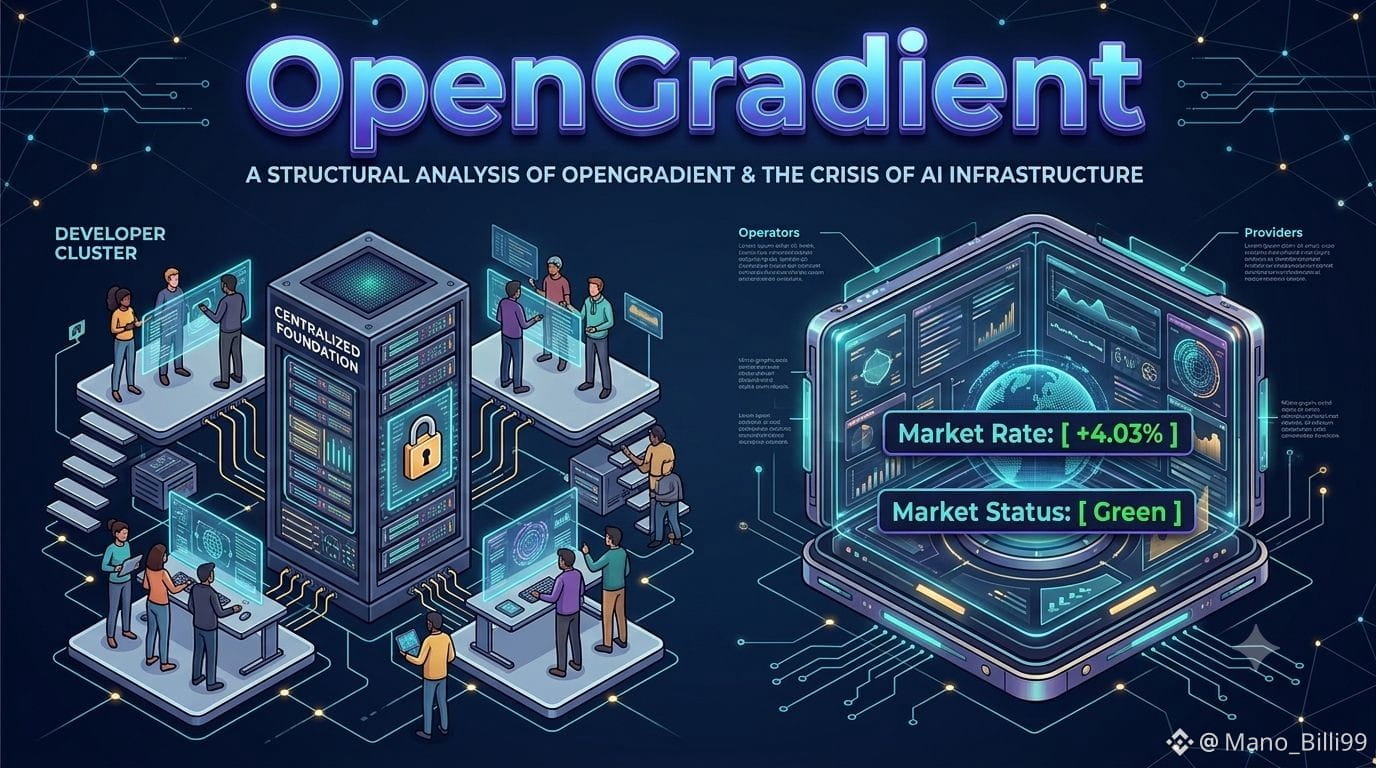
Current Market Rate: [+4.03% ]
$OPG
{future}(OPGUSDT)
Where do you draw the line between genuine decentralization and clever marketing? Let’s talk in the here 👇
#OpenGradient #OPG #BlockchainGovernance #decentralization
@OpenGradient
Let's be honest for a second: how many blockchain projects are actually decentralized and how many are just using the word as a marketing shield for centralized control? At Open Gradient we believe governance should be verifiable not just promised because the reality behind the code often tells a very different story than the landing page.
It is incredibly easy to slap decentralized onto a whitepaper. However when a project relies on opaque protocols hidden multi sigs or deeply concentrated token ownership. It’s not a revolution. It is just the old Web2 playbook wearing a Web3 mask.
The risks here aren't theoretical. They are a systemic threat to users. When a community has no real voice they are left entirely exposed to sudden governance overrides unexpected protocol changes, and structural vulnerabilities. True decentralization isn't just about distributing nodes across a network. It's about distributed power and radical transparency. Without that you're not participating in a trustless ecosystem you're just trusting a small group of insiders behind a curtain.
It's time to demand absolute transparency. If the power structure isn't verifiable on chain it isn't decentralized. Period.
Current Market Rate: [+4.03% ]
$OPG
Where do you draw the line between genuine decentralization and clever marketing? Let’s talk in the here 👇
#OpenGradient #OPG #BlockchainGovernance #decentralization
Let's be honest for a second: how many blockchain projects are actually decentralized and how many are just using the word as a marketing shield for centralized control? At Open Gradient we believe governance should be verifiable not just promised because the reality behind the code often tells a very different story than the landing page.
It is incredibly easy to slap decentralized onto a whitepaper. However when a project relies on opaque protocols hidden multi sigs or deeply concentrated token ownership. It’s not a revolution. It is just the old Web2 playbook wearing a Web3 mask.
The risks here aren't theoretical. They are a systemic threat to users. When a community has no real voice they are left entirely exposed to sudden governance overrides unexpected protocol changes, and structural vulnerabilities. True decentralization isn't just about distributing nodes across a network. It's about distributed power and radical transparency. Without that you're not participating in a trustless ecosystem you're just trusting a small group of insiders behind a curtain.
It's time to demand absolute transparency. If the power structure isn't verifiable on chain it isn't decentralized. Period.
Current Market Rate: [+4.03% ]
$OPG
Where do you draw the line between genuine decentralization and clever marketing? Let’s talk in the here 👇
#OpenGradient #OPG #BlockchainGovernance #decentralization
24
10
106
·
--
EARTHSHAKER
The crypto world has just been turned upside down as Gillibrand pushes for a crypto ethics ban. With President Donald Trump's $1.4B memecoin disclosure coming to light, the push for regulations is now at a historic high. #CryptoRegulations #CongressionalCrypto
The stakes are high, and this isn't just a move against corrupt politicians – it's a call for a cleaner, more secure crypto industry for all investors. If the ban is passed, it could set a precedent for similar regulations worldwide, changing the face of crypto trading forever. #BlockchainGovernance
So, are you ready to join the clean crypto revolution? Now's the perfect time to get ahead of the curve and position yourself for the inevitable growth and development of a compliant crypto market. What's your next move going to be?
EARTHSHAKER
The crypto world has just been turned upside down as Gillibrand pushes for a crypto ethics ban. With President Donald Trump's $1.4B memecoin disclosure coming to light, the push for regulations is now at a historic high. #CryptoRegulations #CongressionalCrypto
The stakes are high, and this isn't just a move against corrupt politicians – it's a call for a cleaner, more secure crypto industry for all investors. If the ban is passed, it could set a precedent for similar regulations worldwide, changing the face of crypto trading forever. #BlockchainGovernance
So, are you ready to join the clean crypto revolution? Now's the perfect time to get ahead of the curve and position yourself for the inevitable growth and development of a compliant crypto market. What's your next move going to be?
The crypto world has just been turned upside down as Gillibrand pushes for a crypto ethics ban. With President Donald Trump's $1.4B memecoin disclosure coming to light, the push for regulations is now at a historic high. #CryptoRegulations #CongressionalCrypto
The stakes are high, and this isn't just a move against corrupt politicians – it's a call for a cleaner, more secure crypto industry for all investors. If the ban is passed, it could set a precedent for similar regulations worldwide, changing the face of crypto trading forever. #BlockchainGovernance
So, are you ready to join the clean crypto revolution? Now's the perfect time to get ahead of the curve and position yourself for the inevitable growth and development of a compliant crypto market. What's your next move going to be?
78

Justin Sun has filed a major lawsuit against Trump-linked World Liberty Financial (WLFI), accusing the project of fraud, extortion, and illegally freezing his tokens worth about $75 million. The case, lodged in California federal court, alleges WLFI secretly embedded backdoor controls in its smart contracts to blacklist wallets, freeze assets, and even threaten to burn Sun’s holdings.
---
📌 Key Details of the Lawsuit
- Filed: April 21, 2026, in U.S. District Court (Northern District of California).
- Claims: Fraud, breach of contract, unjust enrichment, extortion, and illegal seizure of property.
- Assets Frozen: ~2.9 billion WLFI tokens, once valued at over $1 billion, now ~ $75 million.
- Allegations:
- WLFI used hidden “blacklisting” functions to freeze Sun’s wallets.
- Threatened to burn his tokens without due process.
- Pressured him to promote WLFI’s USD1 stablecoin and invest further.
- Sun’s Position: He remains supportive of
---
⚡ Market & Governance Impact
- WLFI Token Reaction: Dropped ~15% after Sun’s public accusations of hidden backdoors.
- Governance Fallout: Sun claims he was stripped of voting rights, raising questions about WLFI’s decentralization model.
- Community Concerns: Investors worry WLFI’s governance is centralized, undermining its credibility as a DeFi project.
---
📰 Post Draft for Social Media (#JustinSunSuesWorldLibertyFinancial)
🚨 Breaking: Justin Sun vs WLFI 🚨
TRON founder Justin Sun has filed a lawsuit against World Liberty Financial (WLFI), the Trump-linked DeFi project, alleging fraud, extortion & illegal token freeze.
🔹 $75M in WLFI tokens frozen via hidden smart contract backdoors
🔹 Sun stripped of governance rights, threatened with token burn
🔹 WLFI accused of centralized control despite DeFi claims
👉 Sun says he still supports President Trump but blames WLFI leadership for betraying decentralization values.
CryptoNews #DeFi #JustinSun #WLFI #BlockchainGovernance
#JustinSunSuesWorldLibertyFinancial
Justin Sun has filed a major lawsuit against Trump-linked World Liberty Financial (WLFI), accusing the project of fraud, extortion, and illegally freezing his tokens worth about $75 million. The case, lodged in California federal court, alleges WLFI secretly embedded backdoor controls in its smart contracts to blacklist wallets, freeze assets, and even threaten to burn Sun’s holdings.
---
📌 Key Details of the Lawsuit
- Filed: April 21, 2026, in U.S. District Court (Northern District of California).
- Claims: Fraud, breach of contract, unjust enrichment, extortion, and illegal seizure of property.
- Assets Frozen: ~2.9 billion WLFI tokens, once valued at over $1 billion, now ~ $75 million.
- Allegations:
- WLFI used hidden “blacklisting” functions to freeze Sun’s wallets.
- Threatened to burn his tokens without due process.
- Pressured him to promote WLFI’s USD1 stablecoin and invest further.
- Sun’s Position: He remains supportive of
---
⚡ Market & Governance Impact
- WLFI Token Reaction: Dropped ~15% after Sun’s public accusations of hidden backdoors.
- Governance Fallout: Sun claims he was stripped of voting rights, raising questions about WLFI’s decentralization model.
- Community Concerns: Investors worry WLFI’s governance is centralized, undermining its credibility as a DeFi project.
---
📰 Post Draft for Social Media (#JustinSunSuesWorldLibertyFinancial)
🚨 Breaking: Justin Sun vs WLFI 🚨
TRON founder Justin Sun has filed a lawsuit against World Liberty Financial (WLFI), the Trump-linked DeFi project, alleging fraud, extortion & illegal token freeze.
🔹 $75M in WLFI tokens frozen via hidden smart contract backdoors
🔹 Sun stripped of governance rights, threatened with token burn
🔹 WLFI accused of centralized control despite DeFi claims
👉 Sun says he still supports President Trump but blames WLFI leadership for betraying decentralization values.
CryptoNews #DeFi #JustinSun #WLFI #BlockchainGovernance
#JustinSunSuesWorldLibertyFinancial
---
📌 Key Details of the Lawsuit
- Filed: April 21, 2026, in U.S. District Court (Northern District of California).
- Claims: Fraud, breach of contract, unjust enrichment, extortion, and illegal seizure of property.
- Assets Frozen: ~2.9 billion WLFI tokens, once valued at over $1 billion, now ~ $75 million.
- Allegations:
- WLFI used hidden “blacklisting” functions to freeze Sun’s wallets.
- Threatened to burn his tokens without due process.
- Pressured him to promote WLFI’s USD1 stablecoin and invest further.
- Sun’s Position: He remains supportive of
---
⚡ Market & Governance Impact
- WLFI Token Reaction: Dropped ~15% after Sun’s public accusations of hidden backdoors.
- Governance Fallout: Sun claims he was stripped of voting rights, raising questions about WLFI’s decentralization model.
- Community Concerns: Investors worry WLFI’s governance is centralized, undermining its credibility as a DeFi project.
---
📰 Post Draft for Social Media (#JustinSunSuesWorldLibertyFinancial)
🚨 Breaking: Justin Sun vs WLFI 🚨
TRON founder Justin Sun has filed a lawsuit against World Liberty Financial (WLFI), the Trump-linked DeFi project, alleging fraud, extortion & illegal token freeze.
🔹 $75M in WLFI tokens frozen via hidden smart contract backdoors
🔹 Sun stripped of governance rights, threatened with token burn
🔹 WLFI accused of centralized control despite DeFi claims
👉 Sun says he still supports President Trump but blames WLFI leadership for betraying decentralization values.
CryptoNews #DeFi #JustinSun #WLFI #BlockchainGovernance
#JustinSunSuesWorldLibertyFinancial

1
1
115

Ethereum Foundation: Transparency or the "Slow Exit"?
The Vibe: Community Insider
Every time the Ethereum Foundation unstakes or moves $ETH , the "fud" starts instantly. But if we look at this through the lens of project management, the story changes. 🛠️
Developing a global network isn't free. The Foundation has to fund researchers, security audits, and the long road toward full decentralization. Selling or unstaking isn't a "dump"—it’s a budget. You can't pay developers in a volatile asset and expect them to pay their rent. Economically, this is just a fund diversifying to ensure the project survives the next ten years.
Does the Foundation’s activity make you lose sleep over your ETH bags, or do you see it as a necessary step for the ecosystem to grow? Tell me your honest take.
#EthereumETFApprovalExpectations #ETH #BlockchainGovernance #ETH🔥🔥🔥🔥🔥🔥 $ETH
{spot}(ETHUSDT)
Ethereum Foundation: Transparency or the "Slow Exit"?
The Vibe: Community Insider
Every time the Ethereum Foundation unstakes or moves $ETH , the "fud" starts instantly. But if we look at this through the lens of project management, the story changes. 🛠️
Developing a global network isn't free. The Foundation has to fund researchers, security audits, and the long road toward full decentralization. Selling or unstaking isn't a "dump"—it’s a budget. You can't pay developers in a volatile asset and expect them to pay their rent. Economically, this is just a fund diversifying to ensure the project survives the next ten years.
Does the Foundation’s activity make you lose sleep over your ETH bags, or do you see it as a necessary step for the ecosystem to grow? Tell me your honest take.
#EthereumETFApprovalExpectations #ETH #BlockchainGovernance #ETH🔥🔥🔥🔥🔥🔥 $ETH
The Vibe: Community Insider
Every time the Ethereum Foundation unstakes or moves $ETH , the "fud" starts instantly. But if we look at this through the lens of project management, the story changes. 🛠️
Developing a global network isn't free. The Foundation has to fund researchers, security audits, and the long road toward full decentralization. Selling or unstaking isn't a "dump"—it’s a budget. You can't pay developers in a volatile asset and expect them to pay their rent. Economically, this is just a fund diversifying to ensure the project survives the next ten years.
Does the Foundation’s activity make you lose sleep over your ETH bags, or do you see it as a necessary step for the ecosystem to grow? Tell me your honest take.
#EthereumETFApprovalExpectations #ETH #BlockchainGovernance #ETH🔥🔥🔥🔥🔥🔥 $ETH
24

·
--
🪓 🚀 Community Era: Cardano Activates the 'Van Rossem' Hard Fork and Enters Version 11
Cardano’s mainnet (ADA) has successfully activated its hard fork 'Van Rossem,' elevating the protocol to version 11 and marking the first update formally approved through community voting.
📊 Key points of the update:
📉 Efficiency and scalability: According to CoinDesk, this change drastically reduces the execution costs of smart contracts and lays the technical groundwork for the network’s next scalability improvements.
💼 User impact: The transition is seamless; most users who hold or transfer ADA will not see immediate changes in their wallets, transactions, or standard fees. The market reacted positively as ADA traded at $0.1698 (+3.09%).
💬 Do you think community governance and lower smart-contract costs will spark a new DeFi boom on Cardano? Share your thoughts below! 👇🔥
$ADA
{spot}(ADAUSDT)
$BTC
{spot}(BTCUSDT)
$BNB
{spot}(BNBUSDT)
#Cardano #VanRossem #HardFork #BlockchainGovernance #CoinDesk
🪓 🚀 Community Era: Cardano Activates the 'Van Rossem' Hard Fork and Enters Version 11
Cardano’s mainnet (ADA) has successfully activated its hard fork 'Van Rossem,' elevating the protocol to version 11 and marking the first update formally approved through community voting.
📊 Key points of the update:
📉 Efficiency and scalability: According to CoinDesk, this change drastically reduces the execution costs of smart contracts and lays the technical groundwork for the network’s next scalability improvements.
💼 User impact: The transition is seamless; most users who hold or transfer ADA will not see immediate changes in their wallets, transactions, or standard fees. The market reacted positively as ADA traded at $0.1698 (+3.09%).
💬 Do you think community governance and lower smart-contract costs will spark a new DeFi boom on Cardano? Share your thoughts below! 👇🔥
$ADA
$BTC
$BNB
#Cardano #VanRossem #HardFork #BlockchainGovernance #CoinDesk
Cardano’s mainnet (ADA) has successfully activated its hard fork 'Van Rossem,' elevating the protocol to version 11 and marking the first update formally approved through community voting.
📊 Key points of the update:
📉 Efficiency and scalability: According to CoinDesk, this change drastically reduces the execution costs of smart contracts and lays the technical groundwork for the network’s next scalability improvements.
💼 User impact: The transition is seamless; most users who hold or transfer ADA will not see immediate changes in their wallets, transactions, or standard fees. The market reacted positively as ADA traded at $0.1698 (+3.09%).
💬 Do you think community governance and lower smart-contract costs will spark a new DeFi boom on Cardano? Share your thoughts below! 👇🔥
$ADA
$BTC
$BNB
#Cardano #VanRossem #HardFork #BlockchainGovernance #CoinDesk
172

·
--
A Leaner Foundation: A Bullish Sign for Ethereum's Decentralization? 🌐Vitalik Buterin's recent pledge to streamline the Ethereum Foundation (EF) and reduce $ETH sales marks a pivotal shift in ecosystem governance. Historically, foundation asset sales have drawn scrutiny from investors worried about programmatic sell pressure and treasury sustainability.By committing to a leaner operational model, the EF is signaling two critical things:Fiscal Discipline: Maximizing the utility of existing capital without continuously diluting the foundation's holdings.Ecosystem Maturity: Encouraging third-party developers, layer-2 networks, and decentralized grants to take on a larger share of development weight.This operational refinement could significantly reduce market overhead and lay down a more sustainable blueprint for decentralized organizations.What are your thoughts on this operational pivot?#VitalikPledgesLeanerEFFewerETHSales #Ethereum #BlockchainGovernance #Web3 #Finance
A Leaner Foundation: A Bullish Sign for Ethereum's Decentralization? 🌐Vitalik Buterin's recent pledge to streamline the Ethereum Foundation (EF) and reduce $ETH sales marks a pivotal shift in ecosystem governance. Historically, foundation asset sales have drawn scrutiny from investors worried about programmatic sell pressure and treasury sustainability.By committing to a leaner operational model, the EF is signaling two critical things:Fiscal Discipline: Maximizing the utility of existing capital without continuously diluting the foundation's holdings.Ecosystem Maturity: Encouraging third-party developers, layer-2 networks, and decentralized grants to take on a larger share of development weight.This operational refinement could significantly reduce market overhead and lay down a more sustainable blueprint for decentralized organizations.What are your thoughts on this operational pivot?#VitalikPledgesLeanerEFFewerETHSales #Ethereum #BlockchainGovernance #Web3 #Finance
1
5
159


·
--
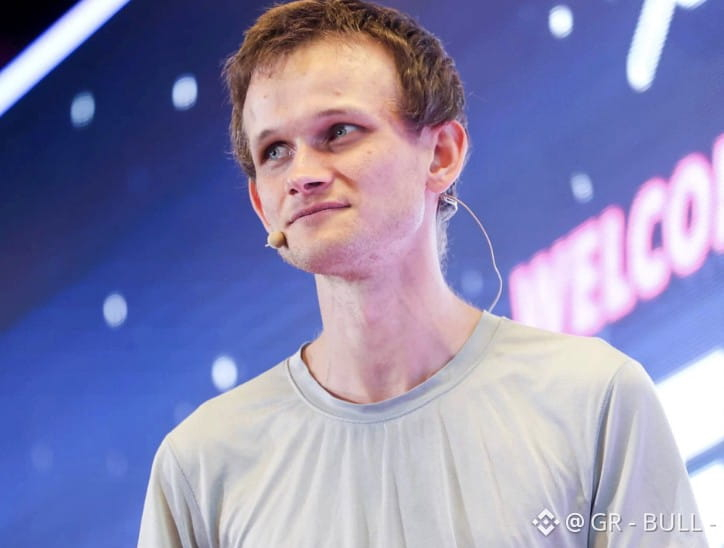
🚀 BREAKING: ETH PRAGUE 2026 SHOCKER! 🚀
🌟 Justin Sun-led Liberland just awarded the top honor to Vitalik Buterin for his revolutionary contributions to blockchain!
But that’s not all — Liberland is pushing the frontier of:
✅ Blockchain-based governance – redefining how nations can run on code.
✅ Digital citizenship – pioneering new ways for people to interact with states online.
💥 $ETH Prague 2026 just became the epicenter of crypto, governance, and the future of human freedom!
🌐 Vitalik’s recognition signals a massive leap toward decentralized societies where blockchain isn’t just tech—it’s a new way of life.
🔥 The crypto world is buzzing: this is history in the making.
#ETHPrague2026 #VitalikButerin #Liberland #BlockchainGovernance #DigitalCitizenship
🚀 BREAKING: ETH PRAGUE 2026 SHOCKER! 🚀
🌟 Justin Sun-led Liberland just awarded the top honor to Vitalik Buterin for his revolutionary contributions to blockchain!
But that’s not all — Liberland is pushing the frontier of:
✅ Blockchain-based governance – redefining how nations can run on code.
✅ Digital citizenship – pioneering new ways for people to interact with states online.
💥 $ETH Prague 2026 just became the epicenter of crypto, governance, and the future of human freedom!
🌐 Vitalik’s recognition signals a massive leap toward decentralized societies where blockchain isn’t just tech—it’s a new way of life.
🔥 The crypto world is buzzing: this is history in the making.
#ETHPrague2026 #VitalikButerin #Liberland #BlockchainGovernance #DigitalCitizenship
🌟 Justin Sun-led Liberland just awarded the top honor to Vitalik Buterin for his revolutionary contributions to blockchain!
But that’s not all — Liberland is pushing the frontier of:
✅ Blockchain-based governance – redefining how nations can run on code.
✅ Digital citizenship – pioneering new ways for people to interact with states online.
💥 $ETH Prague 2026 just became the epicenter of crypto, governance, and the future of human freedom!
🌐 Vitalik’s recognition signals a massive leap toward decentralized societies where blockchain isn’t just tech—it’s a new way of life.
🔥 The crypto world is buzzing: this is history in the making.
#ETHPrague2026 #VitalikButerin #Liberland #BlockchainGovernance #DigitalCitizenship

2
1
378
Log in to explore more content
Join global crypto users on Binance Square
⚡️ Get latest and useful information about crypto.
💬 Trusted by the world’s largest crypto exchange.
👍 Discover real insights from verified creators.
Email / Phone number
Trending Topics
1
#EtherGains70.9%InQ3
179,390 views
1,196 Discussing
2
#TreasuryLetsStatesFileStablecoinCertificationsEarly
11,889 views
93 Discussing
3
#US10YearYieldNears5.3%
161,402 views
1,167 Discussing
4
#DollarIndexHitsHighestSinceMay2025
47,986 views
638 Discussing
5
#USWeeklyJoblessClaimsFallTo197000
38,829 views
514 Discussing
6
#BitcoinETFsTake$6.34BillionInQ3
10,573 views
77 Discussing
7
#KoreaProposesTokenizingStocksAndBonds
76,311 views
832 Discussing
8
#MetaMaskExitsLidoValidatorsAfterSecurityIncident
175,949 views
1,563 Discussing
9
#MicronBeatsEarningsLiftsGuidance
89,539 views
1,125 Discussing
10
#CFTCSubmitsTwoEventContractRulesToWhiteHouse
61,714 views
834 Discussing