

#arbitrum
arbitrum
2.7M views
6,628 Discussing
Hot
Latest


·
--
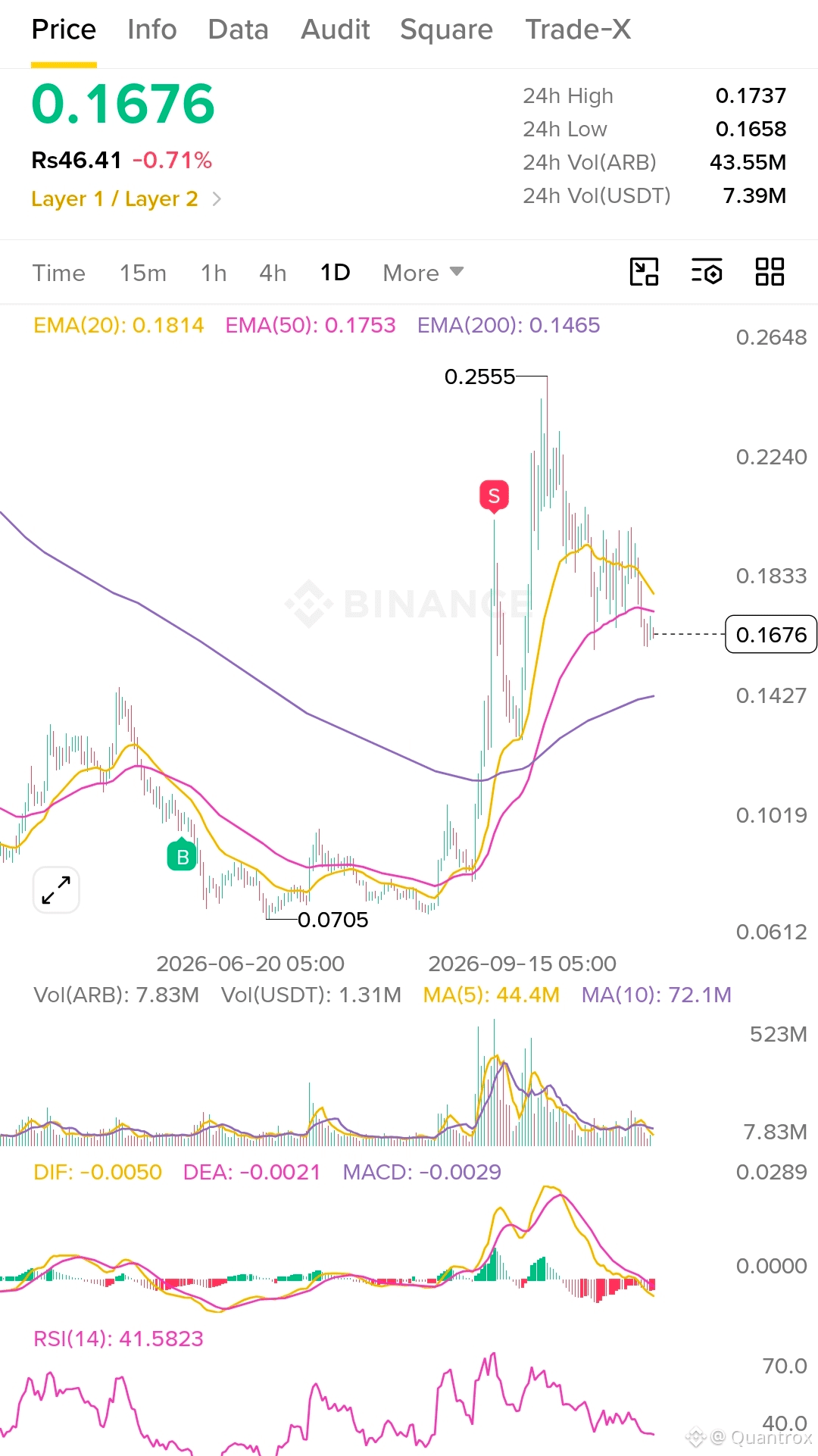
🚨 $ARB monthly revenue jumped about 5x.
The price is down 34% from the top. 🤔
Robinhood Chain is pushing fees to records and USDG vaults on Arbitrum crossed $100M TVL.
Yet ARB has handed back roughly half its run from 0.07 to 0.25.
My read: the market isn't doubting the usage, it's worried about supply. A 100M ARB incentive proposal is in play and unlocks are coming.
Good news, falling price. Who's wrong, the chart or the fundamentals?
#CryptoTrading #ARB #Arbitrum
DYOR | NFA
554

·
--
Bearish
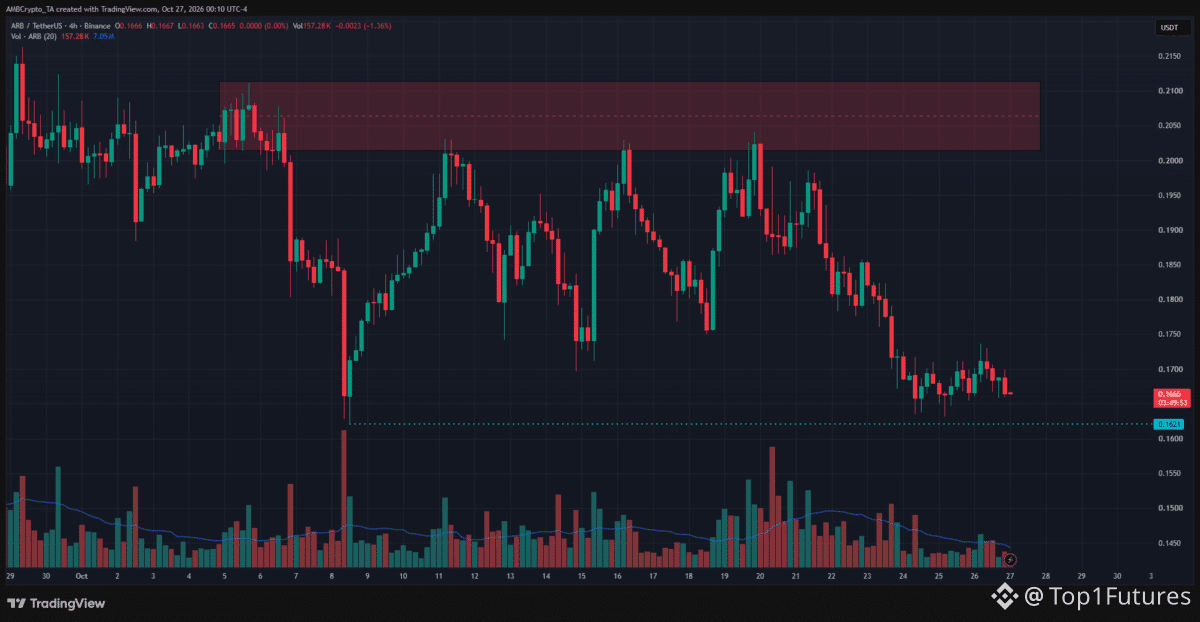
$ARB 🔻 is down nearly 17% in a week, but could this correction create a fresh buying opportunity?
#Arbitrum has pulled back sharply after its September rally from $0.131 to $0.255. For now, sellers are dominating the short-term action, but the bigger picture could still offer bulls some hope if key support survives.
The level I'm watching closely is $0.162. This zone could be crucial for ARB's next move. 📉
If buyers defend this support and push the price back above $0.17, we could see a recovery toward $0.174 first. If bullish momentum builds, the next targets could be $0.205, $0.212 and even $0.218.
But don't rush into a trade just yet!
Capital outflows and selling pressure are still creating problems for buyers. If ARB loses $0.162 without a strong rebound, the correction could extend further, and bulls may have to wait longer for a proper recovery.
Watch how price reacts around $0.162. A reclaim of $0.17 could provide an early bullish signal, while a clean breakdown below support would keep the downside risk alive.
The next move depends on buyers showing real strength. Will ARB bounce back or slide lower? 👀
1
206

·
--
🚨 $ARB DEMOLISHES BEARS WITH A VERTICAL 20% SURGE INTO FIRST RESISTANCE! 💥
Smart money finished accumulating under the radar, and $ARB just unleashed a massive 20% impulse candle straight into our first overhead resistance zone. ⚡ Short sellers got caught flat-footed while buyers effortlessly absorbed sell pressure.
I have already shaved off partial profits to derisk completely, letting the remaining position ride stress-free. 📊 When institutional volume steps in with this velocity, protecting your downside while letting winners run is the mark of disciplined trading.
💡 The heavy lifting is done, and the path upward looks clean. 💬 Did you lock in profits on this push, or are you still watching from the sidelines? 👇
⚠️ Not financial advice. Always manage your risk. 🛡️
🏷️ #ARB #Arbitrum #Breakout #Crypto
⚡ 💎
37

$ARB SMACKS OVERHEAD RESISTANCE AS SELLERS HEAVILY DEFEND THE SUPPLY ZONE! 🐻 📉
Entry: 0.1367 - 0.1375 🔴
Target: 0.1345 - 0.1295 🎯
Stop Loss: 0.1402 ⚠️
Every attempt to push above the 0.1375 overhead barrier is getting met with ruthless supply. 📊 Sellers have stacked heavy order walls, turning every minor bounce into a swift rejection before buyers can build momentum.
As long as price trades under this heavy supply block, momentum heavily favors a cascade down into lower liquidity pools. 🔍 Expecting bears to press the advantage toward major downside targets if buyers fail to step in. 💬 Are you shorting this rejection or waiting for a lower support breakdown? 👇
⚠️ Not financial advice. Always manage your risk. 🛡️
🏷️ #ARB #ShortSetup #Arbitrum #Crypto
🐻 📉
11

·
--
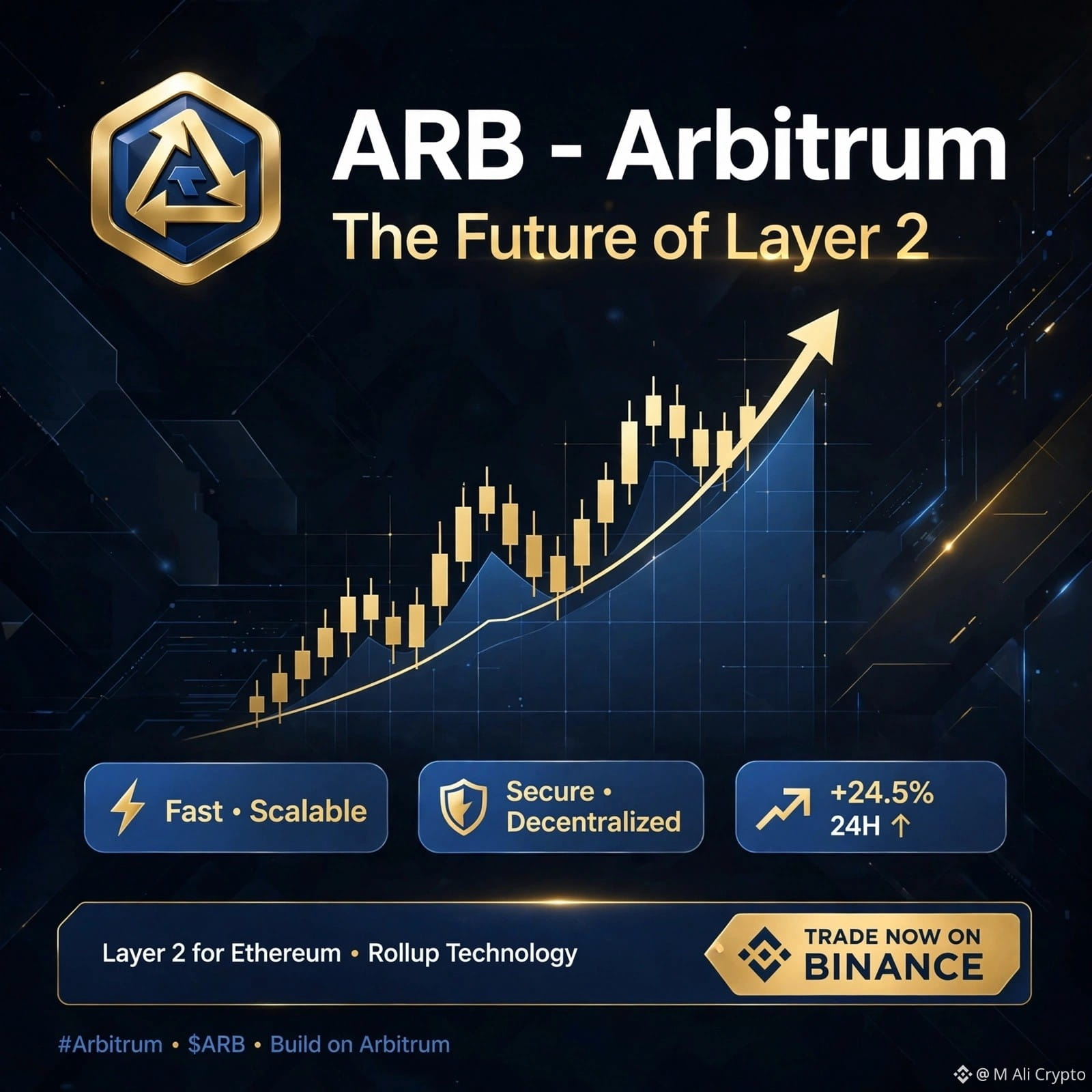
🚀 $ARB - Arbitrum | The Future of Layer 2 🚀
The leading Layer 2 scaling solution for Ethereum is pumping! ⚡️
🔹 Fast & Scalable
🔹 Secure & Decentralized
🔹 Built on Rollup Technology
Are you holding $ARB? Let me know in comments 👇
Trade Now on Binance!
#Arbitrum #Crypto #Ethereum #CryptoPakistan
🚀 $ARB - Arbitrum | The Future of Layer 2 🚀
The leading Layer 2 scaling solution for Ethereum is pumping! ⚡️
🔹 Fast & Scalable
🔹 Secure & Decentralized
🔹 Built on Rollup Technology
Are you holding $ARB ? Let me know in comments 👇
Trade Now on Binance!
#Arbitrum #Crypto #Ethereum #CryptoPakistan
The leading Layer 2 scaling solution for Ethereum is pumping! ⚡️
🔹 Fast & Scalable
🔹 Secure & Decentralized
🔹 Built on Rollup Technology
Are you holding $ARB ? Let me know in comments 👇
Trade Now on Binance!
#Arbitrum #Crypto #Ethereum #CryptoPakistan
2
701

·
--
Quick news flash on $ARB today. ☕
Here are three fast facts:
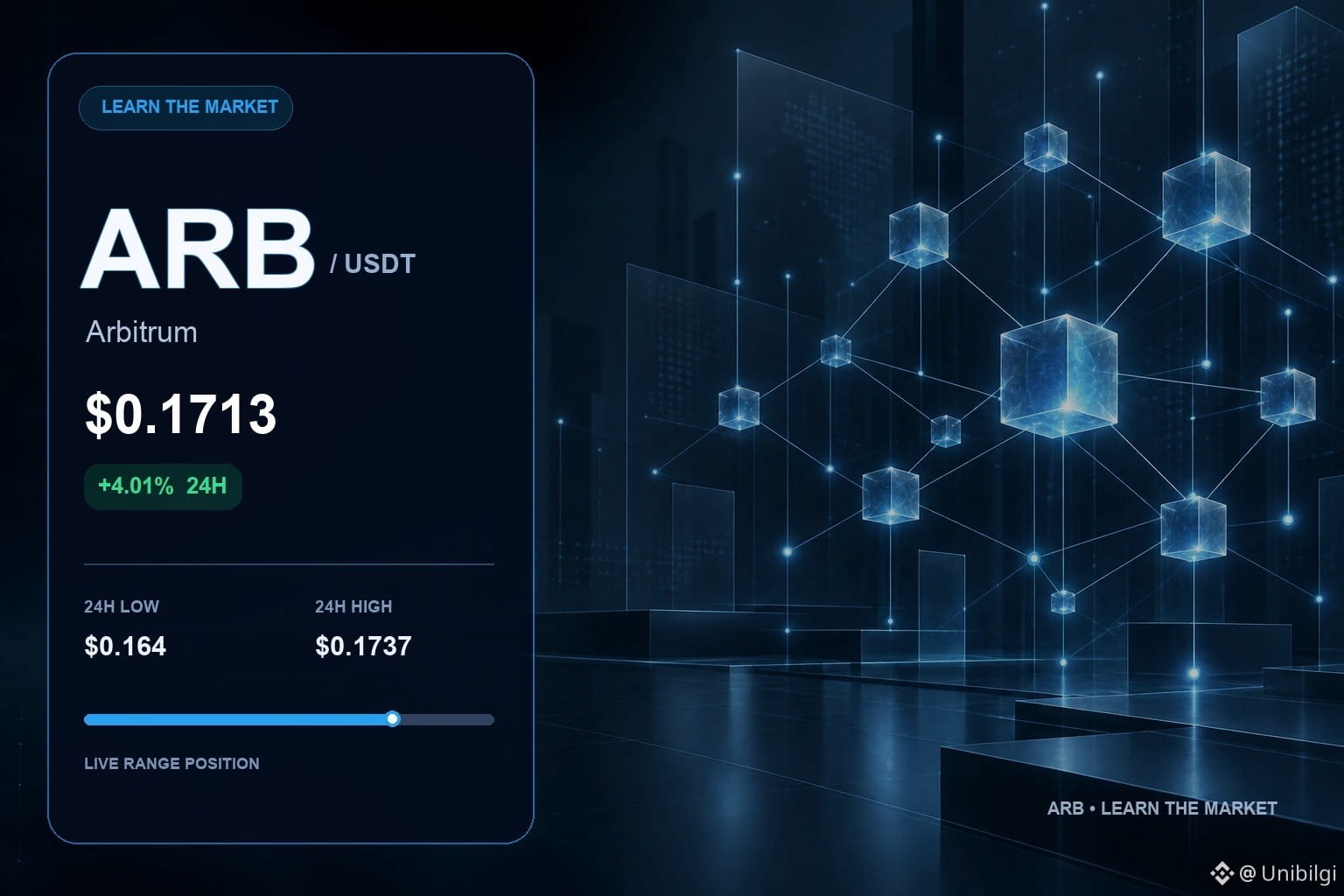
- Current price sits at $0.1713.
- Up +4.007% in 24 hours.
- Moved between $0.164 low and $0.1737 high.
Micro-lesson on 24h range: The difference between the low of $0.164 and high of $0.1737 defines today's trading channel. When price trades near $0.1713, it sits close to the top of its daily channel, showing recent buying momentum.
Takeaway: Map the daily high and low before trading to see where current price sits in its immediate range.
Not financial advice, always DYOR. 📊 💡
#Write2Earn #CryptoEducation #Arbitrum
83
·
--
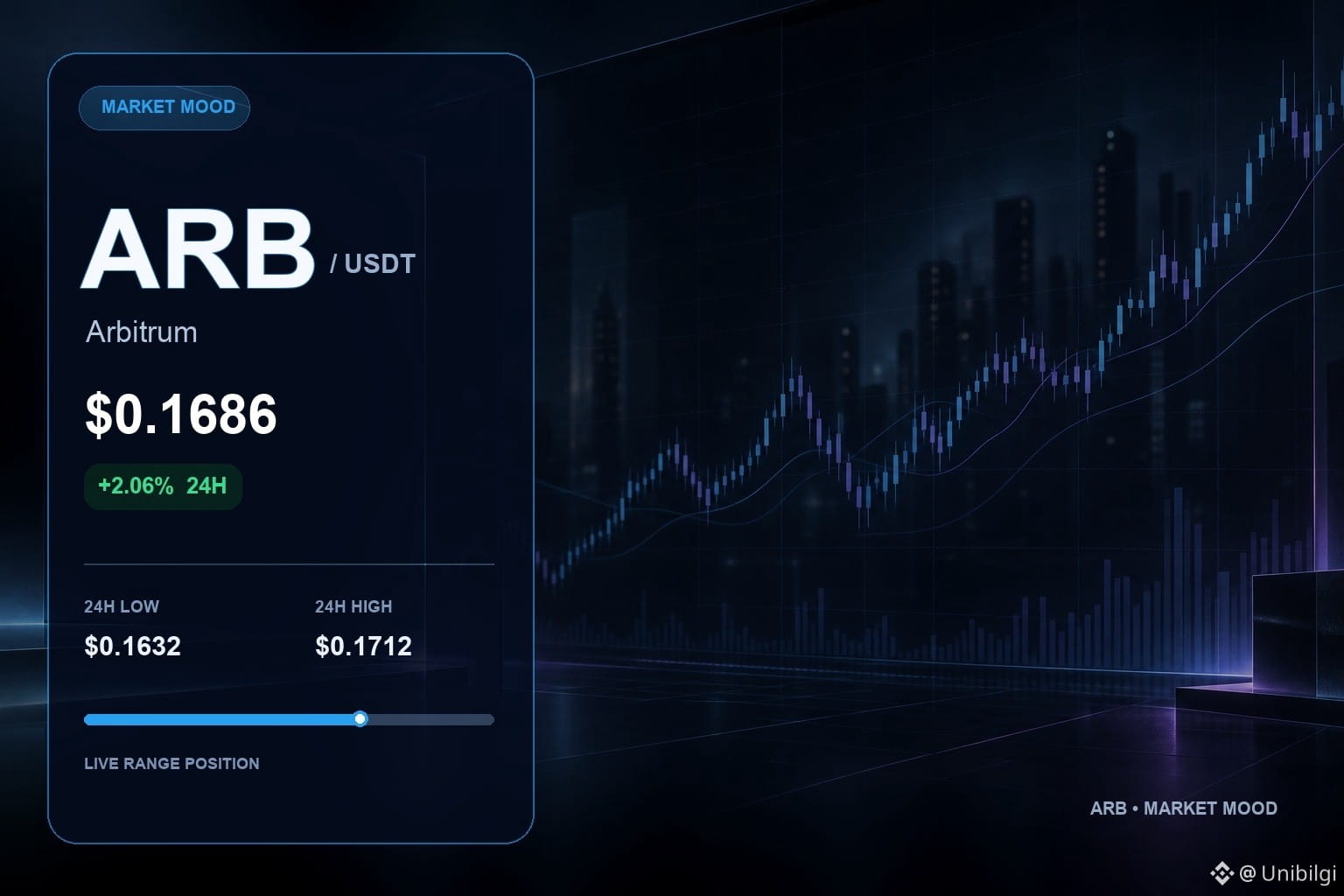
A neat +2.058% gain is where $ARB decided to hang out today ☕. Bouncing nicely from a 24h low of $0.1632 up to a high of $0.1712, it is currently trading at $0.1686. It is not breaking speed records, but honest green candles make for a peaceful charting session 📈. Keep an eye on whether it retests that $0.1712 mark or keeps crab-walking sideways. Not financial advice, so remember to DYOR 🧘! #Write2Earn #Arbitrum #Crypto
A neat +2.058% gain is where $ARB decided to hang out today ☕. Bouncing nicely from a 24h low of $0.1632 up to a high of $0.1712, it is currently trading at $0.1686. It is not breaking speed records, but honest green candles make for a peaceful charting session 📈. Keep an eye on whether it retests that $0.1712 mark or keeps crab-walking sideways. Not financial advice, so remember to DYOR 🧘! #Write2Earn #Arbitrum #Crypto
76
·
--
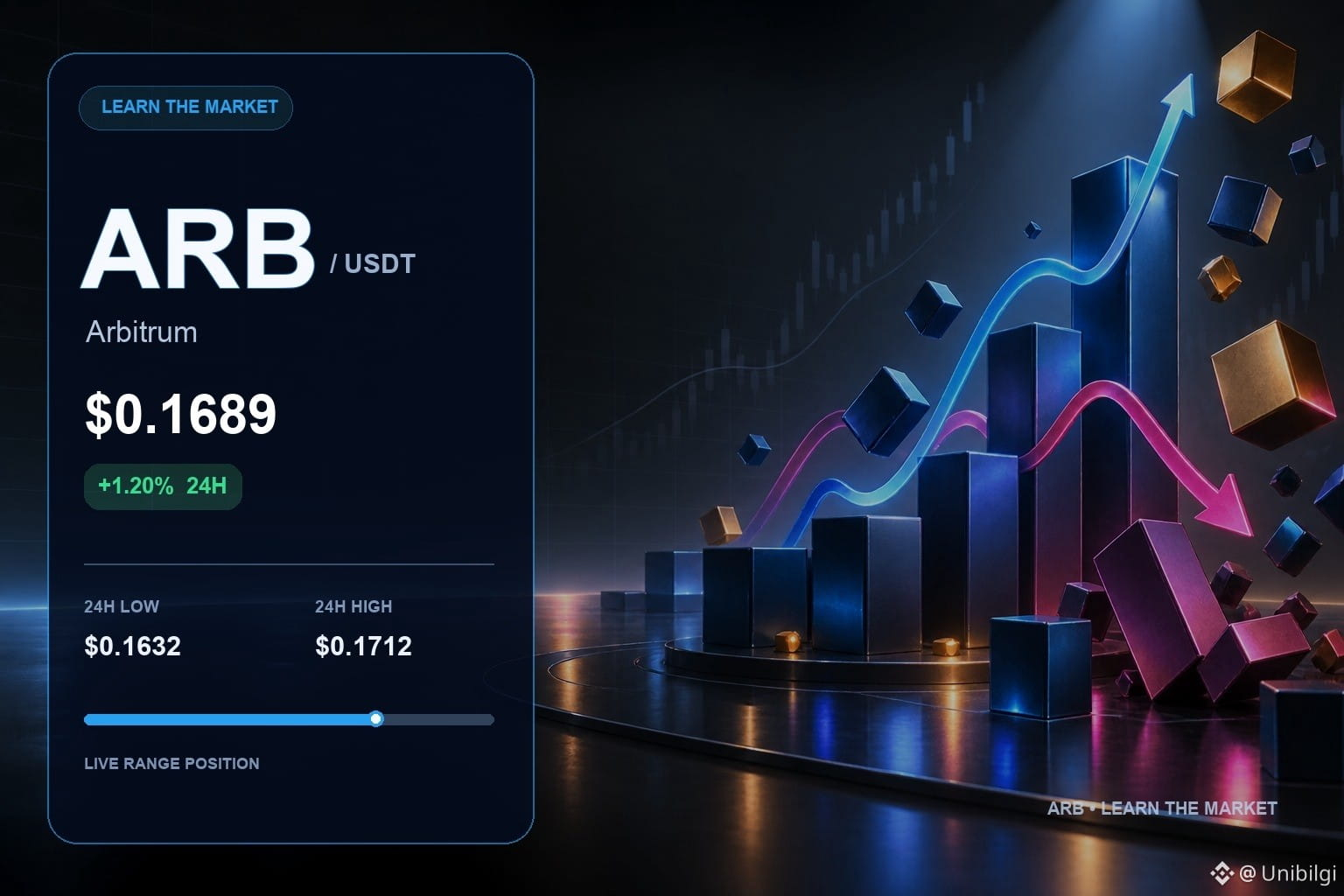
Looking at the charts on a quieter day is often where the best learning happens 🧘♂️. Take $ARB for example, currently sitting at $0.1689 after a modest 24h change of +1.198%. When price action feels calm like this, it is a great time to study intraday price ranges rather than reacting emotionally to sudden spikes.
Notice how the price carved out a 24h low of $0.1632 and reached a 24h high of $0.1712 over the past day. In technical analysis, these local extremes act as temporary reference points. The $0.1632 level shows where buyers previously found value, acting as short-term support, while $0.1712 shows where sellers emerged, forming temporary resistance.
Learning takeaway: identifying an asset's daily boundaries helps you gauge realistic risk and reward before entering a trade, helping you avoid buying right at resistance levels. Make sure to DYOR as this is not financial advice 📊📈. #Write2Earn #Arbitrum #CryptoEducation #TradingTips
27

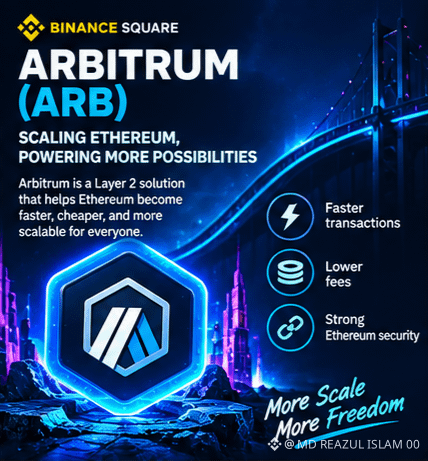
⚡ Arbitrum (ARB): Scaling Ethereum for the Future!
Arbitrum is an Ethereum Layer 2 solution designed to help applications process transactions efficiently while reducing costs.
🌐 Scaling technology is an important part of making blockchain applications more accessible.
Do you think Layer 2 networks will continue to grow in importance? Let's discuss! 👇
#Arbitrum #ARB #Ethereum #Layer2 #Blockchain #BinanceSquare
1
2
346

·
--
Another day, another $ARB "breakout" narrative. Bulls are ecstatic about a few percentage points, while the token unlocks keep flowing like fine wine. 💅 Even with AI projects migrating and network activity hitting "90-day highs", some still wonder where the actual price action is. Bears are just standing there, looking confused. 🤡 So, are we actually going somewhere, or is this just another masterclass in sideways trading? 📉 #Arbitrum #L2
Another day, another $ARB "breakout" narrative. Bulls are ecstatic about a few percentage points, while the token unlocks keep flowing like fine wine. 💅 Even with AI projects migrating and network activity hitting "90-day highs", some still wonder where the actual price action is. Bears are just standing there, looking confused. 🤡 So, are we actually going somewhere, or is this just another masterclass in sideways trading? 📉 #Arbitrum #L2
1
568

ARB’s four-week slide is real—but the “new low” headline needs a venue check.
The Defiant published a report at 16:50 UTC saying ARB touched a four-week low. Binance Spot 1-minute closes at 16:50 UTC, compared with 28 days earlier, show ARB down 26.6% ($0.2267 to $0.1663), versus ETH down 14.0% and BTC down 4.7%. But Binance daily candles show the 28-day low was $0.1621 on Oct. 8; Oct. 24’s low was $0.1635, so the “new four-week low” wording is not confirmed on this venue. ARB was $0.1653 at 17:10:03 UTC. This is a timestamped comparison, not a forecast; prices and windows can differ by source. What market data do you use to track ARB?
Source: [The Defiant](https://thedefiant.io/news/markets/arb-touches-four-week-low-as-losses-outpace-bitcoin-and-ether)
Conclusion: $ARB. Binance Spot snapshot as of 17:10:03 UTC; this is not a trade signal. Official Binance ARB/USDT chart: https://www.binance.com/en/trade/ARB_USDT?type=spot. Check the chart for yourself, do your own research, and trade responsibly.
#Arbitrum #ARB #CryptoMarkets #MarketData
ARB’s four-week slide is real—but the “new low” headline needs a venue check.
The Defiant published a report at 16:50 UTC saying ARB touched a four-week low. Binance Spot 1-minute closes at 16:50 UTC, compared with 28 days earlier, show ARB down 26.6% ($0.2267 to $0.1663), versus ETH down 14.0% and BTC down 4.7%. But Binance daily candles show the 28-day low was $0.1621 on Oct. 8; Oct. 24’s low was $0.1635, so the “new four-week low” wording is not confirmed on this venue. ARB was $0.1653 at 17:10:03 UTC. This is a timestamped comparison, not a forecast; prices and windows can differ by source. What market data do you use to track ARB?
Source: [The Defiant](https://thedefiant.io/news/markets/arb-touches-four-week-low-as-losses-outpace-bitcoin-and-ether)
Conclusion: $ARB . Binance Spot snapshot as of 17:10:03 UTC; this is not a trade signal. Official Binance ARB/USDT chart: https://www.binance.com/en/trade/ARB_USDT?type=spot. Check the chart for yourself, do your own research, and trade responsibly.
#Arbitrum #ARB #CryptoMarkets #MarketData

113

·
--
#Arbitrum has fallen 17.44% over the past 7 days, nearly erasing most of its gains from September, when it rebounded from $0.131 to $0.255. The price is currently around $0.1672. The short-term trend is clearly weak, but the daily-chart rebound structure has not been completely invalidated.
Looking at capital flow indicators, CMF is below -0.05, while the Accumulation/Distribution indicator continues to decline, suggesting that outflows and selling pressure remain significant. In addition, the perpetual futures funding rate is -0.0025%, reflecting bearish market sentiment, and open interest stands at approximately $89.6 million.
Key levels to watch:
Key support: $0.162–$0.1635. If the price holds in this zone and rebounds above $0.17, it could indicate that buying pressure is starting to return.
Overhead resistance: $0.1717–$0.174. A breakout above this zone could extend the short-term rebound.
Downside risk: If the daily candle closes below $0.1635, ARB could fall further toward lower support levels.
Additionally, leveraged liquidations are concentrated below $0.162 and near $0.174, so volatility could intensify as the price approaches these zones.
50

·
--
Arbitrum plans to push Stylus forward again. This should be good news for Layer 2 scaling technology: bringing languages like Rust, C, and C++ into smart contract development opens up exciting possibilities for performance and lowering the barrier to entry.
But the controversy centers on who gets to approve new contracts. If deploying or activating a contract requires additional permission, developers will naturally worry: could this shift from “permissionless innovation” toward “approval-based launches”? It should be made clear who sets the approval criteria, whether decisions can be appealed, and whether these powers could be abused.
Technical upgrades are welcome, but governance boundaries are just as important. For Arbitrum, whether Stylus can earn trust depends not only on performance gains, but also on how it preserves decentralization and the principle of permissionlessness. Holders of $ARB should also keep a close eye on the proposal details.
#Arbitrum #Stylus #Layer2

·
--
Arbitrum plans to relaunch Stylus, but the controversy is about more than technology: who should control the approval of new contracts?
Stylus certainly has plenty of potential. Languages such as Rust, C, and C++ could join the ecosystem and interoperate with the EVM, potentially lowering gas costs and improving performance, while attracting gaming and other applications with frequent interactions. But if deploying new contracts requires additional approval, the “permissionless deployment” developers care most about will be compromised.
Security and risk management are understandable, but the core questions are whether approval rules are transparent, how authority is constrained, and how developers can appeal mistaken decisions. Layer 2 competition is no longer just about fees and TVL—it is also about credible neutrality. Technical upgrades can be rolled out in stages, but concentrating authority can easily create path dependence.
We hope Arbitrum clarifies the boundaries and timelines for approvals, as well as its decentralization roadmap. Don’t let Stylus become a tool that’s “easier to use, but harder to deploy freely.”
$ARB
#Arbitrum #Stylus #Layer2
Arbitrum plans to push Stylus forward again—a move that could benefit the developer ecosystem: languages such as Rust, C, and C++ could work in an environment interoperable with the EVM, lowering the barrier to building high-performance applications. But the point of contention is clear: if the newly added contract approval authority is poorly designed, contract deployment could shift from “permissionless” to “review before launch,” undermining trust in the on-chain ecosystem.
Technical upgrades can move quickly, but the boundaries of governance must remain clear. Developers care about performance; users and project teams care more about whether the rules are stable, power is concentrated, and approval criteria are transparent. If Stylus is to return, $ARB governance should first clarify the scope of the authority, the grounds for veto, and the appeals process.
Short-term controversy is not necessarily a bad thing. It will determine whether Arbitrum simply becomes a faster L2 or upholds its commitment to decentralization. #Arbitrum #Stylus #OnchainGovernance
Arbitrum wants to bring Stylus back, but the community has already argued itself into a frenzy. The controversy is not about the technology itself—being able to write contracts in Rust, C, and C++ is indeed a huge draw for developers—but about the accompanying "new contract approval authority": who gets to decide which contracts can be deployed, based on what criteria, and can those decisions be revoked? In other words, a layer 2 that originally prides itself on being permissionless would be given a centralized gate.
Supporters believe that a phased rollout and approval-before-launch can control risk, especially since the interaction boundaries between Stylus and EVM contracts still need time to be validated. Opponents worry that once approval power becomes entrenched, Arbitrum will slide from a "permissionless network" into a "licensed network," bringing censorship and power rent-seeking along with it—and power, once handed out, is easy to give but hard to take back.
What I care about more are three questions: whether the approval standards will be public and transparent, whether rejected projects will have an appeals path, and whether this mechanism is a temporary transition or something permanently written into governance. Technical upgrades can wait, but the governance bottom line cannot be surrendered. The voting weight of $ARB holders this time may be heavier than imagined.
#Arbitrum #Stylus #Layer2
1

·
--
Arbitrum plans to move forward with Stylus again—a development that could benefit Layer 2 technology. It supports writing smart contracts in languages such as Rust, C, and C++, reducing gas costs and boosting computational performance. But the controversy isn’t about “whether new languages can be used”; it’s about the approval powers that come with them: Who has the authority to review, approve, or restrict contracts? Could access become whitelist-only? And can governance processes effectively constrain these powers?
Retaining administrator privileges initially could indeed help manage risk. But if the scope, duration, and revocation mechanisms for those privileges are unclear, they could undermine the promise of permissionless contract deployment. For developers, Stylus could expand the range of possible applications. For the community, though, the focus should be on the proposal’s governance checks and balances—not just the performance narrative. Technical upgrades can be bold, but the decentralization of power must be transparent. $ARB #Arbitrum #Stylus #OnchainGovernance
Retaining administrator privileges initially could indeed help manage risk. But if the scope, duration, and revocation mechanisms for those privileges are unclear, they could undermine the promise of permissionless contract deployment. For developers, Stylus could expand the range of possible applications. For the community, though, the focus should be on the proposal’s governance checks and balances—not just the performance narrative. Technical upgrades can be bold, but the decentralization of power must be transparent. $ARB #Arbitrum #Stylus #OnchainGovernance
1
Arbitrum is moving forward with Stylus again, which was a technical development worth watching: contracts written in Rust and C/C++ can interoperate on the same chain with EVM applications, while also opening up the possibility of lower costs for compute-intensive use cases. But the controversy in the community is not about Stylus itself; it is about the accompanying “new contract approval authority.”
The key questions are: Who has the authority to approve or reject contracts going live? Are the approval criteria transparent? Can developers appeal a rejection? Is this authority time-limited? If control over the gateway rests with a small number of multisig signers or the team, “permissionless deployment” could become “deployment by permission,” creating unfair barriers for major projects and anonymous teams.
Security reviews and risk isolation are understandable, but temporary powers must have clear boundaries, on-chain disclosure, timelocks, and an exit mechanism. Otherwise, a single technical upgrade could also rewrite Arbitrum’s commitment to openness. $ARB #Arbitrum #Stylus #Layer2
3
·
--
Arbitrum is planning to push Stylus forward again. It should be a positive development, attracting Rust and C/C++ developers and lowering the barrier to building high-performance contracts. But the proposal has sparked controversy over new contract approval permissions. Supporters say this is a security gate before launch that can filter out high-risk implementations; critics worry that opaque approval boundaries could reintroduce permission hurdles into the ecosystem, effectively creating a deployment whitelist.
The key issue is not just whether the technology works, but who has the authority to approve contracts, what standards they use, and who is responsible when something goes wrong. Without transparent governance rules, even a performance upgrade could come at the cost of trust.
Are you more optimistic about the ecosystem growth Stylus could bring, or wary of tighter controls on contract deployment?
$ARB #Arbitrum #Stylus #Layer2
Arbitrum’s renewed push to launch Stylus should have been good news for the ecosystem: languages such as Rust, C, and C++ can be used in the EVM+ development environment, supporting high-performance applications and bringing in new developers. But the real controversy isn’t about the technology—it’s about the accompanying “new contract approval authority.”
The key questions are: Who has the authority to approve contracts? Is the approval process transparent? Can that authority be limited or revoked? How will audit standards, lines of responsibility, and emergency pause mechanisms be designed? If the authority is too broad, deployment may become more efficient, but DAOs and users will also take on additional trust assumptions. If the governance terms, timelocks, and oversight mechanisms are sufficiently clear, Stylus will look more like a long-term upgrade in capabilities.
The benefits shouldn’t be judged by the narrative alone; we also need to look at how authority is allocated. $ARB holders and developers should pay closer attention to the proposal’s details, not just the launch timeline.
#Arbitrum #Stylus #Layer2
2
Log in to explore more content
Join global crypto users on Binance Square
⚡️ Get latest and useful information about crypto.
💬 Trusted by the world’s largest crypto exchange.
👍 Discover real insights from verified creators.
Email / Phone number
Trending Topics
1
#FOMCWatch
8.9M views
27,005 Discussing
2
#EthereumDropsBelow$2300
4,544 views
102 Discussing
3
#BitcoinSlipsBelow$80KAgain
13,862 views
74 Discussing
4
#ThailandLaunchesWORPTStablecoinToQRPaymentApp
22,821 views
424 Discussing
5
#StrategySkipsBitcoinPurchasesSpends$205MOnSTRCBuybacks
6,188 views
82 Discussing
6
#BitmineAdds10452ETH
60,933 views
835 Discussing
7
#SouthKoreaConsidersEducationTaxOnCryptoExchanges
33,659 views
605 Discussing
8
#OCCUrgesCommunityBanksToEnterStablecoinPayments
26,573 views
436 Discussing
9
#RippleWinsFullApprovalAsNationalTrustBank
40,437 views
442 Discussing
10
#AkashSelectsSolanaAsMigrationTarget
15,173 views
214 Discussing