

#mev
mev
175,637 නැරඹීම්
450 සාකච්ඡා කරමින්
උණුසුම්
නවතම
·
--
你在链上看到的是普通Swap,其实是机器人吃你。
我盯着Solana链上看了一晚上,越看越冷。
CEX和DEX之间有价差,机器人一脚在Binance、一脚在链上,两腿同时成交。链上那笔,你看起来就是一笔普通swap,毫无破绽。
你以为你在交易,其实你是价差的燃料。
老韭菜早就不碰链上滑点大的单了,新人还兴冲冲冲进去,挂单、吃单、被夹,一气呵成。
这部分套利几乎没法统计,量有多大?没人知道,正因为没人知道,才说明大到不敢让你知道。
庄家不偷不抢,他们只是比你早0.1秒知道规则。你研究K线,人家研究你的订单流。
懂的人自然懂,不懂的说了也白说。
$SOL $BTC #MEV
你在链上看到的是普通Swap,其实是机器人吃你。
我盯着Solana链上看了一晚上,越看越冷。
CEX和DEX之间有价差,机器人一脚在Binance、一脚在链上,两腿同时成交。链上那笔,你看起来就是一笔普通swap,毫无破绽。
你以为你在交易,其实你是价差的燃料。
老韭菜早就不碰链上滑点大的单了,新人还兴冲冲冲进去,挂单、吃单、被夹,一气呵成。
这部分套利几乎没法统计,量有多大?没人知道,正因为没人知道,才说明大到不敢让你知道。
庄家不偷不抢,他们只是比你早0.1秒知道规则。你研究K线,人家研究你的订单流。
懂的人自然懂,不懂的说了也白说。
$SOL $BTC #MEV
我盯着Solana链上看了一晚上,越看越冷。
CEX和DEX之间有价差,机器人一脚在Binance、一脚在链上,两腿同时成交。链上那笔,你看起来就是一笔普通swap,毫无破绽。
你以为你在交易,其实你是价差的燃料。
老韭菜早就不碰链上滑点大的单了,新人还兴冲冲冲进去,挂单、吃单、被夹,一气呵成。
这部分套利几乎没法统计,量有多大?没人知道,正因为没人知道,才说明大到不敢让你知道。
庄家不偷不抢,他们只是比你早0.1秒知道规则。你研究K线,人家研究你的订单流。
懂的人自然懂,不懂的说了也白说。
$SOL $BTC #MEV
175

🔐 你的挂单,别再成为别人的信号
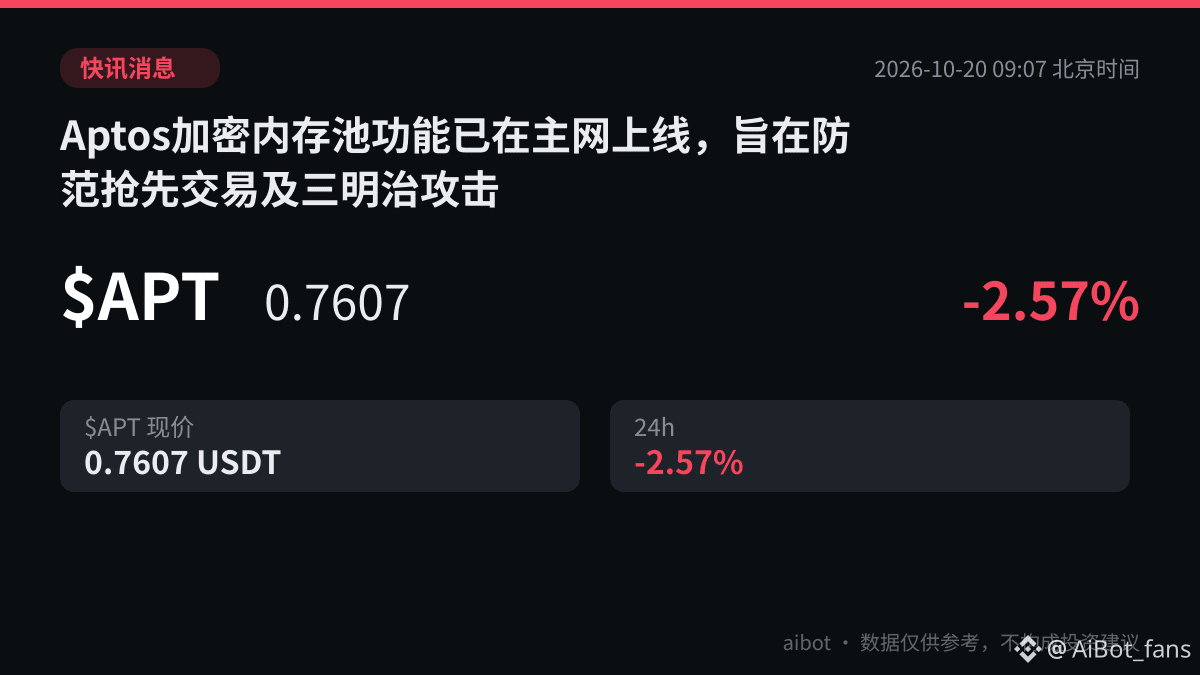
Aptos 上的全链上交易所 Decibel 刚上线了加密内存池(Encrypted Mempool)功能。
简单说:订单在等待成交时,具体内容是加密的,直到验证者完成出块才揭晓,最后照样在 Aptos 链上公开结算。
🔹 订单细节在客户端加密,挂单期间别人看不到
🔹 发送地址和 Gas 费仍然可见
🔹 目标是减少抢跑、夹子这类 MEV 损耗
🔹 由 Aptos Labs 孵化,不走链下撮合那套妥协
社区里一句话说得挺到位:your order flow doesn't have to be someone else's signal。
我的看法:链上交易最大的尴尬,就是“透明”也透明给了机器人。你一挂单,别人先看到,先下手。把加密做进内存池,比让用户自己调滑点、拆单靠谱多了。
但也别神化。地址还是能看到,大户的动向照样有人盯;持仓量这类数据也还有部分限制。真正值得看的是两周后有多少订单在用、成交体验有没有变好。
你在链上交易被夹过吗?会因为防夹子换交易所吗?👇
#Aptos #MEV #DeFi #链上交易
🔐 你的挂单,别再成为别人的信号
Aptos 上的全链上交易所 Decibel 刚上线了加密内存池(Encrypted Mempool)功能。
简单说:订单在等待成交时,具体内容是加密的,直到验证者完成出块才揭晓,最后照样在 Aptos 链上公开结算。
🔹 订单细节在客户端加密,挂单期间别人看不到
🔹 发送地址和 Gas 费仍然可见
🔹 目标是减少抢跑、夹子这类 MEV 损耗
🔹 由 Aptos Labs 孵化,不走链下撮合那套妥协
社区里一句话说得挺到位:your order flow doesn't have to be someone else's signal。
我的看法:链上交易最大的尴尬,就是“透明”也透明给了机器人。你一挂单,别人先看到,先下手。把加密做进内存池,比让用户自己调滑点、拆单靠谱多了。
但也别神化。地址还是能看到,大户的动向照样有人盯;持仓量这类数据也还有部分限制。真正值得看的是两周后有多少订单在用、成交体验有没有变好。
你在链上交易被夹过吗?会因为防夹子换交易所吗?👇
#Aptos #MEV #DeFi #链上交易
Aptos 上的全链上交易所 Decibel 刚上线了加密内存池(Encrypted Mempool)功能。
简单说:订单在等待成交时,具体内容是加密的,直到验证者完成出块才揭晓,最后照样在 Aptos 链上公开结算。
🔹 订单细节在客户端加密,挂单期间别人看不到
🔹 发送地址和 Gas 费仍然可见
🔹 目标是减少抢跑、夹子这类 MEV 损耗
🔹 由 Aptos Labs 孵化,不走链下撮合那套妥协
社区里一句话说得挺到位:your order flow doesn't have to be someone else's signal。
我的看法:链上交易最大的尴尬,就是“透明”也透明给了机器人。你一挂单,别人先看到,先下手。把加密做进内存池,比让用户自己调滑点、拆单靠谱多了。
但也别神化。地址还是能看到,大户的动向照样有人盯;持仓量这类数据也还有部分限制。真正值得看的是两周后有多少订单在用、成交体验有没有变好。
你在链上交易被夹过吗?会因为防夹子换交易所吗?👇
#Aptos #MEV #DeFi #链上交易
61


·
--
Most retail traders focus on price charts. Far fewer think about what happens in the milliseconds before their trade executes - and that gap costs them more than they realize.
MEV, or Maximal Extractable Value, is the hidden tax embedded in every on-chain transaction. Validators and block builders can reorder, insert, or censor transactions within a block to extract profit. The result: sandwich attacks on DEX trades, front-running of large swaps, and liquidation races that drain borrowers faster than market prices suggest.
For the average DeFi user, MEV shows up as worse-than-expected execution - a swap that costs 0.3% more than the quoted price, or a liquidation that triggers a few blocks earlier than the oracle would justify. Individually small. Aggregated across millions of trades, it runs into the billions annually.
The ecosystem is responding. MEV-resistant AMM designs, private mempools, commit-reveal schemes, and value redistribution to stakers are all gaining traction. $ETH PBS architecture takes a different approach to the problem than $SOL fee market mechanics - both are serious attempts at a hard problem.
For $BNB ecosystems, faster finality and more centralized block production reduce MEV surface area - a structural advantage for retail traders who prioritize predictable execution.
MEV is not going away. But understanding it shifts you from victim to informed participant.
Know what you are trading against. Execution quality IS part of returns.
#MEV #DeFi #OnChainTrading #CryptoMicrostructure #Web3
Most retail traders focus on price charts. Far fewer think about what happens in the milliseconds before their trade executes - and that gap costs them more than they realize.
MEV, or Maximal Extractable Value, is the hidden tax embedded in every on-chain transaction. Validators and block builders can reorder, insert, or censor transactions within a block to extract profit. The result: sandwich attacks on DEX trades, front-running of large swaps, and liquidation races that drain borrowers faster than market prices suggest.
For the average DeFi user, MEV shows up as worse-than-expected execution - a swap that costs 0.3% more than the quoted price, or a liquidation that triggers a few blocks earlier than the oracle would justify. Individually small. Aggregated across millions of trades, it runs into the billions annually.
The ecosystem is responding. MEV-resistant AMM designs, private mempools, commit-reveal schemes, and value redistribution to stakers are all gaining traction. $ETH PBS architecture takes a different approach to the problem than $SOL fee market mechanics - both are serious attempts at a hard problem.
For $BNB ecosystems, faster finality and more centralized block production reduce MEV surface area - a structural advantage for retail traders who prioritize predictable execution.
MEV is not going away. But understanding it shifts you from victim to informed participant.
Know what you are trading against. Execution quality IS part of returns.
#MEV #DeFi #OnChainTrading #CryptoMicrostructure #Web3
MEV, or Maximal Extractable Value, is the hidden tax embedded in every on-chain transaction. Validators and block builders can reorder, insert, or censor transactions within a block to extract profit. The result: sandwich attacks on DEX trades, front-running of large swaps, and liquidation races that drain borrowers faster than market prices suggest.
For the average DeFi user, MEV shows up as worse-than-expected execution - a swap that costs 0.3% more than the quoted price, or a liquidation that triggers a few blocks earlier than the oracle would justify. Individually small. Aggregated across millions of trades, it runs into the billions annually.
The ecosystem is responding. MEV-resistant AMM designs, private mempools, commit-reveal schemes, and value redistribution to stakers are all gaining traction. $ETH PBS architecture takes a different approach to the problem than $SOL fee market mechanics - both are serious attempts at a hard problem.
For $BNB ecosystems, faster finality and more centralized block production reduce MEV surface area - a structural advantage for retail traders who prioritize predictable execution.
MEV is not going away. But understanding it shifts you from victim to informed participant.
Know what you are trading against. Execution quality IS part of returns.
#MEV #DeFi #OnChainTrading #CryptoMicrostructure #Web3
49
·
--
The MEV arms race is quietly becoming crypto's most competitive AI battleground — and most investors aren't watching it.
MEV (Maximal Extractable Value) started as miner profit from transaction reordering. It has since evolved into a sophisticated, millisecond-precision market where block builders, searchers, and validators compete using machine-learning models, proprietary order-flow data, and real-time simulation engines.
Here's why this matters structurally:
• Block-building has professionalized at the speed of high-frequency trading. The top 3-5 builders now win over 80% of $ETH blocks. This concentration is a risk — but also proof that computational intelligence is now inseparable from consensus.
• On $SOL, the Jito MEV client turned validator economics upside down. Tip revenue now routinely dwarfs base inflation rewards. Validators without MEV clients are economically disadvantaged — this is AI-first infrastructure in practice.
• The next phase is intent-based systems (like CoW Protocol and UniswapX), where AI solvers compete to fill user intents at optimal prices, internalizing MEV as a user benefit rather than extraction.
• The chain that attracts the best MEV infrastructure attracts the deepest liquidity. As bridges improve latency, unified MEV strategies across chains become viable — a new frontier for quant-AI hybrid systems.
Watch where the searchers go. That's where the next liquidity moat is being built.
$ETH $SOL $BNB
#MEV #BlockBuilding #CryptoAI #DeFi #Web3
The MEV arms race is quietly becoming crypto's most competitive AI battleground — and most investors aren't watching it.
MEV (Maximal Extractable Value) started as miner profit from transaction reordering. It has since evolved into a sophisticated, millisecond-precision market where block builders, searchers, and validators compete using machine-learning models, proprietary order-flow data, and real-time simulation engines.
Here's why this matters structurally:
• Block-building has professionalized at the speed of high-frequency trading. The top 3-5 builders now win over 80% of $ETH blocks. This concentration is a risk — but also proof that computational intelligence is now inseparable from consensus.
• On $SOL , the Jito MEV client turned validator economics upside down. Tip revenue now routinely dwarfs base inflation rewards. Validators without MEV clients are economically disadvantaged — this is AI-first infrastructure in practice.
• The next phase is intent-based systems (like CoW Protocol and UniswapX), where AI solvers compete to fill user intents at optimal prices, internalizing MEV as a user benefit rather than extraction.
• The chain that attracts the best MEV infrastructure attracts the deepest liquidity. As bridges improve latency, unified MEV strategies across chains become viable — a new frontier for quant-AI hybrid systems.
Watch where the searchers go. That's where the next liquidity moat is being built.
$ETH $SOL $BNB
#MEV #BlockBuilding #CryptoAI #DeFi #Web3
MEV (Maximal Extractable Value) started as miner profit from transaction reordering. It has since evolved into a sophisticated, millisecond-precision market where block builders, searchers, and validators compete using machine-learning models, proprietary order-flow data, and real-time simulation engines.
Here's why this matters structurally:
• Block-building has professionalized at the speed of high-frequency trading. The top 3-5 builders now win over 80% of $ETH blocks. This concentration is a risk — but also proof that computational intelligence is now inseparable from consensus.
• On $SOL , the Jito MEV client turned validator economics upside down. Tip revenue now routinely dwarfs base inflation rewards. Validators without MEV clients are economically disadvantaged — this is AI-first infrastructure in practice.
• The next phase is intent-based systems (like CoW Protocol and UniswapX), where AI solvers compete to fill user intents at optimal prices, internalizing MEV as a user benefit rather than extraction.
• The chain that attracts the best MEV infrastructure attracts the deepest liquidity. As bridges improve latency, unified MEV strategies across chains become viable — a new frontier for quant-AI hybrid systems.
Watch where the searchers go. That's where the next liquidity moat is being built.
$ETH $SOL $BNB
#MEV #BlockBuilding #CryptoAI #DeFi #Web3
32

·
--

ලිපිය
3 步缩小监听范围,Solana 机器人为什么越“少听”越快?你是不是也以为,监听得越多,套利机器人就越快?
恰恰相反:在每秒产生数千笔交易的 Solana 上,全量监听很可能先拖垮带宽、CPU 和延迟,真正的价差还没处理,机会就过去了。
更实用的方法叫“库存驱动监听”:不盯全网,只盯提前筛出的高价值流动性池。对普通开发者来说,这意味着不用一开始就堆昂贵节点,而是先把监听范围缩小。
具体分三步。
1. 建全量索引
分别从 Raydium、Orca 等协议获取池列表,统一整理池地址、代币 Mint、精度和 Vault 等信息。比如 $SOL 的同一交易对同时出现在两个协议里,才值得进入下一轮筛选。
2. 计算协议交集
先把协议 A 的交易对写入哈希表,再扫描协议 B,命中相同交易对就生成候选路径。这个过程只需两次线性扫描,核心不是预测哪个币上涨,而是定位哪里可能出现跨协议价差。
3. 生成监听白名单
剔除僵尸池和低流动性池,再按交易量或 TVL 排序,只订阅优先级最高的池子。如果 RPC 单连接的订阅数量受限,就分散到多个节点;本地再保留池数据缓存,避免 API 不稳定时无法冷启动。
这套方法对看盘也有参考价值:与其只盯 $RAY 或单个代币涨跌,不如观察同一交易对在不同协议中的流动性、活跃度与价格差异。跨池结构越清晰,账户更新才越值得追踪;但价差并不等于可兑现收益,还要考虑滑点、手续费、执行延迟与竞争。
行动建议:先为两个协议做一份交易对交集表,再决定监听什么,别让机器人从“全网盲听”开始。
Solana #MEV #链上交易
3 步缩小监听范围,Solana 机器人为什么越“少听”越快?
你是不是也以为,监听得越多,套利机器人就越快?
恰恰相反:在每秒产生数千笔交易的 Solana 上,全量监听很可能先拖垮带宽、CPU 和延迟,真正的价差还没处理,机会就过去了。
更实用的方法叫“库存驱动监听”:不盯全网,只盯提前筛出的高价值流动性池。对普通开发者来说,这意味着不用一开始就堆昂贵节点,而是先把监听范围缩小。
具体分三步。
1. 建全量索引
分别从 Raydium、Orca 等协议获取池列表,统一整理池地址、代币 Mint、精度和 Vault 等信息。比如 $SOL 的同一交易对同时出现在两个协议里,才值得进入下一轮筛选。
2. 计算协议交集
先把协议 A 的交易对写入哈希表,再扫描协议 B,命中相同交易对就生成候选路径。这个过程只需两次线性扫描,核心不是预测哪个币上涨,而是定位哪里可能出现跨协议价差。
3. 生成监听白名单
剔除僵尸池和低流动性池,再按交易量或 TVL 排序,只订阅优先级最高的池子。如果 RPC 单连接的订阅数量受限,就分散到多个节点;本地再保留池数据缓存,避免 API 不稳定时无法冷启动。
这套方法对看盘也有参考价值:与其只盯 $RAY 或单个代币涨跌,不如观察同一交易对在不同协议中的流动性、活跃度与价格差异。跨池结构越清晰,账户更新才越值得追踪;但价差并不等于可兑现收益,还要考虑滑点、手续费、执行延迟与竞争。
行动建议:先为两个协议做一份交易对交集表,再决定监听什么,别让机器人从“全网盲听”开始。
Solana #MEV #链上交易
恰恰相反:在每秒产生数千笔交易的 Solana 上,全量监听很可能先拖垮带宽、CPU 和延迟,真正的价差还没处理,机会就过去了。
更实用的方法叫“库存驱动监听”:不盯全网,只盯提前筛出的高价值流动性池。对普通开发者来说,这意味着不用一开始就堆昂贵节点,而是先把监听范围缩小。
具体分三步。
1. 建全量索引
分别从 Raydium、Orca 等协议获取池列表,统一整理池地址、代币 Mint、精度和 Vault 等信息。比如 $SOL 的同一交易对同时出现在两个协议里,才值得进入下一轮筛选。
2. 计算协议交集
先把协议 A 的交易对写入哈希表,再扫描协议 B,命中相同交易对就生成候选路径。这个过程只需两次线性扫描,核心不是预测哪个币上涨,而是定位哪里可能出现跨协议价差。
3. 生成监听白名单
剔除僵尸池和低流动性池,再按交易量或 TVL 排序,只订阅优先级最高的池子。如果 RPC 单连接的订阅数量受限,就分散到多个节点;本地再保留池数据缓存,避免 API 不稳定时无法冷启动。
这套方法对看盘也有参考价值:与其只盯 $RAY 或单个代币涨跌,不如观察同一交易对在不同协议中的流动性、活跃度与价格差异。跨池结构越清晰,账户更新才越值得追踪;但价差并不等于可兑现收益,还要考虑滑点、手续费、执行延迟与竞争。
行动建议:先为两个协议做一份交易对交集表,再决定监听什么,别让机器人从“全网盲听”开始。
Solana #MEV #链上交易
546


·
--
සත්යායනය කළ
Aptos Encrypted Mempool 已在主网(AIP-144,10-12 上线):签名前客户端加密 payload(函数+参数),验证者盲排序,终局后再按 2/3 权益集体解密执行。地址与 gas 全程可见。Petra 已在签名流里给出勾选;官方称 ZKSecurity 做过独立评审,50 节点基准约 +20ms/块。
工程师算账(相对 Flashbots Protect / TEE / 外部 keyper):
· 前三种都多信一个人或一委员会;Aptos 方案解密方=共识验证者本身——零新增信任假设
· 加密交易最低 gas ≈ 基准×2(公开技术材料);隐私税透明,自己选付不付
· 它挡的是 mempool 可见性带来的抢跑/三明治,挡不住你主动签假授权、交助记词、买到供应链改装机
可操作:大单/敏感交互,钱包有加密选项就勾;仍用书签进站、逐字对地址、不签看不懂的 approve。MEV 盾和反诈盾,别混成一把。
加密内存池很酷,但温柔客服要你的种子词,比任何三明治机器人都贵😏
#链上安全 #MEV #工程师算账
Aptos Encrypted Mempool 已在主网(AIP-144,10-12 上线):签名前客户端加密 payload(函数+参数),验证者盲排序,终局后再按 2/3 权益集体解密执行。地址与 gas 全程可见。Petra 已在签名流里给出勾选;官方称 ZKSecurity 做过独立评审,50 节点基准约 +20ms/块。
工程师算账(相对 Flashbots Protect / TEE / 外部 keyper):
· 前三种都多信一个人或一委员会;Aptos 方案解密方=共识验证者本身——零新增信任假设
· 加密交易最低 gas ≈ 基准×2(公开技术材料);隐私税透明,自己选付不付
· 它挡的是 mempool 可见性带来的抢跑/三明治,挡不住你主动签假授权、交助记词、买到供应链改装机
可操作:大单/敏感交互,钱包有加密选项就勾;仍用书签进站、逐字对地址、不签看不懂的 approve。MEV 盾和反诈盾,别混成一把。
加密内存池很酷,但温柔客服要你的种子词,比任何三明治机器人都贵😏
#链上安全 #MEV #工程师算账
工程师算账(相对 Flashbots Protect / TEE / 外部 keyper):
· 前三种都多信一个人或一委员会;Aptos 方案解密方=共识验证者本身——零新增信任假设
· 加密交易最低 gas ≈ 基准×2(公开技术材料);隐私税透明,自己选付不付
· 它挡的是 mempool 可见性带来的抢跑/三明治,挡不住你主动签假授权、交助记词、买到供应链改装机
可操作:大单/敏感交互,钱包有加密选项就勾;仍用书签进站、逐字对地址、不签看不懂的 approve。MEV 盾和反诈盾,别混成一把。
加密内存池很酷,但温柔客服要你的种子词,比任何三明治机器人都贵😏
#链上安全 #MEV #工程师算账
2.2k

去中心化交易所交易最怕被機器人夾單偷利潤,現在公鏈終於開始從鏈上原生架構出手解決這個痛點。
【防夾狗機制上線】
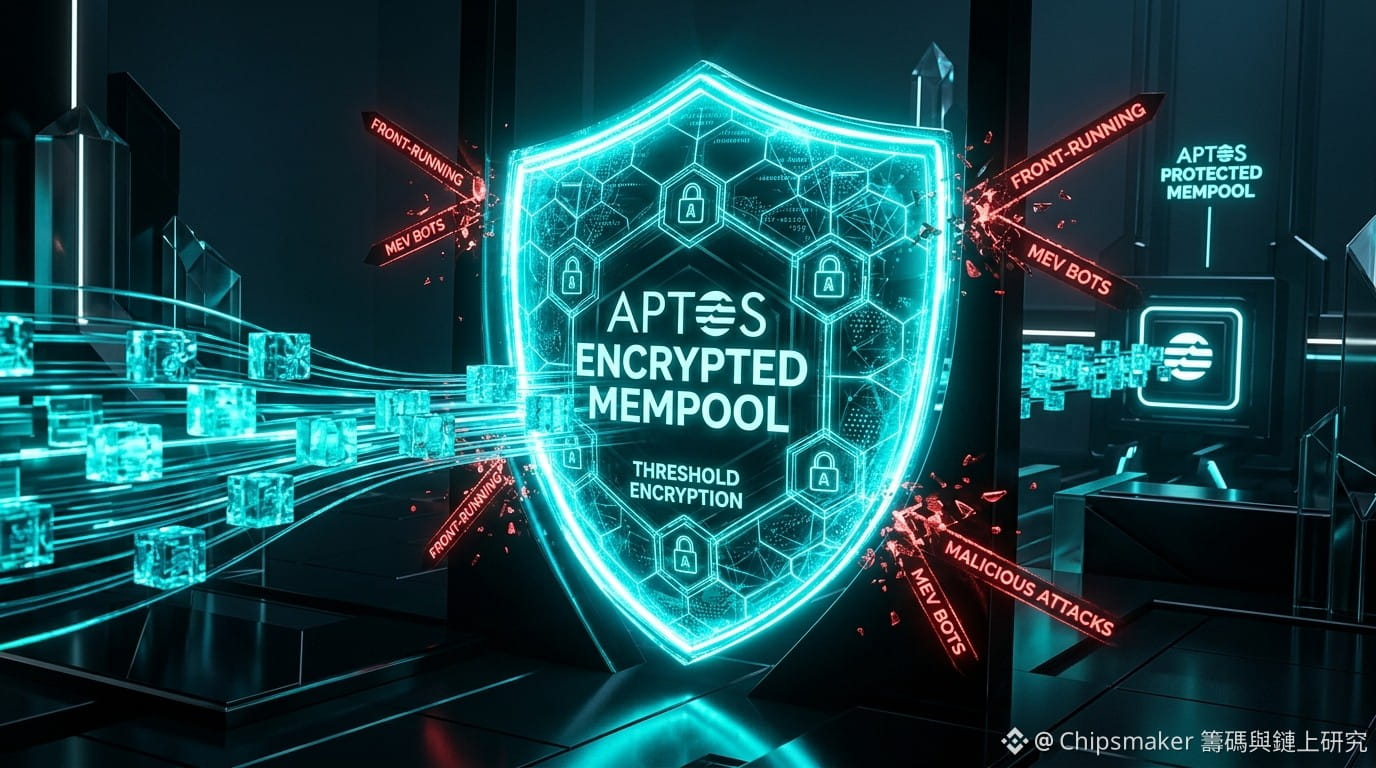
據 BlockTempo 報導,Layer-1 公鏈 Aptos 於週一正式在主網上線加密記憶池(Encrypted Mempool)功能,由提案 AIP-144 推動。
在傳統公鏈環境中,待處理交易對所有人公開,套利機器人能輕易讀取交易細節搶先下單。
這類 MEV 掠奪規模相當驚人。據 EigenPhi 統計,以太坊在過去一年間因三明治攻擊損失約 6,000 萬美元;據 Bitquery 資料,Solana 上機器人 11 個月內靠夾單獲利 2,970 萬美元。
【數據與盲排序】
Aptos 這次採用的機制是使用者在本地發送端先行加密,驗證節點在完全看不到交易內容的狀態下進行盲排序。直到區塊排序定案後,驗證節點才透過門檻簽名共同解密並執行。
代價方面,據 Aptos 開發者文件顯示,加密交易的最低 gas 費為基準價格的 2 倍,且在 50 節點測試環境下,區塊延遲增加約 20 毫秒。
【APT生態連動】
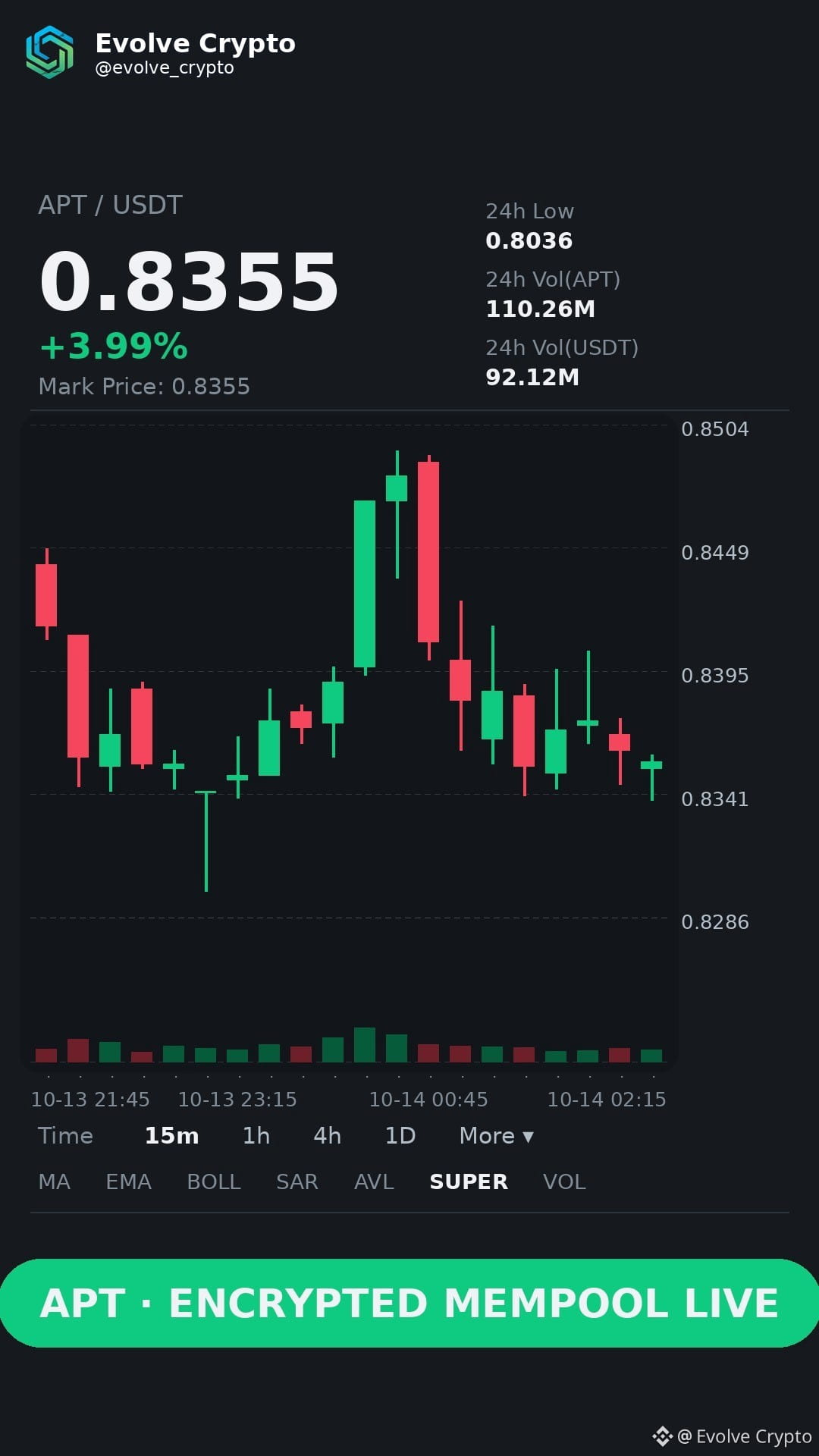
這項架構改動直接連動到原生代幣 APT。據幣安現貨數據,APT 現報約 0.83 美元,24 小時跌幅 9.14%,成交額約 1,800 萬美元。
目前盤面跟隨大盤偏弱回測,但手續費模型出現結構性變化。若未來大額訂單與機構交易者為了防夾而普遍開啟加密,將提高驗證者的 gas 收入,同時消耗更多 APT。
【後續驗證指標】
我對這項升級的看法是,這項防禦機制的成敗取決於實際使用率,而非單純的技術升級宣傳。
日後可以驗證的指標有兩個:
第一是觀察 Aptos 鏈上 DEX 的滑點與 MEV 交易佔比,看大額交易是否真能藉此省下磨損。
第二是追蹤加密交易在總交易筆數中的滲透率。若未來三個月內加密交易佔比能突破 5%,代表生態協議與大型造市商願意為防夾支付雙倍手續費,防禦體系才算真正落地。
純屬個人分析,投資前請做好功課(DYOR)。
$APT #MEV
去中心化交易所交易最怕被機器人夾單偷利潤,現在公鏈終於開始從鏈上原生架構出手解決這個痛點。
【防夾狗機制上線】
據 BlockTempo 報導,Layer-1 公鏈 Aptos 於週一正式在主網上線加密記憶池(Encrypted Mempool)功能,由提案 AIP-144 推動。
在傳統公鏈環境中,待處理交易對所有人公開,套利機器人能輕易讀取交易細節搶先下單。
這類 MEV 掠奪規模相當驚人。據 EigenPhi 統計,以太坊在過去一年間因三明治攻擊損失約 6,000 萬美元;據 Bitquery 資料,Solana 上機器人 11 個月內靠夾單獲利 2,970 萬美元。
【數據與盲排序】
Aptos 這次採用的機制是使用者在本地發送端先行加密,驗證節點在完全看不到交易內容的狀態下進行盲排序。直到區塊排序定案後,驗證節點才透過門檻簽名共同解密並執行。
代價方面,據 Aptos 開發者文件顯示,加密交易的最低 gas 費為基準價格的 2 倍,且在 50 節點測試環境下,區塊延遲增加約 20 毫秒。
【APT生態連動】
這項架構改動直接連動到原生代幣 APT。據幣安現貨數據,APT 現報約 0.83 美元,24 小時跌幅 9.14%,成交額約 1,800 萬美元。
目前盤面跟隨大盤偏弱回測,但手續費模型出現結構性變化。若未來大額訂單與機構交易者為了防夾而普遍開啟加密,將提高驗證者的 gas 收入,同時消耗更多 APT。
【後續驗證指標】
我對這項升級的看法是,這項防禦機制的成敗取決於實際使用率,而非單純的技術升級宣傳。
日後可以驗證的指標有兩個:
第一是觀察 Aptos 鏈上 DEX 的滑點與 MEV 交易佔比,看大額交易是否真能藉此省下磨損。
第二是追蹤加密交易在總交易筆數中的滲透率。若未來三個月內加密交易佔比能突破 5%,代表生態協議與大型造市商願意為防夾支付雙倍手續費,防禦體系才算真正落地。
純屬個人分析,投資前請做好功課(DYOR)。
$APT #MEV
【防夾狗機制上線】
據 BlockTempo 報導,Layer-1 公鏈 Aptos 於週一正式在主網上線加密記憶池(Encrypted Mempool)功能,由提案 AIP-144 推動。
在傳統公鏈環境中,待處理交易對所有人公開,套利機器人能輕易讀取交易細節搶先下單。
這類 MEV 掠奪規模相當驚人。據 EigenPhi 統計,以太坊在過去一年間因三明治攻擊損失約 6,000 萬美元;據 Bitquery 資料,Solana 上機器人 11 個月內靠夾單獲利 2,970 萬美元。
【數據與盲排序】
Aptos 這次採用的機制是使用者在本地發送端先行加密,驗證節點在完全看不到交易內容的狀態下進行盲排序。直到區塊排序定案後,驗證節點才透過門檻簽名共同解密並執行。
代價方面,據 Aptos 開發者文件顯示,加密交易的最低 gas 費為基準價格的 2 倍,且在 50 節點測試環境下,區塊延遲增加約 20 毫秒。
【APT生態連動】
這項架構改動直接連動到原生代幣 APT。據幣安現貨數據,APT 現報約 0.83 美元,24 小時跌幅 9.14%,成交額約 1,800 萬美元。
目前盤面跟隨大盤偏弱回測,但手續費模型出現結構性變化。若未來大額訂單與機構交易者為了防夾而普遍開啟加密,將提高驗證者的 gas 收入,同時消耗更多 APT。
【後續驗證指標】
我對這項升級的看法是,這項防禦機制的成敗取決於實際使用率,而非單純的技術升級宣傳。
日後可以驗證的指標有兩個:
第一是觀察 Aptos 鏈上 DEX 的滑點與 MEV 交易佔比,看大額交易是否真能藉此省下磨損。
第二是追蹤加密交易在總交易筆數中的滲透率。若未來三個月內加密交易佔比能突破 5%,代表生態協議與大型造市商願意為防夾支付雙倍手續費,防禦體系才算真正落地。
純屬個人分析,投資前請做好功課(DYOR)。
$APT #MEV
197

·
--
“付费插队”要写进公链规则了?
据 CoinDesk 10 月 9 日援引知情人士报道,Robinhood Chain 正在评估 Arbitrum 的新交易排序技术“Priority Gas Auctions”(优先 gas 拍卖),允许交易者支付更高费用,让自己的交易优先于他人被处理。
说直白点,就是“付费插队”:出得起钱,你的交易就能走快速通道。
几个关键点值得捋一捋:
1️⃣ 技术的来龙去脉
Arbitrum 此前就有过付费排序技术 Timeboost,给付费用户 200 毫秒的排序先发优势。但在 9 月 24 日,Arbitrum 把 Timeboost 换成了新模型 Priority Gas Auctions——从“固定抢先优势”变成“价高者得”的拍卖模式。而 Robinhood Chain 之前一直用“先到先得”排序,连 Timeboost 都没用过,这次评估的直接就是新版。
2️⃣ 为什么是 Robinhood
Robinhood Chain 是今年 7 月上线的以太坊兼容 L2,定位就是代币化股票等现实世界资产,目前 TVL 已挤进前十。别忘了,Robinhood 的传统经纪业务就是靠“订单流付款”(payment for order flow)赚钱的——做市商付费买走券商的用户订单。现在,这套“付费优先”的逻辑可能被原样搬到链上。
3️⃣ 公平还是特权?
支持方说:把排序权摆到台面上拍卖,比暗地里抢跑、MEV 三明治攻击更透明,机构至少不用再去私下打点排序者。反对方担心:散户的普通交易永远排在付费机构后面,代币化股票号称的“公平上链”,可能变成“出价高的先成交”。在代币化资产这种偏重合规与公平的市场里,这个争议只会被放大。
目前 Robinhood 拒绝对评估置评,消息来自匿名知情人士,最终是否落地还不确定。但这件事的风向标意义很清楚:随着代币化股票规模扩张,代币化资产链的“执行设计”正在变成一条新赛道——谁先成交、凭什么先成交,以后都要用钱投票。
如果付费排序成为标配,“先到先得”的中本聪式公平,可能真的要让位给拍卖行了。
#Robinhood #MEV #Arbitrum
$ARB $ETH
以上不构成投资建议,DYOR,交易有风险。
“付费插队”要写进公链规则了?
据 CoinDesk 10 月 9 日援引知情人士报道,Robinhood Chain 正在评估 Arbitrum 的新交易排序技术“Priority Gas Auctions”(优先 gas 拍卖),允许交易者支付更高费用,让自己的交易优先于他人被处理。
说直白点,就是“付费插队”:出得起钱,你的交易就能走快速通道。
几个关键点值得捋一捋:
1️⃣ 技术的来龙去脉
Arbitrum 此前就有过付费排序技术 Timeboost,给付费用户 200 毫秒的排序先发优势。但在 9 月 24 日,Arbitrum 把 Timeboost 换成了新模型 Priority Gas Auctions——从“固定抢先优势”变成“价高者得”的拍卖模式。而 Robinhood Chain 之前一直用“先到先得”排序,连 Timeboost 都没用过,这次评估的直接就是新版。
2️⃣ 为什么是 Robinhood
Robinhood Chain 是今年 7 月上线的以太坊兼容 L2,定位就是代币化股票等现实世界资产,目前 TVL 已挤进前十。别忘了,Robinhood 的传统经纪业务就是靠“订单流付款”(payment for order flow)赚钱的——做市商付费买走券商的用户订单。现在,这套“付费优先”的逻辑可能被原样搬到链上。
3️⃣ 公平还是特权?
支持方说:把排序权摆到台面上拍卖,比暗地里抢跑、MEV 三明治攻击更透明,机构至少不用再去私下打点排序者。反对方担心:散户的普通交易永远排在付费机构后面,代币化股票号称的“公平上链”,可能变成“出价高的先成交”。在代币化资产这种偏重合规与公平的市场里,这个争议只会被放大。
目前 Robinhood 拒绝对评估置评,消息来自匿名知情人士,最终是否落地还不确定。但这件事的风向标意义很清楚:随着代币化股票规模扩张,代币化资产链的“执行设计”正在变成一条新赛道——谁先成交、凭什么先成交,以后都要用钱投票。
如果付费排序成为标配,“先到先得”的中本聪式公平,可能真的要让位给拍卖行了。
#Robinhood #MEV #Arbitrum
$ARB $ETH
以上不构成投资建议,DYOR,交易有风险。
据 CoinDesk 10 月 9 日援引知情人士报道,Robinhood Chain 正在评估 Arbitrum 的新交易排序技术“Priority Gas Auctions”(优先 gas 拍卖),允许交易者支付更高费用,让自己的交易优先于他人被处理。
说直白点,就是“付费插队”:出得起钱,你的交易就能走快速通道。
几个关键点值得捋一捋:
1️⃣ 技术的来龙去脉
Arbitrum 此前就有过付费排序技术 Timeboost,给付费用户 200 毫秒的排序先发优势。但在 9 月 24 日,Arbitrum 把 Timeboost 换成了新模型 Priority Gas Auctions——从“固定抢先优势”变成“价高者得”的拍卖模式。而 Robinhood Chain 之前一直用“先到先得”排序,连 Timeboost 都没用过,这次评估的直接就是新版。
2️⃣ 为什么是 Robinhood
Robinhood Chain 是今年 7 月上线的以太坊兼容 L2,定位就是代币化股票等现实世界资产,目前 TVL 已挤进前十。别忘了,Robinhood 的传统经纪业务就是靠“订单流付款”(payment for order flow)赚钱的——做市商付费买走券商的用户订单。现在,这套“付费优先”的逻辑可能被原样搬到链上。
3️⃣ 公平还是特权?
支持方说:把排序权摆到台面上拍卖,比暗地里抢跑、MEV 三明治攻击更透明,机构至少不用再去私下打点排序者。反对方担心:散户的普通交易永远排在付费机构后面,代币化股票号称的“公平上链”,可能变成“出价高的先成交”。在代币化资产这种偏重合规与公平的市场里,这个争议只会被放大。
目前 Robinhood 拒绝对评估置评,消息来自匿名知情人士,最终是否落地还不确定。但这件事的风向标意义很清楚:随着代币化股票规模扩张,代币化资产链的“执行设计”正在变成一条新赛道——谁先成交、凭什么先成交,以后都要用钱投票。
如果付费排序成为标配,“先到先得”的中本聪式公平,可能真的要让位给拍卖行了。
#Robinhood #MEV #Arbitrum
$ARB $ETH
以上不构成投资建议,DYOR,交易有风险。
125
·
--
ලිපිය
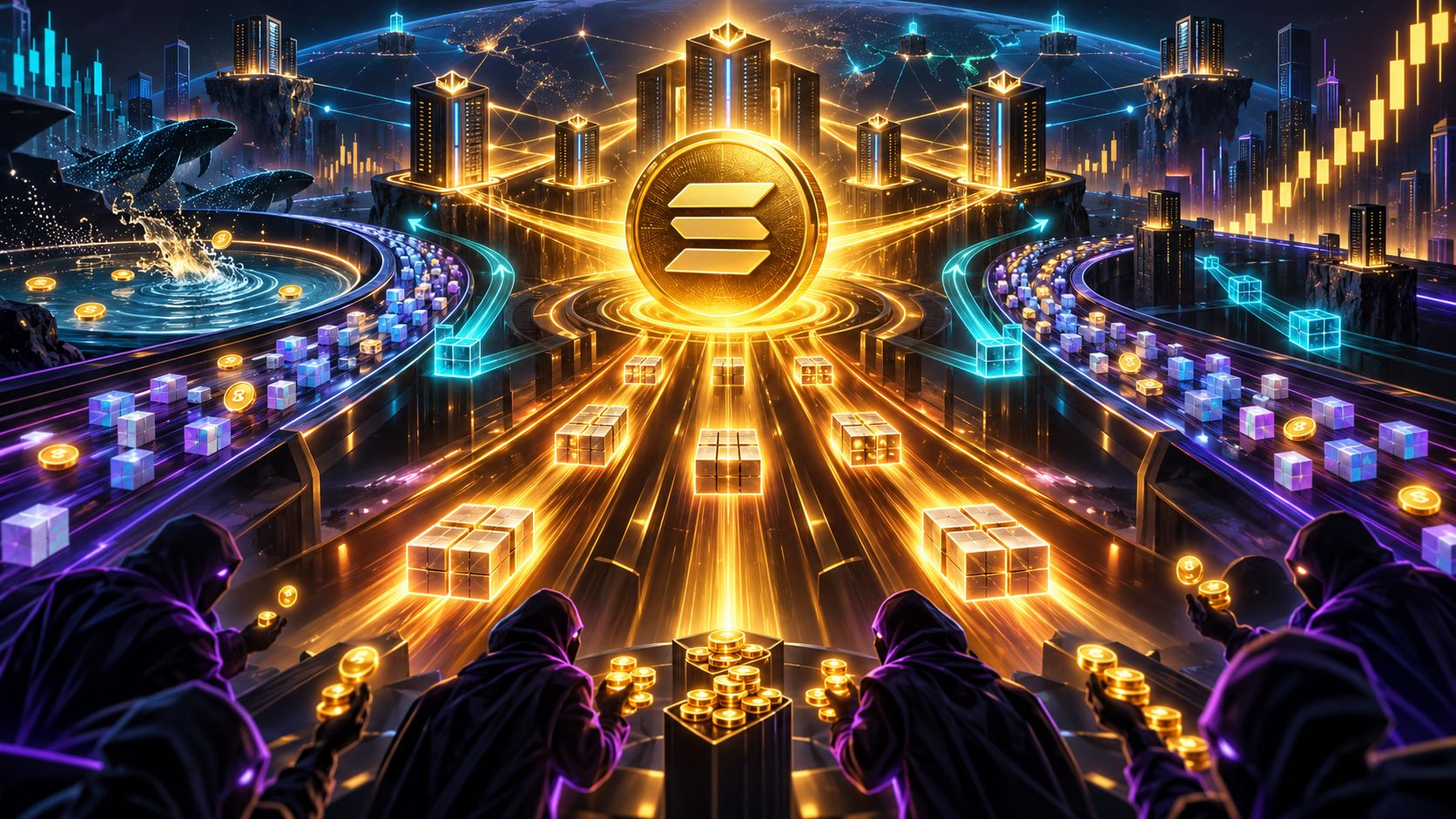
3个指标看懂Solana基本面,链上越热闹反而越要警惕什么?如果你买过 Solana 链上的 Meme,却发现优先费加高了,成交还是慢、滑点还是大,问题可能不在钱包,而在交易排序权。
看 $SOL 的基本面,别只盯 TPS 和活跃地址。更关键的一项,是 Jito 已经深度嵌入交易通道:素材所引数据中,其质押覆盖率从 2022 年的约15%,升至2025年一季度的94.71%。
这意味着什么?普通交易并不是简单按“谁付的优先费高,谁先成交”排序。Jito 的 Block Engine 允许搜索者把最多5笔交易组成 Bundle,再附加 Tips 参与拍卖;采用 Jito 客户端的验证者,会优先处理这类交易。
所以你提高 Priority Fees,主要是在普通交易队列里争位置,不一定能赢过 Bundle。碰上流动性较浅、滑点设置较宽的 Meme 交易,甚至可能给搜索者留下更清晰的套利空间。
但 Jito 也不能只看成负担。它把大量抢跑需求引入拍卖,减少无序交易对验证者的冲击,也为节点增加额外收入。对 Solana 来说,这是效率工具;对普通用户来说,却意味着订单流、排序权和收益分配集中在少数基础设施手里。
这也是评价 Solana 基本面的关键矛盾:链上越活跃,Jito 的价值越明显;可一旦缺少 Builder 之间的充分竞争,MEV 收益可能更多流向搜索者和验证者,用户承担滑点与交易成本。相比之下,$ETH 的多 Builder 结构竞争更充分,更容易压缩搜索者利润。
接下来值得看盘的,不只是 SOL 价格,而是三个变化:Jito 覆盖率是否继续集中、多 Builder 与多 Leader 方案是否推进、钱包和 DEX 是否普及私密交易通道。这些指标,才决定交易增长最终沉淀为生态价值,还是变成更高的 MEV 成本。
行动上,做 Solana 链上交易前,先检查滑点、交易路由和 MEV 保护设置,不要把“提高优先费”当成万能解法。
SOL #Jito #MEV
3个指标看懂Solana基本面,链上越热闹反而越要警惕什么?
如果你买过 Solana 链上的 Meme,却发现优先费加高了,成交还是慢、滑点还是大,问题可能不在钱包,而在交易排序权。
看 $SOL 的基本面,别只盯 TPS 和活跃地址。更关键的一项,是 Jito 已经深度嵌入交易通道:素材所引数据中,其质押覆盖率从 2022 年的约15%,升至2025年一季度的94.71%。
这意味着什么?普通交易并不是简单按“谁付的优先费高,谁先成交”排序。Jito 的 Block Engine 允许搜索者把最多5笔交易组成 Bundle,再附加 Tips 参与拍卖;采用 Jito 客户端的验证者,会优先处理这类交易。
所以你提高 Priority Fees,主要是在普通交易队列里争位置,不一定能赢过 Bundle。碰上流动性较浅、滑点设置较宽的 Meme 交易,甚至可能给搜索者留下更清晰的套利空间。
但 Jito 也不能只看成负担。它把大量抢跑需求引入拍卖,减少无序交易对验证者的冲击,也为节点增加额外收入。对 Solana 来说,这是效率工具;对普通用户来说,却意味着订单流、排序权和收益分配集中在少数基础设施手里。
这也是评价 Solana 基本面的关键矛盾:链上越活跃,Jito 的价值越明显;可一旦缺少 Builder 之间的充分竞争,MEV 收益可能更多流向搜索者和验证者,用户承担滑点与交易成本。相比之下,$ETH 的多 Builder 结构竞争更充分,更容易压缩搜索者利润。
接下来值得看盘的,不只是 SOL 价格,而是三个变化:Jito 覆盖率是否继续集中、多 Builder 与多 Leader 方案是否推进、钱包和 DEX 是否普及私密交易通道。这些指标,才决定交易增长最终沉淀为生态价值,还是变成更高的 MEV 成本。
行动上,做 Solana 链上交易前,先检查滑点、交易路由和 MEV 保护设置,不要把“提高优先费”当成万能解法。
SOL #Jito #MEV
看 $SOL 的基本面,别只盯 TPS 和活跃地址。更关键的一项,是 Jito 已经深度嵌入交易通道:素材所引数据中,其质押覆盖率从 2022 年的约15%,升至2025年一季度的94.71%。
这意味着什么?普通交易并不是简单按“谁付的优先费高,谁先成交”排序。Jito 的 Block Engine 允许搜索者把最多5笔交易组成 Bundle,再附加 Tips 参与拍卖;采用 Jito 客户端的验证者,会优先处理这类交易。
所以你提高 Priority Fees,主要是在普通交易队列里争位置,不一定能赢过 Bundle。碰上流动性较浅、滑点设置较宽的 Meme 交易,甚至可能给搜索者留下更清晰的套利空间。
但 Jito 也不能只看成负担。它把大量抢跑需求引入拍卖,减少无序交易对验证者的冲击,也为节点增加额外收入。对 Solana 来说,这是效率工具;对普通用户来说,却意味着订单流、排序权和收益分配集中在少数基础设施手里。
这也是评价 Solana 基本面的关键矛盾:链上越活跃,Jito 的价值越明显;可一旦缺少 Builder 之间的充分竞争,MEV 收益可能更多流向搜索者和验证者,用户承担滑点与交易成本。相比之下,$ETH 的多 Builder 结构竞争更充分,更容易压缩搜索者利润。
接下来值得看盘的,不只是 SOL 价格,而是三个变化:Jito 覆盖率是否继续集中、多 Builder 与多 Leader 方案是否推进、钱包和 DEX 是否普及私密交易通道。这些指标,才决定交易增长最终沉淀为生态价值,还是变成更高的 MEV 成本。
行动上,做 Solana 链上交易前,先检查滑点、交易路由和 MEV 保护设置,不要把“提高优先费”当成万能解法。
SOL #Jito #MEV
1
282
·
--
MEV Is the Hidden Tax You Pay on Every On-Chain Trade
Most traders obsess over gas fees. Few think about MEV — Maximal Extractable Value — and it costs the ecosystem far more.
Here is how it works: validators and block proposers can reorder, insert, or censor transactions within a block. Bots scan the mempool, detect your pending trade, and front-run or sandwich it — pushing the price against you before your transaction even lands. The tax is invisible on your receipt but real on your P&L.
On $ETH alone, hundreds of millions in MEV have been extracted annually. Every time you swap on a DEX without slippage protection, you are a potential target.
The mitigations are maturing fast:
— Private RPC endpoints (Flashbots Protect, MEV Blocker) route transactions off the public mempool
— BNB Chain validator rotation and blob-fee roadmap reduce MEV surface
— Solana local fee markets and Gulf Stream forwarding narrow the reorder window
— Avalanche Snowman consensus finality compresses the extraction time slot
The deeper point: transaction ordering is a governance question, not just a technical one. How a chain handles MEV reveals its actual alignment — users vs. block producers.
Smart traders pick chains and tooling that minimize invisible extraction. That edge compounds quietly over hundreds of trades.
Understand the mempool. Route transactions privately. Choose infrastructure that fights for your execution quality.
$BTC $ETH $BNB
#MEV #DeFi #OnChainTrading #CryptoAlpha #Binance
MEV Is the Hidden Tax You Pay on Every On-Chain Trade
Most traders obsess over gas fees. Few think about MEV — Maximal Extractable Value — and it costs the ecosystem far more.
Here is how it works: validators and block proposers can reorder, insert, or censor transactions within a block. Bots scan the mempool, detect your pending trade, and front-run or sandwich it — pushing the price against you before your transaction even lands. The tax is invisible on your receipt but real on your P&L.
On $ETH alone, hundreds of millions in MEV have been extracted annually. Every time you swap on a DEX without slippage protection, you are a potential target.
The mitigations are maturing fast:
— Private RPC endpoints (Flashbots Protect, MEV Blocker) route transactions off the public mempool
— BNB Chain validator rotation and blob-fee roadmap reduce MEV surface
— Solana local fee markets and Gulf Stream forwarding narrow the reorder window
— Avalanche Snowman consensus finality compresses the extraction time slot
The deeper point: transaction ordering is a governance question, not just a technical one. How a chain handles MEV reveals its actual alignment — users vs. block producers.
Smart traders pick chains and tooling that minimize invisible extraction. That edge compounds quietly over hundreds of trades.
Understand the mempool. Route transactions privately. Choose infrastructure that fights for your execution quality.
$BTC $ETH $BNB
#MEV #DeFi #OnChainTrading #CryptoAlpha #Binance
Most traders obsess over gas fees. Few think about MEV — Maximal Extractable Value — and it costs the ecosystem far more.
Here is how it works: validators and block proposers can reorder, insert, or censor transactions within a block. Bots scan the mempool, detect your pending trade, and front-run or sandwich it — pushing the price against you before your transaction even lands. The tax is invisible on your receipt but real on your P&L.
On $ETH alone, hundreds of millions in MEV have been extracted annually. Every time you swap on a DEX without slippage protection, you are a potential target.
The mitigations are maturing fast:
— Private RPC endpoints (Flashbots Protect, MEV Blocker) route transactions off the public mempool
— BNB Chain validator rotation and blob-fee roadmap reduce MEV surface
— Solana local fee markets and Gulf Stream forwarding narrow the reorder window
— Avalanche Snowman consensus finality compresses the extraction time slot
The deeper point: transaction ordering is a governance question, not just a technical one. How a chain handles MEV reveals its actual alignment — users vs. block producers.
Smart traders pick chains and tooling that minimize invisible extraction. That edge compounds quietly over hundreds of trades.
Understand the mempool. Route transactions privately. Choose infrastructure that fights for your execution quality.
$BTC $ETH $BNB
#MEV #DeFi #OnChainTrading #CryptoAlpha #Binance
13
·
--
MEV Is the Hidden Tax Eating Your Crypto Trades
Most retail traders never see it, but Maximal Extractable Value — MEV — silently drains value from nearly every on-chain transaction.
Here is how it works: block producers (validators, miners, sequencers) have the power to reorder, insert, or censor transactions within a block. That power has economic value. Bots constantly scan the mempool looking for profitable trades to front-run, sandwich, or arbitrage before your transaction confirms. The result? You pay more than you should for that $ETH swap, or receive less from a $BNB DeFi exit.
On Ethereum alone, hundreds of millions of dollars per year are extracted through MEV. Each major chain has its own variant — Solana speed compresses certain sandwich attack windows but creates new latency-based arbitrage games at the validator level. $SOL users are not immune.
The structural answer is MEV-aware infrastructure: private mempools, MEV-protected RPC endpoints, and aggregators that batch-settle trades to minimize slippage extraction. Choosing MEV-protected execution is not optional — it is basic trade hygiene.
As blockchains scale and DeFi TVL grows, MEV opportunity scales with it. Understanding how value is extracted from your transactions is the first step to opting out of the game.
Trade smarter, not just harder.
#MEV #DeFi #CryptoTrading #BlockchainEducation #Ethereum
MEV Is the Hidden Tax Eating Your Crypto Trades
Most retail traders never see it, but Maximal Extractable Value — MEV — silently drains value from nearly every on-chain transaction.
Here is how it works: block producers (validators, miners, sequencers) have the power to reorder, insert, or censor transactions within a block. That power has economic value. Bots constantly scan the mempool looking for profitable trades to front-run, sandwich, or arbitrage before your transaction confirms. The result? You pay more than you should for that $ETH swap, or receive less from a $BNB DeFi exit.
On Ethereum alone, hundreds of millions of dollars per year are extracted through MEV. Each major chain has its own variant — Solana speed compresses certain sandwich attack windows but creates new latency-based arbitrage games at the validator level. $SOL users are not immune.
The structural answer is MEV-aware infrastructure: private mempools, MEV-protected RPC endpoints, and aggregators that batch-settle trades to minimize slippage extraction. Choosing MEV-protected execution is not optional — it is basic trade hygiene.
As blockchains scale and DeFi TVL grows, MEV opportunity scales with it. Understanding how value is extracted from your transactions is the first step to opting out of the game.
Trade smarter, not just harder.
#MEV #DeFi #CryptoTrading #BlockchainEducation #Ethereum
Most retail traders never see it, but Maximal Extractable Value — MEV — silently drains value from nearly every on-chain transaction.
Here is how it works: block producers (validators, miners, sequencers) have the power to reorder, insert, or censor transactions within a block. That power has economic value. Bots constantly scan the mempool looking for profitable trades to front-run, sandwich, or arbitrage before your transaction confirms. The result? You pay more than you should for that $ETH swap, or receive less from a $BNB DeFi exit.
On Ethereum alone, hundreds of millions of dollars per year are extracted through MEV. Each major chain has its own variant — Solana speed compresses certain sandwich attack windows but creates new latency-based arbitrage games at the validator level. $SOL users are not immune.
The structural answer is MEV-aware infrastructure: private mempools, MEV-protected RPC endpoints, and aggregators that batch-settle trades to minimize slippage extraction. Choosing MEV-protected execution is not optional — it is basic trade hygiene.
As blockchains scale and DeFi TVL grows, MEV opportunity scales with it. Understanding how value is extracted from your transactions is the first step to opting out of the game.
Trade smarter, not just harder.
#MEV #DeFi #CryptoTrading #BlockchainEducation #Ethereum
105
·
--
MEV — Maximal Extractable Value — is one of the most misunderstood forces shaping blockchain economics today, and it affects every trader whether they know it or not.
At its core, MEV is the profit validators or block producers can extract by reordering, inserting, or censoring transactions within a block. Sandwich attacks on DEX trades, arbitrage between AMMs, and liquidation front-running are all MEV in action. On Ethereum alone, hundreds of millions of dollars have been extracted from ordinary users over the past three years.
What changed the picture is MEV-Boost and Proposer-Builder Separation (PBS). Instead of validators racing to extract value themselves, specialized builders now compete to construct the most profitable blocks and share a portion back to validators. This created a structured marketplace out of what was previously chaotic and opaque.
For $ETH, MEV dynamics directly feed into staking yield — validators earning MEV tips on top of consensus rewards. For $SOL, the Jito protocol brought a similar MEV marketplace, distributing value back to stakers. Validator incentive structures across $BNB are evolving in parallel.
The insight is structural: MEV is not going away. It is being institutionalized. The chains that build transparent, fair MEV infrastructure retain users and DEX volume. The ones that ignore it bleed value to extractors.
Next time you make a DEX trade, remember: someone may be watching your mempool.
$ETH $SOL $BNB
#MEV #DeFi #BlockchainEconomics #CryptoInsights #Ethereum
MEV — Maximal Extractable Value — is one of the most misunderstood forces shaping blockchain economics today, and it affects every trader whether they know it or not.
At its core, MEV is the profit validators or block producers can extract by reordering, inserting, or censoring transactions within a block. Sandwich attacks on DEX trades, arbitrage between AMMs, and liquidation front-running are all MEV in action. On Ethereum alone, hundreds of millions of dollars have been extracted from ordinary users over the past three years.
What changed the picture is MEV-Boost and Proposer-Builder Separation (PBS). Instead of validators racing to extract value themselves, specialized builders now compete to construct the most profitable blocks and share a portion back to validators. This created a structured marketplace out of what was previously chaotic and opaque.
For $ETH , MEV dynamics directly feed into staking yield — validators earning MEV tips on top of consensus rewards. For $SOL , the Jito protocol brought a similar MEV marketplace, distributing value back to stakers. Validator incentive structures across $BNB are evolving in parallel.
The insight is structural: MEV is not going away. It is being institutionalized. The chains that build transparent, fair MEV infrastructure retain users and DEX volume. The ones that ignore it bleed value to extractors.
Next time you make a DEX trade, remember: someone may be watching your mempool.
$ETH $SOL $BNB
#MEV #DeFi #BlockchainEconomics #CryptoInsights #Ethereum
At its core, MEV is the profit validators or block producers can extract by reordering, inserting, or censoring transactions within a block. Sandwich attacks on DEX trades, arbitrage between AMMs, and liquidation front-running are all MEV in action. On Ethereum alone, hundreds of millions of dollars have been extracted from ordinary users over the past three years.
What changed the picture is MEV-Boost and Proposer-Builder Separation (PBS). Instead of validators racing to extract value themselves, specialized builders now compete to construct the most profitable blocks and share a portion back to validators. This created a structured marketplace out of what was previously chaotic and opaque.
For $ETH , MEV dynamics directly feed into staking yield — validators earning MEV tips on top of consensus rewards. For $SOL , the Jito protocol brought a similar MEV marketplace, distributing value back to stakers. Validator incentive structures across $BNB are evolving in parallel.
The insight is structural: MEV is not going away. It is being institutionalized. The chains that build transparent, fair MEV infrastructure retain users and DEX volume. The ones that ignore it bleed value to extractors.
Next time you make a DEX trade, remember: someone may be watching your mempool.
$ETH $SOL $BNB
#MEV #DeFi #BlockchainEconomics #CryptoInsights #Ethereum
62

Solana's latest attempt to solve MEV and trading fairness has hit a major roadblock. While proposals like SIMD-0649 aim to organize transaction priority within batches, block producers still hold ultimate power over inclusion. This structural bottleneck proves that decentralizing order flow is far harder than just pushing protocol updates. Until validators give up selective control, unfair execution will remain a persistent headache for everyday traders on the network. $SOL #Solana #MEV #CryptoTrading
Solana's latest attempt to solve MEV and trading fairness has hit a major roadblock. While proposals like SIMD-0649 aim to organize transaction priority within batches, block producers still hold ultimate power over inclusion. This structural bottleneck proves that decentralizing order flow is far harder than just pushing protocol updates. Until validators give up selective control, unfair execution will remain a persistent headache for everyday traders on the network. $SOL #Solana #MEV #CryptoTrading
35

·
--
⚡️ Web3 Sweeper Engine: Sub-Second Latency & Zero Dust
In Web3 infrastructure and treasury management, manual transfers are too slow. Here is how an autonomous sweeper bot clears wallet balances in under 1 second:
WS / gRPC Mempool Monitoring:
Tracks pending deposit transactions in real-time to pre-build sweep transactions before block inclusion.
Dynamic EIP-1559 Gas Math:
Calculates exact net balance to send:
Net = Total Balance - (Gas Limit * Gas Price)
This guarantees 100% balance extraction with $0.00 dust left behind.
Sub-Millisecond Execution:
Local transaction signing and private relay submission (Flashbots) to eliminate race conditions.
💡 Use Cases: Exchange deposit routing, whitehat asset rescue, and hot wallet risk mitigation.
💬 What gas strategies do you use for automated treasury sweeps? Let's discuss below! 👇
#BinanceSquare #Web3 #CryptoSecurity #Ethereum m #MEV
⚡️ Web3 Sweeper Engine: Sub-Second Latency & Zero Dust
In Web3 infrastructure and treasury management, manual transfers are too slow. Here is how an autonomous sweeper bot clears wallet balances in under 1 second:
WS / gRPC Mempool Monitoring:
Tracks pending deposit transactions in real-time to pre-build sweep transactions before block inclusion.
Dynamic EIP-1559 Gas Math:
Calculates exact net balance to send:
Net = Total Balance - (Gas Limit * Gas Price)
This guarantees 100% balance extraction with $0.00 dust left behind.
Sub-Millisecond Execution:
Local transaction signing and private relay submission (Flashbots) to eliminate race conditions.
💡 Use Cases: Exchange deposit routing, whitehat asset rescue, and hot wallet risk mitigation.
💬 What gas strategies do you use for automated treasury sweeps? Let's discuss below! 👇
#BinanceSquare #Web3 #CryptoSecurity #Ethereum m #MEV
In Web3 infrastructure and treasury management, manual transfers are too slow. Here is how an autonomous sweeper bot clears wallet balances in under 1 second:
WS / gRPC Mempool Monitoring:
Tracks pending deposit transactions in real-time to pre-build sweep transactions before block inclusion.
Dynamic EIP-1559 Gas Math:
Calculates exact net balance to send:
Net = Total Balance - (Gas Limit * Gas Price)
This guarantees 100% balance extraction with $0.00 dust left behind.
Sub-Millisecond Execution:
Local transaction signing and private relay submission (Flashbots) to eliminate race conditions.
💡 Use Cases: Exchange deposit routing, whitehat asset rescue, and hot wallet risk mitigation.
💬 What gas strategies do you use for automated treasury sweeps? Let's discuss below! 👇
#BinanceSquare #Web3 #CryptoSecurity #Ethereum m #MEV
93

·
--
【CJ 做市笔记 12/14】
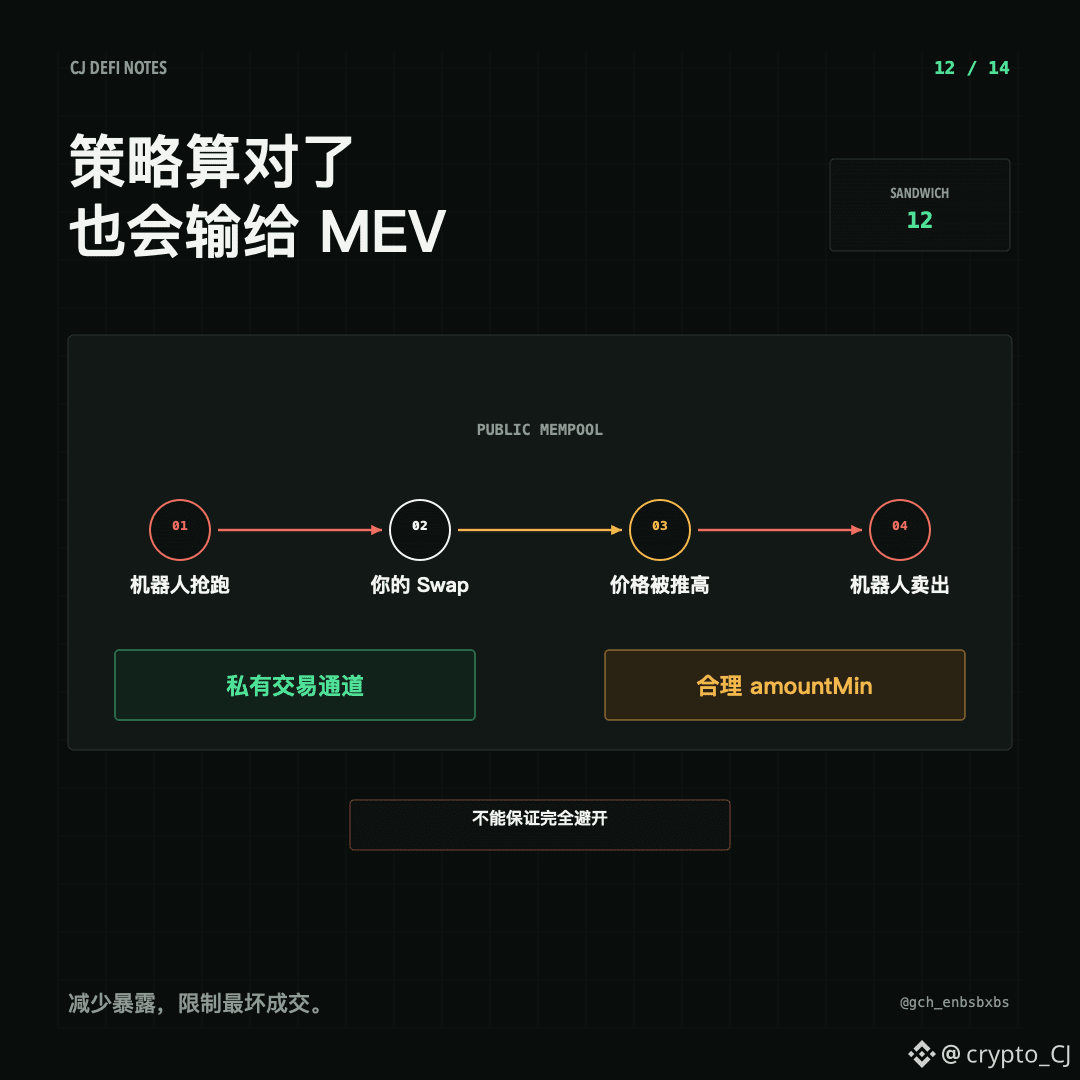
链上执行里,有些损失和方向判断无关。策略算对了,Swap 成交那一下仍可能把利润送给 MEV 机器人。
一笔交易进入公开内存池后,机器人可以提前看到方向、数量和滑点容忍度。它可能先在你前面买入,把价格推高;你的交易随后以更差价格成交;机器人再在你后面卖出,赚走这段价差。这就是常见的夹子攻击。金额越大、流动性越薄、允许滑点越宽,暴露通常越明显。
降低风险至少有两层。第一,敏感交易使用合适的私有交易通道,减少订单在公共内存池里提前暴露。第二,设置合理的最低接收数量,也就是 `amountMin`,限制自己愿意接受的最差成交。参数太松,给机器人留下空间;参数太紧,交易又可能频繁失败。
私有通道和 `amountMin` 都不能保证完全避开 MEV,它们只是减少暴露、限制最坏结果。做链上策略时,收益模型里必须给执行摩擦留位置。
下一篇:技术风险能处理,人的注意力上限怎么办?
#DeFi #MEV
【CJ 做市笔记 12/14】
链上执行里,有些损失和方向判断无关。策略算对了,Swap 成交那一下仍可能把利润送给 MEV 机器人。
一笔交易进入公开内存池后,机器人可以提前看到方向、数量和滑点容忍度。它可能先在你前面买入,把价格推高;你的交易随后以更差价格成交;机器人再在你后面卖出,赚走这段价差。这就是常见的夹子攻击。金额越大、流动性越薄、允许滑点越宽,暴露通常越明显。
降低风险至少有两层。第一,敏感交易使用合适的私有交易通道,减少订单在公共内存池里提前暴露。第二,设置合理的最低接收数量,也就是 `amountMin`,限制自己愿意接受的最差成交。参数太松,给机器人留下空间;参数太紧,交易又可能频繁失败。
私有通道和 `amountMin` 都不能保证完全避开 MEV,它们只是减少暴露、限制最坏结果。做链上策略时,收益模型里必须给执行摩擦留位置。
下一篇:技术风险能处理,人的注意力上限怎么办?
#DeFi #MEV
链上执行里,有些损失和方向判断无关。策略算对了,Swap 成交那一下仍可能把利润送给 MEV 机器人。
一笔交易进入公开内存池后,机器人可以提前看到方向、数量和滑点容忍度。它可能先在你前面买入,把价格推高;你的交易随后以更差价格成交;机器人再在你后面卖出,赚走这段价差。这就是常见的夹子攻击。金额越大、流动性越薄、允许滑点越宽,暴露通常越明显。
降低风险至少有两层。第一,敏感交易使用合适的私有交易通道,减少订单在公共内存池里提前暴露。第二,设置合理的最低接收数量,也就是 `amountMin`,限制自己愿意接受的最差成交。参数太松,给机器人留下空间;参数太紧,交易又可能频繁失败。
私有通道和 `amountMin` 都不能保证完全避开 MEV,它们只是减少暴露、限制最坏结果。做链上策略时,收益模型里必须给执行摩擦留位置。
下一篇:技术风险能处理,人的注意力上限怎么办?
#DeFi #MEV
103

ලිපිය
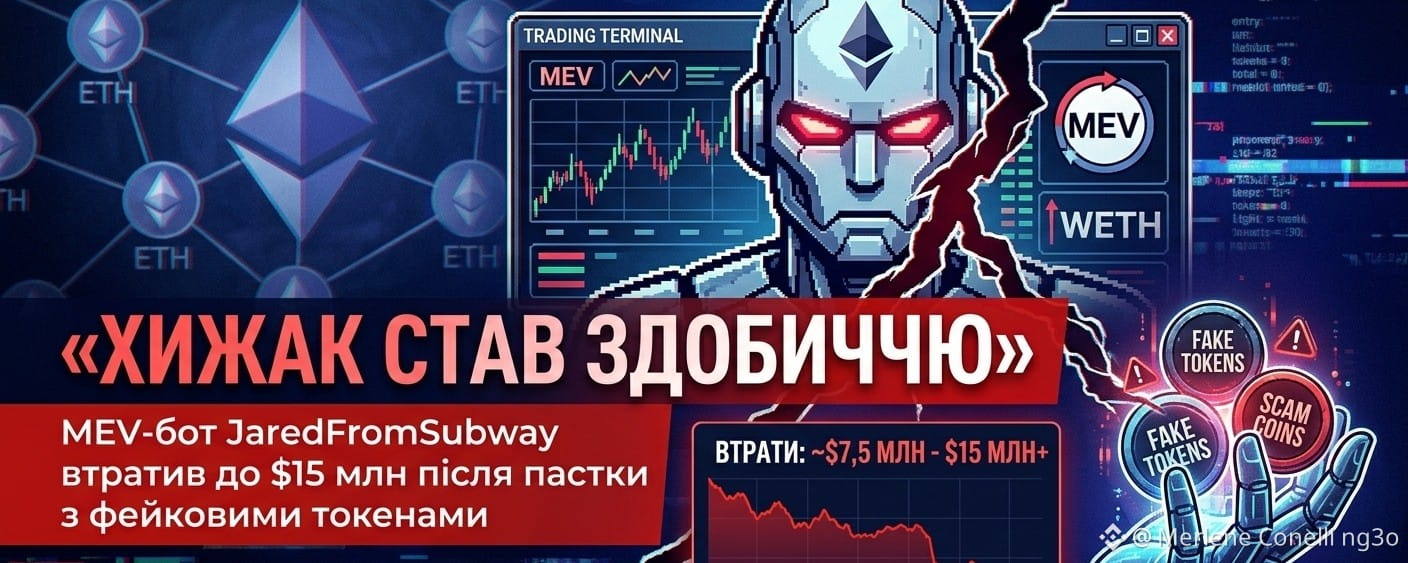
«Хижак став здобиччю»: аналіз найгучнішого DeFi-скандалу вихідних.JaredFromSubway втратив до $15 млнПоки крипторинок відпочивав на вихідних, в екосистемі Ethereum розгорнулася справжня драма. Один із найвідоміших та найагресивніших сендвіч-ботів — jaredfromsubway.eth — сам став жертвою майстерно розставленої пастки.
Сьогодні, коли перші емоції вщухли, аналітики Blockaid та ончейн-дослідники повністю розібрали механіку цього витонченого експлуату, який коштував боту від $7,5 млн до понад $15 млн.
🛠 Як саме хакери перехитрили алгоритм?
JaredFromSubway роками заробляв мільйони на «сендвіч-атаках» (перехопленні транзакцій користувачів). Проте зловмисники використали його ж автоматизацію проти нього:
Принада: Хакери створили пули з фейковими токенами-обгортками та штучно запустили торги.Злам логіки: Бот автоматично зреагував на об'єм і спробував провести сендвіч-атаку. Але смартконтракт хакерів змусив роутер бота підписати безлімітне схвалення на розпорядження своїми коштами.Очищення балансів: Отримавши дозвіл, зловмисники через функцію transferFrom миттєво викачали з бота реальні активи — WETH, USDC та USDT. Бот купував «повітря», віддаючи справжню ліквідність.
💰 Актуальний статус: $1,000,000 за повернення коштів
Масштаб удару виявився настільки критичним, що розробник JaredFromSubway оперативно відреагував і запропонував хакеру нагороду у розмірі $1 000 000 в обмін на повернення решти коштів. Розробник гарантує анонімність та статус «білого хакера», якщо активи повернуться. Спільнота зараз активно стежить за ончейн-гаманцями зловмисника — чи піде він на угоду.
Що це означає для Web3-індустрії?
Кінець абсолютної монополії MEV: Боти, які раніше контролювали левову частку сендвіч-трафіку в Ethereum, виявилися вразливими перед нестандартним кодом.Нова ера кібербезпеки: Цей кейс довів, що захищати від зламу потрібно не лише протоколи, а й самі алгоритми автоматичної торгівлі.
👇 Як гадаєте, чи прийме хакер пропозицію у $1 млн, чи залишить усе собі? І чи зможуть MEV-боти оговтатися після такого удару? Пишіть у коментарях!
#Ethereum #MEV #CryptoNews #Web3 #Security #DeFi
«Хижак став здобиччю»: аналіз найгучнішого DeFi-скандалу вихідних.JaredFromSubway втратив до $15 млн
Поки крипторинок відпочивав на вихідних, в екосистемі Ethereum розгорнулася справжня драма. Один із найвідоміших та найагресивніших сендвіч-ботів — jaredfromsubway.eth — сам став жертвою майстерно розставленої пастки.
Сьогодні, коли перші емоції вщухли, аналітики Blockaid та ончейн-дослідники повністю розібрали механіку цього витонченого експлуату, який коштував боту від $7,5 млн до понад $15 млн.
🛠 Як саме хакери перехитрили алгоритм?
JaredFromSubway роками заробляв мільйони на «сендвіч-атаках» (перехопленні транзакцій користувачів). Проте зловмисники використали його ж автоматизацію проти нього:
Принада: Хакери створили пули з фейковими токенами-обгортками та штучно запустили торги.Злам логіки: Бот автоматично зреагував на об'єм і спробував провести сендвіч-атаку. Але смартконтракт хакерів змусив роутер бота підписати безлімітне схвалення на розпорядження своїми коштами.Очищення балансів: Отримавши дозвіл, зловмисники через функцію transferFrom миттєво викачали з бота реальні активи — WETH, USDC та USDT. Бот купував «повітря», віддаючи справжню ліквідність.
💰 Актуальний статус: $1,000,000 за повернення коштів
Масштаб удару виявився настільки критичним, що розробник JaredFromSubway оперативно відреагував і запропонував хакеру нагороду у розмірі $1 000 000 в обмін на повернення решти коштів. Розробник гарантує анонімність та статус «білого хакера», якщо активи повернуться. Спільнота зараз активно стежить за ончейн-гаманцями зловмисника — чи піде він на угоду.
Що це означає для Web3-індустрії?
Кінець абсолютної монополії MEV: Боти, які раніше контролювали левову частку сендвіч-трафіку в Ethereum, виявилися вразливими перед нестандартним кодом.Нова ера кібербезпеки: Цей кейс довів, що захищати від зламу потрібно не лише протоколи, а й самі алгоритми автоматичної торгівлі.
👇 Як гадаєте, чи прийме хакер пропозицію у $1 млн, чи залишить усе собі? І чи зможуть MEV-боти оговтатися після такого удару? Пишіть у коментарях!
#Ethereum #MEV #CryptoNews #Web3 #Security #DeFi
Сьогодні, коли перші емоції вщухли, аналітики Blockaid та ончейн-дослідники повністю розібрали механіку цього витонченого експлуату, який коштував боту від $7,5 млн до понад $15 млн.
🛠 Як саме хакери перехитрили алгоритм?
JaredFromSubway роками заробляв мільйони на «сендвіч-атаках» (перехопленні транзакцій користувачів). Проте зловмисники використали його ж автоматизацію проти нього:
Принада: Хакери створили пули з фейковими токенами-обгортками та штучно запустили торги.Злам логіки: Бот автоматично зреагував на об'єм і спробував провести сендвіч-атаку. Але смартконтракт хакерів змусив роутер бота підписати безлімітне схвалення на розпорядження своїми коштами.Очищення балансів: Отримавши дозвіл, зловмисники через функцію transferFrom миттєво викачали з бота реальні активи — WETH, USDC та USDT. Бот купував «повітря», віддаючи справжню ліквідність.
💰 Актуальний статус: $1,000,000 за повернення коштів
Масштаб удару виявився настільки критичним, що розробник JaredFromSubway оперативно відреагував і запропонував хакеру нагороду у розмірі $1 000 000 в обмін на повернення решти коштів. Розробник гарантує анонімність та статус «білого хакера», якщо активи повернуться. Спільнота зараз активно стежить за ончейн-гаманцями зловмисника — чи піде він на угоду.
Що це означає для Web3-індустрії?
Кінець абсолютної монополії MEV: Боти, які раніше контролювали левову частку сендвіч-трафіку в Ethereum, виявилися вразливими перед нестандартним кодом.Нова ера кібербезпеки: Цей кейс довів, що захищати від зламу потрібно не лише протоколи, а й самі алгоритми автоматичної торгівлі.
👇 Як гадаєте, чи прийме хакер пропозицію у $1 млн, чи залишить усе собі? І чи зможуть MEV-боти оговтатися після такого удару? Пишіть у коментарях!
#Ethereum #MEV #CryptoNews #Web3 #Security #DeFi
8
109

СВЕРХДОХОД ЗА ТВОЙ СЧЕТ: КАК ВАЛИДАТОРЫ SOLANA ВОРУЮТ ЦЕНТЫ С КАЖДОЙ ТВОЕЙ СДЕЛКИ 🤖🧬
Ты торгуешь на Solana через Phantom или Telegram-ботов, ставишь максимальный приоритет комиссии (Priority Fee), чтобы ордер прошел быстрее, но всё равно покупаешь актив по худшей цене. Знакомься, это MEV-инфраструктура валидаторов (Jito).
• Как тебя грабят: Валидаторы сети видят твой ордер в очереди. Они используют специальный софт, чтобы переставить свои транзакции прямо перед твоей и сразу после нее.
• Итог: Они искусственно завышают цену для тебя на долю процента, забирают эту разницу себе в карман и мгновенно выходят. Это легальный грабеж внутри блокчейна, о котором молчат блогеры.
👇 Открывай виджет SOL. Знал, что блокчейн-технологии тоже могут работать против тебя?
#Solana $SOL #MEV #Jito #CryptoFREEMEN
СВЕРХДОХОД ЗА ТВОЙ СЧЕТ: КАК ВАЛИДАТОРЫ SOLANA ВОРУЮТ ЦЕНТЫ С КАЖДОЙ ТВОЕЙ СДЕЛКИ 🤖🧬
Ты торгуешь на Solana через Phantom или Telegram-ботов, ставишь максимальный приоритет комиссии (Priority Fee), чтобы ордер прошел быстрее, но всё равно покупаешь актив по худшей цене. Знакомься, это MEV-инфраструктура валидаторов (Jito).
• Как тебя грабят: Валидаторы сети видят твой ордер в очереди. Они используют специальный софт, чтобы переставить свои транзакции прямо перед твоей и сразу после нее.
• Итог: Они искусственно завышают цену для тебя на долю процента, забирают эту разницу себе в карман и мгновенно выходят. Это легальный грабеж внутри блокчейна, о котором молчат блогеры.
👇 Открывай виджет SOL. Знал, что блокчейн-технологии тоже могут работать против тебя?
#Solana $SOL #MEV #Jito #CryptoFREEMEN
Ты торгуешь на Solana через Phantom или Telegram-ботов, ставишь максимальный приоритет комиссии (Priority Fee), чтобы ордер прошел быстрее, но всё равно покупаешь актив по худшей цене. Знакомься, это MEV-инфраструктура валидаторов (Jito).
• Как тебя грабят: Валидаторы сети видят твой ордер в очереди. Они используют специальный софт, чтобы переставить свои транзакции прямо перед твоей и сразу после нее.
• Итог: Они искусственно завышают цену для тебя на долю процента, забирают эту разницу себе в карман и мгновенно выходят. Это легальный грабеж внутри блокчейна, о котором молчат блогеры.
👇 Открывай виджет SOL. Знал, что блокчейн-технологии тоже могут работать против тебя?
#Solana $SOL #MEV #Jito #CryptoFREEMEN
161
තවත් අන්තර්ගතයන් ගවේෂණය කිරීමට ඇතුල් වන්න
Binance චතුරශ්රය හි ගෝලීය ක්රිප්ටෝ පරිශීලකයින් හා එක්වන්න
⚡️ ක්රිප්ටෝ පිළිබඳ නවතම සහ ප්රයෝජනවත් තොරතුරු ලබා ගන්න.
💬 ලොව විශාලතම ක්රිප්ටෝ හුවමාරුව මගින් විශ්වාස කෙරේ.
👍 සත්යායනය කරන ලද නිර්මාණකරුවන්ගෙන් සැබෑ විදසුන් සොයා ගන්න.
විද්යුත් තැපෑල / දුරකථන අංකය
නැගී එන මාතෘකා
1
#BinancePick
2.6M නැරඹීම්
139,074 සාකච්ඡා කරමින්
2
#EarningsSeason
5M නැරඹීම්
24,045 සාකච්ඡා කරමින්
3
#ElectrumWalletBugLetRogueServersStealFunds
4,332 නැරඹීම්
172 සාකච්ඡා කරමින්
4
#ArgentineCourtDismissesLIBRACaseAgainstMilei
12,320 නැරඹීම්
245 සාකච්ඡා කරමින්
5
#SKHynixReportedlyPlansSpecialDividendFromKioxiaStakeSale
2,453 නැරඹීම්
41 සාකච්ඡා කරමින්
6
#KeystoneWebsiteBreachExposesBuyersShippingAddresses
1,409 නැරඹීම්
32 සාකච්ඡා කරමින්
7
#USQ3GDPAndSeptemberPCEDueNextWeek
86,923 නැරඹීම්
1,055 සාකච්ඡා කරමින්
8
#SouthKoreaDelaysCryptoIncomeTax
159,234 නැරඹීම්
1,102 සාකච්ඡා කරමින්
9
#ElectrumFixesHighRiskExploitInVersionsBefore4.8.3
69,389 නැරඹීම්
788 සාකච්ඡා කරමින්
10
#SouthKoreaPlansToRegulateStablecoinsUnderFXLaw
68,117 නැරඹීම්
707 සාකච්ඡා කරමින්