

#fincen
fincen
53,984 views
61 සාකච්ඡා කරමින්
උණුසුම්
නවතම

FINCEN UNCOVERS $12.7B IN SUSPECTED FRAUD IMPACTING $CRYPTO MARKETS! 🚨 🔍
Financial watchdogs just pulled back the curtain on $12.7 billion in suspected illicit activity across 33,904 filings between late 2023 and late 2025. 📊 The heavy concentration links back to organized criminal networks operating out of Southeast Asia, highlighting how shadow capital flows impact global sentiment.
While headlines like this trigger initial friction, purging bad actors ultimately creates a cleaner venue for institutional capital to step in with size. 🛡️ Operational security and non-custodial discipline remain paramount while regulatory eyes fixate on tracking unverified order flow.
💬 Does aggressive enforcement like this pave the way for the next institutional bid, or are you preparing for tighter compliance headwinds? 👇
⚠️ Not financial advice. Always manage your risk. 🛡️
🏷️ #Crypto #CryptoNews #Security #FinCEN #MarketInsights
🛡️ 👁️
FINCEN UNCOVERS $12.7B IN SUSPECTED FRAUD IMPACTING $CRYPTO MARKETS! 🚨 🔍
Financial watchdogs just pulled back the curtain on $12.7 billion in suspected illicit activity across 33,904 filings between late 2023 and late 2025. 📊 The heavy concentration links back to organized criminal networks operating out of Southeast Asia, highlighting how shadow capital flows impact global sentiment.
While headlines like this trigger initial friction, purging bad actors ultimately creates a cleaner venue for institutional capital to step in with size. 🛡️ Operational security and non-custodial discipline remain paramount while regulatory eyes fixate on tracking unverified order flow.
💬 Does aggressive enforcement like this pave the way for the next institutional bid, or are you preparing for tighter compliance headwinds? 👇
⚠️ Not financial advice. Always manage your risk. 🛡️
🏷️ #Crypto #CryptoNews #Security #FinCEN #MarketInsights
🛡️ 👁️
Financial watchdogs just pulled back the curtain on $12.7 billion in suspected illicit activity across 33,904 filings between late 2023 and late 2025. 📊 The heavy concentration links back to organized criminal networks operating out of Southeast Asia, highlighting how shadow capital flows impact global sentiment.
While headlines like this trigger initial friction, purging bad actors ultimately creates a cleaner venue for institutional capital to step in with size. 🛡️ Operational security and non-custodial discipline remain paramount while regulatory eyes fixate on tracking unverified order flow.
💬 Does aggressive enforcement like this pave the way for the next institutional bid, or are you preparing for tighter compliance headwinds? 👇
⚠️ Not financial advice. Always manage your risk. 🛡️
🏷️ #Crypto #CryptoNews #Security #FinCEN #MarketInsights
🛡️ 👁️
29


ABD Maliye Bakanligi'na bagli FinCEN, Asya merkezli organize dolandiricilik kampanyaarinin 12.7 milyar dolar degerinde kripto para birimiyle baglantili oldugunu duyurdu. Aylik bildirimlerin ortalama yuzde 18 oraninda artmasi, bu yasa disi faaliyetlerin ne kadar hizli buyudugunu gozler önüne seriyor. Uzmanlar, soz konusu yapilarin artik Guneydogu Asya'nin da disina yayildigina dikkat cekiyor. Yatirimcilarin bu tur dolandiricilik turevlerine karsi guvenlik onlemlerini artirmasi buyuk önem tasiyor. #CryptoSecurity #FinCEN #ScamAlert
ABD Maliye Bakanligi'na bagli FinCEN, Asya merkezli organize dolandiricilik kampanyaarinin 12.7 milyar dolar degerinde kripto para birimiyle baglantili oldugunu duyurdu. Aylik bildirimlerin ortalama yuzde 18 oraninda artmasi, bu yasa disi faaliyetlerin ne kadar hizli buyudugunu gozler önüne seriyor. Uzmanlar, soz konusu yapilarin artik Guneydogu Asya'nin da disina yayildigina dikkat cekiyor. Yatirimcilarin bu tur dolandiricilik turevlerine karsi guvenlik onlemlerini artirmasi buyuk önem tasiyor. #CryptoSecurity #FinCEN #ScamAlert
34


ලිපිය
FinCEN Uncovers Massive Global Crypto Scam NetworkThe recent report from FinCEN is a massive wake up call for anyone holding digital assets. Finding out that $13 billion has been siphoned through transnational criminal organizations based in Southeast Asian compounds is nothing short of staggering. This is not just some minor phishing attempt or a few rug pulls. We are talking about organized large scale operations specifically targeting US residents.
For the average trader, this news highlights the massive gap between actual blockchain utility and the predatory landscape surrounding it. While we focus on the next big pump or technical upgrades, these syndicates are operating in the shadows, leveraging the pseudonymity of crypto to move stolen funds across borders with ease.
From a market perspective, this kind of regulatory pressure is a double edged sword. On one hand, the crackdown on these criminal entities is necessary to clean up the space and attract real institutional money. If the industry wants to go mainstream, it cannot have a reputation for being a playground for international scammers. On the other hand, increased scrutiny from agencies like FinCEN often leads to tighter compliance requirements and more friction for users.
Traders should watch how US authorities react to these findings. Expect more pressure on centralized exchanges to tighten their KYC and AML protocols to prevent these scam funds from entering the main ecosystem. Staying vigilant and using self custody solutions remains the best defense against being caught in the crossfire of these global criminal networks.
#FinCEN #CyberCrime
FinCEN Uncovers Massive Global Crypto Scam Network
The recent report from FinCEN is a massive wake up call for anyone holding digital assets. Finding out that $13 billion has been siphoned through transnational criminal organizations based in Southeast Asian compounds is nothing short of staggering. This is not just some minor phishing attempt or a few rug pulls. We are talking about organized large scale operations specifically targeting US residents.
For the average trader, this news highlights the massive gap between actual blockchain utility and the predatory landscape surrounding it. While we focus on the next big pump or technical upgrades, these syndicates are operating in the shadows, leveraging the pseudonymity of crypto to move stolen funds across borders with ease.
From a market perspective, this kind of regulatory pressure is a double edged sword. On one hand, the crackdown on these criminal entities is necessary to clean up the space and attract real institutional money. If the industry wants to go mainstream, it cannot have a reputation for being a playground for international scammers. On the other hand, increased scrutiny from agencies like FinCEN often leads to tighter compliance requirements and more friction for users.
Traders should watch how US authorities react to these findings. Expect more pressure on centralized exchanges to tighten their KYC and AML protocols to prevent these scam funds from entering the main ecosystem. Staying vigilant and using self custody solutions remains the best defense against being caught in the crossfire of these global criminal networks.
#FinCEN #CyberCrime
For the average trader, this news highlights the massive gap between actual blockchain utility and the predatory landscape surrounding it. While we focus on the next big pump or technical upgrades, these syndicates are operating in the shadows, leveraging the pseudonymity of crypto to move stolen funds across borders with ease.
From a market perspective, this kind of regulatory pressure is a double edged sword. On one hand, the crackdown on these criminal entities is necessary to clean up the space and attract real institutional money. If the industry wants to go mainstream, it cannot have a reputation for being a playground for international scammers. On the other hand, increased scrutiny from agencies like FinCEN often leads to tighter compliance requirements and more friction for users.
Traders should watch how US authorities react to these findings. Expect more pressure on centralized exchanges to tighten their KYC and AML protocols to prevent these scam funds from entering the main ecosystem. Staying vigilant and using self custody solutions remains the best defense against being caught in the crossfire of these global criminal networks.
#FinCEN #CyberCrime
6
FinCEN is sounding the alarm as $12.7 billion is linked to massive crypto scam operations running out of Asian compounds. These organized crime rings are expanding their reach, signaling a major security threat.
#FinCen #CyberCrime
FinCEN is sounding the alarm as $12.7 billion is linked to massive crypto scam operations running out of Asian compounds. These organized crime rings are expanding their reach, signaling a major security threat.
#FinCen #CyberCrime
#FinCen #CyberCrime
4

·
--
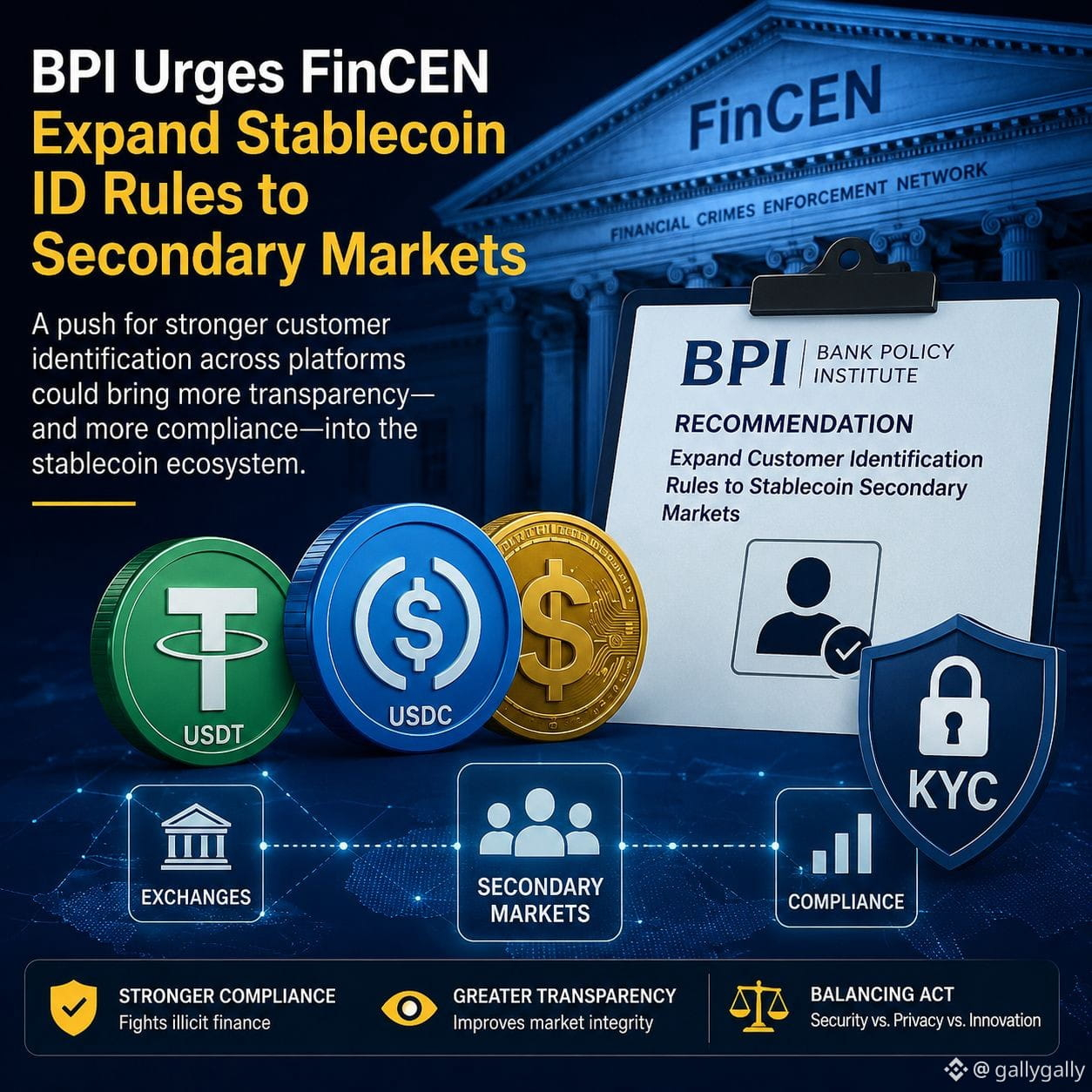
#BPIUrgesFinCENExpandStablecoinIDRulesToSecondaryMarkets 🏦 The Bank Policy Institute is urging FinCEN to expand customer-identification requirements into stablecoin secondary markets, including platforms serving retail users. The move could bring tighter KYC standards across more of the crypto ecosystem. For stablecoin, stronger compliance may improve transparency—but it could also raise privacy and decentralization concerns. The next step is watching how regulators balance security, innovation, and user access. 💵
$USDC $USDT $BTC $ETH
#Stablecoins #FinCEN #KYC #DeFi #blockchain
#BPIUrgesFinCENExpandStablecoinIDRulesToSecondaryMarkets 🏦 The Bank Policy Institute is urging FinCEN to expand customer-identification requirements into stablecoin secondary markets, including platforms serving retail users. The move could bring tighter KYC standards across more of the crypto ecosystem. For stablecoin, stronger compliance may improve transparency—but it could also raise privacy and decentralization concerns. The next step is watching how regulators balance security, innovation, and user access. 💵
$USDC $USDT $BTC $ETH
#Stablecoins #FinCEN #KYC #DeFi #blockchain
$USDC $USDT $BTC $ETH
#Stablecoins #FinCEN #KYC #DeFi #blockchain
119

#BPIUrgesFinCENExpandStablecoinIDRules 💸
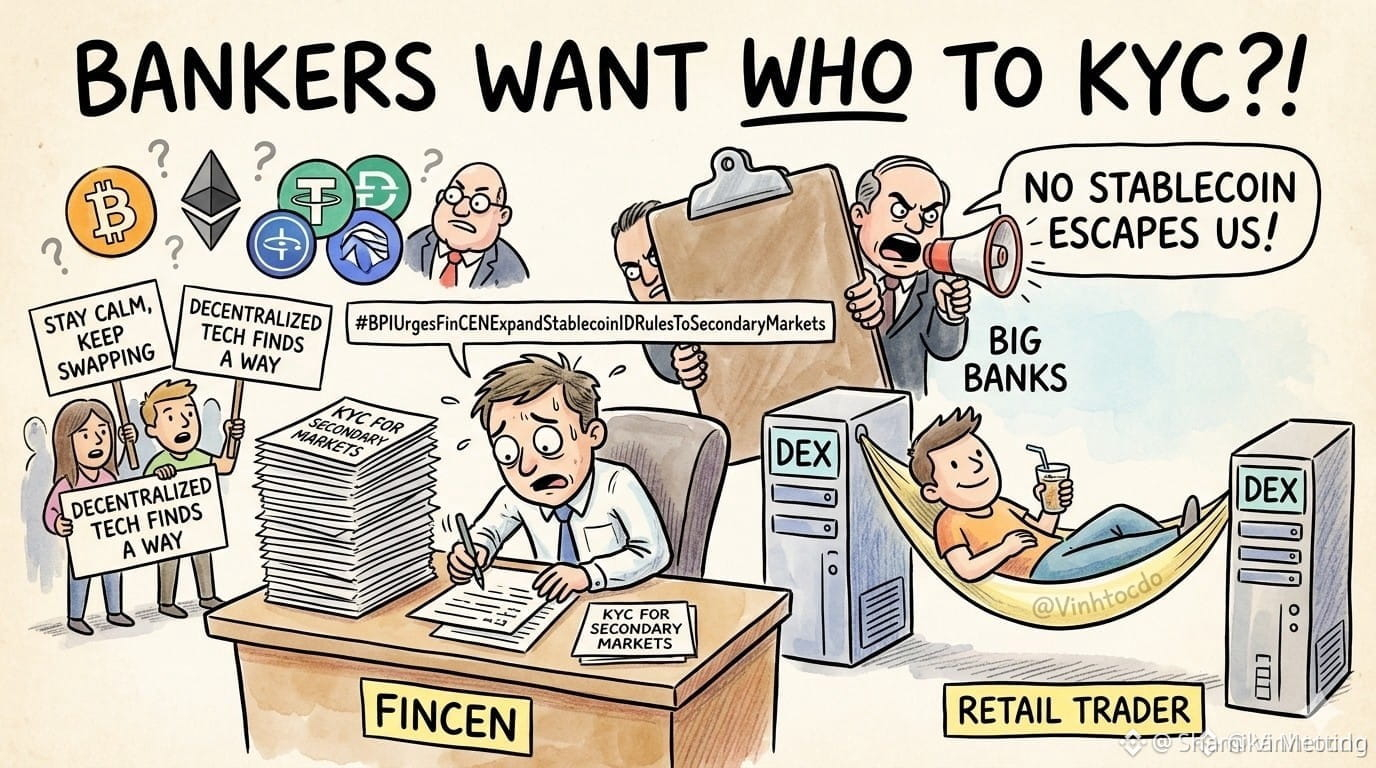
مهلاً، ماذا?! الآن تريد البنوك الكبرى من FinCEN فرض إجراءات KYC على الأسواق الثانوية؟ هل يعني ذلك أن محافظ الحفظ الذاتي الخاصة بنا وDEXs وعمليات التداول عبر OTC ستكون التالية في قائمة حفلة الأوراق؟ 😱
يقولون إن ذلك لوقف التكنولوجيا غير المشروعة، لكننا جميعًا نعرف أنهم يريدون فقط تتبع كل عملة مستقرة تتحرك. ماذا ينبغي أن يفعل المتداول الفردي؟ ابقَ هادئًا، واصل التبديل، وتذكّر أن التقنية اللامركزية دائمًا تجد طريقة. لا تُهلِع ولا تبيع ممتلكاتك لمجرد أن البنوك في توتر! 🛡️
⚠️ NFA (ليس نصيحة مالية).
متابعة من فضلكم
#Stablecoins #FinCEN #defi
$BTC
{future}(BTCUSDT)
#BPIUrgesFinCENExpandStablecoinIDRules 💸
مهلاً، ماذا?! الآن تريد البنوك الكبرى من FinCEN فرض إجراءات KYC على الأسواق الثانوية؟ هل يعني ذلك أن محافظ الحفظ الذاتي الخاصة بنا وDEXs وعمليات التداول عبر OTC ستكون التالية في قائمة حفلة الأوراق؟ 😱
يقولون إن ذلك لوقف التكنولوجيا غير المشروعة، لكننا جميعًا نعرف أنهم يريدون فقط تتبع كل عملة مستقرة تتحرك. ماذا ينبغي أن يفعل المتداول الفردي؟ ابقَ هادئًا، واصل التبديل، وتذكّر أن التقنية اللامركزية دائمًا تجد طريقة. لا تُهلِع ولا تبيع ممتلكاتك لمجرد أن البنوك في توتر! 🛡️
⚠️ NFA (ليس نصيحة مالية).
متابعة من فضلكم
#Stablecoins #FinCEN #defi
$BTC
مهلاً، ماذا?! الآن تريد البنوك الكبرى من FinCEN فرض إجراءات KYC على الأسواق الثانوية؟ هل يعني ذلك أن محافظ الحفظ الذاتي الخاصة بنا وDEXs وعمليات التداول عبر OTC ستكون التالية في قائمة حفلة الأوراق؟ 😱
يقولون إن ذلك لوقف التكنولوجيا غير المشروعة، لكننا جميعًا نعرف أنهم يريدون فقط تتبع كل عملة مستقرة تتحرك. ماذا ينبغي أن يفعل المتداول الفردي؟ ابقَ هادئًا، واصل التبديل، وتذكّر أن التقنية اللامركزية دائمًا تجد طريقة. لا تُهلِع ولا تبيع ممتلكاتك لمجرد أن البنوك في توتر! 🛡️
⚠️ NFA (ليس نصيحة مالية).
متابعة من فضلكم
#Stablecoins #FinCEN #defi
$BTC
1
144

·
--
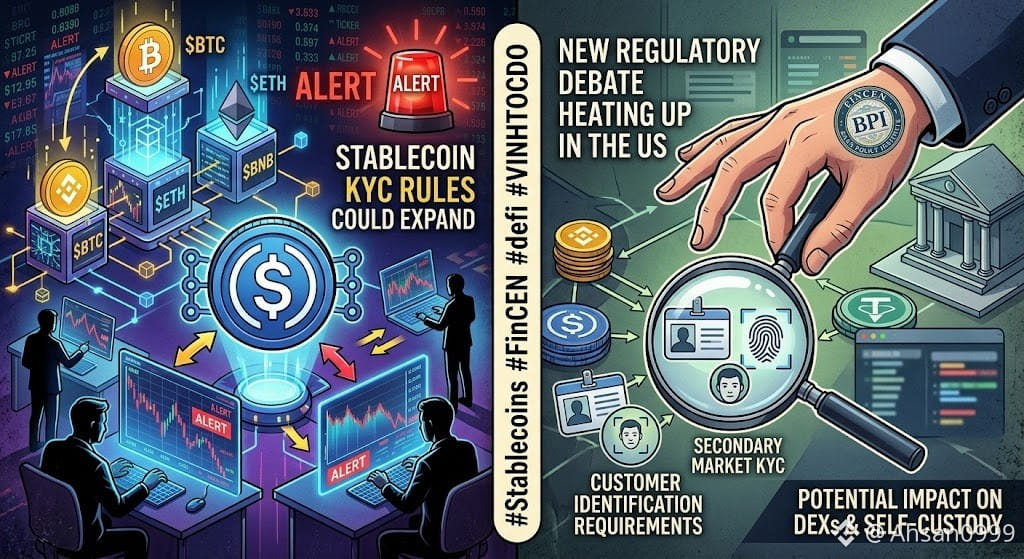
Stablecoin KYC Rules Could Expand — What Crypto Traders Should Know 🚨
A new regulatory debate is heating up in the US.
The Bank Policy Institute (BPI) is urging FinCEN to apply customer-identification requirements to secondary stablecoin markets, including exchanges and other platforms that directly interact with customers.
The bigger question is what this could mean for DEXs, self-custody and stablecoin transfers if regulators expand these requirements further.
🔑 Why It Matters
🔹 More KYC requirements could mean greater compliance for crypto platforms.
🔹 Exchanges and other secondary-market participants could face additional regulatory obligations.
🔹 For traders, the direction of stablecoin regulation could become increasingly important.
💡 Key Takeaway
This is a regulatory proposal/debate, not a new rule that has already taken effect.
For now, traders should avoid panic and keep an eye on how FinCEN and US regulators respond.
$BTC $ETH $BNB
#FinCEN
Stablecoin KYC Rules Could Expand — What Crypto Traders Should Know 🚨
A new regulatory debate is heating up in the US.
The Bank Policy Institute (BPI) is urging FinCEN to apply customer-identification requirements to secondary stablecoin markets, including exchanges and other platforms that directly interact with customers.
The bigger question is what this could mean for DEXs, self-custody and stablecoin transfers if regulators expand these requirements further.
🔑 Why It Matters
🔹 More KYC requirements could mean greater compliance for crypto platforms.
🔹 Exchanges and other secondary-market participants could face additional regulatory obligations.
🔹 For traders, the direction of stablecoin regulation could become increasingly important.
💡 Key Takeaway
This is a regulatory proposal/debate, not a new rule that has already taken effect.
For now, traders should avoid panic and keep an eye on how FinCEN and US regulators respond.
$BTC $ETH $BNB
#FinCEN
A new regulatory debate is heating up in the US.
The Bank Policy Institute (BPI) is urging FinCEN to apply customer-identification requirements to secondary stablecoin markets, including exchanges and other platforms that directly interact with customers.
The bigger question is what this could mean for DEXs, self-custody and stablecoin transfers if regulators expand these requirements further.
🔑 Why It Matters
🔹 More KYC requirements could mean greater compliance for crypto platforms.
🔹 Exchanges and other secondary-market participants could face additional regulatory obligations.
🔹 For traders, the direction of stablecoin regulation could become increasingly important.
💡 Key Takeaway
This is a regulatory proposal/debate, not a new rule that has already taken effect.
For now, traders should avoid panic and keep an eye on how FinCEN and US regulators respond.
$BTC $ETH $BNB
#FinCEN
1
88
·
--
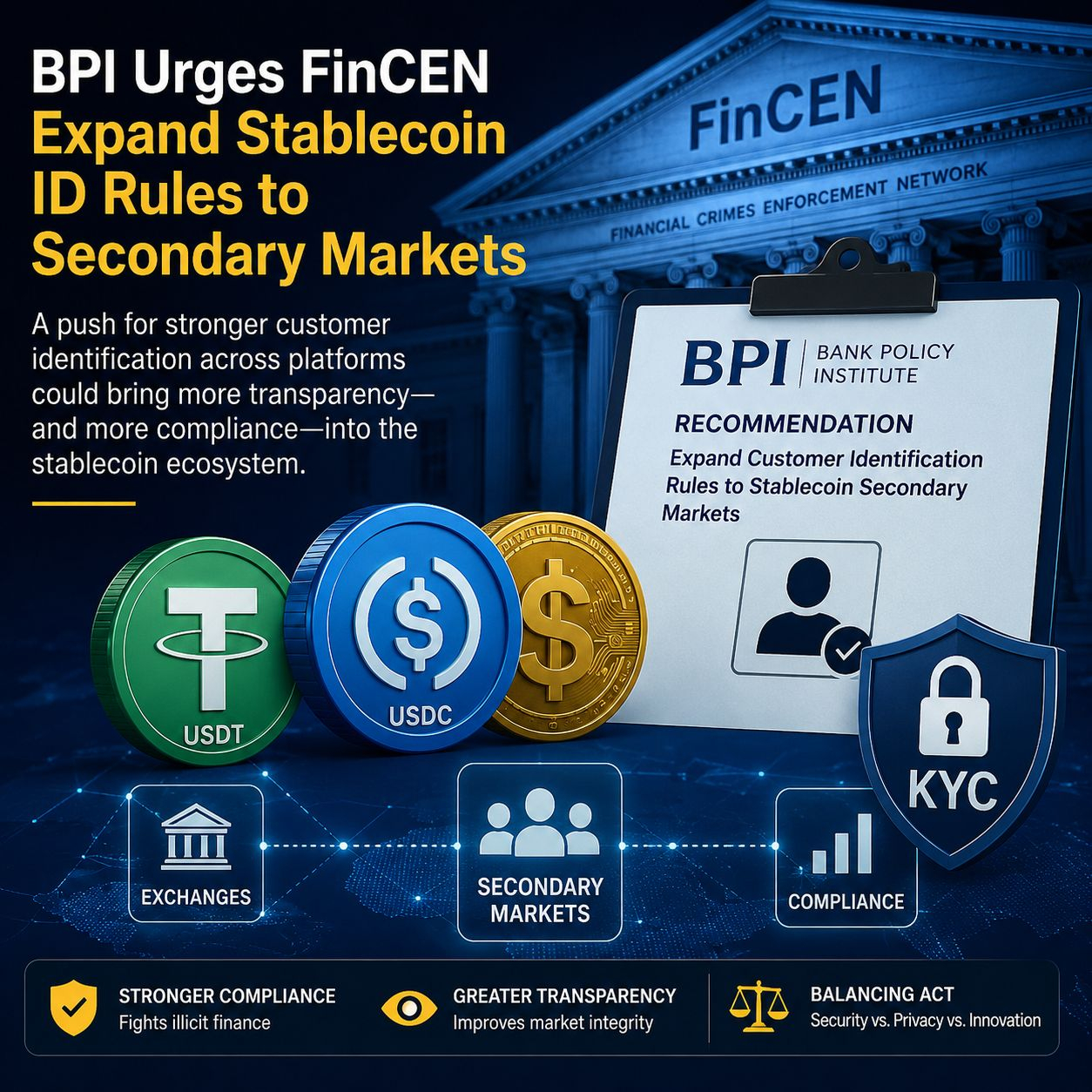
#BPIUrgesFinCENExpandStablecoinIDRulesToSecondaryMarkets"
Crypto Perspective"} 🔎 A major regulatory debate is heating up around stablecoins. BPI is asking FinCEN to consider customer-identification rules for secondary-market participants, arguing that significant stablecoi activity happens beyond the issuer level. This could reshape how exchanges and other platforms handle compliance. For crypto users, the balance between financial security, privacy, and decentralization will be worth watching closely. 🚀
$BTC $ETH $USDT $USDC
#BPI #FinCEN #Stablecoins #KYC #CryptoRegulation #DeFi :::
citeturn0search3turn0search8
#BPIUrgesFinCENExpandStablecoinIDRulesToSecondaryMarkets"
Crypto Perspective"} 🔎 A major regulatory debate is heating up around stablecoins. BPI is asking FinCEN to consider customer-identification rules for secondary-market participants, arguing that significant stablecoi activity happens beyond the issuer level. This could reshape how exchanges and other platforms handle compliance. For crypto users, the balance between financial security, privacy, and decentralization will be worth watching closely. 🚀
$BTC $ETH $USDT $USDC
#BPI #FinCEN #Stablecoins #KYC #CryptoRegulation #DeFi :::
citeturn0search3turn0search8
Crypto Perspective"} 🔎 A major regulatory debate is heating up around stablecoins. BPI is asking FinCEN to consider customer-identification rules for secondary-market participants, arguing that significant stablecoi activity happens beyond the issuer level. This could reshape how exchanges and other platforms handle compliance. For crypto users, the balance between financial security, privacy, and decentralization will be worth watching closely. 🚀
$BTC $ETH $USDT $USDC
#BPI #FinCEN #Stablecoins #KYC #CryptoRegulation #DeFi :::
citeturn0search3turn0search8
90

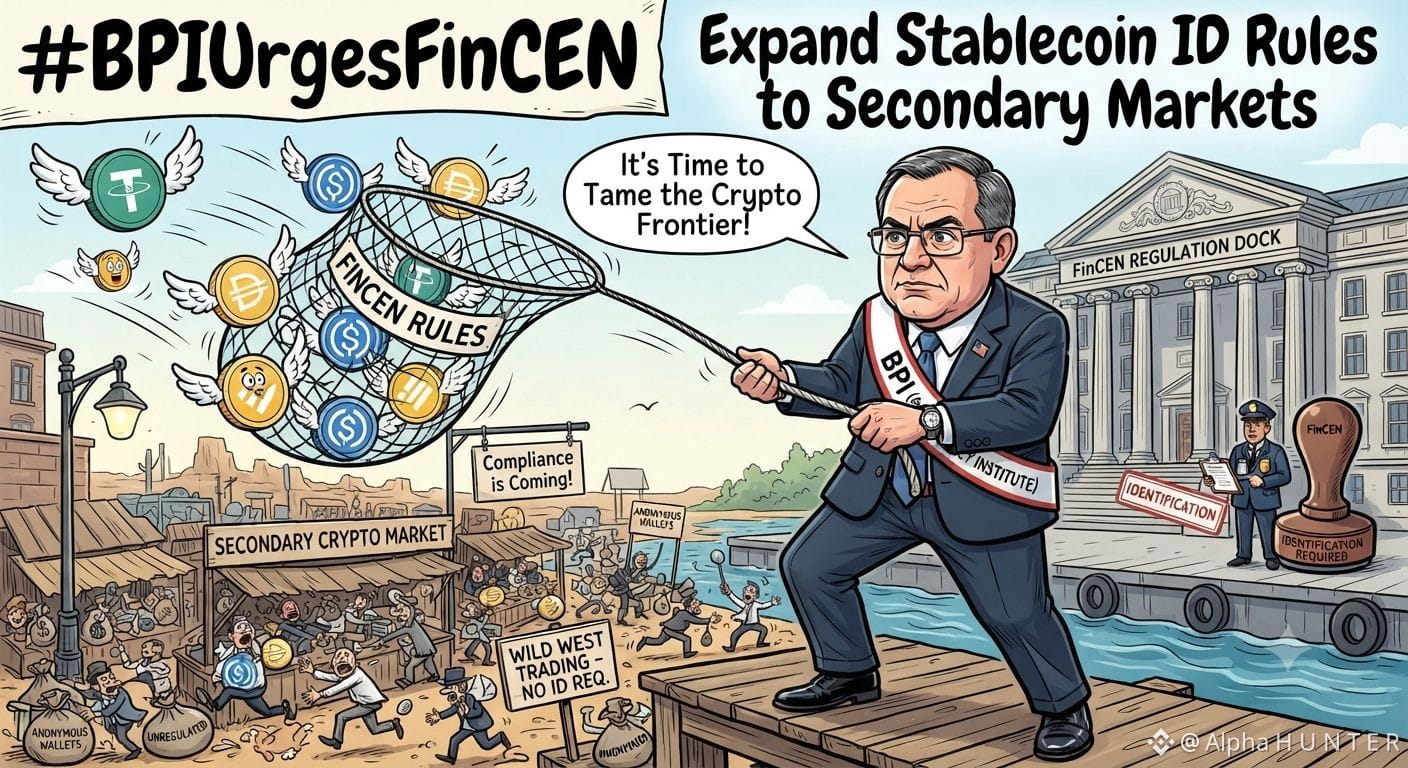
BREAKING 🔥
La BPI exhorte le FinCEN à étendre les règles d’identification des stablecoins aux marchés secondaires
Le secteur bancaire appelle à des règles d’identification plus larges pour les transactions en stablecoins.
🔎 Plus de contrôles de conformité
🏦 Des règles plus claires pour les marchés crypto
📈 Impact potentiel sur le trading de stablecoins
#Stablecoins #Crypto #FinCEN #CryptoNews
$ETH $ZEC $BTC
{future}(ETHUSDT)
BREAKING 🔥
La BPI exhorte le FinCEN à étendre les règles d’identification des stablecoins aux marchés secondaires
Le secteur bancaire appelle à des règles d’identification plus larges pour les transactions en stablecoins.
🔎 Plus de contrôles de conformité
🏦 Des règles plus claires pour les marchés crypto
📈 Impact potentiel sur le trading de stablecoins
#Stablecoins #Crypto #FinCEN #CryptoNews
$ETH $ZEC $BTC
La BPI exhorte le FinCEN à étendre les règles d’identification des stablecoins aux marchés secondaires
Le secteur bancaire appelle à des règles d’identification plus larges pour les transactions en stablecoins.
🔎 Plus de contrôles de conformité
🏦 Des règles plus claires pour les marchés crypto
📈 Impact potentiel sur le trading de stablecoins
#Stablecoins #Crypto #FinCEN #CryptoNews
$ETH $ZEC $BTC
71

·
--
U.S. regulators propose bank style customer ID rules for stablecoin issuers
U.S. regulators have proposed requiring certain payment stablecoin issuers to verify customer identities under a new rule issued as part of the GENIUS Act framework. The Federal Reserve Board said Thursday that it is seeking public comment on a joint…
#News #Federal Reserve #FinCEN #Stablecoin
U.S. regulators propose bank style customer ID rules for stablecoin issuers
U.S. regulators have proposed requiring certain payment stablecoin issuers to verify customer identities under a new rule issued as part of the GENIUS Act framework. The Federal Reserve Board said Thursday that it is seeking public comment on a joint…
#News #Federal Reserve #FinCEN #Stablecoin
U.S. regulators have proposed requiring certain payment stablecoin issuers to verify customer identities under a new rule issued as part of the GENIUS Act framework. The Federal Reserve Board said Thursday that it is seeking public comment on a joint…
#News #Federal Reserve #FinCEN #Stablecoin
7

·
--
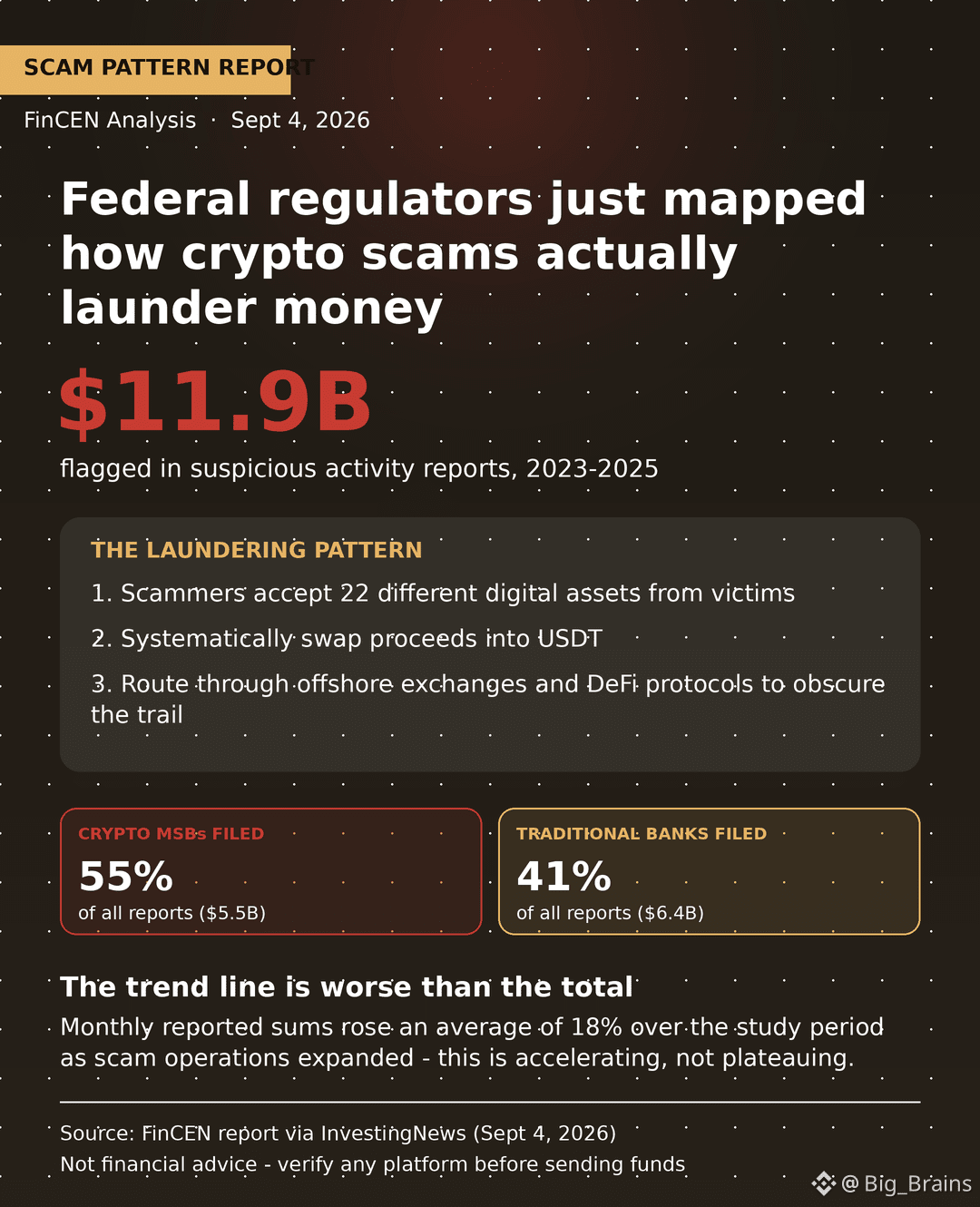
FinCEN scam report (beige evidence-board style)
Regulators just mapped exactly how crypto scams launder money: accept 22 different assets → swap to USDT → route through offshore exchanges/DeFi. $11.9B flagged, growing 18%/month. Know the pattern.
#CryptoScam #FinCEN #USDT #ScamAwareness #BinanceSquare
FinCEN scam report (beige evidence-board style)
Regulators just mapped exactly how crypto scams launder money: accept 22 different assets → swap to USDT → route through offshore exchanges/DeFi. $11.9B flagged, growing 18%/month. Know the pattern.
#CryptoScam #FinCEN #USDT #ScamAwareness #BinanceSquare
Regulators just mapped exactly how crypto scams launder money: accept 22 different assets → swap to USDT → route through offshore exchanges/DeFi. $11.9B flagged, growing 18%/month. Know the pattern.
#CryptoScam #FinCEN #USDT #ScamAwareness #BinanceSquare
94

·
--
🚨 FINCEN IDENTIFIES $12.7B IN SUSPECTED CRYPTO SCAMS IMPACTING $BTC MARKET LIQUIDITY 📊
FinCEN has flagged $12.7 billion across 33,904 institutional reports linked to criminal networks between late 2023 and 2025. While regulatory headlines trigger brief sentiment shifts, institutional liquidity analysis reveals that off-market capital sweeps do not compromise core blockchain demand blocks. 🔍
Regulatory enforcement cleanses toxic order flow from shadow venues, strengthening market structure for legitimate participants. High-conviction capital historically thrives when systemic friction and regulatory opacity are systematically cleared. ⚖️
🤔 Will heightened compliance tracking accelerate institutional capital allocation into $BTC ?
⚠️ Not financial advice. Always manage your risk. 🛡️
🏷️ #BTC #Crypto #MarketInsight #Regulation #FinCEN
🔍 ⚖️
🚨 FINCEN IDENTIFIES $12.7B IN SUSPECTED CRYPTO SCAMS IMPACTING $BTC MARKET LIQUIDITY 📊
FinCEN has flagged $12.7 billion across 33,904 institutional reports linked to criminal networks between late 2023 and 2025. While regulatory headlines trigger brief sentiment shifts, institutional liquidity analysis reveals that off-market capital sweeps do not compromise core blockchain demand blocks. 🔍
Regulatory enforcement cleanses toxic order flow from shadow venues, strengthening market structure for legitimate participants. High-conviction capital historically thrives when systemic friction and regulatory opacity are systematically cleared. ⚖️
🤔 Will heightened compliance tracking accelerate institutional capital allocation into $BTC ?
⚠️ Not financial advice. Always manage your risk. 🛡️
🏷️ #BTC #Crypto #MarketInsight #Regulation #FinCEN
🔍 ⚖️
FinCEN has flagged $12.7 billion across 33,904 institutional reports linked to criminal networks between late 2023 and 2025. While regulatory headlines trigger brief sentiment shifts, institutional liquidity analysis reveals that off-market capital sweeps do not compromise core blockchain demand blocks. 🔍
Regulatory enforcement cleanses toxic order flow from shadow venues, strengthening market structure for legitimate participants. High-conviction capital historically thrives when systemic friction and regulatory opacity are systematically cleared. ⚖️
🤔 Will heightened compliance tracking accelerate institutional capital allocation into $BTC ?
⚠️ Not financial advice. Always manage your risk. 🛡️
🏷️ #BTC #Crypto #MarketInsight #Regulation #FinCEN
🔍 ⚖️
21

ලිපිය
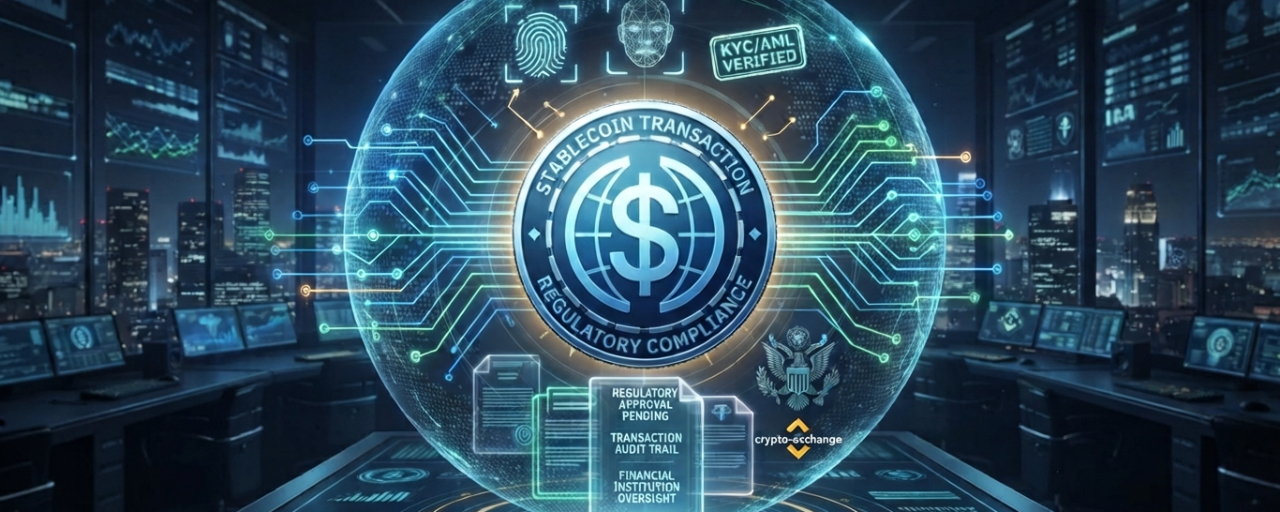
Stablecoin Rules Could Get Stricter What It Means for Crypto🚨 Stablecoin Rules May Be Changing
The banking industry is pushing for stronger ID checks on stablecoin transactions.
If the rules expand, crypto platforms could face more compliance requirements and traders may see changes in how stablecoins move through the market.
More regulation could be coming. 👀
#Stablecoins #Crypto #FinCEN #CryptoNews #BTC
Stablecoin Rules Could Get Stricter What It Means for Crypto
🚨 Stablecoin Rules May Be Changing
The banking industry is pushing for stronger ID checks on stablecoin transactions.
If the rules expand, crypto platforms could face more compliance requirements and traders may see changes in how stablecoins move through the market.
More regulation could be coming. 👀
#Stablecoins #Crypto #FinCEN #CryptoNews #BTC
The banking industry is pushing for stronger ID checks on stablecoin transactions.
If the rules expand, crypto platforms could face more compliance requirements and traders may see changes in how stablecoins move through the market.
More regulation could be coming. 👀
#Stablecoins #Crypto #FinCEN #CryptoNews #BTC
49

Stablecoins Under Regulatory Fire
Stablecoins are officially in the crosshairs of U.S. regulators. Following the implementation of the GENIUS Act, the Treasury and FinCEN have launched a aggressive push to treat payment stablecoin issuers as full-scale financial institutions under the Bank Secrecy Act. The goal? To stop the use of stablecoins in money laundering, sanctions evasion, and terrorist financing.
Data cited during recent Congressional hearings suggests that stablecoins have become the preferred tool for illicit actors looking to bypass international restrictions. By mandating strict anti-money laundering (AML) and "know your customer" (KYC) compliance, the government is looking to close the loopholes that have allowed bad actors to operate in the shadows. For the crypto industry, this is a double-edged sword. While regulation brings legitimacy and may encourage wider institutional use, it also imposes heavy compliance burdens on issuers. The era of the "wild west" for stablecoins is rapidly coming to an end. Whether these new rules will stifle innovation or provide the stability needed for global adoption is the multi-billion dollar question that will define the market in 2026.
#Stablecoins #Regulation #CryptoCompliance #FinCEN #DigitalAssets $SAFE
{future}(SAFEUSDT)
$AAVE
{spot}(AAVEUSDT)
$SOL
{spot}(SOLUSDT)
Stablecoins Under Regulatory Fire
Stablecoins are officially in the crosshairs of U.S. regulators. Following the implementation of the GENIUS Act, the Treasury and FinCEN have launched a aggressive push to treat payment stablecoin issuers as full-scale financial institutions under the Bank Secrecy Act. The goal? To stop the use of stablecoins in money laundering, sanctions evasion, and terrorist financing.
Data cited during recent Congressional hearings suggests that stablecoins have become the preferred tool for illicit actors looking to bypass international restrictions. By mandating strict anti-money laundering (AML) and "know your customer" (KYC) compliance, the government is looking to close the loopholes that have allowed bad actors to operate in the shadows. For the crypto industry, this is a double-edged sword. While regulation brings legitimacy and may encourage wider institutional use, it also imposes heavy compliance burdens on issuers. The era of the "wild west" for stablecoins is rapidly coming to an end. Whether these new rules will stifle innovation or provide the stability needed for global adoption is the multi-billion dollar question that will define the market in 2026.
#Stablecoins #Regulation #CryptoCompliance #FinCEN #DigitalAssets $SAFE
$AAVE
$SOL
Stablecoins are officially in the crosshairs of U.S. regulators. Following the implementation of the GENIUS Act, the Treasury and FinCEN have launched a aggressive push to treat payment stablecoin issuers as full-scale financial institutions under the Bank Secrecy Act. The goal? To stop the use of stablecoins in money laundering, sanctions evasion, and terrorist financing.
Data cited during recent Congressional hearings suggests that stablecoins have become the preferred tool for illicit actors looking to bypass international restrictions. By mandating strict anti-money laundering (AML) and "know your customer" (KYC) compliance, the government is looking to close the loopholes that have allowed bad actors to operate in the shadows. For the crypto industry, this is a double-edged sword. While regulation brings legitimacy and may encourage wider institutional use, it also imposes heavy compliance burdens on issuers. The era of the "wild west" for stablecoins is rapidly coming to an end. Whether these new rules will stifle innovation or provide the stability needed for global adoption is the multi-billion dollar question that will define the market in 2026.
#Stablecoins #Regulation #CryptoCompliance #FinCEN #DigitalAssets $SAFE
$AAVE
$SOL
1
139

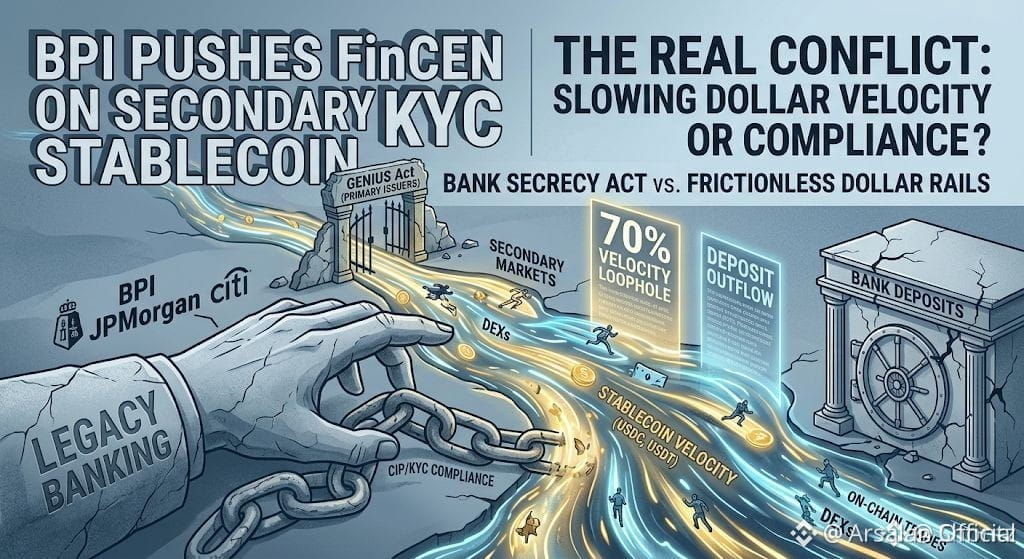
#BPIUrgesFinCENExpandStablecoinIDRulesToSecondaryMarkets#BPIUrgesFinCENExpandStablecoinIDRulesToSecondaryMarkets 🇺🇸💵🔍
The **Bank Policy Institute (BPI)** is urging FinCEN to extend **customer identification requirements** beyond stablecoin issuers to **crypto exchanges and other secondary-market platforms** that directly serve customers. ([bloomingbit][1])
BPI argues that these platforms handle significant stablecoin trading activity and that stronger identity checks could help combat **money laundering and other illicit finance**. The proposal could also bring some decentralized platforms into a tighter regulatory framework. ([bloomingbit][1])
**Market takeaway:**
🔐 Stronger KYC → more compliance
🏦 Banks → pushing for tighter oversight
💵 Stablecoins → closer regulatory scrutiny
⚠️ Crypto exchanges → potential reporting & identity burdens
🌐 DeFi → possible impact on decentralized platforms
#Stablecoins #CryptoRegulation #FinCEN #BPI #KYC #AML #DeFi #Crypto #Bitcoin #USDC #USDT
$BTC
{spot}(BTCUSDT)
[1]: $USDC
{spot}(USDCUSDT)
$USDT
#BPIUrgesFinCENExpandStablecoinIDRulesToSecondaryMarkets#BPIUrgesFinCENExpandStablecoinIDRulesToSecondaryMarkets 🇺🇸💵🔍
The **Bank Policy Institute (BPI)** is urging FinCEN to extend **customer identification requirements** beyond stablecoin issuers to **crypto exchanges and other secondary-market platforms** that directly serve customers. ([bloomingbit][1])
BPI argues that these platforms handle significant stablecoin trading activity and that stronger identity checks could help combat **money laundering and other illicit finance**. The proposal could also bring some decentralized platforms into a tighter regulatory framework. ([bloomingbit][1])
**Market takeaway:**
🔐 Stronger KYC → more compliance
🏦 Banks → pushing for tighter oversight
💵 Stablecoins → closer regulatory scrutiny
⚠️ Crypto exchanges → potential reporting & identity burdens
🌐 DeFi → possible impact on decentralized platforms
#Stablecoins #CryptoRegulation #FinCEN #BPI #KYC #AML #DeFi #Crypto #Bitcoin #USDC #USDT
$BTC
[1]: $USDC
$USDT
The **Bank Policy Institute (BPI)** is urging FinCEN to extend **customer identification requirements** beyond stablecoin issuers to **crypto exchanges and other secondary-market platforms** that directly serve customers. ([bloomingbit][1])
BPI argues that these platforms handle significant stablecoin trading activity and that stronger identity checks could help combat **money laundering and other illicit finance**. The proposal could also bring some decentralized platforms into a tighter regulatory framework. ([bloomingbit][1])
**Market takeaway:**
🔐 Stronger KYC → more compliance
🏦 Banks → pushing for tighter oversight
💵 Stablecoins → closer regulatory scrutiny
⚠️ Crypto exchanges → potential reporting & identity burdens
🌐 DeFi → possible impact on decentralized platforms
#Stablecoins #CryptoRegulation #FinCEN #BPI #KYC #AML #DeFi #Crypto #Bitcoin #USDC #USDT
$BTC
[1]: $USDC
$USDT
1
31

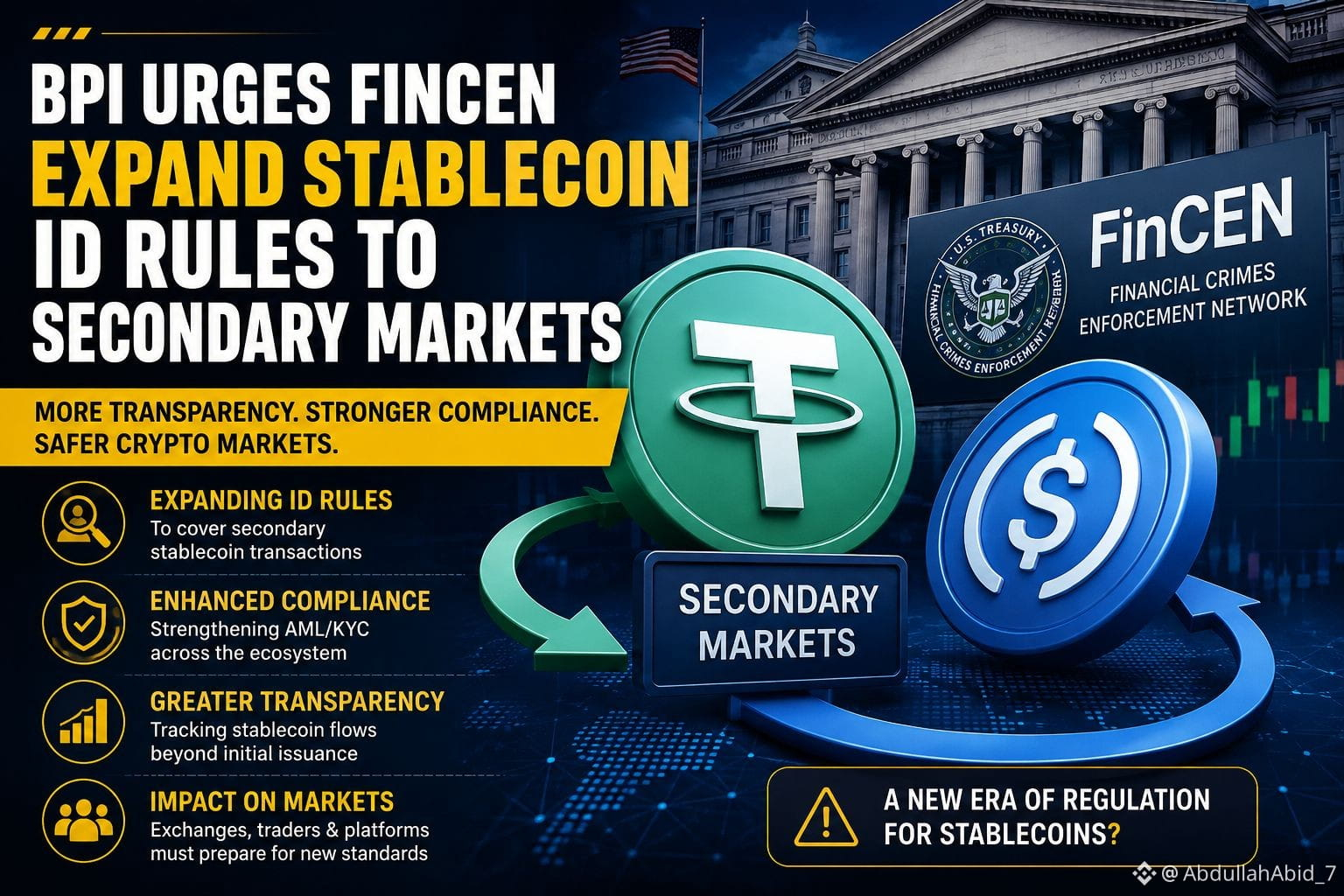
🚨 Stablecoin Rules May Be Expanding!
The Blockchain Payments Institute (BPI) is urging FinCEN to extend stablecoin ID and compliance rules into secondary markets.
The move could mean stricter monitoring of stablecoin transfers beyond their initial issuance, potentially reshaping how exchanges, traders, and crypto platforms handle compliance.
If regulators move forward, stablecoin markets could face a new era of transparency and oversight. 👀
#Stablecoins #Write2Earn #FinCEN #BPIUrgesFinCENExpandStablecoinIDRulesToSecondaryMarkets #NvidiaAIServerPricesRiseOver15% $NVDAB $BTC $BNB
🚨 Stablecoin Rules May Be Expanding!
The Blockchain Payments Institute (BPI) is urging FinCEN to extend stablecoin ID and compliance rules into secondary markets.
The move could mean stricter monitoring of stablecoin transfers beyond their initial issuance, potentially reshaping how exchanges, traders, and crypto platforms handle compliance.
If regulators move forward, stablecoin markets could face a new era of transparency and oversight. 👀
#Stablecoins #Write2Earn #FinCEN #BPIUrgesFinCENExpandStablecoinIDRulesToSecondaryMarkets #NvidiaAIServerPricesRiseOver15% $NVDAB $BTC $BNB
The Blockchain Payments Institute (BPI) is urging FinCEN to extend stablecoin ID and compliance rules into secondary markets.
The move could mean stricter monitoring of stablecoin transfers beyond their initial issuance, potentially reshaping how exchanges, traders, and crypto platforms handle compliance.
If regulators move forward, stablecoin markets could face a new era of transparency and oversight. 👀
#Stablecoins #Write2Earn #FinCEN #BPIUrgesFinCENExpandStablecoinIDRulesToSecondaryMarkets #NvidiaAIServerPricesRiseOver15% $NVDAB $BTC $BNB
1
133

·
--
උසබ තත්ත්වය
#BPIUrgesFinCENExpandStablecoinIDRulesToSecondaryMarkets
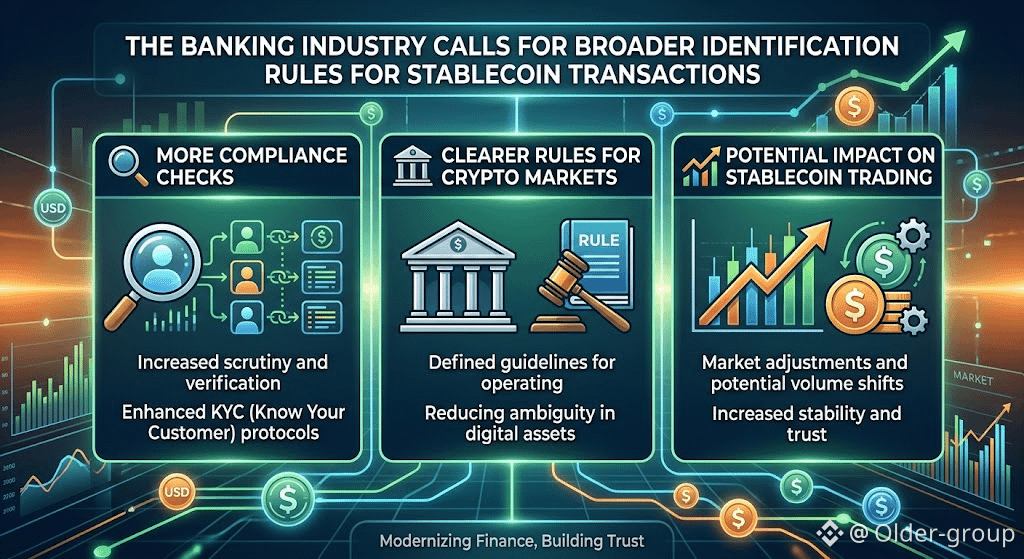
BPI Urges FinCEN to Expand Stablecoin ID Rules to Secondary Markets
The banking industry is calling for broader identification rules for stablecoin transactions.
🔎 More compliance checks
🏦 Clearer rules for crypto markets
📈 Potential impact on stablecoin trading
#Stablecoins #Crypto #FinCEN #CryptoNews
💰 $ETH
{spot}(ETHUSDT)
$USDC
{spot}(USDCUSDT)
$BTC
{spot}(BTCUSDT)
#BPIUrgesFinCENExpandStablecoinIDRulesToSecondaryMarkets
BPI Urges FinCEN to Expand Stablecoin ID Rules to Secondary Markets
The banking industry is calling for broader identification rules for stablecoin transactions.
🔎 More compliance checks
🏦 Clearer rules for crypto markets
📈 Potential impact on stablecoin trading
#Stablecoins #Crypto #FinCEN #CryptoNews
💰 $ETH
$USDC
$BTC
BPI Urges FinCEN to Expand Stablecoin ID Rules to Secondary Markets
The banking industry is calling for broader identification rules for stablecoin transactions.
🔎 More compliance checks
🏦 Clearer rules for crypto markets
📈 Potential impact on stablecoin trading
#Stablecoins #Crypto #FinCEN #CryptoNews
💰 $ETH
$USDC
$BTC
1
1
180

·
--
Cbdc Vs. Private Stablecoins 🏦
The global debate is shifting! In 2026, we’re seeing a major move from "policy design" to "implementation." The Treasury’s new proposed rules for stablecoins are officially treating issuers like traditional financial institutions. 📝
But here’s the kicker: the industry is successfully pushing for private stablecoins (like $USDC /$USDC ) rather than state-only CBDCs. It’s a win for decentralization, but it means 100% reserve transparency is no longer optional. The bridge to the "New Financial System" is being paved in real-time. 🌉
#Stablecoins #CBDC #FinCEN #FinanceEvolution #BinanceSquare
Cbdc Vs. Private Stablecoins 🏦
The global debate is shifting! In 2026, we’re seeing a major move from "policy design" to "implementation." The Treasury’s new proposed rules for stablecoins are officially treating issuers like traditional financial institutions. 📝
But here’s the kicker: the industry is successfully pushing for private stablecoins (like $USDC /$USDC ) rather than state-only CBDCs. It’s a win for decentralization, but it means 100% reserve transparency is no longer optional. The bridge to the "New Financial System" is being paved in real-time. 🌉
#Stablecoins #CBDC #FinCEN #FinanceEvolution #BinanceSquare
The global debate is shifting! In 2026, we’re seeing a major move from "policy design" to "implementation." The Treasury’s new proposed rules for stablecoins are officially treating issuers like traditional financial institutions. 📝
But here’s the kicker: the industry is successfully pushing for private stablecoins (like $USDC /$USDC ) rather than state-only CBDCs. It’s a win for decentralization, but it means 100% reserve transparency is no longer optional. The bridge to the "New Financial System" is being paved in real-time. 🌉
#Stablecoins #CBDC #FinCEN #FinanceEvolution #BinanceSquare
1
1
192


ලිපිය
Stablecoins as "Financial Institutions": Decoding the U.S. Treasury's New Regulatory ProposalThe liquidity of the cryptocurrency market is facing a major regulatory overhaul as the U.S. Treasury, through its powerful arms #FinCEN and #OFAC , officially released a draft regulation to tighten control over stablecoins. This is more than a routine adjustment; it is a core component of the GENIUS Act, aimed at bringing stablecoin issuers into a strict regulatory framework comparable to traditional banks. $BTC
{future}(BTCUSDT)
A Pivotal Shift from the Bank Secrecy Act (BSA)
The most significant highlight of the April 9 proposal is the official classification of stablecoin issuers as "financial institutions" under the Bank Secrecy Act. This change in status compels Web3 businesses to shed their pure "tech startup" image and shoulder heavy legal obligations: from building Anti-Money Laundering (AML) and Counter-Terrorism Financing (CFT) systems to reporting suspicious transactions.
Treasury Secretary Scott Bessent asserted that this is an effort to protect the U.S. financial system from sanction-evasion risks without stifling innovation. However, the line between "oversight" and "control" is becoming thinner than ever as technical capacity requirements are prescribed in greater detail. $USDC
{future}(USDCUSDT)
"Freezing" Power and Personnel Barriers
The draft sets deep-intervention technical standards: all stablecoins must be designed with the capability to block or freeze transactions at the government's request. This directly challenges the philosophy of blockchain immutability but is a prerequisite for issuers to operate formally.
Furthermore, the requirement for a Compliance Officer to reside in the U.S. and have a completely "clean" record indicates that Washington wants a direct and clear point of legal accountability. Personalizing operational responsibility will prevent the evasion of obligations through complex multinational corporate structures. $TAO
{future}(TAOUSDT)
Moving Toward a Multi-Tiered Management Model
Despite wielding "iron fists," FinCEN has committed to a balanced approach. Instead of immediate aggressive enforcement, the agency encourages federal coordination and consultation. Along with previous regulations from the FDIC and OCC, the U.S. is perfecting a multi-tiered model: large organizations are subject to federal oversight, while small startups can opt for state-level regulation as long as they meet federal standards. #Colecolen
Conclusion
The tightening of stablecoin regulations is a signal that this asset class has become too important to remain outside the law. Transparency and discipline will be the price to pay for stablecoins to become a mainstream part of the global economy.
Advice: Investors and projects should practice DYOR (Do Your Own Research) regarding the compliance capabilities of the stablecoin issuers they hold. A secure digital financial system can only exist when money laundering risks are strictly controlled.
Stablecoins as "Financial Institutions": Decoding the U.S. Treasury's New Regulatory Proposal
The liquidity of the cryptocurrency market is facing a major regulatory overhaul as the U.S. Treasury, through its powerful arms #FinCEN and #OFAC , officially released a draft regulation to tighten control over stablecoins. This is more than a routine adjustment; it is a core component of the GENIUS Act, aimed at bringing stablecoin issuers into a strict regulatory framework comparable to traditional banks. $BTC
A Pivotal Shift from the Bank Secrecy Act (BSA)
The most significant highlight of the April 9 proposal is the official classification of stablecoin issuers as "financial institutions" under the Bank Secrecy Act. This change in status compels Web3 businesses to shed their pure "tech startup" image and shoulder heavy legal obligations: from building Anti-Money Laundering (AML) and Counter-Terrorism Financing (CFT) systems to reporting suspicious transactions.
Treasury Secretary Scott Bessent asserted that this is an effort to protect the U.S. financial system from sanction-evasion risks without stifling innovation. However, the line between "oversight" and "control" is becoming thinner than ever as technical capacity requirements are prescribed in greater detail. $USDC
"Freezing" Power and Personnel Barriers
The draft sets deep-intervention technical standards: all stablecoins must be designed with the capability to block or freeze transactions at the government's request. This directly challenges the philosophy of blockchain immutability but is a prerequisite for issuers to operate formally.
Furthermore, the requirement for a Compliance Officer to reside in the U.S. and have a completely "clean" record indicates that Washington wants a direct and clear point of legal accountability. Personalizing operational responsibility will prevent the evasion of obligations through complex multinational corporate structures. $TAO
Moving Toward a Multi-Tiered Management Model
Despite wielding "iron fists," FinCEN has committed to a balanced approach. Instead of immediate aggressive enforcement, the agency encourages federal coordination and consultation. Along with previous regulations from the FDIC and OCC, the U.S. is perfecting a multi-tiered model: large organizations are subject to federal oversight, while small startups can opt for state-level regulation as long as they meet federal standards. #Colecolen
Conclusion
The tightening of stablecoin regulations is a signal that this asset class has become too important to remain outside the law. Transparency and discipline will be the price to pay for stablecoins to become a mainstream part of the global economy.
Advice: Investors and projects should practice DYOR (Do Your Own Research) regarding the compliance capabilities of the stablecoin issuers they hold. A secure digital financial system can only exist when money laundering risks are strictly controlled.
A Pivotal Shift from the Bank Secrecy Act (BSA)
The most significant highlight of the April 9 proposal is the official classification of stablecoin issuers as "financial institutions" under the Bank Secrecy Act. This change in status compels Web3 businesses to shed their pure "tech startup" image and shoulder heavy legal obligations: from building Anti-Money Laundering (AML) and Counter-Terrorism Financing (CFT) systems to reporting suspicious transactions.
Treasury Secretary Scott Bessent asserted that this is an effort to protect the U.S. financial system from sanction-evasion risks without stifling innovation. However, the line between "oversight" and "control" is becoming thinner than ever as technical capacity requirements are prescribed in greater detail. $USDC
"Freezing" Power and Personnel Barriers
The draft sets deep-intervention technical standards: all stablecoins must be designed with the capability to block or freeze transactions at the government's request. This directly challenges the philosophy of blockchain immutability but is a prerequisite for issuers to operate formally.
Furthermore, the requirement for a Compliance Officer to reside in the U.S. and have a completely "clean" record indicates that Washington wants a direct and clear point of legal accountability. Personalizing operational responsibility will prevent the evasion of obligations through complex multinational corporate structures. $TAO
Moving Toward a Multi-Tiered Management Model
Despite wielding "iron fists," FinCEN has committed to a balanced approach. Instead of immediate aggressive enforcement, the agency encourages federal coordination and consultation. Along with previous regulations from the FDIC and OCC, the U.S. is perfecting a multi-tiered model: large organizations are subject to federal oversight, while small startups can opt for state-level regulation as long as they meet federal standards. #Colecolen
Conclusion
The tightening of stablecoin regulations is a signal that this asset class has become too important to remain outside the law. Transparency and discipline will be the price to pay for stablecoins to become a mainstream part of the global economy.
Advice: Investors and projects should practice DYOR (Do Your Own Research) regarding the compliance capabilities of the stablecoin issuers they hold. A secure digital financial system can only exist when money laundering risks are strictly controlled.
1
2.5k
·
--
TRADFI TARGETS $USDC SECONDARY LIQUIDITY AS MACRO WINDS SHIFT 🌐
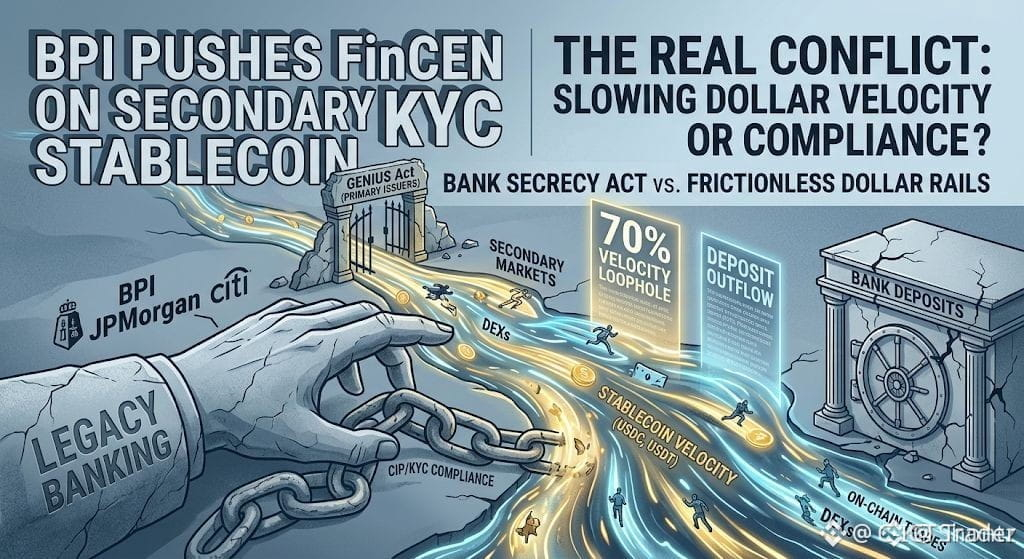
Wall Street titans are pressing regulators to impose strict banking KYC onto secondary stablecoin markets and DEX pools. While framed as closing compliance gaps, the structural shift in the global liquidity cycle tells a much deeper story.
Over 70% of dollar velocity now moves across secondary rails where $USDT outpaces legacy bank wires. TradFi is losing massive deposit share to frictionless dollar rails, so they are weaponizing regulatory friction to throttle on-chain speed. 🔭
When legacy banks build compliance walls, it confirms crypto is winning the financial velocity war. Will regulatory pressure choke secondary volume, or will global capital always route around legacy gatekeepers? 🗺️
⚠️ Not financial advice. Always manage your risk.
🏷️ #USDC #Stablecoins #FinCEN #DeFi #Crypto
Zoom out. The map reveals itself.
TRADFI TARGETS $USDC SECONDARY LIQUIDITY AS MACRO WINDS SHIFT 🌐
Wall Street titans are pressing regulators to impose strict banking KYC onto secondary stablecoin markets and DEX pools. While framed as closing compliance gaps, the structural shift in the global liquidity cycle tells a much deeper story.
Over 70% of dollar velocity now moves across secondary rails where $USDT outpaces legacy bank wires. TradFi is losing massive deposit share to frictionless dollar rails, so they are weaponizing regulatory friction to throttle on-chain speed. 🔭
When legacy banks build compliance walls, it confirms crypto is winning the financial velocity war. Will regulatory pressure choke secondary volume, or will global capital always route around legacy gatekeepers? 🗺️
⚠️ Not financial advice. Always manage your risk.
🏷️ #USDC #Stablecoins #FinCEN #DeFi #Crypto
Zoom out. The map reveals itself.
Wall Street titans are pressing regulators to impose strict banking KYC onto secondary stablecoin markets and DEX pools. While framed as closing compliance gaps, the structural shift in the global liquidity cycle tells a much deeper story.
Over 70% of dollar velocity now moves across secondary rails where $USDT outpaces legacy bank wires. TradFi is losing massive deposit share to frictionless dollar rails, so they are weaponizing regulatory friction to throttle on-chain speed. 🔭
When legacy banks build compliance walls, it confirms crypto is winning the financial velocity war. Will regulatory pressure choke secondary volume, or will global capital always route around legacy gatekeepers? 🗺️
⚠️ Not financial advice. Always manage your risk.
🏷️ #USDC #Stablecoins #FinCEN #DeFi #Crypto
Zoom out. The map reveals itself.
6
තවත් අන්තර්ගතයන් ගවේෂණය කිරීමට ඇතුල් වන්න
Binance චතුරශ්රය හි ගෝලීය ක්රිප්ටෝ පරිශීලකයින් හා එක්වන්න
⚡️ ක්රිප්ටෝ පිළිබඳ නවතම සහ ප්රයෝජනවත් තොරතුරු ලබා ගන්න.
💬 ලොව විශාලතම ක්රිප්ටෝ හුවමාරුව මගින් විශ්වාස කෙරේ.
👍 සත්යායනය කරන ලද නිර්මාණකරුවන්ගෙන් සැබෑ විදසුන් සොයා ගන්න.
විද්යුත් තැපෑල / දුරකථන අංකය
නැගී එන මාතෘකා
1
#EtherGains70.9%InQ3
165,008 views
1,163 සාකච්ඡා කරමින්
2
#TreasuryLetsStatesFileStablecoinCertificationsEarly
10,221 views
89 සාකච්ඡා කරමින්
3
#US10YearYieldNears5.3%
155,340 views
1,147 සාකච්ඡා කරමින්
4
#DollarIndexHitsHighestSinceMay2025
42,852 views
610 සාකච්ඡා කරමින්
5
#USWeeklyJoblessClaimsFallTo197000
36,720 views
504 සාකච්ඡා කරමින්
6
#BitcoinETFsTake$6.34BillionInQ3
10,204 views
77 සාකච්ඡා කරමින්
7
#KoreaProposesTokenizingStocksAndBonds
73,971 views
825 සාකච්ඡා කරමින්
8
#MetaMaskExitsLidoValidatorsAfterSecurityIncident
173,099 views
1,554 සාකච්ඡා කරමින්
9
#MicronBeatsEarningsLiftsGuidance
87,896 views
1,118 සාකච්ඡා කරමින්
10
#CFTCSubmitsTwoEventContractRulesToWhiteHouse
60,445 views
833 සාකච්ඡා කරමින්