
#onchainfinance
onchainfinance
136,499 නැරඹීම්
833 සාකච්ඡා කරමින්
උණුසුම්
නවතම
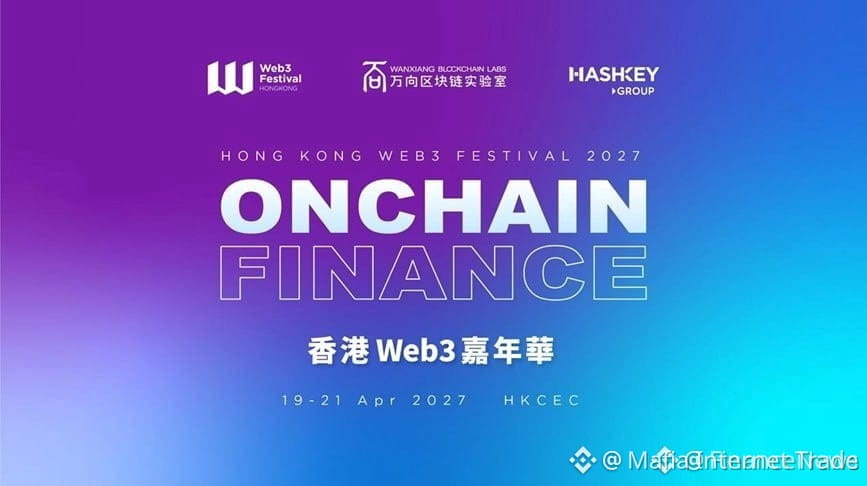
🚨 INSTITUTIONAL CAPITAL IS FLOODING INTO $RWA AS WALL STREET MEETS BLOCKCHAIN ON-CHAIN! 💥
Traditional finance giants and global asset managers are quietly laying the infrastructure to bring trillions on-chain. The upcoming convergence in Hong Kong proves that institutional adoption is shifting from experimental pilot programs to aggressive execution. 📊
With a massive focus on real-world asset tokenization and enterprise-grade liquidity rails, smart money is positioning early for the next wave of structural capital inflows. ⚡
Are you accumulating the infrastructure plays leading this institutional charge before the crowd wakes up? 🤔
⚠️ Not financial advice. Always manage your risk. 🛡️
🏷️ #RWA #OnChainFinance #InstitutionalCrypto #Tokenization
🦈 💎
16

·
--

ලිපිය
Invesco Put Stablecoin Reserves Onchain. Who Gets the First Benefit?Imagine you run a dollar stablecoin and a big customer asks to redeem. Before you think about blockchains, you have a simpler problem. Can you get the dollars back when the customer needs them?
That's a useful way to read Invesco's November 17 launch of IROXX, a government money market fund designed for stablecoin reserves. The portfolio holds short-term U.S. Treasuries and other eligible dollar assets. So where does the blockchain come in?
The clue is in the fund's SEC filing. Superstate keeps an off-chain ownership ledger alongside digital records of fund shares on public blockchains. Only approved wallets can transact in those tokenized shares. An eligible institution can use blockchain-connected tools to hold and transact in its fund shares while the fund manager still handles the underlying portfolio.
That puts the first practical benefit with the stablecoin issuer. It gets another way to manage reserves and track its holdings. Invesco and Superstate could gain business if issuers adopt the fund. Whether it makes day-to-day operations easier comes down to details that matter when someone actually wants their money back: how quickly redemptions clear and how reliably the records line up.
There's a reason to watch that last point. The filing says discrepancies between the two ownership records can delay transaction processing. During a rush for redemptions, being able to see a fund share in a wallet tells you who holds it. Getting dollars out still depends on how the fund processes redemptions and manages liquidity.
What would turn this into a story about demand for a network token such as $ETH? I'd look for recurring fund-share transfers on a named network and check who pays the fees. A launch shows the rails are available. Sustained usage and actual fees would tell us how much business is running through them.
Sources
Invesco's November 17 launch announcement: https://www.prnewswire.com/news-releases/invesco-launches-the-invesco-stablecoin-reserves-onchain-fund-bringing-invescos-established-liquidity-management-onchain-302941734.html
Fund prospectus filed with the SEC: https://www.sec.gov/Archives/edgar/data/205007/000119312526460554/d839618d497.htm
#Stablecoins #Tokenization #OnchainFinance
Invesco Put Stablecoin Reserves Onchain. Who Gets the First Benefit?
Imagine you run a dollar stablecoin and a big customer asks to redeem. Before you think about blockchains, you have a simpler problem. Can you get the dollars back when the customer needs them?
That's a useful way to read Invesco's November 17 launch of IROXX, a government money market fund designed for stablecoin reserves. The portfolio holds short-term U.S. Treasuries and other eligible dollar assets. So where does the blockchain come in?
The clue is in the fund's SEC filing. Superstate keeps an off-chain ownership ledger alongside digital records of fund shares on public blockchains. Only approved wallets can transact in those tokenized shares. An eligible institution can use blockchain-connected tools to hold and transact in its fund shares while the fund manager still handles the underlying portfolio.
That puts the first practical benefit with the stablecoin issuer. It gets another way to manage reserves and track its holdings. Invesco and Superstate could gain business if issuers adopt the fund. Whether it makes day-to-day operations easier comes down to details that matter when someone actually wants their money back: how quickly redemptions clear and how reliably the records line up.
There's a reason to watch that last point. The filing says discrepancies between the two ownership records can delay transaction processing. During a rush for redemptions, being able to see a fund share in a wallet tells you who holds it. Getting dollars out still depends on how the fund processes redemptions and manages liquidity.
What would turn this into a story about demand for a network token such as $ETH ? I'd look for recurring fund-share transfers on a named network and check who pays the fees. A launch shows the rails are available. Sustained usage and actual fees would tell us how much business is running through them.
Sources
Invesco's November 17 launch announcement: https://www.prnewswire.com/news-releases/invesco-launches-the-invesco-stablecoin-reserves-onchain-fund-bringing-invescos-established-liquidity-management-onchain-302941734.html
Fund prospectus filed with the SEC: https://www.sec.gov/Archives/edgar/data/205007/000119312526460554/d839618d497.htm
#Stablecoins #Tokenization #OnchainFinance
1
204

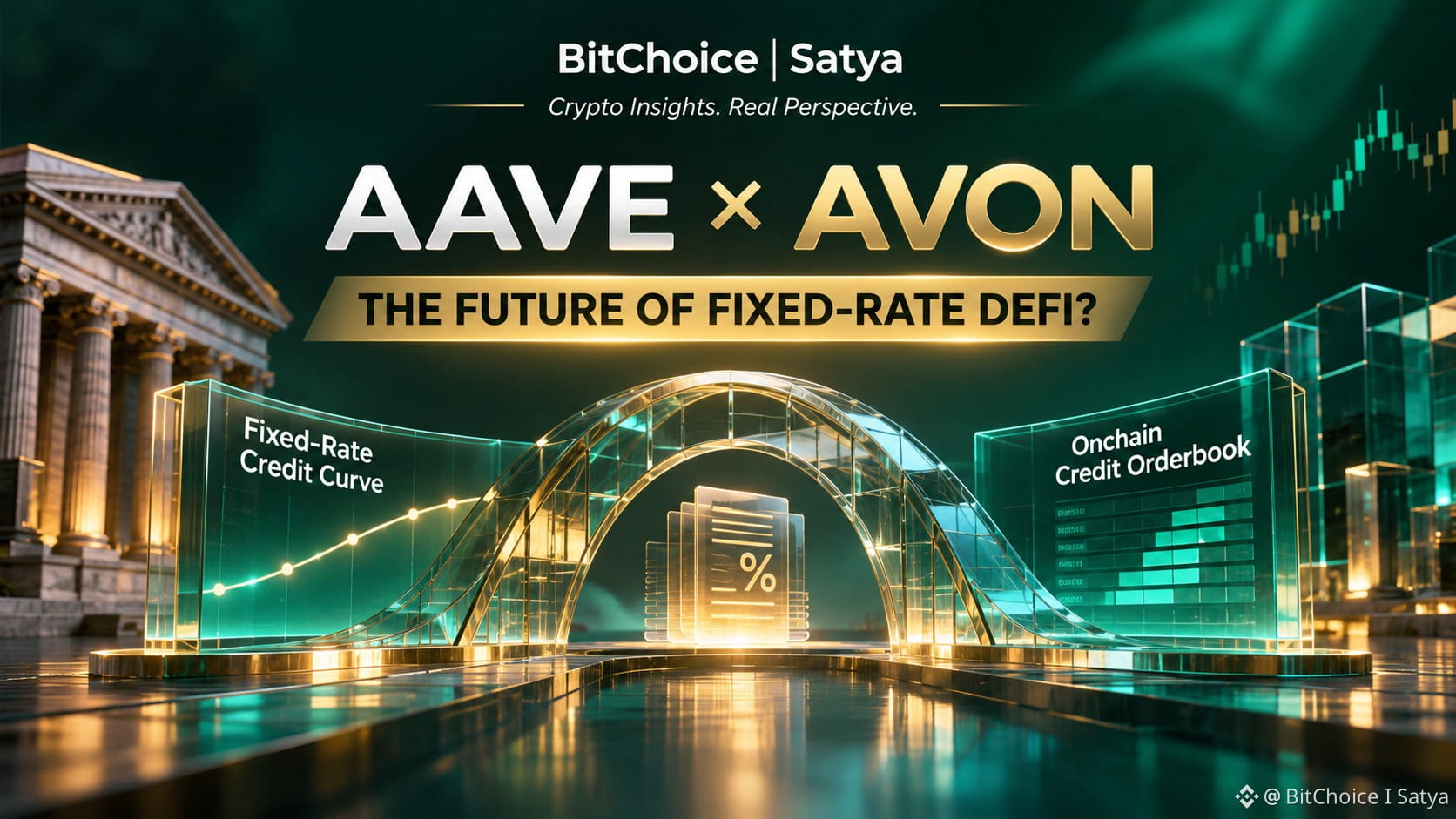
AAVE × AVON: THE NEXT EVOLUTION OF DEFI LENDING?
Aave Labs has acquired the team and technology behind Avon, signaling a potential expansion into more sophisticated onchain credit markets.
Why does this matter?
Avon brings expertise in fixed-rate and variable-rate lending, interest-rate pricing, and onchain order book infrastructure.
Fixed-rate borrowing could help institutions and long-term borrowers manage financing costs more predictably, while market-driven pricing could improve capital allocation.
The real test: liquidity depth, collateral management, risk isolation, and sustainable demand.
The acquisition is confirmed, but new lending products and integration timelines have not been announced.
BitChoice | Satya Perspective: DeFi lending is evolving beyond variable-rate liquidity pools. The winners will be determined by execution, risk management, and real borrower demand — not announcements alone.
$AAVE
{spot}(AAVEUSDT)
#AAVE #DeFi #OnchainFinance #Crypto
AAVE × AVON: THE NEXT EVOLUTION OF DEFI LENDING?
Aave Labs has acquired the team and technology behind Avon, signaling a potential expansion into more sophisticated onchain credit markets.
Why does this matter?
Avon brings expertise in fixed-rate and variable-rate lending, interest-rate pricing, and onchain order book infrastructure.
Fixed-rate borrowing could help institutions and long-term borrowers manage financing costs more predictably, while market-driven pricing could improve capital allocation.
The real test: liquidity depth, collateral management, risk isolation, and sustainable demand.
The acquisition is confirmed, but new lending products and integration timelines have not been announced.
BitChoice | Satya Perspective: DeFi lending is evolving beyond variable-rate liquidity pools. The winners will be determined by execution, risk management, and real borrower demand — not announcements alone.
$AAVE
#AAVE #DeFi #OnchainFinance #Crypto
156

·
--
උසබ තත්ත්වය
සත්යායනය කළ
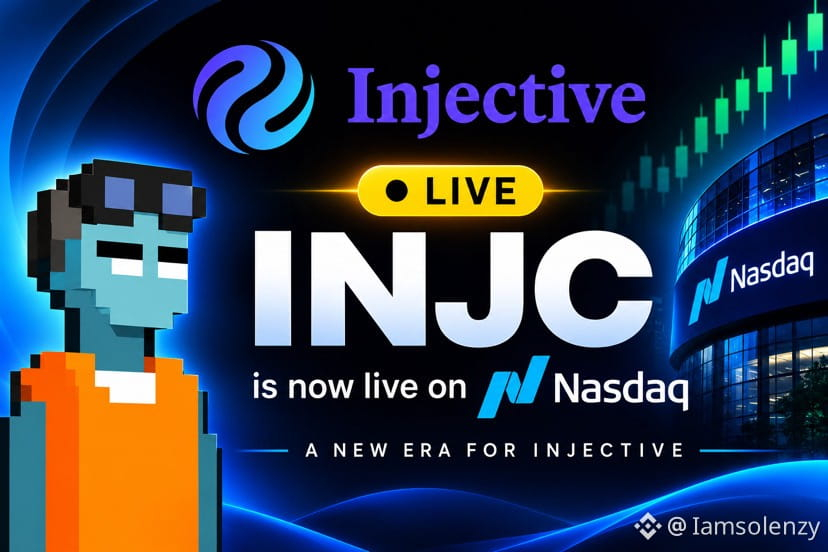
🚨 Just so you know, $INJC, the first U.S.-listed ETF offering exposure to $INJ , is now trading on Nasdaq.
This is another important milestone for @Injective , bringing INJ exposure closer to traditional investors through a familiar brokerage account.
What makes $INJC particularly interesting is its staking component. The fund targets staking up to 90% of its INJ holdings under normal conditions, with net staking rewards automatically restaked.
But the bigger picture goes beyond the ETF.
Injective has been building infrastructure for onchain finance, with progress across:
✅ 3B+ transactions processed
✅ $1B+ in tokenized assets
✅ 7.2M+ INJ bought back through onchain revenue
✅ Infrastructure for RWAs, perpetual markets, trading and privacy
Its institutional initiatives, including its SEC-registered transfer agent and Institutional Rail, further demonstrate its focus on connecting traditional finance with blockchain infrastructure.
$INJC adds another access point to this growing ecosystem.
Eight years of building, and the institutional finance narrative is gaining another important milestone.
The journey continues. 🥷
#injective #INJ #Crypto #OnchainFinance
1
282

Cross River Bank and Offchain are building loan tokenization into Cross River’s lending platform, with Arbitrum One providing the on-chain infrastructure and ZeroDev wallet technology embedded underneath. The partners say loans could be funded, held, transferred and serviced on a shared record from origination, while Cross River remains the regulated lender of record.
The proof of concept is complete; production deployment is targeted for early 2027. This is still a project under development—not a live product for borrowers. Could tokenizing at origination simplify how credit is funded and distributed?
Sources:
Cross River: https://www.crossriver.com/newsroom/cross-river-and-offchain-bring-native-tokenization-to-lending-infrastructure
Crypto.news: https://crypto.news/cross-river-arbitrum-loan-tokenization-2027/
Conclusion: $ARB relates to the Arbitrum ecosystem named here; the announcement does not establish direct ARB-token use or demand. Binance ARB/USDT Spot chart: https://www.binance.com/en/trade/ARB_USDT. Check the chart for yourself, do your own research, and trade responsibly. #Arbitrum #Tokenization #RWA #OnchainFinance

152
Asian equity data is getting a wider on-chain footprint. Chainlink says its APAC Equities Streams now cover six exchanges across China, Japan, South Korea, Taiwan and Hong Kong—markets it values at more than $40T combined. Its documentation lists the six venues as available and describes mid-price, bid/ask and market-status data during local trading hours. Chainlink says integrations are live on Lighter, Jupiter Exchange and Predict.fun.
One important distinction: this is a market-data expansion, not a claim that the underlying shares themselves have been tokenized. Local exchange hours and feed freshness also matter for builders using these streams. What seems like the most useful use case: equity perps, prediction markets or tokenized-asset products?
Conclusion: $LINK | Official Binance LINK/USDT Spot chart: https://www.binance.com/en/trade/LINK_USDT. Check the chart for yourself, do your own research, and trade responsibly.
#Chainlink #Tokenization #RWA #OnchainFinance

50

🚨 $BTC INSTITUTIONAL RESEARCH REVOLUTION: TALOS APPOINTS KELLY YE 🦈
📊 Kelly Ye brings two decades of cross‑market expertise, stitching traditional finance rigor into on‑chain analytics. Her focus on market structure and liquidity will sharpen the lens through which institutions gauge digital asset flows. 🔍 Talos’s integration of Coin Metrics data now feeds a unified dashboard that translates raw order‑book depth into actionable insights for hedge funds and banks. 📈 Expect tighter price discovery and deeper liquidity sourcing as research moves from static indices to dynamic, real‑time liquidity maps.
💬 What impact will this institutional research upgrade have on your on‑chain strategy? 👇
⚠️ Not financial advice. Always manage your risk. 🛡️
🏷️ #BTC #InstitutionalResearch #OnchainFinance #SmartMoney
🚀 🔥
22

·
--
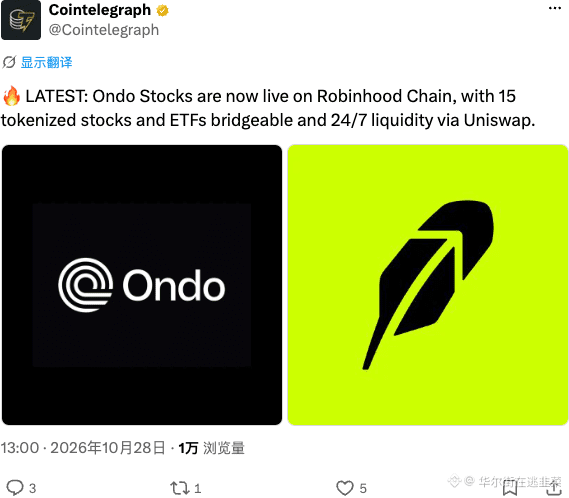
Ondo Stocks 落地 Robinhood Chain,15只美股ETF实现跨链互通,Uniswap 24/7提供无限流动性。打通美股交易最后一公里,散户终于不用在盘后哀嚎。这波落地速度极快,资金效率直接起飞。
#Ondo #OnchainFinance
Ondo Stocks 落地 Robinhood Chain,15只美股ETF实现跨链互通,Uniswap 24/7提供无限流动性。打通美股交易最后一公里,散户终于不用在盘后哀嚎。这波落地速度极快,资金效率直接起飞。
#Ondo #OnchainFinance
#Ondo #OnchainFinance
85

·
--
Have you noticed that the real edge in this market is no longer sitting in memecoins?
Most traders keep getting wrecked chasing pumps, FOMO buying the wrong narratives, and having no idea when to exit because they treat everything like a lottery ticket. Meanwhile the actual shift is happening quietly with assets that actually produce yield.
Tokenized treasuries, stocks, credit, and real estate are moving on-chain and the line between crypto and the stock market is blurring fast. Tokenized US treasuries alone have already crossed $2 billion. Projects built around $ONDO are giving on-chain access to those yields while $LINK oracles keep the pricing honest. $ETH is quietly becoming the settlement layer for all of it.
Start by comparing current tokenized T-bill yields against what you can get in DeFi. Then look at how stocks are being tokenized for 24/7 trading instead of waiting for market hours. Allocate a slice of your portfolio there instead of going all-in on the next volatile alt.
Where do you think this RWA move goes from here?
#RWA #Tokenization #OnChainFinance
7

Last week I dug into the tokenization of 14 real-world assets and found a risk most traders are completely ignoring.
Investors keep chasing these on-chain yields without mapping the off-chain liabilities, then wonder why their positions get wrecked when regulation hits or an issuer stumbles. Missing the exit because you treated it like a pure crypto play is a common way to lose money here.
Tokenized treasuries, stocks, credit, and real estate have been migrating on-chain, blending crypto rails with traditional markets. Looking across 14 of these products shows this isn't theoretical anymore. Yet the structure hides counterparty and legal risks that don't vanish just because they sit in a smart contract.
A lot of this activity happens on $ETH, where $ONDO has become a go-to for tokenized T-bills. Data feeds often rely on $LINK, adding oracle risk on top of everything else. People see the yield and forget the underlying asset can still default or get frozen by a court.
What happened is a rush to wrap real assets for 24/7 liquidity and fractional access. Why it matters is that the same old finance problems now live on-chain, where they can cascade faster. The lesson is simple: treat these like hybrid products, not magic internet money.
Where do you think this RWA wave breaks first if stress hits the traditional side?
#RWA #Tokenization #OnChainFinance
Last week I dug into the tokenization of 14 real-world assets and found a risk most traders are completely ignoring.
Investors keep chasing these on-chain yields without mapping the off-chain liabilities, then wonder why their positions get wrecked when regulation hits or an issuer stumbles. Missing the exit because you treated it like a pure crypto play is a common way to lose money here.
Tokenized treasuries, stocks, credit, and real estate have been migrating on-chain, blending crypto rails with traditional markets. Looking across 14 of these products shows this isn't theoretical anymore. Yet the structure hides counterparty and legal risks that don't vanish just because they sit in a smart contract.
A lot of this activity happens on $ETH , where $ONDO has become a go-to for tokenized T-bills. Data feeds often rely on $LINK , adding oracle risk on top of everything else. People see the yield and forget the underlying asset can still default or get frozen by a court.
What happened is a rush to wrap real assets for 24/7 liquidity and fractional access. Why it matters is that the same old finance problems now live on-chain, where they can cascade faster. The lesson is simple: treat these like hybrid products, not magic internet money.
Where do you think this RWA wave breaks first if stress hits the traditional side?
#RWA #Tokenization #OnChainFinance
9

·
--
#Tokenized Real-World Assets: Bringing Traditional Finance On-Chain
Tokenized real-world assets, often called RWAs, are bringing familiar financial products—such as government bonds, money-market funds, real estate, and private credit—onto blockchain networks. Instead of relying only on traditional account systems, ownership can be represented by digital tokens with potentially faster settlement, greater transparency, and around-the-clock transferability.
The appeal is straightforward: blockchain infrastructure could make high-quality financial assets easier to access, divide into smaller units, and use across digital-finance applications. For example, tokenized Treasury products have attracted attention as investors look for on-chain instruments linked to traditional yield sources.
But tokenization does not remove the underlying risks. The value of a tokenized asset still depends on the issuer, legal structure, custody of the underlying asset, market liquidity, and local regulations. Smart-contract and platform risks also matter, especially when tokens are used as collateral or moved across networks.
The key question is whether tokenization can improve access and efficiency without sacrificing investor protection. As more institutions test on-chain products, RWAs are becoming an important bridge between conventional markets and crypto infrastructure.
#RWA #Blockchain #DeFi #Crypto #TradFi #OnChainFinance #DigitalAssets
66
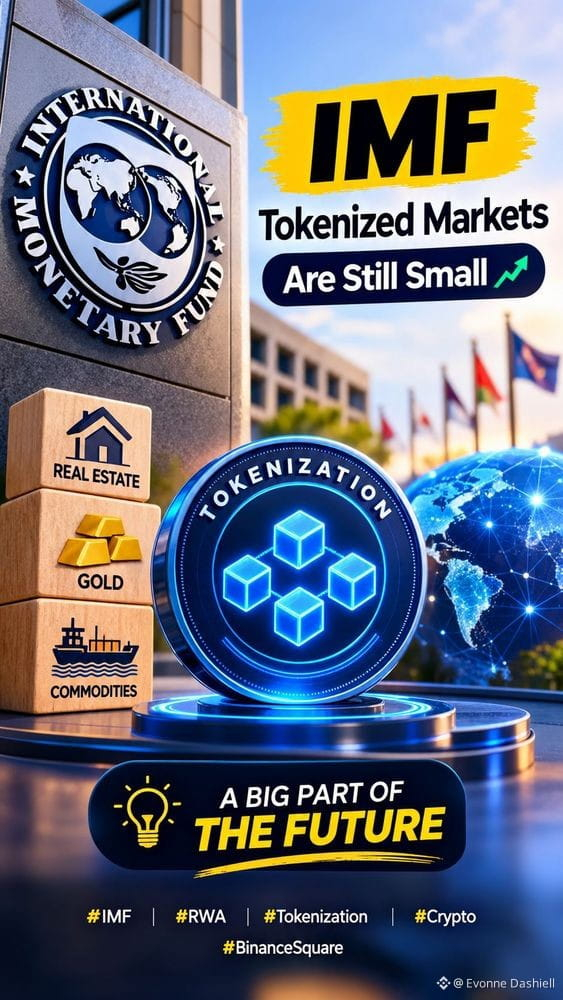
Everyone thinks the IMF calling tokenized markets small means they can safely be ignored. But actually that early-stage size is the remaining window before traditional finance notices.
Too many traders sit this out waiting for the numbers to look impressive. They miss the cheap entries and later buy after the move has already started.
The IMF report confirms tokenized real-world assets remain a tiny fraction of traditional markets. It is like Amazon when it was still just an online bookstore. Most dismissed it because the whole internet looked too small. Those who understood 24/7 access and buying a slice instead of the whole pie got in first. The same pattern is here with on-chain treasuries and property through tokens such as $ONDO, settled around the clock on $ETH.
Treating the current small size as a reason to stay away is the mistake that forces people to chase later. You can already participate on Binance with $BNB pairs instead of waiting for banks to open.
Where do you think this goes once traditional players finally start moving on-chain?
#RWA #Tokenization #OnChainFinance
Everyone thinks the IMF calling tokenized markets small means they can safely be ignored. But actually that early-stage size is the remaining window before traditional finance notices.
Too many traders sit this out waiting for the numbers to look impressive. They miss the cheap entries and later buy after the move has already started.
The IMF report confirms tokenized real-world assets remain a tiny fraction of traditional markets. It is like Amazon when it was still just an online bookstore. Most dismissed it because the whole internet looked too small. Those who understood 24/7 access and buying a slice instead of the whole pie got in first. The same pattern is here with on-chain treasuries and property through tokens such as $ONDO , settled around the clock on $ETH .
Treating the current small size as a reason to stay away is the mistake that forces people to chase later. You can already participate on Binance with $BNB pairs instead of waiting for banks to open.
Where do you think this goes once traditional players finally start moving on-chain?
#RWA #Tokenization #OnChainFinance
59

·
--
TOKENIZED STOCKS HIT 400K HOLDERS AND $8.9B MONTHLY VOLUME 📈
Tokenized stocks have crossed 400,000 holders with $8.9 billion in monthly volume — capital is clearly moving onchain at scale. But the enforcement layer still lags. Most platforms rely on offchain processes for compliance and risk limits, creating a gap between policy and execution.
Newton Protocol addresses this by verifying every action against defined policies in real time, issuing a signed attestation before any transaction settles. As RWAs grow, execution integrity becomes non‑negotiable.
Is the infrastructure actually keeping up with the capital flow?
Not financial advice. Always manage your risk.
#NEWT #TokenizedStocks #RWA #OnchainFinance
💎
26

·
--
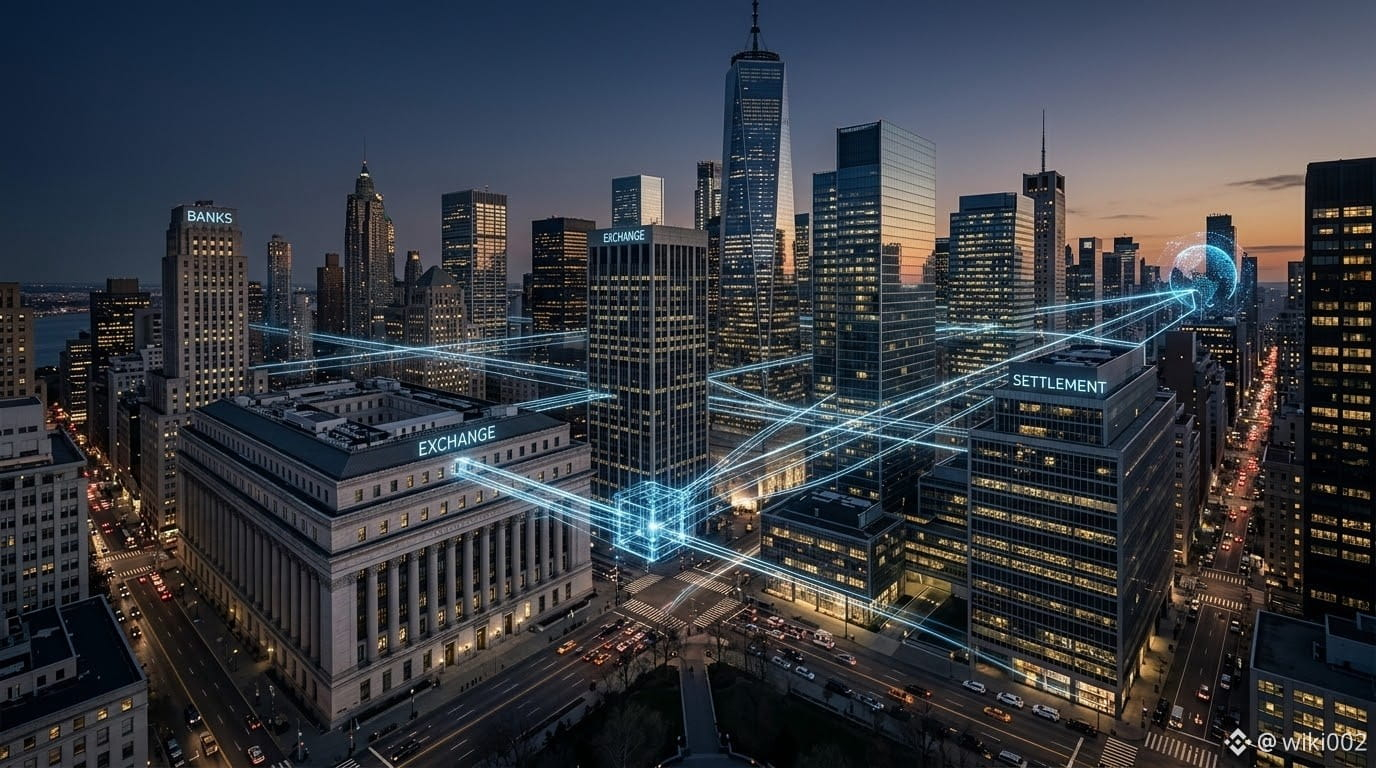
Honestly, the word speed is what caught my attention in Sergey Nazarov’s comment at the CFTC roundtable. ⚡
I think there’s a practical reason it matters.
Putting an asset onchain is one thing. Getting custody, compliance, trading, settlement and liquidity to work with those rails is a much bigger task.
That’s where I see the real challenge.
If those pieces develop together, onchain markets could become much easier to integrate with the existing financial system.
And this is where the U.S. has an interesting position.
The CFTC is already bringing people from traditional finance, market infrastructure and digital assets into the same conversation about how technology is changing financial markets.
Personally, I don’t see this as just another crypto regulation discussion.
The more important question is how quickly financial infrastructure can adapt if more assets and market activity move onchain.
That’s the part I’d watch.
$LINK $ETH $BTC
#Chainlink #DeFi #RWA #OnchainFinance
4
279
#JapanFSAPublishesOnChainFinanceForumMinutes #JapanFSAPublishesOnChainFinanceForum — Institutional Milestone for Web3 & RWA! 🇯🇵🌐
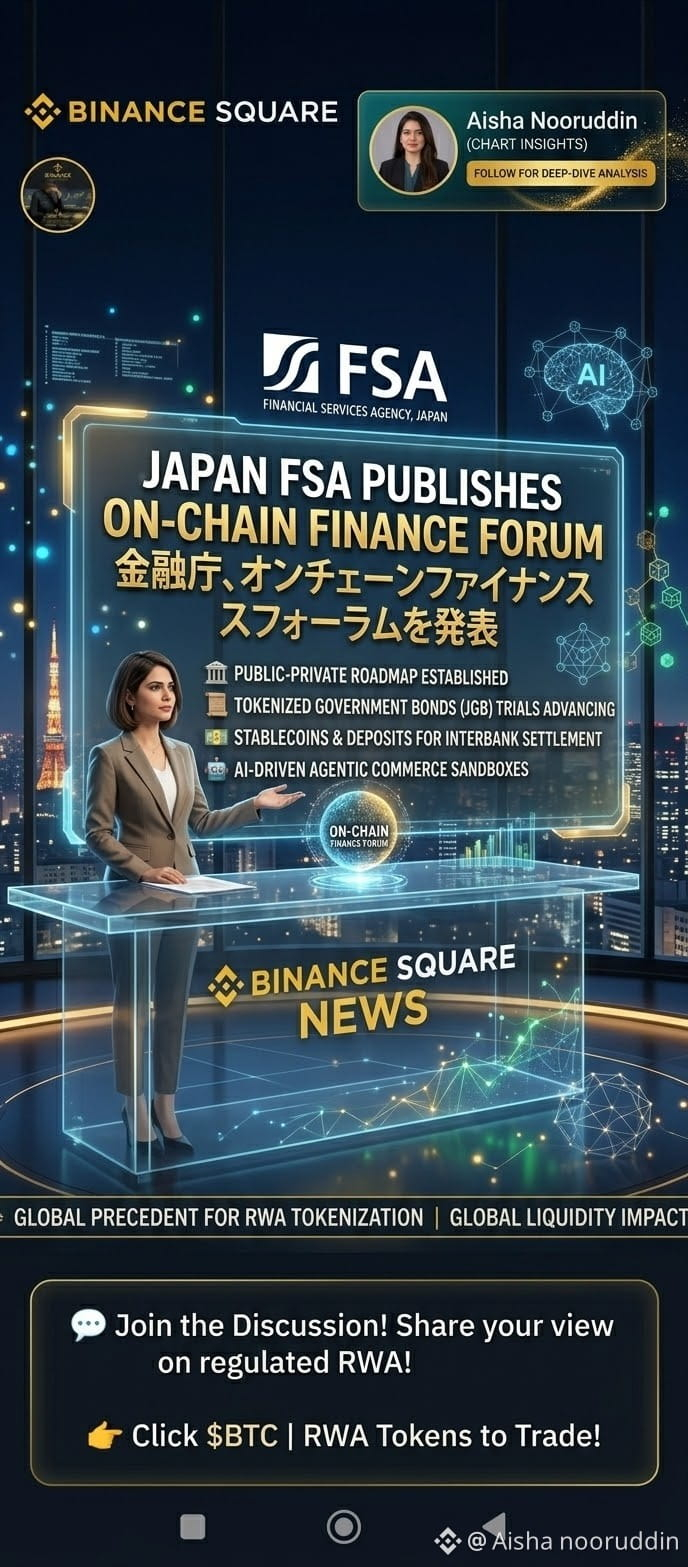
Japan’s Financial Services Agency (FSA) has officially published the framework and initial proceedings of its On-Chain Finance Forum for the AI Era! This cross-government body brings together key regulators—including the FSA, Ministry of Finance, Bank of Japan, and the Japanese Bankers Association—to lay a nationwide roadmap for blockchain-based settlement, asset tokenization, and AI-driven financial infrastructure.
🌐 Key Takeaways & Regulatory Highlights
* 🏛️ Public-Private Roadmap: Japan is establishing a unified operational roadmap for on-chain finance, aiming to integrate distributed ledger technology (DLT) directly into mainstream interbank infrastructure.
* Tokenized Government Bonds (JGBs): The Ministry of Finance and FSA are advancing proof-of-concept trials to explore putting Japanese Government Bonds on-chain for automated, 24/7 settlement.
* Stablecoins & Public Funds: Strategic frameworks are being tested for bank-issued yen stablecoins and tokenized deposits to streamline commercial trade finance, interbank transfers, and public subsidies.
★ Convergence of AI & Blockchain: The forum explicitly targets the rise of "agentic commerce," creating regulatory sandboxes so AI agents can perform automated economic transactions securely.
★ Market Outlook & Institutional Impact
* Bullish Scaffolding for Web3: Japan's proactive stance provides legal clarity for real-world asset (RWA) tokenization, institutional DeFi, and regulated stablecoin adoption.
* Global Precedent: Clear regulatory guidelines from major economies typically serve as a catalyst for broader Asian and global institutional capital entering crypto and tokenized markets.
How do you think regulated tokenization will impact broader crypto liquidity and Web3 adoption? Share your thoughts below! 👇
👉 Click $BTC
{spot}(BTCUSDT)
or top RWA tokens below to view live market setups & execute trades!
#Japan #FSA #OnChainFinance
#JapanFSAPublishesOnChainFinanceForumMinutes #JapanFSAPublishesOnChainFinanceForum — Institutional Milestone for Web3 & RWA! 🇯🇵🌐
Japan’s Financial Services Agency (FSA) has officially published the framework and initial proceedings of its On-Chain Finance Forum for the AI Era! This cross-government body brings together key regulators—including the FSA, Ministry of Finance, Bank of Japan, and the Japanese Bankers Association—to lay a nationwide roadmap for blockchain-based settlement, asset tokenization, and AI-driven financial infrastructure.
🌐 Key Takeaways & Regulatory Highlights
* 🏛️ Public-Private Roadmap: Japan is establishing a unified operational roadmap for on-chain finance, aiming to integrate distributed ledger technology (DLT) directly into mainstream interbank infrastructure.
* Tokenized Government Bonds (JGBs): The Ministry of Finance and FSA are advancing proof-of-concept trials to explore putting Japanese Government Bonds on-chain for automated, 24/7 settlement.
* Stablecoins & Public Funds: Strategic frameworks are being tested for bank-issued yen stablecoins and tokenized deposits to streamline commercial trade finance, interbank transfers, and public subsidies.
★ Convergence of AI & Blockchain: The forum explicitly targets the rise of "agentic commerce," creating regulatory sandboxes so AI agents can perform automated economic transactions securely.
★ Market Outlook & Institutional Impact
* Bullish Scaffolding for Web3: Japan's proactive stance provides legal clarity for real-world asset (RWA) tokenization, institutional DeFi, and regulated stablecoin adoption.
* Global Precedent: Clear regulatory guidelines from major economies typically serve as a catalyst for broader Asian and global institutional capital entering crypto and tokenized markets.
How do you think regulated tokenization will impact broader crypto liquidity and Web3 adoption? Share your thoughts below! 👇
👉 Click $BTC
or top RWA tokens below to view live market setups & execute trades!
#Japan #FSA #OnChainFinance
106

·
--
Cross-chain infrastructure is entering its next phase of maturity.@ston_fi
The integration of TRON into STON.fi's cross-chain ecosystem represents more than the addition of another network it reflects the broader evolution of decentralised finance towards unified liquidity and seamless capital mobility.
TRON has established itself as one of the largest stablecoin settlement networks in the digital asset industry. Connecting this liquidity directly with the TON ecosystem expands access to on-chain capital while reducing the operational friction traditionally associated with bridging assets across multiple blockchains.
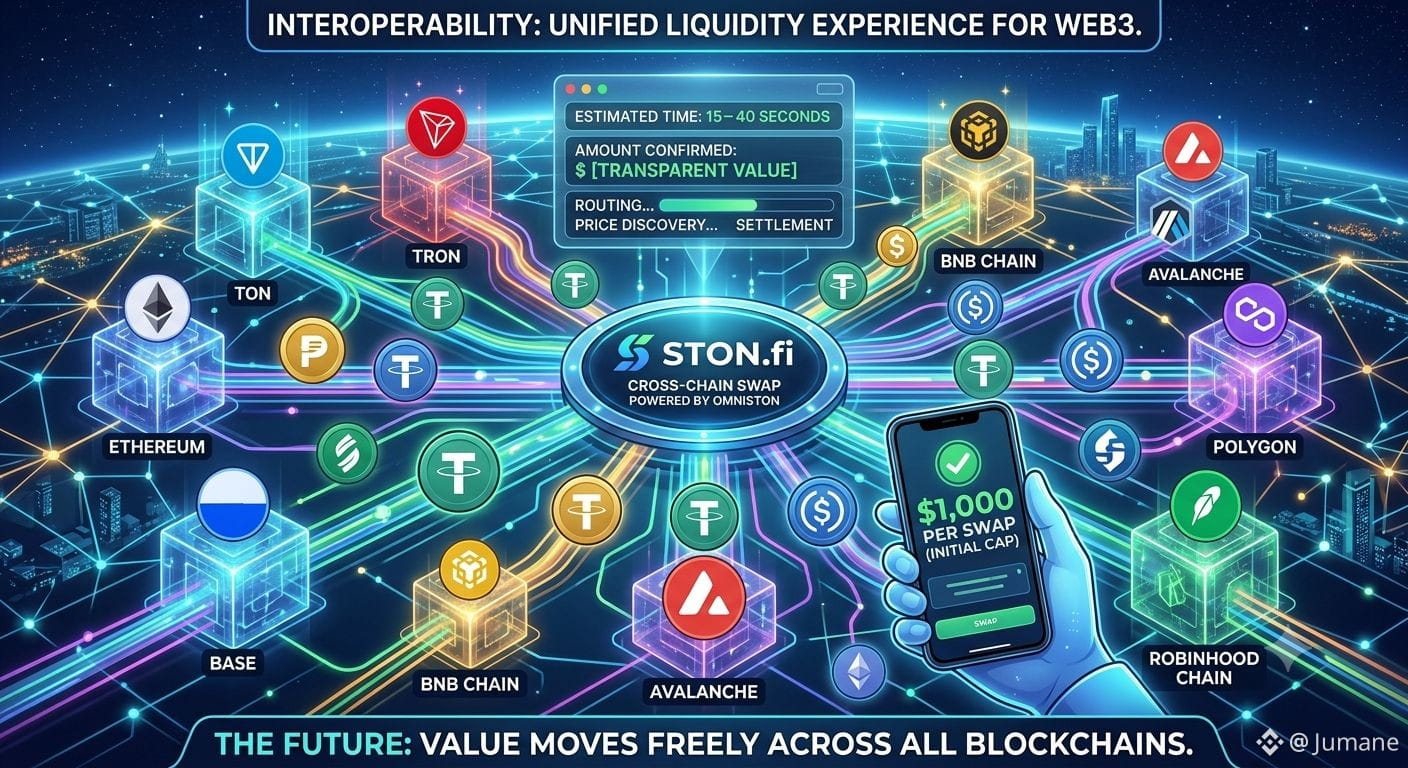
Powered by Omniston, STON.fi's execution layer abstracts the complexity of cross-chain transactions by coordinating routing, execution and settlement through a single self-custodial interface. Users receive transparent pricing before execution, with most swaps finalised within 15–40 seconds.
The expanded network now supports stablecoin transfers across:
• TON
• TRON
• Ethereum
• BNB Chain
• Base
• Avalanche
• Arbitrum
• Polygon
• Robinhood Chain
Supporting assets include USDT, USDC, USDT0, PUSD and USDG, creating a more connected stablecoin liquidity network across leading blockchain ecosystems.
While the initial rollout is subject to a temporary $1,000 per transaction limit, the strategic significance extends beyond transaction size. It reflects the industry's transition towards infrastructure where interoperability is embedded into the user experience rather than treated as a separate layer.
As institutional participation and stablecoin adoption continue to accelerate, the protocols creating long-term value will be those that prioritise secure execution, capital efficiency and frictionless interoperability. In that environment, cross-chain capability is no longer a competitive advantage it is becoming foundational infrastructure for the next generation of on-chain finance.
#Web3 #DeFi #CrossChain #STONfi #TON #TRON✅ #Stablecoins #BlockchainInfrastructure #Interoperability #OnChainFinance
1
107

·
--

ලිපිය
GAMECHANGERAndre Cronje, the founder of Flying Tulip, has just dropped a bombshell that's set to send shockwaves throughout the financial world. In an explosive statement, he claims that DeFi has "obliterated" the old framework and evolved into a radical new concept – onchain finance.
The proof is in the pudding. #DeFiIsDead #OnChainFinance #CryptoRevolution Andre Cronje's argument is rooted in the fact that DeFi protocols have sacrificed some of their inherent immutability and decentralization in favor of greater usability and scalability. This might seem counterintuitive, but it's a crucial step towards a more accessible and efficient financial system.
The stakes are high, as the transition to onchain finance could redefine the boundaries of traditional finance. Imagine a world where transactions are faster, cheaper, and more secure – where institutions and individuals alike can access the full range of financial services without the need for intermediaries.
So what does this mean for the future of DeFi? The implications are endless, and the smart money is already betting on the winners. But here's the thing – you don't have to be a pro to get in on the action. Whether you're a seasoned trader or a new player in the game, the flood has started, and it's time to join the movement. Will you be left behind, or will you seize the opportunity to shape the future of finance? Invest in your future today and see for yourself – the revolution is real, and it's just getting started!
GAMECHANGER
Andre Cronje, the founder of Flying Tulip, has just dropped a bombshell that's set to send shockwaves throughout the financial world. In an explosive statement, he claims that DeFi has "obliterated" the old framework and evolved into a radical new concept – onchain finance.
The proof is in the pudding. #DeFiIsDead #OnChainFinance #CryptoRevolution Andre Cronje's argument is rooted in the fact that DeFi protocols have sacrificed some of their inherent immutability and decentralization in favor of greater usability and scalability. This might seem counterintuitive, but it's a crucial step towards a more accessible and efficient financial system.
The stakes are high, as the transition to onchain finance could redefine the boundaries of traditional finance. Imagine a world where transactions are faster, cheaper, and more secure – where institutions and individuals alike can access the full range of financial services without the need for intermediaries.
So what does this mean for the future of DeFi? The implications are endless, and the smart money is already betting on the winners. But here's the thing – you don't have to be a pro to get in on the action. Whether you're a seasoned trader or a new player in the game, the flood has started, and it's time to join the movement. Will you be left behind, or will you seize the opportunity to shape the future of finance? Invest in your future today and see for yourself – the revolution is real, and it's just getting started!
36
·
--
Japan's financial behemoth SBI Holdings has just unlocked a multibillion-yen onchain finance play, partnering with Ondo to bring tokenized Japanese stocks to a global audience.
SBI's aggressive foray into onchain finance is starting to pay off, now boasting a settlement and collateral platform for the Japanese yen, JPYSC. The deal with Ondo is set to distribute the latter's products through SBI's extensive network, potentially paving the way for a $2.6T market to be tokenized.
Smart money is taking notice - a 25% increase in Ondo's daily active users in the past quarter is evident in the data. The Ondo-SBI partnership's success will likely fuel more onchain adoption and institutional investment in Japan's growing DeFi scene #CryptocurrencyTrading #DeFiInstitutional.
Watch for SBI's JPYSC to breach 1,050 JPY in the coming fortnight, solidifying its dominance in Japan's onchain finance ecosystem #OnChainFinance.
What's the next major DeFi player to disrupt the financial status quo with a game-changing deal?
9
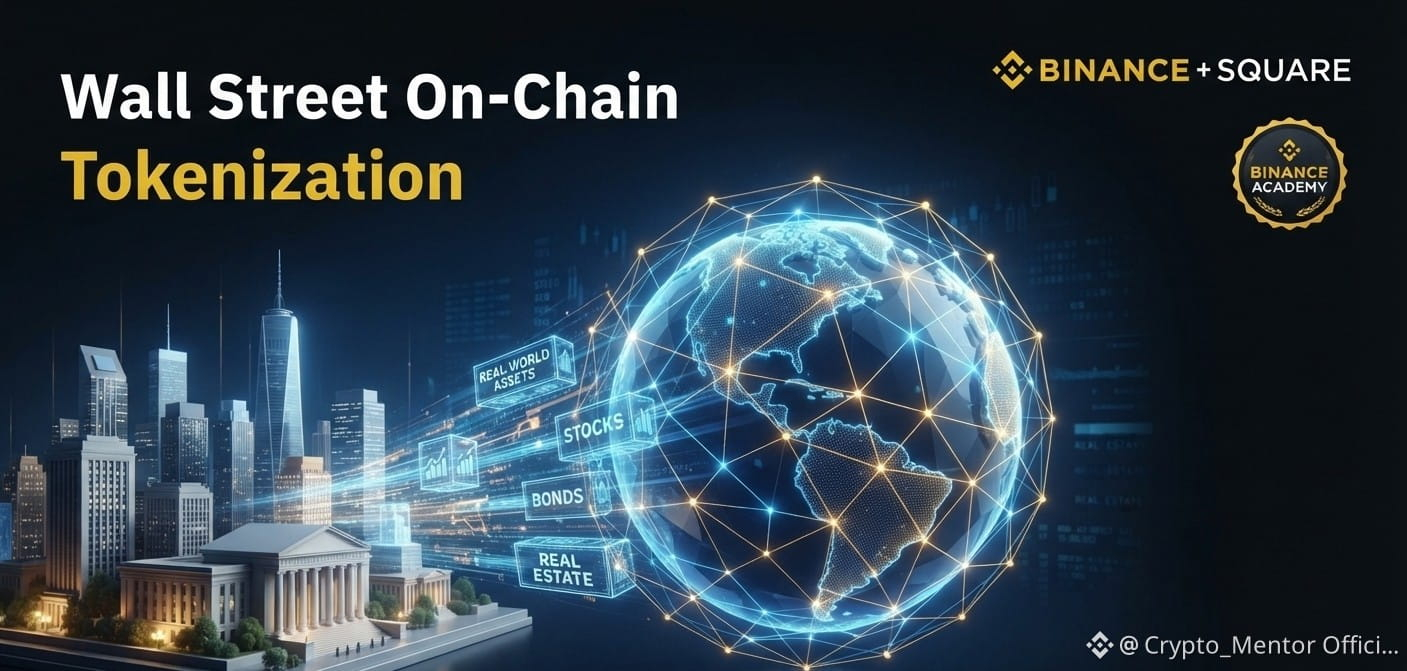
Wall Street On-Chain: Trend, Transition, or a Temporary Narrative? 🌐
Crypto market ab sirf Bitcoin aur altcoins ki price movement tak mehdood nahi rahi. Ek bohot bara institutional shift dheere dheere shape le raha hai: Tokenization.
$BTC
{spot}(BTCUSDT)
Real-world assets (RWAs)—jaise government bonds, funds, stocks aur real estate—ko blockchain rails par represent aur settle karne ki race tez ho rahi hai. Public market trackers ke mutabiq, tokenized RWAs ki visible on-chain value 2026 mein roughly $38B+ tak pohanch chuki hai. Kuch broader industry estimates tokenized assets ka total footprint is se kaafi bara dikhate hain—magar dono figures ko same metric samajhna ghalat hoga. (coinlaw.io)
$RWA
{alpha}(560x9c8b5ca345247396bdfac0395638ca9045c6586e)
TradFi ke on-chain shift hone ki 3 bari wajah:
⚡ 24/7 Market Access: Blockchain rails theoretically traditional market hours se bahar bhi transfer aur settlement ko enable kar sakte hain.
$SOL
{future}(SOLUSDT)
⚡ Faster Settlement: Legacy clearing cycles ke muqable mein settlement process zyada efficient ho sakta hai—lekin yeh product structure aur regulation par depend karega.
⚡ Programmable Finance: Smart contracts compliance rules, ownership transfer aur reporting workflows ko automate karne mein madad de sakte hain.
The Reality Check
Bari narrative ke sath bari challenges bhi hain: regulatory compliance, legal ownership rights, secure custody, liquidity, interoperability aur investor protection abhi bhi institutional adoption ke key hurdles hain.
)
💬 Big Question:
Kya aglay kuch saalon mein traditional finance ka ek meaningful hissa on-chain rails par move hoga—ya tokenization abhi bhi hype aur limited pilots tak mehdood rahegi?
Aapka kya khayal hai? Comments mein batayein.
#TokenizationRevolution #RWA板块涨势强劲 #BlockchainNews #Web3Revolution #OnChainFinance
Wall Street On-Chain: Trend, Transition, or a Temporary Narrative? 🌐
Crypto market ab sirf Bitcoin aur altcoins ki price movement tak mehdood nahi rahi. Ek bohot bara institutional shift dheere dheere shape le raha hai: Tokenization.
$BTC
Real-world assets (RWAs)—jaise government bonds, funds, stocks aur real estate—ko blockchain rails par represent aur settle karne ki race tez ho rahi hai. Public market trackers ke mutabiq, tokenized RWAs ki visible on-chain value 2026 mein roughly $38B+ tak pohanch chuki hai. Kuch broader industry estimates tokenized assets ka total footprint is se kaafi bara dikhate hain—magar dono figures ko same metric samajhna ghalat hoga. (coinlaw.io)
$RWA
TradFi ke on-chain shift hone ki 3 bari wajah:
⚡ 24/7 Market Access: Blockchain rails theoretically traditional market hours se bahar bhi transfer aur settlement ko enable kar sakte hain.
$SOL
⚡ Faster Settlement: Legacy clearing cycles ke muqable mein settlement process zyada efficient ho sakta hai—lekin yeh product structure aur regulation par depend karega.
⚡ Programmable Finance: Smart contracts compliance rules, ownership transfer aur reporting workflows ko automate karne mein madad de sakte hain.
The Reality Check
Bari narrative ke sath bari challenges bhi hain: regulatory compliance, legal ownership rights, secure custody, liquidity, interoperability aur investor protection abhi bhi institutional adoption ke key hurdles hain.
)
💬 Big Question:
Kya aglay kuch saalon mein traditional finance ka ek meaningful hissa on-chain rails par move hoga—ya tokenization abhi bhi hype aur limited pilots tak mehdood rahegi?
Aapka kya khayal hai? Comments mein batayein.
#TokenizationRevolution #RWA板块涨势强劲 #BlockchainNews #Web3Revolution #OnChainFinance
3
1
214

The institutional tide is turning.
Fidelity's digital asset strategist suggests the shift toward institutional tokenization is irreversible, providing significant structural benefits for asset managers.
#RealWorldAssets #OnchainFinance
The institutional tide is turning.
Fidelity's digital asset strategist suggests the shift toward institutional tokenization is irreversible, providing significant structural benefits for asset managers.
#RealWorldAssets #OnchainFinance
Fidelity's digital asset strategist suggests the shift toward institutional tokenization is irreversible, providing significant structural benefits for asset managers.
#RealWorldAssets #OnchainFinance

19
තවත් අන්තර්ගතයන් ගවේෂණය කිරීමට ඇතුල් වන්න
Binance චතුරශ්රය හි ගෝලීය ක්රිප්ටෝ පරිශීලකයින් හා එක්වන්න
⚡️ ක්රිප්ටෝ පිළිබඳ නවතම සහ ප්රයෝජනවත් තොරතුරු ලබා ගන්න.
💬 ලොව විශාලතම ක්රිප්ටෝ හුවමාරුව මගින් විශ්වාස කෙරේ.
👍 සත්යායනය කරන ලද නිර්මාණකරුවන්ගෙන් සැබෑ විදසුන් සොයා ගන්න.
විද්යුත් තැපෑල / දුරකථන අංකය
නැගී එන මාතෘකා
1
#NVIDIAReinstatesJensenHuangasCEO
85,087 නැරඹීම්
852 සාකච්ඡා කරමින්
2
#WillMarketsStageAThanksgivingReliefRally?
190,800 නැරඹීම්
1,856 සාකච්ඡා කරමින්
3
#WillOctCorePCEShiftFedHikeExpectations?
69,317 නැරඹීම්
787 සාකච්ඡා කරමින්
4
#BitcoinEndsRecord17DayStreakOfLowerHighs
27,823 නැරඹීම්
296 සාකච්ඡා කරමින්
5
#TradersPriceOut50bpDecemberFedHike
16,183 නැරඹීම්
186 සාකච්ඡා කරමින්
6
#EvolveAtBinanceBlockchainWeek
148,738 නැරඹීම්
1,062 සාකච්ඡා කරමින්
7
#TrumpBackedAmericanBitcoinRaisesHoldingsToOver8500BTC
1,896 නැරඹීම්
37 සාකච්ඡා කරමින්
8
#MuskWarnsOfAICashCrunch
81,450 නැරඹීම්
720 සාකච්ඡා කරමින්
9
#TradFiForBeginners
1.1M නැරඹීම්
6,047 සාකච්ඡා කරමින්
10
#SkyPSMUSDCLiquidityReboundsTo$1.77B
1,196 නැරඹීම්
17 සාකච්ඡා කරමින්