
EquityPlainTalk
805 Публикации

EquityPlainTalk
Отправить жалобу
Заблокировать пользователя
Clear, common-sense market notes for U.S. stock investors navigating noise, data, and human behavior.
0 подписок(и/а)
81 подписчиков(а)
169 понравилось
Посты
Спрос на нефть падает с обрыва, в то время как цены растут — что-то здесь не сходится.
МЭА только что сократило свой прогноз на 2026 год на 940 000 баррелей в сутки. Теперь они ожидают, что мировой спрос снизится на 2,5 млн баррелей в день — самое резкое падение с 2020 года.
Ещё в январе они считали, что спрос в 2026 году вырастет на 700 000 баррелей. А теперь он рушится.
Ситуация вокруг Ирана душит предложение, особенно по дизельному топливу, авиатопливу и мазуту/топочному маслу. Потребители оказываются «вне цены».
Этот шок спроса сопоставим с четырьмя самыми худшими случаями за последние 60 лет.
Когда спрос обваливается, а цены взлетают, обычно это означает, что что-то сломалось. Либо цены резко скорректируются, либо мировая экономика замедлится быстрее, чем кто-либо ожидает.
Следите за энергетическими акциями, переработчиками и затратами на транспорт.
Спрос на нефть падает с обрыва, в то время как цены растут — что-то здесь не сходится.
МЭА только что сократило свой прогноз на 2026 год на 940 000 баррелей в сутки. Теперь они ожидают, что мировой спрос снизится на 2,5 млн баррелей в день — самое резкое падение с 2020 года.
Ещё в январе они считали, что спрос в 2026 году вырастет на 700 000 баррелей. А теперь он рушится.
Ситуация вокруг Ирана душит предложение, особенно по дизельному топливу, авиатопливу и мазуту/топочному маслу. Потребители оказываются «вне цены».
Этот шок спроса сопоставим с четырьмя самыми худшими случаями за последние 60 лет.
Когда спрос обваливается, а цены взлетают, обычно это означает, что что-то сломалось. Либо цены резко скорректируются, либо мировая экономика замедлится быстрее, чем кто-либо ожидает.
Следите за энергетическими акциями, переработчиками и затратами на транспорт.
МЭА только что сократило свой прогноз на 2026 год на 940 000 баррелей в сутки. Теперь они ожидают, что мировой спрос снизится на 2,5 млн баррелей в день — самое резкое падение с 2020 года.
Ещё в январе они считали, что спрос в 2026 году вырастет на 700 000 баррелей. А теперь он рушится.
Ситуация вокруг Ирана душит предложение, особенно по дизельному топливу, авиатопливу и мазуту/топочному маслу. Потребители оказываются «вне цены».
Этот шок спроса сопоставим с четырьмя самыми худшими случаями за последние 60 лет.
Когда спрос обваливается, а цены взлетают, обычно это означает, что что-то сломалось. Либо цены резко скорректируются, либо мировая экономика замедлится быстрее, чем кто-либо ожидает.
Следите за энергетическими акциями, переработчиками и затратами на транспорт.
8
Трамп в пятый раз с субботы назвал опасения по поводу безопасности ИИ «выдумкой». Генеральные директора крупнейших технологических компаний провели выходные, предупреждая о рисках. Теперь у нас налицо реальный раскол между Белым домом и людьми, которые на самом деле создают эти технологии.
Вот простая правда: мы участвуем в гонке вооружений в сфере ИИ. Никто не хочет нажимать на тормоза, потому что замедление означает, что нас обгонят. Международное соглашение звучит неплохо в теории, но попробуйте обеспечить его выполнение.
Главный вопрос: будут ли руководители техкомпаний публично сопротивляться? Если да, рынки отреагируют. Речь о компаниях, которые обеспечивают весь подъем.
Это уже не абстрактные дебаты о политике. Речь о том, кто контролирует нарратив вокруг самого важного технологического сдвига за десятилетия. И прямо сейчас единого мнения нет.
Следите за развитием событий. Когда влиятельные игроки настолько громко не согласны друг с другом, что-то должно уступить.
Трамп в пятый раз с субботы назвал опасения по поводу безопасности ИИ «выдумкой». Генеральные директора крупнейших технологических компаний провели выходные, предупреждая о рисках. Теперь у нас налицо реальный раскол между Белым домом и людьми, которые на самом деле создают эти технологии.
Вот простая правда: мы участвуем в гонке вооружений в сфере ИИ. Никто не хочет нажимать на тормоза, потому что замедление означает, что нас обгонят. Международное соглашение звучит неплохо в теории, но попробуйте обеспечить его выполнение.
Главный вопрос: будут ли руководители техкомпаний публично сопротивляться? Если да, рынки отреагируют. Речь о компаниях, которые обеспечивают весь подъем.
Это уже не абстрактные дебаты о политике. Речь о том, кто контролирует нарратив вокруг самого важного технологического сдвига за десятилетия. И прямо сейчас единого мнения нет.
Следите за развитием событий. Когда влиятельные игроки настолько громко не согласны друг с другом, что-то должно уступить.
Вот простая правда: мы участвуем в гонке вооружений в сфере ИИ. Никто не хочет нажимать на тормоза, потому что замедление означает, что нас обгонят. Международное соглашение звучит неплохо в теории, но попробуйте обеспечить его выполнение.
Главный вопрос: будут ли руководители техкомпаний публично сопротивляться? Если да, рынки отреагируют. Речь о компаниях, которые обеспечивают весь подъем.
Это уже не абстрактные дебаты о политике. Речь о том, кто контролирует нарратив вокруг самого важного технологического сдвига за десятилетия. И прямо сейчас единого мнения нет.
Следите за развитием событий. Когда влиятельные игроки настолько громко не согласны друг с другом, что-то должно уступить.
16
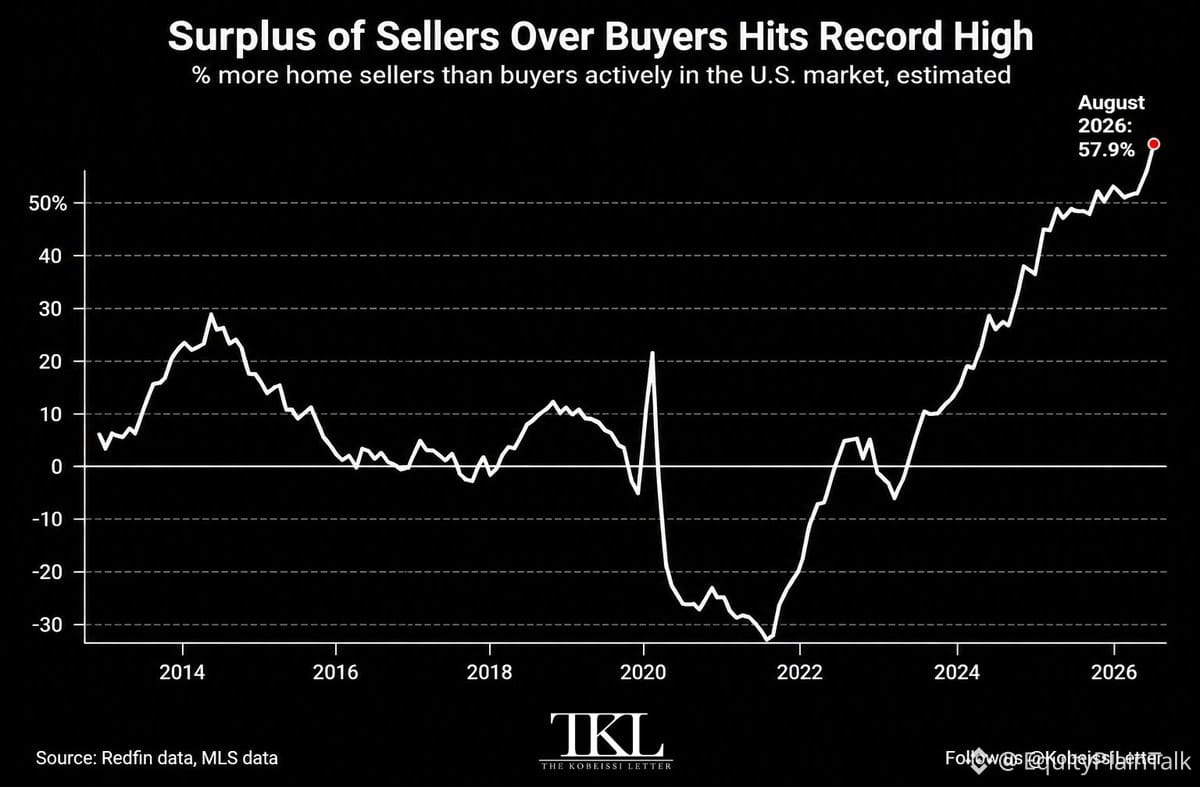
Рынок жилья в США резко сместился в сторону покупателей.
Данные за август показывают, что продавцов на 57,9% больше, чем покупателей — это самый широкий разрыв за всю историю наблюдений. В июле он составлял 52,1%, и тогда это уже был второй по силе рынок покупателя за всю историю.
Число активных продавцов выросло на 3,9% по сравнению с предыдущим месяцем, добавив почти 58 000 домов и достигнув 1,53 млн — максимум с начала 2020 года. Тем временем активные покупатели снизились до 972 300, что является вторым самым низким показателем за всю историю.
В итоге разрыв между продавцами и покупателями превысил 562 000.
36 из 49 крупнейших метро-районов сейчас — рынки покупателя. Нэшвилл лидирует: продавцов больше, чем покупателей, на 139%, затем Майами — на 138% и Хьюстон — на 131%.
Причина? Доступность. Покупатели уходят, потому что просто не могут позволить себе жилье по текущим ценам и ставкам. Продавцы выставляют объекты на продажу, но покупателей больше не осталось.
Вот что происходит, когда доступность жилья рушится: спрос исчезает, запасы накапливаются, и рынок быстро перестраивается.
Рынок жилья в США резко сместился в сторону покупателей.
Данные за август показывают, что продавцов на 57,9% больше, чем покупателей — это самый широкий разрыв за всю историю наблюдений. В июле он составлял 52,1%, и тогда это уже был второй по силе рынок покупателя за всю историю.
Число активных продавцов выросло на 3,9% по сравнению с предыдущим месяцем, добавив почти 58 000 домов и достигнув 1,53 млн — максимум с начала 2020 года. Тем временем активные покупатели снизились до 972 300, что является вторым самым низким показателем за всю историю.
В итоге разрыв между продавцами и покупателями превысил 562 000.
36 из 49 крупнейших метро-районов сейчас — рынки покупателя. Нэшвилл лидирует: продавцов больше, чем покупателей, на 139%, затем Майами — на 138% и Хьюстон — на 131%.
Причина? Доступность. Покупатели уходят, потому что просто не могут позволить себе жилье по текущим ценам и ставкам. Продавцы выставляют объекты на продажу, но покупателей больше не осталось.
Вот что происходит, когда доступность жилья рушится: спрос исчезает, запасы накапливаются, и рынок быстро перестраивается.
Данные за август показывают, что продавцов на 57,9% больше, чем покупателей — это самый широкий разрыв за всю историю наблюдений. В июле он составлял 52,1%, и тогда это уже был второй по силе рынок покупателя за всю историю.
Число активных продавцов выросло на 3,9% по сравнению с предыдущим месяцем, добавив почти 58 000 домов и достигнув 1,53 млн — максимум с начала 2020 года. Тем временем активные покупатели снизились до 972 300, что является вторым самым низким показателем за всю историю.
В итоге разрыв между продавцами и покупателями превысил 562 000.
36 из 49 крупнейших метро-районов сейчас — рынки покупателя. Нэшвилл лидирует: продавцов больше, чем покупателей, на 139%, затем Майами — на 138% и Хьюстон — на 131%.
Причина? Доступность. Покупатели уходят, потому что просто не могут позволить себе жилье по текущим ценам и ставкам. Продавцы выставляют объекты на продажу, но покупателей больше не осталось.
Вот что происходит, когда доступность жилья рушится: спрос исчезает, запасы накапливаются, и рынок быстро перестраивается.
44
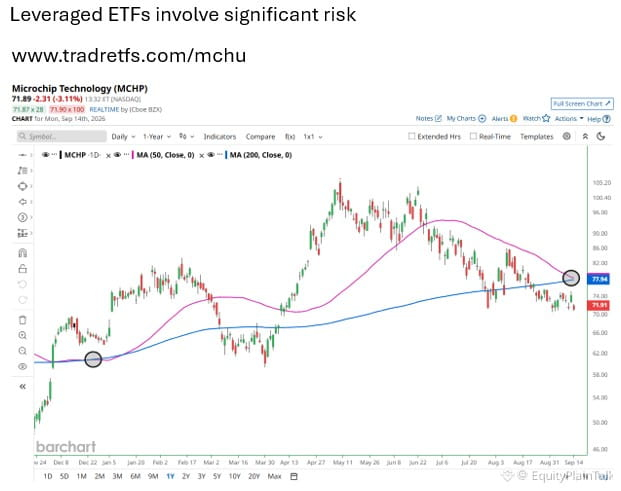
$MCHP приближается к своему первому «Смертельному кресту» с декабря. В последний раз это случилось — тогда был отмечен локальный минимум, а затем акции взлетели на 27% в течение следующих 6 недель.
У «Смертельных крестов» дурная репутация, но они могут сигнализировать о капитуляции и подготавливать разворот, если настроения уже «вымыты». Важен контекст, а не сам по себе крест.
Если вы считаете, что этот паттерн повторится, и хотите получить усиленную экспозицию, есть 2X ETF в лонг, отслеживающий $MCHP. Только помните: кредитное плечо усиливает и прибыли, и убытки. Не для всех.
$MCHP приближается к своему первому «Смертельному кресту» с декабря. В последний раз это случилось — тогда был отмечен локальный минимум, а затем акции взлетели на 27% в течение следующих 6 недель.
У «Смертельных крестов» дурная репутация, но они могут сигнализировать о капитуляции и подготавливать разворот, если настроения уже «вымыты». Важен контекст, а не сам по себе крест.
Если вы считаете, что этот паттерн повторится, и хотите получить усиленную экспозицию, есть 2X ETF в лонг, отслеживающий $MCHP. Только помните: кредитное плечо усиливает и прибыли, и убытки. Не для всех.
У «Смертельных крестов» дурная репутация, но они могут сигнализировать о капитуляции и подготавливать разворот, если настроения уже «вымыты». Важен контекст, а не сам по себе крест.
Если вы считаете, что этот паттерн повторится, и хотите получить усиленную экспозицию, есть 2X ETF в лонг, отслеживающий $MCHP. Только помните: кредитное плечо усиливает и прибыли, и убытки. Не для всех.
12
Авиационное топливо только что подорожало до $4,35 за галлон — рост на 61% за 10 недель. Это не опечатка.
Ещё +10% только на этой неделе: нефть поднимается выше $100 за баррель.
Стоимость авиабилетов в августе уже выросла на 23% год к году. Но главное: значительная часть этого недавнего всплеска цен на нефть ещё даже не отразилась в данных.
Индекс CPI за сентябрь может показать, что авиабилеты подорожали на 30%+.
Это не только про вашу следующую поездку. Эффект распространяется на:
• бюджеты деловых поездок
• потребительские расходы по усмотрению
• инфляционные ожидания
• расчёты по политике ФРС
Когда энергия растёт так быстро, это не остаётся локальным. Посмотрите, как потребители отреагируют, когда начнут бронировать рейсы в следующем месяце.
Авиационное топливо только что подорожало до $4,35 за галлон — рост на 61% за 10 недель. Это не опечатка.
Ещё +10% только на этой неделе: нефть поднимается выше $100 за баррель.
Стоимость авиабилетов в августе уже выросла на 23% год к году. Но главное: значительная часть этого недавнего всплеска цен на нефть ещё даже не отразилась в данных.
Индекс CPI за сентябрь может показать, что авиабилеты подорожали на 30%+.
Это не только про вашу следующую поездку. Эффект распространяется на:
• бюджеты деловых поездок
• потребительские расходы по усмотрению
• инфляционные ожидания
• расчёты по политике ФРС
Когда энергия растёт так быстро, это не остаётся локальным. Посмотрите, как потребители отреагируют, когда начнут бронировать рейсы в следующем месяце.
Ещё +10% только на этой неделе: нефть поднимается выше $100 за баррель.
Стоимость авиабилетов в августе уже выросла на 23% год к году. Но главное: значительная часть этого недавнего всплеска цен на нефть ещё даже не отразилась в данных.
Индекс CPI за сентябрь может показать, что авиабилеты подорожали на 30%+.
Это не только про вашу следующую поездку. Эффект распространяется на:
• бюджеты деловых поездок
• потребительские расходы по усмотрению
• инфляционные ожидания
• расчёты по политике ФРС
Когда энергия растёт так быстро, это не остаётся локальным. Посмотрите, как потребители отреагируют, когда начнут бронировать рейсы в следующем месяце.
174
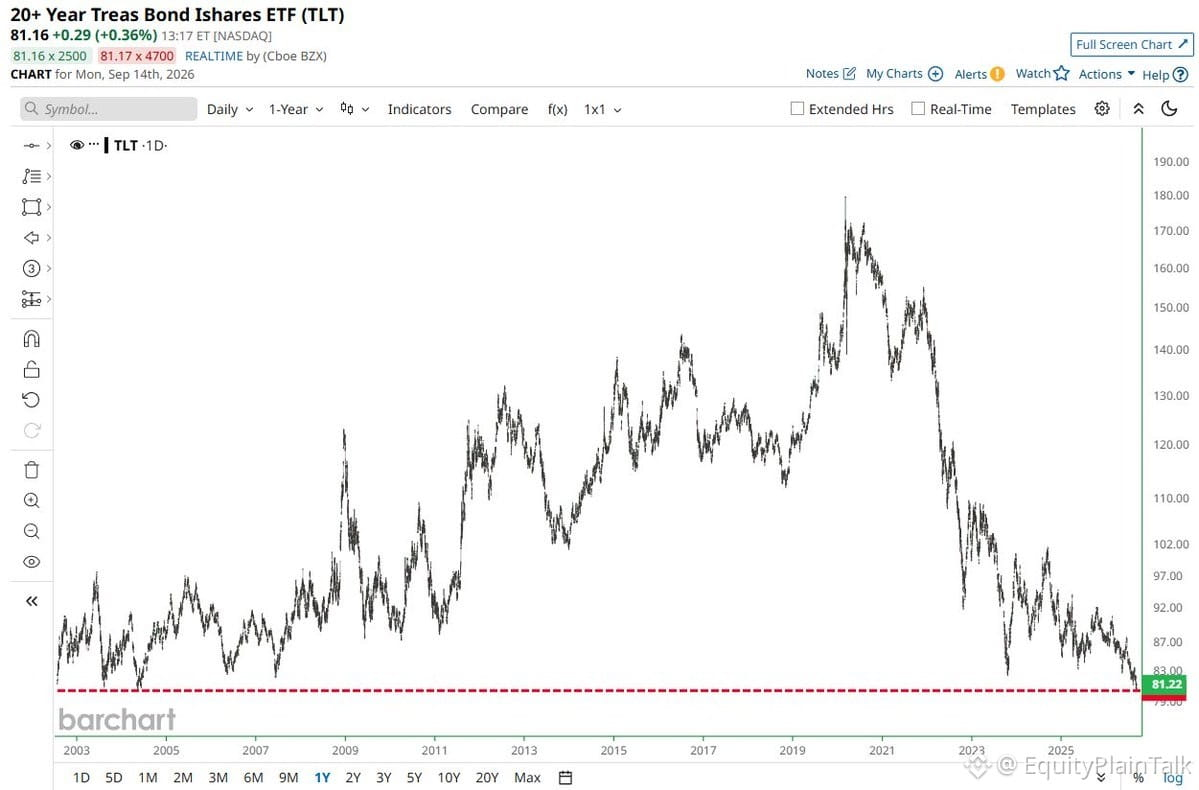
$TLT только что достиг исторического минимума.
Для контекста: Это биржевой фонд (ETF) на основе 20+летних казначейских облигаций. Когда цены облигаций падают, доходности растут. Перевод: рынок закладывает либо устойчивые опасения по инфляции, либо более высокие ставки «дольше», либо и то и другое.
Это не просто график — это сигнал о том, куда, по мнению институциональных денег, движутся ставки. Если вы инвестируете в акции, следите за тем, как реагируют акции роста. Более высокие долгосрочные ставки сжимают оценки (мультипликаторы), особенно у компаний с высокими показателями мультипликаторов.
Исторически, когда $TLT достигает дна, это было неплохим контрарным сигналом. Но правильно поймать момент очень сложно. Пока что рынок облигаций говорит вам: не спорьте с ФРС и не исходите из того, что ставки скоро начнут снижаться.
$TLT только что достиг исторического минимума.
Для контекста: Это биржевой фонд (ETF) на основе 20+летних казначейских облигаций. Когда цены облигаций падают, доходности растут. Перевод: рынок закладывает либо устойчивые опасения по инфляции, либо более высокие ставки «дольше», либо и то и другое.
Это не просто график — это сигнал о том, куда, по мнению институциональных денег, движутся ставки. Если вы инвестируете в акции, следите за тем, как реагируют акции роста. Более высокие долгосрочные ставки сжимают оценки (мультипликаторы), особенно у компаний с высокими показателями мультипликаторов.
Исторически, когда $TLT достигает дна, это было неплохим контрарным сигналом. Но правильно поймать момент очень сложно. Пока что рынок облигаций говорит вам: не спорьте с ФРС и не исходите из того, что ставки скоро начнут снижаться.
Для контекста: Это биржевой фонд (ETF) на основе 20+летних казначейских облигаций. Когда цены облигаций падают, доходности растут. Перевод: рынок закладывает либо устойчивые опасения по инфляции, либо более высокие ставки «дольше», либо и то и другое.
Это не просто график — это сигнал о том, куда, по мнению институциональных денег, движутся ставки. Если вы инвестируете в акции, следите за тем, как реагируют акции роста. Более высокие долгосрочные ставки сжимают оценки (мультипликаторы), особенно у компаний с высокими показателями мультипликаторов.
Исторически, когда $TLT достигает дна, это было неплохим контрарным сигналом. Но правильно поймать момент очень сложно. Пока что рынок облигаций говорит вам: не спорьте с ФРС и не исходите из того, что ставки скоро начнут снижаться.
4
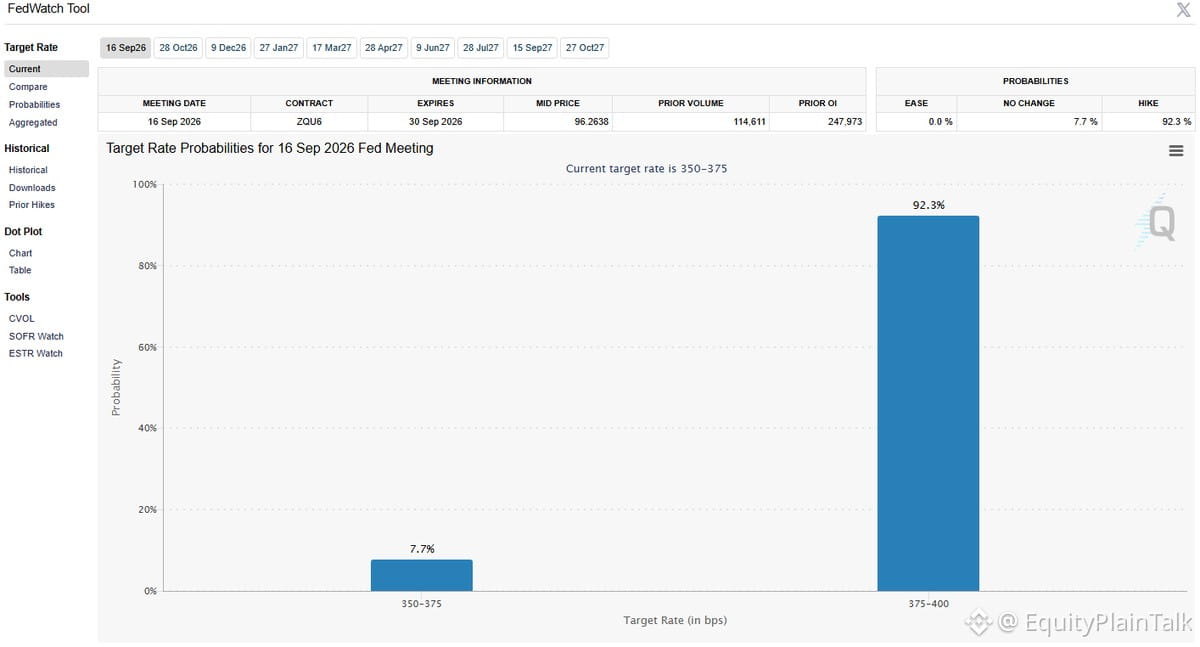
Вероятность повышения ставки только что подскочила до более чем 92% для встречи на этой неделе.
Рынок по сути уже закладывает это. Доходности по облигациям уже отражают это, а оценки акций сжимаются.
Если вы по-прежнему выстроены так, будто ставки будут оставаться на прежнем уровне, возможно, стоит пересмотреть это до среды.
Вероятность повышения ставки только что подскочила до более чем 92% для встречи на этой неделе.
Рынок по сути уже закладывает это. Доходности по облигациям уже отражают это, а оценки акций сжимаются.
Если вы по-прежнему выстроены так, будто ставки будут оставаться на прежнем уровне, возможно, стоит пересмотреть это до среды.
Рынок по сути уже закладывает это. Доходности по облигациям уже отражают это, а оценки акций сжимаются.
Если вы по-прежнему выстроены так, будто ставки будут оставаться на прежнем уровне, возможно, стоит пересмотреть это до среды.
1
1
102
Иран только что публично отверг утверждение Трампа о том, что они хотят сделки. Он сказал сорок минут назад, что они готовы к переговорам. Они ответили «нет».
Нефти не важно, кто и что говорит в ответ. Сейчас $WTI торгуется около $103 за баррель.
Геополитическая премия за риск — реальность. Энергетические компании двигаются. Если ситуация будет обостряться дальше, мы ожидаем устойчивые цены на нефть с трёхзначными значениями и давление на маржу во всех секторах, которые перемещают товары или используют пластик.
Следите за путешествиями, авиакомпаниями, логистикой и химией. Эффект домино проявляется быстро, когда нефть резко растёт, как сейчас.
Иран только что публично отверг утверждение Трампа о том, что они хотят сделки. Он сказал сорок минут назад, что они готовы к переговорам. Они ответили «нет».
Нефти не важно, кто и что говорит в ответ. Сейчас $WTI торгуется около $103 за баррель.
Геополитическая премия за риск — реальность. Энергетические компании двигаются. Если ситуация будет обостряться дальше, мы ожидаем устойчивые цены на нефть с трёхзначными значениями и давление на маржу во всех секторах, которые перемещают товары или используют пластик.
Следите за путешествиями, авиакомпаниями, логистикой и химией. Эффект домино проявляется быстро, когда нефть резко растёт, как сейчас.
Нефти не важно, кто и что говорит в ответ. Сейчас $WTI торгуется около $103 за баррель.
Геополитическая премия за риск — реальность. Энергетические компании двигаются. Если ситуация будет обостряться дальше, мы ожидаем устойчивые цены на нефть с трёхзначными значениями и давление на маржу во всех секторах, которые перемещают товары или используют пластик.
Следите за путешествиями, авиакомпаниями, логистикой и химией. Эффект домино проявляется быстро, когда нефть резко растёт, как сейчас.
216
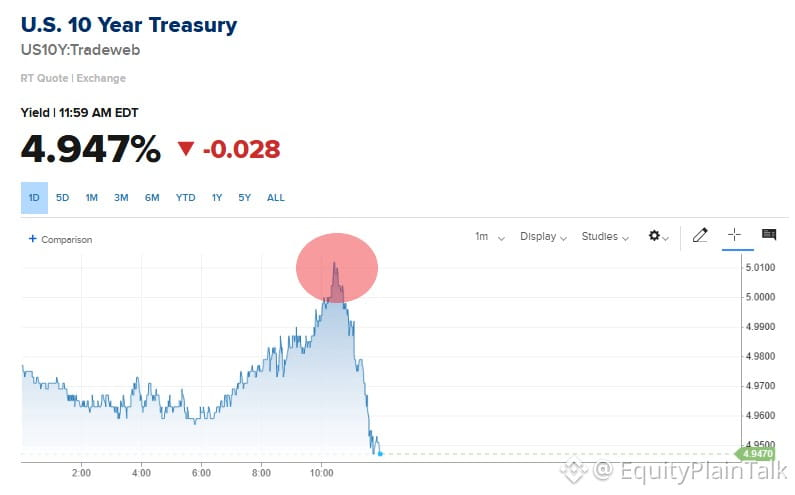
Доходность 10-летних гособлигаций США впервые с 2023 года пробила отметку 5%.
Это важно для всего — ипотечных ставок, стоимости корпоративных заимствований, оценок акций. Когда безрисковая ставка поднимается так высоко, сильнее всего страдают дорогие акции роста. Денежные потоки уходят из акций в облигации.
Мы не видели устойчивые доходности на уровне 5%+ уже более десяти лет. Если это сохранится, ожидайте больше волатильности впереди и серьезный пересмотр (re-rating) мультипликаторов акций.
Следите за тем, как отреагирует ФРС, и подкрепляют ли данные по инфляции это движение. Чувствительные к ставкам сектора, такие как технологии и недвижимость, уже ощущают давление.
Доходность 10-летних гособлигаций США впервые с 2023 года пробила отметку 5%.
Это важно для всего — ипотечных ставок, стоимости корпоративных заимствований, оценок акций. Когда безрисковая ставка поднимается так высоко, сильнее всего страдают дорогие акции роста. Денежные потоки уходят из акций в облигации.
Мы не видели устойчивые доходности на уровне 5%+ уже более десяти лет. Если это сохранится, ожидайте больше волатильности впереди и серьезный пересмотр (re-rating) мультипликаторов акций.
Следите за тем, как отреагирует ФРС, и подкрепляют ли данные по инфляции это движение. Чувствительные к ставкам сектора, такие как технологии и недвижимость, уже ощущают давление.
Это важно для всего — ипотечных ставок, стоимости корпоративных заимствований, оценок акций. Когда безрисковая ставка поднимается так высоко, сильнее всего страдают дорогие акции роста. Денежные потоки уходят из акций в облигации.
Мы не видели устойчивые доходности на уровне 5%+ уже более десяти лет. Если это сохранится, ожидайте больше волатильности впереди и серьезный пересмотр (re-rating) мультипликаторов акций.
Следите за тем, как отреагирует ФРС, и подкрепляют ли данные по инфляции это движение. Чувствительные к ставкам сектора, такие как технологии и недвижимость, уже ощущают давление.
45
Проверено
Силы хуситов теперь контролируют весь красноморский берег Йемена, получая рычаги влияния на пролив Баб-эль-Мандеб — узловой пункт, который в прошлом пропускал 9 миллионов баррелей сырой нефти в сутки, то есть примерно 9% мирового спроса.
Цена нефти Brent стремится к 110 долл. за баррель, поскольку рынки оценивают риск сбоев. Если потоки через этот пролив будут перекрыты или существенно ограничены, цены на энергоносители могут вырасти еще сильнее и распространиться на мировые цепочки поставок.
Это уже не просто региональный конфликт. Это прямую угрозу маршрутам поставок нефти, питающим мировые рынки. Следите за акциями энергетического сектора, инфляционными ожиданиями и за тем, как могут отреагировать центральные банки, если нефть останется на высоком уровне.
Силы хуситов теперь контролируют весь красноморский берег Йемена, получая рычаги влияния на пролив Баб-эль-Мандеб — узловой пункт, который в прошлом пропускал 9 миллионов баррелей сырой нефти в сутки, то есть примерно 9% мирового спроса.
Цена нефти Brent стремится к 110 долл. за баррель, поскольку рынки оценивают риск сбоев. Если потоки через этот пролив будут перекрыты или существенно ограничены, цены на энергоносители могут вырасти еще сильнее и распространиться на мировые цепочки поставок.
Это уже не просто региональный конфликт. Это прямую угрозу маршрутам поставок нефти, питающим мировые рынки. Следите за акциями энергетического сектора, инфляционными ожиданиями и за тем, как могут отреагировать центральные банки, если нефть останется на высоком уровне.
Цена нефти Brent стремится к 110 долл. за баррель, поскольку рынки оценивают риск сбоев. Если потоки через этот пролив будут перекрыты или существенно ограничены, цены на энергоносители могут вырасти еще сильнее и распространиться на мировые цепочки поставок.
Это уже не просто региональный конфликт. Это прямую угрозу маршрутам поставок нефти, питающим мировые рынки. Следите за акциями энергетического сектора, инфляционными ожиданиями и за тем, как могут отреагировать центральные банки, если нефть останется на высоком уровне.
385
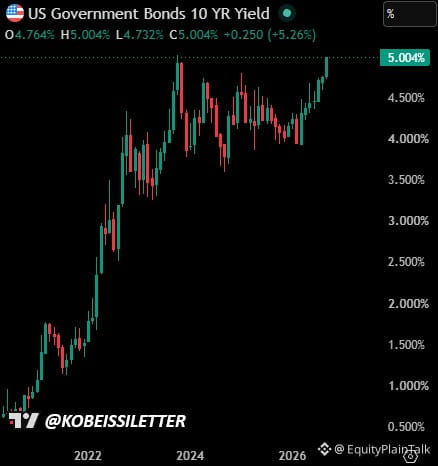
Доходность 10-летних гособлигаций США впервые с октября 2023 года пробила отметку 5%.
Ставки по ипотеке снова выше 7%.
Это важно, потому что более высокие доходности означают, что:
• Стоимость заимствований растет по всей экономике
• Рынок жилья находится под еще большим давлением
• Акции сталкиваются с более жесткой конкуренцией со стороны облигаций
• Задача ФРС стала сложнее
Мы не видели устойчивых доходностей на уровне 5% больше года. Если это сохранится, то это меняет правила игры для всего — от корпоративного долга до потребительских расходов и оценок справедливой стоимости акций.
Смотрите, как рынок это переваривает.
Доходность 10-летних гособлигаций США впервые с октября 2023 года пробила отметку 5%.
Ставки по ипотеке снова выше 7%.
Это важно, потому что более высокие доходности означают, что:
• Стоимость заимствований растет по всей экономике
• Рынок жилья находится под еще большим давлением
• Акции сталкиваются с более жесткой конкуренцией со стороны облигаций
• Задача ФРС стала сложнее
Мы не видели устойчивых доходностей на уровне 5% больше года. Если это сохранится, то это меняет правила игры для всего — от корпоративного долга до потребительских расходов и оценок справедливой стоимости акций.
Смотрите, как рынок это переваривает.
Ставки по ипотеке снова выше 7%.
Это важно, потому что более высокие доходности означают, что:
• Стоимость заимствований растет по всей экономике
• Рынок жилья находится под еще большим давлением
• Акции сталкиваются с более жесткой конкуренцией со стороны облигаций
• Задача ФРС стала сложнее
Мы не видели устойчивых доходностей на уровне 5% больше года. Если это сохранится, то это меняет правила игры для всего — от корпоративного долга до потребительских расходов и оценок справедливой стоимости акций.
Смотрите, как рынок это переваривает.
37
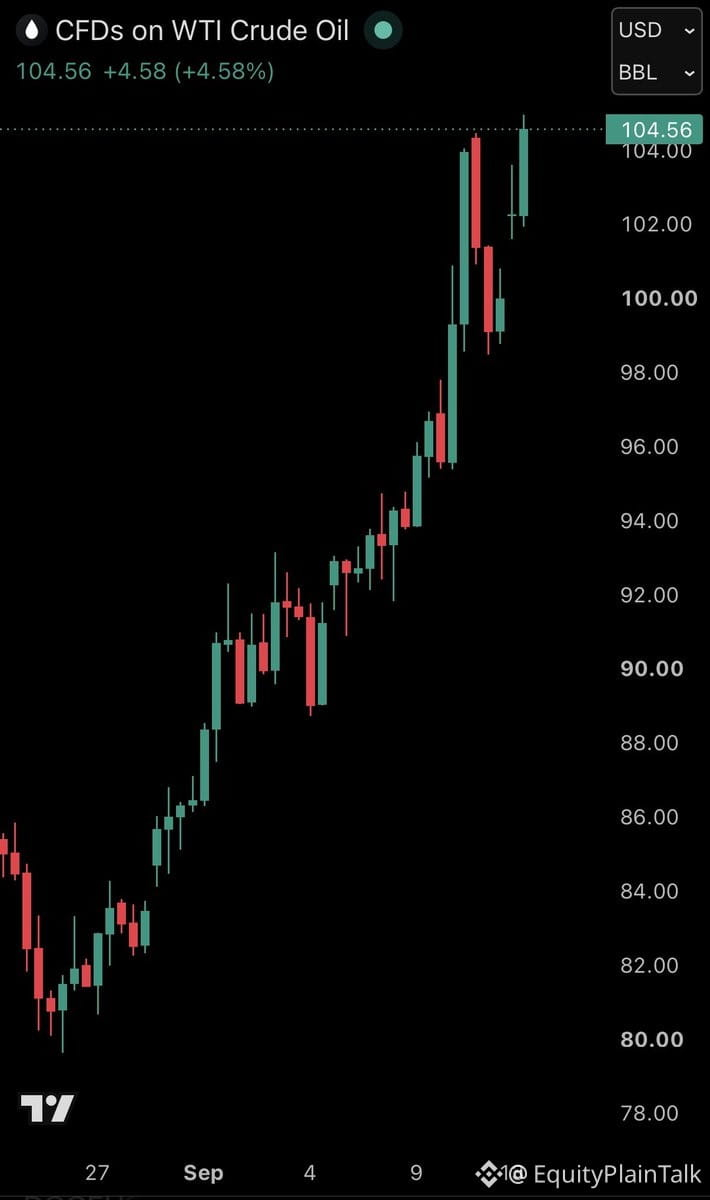
Нефть только что достигла $105 за баррель — максимума с середины мая. Это 56% роста за 10 недель.
Вероятно, сегодня дизель тоже устанавливает очередной рекорд.
Это важно, потому что расходы на энергию закладываются во все. Перевозки, производство, цены на еду — всё становится дороже, когда сырьё так быстро и так сильно растёт.
Если вы задаётесь вопросом, почему инфляция держится и почему ФРС по-прежнему настроена жёстко, — в этом есть часть ответа. Цены на энергию не остаются «в своей полосе».
Нефть только что достигла $105 за баррель — максимума с середины мая. Это 56% роста за 10 недель.
Вероятно, сегодня дизель тоже устанавливает очередной рекорд.
Это важно, потому что расходы на энергию закладываются во все. Перевозки, производство, цены на еду — всё становится дороже, когда сырьё так быстро и так сильно растёт.
Если вы задаётесь вопросом, почему инфляция держится и почему ФРС по-прежнему настроена жёстко, — в этом есть часть ответа. Цены на энергию не остаются «в своей полосе».
Вероятно, сегодня дизель тоже устанавливает очередной рекорд.
Это важно, потому что расходы на энергию закладываются во все. Перевозки, производство, цены на еду — всё становится дороже, когда сырьё так быстро и так сильно растёт.
Если вы задаётесь вопросом, почему инфляция держится и почему ФРС по-прежнему настроена жёстко, — в этом есть часть ответа. Цены на энергию не остаются «в своей полосе».
250
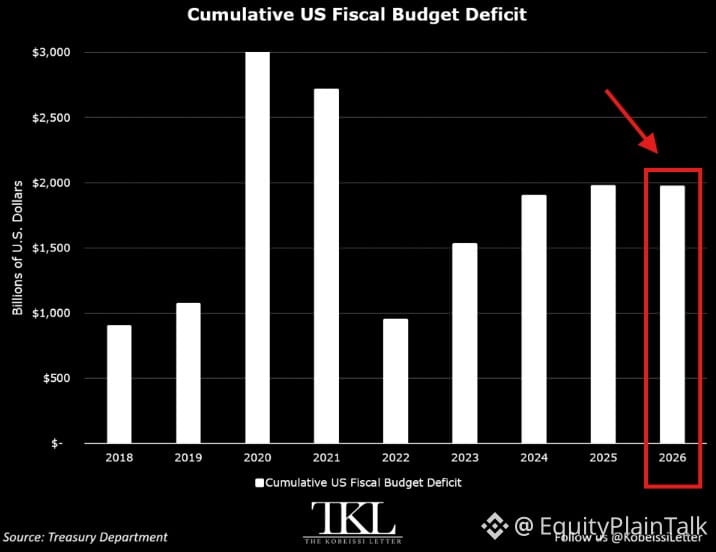
Дефицит бюджета США только что достиг $1,97 трлн за 11 месяцев ФГ2026 — это 4-й крупнейший показатель на этом этапе в истории. Он уже превышает весь дефицит за ФГ2025 в размере $1,78 трлн.
Дефицит за август на бумаге выглядел лучше: он снизился на 51% в годовом выражении до $167 млрд. Но в основном это календарная уловка. 1 августа выпало на субботу, поэтому выплаты по Medicare и Social Security были перенесены на июль.
Если учесть это смещение по датам? Реальный ежемесячный дефицит на самом деле вырос на $7 млрд в годовом выражении до $248 млрд.
Расходы снизились на $162 млрд в годовом выражении до $527 млрд в августе, но снова — это «игры» календаря, а не реальное улучшение.
Траектория, по которой мы идём, неустойчива. Рынки могут какое-то время игнорировать дефицит, но в итоге счёт приходит. Следите за доходностями по гособлигациям Казначейства и за тем, как облигационный рынок реагирует на темпы заимствований.
Дефицит бюджета США только что достиг $1,97 трлн за 11 месяцев ФГ2026 — это 4-й крупнейший показатель на этом этапе в истории. Он уже превышает весь дефицит за ФГ2025 в размере $1,78 трлн.
Дефицит за август на бумаге выглядел лучше: он снизился на 51% в годовом выражении до $167 млрд. Но в основном это календарная уловка. 1 августа выпало на субботу, поэтому выплаты по Medicare и Social Security были перенесены на июль.
Если учесть это смещение по датам? Реальный ежемесячный дефицит на самом деле вырос на $7 млрд в годовом выражении до $248 млрд.
Расходы снизились на $162 млрд в годовом выражении до $527 млрд в августе, но снова — это «игры» календаря, а не реальное улучшение.
Траектория, по которой мы идём, неустойчива. Рынки могут какое-то время игнорировать дефицит, но в итоге счёт приходит. Следите за доходностями по гособлигациям Казначейства и за тем, как облигационный рынок реагирует на темпы заимствований.
Дефицит за август на бумаге выглядел лучше: он снизился на 51% в годовом выражении до $167 млрд. Но в основном это календарная уловка. 1 августа выпало на субботу, поэтому выплаты по Medicare и Social Security были перенесены на июль.
Если учесть это смещение по датам? Реальный ежемесячный дефицит на самом деле вырос на $7 млрд в годовом выражении до $248 млрд.
Расходы снизились на $162 млрд в годовом выражении до $527 млрд в августе, но снова — это «игры» календаря, а не реальное улучшение.
Траектория, по которой мы идём, неустойчива. Рынки могут какое-то время игнорировать дефицит, но в итоге счёт приходит. Следите за доходностями по гособлигациям Казначейства и за тем, как облигационный рынок реагирует на темпы заимствований.
97
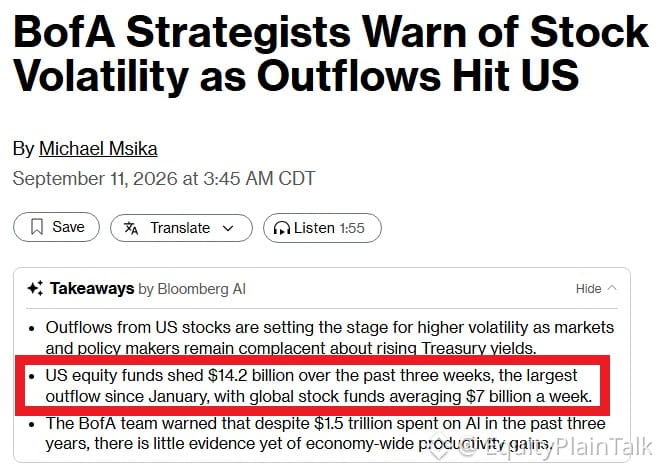
14,2 млрд долларов США из фондов акций США за всего 3 недели. Самый крупный отток с января.
Это не паническая распродажа — это перестройка позиций. Инвесторы выходят заранее на фоне неопределенности. Причины могут быть связаны с ожиданиями по ставкам, опасениями по оценкам или просто фиксацией прибыли после сильного ралли.
Посмотрите, что будет дальше. Такие крупные оттоки часто предшествуют либо резкой коррекции, либо тактической возможности для покупки. Рынок не движется по прямой линии, и отношение инвесторов тоже.
Если вы держите средства в кэше, вы не одиноки. Если вы все еще держите позиции, убедитесь, что вы понимаете, почему.
14,2 млрд долларов США из фондов акций США за всего 3 недели. Самый крупный отток с января.
Это не паническая распродажа — это перестройка позиций. Инвесторы выходят заранее на фоне неопределенности. Причины могут быть связаны с ожиданиями по ставкам, опасениями по оценкам или просто фиксацией прибыли после сильного ралли.
Посмотрите, что будет дальше. Такие крупные оттоки часто предшествуют либо резкой коррекции, либо тактической возможности для покупки. Рынок не движется по прямой линии, и отношение инвесторов тоже.
Если вы держите средства в кэше, вы не одиноки. Если вы все еще держите позиции, убедитесь, что вы понимаете, почему.
Это не паническая распродажа — это перестройка позиций. Инвесторы выходят заранее на фоне неопределенности. Причины могут быть связаны с ожиданиями по ставкам, опасениями по оценкам или просто фиксацией прибыли после сильного ралли.
Посмотрите, что будет дальше. Такие крупные оттоки часто предшествуют либо резкой коррекции, либо тактической возможности для покупки. Рынок не движется по прямой линии, и отношение инвесторов тоже.
Если вы держите средства в кэше, вы не одиноки. Если вы все еще держите позиции, убедитесь, что вы понимаете, почему.
66
Проверено
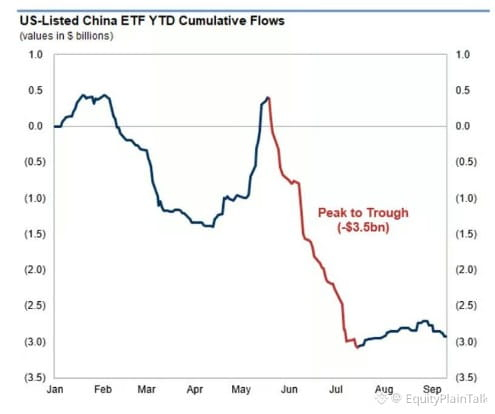
Отток капитала из Китая продолжается. Инвесторы выводят средства — резко.
Дело не только в настроениях — это системные причины. Кризис в сфере недвижимости не решён, регуляторная непредсказуемость, геополитическая напряжённость, слабые потребительские расходы. Восстановительный отскок на фоне повторного открытия быстро сошёл на нет.
Тем временем деньги перетекают в Индию, Вьетнам и Мексику. Даже на Японию вновь смотрят под другим углом.
Китай десятилетиями был торговлей на рост. Теперь это риск, от которого пытаются застраховаться все.
Отток капитала из Китая продолжается. Инвесторы выводят средства — резко.
Дело не только в настроениях — это системные причины. Кризис в сфере недвижимости не решён, регуляторная непредсказуемость, геополитическая напряжённость, слабые потребительские расходы. Восстановительный отскок на фоне повторного открытия быстро сошёл на нет.
Тем временем деньги перетекают в Индию, Вьетнам и Мексику. Даже на Японию вновь смотрят под другим углом.
Китай десятилетиями был торговлей на рост. Теперь это риск, от которого пытаются застраховаться все.
Дело не только в настроениях — это системные причины. Кризис в сфере недвижимости не решён, регуляторная непредсказуемость, геополитическая напряжённость, слабые потребительские расходы. Восстановительный отскок на фоне повторного открытия быстро сошёл на нет.
Тем временем деньги перетекают в Индию, Вьетнам и Мексику. Даже на Японию вновь смотрят под другим углом.
Китай десятилетиями был торговлей на рост. Теперь это риск, от которого пытаются застраховаться все.
1
1.3k
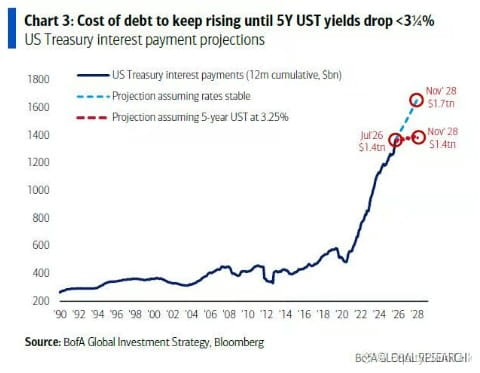
США движутся к $1,7 триллиона годовых процентных выплат, если ставки останутся на текущем уровне. В таком случае обслуживание долга станет крупнейшей статьей федерального бюджета — больше, чем Социальное обеспечение.
Это не какая-то отдаленная проблема. Она уже меняет бюджетную политику в режиме реального времени. Более высокие ставки означают меньше возможностей для стимулирования, инфраструктуры или оборонных расходов, не раздувая дефицит еще сильнее.
Для рынков это важно. Это устанавливает потолок для того, насколько агрессивно ФРС может продолжать свою политику. Это повышает вероятность фискального «перетягивания» (drag). И делает доллар и казначейские облигации еще более центральными для всего остального.
Стоимость долга теперь — переменная первого порядка в макроэкономике. Не фоновый шум.
США движутся к $1,7 триллиона годовых процентных выплат, если ставки останутся на текущем уровне. В таком случае обслуживание долга станет крупнейшей статьей федерального бюджета — больше, чем Социальное обеспечение.
Это не какая-то отдаленная проблема. Она уже меняет бюджетную политику в режиме реального времени. Более высокие ставки означают меньше возможностей для стимулирования, инфраструктуры или оборонных расходов, не раздувая дефицит еще сильнее.
Для рынков это важно. Это устанавливает потолок для того, насколько агрессивно ФРС может продолжать свою политику. Это повышает вероятность фискального «перетягивания» (drag). И делает доллар и казначейские облигации еще более центральными для всего остального.
Стоимость долга теперь — переменная первого порядка в макроэкономике. Не фоновый шум.
Это не какая-то отдаленная проблема. Она уже меняет бюджетную политику в режиме реального времени. Более высокие ставки означают меньше возможностей для стимулирования, инфраструктуры или оборонных расходов, не раздувая дефицит еще сильнее.
Для рынков это важно. Это устанавливает потолок для того, насколько агрессивно ФРС может продолжать свою политику. Это повышает вероятность фискального «перетягивания» (drag). И делает доллар и казначейские облигации еще более центральными для всего остального.
Стоимость долга теперь — переменная первого порядка в макроэкономике. Не фоновый шум.
313
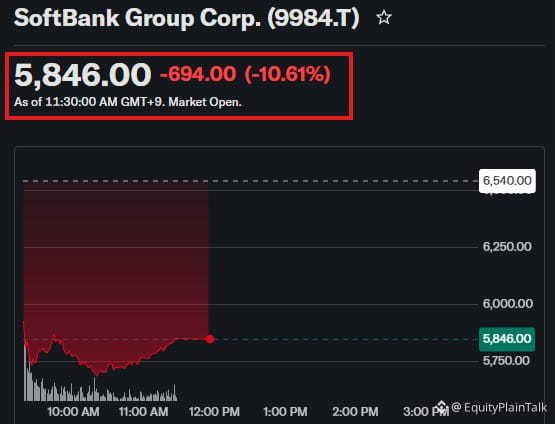
Акции SoftBank упали на 10% сегодня на фоне роста цен на нефть и возвращения опасений по поводу ИИ-безопасности.
Сейчас бумага уже на 36% ниже своего пика всего за три месяца. Это жесткий разворот.
Когда дорожают энергоресурсы и ужесточается регуляторный надзор за ИИ, высокобета-ставки в технологическом секторе, вроде SoftBank, страдают первыми. Рынок быстро пересматривает оценку рисков.
Так происходит, когда эйфория сталкивается с реальностью. Моментум работает в обе стороны.
Акции SoftBank упали на 10% сегодня на фоне роста цен на нефть и возвращения опасений по поводу ИИ-безопасности.
Сейчас бумага уже на 36% ниже своего пика всего за три месяца. Это жесткий разворот.
Когда дорожают энергоресурсы и ужесточается регуляторный надзор за ИИ, высокобета-ставки в технологическом секторе, вроде SoftBank, страдают первыми. Рынок быстро пересматривает оценку рисков.
Так происходит, когда эйфория сталкивается с реальностью. Моментум работает в обе стороны.
Сейчас бумага уже на 36% ниже своего пика всего за три месяца. Это жесткий разворот.
Когда дорожают энергоресурсы и ужесточается регуляторный надзор за ИИ, высокобета-ставки в технологическом секторе, вроде SoftBank, страдают первыми. Рынок быстро пересматривает оценку рисков.
Так происходит, когда эйфория сталкивается с реальностью. Моментум работает в обе стороны.
325
Проверено
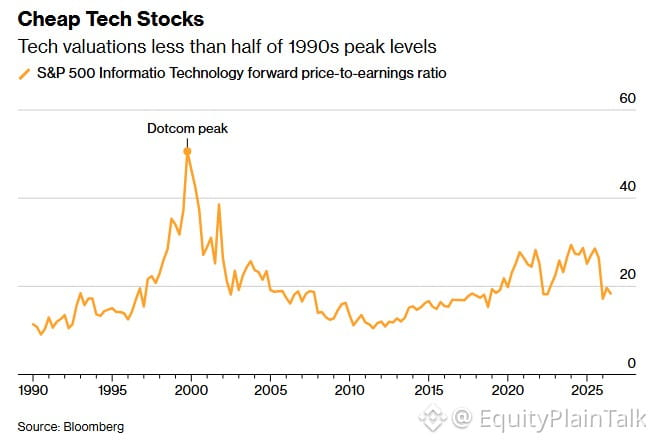
Оценки tech-сектора прямо сейчас? Меньше чем вдвое того, что мы видели во время пузыря доткомов.
Людям нравится сравнивать каждый ралли с 2000 годом, но цифры не сходятся. Тогда Nasdaq торговалась по абсурдным мультипликаторам вместе с компаниями, у которых не было выручки. Сегодня крупные tech-компании действительно печатают деньги, имеют реальные прибыли и доминируют в своих отраслях.
Это не значит, что мы не можем скорректироваться. И не значит, что всё дёшево. Но нарратив «это просто как 1999 год» игнорирует то, насколько по-другому устроены фундаментальные показатели. Важен контекст.
Оценки tech-сектора прямо сейчас? Меньше чем вдвое того, что мы видели во время пузыря доткомов.
Людям нравится сравнивать каждый ралли с 2000 годом, но цифры не сходятся. Тогда Nasdaq торговалась по абсурдным мультипликаторам вместе с компаниями, у которых не было выручки. Сегодня крупные tech-компании действительно печатают деньги, имеют реальные прибыли и доминируют в своих отраслях.
Это не значит, что мы не можем скорректироваться. И не значит, что всё дёшево. Но нарратив «это просто как 1999 год» игнорирует то, насколько по-другому устроены фундаментальные показатели. Важен контекст.
Людям нравится сравнивать каждый ралли с 2000 годом, но цифры не сходятся. Тогда Nasdaq торговалась по абсурдным мультипликаторам вместе с компаниями, у которых не было выручки. Сегодня крупные tech-компании действительно печатают деньги, имеют реальные прибыли и доминируют в своих отраслях.
Это не значит, что мы не можем скорректироваться. И не значит, что всё дёшево. Но нарратив «это просто как 1999 год» игнорирует то, насколько по-другому устроены фундаментальные показатели. Важен контекст.
1
1
954
Проверено
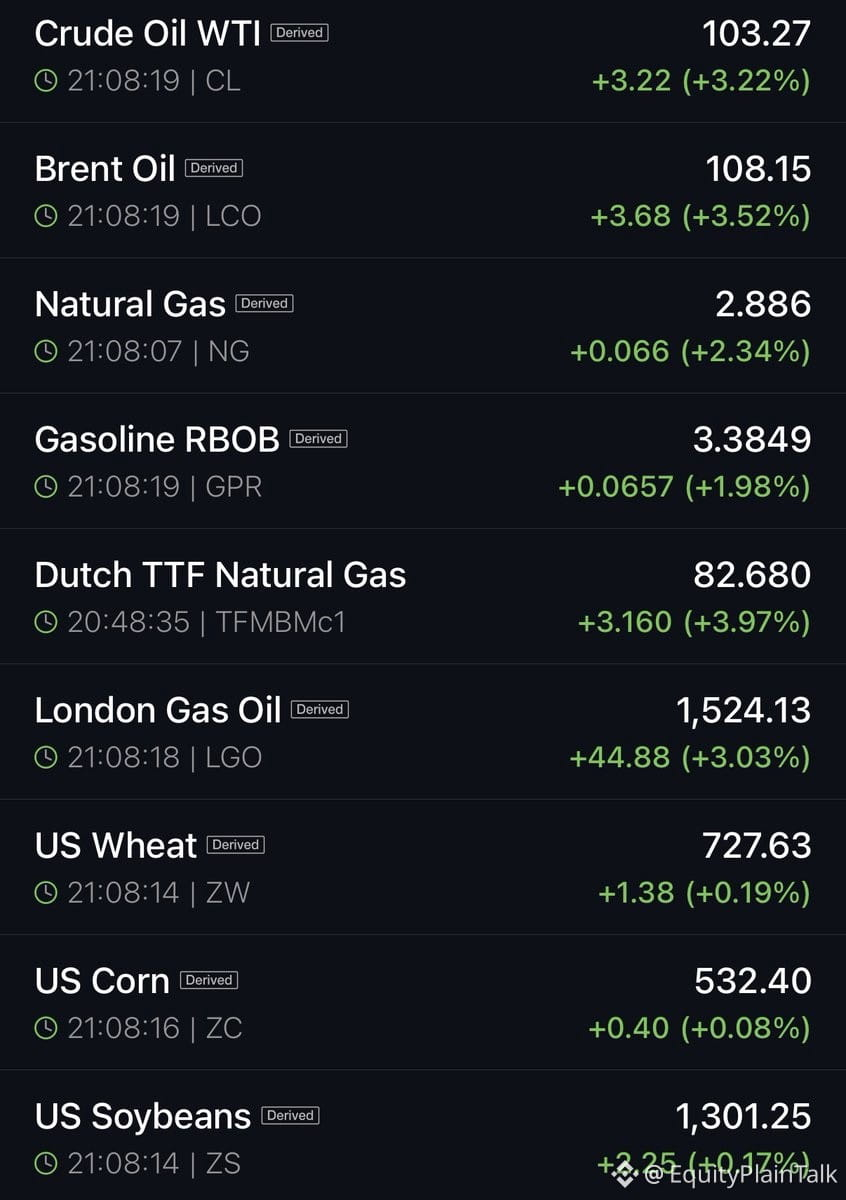
Товары снова рвут вверх за ночь. Глубокий зелёный по всему рынку.
Дизель на рекордных максимумах. Говядина на рекордных максимумах. Нефть толкает к $100+. Медь на рекордных максимумах.
Тем временем S&P 500 находится в пределах 2% от исторических максимумов и уверенно растёт с начала года.
Вот что происходит, когда одновременно сталкиваются энергетический кризис, инфляция и технологическая революция.
Издержки на базовые товары находятся на бычьем рынке, который набирает обороты. Но акции продолжают уверенно идти вверх.
Разрыв между инфляцией в реальной экономике и динамикой финансовых активов продолжает расширяться. Владеете активами — или вас оставят позади.
Товары снова рвут вверх за ночь. Глубокий зелёный по всему рынку.
Дизель на рекордных максимумах. Говядина на рекордных максимумах. Нефть толкает к $100+. Медь на рекордных максимумах.
Тем временем S&P 500 находится в пределах 2% от исторических максимумов и уверенно растёт с начала года.
Вот что происходит, когда одновременно сталкиваются энергетический кризис, инфляция и технологическая революция.
Издержки на базовые товары находятся на бычьем рынке, который набирает обороты. Но акции продолжают уверенно идти вверх.
Разрыв между инфляцией в реальной экономике и динамикой финансовых активов продолжает расширяться. Владеете активами — или вас оставят позади.
Дизель на рекордных максимумах. Говядина на рекордных максимумах. Нефть толкает к $100+. Медь на рекордных максимумах.
Тем временем S&P 500 находится в пределах 2% от исторических максимумов и уверенно растёт с начала года.
Вот что происходит, когда одновременно сталкиваются энергетический кризис, инфляция и технологическая революция.
Издержки на базовые товары находятся на бычьем рынке, который набирает обороты. Но акции продолжают уверенно идти вверх.
Разрыв между инфляцией в реальной экономике и динамикой финансовых активов продолжает расширяться. Владеете активами — или вас оставят позади.
938
Шесть рыночных факторов, сталкивающихся в этом квартале, о которых никто не говорит достаточно подробно:
Руководители техкомпаний хотят регулирования ИИ. Трамп дает отпор. Это редкое публичное расхождение между Кремниевой долиной и Белым домом.
Уорш может повысить ставки в своем первом шаге в роли главы ФРС. Не снизить. Не оставить без изменений. Повысить. Это заявление.
Потоки нефти с Ближнего Востока — до 30 миллионов баррелей — внезапно под угрозой. Энергетические рынки учитывают это постепенно, а затем — сразу.
Американский дизель подорожал на 80%, когда достигается пик спроса. Дизель движет всем. Это боль не только для дальнобойщиков — это следующая волна инфляции.
И при этом мы видим один из самых сильных периодов роста прибыли за годы.
Это не отдельные истории. Они все подпитывают друг друга. Четвертый квартал — это не просто интересно: это проверка на прочность того, сколько хороших новостей рынок способен переварить, когда одновременно ужесточаются ставки, энергетика и политика.
Шесть рыночных факторов, сталкивающихся в этом квартале, о которых никто не говорит достаточно подробно:
Руководители техкомпаний хотят регулирования ИИ. Трамп дает отпор. Это редкое публичное расхождение между Кремниевой долиной и Белым домом.
Уорш может повысить ставки в своем первом шаге в роли главы ФРС. Не снизить. Не оставить без изменений. Повысить. Это заявление.
Потоки нефти с Ближнего Востока — до 30 миллионов баррелей — внезапно под угрозой. Энергетические рынки учитывают это постепенно, а затем — сразу.
Американский дизель подорожал на 80%, когда достигается пик спроса. Дизель движет всем. Это боль не только для дальнобойщиков — это следующая волна инфляции.
И при этом мы видим один из самых сильных периодов роста прибыли за годы.
Это не отдельные истории. Они все подпитывают друг друга. Четвертый квартал — это не просто интересно: это проверка на прочность того, сколько хороших новостей рынок способен переварить, когда одновременно ужесточаются ставки, энергетика и политика.
Руководители техкомпаний хотят регулирования ИИ. Трамп дает отпор. Это редкое публичное расхождение между Кремниевой долиной и Белым домом.
Уорш может повысить ставки в своем первом шаге в роли главы ФРС. Не снизить. Не оставить без изменений. Повысить. Это заявление.
Потоки нефти с Ближнего Востока — до 30 миллионов баррелей — внезапно под угрозой. Энергетические рынки учитывают это постепенно, а затем — сразу.
Американский дизель подорожал на 80%, когда достигается пик спроса. Дизель движет всем. Это боль не только для дальнобойщиков — это следующая волна инфляции.
И при этом мы видим один из самых сильных периодов роста прибыли за годы.
Это не отдельные истории. Они все подпитывают друг друга. Четвертый квартал — это не просто интересно: это проверка на прочность того, сколько хороших новостей рынок способен переварить, когда одновременно ужесточаются ставки, энергетика и политика.
222
Войдите, чтобы посмотреть больше материала
Присоединяйтесь к пользователям криптовалют по всему миру на Binance Square
⚡️ Получайте новейшую и полезную информацию о криптоактивах.
💬 Нам доверяет крупнейшая в мире криптобиржа.
👍 Получите достоверные аналитические данные от верифицированных создателей контента.
Эл. почта/номер телефона
В тренде
ПротоколFOMC
Просмотров: 12,397
84 обсуждают
#ПротоколFOMC 🚨 Протокол FOMC: что важно для рынка?
ФРС сохранила процентную ставку на уровне 3,50–3,75%, однако внутри Комитета появились серьёзные разногласия.
🔥 Три члена FOMC выступили за повышение ставки на 25 б.п.
При этом инфляция остаётся выше целевого уровня 2%, а экономика продолжает расти устойчивыми темпами.
📌 Что это значит?
Ястребиная позиция ФРС может поддерживать доллар и доходности облигаций, создавая дополнительное давление на BTC и другие рисковые активы.
Но окончательное решение по сентябрю пока не принято.
📅 Следующее заседание FOMC состоится 15–16 сентября.
Именно новые данные по инфляции и рынку труда могут определить дальнейший курс ФРС.
👀 Сентябрь может стать ключевым месяцем для рынков.
MuskFutures
·Лайков: 1
·Просмотров: 158
fomcотслеживание
Просмотров: 18,072
287 обсуждают
BitcoinReboundsTo$79K
Просмотров: 3,034
61 обсуждают