useconomy

Просмотров: 396,291
857 обсуждают
Coinbroid
·
--
Americans now owe $1.29 trillion on their credit cards, a record, according to the New York Fed. • Credit card balances rose $22 billion in Q3 to $1.29 trillion • Total household debt climbed $334 billion to $19.1 trillion • 5.0% of household debt is now in some stage of delinquency, up 0.3 points Why it matters: Rising card debt and delinquencies show pressure on US consumers as markets price more Fed hikes. Source: Federal Reserve Bank of New York Not financial advice. 💬 Does rising consumer debt change how you read the macro backdrop for crypto? #Macro #Fed #USEconomy
Americans now owe $1.29 trillion on their credit cards, a record, according to the New York Fed.

• Credit card balances rose $22 billion in Q3 to $1.29 trillion
• Total household debt climbed $334 billion to $19.1 trillion
• 5.0% of household debt is now in some stage of delinquency, up 0.3 points

Why it matters: Rising card debt and delinquencies show pressure on US consumers as markets price more Fed hikes.
Source: Federal Reserve Bank of New York
Not financial advice.

💬 Does rising consumer debt change how you read the macro backdrop for crypto?

#Macro #Fed #USEconomy
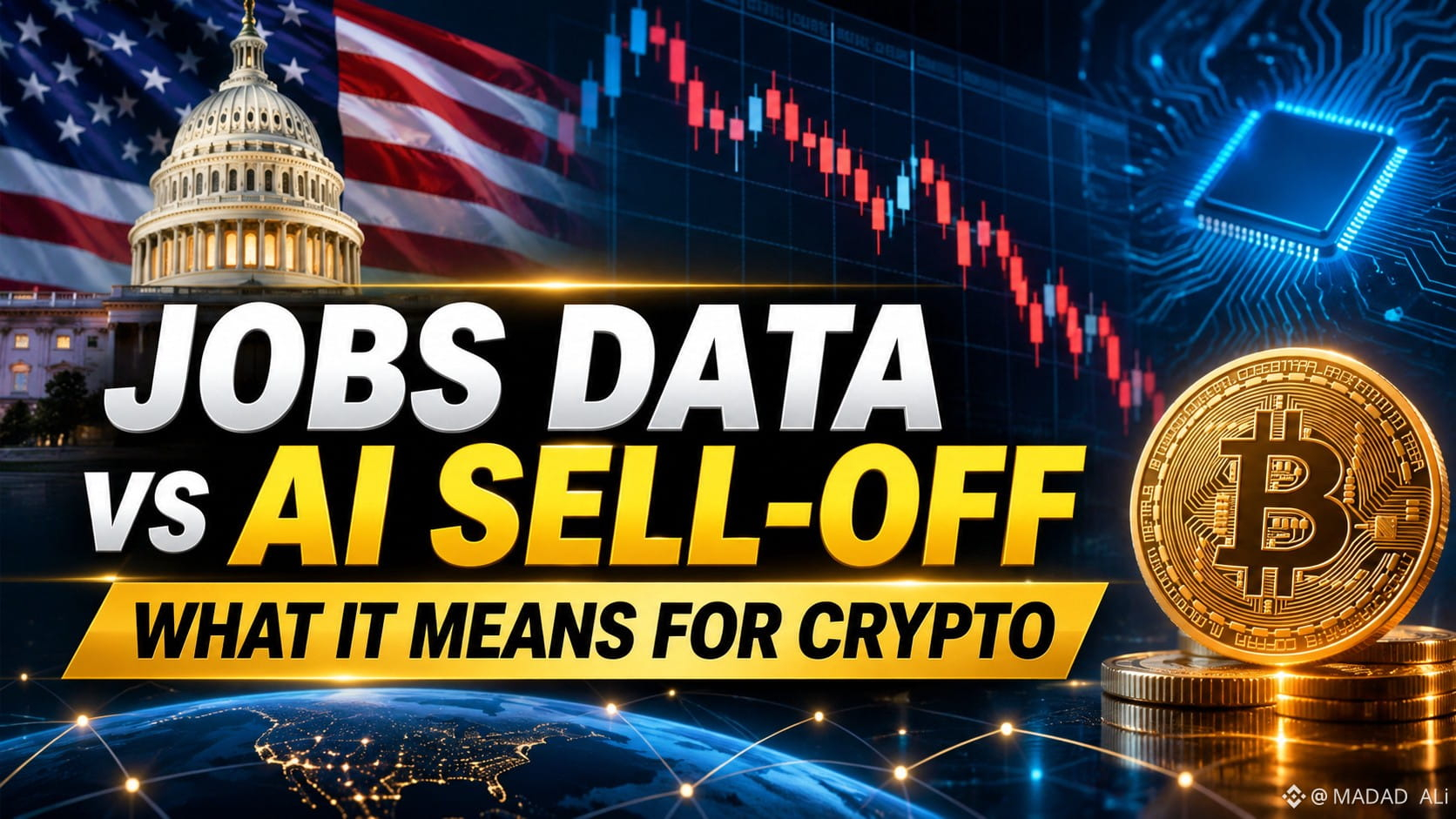
🇺🇸 Strong US Jobs Data vs AI Sell-Off: What’s Next for Crypto? The US economy added 165,000 jobs in October, showing stronger-than-expected economic momentum. But there is another side to the story. AI and technology stocks recently faced heavy selling pressure, and the weakness also spread into the crypto market. Why does this matter? 🔹 Strong jobs data could keep interest rates higher for longer. 🔹 Higher rates can put pressure on risky assets. 🔹 AI market weakness can affect Bitcoin and crypto sentiment. 🔹 Investors are watching the Federal Reserve's next moves. The big question: Can Bitcoin remain resilient while traditional markets face uncertainty? Remember, smart investors watch economic data, liquidity and market sentiment — not just price movements. What's your view? Is this a temporary correction or a bigger market warning? #bitcoin #CryptoMarket #FederalReserve #USEconomy #AI
🇺🇸 Strong US Jobs Data vs AI Sell-Off: What’s Next for Crypto?

The US economy added 165,000 jobs in October, showing stronger-than-expected economic momentum.

But there is another side to the story.

AI and technology stocks recently faced heavy selling pressure, and the weakness also spread into the crypto market.

Why does this matter?

🔹 Strong jobs data could keep interest rates higher for longer.
🔹 Higher rates can put pressure on risky assets.
🔹 AI market weakness can affect Bitcoin and crypto sentiment.
🔹 Investors are watching the Federal Reserve's next moves.

The big question: Can Bitcoin remain resilient while traditional markets face uncertainty?

Remember, smart investors watch economic data, liquidity and market sentiment — not just price movements.

What's your view? Is this a temporary correction or a bigger market warning?

#bitcoin #CryptoMarket #FederalReserve #USEconomy #AI
·
--
Рост
🇺🇸 US Unemployment Drops to 4.1%❗📉 🔰The US labor market continues to show resilience as October's unemployment rate falls to 4.1%, beating the 4.2% forecast. Nonfarm payrolls also delivered a strong surprise, adding 165,000 jobs against expectations of just 65,000. 📊 These stronger-than-expected figures could influence Federal Reserve policy decisions and shift market expectations around future interest rates. 👀 🔶What could this mean for Bitcoin and the broader crypto market❓🚀 #JobsReport #USEconomy #FederalReserve #CryptoMarket $AKE {future}(AKEUSDT) $UAI {future}(UAIUSDT) $ONE {spot}(ONEUSDT)
🇺🇸 US Unemployment Drops to 4.1%❗📉

🔰The US labor market continues to show resilience as October's unemployment rate falls to 4.1%, beating the 4.2% forecast. Nonfarm payrolls also delivered a strong surprise, adding 165,000 jobs against expectations of just 65,000. 📊 These stronger-than-expected figures could influence Federal Reserve policy decisions and shift market expectations around future interest rates. 👀

🔶What could this mean for Bitcoin and the broader crypto market❓🚀

#JobsReport
#USEconomy
#FederalReserve
#CryptoMarket
$AKE
$UAI
$ONE
🇺🇸 US FACTORY ACTIVITY JUST HIT A 4-YEAR HIGH! The latest ISM data shows that US manufacturing is gaining strength. 📊 October production index climbed to 59, up from 56.7, marking its highest level since November 2021. But there's another side to the story. The prices index dropped to 75.2 from 77.9, offering some relief. However, raw-material prices have continued rising for the 25th consecutive month. Why does this matter for crypto? Stronger economic activity can make it harder for the Federal Reserve to justify aggressive interest rate cuts. If rates stay higher for longer, Bitcoin and other risk assets could face additional pressure. My take: The market needs more than strong economic growth. Investors also want to see inflation cooling consistently before betting on easier monetary policy. I'm watching the next inflation and Fed updates closely. They could play a major role in determining Bitcoin's next direction. 👀 $AGT $IDOL $ICNT #Bitcoin #CryptoMarket #FederalReserve #USEconomy #CryptoNews
🇺🇸 US FACTORY ACTIVITY JUST HIT A 4-YEAR HIGH!

The latest ISM data shows that US manufacturing is gaining strength.

📊 October production index climbed to 59, up from 56.7, marking its highest level since November 2021.

But there's another side to the story.

The prices index dropped to 75.2 from 77.9, offering some relief. However, raw-material prices have continued rising for the 25th consecutive month.

Why does this matter for crypto?

Stronger economic activity can make it harder for the Federal Reserve to justify aggressive interest rate cuts. If rates stay higher for longer, Bitcoin and other risk assets could face additional pressure.

My take: The market needs more than strong economic growth. Investors also want to see inflation cooling consistently before betting on easier monetary policy.

I'm watching the next inflation and Fed updates closely. They could play a major role in determining Bitcoin's next direction. 👀

$AGT $IDOL $ICNT

#Bitcoin #CryptoMarket #FederalReserve #USEconomy #CryptoNews
U.S. #UnemploymentRate Outlook and Market Impact 👇 Markets are closely tracking upcoming U.S. macroeconomic indicators ahead of scheduled employment data: * Data Metrics: Both the forecast data and previous data stand at 4.2%. * Release Schedule: The upcoming announcement is scheduled for 2026-11-06 at 19:00. * Market Sentiment: A stable or improving rate could boost investor confidence and positively influence crypto market sentiment, whereas rising unemployment may prompt cautious behavior. {etf_us}(TLT.ETF) {spot}(BTCUSDT) For macroeconomic analysts, fixed-income investors, and digital asset traders, monitoring employment data releases remains critical for gauging broader economic health and risk appetite. $TLT.ETF #CoinVahini #Macroeconomics #UnemploymentRate #USEconomy
U.S. #UnemploymentRate Outlook and Market Impact 👇

Markets are closely tracking upcoming U.S. macroeconomic indicators ahead of scheduled employment data:

* Data Metrics: Both the forecast data and previous data stand at 4.2%.

* Release Schedule: The upcoming announcement is scheduled for 2026-11-06 at 19:00.

* Market Sentiment: A stable or improving rate could boost investor confidence and positively influence crypto market sentiment, whereas rising unemployment may prompt cautious behavior.


For macroeconomic analysts, fixed-income investors, and digital asset traders, monitoring employment data releases remains critical for gauging broader economic health and risk appetite.

$TLT.ETF #CoinVahini #Macroeconomics #UnemploymentRate #USEconomy
BTC-1,48%
TLTETF-0,07%
·
--
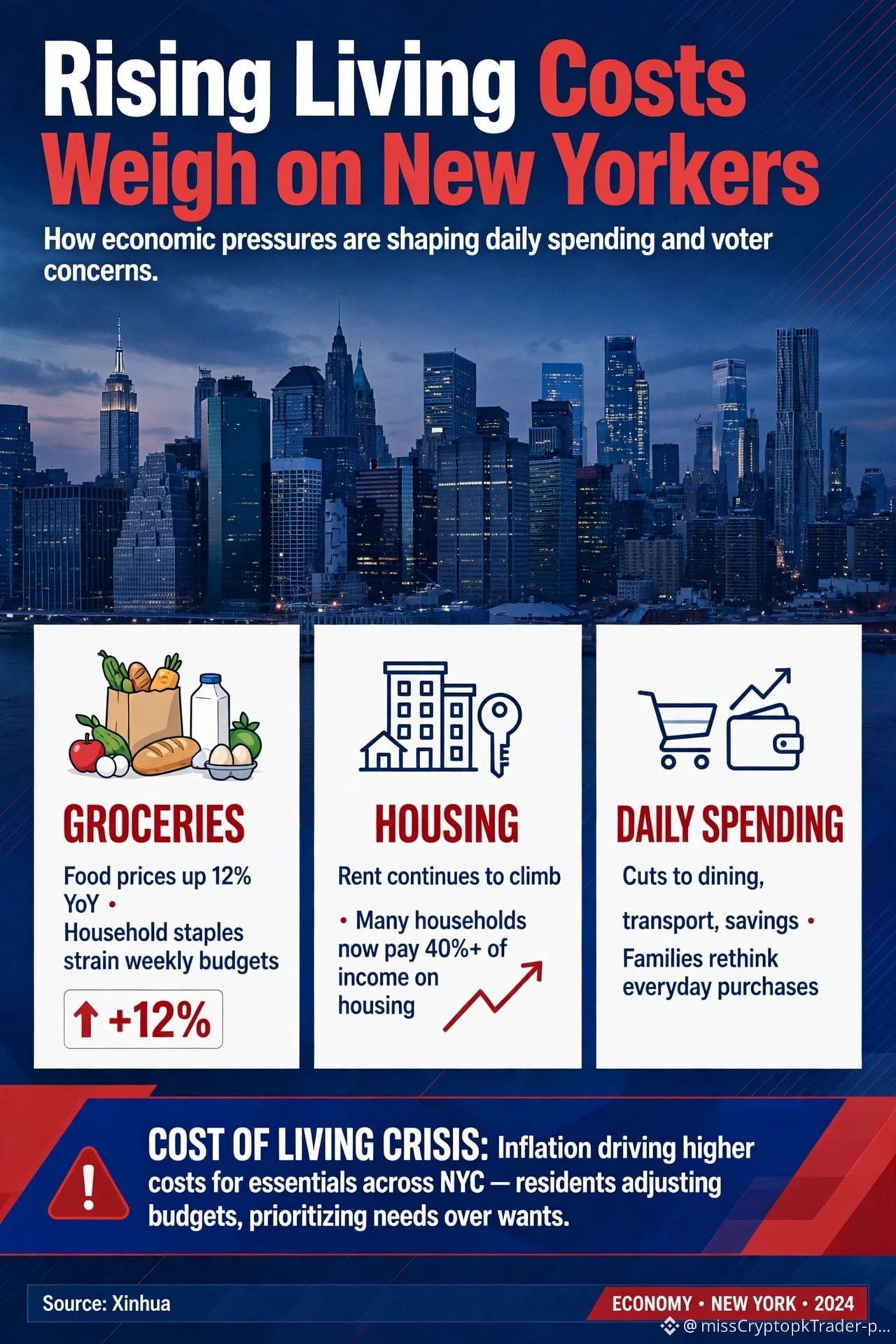
#USMidtermElections 🗽 Rising Living Costs Weigh on New Yorkers as Midterms Approach 🇺🇸 As the U.S. midterm elections approach, rising living costs are weighing heavily on New Yorkers — shaping daily spending decisions and what they hope to see from elected officials. 📌 KEY DETAILS: 🔹 Election Date: November 3, 2026 — will decide control of U.S. Congress (House + Senate) 🔹 At Stake: All 435 House seats + key Senate, congressional & state races 🔹 Key Issue: Cost of living — groceries, housing, and daily essentials forcing families to rethink budgets 🔹 Political Context: Midterms seen as critical test for Trump administration’s legislative agenda 💬 Will cost-of-living concerns define how New York votes? #USMidtermElections #NewYork #USEconomy #Midterms2026 $BTC .
#USMidtermElections

🗽 Rising Living Costs Weigh on New Yorkers as Midterms Approach 🇺🇸

As the U.S. midterm elections approach, rising living costs are weighing heavily on New Yorkers — shaping daily spending decisions and what they hope to see from elected officials.

📌 KEY DETAILS:
🔹 Election Date: November 3, 2026 — will decide control of U.S. Congress (House + Senate)
🔹 At Stake: All 435 House seats + key Senate, congressional & state races
🔹 Key Issue: Cost of living — groceries, housing, and daily essentials forcing families to rethink budgets
🔹 Political Context: Midterms seen as critical test for Trump administration’s legislative agenda

💬 Will cost-of-living concerns define how New York votes?

#USMidtermElections #NewYork #USEconomy #Midterms2026 $BTC

.
美国商务部于周二公布了9月份耐用消费品订单数据,整体环比增长1.8%,高于此前预期的1.7%,前值亦由-0.10%上修至0.1%。然而,反映企业长期投资意愿的核心耐用消费品订单(扣除飞机和国防)却环比下降0.5%,远不及市场预期的0.70%增幅。 这一数据组合暴露出当前经济基本面的结构性分化。整体指标虽受军工及大宗运输拉动表现强劲,但核心资本品订单出现较大幅度萎缩,暗示企业在面对高利率与宏观不确定性时正显著放缓资本支出步伐。 在数据公布后,传统金融市场反应剧烈,美国30年期国债收益率快速拉升并维持在5.304%的高位。长期借贷成本的居高不下,加剧了对实体经济中长期增长动能受阻的担忧,美元资产的收益率溢价对风险偏好形成直接压制。 对于加密资产而言,高企的长端美债收益率将持续抽离高风险投机市场的流动性,限制了以 $BTC 为代表的数字资产在短期的估值修复空间。若宏观紧缩压力继续发酵,投资者需警惕风险偏好进一步回落带来的下行波动。 📉 #DurableGoods #USEconomy #BondYields
美国商务部于周二公布了9月份耐用消费品订单数据,整体环比增长1.8%,高于此前预期的1.7%,前值亦由-0.10%上修至0.1%。然而,反映企业长期投资意愿的核心耐用消费品订单(扣除飞机和国防)却环比下降0.5%,远不及市场预期的0.70%增幅。

这一数据组合暴露出当前经济基本面的结构性分化。整体指标虽受军工及大宗运输拉动表现强劲,但核心资本品订单出现较大幅度萎缩,暗示企业在面对高利率与宏观不确定性时正显著放缓资本支出步伐。

在数据公布后,传统金融市场反应剧烈,美国30年期国债收益率快速拉升并维持在5.304%的高位。长期借贷成本的居高不下,加剧了对实体经济中长期增长动能受阻的担忧,美元资产的收益率溢价对风险偏好形成直接压制。

对于加密资产而言,高企的长端美债收益率将持续抽离高风险投机市场的流动性,限制了以 $BTC 为代表的数字资产在短期的估值修复空间。若宏观紧缩压力继续发酵,投资者需警惕风险偏好进一步回落带来的下行波动。 📉

#DurableGoods #USEconomy #BondYields
Проверено
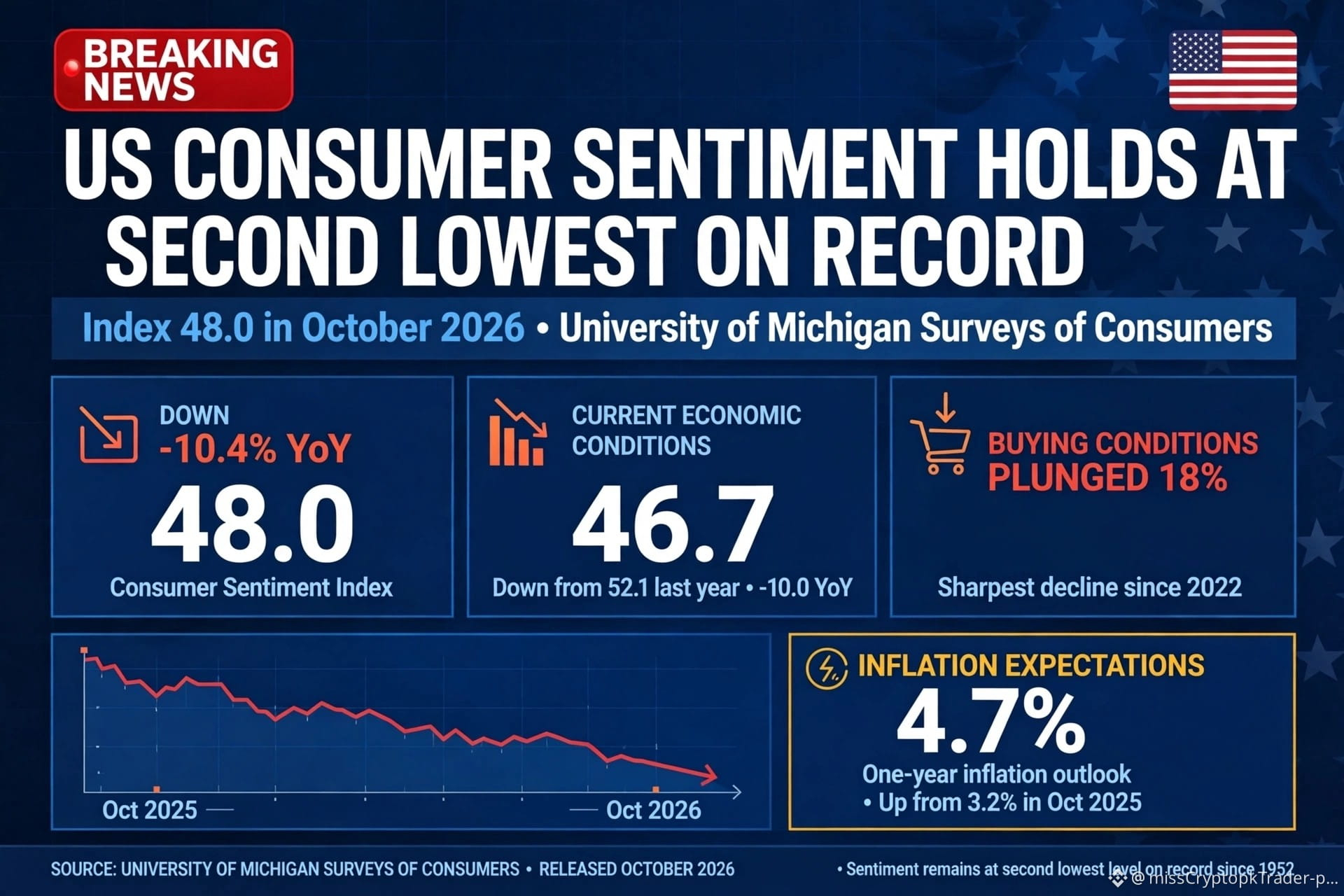
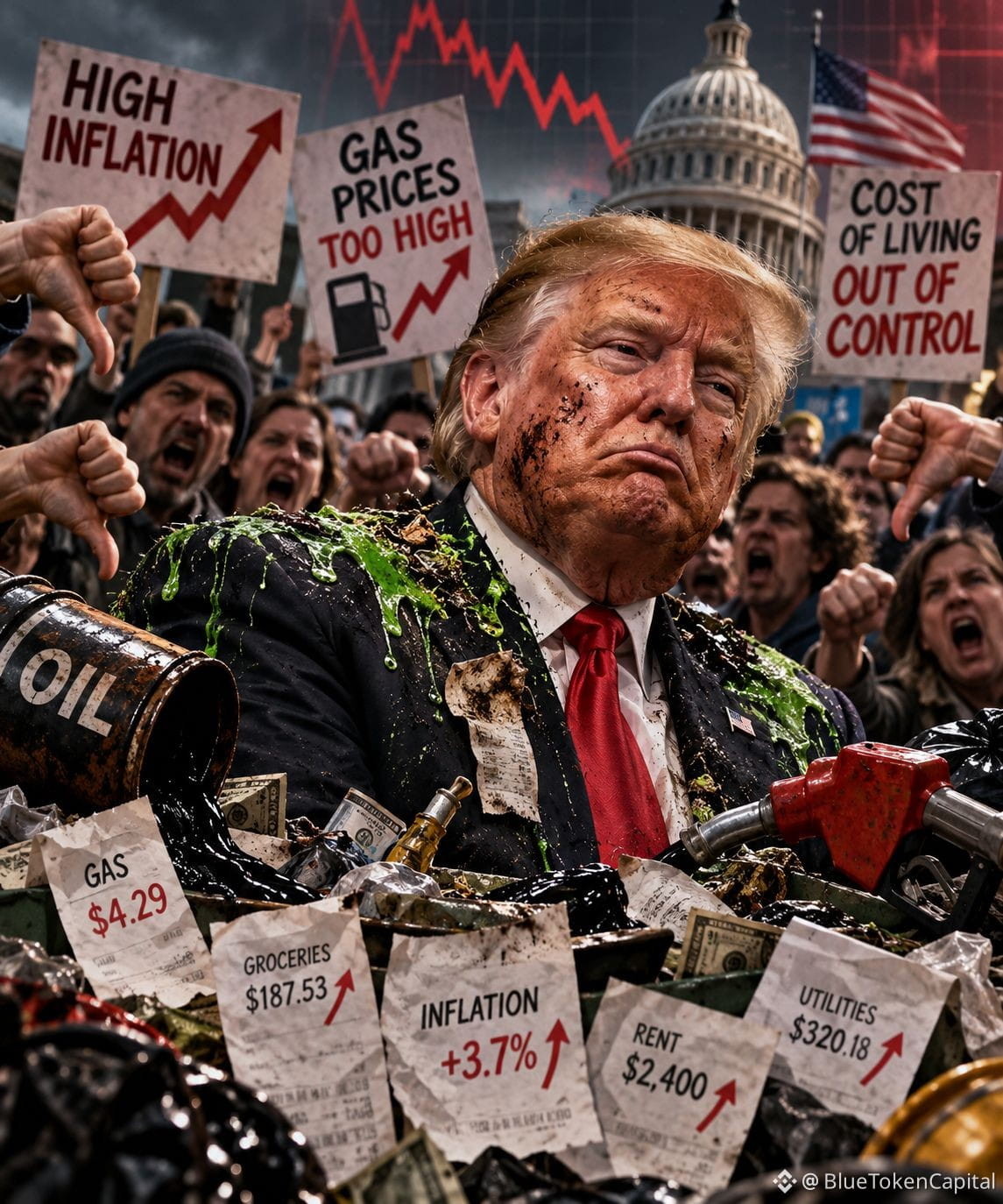
🇺🇸 NGƯỜI MỸ ĐANG DẦN QUAY LƯNG VỚI TRUMP? 34% tán thành, 65% không tán thành. Tín nhiệm kinh tế của Donald Trump chạm mức thấp nhất trong cả hai nhiệm kỳ. Đằng sau những con số là áp lực ngày càng lớn lên đời sống người dân: lạm phát dai dẳng, giá dầu tăng kéo theo chi phí xăng xe và vận chuyển, khiến ngân sách của nhiều gia đình thêm căng thẳng. Người Mỹ không đánh giá nền kinh tế chỉ qua những con số tăng trưởng trên báo cáo. Họ nhìn vào hóa đơn siêu thị, tiền đổ xăng và số tiền còn lại sau mỗi kỳ nhận lương. Khi 63% người được khảo sát bi quan về kinh tế, vấn đề không còn đơn thuần là truyền thông hay chính trị. Đó là khoảng cách giữa những lời hứa thịnh vượng và trải nghiệm thực tế của người dân. Cuộc bầu cử giữa kỳ đang đến gần. Nếu áp lực giá cả tiếp tục đè nặng lên các hộ gia đình, Trump có thể phải trả giá bằng sự ủng hộ của cử tri. Và thị trường cũng không miễn nhiễm. Lạm phát và giá năng lượng cao có thể làm phức tạp chính sách lãi suất của Fed, gây sức ép lên cổ phiếu và khiến vàng, USD, Bitcoin phản ứng mạnh trước những thay đổi về kỳ vọng kinh tế. Liệu Trump có thể xoay chuyển tình thế trước khi sự bất mãn kinh tế biến thành lá phiếu phản đối? #Trump #Inflation #USEconomy $BZ $CL $BTC {future}(BTCUSDT) {future}(CLUSDT) {future}(BZUSDT)
🇺🇸 NGƯỜI MỸ ĐANG DẦN QUAY LƯNG VỚI TRUMP?

34% tán thành, 65% không tán thành. Tín nhiệm kinh tế của Donald Trump chạm mức thấp nhất trong cả hai nhiệm kỳ.

Đằng sau những con số là áp lực ngày càng lớn lên đời sống người dân: lạm phát dai dẳng, giá dầu tăng kéo theo chi phí xăng xe và vận chuyển, khiến ngân sách của nhiều gia đình thêm căng thẳng.

Người Mỹ không đánh giá nền kinh tế chỉ qua những con số tăng trưởng trên báo cáo. Họ nhìn vào hóa đơn siêu thị, tiền đổ xăng và số tiền còn lại sau mỗi kỳ nhận lương.

Khi 63% người được khảo sát bi quan về kinh tế, vấn đề không còn đơn thuần là truyền thông hay chính trị. Đó là khoảng cách giữa những lời hứa thịnh vượng và trải nghiệm thực tế của người dân.

Cuộc bầu cử giữa kỳ đang đến gần. Nếu áp lực giá cả tiếp tục đè nặng lên các hộ gia đình, Trump có thể phải trả giá bằng sự ủng hộ của cử tri.

Và thị trường cũng không miễn nhiễm. Lạm phát và giá năng lượng cao có thể làm phức tạp chính sách lãi suất của Fed, gây sức ép lên cổ phiếu và khiến vàng, USD, Bitcoin phản ứng mạnh trước những thay đổi về kỳ vọng kinh tế.

Liệu Trump có thể xoay chuyển tình thế trước khi sự bất mãn kinh tế biến thành lá phiếu phản đối?

#Trump #Inflation #USEconomy
$BZ $CL $BTC

·
--
Частичная правда
US RECESSION RISK: IS THE ECONOMY ENTERING A DANGEROUS PHASE? The US economy is facing a difficult combination: rising inflation, elevated borrowing costs, and signs of a softer labor market. September CPI accelerated to 3.7% year over year, while unemployment reached 4.2%. Meanwhile, the 10-year Treasury yield remains above 5%, increasing financing costs for businesses and consumers. However, these conditions do not automatically mean a recession is imminent. WHAT SHOULD INVESTORS WATCH? 1. INFLATION Persistent price increases could force the Federal Reserve to keep monetary policy restrictive for longer. 2. THE LABOR MARKET Slower hiring and rising unemployment would signal weakening economic demand. 3. TREASURY YIELDS High yields can pressure corporate investment, housing, and equity valuations. If borrowing costs remain elevated, economic activity may gradually lose momentum. 4. CORPORATE EARNINGS Companies struggling with higher financing costs and weaker consumer demand could face declining profit margins. MARKET SIGNAL: MIXED, WITH GROWING ECONOMIC RISKS Inflation remains a concern, but current indicators alone do not confirm that the US economy is entering a recession. For investors, the key is to monitor whether weakening employment and spending begin to reinforce the pressure from high interest rates. A recession is a process, not a single economic headline. Do you think the US economy can avoid a recession, or are higher borrowing costs beginning to take their toll? #USEconomy #Recession #FederalReserve #TradFi
US RECESSION RISK: IS THE ECONOMY ENTERING A DANGEROUS PHASE?

The US economy is facing a difficult combination: rising inflation, elevated borrowing costs, and signs of a softer labor market.

September CPI accelerated to 3.7% year over year, while unemployment reached 4.2%. Meanwhile, the 10-year Treasury yield remains above 5%, increasing financing costs for businesses and consumers.

However, these conditions do not automatically mean a recession is imminent.

WHAT SHOULD INVESTORS WATCH?

1. INFLATION
Persistent price increases could force the Federal Reserve to keep monetary policy restrictive for longer.

2. THE LABOR MARKET
Slower hiring and rising unemployment would signal weakening economic demand.

3. TREASURY YIELDS
High yields can pressure corporate investment, housing, and equity valuations. If borrowing costs remain elevated, economic activity may gradually lose momentum.

4. CORPORATE EARNINGS
Companies struggling with higher financing costs and weaker consumer demand could face declining profit margins.

MARKET SIGNAL: MIXED, WITH GROWING ECONOMIC RISKS

Inflation remains a concern, but current indicators alone do not confirm that the US economy is entering a recession.

For investors, the key is to monitor whether weakening employment and spending begin to reinforce the pressure from high interest rates.

A recession is a process, not a single economic headline.

Do you think the US economy can avoid a recession, or are higher borrowing costs beginning to take their toll?

#USEconomy #Recession #FederalReserve #TradFi

IEFETF+0,07%
·
--
Падение
Проверено
📊 The US Labor Market Is Weaker Than Headlines Suggest $HMSTR $SIREN While headline employment figures continue to paint a picture of resilience, a deeper look at the data reveals growing cracks beneath the surface. 🔹 The number of Americans unemployed for **27 weeks or longer** jumped by **155,000 in May**, reaching **1.99 million** — the highest level since **December 2021**. 🔹 Over the past 12 months, long-term unemployment has increased by **524,000**, marking the largest annual rise since August 2021. 🔹 Long-term unemployed workers now account for 27.5% of total unemployment, the highest share since December 2021 and above every post-recession peak except during the **Global Financial Crisis** and the **2020 pandemic shock. These figures suggest that while hiring remains positive on the surface, an increasing number of workers are struggling to re-enter the labor market after extended periods of unemployment. 📈 Rising long-term unemployment is often viewed as a leading indicator of labor market weakness, as it reflects declining job opportunities and growing challenges for job seekers. Key Takeaway: The labor market may not be as strong as headline numbers imply. The sharp deterioration in long-term unemployment points to underlying economic stress that investors, policymakers, and businesses should monitor closely. #USEconomy #JobsReport #LaborMarket #Unemployment #EconomicOutlook #Markets #Investing #Finance #EconomicData #BinanceSquare {future}(STGUSDT) {future}(SIRENUSDT) {future}(HMSTRUSDT) $STG
📊 The US Labor Market Is Weaker Than Headlines Suggest
$HMSTR $SIREN
While headline employment figures continue to paint a picture of resilience, a deeper look at the data reveals growing cracks beneath the surface.

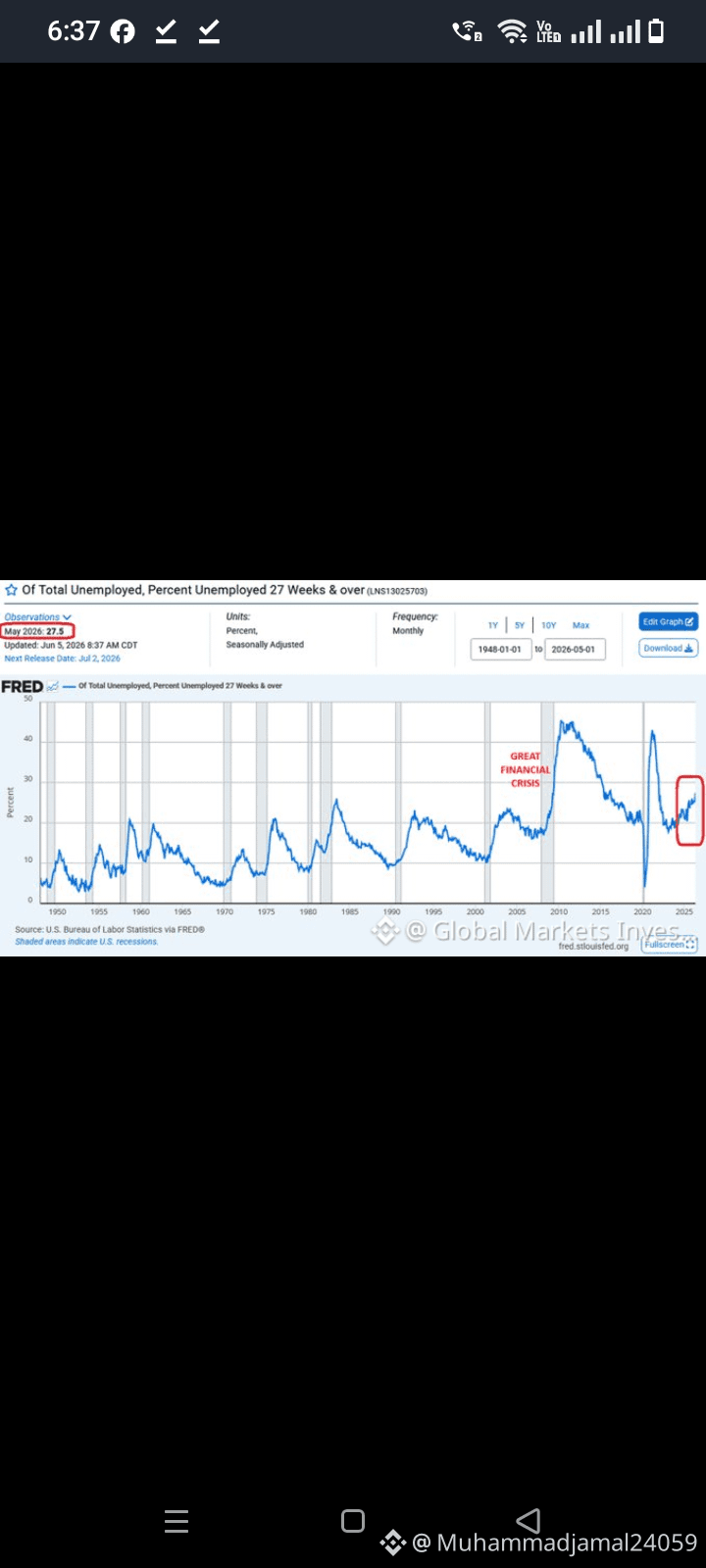
🔹 The number of Americans unemployed for **27 weeks or longer** jumped by **155,000 in May**, reaching **1.99 million** — the highest level since **December 2021**.

🔹 Over the past 12 months, long-term unemployment has increased by **524,000**, marking the largest annual rise since August 2021.

🔹 Long-term unemployed workers now account for 27.5% of total unemployment, the highest share since December 2021 and above every post-recession peak except during the **Global Financial Crisis** and the **2020 pandemic shock.

These figures suggest that while hiring remains positive on the surface, an increasing number of workers are struggling to re-enter the labor market after extended periods of unemployment.

📈 Rising long-term unemployment is often viewed as a leading indicator of labor market weakness, as it reflects declining job opportunities and growing challenges for job seekers.

Key Takeaway:
The labor market may not be as strong as headline numbers imply. The sharp deterioration in long-term unemployment points to underlying economic stress that investors, policymakers, and businesses should monitor closely.

#USEconomy #JobsReport #LaborMarket #Unemployment #EconomicOutlook #Markets #Investing #Finance #EconomicData #BinanceSquare

$STG
·
--
Рост
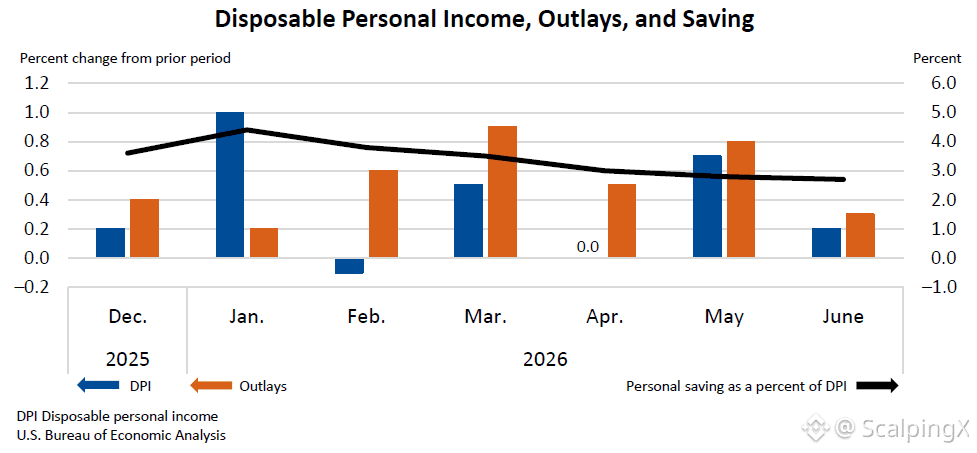
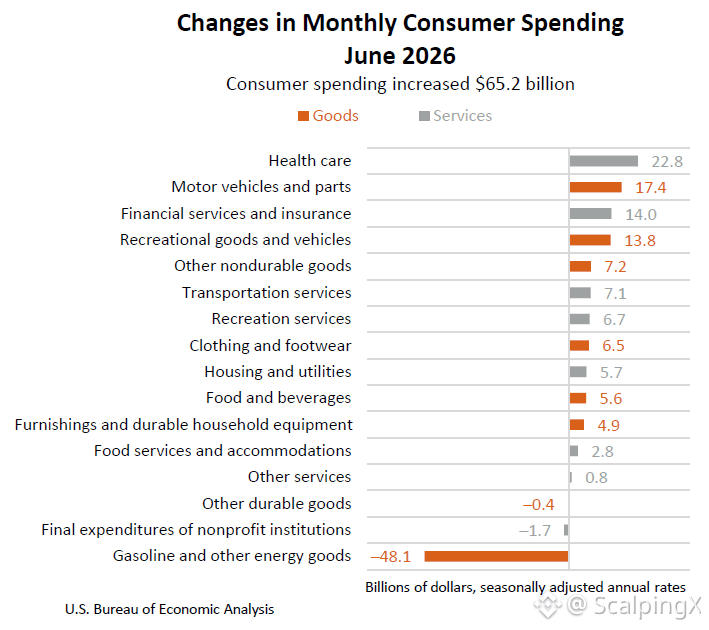
US GDP Slows as PCE Inflation Eases and Domestic Demand Remains Resilient 📉 Real US GDP grew at an annualized rate of 1.5% in Q2 2026, below the previous quarter’s 2.1% pace and market expectations. However, private domestic demand expanded by 3.9%, suggesting the economy is not weakening across the board. 🛍️ Consumer spending, investment and exports continued to support growth, while lower government spending and stronger imports weighed on the headline figure. 📊 The PCE Price Index fell 0.1% in June, while core PCE rose 0.1%. On an annual basis, headline PCE eased to 3.7% and core PCE stood at 3.3%, indicating moderating price pressure that remains above the Fed’s 2% target. 💵 Personal income increased 0.2%, spending rose 0.3% and the saving rate fell to 2.7%. The data is neutral to slightly positive for risk assets, but is unlikely to justify an early shift toward monetary easing. #USEconomy $BTC $XAUT $XAG
US GDP Slows as PCE Inflation Eases and Domestic Demand Remains Resilient

📉 Real US GDP grew at an annualized rate of 1.5% in Q2 2026, below the previous quarter’s 2.1% pace and market expectations. However, private domestic demand expanded by 3.9%, suggesting the economy is not weakening across the board.

🛍️ Consumer spending, investment and exports continued to support growth, while lower government spending and stronger imports weighed on the headline figure.

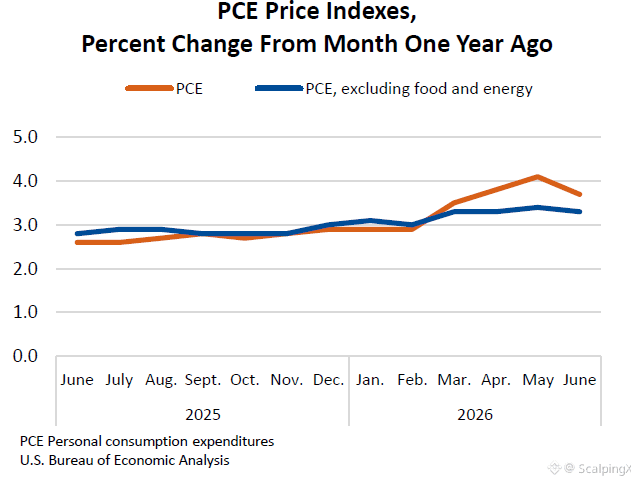
📊 The PCE Price Index fell 0.1% in June, while core PCE rose 0.1%. On an annual basis, headline PCE eased to 3.7% and core PCE stood at 3.3%, indicating moderating price pressure that remains above the Fed’s 2% target.

💵 Personal income increased 0.2%, spending rose 0.3% and the saving rate fell to 2.7%. The data is neutral to slightly positive for risk assets, but is unlikely to justify an early shift toward monetary easing.

#USEconomy $BTC $XAUT $XAG
Частичная правда
Déficit comercial dos EUA dispara 42%: o que realmente mudou e por que isso importa para os mercadosO salto do déficit comercial dos Estados Unidos para US$ 77,6 bilhões em maio representa uma das mudanças macroeconômicas mais relevantes das últimas semanas. Apesar de o número parecer negativo à primeira vista, sua interpretação exige uma análise mais profunda. Tecnicamente, o déficit comercial mede a diferença entre o valor das importações e das exportações. Quando o país importa mais do que exporta, registra saldo negativo. Neste caso, o aumento foi impulsionado por uma forte expansão das compras externas de bens de capital, semicondutores, equipamentos ligados à inteligência artificial, veículos e produtos farmacêuticos, enquanto as exportações perderam força devido à valorização do dólar e à redução das vendas de diversos produtos ao exterior. Esse cenário mostra que a economia americana continua apresentando demanda doméstica robusta. Empresas seguem investindo em tecnologia e ampliando estoques, mesmo diante das incertezas geopolíticas e comerciais. Em outras palavras, um déficit maior nem sempre significa uma economia fraca; muitas vezes, pode refletir consumo elevado e investimentos acelerados. Por outro lado, o impacto sobre o PIB tende a ser negativo no curto prazo, já que importações entram como componente redutor do crescimento econômico. Analistas estimam que esse resultado poderá diminuir o ritmo de expansão do PIB dos EUA no segundo trimestre, aumentando a atenção do mercado para os próximos indicadores econômicos. Para o mercado cripto, o dado tem dois possíveis efeitos. Caso o crescimento econômico desacelere, aumenta a expectativa de uma política monetária menos restritiva pelo Federal Reserve, favorecendo ativos de risco como Bitcoin e altcoins. Porém, se o consumo permanecer forte e pressionar a inflação, o Fed poderá manter juros elevados por mais tempo, fortalecendo o dólar e reduzindo temporariamente o apetite por criptomoedas. Mais do que um simples número, esse relatório revela como comércio internacional, política monetária, dólar, inflação e investimentos em tecnologia permanecem profundamente conectados e continuarão influenciando os mercados globais nas próximas semanas. $SENT $ARB $BANANAS31 #FederalReserve #CryptoMarkets #USEconomy #TradeBalance

Déficit comercial dos EUA dispara 42%: o que realmente mudou e por que isso importa para os mercados

O salto do déficit comercial dos Estados Unidos para US$ 77,6 bilhões em maio representa uma das mudanças macroeconômicas mais relevantes das últimas semanas. Apesar de o número parecer negativo à primeira vista, sua interpretação exige uma análise mais profunda.
Tecnicamente, o déficit comercial mede a diferença entre o valor das importações e das exportações. Quando o país importa mais do que exporta, registra saldo negativo. Neste caso, o aumento foi impulsionado por uma forte expansão das compras externas de bens de capital, semicondutores, equipamentos ligados à inteligência artificial, veículos e produtos farmacêuticos, enquanto as exportações perderam força devido à valorização do dólar e à redução das vendas de diversos produtos ao exterior.
Esse cenário mostra que a economia americana continua apresentando demanda doméstica robusta. Empresas seguem investindo em tecnologia e ampliando estoques, mesmo diante das incertezas geopolíticas e comerciais. Em outras palavras, um déficit maior nem sempre significa uma economia fraca; muitas vezes, pode refletir consumo elevado e investimentos acelerados.
Por outro lado, o impacto sobre o PIB tende a ser negativo no curto prazo, já que importações entram como componente redutor do crescimento econômico. Analistas estimam que esse resultado poderá diminuir o ritmo de expansão do PIB dos EUA no segundo trimestre, aumentando a atenção do mercado para os próximos indicadores econômicos.
Para o mercado cripto, o dado tem dois possíveis efeitos. Caso o crescimento econômico desacelere, aumenta a expectativa de uma política monetária menos restritiva pelo Federal Reserve, favorecendo ativos de risco como Bitcoin e altcoins. Porém, se o consumo permanecer forte e pressionar a inflação, o Fed poderá manter juros elevados por mais tempo, fortalecendo o dólar e reduzindo temporariamente o apetite por criptomoedas.
Mais do que um simples número, esse relatório revela como comércio internacional, política monetária, dólar, inflação e investimentos em tecnologia permanecem profundamente conectados e continuarão influenciando os mercados globais nas próximas semanas.
$SENT $ARB $BANANAS31
#FederalReserve
#CryptoMarkets
#USEconomy
#TradeBalance
US consumers just hit the brakes hard. July retail sales dropped 0.6% — the biggest monthly fall in over a year and a complete miss vs the tiny +0.1% Wall Street was expecting. Amazon moved Prime Day to June… so July online sales got wrecked. Car dealers slowed down. Gas stations felt the lower prices. Suddenly the “unstoppable American consumer” looks a little tired after the strong first half. Still up 5% year-over-year, so nobody’s panicking yet… but the soft patch is real. Markets watching this one closely. Soft landing or early warning sign? Who’s calling the next move? #RetailSales #USEconomy #Markets #Macro #Stocks
US consumers just hit the brakes hard.
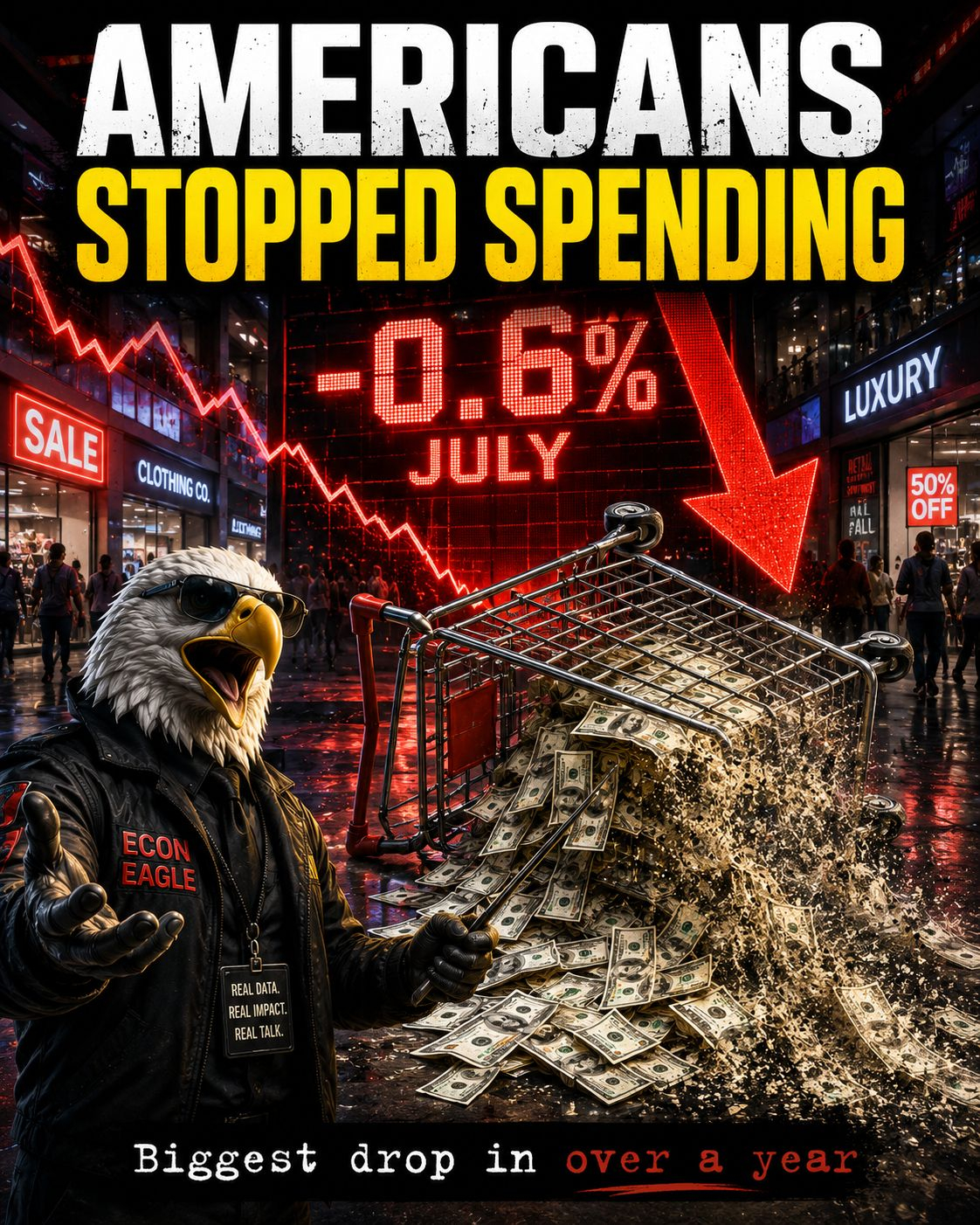
July retail sales dropped 0.6% — the biggest monthly fall in over a year and a complete miss vs the tiny +0.1% Wall Street was expecting.
Amazon moved Prime Day to June… so July online sales got wrecked.
Car dealers slowed down.
Gas stations felt the lower prices.
Suddenly the “unstoppable American consumer” looks a little tired after the strong first half.
Still up 5% year-over-year, so nobody’s panicking yet… but the soft patch is real.
Markets watching this one closely. Soft landing or early warning sign?
Who’s calling the next move?
#RetailSales #USEconomy #Markets #Macro #Stocks
Al Ittihad Saudi Club vs. Al Kholood Saudi Club

Al Ittihad Saudi Club vs. Al Kholood Saudi Club

Draw99%ITH1%KHO1%
Объем $32,603.72
📉 الاقتصاد الأمريكي يضيف وظائف لـ 4 أشهر متتالية، لكن البطالة طويلة الأمد مستمرة! واصل الاقتصاد الأمريكي إضافة الوظائف غير الزراعية لشهر يونيو 2026، مسجلاً الشهر الرابع على التوالي. ومع ذلك، لا يزال ما يقرب من مليوني أمريكي يعانون من البطالة طويلة الأجل، مما يشير إلى تباطؤ النمو الاقتصادي رغم التوسع في التوظيف. ━━━━━━━━━━━━━━ 📊 التأثير: 📈 مرتفع 🏷️ OTHER #USEconomy #JobsReport #Unemployment #EconomicGrowth #Macroeconomics 🔗 المصدر: https://cryptobriefing.com/us-jobs-growth-long-term-unemployment/
📉 الاقتصاد الأمريكي يضيف وظائف لـ 4 أشهر متتالية، لكن البطالة طويلة الأمد مستمرة!

واصل الاقتصاد الأمريكي إضافة الوظائف غير الزراعية لشهر يونيو 2026، مسجلاً الشهر الرابع على التوالي. ومع ذلك، لا يزال ما يقرب من مليوني أمريكي يعانون من البطالة طويلة الأجل، مما يشير إلى تباطؤ النمو الاقتصادي رغم التوسع في التوظيف.

━━━━━━━━━━━━━━
📊 التأثير: 📈 مرتفع
🏷️ OTHER

#USEconomy #JobsReport #Unemployment #EconomicGrowth #Macroeconomics

🔗 المصدر: https://cryptobriefing.com/us-jobs-growth-long-term-unemployment/
·
--
Рост
U.S. Private Hiring Weakens in July as Markets Await NFP Confirmation 📉 U.S. private employers added only 44,000 jobs in July, below the 70,000 forecast and sharply lower than the revised 95,000 recorded in the previous month. This was also the weakest increase in around six months. 🏭 Services added 47,000 jobs, while the goods-producing sector lost 3,000, highlighting continued divergence across industries and a clearer slowdown in labor demand. 💵 Pay growth for workers who remained in their jobs held at 4.4% year over year, indicating that wage pressures have not fully eased and that the Fed may require more evidence before adjusting its policy stance. 📊 The weaker report could place mild pressure on the U.S. dollar and Treasury yields while supporting risk assets in the short term. However, the August 7 NFP report will be more important in confirming the extent of the labor-market slowdown. #USEconomy $GOOG.US $NVDA.US $AAPLB
U.S. Private Hiring Weakens in July as Markets Await NFP Confirmation

📉 U.S. private employers added only 44,000 jobs in July, below the 70,000 forecast and sharply lower than the revised 95,000 recorded in the previous month. This was also the weakest increase in around six months.

🏭 Services added 47,000 jobs, while the goods-producing sector lost 3,000, highlighting continued divergence across industries and a clearer slowdown in labor demand.

💵 Pay growth for workers who remained in their jobs held at 4.4% year over year, indicating that wage pressures have not fully eased and that the Fed may require more evidence before adjusting its policy stance.

📊 The weaker report could place mild pressure on the U.S. dollar and Treasury yields while supporting risk assets in the short term. However, the August 7 NFP report will be more important in confirming the extent of the labor-market slowdown.

#USEconomy $GOOG.US $NVDA.US $AAPLB
NVDAUS-7,99%
GOOGUS-0,45%
GOOGLB+0,56%
Проверено
🇺🇸 Goldman Sachs CEO David Solomon says the U.S. economy is in a strong position and well positioned to handle ongoing market volatility. Despite concerns around inflation, interest rates, and geopolitical tensions, the underlying economy remains resilient. Solomon also sees AI investment as a major long-term growth driver. That could be a positive signal for U.S. markets, but investors are still watching inflation, oil prices, and Fed policy closely. 📈👀 #USEconomy
🇺🇸 Goldman Sachs CEO David Solomon says the U.S. economy is in a strong position and well positioned to handle ongoing market volatility.

Despite concerns around inflation, interest rates, and geopolitical tensions, the underlying economy remains resilient. Solomon also sees AI investment as a major long-term growth driver.

That could be a positive signal for U.S. markets, but investors are still watching inflation, oil prices, and Fed policy closely. 📈👀

#USEconomy
Статья
U.S. Retail Sales Fall 0.6% in July, Missing ForecastsU.S. retail sales declined by 0.6% in July, marking the largest month-over-month drop since May of last year. This decrease was significantly below market expectations, which had forecasted a modest 0.1% increase. The data indicates that consumer spending, a critical driver of economic growth, slowed more sharply than anticipated during the month. The decline in retail sales was broad-based, affecting various sectors including motor vehicles, clothing, and general merchandise. Experts suggest that this slowdown could signal a shift in consumer behavior, possibly influenced by rising inflation, higher interest rates, or economic uncertainties impacting household budgets. Market analysts are closely watching these figures as they may influence Federal Reserve policy decisions. A more pronounced slowdown in consumer spending could prompt the central bank to consider further adjustments to interest rates or other monetary measures to support economic stability. The weaker-than-expected retail performance adds to concerns about the pace of economic recovery and growth prospects in the United States, especially amid ongoing inflationary pressures and global economic uncertainties. More details are available in the official Binance Square post. #RetailSales #USEconomy #ConsumerSpending

U.S. Retail Sales Fall 0.6% in July, Missing Forecasts

U.S. retail sales declined by 0.6% in July, marking the largest month-over-month drop since May of last year. This decrease was significantly below market expectations, which had forecasted a modest 0.1% increase. The data indicates that consumer spending, a critical driver of economic growth, slowed more sharply than anticipated during the month.
The decline in retail sales was broad-based, affecting various sectors including motor vehicles, clothing, and general merchandise. Experts suggest that this slowdown could signal a shift in consumer behavior, possibly influenced by rising inflation, higher interest rates, or economic uncertainties impacting household budgets.
Market analysts are closely watching these figures as they may influence Federal Reserve policy decisions. A more pronounced slowdown in consumer spending could prompt the central bank to consider further adjustments to interest rates or other monetary measures to support economic stability.
The weaker-than-expected retail performance adds to concerns about the pace of economic recovery and growth prospects in the United States, especially amid ongoing inflationary pressures and global economic uncertainties. More details are available in the official Binance Square post. #RetailSales #USEconomy #ConsumerSpending
·
--
Рост
Проверено
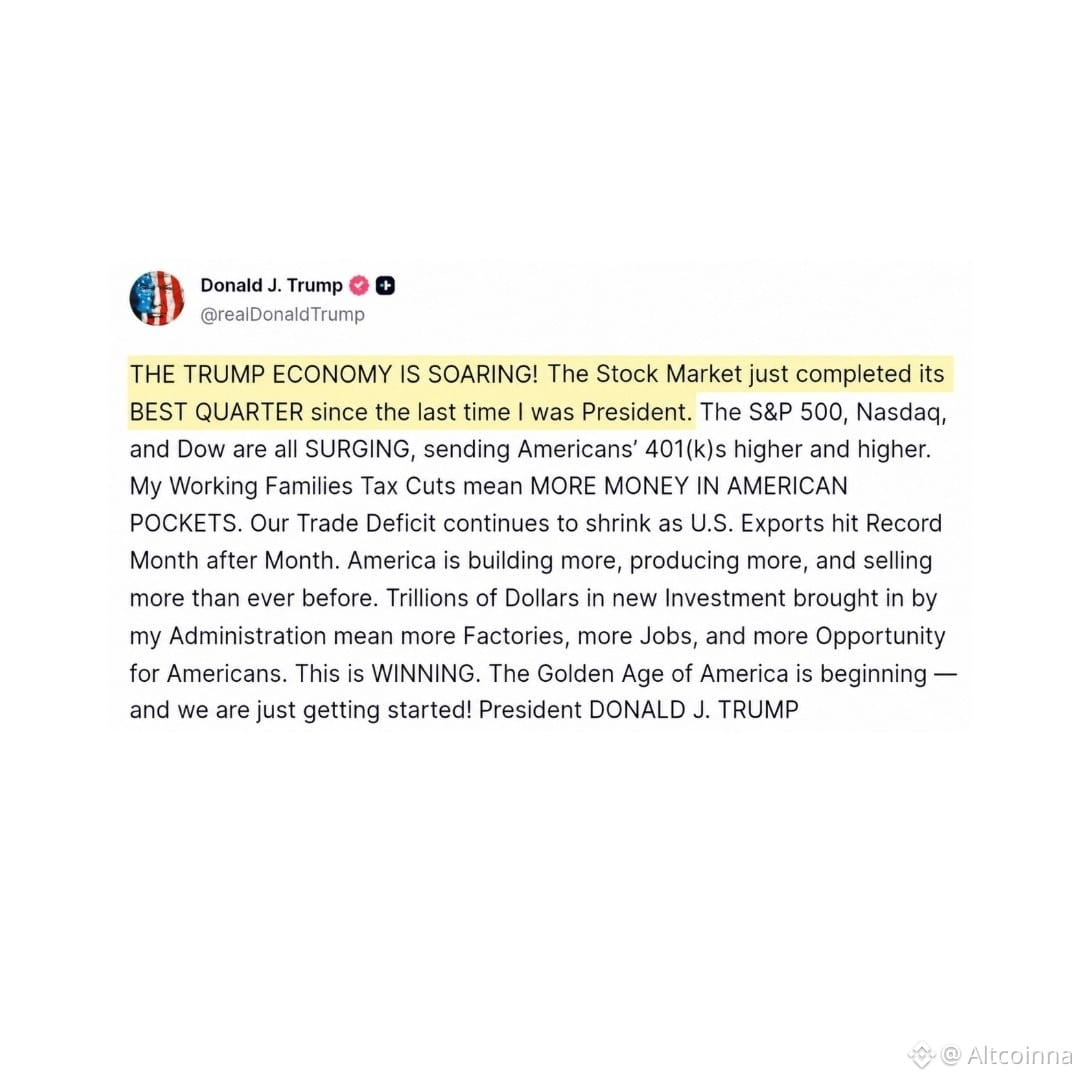
🚨 TRUMP: U.S. ECONOMY IS JUST GETTING STARTED 🇺🇸 President Trump says the U.S. economy is gaining momentum. 📈 Stocks posted their strongest quarter since his last term. 📊 Exports are up, the trade deficit is narrowing, and fresh investment is fueling new jobs. His message: America's "Golden Age" is only beginning. #Trump #USEconomy #Stocks
🚨 TRUMP: U.S. ECONOMY IS JUST GETTING STARTED
🇺🇸 President Trump says the U.S. economy is gaining momentum.
📈 Stocks posted their strongest quarter since his last term.
📊 Exports are up, the trade deficit is narrowing, and fresh investment is fueling new jobs.
His message: America's "Golden Age" is only beginning.
#Trump #USEconomy #Stocks
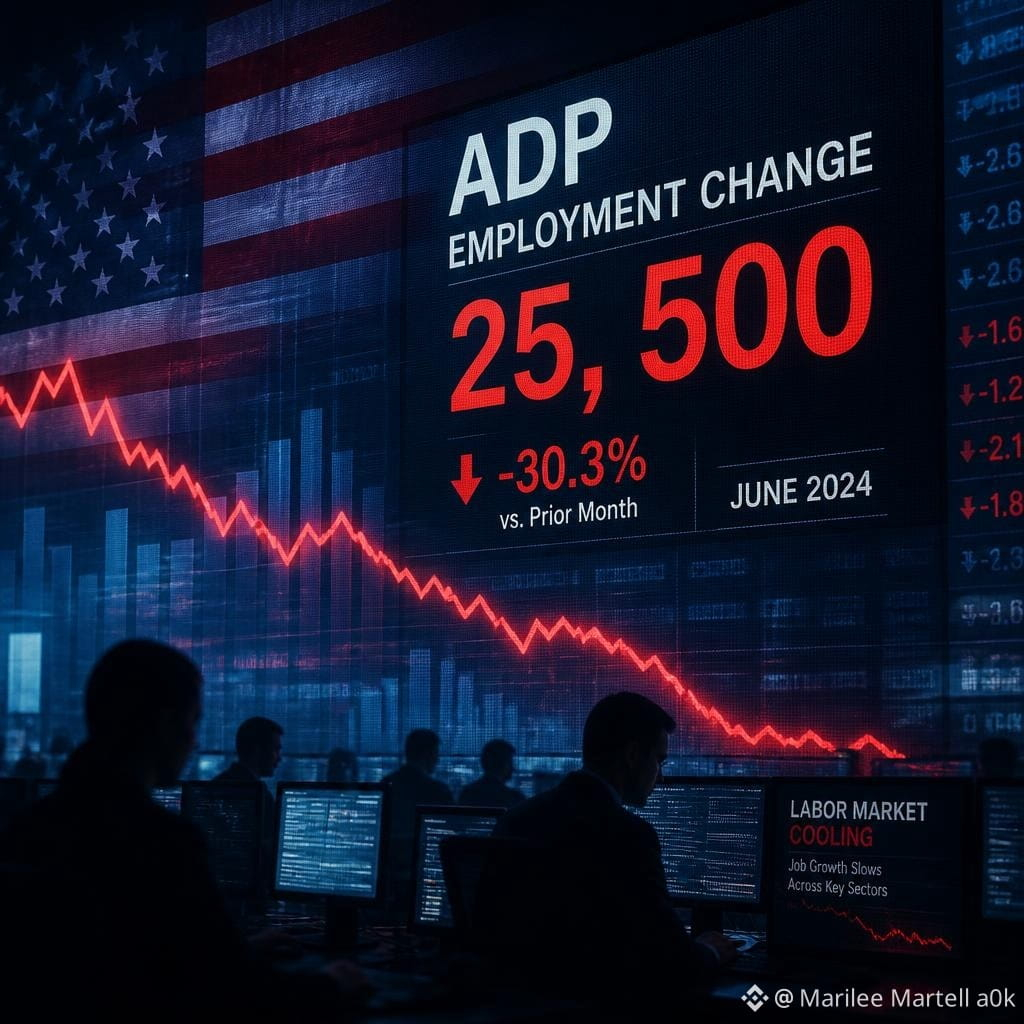
U.S. ADP employment change slipping to 25,500 points to a notable slowdown in private-sector hiring. That could be a sign employers are turning more cautious as economic uncertainty, borrowing costs, and softer demand weigh on business decisions. For markets, weaker job growth can raise expectations around Fed policy shifts, while also fueling concerns about the strength of the broader economy. All eyes now turn to upcoming labor data to see whether this is a one-off miss or the start of a deeper cooling trend. #ADP #JobsReport #USEconomy #USADPEmploymentChangeSlipsTo25500
U.S. ADP employment change slipping to 25,500 points to a notable slowdown in private-sector hiring. That could be a sign employers are turning more cautious as economic uncertainty, borrowing costs, and softer demand weigh on business decisions. For markets, weaker job growth can raise expectations around Fed policy shifts, while also fueling concerns about the strength of the broader economy. All eyes now turn to upcoming labor data to see whether this is a one-off miss or the start of a deeper cooling trend. #ADP #JobsReport #USEconomy

#USADPEmploymentChangeSlipsTo25500
Войдите, чтобы посмотреть больше материала
Присоединяйтесь к пользователям криптовалют по всему миру на Binance Square
⚡️ Получайте новейшую и полезную информацию о криптоактивах.
💬 Нам доверяет крупнейшая в мире криптобиржа.
👍 Получите достоверные аналитические данные от верифицированных создателей контента.
Эл. почта/номер телефона