

#coinvahini
coinvahini
Просмотров: 126,987
1,571 обсуждают
Популярные
Новые

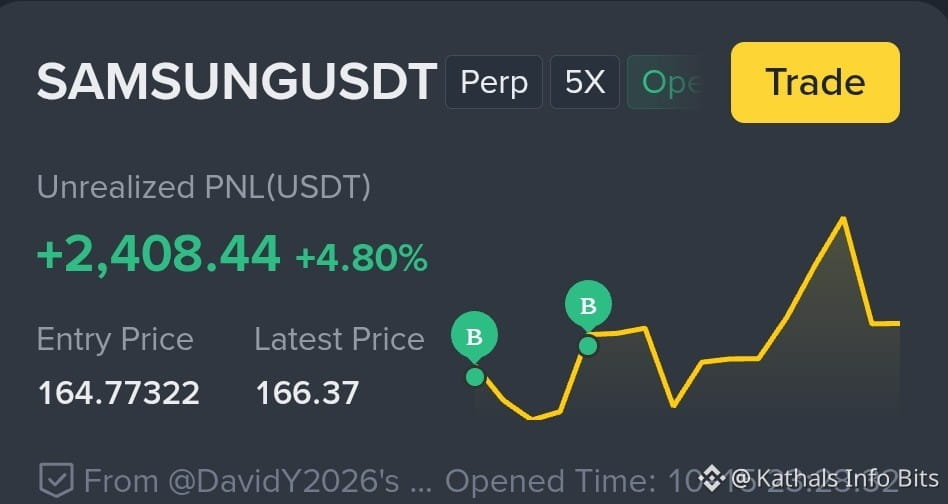
$SAMSUNG to $200❕❔
Evaluating a potential short position based on macro headwinds, regional sentiment shifts, and broader tech sector contagion is a calculated perspective, especially when tech spheres experience cooling sentiment or liquidity tightening. Risk management, macro volatility, and localized market cycles remain critical variables for any high-conviction thesis.
{future}(SAMSUNGUSDT)
#CoinVahini #StockMarket #TechSector #MarketAnalysis
$SAMSUNG to $200❕❔
Evaluating a potential short position based on macro headwinds, regional sentiment shifts, and broader tech sector contagion is a calculated perspective, especially when tech spheres experience cooling sentiment or liquidity tightening. Risk management, macro volatility, and localized market cycles remain critical variables for any high-conviction thesis.
#CoinVahini #StockMarket #TechSector #MarketAnalysis
5
The Sharp Repricing That Hit Intel After Weak Guidance💡
{spot}(INTCBUSDT)
Intel became one of the most prominent earnings losers in the technology group, sliding 20.15% after blaming a PC slowdown for soft guidance. The stock joined Amazon and Illumina among overnight decliners as investors reacted harshly to the outlook.
{future}(INTCUSDT)
The selloff undercuts the recent rally narrative that had leaned on AI and manufacturing recovery hopes. In a market already pressured by broader tech weakness, the message is clear: investors want tangible earnings leverage rather than turnaround optimism alone. Upcoming details on PC demand, data-center orders, and AI product uptake will determine whether the stock can stabilize.
$INTC $INTCB #CoinVahini #Intel #Earnings #Semiconductors
The Sharp Repricing That Hit Intel After Weak Guidance💡
Intel became one of the most prominent earnings losers in the technology group, sliding 20.15% after blaming a PC slowdown for soft guidance. The stock joined Amazon and Illumina among overnight decliners as investors reacted harshly to the outlook.
The selloff undercuts the recent rally narrative that had leaned on AI and manufacturing recovery hopes. In a market already pressured by broader tech weakness, the message is clear: investors want tangible earnings leverage rather than turnaround optimism alone. Upcoming details on PC demand, data-center orders, and AI product uptake will determine whether the stock can stabilize.
$INTC $INTCB #CoinVahini #Intel #Earnings #Semiconductors
25
🚨Here’s what happened with the reported ~$3.5 billion outflow from #BinanceWallets .
On October 29, 2026 (around 20:24–21:04 UTC), large amounts of crypto left wallets that Etherscan and on-chain trackers label as Binance hot wallets. The core of the movement on $ETH alone was roughly $3.3–3.5 billion, including:
- ~167,000–197,000 ETH
- ~1.6 billion+ USDT
- ~780–823 million USDC
- Dozens of other tokens
Some broader tallies that include $BTC and $TRX push the total toward $5.5–5.8 billion.
❔How it appears to have occurred ?
On-chain analysis points to a sophisticated exploit rather than normal user withdrawals:
1. An attacker address (funded earlier through Tornado Cash) deployed a malicious smart contract.
2. Using EIP-7702 (Ethereum’s account-delegation feature), the attacker gained temporary control of Binance hot wallets (notably the one labeled “Binance 14”).
3. Within minutes, the compromised wallets executed large multi-token transfers to a newly created address.
4. Some of the funds were quickly moved onward; Tether and Circle responded by freezing roughly $1.8–2.5 billion in stablecoins tied to the receiving addresses.
Binance has stated that, user funds remain completely safe, is investigating a “potential security issue,” and temporarily paused withdrawals. #ChangpengZhao (CZ) publicly said the activity “does look like a hack” and that he expects any losses to be covered.
This was not a routine outflow of customer funds. It was a rapid, targeted drain of hot-wallet assets via a smart-contract/delegation exploit, with a significant portion of the stablecoins later frozen by their issuers.
#BinanceHack2026 #hackattack #CoinVahini
8
#TradeSetup 🔥 $ANTHROPIC /USDT | SHORT Setup 👇
📉 Data Timeframe: 1H | Strategy: Bearish Continuation
ANTHROPIC is trading near $1,782 after a sharp sell-off. The bearish MA5 < MA10 < MA20 structure signals continued downside pressure. Although the 4H RSI at 9.5 indicates extreme oversold conditions, a confirmed reversal is still missing. The preferred setup is a SHORT on rejection near resistance.
{future}(ANTHROPICUSDT)
🔴 Direction: SHORT
🎯 Entry Zone: $1,799–$1,804
💰 Take Profit: $1,767
🛑 Stop-Loss: $1,820
📊 Potential Profit: 1.78%–2.05%
⚠️ Potential Loss: 0.89%–1.17%
⚖️ Risk/Reward: Approximately 1.5:1–2.3:1
🎯 Estimated Win Probability: 60% (subjective technical estimate, not a validated statistical probability)
🐋 Whale Watch: Profitable short positions reinforce bearish pressure, while underwater long accumulation raises the possibility of a sharp rebound.
📌 Trade Confirmation: Look for bearish rejection around $1,799–$1,804 before entering. A strong 1H close above $1,819 invalidates the bearish setup. If $1,755 breaks, $1,740 becomes the next downside level.
Trade the confirmation, not the prediction. Avoid chasing prices after an extended sell-off.
$ANTHROPIC #CoinVahini #ANTHROPIC #CryptoTrading #TraderAlert
#TradeSetup 🔥 $ANTHROPIC /USDT | SHORT Setup 👇
📉 Data Timeframe: 1H | Strategy: Bearish Continuation
ANTHROPIC is trading near $1,782 after a sharp sell-off. The bearish MA5 < MA10 < MA20 structure signals continued downside pressure. Although the 4H RSI at 9.5 indicates extreme oversold conditions, a confirmed reversal is still missing. The preferred setup is a SHORT on rejection near resistance.
🔴 Direction: SHORT
🎯 Entry Zone: $1,799–$1,804
💰 Take Profit: $1,767
🛑 Stop-Loss: $1,820
📊 Potential Profit: 1.78%–2.05%
⚠️ Potential Loss: 0.89%–1.17%
⚖️ Risk/Reward: Approximately 1.5:1–2.3:1
🎯 Estimated Win Probability: 60% (subjective technical estimate, not a validated statistical probability)
🐋 Whale Watch: Profitable short positions reinforce bearish pressure, while underwater long accumulation raises the possibility of a sharp rebound.
📌 Trade Confirmation: Look for bearish rejection around $1,799–$1,804 before entering. A strong 1H close above $1,819 invalidates the bearish setup. If $1,755 breaks, $1,740 becomes the next downside level.
Trade the confirmation, not the prediction. Avoid chasing prices after an extended sell-off.
$ANTHROPIC #CoinVahini #ANTHROPIC #CryptoTrading #TraderAlert
1
#Binance has temporarily #paused deposits and withdrawals across affected networks following the detection of a security anomaly. The exchange confirmed that its risk control system was triggered immediately to isolate affected smart contracts, ensuring user funds remain protected by the #SAFU fund during the investigation.
$BNB #CoinVahini #CryptoSecurity
$BNB #CoinVahini #CryptoSecurity
5
How #China 's AI stock bubble burst and erased $480 billion in valuation❔
Market data confirms this shift:
China's AI and semiconductor stocks recently experienced a major crash, erasing nearly $480 billion in market value as the Shanghai STAR50 index dropped over 40% from its peaks. High valuations, weak corporate adoption, and intense price wars among local suppliers triggered a sharp correction, prompting analysts and fund managers to declare that China's AI bubble has indeed burst.
The summary and market impact of this development:
China’s AI sector faces a $480 billion valuation correction as high valuations collide with low enterprise adoption and price wars. While tech giants trim research budgets, strategic government backing and structural demand for specialized AI infrastructure continue to anchor the long-term technology ecosystem.
$GOOGLB $ANTHROPIC
#CoinVahini #ChinaAI #AIBubble #MarketCorrection
21
#Aave has confirmed it will actively monitor ongoing protocol conditions and unfreeze previously restricted V3 and V4 DAO operational markets as soon as possible. This proactive response highlights Aave’s focus on maintaining liquidity, protecting user assets, and restoring full operational efficiency across its #lending ecosystem.
$AAVE #CoinVahini #DeFiSecurity #CryptoMarkets
$AAVE #CoinVahini #DeFiSecurity #CryptoMarkets
7
#Coinbase Posts Q3 Profit of $718.7 Million Amid Declining Revenue and Executive Share Sales 👇
{spot}(COINBUSDT)
Coinbase released its financial results for the third quarter, reporting a net profit of $718.7 million. However, overall revenue experienced a decline of 35% down to $1.22 billion, while transaction revenue saw a more pronounced drop of 44% to $590 million.
In addition to the quarterly earnings report, regulatory filings revealed that top executives plan to sell up to 13.6 million shares over a 14-month period, which is projected to introduce roughly $2.2 billion in new supply. For equity investors and crypto market participants, balancing corporate profitability against falling transaction volumes and upcoming insider sales remains a crucial consideration.
$COIN #CoinVahini #EarningsReport #StockMarket #EarningsSeason
#Coinbase Posts Q3 Profit of $718.7 Million Amid Declining Revenue and Executive Share Sales 👇
Coinbase released its financial results for the third quarter, reporting a net profit of $718.7 million. However, overall revenue experienced a decline of 35% down to $1.22 billion, while transaction revenue saw a more pronounced drop of 44% to $590 million.
In addition to the quarterly earnings report, regulatory filings revealed that top executives plan to sell up to 13.6 million shares over a 14-month period, which is projected to introduce roughly $2.2 billion in new supply. For equity investors and crypto market participants, balancing corporate profitability against falling transaction volumes and upcoming insider sales remains a crucial consideration.
$COIN #CoinVahini #EarningsReport #StockMarket #EarningsSeason
Binance Investigates Major Security Incidents as Billions Leave Hot Wallets.
{spot}(BNBUSDT)
Binance has confirmed that it is actively investigating a "potential security issue" after at least $5.57 billion left Binance-linked hot wallets across the Ethereum, Bitcoin, and Tron networks on Thursday. In response to the incident, stablecoin issuers Tether and Circle successfully froze approximately $1.8 billion in the primary receiving wallet, though reports indicate the attacker was still moving funds. For crypto traders, investors, and platform users, monitoring exchange security updates and asset recovery efforts is critical during this evolving situation.
$BNB $ETH $TRX #CoinVahini #Binance #CryptoSecurity #Blockchain #Tether
Binance Investigates Major Security Incidents as Billions Leave Hot Wallets.
Binance has confirmed that it is actively investigating a "potential security issue" after at least $5.57 billion left Binance-linked hot wallets across the Ethereum, Bitcoin, and Tron networks on Thursday. In response to the incident, stablecoin issuers Tether and Circle successfully froze approximately $1.8 billion in the primary receiving wallet, though reports indicate the attacker was still moving funds. For crypto traders, investors, and platform users, monitoring exchange security updates and asset recovery efforts is critical during this evolving situation.
$BNB $ETH $TRX #CoinVahini #Binance #CryptoSecurity #Blockchain #Tether
5
The Soft Grind Lower That’s Keeping #OPEN Near Its 30-Day Floor
OPEN is trading at $0.0845, hovering near its 30-day low with a clear bearish bias as down-volume continues to outweigh up-volume. The token sits below the lower envelope at $0.0857, and a close above $0.0968 would be needed to weaken the near-term downside structure.
{spot}(OPENUSDT)
A restrictive Fed backdrop (rates held at 3.75%–4.00% with inflation still at 3.7%) is weighing on risk appetite. Combined with a $33.69M market cap, elevated turnover, and an FDV ratio of 2.50 pointing to unlock overhang, flows remain soft—large-order buyers are scarce and net large-order flow stays negative.
$OPEN #CoinVahini #CryptoTrading #MarketStructure
The Soft Grind Lower That’s Keeping #OPEN Near Its 30-Day Floor
OPEN is trading at $0.0845, hovering near its 30-day low with a clear bearish bias as down-volume continues to outweigh up-volume. The token sits below the lower envelope at $0.0857, and a close above $0.0968 would be needed to weaken the near-term downside structure.
A restrictive Fed backdrop (rates held at 3.75%–4.00% with inflation still at 3.7%) is weighing on risk appetite. Combined with a $33.69M market cap, elevated turnover, and an FDV ratio of 2.50 pointing to unlock overhang, flows remain soft—large-order buyers are scarce and net large-order flow stays negative.
$OPEN #CoinVahini #CryptoTrading #MarketStructure
33
Mastercard Shares Rise Following Strong Third-Quarter Earnings and Resilient Consumer spending 💰
Mastercard shares experienced an upward movement after the company surpassed third-quarter estimates, posting an adjusted earnings per share (EPS) of $5.31 on $9.81 billion in revenue. During the quarter, cross-border volume increased by 11%. Furthermore, CEO Michael Miebach noted that consumer spending has remained resilient despite ongoing economic uncertainty. For equity analysts and market participants tracking global payments, these robust financial results highlight continued strength in consumer transactions.
{stock_us}(MA.US)
$MA.US #CoinVahini #Mastercard #EarningsReport #StockMarket #ConsumerSpending
Mastercard Shares Rise Following Strong Third-Quarter Earnings and Resilient Consumer spending 💰
Mastercard shares experienced an upward movement after the company surpassed third-quarter estimates, posting an adjusted earnings per share (EPS) of $5.31 on $9.81 billion in revenue. During the quarter, cross-border volume increased by 11%. Furthermore, CEO Michael Miebach noted that consumer spending has remained resilient despite ongoing economic uncertainty. For equity analysts and market participants tracking global payments, these robust financial results highlight continued strength in consumer transactions.
$MA.US #CoinVahini #Mastercard #EarningsReport #StockMarket #ConsumerSpending
MAUS+0,37%
54
Crypto Market Cap Contracts to $2.61 Trillion Amid Security Concerns and Coinbase Insider Share Sales❕
{spot}(COINBUSDT)
The broader digital asset market experienced a notable contraction, with total crypto market capitalization falling to $2.61 trillion as market sentiment weakened. Sentiment was further pressured by reports of a suspected Binance security breach, which allegedly resulted in at least $5.57 billion being drained from the platform.
{spot}(BNBUSDT)
In traditional equity markets linked to the sector, regulatory filings indicate that Coinbase insiders plan upcoming sales of up to 13.6 million shares. For crypto investors, active traders, and equity market participants, monitoring exchange security metrics alongside insider equity movements remains critical for risk assessment and liquidity management.
$COINB $BTC $BNB #CoinVahini #CryptoMarket #Binance #Coinbase #CyberSecurity
Crypto Market Cap Contracts to $2.61 Trillion Amid Security Concerns and Coinbase Insider Share Sales❕
The broader digital asset market experienced a notable contraction, with total crypto market capitalization falling to $2.61 trillion as market sentiment weakened. Sentiment was further pressured by reports of a suspected Binance security breach, which allegedly resulted in at least $5.57 billion being drained from the platform.
In traditional equity markets linked to the sector, regulatory filings indicate that Coinbase insiders plan upcoming sales of up to 13.6 million shares. For crypto investors, active traders, and equity market participants, monitoring exchange security metrics alongside insider equity movements remains critical for risk assessment and liquidity management.
$COINB $BTC $BNB #CoinVahini #CryptoMarket #Binance #Coinbase #CyberSecurity
33
BNP Paribas Cuts Alphabet Price Target Amid Search Trends and Margin Pressure⚠️
{spot}(GOOGLBUSDT)
Financial institution BNP Paribas has reduced its price target for Alphabet to $410 down from its previous target of $450. The adjustment reflects analysts' concerns that weaker Search trends and near-term margin pressure could potentially offset strong AI-led Cloud growth. Meanwhile, Alphabet has maintained its 2026 capital expenditure guidance between $195 billion and $205 billion, while signaling plans for a significant increase in 2027. Following the update, GOOGLB shares traded down 4.30% and GOOG shares fell 1.07%. For equity investors tracking big tech valuations, balancing heavy infrastructure spending with core advertising dynamics remains a critical focus.
$GOOGL $GOOGLB $GOOG.US #CoinVahini #Alphabet #Google #StockMarket #TechNews
BNP Paribas Cuts Alphabet Price Target Amid Search Trends and Margin Pressure⚠️
Financial institution BNP Paribas has reduced its price target for Alphabet to $410 down from its previous target of $450. The adjustment reflects analysts' concerns that weaker Search trends and near-term margin pressure could potentially offset strong AI-led Cloud growth. Meanwhile, Alphabet has maintained its 2026 capital expenditure guidance between $195 billion and $205 billion, while signaling plans for a significant increase in 2027. Following the update, GOOGLB shares traded down 4.30% and GOOG shares fell 1.07%. For equity investors tracking big tech valuations, balancing heavy infrastructure spending with core advertising dynamics remains a critical focus.
$GOOGL $GOOGLB $GOOG.US #CoinVahini #Alphabet #Google #StockMarket #TechNews
GOOGUS-0,56%
GOOGLB-3,87%
66
#INTW The Volatile Bounce That’s Still Fighting a Downtrend👀
{spot}(INTWBUSDT)
Price is holding near $17.67 after a 7.2% daily drop, yet remains up 17% on the week inside a broader monthly downtrend. Immediate support sits at the $16.80–$17.20 cluster, while resistance is layered at $18.40–$18.80 where selling pressure has repeatedly appeared.
{etf_us}(INTW.ETF)
The 1-hour chart shows a higher-low bounce attempt, but the 4-hour structure stays capped under prior breakdown levels. Buyers can look to add near $16.30–$17.20 on volume or RSI support; a decisive close above $18.80 would be required to shift the bias higher. Until then, treat rallies as counter-trend.
$INTWB $INTW.ETF #CoinVahini #TechnicalAnalysis #StockTrading #PriceAction
#INTW The Volatile Bounce That’s Still Fighting a Downtrend👀
Price is holding near $17.67 after a 7.2% daily drop, yet remains up 17% on the week inside a broader monthly downtrend. Immediate support sits at the $16.80–$17.20 cluster, while resistance is layered at $18.40–$18.80 where selling pressure has repeatedly appeared.
The 1-hour chart shows a higher-low bounce attempt, but the 4-hour structure stays capped under prior breakdown levels. Buyers can look to add near $16.30–$17.20 on volume or RSI support; a decisive close above $18.80 would be required to shift the bias higher. Until then, treat rallies as counter-trend.
$INTWB $INTW.ETF #CoinVahini #TechnicalAnalysis #StockTrading #PriceAction
INTWETF-45,16%
INTWB-45,20%
16
#MRVL The Sharp Drop That’s Testing Critical Support🤔
{spot}(MRVLBUSDT)
Price is trading at $215.74 after a steep 13.67% daily decline, still holding above the $208–$210 support cluster. Secondary support sits at the $195–$198 zone, while resistance is stacked at the $228–$232 breakdown shelf and higher at $245–$250.
{stock_us}(MRVL.US)
Buyers can look to add near $208 if taker flow improves; a decisive close above $228 with expanding volume would be needed to confirm any recovery. Broader semiconductor volatility, highlighted by Marvell’s sharp move, continues to weigh on sentiment. A close below $195 would invalidate the short-term bullish setup.
$MRVLB $MRVL.US $MRVL #CoinVahini #Semiconductors #TechnicalAnalysis #StockTrading
#MRVL The Sharp Drop That’s Testing Critical Support🤔
Price is trading at $215.74 after a steep 13.67% daily decline, still holding above the $208–$210 support cluster. Secondary support sits at the $195–$198 zone, while resistance is stacked at the $228–$232 breakdown shelf and higher at $245–$250.
Buyers can look to add near $208 if taker flow improves; a decisive close above $228 with expanding volume would be needed to confirm any recovery. Broader semiconductor volatility, highlighted by Marvell’s sharp move, continues to weigh on sentiment. A close below $195 would invalidate the short-term bullish setup.
$MRVLB $MRVL.US $MRVL #CoinVahini #Semiconductors #TechnicalAnalysis #StockTrading
MRVLUS-3,93%
MRVLB-9,30%
6
The Steady Grind That’s Quietly Testing Key Levels on $AMCB 👇
{spot}(AMCBUSDT)
AMCB is holding $3.06 inside a tight range, with solid support at the $2.95–$3.00 base and deeper floor near $2.80. Resistance sits at $3.15 and the $3.30 monthly upper bound. Synchronized daily and weekly gains point to steady accumulation rather than a speculative spike.
Binance Launchpool, a 50,000 USDT trading competition, and Simple Earn options continue to offer yield incentives. Buyers can look to accumulate near $2.95–$3.00; a decisive close above $3.15 with expanding volume would open the path higher. Regulatory noise around tokenized stocks remains a background factor to watch.
#CoinVahini #AMCB #TokenizedStocks #CryptoTrading
The Steady Grind That’s Quietly Testing Key Levels on $AMCB 👇
AMCB is holding $3.06 inside a tight range, with solid support at the $2.95–$3.00 base and deeper floor near $2.80. Resistance sits at $3.15 and the $3.30 monthly upper bound. Synchronized daily and weekly gains point to steady accumulation rather than a speculative spike.
Binance Launchpool, a 50,000 USDT trading competition, and Simple Earn options continue to offer yield incentives. Buyers can look to accumulate near $2.95–$3.00; a decisive close above $3.15 with expanding volume would open the path higher. Regulatory noise around tokenized stocks remains a background factor to watch.
#CoinVahini #AMCB #TokenizedStocks #CryptoTrading
6
#Arkham Intelligence reveals TRON founder Justin Sun as the largest individual holder of PEPE, accumulating around 2.82% of its circulating supply (valued at ~$51.25 million). This massive accumulation signals growing institutional interest in top-tier memecoins while raising liquidity and concentration discussions across Web3.
$PEPE $TRX #CoinVahini #PepeCoin #CryptoWhales #MemecoinRally
$PEPE $TRX #CoinVahini #PepeCoin #CryptoWhales #MemecoinRally
5
#ChainlinkOnchainRatings
Chainlink has expanded its partnership with S&P Global Ratings to publish vault risk assessments directly onchain.
The first deployment is live on the Base network, allowing institutional and DeFi participants to access standardized risk data without leaving the blockchain environment. This builds on earlier efforts to bridge traditional finance metrics with onchain applications.
{spot}(LINKUSDT)
Bringing established credit and risk ratings into smart contract ecosystems could improve transparency and decision making for vault strategies and related products.
$LINK #CoinVahini #Chainlink #S&PGlobal #OnchainData
#ChainlinkOnchainRatings
Chainlink has expanded its partnership with S&P Global Ratings to publish vault risk assessments directly onchain.
The first deployment is live on the Base network, allowing institutional and DeFi participants to access standardized risk data without leaving the blockchain environment. This builds on earlier efforts to bridge traditional finance metrics with onchain applications.
Bringing established credit and risk ratings into smart contract ecosystems could improve transparency and decision making for vault strategies and related products.
$LINK #CoinVahini #Chainlink #S&PGlobal #OnchainData
3
The Quiet Rebound Testing Key Levels on #BOTB 👇
BOTB is trading at $23.86, holding above the $22.50 EMA support while facing immediate resistance at $24.80. Deeper support sits at $21.80, with the next major supply zone at the $26.20 monthly level. The token shows a solid +9.7% weekly bounce against a mild monthly decline, suggesting a short-term recovery inside a broader range.
{spot}(BOTBUSDT)
Buyers can look to accumulate near $22.50 on volume stabilization; a decisive close above $24.80 would open the path higher. Micro-cap status and limited smart-money signals still call for caution.
$BOTB $BOT $BOT.US #CoinVahini #CryptoTrading
The Quiet Rebound Testing Key Levels on #BOTB 👇
BOTB is trading at $23.86, holding above the $22.50 EMA support while facing immediate resistance at $24.80. Deeper support sits at $21.80, with the next major supply zone at the $26.20 monthly level. The token shows a solid +9.7% weekly bounce against a mild monthly decline, suggesting a short-term recovery inside a broader range.
Buyers can look to accumulate near $22.50 on volume stabilization; a decisive close above $24.80 would open the path higher. Micro-cap status and limited smart-money signals still call for caution.
$BOTB $BOT $BOT.US #CoinVahini #CryptoTrading
BOTUS-2,48%
BOTB+1,36%
Alphabet Shares Fall as AI Mode Search Pressures Core Advertising Profit💀
Alphabet shares experienced a sharp decline following a Financial Times report disclosing that the Google parent company's "AI mode" search feature is threatening profitability within its core advertising business. GOOGLB shares dropped to $287.12, marking a significant decrease of 9.49% over a 24-hour period. For equity investors and market analysts tracking big tech equities, balancing artificial intelligence integration with traditional advertising revenue streams remains a critical valuation factor.
{spot}(GOOGLBUSDT)
$GOOGLB $GOOGL #CoinVahini #Alphabet #Google #StockMarket #TechNews
Alphabet Shares Fall as AI Mode Search Pressures Core Advertising Profit💀
Alphabet shares experienced a sharp decline following a Financial Times report disclosing that the Google parent company's "AI mode" search feature is threatening profitability within its core advertising business. GOOGLB shares dropped to $287.12, marking a significant decrease of 9.49% over a 24-hour period. For equity investors and market analysts tracking big tech equities, balancing artificial intelligence integration with traditional advertising revenue streams remains a critical valuation factor.
$GOOGLB $GOOGL #CoinVahini #Alphabet #Google #StockMarket #TechNews
29
Войдите, чтобы посмотреть больше материала
Присоединяйтесь к пользователям криптовалют по всему миру на Binance Square
⚡️ Получайте новейшую и полезную информацию о криптоактивах.
💬 Нам доверяет крупнейшая в мире криптобиржа.
👍 Получите достоверные аналитические данные от верифицированных создателей контента.
Эл. почта/номер телефона
В тренде
1
#EarningsSeason
Просмотров: 6.6M
32,719 обсуждают
2
#USMidtermElections
Просмотров: 73,038
919 обсуждают
3
#StrategySTRCReaches$99.95ForFirstTimeIn165Days
Просмотров: 178
11 обсуждают
4
#BinanceWillListPredictPREDICT
Просмотров: 4,855
186 обсуждают
5
#SwitzerlandFirstSpotBitcoinETFExpectedToTradeInNovember
Просмотров: 310
22 обсуждают
6
#StrategyReports$21BQ3OperatingProfit
Просмотров: 164
10 обсуждают
7
#TwoAddressesHoldingAbout1.28BUSDTFrozen
Просмотров: 1,142
76 обсуждают
8
#FirstDigitalBlacklistsAttackerAddressHoldingAbout3.4MFDUSD
Просмотров: 128
6 обсуждают
9
#BitcoinDropsBelow$80K
Просмотров: 54,987
149 обсуждают
10
#BoEOpensConsultationOnTokenizedCollateralForClearing
Просмотров: 1,949
40 обсуждают