
Quantastic3
302 Публикации

Quantastic3
I am a quant lover who run Quantastic, an easy-to customized quantitative platform, that generate stable win
Открытая сделка

Владелец BNB
Трейдер с частыми сделками
8.6 г
0 подписок(и/а)
103 подписчиков(а)
376 понравилось
Посты
Портфель
Все
Цитирования
Видео
Впервые в топ-10 ROI!
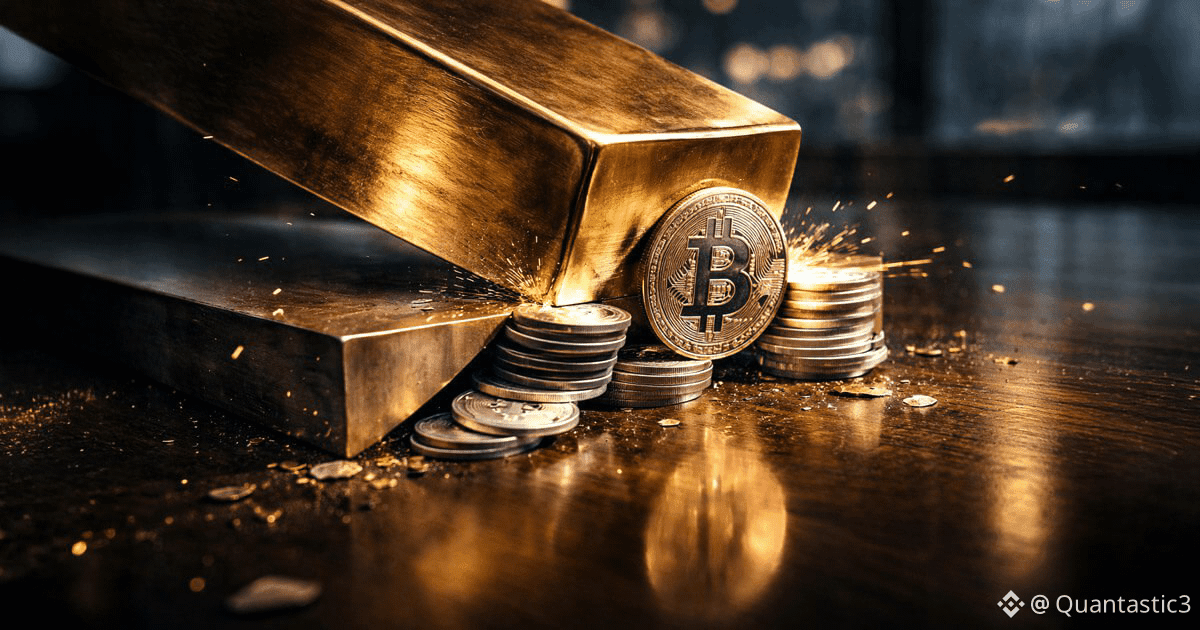
Самый большой шок золота за десятилетия — и почему это важно для Биткойна 🟡➡️₿
30 января 2026 года драгоценные металлы пережили настоящее черное лебединое событие. Всего за шесть часов цена серебра упала почти на 30%, а золото снизилось на 10% — одноразовая потеря в рыночной капитализации золота равна двойной стоимости всего Биткойна.
Это произошло после массового ралли золота на 65% в 2025 году, в период, когда Биткойн откатился с своего пика в $125K до диапазона $80K. Наратив быстро стал «золото выше Биткойна». Но история рассказывает другую историю. Золото в значительной степени оставалось стагнирующим с 2020 по 2024 год, в то время как Биткойн значительно превзошел его.
Несмотря на популярное мнение, Биткойн и золото едва ли коррелируют (10-летняя корреляция близка к нулю). На самом деле предыдущие пики золота в 2016 и 2021 годах были следствием значительных ралли Биткойна. Если этот паттерн повторится, пик золота в 2026 году может стать ведущим сигналом — а не предупреждением.
Крах также выявил структурную слабость золота в цифровой экономике. Физические металлы медленны, их перемещение дорогостоящее, их трудно продать, и они страдают от широких спредов между ставками покупки и продажи. Биткойн, напротив, мгновенно передаваем, глобально ликвиден и цифрово роден.
Золото не исчезнет — но в течение следующих 5–10 лет многие считают, что оно вряд ли превзойдет актив, обеспеченный кодом, а не геологией.
Иногда даже самый старый «безопасный актив» напоминает нам: волатильность универсальна — но адаптивность выигрывает в долгосрочной перспективе.
#bitcoin #GoldMarket #MacroTrends #DigitalAssets #MarketSituation
Проверьте мой профиль копи-трейдинга — ссылка ниже.
Я торгую с очень низким кредитным плечом (1x–2x) через API, с сильным акцентом на безопасность капитала и контроль рисков.
https://www.binance.com/en/copy-trading/lead-details/4898205401706679808?timeRange=30D
30 января 2026 года драгоценные металлы пережили настоящее черное лебединое событие. Всего за шесть часов цена серебра упала почти на 30%, а золото снизилось на 10% — одноразовая потеря в рыночной капитализации золота равна двойной стоимости всего Биткойна.
Это произошло после массового ралли золота на 65% в 2025 году, в период, когда Биткойн откатился с своего пика в $125K до диапазона $80K. Наратив быстро стал «золото выше Биткойна». Но история рассказывает другую историю. Золото в значительной степени оставалось стагнирующим с 2020 по 2024 год, в то время как Биткойн значительно превзошел его.
Несмотря на популярное мнение, Биткойн и золото едва ли коррелируют (10-летняя корреляция близка к нулю). На самом деле предыдущие пики золота в 2016 и 2021 годах были следствием значительных ралли Биткойна. Если этот паттерн повторится, пик золота в 2026 году может стать ведущим сигналом — а не предупреждением.
Крах также выявил структурную слабость золота в цифровой экономике. Физические металлы медленны, их перемещение дорогостоящее, их трудно продать, и они страдают от широких спредов между ставками покупки и продажи. Биткойн, напротив, мгновенно передаваем, глобально ликвиден и цифрово роден.
Золото не исчезнет — но в течение следующих 5–10 лет многие считают, что оно вряд ли превзойдет актив, обеспеченный кодом, а не геологией.
Иногда даже самый старый «безопасный актив» напоминает нам: волатильность универсальна — но адаптивность выигрывает в долгосрочной перспективе.
#bitcoin #GoldMarket #MacroTrends #DigitalAssets #MarketSituation
Проверьте мой профиль копи-трейдинга — ссылка ниже.
Я торгую с очень низким кредитным плечом (1x–2x) через API, с сильным акцентом на безопасность капитала и контроль рисков.
https://www.binance.com/en/copy-trading/lead-details/4898205401706679808?timeRange=30D
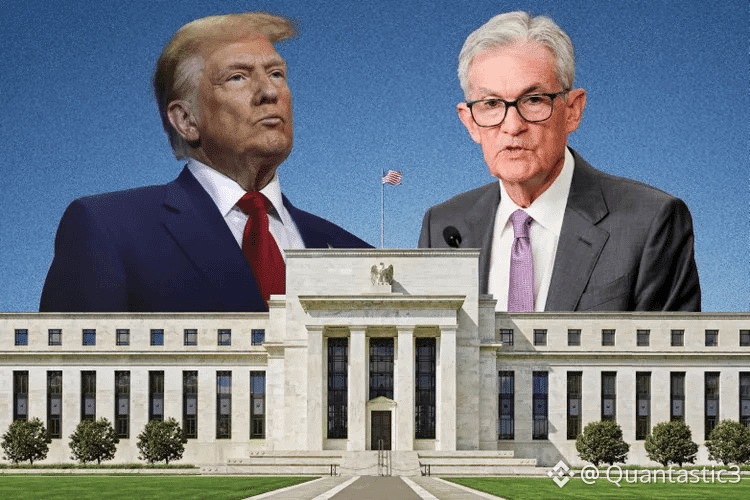
Это официально: Трамп перезагружает ФРС 🇺🇸📉
В США начинается значительный сдвиг в денежно-кредитной политике. Президент Трамп выдвинул кандидатуру Кевина Уорша на замену Джерому Пауэллу на посту председателя Федеральной резервной системы в мае 2026 года, сигнализируя о четкой попытке изменить направление ФРС.
Уорш, ранее известный как ястреб по инфляции во время финансового кризиса 2008 года, кардинально изменил свою позицию. Теперь он утверждает, что процентные ставки остаются слишком высокими слишком долго и поддерживает агрессивные сокращения ставок для стимулирования роста. В то же время его стратегия направлена на контроль за инфляцией путем сокращения баланса ФРС, изымая избыточную ликвидность из системы, делая заимствования дешевле.
Этот шаг также ставит под сомнение традиционную независимость Федеральной резервной системы, поскольку Трамп открыто выступает за более тесную координацию между Белым домом и ФРС в вопросах процентных ставок.
Фон критичен: с национальным долгом США, превышающим 38 триллионов долларов, процентные выплаты стали самым быстрорастущим расходом правительства. Более низкие ставки могут облегчить это бремя, потенциально освободив средства для инфраструктуры, здравоохранения и экономического роста.
Рынки уже реагируют на волатильность. Более низкие ставки могут повысить котировки акций, жилье и потребительские расходы — но они могут навредить сберегателям и держателям облигаций через снижение доходности. Наибольший риск остается инфляцией, и может ли ужесточение баланса действительно компенсировать агрессивные сокращения ставок.
2026 год может стать поворотным моментом для доллара, глобальных рынков и денежно-кредитной политики в целом.
#FederalReserve #InterestRates #USPolitics #MacroEconomics #MarketOutlook
Посмотрите мой профиль копи-трейдинга – ссылка ниже.
Я торгую, используя очень низкое кредитное плечо (1x–2x) через API, с сильным акцентом на безопасность капитала и контроль рисков.
https://www.binance.com/en/copy-trading/lead-details/4898205401706679808?timeRange=30D
В США начинается значительный сдвиг в денежно-кредитной политике. Президент Трамп выдвинул кандидатуру Кевина Уорша на замену Джерому Пауэллу на посту председателя Федеральной резервной системы в мае 2026 года, сигнализируя о четкой попытке изменить направление ФРС.
Уорш, ранее известный как ястреб по инфляции во время финансового кризиса 2008 года, кардинально изменил свою позицию. Теперь он утверждает, что процентные ставки остаются слишком высокими слишком долго и поддерживает агрессивные сокращения ставок для стимулирования роста. В то же время его стратегия направлена на контроль за инфляцией путем сокращения баланса ФРС, изымая избыточную ликвидность из системы, делая заимствования дешевле.
Этот шаг также ставит под сомнение традиционную независимость Федеральной резервной системы, поскольку Трамп открыто выступает за более тесную координацию между Белым домом и ФРС в вопросах процентных ставок.
Фон критичен: с национальным долгом США, превышающим 38 триллионов долларов, процентные выплаты стали самым быстрорастущим расходом правительства. Более низкие ставки могут облегчить это бремя, потенциально освободив средства для инфраструктуры, здравоохранения и экономического роста.
Рынки уже реагируют на волатильность. Более низкие ставки могут повысить котировки акций, жилье и потребительские расходы — но они могут навредить сберегателям и держателям облигаций через снижение доходности. Наибольший риск остается инфляцией, и может ли ужесточение баланса действительно компенсировать агрессивные сокращения ставок.
2026 год может стать поворотным моментом для доллара, глобальных рынков и денежно-кредитной политики в целом.
#FederalReserve #InterestRates #USPolitics #MacroEconomics #MarketOutlook
Посмотрите мой профиль копи-трейдинга – ссылка ниже.
Я торгую, используя очень низкое кредитное плечо (1x–2x) через API, с сильным акцентом на безопасность капитала и контроль рисков.
https://www.binance.com/en/copy-trading/lead-details/4898205401706679808?timeRange=30D
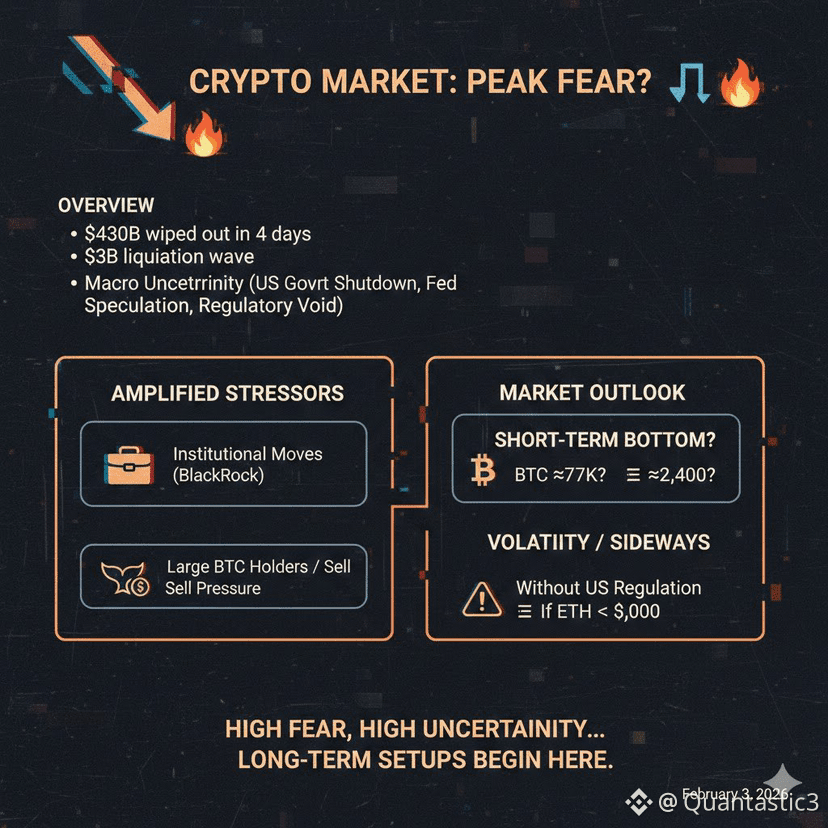
Крипторынок на пике страха? 📉🔥
Крипторынок находится под сильным давлением, более $430B было стерто за четыре дня на фоне волны ликвидации в $5B. Продажа обусловлена макроэкономической неопределенностью — в частности, приостановкой работы правительства США, спекуляциями о руководстве Федеральной резервной системы и отсутствием ясности в регулировании в Вашингтоне.
Хотя глобальные рынки также падают, криптовалюта испытывает усиленное напряжение. Институциональные движения, включая перевод средств BlackRock в Coinbase и растущие опасения вокруг крупных держателей BTC, добавляют давления со стороны продаж.
Некоторые аналитики считают, что BTC около $77K и ETH примерно $2,400 могут обозначать краткосрочное дно. Другие предупреждают, что без четкого регулирования в США рынок может остаться волатильным или двигаться вбок — особенно если Ethereum упадет ниже $2,000.
Высокий страх, высокая неопределенность… но исторически это то место, где часто начинаются долгосрочные установки.
#CryptoMarket #bitcoin #CryptoInsights #MarketVolatility #Ethereum
Проверьте мой профиль копи-трейдинга – ссылка ниже.
Я торгую с очень низким плечом (1x–2x) через API, с сильным акцентом на безопасность капитала и контроль риска.
https://www.binance.com/en/copy-trading/lead-details/4898205401706679808?timeRange=30D
Крипторынок находится под сильным давлением, более $430B было стерто за четыре дня на фоне волны ликвидации в $5B. Продажа обусловлена макроэкономической неопределенностью — в частности, приостановкой работы правительства США, спекуляциями о руководстве Федеральной резервной системы и отсутствием ясности в регулировании в Вашингтоне.
Хотя глобальные рынки также падают, криптовалюта испытывает усиленное напряжение. Институциональные движения, включая перевод средств BlackRock в Coinbase и растущие опасения вокруг крупных держателей BTC, добавляют давления со стороны продаж.
Некоторые аналитики считают, что BTC около $77K и ETH примерно $2,400 могут обозначать краткосрочное дно. Другие предупреждают, что без четкого регулирования в США рынок может остаться волатильным или двигаться вбок — особенно если Ethereum упадет ниже $2,000.
Высокий страх, высокая неопределенность… но исторически это то место, где часто начинаются долгосрочные установки.
#CryptoMarket #bitcoin #CryptoInsights #MarketVolatility #Ethereum
Проверьте мой профиль копи-трейдинга – ссылка ниже.
Я торгую с очень низким плечом (1x–2x) через API, с сильным акцентом на безопасность капитала и контроль риска.
https://www.binance.com/en/copy-trading/lead-details/4898205401706679808?timeRange=30D
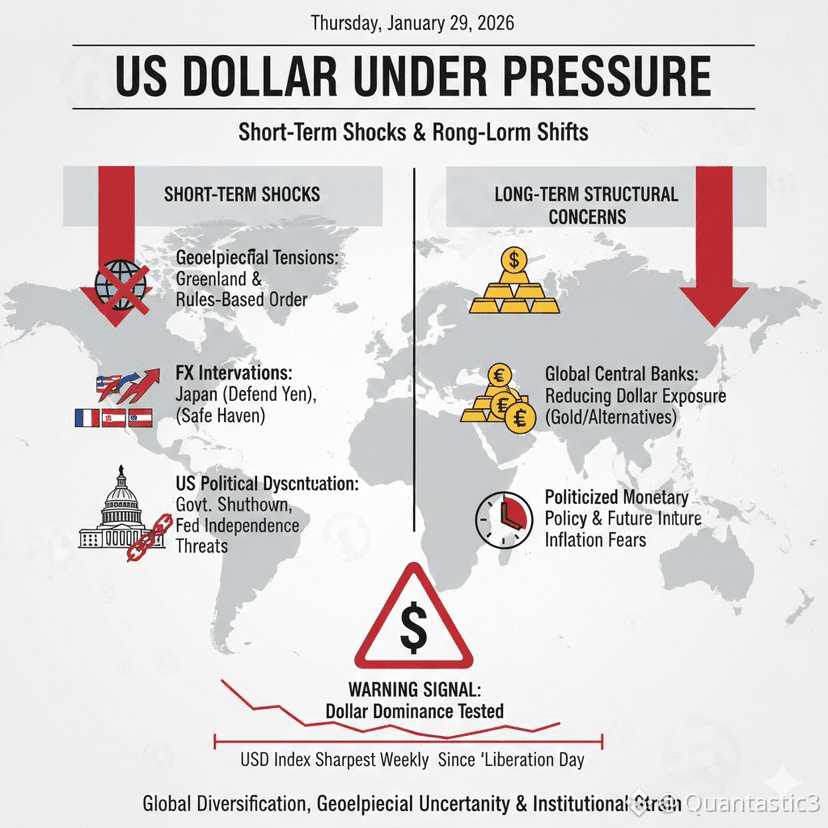
Почему доллар США внезапно находится под давлением
После месяцев стабильности индекс доллара США только что зафиксировал свое резкое недельное падение с "Дня освобождения", потенциально упав до уровней, не виданных с начала 2022 года. Недавнее падение не случайно — это результат перекрывающихся краткосрочных шоков и долгосрочных структурных проблем.
Геополитические напряженности, включая противоречивые сигналы вокруг Гренландии, подорвали глобальную уверенность в приверженности США правилам. Даже после деэскалации рынки оставались тревожными. В то же время интервенции на валютном рынке сыграли важную роль: Япония вмешалась, чтобы защитить иену, швейцарский франк взлетел как безопасное убежище, а оба этих шага ослабили относительную силу доллара.
Внутри страны политическая дисфункция добавляет масло в огонь. Надвигающаяся приостановка работы правительства и новые угрозы независимости Федеральной резервной системы вызывают опасения по поводу политизированной монетарной политики и будущей инфляции. В долгосрочной перспективе тенденция еще яснее — центральные банки мира последовательно снижают свою зависимость от доллара, переходя к золоту и альтернативным резервным активам.
Вывод: это не просто краткосрочное падение. Это сигнал тревоги о том, что доминирование доллара проверяется в условиях геополитической неопределенности, институционального стресса и глобальной диверсификации.
#USDOLLAR
#GlobalMarkets
#MacroEconomics
#ReserveCurrency
#Geopolitics
Скопируйте Quantastic3, ведущего трейдера Binance без риска: мы покроем любые потери для зарегистрированных копировщиков, которые копируют аккаунт Quantastic на https://www.binance.com/copy-trading/lead-details/4734580934665797633?inviteCode=Rddgkwwf . Свяжитесь со мной для получения дополнительной информации!
После месяцев стабильности индекс доллара США только что зафиксировал свое резкое недельное падение с "Дня освобождения", потенциально упав до уровней, не виданных с начала 2022 года. Недавнее падение не случайно — это результат перекрывающихся краткосрочных шоков и долгосрочных структурных проблем.
Геополитические напряженности, включая противоречивые сигналы вокруг Гренландии, подорвали глобальную уверенность в приверженности США правилам. Даже после деэскалации рынки оставались тревожными. В то же время интервенции на валютном рынке сыграли важную роль: Япония вмешалась, чтобы защитить иену, швейцарский франк взлетел как безопасное убежище, а оба этих шага ослабили относительную силу доллара.
Внутри страны политическая дисфункция добавляет масло в огонь. Надвигающаяся приостановка работы правительства и новые угрозы независимости Федеральной резервной системы вызывают опасения по поводу политизированной монетарной политики и будущей инфляции. В долгосрочной перспективе тенденция еще яснее — центральные банки мира последовательно снижают свою зависимость от доллара, переходя к золоту и альтернативным резервным активам.
Вывод: это не просто краткосрочное падение. Это сигнал тревоги о том, что доминирование доллара проверяется в условиях геополитической неопределенности, институционального стресса и глобальной диверсификации.
#USDOLLAR
#GlobalMarkets
#MacroEconomics
#ReserveCurrency
#Geopolitics
Скопируйте Quantastic3, ведущего трейдера Binance без риска: мы покроем любые потери для зарегистрированных копировщиков, которые копируют аккаунт Quantastic на https://www.binance.com/copy-trading/lead-details/4734580934665797633?inviteCode=Rddgkwwf . Свяжитесь со мной для получения дополнительной информации!
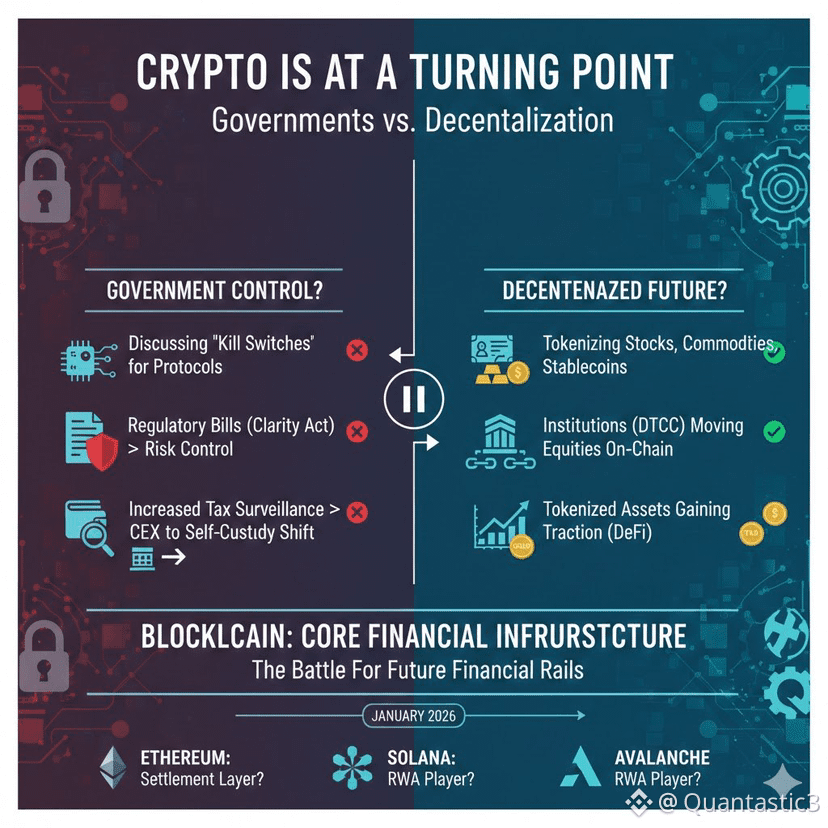
Криптовалюта находится на поворотном моменте
Правительства обсуждают «включатели отключения» для крипто-протоколов, одновременно готовясь токенизировать акции, товары и стейблкоины. Это противоречие говорит само за себя.
Регуляторные законопроекты, такие как Закон о ясности, стремятся контролировать риски, но такие учреждения, как DTCC, уже перемещают акции в блокчейн. Токенизированные акции и золото набирают популярность в DeFi, тихо подтверждая, что блокчейн становится основной финансовой инфраструктурой.
Если ясность наступит, Ethereum может стать доминирующим слоем расчетов, в то время как Solana и Avalanche будут появляться как сильные игроки на рынке реальных активов. Тем временем, увеличенный налоговый контроль отталкивает пользователей от централизованных бирж в сторону самостоятельного хранения.
Это не конец криптовалюты — это борьба за то, кто контролирует будущую финансовую инфраструктуру.
#crypto #defi #Tokenization #RWA #blockchain
Копируйте Quantastic3, ведущего трейдера Binance без риска: Мы покроем любые потери для зарегистрированных копировщиков, которые копируют аккаунт Quantastic по адресу https://www.binance.com/copy-trading/lead-details/4734580934665797633?inviteCode=Rddgkwwf Свяжитесь со мной для получения дополнительных деталей!
Правительства обсуждают «включатели отключения» для крипто-протоколов, одновременно готовясь токенизировать акции, товары и стейблкоины. Это противоречие говорит само за себя.
Регуляторные законопроекты, такие как Закон о ясности, стремятся контролировать риски, но такие учреждения, как DTCC, уже перемещают акции в блокчейн. Токенизированные акции и золото набирают популярность в DeFi, тихо подтверждая, что блокчейн становится основной финансовой инфраструктурой.
Если ясность наступит, Ethereum может стать доминирующим слоем расчетов, в то время как Solana и Avalanche будут появляться как сильные игроки на рынке реальных активов. Тем временем, увеличенный налоговый контроль отталкивает пользователей от централизованных бирж в сторону самостоятельного хранения.
Это не конец криптовалюты — это борьба за то, кто контролирует будущую финансовую инфраструктуру.
#crypto #defi #Tokenization #RWA #blockchain
Копируйте Quantastic3, ведущего трейдера Binance без риска: Мы покроем любые потери для зарегистрированных копировщиков, которые копируют аккаунт Quantastic по адресу https://www.binance.com/copy-trading/lead-details/4734580934665797633?inviteCode=Rddgkwwf Свяжитесь со мной для получения дополнительных деталей!
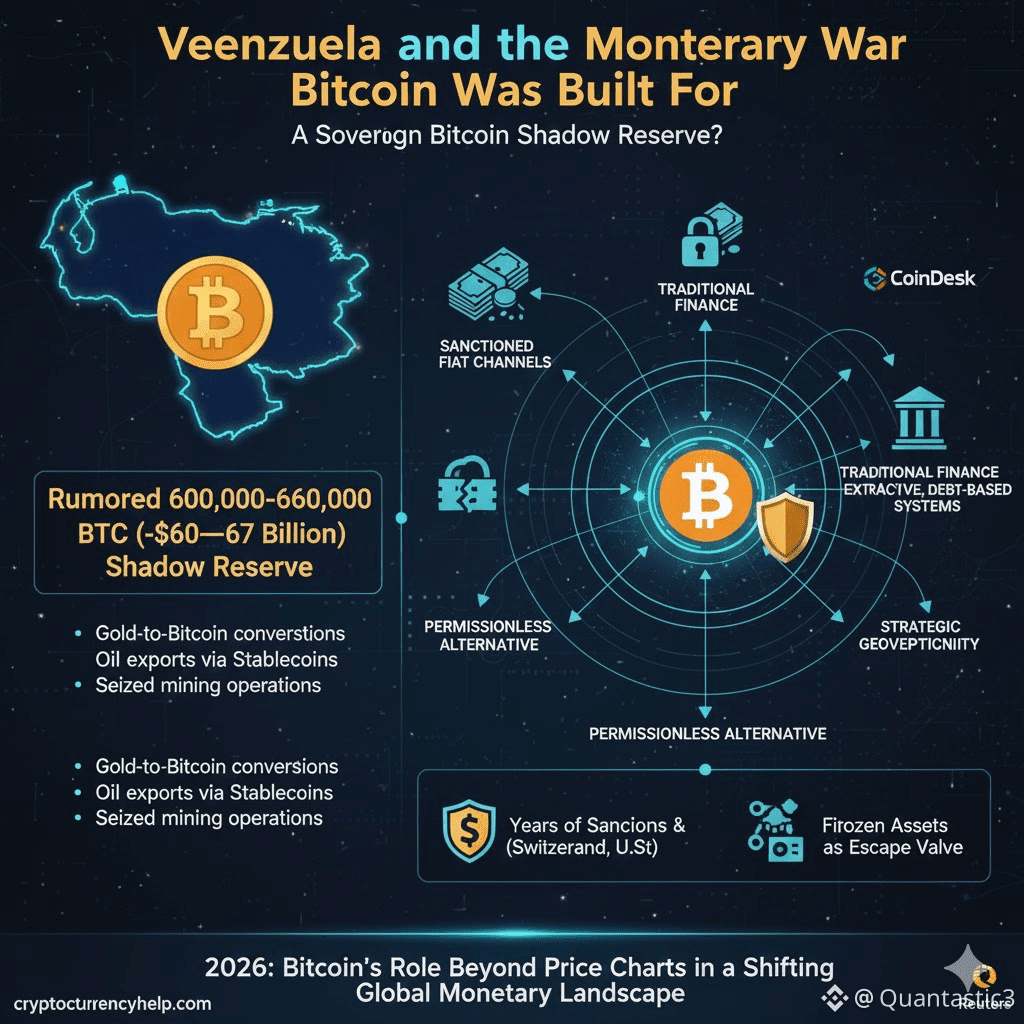
📌 Венесуэла и денежная война, ради которой был создан Биткоин
Недавние геополитические события, связанные с Венесуэлой — включая захват президента Николаса Мадуро — вызвали бурные дискуссии в крипто-сообществе о возможном создании суверенного биткоинового резерва. После многих лет санкций, экономического хаоса и альтернативных стратегий платежей, доклады, связанные с разведкой, предполагают, что Венесуэла тайно накопила огромный биткоиновый «теневой резерв» — возможно, около 600 000–660 000 BTC (~60–67 млрд долларов по текущим ценам). Это поставило бы её в число крупнейших держателей биткоина в мире, соперничая с крупными институциональными казначействами. cryptocurrencyhelp.com+1
Аналитики полагают, что Венесуэла сформировала этот резерв за счёт обмена золота на биткоины, поставок нефти с расчётом в стейблкоинах, которые затем обменивались на BTC, а также захвата операций по добыче биткоинов в течение нескольких лет. MEXC Хотя подлинный масштаб этих активов пока не подтверждён на блокчейне, эта история подчёркивает, что биткоин всё чаще рассматривается как геополитический актив, а не просто спекулятивный токен. CoinDesk
Сейчас, когда активы Венесуэлы заморожены юрисдикциями, такими как Швейцария, а власти США оценивают, как юридически обрабатывать эти криптоактивы, ситуация иллюстрирует более широкую денежную борьбу: биткоин может стать разрешённой альтернативой изъятию, основанной на долге системам и санкционированным каналам фиатных денег — особенно там, где традиционная финансовая система не удовлетворяет суверенные или индивидуальные финансовые потребности. Reuters
Независимо от того, служит ли он как средство ухода для санкционированных экономик или стратегический резерв в геополитических конфликтах, 2026 год укрепляет идею, что роль биткоина выходит далеко за рамки графиков цен — он является частью меняющегося глобального денежного ландшафта.
#Bitcoin2026 #CryptoSovereignty #VenezuelaBitcoin #Geopolitics #ShadowReserve
Недавние геополитические события, связанные с Венесуэлой — включая захват президента Николаса Мадуро — вызвали бурные дискуссии в крипто-сообществе о возможном создании суверенного биткоинового резерва. После многих лет санкций, экономического хаоса и альтернативных стратегий платежей, доклады, связанные с разведкой, предполагают, что Венесуэла тайно накопила огромный биткоиновый «теневой резерв» — возможно, около 600 000–660 000 BTC (~60–67 млрд долларов по текущим ценам). Это поставило бы её в число крупнейших держателей биткоина в мире, соперничая с крупными институциональными казначействами. cryptocurrencyhelp.com+1
Аналитики полагают, что Венесуэла сформировала этот резерв за счёт обмена золота на биткоины, поставок нефти с расчётом в стейблкоинах, которые затем обменивались на BTC, а также захвата операций по добыче биткоинов в течение нескольких лет. MEXC Хотя подлинный масштаб этих активов пока не подтверждён на блокчейне, эта история подчёркивает, что биткоин всё чаще рассматривается как геополитический актив, а не просто спекулятивный токен. CoinDesk
Сейчас, когда активы Венесуэлы заморожены юрисдикциями, такими как Швейцария, а власти США оценивают, как юридически обрабатывать эти криптоактивы, ситуация иллюстрирует более широкую денежную борьбу: биткоин может стать разрешённой альтернативой изъятию, основанной на долге системам и санкционированным каналам фиатных денег — особенно там, где традиционная финансовая система не удовлетворяет суверенные или индивидуальные финансовые потребности. Reuters
Независимо от того, служит ли он как средство ухода для санкционированных экономик или стратегический резерв в геополитических конфликтах, 2026 год укрепляет идею, что роль биткоина выходит далеко за рамки графиков цен — он является частью меняющегося глобального денежного ландшафта.
#Bitcoin2026 #CryptoSovereignty #VenezuelaBitcoin #Geopolitics #ShadowReserve
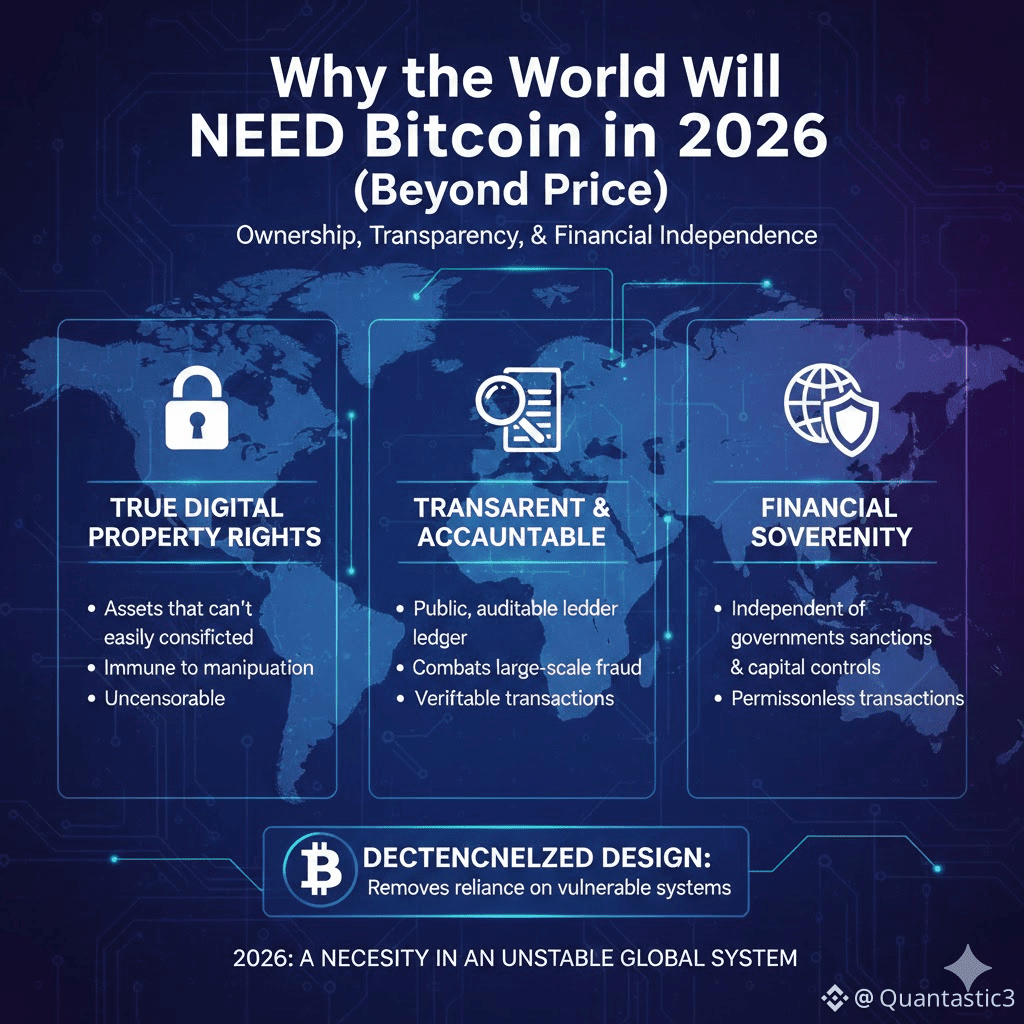
Почему миру понадобится биткоин в 2026 году (не из-за цены)
Значение биткоина в 2026 году выходит далеко за рамки графиков цен. Хотя рынки остаются поддерживаемыми, истинная ценность биткоина заключается в причинах, по которым он становится необходимым.
По мере того как правительства расширяют контроль, а традиционные системы показывают признаки уязвимости, биткоин предлагает настоящие цифровые права собственности — активы, которые невозможно легко конфисковать или манипулировать. Его прозрачная публичная регистрация обеспечивает подотчетность в мире, где продолжают всплывать масштабные мошенничества, а децентрализованная архитектура устраняет зависимость от уязвимых банков и физического хранения.
Геополитически биткоин обеспечивает финансовую суверенитет. От санкций до контроля капитала, независимая валюта становится критически важным инструментом как для отдельных лиц, так и для наций.
В 2026 году биткоин — это не просто «цифры растут». Это собственность, прозрачность и финансовая независимость в всё более нестабильной глобальной системе.
#Bitcoin2026 #FinancialSovereignty #DecentralizedMoney #DigitalProperty #cryptofuture
Значение биткоина в 2026 году выходит далеко за рамки графиков цен. Хотя рынки остаются поддерживаемыми, истинная ценность биткоина заключается в причинах, по которым он становится необходимым.
По мере того как правительства расширяют контроль, а традиционные системы показывают признаки уязвимости, биткоин предлагает настоящие цифровые права собственности — активы, которые невозможно легко конфисковать или манипулировать. Его прозрачная публичная регистрация обеспечивает подотчетность в мире, где продолжают всплывать масштабные мошенничества, а децентрализованная архитектура устраняет зависимость от уязвимых банков и физического хранения.
Геополитически биткоин обеспечивает финансовую суверенитет. От санкций до контроля капитала, независимая валюта становится критически важным инструментом как для отдельных лиц, так и для наций.
В 2026 году биткоин — это не просто «цифры растут». Это собственность, прозрачность и финансовая независимость в всё более нестабильной глобальной системе.
#Bitcoin2026 #FinancialSovereignty #DecentralizedMoney #DigitalProperty #cryptofuture
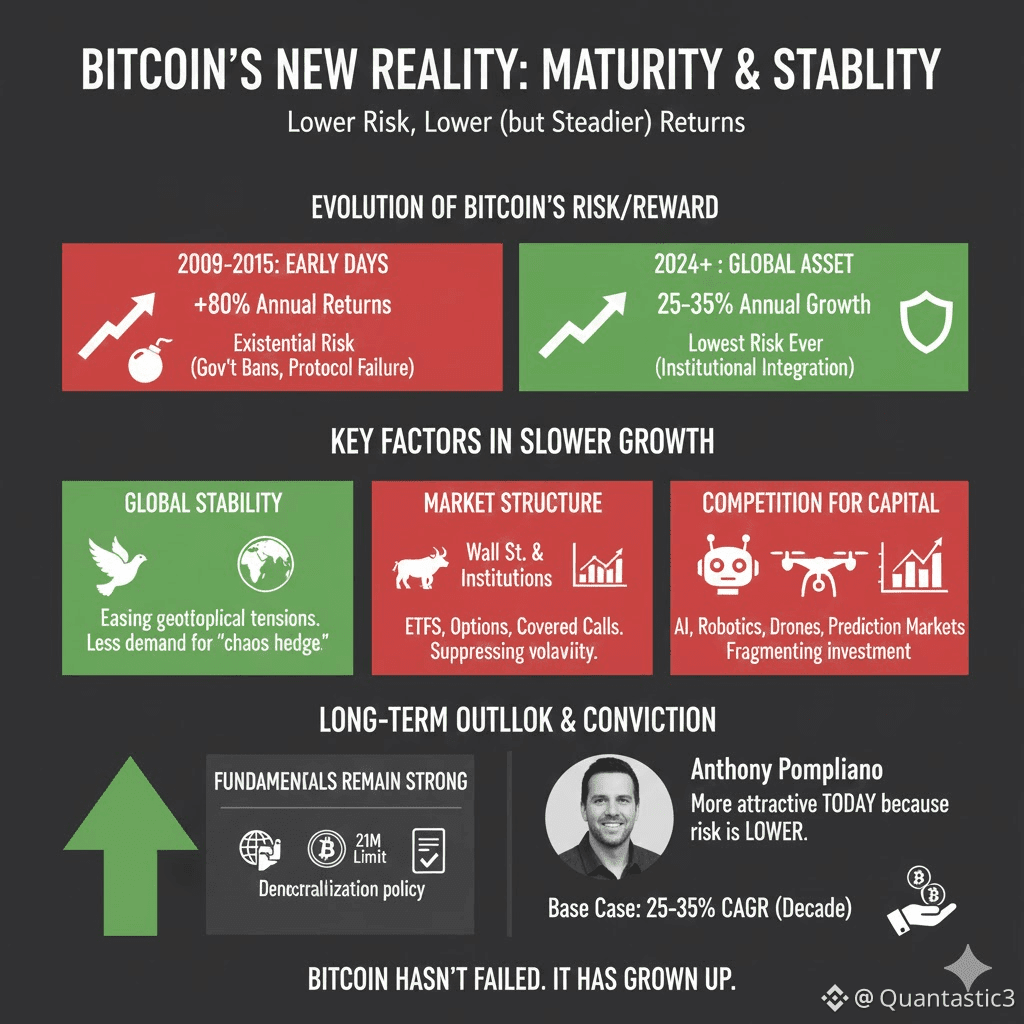
Почему биткойн не растёт? Чёткая проверка рыночной реальности
Медленное движение цены биткойна — не признак слабости, а признак зрелости. Согласно Антони Помплиано, биткойн сейчас находится на самом низком уровне риска в истории. В ранние дни инвесторы сталкивались с существенными угрозами, такими как запрет со стороны правительства или сбой протокола, что оправдывало экстремальный рост — иногда более 80% в год. Сегодня биткойн интегрирован в мировую финансовую систему, поэтому соотношение риска и доходности стало очевидным: меньший риск, меньшая (но более стабильная) доходность. Новое ожидание — диапазон роста 25–35% в год, а не взрывная асимметрия.
Ещё один важный фактор — глобальная стабильность. Биткойн традиционно выступал защитой от хаоса — войн, денежных кризисов и политической нестабильности. С переходом к нарративам «мир через силу» и ослаблением геополитических напряжений, острота необходимости покупать биткойн как страховку снизилась. Когда страх уменьшается, спрос на хедж-активы также снижается.
Структура рынка также изменилась. Уолл-стрит теперь глубоко вовлечена через ETF, опционы и институциональные стратегии. Крупные держатели всё чаще продают покрытые колл-опционы для получения дохода, что естественным образом подавляет волатильность и ограничивает краткосрочный рост. В отличие от ранних криптоинвесторов, ищущих рост, способный изменить жизнь, институты часто довольны стабильными доходами в 10–15%, что меняет поведение цены биткойна.
Биткойн также сталкивается с большим конкуренцией за капитал. Он больше не единственный асимметричный шанс. Инвесторы теперь имеют доступ к быстро растущим секторам, таким как ИИ, робототехника, дроны и рынки прогнозов.
В перспективе фундаментальные показатели остаются неизменными. Биткойн по-прежнему децентрализован, ограничен по предложению и регулируется прозрачной монетарной политикой. Помплиано утверждает, что биткойн сегодня, наоборот, более привлекателен именно потому, что риск ниже. Хотя могут быть медленные годы или коррекции, его долгосрочный базовый сценарий — это рост на 25–35% в год в течение следующего десятилетия.
#bitcoin
#CryptoMarket
#LongTermInvesting
#DigitalAssets
#MarketCycles
Медленное движение цены биткойна — не признак слабости, а признак зрелости. Согласно Антони Помплиано, биткойн сейчас находится на самом низком уровне риска в истории. В ранние дни инвесторы сталкивались с существенными угрозами, такими как запрет со стороны правительства или сбой протокола, что оправдывало экстремальный рост — иногда более 80% в год. Сегодня биткойн интегрирован в мировую финансовую систему, поэтому соотношение риска и доходности стало очевидным: меньший риск, меньшая (но более стабильная) доходность. Новое ожидание — диапазон роста 25–35% в год, а не взрывная асимметрия.
Ещё один важный фактор — глобальная стабильность. Биткойн традиционно выступал защитой от хаоса — войн, денежных кризисов и политической нестабильности. С переходом к нарративам «мир через силу» и ослаблением геополитических напряжений, острота необходимости покупать биткойн как страховку снизилась. Когда страх уменьшается, спрос на хедж-активы также снижается.
Структура рынка также изменилась. Уолл-стрит теперь глубоко вовлечена через ETF, опционы и институциональные стратегии. Крупные держатели всё чаще продают покрытые колл-опционы для получения дохода, что естественным образом подавляет волатильность и ограничивает краткосрочный рост. В отличие от ранних криптоинвесторов, ищущих рост, способный изменить жизнь, институты часто довольны стабильными доходами в 10–15%, что меняет поведение цены биткойна.
Биткойн также сталкивается с большим конкуренцией за капитал. Он больше не единственный асимметричный шанс. Инвесторы теперь имеют доступ к быстро растущим секторам, таким как ИИ, робототехника, дроны и рынки прогнозов.
В перспективе фундаментальные показатели остаются неизменными. Биткойн по-прежнему децентрализован, ограничен по предложению и регулируется прозрачной монетарной политикой. Помплиано утверждает, что биткойн сегодня, наоборот, более привлекателен именно потому, что риск ниже. Хотя могут быть медленные годы или коррекции, его долгосрочный базовый сценарий — это рост на 25–35% в год в течение следующего десятилетия.
#bitcoin
#CryptoMarket
#LongTermInvesting
#DigitalAssets
#MarketCycles
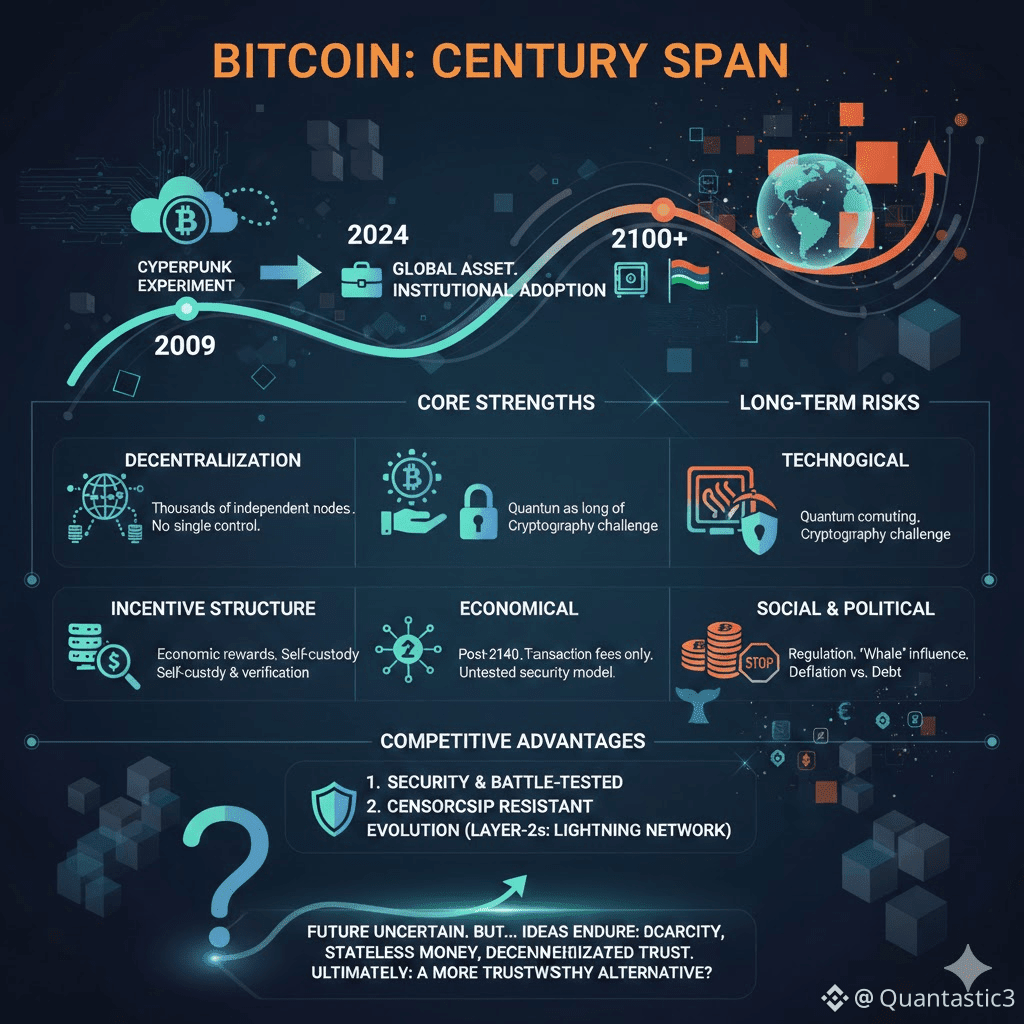
Будет ли Биткойн существовать через 100 лет? Долгосрочная перспектива
Биткойн не появился из ниоткуда. Он представляет собой следующий этап в эволюции денег — от физических товаров, таких как соль и золото, до чисто цифровой ценности, защищенной математикой. С момента своего запуска в 2009 году Биткойн прошел путь от нишевого эксперимента киберпанков до признанного глобального актива, который теперь находится в распоряжении институциональных инвесторов и даже национальных резервов.
Шанс на выживание Биткойна на протяжении века заключается в его основном дизайне. Первое — децентрализация. Тысячи независимых узлов и майнеров поддерживают сеть по всему миру, что означает, что ни одна единая власть не контролирует её. Второе — это структура стимулов. Участники получают экономическое вознаграждение, а также возможность проверять свои собственные финансовые данные без обращения к банкам или правительствам. Третье — устойчивость протокола. В теории Биткойн может продолжать функционировать, пока хотя бы один узел остается онлайн.
Однако долгосрочное выживание не лишено серьезных рисков. С технологической точки зрения, квантовые вычисления могут в один прекрасный день бросить вызов криптографии Биткойна, требуя серьезных обновлений. С экономической точки зрения, как только последний Биткойн будет добыт около 2140 года, сеть должна будет полностью полагаться на комиссии за транзакции — непроверенная модель безопасности на таком уровне. Социально и политически Биткойн сталкивается с давлением со стороны государственного регулирования, крупных держателей (“китовых”) и основного конфликта между дефляционной валютой и экономическими системами, основанными на долгах.
Несмотря на эти угрозы, Биткойн обладает сильными конкурентными преимуществами. Он остается самой безопасной и проверенной временем блокчейн-технологией. Его устойчивость к цензуре делает его чрезвычайно трудным для закрытия со стороны государств. А его способность эволюционировать — что видно через решения второго уровня, такие как Сеть Молнии — показывает, что Биткойн не так статичен, как часто утверждают критики.
#bitcoin
#DigitalMoney
#decentralization
#FutureOfFinance
#блокчейн
Биткойн не появился из ниоткуда. Он представляет собой следующий этап в эволюции денег — от физических товаров, таких как соль и золото, до чисто цифровой ценности, защищенной математикой. С момента своего запуска в 2009 году Биткойн прошел путь от нишевого эксперимента киберпанков до признанного глобального актива, который теперь находится в распоряжении институциональных инвесторов и даже национальных резервов.
Шанс на выживание Биткойна на протяжении века заключается в его основном дизайне. Первое — децентрализация. Тысячи независимых узлов и майнеров поддерживают сеть по всему миру, что означает, что ни одна единая власть не контролирует её. Второе — это структура стимулов. Участники получают экономическое вознаграждение, а также возможность проверять свои собственные финансовые данные без обращения к банкам или правительствам. Третье — устойчивость протокола. В теории Биткойн может продолжать функционировать, пока хотя бы один узел остается онлайн.
Однако долгосрочное выживание не лишено серьезных рисков. С технологической точки зрения, квантовые вычисления могут в один прекрасный день бросить вызов криптографии Биткойна, требуя серьезных обновлений. С экономической точки зрения, как только последний Биткойн будет добыт около 2140 года, сеть должна будет полностью полагаться на комиссии за транзакции — непроверенная модель безопасности на таком уровне. Социально и политически Биткойн сталкивается с давлением со стороны государственного регулирования, крупных держателей (“китовых”) и основного конфликта между дефляционной валютой и экономическими системами, основанными на долгах.
Несмотря на эти угрозы, Биткойн обладает сильными конкурентными преимуществами. Он остается самой безопасной и проверенной временем блокчейн-технологией. Его устойчивость к цензуре делает его чрезвычайно трудным для закрытия со стороны государств. А его способность эволюционировать — что видно через решения второго уровня, такие как Сеть Молнии — показывает, что Биткойн не так статичен, как часто утверждают критики.
#bitcoin
#DigitalMoney
#decentralization
#FutureOfFinance
#блокчейн
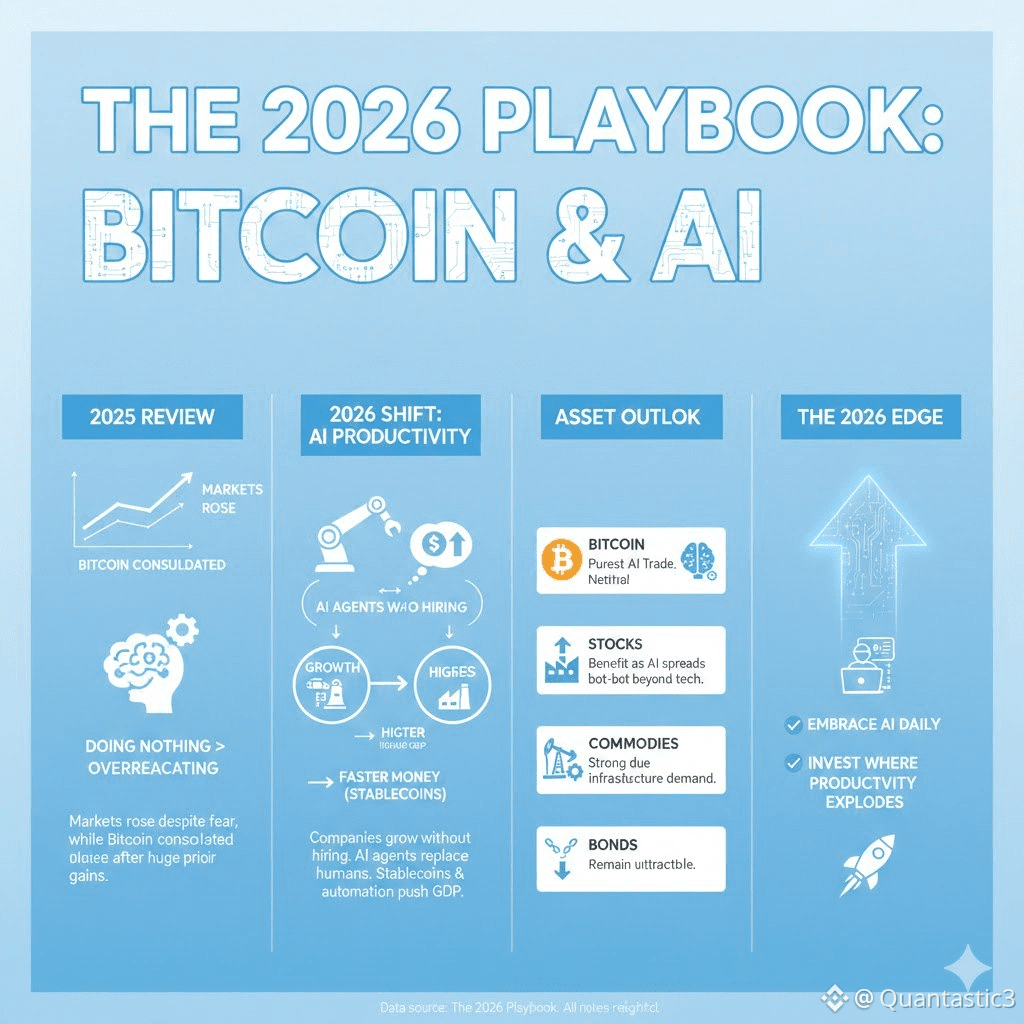
План на 2026 год: Биткойн и ИИ
2025 год доказал, что бездействие часто лучше чрезмерной реакции. Рынки росли, несмотря на страхи, в то время как Биткойн консолидировался после огромных предыдущих приростов.
В 2026 году настоящая перемена связана с продуктивностью, управляемой ИИ. Компании растут без найма, используя ИИ-агентов вместо людей. Более быстрое движение денег через стейблкоины и автоматизацию может поднять ВВП выше исторических норм.
Биткойн выделяется как самая чистая сделка с ИИ — нейтральная система для экономики, управляемой ИИ, где боты взаимодействуют с ботами. Акции должны получить выгоду, поскольку ИИ распространяется за пределы технологий, сырьевые товары остаются сильными из-за спроса на инфраструктуру, а облигации остаются непривлекательными.
Преимущество в 2026 году достанется тем, кто ежедневно принимает ИИ и инвестирует туда, где продуктивность взрывается.
#bitcoin #AI #SmartInvesting #FutureEconomy #crypto
2025 год доказал, что бездействие часто лучше чрезмерной реакции. Рынки росли, несмотря на страхи, в то время как Биткойн консолидировался после огромных предыдущих приростов.
В 2026 году настоящая перемена связана с продуктивностью, управляемой ИИ. Компании растут без найма, используя ИИ-агентов вместо людей. Более быстрое движение денег через стейблкоины и автоматизацию может поднять ВВП выше исторических норм.
Биткойн выделяется как самая чистая сделка с ИИ — нейтральная система для экономики, управляемой ИИ, где боты взаимодействуют с ботами. Акции должны получить выгоду, поскольку ИИ распространяется за пределы технологий, сырьевые товары остаются сильными из-за спроса на инфраструктуру, а облигации остаются непривлекательными.
Преимущество в 2026 году достанется тем, кто ежедневно принимает ИИ и инвестирует туда, где продуктивность взрывается.
#bitcoin #AI #SmartInvesting #FutureEconomy #crypto
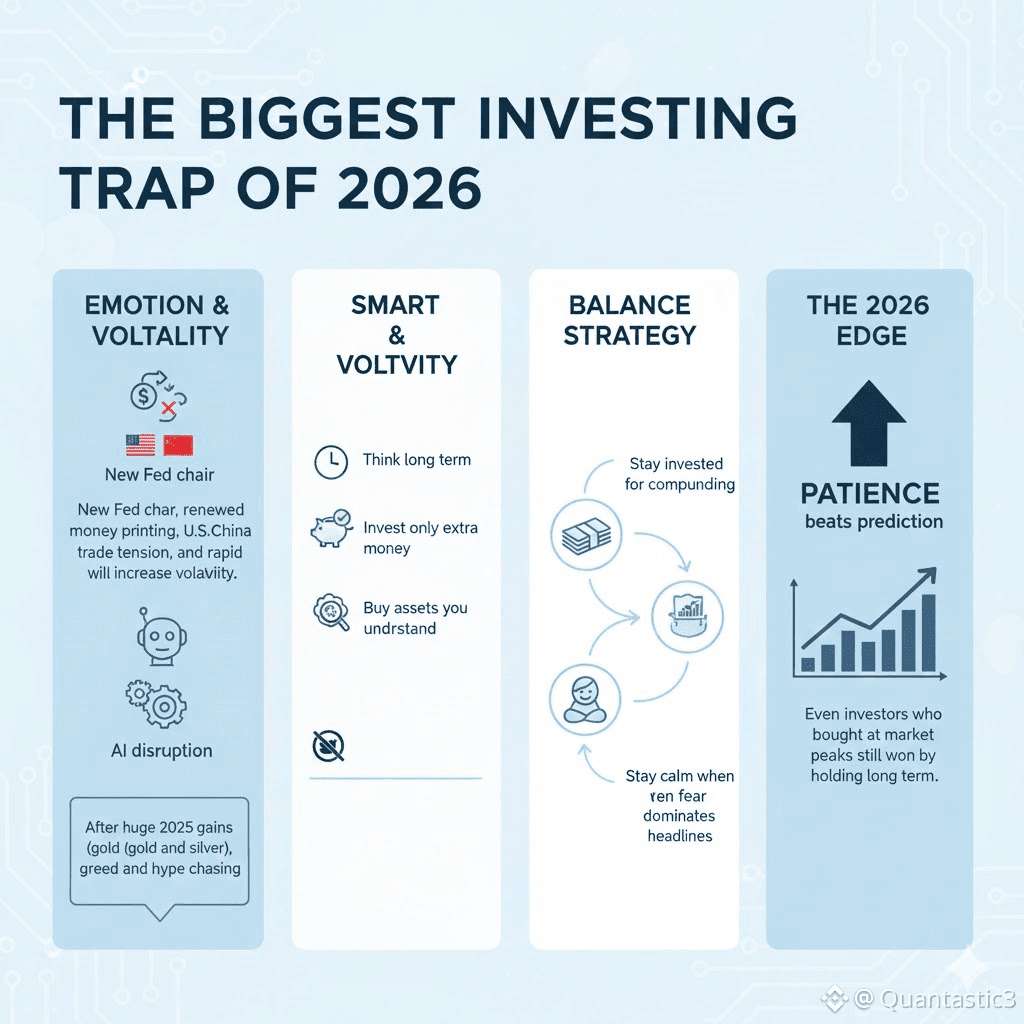
Самая большая инвестиционная ловушка 2026 года
2026 год будет определяться эмоциями, а не логикой. Новый председатель ФРС, возобновление печати денег, торговое напряжение между США и Китаем и быстрые изменения в области ИИ увеличат волатильность. После огромных прибылей 2025 года (золото и серебро) многие инвесторы попадут в ту же ловушку: жадность и погоня за хайпом.
Умные инвесторы следуют простым правилам:
Думайте о долгосрочной перспективе, а не о краткосрочных изменениях цен
Инвестируйте только лишние деньги, а не средства для оплаты счетов
Покупайте активы, которые вы понимаете, а не тренды в социальных сетях
Лучшая стратегия — это баланс: оставайтесь инвестированными для накопления, держите наличные для покупок во время обвалов и сохраняйте спокойствие, когда страх доминирует в заголовках. Даже инвесторы, которые покупали на пиках рынка, все равно выигрывали, удерживая свои инвестиции в долгосрочной перспективе.
#Инвестирование #ДолгосрочноеБогатство #ПсихологияРынка #УмныеДеньги #ФинансоваяСвобода
2026 год будет определяться эмоциями, а не логикой. Новый председатель ФРС, возобновление печати денег, торговое напряжение между США и Китаем и быстрые изменения в области ИИ увеличат волатильность. После огромных прибылей 2025 года (золото и серебро) многие инвесторы попадут в ту же ловушку: жадность и погоня за хайпом.
Умные инвесторы следуют простым правилам:
Думайте о долгосрочной перспективе, а не о краткосрочных изменениях цен
Инвестируйте только лишние деньги, а не средства для оплаты счетов
Покупайте активы, которые вы понимаете, а не тренды в социальных сетях
Лучшая стратегия — это баланс: оставайтесь инвестированными для накопления, держите наличные для покупок во время обвалов и сохраняйте спокойствие, когда страх доминирует в заголовках. Даже инвесторы, которые покупали на пиках рынка, все равно выигрывали, удерживая свои инвестиции в долгосрочной перспективе.
#Инвестирование #ДолгосрочноеБогатство #ПсихологияРынка #УмныеДеньги #ФинансоваяСвобода
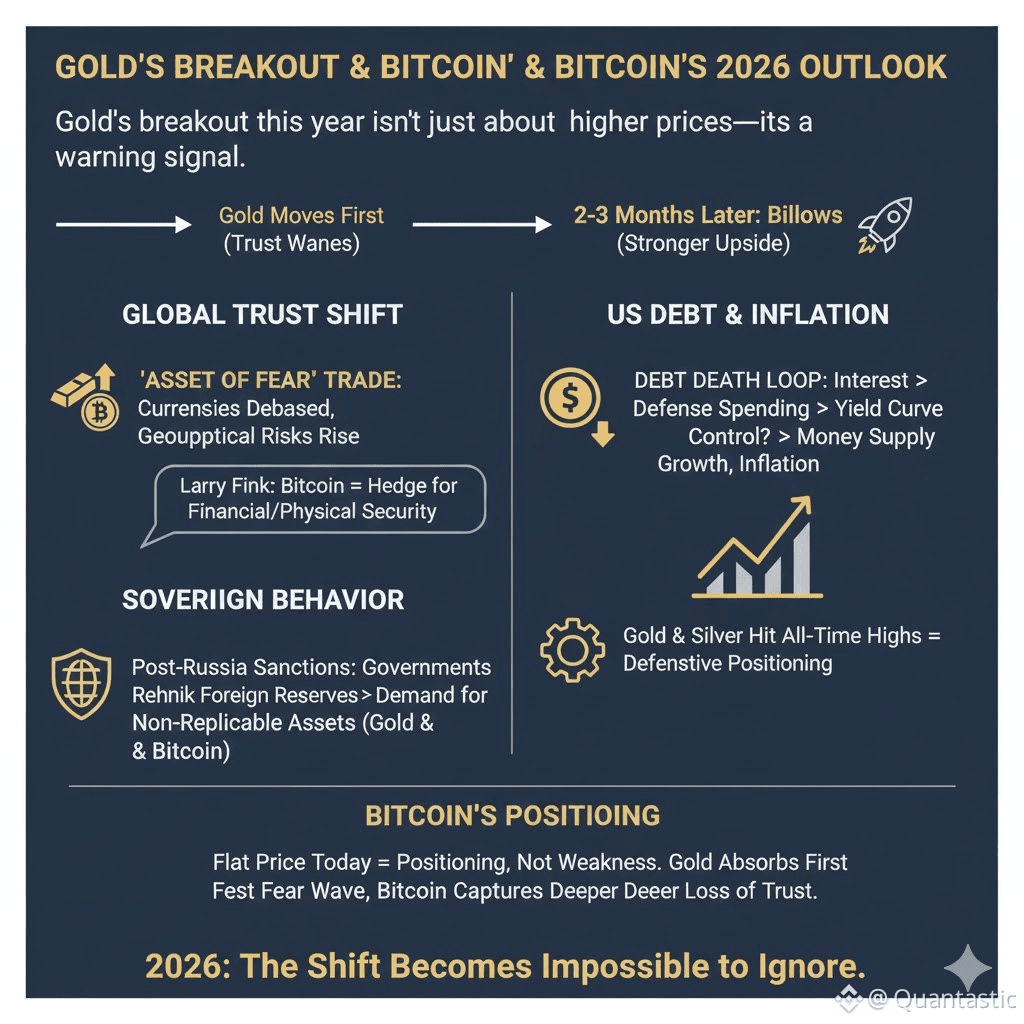
Почему прорыв золота благоприятен для Биткойна в 2026 году... И БЕЗРИСКОВАЯ КОПИЯ ТОРГОВЛИ В НИЗУ!"
Прорыв золота в этом году не просто о повышении цен — это сигнал тревоги. Исторически, когда глобальная уверенность в финансовой системе ослабевает, золото движется первым. Биткойн обычно следует через 2–3 месяца, часто с более сильным и быстрым ростом из-за своей меньшей рыночной капитализации и высокой волатильности.
Этот сдвиг отражает то, что многие называют торговлей «активом страха». Поскольку валюты обесцениваются и геополитические риски растут, как инвесторы, так и государственные образования движутся к активам выживания без контрагентского риска. Даже Ларри Финк из BlackRock описал Биткойн как хедж для тех, кто обеспокоен финансовой и физической безопасностью.
Поведение суверенных государств здесь имеет значение. После конфискации российских резервов правительства пересматривают безопасность хранения иностранных валют или долгов. Это вызывает спрос на неповторимые активы, такие как золото — и все чаще, Биткойн.
В то же время США вступают в долговую спираль. С учетом того, что процентные расходы превышают расходы на оборону, контроль кривой доходности становится реальной возможностью — печатание денег для ограничения доходности облигаций. История показывает, что это приводит к быстрому росту денежной массы и инфляции.
Рост серебра до исторических максимумов наряду с золотом усиливает это сообщение. Это предполагает защитное позиционирование, а не спекуляцию.
Сегодняшняя стабильная цена Биткойна выглядит не как слабость, а скорее как позиционирование. Золото поглощает первую волну страха. Биткойн фиксирует более глубокую утрату доверия к системе. Если история повторяется, 2026 год может стать тем временем, когда этот сдвиг станет невозможным для игнорирования.
#bitcoin #GoldVsBitcoin #MacroTrends #StoreOfValue #cryptoeducation
Прорыв золота в этом году не просто о повышении цен — это сигнал тревоги. Исторически, когда глобальная уверенность в финансовой системе ослабевает, золото движется первым. Биткойн обычно следует через 2–3 месяца, часто с более сильным и быстрым ростом из-за своей меньшей рыночной капитализации и высокой волатильности.
Этот сдвиг отражает то, что многие называют торговлей «активом страха». Поскольку валюты обесцениваются и геополитические риски растут, как инвесторы, так и государственные образования движутся к активам выживания без контрагентского риска. Даже Ларри Финк из BlackRock описал Биткойн как хедж для тех, кто обеспокоен финансовой и физической безопасностью.
Поведение суверенных государств здесь имеет значение. После конфискации российских резервов правительства пересматривают безопасность хранения иностранных валют или долгов. Это вызывает спрос на неповторимые активы, такие как золото — и все чаще, Биткойн.
В то же время США вступают в долговую спираль. С учетом того, что процентные расходы превышают расходы на оборону, контроль кривой доходности становится реальной возможностью — печатание денег для ограничения доходности облигаций. История показывает, что это приводит к быстрому росту денежной массы и инфляции.
Рост серебра до исторических максимумов наряду с золотом усиливает это сообщение. Это предполагает защитное позиционирование, а не спекуляцию.
Сегодняшняя стабильная цена Биткойна выглядит не как слабость, а скорее как позиционирование. Золото поглощает первую волну страха. Биткойн фиксирует более глубокую утрату доверия к системе. Если история повторяется, 2026 год может стать тем временем, когда этот сдвиг станет невозможным для игнорирования.
#bitcoin #GoldVsBitcoin #MacroTrends #StoreOfValue #cryptoeducation
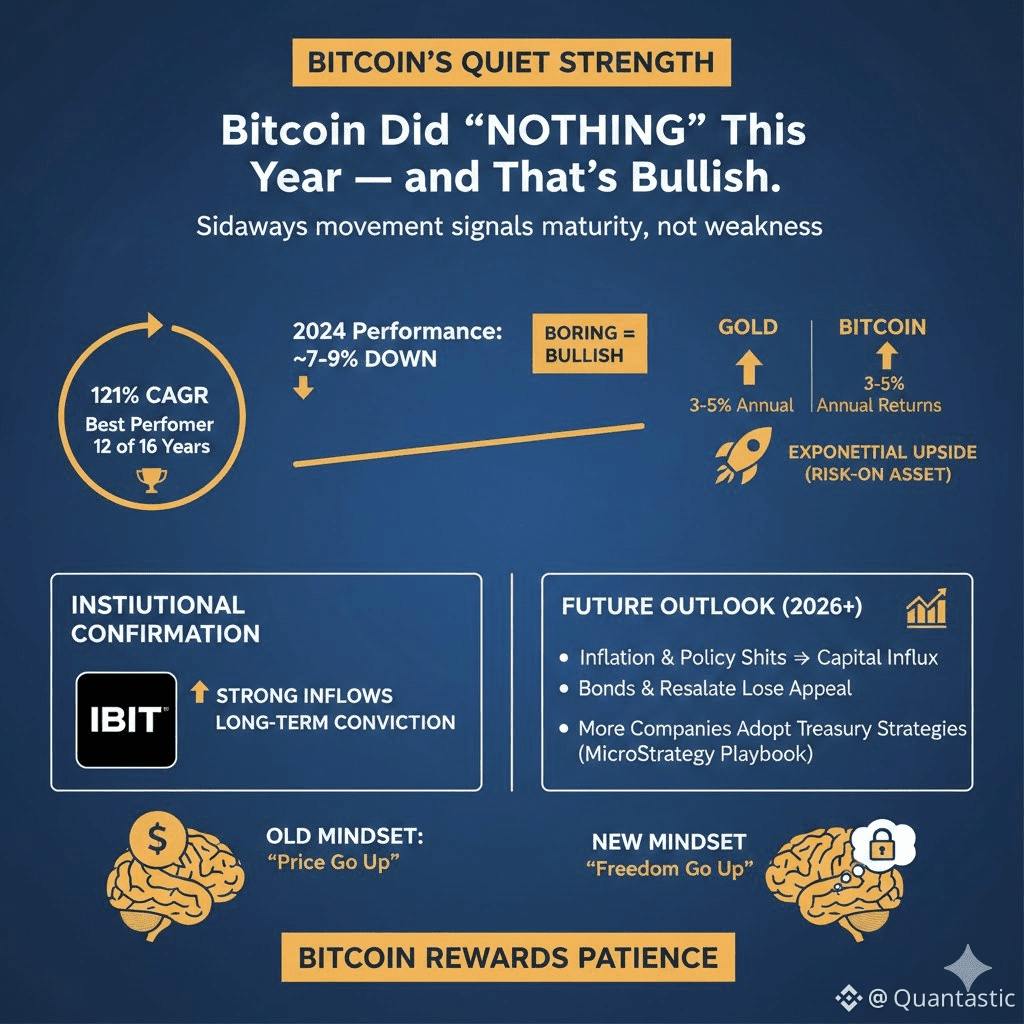
Биткойн "ничего" не сделал в этом году — и это оптимистично
Снижение биткойна на ~7–9% в этом году выглядит скучным, но в этом и заключается суть. Боковое движение сигнализирует о зрелости, а не о слабости. Если посмотреть шире, биткойн по-прежнему является активом с наилучшей доходностью за 12 из последних 16 лет, с CAGR 121%.
Пока золото достигает новых высот с только 3–5% годовых, биткойн должен торговаться как рискованный актив с экспоненциальным потенциалом. Тихие периоды, подобные этому, часто закладывают основу для следующего крупного движения.
Институциональное поведение это подтверждает. Несмотря на стабильные цены, биткойн-ETF BlackRock (IBIT) увидел сильные притоки, что показывает долгосрочную уверенность — а не краткосрочную спекуляцию.
Смотря в будущее, инфляция и изменения политики в 2026 году могут привлечь крупный капитал в биткойн, особенно когда традиционные активы, такие как облигации и недвижимость, теряют свою привлекательность. Более того, компании могут также принять стратегии казначейства с биткойном, следуя примеру MicroStrategy.
Мышление меняется с "цена растет" на "свобода растет". Трейдеры следят за графиками. Инвесторы строят уверенность. Биткойн вознаграждает терпение.
#BTC☀️ #CryptoInsights #LongTermView #macroeconomic #FinancialFreedom
Снижение биткойна на ~7–9% в этом году выглядит скучным, но в этом и заключается суть. Боковое движение сигнализирует о зрелости, а не о слабости. Если посмотреть шире, биткойн по-прежнему является активом с наилучшей доходностью за 12 из последних 16 лет, с CAGR 121%.
Пока золото достигает новых высот с только 3–5% годовых, биткойн должен торговаться как рискованный актив с экспоненциальным потенциалом. Тихие периоды, подобные этому, часто закладывают основу для следующего крупного движения.
Институциональное поведение это подтверждает. Несмотря на стабильные цены, биткойн-ETF BlackRock (IBIT) увидел сильные притоки, что показывает долгосрочную уверенность — а не краткосрочную спекуляцию.
Смотря в будущее, инфляция и изменения политики в 2026 году могут привлечь крупный капитал в биткойн, особенно когда традиционные активы, такие как облигации и недвижимость, теряют свою привлекательность. Более того, компании могут также принять стратегии казначейства с биткойном, следуя примеру MicroStrategy.
Мышление меняется с "цена растет" на "свобода растет". Трейдеры следят за графиками. Инвесторы строят уверенность. Биткойн вознаграждает терпение.
#BTC☀️ #CryptoInsights #LongTermView #macroeconomic #FinancialFreedom
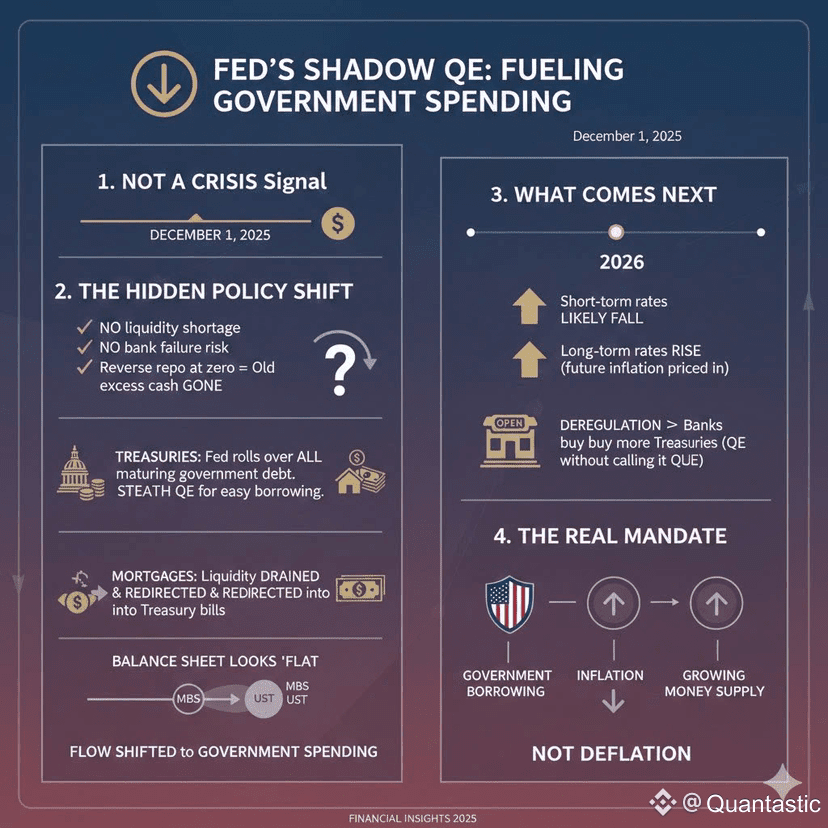
📉 Почему ФРС действительно прекратила QT
И БЕЗРИСКОВАЯ КОПИЯ ТОРГОВЛИ В НИЗУ!
ФРС остановила количественное ужесточение 1 декабря 2025 года — не потому, что надвигается кризис, а потому, что правительству США нужно больше денег для заимствований и расходов. Вместо того, чтобы открыто возобновить QE, ФРС тихо перенаправляет ликвидность за кулисами.
1. Не сигнал кризиса
Нет нехватки ликвидности, нет риска банкротства банков. Обратный репо, достигший нуля, просто означает, что старая избыточная наличность исчезла.
2. Скрытый сдвиг политики
Госценные бумаги: ФРС перекатывает все погашаемые государственные долги — скрытая форма QE, которая облегчает заимствование для правительства.
Ипотеки: Ликвидность по ипотекам истощается и перенаправляется в казначейские векселя.
Баланс выглядит "плоским", но поток денег смещается в сторону государственных расходов.
3. Что будет дальше
Краткосрочные ставки, вероятно, упадут в 2026 году.
Долгосрочные ставки вырастут, поскольку рынки закладывают будущее инфляции.
Дерегулирование может позволить банкам покупать больше казначейских бумаг, действуя как QE, не называя это QE.
4. Реальный мандат
Действия ФРС в конечном итоге поддерживают заимствование правительства, инфляцию и растущую денежную массу — не дефляцию.
#FedPolicy #EconomicInsights #financialeducation #USEconomy IndiaExport #MarketUpdate
РОЖДЕСТВЕНСКАЯ АКЦИЯ!!! Копируйте Quantastic, ведущего трейдера Binance без риска: мы покроем любые потери для зарегистрированных копировщиков, которые копируют аккаунт Quantastic на
https://www.binance.com/copy-trading/lead-details/4734580934665797633?inviteCode=Rddgkwwf
Свяжитесь со мной для получения более подробной информации!
И БЕЗРИСКОВАЯ КОПИЯ ТОРГОВЛИ В НИЗУ!
ФРС остановила количественное ужесточение 1 декабря 2025 года — не потому, что надвигается кризис, а потому, что правительству США нужно больше денег для заимствований и расходов. Вместо того, чтобы открыто возобновить QE, ФРС тихо перенаправляет ликвидность за кулисами.
1. Не сигнал кризиса
Нет нехватки ликвидности, нет риска банкротства банков. Обратный репо, достигший нуля, просто означает, что старая избыточная наличность исчезла.
2. Скрытый сдвиг политики
Госценные бумаги: ФРС перекатывает все погашаемые государственные долги — скрытая форма QE, которая облегчает заимствование для правительства.
Ипотеки: Ликвидность по ипотекам истощается и перенаправляется в казначейские векселя.
Баланс выглядит "плоским", но поток денег смещается в сторону государственных расходов.
3. Что будет дальше
Краткосрочные ставки, вероятно, упадут в 2026 году.
Долгосрочные ставки вырастут, поскольку рынки закладывают будущее инфляции.
Дерегулирование может позволить банкам покупать больше казначейских бумаг, действуя как QE, не называя это QE.
4. Реальный мандат
Действия ФРС в конечном итоге поддерживают заимствование правительства, инфляцию и растущую денежную массу — не дефляцию.
#FedPolicy #EconomicInsights #financialeducation #USEconomy IndiaExport #MarketUpdate
РОЖДЕСТВЕНСКАЯ АКЦИЯ!!! Копируйте Quantastic, ведущего трейдера Binance без риска: мы покроем любые потери для зарегистрированных копировщиков, которые копируют аккаунт Quantastic на
https://www.binance.com/copy-trading/lead-details/4734580934665797633?inviteCode=Rddgkwwf
Свяжитесь со мной для получения более подробной информации!
🔍 Тайная война позади падения цены Биткойна
И БЕЗРИСКОВАЯ КОПИЯ ТОРГОВЛИ В НИЗУ!
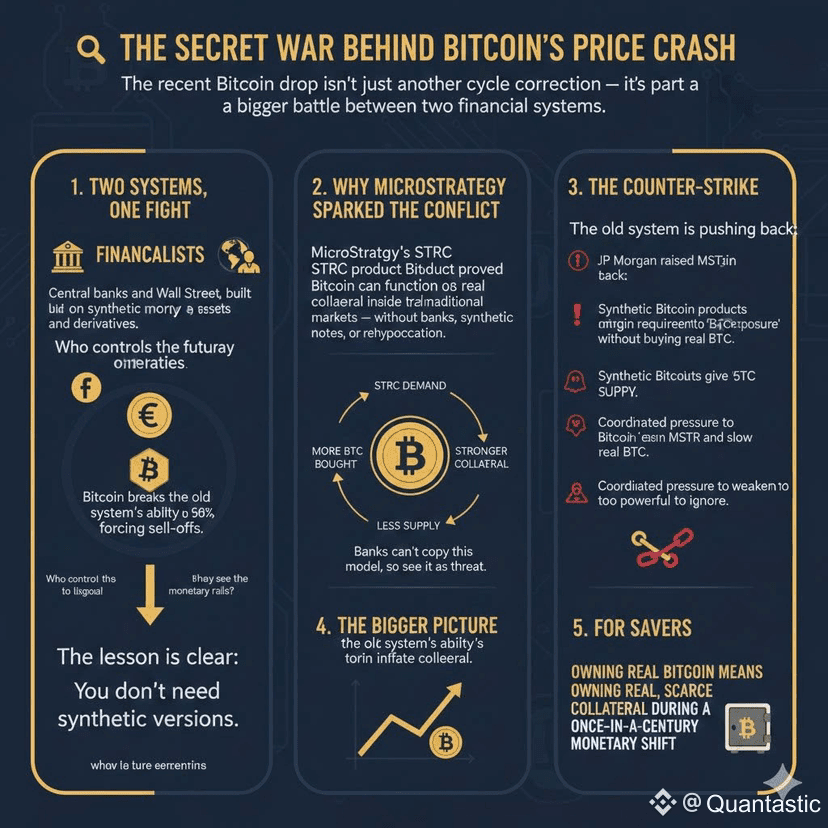
Недавнее падение Биткойна — это не просто еще одно исправление цикла — это часть более крупной битвы между двумя финансовыми системами.
1. Две системы, одна борьба
Финансисты: Центральные банки и Уолл-Стрит, построенные на синтетических деньгах и производных.
Суверенисты: Нации, компании и отдельные лица, выбирающие реальные, разрешенные активы, такие как Биткойн.
Эта борьба идет о том, кто контролирует будущие монетарные рельсы.
2. Почему MicroStrategy вызвала конфликт
Продукт STRC компании MicroStrategy доказал, что Биткойн может функционировать как реальное обеспечение внутри традиционных рынков — без банков, синтетических записок или рефинансирования.
Это создает эффект дефицита:
Больше спроса на STRC → Больше BTC куплено → Меньше предложение → Более сильное обеспечение.
Банки не могут скопировать эту модель, поэтому они видят в этом угрозу.
3. Контр-атака
Старая система сопротивляется:
JP Morgan подняла требования по марже MSTR с 50% до 95%, вынуждая распродажи.
Синтетические продукты Биткойн дают «экспозицию BTC» без покупки реального BTC.
Скоординированное давление для ослабления MSTR и замедления цикла дефицита.
4. Более широкая картина
Биткойн разрушает способность старой системы раздувать обеспечение.
Вот почему атаки растут — Биткойн становится слишком мощным, чтобы его игнорировать.
5. Для сберегателей
Урок ясен:
Вам не нужны синтетические версии. Владение реальным Биткойном означает владение реальным, дефицитным обеспечением во время монетарного сдвига, который бывает раз в столетие.
#BitcoinRevolution #CryptoInsights #FinancialGrowth #DigitalEconomy #MonetaryShift
НОВОГОДНЯЯ АКЦИЯ!!! Копируйте Quantastic, ведущего трейдера Binance без риска: Мы покроем любые потери для зарегистрированных копировщиков, которые копируют учетную запись Quantastic на
https://www.binance.com/copy-trading/lead-details/4734580934665797633?inviteCode=Rddgkwwf
Чат со мной для получения дополнительных деталей!
И БЕЗРИСКОВАЯ КОПИЯ ТОРГОВЛИ В НИЗУ!
Недавнее падение Биткойна — это не просто еще одно исправление цикла — это часть более крупной битвы между двумя финансовыми системами.
1. Две системы, одна борьба
Финансисты: Центральные банки и Уолл-Стрит, построенные на синтетических деньгах и производных.
Суверенисты: Нации, компании и отдельные лица, выбирающие реальные, разрешенные активы, такие как Биткойн.
Эта борьба идет о том, кто контролирует будущие монетарные рельсы.
2. Почему MicroStrategy вызвала конфликт
Продукт STRC компании MicroStrategy доказал, что Биткойн может функционировать как реальное обеспечение внутри традиционных рынков — без банков, синтетических записок или рефинансирования.
Это создает эффект дефицита:
Больше спроса на STRC → Больше BTC куплено → Меньше предложение → Более сильное обеспечение.
Банки не могут скопировать эту модель, поэтому они видят в этом угрозу.
3. Контр-атака
Старая система сопротивляется:
JP Morgan подняла требования по марже MSTR с 50% до 95%, вынуждая распродажи.
Синтетические продукты Биткойн дают «экспозицию BTC» без покупки реального BTC.
Скоординированное давление для ослабления MSTR и замедления цикла дефицита.
4. Более широкая картина
Биткойн разрушает способность старой системы раздувать обеспечение.
Вот почему атаки растут — Биткойн становится слишком мощным, чтобы его игнорировать.
5. Для сберегателей
Урок ясен:
Вам не нужны синтетические версии. Владение реальным Биткойном означает владение реальным, дефицитным обеспечением во время монетарного сдвига, который бывает раз в столетие.
#BitcoinRevolution #CryptoInsights #FinancialGrowth #DigitalEconomy #MonetaryShift
НОВОГОДНЯЯ АКЦИЯ!!! Копируйте Quantastic, ведущего трейдера Binance без риска: Мы покроем любые потери для зарегистрированных копировщиков, которые копируют учетную запись Quantastic на
https://www.binance.com/copy-trading/lead-details/4734580934665797633?inviteCode=Rddgkwwf
Чат со мной для получения дополнительных деталей!
Собрал ли Джек Маллери первым $1 триллионную компанию Биткойна?
"... И БЕЗРИСКОВАЯ КОПИЯ ТОРГОВЛИ В НИЗУ!"
Быстрый обзор знаний
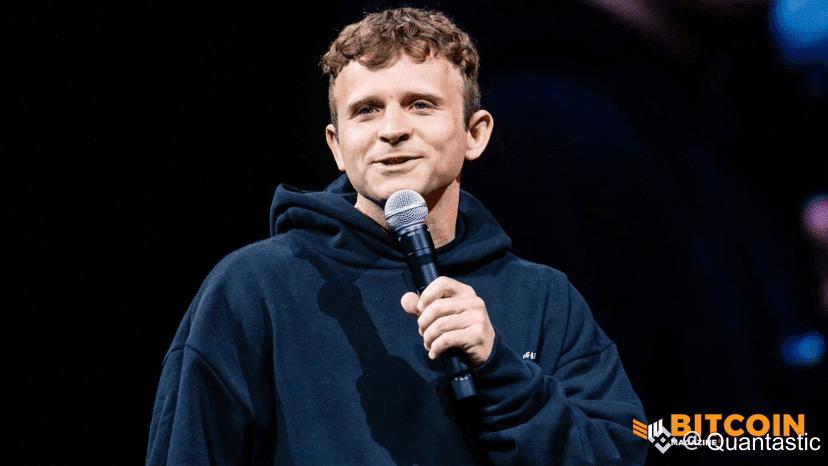
21 Capital только что вышла на рынок, и многие считают, что Джек Маллери может строить первую компанию Биткойна стоимостью $1 трлн. Причина в мощной команде за ней:
Cantor Fitzgerald – крупный игрок Уолл-стрит с ФРС
Tether – крупнейший эмитент стейблкоинов и крупный держатель казначейских облигаций США
SoftBank – управляет активами на сумму $46 трлн
Джек Маллери – основатель Strike с глубокими финансовыми корнями
Этот запуск сигнализирует о новой эре банковского обслуживания, сосредоточенной на Биткойне.
1️⃣ Большой план 21 Capital
Маллери стремится сделать 21 Capital крупнейшим корпоративным держателем Биткойна, даже больше, чем MicroStrategy.
Цель: 500,000+ BTC
Уже переведено 43,000 BTC в цепочку всего за $1.60
Цель: Создавать реальные прибыльные бизнесы, а не просто держать Биткойн
Думайте о стратегии MicroStrategy + лидерстве Coinbase в отрасли в совокупности.
2️⃣ Противодействие Уолл-стрит
Маллери отвергает критику, такую как Джейми Даймон, называющий Биткойн "питомцем".
Он утверждает, что реальный риск сегодня — это не владение Биткойном.
Институциональные партнеры также говорят, что они купят каждое падение, демонстрируя долгосрочную уверенность.
3️⃣ Почему это важно глобально
Биткойн становится необходимым:
Поколение миллениалов нуждается в альтернативе чрезмерно дорогой недвижимости и акциям
Развивающиеся страны используют Биткойн для сбережений, финансового доступа и трансграничного дохода
Он превращается в глобальную финансовую спасательную линию.
4️⃣ Общая картина
Tether, SoftBank и 21 Capital играют по стандарту Биткойна — это значит, что они будут продолжать накапливать BTC независимо от обстоятельств.
Вот как строятся триллионные компании.
#BitcoinNews #JackMallers #21Capital #BTCInsights #CryptoRevolution
РОЖДЕСТВЕНСКАЯ АКЦИЯ!!! Копируйте Quantastic, ведущего трейдера Binance без риска: Мы покроем любые потери для зарегистрированных копировщиков, которые копируют аккаунт Quantastic на
https://www.binance.com/copy-trading/lead-details/4734580934665797633?inviteCode=Rddgkwwf
Поговорите со мной !!
"... И БЕЗРИСКОВАЯ КОПИЯ ТОРГОВЛИ В НИЗУ!"
Быстрый обзор знаний
21 Capital только что вышла на рынок, и многие считают, что Джек Маллери может строить первую компанию Биткойна стоимостью $1 трлн. Причина в мощной команде за ней:
Cantor Fitzgerald – крупный игрок Уолл-стрит с ФРС
Tether – крупнейший эмитент стейблкоинов и крупный держатель казначейских облигаций США
SoftBank – управляет активами на сумму $46 трлн
Джек Маллери – основатель Strike с глубокими финансовыми корнями
Этот запуск сигнализирует о новой эре банковского обслуживания, сосредоточенной на Биткойне.
1️⃣ Большой план 21 Capital
Маллери стремится сделать 21 Capital крупнейшим корпоративным держателем Биткойна, даже больше, чем MicroStrategy.
Цель: 500,000+ BTC
Уже переведено 43,000 BTC в цепочку всего за $1.60
Цель: Создавать реальные прибыльные бизнесы, а не просто держать Биткойн
Думайте о стратегии MicroStrategy + лидерстве Coinbase в отрасли в совокупности.
2️⃣ Противодействие Уолл-стрит
Маллери отвергает критику, такую как Джейми Даймон, называющий Биткойн "питомцем".
Он утверждает, что реальный риск сегодня — это не владение Биткойном.
Институциональные партнеры также говорят, что они купят каждое падение, демонстрируя долгосрочную уверенность.
3️⃣ Почему это важно глобально
Биткойн становится необходимым:
Поколение миллениалов нуждается в альтернативе чрезмерно дорогой недвижимости и акциям
Развивающиеся страны используют Биткойн для сбережений, финансового доступа и трансграничного дохода
Он превращается в глобальную финансовую спасательную линию.
4️⃣ Общая картина
Tether, SoftBank и 21 Capital играют по стандарту Биткойна — это значит, что они будут продолжать накапливать BTC независимо от обстоятельств.
Вот как строятся триллионные компании.
#BitcoinNews #JackMallers #21Capital #BTCInsights #CryptoRevolution
РОЖДЕСТВЕНСКАЯ АКЦИЯ!!! Копируйте Quantastic, ведущего трейдера Binance без риска: Мы покроем любые потери для зарегистрированных копировщиков, которые копируют аккаунт Quantastic на
https://www.binance.com/copy-trading/lead-details/4734580934665797633?inviteCode=Rddgkwwf
Поговорите со мной !!
CZ Сигнализирует о чем-то большом
"... И БЕСПРЕДЕЛЬНО БЕЗРИСКОВАЯ КОПИЯ ТОРГОВЛИ В НИЗУ!"
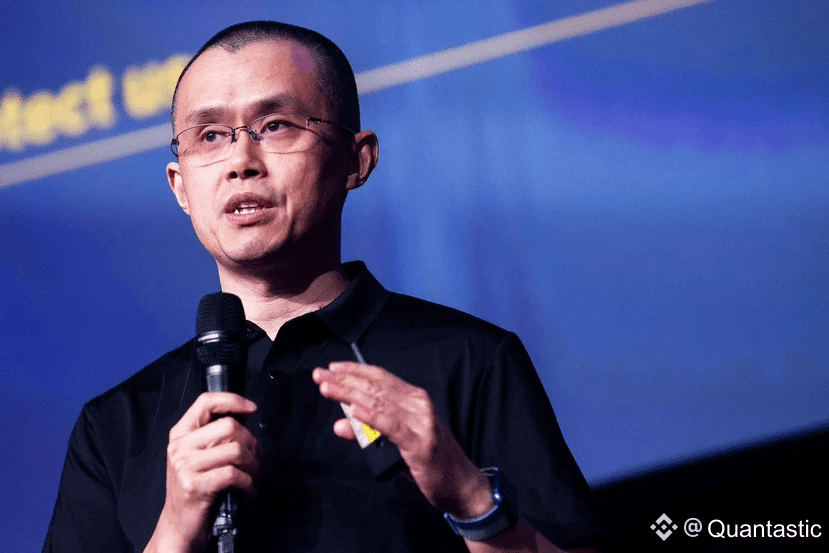
Биткойн взлетел выше $94,000, и с наступлением декабря CZ намекнул, что “мы могли бы войти в суперцикл.”
Ценовой скачок BTC произошел на фоне волны обновленной уверенности на глобальных крипто-мероприятиях, таких как Bitcoin MENA, что привело рынок к еще одной сильной ралли.
Удивительная часть?
Внезапное повторное появление CZ (Чанпэн Чжао), основателя Binance.
Он сказал, что декабрь может стать переломным моментом, отметив, что рыночная динамика “может измениться навсегда.”
📌 Цикл в 4 года больше не актуален?
На сцене CZ сказал, что текущая рыночная динамика отличается от прошлых циклов.
Согласно ему, сила этого ралли достаточно мощная, чтобы оспорить давно сложившиеся теории инвесторов:
“Динамика очень сильная… достаточно сильная, чтобы сломать традиционный 4-летний цикл.”
Когда ведущий спросил, имел ли он в виду рынок следующего года, CZ ответил:
“Мы можем наблюдать суперцикл.”
Тем не менее, он сохранил свой обычный осторожный тон:
“Нам придется подождать и посмотреть. Я пока не уверен.”
📌 Технические графики: Биткойн уверенно преодолевает $94,000
На 10 декабря 2025 года, 00:15, график BTC показывает четкий прорыв выше основного сопротивления, образуя сильные зеленые свечи.
Биткойн коснулся $94,228, увеличившись на +3.95% за один день.
Другие метрики также подтверждают сильную динамику:
Объем торгов за 24 часа: $55.9B+
Общая капитализация рынка Биткойна: $1.88T
Этот прорыв укрепляет бычий тренд и может быть ранним сигналом о “суперцикле”, о котором упоминал CZ.
#CryptoMarketAnalysis #CZUpdate #BTC94K #CryptoBullRun #MarketBreakout
НГ ПРЕМИЯ!!! Копируйте Quantastic, ведущего трейдера Binance без РИСКА: Мы покроем любые потери для зарегистрированных копировщиков, которые копируют аккаунт Quantastic на
https://www.binance.com/copy-trading/lead-details/4734580934665797633?inviteCode=Rddgkwwf
Чат со мной для получения более подробной информации!
"... И БЕСПРЕДЕЛЬНО БЕЗРИСКОВАЯ КОПИЯ ТОРГОВЛИ В НИЗУ!"
Биткойн взлетел выше $94,000, и с наступлением декабря CZ намекнул, что “мы могли бы войти в суперцикл.”
Ценовой скачок BTC произошел на фоне волны обновленной уверенности на глобальных крипто-мероприятиях, таких как Bitcoin MENA, что привело рынок к еще одной сильной ралли.
Удивительная часть?
Внезапное повторное появление CZ (Чанпэн Чжао), основателя Binance.
Он сказал, что декабрь может стать переломным моментом, отметив, что рыночная динамика “может измениться навсегда.”
📌 Цикл в 4 года больше не актуален?
На сцене CZ сказал, что текущая рыночная динамика отличается от прошлых циклов.
Согласно ему, сила этого ралли достаточно мощная, чтобы оспорить давно сложившиеся теории инвесторов:
“Динамика очень сильная… достаточно сильная, чтобы сломать традиционный 4-летний цикл.”
Когда ведущий спросил, имел ли он в виду рынок следующего года, CZ ответил:
“Мы можем наблюдать суперцикл.”
Тем не менее, он сохранил свой обычный осторожный тон:
“Нам придется подождать и посмотреть. Я пока не уверен.”
📌 Технические графики: Биткойн уверенно преодолевает $94,000
На 10 декабря 2025 года, 00:15, график BTC показывает четкий прорыв выше основного сопротивления, образуя сильные зеленые свечи.
Биткойн коснулся $94,228, увеличившись на +3.95% за один день.
Другие метрики также подтверждают сильную динамику:
Объем торгов за 24 часа: $55.9B+
Общая капитализация рынка Биткойна: $1.88T
Этот прорыв укрепляет бычий тренд и может быть ранним сигналом о “суперцикле”, о котором упоминал CZ.
#CryptoMarketAnalysis #CZUpdate #BTC94K #CryptoBullRun #MarketBreakout
НГ ПРЕМИЯ!!! Копируйте Quantastic, ведущего трейдера Binance без РИСКА: Мы покроем любые потери для зарегистрированных копировщиков, которые копируют аккаунт Quantastic на
https://www.binance.com/copy-trading/lead-details/4734580934665797633?inviteCode=Rddgkwwf
Чат со мной для получения более подробной информации!
💥 Банки толкают Биткойн в спираль смерти? Настоящая история
Недавний анализ объясняет, как долг и запасы Биткойна MicroStrategy могут создать опасную цепную реакцию — и почему некоторые инвесторы считают, что банки участвуют в этом.
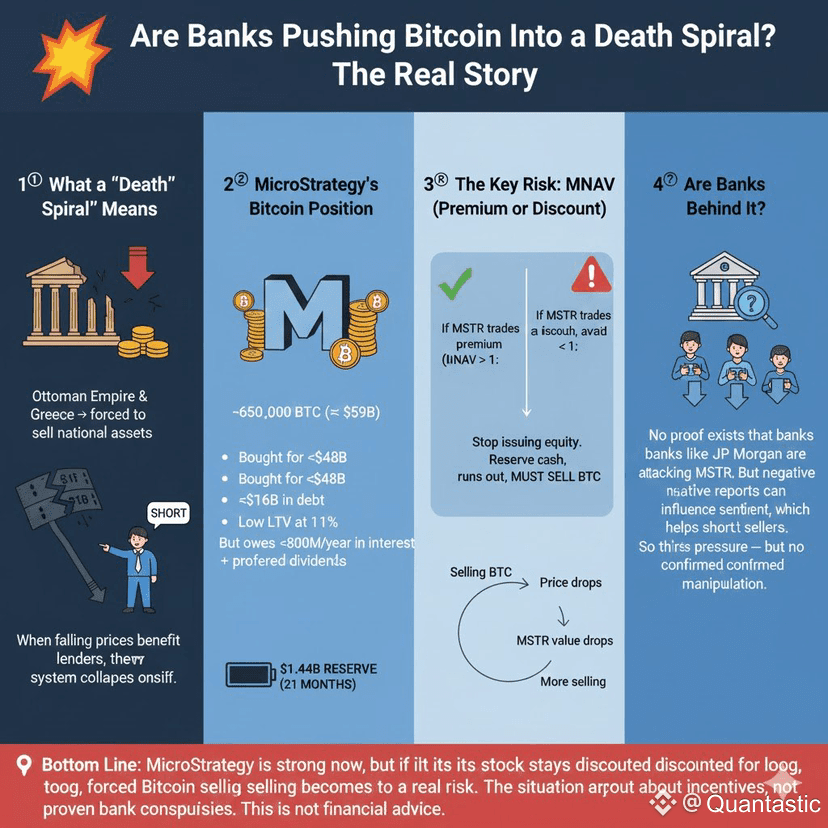
1️⃣ Что означает «Спираль смерти»
История показывает, что определенные структуры долга могут толкать актив к коллапсу:
Османская империя и Греция → вынуждены продавать национальные активы
2000-е «бесподобные конвертируемые» → кредиторы шортили акции по мере падения цен
Когда падающие цены приносят выгоду кредиторам, система коллапсирует сама на себя.
2️⃣ Позиция Биткойна MicroStrategy
MicroStrategy функционирует как гигантский фонд Биткойна.
~650,000 BTC (≈ $59B)
Куплено за ~$48B
~$16B в долгах
Низкий LTV на уровне 11%
Но должен ~$800M в год по процентам + предпочтительным дивидендам
Они создали резерв в ~$1.44B — достаточно на 21 месяц.
3️⃣ Ключевой риск: MNAV (Премия или Скидка)
План MicroStrategy зависит от того, торгуются ли его акции выше или ниже их стоимости Биткойна.
✔️ Если MSTR торгуется с премией (MNAV > 1):
Они выпускают новые акции, легко привлекают наличные и избегают продажи Биткойна.
⚠️ Если MSTR торгуется со скидкой (MNAV < 1):
Они прекращают выпускать акции.
Если резерв на 21 месяц иссякнет, им придется продать Биткойн для оплаты обязательств.
Это может вызвать спираль смерти:
Продажа BTC → падение цены → падение стоимости MSTR → больше продаж.
4️⃣ За этим стоят банки?
Нет доказательств того, что такие банки, как JP Morgan, атакуют MSTR.
Но негативные отчеты могут повлиять на настроение, что помогает шорт-продавцам.
Так что давление есть — но подтвержденной манипуляции нет.
#BitcoinInsights #MicroStrategy #CryptoRisks #FinanceEducation #FinanceEducation
РОЖДЕСТВЕНСКАЯ АКЦИЯ!!! Копируйте Quantastic, ведущего трейдера Binance без риска: Мы покрываем любые потери для зарегистрированных копировщиков, которые копируют аккаунт Quantastic на
https://www.binance.com/copy-trading/lead-details/4734580934665797633?inviteCode=Rddgkwwf
Чат со мной для получения более подробной информации!
Недавний анализ объясняет, как долг и запасы Биткойна MicroStrategy могут создать опасную цепную реакцию — и почему некоторые инвесторы считают, что банки участвуют в этом.
1️⃣ Что означает «Спираль смерти»
История показывает, что определенные структуры долга могут толкать актив к коллапсу:
Османская империя и Греция → вынуждены продавать национальные активы
2000-е «бесподобные конвертируемые» → кредиторы шортили акции по мере падения цен
Когда падающие цены приносят выгоду кредиторам, система коллапсирует сама на себя.
2️⃣ Позиция Биткойна MicroStrategy
MicroStrategy функционирует как гигантский фонд Биткойна.
~650,000 BTC (≈ $59B)
Куплено за ~$48B
~$16B в долгах
Низкий LTV на уровне 11%
Но должен ~$800M в год по процентам + предпочтительным дивидендам
Они создали резерв в ~$1.44B — достаточно на 21 месяц.
3️⃣ Ключевой риск: MNAV (Премия или Скидка)
План MicroStrategy зависит от того, торгуются ли его акции выше или ниже их стоимости Биткойна.
✔️ Если MSTR торгуется с премией (MNAV > 1):
Они выпускают новые акции, легко привлекают наличные и избегают продажи Биткойна.
⚠️ Если MSTR торгуется со скидкой (MNAV < 1):
Они прекращают выпускать акции.
Если резерв на 21 месяц иссякнет, им придется продать Биткойн для оплаты обязательств.
Это может вызвать спираль смерти:
Продажа BTC → падение цены → падение стоимости MSTR → больше продаж.
4️⃣ За этим стоят банки?
Нет доказательств того, что такие банки, как JP Morgan, атакуют MSTR.
Но негативные отчеты могут повлиять на настроение, что помогает шорт-продавцам.
Так что давление есть — но подтвержденной манипуляции нет.
#BitcoinInsights #MicroStrategy #CryptoRisks #FinanceEducation #FinanceEducation
РОЖДЕСТВЕНСКАЯ АКЦИЯ!!! Копируйте Quantastic, ведущего трейдера Binance без риска: Мы покрываем любые потери для зарегистрированных копировщиков, которые копируют аккаунт Quantastic на
https://www.binance.com/copy-trading/lead-details/4734580934665797633?inviteCode=Rddgkwwf
Чат со мной для получения более подробной информации!
Войдите, чтобы посмотреть больше материала