
Re Protocol
191 Публикации

Re Protocol
 Square Verified
Отправить жалобу
Заблокировать пользователя
Onchain capital for real-world risk. Stewarded by the Resilience Foundation. Website: re.xyz
4 подписок(и/а)
76 подписчиков(а)
251 понравилось
Посты
Все
Видео
PINNED
·
--

Статья
August Performance Update: Capital Growth and Cross-Chain ExpansionAugust was another month of major growth for Re. Re passed a quarter-billion in total deposits. Deposits grew by nearly 36%, the protocol's largest month-over-month increase since March and the second largest on record. August also brought continued cross-chain expansion. reUSD went live on Solana via Chainlink CCIP, and added new lending and collateral integrations across Jupiter Lend, Kamino, and Feather.
$648.5M Total Value Locked+11.7% TVL Growth$256.4M Total Deposits+35.8% Deposit Growth
Capital Position
Capital position & liquidity.
All figures reflect the August 31, 2026, reporting snapshot unless otherwise noted. Past performance is not a reliable indicator of future results.
Re's Total Value Locked (TVL) stood at $648.5M on August 31, an increase of 11.7% over July.
As of the reporting period, capital was distributed as follows:
Onchain Capital: $150.1M (23.1% of total assets)Offchain Reserves: $179.5M (27.7% of total)Contracted Premium Receivable: $318.9M (49.2% of total)
Reporting note. Reflects contracted premium receivable on policies bound as of the reporting date. Actual receipts may vary based on policy performance, cessions, and other factors.
Onchain capital supports Re-backed underwriting structures. Offchain capital is maintained as reserves within regulated insurance entities. Contracted written premium receivable reflects premiums contractually owed but not yet received.
TVL growth in August was powered primarily by a marked increase in reUSD deposits, which grew from $170.1M to $236.4M. reUSDe deposits grew from $18.8M to $20.0M.
Underwriting Portfolio
Portfolio composition.
Re's underwriting portfolio remained steady at $510.5 million in August.
Re's portfolio remains spread across diverse lines of business, helping reduce the impact that losses in any one area can have on the overall book. Underwriting strategy continues to focus on shorter-term risks and on contracts whose losses must reach meaningful levels before Re is responsible for paying claims. Together, those choices are intended to help guard against losses and support consistent underwriting performance over time.
Ecosystem
reUSD launched on Solana.
August marked reUSD's launch on Solana. Solana has become a significant network for real-world asset tokenization, with deep liquidity and a fast-growing DeFi ecosystem. The launch gives Re access to another major onchain economy and opens reUSD to Solana's lending, trading, and liquidity protocols.
Read the full announcement here [1].
Integrations
Ecosystem expansion.
Several integrations expanded how reUSD can be deployed across DeFi:
Jupiter Lend. reUSD went live as collateral on Jupiter Lend [2], allowing holders to borrow jupUSD against their reUSD positions in Jupiter's $2 billion lending market without the need to sell or redeem. reUSD Smart Vaults on Jupiter Lend v2 reached $6 million in total supply in under three hours after launch.Kamino. reUSD also went live as collateral in Kamino's [3] $2.2 billion-plus credit market on Solana, where deposits earn 5x Re Points. The initial $1 million supply cap filled in 76 minutes, and the cap was raised in stages to $20 million. Eight days after launch, the reUSD market on Kamino had surpassed $20 million.Feather. reUSD expanded to Sei as collateral in Feather's [4] PYUSD0 and PYUSD0 Y10k Capital vaults, powered by Morpho and curated by Feather and RockawayX.
Token Activity
$RE token activity.
Per the standard ecosystem release schedule, 7.09 million $RE unlocked from the ecosystem allocation on August 17.
$RE has a fixed maximum supply of one billion tokens, with no ongoing inflation or perpetual emissions.
7.09M tokens released (ecosystem allocation, August 17)1B fixed maximum supply (no ongoing inflation)
Looking Ahead
What's next.
Beginning in September, USDC will become the sole redemption asset for reUSD. Previously, reUSD redemptions settled in sUSDe. This change was made with user convenience in mind, as reUSD will redeem into the most widely integrated onchain dollar.
We look forward to delivering our next update in September.
— Re Management Team
Originally published on re.xyz: https://re.xyz/insights/august-2026-performance-update
Re Protocol. Internet-native reinsurance capital: diversified, transparent, and open to global participants at re.xyz (https://re.xyz).
Visit re.xyz: https://re.xyz
#reinsurance #RWA #TradFi
Sources
re.xyz/insights/reusd-live-on-solanajup.ag/lend/borrow/smart/97/depositkamino.com/borrowapp.feather.zone/sei/borrow
Disclosures
This blog post is for informational and educational purposes only and does not constitute investment, legal, tax, or financial advice. Nothing in this article should be construed as an offer or solicitation to buy or sell any security, token, or financial product.
Affiliate disclosure. The "re" brand, the re protocol, and re.xyz are operated by Resilience Foundation Cayman LLC ("Resilience Foundation"), an Exempted Limited Guarantee Foundation Company incorporated in the Cayman Islands with Limited Liability with registered number IC-414560, together with its affiliate Resilience (BVI) Ltd and Resilience Inv SPC. Resilience Foundation, Resilience BVI, and Resilience Inv do not provide insurance or reinsurance services, do not act as insurance broker or agent, and do not hold an insurance license. All regulated reinsurance activities are conducted exclusively by Cover Reinsurance SPC Ltd. ("Cover Re SPC"), a Class B(iii) licensed exempted segregated portfolio company in the Cayman Islands, operating under the "Cover Re" brand at coverre.com (https://coverre.com).
Access and eligibility. reUSDe is available exclusively to non-U.S. persons, as defined under Regulation S of the U.S. Securities Act of 1933, in specific permitted jurisdictions. Use by U.S. persons or residents is strictly prohibited. reUSDe may be classified as a security in certain jurisdictions, and participation is subject to eligibility requirements, KYC/AML verification, and jurisdiction-specific restrictions. reUSDe is not a bank deposit, is not FDIC insured, and is not government backed.
Yield. reUSD/reUSDe yield is variable, is not guaranteed, and may change at any time. Any references to yield, APR, APY, returns, or performance are informational only, and past performance is not a reliable indicator of future results. The value and stability of reUSD/reUSDe are subject to market volatility, smart contract vulnerabilities, regulatory uncertainty, and the performance of underlying collateral and protocol activity.
Risk disclosure. Digital assets and blockchain-based products involve significant risk, including the potential loss of principal, smart contract vulnerabilities, liquidity constraints, and regulatory uncertainty. Any references to APR, returns, or performance are not guaranteed, and past performance is not a reliable indicator of future results.
Regulatory environment. The regulatory environment for digital assets, stablecoins, tokenized real-world assets, and onchain financial products is dynamic and continues to evolve across jurisdictions. The information in this post reflects the understanding as of the date of publication and may not reflect subsequent legal or regulatory developments. Readers should consult qualified legal, tax, and financial professionals before making any decisions.
Terms apply. For full terms, disclosures, and risk disclaimers, please see the Re website at https://re.xyz, Terms of Service (https://re.xyz/terms), and Disclaimers (https://docs.re.xyz/disclaimers).
August Performance Update: Capital Growth and Cross-Chain Expansion
August was another month of major growth for Re. Re passed a quarter-billion in total deposits. Deposits grew by nearly 36%, the protocol's largest month-over-month increase since March and the second largest on record. August also brought continued cross-chain expansion. reUSD went live on Solana via Chainlink CCIP, and added new lending and collateral integrations across Jupiter Lend, Kamino, and Feather.
$648.5M Total Value Locked+11.7% TVL Growth$256.4M Total Deposits+35.8% Deposit Growth
Capital Position
Capital position & liquidity.
All figures reflect the August 31, 2026, reporting snapshot unless otherwise noted. Past performance is not a reliable indicator of future results.
Re's Total Value Locked (TVL) stood at $648.5M on August 31, an increase of 11.7% over July.
As of the reporting period, capital was distributed as follows:
Onchain Capital: $150.1M (23.1% of total assets)Offchain Reserves: $179.5M (27.7% of total)Contracted Premium Receivable: $318.9M (49.2% of total)
Reporting note. Reflects contracted premium receivable on policies bound as of the reporting date. Actual receipts may vary based on policy performance, cessions, and other factors.
Onchain capital supports Re-backed underwriting structures. Offchain capital is maintained as reserves within regulated insurance entities. Contracted written premium receivable reflects premiums contractually owed but not yet received.
TVL growth in August was powered primarily by a marked increase in reUSD deposits, which grew from $170.1M to $236.4M. reUSDe deposits grew from $18.8M to $20.0M.
Underwriting Portfolio
Portfolio composition.
Re's underwriting portfolio remained steady at $510.5 million in August.
Re's portfolio remains spread across diverse lines of business, helping reduce the impact that losses in any one area can have on the overall book. Underwriting strategy continues to focus on shorter-term risks and on contracts whose losses must reach meaningful levels before Re is responsible for paying claims. Together, those choices are intended to help guard against losses and support consistent underwriting performance over time.
Ecosystem
reUSD launched on Solana.
August marked reUSD's launch on Solana. Solana has become a significant network for real-world asset tokenization, with deep liquidity and a fast-growing DeFi ecosystem. The launch gives Re access to another major onchain economy and opens reUSD to Solana's lending, trading, and liquidity protocols.
Read the full announcement here [1].
Integrations
Ecosystem expansion.
Several integrations expanded how reUSD can be deployed across DeFi:
Jupiter Lend. reUSD went live as collateral on Jupiter Lend [2], allowing holders to borrow jupUSD against their reUSD positions in Jupiter's $2 billion lending market without the need to sell or redeem. reUSD Smart Vaults on Jupiter Lend v2 reached $6 million in total supply in under three hours after launch.Kamino. reUSD also went live as collateral in Kamino's [3] $2.2 billion-plus credit market on Solana, where deposits earn 5x Re Points. The initial $1 million supply cap filled in 76 minutes, and the cap was raised in stages to $20 million. Eight days after launch, the reUSD market on Kamino had surpassed $20 million.Feather. reUSD expanded to Sei as collateral in Feather's [4] PYUSD0 and PYUSD0 Y10k Capital vaults, powered by Morpho and curated by Feather and RockawayX.
Token Activity
$RE token activity.
Per the standard ecosystem release schedule, 7.09 million $RE unlocked from the ecosystem allocation on August 17.
$RE has a fixed maximum supply of one billion tokens, with no ongoing inflation or perpetual emissions.
7.09M tokens released (ecosystem allocation, August 17)1B fixed maximum supply (no ongoing inflation)
Looking Ahead
What's next.
Beginning in September, USDC will become the sole redemption asset for reUSD. Previously, reUSD redemptions settled in sUSDe. This change was made with user convenience in mind, as reUSD will redeem into the most widely integrated onchain dollar.
We look forward to delivering our next update in September.
— Re Management Team
Originally published on re.xyz: https://re.xyz/insights/august-2026-performance-update
Re Protocol. Internet-native reinsurance capital: diversified, transparent, and open to global participants at re.xyz (https://re.xyz).
Visit re.xyz: https://re.xyz
#reinsurance #RWA #TradFi
Sources
re.xyz/insights/reusd-live-on-solanajup.ag/lend/borrow/smart/97/depositkamino.com/borrowapp.feather.zone/sei/borrow
Disclosures
This blog post is for informational and educational purposes only and does not constitute investment, legal, tax, or financial advice. Nothing in this article should be construed as an offer or solicitation to buy or sell any security, token, or financial product.
Affiliate disclosure. The "re" brand, the re protocol, and re.xyz are operated by Resilience Foundation Cayman LLC ("Resilience Foundation"), an Exempted Limited Guarantee Foundation Company incorporated in the Cayman Islands with Limited Liability with registered number IC-414560, together with its affiliate Resilience (BVI) Ltd and Resilience Inv SPC. Resilience Foundation, Resilience BVI, and Resilience Inv do not provide insurance or reinsurance services, do not act as insurance broker or agent, and do not hold an insurance license. All regulated reinsurance activities are conducted exclusively by Cover Reinsurance SPC Ltd. ("Cover Re SPC"), a Class B(iii) licensed exempted segregated portfolio company in the Cayman Islands, operating under the "Cover Re" brand at coverre.com (https://coverre.com).
Access and eligibility. reUSDe is available exclusively to non-U.S. persons, as defined under Regulation S of the U.S. Securities Act of 1933, in specific permitted jurisdictions. Use by U.S. persons or residents is strictly prohibited. reUSDe may be classified as a security in certain jurisdictions, and participation is subject to eligibility requirements, KYC/AML verification, and jurisdiction-specific restrictions. reUSDe is not a bank deposit, is not FDIC insured, and is not government backed.
Yield. reUSD/reUSDe yield is variable, is not guaranteed, and may change at any time. Any references to yield, APR, APY, returns, or performance are informational only, and past performance is not a reliable indicator of future results. The value and stability of reUSD/reUSDe are subject to market volatility, smart contract vulnerabilities, regulatory uncertainty, and the performance of underlying collateral and protocol activity.
Risk disclosure. Digital assets and blockchain-based products involve significant risk, including the potential loss of principal, smart contract vulnerabilities, liquidity constraints, and regulatory uncertainty. Any references to APR, returns, or performance are not guaranteed, and past performance is not a reliable indicator of future results.
Regulatory environment. The regulatory environment for digital assets, stablecoins, tokenized real-world assets, and onchain financial products is dynamic and continues to evolve across jurisdictions. The information in this post reflects the understanding as of the date of publication and may not reflect subsequent legal or regulatory developments. Readers should consult qualified legal, tax, and financial professionals before making any decisions.
Terms apply. For full terms, disclosures, and risk disclaimers, please see the Re website at https://re.xyz, Terms of Service (https://re.xyz/terms), and Disclaimers (https://docs.re.xyz/disclaimers).
3
340
·
--
$2.3M in yield accrued to reUSD and reUSDe holders in October, the largest month since inception.
Reinsurance capital at work.
#reinsurance #RWA #DeFi
$2.3M in yield accrued to reUSD and reUSDe holders in October, the largest month since inception.
Reinsurance capital at work.
#reinsurance #RWA #DeFi
Reinsurance capital at work.
#reinsurance #RWA #DeFi
2
1
113
·
--
Проверено

Статья
Karn Saroya on Castle Labs: Bringing Largely Uncorrelated Reinsurance Yield OnchainOn November 3rd, Re CEO Karn Saroya joined Francesco on the Castle Labs Podcast to talk about what makes reinsurance a distinctive source of onchain yield and how Re puts onchain capital to work in the insurance market.
From Buying Reinsurance to Building Re
Karn first encountered the world of reinsurance as a buyer. After his earlier e-commerce startup was acqui-hired by Shopify, he co-founded Cover, a mobile insurance app that allowed people to shop for insurance by taking photos or videos of what they wanted to cover. Over the next seven years, Cover first grew into a national insurance agency; it ultimately became a managing general agent (MGA), an agency that underwrites and administers policies on behalf of insurers.
During his time with Cover, Karn purchased reinsurance through brokers. As Karn put it, what reinsurers were really selling him was balance sheet capacity: the ability to write more insurance policies than Cover could have written on its own. In exchange for premiums, the reinsurers took on part of the risk and promised to pay the losses the contracts covered. That promise gave Karn the idea for Re: to make the assets behind those promises verifiable.
“There’s an entire world of digital assets out there that could be pledged as collateral to back up the promises that these reinsurers are making to me and to other customers.” - Karn
Today, Re operates more than 50 reinsurance programs with more than 30 insurers across 48 states, backing nearly a million policyholders. Re has reached more than $520 million in bound premium since inception.
50+ reinsurance programs30+ insurers48 states~1M policyholders backed$520M+ bound premium since inception
Where Reinsurance Returns Come From
The yield available onchain today largely moves with one market or another. Francesco pointed out that much of the RWA yield available comes from US treasuries, crypto funding rates, and arbitrage; treasury yields depend upon interest rates, and the latter two follow traders’ appetite for leverage. If the holdings in a portfolio all depend upon the same small number of market forces, they can all fall due to the same market events.
Reinsurance returns, on the other hand, depend upon something different: reinsurance treaty performance. Interest rates, stock prices, and crypto markets have little direct impact, for example, upon the financial outcome of a commercial auto or workers’ compensation policy. If premiums exceed the combination of claims and costs, the policy makes a profit, and market events have little impact upon that.
“You have a million little arrows moving in different directions that give you this law of large numbers, frequency oriented business that is baseline just different from traditional capital markets.” - Karn
That’s what makes reinsurance performance largely uncorrelated with the performance of other markets. A yield source like that can help diversify a portfolio that’s otherwise built mostly on market-driven yield.
How Re Chooses Its Risks
The law of large numbers that Karn describes fits best into a particular type of insurance strategy: a large number of small, diversified risks that avoid concentration. Catastrophe reinsurance is on the other end of the spectrum; it deals in highly concentrated risk, as a single hurricane or earthquake can trigger thousands of policies at once and generate severe losses. Catastrophe policies pay higher premiums to compensate for this, but heavy catastrophe exposure inherently means higher volatility, and a single bad catastrophe year can have a dire impact upon a reinsurer’s finances.
Karn said that Re deliberately took the steadier path even though it meant potentially leaving some money on the table:
“We actually could have made a lot more money the last couple of years if we had titrated in catastrophic risk. And so that’s, as you described, way higher margin, but higher variability. And though it is a source of additional uncorrelated return, the severity of those outcomes could wipe out capital.” - Karn
Reinsurance has traditionally relied heavily upon institutional capital to underwrite new contracts. Re sources capital from DeFi instead; this meant asking regulators, insurers, and DeFi capital allocators to trust an entirely new model, and Karn said that Re’s strategy had to send the message that it would be around for the long run. Choosing risks with more predictable results was part of making that case.
That doesn’t mean avoiding catastrophe risk in its entirety; Re’s portfolio has modest exposure to catastrophe today, and Karn said that catastrophe risk could make sense as a small component of a larger profile alongside plans to limit potential losses and pass on some of the risk to other reinsurers.
That same degree of selectivity applies across the rest of Re’s portfolio. Re looks at each line of business on its own merits; when pricing for a particular line no longer makes sense, business is found elsewhere or the capital is left unallocated. Writing poorly priced business just to put capital to work would endanger margins.
Re’s Own Capital Takes the First Loss
Emphasizing smaller risks and a diversified portfolio makes portfolio-scale losses a good deal less likely. But no reinsurance strategy can eliminate the possibility altogether. Should losses occur, it matters to holders of reUSD and reUSDe, Re’s yield-bearing tokens, where the impact of those losses would be first felt.
Premiums are the immediate loss layer: they’re priced to absorb claims and expenses and still produce a margin. Underwriting loss occurs when claims and expenses exceed those premiums instead. In the event that portfolio-wide treaty performance has a poor year, Re’s own accumulated capital and reserves stand as a first-loss layer to absorb potential losses before either token is impaired. As of October 2026, that layer stands at $77 million.
“Core to our philosophy here is incentive alignment. And so you can see on chain that we’ve got quite a bit of our assets and all of our equity kind of tied up in first loss position. So we eat our own cooking and we’ll continue to do so to give the market comfort as we scale up.” - Karn
What You Can See Behind the Yield
All of the above depends upon an offchain business. Cover Re SPC Ltd., Re’s reinsurance company, operates the reinsurance side, and revenue from underwriting flows back to Re Protocol to support yield for holders. Those holders may, understandably, be interested in how Cover Re is performing. In traditional reinsurance, outsiders typically can’t see into the operations of any given provider; as Karn put it, in fact, that opacity is a big part of the reinsurance industry’s business model.
Re takes the opposite approach. A full suite of protocol metrics, including onchain and offchain reserves, deposits into the protocol, reinsurance strategy, portfolio performance (down to the level of the individual treaty), and more, is published on the Re App (https://app.re.xyz) and updated daily.
“You can see where all the capital is, you can see how it’s encumbered.” - Karn
Furthermore, Grant Thornton Attest (Cayman) LLP audited the 2024 and 2025 financial statements of the Cover Re portfolio that Re’s capital backs, and Re has published the results. Audited financial statements give Re’s depositors access to the level of reporting that institutional investors expect.
Why DeFi Integrations Matter to Insurers
Francesco asked Karn about reUSD’s Solana integrations with Kamino, Jupiter Lend, and Exponent. Integrations such as these allow reUSD to fit into DeFi’s standard capital flows; they allow holders to lend it, borrow against it, or separate its yield from its principal, rather than just holding it. More integrations means more uses for reUSD, allowing more routes for capital inflow.
Karn’s point was that the same integrations matter on the insurance side:
“This is turning our product into basically the insurance dollar, like the insurance dollar primitive for a trillion dollar market. And if you play this forward, if the global insurance market wants access to on-chain capital, it’s way, way easier for them just to use us and be plugged into everything immediately versus trying to replicate the BD effort, the integration efforts, the infrastructure that’s necessary.” - Karn
The Team That Brings In the Business
Sourcing the capital is only the first part of the job; from there, Re needs to find the contracts to back with that capital. Reinsurance operates on track records and relationships, and Re was asking insurers to effectively work with a new model of reinsurance. Toward that end, Re hired insurance personnel with extensive experience and established industry relationships.
When Francesco asked how Re has approached growth, Karn pointed to the insurance side as a category in which Re had done particularly well. He gave much of the credit for this to the insurance team:
“What we’ve been able to do is build out a team that has the domain expertise, the network access, the experience managing multi-billion dollar books of insurance business, brought them in-house, and now we have them out in the world explaining our model, showcasing this as a novel way to capitalize the insurance businesses of the customers that we’re approaching.” - Karn
A Capital Market for More Reinsurers
The Resilience Foundation, which operates the Re Protocol, has deployed $165 million to Cover Re in 2026; this began with an initial investment note of $100 million in April, followed by an additional $65 million in October.
Capital deployed through the notes is sent offchain, where Cover Re converts it from stablecoins into US dollars and uses it to back new reinsurance contracts. Payments on those notes flow back onchain to support yield for holders of reUSD and reUSDe.
Karn noted that Re currently does business with reinsurers beyond Cover Re via retrocession, reinsurance for reinsurers. His ultimate aim is for additional reinsurers to access onchain capital through Re’s infrastructure. He pointed to Lloyd’s as a model for that shared marketplace:
“What you would expect is that this protocol that we’ve created behaves like Lloyd’s. Lloyd’s is a big pot of money. It has insurance companies over top of it and infrastructure that serves those insurance companies.” - Karn
Bringing It Together
Karn described what Re has demonstrated thus far: that the traditional insurance industry can source capital through onchain assets, and that the system connecting the two is working.
“We’re showing the world that digital assets and the stablecoin DeFi markets are actually accessible. There’s a pathway. It’s been proven and it can scale in a significant way.” - Karn
Listen to the full conversation:
https://www.youtube.com/watch?v=i9DbgK_vWfc
Explore Re: https://re.xyz
#reinsurance #RWA #TradFi
Disclosures: For educational and informational purposes only. Nothing in this post is investment, financial, legal, or tax advice, or an offer, solicitation, or recommendation to buy, sell, or hold any digital asset, including reUSD and reUSDe (together, the “Tokens”). No advisory or fiduciary relationship is created by this post; readers should consult qualified legal, tax, and financial professionals before making any decision. Yields are variable, not guaranteed, and may change at any time. Past performance is not a reliable indicator of future results. Digital assets and blockchain-based products involve significant risk, including total loss of principal, market volatility, liquidity constraints, smart contract and protocol vulnerabilities, oracle and collateral risk, counterparty risk, and regulatory uncertainty. The Tokens are not bank deposits, are not FDIC insured, and are not insured by any government agency or protected by any deposit guarantee or policyholder protection scheme. The “re” brand, the re protocol, and re.xyz are operated by Resilience Foundation Cayman LLC (“Resilience Foundation”), an Exempted Limited Guarantee Foundation Company incorporated in the Cayman Islands with Limited Liability with registered number IC-414560, together with its affiliates Resilience (BVI) Ltd and Resilience Inv SPC. Resilience Foundation, Resilience BVI, and Resilience Inv do not provide insurance or reinsurance services, do not act as insurance broker or agent, and do not hold an insurance license. All regulated reinsurance activities are conducted exclusively by Cover Reinsurance SPC Ltd. (“Cover Re SPC”), a Class B(iii) licensed exempted segregated portfolio company in the Cayman Islands, operating under the “Cover Re” brand at https://coverre.com. Holding a Token does not make you an insured, policyholder, or beneficiary of any insurer or reinsurer.The Tokens are available only to eligible non-U.S. persons (as defined under Regulation S of the U.S. Securities Act of 1933) in permitted jurisdictions and are subject to KYC/AML and sanctions screening requirements. Use by U.S. persons or residents, or by persons in any prohibited jurisdiction, is strictly prohibited, and this post is not directed at, and is not an offer or solicitation to, any such person. The Tokens may be classified as securities in certain jurisdictions, and participation is subject to eligibility requirements, KYC/AML verification, and jurisdiction-specific restrictions. Third-party websites, data, and services referenced are provided for convenience only and are not endorsed, verified, or controlled by us.The binding terms of the applicable agreements, including the Terms of Service and, where applicable, the Claims Portal Terms and Conditions, govern and prevail over this summary, which amends nothing in them. See our full Disclosure and Terms of Service at https://re.xyz/disclosure for important additional information.
Karn Saroya on Castle Labs: Bringing Largely Uncorrelated Reinsurance Yield Onchain
On November 3rd, Re CEO Karn Saroya joined Francesco on the Castle Labs Podcast to talk about what makes reinsurance a distinctive source of onchain yield and how Re puts onchain capital to work in the insurance market.
From Buying Reinsurance to Building Re
Karn first encountered the world of reinsurance as a buyer. After his earlier e-commerce startup was acqui-hired by Shopify, he co-founded Cover, a mobile insurance app that allowed people to shop for insurance by taking photos or videos of what they wanted to cover. Over the next seven years, Cover first grew into a national insurance agency; it ultimately became a managing general agent (MGA), an agency that underwrites and administers policies on behalf of insurers.
During his time with Cover, Karn purchased reinsurance through brokers. As Karn put it, what reinsurers were really selling him was balance sheet capacity: the ability to write more insurance policies than Cover could have written on its own. In exchange for premiums, the reinsurers took on part of the risk and promised to pay the losses the contracts covered. That promise gave Karn the idea for Re: to make the assets behind those promises verifiable.
“There’s an entire world of digital assets out there that could be pledged as collateral to back up the promises that these reinsurers are making to me and to other customers.” - Karn
Today, Re operates more than 50 reinsurance programs with more than 30 insurers across 48 states, backing nearly a million policyholders. Re has reached more than $520 million in bound premium since inception.
50+ reinsurance programs30+ insurers48 states~1M policyholders backed$520M+ bound premium since inception
Where Reinsurance Returns Come From
The yield available onchain today largely moves with one market or another. Francesco pointed out that much of the RWA yield available comes from US treasuries, crypto funding rates, and arbitrage; treasury yields depend upon interest rates, and the latter two follow traders’ appetite for leverage. If the holdings in a portfolio all depend upon the same small number of market forces, they can all fall due to the same market events.
Reinsurance returns, on the other hand, depend upon something different: reinsurance treaty performance. Interest rates, stock prices, and crypto markets have little direct impact, for example, upon the financial outcome of a commercial auto or workers’ compensation policy. If premiums exceed the combination of claims and costs, the policy makes a profit, and market events have little impact upon that.
“You have a million little arrows moving in different directions that give you this law of large numbers, frequency oriented business that is baseline just different from traditional capital markets.” - Karn
That’s what makes reinsurance performance largely uncorrelated with the performance of other markets. A yield source like that can help diversify a portfolio that’s otherwise built mostly on market-driven yield.
How Re Chooses Its Risks
The law of large numbers that Karn describes fits best into a particular type of insurance strategy: a large number of small, diversified risks that avoid concentration. Catastrophe reinsurance is on the other end of the spectrum; it deals in highly concentrated risk, as a single hurricane or earthquake can trigger thousands of policies at once and generate severe losses. Catastrophe policies pay higher premiums to compensate for this, but heavy catastrophe exposure inherently means higher volatility, and a single bad catastrophe year can have a dire impact upon a reinsurer’s finances.
Karn said that Re deliberately took the steadier path even though it meant potentially leaving some money on the table:
“We actually could have made a lot more money the last couple of years if we had titrated in catastrophic risk. And so that’s, as you described, way higher margin, but higher variability. And though it is a source of additional uncorrelated return, the severity of those outcomes could wipe out capital.” - Karn
Reinsurance has traditionally relied heavily upon institutional capital to underwrite new contracts. Re sources capital from DeFi instead; this meant asking regulators, insurers, and DeFi capital allocators to trust an entirely new model, and Karn said that Re’s strategy had to send the message that it would be around for the long run. Choosing risks with more predictable results was part of making that case.
That doesn’t mean avoiding catastrophe risk in its entirety; Re’s portfolio has modest exposure to catastrophe today, and Karn said that catastrophe risk could make sense as a small component of a larger profile alongside plans to limit potential losses and pass on some of the risk to other reinsurers.
That same degree of selectivity applies across the rest of Re’s portfolio. Re looks at each line of business on its own merits; when pricing for a particular line no longer makes sense, business is found elsewhere or the capital is left unallocated. Writing poorly priced business just to put capital to work would endanger margins.
Re’s Own Capital Takes the First Loss
Emphasizing smaller risks and a diversified portfolio makes portfolio-scale losses a good deal less likely. But no reinsurance strategy can eliminate the possibility altogether. Should losses occur, it matters to holders of reUSD and reUSDe, Re’s yield-bearing tokens, where the impact of those losses would be first felt.
Premiums are the immediate loss layer: they’re priced to absorb claims and expenses and still produce a margin. Underwriting loss occurs when claims and expenses exceed those premiums instead. In the event that portfolio-wide treaty performance has a poor year, Re’s own accumulated capital and reserves stand as a first-loss layer to absorb potential losses before either token is impaired. As of October 2026, that layer stands at $77 million.
“Core to our philosophy here is incentive alignment. And so you can see on chain that we’ve got quite a bit of our assets and all of our equity kind of tied up in first loss position. So we eat our own cooking and we’ll continue to do so to give the market comfort as we scale up.” - Karn
What You Can See Behind the Yield
All of the above depends upon an offchain business. Cover Re SPC Ltd., Re’s reinsurance company, operates the reinsurance side, and revenue from underwriting flows back to Re Protocol to support yield for holders. Those holders may, understandably, be interested in how Cover Re is performing. In traditional reinsurance, outsiders typically can’t see into the operations of any given provider; as Karn put it, in fact, that opacity is a big part of the reinsurance industry’s business model.
Re takes the opposite approach. A full suite of protocol metrics, including onchain and offchain reserves, deposits into the protocol, reinsurance strategy, portfolio performance (down to the level of the individual treaty), and more, is published on the Re App (https://app.re.xyz) and updated daily.
“You can see where all the capital is, you can see how it’s encumbered.” - Karn
Furthermore, Grant Thornton Attest (Cayman) LLP audited the 2024 and 2025 financial statements of the Cover Re portfolio that Re’s capital backs, and Re has published the results. Audited financial statements give Re’s depositors access to the level of reporting that institutional investors expect.
Why DeFi Integrations Matter to Insurers
Francesco asked Karn about reUSD’s Solana integrations with Kamino, Jupiter Lend, and Exponent. Integrations such as these allow reUSD to fit into DeFi’s standard capital flows; they allow holders to lend it, borrow against it, or separate its yield from its principal, rather than just holding it. More integrations means more uses for reUSD, allowing more routes for capital inflow.
Karn’s point was that the same integrations matter on the insurance side:
“This is turning our product into basically the insurance dollar, like the insurance dollar primitive for a trillion dollar market. And if you play this forward, if the global insurance market wants access to on-chain capital, it’s way, way easier for them just to use us and be plugged into everything immediately versus trying to replicate the BD effort, the integration efforts, the infrastructure that’s necessary.” - Karn
The Team That Brings In the Business
Sourcing the capital is only the first part of the job; from there, Re needs to find the contracts to back with that capital. Reinsurance operates on track records and relationships, and Re was asking insurers to effectively work with a new model of reinsurance. Toward that end, Re hired insurance personnel with extensive experience and established industry relationships.
When Francesco asked how Re has approached growth, Karn pointed to the insurance side as a category in which Re had done particularly well. He gave much of the credit for this to the insurance team:
“What we’ve been able to do is build out a team that has the domain expertise, the network access, the experience managing multi-billion dollar books of insurance business, brought them in-house, and now we have them out in the world explaining our model, showcasing this as a novel way to capitalize the insurance businesses of the customers that we’re approaching.” - Karn
A Capital Market for More Reinsurers
The Resilience Foundation, which operates the Re Protocol, has deployed $165 million to Cover Re in 2026; this began with an initial investment note of $100 million in April, followed by an additional $65 million in October.
Capital deployed through the notes is sent offchain, where Cover Re converts it from stablecoins into US dollars and uses it to back new reinsurance contracts. Payments on those notes flow back onchain to support yield for holders of reUSD and reUSDe.
Karn noted that Re currently does business with reinsurers beyond Cover Re via retrocession, reinsurance for reinsurers. His ultimate aim is for additional reinsurers to access onchain capital through Re’s infrastructure. He pointed to Lloyd’s as a model for that shared marketplace:
“What you would expect is that this protocol that we’ve created behaves like Lloyd’s. Lloyd’s is a big pot of money. It has insurance companies over top of it and infrastructure that serves those insurance companies.” - Karn
Bringing It Together
Karn described what Re has demonstrated thus far: that the traditional insurance industry can source capital through onchain assets, and that the system connecting the two is working.
“We’re showing the world that digital assets and the stablecoin DeFi markets are actually accessible. There’s a pathway. It’s been proven and it can scale in a significant way.” - Karn
Listen to the full conversation:
https://www.youtube.com/watch?v=i9DbgK_vWfc
Explore Re: https://re.xyz
#reinsurance #RWA #TradFi
Disclosures: For educational and informational purposes only. Nothing in this post is investment, financial, legal, or tax advice, or an offer, solicitation, or recommendation to buy, sell, or hold any digital asset, including reUSD and reUSDe (together, the “Tokens”). No advisory or fiduciary relationship is created by this post; readers should consult qualified legal, tax, and financial professionals before making any decision. Yields are variable, not guaranteed, and may change at any time. Past performance is not a reliable indicator of future results. Digital assets and blockchain-based products involve significant risk, including total loss of principal, market volatility, liquidity constraints, smart contract and protocol vulnerabilities, oracle and collateral risk, counterparty risk, and regulatory uncertainty. The Tokens are not bank deposits, are not FDIC insured, and are not insured by any government agency or protected by any deposit guarantee or policyholder protection scheme. The “re” brand, the re protocol, and re.xyz are operated by Resilience Foundation Cayman LLC (“Resilience Foundation”), an Exempted Limited Guarantee Foundation Company incorporated in the Cayman Islands with Limited Liability with registered number IC-414560, together with its affiliates Resilience (BVI) Ltd and Resilience Inv SPC. Resilience Foundation, Resilience BVI, and Resilience Inv do not provide insurance or reinsurance services, do not act as insurance broker or agent, and do not hold an insurance license. All regulated reinsurance activities are conducted exclusively by Cover Reinsurance SPC Ltd. (“Cover Re SPC”), a Class B(iii) licensed exempted segregated portfolio company in the Cayman Islands, operating under the “Cover Re” brand at https://coverre.com. Holding a Token does not make you an insured, policyholder, or beneficiary of any insurer or reinsurer.The Tokens are available only to eligible non-U.S. persons (as defined under Regulation S of the U.S. Securities Act of 1933) in permitted jurisdictions and are subject to KYC/AML and sanctions screening requirements. Use by U.S. persons or residents, or by persons in any prohibited jurisdiction, is strictly prohibited, and this post is not directed at, and is not an offer or solicitation to, any such person. The Tokens may be classified as securities in certain jurisdictions, and participation is subject to eligibility requirements, KYC/AML verification, and jurisdiction-specific restrictions. Third-party websites, data, and services referenced are provided for convenience only and are not endorsed, verified, or controlled by us.The binding terms of the applicable agreements, including the Terms of Service and, where applicable, the Claims Portal Terms and Conditions, govern and prevail over this summary, which amends nothing in them. See our full Disclosure and Terms of Service at https://re.xyz/disclosure for important additional information.
4
1
732
·
--
October (Re)cap:
› Total deposits passed $400M, 40 days after crossing $300M
› $2.3M in Oct yield accrued to reUSD & reUSDe holders
› reUSD markets live on Pendle, Morpho, & Monad
› Five new reinsurance deals across multiple lines of business
Here's the full month ↓
https://re.xyz/insights/october-2026-performance-update
#reinsurance #RWA #defi
1
2
249
·
--
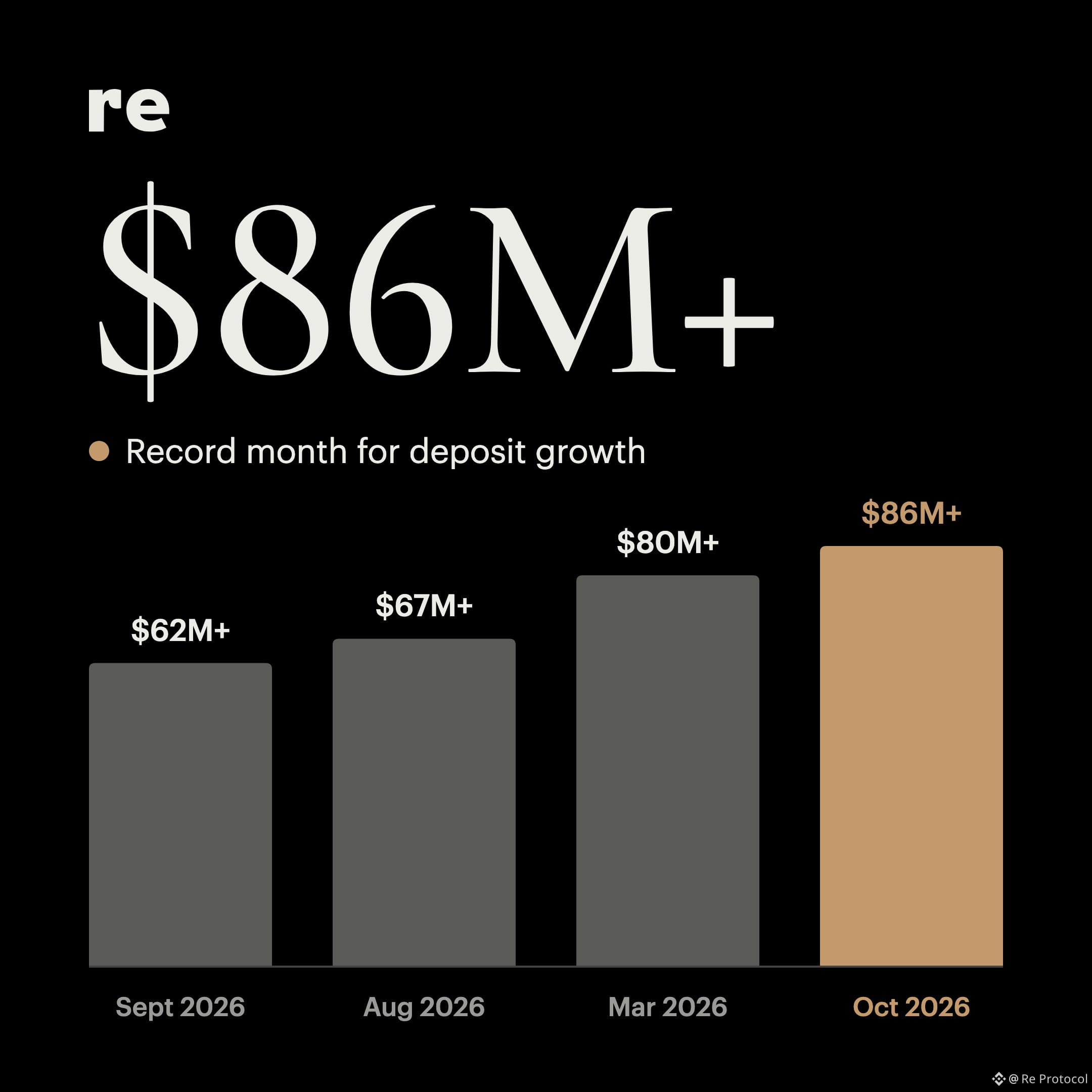
October saw $86M+ in deposit growth, the largest month since launch.
Source: re.xyz, as of Nov 6, 2026.
#reinsurance #RWA #defi
October saw $86M+ in deposit growth, the largest month since launch.
Source: re.xyz, as of Nov 6, 2026.
#reinsurance #RWA #defi
Source: re.xyz, as of Nov 6, 2026.
#reinsurance #RWA #defi
1
3
581
·
--
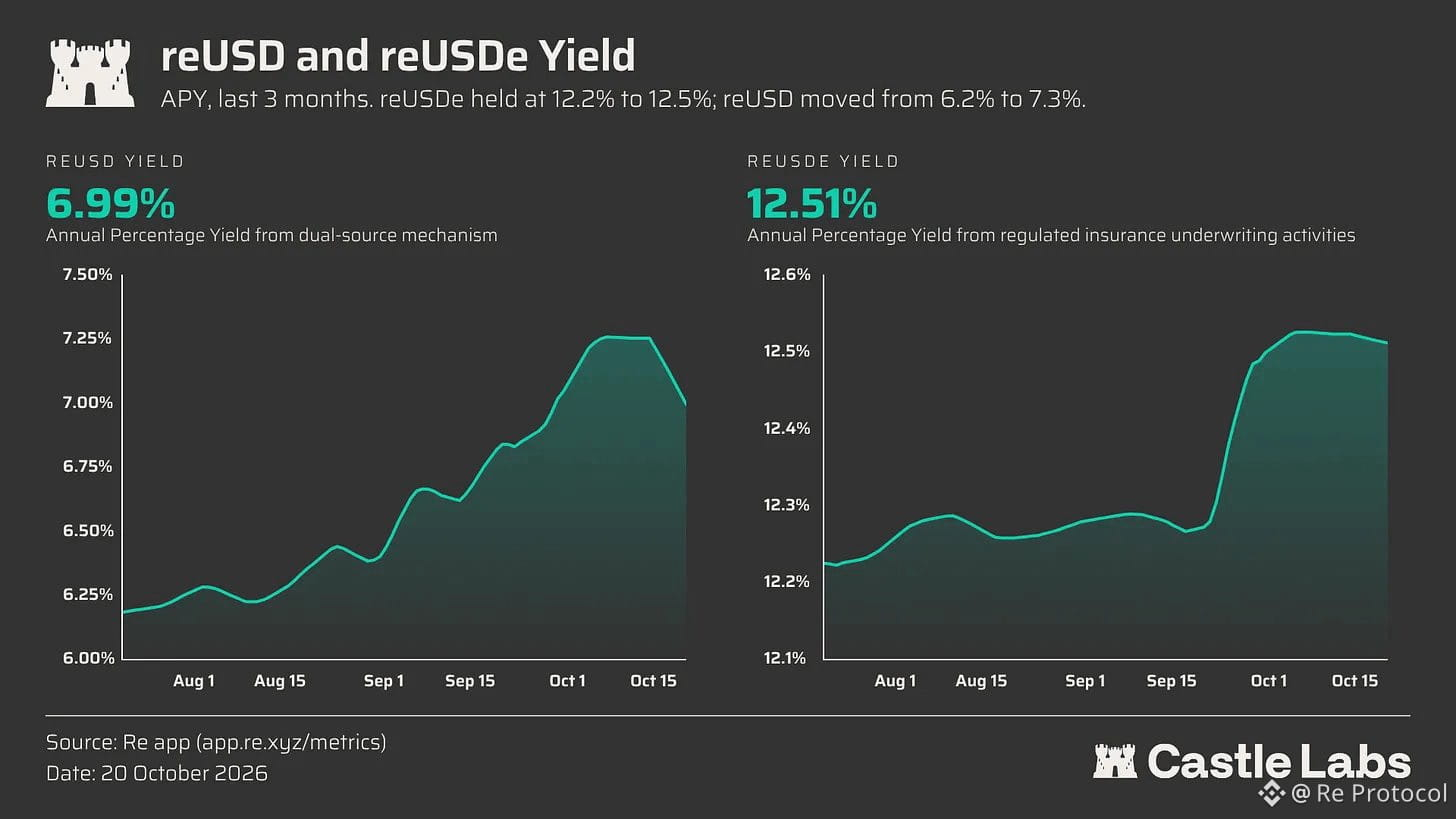
Re offers two options built for different risk profiles:
→ reUSD: for holders who prioritize liquidity and senior protection
→ reUSDe: for holders willing to absorb losses before reUSD, but only after Re's own capital, in exchange for more yield
Both sit above Re's first-loss capital, so Re takes losses before either token does.
Both earn yield the same way: a base rate plus a spread funded by reinsurance activity. Where a token sits in the capital stack, and how liquid it is, sets the size of its spread.
reUSD sits at the top of the stack. Its yield blends SOFR for offchain capital with the onchain buffer's sUSDe rate, each plus a smaller spread that reflects its position behind both Re's capital and reUSDe.
reUSDe sits mezzanine, between Re's first-loss capital and reUSD. It redeems in quarterly windows and covers losses that exceed Re's capital before they reach reUSD, so it carries a substantially larger spread and a higher yield.
Castle Labs illustrates both side by side in their latest analysis:
#reinsurance #RWA #defi
More of the report: research.castlelabs.io/p/re-and-the-case-for-reinsurance-yield
4
2
610
·
--

Статья
Re Passes $400M in Combined Deposits Across reUSD and reUSDeAs of October 29, 2026, combined deposits across reUSD and reUSDe have surpassed $400 million [1].
Accelerating Growth
This milestone has meaning in both the number itself and in the rate at which it was reached.
Total deposits took 40 days to climb from $300M to $400M, versus 186 days to grow from $200M to $300M. That’s a difference in duration of nearly 80% (or roughly five months less).
More than $13M of Yield for Holders
Re has generated more than $13 million of yield for holders of reUSD and reUSDe, an increase of more than 32% since September 19.
Both tokens accrue yield through daily increases in net asset value (NAV) [2].
Building at Scale
With more than $400M of total deposits in the system, Re is the largest onchain reinsurer by deposits. Re democratizes access to reinsurance, one of the financial world's most desirable yet heretofore inaccessible markets. The results are a strong sign that the model is working.
As of October 1, 2026, Re has written more than half a billion dollars in bound premium since inception. With an additional $65M deployed in October 2026 to Cover Re SPC Ltd. (https://coverre.com), Re's reinsurance company, Re is poised to build further in 2027.
Stay tuned at year's end for a full accounting of Re's 2026 achievements.
Explore Re: https://re.xyz
#reinsurance #RWA #TradFi
Originally published on re.xyz: https://re.xyz/insights/400m-in-deposits
Sources
https://app.re.xyz/metricshttps://re.xyz/insights/re-protocol-token-suite-explained
Disclosures: For educational and informational purposes only. Nothing in this post is investment, financial, legal, or tax advice, or an offer, solicitation, or recommendation to buy, sell, or hold any digital asset, including reUSD and reUSDe (together, the “Tokens”). No advisory or fiduciary relationship is created by this post; readers should consult qualified legal, tax, and financial professionals before making any decision. Yields are variable, not guaranteed, and may change at any time. Past performance is not a reliable indicator of future results. Digital assets and blockchain-based products involve significant risk, including total loss of principal, market volatility, liquidity constraints, smart contract and protocol vulnerabilities, oracle and collateral risk, counterparty risk, and regulatory uncertainty. The Tokens are not bank deposits, are not FDIC insured, and are not insured by any government agency or protected by any deposit guarantee or policyholder protection scheme. The “re” brand, the re protocol, and re.xyz are operated by Resilience Foundation Cayman LLC (“Resilience Foundation”), an Exempted Limited Guarantee Foundation Company incorporated in the Cayman Islands with Limited Liability with registered number IC-414560, together with its affiliates Resilience (BVI) Ltd and Resilience Inv SPC. Resilience Foundation, Resilience BVI, and Resilience Inv do not provide insurance or reinsurance services, do not act as insurance broker or agent, and do not hold an insurance license. All regulated reinsurance activities are conducted exclusively by Cover Reinsurance SPC Ltd. (“Cover Re SPC”), a Class B(iii) licensed exempted segregated portfolio company in the Cayman Islands, operating under the “Cover Re” brand at https://coverre.com. Holding a Token does not make you an insured, policyholder, or beneficiary of any insurer or reinsurer.The Tokens are available only to eligible non-U.S. persons (as defined under Regulation S of the U.S. Securities Act of 1933) in permitted jurisdictions and are subject to KYC/AML and sanctions screening requirements. Use by U.S. persons or residents, or by persons in any prohibited jurisdiction, is strictly prohibited, and this post is not directed at, and is not an offer or solicitation to, any such person. The Tokens may be classified as securities in certain jurisdictions, and participation is subject to eligibility requirements, KYC/AML verification, and jurisdiction-specific restrictions. Third-party websites, data, and services referenced are provided for convenience only and are not endorsed, verified, or controlled by us.The binding terms of the applicable agreements, including the Terms of Service and, where applicable, the Claims Portal Terms and Conditions, govern and prevail over this summary, which amends nothing in them. See our full Disclosure and Terms of Service at https://re.xyz/disclosure for important additional information.
Re Passes $400M in Combined Deposits Across reUSD and reUSDe
As of October 29, 2026, combined deposits across reUSD and reUSDe have surpassed $400 million [1].
Accelerating Growth
This milestone has meaning in both the number itself and in the rate at which it was reached.
Total deposits took 40 days to climb from $300M to $400M, versus 186 days to grow from $200M to $300M. That’s a difference in duration of nearly 80% (or roughly five months less).
More than $13M of Yield for Holders
Re has generated more than $13 million of yield for holders of reUSD and reUSDe, an increase of more than 32% since September 19.
Both tokens accrue yield through daily increases in net asset value (NAV) [2].
Building at Scale
With more than $400M of total deposits in the system, Re is the largest onchain reinsurer by deposits. Re democratizes access to reinsurance, one of the financial world's most desirable yet heretofore inaccessible markets. The results are a strong sign that the model is working.
As of October 1, 2026, Re has written more than half a billion dollars in bound premium since inception. With an additional $65M deployed in October 2026 to Cover Re SPC Ltd. (https://coverre.com), Re's reinsurance company, Re is poised to build further in 2027.
Stay tuned at year's end for a full accounting of Re's 2026 achievements.
Explore Re: https://re.xyz
#reinsurance #RWA #TradFi
Originally published on re.xyz: https://re.xyz/insights/400m-in-deposits
Sources
https://app.re.xyz/metricshttps://re.xyz/insights/re-protocol-token-suite-explained
Disclosures: For educational and informational purposes only. Nothing in this post is investment, financial, legal, or tax advice, or an offer, solicitation, or recommendation to buy, sell, or hold any digital asset, including reUSD and reUSDe (together, the “Tokens”). No advisory or fiduciary relationship is created by this post; readers should consult qualified legal, tax, and financial professionals before making any decision. Yields are variable, not guaranteed, and may change at any time. Past performance is not a reliable indicator of future results. Digital assets and blockchain-based products involve significant risk, including total loss of principal, market volatility, liquidity constraints, smart contract and protocol vulnerabilities, oracle and collateral risk, counterparty risk, and regulatory uncertainty. The Tokens are not bank deposits, are not FDIC insured, and are not insured by any government agency or protected by any deposit guarantee or policyholder protection scheme. The “re” brand, the re protocol, and re.xyz are operated by Resilience Foundation Cayman LLC (“Resilience Foundation”), an Exempted Limited Guarantee Foundation Company incorporated in the Cayman Islands with Limited Liability with registered number IC-414560, together with its affiliates Resilience (BVI) Ltd and Resilience Inv SPC. Resilience Foundation, Resilience BVI, and Resilience Inv do not provide insurance or reinsurance services, do not act as insurance broker or agent, and do not hold an insurance license. All regulated reinsurance activities are conducted exclusively by Cover Reinsurance SPC Ltd. (“Cover Re SPC”), a Class B(iii) licensed exempted segregated portfolio company in the Cayman Islands, operating under the “Cover Re” brand at https://coverre.com. Holding a Token does not make you an insured, policyholder, or beneficiary of any insurer or reinsurer.The Tokens are available only to eligible non-U.S. persons (as defined under Regulation S of the U.S. Securities Act of 1933) in permitted jurisdictions and are subject to KYC/AML and sanctions screening requirements. Use by U.S. persons or residents, or by persons in any prohibited jurisdiction, is strictly prohibited, and this post is not directed at, and is not an offer or solicitation to, any such person. The Tokens may be classified as securities in certain jurisdictions, and participation is subject to eligibility requirements, KYC/AML verification, and jurisdiction-specific restrictions. Third-party websites, data, and services referenced are provided for convenience only and are not endorsed, verified, or controlled by us.The binding terms of the applicable agreements, including the Terms of Service and, where applicable, the Claims Portal Terms and Conditions, govern and prevail over this summary, which amends nothing in them. See our full Disclosure and Terms of Service at https://re.xyz/disclosure for important additional information.
1
2
23
·
--
Re has surpassed $400M in stablecoin deposits.
$300M to $400M in 40 days. More on how Re is scaling:
re.xyz/insights/400m-in-deposits
#reinsurance #RWA #stablecoins
Re has surpassed $400M in stablecoin deposits.
$300M to $400M in 40 days. More on how Re is scaling:
re.xyz/insights/400m-in-deposits
#reinsurance #RWA #stablecoins
$300M to $400M in 40 days. More on how Re is scaling:
re.xyz/insights/400m-in-deposits
#reinsurance #RWA #stablecoins
5
1
828
·
--

Статья
reUSD is live on MonadreUSD is live on Monad, bridgeable from Ethereum mainnet via Chainlink CCIP. Markets are live on Morpho. Users can bridge Pendle PT-reUSD to Monad and use it as collateral to borrow other assets. The vault is curated by Clearstar. YT-reUSD holders on Pendle currently earn 30x Re points and an additional 0.54% APR in MON on top of reUSD’s ~7% yield, rising toward 0.75% as the pool grows toward 10M reUSD.
About Monad
Monad is a Layer-1 blockchain designed for fast, low-cost transactions. Monad’s architecture allows for large numbers of transactions to be processed simultaneously, providing the network with significantly greater capacity than traditional EVM chains. That capacity is coupled with a fee system intended to minimize transaction fees unless demand approaches network limits, helping keep costs low for users.
Why it Matters
For Re, presence on Monad opens up reUSD to a fast-growing DeFi ecosystem and an entirely new user base. Since Monad’s mainnet launch in November 2025, DeFi TVL on the chain has eclipsed $1 billion [1]; this positions it in the top ten of all blockchains [2]. Q3 2026 alone has seen TVL grow by nearly $650M [1], spurred in part by the launch on Monad of such DeFi mainstays as Aave, Euler, and Pendle.
For Monad, reUSD introduces a new category of DeFi asset: reinsurance exposure. Because its yield is generated from real-world reinsurance activity rather than crypto-native market activity, reUSD’s performance is largely uncorrelated with that of the crypto markets at large.
How to Participate
Connect your wallet in the Re App: https://app.re.xyzOn the reUSD page (https://app.re.xyz/reusd), select Bridge, choose Monad as the destination, and confirm the transaction.On Monad, buy PT-reUSD on Pendle [3].Supply PT-reUSD as collateral on Morpho [4] and borrow USDC.
To earn the MON and Re Points incentives instead, buy YT-reUSD on Pendle [5].
Open App: https://app.re.xyz
#reinsurance #RWA #TradFi
Originally published on re.xyz: re.xyz/insights/reusd-live-on-monad
Sources
https://defillama.com/chains (figures retrieved 8 September 2026)https://defillama.com/chain/monad (figures retrieved 8 September 2026)https://app.pendle.finance/trade/markets/0xea492a66e98a46426f03f5c3505ee89d96520813/swap?view=pt&chain=monadhttps://app.morpho.org/monad/variable/0xba2e101bfd40a1485745543c07fff784c488fc31bdb01dc40ba967bd296f9737/usdc-pt-reusd-10dec2026https://app.pendle.finance/trade/markets/0xea492a66e98a46426f03f5c3505ee89d96520813/swap?view=yt&chain=monad
Disclosures: For educational and informational purposes only. Nothing in this post is investment, financial, legal, or tax advice, or an offer, solicitation, or recommendation to buy, sell, or hold any digital asset, including reUSD and reUSDe (together, the “Tokens”). No advisory or fiduciary relationship is created by this post; readers should consult qualified legal, tax, and financial professionals before making any decision. Yields are variable, not guaranteed, and may change at any time. Past performance is not a reliable indicator of future results. Digital assets and blockchain-based products involve significant risk, including total loss of principal, market volatility, liquidity constraints, smart contract and protocol vulnerabilities, oracle and collateral risk, counterparty risk, and regulatory uncertainty. The Tokens are not bank deposits, are not FDIC insured, and are not insured by any government agency or protected by any deposit guarantee or policyholder protection scheme. The “re” brand, the re protocol, and re.xyz are operated by Resilience Foundation Cayman LLC (“Resilience Foundation”), an Exempted Limited Guarantee Foundation Company incorporated in the Cayman Islands with Limited Liability with registered number IC-414560, together with its affiliates Resilience (BVI) Ltd and Resilience Inv SPC. Resilience Foundation, Resilience BVI, and Resilience Inv do not provide insurance or reinsurance services, do not act as insurance broker or agent, and do not hold an insurance license. All regulated reinsurance activities are conducted exclusively by Cover Reinsurance SPC Ltd. (“Cover Re SPC”), a Class B(iii) licensed exempted segregated portfolio company in the Cayman Islands, operating under the “Cover Re” brand at https://coverre.com. Holding a Token does not make you an insured, policyholder, or beneficiary of any insurer or reinsurer.The Tokens are available only to eligible non-U.S. persons (as defined under Regulation S of the U.S. Securities Act of 1933) in permitted jurisdictions and are subject to KYC/AML and sanctions screening requirements. Use by U.S. persons or residents, or by persons in any prohibited jurisdiction, is strictly prohibited, and this post is not directed at, and is not an offer or solicitation to, any such person. The Tokens may be classified as securities in certain jurisdictions, and participation is subject to eligibility requirements, KYC/AML verification, and jurisdiction-specific restrictions. Third-party websites, data, and services referenced are provided for convenience only and are not endorsed, verified, or controlled by us.The binding terms of the applicable agreements, including the Terms of Service and, where applicable, the Claims Portal Terms and Conditions, govern and prevail over this summary, which amends nothing in them. See our full Disclosure and Terms of Service at https://re.xyz/disclosure for important additional information.
reUSD is live on Monad
reUSD is live on Monad, bridgeable from Ethereum mainnet via Chainlink CCIP. Markets are live on Morpho. Users can bridge Pendle PT-reUSD to Monad and use it as collateral to borrow other assets. The vault is curated by Clearstar. YT-reUSD holders on Pendle currently earn 30x Re points and an additional 0.54% APR in MON on top of reUSD’s ~7% yield, rising toward 0.75% as the pool grows toward 10M reUSD.
About Monad
Monad is a Layer-1 blockchain designed for fast, low-cost transactions. Monad’s architecture allows for large numbers of transactions to be processed simultaneously, providing the network with significantly greater capacity than traditional EVM chains. That capacity is coupled with a fee system intended to minimize transaction fees unless demand approaches network limits, helping keep costs low for users.
Why it Matters
For Re, presence on Monad opens up reUSD to a fast-growing DeFi ecosystem and an entirely new user base. Since Monad’s mainnet launch in November 2025, DeFi TVL on the chain has eclipsed $1 billion [1]; this positions it in the top ten of all blockchains [2]. Q3 2026 alone has seen TVL grow by nearly $650M [1], spurred in part by the launch on Monad of such DeFi mainstays as Aave, Euler, and Pendle.
For Monad, reUSD introduces a new category of DeFi asset: reinsurance exposure. Because its yield is generated from real-world reinsurance activity rather than crypto-native market activity, reUSD’s performance is largely uncorrelated with that of the crypto markets at large.
How to Participate
Connect your wallet in the Re App: https://app.re.xyzOn the reUSD page (https://app.re.xyz/reusd), select Bridge, choose Monad as the destination, and confirm the transaction.On Monad, buy PT-reUSD on Pendle [3].Supply PT-reUSD as collateral on Morpho [4] and borrow USDC.
To earn the MON and Re Points incentives instead, buy YT-reUSD on Pendle [5].
Open App: https://app.re.xyz
#reinsurance #RWA #TradFi
Originally published on re.xyz: re.xyz/insights/reusd-live-on-monad
Sources
https://defillama.com/chains (figures retrieved 8 September 2026)https://defillama.com/chain/monad (figures retrieved 8 September 2026)https://app.pendle.finance/trade/markets/0xea492a66e98a46426f03f5c3505ee89d96520813/swap?view=pt&chain=monadhttps://app.morpho.org/monad/variable/0xba2e101bfd40a1485745543c07fff784c488fc31bdb01dc40ba967bd296f9737/usdc-pt-reusd-10dec2026https://app.pendle.finance/trade/markets/0xea492a66e98a46426f03f5c3505ee89d96520813/swap?view=yt&chain=monad
Disclosures: For educational and informational purposes only. Nothing in this post is investment, financial, legal, or tax advice, or an offer, solicitation, or recommendation to buy, sell, or hold any digital asset, including reUSD and reUSDe (together, the “Tokens”). No advisory or fiduciary relationship is created by this post; readers should consult qualified legal, tax, and financial professionals before making any decision. Yields are variable, not guaranteed, and may change at any time. Past performance is not a reliable indicator of future results. Digital assets and blockchain-based products involve significant risk, including total loss of principal, market volatility, liquidity constraints, smart contract and protocol vulnerabilities, oracle and collateral risk, counterparty risk, and regulatory uncertainty. The Tokens are not bank deposits, are not FDIC insured, and are not insured by any government agency or protected by any deposit guarantee or policyholder protection scheme. The “re” brand, the re protocol, and re.xyz are operated by Resilience Foundation Cayman LLC (“Resilience Foundation”), an Exempted Limited Guarantee Foundation Company incorporated in the Cayman Islands with Limited Liability with registered number IC-414560, together with its affiliates Resilience (BVI) Ltd and Resilience Inv SPC. Resilience Foundation, Resilience BVI, and Resilience Inv do not provide insurance or reinsurance services, do not act as insurance broker or agent, and do not hold an insurance license. All regulated reinsurance activities are conducted exclusively by Cover Reinsurance SPC Ltd. (“Cover Re SPC”), a Class B(iii) licensed exempted segregated portfolio company in the Cayman Islands, operating under the “Cover Re” brand at https://coverre.com. Holding a Token does not make you an insured, policyholder, or beneficiary of any insurer or reinsurer.The Tokens are available only to eligible non-U.S. persons (as defined under Regulation S of the U.S. Securities Act of 1933) in permitted jurisdictions and are subject to KYC/AML and sanctions screening requirements. Use by U.S. persons or residents, or by persons in any prohibited jurisdiction, is strictly prohibited, and this post is not directed at, and is not an offer or solicitation to, any such person. The Tokens may be classified as securities in certain jurisdictions, and participation is subject to eligibility requirements, KYC/AML verification, and jurisdiction-specific restrictions. Third-party websites, data, and services referenced are provided for convenience only and are not endorsed, verified, or controlled by us.The binding terms of the applicable agreements, including the Terms of Service and, where applicable, the Claims Portal Terms and Conditions, govern and prevail over this summary, which amends nothing in them. See our full Disclosure and Terms of Service at https://re.xyz/disclosure for important additional information.
1
1
21
·
--
New PT-reUSD market on Kamino: borrow against the fixed-maturity principal of reUSD from Exponent Finance. Curated by Steakhouse Financial.
$800B reinsurance market behind it, on Solana.
#reinsurance #RWA #defi
New PT-reUSD market on Kamino: borrow against the fixed-maturity principal of reUSD from Exponent Finance. Curated by Steakhouse Financial.
$800B reinsurance market behind it, on Solana.
#reinsurance #RWA #defi
$800B reinsurance market behind it, on Solana.
#reinsurance #RWA #defi
1
2
278
·
--
reUSD is live on Monad, with integrations across Morpho and Pendle.
reUSD introduces a new category to the Monad ecosystem: access to the $800B reinsurance market with real yield.
↓
1. Start by bridging reUSD from Ethereum to Monad in the Re App:
https://app.re.xyz
Learn more about the launch:
https://re.xyz/insights/reusd-live-on-monad
#reinsurance #RWA #Monad
reUSD introduces a new category to the Monad ecosystem: access to the $800B reinsurance market with real yield.
↓
1. Start by bridging reUSD from Ethereum to Monad in the Re App:
https://app.re.xyz
Learn more about the launch:
https://re.xyz/insights/reusd-live-on-monad
#reinsurance #RWA #Monad
3
4
758
·
--
Частичная правда
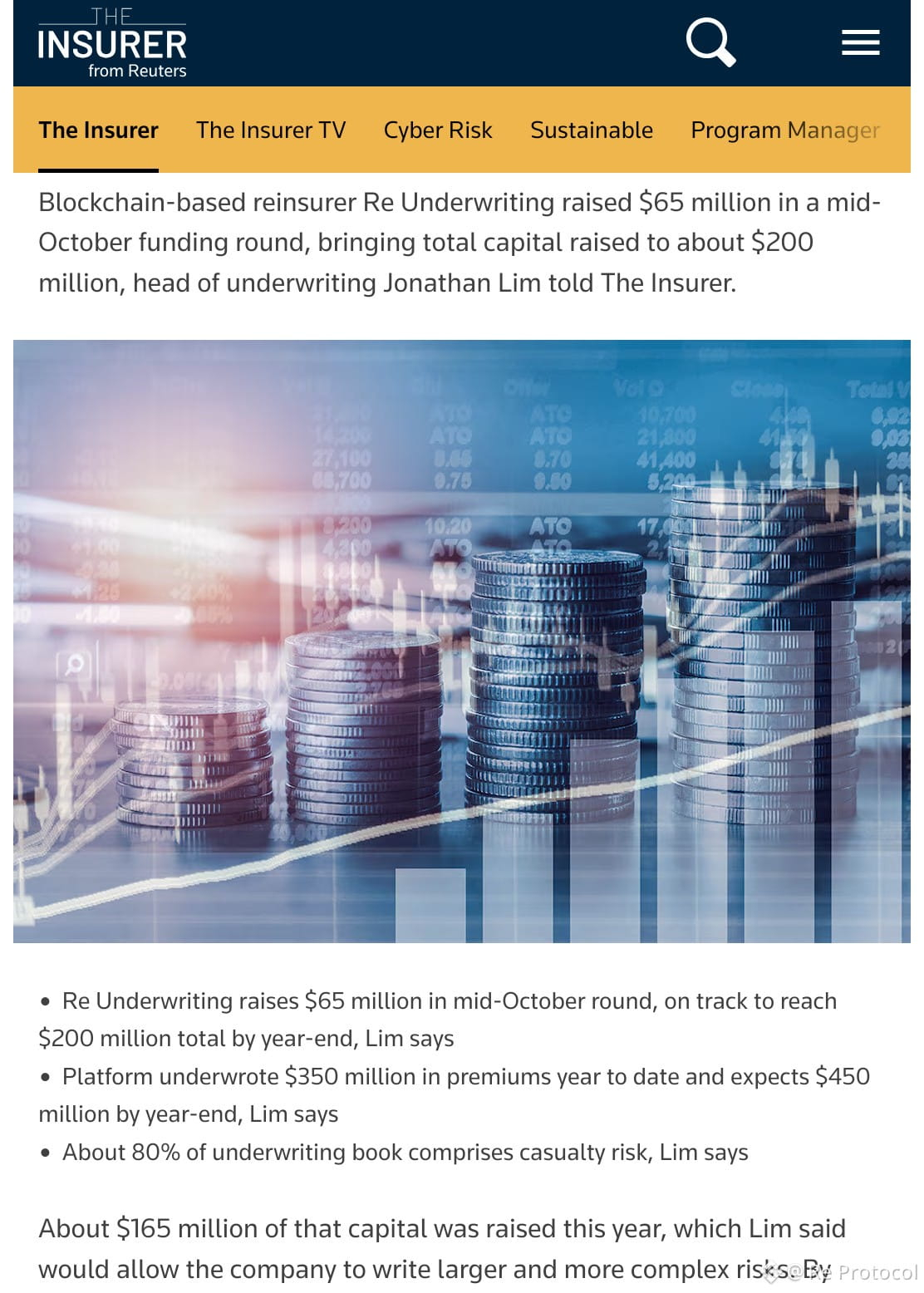
Re’s Head of Underwriting, Jonathan Lim, spoke with The Insurer about where Re stands heading into year-end.
- Capital raised to date: ~$200M
- Premium written, YTD: $350M
- Casualty share of book: ~80%
- Combined ratio since inception: 93%
The thesis is simple: casualty risk from smaller insurers and MGAs, capital held onchain.
Full interview by The Insurer correspondent Jemima Denham:
https://www.theinsurer.com/ti/news/blockchain-backed-re-underwriting-on-track-to-raise-200-million-by-year-end-2026-11-02/
#reinsurance #RWA #insurance
6
5
928
·
--
PT-reUSD looping is live on Monad.
Bridge reUSD from Ethereum to Monad, buy PT-reUSD on Pendle, then borrow USDC against it on Morpho.
Holding YT-reUSD instead? YT holders receive 30x Re Points + 0.54% APR in MON, on top of reUSD’s ~7% yield.
Note: MON rate rises toward 0.75% in a linear line as market TVL grows towards $10M and never drops back.
#reinsurance #RWA #PENDLE #Monad
1
2
221
·
--
We put our own capital first. Here's how.
Two layers sit under every reUSD and reUSDe deposit:
→ Reinsurance premiums, priced to cover expected claims and costs
→ ~$77M of Re's own capital, built from underwriting profit, which absorbs a bad year before reUSDe or reUSD
The book is diversified across lines of business and regions, which limits how far any one event moves the result.
More on the capital stack:
https://re.xyz/insights/what-capital-means-in-reinsurance
#reinsurance #RWA #DeFi
2
84
·
--
“The structure we used to enter the market is deliberately conventional. What Re adds is a different capital layer underneath those structures, and that is where it fits.”
Karn Saroya, CEO of Re, on how onchain capital can power Bermuda’s insurance market.
Read the full feature here:
https://www.bermudareinsurancemagazine.com/bermudas-ils-market-eyes-wider-role-for-on-chain-capital
#reinsurance #RWA #insurance
Karn Saroya, CEO of Re, on how onchain capital can power Bermuda’s insurance market.
Read the full feature here:
https://www.bermudareinsurancemagazine.com/bermudas-ils-market-eyes-wider-role-for-on-chain-capital
#reinsurance #RWA #insurance

2
3
525
·
--
Onchain insurance and reinsurance sound similar, but they serve different purposes.
→ An insurance protocol sells coverage directly to DeFi users.
→ A reinsurance protocol sits further down the chain, supplying collateral that backs insurance companies.
Side-by-side comparison:
#reinsurance #RWA #ReProtocol
→ An insurance protocol sells coverage directly to DeFi users.
→ A reinsurance protocol sits further down the chain, supplying collateral that backs insurance companies.
Side-by-side comparison:
#reinsurance #RWA #ReProtocol
2
72
·
--
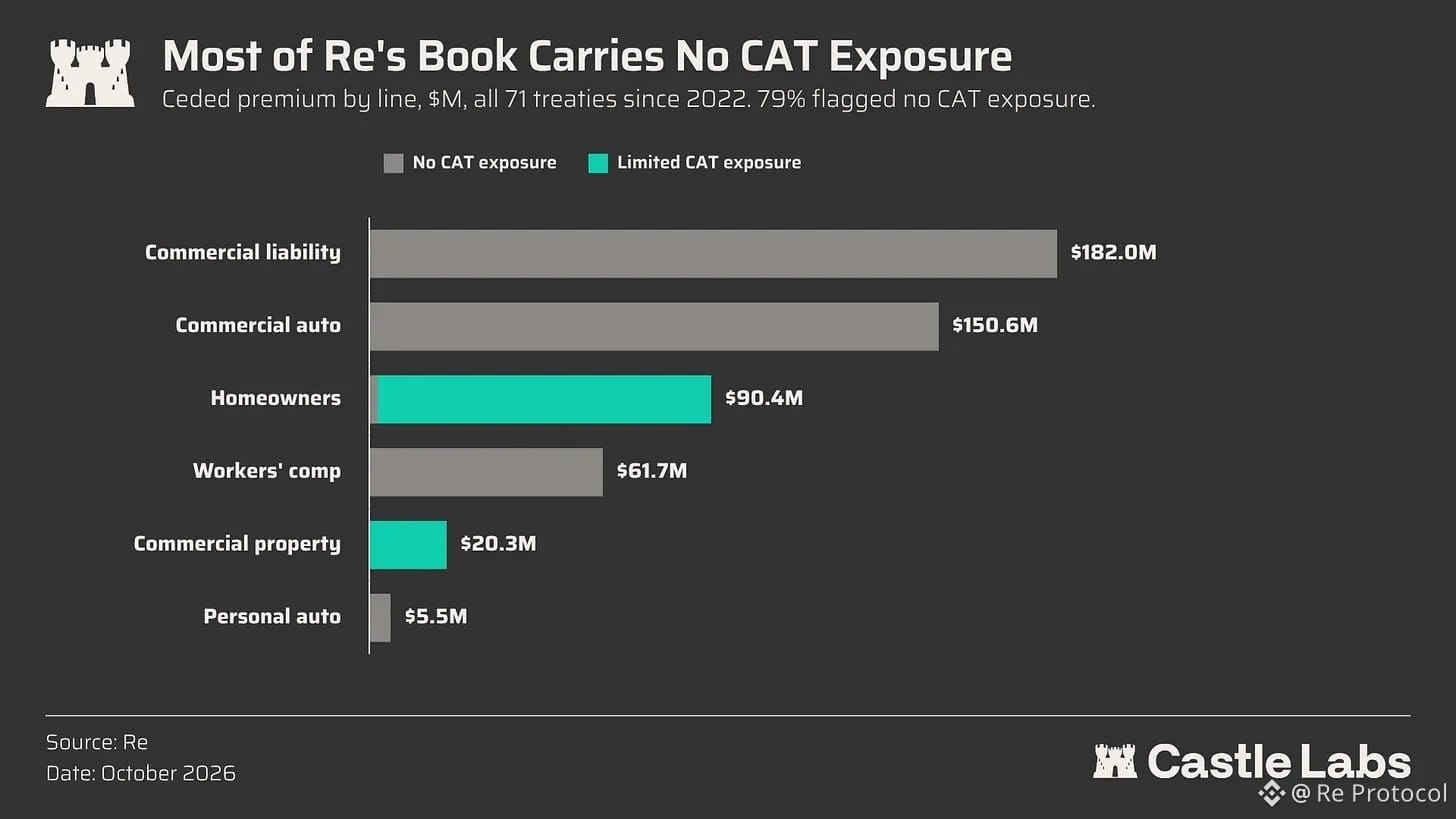
Consistent yield by design.
The strategy behind reUSD and reUSDe prioritizes steadier, lower-volatility returns.
The book behind them is spread across six distinct lines. Unexpectedly high losses in any one are unlikely to carry over into the others.
This approach has been profitable every year to date.
Castle Labs breaks down the data ↓
https://castlelabs.io/research/re-and-the-case-for-reinsurance-yield
#reinsurance #RWA #DeFi
1
2
90
·
--
We’re delighted to welcome Jack Nelson as Chief Investment Officer.
He ran Everest Re Group’s investment portfolio for over a decade, after managing insurer assets at Wellington Management.
Jack will lead the investment strategy as we continue to scale.
More on Jack’s role at Re:
https://re.xyz/insights/jack-nelson-chief-investment-officer
#reinsurance #RWA #TradFi
He ran Everest Re Group’s investment portfolio for over a decade, after managing insurer assets at Wellington Management.
Jack will lead the investment strategy as we continue to scale.
More on Jack’s role at Re:
https://re.xyz/insights/jack-nelson-chief-investment-officer
#reinsurance #RWA #TradFi
2
77
·
--
Проверено
Reinsurance is becoming an industry-scale use case for stablecoins.
Re is scaling it through $65M in new capital to Cover Re, with new leadership to strengthen underwriting, risk and investments.
via Reinsurance News
Full announcement:
https://re.xyz/insights/65m-to-cover-re
#reinsurance #RWA #DeFi #TradFi
Re is scaling it through $65M in new capital to Cover Re, with new leadership to strengthen underwriting, risk and investments.
via Reinsurance News
Full announcement:
https://re.xyz/insights/65m-to-cover-re
#reinsurance #RWA #DeFi #TradFi

1
2
578
·
--
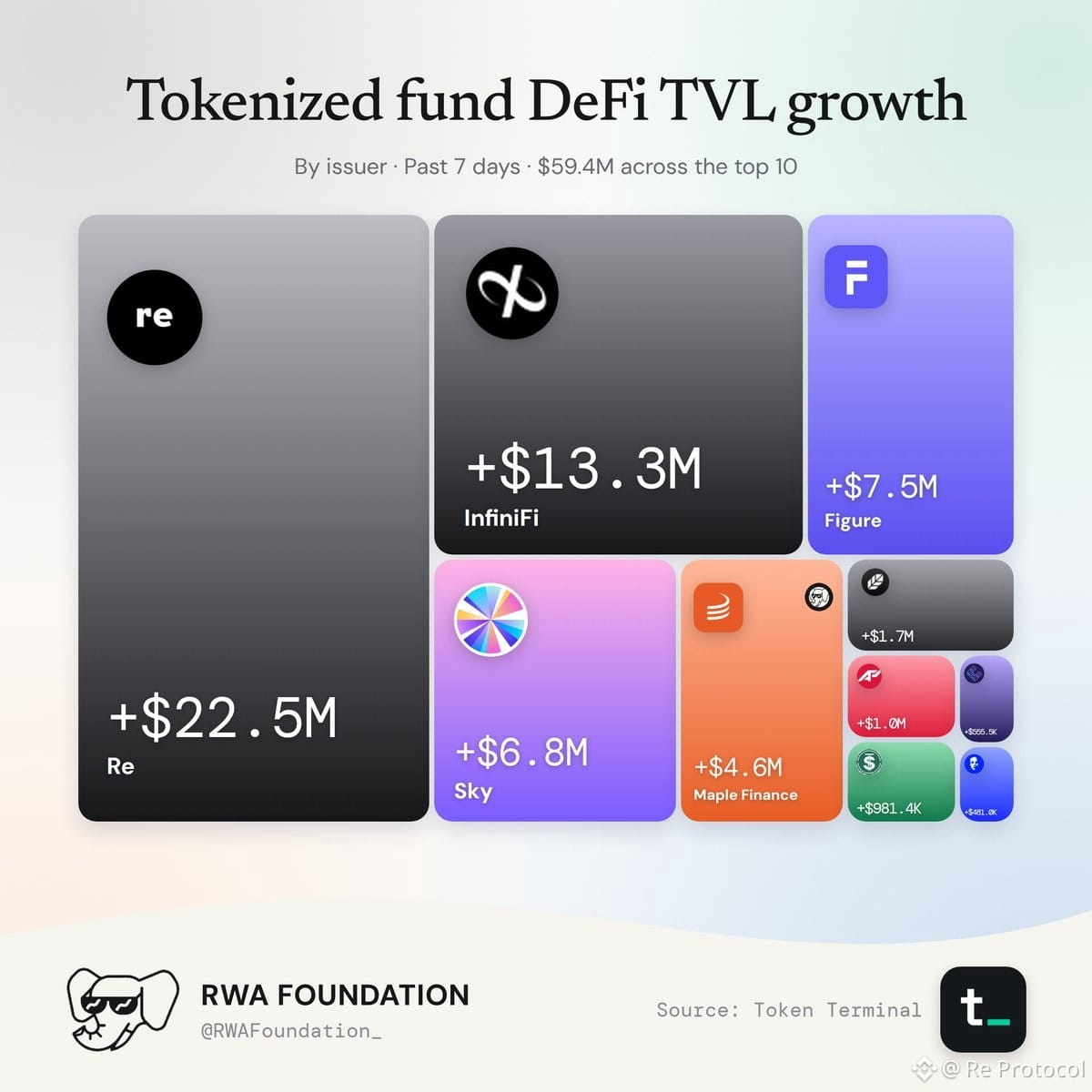
Re led in DeFi TVL growth among tokenized fund issuers last week, adding +$22.5M.
Uptober looking good here.
Source: RWA Foundation, Token Terminal
#reinsurance #RWA #DeFi
Re led in DeFi TVL growth among tokenized fund issuers last week, adding +$22.5M.
Uptober looking good here.
Source: RWA Foundation, Token Terminal
#reinsurance #RWA #DeFi
Uptober looking good here.
Source: RWA Foundation, Token Terminal
#reinsurance #RWA #DeFi
1
2
415
Войдите, чтобы посмотреть больше материала
Присоединяйтесь к пользователям криптовалют по всему миру на Binance Square
⚡️ Получайте новейшую и полезную информацию о криптоактивах.
💬 Нам доверяет крупнейшая в мире криптобиржа.
👍 Получите достоверные аналитические данные от верифицированных создателей контента.
Эл. почта/номер телефона
В тренде
HuangExitNvidiaStrategyInFocus
Просмотров: 41,716
677 обсуждают
STOCKS | Nvidia’s Jensen Huang Resigns, Colette Kress Named as Interim CEO
Binance News
·Лайков: 17
·Просмотров: 21.3k
AnthropicRejectsIPODelayValuationinQuestion
Просмотров: 617,819
4,996 обсуждают
BitMineReports$6.3BNetLossForFiscal2026
Просмотров: 4,851
84 обсуждают