

NovaElen
6k Публикации

NovaElen
Отправить жалобу
Заблокировать пользователя
BINANCE CONTENT CREATOR👸
Трейдер с регулярными сделками
1.2 г
767 подписок(и/а)
11.9K+ подписчиков(а)
6.8K+ понравилось
Посты
Все
Цитирования
Активно
·
--
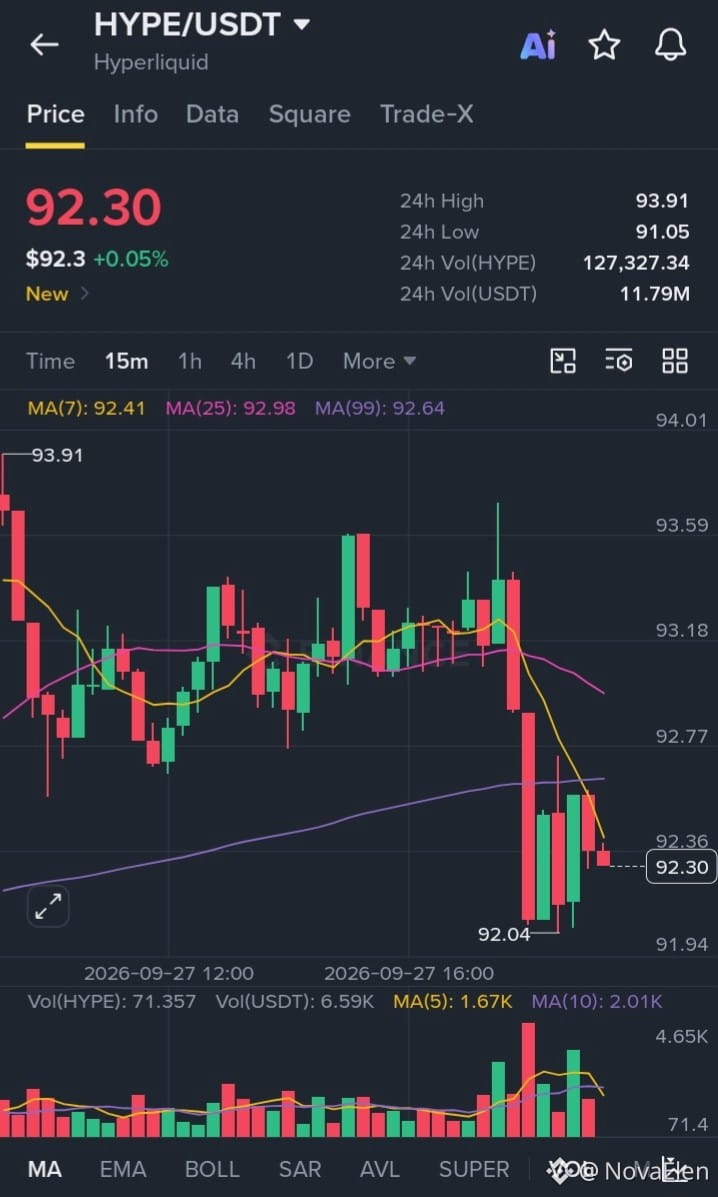
$HYPE is showing some interesting price action on the 15M chart.
Price is around $92.30 after getting rejected from the $93.50–$93.90 area. The sharp drop came with a clear volume spike, showing strong activity around the move.
Right now, $92.04 is the key short-term support visible on the chart. If that area holds, a recovery back toward $92.77–$93.18 could be worth watching.
The moving averages are still sitting above price, so confirmation matters here. I’d rather watch how HYPE reacts around support than chase the move.
Volume + support reaction should tell the next part of the story. 👀
#HYPE #Hyperliquid #Crypto
$HYPE is showing some interesting price action on the 15M chart.
Price is around $92.30 after getting rejected from the $93.50–$93.90 area. The sharp drop came with a clear volume spike, showing strong activity around the move.
Right now, $92.04 is the key short-term support visible on the chart. If that area holds, a recovery back toward $92.77–$93.18 could be worth watching.
The moving averages are still sitting above price, so confirmation matters here. I’d rather watch how HYPE reacts around support than chase the move.
Volume + support reaction should tell the next part of the story. 👀
#HYPE #Hyperliquid #Crypto
Price is around $92.30 after getting rejected from the $93.50–$93.90 area. The sharp drop came with a clear volume spike, showing strong activity around the move.
Right now, $92.04 is the key short-term support visible on the chart. If that area holds, a recovery back toward $92.77–$93.18 could be worth watching.
The moving averages are still sitting above price, so confirmation matters here. I’d rather watch how HYPE reacts around support than chase the move.
Volume + support reaction should tell the next part of the story. 👀
#HYPE #Hyperliquid #Crypto
10
11
522
·
--
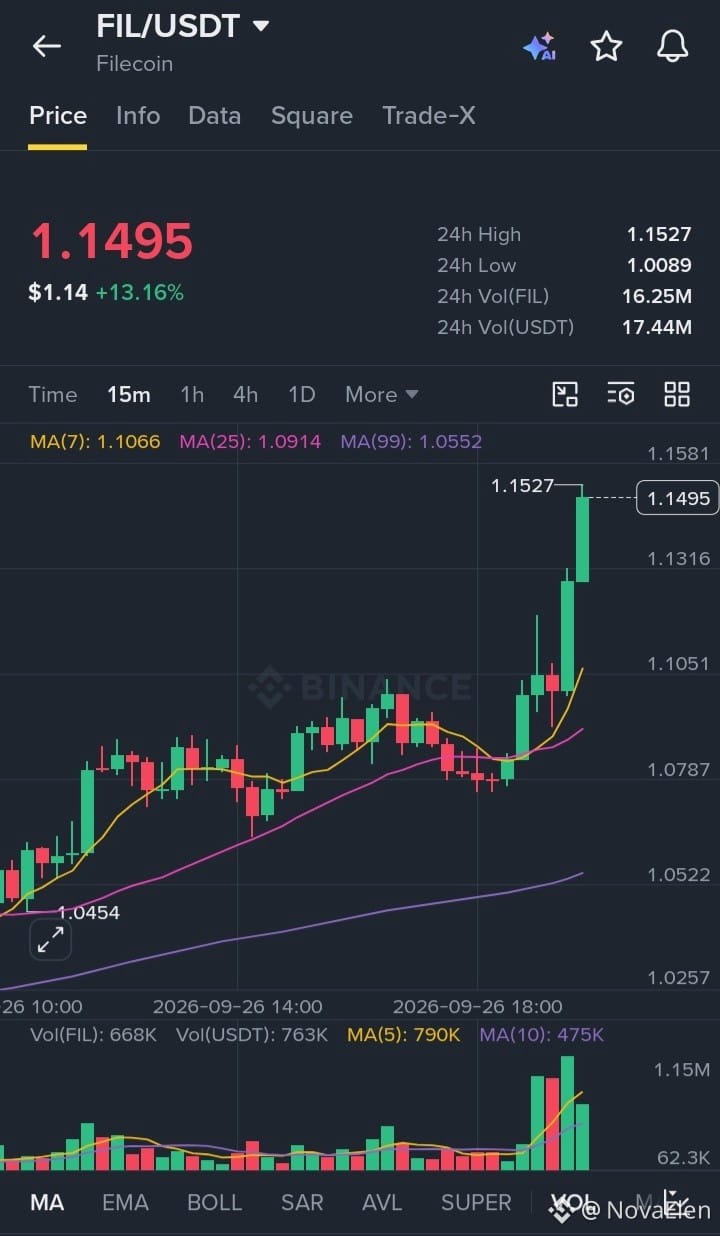
$FIL is finally showing some serious momentum 👀
FIL/USDT is up 13.16%, trading around $1.1495 after pushing to a $1.1527 high.
A few things standing out: • Price above MA7, MA25 & MA99
• Strong volume coming in
• Clear breakout from the recent range
• 15M structure turning bullish
Now the key is whether buyers can hold this move instead of giving back the breakout.
Watching $1.15 closely from here. 📈
#FIL #Filecoin #Crypto
$FIL is finally showing some serious momentum 👀
FIL/USDT is up 13.16%, trading around $1.1495 after pushing to a $1.1527 high.
A few things standing out: • Price above MA7, MA25 & MA99
• Strong volume coming in
• Clear breakout from the recent range
• 15M structure turning bullish
Now the key is whether buyers can hold this move instead of giving back the breakout.
Watching $1.15 closely from here. 📈
#FIL #Filecoin #Crypto
FIL/USDT is up 13.16%, trading around $1.1495 after pushing to a $1.1527 high.
A few things standing out: • Price above MA7, MA25 & MA99
• Strong volume coming in
• Clear breakout from the recent range
• 15M structure turning bullish
Now the key is whether buyers can hold this move instead of giving back the breakout.
Watching $1.15 closely from here. 📈
#FIL #Filecoin #Crypto
20
3
21
3.8k
·
--
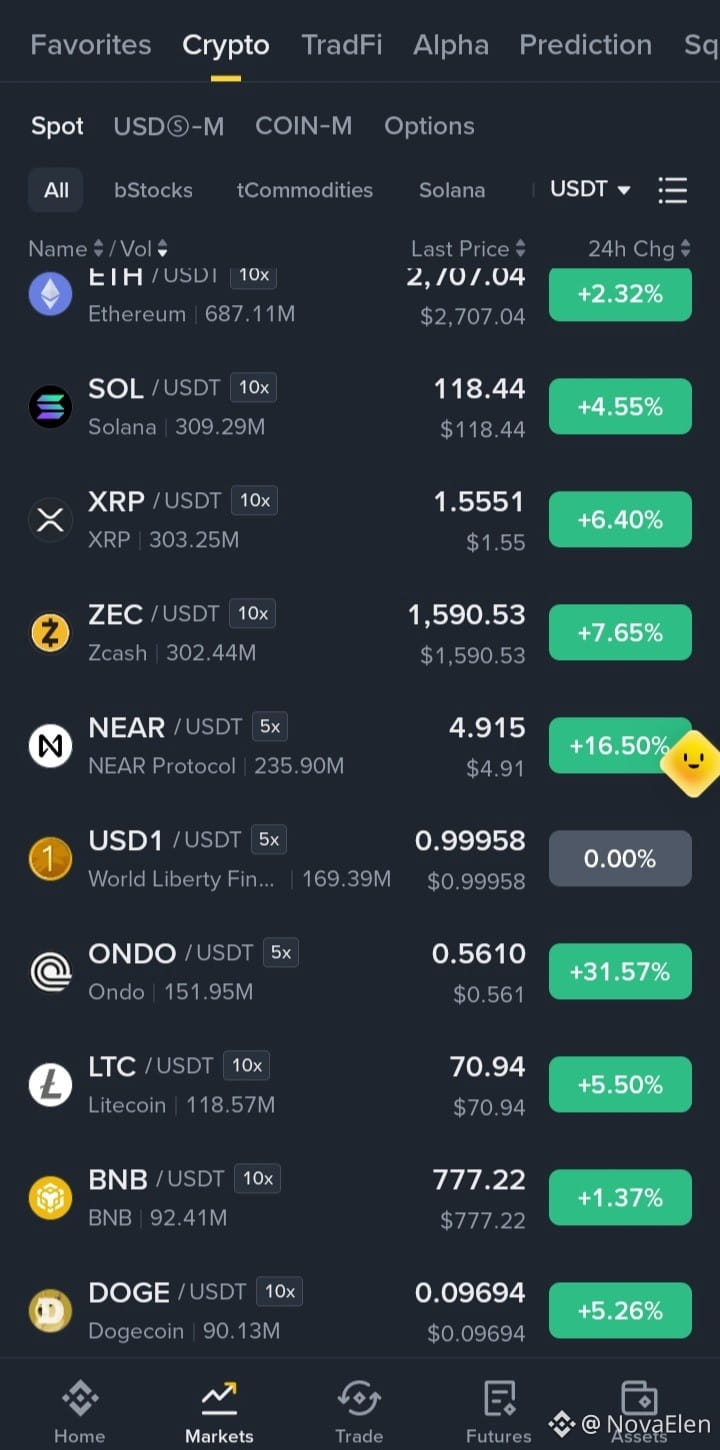
Binance Market Heat 🔥
The market is clearly waking up.
ETH +2.32%
SOL +4.55%
XRP +6.40%
ZEC +7.65%
NEAR +16.50% 👀
ONDO +31.57% 🚀
LTC +5.50%
DOGE +5.26%
What stands out to me isn’t just the green numbers — it’s how quickly momentum is spreading across different sectors.
ONDO and NEAR are grabbing attention, while XRP, ZEC and LTC are also showing solid moves.
The real question now:
Is this just a relief rally, or are altcoins starting a bigger rotation? 👀
I’m watching volume + follow-through next.
No chasing candles. Let the market confirm
#BinanceSquareFamily
Binance Market Heat 🔥
The market is clearly waking up.
ETH +2.32%
SOL +4.55%
XRP +6.40%
ZEC +7.65%
NEAR +16.50% 👀
ONDO +31.57% 🚀
LTC +5.50%
DOGE +5.26%
What stands out to me isn’t just the green numbers — it’s how quickly momentum is spreading across different sectors.
ONDO and NEAR are grabbing attention, while XRP, ZEC and LTC are also showing solid moves.
The real question now:
Is this just a relief rally, or are altcoins starting a bigger rotation? 👀
I’m watching volume + follow-through next.
No chasing candles. Let the market confirm
#BinanceSquareFamily
The market is clearly waking up.
ETH +2.32%
SOL +4.55%
XRP +6.40%
ZEC +7.65%
NEAR +16.50% 👀
ONDO +31.57% 🚀
LTC +5.50%
DOGE +5.26%
What stands out to me isn’t just the green numbers — it’s how quickly momentum is spreading across different sectors.
ONDO and NEAR are grabbing attention, while XRP, ZEC and LTC are also showing solid moves.
The real question now:
Is this just a relief rally, or are altcoins starting a bigger rotation? 👀
I’m watching volume + follow-through next.
No chasing candles. Let the market confirm
#BinanceSquareFamily
14
17
3k
·
--
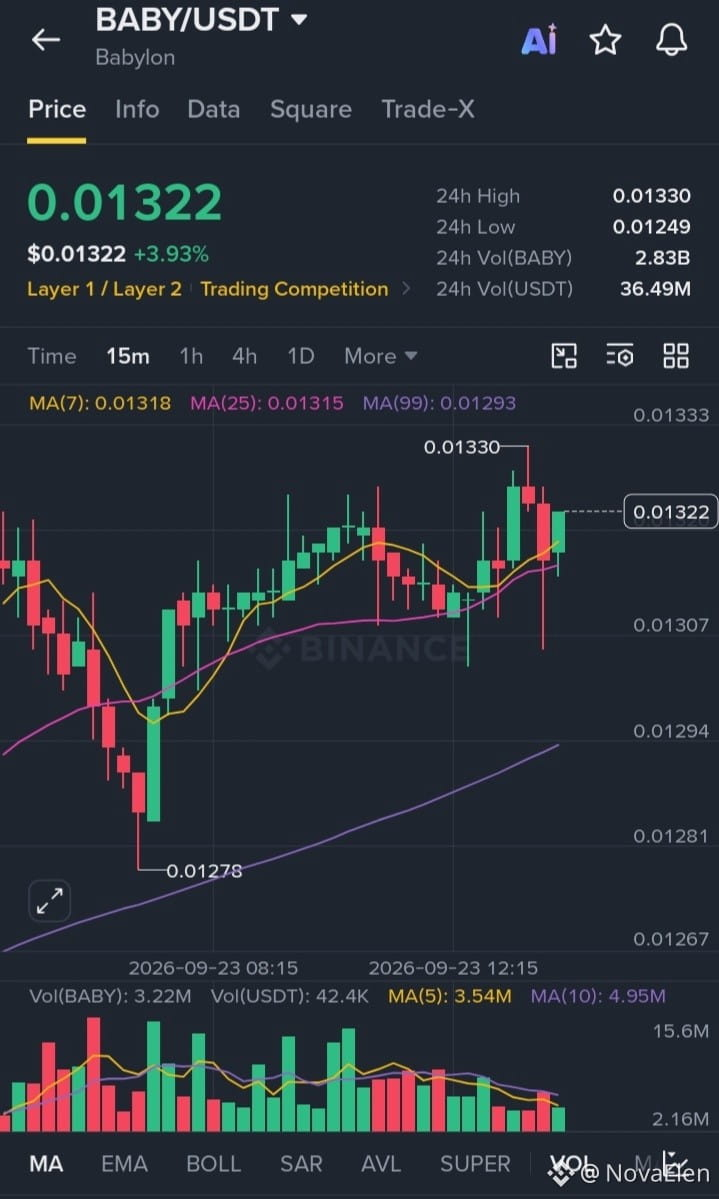
$BABY /USDT Momentum Building 👀
$BABY is showing some interesting strength on the 15M chart.
Price is holding around $0.01322, while the short-term MAs are still sitting underneath price, keeping the structure constructive.
Key levels I’m watching: Resistance: $0.01330–$0.01333
Support: $0.01315–$0.01318
Major support: $0.01293
A clean breakout above $0.01330 with strong volume could open the door for another push higher. But if resistance rejects price, a retest of the nearby support zones would be important to watch.
No chasing candles let the chart confirm the move. 👀
$BABY | Watch the breakout, manage the risk. 📈
#BABY
$BABY /USDT Momentum Building 👀
$BABY is showing some interesting strength on the 15M chart.
Price is holding around $0.01322, while the short-term MAs are still sitting underneath price, keeping the structure constructive.
Key levels I’m watching: Resistance: $0.01330–$0.01333
Support: $0.01315–$0.01318
Major support: $0.01293
A clean breakout above $0.01330 with strong volume could open the door for another push higher. But if resistance rejects price, a retest of the nearby support zones would be important to watch.
No chasing candles let the chart confirm the move. 👀
$BABY | Watch the breakout, manage the risk. 📈
#BABY
$BABY is showing some interesting strength on the 15M chart.
Price is holding around $0.01322, while the short-term MAs are still sitting underneath price, keeping the structure constructive.
Key levels I’m watching: Resistance: $0.01330–$0.01333
Support: $0.01315–$0.01318
Major support: $0.01293
A clean breakout above $0.01330 with strong volume could open the door for another push higher. But if resistance rejects price, a retest of the nearby support zones would be important to watch.
No chasing candles let the chart confirm the move. 👀
$BABY | Watch the breakout, manage the risk. 📈
#BABY
13
16
169
·
--
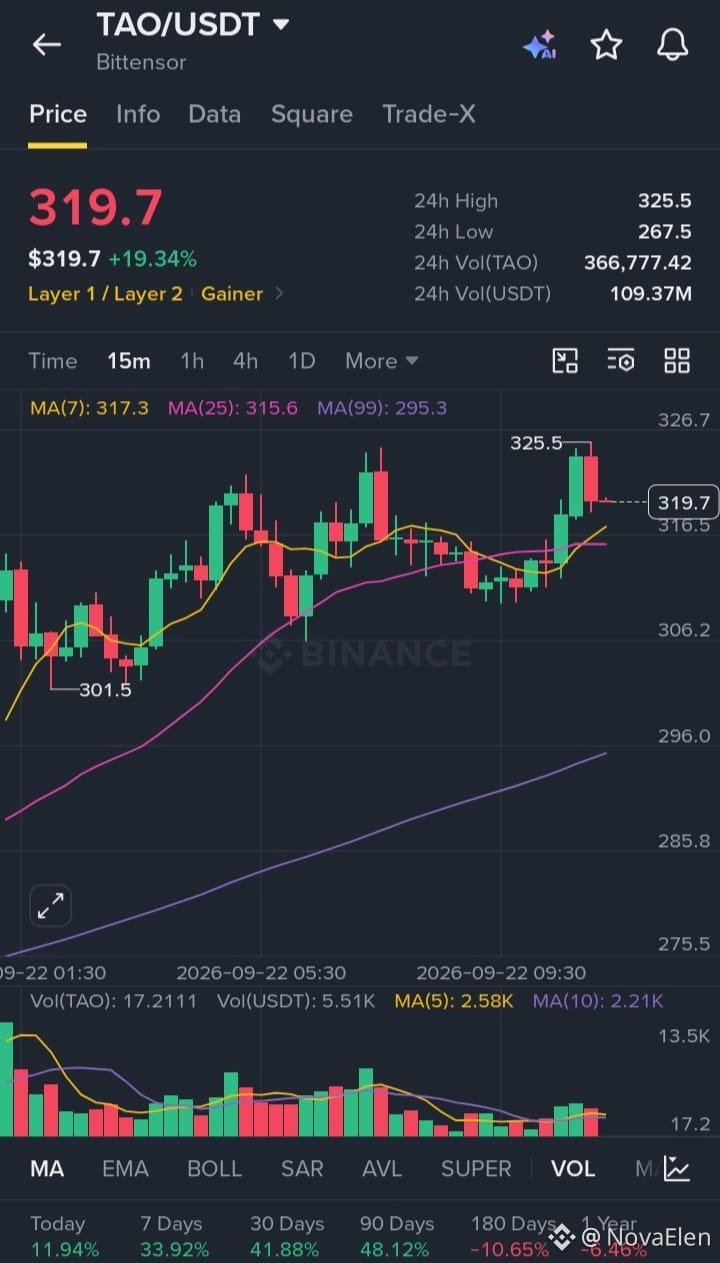
$TAO /USDT Momentum Is Back 🚀
$TAO is showing strong momentum on the 15M chart, currently trading around $319.7, up nearly 19% on the day.
After breaking higher from the $300–$310 area, TAO pushed all the way to $325.5 before a small pullback.
Key levels I’m watching 👇
🔹 Resistance: $325.5 → $326.7
🔹 Near Support: $316–$317
🔹 Stronger Support: $306–$310
🔹 Major Trend Support: around $295
The moving averages are also supporting the short-term structure, with MA(7) at $317.3 and MA(25) at $315.6, while price remains well above the MA(99) near $295.3.
If buyers can reclaim and hold above $325.5, another leg higher could become interesting. But after such a strong move, a healthy retest of support is also possible.
For now, the key is simple: watch the breakout, volume, and how price reacts around $316–$325. 👀
$TAO /USDT Momentum Is Back 🚀
$TAO is showing strong momentum on the 15M chart, currently trading around $319.7, up nearly 19% on the day.
After breaking higher from the $300–$310 area, TAO pushed all the way to $325.5 before a small pullback.
Key levels I’m watching 👇
🔹 Resistance: $325.5 → $326.7
🔹 Near Support: $316–$317
🔹 Stronger Support: $306–$310
🔹 Major Trend Support: around $295
The moving averages are also supporting the short-term structure, with MA(7) at $317.3 and MA(25) at $315.6, while price remains well above the MA(99) near $295.3.
If buyers can reclaim and hold above $325.5, another leg higher could become interesting. But after such a strong move, a healthy retest of support is also possible.
For now, the key is simple: watch the breakout, volume, and how price reacts around $316–$325. 👀
$TAO is showing strong momentum on the 15M chart, currently trading around $319.7, up nearly 19% on the day.
After breaking higher from the $300–$310 area, TAO pushed all the way to $325.5 before a small pullback.
Key levels I’m watching 👇
🔹 Resistance: $325.5 → $326.7
🔹 Near Support: $316–$317
🔹 Stronger Support: $306–$310
🔹 Major Trend Support: around $295
The moving averages are also supporting the short-term structure, with MA(7) at $317.3 and MA(25) at $315.6, while price remains well above the MA(99) near $295.3.
If buyers can reclaim and hold above $325.5, another leg higher could become interesting. But after such a strong move, a healthy retest of support is also possible.
For now, the key is simple: watch the breakout, volume, and how price reacts around $316–$325. 👀
16
15
3k
·
--
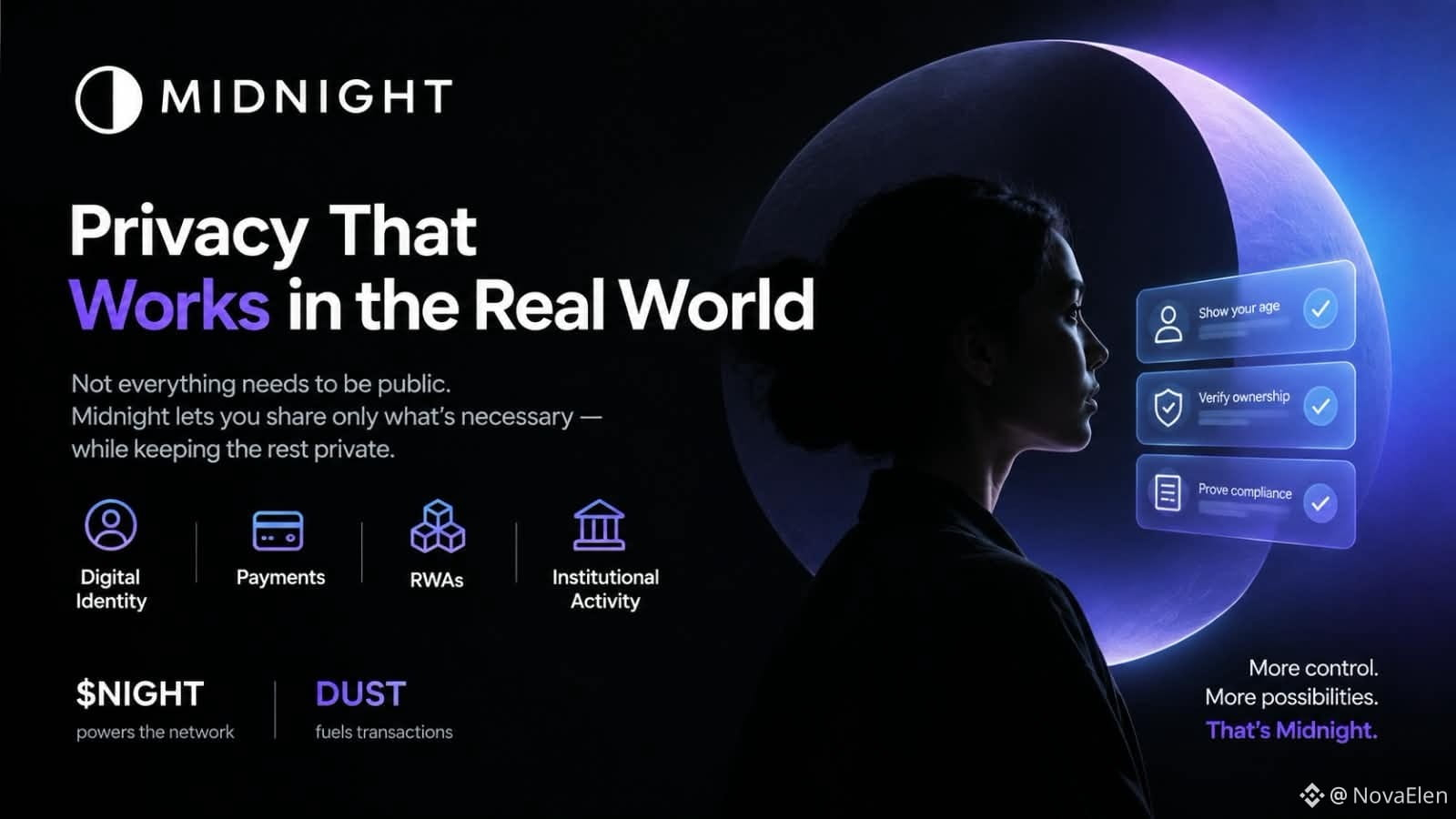
Privacy in Web3 doesn’t have to mean making everything invisible.
A more practical model is giving users control over what stays private and what gets verified.
That’s where privacy-focused infrastructure like @Midnight_Network gets interesting.
Imagine being able to prove eligibility, ownership, or compliance without exposing every piece of personal information behind it.
This could matter across:
• Digital identity
• Financial services
• Tokenized assets
• Business applications
The bigger idea isn’t “hide everything.”
It’s share only what’s necessary.
$NIGHT $DUSK are part of the network’s economic design, while Midnight operates as its own Layer 1.
For Web3 adoption, that balance between privacy and verification could become increasingly important.
@Midnight_Network
Privacy in Web3 doesn’t have to mean making everything invisible.
A more practical model is giving users control over what stays private and what gets verified.
That’s where privacy-focused infrastructure like @Midnight Network gets interesting.
Imagine being able to prove eligibility, ownership, or compliance without exposing every piece of personal information behind it.
This could matter across:
• Digital identity
• Financial services
• Tokenized assets
• Business applications
The bigger idea isn’t “hide everything.”
It’s share only what’s necessary.
$NIGHT $DUSK are part of the network’s economic design, while Midnight operates as its own Layer 1.
For Web3 adoption, that balance between privacy and verification could become increasingly important.
@Midnight Network
A more practical model is giving users control over what stays private and what gets verified.
That’s where privacy-focused infrastructure like @Midnight Network gets interesting.
Imagine being able to prove eligibility, ownership, or compliance without exposing every piece of personal information behind it.
This could matter across:
• Digital identity
• Financial services
• Tokenized assets
• Business applications
The bigger idea isn’t “hide everything.”
It’s share only what’s necessary.
$NIGHT $DUSK are part of the network’s economic design, while Midnight operates as its own Layer 1.
For Web3 adoption, that balance between privacy and verification could become increasingly important.
@Midnight Network
19
21
563
·
--
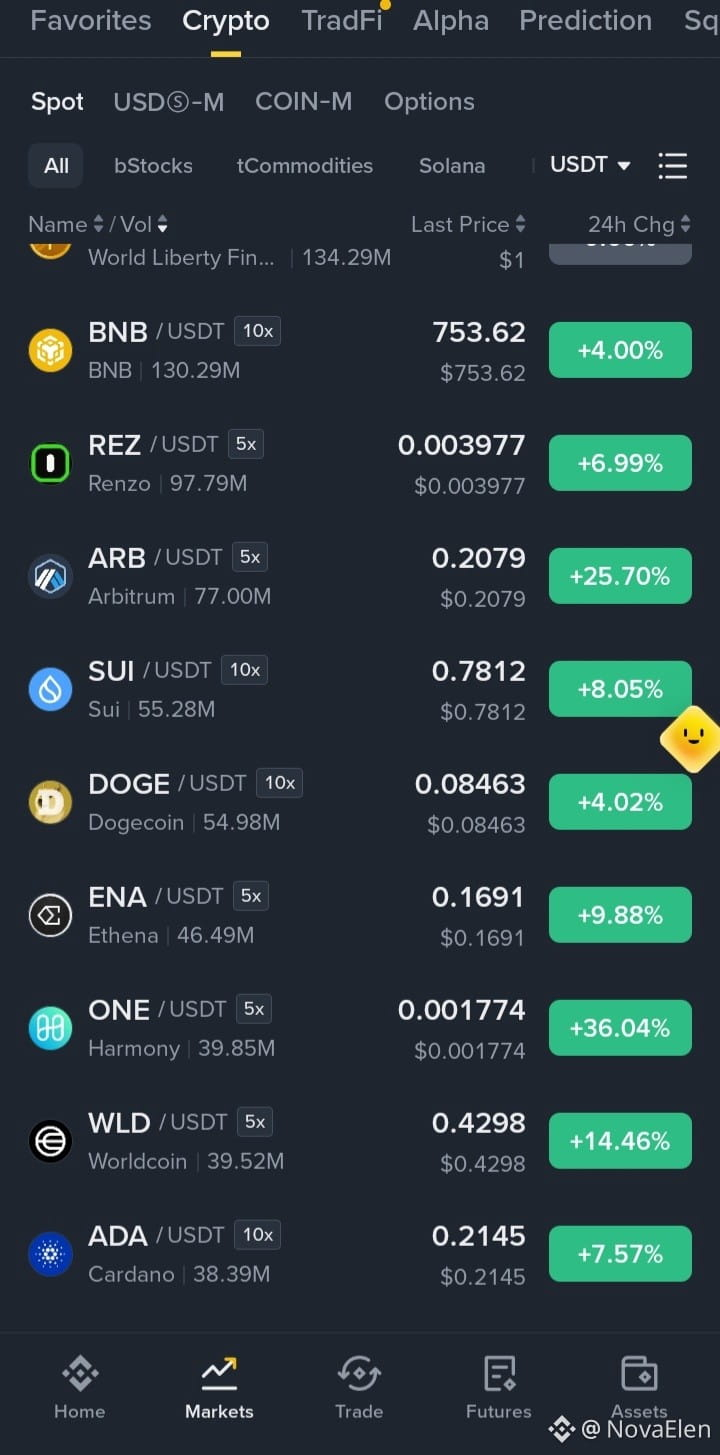
Binance Alpha Is Heating Up
Binance Alpha is showing some serious momentum today 👀
$ONE is up around 36%, while $ARB has gained over 25%. $WLD, $ENA, $SUI, $ADA and $REZ are also seeing strong green moves.
Even $BNB and $DOGE are holding solid gains.
What stands out is how quickly momentum can rotate across different Alpha tokens. But with moves like these, chasing green candles can be risky.
For me, the interesting part is watching volume, liquidity and whether the momentum can actually hold. 📊
Alpha moves fast the next move is always worth watching. 🔥
Which token are you watching right now? 👀
#BinanceAlpha #Crypto #Altcoins #BNB #CryptoTrading
Binance Alpha Is Heating Up
Binance Alpha is showing some serious momentum today 👀
$ONE is up around 36%, while $ARB has gained over 25%. $WLD, $ENA, $SUI, $ADA and $REZ are also seeing strong green moves.
Even $BNB and $DOGE are holding solid gains.
What stands out is how quickly momentum can rotate across different Alpha tokens. But with moves like these, chasing green candles can be risky.
For me, the interesting part is watching volume, liquidity and whether the momentum can actually hold. 📊
Alpha moves fast the next move is always worth watching. 🔥
Which token are you watching right now? 👀
#BinanceAlpha #Crypto #Altcoins #BNB #CryptoTrading
Binance Alpha is showing some serious momentum today 👀
$ONE is up around 36%, while $ARB has gained over 25%. $WLD, $ENA, $SUI, $ADA and $REZ are also seeing strong green moves.
Even $BNB and $DOGE are holding solid gains.
What stands out is how quickly momentum can rotate across different Alpha tokens. But with moves like these, chasing green candles can be risky.
For me, the interesting part is watching volume, liquidity and whether the momentum can actually hold. 📊
Alpha moves fast the next move is always worth watching. 🔥
Which token are you watching right now? 👀
#BinanceAlpha #Crypto #Altcoins #BNB #CryptoTrading
25
35
9.7k
·
--
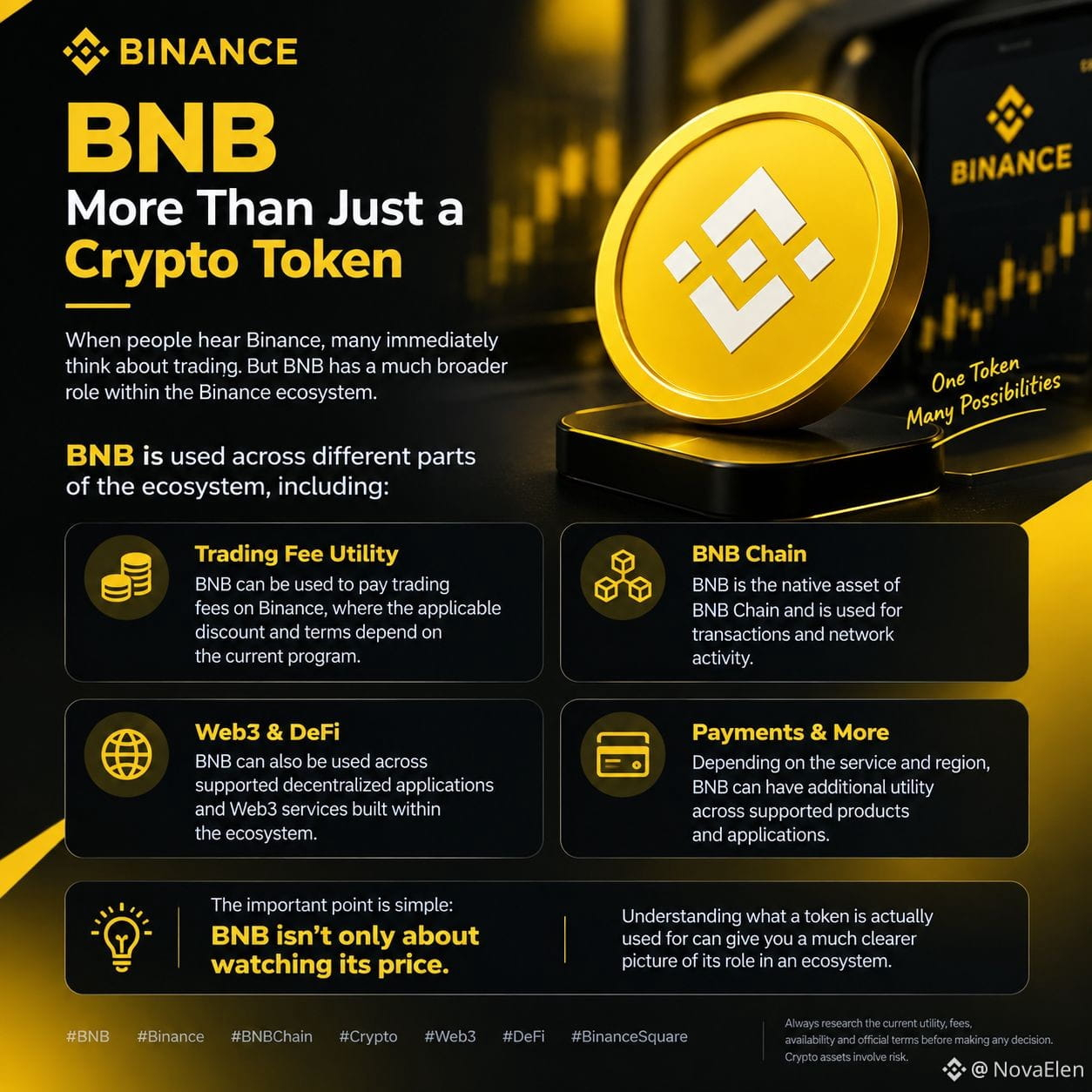
BNB: More Than Just a Crypto Token 🔶
When people hear Binance, many immediately think about trading.
But BNB has a much broader role within the Binance ecosystem.
BNB is used across different parts of the ecosystem, including:
🔹 Trading Fee Utility
BNB can be used to pay trading fees on Binance, where the applicable discount and terms depend on the current program.
🔹 BNB Chain
BNB is the native asset of BNB Chain and is used for transactions and network activity.
🔹 Web3 & DeFi
BNB can also be used across supported decentralized applications and Web3 services built within the ecosystem.
🔹 Payments & More
Depending on the service and region, BNB can have additional utility across supported products and applications.
The important point is simple:
BNB isn't only about watching its price.
Understanding what a token is actually used for can give you a much clearer picture of its role in an ecosystem.
Always research the current utility, fees, availability and official terms before making any decision. Crypto assets involve risk.
#BNB #Binance #BNBChain. #DeFi #BinanceSquare
BNB: More Than Just a Crypto Token 🔶
When people hear Binance, many immediately think about trading.
But BNB has a much broader role within the Binance ecosystem.
BNB is used across different parts of the ecosystem, including:
🔹 Trading Fee Utility
BNB can be used to pay trading fees on Binance, where the applicable discount and terms depend on the current program.
🔹 BNB Chain
BNB is the native asset of BNB Chain and is used for transactions and network activity.
🔹 Web3 & DeFi
BNB can also be used across supported decentralized applications and Web3 services built within the ecosystem.
🔹 Payments & More
Depending on the service and region, BNB can have additional utility across supported products and applications.
The important point is simple:
BNB isn't only about watching its price.
Understanding what a token is actually used for can give you a much clearer picture of its role in an ecosystem.
Always research the current utility, fees, availability and official terms before making any decision. Crypto assets involve risk.
#BNB #Binance #BNBChain. #DeFi #BinanceSquare
When people hear Binance, many immediately think about trading.
But BNB has a much broader role within the Binance ecosystem.
BNB is used across different parts of the ecosystem, including:
🔹 Trading Fee Utility
BNB can be used to pay trading fees on Binance, where the applicable discount and terms depend on the current program.
🔹 BNB Chain
BNB is the native asset of BNB Chain and is used for transactions and network activity.
🔹 Web3 & DeFi
BNB can also be used across supported decentralized applications and Web3 services built within the ecosystem.
🔹 Payments & More
Depending on the service and region, BNB can have additional utility across supported products and applications.
The important point is simple:
BNB isn't only about watching its price.
Understanding what a token is actually used for can give you a much clearer picture of its role in an ecosystem.
Always research the current utility, fees, availability and official terms before making any decision. Crypto assets involve risk.
#BNB #Binance #BNBChain. #DeFi #BinanceSquare
1
102
·
--
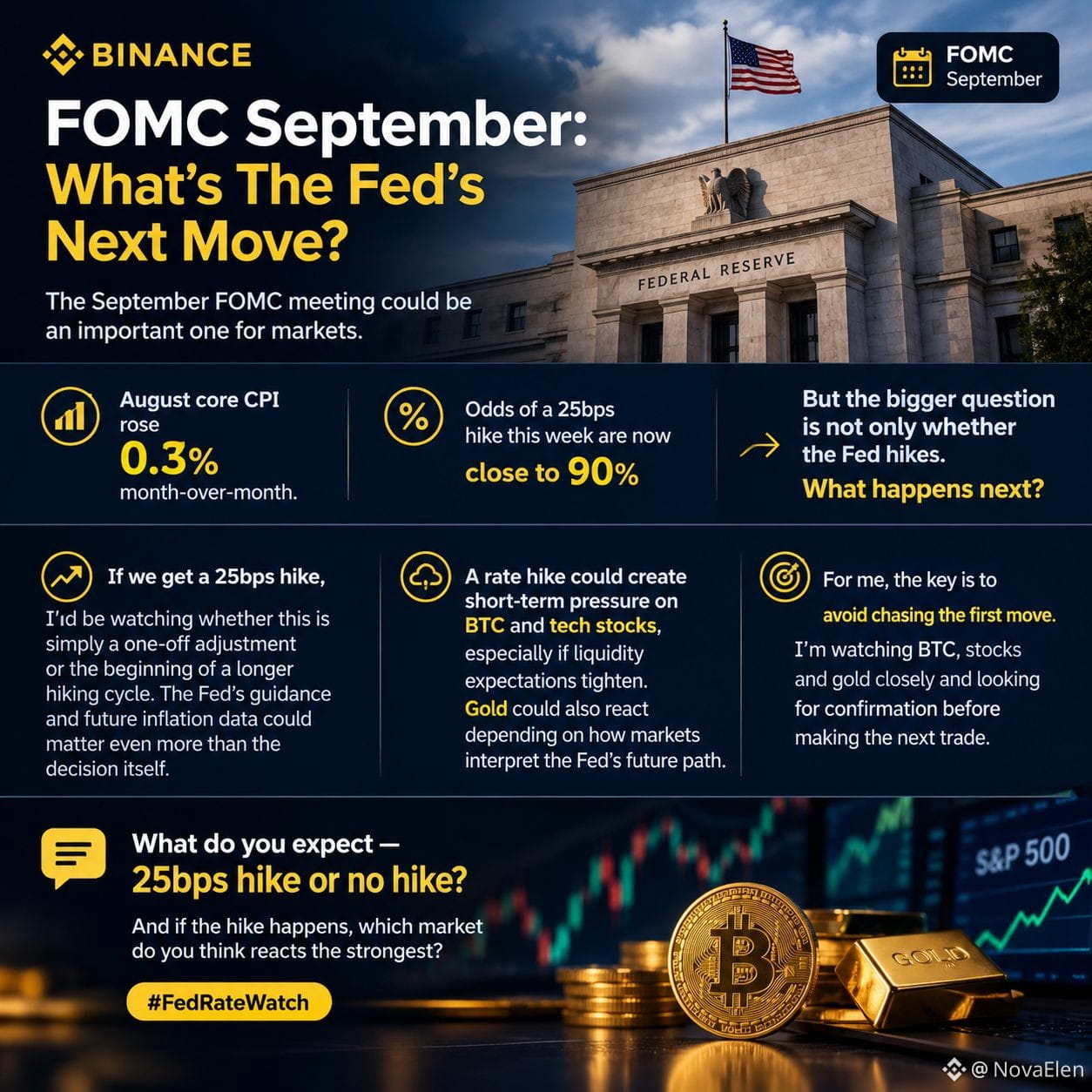
FOMC September: What’s the Fed’s Next Move?
The September FOMC meeting could be an important one for markets.
August core CPI came in at 0.3% month-over-month, while expectations for a 25bps rate hike this week are now close to 90%.
But the bigger question is not only whether the Fed hikes.
What happens next?
If we get a 25bps hike, I’d be watching whether this is simply a one-off adjustment or the beginning of a longer hiking cycle. The Fed’s guidance and future inflation data could matter even more than the decision itself.
A rate hike could create short-term pressure on BTC and tech stocks, especially if liquidity expectations tighten. Gold could also react depending on how markets interpret the Fed’s future path.
For me, the key is to avoid chasing the first move.
I’m watching BTC, stocks and gold closely and looking for confirmation before making the next trade.
What do you expect 25bps hike or no hike? And if the hike happens, which market do you think reacts the strongest?
#FedRateWatch
FOMC September: What’s the Fed’s Next Move?
The September FOMC meeting could be an important one for markets.
August core CPI came in at 0.3% month-over-month, while expectations for a 25bps rate hike this week are now close to 90%.
But the bigger question is not only whether the Fed hikes.
What happens next?
If we get a 25bps hike, I’d be watching whether this is simply a one-off adjustment or the beginning of a longer hiking cycle. The Fed’s guidance and future inflation data could matter even more than the decision itself.
A rate hike could create short-term pressure on BTC and tech stocks, especially if liquidity expectations tighten. Gold could also react depending on how markets interpret the Fed’s future path.
For me, the key is to avoid chasing the first move.
I’m watching BTC, stocks and gold closely and looking for confirmation before making the next trade.
What do you expect 25bps hike or no hike? And if the hike happens, which market do you think reacts the strongest?
#FedRateWatch
The September FOMC meeting could be an important one for markets.
August core CPI came in at 0.3% month-over-month, while expectations for a 25bps rate hike this week are now close to 90%.
But the bigger question is not only whether the Fed hikes.
What happens next?
If we get a 25bps hike, I’d be watching whether this is simply a one-off adjustment or the beginning of a longer hiking cycle. The Fed’s guidance and future inflation data could matter even more than the decision itself.
A rate hike could create short-term pressure on BTC and tech stocks, especially if liquidity expectations tighten. Gold could also react depending on how markets interpret the Fed’s future path.
For me, the key is to avoid chasing the first move.
I’m watching BTC, stocks and gold closely and looking for confirmation before making the next trade.
What do you expect 25bps hike or no hike? And if the hike happens, which market do you think reacts the strongest?
#FedRateWatch
1
82
·
--
$SOL is one of the coins I’m watching closely right now.
The interesting part isn’t just the price move it’s whether SOL can maintain momentum after the breakout.
If buyers keep stepping in and volume confirms the move, the next leg could get interesting.
No need to chase candles.
Let the market confirm the trend first.
#Solana
$SOL is one of the coins I’m watching closely right now.
The interesting part isn’t just the price move it’s whether SOL can maintain momentum after the breakout.
If buyers keep stepping in and volume confirms the move, the next leg could get interesting.
No need to chase candles.
Let the market confirm the trend first.
#Solana
The interesting part isn’t just the price move it’s whether SOL can maintain momentum after the breakout.
If buyers keep stepping in and volume confirms the move, the next leg could get interesting.
No need to chase candles.
Let the market confirm the trend first.
#Solana

1
132
·
--
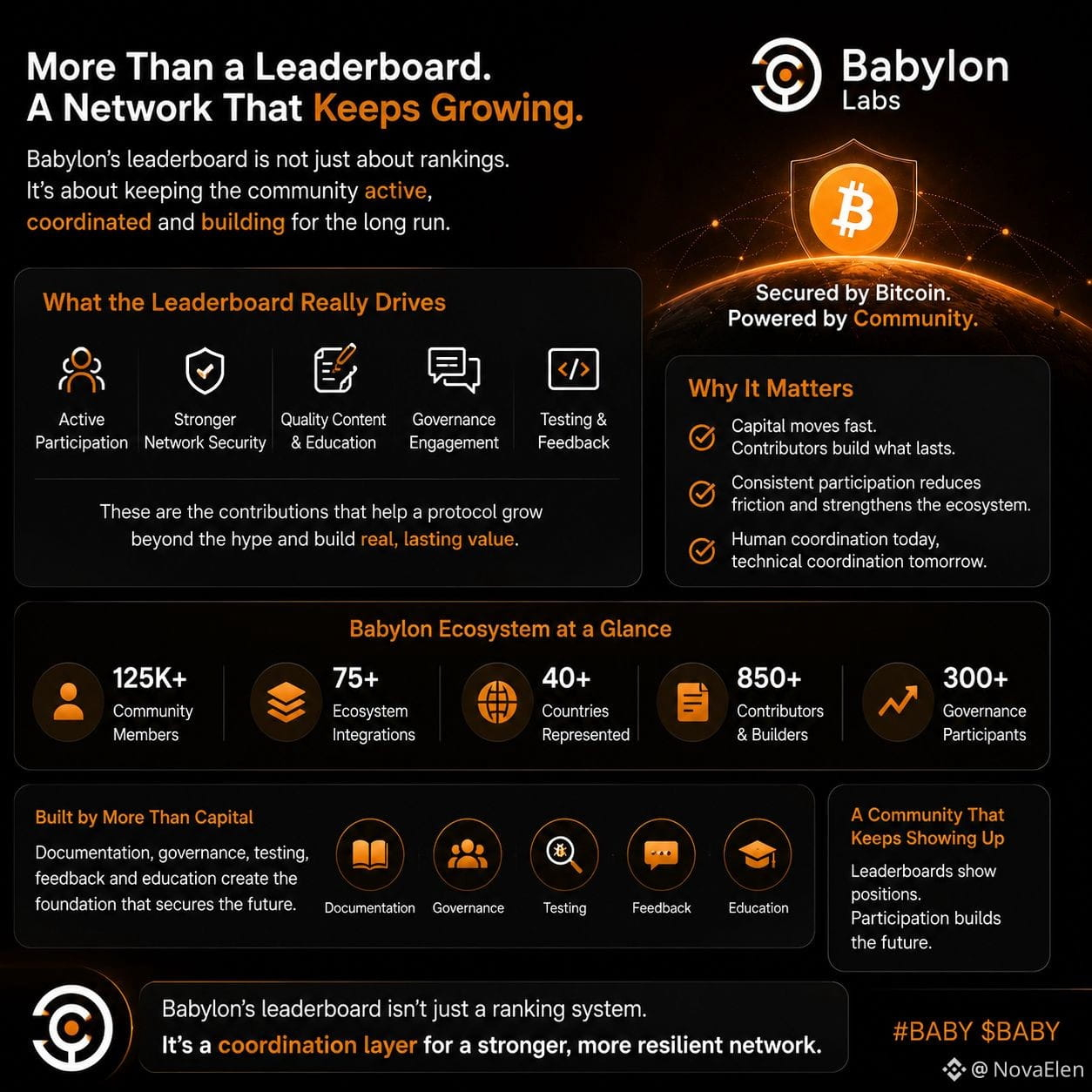
#baby $BABY At first, I assumed Babylon's leaderboard was mainly about competition and rewards. After following the ecosystem more closely, it started to feel like something much more important: a way to sustain long-term participation.
A protocol built around Bitcoin security doesn't grow through technology alone. It also depends on people who keep testing new features, sharing feedback, writing educational content, joining governance discussions, and helping the ecosystem mature over time.
That changed how I look at ecosystem growth. Instead of focusing only on token distribution or rankings, I started paying more attention to contributor activity, governance engagement, and developer momentum. These are the signals that often determine whether a network can keep evolving beyond its early stages.
One thing that stands out is how Babylon encourages meaningful contributions alongside ecosystem expansion. Capital can flow in and out quickly, but active builders, educators, testers, and community members create lasting value that isn't reflected on a price chart.
The leaderboard isn't just about who ranks highest. It's also a reminder that strong infrastructure is built by communities that continue showing up, even after the initial excitement has faded.
@babylonlabs_io
#baby $BABY At first, I assumed Babylon's leaderboard was mainly about competition and rewards. After following the ecosystem more closely, it started to feel like something much more important: a way to sustain long-term participation.
A protocol built around Bitcoin security doesn't grow through technology alone. It also depends on people who keep testing new features, sharing feedback, writing educational content, joining governance discussions, and helping the ecosystem mature over time.
That changed how I look at ecosystem growth. Instead of focusing only on token distribution or rankings, I started paying more attention to contributor activity, governance engagement, and developer momentum. These are the signals that often determine whether a network can keep evolving beyond its early stages.
One thing that stands out is how Babylon encourages meaningful contributions alongside ecosystem expansion. Capital can flow in and out quickly, but active builders, educators, testers, and community members create lasting value that isn't reflected on a price chart.
The leaderboard isn't just about who ranks highest. It's also a reminder that strong infrastructure is built by communities that continue showing up, even after the initial excitement has faded.
@BabylonLabs_io
A protocol built around Bitcoin security doesn't grow through technology alone. It also depends on people who keep testing new features, sharing feedback, writing educational content, joining governance discussions, and helping the ecosystem mature over time.
That changed how I look at ecosystem growth. Instead of focusing only on token distribution or rankings, I started paying more attention to contributor activity, governance engagement, and developer momentum. These are the signals that often determine whether a network can keep evolving beyond its early stages.
One thing that stands out is how Babylon encourages meaningful contributions alongside ecosystem expansion. Capital can flow in and out quickly, but active builders, educators, testers, and community members create lasting value that isn't reflected on a price chart.
The leaderboard isn't just about who ranks highest. It's also a reminder that strong infrastructure is built by communities that continue showing up, even after the initial excitement has faded.
@BabylonLabs_io
4
6
124
·
--
#baby $BABY I've been following Babylon more closely again, and the progress over the past few months has been hard to ignore.
What continues to stand out is its approach to extending Bitcoin's utility without requiring users to wrap or bridge their BTC. That vision still feels differentiated.
Recent developments suggest the focus has shifted from ideas to execution. Trustless Bitcoin Vaults are becoming a key part of the ecosystem, while partnerships like Aegis are bringing practical use cases such as fixed-rate borrowing backed by Bitcoin.
The collaboration with GoMining is another notable step, with plans to activate up to 1,000 BTC through Babylon's vault infrastructure.
On top of that, Ledger now supports Babylon Trustless Bitcoin Vaults, allowing users to manage vault transactions with the security of a hardware wallet—an important improvement for long-term adoption.
These aren't flashy headlines, but they're the kind of updates that matter. Instead of chasing the latest narrative, Babylon appears focused on building real infrastructure around Bitcoin.
I'll be watching to see how many applications adopt this ecosystem over time, because sustained utility will matter far more than short-term market hype.
@babylonlabs_io
#baby $BABY I've been following Babylon more closely again, and the progress over the past few months has been hard to ignore.
What continues to stand out is its approach to extending Bitcoin's utility without requiring users to wrap or bridge their BTC. That vision still feels differentiated.
Recent developments suggest the focus has shifted from ideas to execution. Trustless Bitcoin Vaults are becoming a key part of the ecosystem, while partnerships like Aegis are bringing practical use cases such as fixed-rate borrowing backed by Bitcoin.
The collaboration with GoMining is another notable step, with plans to activate up to 1,000 BTC through Babylon's vault infrastructure.
On top of that, Ledger now supports Babylon Trustless Bitcoin Vaults, allowing users to manage vault transactions with the security of a hardware wallet—an important improvement for long-term adoption.
These aren't flashy headlines, but they're the kind of updates that matter. Instead of chasing the latest narrative, Babylon appears focused on building real infrastructure around Bitcoin.
I'll be watching to see how many applications adopt this ecosystem over time, because sustained utility will matter far more than short-term market hype.
@BabylonLabs_io
What continues to stand out is its approach to extending Bitcoin's utility without requiring users to wrap or bridge their BTC. That vision still feels differentiated.
Recent developments suggest the focus has shifted from ideas to execution. Trustless Bitcoin Vaults are becoming a key part of the ecosystem, while partnerships like Aegis are bringing practical use cases such as fixed-rate borrowing backed by Bitcoin.
The collaboration with GoMining is another notable step, with plans to activate up to 1,000 BTC through Babylon's vault infrastructure.
On top of that, Ledger now supports Babylon Trustless Bitcoin Vaults, allowing users to manage vault transactions with the security of a hardware wallet—an important improvement for long-term adoption.
These aren't flashy headlines, but they're the kind of updates that matter. Instead of chasing the latest narrative, Babylon appears focused on building real infrastructure around Bitcoin.
I'll be watching to see how many applications adopt this ecosystem over time, because sustained utility will matter far more than short-term market hype.
@BabylonLabs_io
4
2
121
·
--
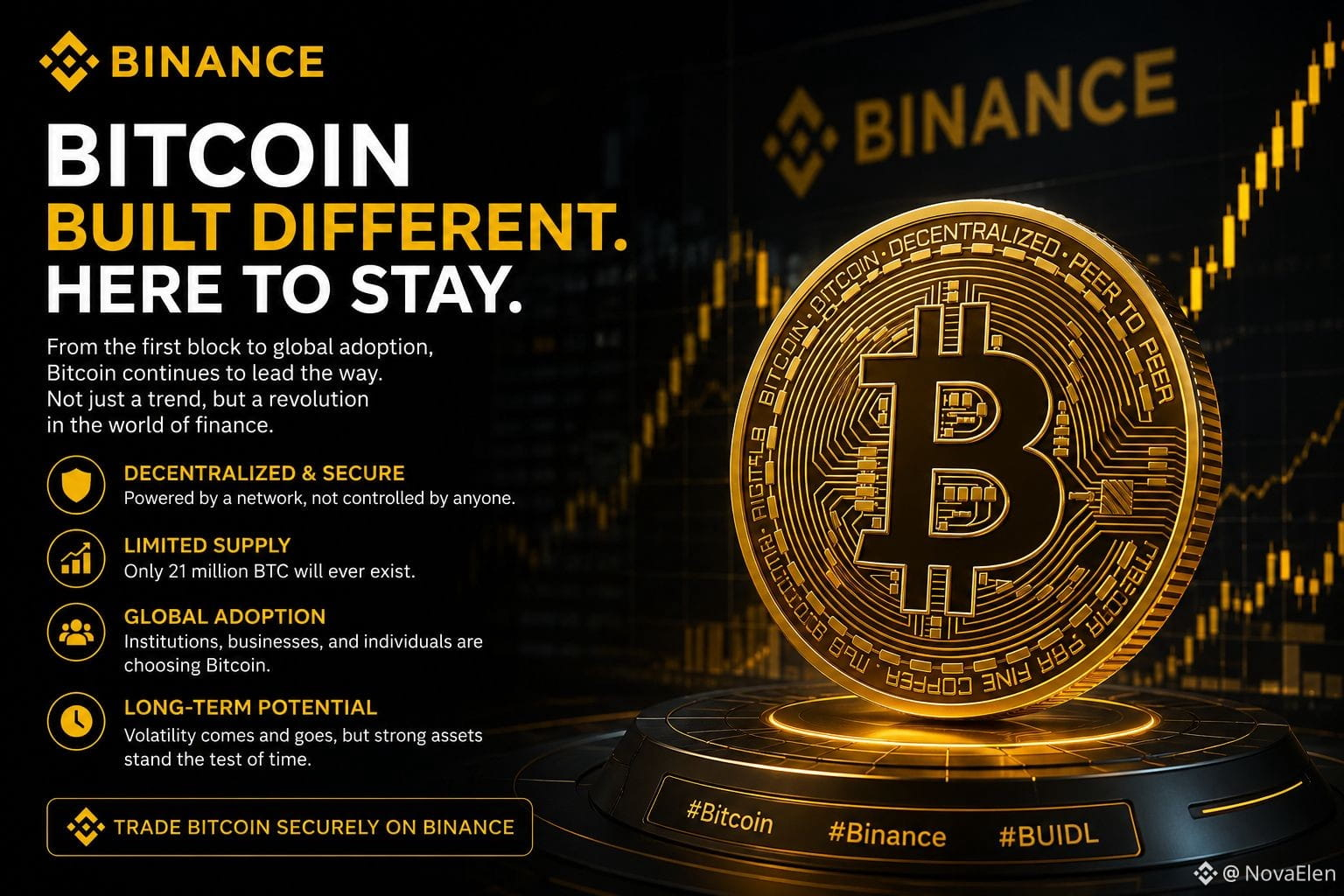
Bitcoin isn't just the first cryptocurrency anymore. It's becoming one of the most closely watched assets in global finance.
Every market cycle brings new narratives, but Bitcoin continues to prove why it remains the foundation of the crypto ecosystem.
Institutional adoption is growing, long-term holders continue accumulating, and global interest keeps expanding despite short-term volatility.
The biggest lesson I've learned?
Success in crypto isn't about chasing every trend. It's about understanding the assets with the strongest fundamentals and staying patient.
Whether you're new to crypto or have been here for years, Bitcoin is always worth studying before making any investment decisions.
Sometimes the best move isn't doing more it's understanding more.
#Bitcoin #Binance #Crypto #Blockchain #Investing #BinanceSquare
Bitcoin isn't just the first cryptocurrency anymore. It's becoming one of the most closely watched assets in global finance.
Every market cycle brings new narratives, but Bitcoin continues to prove why it remains the foundation of the crypto ecosystem.
Institutional adoption is growing, long-term holders continue accumulating, and global interest keeps expanding despite short-term volatility.
The biggest lesson I've learned?
Success in crypto isn't about chasing every trend. It's about understanding the assets with the strongest fundamentals and staying patient.
Whether you're new to crypto or have been here for years, Bitcoin is always worth studying before making any investment decisions.
Sometimes the best move isn't doing more it's understanding more.
#Bitcoin #Binance #Crypto #Blockchain #Investing #BinanceSquare
Every market cycle brings new narratives, but Bitcoin continues to prove why it remains the foundation of the crypto ecosystem.
Institutional adoption is growing, long-term holders continue accumulating, and global interest keeps expanding despite short-term volatility.
The biggest lesson I've learned?
Success in crypto isn't about chasing every trend. It's about understanding the assets with the strongest fundamentals and staying patient.
Whether you're new to crypto or have been here for years, Bitcoin is always worth studying before making any investment decisions.
Sometimes the best move isn't doing more it's understanding more.
#Bitcoin #Binance #Crypto #Blockchain #Investing #BinanceSquare
93
·
--
Everyone talks about the next big pump, but the real winners usually focus on learning, risk management, and consistency.
Crypto isn't just about buying coins it's about understanding the technology, staying patient during volatility, and making informed decisions instead of emotional ones.
Every market cycle rewards those who keep improving their knowledge. Keep learning, stay disciplined, and let time work in your favor.
#Binance #Crypto #Blockchain #DYOR
Everyone talks about the next big pump, but the real winners usually focus on learning, risk management, and consistency.
Crypto isn't just about buying coins it's about understanding the technology, staying patient during volatility, and making informed decisions instead of emotional ones.
Every market cycle rewards those who keep improving their knowledge. Keep learning, stay disciplined, and let time work in your favor.
#Binance #Crypto #Blockchain #DYOR
Crypto isn't just about buying coins it's about understanding the technology, staying patient during volatility, and making informed decisions instead of emotional ones.
Every market cycle rewards those who keep improving their knowledge. Keep learning, stay disciplined, and let time work in your favor.
#Binance #Crypto #Blockchain #DYOR

84
·
--
Bitcoin: The Digital Asset That Changed Finance ForeverBitcoin is more than just a cryptocurrency it represents a new way of thinking about money, ownership, and financial freedom.
Created in 2009, Bitcoin introduced the world to a decentralized financial system where transactions can happen without relying on banks or other intermediaries. Over the years, it has evolved from an experimental technology into a globally recognized digital asset held by individuals, companies, and even institutions.
One of Bitcoin's biggest strengths is its limited supply. With only 21 million coins ever to exist, scarcity plays a major role in its long-term value proposition. Unlike traditional currencies that can be printed in unlimited amounts, Bitcoin follows a transparent monetary policy secured by blockchain technology.
As adoption continues to grow, Bitcoin is increasingly being viewed as a long-term store of value. Investors use it for different reasons—some see it as a hedge against inflation, while others believe it represents the future of digital finance. Regardless of the approach, understanding Bitcoin before investing is essential.
The crypto market remains highly volatile, and price fluctuations are a normal part of the journey. That's why successful investors focus on research, risk management, and long-term thinking instead of reacting to short-term market movements.
For beginners, education is the first step. Learning how blockchain works, understanding wallet security, and exploring market cycles can help build confidence before making investment decisions.
Bitcoin's story is still being written. As technology advances and global adoption expands, it continues to shape conversations around the future of finance. Whether you're just starting your crypto journey or have been in the market for years, staying informed is one of the most valuable investments you can make.
Remember: Always do your own research (DYOR), invest responsibly, and never risk more than you can afford to lose.
#Binance #BinanceAcademy #crypto #Blockchain #LearnWithBinance
Bitcoin: The Digital Asset That Changed Finance Forever
Bitcoin is more than just a cryptocurrency it represents a new way of thinking about money, ownership, and financial freedom.
Created in 2009, Bitcoin introduced the world to a decentralized financial system where transactions can happen without relying on banks or other intermediaries. Over the years, it has evolved from an experimental technology into a globally recognized digital asset held by individuals, companies, and even institutions.
One of Bitcoin's biggest strengths is its limited supply. With only 21 million coins ever to exist, scarcity plays a major role in its long-term value proposition. Unlike traditional currencies that can be printed in unlimited amounts, Bitcoin follows a transparent monetary policy secured by blockchain technology.
As adoption continues to grow, Bitcoin is increasingly being viewed as a long-term store of value. Investors use it for different reasons—some see it as a hedge against inflation, while others believe it represents the future of digital finance. Regardless of the approach, understanding Bitcoin before investing is essential.
The crypto market remains highly volatile, and price fluctuations are a normal part of the journey. That's why successful investors focus on research, risk management, and long-term thinking instead of reacting to short-term market movements.
For beginners, education is the first step. Learning how blockchain works, understanding wallet security, and exploring market cycles can help build confidence before making investment decisions.
Bitcoin's story is still being written. As technology advances and global adoption expands, it continues to shape conversations around the future of finance. Whether you're just starting your crypto journey or have been in the market for years, staying informed is one of the most valuable investments you can make.
Remember: Always do your own research (DYOR), invest responsibly, and never risk more than you can afford to lose.
#Binance #BinanceAcademy #crypto #Blockchain #LearnWithBinance
Created in 2009, Bitcoin introduced the world to a decentralized financial system where transactions can happen without relying on banks or other intermediaries. Over the years, it has evolved from an experimental technology into a globally recognized digital asset held by individuals, companies, and even institutions.
One of Bitcoin's biggest strengths is its limited supply. With only 21 million coins ever to exist, scarcity plays a major role in its long-term value proposition. Unlike traditional currencies that can be printed in unlimited amounts, Bitcoin follows a transparent monetary policy secured by blockchain technology.
As adoption continues to grow, Bitcoin is increasingly being viewed as a long-term store of value. Investors use it for different reasons—some see it as a hedge against inflation, while others believe it represents the future of digital finance. Regardless of the approach, understanding Bitcoin before investing is essential.
The crypto market remains highly volatile, and price fluctuations are a normal part of the journey. That's why successful investors focus on research, risk management, and long-term thinking instead of reacting to short-term market movements.
For beginners, education is the first step. Learning how blockchain works, understanding wallet security, and exploring market cycles can help build confidence before making investment decisions.
Bitcoin's story is still being written. As technology advances and global adoption expands, it continues to shape conversations around the future of finance. Whether you're just starting your crypto journey or have been in the market for years, staying informed is one of the most valuable investments you can make.
Remember: Always do your own research (DYOR), invest responsibly, and never risk more than you can afford to lose.
#Binance #BinanceAcademy #crypto #Blockchain #LearnWithBinance
94
·
--
#newt $NEWT Instead of stopping at the documentation, I decided to spend some time exploring the Newton Explorer through the CreatorPad task. Watching live evaluations gave me a much clearer picture of what the network is actually doing. Every evaluation leaves behind a signed attestation that anyone can verify, which makes it easy to judge the protocol based on real activity rather than marketing claims.
One thing stood out almost immediately. The messaging focuses heavily on AI agents with built-in guardrails, but the majority of live evaluations today are centered around compliance infrastructure. Most of the activity involves sanctions screening, investor eligibility, jurisdiction checks, and verification for tokenized assets and RWA issuers across Base and Ethereum. The AI guardrail features are real, but they don't appear to be the primary driver of network usage yet.
I also checked the $NEWT contract on Etherscan myself. Nothing unexpected—I simply wanted to verify the token directly instead of relying on third-party trackers. It's always worth confirming the fundamentals firsthand.
The current direction actually makes a lot of sense. Running a decentralized operator network backed by EigenLayer restaking requires participants who are willing to pay for those verification services. Institutions managing real capital naturally become the first customers, while AI agent permissions can scale as adoption grows.
For now, it feels less like "AI agents first" and more like compliance infrastructure with AI capabilities layered on top. It'll be interesting to see whether agent permission evaluations eventually catch up, or if compliance remains the network's strongest real-world use case.
@NewtonProtocol
#newt $NEWT Instead of stopping at the documentation, I decided to spend some time exploring the Newton Explorer through the CreatorPad task. Watching live evaluations gave me a much clearer picture of what the network is actually doing. Every evaluation leaves behind a signed attestation that anyone can verify, which makes it easy to judge the protocol based on real activity rather than marketing claims.
One thing stood out almost immediately. The messaging focuses heavily on AI agents with built-in guardrails, but the majority of live evaluations today are centered around compliance infrastructure. Most of the activity involves sanctions screening, investor eligibility, jurisdiction checks, and verification for tokenized assets and RWA issuers across Base and Ethereum. The AI guardrail features are real, but they don't appear to be the primary driver of network usage yet.
I also checked the $NEWT contract on Etherscan myself. Nothing unexpected—I simply wanted to verify the token directly instead of relying on third-party trackers. It's always worth confirming the fundamentals firsthand.
The current direction actually makes a lot of sense. Running a decentralized operator network backed by EigenLayer restaking requires participants who are willing to pay for those verification services. Institutions managing real capital naturally become the first customers, while AI agent permissions can scale as adoption grows.
For now, it feels less like "AI agents first" and more like compliance infrastructure with AI capabilities layered on top. It'll be interesting to see whether agent permission evaluations eventually catch up, or if compliance remains the network's strongest real-world use case.
@NewtonProtocol
One thing stood out almost immediately. The messaging focuses heavily on AI agents with built-in guardrails, but the majority of live evaluations today are centered around compliance infrastructure. Most of the activity involves sanctions screening, investor eligibility, jurisdiction checks, and verification for tokenized assets and RWA issuers across Base and Ethereum. The AI guardrail features are real, but they don't appear to be the primary driver of network usage yet.
I also checked the $NEWT contract on Etherscan myself. Nothing unexpected—I simply wanted to verify the token directly instead of relying on third-party trackers. It's always worth confirming the fundamentals firsthand.
The current direction actually makes a lot of sense. Running a decentralized operator network backed by EigenLayer restaking requires participants who are willing to pay for those verification services. Institutions managing real capital naturally become the first customers, while AI agent permissions can scale as adoption grows.
For now, it feels less like "AI agents first" and more like compliance infrastructure with AI capabilities layered on top. It'll be interesting to see whether agent permission evaluations eventually catch up, or if compliance remains the network's strongest real-world use case.
@NewtonProtocol
2
2
105
·
--
I Used to Follow Hype. Now I’m Watching the Infrastructure That Could Shape Crypto’s Future.There was a time when my entire strategy revolved around momentum. If a token was trending, I wanted in. If it wasn’t moving, I ignored it.
After enough market cycles, I realized something important:
The biggest winners aren’t always the loudest projects. Sometimes they’re the ones quietly building the foundations everyone else will eventually rely on.
That shift in perspective is why Newton Protocol has been on my radar lately.
At first, I assumed its Human Passport integration was just another identity solution. Crypto has seen plenty of those. But after digging deeper, it became clear this is about solving a much bigger issue making on-chain interactions more trustworthy without sacrificing decentralization.
One of the biggest problems today is Sybil attacks and bot farming.
Real users spend weeks testing products, providing liquidity, and supporting ecosystems, only to watch rewards get diluted by thousands of automated wallets.
Newton approaches this differently.
Instead of forcing developers to hardcode verification rules into smart contracts, it introduces a programmable policy layer. That means verification requirements can evolve without rebuilding the entire application.
The Human Passport integration combines multiple verification signals:
• Stamps to prove wallet uniqueness.
• Model API Score that uses machine learning to detect suspicious wallet behavior without adding extra steps for users.
• Proof of Clean Hands, leveraging zero-knowledge proofs to support compliance while protecting user privacy.
What stands out most is the flexibility.
Not every application needs the same level of verification. A DeFi protocol may only require Sybil resistance, while tokenized real-world assets or institutional products may need stronger compliance. Developers can choose the signals that fit their use case instead of relying on a one-size-fits-all model.
The AI angle is equally interesting.
As AI agents become more involved in portfolio management and automated execution, they need reliable on-chain signals to distinguish genuine activity from manipulated behavior. Better inputs can lead to smarter and safer automation.
Of course, no security system is perfect.
Machine learning can make mistakes, and determined attackers will continue adapting. But increasing the cost and complexity of large-scale bot farming is already meaningful progress.
Another reason I’m paying attention is Newton’s open design.
Human Passport isn't limited to a single data source. It can work alongside reputation systems, market data, and additional verification layers, allowing developers to build more intelligent and context-aware applications.
That’s a stronger approach than relying on a single yes-or-no verification check.
I'm also keeping my expectations realistic.
Good technology alone doesn't guarantee success. Adoption is what matters. If developers find these tools easy to integrate and users enjoy a smooth experience, that's where the real value will emerge.
So rather than focusing on announcements, I'm watching ecosystem growth.
I want to see real projects using these policies for AI agents, DAO governance, airdrops, and institutional applications.
Because the future of crypto isn't just about making transactions possible.
It's about making sure they happen under the right conditions.
Programmable trust, privacy-preserving compliance, and intelligent automation may not generate the loudest headlines but they could become the invisible infrastructure powering the next generation of Web3.
@NewtonProtocol #Newt $NEWT
I Used to Follow Hype. Now I’m Watching the Infrastructure That Could Shape Crypto’s Future.
There was a time when my entire strategy revolved around momentum. If a token was trending, I wanted in. If it wasn’t moving, I ignored it.
After enough market cycles, I realized something important:
The biggest winners aren’t always the loudest projects. Sometimes they’re the ones quietly building the foundations everyone else will eventually rely on.
That shift in perspective is why Newton Protocol has been on my radar lately.
At first, I assumed its Human Passport integration was just another identity solution. Crypto has seen plenty of those. But after digging deeper, it became clear this is about solving a much bigger issue making on-chain interactions more trustworthy without sacrificing decentralization.
One of the biggest problems today is Sybil attacks and bot farming.
Real users spend weeks testing products, providing liquidity, and supporting ecosystems, only to watch rewards get diluted by thousands of automated wallets.
Newton approaches this differently.
Instead of forcing developers to hardcode verification rules into smart contracts, it introduces a programmable policy layer. That means verification requirements can evolve without rebuilding the entire application.
The Human Passport integration combines multiple verification signals:
• Stamps to prove wallet uniqueness.
• Model API Score that uses machine learning to detect suspicious wallet behavior without adding extra steps for users.
• Proof of Clean Hands, leveraging zero-knowledge proofs to support compliance while protecting user privacy.
What stands out most is the flexibility.
Not every application needs the same level of verification. A DeFi protocol may only require Sybil resistance, while tokenized real-world assets or institutional products may need stronger compliance. Developers can choose the signals that fit their use case instead of relying on a one-size-fits-all model.
The AI angle is equally interesting.
As AI agents become more involved in portfolio management and automated execution, they need reliable on-chain signals to distinguish genuine activity from manipulated behavior. Better inputs can lead to smarter and safer automation.
Of course, no security system is perfect.
Machine learning can make mistakes, and determined attackers will continue adapting. But increasing the cost and complexity of large-scale bot farming is already meaningful progress.
Another reason I’m paying attention is Newton’s open design.
Human Passport isn't limited to a single data source. It can work alongside reputation systems, market data, and additional verification layers, allowing developers to build more intelligent and context-aware applications.
That’s a stronger approach than relying on a single yes-or-no verification check.
I'm also keeping my expectations realistic.
Good technology alone doesn't guarantee success. Adoption is what matters. If developers find these tools easy to integrate and users enjoy a smooth experience, that's where the real value will emerge.
So rather than focusing on announcements, I'm watching ecosystem growth.
I want to see real projects using these policies for AI agents, DAO governance, airdrops, and institutional applications.
Because the future of crypto isn't just about making transactions possible.
It's about making sure they happen under the right conditions.
Programmable trust, privacy-preserving compliance, and intelligent automation may not generate the loudest headlines but they could become the invisible infrastructure powering the next generation of Web3.
@NewtonProtocol #Newt $NEWT
After enough market cycles, I realized something important:
The biggest winners aren’t always the loudest projects. Sometimes they’re the ones quietly building the foundations everyone else will eventually rely on.
That shift in perspective is why Newton Protocol has been on my radar lately.
At first, I assumed its Human Passport integration was just another identity solution. Crypto has seen plenty of those. But after digging deeper, it became clear this is about solving a much bigger issue making on-chain interactions more trustworthy without sacrificing decentralization.
One of the biggest problems today is Sybil attacks and bot farming.
Real users spend weeks testing products, providing liquidity, and supporting ecosystems, only to watch rewards get diluted by thousands of automated wallets.
Newton approaches this differently.
Instead of forcing developers to hardcode verification rules into smart contracts, it introduces a programmable policy layer. That means verification requirements can evolve without rebuilding the entire application.
The Human Passport integration combines multiple verification signals:
• Stamps to prove wallet uniqueness.
• Model API Score that uses machine learning to detect suspicious wallet behavior without adding extra steps for users.
• Proof of Clean Hands, leveraging zero-knowledge proofs to support compliance while protecting user privacy.
What stands out most is the flexibility.
Not every application needs the same level of verification. A DeFi protocol may only require Sybil resistance, while tokenized real-world assets or institutional products may need stronger compliance. Developers can choose the signals that fit their use case instead of relying on a one-size-fits-all model.
The AI angle is equally interesting.
As AI agents become more involved in portfolio management and automated execution, they need reliable on-chain signals to distinguish genuine activity from manipulated behavior. Better inputs can lead to smarter and safer automation.
Of course, no security system is perfect.
Machine learning can make mistakes, and determined attackers will continue adapting. But increasing the cost and complexity of large-scale bot farming is already meaningful progress.
Another reason I’m paying attention is Newton’s open design.
Human Passport isn't limited to a single data source. It can work alongside reputation systems, market data, and additional verification layers, allowing developers to build more intelligent and context-aware applications.
That’s a stronger approach than relying on a single yes-or-no verification check.
I'm also keeping my expectations realistic.
Good technology alone doesn't guarantee success. Adoption is what matters. If developers find these tools easy to integrate and users enjoy a smooth experience, that's where the real value will emerge.
So rather than focusing on announcements, I'm watching ecosystem growth.
I want to see real projects using these policies for AI agents, DAO governance, airdrops, and institutional applications.
Because the future of crypto isn't just about making transactions possible.
It's about making sure they happen under the right conditions.
Programmable trust, privacy-preserving compliance, and intelligent automation may not generate the loudest headlines but they could become the invisible infrastructure powering the next generation of Web3.
@NewtonProtocol #Newt $NEWT
3
2
88
·
--
#newt $NEWT Most discussions around AI in crypto focus on what agents can do.
I'm becoming more interested in how they protect the data they're trusted with.
That's one reason @NewtonProtocol has been on my radar.
The Mainnet Beta is already live, but what stands out is the way privacy is being built in layers rather than treated as an afterthought.
Today, encrypted policy data is protected before it can even be evaluated, with threshold decryption ensuring no single operator has complete control over sensitive information. The blockchain verifies outcomes without exposing the underlying private data.
What's even more interesting is the direction from here.
The roadmap moves beyond threshold decryption toward full MPC, where computation can happen without revealing the data itself. That isn't just another technical upgrade—it represents a different approach to building trust in autonomous systems.
As AI agents become more involved in managing assets and executing on-chain actions, privacy won't be a feature users occasionally look for.
It will become an expectation.
The projects preparing for that future today may have the strongest foundation tomorrow.
That's why I think the real innovation isn't only smarter AI it's infrastructure that allows AI to operate securely, transparently, and without compromising user privacy.
@NewtonProtocol
$NEWT #Newt
#newt $NEWT Most discussions around AI in crypto focus on what agents can do.
I'm becoming more interested in how they protect the data they're trusted with.
That's one reason @NewtonProtocol has been on my radar.
The Mainnet Beta is already live, but what stands out is the way privacy is being built in layers rather than treated as an afterthought.
Today, encrypted policy data is protected before it can even be evaluated, with threshold decryption ensuring no single operator has complete control over sensitive information. The blockchain verifies outcomes without exposing the underlying private data.
What's even more interesting is the direction from here.
The roadmap moves beyond threshold decryption toward full MPC, where computation can happen without revealing the data itself. That isn't just another technical upgrade—it represents a different approach to building trust in autonomous systems.
As AI agents become more involved in managing assets and executing on-chain actions, privacy won't be a feature users occasionally look for.
It will become an expectation.
The projects preparing for that future today may have the strongest foundation tomorrow.
That's why I think the real innovation isn't only smarter AI it's infrastructure that allows AI to operate securely, transparently, and without compromising user privacy.
@NewtonProtocol
$NEWT #Newt
I'm becoming more interested in how they protect the data they're trusted with.
That's one reason @NewtonProtocol has been on my radar.
The Mainnet Beta is already live, but what stands out is the way privacy is being built in layers rather than treated as an afterthought.
Today, encrypted policy data is protected before it can even be evaluated, with threshold decryption ensuring no single operator has complete control over sensitive information. The blockchain verifies outcomes without exposing the underlying private data.
What's even more interesting is the direction from here.
The roadmap moves beyond threshold decryption toward full MPC, where computation can happen without revealing the data itself. That isn't just another technical upgrade—it represents a different approach to building trust in autonomous systems.
As AI agents become more involved in managing assets and executing on-chain actions, privacy won't be a feature users occasionally look for.
It will become an expectation.
The projects preparing for that future today may have the strongest foundation tomorrow.
That's why I think the real innovation isn't only smarter AI it's infrastructure that allows AI to operate securely, transparently, and without compromising user privacy.
@NewtonProtocol
$NEWT #Newt
2
1
103
·
--
The next wave of AI in crypto may not be about finding better trades.It may be about redefining how users build trust.
For years, success in crypto depended on speed being first to discover information, react to market moves, or execute transactions. AI is shifting that dynamic by allowing users to design systems that can operate continuously within predefined rules.
That changes the role of the user.
Instead of making every decision manually, the focus moves toward creating reliable frameworks that can execute consistently over time.
This is why @NewtonProtocol stands out to me.
Rather than simply adding AI to blockchain, it aims to provide infrastructure where autonomous agents can act within transparent, verifiable, and user-defined boundaries. As these systems mature, predictability may become far more valuable than occasional exceptional performance.
History shows that every major technological shift begins with skepticism. Cloud computing, algorithmic trading, and smart contracts all faced the same question:
"Can this system be trusted?"
Eventually, the conversation changed from whether automation should exist to which platform deserved that trust.
I believe AI in crypto is heading toward the same transition.
The real advantage won't come from an AI making one brilliant decision. It will come from a system behaving consistently across thousands of market conditions.
Over time, users stop judging every individual action and start judging the framework behind those actions.
That's where long-term confidence is built.
If autonomous finance becomes mainstream, the protocols that succeed won't just process transactions they'll shape how people interact with automation itself.
And that shift could become one of the most important changes AI brings to crypto.
@NewtonProtocol
$NEWT #Newt
The next wave of AI in crypto may not be about finding better trades.
It may be about redefining how users build trust.
For years, success in crypto depended on speed being first to discover information, react to market moves, or execute transactions. AI is shifting that dynamic by allowing users to design systems that can operate continuously within predefined rules.
That changes the role of the user.
Instead of making every decision manually, the focus moves toward creating reliable frameworks that can execute consistently over time.
This is why @NewtonProtocol stands out to me.
Rather than simply adding AI to blockchain, it aims to provide infrastructure where autonomous agents can act within transparent, verifiable, and user-defined boundaries. As these systems mature, predictability may become far more valuable than occasional exceptional performance.
History shows that every major technological shift begins with skepticism. Cloud computing, algorithmic trading, and smart contracts all faced the same question:
"Can this system be trusted?"
Eventually, the conversation changed from whether automation should exist to which platform deserved that trust.
I believe AI in crypto is heading toward the same transition.
The real advantage won't come from an AI making one brilliant decision. It will come from a system behaving consistently across thousands of market conditions.
Over time, users stop judging every individual action and start judging the framework behind those actions.
That's where long-term confidence is built.
If autonomous finance becomes mainstream, the protocols that succeed won't just process transactions they'll shape how people interact with automation itself.
And that shift could become one of the most important changes AI brings to crypto.
@NewtonProtocol
$NEWT #Newt
For years, success in crypto depended on speed being first to discover information, react to market moves, or execute transactions. AI is shifting that dynamic by allowing users to design systems that can operate continuously within predefined rules.
That changes the role of the user.
Instead of making every decision manually, the focus moves toward creating reliable frameworks that can execute consistently over time.
This is why @NewtonProtocol stands out to me.
Rather than simply adding AI to blockchain, it aims to provide infrastructure where autonomous agents can act within transparent, verifiable, and user-defined boundaries. As these systems mature, predictability may become far more valuable than occasional exceptional performance.
History shows that every major technological shift begins with skepticism. Cloud computing, algorithmic trading, and smart contracts all faced the same question:
"Can this system be trusted?"
Eventually, the conversation changed from whether automation should exist to which platform deserved that trust.
I believe AI in crypto is heading toward the same transition.
The real advantage won't come from an AI making one brilliant decision. It will come from a system behaving consistently across thousands of market conditions.
Over time, users stop judging every individual action and start judging the framework behind those actions.
That's where long-term confidence is built.
If autonomous finance becomes mainstream, the protocols that succeed won't just process transactions they'll shape how people interact with automation itself.
And that shift could become one of the most important changes AI brings to crypto.
@NewtonProtocol
$NEWT #Newt
2
1
105
·
--
#newt $NEWT At first, I thought @NewtonProtocol was just another project adding AI to blockchain.
After looking deeper, I realized the real innovation isn't AI itselfit's how AI decisions stay aligned with the user's original intent.
Blockchains are excellent at executing transactions. The next challenge is making sure autonomous agents execute the right transactions, under the rules the user actually set.
That's the part many conversations overlook.
To me, Newton Protocol isn't just building AI infrastructure it's building trust for autonomous on-chain actions.
As AI agents become more common, preserving user intent could become just as important as transaction execution.
That's a shift worth paying attention to.
@NewtonProtocol
#newt $NEWT At first, I thought @NewtonProtocol was just another project adding AI to blockchain.
After looking deeper, I realized the real innovation isn't AI itselfit's how AI decisions stay aligned with the user's original intent.
Blockchains are excellent at executing transactions. The next challenge is making sure autonomous agents execute the right transactions, under the rules the user actually set.
That's the part many conversations overlook.
To me, Newton Protocol isn't just building AI infrastructure it's building trust for autonomous on-chain actions.
As AI agents become more common, preserving user intent could become just as important as transaction execution.
That's a shift worth paying attention to.
@NewtonProtocol
After looking deeper, I realized the real innovation isn't AI itselfit's how AI decisions stay aligned with the user's original intent.
Blockchains are excellent at executing transactions. The next challenge is making sure autonomous agents execute the right transactions, under the rules the user actually set.
That's the part many conversations overlook.
To me, Newton Protocol isn't just building AI infrastructure it's building trust for autonomous on-chain actions.
As AI agents become more common, preserving user intent could become just as important as transaction execution.
That's a shift worth paying attention to.
@NewtonProtocol
1
2
93
Войдите, чтобы посмотреть больше материала
Присоединяйтесь к пользователям криптовалют по всему миру на Binance Square
⚡️ Получайте новейшую и полезную информацию о криптоактивах.
💬 Нам доверяет крупнейшая в мире криптобиржа.
👍 Получите достоверные аналитические данные от верифицированных создателей контента.
Эл. почта/номер телефона
В тренде
BinanceKZ
Просмотров: 8,679
47 обсуждают
Как я потерял 180 000 тенге на «менеджере Binance» из WhatsApp — и почему всё равно остался в крипте
phpdead
·Лайков: 5
·Просмотров: 1.6k
FedProposesPaymentStablecoinRules
Просмотров: 0
2 обсуждают
ChinaMayLetAlibabaByteDanceBuyNvidiaChips
Просмотров: 1,734
126 обсуждают