
MemelordGC
46 Публикации

MemelordGC
Отправить жалобу
Заблокировать пользователя
Ambassador at Injective, Web3 Community Moderator, Website Designer, Event Manager, Co-host Reply Guy, Community Builder, Social Media Manager
18 подписок(и/а)
12 подписчиков(а)
112 понравилось
Посты
Все
Цитирования
Видео
PINNED
·
--
Рост
Проверено
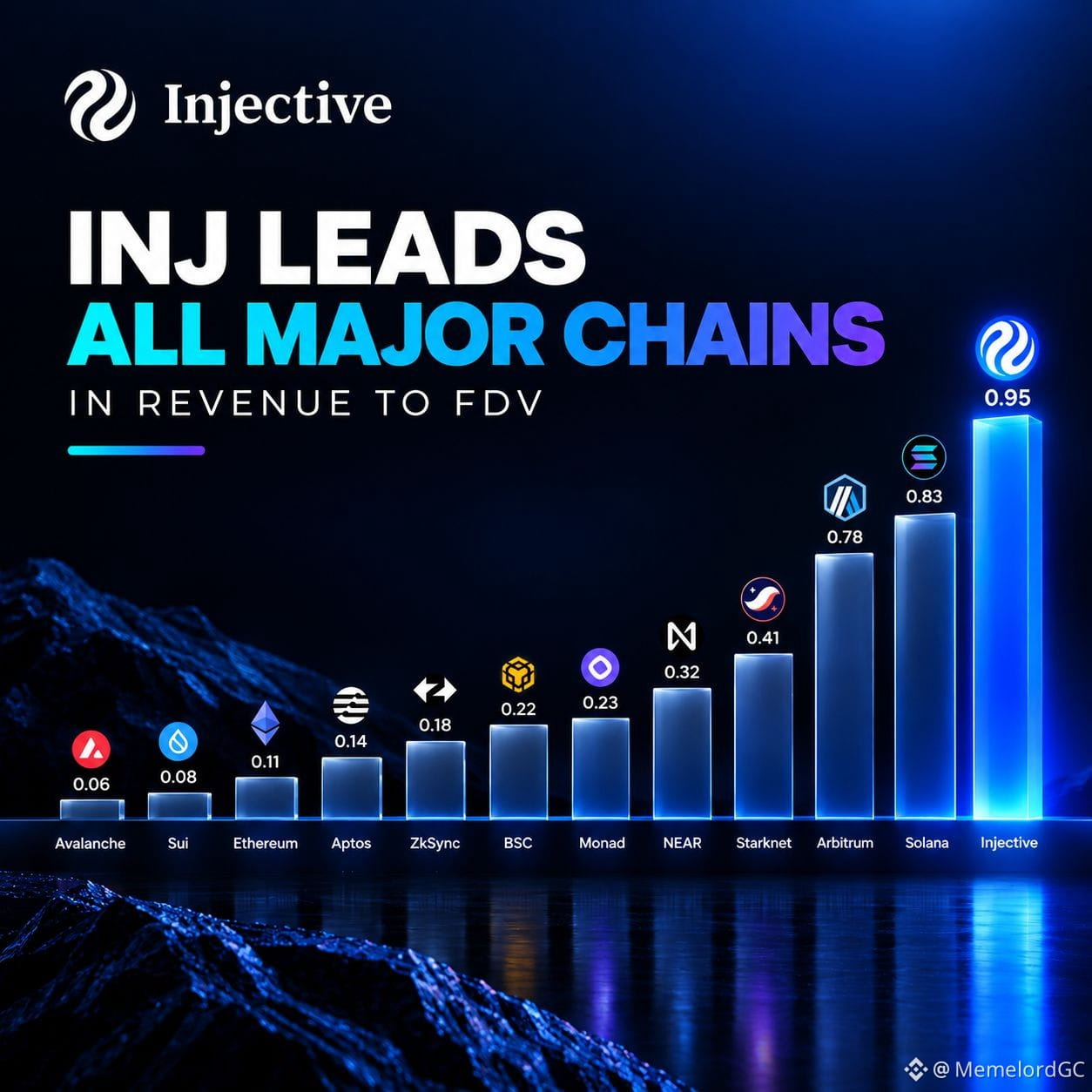
Fully diluted revenue is another metric that shows that $INJ is one of the biggest blockchains in earnings.
And the numbers make the comparison interesting.
Currently, @Injective has the leading Revenue/FDV ratio of 0.95, ahead of:
→ Solana at 0.83
→ Arbitrum at 0.78
→ Ethereum at 0.11
→ Sui at 0.08
→ Avalanche at 0.06
This gives Injective about 14% advantage over Solana, 20%+ over Arbitrum and almost 8x over Ethereum on this measure.
Why is this important?
Revenue / valuation gives a sense of how well a network is doing in terms of onchain revenue over the fully diluted market value. While not all methods are equal in assessing a blockchain, it provides an additional perspective beyond the noise and sentiment in the market.
What makes the $INJ story even more interesting is the Community BuyBack. Injective's ecosystem revenue is used to acquire and burn INJ to decrease the token supply in a continuous manner.
With the ongoing growth of tokenization projects and the introduction of new products, revenue might even play an even bigger role in the Injective thesis.
The big question now is what to do with that revenue to increase it from here. 🥷
#injective #INJ #defi #crypto #blockchain
5
782
·
--
Проверено
Статья
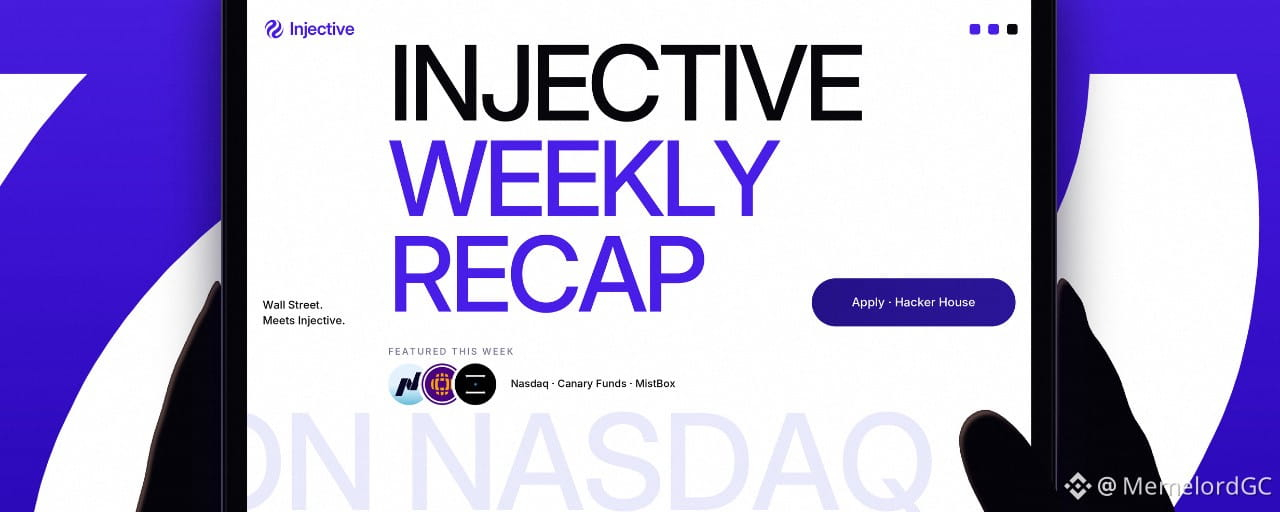
Injective Weekly Recap$INJ is on Nasdaq.
I’m going to say that again, because it still feels unreal to type.
$INJ C, the first US ETF for INJ, went live on Thursday with staking built in. On Friday, we rang the Nasdaq opening bell alongside CanaryFunds.
A few years ago this was a dorm room in 2018 and a wild idea. This week, Wall Street met Injective.
Here’s everything that happened in a few historic days below:
1. INJC is live on NasdaqExchange
Your regular brokerage account can now hold
INJ through INJC. The ETF aims to stake up to 90% of its INJ and automatically restakes net rewards. No wallet setup, no bridges. Just a ticker.
2. Banks and enterprises now have a direct line in Institutional Rail
This gives them next block inclusion and instant finality, plugged straight into @Injective block production. It’s already live with select financial institutions.
3.INJC is on Bloomberg Terminals
The first US-listed INJ ETF is now in front of the institutions, banks and hedge funds that live on these screens every day.
4. LG CNS is joining our Bangkok Hacker House
They completed a trade finance PoC on Injective with POSCO International. Hacker House applications close November 10.
The numbers behind it
→ 3B+ transactions processed
→ $1B+ in tokenized assets
→ 7.2M+ $INJ bought back, funded by onchain revenue
→ $416M traded in 7 days across Injective exchange dApps
→ $85.1B cumulative volume
Ecosystem, still moving
→ The Cosmos Hub voted on November 3 to move 566,067 USDC from its community pool into Circle’s native USDC on Injective
→ MistBoxpro launched and saw 17,139 signups and 8,333 boxes opened on November 4 and 5
→ Runupdotfun closed its first month with 1,096 token launches and $2.3M in volume
→ Trade $AAPL, $NVDM, $TSLA, $SPY and 600+ more tokenized US stocks and ETFs on Injective through ChoiceXchange, powered by Swimmer Finance
→ Tokenized fund market cap on Injective is up $206.3M in 2026, per
RWAFoundatio using Token Terminal data
I keep thinking about how quiet the early days were.
Building through bear markets, with nobody watching, believing the thing would matter someday. Now it’s opening the market on Wall Street.
If you’ve been here since the early days, this one belongs to you too. And if you want to build the next chapter with us, Hacker House applications close November 10.🥷
#Web3 #crypto #blockchain #RWA #NASDAQ
Injective Weekly Recap
$INJ is on Nasdaq.
I’m going to say that again, because it still feels unreal to type.
$INJ C, the first US ETF for INJ, went live on Thursday with staking built in. On Friday, we rang the Nasdaq opening bell alongside CanaryFunds.
A few years ago this was a dorm room in 2018 and a wild idea. This week, Wall Street met Injective.
Here’s everything that happened in a few historic days below:
1. INJC is live on NasdaqExchange
Your regular brokerage account can now hold
INJ through INJC. The ETF aims to stake up to 90% of its INJ and automatically restakes net rewards. No wallet setup, no bridges. Just a ticker.
2. Banks and enterprises now have a direct line in Institutional Rail
This gives them next block inclusion and instant finality, plugged straight into @Injective block production. It’s already live with select financial institutions.
3.INJC is on Bloomberg Terminals
The first US-listed INJ ETF is now in front of the institutions, banks and hedge funds that live on these screens every day.
4. LG CNS is joining our Bangkok Hacker House
They completed a trade finance PoC on Injective with POSCO International. Hacker House applications close November 10.
The numbers behind it
→ 3B+ transactions processed
→ $1B+ in tokenized assets
→ 7.2M+ $INJ bought back, funded by onchain revenue
→ $416M traded in 7 days across Injective exchange dApps
→ $85.1B cumulative volume
Ecosystem, still moving
→ The Cosmos Hub voted on November 3 to move 566,067 USDC from its community pool into Circle’s native USDC on Injective
→ MistBoxpro launched and saw 17,139 signups and 8,333 boxes opened on November 4 and 5
→ Runupdotfun closed its first month with 1,096 token launches and $2.3M in volume
→ Trade $AAPL, $NVDM, $TSLA, $SPY and 600+ more tokenized US stocks and ETFs on Injective through ChoiceXchange, powered by Swimmer Finance
→ Tokenized fund market cap on Injective is up $206.3M in 2026, per
RWAFoundatio using Token Terminal data
I keep thinking about how quiet the early days were.
Building through bear markets, with nobody watching, believing the thing would matter someday. Now it’s opening the market on Wall Street.
If you’ve been here since the early days, this one belongs to you too. And if you want to build the next chapter with us, Hacker House applications close November 10.🥷
#Web3 #crypto #blockchain #RWA #NASDAQ
1
2
365
·
--
Рост
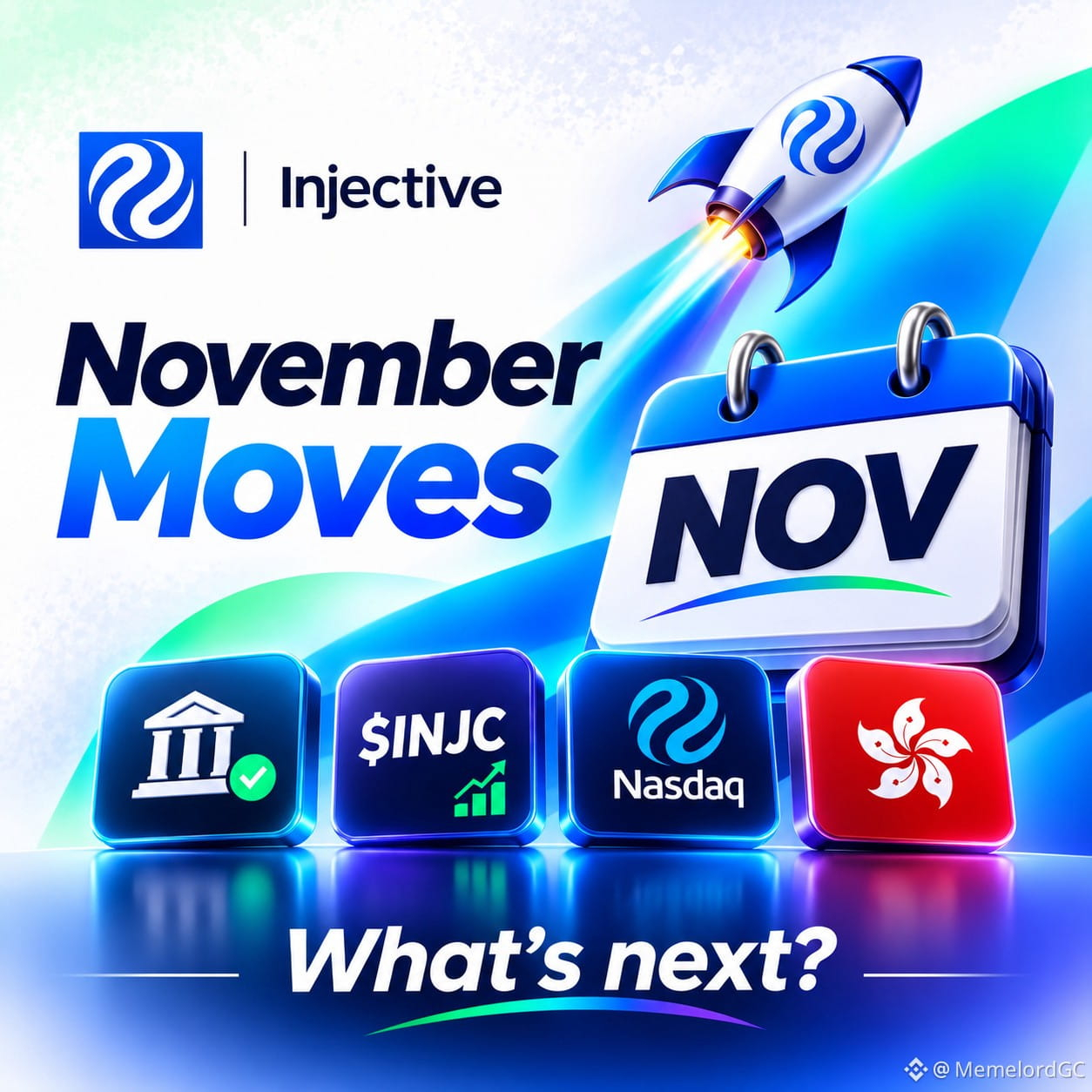
November has started with some major milestones for @Injective .
1. The launch of Injective Institutional Rail marks another step toward making it easier for banks, funds and enterprises to connect with onchain finance.
2. Then came $INJC, the Canary Staked INJ ETF, bringing $INJ exposure to traditional brokerage platforms.
3. The team also rang the opening bell at NasdaqExchange to celebrate the ETF launch. A moment that connects Injective’s journey from its early days in 2018 to the traditional financial markets.
4. And in Hong Kong, Injective showed up at FinTech Week, joining important conversations around the future of global finance and tokenization.
Four major developments, all at the start of November.
It’s exciting to see how far the ecosystem has come, and what is to come next, as we look into:
1. More institutional adoption?
2. More tokenized assets?
3. More ways to bring traditional finance onchain?
Whatever comes next, $INJ remains at the centre of the infrastructure being built.
What are you looking forward to next? 🥷
#injective #INJ #crypto #blockchain #RWA
2
395
·
--
Рост
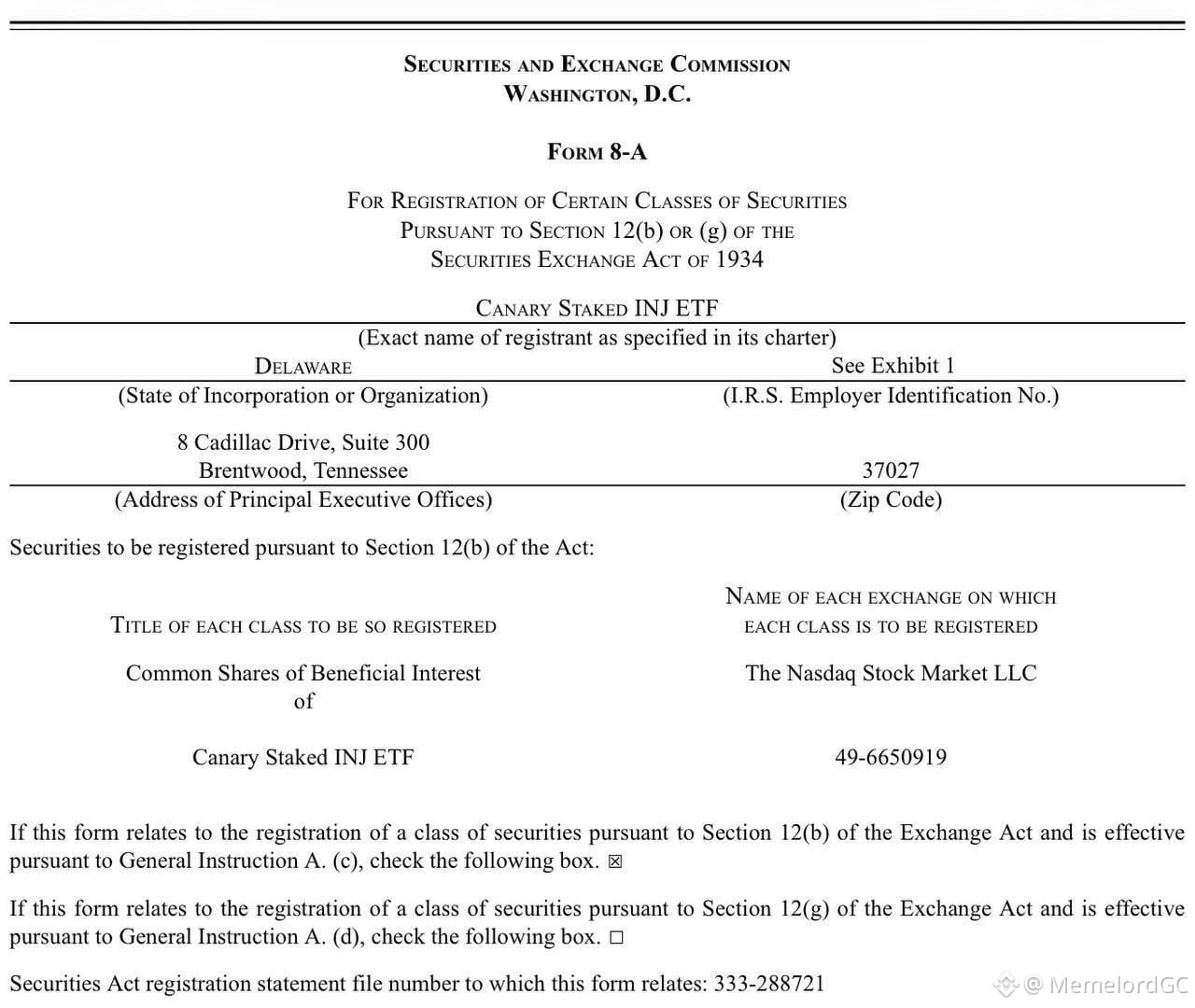
Another significant milestone for the $INJ ecosystem.
The first ever INJ Staked ETF, INJC, has been approved for listing on NASDAQ.
This is important because of a number of reasons.
1. Firstly, it provides a new regulated investment product that allows traditional investors to invest in $INJ without having to manage crypto assets themselves.
2. Secondly, the ETF will focus on staking 90% of institutional holdings. This adds another dimension of exposure to the stake and links between the institution with the stake economy.
What this means for @Injective :
1. The institutionalization of digital assets is ongoing, and products such as INJC can ease the transition for investors who prefer traditional financial markets.
2. This is another move that will hopefully help bridge the gap between blockchain assets and traditional finance for Injective.
We've seen the ecosystem expand across tokenized assets, institutional partnerships and onchain financial products.
The introduction of a staked ETF listed on the NASDAQ is another key milestone on that path.
More and more, $INJ is being seen in traditional finance, and I'm looking forward to the next steps.
#Injective #INJ #Web3 #defi #BlockchainInfrastructure
1
3
245
·
--
Рост
Global finance is slowly making its way onchain, and $INJ is working hard to make that a reality.
During Hong Kong FinTech Week, @Injective 's very own AndKrypto was on hand with folk from Morpho and big banking house Hang Seng Bank to go over how international investors can access high value financial markets.
It's an important change in finance that's being highlighted here. Blockchain technology is creating new opportunities for traditional assets and markets to connect with investors.
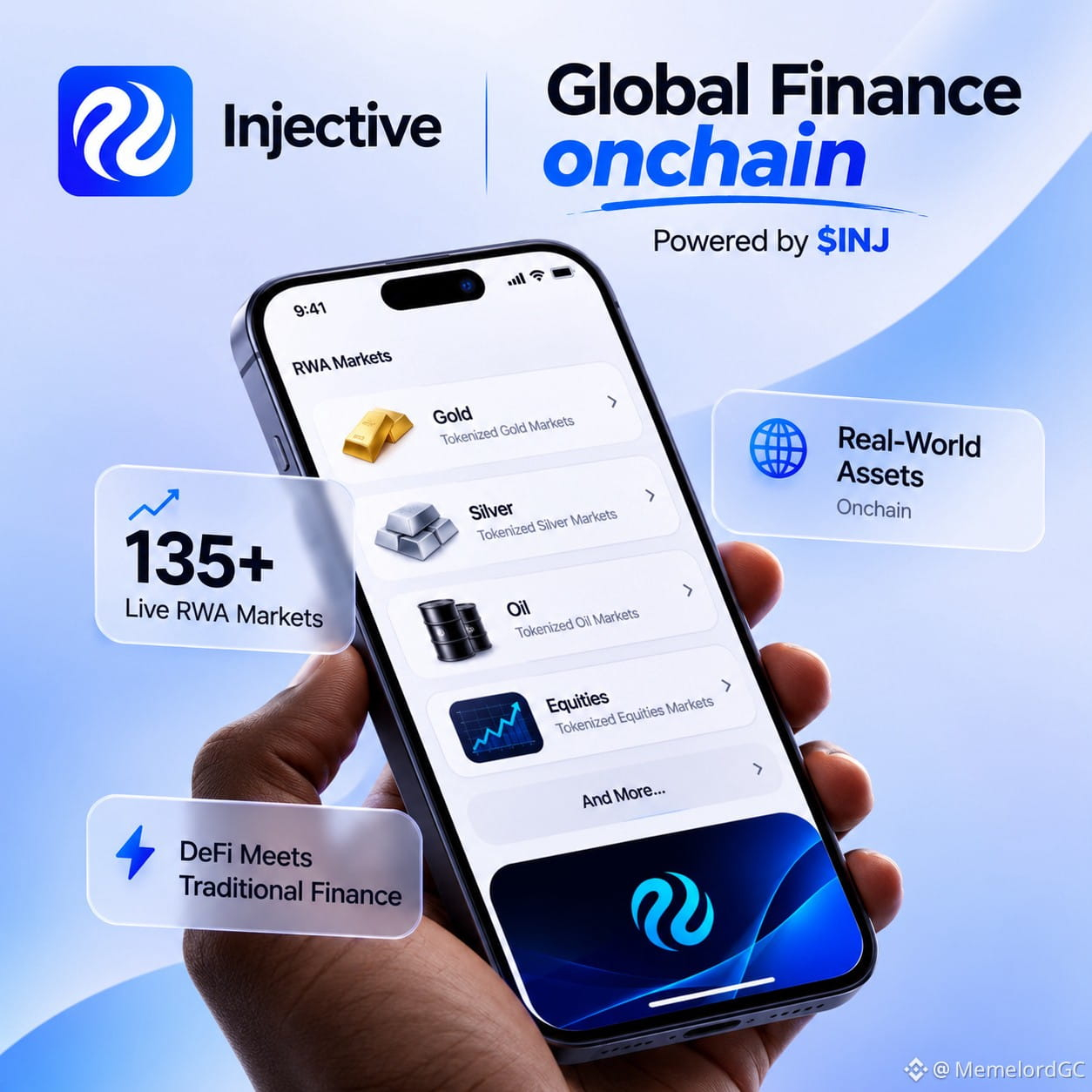
In this regard, Injective is taking steps forward, having over 135 live RWA markets in its ecosystem.
These markets include, but are not limited to:
→ Gold
→ Silver
→ Oil
→ Equities
This is just a part of what's possible.
The potential for additional real-world financial assets to be brought onchain continues to increase as tokenization evolves.
To me, what is noticeable about Injective is that it is not only a vision of onchain finance but also a reality. It's creating the markets and the infrastructure that can support it.
Global finance is going to be onchain. Injective is setting itself midfield in this change.
Powered by $INJ . 🥷
#Injective #INJ #Web3 #defi #RWA
3
407
·
--
Рост
Another major name is joining the $INJ Hacker House!
LG CNS will be heading to Bangkok to support builders working on the next generation of RWA solutions.
This comes after LG CNS completed a trade finance Proof of Concept (PoC) on @Injective alongside POSCO International.
Now, the team will share its experience and guide developers on turning RWA ideas into real world applications ready for production.
This is a great opportunity for builders to learn from teams already exploring real world asset tokenization and enterprise blockchain solutions.
If you're building in RWA, this is one opportunity worth checking out.
Applications close November 10.
Apply here 👇
https://t.co/f0hPRUnfy5
#injective #INJ #RWA #Web3 #AI

3
489
·
--
Проверено
Let's give a warm welcome to another entrance in the @Injective ecosystem for traditional finance.
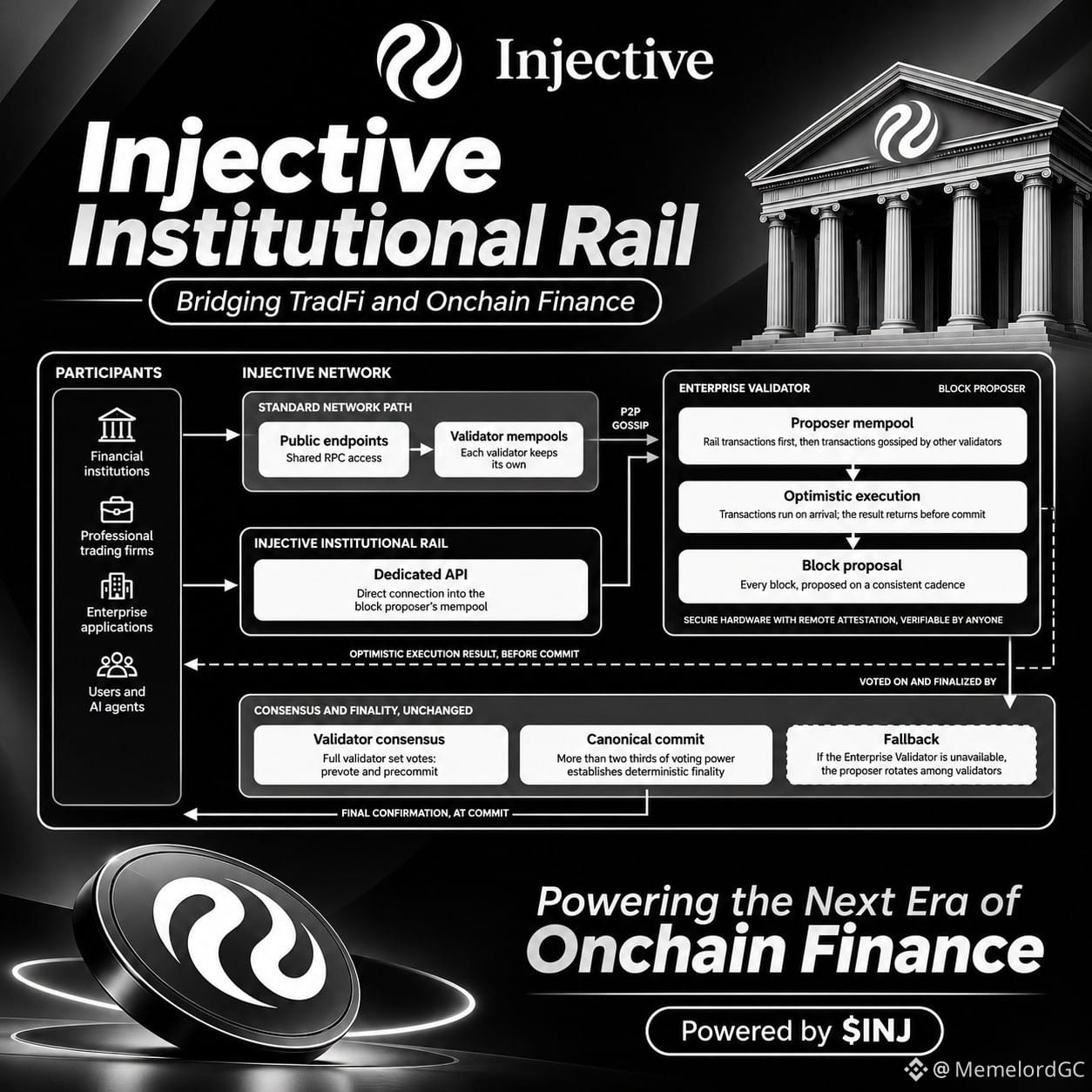
Today, $INJ launched the Institutional Rail, a unique gateway that enables top tier investment funds, enterprises and banks to link directly to Injective.
How is it significant?
Having the right infrastructure is important for institutions considering exploring onchain finance. They require dependable access, secure integration and systems that are able to handle their finances.
The Institutional Rail is a dedicated path for these organisations to access Injective's blockchain infrastructure and make that connection easier.
Reflecting on what this may represent for the future:
Increased onchain market activity, more opportunities for tokenised assets, and increased links between traditional finance and decentralised finance.
Beyond its onchain financial infrastructure, Injective is dedicated to making the onchain economy more accessible to institutions.
This is yet another milestone towards the mainstream adoption of traditional financial institutions into the onchain financial space.
A financial infrastructure built for banking purposes, utilizing $INJ .
#injective #INJ #Web3 #crypto #InstitutionalAdoption
4
640
·
--
Рост
AI compute is a new financial market on @Injective and $SICI is at the core of it.
$INJ has taken it a step higher by introducing onchain options markets for $SICI in addition to perpetual markets with up to 10x leverage, introducing the Super Intelligence Compute Index.
So how is this significant?
AI Infrastructure is expanding fast. From model training to inference and autonomous agents, computing power is fundamental across the entire field of model training, inference, and autonomous agents, but the market for renting GPUs is still divided among hardware and providers.
$SICI combines the price of 5 NVIDIA GPU rentals into a diversified index:
→ H100: 40%
→ B200: 25%
→ H200: 15%
→ A100: 10%
→ RTX 4090: 10%
The index allows stakeholders to monitor and trade the economic aspects of AI infrastructure onchain with the help of hourly data from compute marketplaces.
These are now complemented by perpetuals and options, providing additional opportunities for users to have access to compute prices, handle risk and create new financial products around this new market.
This also follows Injective's previous collaborations with the H100 rental market, as well as their index and pre-IPO perpetuals for companies such as Anthropic, SpaceX and OpenAI.
What's happening in the big picture is interesting.
Injective has been the first to provide exposure to companies developing AI onchain. Now it is making these infrastructure costs come onchain as well.
With the continued development of AI and autonomous agents, new markets will emerge.
The next chapter is where financial infrastructure is being developed to support Injective.
Slowly, then all at once.
#injective #INJ #SICI #AI #Web3
2
2
·
--
Рост
Massive week here 🔥
Massive week here 🔥
MemelordGC
·
--
РостThe price of AI compute is now a market on $INJ , and that was only the beginning of the week.
From launching $SICI to bringing options infrastructure onchain, opening applications for the first @Injective Hacker House and expanding the ecosystem, there was plenty to catch up on.
These are some of the developments that stood out to me.
1. AI compute becomes tradable
The Super Intelligence Compute Index ($SICI) is now live as perpetual markets, tracking a diversified index of NVIDIA GPU rental prices with up to 10x leverage.
2. Injective Options goes live on testnet
Fully collateralized call options are now available, with initial markets focused on indices and commodities. Developers can also use the infrastructure to build their own white label options protocols.
3. Hacker House applications are open
Injective is bringing 20 teams to Bangkok from December 1–10 to build RWA, privacy and agentic applications. Partners include awscloud, Animoca Brands, SMBC Nikko, $TAO and Gulf Labs. Applications close November 10.
4. More activity across the ecosystem
The Community BuyBack has brought total $INJ burned close to 7.3 million. The first Stockdrop is also live, giving eligible participants access to tokenized stocks on @Solana Official .
The Trench Treasury acquired 5% of $RUNNER, while RunUp continues expanding its reach.
A few numbers worth noting:
- 2.3K code commits in 30 days, ranking #3 among L1s.
- $417M traded on Injective exchange dApps in seven days.
- $84.6B cumulative exchange volume.
- 12.7M USDC migrated to Injective.
There were also new developments around sLINJ on ChoiceXchange, private payments through TryNoxApp Pay Links, and more ways to use $INJ across the ecosystem.
AI compute got a market, and options followed a day later. That's the kind of progress worth paying attention to.
Builders, the Hacker House deadline is November 10. Start building and get your application in.
The Injective ecosystem keeps moving. 🥷
#injective #INJ #Web3 #defi #crypto
1
1
·
--
Проверено
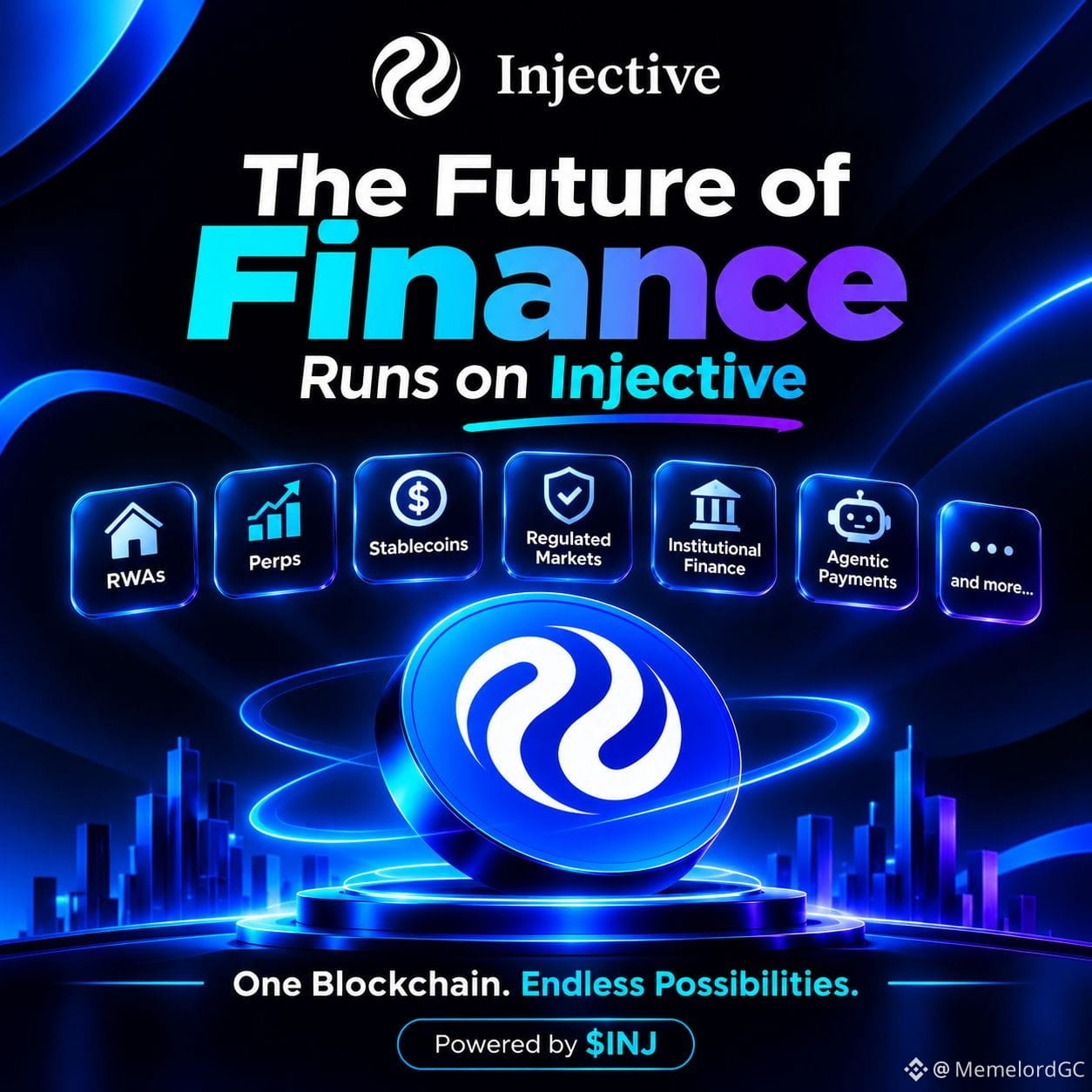
The future of finance runs on @Injective .
And when you look at what is being built, you begin to understand why.
Injective is bringing different areas of finance together on one blockchain:
→ Real-World Assets (RWAs)
→ Perpetual Markets
→ Stablecoins
→ Regulated Markets
→ Institutional Finance
→ Agentic Payments
→ Options: Beta Live
→ Privacy: Coming Soon
→ Quantum Resistance: Coming Soon
→ [Redacted]
Think about it: tokenized assets, advanced trading markets, stablecoin payments and institutional financial tools all developing within one ecosystem.
Options infrastructure is already in beta, while privacy and quantum resistance are among the developments to look forward to.
This is the direction onchain finance is taking: more markets, more financial tools and more ways for people and institutions to interact with digital assets.
One blockchain, bringing all these possibilities together.
And at the centre of this ecosystem is $INJ , powering the network and its growing financial infrastructure.
The future is being built on Injective.
#injective #INJ #Web3 #defi #OnChainFinance
3
839
·
--
Рост
The price of AI compute is now a market on $INJ , and that was only the beginning of the week.
From launching $SICI to bringing options infrastructure onchain, opening applications for the first @Injective Hacker House and expanding the ecosystem, there was plenty to catch up on.
These are some of the developments that stood out to me.
1. AI compute becomes tradable
The Super Intelligence Compute Index ($SICI) is now live as perpetual markets, tracking a diversified index of NVIDIA GPU rental prices with up to 10x leverage.
2. Injective Options goes live on testnet
Fully collateralized call options are now available, with initial markets focused on indices and commodities. Developers can also use the infrastructure to build their own white label options protocols.
3. Hacker House applications are open
Injective is bringing 20 teams to Bangkok from December 1–10 to build RWA, privacy and agentic applications. Partners include awscloud, Animoca Brands, SMBC Nikko, $TAO and Gulf Labs. Applications close November 10.
4. More activity across the ecosystem
The Community BuyBack has brought total $INJ burned close to 7.3 million. The first Stockdrop is also live, giving eligible participants access to tokenized stocks on @Solana_Official .
The Trench Treasury acquired 5% of $RUNNER, while RunUp continues expanding its reach.
A few numbers worth noting:
- 2.3K code commits in 30 days, ranking #3 among L1s.
- $417M traded on Injective exchange dApps in seven days.
- $84.6B cumulative exchange volume.
- 12.7M USDC migrated to Injective.
There were also new developments around sLINJ on ChoiceXchange, private payments through TryNoxApp Pay Links, and more ways to use $INJ across the ecosystem.
AI compute got a market, and options followed a day later. That's the kind of progress worth paying attention to.
Builders, the Hacker House deadline is November 10. Start building and get your application in.
The Injective ecosystem keeps moving. 🥷
#injective #INJ #Web3 #defi #crypto
The price of AI compute is now a market on $INJ , and that was only the beginning of the week.
From launching $SICI to bringing options infrastructure onchain, opening applications for the first @Injective Hacker House and expanding the ecosystem, there was plenty to catch up on.
These are some of the developments that stood out to me.
1. AI compute becomes tradable
The Super Intelligence Compute Index ($SICI) is now live as perpetual markets, tracking a diversified index of NVIDIA GPU rental prices with up to 10x leverage.
2. Injective Options goes live on testnet
Fully collateralized call options are now available, with initial markets focused on indices and commodities. Developers can also use the infrastructure to build their own white label options protocols.
3. Hacker House applications are open
Injective is bringing 20 teams to Bangkok from December 1–10 to build RWA, privacy and agentic applications. Partners include awscloud, Animoca Brands, SMBC Nikko, $TAO and Gulf Labs. Applications close November 10.
4. More activity across the ecosystem
The Community BuyBack has brought total $INJ burned close to 7.3 million. The first Stockdrop is also live, giving eligible participants access to tokenized stocks on @Solana Official .
The Trench Treasury acquired 5% of $RUNNER, while RunUp continues expanding its reach.
A few numbers worth noting:
- 2.3K code commits in 30 days, ranking #3 among L1s.
- $417M traded on Injective exchange dApps in seven days.
- $84.6B cumulative exchange volume.
- 12.7M USDC migrated to Injective.
There were also new developments around sLINJ on ChoiceXchange, private payments through TryNoxApp Pay Links, and more ways to use $INJ across the ecosystem.
AI compute got a market, and options followed a day later. That's the kind of progress worth paying attention to.
Builders, the Hacker House deadline is November 10. Start building and get your application in.
The Injective ecosystem keeps moving. 🥷
#injective #INJ #Web3 #defi #crypto
1
2
2
·
--
Рост
Проверено
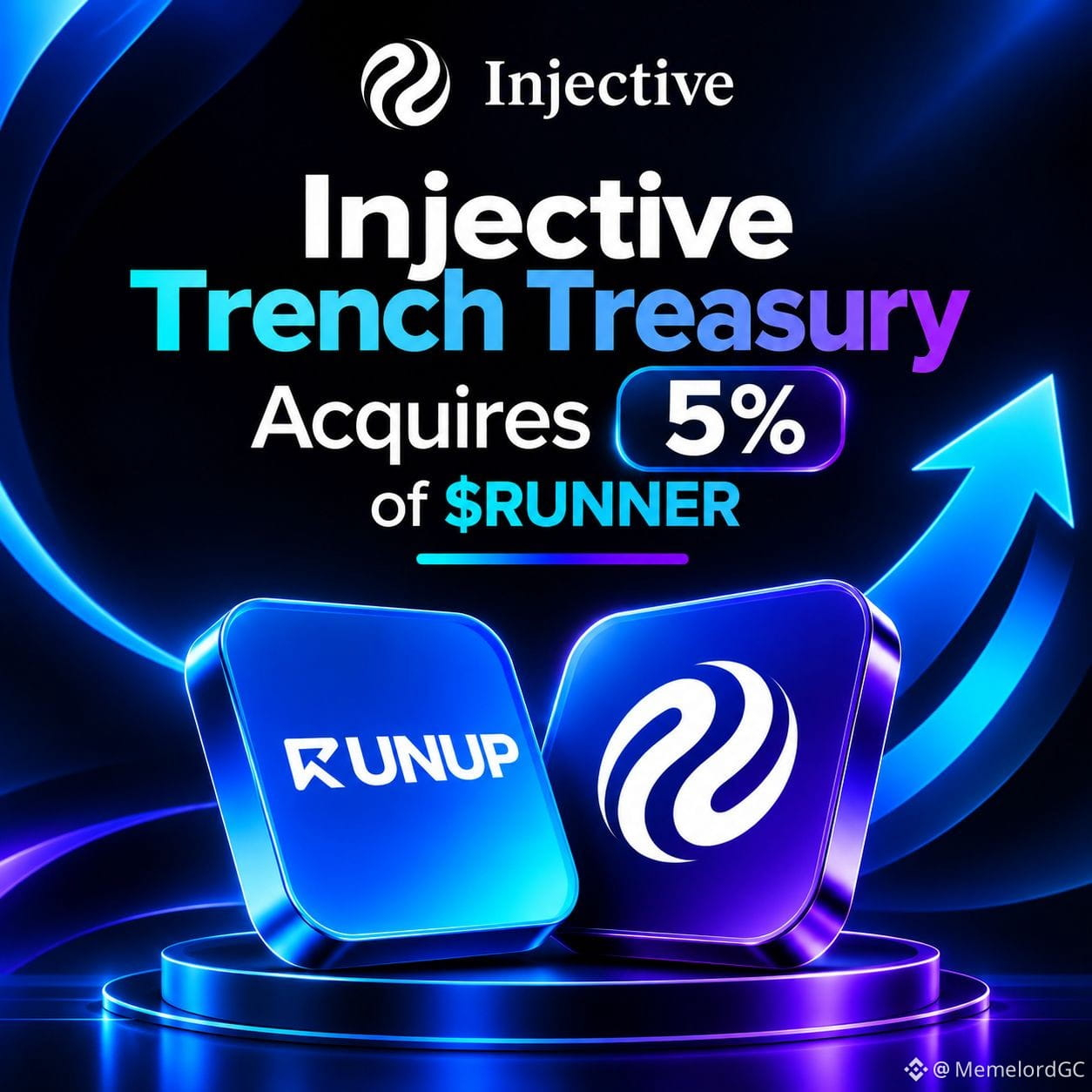
The Injective Trench Treasury has officially acquired 5% of the total $RUNNER supply from Runupdotfun.
This is another meaningful development for RunUp and the wider @Injective ecosystem.
RunUp is building a different approach to token launches on Injective by using native perpetual markets to create new ways for value to flow back to token holders.
Trading fees support onchain treasury strategies, with profits helping fund token buybacks. Holders can also earn $INJ rewards generated through platform activity.
RunUp has expanded to @Solana_Official too, allowing anyone to launch tokens paired directly with INJ while rewarding holders in INJ.
Its integrations with @JupiterExchange-1 , Backpack and Coinbase are creating more ways for Solana users to discover INJ and connect with the Injective ecosystem. The initial RunUp launch alone brought more than 30,000 unique users into Injective.
This latest acquisition follows the Trench Treasury’s earlier purchase of 10% of the NinjaCatSF supply. Both moves reflect the initiative’s focus: supporting projects that bring real utility to $INJ , attract new communities and introduce creative value-accrual models.
The Treasury has stated that its acquisitions are not intended for resale, showing a long-term commitment to the community.
To builders: keep putting $INJ at the centre of what you create. There is room for teams bringing genuine innovation and organic growth to Injective.
And to the RunUp community, welcome to the Ninja family.
Let’s run it up! 🏃🔥
#injective #INJ #Crypto #defi
The Injective Trench Treasury has officially acquired 5% of the total $RUNNER supply from Runupdotfun.
This is another meaningful development for RunUp and the wider @Injective ecosystem.
RunUp is building a different approach to token launches on Injective by using native perpetual markets to create new ways for value to flow back to token holders.
Trading fees support onchain treasury strategies, with profits helping fund token buybacks. Holders can also earn $INJ rewards generated through platform activity.
RunUp has expanded to @Solana Official too, allowing anyone to launch tokens paired directly with INJ while rewarding holders in INJ.
Its integrations with @JupiterExchange , Backpack and Coinbase are creating more ways for Solana users to discover INJ and connect with the Injective ecosystem. The initial RunUp launch alone brought more than 30,000 unique users into Injective.
This latest acquisition follows the Trench Treasury’s earlier purchase of 10% of the NinjaCatSF supply. Both moves reflect the initiative’s focus: supporting projects that bring real utility to $INJ , attract new communities and introduce creative value-accrual models.
The Treasury has stated that its acquisitions are not intended for resale, showing a long-term commitment to the community.
To builders: keep putting $INJ at the centre of what you create. There is room for teams bringing genuine innovation and organic growth to Injective.
And to the RunUp community, welcome to the Ninja family.
Let’s run it up! 🏃🔥
#injective #INJ #Crypto #defi
4
947
·
--
Рост
The capped side of $INJ is interesting.
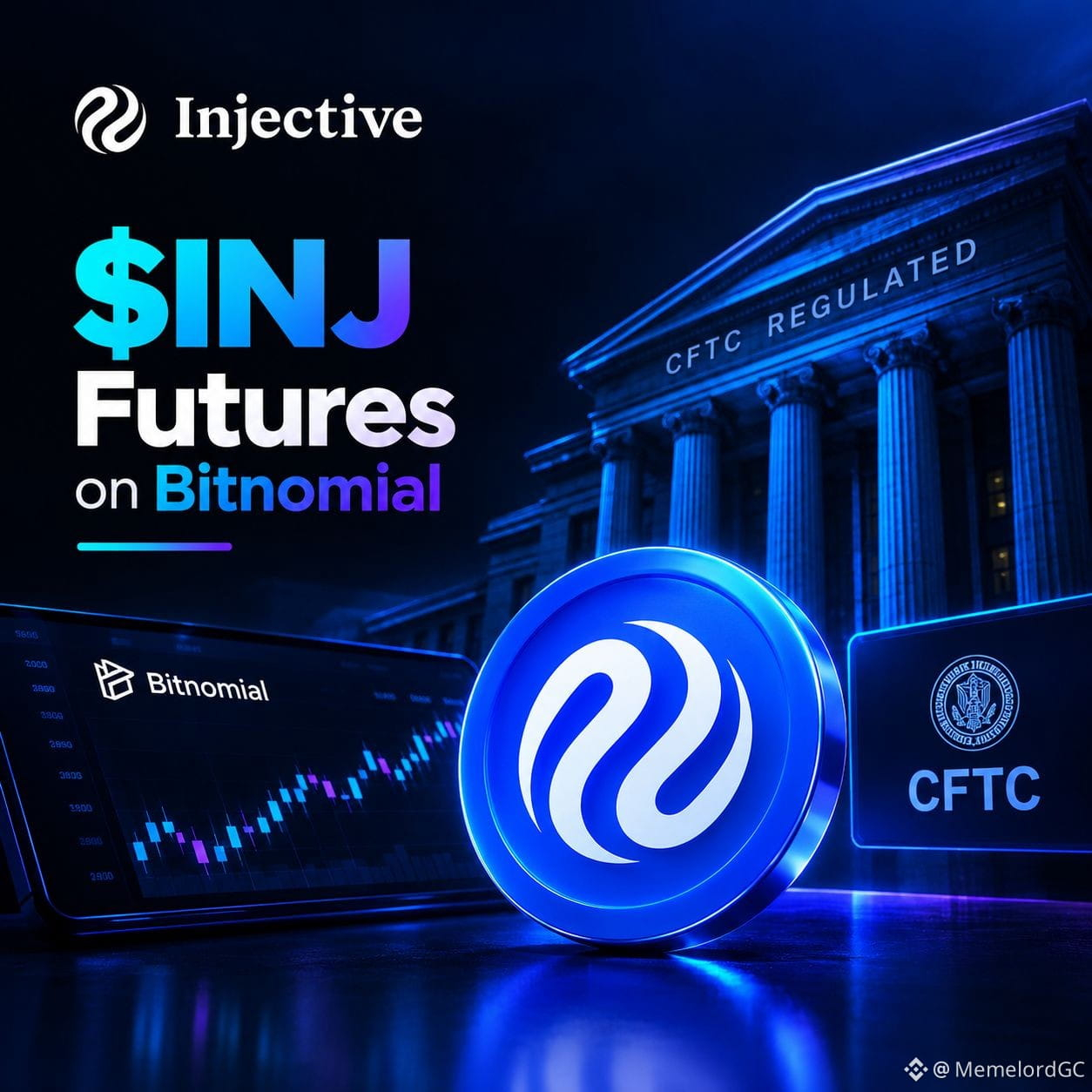
Ten days after its launch, the futures trading of $INJ has been available on the CFTC-regulated exchange and clearing house owned by Kraken's parent company, Payward, as of April 15.
This makes INJ the first time that it has been trading for over six months on a futures exchange regulated by the United States.
What does this mean?
One of the conditions the SEC have in their generic listing standards for certain commodity based exchange traded products requires that six months of futures trading be completed on a designated contract market prior to the expected Canary Staked INJ ETF ($INJC).
The futures market is a place to trade contracts on an underlying asset, while the plan is to launch an ETF. Institutions can enter into trade of INJ futures that are crypto settled with crypto or USD margin.
INJC, on the other hand, aims to provide investors with exposure to INJ through a U.S.-listed ETF in which they hold and stake INJ, with staking rewards included in the fund's NAV, pending the fund's final structure and approvals.
One of them offers a regulated platform for trading INJ futures. The other might provide a familiar brokerage path to get invested in INJ.
This is another significant update for the wider financial infrastructure that is evolving around @Injective .
The regulated rails are growing, the onchain ecosystem continues to grow. 🥷
#crypto #injective #Web3 #blockchain #FutureTarding
4
831
·
--
Рост
Проверено
Compute is the next major market for AI to make an impact, and it's one many people are not yet aware of.
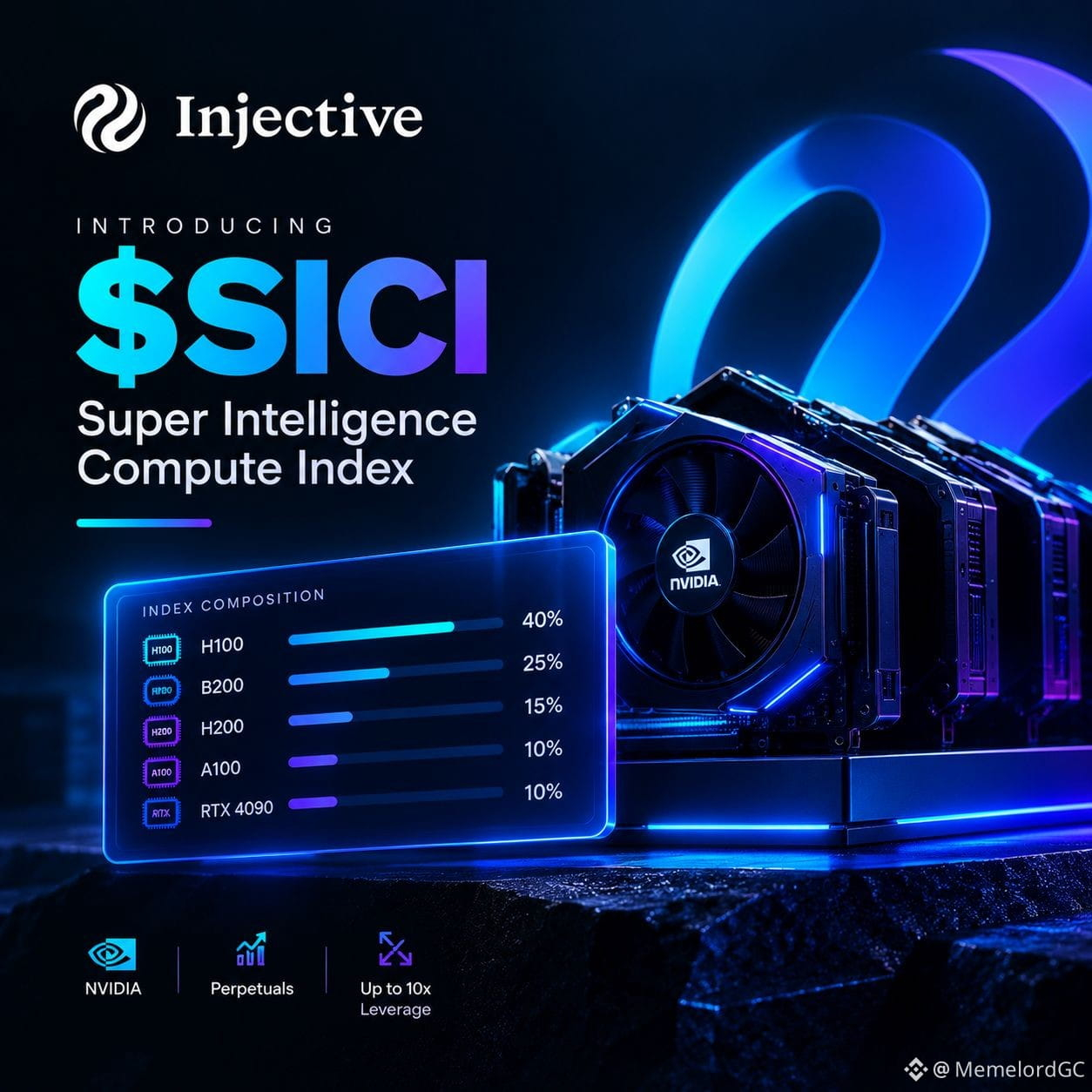
$INJ has moved one more step towards the AI economy by announcing the launch of the Super Intelligence Compute Index ($SICI).
Traders can now access a diversified index of NVIDIA GPUs rental prices on @Injective for the first time through perpetual markets, up to 10x leverage.
Consider what it might imply.
The computational requirements for building AI-based models, conducting inferences and driving autonomous agents are substantial and essential in the development of AI companies. As demand continues to rise, the availability of GPUs is becoming more critical in the AI economy.
The prices of renting GPUs, however, vary from provider to provider and GPU to GPU, making it hard to gauge the market.
$SICI introduces five different rental rates for GPUs in one benchmark onchain:
→ H100 — 40%
→ B200 — 25%
→ H200 — 15%
→ A100 — 10%
→ RTX 4090 — 10%
The new index will give market exposure to costs of AI infrastructure, based on data from the hourly compute marketplace.
And it works into a greater pattern for @Injective .
We've already seen onchain H100 rental markets, the $AIX index and pre-IPO perpetuals pegged to companies that are driving the current evolution of the AI sector such as @openai , SpaceX and AnthropicAI.
Now, Injective is bringing the economics of the infrastructure powering AI onchain.
The AI economy is generating new markets and $SICI will be one more step to access those markets through onchain finance.
I am eager to see what is next!
#artificialintelligence #AIInfrastructure #Tokenization #blockchain #injective
Compute is the next major market for AI to make an impact, and it's one many people are not yet aware of.
$INJ has moved one more step towards the AI economy by announcing the launch of the Super Intelligence Compute Index ($SICI).
Traders can now access a diversified index of NVIDIA GPUs rental prices on @Injective for the first time through perpetual markets, up to 10x leverage.
Consider what it might imply.
The computational requirements for building AI-based models, conducting inferences and driving autonomous agents are substantial and essential in the development of AI companies. As demand continues to rise, the availability of GPUs is becoming more critical in the AI economy.
The prices of renting GPUs, however, vary from provider to provider and GPU to GPU, making it hard to gauge the market.
$SICI introduces five different rental rates for GPUs in one benchmark onchain:
→ H100 — 40%
→ B200 — 25%
→ H200 — 15%
→ A100 — 10%
→ RTX 4090 — 10%
The new index will give market exposure to costs of AI infrastructure, based on data from the hourly compute marketplace.
And it works into a greater pattern for @Injective .
We've already seen onchain H100 rental markets, the $AIX index and pre-IPO perpetuals pegged to companies that are driving the current evolution of the AI sector such as @OpenAI , SpaceX and AnthropicAI.
Now, Injective is bringing the economics of the infrastructure powering AI onchain.
The AI economy is generating new markets and $SICI will be one more step to access those markets through onchain finance.
I am eager to see what is next!
#artificialintelligence #AIInfrastructure #Tokenization #blockchain #injective
3
874
·
--
Рост
Частичная правда
A week of action for $INJ and it's creating some new opportunities.
There was a lot of activities happening across @Injective this week, ranging from bringing the Korean won onchain to increasing the liquidity of stablecoins and private cross chain swaps.
Here are some of the things that caught my eyes below:
1. The Korean won is onchain
Injective is getting the settlement of won-backed stablecoins thanks to KRW1, by BDACSKorea. This is another addition to the rapidly expanding RWA ecosystem, with the bank's reserves deposited in the largest South Korean bank.
2. The Community BuyBack!
On the Stockdrop front, we had up to $251,000 worth of $INJ up for burning in October's BuyBack, and another Stockdrop is just around the corner with the potential of onchain stock rewards for participants.
3. Stablecoin issuers need to reserve more money.
Native USDC supply on Injective has increased 43% over the last month to $16.5M. In addition, there's over $100M in stablecoin supply that will also be shifting as Injective continues to grow its presence in 20+ blockchain ecosystems.
4. Private swaps now are more connected.
Nox Superswap now has 37 chains for moving within and from Injective via NEAR Confidential Intents. This is a helpful option for users transferring assets from one ecosystem to another.
5. More builders, more activity
Runupdotfun is bringing INJ reward opportunities to Solana tokens and FinchTechAI is building AI-agent financial infrastructure on Injective.
Native DEXs on the other hand saw $405M worth of volume over the past week, bringing weekly trading volume to $84.3B.
The revenue flywheel is still spinning, since there are over 7.2M $INJ burned to date.
The Korean Won is seeing increasing onchaining activity, the next Stockdrop is right on the horizon and new financial instruments are proliferating throughout the ecosystem.
There is much to be seen. 🥷
#RWA #blockchain #Onchain #Web3 #crypto
3
668
·
--
Рост
$INJ is setting stage for next generation onchain regulated FinTech in America.
Some are now turning their attention to the U.S. market, but @Injective has been years in the making, working to develop the necessary infrastructure to bring tokenized assets and markets onchain.
And the regulatory component is also playing an increasingly significant role in this tale.
→ Injective Institutional Services is a transfer agent registered with the Securities and Exchange Commission (SEC), responsible for keeping official ownership records for tokenized securities.
→ Injective Mint offers infrastructure to issuers to bring their assets, like stocks, funds, and receivables, onto chain while maintaining compliance controls.
→ However, futures trading on U.S.-listed markets, including those by $INJ, are regulated by the CFTC.
→ Recently, Injective's CEO, Ericinjective, met with the officials of the White House, SEC and CFTC, along with Injective's legal, policy, and research teams.
Just obtaining assets onchain is not enough, though. There has to be a place where those assets can be placed and there's something for them to do.
Injective's market infrastructure is where it comes in.
135 RWA perpetual markets. Cumulative perp volume of $5.3B+ of RWA. Over $1B of value onchain in tokenized RWA tokens.
Wallets can become markets, assets can be traded, collaterals can be used, and withdrawing the assets can be 24/7.
The regulatory environment will remain dynamic and further access will rely on future rules and approvals. But now, Injective is going toward that opportunity.
The infrastructure currently being developed may be of significant importance if tokenized securities and onchain perpetuals continue to grow in the U.S.
More than anything else, $INJ is at the heart of that longer term vision.
#INJ #injective #RWA #crypto #Tokenization
$INJ is setting stage for next generation onchain regulated FinTech in America.
Some are now turning their attention to the U.S. market, but @Injective has been years in the making, working to develop the necessary infrastructure to bring tokenized assets and markets onchain.
And the regulatory component is also playing an increasingly significant role in this tale.
→ Injective Institutional Services is a transfer agent registered with the Securities and Exchange Commission (SEC), responsible for keeping official ownership records for tokenized securities.
→ Injective Mint offers infrastructure to issuers to bring their assets, like stocks, funds, and receivables, onto chain while maintaining compliance controls.
→ However, futures trading on U.S.-listed markets, including those by $INJ , are regulated by the CFTC.
→ Recently, Injective's CEO, Ericinjective, met with the officials of the White House, SEC and CFTC, along with Injective's legal, policy, and research teams.
Just obtaining assets onchain is not enough, though. There has to be a place where those assets can be placed and there's something for them to do.
Injective's market infrastructure is where it comes in.
135 RWA perpetual markets. Cumulative perp volume of $5.3B+ of RWA. Over $1B of value onchain in tokenized RWA tokens.
Wallets can become markets, assets can be traded, collaterals can be used, and withdrawing the assets can be 24/7.
The regulatory environment will remain dynamic and further access will rely on future rules and approvals. But now, Injective is going toward that opportunity.
The infrastructure currently being developed may be of significant importance if tokenized securities and onchain perpetuals continue to grow in the U.S.
More than anything else, $INJ is at the heart of that longer term vision.
#INJ #injective #RWA #crypto #Tokenization
4
414
·
--
Рост
$INJ is just one piece of a larger narrative on where tokenized stocks should be listed.
The offshore markets for tokenized stocks are picking up steam, and access to these markets in the U.S. is constrained by regulatory challenges.
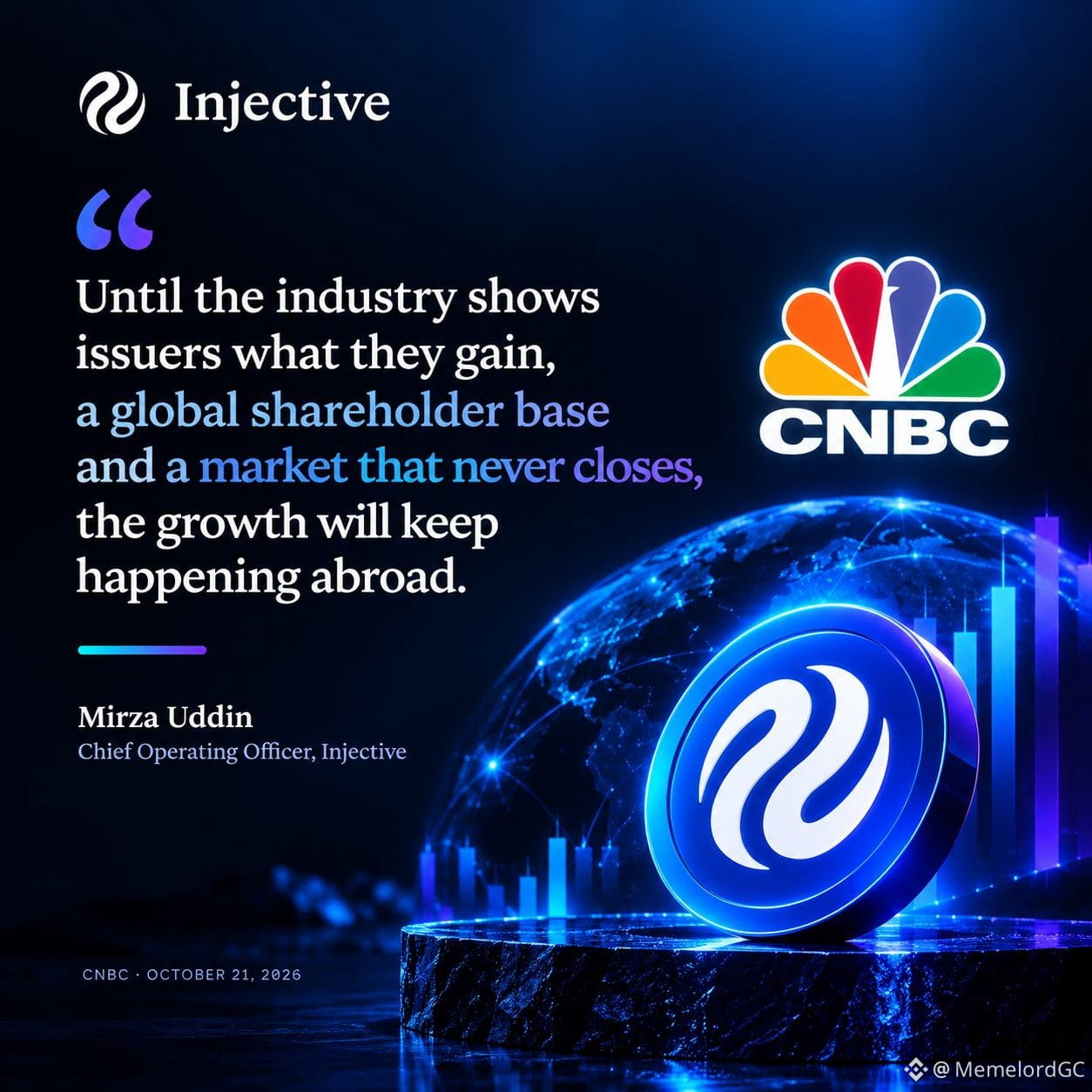
During a recent interview with @Square-Creator-a47c09feed350 , Injective COO, mirza, explained the potential for 24/7 trading and retaining more value onshore in U.S. markets in order to bring on tokenized stocks.
This is a very important opportunity.
The traditional Stock markets have fixed trading timings. Onchain markets can provide immediate access, quicker settlement, and innovative methods to make financial assets accessible in apps.
However, technology is not enough to free up that potential in the U.S. It will be vital to have regulatory clarity and to engage with policy makers.
This is why @Injective is collaborating with officials and policy makers to help facilitate the discussion going forward.
More than $1 billion worth of real world assets have been tokenized and available on Injective, and the ecosystem is rapidly developing toward the future of moving and trading traditional assets onchain.
The tokenization process is progressing. The question remains how much of that future will be captured by the U.S.
And, naturally, $INJ is in the middle of the discussion.
You can learn more about it here below
(https://www.cnbc.com/2026/10/21/tokenized-stocks-us-companies-object.html)
#RWA #TokenizedStocks #blockchain #Onchain #Web3
$INJ is just one piece of a larger narrative on where tokenized stocks should be listed.
The offshore markets for tokenized stocks are picking up steam, and access to these markets in the U.S. is constrained by regulatory challenges.
During a recent interview with @ CNBC , Injective COO, mirza, explained the potential for 24/7 trading and retaining more value onshore in U.S. markets in order to bring on tokenized stocks.
This is a very important opportunity.
The traditional Stock markets have fixed trading timings. Onchain markets can provide immediate access, quicker settlement, and innovative methods to make financial assets accessible in apps.
However, technology is not enough to free up that potential in the U.S. It will be vital to have regulatory clarity and to engage with policy makers.
This is why @Injective is collaborating with officials and policy makers to help facilitate the discussion going forward.
More than $1 billion worth of real world assets have been tokenized and available on Injective, and the ecosystem is rapidly developing toward the future of moving and trading traditional assets onchain.
The tokenization process is progressing. The question remains how much of that future will be captured by the U.S.
And, naturally, $INJ is in the middle of the discussion.
You can learn more about it here below
(https://www.cnbc.com/2026/10/21/tokenized-stocks-us-companies-object.html)
#RWA #TokenizedStocks #blockchain #Onchain #Web3
3
306
·
--
Рост
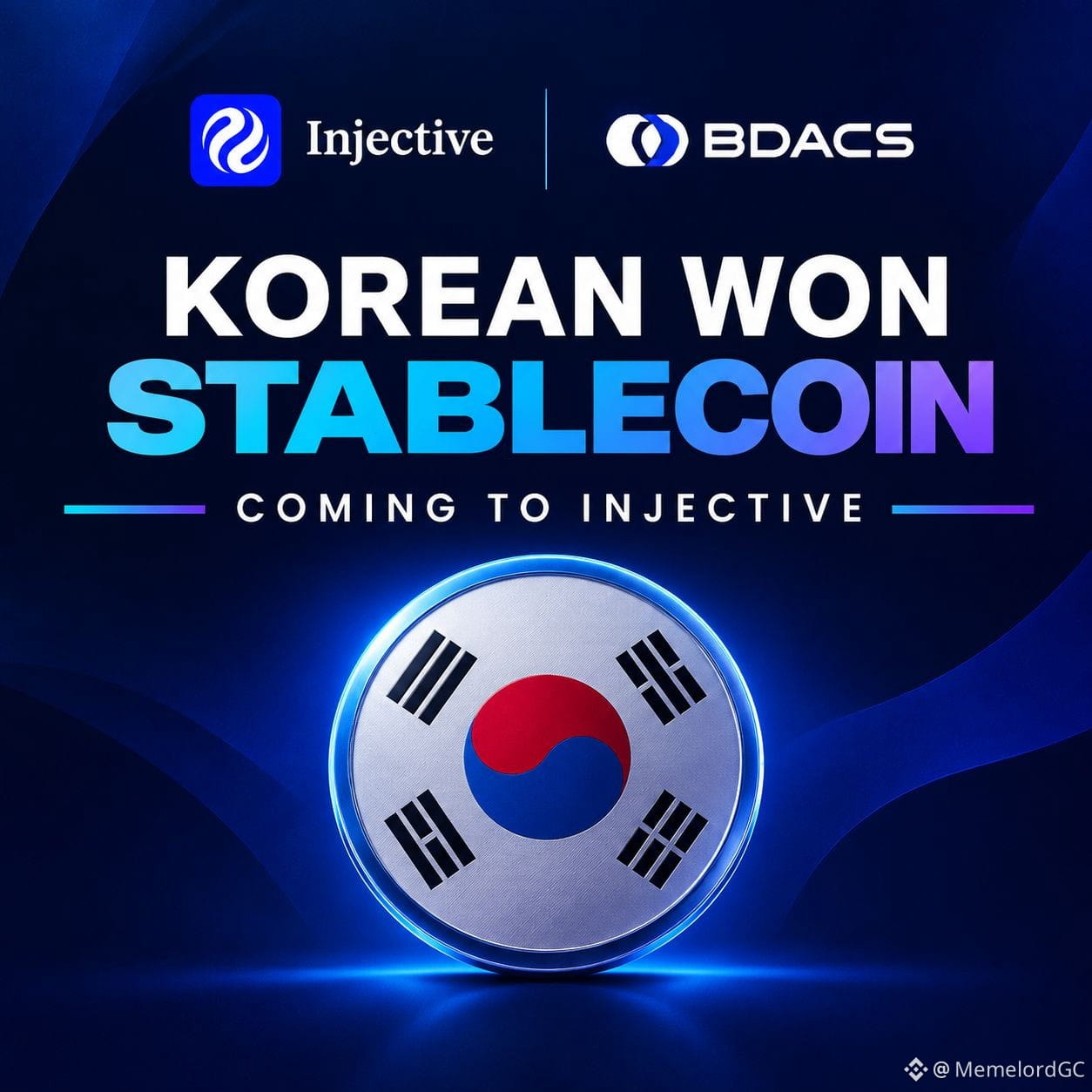
$INJ is bringing the Korean won onchain.
Interesting to see the development of @Injective and its real world asset ecosystem more broadly.
The Korea based company, BDACSKorea, is launching KRW1, which is the first stablecoin backed by the Korean won, which will be kept in a major South Korean bank.
The intention here is to introduce another major fiat currency to the onchain finance.
Why is this important?
There are numerous crypto markets that are dollar denominated, even if users are operating in other currencies. Access to onchain markets when investing in Korea, in the local currency, may help bridge some of those gaps.
The announcement also builds on Injective’s growing relationships with Korean institutions. Already, POSCO International and LG CNS have chosen Injective for a pilot of live trade receivables tokenization project.
But now, it's on the verge of getting more complicated.
The data released states that Injective has handled over $7.5 billion in RWA volume and over $1 billion in tokenized assets have been issued on the network.
The larger one here, however, is that tokenization is moving beyond asset on chain. It's also about the currencies, settlement rails and markets required to put those assets to work.
If this goes as it's meant to, then $INJ will have a significant influence on connecting Korean currency markets to onchain finance globally.
More currencies. More assets. 🥷
#injective #RWA #blockchain #Onchain
3
466
·
--
Рост
Bullish on this
Bullish on this

Iamsolenzy
·
--
РостPentiv’s story on @Injective goes beyond $1B+ in tokenized mortgage records.
The bigger opportunity is what happens when traditional financial assets and the data behind them start moving onchain.
@pentivhq has already brought over $1B in residential mortgage records onchain, with each record containing 500+ data points tied to the underlying loan.
And this matters because:
✅ Better data, better financial infrastructure
Putting mortgage records onchain creates opportunities for improved verification, transparent reporting, and stronger risk analysis.
It could also lay the groundwork for mortgage-related workflows to move onchain over time.
✅ The vision goes beyond tokenization
Pentiv has outlined plans to integrate Injective deeper into mortgage finance, including data management, servicing, and settlement.
If these plans materialize, Injective could become part of the infrastructure supporting real-world mortgage operations.
✅ A $100M $INJ treasury strategy
Pentiv’s $100M $INJ treasury strategy and staking activity add another dimension to its commitment to the ecosystem, connecting its business ambitions with Injective’s onchain economy.
✅ Room for further expansion
Pentiv’s planned expansion to other brokerages could bring additional mortgage data and unlock more potential use cases.
The real value lies in what this could mean for onchain adoption:
More mortgage data could strengthen the onchain data layer.
A stronger data layer could enable more financial workflows.
And more useful workflows could create stronger reasons for institutions to adopt onchain infrastructure.
Of course, the real impact will depend on execution and how much of this vision becomes operational.
Still, this is an interesting development for Injective.
Traditional finance doesn’t necessarily need to move onchain all at once. Sometimes, it starts with the data, then expands into the processes built around it.
Pentiv could offer an interesting glimpse into that transition.
Definitely one to keep on the radar.
#injective $INJ #RWA


2
2
·
--
Рост
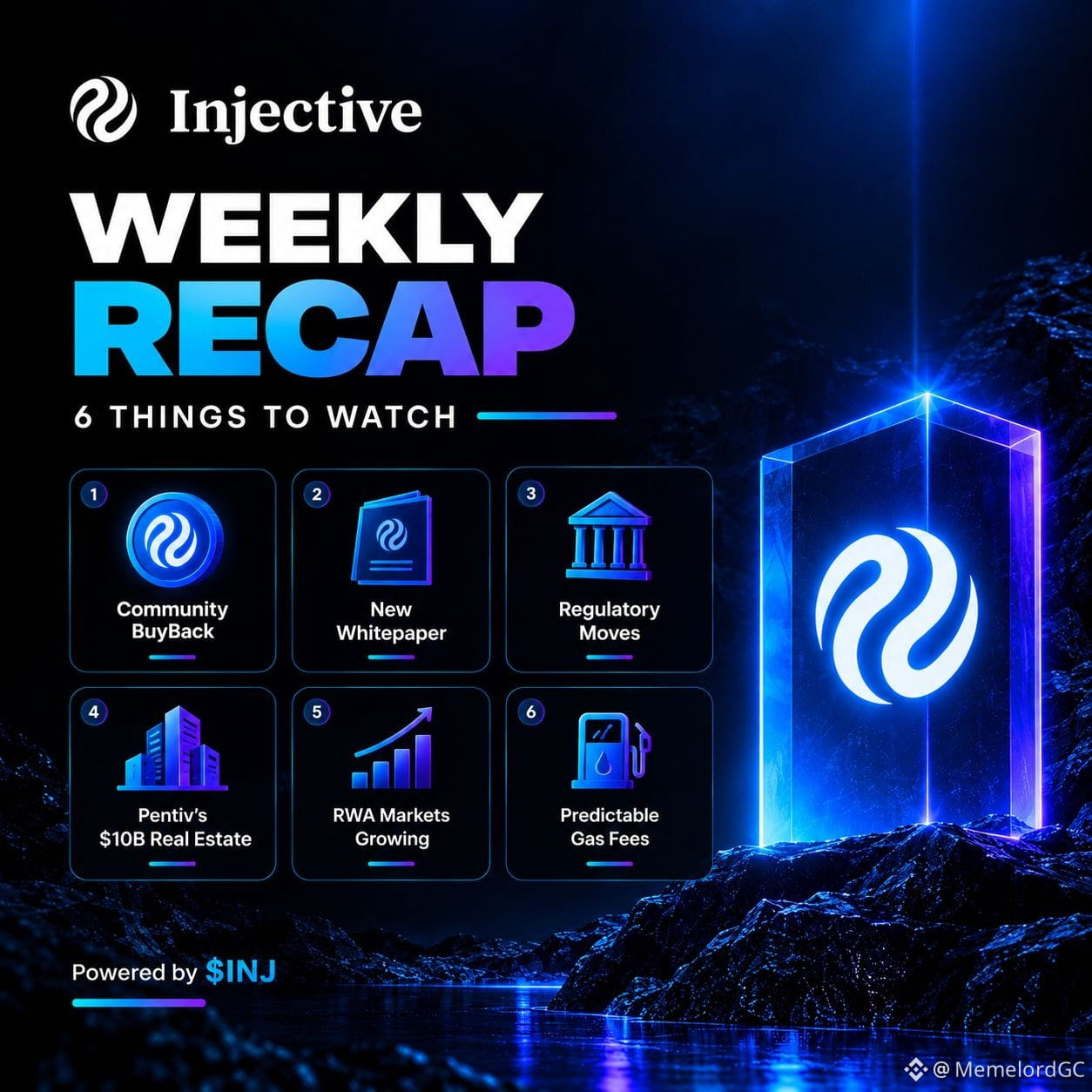
$INJ has a lot going on this week, and the interesting part is how everything connects.
From the Community BuyBack to institutional real estate, regulatory engagement and better trading infrastructure, @Injective keeps expanding its footprint in onchain finance.
Here are 6 developments worth paying attention to:
1. The Community BuyBack returns tomorrow
October’s BuyBack has crossed $247,000 in value, with the next round scheduled for Wednesday, October 21. There’s also a Stockdrop tease to watch. The community will be looking closely at what comes next.
2. A new Injective Whitepaper
The first full rewrite since December 2018 is live. It lays out the architecture behind native RWA tokenization, iAssets, sealed batch auctions, ~600ms finality, and AI agents interacting with tokenized markets.
3. Eric Chen meets U.S. officials
Injective’s CEO met with officials in Washington, including representatives connected to the White House, SEC and CFTC. Combined with Injective’s SEC-registered transfer agent status, this adds another chapter to its institutional and regulatory journey.
4. Pentiv targets $10B in real estate
Pentiv plans to tokenize its $10 billion real estate portfolio on Injective. More than $1 billion in mortgage records is already onchain, giving this story some real substance.
5. RWA markets keep growing
Injective has 135 RWA perpetual markets, with over $5.3 billion in cumulative volume since early 2025. Nearly half of its markets are tied to tokenized assets.
6. Predictable gas fees through IIP-709
The proposal introduces fixed gas fees for exchange actions like placing and cancelling orders. It’s on testnet and still awaits mainnet governance approval.
My takeaway? Injective is working on several fronts at once: assets, markets, institutions and user experience.
Still a lot of development to watch here. 🥷
#RWA #blockchain #Injective🔥 #Layer1
3
337
Войдите, чтобы посмотреть больше материала
Присоединяйтесь к пользователям криптовалют по всему миру на Binance Square
⚡️ Получайте новейшую и полезную информацию о криптоактивах.
💬 Нам доверяет крупнейшая в мире криптобиржа.
👍 Получите достоверные аналитические данные от верифицированных создателей контента.
Эл. почта/номер телефона
В тренде
NvidiaInvestigatesAfterHuang’sAffairApology
Просмотров: 145,800
1,473 обсуждают
Nvidia Board Opens Probe Into Whether Huang Was Target of Foreign Intelligence Effort
Binance News
·Лайков: 17
·Просмотров: 52.4k
BitcoinFiveWeeklyLosses
Просмотров: 175,007
1,943 обсуждают
AIChipSlumpNasdaq
Просмотров: 90,108
1,208 обсуждают