
#macrocrypto
macrocrypto
Просмотров: 191,414
1,429 обсуждают
Популярные
Новые

美国总统唐纳德·特朗普(Donald Trump)近日公开表态,强调美国在人工智能领域必须保持绝对领先地位,反对设立过多繁琐的监管壁垒,并重申政府具备足够管控力以确保技术安全。与此同时,金融市场上美国10年期国债收益率强势上行突破5.0%关键心理关口,创下近三年来的新高。
从宏观与技术面观察,10年期美债收益率冲上5%通常会给估值带来压力,但这主要是市场在彻底定价经济韧性与技术驱动的增长预期。特朗普对AI行业松绑且偏向进取的基调,直接强化了市场对未来科技创新与生产力爆发的信心,缓解了此前对于政策强力扼杀新兴产业的担忧。
资产走势方面,美债收益率上探5%是典型的筑顶测试信号。从流动性结构来看,高收益率往往意味着加息周期的最终动能释放殆尽,一旦收益率在该阻力位承压盘整,长端资本将重新寻找高弹性的风险资产进行对冲与配置,美元流动性有望迎来再平衡。
对于加密市场而言,这构成了中长期的技术性利好。$BTC 与主流山寨币在经历宏观震荡后展现出极强韧性,AI概念板块代币更是直接受惠于政策层面的发展偏向。只要大盘在关键支撑位企稳,流动性回流将进一步点燃风险偏好,推动加密资产展开新一轮突破行情。🚀
#ArtificialIntelligence #TreasuryYields #MacroCrypto
美国总统唐纳德·特朗普(Donald Trump)近日公开表态,强调美国在人工智能领域必须保持绝对领先地位,反对设立过多繁琐的监管壁垒,并重申政府具备足够管控力以确保技术安全。与此同时,金融市场上美国10年期国债收益率强势上行突破5.0%关键心理关口,创下近三年来的新高。
从宏观与技术面观察,10年期美债收益率冲上5%通常会给估值带来压力,但这主要是市场在彻底定价经济韧性与技术驱动的增长预期。特朗普对AI行业松绑且偏向进取的基调,直接强化了市场对未来科技创新与生产力爆发的信心,缓解了此前对于政策强力扼杀新兴产业的担忧。
资产走势方面,美债收益率上探5%是典型的筑顶测试信号。从流动性结构来看,高收益率往往意味着加息周期的最终动能释放殆尽,一旦收益率在该阻力位承压盘整,长端资本将重新寻找高弹性的风险资产进行对冲与配置,美元流动性有望迎来再平衡。
对于加密市场而言,这构成了中长期的技术性利好。$BTC 与主流山寨币在经历宏观震荡后展现出极强韧性,AI概念板块代币更是直接受惠于政策层面的发展偏向。只要大盘在关键支撑位企稳,流动性回流将进一步点燃风险偏好,推动加密资产展开新一轮突破行情。🚀
#ArtificialIntelligence #TreasuryYields #MacroCrypto
从宏观与技术面观察,10年期美债收益率冲上5%通常会给估值带来压力,但这主要是市场在彻底定价经济韧性与技术驱动的增长预期。特朗普对AI行业松绑且偏向进取的基调,直接强化了市场对未来科技创新与生产力爆发的信心,缓解了此前对于政策强力扼杀新兴产业的担忧。
资产走势方面,美债收益率上探5%是典型的筑顶测试信号。从流动性结构来看,高收益率往往意味着加息周期的最终动能释放殆尽,一旦收益率在该阻力位承压盘整,长端资本将重新寻找高弹性的风险资产进行对冲与配置,美元流动性有望迎来再平衡。
对于加密市场而言,这构成了中长期的技术性利好。$BTC 与主流山寨币在经历宏观震荡后展现出极强韧性,AI概念板块代币更是直接受惠于政策层面的发展偏向。只要大盘在关键支撑位企稳,流动性回流将进一步点燃风险偏好,推动加密资产展开新一轮突破行情。🚀
#ArtificialIntelligence #TreasuryYields #MacroCrypto
57

🏦 BTC cae: Irán y Bessent presionan el precio
Bitcoin se desploma con la escalada en Irán y las preocupaciones sobre un ajuste del yen, impulsado por Scott Bessent. Los mercados de valores también sufren la tensión geopolítica.
¿Crees que el ajuste del yen impactará a Bitcoin? 👇
$BTC #MacroCrypto
Contenido informativo. No constituye asesoría financiera.
🏦 BTC cae: Irán y Bessent presionan el precio
Bitcoin se desploma con la escalada en Irán y las preocupaciones sobre un ajuste del yen, impulsado por Scott Bessent. Los mercados de valores también sufren la tensión geopolítica.
¿Crees que el ajuste del yen impactará a Bitcoin? 👇
$BTC #MacroCrypto
Contenido informativo. No constituye asesoría financiera.
Bitcoin se desploma con la escalada en Irán y las preocupaciones sobre un ajuste del yen, impulsado por Scott Bessent. Los mercados de valores también sufren la tensión geopolítica.
¿Crees que el ajuste del yen impactará a Bitcoin? 👇
$BTC #MacroCrypto
Contenido informativo. No constituye asesoría financiera.
16

·
--
🧠 The "Bad News" Paradox.
Macro textbooks say high core CPI and looming Fed rate hikes should crash crypto. Instead, $665M in short positions just got vaporized in 24 hours—and $ETH led the liquidation pain over $BTC ($250M vs $170M).
When the market refuses to drop on objectively bad macro news, it’s screaming one thing: the path of least resistance is up. Smart money is looking past the rate headlines to focus on massive ETF inflows and aggressive supply absorption via corporate staking.
Stop trading the daily panic. Look at the structural holding of higher highs.
Are you sitting in stablecoins or buying the macro dip? 👇
{spot}(ETHUSDT)
{spot}(BTCUSDT)
#Ethereum #MacroCrypto #Web3 #CryptoNews #CryptoMarket
🧠 The "Bad News" Paradox.
Macro textbooks say high core CPI and looming Fed rate hikes should crash crypto. Instead, $665M in short positions just got vaporized in 24 hours—and $ETH led the liquidation pain over $BTC ($250M vs $170M).
When the market refuses to drop on objectively bad macro news, it’s screaming one thing: the path of least resistance is up. Smart money is looking past the rate headlines to focus on massive ETF inflows and aggressive supply absorption via corporate staking.
Stop trading the daily panic. Look at the structural holding of higher highs.
Are you sitting in stablecoins or buying the macro dip? 👇
#Ethereum #MacroCrypto #Web3 #CryptoNews #CryptoMarket
Macro textbooks say high core CPI and looming Fed rate hikes should crash crypto. Instead, $665M in short positions just got vaporized in 24 hours—and $ETH led the liquidation pain over $BTC ($250M vs $170M).
When the market refuses to drop on objectively bad macro news, it’s screaming one thing: the path of least resistance is up. Smart money is looking past the rate headlines to focus on massive ETF inflows and aggressive supply absorption via corporate staking.
Stop trading the daily panic. Look at the structural holding of higher highs.
Are you sitting in stablecoins or buying the macro dip? 👇
#Ethereum #MacroCrypto #Web3 #CryptoNews #CryptoMarket
64

·
--
🚨 BTC reacted sharply to CPI data, showing sensitivity alongside stocks and gold. The move suggests investors are pricing in Fed expectations. Watch for how macro cues shape short-term BTC momentum — especially if risk sentiment shifts. Is Bitcoin pricing in the next Fed move, or waiting for confirmation?
#BTC #MacroCrypto
$MOVE #TradingSignal #CryptoAnalysis
🚨 BTC reacted sharply to CPI data, showing sensitivity alongside stocks and gold. The move suggests investors are pricing in Fed expectations. Watch for how macro cues shape short-term BTC momentum — especially if risk sentiment shifts. Is Bitcoin pricing in the next Fed move, or waiting for confirmation?
#BTC #MacroCrypto
$MOVE #TradingSignal #CryptoAnalysis
#BTC #MacroCrypto
$MOVE #TradingSignal #CryptoAnalysis

49

Dưới đây là bản viết lại bài đăng bằng tiếng Anh theo đúng toàn bộ cấu trúc, phong cách và quy tắc được yêu cầu:
Most macro traders think high energy prices only hurt traditional markets, but oil crossing $97 is quietly tightening the liquidity noose around crypto.
Most retail traders end up getting trapped in long positions during commodity spikes because they completely overlook how macro inflation shocks drain risk assets.
When crude pushes toward $100, central banks are forced to maintain higher interest rates, which directly siphons liquidity out of assets like $BTC and $ETH. Instead of the typical correlation decouple that people hope for, capital tends to rotate into safe havens and physical commodities while speculative crypto pairs face brutal sell-side pressure.
If energy-driven inflation forces institutional capital back to cash and defensive hedges, leveraged crypto setups could see cascading liquidations across the board before any sustained breakout occurs.
How are you adjusting your spot and leverage exposure while commodities stay this overheated?
#MacroCrypto #BitcoinLiquidity #MarketRisks
Dưới đây là bản viết lại bài đăng bằng tiếng Anh theo đúng toàn bộ cấu trúc, phong cách và quy tắc được yêu cầu:
Most macro traders think high energy prices only hurt traditional markets, but oil crossing $97 is quietly tightening the liquidity noose around crypto.
Most retail traders end up getting trapped in long positions during commodity spikes because they completely overlook how macro inflation shocks drain risk assets.
When crude pushes toward $100, central banks are forced to maintain higher interest rates, which directly siphons liquidity out of assets like $BTC and $ETH . Instead of the typical correlation decouple that people hope for, capital tends to rotate into safe havens and physical commodities while speculative crypto pairs face brutal sell-side pressure.
If energy-driven inflation forces institutional capital back to cash and defensive hedges, leveraged crypto setups could see cascading liquidations across the board before any sustained breakout occurs.
How are you adjusting your spot and leverage exposure while commodities stay this overheated?
#MacroCrypto #BitcoinLiquidity #MarketRisks
Most macro traders think high energy prices only hurt traditional markets, but oil crossing $97 is quietly tightening the liquidity noose around crypto.
Most retail traders end up getting trapped in long positions during commodity spikes because they completely overlook how macro inflation shocks drain risk assets.
When crude pushes toward $100, central banks are forced to maintain higher interest rates, which directly siphons liquidity out of assets like $BTC and $ETH . Instead of the typical correlation decouple that people hope for, capital tends to rotate into safe havens and physical commodities while speculative crypto pairs face brutal sell-side pressure.
If energy-driven inflation forces institutional capital back to cash and defensive hedges, leveraged crypto setups could see cascading liquidations across the board before any sustained breakout occurs.
How are you adjusting your spot and leverage exposure while commodities stay this overheated?
#MacroCrypto #BitcoinLiquidity #MarketRisks

10
Picture this: a major superpower threatens to shut down trade deficits entirely unless global central banks slash rates to the absolute floor.
Most crypto investors still treat macroeconomic trade disputes as background noise, right until sudden liquidity shocks wipe out their leveraged positions overnight. We saw a similar script play out during the 2019 tariff escalations when currency devaluations caught traders completely flat-footed.
When political leaders demand rock-bottom borrowing costs or zero-deficit trade corridors, fiat currencies absorb the entire impact through aggressive debasement. Back in 2020, coordinated emergency rate cuts pushed real yields below 0%, triggering an unprecedented capital rotation into hard assets. If central banks are backed into a corner and forced to lower benchmark rates by another 100 to 200 basis points under trade pressure, traditional sovereign debt stops functioning as a dependable wealth reserve.
That structural squeeze is where decentralized collateral enters the equation. Instead of holding depreciating cash reserves or navigating pegged $USDT liquidity under sovereign trade restrictions, institutional allocators increasingly treat $BTC as neutral macro collateral. When trade surpluses cannot be recycled through traditional treasuries without political friction, base settlement layers like $ETH become strategic balance sheet hedges rather than mere speculative plays.
Where do you think global liquidity migrates first if trade tensions force interest rates back to zero?
#MacroCrypto #Bitcoin #Liquidity
Picture this: a major superpower threatens to shut down trade deficits entirely unless global central banks slash rates to the absolute floor.
Most crypto investors still treat macroeconomic trade disputes as background noise, right until sudden liquidity shocks wipe out their leveraged positions overnight. We saw a similar script play out during the 2019 tariff escalations when currency devaluations caught traders completely flat-footed.
When political leaders demand rock-bottom borrowing costs or zero-deficit trade corridors, fiat currencies absorb the entire impact through aggressive debasement. Back in 2020, coordinated emergency rate cuts pushed real yields below 0%, triggering an unprecedented capital rotation into hard assets. If central banks are backed into a corner and forced to lower benchmark rates by another 100 to 200 basis points under trade pressure, traditional sovereign debt stops functioning as a dependable wealth reserve.
That structural squeeze is where decentralized collateral enters the equation. Instead of holding depreciating cash reserves or navigating pegged $USDT liquidity under sovereign trade restrictions, institutional allocators increasingly treat $BTC as neutral macro collateral. When trade surpluses cannot be recycled through traditional treasuries without political friction, base settlement layers like $ETH become strategic balance sheet hedges rather than mere speculative plays.
Where do you think global liquidity migrates first if trade tensions force interest rates back to zero?
#MacroCrypto #Bitcoin #Liquidity
Most crypto investors still treat macroeconomic trade disputes as background noise, right until sudden liquidity shocks wipe out their leveraged positions overnight. We saw a similar script play out during the 2019 tariff escalations when currency devaluations caught traders completely flat-footed.
When political leaders demand rock-bottom borrowing costs or zero-deficit trade corridors, fiat currencies absorb the entire impact through aggressive debasement. Back in 2020, coordinated emergency rate cuts pushed real yields below 0%, triggering an unprecedented capital rotation into hard assets. If central banks are backed into a corner and forced to lower benchmark rates by another 100 to 200 basis points under trade pressure, traditional sovereign debt stops functioning as a dependable wealth reserve.
That structural squeeze is where decentralized collateral enters the equation. Instead of holding depreciating cash reserves or navigating pegged $USDT liquidity under sovereign trade restrictions, institutional allocators increasingly treat $BTC as neutral macro collateral. When trade surpluses cannot be recycled through traditional treasuries without political friction, base settlement layers like $ETH become strategic balance sheet hedges rather than mere speculative plays.
Where do you think global liquidity migrates first if trade tensions force interest rates back to zero?
#MacroCrypto #Bitcoin #Liquidity

33

·
--
Have you noticed how everyone keeps treating Bitcoin like just another tech stock, completely ignoring the structural shift happening right in front of us?
Most traders get chopped up and lose capital trying to trade $BTC off tech earnings or Nasdaq intraday moves, failing to realize the macro playbook is changing.
Mainstream analysts insist that equity decoupling is always short-lived, but they are looking at the wrong signals. When bond-market pressure builds and the dollar weakens, capital stops looking for growth and starts hunting for real monetary hedges.
This is the case study unfolding right now: $BTC is actively shedding its high-beta tech identity to behave like high-volatility digital gold, alongside assets like $PAXG. If macroeconomic pressures persist, this shift will last much longer than the consensus expects.
Are we witnessing a permanent decoupling, or do you expect correlation to snap back?
#Bitcoin #MacroCrypto #CryptoTrading
Have you noticed how everyone keeps treating Bitcoin like just another tech stock, completely ignoring the structural shift happening right in front of us?
Most traders get chopped up and lose capital trying to trade $BTC off tech earnings or Nasdaq intraday moves, failing to realize the macro playbook is changing.
Mainstream analysts insist that equity decoupling is always short-lived, but they are looking at the wrong signals. When bond-market pressure builds and the dollar weakens, capital stops looking for growth and starts hunting for real monetary hedges.
This is the case study unfolding right now: $BTC is actively shedding its high-beta tech identity to behave like high-volatility digital gold, alongside assets like $PAXG . If macroeconomic pressures persist, this shift will last much longer than the consensus expects.
Are we witnessing a permanent decoupling, or do you expect correlation to snap back?
#Bitcoin #MacroCrypto #CryptoTrading
Most traders get chopped up and lose capital trying to trade $BTC off tech earnings or Nasdaq intraday moves, failing to realize the macro playbook is changing.
Mainstream analysts insist that equity decoupling is always short-lived, but they are looking at the wrong signals. When bond-market pressure builds and the dollar weakens, capital stops looking for growth and starts hunting for real monetary hedges.
This is the case study unfolding right now: $BTC is actively shedding its high-beta tech identity to behave like high-volatility digital gold, alongside assets like $PAXG . If macroeconomic pressures persist, this shift will last much longer than the consensus expects.
Are we witnessing a permanent decoupling, or do you expect correlation to snap back?
#Bitcoin #MacroCrypto #CryptoTrading

120

🏛️ Fed Meets Sept 15-16 — Why This Decision Could Make or Break Crypto's Rally**
All eyes are on the Federal Reserve as the FOMC prepares to meet September 15-16. The federal funds rate has held steady at 3.50%-3.75% since December 2025, and this time prediction markets are split almost 50/50 — Polymarket pricing roughly 53.5% odds of a hold vs. 46.5% odds of a 25bps hike, on over $65M in trading volume.
**📊 What Each Outcome Means for Crypto:**
- **Hold (as slight favorite):** Neutral-to-mildly-bullish — status quo keeps borrowing conditions favorable, limiting dollar strength
- **Hike:** Mildly bearish — strengthens USD, reduces risk appetite across crypto and equities
- **Any dovish hint about future cuts:** Historically the most bullish trigger — crypto tends to front-run expected liquidity increases
**🔑 What to Actually Watch:**
The rate decision itself often matters less than Powell's press conference tone and the Fed's "dot plot" projections for future policy. In January 2026, even a widely-expected hold saw Bitcoin drop over 7% in 48 hours once the accompanying commentary leaned hawkish — proof that language moves markets as much as numbers.
**⚠️ Context for This Cycle:**
Notably, Bitcoin's recent climb from $64K to $78K in August was driven more by Treasury liquidity moves than by rate expectations directly — a reminder that crypto's Fed-sensitivity isn't always a clean 1:1 relationship.
**🧠 My Take:**
Position sizing matters more than direction-calling here. A coin-flip macro event landing during an already-volatile September (alongside the Senate vote and quadruple witching) is exactly the kind of setup where leverage gets punished hardest — in either direction.
---
⚠️ *Not financial advice. DYOR before trading around macro events.*
#FederalReserveFlood #fomc #bitcoin #CryptoMarkets #BinanceSquare #MacroCrypto
🏛️ Fed Meets Sept 15-16 — Why This Decision Could Make or Break Crypto's Rally**
All eyes are on the Federal Reserve as the FOMC prepares to meet September 15-16. The federal funds rate has held steady at 3.50%-3.75% since December 2025, and this time prediction markets are split almost 50/50 — Polymarket pricing roughly 53.5% odds of a hold vs. 46.5% odds of a 25bps hike, on over $65M in trading volume.
**📊 What Each Outcome Means for Crypto:**
- **Hold (as slight favorite):** Neutral-to-mildly-bullish — status quo keeps borrowing conditions favorable, limiting dollar strength
- **Hike:** Mildly bearish — strengthens USD, reduces risk appetite across crypto and equities
- **Any dovish hint about future cuts:** Historically the most bullish trigger — crypto tends to front-run expected liquidity increases
**🔑 What to Actually Watch:**
The rate decision itself often matters less than Powell's press conference tone and the Fed's "dot plot" projections for future policy. In January 2026, even a widely-expected hold saw Bitcoin drop over 7% in 48 hours once the accompanying commentary leaned hawkish — proof that language moves markets as much as numbers.
**⚠️ Context for This Cycle:**
Notably, Bitcoin's recent climb from $64K to $78K in August was driven more by Treasury liquidity moves than by rate expectations directly — a reminder that crypto's Fed-sensitivity isn't always a clean 1:1 relationship.
**🧠 My Take:**
Position sizing matters more than direction-calling here. A coin-flip macro event landing during an already-volatile September (alongside the Senate vote and quadruple witching) is exactly the kind of setup where leverage gets punished hardest — in either direction.
---
⚠️ *Not financial advice. DYOR before trading around macro events.*
#FederalReserveFlood #fomc #bitcoin #CryptoMarkets #BinanceSquare #MacroCrypto
All eyes are on the Federal Reserve as the FOMC prepares to meet September 15-16. The federal funds rate has held steady at 3.50%-3.75% since December 2025, and this time prediction markets are split almost 50/50 — Polymarket pricing roughly 53.5% odds of a hold vs. 46.5% odds of a 25bps hike, on over $65M in trading volume.
**📊 What Each Outcome Means for Crypto:**
- **Hold (as slight favorite):** Neutral-to-mildly-bullish — status quo keeps borrowing conditions favorable, limiting dollar strength
- **Hike:** Mildly bearish — strengthens USD, reduces risk appetite across crypto and equities
- **Any dovish hint about future cuts:** Historically the most bullish trigger — crypto tends to front-run expected liquidity increases
**🔑 What to Actually Watch:**
The rate decision itself often matters less than Powell's press conference tone and the Fed's "dot plot" projections for future policy. In January 2026, even a widely-expected hold saw Bitcoin drop over 7% in 48 hours once the accompanying commentary leaned hawkish — proof that language moves markets as much as numbers.
**⚠️ Context for This Cycle:**
Notably, Bitcoin's recent climb from $64K to $78K in August was driven more by Treasury liquidity moves than by rate expectations directly — a reminder that crypto's Fed-sensitivity isn't always a clean 1:1 relationship.
**🧠 My Take:**
Position sizing matters more than direction-calling here. A coin-flip macro event landing during an already-volatile September (alongside the Senate vote and quadruple witching) is exactly the kind of setup where leverage gets punished hardest — in either direction.
---
⚠️ *Not financial advice. DYOR before trading around macro events.*
#FederalReserveFlood #fomc #bitcoin #CryptoMarkets #BinanceSquare #MacroCrypto
7

Last week, a quiet oil headline landed that could ripple into crypto markets more than most traders noticed.
The risk is not just missing a move. It is chasing $BTC or $ETH after macro liquidity shifts are already priced in, while energy headlines quietly change inflation expectations, dollar flows, and risk appetite.
Here’s the case study: the U.S. and Venezuela reportedly agreed to a 100-year oil partnership covering 17 fields with an estimated 65B barrels of proven potential. The deal could bring up to $100B into Venezuela’s oil industry, with Venezuelan crude potentially helping refill the U.S. Strategic Petroleum Reserve.
Why does this matter for crypto? Cheaper or more available oil can cool inflation pressure, but the path is rarely clean. If markets read this as lower energy risk, risk assets may catch a bid. If the deal triggers political pushback, supply uncertainty, or a stronger dollar reaction, $BTC and $BNB traders could get the opposite move.
The lesson is simple: some crypto volatility starts outside crypto. Energy policy can shift rates expectations, liquidity, and positioning before it shows up on a chart.
What’s your take on this oil deal’s impact on crypto from here?
#CryptoMarkets #Bitcoin #MacroCrypto
Last week, a quiet oil headline landed that could ripple into crypto markets more than most traders noticed.
The risk is not just missing a move. It is chasing $BTC or $ETH after macro liquidity shifts are already priced in, while energy headlines quietly change inflation expectations, dollar flows, and risk appetite.
Here’s the case study: the U.S. and Venezuela reportedly agreed to a 100-year oil partnership covering 17 fields with an estimated 65B barrels of proven potential. The deal could bring up to $100B into Venezuela’s oil industry, with Venezuelan crude potentially helping refill the U.S. Strategic Petroleum Reserve.
Why does this matter for crypto? Cheaper or more available oil can cool inflation pressure, but the path is rarely clean. If markets read this as lower energy risk, risk assets may catch a bid. If the deal triggers political pushback, supply uncertainty, or a stronger dollar reaction, $BTC and $BNB traders could get the opposite move.
The lesson is simple: some crypto volatility starts outside crypto. Energy policy can shift rates expectations, liquidity, and positioning before it shows up on a chart.
What’s your take on this oil deal’s impact on crypto from here?
#CryptoMarkets #Bitcoin #MacroCrypto
The risk is not just missing a move. It is chasing $BTC or $ETH after macro liquidity shifts are already priced in, while energy headlines quietly change inflation expectations, dollar flows, and risk appetite.
Here’s the case study: the U.S. and Venezuela reportedly agreed to a 100-year oil partnership covering 17 fields with an estimated 65B barrels of proven potential. The deal could bring up to $100B into Venezuela’s oil industry, with Venezuelan crude potentially helping refill the U.S. Strategic Petroleum Reserve.
Why does this matter for crypto? Cheaper or more available oil can cool inflation pressure, but the path is rarely clean. If markets read this as lower energy risk, risk assets may catch a bid. If the deal triggers political pushback, supply uncertainty, or a stronger dollar reaction, $BTC and $BNB traders could get the opposite move.
The lesson is simple: some crypto volatility starts outside crypto. Energy policy can shift rates expectations, liquidity, and positioning before it shows up on a chart.
What’s your take on this oil deal’s impact on crypto from here?
#CryptoMarkets #Bitcoin #MacroCrypto
20

·
--
Le yen vient de franchir le seuil des 160 pour un dollar, son plus bas depuis un mois, et les hedge funds shortent la devise japonaise pour la deuxième semaine consécutive. La BOJ est attendue en septembre : une intervention coordonnée avec Washington se dessine en coulisses, pendant que Kevin Warsh (Fed) maintient la pression sur l'inflation. Dans ce contexte macro tendu, BTC tient bien à 78 238 $ (+0,54%) et ETH à 2 457 $ (+0,57%) — le marché crypto joue les valeurs refuges face à l'instabilité des devises traditionnelles. Si la BOJ monte ses taux en septembre et que le yen rebondit brutalement, quelle sera la réaction du Bitcoin ? #BTC #MacroCrypto
Le yen vient de franchir le seuil des 160 pour un dollar, son plus bas depuis un mois, et les hedge funds shortent la devise japonaise pour la deuxième semaine consécutive. La BOJ est attendue en septembre : une intervention coordonnée avec Washington se dessine en coulisses, pendant que Kevin Warsh (Fed) maintient la pression sur l'inflation. Dans ce contexte macro tendu, BTC tient bien à 78 238 $ (+0,54%) et ETH à 2 457 $ (+0,57%) — le marché crypto joue les valeurs refuges face à l'instabilité des devises traditionnelles. Si la BOJ monte ses taux en septembre et que le yen rebondit brutalement, quelle sera la réaction du Bitcoin ? #BTC #MacroCrypto
111
Here's what happened when traders started pricing in a more hawkish Fed message.
Crypto traders know this setup too well: $BTC rallies, leverage builds, then one central bank speech flips the mood. The pain is not just missing the entry, it is holding risk when yields and the dollar start moving against you.
The case study here is simple. If his message leans hawkish, meaning tighter policy, higher yields, and a stronger dollar, the recent crypto rally could lose momentum fast. We have seen this before: in 2022, a short Jackson Hole speech helped send risk assets lower as markets repriced rates almost instantly.
That matters because crypto still trades like a high-liquidity risk asset when macro pressure hits. $ETH and $SOL can look strong on narratives, upgrades, or ecosystem flows, but when the dollar strengthens, traders often reduce exposure first and ask questions later.
The comparison is not perfect, but the pattern is familiar: dovish tone fuels relief rallies, hawkish tone tests who was chasing and who had a plan. What do you think happens if the message comes in tougher than expected?
#CryptoMarkets #Bitcoin #MacroCrypto
Here's what happened when traders started pricing in a more hawkish Fed message.
Crypto traders know this setup too well: $BTC rallies, leverage builds, then one central bank speech flips the mood. The pain is not just missing the entry, it is holding risk when yields and the dollar start moving against you.
The case study here is simple. If his message leans hawkish, meaning tighter policy, higher yields, and a stronger dollar, the recent crypto rally could lose momentum fast. We have seen this before: in 2022, a short Jackson Hole speech helped send risk assets lower as markets repriced rates almost instantly.
That matters because crypto still trades like a high-liquidity risk asset when macro pressure hits. $ETH and $SOL can look strong on narratives, upgrades, or ecosystem flows, but when the dollar strengthens, traders often reduce exposure first and ask questions later.
The comparison is not perfect, but the pattern is familiar: dovish tone fuels relief rallies, hawkish tone tests who was chasing and who had a plan. What do you think happens if the message comes in tougher than expected?
#CryptoMarkets #Bitcoin #MacroCrypto
Crypto traders know this setup too well: $BTC rallies, leverage builds, then one central bank speech flips the mood. The pain is not just missing the entry, it is holding risk when yields and the dollar start moving against you.
The case study here is simple. If his message leans hawkish, meaning tighter policy, higher yields, and a stronger dollar, the recent crypto rally could lose momentum fast. We have seen this before: in 2022, a short Jackson Hole speech helped send risk assets lower as markets repriced rates almost instantly.
That matters because crypto still trades like a high-liquidity risk asset when macro pressure hits. $ETH and $SOL can look strong on narratives, upgrades, or ecosystem flows, but when the dollar strengthens, traders often reduce exposure first and ask questions later.
The comparison is not perfect, but the pattern is familiar: dovish tone fuels relief rallies, hawkish tone tests who was chasing and who had a plan. What do you think happens if the message comes in tougher than expected?
#CryptoMarkets #Bitcoin #MacroCrypto

31

·
--
Picture this: the order books are quietly drying up across major pairs, and most traders are completely oblivious to the macroeconomic storm brewing overhead.
Most market participants keep bleeding capital during high-profile Fed events because they overleverage right before the headline drops, miscalculating just how fast liquidity can vanish.
The entire market is currently holding its breath for Kevin Warsh’s first major Jackson Hole speech as Fed Chair. When central bank leadership shifts its tone, risk assets are usually the first to react. Historically, unexpected hawkish cues during these symposiums have triggered sharp cascade liquidations across both $BTC and $ETH spot-driven setups.
The real danger lies in assuming the policy trajectory will remain accommodating for digital assets. If Warsh leans toward tighter liquidity controls or hints at delayed easing, high-beta assets like $SOL and the broader altcoin sector could face an aggressive repricing before the market finds genuine structural support.
How are you adjusting your downside exposure ahead of the speech?
#MacroCrypto #Fed #CryptoRisk
Picture this: the order books are quietly drying up across major pairs, and most traders are completely oblivious to the macroeconomic storm brewing overhead.
Most market participants keep bleeding capital during high-profile Fed events because they overleverage right before the headline drops, miscalculating just how fast liquidity can vanish.
The entire market is currently holding its breath for Kevin Warsh’s first major Jackson Hole speech as Fed Chair. When central bank leadership shifts its tone, risk assets are usually the first to react. Historically, unexpected hawkish cues during these symposiums have triggered sharp cascade liquidations across both $BTC and $ETH spot-driven setups.
The real danger lies in assuming the policy trajectory will remain accommodating for digital assets. If Warsh leans toward tighter liquidity controls or hints at delayed easing, high-beta assets like $SOL and the broader altcoin sector could face an aggressive repricing before the market finds genuine structural support.
How are you adjusting your downside exposure ahead of the speech?
#MacroCrypto #Fed #CryptoRisk
Most market participants keep bleeding capital during high-profile Fed events because they overleverage right before the headline drops, miscalculating just how fast liquidity can vanish.
The entire market is currently holding its breath for Kevin Warsh’s first major Jackson Hole speech as Fed Chair. When central bank leadership shifts its tone, risk assets are usually the first to react. Historically, unexpected hawkish cues during these symposiums have triggered sharp cascade liquidations across both $BTC and $ETH spot-driven setups.
The real danger lies in assuming the policy trajectory will remain accommodating for digital assets. If Warsh leans toward tighter liquidity controls or hints at delayed easing, high-beta assets like $SOL and the broader altcoin sector could face an aggressive repricing before the market finds genuine structural support.
How are you adjusting your downside exposure ahead of the speech?
#MacroCrypto #Fed #CryptoRisk

48

🚨 $BTC CATCHING GOLD FASTER THAN EXPECTED AS MACRO CAPITAL FLOODS RWA AND AI METAS! 💥
📌 The 10x market cap gap between $BTC and gold is closing faster than legacy models predict. As real-world assets and traditional equities tokenize, non-US capital flows directly onto crypto infrastructure, creating an inescapable vacuum that inevitably feeds back into Bitcoin as the ultimate reserve asset. 🌊
💡 Notice where the true momentum is concentrating: AI agent execution and RWA integration. When autonomous AI agents start trading compute and real-time data on-chain, liquidity velocity won't just increase—it will rewrite the entire order book landscape. 📊
💬 Are you positioning early in the AI and RWA pipeline, or are you waiting for legacy finance to hand you the blueprint? 👇
⚠️ Not financial advice. Always manage your risk. 🛡️
🏷️ #BTC #RWA #AIAgents #MacroCrypto
🔥 💎
🚨 $BTC CATCHING GOLD FASTER THAN EXPECTED AS MACRO CAPITAL FLOODS RWA AND AI METAS! 💥
📌 The 10x market cap gap between $BTC and gold is closing faster than legacy models predict. As real-world assets and traditional equities tokenize, non-US capital flows directly onto crypto infrastructure, creating an inescapable vacuum that inevitably feeds back into Bitcoin as the ultimate reserve asset. 🌊
💡 Notice where the true momentum is concentrating: AI agent execution and RWA integration. When autonomous AI agents start trading compute and real-time data on-chain, liquidity velocity won't just increase—it will rewrite the entire order book landscape. 📊
💬 Are you positioning early in the AI and RWA pipeline, or are you waiting for legacy finance to hand you the blueprint? 👇
⚠️ Not financial advice. Always manage your risk. 🛡️
🏷️ #BTC #RWA #AIAgents #MacroCrypto
🔥 💎
📌 The 10x market cap gap between $BTC and gold is closing faster than legacy models predict. As real-world assets and traditional equities tokenize, non-US capital flows directly onto crypto infrastructure, creating an inescapable vacuum that inevitably feeds back into Bitcoin as the ultimate reserve asset. 🌊
💡 Notice where the true momentum is concentrating: AI agent execution and RWA integration. When autonomous AI agents start trading compute and real-time data on-chain, liquidity velocity won't just increase—it will rewrite the entire order book landscape. 📊
💬 Are you positioning early in the AI and RWA pipeline, or are you waiting for legacy finance to hand you the blueprint? 👇
⚠️ Not financial advice. Always manage your risk. 🛡️
🏷️ #BTC #RWA #AIAgents #MacroCrypto
🔥 💎
34

·
--
🟢 Bullish
🚨 Whales Moving $BTC as Macro Factors Fuel Rally!
A notable $52 million $BTC outflow from Coinbase Institutional has been flagged, hinting at significant institutional re-positioning. This comes amidst strong macro tailwinds, including Treasury bond buybacks and the push for the CLARITY Act, which recently triggered a 22% Bitcoin rally.
📊 Market Impact: Expect increased volatility as big players make moves. The underlying institutional interest and clearer regulatory outlook (if CLARITY passes) could provide sustained bullish pressure, but short-term retests are possible after such a sharp run.
#Bitcoin #MacroCrypto
🟢 Bullish
🚨 Whales Moving $BTC as Macro Factors Fuel Rally!
A notable $52 million $BTC outflow from Coinbase Institutional has been flagged, hinting at significant institutional re-positioning. This comes amidst strong macro tailwinds, including Treasury bond buybacks and the push for the CLARITY Act, which recently triggered a 22% Bitcoin rally.
📊 Market Impact: Expect increased volatility as big players make moves. The underlying institutional interest and clearer regulatory outlook (if CLARITY passes) could provide sustained bullish pressure, but short-term retests are possible after such a sharp run.
#Bitcoin #MacroCrypto
🚨 Whales Moving $BTC as Macro Factors Fuel Rally!
A notable $52 million $BTC outflow from Coinbase Institutional has been flagged, hinting at significant institutional re-positioning. This comes amidst strong macro tailwinds, including Treasury bond buybacks and the push for the CLARITY Act, which recently triggered a 22% Bitcoin rally.
📊 Market Impact: Expect increased volatility as big players make moves. The underlying institutional interest and clearer regulatory outlook (if CLARITY passes) could provide sustained bullish pressure, but short-term retests are possible after such a sharp run.
#Bitcoin #MacroCrypto
52

·
--
If you’re still ignoring geopolitical tail risk in crypto, stop now.
Traders get wrecked by pretending “macro doesn’t matter” until one headline nukes liquidity, sends oil risk higher, and suddenly your perfect $BTC entry looks like a crime scene. FOMO is expensive, but complacency might be worse.
A US-brokered deal is reportedly set to have the IAEA remove yellowcake uranium from Syria’s secret “Site 99,” tied to remnants of Assad’s Al-Kibar reactor, which Israel destroyed back in 2007. That’s not just a history footnote. It’s the kind of buried risk that markets usually price in only after everyone is already panicking.
The interesting part is the comparison: in 2007, the answer was airstrikes. This time, after Israeli intel flagged fresh activity and site entrances were already cratered, Washington pushed diplomacy instead. For crypto, that matters because $BTC, $ETH, and $BNB don’t trade in a vacuum when geopolitical stress starts moving capital.
Is this another “nothingburger” headline, or the type of underpriced macro risk crypto traders should actually be watching?
#CryptoMarkets #Bitcoin #MacroCrypto
If you’re still ignoring geopolitical tail risk in crypto, stop now.
Traders get wrecked by pretending “macro doesn’t matter” until one headline nukes liquidity, sends oil risk higher, and suddenly your perfect $BTC entry looks like a crime scene. FOMO is expensive, but complacency might be worse.
A US-brokered deal is reportedly set to have the IAEA remove yellowcake uranium from Syria’s secret “Site 99,” tied to remnants of Assad’s Al-Kibar reactor, which Israel destroyed back in 2007. That’s not just a history footnote. It’s the kind of buried risk that markets usually price in only after everyone is already panicking.
The interesting part is the comparison: in 2007, the answer was airstrikes. This time, after Israeli intel flagged fresh activity and site entrances were already cratered, Washington pushed diplomacy instead. For crypto, that matters because $BTC , $ETH , and $BNB don’t trade in a vacuum when geopolitical stress starts moving capital.
Is this another “nothingburger” headline, or the type of underpriced macro risk crypto traders should actually be watching?
#CryptoMarkets #Bitcoin #MacroCrypto
Traders get wrecked by pretending “macro doesn’t matter” until one headline nukes liquidity, sends oil risk higher, and suddenly your perfect $BTC entry looks like a crime scene. FOMO is expensive, but complacency might be worse.
A US-brokered deal is reportedly set to have the IAEA remove yellowcake uranium from Syria’s secret “Site 99,” tied to remnants of Assad’s Al-Kibar reactor, which Israel destroyed back in 2007. That’s not just a history footnote. It’s the kind of buried risk that markets usually price in only after everyone is already panicking.
The interesting part is the comparison: in 2007, the answer was airstrikes. This time, after Israeli intel flagged fresh activity and site entrances were already cratered, Washington pushed diplomacy instead. For crypto, that matters because $BTC , $ETH , and $BNB don’t trade in a vacuum when geopolitical stress starts moving capital.
Is this another “nothingburger” headline, or the type of underpriced macro risk crypto traders should actually be watching?
#CryptoMarkets #Bitcoin #MacroCrypto

96
·
--
Why is nobody talking about the fact that the “September rate hike” fear trade may already be breaking down?
A lot of traders get chopped up buying every panic candle or chasing every relief pump without understanding what actually changed. If you’re trading $BTC, $ETH, or $BNB here, the macro signal matters because liquidity expectations often move before the headlines feel obvious.
Goldman Sachs now says a September Fed rate hike is “very unlikely,” with chief economist Jan Hatzius pointing to softer retail sales, weaker employment data, and slowing inflation. That’s not just another vague bank note. CME odds for a September hike have dropped to 30.6%, which is one of the clearest dovish shifts we’ve seen this summer.
The hot take: the market may not be pricing “easy mode” yet, but it is starting to price less fear. That’s different. Crypto doesn’t need the Fed to cut tomorrow for risk assets to breathe; it just needs the tightening narrative to stop getting worse. This is why the next move in $BTC could be driven less by hype and more by whether traders believe the Fed has already done enough.
So is this the start of a real macro tailwind for crypto, or just another relief setup before the Fed pushes back?
#CryptoMarket #Bitcoin #MacroCrypto
Why is nobody talking about the fact that the “September rate hike” fear trade may already be breaking down?
A lot of traders get chopped up buying every panic candle or chasing every relief pump without understanding what actually changed. If you’re trading $BTC , $ETH , or $BNB here, the macro signal matters because liquidity expectations often move before the headlines feel obvious.
Goldman Sachs now says a September Fed rate hike is “very unlikely,” with chief economist Jan Hatzius pointing to softer retail sales, weaker employment data, and slowing inflation. That’s not just another vague bank note. CME odds for a September hike have dropped to 30.6%, which is one of the clearest dovish shifts we’ve seen this summer.
The hot take: the market may not be pricing “easy mode” yet, but it is starting to price less fear. That’s different. Crypto doesn’t need the Fed to cut tomorrow for risk assets to breathe; it just needs the tightening narrative to stop getting worse. This is why the next move in $BTC could be driven less by hype and more by whether traders believe the Fed has already done enough.
So is this the start of a real macro tailwind for crypto, or just another relief setup before the Fed pushes back?
#CryptoMarket #Bitcoin #MacroCrypto
A lot of traders get chopped up buying every panic candle or chasing every relief pump without understanding what actually changed. If you’re trading $BTC , $ETH , or $BNB here, the macro signal matters because liquidity expectations often move before the headlines feel obvious.
Goldman Sachs now says a September Fed rate hike is “very unlikely,” with chief economist Jan Hatzius pointing to softer retail sales, weaker employment data, and slowing inflation. That’s not just another vague bank note. CME odds for a September hike have dropped to 30.6%, which is one of the clearest dovish shifts we’ve seen this summer.
The hot take: the market may not be pricing “easy mode” yet, but it is starting to price less fear. That’s different. Crypto doesn’t need the Fed to cut tomorrow for risk assets to breathe; it just needs the tightening narrative to stop getting worse. This is why the next move in $BTC could be driven less by hype and more by whether traders believe the Fed has already done enough.
So is this the start of a real macro tailwind for crypto, or just another relief setup before the Fed pushes back?
#CryptoMarket #Bitcoin #MacroCrypto

9
·
--
everyone thinks a dovish fed signal means instant green candles, but actually that’s how a lot of traders get trapped buying the first pump.
the pain is real: you see $BTC ripping, $ETH starts moving, and suddenly you’re market buying because “rate hikes are dead.” then one macro headline flips the mood and your clean entry becomes exit liquidity.
case study: goldman sachs just called a september fed rate hike “very unlikely,” with jan hatzius pointing to softer retail sales, weaker employment data, and slowing inflation. cme odds for a september hike reportedly dropped to 30.6%, which is one of the clearest dovish signals this summer.
sounds bullish, ngl. but the risk is assuming the market hasn’t already priced it in. if traders are already front-running lower rates, $BNB and the majors can pump into the news, chop hard, then punish late longs.
the alpha here isn’t “buy because dovish.” it’s watch whether price holds after the first reaction, especially around liquidity zones. macro can open the door, but positioning decides who gets paid.
where do you think this goes from here?
#CryptoTrading #Bitcoin #MacroCrypto
everyone thinks a dovish fed signal means instant green candles, but actually that’s how a lot of traders get trapped buying the first pump.
the pain is real: you see $BTC ripping, $ETH starts moving, and suddenly you’re market buying because “rate hikes are dead.” then one macro headline flips the mood and your clean entry becomes exit liquidity.
case study: goldman sachs just called a september fed rate hike “very unlikely,” with jan hatzius pointing to softer retail sales, weaker employment data, and slowing inflation. cme odds for a september hike reportedly dropped to 30.6%, which is one of the clearest dovish signals this summer.
sounds bullish, ngl. but the risk is assuming the market hasn’t already priced it in. if traders are already front-running lower rates, $BNB and the majors can pump into the news, chop hard, then punish late longs.
the alpha here isn’t “buy because dovish.” it’s watch whether price holds after the first reaction, especially around liquidity zones. macro can open the door, but positioning decides who gets paid.
where do you think this goes from here?
#CryptoTrading #Bitcoin #MacroCrypto
the pain is real: you see $BTC ripping, $ETH starts moving, and suddenly you’re market buying because “rate hikes are dead.” then one macro headline flips the mood and your clean entry becomes exit liquidity.
case study: goldman sachs just called a september fed rate hike “very unlikely,” with jan hatzius pointing to softer retail sales, weaker employment data, and slowing inflation. cme odds for a september hike reportedly dropped to 30.6%, which is one of the clearest dovish signals this summer.
sounds bullish, ngl. but the risk is assuming the market hasn’t already priced it in. if traders are already front-running lower rates, $BNB and the majors can pump into the news, chop hard, then punish late longs.
the alpha here isn’t “buy because dovish.” it’s watch whether price holds after the first reaction, especially around liquidity zones. macro can open the door, but positioning decides who gets paid.
where do you think this goes from here?
#CryptoTrading #Bitcoin #MacroCrypto
13
·
--
Here’s what happened when a blunt Trump-Iran headline hit the market and traders tried to price it before the dust settled.
The pain is familiar: a political quote drops, charts twitch, and suddenly everyone feels late. That’s exactly when FOMO entries can turn into bad fills.
On Aug 15, Trump said, “Nobody has any idea how successful we’ve been in Iran… You know who knows? Iran.” It sounded explosive, but the actual market reaction was far less dramatic: $TRUMP moved +0.86%, $XPL slipped -1.28%, and $XAU gained just +0.26%.
That gap matters. The headline felt like a catalyst, but the price action showed hesitation, not conviction. At the same time, traders were dealing with a messy macro backdrop, including US July retail sales falling 0.6% and rate-hike expectations being pushed further out toward mid-2027.
The warning here is simple: geopolitical headlines can create volatility without creating direction. If you chase the first candle on $TRUMP or rotate blindly into “safe” narratives like $XAU, you may be trading emotion while liquidity providers trade the spread.
What do you think mattered more here: the Iran headline, the weak retail sales data, or positioning around rates?
#CryptoMarkets #TradingRisk #MacroCrypto
Here’s what happened when a blunt Trump-Iran headline hit the market and traders tried to price it before the dust settled.
The pain is familiar: a political quote drops, charts twitch, and suddenly everyone feels late. That’s exactly when FOMO entries can turn into bad fills.
On Aug 15, Trump said, “Nobody has any idea how successful we’ve been in Iran… You know who knows? Iran.” It sounded explosive, but the actual market reaction was far less dramatic: $TRUMP moved +0.86%, $XPL slipped -1.28%, and $XAU gained just +0.26%.
That gap matters. The headline felt like a catalyst, but the price action showed hesitation, not conviction. At the same time, traders were dealing with a messy macro backdrop, including US July retail sales falling 0.6% and rate-hike expectations being pushed further out toward mid-2027.
The warning here is simple: geopolitical headlines can create volatility without creating direction. If you chase the first candle on $TRUMP or rotate blindly into “safe” narratives like $XAU , you may be trading emotion while liquidity providers trade the spread.
What do you think mattered more here: the Iran headline, the weak retail sales data, or positioning around rates?
#CryptoMarkets #TradingRisk #MacroCrypto
The pain is familiar: a political quote drops, charts twitch, and suddenly everyone feels late. That’s exactly when FOMO entries can turn into bad fills.
On Aug 15, Trump said, “Nobody has any idea how successful we’ve been in Iran… You know who knows? Iran.” It sounded explosive, but the actual market reaction was far less dramatic: $TRUMP moved +0.86%, $XPL slipped -1.28%, and $XAU gained just +0.26%.
That gap matters. The headline felt like a catalyst, but the price action showed hesitation, not conviction. At the same time, traders were dealing with a messy macro backdrop, including US July retail sales falling 0.6% and rate-hike expectations being pushed further out toward mid-2027.
The warning here is simple: geopolitical headlines can create volatility without creating direction. If you chase the first candle on $TRUMP or rotate blindly into “safe” narratives like $XAU , you may be trading emotion while liquidity providers trade the spread.
What do you think mattered more here: the Iran headline, the weak retail sales data, or positioning around rates?
#CryptoMarkets #TradingRisk #MacroCrypto

136
·
--
Everyone thinks crypto moves in its own little bubble, but actually macro earnings can quietly move your $BTC and $ETH entries before you notice.
The mistake is chasing green candles without asking what risk markets are pricing in. That’s how traders FOMO buy tops, then wonder why crypto suddenly follows stocks down like a shopping cart with a bad wheel.
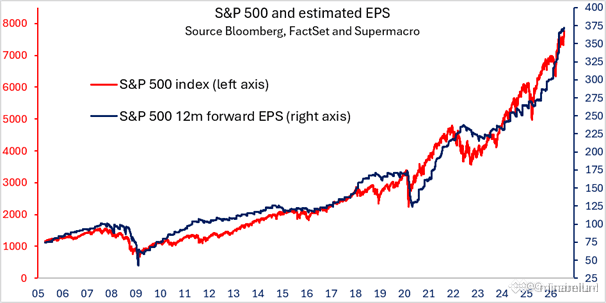
Here are 3 signals worth watching: 1) JPMorgan just raised its year-end S&P 500 target to 8,000 from 7,800. 2) At least 7 brokerages now see the index reaching that level by year-end. 3) The reason is earnings, not just hype: 85% of S&P 500 companies beat expectations last quarter, far above the historical average of 68%.
Why does this matter for crypto? When big equities look strong, risk appetite can spill into $BTC, $ETH, and even higher-beta names like $SOL. But the danger is assuming “stocks up = crypto only up.” Markets are more like traffic lights than rocket ships. Earnings can turn the light green, but one bad inflation print or rate surprise can flip it fast.
So the warning is simple: don’t trade crypto while ignoring the macro dashboard. If AI spending is finally showing real cloud growth and cash flow at giants like Google and Amazon, that supports risk-on sentiment. But if everyone starts pricing perfection, your entry needs to be sharper, not later.
Are you watching S&P earnings before making crypto moves, or keeping your charts purely on-chain?
#CryptoMarkets #Bitcoin #MacroCrypto
Everyone thinks crypto moves in its own little bubble, but actually macro earnings can quietly move your $BTC and $ETH entries before you notice.
The mistake is chasing green candles without asking what risk markets are pricing in. That’s how traders FOMO buy tops, then wonder why crypto suddenly follows stocks down like a shopping cart with a bad wheel.
Here are 3 signals worth watching: 1) JPMorgan just raised its year-end S&P 500 target to 8,000 from 7,800. 2) At least 7 brokerages now see the index reaching that level by year-end. 3) The reason is earnings, not just hype: 85% of S&P 500 companies beat expectations last quarter, far above the historical average of 68%.
Why does this matter for crypto? When big equities look strong, risk appetite can spill into $BTC , $ETH , and even higher-beta names like $SOL . But the danger is assuming “stocks up = crypto only up.” Markets are more like traffic lights than rocket ships. Earnings can turn the light green, but one bad inflation print or rate surprise can flip it fast.
So the warning is simple: don’t trade crypto while ignoring the macro dashboard. If AI spending is finally showing real cloud growth and cash flow at giants like Google and Amazon, that supports risk-on sentiment. But if everyone starts pricing perfection, your entry needs to be sharper, not later.
Are you watching S&P earnings before making crypto moves, or keeping your charts purely on-chain?
#CryptoMarkets #Bitcoin #MacroCrypto
The mistake is chasing green candles without asking what risk markets are pricing in. That’s how traders FOMO buy tops, then wonder why crypto suddenly follows stocks down like a shopping cart with a bad wheel.
Here are 3 signals worth watching: 1) JPMorgan just raised its year-end S&P 500 target to 8,000 from 7,800. 2) At least 7 brokerages now see the index reaching that level by year-end. 3) The reason is earnings, not just hype: 85% of S&P 500 companies beat expectations last quarter, far above the historical average of 68%.
Why does this matter for crypto? When big equities look strong, risk appetite can spill into $BTC , $ETH , and even higher-beta names like $SOL . But the danger is assuming “stocks up = crypto only up.” Markets are more like traffic lights than rocket ships. Earnings can turn the light green, but one bad inflation print or rate surprise can flip it fast.
So the warning is simple: don’t trade crypto while ignoring the macro dashboard. If AI spending is finally showing real cloud growth and cash flow at giants like Google and Amazon, that supports risk-on sentiment. But if everyone starts pricing perfection, your entry needs to be sharper, not later.
Are you watching S&P earnings before making crypto moves, or keeping your charts purely on-chain?
#CryptoMarkets #Bitcoin #MacroCrypto
16
·
--
Here’s what happened when Wall Street quietly moved the goalpost higher again.
Crypto traders know this feeling: you fade the rally because it “already ran,” then the market finds a new reason to keep climbing. The hardest part isn’t spotting momentum, it’s knowing when earnings, liquidity, and narrative are actually backing it.
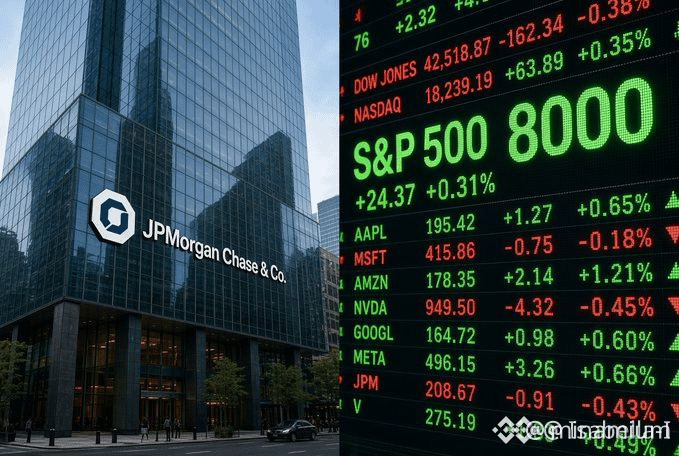
JPMorgan just lifted its year-end S&P 500 target to 8,000 from 7,800, and at least 7 brokerages now see the same level. The key detail is why: 85% of S&P 500 companies beat earnings expectations last quarter, way above the 68% historical average.
That matters for crypto because this looks less like pure hype and more like the 2020-2021 liquidity playbook meeting real AI cash flow. Google and Amazon are showing cloud growth and stronger numbers, which is the TradFi version of a narrative finally getting revenue. When macro risk appetite improves, capital usually starts at mega-cap equities, then looks for higher-beta places like $BTC, $ETH, and $BNB.
The comparison is interesting: in past cycles, crypto often rallied after equities proved the “risk-on” case first. But unlike a memecoin pump with no earnings behind it, this S&P move is being justified by actual corporate performance. If that continues, the next question is whether crypto follows as a beta trade or separates into its own catalyst-driven cycle.
What’s your take: does an S&P 500 target of 8,000 make you more bullish on crypto, or is this already priced in?
#CryptoMarket #Bitcoin #MacroCrypto
Here’s what happened when Wall Street quietly moved the goalpost higher again.
Crypto traders know this feeling: you fade the rally because it “already ran,” then the market finds a new reason to keep climbing. The hardest part isn’t spotting momentum, it’s knowing when earnings, liquidity, and narrative are actually backing it.
JPMorgan just lifted its year-end S&P 500 target to 8,000 from 7,800, and at least 7 brokerages now see the same level. The key detail is why: 85% of S&P 500 companies beat earnings expectations last quarter, way above the 68% historical average.
That matters for crypto because this looks less like pure hype and more like the 2020-2021 liquidity playbook meeting real AI cash flow. Google and Amazon are showing cloud growth and stronger numbers, which is the TradFi version of a narrative finally getting revenue. When macro risk appetite improves, capital usually starts at mega-cap equities, then looks for higher-beta places like $BTC , $ETH , and $BNB .
The comparison is interesting: in past cycles, crypto often rallied after equities proved the “risk-on” case first. But unlike a memecoin pump with no earnings behind it, this S&P move is being justified by actual corporate performance. If that continues, the next question is whether crypto follows as a beta trade or separates into its own catalyst-driven cycle.
What’s your take: does an S&P 500 target of 8,000 make you more bullish on crypto, or is this already priced in?
#CryptoMarket #Bitcoin #MacroCrypto
Crypto traders know this feeling: you fade the rally because it “already ran,” then the market finds a new reason to keep climbing. The hardest part isn’t spotting momentum, it’s knowing when earnings, liquidity, and narrative are actually backing it.
JPMorgan just lifted its year-end S&P 500 target to 8,000 from 7,800, and at least 7 brokerages now see the same level. The key detail is why: 85% of S&P 500 companies beat earnings expectations last quarter, way above the 68% historical average.
That matters for crypto because this looks less like pure hype and more like the 2020-2021 liquidity playbook meeting real AI cash flow. Google and Amazon are showing cloud growth and stronger numbers, which is the TradFi version of a narrative finally getting revenue. When macro risk appetite improves, capital usually starts at mega-cap equities, then looks for higher-beta places like $BTC , $ETH , and $BNB .
The comparison is interesting: in past cycles, crypto often rallied after equities proved the “risk-on” case first. But unlike a memecoin pump with no earnings behind it, this S&P move is being justified by actual corporate performance. If that continues, the next question is whether crypto follows as a beta trade or separates into its own catalyst-driven cycle.
What’s your take: does an S&P 500 target of 8,000 make you more bullish on crypto, or is this already priced in?
#CryptoMarket #Bitcoin #MacroCrypto
16
Войдите, чтобы посмотреть больше материала
Присоединяйтесь к пользователям криптовалют по всему миру на Binance Square
⚡️ Получайте новейшую и полезную информацию о криптоактивах.
💬 Нам доверяет крупнейшая в мире криптобиржа.
👍 Получите достоверные аналитические данные от верифицированных создателей контента.
Эл. почта/номер телефона
В тренде
1
#BitcoinHoldsAbove$77000
Просмотров: 5,529
155 обсуждают
2
#FedHikeOddsRiseTo89%
Просмотров: 34,604
706 обсуждают
3
#BitcoinCrosses$78000
Просмотров: 8,500
188 обсуждают
4
#RLUSDSupplyHitsRecord$2.442B
Просмотров: 1,397
31 обсуждают
5
#AvalancheIntegratesIntoUAEPassDigitalVault
Просмотров: 43,068
783 обсуждают
6
#UKSeeksViewsOnTokenizingGold
Просмотров: 31,298
569 обсуждают
7
#AnthropicCEOCallsForAISlowdown
Просмотров: 202,190
3,080 обсуждают
8
#RevolutDataLeakReportedlyPostedAttackersThreatenDailyReleases
Просмотров: 3,762
80 обсуждают
9
#BrazilCentralBankRaisesVASPCapitalRequirements
Просмотров: 30,146
705 обсуждают
10
#BitcoinThirdSingleBlockReorgInFourWeeks
Просмотров: 75,514
1,494 обсуждают