

meligamble
12.5k Публикации

meligamble
Отправить жалобу
Заблокировать пользователя
Main call : t@me/meligamble
DM : @meliodas368
🔠 Content at chanel is for informational purposes only, not investment advice or solicitations 💰 | DYOR
315 подписок(и/а)
215 подписчиков(а)
740 понравилось
Посты
Все
Цитирования
Видео
·
--
Here's what happened when a pre-launch team skipped the usual cryptic posts and jumped on a live video session to walk the community through their token drop.
We've all watched a new launch rip while we were still hunting for tokenomics in scattered threads, either missing the entry completely or FOMO-buying after the first dump already hit.
They're doing the call at 3PM Eastern, 7PM UTC, laying out the actual launch details live instead of dripping info. That's a shift from how a lot of earlier projects handled it. Some $SOL memes that ran open community sessions before going live ended up with more organic holders and less sniper chaos. A few $ETH launches that stayed quiet left people guessing until the chart told the real story, usually the wrong way. Even certain $BNB ecosystem drops that skipped this kind of conversation saw sharper volatility because nobody had a clear picture of the plan.
It doesn't guarantee the outcome, but it at least gives traders a chance to decide with more than just a chart and a rumor.
Where do you think this kind of live walkthrough before launch actually goes from here?
#PreLaunch #TokenLaunch #CryptoTrading
Here's what happened when a pre-launch team skipped the usual cryptic posts and jumped on a live video session to walk the community through their token drop.
We've all watched a new launch rip while we were still hunting for tokenomics in scattered threads, either missing the entry completely or FOMO-buying after the first dump already hit.
They're doing the call at 3PM Eastern, 7PM UTC, laying out the actual launch details live instead of dripping info. That's a shift from how a lot of earlier projects handled it. Some $SOL memes that ran open community sessions before going live ended up with more organic holders and less sniper chaos. A few $ETH launches that stayed quiet left people guessing until the chart told the real story, usually the wrong way. Even certain $BNB ecosystem drops that skipped this kind of conversation saw sharper volatility because nobody had a clear picture of the plan.
It doesn't guarantee the outcome, but it at least gives traders a chance to decide with more than just a chart and a rumor.
Where do you think this kind of live walkthrough before launch actually goes from here?
#PreLaunch #TokenLaunch #CryptoTrading
We've all watched a new launch rip while we were still hunting for tokenomics in scattered threads, either missing the entry completely or FOMO-buying after the first dump already hit.
They're doing the call at 3PM Eastern, 7PM UTC, laying out the actual launch details live instead of dripping info. That's a shift from how a lot of earlier projects handled it. Some $SOL memes that ran open community sessions before going live ended up with more organic holders and less sniper chaos. A few $ETH launches that stayed quiet left people guessing until the chart told the real story, usually the wrong way. Even certain $BNB ecosystem drops that skipped this kind of conversation saw sharper volatility because nobody had a clear picture of the plan.
It doesn't guarantee the outcome, but it at least gives traders a chance to decide with more than just a chart and a rumor.
Where do you think this kind of live walkthrough before launch actually goes from here?
#PreLaunch #TokenLaunch #CryptoTrading

2
·
--
Everyone thinks early token calls are your golden ticket to instant gains, but actually, rushing into pre-launch hype blind is how most portfolios get wrecked before trading even begins.
We have all felt the sting of chasing hyped launches only to end up holding bags or catching a bad entry. Jumping into private sessions without clear verification is like stepping onto a crowded subway car without checking the destination first.
When projects schedule community briefing calls, like the session set for 3PM Eastern Time (7PM UTC), the biggest trap is buying purely on adrenaline. Smart traders use these 3PM ET events to evaluate liquidity structure, utility, and genuine interest around assets like $SOL and $BNB rather than chasing instant green candles.
Treat these early briefings as research checkpoints rather than exit liquidity traps, especially when gauging sentiment for emerging plays like $DOGE. Think of it as inspecting the engine of a car before handing over your cash.
How do you usually filter noise from genuine opportunity during pre-launch events?
#CryptoTrading #BinanceSquare #MemeCoins
Everyone thinks early token calls are your golden ticket to instant gains, but actually, rushing into pre-launch hype blind is how most portfolios get wrecked before trading even begins.
We have all felt the sting of chasing hyped launches only to end up holding bags or catching a bad entry. Jumping into private sessions without clear verification is like stepping onto a crowded subway car without checking the destination first.
When projects schedule community briefing calls, like the session set for 3PM Eastern Time (7PM UTC), the biggest trap is buying purely on adrenaline. Smart traders use these 3PM ET events to evaluate liquidity structure, utility, and genuine interest around assets like $SOL and $BNB rather than chasing instant green candles.
Treat these early briefings as research checkpoints rather than exit liquidity traps, especially when gauging sentiment for emerging plays like $DOGE . Think of it as inspecting the engine of a car before handing over your cash.
How do you usually filter noise from genuine opportunity during pre-launch events?
#CryptoTrading #BinanceSquare #MemeCoins
We have all felt the sting of chasing hyped launches only to end up holding bags or catching a bad entry. Jumping into private sessions without clear verification is like stepping onto a crowded subway car without checking the destination first.
When projects schedule community briefing calls, like the session set for 3PM Eastern Time (7PM UTC), the biggest trap is buying purely on adrenaline. Smart traders use these 3PM ET events to evaluate liquidity structure, utility, and genuine interest around assets like $SOL and $BNB rather than chasing instant green candles.
Treat these early briefings as research checkpoints rather than exit liquidity traps, especially when gauging sentiment for emerging plays like $DOGE . Think of it as inspecting the engine of a car before handing over your cash.
How do you usually filter noise from genuine opportunity during pre-launch events?
#CryptoTrading #BinanceSquare #MemeCoins
·
--
Have you noticed that the real alpha in meme coins gets shared in these low-key sessions while everyone else is still arguing about the last rug?
That's the pain. Constantly missing entries or getting wrecked because you're always late to the party or didn't do the homework on the project.
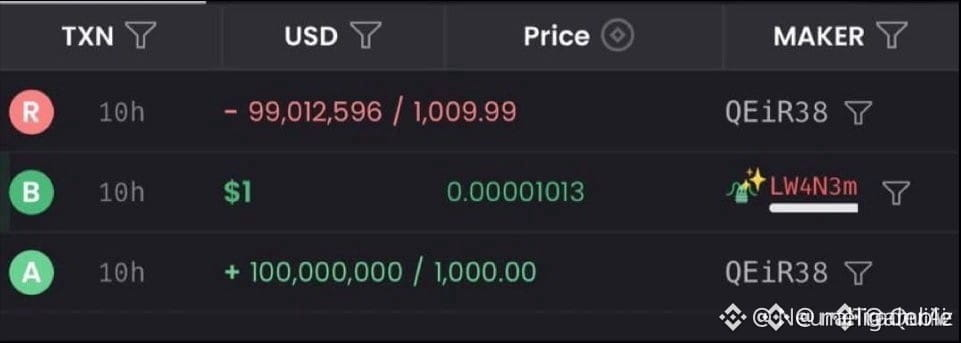
Most traders chase after the fact. There's launch info being shared today at 3PM Eastern which is 7PM UTC for this $ROBINHOOD play. Instead of waiting for it to trend, treat it like a proper setup. Check the details yourself, decide your position size, and know your exit before you even think about entering.
We've seen similar $MEME launches turn into massive moves when people actually prepare rather than FOMO in later. Even $BTC holders sit around wondering why they keep missing these cycles.
Where do you think this goes from here?
#MemeCoins #Crypto #ROBINHOOD
Have you noticed that the real alpha in meme coins gets shared in these low-key sessions while everyone else is still arguing about the last rug?
That's the pain. Constantly missing entries or getting wrecked because you're always late to the party or didn't do the homework on the project.
Most traders chase after the fact. There's launch info being shared today at 3PM Eastern which is 7PM UTC for this $ROBINHOOD play. Instead of waiting for it to trend, treat it like a proper setup. Check the details yourself, decide your position size, and know your exit before you even think about entering.
We've seen similar $MEME launches turn into massive moves when people actually prepare rather than FOMO in later. Even $BTC holders sit around wondering why they keep missing these cycles.
Where do you think this goes from here?
#MemeCoins #Crypto #ROBINHOOD
That's the pain. Constantly missing entries or getting wrecked because you're always late to the party or didn't do the homework on the project.
Most traders chase after the fact. There's launch info being shared today at 3PM Eastern which is 7PM UTC for this $ROBINHOOD play. Instead of waiting for it to trend, treat it like a proper setup. Check the details yourself, decide your position size, and know your exit before you even think about entering.
We've seen similar $MEME launches turn into massive moves when people actually prepare rather than FOMO in later. Even $BTC holders sit around wondering why they keep missing these cycles.
Where do you think this goes from here?
#MemeCoins #Crypto #ROBINHOOD
3
·
--
Picture this: you step away to make a cup of coffee, and in just fifteen minutes, the entire board turns red.
Most retail traders end up panic-selling right at the bottom of these sudden wick cascades, locking in heavy losses simply because they confuse a routine leverage clearing with actual structural breakdown.
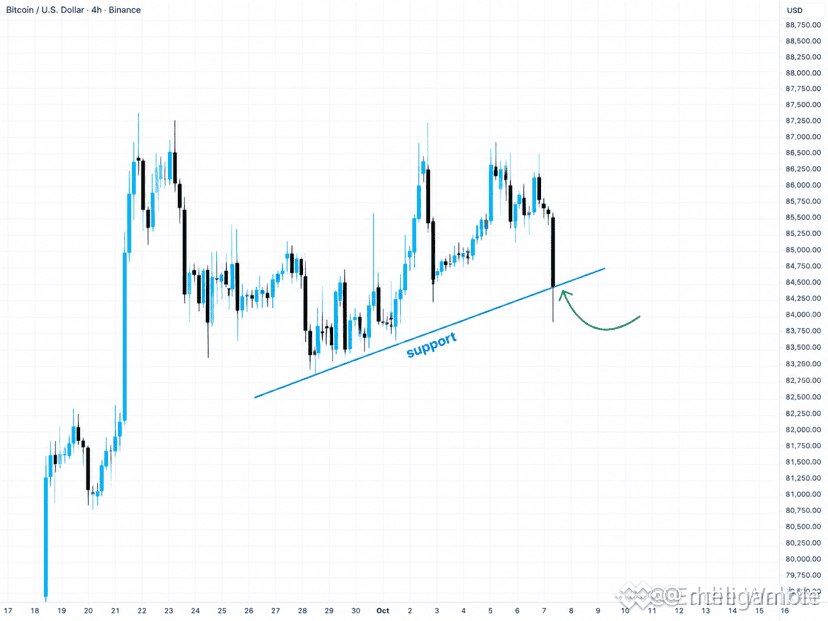
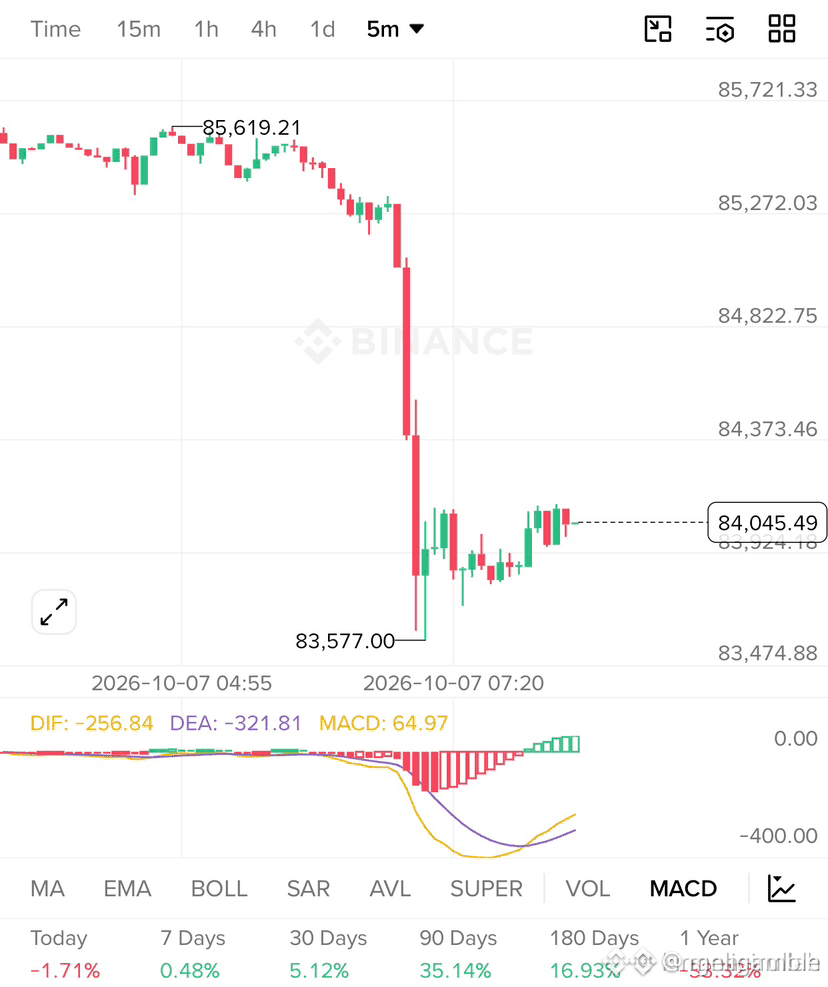
We just watched $BTC plunge roughly $1,600 in 15 minutes, slipping beneath $84K and wiping out more than $400M in leveraged longs. It closely mirrors the textbook shakeouts we saw across major assets like $ETH earlier this year, where overheated derivatives get violently flushed out before real spot demand takes over the wheel.
With open interest effectively reset, the immediate focus turns to how buyers react at key liquidity zones. If $BTC reclaims $84K and establishes support, that opens up a clear pathway back toward $85K and $87K. Alternatively, a softer sweep toward $82.7K that gets rapidly bought up could offer one of the cleanest dip entries we have seen all week.
Where do you see the fresh money stepping in from here?
#Bitcoin #CryptoTrading #MarketStructure
Picture this: you step away to make a cup of coffee, and in just fifteen minutes, the entire board turns red.
Most retail traders end up panic-selling right at the bottom of these sudden wick cascades, locking in heavy losses simply because they confuse a routine leverage clearing with actual structural breakdown.
We just watched $BTC plunge roughly $1,600 in 15 minutes, slipping beneath $84K and wiping out more than $400M in leveraged longs. It closely mirrors the textbook shakeouts we saw across major assets like $ETH earlier this year, where overheated derivatives get violently flushed out before real spot demand takes over the wheel.
With open interest effectively reset, the immediate focus turns to how buyers react at key liquidity zones. If $BTC reclaims $84K and establishes support, that opens up a clear pathway back toward $85K and $87K. Alternatively, a softer sweep toward $82.7K that gets rapidly bought up could offer one of the cleanest dip entries we have seen all week.
Where do you see the fresh money stepping in from here?
#Bitcoin #CryptoTrading #MarketStructure
Most retail traders end up panic-selling right at the bottom of these sudden wick cascades, locking in heavy losses simply because they confuse a routine leverage clearing with actual structural breakdown.
We just watched $BTC plunge roughly $1,600 in 15 minutes, slipping beneath $84K and wiping out more than $400M in leveraged longs. It closely mirrors the textbook shakeouts we saw across major assets like $ETH earlier this year, where overheated derivatives get violently flushed out before real spot demand takes over the wheel.
With open interest effectively reset, the immediate focus turns to how buyers react at key liquidity zones. If $BTC reclaims $84K and establishes support, that opens up a clear pathway back toward $85K and $87K. Alternatively, a softer sweep toward $82.7K that gets rapidly bought up could offer one of the cleanest dip entries we have seen all week.
Where do you see the fresh money stepping in from here?
#Bitcoin #CryptoTrading #MarketStructure
·
--
Most top-ranked volume traders end up giving all their profits back to the market the moment volatility spikes.
It is brutal watching your hard-earned balance evaporate on a standard pullback simply because you were overleveraged without a clear invalidation level.
Even seasoned accounts in the top 30-day volume tiers can get completely wiped out when momentum shifts unexpectedly. Just saw a notable trader close out a $BTC perp position down $2,210.67 on a minor -2.98% dip, fully admitting they had no idea why price dropped and only knew their capital vanished.
When you trade perpetual contracts on pairs like $USDC or $ETH without structured risk management, you are essentially gambling against market maker liquidity sweeps. A modest intraday swing should never be enough to put your portfolio in an existential crisis if your position sizing is dialed in properly.
How do you usually manage stop losses when the market chops through key support levels?
#CryptoTrading #RiskManagement #FuturesTrading
Most top-ranked volume traders end up giving all their profits back to the market the moment volatility spikes.
It is brutal watching your hard-earned balance evaporate on a standard pullback simply because you were overleveraged without a clear invalidation level.
Even seasoned accounts in the top 30-day volume tiers can get completely wiped out when momentum shifts unexpectedly. Just saw a notable trader close out a $BTC perp position down $2,210.67 on a minor -2.98% dip, fully admitting they had no idea why price dropped and only knew their capital vanished.
When you trade perpetual contracts on pairs like $USDC or $ETH without structured risk management, you are essentially gambling against market maker liquidity sweeps. A modest intraday swing should never be enough to put your portfolio in an existential crisis if your position sizing is dialed in properly.
How do you usually manage stop losses when the market chops through key support levels?
#CryptoTrading #RiskManagement #FuturesTrading
It is brutal watching your hard-earned balance evaporate on a standard pullback simply because you were overleveraged without a clear invalidation level.
Even seasoned accounts in the top 30-day volume tiers can get completely wiped out when momentum shifts unexpectedly. Just saw a notable trader close out a $BTC perp position down $2,210.67 on a minor -2.98% dip, fully admitting they had no idea why price dropped and only knew their capital vanished.
When you trade perpetual contracts on pairs like $USDC or $ETH without structured risk management, you are essentially gambling against market maker liquidity sweeps. A modest intraday swing should never be enough to put your portfolio in an existential crisis if your position sizing is dialed in properly.
How do you usually manage stop losses when the market chops through key support levels?
#CryptoTrading #RiskManagement #FuturesTrading

2
·
--
If you're still drowning in charts and news feeds trying to time every $BTC move, stop now.
Traders lose thousands every week from delayed reactions and information overload, missing clean entries or holding through dumps they should have exited.
Binance Intelligence just launched and opinions are already divided. One camp says this free AI brief and alert system is exactly what busy traders need to stay ahead without constant scrolling. The other side asks whether we actually require another tool when most of us already have more data than we can use.
It is rolling out slowly, starting in New Zealand. The basic version reads the market for you and cuts the noise. AI Pro arrives in the second half of October, letting you describe a setup and receive a strategy you can run with real funds.
Convenience looks strong for $BNB and $ETH traders who hate missing signals. I land on the skeptical side. Saving time is useful, but outsourcing judgment to an unproven rollout still feels like a risk when markets turn fast.
Do you see this as a real edge or just extra noise in an already crowded space?
#Binance #AITrading #Crypto
If you're still drowning in charts and news feeds trying to time every $BTC move, stop now.
Traders lose thousands every week from delayed reactions and information overload, missing clean entries or holding through dumps they should have exited.
Binance Intelligence just launched and opinions are already divided. One camp says this free AI brief and alert system is exactly what busy traders need to stay ahead without constant scrolling. The other side asks whether we actually require another tool when most of us already have more data than we can use.
It is rolling out slowly, starting in New Zealand. The basic version reads the market for you and cuts the noise. AI Pro arrives in the second half of October, letting you describe a setup and receive a strategy you can run with real funds.
Convenience looks strong for $BNB and $ETH traders who hate missing signals. I land on the skeptical side. Saving time is useful, but outsourcing judgment to an unproven rollout still feels like a risk when markets turn fast.
Do you see this as a real edge or just extra noise in an already crowded space?
#Binance #AITrading #Crypto
Traders lose thousands every week from delayed reactions and information overload, missing clean entries or holding through dumps they should have exited.
Binance Intelligence just launched and opinions are already divided. One camp says this free AI brief and alert system is exactly what busy traders need to stay ahead without constant scrolling. The other side asks whether we actually require another tool when most of us already have more data than we can use.
It is rolling out slowly, starting in New Zealand. The basic version reads the market for you and cuts the noise. AI Pro arrives in the second half of October, letting you describe a setup and receive a strategy you can run with real funds.
Convenience looks strong for $BNB and $ETH traders who hate missing signals. I land on the skeptical side. Saving time is useful, but outsourcing judgment to an unproven rollout still feels like a risk when markets turn fast.
Do you see this as a real edge or just extra noise in an already crowded space?
#Binance #AITrading #Crypto

·
--
everyone thinks copying high-pnl leaderboard screenshots is the fastest shortcut to making it, but actually it is the easiest way to nuke your entire portfolio.
most degens see a giant green flex, fomo into the exact same setup at market price, and then get wiped out on the very first pullback because they have zero idea where the invalidation level was.
look at this case from a top 30d volume account that blew up on feeds recently. the trader opened a heavy long position on $BTC while the market was dipping -2.98% on the day, eventually printing over +102,005.98 $USDT in unrealized profit. it looks effortless when flashed as a screenshot, but blindly chasing a live perp trade without knowing their collateral size, liquidation buffer, or hedge legs is a recipe for disaster.
the big players catching massive swings on $BTCUSDT can comfortably absorb wild intraday chop that would instantly liquidate an average retail account. you are only looking at the finished victory lap, not the messy drawdown they had to sit through before the position went green.
how do you usually manage the urge to fomo into these massive leaderboard flexes?
#CryptoTrading #Bitcoin #Trading
everyone thinks copying high-pnl leaderboard screenshots is the fastest shortcut to making it, but actually it is the easiest way to nuke your entire portfolio.
most degens see a giant green flex, fomo into the exact same setup at market price, and then get wiped out on the very first pullback because they have zero idea where the invalidation level was.
look at this case from a top 30d volume account that blew up on feeds recently. the trader opened a heavy long position on $BTC while the market was dipping -2.98% on the day, eventually printing over +102,005.98 $USDT in unrealized profit. it looks effortless when flashed as a screenshot, but blindly chasing a live perp trade without knowing their collateral size, liquidation buffer, or hedge legs is a recipe for disaster.
the big players catching massive swings on $BTCUSDT can comfortably absorb wild intraday chop that would instantly liquidate an average retail account. you are only looking at the finished victory lap, not the messy drawdown they had to sit through before the position went green.
how do you usually manage the urge to fomo into these massive leaderboard flexes?
#CryptoTrading #Bitcoin #Trading
most degens see a giant green flex, fomo into the exact same setup at market price, and then get wiped out on the very first pullback because they have zero idea where the invalidation level was.
look at this case from a top 30d volume account that blew up on feeds recently. the trader opened a heavy long position on $BTC while the market was dipping -2.98% on the day, eventually printing over +102,005.98 $USDT in unrealized profit. it looks effortless when flashed as a screenshot, but blindly chasing a live perp trade without knowing their collateral size, liquidation buffer, or hedge legs is a recipe for disaster.
the big players catching massive swings on $BTCUSDT can comfortably absorb wild intraday chop that would instantly liquidate an average retail account. you are only looking at the finished victory lap, not the messy drawdown they had to sit through before the position went green.
how do you usually manage the urge to fomo into these massive leaderboard flexes?
#CryptoTrading #Bitcoin #Trading

·
--
Why is nobody talking about the real lesson behind Igloo pulling the plug on Abstract?
Most retail investors jump into shiny new L2 ecosystems hoping for early adopter rewards, only to end up holding illiquid bags when the founding team suddenly decides infrastructure overhead is not worth the burn rate.
We keep pretending every project needs its own bespoke chain. In reality, maintaining a standalone network drains resources that could have gone into actual consumer products, especially when liquidity remains concentrated in $USDT pairs across established venues. Teams launch custom chains as a valuation pump, but when the dust settles, infrastructure without sustainable organic volume becomes a liability rather than an asset.
When protocols pivot back to established modular ecosystems or lightweight networks like $MINA, it is rarely a technical failure and almost always an economic reality check. Building consumer apps requires ruthless focus, and abandoning custom chain overhead might actually be the smartest capital preservation move a founding team can make in this cycle.
Where do you think this goes from here?
#IglooShutsDownAbstractBlockchain #StrategyEstimates
Why is nobody talking about the real lesson behind Igloo pulling the plug on Abstract?
Most retail investors jump into shiny new L2 ecosystems hoping for early adopter rewards, only to end up holding illiquid bags when the founding team suddenly decides infrastructure overhead is not worth the burn rate.
We keep pretending every project needs its own bespoke chain. In reality, maintaining a standalone network drains resources that could have gone into actual consumer products, especially when liquidity remains concentrated in $USDT pairs across established venues. Teams launch custom chains as a valuation pump, but when the dust settles, infrastructure without sustainable organic volume becomes a liability rather than an asset.
When protocols pivot back to established modular ecosystems or lightweight networks like $MINA , it is rarely a technical failure and almost always an economic reality check. Building consumer apps requires ruthless focus, and abandoning custom chain overhead might actually be the smartest capital preservation move a founding team can make in this cycle.
Where do you think this goes from here?
#IglooShutsDownAbstractBlockchain #StrategyEstimates
Most retail investors jump into shiny new L2 ecosystems hoping for early adopter rewards, only to end up holding illiquid bags when the founding team suddenly decides infrastructure overhead is not worth the burn rate.
We keep pretending every project needs its own bespoke chain. In reality, maintaining a standalone network drains resources that could have gone into actual consumer products, especially when liquidity remains concentrated in $USDT pairs across established venues. Teams launch custom chains as a valuation pump, but when the dust settles, infrastructure without sustainable organic volume becomes a liability rather than an asset.
When protocols pivot back to established modular ecosystems or lightweight networks like $MINA , it is rarely a technical failure and almost always an economic reality check. Building consumer apps requires ruthless focus, and abandoning custom chain overhead might actually be the smartest capital preservation move a founding team can make in this cycle.
Where do you think this goes from here?
#IglooShutsDownAbstractBlockchain #StrategyEstimates

4
·
--
Most published price targets in crypto fail not because the underlying math is wrong, but because traders treat dynamic estimates as guaranteed promises.
We have all sat through the painful experience of watching a setup invalidate while stubbornly holding on because an analyst model promised higher targets. That psychological trap turns a disciplined trading plan into a heavy bag of emotional losses.
Back in previous cycles, whenever greed returned to the market, everyone suddenly became obsessed with forward projections and multi-month price roadmaps. You see that same pattern reemerging today whenever liquidity rotates into infrastructure assets like $FIL or mid-cap movers like $ARK. Traders look at clean predictive charts and assume linear growth, completely overlooking how fast order books thin out when volatility strikes.
A sound strategy estimate is never a prophecy. It is simply a risk framework that tells you where your thesis is right and, more importantly, where it is broken. When managing high-beta plays like $MINA, veteran desks do not spend time calculating imaginary profits from upper-band projections. They look for the exact threshold where the model fails so they can cut exposure without hesitation.
How do you adapt your target projections when live momentum begins drifting away from your initial roadmap?
#StrategyEstimates #BinanceLaunchesBinanceIntelligence
Most published price targets in crypto fail not because the underlying math is wrong, but because traders treat dynamic estimates as guaranteed promises.
We have all sat through the painful experience of watching a setup invalidate while stubbornly holding on because an analyst model promised higher targets. That psychological trap turns a disciplined trading plan into a heavy bag of emotional losses.
Back in previous cycles, whenever greed returned to the market, everyone suddenly became obsessed with forward projections and multi-month price roadmaps. You see that same pattern reemerging today whenever liquidity rotates into infrastructure assets like $FIL or mid-cap movers like $ARK . Traders look at clean predictive charts and assume linear growth, completely overlooking how fast order books thin out when volatility strikes.
A sound strategy estimate is never a prophecy. It is simply a risk framework that tells you where your thesis is right and, more importantly, where it is broken. When managing high-beta plays like $MINA , veteran desks do not spend time calculating imaginary profits from upper-band projections. They look for the exact threshold where the model fails so they can cut exposure without hesitation.
How do you adapt your target projections when live momentum begins drifting away from your initial roadmap?
#StrategyEstimates #BinanceLaunchesBinanceIntelligence
We have all sat through the painful experience of watching a setup invalidate while stubbornly holding on because an analyst model promised higher targets. That psychological trap turns a disciplined trading plan into a heavy bag of emotional losses.
Back in previous cycles, whenever greed returned to the market, everyone suddenly became obsessed with forward projections and multi-month price roadmaps. You see that same pattern reemerging today whenever liquidity rotates into infrastructure assets like $FIL or mid-cap movers like $ARK . Traders look at clean predictive charts and assume linear growth, completely overlooking how fast order books thin out when volatility strikes.
A sound strategy estimate is never a prophecy. It is simply a risk framework that tells you where your thesis is right and, more importantly, where it is broken. When managing high-beta plays like $MINA , veteran desks do not spend time calculating imaginary profits from upper-band projections. They look for the exact threshold where the model fails so they can cut exposure without hesitation.
How do you adapt your target projections when live momentum begins drifting away from your initial roadmap?
#StrategyEstimates #BinanceLaunchesBinanceIntelligence

12
·
--
Picture this: you wake up to find retail volume in Seoul single-handedly pushing an AI token past major resistance levels while the rest of the market is barely moving.
Most traders end up chasing these regional momentum waves right at the local top, only to get trapped when liquidity dries up overnight. It is the classic dilemma of wanting exposure to high-beta narratives without holding the bag when the domestic hype cools off.
What just happened with $WLD is a fascinating case study in localized liquidity pockets. South Korean retail exchanges have historically acted as massive catalysts for narrative runs, much like what we saw with early metaverse tokens and decentralized storage plays like $FIL during previous market expansions. When domestic volume concentrates heavily on AI infrastructure assets, it often creates a violent supply squeeze that global order books are forced to arbitrage.
Compared to older cycles where regional pumps were purely speculative, current capital is heavily clustering around active AI verticals and computation networks like $PHA. The real question is whether this localized momentum can translate into sustained global accumulation once the initial arbitrage gap settles.
Where do you think this momentum rotates next once the regional premium levels out?
#SouthKoreaAITradeLiftsWorldcoinTo #BinanceLaunchesBinanceIntelligence
Picture this: you wake up to find retail volume in Seoul single-handedly pushing an AI token past major resistance levels while the rest of the market is barely moving.
Most traders end up chasing these regional momentum waves right at the local top, only to get trapped when liquidity dries up overnight. It is the classic dilemma of wanting exposure to high-beta narratives without holding the bag when the domestic hype cools off.
What just happened with $WLD is a fascinating case study in localized liquidity pockets. South Korean retail exchanges have historically acted as massive catalysts for narrative runs, much like what we saw with early metaverse tokens and decentralized storage plays like $FIL during previous market expansions. When domestic volume concentrates heavily on AI infrastructure assets, it often creates a violent supply squeeze that global order books are forced to arbitrage.
Compared to older cycles where regional pumps were purely speculative, current capital is heavily clustering around active AI verticals and computation networks like $PHA . The real question is whether this localized momentum can translate into sustained global accumulation once the initial arbitrage gap settles.
Where do you think this momentum rotates next once the regional premium levels out?
#SouthKoreaAITradeLiftsWorldcoinTo #BinanceLaunchesBinanceIntelligence
Most traders end up chasing these regional momentum waves right at the local top, only to get trapped when liquidity dries up overnight. It is the classic dilemma of wanting exposure to high-beta narratives without holding the bag when the domestic hype cools off.
What just happened with $WLD is a fascinating case study in localized liquidity pockets. South Korean retail exchanges have historically acted as massive catalysts for narrative runs, much like what we saw with early metaverse tokens and decentralized storage plays like $FIL during previous market expansions. When domestic volume concentrates heavily on AI infrastructure assets, it often creates a violent supply squeeze that global order books are forced to arbitrage.
Compared to older cycles where regional pumps were purely speculative, current capital is heavily clustering around active AI verticals and computation networks like $PHA . The real question is whether this localized momentum can translate into sustained global accumulation once the initial arbitrage gap settles.
Where do you think this momentum rotates next once the regional premium levels out?
#SouthKoreaAITradeLiftsWorldcoinTo #BinanceLaunchesBinanceIntelligence

14
·
--
If you're still assuming privacy coins are dead because regulators frowned at them, stop now.
Most traders wrote off the entire privacy narrative months ago, panic-selling bottom positions or completely ignoring early accumulation zones out of regulatory fear.
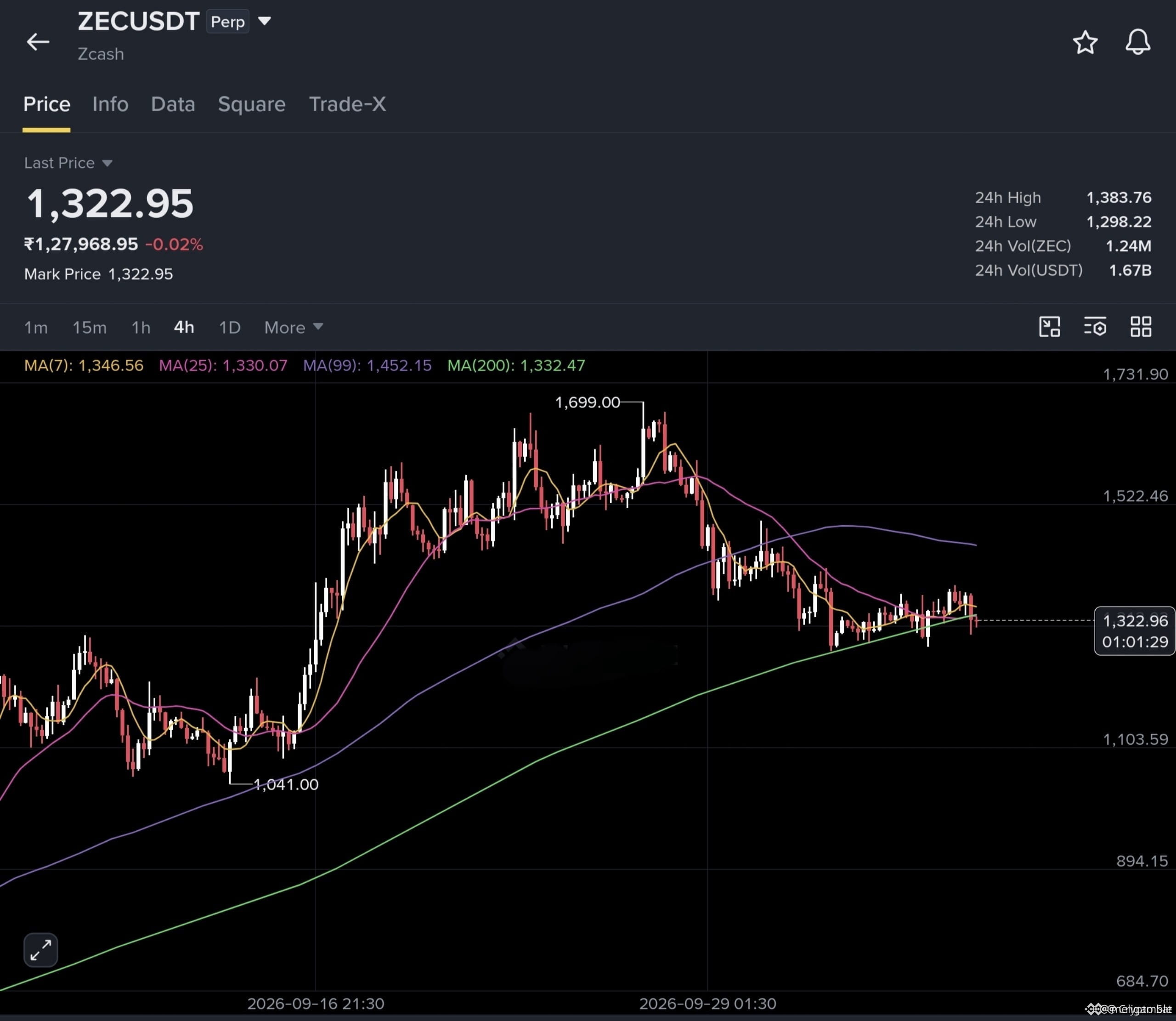
History has a funny way of repeating itself in crypto. Remember when everyone said institutional capital would never touch $BTC because of compliance headaches, right before the spot ETF race changed the entire game. Now we have Cameron and Tyler Winklevoss filing for a spot Zcash ETF, essentially trying to do for $ZEC what BlackRock did for Bitcoin.
Compare this to the way privacy protocols like $MINA or secret computing plays have navigated compliance lately. Wall Street doesn't avoid controversial sectors if there is fee revenue to capture and clear institutional custody rails. Whether Gary Gensler's successor likes it or not, packaging zero-knowledge assets into regulated wrappers shifts the narrative from illicit finance to sovereign wealth privacy.
Do you see this filing actually getting greenlit, or is it just another lengthy regulatory standoff?
#WinklevossFilesSpotZcashETFApplication #SECApproves3XBitcoinETF
If you're still assuming privacy coins are dead because regulators frowned at them, stop now.
Most traders wrote off the entire privacy narrative months ago, panic-selling bottom positions or completely ignoring early accumulation zones out of regulatory fear.
History has a funny way of repeating itself in crypto. Remember when everyone said institutional capital would never touch $BTC because of compliance headaches, right before the spot ETF race changed the entire game. Now we have Cameron and Tyler Winklevoss filing for a spot Zcash ETF, essentially trying to do for $ZEC what BlackRock did for Bitcoin.
Compare this to the way privacy protocols like $MINA or secret computing plays have navigated compliance lately. Wall Street doesn't avoid controversial sectors if there is fee revenue to capture and clear institutional custody rails. Whether Gary Gensler's successor likes it or not, packaging zero-knowledge assets into regulated wrappers shifts the narrative from illicit finance to sovereign wealth privacy.
Do you see this filing actually getting greenlit, or is it just another lengthy regulatory standoff?
#WinklevossFilesSpotZcashETFApplication #SECApproves3XBitcoinETF
Most traders wrote off the entire privacy narrative months ago, panic-selling bottom positions or completely ignoring early accumulation zones out of regulatory fear.
History has a funny way of repeating itself in crypto. Remember when everyone said institutional capital would never touch $BTC because of compliance headaches, right before the spot ETF race changed the entire game. Now we have Cameron and Tyler Winklevoss filing for a spot Zcash ETF, essentially trying to do for $ZEC what BlackRock did for Bitcoin.
Compare this to the way privacy protocols like $MINA or secret computing plays have navigated compliance lately. Wall Street doesn't avoid controversial sectors if there is fee revenue to capture and clear institutional custody rails. Whether Gary Gensler's successor likes it or not, packaging zero-knowledge assets into regulated wrappers shifts the narrative from illicit finance to sovereign wealth privacy.
Do you see this filing actually getting greenlit, or is it just another lengthy regulatory standoff?
#WinklevossFilesSpotZcashETFApplication #SECApproves3XBitcoinETF
2
·
--
Everyone thinks a triple-leveraged fund is just a shortcut to 3x returns on $BTC, but actually, it is engineered to drain your capital if you treat it like a spot investment.
Most retail traders pile into these products during high-greed phases, only to watch their position dwindle to zero even when Bitcoin finishes the month flat.
Think of a 3x leveraged product like running on a steep treadmill that resets its angle every single morning. Because these funds rebalance daily, volatility decay acts like a hidden tax on your holdings. If Bitcoin drops 10% today and recovers tomorrow, standard spot assets like $FIL or stable holdings in $USDT barely flinch, but a daily reset 3x instrument suffers compounding mathematical loss that rarely recovers.
1. Daily rebalancing cuts your winners and amplifies your drawdowns during choppy sideways action.
2. Holding periods longer than a single trading session expose your balance to severe mathematical decay.
3. These instruments are built strictly as short-term tactical hedging tools, not long-term wealth builders.
Understanding how mechanical leverage works behind the scenes will save your portfolio far more than chasing the latest hype cycle.
How are you planning to manage risk around leveraged products in this market?
#SECApproves3XBitcoinETF #BTCFallsBelow #StrategyEstimates
Everyone thinks a triple-leveraged fund is just a shortcut to 3x returns on $BTC , but actually, it is engineered to drain your capital if you treat it like a spot investment.
Most retail traders pile into these products during high-greed phases, only to watch their position dwindle to zero even when Bitcoin finishes the month flat.
Think of a 3x leveraged product like running on a steep treadmill that resets its angle every single morning. Because these funds rebalance daily, volatility decay acts like a hidden tax on your holdings. If Bitcoin drops 10% today and recovers tomorrow, standard spot assets like $FIL or stable holdings in $USDT barely flinch, but a daily reset 3x instrument suffers compounding mathematical loss that rarely recovers.
1. Daily rebalancing cuts your winners and amplifies your drawdowns during choppy sideways action.
2. Holding periods longer than a single trading session expose your balance to severe mathematical decay.
3. These instruments are built strictly as short-term tactical hedging tools, not long-term wealth builders.
Understanding how mechanical leverage works behind the scenes will save your portfolio far more than chasing the latest hype cycle.
How are you planning to manage risk around leveraged products in this market?
#SECApproves3XBitcoinETF #BTCFallsBelow #StrategyEstimates
Most retail traders pile into these products during high-greed phases, only to watch their position dwindle to zero even when Bitcoin finishes the month flat.
Think of a 3x leveraged product like running on a steep treadmill that resets its angle every single morning. Because these funds rebalance daily, volatility decay acts like a hidden tax on your holdings. If Bitcoin drops 10% today and recovers tomorrow, standard spot assets like $FIL or stable holdings in $USDT barely flinch, but a daily reset 3x instrument suffers compounding mathematical loss that rarely recovers.
1. Daily rebalancing cuts your winners and amplifies your drawdowns during choppy sideways action.
2. Holding periods longer than a single trading session expose your balance to severe mathematical decay.
3. These instruments are built strictly as short-term tactical hedging tools, not long-term wealth builders.
Understanding how mechanical leverage works behind the scenes will save your portfolio far more than chasing the latest hype cycle.
How are you planning to manage risk around leveraged products in this market?
#SECApproves3XBitcoinETF #BTCFallsBelow #StrategyEstimates

·
--
Have you noticed nobody is talking about Strategy still loading up on $BTC while everyone else panics over the latest dip?
Most traders get wrecked because they treat every red candle as a reason to sell. They miss the actual demand showing up and end up buying higher later.
Saylor is keeping the accumulation story alive. Strategy's recent $BTC purchases already prove they have real conviction at these prices. Another buy would only confirm that corporate treasury demand remains solid even after the volatility. The narrative that institutions are backing off does not match what they are actually doing with capital.
If they keep stacking, it means $MSTR still sees Bitcoin as a core treasury asset rather than a short-term trade. Stop guessing the next move on every headline. Watch their purchases instead of the noise and use that as a signal for your own positioning.
Where do you think this goes from here if they keep buying?
#Bitcoin #BTC #Crypto
Have you noticed nobody is talking about Strategy still loading up on $BTC while everyone else panics over the latest dip?
Most traders get wrecked because they treat every red candle as a reason to sell. They miss the actual demand showing up and end up buying higher later.
Saylor is keeping the accumulation story alive. Strategy's recent $BTC purchases already prove they have real conviction at these prices. Another buy would only confirm that corporate treasury demand remains solid even after the volatility. The narrative that institutions are backing off does not match what they are actually doing with capital.
If they keep stacking, it means $MSTR still sees Bitcoin as a core treasury asset rather than a short-term trade. Stop guessing the next move on every headline. Watch their purchases instead of the noise and use that as a signal for your own positioning.
Where do you think this goes from here if they keep buying?
#Bitcoin #BTC #Crypto
Most traders get wrecked because they treat every red candle as a reason to sell. They miss the actual demand showing up and end up buying higher later.
Saylor is keeping the accumulation story alive. Strategy's recent $BTC purchases already prove they have real conviction at these prices. Another buy would only confirm that corporate treasury demand remains solid even after the volatility. The narrative that institutions are backing off does not match what they are actually doing with capital.
If they keep stacking, it means $MSTR still sees Bitcoin as a core treasury asset rather than a short-term trade. Stop guessing the next move on every headline. Watch their purchases instead of the noise and use that as a signal for your own positioning.
Where do you think this goes from here if they keep buying?
#Bitcoin #BTC #Crypto
4
·
--
Every time MicroStrategy announces another massive $BTC buy, retail investors treat it as an immediate green light to go all-in, but blindly following institutional treasury moves usually ends with getting caught at local tops. Most traders assume that because a corporation is stacking through volatility, downside risk simply evaporates, yet they end up panic selling the very next 15% drawdown while corporate balance sheets can comfortably hold for a decade.
When you look at Strategy continuing to accumulate $BTC at these levels, it undeniably reinforces long-term treasury demand, but corporate buying mechanics are entirely different from retail trading. Saylor is playing a debt-financed balance sheet game with convertible notes and multi-year horizons, meaning price fluctuations that liquidate leverage traders mean next to nothing to their strategy. If the market faces liquidity crunches, even heavy buying from $MSTR cannot prevent sharp spot corrections, especially if macroeconomic headwinds trigger sudden sell-offs across major risk assets.
Treating corporate accumulation as an infallible floor creates a false sense of security where risk management gets thrown out the window. Strong institutional demand supports the macro thesis, but it does not protect short-term entries from severe volatility.
How are you managing your downside risk while these massive corporate buys keep hitting the tape?
#Bitcoin #CryptoTrading #RiskManagement
Every time MicroStrategy announces another massive $BTC buy, retail investors treat it as an immediate green light to go all-in, but blindly following institutional treasury moves usually ends with getting caught at local tops. Most traders assume that because a corporation is stacking through volatility, downside risk simply evaporates, yet they end up panic selling the very next 15% drawdown while corporate balance sheets can comfortably hold for a decade.
When you look at Strategy continuing to accumulate $BTC at these levels, it undeniably reinforces long-term treasury demand, but corporate buying mechanics are entirely different from retail trading. Saylor is playing a debt-financed balance sheet game with convertible notes and multi-year horizons, meaning price fluctuations that liquidate leverage traders mean next to nothing to their strategy. If the market faces liquidity crunches, even heavy buying from $MSTR cannot prevent sharp spot corrections, especially if macroeconomic headwinds trigger sudden sell-offs across major risk assets.
Treating corporate accumulation as an infallible floor creates a false sense of security where risk management gets thrown out the window. Strong institutional demand supports the macro thesis, but it does not protect short-term entries from severe volatility.
How are you managing your downside risk while these massive corporate buys keep hitting the tape?
#Bitcoin #CryptoTrading #RiskManagement
When you look at Strategy continuing to accumulate $BTC at these levels, it undeniably reinforces long-term treasury demand, but corporate buying mechanics are entirely different from retail trading. Saylor is playing a debt-financed balance sheet game with convertible notes and multi-year horizons, meaning price fluctuations that liquidate leverage traders mean next to nothing to their strategy. If the market faces liquidity crunches, even heavy buying from $MSTR cannot prevent sharp spot corrections, especially if macroeconomic headwinds trigger sudden sell-offs across major risk assets.
Treating corporate accumulation as an infallible floor creates a false sense of security where risk management gets thrown out the window. Strong institutional demand supports the macro thesis, but it does not protect short-term entries from severe volatility.
How are you managing your downside risk while these massive corporate buys keep hitting the tape?
#Bitcoin #CryptoTrading #RiskManagement

2
·
--
Most traders treat a clean $BTC break below a round number as the discount they have been waiting for, yet that is usually when the liquidation engine is just warming up.
You have been averaging in on every dip because the Fear and Greed Index is still at 63 and it still feels like a bull market. Then the next cascade hits and your last add is underwater before the chart even finishes printing.
When $BTC loses a psychologically important level it is not just technicals. Stop losses sit right under those round numbers. Once they fire, perp liquidations pile on and a modest dip turns violent fast.
A lot of people have already parked funds in $USDT thinking they timed the exit. They usually rotate after the first break and then wait for a reclaim that can take days if on-chain exchange inflows keep climbing. Names like $FIL tend to overshoot the move because their books are thinner and the leverage on them is higher.
The leftover greed is the real problem. People hold through the first break because that trade has worked all year. That is typically when the second wave of liquidations arrives.
Where do you think this goes from here?
#BTCFallsBelow #SECApproves3XBitcoinETF #StrategyEstimates
Most traders treat a clean $BTC break below a round number as the discount they have been waiting for, yet that is usually when the liquidation engine is just warming up.
You have been averaging in on every dip because the Fear and Greed Index is still at 63 and it still feels like a bull market. Then the next cascade hits and your last add is underwater before the chart even finishes printing.
When $BTC loses a psychologically important level it is not just technicals. Stop losses sit right under those round numbers. Once they fire, perp liquidations pile on and a modest dip turns violent fast.
A lot of people have already parked funds in $USDT thinking they timed the exit. They usually rotate after the first break and then wait for a reclaim that can take days if on-chain exchange inflows keep climbing. Names like $FIL tend to overshoot the move because their books are thinner and the leverage on them is higher.
The leftover greed is the real problem. People hold through the first break because that trade has worked all year. That is typically when the second wave of liquidations arrives.
Where do you think this goes from here?
#BTCFallsBelow #SECApproves3XBitcoinETF #StrategyEstimates
You have been averaging in on every dip because the Fear and Greed Index is still at 63 and it still feels like a bull market. Then the next cascade hits and your last add is underwater before the chart even finishes printing.
When $BTC loses a psychologically important level it is not just technicals. Stop losses sit right under those round numbers. Once they fire, perp liquidations pile on and a modest dip turns violent fast.
A lot of people have already parked funds in $USDT thinking they timed the exit. They usually rotate after the first break and then wait for a reclaim that can take days if on-chain exchange inflows keep climbing. Names like $FIL tend to overshoot the move because their books are thinner and the leverage on them is higher.
The leftover greed is the real problem. People hold through the first break because that trade has worked all year. That is typically when the second wave of liquidations arrives.
Where do you think this goes from here?
#BTCFallsBelow #SECApproves3XBitcoinETF #StrategyEstimates

12
·
--
Picture this: Bitcoin is grinding higher and approaching that $87.4K level most traders have been watching.
A lot of people piled into short positions expecting a rejection, and now they're staring at the possibility of getting squeezed out of their trades. It's that familiar feeling of watching your thesis fall apart in real time while the market keeps moving against you.
If $BTC does push toward $87.4K, the shorts that built up around current levels could start covering in a hurry. That kind of forced buying often accelerates the move, catching even more people off guard. We've seen this play out before where a key level acts as a magnet for liquidations rather than a reversal point.
The risk here isn't just missing the bounce. It's getting trapped on the wrong side when $ETH and $SOL start following the same momentum. Liquidity dries up fast in these squeezes, and what looks like a simple test of resistance turns into a cascade.
Most traders focus on the obvious support and resistance, but they miss how clustered the short interest is right below that $87.4K mark. That's the part that can turn a modest rally into something more painful for anyone leaning short.
Where do you think this goes from here if that level gets tested?
#Bitcoin #ShortSqueeze #CryptoTrading
Picture this: Bitcoin is grinding higher and approaching that $87.4K level most traders have been watching.
A lot of people piled into short positions expecting a rejection, and now they're staring at the possibility of getting squeezed out of their trades. It's that familiar feeling of watching your thesis fall apart in real time while the market keeps moving against you.
If $BTC does push toward $87.4K, the shorts that built up around current levels could start covering in a hurry. That kind of forced buying often accelerates the move, catching even more people off guard. We've seen this play out before where a key level acts as a magnet for liquidations rather than a reversal point.
The risk here isn't just missing the bounce. It's getting trapped on the wrong side when $ETH and $SOL start following the same momentum. Liquidity dries up fast in these squeezes, and what looks like a simple test of resistance turns into a cascade.
Most traders focus on the obvious support and resistance, but they miss how clustered the short interest is right below that $87.4K mark. That's the part that can turn a modest rally into something more painful for anyone leaning short.
Where do you think this goes from here if that level gets tested?
#Bitcoin #ShortSqueeze #CryptoTrading
A lot of people piled into short positions expecting a rejection, and now they're staring at the possibility of getting squeezed out of their trades. It's that familiar feeling of watching your thesis fall apart in real time while the market keeps moving against you.
If $BTC does push toward $87.4K, the shorts that built up around current levels could start covering in a hurry. That kind of forced buying often accelerates the move, catching even more people off guard. We've seen this play out before where a key level acts as a magnet for liquidations rather than a reversal point.
The risk here isn't just missing the bounce. It's getting trapped on the wrong side when $ETH and $SOL start following the same momentum. Liquidity dries up fast in these squeezes, and what looks like a simple test of resistance turns into a cascade.
Most traders focus on the obvious support and resistance, but they miss how clustered the short interest is right below that $87.4K mark. That's the part that can turn a modest rally into something more painful for anyone leaning short.
Where do you think this goes from here if that level gets tested?
#Bitcoin #ShortSqueeze #CryptoTrading
·
--
If you're still overleveraging around this $5K gap, stop now.
This is the kind of setup that has cost traders their entire stacks through unexpected liquidations. You think you have an edge then the gap hunts you from the other side.
That's roughly a $5K gap where a lot of leveraged traders could get caught on either side. Bulls see a fill coming for $BTC and pile in while bears wait for a breakdown that might hit $ETH next. I am arguing it is a classic squeeze zone that takes out both camps first.
Similar gaps have played out this way with $BNB showing the same choppy action lately. High leverage just is not worth it until the direction is clearer.
Where do you think this goes from here?
#Bitcoin #CryptoTrading #Leverage
If you're still overleveraging around this $5K gap, stop now.
This is the kind of setup that has cost traders their entire stacks through unexpected liquidations. You think you have an edge then the gap hunts you from the other side.
That's roughly a $5K gap where a lot of leveraged traders could get caught on either side. Bulls see a fill coming for $BTC and pile in while bears wait for a breakdown that might hit $ETH next. I am arguing it is a classic squeeze zone that takes out both camps first.
Similar gaps have played out this way with $BNB showing the same choppy action lately. High leverage just is not worth it until the direction is clearer.
Where do you think this goes from here?
#Bitcoin #CryptoTrading #Leverage
This is the kind of setup that has cost traders their entire stacks through unexpected liquidations. You think you have an edge then the gap hunts you from the other side.
That's roughly a $5K gap where a lot of leveraged traders could get caught on either side. Bulls see a fill coming for $BTC and pile in while bears wait for a breakdown that might hit $ETH next. I am arguing it is a classic squeeze zone that takes out both camps first.
Similar gaps have played out this way with $BNB showing the same choppy action lately. High leverage just is not worth it until the direction is clearer.
Where do you think this goes from here?
#Bitcoin #CryptoTrading #Leverage

·
--
everyone thinks $BTC is just chilling in a range right now but actually it's sitting between two pretty dangerous liquidation zones.
ngl ser that's how a lot of us get wrecked ignoring the leverage traps and ending up liquidated on a sudden move. the pain of watching your position vanish is too real.
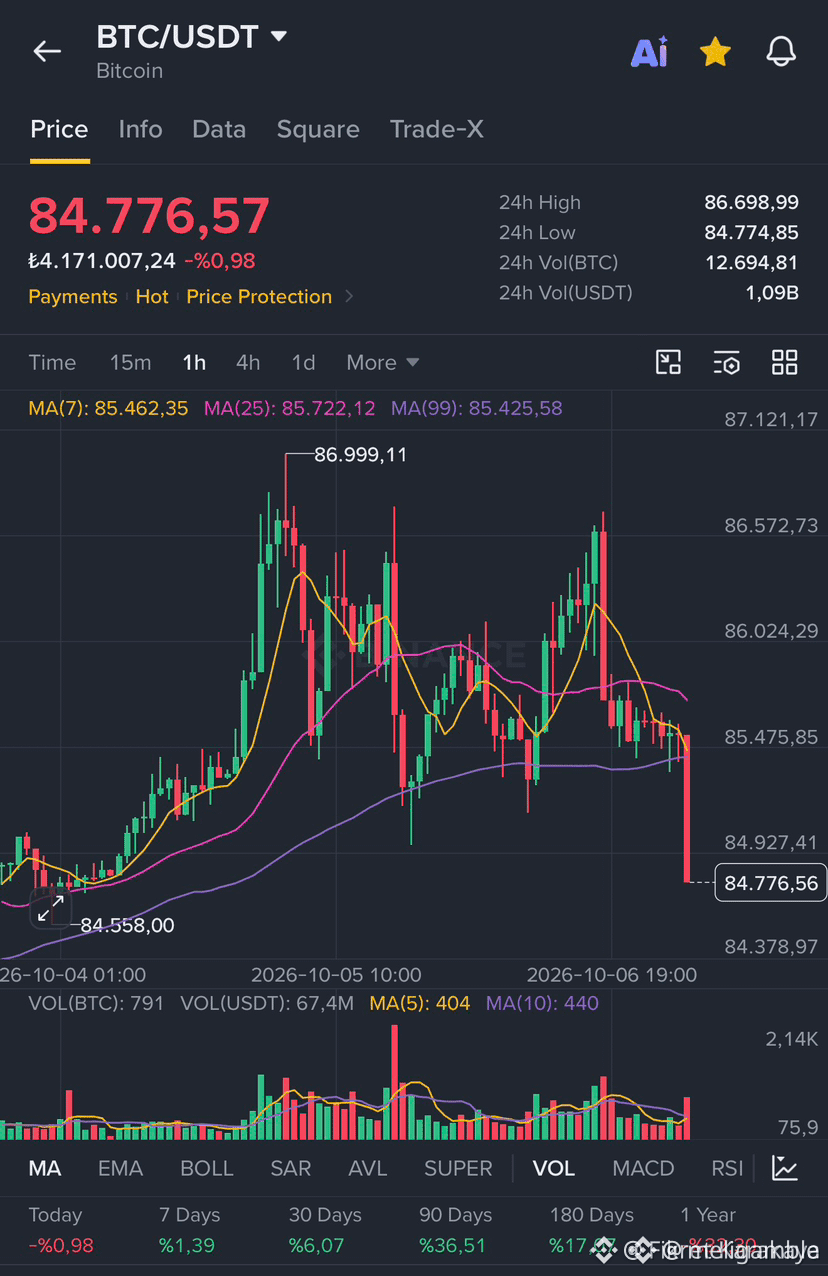
$BTC is currently between $87.4K above and $82.6K below a $5K gap where leveraged traders on both sides could get caught.
if it heads toward 87.4K shorts might start getting squeezed. lose 82.6K and longs could trigger a cascade down.
this exact setup is a classic case that often drags $ETH and $BNB along for the ride when liquidity gets hunted.
anyone else watching these levels?
#Bitcoin #CryptoTrading #Liquidations
everyone thinks $BTC is just chilling in a range right now but actually it's sitting between two pretty dangerous liquidation zones.
ngl ser that's how a lot of us get wrecked ignoring the leverage traps and ending up liquidated on a sudden move. the pain of watching your position vanish is too real.
$BTC is currently between $87.4K above and $82.6K below a $5K gap where leveraged traders on both sides could get caught.
if it heads toward 87.4K shorts might start getting squeezed. lose 82.6K and longs could trigger a cascade down.
this exact setup is a classic case that often drags $ETH and $BNB along for the ride when liquidity gets hunted.
anyone else watching these levels?
#Bitcoin #CryptoTrading #Liquidations
ngl ser that's how a lot of us get wrecked ignoring the leverage traps and ending up liquidated on a sudden move. the pain of watching your position vanish is too real.
$BTC is currently between $87.4K above and $82.6K below a $5K gap where leveraged traders on both sides could get caught.
if it heads toward 87.4K shorts might start getting squeezed. lose 82.6K and longs could trigger a cascade down.
this exact setup is a classic case that often drags $ETH and $BNB along for the ride when liquidity gets hunted.
anyone else watching these levels?
#Bitcoin #CryptoTrading #Liquidations
·
--
Why is nobody talking about how obvious the liquidation trap on $BTC is becoming right now?
Most traders keep getting chopped to pieces by chasing mid-range momentum, only to watch their stop losses get hunted before the real move even starts.
Look at what is unfolding on the charts. Bitcoin is currently trapped inside a tight $5K gap between two massive liquidity pools sitting at $87.4K above and $82.6K below. The market does not need to trend right now; it just needs to punish overleveraged positions on both sides.
A push toward $87.4K will immediately squeeze late shorts who got too comfortable betting on downside continuation. Conversely, losing $82.6K triggers a cascade of forced long closures that could quickly drag the rest of the market down, including $ETH and major altcoins. Trading heavily inside this corridor is a classic recipe for donating capital to market makers.
Which liquidation cluster do you think gets swept first?
#Bitcoin #CryptoTrading #BinanceSquare
Why is nobody talking about how obvious the liquidation trap on $BTC is becoming right now?
Most traders keep getting chopped to pieces by chasing mid-range momentum, only to watch their stop losses get hunted before the real move even starts.
Look at what is unfolding on the charts. Bitcoin is currently trapped inside a tight $5K gap between two massive liquidity pools sitting at $87.4K above and $82.6K below. The market does not need to trend right now; it just needs to punish overleveraged positions on both sides.
A push toward $87.4K will immediately squeeze late shorts who got too comfortable betting on downside continuation. Conversely, losing $82.6K triggers a cascade of forced long closures that could quickly drag the rest of the market down, including $ETH and major altcoins. Trading heavily inside this corridor is a classic recipe for donating capital to market makers.
Which liquidation cluster do you think gets swept first?
#Bitcoin #CryptoTrading #BinanceSquare
Most traders keep getting chopped to pieces by chasing mid-range momentum, only to watch their stop losses get hunted before the real move even starts.
Look at what is unfolding on the charts. Bitcoin is currently trapped inside a tight $5K gap between two massive liquidity pools sitting at $87.4K above and $82.6K below. The market does not need to trend right now; it just needs to punish overleveraged positions on both sides.
A push toward $87.4K will immediately squeeze late shorts who got too comfortable betting on downside continuation. Conversely, losing $82.6K triggers a cascade of forced long closures that could quickly drag the rest of the market down, including $ETH and major altcoins. Trading heavily inside this corridor is a classic recipe for donating capital to market makers.
Which liquidation cluster do you think gets swept first?
#Bitcoin #CryptoTrading #BinanceSquare

1
·
--
Most retail traders destroy their accounts not because their thesis was wrong, but because they married their bias long after the market proved them wrong.
Watching an open position bleed into the red triggers an almost paralyzing sense of hope. You convince yourself a relief bounce is right around the corner, even as your margin gets drained dollar by dollar.
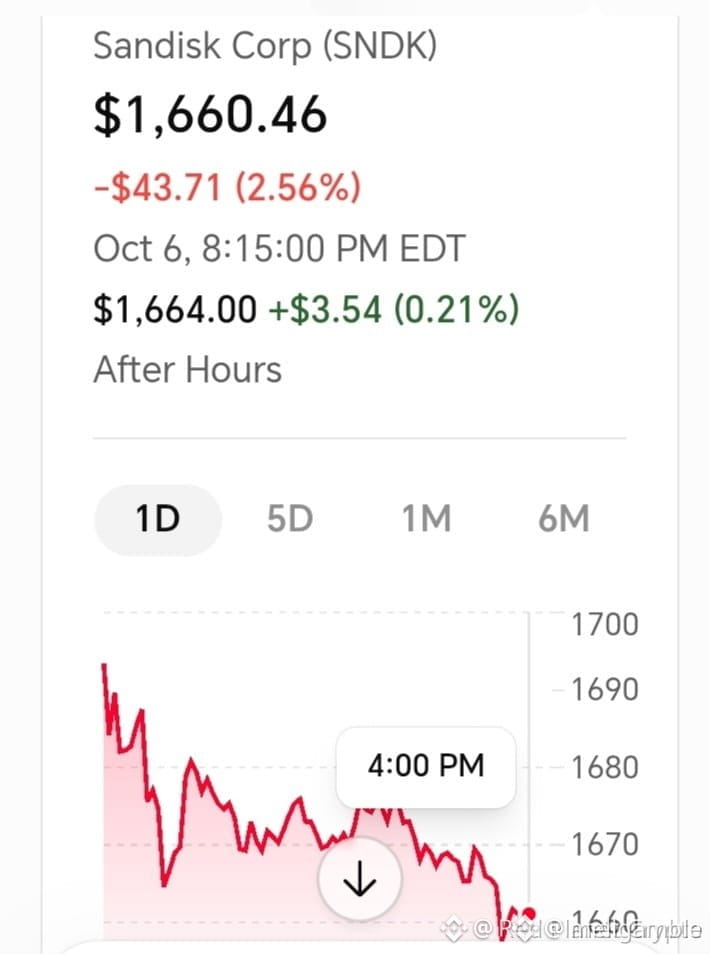
I have seen this movie play out across every cycle since the early days of $BTC. Just this past weekend, a textbook trap unfolded where clinging to a long on $SNDK from Friday through Monday close resulted in a brutal 100,000 USDT loss. The market does not care about what you paid or what you hoped would happen.
The turning point comes when you kill your ego and simply trade the structure in front of you. Cutting the stubborn long and flipping into an opening short completely reversed the outcome, capturing over +139,415 USDT in unrealized profit as momentum shifted downward. Surviving this market is never about loyalty to a single direction. It is about how quickly you can accept being wrong and align with reality.
How long do you usually let a losing position run before you admit your bias was wrong?
#CryptoTrading #RiskManagement #FuturesTrading
Most retail traders destroy their accounts not because their thesis was wrong, but because they married their bias long after the market proved them wrong.
Watching an open position bleed into the red triggers an almost paralyzing sense of hope. You convince yourself a relief bounce is right around the corner, even as your margin gets drained dollar by dollar.
I have seen this movie play out across every cycle since the early days of $BTC . Just this past weekend, a textbook trap unfolded where clinging to a long on $SNDK from Friday through Monday close resulted in a brutal 100,000 USDT loss. The market does not care about what you paid or what you hoped would happen.
The turning point comes when you kill your ego and simply trade the structure in front of you. Cutting the stubborn long and flipping into an opening short completely reversed the outcome, capturing over +139,415 USDT in unrealized profit as momentum shifted downward. Surviving this market is never about loyalty to a single direction. It is about how quickly you can accept being wrong and align with reality.
How long do you usually let a losing position run before you admit your bias was wrong?
#CryptoTrading #RiskManagement #FuturesTrading
Watching an open position bleed into the red triggers an almost paralyzing sense of hope. You convince yourself a relief bounce is right around the corner, even as your margin gets drained dollar by dollar.
I have seen this movie play out across every cycle since the early days of $BTC . Just this past weekend, a textbook trap unfolded where clinging to a long on $SNDK from Friday through Monday close resulted in a brutal 100,000 USDT loss. The market does not care about what you paid or what you hoped would happen.
The turning point comes when you kill your ego and simply trade the structure in front of you. Cutting the stubborn long and flipping into an opening short completely reversed the outcome, capturing over +139,415 USDT in unrealized profit as momentum shifted downward. Surviving this market is never about loyalty to a single direction. It is about how quickly you can accept being wrong and align with reality.
How long do you usually let a losing position run before you admit your bias was wrong?
#CryptoTrading #RiskManagement #FuturesTrading
3
Войдите, чтобы посмотреть больше материала
Присоединяйтесь к пользователям криптовалют по всему миру на Binance Square
⚡️ Получайте новейшую и полезную информацию о криптоактивах.
💬 Нам доверяет крупнейшая в мире криптобиржа.
👍 Получите достоверные аналитические данные от верифицированных создателей контента.
Эл. почта/номер телефона
В тренде
FedMinutesFocusOnOctoberPause
Просмотров: 6,395
247 обсуждают
#fedminutesfocusonoctoberpause
🚨 OCTOBER FED HIKE ODDS COLLAPSE TO 21.6%… Is $BTC About to React? 👀
The Fed is about to give markets another major clue.
Investors are waiting for today’s FOMC minutes — and the biggest question is whether October brings another rate hike… or a pause.
Right now, the odds of a 25-basis-point October hike have fallen to just 21.6%.
That’s a huge shift in expectations.
But here’s what makes this interesting… 👀
The Fed raised rates to 3.75%–4.00% in September, but recent weakness in jobs data and softer inflation have made another immediate hike look less certain.
And for crypto, this matters.
A Fed pause could reduce pressure on financial conditions and potentially improve risk appetite.
That could become a tailwind for BTC
But there’s a catch…
Bitcoin is already under pressure as the dollar and Treasury yields move higher.
So tonight’s minutes could become a volatility trigger.
Dovish Fed → liquidity hopes → bullish .
BTC narrative?
Hawkish Fed → higher-rate fears → more pressure on risk assets?
The real question:
Is October becoming the pause Bitcoin bulls have been waiting for… or could the Fed surprise the market again? 👀
Watch BTC + Fed expectations + Treasury yields closely.
#FederalReserve #Fed #Crypto #InterestRates
$ETH
$SOL
Shae Cassler Sw9r
·Лайков: 6
·Просмотров: 13.4k
BinanceLaunchesBinanceIntelligence
Просмотров: 904,859
5,529 обсуждают
RobinhoodAdds$25MInBitcoinToBalanceSheet
Просмотров: 480
23 обсуждают