

#eigenlayer
eigenlayer
Просмотров: 361,533
861 обсуждают
Популярные
Новые

·
--
Проверено
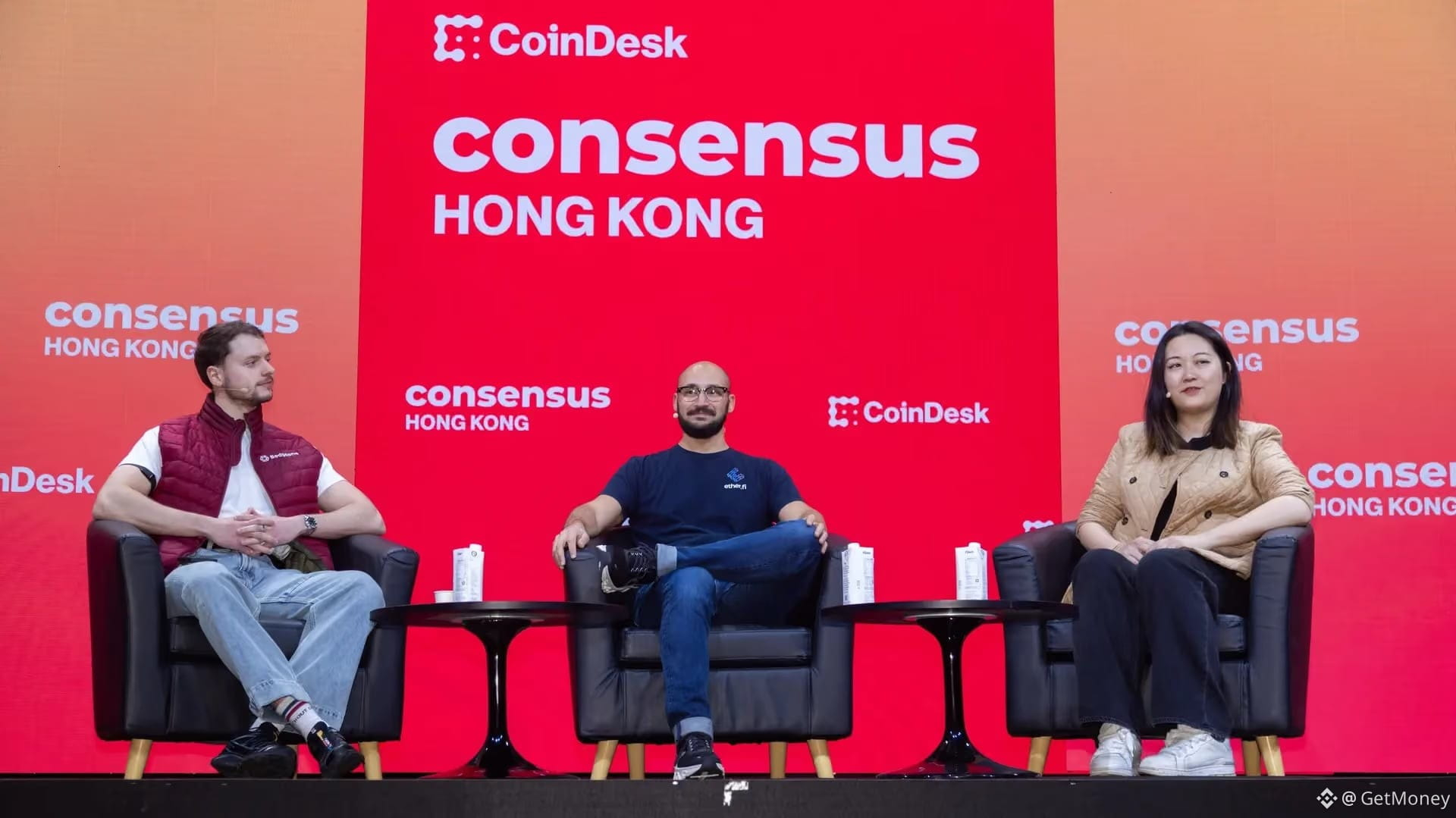
📰 ether.fi 要和 EigenLayer 解绑了。到本季度末,它会解除质押代币与再质押协议之间最后的结构性绑定,EigenPod 提款凭证也计划在年底前移除。届时,参与再质押的资产不到 1%。
🔥 说实话,原因不复杂:多承担一层风险,却没拿到对应收益。9 月 8 日的数据里,再质押板块一周手续费约 10 万美元,流动性质押约 2735 万美元;按相近规模算,普通质押收益大约是再质押的 53 倍。
👀 再加上 2025 年积分激励陆续结束,罚没机制上线,原本只是理论上的风险也可能变成实际亏损。2026 年 4 月 KelpDAO 跨链桥遭攻击,伪造的 rsETH 又被拿去借出真实 ETH。问题不在 EigenLayer 核心机制失灵,而是可交易的包装凭证多带了一层合约和跨链风险。
💡 ether.fi 已在 8 月把再质押从 weETH 中剥离,转向加密消费卡、借贷、金库和代币化资产。其实这也是个现实问题:当原来的业务不赚钱,项目就得找新收入来源;但新业务能不能站稳,还得看实际收入和风险怎么平衡。
🤔 你会更愿意拿普通质押收益,还是为了可能的额外回报接受再质押和包装代币的风险?
#etherfi #EigenLayer #再质押 #DeFi
📰 ether.fi 要和 EigenLayer 解绑了。到本季度末,它会解除质押代币与再质押协议之间最后的结构性绑定,EigenPod 提款凭证也计划在年底前移除。届时,参与再质押的资产不到 1%。
🔥 说实话,原因不复杂:多承担一层风险,却没拿到对应收益。9 月 8 日的数据里,再质押板块一周手续费约 10 万美元,流动性质押约 2735 万美元;按相近规模算,普通质押收益大约是再质押的 53 倍。
👀 再加上 2025 年积分激励陆续结束,罚没机制上线,原本只是理论上的风险也可能变成实际亏损。2026 年 4 月 KelpDAO 跨链桥遭攻击,伪造的 rsETH 又被拿去借出真实 ETH。问题不在 EigenLayer 核心机制失灵,而是可交易的包装凭证多带了一层合约和跨链风险。
💡 ether.fi 已在 8 月把再质押从 weETH 中剥离,转向加密消费卡、借贷、金库和代币化资产。其实这也是个现实问题:当原来的业务不赚钱,项目就得找新收入来源;但新业务能不能站稳,还得看实际收入和风险怎么平衡。
🤔 你会更愿意拿普通质押收益,还是为了可能的额外回报接受再质押和包装代币的风险?
#etherfi #EigenLayer #再质押 #DeFi
🔥 说实话,原因不复杂:多承担一层风险,却没拿到对应收益。9 月 8 日的数据里,再质押板块一周手续费约 10 万美元,流动性质押约 2735 万美元;按相近规模算,普通质押收益大约是再质押的 53 倍。
👀 再加上 2025 年积分激励陆续结束,罚没机制上线,原本只是理论上的风险也可能变成实际亏损。2026 年 4 月 KelpDAO 跨链桥遭攻击,伪造的 rsETH 又被拿去借出真实 ETH。问题不在 EigenLayer 核心机制失灵,而是可交易的包装凭证多带了一层合约和跨链风险。
💡 ether.fi 已在 8 月把再质押从 weETH 中剥离,转向加密消费卡、借贷、金库和代币化资产。其实这也是个现实问题:当原来的业务不赚钱,项目就得找新收入来源;但新业务能不能站稳,还得看实际收入和风险怎么平衡。
🤔 你会更愿意拿普通质押收益,还是为了可能的额外回报接受再质押和包装代币的风险?
#etherfi #EigenLayer #再质押 #DeFi
374

·
--
🎯 100亿刀护盘,一周才收10万刀
📰 ether.fi本季彻底断开EigenLayer,重质押剩不到1%;锁仓100亿刀,七天费用才10万,效率低53倍
💬 叙事吹上天,账本不骗人。安全预算养不起收益,故事讲完就抽水,接盘的还没来。这种赛道的黄昏值得记住
🏷️ #EigenLayer #再质押 #etherfi #DeFi
🎯 100亿刀护盘,一周才收10万刀
📰 ether.fi本季彻底断开EigenLayer,重质押剩不到1%;锁仓100亿刀,七天费用才10万,效率低53倍
💬 叙事吹上天,账本不骗人。安全预算养不起收益,故事讲完就抽水,接盘的还没来。这种赛道的黄昏值得记住
🏷️ #EigenLayer #再质押 #etherfi #DeFi
📰 ether.fi本季彻底断开EigenLayer,重质押剩不到1%;锁仓100亿刀,七天费用才10万,效率低53倍
💬 叙事吹上天,账本不骗人。安全预算养不起收益,故事讲完就抽水,接盘的还没来。这种赛道的黄昏值得记住
🏷️ #EigenLayer #再质押 #etherfi #DeFi
46

·
--
Рост
EIGEN short positions just got wiped out! ⚡ Bears pushed their luck a bit too far and got caught in a swift liquidity cascade. Always respect the order book! 🚀
$EIGEN
{future}(EIGENUSDT)
🟢 LIQUIDITY ZONE HIT 🟢
Short liquidation spotted 🧨
$1.40K cleared at $0.2770
Upside liquidity swept — Price squeezing up towards key resistance levels, watch for volatility 👀
🎯 Targets: $0.2880, $0.3020
#EIGEN #EigenLayer #CryptoTrading
EIGEN short positions just got wiped out! ⚡ Bears pushed their luck a bit too far and got caught in a swift liquidity cascade. Always respect the order book! 🚀
$EIGEN
🟢 LIQUIDITY ZONE HIT 🟢
Short liquidation spotted 🧨
$1.40K cleared at $0.2770
Upside liquidity swept — Price squeezing up towards key resistance levels, watch for volatility 👀
🎯 Targets: $0.2880, $0.3020
#EIGEN #EigenLayer #CryptoTrading
$EIGEN
🟢 LIQUIDITY ZONE HIT 🟢
Short liquidation spotted 🧨
$1.40K cleared at $0.2770
Upside liquidity swept — Price squeezing up towards key resistance levels, watch for volatility 👀
🎯 Targets: $0.2880, $0.3020
#EIGEN #EigenLayer #CryptoTrading
125


·
--
$EIGEN /USDT LONG 🔵
$EIGEN is a major Ethereum restaking infrastructure play 📊 powering EigenLayer and its ecosystem of Actively Validated Services (AVSs) ⚡
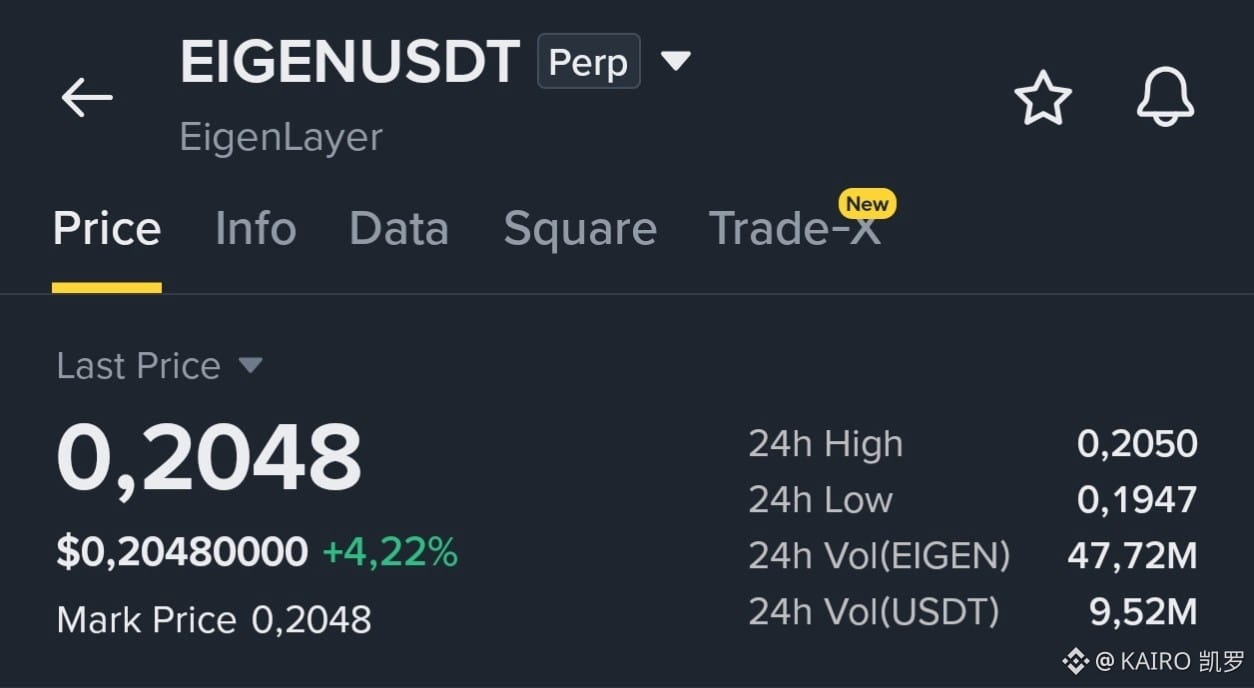
$EIGEN is setting up around the $0.2048 zone, with the restaking narrative keeping attention on the token 🧭
🟢 Buyzone: $0.20480
🔴 Stoploss: $0.17410
🎯 Target 1: $0.21500
🎯 Target 2: $0.22530
🎯 Target 3: $0.24580
⚠️ Risk: FOMO — don't chase if price spikes too fast.
Not financial advice and not a recommendation to buy or sell. Crypto is highly risky, DYOR and you are solely responsible. No coin promotion.
#EIGEN #Eigenlayer #restaking #Write2Earn
$EIGEN /USDT LONG 🔵
$EIGEN is a major Ethereum restaking infrastructure play 📊 powering EigenLayer and its ecosystem of Actively Validated Services (AVSs) ⚡
$EIGEN is setting up around the $0.2048 zone, with the restaking narrative keeping attention on the token 🧭
🟢 Buyzone: $0.20480
🔴 Stoploss: $0.17410
🎯 Target 1: $0.21500
🎯 Target 2: $0.22530
🎯 Target 3: $0.24580
⚠️ Risk: FOMO — don't chase if price spikes too fast.
Not financial advice and not a recommendation to buy or sell. Crypto is highly risky, DYOR and you are solely responsible. No coin promotion.
#EIGEN #Eigenlayer #restaking #Write2Earn
$EIGEN is a major Ethereum restaking infrastructure play 📊 powering EigenLayer and its ecosystem of Actively Validated Services (AVSs) ⚡
$EIGEN is setting up around the $0.2048 zone, with the restaking narrative keeping attention on the token 🧭
🟢 Buyzone: $0.20480
🔴 Stoploss: $0.17410
🎯 Target 1: $0.21500
🎯 Target 2: $0.22530
🎯 Target 3: $0.24580
⚠️ Risk: FOMO — don't chase if price spikes too fast.
Not financial advice and not a recommendation to buy or sell. Crypto is highly risky, DYOR and you are solely responsible. No coin promotion.
#EIGEN #Eigenlayer #restaking #Write2Earn
218

·
--
🚨 $EIGEN تحت المتابعة بقوة 👀
أنا أبني موقفي في EIGEN بشكل تدريجي، وليس بدخول كامل رأس المال دفعة واحدة. الفكرة هي الاستفادة من أي تراجع محتمل مع الحفاظ على إدارة مخاطر واضحة.
📍 الخطة
• دخولات متفرقة من المستويات الحالية
• زيادة تدريجية فقط عند توفر فرص أفضل
• التركيز على الصبر وعدم مطاردة السعر
🎯 النظرة
إذا عاد الزخم لموسم العملات البديلة وتحسّن الطلب على مشاريع البنية التحتية، فقد يستفيد EIGEN من هذا الاهتمام. لكن السوق متقلب، ولا يوجد أي ضمان للنتائج.
🔥 المتابعة الآن أهم من الاستعجال — وإدارة رأس المال هي الأساس.
#EİGEN #EigenLayer #Crypto #Altcoins #BinanceSquare
🚨 $EIGEN تحت المتابعة بقوة 👀
أنا أبني موقفي في EIGEN بشكل تدريجي، وليس بدخول كامل رأس المال دفعة واحدة. الفكرة هي الاستفادة من أي تراجع محتمل مع الحفاظ على إدارة مخاطر واضحة.
📍 الخطة
• دخولات متفرقة من المستويات الحالية
• زيادة تدريجية فقط عند توفر فرص أفضل
• التركيز على الصبر وعدم مطاردة السعر
🎯 النظرة
إذا عاد الزخم لموسم العملات البديلة وتحسّن الطلب على مشاريع البنية التحتية، فقد يستفيد EIGEN من هذا الاهتمام. لكن السوق متقلب، ولا يوجد أي ضمان للنتائج.
🔥 المتابعة الآن أهم من الاستعجال — وإدارة رأس المال هي الأساس.
#EİGEN #EigenLayer #Crypto #Altcoins #BinanceSquare
أنا أبني موقفي في EIGEN بشكل تدريجي، وليس بدخول كامل رأس المال دفعة واحدة. الفكرة هي الاستفادة من أي تراجع محتمل مع الحفاظ على إدارة مخاطر واضحة.
📍 الخطة
• دخولات متفرقة من المستويات الحالية
• زيادة تدريجية فقط عند توفر فرص أفضل
• التركيز على الصبر وعدم مطاردة السعر
🎯 النظرة
إذا عاد الزخم لموسم العملات البديلة وتحسّن الطلب على مشاريع البنية التحتية، فقد يستفيد EIGEN من هذا الاهتمام. لكن السوق متقلب، ولا يوجد أي ضمان للنتائج.
🔥 المتابعة الآن أهم من الاستعجال — وإدارة رأس المال هي الأساس.
#EİGEN #EigenLayer #Crypto #Altcoins #BinanceSquare
1
85

🚨 $EIGEN — I’m Building a Position 👀
I’m personally investing in $EIGEN and planning to build my position **gradually**, rather than entering with all my capital at once.
📍 **Entry Strategy**
• Start buying from the current price
• Split the capital into multiple entries
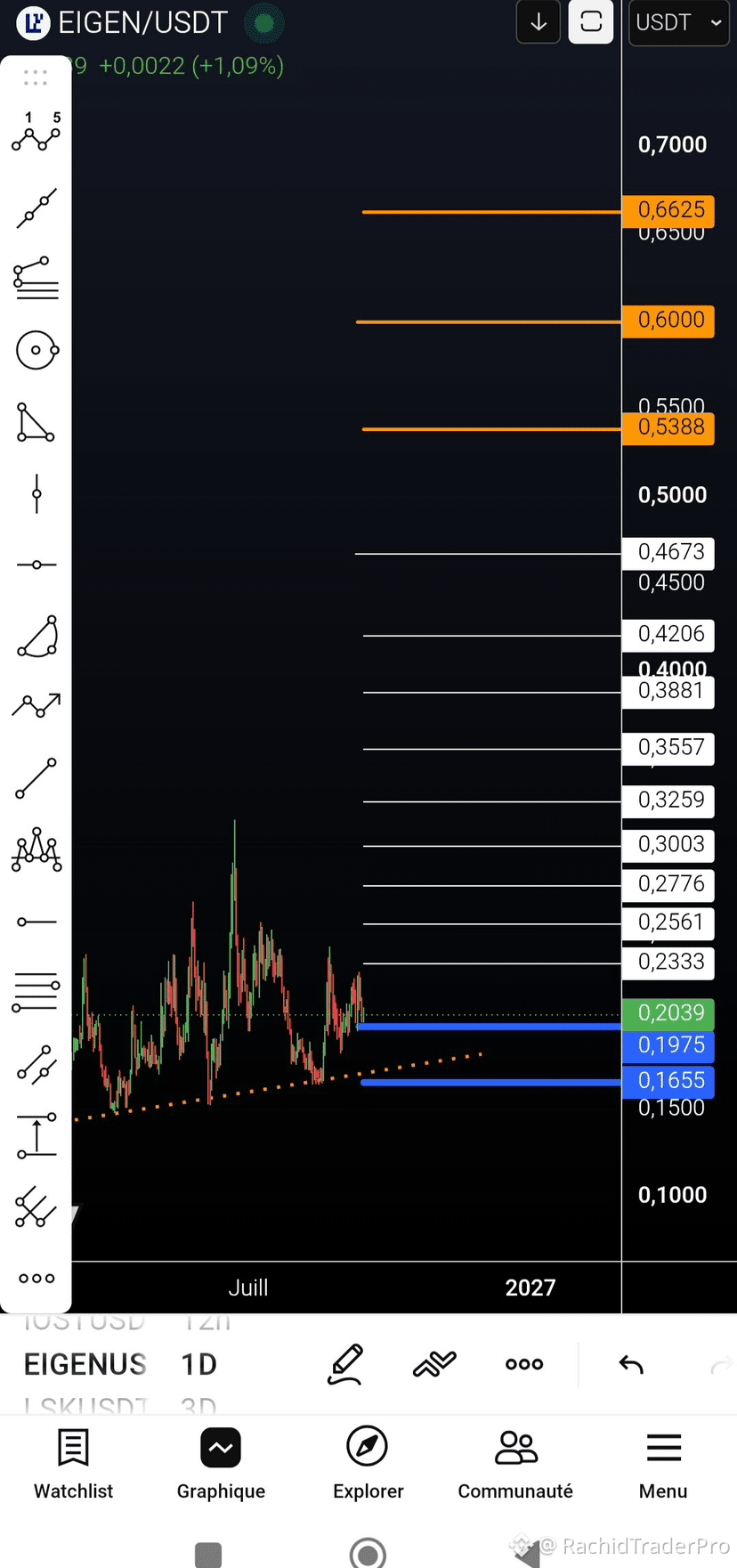
• Continue accumulating in parts down to **$0.1655** if the market gives us that opportunity
🎯 **My Goal**
I’m looking for a potential **2X–3X move** if $EIGEN regains strong momentum and the altcoin market starts moving again.
Nothing is guaranteed in crypto — this is simply my personal strategy and thesis.
🔥 I’m accumulating step by step.
Now I want to see who else is watching $EIGEN…
Are you **BUYING 🟢 or WAITING ⏳?**
Follow me for more crypto setups, market ideas and updates.
#eigen #Eigenlayer #crypto #altcoins #BinanceSquare
🚨 $EIGEN — I’m Building a Position 👀
I’m personally investing in $EIGEN and planning to build my position **gradually**, rather than entering with all my capital at once.
📍 **Entry Strategy**
• Start buying from the current price
• Split the capital into multiple entries
• Continue accumulating in parts down to **$0.1655** if the market gives us that opportunity
🎯 **My Goal**
I’m looking for a potential **2X–3X move** if $EIGEN regains strong momentum and the altcoin market starts moving again.
Nothing is guaranteed in crypto — this is simply my personal strategy and thesis.
🔥 I’m accumulating step by step.
Now I want to see who else is watching $EIGEN …
Are you **BUYING 🟢 or WAITING ⏳?**
Follow me for more crypto setups, market ideas and updates.
#eigen #Eigenlayer #crypto #altcoins #BinanceSquare
I’m personally investing in $EIGEN and planning to build my position **gradually**, rather than entering with all my capital at once.
📍 **Entry Strategy**
• Start buying from the current price
• Split the capital into multiple entries
• Continue accumulating in parts down to **$0.1655** if the market gives us that opportunity
🎯 **My Goal**
I’m looking for a potential **2X–3X move** if $EIGEN regains strong momentum and the altcoin market starts moving again.
Nothing is guaranteed in crypto — this is simply my personal strategy and thesis.
🔥 I’m accumulating step by step.
Now I want to see who else is watching $EIGEN …
Are you **BUYING 🟢 or WAITING ⏳?**
Follow me for more crypto setups, market ideas and updates.
#eigen #Eigenlayer #crypto #altcoins #BinanceSquare
1
175

·
--
$EIGEN 近期跌约4%,价格回到0.21美元一线,走势明显偏弱。
这轮回调并非单纯情绪杀跌,背后有两重实打实的压力:
一是再质押板块整体降温。资金从前期热门叙事中持续撤出,板块估值中枢下移,EIGEN很难走出独立行情。
二是代币供给压力沉重。今年通胀率高达44.92%,不参与质押的持币者只能被动承受稀释;更关键的是,后续仍有大额解锁排队落地,供给持续放量,而需求端暂时看不到增量资金接盘。
目前市值不到2亿美元,24小时成交额约1380万美元,流动性偏薄会进一步放大抛压对币价的冲击。
个人判断:在解锁高峰过去、板块叙事回暖之前,反弹更偏向减仓窗口,而非趋势反转。急于抄底的朋友,建议先盯住后续解锁节奏与链上质押率变化,别用重仓接飞刀。
#EigenLayer #再质押 #加密市场
$EIGEN 近期跌约4%,价格回到0.21美元一线,走势明显偏弱。
这轮回调并非单纯情绪杀跌,背后有两重实打实的压力:
一是再质押板块整体降温。资金从前期热门叙事中持续撤出,板块估值中枢下移,EIGEN很难走出独立行情。
二是代币供给压力沉重。今年通胀率高达44.92%,不参与质押的持币者只能被动承受稀释;更关键的是,后续仍有大额解锁排队落地,供给持续放量,而需求端暂时看不到增量资金接盘。
目前市值不到2亿美元,24小时成交额约1380万美元,流动性偏薄会进一步放大抛压对币价的冲击。
个人判断:在解锁高峰过去、板块叙事回暖之前,反弹更偏向减仓窗口,而非趋势反转。急于抄底的朋友,建议先盯住后续解锁节奏与链上质押率变化,别用重仓接飞刀。
#EigenLayer #再质押 #加密市场
这轮回调并非单纯情绪杀跌,背后有两重实打实的压力:
一是再质押板块整体降温。资金从前期热门叙事中持续撤出,板块估值中枢下移,EIGEN很难走出独立行情。
二是代币供给压力沉重。今年通胀率高达44.92%,不参与质押的持币者只能被动承受稀释;更关键的是,后续仍有大额解锁排队落地,供给持续放量,而需求端暂时看不到增量资金接盘。
目前市值不到2亿美元,24小时成交额约1380万美元,流动性偏薄会进一步放大抛压对币价的冲击。
个人判断:在解锁高峰过去、板块叙事回暖之前,反弹更偏向减仓窗口,而非趋势反转。急于抄底的朋友,建议先盯住后续解锁节奏与链上质押率变化,别用重仓接飞刀。
#EigenLayer #再质押 #加密市场
25

·
--
$EIGEN 短线走弱约4%,价格在0.214美元附近,24小时成交约1381万美元,市值约1.97亿美元。这轮压力不只来自大盘,更来自再质押板块降温与自身供给压力。
今年通胀率约44.92%,后续还有较重的代币释放,流通盘增加会持续压制估值。对高通胀资产来说,反弹不能只看K线,更要看解锁节奏、质押需求和板块资金能否回流。
若成交量无法放大,价格可能继续承压;只有新增需求逐步消化通胀,趋势才有修复基础。短线注意波动,追高仍需谨慎。
#再质押 #EigenLayer
$EIGEN 短线走弱约4%,价格在0.214美元附近,24小时成交约1381万美元,市值约1.97亿美元。这轮压力不只来自大盘,更来自再质押板块降温与自身供给压力。
今年通胀率约44.92%,后续还有较重的代币释放,流通盘增加会持续压制估值。对高通胀资产来说,反弹不能只看K线,更要看解锁节奏、质押需求和板块资金能否回流。
若成交量无法放大,价格可能继续承压;只有新增需求逐步消化通胀,趋势才有修复基础。短线注意波动,追高仍需谨慎。
#再质押 #EigenLayer
今年通胀率约44.92%,后续还有较重的代币释放,流通盘增加会持续压制估值。对高通胀资产来说,反弹不能只看K线,更要看解锁节奏、质押需求和板块资金能否回流。
若成交量无法放大,价格可能继续承压;只有新增需求逐步消化通胀,趋势才有修复基础。短线注意波动,追高仍需谨慎。
#再质押 #EigenLayer
29


$EIGEN 这轮回调更像是板块贝塔与供给压力的共振,而不只是大盘波动。再质押赛道热度退潮,资金风险偏好下降,代币本身又面临高通胀:年内通胀率约44.92%,后续还有较大规模释放。当前报价约0.2137美元,24小时成交量约1381万美元,市值约1.97亿美元;量能并未明显放大,说明买盘承接仍偏谨慎。短线看,若解锁预期继续升温,反弹可能反复受到压制。关注0.21美元附近支撑能否守住,以及成交量是否重新放大。弱势未确认反转前,控制仓位比追反弹更重要。#再质押 #EigenLayer
$EIGEN 这轮回调更像是板块贝塔与供给压力的共振,而不只是大盘波动。再质押赛道热度退潮,资金风险偏好下降,代币本身又面临高通胀:年内通胀率约44.92%,后续还有较大规模释放。当前报价约0.2137美元,24小时成交量约1381万美元,市值约1.97亿美元;量能并未明显放大,说明买盘承接仍偏谨慎。短线看,若解锁预期继续升温,反弹可能反复受到压制。关注0.21美元附近支撑能否守住,以及成交量是否重新放大。弱势未确认反转前,控制仓位比追反弹更重要。#再质押 #EigenLayer
28

👁️ PROTOCOLO INFILTRACIÓN INSTITUCIONAL | EL SMART MONEY RASTREA $EIGEN
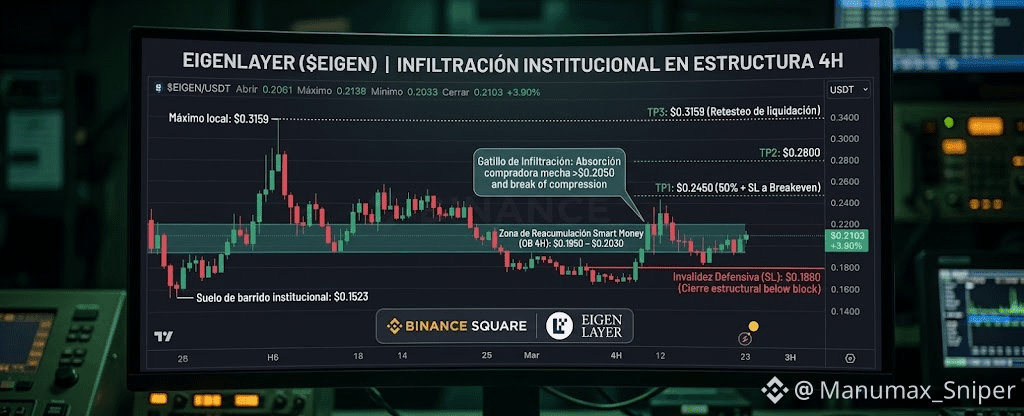
Dirección 🟢 ALCISTA (Bullish). Tras barrer la liquidez en los $0.1523 y proyectarse hasta $0.3159, el capital institucional ha estado acumulando silenciosamente en compresión. $EIGEN defiende con precisión la zona de demanda entre $0.1950 y $0.2030, reaccionando al alza hasta $0.2103 (+3.90%).
🗺️ RASTREO DE HUELLA INSTITUCIONAL:
Zona de Absorción: $0.1950 – $0.2030
TP1: $0.2450 (50% + SL a Breakeven)
TP2: $0.2800
TP3: $0.3159
SL: $0.1880
⚡ ESTRATEGIA: Operamos con la huella del dinero inteligente. La consolidación sobre el bloque defensivo sugiere que la fase de acumulación ha terminado y el próximo objetivo es la liquidez expuesta en $0.2450 y $0.3159.
#eigen #Eigenlayer #restaking
👁️ PROTOCOLO INFILTRACIÓN INSTITUCIONAL | EL SMART MONEY RASTREA $EIGEN
Dirección 🟢 ALCISTA (Bullish). Tras barrer la liquidez en los $0.1523 y proyectarse hasta $0.3159, el capital institucional ha estado acumulando silenciosamente en compresión. $EIGEN defiende con precisión la zona de demanda entre $0.1950 y $0.2030, reaccionando al alza hasta $0.2103 (+3.90%).
🗺️ RASTREO DE HUELLA INSTITUCIONAL:
Zona de Absorción: $0.1950 – $0.2030
TP1: $0.2450 (50% + SL a Breakeven)
TP2: $0.2800
TP3: $0.3159
SL: $0.1880
⚡ ESTRATEGIA: Operamos con la huella del dinero inteligente. La consolidación sobre el bloque defensivo sugiere que la fase de acumulación ha terminado y el próximo objetivo es la liquidez expuesta en $0.2450 y $0.3159.
#eigen #Eigenlayer #restaking
Dirección 🟢 ALCISTA (Bullish). Tras barrer la liquidez en los $0.1523 y proyectarse hasta $0.3159, el capital institucional ha estado acumulando silenciosamente en compresión. $EIGEN defiende con precisión la zona de demanda entre $0.1950 y $0.2030, reaccionando al alza hasta $0.2103 (+3.90%).
🗺️ RASTREO DE HUELLA INSTITUCIONAL:
Zona de Absorción: $0.1950 – $0.2030
TP1: $0.2450 (50% + SL a Breakeven)
TP2: $0.2800
TP3: $0.3159
SL: $0.1880
⚡ ESTRATEGIA: Operamos con la huella del dinero inteligente. La consolidación sobre el bloque defensivo sugiere que la fase de acumulación ha terminado y el próximo objetivo es la liquidez expuesta en $0.2450 y $0.3159.
#eigen #Eigenlayer #restaking
147

🔥 $EIGEN /USDT LONG SETUP ALERT | Bulls Eyeing Recovery Breakout 🚀
Trade Setup Overview
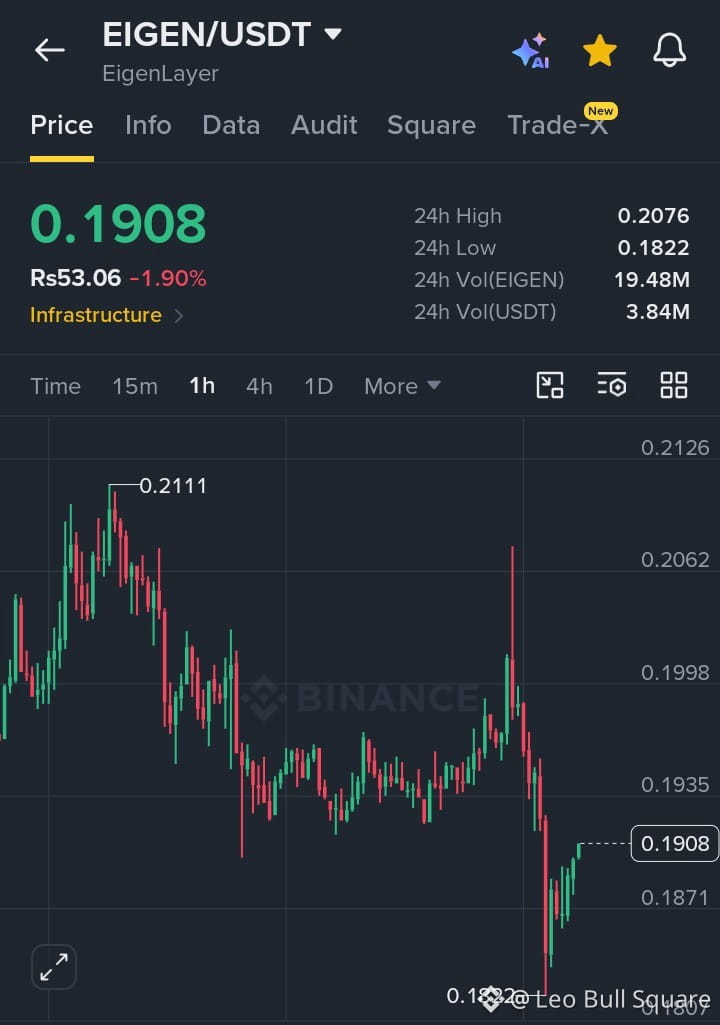
$EIGEN is showing a potential bullish reversal setup after a sharp rejection from the $0.1822 support zone. Current price near $0.1908 is recovering as buyers step in, creating a possible short-term momentum opportunity. A successful reclaim of key resistance levels could trigger the next upward move.
Trade Signal Details
Entry Zone: $0.1880 – $0.1920
Target 1: $0.1998
Target 2: $0.2062
Final Target: $0.2110 – $0.2126
Stop Loss: $0.1810
Technical Justification
EIGEN/USDT is forming a strong support bounce structure after sweeping liquidity near $0.1822. The chart shows seller exhaustion, bullish recovery candles, and demand zone defense. A breakout above $0.1998 resistance with volume confirmation can ignite a fresh momentum rally toward $0.2062 and the $0.21+ zone.
Why Traders Should Watch This Trade
This is a high-potential reversal opportunity with defined risk. The combination of liquidity sweep, support reaction, and breakout potential makes EIGEN a Binance watchlist coin for short-term momentum traders.
#EIGENUSDT #LongTrade #CryptoBreakout #BullishReversal #BinanceTrading #AltcoinSetup
#Eigenlayer
{spot}(EIGENUSDT)
🔥 $EIGEN /USDT LONG SETUP ALERT | Bulls Eyeing Recovery Breakout 🚀
Trade Setup Overview
$EIGEN is showing a potential bullish reversal setup after a sharp rejection from the $0.1822 support zone. Current price near $0.1908 is recovering as buyers step in, creating a possible short-term momentum opportunity. A successful reclaim of key resistance levels could trigger the next upward move.
Trade Signal Details
Entry Zone: $0.1880 – $0.1920
Target 1: $0.1998
Target 2: $0.2062
Final Target: $0.2110 – $0.2126
Stop Loss: $0.1810
Technical Justification
EIGEN/USDT is forming a strong support bounce structure after sweeping liquidity near $0.1822. The chart shows seller exhaustion, bullish recovery candles, and demand zone defense. A breakout above $0.1998 resistance with volume confirmation can ignite a fresh momentum rally toward $0.2062 and the $0.21+ zone.
Why Traders Should Watch This Trade
This is a high-potential reversal opportunity with defined risk. The combination of liquidity sweep, support reaction, and breakout potential makes EIGEN a Binance watchlist coin for short-term momentum traders.
#EIGENUSDT #LongTrade #CryptoBreakout #BullishReversal #BinanceTrading #AltcoinSetup
#Eigenlayer
Trade Setup Overview
$EIGEN is showing a potential bullish reversal setup after a sharp rejection from the $0.1822 support zone. Current price near $0.1908 is recovering as buyers step in, creating a possible short-term momentum opportunity. A successful reclaim of key resistance levels could trigger the next upward move.
Trade Signal Details
Entry Zone: $0.1880 – $0.1920
Target 1: $0.1998
Target 2: $0.2062
Final Target: $0.2110 – $0.2126
Stop Loss: $0.1810
Technical Justification
EIGEN/USDT is forming a strong support bounce structure after sweeping liquidity near $0.1822. The chart shows seller exhaustion, bullish recovery candles, and demand zone defense. A breakout above $0.1998 resistance with volume confirmation can ignite a fresh momentum rally toward $0.2062 and the $0.21+ zone.
Why Traders Should Watch This Trade
This is a high-potential reversal opportunity with defined risk. The combination of liquidity sweep, support reaction, and breakout potential makes EIGEN a Binance watchlist coin for short-term momentum traders.
#EIGENUSDT #LongTrade #CryptoBreakout #BullishReversal #BinanceTrading #AltcoinSetup
#Eigenlayer
1
62

🚀 New Coin Alert: $EIGEN (EigenLayer)
🔥 A fresh new opportunity is gaining massive attention, $EIGEN is becoming one of the hottest projects in crypto!
💡 Why EIGEN?
✔ Leading restaking protocol on Ethereum
✔ Expanding DeFi infrastructure
✔ Strong developer & investor interest
✔ Growing ecosystem adoption
📊 Market Insight:
$EIGEN is showing strong trading activity and rising volume. Momentum is building fast, but always DYOR before entering.
⚡ Potential:
With restaking becoming a major trend in Web3, EIGEN could play a huge role in the future of Ethereum scalability and security
💬 What do you think about EIGEN?
Long-term gem or still early?
#EIGEN #EigenLayer #CryptoUpdate #Altcoins #CryptoTrading
🚀 New Coin Alert: $EIGEN (EigenLayer)
🔥 A fresh new opportunity is gaining massive attention, $EIGEN is becoming one of the hottest projects in crypto!
💡 Why EIGEN?
✔ Leading restaking protocol on Ethereum
✔ Expanding DeFi infrastructure
✔ Strong developer & investor interest
✔ Growing ecosystem adoption
📊 Market Insight:
$EIGEN is showing strong trading activity and rising volume. Momentum is building fast, but always DYOR before entering.
⚡ Potential:
With restaking becoming a major trend in Web3, EIGEN could play a huge role in the future of Ethereum scalability and security
💬 What do you think about EIGEN?
Long-term gem or still early?
#EIGEN #EigenLayer #CryptoUpdate #Altcoins #CryptoTrading
🔥 A fresh new opportunity is gaining massive attention, $EIGEN is becoming one of the hottest projects in crypto!
💡 Why EIGEN?
✔ Leading restaking protocol on Ethereum
✔ Expanding DeFi infrastructure
✔ Strong developer & investor interest
✔ Growing ecosystem adoption
📊 Market Insight:
$EIGEN is showing strong trading activity and rising volume. Momentum is building fast, but always DYOR before entering.
⚡ Potential:
With restaking becoming a major trend in Web3, EIGEN could play a huge role in the future of Ethereum scalability and security
💬 What do you think about EIGEN?
Long-term gem or still early?
#EIGEN #EigenLayer #CryptoUpdate #Altcoins #CryptoTrading

1
129

·
--
$EIGEN 这波反弹有点意思,24小时拉了12个点,振幅接近20%,但成交额只有1800万,缩量上涨,说明跟风盘不多。RSI 38还在超卖区附近,多头趋势刚冒头,但量能没跟上,这波到底是主力试盘还是诱多,得留个心眼。
操作上,别急着追高,先看0.26附近能不能站稳,放量突破的话可能还有空间;如果缩量回踩0.24不破,可以小仓位试水。但要是跌破0.23,建议先观望。记住,缩量反弹容易夭折,别上头。
你怎么看?评论区聊聊
$EIGEN #币圈行情 #EigenLayer
$EIGEN 这波反弹有点意思,24小时拉了12个点,振幅接近20%,但成交额只有1800万,缩量上涨,说明跟风盘不多。RSI 38还在超卖区附近,多头趋势刚冒头,但量能没跟上,这波到底是主力试盘还是诱多,得留个心眼。
操作上,别急着追高,先看0.26附近能不能站稳,放量突破的话可能还有空间;如果缩量回踩0.24不破,可以小仓位试水。但要是跌破0.23,建议先观望。记住,缩量反弹容易夭折,别上头。
你怎么看?评论区聊聊
$EIGEN #币圈行情 #EigenLayer
操作上,别急着追高,先看0.26附近能不能站稳,放量突破的话可能还有空间;如果缩量回踩0.24不破,可以小仓位试水。但要是跌破0.23,建议先观望。记住,缩量反弹容易夭折,别上头。
你怎么看?评论区聊聊
$EIGEN #币圈行情 #EigenLayer
92

·
--
Рост
🚀 $EIGEN — Recovery Setup Is Heating Up
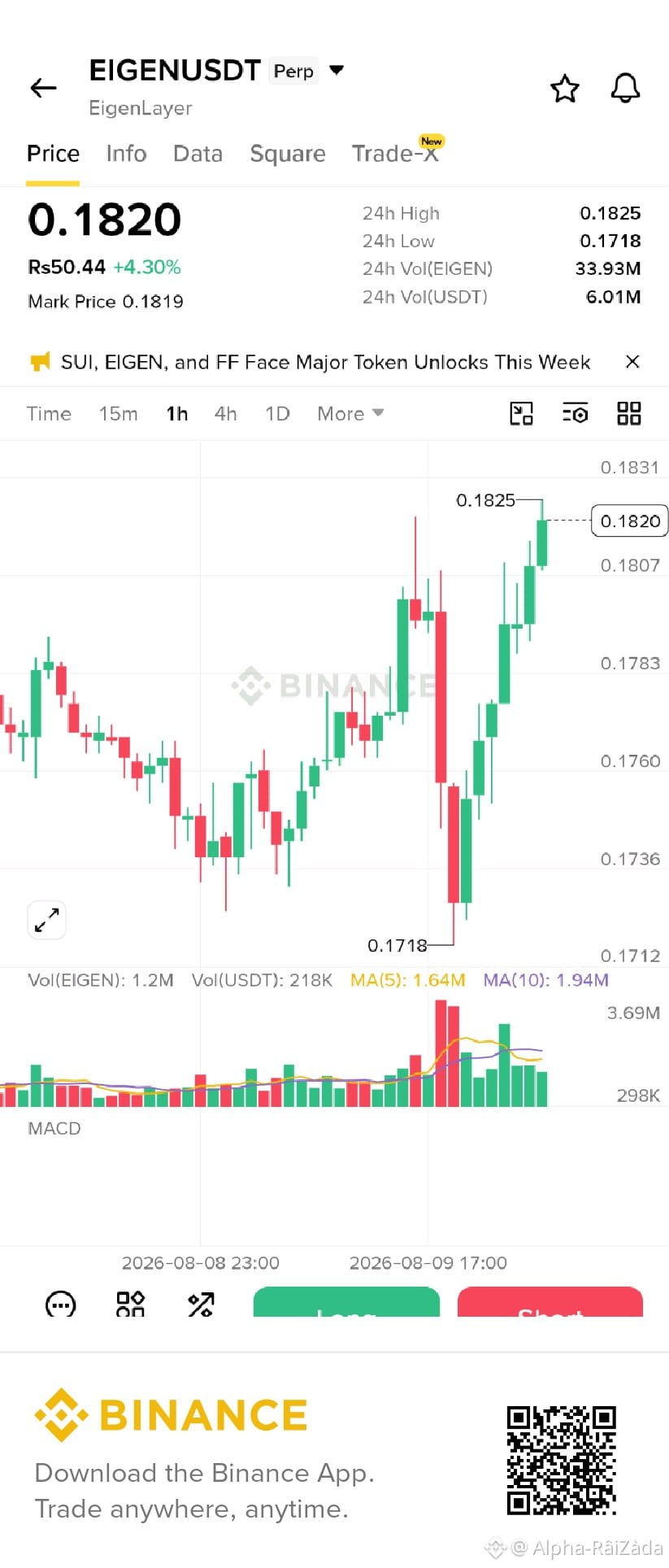
$EIGEN is showing improving bullish momentum after bouncing from the 0.1730–0.1750 demand zone and reclaiming 0.1800 on the 4H chart.
🟢 LONG SETUP
💰 Entry: 0.18000 – 0.18200
🎯 TP1: 0.18500
🎯 TP2: 0.19000
🎯 TP3: 0.19500
🛡️ SL: 0.17600
🔑 Key level: A clean break and hold above 0.1820 could strengthen the continuation setup.
⚠️ Wait for confirmation and manage risk—don't chase the move.
EIGENUSDT Perp | Bullish Watch 👀
#EIGEN #EigenLayer #CryptoTrading #BİNANCE
🚀 $EIGEN — Recovery Setup Is Heating Up
$EIGEN is showing improving bullish momentum after bouncing from the 0.1730–0.1750 demand zone and reclaiming 0.1800 on the 4H chart.
🟢 LONG SETUP
💰 Entry: 0.18000 – 0.18200
🎯 TP1: 0.18500
🎯 TP2: 0.19000
🎯 TP3: 0.19500
🛡️ SL: 0.17600
🔑 Key level: A clean break and hold above 0.1820 could strengthen the continuation setup.
⚠️ Wait for confirmation and manage risk—don't chase the move.
EIGENUSDT Perp | Bullish Watch 👀
#EIGEN #EigenLayer #CryptoTrading #BİNANCE
$EIGEN is showing improving bullish momentum after bouncing from the 0.1730–0.1750 demand zone and reclaiming 0.1800 on the 4H chart.
🟢 LONG SETUP
💰 Entry: 0.18000 – 0.18200
🎯 TP1: 0.18500
🎯 TP2: 0.19000
🎯 TP3: 0.19500
🛡️ SL: 0.17600
🔑 Key level: A clean break and hold above 0.1820 could strengthen the continuation setup.
⚠️ Wait for confirmation and manage risk—don't chase the move.
EIGENUSDT Perp | Bullish Watch 👀
#EIGEN #EigenLayer #CryptoTrading #BİNANCE
58

How Eigenlayer is Expanding the Role of Ethereum Security{spot}(EIGENUSDT)
O
{spot}(BTCUSDT)
n
{future}(ETHUSDT)
e idea has been on my mind lately: what if the security that protects one blockchain could also help secure many other decentralized applications and services?
That question led me to explore EigenLayer, a protocol built on Ethereum that introduces the concept of restaking. Instead of limiting staked ETH to securing only Ethereum's consensus, EigenLayer allows participants to voluntarily extend that economic security to additional decentralized services. It's an interesting shift because it treats blockchain security as a reusable resource rather than something every new protocol must build from scratch.
Launching a decentralized network has never been just about writing smart contracts. New projects also need a reliable way to secure their infrastructure, attract validators, and establish trust with users. Building that security from zero can be expensive and time-consuming. EigenLayer proposes a different approach by enabling developers to leverage existing Ethereum security while designing new decentralized systems.
What makes this concept particularly interesting is that it can support a wide range of services beyond traditional blockchain applications. Data availability layers, oracle networks, bridge infrastructure, and other decentralized middleware can potentially benefit from shared economic security. Instead of every protocol operating independently, multiple services may rely on a common security foundation while maintaining their own functionality.
Of course, expanding security also introduces new considerations. Restaking creates additional responsibilities for participants because they may be subject to extra protocol rules and slashing conditions depending on the services they choose to secure. Understanding both the opportunities and the risks is an important part of evaluating any new blockchain innovation.
From a broader perspective, EigenLayer reflects an ongoing trend across Web3: making existing infrastructure more efficient instead of constantly creating entirely new systems. As the ecosystem grows, reusable components—whether they're developer tools, liquidity, or security—can reduce duplication and encourage faster innovation.
Studying projects like EigenLayer has reminded me that blockchain evolution isn't always driven by higher transaction speeds or lower fees. Sometimes the biggest breakthroughs come from rethinking how existing resources can be shared across many applications. Security, often viewed as a fixed characteristic of a blockchain, is increasingly becoming a programmable building block for the next generation of decentralized services.
As more developers experiment with modular infrastructure and shared security models, it will be interesting to see how these ideas influence the design of future decentralized networks. The strongest ecosystems may not be those that build everything independently, but those that make collaboration between protocols more efficient and secure.
What do you think will shape Web3 more over the next few years: building entirely new blockchains, or finding better ways to share the infrastructure that already exists?
#Binance #WriteToEarn #EigenLayer #Ethereum #Blockchain
$EIGEN $ETH $BTC
How Eigenlayer is Expanding the Role of Ethereum Security
O
n
e idea has been on my mind lately: what if the security that protects one blockchain could also help secure many other decentralized applications and services?
That question led me to explore EigenLayer, a protocol built on Ethereum that introduces the concept of restaking. Instead of limiting staked ETH to securing only Ethereum's consensus, EigenLayer allows participants to voluntarily extend that economic security to additional decentralized services. It's an interesting shift because it treats blockchain security as a reusable resource rather than something every new protocol must build from scratch.
Launching a decentralized network has never been just about writing smart contracts. New projects also need a reliable way to secure their infrastructure, attract validators, and establish trust with users. Building that security from zero can be expensive and time-consuming. EigenLayer proposes a different approach by enabling developers to leverage existing Ethereum security while designing new decentralized systems.
What makes this concept particularly interesting is that it can support a wide range of services beyond traditional blockchain applications. Data availability layers, oracle networks, bridge infrastructure, and other decentralized middleware can potentially benefit from shared economic security. Instead of every protocol operating independently, multiple services may rely on a common security foundation while maintaining their own functionality.
Of course, expanding security also introduces new considerations. Restaking creates additional responsibilities for participants because they may be subject to extra protocol rules and slashing conditions depending on the services they choose to secure. Understanding both the opportunities and the risks is an important part of evaluating any new blockchain innovation.
From a broader perspective, EigenLayer reflects an ongoing trend across Web3: making existing infrastructure more efficient instead of constantly creating entirely new systems. As the ecosystem grows, reusable components—whether they're developer tools, liquidity, or security—can reduce duplication and encourage faster innovation.
Studying projects like EigenLayer has reminded me that blockchain evolution isn't always driven by higher transaction speeds or lower fees. Sometimes the biggest breakthroughs come from rethinking how existing resources can be shared across many applications. Security, often viewed as a fixed characteristic of a blockchain, is increasingly becoming a programmable building block for the next generation of decentralized services.
As more developers experiment with modular infrastructure and shared security models, it will be interesting to see how these ideas influence the design of future decentralized networks. The strongest ecosystems may not be those that build everything independently, but those that make collaboration between protocols more efficient and secure.
What do you think will shape Web3 more over the next few years: building entirely new blockchains, or finding better ways to share the infrastructure that already exists?
#Binance #WriteToEarn #EigenLayer #Ethereum #Blockchain
$EIGEN $ETH $BTC
n
e idea has been on my mind lately: what if the security that protects one blockchain could also help secure many other decentralized applications and services?
That question led me to explore EigenLayer, a protocol built on Ethereum that introduces the concept of restaking. Instead of limiting staked ETH to securing only Ethereum's consensus, EigenLayer allows participants to voluntarily extend that economic security to additional decentralized services. It's an interesting shift because it treats blockchain security as a reusable resource rather than something every new protocol must build from scratch.
Launching a decentralized network has never been just about writing smart contracts. New projects also need a reliable way to secure their infrastructure, attract validators, and establish trust with users. Building that security from zero can be expensive and time-consuming. EigenLayer proposes a different approach by enabling developers to leverage existing Ethereum security while designing new decentralized systems.
What makes this concept particularly interesting is that it can support a wide range of services beyond traditional blockchain applications. Data availability layers, oracle networks, bridge infrastructure, and other decentralized middleware can potentially benefit from shared economic security. Instead of every protocol operating independently, multiple services may rely on a common security foundation while maintaining their own functionality.
Of course, expanding security also introduces new considerations. Restaking creates additional responsibilities for participants because they may be subject to extra protocol rules and slashing conditions depending on the services they choose to secure. Understanding both the opportunities and the risks is an important part of evaluating any new blockchain innovation.
From a broader perspective, EigenLayer reflects an ongoing trend across Web3: making existing infrastructure more efficient instead of constantly creating entirely new systems. As the ecosystem grows, reusable components—whether they're developer tools, liquidity, or security—can reduce duplication and encourage faster innovation.
Studying projects like EigenLayer has reminded me that blockchain evolution isn't always driven by higher transaction speeds or lower fees. Sometimes the biggest breakthroughs come from rethinking how existing resources can be shared across many applications. Security, often viewed as a fixed characteristic of a blockchain, is increasingly becoming a programmable building block for the next generation of decentralized services.
As more developers experiment with modular infrastructure and shared security models, it will be interesting to see how these ideas influence the design of future decentralized networks. The strongest ecosystems may not be those that build everything independently, but those that make collaboration between protocols more efficient and secure.
What do you think will shape Web3 more over the next few years: building entirely new blockchains, or finding better ways to share the infrastructure that already exists?
#Binance #WriteToEarn #EigenLayer #Ethereum #Blockchain
$EIGEN $ETH $BTC
242

·
--
Рост
🟢 $EIGEN /USDT LONG
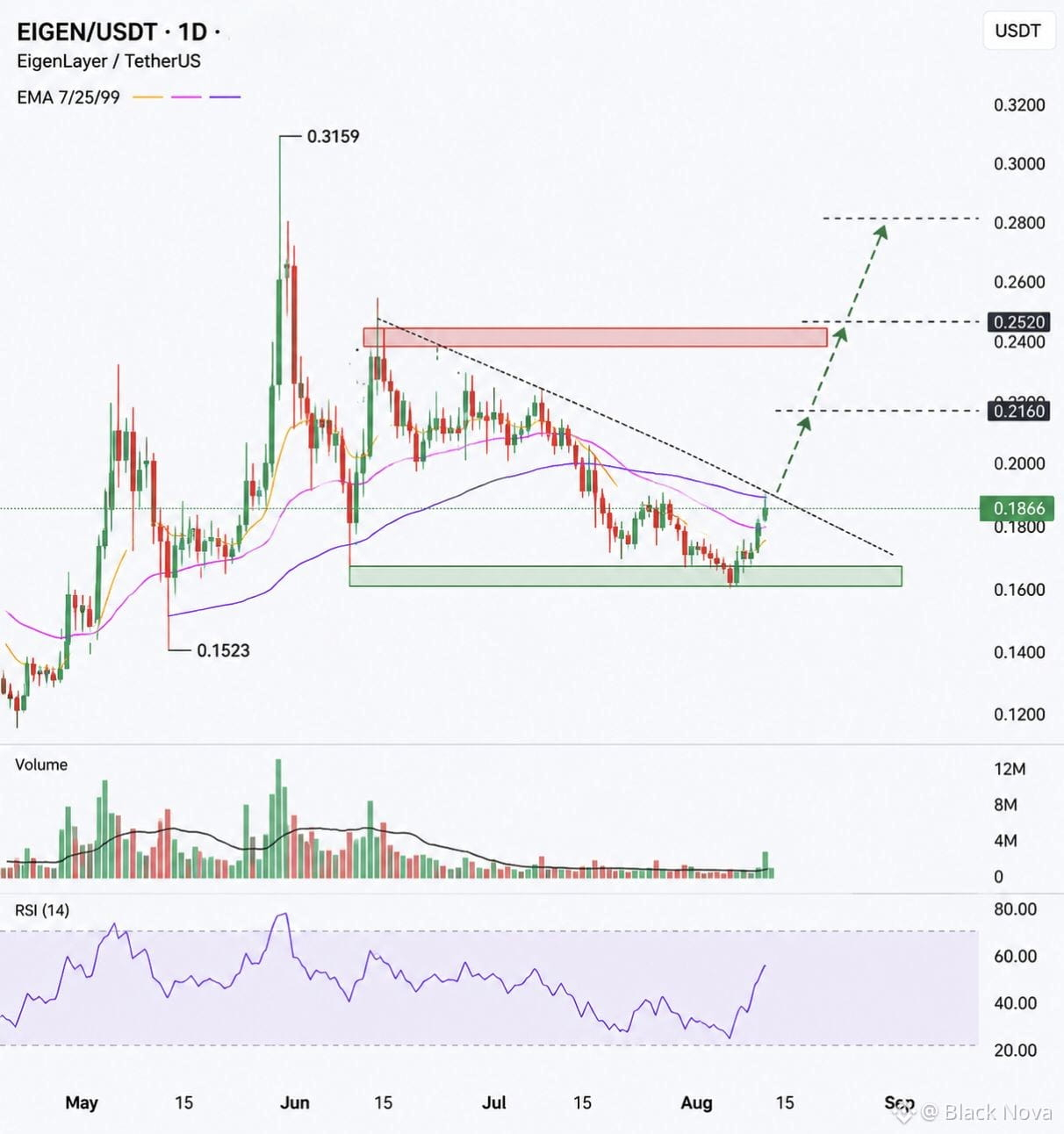
Entry: 0.180 – 0.188
SL: 0.158
TP1: 0.216
TP2: 0.252
TP3: 0.280
{future}(EIGENUSDT)
📈 Market Analysis: EIGEN is bouncing from strong support with momentum improving. A breakout above resistance could open the way toward higher levels.
Final Target: 0.280 — Can EIGEN break out?
#EIGEN #EigenLayer #Crypto #Altcoins
🟢 $EIGEN /USDT LONG
Entry: 0.180 – 0.188
SL: 0.158
TP1: 0.216
TP2: 0.252
TP3: 0.280
📈 Market Analysis: EIGEN is bouncing from strong support with momentum improving. A breakout above resistance could open the way toward higher levels.
Final Target: 0.280 — Can EIGEN break out?
#EIGEN #EigenLayer #Crypto #Altcoins
Entry: 0.180 – 0.188
SL: 0.158
TP1: 0.216
TP2: 0.252
TP3: 0.280
📈 Market Analysis: EIGEN is bouncing from strong support with momentum improving. A breakout above resistance could open the way toward higher levels.
Final Target: 0.280 — Can EIGEN break out?
#EIGEN #EigenLayer #Crypto #Altcoins
1
483

EigenCloud 6月1日解锁3835万枚代币,市场焦点全在抛压上,但链上数据暗示一个被忽略的定价盲区:解锁后流通量增加对再质押协议TVL的稀释效应,可能比短期价格波动更具破坏性。参考2023年ARB解锁后Arbitrum生态TVL滞后增长与代币价格脱钩的规律,当前EIGEN的解锁后流动性再分配尚未被市场定价,这可能是多头陷阱。
关键维度拆解:
1️⃣ 链上数据:解锁≠抛压,但TVL稀释是隐忧
当前EigenLayer的TVL约120亿美元,但6月1日解锁后,流通量从约1.6亿枚增至1.98亿枚,TVL/流通量比值将从约75美元/枚降至61美元/枚。2023年ARB解锁后,Arbitrum生态TVL在30天内增长8%,但代币价格下跌22%,因为市场对流动性稀释的定价滞后了2周。EIGEN若重演此规律,TVL增长可能需1-2周才能反映,但短期资金费率已转向负值——Bybit永续合约资金费率从0.01%降至-0.005%,表明空头正埋伏。
2️⃣ 资金费率:空头押注解锁后流动性陷阱
当前EIGEN永续合约资金费率在-0.005%至0.002%区间,远低于4月平均的0.01%。对比2023年LDO解锁前,资金费率曾降至-0.015%后暴跌30%,EIGEN虽未出现极端负费率,但持仓量从2.3亿美元降至2.1亿美元,降幅8.7%,显示多头主动减仓而非空头加仓。若资金费率持续为负,解锁后可能触发杠杆多头清算,形成加速下跌。
3️⃣ 宏观叙事:再质押协议TVL增长与AVS生态价值脱钩
市场忽视的是,EigenLayer的AVS生态(如EigenDA)日均收入仅50万美元,但再质押TVL年化成本高达3.2亿美元(按4%收益率计算)。解锁后流通量增加,若AVS收入无法同步增长,TVL/收入比将从240倍升至300倍,估值泡沫风险加剧。这类似2023年ARB解锁后,Arbitrum生态TVL增长但DEX交易量下滑,导致价格与基本面脱钩。
4️⃣ 风险点:解锁后流动性再分配的滞后定价
链上数据显示,当前EIGEN的交易所净流入量在解锁前5天为+120万枚,但解锁日可能激增至3800万枚。2023年ARB解锁后,交易所净流入在3天内暴增10倍,价格在2周后才触底。EIGEN若复刻此路径,短期支撑位在2.8美元(前低),若跌破,可能测试2.5美元(解锁后流通量对应的TVL稀释价)。
一句话总结:解锁不是终结,而是流动性再分配的开始,TVL稀释效应需要1-2周才能被定价,资金费率转负与持仓量下降暗示短期空头占优。
#EIGEN #EigenLayer #TokenUnlock #Crypto
提示:解锁后流动性再分配可能滞后反应,盯紧TVL/流通量比值而非价格本身。
EigenCloud 6月1日解锁3835万枚代币,市场焦点全在抛压上,但链上数据暗示一个被忽略的定价盲区:解锁后流通量增加对再质押协议TVL的稀释效应,可能比短期价格波动更具破坏性。参考2023年ARB解锁后Arbitrum生态TVL滞后增长与代币价格脱钩的规律,当前EIGEN的解锁后流动性再分配尚未被市场定价,这可能是多头陷阱。
关键维度拆解:
1️⃣ 链上数据:解锁≠抛压,但TVL稀释是隐忧
当前EigenLayer的TVL约120亿美元,但6月1日解锁后,流通量从约1.6亿枚增至1.98亿枚,TVL/流通量比值将从约75美元/枚降至61美元/枚。2023年ARB解锁后,Arbitrum生态TVL在30天内增长8%,但代币价格下跌22%,因为市场对流动性稀释的定价滞后了2周。EIGEN若重演此规律,TVL增长可能需1-2周才能反映,但短期资金费率已转向负值——Bybit永续合约资金费率从0.01%降至-0.005%,表明空头正埋伏。
2️⃣ 资金费率:空头押注解锁后流动性陷阱
当前EIGEN永续合约资金费率在-0.005%至0.002%区间,远低于4月平均的0.01%。对比2023年LDO解锁前,资金费率曾降至-0.015%后暴跌30%,EIGEN虽未出现极端负费率,但持仓量从2.3亿美元降至2.1亿美元,降幅8.7%,显示多头主动减仓而非空头加仓。若资金费率持续为负,解锁后可能触发杠杆多头清算,形成加速下跌。
3️⃣ 宏观叙事:再质押协议TVL增长与AVS生态价值脱钩
市场忽视的是,EigenLayer的AVS生态(如EigenDA)日均收入仅50万美元,但再质押TVL年化成本高达3.2亿美元(按4%收益率计算)。解锁后流通量增加,若AVS收入无法同步增长,TVL/收入比将从240倍升至300倍,估值泡沫风险加剧。这类似2023年ARB解锁后,Arbitrum生态TVL增长但DEX交易量下滑,导致价格与基本面脱钩。
4️⃣ 风险点:解锁后流动性再分配的滞后定价
链上数据显示,当前EIGEN的交易所净流入量在解锁前5天为+120万枚,但解锁日可能激增至3800万枚。2023年ARB解锁后,交易所净流入在3天内暴增10倍,价格在2周后才触底。EIGEN若复刻此路径,短期支撑位在2.8美元(前低),若跌破,可能测试2.5美元(解锁后流通量对应的TVL稀释价)。
一句话总结:解锁不是终结,而是流动性再分配的开始,TVL稀释效应需要1-2周才能被定价,资金费率转负与持仓量下降暗示短期空头占优。
#EIGEN #EigenLayer #TokenUnlock #Crypto
提示:解锁后流动性再分配可能滞后反应,盯紧TVL/流通量比值而非价格本身。
关键维度拆解:
1️⃣ 链上数据:解锁≠抛压,但TVL稀释是隐忧
当前EigenLayer的TVL约120亿美元,但6月1日解锁后,流通量从约1.6亿枚增至1.98亿枚,TVL/流通量比值将从约75美元/枚降至61美元/枚。2023年ARB解锁后,Arbitrum生态TVL在30天内增长8%,但代币价格下跌22%,因为市场对流动性稀释的定价滞后了2周。EIGEN若重演此规律,TVL增长可能需1-2周才能反映,但短期资金费率已转向负值——Bybit永续合约资金费率从0.01%降至-0.005%,表明空头正埋伏。
2️⃣ 资金费率:空头押注解锁后流动性陷阱
当前EIGEN永续合约资金费率在-0.005%至0.002%区间,远低于4月平均的0.01%。对比2023年LDO解锁前,资金费率曾降至-0.015%后暴跌30%,EIGEN虽未出现极端负费率,但持仓量从2.3亿美元降至2.1亿美元,降幅8.7%,显示多头主动减仓而非空头加仓。若资金费率持续为负,解锁后可能触发杠杆多头清算,形成加速下跌。
3️⃣ 宏观叙事:再质押协议TVL增长与AVS生态价值脱钩
市场忽视的是,EigenLayer的AVS生态(如EigenDA)日均收入仅50万美元,但再质押TVL年化成本高达3.2亿美元(按4%收益率计算)。解锁后流通量增加,若AVS收入无法同步增长,TVL/收入比将从240倍升至300倍,估值泡沫风险加剧。这类似2023年ARB解锁后,Arbitrum生态TVL增长但DEX交易量下滑,导致价格与基本面脱钩。
4️⃣ 风险点:解锁后流动性再分配的滞后定价
链上数据显示,当前EIGEN的交易所净流入量在解锁前5天为+120万枚,但解锁日可能激增至3800万枚。2023年ARB解锁后,交易所净流入在3天内暴增10倍,价格在2周后才触底。EIGEN若复刻此路径,短期支撑位在2.8美元(前低),若跌破,可能测试2.5美元(解锁后流通量对应的TVL稀释价)。
一句话总结:解锁不是终结,而是流动性再分配的开始,TVL稀释效应需要1-2周才能被定价,资金费率转负与持仓量下降暗示短期空头占优。
#EIGEN #EigenLayer #TokenUnlock #Crypto
提示:解锁后流动性再分配可能滞后反应,盯紧TVL/流通量比值而非价格本身。
142

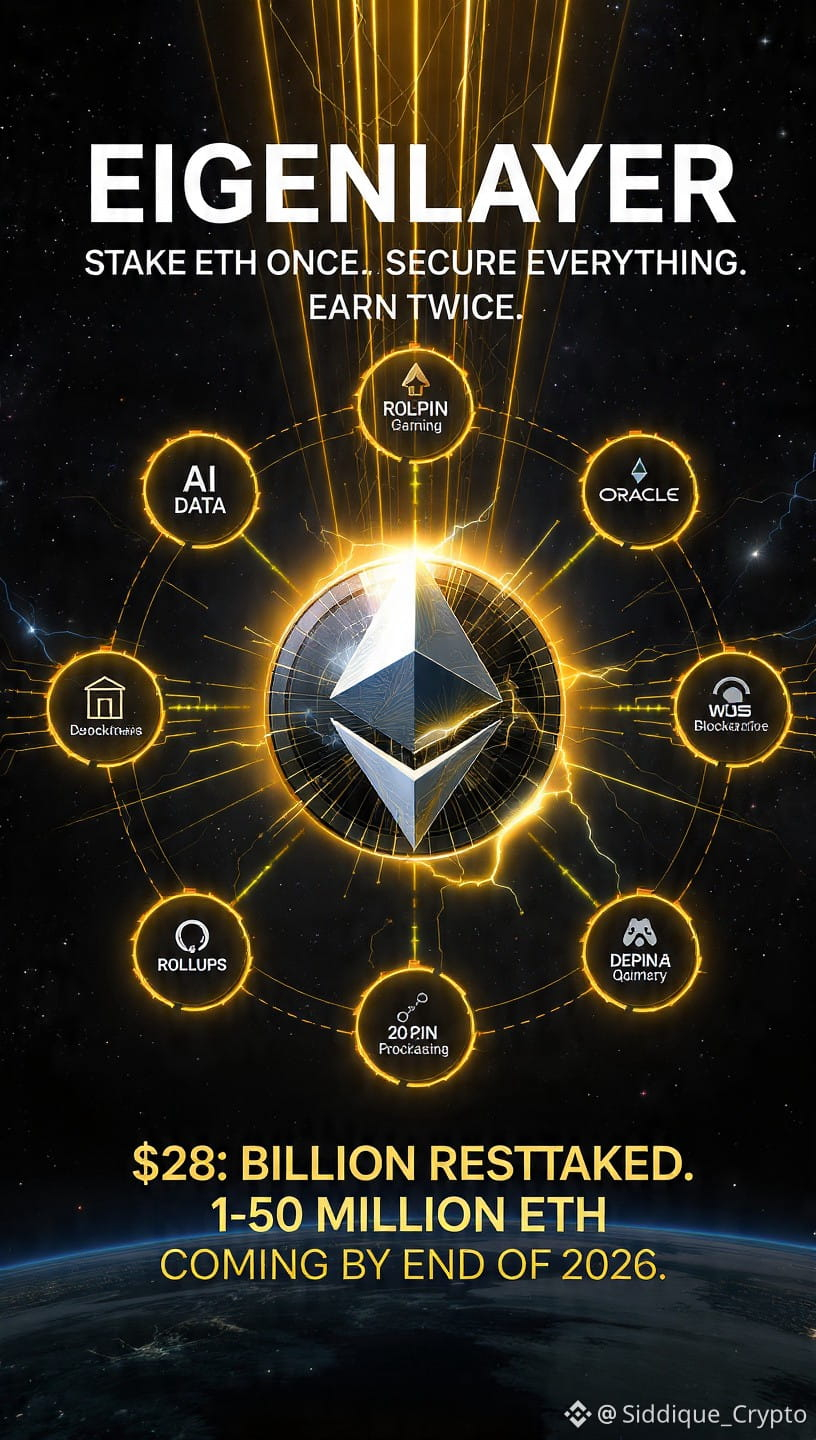
You stake ETH once. You earn from it twice.
That sentence describes one of the most powerful ideas in all of blockchain right now — and $28 billion has already been committed to it.
This is EigenLayer. And it is changing how blockchain security works at its core.
✦ EigenLayer allows users who have already staked ETH on Ethereum to "restake" it — extending Ethereum's security to additional decentralized applications called Actively Validated Services, without needing to unstake or move their ETH (Chainlink Today)
✦ EigenLayer's restaking ecosystem TVL crossed $28.6 billion — making it one of the largest smart contract systems in the entire Ethereum ecosystem by total value locked (One News Page)
✦ The most notable service built on EigenLayer is EigenDA — a data availability layer that helps blockchain rollups store transaction data far more cheaply than posting directly to Ethereum mainnet (OpenPR)
✦ EigenAI and EigenCompute went live on mainnet in late 2025 — providing verifiable AI inference and off-chain execution verification, making AI outputs trustworthy enough for blockchain financial decisions (Crypto News)
✦ The 2026 trend is toward specialized Vertical AVS — where AI verification, DePIN coordination, cross-chain messaging, and rollup infrastructure each get their own dedicated restaking security layer (OpenPR)
✦ Analysts project total restaked ETH could reach 10 to 15 million ETH by end of 2026 — as restaking becomes a standard part of every serious Ethereum staking strategy (CoinMarketCap)
Think of it this way.
You own a security company. You already protect one building. EigenLayer lets you protect ten buildings with the same guards — and get paid ten times.
That is restaking. And $28 billion worth of ETH is already doing exactly that.
Did you know your staked ETH could be earning yield from multiple sources simultaneously?
#Eigenlayer #Ethereum #defi #restaking #blockchain
You stake ETH once. You earn from it twice.
That sentence describes one of the most powerful ideas in all of blockchain right now — and $28 billion has already been committed to it.
This is EigenLayer. And it is changing how blockchain security works at its core.
✦ EigenLayer allows users who have already staked ETH on Ethereum to "restake" it — extending Ethereum's security to additional decentralized applications called Actively Validated Services, without needing to unstake or move their ETH (Chainlink Today)
✦ EigenLayer's restaking ecosystem TVL crossed $28.6 billion — making it one of the largest smart contract systems in the entire Ethereum ecosystem by total value locked (One News Page)
✦ The most notable service built on EigenLayer is EigenDA — a data availability layer that helps blockchain rollups store transaction data far more cheaply than posting directly to Ethereum mainnet (OpenPR)
✦ EigenAI and EigenCompute went live on mainnet in late 2025 — providing verifiable AI inference and off-chain execution verification, making AI outputs trustworthy enough for blockchain financial decisions (Crypto News)
✦ The 2026 trend is toward specialized Vertical AVS — where AI verification, DePIN coordination, cross-chain messaging, and rollup infrastructure each get their own dedicated restaking security layer (OpenPR)
✦ Analysts project total restaked ETH could reach 10 to 15 million ETH by end of 2026 — as restaking becomes a standard part of every serious Ethereum staking strategy (CoinMarketCap)
Think of it this way.
You own a security company. You already protect one building. EigenLayer lets you protect ten buildings with the same guards — and get paid ten times.
That is restaking. And $28 billion worth of ETH is already doing exactly that.
Did you know your staked ETH could be earning yield from multiple sources simultaneously?
#Eigenlayer #Ethereum #defi #restaking #blockchain
That sentence describes one of the most powerful ideas in all of blockchain right now — and $28 billion has already been committed to it.
This is EigenLayer. And it is changing how blockchain security works at its core.
✦ EigenLayer allows users who have already staked ETH on Ethereum to "restake" it — extending Ethereum's security to additional decentralized applications called Actively Validated Services, without needing to unstake or move their ETH (Chainlink Today)
✦ EigenLayer's restaking ecosystem TVL crossed $28.6 billion — making it one of the largest smart contract systems in the entire Ethereum ecosystem by total value locked (One News Page)
✦ The most notable service built on EigenLayer is EigenDA — a data availability layer that helps blockchain rollups store transaction data far more cheaply than posting directly to Ethereum mainnet (OpenPR)
✦ EigenAI and EigenCompute went live on mainnet in late 2025 — providing verifiable AI inference and off-chain execution verification, making AI outputs trustworthy enough for blockchain financial decisions (Crypto News)
✦ The 2026 trend is toward specialized Vertical AVS — where AI verification, DePIN coordination, cross-chain messaging, and rollup infrastructure each get their own dedicated restaking security layer (OpenPR)
✦ Analysts project total restaked ETH could reach 10 to 15 million ETH by end of 2026 — as restaking becomes a standard part of every serious Ethereum staking strategy (CoinMarketCap)
Think of it this way.
You own a security company. You already protect one building. EigenLayer lets you protect ten buildings with the same guards — and get paid ten times.
That is restaking. And $28 billion worth of ETH is already doing exactly that.
Did you know your staked ETH could be earning yield from multiple sources simultaneously?
#Eigenlayer #Ethereum #defi #restaking #blockchain
96

·
--
什么是Restaking?一文读懂EigenLayer和流动性再质押!简单来说Restaking就是让你质押的ETH同时为多个协议提供安全性,获得多份收益。uniETH、ezETH、pufETH等流动性再质押代币让你保持流动性。#Restaking #EigenLayer #DeFi入门
什么是Restaking?一文读懂EigenLayer和流动性再质押!简单来说Restaking就是让你质押的ETH同时为多个协议提供安全性,获得多份收益。uniETH、ezETH、pufETH等流动性再质押代币让你保持流动性。#Restaking #EigenLayer #DeFi入门
71
Войдите, чтобы посмотреть больше материала
Присоединяйтесь к пользователям криптовалют по всему миру на Binance Square
⚡️ Получайте новейшую и полезную информацию о криптоактивах.
💬 Нам доверяет крупнейшая в мире криптобиржа.
👍 Получите достоверные аналитические данные от верифицированных создателей контента.
Эл. почта/номер телефона
В тренде
1
#BinanceKZ
Просмотров: 11,606
65 обсуждают
2
#EarningsSeason
Просмотров: 286,469
2,389 обсуждают
3
#BitwiseLaunchesFirstSpotNEARETF
Просмотров: 21,650
485 обсуждают
4
#USJobOpeningsFallToFiveMonthLow
Просмотров: 27,008
368 обсуждают
5
#ECBToTestAIAgentsInDigitalEuroPayments
Просмотров: 22,318
512 обсуждают
6
#JapanFSABacksFourthStablecoinTradeSettlementPilot
Просмотров: 25,813
537 обсуждают
7
#BitgetHackerFailsToMoveStolenFunds
Просмотров: 41,469
611 обсуждают
8
#BitMineETHHoldingsTop6Million
Просмотров: 34,797
712 обсуждают
9
#StrategyAdds1666BTCHoldingsReach847666
Просмотров: 29,167
497 обсуждают
10
#NvidiaApproves$150BBuyback
Просмотров: 5,194
75 обсуждают