

#crosschain
crosschain
Просмотров: 300,953
2,377 обсуждают
Популярные
Новые

·
--
Рост
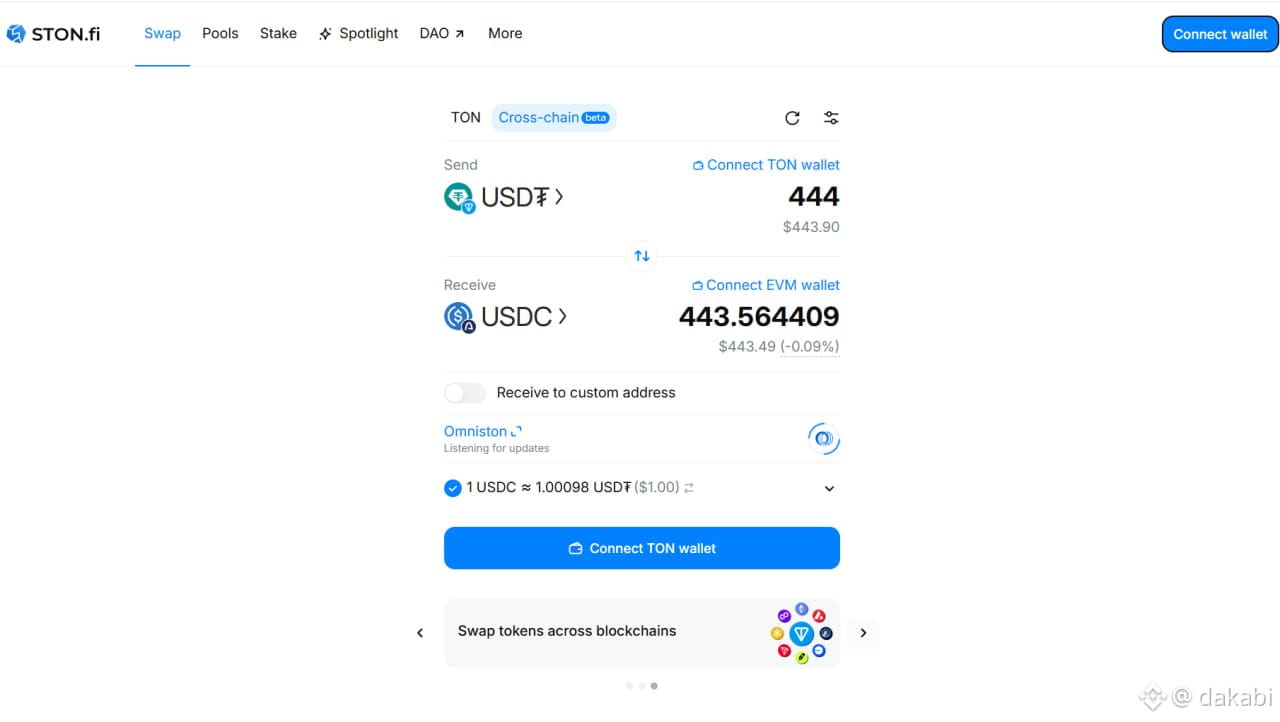
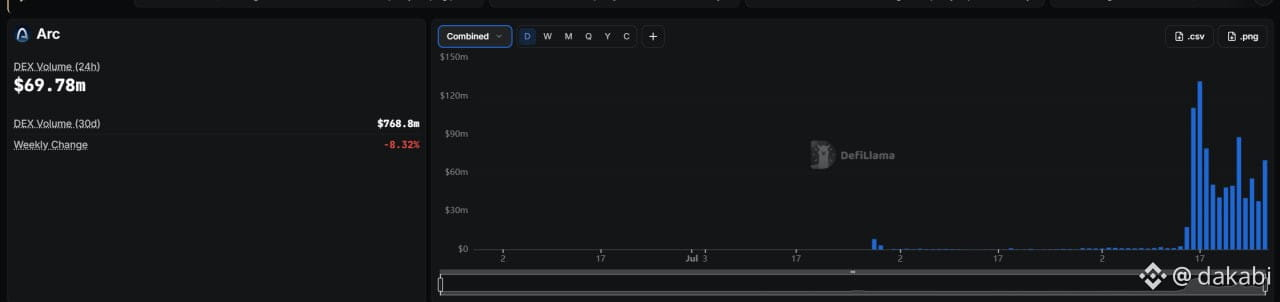
🌉 Circle запустил Arc — STON.fi уже подключил её к кроссчейну
Сети Arc нет и недели, а Omniston на STON.fi уже добавил её в список поддерживаемых. Теперь USDC свободно ходит между TON и Arc без мостов и wrapped-токенов.
Почему это не «ещё одна L1»:
Arc спроектирована Circle под стейблкоины как нативный газ. Не ETH, не собственный токен — именно USDC. А среди founding-валидаторов значатся BlackRock, Visa, Mastercard, NYSE и Standard Chartered.
Что это даёт на практике:
• Обмен USDC (TON) ⇄ USDC (Arc) за 15–40 секунд
• Комиссия берётся в стейблкоине (не нужно держать ETH для газа)
• Точная сумма на выходе видна до подтверждения
• Лимит на старте: $1 000 за транзакцию
Omniston закрывает канал между TON и институциональным DeFi. Границы между блокчейнами исчезают из UX: список сетей включает уже TON, TRON, Ethereum, Base, Arbitrum, Polygon и теперь Arc.
🔗 Попробовать своп в Arc:
app.ston.fi/swap?mode=cross-chain&in=ton%3AUSD%E2%82%AE&referral_address=UQBDMz8eAC1_CVxEn6JjNOdWEvppQXXybxIdKm-GiXEL4yiQ
В Бонус: Фармите Miles!
Любые кросс-чейн обмены засчитываются в программу STONfi Cross-Chain Campaign. Вы можете накопить до 3,500 Miles, которые сможете обменять на различные сувениры. Учитывается объем сделок, стейкинг STON и наличие NFT.
👉 Проверить свой прогресс и участвовать:
https://cross-chain.ston.fi/r/SNDVC64G
$TON $STON $GRAM
#DeFi #CrossChain
🌉 Circle запустил Arc — STON.fi уже подключил её к кроссчейну
Сети Arc нет и недели, а Omniston на STON.fi уже добавил её в список поддерживаемых. Теперь USDC свободно ходит между TON и Arc без мостов и wrapped-токенов.
Почему это не «ещё одна L1»:
Arc спроектирована Circle под стейблкоины как нативный газ. Не ETH, не собственный токен — именно USDC. А среди founding-валидаторов значатся BlackRock, Visa, Mastercard, NYSE и Standard Chartered.
Что это даёт на практике:
• Обмен USDC (TON) ⇄ USDC (Arc) за 15–40 секунд
• Комиссия берётся в стейблкоине (не нужно держать ETH для газа)
• Точная сумма на выходе видна до подтверждения
• Лимит на старте: $1 000 за транзакцию
Omniston закрывает канал между TON и институциональным DeFi. Границы между блокчейнами исчезают из UX: список сетей включает уже TON, TRON, Ethereum, Base, Arbitrum, Polygon и теперь Arc.
🔗 Попробовать своп в Arc:
app.ston.fi/swap?mode=cross-chain&in=ton%3AUSD%E2%82%AE&referral_address=UQBDMz8eAC1_CVxEn6JjNOdWEvppQXXybxIdKm-GiXEL4yiQ
В Бонус: Фармите Miles!
Любые кросс-чейн обмены засчитываются в программу STONfi Cross-Chain Campaign. Вы можете накопить до 3,500 Miles, которые сможете обменять на различные сувениры. Учитывается объем сделок, стейкинг STON и наличие NFT.
👉 Проверить свой прогресс и участвовать:
https://cross-chain.ston.fi/r/SNDVC64G
$TON $STON $GRAM
#DeFi #CrossChain
Сети Arc нет и недели, а Omniston на STON.fi уже добавил её в список поддерживаемых. Теперь USDC свободно ходит между TON и Arc без мостов и wrapped-токенов.
Почему это не «ещё одна L1»:
Arc спроектирована Circle под стейблкоины как нативный газ. Не ETH, не собственный токен — именно USDC. А среди founding-валидаторов значатся BlackRock, Visa, Mastercard, NYSE и Standard Chartered.
Что это даёт на практике:
• Обмен USDC (TON) ⇄ USDC (Arc) за 15–40 секунд
• Комиссия берётся в стейблкоине (не нужно держать ETH для газа)
• Точная сумма на выходе видна до подтверждения
• Лимит на старте: $1 000 за транзакцию
Omniston закрывает канал между TON и институциональным DeFi. Границы между блокчейнами исчезают из UX: список сетей включает уже TON, TRON, Ethereum, Base, Arbitrum, Polygon и теперь Arc.
🔗 Попробовать своп в Arc:
app.ston.fi/swap?mode=cross-chain&in=ton%3AUSD%E2%82%AE&referral_address=UQBDMz8eAC1_CVxEn6JjNOdWEvppQXXybxIdKm-GiXEL4yiQ
В Бонус: Фармите Miles!
Любые кросс-чейн обмены засчитываются в программу STONfi Cross-Chain Campaign. Вы можете накопить до 3,500 Miles, которые сможете обменять на различные сувениры. Учитывается объем сделок, стейкинг STON и наличие NFT.
👉 Проверить свой прогресс и участвовать:
https://cross-chain.ston.fi/r/SNDVC64G
$TON $STON $GRAM
#DeFi #CrossChain
1
322
·
--
Рост
#ChainlinkLaunchesCCIP2WithEnterpriseVerification
#ChainlinkLaunchesCCIP2WithEnterpriseVerification 🚀 CHAINLINK CCIP 2.0 IS LIVE!
Biggest upgrade in cross-chain history!
✅ Enterprise Verification - Run your own validator on AWS / Google Cloud
✅ 16 Independent Node Operators + Optional verifiers like Infosys, Nethermind
✅ Built-in KYC/AML/Sanctions screening automatically
✅ $84B+ already secured via CCIP
✅ Used by Aave, Maple & now Kelp moving $292M rsETH from LayerZero to Chainlink
Why now? After April Kelp DAO $292M hack (single validator failure), institutions demanded MORE control. CCIP 2.0 delivers it.
LINK +4.58% and climbing - Is this the start of institutional RWA season?
#RWA #CrossChain #BinanceSquare
#ChainlinkLaunchesCCIP2WithEnterpriseVerification
#ChainlinkLaunchesCCIP2WithEnterpriseVerification 🚀 CHAINLINK CCIP 2.0 IS LIVE!
Biggest upgrade in cross-chain history!
✅ Enterprise Verification - Run your own validator on AWS / Google Cloud
✅ 16 Independent Node Operators + Optional verifiers like Infosys, Nethermind
✅ Built-in KYC/AML/Sanctions screening automatically
✅ $84B+ already secured via CCIP
✅ Used by Aave, Maple & now Kelp moving $292M rsETH from LayerZero to Chainlink
Why now? After April Kelp DAO $292M hack (single validator failure), institutions demanded MORE control. CCIP 2.0 delivers it.
LINK +4.58% and climbing - Is this the start of institutional RWA season?
#RWA #CrossChain #BinanceSquare
#ChainlinkLaunchesCCIP2WithEnterpriseVerification 🚀 CHAINLINK CCIP 2.0 IS LIVE!
Biggest upgrade in cross-chain history!
✅ Enterprise Verification - Run your own validator on AWS / Google Cloud
✅ 16 Independent Node Operators + Optional verifiers like Infosys, Nethermind
✅ Built-in KYC/AML/Sanctions screening automatically
✅ $84B+ already secured via CCIP
✅ Used by Aave, Maple & now Kelp moving $292M rsETH from LayerZero to Chainlink
Why now? After April Kelp DAO $292M hack (single validator failure), institutions demanded MORE control. CCIP 2.0 delivers it.
LINK +4.58% and climbing - Is this the start of institutional RWA season?
#RWA #CrossChain #BinanceSquare
2
49

·
--
Статья
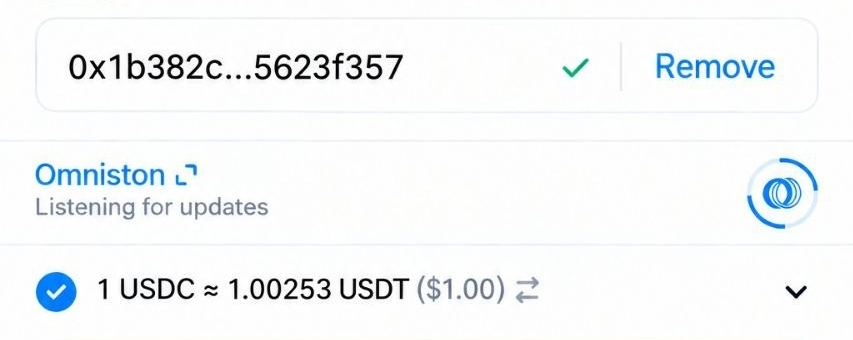
From TON to Arbitrum: Understanding Cross-Chain Asset MovementMoving $USDT from $GRAM to Arbitrum may look like a simple swap, but there’s more happening behind the interface.
GRAM and EVM networks use different address formats, so their addresses are not interchangeable.
When using a custom receiving address, it’s important to carefully verify the destination before confirming the transaction.
A cross-chain route needs to coordinate several things:
➜ Source asset and network
➜ Available liquidity
➜ Destination network
➜ Correct receiving address
➜ Swap execution and settlement
Another important point: cross-chain movement doesn’t necessarily mean the exact same tokens are physically transferred from one blockchain to another.
Instead, you can be swapping value from an asset on GRAM and receiving the corresponding asset on Arbitrum through coordinated liquidity and settlement.
Before confirming a GRAM → Arbitrum route, check:
➜ Destination network
➜ Asset
➜ Receiving address
➜ Expected amount
➜ Transaction details
The interface may help identify address-format issues, but you should always verify the destination yourself before confirming.
This is why cross-chain UX matters. The simpler the process becomes for users, the more important accurate validation and routing are behind the scenes.
Explore cross-chain swaps on STON.fi:
https://app.ston.fi/swap?mode=cross-chain
#STONfi #ARBİTRUM #CrossChain #Crypto
From TON to Arbitrum: Understanding Cross-Chain Asset Movement
Moving $USDT from $GRAM to Arbitrum may look like a simple swap, but there’s more happening behind the interface.
GRAM and EVM networks use different address formats, so their addresses are not interchangeable.
When using a custom receiving address, it’s important to carefully verify the destination before confirming the transaction.
A cross-chain route needs to coordinate several things:
➜ Source asset and network
➜ Available liquidity
➜ Destination network
➜ Correct receiving address
➜ Swap execution and settlement
Another important point: cross-chain movement doesn’t necessarily mean the exact same tokens are physically transferred from one blockchain to another.
Instead, you can be swapping value from an asset on GRAM and receiving the corresponding asset on Arbitrum through coordinated liquidity and settlement.
Before confirming a GRAM → Arbitrum route, check:
➜ Destination network
➜ Asset
➜ Receiving address
➜ Expected amount
➜ Transaction details
The interface may help identify address-format issues, but you should always verify the destination yourself before confirming.
This is why cross-chain UX matters. The simpler the process becomes for users, the more important accurate validation and routing are behind the scenes.
Explore cross-chain swaps on STON.fi:
https://app.ston.fi/swap?mode=cross-chain
#STONfi #ARBİTRUM #CrossChain #Crypto
GRAM and EVM networks use different address formats, so their addresses are not interchangeable.
When using a custom receiving address, it’s important to carefully verify the destination before confirming the transaction.
A cross-chain route needs to coordinate several things:
➜ Source asset and network
➜ Available liquidity
➜ Destination network
➜ Correct receiving address
➜ Swap execution and settlement
Another important point: cross-chain movement doesn’t necessarily mean the exact same tokens are physically transferred from one blockchain to another.
Instead, you can be swapping value from an asset on GRAM and receiving the corresponding asset on Arbitrum through coordinated liquidity and settlement.
Before confirming a GRAM → Arbitrum route, check:
➜ Destination network
➜ Asset
➜ Receiving address
➜ Expected amount
➜ Transaction details
The interface may help identify address-format issues, but you should always verify the destination yourself before confirming.
This is why cross-chain UX matters. The simpler the process becomes for users, the more important accurate validation and routing are behind the scenes.
Explore cross-chain swaps on STON.fi:
https://app.ston.fi/swap?mode=cross-chain
#STONfi #ARBİTRUM #CrossChain #Crypto
247

·
--
Every chain is an island — and each trip costs a toll nobody itemizes.
Cross-chain growth gets measured in bridge volume and chain counts. The real story is the fragmentation tax: capital split across dozens of networks, every crossing paid in fees, latency, and risk.
$ETH has the deepest liquidity but the highest cost of simple actions. $SOL trades speed for a siloed ecosystem. $DOT was architected for interoperability from day one — and still fights the same fragmentation it set out to solve.
Three hidden costs of a multichain world:
1. Security is the worst link. Your assets are only as safe as the least-audited bridge they've crossed. The largest exploits in history were rarely chain failures — they were bridge failures.
2. Liquidity doesn't add, it divides. Deep pools on ten chains are shallower than one pool on one chain. Fragmented depth means worse execution everywhere.
3. Users pay in confusion. Choosing a chain, a bridge, a gas token — that's UX debt every new user inherits.
The endgame isn't more chains. It's chains disappearing from the user's view: intent-based routing where you state the outcome and infrastructure competes to fill it. Users stop asking "which chain" and just say "what."
Watch bridge reliability and fill times, not bridge volume. Fragmentation is a transition state. The winning layer is the one that makes chains invisible.
#CrossChain #DeFi #Interoperability #Blockchain #Crypto
Every chain is an island — and each trip costs a toll nobody itemizes.
Cross-chain growth gets measured in bridge volume and chain counts. The real story is the fragmentation tax: capital split across dozens of networks, every crossing paid in fees, latency, and risk.
$ETH has the deepest liquidity but the highest cost of simple actions. $SOL trades speed for a siloed ecosystem. $DOT was architected for interoperability from day one — and still fights the same fragmentation it set out to solve.
Three hidden costs of a multichain world:
1. Security is the worst link. Your assets are only as safe as the least-audited bridge they've crossed. The largest exploits in history were rarely chain failures — they were bridge failures.
2. Liquidity doesn't add, it divides. Deep pools on ten chains are shallower than one pool on one chain. Fragmented depth means worse execution everywhere.
3. Users pay in confusion. Choosing a chain, a bridge, a gas token — that's UX debt every new user inherits.
The endgame isn't more chains. It's chains disappearing from the user's view: intent-based routing where you state the outcome and infrastructure competes to fill it. Users stop asking "which chain" and just say "what."
Watch bridge reliability and fill times, not bridge volume. Fragmentation is a transition state. The winning layer is the one that makes chains invisible.
#CrossChain #DeFi #Interoperability #Blockchain #Crypto
Cross-chain growth gets measured in bridge volume and chain counts. The real story is the fragmentation tax: capital split across dozens of networks, every crossing paid in fees, latency, and risk.
$ETH has the deepest liquidity but the highest cost of simple actions. $SOL trades speed for a siloed ecosystem. $DOT was architected for interoperability from day one — and still fights the same fragmentation it set out to solve.
Three hidden costs of a multichain world:
1. Security is the worst link. Your assets are only as safe as the least-audited bridge they've crossed. The largest exploits in history were rarely chain failures — they were bridge failures.
2. Liquidity doesn't add, it divides. Deep pools on ten chains are shallower than one pool on one chain. Fragmented depth means worse execution everywhere.
3. Users pay in confusion. Choosing a chain, a bridge, a gas token — that's UX debt every new user inherits.
The endgame isn't more chains. It's chains disappearing from the user's view: intent-based routing where you state the outcome and infrastructure competes to fill it. Users stop asking "which chain" and just say "what."
Watch bridge reliability and fill times, not bridge volume. Fragmentation is a transition state. The winning layer is the one that makes chains invisible.
#CrossChain #DeFi #Interoperability #Blockchain #Crypto
193

·
--
Check the Whole Bridge RouteA cross-chain transfer is not one event. It is a sequence.
Your source transaction must succeed. The bridge must observe it. The system must wait for finality or another form of verification. A relayer, solver or destination contract must then deliver the output. Some routes add a separate claim, settlement or retry step.
That is why a transaction can show success on the origin chain while the expected balance is still missing. The correct response is not to repeat the transfer immediately. Start with the source transaction, then use the official bridge tracker and the destination explorer to identify the last completed stage.
The output token deserves equal attention. A familiar symbol does not prove that the asset is native, canonically bridged or backed by the issuer you expect. Verify the destination contract, issuer, backing, liquidity and whether your intended application accepts that exact asset.
Before moving meaningful value, test the exact route. Use the same source chain, destination chain, token contracts, bridge path and recipient that you intend to use for the larger transfer. Keep destination gas available and save the source transaction hash, destination transaction hash and order identifier.
TokenToolHub’s complete bridge guide explains route models, transfer failure stages, token representations and a safer pre-signing workflow.
https://tokentoolhub.com/bridges-101/
#CrossChain #defi #CryptoSecurity #blockchain #Web3
Check the Whole Bridge Route
A cross-chain transfer is not one event. It is a sequence.
Your source transaction must succeed. The bridge must observe it. The system must wait for finality or another form of verification. A relayer, solver or destination contract must then deliver the output. Some routes add a separate claim, settlement or retry step.
That is why a transaction can show success on the origin chain while the expected balance is still missing. The correct response is not to repeat the transfer immediately. Start with the source transaction, then use the official bridge tracker and the destination explorer to identify the last completed stage.
The output token deserves equal attention. A familiar symbol does not prove that the asset is native, canonically bridged or backed by the issuer you expect. Verify the destination contract, issuer, backing, liquidity and whether your intended application accepts that exact asset.
Before moving meaningful value, test the exact route. Use the same source chain, destination chain, token contracts, bridge path and recipient that you intend to use for the larger transfer. Keep destination gas available and save the source transaction hash, destination transaction hash and order identifier.
TokenToolHub’s complete bridge guide explains route models, transfer failure stages, token representations and a safer pre-signing workflow.
https://tokentoolhub.com/bridges-101/
#CrossChain #defi #CryptoSecurity #blockchain #Web3
Your source transaction must succeed. The bridge must observe it. The system must wait for finality or another form of verification. A relayer, solver or destination contract must then deliver the output. Some routes add a separate claim, settlement or retry step.
That is why a transaction can show success on the origin chain while the expected balance is still missing. The correct response is not to repeat the transfer immediately. Start with the source transaction, then use the official bridge tracker and the destination explorer to identify the last completed stage.
The output token deserves equal attention. A familiar symbol does not prove that the asset is native, canonically bridged or backed by the issuer you expect. Verify the destination contract, issuer, backing, liquidity and whether your intended application accepts that exact asset.
Before moving meaningful value, test the exact route. Use the same source chain, destination chain, token contracts, bridge path and recipient that you intend to use for the larger transfer. Keep destination gas available and save the source transaction hash, destination transaction hash and order identifier.
TokenToolHub’s complete bridge guide explains route models, transfer failure stages, token representations and a safer pre-signing workflow.
https://tokentoolhub.com/bridges-101/
#CrossChain #defi #CryptoSecurity #blockchain #Web3
56

·
--
Рост
Проверено
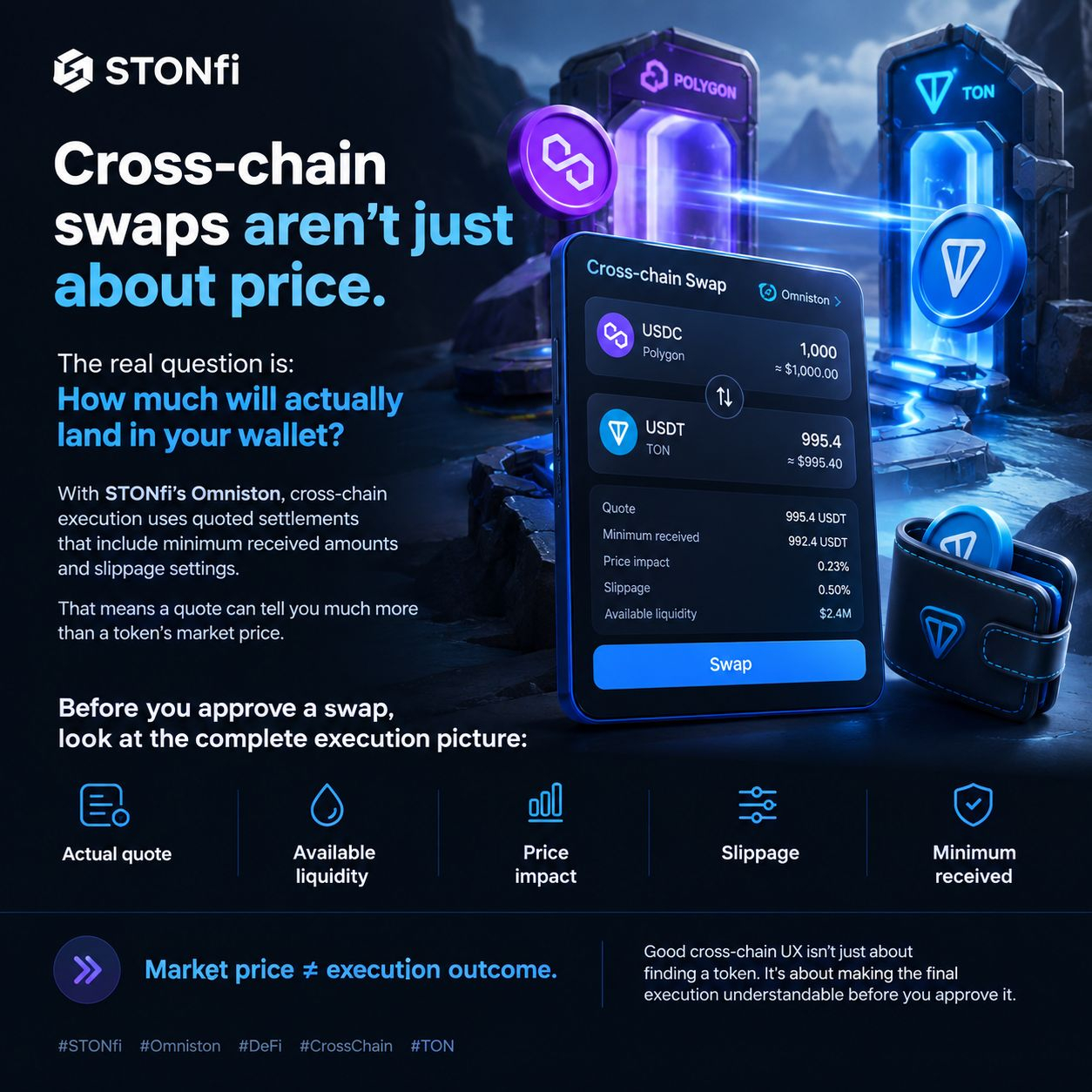
Cross-chain swaps aren’t only about price.
What matters is how much actually reaches your wallet.
With STONfi’s Omniston, quotes include minimum received amounts and slippage settings, so you can see more than a token’s market price before approving a swap.
Check:
• Actual quote
• Liquidity
• Price impact
• Slippage
• Minimum received
Your final result depends on order size, liquidity, and execution conditions—and cross-chain swaps add even more variables.
Market price ≠ execution outcome.
Don’t ask only, “What is this token worth?”
Ask, “How much will I receive, and what protects that amount?”
Good cross-chain UX makes the final result clear before you approve the swap.
#STONfi #Omniston #CrossChain #TON
$Q
{future}(QUSDT)
Cross-chain swaps aren’t only about price.
What matters is how much actually reaches your wallet.
With STONfi’s Omniston, quotes include minimum received amounts and slippage settings, so you can see more than a token’s market price before approving a swap.
Check:
• Actual quote
• Liquidity
• Price impact
• Slippage
• Minimum received
Your final result depends on order size, liquidity, and execution conditions—and cross-chain swaps add even more variables.
Market price ≠ execution outcome.
Don’t ask only, “What is this token worth?”
Ask, “How much will I receive, and what protects that amount?”
Good cross-chain UX makes the final result clear before you approve the swap.
#STONfi #Omniston #CrossChain #TON
$Q
What matters is how much actually reaches your wallet.
With STONfi’s Omniston, quotes include minimum received amounts and slippage settings, so you can see more than a token’s market price before approving a swap.
Check:
• Actual quote
• Liquidity
• Price impact
• Slippage
• Minimum received
Your final result depends on order size, liquidity, and execution conditions—and cross-chain swaps add even more variables.
Market price ≠ execution outcome.
Don’t ask only, “What is this token worth?”
Ask, “How much will I receive, and what protects that amount?”
Good cross-chain UX makes the final result clear before you approve the swap.
#STONfi #Omniston #CrossChain #TON
$Q
2
608

·
--
Рост
Why STON.fi is worth watching beyond its DEX
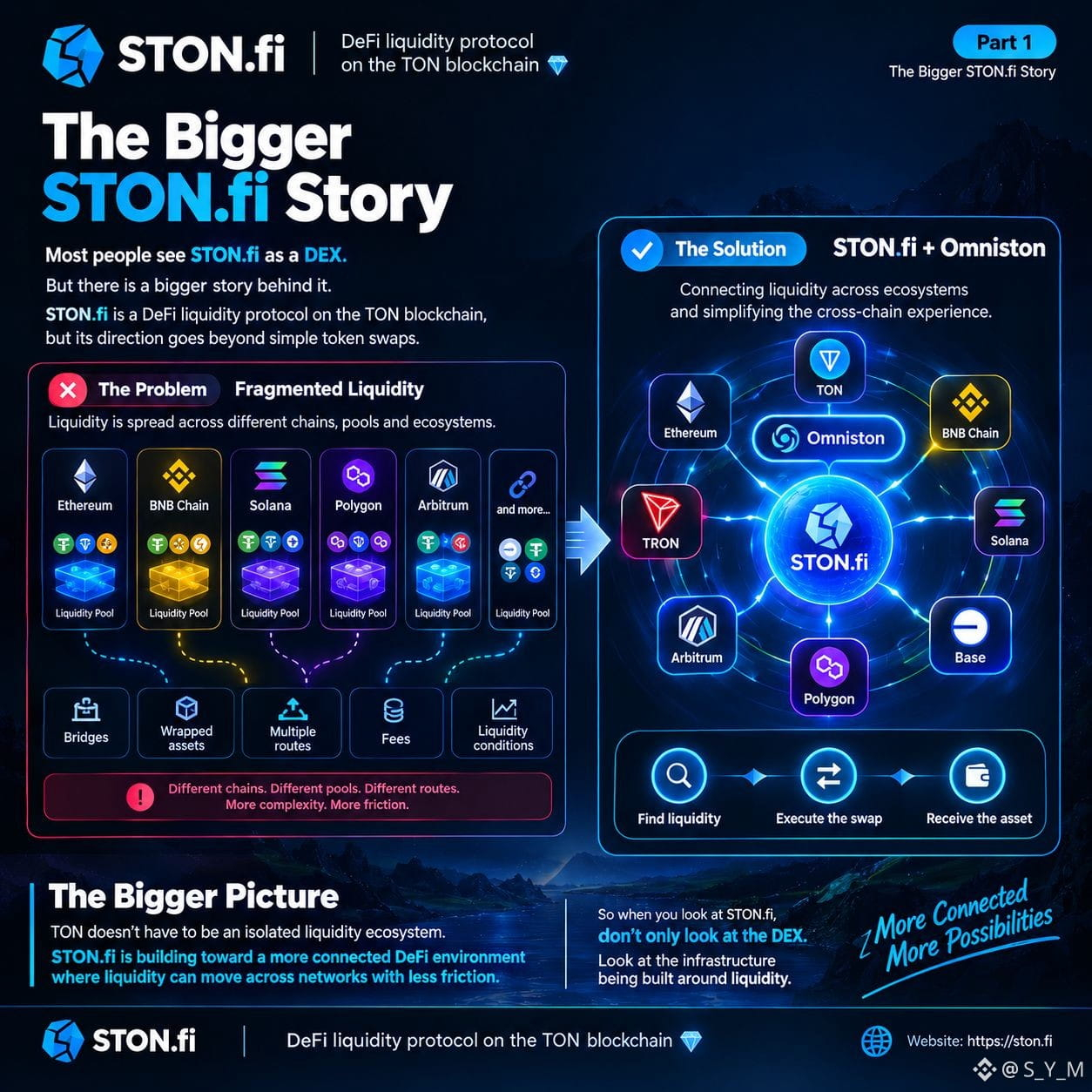
DeFi liquidity is fragmented.
Different chains have different pools, liquidity sources, and trading routes.
For users, that can mean more complexity when moving capital between ecosystems.
STON.fi is building around this problem.
With Omniston, STON.fi is working toward connecting liquidity across networks and simplifying the process behind cross-chain swaps.
The bigger vision is straightforward:
Make TON liquidity more connected to the wider DeFi ecosystem.
That makes STON.fi more than a place to swap tokens.
It becomes a project worth watching from the infrastructure side of DeFi.
STON.fi — DeFi liquidity protocol on the TON blockchain 💎 | Website: https://ston.fi
#STONfi #CrossChain #swap
Why STON.fi is worth watching beyond its DEX
DeFi liquidity is fragmented.
Different chains have different pools, liquidity sources, and trading routes.
For users, that can mean more complexity when moving capital between ecosystems.
STON.fi is building around this problem.
With Omniston, STON.fi is working toward connecting liquidity across networks and simplifying the process behind cross-chain swaps.
The bigger vision is straightforward:
Make TON liquidity more connected to the wider DeFi ecosystem.
That makes STON.fi more than a place to swap tokens.
It becomes a project worth watching from the infrastructure side of DeFi.
STON.fi — DeFi liquidity protocol on the TON blockchain 💎 | Website: https://ston.fi
#STONfi #CrossChain #swap
DeFi liquidity is fragmented.
Different chains have different pools, liquidity sources, and trading routes.
For users, that can mean more complexity when moving capital between ecosystems.
STON.fi is building around this problem.
With Omniston, STON.fi is working toward connecting liquidity across networks and simplifying the process behind cross-chain swaps.
The bigger vision is straightforward:
Make TON liquidity more connected to the wider DeFi ecosystem.
That makes STON.fi more than a place to swap tokens.
It becomes a project worth watching from the infrastructure side of DeFi.
STON.fi — DeFi liquidity protocol on the TON blockchain 💎 | Website: https://ston.fi
#STONfi #CrossChain #swap
78

·
--
🌐 Network Selection Safety: Preventing Cross-Chain Transfer Errors
Transferring digital assets across blockchain networks requires precise alignment between the origin wallet and the destination infrastructure, Network selection errors remain a leading cause of transactional delays and asset recovery complexities.
💡 Core Protocols for Network Verification
Cross-Match Destination Networks: Always ensure the selected network on the withdrawal page matches the exact deposit network address generated by the recipient platform (e.g., BNB Smart Chain vs. Ethereum vs. Tron).
Execute Test Transactions: When transferring significant capital, execute a small test transaction first to verify recipient address configuration and settlement time.
Mandatory Memo / Tag Verification: Specific blockchains (such as XRP, ATOM, or EOS) require a unique Destination Tag/Memo to map funds correctly to your specific exchange account balance.
Verify Token Contract Addresses: When depositing custom Web3 tokens, cross-reference the smart contract address on official block explorers to avoid fake token deposits.
⚠️ Security & Educational Notice
Blockchain transfers are deterministic and irreversible once confirmed by network validators, Proper address and network verification is crucial for safe digital asset movement, This publication is prepared strictly for educational and security awareness purposes.
[https://www.binance.com/en/support/faq/detail/115003670492](https://www.binance.com/en/support/faq/detail/115003670492)
Verify your transfer parameters, double-check your network tags, and always DYOR (Do Your Own Research)💡
#Binance #Blockchain #CrossChain #CryptoEducation #dyor
🌐 Network Selection Safety: Preventing Cross-Chain Transfer Errors
Transferring digital assets across blockchain networks requires precise alignment between the origin wallet and the destination infrastructure, Network selection errors remain a leading cause of transactional delays and asset recovery complexities.
💡 Core Protocols for Network Verification
Cross-Match Destination Networks: Always ensure the selected network on the withdrawal page matches the exact deposit network address generated by the recipient platform (e.g., BNB Smart Chain vs. Ethereum vs. Tron).
Execute Test Transactions: When transferring significant capital, execute a small test transaction first to verify recipient address configuration and settlement time.
Mandatory Memo / Tag Verification: Specific blockchains (such as XRP, ATOM, or EOS) require a unique Destination Tag/Memo to map funds correctly to your specific exchange account balance.
Verify Token Contract Addresses: When depositing custom Web3 tokens, cross-reference the smart contract address on official block explorers to avoid fake token deposits.
⚠️ Security & Educational Notice
Blockchain transfers are deterministic and irreversible once confirmed by network validators, Proper address and network verification is crucial for safe digital asset movement, This publication is prepared strictly for educational and security awareness purposes.
https://www.binance.com/en/support/faq/detail/115003670492
Verify your transfer parameters, double-check your network tags, and always DYOR (Do Your Own Research)💡
#Binance #Blockchain #CrossChain #CryptoEducation #dyor
Transferring digital assets across blockchain networks requires precise alignment between the origin wallet and the destination infrastructure, Network selection errors remain a leading cause of transactional delays and asset recovery complexities.
💡 Core Protocols for Network Verification
Cross-Match Destination Networks: Always ensure the selected network on the withdrawal page matches the exact deposit network address generated by the recipient platform (e.g., BNB Smart Chain vs. Ethereum vs. Tron).
Execute Test Transactions: When transferring significant capital, execute a small test transaction first to verify recipient address configuration and settlement time.
Mandatory Memo / Tag Verification: Specific blockchains (such as XRP, ATOM, or EOS) require a unique Destination Tag/Memo to map funds correctly to your specific exchange account balance.
Verify Token Contract Addresses: When depositing custom Web3 tokens, cross-reference the smart contract address on official block explorers to avoid fake token deposits.
⚠️ Security & Educational Notice
Blockchain transfers are deterministic and irreversible once confirmed by network validators, Proper address and network verification is crucial for safe digital asset movement, This publication is prepared strictly for educational and security awareness purposes.
https://www.binance.com/en/support/faq/detail/115003670492
Verify your transfer parameters, double-check your network tags, and always DYOR (Do Your Own Research)💡
#Binance #Blockchain #CrossChain #CryptoEducation #dyor

6
67
·
--
Cross-chain is not one market. It is fifty fragments of one market.
Every new chain launched over the last two years solved scalability and quietly created a new problem: liquidity fragmentation. Capital is conserved, but depth is not. The same liquidity spread across fifteen chains makes every single market shallower — wider spreads, more slippage, and a growing class of arbitrage bots paid to stitch the pieces back together. Users pay that stitching cost at every hop.
Bridges were the first answer, and history showed why they were a fragile one: concentrated vaults holding billions became the most attacked infrastructure in crypto. The uncomfortable lesson from every major bridge exploit is the same — moving assets across chains is easy; moving trust across chains is the hard part.
The current evolution is intents. Instead of a user signing a bridge transaction and hoping, they state a desired outcome — swap X for Y on chain B at the best available price — and a competitive network of solvers races to fulfill it, absorbing the cross-chain complexity themselves. Chain abstraction is the destination: the chain becomes a backend detail, the way server regions became invisible to web apps.
The deeper point: interoperability is not a feature any single chain ships. It is a market structure that emerges when users stop caring where liquidity lives. The chains that win will not be the ones with the most bridges — they will be the ones whose liquidity is deep enough that leaving feels pointless.
Watch native intent adoption, not bridge volume. Bridge volume measures friction. Intent volume measures progress.
$ETH $SOL $DOT
#CrossChain #DeFi #Interoperability #CryptoInsight #Blockchain
Cross-chain is not one market. It is fifty fragments of one market.
Every new chain launched over the last two years solved scalability and quietly created a new problem: liquidity fragmentation. Capital is conserved, but depth is not. The same liquidity spread across fifteen chains makes every single market shallower — wider spreads, more slippage, and a growing class of arbitrage bots paid to stitch the pieces back together. Users pay that stitching cost at every hop.
Bridges were the first answer, and history showed why they were a fragile one: concentrated vaults holding billions became the most attacked infrastructure in crypto. The uncomfortable lesson from every major bridge exploit is the same — moving assets across chains is easy; moving trust across chains is the hard part.
The current evolution is intents. Instead of a user signing a bridge transaction and hoping, they state a desired outcome — swap X for Y on chain B at the best available price — and a competitive network of solvers races to fulfill it, absorbing the cross-chain complexity themselves. Chain abstraction is the destination: the chain becomes a backend detail, the way server regions became invisible to web apps.
The deeper point: interoperability is not a feature any single chain ships. It is a market structure that emerges when users stop caring where liquidity lives. The chains that win will not be the ones with the most bridges — they will be the ones whose liquidity is deep enough that leaving feels pointless.
Watch native intent adoption, not bridge volume. Bridge volume measures friction. Intent volume measures progress.
$ETH $SOL $DOT
#CrossChain #DeFi #Interoperability #CryptoInsight #Blockchain
Every new chain launched over the last two years solved scalability and quietly created a new problem: liquidity fragmentation. Capital is conserved, but depth is not. The same liquidity spread across fifteen chains makes every single market shallower — wider spreads, more slippage, and a growing class of arbitrage bots paid to stitch the pieces back together. Users pay that stitching cost at every hop.
Bridges were the first answer, and history showed why they were a fragile one: concentrated vaults holding billions became the most attacked infrastructure in crypto. The uncomfortable lesson from every major bridge exploit is the same — moving assets across chains is easy; moving trust across chains is the hard part.
The current evolution is intents. Instead of a user signing a bridge transaction and hoping, they state a desired outcome — swap X for Y on chain B at the best available price — and a competitive network of solvers races to fulfill it, absorbing the cross-chain complexity themselves. Chain abstraction is the destination: the chain becomes a backend detail, the way server regions became invisible to web apps.
The deeper point: interoperability is not a feature any single chain ships. It is a market structure that emerges when users stop caring where liquidity lives. The chains that win will not be the ones with the most bridges — they will be the ones whose liquidity is deep enough that leaving feels pointless.
Watch native intent adoption, not bridge volume. Bridge volume measures friction. Intent volume measures progress.
$ETH $SOL $DOT
#CrossChain #DeFi #Interoperability #CryptoInsight #Blockchain
282
·
--
The cross-chain era has a dirty secret: most of the value moving between chains still travels over infrastructure that trusts intermediaries more than math.
Bridges have historically been where cross-chain losses concentrate. Not because developers are careless, but because the problem itself is brutal. A bridge must verify that something happened on a chain it cannot see. Every solution is a trade-off: trusted validators (fast, fragile), multi-signature committees (convenient, concentrated), optimistic challenge windows (secure, slow), or light clients with zero-knowledge proofs (trust-minimized, expensive).
The deeper issue: wrapped assets are IOUs. A wrapped token on Chain B is only as good as the bridge backing it, which means cross-chain DeFi quietly stacks counterparty risk on top of smart contract risk.
What changes this: native interoperability. Chains verifying each other's finality directly. Intent-based routing where competing solvers execute your trade. Shared security models where a bridge inherits the economic weight of the chains it connects.
Watch the shift: as zero-knowledge light clients get cheaper, the bridges that survive will be the ones that never needed your trust.
Cross-chain is no longer a feature. It is becoming the connective tissue of the whole industry, and connective tissue is where the body is most vulnerable.
$ETH $SOL $BNB
#CrossChain #Bridges #DeFi #Interoperability #Blockchain
The cross-chain era has a dirty secret: most of the value moving between chains still travels over infrastructure that trusts intermediaries more than math.
Bridges have historically been where cross-chain losses concentrate. Not because developers are careless, but because the problem itself is brutal. A bridge must verify that something happened on a chain it cannot see. Every solution is a trade-off: trusted validators (fast, fragile), multi-signature committees (convenient, concentrated), optimistic challenge windows (secure, slow), or light clients with zero-knowledge proofs (trust-minimized, expensive).
The deeper issue: wrapped assets are IOUs. A wrapped token on Chain B is only as good as the bridge backing it, which means cross-chain DeFi quietly stacks counterparty risk on top of smart contract risk.
What changes this: native interoperability. Chains verifying each other's finality directly. Intent-based routing where competing solvers execute your trade. Shared security models where a bridge inherits the economic weight of the chains it connects.
Watch the shift: as zero-knowledge light clients get cheaper, the bridges that survive will be the ones that never needed your trust.
Cross-chain is no longer a feature. It is becoming the connective tissue of the whole industry, and connective tissue is where the body is most vulnerable.
$ETH $SOL $BNB
#CrossChain #Bridges #DeFi #Interoperability #Blockchain
Bridges have historically been where cross-chain losses concentrate. Not because developers are careless, but because the problem itself is brutal. A bridge must verify that something happened on a chain it cannot see. Every solution is a trade-off: trusted validators (fast, fragile), multi-signature committees (convenient, concentrated), optimistic challenge windows (secure, slow), or light clients with zero-knowledge proofs (trust-minimized, expensive).
The deeper issue: wrapped assets are IOUs. A wrapped token on Chain B is only as good as the bridge backing it, which means cross-chain DeFi quietly stacks counterparty risk on top of smart contract risk.
What changes this: native interoperability. Chains verifying each other's finality directly. Intent-based routing where competing solvers execute your trade. Shared security models where a bridge inherits the economic weight of the chains it connects.
Watch the shift: as zero-knowledge light clients get cheaper, the bridges that survive will be the ones that never needed your trust.
Cross-chain is no longer a feature. It is becoming the connective tissue of the whole industry, and connective tissue is where the body is most vulnerable.
$ETH $SOL $BNB
#CrossChain #Bridges #DeFi #Interoperability #Blockchain
81


·
--
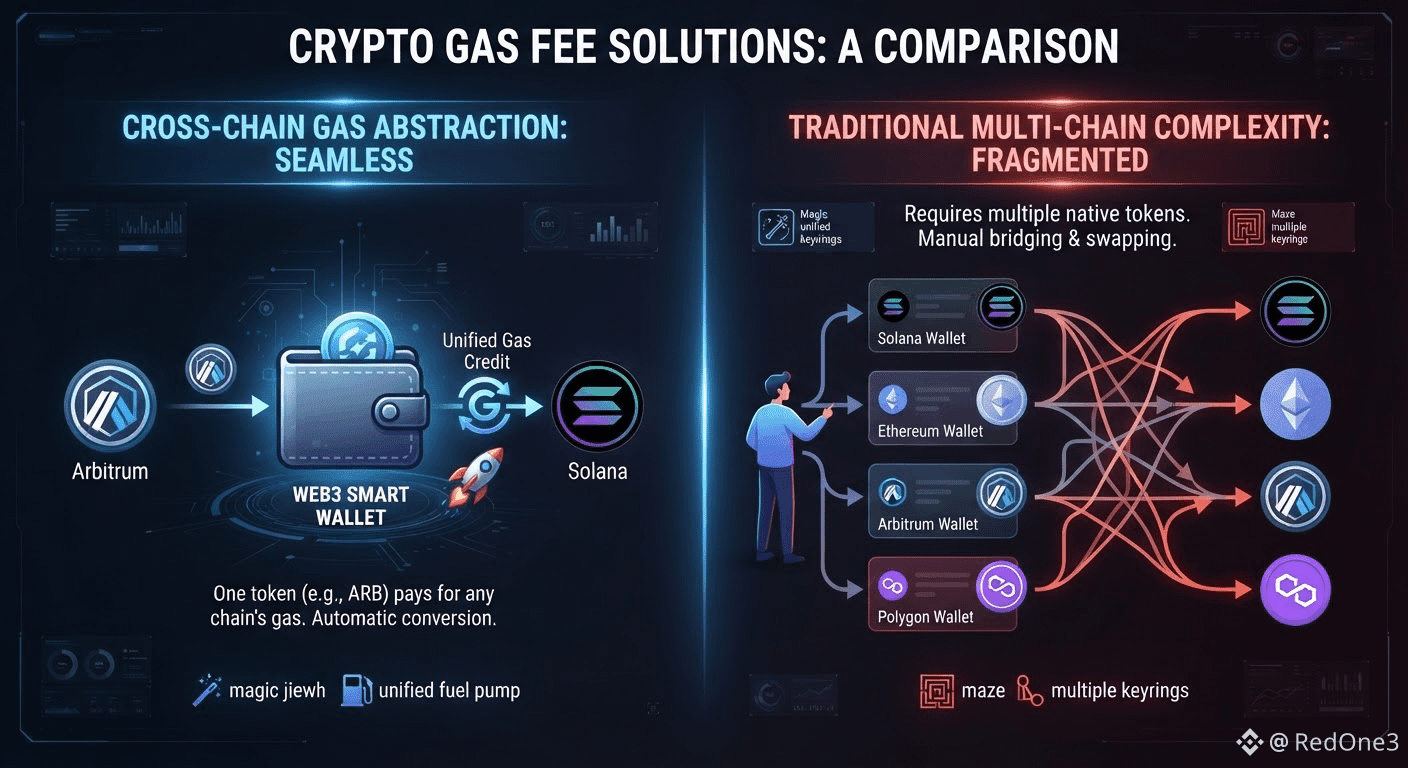
Pay for Gas on Solana Using Your Arbitrum Balance! ⛽🔀 🤔
Cross-chain gas abstraction layers are arriving. Users no longer need to hold five different native tokens just to execute transactions across multiple ecosystems.
#GasAbstraction #CrossChain #DeFiUX #Web3Seamless .
Pay for Gas on Solana Using Your Arbitrum Balance! ⛽🔀 🤔
Cross-chain gas abstraction layers are arriving. Users no longer need to hold five different native tokens just to execute transactions across multiple ecosystems.
#GasAbstraction #CrossChain #DeFiUX #Web3Seamless .
Cross-chain gas abstraction layers are arriving. Users no longer need to hold five different native tokens just to execute transactions across multiple ecosystems.
#GasAbstraction #CrossChain #DeFiUX #Web3Seamless .
181

NEAR Intents vừa đạt mốc 29,5 tỷ USD tổng khối lượng giao dịch DEX tích lũy. Nhờ mô hình giao dịch đa chuỗi thông minh, giao thức này đang trở thành một trong những hạ tầng giao dịch phát triển nhanh nhất hiện nay.
Điểm nổi bật và cách thức hoạt động:
Không cần Bridge hay Wrapped Token: Người dùng chỉ cần đưa ra kết quả mong muốn (intent), các bên thứ ba (solver) sẽ tự động tìm kiếm và thực hiện phương án tối ưu nhất.
Thanh khoản hợp nhất: Solver tìm nguồn thanh khoản ở nơi có giá tốt nhất bao gồm sàn CEX, bàn OTC, các DEX khác và cơ hội arbitrage xuyên chuỗi.
Hỗ trợ mạnh mẽ: Hỗ trợ hơn 31 blockchain với thời gian hoàn tất dưới 1 phút và phí cơ bản cực thấp, chỉ 0,01% (1 bps).
Tốc độ tăng trưởng ấn tượng: Từ 5 tỷ USD vào tháng 11/2025 lên 10 tỷ USD vào tháng 1/2026 và hiện tại đạt 29,5 tỷ USD. Doanh thu từ giao thức được dùng để buyback token NEAR từ tháng 2/2026.
Thân thiện với AI Agent: Mô hình intent giúp các robot/agent tự động dễ dàng thực hiện giao dịch on-chain mà không cần quản lý gas hay các bước bridge phức tạp.
{spot}(NEARUSDT)
Bài viết này chỉ mang tính chất cung cấp thông tin và giải trí, không phải là lời khuyên tài chính. Nếu bạn có ý định giao dịch dựa trên bài viết này rồi lỡ "đu đỉnh" hóng gió trên ngọn cây, tác giả xin phép được cổ vũ từ xa và hoàn toàn không chịu trách nhiệm cho bất kỳ chiếc ví nào bị thủng.
#NEARProtocol #NEARIntents #DeFi #CryptoNews #CrossChain
NEAR Intents vừa đạt mốc 29,5 tỷ USD tổng khối lượng giao dịch DEX tích lũy. Nhờ mô hình giao dịch đa chuỗi thông minh, giao thức này đang trở thành một trong những hạ tầng giao dịch phát triển nhanh nhất hiện nay.
Điểm nổi bật và cách thức hoạt động:
Không cần Bridge hay Wrapped Token: Người dùng chỉ cần đưa ra kết quả mong muốn (intent), các bên thứ ba (solver) sẽ tự động tìm kiếm và thực hiện phương án tối ưu nhất.
Thanh khoản hợp nhất: Solver tìm nguồn thanh khoản ở nơi có giá tốt nhất bao gồm sàn CEX, bàn OTC, các DEX khác và cơ hội arbitrage xuyên chuỗi.
Hỗ trợ mạnh mẽ: Hỗ trợ hơn 31 blockchain với thời gian hoàn tất dưới 1 phút và phí cơ bản cực thấp, chỉ 0,01% (1 bps).
Tốc độ tăng trưởng ấn tượng: Từ 5 tỷ USD vào tháng 11/2025 lên 10 tỷ USD vào tháng 1/2026 và hiện tại đạt 29,5 tỷ USD. Doanh thu từ giao thức được dùng để buyback token NEAR từ tháng 2/2026.
Thân thiện với AI Agent: Mô hình intent giúp các robot/agent tự động dễ dàng thực hiện giao dịch on-chain mà không cần quản lý gas hay các bước bridge phức tạp.
Bài viết này chỉ mang tính chất cung cấp thông tin và giải trí, không phải là lời khuyên tài chính. Nếu bạn có ý định giao dịch dựa trên bài viết này rồi lỡ "đu đỉnh" hóng gió trên ngọn cây, tác giả xin phép được cổ vũ từ xa và hoàn toàn không chịu trách nhiệm cho bất kỳ chiếc ví nào bị thủng.
#NEARProtocol #NEARIntents #DeFi #CryptoNews #CrossChain
Điểm nổi bật và cách thức hoạt động:
Không cần Bridge hay Wrapped Token: Người dùng chỉ cần đưa ra kết quả mong muốn (intent), các bên thứ ba (solver) sẽ tự động tìm kiếm và thực hiện phương án tối ưu nhất.
Thanh khoản hợp nhất: Solver tìm nguồn thanh khoản ở nơi có giá tốt nhất bao gồm sàn CEX, bàn OTC, các DEX khác và cơ hội arbitrage xuyên chuỗi.
Hỗ trợ mạnh mẽ: Hỗ trợ hơn 31 blockchain với thời gian hoàn tất dưới 1 phút và phí cơ bản cực thấp, chỉ 0,01% (1 bps).
Tốc độ tăng trưởng ấn tượng: Từ 5 tỷ USD vào tháng 11/2025 lên 10 tỷ USD vào tháng 1/2026 và hiện tại đạt 29,5 tỷ USD. Doanh thu từ giao thức được dùng để buyback token NEAR từ tháng 2/2026.
Thân thiện với AI Agent: Mô hình intent giúp các robot/agent tự động dễ dàng thực hiện giao dịch on-chain mà không cần quản lý gas hay các bước bridge phức tạp.
Bài viết này chỉ mang tính chất cung cấp thông tin và giải trí, không phải là lời khuyên tài chính. Nếu bạn có ý định giao dịch dựa trên bài viết này rồi lỡ "đu đỉnh" hóng gió trên ngọn cây, tác giả xin phép được cổ vũ từ xa và hoàn toàn không chịu trách nhiệm cho bất kỳ chiếc ví nào bị thủng.
#NEARProtocol #NEARIntents #DeFi #CryptoNews #CrossChain
221
·
--
The End of Zero-Sum Chain Competition
For three years the Layer 1 narrative was a zero-sum game: pick a winner, mock the losers. That framing is breaking down in real time.
What is replacing it is something more interesting — shared liquidity layers. Chain abstraction protocols, intent-based solver networks, and cross-chain messaging have quietly made asset movement between chains close to frictionless. When a user no longer cares which chain their token sits on, chain loyalty stops mattering.
The implication is counterintuitive: chains do not need to win the liquidity war. They need to be the best execution venue for specific use cases. Ethereum captures settlement certainty and institutional trust. Solana captures latency-sensitive consumer applications. BNB captures exchange-native flow and incentive-aligned ecosystem growth. These are not competitors — they are specialization layers.
The real competition is not chain versus chain. It is liquidity venue versus venue within each chain. AMM design, MEV handling, and incentive alignment matter more than TPS benchmarks.
If you are still investing in this chain beats that chain, you are fighting the last war. The next one is about which venue within each chain captures the most durable order flow.
$ETH $SOL $BNB
#CrossChain #Layer1 #DeFi #CryptoInfrastructure #Web3
The End of Zero-Sum Chain Competition
For three years the Layer 1 narrative was a zero-sum game: pick a winner, mock the losers. That framing is breaking down in real time.
What is replacing it is something more interesting — shared liquidity layers. Chain abstraction protocols, intent-based solver networks, and cross-chain messaging have quietly made asset movement between chains close to frictionless. When a user no longer cares which chain their token sits on, chain loyalty stops mattering.
The implication is counterintuitive: chains do not need to win the liquidity war. They need to be the best execution venue for specific use cases. Ethereum captures settlement certainty and institutional trust. Solana captures latency-sensitive consumer applications. BNB captures exchange-native flow and incentive-aligned ecosystem growth. These are not competitors — they are specialization layers.
The real competition is not chain versus chain. It is liquidity venue versus venue within each chain. AMM design, MEV handling, and incentive alignment matter more than TPS benchmarks.
If you are still investing in this chain beats that chain, you are fighting the last war. The next one is about which venue within each chain captures the most durable order flow.
$ETH $SOL $BNB
#CrossChain #Layer1 #DeFi #CryptoInfrastructure #Web3
For three years the Layer 1 narrative was a zero-sum game: pick a winner, mock the losers. That framing is breaking down in real time.
What is replacing it is something more interesting — shared liquidity layers. Chain abstraction protocols, intent-based solver networks, and cross-chain messaging have quietly made asset movement between chains close to frictionless. When a user no longer cares which chain their token sits on, chain loyalty stops mattering.
The implication is counterintuitive: chains do not need to win the liquidity war. They need to be the best execution venue for specific use cases. Ethereum captures settlement certainty and institutional trust. Solana captures latency-sensitive consumer applications. BNB captures exchange-native flow and incentive-aligned ecosystem growth. These are not competitors — they are specialization layers.
The real competition is not chain versus chain. It is liquidity venue versus venue within each chain. AMM design, MEV handling, and incentive alignment matter more than TPS benchmarks.
If you are still investing in this chain beats that chain, you are fighting the last war. The next one is about which venue within each chain captures the most durable order flow.
$ETH $SOL $BNB
#CrossChain #Layer1 #DeFi #CryptoInfrastructure #Web3
182
·
--
The cross-chain conversation has been stuck on bridges for three years. Lock-mint, burn-mint, liquidity pools — all variations of the same custody problem dressed up as innovation. The real unlock was never about moving assets between chains. It was about moving intent.
Intent-based architecture is quietly replacing bridge-based UX. Instead of "bridge ETH from Ethereum to Solana," users express what they want: "swap my ETH for SOL." Solver networks compete to fill that intent across chains, settling in whatever path minimizes slippage and latency. The user never touches a bridge.
This matters more than headline throughput numbers. Bridges are attack surface — billions in exploits prove it. Intent layers shift risk from custodial to execution, from "will my assets vanish" to "will I get a fair fill." That's a fundamentally different trust model.
The protocols building intent standards and solver marketplaces are creating chain abstraction — making underlying chain selection invisible. When it works, nobody asks which chain they're on. They just express what they want and the infrastructure routes it.
The chains that win won't be the fastest or cheapest. They'll be the ones most solver-friendly: deepest liquidity, most expressive intent formats, lowest settlement risk.
$ETH $SOL $BNB
#CrossChain #ChainAbstraction #IntentLayer #DeFi #Web3
The cross-chain conversation has been stuck on bridges for three years. Lock-mint, burn-mint, liquidity pools — all variations of the same custody problem dressed up as innovation. The real unlock was never about moving assets between chains. It was about moving intent.
Intent-based architecture is quietly replacing bridge-based UX. Instead of "bridge ETH from Ethereum to Solana," users express what they want: "swap my ETH for SOL." Solver networks compete to fill that intent across chains, settling in whatever path minimizes slippage and latency. The user never touches a bridge.
This matters more than headline throughput numbers. Bridges are attack surface — billions in exploits prove it. Intent layers shift risk from custodial to execution, from "will my assets vanish" to "will I get a fair fill." That's a fundamentally different trust model.
The protocols building intent standards and solver marketplaces are creating chain abstraction — making underlying chain selection invisible. When it works, nobody asks which chain they're on. They just express what they want and the infrastructure routes it.
The chains that win won't be the fastest or cheapest. They'll be the ones most solver-friendly: deepest liquidity, most expressive intent formats, lowest settlement risk.
$ETH $SOL $BNB
#CrossChain #ChainAbstraction #IntentLayer #DeFi #Web3
Intent-based architecture is quietly replacing bridge-based UX. Instead of "bridge ETH from Ethereum to Solana," users express what they want: "swap my ETH for SOL." Solver networks compete to fill that intent across chains, settling in whatever path minimizes slippage and latency. The user never touches a bridge.
This matters more than headline throughput numbers. Bridges are attack surface — billions in exploits prove it. Intent layers shift risk from custodial to execution, from "will my assets vanish" to "will I get a fair fill." That's a fundamentally different trust model.
The protocols building intent standards and solver marketplaces are creating chain abstraction — making underlying chain selection invisible. When it works, nobody asks which chain they're on. They just express what they want and the infrastructure routes it.
The chains that win won't be the fastest or cheapest. They'll be the ones most solver-friendly: deepest liquidity, most expressive intent formats, lowest settlement risk.
$ETH $SOL $BNB
#CrossChain #ChainAbstraction #IntentLayer #DeFi #Web3
106
·
--
The Next Cross-Chain Frontier Is Not Liquidity — It Is Identity
Everyone talks about cross-chain liquidity. Bridges, intent protocols, solver networks — all solving asset movement. But the real unlock for Web3 adoption is not moving tokens faster between chains. It is making chain boundaries invisible to users.
Right now your wallet address is locked to one chain. Your transaction history, DeFi positions, lending reputation — all stuck on a single network. Moving to another chain means rebuilding from scratch. No credit history. No reputation. No composability.
Account abstraction changes this. A single smart account that works across every chain — same address, same permissions, same history. Your borrowing track record on one chain becomes your credit score on another. Your LP positions become cross-chain collateral. Identity becomes portable, composable, and chain-agnostic.
This is the infrastructure layer nobody is building fast enough. The chains that solve identity portability will not just win users — they will make the entire concept of switching chains obsolete.
The future is not cross-chain bridges. It is cross-chain identity.
$ETH $SOL $BNB
#CrossChain #AccountAbstraction #Web3 #CryptoInfrastructure #DeFi
The Next Cross-Chain Frontier Is Not Liquidity — It Is Identity
Everyone talks about cross-chain liquidity. Bridges, intent protocols, solver networks — all solving asset movement. But the real unlock for Web3 adoption is not moving tokens faster between chains. It is making chain boundaries invisible to users.
Right now your wallet address is locked to one chain. Your transaction history, DeFi positions, lending reputation — all stuck on a single network. Moving to another chain means rebuilding from scratch. No credit history. No reputation. No composability.
Account abstraction changes this. A single smart account that works across every chain — same address, same permissions, same history. Your borrowing track record on one chain becomes your credit score on another. Your LP positions become cross-chain collateral. Identity becomes portable, composable, and chain-agnostic.
This is the infrastructure layer nobody is building fast enough. The chains that solve identity portability will not just win users — they will make the entire concept of switching chains obsolete.
The future is not cross-chain bridges. It is cross-chain identity.
$ETH $SOL $BNB
#CrossChain #AccountAbstraction #Web3 #CryptoInfrastructure #DeFi
Everyone talks about cross-chain liquidity. Bridges, intent protocols, solver networks — all solving asset movement. But the real unlock for Web3 adoption is not moving tokens faster between chains. It is making chain boundaries invisible to users.
Right now your wallet address is locked to one chain. Your transaction history, DeFi positions, lending reputation — all stuck on a single network. Moving to another chain means rebuilding from scratch. No credit history. No reputation. No composability.
Account abstraction changes this. A single smart account that works across every chain — same address, same permissions, same history. Your borrowing track record on one chain becomes your credit score on another. Your LP positions become cross-chain collateral. Identity becomes portable, composable, and chain-agnostic.
This is the infrastructure layer nobody is building fast enough. The chains that solve identity portability will not just win users — they will make the entire concept of switching chains obsolete.
The future is not cross-chain bridges. It is cross-chain identity.
$ETH $SOL $BNB
#CrossChain #AccountAbstraction #Web3 #CryptoInfrastructure #DeFi
158

·
--
Most people do not want to become experts in bridging.
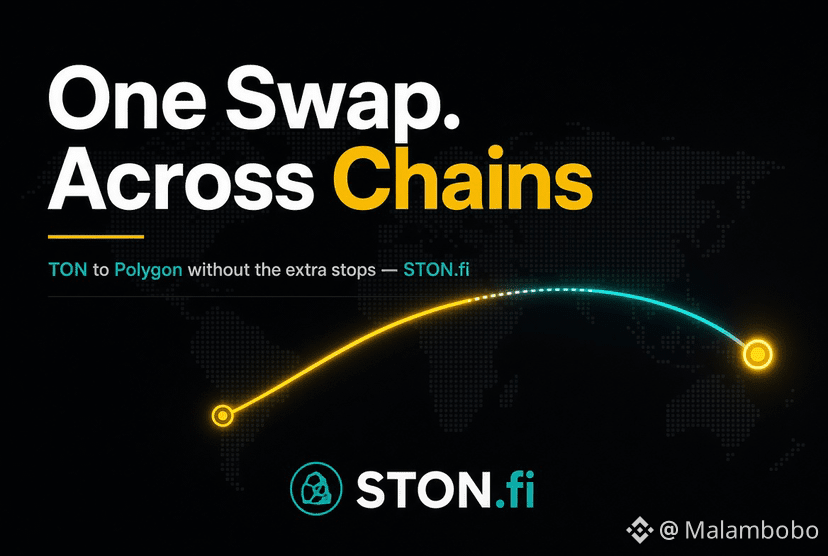
They just want to move an asset from $TON to $POL without opening three apps and hoping the route works.
That is the idea behind STON.fi’s latest push.
Instead of treating every chain like a separate travel problem, STON.fi now lets users swap supported assets across networks in one interface. Pick the asset. Choose the destination. Confirm. Receive.
Under the hood, Omniston handles routing and execution. The user does not have to think about liquidity paths or which bridge to trust that day.
Polygon is a smart next stop. It is one of the more practical EVM environments for payments, DeFi, stablecoins, and everyday apps. Connecting @ton_blockchain-1 to that activity is useful. Making the route feel simple is the actual product.
They wrapped the rollout in a campaign called One Swap. Across Chains. Complete tasks, collect miles, unlock limited Flight Deals.
If it works, the best compliment is that the swap starts to feel boring — in a good way.
Campaign here: https://cross-chain.ston.fi/
#ston #TON #Polygon #defi #CrossChain
Most people do not want to become experts in bridging.
They just want to move an asset from $TON to $POL without opening three apps and hoping the route works.
That is the idea behind STON.fi’s latest push.
Instead of treating every chain like a separate travel problem, STON.fi now lets users swap supported assets across networks in one interface. Pick the asset. Choose the destination. Confirm. Receive.
Under the hood, Omniston handles routing and execution. The user does not have to think about liquidity paths or which bridge to trust that day.
Polygon is a smart next stop. It is one of the more practical EVM environments for payments, DeFi, stablecoins, and everyday apps. Connecting @ton_blockchain to that activity is useful. Making the route feel simple is the actual product.
They wrapped the rollout in a campaign called One Swap. Across Chains. Complete tasks, collect miles, unlock limited Flight Deals.
If it works, the best compliment is that the swap starts to feel boring — in a good way.
Campaign here: https://cross-chain.ston.fi/
#ston #TON #Polygon #defi #CrossChain
They just want to move an asset from $TON to $POL without opening three apps and hoping the route works.
That is the idea behind STON.fi’s latest push.
Instead of treating every chain like a separate travel problem, STON.fi now lets users swap supported assets across networks in one interface. Pick the asset. Choose the destination. Confirm. Receive.
Under the hood, Omniston handles routing and execution. The user does not have to think about liquidity paths or which bridge to trust that day.
Polygon is a smart next stop. It is one of the more practical EVM environments for payments, DeFi, stablecoins, and everyday apps. Connecting @ton_blockchain to that activity is useful. Making the route feel simple is the actual product.
They wrapped the rollout in a campaign called One Swap. Across Chains. Complete tasks, collect miles, unlock limited Flight Deals.
If it works, the best compliment is that the swap starts to feel boring — in a good way.
Campaign here: https://cross-chain.ston.fi/
#ston #TON #Polygon #defi #CrossChain
1
218

·
--
The lowest fee isn’t always the cheapest route.
When I compare cross-chain routes, I start with one question:
How much actually lands in my wallet?
I’d put the same amount into two live routes and compare the final destination amount after:
→ Source-chain gas
→ Destination-chain gas
→ Protocol/provider fees
→ Extra swaps after bridging
→ Wrapped vs native assets
I’d also check the route itself, not just the fee displayed upfront.
For example, a bridge may look cheaper at first but require another swap before I get the asset I actually want.
That’s why I check the final output on @ston_fi against the alternative instead of assuming one route is cheaper.
The real cost is what you spend vs what you end up with.
📝 STON.fi Blog: blog.ston.fi
#STONfi #Omniston #DeFi #CrossChain #TON
$G $HYPE $TRUMP
{spot}(GUSDT)
The lowest fee isn’t always the cheapest route.
When I compare cross-chain routes, I start with one question:
How much actually lands in my wallet?
I’d put the same amount into two live routes and compare the final destination amount after:
→ Source-chain gas
→ Destination-chain gas
→ Protocol/provider fees
→ Extra swaps after bridging
→ Wrapped vs native assets
I’d also check the route itself, not just the fee displayed upfront.
For example, a bridge may look cheaper at first but require another swap before I get the asset I actually want.
That’s why I check the final output on @ston_fi against the alternative instead of assuming one route is cheaper.
The real cost is what you spend vs what you end up with.
📝 STON.fi Blog: blog.ston.fi
#STONfi #Omniston #DeFi #CrossChain #TON
$G $HYPE $TRUMP
When I compare cross-chain routes, I start with one question:
How much actually lands in my wallet?
I’d put the same amount into two live routes and compare the final destination amount after:
→ Source-chain gas
→ Destination-chain gas
→ Protocol/provider fees
→ Extra swaps after bridging
→ Wrapped vs native assets
I’d also check the route itself, not just the fee displayed upfront.
For example, a bridge may look cheaper at first but require another swap before I get the asset I actually want.
That’s why I check the final output on @ston_fi against the alternative instead of assuming one route is cheaper.
The real cost is what you spend vs what you end up with.
📝 STON.fi Blog: blog.ston.fi
#STONfi #Omniston #DeFi #CrossChain #TON
$G $HYPE $TRUMP
1
436

NEAR Protocol surged 46 percent to break the 3.5 dollar resistance. The massive rally is driven by momentum in the protocol evolving cross chain trading strategy.
#NearProtocol #CrossChain
NEAR Protocol surged 46 percent to break the 3.5 dollar resistance. The massive rally is driven by momentum in the protocol evolving cross chain trading strategy.
#NearProtocol #CrossChain
#NearProtocol #CrossChain
15
·
--
The cross-chain conversation used to be about bridges. Remember bridges? Every few weeks another one got exploited for nine figures, and the industry collectively decided that locking value in a standalone smart contract on chain A to mint a synthetic on chain B was not a sustainable architecture.
What replaced it is more interesting.
Intent-based routing networks are quietly absorbing the cross-chain flow. Instead of users manually bridging assets, they express desired outcomes — "I want USDC on Solana, pay from ETH on Ethereum" — and solver networks compete to fill that intent at the best price. The user never touches a bridge contract. The solver takes the execution risk.
This unbundles cross-chain into three separate markets: intent expression, route discovery, and execution. Each one competes independently. The result is that liquidity is becoming chain-agnostic at the application layer even as it stays chain-native at the settlement layer.
$ETH $SOL $BNB are the settlement tokens that benefit most — they capture base-layer fee revenue regardless of which intent network wins the routing war.
The projects building cross-chain intent standards today are doing for crypto what TCP/IP did for the internet: creating a protocol layer nobody sees but everyone depends on.
#CrossChain #Interoperability #DeFi #CryptoInfrastructure #Web3
The cross-chain conversation used to be about bridges. Remember bridges? Every few weeks another one got exploited for nine figures, and the industry collectively decided that locking value in a standalone smart contract on chain A to mint a synthetic on chain B was not a sustainable architecture.
What replaced it is more interesting.
Intent-based routing networks are quietly absorbing the cross-chain flow. Instead of users manually bridging assets, they express desired outcomes — "I want USDC on Solana, pay from ETH on Ethereum" — and solver networks compete to fill that intent at the best price. The user never touches a bridge contract. The solver takes the execution risk.
This unbundles cross-chain into three separate markets: intent expression, route discovery, and execution. Each one competes independently. The result is that liquidity is becoming chain-agnostic at the application layer even as it stays chain-native at the settlement layer.
$ETH $SOL $BNB are the settlement tokens that benefit most — they capture base-layer fee revenue regardless of which intent network wins the routing war.
The projects building cross-chain intent standards today are doing for crypto what TCP/IP did for the internet: creating a protocol layer nobody sees but everyone depends on.
#CrossChain #Interoperability #DeFi #CryptoInfrastructure #Web3
What replaced it is more interesting.
Intent-based routing networks are quietly absorbing the cross-chain flow. Instead of users manually bridging assets, they express desired outcomes — "I want USDC on Solana, pay from ETH on Ethereum" — and solver networks compete to fill that intent at the best price. The user never touches a bridge contract. The solver takes the execution risk.
This unbundles cross-chain into three separate markets: intent expression, route discovery, and execution. Each one competes independently. The result is that liquidity is becoming chain-agnostic at the application layer even as it stays chain-native at the settlement layer.
$ETH $SOL $BNB are the settlement tokens that benefit most — they capture base-layer fee revenue regardless of which intent network wins the routing war.
The projects building cross-chain intent standards today are doing for crypto what TCP/IP did for the internet: creating a protocol layer nobody sees but everyone depends on.
#CrossChain #Interoperability #DeFi #CryptoInfrastructure #Web3
152

·
--
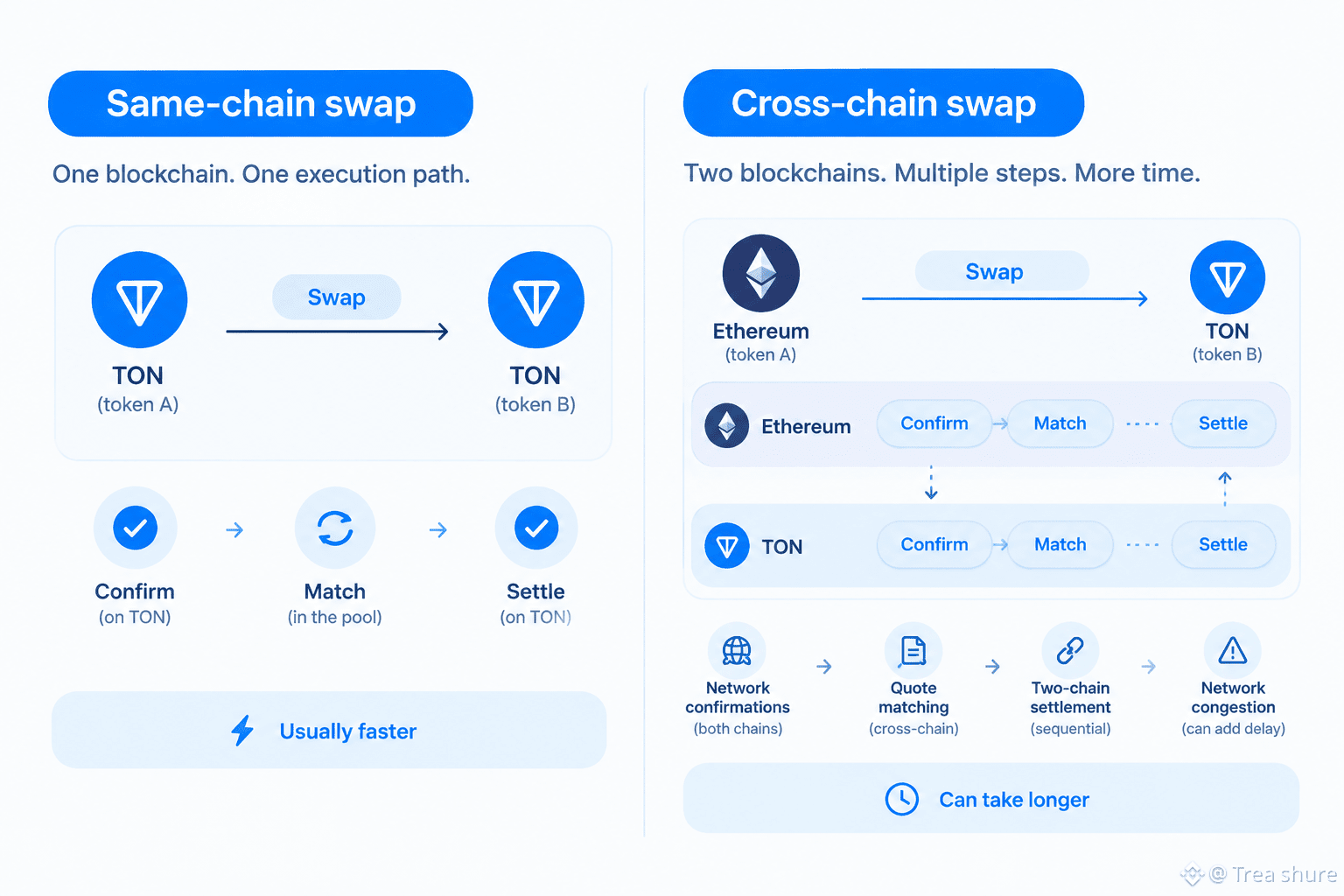
WHY CAN A CROSS-CHAIN SWAP TAKE LONGER THAN A REGULAR TON SWAP?
Ever wondered why a swap on $TON can feel much faster than a cross-chain route involving another network? ⏳
The difference is the number of networks involved.
A regular TON swap happens within one blockchain:
TON → Swap → TON
But consider:
Ethereum / USDC → TON / USDT
Now the process has to coordinate activity across two separate networks.
A cross-chain swap can involve:
🔹 Source-chain confirmation
🔹 Quote and execution matching
🔹 Cross-chain settlement
🔹 Destination-chain confirmation
Network congestion can add more time if either side is busy.
So a longer wait doesn't automatically mean something went wrong. The useful step is to check the transaction and trade status to see which stage is still processing.
STON.fi's Omniston infrastructure provides trade-status information that can help users follow cross-chain execution.
Simple way to remember it:
Same-chain = one network.
Cross-chain = multiple networks + coordination + settlement.
$TON $ETH $USDC $ZEC $SOL
#TON #DeFi #CrossChain
https://linktr.ee/ston.fi
WHY CAN A CROSS-CHAIN SWAP TAKE LONGER THAN A REGULAR TON SWAP?
Ever wondered why a swap on $TON can feel much faster than a cross-chain route involving another network? ⏳
The difference is the number of networks involved.
A regular TON swap happens within one blockchain:
TON → Swap → TON
But consider:
Ethereum / USDC → TON / USDT
Now the process has to coordinate activity across two separate networks.
A cross-chain swap can involve:
🔹 Source-chain confirmation
🔹 Quote and execution matching
🔹 Cross-chain settlement
🔹 Destination-chain confirmation
Network congestion can add more time if either side is busy.
So a longer wait doesn't automatically mean something went wrong. The useful step is to check the transaction and trade status to see which stage is still processing.
STON.fi's Omniston infrastructure provides trade-status information that can help users follow cross-chain execution.
Simple way to remember it:
Same-chain = one network.
Cross-chain = multiple networks + coordination + settlement.
$TON $ETH $USDC $ZEC $SOL
#TON #DeFi #CrossChain
https://linktr.ee/ston.fi
Ever wondered why a swap on $TON can feel much faster than a cross-chain route involving another network? ⏳
The difference is the number of networks involved.
A regular TON swap happens within one blockchain:
TON → Swap → TON
But consider:
Ethereum / USDC → TON / USDT
Now the process has to coordinate activity across two separate networks.
A cross-chain swap can involve:
🔹 Source-chain confirmation
🔹 Quote and execution matching
🔹 Cross-chain settlement
🔹 Destination-chain confirmation
Network congestion can add more time if either side is busy.
So a longer wait doesn't automatically mean something went wrong. The useful step is to check the transaction and trade status to see which stage is still processing.
STON.fi's Omniston infrastructure provides trade-status information that can help users follow cross-chain execution.
Simple way to remember it:
Same-chain = one network.
Cross-chain = multiple networks + coordination + settlement.
$TON $ETH $USDC $ZEC $SOL
#TON #DeFi #CrossChain
https://linktr.ee/ston.fi
109
Войдите, чтобы посмотреть больше материала
Присоединяйтесь к пользователям криптовалют по всему миру на Binance Square
⚡️ Получайте новейшую и полезную информацию о криптоактивах.
💬 Нам доверяет крупнейшая в мире криптобиржа.
👍 Получите достоверные аналитические данные от верифицированных создателей контента.
Эл. почта/номер телефона
В тренде
1
#BinanceKZ
Просмотров: 9,026
50 обсуждают
2
#UKFCAWinsCourtOrderToRecover851400Pounds
Просмотров: 29,043
740 обсуждают
3
#ChainlinkLaunchesCCIP2WithEnterpriseVerification
Просмотров: 43,289
924 обсуждают
4
#GoldFallsTo$4144
Просмотров: 15,211
157 обсуждают
5
#QNTFallsOver40%FromMorningHigh
Просмотров: 88,745
1,342 обсуждают
6
#USDTAdds845900HoldersInPast7Days
Просмотров: 17,321
403 обсуждают
7
#KospiFalls2.7%SamsungSKHynixDropOver5%
Просмотров: 29,589
586 обсуждают
8
#BitgetCEOConfirms$388MStolenInHack
Просмотров: 5,344
42 обсуждают
9
#BTCFallsBelow$83000
Просмотров: 32,236
167 обсуждают
10
#BitgetDetailsSecurityIncidentTimeline
Просмотров: 50,048
738 обсуждают