
#oracles
oracles
Просмотров: 151,199
1,262 обсуждают
Популярные
Новые

·
--
Oracles play a crucial role in bringing off-chain data on-chain. Chainlink is a popular oracle network that provides real-time data to blockchain protocols. It is sitting at over 700 partnerships, including $ETH and $BTC. Pyth is another oracle network that focuses on providing high-frequency data. For example, Pyth can provide stock prices to blockchain protocols, enabling new use cases. Oracles like Chainlink and Pyth are essential for decentralized applications. They enable the creation of more complex and data-driven smart contracts. With oracles, the possibilities for blockchain protocols are endless. blockchainprotocols #oracles #cryptotechnology
Oracles play a crucial role in bringing off-chain data on-chain. Chainlink is a popular oracle network that provides real-time data to blockchain protocols. It is sitting at over 700 partnerships, including $ETH and $BTC . Pyth is another oracle network that focuses on providing high-frequency data. For example, Pyth can provide stock prices to blockchain protocols, enabling new use cases. Oracles like Chainlink and Pyth are essential for decentralized applications. They enable the creation of more complex and data-driven smart contracts. With oracles, the possibilities for blockchain protocols are endless. blockchainprotocols #oracles #cryptotechnology
67

·
--
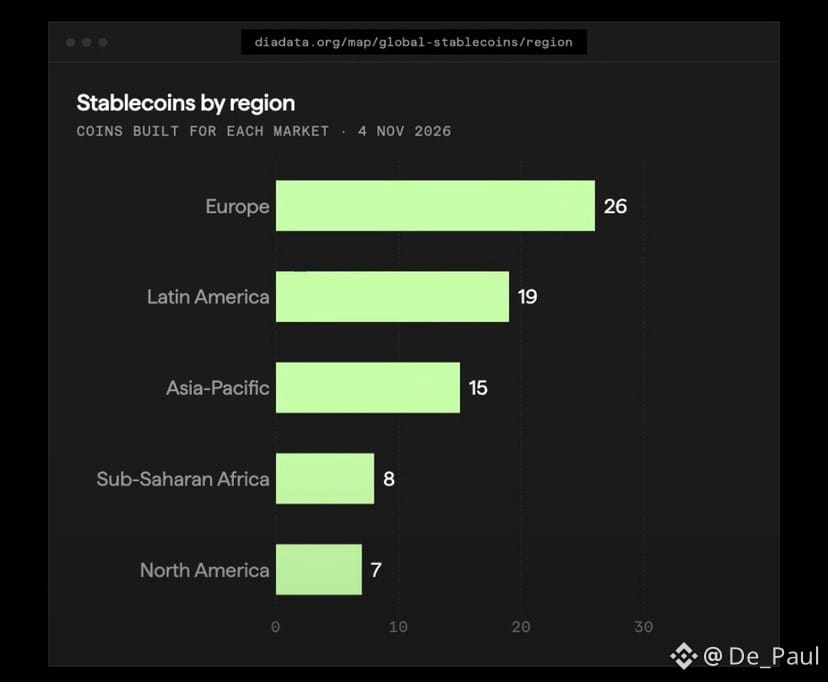
Sub-Saharan Africa has 8 stablecoins on DIA’s Global Stablecoin Map.
Combined supply: $8.1M. Five currencies: Ghanaian cedi, Kenyan shilling, Nigerian naira, CFA franc and South African rand.
That’s not a headline number. It’s a starting line. DIA’s map puts it well: a dollar stablecoin is issued in one place and used everywhere, but a naira, rand or cedi stablecoin exists because someone in that market needed it.
Small markets still need pricing and reserves. A #coin with a few million in liquidity can’t be priced by sampling the biggest exchange.
That’s the problem DIA’s #oracles and Proof of Reserves are built for.
$DIA
125
·
--
Smart contracts are powerful but blind. They cannot see the real world. Oracles fix this by bridging off-chain data to on-chain logic. Think of them as trusted messengers. Chainlink is a dominant player. It uses a decentralized network of node operators. For example, if a protocol needs the $ETH gas fee, multiple oracles fetch this value. If they disagree, the system rejects the bad data. This prevents single points of failure. Pyth takes a different approach. It uses first-party financial institutions. These firms push feeds directly to the blockchain. This reduces latency significantly. Pyth can update data in under 400 milliseconds. This speed is crucial for high-frequency trading strategies. Why does this matter? Without reliable oracles, a lending platform might lend out $100 million based on wrong collateral values. One bad data point could bankrupt the protocol. Oracles are the unsung heroes of DeFi. They ensure that $BTC and other assets have accurate valuations on-chain. As the space grows, expect oracle networks to become more specialized and competitive. Understanding how they work is key to trusting decentralized finance. Blockchain #DeFi #Oracles
Smart contracts are powerful but blind. They cannot see the real world. Oracles fix this by bridging off-chain data to on-chain logic. Think of them as trusted messengers. Chainlink is a dominant player. It uses a decentralized network of node operators. For example, if a protocol needs the $ETH gas fee, multiple oracles fetch this value. If they disagree, the system rejects the bad data. This prevents single points of failure. Pyth takes a different approach. It uses first-party financial institutions. These firms push feeds directly to the blockchain. This reduces latency significantly. Pyth can update data in under 400 milliseconds. This speed is crucial for high-frequency trading strategies. Why does this matter? Without reliable oracles, a lending platform might lend out $100 million based on wrong collateral values. One bad data point could bankrupt the protocol. Oracles are the unsung heroes of DeFi. They ensure that $BTC and other assets have accurate valuations on-chain. As the space grows, expect oracle networks to become more specialized and competitive. Understanding how they work is key to trusting decentralized finance. Blockchain #DeFi #Oracles
58

·
--
🚨 $PYTH INFRASTRUCTURE IS THE SILENT BACKBONE POWERING ON-CHAIN PERPETUALS!
In the arena of high-frequency DeFi, split-second data delays can trigger catastrophic liquidations across lending protocols. That is precisely why institutional-grade oracles delivering sub-second cross-chain pricing are dominating order flow discussions right now. 📊
When markets flash crash, protocols relying on sluggish feeds get front-run by arbitrageurs, draining liquidity pools instantly. Keeping $PYTH locked on my radar because reliable multi-chain data infrastructure forms the bedrock of every sustainable scaling wave.
Are you tracking oracle networks as core structural plays or just focusing on layer-one tokens? 👇
⚠️ Not financial advice. Always manage your risk. 🛡️
🏷️ #PYTH #DeFi #Oracles #Crypto
🔥 💎
9

·
--
🔗 Blockchain networks need reliable communication and data connections.
$PYTH delivers market data infrastructure, $BAND provides oracle services, and $QNT focuses on connecting different networks and systems.
Infrastructure projects can be worth studying beyond short-term price movements.
#PythNetwork #BandProtocol #Quant #Oracles #Interoperability
$PYTH delivers market data infrastructure, $BAND provides oracle services, and $QNT focuses on connecting different networks and systems.
Infrastructure projects can be worth studying beyond short-term price movements.
#PythNetwork #BandProtocol #Quant #Oracles #Interoperability
1
18
·
--
Blockchains are isolated systems. They cannot see the outside world. Oracles act as bridges moving real-world data onto the network. Think of them as trusted couriers delivering facts to smart contracts. Chainlink is the industry standard. It uses many independent data providers to aggregate information. This prevents any single source from lying. Pyth offers a different approach. It provides first-party data directly from financial institutions. This reduces latency significantly. Why does this matter? Imagine a decentralized lending protocol. A borrower requests funds. The system needs to know the exact value of their collateral. Without an oracle, the loan cannot execute. The oracle fetches the current market value in milliseconds. This infrastructure enables automated insurance claims, yield farming, and automated market makers. Data integrity is critical. One bad data point can deplete a protocol's liquidity. Modern oracles use weighted voting and staking mechanisms to penalize fake data. Understanding these layers helps you navigate the decentralized finance landscape safely. $LINK $PYTH $ETH Blockchain #DeFi #Oracles
Blockchains are isolated systems. They cannot see the outside world. Oracles act as bridges moving real-world data onto the network. Think of them as trusted couriers delivering facts to smart contracts. Chainlink is the industry standard. It uses many independent data providers to aggregate information. This prevents any single source from lying. Pyth offers a different approach. It provides first-party data directly from financial institutions. This reduces latency significantly. Why does this matter? Imagine a decentralized lending protocol. A borrower requests funds. The system needs to know the exact value of their collateral. Without an oracle, the loan cannot execute. The oracle fetches the current market value in milliseconds. This infrastructure enables automated insurance claims, yield farming, and automated market makers. Data integrity is critical. One bad data point can deplete a protocol's liquidity. Modern oracles use weighted voting and staking mechanisms to penalize fake data. Understanding these layers helps you navigate the decentralized finance landscape safely. $LINK $PYTH $ETH Blockchain #DeFi #Oracles
91
·
--
Oracles like Chainlink and Pyth bring off-chain data on-chain, enabling smart contracts to interact with external information. This data is at a high level of accuracy, allowing for secure and reliable execution of contracts. For instance, a contract may need the current value of $ETH to execute a trade. Oracles provide this data, which is then used to determine the outcome of the contract. With the rise of decentralized finance, oracles are playing a crucial role in connecting blockchain networks with traditional finance systems. Chainlink is currently sitting at a high usage rate, with over 700 projects using its services. Blockchain technology relies on oracles to access real-world data, making them a fundamental component of the ecosystem. #blockchaininfrastructure #oracles #cryptotechnology
Oracles like Chainlink and Pyth bring off-chain data on-chain, enabling smart contracts to interact with external information. This data is at a high level of accuracy, allowing for secure and reliable execution of contracts. For instance, a contract may need the current value of $ETH to execute a trade. Oracles provide this data, which is then used to determine the outcome of the contract. With the rise of decentralized finance, oracles are playing a crucial role in connecting blockchain networks with traditional finance systems. Chainlink is currently sitting at a high usage rate, with over 700 projects using its services. Blockchain technology relies on oracles to access real-world data, making them a fundamental component of the ecosystem. #blockchaininfrastructure #oracles #cryptotechnology
135

If you're still stacking $LINK without asking whether the token actually captures value from its own infrastructure, stop now.
Too many of us have been burned holding tokens that built essential rails yet left holders with nothing. You sit through the underperformance, miss the exit, and watch the protocol succeed while your bags go nowhere.
We've watched this exact pattern with competing oracle projects. $BAND made a serious run at Chainlink's position but couldn't displace it because swapping out a deeply integrated data layer is expensive and risky for teams already built on it. That stickiness is real.
The long-term case for $LINK still comes down to two things. Whether its infrastructure becomes so entrenched that replacing it feels almost impossible, and whether the token itself siphons meaningful value from sitting in that spot. $ETH managed to turn infrastructure into actual demand through fees and staking. $LINK has to prove it can do something similar or it becomes another great-tech, disappointing-token story.
What's your take on whether $LINK's moat actually turns into token value this cycle?
#Chainlink #Oracles #DeFi
If you're still stacking $LINK without asking whether the token actually captures value from its own infrastructure, stop now.
Too many of us have been burned holding tokens that built essential rails yet left holders with nothing. You sit through the underperformance, miss the exit, and watch the protocol succeed while your bags go nowhere.
We've watched this exact pattern with competing oracle projects. $BAND made a serious run at Chainlink's position but couldn't displace it because swapping out a deeply integrated data layer is expensive and risky for teams already built on it. That stickiness is real.
The long-term case for $LINK still comes down to two things. Whether its infrastructure becomes so entrenched that replacing it feels almost impossible, and whether the token itself siphons meaningful value from sitting in that spot. $ETH managed to turn infrastructure into actual demand through fees and staking. $LINK has to prove it can do something similar or it becomes another great-tech, disappointing-token story.
What's your take on whether $LINK 's moat actually turns into token value this cycle?
#Chainlink #Oracles #DeFi
10

·
--
Last week a protocol quietly moved its price feeds off the default stack, and most of the timeline treated it like a routine integration update.
That is how infrastructure risk shows up for holders. You are not watching a chart break in one candle. You are watching teams decide your data layer is optional, then the token reprices after the narrative is already late.
The competitive risk around Chainlink is straightforward. Blockchain teams can pick alternative oracle providers or build specialized infrastructure themselves, and both choices put pressure on pricing and market share. $LINK still has to deliver reliability and security while remaining attractive to developers and institutions. Reliability alone does not lock in a contract if a rival feed is cheaper, narrower, or easier to ship.
This is less about oracles vanishing and more about the default choice stopping being automatic. If $PYTH and $BAND keep taking specialized feeds, pricing power gets tested one integration at a time. The miss is assuming market share stays put because the brand already won the last cycle.
Where do you think oracle share actually settles if teams keep shopping around?
#Chainlink #Oracles #LINK
16
If you're still buying $LINK every time a new integration gets announced, stop now.
This FOMO habit has burned countless traders who expect usage to automatically drive the price higher. Instead they watch their entries go red as the excitement dies down.
There's a clear debate on this. Integrations certainly strengthen Chainlink's lead in oracles and the demand for that infrastructure keeps rising on chains like $ETH and $SOL.
But more usage does not equal proportional buying pressure for the token. The network can grow without creating the same demand for $LINK itself.
What matters is how that activity converts into real token utility through fees, staking, and lasting economic value. That translation is not guaranteed.
Does more oracle demand actually lead to $LINK value in your experience?
#Chainlink #DeFi #Oracles
If you're still buying $LINK every time a new integration gets announced, stop now.
This FOMO habit has burned countless traders who expect usage to automatically drive the price higher. Instead they watch their entries go red as the excitement dies down.
There's a clear debate on this. Integrations certainly strengthen Chainlink's lead in oracles and the demand for that infrastructure keeps rising on chains like $ETH and $SOL .
But more usage does not equal proportional buying pressure for the token. The network can grow without creating the same demand for $LINK itself.
What matters is how that activity converts into real token utility through fees, staking, and lasting economic value. That translation is not guaranteed.
Does more oracle demand actually lead to $LINK value in your experience?
#Chainlink #DeFi #Oracles
13
·
--
Hundreds of Chainlink integrations this year still haven't translated into matching demand for $LINK.
Traders keep piling into $LINK after every new partnership only to watch it stall out. Confusing infrastructure growth with token buying pressure is how a lot of people lose money here.
I've been looking at the on-chain picture. Chainlink's oracles are securing billions across $ETH, $BNB and other chains, and the integrations keep coming which only makes their moat stronger. That demand for the service is undeniable.
But it does not automatically create proportional buying for the token. The real question is whether network usage actually drives fee-related demand, staking participation, and long-term economic value for $LINK holders. If it doesn't, you get a widely used protocol sitting next to a token that just doesn't move.
This gap is what catches people off guard. Usage charts look great while price action stays quiet.
Anyone else watching how this utility actually flows back to $LINK?
#Chainlink #DeFi #Oracles
Hundreds of Chainlink integrations this year still haven't translated into matching demand for $LINK .
Traders keep piling into $LINK after every new partnership only to watch it stall out. Confusing infrastructure growth with token buying pressure is how a lot of people lose money here.
I've been looking at the on-chain picture. Chainlink's oracles are securing billions across $ETH , $BNB and other chains, and the integrations keep coming which only makes their moat stronger. That demand for the service is undeniable.
But it does not automatically create proportional buying for the token. The real question is whether network usage actually drives fee-related demand, staking participation, and long-term economic value for $LINK holders. If it doesn't, you get a widely used protocol sitting next to a token that just doesn't move.
This gap is what catches people off guard. Usage charts look great while price action stays quiet.
Anyone else watching how this utility actually flows back to $LINK ?
#Chainlink #DeFi #Oracles
5

·
--
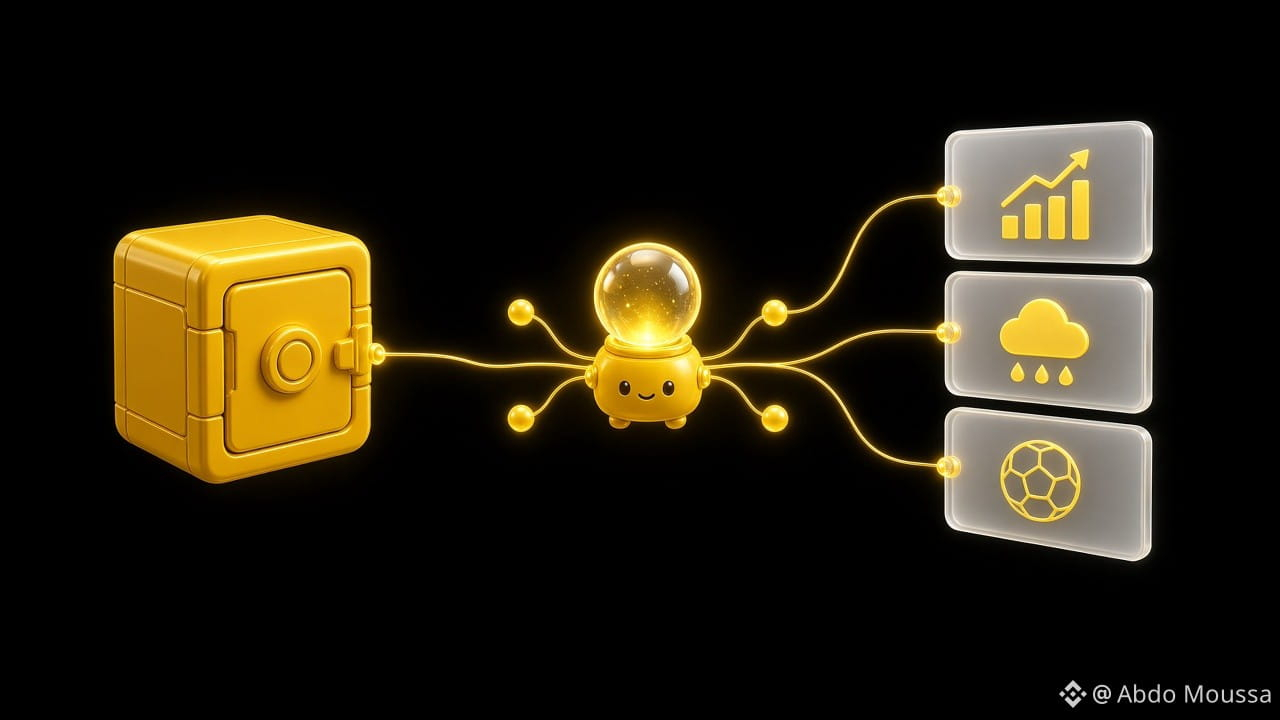
𝗘𝘃𝗲𝗿 𝘄𝗼𝗻𝗱𝗲𝗿𝗲𝗱 𝗵𝗼𝘄 𝘀𝗺𝗮𝗿𝘁 𝗰𝗼𝗻𝘁𝗿𝗮𝗰𝘁𝘀 𝗸𝗻𝗼𝘄 𝗿𝗲𝗮𝗹-𝘁𝗶𝗺𝗲 𝗮𝘀𝘀𝗲𝘁 𝗽𝗿𝗶𝗰𝗲𝘀, 𝘄𝗲𝗮𝘁𝗵𝗲𝗿 𝗱𝗮𝘁𝗮, 𝗼𝗿 𝘀𝗽𝗼𝗿𝘁𝘀 𝘀𝗰𝗼𝗿𝗲𝘀 𝘄𝗵𝗲𝗻 𝗯𝗹𝗼𝗰𝗸𝗰𝗵𝗮𝗶𝗻𝘀 𝗮𝗿𝗲 𝘁𝗼𝘁𝗮𝗹𝗹𝘆 𝗶𝘀𝗼𝗹𝗮𝘁𝗲𝗱? 𝗘𝗻𝘁𝗲𝗿 𝗢𝗿𝗮𝗰𝗹𝗲𝘀 🔮⚡
𝗗𝗿𝗮𝘄𝗶𝗻𝗴 𝗳𝗿𝗼𝗺 𝗳𝗼𝘂𝗻𝗱𝗮𝘁𝗶𝗼𝗻𝗮𝗹 𝗹𝗲𝘀𝘀𝗼𝗻𝘀 𝗼𝗻 #Binance 𝗔𝗰𝗮𝗱𝗲𝗺𝘆, 𝗵𝗲𝗿𝗲'𝘀 𝘆𝗼𝘂𝗿 𝗾𝘂𝗶𝗰𝗸 𝗶𝗻𝗳𝗿𝗮𝘀𝘁𝗿𝘂𝗰𝘁𝘂𝗿𝗲 𝗯𝗿𝗲𝗮𝗸𝗱𝗼𝘄𝗻:
1️⃣ 𝗧𝗵𝗲 𝗕𝗹𝗼𝗰𝗸𝗰𝗵𝗮𝗶𝗻 𝗜𝘀𝗼𝗹𝗮𝘁𝗶𝗼𝗻 𝗣𝗿𝗼𝗯𝗹𝗲𝗺:
• Blockchains are deterministic and secure digital silos, they can't natively fetch data from the outside world (off-chain).
2️⃣ 𝗪𝗵𝗮𝘁 𝗶𝘀 𝗮 𝗕𝗹𝗼𝗰𝗸𝗰𝗵𝗮𝗶𝗻 𝗢𝗿𝗮𝗰𝗹𝗲?
• An oracle acts as a secure bridge or middleware that fetches, verifies, and delivers external real-world data to on-chain smart contracts.
3️⃣ 𝗖𝗲𝗻𝘁𝗿𝗮𝗹𝗶𝘇𝗲𝗱 𝘃𝘀. 𝗗𝗲𝗰𝗲𝗻𝘁𝗿𝗮𝗹𝗶𝘇𝗲𝗱 𝗢𝗿𝗮𝗰𝗹𝗲𝘀:
• Centralized oracles are single points of failure, while decentralized oracle networks aggregate data from multiple independent sources to ensure reliability.
Expand your technical literacy and understand the data infrastructure behind every smart contract 🧠
Follow me for more 💛
Crypto involves risk, this is not financial advice, Always DYOR 💡
#Oracles #SmartContracts #BinanceAcademy #CryptoEducation
1
2
89
·
--
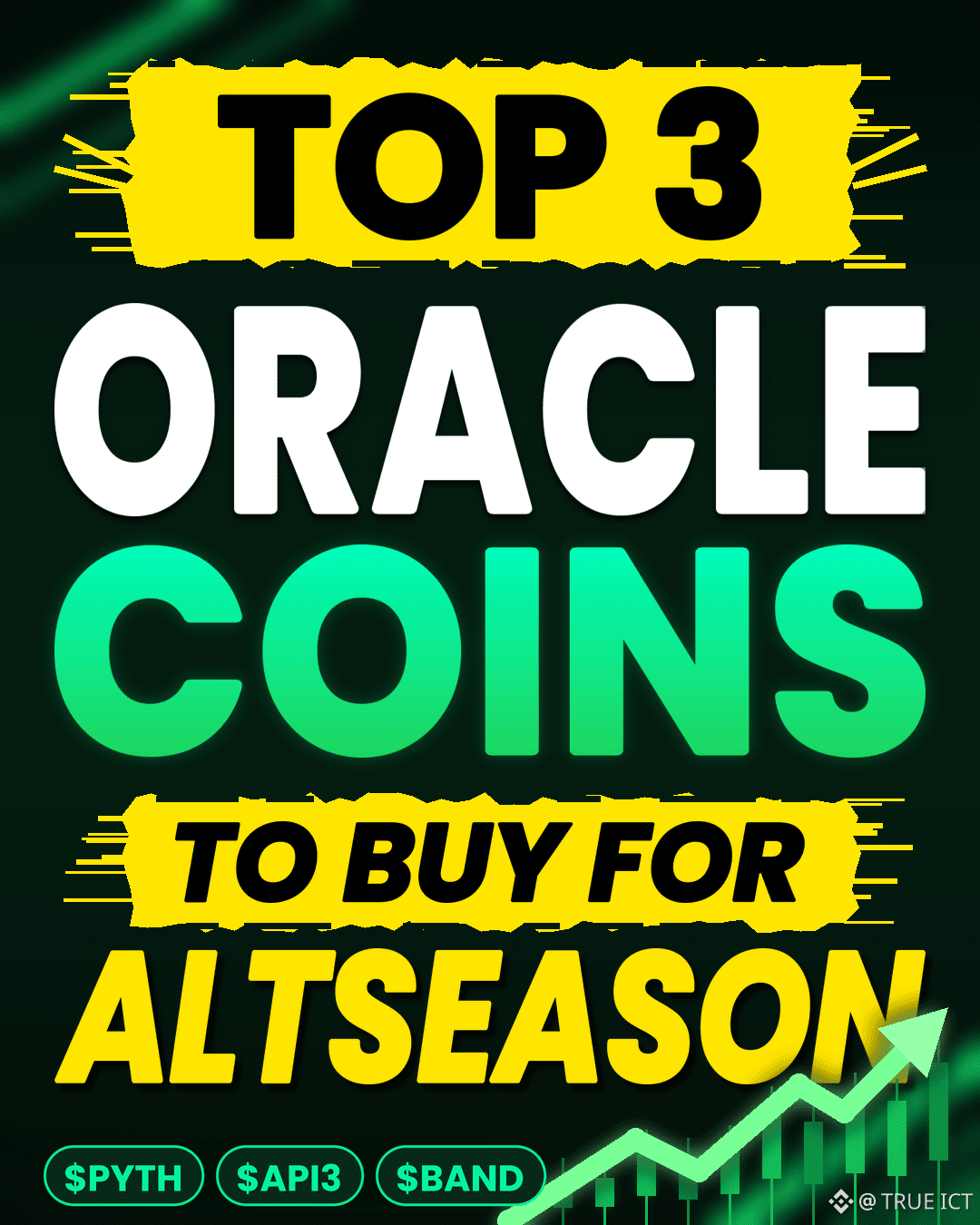
🔮 Top 3 Oracle & Data Feed Coins to Watch
Smart contracts need reliable data, and oracles deliver it:
1️⃣ $PYTH (Pyth Network): fast price feeds sourced directly from trading firms and exchanges.
2️⃣ $API3: first-party oracles run by the data providers themselves.
3️⃣ $BAND (Band Protocol): a cross-chain oracle network built for custom data requests.
⚠️ Chainlink dominates this space, so these are challengers. I check which protocols actually integrate them.
Which oracle has the best edge? 👇
Not financial advice. DYOR.
#Oracles #PYTH #Binance
🔮 Top 3 Oracle & Data Feed Coins to Watch
Smart contracts need reliable data, and oracles deliver it:
1️⃣ $PYTH (Pyth Network): fast price feeds sourced directly from trading firms and exchanges.
2️⃣ $API3 : first-party oracles run by the data providers themselves.
3️⃣ $BAND (Band Protocol): a cross-chain oracle network built for custom data requests.
⚠️ Chainlink dominates this space, so these are challengers. I check which protocols actually integrate them.
Which oracle has the best edge? 👇
Not financial advice. DYOR.
#Oracles #PYTH #Binance
1
686

·
--
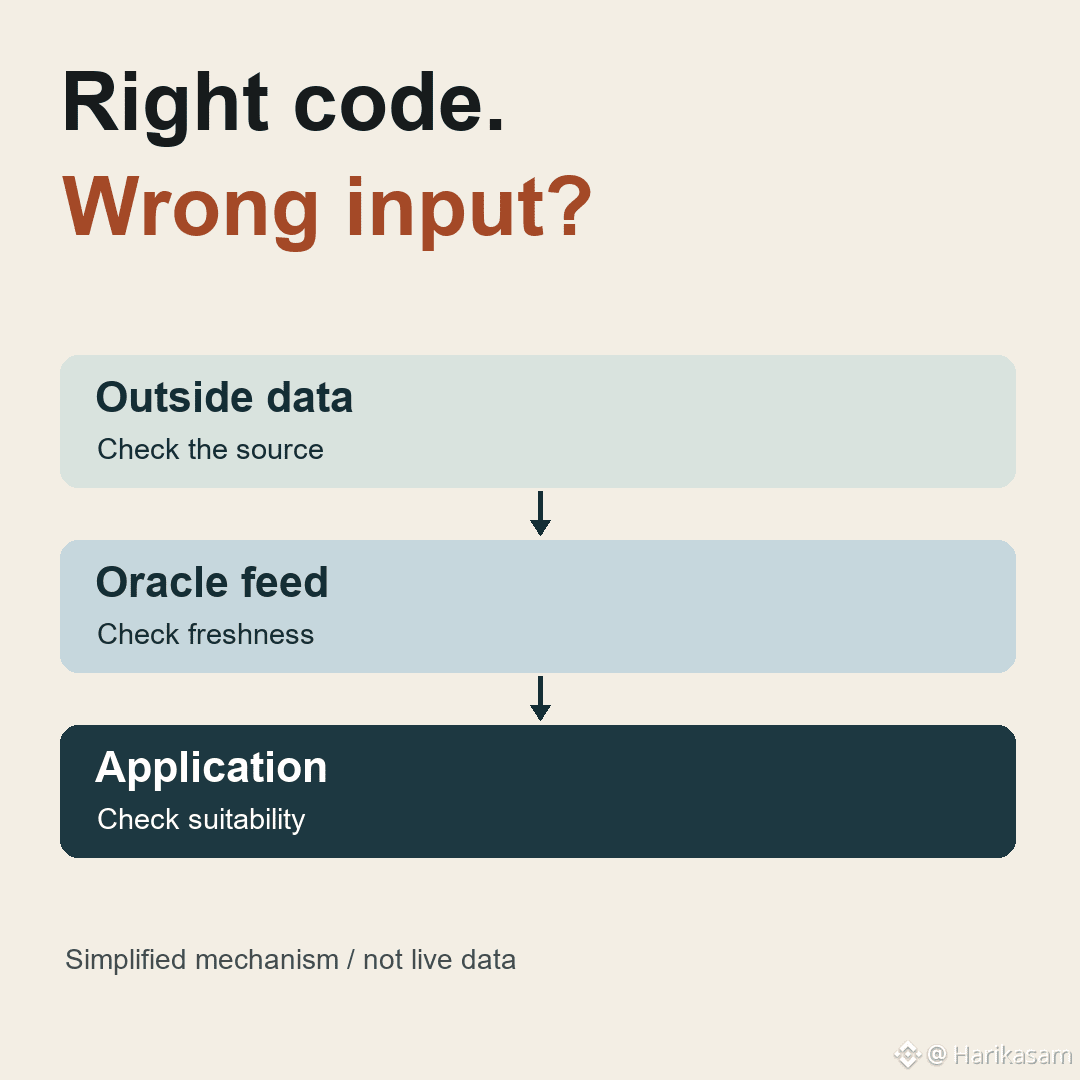
A smart contract can follow every instruction and still act on unsuitable data. A calculator is equally loyal to the wrong number.
That's a useful starting point for researching Chainlink: how does outside information reach an application, and is it suitable for the decision being made?
Data feeds can update when a heartbeat, a time threshold, is reached or when the observed value changes enough. Settings differ by feed. Check the specific feed rather than assuming every price updates continuously.
LINK has documented roles in service payments and network security. Research whether paying demand can support the valuation, how supply changes, and which dependencies could fail.
Keep the service question and the token-price question separate. Useful plumbing still needs a sensible price tag.
https://docs.chain.link/architecture-overview/architecture-decentralized-model
$LINK
#Chainlink #Oracles
76
·
--
🔍 ORACLE INFRASTRUCTURE COULD MATTER MORE AS DEFI EXPANDS
$MASK | $API3 | $BAND
Mask Network connects social platforms with Web3 functionality, while API3 and Band Protocol focus on oracle services. The key question is whether sustained usage can support meaningful token demand.
🔎 Watch: Integrations, active usage and token economics.
#MaskNetwork #API3 #BandProtocol #Oracles #DeFi
NFA. DYOR.
1
31

·
--
Рост
🔗 Chainlink: El oráculo que conecta los mundos.
Los contratos inteligentes son ciegos sin datos del mundo real. $LINK resuelve este problema conectando blockchains con información externa (precios, clima, resultados) de manera descentralizada. Es una pieza de infraestructura vital para todo el ecosistema cripto.
🌐 ¿Acumulando LINK para el futuro de la Web3?
{spot}(LINKUSDT)
✒️ @CyberBullX #Chainlink #LINK #Web3 #oracles
🔗 Chainlink: El oráculo que conecta los mundos.
Los contratos inteligentes son ciegos sin datos del mundo real. $LINK resuelve este problema conectando blockchains con información externa (precios, clima, resultados) de manera descentralizada. Es una pieza de infraestructura vital para todo el ecosistema cripto.
🌐 ¿Acumulando LINK para el futuro de la Web3?
✒️ @CyberBullX #Chainlink #LINK #Web3 #oracles
1
78

·
--
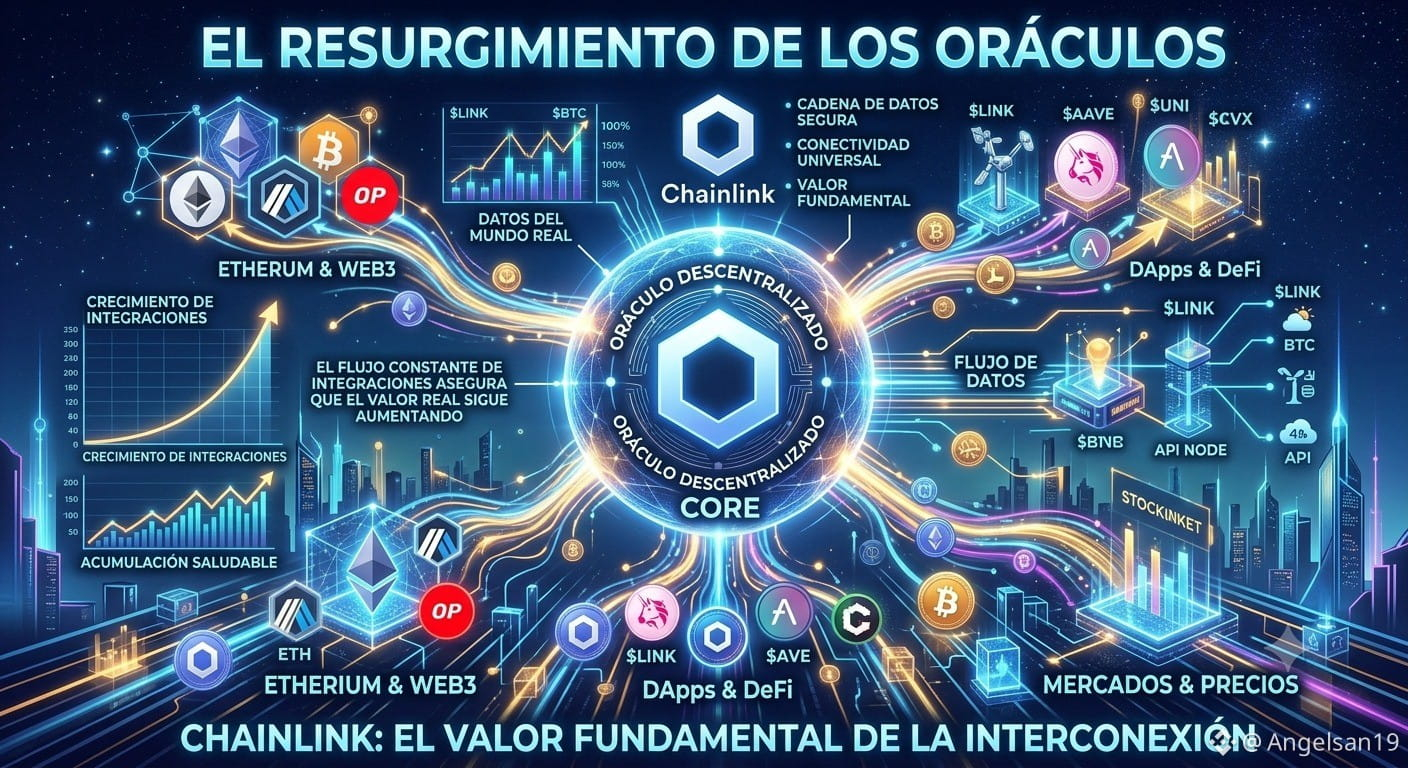
El resurgimiento de los Oráculos
Ninguna blockchain puede funcionar de forma aislada; necesitan datos del mundo exterior. Es aquí donde los oráculos descentralizados, liderados por Chainlink ($LINK ), muestran su valor fundamental. El constante flujo de integraciones asegura que, independientemente del precio, el valor real sigue aumentando. 🌐
#Chainlink #LINK #Oracles #DeFi #BlockchainTech
96

🎓 What Are Blockchain Oracles and Why Do They Matter?
On June 25, 2026, the announcement of a legal layer for agentic commerce highlights the importance of oracles — bridges connecting blockchain smart contracts with real-world data.
An oracle is a system that brings external data onto a blockchain. Since blockchains can't access the internet directly, oracles are the eyes and ears of smart contracts.
What oracles do:
- Price feeds: Provide real-time asset prices (e.g., Bitcoin $BTC at $61,505) to DeFi protocols.
- Randomness: Generate verifiable random numbers for gaming and NFTs.
- Event data: Report real-world events (elections, sports results) to prediction markets.
- Legal data: Bridge legal rulings and contract terms to smart contracts (like the new legal layer).
Popular oracle networks:
- Chainlink (LINK): The market leader.
- Pyth Network: Focused on high-frequency financial data.
- API3: First-party oracles for dApps.
Without oracles, smart contracts are blind — they can't know what's happening in the real world.
📌 Key Takeaway:
Oracles are the bridge between blockchains and real-world data — they power everything from price feeds (BTC at $61,505) to the new legal layer for AI agent commerce.
#Oracles #BlockchainTech
#BinanceAlphaAlert
139


·
--
Centralized Oracles as Single Points of Failure
A perfectly written smart contract can still be exploited if it relies on a centralized or vulnerable oracle feed.
If hackers manipulate the price feed feeding data to the contract, they can trigger false liquidations or drain collateral.
Oracle health is just as critical as code audits.
#Oracles #BlockchainSecurity #DeFi
237
Войдите, чтобы посмотреть больше материала
Присоединяйтесь к пользователям криптовалют по всему миру на Binance Square
⚡️ Получайте новейшую и полезную информацию о криптоактивах.
💬 Нам доверяет крупнейшая в мире криптобиржа.
👍 Получите достоверные аналитические данные от верифицированных создателей контента.
Эл. почта/номер телефона
В тренде
1
#IsAnthropic’s$1.5TMarketCapJustified?
Просмотров: 5,919
55 обсуждают
2
#BTCRemainsUnderPressureAfterHawkishFOMCMinutes
Просмотров: 193,188
1,933 обсуждают
3
#NvidiaBoardReportedlySplitOverHuang’sReturn
Просмотров: 93,420
1,033 обсуждают
4
#StrategySTRCPreferredSlips3.65%Below$100Par
Просмотров: 4,701
61 обсуждают
5
#MASToUpgradeSGDTestnetToSGDigitalLedger
Просмотров: 13,491
207 обсуждают
6
#CanGTA6'sLaunchLiftTTWOShares?
Просмотров: 65,594
764 обсуждают
7
#Solana2027RoadmapTargetsDoubleComputeCapacity
Просмотров: 4,291
106 обсуждают
8
#InjectiveTokenizedRealEstateMortgagesTop$1.5B
Просмотров: 915
27 обсуждают
9
#TetherMakesStrategicInvestmentInSCRYPT
Просмотров: 4,326
92 обсуждают
10
#CapitalGroupAdds1264500StrategyShares
Просмотров: 20,254
216 обсуждают