
Sean Paul UA
7 Publicações

Sean Paul UA
Denunciar
Bloquear usuário
2 Seguindo
1 Seguidores
7 Curtiu
Publicações
·
--
Ver tradução
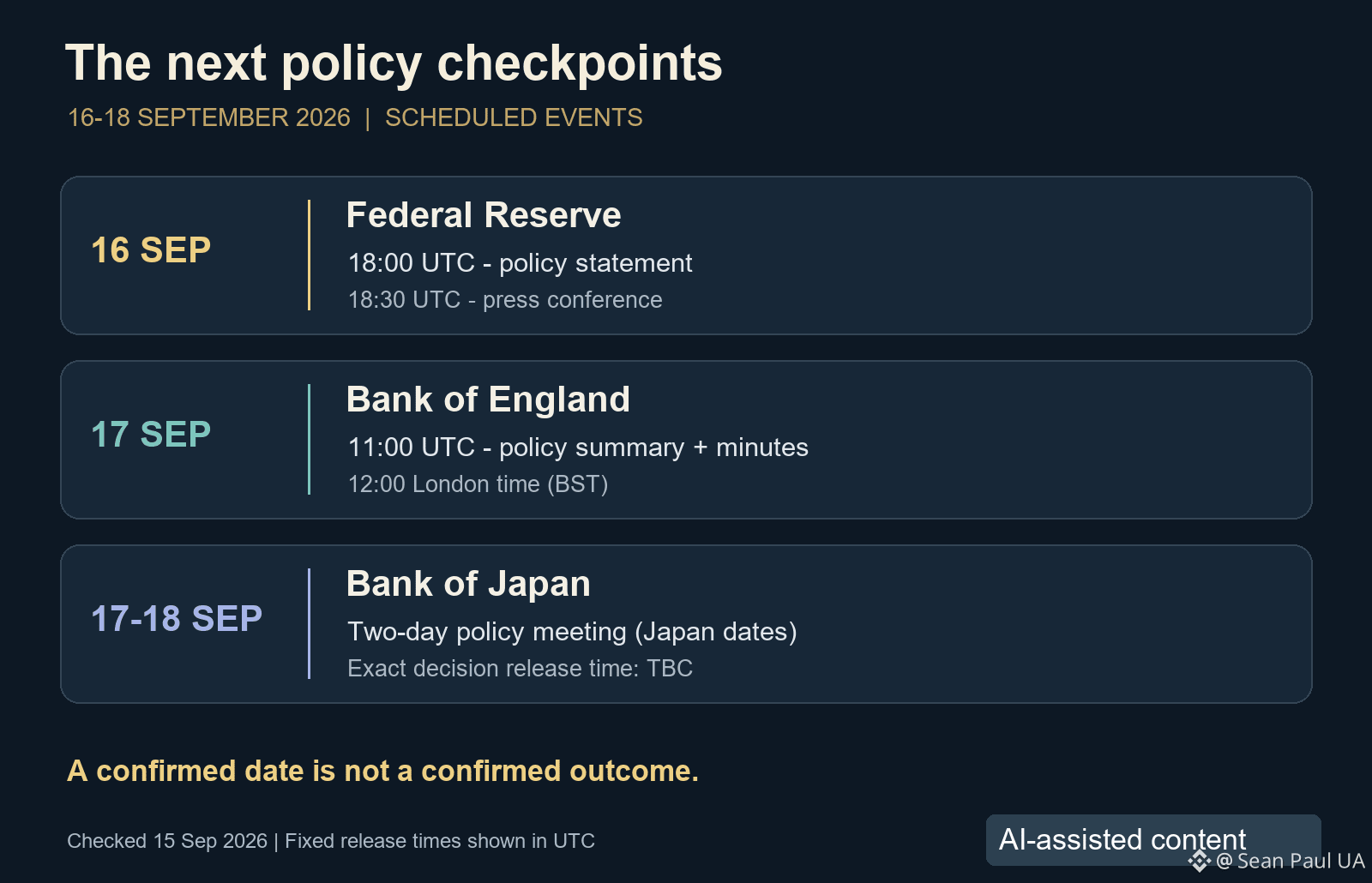
Three central banks are on my calendar for September 16-18. I'm keeping the release times beside the headlines.
First, the Fed: its September 15-16 meeting ends tomorrow. The policy statement is scheduled for September 16 at 18:00 UTC, followed by the press conference at 18:30 UTC. Those are two separate checkpoints for what policymakers actually say.
Next, the Bank of England publishes its policy summary and meeting minutes on September 17 at 11:00 UTC — noon in London.
The Bank of Japan meets on September 17-18, Japan local dates. Its schedule doesn't give an exact decision-release hour, so I'm leaving that time open.
My focus is the wording about the next steps, then how BTC and ETH respond. A confirmed meeting date tells me when to pay attention; it doesn't tell me which way prices will move.
Which message will you watch most closely this week: A) the Fed, B) the Bank of England, or C) the Bank of Japan — and why?
#Macro
Three central banks are on my calendar for September 16-18. I'm keeping the release times beside the headlines.
First, the Fed: its September 15-16 meeting ends tomorrow. The policy statement is scheduled for September 16 at 18:00 UTC, followed by the press conference at 18:30 UTC. Those are two separate checkpoints for what policymakers actually say.
Next, the Bank of England publishes its policy summary and meeting minutes on September 17 at 11:00 UTC — noon in London.
The Bank of Japan meets on September 17-18, Japan local dates. Its schedule doesn't give an exact decision-release hour, so I'm leaving that time open.
My focus is the wording about the next steps, then how BTC and ETH respond. A confirmed meeting date tells me when to pay attention; it doesn't tell me which way prices will move.
Which message will you watch most closely this week: A) the Fed, B) the Bank of England, or C) the Bank of Japan — and why?
#Macro
First, the Fed: its September 15-16 meeting ends tomorrow. The policy statement is scheduled for September 16 at 18:00 UTC, followed by the press conference at 18:30 UTC. Those are two separate checkpoints for what policymakers actually say.
Next, the Bank of England publishes its policy summary and meeting minutes on September 17 at 11:00 UTC — noon in London.
The Bank of Japan meets on September 17-18, Japan local dates. Its schedule doesn't give an exact decision-release hour, so I'm leaving that time open.
My focus is the wording about the next steps, then how BTC and ETH respond. A confirmed meeting date tells me when to pay attention; it doesn't tell me which way prices will move.
Which message will you watch most closely this week: A) the Fed, B) the Bank of England, or C) the Bank of Japan — and why?
#Macro
1
84
·
--
A ETH voltou a cair. Ainda acho que esta recuperação tem mais a provar.
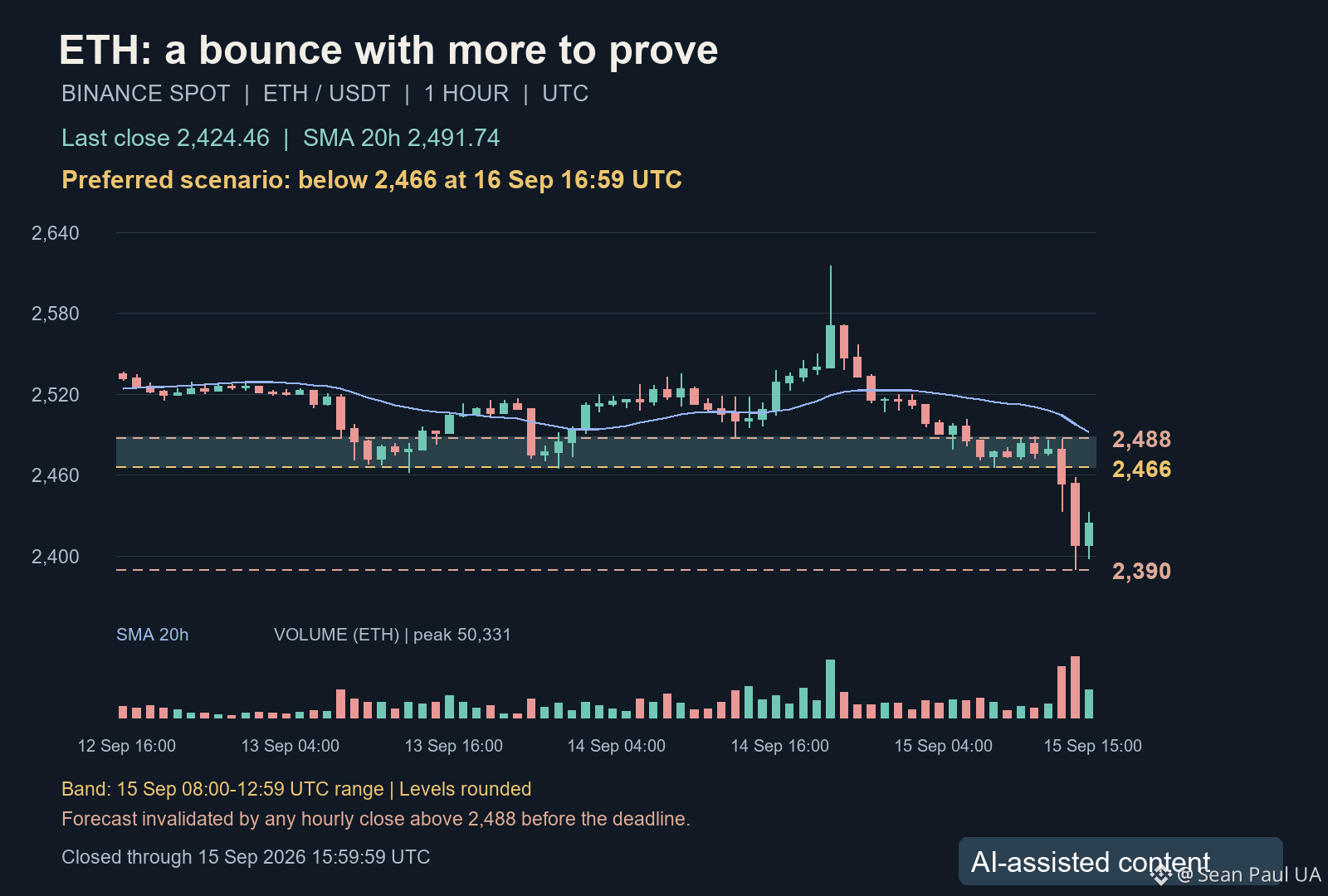
Minha principal previsão é que a ETH termine abaixo de 2.466 USDT no fechamento horário de 16 de setembro às 16:59 UTC, com a recuperação ainda aquém da sua faixa anterior.
No fechamento horário de 15 de setembro às 15:59 UTC, a ETH estava em 2.424,46 na Binance spot. Isso está abaixo tanto da sua média de 20 horas de 2.491,74 quanto da faixa anterior das 08:00–12:59 UTC, aproximadamente 2.466–2.488. Uma vela horária verde ainda não recuperou nenhuma das duas.
O calendário do Fed lista sua reunião de 15–16 de setembro com projeções econômicas. Isso é um risco de volatilidade, não uma evidência de que uma decisão específica de taxa ou um movimento da ETH seja certo.
O marco é o fechamento da vela das 16:00–17:00 UTC de 16 de setembro, e não um breve toque de preço.
Um fechamento horário de volta acima de 2.466 fortaleceria a alternativa de recuperação e colocaria 2.488 em foco.
Se o repique perder força, um retorno à mínima observada perto de 2.390 é a alternativa de baixa; esse nível não é suporte garantido.
Qualquer fechamento horário acima de 2.488 até esse marco invalida minha previsão, mesmo que a ETH depois caia novamente.
O que mudaria primeiro a sua visão: a recuperação da faixa antiga, ou uma nova mínima? Gostaria de ouvir o porquê.
$ETH #Ethereum
Posso ganhar comissões sobre negociações feitas por meio desta postagem.
A ETH voltou a cair. Ainda acho que esta recuperação tem mais a provar.
Minha principal previsão é que a ETH termine abaixo de 2.466 USDT no fechamento horário de 16 de setembro às 16:59 UTC, com a recuperação ainda aquém da sua faixa anterior.
No fechamento horário de 15 de setembro às 15:59 UTC, a ETH estava em 2.424,46 na Binance spot. Isso está abaixo tanto da sua média de 20 horas de 2.491,74 quanto da faixa anterior das 08:00–12:59 UTC, aproximadamente 2.466–2.488. Uma vela horária verde ainda não recuperou nenhuma das duas.
O calendário do Fed lista sua reunião de 15–16 de setembro com projeções econômicas. Isso é um risco de volatilidade, não uma evidência de que uma decisão específica de taxa ou um movimento da ETH seja certo.
O marco é o fechamento da vela das 16:00–17:00 UTC de 16 de setembro, e não um breve toque de preço.
Um fechamento horário de volta acima de 2.466 fortaleceria a alternativa de recuperação e colocaria 2.488 em foco.
Se o repique perder força, um retorno à mínima observada perto de 2.390 é a alternativa de baixa; esse nível não é suporte garantido.
Qualquer fechamento horário acima de 2.488 até esse marco invalida minha previsão, mesmo que a ETH depois caia novamente.
O que mudaria primeiro a sua visão: a recuperação da faixa antiga, ou uma nova mínima? Gostaria de ouvir o porquê.
$ETH #Ethereum
Posso ganhar comissões sobre negociações feitas por meio desta postagem.
Minha principal previsão é que a ETH termine abaixo de 2.466 USDT no fechamento horário de 16 de setembro às 16:59 UTC, com a recuperação ainda aquém da sua faixa anterior.
No fechamento horário de 15 de setembro às 15:59 UTC, a ETH estava em 2.424,46 na Binance spot. Isso está abaixo tanto da sua média de 20 horas de 2.491,74 quanto da faixa anterior das 08:00–12:59 UTC, aproximadamente 2.466–2.488. Uma vela horária verde ainda não recuperou nenhuma das duas.
O calendário do Fed lista sua reunião de 15–16 de setembro com projeções econômicas. Isso é um risco de volatilidade, não uma evidência de que uma decisão específica de taxa ou um movimento da ETH seja certo.
O marco é o fechamento da vela das 16:00–17:00 UTC de 16 de setembro, e não um breve toque de preço.
Um fechamento horário de volta acima de 2.466 fortaleceria a alternativa de recuperação e colocaria 2.488 em foco.
Se o repique perder força, um retorno à mínima observada perto de 2.390 é a alternativa de baixa; esse nível não é suporte garantido.
Qualquer fechamento horário acima de 2.488 até esse marco invalida minha previsão, mesmo que a ETH depois caia novamente.
O que mudaria primeiro a sua visão: a recuperação da faixa antiga, ou uma nova mínima? Gostaria de ouvir o porquê.
$ETH #Ethereum
Posso ganhar comissões sobre negociações feitas por meio desta postagem.
1
59
·
--
Dezesseis cofres não significam dezesseis novas estratégias. Esse foi o detalhe que notei no anúncio de hoje da Zama.
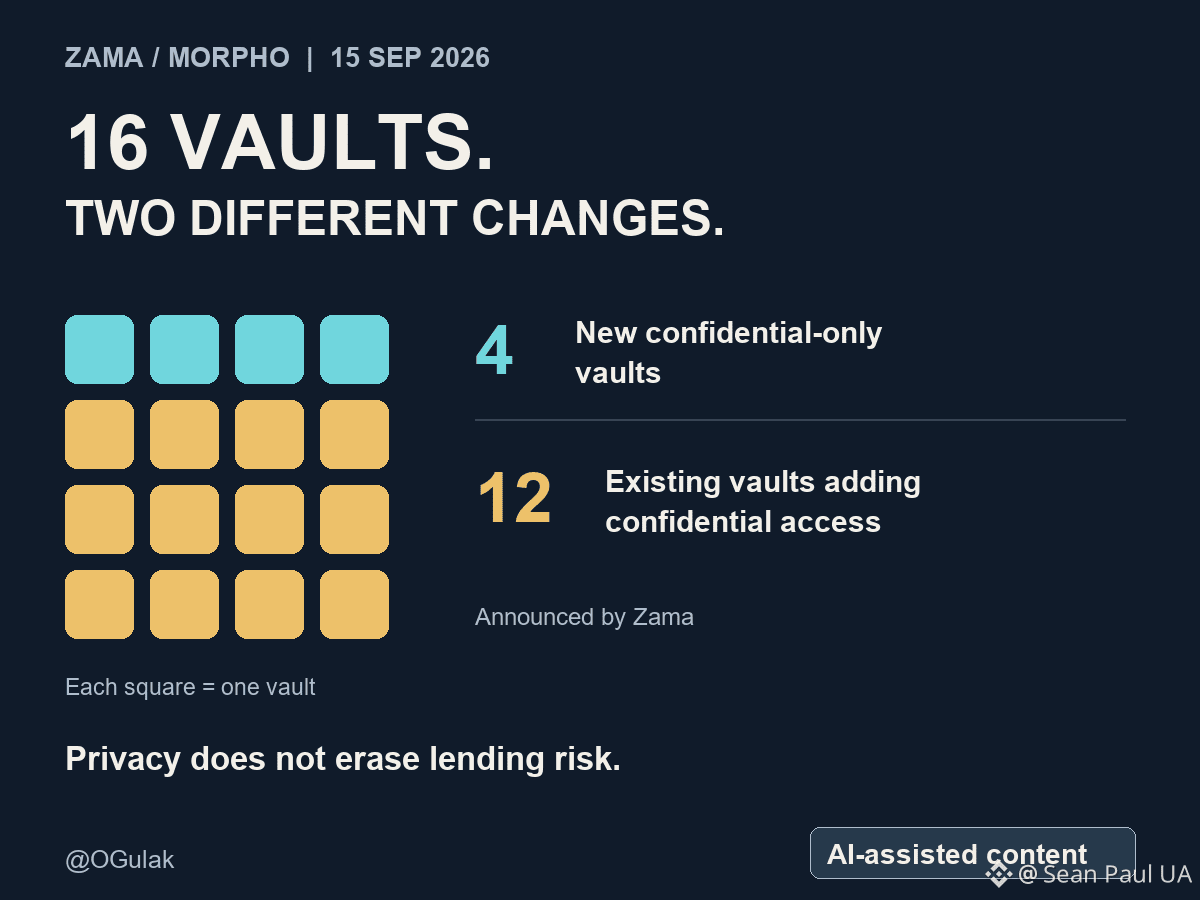
Em 15 de setembro, a Zama anunciou acesso confidencial a 16 cofres Morpho: quatro novos produtos somente confidenciais e 12 cofres existentes que adicionam depósitos confidenciais.
A distinção importa. Para esses 12, o novo recurso é como os usuários acessam a estratégia. A Zama diz que sua camada de confidencialidade mantém valores e saldos criptografados, preservando a verificabilidade pública.
Minha leitura: proteger o tamanho da posição pode remover uma barreira para instituições. Isso não remove riscos de contratos inteligentes, de empréstimos ou de liquidez. A documentação da Morpho alerta que a falta de liquidez pode atrasar saques.
Eu avaliaria esse lançamento pelo uso contínuo e pela clareza com que esses riscos são explicados, e não apenas pelo número de cofres. Mais opções de produto não são evidência de maior demanda, e não é uma previsão de preço para ZAMA ou MORPHO.
Saldos privados mudariam sua visão sobre DeFi, ou o problema maior é o acesso confiável aos fundos? Por quê?
#DeFi #Privacy
Eu posso ganhar comissões sobre negociações feitas por meio desta postagem.
Dezesseis cofres não significam dezesseis novas estratégias. Esse foi o detalhe que notei no anúncio de hoje da Zama.
Em 15 de setembro, a Zama anunciou acesso confidencial a 16 cofres Morpho: quatro novos produtos somente confidenciais e 12 cofres existentes que adicionam depósitos confidenciais.
A distinção importa. Para esses 12, o novo recurso é como os usuários acessam a estratégia. A Zama diz que sua camada de confidencialidade mantém valores e saldos criptografados, preservando a verificabilidade pública.
Minha leitura: proteger o tamanho da posição pode remover uma barreira para instituições. Isso não remove riscos de contratos inteligentes, de empréstimos ou de liquidez. A documentação da Morpho alerta que a falta de liquidez pode atrasar saques.
Eu avaliaria esse lançamento pelo uso contínuo e pela clareza com que esses riscos são explicados, e não apenas pelo número de cofres. Mais opções de produto não são evidência de maior demanda, e não é uma previsão de preço para ZAMA ou MORPHO.
Saldos privados mudariam sua visão sobre DeFi, ou o problema maior é o acesso confiável aos fundos? Por quê?
#DeFi #Privacy
Eu posso ganhar comissões sobre negociações feitas por meio desta postagem.
Em 15 de setembro, a Zama anunciou acesso confidencial a 16 cofres Morpho: quatro novos produtos somente confidenciais e 12 cofres existentes que adicionam depósitos confidenciais.
A distinção importa. Para esses 12, o novo recurso é como os usuários acessam a estratégia. A Zama diz que sua camada de confidencialidade mantém valores e saldos criptografados, preservando a verificabilidade pública.
Minha leitura: proteger o tamanho da posição pode remover uma barreira para instituições. Isso não remove riscos de contratos inteligentes, de empréstimos ou de liquidez. A documentação da Morpho alerta que a falta de liquidez pode atrasar saques.
Eu avaliaria esse lançamento pelo uso contínuo e pela clareza com que esses riscos são explicados, e não apenas pelo número de cofres. Mais opções de produto não são evidência de maior demanda, e não é uma previsão de preço para ZAMA ou MORPHO.
Saldos privados mudariam sua visão sobre DeFi, ou o problema maior é o acesso confiável aos fundos? Por quê?
#DeFi #Privacy
Eu posso ganhar comissões sobre negociações feitas por meio desta postagem.
1
109
·
--
Ver tradução
Gold on a blockchain? I'm more interested in what the token actually lets you do.
On September 14, the UK's FCA opened a call for input on tokenised gold. Responses close October 23. This is a request for evidence, not approval of a particular token or a new rule already in force.
The useful idea: make physical gold easier to transfer and use as collateral. The hard part: proving who owns the metal, who holds it, and what happens when someone wants it back.
Over the next four weeks, I'm watching evidence of adoption rather than guessing a token price.
If institutions show credible demand for gold-backed collateral, that could strengthen the case for tokenisation infrastructure.
My base case is discussion and technical work before any broad rollout; the headline alone doesn't identify a winning crypto token.
If custody, redemption or legal rights remain unclear, enthusiasm could fade even if the technology works.
I'd change that cautious view if named institutions demonstrate real settlement use with clear ownership and redemption terms.
Adoption and token returns are different questions. I'd still need to see how any specific token captures value.
What would make tokenised gold useful to you: A) easier transfers, B) reliable redemption into physical gold, or C) using it as collateral? Which matters most, and why?
I may earn commissions from trades made through this post.
Gold on a blockchain? I'm more interested in what the token actually lets you do.
On September 14, the UK's FCA opened a call for input on tokenised gold. Responses close October 23. This is a request for evidence, not approval of a particular token or a new rule already in force.
The useful idea: make physical gold easier to transfer and use as collateral. The hard part: proving who owns the metal, who holds it, and what happens when someone wants it back.
Over the next four weeks, I'm watching evidence of adoption rather than guessing a token price.
If institutions show credible demand for gold-backed collateral, that could strengthen the case for tokenisation infrastructure.
My base case is discussion and technical work before any broad rollout; the headline alone doesn't identify a winning crypto token.
If custody, redemption or legal rights remain unclear, enthusiasm could fade even if the technology works.
I'd change that cautious view if named institutions demonstrate real settlement use with clear ownership and redemption terms.
Adoption and token returns are different questions. I'd still need to see how any specific token captures value.
What would make tokenised gold useful to you: A) easier transfers, B) reliable redemption into physical gold, or C) using it as collateral? Which matters most, and why?
I may earn commissions from trades made through this post.
On September 14, the UK's FCA opened a call for input on tokenised gold. Responses close October 23. This is a request for evidence, not approval of a particular token or a new rule already in force.
The useful idea: make physical gold easier to transfer and use as collateral. The hard part: proving who owns the metal, who holds it, and what happens when someone wants it back.
Over the next four weeks, I'm watching evidence of adoption rather than guessing a token price.
If institutions show credible demand for gold-backed collateral, that could strengthen the case for tokenisation infrastructure.
My base case is discussion and technical work before any broad rollout; the headline alone doesn't identify a winning crypto token.
If custody, redemption or legal rights remain unclear, enthusiasm could fade even if the technology works.
I'd change that cautious view if named institutions demonstrate real settlement use with clear ownership and redemption terms.
Adoption and token returns are different questions. I'd still need to see how any specific token captures value.
What would make tokenised gold useful to you: A) easier transfers, B) reliable redemption into physical gold, or C) using it as collateral? Which matters most, and why?
I may earn commissions from trades made through this post.

1
136
·
--
Ver tradução
BTC bounced. Now I'm watching the Fed's message.
The Fed's calendar puts its next meeting on September 15-16, with updated economic projections scheduled alongside it. The outcome is still ahead of us.
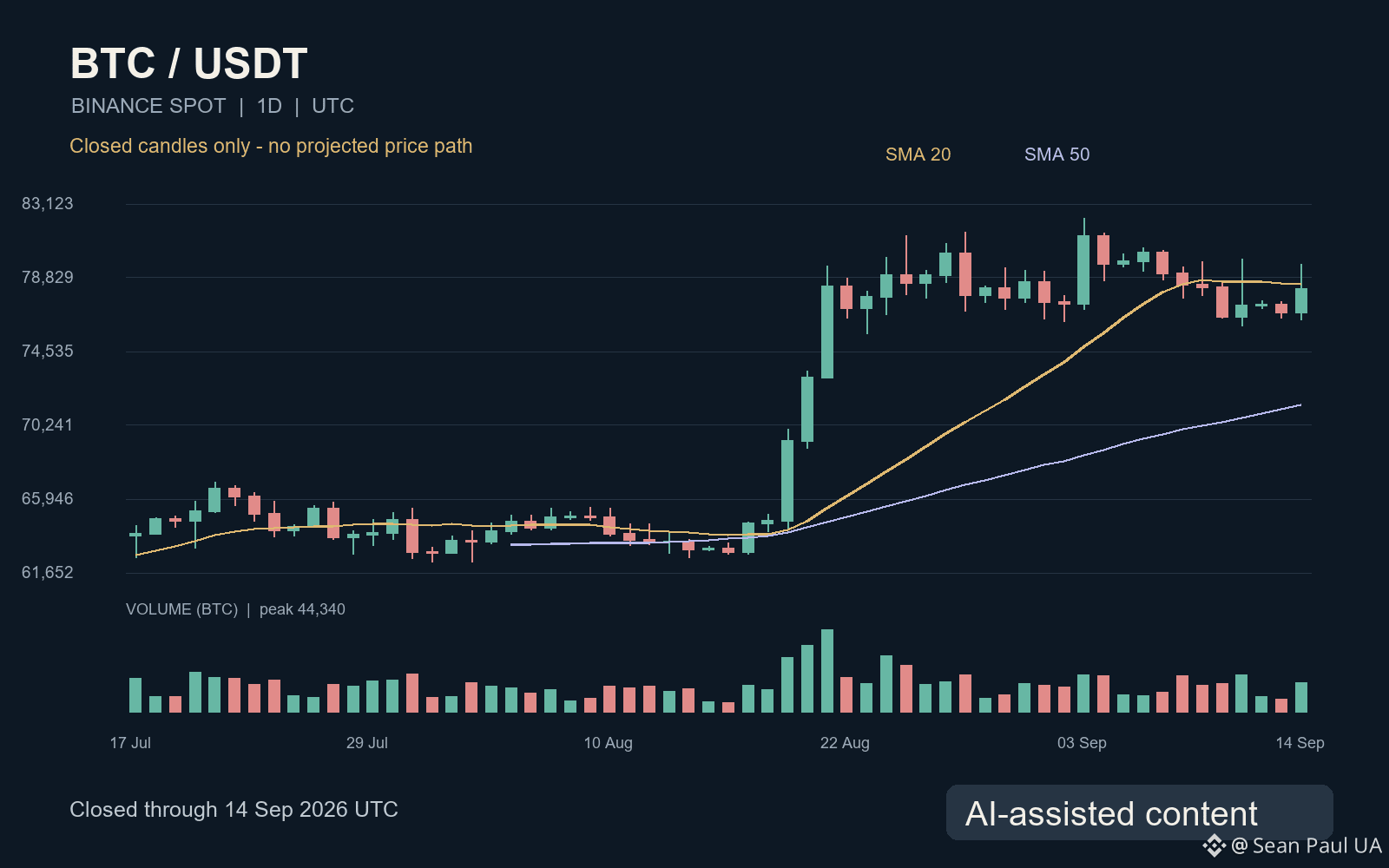
BTC's September 14 daily close was 78,189 USDT, up about 1.75% from the previous close. It still finished slightly below its 20-day average near 78,474. To me, that's a rebound with something left to prove.
My horizon is the September 16 announcement through the September 17 UTC daily close.
If the Fed's message pushes yields and the dollar lower, I'd watch for BTC strength that survives the initial reaction.
If the message brings little surprise, my working scenario is choppy trading rather than a clean new trend.
If the message pushes yields and the dollar higher, I'd watch for renewed pressure on BTC.
I'd drop that directional read if BTC fails to follow through by the next UTC daily close; the policy headline alone isn't confirmation.
Which will matter most for BTC after this meeting: A) the rate decision, B) the projected rate path, or C) the explanation behind them? I'd like to hear your reasoning.
$BTC
BTC bounced. Now I'm watching the Fed's message.
The Fed's calendar puts its next meeting on September 15-16, with updated economic projections scheduled alongside it. The outcome is still ahead of us.
BTC's September 14 daily close was 78,189 USDT, up about 1.75% from the previous close. It still finished slightly below its 20-day average near 78,474. To me, that's a rebound with something left to prove.
My horizon is the September 16 announcement through the September 17 UTC daily close.
If the Fed's message pushes yields and the dollar lower, I'd watch for BTC strength that survives the initial reaction.
If the message brings little surprise, my working scenario is choppy trading rather than a clean new trend.
If the message pushes yields and the dollar higher, I'd watch for renewed pressure on BTC.
I'd drop that directional read if BTC fails to follow through by the next UTC daily close; the policy headline alone isn't confirmation.
Which will matter most for BTC after this meeting: A) the rate decision, B) the projected rate path, or C) the explanation behind them? I'd like to hear your reasoning.
$BTC
The Fed's calendar puts its next meeting on September 15-16, with updated economic projections scheduled alongside it. The outcome is still ahead of us.
BTC's September 14 daily close was 78,189 USDT, up about 1.75% from the previous close. It still finished slightly below its 20-day average near 78,474. To me, that's a rebound with something left to prove.
My horizon is the September 16 announcement through the September 17 UTC daily close.
If the Fed's message pushes yields and the dollar lower, I'd watch for BTC strength that survives the initial reaction.
If the message brings little surprise, my working scenario is choppy trading rather than a clean new trend.
If the message pushes yields and the dollar higher, I'd watch for renewed pressure on BTC.
I'd drop that directional read if BTC fails to follow through by the next UTC daily close; the policy headline alone isn't confirmation.
Which will matter most for BTC after this meeting: A) the rate decision, B) the projected rate path, or C) the explanation behind them? I'd like to hear your reasoning.
$BTC
1
87
·
--
Ver tradução
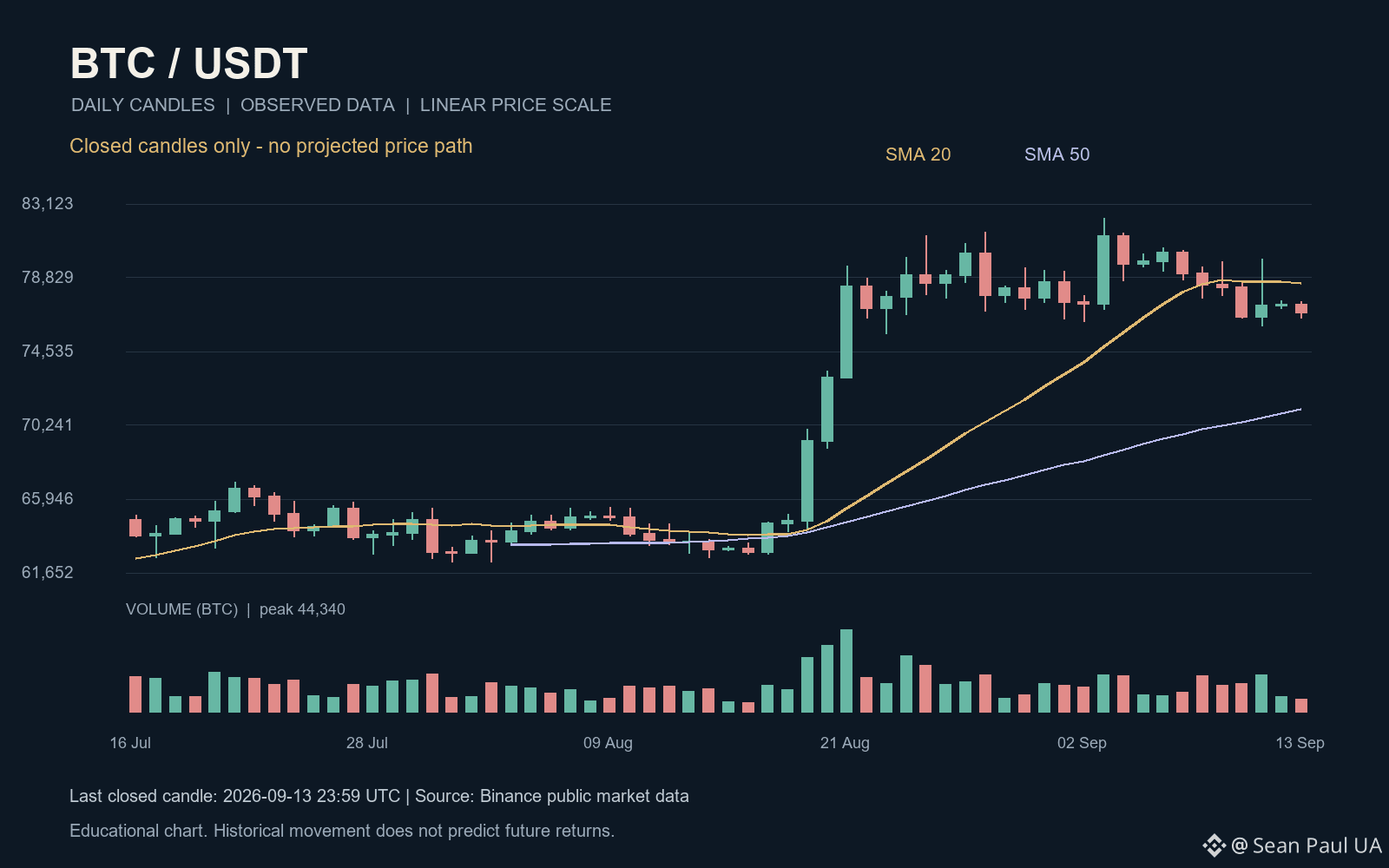
BTC daily: three conditions worth watching
As of 2026-09-13 UTC, the last closed daily candle was 76,842 USDT. The 20-day average is 78,491; the 50-day average is 71,193. These describe recent price action, not future returns.
The latest 20 closed daily candles span 76,047-82,300 USDT. Those observed extremes give us a transparent reference range, not guaranteed support or resistance.
Horizon: the next 7 daily closes.
Upside: a daily close above 82,300, followed by another holding above it, would support a breakout interpretation.
Base: daily closes stay inside the reference range; direction remains unresolved.
Downside: a daily close below 76,047, followed by failure to reclaim it, would support a breakdown interpretation.
Invalidation: a breakout that returns inside the range loses confirmation; a sustained exit invalidates the range scenario.
BTC daily: three conditions worth watching
As of 2026-09-13 UTC, the last closed daily candle was 76,842 USDT. The 20-day average is 78,491; the 50-day average is 71,193. These describe recent price action, not future returns.
The latest 20 closed daily candles span 76,047-82,300 USDT. Those observed extremes give us a transparent reference range, not guaranteed support or resistance.
Horizon: the next 7 daily closes.
Upside: a daily close above 82,300, followed by another holding above it, would support a breakout interpretation.
Base: daily closes stay inside the reference range; direction remains unresolved.
Downside: a daily close below 76,047, followed by failure to reclaim it, would support a breakdown interpretation.
Invalidation: a breakout that returns inside the range loses confirmation; a sustained exit invalidates the range scenario.
As of 2026-09-13 UTC, the last closed daily candle was 76,842 USDT. The 20-day average is 78,491; the 50-day average is 71,193. These describe recent price action, not future returns.
The latest 20 closed daily candles span 76,047-82,300 USDT. Those observed extremes give us a transparent reference range, not guaranteed support or resistance.
Horizon: the next 7 daily closes.
Upside: a daily close above 82,300, followed by another holding above it, would support a breakout interpretation.
Base: daily closes stay inside the reference range; direction remains unresolved.
Downside: a daily close below 76,047, followed by failure to reclaim it, would support a breakdown interpretation.
Invalidation: a breakout that returns inside the range loses confirmation; a sustained exit invalidates the range scenario.
1
96
Faça login para explorar mais conteúdos
Junte-se a usuários de criptomoedas de todo o mundo no Binance Square.
⚡️ Obter informações mais recentes e úteis sobre criptomoeda.
💬 Com a confiança da maior corretora de criptomoedas do mundo.
👍 Descubra insights reais de criadores verificados.
E-mail / número de telefone
Tópicos em Alta
FedRateWatch
487,593 visualizações
2,476 discutindo
Participe e ganhe recompensas de tráfego na nossa campanha de hashtag em alta
✨Tema: Setembro do FOMC — Qual será o próximo movimento do Fed?
👉Como participar:
Publique uma postagem ou artigo curto com a hashtag #FedRateWatch
Crie conteúdo com base nos ângulos abaixo:
- O núcleo do CPI de agosto subiu 0,3% mês a mês, e as chances de um aumento de 25 pb esta semana agora estão perto de 90%. Você antecipa um aumento de taxa esta semana? É algo pontual, ou o início de um ciclo de altas mais longo?
- Se o aumento acontecer, como isso se reflete em BTC, ações de tecnologia e ouro? Em alta ou em baixa?
- Como você planeja operar a seguir? Compartilhe sua operação/posições de BTC, ações ou ouro com nosso widget de compartilhamento de trades.
⏰Período da campanha:
- 2026-09-15 11:00 - 2026-09-17 3:00 UTC
🎁Recompensa:
- As postagens qualificadas que cumprirem as diretrizes acima e tiverem mais de 100 palavras serão revisadas e poderão receber um impulso aleatório de tráfego de 500 a 3.000 visualizações. Você receberá uma notificação do secretário da sua seção no feed caso sua postagem seja selecionada.
- Tenha a chance de ter seu artigo em destaque na Binance Square Official
Precisa de ideias para sua postagem? Acesse a página do tema #FedRateWatch ou a Square Guide on How to Post for Better Reach.
Binance Square Official
·362 curtidas
·776k visualizações
BitcoinSlidesTo$76000
15,154 visualizações
105 discutindo
BitcoinReboundsTo$79K
59,468 visualizações
396 discutindo