
MR_SPONDY_13
8.2k ໂພສ

MR_SPONDY_13
 Square ຢືນຢັນແລ້ວ
ລາຍງານ
ບລັອກຜູ້ໃຊ້
https://x.com/Kulshresth1759
ເປີດການຊື້ຂາຍ

ຜູ້ຖື GALA
ຜູ້ຊື້ຂາຍປະຈໍາ
4.2 ປີ
976 ກໍາລັງຕິດຕາມ
49.1K+ ຜູ້ຕິດຕາມ
38.1K+ Liked
ໂພສ
Portfolio
ທັງໝົດ
ວົງຢືມ
ວີດີໂອ
ຖ່າຍທອດສົດ
·
--
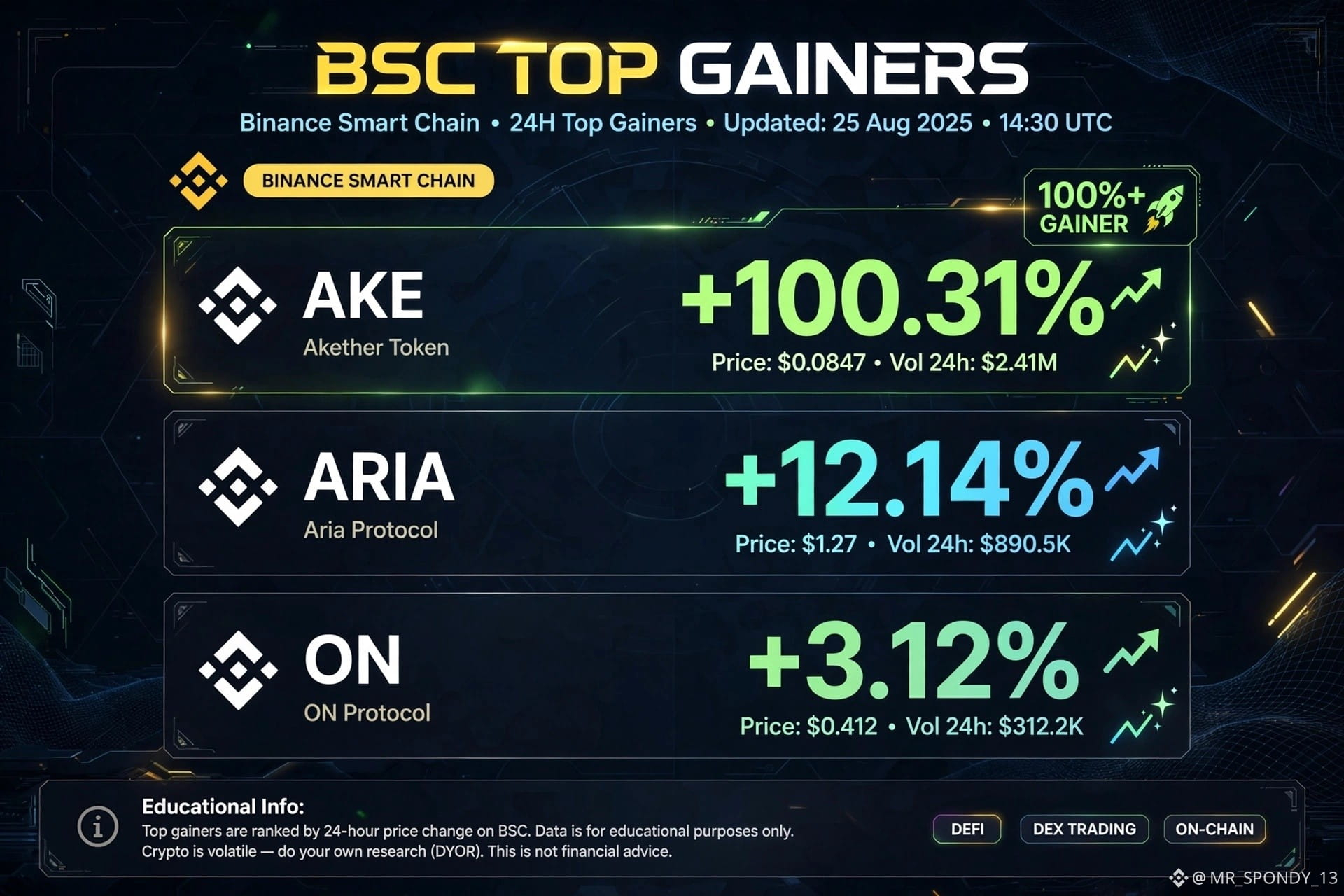
BSC TOP GAINERS: ONE TOKEN IS UP MORE THAN 100%!
BSC market is showing some interesting momentum, with a few tokens recording strong 24-hour gains.
Here are today's standout performers:
Top 3 Gainers
AKE— +100.31%
ARIA — +12.14%
ON — +3.12%
What makes this interesting?
AKE is leading the list with a massive 100%+ move. Meanwhile, ARIA and ON are also showing positive momentum.
But traders should look beyond percentage gains.
Watch these factors before entering:
Trading volume and liquidity
Whale accumulation or distribution
Market depth and buying pressure
Resistance levels and profit-taking
Remember, a sudden pump doesn't guarantee another rally. Always manage your risk.
Which of these three BSC tokens has the potential to perform best in the coming days?
#BSC #BinanceAlpha #crypto #altcoins
#Mr_SPONDY_13
$AKE
{future}(AKEUSDT)
$ON
{future}(ONUSDT)
$ARIA
{future}(ARIAUSDT)
BSC TOP GAINERS: ONE TOKEN IS UP MORE THAN 100%!
BSC market is showing some interesting momentum, with a few tokens recording strong 24-hour gains.
Here are today's standout performers:
Top 3 Gainers
AKE— +100.31%
ARIA — +12.14%
ON — +3.12%
What makes this interesting?
AKE is leading the list with a massive 100%+ move. Meanwhile, ARIA and ON are also showing positive momentum.
But traders should look beyond percentage gains.
Watch these factors before entering:
Trading volume and liquidity
Whale accumulation or distribution
Market depth and buying pressure
Resistance levels and profit-taking
Remember, a sudden pump doesn't guarantee another rally. Always manage your risk.
Which of these three BSC tokens has the potential to perform best in the coming days?
#BSC #BinanceAlpha #crypto #altcoins
#Mr_SPONDY_13
$AKE
$ON
$ARIA
1
541
·
--
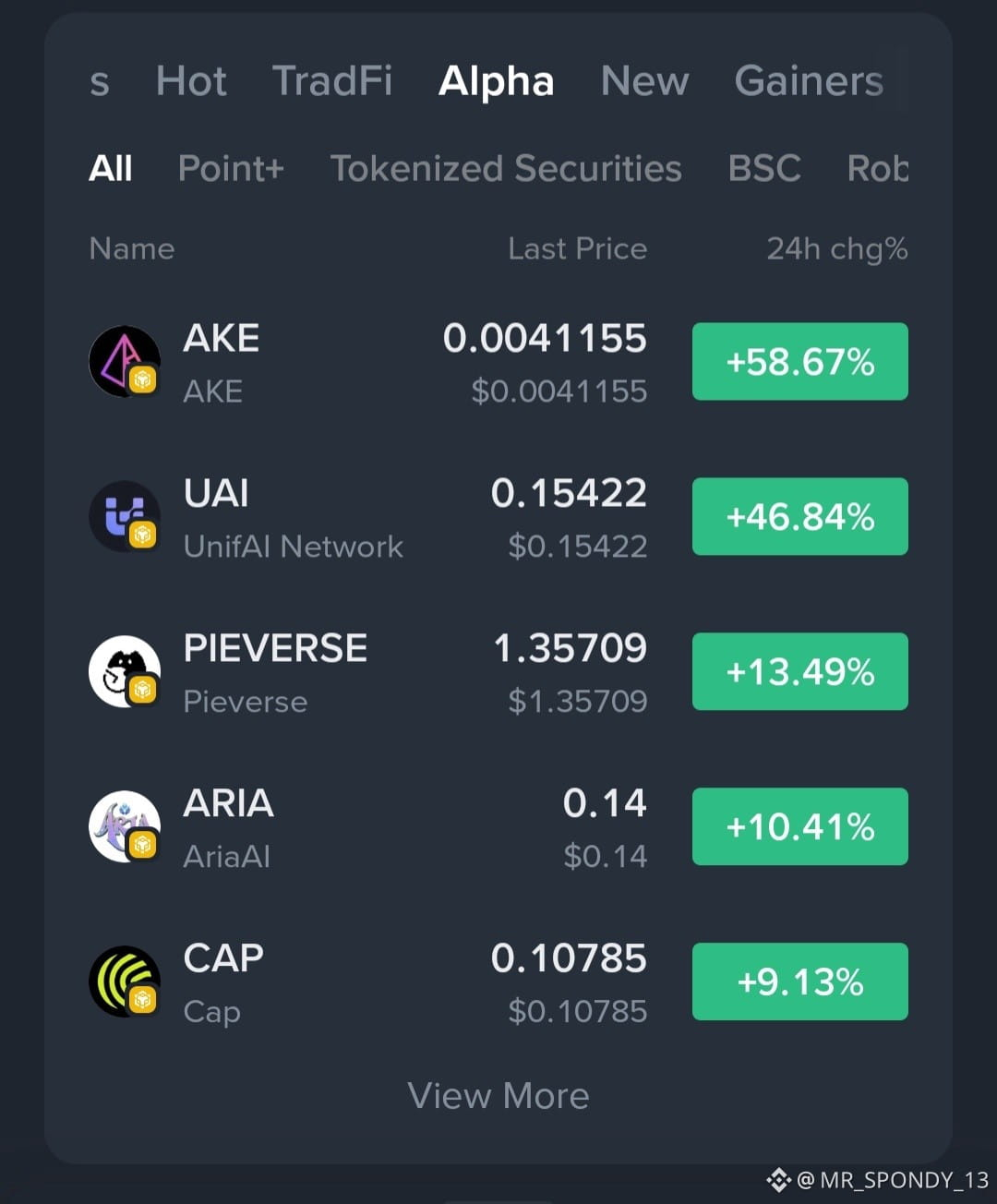
🚀 BINANCE ALPHA IS HEATING UP!
The Binance Alpha market is showing strong momentum, with several tokens recording impressive 24-hour gains.
Here are today's top performers from the screenshot:
🔥 $AKE: +58.67%
🔥 $UAI: +46.84%
🔥 $PIEVERSE: +13.49%
🔥 $ARIA: +10.41%
🔥 $CAP: +9.13%
Meanwhile, my portfolio is showing a positive daily PNL of +$3.90 (+1.82%), with an estimated total value of $218.64.
But remember, green candles don't always mean a safe entry. After a sharp pump, profit-taking and volatility can follow.
Which Binance Alpha token do you think has the strongest potential for the next big move?
#BinanceAlpha #Crypto #ALTCOİNS #CryptoTrading
$AKE
{alpha}(560x2c3a8ee94ddd97244a93bc48298f97d2c412f7db)
$UAI
{alpha}(560x3e5d4f8aee0d9b3082d5f6da5d6e225d17ba9ea0)
$PIEVERSE
{future}(PIEVERSEUSDT)
🚀 BINANCE ALPHA IS HEATING UP!
The Binance Alpha market is showing strong momentum, with several tokens recording impressive 24-hour gains.
Here are today's top performers from the screenshot:
🔥 $AKE : +58.67%
🔥 $UAI : +46.84%
🔥 $PIEVERSE : +13.49%
🔥 $ARIA: +10.41%
🔥 $CAP: +9.13%
Meanwhile, my portfolio is showing a positive daily PNL of +$3.90 (+1.82%), with an estimated total value of $218.64.
But remember, green candles don't always mean a safe entry. After a sharp pump, profit-taking and volatility can follow.
Which Binance Alpha token do you think has the strongest potential for the next big move?
#BinanceAlpha #Crypto #ALTCOİNS #CryptoTrading
$AKE
$UAI
$PIEVERSE
2
1.2k
·
--
THE GAMING CRYPTO SECTOR COULD BE ONE OF THE BIGGEST OPPORTUNITIES IN 2027.
While most investors are focused on AI, DeFi and memecoins, I'm keeping a close eye on Web3 gaming.
Here are 7 gaming tokens I believe deserve serious research before the next major market cycle:
1. IMX– Gaming infrastructure and ecosystem expansion.
2. $RON – Ronin's growing blockchain gaming ecosystem.
3. $BEAM – Gaming-focused blockchain infrastructure.
4. GALA– Gaming, entertainment and GalaChain development.
5. $SUPER – Gaming ecosystem and digital asset infrastructure.
6. NXPC– MapleStory Universe and blockchain gaming.
7. $BIGTIME – Multiplayer gaming and in-game economy.
WHY AM I WATCHING THIS SECTOR?
The next gaming cycle won't be driven by token hype alone.
Real players, quality games, sustainable in-game economies, developer activity and actual token utility will determine which projects survive.
My personal watchlist: IMX, RON, BEAM and GALA.
But remember, a strong project doesn't automatically mean a strong token performance. Token unlocks, supply inflation, liquidity and adoption matter.
2027 could be an interesting year for Web3 gaming.
Which gaming token do you think has the highest potential in the next bull cycle?
#IMX #RON #BEAM #gala #Mr_SPONDY_13
$GALA
{future}(GALAUSDT)
$IMX
{future}(IMXUSDT)
$NXPC
{future}(NXPCUSDT)
THE GAMING CRYPTO SECTOR COULD BE ONE OF THE BIGGEST OPPORTUNITIES IN 2027.
While most investors are focused on AI, DeFi and memecoins, I'm keeping a close eye on Web3 gaming.
Here are 7 gaming tokens I believe deserve serious research before the next major market cycle:
1. IMX– Gaming infrastructure and ecosystem expansion.
2. $RON – Ronin's growing blockchain gaming ecosystem.
3. $BEAM – Gaming-focused blockchain infrastructure.
4. GALA– Gaming, entertainment and GalaChain development.
5. $SUPER – Gaming ecosystem and digital asset infrastructure.
6. NXPC– MapleStory Universe and blockchain gaming.
7. $BIGTIME – Multiplayer gaming and in-game economy.
WHY AM I WATCHING THIS SECTOR?
The next gaming cycle won't be driven by token hype alone.
Real players, quality games, sustainable in-game economies, developer activity and actual token utility will determine which projects survive.
My personal watchlist: IMX, RON, BEAM and GALA.
But remember, a strong project doesn't automatically mean a strong token performance. Token unlocks, supply inflation, liquidity and adoption matter.
2027 could be an interesting year for Web3 gaming.
Which gaming token do you think has the highest potential in the next bull cycle?
#IMX #RON #BEAM #gala #Mr_SPONDY_13
$GALA
$IMX
$NXPC
GALA
IMX
NXPC
BIGTIME
19 ມື້ທີ່ຍັງເຫຼືອ
180
·
--
BREAKING: 🇺🇸 HYPERLIQUID IS TARGETING THE US MARKET.
Hyperliquid is reportedly seeking regulatory approval to offer perpetual futures trading to US customers.
Why is this a big development?
1. US expansion: Regulatory approval could open the door to a massive new market of traders.
2. Institutional potential: A compliant US offering could attract greater participation from professional and institutional traders.
3. DEX adoption: It could strengthen the position of decentralized exchanges against traditional centralized trading platforms.
4. HYPE token narrative: Greater adoption and trading activity could strengthen demand for the Hyperliquid ecosystem, although token price gains are not guaranteed.
The bigger picture is that decentralized derivatives are moving closer to mainstream financial markets.
If Hyperliquid successfully secures approval, it could become a major milestone for on-chain trading in the United States.
Do you think Hyperliquid can become a serious competitor to traditional US derivatives platforms?
#Hyperliquid #HYPE #DEFİ #PerpetualFutures #Mr_SPONDY_13
$HYPE
{future}(HYPEUSDT)
BREAKING: 🇺🇸 HYPERLIQUID IS TARGETING THE US MARKET.
Hyperliquid is reportedly seeking regulatory approval to offer perpetual futures trading to US customers.
Why is this a big development?
1. US expansion: Regulatory approval could open the door to a massive new market of traders.
2. Institutional potential: A compliant US offering could attract greater participation from professional and institutional traders.
3. DEX adoption: It could strengthen the position of decentralized exchanges against traditional centralized trading platforms.
4. HYPE token narrative: Greater adoption and trading activity could strengthen demand for the Hyperliquid ecosystem, although token price gains are not guaranteed.
The bigger picture is that decentralized derivatives are moving closer to mainstream financial markets.
If Hyperliquid successfully secures approval, it could become a major milestone for on-chain trading in the United States.
Do you think Hyperliquid can become a serious competitor to traditional US derivatives platforms?
#Hyperliquid #HYPE #DEFİ #PerpetualFutures #Mr_SPONDY_13
$HYPE
370
·
--
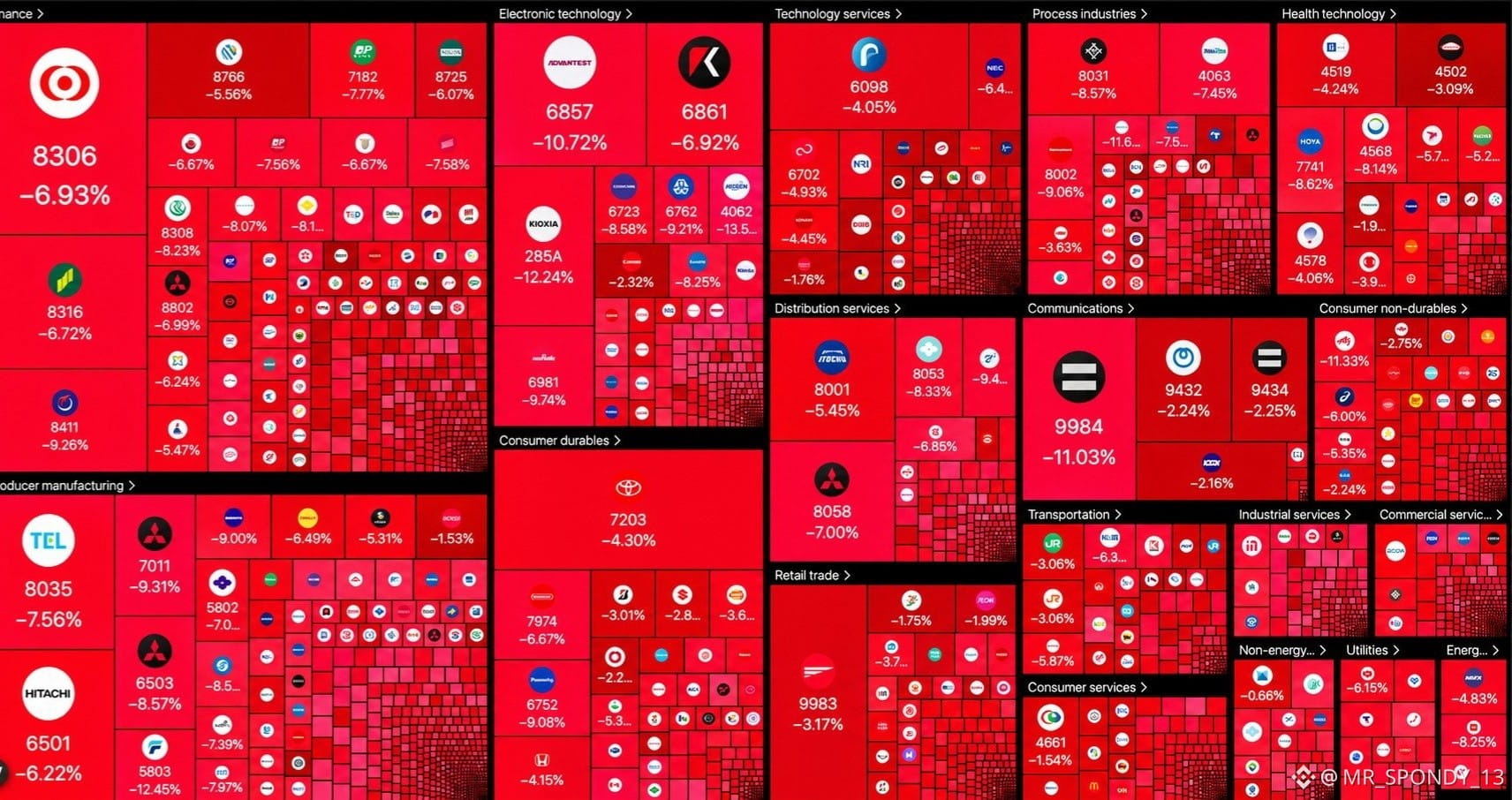
🚨 JAPAN'S STOCK MARKET IS FACING A MASSIVE BLOODBATH.
Approximately ¥70 TRILLION has reportedly been wiped out as Japan's Nikkei 225 plunges nearly 6%, marking its worst trading session since the Liberation Day tariff crash.
But the biggest question is: Is this the beginning of an AI bubble bursting?
Here's why investors should pay attention:
AI valuation fears: Investors are questioning whether massive AI investments can deliver the profits markets are expecting.
Technology sell-off: Concerns around stretched valuations could trigger further selling across global tech stocks.
Global contagion: Japan's market weakness could put pressure on US equities, Asian markets and risk assets.
Crypto connection: If investors move away from risky assets, Bitcoin and altcoins could face additional selling pressure.
The bigger concern isn't just Japan.
It's whether the AI-driven rally has pushed global markets too far ahead of actual earnings and economic fundamentals.
Could an AI bubble correction become the next major global market shock?
#Japan #Nikkei225 #AIBubble #bitcoin #Mr_SPONDY_13
$BTC
{future}(BTCUSDT)
$ETH
{future}(ETHUSDT)
$SOL
{future}(SOLUSDT)
🚨 JAPAN'S STOCK MARKET IS FACING A MASSIVE BLOODBATH.
Approximately ¥70 TRILLION has reportedly been wiped out as Japan's Nikkei 225 plunges nearly 6%, marking its worst trading session since the Liberation Day tariff crash.
But the biggest question is: Is this the beginning of an AI bubble bursting?
Here's why investors should pay attention:
AI valuation fears: Investors are questioning whether massive AI investments can deliver the profits markets are expecting.
Technology sell-off: Concerns around stretched valuations could trigger further selling across global tech stocks.
Global contagion: Japan's market weakness could put pressure on US equities, Asian markets and risk assets.
Crypto connection: If investors move away from risky assets, Bitcoin and altcoins could face additional selling pressure.
The bigger concern isn't just Japan.
It's whether the AI-driven rally has pushed global markets too far ahead of actual earnings and economic fundamentals.
Could an AI bubble correction become the next major global market shock?
#Japan #Nikkei225 #AIBubble #bitcoin #Mr_SPONDY_13
$BTC
$ETH
$SOL
1
184
·
--
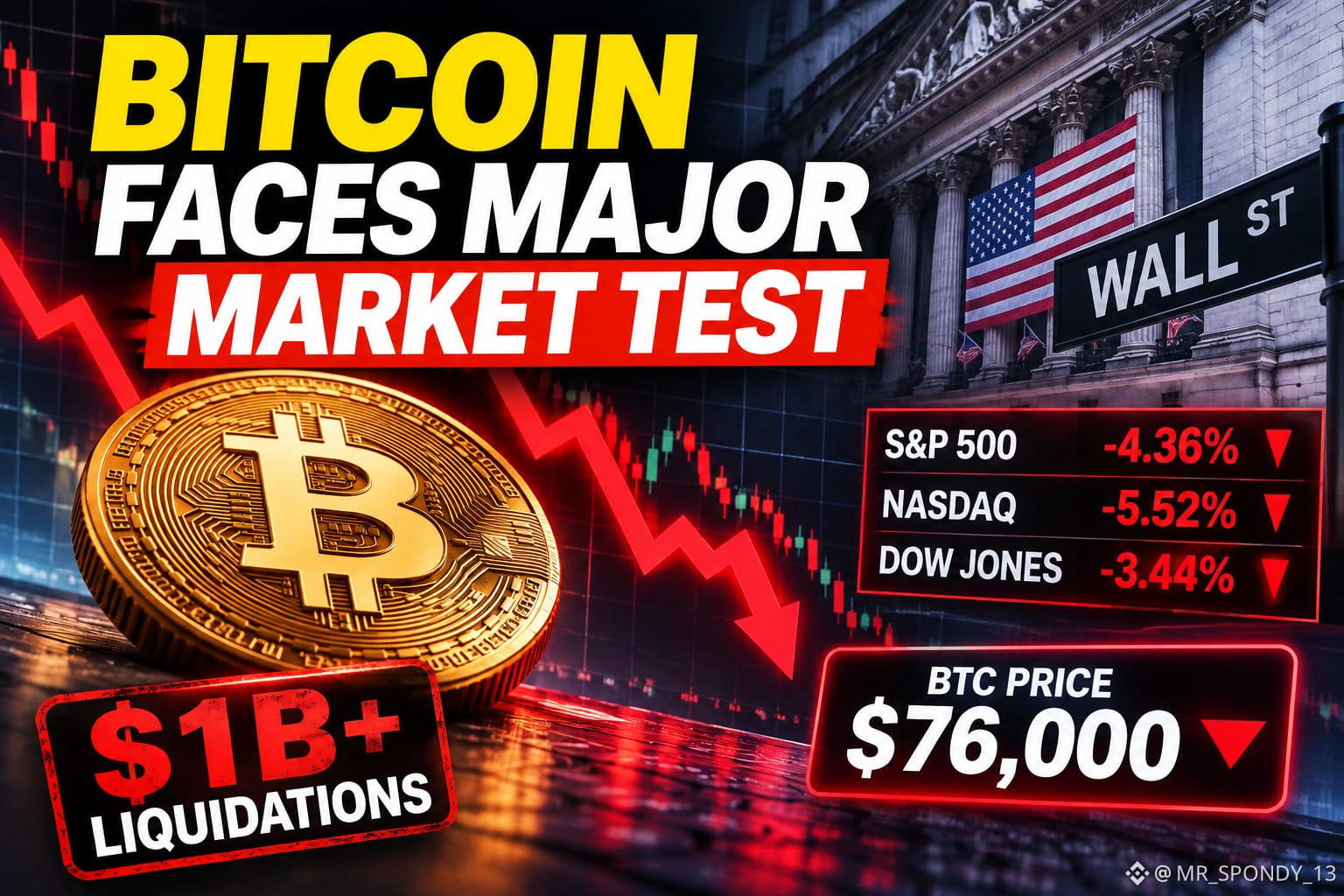
🚨 BITCOIN IS FACING A MAJOR MARKET TEST.
The AI stock sell-off on Wall Street is putting additional pressure on the cryptocurrency market.
Here's what happened:
• Bitcoin dropped below $76,000.
• Nasdaq suffered a nearly 6% decline.
• More than $1 BILLION in crypto leveraged positions were liquidated within 24 hours.
• Most of the liquidations came from traders betting on higher prices.
• Ethereum and major altcoins also faced selling pressure.
Why is this happening?
Investors are becoming cautious about AI valuations, data-centre investments and broader economic uncertainty.
When traditional markets experience a risk-off event, leveraged crypto positions can amplify the selling pressure.
What should Bitcoin traders watch next?
1. Whether BTC can defend the $75,000 region.
2. Whether buyers return with strong spot volume.
3. Whether Nasdaq stabilises.
4. Whether fresh institutional demand enters the market.
My view:
This is not automatically the end of the Bitcoin bull market, but neither is every dip a buying opportunity.
Watch liquidity, spot demand and market structure before taking a position.
Smart traders manage risk first and look for opportunities second.
What do you think?
Will Bitcoin recover above $80,000, or are we heading towards another correction?
#bitcoin #BTC #CryptoMarket #CryptoNews #Mr_SPONDY_13
$BTC
{future}(BTCUSDT)
$ETH
{future}(ETHUSDT)
$BNB
{future}(BNBUSDT)
🚨 BITCOIN IS FACING A MAJOR MARKET TEST.
The AI stock sell-off on Wall Street is putting additional pressure on the cryptocurrency market.
Here's what happened:
• Bitcoin dropped below $76,000.
• Nasdaq suffered a nearly 6% decline.
• More than $1 BILLION in crypto leveraged positions were liquidated within 24 hours.
• Most of the liquidations came from traders betting on higher prices.
• Ethereum and major altcoins also faced selling pressure.
Why is this happening?
Investors are becoming cautious about AI valuations, data-centre investments and broader economic uncertainty.
When traditional markets experience a risk-off event, leveraged crypto positions can amplify the selling pressure.
What should Bitcoin traders watch next?
1. Whether BTC can defend the $75,000 region.
2. Whether buyers return with strong spot volume.
3. Whether Nasdaq stabilises.
4. Whether fresh institutional demand enters the market.
My view:
This is not automatically the end of the Bitcoin bull market, but neither is every dip a buying opportunity.
Watch liquidity, spot demand and market structure before taking a position.
Smart traders manage risk first and look for opportunities second.
What do you think?
Will Bitcoin recover above $80,000, or are we heading towards another correction?
#bitcoin #BTC #CryptoMarket #CryptoNews #Mr_SPONDY_13
$BTC
$ETH
$BNB
1
266
·
--
ຢືນຢັນແລ້ວ
🚨 ONE BANKING CRISIS. MILLIONS OF PEOPLE LOCKED OUT OF THEIR MONEY. AND A PRESIDENT HAS RESIGNED.
Paraguay is facing a major financial and political crisis after authorities intervened in Ueno Bank, one of the country's largest digital lenders.
Here's what happened:
• Nearly 3 million customers reportedly lost access to their bank accounts. • Around 60% of Paraguay's adult population used Ueno. • Approximately $800–850 million in public funds were held by the bank. • State pension and healthcare funds were also exposed. • Eight senior bank executives were detained amid investigations into suspected financial wrongdoing. • Paraguay's central bank chief resigned.
The political consequences were extraordinary.
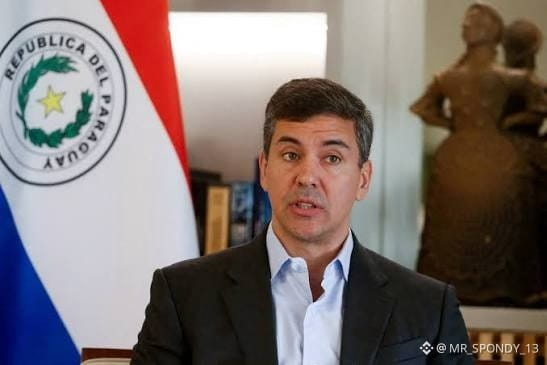
On November 5, President Santiago Peña resigned amid growing protests and political pressure linked to the banking crisis.
But there's a much bigger lesson here.
Your money in a bank is not the same as controlling your own money.
Banks depend on financial institutions, regulators, liquidity and public confidence. When those systems fail, ordinary people can suddenly lose accesgs to their savings.
This is where Bitcoin introduces a different financial model.
With Bitcoin self-custody, you control your private keys and can hold your assets without depending on a traditional bank.
However, self-custody also means taking responsibility for protecting your keys and avoiding scams.
Bitcoin isn't a guarantee against every financial risk. But it offers something powerful: financial ownership without requiring permission from a bank.
Paraguay's crisis raises an important question:
If a bank can stop you from accessing your savings, how much control do you really have over your money?
Is self-custody becoming a necessity rather than just an option?
#bitcoin #BTC #Crypto #FinancialFreedom
#Mr_SPONDY_13
$BTC
{future}(BTCUSDT)
🚨 ONE BANKING CRISIS. MILLIONS OF PEOPLE LOCKED OUT OF THEIR MONEY. AND A PRESIDENT HAS RESIGNED.
Paraguay is facing a major financial and political crisis after authorities intervened in Ueno Bank, one of the country's largest digital lenders.
Here's what happened:
• Nearly 3 million customers reportedly lost access to their bank accounts. • Around 60% of Paraguay's adult population used Ueno. • Approximately $800–850 million in public funds were held by the bank. • State pension and healthcare funds were also exposed. • Eight senior bank executives were detained amid investigations into suspected financial wrongdoing. • Paraguay's central bank chief resigned.
The political consequences were extraordinary.
On November 5, President Santiago Peña resigned amid growing protests and political pressure linked to the banking crisis.
But there's a much bigger lesson here.
Your money in a bank is not the same as controlling your own money.
Banks depend on financial institutions, regulators, liquidity and public confidence. When those systems fail, ordinary people can suddenly lose accesgs to their savings.
This is where Bitcoin introduces a different financial model.
With Bitcoin self-custody, you control your private keys and can hold your assets without depending on a traditional bank.
However, self-custody also means taking responsibility for protecting your keys and avoiding scams.
Bitcoin isn't a guarantee against every financial risk. But it offers something powerful: financial ownership without requiring permission from a bank.
Paraguay's crisis raises an important question:
If a bank can stop you from accessing your savings, how much control do you really have over your money?
Is self-custody becoming a necessity rather than just an option?
#bitcoin #BTC #Crypto #FinancialFreedom
#Mr_SPONDY_13
$BTC
1
296
·
--
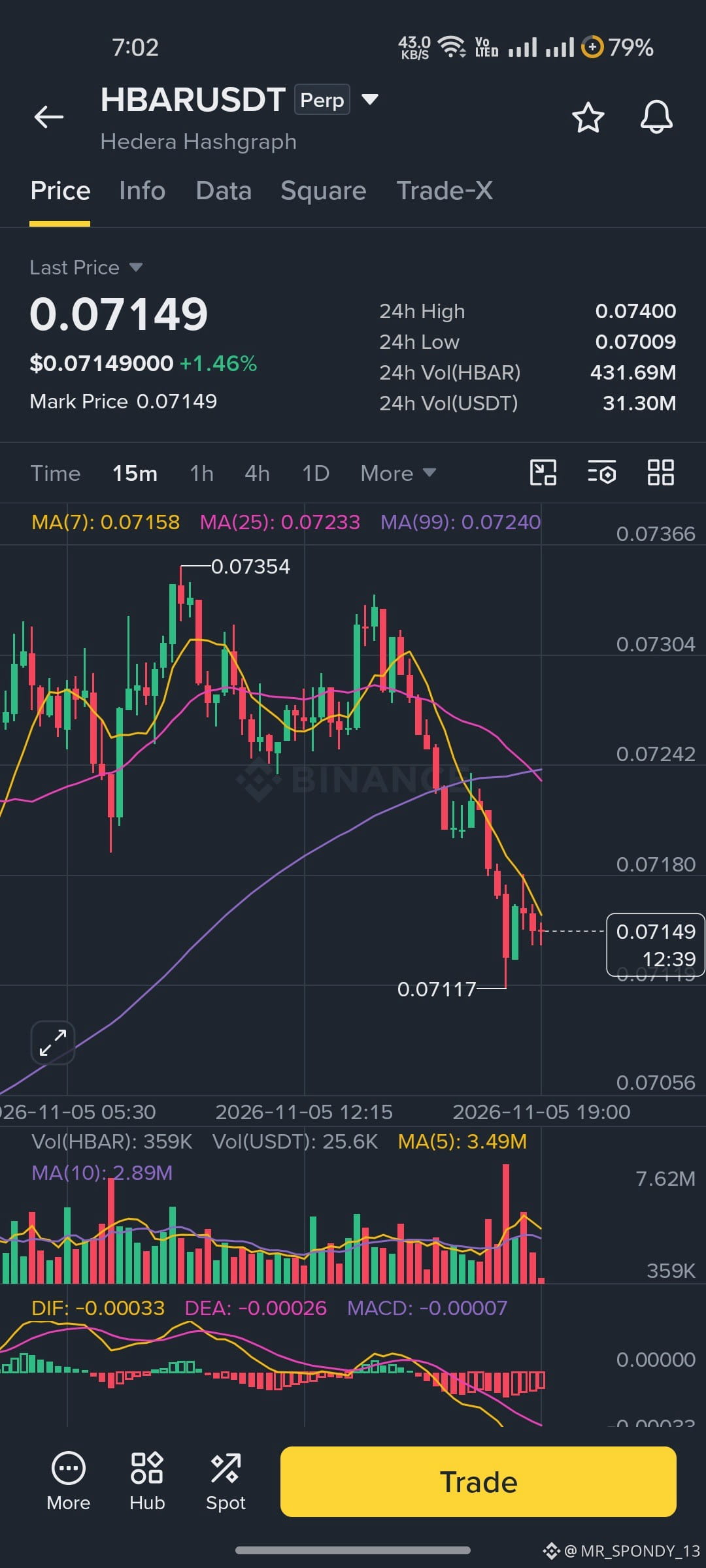
HBAR/USDT LONG FUTURES SETUP
$HBAR is on my watchlist for a potential bullish move.
Trade Direction: LONG
Leverage: 5X
Entry Zone: $0.0718 – $0.0725
Take Profit Targets:
TP1: $0.0754
TP2: $0.0780
TP3: $0.0810
Stop Loss: $0.0695
Key Support: $0.0717
Resistance: $0.0748
Strategy: Wait for bullish confirmation and increasing volume before entering. A breakout above resistance could strengthen the bullish setup.
Risk management is essential. Don't chase the price or enter without confirmation.
Are you bullish on HBAR?
#HBAR #Hedera #Crypto
#Mr_SPONDY_13
$HBAR
{future}(HBARUSDT)
HBAR/USDT LONG FUTURES SETUP
$HBAR is on my watchlist for a potential bullish move.
Trade Direction: LONG
Leverage: 5X
Entry Zone: $0.0718 – $0.0725
Take Profit Targets:
TP1: $0.0754
TP2: $0.0780
TP3: $0.0810
Stop Loss: $0.0695
Key Support: $0.0717
Resistance: $0.0748
Strategy: Wait for bullish confirmation and increasing volume before entering. A breakout above resistance could strengthen the bullish setup.
Risk management is essential. Don't chase the price or enter without confirmation.
Are you bullish on HBAR?
#HBAR #Hedera #Crypto
#Mr_SPONDY_13
$HBAR
260
·
--
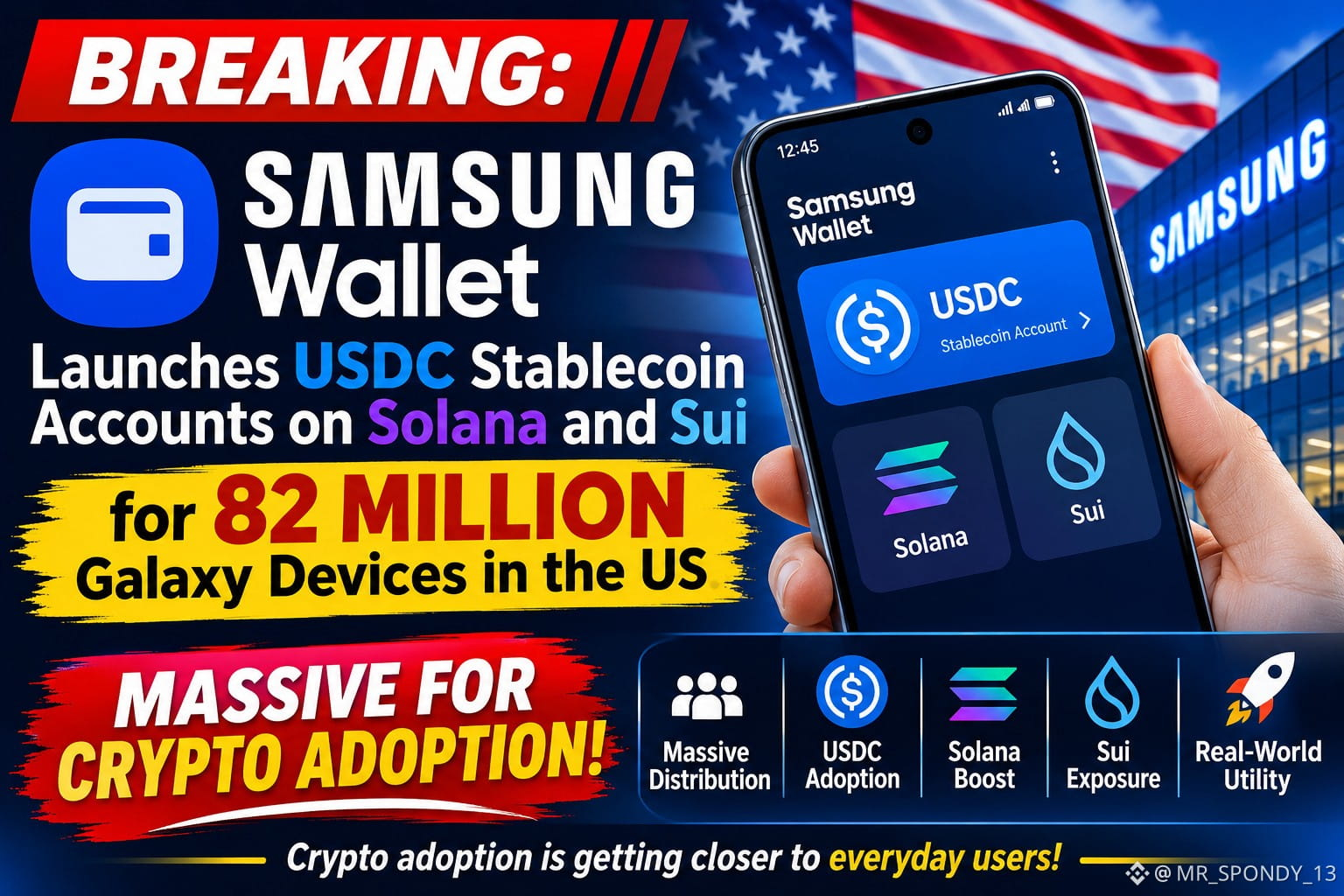
🚨 SAMSUNG WALLET IS BRINGING STABLECOINS TO THE MAINSTREAM!
A major development for crypto adoption.
Samsung Wallet is reportedly launching USDC stablecoin accounts on Solana and Sui, potentially reaching 82 million Galaxy devices across the United States.
Here's why this matters:
1. Massive Distribution: Samsung's ecosystem could introduce millions of everyday smartphone users to digital assets.
2. USDC Adoption: More accessible ways to hold and use dollar-backed stablecoins.
3. Solana Integration: Another potential boost for Solana's payment and transaction ecosystem.
4. Sui Exposure: Increased visibility for Sui as stablecoin infrastructure expands.
5. Real-World Utility: Crypto adoption becomes more meaningful when users can access it through familiar applications.
The bigger picture is important: Crypto adoption doesn't just depend on price increases. It depends on accessibility, payment infrastructure and real-world usage.
If major smartphone ecosystems start integrating stablecoins, the next wave of adoption could look very different.
Are we witnessing the beginning of mainstream stablecoin adoption?
$USDC
{spot}(USDCUSDT)
#CryptoAdoption #Stablecoins
$SUI
{future}(SUIUSDT)
$SOL
{future}(SOLUSDT)
🚨 SAMSUNG WALLET IS BRINGING STABLECOINS TO THE MAINSTREAM!
A major development for crypto adoption.
Samsung Wallet is reportedly launching USDC stablecoin accounts on Solana and Sui, potentially reaching 82 million Galaxy devices across the United States.
Here's why this matters:
1. Massive Distribution: Samsung's ecosystem could introduce millions of everyday smartphone users to digital assets.
2. USDC Adoption: More accessible ways to hold and use dollar-backed stablecoins.
3. Solana Integration: Another potential boost for Solana's payment and transaction ecosystem.
4. Sui Exposure: Increased visibility for Sui as stablecoin infrastructure expands.
5. Real-World Utility: Crypto adoption becomes more meaningful when users can access it through familiar applications.
The bigger picture is important: Crypto adoption doesn't just depend on price increases. It depends on accessibility, payment infrastructure and real-world usage.
If major smartphone ecosystems start integrating stablecoins, the next wave of adoption could look very different.
Are we witnessing the beginning of mainstream stablecoin adoption?
$USDC
#CryptoAdoption #Stablecoins
$SUI
$SOL
1
439
·
--
BITCOIN'S RECOVERY: IS THIS THE START OF A NEW BULLISH MOVE?
Bitcoin's recent recovery is more than just a price bounce. Several important factors are influencing market sentiment, but traders should understand the difference between a short-term recovery and a confirmed bullish trend.
1. US Political Uncertainty
After the US midterm election results became clearer, Bitcoin recovered from below $76,000 toward the $78,000–$80,000 region. Markets appeared to respond positively as political uncertainty faded.
2. Short Liquidation Pressure
Bitcoin's upward move was also supported by short liquidations. When traders betting against BTC are forced to close their positions, additional buying pressure can accelerate the recovery.
3. Institutional Demand
This is where the market needs stronger confirmation. Recent ETF outflows remain a concern. Sustained institutional inflows would provide stronger evidence that fresh capital is returning to Bitcoin.
4. Critical Technical Levels
$78,000: Important near-term support area.
$80,000–$82,000: Major resistance zone.
$84,800: Next upside area if the breakout succeeds.
$75,000: Important downside support if recovery fails.
MY MARKET VIEW
Bitcoin has shown resilience, but I would not call this a confirmed bull-market reversal yet.
A sustained breakout above $82,000, supported by strong spot volume and improving ETF flows, could strengthen the bullish outlook.
On the other hand, rejection near resistance could bring another round of volatility.
The next move will depend on whether real buyers support this recovery or whether it is mainly driven by short covering.
What do you think?
Will Bitcoin reclaim $85,000, or will sellers reject the recovery again?
#Bitcoin #BTC #CryptoMarket #CryptoAnalysis" #Mr_SPONDY_13
$BTC
{future}(BTCUSDT)
BITCOIN'S RECOVERY: IS THIS THE START OF A NEW BULLISH MOVE?
Bitcoin's recent recovery is more than just a price bounce. Several important factors are influencing market sentiment, but traders should understand the difference between a short-term recovery and a confirmed bullish trend.
1. US Political Uncertainty
After the US midterm election results became clearer, Bitcoin recovered from below $76,000 toward the $78,000–$80,000 region. Markets appeared to respond positively as political uncertainty faded.
2. Short Liquidation Pressure
Bitcoin's upward move was also supported by short liquidations. When traders betting against BTC are forced to close their positions, additional buying pressure can accelerate the recovery.
3. Institutional Demand
This is where the market needs stronger confirmation. Recent ETF outflows remain a concern. Sustained institutional inflows would provide stronger evidence that fresh capital is returning to Bitcoin.
4. Critical Technical Levels
$78,000: Important near-term support area.
$80,000–$82,000: Major resistance zone.
$84,800: Next upside area if the breakout succeeds.
$75,000: Important downside support if recovery fails.
MY MARKET VIEW
Bitcoin has shown resilience, but I would not call this a confirmed bull-market reversal yet.
A sustained breakout above $82,000, supported by strong spot volume and improving ETF flows, could strengthen the bullish outlook.
On the other hand, rejection near resistance could bring another round of volatility.
The next move will depend on whether real buyers support this recovery or whether it is mainly driven by short covering.
What do you think?
Will Bitcoin reclaim $85,000, or will sellers reject the recovery again?
#Bitcoin #BTC #CryptoMarket #CryptoAnalysis" #Mr_SPONDY_13
$BTC
220
·
--
ຢືນຢັນແລ້ວ
🚨 THE NEXT BIG SHIFT IN GLOBAL FINANCE COULD BE HAPPENING RIGHT NOW!
Ripple President Monica Long says the switch has flipped.
Institutional capital markets are moving ON-CHAIN, opening the door to a financial system that operates 24/7.
And $XRP is right in the middle of this conversation.
Meanwhile, $1,000 XRP price predictions are spreading across the crypto community.
The real question is not just how high XRP can go, but how big its role could become in the future of global finance.
Are we witnessing the beginning of XRP's biggest chapter?
$XRP
{future}(XRPUSDT)
#Ripple #Crypto #Mr_SPONDY_13
🚨 THE NEXT BIG SHIFT IN GLOBAL FINANCE COULD BE HAPPENING RIGHT NOW!
Ripple President Monica Long says the switch has flipped.
Institutional capital markets are moving ON-CHAIN, opening the door to a financial system that operates 24/7.
And $XRP is right in the middle of this conversation.
Meanwhile, $1,000 XRP price predictions are spreading across the crypto community.
The real question is not just how high XRP can go, but how big its role could become in the future of global finance.
Are we witnessing the beginning of XRP's biggest chapter?
$XRP
#Ripple #Crypto #Mr_SPONDY_13

6
2.3k
·
--
🚨 DEMOCRATS WIN CONTROL OF BOTH CHAMBERS OF CONGRESS. WHAT DOES THIS MEAN FOR CRYPTO?
A major political shift in the US could create a new challenge for the crypto industry.
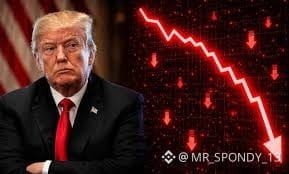
Democrats have won control of both the House and Senate, putting President Trump's legislative agenda under pressure.
Why should crypto investors pay attention?
1. Crypto Regulation: Passing crypto-friendly legislation could become more difficult.
2. CLARITY Act: The future of US crypto market-structure legislation faces greater uncertainty.
3. Exchanges & DeFi: Regulatory scrutiny could increase for crypto exchanges, stablecoins and DeFi platforms.
4. Crypto Companies: Companies waiting for clear US regulations may face more uncertainty.
5. Market Sentiment: Political uncertainty could increase volatility across crypto and traditional financial markets.
But here's something important:
A Democratic majority does NOT automatically mean the end of crypto adoption or the bull market.
The crypto industry has survived multiple regulatory battles, market crashes and political changes.
My view: Short-term uncertainty could increase, but long-term crypto adoption will depend on institutional demand, innovation, liquidity and real-world utility.
Don't confuse political uncertainty with the end of crypto.
The next few months could be very important for the entire industry.
Do you think this political shift will be bearish for Bitcoin and altcoins, or will crypto continue growing regardless of who controls Congress?
#TRUMP #Mr_SPONDY_13
$BTC
{future}(BTCUSDT)
$ETH
{future}(ETHUSDT)
$BNB
{future}(BNBUSDT)
🚨 DEMOCRATS WIN CONTROL OF BOTH CHAMBERS OF CONGRESS. WHAT DOES THIS MEAN FOR CRYPTO?
A major political shift in the US could create a new challenge for the crypto industry.
Democrats have won control of both the House and Senate, putting President Trump's legislative agenda under pressure.
Why should crypto investors pay attention?
1. Crypto Regulation: Passing crypto-friendly legislation could become more difficult.
2. CLARITY Act: The future of US crypto market-structure legislation faces greater uncertainty.
3. Exchanges & DeFi: Regulatory scrutiny could increase for crypto exchanges, stablecoins and DeFi platforms.
4. Crypto Companies: Companies waiting for clear US regulations may face more uncertainty.
5. Market Sentiment: Political uncertainty could increase volatility across crypto and traditional financial markets.
But here's something important:
A Democratic majority does NOT automatically mean the end of crypto adoption or the bull market.
The crypto industry has survived multiple regulatory battles, market crashes and political changes.
My view: Short-term uncertainty could increase, but long-term crypto adoption will depend on institutional demand, innovation, liquidity and real-world utility.
Don't confuse political uncertainty with the end of crypto.
The next few months could be very important for the entire industry.
Do you think this political shift will be bearish for Bitcoin and altcoins, or will crypto continue growing regardless of who controls Congress?
#TRUMP #Mr_SPONDY_13
$BTC
$ETH
$BNB
236
·
--
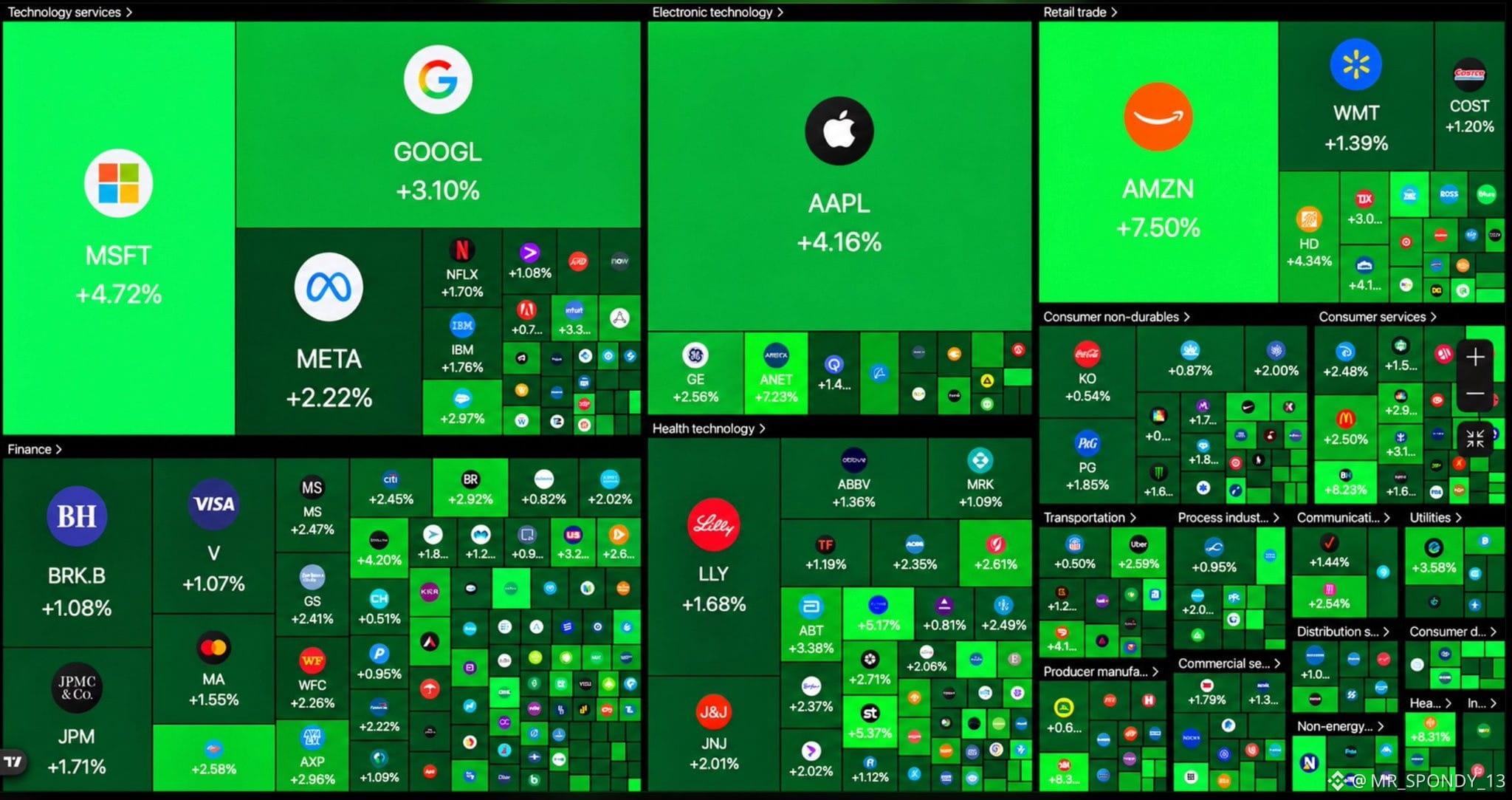
$890 BILLION FLOWS INTO US STOCKS AT MARKET OPEN.
Despite fears of a potential Democratic crackdown on AI and Big Tech, the US stock market delivered a stunning reversal.
Investors appear to be looking beyond political uncertainty and focusing on the long-term growth potential of technology and AI.
INSANE REVERSAL.
The bigger question is: Is this the beginning of another bullish move, or just a temporary relief rally?
Watch AI stocks, the Nasdaq, Treasury yields and Bitcoin closely.
Because when confidence returns to traditional markets, crypto could also benefit.
#StockMarket #AI #cryptouniverseofficial #WallStreet #Mr_SPONDY_13
$MSFTB
{spot}(MSFTBUSDT)
$AAPLB
{spot}(AAPLBUSDT)
$AMZNB
{spot}(AMZNBUSDT)
$890 BILLION FLOWS INTO US STOCKS AT MARKET OPEN.
Despite fears of a potential Democratic crackdown on AI and Big Tech, the US stock market delivered a stunning reversal.
Investors appear to be looking beyond political uncertainty and focusing on the long-term growth potential of technology and AI.
INSANE REVERSAL.
The bigger question is: Is this the beginning of another bullish move, or just a temporary relief rally?
Watch AI stocks, the Nasdaq, Treasury yields and Bitcoin closely.
Because when confidence returns to traditional markets, crypto could also benefit.
#StockMarket #AI #cryptouniverseofficial #WallStreet #Mr_SPONDY_13
$MSFTB
$AAPLB
$AMZNB
223
·
--
ຢືນຢັນແລ້ວ
VECHAIN IS BUILDING BEYOND PRICE ACTION
VeChain is entering an important phase of its ecosystem development.
Hayabusa has changed its staking and VTHO reward model, while the upcoming Interstellar phase aims to improve EVM compatibility and expand developer capabilities.
The focus is shifting towards:
Better blockchain infrastructure
Ethereum ecosystem compatibility
Staking-based VTHO generation
Long-term ecosystem development
VET deserves attention beyond short-term price movements.
Do you believe VeChain can regain strong market momentum?
#VET #VeChain #Crypto #Mr_SPONDY_13
$VET
{spot}(VETUSDT)
VECHAIN IS BUILDING BEYOND PRICE ACTION
VeChain is entering an important phase of its ecosystem development.
Hayabusa has changed its staking and VTHO reward model, while the upcoming Interstellar phase aims to improve EVM compatibility and expand developer capabilities.
The focus is shifting towards:
Better blockchain infrastructure
Ethereum ecosystem compatibility
Staking-based VTHO generation
Long-term ecosystem development
VET deserves attention beyond short-term price movements.
Do you believe VeChain can regain strong market momentum?
#VET #VeChain #Crypto #Mr_SPONDY_13
$VET
2
542
·
--
ຢືນຢັນແລ້ວ
HARMONY ($ONE): A MAJOR TURNING POINT FOR THE PROJECT
Harmony is going through one of the biggest transformations in its history.
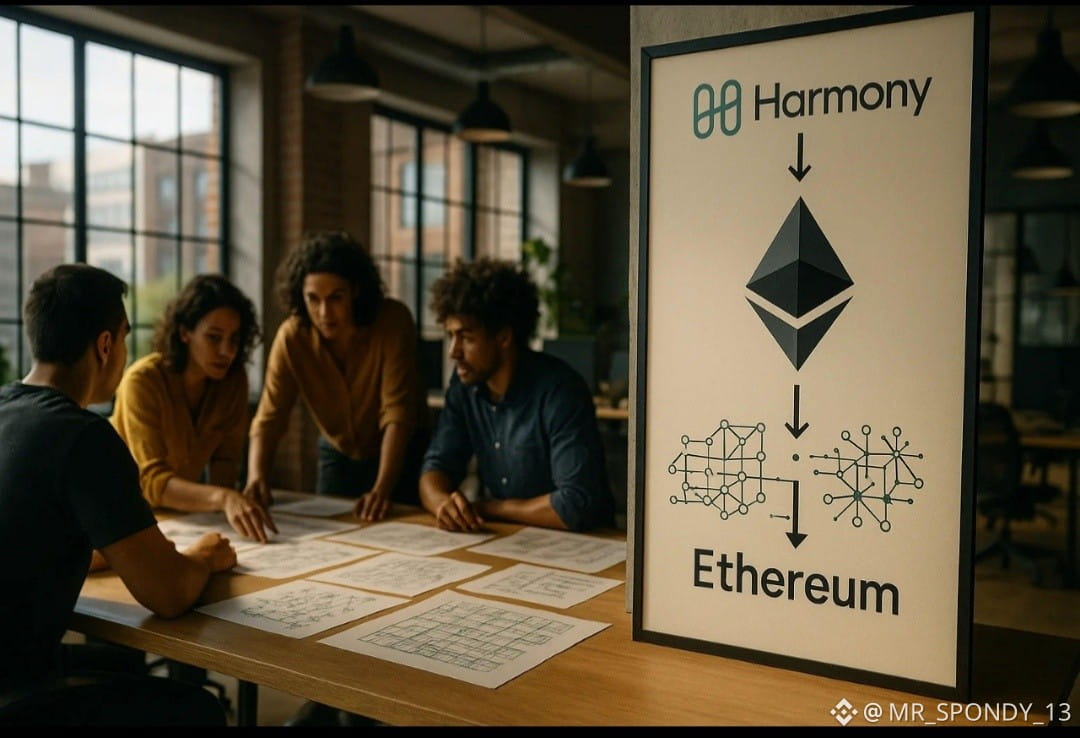
The project has announced plans to sunset its original Layer-1 blockchain and migrate the ONE token to Ethereum.
Here is what investors need to watch:
1. Ethereum-based ONE token migration.
2. The future of the AI video Remix Economy.
3. Exchange support and token liquidity.
4. Security and migration execution.
5. The future utility and demand for ONE.
This is no longer just a traditional blockchain recovery story. Harmony is attempting a completely new direction through AI.
However, the previous security exploits and uncertainty around migration create significant risks.
The big question: Can Harmony rebuild investor confidence with its new AI vision?
#Harmony #ONE #Ethereum #Crypto #Mr_SPONDY_13
$ONE
{future}(ONEUSDT)
HARMONY ($ONE ): A MAJOR TURNING POINT FOR THE PROJECT
Harmony is going through one of the biggest transformations in its history.
The project has announced plans to sunset its original Layer-1 blockchain and migrate the ONE token to Ethereum.
Here is what investors need to watch:
1. Ethereum-based ONE token migration.
2. The future of the AI video Remix Economy.
3. Exchange support and token liquidity.
4. Security and migration execution.
5. The future utility and demand for ONE.
This is no longer just a traditional blockchain recovery story. Harmony is attempting a completely new direction through AI.
However, the previous security exploits and uncertainty around migration create significant risks.
The big question: Can Harmony rebuild investor confidence with its new AI vision?
#Harmony #ONE #Ethereum #Crypto #Mr_SPONDY_13
$ONE
1
703
·
--
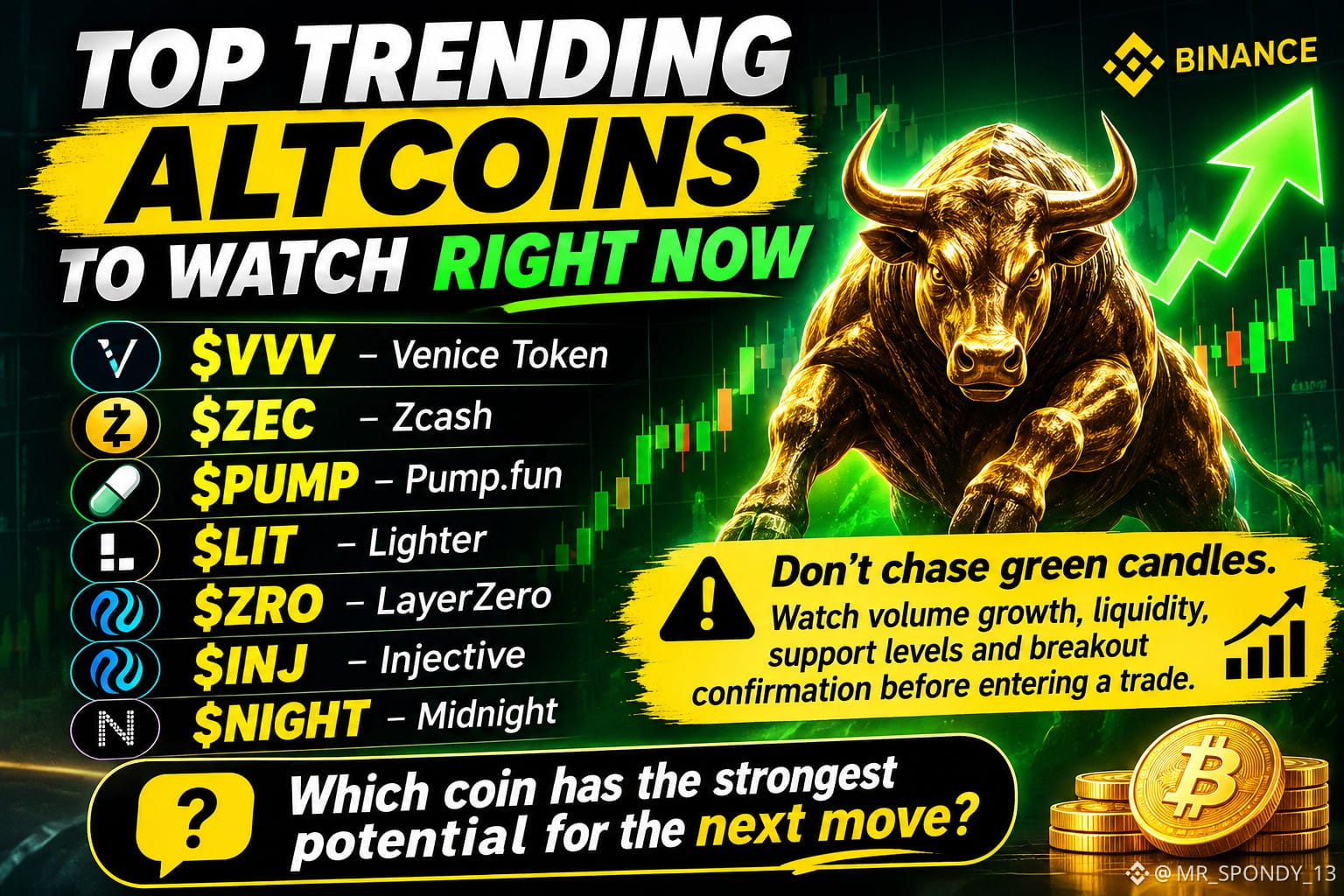
TOP TRENDING ALTCOINS TO WATCH
Crypto market momentum is bringing attention to these trending altcoins:
1.VVV– Venice Token
2. $ZEC – Zcash
3. PUMP– Pump.fun
4. $LIT – Lighter
5. $ZRO – LayerZero
6. INJ – Injective
7. $NIGHT – Midnight
Don't chase green candles. Watch volume growth, liquidity, support levels and breakout confirmation before entering a trade.
Which coin has the strongest potential for the next move?
#Crypto #Altcoins #Trading #bitcoin #Mr_SPONDY_13
$VVV
{future}(VVVUSDT)
$PUMP
{future}(PUMPUSDT)
$INJ
{future}(INJUSDT)
TOP TRENDING ALTCOINS TO WATCH
Crypto market momentum is bringing attention to these trending altcoins:
1.VVV– Venice Token
2. $ZEC – Zcash
3. PUMP– Pump.fun
4. $LIT – Lighter
5. $ZRO – LayerZero
6. INJ – Injective
7. $NIGHT – Midnight
Don't chase green candles. Watch volume growth, liquidity, support levels and breakout confirmation before entering a trade.
Which coin has the strongest potential for the next move?
#Crypto #Altcoins #Trading #bitcoin #Mr_SPONDY_13
$VVV
$PUMP
$INJ
1
559
·
--
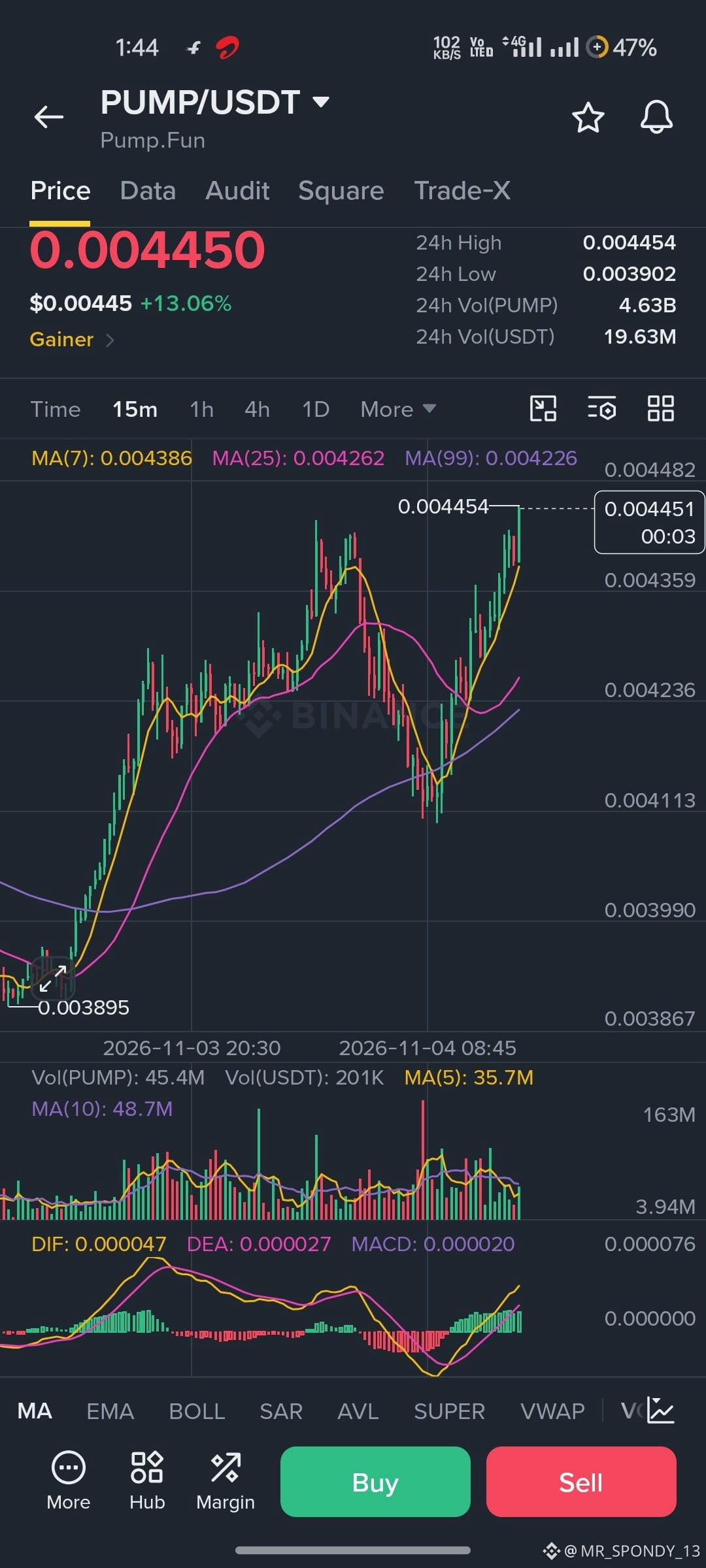
PUMP/USDT FUTURES SIGNAL
Direction: LONG
Leverage: 5x
Entry Zone: $0.00435 – $0.00440
Take Profit Targets
TP1: $0.00445
TP2: $0.00455
TP3: $0.00470
Stop Loss: $0.00420
Support: $0.00415
Resistance: $0.00450
Confirmation: Wait for a 15-minute candle close above $0.00440 with increasing volume before entry.
Trade with discipline. Never risk more than you can afford to lose.
#PUMP #CryptoTrading #FuturesTrading #Mr_SPONDY_13
$PUMP
{future}(PUMPUSDT)
PUMP/USDT FUTURES SIGNAL
Direction: LONG
Leverage: 5x
Entry Zone: $0.00435 – $0.00440
Take Profit Targets
TP1: $0.00445
TP2: $0.00455
TP3: $0.00470
Stop Loss: $0.00420
Support: $0.00415
Resistance: $0.00450
Confirmation: Wait for a 15-minute candle close above $0.00440 with increasing volume before entry.
Trade with discipline. Never risk more than you can afford to lose.
#PUMP #CryptoTrading #FuturesTrading #Mr_SPONDY_13
$PUMP
311
·
--
ຢືນຢັນແລ້ວ
IS $GALA QUIETLY BUILDING ITS NEXT GROWTH PHASE?
While many traders focus only on short-term price movements, Gala Games is continuing to develop its ecosystem.
Here are three developments worth watching:
1. GalaSwap V2 is live with improved performance and upgraded liquidity pools.
2. GalaChain has approved a new tokenomics model featuring permanent fee burns.
3. Mirandus continues expanding with new gameplay features and updates.
What makes this interesting?
GALA connects gaming, blockchain infrastructure, NFTs and an expanding DeFi ecosystem.
But the real question is whether ecosystem growth can translate into sustainable demand for $GALA.
I'm watching network activity, token burns, emissions and gaming adoption closely.
Is $GALA still a long-term gaming ecosystem opportunity?
#GALA #GalaGames #GameFi #Crypto #Mr_SPONDY_13
$GALA
{future}(GALAUSDT)
IS $GALA QUIETLY BUILDING ITS NEXT GROWTH PHASE?
While many traders focus only on short-term price movements, Gala Games is continuing to develop its ecosystem.
Here are three developments worth watching:
1. GalaSwap V2 is live with improved performance and upgraded liquidity pools.
2. GalaChain has approved a new tokenomics model featuring permanent fee burns.
3. Mirandus continues expanding with new gameplay features and updates.
What makes this interesting?
GALA connects gaming, blockchain infrastructure, NFTs and an expanding DeFi ecosystem.
But the real question is whether ecosystem growth can translate into sustainable demand for $GALA .
I'm watching network activity, token burns, emissions and gaming adoption closely.
Is $GALA still a long-term gaming ecosystem opportunity?
#GALA #GalaGames #GameFi #Crypto #Mr_SPONDY_13
$GALA

5
7
2.8k
·
--
WHAT IF THE NEXT BIG RWA NARRATIVE IS ALREADY BUILDING?
Everyone is chasing short-term pumps, but I'm watching projects that are building something real.
$PLUME deserves attention.
Why?
• Bringing real-world assets on-chain
• Connecting traditional finance with DeFi
• Building infrastructure for institutional RWA adoption
• Expanding the tokenized asset ecosystem
But here's what I'm watching closely:
TOKENOMICS + BURNING + REAL ADOPTION.
Can PLUME turn its RWA vision into real demand for its ecosystem and token?
I don't want to chase hype. I want to watch projects building the future of finance.
Are you accumulating $PLUME, or still waiting for confirmation?
#PLUME #RWA #Crypto #Mr_SPONDY_13
$PLUME
{spot}(PLUMEUSDT)
WHAT IF THE NEXT BIG RWA NARRATIVE IS ALREADY BUILDING?
Everyone is chasing short-term pumps, but I'm watching projects that are building something real.
$PLUME deserves attention.
Why?
• Bringing real-world assets on-chain
• Connecting traditional finance with DeFi
• Building infrastructure for institutional RWA adoption
• Expanding the tokenized asset ecosystem
But here's what I'm watching closely:
TOKENOMICS + BURNING + REAL ADOPTION.
Can PLUME turn its RWA vision into real demand for its ecosystem and token?
I don't want to chase hype. I want to watch projects building the future of finance.
Are you accumulating $PLUME , or still waiting for confirmation?
#PLUME #RWA #Crypto #Mr_SPONDY_13
$PLUME
1
441
·
--
Everyone should start paying attention to $DUSK.
Privacy, Real-World Assets (RWA), and blockchain infrastructure are three important sectors with strong long-term potential.
What makes DUSK interesting is its focus on bringing privacy and regulatory-compliant financial applications together on blockchain.
I'm watching this project for its:
- Privacy-focused blockchain technology
- RWA tokenization potential
- Institutional adoption opportunities
- Strong infrastructure-focused vision
The market often focuses on short-term hype, but I believe projects building real utility deserve attention.
$DUSK is definitely a project worth researching.
Do you think privacy + RWA could become one of the biggest narratives in the next crypto cycle?
#DUSK #RWA #Privacy #Crypto #Mr_SPONDY_13
$DUSK
{spot}(DUSKUSDT)
Everyone should start paying attention to $DUSK .
Privacy, Real-World Assets (RWA), and blockchain infrastructure are three important sectors with strong long-term potential.
What makes DUSK interesting is its focus on bringing privacy and regulatory-compliant financial applications together on blockchain.
I'm watching this project for its:
- Privacy-focused blockchain technology
- RWA tokenization potential
- Institutional adoption opportunities
- Strong infrastructure-focused vision
The market often focuses on short-term hype, but I believe projects building real utility deserve attention.
$DUSK is definitely a project worth researching.
Do you think privacy + RWA could become one of the biggest narratives in the next crypto cycle?
#DUSK #RWA #Privacy #Crypto #Mr_SPONDY_13
$DUSK
504
ເຂົ້າສູ່ລະບົບເພື່ອສຳຫຼວດເນື້ອຫາເພີ່ມເຕີມ
ເຂົ້າຮ່ວມກຸ່ມຜູ້ໃຊ້ຄຣິບໂຕທົ່ວໂລກໃນ Binance Square.
⚡️ ໄດ້ຮັບຂໍ້ມູນຫຼ້າສຸດ ແລະ ທີ່ມີປະໂຫຍດກ່ຽວກັບຄຣິບໂຕ.
💬 ໄດ້ຮັບຄວາມໄວ້ວາງໃຈຈາກຕະຫຼາດແລກປ່ຽນຄຣິບໂຕທີ່ໃຫຍ່ທີ່ສຸດໃນໂລກ.
👍 ຄົ້ນຫາຂໍ້ມູນເຊີງເລິກທີ່ແທ້ຈາກນັກສ້າງທີ່ໄດ້ຮັບການຢືນຢັນ.
ອີເມວ / ເບີໂທລະສັບ
ຫົວຂໍ້ທີ່ກໍາລັງນິຍົມ
BinanceReopensWithdrawalsForMoreAssets
1.1M ຄັ້ງທີ່ເບິ່ງ
5,585 ກຳລັງສົນທະນາ
Recovery Update #9: Withdrawals for More Assets to Reopen (2026-11-06)
Binance Announcement
·122 ຖືກໃຈ
·528.6k ຄັ້ງທີ່ເບິ່ງ
$2TWipedOut,HedgeFundsFaceLiquidation
0 ຄັ້ງທີ່ເບິ່ງ
0 ກຳລັງສົນທະນາ
AnthropicIPOValuationDoubts
9,560 ຄັ້ງທີ່ເບິ່ງ
287 ກຳລັງສົນທະນາ