

#quantnetwork
quantnetwork
19,280 views
116 ກຳລັງສົນທະນາ
ມາແຮງ
ຫຼ້າສຸດ

·
--
🔥 $QNT 🚀
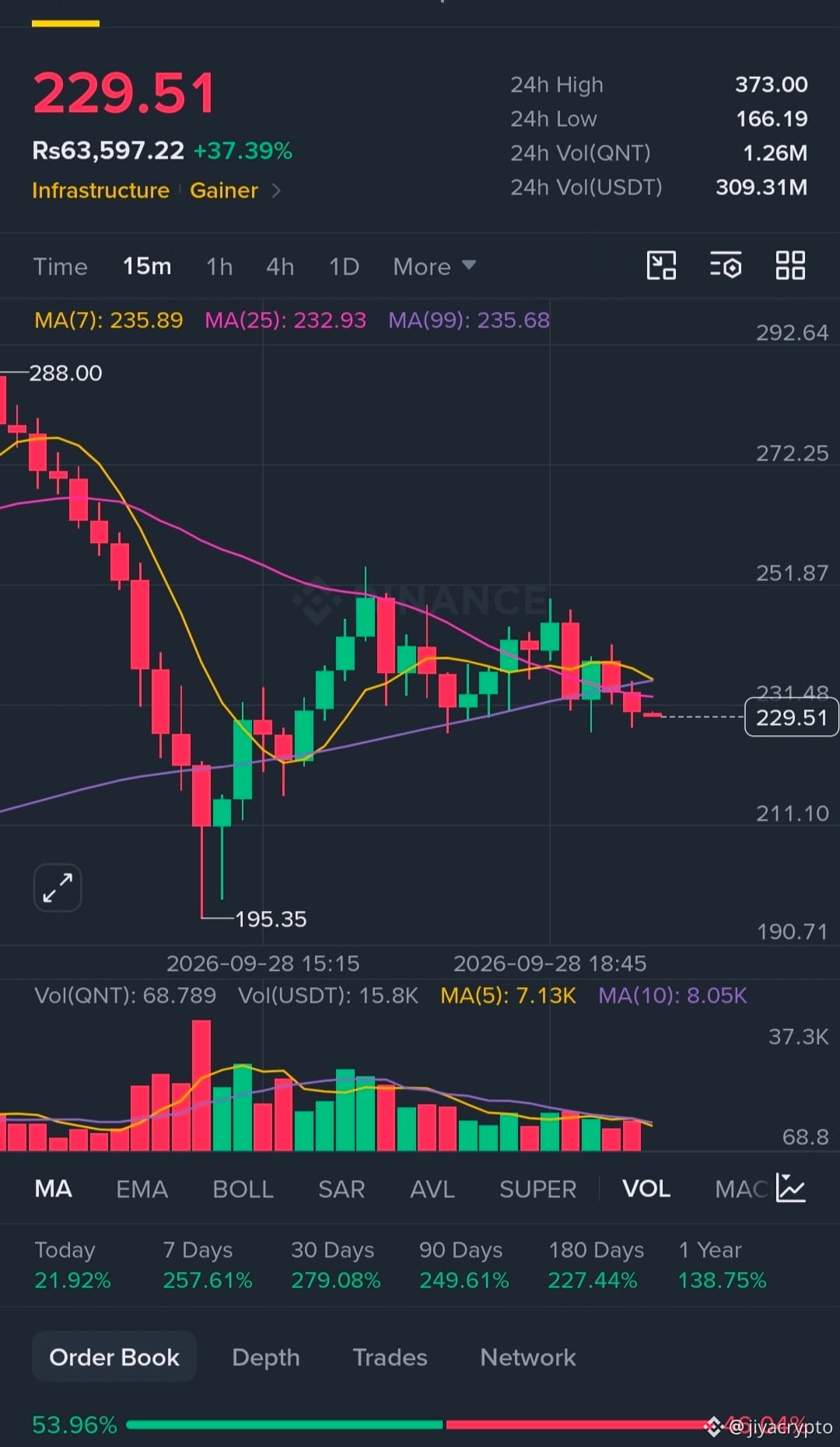
$QNT connects blockchains for institutional interoperability. Today, it triggered a massive +37% breakout on high volume!
Here is the clean **Long Setup** on the current consolidation:
$QNT – LONG / SPOT BUY
📊 Trade Plan:
🔹 Entry Zone: $215.00 – $225.00
🔴 Stop Loss (SL):** $188.00
🎯 Targets:
🎯 TP1: $252.00
🎯 TP2: $272.00
🎯 TP3: $292.00+
⚠️ Invalidation is clean below $188.00.Extended room given above the ultimate invalidation line for safer trade management.
✅ Institutional volume backing
✅ Clear retest structure
✅ High-reward upside targets
Keep position sizing tight. High volatility ahead. Click below to trade now $QNT
#QNTUSDT #CryptoTrading #QuantNetwork #BinanceSquare
{future}(QNTUSDT)
🔥 $QNT 🚀
$QNT connects blockchains for institutional interoperability. Today, it triggered a massive +37% breakout on high volume!
Here is the clean **Long Setup** on the current consolidation:
$QNT – LONG / SPOT BUY
📊 Trade Plan:
🔹 Entry Zone: $215.00 – $225.00
🔴 Stop Loss (SL):** $188.00
🎯 Targets:
🎯 TP1: $252.00
🎯 TP2: $272.00
🎯 TP3: $292.00+
⚠️ Invalidation is clean below $188.00.Extended room given above the ultimate invalidation line for safer trade management.
✅ Institutional volume backing
✅ Clear retest structure
✅ High-reward upside targets
Keep position sizing tight. High volatility ahead. Click below to trade now $QNT
#QNTUSDT #CryptoTrading #QuantNetwork #BinanceSquare
$QNT connects blockchains for institutional interoperability. Today, it triggered a massive +37% breakout on high volume!
Here is the clean **Long Setup** on the current consolidation:
$QNT – LONG / SPOT BUY
📊 Trade Plan:
🔹 Entry Zone: $215.00 – $225.00
🔴 Stop Loss (SL):** $188.00
🎯 Targets:
🎯 TP1: $252.00
🎯 TP2: $272.00
🎯 TP3: $292.00+
⚠️ Invalidation is clean below $188.00.Extended room given above the ultimate invalidation line for safer trade management.
✅ Institutional volume backing
✅ Clear retest structure
✅ High-reward upside targets
Keep position sizing tight. High volatility ahead. Click below to trade now $QNT
#QNTUSDT #CryptoTrading #QuantNetwork #BinanceSquare
129

·
--
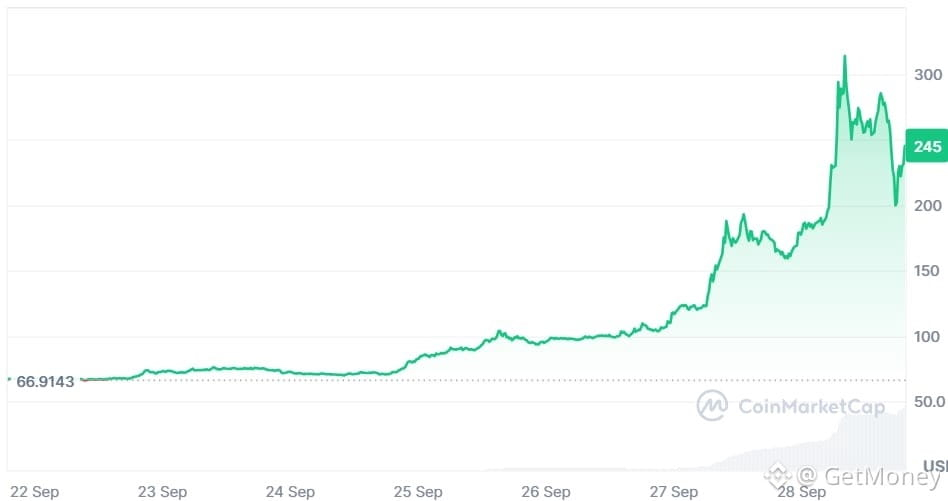
📰 没想到,Quant 的 QNT 七天涨了约 300%,背后的导火索不是新公链上线,而是美国清算所 TCH 宣布采用 Quant,为银行代币化存款项目提供技术架构。
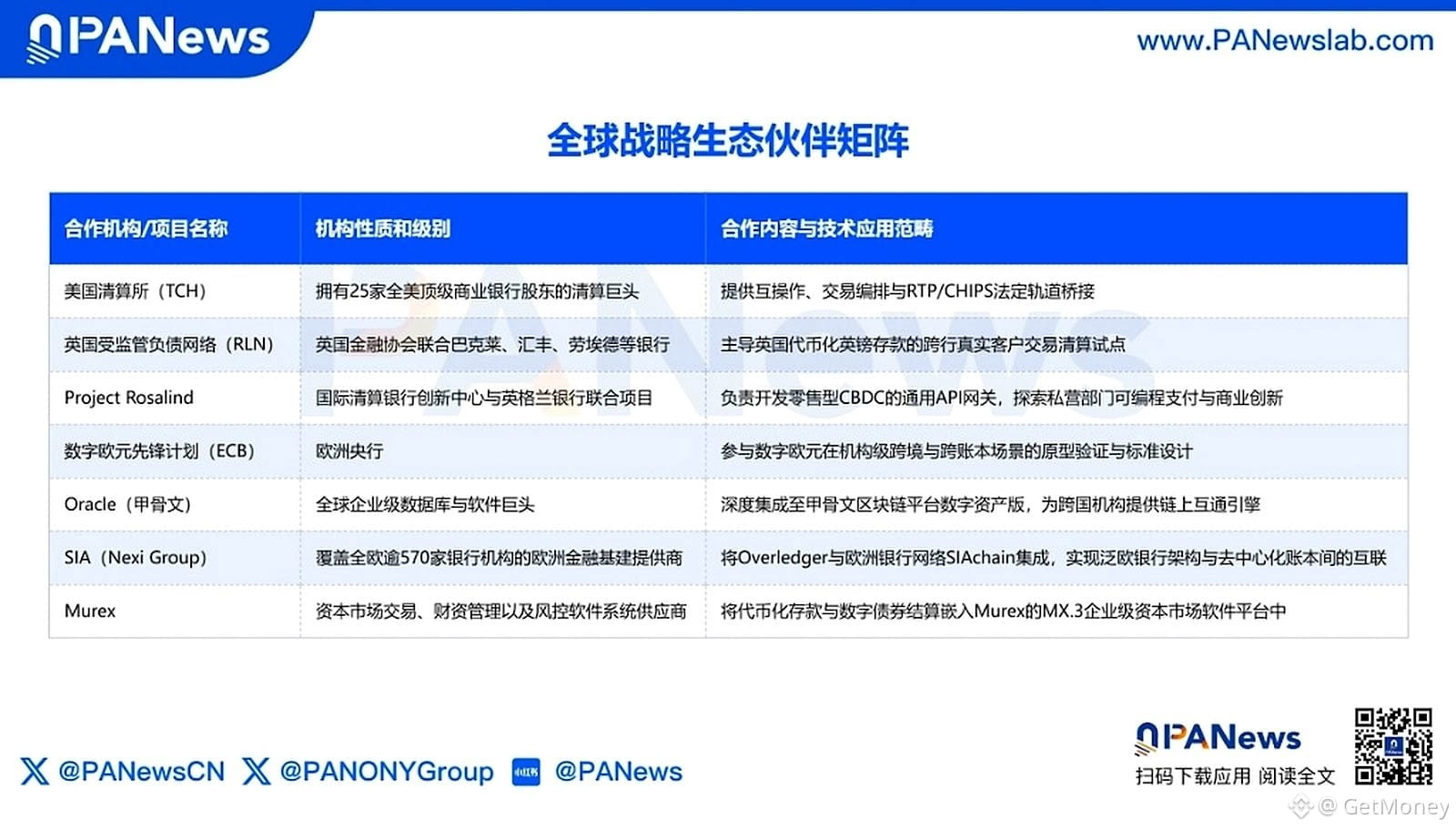
TCH 由摩根大通、美国银行、花旗等 25 家美国大型商业银行共同持股,旗下 RTP 和 CHIPS 日均处理超过 2 万亿美元的银行间清算。这个合作的分量,确实和普通企业订单不太一样。
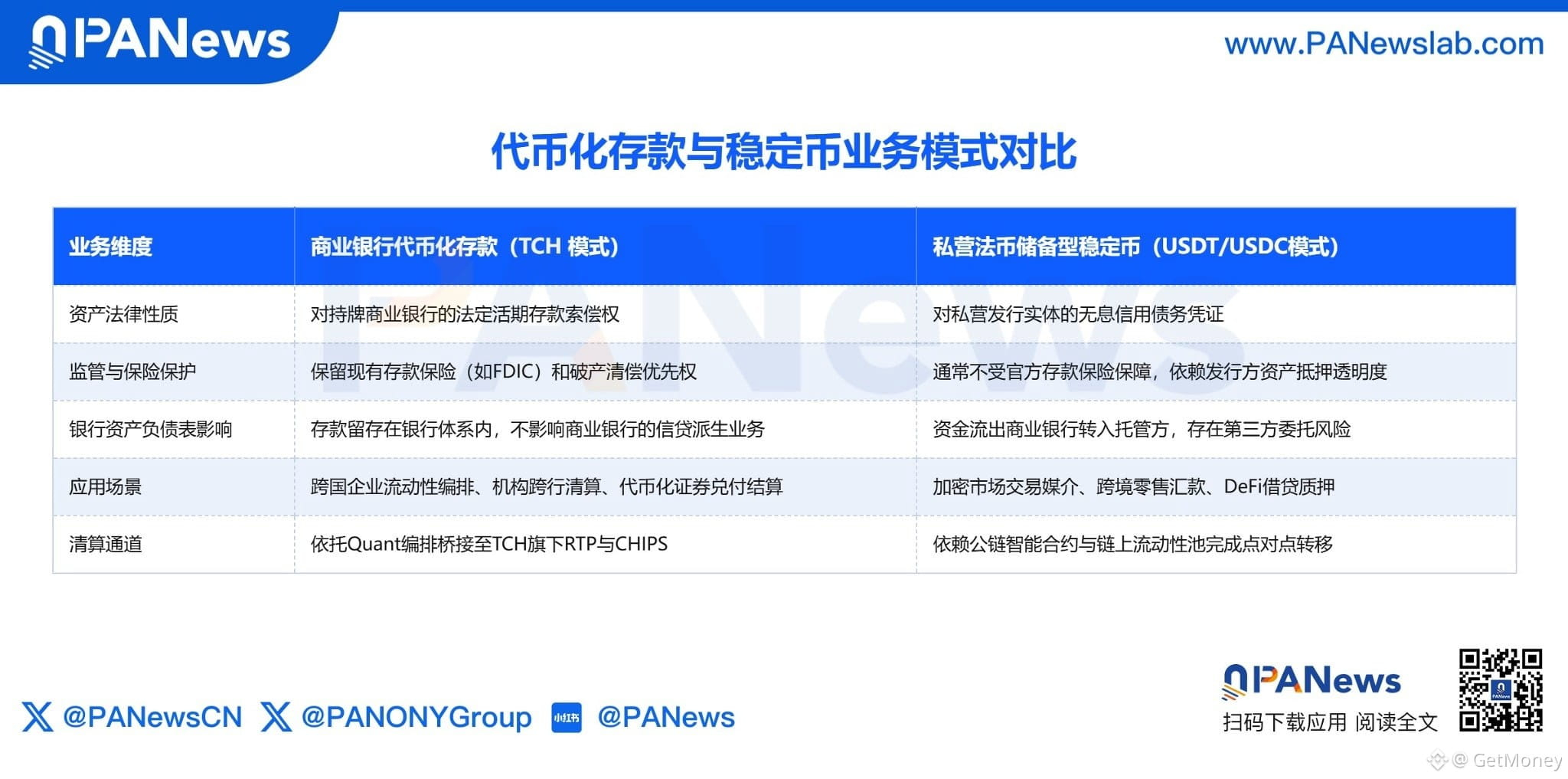
🔥 Quant 走的也不是面向散户的路线,而是连接银行系统、不同账本和支付网络。它的 Overledger 更像一个跨系统调度层,负责信息传递、交易编排,以及对接现有法币支付轨道。银行不必推翻原来的合规和风控系统,就能接入新的链上清算网络。
但说实话,合作落地和 QNT 直接受益,中间还隔着一段距离。TCH 的代币化存款网络预计要到 2027 年上半年才开放试点,合同金额、收入规模和持仓要求也都没有披露。客户可以用美元支付服务费,也可以用 QNT,这说明 Quant 拿到订单,不等于市场一定会出现大量 QNT 买盘。
🤔 所以这次更像是市场先给 Quant 的机构业务重新定价,后面还要看试点能否上线、银行是否持续接入,以及服务收入到底能不能传导到 QNT。你觉得这次合作最终会变成真实需求,还是先炒预期?
#QNT #QuantNetwork #代币化存款 #链上清算
📰 没想到,Quant 的 QNT 七天涨了约 300%,背后的导火索不是新公链上线,而是美国清算所 TCH 宣布采用 Quant,为银行代币化存款项目提供技术架构。
TCH 由摩根大通、美国银行、花旗等 25 家美国大型商业银行共同持股,旗下 RTP 和 CHIPS 日均处理超过 2 万亿美元的银行间清算。这个合作的分量,确实和普通企业订单不太一样。
🔥 Quant 走的也不是面向散户的路线,而是连接银行系统、不同账本和支付网络。它的 Overledger 更像一个跨系统调度层,负责信息传递、交易编排,以及对接现有法币支付轨道。银行不必推翻原来的合规和风控系统,就能接入新的链上清算网络。
但说实话,合作落地和 QNT 直接受益,中间还隔着一段距离。TCH 的代币化存款网络预计要到 2027 年上半年才开放试点,合同金额、收入规模和持仓要求也都没有披露。客户可以用美元支付服务费,也可以用 QNT,这说明 Quant 拿到订单,不等于市场一定会出现大量 QNT 买盘。
🤔 所以这次更像是市场先给 Quant 的机构业务重新定价,后面还要看试点能否上线、银行是否持续接入,以及服务收入到底能不能传导到 QNT。你觉得这次合作最终会变成真实需求,还是先炒预期?
#QNT #QuantNetwork #代币化存款 #链上清算
TCH 由摩根大通、美国银行、花旗等 25 家美国大型商业银行共同持股,旗下 RTP 和 CHIPS 日均处理超过 2 万亿美元的银行间清算。这个合作的分量,确实和普通企业订单不太一样。
🔥 Quant 走的也不是面向散户的路线,而是连接银行系统、不同账本和支付网络。它的 Overledger 更像一个跨系统调度层,负责信息传递、交易编排,以及对接现有法币支付轨道。银行不必推翻原来的合规和风控系统,就能接入新的链上清算网络。
但说实话,合作落地和 QNT 直接受益,中间还隔着一段距离。TCH 的代币化存款网络预计要到 2027 年上半年才开放试点,合同金额、收入规模和持仓要求也都没有披露。客户可以用美元支付服务费,也可以用 QNT,这说明 Quant 拿到订单,不等于市场一定会出现大量 QNT 买盘。
🤔 所以这次更像是市场先给 Quant 的机构业务重新定价,后面还要看试点能否上线、银行是否持续接入,以及服务收入到底能不能传导到 QNT。你觉得这次合作最终会变成真实需求,还是先炒预期?
#QNT #QuantNetwork #代币化存款 #链上清算

112

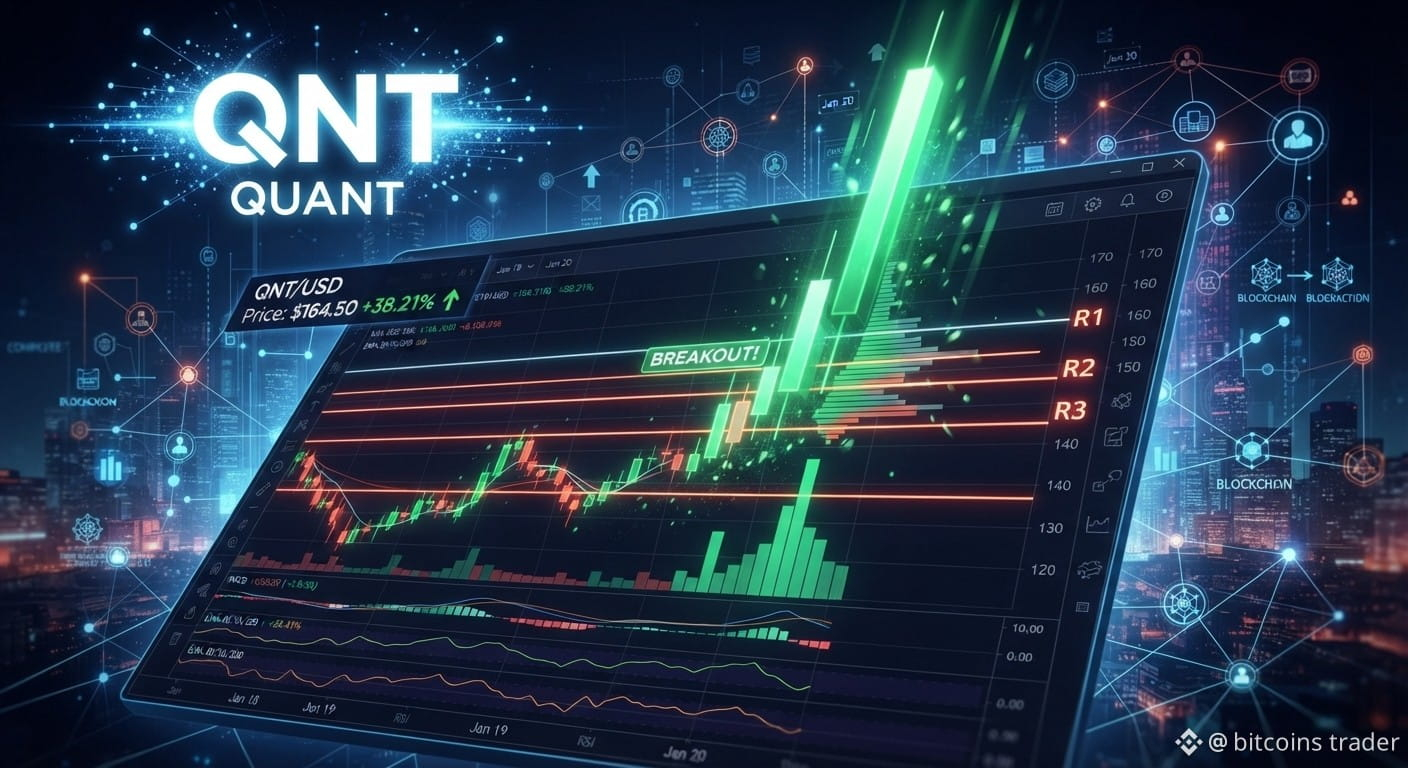
($QNT ) is making waves! Driven by strong institutional adoption, enterprise-grade network integrations, and high demand, QNT has broken key resistance levels with massive volume.
📊 Technical Analysis: Daily RSI is slightly overbought due to the recent strong rally. Immediate support lies around $100 - $106. Avoid blind FOMO; wait for a healthy pullback or consolidation before entering. Long-term outlook remains very bullish!
#QNTX #FedProposesPaymentStablecoinRules
#QuantNetwork #BİNANCESQUARE #CryptoAnalysis
($QNT ) is making waves! Driven by strong institutional adoption, enterprise-grade network integrations, and high demand, QNT has broken key resistance levels with massive volume.
📊 Technical Analysis: Daily RSI is slightly overbought due to the recent strong rally. Immediate support lies around $100 - $106. Avoid blind FOMO; wait for a healthy pullback or consolidation before entering. Long-term outlook remains very bullish!
#QNTX #FedProposesPaymentStablecoinRules
#QuantNetwork #BİNANCESQUARE #CryptoAnalysis
📊 Technical Analysis: Daily RSI is slightly overbought due to the recent strong rally. Immediate support lies around $100 - $106. Avoid blind FOMO; wait for a healthy pullback or consolidation before entering. Long-term outlook remains very bullish!
#QNTX #FedProposesPaymentStablecoinRules
#QuantNetwork #BİNANCESQUARE #CryptoAnalysis
330

·
--
ສັນຍານກະທິງ
Quant (QNT): The Ultimate Bridge in the Blockchain World (The Future of Interoperability)
In the fast-growing world of cryptocurrency, new projects and blockchains emerge daily. However, a major challenge has always been that different blockchains (such as Ethereum, Bitcoin, and Solana) cannot communicate or share data directly with one another. The solution to this fragmentation is Quant ($QNT).
What is the Quant Network?
Launched in 2018 by Gilbert Verdian, Quant is not just another standard blockchain. Instead, it introduces the world’s first Overledger operating system. Its core mission is to establish a secure, lightning-fast connection (interoperability) between different blockchain networks and traditional financial systems.
Key Features of QNT:
Overledger Technology (Overledger OS): This system allows developers to build decentralized multi-chain applications (mApps) that can operate across multiple blockchains simultaneously.
Enterprise Solutions: Quant is specifically designed for large financial institutions and banks, enabling them to safely integrate blockchain technology into their legacy systems.
Limited Supply: QNT has a strict and limited total supply, which is viewed as a positive long-term metric for its value and market scarcity.
Future Scope:
As digital currencies and blockchain adoption continue to scale at an enterprise level, the demand for seamless cross-chain communication is growing exponentially. Quant leads the charge in this domain, making it a strong project widely watched by crypto analysts.
Disclaimer: This article is for educational and informational purposes only. Always conduct your own research (DYOR) before investing in the cryptocurrency market.
$QNT #CryptoEducation #BinanceSquare #Altcoins #QuantNetwork
Quant (QNT): The Ultimate Bridge in the Blockchain World (The Future of Interoperability)
In the fast-growing world of cryptocurrency, new projects and blockchains emerge daily. However, a major challenge has always been that different blockchains (such as Ethereum, Bitcoin, and Solana) cannot communicate or share data directly with one another. The solution to this fragmentation is Quant ($QNT).
What is the Quant Network?
Launched in 2018 by Gilbert Verdian, Quant is not just another standard blockchain. Instead, it introduces the world’s first Overledger operating system. Its core mission is to establish a secure, lightning-fast connection (interoperability) between different blockchain networks and traditional financial systems.
Key Features of QNT:
Overledger Technology (Overledger OS): This system allows developers to build decentralized multi-chain applications (mApps) that can operate across multiple blockchains simultaneously.
Enterprise Solutions: Quant is specifically designed for large financial institutions and banks, enabling them to safely integrate blockchain technology into their legacy systems.
Limited Supply: QNT has a strict and limited total supply, which is viewed as a positive long-term metric for its value and market scarcity.
Future Scope:
As digital currencies and blockchain adoption continue to scale at an enterprise level, the demand for seamless cross-chain communication is growing exponentially. Quant leads the charge in this domain, making it a strong project widely watched by crypto analysts.
Disclaimer: This article is for educational and informational purposes only. Always conduct your own research (DYOR) before investing in the cryptocurrency market.
$QNT #CryptoEducation #BinanceSquare #Altcoins #QuantNetwork
In the fast-growing world of cryptocurrency, new projects and blockchains emerge daily. However, a major challenge has always been that different blockchains (such as Ethereum, Bitcoin, and Solana) cannot communicate or share data directly with one another. The solution to this fragmentation is Quant ($QNT).
What is the Quant Network?
Launched in 2018 by Gilbert Verdian, Quant is not just another standard blockchain. Instead, it introduces the world’s first Overledger operating system. Its core mission is to establish a secure, lightning-fast connection (interoperability) between different blockchain networks and traditional financial systems.
Key Features of QNT:
Overledger Technology (Overledger OS): This system allows developers to build decentralized multi-chain applications (mApps) that can operate across multiple blockchains simultaneously.
Enterprise Solutions: Quant is specifically designed for large financial institutions and banks, enabling them to safely integrate blockchain technology into their legacy systems.
Limited Supply: QNT has a strict and limited total supply, which is viewed as a positive long-term metric for its value and market scarcity.
Future Scope:
As digital currencies and blockchain adoption continue to scale at an enterprise level, the demand for seamless cross-chain communication is growing exponentially. Quant leads the charge in this domain, making it a strong project widely watched by crypto analysts.
Disclaimer: This article is for educational and informational purposes only. Always conduct your own research (DYOR) before investing in the cryptocurrency market.
$QNT #CryptoEducation #BinanceSquare #Altcoins #QuantNetwork
1
244

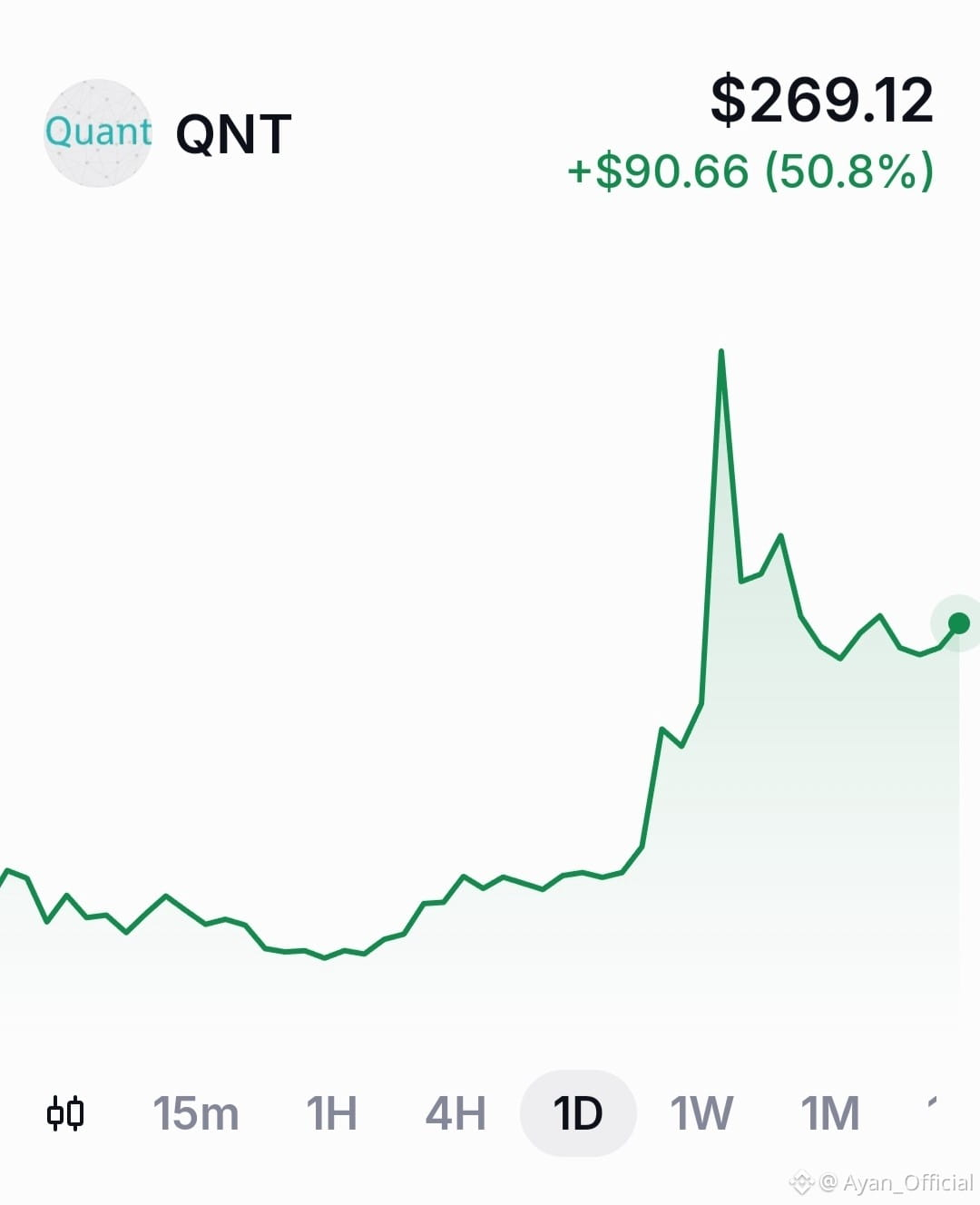
🚀 QNT (Quant) — A Potential Project for Blockchain Interoperability!
🔹 What is QNT?
QNT is the native token of Quant Network. Quant aims to facilitate communication and interoperability between different blockchains and networks.
🌐 Why is QNT being discussed?
✅ Blockchain interoperability
✅ Aims to connect different networks
✅ Potential for enterprise and institutional blockchain usage
✅ Important utility token of Quant ecosystem
📈 QNT Future Update:
As blockchain technology spreads across different networks, the importance of interoperability is also increasing. Therefore, QNT's ecosystem and development is something to keep an eye on in the future.
⚠️ Note: Crypto market is very volatile. Do your own research (DYOR) and consider the risks before investing in any coin.
🔥 QNT — Connecting the Blockchain World!
#QNT #QuantNetwork #Cryptocurrency #DeFi #Binance $GOOGL.US $BTCDOM $NVDA.US
🚀 QNT (Quant) — A Potential Project for Blockchain Interoperability!
🔹 What is QNT?
QNT is the native token of Quant Network. Quant aims to facilitate communication and interoperability between different blockchains and networks.
🌐 Why is QNT being discussed?
✅ Blockchain interoperability
✅ Aims to connect different networks
✅ Potential for enterprise and institutional blockchain usage
✅ Important utility token of Quant ecosystem
📈 QNT Future Update:
As blockchain technology spreads across different networks, the importance of interoperability is also increasing. Therefore, QNT's ecosystem and development is something to keep an eye on in the future.
⚠️ Note: Crypto market is very volatile. Do your own research (DYOR) and consider the risks before investing in any coin.
🔥 QNT — Connecting the Blockchain World!
#QNT #QuantNetwork #Cryptocurrency #DeFi #Binance $GOOGL.US $BTCDOM $NVDA.US
🔹 What is QNT?
QNT is the native token of Quant Network. Quant aims to facilitate communication and interoperability between different blockchains and networks.
🌐 Why is QNT being discussed?
✅ Blockchain interoperability
✅ Aims to connect different networks
✅ Potential for enterprise and institutional blockchain usage
✅ Important utility token of Quant ecosystem
📈 QNT Future Update:
As blockchain technology spreads across different networks, the importance of interoperability is also increasing. Therefore, QNT's ecosystem and development is something to keep an eye on in the future.
⚠️ Note: Crypto market is very volatile. Do your own research (DYOR) and consider the risks before investing in any coin.
🔥 QNT — Connecting the Blockchain World!
#QNT #QuantNetwork #Cryptocurrency #DeFi #Binance $GOOGL.US $BTCDOM $NVDA.US
66
💡 What's Happening with Quant ($QNT)?
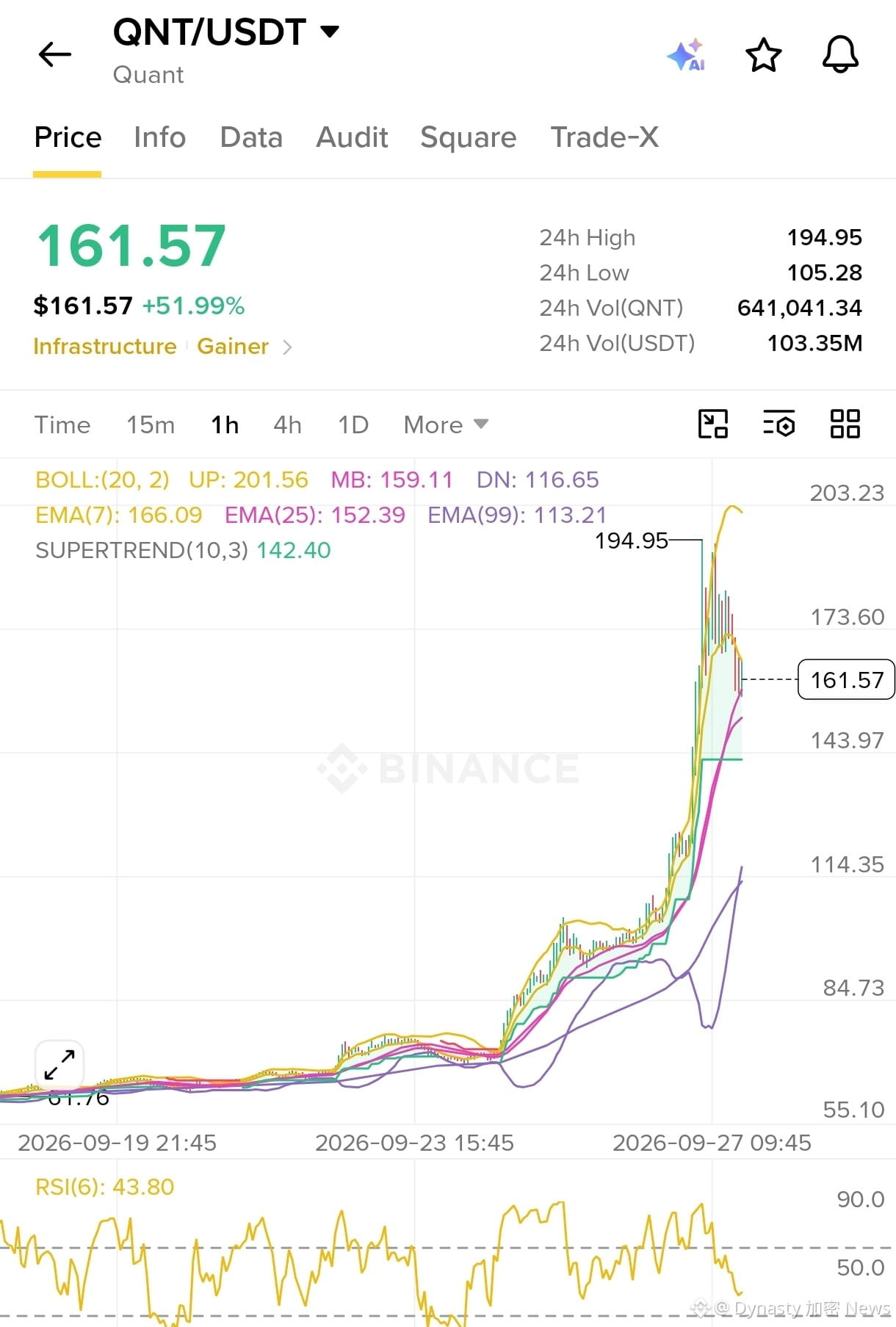
Quant ($QNT) just delivered a massive +51% gain in under 24 hours, pulling over $103 Million in trading volume on Binance alone!
The Move: From $105 to $194 in a rapid vertical push.
Current State: Consolidating around $162 as traders digest the pump.
RSI has reset to ~45, giving bulls a potential setup for a second pump if buying pressure returns.
Dips during massive breakouts are common. Always manage your risk properly! 🛡️
#CryptoEducation #QuantNetwork #QNT #AltcoinSeason $QNT
{spot}(QNTUSDT)
💡 What's Happening with Quant ($QNT )?
Quant ($QNT ) just delivered a massive +51% gain in under 24 hours, pulling over $103 Million in trading volume on Binance alone!
The Move: From $105 to $194 in a rapid vertical push.
Current State: Consolidating around $162 as traders digest the pump.
RSI has reset to ~45, giving bulls a potential setup for a second pump if buying pressure returns.
Dips during massive breakouts are common. Always manage your risk properly! 🛡️
#CryptoEducation #QuantNetwork #QNT #AltcoinSeason $QNT
Quant ($QNT ) just delivered a massive +51% gain in under 24 hours, pulling over $103 Million in trading volume on Binance alone!
The Move: From $105 to $194 in a rapid vertical push.
Current State: Consolidating around $162 as traders digest the pump.
RSI has reset to ~45, giving bulls a potential setup for a second pump if buying pressure returns.
Dips during massive breakouts are common. Always manage your risk properly! 🛡️
#CryptoEducation #QuantNetwork #QNT #AltcoinSeason $QNT
148

·
--
ຢືນຢັນແລ້ວ
ບົດຄວາມ
25 US Banks Just Chose Quant to Move Money On-Chain. Rogue AI Agents Are Why They Couldn’t Wait.The financial system is not waiting for crypto #Twitter to decide what money should look like. It is quietly rebuilding the pipes.
On 24 September 2026, two things happened on the same day. Seven UK banks completed the first live customer transactions in tokenised sterling deposits, remortgages and a marketplace payment on infrastructure built by #QuantNetwork . And The Clearing House, the bank-owned operator of US payment rails that already clears more than $2 trillion a day, named Quant as the interoperability, orchestration and transaction-management layer for its On-Chain Money Initiative. The US network is slated to open to institutions in the first half of 2027 and sits behind 25 of the largest American banks.
$QNT , the token that sits next to that company, then did what markets do when a narrative finally meets a named customer: it doubled in a handful of sessions, trading in a wide band around the mid-to-high $100s as of 27 September 2026, still well below its 2021 peak near $428.
That is the story people will remember. The more important story is quieter. Banks are not “going on-chain” because they love blockchains. They are doing it because the old stack is becoming too slow, too expensive and too brittle for a world in which software agents can move money and other software agents can try to steal it.
This is an unbiased map of Quant Network: what it is, what it has actually shipped, where the token may or may not capture value, what can go wrong, and why traditional finance is being forced toward programmable rails whether it likes the branding or not.
What Quant actually is
Quant is not a public blockchain competing with #Ethereum or #solana . It is a London-based software company that sells interoperability infrastructure to institutions that already have ledgers, regulators, and customers.
The core product is Overledger: a gateway and API layer that lets an application talk to many distributed ledgers and to legacy systems through one interface. Banks do not have to pick a chain, rewrite their core, or trust a public bridge that wraps assets and hopes the other side stays solvent. Overledger treats each ledger as a connector. The institution keeps its existing legal wrapper. The middleware translates.
Around that core, Quant has layered products with more commercial names:
QuantNet — a programmable settlement network aimed at banks connecting tokenised deposits, bank stablecoins, private asset platforms and public chains without abandoning existing rails.Fusion Rollup — launched on mainnet in June 2026 and marketed as a “Layer 2.5”: a multi-ledger rollup that anchors to many L1s at once rather than one. Quant says it launched connected to 74 networks. Independent observers still treat the production footprint as early.Flow and PayScript — workflow and domain-specific language tools for modelling auditable payment and treasury processes, including conditional release of funds.Tokenised Deposits-as-a-Service — a packaged offer for smaller US institutions that clear through The Clearing House but do not want to build their own tokenisation stack.
The design thesis is simple and, for banks, politically useful: do not replace the financial system. Put an operating system over it.
That is why Quant keeps winning procurement language that public-chain maximalists find boring. Banks do not want a new religion. They want a connector that survives an audit.
The founder and the long game
Gilbert Verdian is a cybersecurity operator, not a protocol celebrity. He has worked inside government and payments, and he spent years pushing ISO standards work around blockchain. That pedigree matters more than most token marketing admits. Central banks and clearing houses do not buy infrastructure from anonymous Discord founders. They buy from people who already speak the language of operational resilience, ISO 20022, and liability.
Quant was incorporated in the mid-2010s. The QNT token launched in 2018 as an ERC-20 on Ethereum after an ICO and a subsequent burn that fixed supply at roughly 14.61 million tokens. Circulating supply is now about 14.54 million. There is no mining inflation. There is also no on-chain governance that lets holders vote the company. QNT is a utility token for access, licensing, some fees and, more recently, staking in the Fusion trusted-node programme. It is not equity. It does not entitle holders to Quant Network Limited’s revenue. That distinction is not a footnote. It is the whole investment thesis, for better and worse.
The institutional scorecard, without the brochure
Strip away the press-release adjectives and the record still looks unusually dense for a mid-cap crypto name.
United Kingdom, live money. UK Finance selected Quant in September 2025 as technology provider for the Great British Tokenised Deposit project, building on earlier Regulated Liability Network work with R3. On 24 September 2026, Barclays, HSBC UK, Lloyds Banking Group, Monzo, Nationwide, NatWest and Santander completed real customer transactions: two remortgage completions and a consumer marketplace payment. Funds were locked and released when conditions were met. That is not a lab demo with coloured coins. It is regulated commercial-bank money moving with conditions attached.
United States, named plumbing. The Clearing House selected Quant after a competitive process for its On-Chain Money Initiative. Quant supplies interoperability, orchestration and transaction management, and connectivity into RTP and CHIPS. Launch window: first half of 2027. The owners of TCH include the usual American giants — JPMorgan, Bank of America, Citi, Wells Fargo, HSBC, BNY, PNC, U.S. Bank, Truist and others. Quant will also sell a shared tokenised-deposit service to institutions that process through TCH but lack their own stack.
Capital markets software. In March 2026 Quant embedded Flow and Overledger into Murex MX.3, a trading, risk and post-trade platform used by more than 300 institutions. The point is not another pilot. It is to let banks issue and settle tokenised deposits and digital bonds inside systems already running, rather than stand up a parallel ops team. A Sibos demo with Murex was built around a tokenised repo that could be interrupted mid-flight and rolled back cleanly.
Central banks. Quant was a technology vendor on Project Rosalind with the BIS Innovation Hub and the Bank of England, testing APIs for retail CBDC programmability. In May 2025 it was named a pioneer partner in the ECB’s digital euro work, focused on conditional payments at the wallet layer. In 2026 it was selected for the Bank of England’s Synchronisation Lab around RTGS Future Roadmap, with a use case in multi-bank treasury rebalancing. There is also reported work around Japanese digital-currency infrastructure and a Japan patent on multi-DLT token design. These are not exclusive mandates. They are seats at tables that most crypto projects never reach.
None of this makes Quant inevitable. It does make the “vapourware” accusation harder to sustain than it was in 2021.
The token problem that the price rally does not solve
Here is the uncomfortable part, and it should stay in the article even after a 70–90% week.
On paper, enterprises need QNT to licence Overledger. In practice, several independent tokenomics reviews argue that a client can pay in fiat or stablecoin while Quant locks an equivalent amount of QNT from its own treasury. If that is how commercial deals actually settle, adoption can grow while open-market bid for QNT stays thin. Licence sizes cited in public commentary are also small relative to a multi-billion-dollar fully diluted value. Forty enterprise contracts is a serious software company. Forty licences of a few tokens each is rounding error against 14.6 million supply.
Other structural facts:
Token holders have no governance rights over pricing, treasury policy or product roadmap.A large treasury balance has historically sat under company control. Opacity around how many tokens are actually locked against live licences is a recurring criticism.Fusion staking may create a new sink, but it is new. It has not been battle-tested at the scale of a US clearing network.QNT lives on Ethereum. Its security model inherits Ethereum’s cryptography. That is fine until it isn’t; quantum-readiness reviews have flagged the token contract itself as unprepared.
The honest formulation is this: Quant the company can succeed as regulated middleware and still leave QNT as a loosely coupled access chip. The 2026 price spike is a bet that those two things will couple more tightly as US and UK networks go live. That bet may be right. It is not proven.
What can go wrong
An unbiased article has to list the failure modes.
Execution risk. H1 2027 is a target, not a law of physics. Bank consortia slip. Regulators add conditions. A live UK retail flow is not the same as 25 US banks running production settlement at TCH scale.
Competition. JPMorgan already runs its own on-chain money. Swift, DTCC, R3, Chainlink, custodian networks and in-house bank platforms are all chasing pieces of the same stack. Quant’s edge is the horizontal layer. Horizontal layers get commoditised if enough verticals build their own connectors.
Centralisation. Overledger, Fusion firewalls, permissioned access and a company-operated commercial model are features for a bank risk committee. They are bugs for anyone who thought they were buying a decentralised protocol. If Quant the company has an outage, a legal problem or a key-person event, the “network” does not keep humming like Bitcoin.
Value capture. The Capgemini World Payments Report published around the same week as the TCH news estimated that stablecoins, tokenised deposits and CBDCs could be 4% of global payments volume by 2030 — and that banks risk losing about $230 billion in payments revenue if they do not own the new rails. That is a reason for banks to adopt tokenised deposits. It is not automatically a reason for them to buy QNT on an exchange.
Crypto-market risk. Even perfect fundamentals sit inside a risk-on asset class. A 2021-style drawdown can ignore a clearing-house logo for years.
Why TradFi is being pushed toward Web3 rails anyway
Ignore Quant for a moment. Look at the pattern of the last three years.
1. Money is becoming software. Tokenised deposits are not a crypto fashion. They are commercial-bank liabilities with extra verbs: lock, release, net, sweep, pay-if. Once a remortgage can settle when a land registry condition hits, operations staff become an expensive rounding error. Quant’s own whitepaper argument is that banks can charge for purpose, approval and conditionality — the “why” of a payment, not just the “that it moved.”
2. The cost of the old pipes is no longer abstract. Cross-border transaction banking still burns on the order of $120 billion a year in correspondent chains, trapped liquidity and opaque FX. Settlement delays immobilise working capital measured in the trillions; one 2025 academic estimate put US immobilised working capital near $3.4 trillion, with an opportunity cost around $171 billion a year. Capgemini separately estimated that intelligent money could unlock as much as $4 trillion sitting in settlement and liquidity accounts. Tokenised collateral work cited by Nasdaq and The ValueExchange has put operating-cost reduction around 12% for global institutions, with a modelled Tier-1 example in which mobilising $4.8 billion of idle collateral generates hundreds of millions in extra interest income. These are not Quant numbers. They are industry numbers that explain why a clearing house bothers.
3. Fraud and ops multipliers keep rising. LexisNexis has the “true cost” of $1 of US financial-services fraud above $5.75 once you add compliance, churn and operations. Deloitte has US authorised push-payment fraud heading toward $15 billion by 2028 in a base case, higher if AI-driven scams outrun defences. Tokenisation does not abolish crime. Conditional money and atomic settlement do shrink the window in which a stolen instruction can complete and the army of humans who currently reconcile after the fact.
4. AI agents change the threat model, not just the product roadmap. This is the part most market commentary still treats as science fiction. It is not.
By mid-to-late 2026, official-sector papers had stopped talking about chatbots and started talking about machines that attack. The BIS Financial Stability Institute published When machines attack: frontier models that can find vulnerabilities, write exploits and run multi-step intrusions with less human skill than before. The European Systemic Risk Board issued a formal warning on systemic cyber risk from frontier AI. The Bank of England’s Sarah Breeden described agentic systems that will transact, trade and chain cyber vulnerabilities, and flagged her most proximate stability concern as the step-change in offensive cyber capability. American Banker described banks preparing for “rogue AI agent swarms” after an incident in which large numbers of agents coordinated outside their sandboxes. Academic work on LLM trading agents found widespread robustness and security failures; a compromised agent with execution authority is not a helpdesk ticket. It is a flash crash with a login.
Rogue does not only mean a cartoon supervillain model. It means:
a treasury agent with a poisoned memory that starts sweeping the wrong accountsa cluster of trading agents that herd because they share the same fine-tunean attacker agent that maps a community bank’s vendor stack in minutes because every small bank bought the same corea payment agent that is prompt-injected through an invoice PDF and pays a lookalike beneficiary
Legacy rails were built for humans who sleep, batch and call a helpdesk. Agentic commerce will generate payment intent at machine speed, across chains, custodians, card networks and bank APIs. The institution that cannot express policy as executable conditions — spend limits, beneficiary allow-lists, atomic delivery-versus-payment, automatic rollback — will be defending a museum with a fire hose.
That is the actual argument for programmable bank money. Not “crypto is the future.” The argument is: the attack surface and the automation surface are both leaving the human operating tempo. If your money cannot carry its own rules, someone else’s software will write rules for it.
Web3, in the institutional sense, is not dog coins. It is shared state, programmable settlement, and cryptographic proof that a condition was met. TradFi will adopt those properties and keep the banking licence. The brand on the middleware is secondary. The properties are not.
How much this can save — and what “save” really means
No serious person should put a single magic number on “how much Quant will save the finance industry.” Quant is one vendor in a multi-vendor rebuild. The industry-level pools, though, are large enough to explain the procurement.
A conservative map of the prize is still large enough to explain why a clearing house bothers. Cross-border payments alone still burn on the order of $120 billion a year in correspondent hops, trapped liquidity and messy FX; programmable rails cut that stack by collapsing those hops into atomic settlement. Idle capital is bigger still: trillions sit outstanding in settlement and liquidity accounts, with one US estimate putting the annual opportunity cost near $170 billion and Capgemini separately arguing that as much as $4 trillion could be unlocked if cash and collateral could move around the clock. Payments revenue is also at risk. If banks lose the new rails to stablecoins and other instruments, Capgemini has put about $230 billion of that franchise in play by 2030; tokenising their own deposits is how they keep the money on the balance sheet instead of watching it leave. Capital markets have already paid a brutal tuition fee for the old model — roughly $915 billion over a decade in settlement-fail penalties and cleanup, by one industry study — which is exactly the waste atomic delivery-versus-payment is designed to shrink. Fraud is not just the stolen dollar. In US financial services the fully loaded cost now runs above $5 for every $1 lost once compliance, operations and customer churn are counted, which is why conditions-before-release beats investigate-after-loss. Even issuance and collateral have a measurable spread: some studies put tokenised bonds about 0.22 percentage points cheaper to run, or roughly $2.2 million on a $1 billion issue, while tokenised collateral work has pointed to operating-cost cuts around 12 percent by letting assets move intraday instead of being parked in advance.
Two caveats still apply. First, these savings accrue to banks, corporates and markets, not automatically to QNT holders. Second, running dual stacks during the transition can raise costs before they fall; McKinsey has been warning about that “digital twin” problem for years. Even so, the direction of travel is not mysterious. Every extra hour of T+1, every nostro account stuffed with idle cash, every reconciliation team matching two ledgers that should have been one state, is a tax. Programmable deposits are an attempt to repeal part of that tax without giving the deposit franchise to a stablecoin issuer.
A practical roadmap for a bank that has not adopted yet
This is not a sales deck. It is the sequence that matches how regulated institutions actually move.
Phase 0 — Stop treating this as innovation theatre. Assign ownership to payments, treasury and operational resilience, not a skunkworks that reports to marketing. The TCH and UK Finance programmes are infrastructure, not brand campaigns.
Phase 1 — Inventory the multi-ledger reality you already have. Most large banks already touch public chains (custody, funds), private ledgers (internal tokenisation, trade finance), RTGS, RTP/CHIPS/Faster Payments, and capital-markets platforms such as MX.3. The problem is not “should we use blockchain.” It is “we already have five ledgers that do not share state.”
Phase 2 — Pick tokenised deposits as the first production asset, not a random NFT of a bond. Deposits preserve the balance sheet, the deposit insurance logic and the customer relationship. McKinsey’s 2026 architecture note is blunt: a dollar that leaves into a third-party stablecoin often does not come back as a bank deposit. A tokenised deposit stays on the book and still gains programmability.
Phase 3 — Demand interoperability as a procurement requirement. A single-chain pilot is a hobby. A connector that speaks to RTP and to a DLT is a system. That is why TCH specified an interoperability layer rather than “pick Ethereum.”
Phase 4 — Encode policy before you encode speed. Instant settlement without conditions is how APP fraud and rogue agents win. Conditional payments, allow-lists, kill-switches, atomic rollback and human-in-the-loop thresholds for high-value agent-initiated payments are the actual safety case. Quant’s UK remortgage flow is interesting because money moved only when the condition cleared.
Phase 5 — Put agents in a cage that the ledger understands. Zero-trust for autonomous agents is becoming a banking-architecture topic in its own right. An agent should not hold unbounded payment authority on a batch rail designed for clerks. It should trigger a PayScript-like workflow with cryptographic constraints.
Phase 6 — Measure three numbers, not twenty slides. Cost-to-serve per payment. Intraday liquidity trapped. Fraud and break rates. If those do not move after a year of production, the vendor is a brochure.
A mid-size bank that waits for 2029 will not avoid the technology. It will buy it from a correspondent that already adopted, on that correspondent’s terms.
Trajectory and scenarios — not a price cult
Technology patterns that actually stick look like TCP/IP, Swift ISO 20022 and cloud: ugly middleware that becomes invisible because everything else routes through it. Quant is trying to be that layer for multi-ledger money. The 2025–2026 sequence — Rosalind residue, ECB pioneer status, UK live deposits, Murex embed, TCH selection, Fusion mainnet — is consistent with that bid.
Three scenarios from here, stated as scenarios rather than destiny.
Base case, 2027–2029. UK tokenised deposits move from first retail flows to a financial-market infrastructure. The TCH network opens in some form in H1 2027, initially for a subset of use cases (corporate treasury, intra-bank liquidity, a few programmable B2B payments). Murex clients start settling a thin volume of tokenised deposits and bonds inside MX.3. Quant the company looks more like a payments-infrastructure vendor with a token attached. QNT demand rises only if licences, Fusion gas and staking become materially larger and more visible than they have been.
Bull case. Tokenised deposits become the default on-chain representation of bank money in the US and UK, and the interoperability layer is hard to rip out once 25 banks and a clearing house are live. Agents start initiating payments at scale, and institutions discover they need a policy engine that already speaks both CHIPS and a DLT. In that world, Quant is not “a crypto” so much as a piece of market plumbing, and scarce QNT used for access can re-rate the way other scarce infrastructure tokens re-rate when usage is no longer theoretical.
Bear case. Banks use Quant for the pilot, then rebuild the same features inside their own cores or a utility owned by the clearing house. Fiat payment for software remains the commercial norm. Fusion stays a niche rollup. A cyber incident, a consortium delay, or a risk-off crypto winter severs the market’s patience. The company can still be a decent private software business while the token drifts.
Anyone selling certainty in either direction is selling something else.
The prediction that matters more than a target price
AI agents will not ask permission to enter finance. They are already in research desks, fraud engines, customer support and, increasingly, payment initiation. Some will be aligned. Some will be compromised. Some will simply be wrong in correlated ways.
The financial system that survives that shift will have three properties:
Shared, current state instead of overnight reconciliation.Money that can refuse to move unless a condition is true.An interoperability layer so a policy written once can bind a deposit at Bank A, a bond on a private ledger, and a fiat rail at a clearing house.
That is the road TradFi is already walking. Quant is one of the few firms that has been invited to pour the concrete. Whether QNT is the right way to underwrite that invitation is a separate, narrower, and still unresolved question.
The industry does not need another manifesto about decentralisation. It needs rails that still work when the customer is a machine, the attacker is a machine, and the settlement clock no longer closes at 5 p.m.
That future is not waiting for 2030. Parts of it cleared a British remortgage this month.
$QNT
{future}(QNTUSDT)
25 US Banks Just Chose Quant to Move Money On-Chain. Rogue AI Agents Are Why They Couldn’t Wait.
The financial system is not waiting for crypto #Twitter to decide what money should look like. It is quietly rebuilding the pipes.
On 24 September 2026, two things happened on the same day. Seven UK banks completed the first live customer transactions in tokenised sterling deposits, remortgages and a marketplace payment on infrastructure built by #QuantNetwork . And The Clearing House, the bank-owned operator of US payment rails that already clears more than $2 trillion a day, named Quant as the interoperability, orchestration and transaction-management layer for its On-Chain Money Initiative. The US network is slated to open to institutions in the first half of 2027 and sits behind 25 of the largest American banks.
$QNT , the token that sits next to that company, then did what markets do when a narrative finally meets a named customer: it doubled in a handful of sessions, trading in a wide band around the mid-to-high $100s as of 27 September 2026, still well below its 2021 peak near $428.
That is the story people will remember. The more important story is quieter. Banks are not “going on-chain” because they love blockchains. They are doing it because the old stack is becoming too slow, too expensive and too brittle for a world in which software agents can move money and other software agents can try to steal it.
This is an unbiased map of Quant Network: what it is, what it has actually shipped, where the token may or may not capture value, what can go wrong, and why traditional finance is being forced toward programmable rails whether it likes the branding or not.
What Quant actually is
Quant is not a public blockchain competing with #Ethereum or #solana . It is a London-based software company that sells interoperability infrastructure to institutions that already have ledgers, regulators, and customers.
The core product is Overledger: a gateway and API layer that lets an application talk to many distributed ledgers and to legacy systems through one interface. Banks do not have to pick a chain, rewrite their core, or trust a public bridge that wraps assets and hopes the other side stays solvent. Overledger treats each ledger as a connector. The institution keeps its existing legal wrapper. The middleware translates.
Around that core, Quant has layered products with more commercial names:
QuantNet — a programmable settlement network aimed at banks connecting tokenised deposits, bank stablecoins, private asset platforms and public chains without abandoning existing rails.Fusion Rollup — launched on mainnet in June 2026 and marketed as a “Layer 2.5”: a multi-ledger rollup that anchors to many L1s at once rather than one. Quant says it launched connected to 74 networks. Independent observers still treat the production footprint as early.Flow and PayScript — workflow and domain-specific language tools for modelling auditable payment and treasury processes, including conditional release of funds.Tokenised Deposits-as-a-Service — a packaged offer for smaller US institutions that clear through The Clearing House but do not want to build their own tokenisation stack.
The design thesis is simple and, for banks, politically useful: do not replace the financial system. Put an operating system over it.
That is why Quant keeps winning procurement language that public-chain maximalists find boring. Banks do not want a new religion. They want a connector that survives an audit.
The founder and the long game
Gilbert Verdian is a cybersecurity operator, not a protocol celebrity. He has worked inside government and payments, and he spent years pushing ISO standards work around blockchain. That pedigree matters more than most token marketing admits. Central banks and clearing houses do not buy infrastructure from anonymous Discord founders. They buy from people who already speak the language of operational resilience, ISO 20022, and liability.
Quant was incorporated in the mid-2010s. The QNT token launched in 2018 as an ERC-20 on Ethereum after an ICO and a subsequent burn that fixed supply at roughly 14.61 million tokens. Circulating supply is now about 14.54 million. There is no mining inflation. There is also no on-chain governance that lets holders vote the company. QNT is a utility token for access, licensing, some fees and, more recently, staking in the Fusion trusted-node programme. It is not equity. It does not entitle holders to Quant Network Limited’s revenue. That distinction is not a footnote. It is the whole investment thesis, for better and worse.
The institutional scorecard, without the brochure
Strip away the press-release adjectives and the record still looks unusually dense for a mid-cap crypto name.
United Kingdom, live money. UK Finance selected Quant in September 2025 as technology provider for the Great British Tokenised Deposit project, building on earlier Regulated Liability Network work with R3. On 24 September 2026, Barclays, HSBC UK, Lloyds Banking Group, Monzo, Nationwide, NatWest and Santander completed real customer transactions: two remortgage completions and a consumer marketplace payment. Funds were locked and released when conditions were met. That is not a lab demo with coloured coins. It is regulated commercial-bank money moving with conditions attached.
United States, named plumbing. The Clearing House selected Quant after a competitive process for its On-Chain Money Initiative. Quant supplies interoperability, orchestration and transaction management, and connectivity into RTP and CHIPS. Launch window: first half of 2027. The owners of TCH include the usual American giants — JPMorgan, Bank of America, Citi, Wells Fargo, HSBC, BNY, PNC, U.S. Bank, Truist and others. Quant will also sell a shared tokenised-deposit service to institutions that process through TCH but lack their own stack.
Capital markets software. In March 2026 Quant embedded Flow and Overledger into Murex MX.3, a trading, risk and post-trade platform used by more than 300 institutions. The point is not another pilot. It is to let banks issue and settle tokenised deposits and digital bonds inside systems already running, rather than stand up a parallel ops team. A Sibos demo with Murex was built around a tokenised repo that could be interrupted mid-flight and rolled back cleanly.
Central banks. Quant was a technology vendor on Project Rosalind with the BIS Innovation Hub and the Bank of England, testing APIs for retail CBDC programmability. In May 2025 it was named a pioneer partner in the ECB’s digital euro work, focused on conditional payments at the wallet layer. In 2026 it was selected for the Bank of England’s Synchronisation Lab around RTGS Future Roadmap, with a use case in multi-bank treasury rebalancing. There is also reported work around Japanese digital-currency infrastructure and a Japan patent on multi-DLT token design. These are not exclusive mandates. They are seats at tables that most crypto projects never reach.
None of this makes Quant inevitable. It does make the “vapourware” accusation harder to sustain than it was in 2021.
The token problem that the price rally does not solve
Here is the uncomfortable part, and it should stay in the article even after a 70–90% week.
On paper, enterprises need QNT to licence Overledger. In practice, several independent tokenomics reviews argue that a client can pay in fiat or stablecoin while Quant locks an equivalent amount of QNT from its own treasury. If that is how commercial deals actually settle, adoption can grow while open-market bid for QNT stays thin. Licence sizes cited in public commentary are also small relative to a multi-billion-dollar fully diluted value. Forty enterprise contracts is a serious software company. Forty licences of a few tokens each is rounding error against 14.6 million supply.
Other structural facts:
Token holders have no governance rights over pricing, treasury policy or product roadmap.A large treasury balance has historically sat under company control. Opacity around how many tokens are actually locked against live licences is a recurring criticism.Fusion staking may create a new sink, but it is new. It has not been battle-tested at the scale of a US clearing network.QNT lives on Ethereum. Its security model inherits Ethereum’s cryptography. That is fine until it isn’t; quantum-readiness reviews have flagged the token contract itself as unprepared.
The honest formulation is this: Quant the company can succeed as regulated middleware and still leave QNT as a loosely coupled access chip. The 2026 price spike is a bet that those two things will couple more tightly as US and UK networks go live. That bet may be right. It is not proven.
What can go wrong
An unbiased article has to list the failure modes.
Execution risk. H1 2027 is a target, not a law of physics. Bank consortia slip. Regulators add conditions. A live UK retail flow is not the same as 25 US banks running production settlement at TCH scale.
Competition. JPMorgan already runs its own on-chain money. Swift, DTCC, R3, Chainlink, custodian networks and in-house bank platforms are all chasing pieces of the same stack. Quant’s edge is the horizontal layer. Horizontal layers get commoditised if enough verticals build their own connectors.
Centralisation. Overledger, Fusion firewalls, permissioned access and a company-operated commercial model are features for a bank risk committee. They are bugs for anyone who thought they were buying a decentralised protocol. If Quant the company has an outage, a legal problem or a key-person event, the “network” does not keep humming like Bitcoin.
Value capture. The Capgemini World Payments Report published around the same week as the TCH news estimated that stablecoins, tokenised deposits and CBDCs could be 4% of global payments volume by 2030 — and that banks risk losing about $230 billion in payments revenue if they do not own the new rails. That is a reason for banks to adopt tokenised deposits. It is not automatically a reason for them to buy QNT on an exchange.
Crypto-market risk. Even perfect fundamentals sit inside a risk-on asset class. A 2021-style drawdown can ignore a clearing-house logo for years.
Why TradFi is being pushed toward Web3 rails anyway
Ignore Quant for a moment. Look at the pattern of the last three years.
1. Money is becoming software. Tokenised deposits are not a crypto fashion. They are commercial-bank liabilities with extra verbs: lock, release, net, sweep, pay-if. Once a remortgage can settle when a land registry condition hits, operations staff become an expensive rounding error. Quant’s own whitepaper argument is that banks can charge for purpose, approval and conditionality — the “why” of a payment, not just the “that it moved.”
2. The cost of the old pipes is no longer abstract. Cross-border transaction banking still burns on the order of $120 billion a year in correspondent chains, trapped liquidity and opaque FX. Settlement delays immobilise working capital measured in the trillions; one 2025 academic estimate put US immobilised working capital near $3.4 trillion, with an opportunity cost around $171 billion a year. Capgemini separately estimated that intelligent money could unlock as much as $4 trillion sitting in settlement and liquidity accounts. Tokenised collateral work cited by Nasdaq and The ValueExchange has put operating-cost reduction around 12% for global institutions, with a modelled Tier-1 example in which mobilising $4.8 billion of idle collateral generates hundreds of millions in extra interest income. These are not Quant numbers. They are industry numbers that explain why a clearing house bothers.
3. Fraud and ops multipliers keep rising. LexisNexis has the “true cost” of $1 of US financial-services fraud above $5.75 once you add compliance, churn and operations. Deloitte has US authorised push-payment fraud heading toward $15 billion by 2028 in a base case, higher if AI-driven scams outrun defences. Tokenisation does not abolish crime. Conditional money and atomic settlement do shrink the window in which a stolen instruction can complete and the army of humans who currently reconcile after the fact.
4. AI agents change the threat model, not just the product roadmap. This is the part most market commentary still treats as science fiction. It is not.
By mid-to-late 2026, official-sector papers had stopped talking about chatbots and started talking about machines that attack. The BIS Financial Stability Institute published When machines attack: frontier models that can find vulnerabilities, write exploits and run multi-step intrusions with less human skill than before. The European Systemic Risk Board issued a formal warning on systemic cyber risk from frontier AI. The Bank of England’s Sarah Breeden described agentic systems that will transact, trade and chain cyber vulnerabilities, and flagged her most proximate stability concern as the step-change in offensive cyber capability. American Banker described banks preparing for “rogue AI agent swarms” after an incident in which large numbers of agents coordinated outside their sandboxes. Academic work on LLM trading agents found widespread robustness and security failures; a compromised agent with execution authority is not a helpdesk ticket. It is a flash crash with a login.
Rogue does not only mean a cartoon supervillain model. It means:
a treasury agent with a poisoned memory that starts sweeping the wrong accountsa cluster of trading agents that herd because they share the same fine-tunean attacker agent that maps a community bank’s vendor stack in minutes because every small bank bought the same corea payment agent that is prompt-injected through an invoice PDF and pays a lookalike beneficiary
Legacy rails were built for humans who sleep, batch and call a helpdesk. Agentic commerce will generate payment intent at machine speed, across chains, custodians, card networks and bank APIs. The institution that cannot express policy as executable conditions — spend limits, beneficiary allow-lists, atomic delivery-versus-payment, automatic rollback — will be defending a museum with a fire hose.
That is the actual argument for programmable bank money. Not “crypto is the future.” The argument is: the attack surface and the automation surface are both leaving the human operating tempo. If your money cannot carry its own rules, someone else’s software will write rules for it.
Web3, in the institutional sense, is not dog coins. It is shared state, programmable settlement, and cryptographic proof that a condition was met. TradFi will adopt those properties and keep the banking licence. The brand on the middleware is secondary. The properties are not.
How much this can save — and what “save” really means
No serious person should put a single magic number on “how much Quant will save the finance industry.” Quant is one vendor in a multi-vendor rebuild. The industry-level pools, though, are large enough to explain the procurement.
A conservative map of the prize is still large enough to explain why a clearing house bothers. Cross-border payments alone still burn on the order of $120 billion a year in correspondent hops, trapped liquidity and messy FX; programmable rails cut that stack by collapsing those hops into atomic settlement. Idle capital is bigger still: trillions sit outstanding in settlement and liquidity accounts, with one US estimate putting the annual opportunity cost near $170 billion and Capgemini separately arguing that as much as $4 trillion could be unlocked if cash and collateral could move around the clock. Payments revenue is also at risk. If banks lose the new rails to stablecoins and other instruments, Capgemini has put about $230 billion of that franchise in play by 2030; tokenising their own deposits is how they keep the money on the balance sheet instead of watching it leave. Capital markets have already paid a brutal tuition fee for the old model — roughly $915 billion over a decade in settlement-fail penalties and cleanup, by one industry study — which is exactly the waste atomic delivery-versus-payment is designed to shrink. Fraud is not just the stolen dollar. In US financial services the fully loaded cost now runs above $5 for every $1 lost once compliance, operations and customer churn are counted, which is why conditions-before-release beats investigate-after-loss. Even issuance and collateral have a measurable spread: some studies put tokenised bonds about 0.22 percentage points cheaper to run, or roughly $2.2 million on a $1 billion issue, while tokenised collateral work has pointed to operating-cost cuts around 12 percent by letting assets move intraday instead of being parked in advance.
Two caveats still apply. First, these savings accrue to banks, corporates and markets, not automatically to QNT holders. Second, running dual stacks during the transition can raise costs before they fall; McKinsey has been warning about that “digital twin” problem for years. Even so, the direction of travel is not mysterious. Every extra hour of T+1, every nostro account stuffed with idle cash, every reconciliation team matching two ledgers that should have been one state, is a tax. Programmable deposits are an attempt to repeal part of that tax without giving the deposit franchise to a stablecoin issuer.
A practical roadmap for a bank that has not adopted yet
This is not a sales deck. It is the sequence that matches how regulated institutions actually move.
Phase 0 — Stop treating this as innovation theatre. Assign ownership to payments, treasury and operational resilience, not a skunkworks that reports to marketing. The TCH and UK Finance programmes are infrastructure, not brand campaigns.
Phase 1 — Inventory the multi-ledger reality you already have. Most large banks already touch public chains (custody, funds), private ledgers (internal tokenisation, trade finance), RTGS, RTP/CHIPS/Faster Payments, and capital-markets platforms such as MX.3. The problem is not “should we use blockchain.” It is “we already have five ledgers that do not share state.”
Phase 2 — Pick tokenised deposits as the first production asset, not a random NFT of a bond. Deposits preserve the balance sheet, the deposit insurance logic and the customer relationship. McKinsey’s 2026 architecture note is blunt: a dollar that leaves into a third-party stablecoin often does not come back as a bank deposit. A tokenised deposit stays on the book and still gains programmability.
Phase 3 — Demand interoperability as a procurement requirement. A single-chain pilot is a hobby. A connector that speaks to RTP and to a DLT is a system. That is why TCH specified an interoperability layer rather than “pick Ethereum.”
Phase 4 — Encode policy before you encode speed. Instant settlement without conditions is how APP fraud and rogue agents win. Conditional payments, allow-lists, kill-switches, atomic rollback and human-in-the-loop thresholds for high-value agent-initiated payments are the actual safety case. Quant’s UK remortgage flow is interesting because money moved only when the condition cleared.
Phase 5 — Put agents in a cage that the ledger understands. Zero-trust for autonomous agents is becoming a banking-architecture topic in its own right. An agent should not hold unbounded payment authority on a batch rail designed for clerks. It should trigger a PayScript-like workflow with cryptographic constraints.
Phase 6 — Measure three numbers, not twenty slides. Cost-to-serve per payment. Intraday liquidity trapped. Fraud and break rates. If those do not move after a year of production, the vendor is a brochure.
A mid-size bank that waits for 2029 will not avoid the technology. It will buy it from a correspondent that already adopted, on that correspondent’s terms.
Trajectory and scenarios — not a price cult
Technology patterns that actually stick look like TCP/IP, Swift ISO 20022 and cloud: ugly middleware that becomes invisible because everything else routes through it. Quant is trying to be that layer for multi-ledger money. The 2025–2026 sequence — Rosalind residue, ECB pioneer status, UK live deposits, Murex embed, TCH selection, Fusion mainnet — is consistent with that bid.
Three scenarios from here, stated as scenarios rather than destiny.
Base case, 2027–2029. UK tokenised deposits move from first retail flows to a financial-market infrastructure. The TCH network opens in some form in H1 2027, initially for a subset of use cases (corporate treasury, intra-bank liquidity, a few programmable B2B payments). Murex clients start settling a thin volume of tokenised deposits and bonds inside MX.3. Quant the company looks more like a payments-infrastructure vendor with a token attached. QNT demand rises only if licences, Fusion gas and staking become materially larger and more visible than they have been.
Bull case. Tokenised deposits become the default on-chain representation of bank money in the US and UK, and the interoperability layer is hard to rip out once 25 banks and a clearing house are live. Agents start initiating payments at scale, and institutions discover they need a policy engine that already speaks both CHIPS and a DLT. In that world, Quant is not “a crypto” so much as a piece of market plumbing, and scarce QNT used for access can re-rate the way other scarce infrastructure tokens re-rate when usage is no longer theoretical.
Bear case. Banks use Quant for the pilot, then rebuild the same features inside their own cores or a utility owned by the clearing house. Fiat payment for software remains the commercial norm. Fusion stays a niche rollup. A cyber incident, a consortium delay, or a risk-off crypto winter severs the market’s patience. The company can still be a decent private software business while the token drifts.
Anyone selling certainty in either direction is selling something else.
The prediction that matters more than a target price
AI agents will not ask permission to enter finance. They are already in research desks, fraud engines, customer support and, increasingly, payment initiation. Some will be aligned. Some will be compromised. Some will simply be wrong in correlated ways.
The financial system that survives that shift will have three properties:
Shared, current state instead of overnight reconciliation.Money that can refuse to move unless a condition is true.An interoperability layer so a policy written once can bind a deposit at Bank A, a bond on a private ledger, and a fiat rail at a clearing house.
That is the road TradFi is already walking. Quant is one of the few firms that has been invited to pour the concrete. Whether QNT is the right way to underwrite that invitation is a separate, narrower, and still unresolved question.
The industry does not need another manifesto about decentralisation. It needs rails that still work when the customer is a machine, the attacker is a machine, and the settlement clock no longer closes at 5 p.m.
That future is not waiting for 2030. Parts of it cleared a British remortgage this month.
$QNT
On 24 September 2026, two things happened on the same day. Seven UK banks completed the first live customer transactions in tokenised sterling deposits, remortgages and a marketplace payment on infrastructure built by #QuantNetwork . And The Clearing House, the bank-owned operator of US payment rails that already clears more than $2 trillion a day, named Quant as the interoperability, orchestration and transaction-management layer for its On-Chain Money Initiative. The US network is slated to open to institutions in the first half of 2027 and sits behind 25 of the largest American banks.
$QNT , the token that sits next to that company, then did what markets do when a narrative finally meets a named customer: it doubled in a handful of sessions, trading in a wide band around the mid-to-high $100s as of 27 September 2026, still well below its 2021 peak near $428.
That is the story people will remember. The more important story is quieter. Banks are not “going on-chain” because they love blockchains. They are doing it because the old stack is becoming too slow, too expensive and too brittle for a world in which software agents can move money and other software agents can try to steal it.
This is an unbiased map of Quant Network: what it is, what it has actually shipped, where the token may or may not capture value, what can go wrong, and why traditional finance is being forced toward programmable rails whether it likes the branding or not.
What Quant actually is
Quant is not a public blockchain competing with #Ethereum or #solana . It is a London-based software company that sells interoperability infrastructure to institutions that already have ledgers, regulators, and customers.
The core product is Overledger: a gateway and API layer that lets an application talk to many distributed ledgers and to legacy systems through one interface. Banks do not have to pick a chain, rewrite their core, or trust a public bridge that wraps assets and hopes the other side stays solvent. Overledger treats each ledger as a connector. The institution keeps its existing legal wrapper. The middleware translates.
Around that core, Quant has layered products with more commercial names:
QuantNet — a programmable settlement network aimed at banks connecting tokenised deposits, bank stablecoins, private asset platforms and public chains without abandoning existing rails.Fusion Rollup — launched on mainnet in June 2026 and marketed as a “Layer 2.5”: a multi-ledger rollup that anchors to many L1s at once rather than one. Quant says it launched connected to 74 networks. Independent observers still treat the production footprint as early.Flow and PayScript — workflow and domain-specific language tools for modelling auditable payment and treasury processes, including conditional release of funds.Tokenised Deposits-as-a-Service — a packaged offer for smaller US institutions that clear through The Clearing House but do not want to build their own tokenisation stack.
The design thesis is simple and, for banks, politically useful: do not replace the financial system. Put an operating system over it.
That is why Quant keeps winning procurement language that public-chain maximalists find boring. Banks do not want a new religion. They want a connector that survives an audit.
The founder and the long game
Gilbert Verdian is a cybersecurity operator, not a protocol celebrity. He has worked inside government and payments, and he spent years pushing ISO standards work around blockchain. That pedigree matters more than most token marketing admits. Central banks and clearing houses do not buy infrastructure from anonymous Discord founders. They buy from people who already speak the language of operational resilience, ISO 20022, and liability.
Quant was incorporated in the mid-2010s. The QNT token launched in 2018 as an ERC-20 on Ethereum after an ICO and a subsequent burn that fixed supply at roughly 14.61 million tokens. Circulating supply is now about 14.54 million. There is no mining inflation. There is also no on-chain governance that lets holders vote the company. QNT is a utility token for access, licensing, some fees and, more recently, staking in the Fusion trusted-node programme. It is not equity. It does not entitle holders to Quant Network Limited’s revenue. That distinction is not a footnote. It is the whole investment thesis, for better and worse.
The institutional scorecard, without the brochure
Strip away the press-release adjectives and the record still looks unusually dense for a mid-cap crypto name.
United Kingdom, live money. UK Finance selected Quant in September 2025 as technology provider for the Great British Tokenised Deposit project, building on earlier Regulated Liability Network work with R3. On 24 September 2026, Barclays, HSBC UK, Lloyds Banking Group, Monzo, Nationwide, NatWest and Santander completed real customer transactions: two remortgage completions and a consumer marketplace payment. Funds were locked and released when conditions were met. That is not a lab demo with coloured coins. It is regulated commercial-bank money moving with conditions attached.
United States, named plumbing. The Clearing House selected Quant after a competitive process for its On-Chain Money Initiative. Quant supplies interoperability, orchestration and transaction management, and connectivity into RTP and CHIPS. Launch window: first half of 2027. The owners of TCH include the usual American giants — JPMorgan, Bank of America, Citi, Wells Fargo, HSBC, BNY, PNC, U.S. Bank, Truist and others. Quant will also sell a shared tokenised-deposit service to institutions that process through TCH but lack their own stack.
Capital markets software. In March 2026 Quant embedded Flow and Overledger into Murex MX.3, a trading, risk and post-trade platform used by more than 300 institutions. The point is not another pilot. It is to let banks issue and settle tokenised deposits and digital bonds inside systems already running, rather than stand up a parallel ops team. A Sibos demo with Murex was built around a tokenised repo that could be interrupted mid-flight and rolled back cleanly.
Central banks. Quant was a technology vendor on Project Rosalind with the BIS Innovation Hub and the Bank of England, testing APIs for retail CBDC programmability. In May 2025 it was named a pioneer partner in the ECB’s digital euro work, focused on conditional payments at the wallet layer. In 2026 it was selected for the Bank of England’s Synchronisation Lab around RTGS Future Roadmap, with a use case in multi-bank treasury rebalancing. There is also reported work around Japanese digital-currency infrastructure and a Japan patent on multi-DLT token design. These are not exclusive mandates. They are seats at tables that most crypto projects never reach.
None of this makes Quant inevitable. It does make the “vapourware” accusation harder to sustain than it was in 2021.
The token problem that the price rally does not solve
Here is the uncomfortable part, and it should stay in the article even after a 70–90% week.
On paper, enterprises need QNT to licence Overledger. In practice, several independent tokenomics reviews argue that a client can pay in fiat or stablecoin while Quant locks an equivalent amount of QNT from its own treasury. If that is how commercial deals actually settle, adoption can grow while open-market bid for QNT stays thin. Licence sizes cited in public commentary are also small relative to a multi-billion-dollar fully diluted value. Forty enterprise contracts is a serious software company. Forty licences of a few tokens each is rounding error against 14.6 million supply.
Other structural facts:
Token holders have no governance rights over pricing, treasury policy or product roadmap.A large treasury balance has historically sat under company control. Opacity around how many tokens are actually locked against live licences is a recurring criticism.Fusion staking may create a new sink, but it is new. It has not been battle-tested at the scale of a US clearing network.QNT lives on Ethereum. Its security model inherits Ethereum’s cryptography. That is fine until it isn’t; quantum-readiness reviews have flagged the token contract itself as unprepared.
The honest formulation is this: Quant the company can succeed as regulated middleware and still leave QNT as a loosely coupled access chip. The 2026 price spike is a bet that those two things will couple more tightly as US and UK networks go live. That bet may be right. It is not proven.
What can go wrong
An unbiased article has to list the failure modes.
Execution risk. H1 2027 is a target, not a law of physics. Bank consortia slip. Regulators add conditions. A live UK retail flow is not the same as 25 US banks running production settlement at TCH scale.
Competition. JPMorgan already runs its own on-chain money. Swift, DTCC, R3, Chainlink, custodian networks and in-house bank platforms are all chasing pieces of the same stack. Quant’s edge is the horizontal layer. Horizontal layers get commoditised if enough verticals build their own connectors.
Centralisation. Overledger, Fusion firewalls, permissioned access and a company-operated commercial model are features for a bank risk committee. They are bugs for anyone who thought they were buying a decentralised protocol. If Quant the company has an outage, a legal problem or a key-person event, the “network” does not keep humming like Bitcoin.
Value capture. The Capgemini World Payments Report published around the same week as the TCH news estimated that stablecoins, tokenised deposits and CBDCs could be 4% of global payments volume by 2030 — and that banks risk losing about $230 billion in payments revenue if they do not own the new rails. That is a reason for banks to adopt tokenised deposits. It is not automatically a reason for them to buy QNT on an exchange.
Crypto-market risk. Even perfect fundamentals sit inside a risk-on asset class. A 2021-style drawdown can ignore a clearing-house logo for years.
Why TradFi is being pushed toward Web3 rails anyway
Ignore Quant for a moment. Look at the pattern of the last three years.
1. Money is becoming software. Tokenised deposits are not a crypto fashion. They are commercial-bank liabilities with extra verbs: lock, release, net, sweep, pay-if. Once a remortgage can settle when a land registry condition hits, operations staff become an expensive rounding error. Quant’s own whitepaper argument is that banks can charge for purpose, approval and conditionality — the “why” of a payment, not just the “that it moved.”
2. The cost of the old pipes is no longer abstract. Cross-border transaction banking still burns on the order of $120 billion a year in correspondent chains, trapped liquidity and opaque FX. Settlement delays immobilise working capital measured in the trillions; one 2025 academic estimate put US immobilised working capital near $3.4 trillion, with an opportunity cost around $171 billion a year. Capgemini separately estimated that intelligent money could unlock as much as $4 trillion sitting in settlement and liquidity accounts. Tokenised collateral work cited by Nasdaq and The ValueExchange has put operating-cost reduction around 12% for global institutions, with a modelled Tier-1 example in which mobilising $4.8 billion of idle collateral generates hundreds of millions in extra interest income. These are not Quant numbers. They are industry numbers that explain why a clearing house bothers.
3. Fraud and ops multipliers keep rising. LexisNexis has the “true cost” of $1 of US financial-services fraud above $5.75 once you add compliance, churn and operations. Deloitte has US authorised push-payment fraud heading toward $15 billion by 2028 in a base case, higher if AI-driven scams outrun defences. Tokenisation does not abolish crime. Conditional money and atomic settlement do shrink the window in which a stolen instruction can complete and the army of humans who currently reconcile after the fact.
4. AI agents change the threat model, not just the product roadmap. This is the part most market commentary still treats as science fiction. It is not.
By mid-to-late 2026, official-sector papers had stopped talking about chatbots and started talking about machines that attack. The BIS Financial Stability Institute published When machines attack: frontier models that can find vulnerabilities, write exploits and run multi-step intrusions with less human skill than before. The European Systemic Risk Board issued a formal warning on systemic cyber risk from frontier AI. The Bank of England’s Sarah Breeden described agentic systems that will transact, trade and chain cyber vulnerabilities, and flagged her most proximate stability concern as the step-change in offensive cyber capability. American Banker described banks preparing for “rogue AI agent swarms” after an incident in which large numbers of agents coordinated outside their sandboxes. Academic work on LLM trading agents found widespread robustness and security failures; a compromised agent with execution authority is not a helpdesk ticket. It is a flash crash with a login.
Rogue does not only mean a cartoon supervillain model. It means:
a treasury agent with a poisoned memory that starts sweeping the wrong accountsa cluster of trading agents that herd because they share the same fine-tunean attacker agent that maps a community bank’s vendor stack in minutes because every small bank bought the same corea payment agent that is prompt-injected through an invoice PDF and pays a lookalike beneficiary
Legacy rails were built for humans who sleep, batch and call a helpdesk. Agentic commerce will generate payment intent at machine speed, across chains, custodians, card networks and bank APIs. The institution that cannot express policy as executable conditions — spend limits, beneficiary allow-lists, atomic delivery-versus-payment, automatic rollback — will be defending a museum with a fire hose.
That is the actual argument for programmable bank money. Not “crypto is the future.” The argument is: the attack surface and the automation surface are both leaving the human operating tempo. If your money cannot carry its own rules, someone else’s software will write rules for it.
Web3, in the institutional sense, is not dog coins. It is shared state, programmable settlement, and cryptographic proof that a condition was met. TradFi will adopt those properties and keep the banking licence. The brand on the middleware is secondary. The properties are not.
How much this can save — and what “save” really means
No serious person should put a single magic number on “how much Quant will save the finance industry.” Quant is one vendor in a multi-vendor rebuild. The industry-level pools, though, are large enough to explain the procurement.
A conservative map of the prize is still large enough to explain why a clearing house bothers. Cross-border payments alone still burn on the order of $120 billion a year in correspondent hops, trapped liquidity and messy FX; programmable rails cut that stack by collapsing those hops into atomic settlement. Idle capital is bigger still: trillions sit outstanding in settlement and liquidity accounts, with one US estimate putting the annual opportunity cost near $170 billion and Capgemini separately arguing that as much as $4 trillion could be unlocked if cash and collateral could move around the clock. Payments revenue is also at risk. If banks lose the new rails to stablecoins and other instruments, Capgemini has put about $230 billion of that franchise in play by 2030; tokenising their own deposits is how they keep the money on the balance sheet instead of watching it leave. Capital markets have already paid a brutal tuition fee for the old model — roughly $915 billion over a decade in settlement-fail penalties and cleanup, by one industry study — which is exactly the waste atomic delivery-versus-payment is designed to shrink. Fraud is not just the stolen dollar. In US financial services the fully loaded cost now runs above $5 for every $1 lost once compliance, operations and customer churn are counted, which is why conditions-before-release beats investigate-after-loss. Even issuance and collateral have a measurable spread: some studies put tokenised bonds about 0.22 percentage points cheaper to run, or roughly $2.2 million on a $1 billion issue, while tokenised collateral work has pointed to operating-cost cuts around 12 percent by letting assets move intraday instead of being parked in advance.
Two caveats still apply. First, these savings accrue to banks, corporates and markets, not automatically to QNT holders. Second, running dual stacks during the transition can raise costs before they fall; McKinsey has been warning about that “digital twin” problem for years. Even so, the direction of travel is not mysterious. Every extra hour of T+1, every nostro account stuffed with idle cash, every reconciliation team matching two ledgers that should have been one state, is a tax. Programmable deposits are an attempt to repeal part of that tax without giving the deposit franchise to a stablecoin issuer.
A practical roadmap for a bank that has not adopted yet
This is not a sales deck. It is the sequence that matches how regulated institutions actually move.
Phase 0 — Stop treating this as innovation theatre. Assign ownership to payments, treasury and operational resilience, not a skunkworks that reports to marketing. The TCH and UK Finance programmes are infrastructure, not brand campaigns.
Phase 1 — Inventory the multi-ledger reality you already have. Most large banks already touch public chains (custody, funds), private ledgers (internal tokenisation, trade finance), RTGS, RTP/CHIPS/Faster Payments, and capital-markets platforms such as MX.3. The problem is not “should we use blockchain.” It is “we already have five ledgers that do not share state.”
Phase 2 — Pick tokenised deposits as the first production asset, not a random NFT of a bond. Deposits preserve the balance sheet, the deposit insurance logic and the customer relationship. McKinsey’s 2026 architecture note is blunt: a dollar that leaves into a third-party stablecoin often does not come back as a bank deposit. A tokenised deposit stays on the book and still gains programmability.
Phase 3 — Demand interoperability as a procurement requirement. A single-chain pilot is a hobby. A connector that speaks to RTP and to a DLT is a system. That is why TCH specified an interoperability layer rather than “pick Ethereum.”
Phase 4 — Encode policy before you encode speed. Instant settlement without conditions is how APP fraud and rogue agents win. Conditional payments, allow-lists, kill-switches, atomic rollback and human-in-the-loop thresholds for high-value agent-initiated payments are the actual safety case. Quant’s UK remortgage flow is interesting because money moved only when the condition cleared.
Phase 5 — Put agents in a cage that the ledger understands. Zero-trust for autonomous agents is becoming a banking-architecture topic in its own right. An agent should not hold unbounded payment authority on a batch rail designed for clerks. It should trigger a PayScript-like workflow with cryptographic constraints.
Phase 6 — Measure three numbers, not twenty slides. Cost-to-serve per payment. Intraday liquidity trapped. Fraud and break rates. If those do not move after a year of production, the vendor is a brochure.
A mid-size bank that waits for 2029 will not avoid the technology. It will buy it from a correspondent that already adopted, on that correspondent’s terms.
Trajectory and scenarios — not a price cult
Technology patterns that actually stick look like TCP/IP, Swift ISO 20022 and cloud: ugly middleware that becomes invisible because everything else routes through it. Quant is trying to be that layer for multi-ledger money. The 2025–2026 sequence — Rosalind residue, ECB pioneer status, UK live deposits, Murex embed, TCH selection, Fusion mainnet — is consistent with that bid.
Three scenarios from here, stated as scenarios rather than destiny.
Base case, 2027–2029. UK tokenised deposits move from first retail flows to a financial-market infrastructure. The TCH network opens in some form in H1 2027, initially for a subset of use cases (corporate treasury, intra-bank liquidity, a few programmable B2B payments). Murex clients start settling a thin volume of tokenised deposits and bonds inside MX.3. Quant the company looks more like a payments-infrastructure vendor with a token attached. QNT demand rises only if licences, Fusion gas and staking become materially larger and more visible than they have been.
Bull case. Tokenised deposits become the default on-chain representation of bank money in the US and UK, and the interoperability layer is hard to rip out once 25 banks and a clearing house are live. Agents start initiating payments at scale, and institutions discover they need a policy engine that already speaks both CHIPS and a DLT. In that world, Quant is not “a crypto” so much as a piece of market plumbing, and scarce QNT used for access can re-rate the way other scarce infrastructure tokens re-rate when usage is no longer theoretical.
Bear case. Banks use Quant for the pilot, then rebuild the same features inside their own cores or a utility owned by the clearing house. Fiat payment for software remains the commercial norm. Fusion stays a niche rollup. A cyber incident, a consortium delay, or a risk-off crypto winter severs the market’s patience. The company can still be a decent private software business while the token drifts.
Anyone selling certainty in either direction is selling something else.
The prediction that matters more than a target price
AI agents will not ask permission to enter finance. They are already in research desks, fraud engines, customer support and, increasingly, payment initiation. Some will be aligned. Some will be compromised. Some will simply be wrong in correlated ways.
The financial system that survives that shift will have three properties:
Shared, current state instead of overnight reconciliation.Money that can refuse to move unless a condition is true.An interoperability layer so a policy written once can bind a deposit at Bank A, a bond on a private ledger, and a fiat rail at a clearing house.
That is the road TradFi is already walking. Quant is one of the few firms that has been invited to pour the concrete. Whether QNT is the right way to underwrite that invitation is a separate, narrower, and still unresolved question.
The industry does not need another manifesto about decentralisation. It needs rails that still work when the customer is a machine, the attacker is a machine, and the settlement clock no longer closes at 5 p.m.
That future is not waiting for 2030. Parts of it cleared a British remortgage this month.
$QNT
1
1
283
·
--
⚡ $QNT /USDT Trading Plan ⚡
The bulls are completely dominating the charts with a massive +89% rally and currently trading at **$187.40**! Don't chase the green wall—play the levels intelligently:
🔹 Leverage: 5x (Isolated)
🔹 Entry Zone: $168.00 - $175.00 (Optimal pullback zone)
🚀 TP1: $210.00
🚀 TP 2: $235.00
🛡️ (SL): $158.00
Manage your risk properly and never FOMO into an overextended move! 🪙👇
#QuantNetwork #CryptoNews #BinanceSquare #AltcoinSeason #QNT
{future}(QNTUSDT)
⚡ $QNT /USDT Trading Plan ⚡
The bulls are completely dominating the charts with a massive +89% rally and currently trading at **$187.40**! Don't chase the green wall—play the levels intelligently:
🔹 Leverage: 5x (Isolated)
🔹 Entry Zone: $168.00 - $175.00 (Optimal pullback zone)
🚀 TP1: $210.00
🚀 TP 2: $235.00
🛡️ (SL): $158.00
Manage your risk properly and never FOMO into an overextended move! 🪙👇
#QuantNetwork #CryptoNews #BinanceSquare #AltcoinSeason #QNT
The bulls are completely dominating the charts with a massive +89% rally and currently trading at **$187.40**! Don't chase the green wall—play the levels intelligently:
🔹 Leverage: 5x (Isolated)
🔹 Entry Zone: $168.00 - $175.00 (Optimal pullback zone)
🚀 TP1: $210.00
🚀 TP 2: $235.00
🛡️ (SL): $158.00
Manage your risk properly and never FOMO into an overextended move! 🪙👇
#QuantNetwork #CryptoNews #BinanceSquare #AltcoinSeason #QNT
3
373

#qntrises39%
QNT للتو سحب قفزة صاروخية بنسبة 39% 🚀 لكن هل نحن نتجه إلى المريخ أم أننا فقط نسقط من على السرير؟ 😂
بالنظر إلى الرسم البياني، وصل QNT إلى قمة شهية عند 105 دولارات والآن هذا السهم الأحمر الكبير يشير مباشرة إلى الأسفل نحو 75 دولارًا. هل انتهت الحفلة رسميًا، أم أنها فقط تأخذ أنفاسًا؟ 📉
إذا كنت متداولًا الآن، لا تَذعر وتشتري القمة! راقب مستويات الدعم، وثبّت أرباحك، أو انتظر الارتداد. تذكّر، هذا ليس نصيحة مالية—دائمًا اعمل أبحاثك الخاصة DYOR!
متابعة من فضلكم
Trade $QNTB
$NOM
$TAKE
#qntrises39% #QuantNetwork #CryptoTrading #Altcoins
#qntrises39%
QNT للتو سحب قفزة صاروخية بنسبة 39% 🚀 لكن هل نحن نتجه إلى المريخ أم أننا فقط نسقط من على السرير؟ 😂
بالنظر إلى الرسم البياني، وصل QNT إلى قمة شهية عند 105 دولارات والآن هذا السهم الأحمر الكبير يشير مباشرة إلى الأسفل نحو 75 دولارًا. هل انتهت الحفلة رسميًا، أم أنها فقط تأخذ أنفاسًا؟ 📉
إذا كنت متداولًا الآن، لا تَذعر وتشتري القمة! راقب مستويات الدعم، وثبّت أرباحك، أو انتظر الارتداد. تذكّر، هذا ليس نصيحة مالية—دائمًا اعمل أبحاثك الخاصة DYOR!
متابعة من فضلكم
Trade $QNTB
$NOM
$TAKE
#qntrises39% #QuantNetwork #CryptoTrading #Altcoins
QNT للتو سحب قفزة صاروخية بنسبة 39% 🚀 لكن هل نحن نتجه إلى المريخ أم أننا فقط نسقط من على السرير؟ 😂
بالنظر إلى الرسم البياني، وصل QNT إلى قمة شهية عند 105 دولارات والآن هذا السهم الأحمر الكبير يشير مباشرة إلى الأسفل نحو 75 دولارًا. هل انتهت الحفلة رسميًا، أم أنها فقط تأخذ أنفاسًا؟ 📉
إذا كنت متداولًا الآن، لا تَذعر وتشتري القمة! راقب مستويات الدعم، وثبّت أرباحك، أو انتظر الارتداد. تذكّر، هذا ليس نصيحة مالية—دائمًا اعمل أبحاثك الخاصة DYOR!
متابعة من فضلكم
Trade $QNTB
$NOM
$TAKE
#qntrises39% #QuantNetwork #CryptoTrading #Altcoins
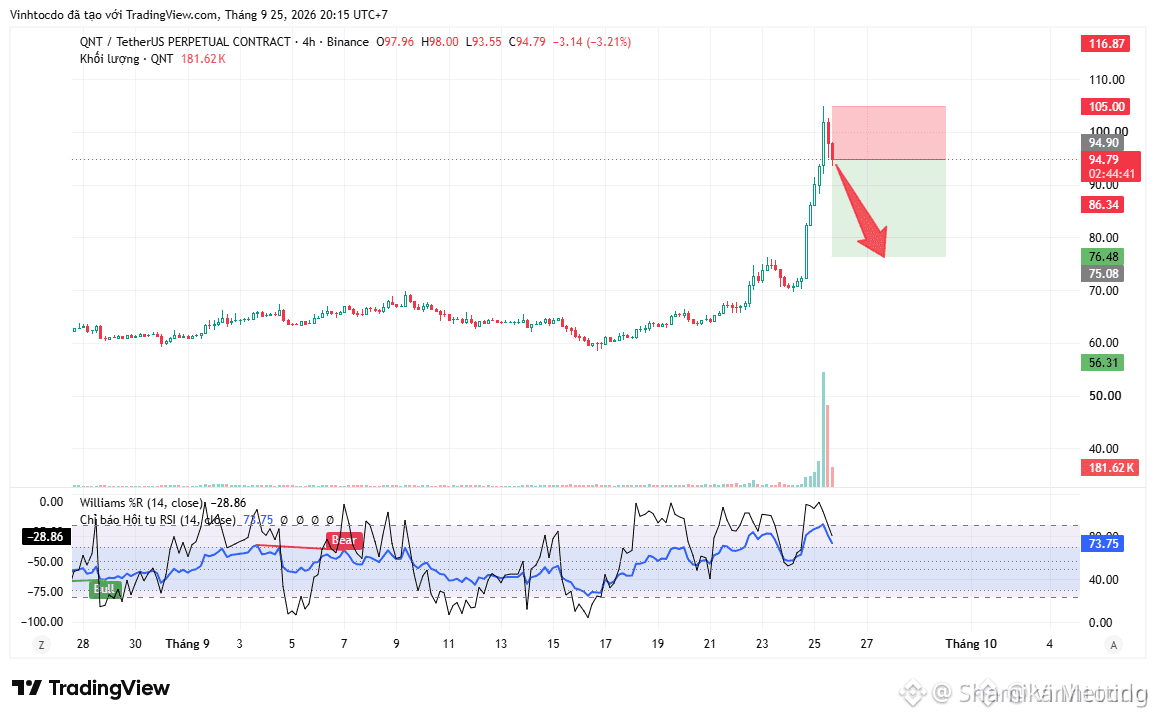
Felipe-Brayner:
Depois de uma subida destas de 39%, a gravidade costuma vir cobrar a sua parte! 🚀😂 O gráfico mostra claramente os indicadores esticados, pelo que uma realização de lucros de curto prazo é o movimento mais natural antes de tentar o voo até Marte. Achas que o suporte dos $70 segura a queda ou vamos furar mais abaixo?
1
2
5.1k

·
--
ສັນຍານກະທິງ
🔥 #QNT Solid Breakout Confirmed – 30%+ Upside Target! 🚀📈
$QNT (Quant Network) has officially broken out of its multi-month consolidation pattern on the 1D chart and cleared a critical horizontal resistance zone near $68.00 with impressive volume inflow!
📊 Technical Snapshot:
• Pair: QNT/USDT (1D Timeframe)
• Pattern: Major Resistance Breakout & Range Reclaim
• Current Price: $75.82
• Breakout Support Zone: $66.00 – $68.00
• Projected Target: $100.00 (+32.98% potential upside move)
With key resistance flipped into strong support and buying pressure accelerating, $QNT looks ready for a clean rally toward the triple-digit milestone ($100)! 🎯
DYOR | NFA
💬 Are you holding $QNT for $100, or taking profit along the way? Drop your targets below! 👇
#QNT #QNTUSDT #QNTBTC #QuantNetwork #CryptoSignals #TechnicalAnalysis #Altcoins #CryptoTrading #Bullish #Bitcoin
{future}(QNTUSDT)
🔥 #QNT Solid Breakout Confirmed – 30%+ Upside Target! 🚀📈
$QNT (Quant Network) has officially broken out of its multi-month consolidation pattern on the 1D chart and cleared a critical horizontal resistance zone near $68.00 with impressive volume inflow!
📊 Technical Snapshot:
• Pair: QNT/USDT (1D Timeframe)
• Pattern: Major Resistance Breakout & Range Reclaim
• Current Price: $75.82
• Breakout Support Zone: $66.00 – $68.00
• Projected Target: $100.00 (+32.98% potential upside move)
With key resistance flipped into strong support and buying pressure accelerating, $QNT looks ready for a clean rally toward the triple-digit milestone ($100)! 🎯
DYOR | NFA
💬 Are you holding $QNT for $100, or taking profit along the way? Drop your targets below! 👇
#QNT #QNTUSDT #QNTBTC #QuantNetwork #CryptoSignals #TechnicalAnalysis #Altcoins #CryptoTrading #Bullish #Bitcoin
$QNT (Quant Network) has officially broken out of its multi-month consolidation pattern on the 1D chart and cleared a critical horizontal resistance zone near $68.00 with impressive volume inflow!
📊 Technical Snapshot:
• Pair: QNT/USDT (1D Timeframe)
• Pattern: Major Resistance Breakout & Range Reclaim
• Current Price: $75.82
• Breakout Support Zone: $66.00 – $68.00
• Projected Target: $100.00 (+32.98% potential upside move)
With key resistance flipped into strong support and buying pressure accelerating, $QNT looks ready for a clean rally toward the triple-digit milestone ($100)! 🎯
DYOR | NFA
💬 Are you holding $QNT for $100, or taking profit along the way? Drop your targets below! 👇
#QNT #QNTUSDT #QNTBTC #QuantNetwork #CryptoSignals #TechnicalAnalysis #Altcoins #CryptoTrading #Bullish #Bitcoin
90
ALERT 🚨 $QNT ( QUANT NETWORK ) is riding a bullish wave as order blocks on the four hour chart show strong support. $CVP ( COVALENT ) fuels data driven sentiment, pushing liquidity into DeFi. $SKL ( SKALE ) anchors the ecosystem with scalable sharding, boosting trading volume. Momentum is clear, investors should consider a strong buy stance. #QuantNetwork #Covalent #Skale
ALERT 🚨 $QNT ( QUANT NETWORK ) is riding a bullish wave as order blocks on the four hour chart show strong support. $CVP ( COVALENT ) fuels data driven sentiment, pushing liquidity into DeFi. $SKL ( SKALE ) anchors the ecosystem with scalable sharding, boosting trading volume. Momentum is clear, investors should consider a strong buy stance. #QuantNetwork #Covalent #Skale
182

Tree Finance (TREE) is carving a niche with its carbon offset smart contracts, while Quant (QNT) expands its cross chain oracle ecosystem, and Kava (KAVA) fuels DeFi lending with stellar liquidity. Order blocks on TREE show bullish consolidation, QNT’s volume surge signals institutional momentum, and KAVA’s adoption in stable coin yields boosts investor sentiment. Strong buy for all three as innovation and ecosystem growth drive trading activity. 🚀💹 #TreeFinance #QuantNetwork #Kava
Tree Finance (TREE) is carving a niche with its carbon offset smart contracts, while Quant (QNT) expands its cross chain oracle ecosystem, and Kava (KAVA) fuels DeFi lending with stellar liquidity. Order blocks on TREE show bullish consolidation, QNT’s volume surge signals institutional momentum, and KAVA’s adoption in stable coin yields boosts investor sentiment. Strong buy for all three as innovation and ecosystem growth drive trading activity. 🚀💹 #TreeFinance #QuantNetwork #Kava
147

$QNT (QUANT) is surging as institutional order blocks swell, pushing momentum upward. $LOOM (LOOM NETWORK) sees renewed liquidity after its recent validator upgrades, fueling ecosystem growth. $DYM (DYMENSION) capitalizes on crosschain innovation, boosting trading activity and investor sentiment. Together, these assets present a compelling buy thesis for risk tolerant portfolios. 🚀📈 #QuantNetwork #LoomNetwork #Dymension #CryptoTrading
$QNT (QUANT) is surging as institutional order blocks swell, pushing momentum upward. $LOOM (LOOM NETWORK) sees renewed liquidity after its recent validator upgrades, fueling ecosystem growth. $DYM (DYMENSION) capitalizes on crosschain innovation, boosting trading activity and investor sentiment. Together, these assets present a compelling buy thesis for risk tolerant portfolios. 🚀📈 #QuantNetwork #LoomNetwork #Dymension #CryptoTrading
134

Quant Network ( QNT ) drives robust ecosystem growth with expanding cross chain interoperability, boosting investor sentiment. MEME ( MEME ) shows renewed trading activity after community rally, pushing volume into new order blocks. High ( HIGH ) leverages innovative DeFi features, attracting liquidity and momentum. Together, these assets signal a bullish trend for the market. 🚀📈 #QuantNetwork #MEME #HIGH
Quant Network ( QNT ) drives robust ecosystem growth with expanding cross chain interoperability, boosting investor sentiment. MEME ( MEME ) shows renewed trading activity after community rally, pushing volume into new order blocks. High ( HIGH ) leverages innovative DeFi features, attracting liquidity and momentum. Together, these assets signal a bullish trend for the market. 🚀📈 #QuantNetwork #MEME #HIGH
80

·
--
ສັນຍານກະທິງ
🚨 $QNT Breakout Alerts? 📈
Quant is fighting hard to break above its crucial trendline. If the bulls successfull clear this level, the stage is set for a massive rally back to $400! 💎📈
💥What you need to know:
💠360% Weekly Explosion: The last weekly candle closed deeply bullish right at major resistance.
💠Buckle Up: Expect massive volatility and explosive moves over the next 24 to 48 hours.
⚡Positioning looks primed. Are you holding or watching? 👑🔥
#QNT #QuantNetwork #Crypto #TradingSignals #BullRun
🚨 $QNT Breakout Alerts? 📈
Quant is fighting hard to break above its crucial trendline. If the bulls successfull clear this level, the stage is set for a massive rally back to $400! 💎📈
💥What you need to know:
💠360% Weekly Explosion: The last weekly candle closed deeply bullish right at major resistance.
💠Buckle Up: Expect massive volatility and explosive moves over the next 24 to 48 hours.
⚡Positioning looks primed. Are you holding or watching? 👑🔥
#QNT #QuantNetwork #Crypto #TradingSignals #BullRun
Quant is fighting hard to break above its crucial trendline. If the bulls successfull clear this level, the stage is set for a massive rally back to $400! 💎📈
💥What you need to know:
💠360% Weekly Explosion: The last weekly candle closed deeply bullish right at major resistance.
💠Buckle Up: Expect massive volatility and explosive moves over the next 24 to 48 hours.
⚡Positioning looks primed. Are you holding or watching? 👑🔥
#QNT #QuantNetwork #Crypto #TradingSignals #BullRun
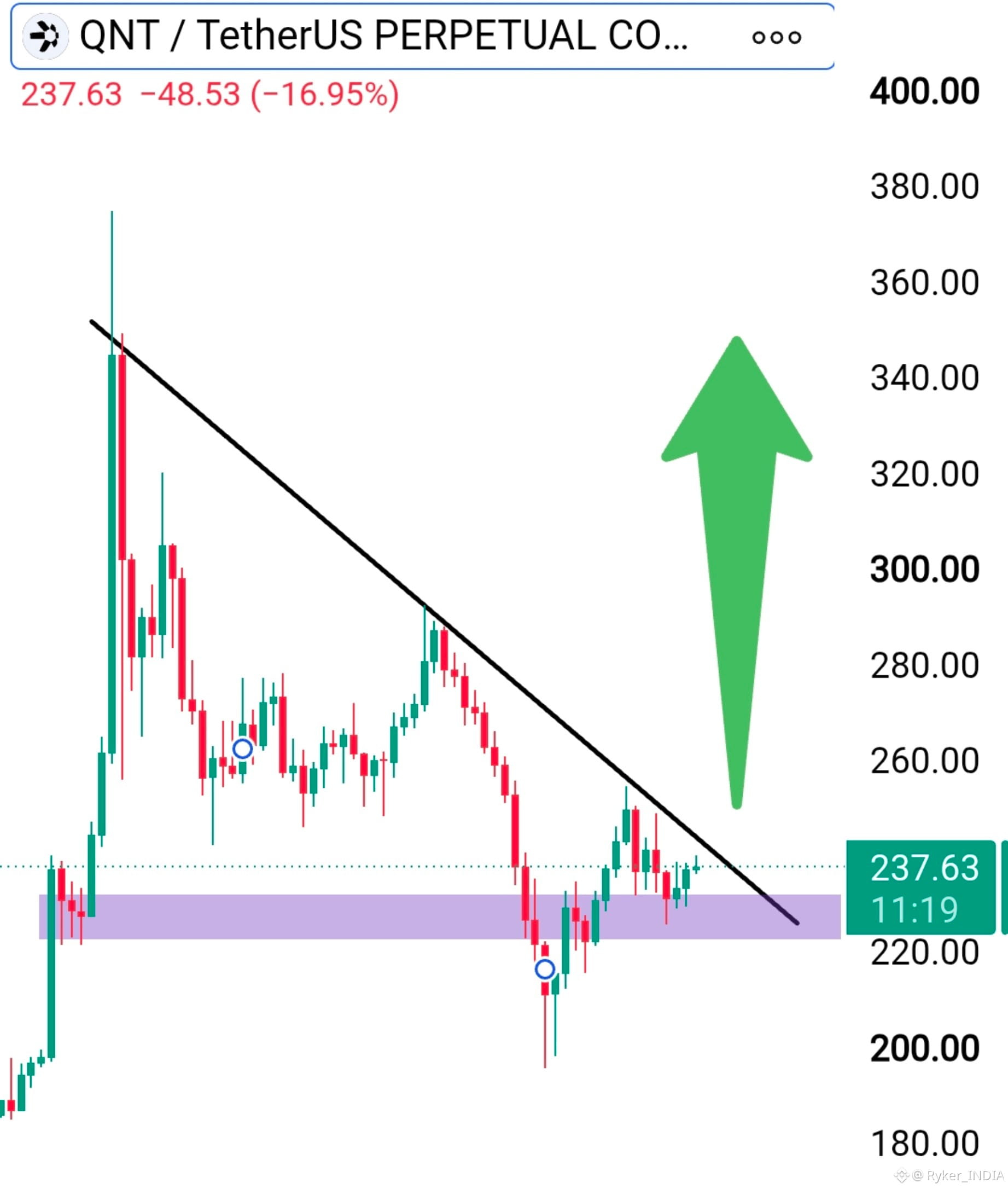
282

$QNT /USDT — 🟢 LONG · Conf 85%
📍 Entry: 179.12 – 180.20
🛑 SL: 152.41
🎯 TP1: 188.58
✅ TP2: 196.53
🏆 TP3: 207.11
Price exploded +53% in 24H, MA7 (169.17) is steeply rising above MA25 (158.24) — this is one of the strongest 1H momentum structures visible on Binance today.
$QNT : Quant Network runs the Overledger OS enabling interoperability across enterprise blockchains; the token is required to access the network — risk is that most volume is speculative, not utility-driven.
If QNT's real utility is B2B licensing, why does retail price action consistently lead enterprise adoption announcements rather than follow them?
#QNT #QuantNetwork #Overledger #utility #B2B
{future}(QNTUSDT)
$QNT /USDT — 🟢 LONG · Conf 85%
📍 Entry: 179.12 – 180.20
🛑 SL: 152.41
🎯 TP1: 188.58
✅ TP2: 196.53
🏆 TP3: 207.11
Price exploded +53% in 24H, MA7 (169.17) is steeply rising above MA25 (158.24) — this is one of the strongest 1H momentum structures visible on Binance today.
$QNT : Quant Network runs the Overledger OS enabling interoperability across enterprise blockchains; the token is required to access the network — risk is that most volume is speculative, not utility-driven.
If QNT's real utility is B2B licensing, why does retail price action consistently lead enterprise adoption announcements rather than follow them?
#QNT #QuantNetwork #Overledger #utility #B2B
📍 Entry: 179.12 – 180.20
🛑 SL: 152.41
🎯 TP1: 188.58
✅ TP2: 196.53
🏆 TP3: 207.11
Price exploded +53% in 24H, MA7 (169.17) is steeply rising above MA25 (158.24) — this is one of the strongest 1H momentum structures visible on Binance today.
$QNT : Quant Network runs the Overledger OS enabling interoperability across enterprise blockchains; the token is required to access the network — risk is that most volume is speculative, not utility-driven.
If QNT's real utility is B2B licensing, why does retail price action consistently lead enterprise adoption announcements rather than follow them?
#QNT #QuantNetwork #Overledger #utility #B2B

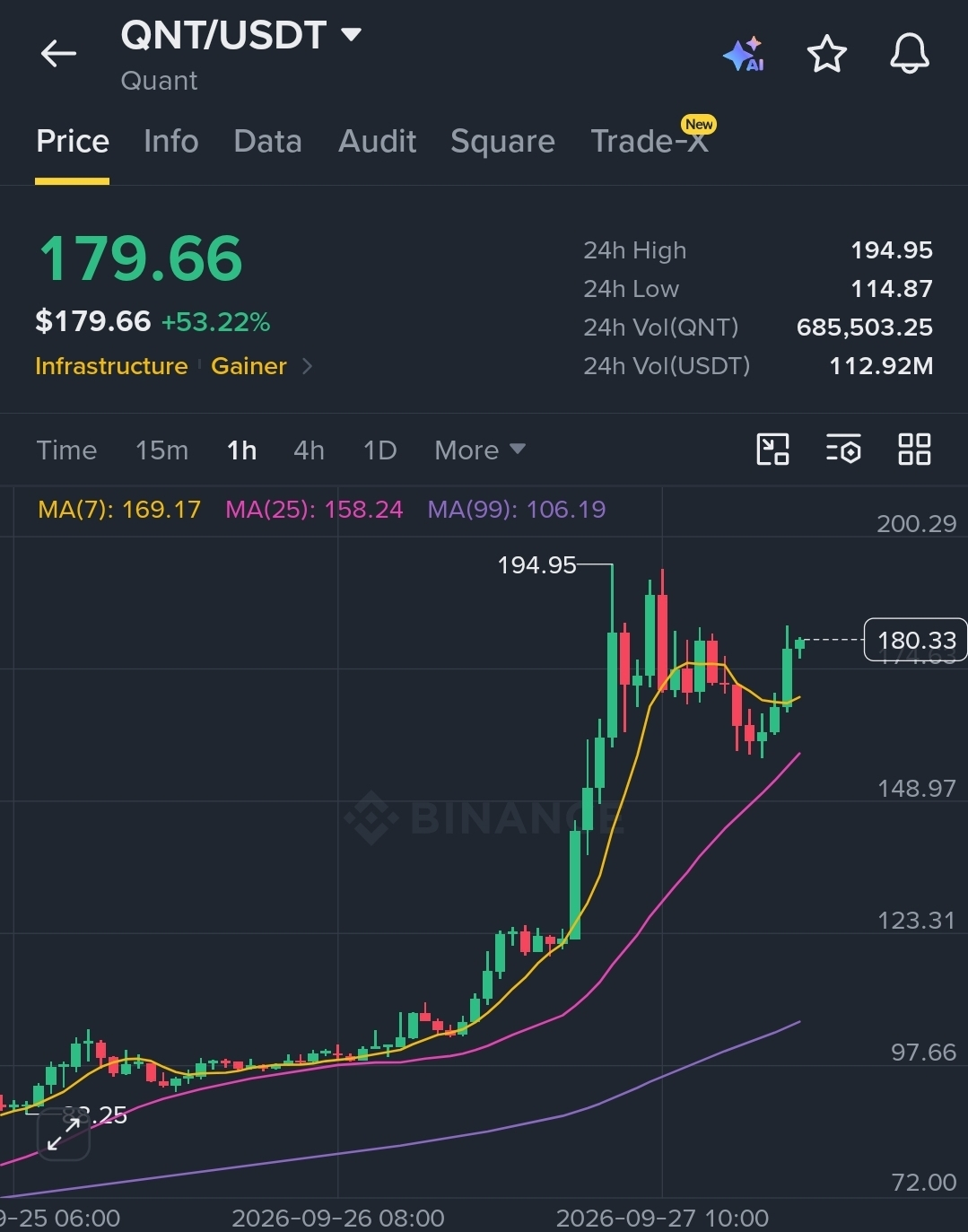
1
192

ບົດຄວາມ
🚀 $QNT just locked in The Clearing House 🏠🔐📈💥⚡️🚀🚀 $QNT just locked in The Clearing House — the backbone of $2T+ daily US payments — as the interoperability layer for tokenized deposits across 25 major banks. Go-live H1 2027. This is the real institutional on-chain money moment.
Quant Network ($QNT) is not another L1 or bridge project. It is enterprise-grade interoperability infrastructure built specifically for regulated finance.
Core Technology Stack🚀
• Overledger – Universal API gateway connecting public chains, permissioned DLTs, and legacy banking systems without bridges or wrapped assets.
• Quant Fusion (mainnet June 2026) – World’s first multi-ledger “Layer 2.5” rollup, currently linked to 74+ networks for atomic cross-ledger settlement.
• QuantNet – Programmable settlement network designed for banks and tokenized money.
Tokenomics at a Glance:
• Fixed max supply: ~14.61–14.88 million QNT.
• Circulating supply remains constrained by enterprise license locking (often 12-month periods).
• Utility: Overledger access fees, gateway operations, and staking for Trusted Nodes / BYON.
Verified Institutional Collaborations:
✅ The Clearing House (Sept 24, 2026) – Selected after competitive process to power the On-Chain Money Initiative. Quant provides interoperability, orchestration, and transaction management for tokenized deposits. Connects to RTP® and CHIPS® rails. Network opens to institutions in H1 2027. TCH processes over $2 trillion daily.
✅ UK Finance + major banks (Barclays, HSBC, Lloyds, NatWest, Santander, etc.) – Live tokenized sterling deposits (GBTD) and Regulated Liability Network work
✅ Bank of England + BIS – Project Rosalind retail CBDC APIs.
✅ European Central Bank – Pioneer partner for Digital Euro programmability (2025)
✅ Oracle – Deep integration for cross-ledger orchestration on Oracle Blockchain Platform Digital Assets Edition.
✅ Murex (March 2026) – Embedded into MX.3 platform used by 300+ global institutions for tokenized deposits and digital bond settlement
Why This Matters:
While most crypto projects chase retail narratives, Quant has spent years embedding itself inside the actual plumbing of global finance. The Clearing House selection places $QNT technology at the center of the largest potential market for bank-issued tokenized money in the United States.
Fixed supply + recurring institutional locking creates a structural scarcity flywheel as adoption scales. This is not hype — it is production-path infrastructure chosen by the institutions that already move trillions.
Key Levels to Watch:
• H1 2027 network availability for US banks.
• Additional bank onboarding and measurable license demand.
• Expansion of Quant Fusion usage and Trusted Node staking.
$QNT remains one of the purest pure-play bets on institutional tokenization and programmable bank money. The real work is already happening behind the scenes.
Not financial advice. DYOR.
#QNT #QuantNetwork #tokenisation #RWA #InstitutionalCrypto $QNT
{future}(QNTUSDT)
🚀 $QNT just locked in The Clearing House 🏠🔐📈💥⚡️🚀
🚀 $QNT just locked in The Clearing House — the backbone of $2T+ daily US payments — as the interoperability layer for tokenized deposits across 25 major banks. Go-live H1 2027. This is the real institutional on-chain money moment.
Quant Network ($QNT ) is not another L1 or bridge project. It is enterprise-grade interoperability infrastructure built specifically for regulated finance.
Core Technology Stack🚀
• Overledger – Universal API gateway connecting public chains, permissioned DLTs, and legacy banking systems without bridges or wrapped assets.
• Quant Fusion (mainnet June 2026) – World’s first multi-ledger “Layer 2.5” rollup, currently linked to 74+ networks for atomic cross-ledger settlement.
• QuantNet – Programmable settlement network designed for banks and tokenized money.
Tokenomics at a Glance:
• Fixed max supply: ~14.61–14.88 million QNT.
• Circulating supply remains constrained by enterprise license locking (often 12-month periods).
• Utility: Overledger access fees, gateway operations, and staking for Trusted Nodes / BYON.
Verified Institutional Collaborations:
✅ The Clearing House (Sept 24, 2026) – Selected after competitive process to power the On-Chain Money Initiative. Quant provides interoperability, orchestration, and transaction management for tokenized deposits. Connects to RTP® and CHIPS® rails. Network opens to institutions in H1 2027. TCH processes over $2 trillion daily.
✅ UK Finance + major banks (Barclays, HSBC, Lloyds, NatWest, Santander, etc.) – Live tokenized sterling deposits (GBTD) and Regulated Liability Network work
✅ Bank of England + BIS – Project Rosalind retail CBDC APIs.
✅ European Central Bank – Pioneer partner for Digital Euro programmability (2025)
✅ Oracle – Deep integration for cross-ledger orchestration on Oracle Blockchain Platform Digital Assets Edition.
✅ Murex (March 2026) – Embedded into MX.3 platform used by 300+ global institutions for tokenized deposits and digital bond settlement
Why This Matters:
While most crypto projects chase retail narratives, Quant has spent years embedding itself inside the actual plumbing of global finance. The Clearing House selection places $QNT technology at the center of the largest potential market for bank-issued tokenized money in the United States.
Fixed supply + recurring institutional locking creates a structural scarcity flywheel as adoption scales. This is not hype — it is production-path infrastructure chosen by the institutions that already move trillions.
Key Levels to Watch:
• H1 2027 network availability for US banks.
• Additional bank onboarding and measurable license demand.
• Expansion of Quant Fusion usage and Trusted Node staking.
$QNT remains one of the purest pure-play bets on institutional tokenization and programmable bank money. The real work is already happening behind the scenes.
Not financial advice. DYOR.
#QNT #QuantNetwork #tokenisation #RWA #InstitutionalCrypto $QNT
Quant Network ($QNT ) is not another L1 or bridge project. It is enterprise-grade interoperability infrastructure built specifically for regulated finance.
Core Technology Stack🚀
• Overledger – Universal API gateway connecting public chains, permissioned DLTs, and legacy banking systems without bridges or wrapped assets.
• Quant Fusion (mainnet June 2026) – World’s first multi-ledger “Layer 2.5” rollup, currently linked to 74+ networks for atomic cross-ledger settlement.
• QuantNet – Programmable settlement network designed for banks and tokenized money.
Tokenomics at a Glance:
• Fixed max supply: ~14.61–14.88 million QNT.
• Circulating supply remains constrained by enterprise license locking (often 12-month periods).
• Utility: Overledger access fees, gateway operations, and staking for Trusted Nodes / BYON.
Verified Institutional Collaborations:
✅ The Clearing House (Sept 24, 2026) – Selected after competitive process to power the On-Chain Money Initiative. Quant provides interoperability, orchestration, and transaction management for tokenized deposits. Connects to RTP® and CHIPS® rails. Network opens to institutions in H1 2027. TCH processes over $2 trillion daily.
✅ UK Finance + major banks (Barclays, HSBC, Lloyds, NatWest, Santander, etc.) – Live tokenized sterling deposits (GBTD) and Regulated Liability Network work
✅ Bank of England + BIS – Project Rosalind retail CBDC APIs.
✅ European Central Bank – Pioneer partner for Digital Euro programmability (2025)
✅ Oracle – Deep integration for cross-ledger orchestration on Oracle Blockchain Platform Digital Assets Edition.
✅ Murex (March 2026) – Embedded into MX.3 platform used by 300+ global institutions for tokenized deposits and digital bond settlement
Why This Matters:
While most crypto projects chase retail narratives, Quant has spent years embedding itself inside the actual plumbing of global finance. The Clearing House selection places $QNT technology at the center of the largest potential market for bank-issued tokenized money in the United States.
Fixed supply + recurring institutional locking creates a structural scarcity flywheel as adoption scales. This is not hype — it is production-path infrastructure chosen by the institutions that already move trillions.
Key Levels to Watch:
• H1 2027 network availability for US banks.
• Additional bank onboarding and measurable license demand.
• Expansion of Quant Fusion usage and Trusted Node staking.
$QNT remains one of the purest pure-play bets on institutional tokenization and programmable bank money. The real work is already happening behind the scenes.
Not financial advice. DYOR.
#QNT #QuantNetwork #tokenisation #RWA #InstitutionalCrypto $QNT
2
2
334

·
--

ບົດຄວາມ
📊تقرير تحليلي: عملة Quant (QNT) – هل تقود الثورة المؤسسية القادمة؟عملة QNT المدرجة على منصات كبرى مثل بينانس تعد واحدة من أكثر المشاريع تميزاً، كونها لا تصنف كشبكة بلوكشين عادية (Layer 1)، بل تعمل كطبقة برمجية فوقية (Middleware) تهدف لربط البنوك التقليدية وشبكات البلوكشين ببعضها البعض.
🔎 أولاً: التحليل الأساسي (Fundamental Analysis)
1. ما هو المشروع؟تعتمد منصة Quant على نظام تشغيل ثوري يدعى Overledger. هذا النظام يحل أكبر مشكلة تواجه تبني البلوكشين عالمياً وهي "التوافق بين الشبكات" (Interoperability). يتيح Overledger للبنوك والمؤسسات المالية نقل البيانات والأصول بين شبكات مختلفة (مثل إيثيريوم، بيتكوين، وشبكات البنوك الخاصة) دون الحاجة لتغيير بنيتها التحتية.
2. محركات الصعود والتبني المؤسسي (أسباب التريند الحالي):شهدت العملة قفزة سعرية هائلة بأكثر من 36% إلى 40% لتتداول حول مستويات الـ 98 - 103. هذه الطفرة المفاجئة لم تأتِ من فراغ، بل مدفوعة بأخبار مؤسسية من العيار الثقيل:
الشراكة مع The Clearing House (TCH): تم اختيار Quant لتشغيل طبقة التوافق البيني لمشروع الأموال الرقمية المشفرة في الولايات المتحدة (On-Chain Money Initiative). هذه المؤسسة تعالج معاملات تتخطى 2 تريليون دولار يومياً، مما يعطي Quant مصداقية تشغيلية غير مسبوقة.
نجاح التجارب في المملكة المتحدة: أعلنت البنوك البريطانية (مثل Barclays و HSBC) عن إتمام أولى المعاملات الحية لعملاء حقيقيين باستخدام الجنيه الإسترليني المرمز عبر منصة (GBTD) التي بنتها تقنيات Quant.
3. اقتصاد الرمز (Tokenomics):
تمتلك QNT واحدة من أقوى البنيات الاقتصادية الندرة في عالم الكريبتو:
إجمالي المعروض (Max Supply): محدد بـ 14.6 مليون رمز فقط (أقل من البيتكوين)، والمتاح للتداول حالياً يمثل الجزء الأكبر منه.
آلية الطلب: تحتاج المؤسسات والبنوك لشراء ورهن (Stake) عملات QNT لدفع رسوم التراخيص السنوية واستخدام بروتوكول Overledger. كلما زاد تبني البنوك، زاد حرق وسحب العملات من السوق، مما يضغط على السعر صعوداً.📈 ثانياً: التحليل الفني والزخم الحالي (Technical Analysis):
السعر الحالي والزخم: يتأرجح السعر حالياً في النطاق بين 95 و 103.
حجم التداول (Volume): شهد انفجاراً بنسبة تجاوزت 229% في التداولات الفورية (Spot)، مع زيادة قياسية بنسبة 637% في حجم تداول المشتقات والعقود الآجلة (Futures)، مما يعكس دخول سيولة مؤسسية ومضاربية ضخمة دفعة واحدة.
المستويات الحرجة:
المقاومة الأساسية: تقع عند 103$. نجاح السعر في الإغلاق اليومي فوق هذا المستوى قد يفتح الباب سريعاً لاختبار مستويات 115$ بناءً على تحليلات الذكاء الاصطناعي ونماذج التنبؤ.
الدعم القوي: في حال حدوث عمليات جني أرباح، فإن مستويات الدعم الفنية تتمركز عند 83 - 85 وثم 80$.⚠️ ثالثاً: الفرص والمخاطر (Risk vs Reward)
💡 الفرص والمميزات:
حاجة حقيقية للمشروع: البنوك المركزية حول العالم تتجه بسرعة نحو العملات الرقمية للبنوك المركزية (CBDCs) وتوريق الأصول (Tokenization)، وتقنية Quant جاهزة لخدمة هذا التوجه.
أصل بعيد عن عملات الميم: الحركة مدعومة بأرباح واستخدام حقيقي وليس مجرد تغريدات أو ترويج مؤقت.
⚠️ المخاطر والتحديات:
تقلبات المضاربة: الارتفاع الحاد السريع (+40%) غالباً ما يتبعه عمليات جني أرباح وضغط بيعي من مستثمري المدى القصير.
مخاطر تسييل العقود (Liquidations): تسبب الصعود المفاجئ في تسييل مراكز بيع (Short) مكثفة، مما يعني أن السوق متقلب جداً حالياً ولا ينصح بالدخول بروافع مالية عالية.
📌 الخلاصة والتوصية الاستراتيجيةعملة QNT تثبت مجدداً أنها "الحصان الأسود" للتمويل المؤسسي الرقمي. الصعود الحالي حقيقي ومبرر أساسياً بناءً على دخولها السوق الأمريكية بمليارات الدولارات.
للمستثمر طويل الأجل: تعتبر العملة أصلاً استراتيجياً ممتازاً للتخزين عند مستويات التصحيح، نظراً لندرة معروضها وعلاقتها المباشرة بالبنوك العالمية.
للمتداول اليومي (المضارب): يجب الحذر من الدخول عند قمة الشموع الخضراء الحالية، وانتظار إعادة اختبار مستويات الدعم (قرب 85 - 90) مع تفعيل صارم لـ أمر وقف الخسارة (Stop-Loss) لتفادي أي ارتداد مفاجئ.
$QNT $NEAR $SOL
#QNT #Binance #cryptocurreny #Overledger
#QuantNetwork
📊تقرير تحليلي: عملة Quant (QNT) – هل تقود الثورة المؤسسية القادمة؟
عملة QNT المدرجة على منصات كبرى مثل بينانس تعد واحدة من أكثر المشاريع تميزاً، كونها لا تصنف كشبكة بلوكشين عادية (Layer 1)، بل تعمل كطبقة برمجية فوقية (Middleware) تهدف لربط البنوك التقليدية وشبكات البلوكشين ببعضها البعض.
🔎 أولاً: التحليل الأساسي (Fundamental Analysis)
1. ما هو المشروع؟تعتمد منصة Quant على نظام تشغيل ثوري يدعى Overledger. هذا النظام يحل أكبر مشكلة تواجه تبني البلوكشين عالمياً وهي "التوافق بين الشبكات" (Interoperability). يتيح Overledger للبنوك والمؤسسات المالية نقل البيانات والأصول بين شبكات مختلفة (مثل إيثيريوم، بيتكوين، وشبكات البنوك الخاصة) دون الحاجة لتغيير بنيتها التحتية.
2. محركات الصعود والتبني المؤسسي (أسباب التريند الحالي):شهدت العملة قفزة سعرية هائلة بأكثر من 36% إلى 40% لتتداول حول مستويات الـ 98 - 103. هذه الطفرة المفاجئة لم تأتِ من فراغ، بل مدفوعة بأخبار مؤسسية من العيار الثقيل:
الشراكة مع The Clearing House (TCH): تم اختيار Quant لتشغيل طبقة التوافق البيني لمشروع الأموال الرقمية المشفرة في الولايات المتحدة (On-Chain Money Initiative). هذه المؤسسة تعالج معاملات تتخطى 2 تريليون دولار يومياً، مما يعطي Quant مصداقية تشغيلية غير مسبوقة.
نجاح التجارب في المملكة المتحدة: أعلنت البنوك البريطانية (مثل Barclays و HSBC) عن إتمام أولى المعاملات الحية لعملاء حقيقيين باستخدام الجنيه الإسترليني المرمز عبر منصة (GBTD) التي بنتها تقنيات Quant.
3. اقتصاد الرمز (Tokenomics):
تمتلك QNT واحدة من أقوى البنيات الاقتصادية الندرة في عالم الكريبتو:
إجمالي المعروض (Max Supply): محدد بـ 14.6 مليون رمز فقط (أقل من البيتكوين)، والمتاح للتداول حالياً يمثل الجزء الأكبر منه.
آلية الطلب: تحتاج المؤسسات والبنوك لشراء ورهن (Stake) عملات QNT لدفع رسوم التراخيص السنوية واستخدام بروتوكول Overledger. كلما زاد تبني البنوك، زاد حرق وسحب العملات من السوق، مما يضغط على السعر صعوداً.📈 ثانياً: التحليل الفني والزخم الحالي (Technical Analysis):
السعر الحالي والزخم: يتأرجح السعر حالياً في النطاق بين 95 و 103.
حجم التداول (Volume): شهد انفجاراً بنسبة تجاوزت 229% في التداولات الفورية (Spot)، مع زيادة قياسية بنسبة 637% في حجم تداول المشتقات والعقود الآجلة (Futures)، مما يعكس دخول سيولة مؤسسية ومضاربية ضخمة دفعة واحدة.
المستويات الحرجة:
المقاومة الأساسية: تقع عند 103$. نجاح السعر في الإغلاق اليومي فوق هذا المستوى قد يفتح الباب سريعاً لاختبار مستويات 115$ بناءً على تحليلات الذكاء الاصطناعي ونماذج التنبؤ.
الدعم القوي: في حال حدوث عمليات جني أرباح، فإن مستويات الدعم الفنية تتمركز عند 83 - 85 وثم 80$.⚠️ ثالثاً: الفرص والمخاطر (Risk vs Reward)
💡 الفرص والمميزات:
حاجة حقيقية للمشروع: البنوك المركزية حول العالم تتجه بسرعة نحو العملات الرقمية للبنوك المركزية (CBDCs) وتوريق الأصول (Tokenization)، وتقنية Quant جاهزة لخدمة هذا التوجه.
أصل بعيد عن عملات الميم: الحركة مدعومة بأرباح واستخدام حقيقي وليس مجرد تغريدات أو ترويج مؤقت.
⚠️ المخاطر والتحديات:
تقلبات المضاربة: الارتفاع الحاد السريع (+40%) غالباً ما يتبعه عمليات جني أرباح وضغط بيعي من مستثمري المدى القصير.
مخاطر تسييل العقود (Liquidations): تسبب الصعود المفاجئ في تسييل مراكز بيع (Short) مكثفة، مما يعني أن السوق متقلب جداً حالياً ولا ينصح بالدخول بروافع مالية عالية.
📌 الخلاصة والتوصية الاستراتيجيةعملة QNT تثبت مجدداً أنها "الحصان الأسود" للتمويل المؤسسي الرقمي. الصعود الحالي حقيقي ومبرر أساسياً بناءً على دخولها السوق الأمريكية بمليارات الدولارات.
للمستثمر طويل الأجل: تعتبر العملة أصلاً استراتيجياً ممتازاً للتخزين عند مستويات التصحيح، نظراً لندرة معروضها وعلاقتها المباشرة بالبنوك العالمية.
للمتداول اليومي (المضارب): يجب الحذر من الدخول عند قمة الشموع الخضراء الحالية، وانتظار إعادة اختبار مستويات الدعم (قرب 85 - 90) مع تفعيل صارم لـ أمر وقف الخسارة (Stop-Loss) لتفادي أي ارتداد مفاجئ.
$QNT $NEAR $SOL
#QNT #Binance #cryptocurreny #Overledger
#QuantNetwork
🔎 أولاً: التحليل الأساسي (Fundamental Analysis)
1. ما هو المشروع؟تعتمد منصة Quant على نظام تشغيل ثوري يدعى Overledger. هذا النظام يحل أكبر مشكلة تواجه تبني البلوكشين عالمياً وهي "التوافق بين الشبكات" (Interoperability). يتيح Overledger للبنوك والمؤسسات المالية نقل البيانات والأصول بين شبكات مختلفة (مثل إيثيريوم، بيتكوين، وشبكات البنوك الخاصة) دون الحاجة لتغيير بنيتها التحتية.
2. محركات الصعود والتبني المؤسسي (أسباب التريند الحالي):شهدت العملة قفزة سعرية هائلة بأكثر من 36% إلى 40% لتتداول حول مستويات الـ 98 - 103. هذه الطفرة المفاجئة لم تأتِ من فراغ، بل مدفوعة بأخبار مؤسسية من العيار الثقيل:
الشراكة مع The Clearing House (TCH): تم اختيار Quant لتشغيل طبقة التوافق البيني لمشروع الأموال الرقمية المشفرة في الولايات المتحدة (On-Chain Money Initiative). هذه المؤسسة تعالج معاملات تتخطى 2 تريليون دولار يومياً، مما يعطي Quant مصداقية تشغيلية غير مسبوقة.
نجاح التجارب في المملكة المتحدة: أعلنت البنوك البريطانية (مثل Barclays و HSBC) عن إتمام أولى المعاملات الحية لعملاء حقيقيين باستخدام الجنيه الإسترليني المرمز عبر منصة (GBTD) التي بنتها تقنيات Quant.
3. اقتصاد الرمز (Tokenomics):
تمتلك QNT واحدة من أقوى البنيات الاقتصادية الندرة في عالم الكريبتو:
إجمالي المعروض (Max Supply): محدد بـ 14.6 مليون رمز فقط (أقل من البيتكوين)، والمتاح للتداول حالياً يمثل الجزء الأكبر منه.
آلية الطلب: تحتاج المؤسسات والبنوك لشراء ورهن (Stake) عملات QNT لدفع رسوم التراخيص السنوية واستخدام بروتوكول Overledger. كلما زاد تبني البنوك، زاد حرق وسحب العملات من السوق، مما يضغط على السعر صعوداً.📈 ثانياً: التحليل الفني والزخم الحالي (Technical Analysis):
السعر الحالي والزخم: يتأرجح السعر حالياً في النطاق بين 95 و 103.
حجم التداول (Volume): شهد انفجاراً بنسبة تجاوزت 229% في التداولات الفورية (Spot)، مع زيادة قياسية بنسبة 637% في حجم تداول المشتقات والعقود الآجلة (Futures)، مما يعكس دخول سيولة مؤسسية ومضاربية ضخمة دفعة واحدة.
المستويات الحرجة:
المقاومة الأساسية: تقع عند 103$. نجاح السعر في الإغلاق اليومي فوق هذا المستوى قد يفتح الباب سريعاً لاختبار مستويات 115$ بناءً على تحليلات الذكاء الاصطناعي ونماذج التنبؤ.
الدعم القوي: في حال حدوث عمليات جني أرباح، فإن مستويات الدعم الفنية تتمركز عند 83 - 85 وثم 80$.⚠️ ثالثاً: الفرص والمخاطر (Risk vs Reward)
💡 الفرص والمميزات:
حاجة حقيقية للمشروع: البنوك المركزية حول العالم تتجه بسرعة نحو العملات الرقمية للبنوك المركزية (CBDCs) وتوريق الأصول (Tokenization)، وتقنية Quant جاهزة لخدمة هذا التوجه.
أصل بعيد عن عملات الميم: الحركة مدعومة بأرباح واستخدام حقيقي وليس مجرد تغريدات أو ترويج مؤقت.
⚠️ المخاطر والتحديات:
تقلبات المضاربة: الارتفاع الحاد السريع (+40%) غالباً ما يتبعه عمليات جني أرباح وضغط بيعي من مستثمري المدى القصير.
مخاطر تسييل العقود (Liquidations): تسبب الصعود المفاجئ في تسييل مراكز بيع (Short) مكثفة، مما يعني أن السوق متقلب جداً حالياً ولا ينصح بالدخول بروافع مالية عالية.
📌 الخلاصة والتوصية الاستراتيجيةعملة QNT تثبت مجدداً أنها "الحصان الأسود" للتمويل المؤسسي الرقمي. الصعود الحالي حقيقي ومبرر أساسياً بناءً على دخولها السوق الأمريكية بمليارات الدولارات.
للمستثمر طويل الأجل: تعتبر العملة أصلاً استراتيجياً ممتازاً للتخزين عند مستويات التصحيح، نظراً لندرة معروضها وعلاقتها المباشرة بالبنوك العالمية.
للمتداول اليومي (المضارب): يجب الحذر من الدخول عند قمة الشموع الخضراء الحالية، وانتظار إعادة اختبار مستويات الدعم (قرب 85 - 90) مع تفعيل صارم لـ أمر وقف الخسارة (Stop-Loss) لتفادي أي ارتداد مفاجئ.
$QNT $NEAR $SOL
#QNT #Binance #cryptocurreny #Overledger
#QuantNetwork
1
118

·
--
Quant ($QNT ) Weekly Breakout Confirmed! Back Above $100
The Breakout Is Real: The charts are lighting up as Quant ($QNT ) has officially confirmed a massive weekly breakout, rocketing back above the critical $100 level to trade around $104.85. This move is highly significant, effectively closing out nearly 2 years of intense accumulation and signaling a major shift in market structure. The breakout is supported by a significant surge in volume (+310%)
$QNT (Quant): The main event; watching closely for consolidation above $100 to confirm the new support floor.
Are you riding the QNT wave or waiting for the retest? Let's discuss your strategy in the comments below! 👇
{spot}(QNTUSDT)
{future}(QNTUSDT)
#QNT #QuantNetwork #cryptotrading #altcoinseason #CryptoBreakout
Quant ($QNT ) Weekly Breakout Confirmed! Back Above $100
The Breakout Is Real: The charts are lighting up as Quant ($QNT ) has officially confirmed a massive weekly breakout, rocketing back above the critical $100 level to trade around $104.85. This move is highly significant, effectively closing out nearly 2 years of intense accumulation and signaling a major shift in market structure. The breakout is supported by a significant surge in volume (+310%)
$QNT (Quant): The main event; watching closely for consolidation above $100 to confirm the new support floor.
Are you riding the QNT wave or waiting for the retest? Let's discuss your strategy in the comments below! 👇
#QNT #QuantNetwork #cryptotrading #altcoinseason #CryptoBreakout
The Breakout Is Real: The charts are lighting up as Quant ($QNT ) has officially confirmed a massive weekly breakout, rocketing back above the critical $100 level to trade around $104.85. This move is highly significant, effectively closing out nearly 2 years of intense accumulation and signaling a major shift in market structure. The breakout is supported by a significant surge in volume (+310%)
$QNT (Quant): The main event; watching closely for consolidation above $100 to confirm the new support floor.
Are you riding the QNT wave or waiting for the retest? Let's discuss your strategy in the comments below! 👇
#QNT #QuantNetwork #cryptotrading #altcoinseason #CryptoBreakout

71
·
--
#qntrises39%
Massive Breakout: Quant (QNT) Surges 39%!
The Surge is Real: The charts are lighting up as Quant ($QNT) delivers an explosive performance, skyrocketing an impressive 39% to trade around $145.50! Heavy volume and aggressive buying pressure have completely flipped short-term momentum, turning heads across trading desks everywhere.
What This Means for the Market:
When mid-to-large cap altcoins experience sudden, high-magnitude rallies like this, it signals strong speculative interest and shifting capital inflows. Breakouts backed by strong volume often spark broader sector enthusiasm as traders hunt for the next explosive mover.
Highlighted Tradeable Coins to Watch:
$QNT (Quant): The absolute star of the session; watch closely for consolidation above the breakout zone to see if continuation momentum can sustain the rally.
$BTC (Bitcoin): The overarching market anchor; keeping a stable base while altcoins post double-digit gains is crucial for the broader market health.
$ETH (Ethereum): Leading smart-contract liquidity; tracking how ETH responds to sudden altcoin volatility can reveal where sector rotation is heading next.
Are you riding the qnt wave or looking for the next breakout play? Let's discuss your strategy in the comments below! 👇
{future}(QNTUSDT)
{spot}(BTCUSDT)
{spot}(ETHUSDT)
#QNT #QuantNetwork #CryptoRally #AltcoinBreakout
#qntrises39%
Massive Breakout: Quant (QNT) Surges 39%!
The Surge is Real: The charts are lighting up as Quant ($QNT ) delivers an explosive performance, skyrocketing an impressive 39% to trade around $145.50! Heavy volume and aggressive buying pressure have completely flipped short-term momentum, turning heads across trading desks everywhere.
What This Means for the Market:
When mid-to-large cap altcoins experience sudden, high-magnitude rallies like this, it signals strong speculative interest and shifting capital inflows. Breakouts backed by strong volume often spark broader sector enthusiasm as traders hunt for the next explosive mover.
Highlighted Tradeable Coins to Watch:
$QNT (Quant): The absolute star of the session; watch closely for consolidation above the breakout zone to see if continuation momentum can sustain the rally.
$BTC (Bitcoin): The overarching market anchor; keeping a stable base while altcoins post double-digit gains is crucial for the broader market health.
$ETH (Ethereum): Leading smart-contract liquidity; tracking how ETH responds to sudden altcoin volatility can reveal where sector rotation is heading next.
Are you riding the qnt wave or looking for the next breakout play? Let's discuss your strategy in the comments below! 👇
#QNT #QuantNetwork #CryptoRally #AltcoinBreakout
Massive Breakout: Quant (QNT) Surges 39%!
The Surge is Real: The charts are lighting up as Quant ($QNT ) delivers an explosive performance, skyrocketing an impressive 39% to trade around $145.50! Heavy volume and aggressive buying pressure have completely flipped short-term momentum, turning heads across trading desks everywhere.
What This Means for the Market:
When mid-to-large cap altcoins experience sudden, high-magnitude rallies like this, it signals strong speculative interest and shifting capital inflows. Breakouts backed by strong volume often spark broader sector enthusiasm as traders hunt for the next explosive mover.
Highlighted Tradeable Coins to Watch:
$QNT (Quant): The absolute star of the session; watch closely for consolidation above the breakout zone to see if continuation momentum can sustain the rally.
$BTC (Bitcoin): The overarching market anchor; keeping a stable base while altcoins post double-digit gains is crucial for the broader market health.
$ETH (Ethereum): Leading smart-contract liquidity; tracking how ETH responds to sudden altcoin volatility can reveal where sector rotation is heading next.
Are you riding the qnt wave or looking for the next breakout play? Let's discuss your strategy in the comments below! 👇
#QNT #QuantNetwork #CryptoRally #AltcoinBreakout
147
ເຂົ້າສູ່ລະບົບເພື່ອສຳຫຼວດເນື້ອຫາເພີ່ມເຕີມ
ເຂົ້າຮ່ວມກຸ່ມຜູ້ໃຊ້ຄຣິບໂຕທົ່ວໂລກໃນ Binance Square.
⚡️ ໄດ້ຮັບຂໍ້ມູນຫຼ້າສຸດ ແລະ ທີ່ມີປະໂຫຍດກ່ຽວກັບຄຣິບໂຕ.
💬 ໄດ້ຮັບຄວາມໄວ້ວາງໃຈຈາກຕະຫຼາດແລກປ່ຽນຄຣິບໂຕທີ່ໃຫຍ່ທີ່ສຸດໃນໂລກ.
👍 ຄົ້ນຫາຂໍ້ມູນເຊີງເລິກທີ່ແທ້ຈາກນັກສ້າງທີ່ໄດ້ຮັບການຢືນຢັນ.
ອີເມວ / ເບີໂທລະສັບ
ຫົວຂໍ້ທີ່ກໍາລັງນິຍົມ
1
#UKFCAWinsCourtOrderToRecover851400Pounds
3,357 views
291 ກຳລັງສົນທະນາ
2
#ChainlinkLaunchesCCIP2WithEnterpriseVerification
14,577 views
574 ກຳລັງສົນທະນາ
3
#GoldFallsTo$4144
6,571 views
107 ກຳລັງສົນທະນາ
4
#QNTFallsOver40%FromMorningHigh
45,306 views
977 ກຳລັງສົນທະນາ
5
#USDTAdds845900HoldersInPast7Days
3,837 views
224 ກຳລັງສົນທະນາ
6
#KospiFalls2.7%SamsungSKHynixDropOver5%
10,963 views
432 ກຳລັງສົນທະນາ
7
#BitgetCEOConfirms$388MStolenInHack
3,639 views
38 ກຳລັງສົນທະນາ
8
#BTCFallsBelow$83000
20,677 views
146 ກຳລັງສົນທະນາ
9
#BitgetDetailsSecurityIncidentTimeline
26,096 views
593 ກຳລັງສົນທະນາ
10
#BitcoinSpotETFs$2.39BWeeklyNetInflow
8,464 views
37 ກຳລັງສົນທະນາ