

#privacy
privacy
1.9M ຄັ້ງທີ່ເບິ່ງ
10,426 ກຳລັງສົນທະນາ
ມາແຮງ
ຫຼ້າສຸດ


·
--
ສັນຍານກະທິງ
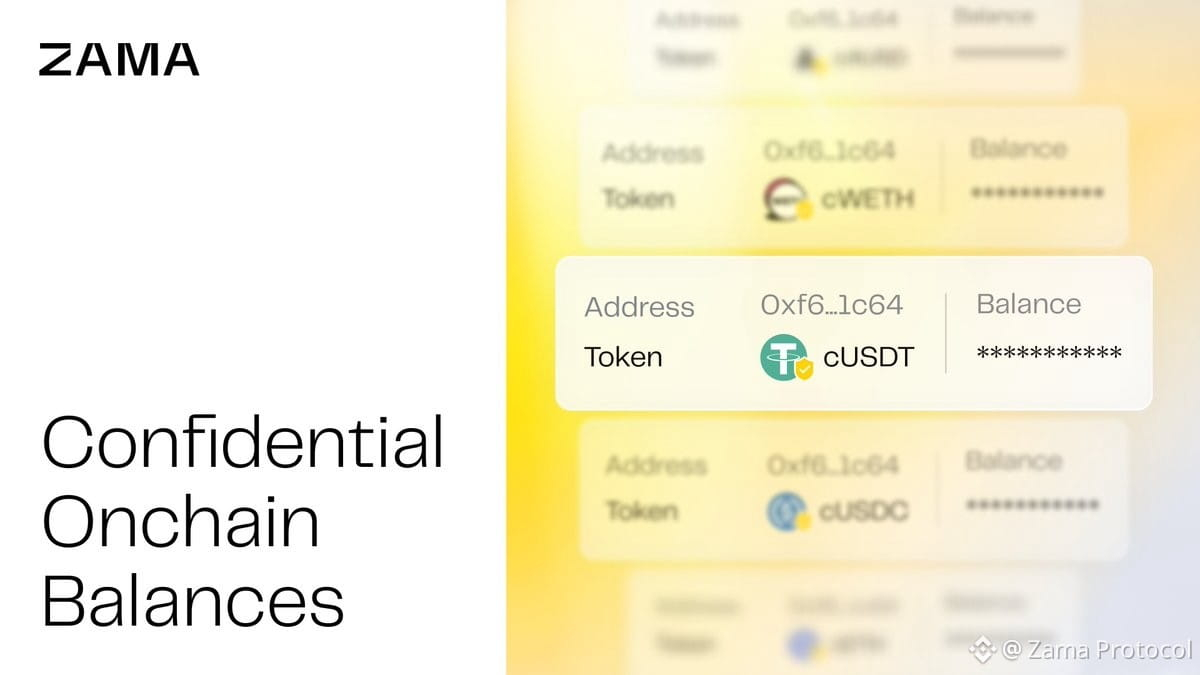
Confidential balances.
Today, anyone can look up your address and read your $USDT balance.
With cUSDT, your balance stays confidential.
Live on Ethereum. No bridging required.
Shield your USDT at app.zama.org
$ZAMA #privacy
Confidential balances.
Today, anyone can look up your address and read your $USDT balance.
With cUSDT, your balance stays confidential.
Live on Ethereum. No bridging required.
Shield your USDT at app.zama.org
$ZAMA #privacy
Today, anyone can look up your address and read your $USDT balance.
With cUSDT, your balance stays confidential.
Live on Ethereum. No bridging required.
Shield your USDT at app.zama.org
$ZAMA #privacy
2
270
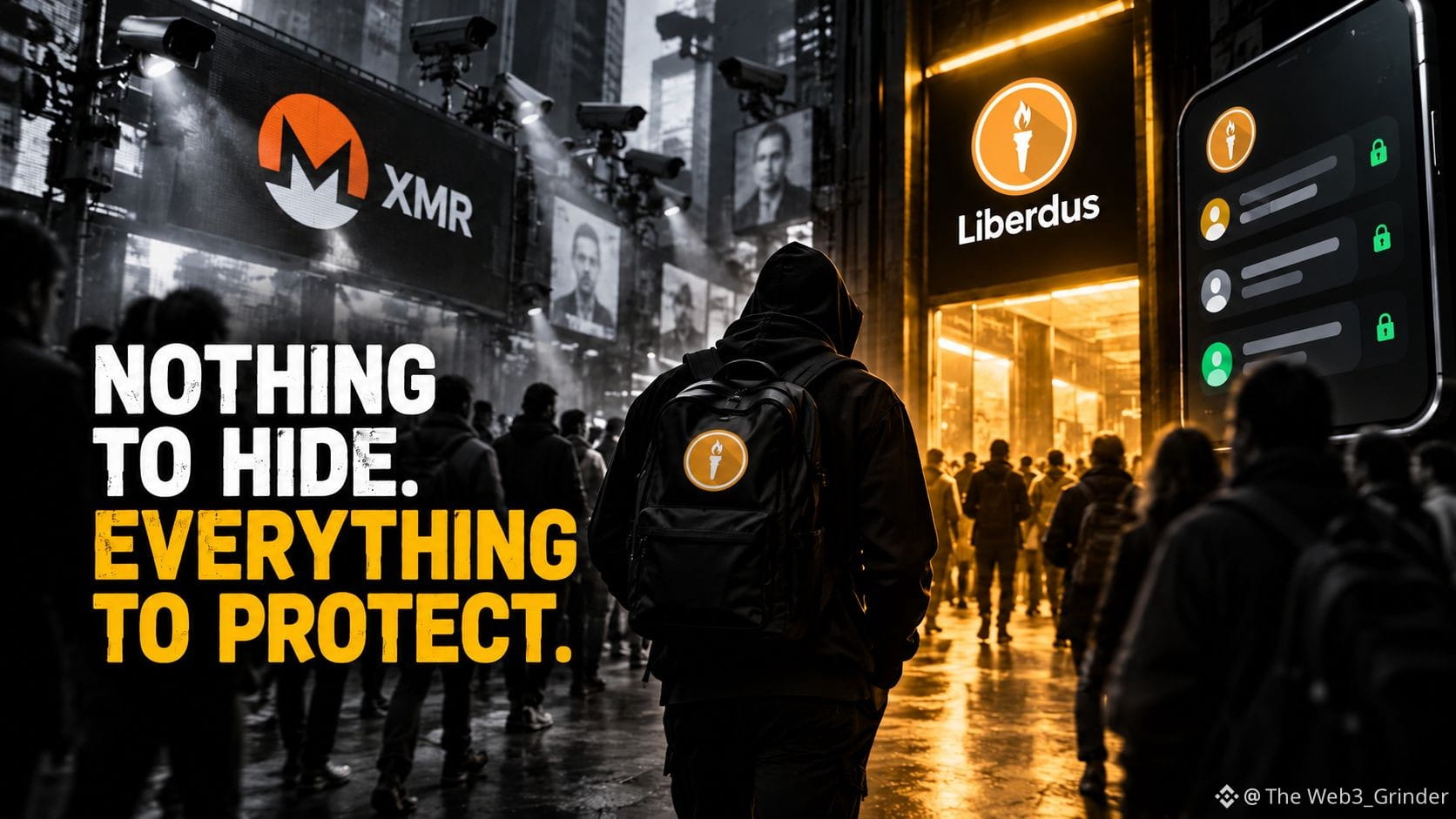
Financial freedom means little if our everyday conversations aren't private.
$XMR reminds us why transaction privacy matters, while liberdus brings that conversation into decentralized messaging.
Because protecting our money is important, but protecting our communication matters just as much.
Nothing to hide. Everything to protect. 🛡️
#XMR #Privacy
Financial freedom means little if our everyday conversations aren't private.
$XMR reminds us why transaction privacy matters, while liberdus brings that conversation into decentralized messaging.
Because protecting our money is important, but protecting our communication matters just as much.
Nothing to hide. Everything to protect. 🛡️
#XMR #Privacy
$XMR reminds us why transaction privacy matters, while liberdus brings that conversation into decentralized messaging.
Because protecting our money is important, but protecting our communication matters just as much.
Nothing to hide. Everything to protect. 🛡️
#XMR #Privacy
112

ບົດຄວາມ
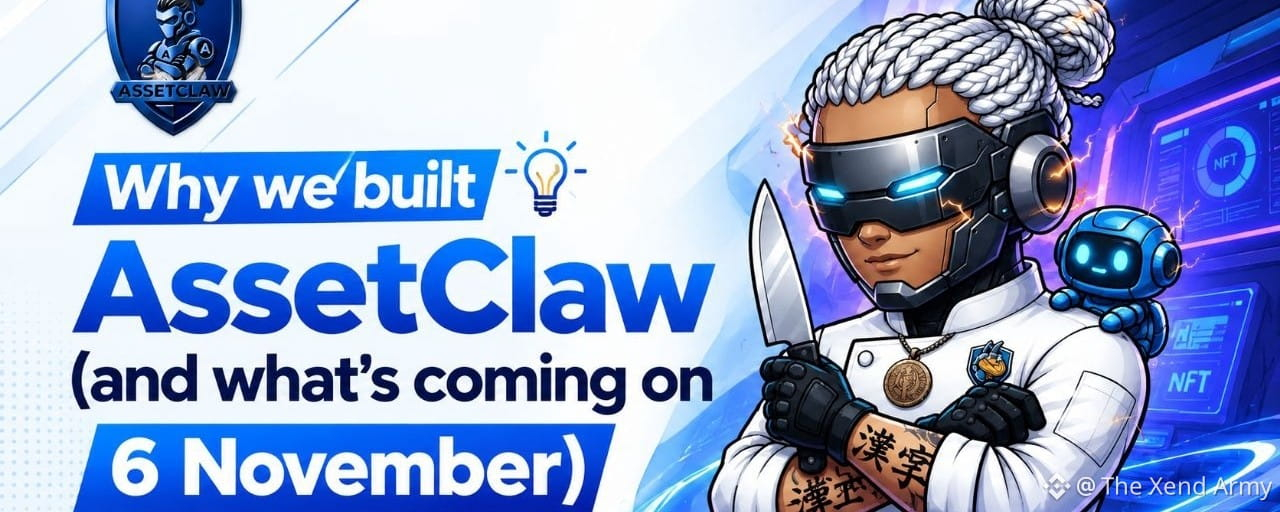
Why we built AssetClaw (and what's coming on 6 November) on #Assetchain #NFTsFew months ago, I started thinking about two problems in Web3: trading is becoming more accessible, but finding the right opportunities still takes too much effort. And while everything happens on-chain, privacy remains a challenge for users who don't want every financial move to be easily linked to their public wallet.
Moving assets across chains, tracking market activity, and discovering opportunities often means switching between multiple platforms, wallets, and tools. For someone new to crypto, it can feel overwhelming.
That’s where AssetClaw started.
We wanted to bring more of the trading experience directly into Telegram, making it easier to track opportunities, monitor whale and shark activity, and act without constantly jumping between different platforms.
But we also wanted to explore something deeper: privacy.
Because trading is not just about finding opportunities. It’s also about having more control over how you interact with digital assets and how much of your activity you expose publicly.
That’s why AssetClaw is being built around two key ideas: simplifying on-chain trading through Telegram and making privacy-focused tools more accessible.
On 6 November, we’re taking another step in that journey with the launch of AssetClaw Genesis 625.
🔢 Supply: 625
⛓️ Network: Asset Chain
💰 Mint price: $35 (USDT)
📅 Mint date: November 6
🎟️ The GTD & FCFS whitelist waitlist open
Check X .com @assetclaw_
This is more than a date on the calendar. It’s an opportunity to introduce what we’re building, the thinking behind it, and the community helping shape what comes next.
We’re still building, learning, and improving. But the mission is clear: make on-chain opportunities easier to discover, trading easier to access, and privacy a more practical part of the experience.
What AssetClaw is
AssetClaw is a Privacy bridge for the Asset Chain ecosystem. You connect your own wallet, pick where your tokens are going, and see exactly what you'll pay before you sign anything. We never hold your funds. Your wallet signs, your wallet receives, and that's it.
Building it honestly
AssetClaw is still in beta, and I'd rather say that plainly than pretend otherwise.
We ran a closed testnet in August with support from the Asset Chain dev team, who have helped us since June. We fixed a lot of rough edges because of it. There's still one piece we're waiting on before the full launch: our own in-app claim flow for Rwa Native. Until then, some transfers still finish with a claim on the Asset Chain bridge.
We also count our own numbers the hard way. Every transfer shown in AssetClaw Stats on the bridge page is checked on-chain before it counts. No made-up volume, no TVL theatre. We don't hold your funds, so we don't have a TVL to show you anyway.
Genesis 625 NFT
On 6 November at 6:25 PM WAT, we're minting Genesis 625, our NFT collection, AND THE FIRST NFT COLLECTION ON ASSETCHAIN, on AssetPad. There are 625 of them, and that's it.
What we are working on :
Holding one of the NFT comes with 50% off AssetClaw's fee on RWA Native bridging. The usual 1% becomes 0.5%, applied automatically when you bridge from the wallet that holds the NFT. You'll see it right in the quote. We plan to extend the same discount to more AssetClaw products as they roll out.
I want to be clear about what this is and isn't. It's a membership card for people who use AssetClaw. It's not a promise of profit. It's a way to say thank you to the people who believed in this early, and a reason to keep using the thing we built together.
Whitelist spots (GTD and FCFS) open with our campaign on 26 October. Keep an eye on this account.
See you on the 6th of November. 🦀
@rwaassetchain
@assetclaw_
@AssetPad
@SilentSwap
@XendFinance
Hashtags:
#AssetClaw
#Genesis625
#AssetChain
#RWA
#defi
#Web3
#Privacy
#TelegramTrading
#nft
#Builtonassetchain
Why we built AssetClaw (and what's coming on 6 November) on #Assetchain #NFTs
Few months ago, I started thinking about two problems in Web3: trading is becoming more accessible, but finding the right opportunities still takes too much effort. And while everything happens on-chain, privacy remains a challenge for users who don't want every financial move to be easily linked to their public wallet.
Moving assets across chains, tracking market activity, and discovering opportunities often means switching between multiple platforms, wallets, and tools. For someone new to crypto, it can feel overwhelming.
That’s where AssetClaw started.
We wanted to bring more of the trading experience directly into Telegram, making it easier to track opportunities, monitor whale and shark activity, and act without constantly jumping between different platforms.
But we also wanted to explore something deeper: privacy.
Because trading is not just about finding opportunities. It’s also about having more control over how you interact with digital assets and how much of your activity you expose publicly.
That’s why AssetClaw is being built around two key ideas: simplifying on-chain trading through Telegram and making privacy-focused tools more accessible.
On 6 November, we’re taking another step in that journey with the launch of AssetClaw Genesis 625.
🔢 Supply: 625
⛓️ Network: Asset Chain
💰 Mint price: $35 (USDT)
📅 Mint date: November 6
🎟️ The GTD & FCFS whitelist waitlist open
Check X .com @assetclaw_
This is more than a date on the calendar. It’s an opportunity to introduce what we’re building, the thinking behind it, and the community helping shape what comes next.
We’re still building, learning, and improving. But the mission is clear: make on-chain opportunities easier to discover, trading easier to access, and privacy a more practical part of the experience.
What AssetClaw is
AssetClaw is a Privacy bridge for the Asset Chain ecosystem. You connect your own wallet, pick where your tokens are going, and see exactly what you'll pay before you sign anything. We never hold your funds. Your wallet signs, your wallet receives, and that's it.
Building it honestly
AssetClaw is still in beta, and I'd rather say that plainly than pretend otherwise.
We ran a closed testnet in August with support from the Asset Chain dev team, who have helped us since June. We fixed a lot of rough edges because of it. There's still one piece we're waiting on before the full launch: our own in-app claim flow for Rwa Native. Until then, some transfers still finish with a claim on the Asset Chain bridge.
We also count our own numbers the hard way. Every transfer shown in AssetClaw Stats on the bridge page is checked on-chain before it counts. No made-up volume, no TVL theatre. We don't hold your funds, so we don't have a TVL to show you anyway.
Genesis 625 NFT
On 6 November at 6:25 PM WAT, we're minting Genesis 625, our NFT collection, AND THE FIRST NFT COLLECTION ON ASSETCHAIN, on AssetPad. There are 625 of them, and that's it.
What we are working on :
Holding one of the NFT comes with 50% off AssetClaw's fee on RWA Native bridging. The usual 1% becomes 0.5%, applied automatically when you bridge from the wallet that holds the NFT. You'll see it right in the quote. We plan to extend the same discount to more AssetClaw products as they roll out.
I want to be clear about what this is and isn't. It's a membership card for people who use AssetClaw. It's not a promise of profit. It's a way to say thank you to the people who believed in this early, and a reason to keep using the thing we built together.
Whitelist spots (GTD and FCFS) open with our campaign on 26 October. Keep an eye on this account.
See you on the 6th of November. 🦀
@rwaassetchain
@assetclaw_
@AssetPad
@SilentSwap
@XendFinance
Hashtags:
#AssetClaw
#Genesis625
#AssetChain
#RWA
#defi
#Web3
#Privacy
#TelegramTrading
#nft
#Builtonassetchain
Moving assets across chains, tracking market activity, and discovering opportunities often means switching between multiple platforms, wallets, and tools. For someone new to crypto, it can feel overwhelming.
That’s where AssetClaw started.
We wanted to bring more of the trading experience directly into Telegram, making it easier to track opportunities, monitor whale and shark activity, and act without constantly jumping between different platforms.
But we also wanted to explore something deeper: privacy.
Because trading is not just about finding opportunities. It’s also about having more control over how you interact with digital assets and how much of your activity you expose publicly.
That’s why AssetClaw is being built around two key ideas: simplifying on-chain trading through Telegram and making privacy-focused tools more accessible.
On 6 November, we’re taking another step in that journey with the launch of AssetClaw Genesis 625.
🔢 Supply: 625
⛓️ Network: Asset Chain
💰 Mint price: $35 (USDT)
📅 Mint date: November 6
🎟️ The GTD & FCFS whitelist waitlist open
Check X .com @assetclaw_
This is more than a date on the calendar. It’s an opportunity to introduce what we’re building, the thinking behind it, and the community helping shape what comes next.
We’re still building, learning, and improving. But the mission is clear: make on-chain opportunities easier to discover, trading easier to access, and privacy a more practical part of the experience.
What AssetClaw is
AssetClaw is a Privacy bridge for the Asset Chain ecosystem. You connect your own wallet, pick where your tokens are going, and see exactly what you'll pay before you sign anything. We never hold your funds. Your wallet signs, your wallet receives, and that's it.
Building it honestly
AssetClaw is still in beta, and I'd rather say that plainly than pretend otherwise.
We ran a closed testnet in August with support from the Asset Chain dev team, who have helped us since June. We fixed a lot of rough edges because of it. There's still one piece we're waiting on before the full launch: our own in-app claim flow for Rwa Native. Until then, some transfers still finish with a claim on the Asset Chain bridge.
We also count our own numbers the hard way. Every transfer shown in AssetClaw Stats on the bridge page is checked on-chain before it counts. No made-up volume, no TVL theatre. We don't hold your funds, so we don't have a TVL to show you anyway.
Genesis 625 NFT
On 6 November at 6:25 PM WAT, we're minting Genesis 625, our NFT collection, AND THE FIRST NFT COLLECTION ON ASSETCHAIN, on AssetPad. There are 625 of them, and that's it.
What we are working on :
Holding one of the NFT comes with 50% off AssetClaw's fee on RWA Native bridging. The usual 1% becomes 0.5%, applied automatically when you bridge from the wallet that holds the NFT. You'll see it right in the quote. We plan to extend the same discount to more AssetClaw products as they roll out.
I want to be clear about what this is and isn't. It's a membership card for people who use AssetClaw. It's not a promise of profit. It's a way to say thank you to the people who believed in this early, and a reason to keep using the thing we built together.
Whitelist spots (GTD and FCFS) open with our campaign on 26 October. Keep an eye on this account.
See you on the 6th of November. 🦀
@rwaassetchain
@assetclaw_
@AssetPad
@SilentSwap
@XendFinance
Hashtags:
#AssetClaw
#Genesis625
#AssetChain
#RWA
#defi
#Web3
#Privacy
#TelegramTrading
#nft
#Builtonassetchain
80

🚨 CENTRALIZED SOCIAL MEDIA SURVEILLANCE HEATS UP AS DECENTRALIZED TECH AND $TON TAKE CENTER STAGE! 💥
Real-world events are proving once again that centralized social platforms offer zero privacy when oversight tightens. 👁️ When simple online interactions trigger formal compliance summonses, the boundary between public speech and digital footprints completely vanishes.
This shifting landscape is the ultimate catalyst driving capital toward censorship-resistant networks and Web3 protocols. 💡 As users realize their data footprint is constantly scrutinized, demand for decentralized communication rails like $TON and $MASK becomes a fundamental necessity rather than a speculative trend. 📊
💬 How heavily are you factoring digital privacy and decentralization narratives into your portfolio strategy this cycle? 👇
⚠️ Not financial advice. Always manage your risk. 🛡️
🏷️ #TON #Web3 #Privacy #Decentralization #Crypto
⚡ 🎯
🚨 CENTRALIZED SOCIAL MEDIA SURVEILLANCE HEATS UP AS DECENTRALIZED TECH AND $TON TAKE CENTER STAGE! 💥
Real-world events are proving once again that centralized social platforms offer zero privacy when oversight tightens. 👁️ When simple online interactions trigger formal compliance summonses, the boundary between public speech and digital footprints completely vanishes.
This shifting landscape is the ultimate catalyst driving capital toward censorship-resistant networks and Web3 protocols. 💡 As users realize their data footprint is constantly scrutinized, demand for decentralized communication rails like $TON and $MASK becomes a fundamental necessity rather than a speculative trend. 📊
💬 How heavily are you factoring digital privacy and decentralization narratives into your portfolio strategy this cycle? 👇
⚠️ Not financial advice. Always manage your risk. 🛡️
🏷️ #TON #Web3 #Privacy #Decentralization #Crypto
⚡ 🎯
Real-world events are proving once again that centralized social platforms offer zero privacy when oversight tightens. 👁️ When simple online interactions trigger formal compliance summonses, the boundary between public speech and digital footprints completely vanishes.
This shifting landscape is the ultimate catalyst driving capital toward censorship-resistant networks and Web3 protocols. 💡 As users realize their data footprint is constantly scrutinized, demand for decentralized communication rails like $TON and $MASK becomes a fundamental necessity rather than a speculative trend. 📊
💬 How heavily are you factoring digital privacy and decentralization narratives into your portfolio strategy this cycle? 👇
⚠️ Not financial advice. Always manage your risk. 🛡️
🏷️ #TON #Web3 #Privacy #Decentralization #Crypto
⚡ 🎯
14
·
--
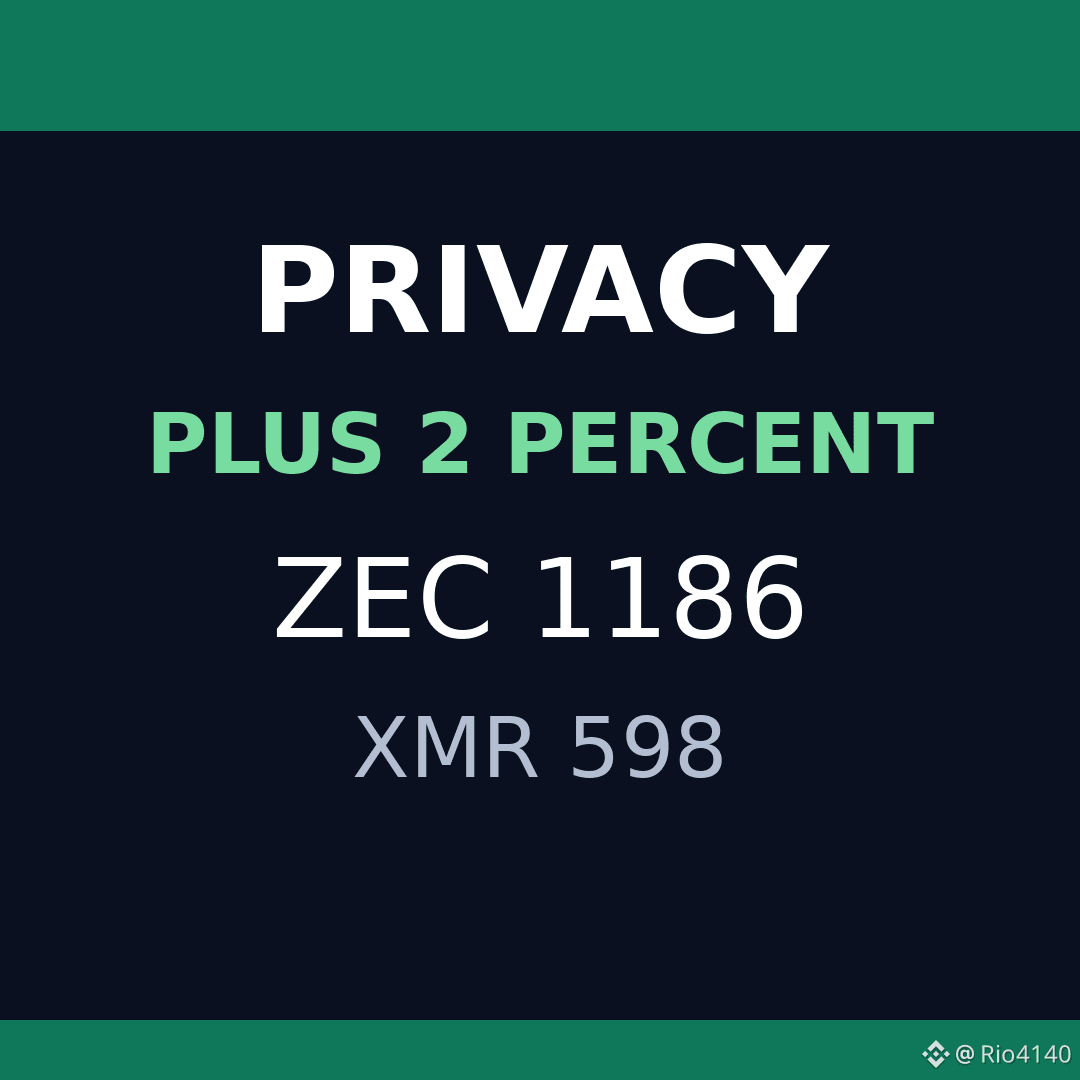
PRIVACY OUTRAN A RED MARKET AND ZEC KEPT 1186
Bitcoin slipped to 80325 and most of the board went red on Sunday but one corner refused to follow
Privacy coins gained 2 percent in 24 hours while Bitcoin lost ground and nearly every big sector faded
The bigger story is not one green day
Glassnode data shows privacy is the only sector sitting above its October peak after gaining 213 percent while DeFi sits 27 percent below that peak and gaming sits 74 percent below it
Zcash did most of the lifting and now holds 62 percent of the whole privacy market cap
$ZEC trades at 1186 after touching 1223 today with a low at 1121
$XMR trades at 598 after touching 616 today and it is up 4 percent on the week
DASH trades at 51 and it is up 6 percent on the week even after a flat day
My trade plan on the leader is simple
Entry zone 1140 to 1170 on any pullback toward today low
Target one 1223 for the today high and target two 1300 if momentum holds into Monday
Stop on a daily close below 1120 because that kills the whole setup
My take as an analyst
This is not a one day fluke
A sector that leads for a full year while everything else sinks is telling you where real money is hiding
ZEC or XMR takes the lead on Monday?
#BinanceSquare #WriteToEarn #Crypto #Bitcoin #Privacy
PRIVACY OUTRAN A RED MARKET AND ZEC KEPT 1186
Bitcoin slipped to 80325 and most of the board went red on Sunday but one corner refused to follow
Privacy coins gained 2 percent in 24 hours while Bitcoin lost ground and nearly every big sector faded
The bigger story is not one green day
Glassnode data shows privacy is the only sector sitting above its October peak after gaining 213 percent while DeFi sits 27 percent below that peak and gaming sits 74 percent below it
Zcash did most of the lifting and now holds 62 percent of the whole privacy market cap
$ZEC trades at 1186 after touching 1223 today with a low at 1121
$XMR trades at 598 after touching 616 today and it is up 4 percent on the week
DASH trades at 51 and it is up 6 percent on the week even after a flat day
My trade plan on the leader is simple
Entry zone 1140 to 1170 on any pullback toward today low
Target one 1223 for the today high and target two 1300 if momentum holds into Monday
Stop on a daily close below 1120 because that kills the whole setup
My take as an analyst
This is not a one day fluke
A sector that leads for a full year while everything else sinks is telling you where real money is hiding
ZEC or XMR takes the lead on Monday?
#BinanceSquare #WriteToEarn #Crypto #Bitcoin #Privacy
Bitcoin slipped to 80325 and most of the board went red on Sunday but one corner refused to follow
Privacy coins gained 2 percent in 24 hours while Bitcoin lost ground and nearly every big sector faded
The bigger story is not one green day
Glassnode data shows privacy is the only sector sitting above its October peak after gaining 213 percent while DeFi sits 27 percent below that peak and gaming sits 74 percent below it
Zcash did most of the lifting and now holds 62 percent of the whole privacy market cap
$ZEC trades at 1186 after touching 1223 today with a low at 1121
$XMR trades at 598 after touching 616 today and it is up 4 percent on the week
DASH trades at 51 and it is up 6 percent on the week even after a flat day
My trade plan on the leader is simple
Entry zone 1140 to 1170 on any pullback toward today low
Target one 1223 for the today high and target two 1300 if momentum holds into Monday
Stop on a daily close below 1120 because that kills the whole setup
My take as an analyst
This is not a one day fluke
A sector that leads for a full year while everything else sinks is telling you where real money is hiding
ZEC or XMR takes the lead on Monday?
#BinanceSquare #WriteToEarn #Crypto #Bitcoin #Privacy
36

·
--
📡 Privacy Rotation | $ZECUSDT Leads While BTC Holds Flat
ZEC is trading near $1,210, up around 4% in 24 hours, while BTC stays near $80,600 and majors stay mixed. XMR is also firm near $614, up around 6% in 24 hours, keeping the privacy theme in focus.
What stands out is rotation, not broad strength. Privacy names are outperforming a flat market, which could fade quickly if BTC volatility returns, so this needs follow through to stay interesting.
Personal opinion, not financial advice. DYOR.
#ZEC #Privacy #Altcoins
$BTCUSDT
📡 Privacy Rotation | $ZECUSDT Leads While BTC Holds Flat
ZEC is trading near $1,210, up around 4% in 24 hours, while BTC stays near $80,600 and majors stay mixed. XMR is also firm near $614, up around 6% in 24 hours, keeping the privacy theme in focus.
What stands out is rotation, not broad strength. Privacy names are outperforming a flat market, which could fade quickly if BTC volatility returns, so this needs follow through to stay interesting.
Personal opinion, not financial advice. DYOR.
#ZEC #Privacy #Altcoins
$BTCUSDT
ZEC is trading near $1,210, up around 4% in 24 hours, while BTC stays near $80,600 and majors stay mixed. XMR is also firm near $614, up around 6% in 24 hours, keeping the privacy theme in focus.
What stands out is rotation, not broad strength. Privacy names are outperforming a flat market, which could fade quickly if BTC volatility returns, so this needs follow through to stay interesting.
Personal opinion, not financial advice. DYOR.
#ZEC #Privacy #Altcoins
$BTCUSDT
361

·
--
🔒 PRIVACY COINS ARE THE ONLY GREEN ON THE BOARD
While BTC (-0.26%) and ETH (-1.4%) drift sideways, $XMR is up 3.1% to $606 and $ZEC is up 2.4% to $1,196. ZEC is now the week's strongest large cap, up 5.8% over 7 days (CoinGecko).
My take: when majors stall, money rotates to the one narrative with a catalyst on the calendar, and Zcash's NU7 upgrade lands in November.
Rotation, or just a weekend blip? 👇
Not financial advice. DYOR.
#crypto #privacy #ZEC
🔒 PRIVACY COINS ARE THE ONLY GREEN ON THE BOARD
While BTC (-0.26%) and ETH (-1.4%) drift sideways, $XMR is up 3.1% to $606 and $ZEC is up 2.4% to $1,196. ZEC is now the week's strongest large cap, up 5.8% over 7 days (CoinGecko).
My take: when majors stall, money rotates to the one narrative with a catalyst on the calendar, and Zcash's NU7 upgrade lands in November.
Rotation, or just a weekend blip? 👇
Not financial advice. DYOR.
#crypto #privacy #ZEC
While BTC (-0.26%) and ETH (-1.4%) drift sideways, $XMR is up 3.1% to $606 and $ZEC is up 2.4% to $1,196. ZEC is now the week's strongest large cap, up 5.8% over 7 days (CoinGecko).
My take: when majors stall, money rotates to the one narrative with a catalyst on the calendar, and Zcash's NU7 upgrade lands in November.
Rotation, or just a weekend blip? 👇
Not financial advice. DYOR.
#crypto #privacy #ZEC
256
🚨 TREZOR BREACH EXPANDS TO 167K RECORDS SPARKING A REACTION IN $DASH AND PRIVACY SECTOR 📉
Trezor's data fallout just took a hit as compromised customer records ballooned to over 167,000 users. Delayed transparency hits market trust right where it hurts, creating immediate sentiment headwinds across hardware security ecosystems. 🚨
When physical custody supply chains falter, smart money watches how privacy-focused plays like $DASH and $ZEC handle the contagion. 📊 Expect elevated volatility as traders reposition around demand for stricter security safeguards. 🔍
💬 Will this privacy fallout spark a short-term selloff or are buyers already stepping in to bid the dip? 👇
⚠️ Not financial advice. Always manage your risk. 🛡️
🏷️ #DASH #ZEC #MARSCOIN #CryptoNews #Privacy
🚨 📉
🚨 TREZOR BREACH EXPANDS TO 167K RECORDS SPARKING A REACTION IN $DASH AND PRIVACY SECTOR 📉
Trezor's data fallout just took a hit as compromised customer records ballooned to over 167,000 users. Delayed transparency hits market trust right where it hurts, creating immediate sentiment headwinds across hardware security ecosystems. 🚨
When physical custody supply chains falter, smart money watches how privacy-focused plays like $DASH and $ZEC handle the contagion. 📊 Expect elevated volatility as traders reposition around demand for stricter security safeguards. 🔍
💬 Will this privacy fallout spark a short-term selloff or are buyers already stepping in to bid the dip? 👇
⚠️ Not financial advice. Always manage your risk. 🛡️
🏷️ #DASH #ZEC #MARSCOIN #CryptoNews #Privacy
🚨 📉
Trezor's data fallout just took a hit as compromised customer records ballooned to over 167,000 users. Delayed transparency hits market trust right where it hurts, creating immediate sentiment headwinds across hardware security ecosystems. 🚨
When physical custody supply chains falter, smart money watches how privacy-focused plays like $DASH and $ZEC handle the contagion. 📊 Expect elevated volatility as traders reposition around demand for stricter security safeguards. 🔍
💬 Will this privacy fallout spark a short-term selloff or are buyers already stepping in to bid the dip? 👇
⚠️ Not financial advice. Always manage your risk. 🛡️
🏷️ #DASH #ZEC #MARSCOIN #CryptoNews #Privacy
🚨 📉
10

🚨 $AZTEC IGNITES PRIVACY RALLY AS OPEN INTEREST SURGES 100% IN THREE HOURS! 💥
Stop Loss: 15 ⚠️
Capital is aggressively rotating into the privacy sector, and $AZTEC is leading the charge with violent upside momentum. 📊 Open Interest exploded by 100% in under three hours, signaling massive new positioning from aggressive buyers taking control of order flow.
⚡ With such a tight market cap profile, order book depth clears out rapidly once smart money starts sweeping liquidity. 📌 The expansion phase is officially active as buyers defend key structural floors aggressively. 💬 Are you front-running this privacy narrative before the order book thins out completely? 👇
⚠️ Not financial advice. Always manage your risk. 🛡️
🏷️ #AZTEC #Privacy #Altcoins #Breakout
🔥 💎
🚨 $AZTEC IGNITES PRIVACY RALLY AS OPEN INTEREST SURGES 100% IN THREE HOURS! 💥
Stop Loss: 15 ⚠️
Capital is aggressively rotating into the privacy sector, and $AZTEC is leading the charge with violent upside momentum. 📊 Open Interest exploded by 100% in under three hours, signaling massive new positioning from aggressive buyers taking control of order flow.
⚡ With such a tight market cap profile, order book depth clears out rapidly once smart money starts sweeping liquidity. 📌 The expansion phase is officially active as buyers defend key structural floors aggressively. 💬 Are you front-running this privacy narrative before the order book thins out completely? 👇
⚠️ Not financial advice. Always manage your risk. 🛡️
🏷️ #AZTEC #Privacy #Altcoins #Breakout
🔥 💎
Stop Loss: 15 ⚠️
Capital is aggressively rotating into the privacy sector, and $AZTEC is leading the charge with violent upside momentum. 📊 Open Interest exploded by 100% in under three hours, signaling massive new positioning from aggressive buyers taking control of order flow.
⚡ With such a tight market cap profile, order book depth clears out rapidly once smart money starts sweeping liquidity. 📌 The expansion phase is officially active as buyers defend key structural floors aggressively. 💬 Are you front-running this privacy narrative before the order book thins out completely? 👇
⚠️ Not financial advice. Always manage your risk. 🛡️
🏷️ #AZTEC #Privacy #Altcoins #Breakout
🔥 💎
6

·
--
🚨 $DASH CRUSHES $65 AS THE PRIVACY NARRATIVE IGNITES ACROSS THE BOARD! 💥
Target: 95 🚀
The privacy sector is expanding rapidly, sparked by massive momentum after $ZEC demonstrated how fast this rotation can move. ⚡ $DASH has already pushed clean past $65 from the initial $48 demand zone, confirming strong buyer conviction as volume accelerates.
With capital rotating quickly, $ZEN is also setting up to challenge the $10 mark while $DASH builds velocity toward higher targets. 📊 Positioners who catch these structural shifts early are capturing the cleanest risk-to-reward windows on the board.
💬 Are you locking in your privacy allocations now or waiting to chase the move higher? 👇
⚠️ Not financial advice. Always manage your risk. 🛡️
🏷️ #DASH #Privacy #Breakout #Crypto
🔥 💎
🚨 $DASH CRUSHES $65 AS THE PRIVACY NARRATIVE IGNITES ACROSS THE BOARD! 💥
Target: 95 🚀
The privacy sector is expanding rapidly, sparked by massive momentum after $ZEC demonstrated how fast this rotation can move. ⚡ $DASH has already pushed clean past $65 from the initial $48 demand zone, confirming strong buyer conviction as volume accelerates.
With capital rotating quickly, $ZEN is also setting up to challenge the $10 mark while $DASH builds velocity toward higher targets. 📊 Positioners who catch these structural shifts early are capturing the cleanest risk-to-reward windows on the board.
💬 Are you locking in your privacy allocations now or waiting to chase the move higher? 👇
⚠️ Not financial advice. Always manage your risk. 🛡️
🏷️ #DASH #Privacy #Breakout #Crypto
🔥 💎
Target: 95 🚀
The privacy sector is expanding rapidly, sparked by massive momentum after $ZEC demonstrated how fast this rotation can move. ⚡ $DASH has already pushed clean past $65 from the initial $48 demand zone, confirming strong buyer conviction as volume accelerates.
With capital rotating quickly, $ZEN is also setting up to challenge the $10 mark while $DASH builds velocity toward higher targets. 📊 Positioners who catch these structural shifts early are capturing the cleanest risk-to-reward windows on the board.
💬 Are you locking in your privacy allocations now or waiting to chase the move higher? 👇
⚠️ Not financial advice. Always manage your risk. 🛡️
🏷️ #DASH #Privacy #Breakout #Crypto
🔥 💎
25

·
--
ຢືນຢັນແລ້ວ
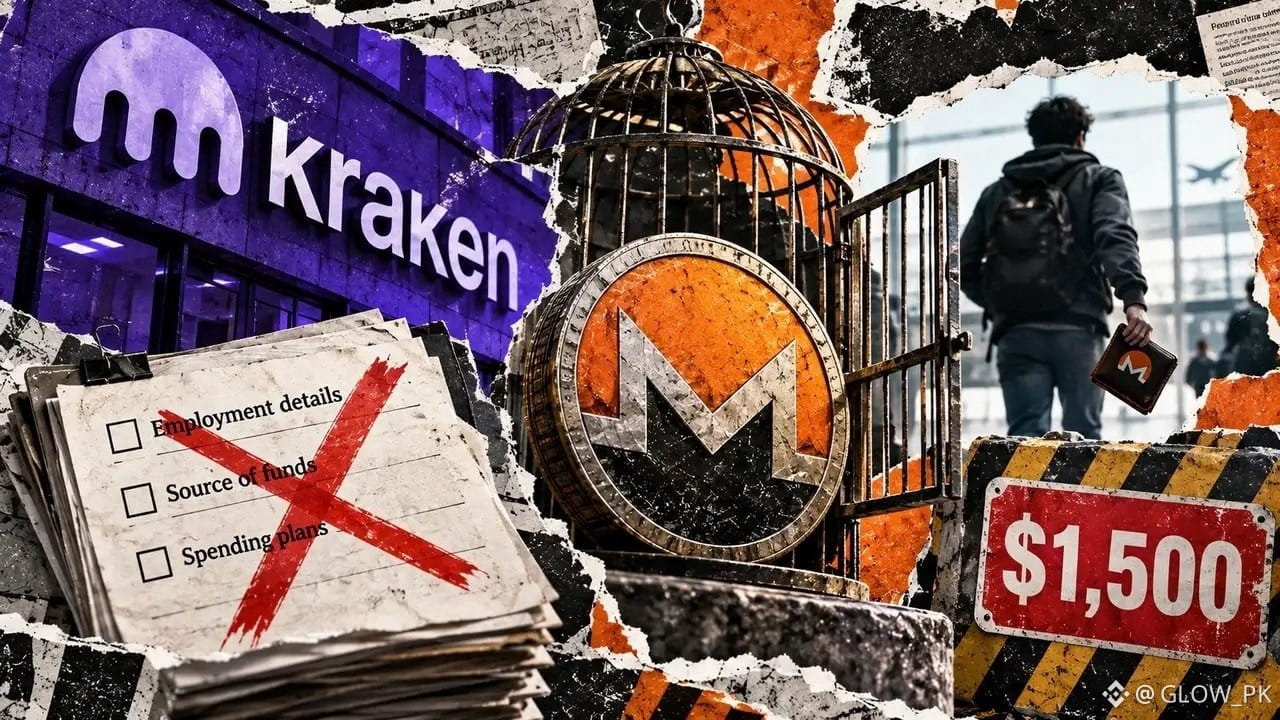
Kraken has dropped its disputed Monero spending questionnaires, but the exchange hasn’t removed all restrictions on XMR withdrawals.
Following comments from its co-CEO that the questions weren’t legally required, Kraken has stepped back from that specific requirement. However, source-of-funds checks remain in place, and individual users still face a $1,500 rolling 30-day withdrawal cap.
To me, this highlights a bigger issue in crypto: privacy and compliance are becoming increasingly difficult to balance.
Removing unnecessary questions is a step forward, but withdrawal limits and fund verification show that privacy-focused assets still face significant challenges on centralized exchanges.
The real question is whether exchanges can protect user privacy without compromising their compliance obligations.
$JCT $ORDER $NEAR
#Monero #XMR #Kraken #CryptoNews #Privacy
Kraken has dropped its disputed Monero spending questionnaires, but the exchange hasn’t removed all restrictions on XMR withdrawals.
Following comments from its co-CEO that the questions weren’t legally required, Kraken has stepped back from that specific requirement. However, source-of-funds checks remain in place, and individual users still face a $1,500 rolling 30-day withdrawal cap.
To me, this highlights a bigger issue in crypto: privacy and compliance are becoming increasingly difficult to balance.
Removing unnecessary questions is a step forward, but withdrawal limits and fund verification show that privacy-focused assets still face significant challenges on centralized exchanges.
The real question is whether exchanges can protect user privacy without compromising their compliance obligations.
$JCT $ORDER $NEAR
#Monero #XMR #Kraken #CryptoNews #Privacy
Following comments from its co-CEO that the questions weren’t legally required, Kraken has stepped back from that specific requirement. However, source-of-funds checks remain in place, and individual users still face a $1,500 rolling 30-day withdrawal cap.
To me, this highlights a bigger issue in crypto: privacy and compliance are becoming increasingly difficult to balance.
Removing unnecessary questions is a step forward, but withdrawal limits and fund verification show that privacy-focused assets still face significant challenges on centralized exchanges.
The real question is whether exchanges can protect user privacy without compromising their compliance obligations.
$JCT $ORDER $NEAR
#Monero #XMR #Kraken #CryptoNews #Privacy
ملكة التداول1:
ok
1
4
655

·
--
$BTC #SAK 🚨 每天在链上“裸奔”,你真的有安全感吗?
区块联透明是好事,但连买个早点都被全网盯着的“透明”,确实让人头大。透明和隐私,不该是二选一!最近在扒 STAK chain 的底层逻辑,看看他们是怎么在可验证的前提下,把隐私这块补齐的。懂行的来聊聊?👇
#Web3 #Privacy #STAKchain
$BTC #SAK 🚨 每天在链上“裸奔”,你真的有安全感吗?
区块联透明是好事,但连买个早点都被全网盯着的“透明”,确实让人头大。透明和隐私,不该是二选一!最近在扒 STAK chain 的底层逻辑,看看他们是怎么在可验证的前提下,把隐私这块补齐的。懂行的来聊聊?👇
#Web3 #Privacy #STAKchain
区块联透明是好事,但连买个早点都被全网盯着的“透明”,确实让人头大。透明和隐私,不该是二选一!最近在扒 STAK chain 的底层逻辑,看看他们是怎么在可验证的前提下,把隐私这块补齐的。懂行的来聊聊?👇
#Web3 #Privacy #STAKchain

359
·
--
ສັນຍານກະທິງ
🔐 ZANO is exploring an idea Web3 needs more of: privacy without extra complexity.
With $ZANO, transaction amounts, sender and receiver addresses, and asset types are hidden by default.
Users don't have to navigate complicated settings just to benefit from the protocol's privacy features.
And that raises a bigger question:
Why should using powerful technology feel complicated in the first place?
Most people don't care about what's happening behind the scenes. They care about what they can do, how easily they can do it, and whether the product fits into their daily lives.
That's where the conversation goes beyond financial privacy.
#Liberdus is exploring decentralized communication with the same important challenge in mind: making the experience accessible to everyday users.
Because decentralization shouldn't require everyone to understand nodes, blockchain architecture, or complex infrastructure before they can benefit from it.
The technology can be sophisticated behind the scenes.
The experience should feel natural on the surface.
That's how Web3 can move beyond early adopters and become useful to more people. 🔥
#ZANO #Privacy #Web3
🔐 ZANO is exploring an idea Web3 needs more of: privacy without extra complexity.
With $ZANO, transaction amounts, sender and receiver addresses, and asset types are hidden by default.
Users don't have to navigate complicated settings just to benefit from the protocol's privacy features.
And that raises a bigger question:
Why should using powerful technology feel complicated in the first place?
Most people don't care about what's happening behind the scenes. They care about what they can do, how easily they can do it, and whether the product fits into their daily lives.
That's where the conversation goes beyond financial privacy.
#Liberdus is exploring decentralized communication with the same important challenge in mind: making the experience accessible to everyday users.
Because decentralization shouldn't require everyone to understand nodes, blockchain architecture, or complex infrastructure before they can benefit from it.
The technology can be sophisticated behind the scenes.
The experience should feel natural on the surface.
That's how Web3 can move beyond early adopters and become useful to more people. 🔥
#ZANO #Privacy #Web3
With $ZANO, transaction amounts, sender and receiver addresses, and asset types are hidden by default.
Users don't have to navigate complicated settings just to benefit from the protocol's privacy features.
And that raises a bigger question:
Why should using powerful technology feel complicated in the first place?
Most people don't care about what's happening behind the scenes. They care about what they can do, how easily they can do it, and whether the product fits into their daily lives.
That's where the conversation goes beyond financial privacy.
#Liberdus is exploring decentralized communication with the same important challenge in mind: making the experience accessible to everyday users.
Because decentralization shouldn't require everyone to understand nodes, blockchain architecture, or complex infrastructure before they can benefit from it.
The technology can be sophisticated behind the scenes.
The experience should feel natural on the surface.
That's how Web3 can move beyond early adopters and become useful to more people. 🔥
#ZANO #Privacy #Web3

1
65

·
--
ສັນຍານກະທິງ
$NIL
Lately, I’ve been thinking about how important data privacy is becoming, especially with AI growing so fast. 🔐
That’s where Nillion caught my attention.
Most blockchains struggle when it comes to handling sensitive information, but Nillion is taking a different approach. Its blind computation technology allows data to be stored and processed while keeping it encrypted.
Think about AI agents, trading data, and other sensitive information. We need ways to use this data without exposing everything behind it.
What I find interesting about Nillion is its focus on making privacy a part of how technology works, rather than treating it as an afterthought.
I believe this kind of infrastructure could play an important role in the future of AI and Web3.
Still early, but definitely a project worth keeping an eye on. 👀
#Nillion #AI #Web3 #Privacy
{future}(NILUSDT)
$NIL
Lately, I’ve been thinking about how important data privacy is becoming, especially with AI growing so fast. 🔐
That’s where Nillion caught my attention.
Most blockchains struggle when it comes to handling sensitive information, but Nillion is taking a different approach. Its blind computation technology allows data to be stored and processed while keeping it encrypted.
Think about AI agents, trading data, and other sensitive information. We need ways to use this data without exposing everything behind it.
What I find interesting about Nillion is its focus on making privacy a part of how technology works, rather than treating it as an afterthought.
I believe this kind of infrastructure could play an important role in the future of AI and Web3.
Still early, but definitely a project worth keeping an eye on. 👀
#Nillion #AI #Web3 #Privacy
Lately, I’ve been thinking about how important data privacy is becoming, especially with AI growing so fast. 🔐
That’s where Nillion caught my attention.
Most blockchains struggle when it comes to handling sensitive information, but Nillion is taking a different approach. Its blind computation technology allows data to be stored and processed while keeping it encrypted.
Think about AI agents, trading data, and other sensitive information. We need ways to use this data without exposing everything behind it.
What I find interesting about Nillion is its focus on making privacy a part of how technology works, rather than treating it as an afterthought.
I believe this kind of infrastructure could play an important role in the future of AI and Web3.
Still early, but definitely a project worth keeping an eye on. 👀
#Nillion #AI #Web3 #Privacy
151
🚀 $NIL PRIVACY REBOOT SET TO UNLEASH AI & DEFI ⚡
Smart money is already sniffing the $NIL privacy stack, and the on‑chain metrics show a steady climb in contract calls as devs test secure computation. 📊 The token’s volume burst on the 4H chart signals a fresh influx of capital chasing the next privacy‑first layer.
If the protocol can translate that tech edge into real‑world AI and healthcare use‑cases, we could see a liquidity wave that flips the current narrative. 🌊⚡️ Expect the whales to stake on the upside as the ecosystem matures. 💬 Will you ride the privacy wave or wait on the sidelines?
⚠️ Not financial advice. Always manage your risk. 🛡️
🏷️ #NIL #Privacy #Web3 #DeFi
🔥 💎
🚀 $NIL PRIVACY REBOOT SET TO UNLEASH AI & DEFI ⚡
Smart money is already sniffing the $NIL privacy stack, and the on‑chain metrics show a steady climb in contract calls as devs test secure computation. 📊 The token’s volume burst on the 4H chart signals a fresh influx of capital chasing the next privacy‑first layer.
If the protocol can translate that tech edge into real‑world AI and healthcare use‑cases, we could see a liquidity wave that flips the current narrative. 🌊⚡️ Expect the whales to stake on the upside as the ecosystem matures. 💬 Will you ride the privacy wave or wait on the sidelines?
⚠️ Not financial advice. Always manage your risk. 🛡️
🏷️ #NIL #Privacy #Web3 #DeFi
🔥 💎
Smart money is already sniffing the $NIL privacy stack, and the on‑chain metrics show a steady climb in contract calls as devs test secure computation. 📊 The token’s volume burst on the 4H chart signals a fresh influx of capital chasing the next privacy‑first layer.
If the protocol can translate that tech edge into real‑world AI and healthcare use‑cases, we could see a liquidity wave that flips the current narrative. 🌊⚡️ Expect the whales to stake on the upside as the ecosystem matures. 💬 Will you ride the privacy wave or wait on the sidelines?
⚠️ Not financial advice. Always manage your risk. 🛡️
🏷️ #NIL #Privacy #Web3 #DeFi
🔥 💎
15
·
--
🦈 $XMR SWAPS THAT SMART MONEY IS USING TO DODGE KYC 🚀
With major exchanges pulling the plug on $XMR , smart money is slipping into no‑ID swap lanes 📊. GhostSwap, HiddenSwap and SwapRocket let you trade BTC, ETH, USDT, LTC or SOL straight to Monero without ever creating an account.
Typical swaps finish in 5‑30 minutes ⚡, and the XMR lands in a self‑custody wallet you control, complete with a clear quote and a status page for every trade. That’s the cleanest path to privacy‑first 🌊 exposure in 2026. 💬 Which no‑KYC route are you eyeing for your next XMR acquisition? 👇
⚠️ Not financial advice. Always manage your risk. 🛡️
🏷️ #XMR #NoKYC #Swap #Privacy
🔥 💎
🦈 $XMR SWAPS THAT SMART MONEY IS USING TO DODGE KYC 🚀
With major exchanges pulling the plug on $XMR , smart money is slipping into no‑ID swap lanes 📊. GhostSwap, HiddenSwap and SwapRocket let you trade BTC, ETH, USDT, LTC or SOL straight to Monero without ever creating an account.
Typical swaps finish in 5‑30 minutes ⚡, and the XMR lands in a self‑custody wallet you control, complete with a clear quote and a status page for every trade. That’s the cleanest path to privacy‑first 🌊 exposure in 2026. 💬 Which no‑KYC route are you eyeing for your next XMR acquisition? 👇
⚠️ Not financial advice. Always manage your risk. 🛡️
🏷️ #XMR #NoKYC #Swap #Privacy
🔥 💎
With major exchanges pulling the plug on $XMR , smart money is slipping into no‑ID swap lanes 📊. GhostSwap, HiddenSwap and SwapRocket let you trade BTC, ETH, USDT, LTC or SOL straight to Monero without ever creating an account.
Typical swaps finish in 5‑30 minutes ⚡, and the XMR lands in a self‑custody wallet you control, complete with a clear quote and a status page for every trade. That’s the cleanest path to privacy‑first 🌊 exposure in 2026. 💬 Which no‑KYC route are you eyeing for your next XMR acquisition? 👇
⚠️ Not financial advice. Always manage your risk. 🛡️
🏷️ #XMR #NoKYC #Swap #Privacy
🔥 💎
26

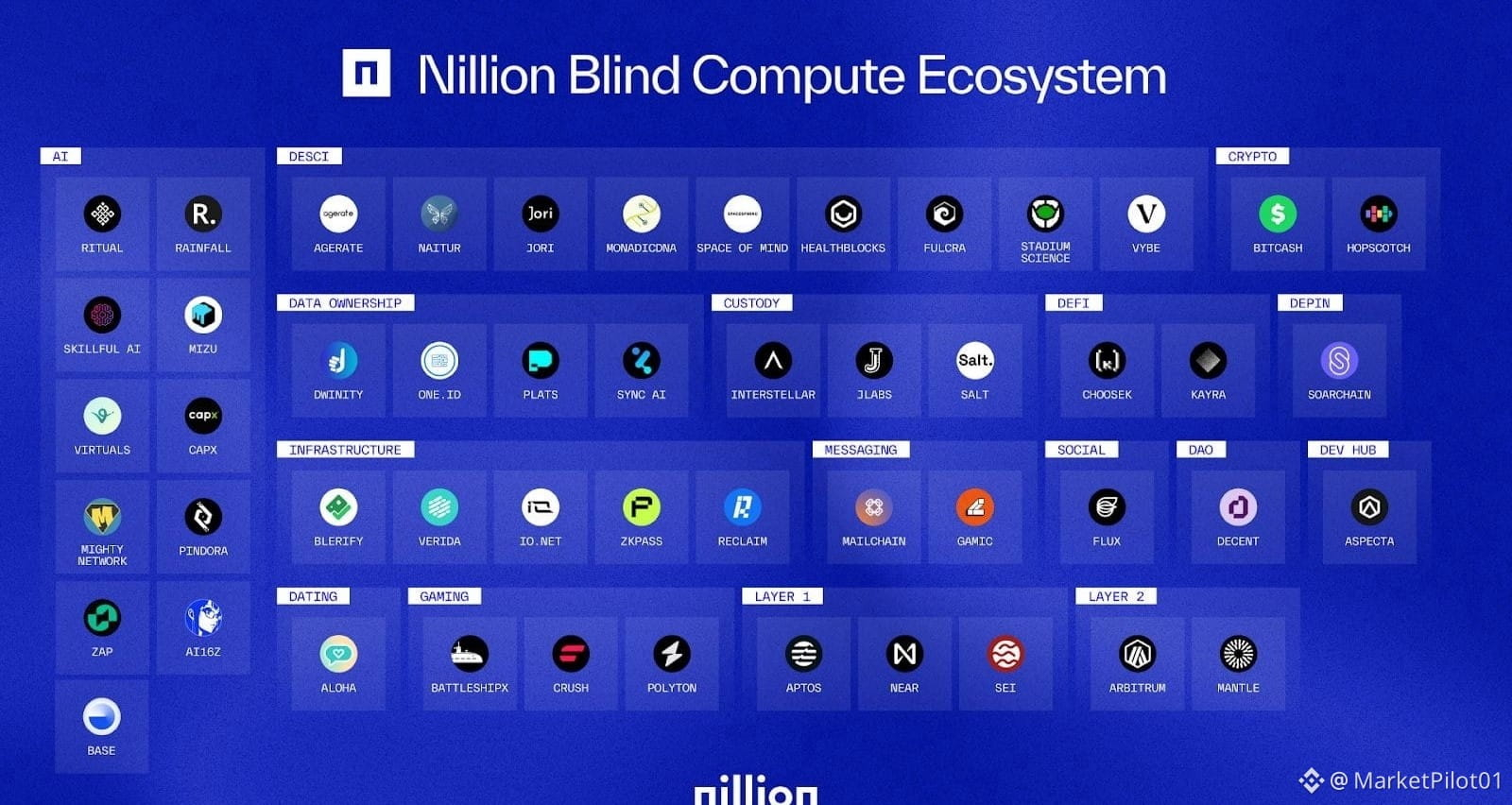
🔐 The Future of Cloud Computing Is Confidential! 🚀
@nillionnetwork is taking privacy and security to the next level with nilCC.
Developers can run Docker Compose applications inside Trusted Execution Environments (TEEs), powered by AMD SEV-SNP technology. 🛡️
✅ Hardware-level isolation with Confidential VMs
✅ Cryptographic attestation to verify code integrity
✅ Enhanced protection for sensitive data
✅ NVIDIA Confidential Computing support for AI workloads
The biggest advantage? You don't have to blindly trust your cloud provider with your code or data. 🔥
From sensitive business logic to analytics and AI models, nilCC aims to shift cloud security from trust-based promises to hardware-backed protection and cryptographic proof.
Privacy isn't just a feature. It's the foundation of the next generation of computing. 💎
Keep watching @nillionnetwork and $NIL!
#Nillion #Nil #ConfidentialComputing #Web3 #AI #Privacy #Blockchain
{future}(NILUSDT)
🔐 The Future of Cloud Computing Is Confidential! 🚀
@Nillion is taking privacy and security to the next level with nilCC.
Developers can run Docker Compose applications inside Trusted Execution Environments (TEEs), powered by AMD SEV-SNP technology. 🛡️
✅ Hardware-level isolation with Confidential VMs
✅ Cryptographic attestation to verify code integrity
✅ Enhanced protection for sensitive data
✅ NVIDIA Confidential Computing support for AI workloads
The biggest advantage? You don't have to blindly trust your cloud provider with your code or data. 🔥
From sensitive business logic to analytics and AI models, nilCC aims to shift cloud security from trust-based promises to hardware-backed protection and cryptographic proof.
Privacy isn't just a feature. It's the foundation of the next generation of computing. 💎
Keep watching @Nillion and $NIL!
#Nillion #Nil #ConfidentialComputing #Web3 #AI #Privacy #Blockchain
@Nillion is taking privacy and security to the next level with nilCC.
Developers can run Docker Compose applications inside Trusted Execution Environments (TEEs), powered by AMD SEV-SNP technology. 🛡️
✅ Hardware-level isolation with Confidential VMs
✅ Cryptographic attestation to verify code integrity
✅ Enhanced protection for sensitive data
✅ NVIDIA Confidential Computing support for AI workloads
The biggest advantage? You don't have to blindly trust your cloud provider with your code or data. 🔥
From sensitive business logic to analytics and AI models, nilCC aims to shift cloud security from trust-based promises to hardware-backed protection and cryptographic proof.
Privacy isn't just a feature. It's the foundation of the next generation of computing. 💎
Keep watching @Nillion and $NIL!
#Nillion #Nil #ConfidentialComputing #Web3 #AI #Privacy #Blockchain
2
316

$ZEC : THE PRIVACY TRADE IS GETTING A REAL-WORLD TEST. 🔐
Zcash is attracting attention from two directions: network development and investment products.
Grayscale’s Zcash fund recorded approximately $14.23 million in inflows on October 22, its third consecutive day of inflows, according to a report published October 23.
Meanwhile, Zcash’s upcoming NU7 upgrade is targeting November 5.
The upgrade is designed to reduce block times from 75 seconds to 25 seconds.
But here’s the important distinction:
A compelling catalyst does not guarantee a rising price.
ZEC recently faced rejection around $1,292–$1,309 before falling toward $1,220–$1,225.
That tells us the market can price in good news and still sell off.
Three things deserve attention:
🔹 Continued demand for ZEC investment products.
🔹 Successful delivery of the NU7 upgrade.
🔹 Whether price can reclaim resistance rather than repeatedly reject it.
Privacy may become a more important crypto narrative, but execution, regulation, liquidity, and valuation remain critical risks.
The thesis is worth researching. Chasing a vertical candle is a different decision.
📊 POLL: What will matter most for ZEC over the next few weeks?
In comment 👇🏼👇🏼
DYOR
#zec #zcash #Privacy #CryptoInvesting #MannequinCrypto
{spot}(ZECUSDT)
$ZEC : THE PRIVACY TRADE IS GETTING A REAL-WORLD TEST. 🔐
Zcash is attracting attention from two directions: network development and investment products.
Grayscale’s Zcash fund recorded approximately $14.23 million in inflows on October 22, its third consecutive day of inflows, according to a report published October 23.
Meanwhile, Zcash’s upcoming NU7 upgrade is targeting November 5.
The upgrade is designed to reduce block times from 75 seconds to 25 seconds.
But here’s the important distinction:
A compelling catalyst does not guarantee a rising price.
ZEC recently faced rejection around $1,292–$1,309 before falling toward $1,220–$1,225.
That tells us the market can price in good news and still sell off.
Three things deserve attention:
🔹 Continued demand for ZEC investment products.
🔹 Successful delivery of the NU7 upgrade.
🔹 Whether price can reclaim resistance rather than repeatedly reject it.
Privacy may become a more important crypto narrative, but execution, regulation, liquidity, and valuation remain critical risks.
The thesis is worth researching. Chasing a vertical candle is a different decision.
📊 POLL: What will matter most for ZEC over the next few weeks?
In comment 👇🏼👇🏼
DYOR
#zec #zcash #Privacy #CryptoInvesting #MannequinCrypto
Zcash is attracting attention from two directions: network development and investment products.
Grayscale’s Zcash fund recorded approximately $14.23 million in inflows on October 22, its third consecutive day of inflows, according to a report published October 23.
Meanwhile, Zcash’s upcoming NU7 upgrade is targeting November 5.
The upgrade is designed to reduce block times from 75 seconds to 25 seconds.
But here’s the important distinction:
A compelling catalyst does not guarantee a rising price.
ZEC recently faced rejection around $1,292–$1,309 before falling toward $1,220–$1,225.
That tells us the market can price in good news and still sell off.
Three things deserve attention:
🔹 Continued demand for ZEC investment products.
🔹 Successful delivery of the NU7 upgrade.
🔹 Whether price can reclaim resistance rather than repeatedly reject it.
Privacy may become a more important crypto narrative, but execution, regulation, liquidity, and valuation remain critical risks.
The thesis is worth researching. Chasing a vertical candle is a different decision.
📊 POLL: What will matter most for ZEC over the next few weeks?
In comment 👇🏼👇🏼
DYOR
#zec #zcash #Privacy #CryptoInvesting #MannequinCrypto
243

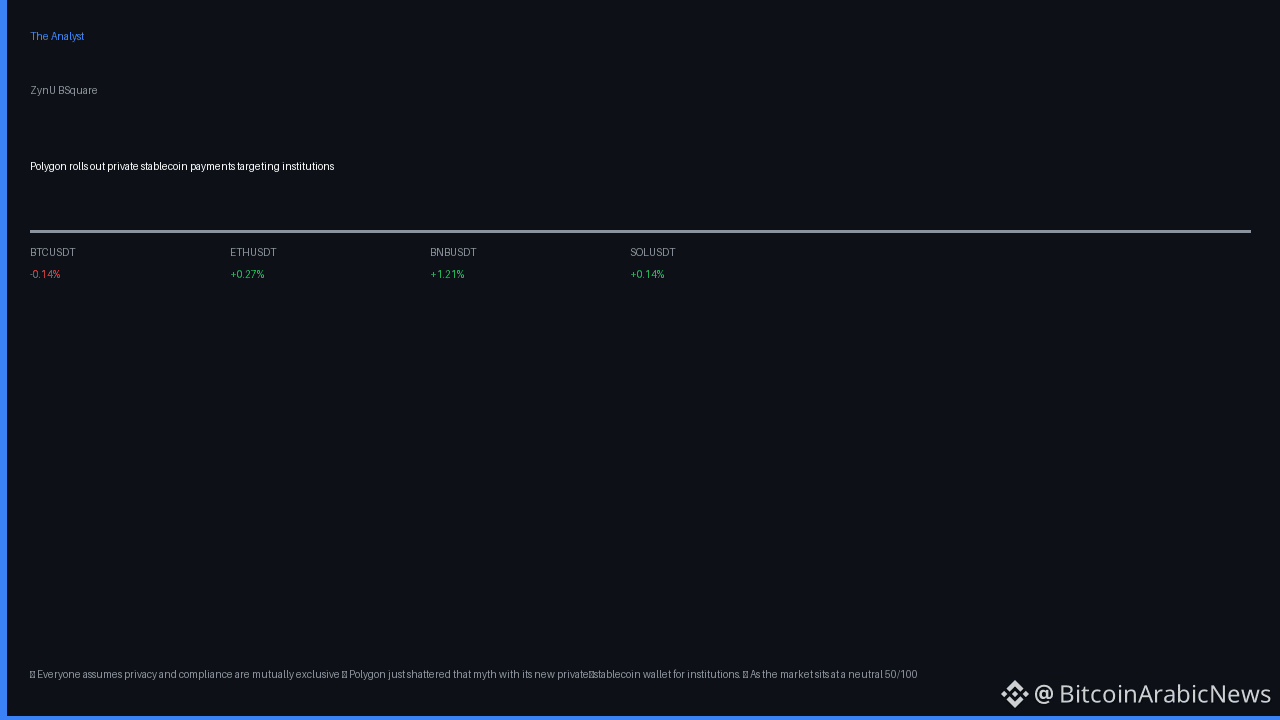
🔥 Everyone assumes privacy and compliance are mutually exclusive – Polygon just shattered that myth with its new private‑stablecoin wallet for institutions.
📊 As the market sits at a neutral 50/100 sentiment and BTC funding nudges bullish (+0.0059%) with $7.51 B open interest, capital is hunting compliant privacy solutions to sidestep the on‑chain traceability that’s throttling institutional appetite.
💡 Smart money is already reallocating: the $94 M BNB volume (+1.21%) hints BSC users are testing privacy layers, while #Polygon’s hidden‑sender feature dovetails with #Stablecoin demand and the #InstitutionalFinance push for audit‑ready, KYT‑screened transfers. Expect the $2,400 ETH price to act as a barometer – its 3.24 × long bias signals traders are betting on risk‑off assets that can now move under the radar.
🚀 Watch the $1.30 USD stablecoin threshold on Polygon’s new bridge; a sustained breach above this level could trigger a wave of hidden‑flow deposits, nudging the #Privacy narrative into mainstream on‑chain compliance discussions.
❓ If institutions can move billions invisibly yet stay audit‑compliant, will the next crypto‑regulation wave finally embrace private finance instead of banning it?
🔥 Everyone assumes privacy and compliance are mutually exclusive – Polygon just shattered that myth with its new private‑stablecoin wallet for institutions.
📊 As the market sits at a neutral 50/100 sentiment and BTC funding nudges bullish (+0.0059%) with $7.51 B open interest, capital is hunting compliant privacy solutions to sidestep the on‑chain traceability that’s throttling institutional appetite.
💡 Smart money is already reallocating: the $94 M BNB volume (+1.21%) hints BSC users are testing privacy layers, while #Polygon’s hidden‑sender feature dovetails with #Stablecoin demand and the #InstitutionalFinance push for audit‑ready, KYT‑screened transfers. Expect the $2,400 ETH price to act as a barometer – its 3.24 × long bias signals traders are betting on risk‑off assets that can now move under the radar.
🚀 Watch the $1.30 USD stablecoin threshold on Polygon’s new bridge; a sustained breach above this level could trigger a wave of hidden‑flow deposits, nudging the #Privacy narrative into mainstream on‑chain compliance discussions.
❓ If institutions can move billions invisibly yet stay audit‑compliant, will the next crypto‑regulation wave finally embrace private finance instead of banning it?
📊 As the market sits at a neutral 50/100 sentiment and BTC funding nudges bullish (+0.0059%) with $7.51 B open interest, capital is hunting compliant privacy solutions to sidestep the on‑chain traceability that’s throttling institutional appetite.
💡 Smart money is already reallocating: the $94 M BNB volume (+1.21%) hints BSC users are testing privacy layers, while #Polygon’s hidden‑sender feature dovetails with #Stablecoin demand and the #InstitutionalFinance push for audit‑ready, KYT‑screened transfers. Expect the $2,400 ETH price to act as a barometer – its 3.24 × long bias signals traders are betting on risk‑off assets that can now move under the radar.
🚀 Watch the $1.30 USD stablecoin threshold on Polygon’s new bridge; a sustained breach above this level could trigger a wave of hidden‑flow deposits, nudging the #Privacy narrative into mainstream on‑chain compliance discussions.
❓ If institutions can move billions invisibly yet stay audit‑compliant, will the next crypto‑regulation wave finally embrace private finance instead of banning it?
7

ເຂົ້າສູ່ລະບົບເພື່ອສຳຫຼວດເນື້ອຫາເພີ່ມເຕີມ
ເຂົ້າຮ່ວມກຸ່ມຜູ້ໃຊ້ຄຣິບໂຕທົ່ວໂລກໃນ Binance Square.
⚡️ ໄດ້ຮັບຂໍ້ມູນຫຼ້າສຸດ ແລະ ທີ່ມີປະໂຫຍດກ່ຽວກັບຄຣິບໂຕ.
💬 ໄດ້ຮັບຄວາມໄວ້ວາງໃຈຈາກຕະຫຼາດແລກປ່ຽນຄຣິບໂຕທີ່ໃຫຍ່ທີ່ສຸດໃນໂລກ.
👍 ຄົ້ນຫາຂໍ້ມູນເຊີງເລິກທີ່ແທ້ຈາກນັກສ້າງທີ່ໄດ້ຮັບການຢືນຢັນ.
ອີເມວ / ເບີໂທລະສັບ
ຫົວຂໍ້ທີ່ກໍາລັງນິຍົມ
1
#BinancePick
3.1M ຄັ້ງທີ່ເບິ່ງ
155,054 ກຳລັງສົນທະນາ
2
#EarningsSeason
5.3M ຄັ້ງທີ່ເບິ່ງ
26,130 ກຳລັງສົນທະນາ
3
#AnthropicTTMRevenueGrewAbout1200%
38,663 ຄັ້ງທີ່ເບິ່ງ
471 ກຳລັງສົນທະນາ
4
#AnthropicS1ExpectedToday
31,699 ຄັ້ງທີ່ເບິ່ງ
372 ກຳລັງສົນທະນາ
5
#SouthKoreaReportedlyWeighsFourthCryptoTaxDelay
34,553 ຄັ້ງທີ່ເບິ່ງ
504 ກຳລັງສົນທະນາ
6
#FranklinTempletonFilesForTwoDividendToBitcoinETFs
45,705 ຄັ້ງທີ່ເບິ່ງ
572 ກຳລັງສົນທະນາ
7
#StrategyMSTRSurpassesNasdaqInMarketCap
35,203 ຄັ້ງທີ່ເບິ່ງ
402 ກຳລັງສົນທະນາ
8
#CanadaProposesStablecoinRedemptionWithin3BusinessDays
1,450 ຄັ້ງທີ່ເບິ່ງ
37 ກຳລັງສົນທະນາ
9
#ElectrumWalletBugLetRogueServersStealFunds
33,997 ຄັ້ງທີ່ເບິ່ງ
484 ກຳລັງສົນທະນາ
10
#ArgentineCourtDismissesLIBRACaseAgainstMilei
50,687 ຄັ້ງທີ່ເບິ່ງ
608 ກຳລັງສົນທະນາ