
#usstockmarket
usstockmarket
127,045 ຄັ້ງທີ່ເບິ່ງ
226 ກຳລັງສົນທະນາ
ມາແຮງ
ຫຼ້າສຸດ


ເປັນຄວາມຈິງບາງສ່ວນ
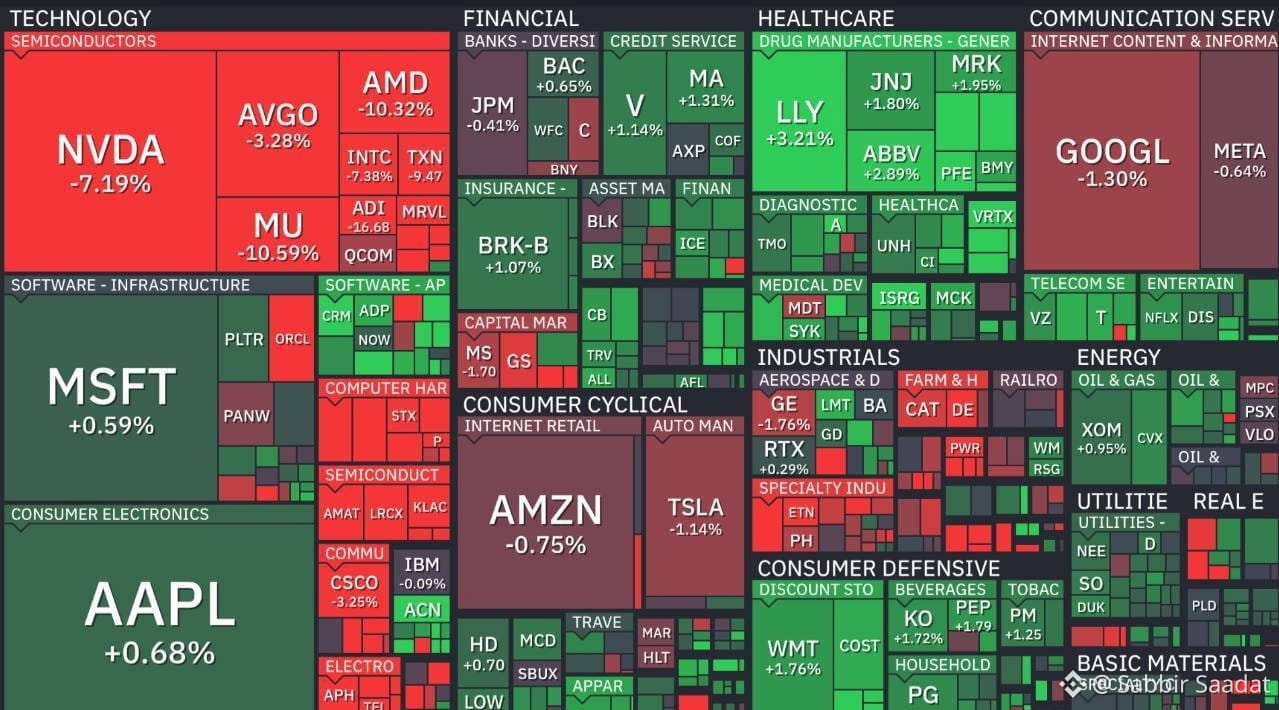
🚨 BREAKING: US STOCK MARKET LOSES $1 TRILLION!
🇺🇸 US stocks plunged at the opening bell, wiping out $1 trillion in market value amid reports that the Trump administration is preparing higher tariffs on China, the EU, and 14 other countries.
🌍 Trade war fears are rising again, putting global markets under pressure.
📉 Investors are watching closely as uncertainty grows.
Could this trigger another major market sell-off?
What’s your take?
#USStockMarket #TrumpTariffs #TradeWar #globaleconomy
4
5k

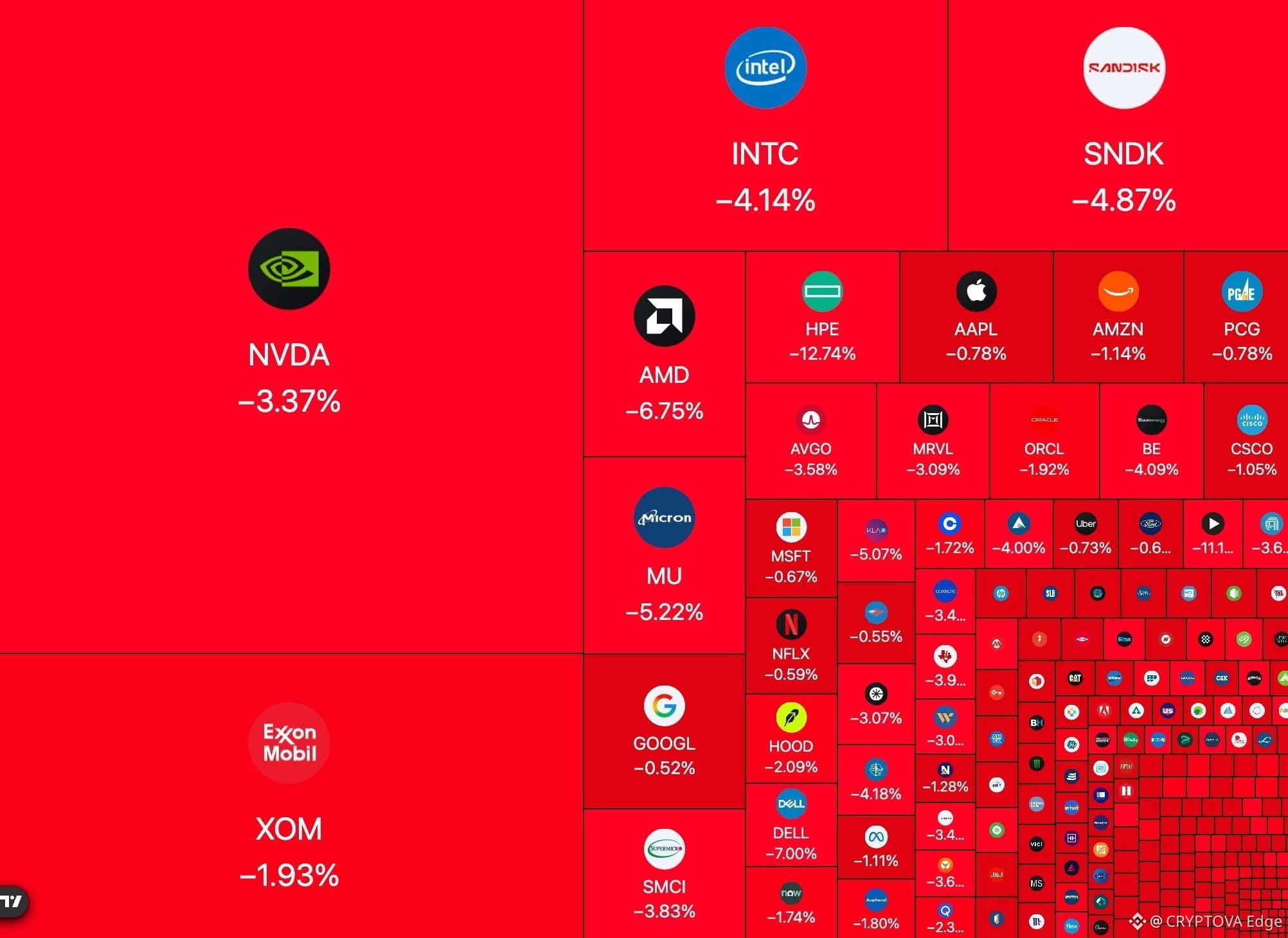
🚨 BREAKING NEWS 🚨
🇺🇸 US STOCK MARKET IN SHOCK!
As soon as the US stock market opened today, $1 TRILLION in market value was wiped out!
📉 Growing concerns over higher US tariffs are putting pressure on the financial markets.
⚠️ This could create more volatility across global markets.
Follow for more breaking market updates!
#BreakingNews #USStockMarket #Tariffs #WallStreet #CryptoMarketMoves
1
374

·
--
ສັນຍານກະທິງ
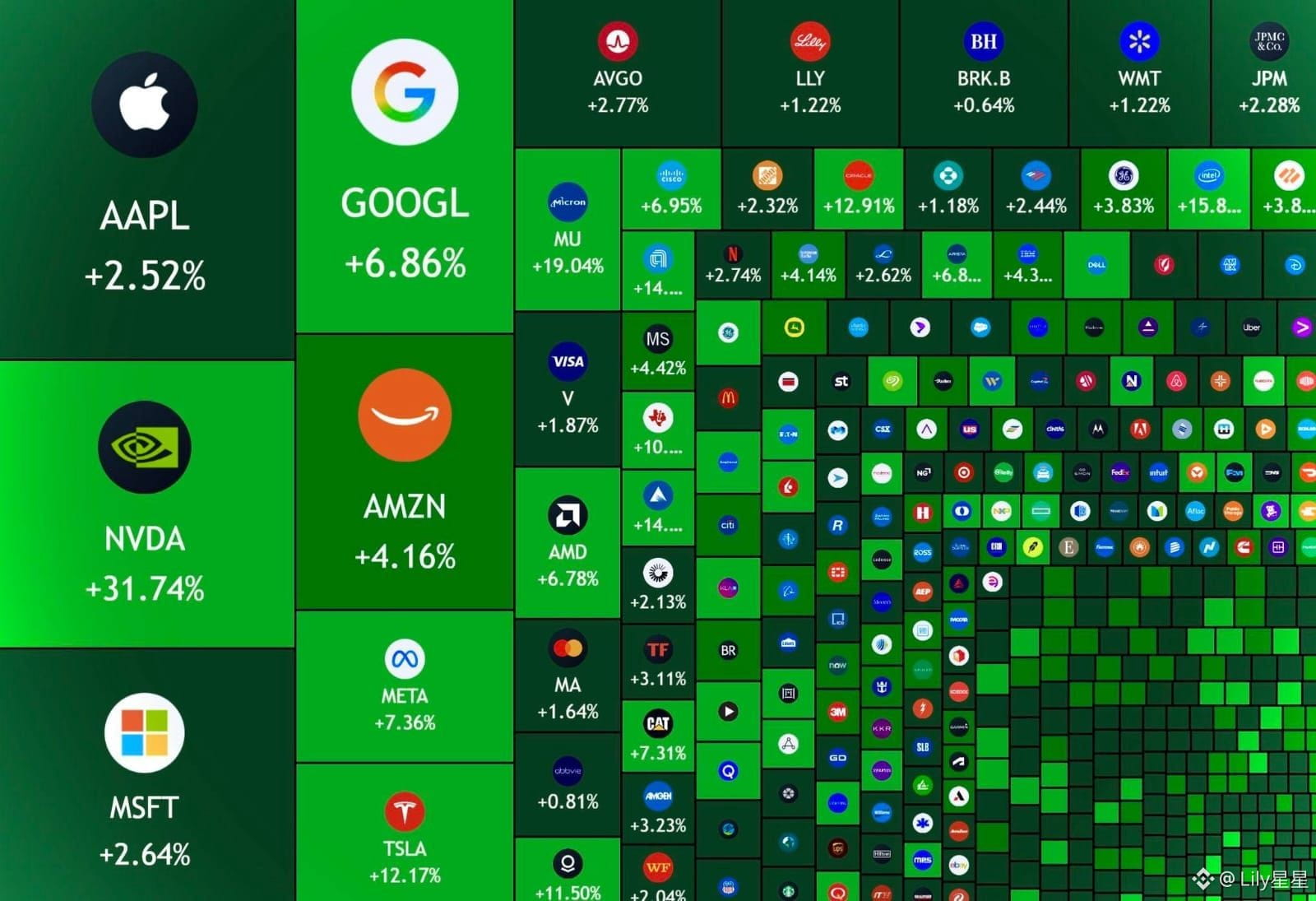
🚨 JUST IN: $3.3 Trillion Added to the U.S. Stock Market in a Single Day! 🇺🇸🚀
Wall Street just staged one of its biggest risk-on comebacks in history, erasing recent tech-rout losses as liquidity flooded back into equities.
📊 What’s Driving the Mega Rally:• Nvidia Catalyst: Jensen Huang’s surprise reinstatement as CEO sent $NVDAB
{spot}(NVDABUSDT)
soaring +31.48%, adding nearly $950B to its market cap alone• Index Explosion: The S&P 500 (+5.4%) and Nasdaq (+7.5%) posted their strongest single-day surge since April 2025 as chipmakers and AI stocks erupted • Crypto Watch: Massive equity inflows are cooling market fear (VIX plunging), though a strong USD (DXY ~104.3) and December Fed hike bets remain key macro hurdles for $BTC
$SOL
{future}(SOLUSDT)
When $3.3T enters traditional markets in 24 hours, crypto liquidity usually isn't far behind. Are we gearing up for a massive risk-on rotation into BTC and AI altcoins? Drop your take! 👇
$BTC
{future}(BTCUSDT)
#USStockMarket #MarketUpdate #CryptoNews #WillMarketsStageAThanksgivingReliefRally? #NVIDIAReinstatesJensenHuangasCEO
🚨 JUST IN: $3.3 Trillion Added to the U.S. Stock Market in a Single Day! 🇺🇸🚀
Wall Street just staged one of its biggest risk-on comebacks in history, erasing recent tech-rout losses as liquidity flooded back into equities.
📊 What’s Driving the Mega Rally:• Nvidia Catalyst: Jensen Huang’s surprise reinstatement as CEO sent $NVDAB
soaring +31.48%, adding nearly $950B to its market cap alone• Index Explosion: The S&P 500 (+5.4%) and Nasdaq (+7.5%) posted their strongest single-day surge since April 2025 as chipmakers and AI stocks erupted • Crypto Watch: Massive equity inflows are cooling market fear (VIX plunging), though a strong USD (DXY ~104.3) and December Fed hike bets remain key macro hurdles for $BTC
$SOL
When $3.3T enters traditional markets in 24 hours, crypto liquidity usually isn't far behind. Are we gearing up for a massive risk-on rotation into BTC and AI altcoins? Drop your take! 👇
$BTC
#USStockMarket #MarketUpdate #CryptoNews #WillMarketsStageAThanksgivingReliefRally? #NVIDIAReinstatesJensenHuangasCEO
1
291

🌍#PositiveMindsGlobalResults | Binance Square | November 23, 2026
📈 US FUTURES REBOUND AS AI SELLOFF SHAKES THE TECHNOLOGY SECTOR
U.S. stock futures are showing signs of recovery following a severe correction in AI and technology stocks that rattled investor confidence. After heavy selling, markets are looking for opportunities to stabilize as traders reassess valuations, AI growth expectations, and the broader economic outlook.
The recent AI sell-off has raised questions about whether valuations have moved too far ahead of actual earnings growth. However, renewed buying interest could signal that some investors are beginning to look for opportunities amid the volatility.
The next market move will depend on whether this rebound is supported by real buying momentum or simply a temporary relief rally.
Investors are watching AI giants, Treasury yields, Federal Reserve expectations, and broader market sentiment for the next direction.
#USStockMarket #AI #WallStreet #NASDAQ #MarketRecovery #TechStocks #MarketIntelligence
{spot}(BNBUSDT)
{spot}(BTCUSDT)
🌍#PositiveMindsGlobalResults | Binance Square | November 23, 2026
📈 US FUTURES REBOUND AS AI SELLOFF SHAKES THE TECHNOLOGY SECTOR
U.S. stock futures are showing signs of recovery following a severe correction in AI and technology stocks that rattled investor confidence. After heavy selling, markets are looking for opportunities to stabilize as traders reassess valuations, AI growth expectations, and the broader economic outlook.
The recent AI sell-off has raised questions about whether valuations have moved too far ahead of actual earnings growth. However, renewed buying interest could signal that some investors are beginning to look for opportunities amid the volatility.
The next market move will depend on whether this rebound is supported by real buying momentum or simply a temporary relief rally.
Investors are watching AI giants, Treasury yields, Federal Reserve expectations, and broader market sentiment for the next direction.
#USStockMarket #AI #WallStreet #NASDAQ #MarketRecovery #TechStocks #MarketIntelligence
46

ບົດຄວາມ
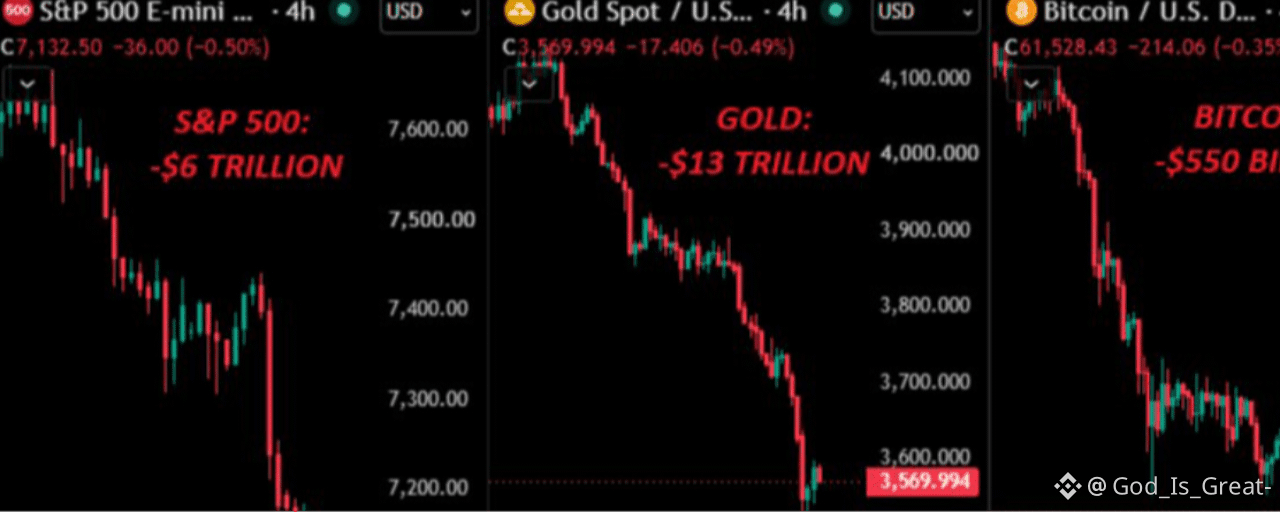
US Stock Market Loses $6 Trillion: Is This a Healthy Correction or the Beginning of a Bigger Crash?The US stock market is facing one of its most challenging periods in recent years. American stocks have lost an average of approximately $225 billion in market value every trading session for 31 consecutive sessions. Since the S&P 500 reached its latest record high on October 6, the market has erased nearly $6 trillion in value.
However, according to a new analysis from The Kobeissi Letter, the current selloff may represent a normal market correction rather than the collapse of an AI investment bubble.
Several major factors are contributing to the decline, including massive technology spending, political uncertainty, Federal Reserve policy, geopolitical tensions, and weakening investor confidence.
1. Massive AI Spending Raises Investor Concerns
One of the biggest concerns surrounding the current market correction is the enormous amount of money major technology companies are investing in artificial intelligence infrastructure.
Amazon, Alphabet, Meta, and Microsoft increased their combined capital expenditure by $36.9 billion during the third quarter, reaching a record $201.9 billion.
This represents more than double the spending recorded during the same period last year and a 356% increase since the first quarter of 2024.
Over the past three years, major technology companies have invested approximately $1.6 trillion in infrastructure and AI development.
While these investments demonstrate confidence in the future of artificial intelligence, investors are increasingly asking an important question:
When will these massive investments generate meaningful financial returns?
The concern is not necessarily that AI technology will fail, but that companies may be spending faster than their revenue and profits can justify.
2. Corporate Earnings Remain Surprisingly Strong
Despite the market downturn, corporate earnings have not shown the same weakness as stock prices.
According to the report, S&P 500 companies delivered 31.9% year-over-year earnings-per-share growth in the third quarter, representing the strongest growth in at least four years.
Companies have also exceeded earnings expectations for 13 consecutive quarters.
This creates an interesting situation: stock valuations are declining even as corporate earnings remain strong.
Historically, strong earnings can provide support during market corrections because investors eventually reconsider companies with solid financial performance.
However, strong earnings alone do not guarantee an immediate market recovery.
3. Political Uncertainty Creates Additional Pressure
Political developments are another factor influencing investor sentiment.
The Kobeissi Letter argues that the Democratic victories in the midterm elections weakened what it describes as the "Trump Put" — the market assumption that President Donald Trump would intervene politically or economically to support markets during periods of significant weakness.
Investors are also concerned about potential AI regulations under a Democratic-controlled government beginning in January 2027.
Some market participants fear that aggressive restrictions could slow the development of major American AI companies.
However, the report considers these concerns potentially exaggerated.
A major US restriction on artificial intelligence could give China a competitive advantage in the global AI race, making an outright ban economically and strategically difficult.
4. Federal Reserve Policy and Geopolitical Risks
Monetary policy is adding another layer of uncertainty.
Federal Reserve Chair Warsh has emphasized the importance of bringing inflation back toward the central bank's 2% target.
US inflation has reportedly remained above that target for 67 consecutive months.
At the same time, the ongoing Iran conflict is creating geopolitical uncertainty and potentially increasing pressure on energy markets and global economic conditions.
Higher interest rates can make borrowing more expensive, reduce corporate investment incentives, and place pressure on stock valuations.
The bond market is also attracting attention.
Investment-grade corporate bond issuance is expected to reach approximately $175 billion in November, representing a 27% increase compared with the same month last year.
That would make it a record November for investment-grade bond sales.
5. Anthropic's IPO Adds to Liquidity Concerns
Another unusual factor is the enormous demand surrounding Anthropic's IPO.
According to the report, institutional demand reached approximately $400 billion, while retail orders reached $100 billion.
Combined demand approached $500 billion, nearly eight times the company's initial $64.4 billion fundraising target at $78 per share.
Such enormous demand highlights how much capital investors are willing to allocate toward major AI opportunities.
However, during a period of market stress, large capital commitments and competing investment opportunities can create additional liquidity pressures across financial markets.
6. Nvidia and AMD Become Major Sources of Market Uncertainty
Semiconductor stocks are also facing significant pressure.
Nvidia has reportedly experienced a dramatic decline, while uncertainty surrounding the company's leadership and future expectations has intensified market concerns.
A November 19 short-seller report also accused AMD of smuggling chips into China. However, these allegations remain unsubstantiated based on the information presented in the report.
The broader technology sector is experiencing a major valuation reset.
According to The Kobeissi Letter, technology stocks' forward price-to-earnings ratio has fallen to its lowest level since March 2020.
Nvidia's reported valuation has also compressed significantly, reflecting investors' growing skepticism about future earnings expectations.
The central issue is whether AI-related revenue growth can justify the enormous valuations and investment commitments that have accumulated across the technology sector.
7. Market Fear Reaches Extreme Levels
Several market indicators suggest that investor confidence has deteriorated considerably.
The VIX volatility index has increased more than 100% from its October low.On November 5, the VIX recorded its largest one-day increase since February 2018.Hedge funds experienced their largest six-week net outflow from technology stocks in more than a decade.Investors are increasingly reducing exposure to high-growth technology companies.
These developments indicate that institutional investors are becoming more defensive.
However, extreme fear does not automatically mean the market has reached its bottom. Volatility can remain elevated, and further selling pressure is possible.
8. Is a 30% Stock Market Crash Coming?
Despite the significant decline, The Kobeissi Letter argues that the current situation should be viewed as a correction rather than the beginning of a major financial collapse.
The analysis suggests that even another 10% decline could remain within the historical range of a healthy market correction.
It also challenges predictions of a 30% or larger market crash.
Several negative factors are already influencing market prices, including:
Higher interest rates.Aggressive AI regulation concerns.Questions about AI investment returns.Geopolitical uncertainty.Weakening institutional sentiment.Uncertainty surrounding major technology companies.
If these concerns are already reflected in valuations, any improvement in economic conditions or corporate earnings could create positive surprises.
9. What Could Happen Next?
The next phase of the market will likely depend on liquidity, interest rates, corporate earnings, and investor confidence.
Bullish Scenario:
If inflation begins to decline, financial conditions improve, and AI companies demonstrate stronger returns on their investments, investors could gradually return to technology stocks.
Quality companies with strong balance sheets and sustainable earnings growth may attract significant buying interest.
Bearish Scenario:
If interest rates remain elevated, geopolitical tensions intensify, and AI investments fail to generate expected returns, selling pressure could continue.
Further institutional outflows may also increase volatility and push stock valuations lower.
Neutral Scenario:
The market could enter an extended consolidation period as investors wait for clearer signals from the Federal Reserve, corporate earnings, and the global economy.
Final Thoughts
The loss of nearly $6 trillion in US stock market value is significant, but it does not automatically mean the AI boom is over.
The current correction reflects a combination of expensive technology investments, changing political expectations, monetary policy uncertainty, geopolitical risks, and declining investor confidence.
Interestingly, corporate earnings remain strong despite the market weakness.
The key question is no longer simply whether artificial intelligence will transform the global economy. It is whether the enormous investments being made today will generate enough profits to justify their costs.
If liquidity returns and major technology companies continue delivering strong earnings, the market could eventually recover.
For now, investors should remain cautious, monitor key economic indicators, avoid emotional decisions, and focus on companies with strong fundamentals.
The next major market opportunity may emerge when fear begins to fade — but timing the bottom remains extremely difficult.
Disclaimer: This article is for informational and educational purposes only. It is not financial advice. Always conduct your own research (DYOR) and manage your risk before making investment decisions.
#USStockMarket #SP500 #NVIDIA #artificialintelligence #marketcrash
$AMZN $GOOGL $GOOGLB
{spot}(GOOGLBUSDT)
{future}(GOOGLUSDT)
{future}(AMZNUSDT)
US Stock Market Loses $6 Trillion: Is This a Healthy Correction or the Beginning of a Bigger Crash?
The US stock market is facing one of its most challenging periods in recent years. American stocks have lost an average of approximately $225 billion in market value every trading session for 31 consecutive sessions. Since the S&P 500 reached its latest record high on October 6, the market has erased nearly $6 trillion in value.
However, according to a new analysis from The Kobeissi Letter, the current selloff may represent a normal market correction rather than the collapse of an AI investment bubble.
Several major factors are contributing to the decline, including massive technology spending, political uncertainty, Federal Reserve policy, geopolitical tensions, and weakening investor confidence.
1. Massive AI Spending Raises Investor Concerns
One of the biggest concerns surrounding the current market correction is the enormous amount of money major technology companies are investing in artificial intelligence infrastructure.
Amazon, Alphabet, Meta, and Microsoft increased their combined capital expenditure by $36.9 billion during the third quarter, reaching a record $201.9 billion.
This represents more than double the spending recorded during the same period last year and a 356% increase since the first quarter of 2024.
Over the past three years, major technology companies have invested approximately $1.6 trillion in infrastructure and AI development.
While these investments demonstrate confidence in the future of artificial intelligence, investors are increasingly asking an important question:
When will these massive investments generate meaningful financial returns?
The concern is not necessarily that AI technology will fail, but that companies may be spending faster than their revenue and profits can justify.
2. Corporate Earnings Remain Surprisingly Strong
Despite the market downturn, corporate earnings have not shown the same weakness as stock prices.
According to the report, S&P 500 companies delivered 31.9% year-over-year earnings-per-share growth in the third quarter, representing the strongest growth in at least four years.
Companies have also exceeded earnings expectations for 13 consecutive quarters.
This creates an interesting situation: stock valuations are declining even as corporate earnings remain strong.
Historically, strong earnings can provide support during market corrections because investors eventually reconsider companies with solid financial performance.
However, strong earnings alone do not guarantee an immediate market recovery.
3. Political Uncertainty Creates Additional Pressure
Political developments are another factor influencing investor sentiment.
The Kobeissi Letter argues that the Democratic victories in the midterm elections weakened what it describes as the "Trump Put" — the market assumption that President Donald Trump would intervene politically or economically to support markets during periods of significant weakness.
Investors are also concerned about potential AI regulations under a Democratic-controlled government beginning in January 2027.
Some market participants fear that aggressive restrictions could slow the development of major American AI companies.
However, the report considers these concerns potentially exaggerated.
A major US restriction on artificial intelligence could give China a competitive advantage in the global AI race, making an outright ban economically and strategically difficult.
4. Federal Reserve Policy and Geopolitical Risks
Monetary policy is adding another layer of uncertainty.
Federal Reserve Chair Warsh has emphasized the importance of bringing inflation back toward the central bank's 2% target.
US inflation has reportedly remained above that target for 67 consecutive months.
At the same time, the ongoing Iran conflict is creating geopolitical uncertainty and potentially increasing pressure on energy markets and global economic conditions.
Higher interest rates can make borrowing more expensive, reduce corporate investment incentives, and place pressure on stock valuations.
The bond market is also attracting attention.
Investment-grade corporate bond issuance is expected to reach approximately $175 billion in November, representing a 27% increase compared with the same month last year.
That would make it a record November for investment-grade bond sales.
5. Anthropic's IPO Adds to Liquidity Concerns
Another unusual factor is the enormous demand surrounding Anthropic's IPO.
According to the report, institutional demand reached approximately $400 billion, while retail orders reached $100 billion.
Combined demand approached $500 billion, nearly eight times the company's initial $64.4 billion fundraising target at $78 per share.
Such enormous demand highlights how much capital investors are willing to allocate toward major AI opportunities.
However, during a period of market stress, large capital commitments and competing investment opportunities can create additional liquidity pressures across financial markets.
6. Nvidia and AMD Become Major Sources of Market Uncertainty
Semiconductor stocks are also facing significant pressure.
Nvidia has reportedly experienced a dramatic decline, while uncertainty surrounding the company's leadership and future expectations has intensified market concerns.
A November 19 short-seller report also accused AMD of smuggling chips into China. However, these allegations remain unsubstantiated based on the information presented in the report.
The broader technology sector is experiencing a major valuation reset.
According to The Kobeissi Letter, technology stocks' forward price-to-earnings ratio has fallen to its lowest level since March 2020.
Nvidia's reported valuation has also compressed significantly, reflecting investors' growing skepticism about future earnings expectations.
The central issue is whether AI-related revenue growth can justify the enormous valuations and investment commitments that have accumulated across the technology sector.
7. Market Fear Reaches Extreme Levels
Several market indicators suggest that investor confidence has deteriorated considerably.
The VIX volatility index has increased more than 100% from its October low.On November 5, the VIX recorded its largest one-day increase since February 2018.Hedge funds experienced their largest six-week net outflow from technology stocks in more than a decade.Investors are increasingly reducing exposure to high-growth technology companies.
These developments indicate that institutional investors are becoming more defensive.
However, extreme fear does not automatically mean the market has reached its bottom. Volatility can remain elevated, and further selling pressure is possible.
8. Is a 30% Stock Market Crash Coming?
Despite the significant decline, The Kobeissi Letter argues that the current situation should be viewed as a correction rather than the beginning of a major financial collapse.
The analysis suggests that even another 10% decline could remain within the historical range of a healthy market correction.
It also challenges predictions of a 30% or larger market crash.
Several negative factors are already influencing market prices, including:
Higher interest rates.Aggressive AI regulation concerns.Questions about AI investment returns.Geopolitical uncertainty.Weakening institutional sentiment.Uncertainty surrounding major technology companies.
If these concerns are already reflected in valuations, any improvement in economic conditions or corporate earnings could create positive surprises.
9. What Could Happen Next?
The next phase of the market will likely depend on liquidity, interest rates, corporate earnings, and investor confidence.
Bullish Scenario:
If inflation begins to decline, financial conditions improve, and AI companies demonstrate stronger returns on their investments, investors could gradually return to technology stocks.
Quality companies with strong balance sheets and sustainable earnings growth may attract significant buying interest.
Bearish Scenario:
If interest rates remain elevated, geopolitical tensions intensify, and AI investments fail to generate expected returns, selling pressure could continue.
Further institutional outflows may also increase volatility and push stock valuations lower.
Neutral Scenario:
The market could enter an extended consolidation period as investors wait for clearer signals from the Federal Reserve, corporate earnings, and the global economy.
Final Thoughts
The loss of nearly $6 trillion in US stock market value is significant, but it does not automatically mean the AI boom is over.
The current correction reflects a combination of expensive technology investments, changing political expectations, monetary policy uncertainty, geopolitical risks, and declining investor confidence.
Interestingly, corporate earnings remain strong despite the market weakness.
The key question is no longer simply whether artificial intelligence will transform the global economy. It is whether the enormous investments being made today will generate enough profits to justify their costs.
If liquidity returns and major technology companies continue delivering strong earnings, the market could eventually recover.
For now, investors should remain cautious, monitor key economic indicators, avoid emotional decisions, and focus on companies with strong fundamentals.
The next major market opportunity may emerge when fear begins to fade — but timing the bottom remains extremely difficult.
Disclaimer: This article is for informational and educational purposes only. It is not financial advice. Always conduct your own research (DYOR) and manage your risk before making investment decisions.
#USStockMarket #SP500 #NVIDIA #artificialintelligence #marketcrash
$AMZN $GOOGL $GOOGLB
1
201
·
--
ສັນຍານກະທິງ
#USStockMarket 🌍 #PositiveMindsGlobalResults
BINANCE SQUARE | INVEST • LEARN • GROW • TOGETHER
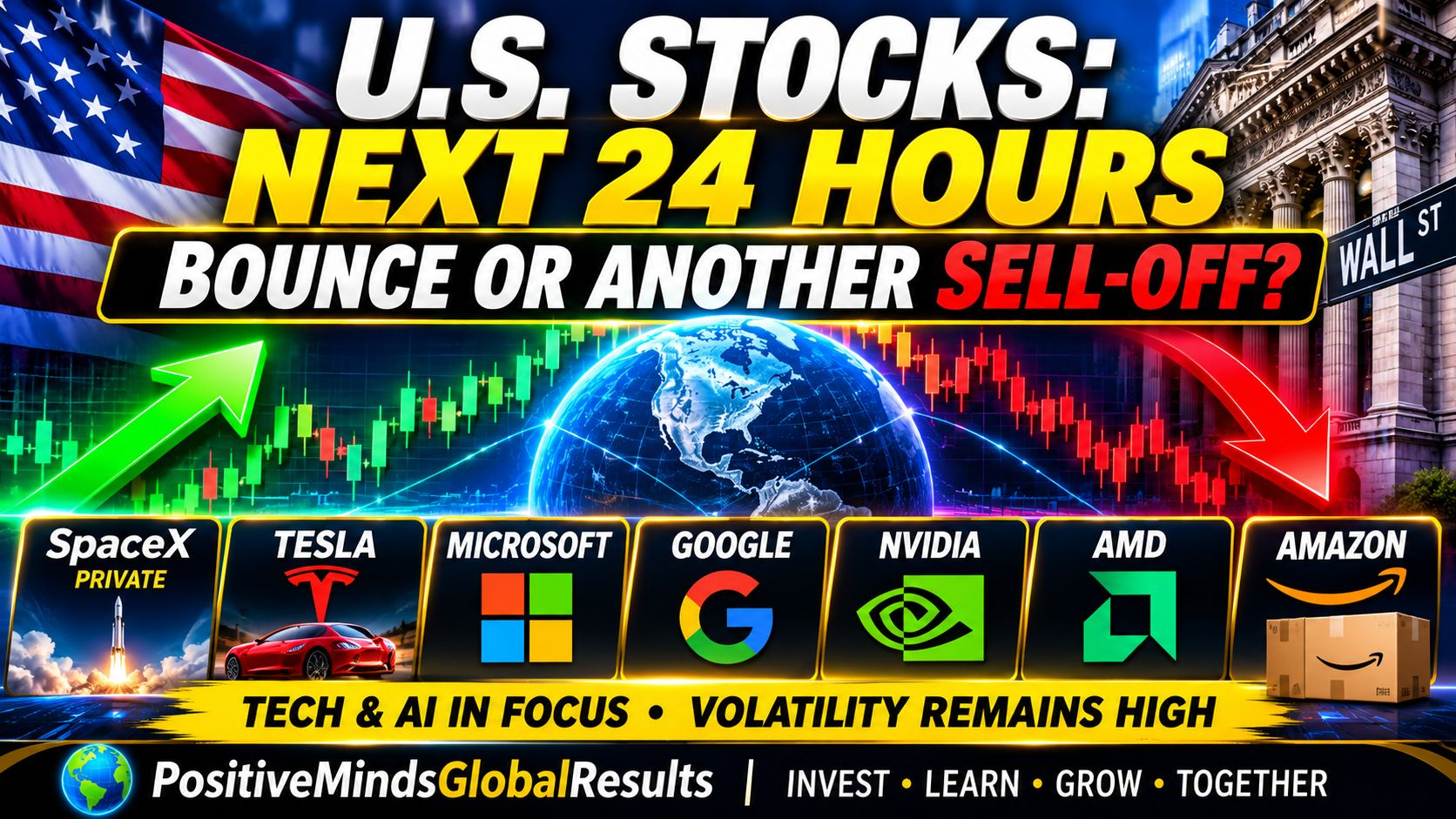
📈 U.S. STOCK MARKET: 24-HOUR OUTLOOK — BOUNCE OR ANOTHER SELL-OFF?
Wall Street enters the next trading session under pressure after a sharp technology-led sell-off, rising volatility and growing concerns over AI valuations. A technical rebound is possible, but investor confidence remains fragile. The coming session could bring either a relief rally or another wave of selling.
🔎 TOP U.S. STOCKS TO WATCH
🚀 SpaceX — Private-space industry momentum, AI infrastructure and future IPO expectations.
🚗 Tesla (TSLA) — High volatility; sensitive to growth expectations, investor sentiment and technology valuations.
💻 Microsoft (MSFT) — AI spending, cloud growth and enterprise demand remain key drivers.
🔍 Google (GOOGL) — AI competition, advertising strength and cloud profitability in focus.
🟢 NVIDIA (NVDA) — AI chip demand remains powerful, but valuation pressure and profit-taking create risks.
⚡ AMD (AMD) — AI accelerator growth and semiconductor sentiment could drive sharp moves.
📦 Amazon (AMZN) — AWS growth, consumer spending and AI investment remain important market catalysts.
📊 NEXT 24 HOURS
Base case: Volatile trading with a possible oversold bounce.
Bullish scenario: Technology stabilizes, buyers return and growth stocks recover.
Bearish scenario: AI valuation concerns deepen, yields or risk aversion rise, and selling spreads across the Nasdaq.
⚠️ My outlook: The market may be approaching a short-term rebound opportunity, but a sustainable recovery requires stronger buying confirmation—not just one green session.
Forecasts are estimates, not guarantees. Not financial advice. DYOR.
#USStockMarket #NASDAQ #AIStocks #NVIDIA #Tesla #Microsoft #Google #AMD #Amazon #SpaceX #PositiveMindsGlobalResults
1
112

·
--
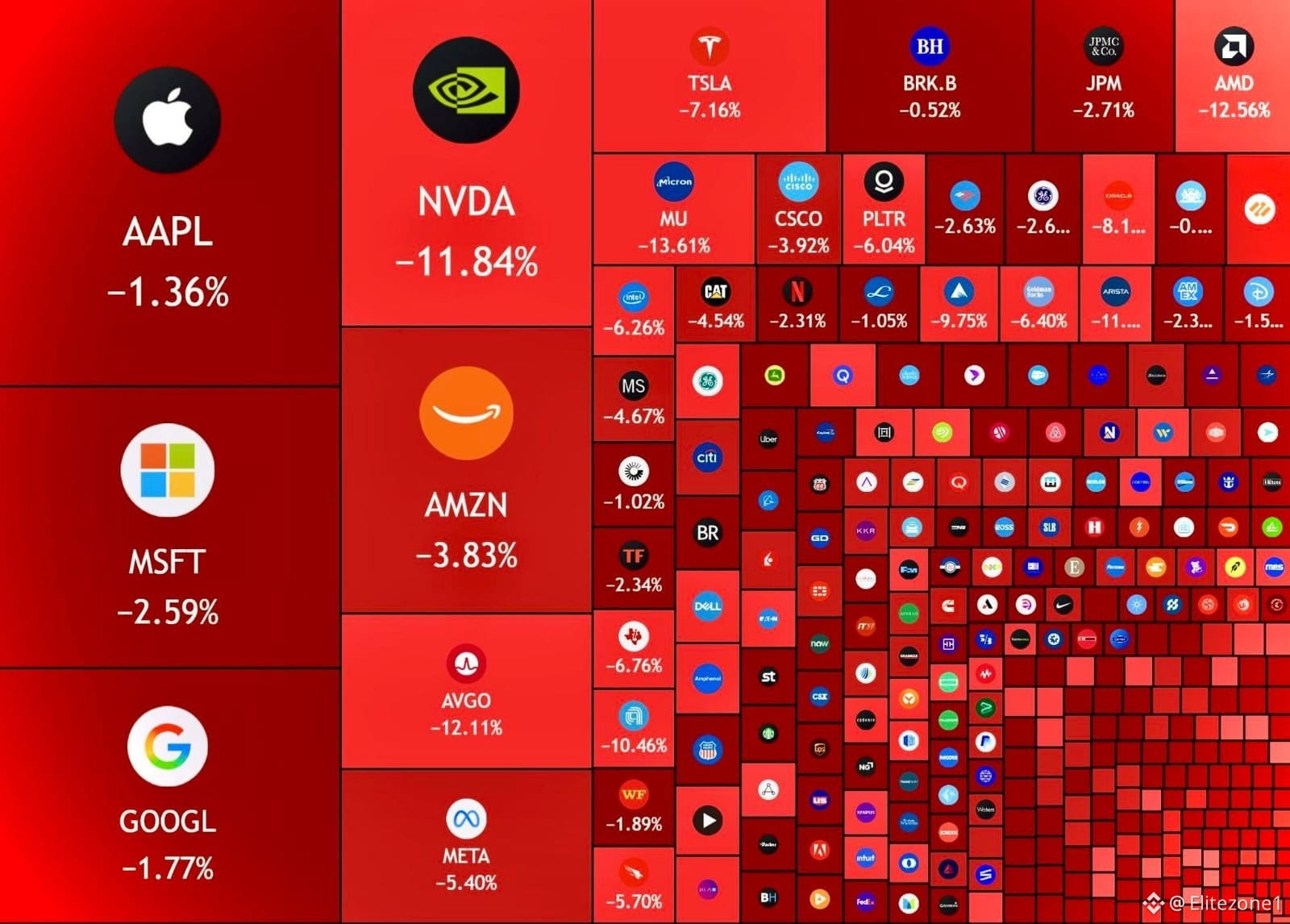
🚨 BREAKING: MASSIVE SELL-OFF IN US STOCKS! 🇺🇸📉
💥 A staggering $8.9 TRILLION has reportedly been wiped out from the US stock market over the past 45 days.
⚠️ Even more shocking, $2.5 TRILLION reportedly erased TODAY alone!
The market is facing extreme volatility, and fear is spreading across global financial markets.
📉 Is this the beginning of a bigger market crash, or a massive buying opportunity?
Trade smart, not emotional!
#USStockMarket #MarketCrash #CryptoMarket #Bitcoin #MarketUpdate
241

ບົດຄວາມ
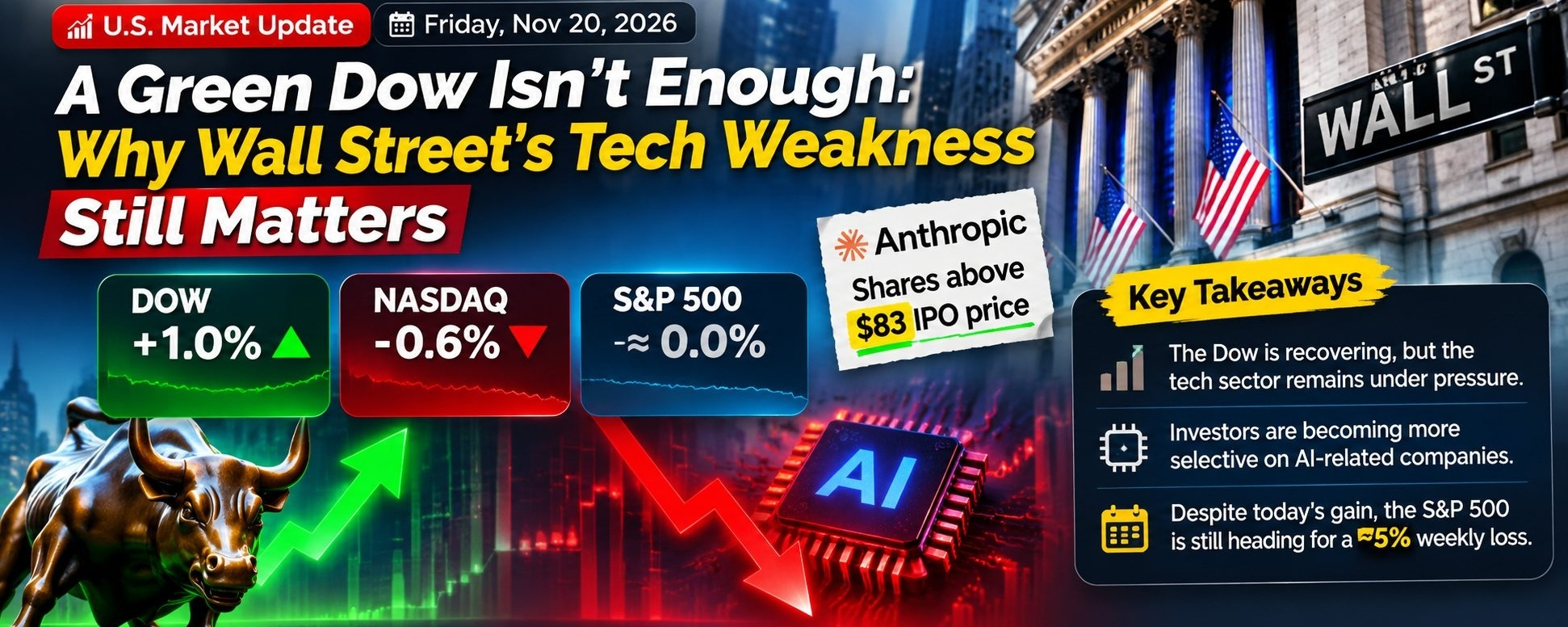
A Green Dow Isn't Enough: Why Wall Street's Tech Weakness Still MattersSomething feels a little unusual about today's U.S. market. The Dow is moving higher, but the Nasdaq is still struggling. And the S&P 500 is barely moving.
According to Friday's market update, the Dow gained around 1%, while the Nasdaq slipped 0.6%. The S&P 500 remained close to unchanged, despite heading toward a weekly loss of roughly 5%.
What stands out to me isn't the Dow's recovery. It's the fact that technology stocks are still under pressure even as other parts of the market attempt to stabilize.
There is a bigger story behind this. Investors are becoming more selective about AI-related companies, particularly when valuations are high and spending expectations remain enormous.
Anthropic's market debut adds another interesting detail. Its shares remained above their $83 IPO price, but the excitement surrounding the listing hasn't translated into a broader recovery for technology stocks.
I think this is an important distinction: a rising index doesn't necessarily mean confidence has returned across the market. Sometimes, the headline numbers hide very different movements underneath.
I'm not calling this a market reversal or another breakdown. It's simply too early.
The next thing worth watching is whether technology stocks can regain their footing while the Dow holds its gains. That divergence could reveal much more about investor confidence than the headline index movements alone.
#USStockMarket #WallStreet #DowJones #Nasdaq #AIStocks
A Green Dow Isn't Enough: Why Wall Street's Tech Weakness Still Matters
Something feels a little unusual about today's U.S. market. The Dow is moving higher, but the Nasdaq is still struggling. And the S&P 500 is barely moving.
According to Friday's market update, the Dow gained around 1%, while the Nasdaq slipped 0.6%. The S&P 500 remained close to unchanged, despite heading toward a weekly loss of roughly 5%.
What stands out to me isn't the Dow's recovery. It's the fact that technology stocks are still under pressure even as other parts of the market attempt to stabilize.
There is a bigger story behind this. Investors are becoming more selective about AI-related companies, particularly when valuations are high and spending expectations remain enormous.
Anthropic's market debut adds another interesting detail. Its shares remained above their $83 IPO price, but the excitement surrounding the listing hasn't translated into a broader recovery for technology stocks.
I think this is an important distinction: a rising index doesn't necessarily mean confidence has returned across the market. Sometimes, the headline numbers hide very different movements underneath.
I'm not calling this a market reversal or another breakdown. It's simply too early.
The next thing worth watching is whether technology stocks can regain their footing while the Dow holds its gains. That divergence could reveal much more about investor confidence than the headline index movements alone.
#USStockMarket #WallStreet #DowJones #Nasdaq #AIStocks
1
88

·
--
ສັນຍານໝີ
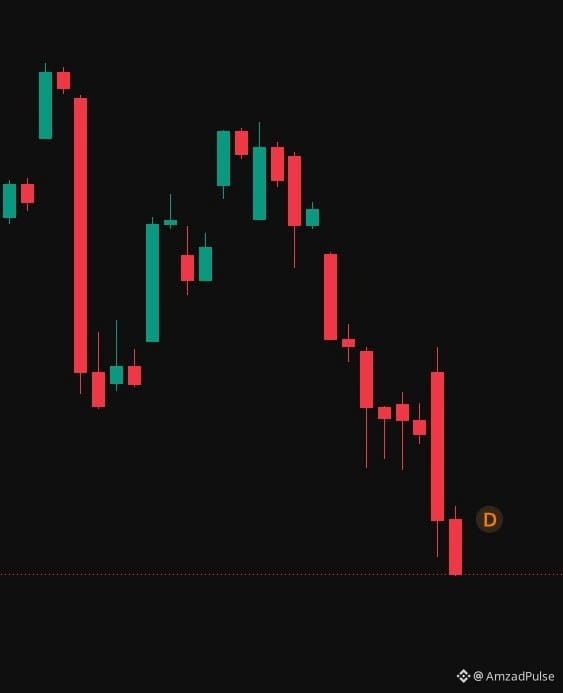
🇺🇸 $500 BILLION+ WIPED OUT 📉
Over $500 billion erased from the US stock market at the opening bell as heavy selling pressure hits Wall Street. 🔴
#USStockMarket #WallStreet #StockMarketCrash #Marketupdater #Investing
🇺🇸 $500 BILLION+ WIPED OUT 📉
Over $500 billion erased from the US stock market at the opening bell as heavy selling pressure hits Wall Street. 🔴
#USStockMarket #WallStreet #StockMarketCrash #Marketupdater #Investing
Over $500 billion erased from the US stock market at the opening bell as heavy selling pressure hits Wall Street. 🔴
#USStockMarket #WallStreet #StockMarketCrash #Marketupdater #Investing
5
36

🚨 US STOCK MARKET UPDATE 🇺🇸
US technology stocks are showing mixed movements in the latest market snapshot.
📉 Stocks in the red:
* Microsoft (MSFT): -2.25%
* SanDisk (SNDK): -1.41%
* Alphabet (GOOGL): -1.23%
* Micron (MU): -0.84%
* NVIDIA (NVDA): -0.44%
* Apple (AAPL): -0.24%
* AMD: -0.17%
📈 Stocks showing gains:
* SPX Technologies (SPXC): +3.14%
* Amazon (AMZN): +0.03%
Technology stocks remain in focus as investors monitor market movements.
💬 Which stock do you think will perform best next?
#USStockMarket #StockMarketNews #NVIDIA #Microsoft #Apple $NVDAB $MSFTB
244
ບົດຄວາມ
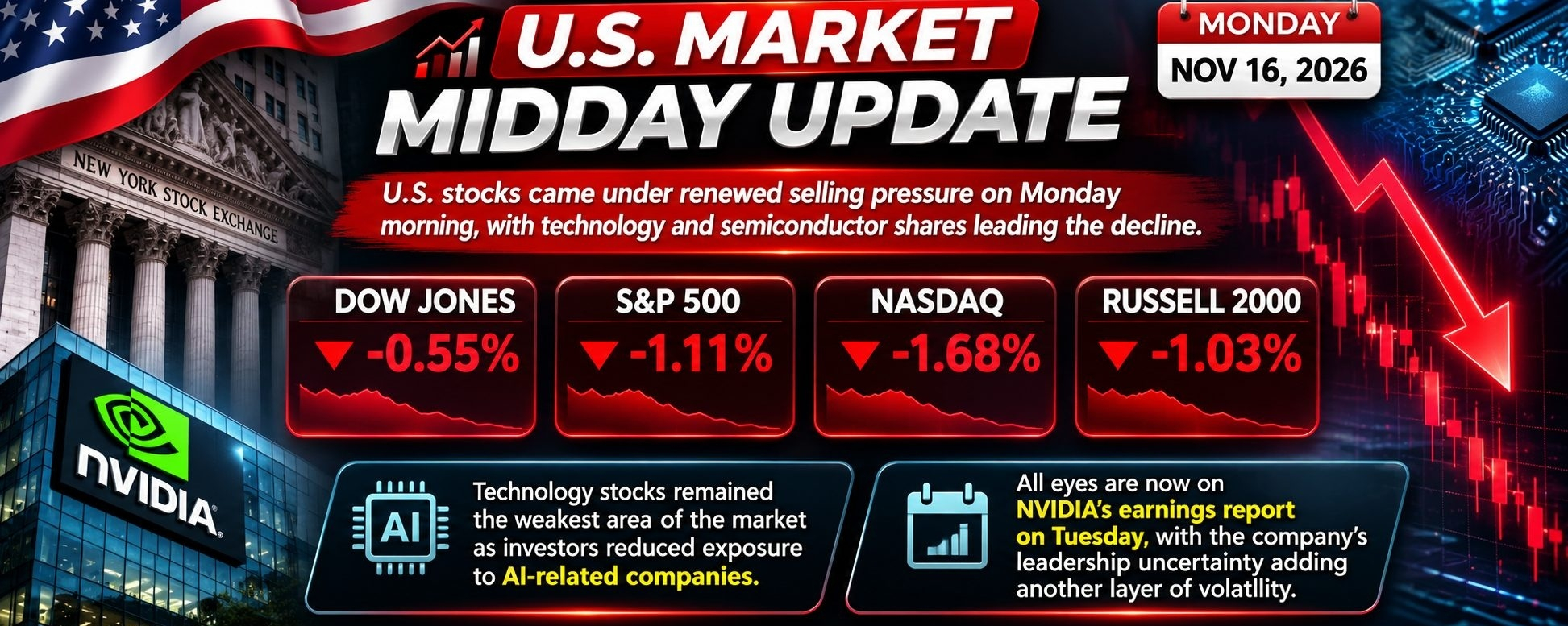
U.S. Market Midday Update | Monday, November 16, 2026*📉 *U.S. stocks came under renewed selling pressure on Monday morning, with technology and semiconductor shares leading the decline.*
*Around 11 AM ET, the Dow Jones was down approximately 0.55%, the S&P 500 had fallen 1.11%, and the Nasdaq Composite was lower by 1.68%. The Russell 2000 also declined approximately 1.03%.*
*Technology stocks remained the weakest area of the market as investors reduced exposure to AI-related companies ahead of NVIDIA's earnings report on Tuesday. NVIDIA's leadership uncertainty has added another layer of volatility to an already sensitive sector.*
#USStockMarket #WallStreet #NASDAQ #NVIDIA #BinanceSquareTalks
U.S. Market Midday Update | Monday, November 16, 2026*
📉 *U.S. stocks came under renewed selling pressure on Monday morning, with technology and semiconductor shares leading the decline.*
*Around 11 AM ET, the Dow Jones was down approximately 0.55%, the S&P 500 had fallen 1.11%, and the Nasdaq Composite was lower by 1.68%. The Russell 2000 also declined approximately 1.03%.*
*Technology stocks remained the weakest area of the market as investors reduced exposure to AI-related companies ahead of NVIDIA's earnings report on Tuesday. NVIDIA's leadership uncertainty has added another layer of volatility to an already sensitive sector.*
#USStockMarket #WallStreet #NASDAQ #NVIDIA #BinanceSquareTalks
264

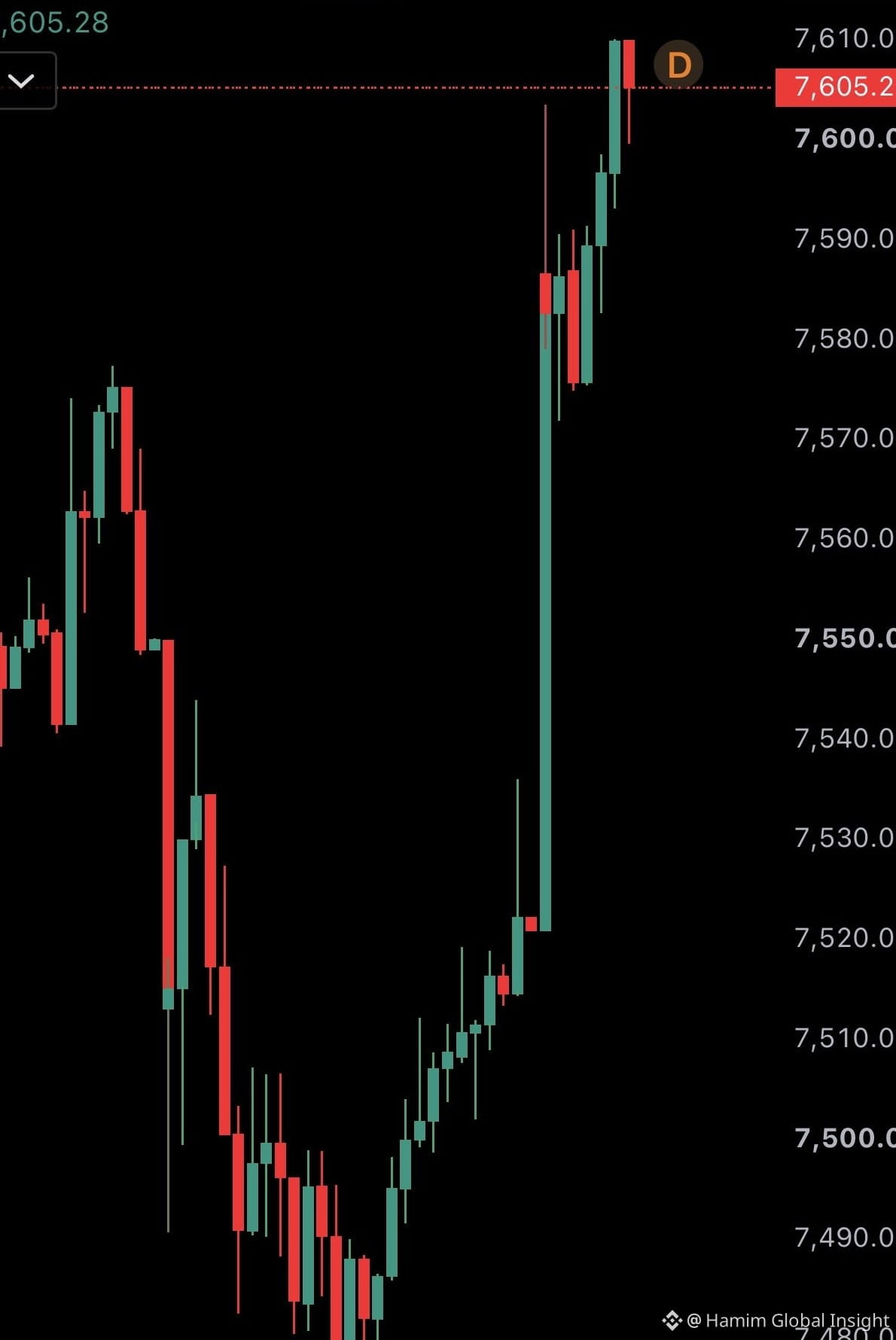
🇺🇸 $845 Billion Added to the U.S. Stock Market in Just Two Hours! 📈
The U.S. stock market reportedly gained a massive $845 billion in market value during the first two hours of trading today.
The sharp jump highlights strong market momentum and renewed investor activity. Wall Street is certainly making headlines! 🚀
#USStockMarket #WallStreet #StockMarket #Investing #MarketNews
3

🚨 $SOXL – The US stock market is opening in just 10 minutes!
Everyone, stay alert and be ready for the market action. Keep a close eye on price movements, manage your risk, and protect your capital. Let's stay focused and trade smart! 📊💪
#SOXL #stockmarket #StockTrading #USStockMarket #SquareBinance
{future}(SOXLUSDT)
🚨 $SOXL – The US stock market is opening in just 10 minutes!
Everyone, stay alert and be ready for the market action. Keep a close eye on price movements, manage your risk, and protect your capital. Let's stay focused and trade smart! 📊💪
#SOXL #stockmarket #StockTrading #USStockMarket #SquareBinance
Everyone, stay alert and be ready for the market action. Keep a close eye on price movements, manage your risk, and protect your capital. Let's stay focused and trade smart! 📊💪
#SOXL #stockmarket #StockTrading #USStockMarket #SquareBinance

5

·
--
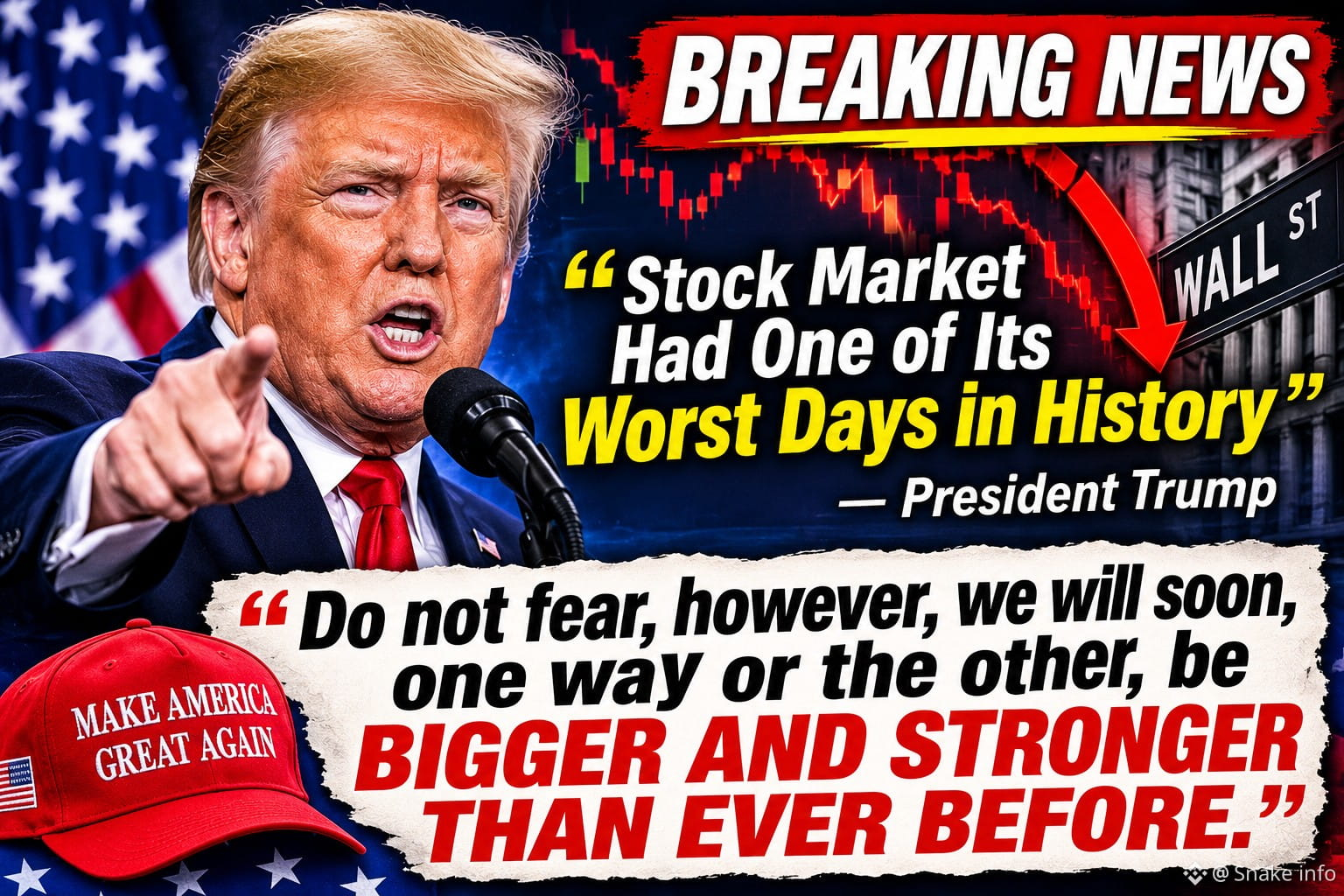
🚨 TRUMP BREAKS SILENCE AFTER WALL STREET'S HISTORIC MARKET SELLOFF! 🇺🇸
President Donald Trump has reacted to one of the stock market's worst trading days, pointing to the election results as the reason behind the massive market decline.
Despite the turmoil, Trump delivered a strong message to Americans:
"Do not fear, however, we will soon, one way or the other, be BIGGER AND STRONGER THAN EVER BEFORE."
📉 MARKET UNDER PRESSURE
Investors are facing growing uncertainty as US stocks experience heavy selling pressure.
🔥 WHAT'S NEXT?
Will Wall Street recover?
Will investor confidence return?
Could Bitcoin and crypto markets feel further pressure?
🇺🇸 Trump remains optimistic about America's economic future despite the market turmoil.
💬 Do you believe the US stock market will recover soon, or is more downside coming?
#Trump #USStockMarket #WallStreet #Nasdaq
CLICK TO BELOW TRADE👇
$AAPLB $TSMB $NVDAB
{spot}(NVDABUSDT)
{spot}(TSMBUSDT)
{spot}(AAPLBUSDT)
🚨 TRUMP BREAKS SILENCE AFTER WALL STREET'S HISTORIC MARKET SELLOFF! 🇺🇸
President Donald Trump has reacted to one of the stock market's worst trading days, pointing to the election results as the reason behind the massive market decline.
Despite the turmoil, Trump delivered a strong message to Americans:
"Do not fear, however, we will soon, one way or the other, be BIGGER AND STRONGER THAN EVER BEFORE."
📉 MARKET UNDER PRESSURE
Investors are facing growing uncertainty as US stocks experience heavy selling pressure.
🔥 WHAT'S NEXT?
Will Wall Street recover?
Will investor confidence return?
Could Bitcoin and crypto markets feel further pressure?
🇺🇸 Trump remains optimistic about America's economic future despite the market turmoil.
💬 Do you believe the US stock market will recover soon, or is more downside coming?
#Trump #USStockMarket #WallStreet #Nasdaq
CLICK TO BELOW TRADE👇
$AAPLB $TSMB $NVDAB
30

·
--
ສັນຍານໝີ
🇺🇸 U.S. STOCK MARKET OUTLOOK | NOVEMBER 6, 2026
Wall Street Faces Heavy Selling Pressure as Technology Stocks Lead Market Decline
The U.S. equity market experienced a significant sell-off on Thursday, with technology and semiconductor stocks leading the decline.
Market Closing Performance
🔴 $S&P 500: 7,353.73 | -4.36%
🔴 $Nasdaq Composite: 24,315.00 | -5.52%
🔴 $Dow Jones: 51,523.06 | -3.44%
🔴 $Russell 2000: 2,729.89 | -4.44%
Key Market Developments
• Technology and semiconductor stocks faced significant selling pressure.
• Concerns surrounding AI infrastructure investment weighed on investor sentiment.
• The Nasdaq entered correction territory following its sharp decline.
• Market volatility increased as investors reassessed valuations and economic risks.
Market Outlook
Short-term: Bearish momentum remains dominant. Further downside cannot be ruled out.
Medium-term: A recovery will require stronger buying participation and improved market sentiment.
Key factors to monitor:
U.S. employment data
Federal Reserve policy expectations
Treasury yields
Semiconductor sector performance
Institutional buying activity
Investment Perspective
The current environment calls for patience and disciplined risk management.
Investors should avoid emotional decisions and monitor price action before establishing new positions. A sustainable recovery requires confirmation, not speculation.
Market sentiment: BEARISH | Risk level: ELEVATED
This analysis is for informational and educational purposes only. It is not financial advice.
#USStockMarket #WallStreet #NASDAQ #SP500 #DowJones #MarketAnalysis #Investing #FinancialMarkets
113

·
--
ສັນຍານໝີ
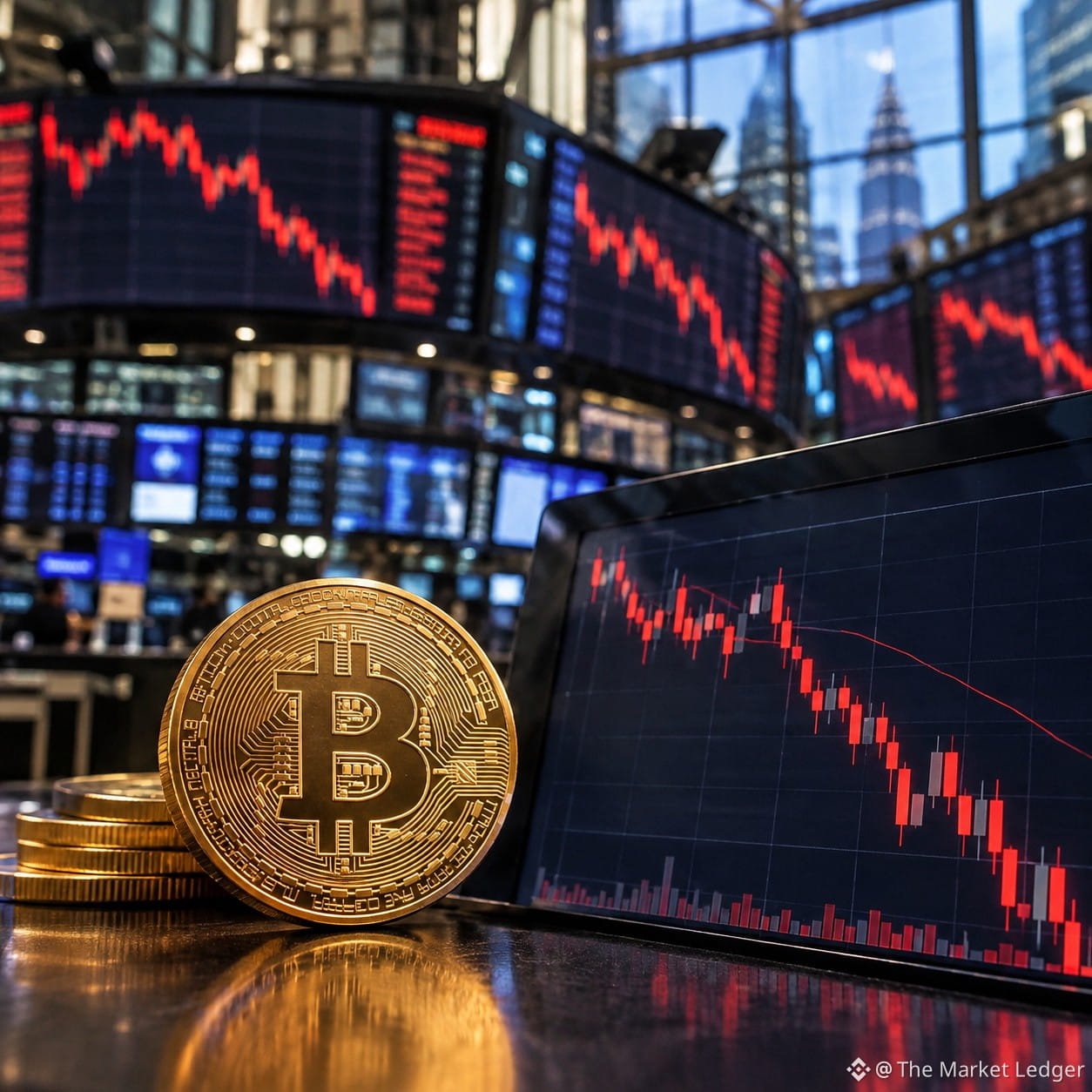
🚨 US Stocks Slide as Crypto Market Faces Heavy Selling Pressure
Wall Street and the cryptocurrency market faced a sharp sell-off on November 5, 2026, as investor confidence weakened.
The Dow Jones dropped 2.2%, the S&P 500 fell 3.4%, and the Nasdaq plunged 5.2%, with semiconductor and AI-related stocks leading the decline.
Crypto markets also felt the pressure. Bitcoin dropped from above $80,800 to approximately $76,000, while around $370 million in leveraged crypto positions were liquidated within roughly one hour.
Why is this happening?
Concerns over AI infrastructure spending, disappointing semiconductor earnings, and changing political conditions have increased uncertainty across financial markets.
What comes next?
Investors are watching Bitcoin's $75,000 support area, technology-sector performance, and upcoming US economic data.
Market takeaway: When traditional markets experience heavy selling, crypto can also come under pressure. Volatility creates opportunities, but protecting capital should always come first.
#CryptoMarket #USStockMarket #bitcoin
#USStocksSlipandCryptoMarketUnderBroadPressure
#BianceSquare
$BNB
{spot}(BNBUSDT)
$BTC
{spot}(BTCUSDT)
$XRP
{spot}(XRPUSDT)
🚨 US Stocks Slide as Crypto Market Faces Heavy Selling Pressure
Wall Street and the cryptocurrency market faced a sharp sell-off on November 5, 2026, as investor confidence weakened.
The Dow Jones dropped 2.2%, the S&P 500 fell 3.4%, and the Nasdaq plunged 5.2%, with semiconductor and AI-related stocks leading the decline.
Crypto markets also felt the pressure. Bitcoin dropped from above $80,800 to approximately $76,000, while around $370 million in leveraged crypto positions were liquidated within roughly one hour.
Why is this happening?
Concerns over AI infrastructure spending, disappointing semiconductor earnings, and changing political conditions have increased uncertainty across financial markets.
What comes next?
Investors are watching Bitcoin's $75,000 support area, technology-sector performance, and upcoming US economic data.
Market takeaway: When traditional markets experience heavy selling, crypto can also come under pressure. Volatility creates opportunities, but protecting capital should always come first.
#CryptoMarket #USStockMarket #bitcoin
#USStocksSlipandCryptoMarketUnderBroadPressure
#BianceSquare
$BNB
$BTC
$XRP
184

·
--
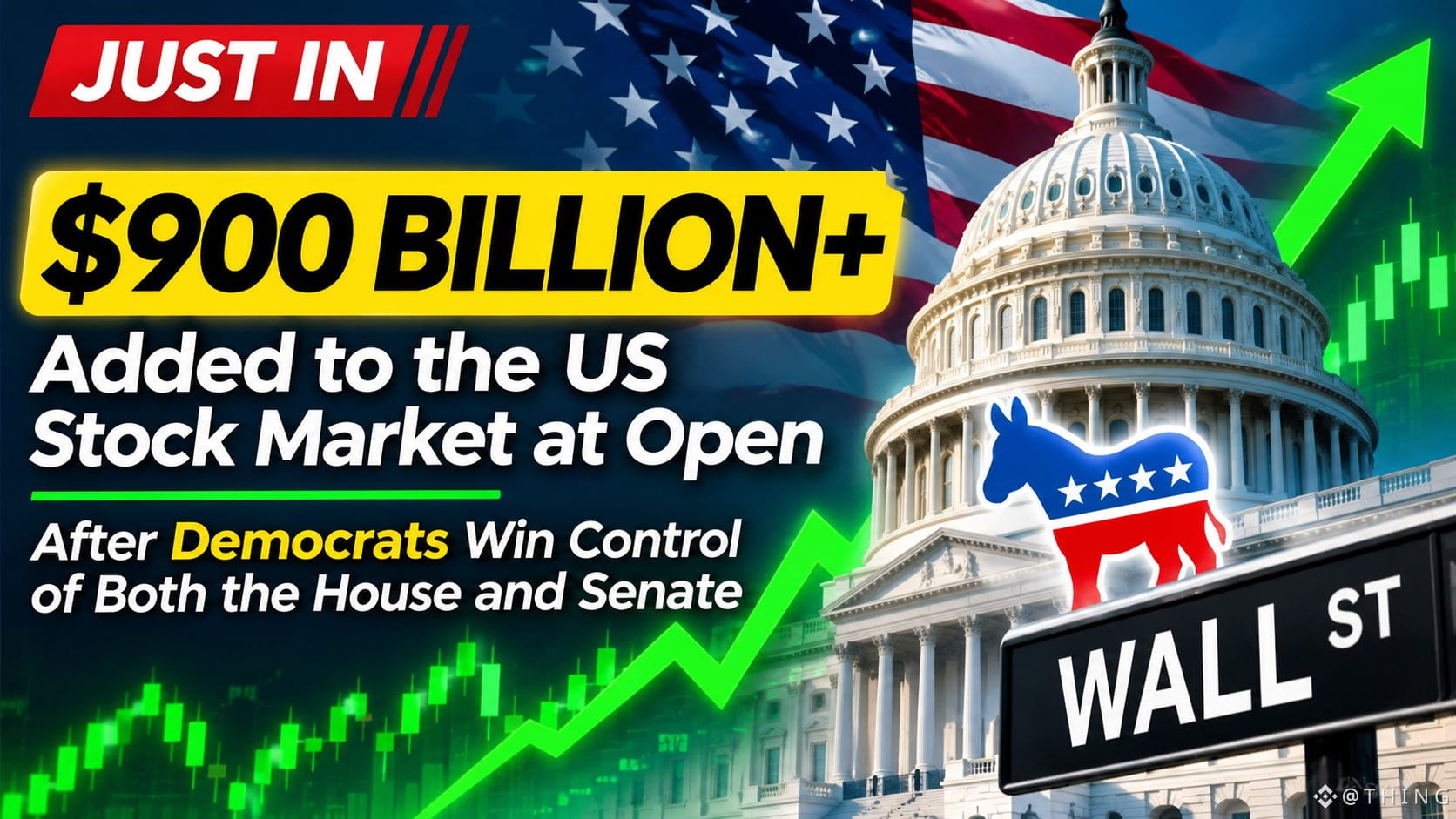
#USStockMarket 🇺🇸 JUST IN: $900 BILLION+ added to the US stock market at the opening bell!
Democrats reportedly win control of both the House and Senate, triggering a massive market reaction.
The scale of this move caught my attention. Political shifts can quickly change investor sentiment and expectations.
Now I’m watching how Wall Street and crypto respond next. 📈
#Democrats #Crypto #Bitcoin
{future}(BTCUSDT)
#USStockMarket 🇺🇸 JUST IN: $900 BILLION+ added to the US stock market at the opening bell!
Democrats reportedly win control of both the House and Senate, triggering a massive market reaction.
The scale of this move caught my attention. Political shifts can quickly change investor sentiment and expectations.
Now I’m watching how Wall Street and crypto respond next. 📈
#Democrats #Crypto #Bitcoin
1
21
1k

·
--
ບົດຄວາມ
U.S. Stock Market Outlook: The Biggest Factors Investors Must WatchThe U.S. stock market is entering a critical week, with corporate earnings, Federal Reserve policy, and inflation taking center stage. Recent technology-sector weakness highlights how quickly market sentiment can change when investors question AI spending and future profitability.
1. Big Tech Earnings: Results from Microsoft, Alphabet, and Amazon will help reveal whether cloud computing and AI investments are translating into sustainable growth.
2. Federal Reserve Policy: Interest-rate signals could influence borrowing costs, investor confidence, and technology-stock valuations.
3. Inflation and Economic Growth: Upcoming inflation and GDP data will help shape expectations for the economy and monetary policy.
4. AI and Semiconductor Stocks: Investors will assess whether strong demand justifies high valuations and rising infrastructure costs.
5. Market Risk and Opportunity: Earnings surprises can create volatility, making business fundamentals and realistic expectations more important than short-term hype.
My Market Outlook: The long-term opportunity in U.S. equities remains tied to earnings growth, innovation, and economic resilience. However, elevated expectations and policy uncertainty could trigger further volatility. Focus on financial performance, valuation, and risk rather than headlines alone.
What is your outlook for the U.S. stock market this week — bullish, bearish, or neutral?
$NVDAB $AMZNB $TSLAB
More than information below comments?👇
|#USStockMarket |#StockMarketOutlook | |#EarningsSeason |
{stock_us}(TSLA.US)
{spot}(AMZNBUSDT)
{spot}(NVDABUSDT)
U.S. Stock Market Outlook: The Biggest Factors Investors Must Watch
The U.S. stock market is entering a critical week, with corporate earnings, Federal Reserve policy, and inflation taking center stage. Recent technology-sector weakness highlights how quickly market sentiment can change when investors question AI spending and future profitability.
1. Big Tech Earnings: Results from Microsoft, Alphabet, and Amazon will help reveal whether cloud computing and AI investments are translating into sustainable growth.
2. Federal Reserve Policy: Interest-rate signals could influence borrowing costs, investor confidence, and technology-stock valuations.
3. Inflation and Economic Growth: Upcoming inflation and GDP data will help shape expectations for the economy and monetary policy.
4. AI and Semiconductor Stocks: Investors will assess whether strong demand justifies high valuations and rising infrastructure costs.
5. Market Risk and Opportunity: Earnings surprises can create volatility, making business fundamentals and realistic expectations more important than short-term hype.
My Market Outlook: The long-term opportunity in U.S. equities remains tied to earnings growth, innovation, and economic resilience. However, elevated expectations and policy uncertainty could trigger further volatility. Focus on financial performance, valuation, and risk rather than headlines alone.
What is your outlook for the U.S. stock market this week — bullish, bearish, or neutral?
$NVDAB $AMZNB $TSLAB
More than information below comments?👇
|#USStockMarket |#StockMarketOutlook | |#EarningsSeason |
2
397

·
--
ຢືນຢັນແລ້ວ
ບົດຄວາມ
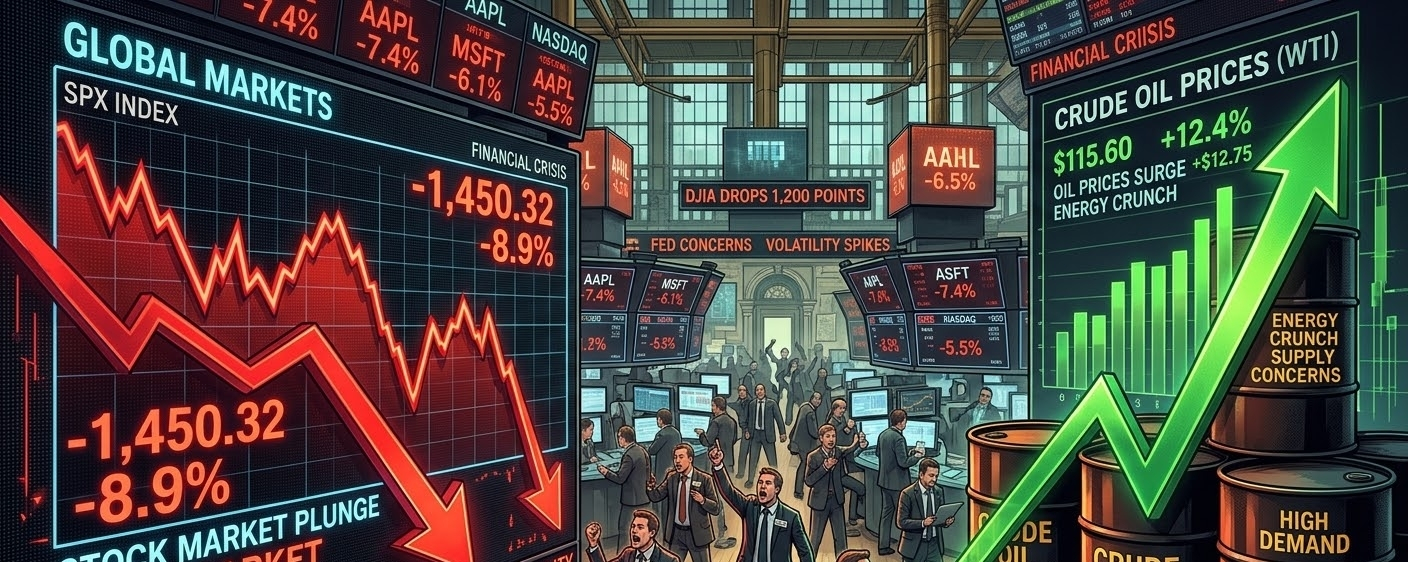
📉 US MARKET CLOSE: Dow Plunges 652 Points as Brent Crude Surges Above $116U.S. stocks closed lower on Friday, October 23, as rising oil prices, geopolitical tensions, and broader market selling weighed on investor sentiment. The selloff extended beyond AI-related stocks, putting pressure on multiple sectors.
$CL $BZ $GOOGLB
{future}(CLUSDT)
{future}(BZUSDT)
{spot}(GOOGLBUSDT)
📊 Major US Indices — Closing Bell
🔴 Dow Jones: 52,215.16 | −1.23% (−652.82 points)
🔴 S&P 500: 7,623.68 | −0.52%
🔴 Nasdaq Composite: 25,955.34 | −0.21%
🛢️ Oil Prices Surge
Brent crude jumped 3.14% to $116.72 per barrel, while WTI crude climbed 3.82% to $103.27. Renewed concerns over potential US-Israel-Iran escalation fueled fears of further supply disruptions.
📈 Sector Highlights
Energy stocks outperformed as oil prices surged, with Chevron, ExxonMobil, and Shell posting gains. Meanwhile, American Express fell more than 3%, adding to pressure on the Dow. Treasury yields also climbed, with the 10-year yield approaching 5%.
🌍 What Comes Next?
Investors will closely monitor geopolitical developments, oil price movements, Treasury yields, and upcoming corporate earnings for clues about the next market direction. Rising energy costs and persistent uncertainty could keep volatility elevated across global financial markets.
💬 Your Take: Will rising oil prices trigger further pressure on US equities, or could strong corporate earnings support a recovery?
Follow for more professional market updates and financial news.
#USStockMarket #DowJones #SP500 #Nasdaq #BrentCrude #OilPrices #WallStreet #MarketUpdate
📉 US MARKET CLOSE: Dow Plunges 652 Points as Brent Crude Surges Above $116
U.S. stocks closed lower on Friday, October 23, as rising oil prices, geopolitical tensions, and broader market selling weighed on investor sentiment. The selloff extended beyond AI-related stocks, putting pressure on multiple sectors.
$CL $BZ $GOOGLB
📊 Major US Indices — Closing Bell
🔴 Dow Jones: 52,215.16 | −1.23% (−652.82 points)
🔴 S&P 500: 7,623.68 | −0.52%
🔴 Nasdaq Composite: 25,955.34 | −0.21%
🛢️ Oil Prices Surge
Brent crude jumped 3.14% to $116.72 per barrel, while WTI crude climbed 3.82% to $103.27. Renewed concerns over potential US-Israel-Iran escalation fueled fears of further supply disruptions.
📈 Sector Highlights
Energy stocks outperformed as oil prices surged, with Chevron, ExxonMobil, and Shell posting gains. Meanwhile, American Express fell more than 3%, adding to pressure on the Dow. Treasury yields also climbed, with the 10-year yield approaching 5%.
🌍 What Comes Next?
Investors will closely monitor geopolitical developments, oil price movements, Treasury yields, and upcoming corporate earnings for clues about the next market direction. Rising energy costs and persistent uncertainty could keep volatility elevated across global financial markets.
💬 Your Take: Will rising oil prices trigger further pressure on US equities, or could strong corporate earnings support a recovery?
Follow for more professional market updates and financial news.
#USStockMarket #DowJones #SP500 #Nasdaq #BrentCrude #OilPrices #WallStreet #MarketUpdate
455

ບົດຄວາມ
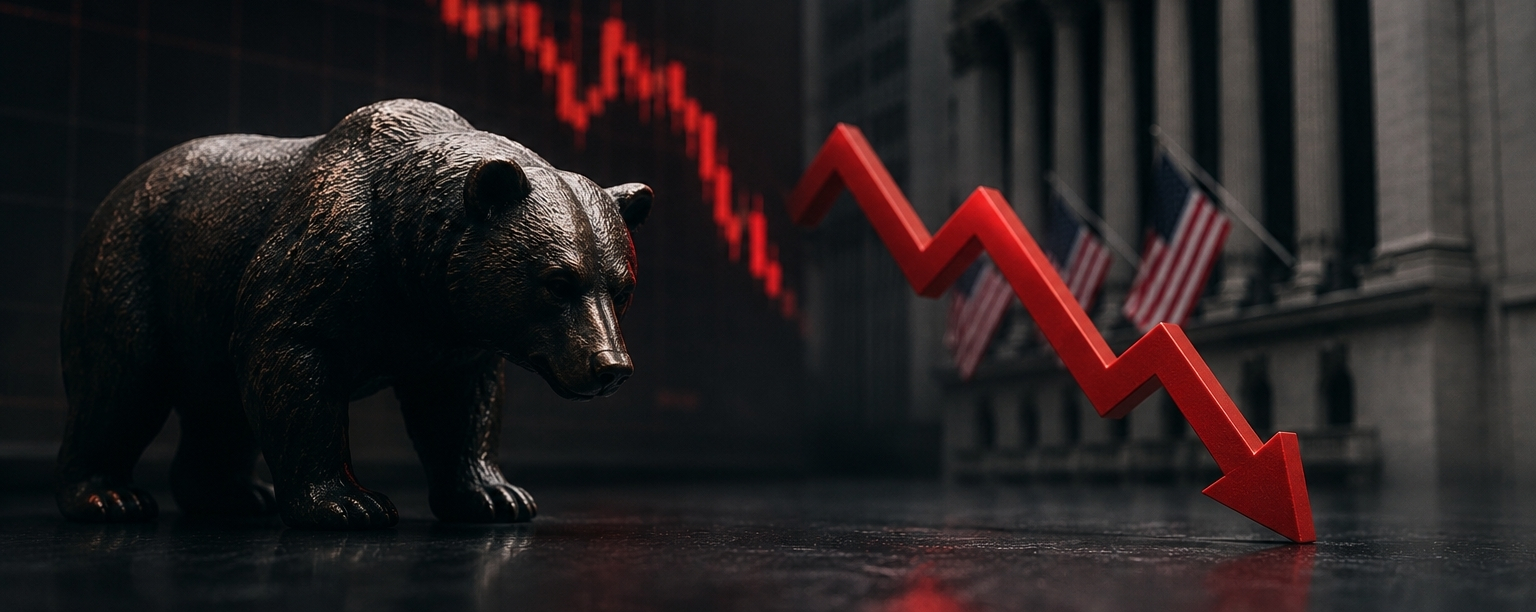
🔥 US STOCKS SLIP AS RATE-HIKE FEARS RETURNWall Street closed lower Friday as stronger-than-expected U.S. jobs data pushed Treasury yields higher and revived rate-hike expectations.
📊 S&P 500: -0.38%
📉 Nasdaq: -0.29%
🔻 Dow Jones: -0.51%
August payrolls jumped 162K vs. 53K expected, while unemployment held at 4.1%. Markets now price a 58% chance of a Fed rate hike at the September meeting, up from 49.4%.
⚠️ Higher yields could keep pressure on risk assets, including crypto, as traders await upcoming inflation data.
#USStockMarket #Fed #Bitcoin #Crypto
🔥 US STOCKS SLIP AS RATE-HIKE FEARS RETURN
Wall Street closed lower Friday as stronger-than-expected U.S. jobs data pushed Treasury yields higher and revived rate-hike expectations.
📊 S&P 500: -0.38%
📉 Nasdaq: -0.29%
🔻 Dow Jones: -0.51%
August payrolls jumped 162K vs. 53K expected, while unemployment held at 4.1%. Markets now price a 58% chance of a Fed rate hike at the September meeting, up from 49.4%.
⚠️ Higher yields could keep pressure on risk assets, including crypto, as traders await upcoming inflation data.
#USStockMarket #Fed #Bitcoin #Crypto
57
ເຂົ້າສູ່ລະບົບເພື່ອສຳຫຼວດເນື້ອຫາເພີ່ມເຕີມ
ເຂົ້າຮ່ວມກຸ່ມຜູ້ໃຊ້ຄຣິບໂຕທົ່ວໂລກໃນ Binance Square.
⚡️ ໄດ້ຮັບຂໍ້ມູນຫຼ້າສຸດ ແລະ ທີ່ມີປະໂຫຍດກ່ຽວກັບຄຣິບໂຕ.
💬 ໄດ້ຮັບຄວາມໄວ້ວາງໃຈຈາກຕະຫຼາດແລກປ່ຽນຄຣິບໂຕທີ່ໃຫຍ່ທີ່ສຸດໃນໂລກ.
👍 ຄົ້ນຫາຂໍ້ມູນເຊີງເລິກທີ່ແທ້ຈາກນັກສ້າງທີ່ໄດ້ຮັບການຢືນຢັນ.
ອີເມວ / ເບີໂທລະສັບ
ຫົວຂໍ້ທີ່ກໍາລັງນິຍົມ
1
#BitcoinAndStocksSlipAgainAmidTrump’sTariffPlans
70,355 ຄັ້ງທີ່ເບິ່ງ
879 ກຳລັງສົນທະນາ
2
#WillOctCorePCEShiftFedHikeExpectations?
372,528 ຄັ້ງທີ່ເບິ່ງ
2,445 ກຳລັງສົນທະນາ
3
#JensenHuangSaysNvidiaDoesn’tNeedASuccessionPlan
40,429 ຄັ້ງທີ່ເບິ່ງ
510 ກຳລັງສົນທະນາ
4
#AnthropicBreaksBelowIPOPriceAmidAISlump
146,923 ຄັ້ງທີ່ເບິ່ງ
1,302 ກຳລັງສົນທະນາ
5
#SouthKoreaProposesCryptoExchangeStaffUseOwnPlatform
394 ຄັ້ງທີ່ເບິ່ງ
7 ກຳລັງສົນທະນາ
6
#UkraineParliamentPassesVirtualAssetLegalizationBill
735 ຄັ້ງທີ່ເບິ່ງ
10 ກຳລັງສົນທະນາ
7
#SouthKoreaPlansToRequireCryptoReferralMarketersToRegister
453 ຄັ້ງທີ່ເບິ່ງ
12 ກຳລັງສົນທະນາ
8
#SBISolanaGlobalLaunchesInJapanOnChainFinanceMarket
1,976 ຄັ້ງທີ່ເບິ່ງ
85 ກຳລັງສົນທະນາ
9
#HKMALaunchesCMUDigitalAssetPlatformForBondTokenization
818 ຄັ້ງທີ່ເບິ່ງ
16 ກຳລັງສົນທະນາ
10
#TradFiForBeginners
1.1M ຄັ້ງທີ່ເບິ່ງ
6,162 ກຳລັງສົນທະນາ