

#tokenization
tokenization
3.5M ຄັ້ງທີ່ເບິ່ງ
15,328 ກຳລັງສົນທະນາ
ມາແຮງ
ຫຼ້າສຸດ

ບົດຄວາມ
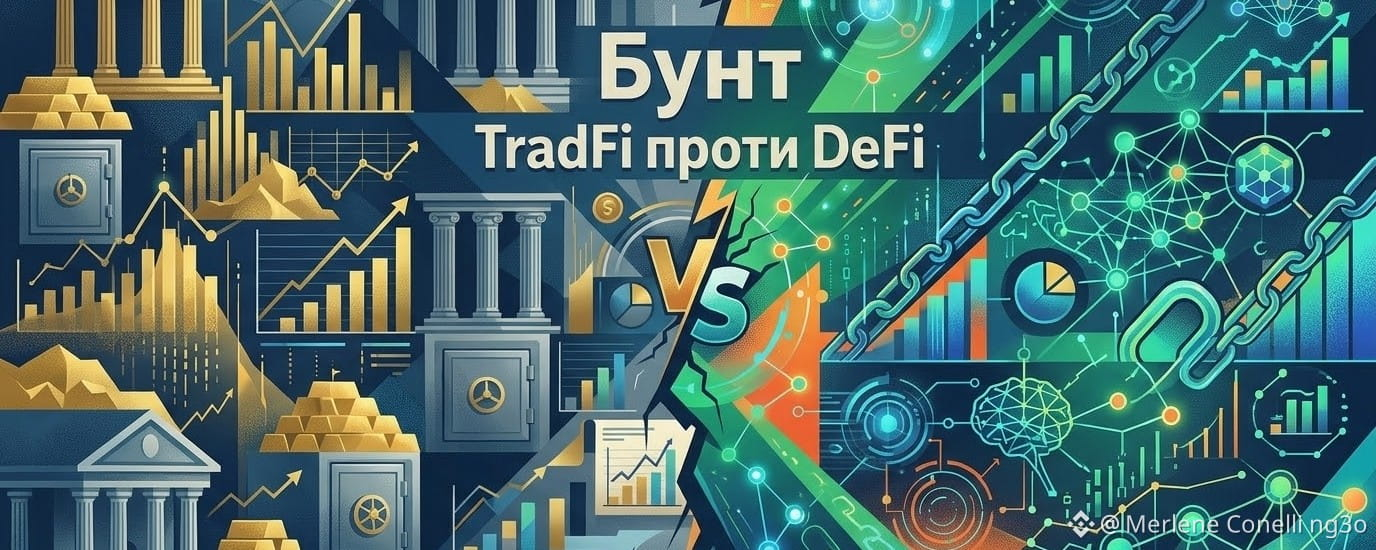
⚡️ Бунт TradFi проти DeFi: Чому 22 гіганти США сказали «НІ» токенізації акцій на OKXICE?На крипторинку розгортається безпрецедентна юридична драма. Вже 22 американські корпорації, серед яких Microsoft, Alphabet, Wells Fargo та Goldman Sachs, офіційно заблокували запуск токенізованих версій своїх акцій на новій платформі OKXICE (спільному проєкті OKX та власника NYSE).
Платформа втратила понад 35% свого запланованого лістингу! Чому гіганти TradFi масово користуються правом вето від SEC? Усе зводиться до фундаментальної юридичної різниці між двома типами токенів.
🔍 Токени від емітентів (Issuer-Sponsored) vs третіх сторін (Third-Party)
Хто несе відповідальність?
• Issuer-Sponsored: Токени випускає сама компанія (наприклад, Apple). Вона повністю відповідає перед інвесторами та законом, а ви є офіційним акціонером у реєстрі.
• Third-Party: Токени створює криптоплатформа (як-от OKXICE). Вона купує реальні акції на кастодіальний рахунок і випускає під них «цифрову обгортку». Сама компанія вам юридично нічого не винна.Що буде у випадку банкрутства платформи?
• З токенами від емітента ви захищені — ваші права записані в офіційній системі компанії.
• З токенами від третіх сторін ви стаєте звичайним кредитором збанкрутілої криптобіржі. Якщо її активи заморозять або зламають хакери, ви втрачаєте все.Чому компанії блокують торги?
• Втрата контролю: Традиційні акції торгуються за чітким графіком. Токенізація відкриває торги 24/7. Будь-які нічні маніпуляції чи збої смарт-контрактів на криптобіржах б'ють по репутації базового бренду.
• Юридичний захист: Великий бізнес просто захищає себе від майбутніх судових позовів і не хоче бути «піддослідними пацюками» у 5-річному експерименті SEC.
Регуляторний режим «Інноваційного винятку» від SEC дав крипті зелене світло, але залишив компаніям право сказати «ні». І вони цим активно користуються, обираючи безпеку замість хайпу. Термін для розгляду повідомлень у Apple, Nvidia та Amazon спливає вже на початку листопада. Стежимо, чи підтримають вони цей корпоративний бойкот!
#CryptoNews #Tokenization #RWA #SEC #OKXICE #TradFi #DeFi
⚡️ Бунт TradFi проти DeFi: Чому 22 гіганти США сказали «НІ» токенізації акцій на OKXICE?
На крипторинку розгортається безпрецедентна юридична драма. Вже 22 американські корпорації, серед яких Microsoft, Alphabet, Wells Fargo та Goldman Sachs, офіційно заблокували запуск токенізованих версій своїх акцій на новій платформі OKXICE (спільному проєкті OKX та власника NYSE).
Платформа втратила понад 35% свого запланованого лістингу! Чому гіганти TradFi масово користуються правом вето від SEC? Усе зводиться до фундаментальної юридичної різниці між двома типами токенів.
🔍 Токени від емітентів (Issuer-Sponsored) vs третіх сторін (Third-Party)
Хто несе відповідальність?
• Issuer-Sponsored: Токени випускає сама компанія (наприклад, Apple). Вона повністю відповідає перед інвесторами та законом, а ви є офіційним акціонером у реєстрі.
• Third-Party: Токени створює криптоплатформа (як-от OKXICE). Вона купує реальні акції на кастодіальний рахунок і випускає під них «цифрову обгортку». Сама компанія вам юридично нічого не винна.Що буде у випадку банкрутства платформи?
• З токенами від емітента ви захищені — ваші права записані в офіційній системі компанії.
• З токенами від третіх сторін ви стаєте звичайним кредитором збанкрутілої криптобіржі. Якщо її активи заморозять або зламають хакери, ви втрачаєте все.Чому компанії блокують торги?
• Втрата контролю: Традиційні акції торгуються за чітким графіком. Токенізація відкриває торги 24/7. Будь-які нічні маніпуляції чи збої смарт-контрактів на криптобіржах б'ють по репутації базового бренду.
• Юридичний захист: Великий бізнес просто захищає себе від майбутніх судових позовів і не хоче бути «піддослідними пацюками» у 5-річному експерименті SEC.
Регуляторний режим «Інноваційного винятку» від SEC дав крипті зелене світло, але залишив компаніям право сказати «ні». І вони цим активно користуються, обираючи безпеку замість хайпу. Термін для розгляду повідомлень у Apple, Nvidia та Amazon спливає вже на початку листопада. Стежимо, чи підтримають вони цей корпоративний бойкот!
#CryptoNews #Tokenization #RWA #SEC #OKXICE #TradFi #DeFi
2
530

·
--
أطلقت Aviva فئة وحدات مرمّزة لصندوقها الإسترليني على XRPL، واستثمرت بنفسها £50 مليون فيها. انتبهوا: £22 مليار هو حجم الصندوق كله، مو قيمة الفئة الجديدة؛ والوصول متاح للمستثمرين المؤهلين فقط. هل تشوفونها خطوة عملية نحو ترميز الصناديق؟ 🏦🔗📲
$XRP #XRPL #Tokenization
أطلقت Aviva فئة وحدات مرمّزة لصندوقها الإسترليني على XRPL، واستثمرت بنفسها £50 مليون فيها. انتبهوا: £22 مليار هو حجم الصندوق كله، مو قيمة الفئة الجديدة؛ والوصول متاح للمستثمرين المؤهلين فقط. هل تشوفونها خطوة عملية نحو ترميز الصناديق؟ 🏦🔗📲
$XRP #XRPL #Tokenization
$XRP #XRPL #Tokenization
37
·
--
ບົດຄວາມ
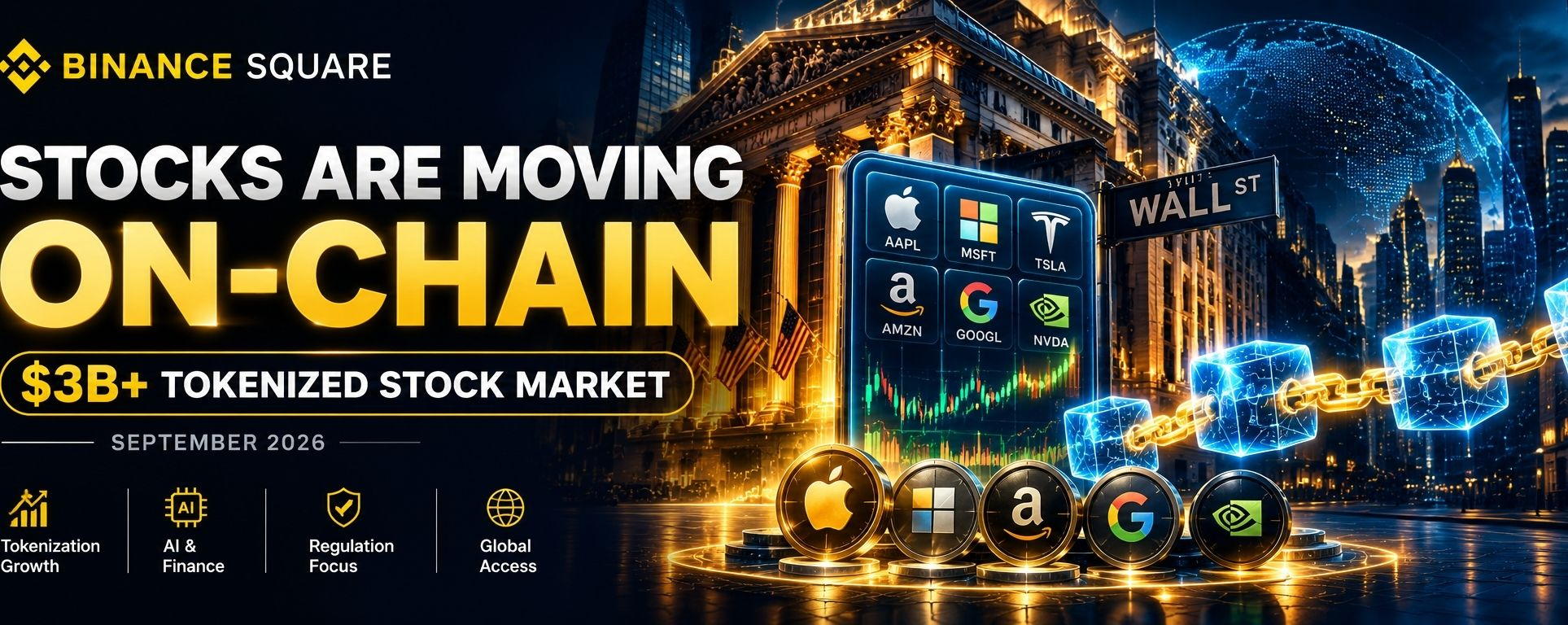
Tokenized Stocks Cross $3 Billion: Is Blockchain Bringing Wall Street On-Chain?Tokenized Stocks Cross $3 Billion: Is Blockchain Bringing Wall Street On-Chain?
The next major crypto story may not be another meme coin. It could be the connection between traditional financial markets and blockchain technology.
The $3 Billion Milestone
Tokenized stocks crossed $3 billion in market capitalization during September 2026, according to Binance Research's report on the on-chain economy.
This matters because tokenization attempts to represent traditional assets as digital tokens on a blockchain. Depending on the product's structure, this may enable new ways to access, transfer, or interact with financial assets.
However, tokenization is not magic. Putting an asset on a blockchain does not automatically make it safer, cheaper, or more accessible.
Why Is Wall Street Paying Attention?
On October 23, the US Securities and Exchange Commission identified AI, private assets, and tokenized securities among its examination priorities for fiscal year 2027.
This does not mean every tokenized-stock project has received regulatory approval. It shows that the technology and its risks are receiving attention from financial regulators.
For crypto, that creates an important discussion: how can innovation develop while investors remain protected?
Three Potential Opportunities
1. New ways to access financial assets
Tokenization could make certain financial products available through new digital channels. Actual access depends on the product, local laws, eligibility requirements, and the platform offering it.
2. More blockchain-based financial activity
If tokenized assets attract real users, they could generate demand for blockchain infrastructure, settlement systems, and related financial applications.
3. A closer relationship between traditional finance and crypto
The long-term story may be less about replacing banks overnight and more about traditional financial institutions experimenting with blockchain-based systems.
The Risks Investors Should Not Ignore
A token that tracks a stock does not necessarily provide the same ownership rights as buying that stock through a traditional broker.
Before considering any tokenized asset, check:
- Legal rights: What exactly does the token holder own?
- Issuer and platform risk: Who issues the token, and who is responsible for it?
- Liquidity: Can you sell when you want to, at a reasonable price?
- Fees and restrictions: What costs, geographic limits, or eligibility rules apply?
- Regulatory protection: What protections are available if something goes wrong?
A convincing narrative is not proof of a sound investment.
What Could Happen Next?
The key question is whether tokenized assets can move beyond headlines and attract sustainable usage.
Watch for measurable evidence: growth in active users, transparent asset backing, reliable redemption arrangements, healthy liquidity, and clear legal structures.
If adoption grows alongside stronger safeguards, tokenization could become an important part of the digital financial system. If real demand fails to materialize, the current excitement may fade.
Neither outcome is guaranteed.
Final Takeaway
The $3 billion milestone is worth watching, but the bigger story is whether tokenized stocks can deliver genuine utility rather than just another speculative narrative.
My question for the community: Would you trust a properly regulated tokenized stock, or would you prefer to own shares through a traditional broker?
Tell me your reason in the comments. I'm interested in the arguments on both sides.
Sources: Binance Research, “Rewriting the On-Chain Economy” (September 29, 2026); Reuters' report on SEC examination priorities (October 23, 2026).
Disclaimer: This article is for educational purposes only and is not financial advice. Tokenized assets and cryptocurrencies involve risk.
#Tokenization #realworldassets #RWA #CryptoRegulation #blockchain
Tokenized Stocks Cross $3 Billion: Is Blockchain Bringing Wall Street On-Chain?
Tokenized Stocks Cross $3 Billion: Is Blockchain Bringing Wall Street On-Chain?
The next major crypto story may not be another meme coin. It could be the connection between traditional financial markets and blockchain technology.
The $3 Billion Milestone
Tokenized stocks crossed $3 billion in market capitalization during September 2026, according to Binance Research's report on the on-chain economy.
This matters because tokenization attempts to represent traditional assets as digital tokens on a blockchain. Depending on the product's structure, this may enable new ways to access, transfer, or interact with financial assets.
However, tokenization is not magic. Putting an asset on a blockchain does not automatically make it safer, cheaper, or more accessible.
Why Is Wall Street Paying Attention?
On October 23, the US Securities and Exchange Commission identified AI, private assets, and tokenized securities among its examination priorities for fiscal year 2027.
This does not mean every tokenized-stock project has received regulatory approval. It shows that the technology and its risks are receiving attention from financial regulators.
For crypto, that creates an important discussion: how can innovation develop while investors remain protected?
Three Potential Opportunities
1. New ways to access financial assets
Tokenization could make certain financial products available through new digital channels. Actual access depends on the product, local laws, eligibility requirements, and the platform offering it.
2. More blockchain-based financial activity
If tokenized assets attract real users, they could generate demand for blockchain infrastructure, settlement systems, and related financial applications.
3. A closer relationship between traditional finance and crypto
The long-term story may be less about replacing banks overnight and more about traditional financial institutions experimenting with blockchain-based systems.
The Risks Investors Should Not Ignore
A token that tracks a stock does not necessarily provide the same ownership rights as buying that stock through a traditional broker.
Before considering any tokenized asset, check:
- Legal rights: What exactly does the token holder own?
- Issuer and platform risk: Who issues the token, and who is responsible for it?
- Liquidity: Can you sell when you want to, at a reasonable price?
- Fees and restrictions: What costs, geographic limits, or eligibility rules apply?
- Regulatory protection: What protections are available if something goes wrong?
A convincing narrative is not proof of a sound investment.
What Could Happen Next?
The key question is whether tokenized assets can move beyond headlines and attract sustainable usage.
Watch for measurable evidence: growth in active users, transparent asset backing, reliable redemption arrangements, healthy liquidity, and clear legal structures.
If adoption grows alongside stronger safeguards, tokenization could become an important part of the digital financial system. If real demand fails to materialize, the current excitement may fade.
Neither outcome is guaranteed.
Final Takeaway
The $3 billion milestone is worth watching, but the bigger story is whether tokenized stocks can deliver genuine utility rather than just another speculative narrative.
My question for the community: Would you trust a properly regulated tokenized stock, or would you prefer to own shares through a traditional broker?
Tell me your reason in the comments. I'm interested in the arguments on both sides.
Sources: Binance Research, “Rewriting the On-Chain Economy” (September 29, 2026); Reuters' report on SEC examination priorities (October 23, 2026).
Disclaimer: This article is for educational purposes only and is not financial advice. Tokenized assets and cryptocurrencies involve risk.
#Tokenization #realworldassets #RWA #CryptoRegulation #blockchain
34

·
--
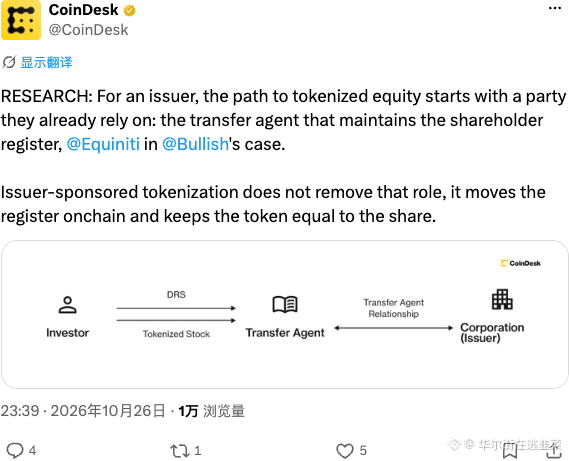
Bullish 把股东名册扔上链,Equiniti 还是那个过户代理人,没变。这比吹什么叙事都实在,代币直接锚定股份,合规落地了,价值才有底。这才是真金白银的代币化,别光看链上数据,背后的注册才是合规的关键。
$BULL #Tokenization
Bullish 把股东名册扔上链,Equiniti 还是那个过户代理人,没变。这比吹什么叙事都实在,代币直接锚定股份,合规落地了,价值才有底。这才是真金白银的代币化,别光看链上数据,背后的注册才是合规的关键。
$BULL #Tokenization
$BULL #Tokenization
3
·
--
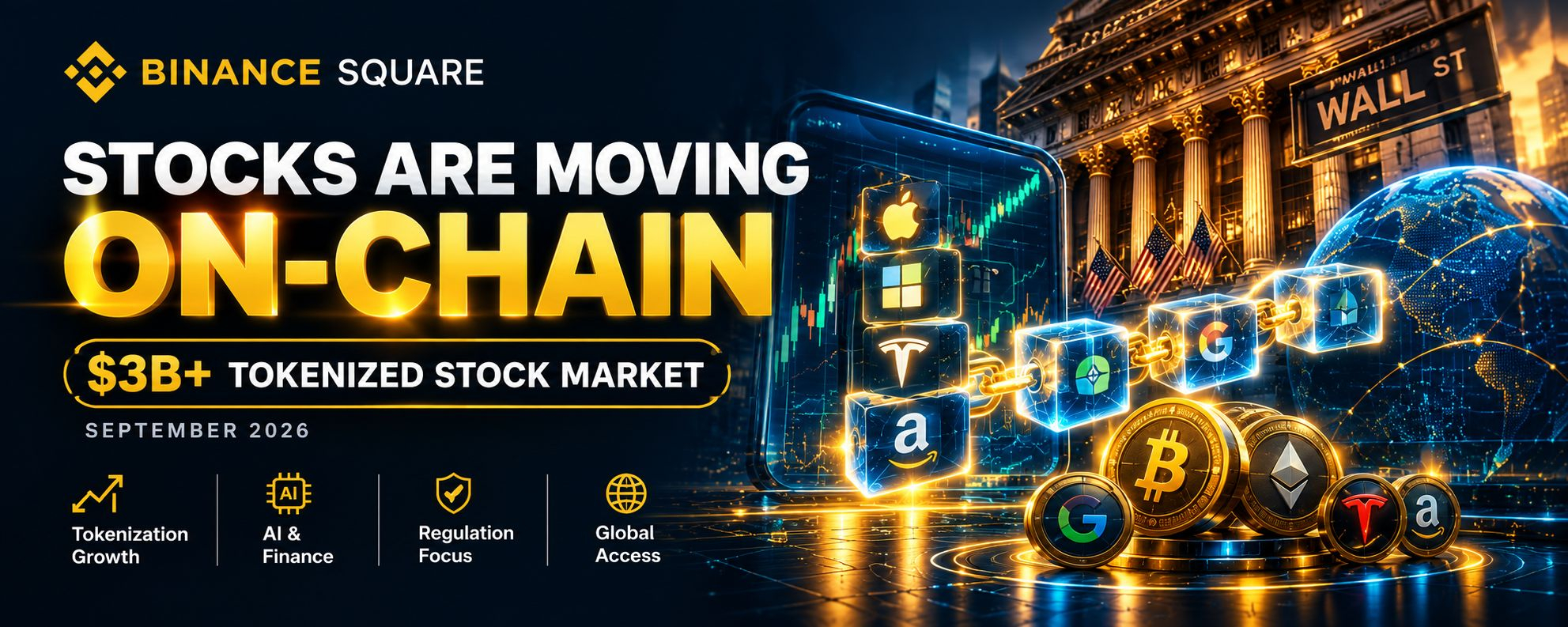
🚨 STOCKS ARE MOVING ON-CHAIN — IS CRYPTO ENTERING A NEW ERA?
Tokenized stocks crossed $3 BILLION in market value in September 2026, according to Binance Research.
Now the bigger question is: can blockchain change how traditional financial assets are accessed and traded?
But remember: a tokenized stock is not automatically the same as owning a traditional share. Legal rights, liquidity, fees, and platform risks matter.
👀 What interests you more?
A) Tokenized stocks
B) AI + crypto
C) DeFi
Comment A, B, or C — and tell me why.
#Tokenization #RWA #crypto #BinanceSquare
90

·
--
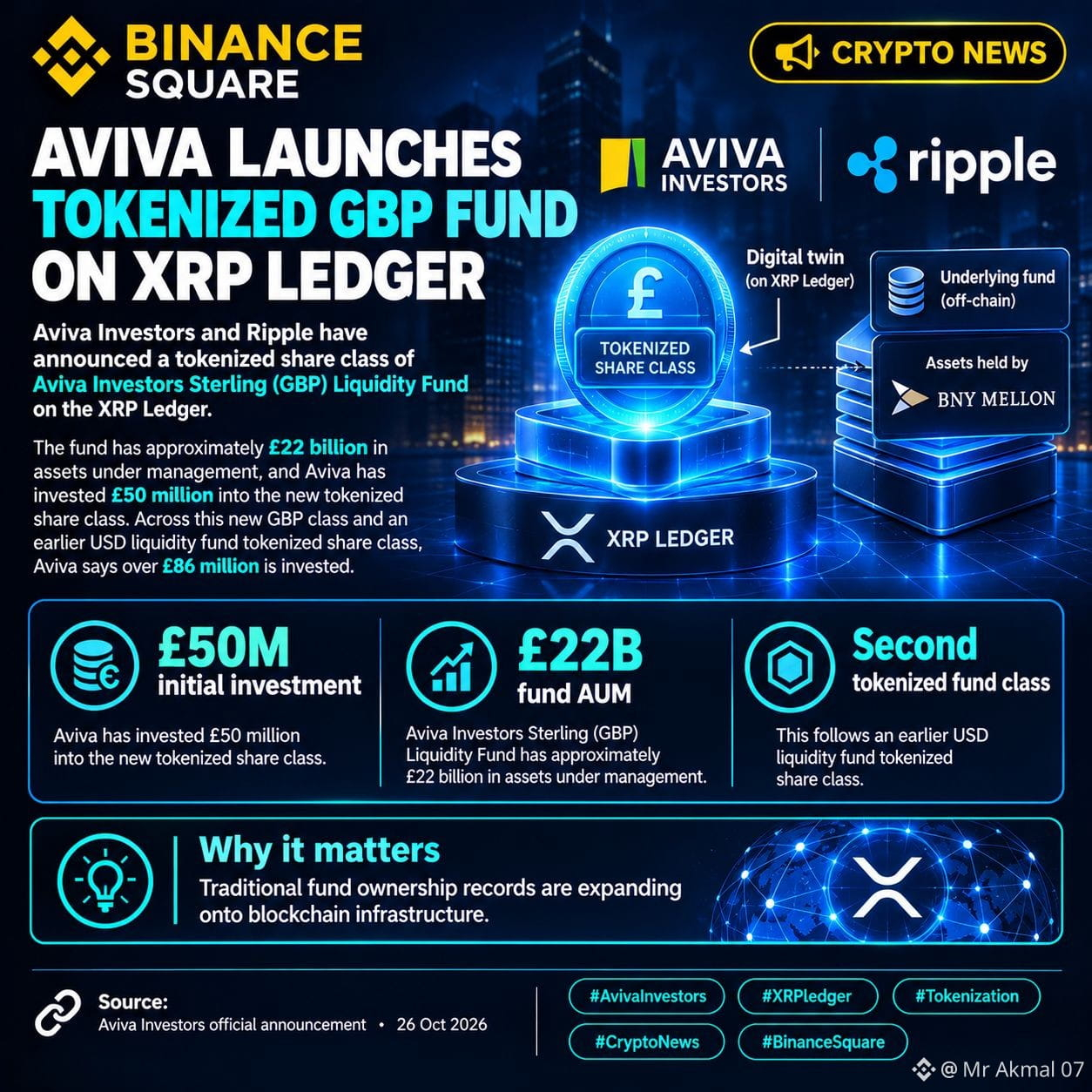
$AVIV.ETF 🚨 AVIVA INVESTORS LAUNCHES TOKENIZED GBP FUND ON XRP LEDGER
Aviva Investors and Ripple announced a new tokenized share class for the Aviva Investors Sterling (GBP) Liquidity Fund on the XRP Ledger (XRPL) on October 26, 2026.
📊 Key highlights:
🔹 The underlying fund has approximately £22 billion in assets under management.
🔹 Aviva invested £50 million in the new tokenized share class.
🔹 This is Aviva Investors’ second tokenized fund share class, following its earlier USD fund launch.
🔹 The firm says more than £86 million is invested across its two tokenized share classes.
🌐 Why it matters: Tokenization allows fund ownership to be represented digitally on a blockchain while the underlying fund continues to operate within its existing legal and regulatory structure.
📌 Important: This is a tokenized fund share class, not a new cryptocurrency. The investment remains subject to the fund’s risks and eligibility requirements.
🔗 Official source: https://www.avivainvestors.com/en-gb/about/company-news/2026/10/aviva-investors-launches-tokenised-share-class-for-sterling-liquidity-fund/
Do you think tokenization will become a major part of traditional finance? 👇 #Ripple #Tokenization #CryptoNews #BinanceSquare
{etf_us}(AVIV.ETF)
$AVIV.ETF 🚨 AVIVA INVESTORS LAUNCHES TOKENIZED GBP FUND ON XRP LEDGER
Aviva Investors and Ripple announced a new tokenized share class for the Aviva Investors Sterling (GBP) Liquidity Fund on the XRP Ledger (XRPL) on October 26, 2026.
📊 Key highlights:
🔹 The underlying fund has approximately £22 billion in assets under management.
🔹 Aviva invested £50 million in the new tokenized share class.
🔹 This is Aviva Investors’ second tokenized fund share class, following its earlier USD fund launch.
🔹 The firm says more than £86 million is invested across its two tokenized share classes.
🌐 Why it matters: Tokenization allows fund ownership to be represented digitally on a blockchain while the underlying fund continues to operate within its existing legal and regulatory structure.
📌 Important: This is a tokenized fund share class, not a new cryptocurrency. The investment remains subject to the fund’s risks and eligibility requirements.
🔗 Official source: https://www.avivainvestors.com/en-gb/about/company-news/2026/10/aviva-investors-launches-tokenised-share-class-for-sterling-liquidity-fund/
Do you think tokenization will become a major part of traditional finance? 👇 #Ripple #Tokenization #CryptoNews #BinanceSquare
AVIVETF-0,01%
3
·
--
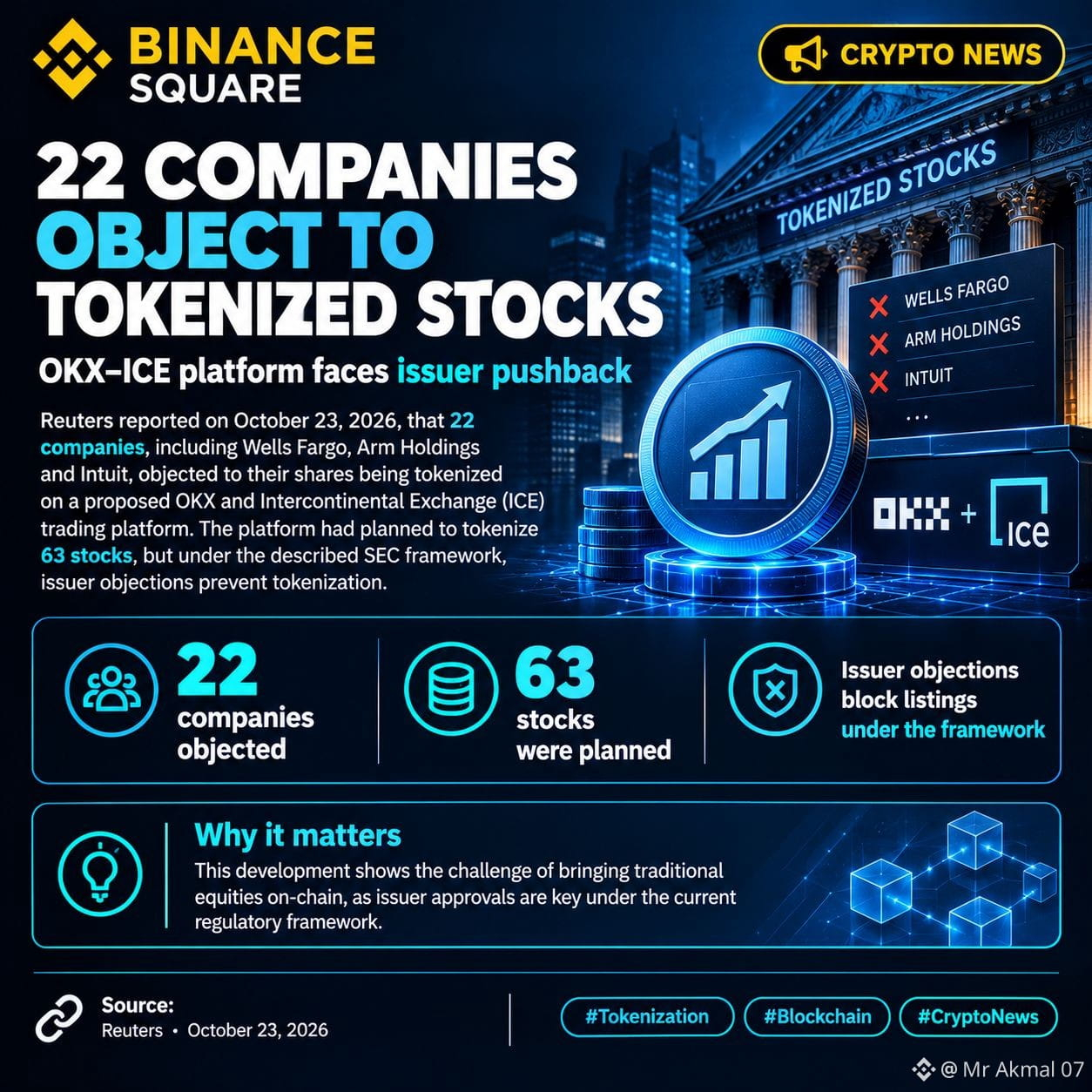
$ICE.US 🚨 22 COMPANIES OBJECT TO TOKENIZED STOCKS
A Reuters report published on October 23 says 22 companies—including Wells Fargo, Arm Holdings and Intuit—have objected to plans to offer tokenized versions of their shares through a proposed platform backed by crypto exchange OKX and Intercontinental Exchange (ICE).
📊 Key facts: 🔹 The platform planned to offer 63 tokenized stocks. 🔹 Tokenization represents traditional assets as digital tokens on a blockchain. 🔹 Under the proposed framework described in the report, an issuer objection prevents its shares from being tokenized on the platform.
🌐 Why it matters: Tokenized stocks could bring blockchain technology into traditional financial markets, but issuer consent and investor protections remain important challenges.
📌 This is a regulatory and industry development—not confirmation that the proposed platform has launched.
🔗 Source: https://www.reuters.com/legal/government/wells-fargo-intuit-others-object-their-shares-being-tokenized-regulatory-2026-10-23/
Do you think tokenized stocks can make financial markets more accessible while protecting investors? 👇
#Tokenization #blockchain #DigitalAssets #CryptoNews #BinanceSquare
{stock_us}(ICE.US)
$ICE.US 🚨 22 COMPANIES OBJECT TO TOKENIZED STOCKS
A Reuters report published on October 23 says 22 companies—including Wells Fargo, Arm Holdings and Intuit—have objected to plans to offer tokenized versions of their shares through a proposed platform backed by crypto exchange OKX and Intercontinental Exchange (ICE).
📊 Key facts: 🔹 The platform planned to offer 63 tokenized stocks. 🔹 Tokenization represents traditional assets as digital tokens on a blockchain. 🔹 Under the proposed framework described in the report, an issuer objection prevents its shares from being tokenized on the platform.
🌐 Why it matters: Tokenized stocks could bring blockchain technology into traditional financial markets, but issuer consent and investor protections remain important challenges.
📌 This is a regulatory and industry development—not confirmation that the proposed platform has launched.
🔗 Source: https://www.reuters.com/legal/government/wells-fargo-intuit-others-object-their-shares-being-tokenized-regulatory-2026-10-23/
Do you think tokenized stocks can make financial markets more accessible while protecting investors? 👇
#Tokenization #blockchain #DigitalAssets #CryptoNews #BinanceSquare
ICEUS+0,00%
6

🚀 $XRP SEES MAJOR TOKENIZED FUND DEPLOYMENT FROM AVIVA INVESTORS 🦈
🦈 Aviva’s new Sterling Liquidity token on the XRP Ledger drops 50 m GBP on‑chain, pushing their on‑chain exposure to 86 m GBP. This move slams a heavyweight into the public blockchain arena, signaling that traditional asset managers are finally flexing their whale‑size capital on‑chain. 📊 The 0.4% on‑chain representation may look modest, but the sheer $66 m injection is a liquidity wave that could reshape how funds interact with crypto infrastructure. 🌊
💡 With Ripple powering the tech stack, the partnership hints at deeper protocol integration and faster settlement pipelines—exactly the kind of edge smart money hunts. 🤔 How will this tokenized surge influence broader institutional appetite for XRPL assets? 💬
⚠️ Not financial advice. Always manage your risk. 🛡️
🏷️ #XRP #Tokenization #AssetManagement #Crypto
🔥 💎
7
·
--
🏦 RIPPLE'S XRP LEDGER GETS A MAJOR INSTITUTIONAL DEVELOPMENT.
Aviva Investors and Ripple have announced a tokenized share class of a regulated USD liquidity fund on the XRP Ledger, approved by the Central Bank of Ireland and expanding the use of blockchain in traditional finance.
Tokenization is becoming a key trend to watch as asset managers explore new ways to issue and manage investments.
$XRP
{future}(XRPUSDT)
{spot}(XRPUSDT)
#XRP #Ripple #Tokenization #RWA
🏦 RIPPLE'S XRP LEDGER GETS A MAJOR INSTITUTIONAL DEVELOPMENT.
Aviva Investors and Ripple have announced a tokenized share class of a regulated USD liquidity fund on the XRP Ledger, approved by the Central Bank of Ireland and expanding the use of blockchain in traditional finance.
Tokenization is becoming a key trend to watch as asset managers explore new ways to issue and manage investments.
$XRP
#XRP #Ripple #Tokenization #RWA
160
🚨 $a major exchange TOKENIZED STOCK PUSHBACK FROM MAJOR CORPS 🚀
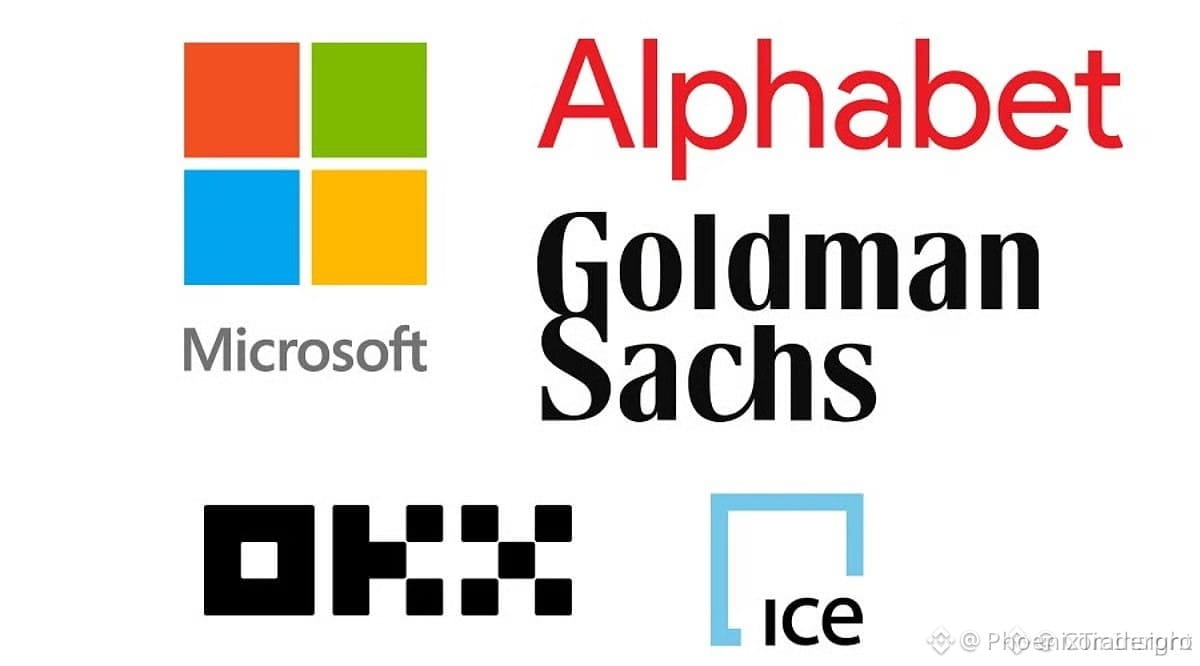
📊 Twelve blue‑chip giants, from Microsoft to Goldman Sachs, have slammed the idea of their shares being tokenized on a 24/7 platform backed by a top‑tier exchange. 🦈 Their 30‑day objection window signals a coordinated stance, even as Nvidia, Tesla and Apple sit on the fence. ⚡ The silence on motives hints at regulatory caution more than pure market fear.
💡 If these powerhouses keep the door shut, liquidity sweeps could stall, forcing crypto projects to pivot toward alternative assets. 🌊 Will this resistance slow the broader adoption of blockchain‑based equities, or spark a new wave of compliant token models? 🤔
⚠️ Not financial advice. Always manage your risk. 🛡️
🏷️ #a major exchange #Tokenization #Crypto #Regulation #MarketDynamics
🔥 💎
2

·
--
Aviva 290亿英镑基金代币化份额上线 XRP Ledger
据 Cointelegraph 报道,Aviva Investors 已在 XRP Ledger 上线其 290 亿英镑基金($29B)的代币化份额,这是 Aviva 第二只列出代币化份额的基金,也是其更广泛合作的一部分。
这件事的意义在于,它把“代币化基金”从概念推进到了老牌资管机构的实际产品结构里。对 XRP Ledger 来说,机构基金份额直接上线,意味着网络开始承接真实资产类别的登记与结算需求,而不仅是支付或稳定币场景。
从数据看,关键事实是基金规模 $29B,且这是 Aviva 的第二只代币化份额基金。摘要未说明本次代币化份额的具体规模、交易流动性,也未说明是否直接产生 XRP 网络收入,因此不能简单等同于对 $XRP 的强利好。
市场可能如何反应,需要观察两点:一是这类份额是否开放给更广泛投资者参与,二是 XRP Ledger 上机构基金数量是否会继续增加。若只是单一基金的结构创新,影响可能偏叙事层面;若后续出现更多机构基金与流动性,则对 XRP 的应用价值讨论会更扎实。
反方因素在于,代币化份额规模未知、流动性未知,且基金结构创新不一定转化为 XRP 的直接需求或收入。接下来更值得观察的是:后续是否有更多机构基金上线 XRP Ledger,以及 XRP 在机构基金结算中的实际使用是否出现可验证的数据。
$XRP #XRP #Tokenization
以上为信息整理与个人分析,不构成投资建议。
关注我,持续跟踪关键市场变化与数据。
28

·
--
Aviva Investors has launched a tokenized share class of its twenty-nine billion dollar Sterling fund on the XRP Ledger.
This move marks Aviva’s second fund to list tokenized shares. It is part of a broader collaboration aimed at bringing more tokenized funds to the XRP Ledger.
#AvivaInvestors #XRPLedger #Tokenization
Source: https://cointelegraph.com/news/aviva-investors-launches-tokenized-share-class-of-sterling-fund-on-xrp-ledger?utm_source=rss_feed&utm_medium=rss&utm_campaign=rss_partner_inbound
23

·
--
Aviva just dropped a bombshell! They've launched tokenized shares of their £29B Sterling fund on the XRP Ledger. This isn't their first rodeo - it's their second tokenized fund. Looks like traditional finance is finally waking up to blockchain! Big news for $XRP and the tokenization space.
Aviva重磅消息!他们已在XRP Ledger上发行了290亿英镑基金的代币化股份。这不是他们第一次了,而是第二只代币化基金。传统金融终于开始拥抱区块链了!这对$XRP和代币化领域都是重大突破!#tokenization #XRPLedger #TradFi
Aviva just dropped a bombshell! They've launched tokenized shares of their £29B Sterling fund on the XRP Ledger. This isn't their first rodeo - it's their second tokenized fund. Looks like traditional finance is finally waking up to blockchain! Big news for $XRP and the tokenization space.
Aviva重磅消息!他们已在XRP Ledger上发行了290亿英镑基金的代币化股份。这不是他们第一次了,而是第二只代币化基金。传统金融终于开始拥抱区块链了!这对$XRP 和代币化领域都是重大突破!#tokenization #XRPLedger #TradFi
Aviva重磅消息!他们已在XRP Ledger上发行了290亿英镑基金的代币化股份。这不是他们第一次了,而是第二只代币化基金。传统金融终于开始拥抱区块链了!这对$XRP 和代币化领域都是重大突破!#tokenization #XRPLedger #TradFi
30
·
--
SEC 2027检查点名AI超级智能与代币化,加密监管信号更清晰
据Decrypt报道,SEC检查部门将“super intelligence and other advanced technologies”列为2027年检查重点之一;据Cointelegraph报道,SEC最新优先级也把tokenization视为新兴市场风险,而加密货币本身并未被单独列为检查重点。
这件事值得重视,是因为它把监管关注点从“某个币种是否合规”转向了“哪些技术结构可能带来系统性风险”。AI超级智能与代币化被同时点名,意味着SEC可能更关注技术叠加后的市场传导路径,而不是只盯交易行为本身。
从监管逻辑看,代币化风险被单独提出,可能意味着相关资产在发行、估值、清算和投资者保护方面会被更严格审视。若后续检查中要求更多披露或合规安排,相关项目的合规成本可能上升,市场对其估值方式也可能更谨慎。
但也要看到另一面:SEC没有把加密货币单独列为检查重点,可能引发市场对监管关注度不足的解读。若投资者把“未单独点名”理解为监管优先级不高,短期情绪可能偏中性,甚至出现“监管不及预期”的讨论。
接下来更值得观察的是SEC检查部门后续是否发布更细化的检查指引,以及tokenization相关项目是否出现新的合规要求。若监管信号继续强化,市场可能会重新评估相关资产的合规路径与风险溢价。
#SEC #Tokenization #CryptoRegulation
以上为信息整理与个人分析,不构成投资建议。
27

·
--
Ripple partners with Aviva Investors to bring a £22B fund share class onto the XRP Ledger.
This marks a major step in tokenizing traditional asset management on public blockchain infrastructure.
Could tokenized fund shares become the new standard for institutional access?
#XRP #Tokenization
Ripple partners with Aviva Investors to bring a £22B fund share class onto the XRP Ledger.
This marks a major step in tokenizing traditional asset management on public blockchain infrastructure.
Could tokenized fund shares become the new standard for institutional access?
#XRP #Tokenization
This marks a major step in tokenizing traditional asset management on public blockchain infrastructure.
Could tokenized fund shares become the new standard for institutional access?
#XRP #Tokenization
70

🚨 RWA NARRATIVE IS HEATING UP!
RWA perpetuals open interest is approaching $20 BILLION according to CryptoRank
Tokenized real-world assets are gaining attention as derivatives activity expands.
Is RWA becoming one of crypto’s next major narratives?
Watch the growth—but remember rising open interest doesn’t guarantee prices will go up.
#RWA #Tokenization #DeFi #Crypto #CryptoNews
3

·
--
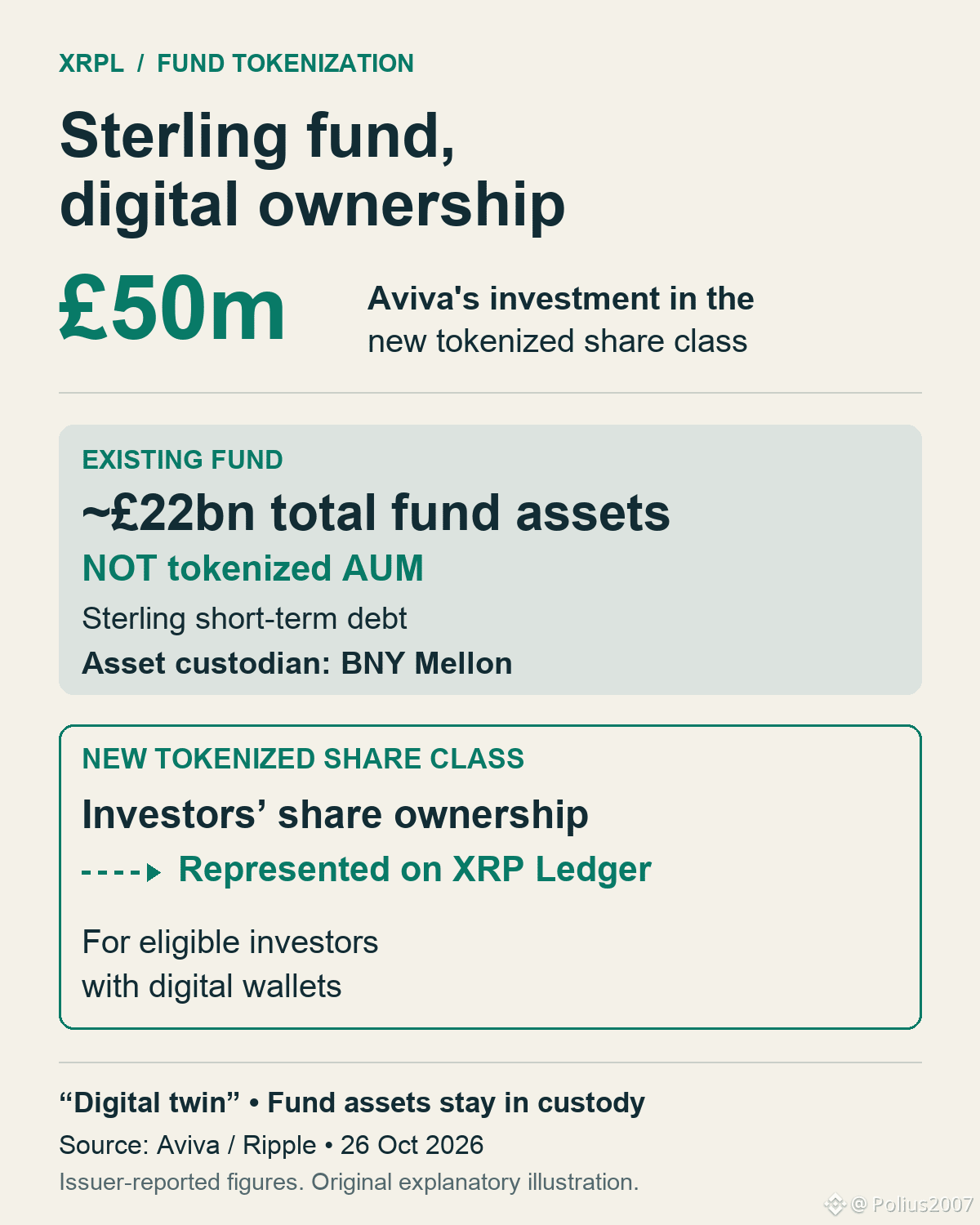
Aviva has put £50 million into a new tokenized sterling money-market fund share class on the XRP Ledger, according to today's joint announcement with Ripple. The investment buys fund shares, not XRP.
The much larger figure in the announcement — about £22 billion — is the existing Sterling Liquidity Fund's total assets. It is not tokenized AUM, and the announcement does not give a total size for the new share class.
Eligible investors with digital wallets can access the class through a “digital twin” structure: their fund-share holdings can be represented on-chain while the conventional fund remains in place. The underlying assets stay with BNY Mellon, the fund's custodian. What XRPL adds here is a digital record of share ownership, not a new home for the fund's debt portfolio.
Source: Aviva Investors and Ripple announcement, October 26, 2026. Figures are issuer-reported, not independently verified on-chain balances.
https://ripple.com/ripple-press/aviva-investors-expands-its-tokenised-offering-with-the-launch-of-a-sterling-liquidity-fund-tokenised-share-class/
#XRP #Tokenization
83
·
--
拉脱维亚瞄准2027年推出代币化规则,重点锁定商业地产!经济发展部长透露新规可能明年上半年落地。虽然评估报告还在路上,但房产代币化浪潮即将在欧洲东扩。看好欧洲房产赛道的朋友可以关注了!
#tokenization #realEstate $RNT $POLY
Latvia's targeting 2027 for tokenization rules with commercial property in focus! The economic minister says new regulations could drop as early as H1 next year. While assessment reports are pending, the property tokenization wave is set to expand across Eastern Europe. Real estate tokenization watchers, take note!
#tokenization #realEstate $RNT $POLY
#tokenization #realEstate $RNT $POLY
Latvia's targeting 2027 for tokenization rules with commercial property in focus! The economic minister says new regulations could drop as early as H1 next year. While assessment reports are pending, the property tokenization wave is set to expand across Eastern Europe. Real estate tokenization watchers, take note!
#tokenization #realEstate $RNT $POLY
66
🚀 $RWA SEES CAPITAL SHIFT – WHALE REBALANCE IGNITES MOMENTUM 🦈
📊 The latest RWA Foundation‑Token Terminal report shows a localized capital redistribution across real‑world asset tokens this week. Smart money is pulling liquidity from over‑exposed protocols and re‑stacking into freshly minted tokenized assets, sparking a fresh wave of buying pressure. ⚡ This micro‑reallocation hints at a broader confidence swing, as institutional players hunt for the next yield‑rich frontier in the tokenized real‑estate and commodity space. 🌊
💬 Do you think the fresh influx will fuel a sustained rally for $RWA or merely a short‑term bounce? 👇
⚠️ Not financial advice. Always manage your risk. 🛡️
🏷️ #RWA #Tokenization #CapitalFlow #Crypto
🔥 🚀
1

🦈 $RWA SEES CAPITAL REBALANCE—SMART MONEY REPOSITIONING NOW! 🚨
📊 The weekly RWA Foundation/Token Terminal data shows a localized capital migration into real‑world asset tokens, a subtle liquidity sweep that institutional players favor. 🦈 Volume on the 4H chart nudges higher, hinting at renewed buying pressure while on‑chain supply contracts across a major exchange. 🔍 Should this redistribution sustain, the next upward thrust could breach the current resistance, priming a breakout scenario.
💬 How are you adjusting your exposure to the RWA tokenization wave? 👇
⚠️ Not financial advice. Always manage your risk. 🛡️
🏷️ #RWA #SmartMoney #Tokenization #Crypto
🚀 💎
2
ເຂົ້າສູ່ລະບົບເພື່ອສຳຫຼວດເນື້ອຫາເພີ່ມເຕີມ
ເຂົ້າຮ່ວມກຸ່ມຜູ້ໃຊ້ຄຣິບໂຕທົ່ວໂລກໃນ Binance Square.
⚡️ ໄດ້ຮັບຂໍ້ມູນຫຼ້າສຸດ ແລະ ທີ່ມີປະໂຫຍດກ່ຽວກັບຄຣິບໂຕ.
💬 ໄດ້ຮັບຄວາມໄວ້ວາງໃຈຈາກຕະຫຼາດແລກປ່ຽນຄຣິບໂຕທີ່ໃຫຍ່ທີ່ສຸດໃນໂລກ.
👍 ຄົ້ນຫາຂໍ້ມູນເຊີງເລິກທີ່ແທ້ຈາກນັກສ້າງທີ່ໄດ້ຮັບການຢືນຢັນ.
ອີເມວ / ເບີໂທລະສັບ
ຫົວຂໍ້ທີ່ກໍາລັງນິຍົມ
1
#BinancePick
3M ຄັ້ງທີ່ເບິ່ງ
152,075 ກຳລັງສົນທະນາ
2
#EarningsSeason
5.2M ຄັ້ງທີ່ເບິ່ງ
25,840 ກຳລັງສົນທະນາ
3
#AnthropicTTMRevenueGrewAbout1200%
21,552 ຄັ້ງທີ່ເບິ່ງ
354 ກຳລັງສົນທະນາ
4
#AnthropicS1ExpectedToday
22,090 ຄັ້ງທີ່ເບິ່ງ
303 ກຳລັງສົນທະນາ
5
#SouthKoreaReportedlyWeighsFourthCryptoTaxDelay
26,936 ຄັ້ງທີ່ເບິ່ງ
428 ກຳລັງສົນທະນາ
6
#FranklinTempletonFilesForTwoDividendToBitcoinETFs
35,028 ຄັ້ງທີ່ເບິ່ງ
516 ກຳລັງສົນທະນາ
7
#StrategyMSTRSurpassesNasdaqInMarketCap
26,705 ຄັ້ງທີ່ເບິ່ງ
375 ກຳລັງສົນທະນາ
8
#CanadaProposesStablecoinRedemptionWithin3BusinessDays
1,208 ຄັ້ງທີ່ເບິ່ງ
35 ກຳລັງສົນທະນາ
9
#ElectrumWalletBugLetRogueServersStealFunds
28,301 ຄັ້ງທີ່ເບິ່ງ
451 ກຳລັງສົນທະນາ
10
#ArgentineCourtDismissesLIBRACaseAgainstMilei
42,894 ຄັ້ງທີ່ເບິ່ງ
559 ກຳລັງສົນທະນາ