
#stellar
stellar
1.8M ຄັ້ງທີ່ເບິ່ງ
4,685 ກຳລັງສົນທະນາ
ມາແຮງ
ຫຼ້າສຸດ


ບົດຄວາມ
CURVE × STELLAR: COULD ONCHAIN FX BECOME THE NEXT MAJOR DEFI MARKET?BitChoice | Satya — DeFi, RWA & Market Structure Intelligence
November 2, 2026
From Stablecoin Swaps to Global Currency Markets
Decentralized finance is expanding beyond the Ethereum ecosystem.
On October 29, Curve Finance launched StableSwap on the Stellar mainnet, marking its first native deployment outside Ethereum Virtual Machine (EVM) networks.
The integration brings a specialized automated market maker to Stellar's payment and tokenized-asset infrastructure.
But the most interesting development may still be ahead.
Curve is preparing FXSwap, a system designed for assets whose relative prices change — including stablecoins linked to different national currencies.
The larger question: could decentralized liquidity infrastructure eventually become a meaningful part of global foreign-exchange settlement?
To understand the opportunity, we need to separate what already exists from what remains under development.
1. What Curve Actually Launched
The initial deployment brings StableSwap to Stellar.
StableSwap is an automated market maker optimized for assets expected to trade at similar prices.
For example, two stablecoins designed to maintain a value of one US dollar may be exchanged through a pool built around their shared reference price.
Unlike a general-purpose liquidity pool, StableSwap is designed to concentrate liquidity more efficiently around that relationship.
The potential benefit is reduced slippage for supported trades.
However, the actual execution price still depends on pool depth, asset stability and market conditions.
What Is Available?
Curve reports that users can:
Browse existing liquidity pools.Swap supported assets.Deposit assets to provide liquidity.Access the protocol through a beta interface.
The deployment also supports permissionless pool creation, although Curve is still expanding self-service creation functionality in its interface.
The initial launch is described as a limited deployment rather than the completed Curve product suite.
StableSwap is live. The broader ecosystem is still developing.
2. Why Stellar Required a New Technical Implementation
Curve's original StableSwap contracts were developed for EVM-compatible environments.
Stellar uses a different smart-contract architecture: Soroban.
As a result, Curve could not simply deploy its existing Vyper contracts unchanged.
The team rebuilt StableSwap for Stellar, retaining the underlying mathematical approach while adapting its implementation to Soroban.
The Stellar Development Foundation supported this integration.
This distinction is important.
A native non-EVM deployment expands the environments in which Curve technology can operate.
But new implementations also require careful security evaluation.
Past experience with an EVM version does not eliminate the risks associated with a different codebase and execution environment.
For users and liquidity providers, contract security remains an essential consideration.
3. Why Stellar Makes Strategic Sense
Stellar has historically emphasized payments, asset issuance and financial infrastructure.
Its ecosystem includes stablecoins, payment applications and tokenized financial products.
Franklin Templeton has used Stellar infrastructure for tokenized investment products, while MoneyGram has integrated Stellar-related payment services.
These developments create potential demand for liquid exchange markets between supported assets.
A digital asset becomes more useful when holders can acquire it, exchange it and exit positions at reasonable costs.
For a tokenized money market fund or a payment stablecoin, a lack of liquidity can reduce practical usability even when the underlying product works correctly.
That is where specialized market-making infrastructure may help.
Tokenization creates financial instruments. Liquidity infrastructure helps make them usable.
4. StableSwap vs FXSwap: The Crucial Difference
The two systems address different price relationships.
StableSwap — Already Live
Designed primarily for assets that are expected to maintain similar prices.
Examples include two dollar-pegged stablecoins.
The objective is efficient execution around a relatively stable exchange relationship.
FXSwap — Planned
Designed for assets whose relative prices change.
A dollar-pegged stablecoin and a euro-pegged stablecoin provide a useful example.
Their relative value changes as the EUR/USD exchange rate moves.
A liquidity mechanism built around a fixed one-to-one relationship would not be appropriate for that market.
FXSwap is intended to concentrate liquidity around changing market prices rather than a permanent peg.
Curve says development is nearing completion, with an audit required before launch.
No confirmed release date or initial currency-pair list has been announced.
FXSwap is not currently a live Stellar trading service.
5. What Would Onchain FX Actually Mean?
Foreign exchange is one of the world's largest financial markets.
Traditional currency conversion involves banks, payment processors, market makers, settlement infrastructure and regulatory requirements.
Blockchain-based fiat-linked assets introduce a different possibility.
For example, a user could potentially exchange a regulated dollar stablecoin for a euro-denominated token through an onchain liquidity pool.
The resulting asset could then be transferred across the same network to another eligible recipient.
Such arrangements could support:
Cross-border payments
Conversion between fiat-linked digital assets as part of a payment route.
Treasury management
Movement between different currency exposures without relying exclusively on conventional exchange workflows.
Tokenized financial assets
Liquidity connections between funds and settlement assets denominated in different currencies.
DeFi applications
Collateral management, lending and financial strategies involving multiple fiat-denominated tokens.
However, onchain conversion is not the same as the complete process of transferring money between bank accounts.
Users may still depend on fiat issuers, redemption partners, identity checks and local payment infrastructure.
The quality of the entire route matters.
6. A Hypothetical USD-to-EUR Payment Route
Consider a company holding a dollar-backed stablecoin.
It needs to make a payment denominated in euros.
A future onchain route could involve:
Holding a supported USD stablecoin on Stellar.Swapping it for a compatible EUR-denominated asset.Transferring the resulting asset to the recipient.Redeeming or using that asset through available financial infrastructure.
The potential advantage is a more integrated digital settlement process.
But the complete cost would include:
Available FX pricingPool slippageNetwork transaction feesStablecoin issuer costsRedemption and banking feesCompliance and operational requirements
A fast blockchain transaction does not guarantee the cheapest end-to-end currency conversion.
For the economic case to work, the full transaction route must compare favorably with relevant alternatives.
7. Liquidity: The Missing Piece in Many RWA Narratives
Tokenized assets often attract attention because they represent traditional instruments on blockchain networks.
But issuance is only the beginning.
A tokenized asset can be technically transferable yet have very limited secondary-market liquidity.
For a functioning financial ecosystem, users also need:
Reliable exchange venuesCompetitive bid-ask spreadsSufficient market depthTransparent asset specificationsDependable settlementMechanisms for managing collateral and liquidations
Curve's StableSwap integration could contribute to several of these requirements.
For example, sufficiently liquid pools may provide trading routes for lending platforms seeking to liquidate collateral.
They may also make it easier for aggregators to discover execution paths between supported assets.
But these benefits depend on actual integrations and sustained participation.
A liquidity protocol becomes economically important when there is liquidity to use.
8. The Risks Behind Stablecoin Liquidity Pools
Providing liquidity is not equivalent to depositing funds into a guaranteed savings account.
Several risks remain.
Stablecoin Depegging
Assets designed to maintain similar prices can diverge sharply.
If one stablecoin loses its peg, a liquidity pool may become heavily exposed to the weaker asset.
Smart-Contract Risk
The Stellar deployment uses contracts written for a new execution environment.
Security testing and audits matter, but no technical system is completely risk-free.
Issuer and Redemption Risk
Stablecoins depend on their issuers, reserve arrangements and redemption mechanisms.
A stablecoin's secondary-market price may differ from its intended value.
Liquidity and Exit Risk
New pools may have limited depth.
Depositing into a pool does not guarantee that users can exit without losses or unfavorable price impact.
Operational and Compliance Risk
Supported assets may have issuer-level controls or restrictions.
A technically successful swap does not override applicable legal requirements or asset-level transfer limitations.
These risks are particularly relevant when financial infrastructure is intended for institutional or payment use.
9. What Does This Mean for XLM?
The integration is a meaningful development for Stellar's application ecosystem.
More activity could potentially increase network usage.
However, adoption of Curve's infrastructure does not automatically establish investment returns for XLM holders.
The relationship depends on transaction activity, fee mechanics, network economics and sustained demand for Stellar services.
A growing application ecosystem and a rising token price are not the same measurement.
The useful indicators will include actual transactions, liquidity growth and economic activity on the network.
10. And What About CRV?
Curve's announcement contains a relevant economic detail.
The protocol says swap fees generated by its Stellar deployment contribute to Curve DAO under its existing fee framework.
This creates a more direct question about the relationship between protocol activity and its economic ecosystem.
But the size of any potential benefit depends on:
Trading volumePool fee structuresActual fee generationDAO distribution mechanicsOngoing operating and liquidity conditions
A new deployment does not automatically imply material revenue growth.
Nor does increased protocol usage guarantee appreciation of CRV.
Infrastructure adoption should be evaluated through actual economic value capture, not token-price assumptions.
11. Five Metrics That Will Determine Whether This Matters
The announcement is only the starting point.
A serious assessment should follow measurable activity.
1. Total liquidity
How much capital becomes available across Stellar Curve pools?
2. Trading volume
Are users conducting meaningful transactions, or is activity concentrated around the launch?
3. Execution quality
How do real swap costs compare with competing venues and routes?
4. Institutional and RWA integration
Do tokenized-asset issuers, payment services and applications begin using the pools?
5. FXSwap delivery
Does the planned product complete its audit, launch successfully and attract sustainable liquidity in real currency pairs?
These are the indicators that can transform an interesting announcement into a demonstrated infrastructure success.
12. Why This Could Matter Beyond Stellar
For years, DeFi growth was often measured through speculative trading activity and total value locked.
But a more mature infrastructure layer may need to support routine financial operations.
Payments.
Asset exchange.
Collateral management.
Currency conversion.
Liquidity for tokenized securities and funds.
If decentralized protocols can offer dependable execution for these activities, their relevance could extend beyond crypto-native traders.
Yet the industry must demonstrate reliability, competitive costs and appropriate risk controls.
A compelling technical architecture is not enough.
Final Perspective: The Next Frontier Is Market Infrastructure
Curve's arrival on Stellar represents a concrete expansion of specialized DeFi liquidity technology beyond EVM-compatible networks.
StableSwap is live today.
FXSwap may become the more significant development if it successfully introduces efficient trading between assets linked to different currencies.
But the long-term opportunity should be judged through actual market activity rather than expectations.
The important questions are straightforward.
Will liquidity deepen?
Will payment providers and RWA issuers integrate these markets?
Will FXSwap deliver competitive currency conversion?
Can these systems remain reliable during volatile markets?
The next major chapter of DeFi may be less about creating new speculative assets — and more about building the infrastructure that moves existing financial value.
Discussion
Could onchain FX become a genuine competitor to traditional currency-conversion infrastructure, or will liquidity and redemption constraints remain the biggest obstacles?
Primary sources
Curve Finance — Curve Is Live on Stellar, October 29, 2026.
Stellar Development Foundation — Curve Brings Onchain Liquidity Infrastructure to the Stellar Network in Its First Native Non-EVM Integration, October 29, 2026.
The Block — Curve Finance Launches on Stellar in First Native Deployment Outside EVM Ecosystem, October 29, 2026.
Editorial disclosure: StableSwap is live on Stellar. FXSwap remains planned and subject to audit, with no confirmed launch date. Hypothetical FX examples are not representations of currently executable routes. Pool participation carries smart-contract, market, issuer and liquidity risks.
Educational and informational content only. Not financial or investment advice.
#Stellar #CurveFinance #DeFi #RWA #OnchainFX $CRV $XLM
{spot}(XLMUSDT)
{spot}(CRVUSDT)
CURVE × STELLAR: COULD ONCHAIN FX BECOME THE NEXT MAJOR DEFI MARKET?
BitChoice | Satya — DeFi, RWA & Market Structure Intelligence
November 2, 2026
From Stablecoin Swaps to Global Currency Markets
Decentralized finance is expanding beyond the Ethereum ecosystem.
On October 29, Curve Finance launched StableSwap on the Stellar mainnet, marking its first native deployment outside Ethereum Virtual Machine (EVM) networks.
The integration brings a specialized automated market maker to Stellar's payment and tokenized-asset infrastructure.
But the most interesting development may still be ahead.
Curve is preparing FXSwap, a system designed for assets whose relative prices change — including stablecoins linked to different national currencies.
The larger question: could decentralized liquidity infrastructure eventually become a meaningful part of global foreign-exchange settlement?
To understand the opportunity, we need to separate what already exists from what remains under development.
1. What Curve Actually Launched
The initial deployment brings StableSwap to Stellar.
StableSwap is an automated market maker optimized for assets expected to trade at similar prices.
For example, two stablecoins designed to maintain a value of one US dollar may be exchanged through a pool built around their shared reference price.
Unlike a general-purpose liquidity pool, StableSwap is designed to concentrate liquidity more efficiently around that relationship.
The potential benefit is reduced slippage for supported trades.
However, the actual execution price still depends on pool depth, asset stability and market conditions.
What Is Available?
Curve reports that users can:
Browse existing liquidity pools.Swap supported assets.Deposit assets to provide liquidity.Access the protocol through a beta interface.
The deployment also supports permissionless pool creation, although Curve is still expanding self-service creation functionality in its interface.
The initial launch is described as a limited deployment rather than the completed Curve product suite.
StableSwap is live. The broader ecosystem is still developing.
2. Why Stellar Required a New Technical Implementation
Curve's original StableSwap contracts were developed for EVM-compatible environments.
Stellar uses a different smart-contract architecture: Soroban.
As a result, Curve could not simply deploy its existing Vyper contracts unchanged.
The team rebuilt StableSwap for Stellar, retaining the underlying mathematical approach while adapting its implementation to Soroban.
The Stellar Development Foundation supported this integration.
This distinction is important.
A native non-EVM deployment expands the environments in which Curve technology can operate.
But new implementations also require careful security evaluation.
Past experience with an EVM version does not eliminate the risks associated with a different codebase and execution environment.
For users and liquidity providers, contract security remains an essential consideration.
3. Why Stellar Makes Strategic Sense
Stellar has historically emphasized payments, asset issuance and financial infrastructure.
Its ecosystem includes stablecoins, payment applications and tokenized financial products.
Franklin Templeton has used Stellar infrastructure for tokenized investment products, while MoneyGram has integrated Stellar-related payment services.
These developments create potential demand for liquid exchange markets between supported assets.
A digital asset becomes more useful when holders can acquire it, exchange it and exit positions at reasonable costs.
For a tokenized money market fund or a payment stablecoin, a lack of liquidity can reduce practical usability even when the underlying product works correctly.
That is where specialized market-making infrastructure may help.
Tokenization creates financial instruments. Liquidity infrastructure helps make them usable.
4. StableSwap vs FXSwap: The Crucial Difference
The two systems address different price relationships.
StableSwap — Already Live
Designed primarily for assets that are expected to maintain similar prices.
Examples include two dollar-pegged stablecoins.
The objective is efficient execution around a relatively stable exchange relationship.
FXSwap — Planned
Designed for assets whose relative prices change.
A dollar-pegged stablecoin and a euro-pegged stablecoin provide a useful example.
Their relative value changes as the EUR/USD exchange rate moves.
A liquidity mechanism built around a fixed one-to-one relationship would not be appropriate for that market.
FXSwap is intended to concentrate liquidity around changing market prices rather than a permanent peg.
Curve says development is nearing completion, with an audit required before launch.
No confirmed release date or initial currency-pair list has been announced.
FXSwap is not currently a live Stellar trading service.
5. What Would Onchain FX Actually Mean?
Foreign exchange is one of the world's largest financial markets.
Traditional currency conversion involves banks, payment processors, market makers, settlement infrastructure and regulatory requirements.
Blockchain-based fiat-linked assets introduce a different possibility.
For example, a user could potentially exchange a regulated dollar stablecoin for a euro-denominated token through an onchain liquidity pool.
The resulting asset could then be transferred across the same network to another eligible recipient.
Such arrangements could support:
Cross-border payments
Conversion between fiat-linked digital assets as part of a payment route.
Treasury management
Movement between different currency exposures without relying exclusively on conventional exchange workflows.
Tokenized financial assets
Liquidity connections between funds and settlement assets denominated in different currencies.
DeFi applications
Collateral management, lending and financial strategies involving multiple fiat-denominated tokens.
However, onchain conversion is not the same as the complete process of transferring money between bank accounts.
Users may still depend on fiat issuers, redemption partners, identity checks and local payment infrastructure.
The quality of the entire route matters.
6. A Hypothetical USD-to-EUR Payment Route
Consider a company holding a dollar-backed stablecoin.
It needs to make a payment denominated in euros.
A future onchain route could involve:
Holding a supported USD stablecoin on Stellar.Swapping it for a compatible EUR-denominated asset.Transferring the resulting asset to the recipient.Redeeming or using that asset through available financial infrastructure.
The potential advantage is a more integrated digital settlement process.
But the complete cost would include:
Available FX pricingPool slippageNetwork transaction feesStablecoin issuer costsRedemption and banking feesCompliance and operational requirements
A fast blockchain transaction does not guarantee the cheapest end-to-end currency conversion.
For the economic case to work, the full transaction route must compare favorably with relevant alternatives.
7. Liquidity: The Missing Piece in Many RWA Narratives
Tokenized assets often attract attention because they represent traditional instruments on blockchain networks.
But issuance is only the beginning.
A tokenized asset can be technically transferable yet have very limited secondary-market liquidity.
For a functioning financial ecosystem, users also need:
Reliable exchange venuesCompetitive bid-ask spreadsSufficient market depthTransparent asset specificationsDependable settlementMechanisms for managing collateral and liquidations
Curve's StableSwap integration could contribute to several of these requirements.
For example, sufficiently liquid pools may provide trading routes for lending platforms seeking to liquidate collateral.
They may also make it easier for aggregators to discover execution paths between supported assets.
But these benefits depend on actual integrations and sustained participation.
A liquidity protocol becomes economically important when there is liquidity to use.
8. The Risks Behind Stablecoin Liquidity Pools
Providing liquidity is not equivalent to depositing funds into a guaranteed savings account.
Several risks remain.
Stablecoin Depegging
Assets designed to maintain similar prices can diverge sharply.
If one stablecoin loses its peg, a liquidity pool may become heavily exposed to the weaker asset.
Smart-Contract Risk
The Stellar deployment uses contracts written for a new execution environment.
Security testing and audits matter, but no technical system is completely risk-free.
Issuer and Redemption Risk
Stablecoins depend on their issuers, reserve arrangements and redemption mechanisms.
A stablecoin's secondary-market price may differ from its intended value.
Liquidity and Exit Risk
New pools may have limited depth.
Depositing into a pool does not guarantee that users can exit without losses or unfavorable price impact.
Operational and Compliance Risk
Supported assets may have issuer-level controls or restrictions.
A technically successful swap does not override applicable legal requirements or asset-level transfer limitations.
These risks are particularly relevant when financial infrastructure is intended for institutional or payment use.
9. What Does This Mean for XLM?
The integration is a meaningful development for Stellar's application ecosystem.
More activity could potentially increase network usage.
However, adoption of Curve's infrastructure does not automatically establish investment returns for XLM holders.
The relationship depends on transaction activity, fee mechanics, network economics and sustained demand for Stellar services.
A growing application ecosystem and a rising token price are not the same measurement.
The useful indicators will include actual transactions, liquidity growth and economic activity on the network.
10. And What About CRV?
Curve's announcement contains a relevant economic detail.
The protocol says swap fees generated by its Stellar deployment contribute to Curve DAO under its existing fee framework.
This creates a more direct question about the relationship between protocol activity and its economic ecosystem.
But the size of any potential benefit depends on:
Trading volumePool fee structuresActual fee generationDAO distribution mechanicsOngoing operating and liquidity conditions
A new deployment does not automatically imply material revenue growth.
Nor does increased protocol usage guarantee appreciation of CRV.
Infrastructure adoption should be evaluated through actual economic value capture, not token-price assumptions.
11. Five Metrics That Will Determine Whether This Matters
The announcement is only the starting point.
A serious assessment should follow measurable activity.
1. Total liquidity
How much capital becomes available across Stellar Curve pools?
2. Trading volume
Are users conducting meaningful transactions, or is activity concentrated around the launch?
3. Execution quality
How do real swap costs compare with competing venues and routes?
4. Institutional and RWA integration
Do tokenized-asset issuers, payment services and applications begin using the pools?
5. FXSwap delivery
Does the planned product complete its audit, launch successfully and attract sustainable liquidity in real currency pairs?
These are the indicators that can transform an interesting announcement into a demonstrated infrastructure success.
12. Why This Could Matter Beyond Stellar
For years, DeFi growth was often measured through speculative trading activity and total value locked.
But a more mature infrastructure layer may need to support routine financial operations.
Payments.
Asset exchange.
Collateral management.
Currency conversion.
Liquidity for tokenized securities and funds.
If decentralized protocols can offer dependable execution for these activities, their relevance could extend beyond crypto-native traders.
Yet the industry must demonstrate reliability, competitive costs and appropriate risk controls.
A compelling technical architecture is not enough.
Final Perspective: The Next Frontier Is Market Infrastructure
Curve's arrival on Stellar represents a concrete expansion of specialized DeFi liquidity technology beyond EVM-compatible networks.
StableSwap is live today.
FXSwap may become the more significant development if it successfully introduces efficient trading between assets linked to different currencies.
But the long-term opportunity should be judged through actual market activity rather than expectations.
The important questions are straightforward.
Will liquidity deepen?
Will payment providers and RWA issuers integrate these markets?
Will FXSwap deliver competitive currency conversion?
Can these systems remain reliable during volatile markets?
The next major chapter of DeFi may be less about creating new speculative assets — and more about building the infrastructure that moves existing financial value.
Discussion
Could onchain FX become a genuine competitor to traditional currency-conversion infrastructure, or will liquidity and redemption constraints remain the biggest obstacles?
Primary sources
Curve Finance — Curve Is Live on Stellar, October 29, 2026.
Stellar Development Foundation — Curve Brings Onchain Liquidity Infrastructure to the Stellar Network in Its First Native Non-EVM Integration, October 29, 2026.
The Block — Curve Finance Launches on Stellar in First Native Deployment Outside EVM Ecosystem, October 29, 2026.
Editorial disclosure: StableSwap is live on Stellar. FXSwap remains planned and subject to audit, with no confirmed launch date. Hypothetical FX examples are not representations of currently executable routes. Pool participation carries smart-contract, market, issuer and liquidity risks.
Educational and informational content only. Not financial or investment advice.
#Stellar #CurveFinance #DeFi #RWA #OnchainFX $CRV $XLM
2
522

·
--
😱 $XLM PÁNICO EN STELLAR: EL SEGUNDO EXCHANGE CAE EN CUATRO DÍAS
Mercado Bitcoin, la mayor exchange de Brasil, suspendió depósitos y retiros hoy tras un incidente de seguridad, cuatro días después del hackeo a Binance. Para mí, que otro exchange grande se tambalee en la misma semana ya no es mala suerte: el rastro del dinero llega a Stellar y XLM queda señalado.
Miren el detalle que nadie está viendo:
→ Hypernative marcó más de $40M en transferencias sospechosas en más de 10 cadenas y Mercado Bitcoin ya publicó las direcciones ligadas al caso, entre ellas las de Stellar, donde el atacante guarda unos 6.7 millones de XLM.
→ XLM -0.6% con $26.9M, mientras $XRP -0.4% apenas retrocede y TRX +1.9% sube entre los pagos: XLM es el que más se afloja del grupo justo cuando su red aparece en el mapa del incidente.
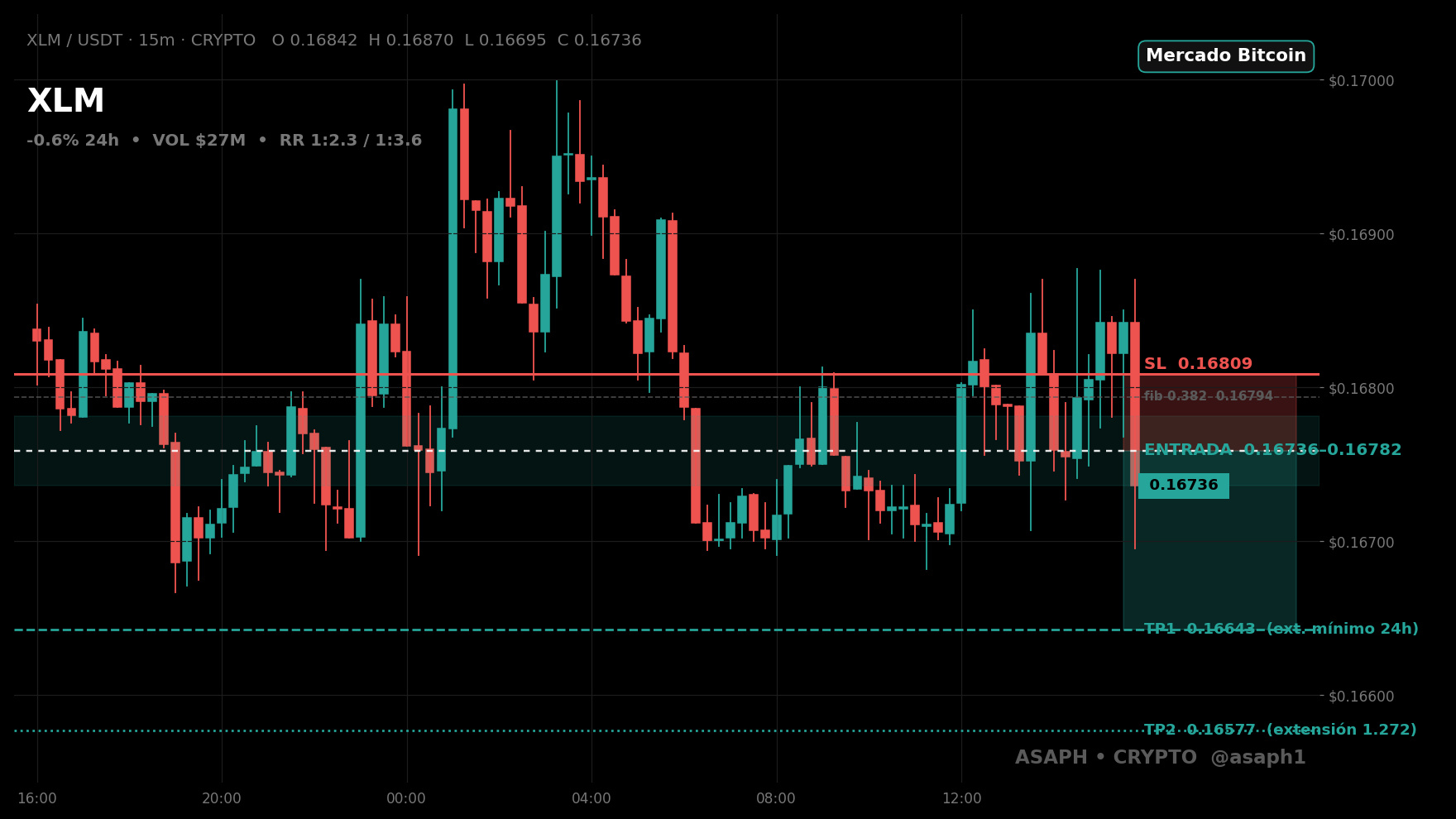
→ Entrada $0.16736–$0.16782, SL $0.16809, TP1 $0.16643 (-0.7%) → TP2 $0.16577 (-1.1%).
¿XLM pierde $0.16577 con Stellar en el mapa o aguanta en $0.16643? 👇
$XLM $XRP TRX
#Stellar #Brasil #Crypto
142

·
--
🚨 RWA CAPITAL FLOWS ARE SHIFTING — AND STELLAR IS GETTING ATTENTION.
Stellar ($XLM ) has reportedly recorded $242 million more in RWA net inflows than the $XRP Ledger over the past 30 days. 😳
That’s a notable development in the competition for real-world asset activity.
But the bigger picture is worth watching:
👀 Can Stellar maintain this momentum?
📊 Can it close the gap with networks like $BNB and $SOL?
And is this part of a broader shift in RWA activity across blockchain ecosystems?
One important distinction: net inflows are not the same as total RWA value or overall network adoption.
Still, the data could signal changing interest across chains.
Which ecosystem do you think will capture more RWA activity next?
#Stellar #XLM
23

·
--
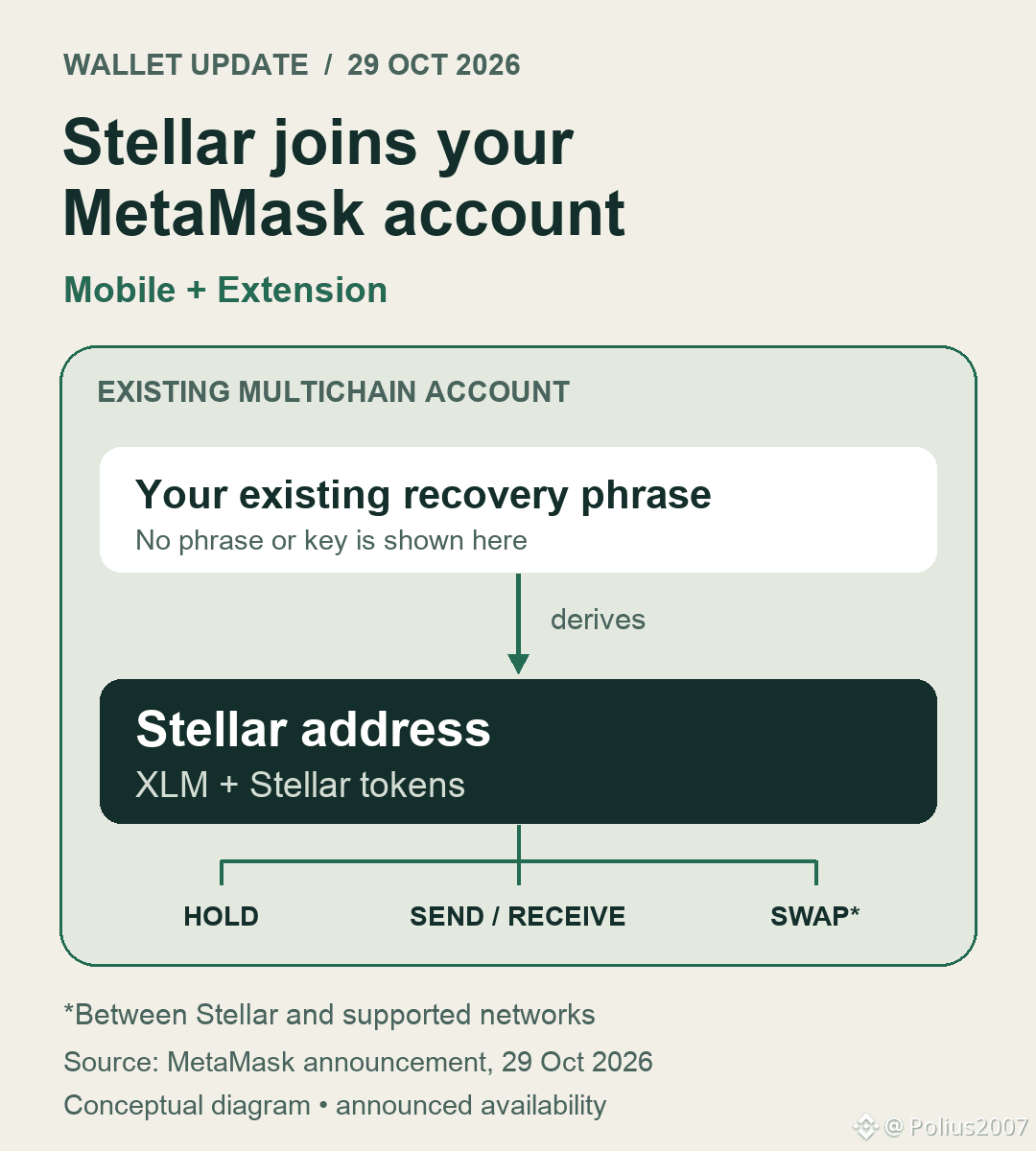
Stellar is now a default network in MetaMask Mobile and Extension, according to MetaMask’s October 29 announcement.
Existing users get a Stellar address derived from the recovery phrase they already use. It sits inside their multichain account, so someone who wants to hold XLM alongside their other crypto no longer needs a separate wallet just to access Stellar.
The integration supports XLM and other Stellar tokens, including trustline assets and Soroban tokens. Users can send and receive them and swap between Stellar and other supported networks. The additional Stellar address is network-specific: it comes from the same recovery phrase, rather than making one address work on every chain.
Source: MetaMask, October 29, 2026.
https://metamask.com/news/metamask-makes-stellar-a-default-network-bringing-global-payments-into-the-open-money-platform
#Stellar #XLM
324

·
--
ສັນຍານກະທິງ
ຢືນຢັນແລ້ວ
⚡ Stellar $XLM just demonstrated 7 MILLION payments per second — but there's a catch
Project Thruput reached 7.02M payments/sec using eight machines inside a single validator
One machine handled 1.18M
That's nearly 6x the execution capacity
The breakthrough isn't just speed 👇
$XLM
{future}(XLMUSDT)
Thruput is designed to process transactions in parallel, even when they touch the same accounts
It also explores zero per-transaction fees, with computing capacity allocated by unlocked native-token balances when demand exceeds supply
⚠️ But 7.02M is an execution benchmark — NOT Stellar mainnet TPS
It doesn't include full network consensus, transaction submission or mempool overhead
The technology is still being tested on FutureNet
{spot}(XLMUSDT)
📌 For $XLM , the next milestones are real network performance, a defined deployment path and proven token utility
A benchmark shows what's technically possible
Production adoption determines what it's worth
#XLM #stellar #blockchain
⚡ Stellar $XLM just demonstrated 7 MILLION payments per second — but there's a catch
Project Thruput reached 7.02M payments/sec using eight machines inside a single validator
One machine handled 1.18M
That's nearly 6x the execution capacity
The breakthrough isn't just speed 👇
$XLM
Thruput is designed to process transactions in parallel, even when they touch the same accounts
It also explores zero per-transaction fees, with computing capacity allocated by unlocked native-token balances when demand exceeds supply
⚠️ But 7.02M is an execution benchmark — NOT Stellar mainnet TPS
It doesn't include full network consensus, transaction submission or mempool overhead
The technology is still being tested on FutureNet
📌 For $XLM , the next milestones are real network performance, a defined deployment path and proven token utility
A benchmark shows what's technically possible
Production adoption determines what it's worth
#XLM #stellar #blockchain

2
1.1k
·
--
🌟 $XLM DUELO EN PAGOS: MIENTRAS RIPPLE SUELTA 1,000 MILLONES, STELLAR SE QUEDA ATRÁS
Ripple ya puso en circulación 1,000 millones de XRP hoy 1 de noviembre con sus dos desbloqueos de escrow, y el mercado lo absorbió sin drama. Para mí, el contraste es el dato: XRP aguantó el golpe de oferta, pero Stellar, su rival histórico en pagos, no está siguiendo el mismo ritmo esta mañana.
Miren el detalle que nadie está viendo:
→ Whale Alert reportó hoy los dos movimientos de 500 millones de XRP de Ripple, el desbloqueo mensual de noviembre ya en circulación.
→ XLM -1.0% con $27.1M, mientras $XRP +0.3% y $HBAR -0.5% se mueven distinto entre pagos.
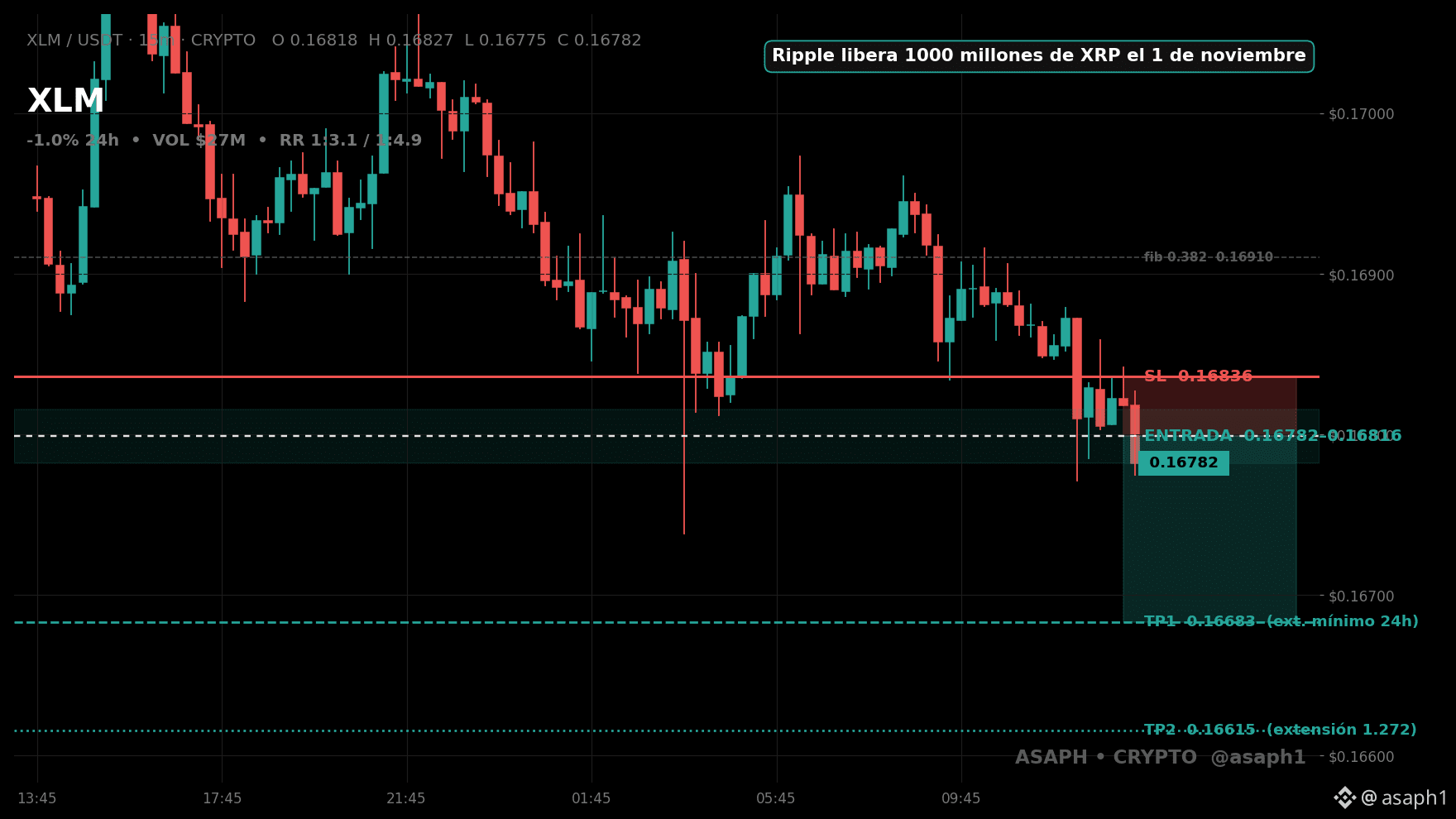
→ Entrada $0.16782–$0.16816, SL $0.16836, TP1 $0.16683 (-0.7%) → TP2 $0.16615 (-1.1%).
¿Ves a XLM llegando a $0.16615 o aguantando en $0.16697? 👇
$XLM
#Stellar #Pagos #Trading
77

🔥 A regulated, yield‑bearing stablecoin isn’t a gimmick—it’s the market’s next safety net.
📊 Stellar just launched YLDS, the first SEC‑registered USD‑pegged stable asset from Figure, and it arrives while Bitcoin ticks up to $78,042 (+0.73%) amid a fear index of 34/100 and a bullish funding rate of +0.0100% on BTC futures. #Stellar #Stablecoins
💡 In a cycle where institutional capital re‑enters on the back of lower volatility, regulated yield‑bearing dollars become the bridge between traditional finance and DeFi, reinforcing the long‑term thesis that “crypto = real‑world finance.” #DeFi #Institutional
✅ Start allocating a small portion of your portfolio (e.g., 2‑5%) into YLDS or similar compliant stablecoins to capture the 4‑6% APY yield while keeping liquidity for buying the dip when BTC’s RSI hovers around 44 and long‑short ratios stay bullish (≈70% longs).
❓ How are you planning to integrate regulated stablecoins like YLDS into your strategy—pure yield, hedge, or a launchpad for the next bull run?
79


·
--
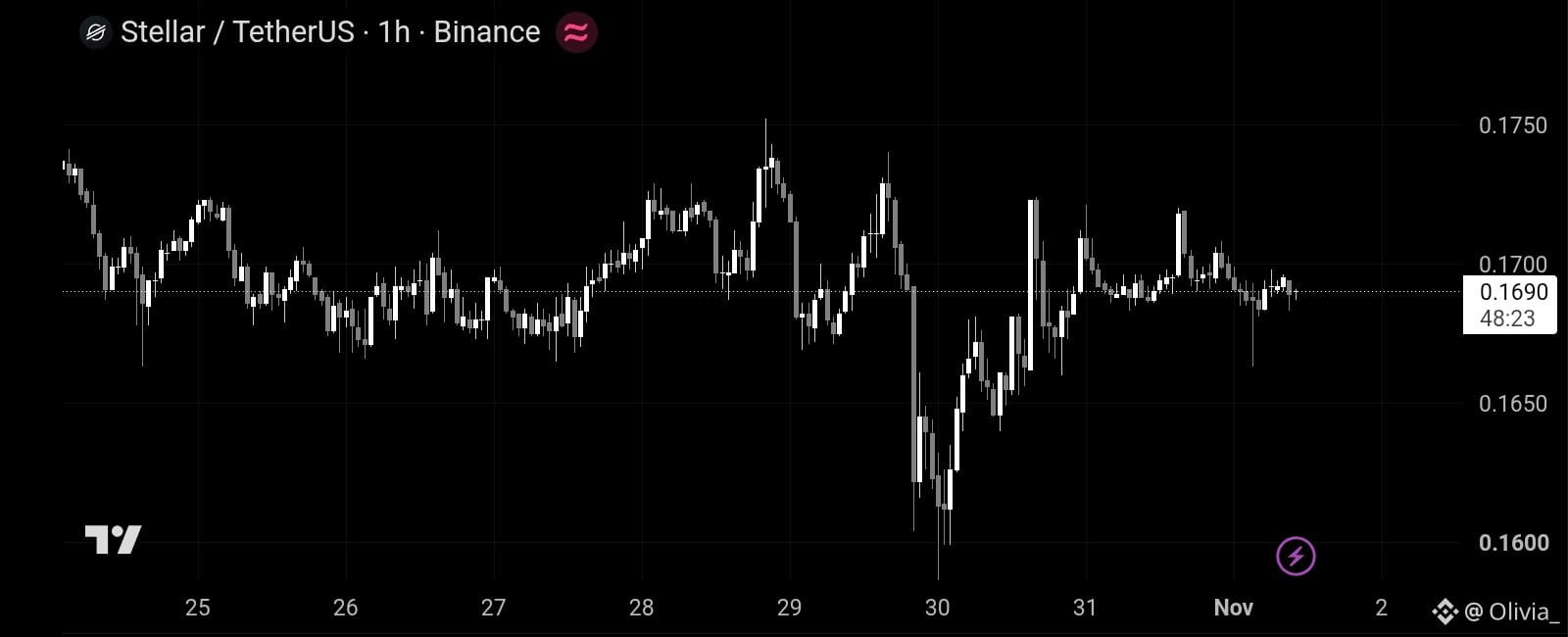
$XLM Holding Strong After Recovery
Stellar is trading around $0.1690 after bouncing from the $0.1600 support area.
Key Levels:
🔹 Support: $0.1680 / $0.1650
🔹 Resistance: $0.1720 / $0.1750
A breakout above $0.1720 could push XLM toward $0.1750. Losing $0.1680 may bring another pullback.
Watching for confirmation before the next move.
#XLM #stellar #crypto
{future}(XLMUSDT)
$XLM Holding Strong After Recovery
Stellar is trading around $0.1690 after bouncing from the $0.1600 support area.
Key Levels:
🔹 Support: $0.1680 / $0.1650
🔹 Resistance: $0.1720 / $0.1750
A breakout above $0.1720 could push XLM toward $0.1750. Losing $0.1680 may bring another pullback.
Watching for confirmation before the next move.
#XLM #stellar #crypto
A L I M A:
let's see what happened next
20
15
320

·
--
STELLAR AT $0.1690: A QUIET MARKET BEFORE A BIGGER MOVE?
XLM is showing limited movement today. But its current range gives traders two clear levels to monitor.
Binance Spot snapshot
- Price: $0.1690
- 24h change: +0.12%
- 24h high: $0.1720
- 24h low: $0.1663
Fundamental perspective
Stellar's payment and cross-border transfer focus remains central to its ecosystem. Adoption and real-world financial integrations are worth following, but short-term price direction also depends on liquidity and broader crypto sentiment.
Technical levels
- Resistance: $0.1720
- Support: $0.1663
- Bullish trigger: A sustained break above $0.1720.
- Bearish trigger: A breakdown below $0.1663.
My verdict: NEUTRAL — WAIT FOR THE MARKET TO CHOOSE.
There is not enough evidence for a strong directional call yet. The range boundaries are more useful than guessing.
#Stellar
#XLM
#XLMUSDT
#CryptoTrading
#Binance
#MarketAnalysis
45

Stellar (XLM) Double-Confirms Death Cross, Yet Another Support Exists
- Stellar (XLM) shows death cross pattern indicating potential downward trend
- Golden cross finalized, which could push price lower than before
- Another support level is available for potential bounce
#Stellar #XLM #Crypto #Trading #DeathCross GoldenCross
$xlm
vlikevn Titanbot
Nguồn: U.Today
- Stellar (XLM) shows death cross pattern indicating potential downward trend
- Golden cross finalized, which could push price lower than before
- Another support level is available for potential bounce
#Stellar #XLM #Crypto #Trading #DeathCross GoldenCross
$xlm
vlikevn Titanbot
Nguồn: U.Today
7

·
--
Curve just went multi-VM: StableSwap is live on Stellar mainnet.
It's Curve's first non-EVM deployment, per CoinOtag's Nov 1 report. Stablecoin swaps have lived almost entirely on EVM chains until now, so this widens where low-slippage stable trading can happen.
My take: with the market in fear (Fear & Greed around 30) and $BTC near $77.5K, builders are still shipping. Stablecoin infrastructure keeps getting the quiet upgrades while price chops.
Which matters more for the next cycle: stablecoin rails on new chains, or more ETF access? Curious where you land. $XLM $BTC
#Stellar #Curve #DeFi #Stablecoins
61

XLM 现在这个盘面,值得看的不是它涨了 1.06%,而是永续合约这边:空头在倒付资金费。
现价 0.17014,24 小时涨 1.06%,8 小时资金费率 -0.0156%,折年约 -17%。价格往上走,费率却往下掉,说明这波拉升不是杠杆多头推上去的,而是现货在买;同时合约端的空头宁愿每 8 小时交一次费,也要守住自己的方向。
但先别急着把这解读成“空头要被挤爆”。
一、负费率对应的绝对金额其实很小。持仓量 3015 万 USDT,乘以 0.0156%,每次结算空头总共付出去大约 4700 USDT,一天三次,一万四出头。这个量级的付费,说明不了任何一方在拼命,它更像是一种方向偏好的信号,而不是真实资金流的信号。折年 -17% 听起来很吓人,但那只是把 8 小时的数字乘了 1095 次,实际掏的钱很少。所以这个 -0.0156%,可以拿来判断情绪,但撑不起“空头压力巨大”的叙事。
二、账户多空比和费率在互相打架。多头账户占比 61%,但费率是负的。账户数按人头算,仓位按资金算;这两个数据同时成立,只能指向一种结构:小账户扎堆在多头一侧,大仓位坐在空头一边。这种盘面下,价格往上靠的不是空头平仓引发的连锁反应,而是现货买盘得一直续上。大仓位愿意付费守空,说明它们要么有更长的持有周期,要么手里有现货在做对冲,浮亏并没把谁逼到必须平仓。
三、真正该盯的是费率什么时候回正。现在的 -0.0156%,是空头在为自己的方向付费。如果现货买盘是真的、能持续的,那空头会陆续放弃守仓,费率从负回到零、再翻正;那一刻代表的不是行情加速,而是“空头不愿意再付这个钱”,也就是这波现货驱动的推力遇到第一道真正的阻力,是短期多空双方力量开始转换的信号。反过来,如果价格继续涨而费率一直负着,那就说明空头根本没打算短期收手,这笔交易就是慢生意,不是快钱。
四、衍生品池子不厚。24 小时成交额 24.4M USDT,持仓 30.15M USDT,两个数字挨得很近。这种体量下,费率的边际变化很容易被一两笔大单带偏;单看一个 8 小时窗口的费率方向,噪音大于信号,至少要连着看几次结算才站得住。别拿一个结算周期的数据去推一整段趋势。
⚠️ 风险提示:负费率可以持续很久,尤其在现货主导的行情里;把“空头付费”当成“空头认输”是最常见的一种误读。止损该放的位置,不会因为费率是负的就变宽。
我的看法是:这波 XLM 的多头证据在现货那一侧,费率为负只是配套说明杠杆端没跟上来。真正的确认信号是费率回正叠加持仓量同步抬升;在那之前,这 1.06% 更像是现货在单边推,还谈不上趋势启动。
#XLM #Stellar #Crypto
4

·
--
Stellar se incorpora a MetaMask: dirección y activación son pasos distintos
MetaMask y Stellar anunciaron el 29 de octubre de 2026 la integración, ya disponible según el comunicado en móvil y extensión. Square recoge hoy la noticia. Stellar pasa a ser una de las redes incluidas por defecto.
Las cuentas multired compatibles incorporan una dirección Stellar derivada de su frase de recuperación. La integración permite gestionar XLM, activos compatibles y tokens Soroban, además de enviar, recibir e intercambiar activos entre redes admitidas.
La guía de MetaMask distingue varios requisitos:
• Una dirección nueva necesita recibir al menos 1 XLM para activarse en la red.
• Para recibir activos como USDC se necesita una trustline: la autorización de la cuenta para aceptar ese activo.
• Cada trustline añade 0,5 XLM a la reserva; ese saldo queda retenido, no disponible para gastar. Las comisiones de red también se pagan en XLM.
En un intercambio mediante puente hacia un token distinto de XLM, la guía exige activar primero la trustline. Omitirlo puede causar pérdida de fondos.
Lectura de mercado: Binance Spot, 31/10 a las 20:17 UTC: XLM cotiza a 0,1697 USDT (+1,19% en 24 h) y ETH a 2.254,92 USDT (+0,51%). La integración facilita el acceso; esas variaciones no demuestran cuánto uso nuevo ha generado.
$XLM $ETH $USDC
Contenido Educativo. No asesoramiento financiero.
#Stellar #MetaMask #XLM #Autocustodia #EducacionFinanciera

francotraderr:
Follow for follow
1
1
82

$XLM REAL-WORLD ASSETS EXPLODE PAST $3B AS INSTITUTIONAL LIQUIDITY QUIETLY STACKS! 🦈 💥
Stellar has quietly turned into an institutional liquidity monster, surging past $3 Billion in tokenized real-world assets since January. 📊 Major heavyweights like Ondo and Spiko are locking massive capital into $XLM rails, far outstripping its modest $213 Million DeFi footprint.
💡 With barely $2 Million of these RWAs actively utilized as collateral in lending protocols, the unlockable on-chain velocity here is staggering. ⚡ Once institutional debt starts feeding directly into active DeFi yield loops, the ecosystem dynamics will shift dramatically.
💬 Will $XLM bridge this massive utilization gap and dominate the RWA sector this cycle? 👇
⚠️ Not financial advice. Always manage your risk. 🛡️
🏷️ #XLM #RWA #Stellar #Crypto
🔥 💎
37
把「默认网络」当新闻读,就浪费了它。Stellar 成了 MetaMask 的默认网络,新账户还会自动生成地址——这两件事合在一起,也就是说 XLM 从一个「需要用户主动添加的网络」,变成了「用户打开钱包就会遇到的网络」。在产品逻辑里,这是分发渠道的变化,不是一次集成公告。
先说默认值为什么重要。MetaMask 是千万级月活的自托管钱包,新用户创建钱包的第一步就在选网络。过去 Stellar 在这条链路上的转化路径是:先听说、再去搜、再手动加 RPC、再找资产入口,每一步都会筛掉一大批人。现在这一步被省掉了,地址自动生成,用户第一次点开就能看到自己的 Stellar 地址。默认值本身就能带来分发,因为它不要求用户有任何动机,只要求他点下一步。
所以接下来该盯的是链上数据,而不是短时涨跌。具体看三个指标:新增地址曲线、日活跃地址、以及 Stellar 上稳定币通道和 Soroban 合约的调用量。XLM 这几年最典型的问题,是叙事一直有、地址数量却涨不动——生态故事讲了很久,活跃地址的台阶始终没抬起来。如果这次入口变化是真的,两到四周内就应该看到新增地址出现台阶式的抬升,而不是一根日线插针。如果四周后地址曲线还是原样,那这条消息就只是一次工程合作,不是一次用户迁移。
再看盘面。XLM 现在在 0.16 美元附近,从 0.6 美元上方回落了约七成,这个位置的筹码结构决定了它对利好并不敏感。资金费率长期贴着零轴,说明杠杆端没有为这条消息付钱:既没有拥挤的多头在追,也没有空头在压方向。这种状态下,消息的定价通常是慢的,它不会当天走完,而是跟着数据一条一条兑现。合约持仓如果在这几天没有明显放大,我倾向于理解为「知道的人还少」,而不是「没人信」。
风险也得说清楚。集成不等于使用,默认网络可以一键切走,用户真正留下来取决于后面那串东西:资产入口顺不顺、法币出入金通不通、链上兑换的深度够不够。这些目前都还是问号。更现实的一点是,集成类消息的兑现周期一般以季度计,而市场情绪以天计,中间这段错配最容易把人磨掉。
我的观点是:把这次默认网络的变化当成一个观察窗口,而不是一个交易信号。接下来两周,先看新增地址和活跃地址有没有动,数据抬升再谈重新定价,数据不动就承认它只是一次管道铺设。用短线仓位去博一个长周期的变量,是最容易在噪音里被反复消耗的做法。
#XLM #Stellar #Crypto
13

·
--
ຢືນຢັນແລ້ວ
刷到 Stellar Development Foundation(SDF)战略入股 Marketnode——亚太数字市场基础设施(DMI)运营商,股东阵容里有 Euroclear、汇丰、新交所集团、淡马锡。
硬点:资金用来推亚太机构端代币化 RWA 上 Stellar,把资管、发行人、分销商和合格投资者接到同一套发行/分销/存续服务上。双方本来就有合作:Marketnode 计划在 Stellar 提供部分 BNY Investments 基金的链上入口,也在分销 CGS、富兰克林、Maybank AM、WisdomTree 等代币化产品。
亚太机构从试点往商用走,基础设施先把分销网络铺开——这步挺实。
#Stellar #RWA #Marketnode #代币化
硬点:资金用来推亚太机构端代币化 RWA 上 Stellar,把资管、发行人、分销商和合格投资者接到同一套发行/分销/存续服务上。双方本来就有合作:Marketnode 计划在 Stellar 提供部分 BNY Investments 基金的链上入口,也在分销 CGS、富兰克林、Maybank AM、WisdomTree 等代币化产品。
亚太机构从试点往商用走,基础设施先把分销网络铺开——这步挺实。
#Stellar #RWA #Marketnode #代币化
XLM-3,68%
HSBCUS+0,40%
1
170

·
--
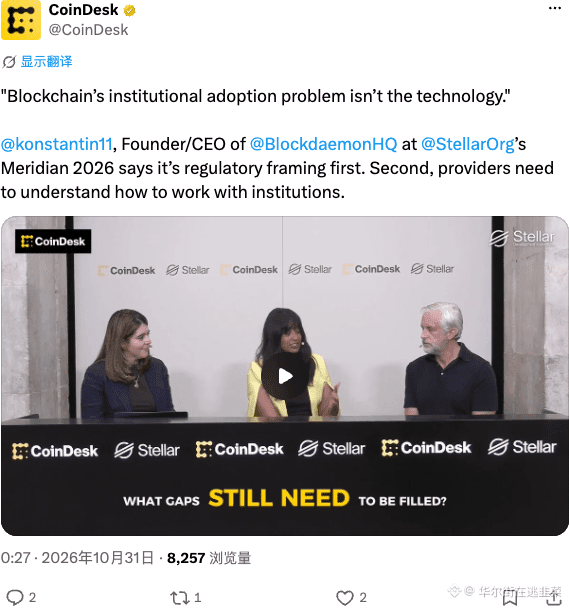
Blockdaemon CEO 在 Stellar Meridian 上直言,机构化搞不定的核心不是链的技术,而是监管怎么定义,以及中介能不能玩转机构客户。技术早就不是问题,真正的拦路虎是监管框架和服务商能力。Stellar 这波观点其实很诚实,合规才是最大的护城河,想进机构的别光看代码,先搞定规则。
$XLM #Stellar #CryptoRegulation
Blockdaemon CEO 在 Stellar Meridian 上直言,机构化搞不定的核心不是链的技术,而是监管怎么定义,以及中介能不能玩转机构客户。技术早就不是问题,真正的拦路虎是监管框架和服务商能力。Stellar 这波观点其实很诚实,合规才是最大的护城河,想进机构的别光看代码,先搞定规则。
$XLM #Stellar #CryptoRegulation
$XLM #Stellar #CryptoRegulation
29

ຢືນຢັນແລ້ວ
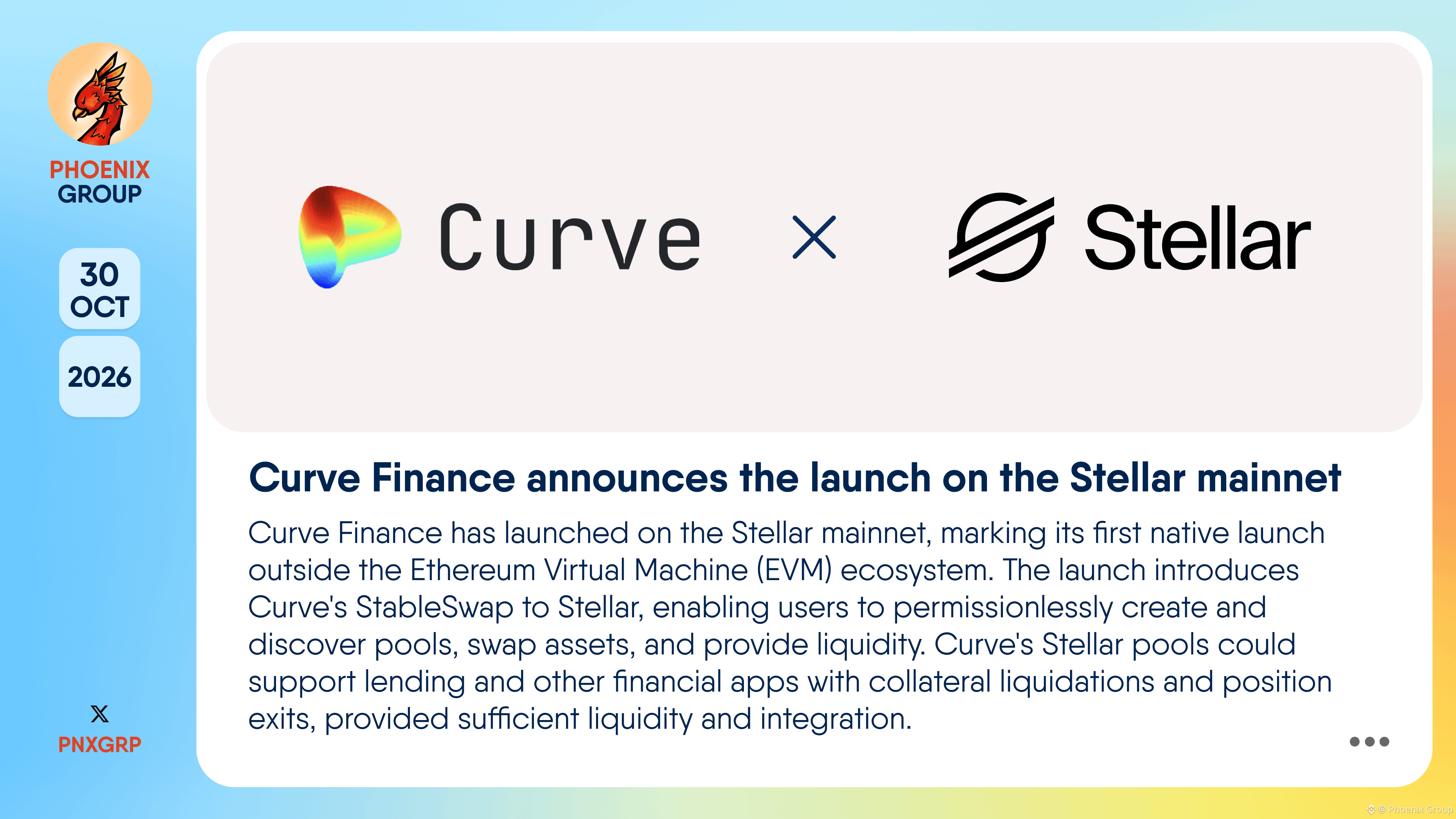
Curve Finance announces the launch on the Stellar mainnet
#CurveFinance has launched on the #Stellar mainnet, marking its first native launch outside the Ethereum Virtual Machine (EVM) ecosystem. The launch introduces Curve's StableSwap to Stellar, enabling users to permissionlessly create and discover pools, swap assets, and provide liquidity.
Curve's Stellar pools could support lending and other financial apps with collateral liquidations and position exits, provided sufficient liquidity and integration. Asset issuers could also use them to create markets for Stellar-based assets, including stablecoins and Franklin Templeton's tokenized money market fund.
👉 theblock.co/news/defi/2026-10-29-curve-finance-stellar-432121
582

·
--
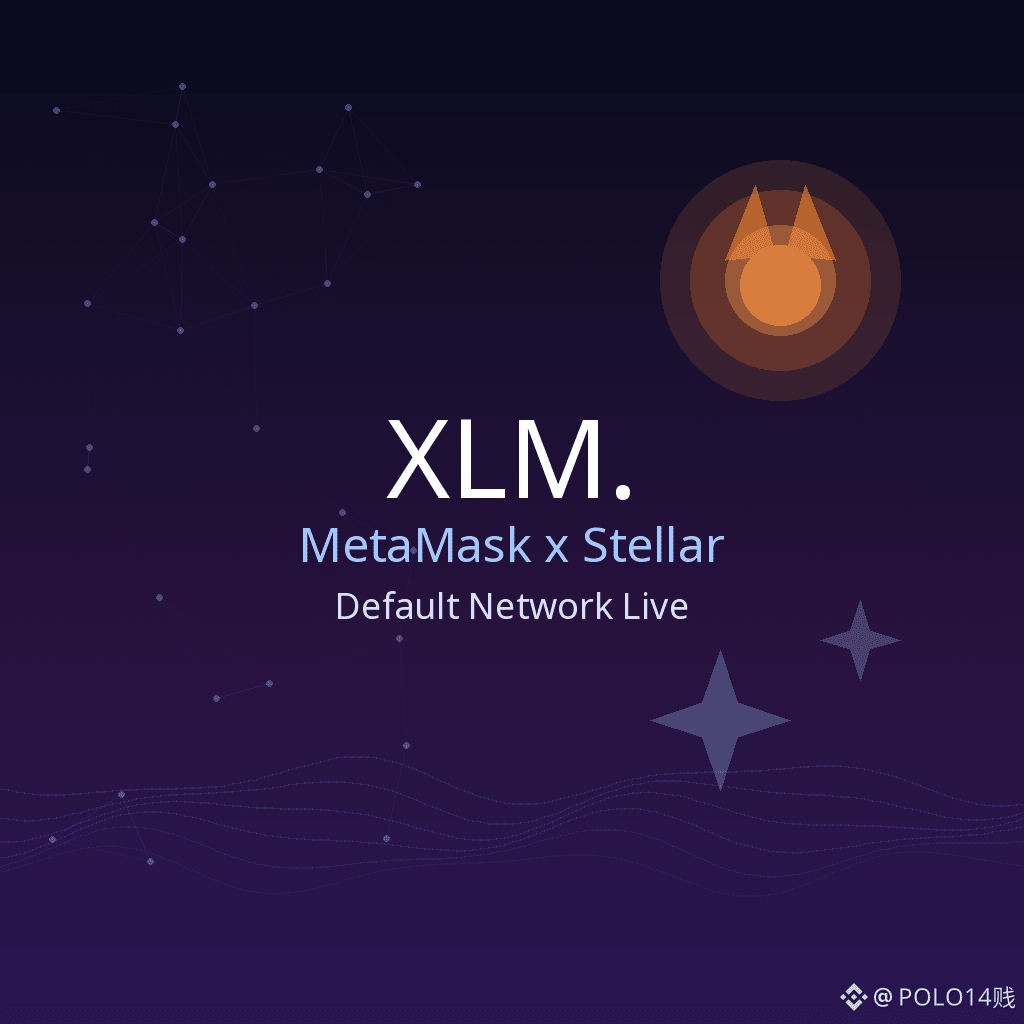
MetaMask 昨天在里斯本 Meridian 会上把 Stellar 设成默认网络:手机和插件已上线,现有账户从助记词直接长出 Stellar 地址。官方称这是首个默认接入 Stellar 的大型自托管钱包,可收发 XLM、trustline 资产和 Soroban 代币。StellarOrg 说约等于给 3000 万用户发了地址。CoinGecko 现货 XLM 约 0.160 美元(快照约 10:07 北京),24 小时大约跌四个点。
支付入口换了位,以前要单独开 Stellar 钱包,现在跟其他链资产坐在同一个界面。别把地址自动长出直接读成转账量已经起来;地址只是门槛,真转账才算数。
观察窗放到两周:官方能核验的活跃 Stellar 地址或链上支付量若没跟上,就把这则当渠道开通脉冲,不当成支付场景已经跑通。
$XLM
#Stellar #MetaMask
支付入口换了位,以前要单独开 Stellar 钱包,现在跟其他链资产坐在同一个界面。别把地址自动长出直接读成转账量已经起来;地址只是门槛,真转账才算数。
观察窗放到两周:官方能核验的活跃 Stellar 地址或链上支付量若没跟上,就把这则当渠道开通脉冲,不当成支付场景已经跑通。
$XLM
#Stellar #MetaMask
137
·
--
Meridian 2026杀回里斯本,Stellar这次有大动作。Denelle Dixon谈全球数字金融,要是真能落地,XLM就从"路人"变"实力派"了。估值逻辑要变。
$XLM #Stellar #DeFi
Meridian 2026杀回里斯本,Stellar这次有大动作。Denelle Dixon谈全球数字金融,要是真能落地,XLM就从"路人"变"实力派"了。估值逻辑要变。
$XLM #Stellar #DeFi
$XLM #Stellar #DeFi

146
ເຂົ້າສູ່ລະບົບເພື່ອສຳຫຼວດເນື້ອຫາເພີ່ມເຕີມ
ເຂົ້າຮ່ວມກຸ່ມຜູ້ໃຊ້ຄຣິບໂຕທົ່ວໂລກໃນ Binance Square.
⚡️ ໄດ້ຮັບຂໍ້ມູນຫຼ້າສຸດ ແລະ ທີ່ມີປະໂຫຍດກ່ຽວກັບຄຣິບໂຕ.
💬 ໄດ້ຮັບຄວາມໄວ້ວາງໃຈຈາກຕະຫຼາດແລກປ່ຽນຄຣິບໂຕທີ່ໃຫຍ່ທີ່ສຸດໃນໂລກ.
👍 ຄົ້ນຫາຂໍ້ມູນເຊີງເລິກທີ່ແທ້ຈາກນັກສ້າງທີ່ໄດ້ຮັບການຢືນຢັນ.
ອີເມວ / ເບີໂທລະສັບ
ຫົວຂໍ້ທີ່ກໍາລັງນິຍົມ
1
#BinanceWithdrawalScamWarning
57,800 ຄັ້ງທີ່ເບິ່ງ
766 ກຳລັງສົນທະນາ
2
#USMidtermElections
630,715 ຄັ້ງທີ່ເບິ່ງ
3,325 ກຳລັງສົນທະນາ
3
#USOctoberNFP-AreRateCutsStillPossible
62,356 ຄັ້ງທີ່ເບິ່ງ
611 ກຳລັງສົນທະນາ
4
#AppleEarningsAhead-CanStockHitNewHigh
22,850 ຄັ້ງທີ່ເບິ່ງ
433 ກຳລັງສົນທະນາ
5
#Verify1to1BinanceReserves
52,930 ຄັ້ງທີ່ເບິ່ງ
455 ກຳລັງສົນທະນາ
6
#BinanceRestores28FiatWithdrawals
181,334 ຄັ້ງທີ່ເບິ່ງ
1,100 ກຳລັງສົນທະນາ
7
#StrategyRepurchases$208MSTRCAdds811Bitcoin
8,531 ຄັ້ງທີ່ເບິ່ງ
18 ກຳລັງສົນທະນາ
8
#FATFLaunchesReviewOfCryptoHubsMoneyLaunderingControls
931 ຄັ້ງທີ່ເບິ່ງ
21 ກຳລັງສົນທະນາ
9
#BinanceProcesses$4.65BWithdrawals
129,342 ຄັ້ງທີ່ເບິ່ງ
369 ກຳລັງສົນທະນາ
10
#HKMALaunchesSAGEAgenticFinanceProject
5,154 ຄັ້ງທີ່ເບິ່ງ
200 ກຳລັງສົນທະນາ