

Gourav-S
32k Жариялаулар

Gourav-S
 «Square расталған» белгісі
Хабарлау
Пайдаланушыны блоктау
Exploring the crypto world with smart trading, learning,and growing. Focused on building a diversified portfolio.Join me on this exciting digital asset journey!
Жиі сауда жасайтын трейдер
3.4 жыл
1.2K+ Жазылым
34.6K+ Жазылушылар
76.9K+ лайк басылған
Жазбалар
Барлығы
Баға ұсыныстары
Видеолар
Тікелей эфир
·
--
Google's Core Is Being Tested: Search vs AI, With Earnings Tonight
#CanGoogleDefindItsCore $GOOGL
{future}(GOOGLUSDT)
Alphabet reports Q3 after the US close today, and the question is simple: can Search keep growing while people ask AI chatbots instead of Googling?
My take: the fear is real, but the numbers haven't confirmed it yet. Q2 revenue hit $119.8B, up 24.2% YoY, and Google is putting ads next to AI Overviews rather than losing them. Cloud and TPU demand are the second engine.
The bigger risk is spending. Heavy AI capex pushed free cash flow negative in Q2, and options are pricing roughly a 5% move after earnings. A beat on revenue won't be enough. Investors want proof that AI spend turns into profit.
I'm not adding to my position before the report. I'll wait for the Cloud numbers and the capex guidance, then decide.
Are you buying before earnings or waiting for the reaction? Tell me below, and follow for the post-earnings breakdown.
Not financial advice. DYOR.
#BinanceSquare #Google
Google's Core Is Being Tested: Search vs AI, With Earnings Tonight
#CanGoogleDefindItsCore $GOOGL
Alphabet reports Q3 after the US close today, and the question is simple: can Search keep growing while people ask AI chatbots instead of Googling?
My take: the fear is real, but the numbers haven't confirmed it yet. Q2 revenue hit $119.8B, up 24.2% YoY, and Google is putting ads next to AI Overviews rather than losing them. Cloud and TPU demand are the second engine.
The bigger risk is spending. Heavy AI capex pushed free cash flow negative in Q2, and options are pricing roughly a 5% move after earnings. A beat on revenue won't be enough. Investors want proof that AI spend turns into profit.
I'm not adding to my position before the report. I'll wait for the Cloud numbers and the capex guidance, then decide.
Are you buying before earnings or waiting for the reaction? Tell me below, and follow for the post-earnings breakdown.
Not financial advice. DYOR.
#BinanceSquare #Google
2
151
·
--
Datavault AI Can't Withdraw Its Bitcoin From Biconomy: A Counterparty Risk Wake-Up Call
#DatavaultAICantWithdrawBitcoinFromBiconomy
$BTC
{spot}(BTCUSDT)
Nasdaq-listed Datavault AI (DVLT) fell nearly 50% on Tuesday after disclosing that it has been unable to withdraw bitcoin from the Biconomy exchange since June. According to its SEC filing, Scilex credited 1,309.04 BTC to Datavault's Biconomy wallet in September and November 2025 through off-chain transfers, as payment in a $150M deal for Datavault shares. Biconomy was also reportedly involved in supplying the bitcoin behind that deal. Datavault later sold 491.4 BTC back to Scilex for about $40.5M in cash, which by my math leaves roughly 817 BTC, about $65M at current prices, still credited. The company will also restate its financials, saying the bitcoin should have been recorded as a subscription receivable rather than a company asset. The filing does not say the coins are stolen or lost, and the reason for the failed withdrawal is unknown.
My take: this is a reminder that a balance on an exchange is a claim, not coins you control. Off-chain credits are just entries inside an exchange's system, not transactions on Bitcoin's blockchain, yet the company counted them as its own asset. For anyone holding size, the lesson is basic: understand custody, test withdrawals early and avoid concentrating funds with a single counterparty. The key open question is whether Biconomy releases the bitcoin and on what terms. Until then, the real size of any loss is unclear.
Do you test a withdrawal before moving large amounts to any platform? Let me know below 👇
This is my analysis, not financial advice.
Follow me for more trading content and market updates.
#BinanceSquare #BTC #CryptoNews #CryptoMarkets
Datavault AI Can't Withdraw Its Bitcoin From Biconomy: A Counterparty Risk Wake-Up Call
#DatavaultAICantWithdrawBitcoinFromBiconomy
$BTC
Nasdaq-listed Datavault AI (DVLT) fell nearly 50% on Tuesday after disclosing that it has been unable to withdraw bitcoin from the Biconomy exchange since June. According to its SEC filing, Scilex credited 1,309.04 BTC to Datavault's Biconomy wallet in September and November 2025 through off-chain transfers, as payment in a $150M deal for Datavault shares. Biconomy was also reportedly involved in supplying the bitcoin behind that deal. Datavault later sold 491.4 BTC back to Scilex for about $40.5M in cash, which by my math leaves roughly 817 BTC, about $65M at current prices, still credited. The company will also restate its financials, saying the bitcoin should have been recorded as a subscription receivable rather than a company asset. The filing does not say the coins are stolen or lost, and the reason for the failed withdrawal is unknown.
My take: this is a reminder that a balance on an exchange is a claim, not coins you control. Off-chain credits are just entries inside an exchange's system, not transactions on Bitcoin's blockchain, yet the company counted them as its own asset. For anyone holding size, the lesson is basic: understand custody, test withdrawals early and avoid concentrating funds with a single counterparty. The key open question is whether Biconomy releases the bitcoin and on what terms. Until then, the real size of any loss is unclear.
Do you test a withdrawal before moving large amounts to any platform? Let me know below 👇
This is my analysis, not financial advice.
Follow me for more trading content and market updates.
#BinanceSquare #BTC #CryptoNews #CryptoMarkets
1
117
·
--
Hong Kong Opens Evening and Weekend Trading for Tokenized Funds: A Real Step for RWA?#HKPlacesTokenizedFundSecondaryTradingUnderETFLikeFramework
Hong Kong's SFC has approved the first secondary trading of tokenized public funds. Trading in two ChinaAMC tokenized money market funds, one in US dollars and one in Hong Kong dollars, began on October 26 on the licensed platform PantherTrade, open to both retail and institutional investors. The approval builds on the SFC's April framework, which applies ETF-style rules to tokenized funds, covering fair pricing, market makers and investor protections, and allows trading in evenings and on weekends. Safeguards include an indicative NAV updated during trading, price deviation alerts, short trading halts and at least one market maker per fund.
My take: this matters because it moves tokenization beyond issuing funds on-chain to actually trading them in a regulated secondary market, with retail access from day one. Starting with money market funds is the cautious choice, since they are low risk and easy to value. Liquidity is the real test, though. Trading volumes and market depth haven't been published yet, and platforms are required to warn investors about thin liquidity and gaps to NAV. Stamp duty, which is waived for ETFs but applies to mutual fund transfers, could also matter. I'm watching volumes, spreads versus NAV, and whether more fund types are added.
Will regulated, always-on trading make tokenized funds mainstream, or will they stay niche? Let me know below 👇
This is my analysis, not financial advice.
Follow me for more trading content and market updates.
#CryptoMarkets #BinanceSquare
Hong Kong Opens Evening and Weekend Trading for Tokenized Funds: A Real Step for RWA?
#HKPlacesTokenizedFundSecondaryTradingUnderETFLikeFramework
Hong Kong's SFC has approved the first secondary trading of tokenized public funds. Trading in two ChinaAMC tokenized money market funds, one in US dollars and one in Hong Kong dollars, began on October 26 on the licensed platform PantherTrade, open to both retail and institutional investors. The approval builds on the SFC's April framework, which applies ETF-style rules to tokenized funds, covering fair pricing, market makers and investor protections, and allows trading in evenings and on weekends. Safeguards include an indicative NAV updated during trading, price deviation alerts, short trading halts and at least one market maker per fund.
My take: this matters because it moves tokenization beyond issuing funds on-chain to actually trading them in a regulated secondary market, with retail access from day one. Starting with money market funds is the cautious choice, since they are low risk and easy to value. Liquidity is the real test, though. Trading volumes and market depth haven't been published yet, and platforms are required to warn investors about thin liquidity and gaps to NAV. Stamp duty, which is waived for ETFs but applies to mutual fund transfers, could also matter. I'm watching volumes, spreads versus NAV, and whether more fund types are added.
Will regulated, always-on trading make tokenized funds mainstream, or will they stay niche? Let me know below 👇
This is my analysis, not financial advice.
Follow me for more trading content and market updates.
#CryptoMarkets #BinanceSquare
1
118
·
--
#OSMOPlansToBurn100MTokensFromCommunityPool
Osmosis Community Pool Burn: What Does It Actually Change for OSMO?
$OSMO
{spot}(OSMOUSDT)
Osmosis governance contributor JohnnyWyles has proposed a large burn from the community pool, with an on-chain vote planned for October 30. Early reports put the burn at 100M OSMO, about 12.6% of supply. The latest report describes it as 55.5M OSMO (about 7%), which together with the roughly 44.4M OSMO already burned would bring the all-time total to about 100M. The pool currently holds about 119.3M OSMO, and the proposal follows the vote that ended new OSMO issuance with about 91% approval.
My take: the key detail is that community pool tokens are already outside circulation. A burn mainly reduces total supply and removes the option to spend those tokens later, rather than directly cutting what is tradable today. It also adds no new demand, so the price impact is uncertain. What it does is make the existing "soft burn" permanent and show that governance is serious about scarcity after ending inflation. The trade-off is flexibility, since a smaller treasury could limit future funding. With OSMO trading around $0.055, I see this as a governance story more than a price catalyst, and I'm waiting for the final burn amount and the October 30 vote before reading anything into price.
Do treasury burns matter if the tokens were never in circulation? Let me know below 👇
This is my analysis, not financial advice.
Follow me for more trading content and market updates.
#osmo #CryptoMarkets #BinanceSquare #Write2Earn
#OSMOPlansToBurn100MTokensFromCommunityPool
Osmosis Community Pool Burn: What Does It Actually Change for OSMO?
$OSMO
Osmosis governance contributor JohnnyWyles has proposed a large burn from the community pool, with an on-chain vote planned for October 30. Early reports put the burn at 100M OSMO, about 12.6% of supply. The latest report describes it as 55.5M OSMO (about 7%), which together with the roughly 44.4M OSMO already burned would bring the all-time total to about 100M. The pool currently holds about 119.3M OSMO, and the proposal follows the vote that ended new OSMO issuance with about 91% approval.
My take: the key detail is that community pool tokens are already outside circulation. A burn mainly reduces total supply and removes the option to spend those tokens later, rather than directly cutting what is tradable today. It also adds no new demand, so the price impact is uncertain. What it does is make the existing "soft burn" permanent and show that governance is serious about scarcity after ending inflation. The trade-off is flexibility, since a smaller treasury could limit future funding. With OSMO trading around $0.055, I see this as a governance story more than a price catalyst, and I'm waiting for the final burn amount and the October 30 vote before reading anything into price.
Do treasury burns matter if the tokens were never in circulation? Let me know below 👇
This is my analysis, not financial advice.
Follow me for more trading content and market updates.
#osmo #CryptoMarkets #BinanceSquare #Write2Earn
1
190
·
--
SK Hynix Unveils a Record Payout: What $45B in Shareholder Returns Says About the AI Trade#SKHynixUnveils$45BShareholderReturns
SK Hynix posted third-quarter operating profit of 83.3 trillion won, up 632% year over year and above Bloomberg's estimate of 77.5 trillion won, on record revenue of 104.6 trillion won. Alongside the results, the company announced a new shareholder return package reported at 60 trillion won (about $45B), within roughly 100 trillion won (about $75B) in total returns planned for this year. Shares in Seoul jumped more than 7% on the news.
My take: the numbers show AI memory demand flowing straight into cash flow. SK Hynix is a major HBM supplier to Nvidia, and a payout of this size, compared with 14.3 trillion won returned last year, signals that management expects the cash generation to last. At the same time, memory is a cyclical business, and after a 7% jump a lot of the good news may already be priced in. I'm treating this as one more data point for the AI infrastructure trade, alongside the Microsoft and Alphabet earnings due later today, rather than a standalone signal.
Does a payout this large signal strong confidence or a market near its peak? Let me know below 👇
This is my analysis, not financial advice.
Follow me for more trading content and market updates.
#CryptoMarkets #BinanceSquare
SK Hynix Unveils a Record Payout: What $45B in Shareholder Returns Says About the AI Trade
#SKHynixUnveils$45BShareholderReturns
SK Hynix posted third-quarter operating profit of 83.3 trillion won, up 632% year over year and above Bloomberg's estimate of 77.5 trillion won, on record revenue of 104.6 trillion won. Alongside the results, the company announced a new shareholder return package reported at 60 trillion won (about $45B), within roughly 100 trillion won (about $75B) in total returns planned for this year. Shares in Seoul jumped more than 7% on the news.
My take: the numbers show AI memory demand flowing straight into cash flow. SK Hynix is a major HBM supplier to Nvidia, and a payout of this size, compared with 14.3 trillion won returned last year, signals that management expects the cash generation to last. At the same time, memory is a cyclical business, and after a 7% jump a lot of the good news may already be priced in. I'm treating this as one more data point for the AI infrastructure trade, alongside the Microsoft and Alphabet earnings due later today, rather than a standalone signal.
Does a payout this large signal strong confidence or a market near its peak? Let me know below 👇
This is my analysis, not financial advice.
Follow me for more trading content and market updates.
#CryptoMarkets #BinanceSquare
2
243
·
--
US Sells FTX-Linked Anthropic Shares for $627M: What the S-1 Reveals#USGovSellsFTXLinkedAnthropicSharesFor$627M
Anthropic's S-1 filing has revealed how the US government cashed out a stake tied to FTX. The shares, about 4.45 million in total, were forfeited by former Alameda CEO Caroline Ellison and ex-FTX executive Nishad Singh, who invested $50M in Anthropic in 2022. According to the filing, Anthropic bought them from the government at $140.97 per share and resold them at the same price to nine accredited investors for roughly $627M, receiving no proceeds itself. BeInCrypto reports that the cash went to the FTX bankruptcy estate to repay creditors.
My take: the sale shows how forfeited private-company stakes get handled. The government locked in a fixed price in 2025, while the same shares are reportedly valued near $3.94B at the pre-IPO valuation. Agencies usually liquidate illiquid assets instead of holding them, even when the upside is large. For crypto, the direct price impact is limited, but FTX-era recoveries still matter because creditor payouts can bring some liquidity back into the market. Earlier reports found no sign that proceeds had reached the estate, so the court filings are worth watching.
Should forfeited private-company stakes be sold early or held for creditors' upside? Let me know below 👇
This is my analysis, not financial advice.
Follow me for more trading content and market updates.
#CryptoMarkets #US #BinanceSquare
US Sells FTX-Linked Anthropic Shares for $627M: What the S-1 Reveals
#USGovSellsFTXLinkedAnthropicSharesFor$627M
Anthropic's S-1 filing has revealed how the US government cashed out a stake tied to FTX. The shares, about 4.45 million in total, were forfeited by former Alameda CEO Caroline Ellison and ex-FTX executive Nishad Singh, who invested $50M in Anthropic in 2022. According to the filing, Anthropic bought them from the government at $140.97 per share and resold them at the same price to nine accredited investors for roughly $627M, receiving no proceeds itself. BeInCrypto reports that the cash went to the FTX bankruptcy estate to repay creditors.
My take: the sale shows how forfeited private-company stakes get handled. The government locked in a fixed price in 2025, while the same shares are reportedly valued near $3.94B at the pre-IPO valuation. Agencies usually liquidate illiquid assets instead of holding them, even when the upside is large. For crypto, the direct price impact is limited, but FTX-era recoveries still matter because creditor payouts can bring some liquidity back into the market. Earlier reports found no sign that proceeds had reached the estate, so the court filings are worth watching.
Should forfeited private-company stakes be sold early or held for creditors' upside? Let me know below 👇
This is my analysis, not financial advice.
Follow me for more trading content and market updates.
#CryptoMarkets #US #BinanceSquare
2
252
·
--
Can Google Defend Its Core Business in the AI Era? 🤔
#CanGoogleDefindItsCore
$GOOGL
{future}(GOOGLUSDT)
Google’s biggest challenge isn’t just building better AI. It’s protecting the Search business that helped make it a tech giant.
In Q2 2026, Alphabet reported $119.8 billion in revenue, up 24% year over year. Google Search revenue also grew 17%, while Google Cloud revenue surged 82%. These numbers show that Google’s core business and AI infrastructure are both growing.
But competition from ChatGPT, AI-powered search and autonomous AI agents is changing how people find information online.
My view: Google has a major advantage through its massive user base, Gemini AI and cloud infrastructure. However, the real test is whether AI can strengthen Search without weakening its advertising business.
Tomorrow’s earnings report could provide important clues about that balance.
Can Google turn AI into its next growth engine while defending Search? What’s your view?
#Google #EarningsSeason #BinancePick
Can Google Defend Its Core Business in the AI Era? 🤔
#CanGoogleDefindItsCore
$GOOGL
Google’s biggest challenge isn’t just building better AI. It’s protecting the Search business that helped make it a tech giant.
In Q2 2026, Alphabet reported $119.8 billion in revenue, up 24% year over year. Google Search revenue also grew 17%, while Google Cloud revenue surged 82%. These numbers show that Google’s core business and AI infrastructure are both growing.
But competition from ChatGPT, AI-powered search and autonomous AI agents is changing how people find information online.
My view: Google has a major advantage through its massive user base, Gemini AI and cloud infrastructure. However, the real test is whether AI can strengthen Search without weakening its advertising business.
Tomorrow’s earnings report could provide important clues about that balance.
Can Google turn AI into its next growth engine while defending Search? What’s your view?
#Google #EarningsSeason #BinancePick
1
3
141
·
--
#CanMicrosoftDeliverOnAI
Can Microsoft Deliver on AI? Azure Needs 45% and Capex Needs Proof
$MSFT
{future}(MSFTUSDT)
Microsoft reports fiscal Q1 2027 earnings on Wednesday after the US close. Analysts expect about $4.71 to $4.73 in EPS on roughly $90.6B in revenue, up about 17% year over year. The key number is Azure: management guided to about 45% growth in constant currency, after 43% last quarter, when Azure crossed $100B in annual revenue for the first time. Copilot also passed 30 million paid seats, and Microsoft expects quarterly capex above $50B.
My take: the AI story is showing up in the numbers, with Azure accelerating and commercial bookings growing fast. But the stock is trading near its highs and expectations are demanding. Microsoft has beaten EPS estimates for eight straight quarters, yet shares have still dropped after strong prints when capex or margins worried investors. So I'm watching three things: Azure at or above 45%, whether Copilot seat growth keeps its pace, and how management links the heavy capex to future revenue and margins. A beat on Azure with clear capex discipline could support the stock, while any miss on those could trigger a sharp reaction.
Where do you stand: does Microsoft prove AI monetization this quarter, or is the bar already too high? Share your prediction below 👇
This is my analysis, not financial advice.
Follow me for more trading content and market updates.
#MSFT #Microsoft #BinanceSquare
#CanMicrosoftDeliverOnAI
Can Microsoft Deliver on AI? Azure Needs 45% and Capex Needs Proof
$MSFT
Microsoft reports fiscal Q1 2027 earnings on Wednesday after the US close. Analysts expect about $4.71 to $4.73 in EPS on roughly $90.6B in revenue, up about 17% year over year. The key number is Azure: management guided to about 45% growth in constant currency, after 43% last quarter, when Azure crossed $100B in annual revenue for the first time. Copilot also passed 30 million paid seats, and Microsoft expects quarterly capex above $50B.
My take: the AI story is showing up in the numbers, with Azure accelerating and commercial bookings growing fast. But the stock is trading near its highs and expectations are demanding. Microsoft has beaten EPS estimates for eight straight quarters, yet shares have still dropped after strong prints when capex or margins worried investors. So I'm watching three things: Azure at or above 45%, whether Copilot seat growth keeps its pace, and how management links the heavy capex to future revenue and margins. A beat on Azure with clear capex discipline could support the stock, while any miss on those could trigger a sharp reaction.
Where do you stand: does Microsoft prove AI monetization this quarter, or is the bar already too high? Share your prediction below 👇
This is my analysis, not financial advice.
Follow me for more trading content and market updates.
#MSFT #Microsoft #BinanceSquare
1
334
·
--
#ThailandLaunchesWORPTStablecoinToQRPaymentApp
Thailand Launches WORPT: Can Stablecoins Become Everyday Travel Money?
$USDT $USDC
{spot}(USDCUSDT)
Thailand has launched WORPT, a digital wallet that lets foreign tourists convert USDT and USDC into Thai baht and pay merchants through the national QR PromptPay network. The app was built by Waan Exchange and Wipay under the Thai SEC's Tourist Digipay sandbox, with Tether, The Mall Group and Visa as partners. Merchants never receive crypto, as payments are settled in baht through standard systems. Visa prepaid cards linked to the same baht balance are planned, and an official launch event is set for November.
My take: this is a practical step for stablecoin utility rather than a price catalyst for the market. It works because it keeps the regulatory structure intact: tourists hold the stablecoins, merchants get baht, and the sandbox is limited to foreign visitors with KYC. The limits are real too, since it is a sandbox and stablecoins are still not legal tender in Thailand. If it scales, it shows how stablecoins can plug into existing QR rails instead of replacing them. I'll be watching how the Visa card rollout goes in November.
Would you pay with stablecoins while travelling if the conversion was this simple? Let me know below 👇
Follow me for more trading content and market updates.
#CryptoMarkets #BinanceSquare #WORPT
#ThailandLaunchesWORPTStablecoinToQRPaymentApp
Thailand Launches WORPT: Can Stablecoins Become Everyday Travel Money?
$USDT $USDC
Thailand has launched WORPT, a digital wallet that lets foreign tourists convert USDT and USDC into Thai baht and pay merchants through the national QR PromptPay network. The app was built by Waan Exchange and Wipay under the Thai SEC's Tourist Digipay sandbox, with Tether, The Mall Group and Visa as partners. Merchants never receive crypto, as payments are settled in baht through standard systems. Visa prepaid cards linked to the same baht balance are planned, and an official launch event is set for November.
My take: this is a practical step for stablecoin utility rather than a price catalyst for the market. It works because it keeps the regulatory structure intact: tourists hold the stablecoins, merchants get baht, and the sandbox is limited to foreign visitors with KYC. The limits are real too, since it is a sandbox and stablecoins are still not legal tender in Thailand. If it scales, it shows how stablecoins can plug into existing QR rails instead of replacing them. I'll be watching how the Visa card rollout goes in November.
Would you pay with stablecoins while travelling if the conversion was this simple? Let me know below 👇
Follow me for more trading content and market updates.
#CryptoMarkets #BinanceSquare #WORPT
2
70
·
--
Расталды
#FOMCWatch
FOMC Watch: A Hold Is Priced In, So What Could Move Bitcoin on Wednesday?
$BTC
{spot}(BTCUSDT)
$ETH
{spot}(ETHUSDT)
The Fed announces its decision on Wednesday at 2:00 PM ET, after raising rates by 25 bps in September to the current 3.75%–4.00% range. A hold is the clear base case: futures price roughly a 90% chance of no change, and 94 of 100 economists in a Reuters survey expect the same. The bigger question is December. All 100 economists in that survey see a hike on December 9, so the market is already looking past this meeting.
For crypto, the timing is sensitive. Bitcoin is trading below $80K and Ether is hovering near $2,300 after a rough week of ETF outflows and liquidations.
My take: since a hold is already priced in, the rate itself won't be the trigger. Chair Warsh's tone and any hint about a December hike matter far more. After his first meeting in June, BTC fell even though rates were held, because the message leaned hawkish. A softer tone could give BTC room to reclaim $82K, while a hawkish signal could push it back toward $79K support, with $75K below that. I'm keeping position size small and not opening new trades before the announcement, then waiting to see how the market reacts.
What's your call: hawkish or dovish tone from Warsh? Let me know below 👇
Follow me for more trading content and market updates.
#CryptoMarkets #BinanceSquare #Fed
#FOMCWatch
FOMC Watch: A Hold Is Priced In, So What Could Move Bitcoin on Wednesday?
$BTC
$ETH
The Fed announces its decision on Wednesday at 2:00 PM ET, after raising rates by 25 bps in September to the current 3.75%–4.00% range. A hold is the clear base case: futures price roughly a 90% chance of no change, and 94 of 100 economists in a Reuters survey expect the same. The bigger question is December. All 100 economists in that survey see a hike on December 9, so the market is already looking past this meeting.
For crypto, the timing is sensitive. Bitcoin is trading below $80K and Ether is hovering near $2,300 after a rough week of ETF outflows and liquidations.
My take: since a hold is already priced in, the rate itself won't be the trigger. Chair Warsh's tone and any hint about a December hike matter far more. After his first meeting in June, BTC fell even though rates were held, because the message leaned hawkish. A softer tone could give BTC room to reclaim $82K, while a hawkish signal could push it back toward $79K support, with $75K below that. I'm keeping position size small and not opening new trades before the announcement, then waiting to see how the market reacts.
What's your call: hawkish or dovish tone from Warsh? Let me know below 👇
Follow me for more trading content and market updates.
#CryptoMarkets #BinanceSquare #Fed
4
3.7k
·
--
Ethereum Slips Below $2,300 Again: Can ETH Defend This Key Support?#EthereumDropsBelow$2300
$ETH
{spot}(ETHUSDT)
Ethereum dipped below $2,300 again, touching a low of around $2,296 before bouncing to roughly $2,320. ETH is now down about 12% in October after peaking near $2,777 on October 2, and it has fallen much harder than Bitcoin over the past month. The pressure is coming from ETF outflows, market-wide liquidations and a delay in testing the Glamsterdam upgrade, while traders wait for Wednesday's Fed decision.
My take: $2,300 is the level that matters right now. Buyers have defended it twice this month, but a daily close below it would put the August low near $2,220 in play, followed by $2,200. On the upside, ETH first needs to reclaim $2,400 before the $2,480 to $2,500 zone comes back into focus. I'm staying patient until the Fed decision is out and waiting for a daily close before taking a side.
What's your view: will $2,300 hold, or are we heading to $2,200? Let me know below 👇
Follow me for more trading content and market updates.
#ETH #CryptoMarkets #BinanceSquare
Ethereum Slips Below $2,300 Again: Can ETH Defend This Key Support?
#EthereumDropsBelow$2300
$ETH
Ethereum dipped below $2,300 again, touching a low of around $2,296 before bouncing to roughly $2,320. ETH is now down about 12% in October after peaking near $2,777 on October 2, and it has fallen much harder than Bitcoin over the past month. The pressure is coming from ETF outflows, market-wide liquidations and a delay in testing the Glamsterdam upgrade, while traders wait for Wednesday's Fed decision.
My take: $2,300 is the level that matters right now. Buyers have defended it twice this month, but a daily close below it would put the August low near $2,220 in play, followed by $2,200. On the upside, ETH first needs to reclaim $2,400 before the $2,480 to $2,500 zone comes back into focus. I'm staying patient until the Fed decision is out and waiting for a daily close before taking a side.
What's your view: will $2,300 hold, or are we heading to $2,200? Let me know below 👇
Follow me for more trading content and market updates.
#ETH #CryptoMarkets #BinanceSquare
1
1
7
5.1k
·
--
Bitcoin Slips Below $80K Again: Is $79K the Level That Decides the Next Move?#BitcoinSlipsBelow$80KAgain
$BTC
{spot}(BTCUSDT)
Bitcoin slipped below $80K again, dipping to around $79.3K on Monday, its lowest level in over a month. Three things are weighing on the price: roughly $770M left US spot Bitcoin ETFs on Thursday and Friday, leveraged longs were flushed over the weekend, and traders are cutting risk ahead of Wednesday's Fed decision. Strategy also paused its buying after five straight weeks of additions.
My take: this looks more like cautious positioning than panic. The $80K level has been tested several times, and $79K is the key support I'm watching on the daily close. A sustained break below it could open the door to $75K, while reclaiming $82K would ease the selling pressure. Until the Fed decision is out, I expect choppy, range-bound price action, and I'd rather wait for confirmation than chase a move in either direction.
What's your view: bounce from $79K or a deeper drop? Tell me below 👇
Follow me for more trading content and market updates.
#BTC #CryptoMarkets #BinanceSquare
Bitcoin Slips Below $80K Again: Is $79K the Level That Decides the Next Move?
#BitcoinSlipsBelow$80KAgain
$BTC
Bitcoin slipped below $80K again, dipping to around $79.3K on Monday, its lowest level in over a month. Three things are weighing on the price: roughly $770M left US spot Bitcoin ETFs on Thursday and Friday, leveraged longs were flushed over the weekend, and traders are cutting risk ahead of Wednesday's Fed decision. Strategy also paused its buying after five straight weeks of additions.
My take: this looks more like cautious positioning than panic. The $80K level has been tested several times, and $79K is the key support I'm watching on the daily close. A sustained break below it could open the door to $75K, while reclaiming $82K would ease the selling pressure. Until the Fed decision is out, I expect choppy, range-bound price action, and I'd rather wait for confirmation than chase a move in either direction.
What's your view: bounce from $79K or a deeper drop? Tell me below 👇
Follow me for more trading content and market updates.
#BTC #CryptoMarkets #BinanceSquare
1
9.1k
·
--
#RippleWinsFullApprovalAsNationalTrustBank
Ripple Wins Final OCC Approval for National Trust Bank : What It Means for Crypto! 🏦
Ripple has announced final approval from the US Office of the Comptroller of the Currency (OCC) to establish Ripple National Trust Bank (RNTB), following conditional approval in December 2025.
The development could strengthen the regulatory framework supporting RLUSD, Ripple’s dollar-backed stablecoin. The approved business plan covers managing RLUSD reserves, acting as collateral trustee for holders, and providing institutional digital-asset custody services.
One important detail: RLUSD will continue to be issued by Standard Custody & Trust Company. The national trust bank adds another layer of federal oversight rather than replacing the existing issuer.
My take: this is an important development for institutional crypto infrastructure. Better-regulated custody and stablecoin reserves could support confidence in digital-asset services, but it does not automatically mean XRP’s price will rise. Adoption, liquidity and broader market conditions still matter.
Do you think stronger US banking oversight will accelerate institutional crypto adoption?
#Ripple #xrp #RLUSD #CryptoNews
1
427
·
--
#OCCUrgesCommunityBanksToEnterStablecoinPayments
US Community Banks Entering Stablecoins? The Payments Race Is Expanding! 🏦
The US Office of the Comptroller of the Currency (OCC) is encouraging community banks to explore issuing their own dollar-pegged stablecoins under the GENIUS Act.
This could make the stablecoin market more competitive. Instead of leaving digital payments to large banks and crypto companies, smaller lenders could eventually offer blockchain-based payment services to their customers.
My take: this is an important step toward connecting traditional banking with digital assets. Stablecoins could support faster payments and create new business opportunities, but banks must also manage liquidity, reserve backing, cybersecurity and regulatory risks. Adoption will depend on whether these services offer real benefits to customers.
The OCC’s new rules are scheduled to take effect on January 18, 2027. Applications are not yet open, pending required paperwork approval.
Would you trust your local bank to issue a stablecoin? Why or why not?
#Stablecoins #CryptoRegulation #blockchain #BinanceSquare
1
204
·
--
Strategy Skips Bitcoin Buying and Spends $205M on STRC Buybacks : What Changed? 👀#StrategySkipsBitcoinPurchasesSpends$205MOnSTRCBuybacks
Strategy ($MSTR ) has paused its Bitcoin accumulation for the week, but it hasn’t abandoned its Bitcoin-focused strategy.
According to its October 26 SEC filing, the company purchased zero BTC between October 19 and 25, while repurchasing approximately 2.07 million STRC preferred shares for $204.9 million using its USD Cash.
Its Bitcoin holdings remain unchanged at 848,517 BTC, acquired at an average price of $75,446 per coin. The company also reported $4.83 billion in its USD Reserve and $242.4 million in USD Cash as of October 25.
My take: this is a notable capital-allocation shift, but one week without BTC purchases doesn’t prove a long-term change in strategy. Strategy may be prioritizing its preferred-stock buyback while keeping its Bitcoin treasury intact. The key question is whether BTC accumulation resumes and how the company manages its available liquidity.
What do you think: will Strategy resume buying Bitcoin next week, or continue prioritizing STRC buybacks?
#Bitcoin #BTC #MSTR #CryptoNews
Strategy Skips Bitcoin Buying and Spends $205M on STRC Buybacks : What Changed? 👀
#StrategySkipsBitcoinPurchasesSpends$205MOnSTRCBuybacks
Strategy ($MSTR ) has paused its Bitcoin accumulation for the week, but it hasn’t abandoned its Bitcoin-focused strategy.
According to its October 26 SEC filing, the company purchased zero BTC between October 19 and 25, while repurchasing approximately 2.07 million STRC preferred shares for $204.9 million using its USD Cash.
Its Bitcoin holdings remain unchanged at 848,517 BTC, acquired at an average price of $75,446 per coin. The company also reported $4.83 billion in its USD Reserve and $242.4 million in USD Cash as of October 25.
My take: this is a notable capital-allocation shift, but one week without BTC purchases doesn’t prove a long-term change in strategy. Strategy may be prioritizing its preferred-stock buyback while keeping its Bitcoin treasury intact. The key question is whether BTC accumulation resumes and how the company manages its available liquidity.
What do you think: will Strategy resume buying Bitcoin next week, or continue prioritizing STRC buybacks?
#Bitcoin #BTC #MSTR #CryptoNews
1
465
·
--
$BTC
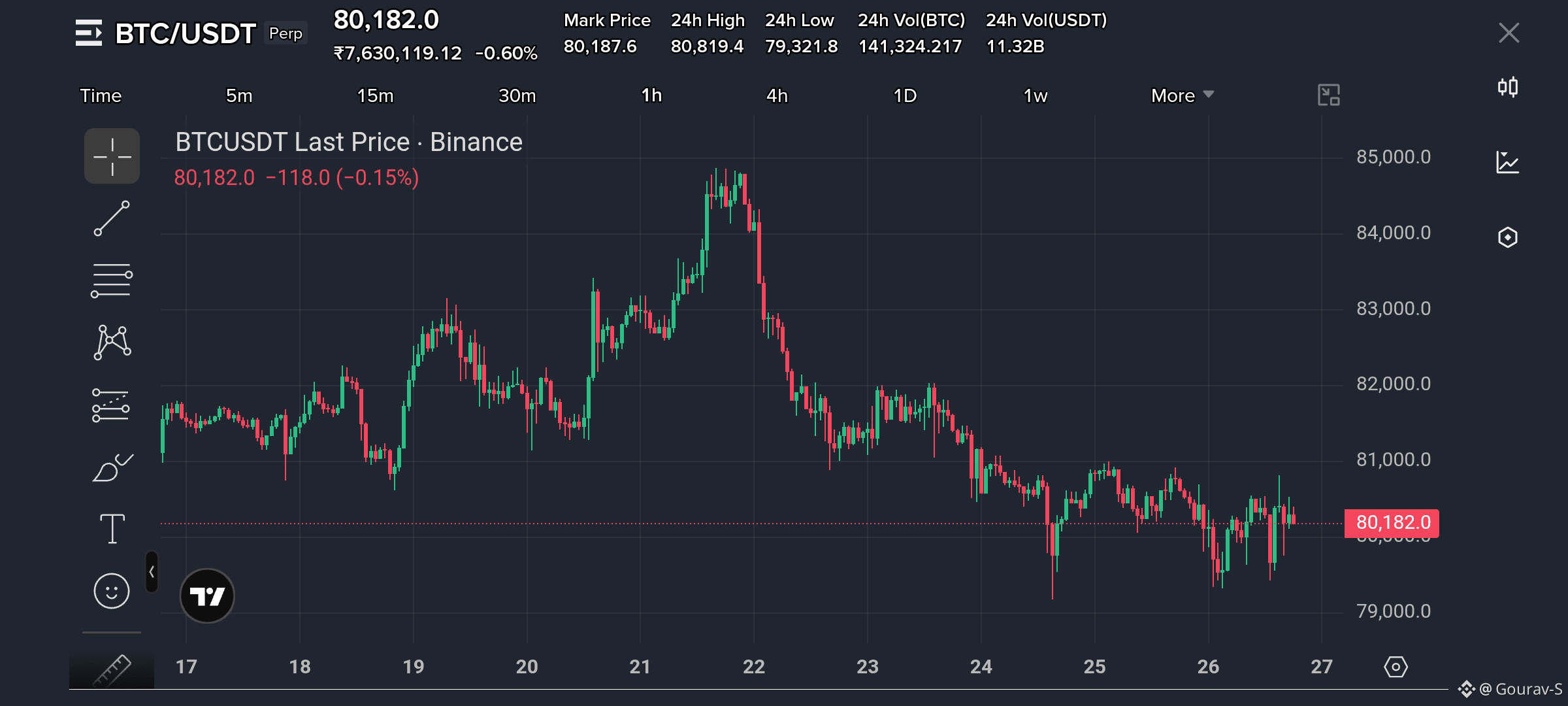
BTC is trading near 80,180, stuck in a range after the pump to 84,800 on 21-22 Oct. Lower highs are forming and price keeps bouncing off 79,300.
Support 79,200-79,300
Resistance 80,800-81,000, then 82,000
- Long: Entry 79,400-79,600 on a bullish bounce.
SL below 78,900.
Targets 80,800 / 81,500.
- Short: Only if a 1H candle closes below 79,200. Enter on retest, SL above 79,900. Target 78,000.
- No trade in the middle of the range (79,500-80,500).
Risk 1-2% per trade, low leverage, always use a stop-loss.
Educational purpose only, not financial advice. Do your own research.
#BTC #TradingSignals #TradingStrategies💼💰 #BinanceSquare #BinancePick
$BTC
{future}(BTCUSDT)
$BTC
BTC is trading near 80,180, stuck in a range after the pump to 84,800 on 21-22 Oct. Lower highs are forming and price keeps bouncing off 79,300.
Support 79,200-79,300
Resistance 80,800-81,000, then 82,000
- Long: Entry 79,400-79,600 on a bullish bounce.
SL below 78,900.
Targets 80,800 / 81,500.
- Short: Only if a 1H candle closes below 79,200. Enter on retest, SL above 79,900. Target 78,000.
- No trade in the middle of the range (79,500-80,500).
Risk 1-2% per trade, low leverage, always use a stop-loss.
Educational purpose only, not financial advice. Do your own research.
#BTC #TradingSignals #TradingStrategies💼💰 #BinanceSquare #BinancePick
$BTC
2
184
·
--
Жоғары (өспелі)
Bitcoin at $80.2K: Buyers Are Stepping In, But Is the Downtrend Really Over? 📉
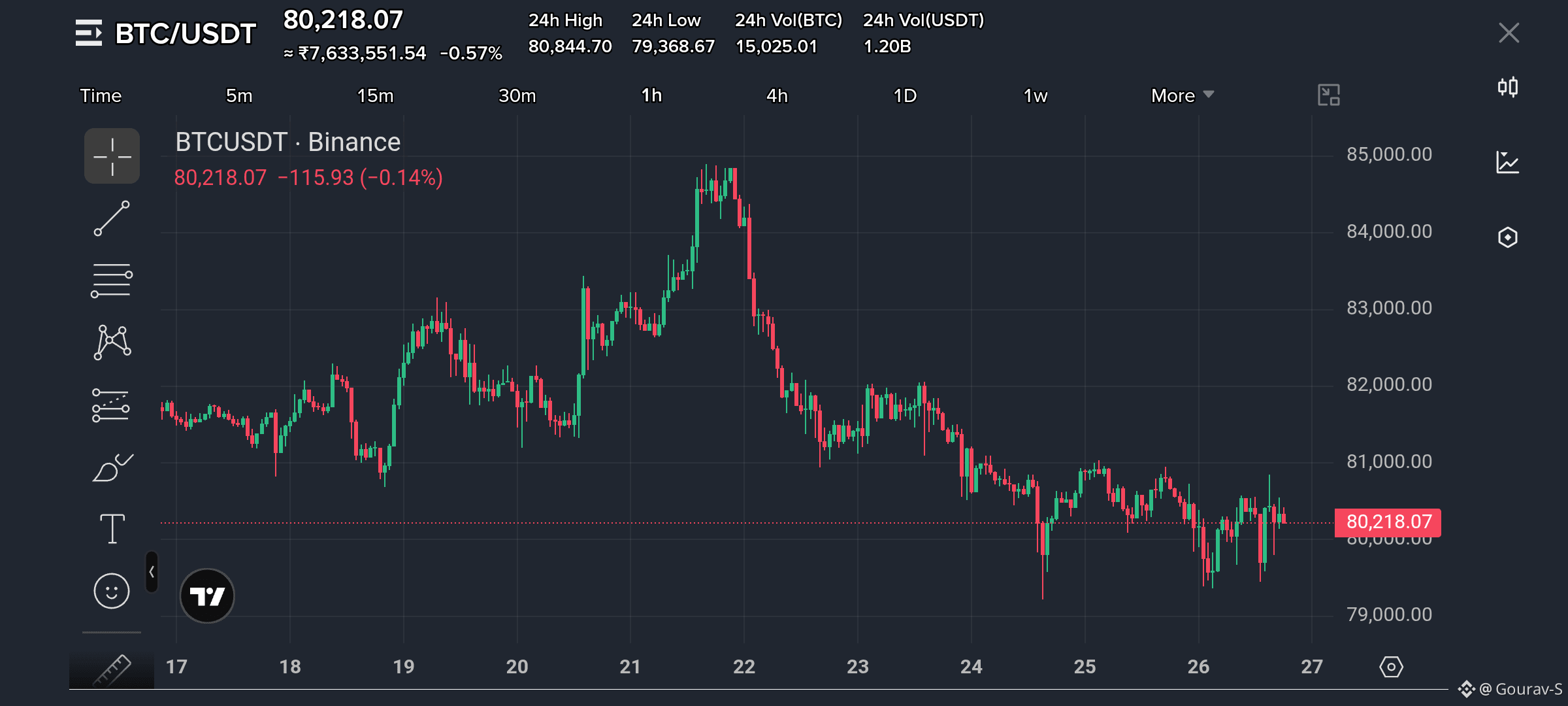
BTC is trading near $80,218, and the chart shows a clear pullback from the $84,700 area. The key question now is whether buyers can turn this bounce into a genuine recovery.
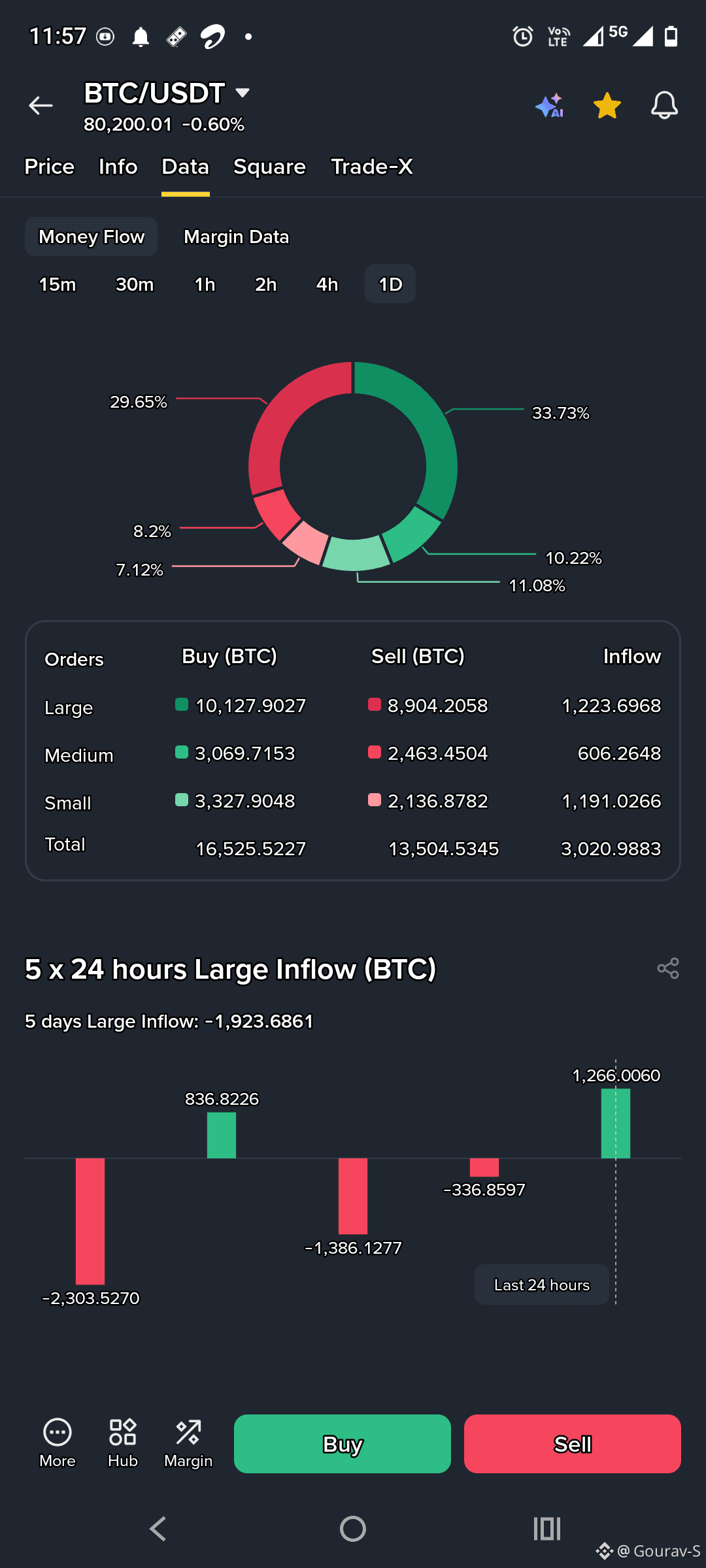
The money-flow gives a mixed signal. Total buy-side inflow is approximately 3,021 BTC in the 24-hour data, with large orders showing positive inflow. However, the five-day large-order flow remains negative at around 1,924 BTC. That means recent buying is encouraging, but it doesn’t yet confirm a sustained reversal.
Here’s what I’m watching:
- Resistance: $80,800–$81,000. A strong reclaim could improve short-term momentum.
- Support: Around $79,400, near the 24-hour low. A breakdown could invite another round of selling.
- Confirmation: Higher highs, stronger follow-through and sustained buying pressure.
My view: BTC remains under short-term pressure until price action confirms a recovery. Positive money flow alone isn’t enough to call a bottom.
What do you think comes next: a recovery above $81K or another test below $79.4K? Share your reasoning.
#bitcoin #BTC #CryptoMarket #BinanceSquare
$BTC
{spot}(BTCUSDT)
Bitcoin at $80.2K: Buyers Are Stepping In, But Is the Downtrend Really Over? 📉
BTC is trading near $80,218, and the chart shows a clear pullback from the $84,700 area. The key question now is whether buyers can turn this bounce into a genuine recovery.
The money-flow gives a mixed signal. Total buy-side inflow is approximately 3,021 BTC in the 24-hour data, with large orders showing positive inflow. However, the five-day large-order flow remains negative at around 1,924 BTC. That means recent buying is encouraging, but it doesn’t yet confirm a sustained reversal.
Here’s what I’m watching:
- Resistance: $80,800–$81,000. A strong reclaim could improve short-term momentum.
- Support: Around $79,400, near the 24-hour low. A breakdown could invite another round of selling.
- Confirmation: Higher highs, stronger follow-through and sustained buying pressure.
My view: BTC remains under short-term pressure until price action confirms a recovery. Positive money flow alone isn’t enough to call a bottom.
What do you think comes next: a recovery above $81K or another test below $79.4K? Share your reasoning.
#bitcoin #BTC #CryptoMarket #BinanceSquare
$BTC
1
152
·
--
#AnthropicTTMRevenueGrewAbout1200%
Anthropic’s TTM Revenue Explodes by Around 1,200% : AI Growth Is Accelerating! 🚀
Anthropic’s IPO filing reveals just how quickly the company behind Claude is scaling its business.
According to its S-1 filing, trailing-twelve-month revenue per employee increased from approximately $1.4 million in September 2025 to more than $6.6 million in September 2026. Combined with roughly 170% workforce growth, this points to estimated overall TTM revenue growth of around 1,200%.
The momentum is also visible in reported financials: Anthropic generated $16.3 billion in revenue during the first half of 2026, up from $1.16 billion in the same period last year.
My take: Enterprise adoption and demand for AI coding tools are becoming major growth drivers. But rapid revenue growth doesn’t automatically mean sustainable profitability. Anthropic reported a $693 million operating loss for the first half, while its $80.7 billion net loss was largely driven by accounting changes in the value of convertible notes and related instruments.
The big question: Can Anthropic turn extraordinary AI demand into sustainable profits?
#Anthropic #AI #IPO #TechStocks
1
117
·
--
#AnthropicS1ExpectedToday
Anthropic Files Its S-1: The AI IPO Race Just Entered a New Phase 🚀
The maker of Claude is taking a major step toward becoming a publicly traded company.
Anthropic publicly filed its S-1 registration statement with the SEC on October 26, 2026, and plans to list on Nasdaq under the ticker $ANT. Its share price and the number of shares to be offered have not yet been announced.
The numbers tell an interesting story: first-half 2026 revenue reached $16.3 billion, up from $1.2 billion a year earlier. However, the company also reported a $693 million operating loss and an $80.7 billion net loss, largely driven by non-cash accounting adjustments tied to convertible debt.
My take: Anthropic’s revenue growth shows strong commercial demand for AI, but investors will need to examine profitability, infrastructure costs and valuation before judging the opportunity.
Would you invest in Anthropic at IPO, or wait for its first public earnings report?
#Anthropic #AI #IPO #TechStocks
1
88
·
--
#FranklinTempletonFilesForTwoDividendToBitcoinETFs
Franklin Templeton’s New ETF Strategy: Stock Dividends Flow Into Bitcoin! ₿
What if your stock portfolio could build Bitcoin exposure automatically through its dividend income?
Franklin Templeton has registered two proposed ETFs for Nasdaq: FBEQ (US Equity Bitcoin DRIP) and FIBT (US Innovation Bitcoin DRIP).
Their strategy combines US stocks with Bitcoin exposure funded by reinvesting dividends from the underlying equities. The innovation-focused fund tracks a technology-heavy index, while the other follows a broad US large-cap index. Annual operating expenses are listed at 0.09% for FBEQ and 0.19% for FIBT.
My take: this creates an interesting bridge between traditional equities and crypto. But dividend-funded Bitcoin exposure still carries BTC volatility, while stock prices and investment costs can affect returns.
The prospectuses are scheduled to become effective on October 27; that does not automatically mean trading has begun.
Would you prefer receiving cash dividends or using them to build Bitcoin exposure?
#bitcoin #BTC #ETFs #CryptoNews
1
113
Көбірек контент көру үшін кіріңіз
Binance Square платформасында әлемдік криптоқоғамдастыққа қосылыңыз
⚡️ Криптовалюта туралы ең соңғы және пайдалы ақпаратты алыңыз.
💬 Әлемдегі ең ірі криптобиржаның сеніміне ие.
👍 Расталған авторлардың нақты пікірлерін табыңыз.
Электрондық пошта/телефон нөмірі
Трендтегі тақырыптар
CanMicrosoftDeliverOnAI
330,698 рет көрілді
2,608 адам талқылап жатыр
Earnings Season Session 3: Will Google & Microsoft Beat Earnings Expectations?
Binance Square Official
·135 лайк
·63.6k рет көрілді
CanGoogleDefindItsCore
193,822 рет көрілді
1,840 адам талқылап жатыр
EarningsSeason
5.9M рет көрілді
28,663 адам талқылап жатыр