

#tokenomics
tokenomics
2.1M рет көрілді
4,323 адам талқылап жатыр
Қызу саудада
Ең соңғы

Today is one of the biggest unlock days of the month. Let me explain how to read it without overreacting.
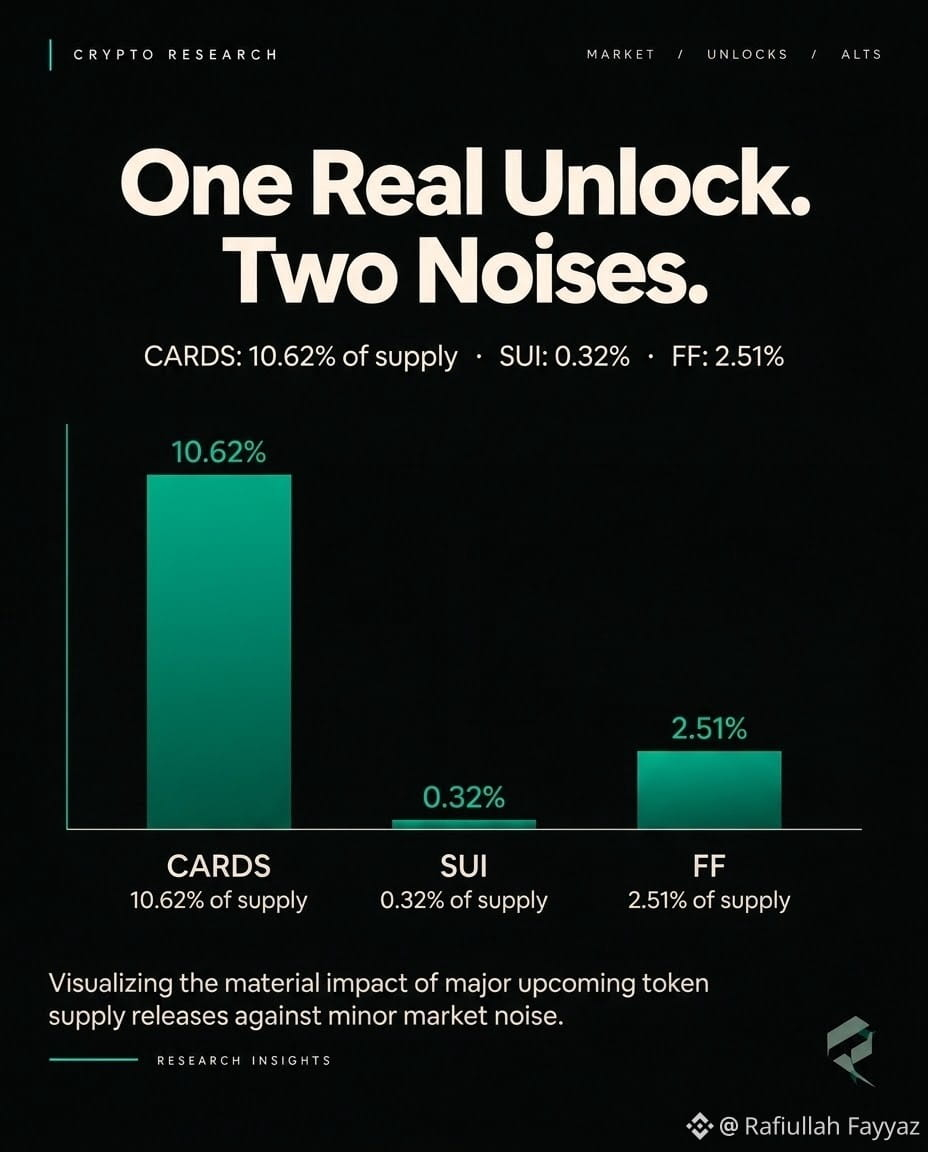
$CARDS unlocks today. 59.26 million tokens. About $11.66 million. But here's the number that matters: 10.62% of circulating supply.
$SUI also unlocks today. 13.26 million tokens. About $16.71 million. Only 0.32% of circulating supply.
$FF unlocks today. $10.09 million. 2.51% of supply.
Three unlocks. One is a real supply event (CARDS at 10.62%). Two are noise (SUI at 0.32%, FF at 2.51%).
That's the pattern I keep coming back to: dollar value tells you the headline. Percentage tells you the impact.
But there's another layer — the recipient. CARDS' unlock could be ecosystem or team. SUI's unlock is likely foundation or ecosystem. The recipient matters as much as the percentage.
The unlock calendar doesn't tell you what to think. It tells you what to check.
#CryptoEducation #TokenUnlocks #Tokenomics
{spot}(SUIUSDT)
{spot}(FFUSDT)
Today is one of the biggest unlock days of the month. Let me explain how to read it without overreacting.
$CARDS unlocks today. 59.26 million tokens. About $11.66 million. But here's the number that matters: 10.62% of circulating supply.
$SUI also unlocks today. 13.26 million tokens. About $16.71 million. Only 0.32% of circulating supply.
$FF unlocks today. $10.09 million. 2.51% of supply.
Three unlocks. One is a real supply event (CARDS at 10.62%). Two are noise (SUI at 0.32%, FF at 2.51%).
That's the pattern I keep coming back to: dollar value tells you the headline. Percentage tells you the impact.
But there's another layer — the recipient. CARDS' unlock could be ecosystem or team. SUI's unlock is likely foundation or ecosystem. The recipient matters as much as the percentage.
The unlock calendar doesn't tell you what to think. It tells you what to check.
#CryptoEducation #TokenUnlocks #Tokenomics
$CARDS unlocks today. 59.26 million tokens. About $11.66 million. But here's the number that matters: 10.62% of circulating supply.
$SUI also unlocks today. 13.26 million tokens. About $16.71 million. Only 0.32% of circulating supply.
$FF unlocks today. $10.09 million. 2.51% of supply.
Three unlocks. One is a real supply event (CARDS at 10.62%). Two are noise (SUI at 0.32%, FF at 2.51%).
That's the pattern I keep coming back to: dollar value tells you the headline. Percentage tells you the impact.
But there's another layer — the recipient. CARDS' unlock could be ecosystem or team. SUI's unlock is likely foundation or ecosystem. The recipient matters as much as the percentage.
The unlock calendar doesn't tell you what to think. It tells you what to check.
#CryptoEducation #TokenUnlocks #Tokenomics
209

·
--
"O Mercador de Veneza" e a Nova Regra de Ouro da SEC ⚖️💼
No clássico "O Mercador de Veneza", Shakespeare nos mostra como um contrato rígido e a cobrança de uma dívida podem mudar o destino de todos os envolvidos. No mercado de criptomoedas, os contratos (tokenomics) acabam de sofrer a mudança mais otimista dos últimos anos.
A SEC americana (CVM dos EUA) acabou de emitir um guia abrindo caminho para que os projetos de cripto façam recompra de seus próprios tokens sem que isso os classifique automaticamente como valores mobiliários. Isso é um alívio colossal para os desenvolvedores e muda o jogo para quem gera receita real. O setor de DeFi lidera essa recuperação com força bruta: a $AAVE puxa a fila das finanças descentralizadas, enquanto protocolos que dependem de mecânicas de recompra e queima, como a $MKR e a gigante $UNI , voltam ao radar principal dos fundos de investimento.
O valor gerado na blockchain agora pode voltar diretamente para o token, e o mercado já está precificando isso.
🎯 Quais protocolos do seu portfólio geram receita real para recompra? Clique em AAVE, MKR ou UNI para conferir o impacto dessa notícia nos gráficos e faça suas conversões!
#DeFi #SEC #Shakespeare #Tokenomics #Write2Earn
"O Mercador de Veneza" e a Nova Regra de Ouro da SEC ⚖️💼
No clássico "O Mercador de Veneza", Shakespeare nos mostra como um contrato rígido e a cobrança de uma dívida podem mudar o destino de todos os envolvidos. No mercado de criptomoedas, os contratos (tokenomics) acabam de sofrer a mudança mais otimista dos últimos anos.
A SEC americana (CVM dos EUA) acabou de emitir um guia abrindo caminho para que os projetos de cripto façam recompra de seus próprios tokens sem que isso os classifique automaticamente como valores mobiliários. Isso é um alívio colossal para os desenvolvedores e muda o jogo para quem gera receita real. O setor de DeFi lidera essa recuperação com força bruta: a $AAVE puxa a fila das finanças descentralizadas, enquanto protocolos que dependem de mecânicas de recompra e queima, como a $MKR e a gigante $UNI , voltam ao radar principal dos fundos de investimento.
O valor gerado na blockchain agora pode voltar diretamente para o token, e o mercado já está precificando isso.
🎯 Quais protocolos do seu portfólio geram receita real para recompra? Clique em AAVE, MKR ou UNI para conferir o impacto dessa notícia nos gráficos e faça suas conversões!
#DeFi #SEC #Shakespeare #Tokenomics #Write2Earn
No clássico "O Mercador de Veneza", Shakespeare nos mostra como um contrato rígido e a cobrança de uma dívida podem mudar o destino de todos os envolvidos. No mercado de criptomoedas, os contratos (tokenomics) acabam de sofrer a mudança mais otimista dos últimos anos.
A SEC americana (CVM dos EUA) acabou de emitir um guia abrindo caminho para que os projetos de cripto façam recompra de seus próprios tokens sem que isso os classifique automaticamente como valores mobiliários. Isso é um alívio colossal para os desenvolvedores e muda o jogo para quem gera receita real. O setor de DeFi lidera essa recuperação com força bruta: a $AAVE puxa a fila das finanças descentralizadas, enquanto protocolos que dependem de mecânicas de recompra e queima, como a $MKR e a gigante $UNI , voltam ao radar principal dos fundos de investimento.
O valor gerado na blockchain agora pode voltar diretamente para o token, e o mercado já está precificando isso.
🎯 Quais protocolos do seu portfólio geram receita real para recompra? Clique em AAVE, MKR ou UNI para conferir o impacto dessa notícia nos gráficos e faça suas conversões!
#DeFi #SEC #Shakespeare #Tokenomics #Write2Earn
160

·
--
🚨 $PAID RESTRUCTURES TOKENOMICS TO BOOST BUYBACKS AND PROTOCOL TREASURY EFFICIENCY! 🦈
Solana ecosystem protocol $PAID has officially launched its updated claim architecture, shifting tokenomic mechanics toward aggressive buyback support. 📊 Under the new framework, fee distribution pivots to 25% dedicated buybacks and 10% protocol treasury retention, optimizing structural value accrual.
This shift actively reduces recipient dilution while establishing a recurring liquidity bid directly within the order flow. 🧠 Smart money typically views enhanced buyback allocations as a long-term supply contraction catalyst. 💡 Does this tokenomics pivot give $PAID the structural backing needed to sustain its momentum? 👇
⚠️ Not financial advice. Always manage your risk. 🛡️
🏷️ #PAID #Solana #Tokenomics #Crypto
🎯 🦈
🚨 $PAID RESTRUCTURES TOKENOMICS TO BOOST BUYBACKS AND PROTOCOL TREASURY EFFICIENCY! 🦈
Solana ecosystem protocol $PAID has officially launched its updated claim architecture, shifting tokenomic mechanics toward aggressive buyback support. 📊 Under the new framework, fee distribution pivots to 25% dedicated buybacks and 10% protocol treasury retention, optimizing structural value accrual.
This shift actively reduces recipient dilution while establishing a recurring liquidity bid directly within the order flow. 🧠 Smart money typically views enhanced buyback allocations as a long-term supply contraction catalyst. 💡 Does this tokenomics pivot give $PAID the structural backing needed to sustain its momentum? 👇
⚠️ Not financial advice. Always manage your risk. 🛡️
🏷️ #PAID #Solana #Tokenomics #Crypto
🎯 🦈
Solana ecosystem protocol $PAID has officially launched its updated claim architecture, shifting tokenomic mechanics toward aggressive buyback support. 📊 Under the new framework, fee distribution pivots to 25% dedicated buybacks and 10% protocol treasury retention, optimizing structural value accrual.
This shift actively reduces recipient dilution while establishing a recurring liquidity bid directly within the order flow. 🧠 Smart money typically views enhanced buyback allocations as a long-term supply contraction catalyst. 💡 Does this tokenomics pivot give $PAID the structural backing needed to sustain its momentum? 👇
⚠️ Not financial advice. Always manage your risk. 🛡️
🏷️ #PAID #Solana #Tokenomics #Crypto
🎯 🦈
1

🚨 WHILE NEW TOKENS BLEED FROM UNLOCKS $QNT RIDES A ZERO-DILUTION STRUCTURE! 💎
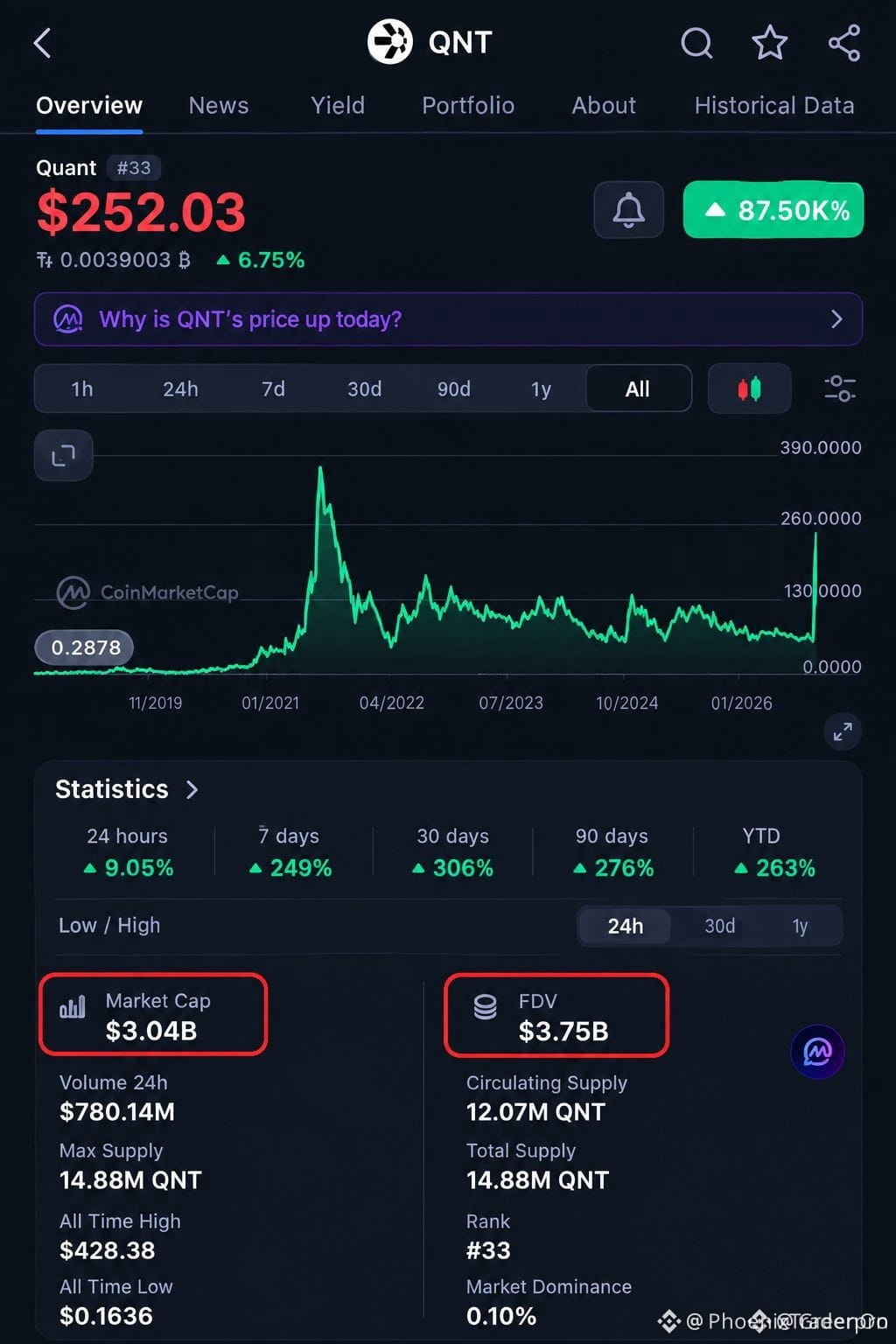
Most modern altcoins are ticking time bombs, heavily burdened by 90% insider allocations waiting to flood the order books on every unlock schedule. 📉 $QNT plays by a completely different playbook, offering a clean structure with zero supply overhang. 🔒
When structural selling pressure is eliminated, price action responds purely to real market demand and organic buyer absorption. 📊 Smart money appreciates tokens where early investor dumps will not ruin a textbook breakout setup. ⚡
💬 Are you still holding tokens with heavy cliff unlocks, or are you prioritizing clean supply dynamics for this next cycle? 👇
⚠️ Not financial advice. Always manage your risk. 🛡️
🏷️ #QNT #Tokenomics #Crypto #Altcoins
💎 🎯
🚨 WHILE NEW TOKENS BLEED FROM UNLOCKS $QNT RIDES A ZERO-DILUTION STRUCTURE! 💎
Most modern altcoins are ticking time bombs, heavily burdened by 90% insider allocations waiting to flood the order books on every unlock schedule. 📉 $QNT plays by a completely different playbook, offering a clean structure with zero supply overhang. 🔒
When structural selling pressure is eliminated, price action responds purely to real market demand and organic buyer absorption. 📊 Smart money appreciates tokens where early investor dumps will not ruin a textbook breakout setup. ⚡
💬 Are you still holding tokens with heavy cliff unlocks, or are you prioritizing clean supply dynamics for this next cycle? 👇
⚠️ Not financial advice. Always manage your risk. 🛡️
🏷️ #QNT #Tokenomics #Crypto #Altcoins
💎 🎯
Most modern altcoins are ticking time bombs, heavily burdened by 90% insider allocations waiting to flood the order books on every unlock schedule. 📉 $QNT plays by a completely different playbook, offering a clean structure with zero supply overhang. 🔒
When structural selling pressure is eliminated, price action responds purely to real market demand and organic buyer absorption. 📊 Smart money appreciates tokens where early investor dumps will not ruin a textbook breakout setup. ⚡
💬 Are you still holding tokens with heavy cliff unlocks, or are you prioritizing clean supply dynamics for this next cycle? 👇
⚠️ Not financial advice. Always manage your risk. 🛡️
🏷️ #QNT #Tokenomics #Crypto #Altcoins
💎 🎯
84

·
--
Every token ships with a sell order written years before the first trade.
When a new token launches, most of its supply is usually not circulating yet. It's allocated to investors, teams, and treasuries — with vesting dates attached. Those vesting dates are sell orders with a calendar: pre-programmed, publicly visible, mechanical. No sentiment required.
This is why the gap between market cap and fully diluted valuation matters more than price. A token trading with a 15% float and a $10B FDV has $8.5B of potential sell pressure queued on a schedule its buyers don't control. Low float plus high FDV isn't a valuation opinion — it's a countdown.
Markets partially pre-price unlocks, which is why price rarely crashes on the exact day. But pre-pricing assumes insiders behave rationally and evenly. In practice, vesting cliffs cluster behavior: treasuries fund operations, early investors hit return targets, and supply leans on the bid in the same weeks.
What to watch instead of price:
– FDV-to-circulating ratio (the hidden float)
– Unlock calendar density (cliffs matter more than dribbles)
– Where unlocked coins actually go: operational wallets vs exchange deposits
$BTC avoided this model entirely — miners earn supply into existence and demand absorbs it. $ETH's staking emissions are subscribed, not vested. $BNB burns instead of mints. Most newer tokens still carry the vesting invoice.
Unlocks don't predict direction. They predict where supply shows up.
#Tokenomics #CryptoMarkets #MarketStructure #Altcoins
Every token ships with a sell order written years before the first trade.
When a new token launches, most of its supply is usually not circulating yet. It's allocated to investors, teams, and treasuries — with vesting dates attached. Those vesting dates are sell orders with a calendar: pre-programmed, publicly visible, mechanical. No sentiment required.
This is why the gap between market cap and fully diluted valuation matters more than price. A token trading with a 15% float and a $10B FDV has $8.5B of potential sell pressure queued on a schedule its buyers don't control. Low float plus high FDV isn't a valuation opinion — it's a countdown.
Markets partially pre-price unlocks, which is why price rarely crashes on the exact day. But pre-pricing assumes insiders behave rationally and evenly. In practice, vesting cliffs cluster behavior: treasuries fund operations, early investors hit return targets, and supply leans on the bid in the same weeks.
What to watch instead of price:
– FDV-to-circulating ratio (the hidden float)
– Unlock calendar density (cliffs matter more than dribbles)
– Where unlocked coins actually go: operational wallets vs exchange deposits
$BTC avoided this model entirely — miners earn supply into existence and demand absorbs it. $ETH 's staking emissions are subscribed, not vested. $BNB burns instead of mints. Most newer tokens still carry the vesting invoice.
Unlocks don't predict direction. They predict where supply shows up.
#Tokenomics #CryptoMarkets #MarketStructure #Altcoins
When a new token launches, most of its supply is usually not circulating yet. It's allocated to investors, teams, and treasuries — with vesting dates attached. Those vesting dates are sell orders with a calendar: pre-programmed, publicly visible, mechanical. No sentiment required.
This is why the gap between market cap and fully diluted valuation matters more than price. A token trading with a 15% float and a $10B FDV has $8.5B of potential sell pressure queued on a schedule its buyers don't control. Low float plus high FDV isn't a valuation opinion — it's a countdown.
Markets partially pre-price unlocks, which is why price rarely crashes on the exact day. But pre-pricing assumes insiders behave rationally and evenly. In practice, vesting cliffs cluster behavior: treasuries fund operations, early investors hit return targets, and supply leans on the bid in the same weeks.
What to watch instead of price:
– FDV-to-circulating ratio (the hidden float)
– Unlock calendar density (cliffs matter more than dribbles)
– Where unlocked coins actually go: operational wallets vs exchange deposits
$BTC avoided this model entirely — miners earn supply into existence and demand absorbs it. $ETH 's staking emissions are subscribed, not vested. $BNB burns instead of mints. Most newer tokens still carry the vesting invoice.
Unlocks don't predict direction. They predict where supply shows up.
#Tokenomics #CryptoMarkets #MarketStructure #Altcoins
79

Have you noticed how most traders chase random meme pumps while ignoring actual protocol revenue engines?
Most retail investors end up holding worthless bags because they buy purely on hype without looking at underlying tokenomics. When the volume dries up, the price collapses, leaving late buyers deep in the red.
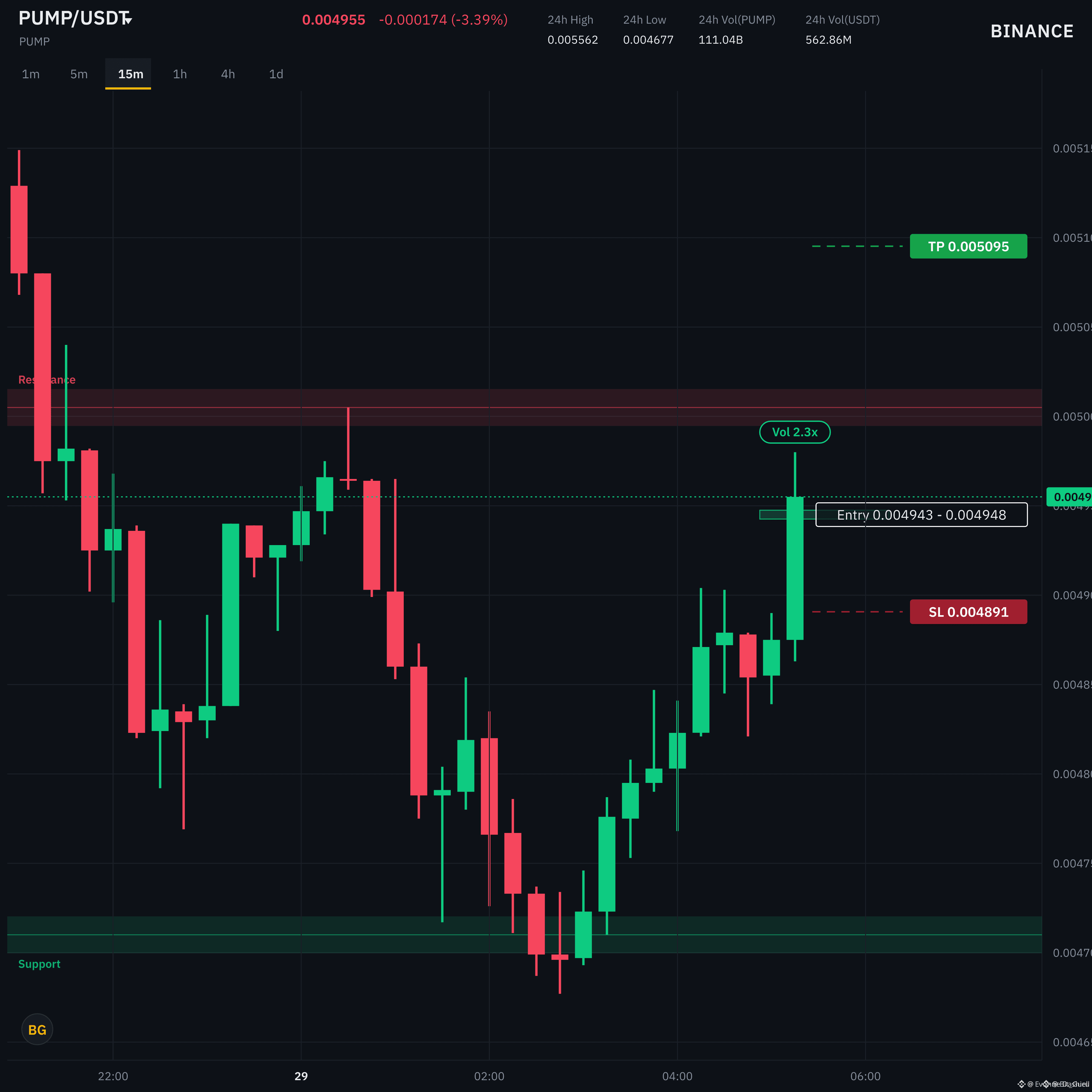
The real sustainability play right now is looking at models where protocol fee income directly powers deflation. Take $PUMP as a case study: instead of relying on pure speculative momentum, its destruction mechanism ties straight into active fee generation. As long as launchpad activity stays elevated, the supply burn does the heavy lifting quietly in the background.
A holding position yielding +1,496.48 $USDT with a steady +10.00% gain shows how structural mechanics can outperform frantic scalping. When actual platform revenue constantly retires supply, steady value accrual naturally follows the volume.
Where do you think this deflationary model goes from here once sector volume peaks?
#CryptoTrading #Tokenomics #Altcoins
Have you noticed how most traders chase random meme pumps while ignoring actual protocol revenue engines?
Most retail investors end up holding worthless bags because they buy purely on hype without looking at underlying tokenomics. When the volume dries up, the price collapses, leaving late buyers deep in the red.
The real sustainability play right now is looking at models where protocol fee income directly powers deflation. Take $PUMP as a case study: instead of relying on pure speculative momentum, its destruction mechanism ties straight into active fee generation. As long as launchpad activity stays elevated, the supply burn does the heavy lifting quietly in the background.
A holding position yielding +1,496.48 $USDT with a steady +10.00% gain shows how structural mechanics can outperform frantic scalping. When actual platform revenue constantly retires supply, steady value accrual naturally follows the volume.
Where do you think this deflationary model goes from here once sector volume peaks?
#CryptoTrading #Tokenomics #Altcoins
Most retail investors end up holding worthless bags because they buy purely on hype without looking at underlying tokenomics. When the volume dries up, the price collapses, leaving late buyers deep in the red.
The real sustainability play right now is looking at models where protocol fee income directly powers deflation. Take $PUMP as a case study: instead of relying on pure speculative momentum, its destruction mechanism ties straight into active fee generation. As long as launchpad activity stays elevated, the supply burn does the heavy lifting quietly in the background.
A holding position yielding +1,496.48 $USDT with a steady +10.00% gain shows how structural mechanics can outperform frantic scalping. When actual platform revenue constantly retires supply, steady value accrual naturally follows the volume.
Where do you think this deflationary model goes from here once sector volume peaks?
#CryptoTrading #Tokenomics #Altcoins
44
Yesterday I wrote about unlock percentages. Today I want to talk about a related but separate idea: vesting cliffs vs. continuous emissions.
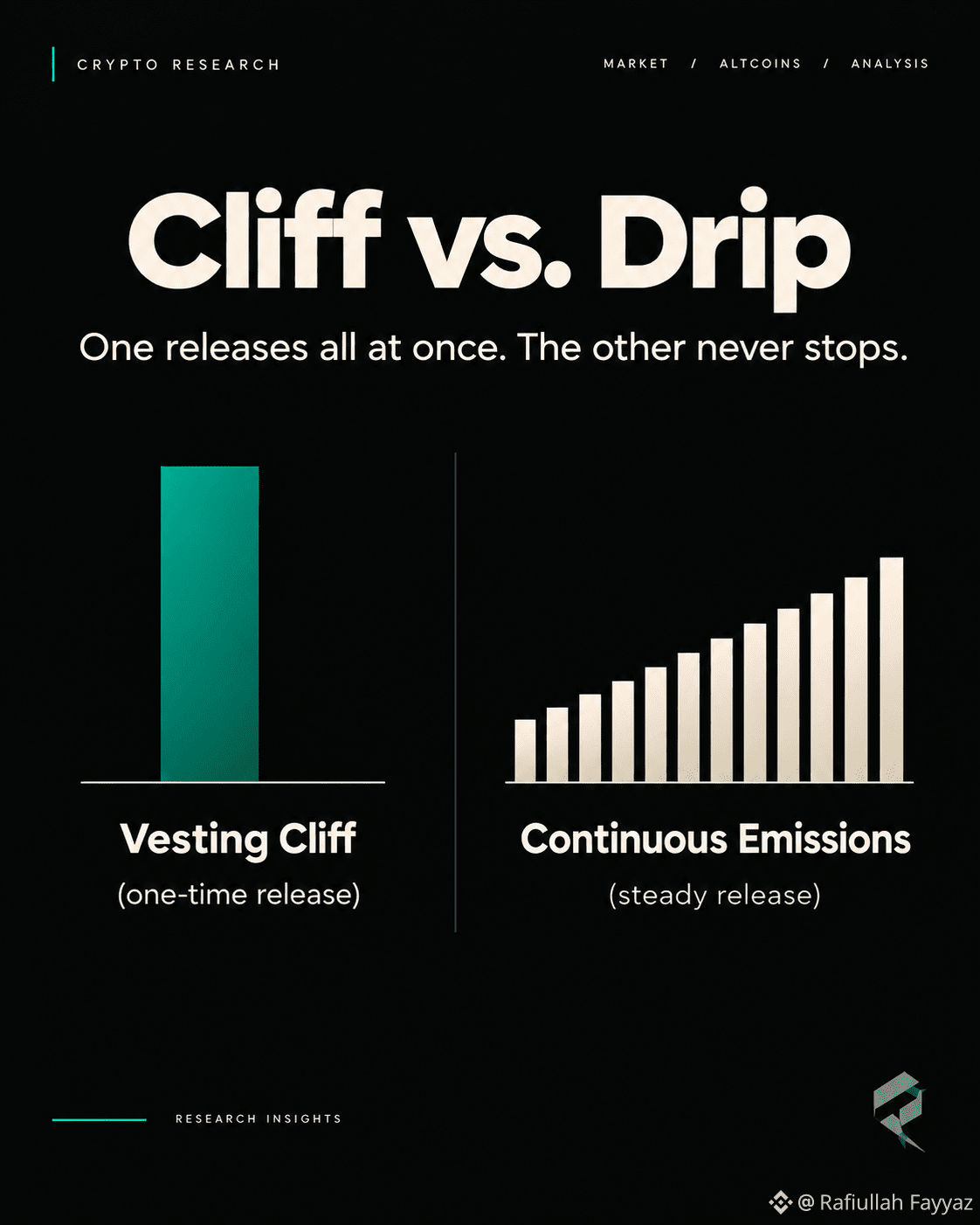
A vesting cliff is a specific date when a large batch of tokens unlocks. It's binary — before the date, nothing releases. On the date, everything does. Falcon Finance (FF) has one today: 203 million tokens, about 6.47% of circulating supply.
Continuous emissions are different. Instead of one big release, tokens drip into circulation steadily. Staking rewards, liquidity mining incentives, and ecosystem grants often work this way. There's no single "unlock day" — just constant, predictable supply growth.
Why this matters: cliff unlocks are easier to trade around because the date and size are known. Continuous emissions are harder to react to because they're always happening. They're baked into the price over time.
Today has both types. FF has a cliff unlock. HYPE also has an unlock today — roughly 14 million tokens, worth about $1.2 billion, representing about 2.7% of market cap. But HYPE's unlock is part of a monthly schedule that continues through 2029. It's not a one-time event.
The question with any supply event: is this a cliff or a drip? And is the market already expecting it?
$FF $HYPE
#CryptoEducation #TokenUnlocks #Tokenomics
{spot}(FFUSDT)
{spot}(HYPEUSDT)
Yesterday I wrote about unlock percentages. Today I want to talk about a related but separate idea: vesting cliffs vs. continuous emissions.
A vesting cliff is a specific date when a large batch of tokens unlocks. It's binary — before the date, nothing releases. On the date, everything does. Falcon Finance (FF) has one today: 203 million tokens, about 6.47% of circulating supply.
Continuous emissions are different. Instead of one big release, tokens drip into circulation steadily. Staking rewards, liquidity mining incentives, and ecosystem grants often work this way. There's no single "unlock day" — just constant, predictable supply growth.
Why this matters: cliff unlocks are easier to trade around because the date and size are known. Continuous emissions are harder to react to because they're always happening. They're baked into the price over time.
Today has both types. FF has a cliff unlock. HYPE also has an unlock today — roughly 14 million tokens, worth about $1.2 billion, representing about 2.7% of market cap. But HYPE's unlock is part of a monthly schedule that continues through 2029. It's not a one-time event.
The question with any supply event: is this a cliff or a drip? And is the market already expecting it?
$FF $HYPE
#CryptoEducation #TokenUnlocks #Tokenomics
A vesting cliff is a specific date when a large batch of tokens unlocks. It's binary — before the date, nothing releases. On the date, everything does. Falcon Finance (FF) has one today: 203 million tokens, about 6.47% of circulating supply.
Continuous emissions are different. Instead of one big release, tokens drip into circulation steadily. Staking rewards, liquidity mining incentives, and ecosystem grants often work this way. There's no single "unlock day" — just constant, predictable supply growth.
Why this matters: cliff unlocks are easier to trade around because the date and size are known. Continuous emissions are harder to react to because they're always happening. They're baked into the price over time.
Today has both types. FF has a cliff unlock. HYPE also has an unlock today — roughly 14 million tokens, worth about $1.2 billion, representing about 2.7% of market cap. But HYPE's unlock is part of a monthly schedule that continues through 2029. It's not a one-time event.
The question with any supply event: is this a cliff or a drip? And is the market already expecting it?
$FF $HYPE
#CryptoEducation #TokenUnlocks #Tokenomics
249

·
--
everyone thinks token burns automatically make a coin pump forever, but actually relying blindly on fee destruction without checking real volume trends will get you rekt.
most traders fomo into $PUMP the second they hear about burn mechanics, only to sit on underwater bags when activity cools down. getting trapped at local tops because you assumed token burns create an unbreakable floor is a painful mistake.
ngl looking at live data shows how easily people get complacent ser. seeing accounts sitting on +1,496.48 $USDT in cumulative pnl with a clean +10.00% return makes it look like smooth sailing. as long as the hype track stays active and platform fees keep rolling in, the supply destruction keeps holders happy.
the catch is that fee-driven burns only work when trading volume stays high. the moment market attention rotates elsewhere, that fee revenue shrinks instantly and the burn engine stalls out, leaving late buyers exposed.
where do you think this goes from here?
#CryptoTrading #Tokenomics #Altcoins
everyone thinks token burns automatically make a coin pump forever, but actually relying blindly on fee destruction without checking real volume trends will get you rekt.
most traders fomo into $PUMP the second they hear about burn mechanics, only to sit on underwater bags when activity cools down. getting trapped at local tops because you assumed token burns create an unbreakable floor is a painful mistake.
ngl looking at live data shows how easily people get complacent ser. seeing accounts sitting on +1,496.48 $USDT in cumulative pnl with a clean +10.00% return makes it look like smooth sailing. as long as the hype track stays active and platform fees keep rolling in, the supply destruction keeps holders happy.
the catch is that fee-driven burns only work when trading volume stays high. the moment market attention rotates elsewhere, that fee revenue shrinks instantly and the burn engine stalls out, leaving late buyers exposed.
where do you think this goes from here?
#CryptoTrading #Tokenomics #Altcoins
most traders fomo into $PUMP the second they hear about burn mechanics, only to sit on underwater bags when activity cools down. getting trapped at local tops because you assumed token burns create an unbreakable floor is a painful mistake.
ngl looking at live data shows how easily people get complacent ser. seeing accounts sitting on +1,496.48 $USDT in cumulative pnl with a clean +10.00% return makes it look like smooth sailing. as long as the hype track stays active and platform fees keep rolling in, the supply destruction keeps holders happy.
the catch is that fee-driven burns only work when trading volume stays high. the moment market attention rotates elsewhere, that fee revenue shrinks instantly and the burn engine stalls out, leaving late buyers exposed.
where do you think this goes from here?
#CryptoTrading #Tokenomics #Altcoins

142

·
--
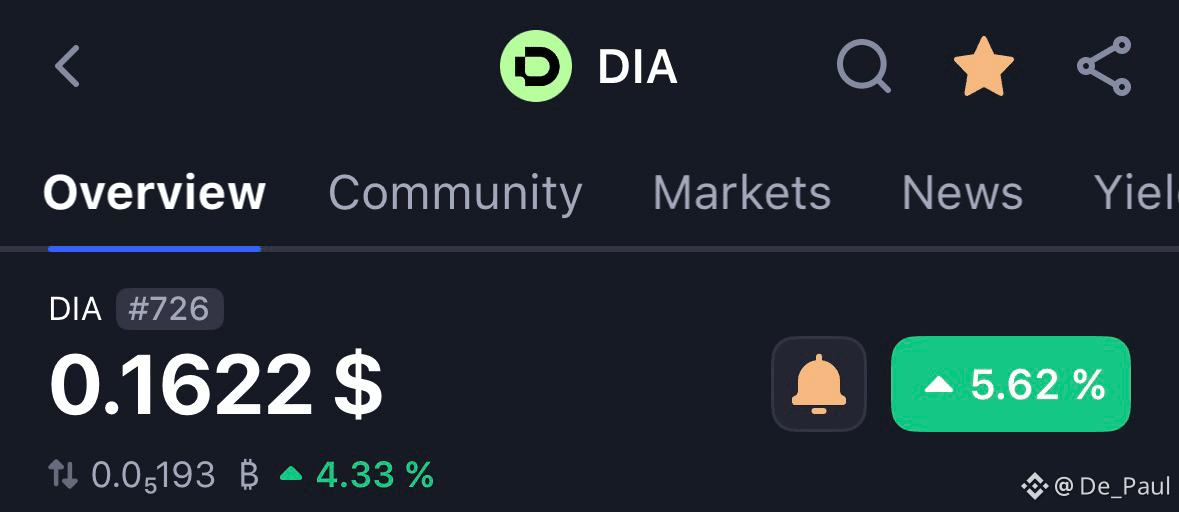
I think the question around $DIA right now is fair:
DIA is shipping infrastructure, integrations are growing, and the network is expanding.
But how much of that activity actually flows back to the token?
$DIA has utility through Lasernet gas, staking and governance. The longer-term staking model also points toward delegation and stronger economic incentives around oracle operators.
That’s the part I’m watching.
The tech can be solid. The real question is whether network usage eventually creates meaningful demand for the token.
What do you think $DIA needs to make that connection clearer?
#DIAUSDT #crypto #defi #oracles #Tokenomics
I think the question around $DIA right now is fair:
DIA is shipping infrastructure, integrations are growing, and the network is expanding.
But how much of that activity actually flows back to the token?
$DIA has utility through Lasernet gas, staking and governance. The longer-term staking model also points toward delegation and stronger economic incentives around oracle operators.
That’s the part I’m watching.
The tech can be solid. The real question is whether network usage eventually creates meaningful demand for the token.
What do you think $DIA needs to make that connection clearer?
#DIAUSDT #crypto #defi #oracles #Tokenomics
DIA is shipping infrastructure, integrations are growing, and the network is expanding.
But how much of that activity actually flows back to the token?
$DIA has utility through Lasernet gas, staking and governance. The longer-term staking model also points toward delegation and stronger economic incentives around oracle operators.
That’s the part I’m watching.
The tech can be solid. The real question is whether network usage eventually creates meaningful demand for the token.
What do you think $DIA needs to make that connection clearer?
#DIAUSDT #crypto #defi #oracles #Tokenomics
167

·
--
Мақала
📉
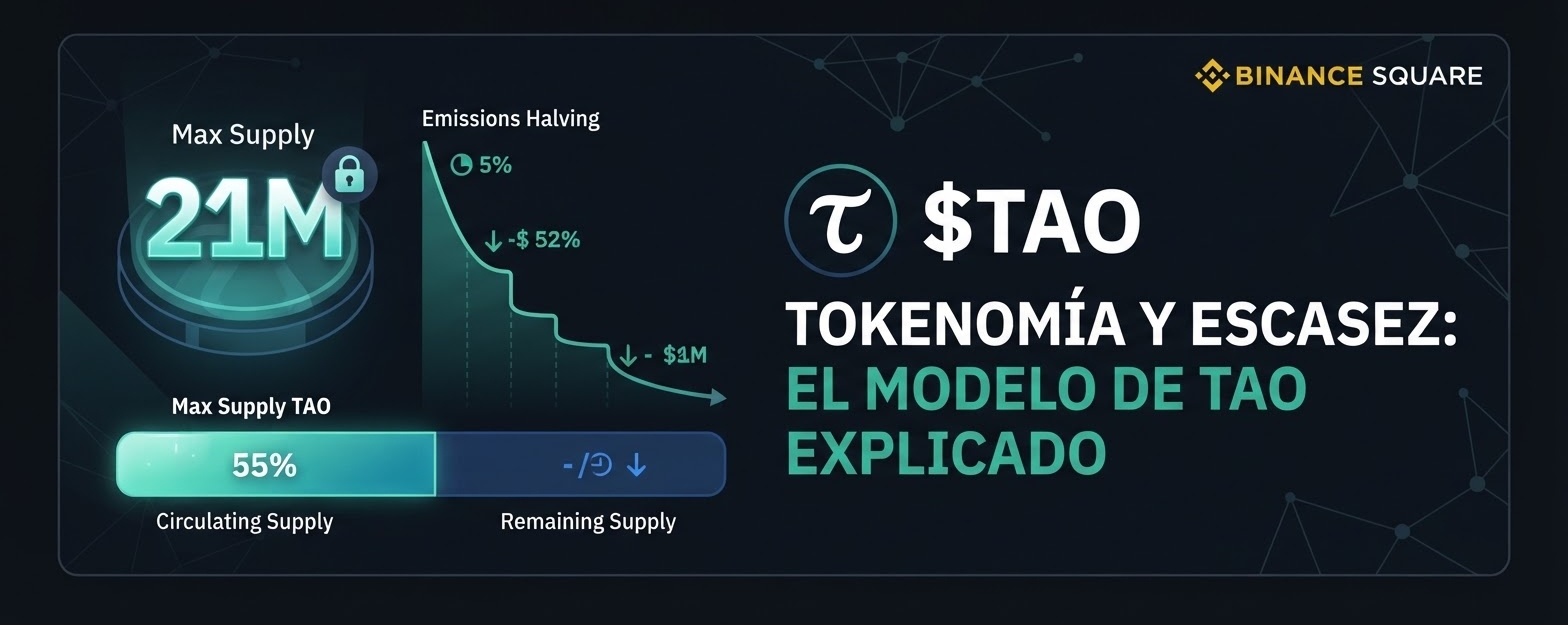
Escasez y Halving: ¿Por qué la tokenomía de TAO imita el modelo de Bitcoin?Cuando analizamos proyectos de infraestructura a largo plazo, la tokenomía es nuestro mapa de ruta fundamental. En el caso de Bittensor (TAO), su diseño monetario replica la escasez absoluta de Bitcoin para incentivar el valor estructural:
🪙 Suministro máximo estricto: Límite inalterable de 21,000,000 de tokens en total. Nunca existirá ni un TAO más.🔄 Circulación actual: Cerca de 11.5 millones de TAO ya están circulando (aproximadamente el 55% del total emitido).⏳ Emisión programada: Reducción periódica de la entrada de nuevos tokens al mercado (halving), premiando la visión de largo plazo.
La tecnología y la innovación en Inteligencia Artificial importan, pero entender la escasez estructural es lo que define la solidez de una estrategia en spot.
DYOR.
📊 ¿Qué opinas de los modelos con suministro limitado frente a los tokens inflacionarios? Te leo en los comentarios.
#BinanceSquare #Tokenomics #Bittensor #TAO #DeFi #Crypto #ArtificialIntelligence $TAO
{spot}(TAOUSDT)
📉 Escasez y Halving: ¿Por qué la tokenomía de TAO imita el modelo de Bitcoin?
Cuando analizamos proyectos de infraestructura a largo plazo, la tokenomía es nuestro mapa de ruta fundamental. En el caso de Bittensor (TAO), su diseño monetario replica la escasez absoluta de Bitcoin para incentivar el valor estructural:
🪙 Suministro máximo estricto: Límite inalterable de 21,000,000 de tokens en total. Nunca existirá ni un TAO más.🔄 Circulación actual: Cerca de 11.5 millones de TAO ya están circulando (aproximadamente el 55% del total emitido).⏳ Emisión programada: Reducción periódica de la entrada de nuevos tokens al mercado (halving), premiando la visión de largo plazo.
La tecnología y la innovación en Inteligencia Artificial importan, pero entender la escasez estructural es lo que define la solidez de una estrategia en spot.
DYOR.
📊 ¿Qué opinas de los modelos con suministro limitado frente a los tokens inflacionarios? Te leo en los comentarios.
#BinanceSquare #Tokenomics #Bittensor #TAO #DeFi #Crypto #ArtificialIntelligence $TAO
🪙 Suministro máximo estricto: Límite inalterable de 21,000,000 de tokens en total. Nunca existirá ni un TAO más.🔄 Circulación actual: Cerca de 11.5 millones de TAO ya están circulando (aproximadamente el 55% del total emitido).⏳ Emisión programada: Reducción periódica de la entrada de nuevos tokens al mercado (halving), premiando la visión de largo plazo.
La tecnología y la innovación en Inteligencia Artificial importan, pero entender la escasez estructural es lo que define la solidez de una estrategia en spot.
DYOR.
📊 ¿Qué opinas de los modelos con suministro limitado frente a los tokens inflacionarios? Te leo en los comentarios.
#BinanceSquare #Tokenomics #Bittensor #TAO #DeFi #Crypto #ArtificialIntelligence $TAO
2
311


·
--
🧠 VVV’s Utility Is Measurable, but Its Holder Concentration Remains the Hard Risk
Venice’s VVV reached a reported all-time high of $34.51 on September 21 after trading as low as $0.92 the previous December. Decrypt reported a market capitalization near $1.6 billion at the time.
VVV has a measurable utility model. Holders can stake it to access Venice AI inference capacity and use staked positions to mint DIEM, which provides recurring API credits. Venice also uses portions of platform activity to buy and burn VVV.
Annual issuance was reduced to 2.5 million VVV on September 1, with a further reduction to 2 million scheduled for October 1. Venice also reported crossing a $100 million annualized revenue run rate in August.
The major counterweight is concentration. Onchain data cited by Decrypt indicated that the 100 largest wallets controlled roughly 98% of supply. Concentrated ownership can dominate liquidity and price discovery even when product usage grows.
The useful dashboard is therefore not price alone: API consumption, revenue, staking, burns, net issuance and holder distribution all matter.
Disclaimer: Project analysis only, not financial advice. VVV is highly volatile, and concentrated ownership can increase liquidity risk.
$VVV
Venice AI • Token Utility • AI Inference
#VVV #AICrypto #Tokenomics
🧠 VVV’s Utility Is Measurable, but Its Holder Concentration Remains the Hard Risk
Venice’s VVV reached a reported all-time high of $34.51 on September 21 after trading as low as $0.92 the previous December. Decrypt reported a market capitalization near $1.6 billion at the time.
VVV has a measurable utility model. Holders can stake it to access Venice AI inference capacity and use staked positions to mint DIEM, which provides recurring API credits. Venice also uses portions of platform activity to buy and burn VVV.
Annual issuance was reduced to 2.5 million VVV on September 1, with a further reduction to 2 million scheduled for October 1. Venice also reported crossing a $100 million annualized revenue run rate in August.
The major counterweight is concentration. Onchain data cited by Decrypt indicated that the 100 largest wallets controlled roughly 98% of supply. Concentrated ownership can dominate liquidity and price discovery even when product usage grows.
The useful dashboard is therefore not price alone: API consumption, revenue, staking, burns, net issuance and holder distribution all matter.
Disclaimer: Project analysis only, not financial advice. VVV is highly volatile, and concentrated ownership can increase liquidity risk.
$VVV
Venice AI • Token Utility • AI Inference
#VVV #AICrypto #Tokenomics
Venice’s VVV reached a reported all-time high of $34.51 on September 21 after trading as low as $0.92 the previous December. Decrypt reported a market capitalization near $1.6 billion at the time.
VVV has a measurable utility model. Holders can stake it to access Venice AI inference capacity and use staked positions to mint DIEM, which provides recurring API credits. Venice also uses portions of platform activity to buy and burn VVV.
Annual issuance was reduced to 2.5 million VVV on September 1, with a further reduction to 2 million scheduled for October 1. Venice also reported crossing a $100 million annualized revenue run rate in August.
The major counterweight is concentration. Onchain data cited by Decrypt indicated that the 100 largest wallets controlled roughly 98% of supply. Concentrated ownership can dominate liquidity and price discovery even when product usage grows.
The useful dashboard is therefore not price alone: API consumption, revenue, staking, burns, net issuance and holder distribution all matter.
Disclaimer: Project analysis only, not financial advice. VVV is highly volatile, and concentrated ownership can increase liquidity risk.
$VVV
Venice AI • Token Utility • AI Inference
#VVV #AICrypto #Tokenomics

349

·
--
Жоғары (өспелі)
THERE’S A NUMBER I CHECK BEFORE BUYING ANY ALTCOIN.
And it isn’t the price.
It’s how much supply is still waiting to enter the market.
A token can have:
📈 Strong technology
📈 Growing users
📈 Big partnerships
📈 Increasing attention
…and still struggle if a large amount of new supply is scheduled to hit the market.
That’s why I always check:
1. Circulating supply
How much of the total supply is already trading?
2. Upcoming unlocks
How many tokens could enter circulation soon?
3. Who receives them?
Team? Investors? Treasury? Community?
4. Unlock size vs daily volume
This is the part many people overlook.
A $100M unlock means something very different for a token trading $20M/day versus one trading $500M/day.
The chart tells you what happened.
Tokenomics can help explain what might happen next.
This doesn’t mean every unlock is bearish.
Sometimes the market has already priced it in. Sometimes demand absorbs the additional supply.
That’s exactly why I think token unlocks deserve more attention than another “🚀 coin to 100x” post.
What’s one token you think has the most interesting tokenomics right now?
Give me the ticker + the reason.
I want to see which projects this community thinks have the strongest supply structure.
Educational discussion only, not financial advice. Always DYOR.
#crypto #Tokenomics #altcoins #CryptoAnalysis #BinanceSquareFamily
$AAPLB
{spot}(AAPLBUSDT)
THERE’S A NUMBER I CHECK BEFORE BUYING ANY ALTCOIN.
And it isn’t the price.
It’s how much supply is still waiting to enter the market.
A token can have:
📈 Strong technology
📈 Growing users
📈 Big partnerships
📈 Increasing attention
…and still struggle if a large amount of new supply is scheduled to hit the market.
That’s why I always check:
1. Circulating supply
How much of the total supply is already trading?
2. Upcoming unlocks
How many tokens could enter circulation soon?
3. Who receives them?
Team? Investors? Treasury? Community?
4. Unlock size vs daily volume
This is the part many people overlook.
A $100M unlock means something very different for a token trading $20M/day versus one trading $500M/day.
The chart tells you what happened.
Tokenomics can help explain what might happen next.
This doesn’t mean every unlock is bearish.
Sometimes the market has already priced it in. Sometimes demand absorbs the additional supply.
That’s exactly why I think token unlocks deserve more attention than another “🚀 coin to 100x” post.
What’s one token you think has the most interesting tokenomics right now?
Give me the ticker + the reason.
I want to see which projects this community thinks have the strongest supply structure.
Educational discussion only, not financial advice. Always DYOR.
#crypto #Tokenomics #altcoins #CryptoAnalysis #BinanceSquareFamily
$AAPLB
And it isn’t the price.
It’s how much supply is still waiting to enter the market.
A token can have:
📈 Strong technology
📈 Growing users
📈 Big partnerships
📈 Increasing attention
…and still struggle if a large amount of new supply is scheduled to hit the market.
That’s why I always check:
1. Circulating supply
How much of the total supply is already trading?
2. Upcoming unlocks
How many tokens could enter circulation soon?
3. Who receives them?
Team? Investors? Treasury? Community?
4. Unlock size vs daily volume
This is the part many people overlook.
A $100M unlock means something very different for a token trading $20M/day versus one trading $500M/day.
The chart tells you what happened.
Tokenomics can help explain what might happen next.
This doesn’t mean every unlock is bearish.
Sometimes the market has already priced it in. Sometimes demand absorbs the additional supply.
That’s exactly why I think token unlocks deserve more attention than another “🚀 coin to 100x” post.
What’s one token you think has the most interesting tokenomics right now?
Give me the ticker + the reason.
I want to see which projects this community thinks have the strongest supply structure.
Educational discussion only, not financial advice. Always DYOR.
#crypto #Tokenomics #altcoins #CryptoAnalysis #BinanceSquareFamily
$AAPLB

32
Today is one of the bigger unlock days of the month. Let me explain the difference between an unlock that barely matters and one that changes the supply picture.
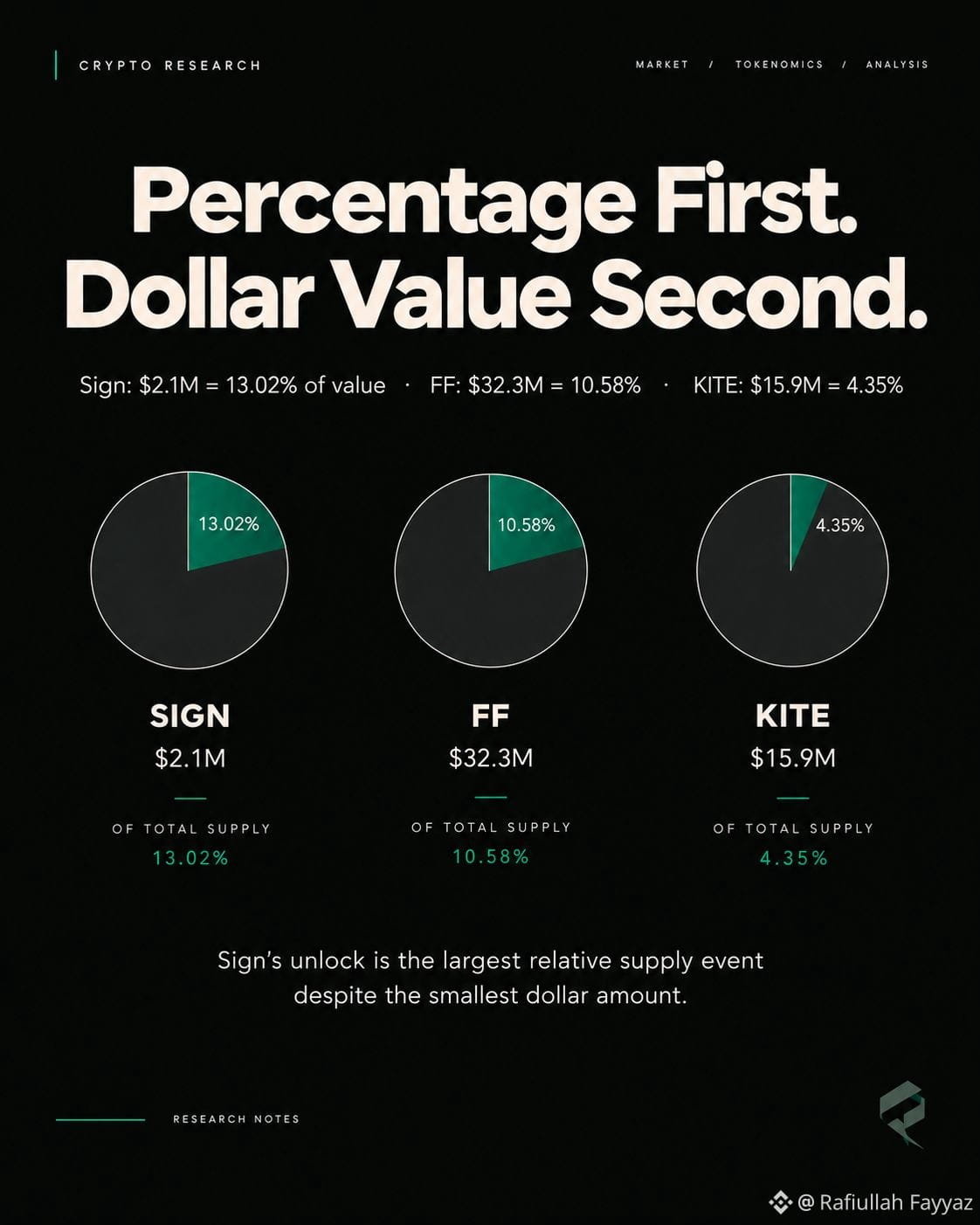
Sign unlocks today. The numbers: $2.11 million worth of tokens. That sounds small. But it's 13.02% of the token's market value. That's a significant supply increase for a smaller cap.
CORN also unlocks today. $1.59 million worth. 11.69% of market value. Same story — small dollar amount, large percentage.
Now look ahead: Falcon Finance (FF) unlocks $32.34 million on September 29. That's 10.58% of its market value. **Kite (KITE)** unlocks $15.95 million on October 1. That's only 4.35% of its market value.
The pattern: FF's dollar amount is 15 times larger than Sign's, but the percentage impact is actually smaller. Sign's unlock is a bigger relative supply event than FF's.
The rule: percentage first, dollar value second. A $2 million unlock that's 13% of supply is more significant than a $15 million unlock that's 4% of supply.
Who receives the tokens matters too. But the percentage tells you how much the market has to absorb.
#CryptoEducation #TokenUnlocks #Tokenomics
$SIGN $KITE
{spot}(SIGNUSDT)
{spot}(KITEUSDT)
Today is one of the bigger unlock days of the month. Let me explain the difference between an unlock that barely matters and one that changes the supply picture.
Sign unlocks today. The numbers: $2.11 million worth of tokens. That sounds small. But it's 13.02% of the token's market value. That's a significant supply increase for a smaller cap.
CORN also unlocks today. $1.59 million worth. 11.69% of market value. Same story — small dollar amount, large percentage.
Now look ahead: Falcon Finance (FF) unlocks $32.34 million on September 29. That's 10.58% of its market value. **Kite (KITE)** unlocks $15.95 million on October 1. That's only 4.35% of its market value.
The pattern: FF's dollar amount is 15 times larger than Sign's, but the percentage impact is actually smaller. Sign's unlock is a bigger relative supply event than FF's.
The rule: percentage first, dollar value second. A $2 million unlock that's 13% of supply is more significant than a $15 million unlock that's 4% of supply.
Who receives the tokens matters too. But the percentage tells you how much the market has to absorb.
#CryptoEducation #TokenUnlocks #Tokenomics
$SIGN $KITE
Sign unlocks today. The numbers: $2.11 million worth of tokens. That sounds small. But it's 13.02% of the token's market value. That's a significant supply increase for a smaller cap.
CORN also unlocks today. $1.59 million worth. 11.69% of market value. Same story — small dollar amount, large percentage.
Now look ahead: Falcon Finance (FF) unlocks $32.34 million on September 29. That's 10.58% of its market value. **Kite (KITE)** unlocks $15.95 million on October 1. That's only 4.35% of its market value.
The pattern: FF's dollar amount is 15 times larger than Sign's, but the percentage impact is actually smaller. Sign's unlock is a bigger relative supply event than FF's.
The rule: percentage first, dollar value second. A $2 million unlock that's 13% of supply is more significant than a $15 million unlock that's 4% of supply.
Who receives the tokens matters too. But the percentage tells you how much the market has to absorb.
#CryptoEducation #TokenUnlocks #Tokenomics
$SIGN $KITE
548

·
--
$ONEA 🔐 ONEA储备基金|为长期生态发展做好准备
一个强大的生态,不仅需要持续成长,也需要长期规划。
ONEA设计透明的储备基金机制,用于支持未来生态建设和战略发展需求。
⸻
🏦 储备基金配置
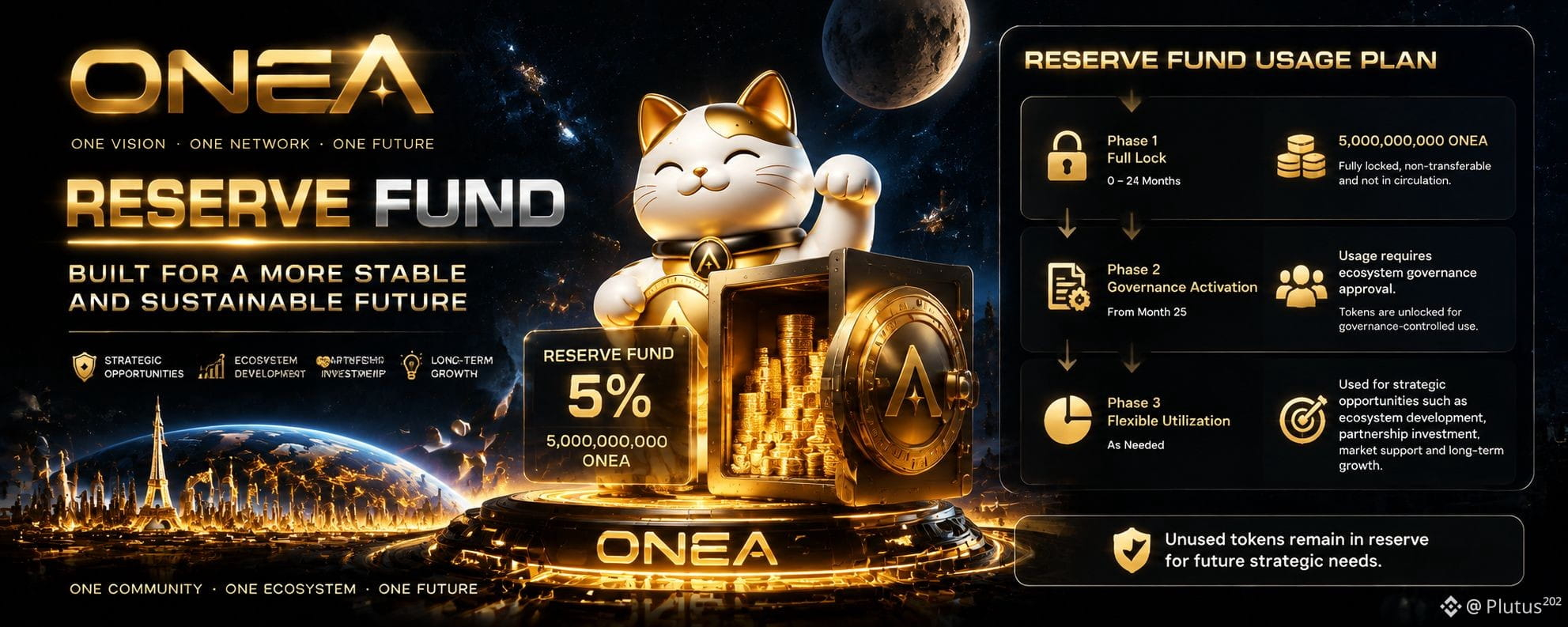
ONEA储备基金:
🔹 占比:5%
🔹 数量:5,000,000,000 ONEA
该部分资金将用于:
✨ 生态发展
✨ 战略机会
✨ 合作拓展
✨ 长期生态建设
⸻
🔒 透明锁仓机制
储备基金采用阶段化管理:
第一阶段:
🔐 完全锁仓期
时间:
0–24个月
期间所有储备代币保持锁定状态,不进入市场流通。
⸻
🌍 治理机制启动
第25个月开始:
储备基金进入治理使用阶段。
任何使用都需要结合生态发展需求和长期规划进行。
未使用部分将继续作为未来战略储备。
⸻
💎 面向长期建设
ONEA相信:
长期生态需要耐心。
未来发展需要准备。
每一次决策,都围绕生态成长和社区价值展开。
🐾 ONEA幸运猫将继续陪伴生态共同成长。
一个愿景。
一个网络。
一个未来。
🚀 ONEA Network
#ONEA #Web3 #区块链 #Tokenomics
$ONEA 🔐 ONEA储备基金|为长期生态发展做好准备
一个强大的生态,不仅需要持续成长,也需要长期规划。
ONEA设计透明的储备基金机制,用于支持未来生态建设和战略发展需求。
⸻
🏦 储备基金配置
ONEA储备基金:
🔹 占比:5%
🔹 数量:5,000,000,000 ONEA
该部分资金将用于:
✨ 生态发展
✨ 战略机会
✨ 合作拓展
✨ 长期生态建设
⸻
🔒 透明锁仓机制
储备基金采用阶段化管理:
第一阶段:
🔐 完全锁仓期
时间:
0–24个月
期间所有储备代币保持锁定状态,不进入市场流通。
⸻
🌍 治理机制启动
第25个月开始:
储备基金进入治理使用阶段。
任何使用都需要结合生态发展需求和长期规划进行。
未使用部分将继续作为未来战略储备。
⸻
💎 面向长期建设
ONEA相信:
长期生态需要耐心。
未来发展需要准备。
每一次决策,都围绕生态成长和社区价值展开。
🐾 ONEA幸运猫将继续陪伴生态共同成长。
一个愿景。
一个网络。
一个未来。
🚀 ONEA Network
#ONEA #Web3 #区块链 #Tokenomics
一个强大的生态,不仅需要持续成长,也需要长期规划。
ONEA设计透明的储备基金机制,用于支持未来生态建设和战略发展需求。
⸻
🏦 储备基金配置
ONEA储备基金:
🔹 占比:5%
🔹 数量:5,000,000,000 ONEA
该部分资金将用于:
✨ 生态发展
✨ 战略机会
✨ 合作拓展
✨ 长期生态建设
⸻
🔒 透明锁仓机制
储备基金采用阶段化管理:
第一阶段:
🔐 完全锁仓期
时间:
0–24个月
期间所有储备代币保持锁定状态,不进入市场流通。
⸻
🌍 治理机制启动
第25个月开始:
储备基金进入治理使用阶段。
任何使用都需要结合生态发展需求和长期规划进行。
未使用部分将继续作为未来战略储备。
⸻
💎 面向长期建设
ONEA相信:
长期生态需要耐心。
未来发展需要准备。
每一次决策,都围绕生态成长和社区价值展开。
🐾 ONEA幸运猫将继续陪伴生态共同成长。
一个愿景。
一个网络。
一个未来。
🚀 ONEA Network
#ONEA #Web3 #区块链 #Tokenomics
84
·
--
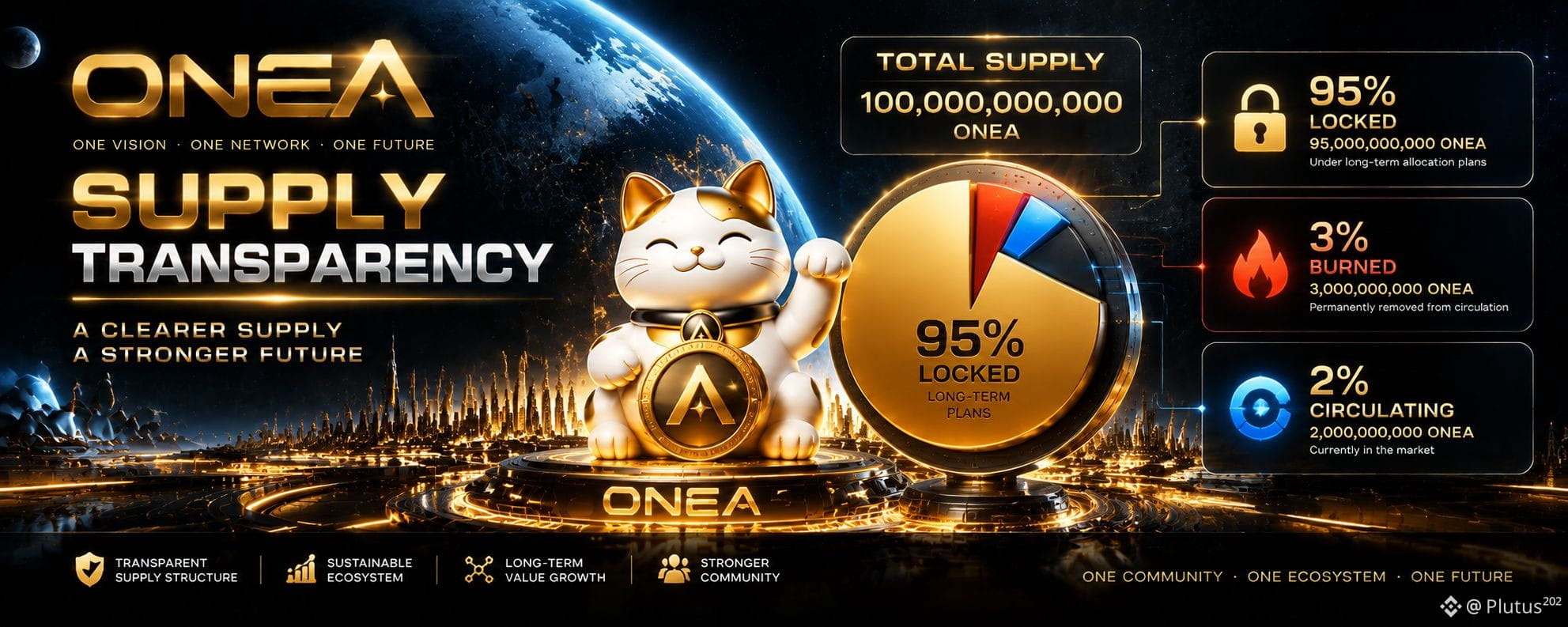
$ONEA 🔥 ONEA供应透明机制|95%规划锁定,3%永久销毁,2%初始流通
一个健康的生态,需要清晰透明的供应结构。
ONEA通过长期锁仓、合理分配和控制流通量,打造更加稳定的Token经济模型。
⸻
💎 ONEA总供应量
总量:
🔹 100,000,000,000 ONEA
当前供应结构:
🔒 95%进入长期规划管理
🔥 3%永久销毁
🌍 2%初始流通
⸻
🔥 永久销毁机制
ONEA已完成首轮销毁:
🔥 3,000,000,000 ONEA
这些代币已永久移出流通体系,不再参与市场流通。
⸻
🌱 控制初始流通
当前市场流通:
2,000,000,000 ONEA
其余代币将按照透明锁仓和释放计划,随着生态发展逐步推进。
⸻
💎 长期价值建设
ONEA相信:
透明的供应管理,是生态发展的基础。
透明创造信任。
长期建设创造未来。
🐾 ONEA幸运猫将继续陪伴社区共同成长。
一个愿景。
一个网络。
一个未来。
🚀 ONEA Network
#ONEA #Web3 #区块链 #Tokenomics
$ONEA 🔥 ONEA供应透明机制|95%规划锁定,3%永久销毁,2%初始流通
一个健康的生态,需要清晰透明的供应结构。
ONEA通过长期锁仓、合理分配和控制流通量,打造更加稳定的Token经济模型。
⸻
💎 ONEA总供应量
总量:
🔹 100,000,000,000 ONEA
当前供应结构:
🔒 95%进入长期规划管理
🔥 3%永久销毁
🌍 2%初始流通
⸻
🔥 永久销毁机制
ONEA已完成首轮销毁:
🔥 3,000,000,000 ONEA
这些代币已永久移出流通体系,不再参与市场流通。
⸻
🌱 控制初始流通
当前市场流通:
2,000,000,000 ONEA
其余代币将按照透明锁仓和释放计划,随着生态发展逐步推进。
⸻
💎 长期价值建设
ONEA相信:
透明的供应管理,是生态发展的基础。
透明创造信任。
长期建设创造未来。
🐾 ONEA幸运猫将继续陪伴社区共同成长。
一个愿景。
一个网络。
一个未来。
🚀 ONEA Network
#ONEA #Web3 #区块链 #Tokenomics
一个健康的生态,需要清晰透明的供应结构。
ONEA通过长期锁仓、合理分配和控制流通量,打造更加稳定的Token经济模型。
⸻
💎 ONEA总供应量
总量:
🔹 100,000,000,000 ONEA
当前供应结构:
🔒 95%进入长期规划管理
🔥 3%永久销毁
🌍 2%初始流通
⸻
🔥 永久销毁机制
ONEA已完成首轮销毁:
🔥 3,000,000,000 ONEA
这些代币已永久移出流通体系,不再参与市场流通。
⸻
🌱 控制初始流通
当前市场流通:
2,000,000,000 ONEA
其余代币将按照透明锁仓和释放计划,随着生态发展逐步推进。
⸻
💎 长期价值建设
ONEA相信:
透明的供应管理,是生态发展的基础。
透明创造信任。
长期建设创造未来。
🐾 ONEA幸运猫将继续陪伴社区共同成长。
一个愿景。
一个网络。
一个未来。
🚀 ONEA Network
#ONEA #Web3 #区块链 #Tokenomics
83

·
--
Жоғары (өспелі)
Midnight Separates The Asset From The Fuel ⛽
Every interaction on $ETH consumes a transferable asset, while $SOL made the same basic model dramatically cheaper without changing what users ultimately spend.
Midnight approaches network resources differently through NIGHT and DUST.
The model has three unusual properties:
- NIGHT is the utility asset: it supports network participation and can be registered to generate DUST. .
- DUST powers transactions: applications use it as network capacity rather than spending NIGHT itself.
- DUST isn’t a normal token: it is shielded and non-transferable, separating network usage from another freely traded asset.
That distinction becomes more interesting at application scale.
Instead of treating every interaction as another moment where users need to source a liquid gas asset, an application can think about the capacity generated by the NIGHT behind it.
Midnight’s roadmap even treats a future DUST Capacity Exchange around surplus capacity separately rather than simply making DUST another transferable gas coin.
Most chains spent years optimizing how cheaply users can buy gas.
Midnight is experimenting whether gas needs to behave like a normal coin at all.
#Tokenomics #Infrastructure
Midnight Separates The Asset From The Fuel ⛽
Every interaction on $ETH consumes a transferable asset, while $SOL made the same basic model dramatically cheaper without changing what users ultimately spend.
Midnight approaches network resources differently through NIGHT and DUST.
The model has three unusual properties:
- NIGHT is the utility asset: it supports network participation and can be registered to generate DUST. .
- DUST powers transactions: applications use it as network capacity rather than spending NIGHT itself.
- DUST isn’t a normal token: it is shielded and non-transferable, separating network usage from another freely traded asset.
That distinction becomes more interesting at application scale.
Instead of treating every interaction as another moment where users need to source a liquid gas asset, an application can think about the capacity generated by the NIGHT behind it.
Midnight’s roadmap even treats a future DUST Capacity Exchange around surplus capacity separately rather than simply making DUST another transferable gas coin.
Most chains spent years optimizing how cheaply users can buy gas.
Midnight is experimenting whether gas needs to behave like a normal coin at all.
#Tokenomics #Infrastructure
Every interaction on $ETH consumes a transferable asset, while $SOL made the same basic model dramatically cheaper without changing what users ultimately spend.
Midnight approaches network resources differently through NIGHT and DUST.
The model has three unusual properties:
- NIGHT is the utility asset: it supports network participation and can be registered to generate DUST. .
- DUST powers transactions: applications use it as network capacity rather than spending NIGHT itself.
- DUST isn’t a normal token: it is shielded and non-transferable, separating network usage from another freely traded asset.
That distinction becomes more interesting at application scale.
Instead of treating every interaction as another moment where users need to source a liquid gas asset, an application can think about the capacity generated by the NIGHT behind it.
Midnight’s roadmap even treats a future DUST Capacity Exchange around surplus capacity separately rather than simply making DUST another transferable gas coin.
Most chains spent years optimizing how cheaply users can buy gas.
Midnight is experimenting whether gas needs to behave like a normal coin at all.
#Tokenomics #Infrastructure
1
533

·
--
SEC员工指引:功能性网络上的代币回购不自动构成证券
据Decrypt报道,美国证券交易委员会(SEC)最新员工指引明确表示,在功能性网络上宣布代币回购,并不必然构成将代币转化为证券的承诺。这一表态直接划定了代币回购与证券认定之间的边界,核心逻辑在于:只要网络本身具备实际功能,回购行为更多是代币经济机制的一部分,而非投资合同中的收益承诺。
这一指引对加密市场的影响在于,它显著降低了项目在实施回购时的合规不确定性。过去,许多项目因担心回购被解读为“保证回报”而选择保守,如今SEC员工层面的澄清为代币经济设计提供了更清晰的操作空间。市场情绪可能因此获得支撑,尤其是那些依赖回购机制维持代币价值的协议,或将重新评估其资本配置策略。
不过,需要观察的是,SEC员工指引并非正式规则,后续仍可能被推翻或细化。若市场过度解读,短期内可能出现代币回购行为激增,但长期合规风险并未完全消除。此外,指引中“功能性网络”的定义仍需具体案例来进一步厘清,不同项目对“功能”的举证标准可能存在差异。
接下来,需关注SEC是否将此指引纳入正式规则制定流程,以及主要交易所和项目方如何调整其回购公告措辞。若后续出现首例依据该指引成功规避证券认定的案例,将对市场信心产生实质性影响。
#SEC #CryptoRegulation #Tokenomics
以上为信息整理与个人分析,不构成投资建议。
如果你喜欢这种不带广告的市场分析,可以关注我,重要动态持续更新。
SEC员工指引:功能性网络上的代币回购不自动构成证券
据Decrypt报道,美国证券交易委员会(SEC)最新员工指引明确表示,在功能性网络上宣布代币回购,并不必然构成将代币转化为证券的承诺。这一表态直接划定了代币回购与证券认定之间的边界,核心逻辑在于:只要网络本身具备实际功能,回购行为更多是代币经济机制的一部分,而非投资合同中的收益承诺。
这一指引对加密市场的影响在于,它显著降低了项目在实施回购时的合规不确定性。过去,许多项目因担心回购被解读为“保证回报”而选择保守,如今SEC员工层面的澄清为代币经济设计提供了更清晰的操作空间。市场情绪可能因此获得支撑,尤其是那些依赖回购机制维持代币价值的协议,或将重新评估其资本配置策略。
不过,需要观察的是,SEC员工指引并非正式规则,后续仍可能被推翻或细化。若市场过度解读,短期内可能出现代币回购行为激增,但长期合规风险并未完全消除。此外,指引中“功能性网络”的定义仍需具体案例来进一步厘清,不同项目对“功能”的举证标准可能存在差异。
接下来,需关注SEC是否将此指引纳入正式规则制定流程,以及主要交易所和项目方如何调整其回购公告措辞。若后续出现首例依据该指引成功规避证券认定的案例,将对市场信心产生实质性影响。
#SEC #CryptoRegulation #Tokenomics
以上为信息整理与个人分析,不构成投资建议。
如果你喜欢这种不带广告的市场分析,可以关注我,重要动态持续更新。
据Decrypt报道,美国证券交易委员会(SEC)最新员工指引明确表示,在功能性网络上宣布代币回购,并不必然构成将代币转化为证券的承诺。这一表态直接划定了代币回购与证券认定之间的边界,核心逻辑在于:只要网络本身具备实际功能,回购行为更多是代币经济机制的一部分,而非投资合同中的收益承诺。
这一指引对加密市场的影响在于,它显著降低了项目在实施回购时的合规不确定性。过去,许多项目因担心回购被解读为“保证回报”而选择保守,如今SEC员工层面的澄清为代币经济设计提供了更清晰的操作空间。市场情绪可能因此获得支撑,尤其是那些依赖回购机制维持代币价值的协议,或将重新评估其资本配置策略。
不过,需要观察的是,SEC员工指引并非正式规则,后续仍可能被推翻或细化。若市场过度解读,短期内可能出现代币回购行为激增,但长期合规风险并未完全消除。此外,指引中“功能性网络”的定义仍需具体案例来进一步厘清,不同项目对“功能”的举证标准可能存在差异。
接下来,需关注SEC是否将此指引纳入正式规则制定流程,以及主要交易所和项目方如何调整其回购公告措辞。若后续出现首例依据该指引成功规避证券认定的案例,将对市场信心产生实质性影响。
#SEC #CryptoRegulation #Tokenomics
以上为信息整理与个人分析,不构成投资建议。
如果你喜欢这种不带广告的市场分析,可以关注我,重要动态持续更新。
1
73
·
--
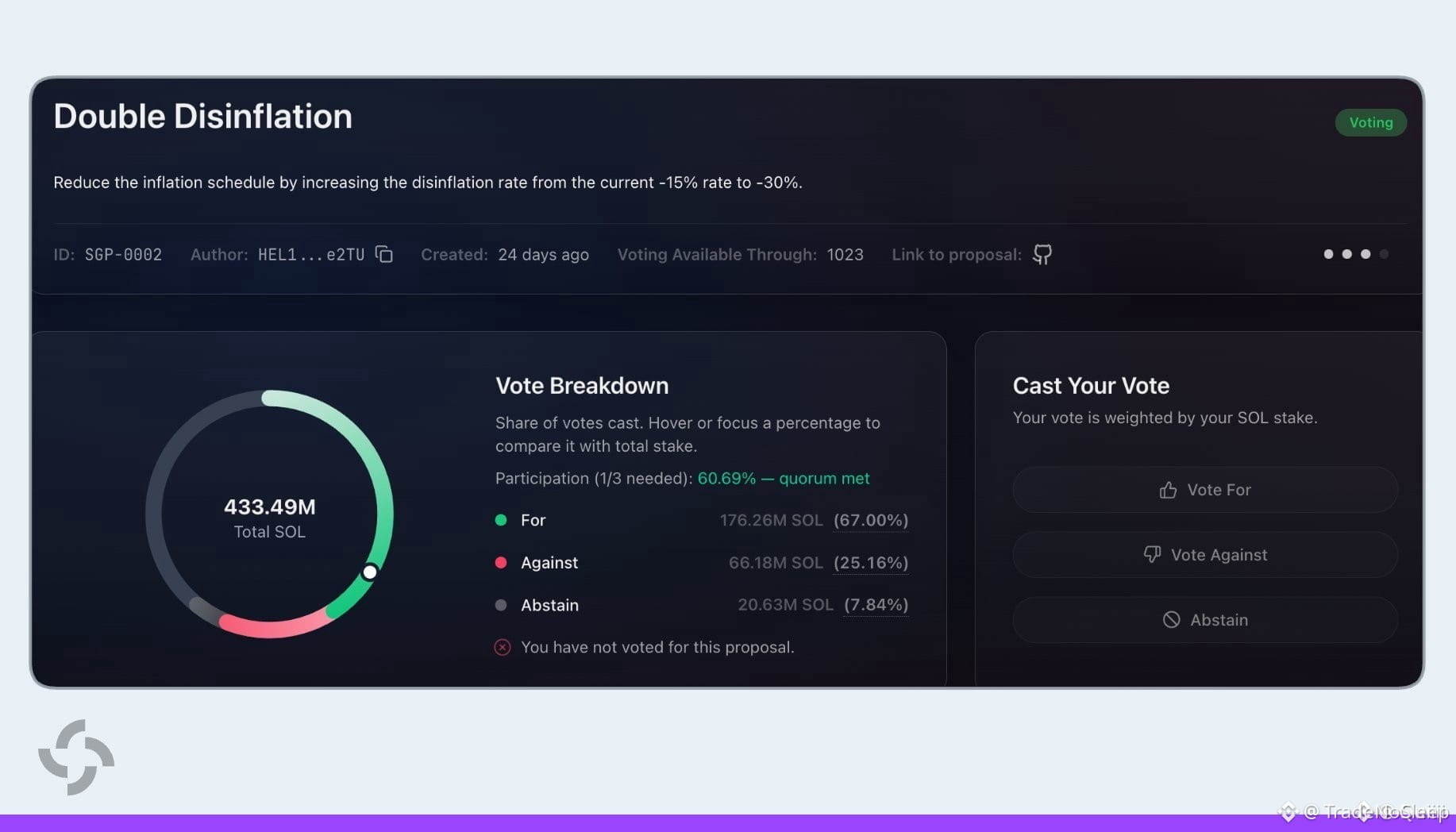
🚨 $SOL GOVERNANCE PASSES PROPOSAL TO CUT ISSUANCE BY 18.9M TOKENS! ⚡
Solana validators have officially approved the double disinflation proposal, driving the disinflation rate to 30%. 📊 This structural shift strips roughly 18.9M $SOL ($1.47B) from projected supply over the next six years, fundamentally altering the macro supply curve.
From an institutional lens, curbing token issuance during structural consolidation zones significantly reduces ongoing sell-side pressure. 💡 Smart money tracks these long-term supply recalibrations closely as baseline market liquidity tightens over extended timeframes.
💬 Will this systematic reduction in sell-side issuance trigger a long-term re-pricing for $SOL ? 👇
⚠️ Not financial advice. Always manage your risk. 🛡️
🏷️ #SOL #Solana #Tokenomics #Crypto
🦈 ⚡
🚨 $SOL GOVERNANCE PASSES PROPOSAL TO CUT ISSUANCE BY 18.9M TOKENS! ⚡
Solana validators have officially approved the double disinflation proposal, driving the disinflation rate to 30%. 📊 This structural shift strips roughly 18.9M $SOL ($1.47B) from projected supply over the next six years, fundamentally altering the macro supply curve.
From an institutional lens, curbing token issuance during structural consolidation zones significantly reduces ongoing sell-side pressure. 💡 Smart money tracks these long-term supply recalibrations closely as baseline market liquidity tightens over extended timeframes.
💬 Will this systematic reduction in sell-side issuance trigger a long-term re-pricing for $SOL ? 👇
⚠️ Not financial advice. Always manage your risk. 🛡️
🏷️ #SOL #Solana #Tokenomics #Crypto
🦈 ⚡
Solana validators have officially approved the double disinflation proposal, driving the disinflation rate to 30%. 📊 This structural shift strips roughly 18.9M $SOL ($1.47B) from projected supply over the next six years, fundamentally altering the macro supply curve.
From an institutional lens, curbing token issuance during structural consolidation zones significantly reduces ongoing sell-side pressure. 💡 Smart money tracks these long-term supply recalibrations closely as baseline market liquidity tightens over extended timeframes.
💬 Will this systematic reduction in sell-side issuance trigger a long-term re-pricing for $SOL ? 👇
⚠️ Not financial advice. Always manage your risk. 🛡️
🏷️ #SOL #Solana #Tokenomics #Crypto
🦈 ⚡
60

🚨 UNPOPULAR OPINION: Retail is Ignoring $SUI Supply Pressures! 🛑
The narrative around $SUI ecosystem growth is extremely bullish right now, but most traders are completely ignoring the liquidity mechanics behind the scenes!
Here is the Breakdown:
1️⃣ Narrative vs. Utility: Enterprise adoption looks great, but does it actually FORCE market buying of the token?
2️⃣ Supply Pressure: Keep an eye on upcoming unlock schedules and treasury distribution. Unlocks can easily absorb retail buy volume!
3️⃣ Liquidity Flow: Thin order books mean volatility goes both ways—don't mistake short-term leverage pumps for organic spot demand.
💡 Key Takeaway: Never trade pure headlines without checking on-chain flows and unlock schedules first!
Are you holding $SUI long-term or waiting for a dip? Let’s debate below! 👇
#SUI #CryptoAnalysis #Tokenomics #Altcoins #BinanceSquare
🚨 UNPOPULAR OPINION: Retail is Ignoring $SUI Supply Pressures! 🛑
The narrative around $SUI ecosystem growth is extremely bullish right now, but most traders are completely ignoring the liquidity mechanics behind the scenes!
Here is the Breakdown:
1️⃣ Narrative vs. Utility: Enterprise adoption looks great, but does it actually FORCE market buying of the token?
2️⃣ Supply Pressure: Keep an eye on upcoming unlock schedules and treasury distribution. Unlocks can easily absorb retail buy volume!
3️⃣ Liquidity Flow: Thin order books mean volatility goes both ways—don't mistake short-term leverage pumps for organic spot demand.
💡 Key Takeaway: Never trade pure headlines without checking on-chain flows and unlock schedules first!
Are you holding $SUI long-term or waiting for a dip? Let’s debate below! 👇
#SUI #CryptoAnalysis #Tokenomics #Altcoins #BinanceSquare
The narrative around $SUI ecosystem growth is extremely bullish right now, but most traders are completely ignoring the liquidity mechanics behind the scenes!
Here is the Breakdown:
1️⃣ Narrative vs. Utility: Enterprise adoption looks great, but does it actually FORCE market buying of the token?
2️⃣ Supply Pressure: Keep an eye on upcoming unlock schedules and treasury distribution. Unlocks can easily absorb retail buy volume!
3️⃣ Liquidity Flow: Thin order books mean volatility goes both ways—don't mistake short-term leverage pumps for organic spot demand.
💡 Key Takeaway: Never trade pure headlines without checking on-chain flows and unlock schedules first!
Are you holding $SUI long-term or waiting for a dip? Let’s debate below! 👇
#SUI #CryptoAnalysis #Tokenomics #Altcoins #BinanceSquare

120
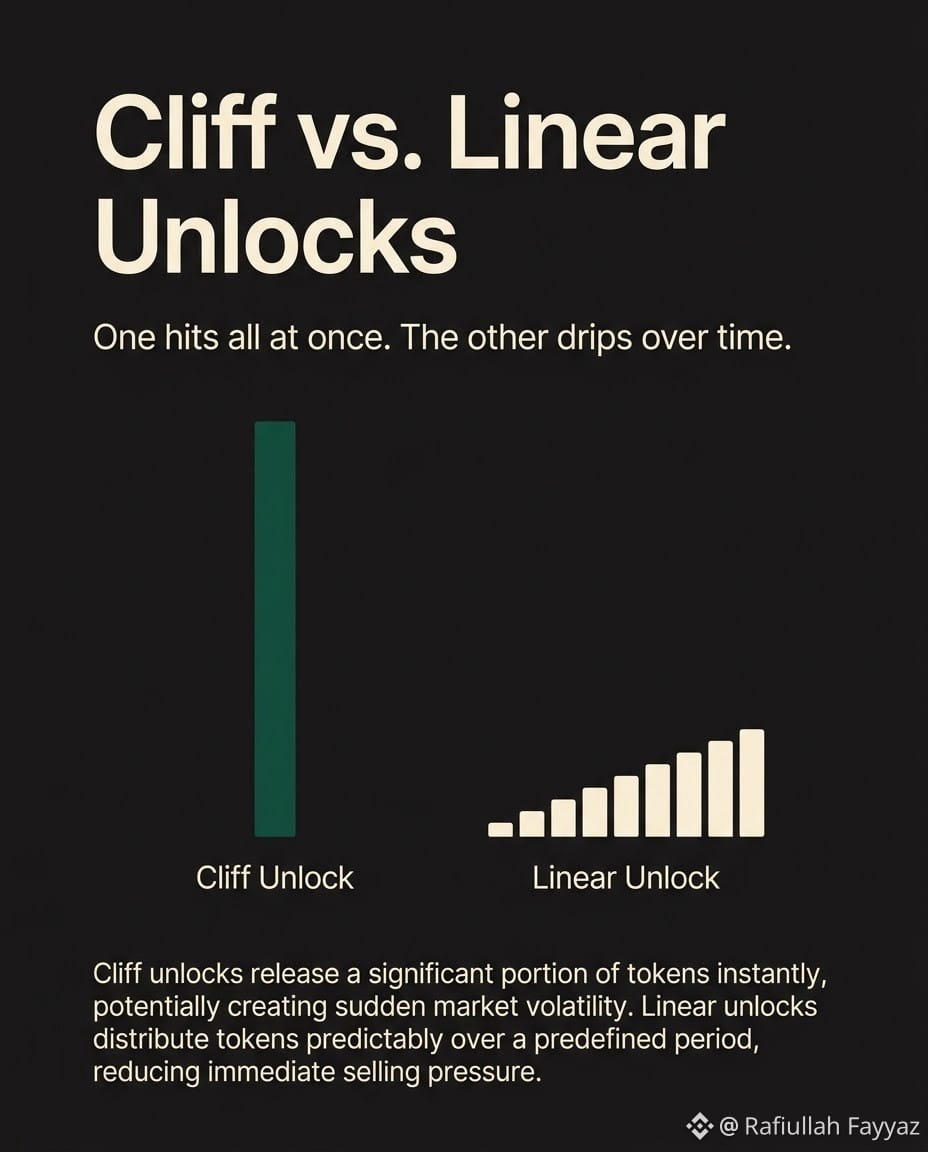
Yesterday I wrote about how unlock percentages matter more than dollar values. Today I want to add one more layer: the difference between cliff unlocks and linear unlocks.
A cliff unlock releases all tokens at once. One day, nothing. The next day, millions of tokens hit the market. XPL's 63.2% unlock on September 25 was a cliff unlock — 1.76 billion tokens released in a single event.
A linear unlock releases tokens gradually over time. Instead of one big event, you get a steady drip — daily or weekly. The supply increase is spread out.
Why this matters: cliff unlocks create sudden supply shocks. Linear unlocks create constant, predictable pressure.
Cliff unlocks are easier to trade around because the date is known and the size is fixed. Linear unlocks are harder to react to because they're continuous — there's no single "unlock day" to watch.
Today, Walrus ( $WAL ) is doing a smaller release — about 38.33 million tokens, worth roughly $1.21 million. This is part of WAL's ongoing vesting schedule.
The rule I'm developing: check not just the size and percentage, but the structure. A 10% cliff unlock is very different from 10% released linearly over a year.
#CryptoEducation #TokenUnlocks #Tokenomics
{spot}(XPLUSDT)
{spot}(WALUSDT)
Yesterday I wrote about how unlock percentages matter more than dollar values. Today I want to add one more layer: the difference between cliff unlocks and linear unlocks.
A cliff unlock releases all tokens at once. One day, nothing. The next day, millions of tokens hit the market. XPL's 63.2% unlock on September 25 was a cliff unlock — 1.76 billion tokens released in a single event.
A linear unlock releases tokens gradually over time. Instead of one big event, you get a steady drip — daily or weekly. The supply increase is spread out.
Why this matters: cliff unlocks create sudden supply shocks. Linear unlocks create constant, predictable pressure.
Cliff unlocks are easier to trade around because the date is known and the size is fixed. Linear unlocks are harder to react to because they're continuous — there's no single "unlock day" to watch.
Today, Walrus ( $WAL ) is doing a smaller release — about 38.33 million tokens, worth roughly $1.21 million. This is part of WAL's ongoing vesting schedule.
The rule I'm developing: check not just the size and percentage, but the structure. A 10% cliff unlock is very different from 10% released linearly over a year.
#CryptoEducation #TokenUnlocks #Tokenomics
A cliff unlock releases all tokens at once. One day, nothing. The next day, millions of tokens hit the market. XPL's 63.2% unlock on September 25 was a cliff unlock — 1.76 billion tokens released in a single event.
A linear unlock releases tokens gradually over time. Instead of one big event, you get a steady drip — daily or weekly. The supply increase is spread out.
Why this matters: cliff unlocks create sudden supply shocks. Linear unlocks create constant, predictable pressure.
Cliff unlocks are easier to trade around because the date is known and the size is fixed. Linear unlocks are harder to react to because they're continuous — there's no single "unlock day" to watch.
Today, Walrus ( $WAL ) is doing a smaller release — about 38.33 million tokens, worth roughly $1.21 million. This is part of WAL's ongoing vesting schedule.
The rule I'm developing: check not just the size and percentage, but the structure. A 10% cliff unlock is very different from 10% released linearly over a year.
#CryptoEducation #TokenUnlocks #Tokenomics
475
Көбірек контент көру үшін кіріңіз
Binance Square платформасында әлемдік криптоқоғамдастыққа қосылыңыз
⚡️ Криптовалюта туралы ең соңғы және пайдалы ақпаратты алыңыз.
💬 Әлемдегі ең ірі криптобиржаның сеніміне ие.
👍 Расталған авторлардың нақты пікірлерін табыңыз.
Электрондық пошта/телефон нөмірі
Трендтегі тақырыптар
1
#BitcoinClears$85200
5,581 рет көрілді
158 адам талқылап жатыр
2
#AltcoinSeasonIndexHoldsAbove60For5Days
32,353 рет көрілді
929 адам талқылап жатыр
3
#USADPAdds90000JobsInSeptember
14,236 рет көрілді
530 адам талқылап жатыр
4
#USCorePCEEasesTo3%InAugust
11,213 рет көрілді
428 адам талқылап жатыр
5
#KospiPostsWorstQuarterSince2020
8,539 рет көрілді
428 адам талқылап жатыр
6
#SECToClarifyOnChainFundraisingRules
20,488 рет көрілді
598 адам талқылап жатыр
7
#UKFCAOpensCryptoFirmAuthorization
21,329 рет көрілді
513 адам талқылап жатыр
8
#JapanMOFStudyGroupOnTokenizedGovtBonds
17,244 рет көрілді
406 адам талқылап жатыр
9
#QNTRises287%
75,475 рет көрілді
860 адам талқылап жатыр
10
#TrumpRejectsAIRulesForVoluntaryAudits
45,773 рет көрілді
758 адам талқылап жатыр