
BillyBlue
63 投稿

BillyBlue
報告
ユーザーをブロック
17 フォロー
16 フォロワー
26 いいね
投稿
·
--
#pons ファンダメンタルは素晴らしい。
Robinhood Chainでトップの発射台(ローンチパッド)ポジションを維持しており、買戻し(バイバック)に対して価格は1.8倍で取引されています。
PUMPは買戻し(バイバック)に対して価格が14倍で取引されています:
#pons ファンダメンタルは素晴らしい。
Robinhood Chainでトップの発射台(ローンチパッド)ポジションを維持しており、買戻し(バイバック)に対して価格は1.8倍で取引されています。
PUMPは買戻し(バイバック)に対して価格が14倍で取引されています:
Robinhood Chainでトップの発射台(ローンチパッド)ポジションを維持しており、買戻し(バイバック)に対して価格は1.8倍で取引されています。
PUMPは買戻し(バイバック)に対して価格が14倍で取引されています:
46
·
--
翻訳参照
#dusk $DUSK
{spot}(DUSKUSDT)
Dusk Network is a game changer: privacy-first L1 for regulated finance. Confidential smart contracts + XSC standard enable private tokenized securities with selective disclosure for compliance—no more transparency vs privacy trade-off. #DuskNetwork #Privacy #RWA
#dusk $DUSK
Dusk Network is a game changer: privacy-first L1 for regulated finance. Confidential smart contracts + XSC standard enable private tokenized securities with selective disclosure for compliance—no more transparency vs privacy trade-off. #DuskNetwork #Privacy #RWA
Dusk Network is a game changer: privacy-first L1 for regulated finance. Confidential smart contracts + XSC standard enable private tokenized securities with selective disclosure for compliance—no more transparency vs privacy trade-off. #DuskNetwork #Privacy #RWA
8
·
--
#dusk $DUSK
{spot}(DUSKUSDT)
Dusk Networkはゲームチェンジャーです:規制対象の金融のためのプライバシー重視L1。機密スマートコントラクト+XSC標準により、コンプライアンスのための選択的開示を備えたプライベートなトークン化証券を実現—透明性とプライバシーのトレードオフはもう不要です。 #DuskNetwork #Privacy #RWA
#dusk $DUSK
Dusk Networkはゲームチェンジャーです:規制対象の金融のためのプライバシー重視L1。機密スマートコントラクト+XSC標準により、コンプライアンスのための選択的開示を備えたプライベートなトークン化証券を実現—透明性とプライバシーのトレードオフはもう不要です。 #DuskNetwork #Privacy #RWA
Dusk Networkはゲームチェンジャーです:規制対象の金融のためのプライバシー重視L1。機密スマートコントラクト+XSC標準により、コンプライアンスのための選択的開示を備えたプライベートなトークン化証券を実現—透明性とプライバシーのトレードオフはもう不要です。 #DuskNetwork #Privacy #RWA
11
·
--
#dusk $DUSK
Dusk Network:金融向けのプライバシーL1。XSC + 機密のスマートコントラクトを搭載。*l
#DuskNetwork #PrivacyBlockchain #XSC #ConfidentialDeFi
#dusk $DUSK
Dusk Network:金融向けのプライバシーL1。XSC + 機密のスマートコントラクトを搭載。*l
#DuskNetwork #PrivacyBlockchain #XSC #ConfidentialDeFi
Dusk Network:金融向けのプライバシーL1。XSC + 機密のスマートコントラクトを搭載。*l
#DuskNetwork #PrivacyBlockchain #XSC #ConfidentialDeFi
17
·
--
記事
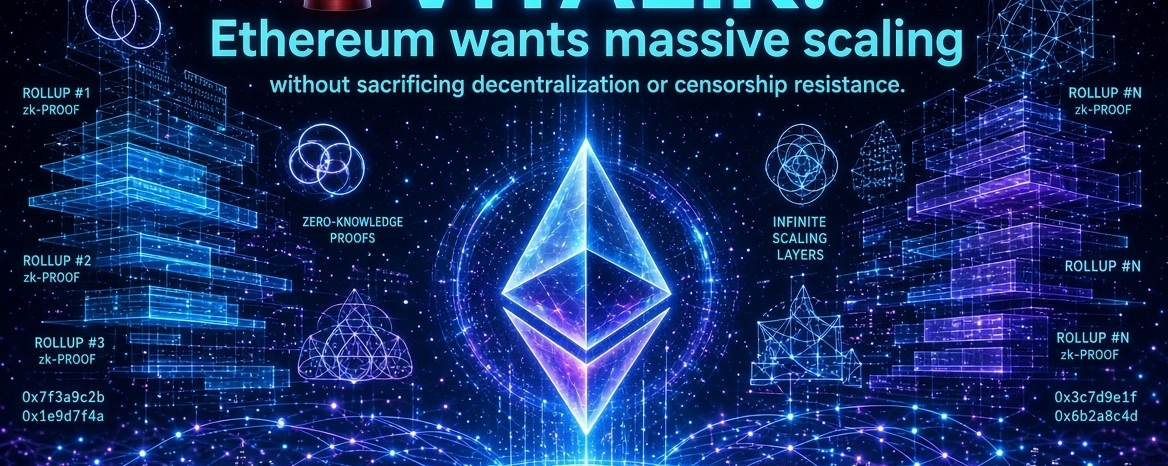
VITALIK: イーサリアムは分散化や検閲耐性を犠牲にせずに大規模スケーリングを目指しているイーサリアムの共同創設者ヴィタリック・ブテリンは、繰り返しネットワークの次のフェーズを、交渉不可能な原則の周りに組み立ててきた。それは、イーサリアムらしさを損なうことなく、桁違いの能力を提供することだ。目標は単にスループットを高めることではない。普通のユーザーがノードを運用でき、検閲に抵抗でき、グローバルな参加への開放性を保ち、大きな運用者や開発者が離れてしまっても堅牢であり続けるような、高性能であることが重要だ。
この構想の中心には、攻めたレイテンシー低減よりも帯域幅を優先する、意図的な優先順位付けがある。ブテリンは、より低いレイテンシーを追い続けるよりも、データ帯域幅を増やす方が安全だと論じてきた。レイテンシーには、光速による厳しい物理的限界と、データセンタのハブから遠い自宅セットアップを含む多様な場所にいるバリデータが、競争力を保ち続ける必要があるという制約がある。これに対し帯域幅は、データ可用性サンプリング、消失符号化(erasure coding)、そしてゼロ知識証明で解決できる工学上の問題だ。PeerDASのような技術は、ノードがすべてをダウンロードせずとも大規模なデータを検証できるようにする。これをZK証明と組み合わせることで、過去の設計に比べて何千倍ものスケーリング能力への道が開けつつも、広く分散したバリデータ集合を維持できる。
VITALIK: イーサリアムは分散化や検閲耐性を犠牲にせずに大規模スケーリングを目指している
イーサリアムの共同創設者ヴィタリック・ブテリンは、繰り返しネットワークの次のフェーズを、交渉不可能な原則の周りに組み立ててきた。それは、イーサリアムらしさを損なうことなく、桁違いの能力を提供することだ。目標は単にスループットを高めることではない。普通のユーザーがノードを運用でき、検閲に抵抗でき、グローバルな参加への開放性を保ち、大きな運用者や開発者が離れてしまっても堅牢であり続けるような、高性能であることが重要だ。
この構想の中心には、攻めたレイテンシー低減よりも帯域幅を優先する、意図的な優先順位付けがある。ブテリンは、より低いレイテンシーを追い続けるよりも、データ帯域幅を増やす方が安全だと論じてきた。レイテンシーには、光速による厳しい物理的限界と、データセンタのハブから遠い自宅セットアップを含む多様な場所にいるバリデータが、競争力を保ち続ける必要があるという制約がある。これに対し帯域幅は、データ可用性サンプリング、消失符号化(erasure coding)、そしてゼロ知識証明で解決できる工学上の問題だ。PeerDASのような技術は、ノードがすべてをダウンロードせずとも大規模なデータを検証できるようにする。これをZK証明と組み合わせることで、過去の設計に比べて何千倍ものスケーリング能力への道が開けつつも、広く分散したバリデータ集合を維持できる。
この構想の中心には、攻めたレイテンシー低減よりも帯域幅を優先する、意図的な優先順位付けがある。ブテリンは、より低いレイテンシーを追い続けるよりも、データ帯域幅を増やす方が安全だと論じてきた。レイテンシーには、光速による厳しい物理的限界と、データセンタのハブから遠い自宅セットアップを含む多様な場所にいるバリデータが、競争力を保ち続ける必要があるという制約がある。これに対し帯域幅は、データ可用性サンプリング、消失符号化(erasure coding)、そしてゼロ知識証明で解決できる工学上の問題だ。PeerDASのような技術は、ノードがすべてをダウンロードせずとも大規模なデータを検証できるようにする。これをZK証明と組み合わせることで、過去の設計に比べて何千倍ものスケーリング能力への道が開けつつも、広く分散したバリデータ集合を維持できる。
43
·
--
記事
翻訳参照
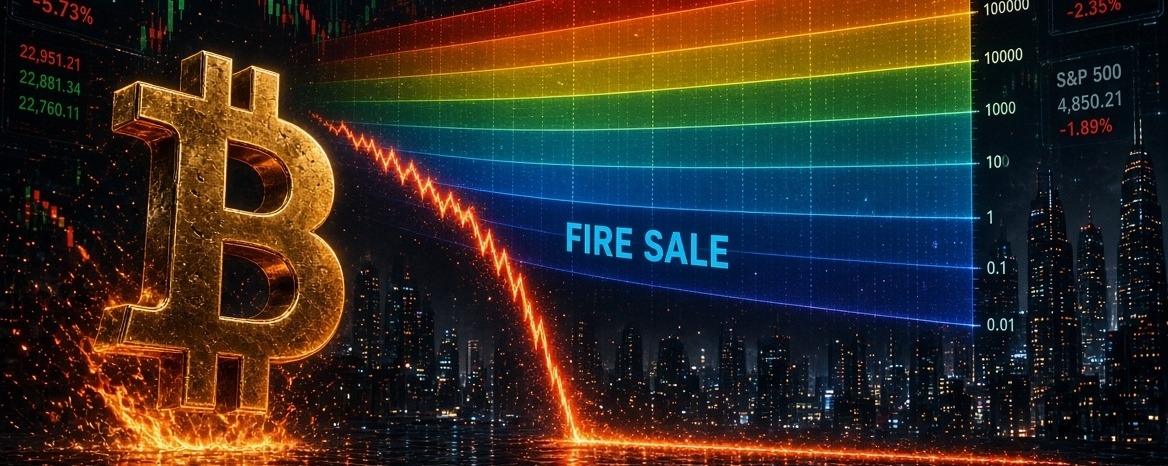
Bitcoin has never lingered this long below the Rainbow Chart’s “Fire Sale”Bitcoin has never lingered this long below the Rainbow Chart’s “Fire Sale” band. That statement, circulating widely in mid-August 2026, captures an unusual stretch of extreme undervaluation relative to Bitcoin’s long-term logarithmic growth trajectory.
The #bitcoin Rainbow Chart overlays color-coded valuation bands on a log-scale price chart. The deepest blue zone—“Basically a Fire Sale!”—has historically marked periods of deep capitulation. Prior visits to or breaches of this level (notably 2015, the March 2020 COVID crash, and the November 2022 FTX collapse) were relatively short-lived compared with the current multi-month residence. Price now sits near $63,000, roughly 50% below the October 2025 peak near $126,000 and meaningfully below the model’s lowest band (recently estimated around $63,000–$65,000 depending on the exact fit). Volatility-adjusted metrics show the deviation from the long-term model price is deeper than at the 2022 bottom.
This does not guarantee an imminent bottom. The chart is a heuristic, not a timing tool. Bands can be recalibrated, and structural changes—spot ETF flows, corporate treasuries, and different liquidity regimes—mean past cycle shapes are imperfect guides. Bitcoin can remain “cheap” for extended periods if macro headwinds (rates, risk appetite, geopolitics) persist. Extended time in the zone has, however, consistently coincided with eventual powerful recoveries once selling pressure exhausted itself.
Historically, accumulation during Fire Sale conditions produced outsized multi-year returns. After the prolonged 2014–2015 undervaluation, Bitcoin rose from the low hundreds to nearly $20,000. The 2018–2019 and 2022 bottoms similarly preceded multi-hundred-percent advances into the subsequent cycle highs. Returns after earlier Fire Sale readings ranged from several hundred percent to orders of magnitude higher for those who held through the next expansion. The common pattern was not a V-shaped bounce the day the band was breached, but a grinding process of seller exhaustion, followed by gradual demand return and then acceleration once momentum shifted.
What happens next depends on several interlocking factors. First is seller exhaustion. On-chain data has already shown declining activity from long-term holders and reduced spot selling pressure in recent months. When the marginal seller is largely finished, price can stabilize even without immediate strong buying. Second is institutional and ETF demand. Spot Bitcoin ETFs created a structural buyer base that did not exist in prior cycles; sustained net inflows would provide a floor and fuel for recovery. Third is the broader macro backdrop—interest-rate path, dollar strength, and risk-asset appetite. Easing financial conditions have historically been highly supportive of Bitcoin’s expansion phases.
Two plausible near-to-medium-term paths stand out. In a constructive scenario, the current stretch marks late-cycle capitulation. Price finds a durable base in the low-to-mid $60,000s (or slightly lower if a final flush occurs), then begins a multi-month recovery as fear fades and capital rotates back in. That recovery could eventually retest prior highs and push into new all-time territory in the next expansion, consistent with the Rainbow Chart’s higher bands over subsequent years. In a more cautious scenario, the model’s assumptions about growth trajectory prove stretched by the new market structure, and Bitcoin grinds sideways or lower for longer while still remaining “cheap” on a relative basis. Either way, the risk/reward for long-term holders who can tolerate volatility has historically improved at these extremes.
Patience has been the defining trait of successful participants in prior Fire Sale episodes. Timing the exact low is rarely possible; sizing positions for extended discomfort and focusing on multi-year horizons has been more reliable. The current record duration below the band is unusual precisely because previous extreme discounts resolved within shorter windows. Whether this cycle follows the historical script or rewrites it, the valuation signal is clear: relative to its own long-term trend, Bitcoin is trading at levels rarely seen outside of major cycle lows.
Bitcoin has never lingered this long below the Rainbow Chart’s “Fire Sale”
Bitcoin has never lingered this long below the Rainbow Chart’s “Fire Sale” band. That statement, circulating widely in mid-August 2026, captures an unusual stretch of extreme undervaluation relative to Bitcoin’s long-term logarithmic growth trajectory.
The #bitcoin Rainbow Chart overlays color-coded valuation bands on a log-scale price chart. The deepest blue zone—“Basically a Fire Sale!”—has historically marked periods of deep capitulation. Prior visits to or breaches of this level (notably 2015, the March 2020 COVID crash, and the November 2022 FTX collapse) were relatively short-lived compared with the current multi-month residence. Price now sits near $63,000, roughly 50% below the October 2025 peak near $126,000 and meaningfully below the model’s lowest band (recently estimated around $63,000–$65,000 depending on the exact fit). Volatility-adjusted metrics show the deviation from the long-term model price is deeper than at the 2022 bottom.
This does not guarantee an imminent bottom. The chart is a heuristic, not a timing tool. Bands can be recalibrated, and structural changes—spot ETF flows, corporate treasuries, and different liquidity regimes—mean past cycle shapes are imperfect guides. Bitcoin can remain “cheap” for extended periods if macro headwinds (rates, risk appetite, geopolitics) persist. Extended time in the zone has, however, consistently coincided with eventual powerful recoveries once selling pressure exhausted itself.
Historically, accumulation during Fire Sale conditions produced outsized multi-year returns. After the prolonged 2014–2015 undervaluation, Bitcoin rose from the low hundreds to nearly $20,000. The 2018–2019 and 2022 bottoms similarly preceded multi-hundred-percent advances into the subsequent cycle highs. Returns after earlier Fire Sale readings ranged from several hundred percent to orders of magnitude higher for those who held through the next expansion. The common pattern was not a V-shaped bounce the day the band was breached, but a grinding process of seller exhaustion, followed by gradual demand return and then acceleration once momentum shifted.
What happens next depends on several interlocking factors. First is seller exhaustion. On-chain data has already shown declining activity from long-term holders and reduced spot selling pressure in recent months. When the marginal seller is largely finished, price can stabilize even without immediate strong buying. Second is institutional and ETF demand. Spot Bitcoin ETFs created a structural buyer base that did not exist in prior cycles; sustained net inflows would provide a floor and fuel for recovery. Third is the broader macro backdrop—interest-rate path, dollar strength, and risk-asset appetite. Easing financial conditions have historically been highly supportive of Bitcoin’s expansion phases.
Two plausible near-to-medium-term paths stand out. In a constructive scenario, the current stretch marks late-cycle capitulation. Price finds a durable base in the low-to-mid $60,000s (or slightly lower if a final flush occurs), then begins a multi-month recovery as fear fades and capital rotates back in. That recovery could eventually retest prior highs and push into new all-time territory in the next expansion, consistent with the Rainbow Chart’s higher bands over subsequent years. In a more cautious scenario, the model’s assumptions about growth trajectory prove stretched by the new market structure, and Bitcoin grinds sideways or lower for longer while still remaining “cheap” on a relative basis. Either way, the risk/reward for long-term holders who can tolerate volatility has historically improved at these extremes.
Patience has been the defining trait of successful participants in prior Fire Sale episodes. Timing the exact low is rarely possible; sizing positions for extended discomfort and focusing on multi-year horizons has been more reliable. The current record duration below the band is unusual precisely because previous extreme discounts resolved within shorter windows. Whether this cycle follows the historical script or rewrites it, the valuation signal is clear: relative to its own long-term trend, Bitcoin is trading at levels rarely seen outside of major cycle lows.
The #bitcoin Rainbow Chart overlays color-coded valuation bands on a log-scale price chart. The deepest blue zone—“Basically a Fire Sale!”—has historically marked periods of deep capitulation. Prior visits to or breaches of this level (notably 2015, the March 2020 COVID crash, and the November 2022 FTX collapse) were relatively short-lived compared with the current multi-month residence. Price now sits near $63,000, roughly 50% below the October 2025 peak near $126,000 and meaningfully below the model’s lowest band (recently estimated around $63,000–$65,000 depending on the exact fit). Volatility-adjusted metrics show the deviation from the long-term model price is deeper than at the 2022 bottom.
This does not guarantee an imminent bottom. The chart is a heuristic, not a timing tool. Bands can be recalibrated, and structural changes—spot ETF flows, corporate treasuries, and different liquidity regimes—mean past cycle shapes are imperfect guides. Bitcoin can remain “cheap” for extended periods if macro headwinds (rates, risk appetite, geopolitics) persist. Extended time in the zone has, however, consistently coincided with eventual powerful recoveries once selling pressure exhausted itself.
Historically, accumulation during Fire Sale conditions produced outsized multi-year returns. After the prolonged 2014–2015 undervaluation, Bitcoin rose from the low hundreds to nearly $20,000. The 2018–2019 and 2022 bottoms similarly preceded multi-hundred-percent advances into the subsequent cycle highs. Returns after earlier Fire Sale readings ranged from several hundred percent to orders of magnitude higher for those who held through the next expansion. The common pattern was not a V-shaped bounce the day the band was breached, but a grinding process of seller exhaustion, followed by gradual demand return and then acceleration once momentum shifted.
What happens next depends on several interlocking factors. First is seller exhaustion. On-chain data has already shown declining activity from long-term holders and reduced spot selling pressure in recent months. When the marginal seller is largely finished, price can stabilize even without immediate strong buying. Second is institutional and ETF demand. Spot Bitcoin ETFs created a structural buyer base that did not exist in prior cycles; sustained net inflows would provide a floor and fuel for recovery. Third is the broader macro backdrop—interest-rate path, dollar strength, and risk-asset appetite. Easing financial conditions have historically been highly supportive of Bitcoin’s expansion phases.
Two plausible near-to-medium-term paths stand out. In a constructive scenario, the current stretch marks late-cycle capitulation. Price finds a durable base in the low-to-mid $60,000s (or slightly lower if a final flush occurs), then begins a multi-month recovery as fear fades and capital rotates back in. That recovery could eventually retest prior highs and push into new all-time territory in the next expansion, consistent with the Rainbow Chart’s higher bands over subsequent years. In a more cautious scenario, the model’s assumptions about growth trajectory prove stretched by the new market structure, and Bitcoin grinds sideways or lower for longer while still remaining “cheap” on a relative basis. Either way, the risk/reward for long-term holders who can tolerate volatility has historically improved at these extremes.
Patience has been the defining trait of successful participants in prior Fire Sale episodes. Timing the exact low is rarely possible; sizing positions for extended discomfort and focusing on multi-year horizons has been more reliable. The current record duration below the band is unusual precisely because previous extreme discounts resolved within shorter windows. Whether this cycle follows the historical script or rewrites it, the valuation signal is clear: relative to its own long-term trend, Bitcoin is trading at levels rarely seen outside of major cycle lows.
80
·
--

記事
CZがGiggle AcademyにBNBと币安人生トークンを寄付し、その後ウォレットを放棄
ChangpengBinanceの創業者としてよく知られるChangpeng Zhao(CZ)は、ミームコインの磁石になっていた自身の公開ウォレットの一つについて、断を下すような動きを発表した。彼は、そのアドレスに保有されているBNBと「币安人生」(Binance Life)トークンをGiggle Academyに寄付する。その後はウォレットの使用を完全にやめ、バーンアドレスとして機能させる。理由は明快だ。ウォレットにランダムなミームトークンが送られてくる循環を断ち、そして、それを掃除しようとするたびに巻き起こるコミュニティの過剰解釈の波を止めるためである。
CZがGiggle AcademyにBNBと币安人生トークンを寄付し、その後ウォレットを放棄 Changpeng
Binanceの創業者としてよく知られるChangpeng Zhao(CZ)は、ミームコインの磁石になっていた自身の公開ウォレットの一つについて、断を下すような動きを発表した。彼は、そのアドレスに保有されているBNBと「币安人生」(Binance Life)トークンをGiggle Academyに寄付する。その後はウォレットの使用を完全にやめ、バーンアドレスとして機能させる。理由は明快だ。ウォレットにランダムなミームトークンが送られてくる循環を断ち、そして、それを掃除しようとするたびに巻き起こるコミュニティの過剰解釈の波を止めるためである。
193
·
--
記事
翻訳参照
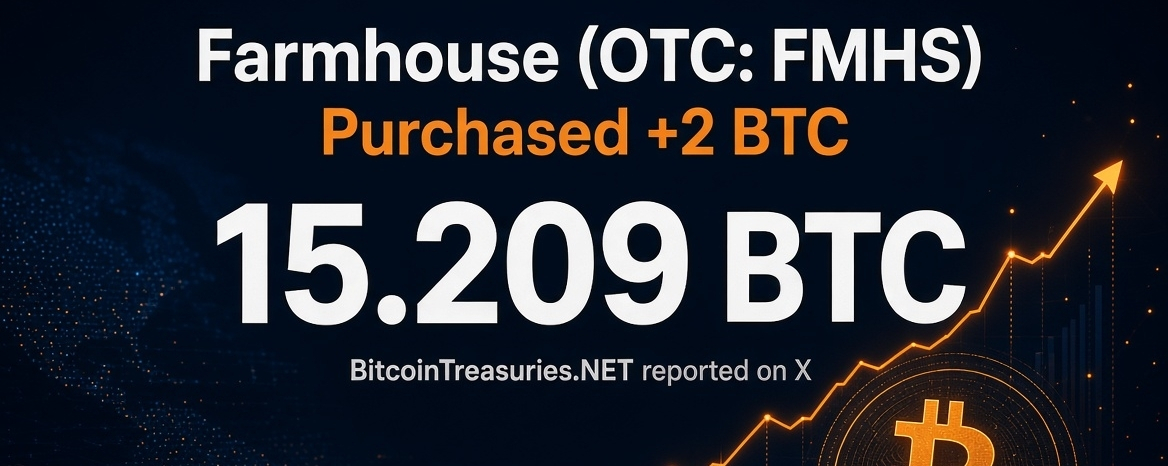
Farmhouse (OTC: FMHS) has purchased an additional 2 Bitcoin, bringing its total holdings to 15 BTCBitcoinTreasuries.NET reported on X that publicly traded company Farmhouse (OTC: FMHS) has purchased an additional 2 Bitcoin, bringing its total holdings to 15.209 BTC. Odaily confirmed the update, noting that Farmhouse now holds 15.209 Bitcoin following the latest acquisition.
The company’s own announcement provided further detail. Farmhouse stated it added another 2.0 BTC to its treasury at an average price of $63,761. The total Bitcoin held now stands at 15.209, with a blended average cost basis of $64,547. Management highlighted the move with a simple claim: “We have the best entry in the treasury space.”
This latest purchase continues a pattern of steady accumulation that Farmhouse has maintained through periods of market weakness. Earlier in the year the company was holding single-digit Bitcoin amounts. Over successive buys it has more than doubled its position while keeping its average entry relatively contained compared with many larger corporate treasuries that accumulated during higher price ranges. The strategy is deliberate. Farmhouse positions itself as an “anti-debasement” treasury, targeting roughly 70 percent of its reserve assets in Bitcoin and 30 percent in gold, with additional smaller allocations to income-oriented digital credit instruments.
The timing is notable. Bitcoin has spent recent sessions under pressure, trading near multi-month lows and testing key technical levels. Many market participants have grown cautious, reducing risk or waiting for clearer directional signals. Farmhouse has chosen the opposite approach: buying into the softness. Its most recent 2 BTC purchase occurred at prices below $64,000, improving the overall cost basis of the treasury. For a small-cap OTC company with a market capitalization in the low single-digit millions, each incremental Bitcoin purchase represents a meaningful commitment relative to its size.
Farmhouse’s approach differs from the high-profile corporate Bitcoin strategies that dominated headlines in previous cycles. It does not attempt to issue large convertible notes or raise hundreds of millions specifically for Bitcoin accumulation. Instead it has focused on consistent, relatively small purchases while maintaining transparency about both Bitcoin and gold holdings. The company maintains a public website that displays live treasury metrics, average entry prices, and historical purchase events. This level of disclosure is unusual among micro-cap names and appears designed to attract shareholders who specifically want exposure to a dual Bitcoin-and-gold reserve strategy.
The broader corporate Bitcoin treasury landscape has continued to expand even as price action has cooled. Trackers such as BitcoinTreasuries.NET monitor dozens of public companies that have added BTC to their balance sheets. While the largest holders still dominate absolute figures, smaller and mid-sized firms like Farmhouse contribute to the overall narrative of gradual institutional and corporate adoption. Each incremental purchase, regardless of size, removes Bitcoin from circulating supply and signals that some balance-sheet managers continue to view the asset as a long-term store of value rather than a short-term trading vehicle.
Whether Farmhouse’s strategy will translate into sustained shareholder value remains an open question. OTC equities of this size can be thinly traded and highly volatile. The company’s market capitalization is modest, and its core operating businesses have historically been limited. The Bitcoin and gold treasury has become a primary point of differentiation. By continuing to accumulate at current levels, management is effectively betting that the long-term appreciation of these scarce assets will outweigh near-term equity market indifference.
For now, the facts are straightforward. Farmhouse has added another 2 Bitcoin. Its total holdings stand at 15.209 BTC at an average cost of $64,547. BitcoinTreasuries.NET recorded the transaction, Odaily reported it, and the company itself confirmed the details. In a market still searching for direction, one small public company is quietly stacking.
Farmhouse (OTC: FMHS) has purchased an additional 2 Bitcoin, bringing its total holdings to 15 BTC
BitcoinTreasuries.NET reported on X that publicly traded company Farmhouse (OTC: FMHS) has purchased an additional 2 Bitcoin, bringing its total holdings to 15.209 BTC. Odaily confirmed the update, noting that Farmhouse now holds 15.209 Bitcoin following the latest acquisition.
The company’s own announcement provided further detail. Farmhouse stated it added another 2.0 BTC to its treasury at an average price of $63,761. The total Bitcoin held now stands at 15.209, with a blended average cost basis of $64,547. Management highlighted the move with a simple claim: “We have the best entry in the treasury space.”
This latest purchase continues a pattern of steady accumulation that Farmhouse has maintained through periods of market weakness. Earlier in the year the company was holding single-digit Bitcoin amounts. Over successive buys it has more than doubled its position while keeping its average entry relatively contained compared with many larger corporate treasuries that accumulated during higher price ranges. The strategy is deliberate. Farmhouse positions itself as an “anti-debasement” treasury, targeting roughly 70 percent of its reserve assets in Bitcoin and 30 percent in gold, with additional smaller allocations to income-oriented digital credit instruments.
The timing is notable. Bitcoin has spent recent sessions under pressure, trading near multi-month lows and testing key technical levels. Many market participants have grown cautious, reducing risk or waiting for clearer directional signals. Farmhouse has chosen the opposite approach: buying into the softness. Its most recent 2 BTC purchase occurred at prices below $64,000, improving the overall cost basis of the treasury. For a small-cap OTC company with a market capitalization in the low single-digit millions, each incremental Bitcoin purchase represents a meaningful commitment relative to its size.
Farmhouse’s approach differs from the high-profile corporate Bitcoin strategies that dominated headlines in previous cycles. It does not attempt to issue large convertible notes or raise hundreds of millions specifically for Bitcoin accumulation. Instead it has focused on consistent, relatively small purchases while maintaining transparency about both Bitcoin and gold holdings. The company maintains a public website that displays live treasury metrics, average entry prices, and historical purchase events. This level of disclosure is unusual among micro-cap names and appears designed to attract shareholders who specifically want exposure to a dual Bitcoin-and-gold reserve strategy.
The broader corporate Bitcoin treasury landscape has continued to expand even as price action has cooled. Trackers such as BitcoinTreasuries.NET monitor dozens of public companies that have added BTC to their balance sheets. While the largest holders still dominate absolute figures, smaller and mid-sized firms like Farmhouse contribute to the overall narrative of gradual institutional and corporate adoption. Each incremental purchase, regardless of size, removes Bitcoin from circulating supply and signals that some balance-sheet managers continue to view the asset as a long-term store of value rather than a short-term trading vehicle.
Whether Farmhouse’s strategy will translate into sustained shareholder value remains an open question. OTC equities of this size can be thinly traded and highly volatile. The company’s market capitalization is modest, and its core operating businesses have historically been limited. The Bitcoin and gold treasury has become a primary point of differentiation. By continuing to accumulate at current levels, management is effectively betting that the long-term appreciation of these scarce assets will outweigh near-term equity market indifference.
For now, the facts are straightforward. Farmhouse has added another 2 Bitcoin. Its total holdings stand at 15.209 BTC at an average cost of $64,547. BitcoinTreasuries.NET recorded the transaction, Odaily reported it, and the company itself confirmed the details. In a market still searching for direction, one small public company is quietly stacking.
The company’s own announcement provided further detail. Farmhouse stated it added another 2.0 BTC to its treasury at an average price of $63,761. The total Bitcoin held now stands at 15.209, with a blended average cost basis of $64,547. Management highlighted the move with a simple claim: “We have the best entry in the treasury space.”
This latest purchase continues a pattern of steady accumulation that Farmhouse has maintained through periods of market weakness. Earlier in the year the company was holding single-digit Bitcoin amounts. Over successive buys it has more than doubled its position while keeping its average entry relatively contained compared with many larger corporate treasuries that accumulated during higher price ranges. The strategy is deliberate. Farmhouse positions itself as an “anti-debasement” treasury, targeting roughly 70 percent of its reserve assets in Bitcoin and 30 percent in gold, with additional smaller allocations to income-oriented digital credit instruments.
The timing is notable. Bitcoin has spent recent sessions under pressure, trading near multi-month lows and testing key technical levels. Many market participants have grown cautious, reducing risk or waiting for clearer directional signals. Farmhouse has chosen the opposite approach: buying into the softness. Its most recent 2 BTC purchase occurred at prices below $64,000, improving the overall cost basis of the treasury. For a small-cap OTC company with a market capitalization in the low single-digit millions, each incremental Bitcoin purchase represents a meaningful commitment relative to its size.
Farmhouse’s approach differs from the high-profile corporate Bitcoin strategies that dominated headlines in previous cycles. It does not attempt to issue large convertible notes or raise hundreds of millions specifically for Bitcoin accumulation. Instead it has focused on consistent, relatively small purchases while maintaining transparency about both Bitcoin and gold holdings. The company maintains a public website that displays live treasury metrics, average entry prices, and historical purchase events. This level of disclosure is unusual among micro-cap names and appears designed to attract shareholders who specifically want exposure to a dual Bitcoin-and-gold reserve strategy.
The broader corporate Bitcoin treasury landscape has continued to expand even as price action has cooled. Trackers such as BitcoinTreasuries.NET monitor dozens of public companies that have added BTC to their balance sheets. While the largest holders still dominate absolute figures, smaller and mid-sized firms like Farmhouse contribute to the overall narrative of gradual institutional and corporate adoption. Each incremental purchase, regardless of size, removes Bitcoin from circulating supply and signals that some balance-sheet managers continue to view the asset as a long-term store of value rather than a short-term trading vehicle.
Whether Farmhouse’s strategy will translate into sustained shareholder value remains an open question. OTC equities of this size can be thinly traded and highly volatile. The company’s market capitalization is modest, and its core operating businesses have historically been limited. The Bitcoin and gold treasury has become a primary point of differentiation. By continuing to accumulate at current levels, management is effectively betting that the long-term appreciation of these scarce assets will outweigh near-term equity market indifference.
For now, the facts are straightforward. Farmhouse has added another 2 Bitcoin. Its total holdings stand at 15.209 BTC at an average cost of $64,547. BitcoinTreasuries.NET recorded the transaction, Odaily reported it, and the company itself confirmed the details. In a market still searching for direction, one small public company is quietly stacking.
33
·
--

記事
KB証券:サムスン電子とSKハイニックスは深刻に割安KB証券によれば、韓国のメモリーチップ大手2社(サムスン電子とSKハイニックス)は、爆発的な利益成長に対して依然として深刻に割安です。2026年8月13日付のレポートで、KB証券のリサーチ責任者であるキム・ドンウォン氏は、予想利益が急増する一方で株価が大きく置いていかれているとして、同社は「極めて過小評価された」領域に入ったと主張しました。
KB証券は、サムスン電子とSKハイニックスの合計営業利益が、2025年の91兆ウォンから2026年に641兆ウォンへ、さらに2027年には964兆ウォンへと急増すると予測しています(1,000兆ウォンの水準に接近)。2027年に関しては、証券会社はサムスンの営業利益を575兆ウォン、SKハイニックスを389兆ウォンと見積もっています。これらの数字は、年ごとの大幅な伸びを示唆しており、2社が韓国市場の利益を支配すると見込まれます。
KB証券:サムスン電子とSKハイニックスは深刻に割安
KB証券によれば、韓国のメモリーチップ大手2社(サムスン電子とSKハイニックス)は、爆発的な利益成長に対して依然として深刻に割安です。2026年8月13日付のレポートで、KB証券のリサーチ責任者であるキム・ドンウォン氏は、予想利益が急増する一方で株価が大きく置いていかれているとして、同社は「極めて過小評価された」領域に入ったと主張しました。
KB証券は、サムスン電子とSKハイニックスの合計営業利益が、2025年の91兆ウォンから2026年に641兆ウォンへ、さらに2027年には964兆ウォンへと急増すると予測しています(1,000兆ウォンの水準に接近)。2027年に関しては、証券会社はサムスンの営業利益を575兆ウォン、SKハイニックスを389兆ウォンと見積もっています。これらの数字は、年ごとの大幅な伸びを示唆しており、2社が韓国市場の利益を支配すると見込まれます。
KB証券は、サムスン電子とSKハイニックスの合計営業利益が、2025年の91兆ウォンから2026年に641兆ウォンへ、さらに2027年には964兆ウォンへと急増すると予測しています(1,000兆ウォンの水準に接近)。2027年に関しては、証券会社はサムスンの営業利益を575兆ウォン、SKハイニックスを389兆ウォンと見積もっています。これらの数字は、年ごとの大幅な伸びを示唆しており、2社が韓国市場の利益を支配すると見込まれます。
47
·
--

記事
シーインの香港までの長い道のり:市場環境の変化に合わせた縮小版IPO中国で設立された、シンガポール本社のファストファッション大手シーイン(Shein)は、待望の上場に向けて一段と前進している。事情を知る関係者や、シナ・ファイナンス(Sina Finance)を引用する報道によれば、同社は香港での新規株式公開(IPO)について、8月20日以降に早ければ投資家の注文受付を開始し、上場デビューは8月28日前後の香港証券取引所(HKEX)になる可能性があるという。調達額は20億ドルから30億ドルが見込まれているが、最終的な詳細はなお流動的だ。
同社は当初、評価額を約300億ドルとする目標を掲げていたが、これは2022年における未上場市場でのピークに近い約1,000億ドルからすでに大幅に縮小しており、その後のラウンドでは約640億ドルと評価されていた。とはいえ、投資家側の反発があれば、その水準がさらに下がる可能性もある。複数の報道によれば、アドバイザーが同社を評価額2,000億〜3,000億ドル台後半の中〜高20数十億ドルのレンジで売り込む動きがあるという。買い手候補が慎重になっていることを反映している。既存株主は、売り出される株式のおよそ半分に相当する規模を申し込む見通しで、取引を後押しする材料になると期待されている。
シーインの香港までの長い道のり:市場環境の変化に合わせた縮小版IPO
中国で設立された、シンガポール本社のファストファッション大手シーイン(Shein)は、待望の上場に向けて一段と前進している。事情を知る関係者や、シナ・ファイナンス(Sina Finance)を引用する報道によれば、同社は香港での新規株式公開(IPO)について、8月20日以降に早ければ投資家の注文受付を開始し、上場デビューは8月28日前後の香港証券取引所(HKEX)になる可能性があるという。調達額は20億ドルから30億ドルが見込まれているが、最終的な詳細はなお流動的だ。
同社は当初、評価額を約300億ドルとする目標を掲げていたが、これは2022年における未上場市場でのピークに近い約1,000億ドルからすでに大幅に縮小しており、その後のラウンドでは約640億ドルと評価されていた。とはいえ、投資家側の反発があれば、その水準がさらに下がる可能性もある。複数の報道によれば、アドバイザーが同社を評価額2,000億〜3,000億ドル台後半の中〜高20数十億ドルのレンジで売り込む動きがあるという。買い手候補が慎重になっていることを反映している。既存株主は、売り出される株式のおよそ半分に相当する規模を申し込む見通しで、取引を後押しする材料になると期待されている。
同社は当初、評価額を約300億ドルとする目標を掲げていたが、これは2022年における未上場市場でのピークに近い約1,000億ドルからすでに大幅に縮小しており、その後のラウンドでは約640億ドルと評価されていた。とはいえ、投資家側の反発があれば、その水準がさらに下がる可能性もある。複数の報道によれば、アドバイザーが同社を評価額2,000億〜3,000億ドル台後半の中〜高20数十億ドルのレンジで売り込む動きがあるという。買い手候補が慎重になっていることを反映している。既存株主は、売り出される株式のおよそ半分に相当する規模を申し込む見通しで、取引を後押しする材料になると期待されている。
69
·
--
記事
翻訳参照
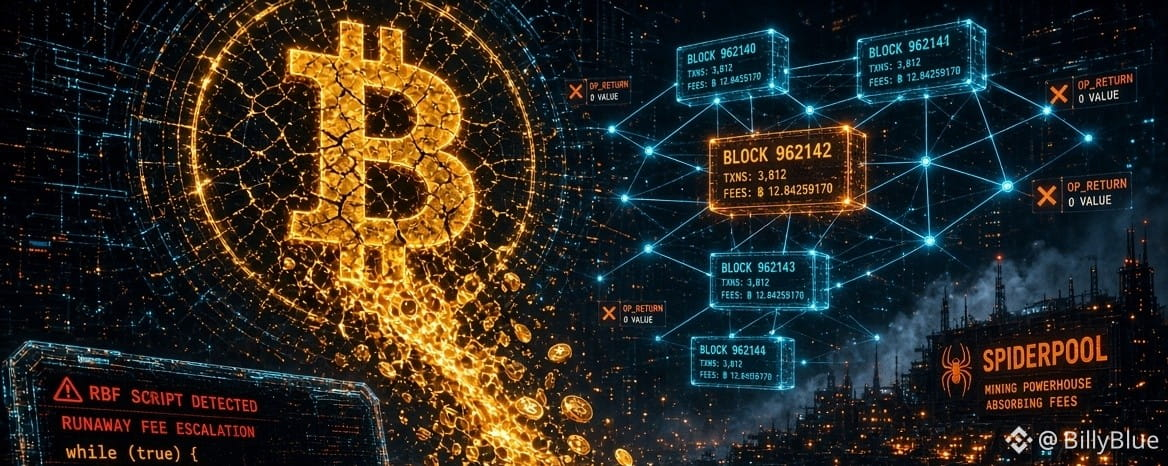
The Costly Script: How a Bitcoin Automation Error Turned 1.6 BTC into Miner FeesBitcoin block 962142 quietly absorbed one of the more expensive self-inflicted wounds in recent on-chain history. A single transaction entered the ledger with one input of 160,343,885 satoshis—roughly 1.603 BTC—and zero value delivered to any recipient. Every satoshi became a network fee. Miners, specifically those operating under SpiderPool, collected the entire amount. At prevailing prices near $64,000, the fee was worth approximately $102,800 to $103,000. That one transaction supplied about 88% of the block’s total fees of roughly 1.82 BTC.
The mechanism was Replace-by-Fee, or RBF. Bitcoin’s fee market is dynamic; mempool conditions shift constantly, and a transaction that looks competitive at broadcast can sit unconfirmed for hours or longer. RBF allows a sender to broadcast a new version of an unconfirmed transaction that spends the same inputs but attaches a higher fee, signaling priority to miners. When used carefully, it is a practical tool for unsticking payments. When left unbounded, it becomes a runaway process.
According to reporting from Odaily and subsequent coverage by BeInCrypto, Lookonchain, and others, the user ran an automated script designed to bump the fee once per second. No sensible ceiling was coded into the loop. Each replacement version increased the fee further, steadily consuming more of the input balance. Eventually the arithmetic left nothing for an output. Bitcoin’s consensus rules impose no hard upper limit on what a sender may voluntarily offer miners; the protocol simply requires that inputs equal or exceed outputs plus fees. A zero-value (or pure OP_RETURN data) output is valid. Nodes accepted the final version, and SpiderPool included it.
Some deeper on-chain examination suggested the episode may have involved more than one related transaction from the same source. Earlier activity had consolidated scattered UTXOs into a cleaner 1.6 BTC input with a normal, low fee. Subsequent replacements then escalated dramatically, with reported fee rates climbing into the hundreds of thousands or even over a million satoshis per virtual byte—orders of magnitude above the block’s median. Whether the final form was a pure fee burn or an intended data payload that went wrong, the economic result was identical: the full input value transferred to miners.
SpiderPool’s block contained roughly 4,700 transactions. The remaining thousands of ordinary payments contributed only a tiny fraction of the total fees. For the pool, the windfall arrived as pure revenue on top of the standard block subsidy. For the user, it was a complete loss of principal with no corresponding transfer completed.
The episode underscores a recurring lesson in Bitcoin’s design. Automation is powerful and increasingly common for wallet management, consolidation, and fee optimization. Yet scripts that interact with irreversible, adversarial markets require hard limits, monitoring, and fail-safes. A missing fee cap, an unchecked loop, or an assumption that “it will stop before it gets ridiculous” can convert a routine operation into a six-figure donation to the network’s security budget.
RBF itself is not the villain. It exists precisely because fee estimation is imperfect and congestion is real. The failure mode was operational: an unbounded process meeting a system that will cheerfully accept any fee a user is willing to pay. In a market where transactions compete openly for block space, the highest bidder wins—even when the bidder is a malfunctioning script that has already spent everything it owns.
The transaction stands as a public, permanent reminder on the blockchain. One input, zero productive outputs, 1.6 BTC transferred to miners in block 962142. Automation without constraints remains one of the more expensive ways to learn how Bitcoin’s fee market actually works.
The Costly Script: How a Bitcoin Automation Error Turned 1.6 BTC into Miner Fees
Bitcoin block 962142 quietly absorbed one of the more expensive self-inflicted wounds in recent on-chain history. A single transaction entered the ledger with one input of 160,343,885 satoshis—roughly 1.603 BTC—and zero value delivered to any recipient. Every satoshi became a network fee. Miners, specifically those operating under SpiderPool, collected the entire amount. At prevailing prices near $64,000, the fee was worth approximately $102,800 to $103,000. That one transaction supplied about 88% of the block’s total fees of roughly 1.82 BTC.
The mechanism was Replace-by-Fee, or RBF. Bitcoin’s fee market is dynamic; mempool conditions shift constantly, and a transaction that looks competitive at broadcast can sit unconfirmed for hours or longer. RBF allows a sender to broadcast a new version of an unconfirmed transaction that spends the same inputs but attaches a higher fee, signaling priority to miners. When used carefully, it is a practical tool for unsticking payments. When left unbounded, it becomes a runaway process.
According to reporting from Odaily and subsequent coverage by BeInCrypto, Lookonchain, and others, the user ran an automated script designed to bump the fee once per second. No sensible ceiling was coded into the loop. Each replacement version increased the fee further, steadily consuming more of the input balance. Eventually the arithmetic left nothing for an output. Bitcoin’s consensus rules impose no hard upper limit on what a sender may voluntarily offer miners; the protocol simply requires that inputs equal or exceed outputs plus fees. A zero-value (or pure OP_RETURN data) output is valid. Nodes accepted the final version, and SpiderPool included it.
Some deeper on-chain examination suggested the episode may have involved more than one related transaction from the same source. Earlier activity had consolidated scattered UTXOs into a cleaner 1.6 BTC input with a normal, low fee. Subsequent replacements then escalated dramatically, with reported fee rates climbing into the hundreds of thousands or even over a million satoshis per virtual byte—orders of magnitude above the block’s median. Whether the final form was a pure fee burn or an intended data payload that went wrong, the economic result was identical: the full input value transferred to miners.
SpiderPool’s block contained roughly 4,700 transactions. The remaining thousands of ordinary payments contributed only a tiny fraction of the total fees. For the pool, the windfall arrived as pure revenue on top of the standard block subsidy. For the user, it was a complete loss of principal with no corresponding transfer completed.
The episode underscores a recurring lesson in Bitcoin’s design. Automation is powerful and increasingly common for wallet management, consolidation, and fee optimization. Yet scripts that interact with irreversible, adversarial markets require hard limits, monitoring, and fail-safes. A missing fee cap, an unchecked loop, or an assumption that “it will stop before it gets ridiculous” can convert a routine operation into a six-figure donation to the network’s security budget.
RBF itself is not the villain. It exists precisely because fee estimation is imperfect and congestion is real. The failure mode was operational: an unbounded process meeting a system that will cheerfully accept any fee a user is willing to pay. In a market where transactions compete openly for block space, the highest bidder wins—even when the bidder is a malfunctioning script that has already spent everything it owns.
The transaction stands as a public, permanent reminder on the blockchain. One input, zero productive outputs, 1.6 BTC transferred to miners in block 962142. Automation without constraints remains one of the more expensive ways to learn how Bitcoin’s fee market actually works.
The mechanism was Replace-by-Fee, or RBF. Bitcoin’s fee market is dynamic; mempool conditions shift constantly, and a transaction that looks competitive at broadcast can sit unconfirmed for hours or longer. RBF allows a sender to broadcast a new version of an unconfirmed transaction that spends the same inputs but attaches a higher fee, signaling priority to miners. When used carefully, it is a practical tool for unsticking payments. When left unbounded, it becomes a runaway process.
According to reporting from Odaily and subsequent coverage by BeInCrypto, Lookonchain, and others, the user ran an automated script designed to bump the fee once per second. No sensible ceiling was coded into the loop. Each replacement version increased the fee further, steadily consuming more of the input balance. Eventually the arithmetic left nothing for an output. Bitcoin’s consensus rules impose no hard upper limit on what a sender may voluntarily offer miners; the protocol simply requires that inputs equal or exceed outputs plus fees. A zero-value (or pure OP_RETURN data) output is valid. Nodes accepted the final version, and SpiderPool included it.
Some deeper on-chain examination suggested the episode may have involved more than one related transaction from the same source. Earlier activity had consolidated scattered UTXOs into a cleaner 1.6 BTC input with a normal, low fee. Subsequent replacements then escalated dramatically, with reported fee rates climbing into the hundreds of thousands or even over a million satoshis per virtual byte—orders of magnitude above the block’s median. Whether the final form was a pure fee burn or an intended data payload that went wrong, the economic result was identical: the full input value transferred to miners.
SpiderPool’s block contained roughly 4,700 transactions. The remaining thousands of ordinary payments contributed only a tiny fraction of the total fees. For the pool, the windfall arrived as pure revenue on top of the standard block subsidy. For the user, it was a complete loss of principal with no corresponding transfer completed.
The episode underscores a recurring lesson in Bitcoin’s design. Automation is powerful and increasingly common for wallet management, consolidation, and fee optimization. Yet scripts that interact with irreversible, adversarial markets require hard limits, monitoring, and fail-safes. A missing fee cap, an unchecked loop, or an assumption that “it will stop before it gets ridiculous” can convert a routine operation into a six-figure donation to the network’s security budget.
RBF itself is not the villain. It exists precisely because fee estimation is imperfect and congestion is real. The failure mode was operational: an unbounded process meeting a system that will cheerfully accept any fee a user is willing to pay. In a market where transactions compete openly for block space, the highest bidder wins—even when the bidder is a malfunctioning script that has already spent everything it owns.
The transaction stands as a public, permanent reminder on the blockchain. One input, zero productive outputs, 1.6 BTC transferred to miners in block 962142. Automation without constraints remains one of the more expensive ways to learn how Bitcoin’s fee market actually works.
107
·
--
**ビンナンス・スクエアの「Truth Speaker(Crypto OG)」が、2017年のOGから来たノンセンスなしの仮想通貨インサイトを投下。次の大きな動きの前にフォローして、見逃さないで。リアルトークだけ。
#BinanceSquare #CryptoOG #TruthSpeaker #Bitcoin
**ビンナンス・スクエアの「Truth Speaker(Crypto OG)」が、2017年のOGから来たノンセンスなしの仮想通貨インサイトを投下。次の大きな動きの前にフォローして、見逃さないで。リアルトークだけ。
#BinanceSquare #CryptoOG #TruthSpeaker #Bitcoin
#BinanceSquare #CryptoOG #TruthSpeaker #Bitcoin
9
·
--
翻訳参照
Binance Alpha is a game changer by giving users early access to promising Web3 tokens via easy trading, Alpha Points, airdrops and curated discoveries that open doors to future listings.
#BinanceAlpha #Crypto #Web3 #Binance #Airdrops #Blockchain #DeFi #TokenLaunch
Binance Alpha is a game changer by giving users early access to promising Web3 tokens via easy trading, Alpha Points, airdrops and curated discoveries that open doors to future listings.
#BinanceAlpha #Crypto #Web3 #Binance #Airdrops #Blockchain #DeFi #TokenLaunch
#BinanceAlpha #Crypto #Web3 #Binance #Airdrops #Blockchain #DeFi #TokenLaunch
54
·
--
ビットコインとイーサリアムが暗号資産市場を席巻しています。BTCはデジタル・ゴールドとして機能し、ETHは革新的なスマートコントラクトとDeFiを支えています。
#BTC #ETH #Bitcoin #Ethereum #Crypto #Blockchain #DeFi
ビットコインとイーサリアムが暗号資産市場を席巻しています。BTCはデジタル・ゴールドとして機能し、ETHは革新的なスマートコントラクトとDeFiを支えています。
#BTC #ETH #Bitcoin #Ethereum #Crypto #Blockchain #DeFi
#BTC #ETH #Bitcoin #Ethereum #Crypto #Blockchain #DeFi
69
·
--
確認済み
**バイナンスのアルファ注目トップ10プロジェクト(新興Web3への早期アクセス)**
*2026年8月上旬時点 – 市場データとアクティビティに基づくランキング。リストは頻繁に更新されます。最新情報は公式の「Binance Alpha / Binance Wallet Markets」ページを必ず確認してください。*
1. **オンド(Ondo)(ONDO)**
RWA(現実世界資産)分野のリーディングプロジェクトで、アルファの時価総額ランキングで頻繁に上位に入ることで知られています。
2. **アスター(Aster)(ASTER)**
アルファで取引量が際立って多い銘柄。
3. **バイナンス・ライフ(币安人生)**
強いアルファの存在感を持つ、人気のコミュニティ/ミーム風トークン。
4. **ファートコイン(FARTCOIN)**
アルファで時価総額と出来高の両方で一貫して高順位を維持するミームトークン。
5. **SOON**
市場での存在感のある注目の初期アルファプロジェクト。
6. **スカイAI(SKYAI)**
アルファランキングに頻繁に登場し、スポットライトされることが多いAI特化プロジェクト。
7. **ARC(AI Rig Complex)**
アルファ・エコシステムで活動しているAI関連プロジェクト。
8. **AIXBT**
AI+取引関連のトークンで、アルファで安定した出来高。
9. **GRVT**
2026年7月のエアドロップ活動とともに、最近アルファで特集された。
10. **DAPPOS(DOS)**
最新の追加(2026年8月10日にBinance Alphaでローンチ)で、Alpha Points保有者向けのエアドロップが継続中。
### 注記
- Binance Alphaは、将来的に(ただし保証はありません)Binanceスポットまたは先物に上場する可能性のある初期段階のプロジェクトを取り上げています。
- 多くのプロジェクトがAlpha PointsのエアドロップやAlpha Boxのイベントも実施しています。
- ほかによく話題に上がる名称として、AGT、AIA、CGPT、SHELL、PLUME、そしてさまざまなAI/ミーム/DeFiトークンなどがあります。
最も正確でリアルタイムなリストを確認するには、**Binanceアプリ → Alpha / Markets → Alpha**のセクションを開くか、公式の「Binance Wallet Alpha」ページにアクセスしてください。
**バイナンスのアルファ注目トップ10プロジェクト(新興Web3への早期アクセス)**
*2026年8月上旬時点 – 市場データとアクティビティに基づくランキング。リストは頻繁に更新されます。最新情報は公式の「Binance Alpha / Binance Wallet Markets」ページを必ず確認してください。*
1. **オンド(Ondo)(ONDO)**
RWA(現実世界資産)分野のリーディングプロジェクトで、アルファの時価総額ランキングで頻繁に上位に入ることで知られています。
2. **アスター(Aster)(ASTER)**
アルファで取引量が際立って多い銘柄。
3. **バイナンス・ライフ(币安人生)**
強いアルファの存在感を持つ、人気のコミュニティ/ミーム風トークン。
4. **ファートコイン(FARTCOIN)**
アルファで時価総額と出来高の両方で一貫して高順位を維持するミームトークン。
5. **SOON**
市場での存在感のある注目の初期アルファプロジェクト。
6. **スカイAI(SKYAI)**
アルファランキングに頻繁に登場し、スポットライトされることが多いAI特化プロジェクト。
7. **ARC(AI Rig Complex)**
アルファ・エコシステムで活動しているAI関連プロジェクト。
8. **AIXBT**
AI+取引関連のトークンで、アルファで安定した出来高。
9. **GRVT**
2026年7月のエアドロップ活動とともに、最近アルファで特集された。
10. **DAPPOS(DOS)**
最新の追加(2026年8月10日にBinance Alphaでローンチ)で、Alpha Points保有者向けのエアドロップが継続中。
### 注記
- Binance Alphaは、将来的に(ただし保証はありません)Binanceスポットまたは先物に上場する可能性のある初期段階のプロジェクトを取り上げています。
- 多くのプロジェクトがAlpha PointsのエアドロップやAlpha Boxのイベントも実施しています。
- ほかによく話題に上がる名称として、AGT、AIA、CGPT、SHELL、PLUME、そしてさまざまなAI/ミーム/DeFiトークンなどがあります。
最も正確でリアルタイムなリストを確認するには、**Binanceアプリ → Alpha / Markets → Alpha**のセクションを開くか、公式の「Binance Wallet Alpha」ページにアクセスしてください。
*2026年8月上旬時点 – 市場データとアクティビティに基づくランキング。リストは頻繁に更新されます。最新情報は公式の「Binance Alpha / Binance Wallet Markets」ページを必ず確認してください。*
1. **オンド(Ondo)(ONDO)**
RWA(現実世界資産)分野のリーディングプロジェクトで、アルファの時価総額ランキングで頻繁に上位に入ることで知られています。
2. **アスター(Aster)(ASTER)**
アルファで取引量が際立って多い銘柄。
3. **バイナンス・ライフ(币安人生)**
強いアルファの存在感を持つ、人気のコミュニティ/ミーム風トークン。
4. **ファートコイン(FARTCOIN)**
アルファで時価総額と出来高の両方で一貫して高順位を維持するミームトークン。
5. **SOON**
市場での存在感のある注目の初期アルファプロジェクト。
6. **スカイAI(SKYAI)**
アルファランキングに頻繁に登場し、スポットライトされることが多いAI特化プロジェクト。
7. **ARC(AI Rig Complex)**
アルファ・エコシステムで活動しているAI関連プロジェクト。
8. **AIXBT**
AI+取引関連のトークンで、アルファで安定した出来高。
9. **GRVT**
2026年7月のエアドロップ活動とともに、最近アルファで特集された。
10. **DAPPOS(DOS)**
最新の追加(2026年8月10日にBinance Alphaでローンチ)で、Alpha Points保有者向けのエアドロップが継続中。
### 注記
- Binance Alphaは、将来的に(ただし保証はありません)Binanceスポットまたは先物に上場する可能性のある初期段階のプロジェクトを取り上げています。
- 多くのプロジェクトがAlpha PointsのエアドロップやAlpha Boxのイベントも実施しています。
- ほかによく話題に上がる名称として、AGT、AIA、CGPT、SHELL、PLUME、そしてさまざまなAI/ミーム/DeFiトークンなどがあります。
最も正確でリアルタイムなリストを確認するには、**Binanceアプリ → Alpha / Markets → Alpha**のセクションを開くか、公式の「Binance Wallet Alpha」ページにアクセスしてください。
1
319
·
--

記事
翻訳参照
The Importance of AI in the Crypto IndustryArtificial intelligence has become a foundational force in the cryptocurrency industry, transforming how markets operate, how risks are managed, and how value is created. By 2026, AI is no longer a peripheral tool but an embedded engine driving trading, security, decentralized finance (DeFi), and the emerging agentic economy. Its importance lies in addressing crypto’s core challenges—extreme volatility, 24/7 global markets, complex on-chain data, and the need for speed and scale that humans alone cannot match.
In trading and market analysis, AI delivers decisive advantages. Machine learning models process vast streams of price data, on-chain metrics, social sentiment, and macroeconomic signals in real time. Algorithmic trading systems and AI agents execute strategies faster than human traders, identifying patterns, arbitrage opportunities, and risk signals with high precision. Major platforms have integrated AI tools that allow natural-language instructions to trigger trades, while hedge funds and sophisticated users rely on AI for volatility forecasting and portfolio optimization. This capability reduces emotional decision-making and enables continuous market participation in an environment that never sleeps.
Security represents another critical domain. Cryptocurrency’s open and irreversible nature makes it a prime target for fraud, phishing, money laundering, and smart-contract exploits. AI systems excel at anomaly detection, clustering wallet behaviors, and tracing illicit fund flows across chains. Leading analytics firms deploy machine learning to flag suspicious activity far more effectively than traditional methods. In DeFi, AI-assisted auditing tools scan smart contracts for vulnerabilities such as reentrancy or access-control flaws before deployment, helping prevent multimillion-dollar hacks. These capabilities strengthen compliance (AML/KYC) and build institutional trust, which is essential for broader adoption.
AI is also reshaping DeFi and the broader infrastructure layer. Agents can autonomously optimize yield farming, manage liquidity, rebalance portfolios, and interact with protocols. More significantly, 2026 has seen a structural shift: crypto companies are positioning AI agents themselves as the next wave of users. Autonomous software can hold wallets, execute payments with stablecoins, and transact machine-to-machine without constant human oversight. Blockchain’s programmable, low-cost rails are uniquely suited for these micro-transactions and agent economies, creating new demand for crypto infrastructure beyond human speculation.
Beyond efficiency, AI enables personalization, better user experiences, and data-driven governance in decentralized autonomous organizations (DAOs). It helps networks optimize performance, reduce congestion, and improve consensus mechanisms.
Challenges remain. Over-reliance on opaque models introduces risks of bias, adversarial attacks, and cascading failures. AI can also lower the barrier for sophisticated scams. Regulatory frameworks are still evolving to address autonomous agents and AI-driven financial activity. Transparency, human oversight, and robust security design are therefore essential.
In summary, AI is vital to the crypto industry because it supplies the intelligence, speed, and scale required for a mature digital asset ecosystem. It enhances trading performance, fortifies security, unlocks autonomous financial services, and positions blockchain as the settlement layer for the agentic economy. As the two technologies continue to converge, the projects and platforms that thoughtfully integrate reliable AI will define the next phase of crypto’s growth and real-world utility.
The Importance of AI in the Crypto Industry
Artificial intelligence has become a foundational force in the cryptocurrency industry, transforming how markets operate, how risks are managed, and how value is created. By 2026, AI is no longer a peripheral tool but an embedded engine driving trading, security, decentralized finance (DeFi), and the emerging agentic economy. Its importance lies in addressing crypto’s core challenges—extreme volatility, 24/7 global markets, complex on-chain data, and the need for speed and scale that humans alone cannot match.
In trading and market analysis, AI delivers decisive advantages. Machine learning models process vast streams of price data, on-chain metrics, social sentiment, and macroeconomic signals in real time. Algorithmic trading systems and AI agents execute strategies faster than human traders, identifying patterns, arbitrage opportunities, and risk signals with high precision. Major platforms have integrated AI tools that allow natural-language instructions to trigger trades, while hedge funds and sophisticated users rely on AI for volatility forecasting and portfolio optimization. This capability reduces emotional decision-making and enables continuous market participation in an environment that never sleeps.
Security represents another critical domain. Cryptocurrency’s open and irreversible nature makes it a prime target for fraud, phishing, money laundering, and smart-contract exploits. AI systems excel at anomaly detection, clustering wallet behaviors, and tracing illicit fund flows across chains. Leading analytics firms deploy machine learning to flag suspicious activity far more effectively than traditional methods. In DeFi, AI-assisted auditing tools scan smart contracts for vulnerabilities such as reentrancy or access-control flaws before deployment, helping prevent multimillion-dollar hacks. These capabilities strengthen compliance (AML/KYC) and build institutional trust, which is essential for broader adoption.
AI is also reshaping DeFi and the broader infrastructure layer. Agents can autonomously optimize yield farming, manage liquidity, rebalance portfolios, and interact with protocols. More significantly, 2026 has seen a structural shift: crypto companies are positioning AI agents themselves as the next wave of users. Autonomous software can hold wallets, execute payments with stablecoins, and transact machine-to-machine without constant human oversight. Blockchain’s programmable, low-cost rails are uniquely suited for these micro-transactions and agent economies, creating new demand for crypto infrastructure beyond human speculation.
Beyond efficiency, AI enables personalization, better user experiences, and data-driven governance in decentralized autonomous organizations (DAOs). It helps networks optimize performance, reduce congestion, and improve consensus mechanisms.
Challenges remain. Over-reliance on opaque models introduces risks of bias, adversarial attacks, and cascading failures. AI can also lower the barrier for sophisticated scams. Regulatory frameworks are still evolving to address autonomous agents and AI-driven financial activity. Transparency, human oversight, and robust security design are therefore essential.
In summary, AI is vital to the crypto industry because it supplies the intelligence, speed, and scale required for a mature digital asset ecosystem. It enhances trading performance, fortifies security, unlocks autonomous financial services, and positions blockchain as the settlement layer for the agentic economy. As the two technologies continue to converge, the projects and platforms that thoughtfully integrate reliable AI will define the next phase of crypto’s growth and real-world utility.
In trading and market analysis, AI delivers decisive advantages. Machine learning models process vast streams of price data, on-chain metrics, social sentiment, and macroeconomic signals in real time. Algorithmic trading systems and AI agents execute strategies faster than human traders, identifying patterns, arbitrage opportunities, and risk signals with high precision. Major platforms have integrated AI tools that allow natural-language instructions to trigger trades, while hedge funds and sophisticated users rely on AI for volatility forecasting and portfolio optimization. This capability reduces emotional decision-making and enables continuous market participation in an environment that never sleeps.
Security represents another critical domain. Cryptocurrency’s open and irreversible nature makes it a prime target for fraud, phishing, money laundering, and smart-contract exploits. AI systems excel at anomaly detection, clustering wallet behaviors, and tracing illicit fund flows across chains. Leading analytics firms deploy machine learning to flag suspicious activity far more effectively than traditional methods. In DeFi, AI-assisted auditing tools scan smart contracts for vulnerabilities such as reentrancy or access-control flaws before deployment, helping prevent multimillion-dollar hacks. These capabilities strengthen compliance (AML/KYC) and build institutional trust, which is essential for broader adoption.
AI is also reshaping DeFi and the broader infrastructure layer. Agents can autonomously optimize yield farming, manage liquidity, rebalance portfolios, and interact with protocols. More significantly, 2026 has seen a structural shift: crypto companies are positioning AI agents themselves as the next wave of users. Autonomous software can hold wallets, execute payments with stablecoins, and transact machine-to-machine without constant human oversight. Blockchain’s programmable, low-cost rails are uniquely suited for these micro-transactions and agent economies, creating new demand for crypto infrastructure beyond human speculation.
Beyond efficiency, AI enables personalization, better user experiences, and data-driven governance in decentralized autonomous organizations (DAOs). It helps networks optimize performance, reduce congestion, and improve consensus mechanisms.
Challenges remain. Over-reliance on opaque models introduces risks of bias, adversarial attacks, and cascading failures. AI can also lower the barrier for sophisticated scams. Regulatory frameworks are still evolving to address autonomous agents and AI-driven financial activity. Transparency, human oversight, and robust security design are therefore essential.
In summary, AI is vital to the crypto industry because it supplies the intelligence, speed, and scale required for a mature digital asset ecosystem. It enhances trading performance, fortifies security, unlocks autonomous financial services, and positions blockchain as the settlement layer for the agentic economy. As the two technologies continue to converge, the projects and platforms that thoughtfully integrate reliable AI will define the next phase of crypto’s growth and real-world utility.
73
·
--
逆張り投資戦略を学ぶ**逆張り投資**とは、マーケット全体のセンチメント(世間の空気)にあえて逆らい、ほとんどの人が恐れているときに買い、ほとんどの人が欲望で動いているときに売ることを意味します。
### 中核となる原則
市場は感情によって動かされます。極度の恐怖は株価(価格)を本来の価値(本質的価値)を下回る水準まで押し下げがちで、極度の強欲は本来の価値を大きく上回る水準まで引き上げがちです。逆張り(コントラリアン)では、こうした心理的な極端さを利用します。
### 主要な戦略
**1. 売り崩し(パニック)局面/最大の恐怖のときに買う**
パニックの兆候を探しましょう。大量の売り(売却)を伴う局面、Fear & Greed Index(恐怖と強欲の指数)の極端な数値、非常に高いVIX、広範に広がるメディアの悲観的な報道、そして「今回は違う」という物語です。典型例としては、大暴落の後に質の高い株や暗号資産を買うことが挙げられます。
逆張り投資戦略を学ぶ
**逆張り投資**とは、マーケット全体のセンチメント(世間の空気)にあえて逆らい、ほとんどの人が恐れているときに買い、ほとんどの人が欲望で動いているときに売ることを意味します。
### 中核となる原則
市場は感情によって動かされます。極度の恐怖は株価(価格)を本来の価値(本質的価値)を下回る水準まで押し下げがちで、極度の強欲は本来の価値を大きく上回る水準まで引き上げがちです。逆張り(コントラリアン)では、こうした心理的な極端さを利用します。
### 主要な戦略
**1. 売り崩し(パニック)局面/最大の恐怖のときに買う**
パニックの兆候を探しましょう。大量の売り(売却)を伴う局面、Fear & Greed Index(恐怖と強欲の指数)の極端な数値、非常に高いVIX、広範に広がるメディアの悲観的な報道、そして「今回は違う」という物語です。典型例としては、大暴落の後に質の高い株や暗号資産を買うことが挙げられます。
### 中核となる原則
市場は感情によって動かされます。極度の恐怖は株価(価格)を本来の価値(本質的価値)を下回る水準まで押し下げがちで、極度の強欲は本来の価値を大きく上回る水準まで引き上げがちです。逆張り(コントラリアン)では、こうした心理的な極端さを利用します。
### 主要な戦略
**1. 売り崩し(パニック)局面/最大の恐怖のときに買う**
パニックの兆候を探しましょう。大量の売り(売却)を伴う局面、Fear & Greed Index(恐怖と強欲の指数)の極端な数値、非常に高いVIX、広範に広がるメディアの悲観的な報道、そして「今回は違う」という物語です。典型例としては、大暴落の後に質の高い株や暗号資産を買うことが挙げられます。
53
·
--
BNB Alphaは、初期参入者が爆発的なエコシステム成長、超低手数料、大規模な流動性、そしてBinanceの後ろ盾によるたゆまぬユーティリティを享受できるため、新たな“百万長者”を生み出しています。スマートコントラクト + AI駆動の利回りは、従来の投資よりも速く複利で増やします。みんなが見ている間に、保有者は次の暗号資産(クリプト)ウェーブの上昇分を取り込みます。
寝過ごさないで。
#BNB #BNBAlpha #Crypto #DeFi #AI #USDT #BTC
BNB Alphaは、初期参入者が爆発的なエコシステム成長、超低手数料、大規模な流動性、そしてBinanceの後ろ盾によるたゆまぬユーティリティを享受できるため、新たな“百万長者”を生み出しています。スマートコントラクト + AI駆動の利回りは、従来の投資よりも速く複利で増やします。みんなが見ている間に、保有者は次の暗号資産(クリプト)ウェーブの上昇分を取り込みます。
寝過ごさないで。
#BNB #BNBAlpha #Crypto #DeFi #AI #USDT #BTC
寝過ごさないで。
#BNB #BNBAlpha #Crypto #DeFi #AI #USDT #BTC
10
·
--
やめて。今すぐ。
AI+DeFiは「来る」のではありません――すでにお金のルールを書き換えています。より賢い利回り。自律的なパワー。言い訳はもう終わり。
あなたは…参加しますか、それともまだ見ているだけ?
#DeFi #AI #Crypto #USDT #BNB #BTC
やめて。今すぐ。
AI+DeFiは「来る」のではありません――すでにお金のルールを書き換えています。より賢い利回り。自律的なパワー。言い訳はもう終わり。
あなたは…参加しますか、それともまだ見ているだけ?
#DeFi #AI #Crypto #USDT #BNB #BTC
AI+DeFiは「来る」のではありません――すでにお金のルールを書き換えています。より賢い利回り。自律的なパワー。言い訳はもう終わり。
あなたは…参加しますか、それともまだ見ているだけ?
#DeFi #AI #Crypto #USDT #BNB #BTC
18
ログインして、さらにコンテンツを読む
厳選トピックで世界の暗号資産トレーダーの仲間入り
⚡️ 暗号資産に関する最新かつ有益な情報が見つかります。
💬 世界最大の暗号資産取引所から信頼されています。
👍 認証を受けたクリエイターから、有益なインサイトを得られます。
メール / 電話番号
トレンドトピック
USAugustPPIRisesLessThanExpected
閲覧回数 48,425
795人が討論中
🚨 米国 8月 PPI:予想より弱い上昇!暗号資産にとって強気? 🚀
PPIは前月比+0.4%で予想通りですが、コアPPIは予想の+0.3%に対して+0.2%――減速!
意味すること:
• 仕入れ(卸)インフレが懸念よりも弱い
• FRBの利上げ確率は現在62% - ただしハト派的なシグナル
• コアPCEの改定は下方向が見込まれる - 強気材料
• BTCは通常、PPIが弱いと上昇しやすい
FRB会合は9月15〜16日 - 市場は今、利上げではなく「停止」を織り込み?
Q4のリ rallyにとってのグリーンライトか?
#Bitcoin #PPI #Fed #CryptoNews #BTC#usaugustppiriseslessthanexpected
True News
·いいね:1件
·閲覧回数 1.4k
SECApprovesNasdaqTexasCommodityTrustRule
閲覧回数 26,971
580人が討論中
ECBRaisesRatesSecondTimeTo2.5%
閲覧回数 24,517
418人が討論中