
Tasifch786
254 投稿

Tasifch786
124 フォロー
59 フォロワー
250 いいね
投稿
すべて
引用
PINNED
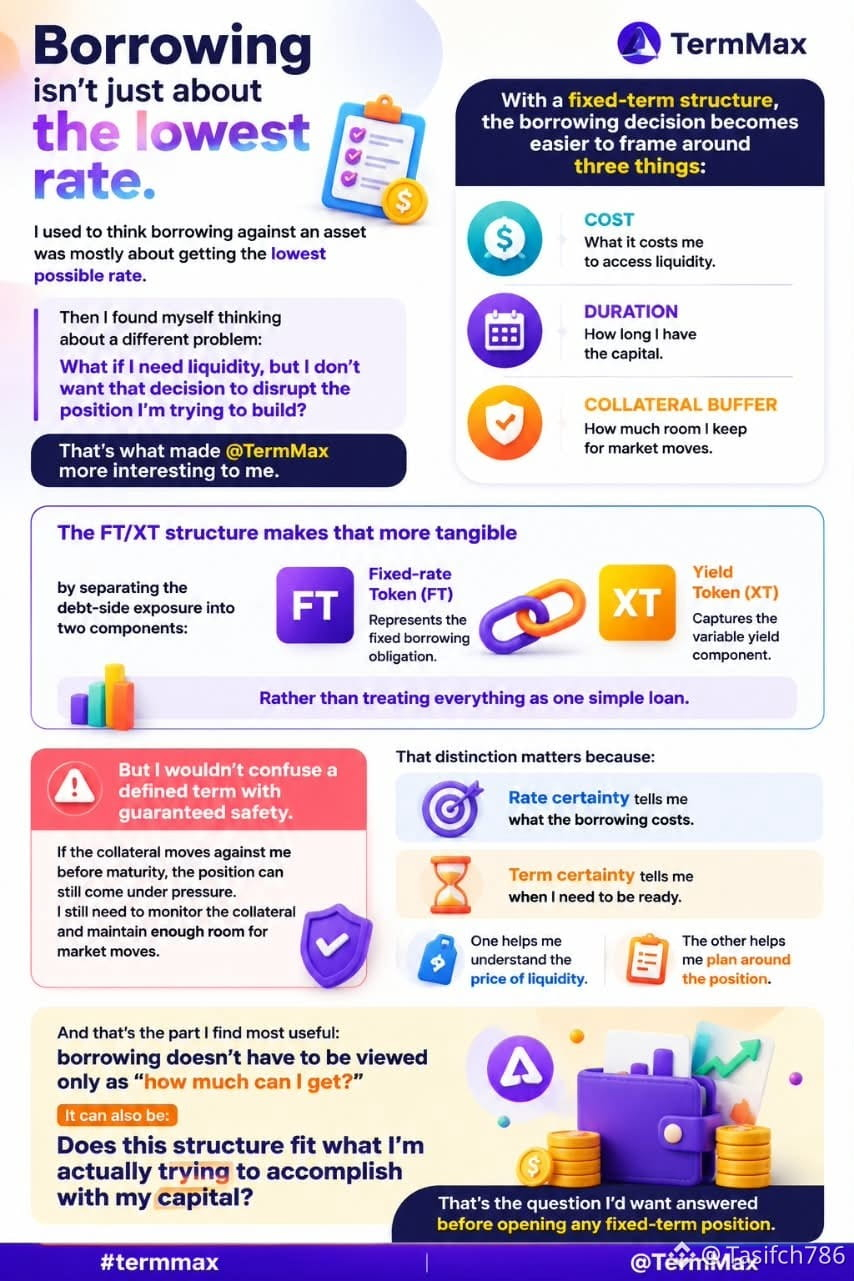
以前は、資産を担保に借り入れることは、基本的に可能な限り低い金利を得ることが主だと思っていました。
しかし、別の問題を考えることになりました。
流動性が必要だけれど、その判断が、私が築こうとしているポジションの邪魔にならないとしたら?
それが私にとって@TermMax をより興味深いものにしてくれました。
固定の期間構造があると、借り入れの意思決定は次の3つの要素に沿って組み立てやすくなります。
コスト+期間+担保バッファ
FT/XT構造は、すべてを単なる1つのローンとして扱うのではなく、債務側のエクスポージャーを固定金利トークン(FT)とイールドトークン(XT)に分けることで、それをより具体的にします。
ただし、定められた期間があるからといって、保証された安全性だと混同してはいけません。
満期までの間に担保が不利に動けば、ポジションは依然として圧力を受ける可能性があります。担保を監視し、市場の変動に耐えられる十分な余裕を維持する必要があります。
この違いが重要なのは、次のとおりです。
金利の確実性が、借り入れコストを教えてくれる。
期間の確実性が、いつ備える必要があるかを教えてくれる。
前者は、流動性の価格を理解するのに役立つ。
後者は、ポジションを見据えた計画を立てるのに役立つ。
そして私が最も有用だと感じるのはここです。借り入れは「いくら借りられるか?」だけで考える必要はありません。
それはまた、
この構造が、自分が実際に資本で成し遂げようとしていることに合っているか?
という問いでもあります。
固定期間のポジションを開く前に、答えを得たいのはまさにその点です。
#termmax @TermMax $BTC #defi #Crypto
しかし、別の問題を考えることになりました。
流動性が必要だけれど、その判断が、私が築こうとしているポジションの邪魔にならないとしたら?
それが私にとって@TermMax をより興味深いものにしてくれました。
固定の期間構造があると、借り入れの意思決定は次の3つの要素に沿って組み立てやすくなります。
コスト+期間+担保バッファ
FT/XT構造は、すべてを単なる1つのローンとして扱うのではなく、債務側のエクスポージャーを固定金利トークン(FT)とイールドトークン(XT)に分けることで、それをより具体的にします。
ただし、定められた期間があるからといって、保証された安全性だと混同してはいけません。
満期までの間に担保が不利に動けば、ポジションは依然として圧力を受ける可能性があります。担保を監視し、市場の変動に耐えられる十分な余裕を維持する必要があります。
この違いが重要なのは、次のとおりです。
金利の確実性が、借り入れコストを教えてくれる。
期間の確実性が、いつ備える必要があるかを教えてくれる。
前者は、流動性の価格を理解するのに役立つ。
後者は、ポジションを見据えた計画を立てるのに役立つ。
そして私が最も有用だと感じるのはここです。借り入れは「いくら借りられるか?」だけで考える必要はありません。
それはまた、
この構造が、自分が実際に資本で成し遂げようとしていることに合っているか?
という問いでもあります。
固定期間のポジションを開く前に、答えを得たいのはまさにその点です。
#termmax @TermMax $BTC #defi #Crypto
翻訳参照
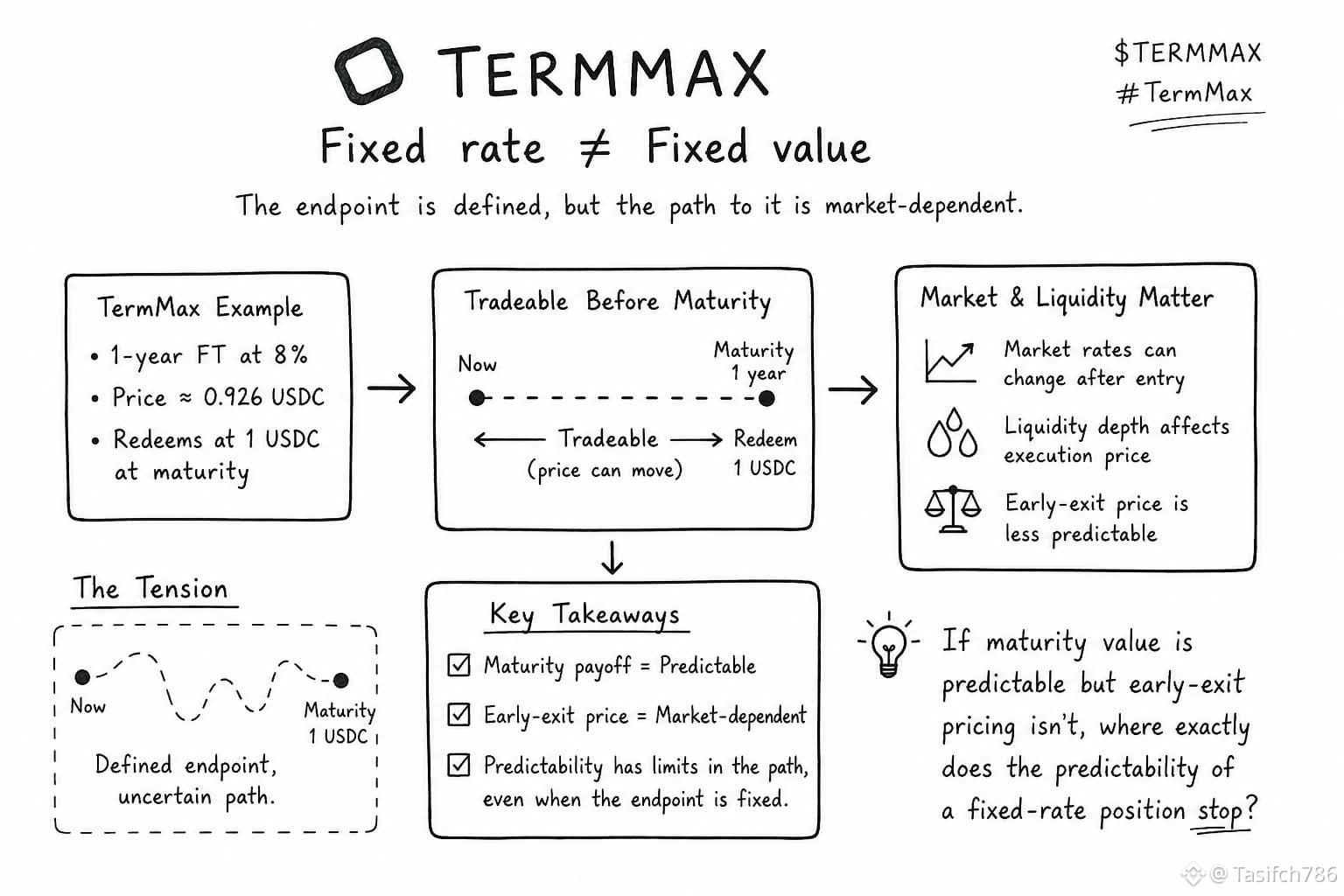
I kept coming back to one detail while looking at @TermMax : “fixed rate” and “fixed value” are two different things.
TermMax own example makes this concrete: a 1-year FT at 8% is priced around 0.926 USDC and redeems at 1 USDC at maturity. That maturity payoff is defined, but the FT can still be traded before then.
So if market rates move after entry, buyers can value that existing FT differently. And when liquidity is thin, the price you can actually execute at may become less predictable.
That creates the tension I find interesting: the endpoint is defined, but the path to it is still market-dependent.
If maturity value is predictable but early exit pricing isn’t, where exactly does the predictability of a fixed rate position stop?
#TermMax
TermMax own example makes this concrete: a 1-year FT at 8% is priced around 0.926 USDC and redeems at 1 USDC at maturity. That maturity payoff is defined, but the FT can still be traded before then.
So if market rates move after entry, buyers can value that existing FT differently. And when liquidity is thin, the price you can actually execute at may become less predictable.
That creates the tension I find interesting: the endpoint is defined, but the path to it is still market-dependent.
If maturity value is predictable but early exit pricing isn’t, where exactly does the predictability of a fixed rate position stop?
#TermMax
翻訳参照
#termmax
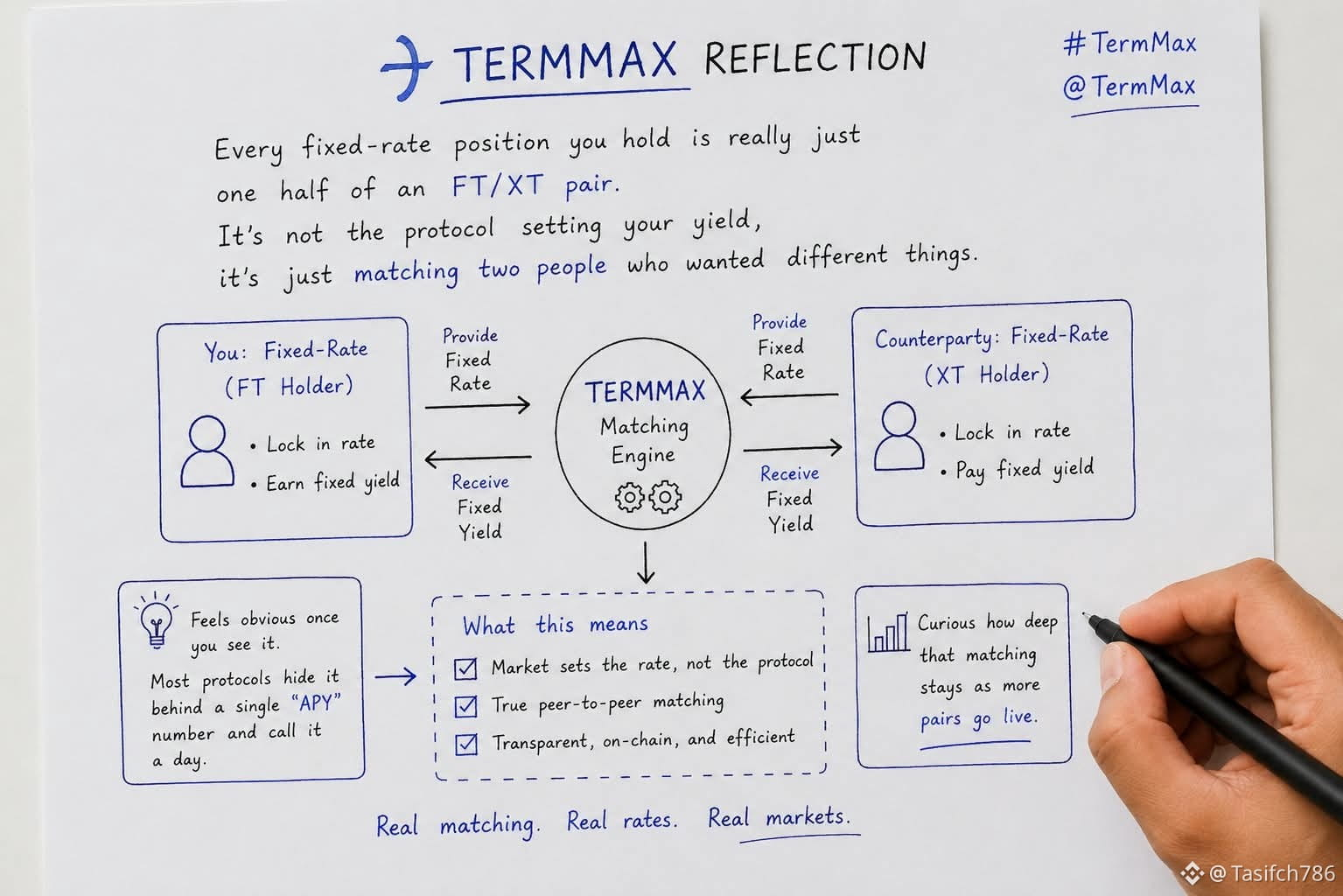
Went back to check my TermMax positions after the airdrop settled, and something clicked I hadn't noticed before. Every fixed-rate position you hold is really just one half of an FT/XT pair — someone locked in the rate you're getting because someone else needed the opposite exposure. It's not the protocol setting your yield, it's just matching two people who wanted different things. Feels obvious once you see it, but most fixed-rate protocols hide that behind a single "APY" number and call it a day. This one doesn't. Curious how deep that matching stays as more pairs go live.
#TermMax @TermMax
Went back to check my TermMax positions after the airdrop settled, and something clicked I hadn't noticed before. Every fixed-rate position you hold is really just one half of an FT/XT pair — someone locked in the rate you're getting because someone else needed the opposite exposure. It's not the protocol setting your yield, it's just matching two people who wanted different things. Feels obvious once you see it, but most fixed-rate protocols hide that behind a single "APY" number and call it a day. This one doesn't. Curious how deep that matching stays as more pairs go live.
#TermMax @TermMax
翻訳参照
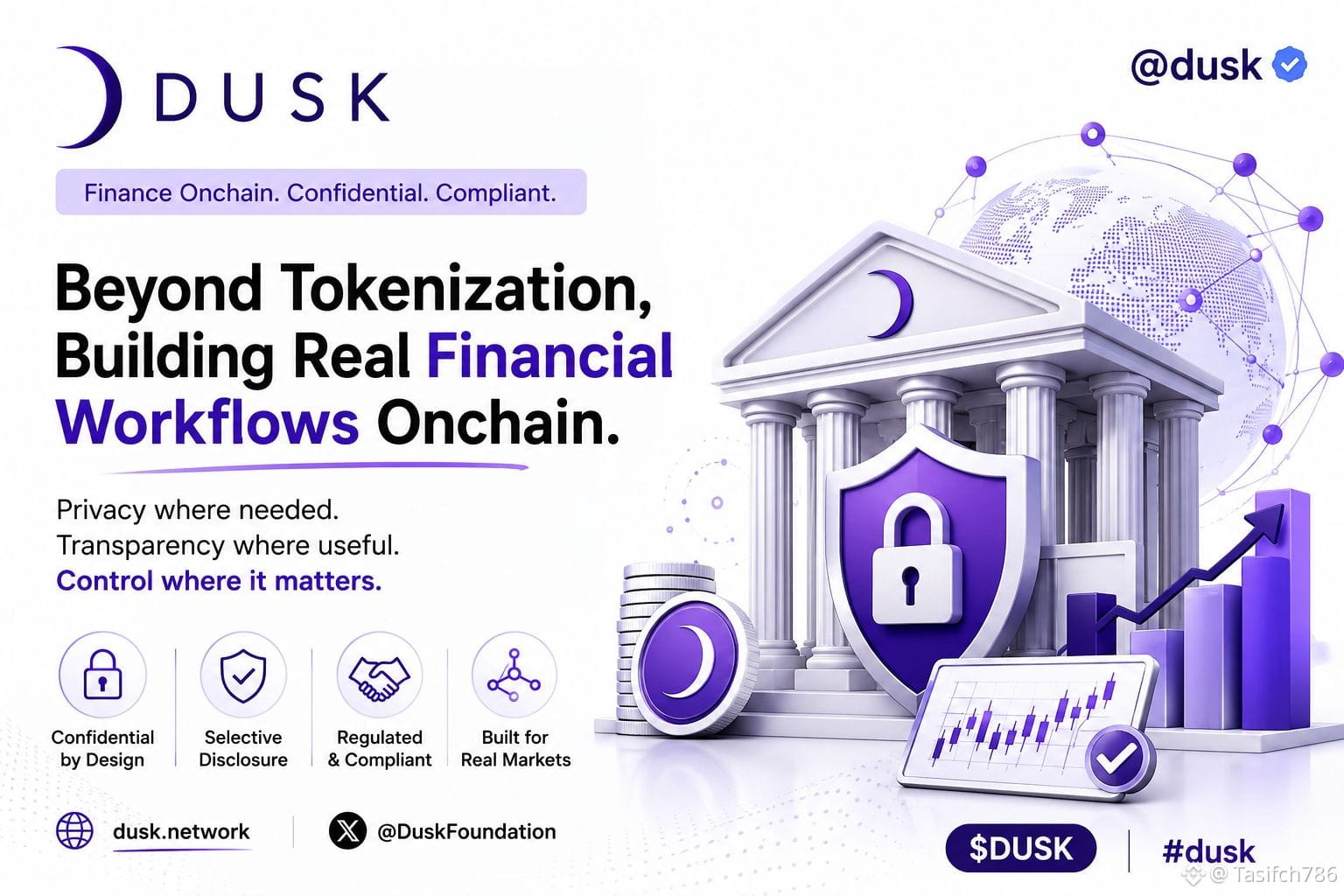
@Dusk I used to think bringing finance onchain was mostly about tokenizing assets. But the deeper challenge seems to start after the asset exists — when real financial workflows begin.
Issuance is only the first layer. Trading, settlement, investor access, and disclosure create a much more demanding set of requirements.
That’s why DuskEVM stands out to me. It combines familiar EVM workflows with confidential financial logic, while still allowing selective disclosure when authorized review is required.
Because regulated finance does not need everything exposed, and it does not need everything hidden either. It needs control over what stays private, what can be verified, and who gets access to that information.
Could programmable privacy be the missing layer between tokenized assets and truly workable financial markets onchain?
$DUSK #dusk
Issuance is only the first layer. Trading, settlement, investor access, and disclosure create a much more demanding set of requirements.
That’s why DuskEVM stands out to me. It combines familiar EVM workflows with confidential financial logic, while still allowing selective disclosure when authorized review is required.
Because regulated finance does not need everything exposed, and it does not need everything hidden either. It needs control over what stays private, what can be verified, and who gets access to that information.
Could programmable privacy be the missing layer between tokenized assets and truly workable financial markets onchain?
$DUSK #dusk
翻訳参照
@Dusk $DUSK #dusk
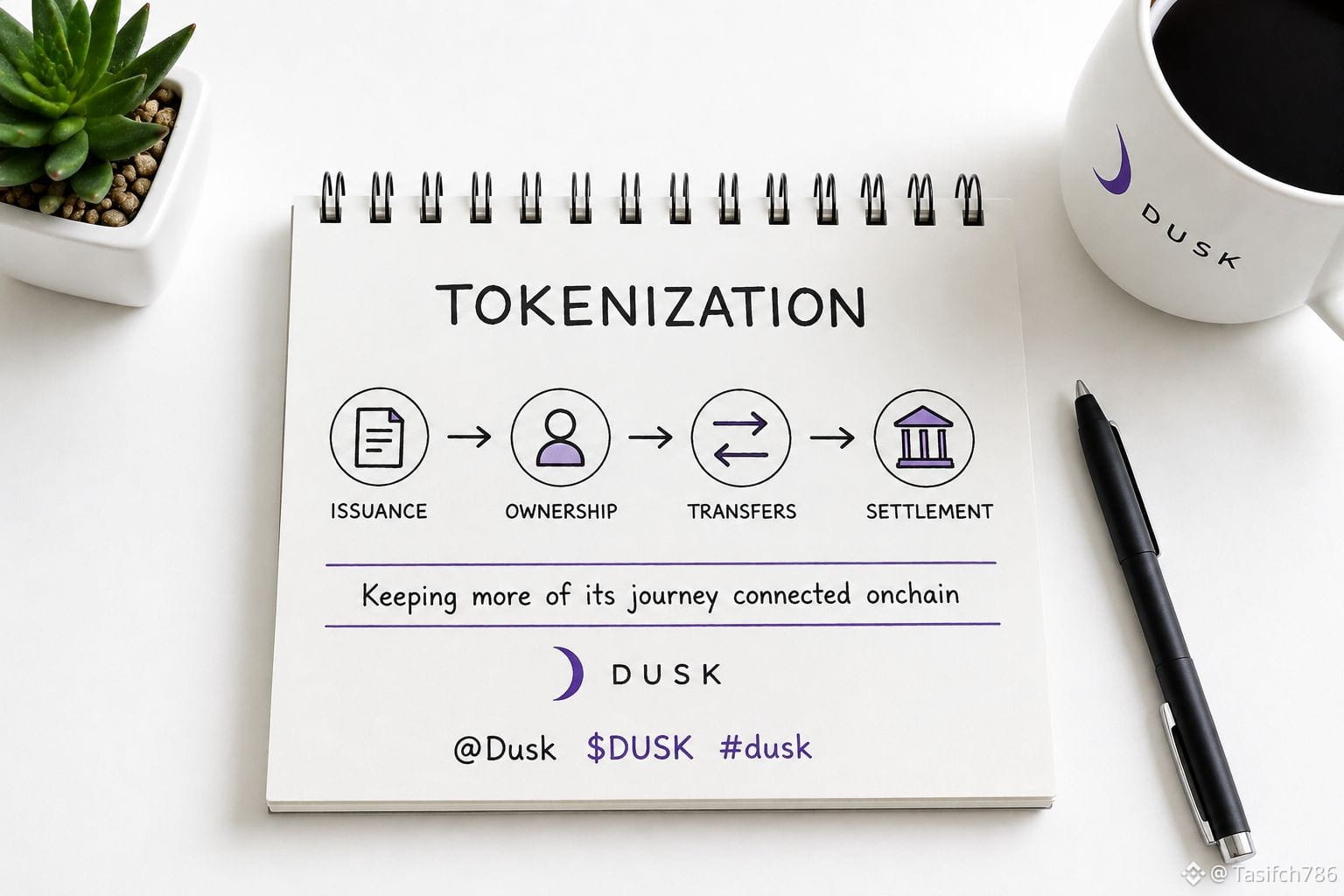
I used to think tokenization was mostly about putting an existing asset onchain. But the more I look at native issuance, the more that idea feels incomplete.
Maybe the bigger shift isn’t creating a digital version of an asset, but keeping more of its journey connected onchain—from issuance and ownership to transfers and settlement.
And that’s where the harder question begins. Moving an asset onto a blockchain is one thing; building infrastructure that institutions can actually use within regulated markets is another.
If more of that journey can happen natively onchain, does “tokenization” still fully describe what’s happening?
I used to think tokenization was mostly about putting an existing asset onchain. But the more I look at native issuance, the more that idea feels incomplete.
Maybe the bigger shift isn’t creating a digital version of an asset, but keeping more of its journey connected onchain—from issuance and ownership to transfers and settlement.
And that’s where the harder question begins. Moving an asset onto a blockchain is one thing; building infrastructure that institutions can actually use within regulated markets is another.
If more of that journey can happen natively onchain, does “tokenization” still fully describe what’s happening?
確認済み
翻訳参照
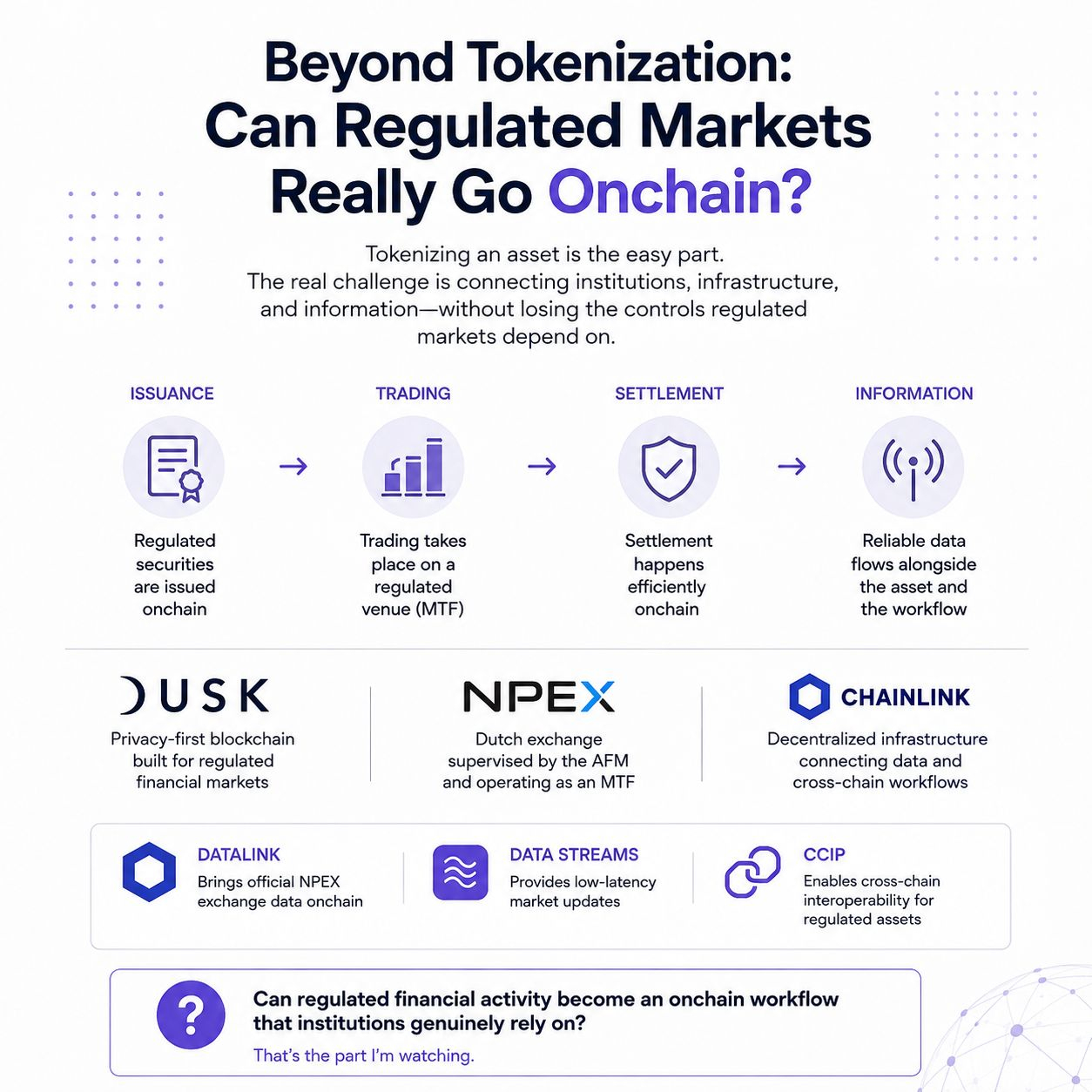
I still think the hardest part of bringing financial markets onchain isn’t tokenizing an asset. It’s getting the institutions, infrastructure, and information around that asset to work together without losing the controls regulated markets depend on.
That’s why I keep coming back to the Dusk NPEX story.
NPEX is a Dutch stock exchange supervised by the AFM and operates as an MTF. What caught my attention is that the Dusk relationship goes beyond simply putting securities on a blockchain. What interests me is the attempt to connect issuance, trading and settlement with onchain infrastructure, rather than treating tokenization as the finish line.
Then I noticed something easy to overlook:
The asset itself isn’t enough.
A functioning market also needs reliable information around that asset. That’s where the Chainlink integration becomes interesting. Dusk says DataLink is intended to bring official NPEX exchange data onchain, Data Streams is designed for low-latency market updates, and CCIP adds cross-chain interoperability.
That changed how I look at the Dusk thesis.
It feels less like “put RWAs on a blockchain” and more like connecting the different pieces required for regulated financial activity to actually operate onchain.
But this is where the real test begins.
Infrastructure can connect the pieces. It can’t prove that institutions will actually change how they issue, trade and settle financial assets.
So the question I’m left with is:
Can regulated financial activity become an onchain workflow that institutions genuinely rely on?
That’s the part I’m watching.
@Dusk $DUSK #dusk
That’s why I keep coming back to the Dusk NPEX story.
NPEX is a Dutch stock exchange supervised by the AFM and operates as an MTF. What caught my attention is that the Dusk relationship goes beyond simply putting securities on a blockchain. What interests me is the attempt to connect issuance, trading and settlement with onchain infrastructure, rather than treating tokenization as the finish line.
Then I noticed something easy to overlook:
The asset itself isn’t enough.
A functioning market also needs reliable information around that asset. That’s where the Chainlink integration becomes interesting. Dusk says DataLink is intended to bring official NPEX exchange data onchain, Data Streams is designed for low-latency market updates, and CCIP adds cross-chain interoperability.
That changed how I look at the Dusk thesis.
It feels less like “put RWAs on a blockchain” and more like connecting the different pieces required for regulated financial activity to actually operate onchain.
But this is where the real test begins.
Infrastructure can connect the pieces. It can’t prove that institutions will actually change how they issue, trade and settle financial assets.
So the question I’m left with is:
Can regulated financial activity become an onchain workflow that institutions genuinely rely on?
That’s the part I’m watching.
@Dusk $DUSK #dusk
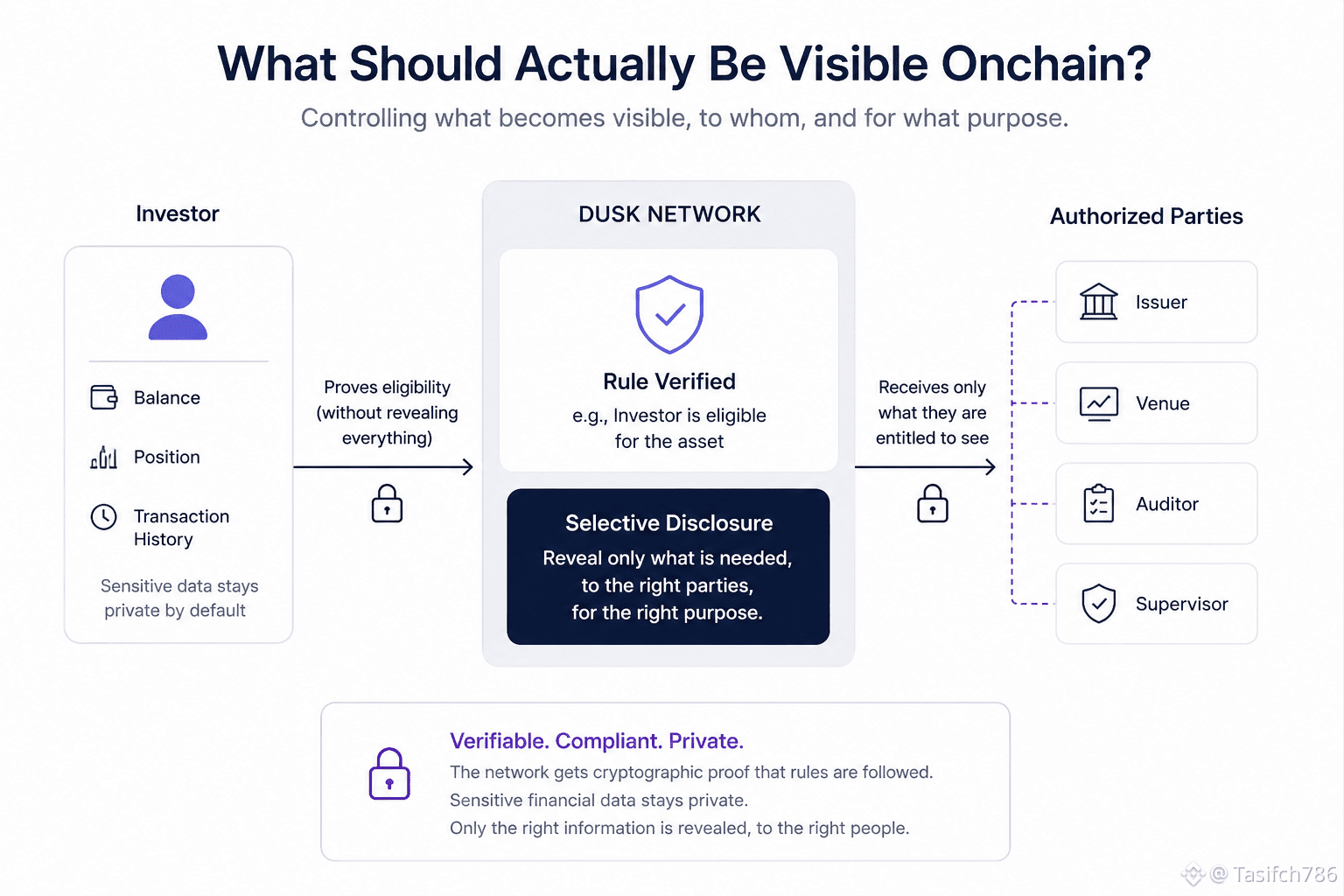
私は、金融市場をオンチェーンに載せる上で最も難しい問題がトークン化ではない、という考えはまだ変わりません。難しいのは、実際に何を見えるようにすべきかを決めることです。
@Dusk を深く調べるほど、興味深い点に気づきました。そこでは、プライバシーへのアプローチが金融活動を見えなくすることに主眼があるというより、「何が、誰に対して、そしてどの目的のために」見えるようになるのかを制御することに重点を置いているように見えます。
それは些細な違いに聞こえるかもしれませんが、規制下の金融では問題の性質がまったく変わってしまいます。
簡単な例を挙げましょう。ある機関は、投資家が規制された資産を保有する資格を持つことを証明する必要があるかもしれません。ネットワークには、そのルールが満たされたという根拠が必要です。しかし、なぜ他の参加者全員が、その投資家の残高やポジション、取引履歴まで見える必要があるのでしょうか?
Dusk のドキュメントで特に興味深いのは、「何を機密のままにし、必要に応じてどこまで選択的に開示できるか」を決める、という考え方です。
この思想は技術にも表れています。DuskEVM はおなじみの Solidity/EVM の環境を提供しつつ、Hedger は同型暗号とゼロ知識証明を用いて機密性の高い EVM ワークフローを支援します。
つまり、プライバシーはすべてを隠すことを意味する必要はありません。必要な場面でアプリケーションが使う「何か」になり得ます。それでも実行は検証可能なままです。
私が繰り返し引き戻されるのは、この緊張関係です。
規制された市場には監督のための透明性が必要ですが、透明性を上げすぎると機微な金融情報が露呈してしまう。
本当の課題は、プライバシーと透明性のどちらかを選ぶことではないのかもしれません。
それは、「違いを理解できるシステム」を作ることです。
ブロックチェーンは、適切なルールが守られたことを証明しつつ、本当に見る権利がある正しい人たちに対してだけ、必要な情報を開示することはできるでしょうか?
$DUSK #dusk
@Dusk を深く調べるほど、興味深い点に気づきました。そこでは、プライバシーへのアプローチが金融活動を見えなくすることに主眼があるというより、「何が、誰に対して、そしてどの目的のために」見えるようになるのかを制御することに重点を置いているように見えます。
それは些細な違いに聞こえるかもしれませんが、規制下の金融では問題の性質がまったく変わってしまいます。
簡単な例を挙げましょう。ある機関は、投資家が規制された資産を保有する資格を持つことを証明する必要があるかもしれません。ネットワークには、そのルールが満たされたという根拠が必要です。しかし、なぜ他の参加者全員が、その投資家の残高やポジション、取引履歴まで見える必要があるのでしょうか?
Dusk のドキュメントで特に興味深いのは、「何を機密のままにし、必要に応じてどこまで選択的に開示できるか」を決める、という考え方です。
この思想は技術にも表れています。DuskEVM はおなじみの Solidity/EVM の環境を提供しつつ、Hedger は同型暗号とゼロ知識証明を用いて機密性の高い EVM ワークフローを支援します。
つまり、プライバシーはすべてを隠すことを意味する必要はありません。必要な場面でアプリケーションが使う「何か」になり得ます。それでも実行は検証可能なままです。
私が繰り返し引き戻されるのは、この緊張関係です。
規制された市場には監督のための透明性が必要ですが、透明性を上げすぎると機微な金融情報が露呈してしまう。
本当の課題は、プライバシーと透明性のどちらかを選ぶことではないのかもしれません。
それは、「違いを理解できるシステム」を作ることです。
ブロックチェーンは、適切なルールが守られたことを証明しつつ、本当に見る権利がある正しい人たちに対してだけ、必要な情報を開示することはできるでしょうか?
$DUSK #dusk
翻訳参照
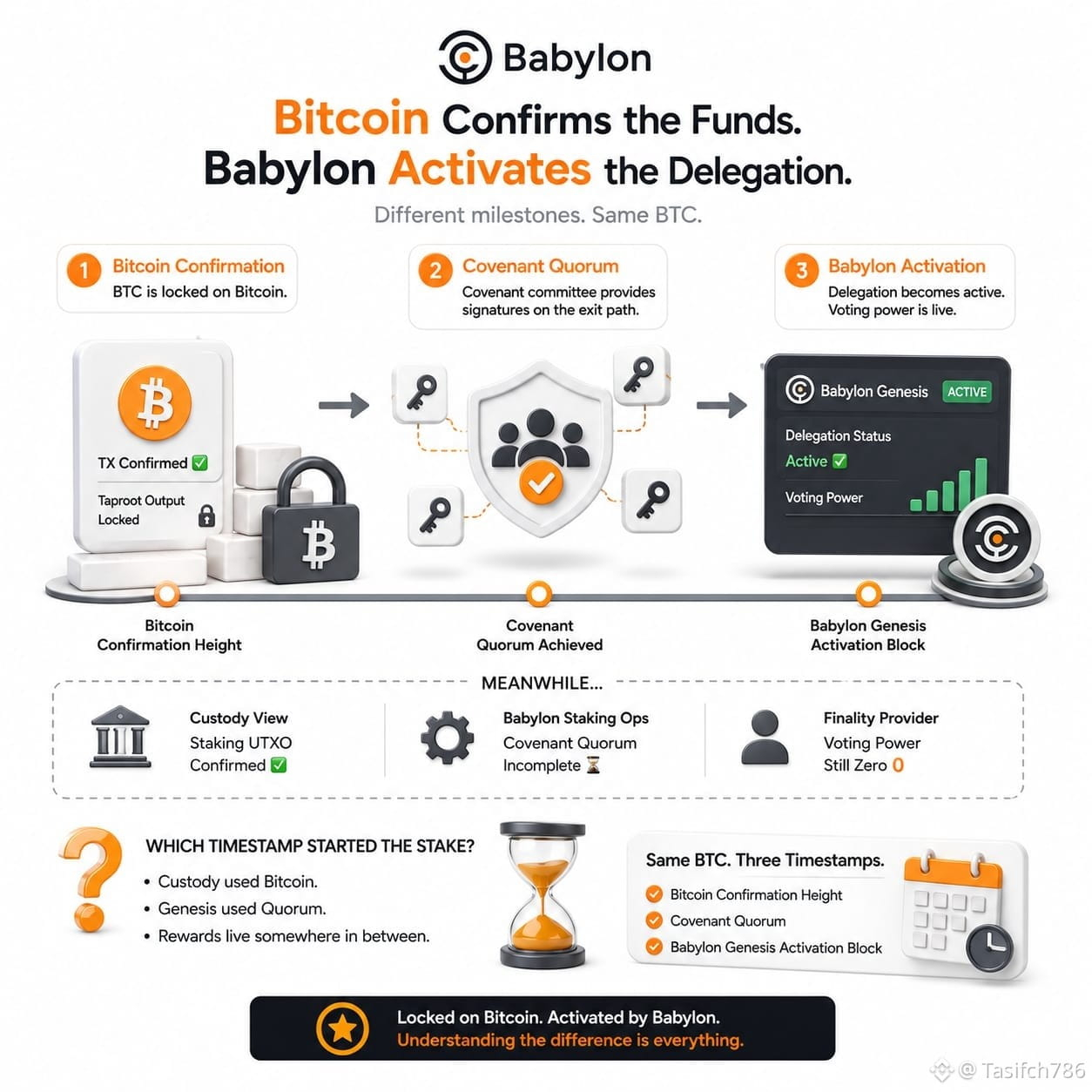
I expected Bitcoin confirmation to be the moment a Babylon stake became "live."
The more I looked, the more I realized there are multiple milestones—and they don't all happen at the same time.
A confirmed Bitcoin transaction proves the BTC is locked.
But that alone doesn't immediately give the stake influence inside Babylon.
Before the delegation becomes active, additional protocol conditions still have to be satisfied. Until then:
🔸 BTC is already locked on Bitcoin.
🔸 The delegation isn't yet contributing to Babylon's security.
🔸 Finality providers don't gain voting power from that stake.
That creates an interesting distinction:
Bitcoin confirms the funds.
Babylon activates the delegation.
They're related, but they're not the same event.
For users, the important question isn't just "Is my transaction confirmed?"
It's "Has my stake actually become active inside the protocol?"
Understanding that difference makes Babylon's staking flow much easier to reason about—and avoids confusing Bitcoin settlement with protocol activation.
Curious how others think wallet dashboards should present these separate stages so users always know where their stake stands.
@BabylonLabs_io #baby $BABY $GIGGLE $KOMA
The more I looked, the more I realized there are multiple milestones—and they don't all happen at the same time.
A confirmed Bitcoin transaction proves the BTC is locked.
But that alone doesn't immediately give the stake influence inside Babylon.
Before the delegation becomes active, additional protocol conditions still have to be satisfied. Until then:
🔸 BTC is already locked on Bitcoin.
🔸 The delegation isn't yet contributing to Babylon's security.
🔸 Finality providers don't gain voting power from that stake.
That creates an interesting distinction:
Bitcoin confirms the funds.
Babylon activates the delegation.
They're related, but they're not the same event.
For users, the important question isn't just "Is my transaction confirmed?"
It's "Has my stake actually become active inside the protocol?"
Understanding that difference makes Babylon's staking flow much easier to reason about—and avoids confusing Bitcoin settlement with protocol activation.
Curious how others think wallet dashboards should present these separate stages so users always know where their stake stands.
@BabylonLabs_io #baby $BABY $GIGGLE $KOMA
翻訳参照
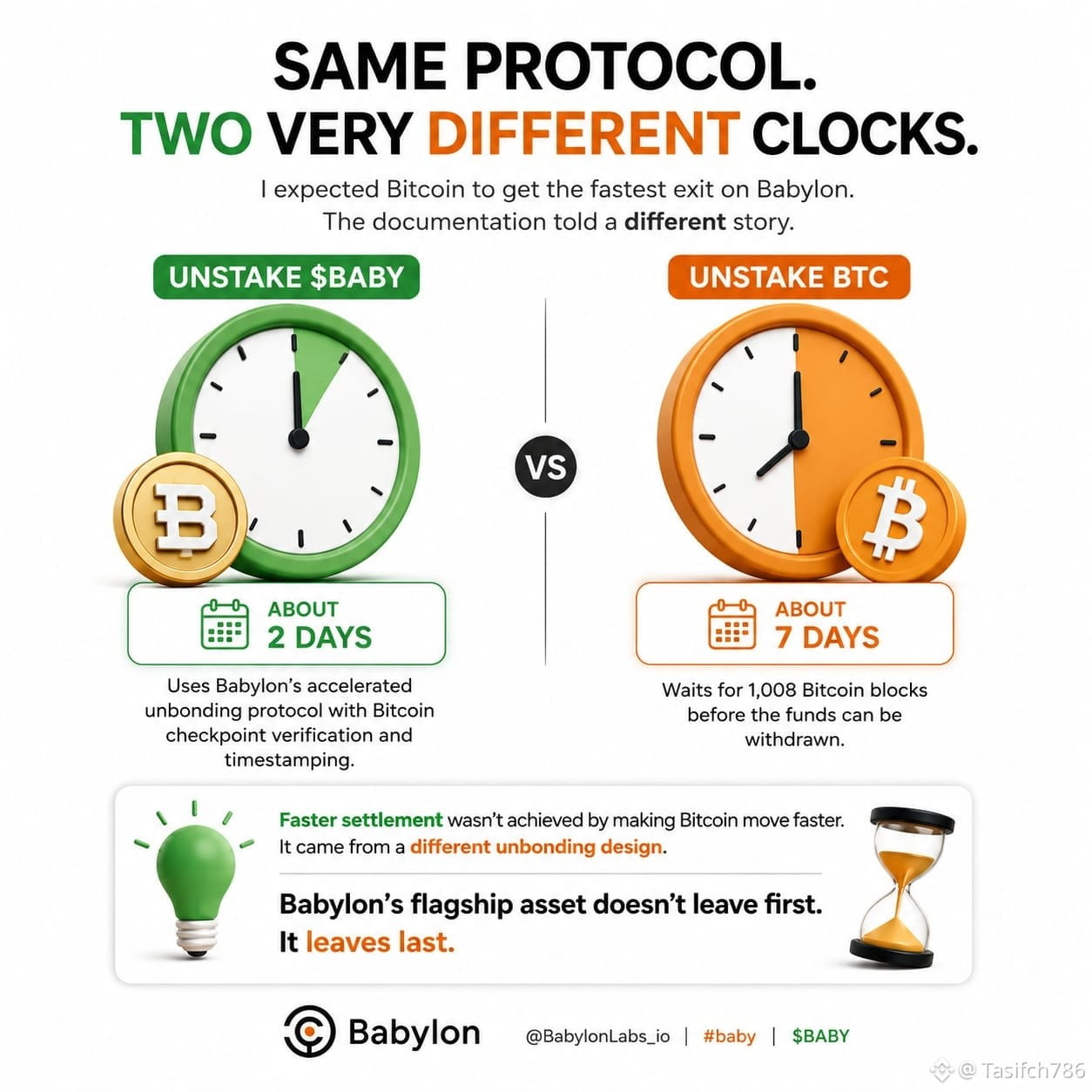
I expected Bitcoin to get the fastest exit on Babylon.
The documentation told a different story.
🟢 Unstake $BABY → around 2 days
🟠 Unstake BTC → around 7 days (after 1,008 Bitcoin blocks)
At first glance, it feels backwards.
But the delay isn't about Bitcoin being inefficient.
The two assets follow different unbonding paths.
$BABY uses Babylon's accelerated unbonding process, where Bitcoin checkpoints and timestamp verification help shorten the waiting period.
Native BTC staking follows Bitcoin's own security assumptions, requiring a much longer withdrawal window before funds are released.
Same ecosystem.
Different security models.
Sometimes the most interesting part of a protocol isn't what moves faster it's why it moves differently.
@BabylonLabs_io #baby $BABY
The documentation told a different story.
🟢 Unstake $BABY → around 2 days
🟠 Unstake BTC → around 7 days (after 1,008 Bitcoin blocks)
At first glance, it feels backwards.
But the delay isn't about Bitcoin being inefficient.
The two assets follow different unbonding paths.
$BABY uses Babylon's accelerated unbonding process, where Bitcoin checkpoints and timestamp verification help shorten the waiting period.
Native BTC staking follows Bitcoin's own security assumptions, requiring a much longer withdrawal window before funds are released.
Same ecosystem.
Different security models.
Sometimes the most interesting part of a protocol isn't what moves faster it's why it moves differently.
@BabylonLabs_io #baby $BABY
翻訳参照
awesome 👍

Rizwan ch
·
--
1つの詳細が、私の見方を@BabylonLabs_io に変えました。BTCがロックされているか、ステーキングの数値かではありませんでした。信頼が中央の組織ではなくプロトコルのルールから生まれるように、システムが設計されている点です。
Trustless Bitcoin Vaultsやビットコインのステーキングをさらに調べるほど、バリデーター、暗号学的な証明、そして透明なルールが“重い仕事”を担うことが求められているのだと、より明確になりました。つまり、耐久性は、後から誰かが介入して問題をひっくり返すことに依存するのではなく、独立した参加者が同じルールを守り続けることにかかっています。
私にとって、それはBabylonの中でも最も強いアイデアの1つです。人間の介入への依存を減らし、検証可能な連携への依存を高めること。これはセキュリティに対する別の考え方であり、ビットコインが分散型エコシステムにどう関わるかを形作りうるものです。
@BabylonLabs_io $BABY #baby
@BabylonLabs_io のようなビットコイン・ステーキング・プロトコルについて、あなたが最も確信しているのは何ですか?
Trustless Bitcoin Vaultsやビットコインのステーキングをさらに調べるほど、バリデーター、暗号学的な証明、そして透明なルールが“重い仕事”を担うことが求められているのだと、より明確になりました。つまり、耐久性は、後から誰かが介入して問題をひっくり返すことに依存するのではなく、独立した参加者が同じルールを守り続けることにかかっています。
私にとって、それはBabylonの中でも最も強いアイデアの1つです。人間の介入への依存を減らし、検証可能な連携への依存を高めること。これはセキュリティに対する別の考え方であり、ビットコインが分散型エコシステムにどう関わるかを形作りうるものです。
@BabylonLabs_io $BABY #baby
@BabylonLabs_io のようなビットコイン・ステーキング・プロトコルについて、あなたが最も確信しているのは何ですか?
翻訳参照
good

Asif The Trader
·
--
弱気相場ビットコインのセキュリティは暗号技術の観点から語られることが多いですが、Babylonは別の層を加えています。それは「経済的な信頼性」です。
私が特に注目したのは、プロトコルがファイナリティ・プロバイダーをどう扱うかという点です。目的は単に不正行為を思いとどまらせることではなく、「信頼」を測定可能にすることです。
ファイナリティ・プロバイダーには、ファイナリティに関する単一で一貫した見解を提示することが求められます。もし相反するメッセージに署名してエクイボケーション(同一の立場で矛盾した表明)を行えば、その結果は単なる金銭的な罰則を超えます。そのプロバイダーはアクティブ・セットから役割を失い、プロトコルは、ネットワークがもはやそのアイデンティティのファイナリティに依存しないように設計されています。つまり、評判はセキュリティ・モデルの一部であり、単なるステーク(担保)だけではありません。
これは興味深いトレードオフを生みます。
@BabylonLabs_io A より柔らかいアプローチなら、運用者が過ちから回復でき、ネットワーク内での経験も維持できる可能性があります。
一方で は、実証済みのエクイボケーションに長期的な重大な結果を与えることで、長期的な信頼を優先します。
これは分権化にとって重要な問いを投げかけます。つまり、ネットワークは、このような厳格な説明責任を課しながらも、健全で多様なファイナリティ・プロバイダーの集合を維持できるのか、ということです。
強いセキュリティとは、攻撃を防ぐことだけではありません。攻撃が起きた後に、どれほどの信頼が再び回復され得るのかを決めることでもあります。
@BabylonLabs_io $BABY #baby
さらに、Babylonのセキュリティ・モデルにとって何が最も重要ですか?
私が特に注目したのは、プロトコルがファイナリティ・プロバイダーをどう扱うかという点です。目的は単に不正行為を思いとどまらせることではなく、「信頼」を測定可能にすることです。
ファイナリティ・プロバイダーには、ファイナリティに関する単一で一貫した見解を提示することが求められます。もし相反するメッセージに署名してエクイボケーション(同一の立場で矛盾した表明)を行えば、その結果は単なる金銭的な罰則を超えます。そのプロバイダーはアクティブ・セットから役割を失い、プロトコルは、ネットワークがもはやそのアイデンティティのファイナリティに依存しないように設計されています。つまり、評判はセキュリティ・モデルの一部であり、単なるステーク(担保)だけではありません。
これは興味深いトレードオフを生みます。
@BabylonLabs_io A より柔らかいアプローチなら、運用者が過ちから回復でき、ネットワーク内での経験も維持できる可能性があります。
一方で は、実証済みのエクイボケーションに長期的な重大な結果を与えることで、長期的な信頼を優先します。
これは分権化にとって重要な問いを投げかけます。つまり、ネットワークは、このような厳格な説明責任を課しながらも、健全で多様なファイナリティ・プロバイダーの集合を維持できるのか、ということです。
強いセキュリティとは、攻撃を防ぐことだけではありません。攻撃が起きた後に、どれほどの信頼が再び回復され得るのかを決めることでもあります。
@BabylonLabs_io $BABY #baby
さらに、Babylonのセキュリティ・モデルにとって何が最も重要ですか?
翻訳参照
I kept thinking Babylon was mainly about letting Bitcoin secure PoS networks.
Then I looked closer and realised the harder challenge isn't only security it is agreement.
Bitcoin and Babylon Genesis don't share the same native view of events. Someone has to prove that a Bitcoin event really happened, and someone else has to verify that proof without introducing a central point of failure.
That's where Babylon's design caught my attention.
Instead of depending on one bridge operator, responsibilities are split across different participants that independently move, verify, and observe checkpoint data between Bitcoin and Genesis.
The interesting part isn't that this removes trust completely.
It's that trust shifts from who controls the bridge to whether a decentralised set of participants keeps performing their roles over time.
If incentives remain strong, the system keeps synchronising. If participation weakens, coordination not cryptography becomes the first thing to face pressure.
For me, that's one of the more overlooked questions in Bitcoin staking. The protocol may be trust-minimised, but its long-term resilience also depends on the people and incentives that keep information flowing between chains.
What do you think matters more over the long run: stronger cryptography or stronger incentive design?
@BabylonLabs_io #baby $BABY
📊 What's more critical for Babylon's long-term success?
Then I looked closer and realised the harder challenge isn't only security it is agreement.
Bitcoin and Babylon Genesis don't share the same native view of events. Someone has to prove that a Bitcoin event really happened, and someone else has to verify that proof without introducing a central point of failure.
That's where Babylon's design caught my attention.
Instead of depending on one bridge operator, responsibilities are split across different participants that independently move, verify, and observe checkpoint data between Bitcoin and Genesis.
The interesting part isn't that this removes trust completely.
It's that trust shifts from who controls the bridge to whether a decentralised set of participants keeps performing their roles over time.
If incentives remain strong, the system keeps synchronising. If participation weakens, coordination not cryptography becomes the first thing to face pressure.
For me, that's one of the more overlooked questions in Bitcoin staking. The protocol may be trust-minimised, but its long-term resilience also depends on the people and incentives that keep information flowing between chains.
What do you think matters more over the long run: stronger cryptography or stronger incentive design?
@BabylonLabs_io #baby $BABY
📊 What's more critical for Babylon's long-term success?
🔐 Strong incentive design
75%
⚙️ Strong cryptography
25%
4 投票 • 投票は終了しました
ビットコインの考え方を変えたことが1つあります。
以前はBTCを1つの指標で測っていました。どれだけ長く保有できるか、ということです。
でも今は、別の質問をするようになりました。
ビットコインは、価値の源となっている性質を手放すことなく、他のブロックチェーン・ネットワークを強化できるのでしょうか?
その問いが、@BabylonLabs_io の探求につながりました。
私が魅力的だと感じるのは、ビットコインのステーキングという発想そのものだけではありません。ユーザーが自分のBTCを保管し続けることで、ビットコインのセキュリティを自らのチェーンの外へ拡張できる可能性がある点です。もしこのモデルが成熟していけば、プルーフ・オブ・ステーク(PoS)エコシステムが経済的セキュリティについて考える方法を大きく変えるかもしれません。
また、Babylonエコシステム内で活動とガバナンスを調整するのに役立つ$BABY も注目に値します。
暗号資産は、いつも大きな物語によって前進するわけではありません。他のネットワークが依存している基盤を改善することで、最大の変化が生まれることもあります。
もしビットコインが自分自身だけでなく、より多くを守れるなら、その影響は単なる長期の資産にとどまらない可能性があります。
ビットコインの未来はデジタル・ゴールドとしての役割に限られると思いますか?それとも、Web3の中核的なセキュリティ・レイヤーになり得るのでしょうか?
@BabylonLabs_io $BABY #baby
📊 Babylonについて、あなたが最も関心を持っているのはどこですか?
以前はBTCを1つの指標で測っていました。どれだけ長く保有できるか、ということです。
でも今は、別の質問をするようになりました。
ビットコインは、価値の源となっている性質を手放すことなく、他のブロックチェーン・ネットワークを強化できるのでしょうか?
その問いが、@BabylonLabs_io の探求につながりました。
私が魅力的だと感じるのは、ビットコインのステーキングという発想そのものだけではありません。ユーザーが自分のBTCを保管し続けることで、ビットコインのセキュリティを自らのチェーンの外へ拡張できる可能性がある点です。もしこのモデルが成熟していけば、プルーフ・オブ・ステーク(PoS)エコシステムが経済的セキュリティについて考える方法を大きく変えるかもしれません。
また、Babylonエコシステム内で活動とガバナンスを調整するのに役立つ$BABY も注目に値します。
暗号資産は、いつも大きな物語によって前進するわけではありません。他のネットワークが依存している基盤を改善することで、最大の変化が生まれることもあります。
もしビットコインが自分自身だけでなく、より多くを守れるなら、その影響は単なる長期の資産にとどまらない可能性があります。
ビットコインの未来はデジタル・ゴールドとしての役割に限られると思いますか?それとも、Web3の中核的なセキュリティ・レイヤーになり得るのでしょうか?
@BabylonLabs_io $BABY #baby
📊 Babylonについて、あなたが最も関心を持っているのはどこですか?
🔒 Self-custodial BTC staking
50%
🛡️ Bitcoin security
33%
🌐 PoS innovation
0%
📚 Still learning
17%
6 投票 • 投票は終了しました
翻訳参照
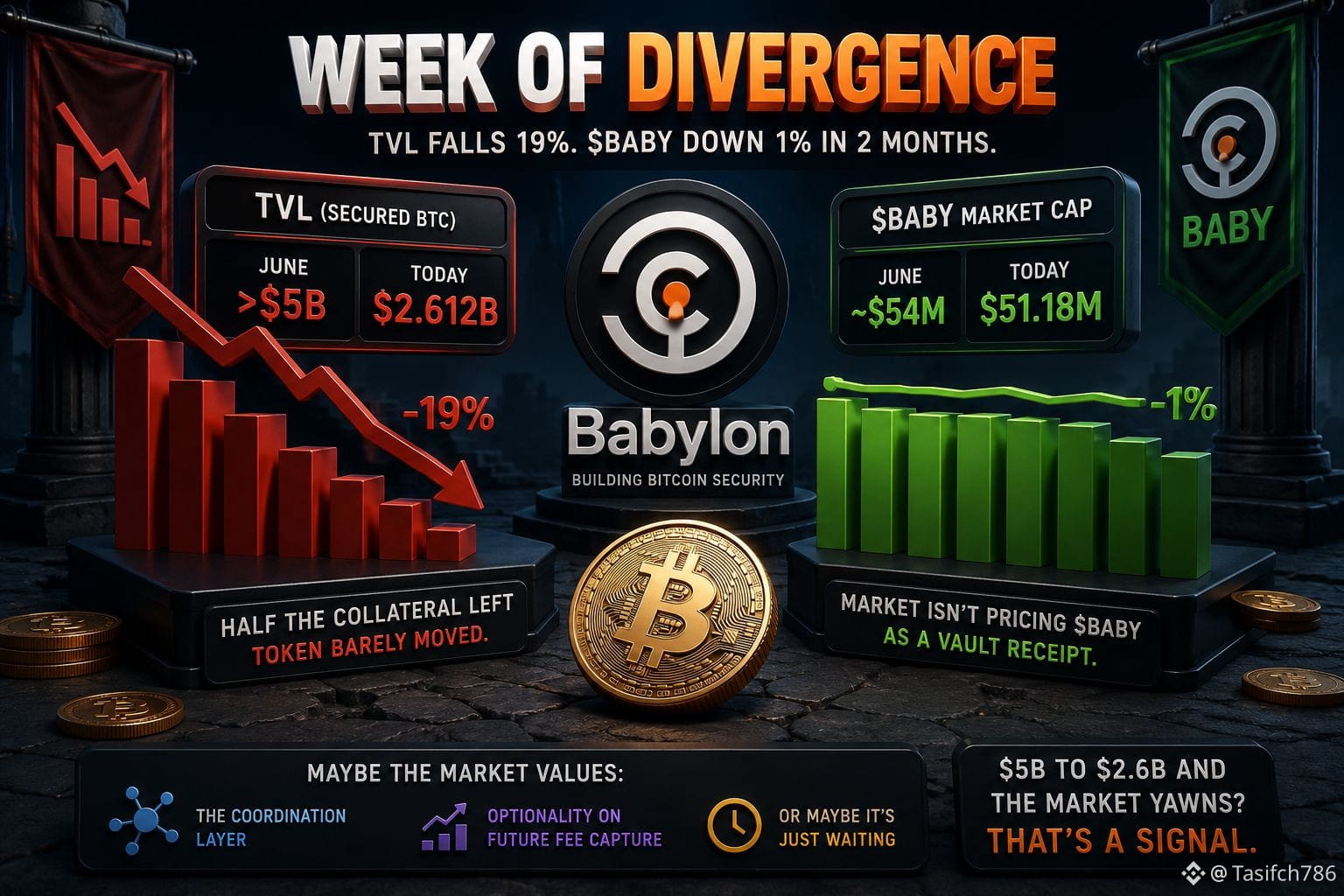
One of the most interesting things happening in Babylon right now isn't the token price it's the disconnect between TVL and valuation.
In the past week alone, Babylon's TVL dropped around 19%. Since June, secured BTC has fallen from more than $5B to roughly $2.612B. That's a major reduction in collateral. Yet over the same period, $BABY has remained relatively stable, with its market cap moving only from around $54M to about $51.18M.
@BabylonLabs_io If BABY were simply a proxy for the BTC secured in Babylon vaults, this price action wouldn't make much sense. A much larger decline would be expected. Instead, the market seems to be pricing something beyond today's TVL.
Maybe investors see BABY as the coordination layer of the Babylon ecosystem. Maybe they're valuing governance rights, future fee generation, or the network's long-term role in Bitcoin staking rather than the current amount of BTC secured.
This divergence does not automatically mean BABY is bullish or bearish. It simply suggests that the market may no longer view TVL as the primary driver of the token's value.
A network can lose billions in secured BTC while the token barely moves. Whether that relationship continues will be one of the most interesting things to watch in the coming months.
@BabylonLabs_io #baby $BABY
In the past week alone, Babylon's TVL dropped around 19%. Since June, secured BTC has fallen from more than $5B to roughly $2.612B. That's a major reduction in collateral. Yet over the same period, $BABY has remained relatively stable, with its market cap moving only from around $54M to about $51.18M.
@BabylonLabs_io If BABY were simply a proxy for the BTC secured in Babylon vaults, this price action wouldn't make much sense. A much larger decline would be expected. Instead, the market seems to be pricing something beyond today's TVL.
Maybe investors see BABY as the coordination layer of the Babylon ecosystem. Maybe they're valuing governance rights, future fee generation, or the network's long-term role in Bitcoin staking rather than the current amount of BTC secured.
This divergence does not automatically mean BABY is bullish or bearish. It simply suggests that the market may no longer view TVL as the primary driver of the token's value.
A network can lose billions in secured BTC while the token barely moves. Whether that relationship continues will be one of the most interesting things to watch in the coming months.
@BabylonLabs_io #baby $BABY
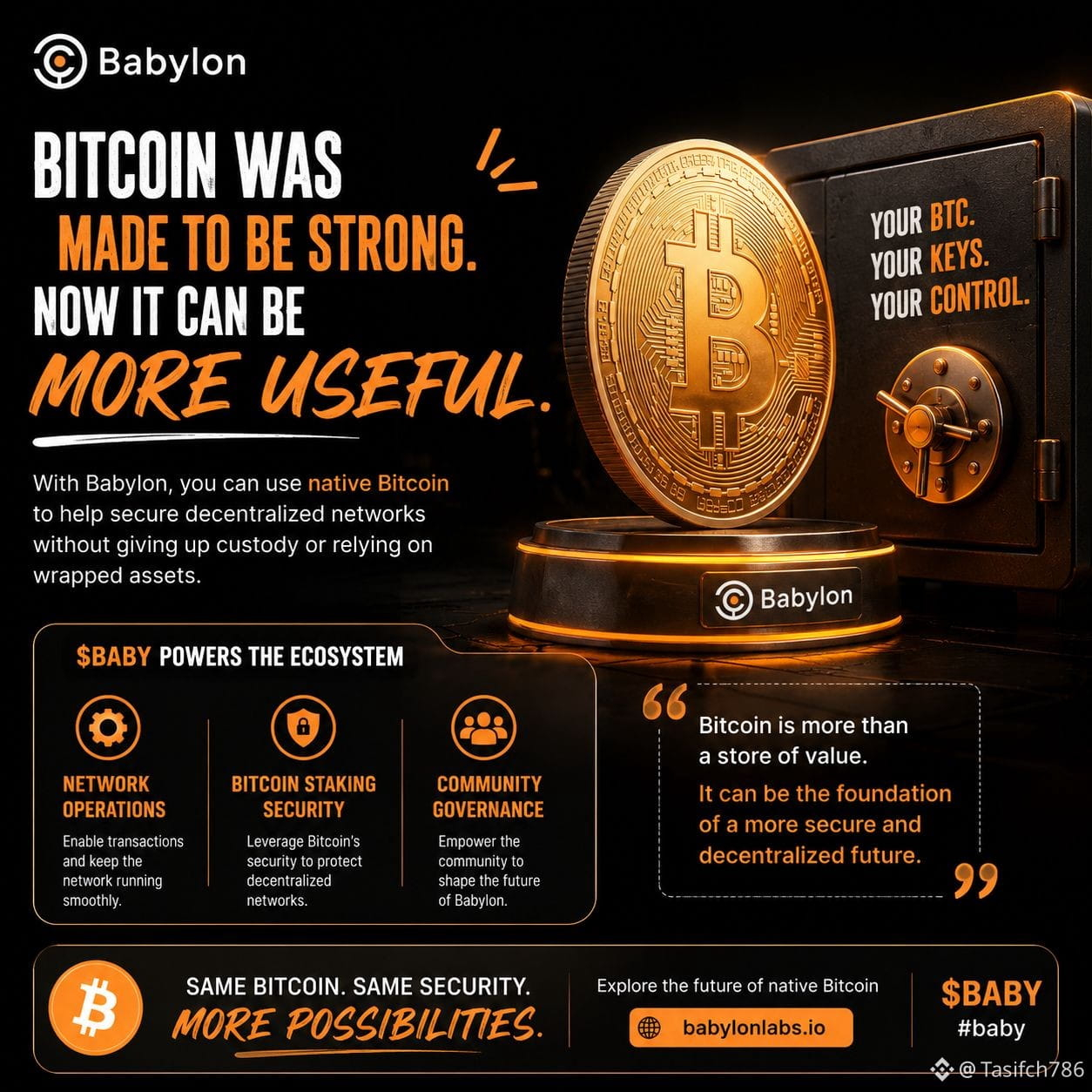
長い間、最も安全な戦略は単にビットコインを買って決して触らないことだと考えていました。しかしエコシステムが進化するにつれ、私は別の問いをするようになりました。つまり、BTCはセキュリティを損なわずに、さらに何かできるのだろうか?
その問いが私を@BabylonLabs_io へ導きました。
私が魅力的だと感じるのは、ラップド資産や複雑なブリッジ・ソリューションではなく、ネイティブのビットコインを使うことに焦点が当てられている点です。ビットコインを当初の設計のままに保ちつつ、追加のユーティリティを与えることは、強力な発想です。
$BABY tokenは、Babylonエコシステムを次のように後押しすることで機能します:
⚡ ネットワーク運用
🔐 ビットコインのステーキングによるセキュリティ
🗳️ コミュニティのガバナンス
ビットコインは、私たちの「お金」の考え方をすでに変えました。次の章は、分散化と自己管理を維持しながら、それをさらに役立つものにすることかもしれません。
あなたはどう思いますか?今後数年で、ネイティブ・ビットコインのユーティリティが大きなトレンドになるのでしょうか?
#baby $BABY
その問いが私を@BabylonLabs_io へ導きました。
私が魅力的だと感じるのは、ラップド資産や複雑なブリッジ・ソリューションではなく、ネイティブのビットコインを使うことに焦点が当てられている点です。ビットコインを当初の設計のままに保ちつつ、追加のユーティリティを与えることは、強力な発想です。
$BABY tokenは、Babylonエコシステムを次のように後押しすることで機能します:
⚡ ネットワーク運用
🔐 ビットコインのステーキングによるセキュリティ
🗳️ コミュニティのガバナンス
ビットコインは、私たちの「お金」の考え方をすでに変えました。次の章は、分散化と自己管理を維持しながら、それをさらに役立つものにすることかもしれません。
あなたはどう思いますか?今後数年で、ネイティブ・ビットコインのユーティリティが大きなトレンドになるのでしょうか?
#baby $BABY
翻訳参照

Crypto genius master
·
--
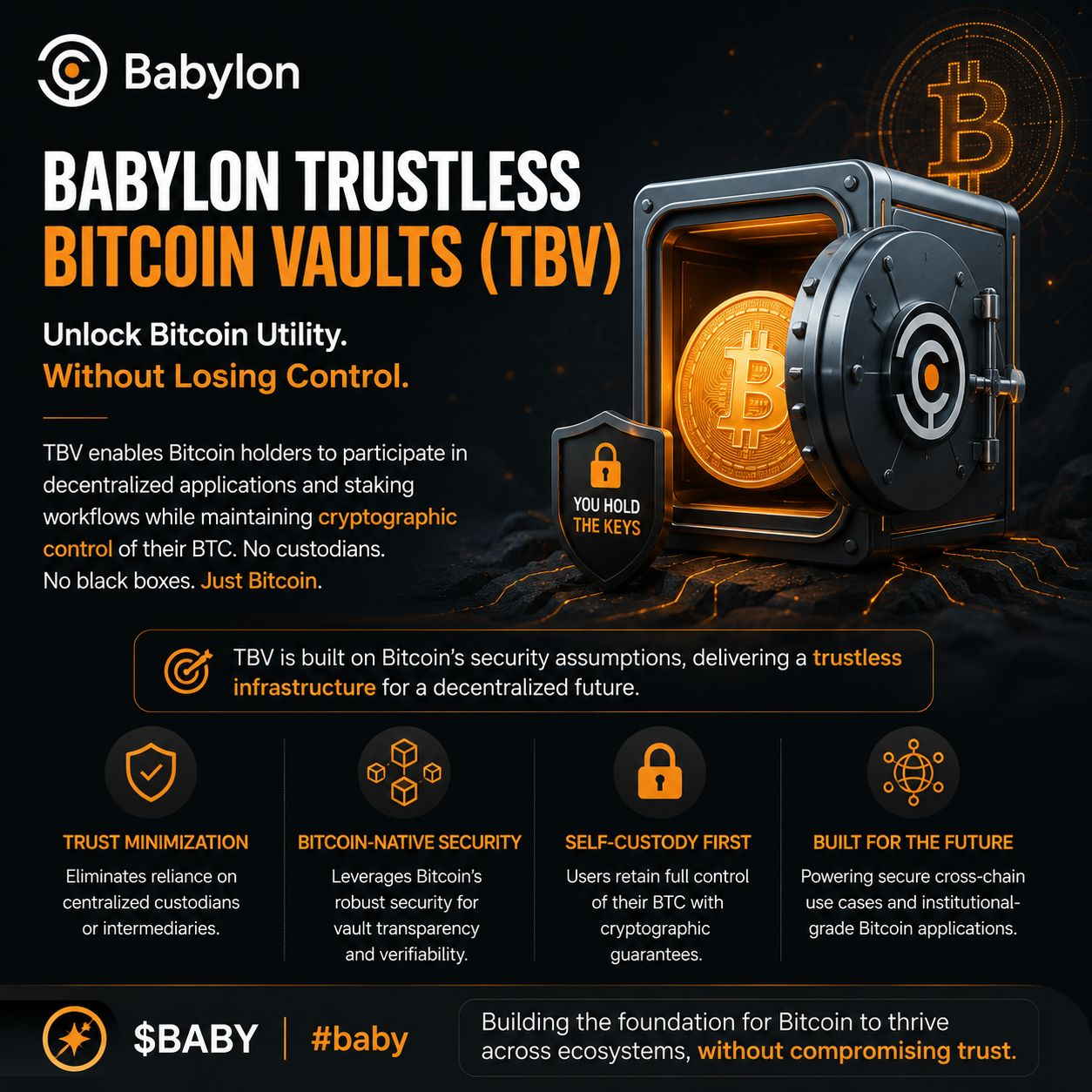
Bitcoinのセキュリティは、BTCがWeb3全体でより有用になるにつれて、信頼を前提としない状態を維持すべきです。@BabylonLabs_io は、Babylon Trustless Bitcoin Vaults(TBV)によってそのビジョンを前進させ、中央集権的なカストディへの依存を減らしつつ、ユーザーにBitcoinの暗号学的なコントロールを提供します。Bitcoinネイティブのセキュリティ、透明性、そしてより強力な自己カストディにより、TBVは次の波となる分散型Bitcoinアプリの土台を築きます。#baby $BABY
良い
Asif The Trader
·
--
私は Babylon Trustless Bitcoin Vaults (TBV) の背後にあるコンセプトを探求してきましたが、これはビットコインのセキュリティと有用性に関して、より興味深いアプローチの一つです。中央集権的なカストディに依存するのではなく、TBV は信頼を最小化する仕組みによって、ビットコインを保護したまま、より幅広い参加を可能にすることで分散型金融(DeFi)を推進するよう設計されています。
このモデルが今後さらに成熟していけば、セキュリティと柔軟性の両方を重視する長期保有者にとって、新たな機会を切り開く可能性があります。@BabylonLabs_io からの進展と、拡大していく $BABY のエコシステムを追っていくのが楽しみです。 #baby
このモデルが今後さらに成熟していけば、セキュリティと柔軟性の両方を重視する長期保有者にとって、新たな機会を切り開く可能性があります。@BabylonLabs_io からの進展と、拡大していく $BABY のエコシステムを追っていくのが楽しみです。 #baby
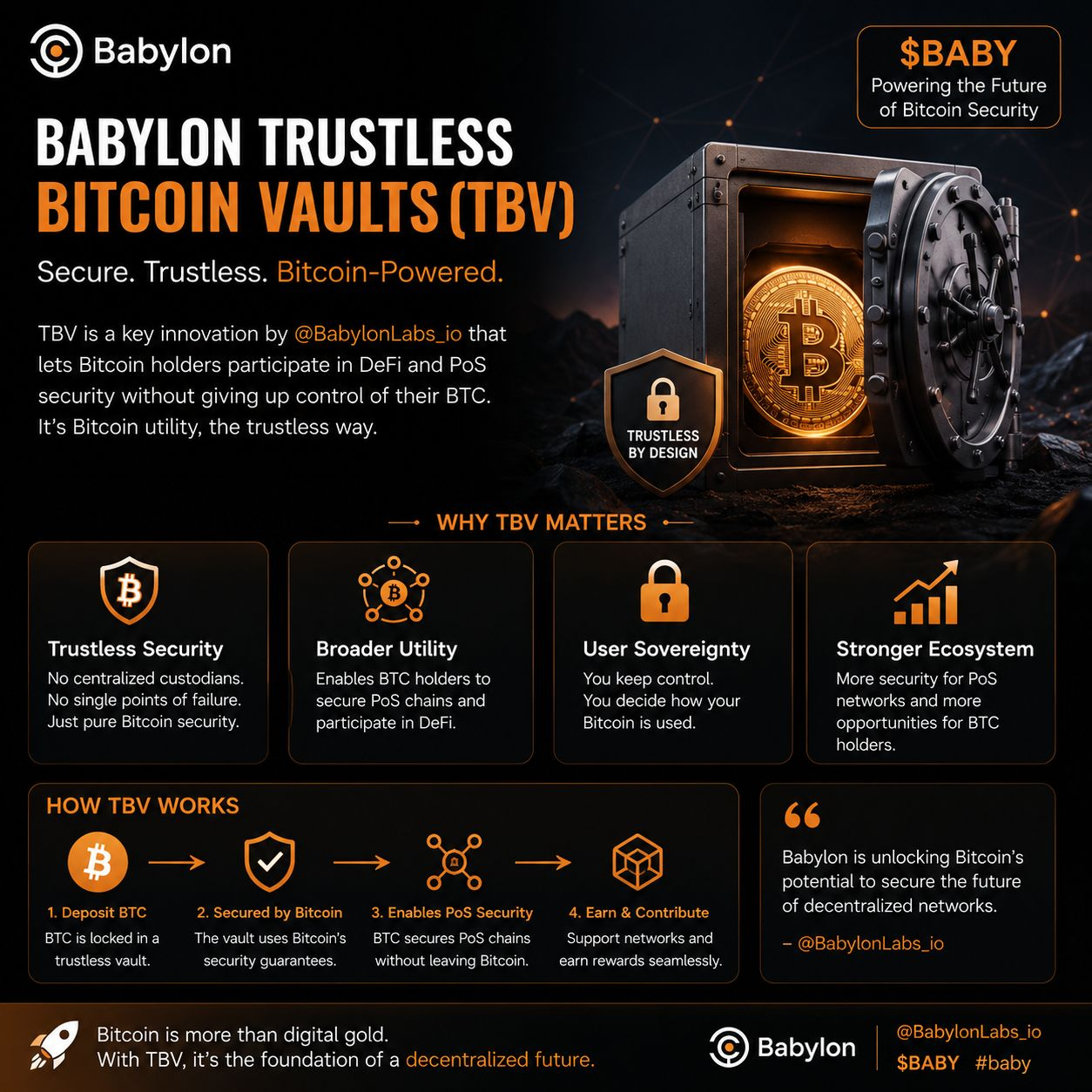
@BabylonLabs_io とそのTrustless Bitcoin Vaults (TBV)により、ビットコインのセキュリティは新しい時代に入っています。信頼できる仲介者に頼らずに、プログラマブルで自己管理型のビットコイン・ボールトを可能にすることで、TBVはユーザーのコントロールを維持しながらセキュリティを強化します。この革新は、ビットコインの中核となる原則を損なうことなく、ステーキングや分散型金融に対するビットコインの実用性を拡大します。ビットコインのインフラの未来は、透明性・セキュリティ・信頼の最小化をもって構築されています。#baby $BABY
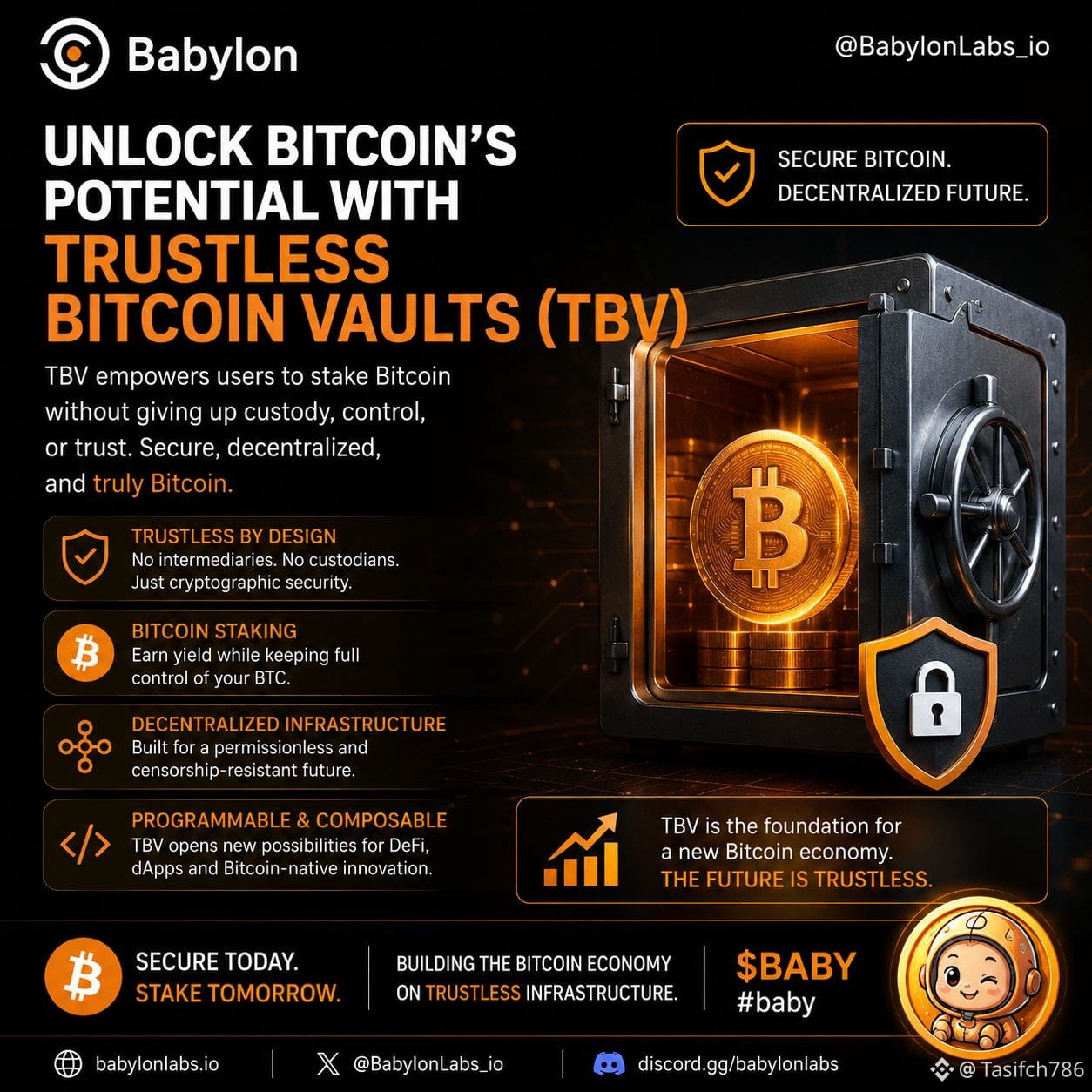
ビットコインのセキュリティは遊休資本のままであってはなりません。だからこそ、@BabylonLabs_io から信頼を前提としないビットコイン・ボールト(TBV)の背後にある革新を、私は綿密に追っています。
TBVは、BTC保有者がビットコインの中核となるセキュリティ原則を損なうことなく、分散型エコシステムに参加する新しい方法を提示します。
信頼を最小化したボールトと資産のより強固な保護を可能にすることで、Babylonは単なる保有を超えてビットコインのユーティリティを解き放つためのインフラを構築しています。ビットコインのセキュリティを次世代の分散型ネットワークとつなぐというビジョンは、より効率的で安全な暗号資産経済へ向けた大きな一歩となり得ます。
$BABY がこの成長するエコシステムをどのように支え、ビットコインのWeb3における役割をどのように広げていくのか、楽しみにしています。#baby $BABY
TBVは、BTC保有者がビットコインの中核となるセキュリティ原則を損なうことなく、分散型エコシステムに参加する新しい方法を提示します。
信頼を最小化したボールトと資産のより強固な保護を可能にすることで、Babylonは単なる保有を超えてビットコインのユーティリティを解き放つためのインフラを構築しています。ビットコインのセキュリティを次世代の分散型ネットワークとつなぐというビジョンは、より効率的で安全な暗号資産経済へ向けた大きな一歩となり得ます。
$BABY がこの成長するエコシステムをどのように支え、ビットコインのWeb3における役割をどのように広げていくのか、楽しみにしています。#baby $BABY
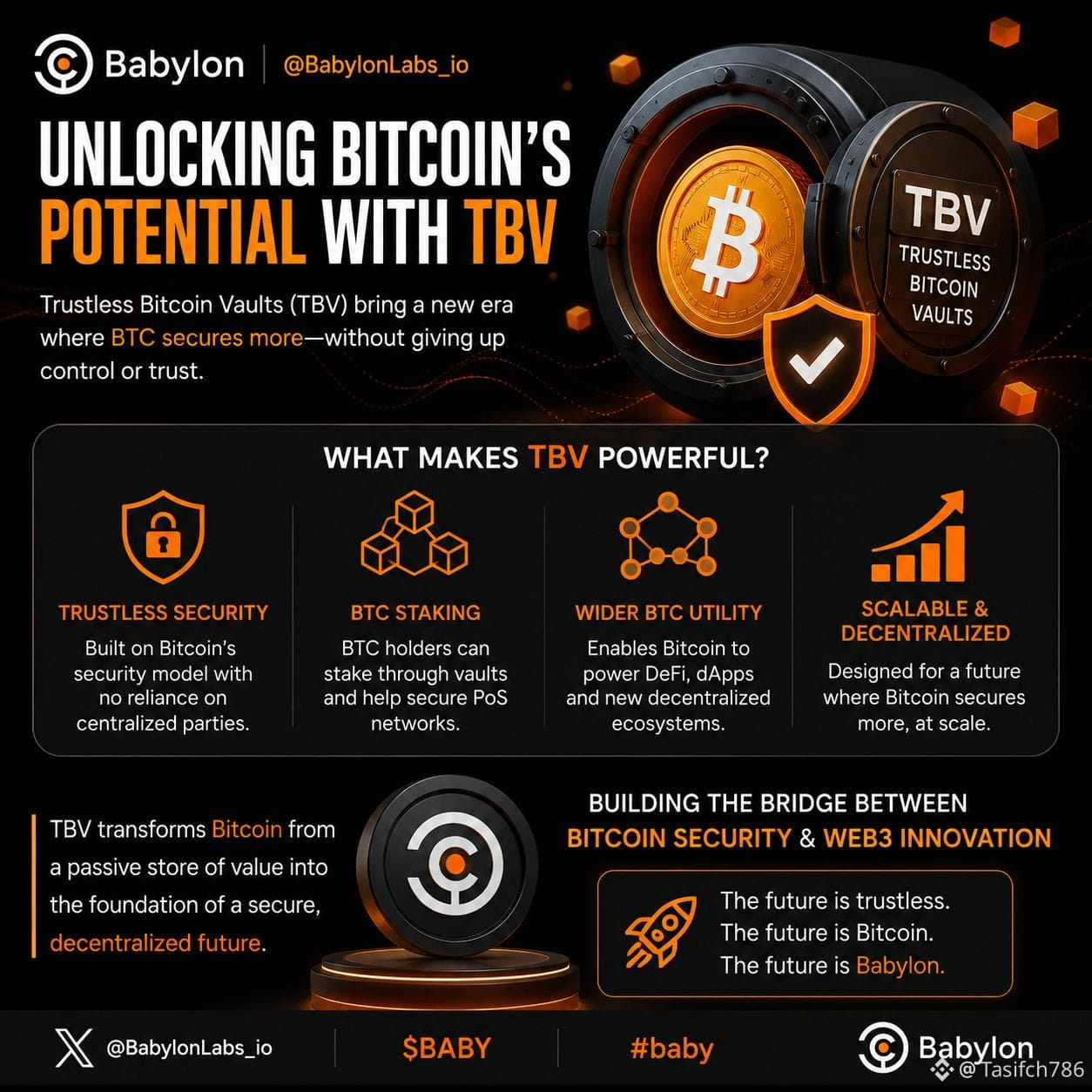
翻訳参照
its good
Asif The Trader
·
--
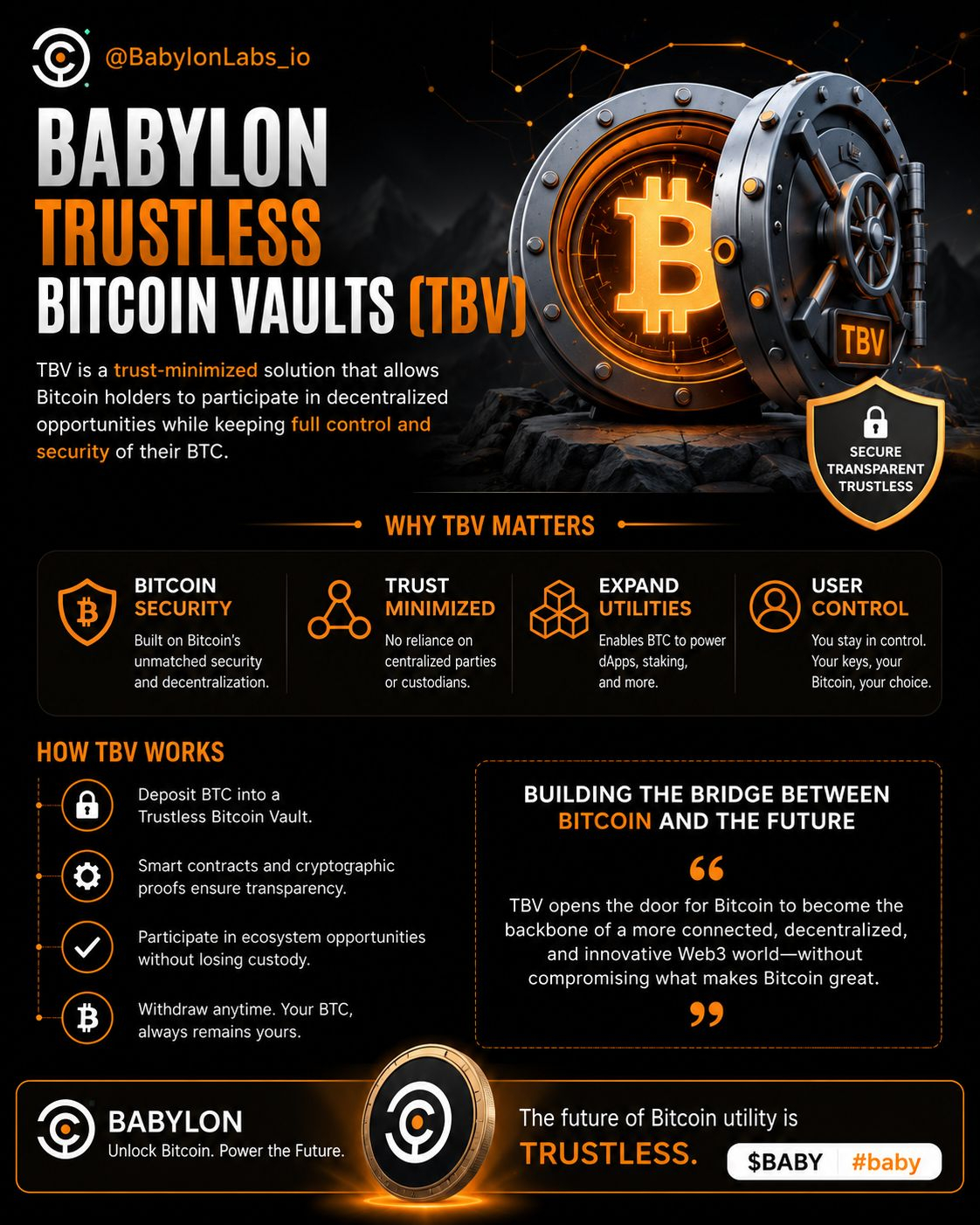
ビットコインの未来は、単に保有することだけではありません。価値の源となった「セキュリティ」と「所有」を手放さずに、ビットコインができることを広げていくことこそが重要です。そこで注目したのがBabylon Trustless Bitcoin Vaults(TBV)です。中央集権的なカストディに頼ったり、複雑な信頼の前提に依存したりするのではなく、TBVはビットコインを透明で、信頼を最小限にした管理のもとに維持したまま、分散型エコシステム全体でのより幅広い参加への扉を開くよう設計されています。
このようなアプローチは、ビットコインの役割を「価値の保存」にとどまらせない可能性を秘めています。ユーザーが基盤となるセキュリティモデルへの信頼を維持しながら、確実に新しい機会に関わっていけるなら、ビットコインネイティブのインフラや革新への採用がより進むかもしれません。私は、この技術がどのように進化し、ビットコイン・エコシステムの次の段階にどのように貢献していくのかを追いかけるのが楽しみです。
@BabylonLabs_io は、信頼を最小限にしたビットコインのユーティリティに関する興味深いビジョンを構築しており、そこを中心にエコシステムがどのように発展していくのかを楽しみにしています。
#baby $BABY
このようなアプローチは、ビットコインの役割を「価値の保存」にとどまらせない可能性を秘めています。ユーザーが基盤となるセキュリティモデルへの信頼を維持しながら、確実に新しい機会に関わっていけるなら、ビットコインネイティブのインフラや革新への採用がより進むかもしれません。私は、この技術がどのように進化し、ビットコイン・エコシステムの次の段階にどのように貢献していくのかを追いかけるのが楽しみです。
@BabylonLabs_io は、信頼を最小限にしたビットコインのユーティリティに関する興味深いビジョンを構築しており、そこを中心にエコシステムがどのように発展していくのかを楽しみにしています。
#baby $BABY
ログインして、さらにコンテンツを読む