

MABOnChain
33 投稿

MABOnChain
報告
ユーザーをブロック
Global crypto & Web3 news - NFA
32 フォロー
2 フォロワー
4 いいね
投稿
すべて
引用
·
--
翻訳参照
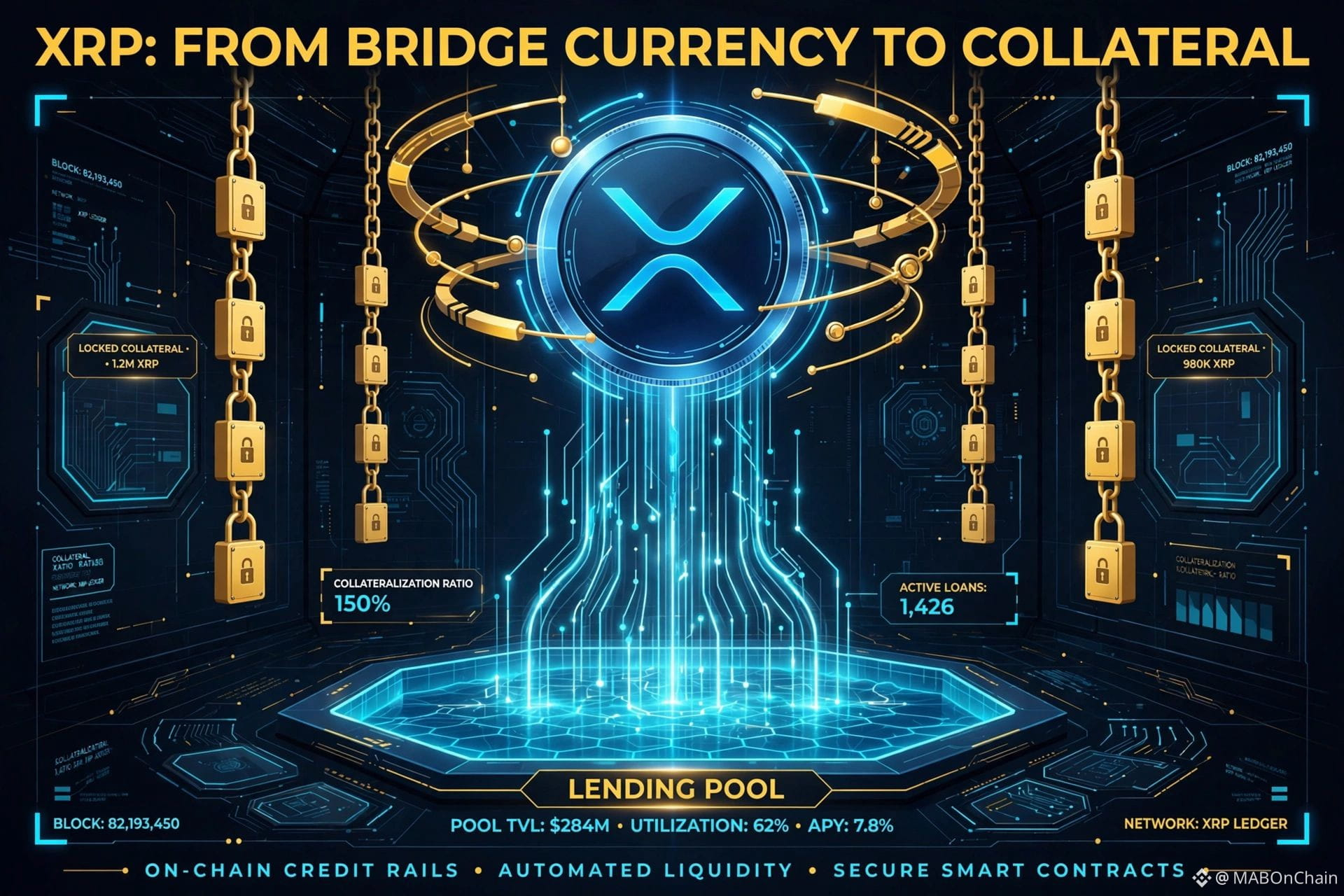
XRP spent a decade as a bridge currency. Velocity. In and out in seconds.
Monica Long just gave it a second job at XRP Seoul: XRP locked into lending pools as collateral to fund payment customers' short-term credit needs. Pilot running now, activation targeted for 2027. RippleX is wiring native lending into the XRPL base protocol (XLS-65 vaults, XLS-66 lending amendments), and the RLUSD / Clearpool / Cicada stack pushes into the $10B+ tokenized private-credit market.
This is the shift I am watching. Bridge currency means circulation. Collateral means lockup. The more payment volume moves through credit rails, the more XRP sits parked backing it.
So which ends up the bigger driver for XRP from here: payments throughput, or the supply that gets immobilized? $XRP $BTC
Curious where you land. Follow for more.
XRP spent a decade as a bridge currency. Velocity. In and out in seconds.
Monica Long just gave it a second job at XRP Seoul: XRP locked into lending pools as collateral to fund payment customers' short-term credit needs. Pilot running now, activation targeted for 2027. RippleX is wiring native lending into the XRPL base protocol (XLS-65 vaults, XLS-66 lending amendments), and the RLUSD / Clearpool / Cicada stack pushes into the $10B+ tokenized private-credit market.
This is the shift I am watching. Bridge currency means circulation. Collateral means lockup. The more payment volume moves through credit rails, the more XRP sits parked backing it.
So which ends up the bigger driver for XRP from here: payments throughput, or the supply that gets immobilized? $XRP $BTC
Curious where you land. Follow for more.
Monica Long just gave it a second job at XRP Seoul: XRP locked into lending pools as collateral to fund payment customers' short-term credit needs. Pilot running now, activation targeted for 2027. RippleX is wiring native lending into the XRPL base protocol (XLS-65 vaults, XLS-66 lending amendments), and the RLUSD / Clearpool / Cicada stack pushes into the $10B+ tokenized private-credit market.
This is the shift I am watching. Bridge currency means circulation. Collateral means lockup. The more payment volume moves through credit rails, the more XRP sits parked backing it.
So which ends up the bigger driver for XRP from here: payments throughput, or the supply that gets immobilized? $XRP $BTC
Curious where you land. Follow for more.
52
·
--
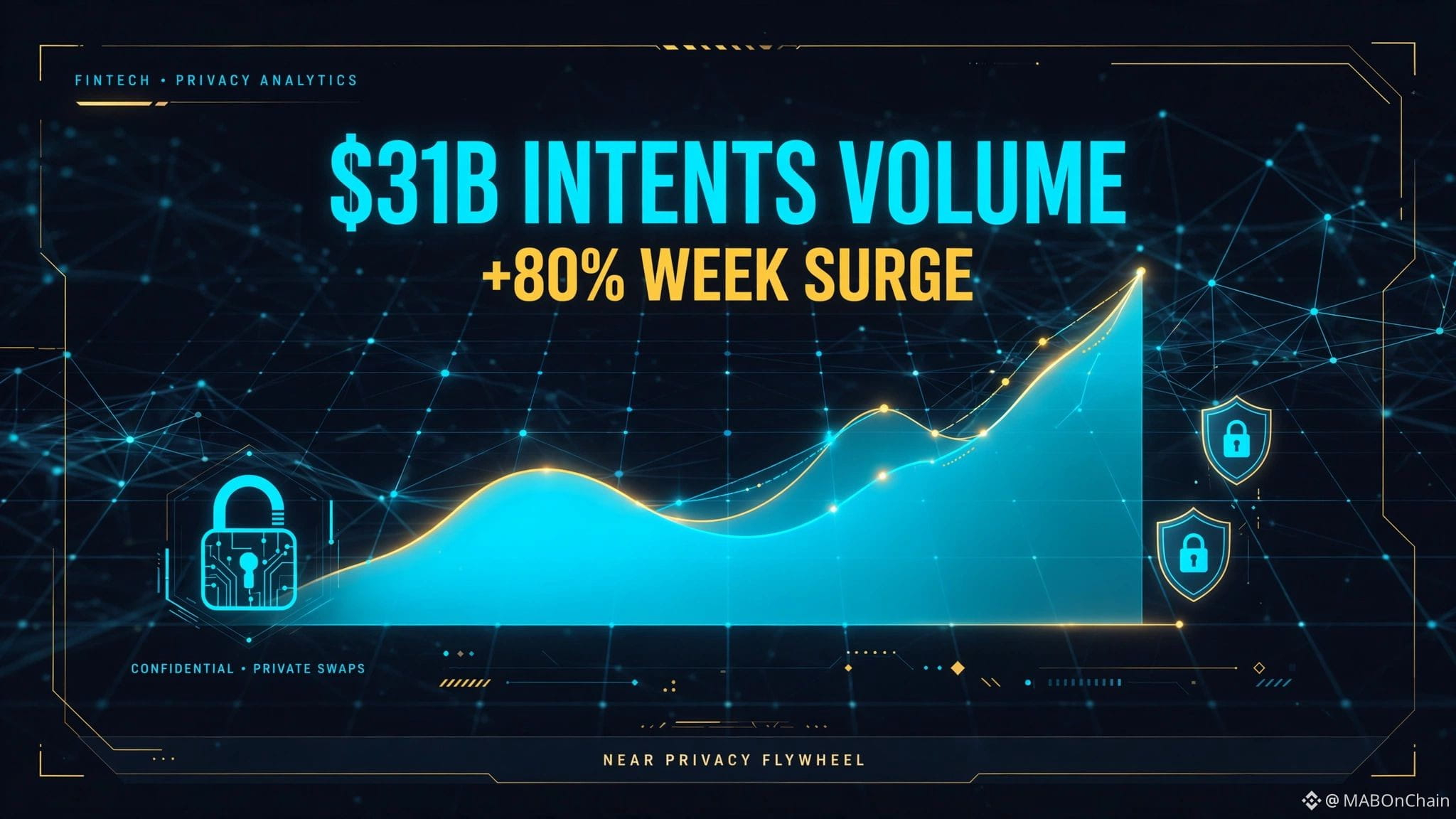
クロスチェーンスワップの取引高は300億ドルに達したが、ほとんどの情報サイトは別の話題に目を向けている。NEAR Intentsの累計取引高は310億ドルを突破し、週間取引高は数日間にわたって8億ドルを上回り、トークン価格は1週間で約80%急騰した。
あまり語られていない原動力はプライバシーだ。取引高のうち約19億ドルは、機密性の高いインテントを通じたものだった。ZODLという単一のZcashウォレットは、458件のスワップで380万ドルをルーティングし、その中には61万3,000ドルのZEC取引も含まれていた。静かに資金を動かしたい人は、目立たない経路を好む。
ただし、正直に言えば注意点もある。取引高の数字は確認できる。一方、すべての手数料がNEARの買い戻しに使われ、発行による希薄化を相殺するという説明は正確ではない。実際に価値として取り込まれる手数料は、14〜26%程度に近い。この仮説を誇張する必要はない。利用は実際に増えており、機密性の高い取引はマーケティング文句ではなく、構造的な強みになりつつある。
9月には、すでに同じパターンが見られた。Robinhood Chainの利用拡大でUniswapの手数料はほぼ倍増。エージェント決済の取引高を受けてNEARは急騰。機関投資家のプライバシー需要を背景に、Zcashは時価総額上位10位に返り咲いた。今四半期に買われているのは、実際に利用料が支払われているトークンだ。
今後も機密性の高いインテントのシェアが伸び続けるか注目している。そうなれば、プライバシーはニッチな分野ではなく、インフラになり始める。
$NEAR $ZEC
クロスチェーンスワップの取引高は300億ドルに達したが、ほとんどの情報サイトは別の話題に目を向けている。NEAR Intentsの累計取引高は310億ドルを突破し、週間取引高は数日間にわたって8億ドルを上回り、トークン価格は1週間で約80%急騰した。
あまり語られていない原動力はプライバシーだ。取引高のうち約19億ドルは、機密性の高いインテントを通じたものだった。ZODLという単一のZcashウォレットは、458件のスワップで380万ドルをルーティングし、その中には61万3,000ドルのZEC取引も含まれていた。静かに資金を動かしたい人は、目立たない経路を好む。
ただし、正直に言えば注意点もある。取引高の数字は確認できる。一方、すべての手数料がNEARの買い戻しに使われ、発行による希薄化を相殺するという説明は正確ではない。実際に価値として取り込まれる手数料は、14〜26%程度に近い。この仮説を誇張する必要はない。利用は実際に増えており、機密性の高い取引はマーケティング文句ではなく、構造的な強みになりつつある。
9月には、すでに同じパターンが見られた。Robinhood Chainの利用拡大でUniswapの手数料はほぼ倍増。エージェント決済の取引高を受けてNEARは急騰。機関投資家のプライバシー需要を背景に、Zcashは時価総額上位10位に返り咲いた。今四半期に買われているのは、実際に利用料が支払われているトークンだ。
今後も機密性の高いインテントのシェアが伸び続けるか注目している。そうなれば、プライバシーはニッチな分野ではなく、インフラになり始める。
$NEAR $ZEC
あまり語られていない原動力はプライバシーだ。取引高のうち約19億ドルは、機密性の高いインテントを通じたものだった。ZODLという単一のZcashウォレットは、458件のスワップで380万ドルをルーティングし、その中には61万3,000ドルのZEC取引も含まれていた。静かに資金を動かしたい人は、目立たない経路を好む。
ただし、正直に言えば注意点もある。取引高の数字は確認できる。一方、すべての手数料がNEARの買い戻しに使われ、発行による希薄化を相殺するという説明は正確ではない。実際に価値として取り込まれる手数料は、14〜26%程度に近い。この仮説を誇張する必要はない。利用は実際に増えており、機密性の高い取引はマーケティング文句ではなく、構造的な強みになりつつある。
9月には、すでに同じパターンが見られた。Robinhood Chainの利用拡大でUniswapの手数料はほぼ倍増。エージェント決済の取引高を受けてNEARは急騰。機関投資家のプライバシー需要を背景に、Zcashは時価総額上位10位に返り咲いた。今四半期に買われているのは、実際に利用料が支払われているトークンだ。
今後も機密性の高いインテントのシェアが伸び続けるか注目している。そうなれば、プライバシーはニッチな分野ではなく、インフラになり始める。
$NEAR $ZEC
206
·
--
翻訳参照
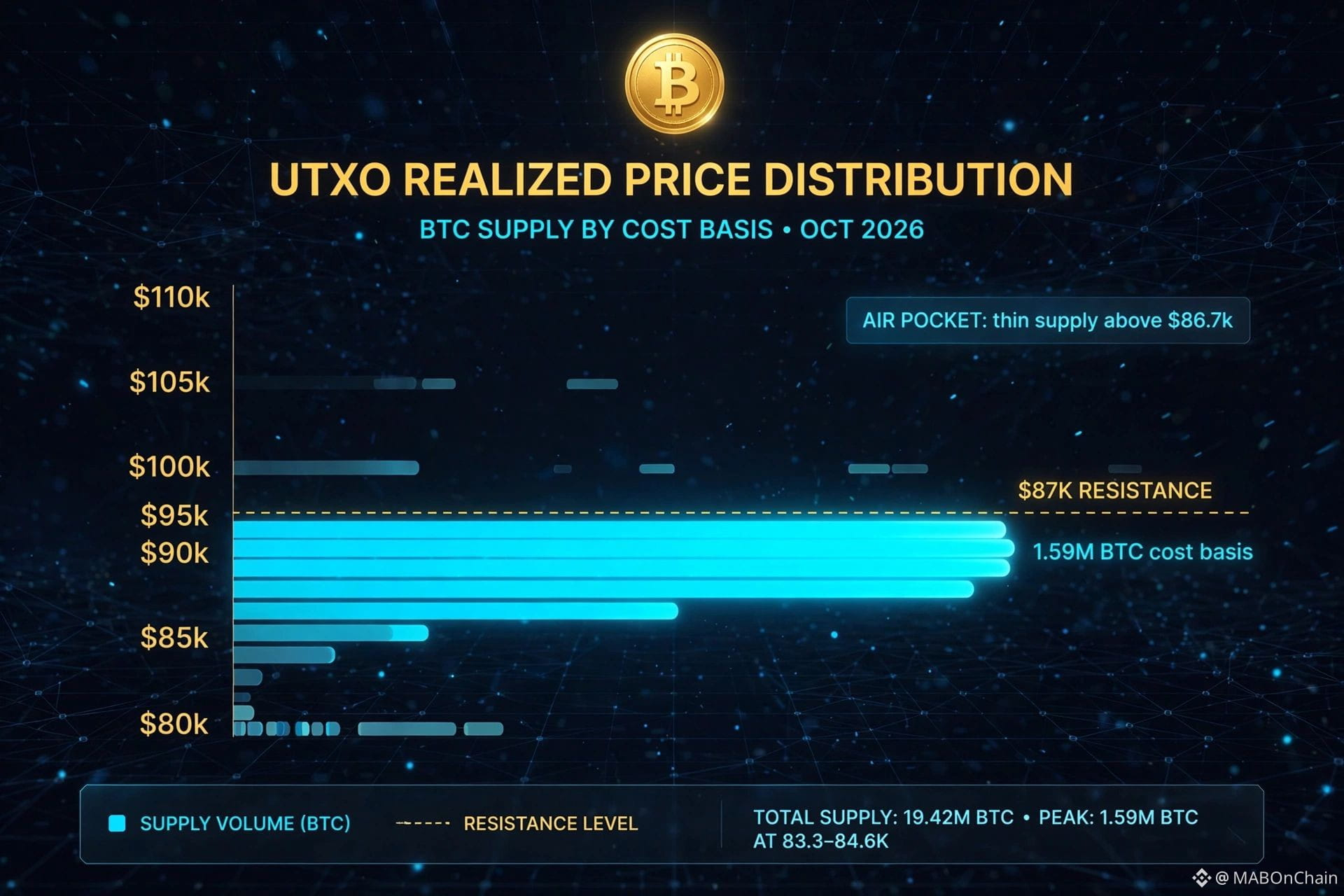
1.59 million BTC.
That's the floor sitting between $83,300 and $84,600, per Glassnode's URPD data that Ali Martinez flagged today. Every dip since late September has landed on that band and bounced. When price holds above 1.59 million coins' cost basis, most holders are in profit and in no rush to sell.
Above $86,700 the picture flips. There is almost no dense supply concentration until around $105k. The coins just aren't there. Underwater sellers from the ATH flush have mostly capitulated, and what remains up there is thin.
Daan Crypto Trades put the structure in market terms: $85k gets tested almost daily, reacting as support and resistance in turn, marginally lower highs stacking at $87k, liquidity pooling at $83k. He says he's expecting a squeeze.
I'm with him. This isn't indecision, it's coiling. A market resting on 1.59M BTC of real cost basis with an air pocket overhead doesn't need much conviction to move. A clean break of $86,700 on real spot volume has very little overhead supply to chew through before six figures is back in conversation. Conditional, not guaranteed, but the chain doesn't lie about where the coins sit.
$BTC
1.59 million BTC.
That's the floor sitting between $83,300 and $84,600, per Glassnode's URPD data that Ali Martinez flagged today. Every dip since late September has landed on that band and bounced. When price holds above 1.59 million coins' cost basis, most holders are in profit and in no rush to sell.
Above $86,700 the picture flips. There is almost no dense supply concentration until around $105k. The coins just aren't there. Underwater sellers from the ATH flush have mostly capitulated, and what remains up there is thin.
Daan Crypto Trades put the structure in market terms: $85k gets tested almost daily, reacting as support and resistance in turn, marginally lower highs stacking at $87k, liquidity pooling at $83k. He says he's expecting a squeeze.
I'm with him. This isn't indecision, it's coiling. A market resting on 1.59M BTC of real cost basis with an air pocket overhead doesn't need much conviction to move. A clean break of $86,700 on real spot volume has very little overhead supply to chew through before six figures is back in conversation. Conditional, not guaranteed, but the chain doesn't lie about where the coins sit.
$BTC
That's the floor sitting between $83,300 and $84,600, per Glassnode's URPD data that Ali Martinez flagged today. Every dip since late September has landed on that band and bounced. When price holds above 1.59 million coins' cost basis, most holders are in profit and in no rush to sell.
Above $86,700 the picture flips. There is almost no dense supply concentration until around $105k. The coins just aren't there. Underwater sellers from the ATH flush have mostly capitulated, and what remains up there is thin.
Daan Crypto Trades put the structure in market terms: $85k gets tested almost daily, reacting as support and resistance in turn, marginally lower highs stacking at $87k, liquidity pooling at $83k. He says he's expecting a squeeze.
I'm with him. This isn't indecision, it's coiling. A market resting on 1.59M BTC of real cost basis with an air pocket overhead doesn't need much conviction to move. A clean break of $86,700 on real spot volume has very little overhead supply to chew through before six figures is back in conversation. Conditional, not guaranteed, but the chain doesn't lie about where the coins sit.
$BTC
14
·
--
翻訳参照
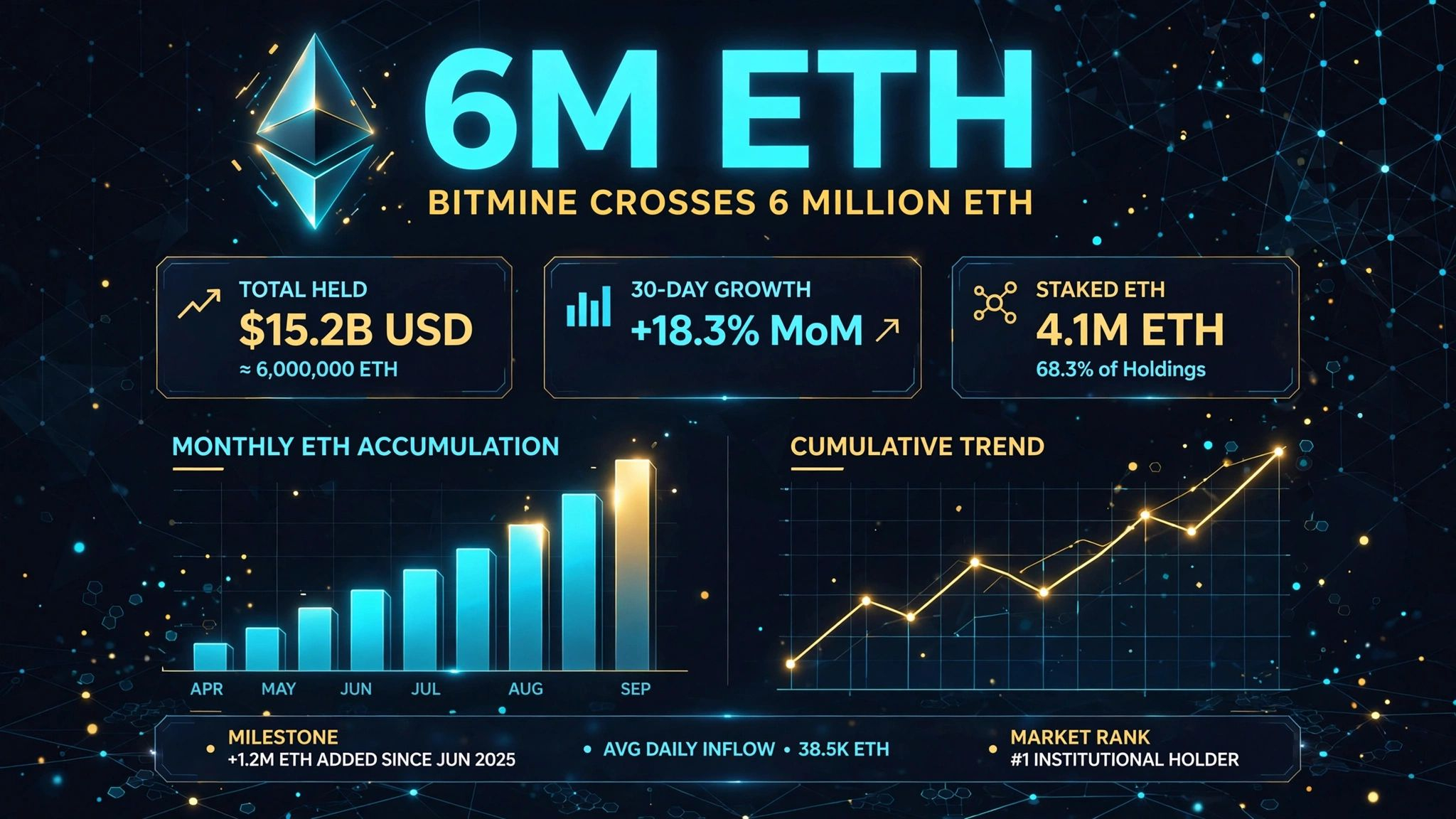
Six million ETH.
Bitmine just crossed it. 6,016,414 ETH, and 7.4 billion in total crypto, cash and marketable securities on the balance sheet.
This trade is barely a year old and one company already holds about 5% of the entire ETH supply. Everyone argues whether these treasury firms are the next Strategy or the next SPAC bust, but the arithmetic underneath keeps compounding. ETH supply is capped around 120.7 million, and a single buyer keeps vacuuming it up at every price.
The market already knows the playbook. Strategy ran it on BTC. Bitmine is running it on ETH, bigger and faster.
The interesting question now is not whether they keep buying. It is what ETH looks like when 5% of it sits in one corporate wallet.
$ETH $BTC
Six million ETH.
Bitmine just crossed it. 6,016,414 ETH, and 7.4 billion in total crypto, cash and marketable securities on the balance sheet.
This trade is barely a year old and one company already holds about 5% of the entire ETH supply. Everyone argues whether these treasury firms are the next Strategy or the next SPAC bust, but the arithmetic underneath keeps compounding. ETH supply is capped around 120.7 million, and a single buyer keeps vacuuming it up at every price.
The market already knows the playbook. Strategy ran it on BTC. Bitmine is running it on ETH, bigger and faster.
The interesting question now is not whether they keep buying. It is what ETH looks like when 5% of it sits in one corporate wallet.
$ETH $BTC
Bitmine just crossed it. 6,016,414 ETH, and 7.4 billion in total crypto, cash and marketable securities on the balance sheet.
This trade is barely a year old and one company already holds about 5% of the entire ETH supply. Everyone argues whether these treasury firms are the next Strategy or the next SPAC bust, but the arithmetic underneath keeps compounding. ETH supply is capped around 120.7 million, and a single buyer keeps vacuuming it up at every price.
The market already knows the playbook. Strategy ran it on BTC. Bitmine is running it on ETH, bigger and faster.
The interesting question now is not whether they keep buying. It is what ETH looks like when 5% of it sits in one corporate wallet.
$ETH $BTC
10
·
--
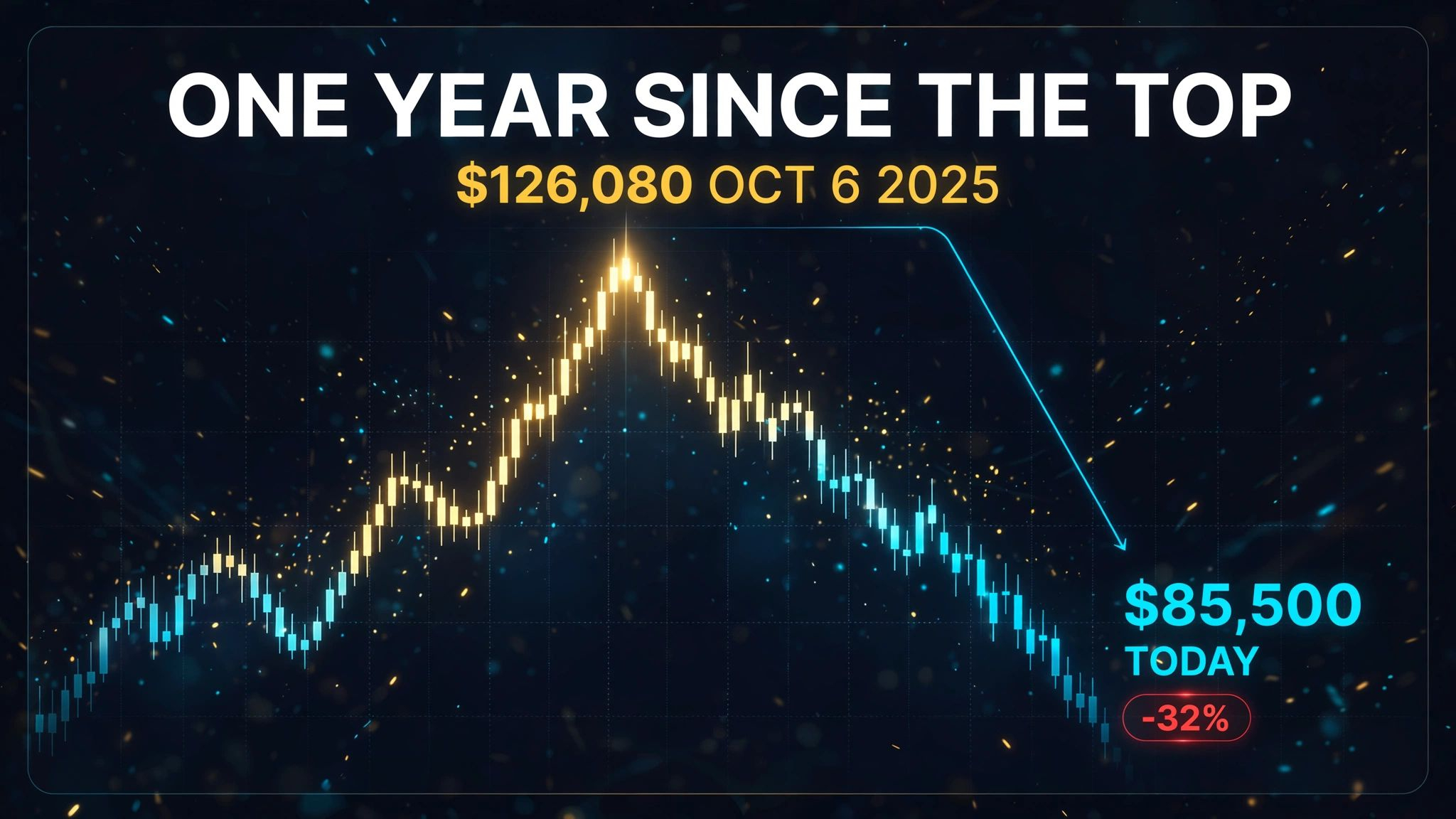
ちょうど1年前の今日、ビットコインは史上最高値を記録しました。126,080ドル。
現在はおよそ85,500ドルで取引されています。32%の下落です。
記念日の相場も厳しいものでした。月曜日には現物BTC ETFから約9,000万ドルが流出し、ETFへの累計資金流入額はピークから約6%減少しました。ETH ETFでは5日連続で資金が流出しました。
それでも、60日前と比べるとBTCは32.6%上昇。90日前と比べると38%上昇しています。価格は高値から大きく下げたものの、2か月連続で力強く回復しています。
分配局面はゆっくりと、じりじり進みます。これは分配局面には見えません。強制的なレバレッジ解消のあと、現物の実需が静かに買いを積み上げているように見えます。
天井には記念日があります。回復に必要なのは、ただ時間です。毎日の相場解説をチェックしてください。
$BTC $ETH
ちょうど1年前の今日、ビットコインは史上最高値を記録しました。126,080ドル。
現在はおよそ85,500ドルで取引されています。32%の下落です。
記念日の相場も厳しいものでした。月曜日には現物BTC ETFから約9,000万ドルが流出し、ETFへの累計資金流入額はピークから約6%減少しました。ETH ETFでは5日連続で資金が流出しました。
それでも、60日前と比べるとBTCは32.6%上昇。90日前と比べると38%上昇しています。価格は高値から大きく下げたものの、2か月連続で力強く回復しています。
分配局面はゆっくりと、じりじり進みます。これは分配局面には見えません。強制的なレバレッジ解消のあと、現物の実需が静かに買いを積み上げているように見えます。
天井には記念日があります。回復に必要なのは、ただ時間です。毎日の相場解説をチェックしてください。
$BTC $ETH
現在はおよそ85,500ドルで取引されています。32%の下落です。
記念日の相場も厳しいものでした。月曜日には現物BTC ETFから約9,000万ドルが流出し、ETFへの累計資金流入額はピークから約6%減少しました。ETH ETFでは5日連続で資金が流出しました。
それでも、60日前と比べるとBTCは32.6%上昇。90日前と比べると38%上昇しています。価格は高値から大きく下げたものの、2か月連続で力強く回復しています。
分配局面はゆっくりと、じりじり進みます。これは分配局面には見えません。強制的なレバレッジ解消のあと、現物の実需が静かに買いを積み上げているように見えます。
天井には記念日があります。回復に必要なのは、ただ時間です。毎日の相場解説をチェックしてください。
$BTC $ETH
1
26
·
--
翻訳参照
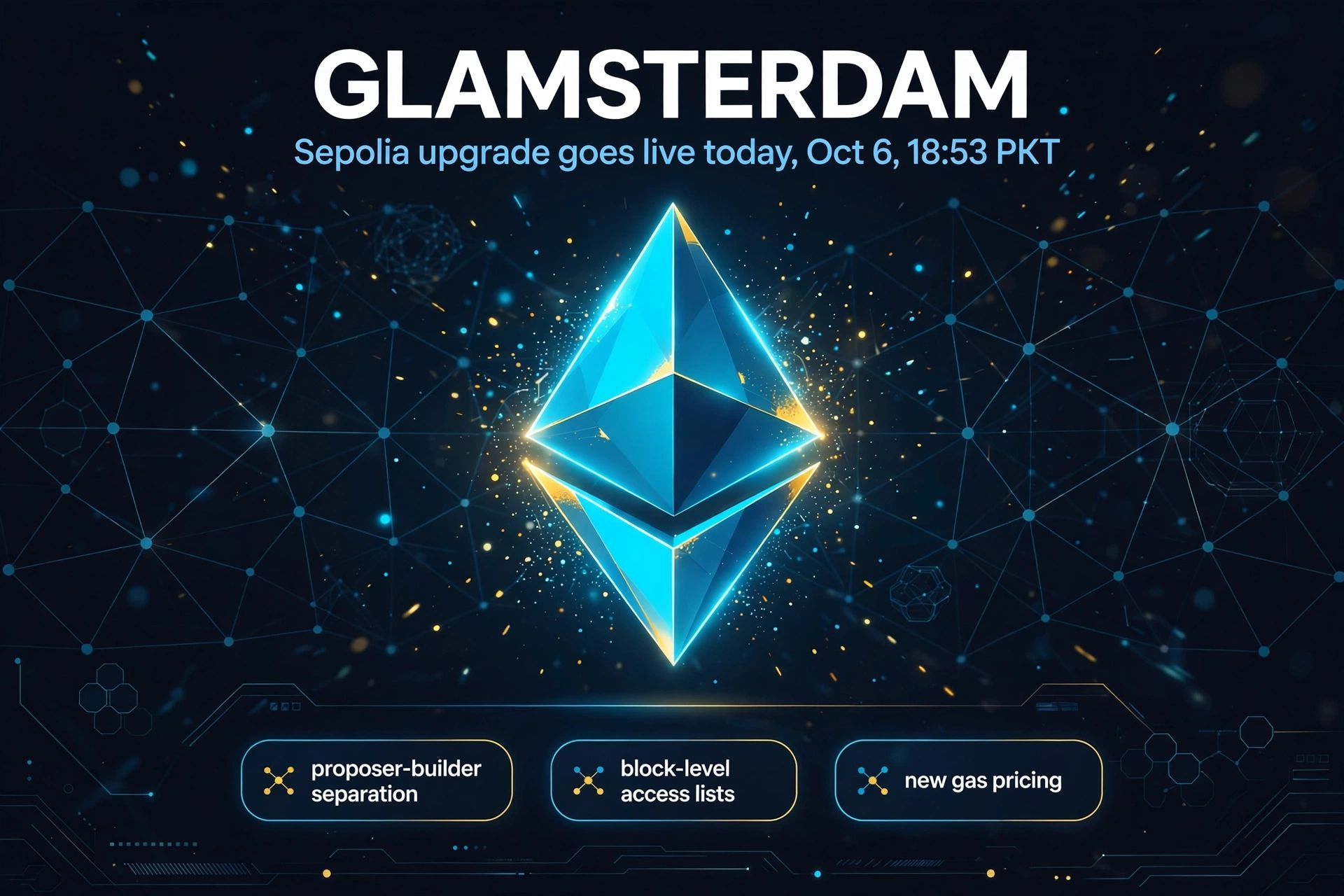
In under three hours, Ethereum forks a testnet and almost nobody is watching. Glamsterdam activates on Sepolia at 18:53 PKT. Epoch 353,024.
The important piece is enshrined proposer-builder separation. The handoff between specialized block builders and validators gets written into the protocol instead of running through outside middleware. Alongside it: block-level access lists, so clients can read state from disk and validate parts of a block in parallel, and a gas pricing overhaul that charges closer to what data access actually costs.
The number that matters came from the private rehearsal on Sept 17. Block gas limit pushed toward 200 million. No lost finality. That is Ethereum proving it can fit much more activity into each block before mainnet ever feels it.
Hoodi is penciled in for Oct 27. Mainnet has no date yet. And looking past this one, Vitalik said Sunday that Hegotá in 2027 could be the last routine fork before development shifts toward STARKs and quantum-safe cryptography.
L1 capacity is quietly the story of this cycle. Watching it.
$ETH #Glamsterdam
In under three hours, Ethereum forks a testnet and almost nobody is watching. Glamsterdam activates on Sepolia at 18:53 PKT. Epoch 353,024.
The important piece is enshrined proposer-builder separation. The handoff between specialized block builders and validators gets written into the protocol instead of running through outside middleware. Alongside it: block-level access lists, so clients can read state from disk and validate parts of a block in parallel, and a gas pricing overhaul that charges closer to what data access actually costs.
The number that matters came from the private rehearsal on Sept 17. Block gas limit pushed toward 200 million. No lost finality. That is Ethereum proving it can fit much more activity into each block before mainnet ever feels it.
Hoodi is penciled in for Oct 27. Mainnet has no date yet. And looking past this one, Vitalik said Sunday that Hegotá in 2027 could be the last routine fork before development shifts toward STARKs and quantum-safe cryptography.
L1 capacity is quietly the story of this cycle. Watching it.
$ETH #Glamsterdam
The important piece is enshrined proposer-builder separation. The handoff between specialized block builders and validators gets written into the protocol instead of running through outside middleware. Alongside it: block-level access lists, so clients can read state from disk and validate parts of a block in parallel, and a gas pricing overhaul that charges closer to what data access actually costs.
The number that matters came from the private rehearsal on Sept 17. Block gas limit pushed toward 200 million. No lost finality. That is Ethereum proving it can fit much more activity into each block before mainnet ever feels it.
Hoodi is penciled in for Oct 27. Mainnet has no date yet. And looking past this one, Vitalik said Sunday that Hegotá in 2027 could be the last routine fork before development shifts toward STARKs and quantum-safe cryptography.
L1 capacity is quietly the story of this cycle. Watching it.
$ETH #Glamsterdam
5
·
--
翻訳参照
September had every excuse to dump Bitcoin. A Fed hike, the first since 2023. $100 oil with the Strait of Hormuz closed. The CLARITY Act dying in the Senate. The 30-year yield at its highest since 2004.
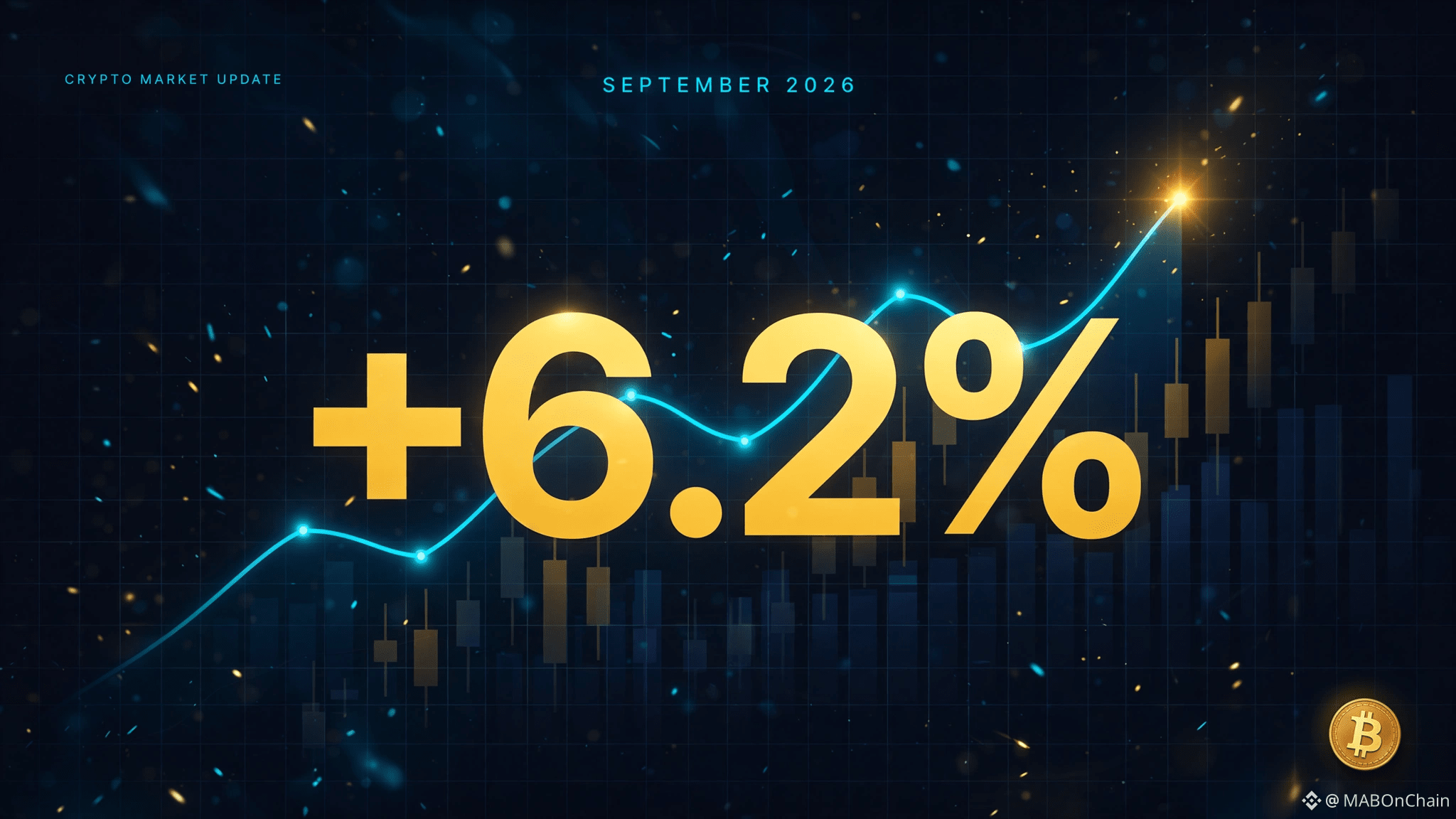
Bitcoin closed the month up 6.2%.
That is the fourth green September in a row and the best third quarter since 2017, per 21Shares. Seasonality said September averages a 2.4% loss. The tape said otherwise. What led matters more than the number: Uniswap fees nearly doubling on real Robinhood Chain usage, NEAR up around 180% on agent payment volume, Zcash forcing its way into the top 10 on institutional privacy demand. This market keeps paying for real usage while narratives argue among themselves.
The Q4 question comes down to three things: the $81,000 support level holding, the 30-year yield stabilizing, and ETF demand persisting after September's inflows faded at month-end. Clean list. Watching that $81k line first.
$BTC $ETH $ZEC
Follow for the daily read.
September had every excuse to dump Bitcoin. A Fed hike, the first since 2023. $100 oil with the Strait of Hormuz closed. The CLARITY Act dying in the Senate. The 30-year yield at its highest since 2004.
Bitcoin closed the month up 6.2%.
That is the fourth green September in a row and the best third quarter since 2017, per 21Shares. Seasonality said September averages a 2.4% loss. The tape said otherwise. What led matters more than the number: Uniswap fees nearly doubling on real Robinhood Chain usage, NEAR up around 180% on agent payment volume, Zcash forcing its way into the top 10 on institutional privacy demand. This market keeps paying for real usage while narratives argue among themselves.
The Q4 question comes down to three things: the $81,000 support level holding, the 30-year yield stabilizing, and ETF demand persisting after September's inflows faded at month-end. Clean list. Watching that $81k line first.
$BTC $ETH $ZEC
Follow for the daily read.
Bitcoin closed the month up 6.2%.
That is the fourth green September in a row and the best third quarter since 2017, per 21Shares. Seasonality said September averages a 2.4% loss. The tape said otherwise. What led matters more than the number: Uniswap fees nearly doubling on real Robinhood Chain usage, NEAR up around 180% on agent payment volume, Zcash forcing its way into the top 10 on institutional privacy demand. This market keeps paying for real usage while narratives argue among themselves.
The Q4 question comes down to three things: the $81,000 support level holding, the 30-year yield stabilizing, and ETF demand persisting after September's inflows faded at month-end. Clean list. Watching that $81k line first.
$BTC $ETH $ZEC
Follow for the daily read.
239
·
--
翻訳参照
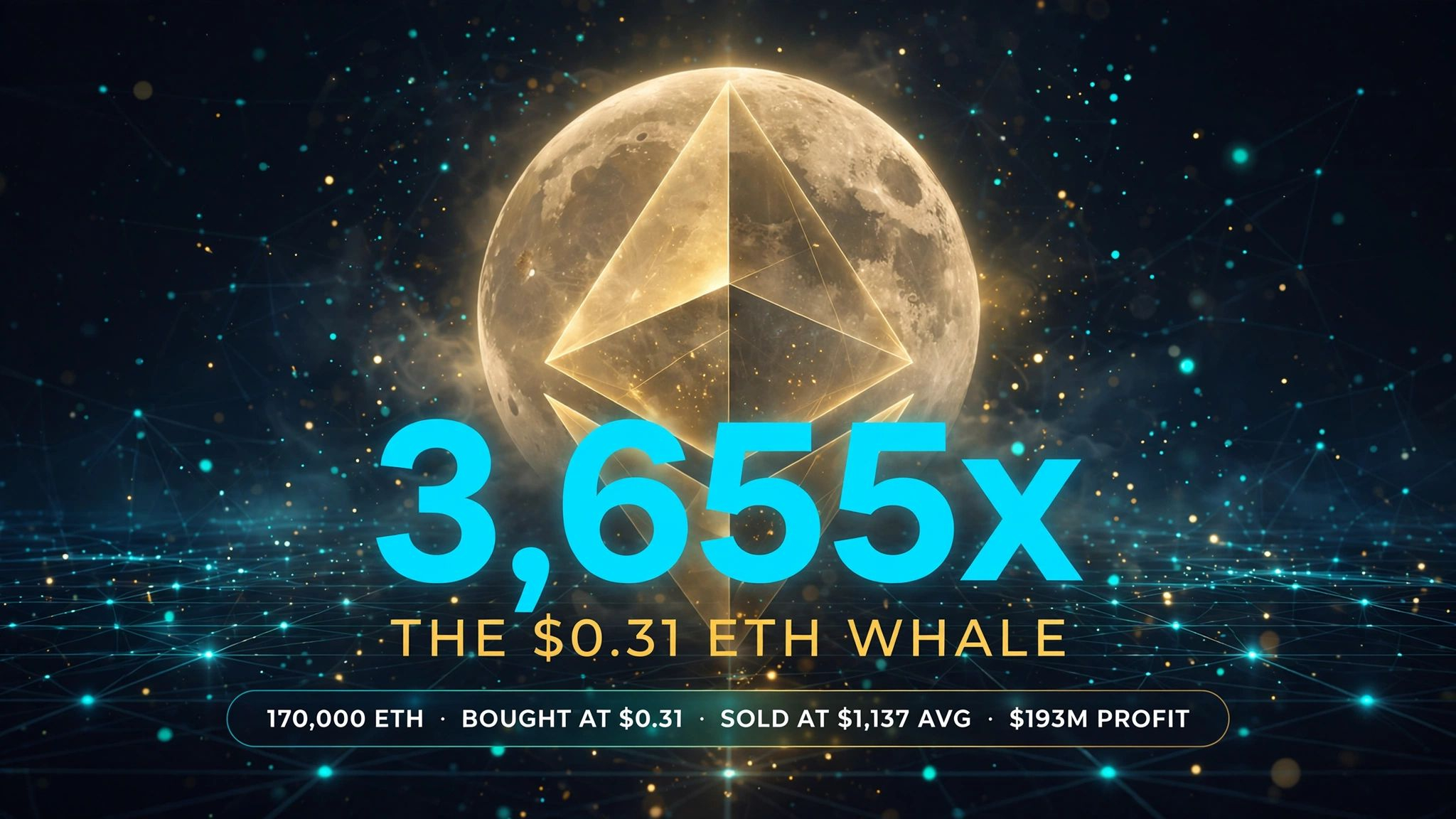
3,655x.
An Ethereum ICO buyer just cleared his entire 170,000 ETH stack. He bought in 2015 at $0.31 for about $52,700 total. On Monday he moved the last big chunk, 13,330 ETH worth around $36.4M, to Coinbase. Average sale price across the whole position: $1,137. Total profit: roughly $193 million.
I keep seeing people read this as a sell signal. It is not. Thirteen thousand ETH is a rounding error against daily ETH volume. One wallet, eleven years of holding, closing out. That is patience being rewarded, not smart money rushing for the exit.
The real lesson is what it took to sit through every 90% drawdown since 2015 and still hold. Nobody does that by watching the price.
$ETH #Ethereum
Follow for the on-chain data the headlines skip.
3,655x.
An Ethereum ICO buyer just cleared his entire 170,000 ETH stack. He bought in 2015 at $0.31 for about $52,700 total. On Monday he moved the last big chunk, 13,330 ETH worth around $36.4M, to Coinbase. Average sale price across the whole position: $1,137. Total profit: roughly $193 million.
I keep seeing people read this as a sell signal. It is not. Thirteen thousand ETH is a rounding error against daily ETH volume. One wallet, eleven years of holding, closing out. That is patience being rewarded, not smart money rushing for the exit.
The real lesson is what it took to sit through every 90% drawdown since 2015 and still hold. Nobody does that by watching the price.
$ETH #Ethereum
Follow for the on-chain data the headlines skip.
An Ethereum ICO buyer just cleared his entire 170,000 ETH stack. He bought in 2015 at $0.31 for about $52,700 total. On Monday he moved the last big chunk, 13,330 ETH worth around $36.4M, to Coinbase. Average sale price across the whole position: $1,137. Total profit: roughly $193 million.
I keep seeing people read this as a sell signal. It is not. Thirteen thousand ETH is a rounding error against daily ETH volume. One wallet, eleven years of holding, closing out. That is patience being rewarded, not smart money rushing for the exit.
The real lesson is what it took to sit through every 90% drawdown since 2015 and still hold. Nobody does that by watching the price.
$ETH #Ethereum
Follow for the on-chain data the headlines skip.
1
·
--
今日、暗号資産界隈で誰も注目していないのが債券市場だ。
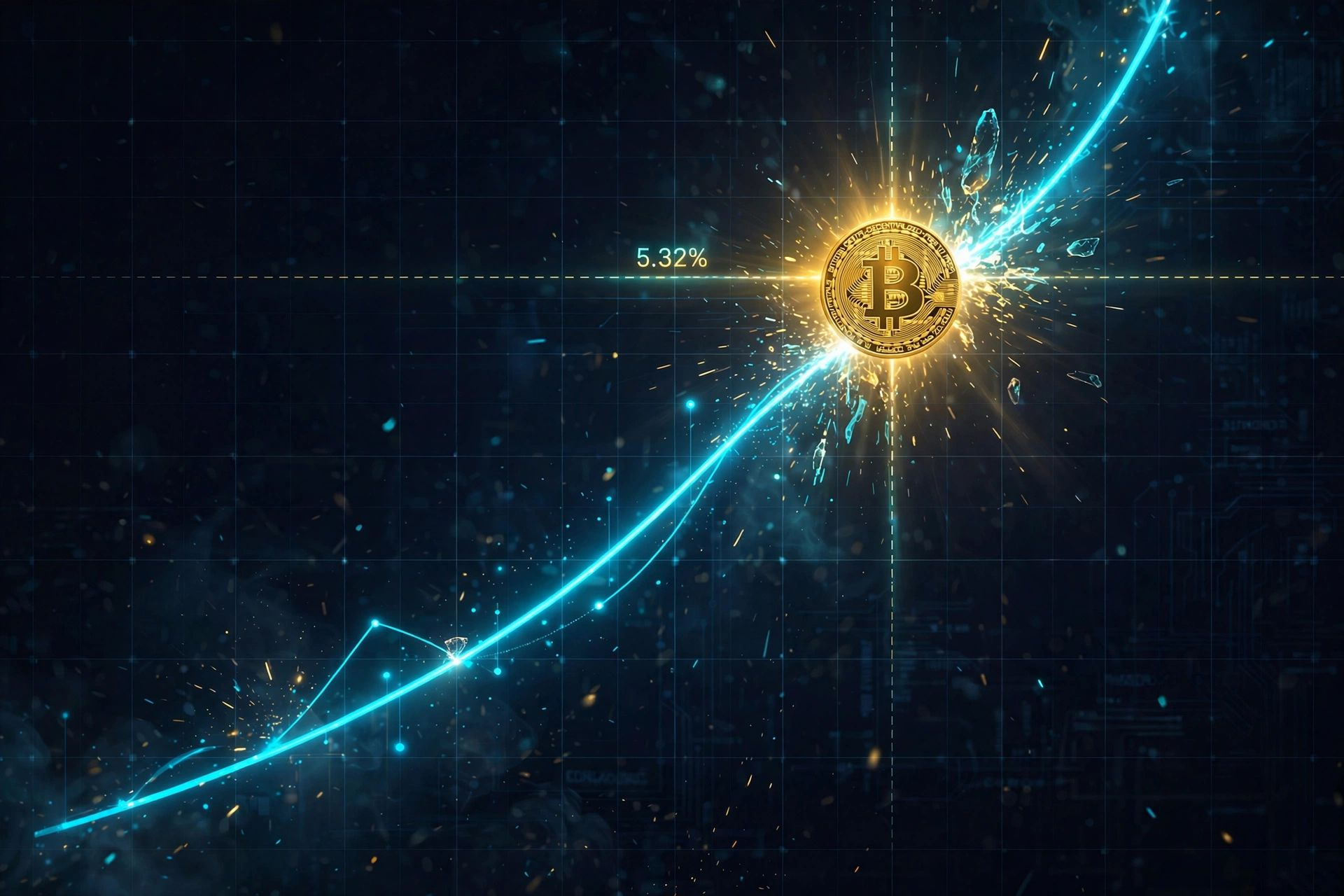
米10年債利回りは5.32%に達した。これは2002年以来の水準だ。それでもナスダックは過去最高値を更新。そしてレイ・ダリオは、米国の債務危機が3年以内に勃発する可能性があると発言した。
暗号資産に関わる人たちが居心地の悪さを感じるべきなのは、ここだ。ビットコインは87,000ドルで何度も上値を抑えられ、ETHはETFへの資金流入を2週連続で維持できず、政府債務から逃れる手段とされる資産が、ハイベータの株式先物のように振る舞っている。
マクロ経済の専門家たちの見立ては明快だ。膨らみすぎた債務、上昇する利回り、そして強まり続けるドル。歴史的に見れば、これはビットコインが輝くはずの状況だ。利回りが24年ぶりの高水準にあり、ダリオ本人が債務への警告を発している今でさえ輝けないのなら、デカップリングの話はまだ単なる物語にすぎない。
今週は注文板よりも債券市場に注目している。株価が最高値にある一方で、利回りが5.32%に達している。この緊張関係が崩れたとき、暗号資産が本当は何なのかが明らかになる。
$BTC $ETH $BNB
今日、暗号資産界隈で誰も注目していないのが債券市場だ。
米10年債利回りは5.32%に達した。これは2002年以来の水準だ。それでもナスダックは過去最高値を更新。そしてレイ・ダリオは、米国の債務危機が3年以内に勃発する可能性があると発言した。
暗号資産に関わる人たちが居心地の悪さを感じるべきなのは、ここだ。ビットコインは87,000ドルで何度も上値を抑えられ、ETHはETFへの資金流入を2週連続で維持できず、政府債務から逃れる手段とされる資産が、ハイベータの株式先物のように振る舞っている。
マクロ経済の専門家たちの見立ては明快だ。膨らみすぎた債務、上昇する利回り、そして強まり続けるドル。歴史的に見れば、これはビットコインが輝くはずの状況だ。利回りが24年ぶりの高水準にあり、ダリオ本人が債務への警告を発している今でさえ輝けないのなら、デカップリングの話はまだ単なる物語にすぎない。
今週は注文板よりも債券市場に注目している。株価が最高値にある一方で、利回りが5.32%に達している。この緊張関係が崩れたとき、暗号資産が本当は何なのかが明らかになる。
$BTC $ETH $BNB
米10年債利回りは5.32%に達した。これは2002年以来の水準だ。それでもナスダックは過去最高値を更新。そしてレイ・ダリオは、米国の債務危機が3年以内に勃発する可能性があると発言した。
暗号資産に関わる人たちが居心地の悪さを感じるべきなのは、ここだ。ビットコインは87,000ドルで何度も上値を抑えられ、ETHはETFへの資金流入を2週連続で維持できず、政府債務から逃れる手段とされる資産が、ハイベータの株式先物のように振る舞っている。
マクロ経済の専門家たちの見立ては明快だ。膨らみすぎた債務、上昇する利回り、そして強まり続けるドル。歴史的に見れば、これはビットコインが輝くはずの状況だ。利回りが24年ぶりの高水準にあり、ダリオ本人が債務への警告を発している今でさえ輝けないのなら、デカップリングの話はまだ単なる物語にすぎない。
今週は注文板よりも債券市場に注目している。株価が最高値にある一方で、利回りが5.32%に達している。この緊張関係が崩れたとき、暗号資産が本当は何なのかが明らかになる。
$BTC $ETH $BNB
1
34
·
--
翻訳参照
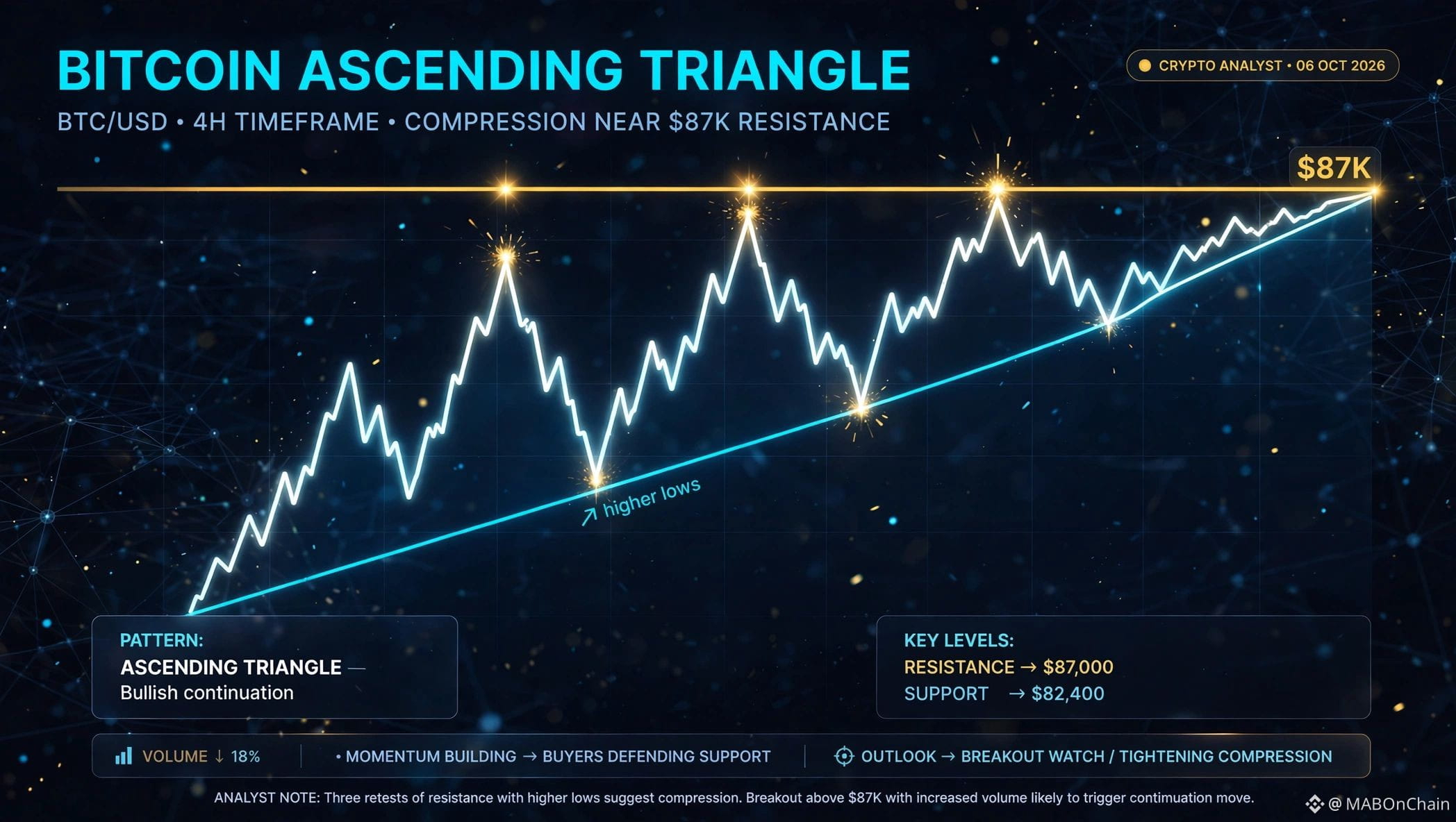
3 taps at $87,000. No breakthrough yet. This is worth a lesson.
Bitcoin has now been turned back at $87k three times since September 23. But notice the other half of the chart: each rejection dropped to a higher low. Flat ceiling, rising floor. That's the shape of an ascending triangle.
Why it matters mechanically. Every rejection piles more resting sell orders onto $87k, visible supply. Every higher low means buyers stopped waiting for cheaper fills and started paying up. Demand is climbing while supply sits still. Triangles resolve at the apex because the range keeps shrinking until one side runs out of room.
The tell is the break itself. A daily close above $87k on real volume says the sellers finally thinned out. Losing the rising trendline says the buying pressure cracked first. Either way, compression ends with expansion. It always does.
$BTC $ETH #Bitcoin #CryptoMarkets
3 taps at $87,000. No breakthrough yet. This is worth a lesson.
Bitcoin has now been turned back at $87k three times since September 23. But notice the other half of the chart: each rejection dropped to a higher low. Flat ceiling, rising floor. That's the shape of an ascending triangle.
Why it matters mechanically. Every rejection piles more resting sell orders onto $87k, visible supply. Every higher low means buyers stopped waiting for cheaper fills and started paying up. Demand is climbing while supply sits still. Triangles resolve at the apex because the range keeps shrinking until one side runs out of room.
The tell is the break itself. A daily close above $87k on real volume says the sellers finally thinned out. Losing the rising trendline says the buying pressure cracked first. Either way, compression ends with expansion. It always does.
$BTC $ETH #Bitcoin #CryptoMarkets
Bitcoin has now been turned back at $87k three times since September 23. But notice the other half of the chart: each rejection dropped to a higher low. Flat ceiling, rising floor. That's the shape of an ascending triangle.
Why it matters mechanically. Every rejection piles more resting sell orders onto $87k, visible supply. Every higher low means buyers stopped waiting for cheaper fills and started paying up. Demand is climbing while supply sits still. Triangles resolve at the apex because the range keeps shrinking until one side runs out of room.
The tell is the break itself. A daily close above $87k on real volume says the sellers finally thinned out. Losing the rising trendline says the buying pressure cracked first. Either way, compression ends with expansion. It always does.
$BTC $ETH #Bitcoin #CryptoMarkets
1
1
22
·
--
翻訳参照
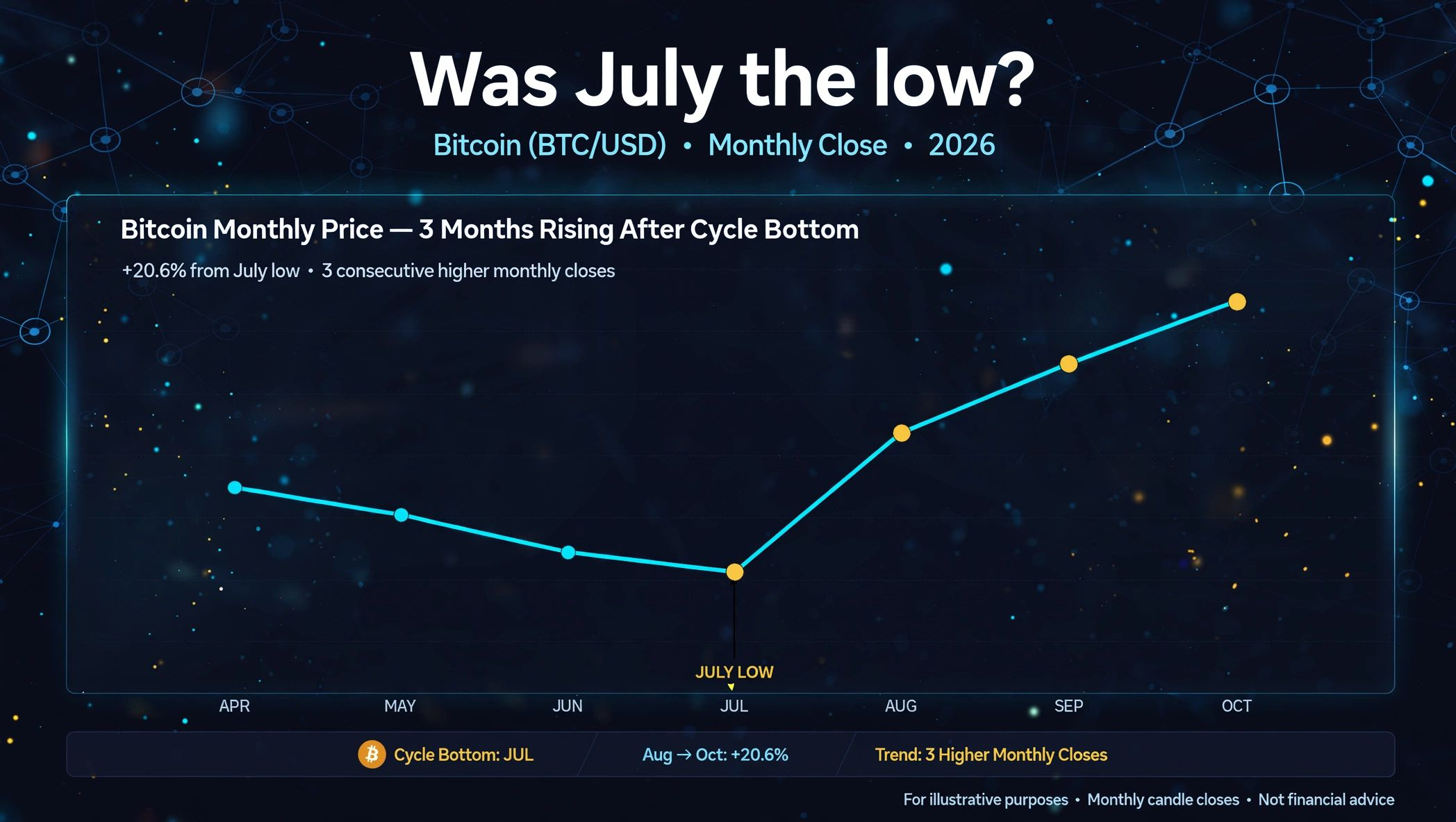
July was the low. That is the claim analyst Ben Cowen made on Real Vision this week, and the monthly candles are quietly backing him up. June bottomed on June 30, then three straight higher monthly closes. September printed the strongest monthly close since December: down 27% from the October 2025 top, compared with 45% back in July.
Here is the part that should give everyone pause. Bitcoin cycle lows have only ever arrived in Q4. A July low would be the earliest in history, which means treating past cycles as a map here is risky.
I am still watching it closely, because the structure turned before the story did. Three months of higher closes, spot demand rebuilding, short-term holder supply working off. That is how bottoms usually form: in the tape first, in the conversation second.
A monthly close above September's is the confirmation I want. Until then it is a thesis with receipts, not a fact.
$BTC $ETH
July was the low. That is the claim analyst Ben Cowen made on Real Vision this week, and the monthly candles are quietly backing him up. June bottomed on June 30, then three straight higher monthly closes. September printed the strongest monthly close since December: down 27% from the October 2025 top, compared with 45% back in July.
Here is the part that should give everyone pause. Bitcoin cycle lows have only ever arrived in Q4. A July low would be the earliest in history, which means treating past cycles as a map here is risky.
I am still watching it closely, because the structure turned before the story did. Three months of higher closes, spot demand rebuilding, short-term holder supply working off. That is how bottoms usually form: in the tape first, in the conversation second.
A monthly close above September's is the confirmation I want. Until then it is a thesis with receipts, not a fact.
$BTC $ETH
Here is the part that should give everyone pause. Bitcoin cycle lows have only ever arrived in Q4. A July low would be the earliest in history, which means treating past cycles as a map here is risky.
I am still watching it closely, because the structure turned before the story did. Three months of higher closes, spot demand rebuilding, short-term holder supply working off. That is how bottoms usually form: in the tape first, in the conversation second.
A monthly close above September's is the confirmation I want. Until then it is a thesis with receipts, not a fact.
$BTC $ETH
24
·
--
翻訳参照
Fear & Greed just printed 70. Extreme greed.
Everyone's euphoric and that's exactly when I get careful. Not because greed tops markets by itself, but because when the meter runs this hot the easy longs are already in the trade.
No rush chasing green candles here. The patient entries show up when this cools back under 50.
$BTC
Fear & Greed just printed 70. Extreme greed.
Everyone's euphoric and that's exactly when I get careful. Not because greed tops markets by itself, but because when the meter runs this hot the easy longs are already in the trade.
No rush chasing green candles here. The patient entries show up when this cools back under 50.
$BTC
Everyone's euphoric and that's exactly when I get careful. Not because greed tops markets by itself, but because when the meter runs this hot the easy longs are already in the trade.
No rush chasing green candles here. The patient entries show up when this cools back under 50.
$BTC
37
·
--
翻訳参照
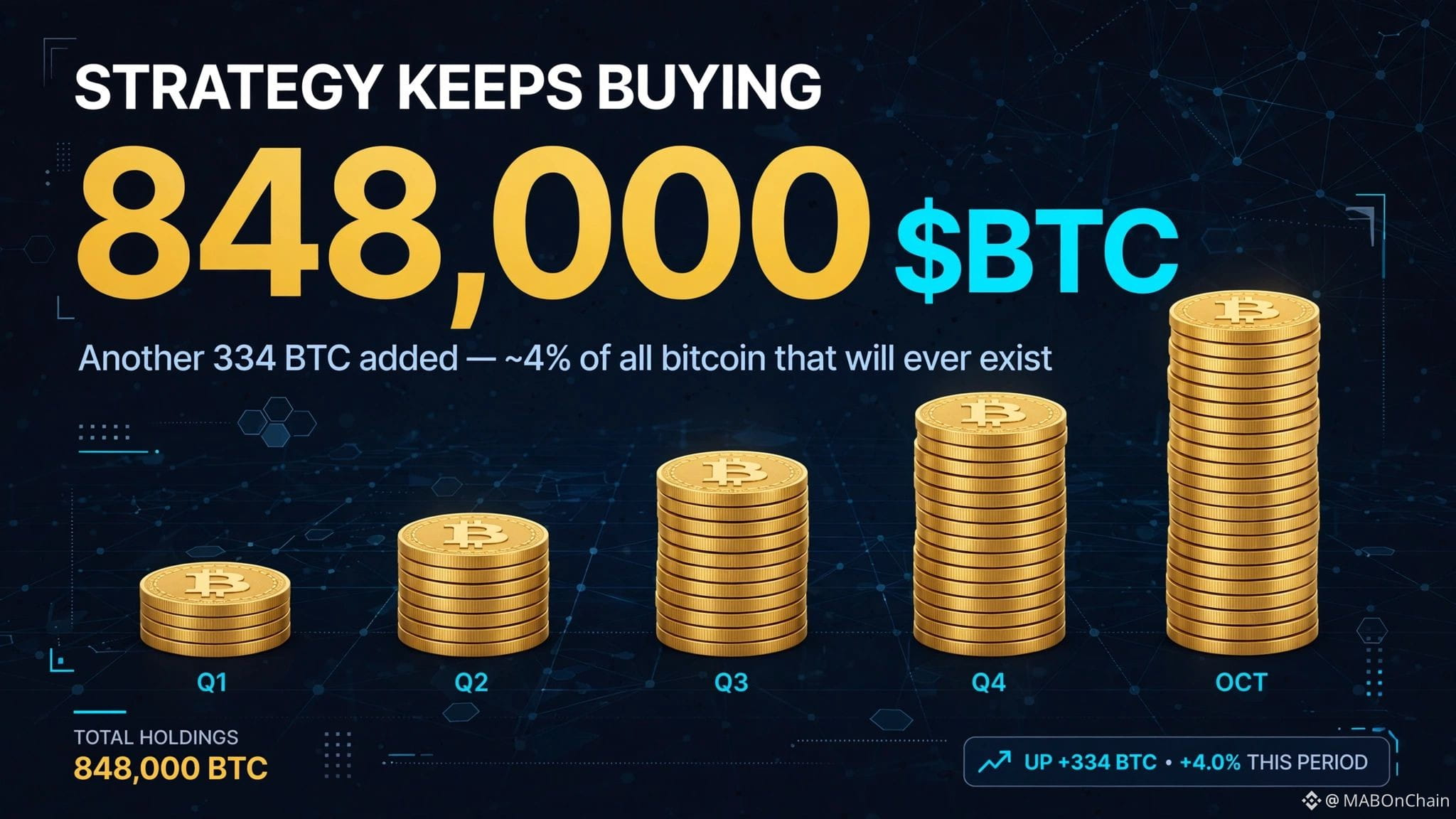
Strategy bought another 334 BTC. Holdings now sit at 848,000 BTC at an average cost of $75,436. Say what you want about the premium-to-NAV debate — the bid is mechanical and it doesn't blink. 848k BTC is roughly 4% of every bitcoin that will ever exist, held by a single company that's still averaging up. Whether you read that as conviction or concentration risk probably says more about you than about them. $BTC #Bitcoin
Strategy bought another 334 BTC. Holdings now sit at 848,000 BTC at an average cost of $75,436. Say what you want about the premium-to-NAV debate — the bid is mechanical and it doesn't blink. 848k BTC is roughly 4% of every bitcoin that will ever exist, held by a single company that's still averaging up. Whether you read that as conviction or concentration risk probably says more about you than about them. $BTC #Bitcoin
50
·
--
翻訳参照
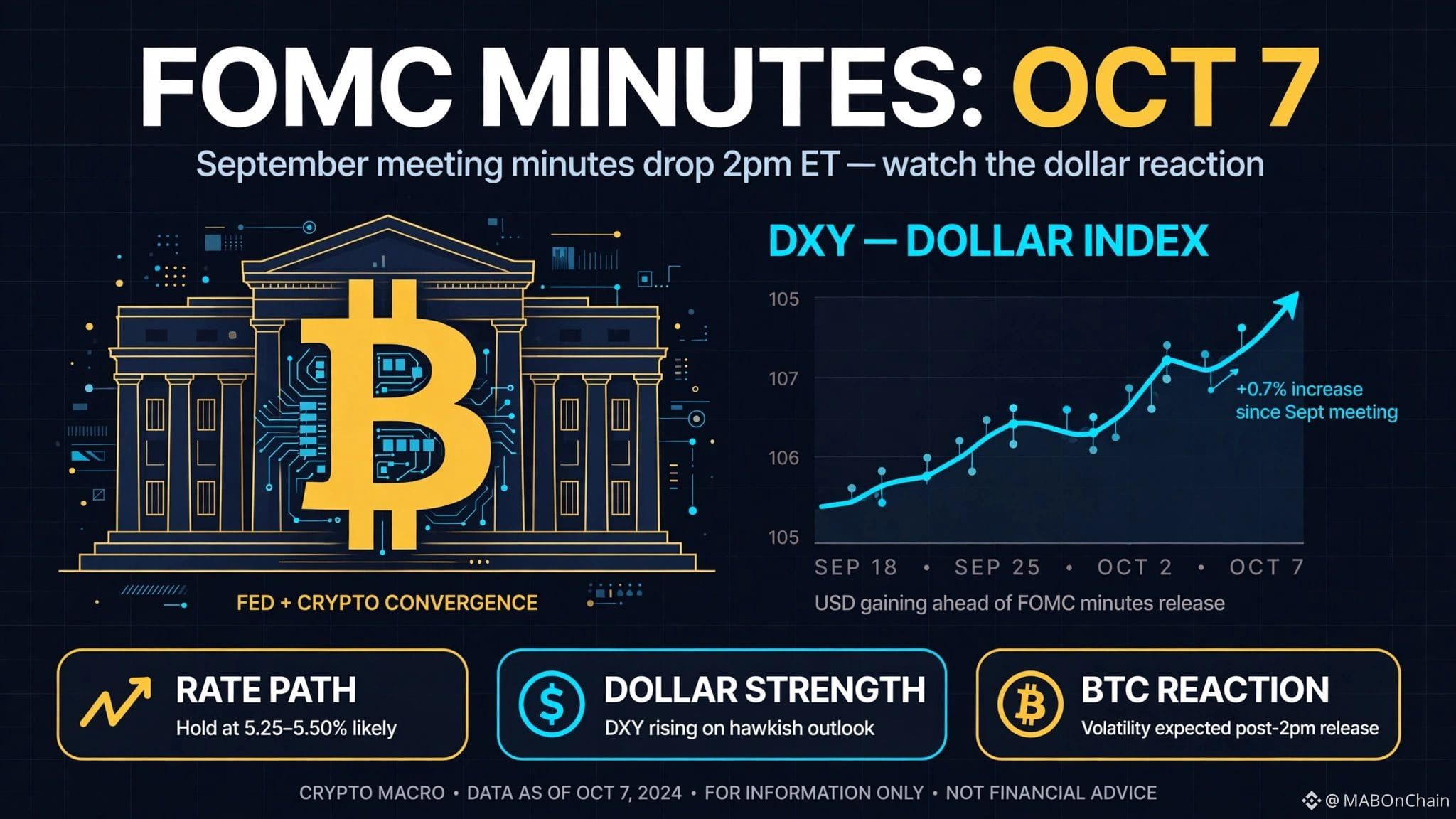
Tomorrow the Fed releases the September meeting minutes (Oct 7, 2pm ET) — and crypto traders should actually pay attention this time. The last meeting set the tone for rate-cut expectations, and BTC has been trading almost tick-for-tick with dollar strength lately. Hawkish minutes → dollar firms → the $87k resistance gets heavier. A dovish lean → the path up clears a little. I'm not in the business of predicting the minutes. I'm watching the dollar's reaction in the hour after the release — that's the real tell. $BTC
Tomorrow the Fed releases the September meeting minutes (Oct 7, 2pm ET) — and crypto traders should actually pay attention this time. The last meeting set the tone for rate-cut expectations, and BTC has been trading almost tick-for-tick with dollar strength lately. Hawkish minutes → dollar firms → the $87k resistance gets heavier. A dovish lean → the path up clears a little. I'm not in the business of predicting the minutes. I'm watching the dollar's reaction in the hour after the release — that's the real tell. $BTC
68
·
--
翻訳参照
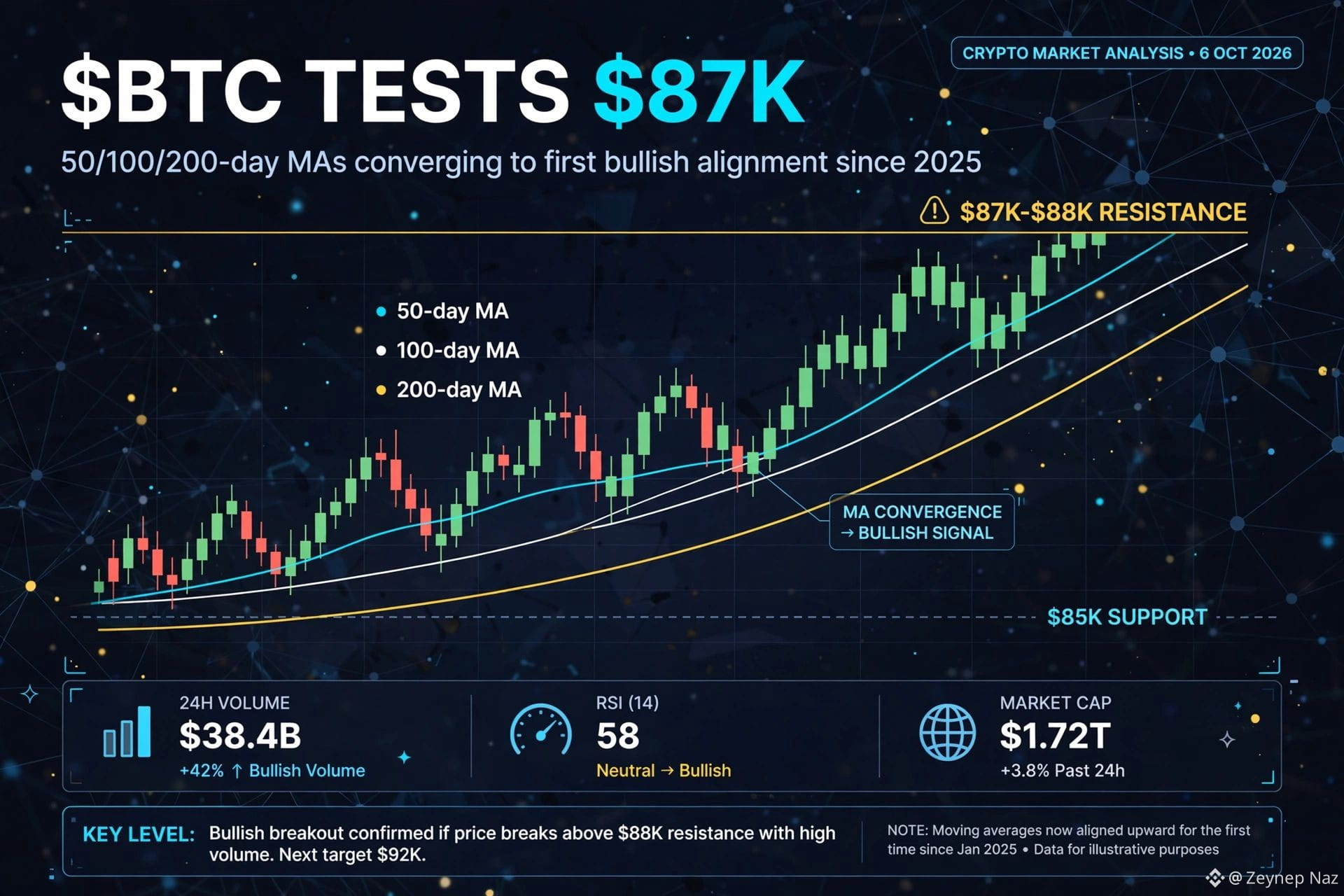
Bitcoin is knocking on $87k again — and the structure underneath looks different this time. The 50, 100, and 200-day moving averages are converging toward their first fully bullish alignment since 2025.
That is not a timing signal, it is a trend-health signal: the 3-month recovery has a solid spine forming under it. Resistance at $87-88k is the near-term ceiling — a weekly close above it with the MAs stacked bullish confirms the recovery phase. Below, $85k is the line that has to hold.
Macro this week adds fuel either way: FOMC minutes land Oct 7. Watch how BTC behaves into that event — thin liquidity plus macro catalyst is where breakouts either confirm or fake out.
Follow for daily reads on what is actually moving crypto. $BTC #Bitcoin
Bitcoin is knocking on $87k again — and the structure underneath looks different this time. The 50, 100, and 200-day moving averages are converging toward their first fully bullish alignment since 2025.
That is not a timing signal, it is a trend-health signal: the 3-month recovery has a solid spine forming under it. Resistance at $87-88k is the near-term ceiling — a weekly close above it with the MAs stacked bullish confirms the recovery phase. Below, $85k is the line that has to hold.
Macro this week adds fuel either way: FOMC minutes land Oct 7. Watch how BTC behaves into that event — thin liquidity plus macro catalyst is where breakouts either confirm or fake out.
Follow for daily reads on what is actually moving crypto. $BTC #Bitcoin
That is not a timing signal, it is a trend-health signal: the 3-month recovery has a solid spine forming under it. Resistance at $87-88k is the near-term ceiling — a weekly close above it with the MAs stacked bullish confirms the recovery phase. Below, $85k is the line that has to hold.
Macro this week adds fuel either way: FOMC minutes land Oct 7. Watch how BTC behaves into that event — thin liquidity plus macro catalyst is where breakouts either confirm or fake out.
Follow for daily reads on what is actually moving crypto. $BTC #Bitcoin
82
·
--
第3四半期は奇妙な乖離で幕を閉じました。$ETH は約70%上昇した一方、$BTCの上昇率は約42%。それにもかかわらず、価格付近のETHのオーダーブックの厚みはビットコインのわずか35〜45%にまで低下しました。1年前は60%以上でした(Coin Bureau経由のCoinGeckoデータ)。
つまり、ETHはより少ない流動性で大きく動いたということです。これは理解しておく価値があります。板が薄い状態で価格が上昇すると、上にも下にも値動きが大きくなるからです。大口の買い注文が入れば、本来より速く価格が上がり、大口の売り注文が入れば、本来より深く下落します。リターンは見栄えがよくても、その裏にある市場はより脆弱です。
今週すでに2度、この水準の突破に失敗した$BTC が$87kに迫るなか、注目すべきなのはこのパターンです。価格が上がる一方で流動性が薄いと、ブレイクアウトを維持するのは難しくなります。
では、これを踏まえて実際に何をすればよいのでしょうか?価格だけでなく、板の厚みを見てください。オーダーブックはすべての取引所で公開されています。価格が上昇するなか、BTCと比べてETHの板が薄くなり続けるなら、上昇局面ではより慎重になり、急な反落に備えましょう。強いトレンドが続くことはありますが、ここから先は空気が薄くなっています。
暗号資産市場で実際に何が動いているのか、日々の分析をお届けします。#Ethereum #Bitcoin
第3四半期は奇妙な乖離で幕を閉じました。$ETH は約70%上昇した一方、$BTC の上昇率は約42%。それにもかかわらず、価格付近のETHのオーダーブックの厚みはビットコインのわずか35〜45%にまで低下しました。1年前は60%以上でした(Coin Bureau経由のCoinGeckoデータ)。
つまり、ETHはより少ない流動性で大きく動いたということです。これは理解しておく価値があります。板が薄い状態で価格が上昇すると、上にも下にも値動きが大きくなるからです。大口の買い注文が入れば、本来より速く価格が上がり、大口の売り注文が入れば、本来より深く下落します。リターンは見栄えがよくても、その裏にある市場はより脆弱です。
今週すでに2度、この水準の突破に失敗した$BTC が$87kに迫るなか、注目すべきなのはこのパターンです。価格が上がる一方で流動性が薄いと、ブレイクアウトを維持するのは難しくなります。
では、これを踏まえて実際に何をすればよいのでしょうか?価格だけでなく、板の厚みを見てください。オーダーブックはすべての取引所で公開されています。価格が上昇するなか、BTCと比べてETHの板が薄くなり続けるなら、上昇局面ではより慎重になり、急な反落に備えましょう。強いトレンドが続くことはありますが、ここから先は空気が薄くなっています。
暗号資産市場で実際に何が動いているのか、日々の分析をお届けします。#Ethereum #Bitcoin
つまり、ETHはより少ない流動性で大きく動いたということです。これは理解しておく価値があります。板が薄い状態で価格が上昇すると、上にも下にも値動きが大きくなるからです。大口の買い注文が入れば、本来より速く価格が上がり、大口の売り注文が入れば、本来より深く下落します。リターンは見栄えがよくても、その裏にある市場はより脆弱です。
今週すでに2度、この水準の突破に失敗した$BTC が$87kに迫るなか、注目すべきなのはこのパターンです。価格が上がる一方で流動性が薄いと、ブレイクアウトを維持するのは難しくなります。
では、これを踏まえて実際に何をすればよいのでしょうか?価格だけでなく、板の厚みを見てください。オーダーブックはすべての取引所で公開されています。価格が上昇するなか、BTCと比べてETHの板が薄くなり続けるなら、上昇局面ではより慎重になり、急な反落に備えましょう。強いトレンドが続くことはありますが、ここから先は空気が薄くなっています。
暗号資産市場で実際に何が動いているのか、日々の分析をお届けします。#Ethereum #Bitcoin
40
·
--
翻訳参照
Wall Street just filed to go onchain. OKX × ICE (NYSE parent) notified the SEC of plans for a regulated 24/7 tokenized US stock venue — starting with 60+ names like Nvidia, Apple, Tesla. Note: this is a notice of intent, not a launch — issuers get a 30-day objection window first. But the direction is unmistakable: tokenization isn't theory anymore, it's paperwork. $BTC $ETH
Wall Street just filed to go onchain. OKX × ICE (NYSE parent) notified the SEC of plans for a regulated 24/7 tokenized US stock venue — starting with 60+ names like Nvidia, Apple, Tesla. Note: this is a notice of intent, not a launch — issuers get a 30-day objection window first. But the direction is unmistakable: tokenization isn't theory anymore, it's paperwork. $BTC $ETH
79
·
--
翻訳参照
Binance just unveiled Binance Intelligence — its official AI umbrella for finance. Reality check: today's livestream was a brand unveiling, not a product launch. The only confirmed piece is still Agent OS (developer platform). No consumer AI assistant yet. Direction: agentic. Product: pending. $BNB #Binance
Binance just unveiled Binance Intelligence — its official AI umbrella for finance. Reality check: today's livestream was a brand unveiling, not a product launch. The only confirmed piece is still Agent OS (developer platform). No consumer AI assistant yet. Direction: agentic. Product: pending. $BNB #Binance
67
·
--
翻訳参照
happy easter
happy easter


Binance Angels
·
--
皆さんに幸せなイースターを願っています 🐣 💛
次のTGトークにこちらから登録してください。素晴らしい一日をお過ごしください 💛 ✨️ subscribe here #Binance
$BNB
次のTGトークにこちらから登録してください。素晴らしい一日をお過ごしください 💛 ✨️ subscribe here #Binance
$BNB
ログインして、さらにコンテンツを読む
厳選トピックで世界の暗号資産トレーダーの仲間入り
⚡️ 暗号資産に関する最新かつ有益な情報が見つかります。
💬 世界最大の暗号資産取引所から信頼されています。
👍 認証を受けたクリエイターから、有益なインサイトを得られます。
メール / 電話番号