

Lukukaku
830 投稿

Lukukaku
報告
ユーザーをブロック
230 フォロー
1.0K+ フォロワー
871 いいね
投稿
すべて
引用
·
--
翻訳参照
I think $BTC will reach $100k by the end of 2026.
Reply "yes" if you agree with me, and you'll receive a lucky money envelope! 🧧🧧🧧
{spot}(BTCUSDT)
I think $BTC will reach $100k by the end of 2026.
Reply "yes" if you agree with me, and you'll receive a lucky money envelope! 🧧🧧🧧
Reply "yes" if you agree with me, and you'll receive a lucky money envelope! 🧧🧧🧧
191
17
191
·
--
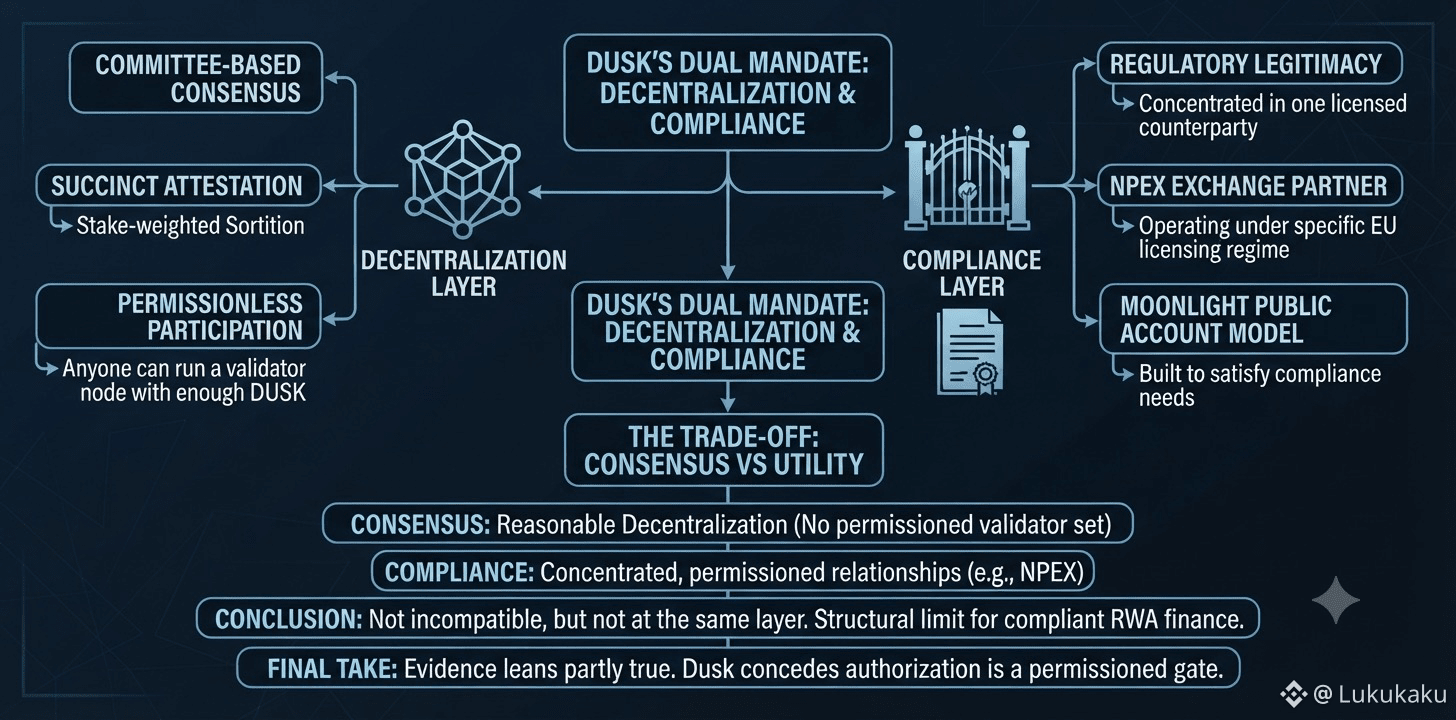
完全な分散型は、厳格な規制順守とは実際には両立できないのだろうか、それとも人々が「努力をほとんどしていないプロジェクト」を言い訳するためにそう言っているだけなのだろうか?きっぱりとした「はい/いいえ」の答えはないと思いますが、Duskはその両方を同時に成立させようとしている点で、他の多くのプロジェクトよりも本当に有用なテストケースです。
分散化の面では、Duskは委員会ベースのコンセンサスであるSuccinct Attestationを採用しており、固定の許可制バリデータセットではなく、ステークに重み付けされたソーティションによってプロビジョナが選出されます。これは、無許可での参加を現実に目指した取り組みです。順守の面では、最大の実世界での実績は、EUの特定のライセンス制度のもとで運営されている規制対象の取引所パートナー、NPEXを通じてのみ成立しています。また、Moonlightの公開アカウントモデルは、その関係の順守ニーズを満たすために特別に設計されています。規制上の正当性を、1社のライセンスを持つカウンターパーティに集中させることは、制度上の門番がいないプロトコルに比べて、より分散性の低い依存です。十分にステークしたDUSKを用意すれば、誰でもバリデータノードを運用できます。資本を持って参加しただけで、誰もNPEXのライセンスを受けたパートナーになれるわけではありません。この非対称性こそが、トレードオフの実体です。
率直な見解としては、証拠は「部分的に真であって偽ではない」寄りだと思います。Duskのコンセンサス層は、かなり妥当な範囲で分散化を維持していますが、実際に有用性を生む順守層は、集中した許可制の関係を通じて動いています。なぜなら、規制当局が匿名のバリデータセットをライセンスすることはないからです。これはDuskに固有の欠陥ではありません。むしろ、現時点であらゆるチェーン上の「コンプライアンス対応RWA(現実世界資産)」が機能するうえでの構造的な限界に近いものです。完全な分散化と厳格な順守は、ここでは完全に両立不可能というわけではありませんが、同じレイヤーの上に座っているわけでも、明確にはありません。Dusk自身の売り込みもすでにこの点の一部を認めています。つまり、そのインフラは、機関や取引所が認可を得た後に、規制対象の証券のネイティブ発行ワークフローを担うことを目的としており、認可は分散されたものではなく「許可された門」だということです。
#dusk $DUSK @Dusk
完全な分散型は、厳格な規制順守とは実際には両立できないのだろうか、それとも人々が「努力をほとんどしていないプロジェクト」を言い訳するためにそう言っているだけなのだろうか?きっぱりとした「はい/いいえ」の答えはないと思いますが、Duskはその両方を同時に成立させようとしている点で、他の多くのプロジェクトよりも本当に有用なテストケースです。
分散化の面では、Duskは委員会ベースのコンセンサスであるSuccinct Attestationを採用しており、固定の許可制バリデータセットではなく、ステークに重み付けされたソーティションによってプロビジョナが選出されます。これは、無許可での参加を現実に目指した取り組みです。順守の面では、最大の実世界での実績は、EUの特定のライセンス制度のもとで運営されている規制対象の取引所パートナー、NPEXを通じてのみ成立しています。また、Moonlightの公開アカウントモデルは、その関係の順守ニーズを満たすために特別に設計されています。規制上の正当性を、1社のライセンスを持つカウンターパーティに集中させることは、制度上の門番がいないプロトコルに比べて、より分散性の低い依存です。十分にステークしたDUSKを用意すれば、誰でもバリデータノードを運用できます。資本を持って参加しただけで、誰もNPEXのライセンスを受けたパートナーになれるわけではありません。この非対称性こそが、トレードオフの実体です。
率直な見解としては、証拠は「部分的に真であって偽ではない」寄りだと思います。Duskのコンセンサス層は、かなり妥当な範囲で分散化を維持していますが、実際に有用性を生む順守層は、集中した許可制の関係を通じて動いています。なぜなら、規制当局が匿名のバリデータセットをライセンスすることはないからです。これはDuskに固有の欠陥ではありません。むしろ、現時点であらゆるチェーン上の「コンプライアンス対応RWA(現実世界資産)」が機能するうえでの構造的な限界に近いものです。完全な分散化と厳格な順守は、ここでは完全に両立不可能というわけではありませんが、同じレイヤーの上に座っているわけでも、明確にはありません。Dusk自身の売り込みもすでにこの点の一部を認めています。つまり、そのインフラは、機関や取引所が認可を得た後に、規制対象の証券のネイティブ発行ワークフローを担うことを目的としており、認可は分散されたものではなく「許可された門」だということです。
#dusk $DUSK @Dusk
分散化の面では、Duskは委員会ベースのコンセンサスであるSuccinct Attestationを採用しており、固定の許可制バリデータセットではなく、ステークに重み付けされたソーティションによってプロビジョナが選出されます。これは、無許可での参加を現実に目指した取り組みです。順守の面では、最大の実世界での実績は、EUの特定のライセンス制度のもとで運営されている規制対象の取引所パートナー、NPEXを通じてのみ成立しています。また、Moonlightの公開アカウントモデルは、その関係の順守ニーズを満たすために特別に設計されています。規制上の正当性を、1社のライセンスを持つカウンターパーティに集中させることは、制度上の門番がいないプロトコルに比べて、より分散性の低い依存です。十分にステークしたDUSKを用意すれば、誰でもバリデータノードを運用できます。資本を持って参加しただけで、誰もNPEXのライセンスを受けたパートナーになれるわけではありません。この非対称性こそが、トレードオフの実体です。
率直な見解としては、証拠は「部分的に真であって偽ではない」寄りだと思います。Duskのコンセンサス層は、かなり妥当な範囲で分散化を維持していますが、実際に有用性を生む順守層は、集中した許可制の関係を通じて動いています。なぜなら、規制当局が匿名のバリデータセットをライセンスすることはないからです。これはDuskに固有の欠陥ではありません。むしろ、現時点であらゆるチェーン上の「コンプライアンス対応RWA(現実世界資産)」が機能するうえでの構造的な限界に近いものです。完全な分散化と厳格な順守は、ここでは完全に両立不可能というわけではありませんが、同じレイヤーの上に座っているわけでも、明確にはありません。Dusk自身の売り込みもすでにこの点の一部を認めています。つまり、そのインフラは、機関や取引所が認可を得た後に、規制対象の証券のネイティブ発行ワークフローを担うことを目的としており、認可は分散されたものではなく「許可された門」だということです。
#dusk $DUSK @Dusk
1
2
13
123
·
--
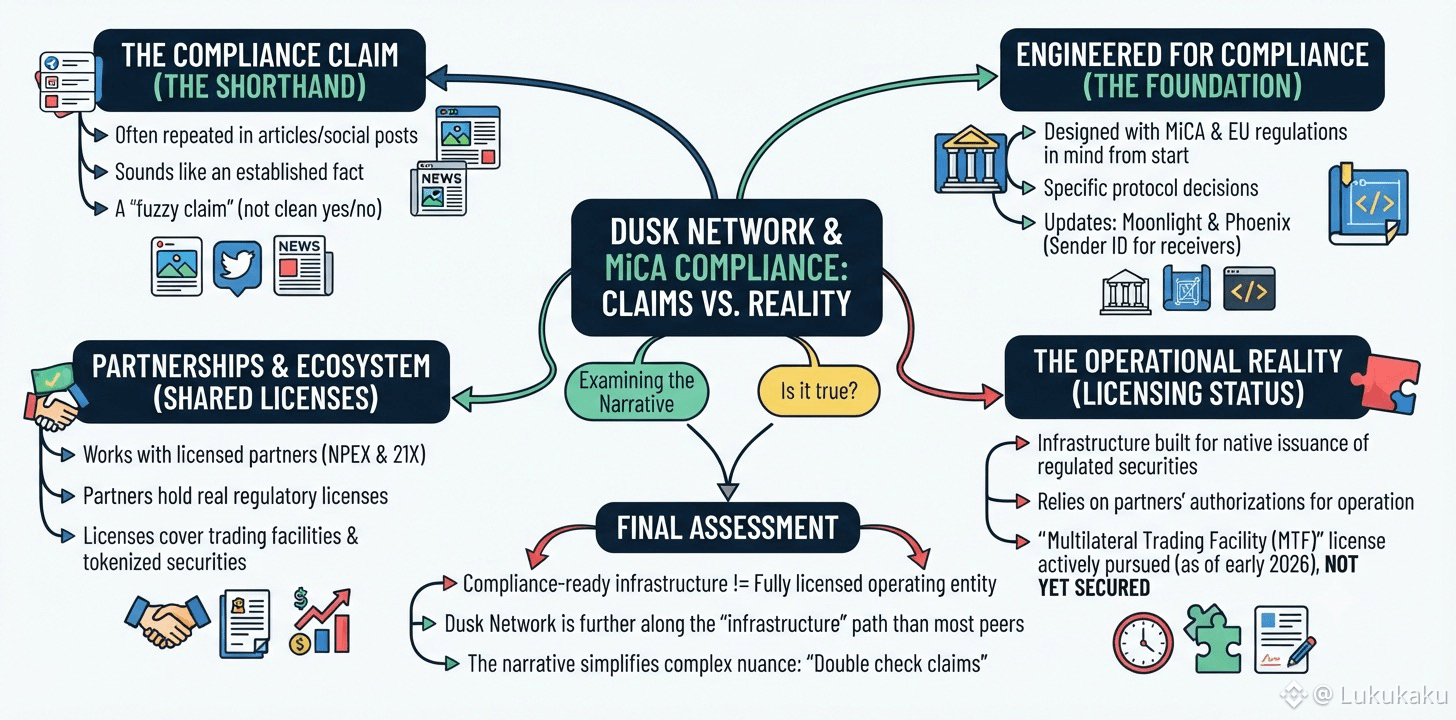
MiCA準拠。私は「MiCA準拠」という言葉がDusk Networkに紐づけて、十分な数の記事やソーシャル投稿で繰り返されているのを見てきたので、調べるべき主張というより確立した事実のように聞こえるようになっていました。そこで詳しく見てみると、率直に言えば、ある意味では真実であり、別の意味では誇張されていて、きれいな「はい/いいえ」では示しきれない、曖昧な主張の良い例になっているというのが結論です。
Dusk Networkのプロトコルは、最初からMiCAや欧州の有価証券規制を念頭に設計されていたと言ってよいでしょう。Moonlightを追加し、受信者が送信者を特定できるようにPhoenixを更新する、といった具体的な判断まで含めてです。また、NPEXや21Xといったパートナーと連携しており、これらは欧州の枠組みに基づき、取引施設やトークン化された有価証券市場を対象にした実際の有効な規制ライセンスを保有している、と言うこともできます。
Dusk Networkがより正確に主張できるのは、「特定の機関や取引の場がすでに認可とプロダクト設計を用意していることを前提として、規制された有価証券のネイティブ発行を運ぶためのインフラを構築している」という点です。これは、一律のコンプライアンスのラベルを貼るよりも、限定的で、より正直な説明になっています。なお、自社のマルチラテラル取引施設(MTF)ライセンスについては、2026年初頭の時点では「積極的に取得を進めているが、まだ確保していない」と説明されており、つまり規制上の立ち位置の重要な部分は、自社ライセンスというよりパートナーレンスを通じて成り立っている、ということになります。
私は、このことがコンプライアンスの物語を「偽り」とすることにはつながらないと思います。コンプライアンスに備えたインフラと、完全にライセンスされた運営主体は、単に別物です。そしてDusk Networkは、少なくとも第一の道(インフラ面)については、同業他社の多くよりも確実に前に進んでいます。ですが、人々が繰り返す要約表現は、そのニュアンスをよりきれいな形に圧縮してしまいがちで、きれいな主張ほど、あなたが自分で繰り返す前に二度確認する価値があるのです。
@Dusk_Foundation $DUSK #dusk
MiCA準拠。私は「MiCA準拠」という言葉がDusk Networkに紐づけて、十分な数の記事やソーシャル投稿で繰り返されているのを見てきたので、調べるべき主張というより確立した事実のように聞こえるようになっていました。そこで詳しく見てみると、率直に言えば、ある意味では真実であり、別の意味では誇張されていて、きれいな「はい/いいえ」では示しきれない、曖昧な主張の良い例になっているというのが結論です。
Dusk Networkのプロトコルは、最初からMiCAや欧州の有価証券規制を念頭に設計されていたと言ってよいでしょう。Moonlightを追加し、受信者が送信者を特定できるようにPhoenixを更新する、といった具体的な判断まで含めてです。また、NPEXや21Xといったパートナーと連携しており、これらは欧州の枠組みに基づき、取引施設やトークン化された有価証券市場を対象にした実際の有効な規制ライセンスを保有している、と言うこともできます。
Dusk Networkがより正確に主張できるのは、「特定の機関や取引の場がすでに認可とプロダクト設計を用意していることを前提として、規制された有価証券のネイティブ発行を運ぶためのインフラを構築している」という点です。これは、一律のコンプライアンスのラベルを貼るよりも、限定的で、より正直な説明になっています。なお、自社のマルチラテラル取引施設(MTF)ライセンスについては、2026年初頭の時点では「積極的に取得を進めているが、まだ確保していない」と説明されており、つまり規制上の立ち位置の重要な部分は、自社ライセンスというよりパートナーレンスを通じて成り立っている、ということになります。
私は、このことがコンプライアンスの物語を「偽り」とすることにはつながらないと思います。コンプライアンスに備えたインフラと、完全にライセンスされた運営主体は、単に別物です。そしてDusk Networkは、少なくとも第一の道(インフラ面)については、同業他社の多くよりも確実に前に進んでいます。ですが、人々が繰り返す要約表現は、そのニュアンスをよりきれいな形に圧縮してしまいがちで、きれいな主張ほど、あなたが自分で繰り返す前に二度確認する価値があるのです。
@Dusk $DUSK #dusk
Dusk Networkのプロトコルは、最初からMiCAや欧州の有価証券規制を念頭に設計されていたと言ってよいでしょう。Moonlightを追加し、受信者が送信者を特定できるようにPhoenixを更新する、といった具体的な判断まで含めてです。また、NPEXや21Xといったパートナーと連携しており、これらは欧州の枠組みに基づき、取引施設やトークン化された有価証券市場を対象にした実際の有効な規制ライセンスを保有している、と言うこともできます。
Dusk Networkがより正確に主張できるのは、「特定の機関や取引の場がすでに認可とプロダクト設計を用意していることを前提として、規制された有価証券のネイティブ発行を運ぶためのインフラを構築している」という点です。これは、一律のコンプライアンスのラベルを貼るよりも、限定的で、より正直な説明になっています。なお、自社のマルチラテラル取引施設(MTF)ライセンスについては、2026年初頭の時点では「積極的に取得を進めているが、まだ確保していない」と説明されており、つまり規制上の立ち位置の重要な部分は、自社ライセンスというよりパートナーレンスを通じて成り立っている、ということになります。
私は、このことがコンプライアンスの物語を「偽り」とすることにはつながらないと思います。コンプライアンスに備えたインフラと、完全にライセンスされた運営主体は、単に別物です。そしてDusk Networkは、少なくとも第一の道(インフラ面)については、同業他社の多くよりも確実に前に進んでいます。ですが、人々が繰り返す要約表現は、そのニュアンスをよりきれいな形に圧縮してしまいがちで、きれいな主張ほど、あなたが自分で繰り返す前に二度確認する価値があるのです。
@Dusk $DUSK #dusk
1
6
95
·
--
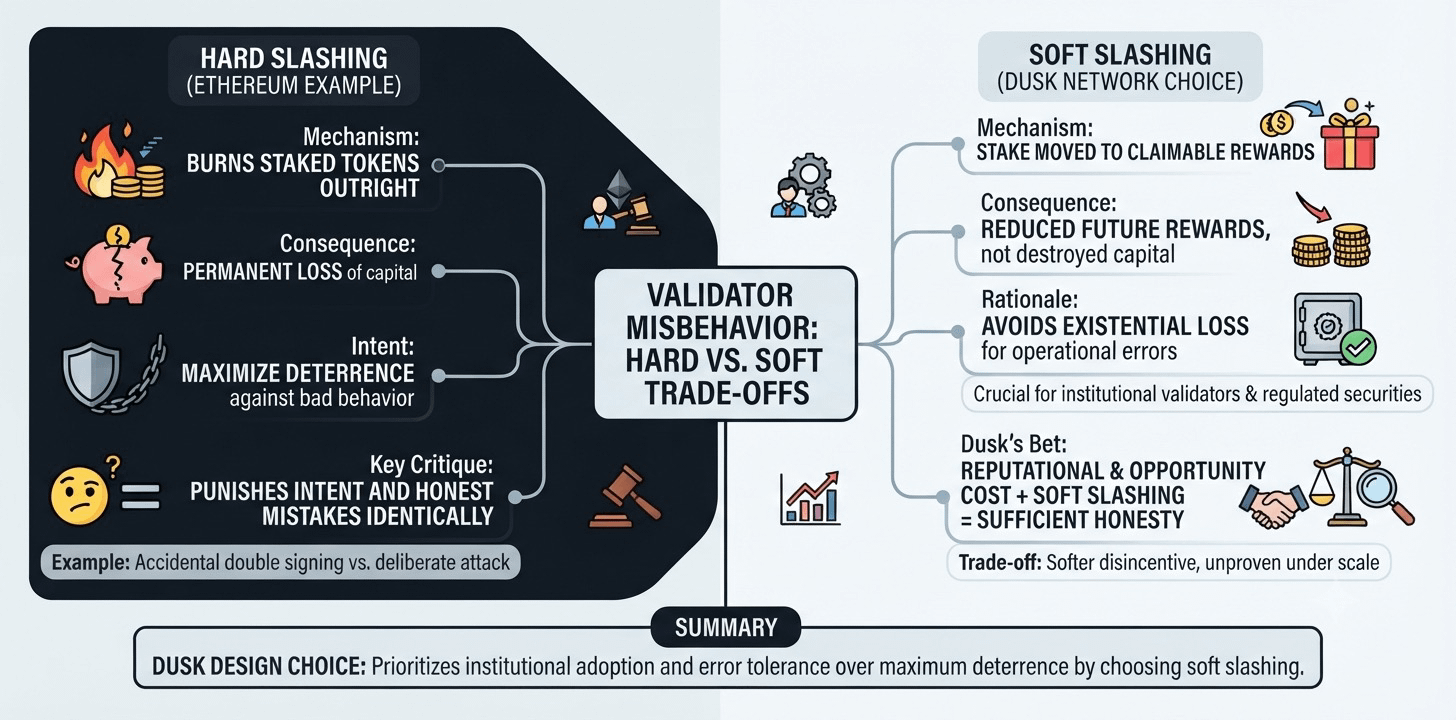
プルーフ・オブ・ステーク(PoS)ネットワークは、不正行為をしたバリデータを罰する手段を必要とし、その設計上の選択は通常、「その罰によってどれほどの痛みを与えるべきか」に帰着します。ハード・スラッシングは、バリデータが担保として差し出しているトークンの一部をそのまま焼却(没収)します。これは、悪い振る舞いを高くつくものにするための、他ではなかなか実現できない種類の“恒久的な損失”です。これに対してイーサリアムのバリデータ集合では、最も重大な欠陥に対しては特定のケースでハード・スラッシングが導入されています。これは、より厳しい結果を伴ってでも抑止効果が得られる価値があると判断されたためです。一方でDuskの設計は、そのトレードオフを明確に採用しません。Dusk Networkは別の道を選びました。つまりソフト・スラッシングのみです。これは、不正行為を行ったプロビジョナー(調整役)の担保が破壊されるのではなく、請求可能な報酬へと移される仕組みです。
この考え方の背後にある論理は、バリデータが自分に甘くするだけだと片づけて軽視するのではなく、真剣に受け止める価値があります。ハード・スラッシングは、意図と誠実な過失を同じように罰します。誤って二重署名してしまった設定ミスのノードも、合意形成を壊すことを意図して意図的に攻撃した者も、同じ担保額を失います。この違いは、このネットワークが将来的に担おうとしているものを考えると、より重要になります。規制された証券に関するネイティブ発行は、発行者や取引の場がそれぞれ自身の認可を確保できて初めて現実になります。そして、誠実なバグが担保を一掃してしまうような状況では、機関バリデータは参加しづらいでしょう。ソフト・スラッシングは、誠実な運用上のエラーを“存在を揺るがすほどの損失”に変えることなく、不正行為によって得られる経済的利益を取り除きます。
トレードオフは、別の方向にも同じように存在します。抑止は、部分的には「永久に失う」という恐怖によって働きます。つまり、最悪の結果が“破壊される資本”ではなく“将来の報酬が減額される”だと分かっているバリデータは、セキュリティ確保に手を抜くことへの抑止が、より弱い(柔らかい)ものになります。Duskは、ソフト・スラッシングに加えて、評判上のコストや機会費用があることで、プロビジョナーが誠実でいられると賭けています。実際の敵対的な圧力下でもそれが成立するかどうかは、ネットワークがまだ十分な規模で直面してこなかった試験です。
#dusk $DUSK @Dusk
プルーフ・オブ・ステーク(PoS)ネットワークは、不正行為をしたバリデータを罰する手段を必要とし、その設計上の選択は通常、「その罰によってどれほどの痛みを与えるべきか」に帰着します。ハード・スラッシングは、バリデータが担保として差し出しているトークンの一部をそのまま焼却(没収)します。これは、悪い振る舞いを高くつくものにするための、他ではなかなか実現できない種類の“恒久的な損失”です。これに対してイーサリアムのバリデータ集合では、最も重大な欠陥に対しては特定のケースでハード・スラッシングが導入されています。これは、より厳しい結果を伴ってでも抑止効果が得られる価値があると判断されたためです。一方でDuskの設計は、そのトレードオフを明確に採用しません。Dusk Networkは別の道を選びました。つまりソフト・スラッシングのみです。これは、不正行為を行ったプロビジョナー(調整役)の担保が破壊されるのではなく、請求可能な報酬へと移される仕組みです。
この考え方の背後にある論理は、バリデータが自分に甘くするだけだと片づけて軽視するのではなく、真剣に受け止める価値があります。ハード・スラッシングは、意図と誠実な過失を同じように罰します。誤って二重署名してしまった設定ミスのノードも、合意形成を壊すことを意図して意図的に攻撃した者も、同じ担保額を失います。この違いは、このネットワークが将来的に担おうとしているものを考えると、より重要になります。規制された証券に関するネイティブ発行は、発行者や取引の場がそれぞれ自身の認可を確保できて初めて現実になります。そして、誠実なバグが担保を一掃してしまうような状況では、機関バリデータは参加しづらいでしょう。ソフト・スラッシングは、誠実な運用上のエラーを“存在を揺るがすほどの損失”に変えることなく、不正行為によって得られる経済的利益を取り除きます。
トレードオフは、別の方向にも同じように存在します。抑止は、部分的には「永久に失う」という恐怖によって働きます。つまり、最悪の結果が“破壊される資本”ではなく“将来の報酬が減額される”だと分かっているバリデータは、セキュリティ確保に手を抜くことへの抑止が、より弱い(柔らかい)ものになります。Duskは、ソフト・スラッシングに加えて、評判上のコストや機会費用があることで、プロビジョナーが誠実でいられると賭けています。実際の敵対的な圧力下でもそれが成立するかどうかは、ネットワークがまだ十分な規模で直面してこなかった試験です。
#dusk $DUSK @Dusk
この考え方の背後にある論理は、バリデータが自分に甘くするだけだと片づけて軽視するのではなく、真剣に受け止める価値があります。ハード・スラッシングは、意図と誠実な過失を同じように罰します。誤って二重署名してしまった設定ミスのノードも、合意形成を壊すことを意図して意図的に攻撃した者も、同じ担保額を失います。この違いは、このネットワークが将来的に担おうとしているものを考えると、より重要になります。規制された証券に関するネイティブ発行は、発行者や取引の場がそれぞれ自身の認可を確保できて初めて現実になります。そして、誠実なバグが担保を一掃してしまうような状況では、機関バリデータは参加しづらいでしょう。ソフト・スラッシングは、誠実な運用上のエラーを“存在を揺るがすほどの損失”に変えることなく、不正行為によって得られる経済的利益を取り除きます。
トレードオフは、別の方向にも同じように存在します。抑止は、部分的には「永久に失う」という恐怖によって働きます。つまり、最悪の結果が“破壊される資本”ではなく“将来の報酬が減額される”だと分かっているバリデータは、セキュリティ確保に手を抜くことへの抑止が、より弱い(柔らかい)ものになります。Duskは、ソフト・スラッシングに加えて、評判上のコストや機会費用があることで、プロビジョナーが誠実でいられると賭けています。実際の敵対的な圧力下でもそれが成立するかどうかは、ネットワークがまだ十分な規模で直面してこなかった試験です。
#dusk $DUSK @Dusk
2
80
·
--
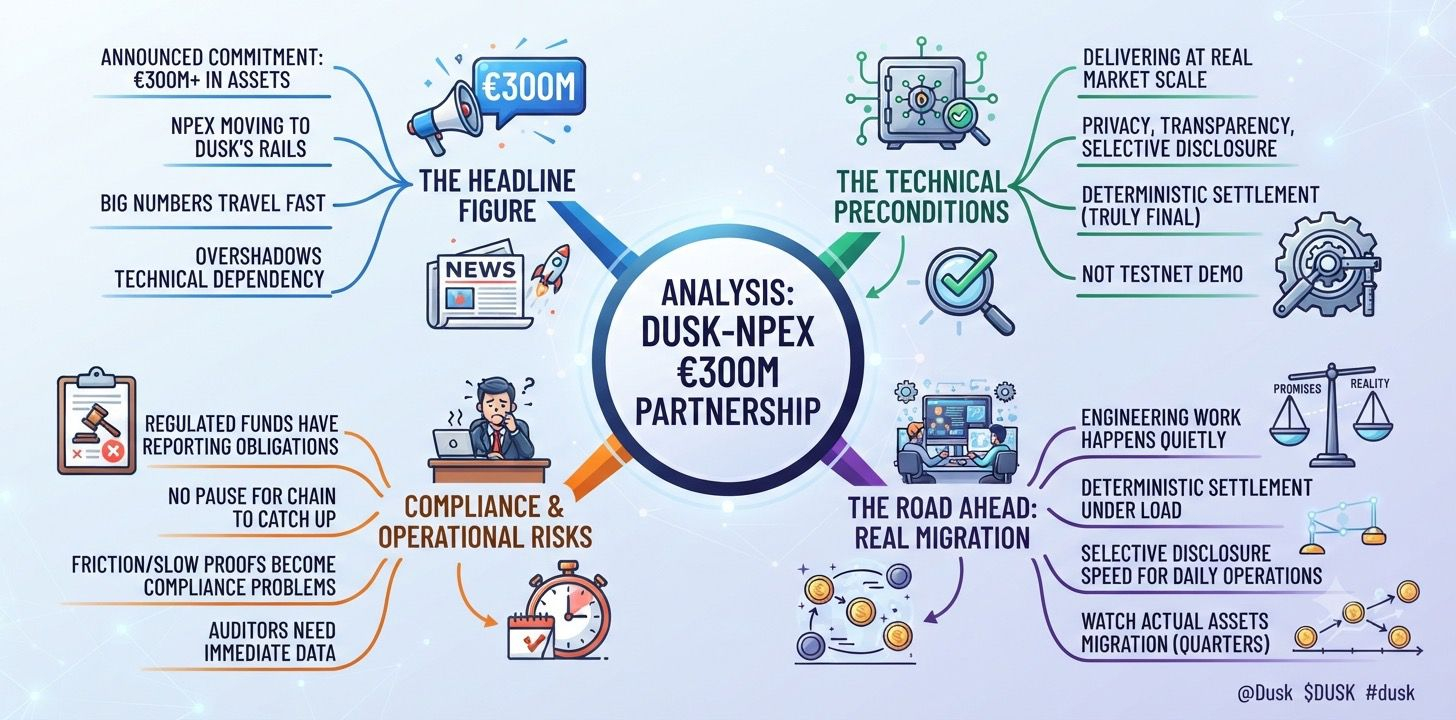
大きな数字は、それを支えるインフラより先に走っていくものであり、€300Mのような額は、実際にそれが本物になるために何が必要か誰かが確かめる前から、見出しの中で何度も繰り返されがちな数字です。Dusk NetworkのNPEXパートナーシップはこの数字を掲げていますが、その数字の下にある技術的な依存関係から数字を切り離して考える価値は、1回きりで済ませるのではなく、ゆっくり行うことにあります。
NPEXは、€300M超の資産をDuskのレールに移すことを約束しています。ですが、その約束は、実在の証券市場が求める規模で、ベースレイヤーが実際にプライバシー、透明性、選択的開示、そして決定論的(デターミニスティック)な決済を提供できることに完全に依存します。トランザクションが数件のテストネットでのデモではありません。規制対象のファンドや債券には、チェーンが技術的に追いつくのを「待つ」ことのできない報告義務があります。そして、摩擦(フリクション)、遅い開示用の証明、真に最終ではない決済は、Duskの単なる技術的な不便ではなく、NPEXにとってのコンプライアンス問題になります。ファンド管理者は、報告期限が過ぎた時点でブロックチェーンがまだ証明生成を終えていない、と監査人に言うことはできません。
この部分は、ほとんどの報道が見落としています。発表は見出しを取ります。実際の負荷のもとで決定論的決済の証明が成立するのか、あるいは選択的開示が、日々のファンド運用に必要な速度で証明を生成できるのか、といったエンジニアリング上の作業は、その後に静かに行われ、ほとんどの場合、独自の見出しになることはありません。ですが、それこそが、€300Mがオンチェーンで現れるのか、それとも発表よりも長い時間軸の中で静かに€30Mになってしまうのかを実際に決める部分です。
私はここでDuskに賭けていないのではなく、その数字を「すでに実現したもの」として扱うことを拒んでいるだけです。適切に作られた決済・開示レイヤーは前提条件であって保証ではありません。この物語を誠実に追う方法は、同じ数字を繰り返し引用することではなく、今後数四半期で実際の資産が移行していくのを見ることです。
#dusk $DUSK @Dusk_Foundation
大きな数字は、それを支えるインフラより先に走っていくものであり、€300Mのような額は、実際にそれが本物になるために何が必要か誰かが確かめる前から、見出しの中で何度も繰り返されがちな数字です。Dusk NetworkのNPEXパートナーシップはこの数字を掲げていますが、その数字の下にある技術的な依存関係から数字を切り離して考える価値は、1回きりで済ませるのではなく、ゆっくり行うことにあります。
NPEXは、€300M超の資産をDuskのレールに移すことを約束しています。ですが、その約束は、実在の証券市場が求める規模で、ベースレイヤーが実際にプライバシー、透明性、選択的開示、そして決定論的(デターミニスティック)な決済を提供できることに完全に依存します。トランザクションが数件のテストネットでのデモではありません。規制対象のファンドや債券には、チェーンが技術的に追いつくのを「待つ」ことのできない報告義務があります。そして、摩擦(フリクション)、遅い開示用の証明、真に最終ではない決済は、Duskの単なる技術的な不便ではなく、NPEXにとってのコンプライアンス問題になります。ファンド管理者は、報告期限が過ぎた時点でブロックチェーンがまだ証明生成を終えていない、と監査人に言うことはできません。
この部分は、ほとんどの報道が見落としています。発表は見出しを取ります。実際の負荷のもとで決定論的決済の証明が成立するのか、あるいは選択的開示が、日々のファンド運用に必要な速度で証明を生成できるのか、といったエンジニアリング上の作業は、その後に静かに行われ、ほとんどの場合、独自の見出しになることはありません。ですが、それこそが、€300Mがオンチェーンで現れるのか、それとも発表よりも長い時間軸の中で静かに€30Mになってしまうのかを実際に決める部分です。
私はここでDuskに賭けていないのではなく、その数字を「すでに実現したもの」として扱うことを拒んでいるだけです。適切に作られた決済・開示レイヤーは前提条件であって保証ではありません。この物語を誠実に追う方法は、同じ数字を繰り返し引用することではなく、今後数四半期で実際の資産が移行していくのを見ることです。
#dusk $DUSK @Dusk
NPEXは、€300M超の資産をDuskのレールに移すことを約束しています。ですが、その約束は、実在の証券市場が求める規模で、ベースレイヤーが実際にプライバシー、透明性、選択的開示、そして決定論的(デターミニスティック)な決済を提供できることに完全に依存します。トランザクションが数件のテストネットでのデモではありません。規制対象のファンドや債券には、チェーンが技術的に追いつくのを「待つ」ことのできない報告義務があります。そして、摩擦(フリクション)、遅い開示用の証明、真に最終ではない決済は、Duskの単なる技術的な不便ではなく、NPEXにとってのコンプライアンス問題になります。ファンド管理者は、報告期限が過ぎた時点でブロックチェーンがまだ証明生成を終えていない、と監査人に言うことはできません。
この部分は、ほとんどの報道が見落としています。発表は見出しを取ります。実際の負荷のもとで決定論的決済の証明が成立するのか、あるいは選択的開示が、日々のファンド運用に必要な速度で証明を生成できるのか、といったエンジニアリング上の作業は、その後に静かに行われ、ほとんどの場合、独自の見出しになることはありません。ですが、それこそが、€300Mがオンチェーンで現れるのか、それとも発表よりも長い時間軸の中で静かに€30Mになってしまうのかを実際に決める部分です。
私はここでDuskに賭けていないのではなく、その数字を「すでに実現したもの」として扱うことを拒んでいるだけです。適切に作られた決済・開示レイヤーは前提条件であって保証ではありません。この物語を誠実に追う方法は、同じ数字を繰り返し引用することではなく、今後数四半期で実際の資産が移行していくのを見ることです。
#dusk $DUSK @Dusk
2
112
·
--
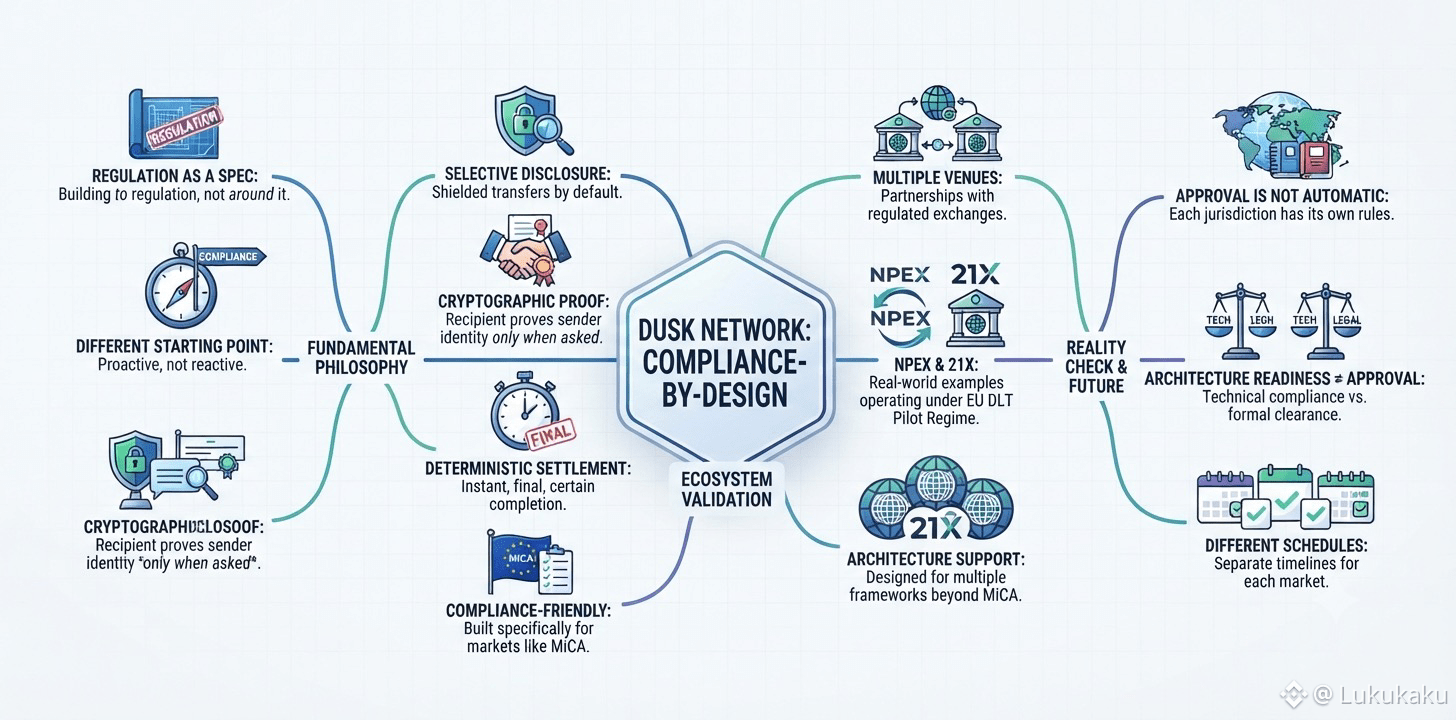
暗号における規制は、通常、設計上の障害として扱われ、回避するものとして捉えられがちです。Dusk Networkはそれを“目指して作り込む仕様”として扱っています。これは、出発点として大きく異なる考え方です。
実現を可能にするのは、メッセージ上の表現だけではなく、実務としてのセレクティブ・ディスクロージャー(選択的開示)という仕組みです。Duskのシールド付き送金では、デフォルトで送信者と金額が公開の場から隠されますが、受取人は求められた場合に暗号学的に「誰が支払ったのか」を証明できます。これにより、EUの渡航規制のようなルールを満たしつつ、チェーンを監視している他の誰もが取引を知ることなく済みます。さらに決定的な決済、ゆっくりと確率が上がっていくのではなく“最終的に確実に完了する”取引を組み合わせることで、一般用途のチェーンというより、MiCAのような枠組みの下で市場運用されることを前提に、特別に設計されたものに近づいていきます。
この順序は、評価される以上に重要です。透明性が前提のチェーンに後からコンプライアンスを“後付け”する場合、あるいは完全にプライベートなものに対して行う場合、どうしても不格好な妥協が生まれがちです。最初から基盤プロトコルに選択的開示を組み込む設計は、最初に必要なエンジニアリングが難しくなりますが、その代わり、後々の痛い妥協を減らせます。
この構図における規制対応の場は、NPEXだけではありません。Duskはまた、EUのDLTパイロット制度の下で運営されるデジタル・アセット取引所である21Xとも連携しています。これは、コンプライアンスを優先する設計が“単一のパートナーシップの物語”ではなく、複数の規制済みの取引の場、そして最終的にはMiCA以外を含む複数の枠組みにわたって、そのアーキテクチャが支えることを想定したものだということを示唆しています。
ただし、これらが規制当局の承認を自動的かつ普遍的に保証するわけではありません。MiCAはEUを対象としています。その他の法域には、それぞれ独自の枠組み、独自の規制当局、独自のスケジュールがあります。そしてDusk側のアーキテクチャの準備が、それらのどれもをショートカットするわけではありません。あらゆる重要市場で“コンプライアンスのために作られていること”と、“それが形式的に承認されていること”は、別々のマイルストーンであり、それぞれ別のタイムラインにあります。
@Dusk_Foundation $DUSK #dusk
暗号における規制は、通常、設計上の障害として扱われ、回避するものとして捉えられがちです。Dusk Networkはそれを“目指して作り込む仕様”として扱っています。これは、出発点として大きく異なる考え方です。
実現を可能にするのは、メッセージ上の表現だけではなく、実務としてのセレクティブ・ディスクロージャー(選択的開示)という仕組みです。Duskのシールド付き送金では、デフォルトで送信者と金額が公開の場から隠されますが、受取人は求められた場合に暗号学的に「誰が支払ったのか」を証明できます。これにより、EUの渡航規制のようなルールを満たしつつ、チェーンを監視している他の誰もが取引を知ることなく済みます。さらに決定的な決済、ゆっくりと確率が上がっていくのではなく“最終的に確実に完了する”取引を組み合わせることで、一般用途のチェーンというより、MiCAのような枠組みの下で市場運用されることを前提に、特別に設計されたものに近づいていきます。
この順序は、評価される以上に重要です。透明性が前提のチェーンに後からコンプライアンスを“後付け”する場合、あるいは完全にプライベートなものに対して行う場合、どうしても不格好な妥協が生まれがちです。最初から基盤プロトコルに選択的開示を組み込む設計は、最初に必要なエンジニアリングが難しくなりますが、その代わり、後々の痛い妥協を減らせます。
この構図における規制対応の場は、NPEXだけではありません。Duskはまた、EUのDLTパイロット制度の下で運営されるデジタル・アセット取引所である21Xとも連携しています。これは、コンプライアンスを優先する設計が“単一のパートナーシップの物語”ではなく、複数の規制済みの取引の場、そして最終的にはMiCA以外を含む複数の枠組みにわたって、そのアーキテクチャが支えることを想定したものだということを示唆しています。
ただし、これらが規制当局の承認を自動的かつ普遍的に保証するわけではありません。MiCAはEUを対象としています。その他の法域には、それぞれ独自の枠組み、独自の規制当局、独自のスケジュールがあります。そしてDusk側のアーキテクチャの準備が、それらのどれもをショートカットするわけではありません。あらゆる重要市場で“コンプライアンスのために作られていること”と、“それが形式的に承認されていること”は、別々のマイルストーンであり、それぞれ別のタイムラインにあります。
@Dusk $DUSK #dusk
実現を可能にするのは、メッセージ上の表現だけではなく、実務としてのセレクティブ・ディスクロージャー(選択的開示)という仕組みです。Duskのシールド付き送金では、デフォルトで送信者と金額が公開の場から隠されますが、受取人は求められた場合に暗号学的に「誰が支払ったのか」を証明できます。これにより、EUの渡航規制のようなルールを満たしつつ、チェーンを監視している他の誰もが取引を知ることなく済みます。さらに決定的な決済、ゆっくりと確率が上がっていくのではなく“最終的に確実に完了する”取引を組み合わせることで、一般用途のチェーンというより、MiCAのような枠組みの下で市場運用されることを前提に、特別に設計されたものに近づいていきます。
この順序は、評価される以上に重要です。透明性が前提のチェーンに後からコンプライアンスを“後付け”する場合、あるいは完全にプライベートなものに対して行う場合、どうしても不格好な妥協が生まれがちです。最初から基盤プロトコルに選択的開示を組み込む設計は、最初に必要なエンジニアリングが難しくなりますが、その代わり、後々の痛い妥協を減らせます。
この構図における規制対応の場は、NPEXだけではありません。Duskはまた、EUのDLTパイロット制度の下で運営されるデジタル・アセット取引所である21Xとも連携しています。これは、コンプライアンスを優先する設計が“単一のパートナーシップの物語”ではなく、複数の規制済みの取引の場、そして最終的にはMiCA以外を含む複数の枠組みにわたって、そのアーキテクチャが支えることを想定したものだということを示唆しています。
ただし、これらが規制当局の承認を自動的かつ普遍的に保証するわけではありません。MiCAはEUを対象としています。その他の法域には、それぞれ独自の枠組み、独自の規制当局、独自のスケジュールがあります。そしてDusk側のアーキテクチャの準備が、それらのどれもをショートカットするわけではありません。あらゆる重要市場で“コンプライアンスのために作られていること”と、“それが形式的に承認されていること”は、別々のマイルストーンであり、それぞれ別のタイムラインにあります。
@Dusk $DUSK #dusk
88
·
--
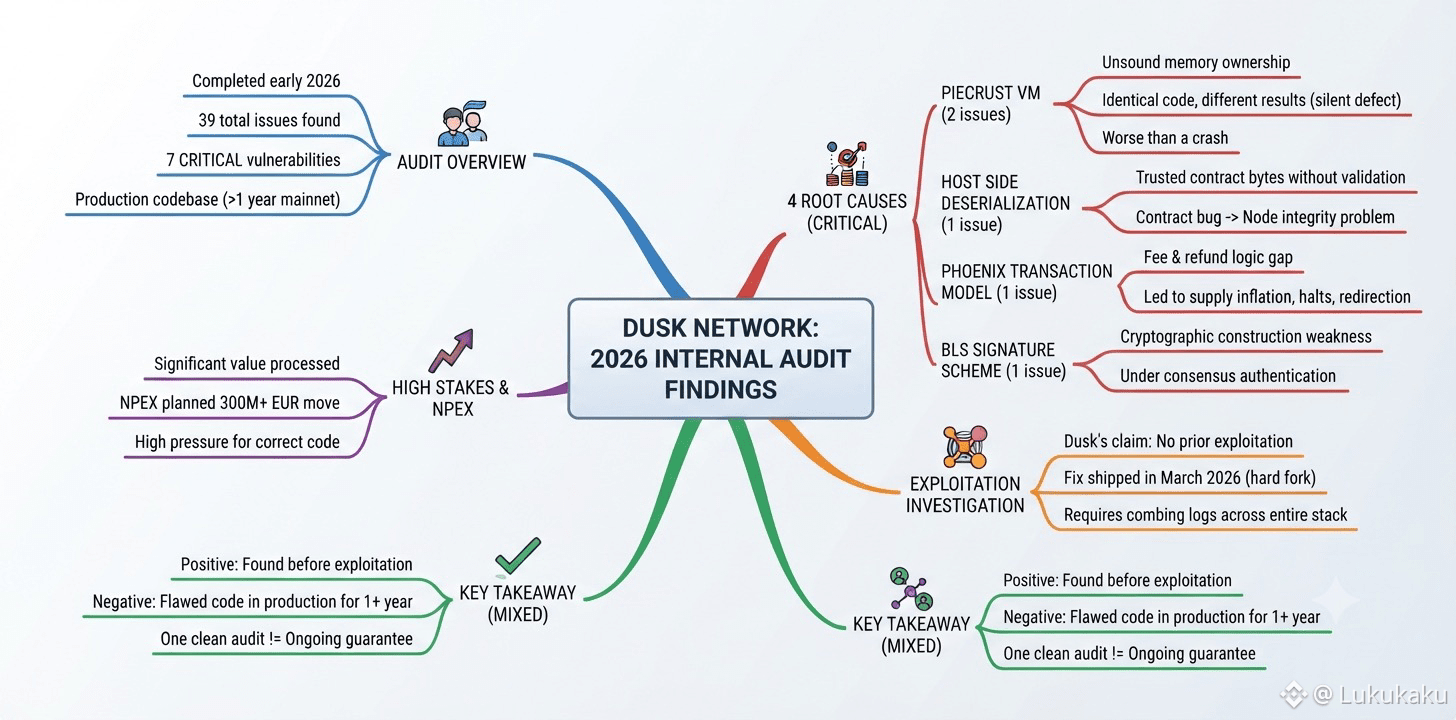
不快な事実は、快適な事実よりも役に立つ。そこで、Dusk Networkについての不快な事実をひとつ挙げる。2026年初頭に行われた内部監査では、その本番コードベース内に39件の問題が見つかり、そのうち7件は重大だった。メインネットがすでに実際の価値を処理し始めてから1年以上経過している。
これらの重大な指摘の背後にある4つの根本原因は、わかりやすく名指ししておく価値がある。取り繕って済ませるべきではない。2件は、仮想マシンサンドボックスであるPiecrustにおける不健全なメモリ所有(ownership)に起因しており、誠実な2つのノードが同一のコードを実行しても、静かに異なる結果を計算してしまえる可能性があった。この欠陥カテゴリはクラッシュよりも深刻だ。なぜなら、見えないまま残り得るからだ。もう1件は、ホスト側のデシリアライズ経路が、最初に検証せずにコントラクトが制御するバイト列を信頼してしまうことに起因していた。これにより、コントラクトレベルのバグがノードの完全性(integrity)問題へと転化した。さらにもう1件は、秘匿トランザクションモデルであるPhoenixが手数料と払い戻し(refund)のロジックを結びつける方法にあったギャップであり、それ単独でも、供給のインフレ、チェーンの停止、そして払い戻しの付け替え(リダイレクト)への道を同時に開いてしまう性質のものだった。最後は、コンセンサス認証そのものの下にあるBLS署名方式における暗号構成上の弱点だった。過去の悪用を調べるには、トランザクション履歴のうち1つのバグパターンを確認するだけでは足りず、スタック全体にわたってログとホストレベルの証拠を突き合わせる必要があった。
Duskは、自社の調査で、2026年3月のハードフォークとして修正が出荷される前に、7件のいずれも悪用されていなかった証拠は見つからなかったとしている。私はこの主張を独立に確認する手段がなく、ここを読んでいる誰にも同様の手段はない。それでも、NPEXだけでこのコードベースに3億ユーロ超を移す計画があることを考えると、正しくやり切ることの重要性が小さかったはずはない。私が受け取るのは、純粋な安心以上に、より複雑な評価だ。この問題を悪用前に見つけることは、確かに良い仕事だ。しかし同時に、そのように重大な影響を持つコードが、誰も見つけられなかった欠陥を抱えたまま、1年以上本番環境で動いていたということも意味する。単発の監査はマイルストーンだ。継続的な保証とは同じではない。
@Dusk_Foundation $DUSK #dusk
不快な事実は、快適な事実よりも役に立つ。そこで、Dusk Networkについての不快な事実をひとつ挙げる。2026年初頭に行われた内部監査では、その本番コードベース内に39件の問題が見つかり、そのうち7件は重大だった。メインネットがすでに実際の価値を処理し始めてから1年以上経過している。
これらの重大な指摘の背後にある4つの根本原因は、わかりやすく名指ししておく価値がある。取り繕って済ませるべきではない。2件は、仮想マシンサンドボックスであるPiecrustにおける不健全なメモリ所有(ownership)に起因しており、誠実な2つのノードが同一のコードを実行しても、静かに異なる結果を計算してしまえる可能性があった。この欠陥カテゴリはクラッシュよりも深刻だ。なぜなら、見えないまま残り得るからだ。もう1件は、ホスト側のデシリアライズ経路が、最初に検証せずにコントラクトが制御するバイト列を信頼してしまうことに起因していた。これにより、コントラクトレベルのバグがノードの完全性(integrity)問題へと転化した。さらにもう1件は、秘匿トランザクションモデルであるPhoenixが手数料と払い戻し(refund)のロジックを結びつける方法にあったギャップであり、それ単独でも、供給のインフレ、チェーンの停止、そして払い戻しの付け替え(リダイレクト)への道を同時に開いてしまう性質のものだった。最後は、コンセンサス認証そのものの下にあるBLS署名方式における暗号構成上の弱点だった。過去の悪用を調べるには、トランザクション履歴のうち1つのバグパターンを確認するだけでは足りず、スタック全体にわたってログとホストレベルの証拠を突き合わせる必要があった。
Duskは、自社の調査で、2026年3月のハードフォークとして修正が出荷される前に、7件のいずれも悪用されていなかった証拠は見つからなかったとしている。私はこの主張を独立に確認する手段がなく、ここを読んでいる誰にも同様の手段はない。それでも、NPEXだけでこのコードベースに3億ユーロ超を移す計画があることを考えると、正しくやり切ることの重要性が小さかったはずはない。私が受け取るのは、純粋な安心以上に、より複雑な評価だ。この問題を悪用前に見つけることは、確かに良い仕事だ。しかし同時に、そのように重大な影響を持つコードが、誰も見つけられなかった欠陥を抱えたまま、1年以上本番環境で動いていたということも意味する。単発の監査はマイルストーンだ。継続的な保証とは同じではない。
@Dusk $DUSK #dusk
これらの重大な指摘の背後にある4つの根本原因は、わかりやすく名指ししておく価値がある。取り繕って済ませるべきではない。2件は、仮想マシンサンドボックスであるPiecrustにおける不健全なメモリ所有(ownership)に起因しており、誠実な2つのノードが同一のコードを実行しても、静かに異なる結果を計算してしまえる可能性があった。この欠陥カテゴリはクラッシュよりも深刻だ。なぜなら、見えないまま残り得るからだ。もう1件は、ホスト側のデシリアライズ経路が、最初に検証せずにコントラクトが制御するバイト列を信頼してしまうことに起因していた。これにより、コントラクトレベルのバグがノードの完全性(integrity)問題へと転化した。さらにもう1件は、秘匿トランザクションモデルであるPhoenixが手数料と払い戻し(refund)のロジックを結びつける方法にあったギャップであり、それ単独でも、供給のインフレ、チェーンの停止、そして払い戻しの付け替え(リダイレクト)への道を同時に開いてしまう性質のものだった。最後は、コンセンサス認証そのものの下にあるBLS署名方式における暗号構成上の弱点だった。過去の悪用を調べるには、トランザクション履歴のうち1つのバグパターンを確認するだけでは足りず、スタック全体にわたってログとホストレベルの証拠を突き合わせる必要があった。
Duskは、自社の調査で、2026年3月のハードフォークとして修正が出荷される前に、7件のいずれも悪用されていなかった証拠は見つからなかったとしている。私はこの主張を独立に確認する手段がなく、ここを読んでいる誰にも同様の手段はない。それでも、NPEXだけでこのコードベースに3億ユーロ超を移す計画があることを考えると、正しくやり切ることの重要性が小さかったはずはない。私が受け取るのは、純粋な安心以上に、より複雑な評価だ。この問題を悪用前に見つけることは、確かに良い仕事だ。しかし同時に、そのように重大な影響を持つコードが、誰も見つけられなかった欠陥を抱えたまま、1年以上本番環境で動いていたということも意味する。単発の監査はマイルストーンだ。継続的な保証とは同じではない。
@Dusk $DUSK #dusk
1
83
·
--
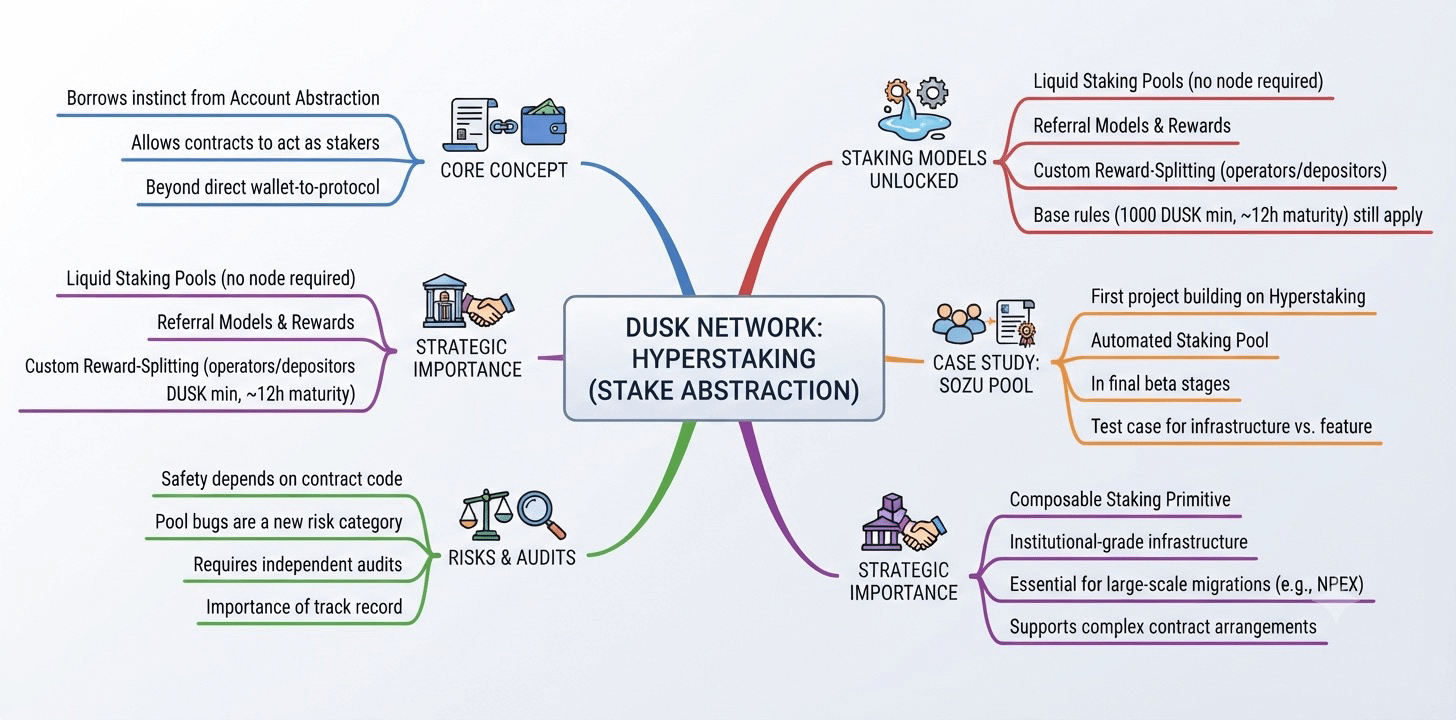
アカウント抽象化は、以前は外部所有アカウント(EOA)にしかできなかったようなことを、コントラクトが実行できるようにすることで、イーサリアム上のウォレットに対する人々の考え方を変えました。Dusk Networkはその発想を借りてステーキングに向け、結果として生まれたHyperstakingは、通常のウォレットとプロトコルのやり取りだけでは決して実現できないステーキングモデルを開きます。
通常、ステーキングは直接的な関係です。ウォレットがDUSKをロックし、ノードが動作し、報酬がそのウォレットへ流れます。Hyperstakingはそれを、ユーザーが自分でノードを運用する必要のない流動性ステーキングプールを解放します。さらに、紹介モデル(新しいステーカーを連れてくることで報酬を得る仕組み)や、オペレーターと預託者の間でカスタムな報酬分配も可能です。最低1,000 DUSKと、概ね12時間の成熟期間といった条件は、個人と同様にコントラクトにもそのまま適用されます。
Sozuは、実際にこれに取り組む最初のプロジェクトで、現在最終ベータ段階にある自動ステーキングプールを運用しています。ユーザーはノードのインフラに触れることなく、コントラクト経由でDUSKをステークできます。これがHyperstakingが「主にドキュメント上に存在する機能」ではなく、「他の人がビジネスを作るためのインフラ」になれるかどうかの本当の試金石です。
ステーキングをコントラクトの背後に抽象化することで、ユーザーの資金の安全性は、Dusk Networkの基盤プロトコルだけでなく、そのコントラクトのコードにも依存するようになります。Hyperstakingプールのバグは、コアとなるステーキング・コントラクトのバグとは別種のリスクカテゴリであり、実際の監査を経て、これらのコントラクトが一定期間きちんと意味のある価値を保持して初めて十分に理解できるものです。
このような合成(コンポーザブル)なステーキングは、まさにDusk Networkが今後さらに必要とする金融インフラの形です。NPEXの3億ユーロ超への資産移行のような計画が本当に実現するならなおさらです。というのも、機関投資家は個別のウォレットだけでなく、コントラクト単位の取り決めを必要とする傾向があるからです。
プログラマブルなステーキングは、実際に有用なプリミティブです。真剣な規模で任せる前に、どのHyperstakingプールも独立して監査されていることを望みます。
@Dusk_Foundation line $DUSK #dusk
アカウント抽象化は、以前は外部所有アカウント(EOA)にしかできなかったようなことを、コントラクトが実行できるようにすることで、イーサリアム上のウォレットに対する人々の考え方を変えました。Dusk Networkはその発想を借りてステーキングに向け、結果として生まれたHyperstakingは、通常のウォレットとプロトコルのやり取りだけでは決して実現できないステーキングモデルを開きます。
通常、ステーキングは直接的な関係です。ウォレットがDUSKをロックし、ノードが動作し、報酬がそのウォレットへ流れます。Hyperstakingはそれを、ユーザーが自分でノードを運用する必要のない流動性ステーキングプールを解放します。さらに、紹介モデル(新しいステーカーを連れてくることで報酬を得る仕組み)や、オペレーターと預託者の間でカスタムな報酬分配も可能です。最低1,000 DUSKと、概ね12時間の成熟期間といった条件は、個人と同様にコントラクトにもそのまま適用されます。
Sozuは、実際にこれに取り組む最初のプロジェクトで、現在最終ベータ段階にある自動ステーキングプールを運用しています。ユーザーはノードのインフラに触れることなく、コントラクト経由でDUSKをステークできます。これがHyperstakingが「主にドキュメント上に存在する機能」ではなく、「他の人がビジネスを作るためのインフラ」になれるかどうかの本当の試金石です。
ステーキングをコントラクトの背後に抽象化することで、ユーザーの資金の安全性は、Dusk Networkの基盤プロトコルだけでなく、そのコントラクトのコードにも依存するようになります。Hyperstakingプールのバグは、コアとなるステーキング・コントラクトのバグとは別種のリスクカテゴリであり、実際の監査を経て、これらのコントラクトが一定期間きちんと意味のある価値を保持して初めて十分に理解できるものです。
このような合成(コンポーザブル)なステーキングは、まさにDusk Networkが今後さらに必要とする金融インフラの形です。NPEXの3億ユーロ超への資産移行のような計画が本当に実現するならなおさらです。というのも、機関投資家は個別のウォレットだけでなく、コントラクト単位の取り決めを必要とする傾向があるからです。
プログラマブルなステーキングは、実際に有用なプリミティブです。真剣な規模で任せる前に、どのHyperstakingプールも独立して監査されていることを望みます。
@Dusk line $DUSK #dusk
通常、ステーキングは直接的な関係です。ウォレットがDUSKをロックし、ノードが動作し、報酬がそのウォレットへ流れます。Hyperstakingはそれを、ユーザーが自分でノードを運用する必要のない流動性ステーキングプールを解放します。さらに、紹介モデル(新しいステーカーを連れてくることで報酬を得る仕組み)や、オペレーターと預託者の間でカスタムな報酬分配も可能です。最低1,000 DUSKと、概ね12時間の成熟期間といった条件は、個人と同様にコントラクトにもそのまま適用されます。
Sozuは、実際にこれに取り組む最初のプロジェクトで、現在最終ベータ段階にある自動ステーキングプールを運用しています。ユーザーはノードのインフラに触れることなく、コントラクト経由でDUSKをステークできます。これがHyperstakingが「主にドキュメント上に存在する機能」ではなく、「他の人がビジネスを作るためのインフラ」になれるかどうかの本当の試金石です。
ステーキングをコントラクトの背後に抽象化することで、ユーザーの資金の安全性は、Dusk Networkの基盤プロトコルだけでなく、そのコントラクトのコードにも依存するようになります。Hyperstakingプールのバグは、コアとなるステーキング・コントラクトのバグとは別種のリスクカテゴリであり、実際の監査を経て、これらのコントラクトが一定期間きちんと意味のある価値を保持して初めて十分に理解できるものです。
このような合成(コンポーザブル)なステーキングは、まさにDusk Networkが今後さらに必要とする金融インフラの形です。NPEXの3億ユーロ超への資産移行のような計画が本当に実現するならなおさらです。というのも、機関投資家は個別のウォレットだけでなく、コントラクト単位の取り決めを必要とする傾向があるからです。
プログラマブルなステーキングは、実際に有用なプリミティブです。真剣な規模で任せる前に、どのHyperstakingプールも独立して監査されていることを望みます。
@Dusk line $DUSK #dusk
1
62
·
--
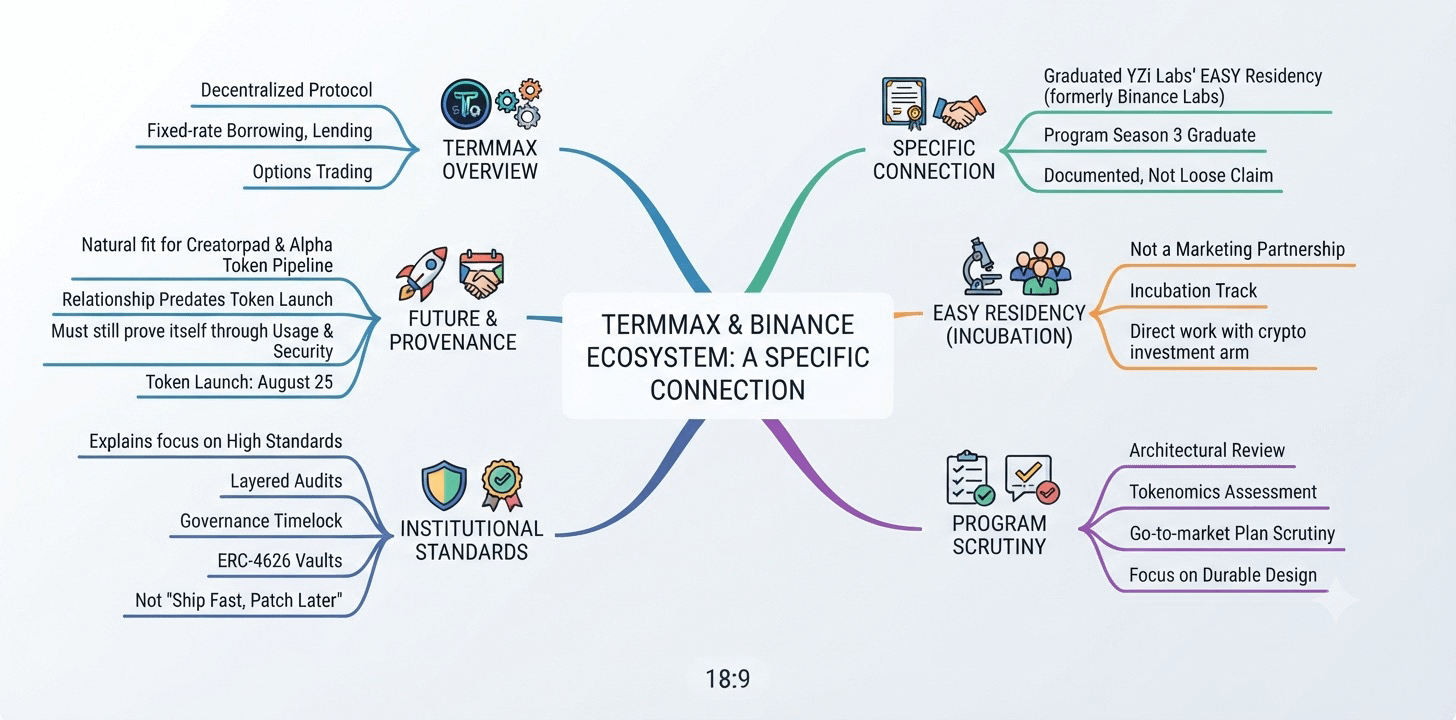
Binanceのエコシステムとのつながりを“ゆるく”主張するプロジェクトは数多くあります。固定金利の借入、貸付、オプション取引にまたがる分散型プロトコルであるTermMaxには、具体的で裏付けられた関係があります。それは、YZi LabsのEASY Residencyプログラム(かつてはBinance Labsとして知られていた)で、その第3シーズンの期間中に卒業したことです。
EASY Residencyはマーケティング提携ではありません。インキュベーションの道筋であり、初期段階のチームが、業界でもっとも活動的な暗号資産投資部門の一つと直接協働し、卒業が“応募者としてではなく卒業者として”認められるようになる前に、技術アーキテクチャ、トークンエコノミクス、そしてマーケティング(ゴー・トゥ・マーケット)計画について精査を受けます。TermMaxの場合、そのプロセスを経たことで、3トークンモデル、バル トとキュレーターの仕組み、そして固定金利のマッチング・エンジンが、実運用の下で成立するかどうかを見極めることが仕事である人々によってレビューされたのです。つまり、ピッチデックでは良く見えるが、実使用に耐えないプロジェクトと、長く持続可能なプロトコル設計とを切り分ける役割の人たちです。
重要なのは、約束している内容よりも、説明している内容だと思います。TermMaxが継続的に、監査を重ねる形でのインスティテューション級の基準へと作り込んできた理由、たとえば、文書化されたガバナンスのティムロックや、ERC-4626に準拠したヴォールトを整備してきた理由が分かります。後から修正していくのではなく、まず素早く出して後で“パッチ”する、いまなお多くのDeFiプロジェクトがやりがちな進め方とは違うからです。また、このCreatorpadキャンペーンを実行し、TermMax Alphaを特にローンチして、Binance自身のAlphaトークン・パイプラインに役立てることが自然に筋の通った選択であることも説明できます。これはTermMaxが機会主義的にBinanceのエコシステムへ“後付けで”乗っかっている話ではありません。両者の関係はトークン以前から存在しています。
これらはいずれも、投資成果を推奨するものとして読まれるべきではありません。インキュベーションプログラムを卒業したという事実は、チームが特定の時点において特定の基準をクリアしたことを意味しますが、その後のすべての判断が正しいと保証するものではありません。TermMaxは引き続き、どのプロトコルもそうであるように、利用を通じて、セキュリティを通じて、そして今や、トークンローンチが8月25日から実際にどう展開されるかを通じて、自らの価値を証明しなければなりません。
@termmax #TermMax
Binanceのエコシステムとのつながりを“ゆるく”主張するプロジェクトは数多くあります。固定金利の借入、貸付、オプション取引にまたがる分散型プロトコルであるTermMaxには、具体的で裏付けられた関係があります。それは、YZi LabsのEASY Residencyプログラム(かつてはBinance Labsとして知られていた)で、その第3シーズンの期間中に卒業したことです。
EASY Residencyはマーケティング提携ではありません。インキュベーションの道筋であり、初期段階のチームが、業界でもっとも活動的な暗号資産投資部門の一つと直接協働し、卒業が“応募者としてではなく卒業者として”認められるようになる前に、技術アーキテクチャ、トークンエコノミクス、そしてマーケティング(ゴー・トゥ・マーケット)計画について精査を受けます。TermMaxの場合、そのプロセスを経たことで、3トークンモデル、バル トとキュレーターの仕組み、そして固定金利のマッチング・エンジンが、実運用の下で成立するかどうかを見極めることが仕事である人々によってレビューされたのです。つまり、ピッチデックでは良く見えるが、実使用に耐えないプロジェクトと、長く持続可能なプロトコル設計とを切り分ける役割の人たちです。
重要なのは、約束している内容よりも、説明している内容だと思います。TermMaxが継続的に、監査を重ねる形でのインスティテューション級の基準へと作り込んできた理由、たとえば、文書化されたガバナンスのティムロックや、ERC-4626に準拠したヴォールトを整備してきた理由が分かります。後から修正していくのではなく、まず素早く出して後で“パッチ”する、いまなお多くのDeFiプロジェクトがやりがちな進め方とは違うからです。また、このCreatorpadキャンペーンを実行し、TermMax Alphaを特にローンチして、Binance自身のAlphaトークン・パイプラインに役立てることが自然に筋の通った選択であることも説明できます。これはTermMaxが機会主義的にBinanceのエコシステムへ“後付けで”乗っかっている話ではありません。両者の関係はトークン以前から存在しています。
これらはいずれも、投資成果を推奨するものとして読まれるべきではありません。インキュベーションプログラムを卒業したという事実は、チームが特定の時点において特定の基準をクリアしたことを意味しますが、その後のすべての判断が正しいと保証するものではありません。TermMaxは引き続き、どのプロトコルもそうであるように、利用を通じて、セキュリティを通じて、そして今や、トークンローンチが8月25日から実際にどう展開されるかを通じて、自らの価値を証明しなければなりません。
@TermMax #TermMax
EASY Residencyはマーケティング提携ではありません。インキュベーションの道筋であり、初期段階のチームが、業界でもっとも活動的な暗号資産投資部門の一つと直接協働し、卒業が“応募者としてではなく卒業者として”認められるようになる前に、技術アーキテクチャ、トークンエコノミクス、そしてマーケティング(ゴー・トゥ・マーケット)計画について精査を受けます。TermMaxの場合、そのプロセスを経たことで、3トークンモデル、バル トとキュレーターの仕組み、そして固定金利のマッチング・エンジンが、実運用の下で成立するかどうかを見極めることが仕事である人々によってレビューされたのです。つまり、ピッチデックでは良く見えるが、実使用に耐えないプロジェクトと、長く持続可能なプロトコル設計とを切り分ける役割の人たちです。
重要なのは、約束している内容よりも、説明している内容だと思います。TermMaxが継続的に、監査を重ねる形でのインスティテューション級の基準へと作り込んできた理由、たとえば、文書化されたガバナンスのティムロックや、ERC-4626に準拠したヴォールトを整備してきた理由が分かります。後から修正していくのではなく、まず素早く出して後で“パッチ”する、いまなお多くのDeFiプロジェクトがやりがちな進め方とは違うからです。また、このCreatorpadキャンペーンを実行し、TermMax Alphaを特にローンチして、Binance自身のAlphaトークン・パイプラインに役立てることが自然に筋の通った選択であることも説明できます。これはTermMaxが機会主義的にBinanceのエコシステムへ“後付けで”乗っかっている話ではありません。両者の関係はトークン以前から存在しています。
これらはいずれも、投資成果を推奨するものとして読まれるべきではありません。インキュベーションプログラムを卒業したという事実は、チームが特定の時点において特定の基準をクリアしたことを意味しますが、その後のすべての判断が正しいと保証するものではありません。TermMaxは引き続き、どのプロトコルもそうであるように、利用を通じて、セキュリティを通じて、そして今や、トークンローンチが8月25日から実際にどう展開されるかを通じて、自らの価値を証明しなければなりません。
@TermMax #TermMax
83
·
--
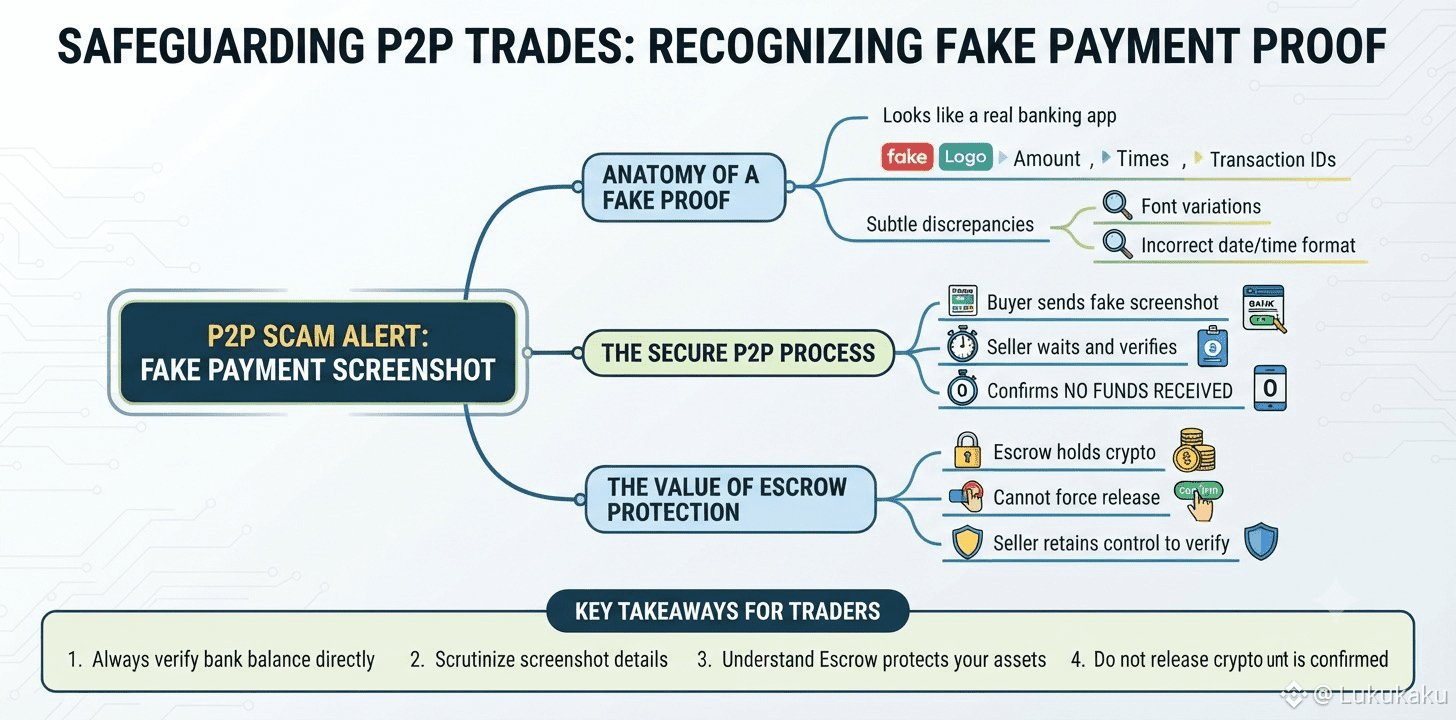
Binance P2Pで取引していたときに私が実際に目撃した手口の1つが、送金の確認画面のスクリーンショットを偽造するというものです。新しく始める人たちにも警戒してもらいたく、ここに共有します。
購入者は、銀行の公式アプリそっくりの画面を写したスクリーンショットを私に送ってきました。ロゴ、金額、時刻、そして取引コードまで揃っています。一見すると、編集された画像だと気づきにくいです。ですが、よく見ると、表示されている金額のフォントが、私がその銀行から実際に見たスクリーンショットと比べて少し違っていて、さらに時間のフォーマットも一般的な基準と完全には一致していませんでした。
疑わしいとは思いつつも、直感だけで判断せず、銀行アプリを自分で確認して残高が変わっていないかを確かめるまで待ちました。その結果は予想どおりで、私の口座に送金されたお金は一切ありませんでした。
まさにこのとき、Binance P2Pにおけるエスクロー(預託)メカニズムの価値を実感しました。購入者が支払い証拠を偽造するのにどれほど巧妙であっても、こちらがその自動リリース用のボタンを自分から押さない限り、システムが勝手に暗号資産をリリースすることはできません。エスクローは単に技術的な面で私を守るだけでなく、最終的な判断を下す前に確認するための時間と主導権も与えてくれます。
Binance P2Pで取引を始めたばかりの方には、届いたどんなスクリーンショットでも、文字のフォントやレイアウトをさらに数秒だけ注意深く観察することを私はいつも勧めています。これはあくまで追加の警戒ステップであり、自分自身の銀行口座を必ず自分で確認することの代わりにはなりませんが、役に立ちます。
@Binance_Vietnam #BinanceP2PAnToan
Binance P2Pで取引していたときに私が実際に目撃した手口の1つが、送金の確認画面のスクリーンショットを偽造するというものです。新しく始める人たちにも警戒してもらいたく、ここに共有します。
購入者は、銀行の公式アプリそっくりの画面を写したスクリーンショットを私に送ってきました。ロゴ、金額、時刻、そして取引コードまで揃っています。一見すると、編集された画像だと気づきにくいです。ですが、よく見ると、表示されている金額のフォントが、私がその銀行から実際に見たスクリーンショットと比べて少し違っていて、さらに時間のフォーマットも一般的な基準と完全には一致していませんでした。
疑わしいとは思いつつも、直感だけで判断せず、銀行アプリを自分で確認して残高が変わっていないかを確かめるまで待ちました。その結果は予想どおりで、私の口座に送金されたお金は一切ありませんでした。
まさにこのとき、Binance P2Pにおけるエスクロー(預託)メカニズムの価値を実感しました。購入者が支払い証拠を偽造するのにどれほど巧妙であっても、こちらがその自動リリース用のボタンを自分から押さない限り、システムが勝手に暗号資産をリリースすることはできません。エスクローは単に技術的な面で私を守るだけでなく、最終的な判断を下す前に確認するための時間と主導権も与えてくれます。
Binance P2Pで取引を始めたばかりの方には、届いたどんなスクリーンショットでも、文字のフォントやレイアウトをさらに数秒だけ注意深く観察することを私はいつも勧めています。これはあくまで追加の警戒ステップであり、自分自身の銀行口座を必ず自分で確認することの代わりにはなりませんが、役に立ちます。
@Binance Vietnam #BinanceP2PAnToan
購入者は、銀行の公式アプリそっくりの画面を写したスクリーンショットを私に送ってきました。ロゴ、金額、時刻、そして取引コードまで揃っています。一見すると、編集された画像だと気づきにくいです。ですが、よく見ると、表示されている金額のフォントが、私がその銀行から実際に見たスクリーンショットと比べて少し違っていて、さらに時間のフォーマットも一般的な基準と完全には一致していませんでした。
疑わしいとは思いつつも、直感だけで判断せず、銀行アプリを自分で確認して残高が変わっていないかを確かめるまで待ちました。その結果は予想どおりで、私の口座に送金されたお金は一切ありませんでした。
まさにこのとき、Binance P2Pにおけるエスクロー(預託)メカニズムの価値を実感しました。購入者が支払い証拠を偽造するのにどれほど巧妙であっても、こちらがその自動リリース用のボタンを自分から押さない限り、システムが勝手に暗号資産をリリースすることはできません。エスクローは単に技術的な面で私を守るだけでなく、最終的な判断を下す前に確認するための時間と主導権も与えてくれます。
Binance P2Pで取引を始めたばかりの方には、届いたどんなスクリーンショットでも、文字のフォントやレイアウトをさらに数秒だけ注意深く観察することを私はいつも勧めています。これはあくまで追加の警戒ステップであり、自分自身の銀行口座を必ず自分で確認することの代わりにはなりませんが、役に立ちます。
@Binance Vietnam #BinanceP2PAnToan
276
·
--
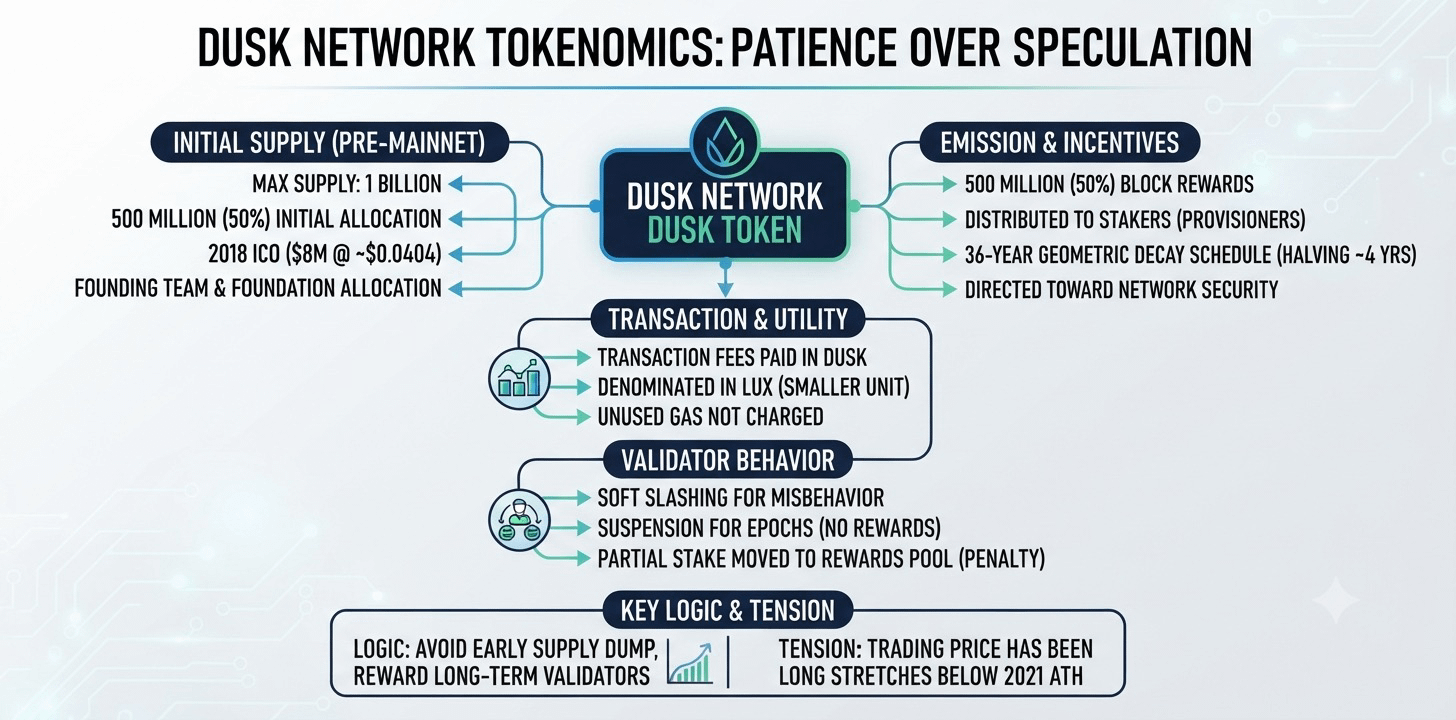
固定の供給上限を持つトークンは単純に聞こえますが、実際に発行(エミッション)の仕組みを読むまでわかりません。Dusk Networkのトークンノミクスは投機よりも忍耐に報いる設計であり、その選択が「このプロジェクトが本当に誰のために作られているか」をかなり説明していると思います。
DUSKの最大供給量は10億トークンです。その半分、5億トークンはメインネット立ち上げ前にすでに存在しており、2018年の初期コインオファリング(ICO)によって生み出されました。このICOでは約800万ドルが調達され、1トークンあたりおよそ0.0404ドルでした。さらに、創業チームと、継続的な開発を支える財団のための割当も用意されています。残りの5億トークンは、36年間の期間にわたって、各ブロックの生成および承認(ラティファイ)に実際に参加したプロビジョナーに比例配分される形で、ステーカーへのブロック報酬として発行されます。発行は幾何学的減衰のスケジュールに従い、だいたい4年ごとに発行率が半減します。これはビットコインの半減期サイクルに似た精神ですが、はるかに長い時間軸に引き延ばされており、広くマイニング報酬を与えるのではなく、ネットワークのセキュリティのために完全に振り向けられています。
取引手数料もDUSKで支払われ、より小さな単位のLUXで計上されます。また、トランザクションから未使用のガスが出た場合でも、その分は課金されません。さらに、不正行為を行うバリデータには、即座の焼却(バーン)ではなくソフトスラッシングが適用されます。プロビジョナーは、1つ以上のエポックにわたって報酬なしで停止させられることがあり、あるいはステークの一部を、請求可能な報酬プールへ移すことで罰せられることもあります。
このように発行をかなり先まで伸ばすロジックは、初期に大量の新規供給を市場へ投げ込まないためです。何十年もの間、バリデータに報酬を払い続けるためのカーブを優先し、そのために曲線を描いているのです。
率直に言うと、ここにこそ向き合うべき緊張感があります。DUSKはすでに、2021年の史上最高値からかなり長い期間、はるかに下で取引され続けています。
DUSKは、ここでのガス・トークンであり、同時に長期的なセキュリティへのインセンティブでもあります。
@Dusk_Foundation $DUSK #dusk
固定の供給上限を持つトークンは単純に聞こえますが、実際に発行(エミッション)の仕組みを読むまでわかりません。Dusk Networkのトークンノミクスは投機よりも忍耐に報いる設計であり、その選択が「このプロジェクトが本当に誰のために作られているか」をかなり説明していると思います。
DUSKの最大供給量は10億トークンです。その半分、5億トークンはメインネット立ち上げ前にすでに存在しており、2018年の初期コインオファリング(ICO)によって生み出されました。このICOでは約800万ドルが調達され、1トークンあたりおよそ0.0404ドルでした。さらに、創業チームと、継続的な開発を支える財団のための割当も用意されています。残りの5億トークンは、36年間の期間にわたって、各ブロックの生成および承認(ラティファイ)に実際に参加したプロビジョナーに比例配分される形で、ステーカーへのブロック報酬として発行されます。発行は幾何学的減衰のスケジュールに従い、だいたい4年ごとに発行率が半減します。これはビットコインの半減期サイクルに似た精神ですが、はるかに長い時間軸に引き延ばされており、広くマイニング報酬を与えるのではなく、ネットワークのセキュリティのために完全に振り向けられています。
取引手数料もDUSKで支払われ、より小さな単位のLUXで計上されます。また、トランザクションから未使用のガスが出た場合でも、その分は課金されません。さらに、不正行為を行うバリデータには、即座の焼却(バーン)ではなくソフトスラッシングが適用されます。プロビジョナーは、1つ以上のエポックにわたって報酬なしで停止させられることがあり、あるいはステークの一部を、請求可能な報酬プールへ移すことで罰せられることもあります。
このように発行をかなり先まで伸ばすロジックは、初期に大量の新規供給を市場へ投げ込まないためです。何十年もの間、バリデータに報酬を払い続けるためのカーブを優先し、そのために曲線を描いているのです。
率直に言うと、ここにこそ向き合うべき緊張感があります。DUSKはすでに、2021年の史上最高値からかなり長い期間、はるかに下で取引され続けています。
DUSKは、ここでのガス・トークンであり、同時に長期的なセキュリティへのインセンティブでもあります。
@Dusk $DUSK #dusk
DUSKの最大供給量は10億トークンです。その半分、5億トークンはメインネット立ち上げ前にすでに存在しており、2018年の初期コインオファリング(ICO)によって生み出されました。このICOでは約800万ドルが調達され、1トークンあたりおよそ0.0404ドルでした。さらに、創業チームと、継続的な開発を支える財団のための割当も用意されています。残りの5億トークンは、36年間の期間にわたって、各ブロックの生成および承認(ラティファイ)に実際に参加したプロビジョナーに比例配分される形で、ステーカーへのブロック報酬として発行されます。発行は幾何学的減衰のスケジュールに従い、だいたい4年ごとに発行率が半減します。これはビットコインの半減期サイクルに似た精神ですが、はるかに長い時間軸に引き延ばされており、広くマイニング報酬を与えるのではなく、ネットワークのセキュリティのために完全に振り向けられています。
取引手数料もDUSKで支払われ、より小さな単位のLUXで計上されます。また、トランザクションから未使用のガスが出た場合でも、その分は課金されません。さらに、不正行為を行うバリデータには、即座の焼却(バーン)ではなくソフトスラッシングが適用されます。プロビジョナーは、1つ以上のエポックにわたって報酬なしで停止させられることがあり、あるいはステークの一部を、請求可能な報酬プールへ移すことで罰せられることもあります。
このように発行をかなり先まで伸ばすロジックは、初期に大量の新規供給を市場へ投げ込まないためです。何十年もの間、バリデータに報酬を払い続けるためのカーブを優先し、そのために曲線を描いているのです。
率直に言うと、ここにこそ向き合うべき緊張感があります。DUSKはすでに、2021年の史上最高値からかなり長い期間、はるかに下で取引され続けています。
DUSKは、ここでのガス・トークンであり、同時に長期的なセキュリティへのインセンティブでもあります。
@Dusk $DUSK #dusk
55
·
--
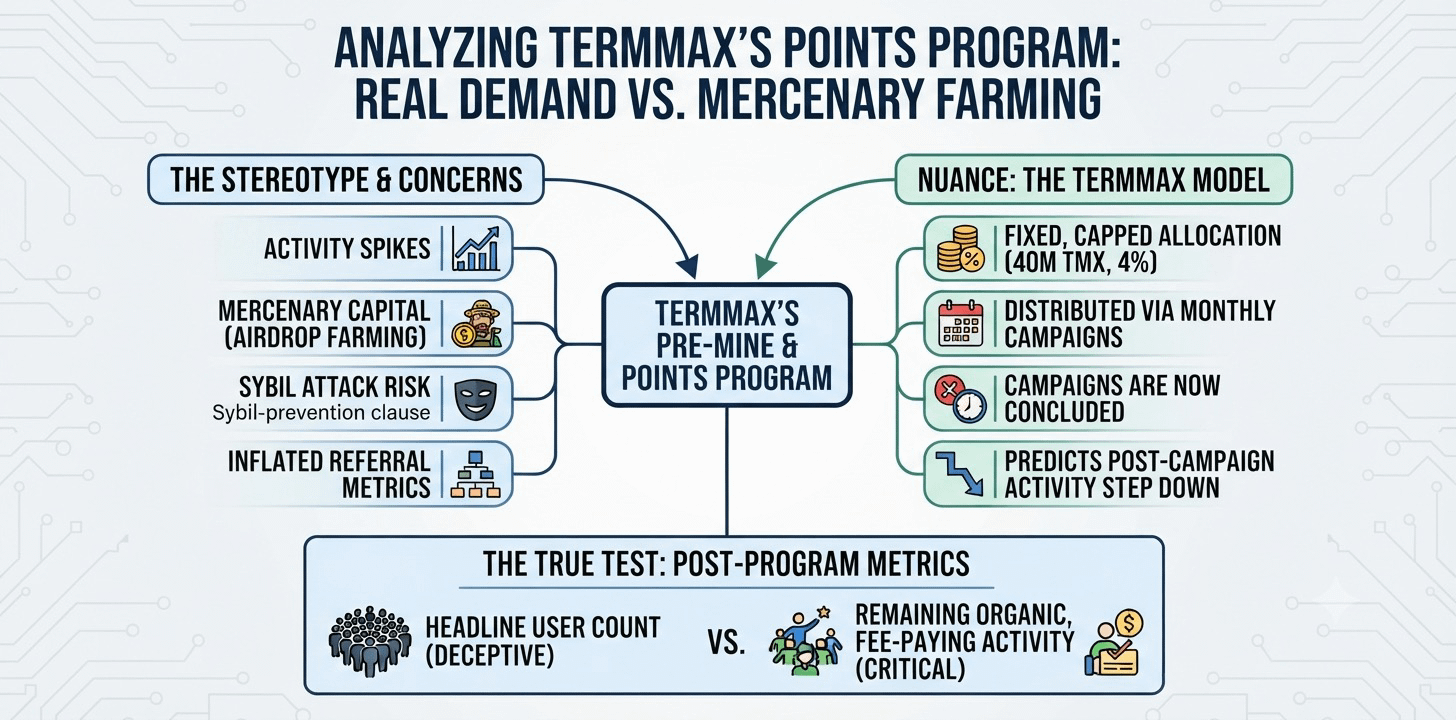
ポイント・プログラムを運用するあらゆるDeFiプロトコルは、いずれ同じ居心地の悪い質問に答えなければなりません。つまり、この活動のうちどれだけが本当の需要で、どれだけが将来のトークンを狙った傭兵的な資本による“取り収穫”なのか、ということです。TermMax自身の数字──ユーザー数100万人超、登録ウォレット837,000、100以上のマーケットで日次アクティブユーザー17万人という報告されたピーク──は、その精査をまさに招きます。なぜなら、それらはTMXが取引可能なトークンとして存在する前のプレマイン段階で、参加に報いることを明確に意図して構築されたからです。
このカテゴリにおけるステレオタイプは、十分に根拠があります。ポイント・プログラムは、報酬が止まった瞬間に崩れ落ちるような活動のスパイクを確実に生み出します。というのも、そのボリュームのかなりの部分がプロダクトそのものへの関心ではなく、エアドロップのためのポジショニングだったからです。TermMaxのリーダーボードに関するドキュメントには、検出されたSybil(シビル)活動から遡って報酬を取り消す権利を留保する条項まで含まれており、これは、農業(ファーム)目的の非オーガニックな参加が、最初から防御策を組み込む価値のある“進行中の懸念”だったことの裏付けそのものです。さらに、アクティブな被紹介者を連れてくるユーザーに報いる階層型紹介(リファラル)システムが重なり、プロダクトへのより深いオーガニックな確信を必ずしも反映しないまま、見出しの数字を膨らませる別のレバーになり得ます。
ここから先は、ステレオタイプが許す以上に状況が微妙だと私は思います。インフレによる放出を無期限に支払うプロトコルとは違い、TermMaxのプレマインは固定され上限のある割り当てで、総供給の4%にあたる40 million TMXが、月次キャンペーンを通じて一度きり配られて、その後は終了しました。すでに終わっているプログラムをファームするために生み出された活動は、本来なら、進行中の報酬によって支えられた恒常的な下支えではなく、現在の利用が“段階的に減る”形で現れるはずです。実際にその段階的な減少が起きたのか、そしてその下に残っている本当の手数料支払いの活動がどれほどあるのか——それこそが、見出しのユーザー数だけから決めつけるのではなく、直接確認すべき数字です。
@termmax #TermMax
ポイント・プログラムを運用するあらゆるDeFiプロトコルは、いずれ同じ居心地の悪い質問に答えなければなりません。つまり、この活動のうちどれだけが本当の需要で、どれだけが将来のトークンを狙った傭兵的な資本による“取り収穫”なのか、ということです。TermMax自身の数字──ユーザー数100万人超、登録ウォレット837,000、100以上のマーケットで日次アクティブユーザー17万人という報告されたピーク──は、その精査をまさに招きます。なぜなら、それらはTMXが取引可能なトークンとして存在する前のプレマイン段階で、参加に報いることを明確に意図して構築されたからです。
このカテゴリにおけるステレオタイプは、十分に根拠があります。ポイント・プログラムは、報酬が止まった瞬間に崩れ落ちるような活動のスパイクを確実に生み出します。というのも、そのボリュームのかなりの部分がプロダクトそのものへの関心ではなく、エアドロップのためのポジショニングだったからです。TermMaxのリーダーボードに関するドキュメントには、検出されたSybil(シビル)活動から遡って報酬を取り消す権利を留保する条項まで含まれており、これは、農業(ファーム)目的の非オーガニックな参加が、最初から防御策を組み込む価値のある“進行中の懸念”だったことの裏付けそのものです。さらに、アクティブな被紹介者を連れてくるユーザーに報いる階層型紹介(リファラル)システムが重なり、プロダクトへのより深いオーガニックな確信を必ずしも反映しないまま、見出しの数字を膨らませる別のレバーになり得ます。
ここから先は、ステレオタイプが許す以上に状況が微妙だと私は思います。インフレによる放出を無期限に支払うプロトコルとは違い、TermMaxのプレマインは固定され上限のある割り当てで、総供給の4%にあたる40 million TMXが、月次キャンペーンを通じて一度きり配られて、その後は終了しました。すでに終わっているプログラムをファームするために生み出された活動は、本来なら、進行中の報酬によって支えられた恒常的な下支えではなく、現在の利用が“段階的に減る”形で現れるはずです。実際にその段階的な減少が起きたのか、そしてその下に残っている本当の手数料支払いの活動がどれほどあるのか——それこそが、見出しのユーザー数だけから決めつけるのではなく、直接確認すべき数字です。
@TermMax #TermMax
このカテゴリにおけるステレオタイプは、十分に根拠があります。ポイント・プログラムは、報酬が止まった瞬間に崩れ落ちるような活動のスパイクを確実に生み出します。というのも、そのボリュームのかなりの部分がプロダクトそのものへの関心ではなく、エアドロップのためのポジショニングだったからです。TermMaxのリーダーボードに関するドキュメントには、検出されたSybil(シビル)活動から遡って報酬を取り消す権利を留保する条項まで含まれており、これは、農業(ファーム)目的の非オーガニックな参加が、最初から防御策を組み込む価値のある“進行中の懸念”だったことの裏付けそのものです。さらに、アクティブな被紹介者を連れてくるユーザーに報いる階層型紹介(リファラル)システムが重なり、プロダクトへのより深いオーガニックな確信を必ずしも反映しないまま、見出しの数字を膨らませる別のレバーになり得ます。
ここから先は、ステレオタイプが許す以上に状況が微妙だと私は思います。インフレによる放出を無期限に支払うプロトコルとは違い、TermMaxのプレマインは固定され上限のある割り当てで、総供給の4%にあたる40 million TMXが、月次キャンペーンを通じて一度きり配られて、その後は終了しました。すでに終わっているプログラムをファームするために生み出された活動は、本来なら、進行中の報酬によって支えられた恒常的な下支えではなく、現在の利用が“段階的に減る”形で現れるはずです。実際にその段階的な減少が起きたのか、そしてその下に残っている本当の手数料支払いの活動がどれほどあるのか——それこそが、見出しのユーザー数だけから決めつけるのではなく、直接確認すべき数字です。
@TermMax #TermMax
1
1
110
·
--
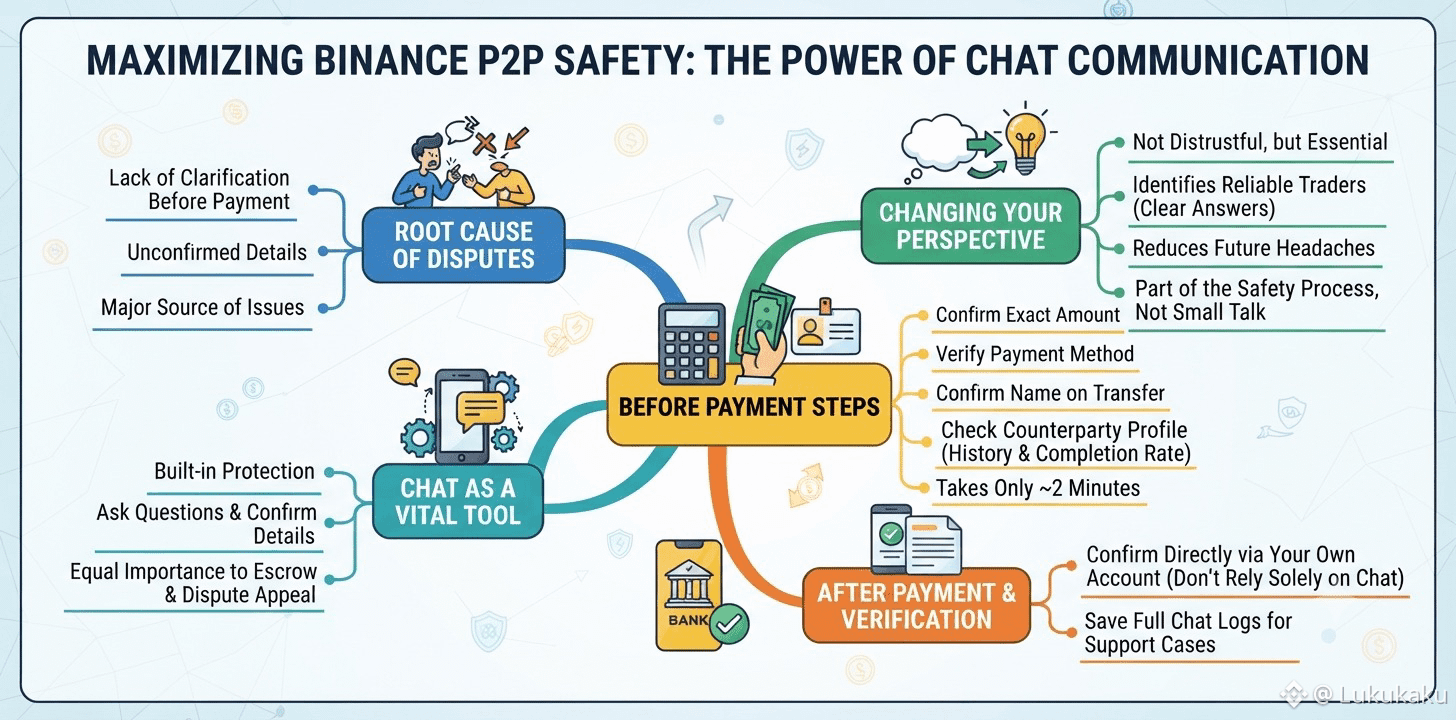
Binance P2Pで他のトレーダーから聞いたトラブルの多くは、結局のところ同じ根本原因にたどり着くようです。それは、支払いが行われる前に「ある重要な点」が明確にされていなかったことです。Binance P2Pには、何かが動く前に双方が質問をして詳細を確認できるためのチャットが最初から用意されています。私は、このチャットをエスクローや紛争申請の手続きと同じくらい有用な保護手段の一つとして扱うようになりました。
今では、支払いを送る/送ってもらう前に、チャットを使って必ず「正確な金額」「支払い方法」「振込に表示されるべき名義」を確認します。注文が一見シンプルに見える場合でも同様です。追加で2分ほどかかるかもしれませんが、そのおかげで、後から簡単に意見の食い違いに発展し得た状況をいくつも防げました。また、同じ時間内に相手方のプロフィールも確認し、詳細を詰めている最中の取引履歴や完了率も見ています。
支払いを送った後も、チャットで共有された内容に頼らず、自分の口座を通じて直接確認します。事前にきちんと会話できていても、送金そのものを検証することに代わるわけではないからです。完了した各注文について、確認とともにチャットの全文ログを保存しています。その結果、サポートに連絡する必要があった数少ないケースでも、対応が明らかに速くなりました。Binance P2Pで早い段階で投げた、明確な質問はいままでにかかった時間よりもずっと多くの時間を節約してくれました。
以前は、チャットで質問をしすぎると不信感を持たれてしまったり、取引が不必要に遅くなったりするのではと思っていました。でも、私が話をした経験豊富なトレーダーは皆逆だと言います。はっきりと丁寧に答えてくれる売り手や購入者は、また取引する価値がある人であることが多いです。逆に、ためらいがあったり、回答が曖昧だったりする場合は、お金が動く前にそれだけで十分わかります。チャットを単なる雑談ではなく、実際の安全プロセスの一部として扱うようになったことで、Binance P2Pでのあらゆる注文への向き合い方が変わりました。
@Binance_Vietnam #BinanceP2PAnToan $RICE $BTW
Binance P2Pで他のトレーダーから聞いたトラブルの多くは、結局のところ同じ根本原因にたどり着くようです。それは、支払いが行われる前に「ある重要な点」が明確にされていなかったことです。Binance P2Pには、何かが動く前に双方が質問をして詳細を確認できるためのチャットが最初から用意されています。私は、このチャットをエスクローや紛争申請の手続きと同じくらい有用な保護手段の一つとして扱うようになりました。
今では、支払いを送る/送ってもらう前に、チャットを使って必ず「正確な金額」「支払い方法」「振込に表示されるべき名義」を確認します。注文が一見シンプルに見える場合でも同様です。追加で2分ほどかかるかもしれませんが、そのおかげで、後から簡単に意見の食い違いに発展し得た状況をいくつも防げました。また、同じ時間内に相手方のプロフィールも確認し、詳細を詰めている最中の取引履歴や完了率も見ています。
支払いを送った後も、チャットで共有された内容に頼らず、自分の口座を通じて直接確認します。事前にきちんと会話できていても、送金そのものを検証することに代わるわけではないからです。完了した各注文について、確認とともにチャットの全文ログを保存しています。その結果、サポートに連絡する必要があった数少ないケースでも、対応が明らかに速くなりました。Binance P2Pで早い段階で投げた、明確な質問はいままでにかかった時間よりもずっと多くの時間を節約してくれました。
以前は、チャットで質問をしすぎると不信感を持たれてしまったり、取引が不必要に遅くなったりするのではと思っていました。でも、私が話をした経験豊富なトレーダーは皆逆だと言います。はっきりと丁寧に答えてくれる売り手や購入者は、また取引する価値がある人であることが多いです。逆に、ためらいがあったり、回答が曖昧だったりする場合は、お金が動く前にそれだけで十分わかります。チャットを単なる雑談ではなく、実際の安全プロセスの一部として扱うようになったことで、Binance P2Pでのあらゆる注文への向き合い方が変わりました。
@Binance Vietnam #BinanceP2PAnToan $RICE $BTW
今では、支払いを送る/送ってもらう前に、チャットを使って必ず「正確な金額」「支払い方法」「振込に表示されるべき名義」を確認します。注文が一見シンプルに見える場合でも同様です。追加で2分ほどかかるかもしれませんが、そのおかげで、後から簡単に意見の食い違いに発展し得た状況をいくつも防げました。また、同じ時間内に相手方のプロフィールも確認し、詳細を詰めている最中の取引履歴や完了率も見ています。
支払いを送った後も、チャットで共有された内容に頼らず、自分の口座を通じて直接確認します。事前にきちんと会話できていても、送金そのものを検証することに代わるわけではないからです。完了した各注文について、確認とともにチャットの全文ログを保存しています。その結果、サポートに連絡する必要があった数少ないケースでも、対応が明らかに速くなりました。Binance P2Pで早い段階で投げた、明確な質問はいままでにかかった時間よりもずっと多くの時間を節約してくれました。
以前は、チャットで質問をしすぎると不信感を持たれてしまったり、取引が不必要に遅くなったりするのではと思っていました。でも、私が話をした経験豊富なトレーダーは皆逆だと言います。はっきりと丁寧に答えてくれる売り手や購入者は、また取引する価値がある人であることが多いです。逆に、ためらいがあったり、回答が曖昧だったりする場合は、お金が動く前にそれだけで十分わかります。チャットを単なる雑談ではなく、実際の安全プロセスの一部として扱うようになったことで、Binance P2Pでのあらゆる注文への向き合い方が変わりました。
@Binance Vietnam #BinanceP2PAnToan $RICE $BTW
236
·
--
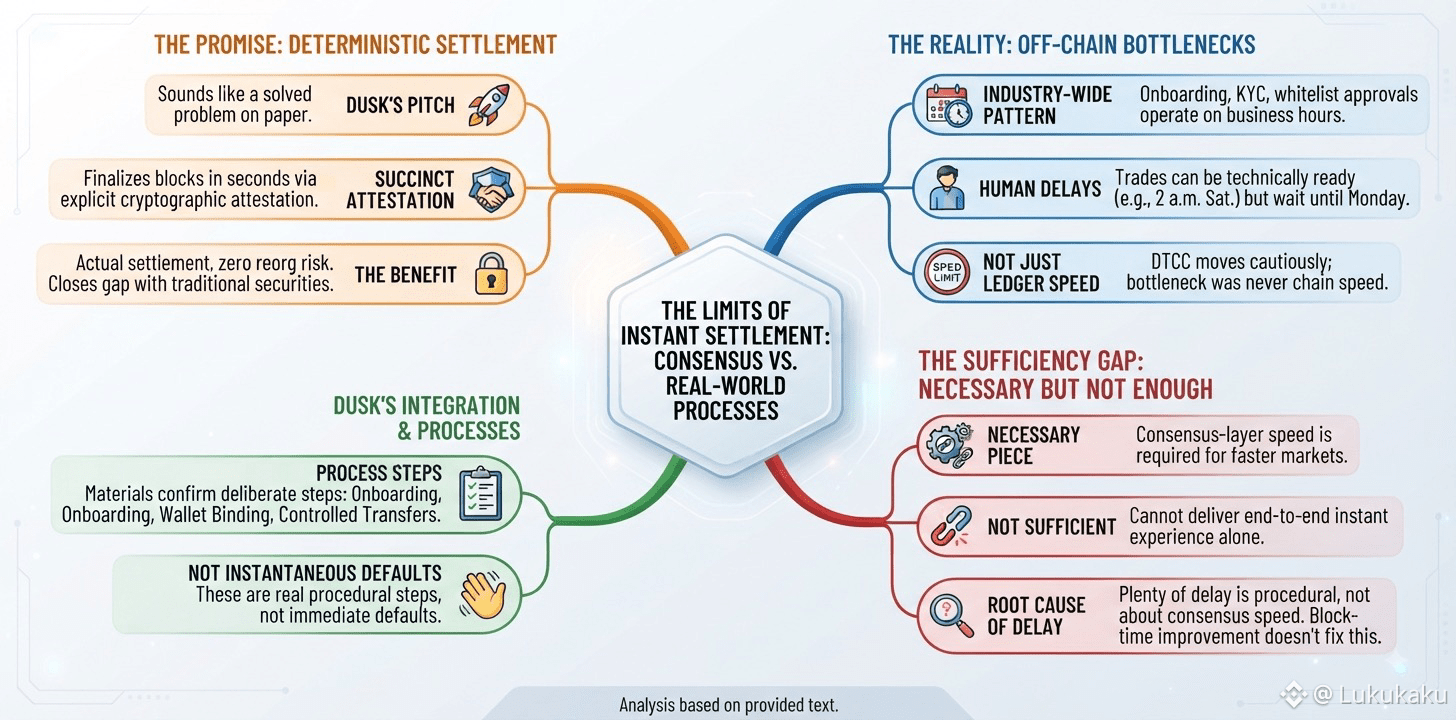
決定論的な決済は、Dusk Networkの提案のうち「解けた問題」のように聞こえる部分です。簡潔なアテステーション(Succinct Attestation)は、ほとんどのチェーンが依拠する確率的な確認ではなく、明示的な暗号学的アテステーションによって数秒でブロックを確定します。そのため、一度取引が決済したなら、実際に決済したのであり、そこにリオーグ(再編)のリスクが宙づりで残ることはありません。紙の上では、暗号が約束する即時決済と、実際に有価証券がどのように動くかとのギャップを埋められます。
トークン化された有価証券の業界全体は、そのギャップがチェーンが高速だからといって自動的に埋まらない理由を、引き続き示しています。業界全体でオンボーディングは依然としてホワイトリスト承認、KYCチェック、オフチェーンの承認などを経由して行われ、基盤となるチェーンがブロックをどれだけ素早く確定できても、それらは通常の業務時間に従って動きます。取引が技術的には土曜日午前2時に決済できる状態になっていても、プロセス内の人手の手順が、暗号がすでに実行できることに追いついていないために、月曜日まで待たされることがあります。DTCC自身のトークン化された有価証券の取引に向けた動きでさえ、同様のパターンを辿っています。より広範な展開が数か月後に到来する前に、限定的なロールアウトが計画されているのは、ボトルネックがそもそも台帳の速度ではなかったためです。
私は、Dusk Networkがこのパターンに対して免疫があるとは考えていません。Dusk Network自身の資料では、オンボーディング、ウォレットの紐付け、制御された転送は、瞬時のデフォルトというよりも、プロセスの中での実際の意図的なステップとして説明されています。合意層での決定論的な決済は、より速い有価証券市場には必要な要素です。しかしそれ自体では、マーケティング言語がときに示唆するようなエンドツーエンドの「即時」体験を提供するのに十分ではありません。実市場における遅延の多くは、そもそも合意の速度が原因ではなかったのですし、ブロック時間の改善だけでは、その部分はそれ単独では変わりません。
@Dusk_Foundation $DUSK #dusk $TUT $GPS
決定論的な決済は、Dusk Networkの提案のうち「解けた問題」のように聞こえる部分です。簡潔なアテステーション(Succinct Attestation)は、ほとんどのチェーンが依拠する確率的な確認ではなく、明示的な暗号学的アテステーションによって数秒でブロックを確定します。そのため、一度取引が決済したなら、実際に決済したのであり、そこにリオーグ(再編)のリスクが宙づりで残ることはありません。紙の上では、暗号が約束する即時決済と、実際に有価証券がどのように動くかとのギャップを埋められます。
トークン化された有価証券の業界全体は、そのギャップがチェーンが高速だからといって自動的に埋まらない理由を、引き続き示しています。業界全体でオンボーディングは依然としてホワイトリスト承認、KYCチェック、オフチェーンの承認などを経由して行われ、基盤となるチェーンがブロックをどれだけ素早く確定できても、それらは通常の業務時間に従って動きます。取引が技術的には土曜日午前2時に決済できる状態になっていても、プロセス内の人手の手順が、暗号がすでに実行できることに追いついていないために、月曜日まで待たされることがあります。DTCC自身のトークン化された有価証券の取引に向けた動きでさえ、同様のパターンを辿っています。より広範な展開が数か月後に到来する前に、限定的なロールアウトが計画されているのは、ボトルネックがそもそも台帳の速度ではなかったためです。
私は、Dusk Networkがこのパターンに対して免疫があるとは考えていません。Dusk Network自身の資料では、オンボーディング、ウォレットの紐付け、制御された転送は、瞬時のデフォルトというよりも、プロセスの中での実際の意図的なステップとして説明されています。合意層での決定論的な決済は、より速い有価証券市場には必要な要素です。しかしそれ自体では、マーケティング言語がときに示唆するようなエンドツーエンドの「即時」体験を提供するのに十分ではありません。実市場における遅延の多くは、そもそも合意の速度が原因ではなかったのですし、ブロック時間の改善だけでは、その部分はそれ単独では変わりません。
@Dusk $DUSK #dusk $TUT $GPS
トークン化された有価証券の業界全体は、そのギャップがチェーンが高速だからといって自動的に埋まらない理由を、引き続き示しています。業界全体でオンボーディングは依然としてホワイトリスト承認、KYCチェック、オフチェーンの承認などを経由して行われ、基盤となるチェーンがブロックをどれだけ素早く確定できても、それらは通常の業務時間に従って動きます。取引が技術的には土曜日午前2時に決済できる状態になっていても、プロセス内の人手の手順が、暗号がすでに実行できることに追いついていないために、月曜日まで待たされることがあります。DTCC自身のトークン化された有価証券の取引に向けた動きでさえ、同様のパターンを辿っています。より広範な展開が数か月後に到来する前に、限定的なロールアウトが計画されているのは、ボトルネックがそもそも台帳の速度ではなかったためです。
私は、Dusk Networkがこのパターンに対して免疫があるとは考えていません。Dusk Network自身の資料では、オンボーディング、ウォレットの紐付け、制御された転送は、瞬時のデフォルトというよりも、プロセスの中での実際の意図的なステップとして説明されています。合意層での決定論的な決済は、より速い有価証券市場には必要な要素です。しかしそれ自体では、マーケティング言語がときに示唆するようなエンドツーエンドの「即時」体験を提供するのに十分ではありません。実市場における遅延の多くは、そもそも合意の速度が原因ではなかったのですし、ブロック時間の改善だけでは、その部分はそれ単独では変わりません。
@Dusk $DUSK #dusk $TUT $GPS
1
68
·
--
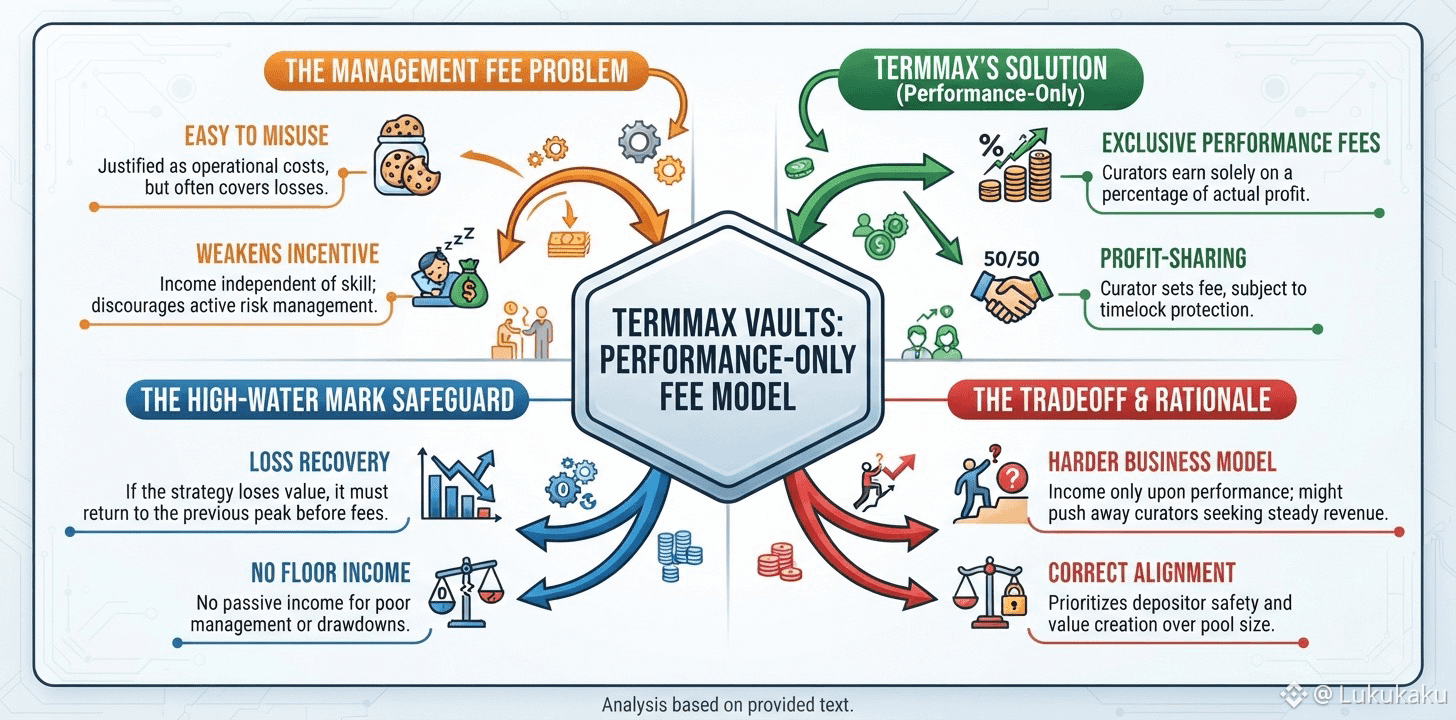
管理手数料は、金融の中でも最も正当化しやすいものの一つであると同時に、最も悪用されやすいものの一つでもあります。これは運営コストを賄うためだと説明されがちですが、多くのバルツ(投資ファンド)商品では、その四半期に預金者が利益を得たか損失を出したかに関わらず、結局は支払われてしまいます。TermMaxのバルツはその手数料体系をまるごと回避しており、この判断は単に一言触れるだけではなく、精査する価値があると思います。
TermMaxでは、キュレーター(運用者)はパフォーマンスフィーだけで収益を得ます。これは、戦略が預金者にもたらす実際の利益の一定割合で、キュレーターが設定しますが、変更が反映される前にタイムロックによる保護がかかります。さらにその上に、高値水準(ハイ・ウォーターマーク)の要件があります。つまり、ある区間でキュレーターの戦略が価値を失った場合、新たなパフォーマンスフィーを徴収する前に、預金者の資産を以前の最高到達点(ピーク)まで取り戻さなければなりません。キュレーターが単に資本を何もしない形で置いておいたり、うまく運用できていなかったりしても、最低保証の収入はありません。また、ドローダウン(下落局面)の間にこっそり手数料を徴収する方法もありません。
この仕組みが解決する問題は、特定のものです。管理手数料は、スキルとは無関係にキュレーターへの収入を生み出します。その結果、運用資産(AUM)がある程度の大きさに達すると、リスクを能動的に管理するインセンティブが弱まります。高値水準を伴うパフォーマンスのみの報酬は、キュレーターが稼ぐすべての1ドルを、運用管理下にあるプールの大きさではなく、預金者のために本当に新しく生み出された価値に結び付けます。
トレードオフは、TermMaxのキュレーター事業は、典型的な管理手数料型のバルツよりも運営が難しいという点です。収入が入るのはパフォーマンスがそれを正当化したときだけなので、戦略の結果にかかわらずより安定した収益を望むキュレーターを遠ざける可能性があります。それでも、ほかの人の資本を扱う貸付プロトコルとしては、このトレードオフは正しいものだと思います。たとえ、その運用スタイルで活動を行う意思のあるキュレーターの母数が狭まるとしても。
@termmax #TermMax $TUT $GPS
管理手数料は、金融の中でも最も正当化しやすいものの一つであると同時に、最も悪用されやすいものの一つでもあります。これは運営コストを賄うためだと説明されがちですが、多くのバルツ(投資ファンド)商品では、その四半期に預金者が利益を得たか損失を出したかに関わらず、結局は支払われてしまいます。TermMaxのバルツはその手数料体系をまるごと回避しており、この判断は単に一言触れるだけではなく、精査する価値があると思います。
TermMaxでは、キュレーター(運用者)はパフォーマンスフィーだけで収益を得ます。これは、戦略が預金者にもたらす実際の利益の一定割合で、キュレーターが設定しますが、変更が反映される前にタイムロックによる保護がかかります。さらにその上に、高値水準(ハイ・ウォーターマーク)の要件があります。つまり、ある区間でキュレーターの戦略が価値を失った場合、新たなパフォーマンスフィーを徴収する前に、預金者の資産を以前の最高到達点(ピーク)まで取り戻さなければなりません。キュレーターが単に資本を何もしない形で置いておいたり、うまく運用できていなかったりしても、最低保証の収入はありません。また、ドローダウン(下落局面)の間にこっそり手数料を徴収する方法もありません。
この仕組みが解決する問題は、特定のものです。管理手数料は、スキルとは無関係にキュレーターへの収入を生み出します。その結果、運用資産(AUM)がある程度の大きさに達すると、リスクを能動的に管理するインセンティブが弱まります。高値水準を伴うパフォーマンスのみの報酬は、キュレーターが稼ぐすべての1ドルを、運用管理下にあるプールの大きさではなく、預金者のために本当に新しく生み出された価値に結び付けます。
トレードオフは、TermMaxのキュレーター事業は、典型的な管理手数料型のバルツよりも運営が難しいという点です。収入が入るのはパフォーマンスがそれを正当化したときだけなので、戦略の結果にかかわらずより安定した収益を望むキュレーターを遠ざける可能性があります。それでも、ほかの人の資本を扱う貸付プロトコルとしては、このトレードオフは正しいものだと思います。たとえ、その運用スタイルで活動を行う意思のあるキュレーターの母数が狭まるとしても。
@TermMax #TermMax $TUT $GPS
TermMaxでは、キュレーター(運用者)はパフォーマンスフィーだけで収益を得ます。これは、戦略が預金者にもたらす実際の利益の一定割合で、キュレーターが設定しますが、変更が反映される前にタイムロックによる保護がかかります。さらにその上に、高値水準(ハイ・ウォーターマーク)の要件があります。つまり、ある区間でキュレーターの戦略が価値を失った場合、新たなパフォーマンスフィーを徴収する前に、預金者の資産を以前の最高到達点(ピーク)まで取り戻さなければなりません。キュレーターが単に資本を何もしない形で置いておいたり、うまく運用できていなかったりしても、最低保証の収入はありません。また、ドローダウン(下落局面)の間にこっそり手数料を徴収する方法もありません。
この仕組みが解決する問題は、特定のものです。管理手数料は、スキルとは無関係にキュレーターへの収入を生み出します。その結果、運用資産(AUM)がある程度の大きさに達すると、リスクを能動的に管理するインセンティブが弱まります。高値水準を伴うパフォーマンスのみの報酬は、キュレーターが稼ぐすべての1ドルを、運用管理下にあるプールの大きさではなく、預金者のために本当に新しく生み出された価値に結び付けます。
トレードオフは、TermMaxのキュレーター事業は、典型的な管理手数料型のバルツよりも運営が難しいという点です。収入が入るのはパフォーマンスがそれを正当化したときだけなので、戦略の結果にかかわらずより安定した収益を望むキュレーターを遠ざける可能性があります。それでも、ほかの人の資本を扱う貸付プロトコルとしては、このトレードオフは正しいものだと思います。たとえ、その運用スタイルで活動を行う意思のあるキュレーターの母数が狭まるとしても。
@TermMax #TermMax $TUT $GPS
1
259
·
--
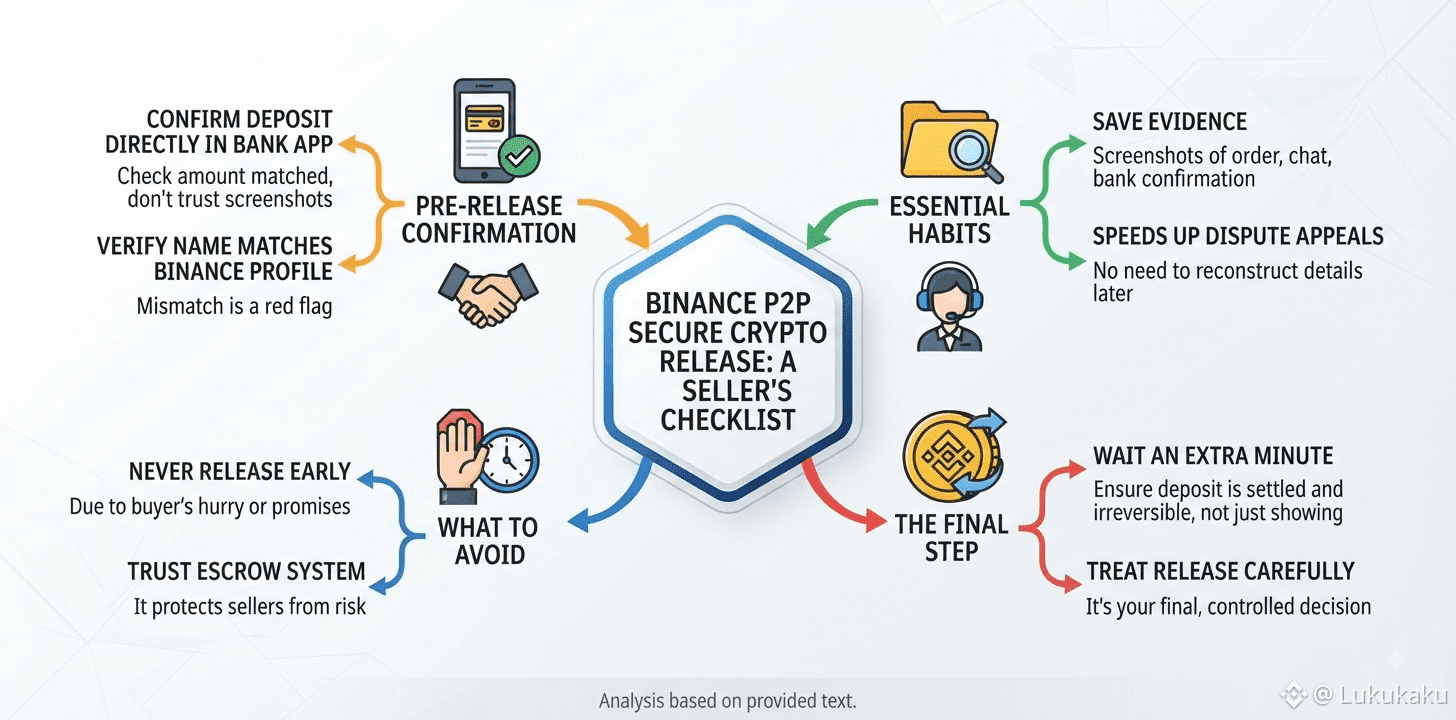
暗号資産をリリースすることは、Binance P2Pにおいて売り手がミスを取り消せない唯一のタイミングです。だから私は、それを単なる最後の形式ではなく、あらゆる取引で最も重要なステップだと考えています。Binance P2Pでは、そのリリースが行われるまで各売り手の暗号資産をエスクローで保管しているため、すでに大半のリスクは取り除かれていますが、実際にいつリリースするかの判断はあなたに委ねられています。
私は何かをリリースする前のチェックリストを、どの注文でも同じようにしています。自分のバンキングアプリを直接開いて、支払いが完了したとチャットやスクリーンショットで言われたものを信じるのではなく、正しい金額で、本当に入金がそこにあることを確認します。さらに、支払い名が、買い手のBinance P2Pプロフィールに紐づいている名前と一致しているかを確認します。名前の不一致は、はっきりとした危険サインの一つなので、そこで立ち止まる価値があります。相手が急いでいると言ったり、支払いが送られていると約束したりしても、私は決して早くリリースしません。エスクローがあるのは、まさに売り手がそのリスクを負わなくて済むようにするためです。
支払いの確認が取れてからリリースしたら、次に進む前に注文画面、チャット、そして銀行の確認をまとめてスクリーンショットとして保存します。この習慣のおかげで、これまで私が起こしたあらゆる紛争の異議申し立てが、必要なときにより早く行えています。数日後に記憶だけから詳細を再構成することがないからです。
また、入金がはっきり表示された後でも、リリースする前にさらに1分待つようにしています。入金が反転されたり、リリース前にフラグが立ったりしていないかを確認するためです。いくつかの支払い方法では、相手側で実際に確定する前に、いったん入金が一瞬だけ表示されることがあります。この追加の1分は、毎回のように不要に感じたのに、例外があったその1回こそが、この習慣が定着した理由です。私はこれをBinance P2Pの他の売り手にも何人かに話しましたが、多くの人は「入金が表示されること」と「実際に確定して取り消し不能になること」が必ずしも同じではない、という点すら考えていなかったようです。
最後のリリースを押すその一手は小さいですが、Binance P2Pにおいて売り手が最初から最後まで本当にコントロールできる唯一の判断です。慎重に扱うことこそが、この仕組み全体があなたに求めているものです。
@Binance_Vietnam #BinanceP2PAnToan $TUT $GPS
暗号資産をリリースすることは、Binance P2Pにおいて売り手がミスを取り消せない唯一のタイミングです。だから私は、それを単なる最後の形式ではなく、あらゆる取引で最も重要なステップだと考えています。Binance P2Pでは、そのリリースが行われるまで各売り手の暗号資産をエスクローで保管しているため、すでに大半のリスクは取り除かれていますが、実際にいつリリースするかの判断はあなたに委ねられています。
私は何かをリリースする前のチェックリストを、どの注文でも同じようにしています。自分のバンキングアプリを直接開いて、支払いが完了したとチャットやスクリーンショットで言われたものを信じるのではなく、正しい金額で、本当に入金がそこにあることを確認します。さらに、支払い名が、買い手のBinance P2Pプロフィールに紐づいている名前と一致しているかを確認します。名前の不一致は、はっきりとした危険サインの一つなので、そこで立ち止まる価値があります。相手が急いでいると言ったり、支払いが送られていると約束したりしても、私は決して早くリリースしません。エスクローがあるのは、まさに売り手がそのリスクを負わなくて済むようにするためです。
支払いの確認が取れてからリリースしたら、次に進む前に注文画面、チャット、そして銀行の確認をまとめてスクリーンショットとして保存します。この習慣のおかげで、これまで私が起こしたあらゆる紛争の異議申し立てが、必要なときにより早く行えています。数日後に記憶だけから詳細を再構成することがないからです。
また、入金がはっきり表示された後でも、リリースする前にさらに1分待つようにしています。入金が反転されたり、リリース前にフラグが立ったりしていないかを確認するためです。いくつかの支払い方法では、相手側で実際に確定する前に、いったん入金が一瞬だけ表示されることがあります。この追加の1分は、毎回のように不要に感じたのに、例外があったその1回こそが、この習慣が定着した理由です。私はこれをBinance P2Pの他の売り手にも何人かに話しましたが、多くの人は「入金が表示されること」と「実際に確定して取り消し不能になること」が必ずしも同じではない、という点すら考えていなかったようです。
最後のリリースを押すその一手は小さいですが、Binance P2Pにおいて売り手が最初から最後まで本当にコントロールできる唯一の判断です。慎重に扱うことこそが、この仕組み全体があなたに求めているものです。
@Binance Vietnam #BinanceP2PAnToan $TUT $GPS
私は何かをリリースする前のチェックリストを、どの注文でも同じようにしています。自分のバンキングアプリを直接開いて、支払いが完了したとチャットやスクリーンショットで言われたものを信じるのではなく、正しい金額で、本当に入金がそこにあることを確認します。さらに、支払い名が、買い手のBinance P2Pプロフィールに紐づいている名前と一致しているかを確認します。名前の不一致は、はっきりとした危険サインの一つなので、そこで立ち止まる価値があります。相手が急いでいると言ったり、支払いが送られていると約束したりしても、私は決して早くリリースしません。エスクローがあるのは、まさに売り手がそのリスクを負わなくて済むようにするためです。
支払いの確認が取れてからリリースしたら、次に進む前に注文画面、チャット、そして銀行の確認をまとめてスクリーンショットとして保存します。この習慣のおかげで、これまで私が起こしたあらゆる紛争の異議申し立てが、必要なときにより早く行えています。数日後に記憶だけから詳細を再構成することがないからです。
また、入金がはっきり表示された後でも、リリースする前にさらに1分待つようにしています。入金が反転されたり、リリース前にフラグが立ったりしていないかを確認するためです。いくつかの支払い方法では、相手側で実際に確定する前に、いったん入金が一瞬だけ表示されることがあります。この追加の1分は、毎回のように不要に感じたのに、例外があったその1回こそが、この習慣が定着した理由です。私はこれをBinance P2Pの他の売り手にも何人かに話しましたが、多くの人は「入金が表示されること」と「実際に確定して取り消し不能になること」が必ずしも同じではない、という点すら考えていなかったようです。
最後のリリースを押すその一手は小さいですが、Binance P2Pにおいて売り手が最初から最後まで本当にコントロールできる唯一の判断です。慎重に扱うことこそが、この仕組み全体があなたに求めているものです。
@Binance Vietnam #BinanceP2PAnToan $TUT $GPS
268
ログインして、さらにコンテンツを読む
厳選トピックで世界の暗号資産トレーダーの仲間入り
⚡️ 暗号資産に関する最新かつ有益な情報が見つかります。
💬 世界最大の暗号資産取引所から信頼されています。
👍 認証を受けたクリエイターから、有益なインサイトを得られます。
メール / 電話番号