
las newr
27 投稿

las newr
報告
ユーザーをブロック
3 フォロー
2 フォロワー
8 いいね
投稿
·
--
翻訳参照
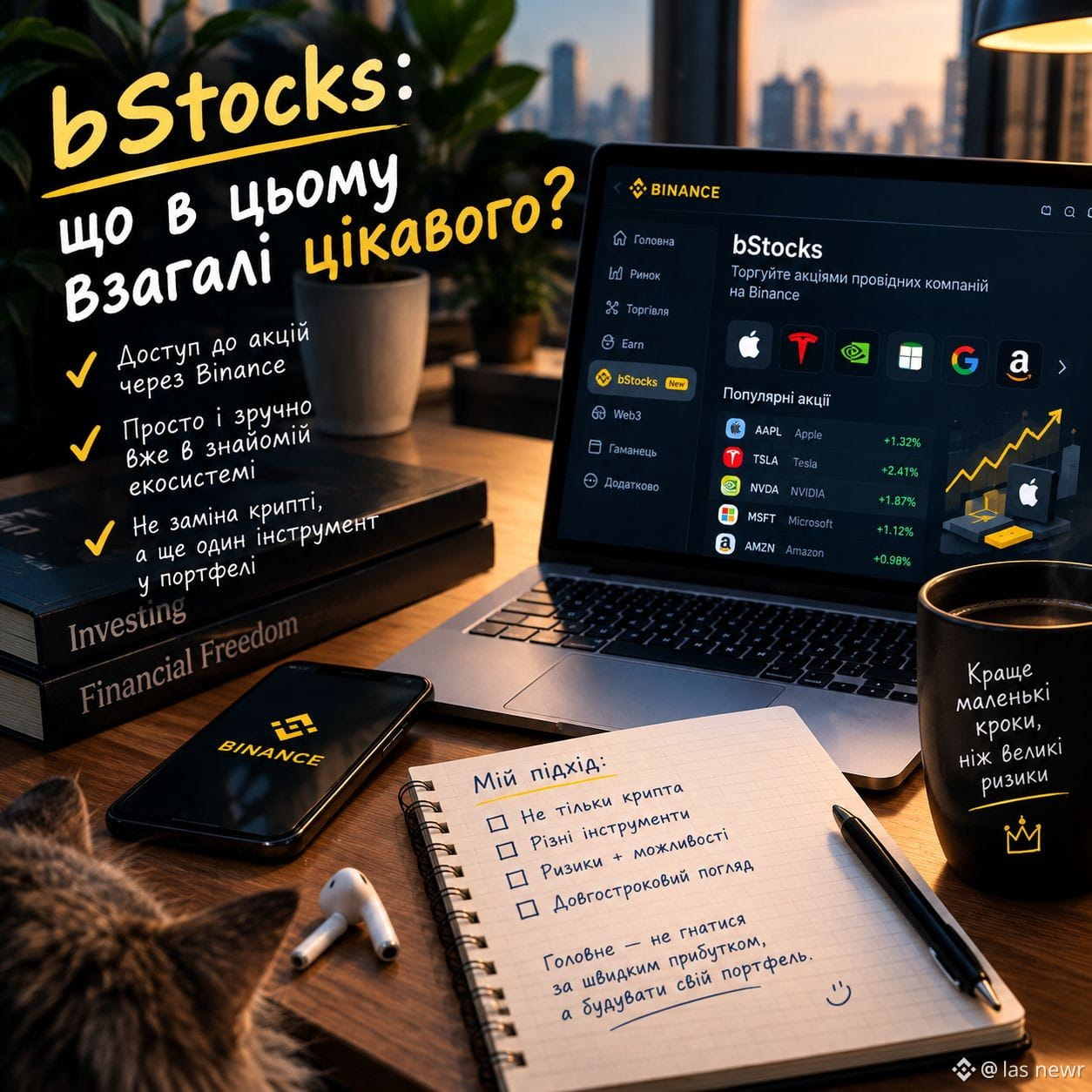
Раніше, коли чув про інвестиції в акції, уявляв собі окремого брокера, купу документів і ще один додаток, у якому треба розбиратися 😅
А тут мені сподобався сам підхід bStocks — доступ до традиційних акцій через звичну екосистему Binance.
Для мене найбільший плюс — простота.
Якщо я вже користуюся Binance для крипти, логічно хоча б розібратися, що ще можна робити всередині платформи.
Але є важливий момент: я б не сприймав це як «акції = гарантований прибуток».
Tesla, NVIDIA, Apple та інші великі компанії теж можуть падати. Іноді дуже неприємно 😄
Тому для мене bStocks — це не заміна крипті, а ще один інструмент, який можна використовувати разом з іншими.
#bStocks #Binance #акції #TradF #крипта
Раніше, коли чув про інвестиції в акції, уявляв собі окремого брокера, купу документів і ще один додаток, у якому треба розбиратися 😅
А тут мені сподобався сам підхід bStocks — доступ до традиційних акцій через звичну екосистему Binance.
Для мене найбільший плюс — простота.
Якщо я вже користуюся Binance для крипти, логічно хоча б розібратися, що ще можна робити всередині платформи.
Але є важливий момент: я б не сприймав це як «акції = гарантований прибуток».
Tesla, NVIDIA, Apple та інші великі компанії теж можуть падати. Іноді дуже неприємно 😄
Тому для мене bStocks — це не заміна крипті, а ще один інструмент, який можна використовувати разом з іншими.
#bStocks #Binance #акції #TradF #крипта
А тут мені сподобався сам підхід bStocks — доступ до традиційних акцій через звичну екосистему Binance.
Для мене найбільший плюс — простота.
Якщо я вже користуюся Binance для крипти, логічно хоча б розібратися, що ще можна робити всередині платформи.
Але є важливий момент: я б не сприймав це як «акції = гарантований прибуток».
Tesla, NVIDIA, Apple та інші великі компанії теж можуть падати. Іноді дуже неприємно 😄
Тому для мене bStocks — це не заміна крипті, а ще один інструмент, який можна використовувати разом з іншими.
#bStocks #Binance #акції #TradF #крипта
82
·
--
翻訳参照
#termmax @termmax Я довго дивився на TermMax і зрозумів одну цікаву річ.
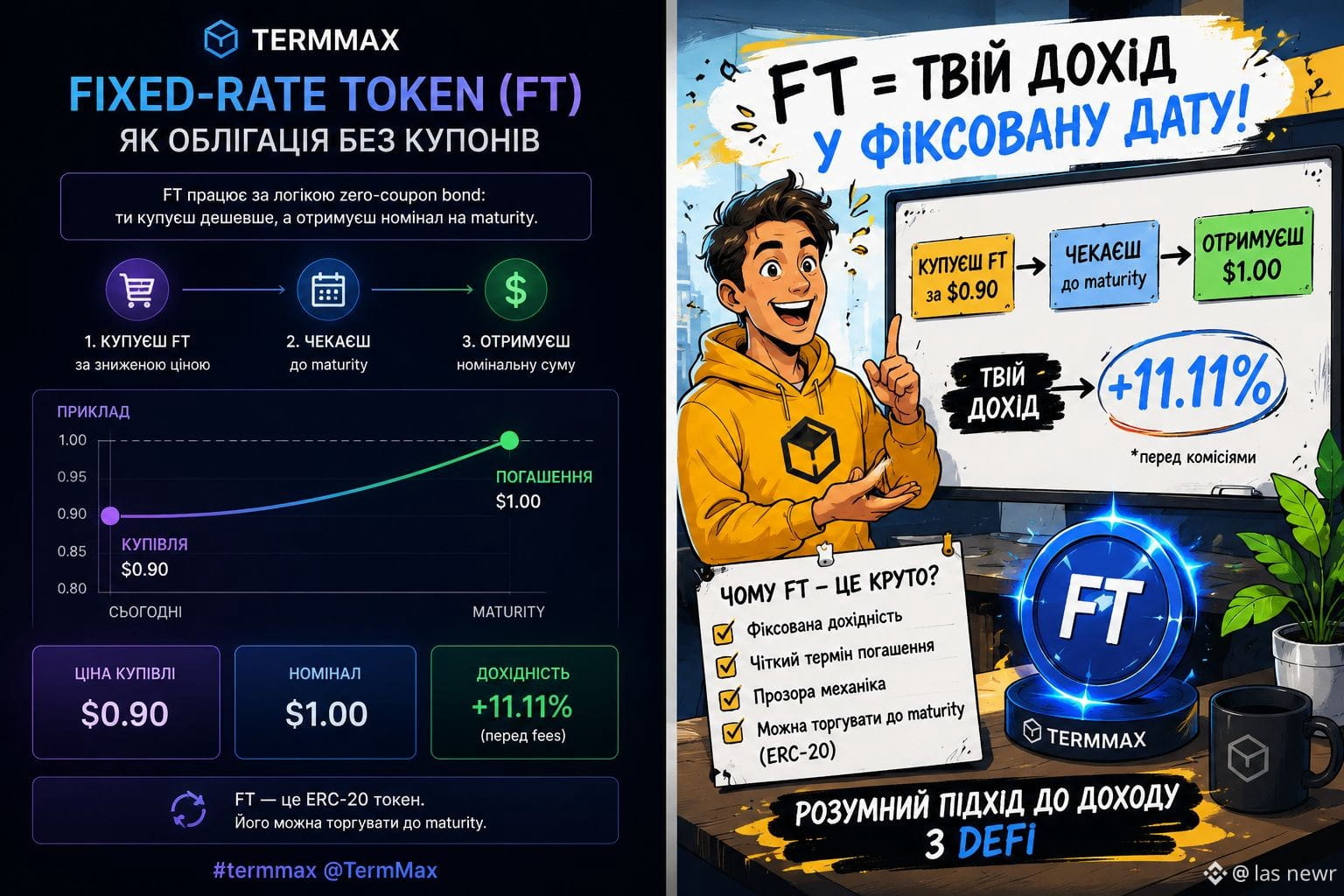
Його Fixed-rate Token (FT) можна сприймати майже як облігацію без купонних виплат.
Механіка проста:
Ти купуєш FT дешевше за його майбутню номінальну вартість.
Потім чекаєш maturity.
І в момент погашення отримуєш повну номінальну суму.
Наприклад:
FT коштує $0.90 сьогодні.
На maturity він погашається за $1.
Різниця між ціною покупки та номіналом — твій дохід.
І тут мені подобається сама ідея.
У DeFi ми звикли думати:
«Скільки APY я можу отримати?»
А TermMax дозволяє дивитися інакше:
«Скільки я заплачу сьогодні і скільки отримаю в конкретну дату?»
Це вже дуже схоже на логіку традиційних fixed-income інструментів, але реалізовану on-chain.
Причому FT — це ERC-20, тому його можна торгувати до maturity.
Тобто ти не обов'язково маєш просто купити й забути про нього до дати погашення.
На мій погляд, саме такі примітиви й можуть поступово зробити DeFi більш схожим на повноцінний фінансовий ринок.
Не черговий «вищий APY».
А новий спосіб структурувати дохід.
#termmax @TermMax Я довго дивився на TermMax і зрозумів одну цікаву річ.
Його Fixed-rate Token (FT) можна сприймати майже як облігацію без купонних виплат.
Механіка проста:
Ти купуєш FT дешевше за його майбутню номінальну вартість.
Потім чекаєш maturity.
І в момент погашення отримуєш повну номінальну суму.
Наприклад:
FT коштує $0.90 сьогодні.
На maturity він погашається за $1.
Різниця між ціною покупки та номіналом — твій дохід.
І тут мені подобається сама ідея.
У DeFi ми звикли думати:
«Скільки APY я можу отримати?»
А TermMax дозволяє дивитися інакше:
«Скільки я заплачу сьогодні і скільки отримаю в конкретну дату?»
Це вже дуже схоже на логіку традиційних fixed-income інструментів, але реалізовану on-chain.
Причому FT — це ERC-20, тому його можна торгувати до maturity.
Тобто ти не обов'язково маєш просто купити й забути про нього до дати погашення.
На мій погляд, саме такі примітиви й можуть поступово зробити DeFi більш схожим на повноцінний фінансовий ринок.
Не черговий «вищий APY».
А новий спосіб структурувати дохід.
Його Fixed-rate Token (FT) можна сприймати майже як облігацію без купонних виплат.
Механіка проста:
Ти купуєш FT дешевше за його майбутню номінальну вартість.
Потім чекаєш maturity.
І в момент погашення отримуєш повну номінальну суму.
Наприклад:
FT коштує $0.90 сьогодні.
На maturity він погашається за $1.
Різниця між ціною покупки та номіналом — твій дохід.
І тут мені подобається сама ідея.
У DeFi ми звикли думати:
«Скільки APY я можу отримати?»
А TermMax дозволяє дивитися інакше:
«Скільки я заплачу сьогодні і скільки отримаю в конкретну дату?»
Це вже дуже схоже на логіку традиційних fixed-income інструментів, але реалізовану on-chain.
Причому FT — це ERC-20, тому його можна торгувати до maturity.
Тобто ти не обов'язково маєш просто купити й забути про нього до дати погашення.
На мій погляд, саме такі примітиви й можуть поступово зробити DeFi більш схожим на повноцінний фінансовий ринок.
Не черговий «вищий APY».
А новий спосіб структурувати дохід.
87
·
--
翻訳参照
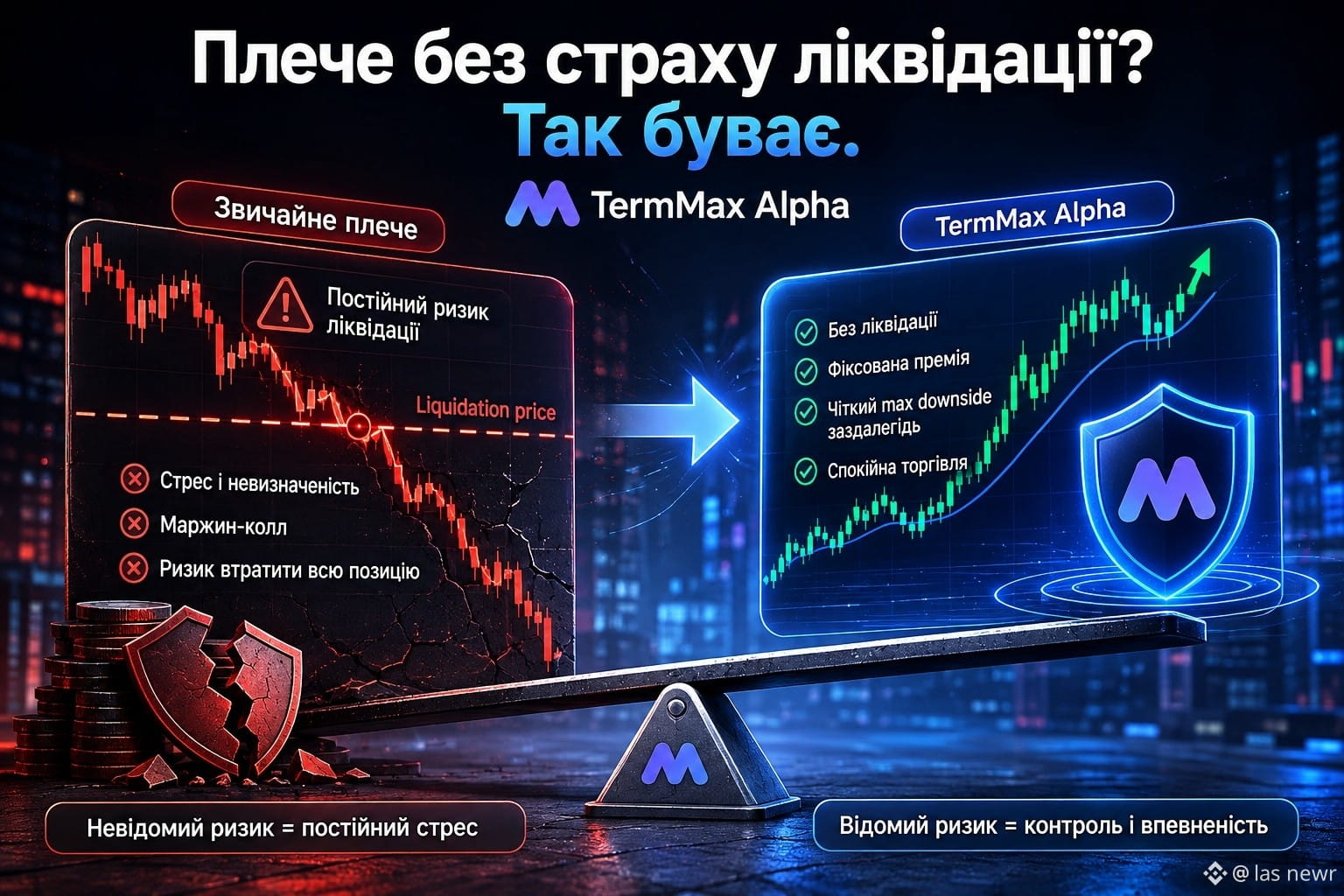
Є одна цифра, яку трейдери з плечем точно не хочуть бачити.
Liquidation price.
Ти можеш правильно спрогнозувати рух ETH, але короткий рух проти позиції — і вся угода закривається.
Саме тому мені цікавий підхід TermMax Alpha.
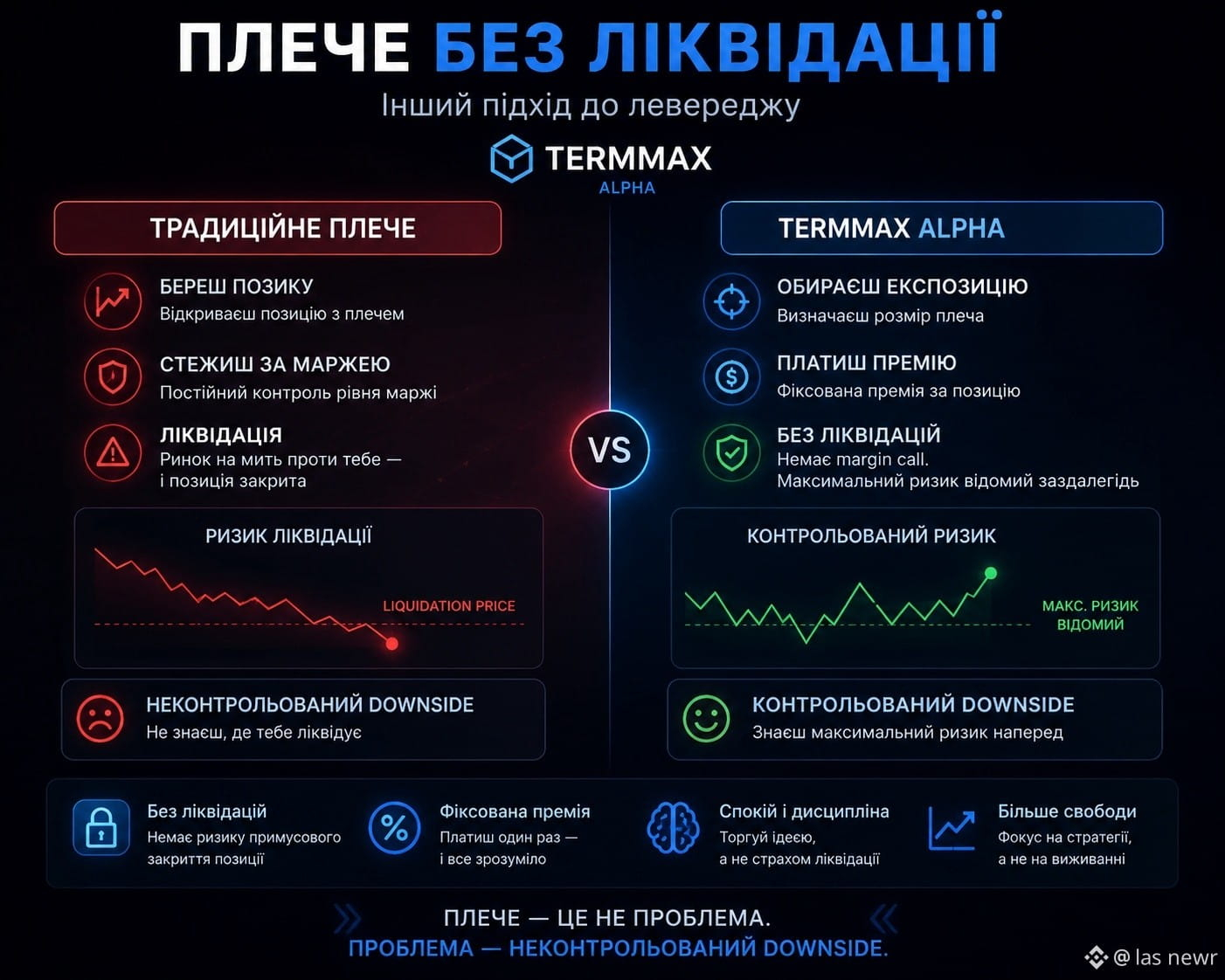
Тут ідея інша: замість постійного контролю маржі та ризику ліквідації ти заздалегідь платиш премію за плече.
Тобто логіка змінюється:
Звичайне плече: → відкрив позицію
→ стежиш за margin
→ переживаєш за liquidation price
TermMax Alpha: → обираєш експозицію
→ платиш премію
→ заздалегідь знаєш максимальний downside
І це змінює головне питання.
Не:
«Де мене ліквідує?»
А:
«Чи варта ця угода тієї премії, яку я плачу?»
Для волатильного ринку це, на мій погляд, набагато цікавіший підхід.
Проблема плеча не завжди в самому плечі.
Проблема — у неконтрольованому downside.
#termmax @termmax
{spot}(ETHUSDT)
Є одна цифра, яку трейдери з плечем точно не хочуть бачити.
Liquidation price.
Ти можеш правильно спрогнозувати рух ETH, але короткий рух проти позиції — і вся угода закривається.
Саме тому мені цікавий підхід TermMax Alpha.
Тут ідея інша: замість постійного контролю маржі та ризику ліквідації ти заздалегідь платиш премію за плече.
Тобто логіка змінюється:
Звичайне плече: → відкрив позицію
→ стежиш за margin
→ переживаєш за liquidation price
TermMax Alpha: → обираєш експозицію
→ платиш премію
→ заздалегідь знаєш максимальний downside
І це змінює головне питання.
Не:
«Де мене ліквідує?»
А:
«Чи варта ця угода тієї премії, яку я плачу?»
Для волатильного ринку це, на мій погляд, набагато цікавіший підхід.
Проблема плеча не завжди в самому плечі.
Проблема — у неконтрольованому downside.
#termmax @TermMax
Liquidation price.
Ти можеш правильно спрогнозувати рух ETH, але короткий рух проти позиції — і вся угода закривається.
Саме тому мені цікавий підхід TermMax Alpha.
Тут ідея інша: замість постійного контролю маржі та ризику ліквідації ти заздалегідь платиш премію за плече.
Тобто логіка змінюється:
Звичайне плече: → відкрив позицію
→ стежиш за margin
→ переживаєш за liquidation price
TermMax Alpha: → обираєш експозицію
→ платиш премію
→ заздалегідь знаєш максимальний downside
І це змінює головне питання.
Не:
«Де мене ліквідує?»
А:
«Чи варта ця угода тієї премії, яку я плачу?»
Для волатильного ринку це, на мій погляд, набагато цікавіший підхід.
Проблема плеча не завжди в самому плечі.
Проблема — у неконтрольованому downside.
#termmax @TermMax
282
·
--
翻訳参照
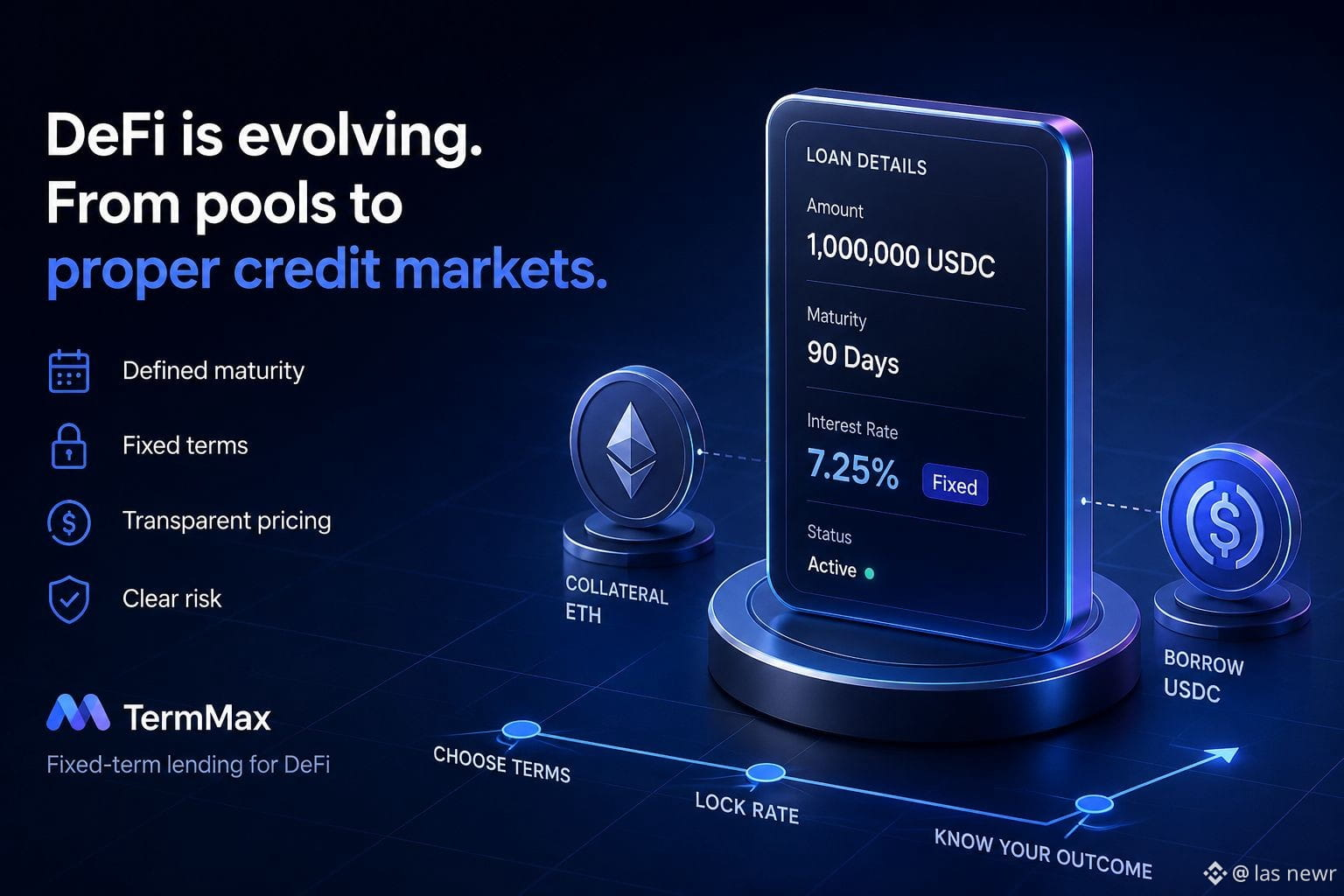
Most DeFi lending starts with one assumption:
your collateral is the interesting part.
I think the more interesting part is actually the loan itself.
A loan has a size. A maturity. A price. A risk profile.
Traditional finance has spent decades building markets around those parameters.
DeFi is still experimenting with them.
That’s why TermMax caught my attention.
Instead of treating lending as an endless position where the rate keeps changing, TermMax structures loans around specific maturities and fixed terms.
That opens up a different way to think about on-chain credit.
You can compare financing costs.
You can build strategies around a known maturity.
And lenders can choose exposure based on a defined term instead of simply depositing into an open-ended pool.
The interesting question isn't:
“Can DeFi lend money?”
We already know the answer.
The bigger question is:
Can DeFi build a proper credit market?
TermMax is one of the projects trying to answer that.
And honestly, I think this part of DeFi deserves much more attention.
#termmax @termmax
Most DeFi lending starts with one assumption:
your collateral is the interesting part.
I think the more interesting part is actually the loan itself.
A loan has a size. A maturity. A price. A risk profile.
Traditional finance has spent decades building markets around those parameters.
DeFi is still experimenting with them.
That’s why TermMax caught my attention.
Instead of treating lending as an endless position where the rate keeps changing, TermMax structures loans around specific maturities and fixed terms.
That opens up a different way to think about on-chain credit.
You can compare financing costs.
You can build strategies around a known maturity.
And lenders can choose exposure based on a defined term instead of simply depositing into an open-ended pool.
The interesting question isn't:
“Can DeFi lend money?”
We already know the answer.
The bigger question is:
Can DeFi build a proper credit market?
TermMax is one of the projects trying to answer that.
And honestly, I think this part of DeFi deserves much more attention.
#termmax @TermMax
your collateral is the interesting part.
I think the more interesting part is actually the loan itself.
A loan has a size. A maturity. A price. A risk profile.
Traditional finance has spent decades building markets around those parameters.
DeFi is still experimenting with them.
That’s why TermMax caught my attention.
Instead of treating lending as an endless position where the rate keeps changing, TermMax structures loans around specific maturities and fixed terms.
That opens up a different way to think about on-chain credit.
You can compare financing costs.
You can build strategies around a known maturity.
And lenders can choose exposure based on a defined term instead of simply depositing into an open-ended pool.
The interesting question isn't:
“Can DeFi lend money?”
We already know the answer.
The bigger question is:
Can DeFi build a proper credit market?
TermMax is one of the projects trying to answer that.
And honestly, I think this part of DeFi deserves much more attention.
#termmax @TermMax
62
·
--
翻訳参照
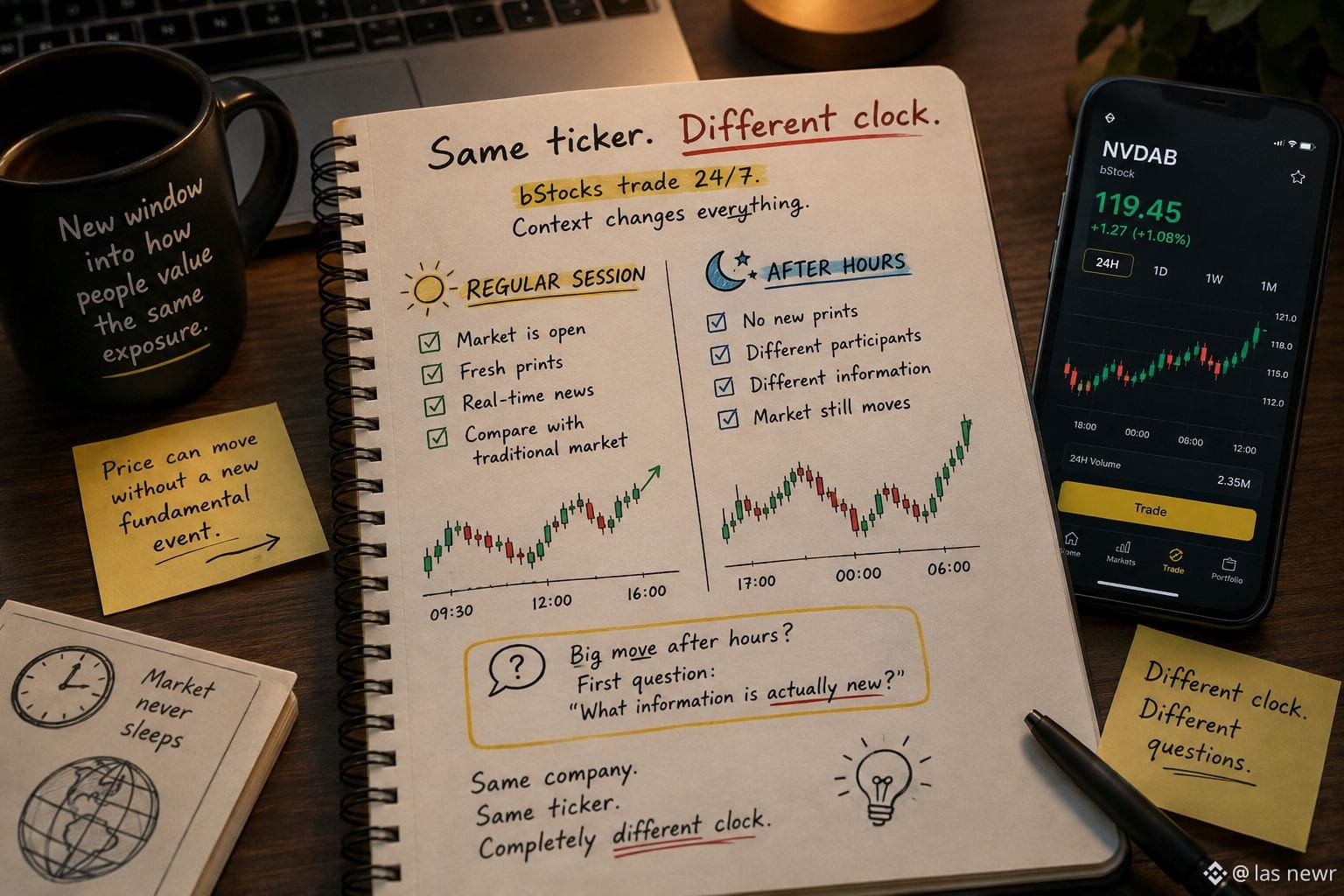
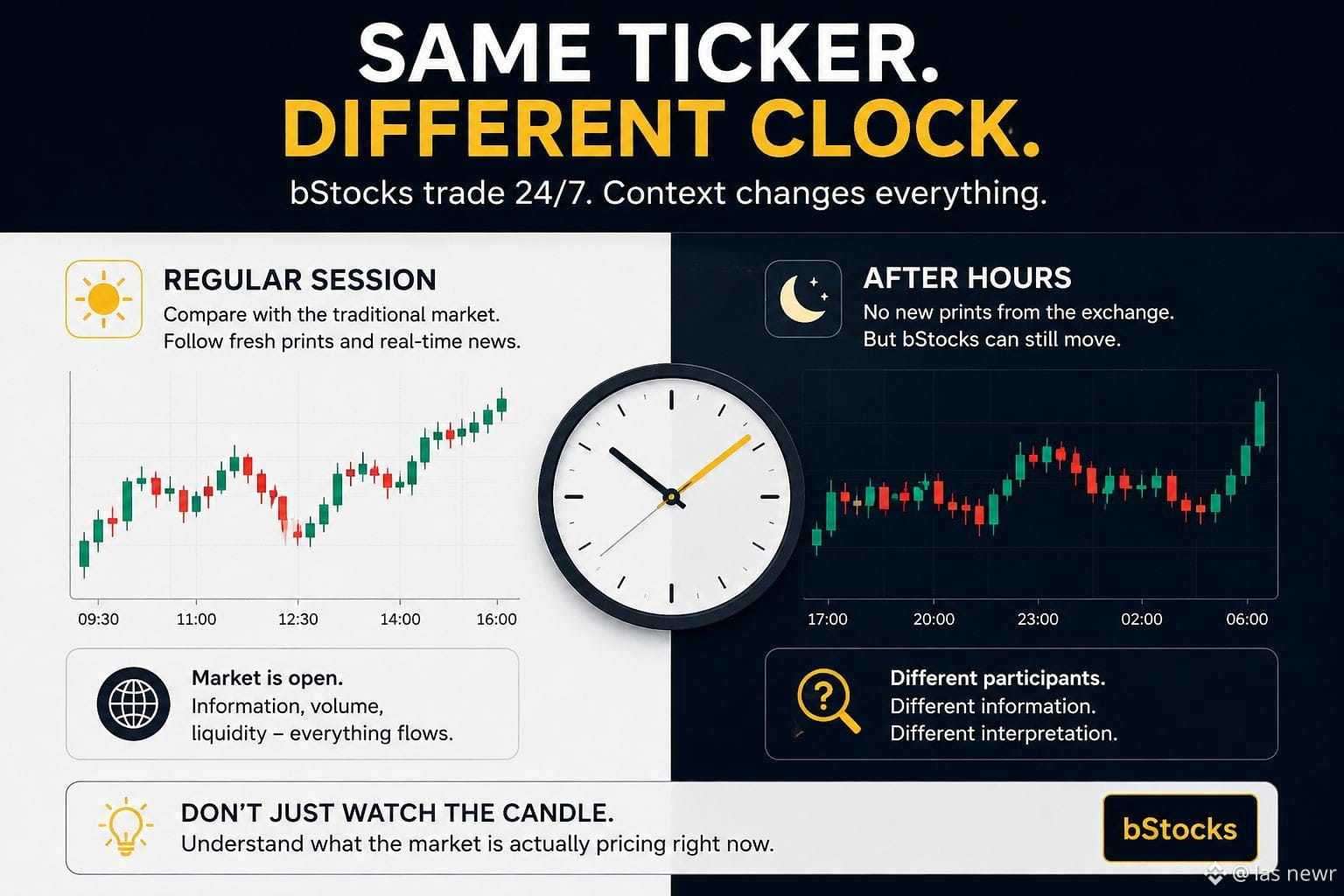
I noticed something funny about bStocks.
The ticker can stay exactly the same, but the way I look at the position changes completely depending on the time of day.
During the regular stock session, I naturally compare the price with what I see on the traditional market.
Later, the question becomes different.
There may be no fresh print from the underlying exchange, but the bStock market is still moving.
So what exactly am I looking at?
Not necessarily “the stock moving again.”
Sometimes I'm looking at a market trying to price the latest available information with a different set of participants.
That made me stop treating the chart like a normal stock chart.
Now, when I see an unusual move outside regular hours, my first reaction isn't:
“Something happened to the company.”
It's:
“What information is actually new?”
If the answer is “nothing,” I become much more careful about attaching a story to the candle.
A price can move without a new fundamental event.
And a quiet chart doesn't mean the market has stopped thinking.
That's probably one of the strangest things about having a traditional asset represented in a market that doesn't sleep.
Same company.
Same ticker.
Completely different clock.
Do you pay attention to the time when you see a big bStock move?$
$NVDAB
#bstockscis @BinanceCIS
{spot}(NVDABUSDT)
I noticed something funny about bStocks.
The ticker can stay exactly the same, but the way I look at the position changes completely depending on the time of day.
During the regular stock session, I naturally compare the price with what I see on the traditional market.
Later, the question becomes different.
There may be no fresh print from the underlying exchange, but the bStock market is still moving.
So what exactly am I looking at?
Not necessarily “the stock moving again.”
Sometimes I'm looking at a market trying to price the latest available information with a different set of participants.
That made me stop treating the chart like a normal stock chart.
Now, when I see an unusual move outside regular hours, my first reaction isn't:
“Something happened to the company.”
It's:
“What information is actually new?”
If the answer is “nothing,” I become much more careful about attaching a story to the candle.
A price can move without a new fundamental event.
And a quiet chart doesn't mean the market has stopped thinking.
That's probably one of the strangest things about having a traditional asset represented in a market that doesn't sleep.
Same company.
Same ticker.
Completely different clock.
Do you pay attention to the time when you see a big bStock move?$
$NVDAB
#bstockscis @BinanceCIS
The ticker can stay exactly the same, but the way I look at the position changes completely depending on the time of day.
During the regular stock session, I naturally compare the price with what I see on the traditional market.
Later, the question becomes different.
There may be no fresh print from the underlying exchange, but the bStock market is still moving.
So what exactly am I looking at?
Not necessarily “the stock moving again.”
Sometimes I'm looking at a market trying to price the latest available information with a different set of participants.
That made me stop treating the chart like a normal stock chart.
Now, when I see an unusual move outside regular hours, my first reaction isn't:
“Something happened to the company.”
It's:
“What information is actually new?”
If the answer is “nothing,” I become much more careful about attaching a story to the candle.
A price can move without a new fundamental event.
And a quiet chart doesn't mean the market has stopped thinking.
That's probably one of the strangest things about having a traditional asset represented in a market that doesn't sleep.
Same company.
Same ticker.
Completely different clock.
Do you pay attention to the time when you see a big bStock move?$
$NVDAB
#bstockscis @BinanceCIS
1
1
88
·
--
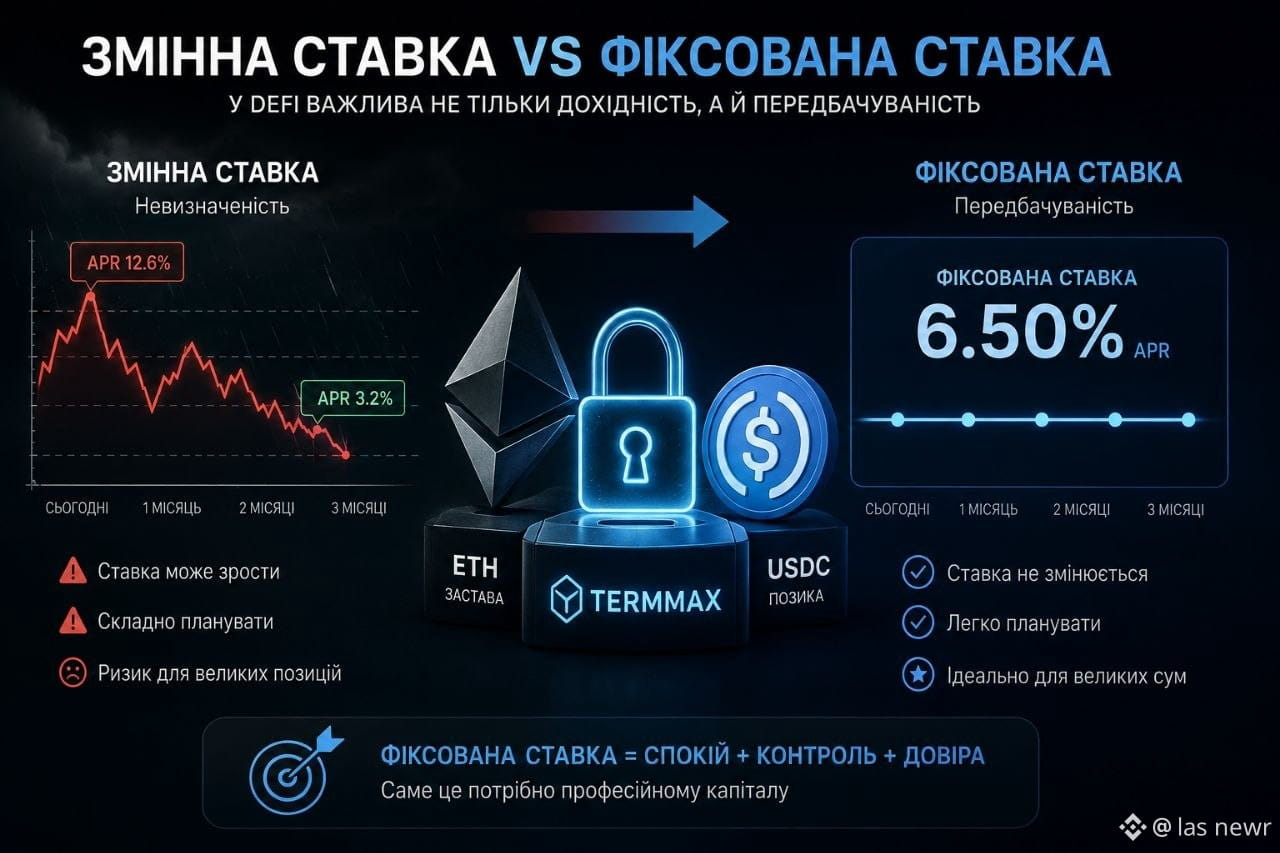
DeFiには1つ不思議な問題があります。
私たちは収益性を見つける方法を学びましたが、いまだにリスクを適切に計画することが常にできているわけではありません。
たとえば、ETHを担保にしてUSDCを3か月借りたいとします。
変動金利なら、今日の見た目は良くなるかもしれません。
でも1か月後はどうなるでしょう?
金利は、借入需要や流動性とともに変わり得ます。
だからこそ、私がTermMaxのアプローチに興味を持っているのです。
ここでは、ローンの返済期限と固定金利が設定されています。
つまり、今のAPYの数字を見るだけではなく、ポジション全体の経済性を事前に理解できるのです。
そしてこれは、特に大きなポジションにとって面白い。
金額が大きいほど、金利予測のミスが高くつく可能性が上がります。
プロの資本がプロトコルにもっと流入してくるなら、fixed-rate DeFiはずっと重要になると思います。
なぜなら、プロのプレイヤーに必要なのは単なるyieldだけではないから。
彼らが必要としているのは予測可能性です。
そしてまさに、TermMaxがここで面白く見えるのです。
あなたは固定金利のDeFiローンを使ったことがありますか?
#termmax @termmax
DeFiには1つ不思議な問題があります。
私たちは収益性を見つける方法を学びましたが、いまだにリスクを適切に計画することが常にできているわけではありません。
たとえば、ETHを担保にしてUSDCを3か月借りたいとします。
変動金利なら、今日の見た目は良くなるかもしれません。
でも1か月後はどうなるでしょう?
金利は、借入需要や流動性とともに変わり得ます。
だからこそ、私がTermMaxのアプローチに興味を持っているのです。
ここでは、ローンの返済期限と固定金利が設定されています。
つまり、今のAPYの数字を見るだけではなく、ポジション全体の経済性を事前に理解できるのです。
そしてこれは、特に大きなポジションにとって面白い。
金額が大きいほど、金利予測のミスが高くつく可能性が上がります。
プロの資本がプロトコルにもっと流入してくるなら、fixed-rate DeFiはずっと重要になると思います。
なぜなら、プロのプレイヤーに必要なのは単なるyieldだけではないから。
彼らが必要としているのは予測可能性です。
そしてまさに、TermMaxがここで面白く見えるのです。
あなたは固定金利のDeFiローンを使ったことがありますか?
#termmax @TermMax
私たちは収益性を見つける方法を学びましたが、いまだにリスクを適切に計画することが常にできているわけではありません。
たとえば、ETHを担保にしてUSDCを3か月借りたいとします。
変動金利なら、今日の見た目は良くなるかもしれません。
でも1か月後はどうなるでしょう?
金利は、借入需要や流動性とともに変わり得ます。
だからこそ、私がTermMaxのアプローチに興味を持っているのです。
ここでは、ローンの返済期限と固定金利が設定されています。
つまり、今のAPYの数字を見るだけではなく、ポジション全体の経済性を事前に理解できるのです。
そしてこれは、特に大きなポジションにとって面白い。
金額が大きいほど、金利予測のミスが高くつく可能性が上がります。
プロの資本がプロトコルにもっと流入してくるなら、fixed-rate DeFiはずっと重要になると思います。
なぜなら、プロのプレイヤーに必要なのは単なるyieldだけではないから。
彼らが必要としているのは予測可能性です。
そしてまさに、TermMaxがここで面白く見えるのです。
あなたは固定金利のDeFiローンを使ったことがありますか?
#termmax @TermMax
72
·
--
ブリッシュ
翻訳参照
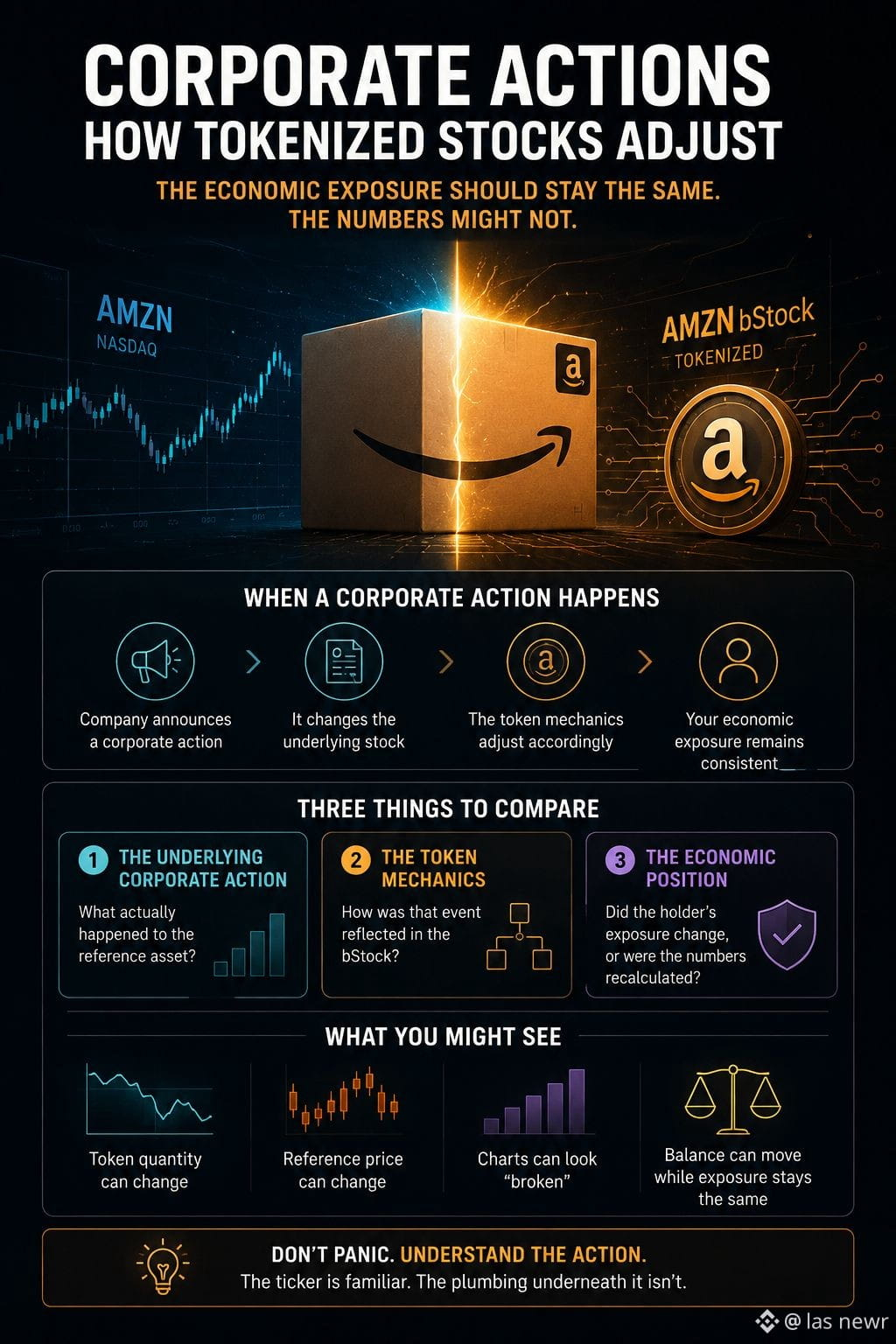
I used to think the most important question with a tokenized stock was simply:
“Does the token follow the stock?”
Now I think there’s a better question.
“What exactly happens when the underlying stock changes its structure?”
Take #AMZN as an example.
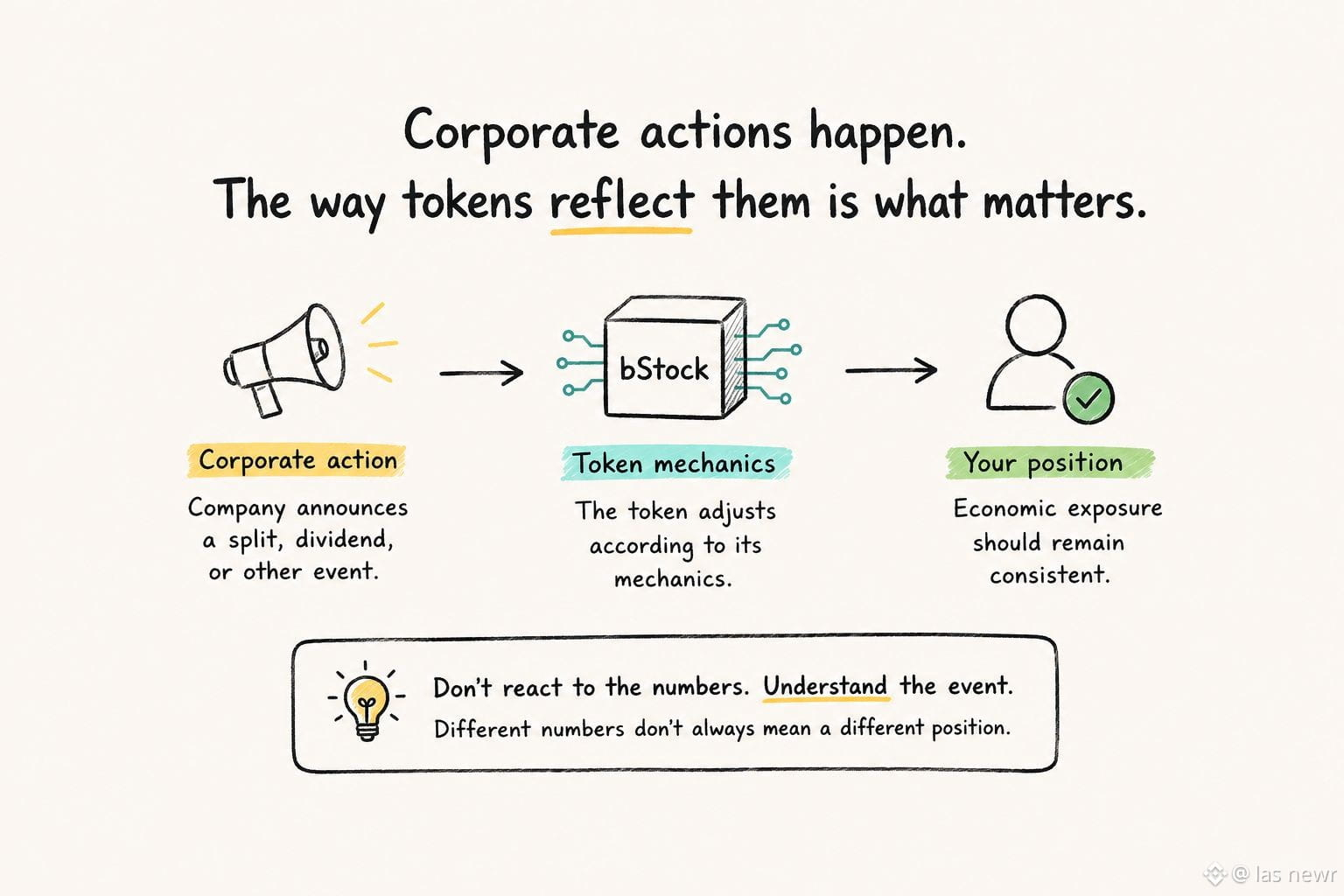
Imagine Amazon announces a corporate action that changes the number of shares, the economic value per share, or the way the underlying security is represented.
With a normal stock position, the broker handles the adjustment in the background.
With a bStock, I would want to understand how that adjustment appears on the token side.
Not because something is necessarily wrong.
Actually, the opposite.
A clean adjustment can make the token look strange for a short period:
the token quantity can change;
the reference price can change;
historical charts can suddenly look “broken”;
the displayed balance can move even when the economic exposure was intended to remain consistent.
That is why I wouldn’t judge a tokenized stock by looking at one number before and after a corporate action.
I’d compare three things:
1. The underlying corporate action
What actually happened to the reference asset?
2. The token mechanics
How was that event reflected in the bStock?
3. The economic position
Did the holder’s exposure change, or did the numbers simply get recalculated?
This distinction is easy to miss.
A chart can show a dramatic move while the economic position barely changes.
And the reverse can also happen: the displayed price may look normal while the mechanics underneath deserve a closer look.
That’s probably the part of tokenized markets I find most interesting.
The ticker is familiar.
The plumbing underneath it isn't.
So when I see something unusual around #AMZN, my first reaction wouldn't be “the token is broken.”
I'd ask:
“What changed in the underlying asset, and how did the tokenization layer translate it?”$MSFTB
#bstockscis @BinanceCIS
I used to think the most important question with a tokenized stock was simply:
“Does the token follow the stock?”
Now I think there’s a better question.
“What exactly happens when the underlying stock changes its structure?”
Take #AMZN as an example.
Imagine Amazon announces a corporate action that changes the number of shares, the economic value per share, or the way the underlying security is represented.
With a normal stock position, the broker handles the adjustment in the background.
With a bStock, I would want to understand how that adjustment appears on the token side.
Not because something is necessarily wrong.
Actually, the opposite.
A clean adjustment can make the token look strange for a short period:
the token quantity can change;
the reference price can change;
historical charts can suddenly look “broken”;
the displayed balance can move even when the economic exposure was intended to remain consistent.
That is why I wouldn’t judge a tokenized stock by looking at one number before and after a corporate action.
I’d compare three things:
1. The underlying corporate action
What actually happened to the reference asset?
2. The token mechanics
How was that event reflected in the bStock?
3. The economic position
Did the holder’s exposure change, or did the numbers simply get recalculated?
This distinction is easy to miss.
A chart can show a dramatic move while the economic position barely changes.
And the reverse can also happen: the displayed price may look normal while the mechanics underneath deserve a closer look.
That’s probably the part of tokenized markets I find most interesting.
The ticker is familiar.
The plumbing underneath it isn't.
So when I see something unusual around #AMZN, my first reaction wouldn't be “the token is broken.”
I'd ask:
“What changed in the underlying asset, and how did the tokenization layer translate it?”$MSFTB
#bstockscis @BinanceCIS
“Does the token follow the stock?”
Now I think there’s a better question.
“What exactly happens when the underlying stock changes its structure?”
Take #AMZN as an example.
Imagine Amazon announces a corporate action that changes the number of shares, the economic value per share, or the way the underlying security is represented.
With a normal stock position, the broker handles the adjustment in the background.
With a bStock, I would want to understand how that adjustment appears on the token side.
Not because something is necessarily wrong.
Actually, the opposite.
A clean adjustment can make the token look strange for a short period:
the token quantity can change;
the reference price can change;
historical charts can suddenly look “broken”;
the displayed balance can move even when the economic exposure was intended to remain consistent.
That is why I wouldn’t judge a tokenized stock by looking at one number before and after a corporate action.
I’d compare three things:
1. The underlying corporate action
What actually happened to the reference asset?
2. The token mechanics
How was that event reflected in the bStock?
3. The economic position
Did the holder’s exposure change, or did the numbers simply get recalculated?
This distinction is easy to miss.
A chart can show a dramatic move while the economic position barely changes.
And the reverse can also happen: the displayed price may look normal while the mechanics underneath deserve a closer look.
That’s probably the part of tokenized markets I find most interesting.
The ticker is familiar.
The plumbing underneath it isn't.
So when I see something unusual around #AMZN, my first reaction wouldn't be “the token is broken.”
I'd ask:
“What changed in the underlying asset, and how did the tokenization layer translate it?”$MSFTB
#bstockscis @BinanceCIS
1
1
73
·
--
以前は、トークン化された株の面白いところは、単に従来の市場の営業時間外でも売買できることだと思っていました。
しかし、別の角度から見始めました。
大きな変化は、おそらく、その資産が投資家のワークフローの中でどこに位置するかという点です。
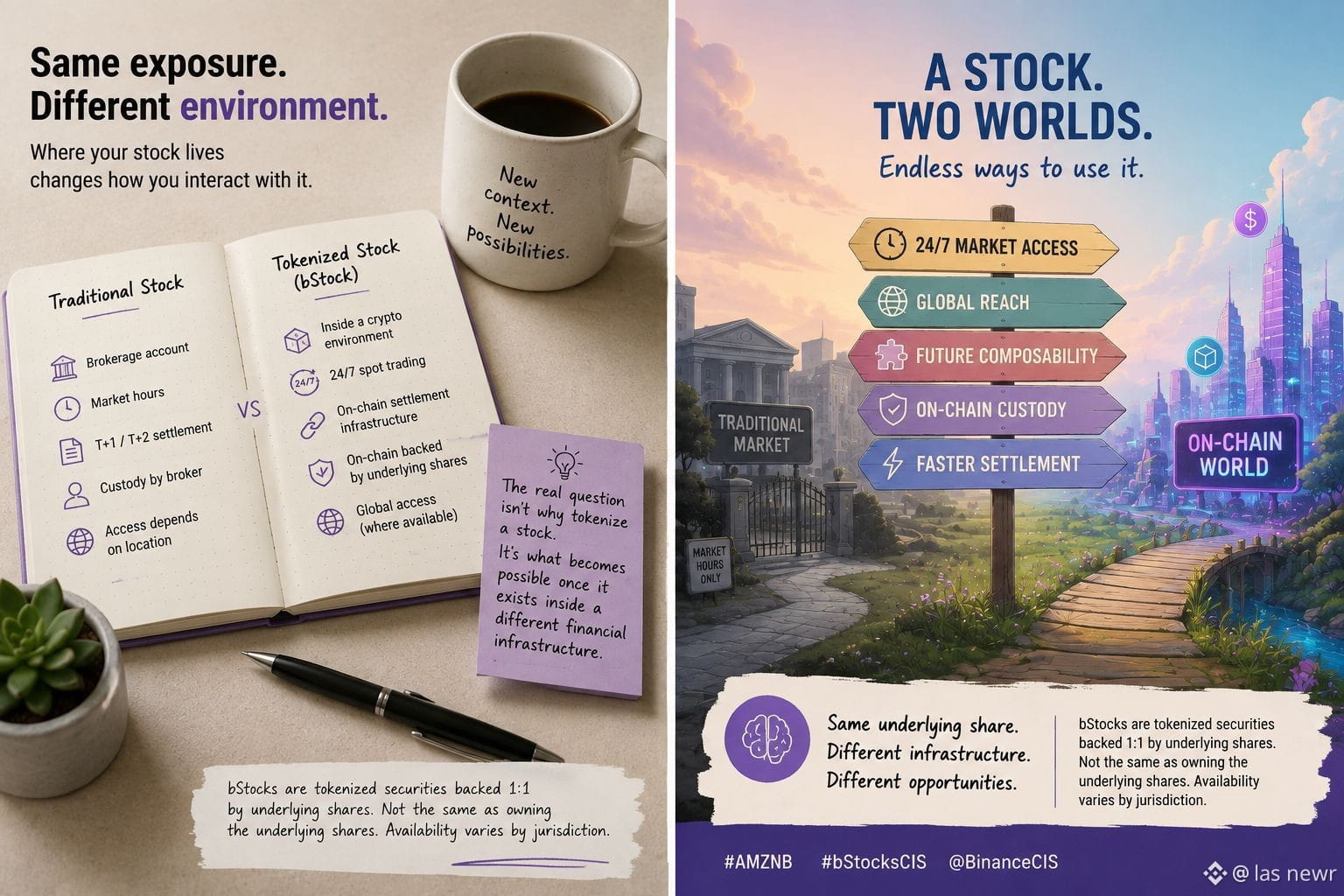
伝統的な株は通常、ブローカレッジ口座の中にあります。
一方、bStockは暗号資産の環境の中にあります。
これは小さな技術的な違いに聞こえるかもしれません。
でも、そうではありません。
トークン化された証券では、すでにUSDT、BNB、その他のデジタル資産を管理しているのと同じ市場参加者が、金融環境を完全に切り替えることなく、株式連動型のインストゥルメントに出会える可能性があります。
つまり、その資産が利用され得る文脈が変わります。
そして、こここそがトークン化がより面白くなるところだと思います。
ではなく:
「ブロックチェーン上の株式。」
むしろ次のように:
「株式連動型の資産がオンチェーンの金融エコシステムの一部になったら、何が起こるのか?」
これにより、決済、カストディ(保管)、ポータビリティ、そして最終的にはコンポーザビリティ(組み合わせ可能性)をめぐる、より大きな議論が開けます。
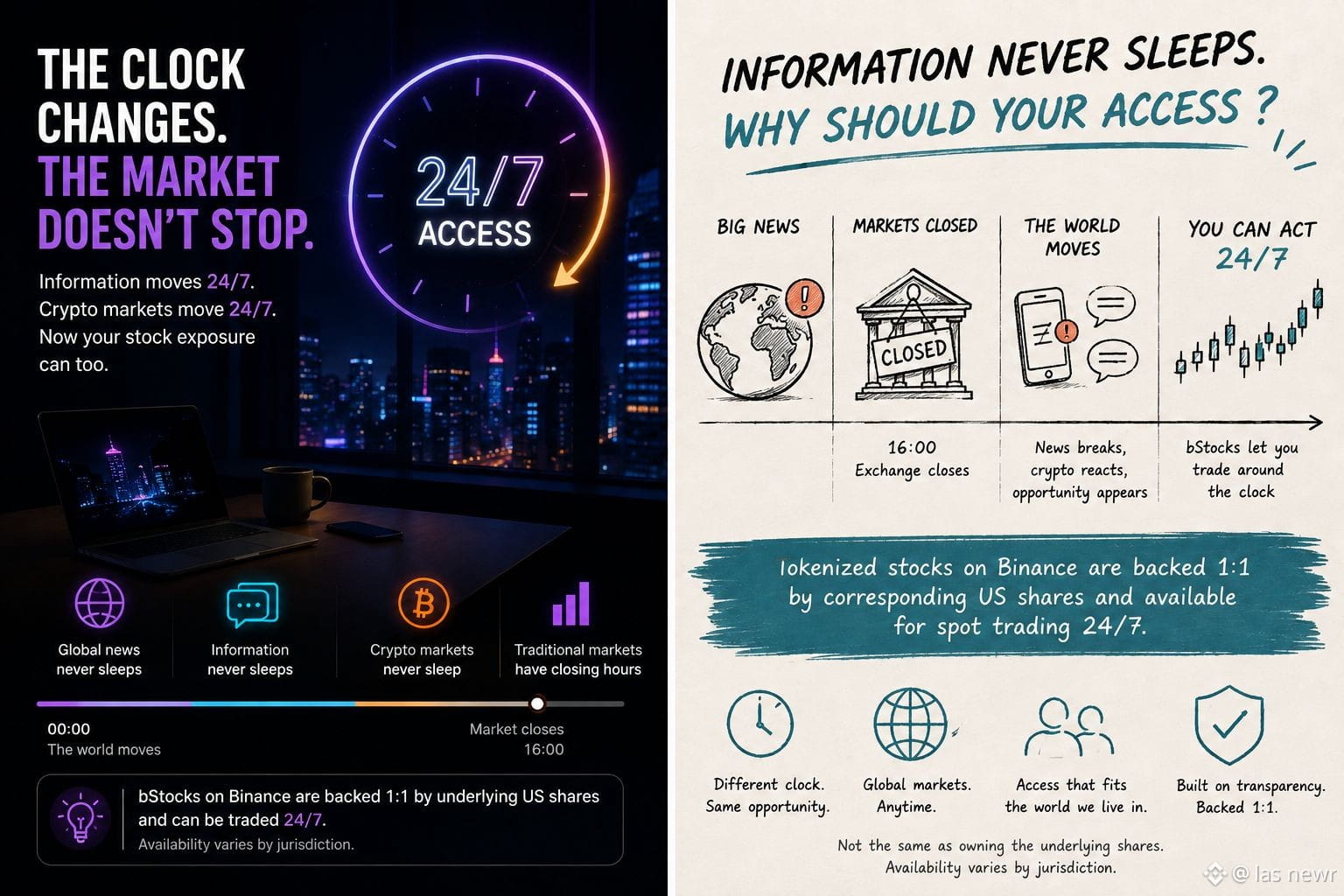
もちろん、bStockは、基礎となる企業の株式を直接保有するのと同じものではありません。bStockは、基礎となる株式に1:1で裏付けられたトークン化された証券であり、利用可能性は管轄(法域)に依存します。 �
Binance Academy +1
私にとって重要な問いは変わりました。
私はもはや次を問いません:
「なぜ誰かが株をトークン化するのか?」
代わりにこう問いかけます:
「株が別の金融インフラの中に存在できるようになったら、何が可能になるのか?」
それこそが、はるかに面白い問いです。
#bstockscis @BinanceCIS #AMZNB
{spot}(AMZNBUSDT)
以前は、トークン化された株の面白いところは、単に従来の市場の営業時間外でも売買できることだと思っていました。
しかし、別の角度から見始めました。
大きな変化は、おそらく、その資産が投資家のワークフローの中でどこに位置するかという点です。
伝統的な株は通常、ブローカレッジ口座の中にあります。
一方、bStockは暗号資産の環境の中にあります。
これは小さな技術的な違いに聞こえるかもしれません。
でも、そうではありません。
トークン化された証券では、すでにUSDT、BNB、その他のデジタル資産を管理しているのと同じ市場参加者が、金融環境を完全に切り替えることなく、株式連動型のインストゥルメントに出会える可能性があります。
つまり、その資産が利用され得る文脈が変わります。
そして、こここそがトークン化がより面白くなるところだと思います。
ではなく:
「ブロックチェーン上の株式。」
むしろ次のように:
「株式連動型の資産がオンチェーンの金融エコシステムの一部になったら、何が起こるのか?」
これにより、決済、カストディ(保管)、ポータビリティ、そして最終的にはコンポーザビリティ(組み合わせ可能性)をめぐる、より大きな議論が開けます。
もちろん、bStockは、基礎となる企業の株式を直接保有するのと同じものではありません。bStockは、基礎となる株式に1:1で裏付けられたトークン化された証券であり、利用可能性は管轄(法域)に依存します。 �
Binance Academy +1
私にとって重要な問いは変わりました。
私はもはや次を問いません:
「なぜ誰かが株をトークン化するのか?」
代わりにこう問いかけます:
「株が別の金融インフラの中に存在できるようになったら、何が可能になるのか?」
それこそが、はるかに面白い問いです。
#bstockscis @BinanceCIS #AMZNB
しかし、別の角度から見始めました。
大きな変化は、おそらく、その資産が投資家のワークフローの中でどこに位置するかという点です。
伝統的な株は通常、ブローカレッジ口座の中にあります。
一方、bStockは暗号資産の環境の中にあります。
これは小さな技術的な違いに聞こえるかもしれません。
でも、そうではありません。
トークン化された証券では、すでにUSDT、BNB、その他のデジタル資産を管理しているのと同じ市場参加者が、金融環境を完全に切り替えることなく、株式連動型のインストゥルメントに出会える可能性があります。
つまり、その資産が利用され得る文脈が変わります。
そして、こここそがトークン化がより面白くなるところだと思います。
ではなく:
「ブロックチェーン上の株式。」
むしろ次のように:
「株式連動型の資産がオンチェーンの金融エコシステムの一部になったら、何が起こるのか?」
これにより、決済、カストディ(保管)、ポータビリティ、そして最終的にはコンポーザビリティ(組み合わせ可能性)をめぐる、より大きな議論が開けます。
もちろん、bStockは、基礎となる企業の株式を直接保有するのと同じものではありません。bStockは、基礎となる株式に1:1で裏付けられたトークン化された証券であり、利用可能性は管轄(法域)に依存します。 �
Binance Academy +1
私にとって重要な問いは変わりました。
私はもはや次を問いません:
「なぜ誰かが株をトークン化するのか?」
代わりにこう問いかけます:
「株が別の金融インフラの中に存在できるようになったら、何が可能になるのか?」
それこそが、はるかに面白い問いです。
#bstockscis @BinanceCIS #AMZNB
78
·
--
翻訳参照
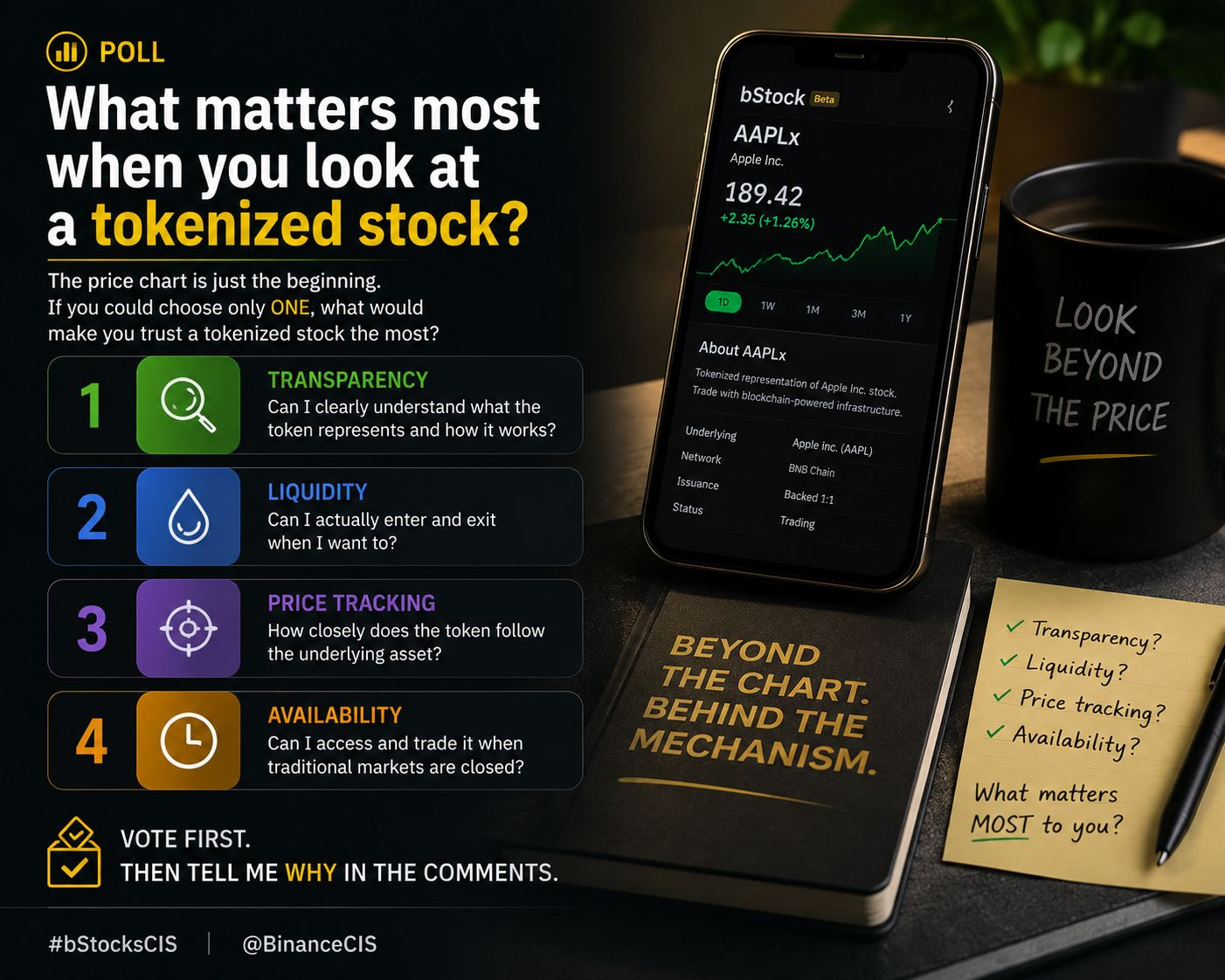
When you look at a tokenized stock, what would make you trust it more?
For me, the price chart is only the beginning.
A token can follow its underlying asset closely and still leave other questions unanswered.
So I would break the decision into four things:
1️⃣ Transparency
Can I clearly understand what the token represents and how the structure works?
2️⃣ Liquidity
Can I actually enter and exit when I want to?
3️⃣ Price tracking
How closely does the token follow the underlying asset?
4️⃣ Availability
Can I access and trade it when traditional markets are closed?
I think people may rank these very differently depending on what they actually use tokenized equities for.
So let's test it.
If you could choose only ONE, what matters most to you?
🟢 Transparency
🔵 Liquidity
🟣 Price tracking
🟠 Availability
Vote first.
Then tell me why in the comments.
#bstockscis @BinanceCIS
When you look at a tokenized stock, what would make you trust it more?
For me, the price chart is only the beginning.
A token can follow its underlying asset closely and still leave other questions unanswered.
So I would break the decision into four things:
1️⃣ Transparency
Can I clearly understand what the token represents and how the structure works?
2️⃣ Liquidity
Can I actually enter and exit when I want to?
3️⃣ Price tracking
How closely does the token follow the underlying asset?
4️⃣ Availability
Can I access and trade it when traditional markets are closed?
I think people may rank these very differently depending on what they actually use tokenized equities for.
So let's test it.
If you could choose only ONE, what matters most to you?
🟢 Transparency
🔵 Liquidity
🟣 Price tracking
🟠 Availability
Vote first.
Then tell me why in the comments.
#bstockscis @BinanceCIS
For me, the price chart is only the beginning.
A token can follow its underlying asset closely and still leave other questions unanswered.
So I would break the decision into four things:
1️⃣ Transparency
Can I clearly understand what the token represents and how the structure works?
2️⃣ Liquidity
Can I actually enter and exit when I want to?
3️⃣ Price tracking
How closely does the token follow the underlying asset?
4️⃣ Availability
Can I access and trade it when traditional markets are closed?
I think people may rank these very differently depending on what they actually use tokenized equities for.
So let's test it.
If you could choose only ONE, what matters most to you?
🟢 Transparency
🔵 Liquidity
🟣 Price tracking
🟠 Availability
Vote first.
Then tell me why in the comments.
#bstockscis @BinanceCIS
107
·
--
ブリッシュ
翻訳参照
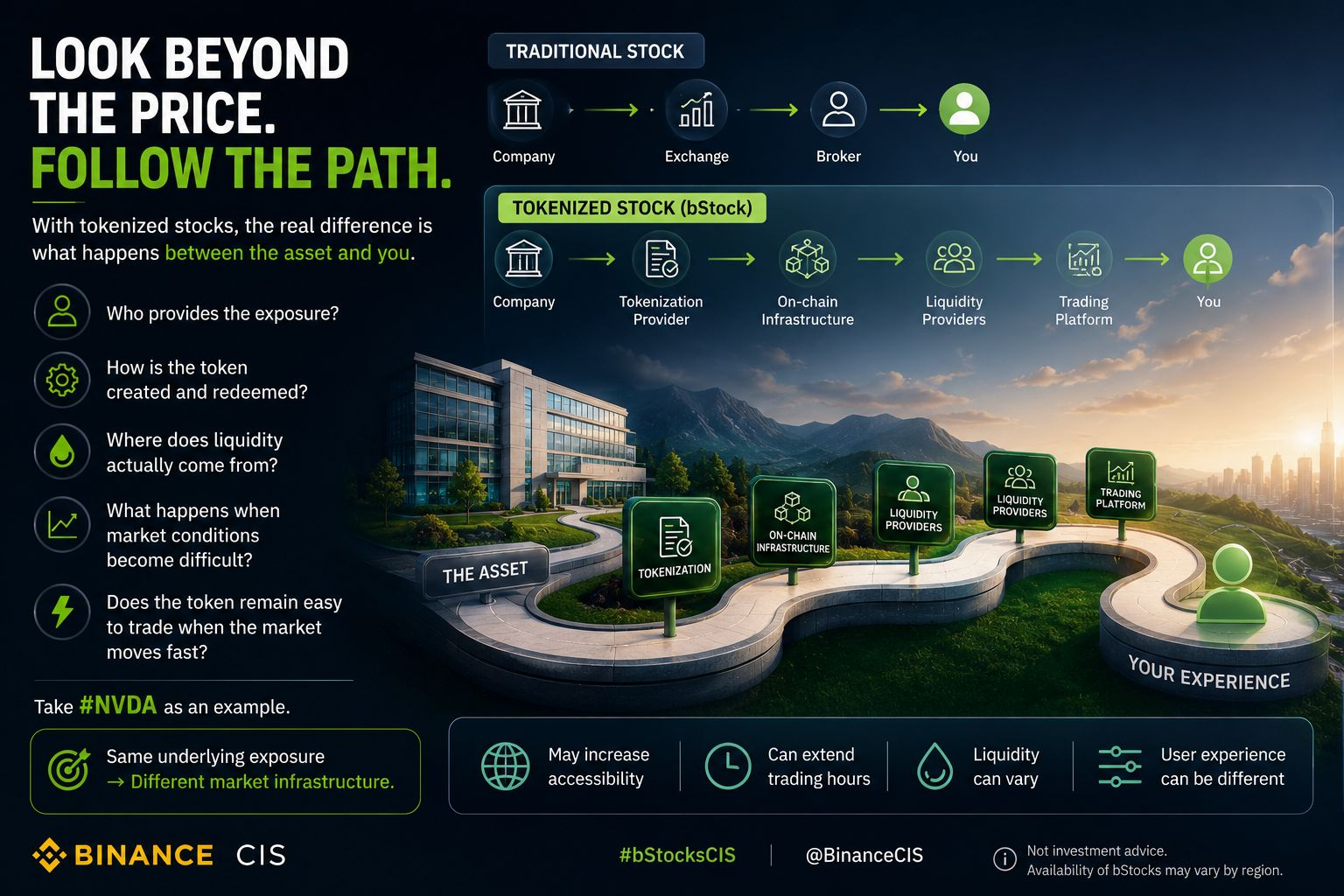
One thing I would watch with tokenized stocks is not the headline price.
It is the path between the asset and the person trading it.
With a traditional stock, most of the infrastructure is familiar.
With a tokenized version, there can be another layer between the underlying asset and the trading experience.
That makes me ask a different set of questions:
Who provides the exposure?
How is the token created and redeemed?
Where does liquidity actually come from?
What happens when market conditions become difficult?
And perhaps the most important one:
Does the token remain easy to trade when the market moves fast?
Take #NVDA as an example.
The interesting comparison isn't simply:
stock vs token.
It is:
same underlying exposure → different market infrastructure.
That difference can affect accessibility, trading hours, liquidity, and the overall user experience.
So when I look at a bStock, I don't want to stop at the chart.
I want to understand what is happening behind the chart.
#bstockscis @BinanceCIS
One thing I would watch with tokenized stocks is not the headline price.
It is the path between the asset and the person trading it.
With a traditional stock, most of the infrastructure is familiar.
With a tokenized version, there can be another layer between the underlying asset and the trading experience.
That makes me ask a different set of questions:
Who provides the exposure?
How is the token created and redeemed?
Where does liquidity actually come from?
What happens when market conditions become difficult?
And perhaps the most important one:
Does the token remain easy to trade when the market moves fast?
Take #NVDA as an example.
The interesting comparison isn't simply:
stock vs token.
It is:
same underlying exposure → different market infrastructure.
That difference can affect accessibility, trading hours, liquidity, and the overall user experience.
So when I look at a bStock, I don't want to stop at the chart.
I want to understand what is happening behind the chart.
#bstockscis @BinanceCIS
It is the path between the asset and the person trading it.
With a traditional stock, most of the infrastructure is familiar.
With a tokenized version, there can be another layer between the underlying asset and the trading experience.
That makes me ask a different set of questions:
Who provides the exposure?
How is the token created and redeemed?
Where does liquidity actually come from?
What happens when market conditions become difficult?
And perhaps the most important one:
Does the token remain easy to trade when the market moves fast?
Take #NVDA as an example.
The interesting comparison isn't simply:
stock vs token.
It is:
same underlying exposure → different market infrastructure.
That difference can affect accessibility, trading hours, liquidity, and the overall user experience.
So when I look at a bStock, I don't want to stop at the chart.
I want to understand what is happening behind the chart.
#bstockscis @BinanceCIS
1
89
·
--
翻訳参照
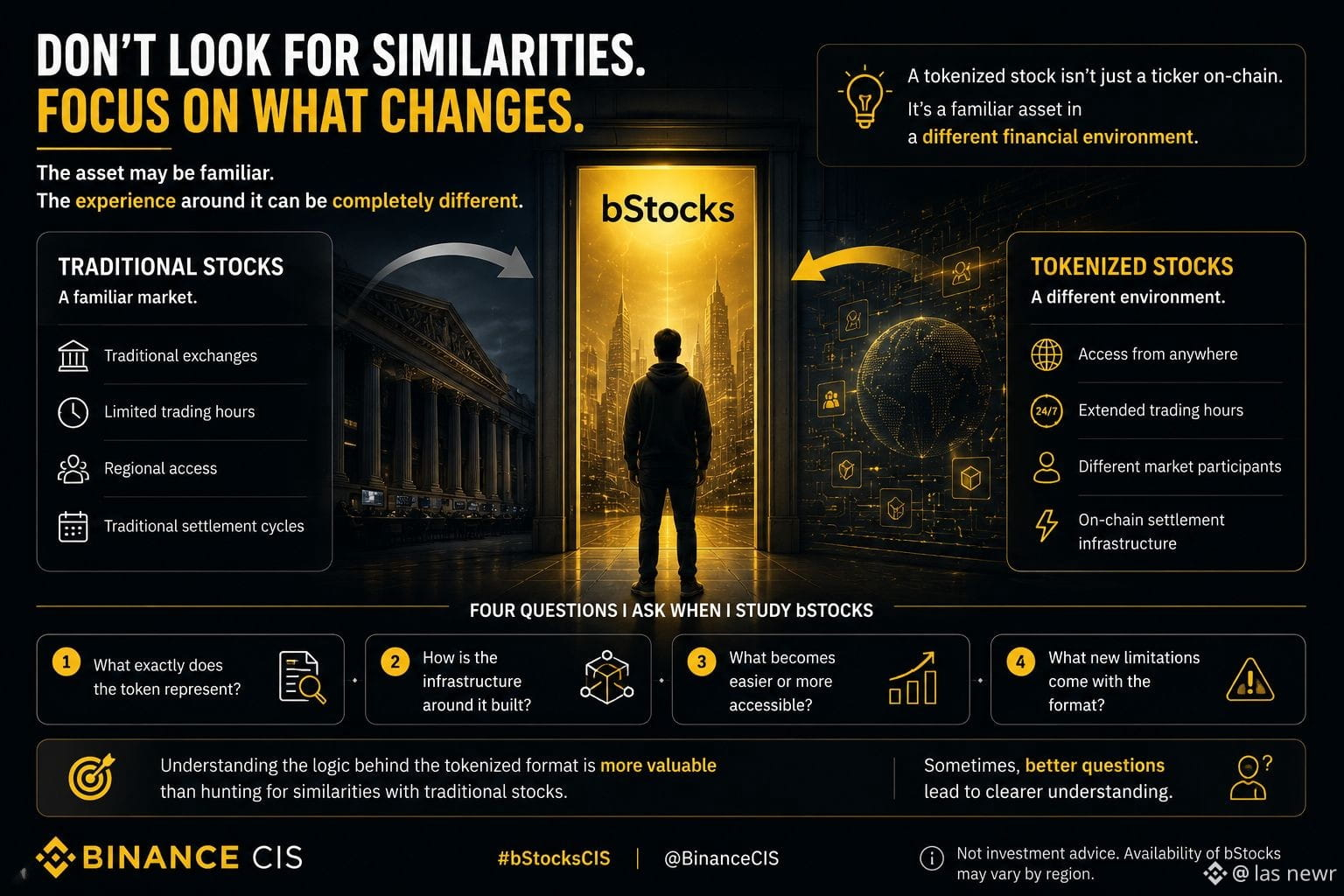
The more I learn about bStocks, the less useful I find one particular question:
“How similar are they to traditional stocks?”
It sounds reasonable, but it can lead you in the wrong direction.
A more interesting question is:
What changes for the user when a familiar market asset appears in a tokenized form?
Because the point isn't simply to take a ticker and add the word “token.”
The asset enters a different infrastructure — with a different interface, different ways of moving capital, and different possibilities for interacting with it.
And I don't think the goal should be to immediately decide which format is “better.”
It's more useful to understand what each format is designed to do.
So when I look at bStocks, I try to ask four things:
— What exactly does the token represent?
— How is the infrastructure around it built?
— What becomes easier or more accessible?
— What new limitations come with the format?
That last question matters just as much.
Every new financial structure adds something, but it also introduces its own rules.
That's why I'm less interested in finding similarities between bStocks and traditional stocks, and more interested in understanding the logic behind the tokenized format.
Sometimes a product becomes easier to understand not when you find more answers.
But when you finally start asking better questions.
@BinanceCIS #bstockscis
The more I learn about bStocks, the less useful I find one particular question:
“How similar are they to traditional stocks?”
It sounds reasonable, but it can lead you in the wrong direction.
A more interesting question is:
What changes for the user when a familiar market asset appears in a tokenized form?
Because the point isn't simply to take a ticker and add the word “token.”
The asset enters a different infrastructure — with a different interface, different ways of moving capital, and different possibilities for interacting with it.
And I don't think the goal should be to immediately decide which format is “better.”
It's more useful to understand what each format is designed to do.
So when I look at bStocks, I try to ask four things:
— What exactly does the token represent?
— How is the infrastructure around it built?
— What becomes easier or more accessible?
— What new limitations come with the format?
That last question matters just as much.
Every new financial structure adds something, but it also introduces its own rules.
That's why I'm less interested in finding similarities between bStocks and traditional stocks, and more interested in understanding the logic behind the tokenized format.
Sometimes a product becomes easier to understand not when you find more answers.
But when you finally start asking better questions.
@BinanceCIS #bstockscis
“How similar are they to traditional stocks?”
It sounds reasonable, but it can lead you in the wrong direction.
A more interesting question is:
What changes for the user when a familiar market asset appears in a tokenized form?
Because the point isn't simply to take a ticker and add the word “token.”
The asset enters a different infrastructure — with a different interface, different ways of moving capital, and different possibilities for interacting with it.
And I don't think the goal should be to immediately decide which format is “better.”
It's more useful to understand what each format is designed to do.
So when I look at bStocks, I try to ask four things:
— What exactly does the token represent?
— How is the infrastructure around it built?
— What becomes easier or more accessible?
— What new limitations come with the format?
That last question matters just as much.
Every new financial structure adds something, but it also introduces its own rules.
That's why I'm less interested in finding similarities between bStocks and traditional stocks, and more interested in understanding the logic behind the tokenized format.
Sometimes a product becomes easier to understand not when you find more answers.
But when you finally start asking better questions.
@BinanceCIS #bstockscis
82
·
--
翻訳参照
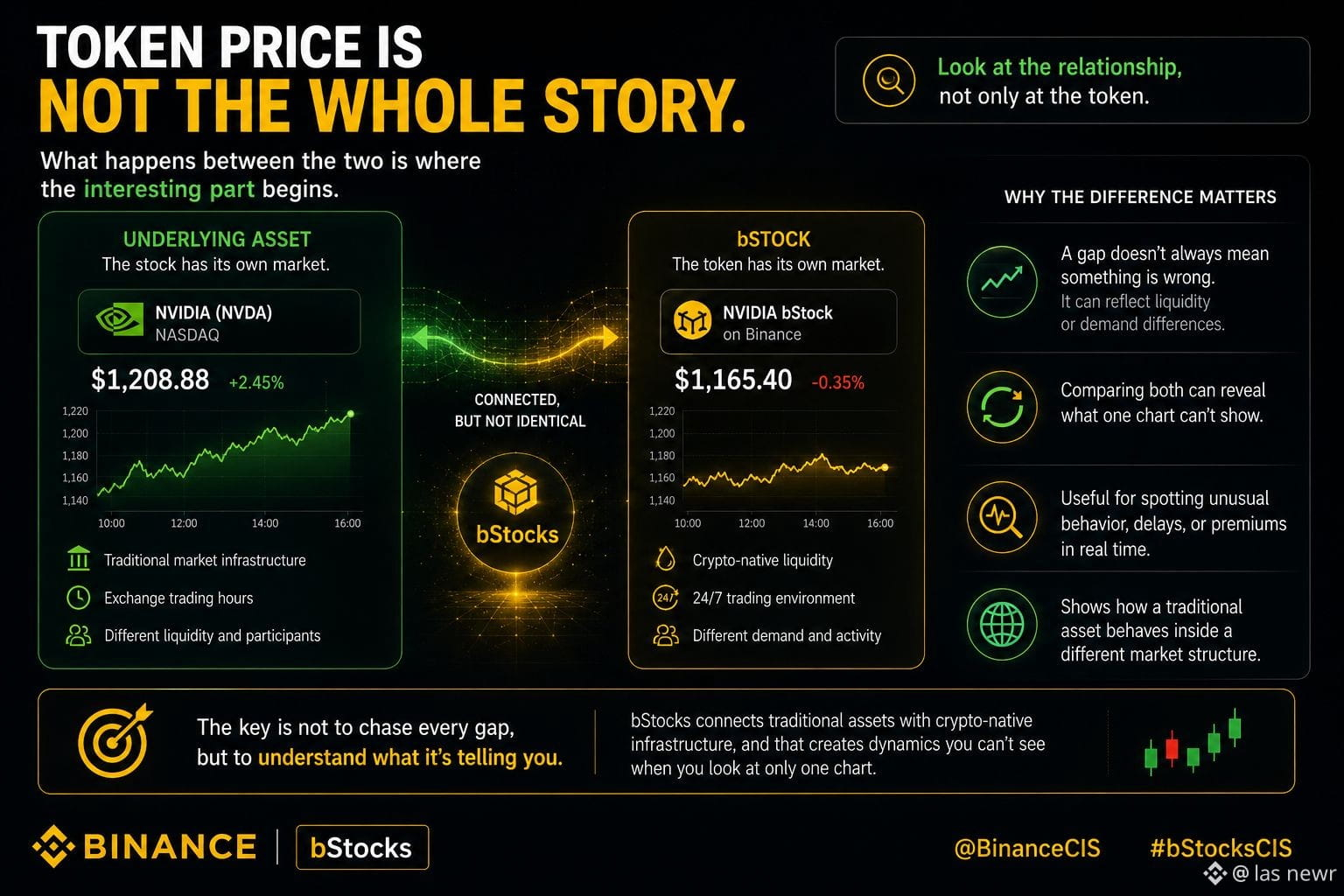
One thing I find interesting about bStocks is that the token price is not the whole story.
At first, I looked at the price and thought:
“Okay, it follows the underlying stock. Simple.”
But then I started thinking about what happens between the two.
The underlying asset has its own market.
The bStock has its own liquidity, trading activity and market participants.
So even when they are connected, the two prices don't have to move in exactly the same way at every moment.
That difference is actually one of the things I'd watch most closely.
Not because every gap means something is wrong.
Sometimes it can simply show where liquidity or demand is different.
For me, this makes bStocks more interesting to analyze than just looking at a price chart.
You have to look at the relationship between the asset and the token, not only at the token itself. 👀
That is probably the part I would pay the most attention to over time. 📊
@BinanceCIS #bstockscis
One thing I find interesting about bStocks is that the token price is not the whole story.
At first, I looked at the price and thought:
“Okay, it follows the underlying stock. Simple.”
But then I started thinking about what happens between the two.
The underlying asset has its own market.
The bStock has its own liquidity, trading activity and market participants.
So even when they are connected, the two prices don't have to move in exactly the same way at every moment.
That difference is actually one of the things I'd watch most closely.
Not because every gap means something is wrong.
Sometimes it can simply show where liquidity or demand is different.
For me, this makes bStocks more interesting to analyze than just looking at a price chart.
You have to look at the relationship between the asset and the token, not only at the token itself. 👀
That is probably the part I would pay the most attention to over time. 📊
@BinanceCIS #bstockscis
At first, I looked at the price and thought:
“Okay, it follows the underlying stock. Simple.”
But then I started thinking about what happens between the two.
The underlying asset has its own market.
The bStock has its own liquidity, trading activity and market participants.
So even when they are connected, the two prices don't have to move in exactly the same way at every moment.
That difference is actually one of the things I'd watch most closely.
Not because every gap means something is wrong.
Sometimes it can simply show where liquidity or demand is different.
For me, this makes bStocks more interesting to analyze than just looking at a price chart.
You have to look at the relationship between the asset and the token, not only at the token itself. 👀
That is probably the part I would pay the most attention to over time. 📊
@BinanceCIS #bstockscis
83
·
--
翻訳参照
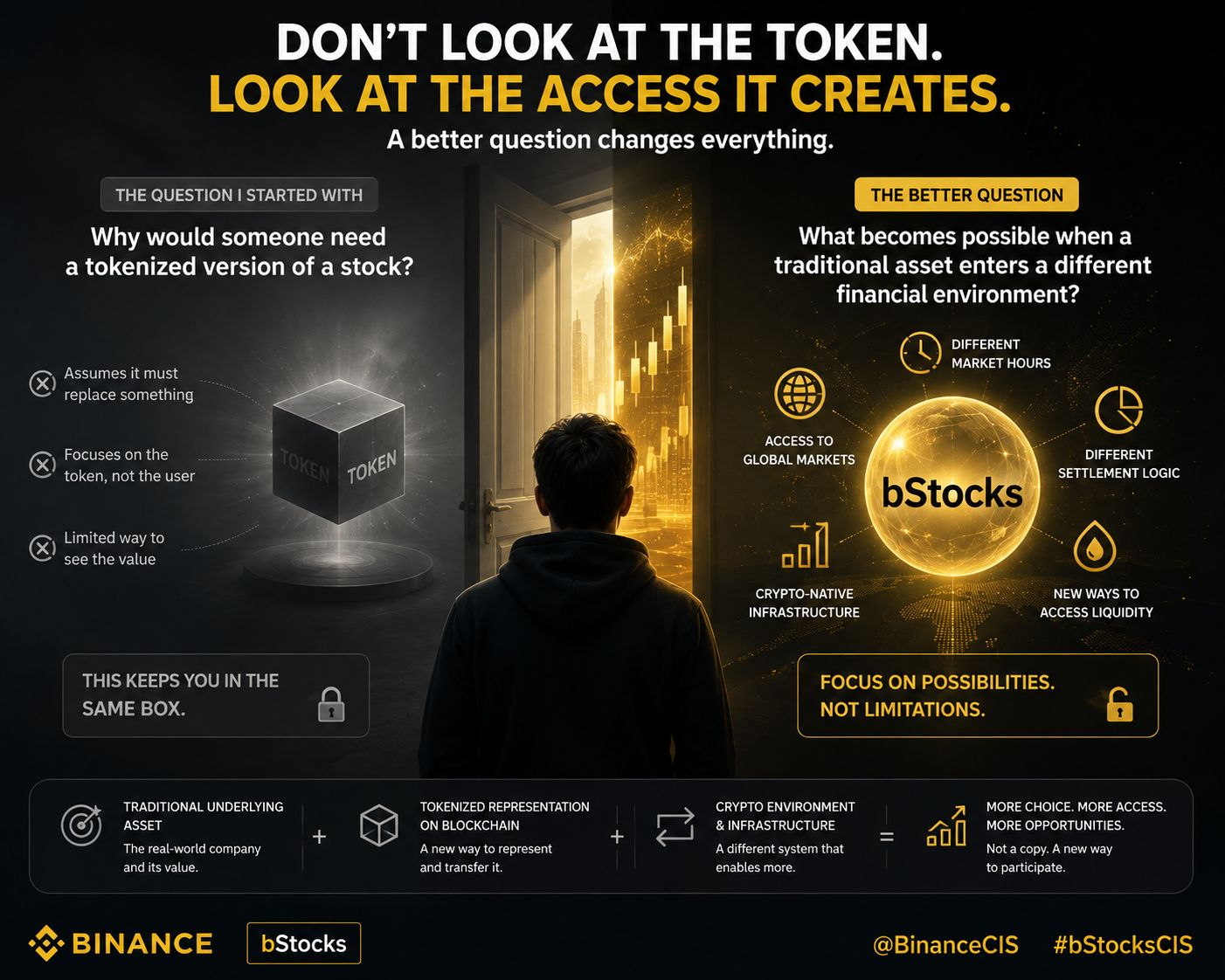
One thing I started noticing while learning about bStocks:
I was looking at the token first, instead of looking at the access it creates.
At first, I kept asking:
“Why would someone need a tokenized version of a stock?”
But that question already assumes the token has to replace something.
A better question is:
“What becomes possible when a traditional asset enters a different financial environment?”
That changed how I look at bStocks.
The interesting part isn't simply putting a familiar name on-chain.
It's the combination of a traditional underlying asset with crypto-native infrastructure.
Different market hours.
Different settlement logic.
Different ways of accessing liquidity.
So now I try not to ask whether tokenized stocks are “better” than traditional stocks.
I ask what they allow users to do that wasn't as simple before.
For me, that's a much more interesting way to understand RWA. 👀
@BinanceCIS #bstockscis
One thing I started noticing while learning about bStocks:
I was looking at the token first, instead of looking at the access it creates.
At first, I kept asking:
“Why would someone need a tokenized version of a stock?”
But that question already assumes the token has to replace something.
A better question is:
“What becomes possible when a traditional asset enters a different financial environment?”
That changed how I look at bStocks.
The interesting part isn't simply putting a familiar name on-chain.
It's the combination of a traditional underlying asset with crypto-native infrastructure.
Different market hours.
Different settlement logic.
Different ways of accessing liquidity.
So now I try not to ask whether tokenized stocks are “better” than traditional stocks.
I ask what they allow users to do that wasn't as simple before.
For me, that's a much more interesting way to understand RWA. 👀
@BinanceCIS #bstockscis
I was looking at the token first, instead of looking at the access it creates.
At first, I kept asking:
“Why would someone need a tokenized version of a stock?”
But that question already assumes the token has to replace something.
A better question is:
“What becomes possible when a traditional asset enters a different financial environment?”
That changed how I look at bStocks.
The interesting part isn't simply putting a familiar name on-chain.
It's the combination of a traditional underlying asset with crypto-native infrastructure.
Different market hours.
Different settlement logic.
Different ways of accessing liquidity.
So now I try not to ask whether tokenized stocks are “better” than traditional stocks.
I ask what they allow users to do that wasn't as simple before.
For me, that's a much more interesting way to understand RWA. 👀
@BinanceCIS #bstockscis
73
·
--
翻訳参照
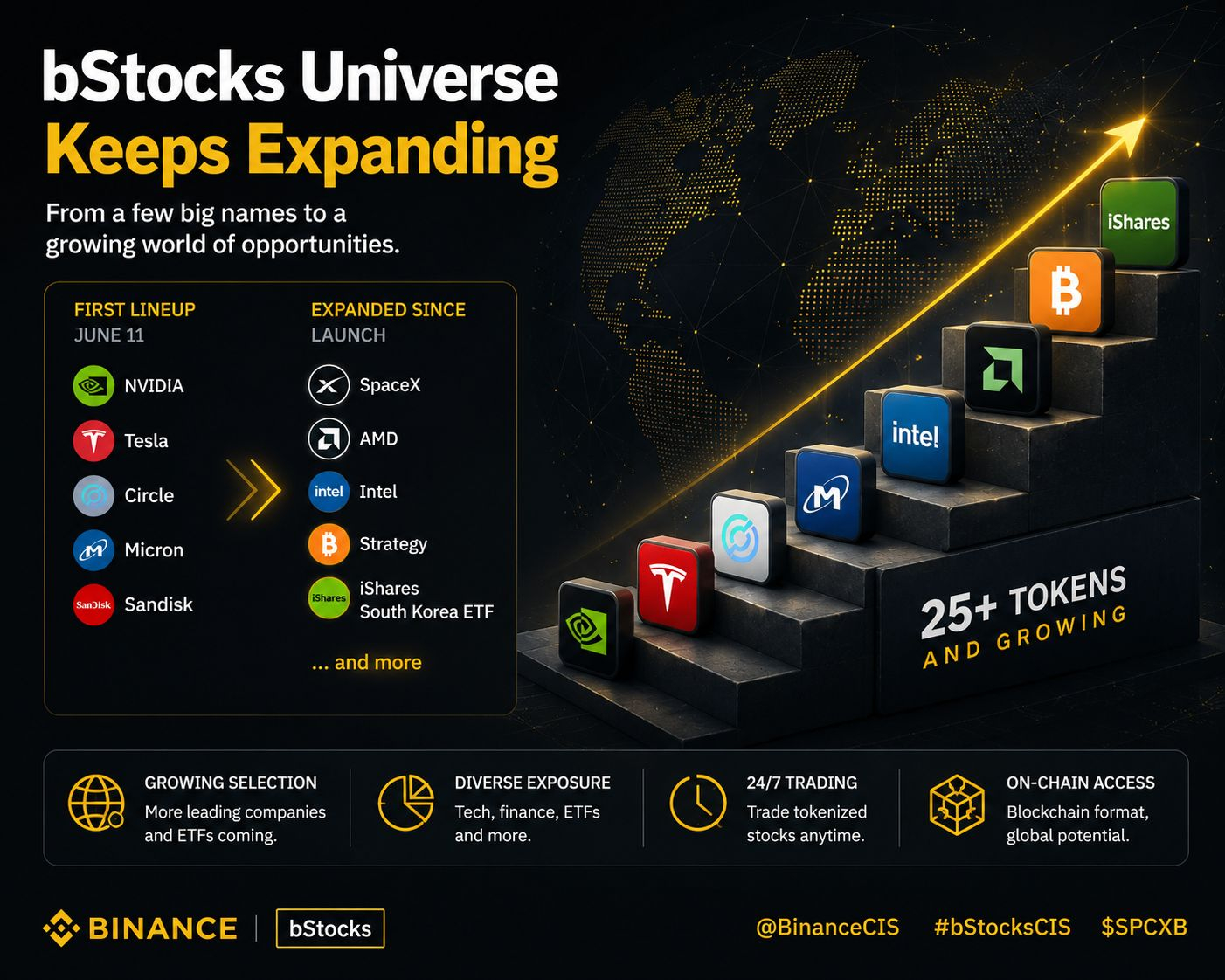
One thing I like about bStocks is that the story isn’t only about the first few tokens.
The interesting part is how quickly the selection can expand. You can start with familiar names and then suddenly see completely different sectors and companies appearing in the same tokenized format.
For me, that makes bStocks more interesting than simply having “stock tokens” on a list.
It feels more like a growing market where the choice of traditional assets is gradually being brought into a blockchain-based trading environment.
I’d rather watch how this ecosystem develops than try to guess which token will move next. 👀
@BinanceCIS $SPCXB #bstockscis
One thing I like about bStocks is that the story isn’t only about the first few tokens.
The interesting part is how quickly the selection can expand. You can start with familiar names and then suddenly see completely different sectors and companies appearing in the same tokenized format.
For me, that makes bStocks more interesting than simply having “stock tokens” on a list.
It feels more like a growing market where the choice of traditional assets is gradually being brought into a blockchain-based trading environment.
I’d rather watch how this ecosystem develops than try to guess which token will move next. 👀
@BinanceCIS $SPCXB #bstockscis
The interesting part is how quickly the selection can expand. You can start with familiar names and then suddenly see completely different sectors and companies appearing in the same tokenized format.
For me, that makes bStocks more interesting than simply having “stock tokens” on a list.
It feels more like a growing market where the choice of traditional assets is gradually being brought into a blockchain-based trading environment.
I’d rather watch how this ecosystem develops than try to guess which token will move next. 👀
@BinanceCIS $SPCXB #bstockscis
107
·
--
翻訳参照
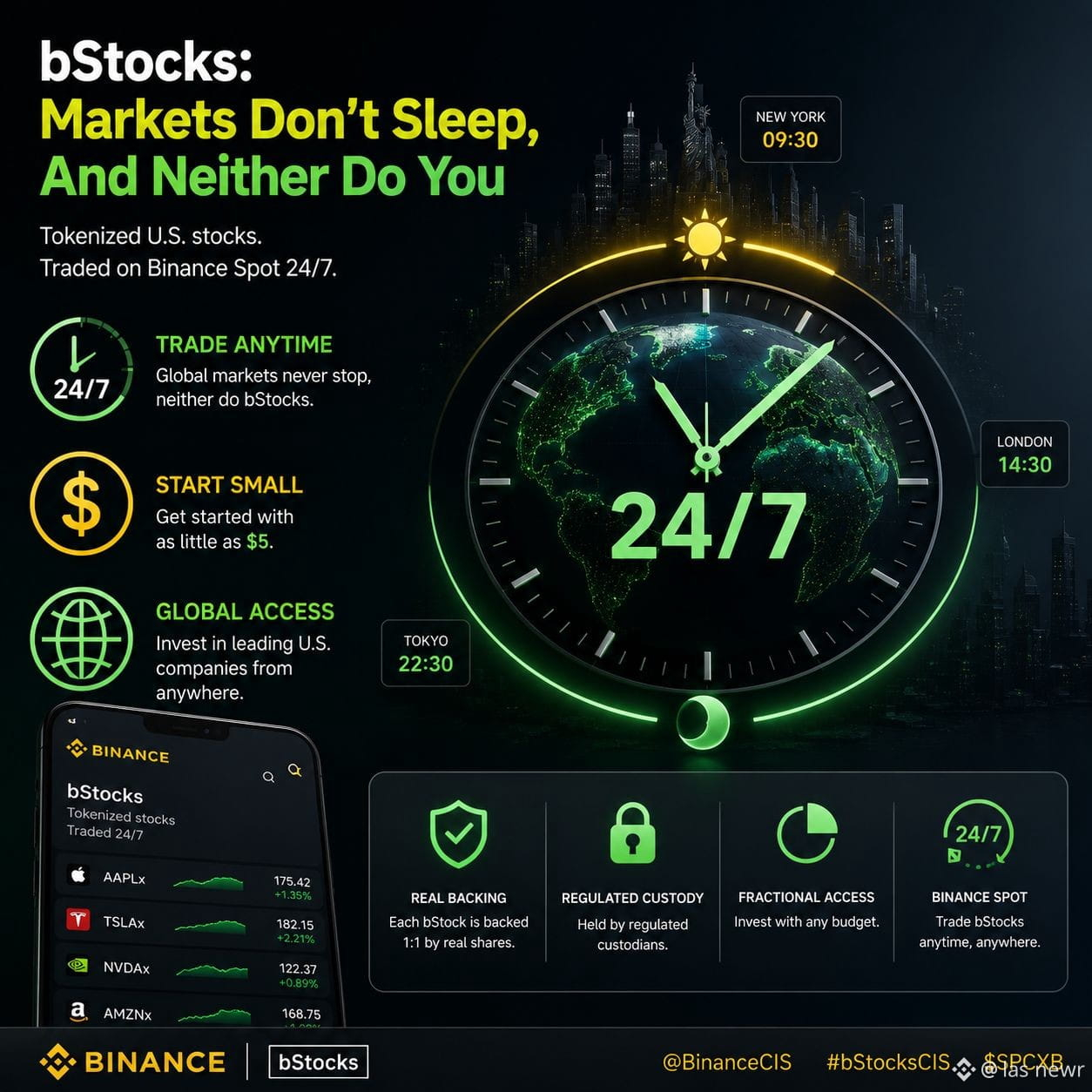
I’ve been thinking about one thing with bStocks that is easy to miss.
The interesting part isn’t only that stocks can be represented on-chain. It’s the change in the way you can interact with them.
Traditional markets have their own schedules. bStocks can be traded on Binance Spot 24/7, which makes the whole experience feel much closer to the crypto market.
And the fractional format is another detail I like. You don’t necessarily need a huge amount of capital just to get started and learn how it works.
For me, the combination of traditional assets + blockchain access is the part worth watching. 👀📈
@BinanceCIS $SPCXB #bstockscis
I’ve been thinking about one thing with bStocks that is easy to miss.
The interesting part isn’t only that stocks can be represented on-chain. It’s the change in the way you can interact with them.
Traditional markets have their own schedules. bStocks can be traded on Binance Spot 24/7, which makes the whole experience feel much closer to the crypto market.
And the fractional format is another detail I like. You don’t necessarily need a huge amount of capital just to get started and learn how it works.
For me, the combination of traditional assets + blockchain access is the part worth watching. 👀📈
@BinanceCIS $SPCXB #bstockscis
The interesting part isn’t only that stocks can be represented on-chain. It’s the change in the way you can interact with them.
Traditional markets have their own schedules. bStocks can be traded on Binance Spot 24/7, which makes the whole experience feel much closer to the crypto market.
And the fractional format is another detail I like. You don’t necessarily need a huge amount of capital just to get started and learn how it works.
For me, the combination of traditional assets + blockchain access is the part worth watching. 👀📈
@BinanceCIS $SPCXB #bstockscis
106
·
--
翻訳参照
I've been reading more about bStocks lately, and one thing stands out to me.
People often focus on price first, but I think understanding how a product works is much more important. Tokenization isn't about replacing traditional finance — it's about connecting it with blockchain technology.
For me, that's the most interesting part of bStocks.
Do you usually learn about a product before trading it, or do you explore it afterwards? 🤔📚
@BinanceCIS
#bstockscis
I've been reading more about bStocks lately, and one thing stands out to me.
People often focus on price first, but I think understanding how a product works is much more important. Tokenization isn't about replacing traditional finance — it's about connecting it with blockchain technology.
For me, that's the most interesting part of bStocks.
Do you usually learn about a product before trading it, or do you explore it afterwards? 🤔📚
@BinanceCIS
#bstockscis
People often focus on price first, but I think understanding how a product works is much more important. Tokenization isn't about replacing traditional finance — it's about connecting it with blockchain technology.
For me, that's the most interesting part of bStocks.
Do you usually learn about a product before trading it, or do you explore it afterwards? 🤔📚
@BinanceCIS
#bstockscis

1
1
·
--
翻訳参照
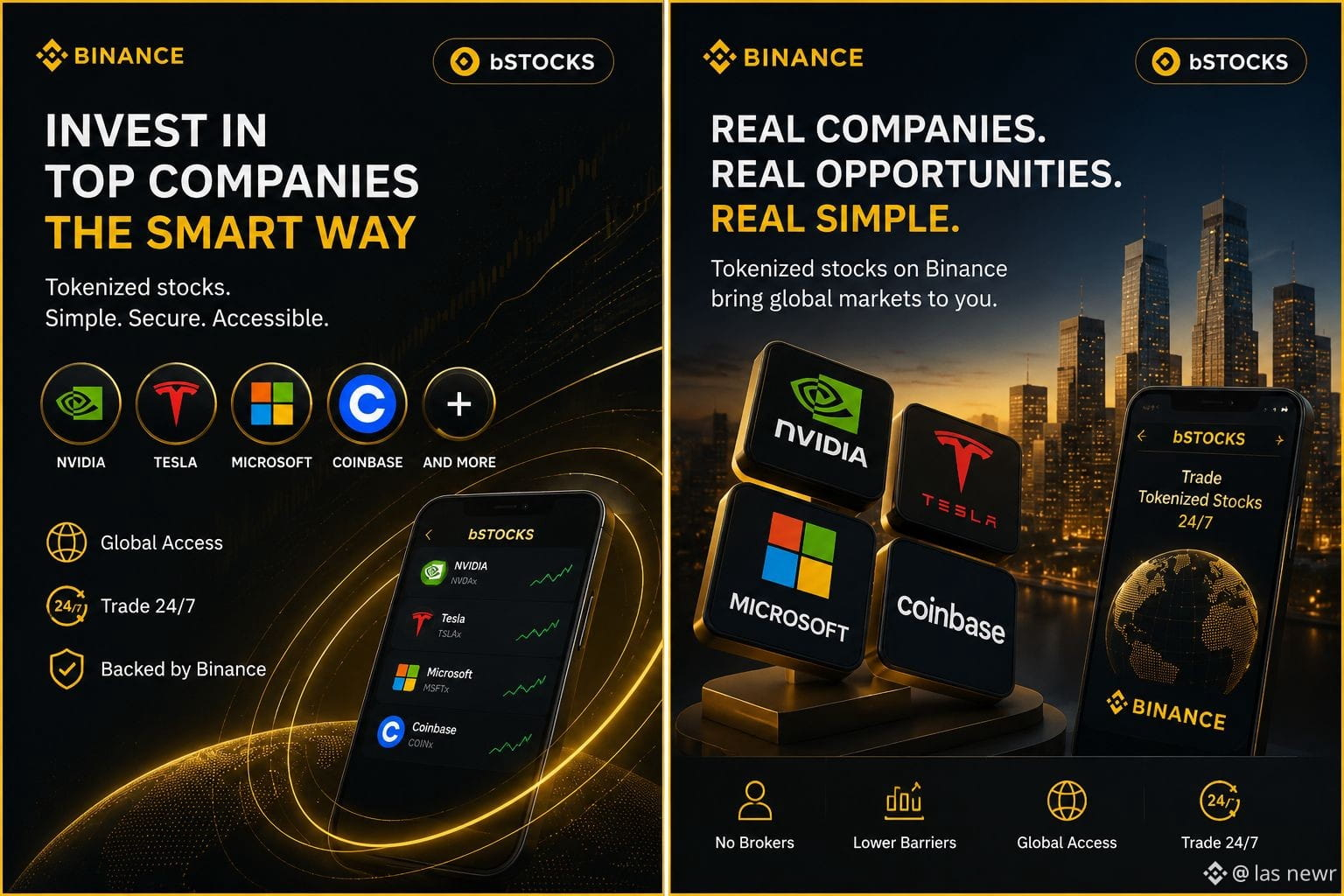
The idea behind bStocks is pretty interesting.
Tokenized stocks make it easier to follow and access some of the world's biggest companies from a single platform. For many users, that's a much smoother experience than using multiple services.
Technology keeps making investing more accessible.
@BinanceCIS #bStocksCIS #Binance
The idea behind bStocks is pretty interesting.
Tokenized stocks make it easier to follow and access some of the world's biggest companies from a single platform. For many users, that's a much smoother experience than using multiple services.
Technology keeps making investing more accessible.
@BinanceCIS #bStocksCIS #Binance
Tokenized stocks make it easier to follow and access some of the world's biggest companies from a single platform. For many users, that's a much smoother experience than using multiple services.
Technology keeps making investing more accessible.
@BinanceCIS #bStocksCIS #Binance
1
85
·
--
今日ふと、なぜトークン化というテーマがますます人気になっているのか考えてみました。
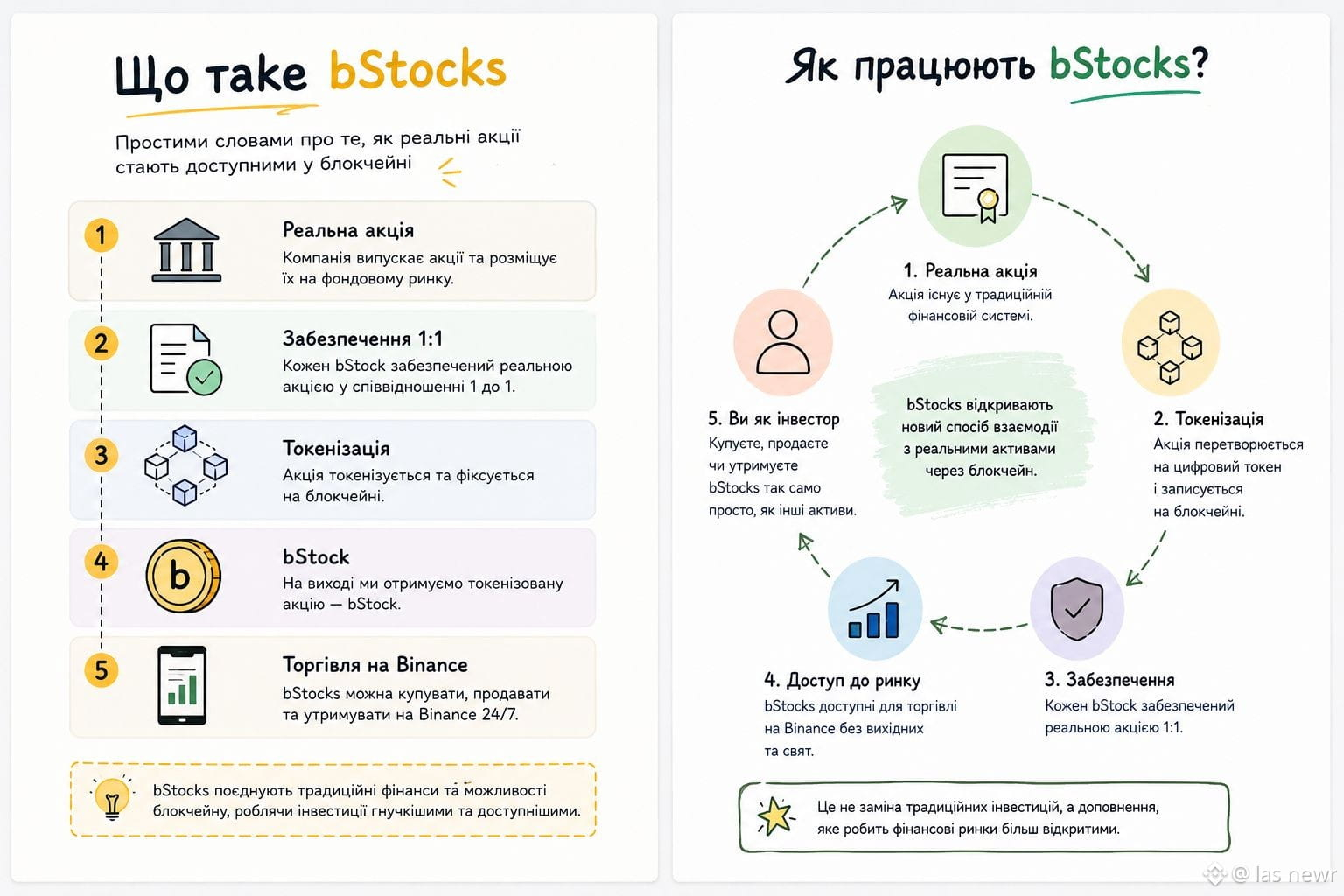
その理由の一つは、従来の金融商品をブロックチェーンの可能性と組み合わせようとする試みだと思います。まさにそのアイデアを実現しているのがbStocksです。実際の株式がトークンとして表現されており、Binanceのエコシステムを通じてそれらとやり取りできるようになっています。
私にとってこれは、従来の証券市場の代替ではなく、資産にアクセスするための別の形式です。この分野がどのように発展していくのか、興味深く見守っています。
皆さんは、実物資産のトークン化についてどう思いますか?
@BinanceCIS $SPCXB #bStocks #bstockscis
今日ふと、なぜトークン化というテーマがますます人気になっているのか考えてみました。
その理由の一つは、従来の金融商品をブロックチェーンの可能性と組み合わせようとする試みだと思います。まさにそのアイデアを実現しているのがbStocksです。実際の株式がトークンとして表現されており、Binanceのエコシステムを通じてそれらとやり取りできるようになっています。
私にとってこれは、従来の証券市場の代替ではなく、資産にアクセスするための別の形式です。この分野がどのように発展していくのか、興味深く見守っています。
皆さんは、実物資産のトークン化についてどう思いますか?
@BinanceCIS $SPCXB #bStocks #bstockscis
その理由の一つは、従来の金融商品をブロックチェーンの可能性と組み合わせようとする試みだと思います。まさにそのアイデアを実現しているのがbStocksです。実際の株式がトークンとして表現されており、Binanceのエコシステムを通じてそれらとやり取りできるようになっています。
私にとってこれは、従来の証券市場の代替ではなく、資産にアクセスするための別の形式です。この分野がどのように発展していくのか、興味深く見守っています。
皆さんは、実物資産のトークン化についてどう思いますか?
@BinanceCIS $SPCXB #bStocks #bstockscis
1
66
·
--
翻訳参照
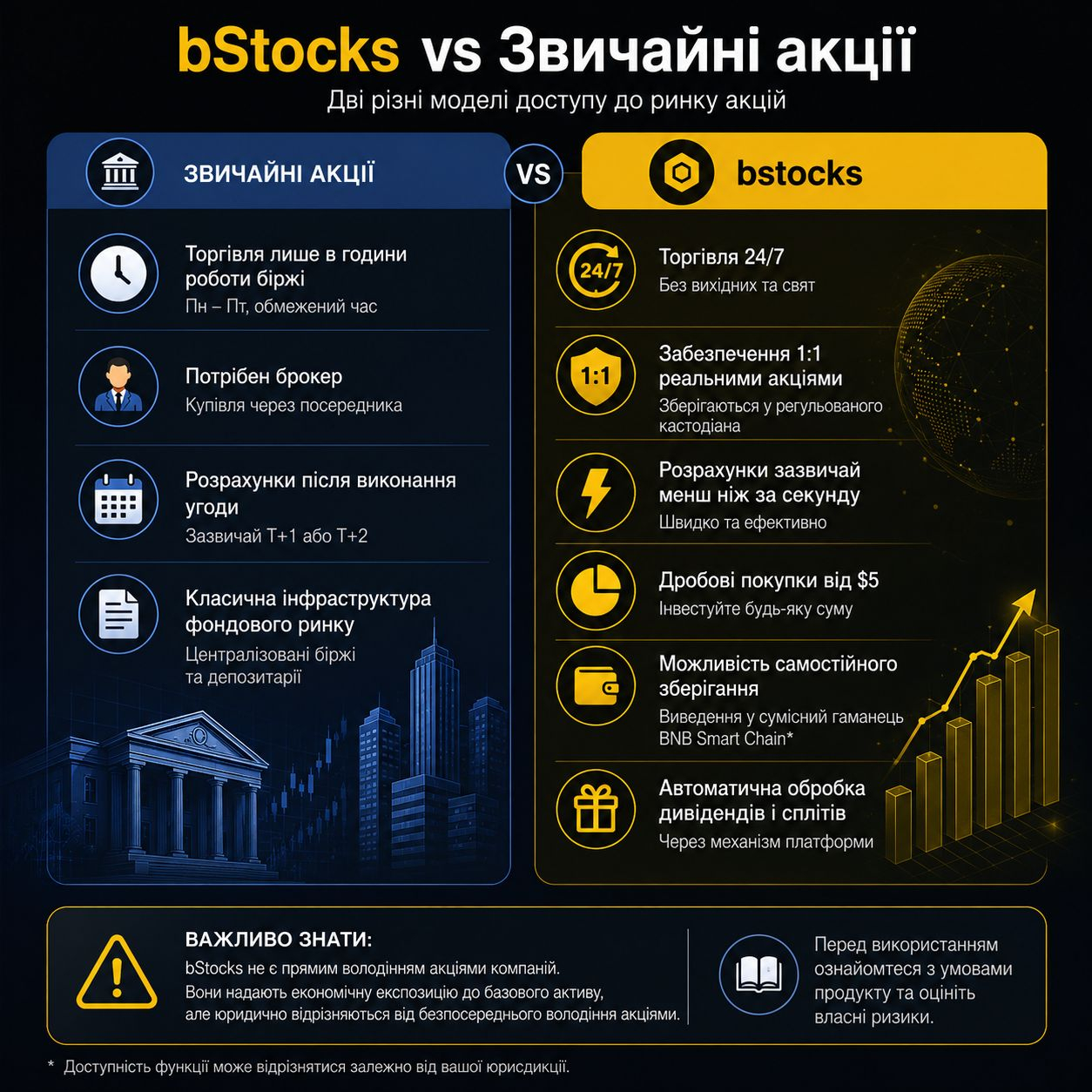
Чим bStocks відрізняються від звичайних акцій? Просте порівняння 👇
Коли я вперше почув про bStocks, подумав, що це просто «акції на блокчейні». Насправді є важливі відмінності.
📊 Звичайні акції • Купуються через брокера. • Торги проходять лише в години роботи фондового ринку. • Розрахунки займають певний час після угоди. • Зберігаються через інфраструктуру брокера або депозитарію.
🟡 bStocks • Це токенізовані цінні папери, забезпечені 1:1 відповідними акціями, які зберігаються у регульованого кастодіана. • Торгівля доступна 24/7 на Binance. • Доступні дробові покупки — від невеликих сум. • Токени можна вивести у сумісний гаманець BNB Smart Chain (для підтримуваних юрисдикцій). • Корпоративні дії, такі як спліти та дивіденди, обробляються автоматично відповідно до механізму платформи.
⚠️ Важливий нюанс: bStocks — це не пряме володіння акціями компанії. Вони надають економічну експозицію до базового активу, але юридично відрізняються від безпосереднього володіння акціями.
@BinanceCIS #bStocksCIS #SPCXB #bnb
Чим bStocks відрізняються від звичайних акцій? Просте порівняння 👇
Коли я вперше почув про bStocks, подумав, що це просто «акції на блокчейні». Насправді є важливі відмінності.
📊 Звичайні акції • Купуються через брокера. • Торги проходять лише в години роботи фондового ринку. • Розрахунки займають певний час після угоди. • Зберігаються через інфраструктуру брокера або депозитарію.
🟡 bStocks • Це токенізовані цінні папери, забезпечені 1:1 відповідними акціями, які зберігаються у регульованого кастодіана. • Торгівля доступна 24/7 на Binance. • Доступні дробові покупки — від невеликих сум. • Токени можна вивести у сумісний гаманець BNB Smart Chain (для підтримуваних юрисдикцій). • Корпоративні дії, такі як спліти та дивіденди, обробляються автоматично відповідно до механізму платформи.
⚠️ Важливий нюанс: bStocks — це не пряме володіння акціями компанії. Вони надають економічну експозицію до базового активу, але юридично відрізняються від безпосереднього володіння акціями.
@BinanceCIS #bStocksCIS #SPCXB #bnb
Коли я вперше почув про bStocks, подумав, що це просто «акції на блокчейні». Насправді є важливі відмінності.
📊 Звичайні акції • Купуються через брокера. • Торги проходять лише в години роботи фондового ринку. • Розрахунки займають певний час після угоди. • Зберігаються через інфраструктуру брокера або депозитарію.
🟡 bStocks • Це токенізовані цінні папери, забезпечені 1:1 відповідними акціями, які зберігаються у регульованого кастодіана. • Торгівля доступна 24/7 на Binance. • Доступні дробові покупки — від невеликих сум. • Токени можна вивести у сумісний гаманець BNB Smart Chain (для підтримуваних юрисдикцій). • Корпоративні дії, такі як спліти та дивіденди, обробляються автоматично відповідно до механізму платформи.
⚠️ Важливий нюанс: bStocks — це не пряме володіння акціями компанії. Вони надають економічну експозицію до базового активу, але юридично відрізняються від безпосереднього володіння акціями.
@BinanceCIS #bStocksCIS #SPCXB #bnb
1
68
·
--
翻訳参照
#grvt @grvt_io is an interesting project that aims to improve decentralized trading with a user-friendly experience and strong security. I'm excited to follow its development and learn more about the platform. #grvt
#grvt @grvt_io is an interesting project that aims to improve decentralized trading with a user-friendly experience and strong security. I'm excited to follow its development and learn more about the platform. #grvt
57
ログインして、さらにコンテンツを読む
厳選トピックで世界の暗号資産トレーダーの仲間入り
⚡️ 暗号資産に関する最新かつ有益な情報が見つかります。
💬 世界最大の暗号資産取引所から信頼されています。
👍 認証を受けたクリエイターから、有益なインサイトを得られます。
メール / 電話番号
トレンドトピック
FedRateWatch
閲覧回数 1.4M
6,619人が討論中
トレンドハッシュタグキャンペーンで「シェア&ウィン」交通(トラフィック)報酬を獲得しよう
✨トピック:FOMC 9月、「次のFRBの一手」は?
👉参加方法:
ハッシュタグ #FedRateWatch を付けて短い投稿または記事を投稿してください
以下の観点に基づいてコンテンツを作成してください:
- 8月のコアCPIは前月比0.3%上昇し、今週の25bp利上げの確率は現在約90%です。今週、利上げはあると思いますか?それは一時的なものですか、それともより長い利上げサイクルの始まりでしょうか?
- 利上げが実施された場合、BTC、テック株、ゴールドはどのように動きますか?強気(ブル)か弱気(ベア)か?
- 次の取引はどう計画していますか?取引共有ウィジェットを使って、BTC、株、またはゴールドの取引/保有を共有してください。
⏰キャンペーン期間:
- 2026-09-15 11:00 - 2026-09-17 3:00 UTC
🎁報酬:
- 上記のガイドラインを満たし、かつ100語を超える適格な投稿は審査され、抽選で500〜3,000ビューのランダムなトラフィック増加が付与される場合があります。投稿が選ばれた場合、フィードの事務局から通知が届きます。
- 記事がBinance Square Officialで特集されるチャンス
投稿のアイデアが必要ですか?トピックページ #FedRateWatch へアクセスするか、 Square Guide on How to Post for Better Reach をご覧ください。
Binance Square Official
·いいね:643件
·閲覧回数 1.6M
ZcashRises6%
閲覧回数 44,621
601人が討論中
XRPSinks10%
閲覧回数 30,294
393人が討論中