

Trend Finder
1.3k 投稿

Trend Finder
報告
ユーザーをブロック
Self Dependent Trader - Growth and Alpha Tracker - Navigating Crypto Chaos - Sharing strategies and daily insights
低高頻度トレーダー
6.6か月
15 フォロー
65 フォロワー
1.1K+ いいね
投稿
·
--
翻訳参照
The NEAR Absorption Phase: Mapping the US Core PCE ImpactThe $NEAR Absorption Phase: Mapping the US Core PCE Impact
The pre-dawn hours always offer the most clarity before the US Bureau of Economic Analysis drops the hammer. Right now, all eyes are on the US Core PCE Price Index arriving at 12:30 UTC. With the market consensus fixed at 2.6 percent year-over-year, the real catalyst will likely be the Personal Spending print, currently expected to hit 0.4 percent month-over-year. For those of us watching NEAR, this is more than just a macro event; it is a test of the supply structure we have seen building over the last quarter.
At a spot reference near 4.702, the tokenomics tell a story of maturity that the typical volatility hunters are missing. We are no longer in the phase where early venture unlocks dictate the daily trend. Instead, on-chain data shows a significant migration of the circulating float from exchange order books into institutional cold storage. This absorption is effectively drying up the sell-side liquidity, creating a scenario where any positive macro surprise could lead to a rapid expansion because there simply is not enough liquid supply to blunt a sudden influx of demand.
The correlation between the DXY and risk assets is the primary anchor here. If the PCE data confirms the Federal Reserve’s cooling inflation narrative, the tight hold on the current NEAR supply will act as a floor rather than a liability. I am specifically watching the spread between the circulating supply and the 24-hour volume as we approach the 6:00 PM IST mark. The exhaustion of the sell-side is evident, and the way the price is holding steady despite the macro uncertainty suggests a very different buyer profile than what we saw six months ago. Are you expecting a volatility spike to shake out the weak hands, or is the institutional floor already too solid to break?
#NFP #MacroData
The NEAR Absorption Phase: Mapping the US Core PCE Impact
The $NEAR Absorption Phase: Mapping the US Core PCE Impact
The pre-dawn hours always offer the most clarity before the US Bureau of Economic Analysis drops the hammer. Right now, all eyes are on the US Core PCE Price Index arriving at 12:30 UTC. With the market consensus fixed at 2.6 percent year-over-year, the real catalyst will likely be the Personal Spending print, currently expected to hit 0.4 percent month-over-year. For those of us watching NEAR, this is more than just a macro event; it is a test of the supply structure we have seen building over the last quarter.
At a spot reference near 4.702, the tokenomics tell a story of maturity that the typical volatility hunters are missing. We are no longer in the phase where early venture unlocks dictate the daily trend. Instead, on-chain data shows a significant migration of the circulating float from exchange order books into institutional cold storage. This absorption is effectively drying up the sell-side liquidity, creating a scenario where any positive macro surprise could lead to a rapid expansion because there simply is not enough liquid supply to blunt a sudden influx of demand.
The correlation between the DXY and risk assets is the primary anchor here. If the PCE data confirms the Federal Reserve’s cooling inflation narrative, the tight hold on the current NEAR supply will act as a floor rather than a liability. I am specifically watching the spread between the circulating supply and the 24-hour volume as we approach the 6:00 PM IST mark. The exhaustion of the sell-side is evident, and the way the price is holding steady despite the macro uncertainty suggests a very different buyer profile than what we saw six months ago. Are you expecting a volatility spike to shake out the weak hands, or is the institutional floor already too solid to break?
#NFP #MacroData

3
·
--
翻訳参照
Tokenized Bullion is Silently Outperforming: The Macro Thesis Behind PAXGTokenized Bullion is Silently Outperforming: The Macro Thesis Behind PAXG
The quiet hours of the morning are when structural shifts become obvious while the rest of the market hunts high-beta volatility. Tracking the divergence in tokenized real-world assets shows a significant macro realignment underway. With the spot reference for $PAXG hovering near 4059.3, we are watching a major real-world stress test of London Good Delivery vault backing in real time.
Physical gold spot prices testing 4140 per ounce alongside silver holding near 60.27 per ounce has driven the Gold/Silver Ratio to 68.5. This consolidation indicates that large-scale institutional capital is opting for on-chain commodity liquidity over the traditional friction and storage costs of physical bullion. As the Dollar Index displays ongoing fluctuations, the appetite for hard-backed digital assets is accelerating.
The mechanics of PAXG offer a unique framework compared to standard crypto assets. Because every single token represents a specific allocated gold bar in a London vault, the circulating float is strictly inelastic and tied 1:1 to physical supply. This structural design eliminates the dilution risks inherent in inflationary governance models. Institutional whales are recognizing that holding tokenized gold on-chain provides immediate DeFi composability, settlement efficiency, and 24/7 liquidity that traditional vaults simply cannot match. If this strategic accumulation continues, the rotation into tokenized commodities could redefine how modern portfolios manage macro downside risks.
Are you allocating to tokenized commodities as a long-term hedge against macro uncertainty, or are you still sticking strictly to crypto-native assets?
#Gold #Silver
Tokenized Bullion is Silently Outperforming: The Macro Thesis Behind PAXG
Tokenized Bullion is Silently Outperforming: The Macro Thesis Behind PAXG
The quiet hours of the morning are when structural shifts become obvious while the rest of the market hunts high-beta volatility. Tracking the divergence in tokenized real-world assets shows a significant macro realignment underway. With the spot reference for $PAXG hovering near 4059.3, we are watching a major real-world stress test of London Good Delivery vault backing in real time.
Physical gold spot prices testing 4140 per ounce alongside silver holding near 60.27 per ounce has driven the Gold/Silver Ratio to 68.5. This consolidation indicates that large-scale institutional capital is opting for on-chain commodity liquidity over the traditional friction and storage costs of physical bullion. As the Dollar Index displays ongoing fluctuations, the appetite for hard-backed digital assets is accelerating.
The mechanics of PAXG offer a unique framework compared to standard crypto assets. Because every single token represents a specific allocated gold bar in a London vault, the circulating float is strictly inelastic and tied 1:1 to physical supply. This structural design eliminates the dilution risks inherent in inflationary governance models. Institutional whales are recognizing that holding tokenized gold on-chain provides immediate DeFi composability, settlement efficiency, and 24/7 liquidity that traditional vaults simply cannot match. If this strategic accumulation continues, the rotation into tokenized commodities could redefine how modern portfolios manage macro downside risks.
Are you allocating to tokenized commodities as a long-term hedge against macro uncertainty, or are you still sticking strictly to crypto-native assets?
#Gold #Silver

17
·
--
翻訳参照
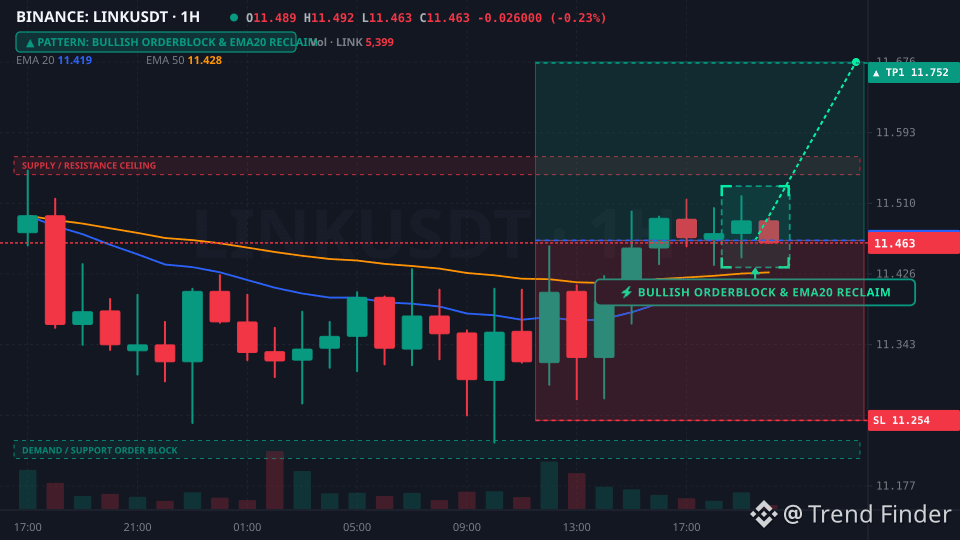
The silence of the early hours often exposes the cleanest footprints. Tracking a strategic shift in $LINK as the 1H Bullish Orderblock and EMA20 reclaim signal a clear trend flip. While $BTC remains stable, institutions are soaking up the lingering sell-side heat.
Entry: 11.466
SL: 11.254
TP1: 11.752
TP2: 11.943
#BinanceSquare #CryptoTrading #LINK
Entry: 11.466
SL: 11.254
TP1: 11.752
TP2: 11.943
#BinanceSquare #CryptoTrading #LINK
·
--
翻訳参照
It is 1:03 AM and while the rest of the market is fixated on the latest narrative flips...It is 1:03 AM and while the rest of the market is fixated on the latest narrative flips, I am staring at the supply delta behind $SOL. At a spot reference near 101.05, the narrative around Solana has shifted from pure meme-coin casino back to fundamental infrastructure scaling. What caught my eye today is the specific calibration of the circulating float versus the total supply. We are seeing a mature distribution phase where the initial venture unlocks have largely been absorbed by the secondary market, shifting control from early private rounds to on-chain decentralized liquidity pools.
Looking at the tokenomics, the FDV-to-circulating supply ratio is currently tightening as ecosystem utility expands through Solana-native liquid staking and protocol-level fee burns. Unlike the flash-in-the-pan new listings hitting the Binance Launchpool, SOL has transitioned into a utility-heavy asset where staking yield acts as a primary buffer against inflationary pressure. On-chain data shows smart money is moving away from purely speculative tokens and consolidating into core L1 layers where transaction throughput and active address growth are hitting new local highs.
The whale flow is telling a specific story: large wallets are not dumping into current spot strength. Instead, they are positioning for upcoming mainnet roadmap catalysts that focus on Firedancer and continued validator decentralization. The lack of heavy vesting cliffs in the immediate horizon is a major signal for institutional stability. When you strip away the noise of the last few weeks, it is clear that the network is sustaining a higher base level of capital efficiency than it was this time last year. The liquidity provisioning on Binance for SOL is now deep enough to handle institutional-grade volume without the extreme volatility seen in previous cycles. Does the current staking yield strike you as attractive enough to hold through the next volatility expansion, or are you looking for more aggressive growth in smaller ecosystem plays?
#BinanceLaunchpool #NewCryptoLaunch
It is 1:03 AM and while the rest of the market is fixated on the latest narrative flips...
It is 1:03 AM and while the rest of the market is fixated on the latest narrative flips, I am staring at the supply delta behind $SOL . At a spot reference near 101.05, the narrative around Solana has shifted from pure meme-coin casino back to fundamental infrastructure scaling. What caught my eye today is the specific calibration of the circulating float versus the total supply. We are seeing a mature distribution phase where the initial venture unlocks have largely been absorbed by the secondary market, shifting control from early private rounds to on-chain decentralized liquidity pools.
Looking at the tokenomics, the FDV-to-circulating supply ratio is currently tightening as ecosystem utility expands through Solana-native liquid staking and protocol-level fee burns. Unlike the flash-in-the-pan new listings hitting the Binance Launchpool, SOL has transitioned into a utility-heavy asset where staking yield acts as a primary buffer against inflationary pressure. On-chain data shows smart money is moving away from purely speculative tokens and consolidating into core L1 layers where transaction throughput and active address growth are hitting new local highs.
The whale flow is telling a specific story: large wallets are not dumping into current spot strength. Instead, they are positioning for upcoming mainnet roadmap catalysts that focus on Firedancer and continued validator decentralization. The lack of heavy vesting cliffs in the immediate horizon is a major signal for institutional stability. When you strip away the noise of the last few weeks, it is clear that the network is sustaining a higher base level of capital efficiency than it was this time last year. The liquidity provisioning on Binance for SOL is now deep enough to handle institutional-grade volume without the extreme volatility seen in previous cycles. Does the current staking yield strike you as attractive enough to hold through the next volatility expansion, or are you looking for more aggressive growth in smaller ecosystem plays?
#BinanceLaunchpool #NewCryptoLaunch
2
·
--
翻訳参照
Beyond Simple Rendering: How RENDER is Becoming the Backbone of the ZK-Scaling EraBeyond Simple Rendering: How $RENDER is Becoming the Backbone of the ZK-Scaling Era
While the broader market fixates on the 1.687 price level, a more profound architectural shift is occurring within the decentralized compute sector. We are witnessing the maturation of the Render Network from a simple marketplace for 3D artists into a critical infrastructure layer for the zero-knowledge (ZK) ecosystem. As ZK-rollups scale, the demand for massive, verifiable compute power is skyrocketing, and that is where the real value proposition for RENDER now lies.
Looking at the current circulating supply metrics, we see a significant reduction in sell-side pressure compared to previous cycles. The float has matured, and on-chain whale flows suggest that institutional players are quietly absorbing liquidity in anticipation of the burn-and-mint equilibrium shifts. Unlike traditional L2s that compete solely on transaction speed, the Render Network is positioning itself to solve the actual compute bottleneck required for ZK-proof generation. Ethereum L2 blob fees have optimized data storage, but they do not solve the raw hardware requirements for high-throughput proofs at scale.
The correlation between daily active addresses and compute demand shows that the network migration is more than just a technical update; it is a fundamental pivot toward modular data availability. By offloading heavy compute tasks from the primary settlement layers, the ecosystem gains a massive efficiency boost without sacrificing finality. The migration stats tell the story better than any hourly candle: the network is successfully transitioning into a heavy-duty engine room for the modular future. As RENDER integrates deeper into the ZK-compute layer, the utility shift becomes undeniable.
The real question for the coming months isn't about gas costs—it is about who provides the power to verify the next billion transactions. Will decentralized GPU networks eventually replace centralized cloud providers as the primary source for ZK-proof compute?
_
#Layer2 #BlockchainScaling
Beyond Simple Rendering: How RENDER is Becoming the Backbone of the ZK-Scaling Era
Beyond Simple Rendering: How $RENDER is Becoming the Backbone of the ZK-Scaling Era
While the broader market fixates on the 1.687 price level, a more profound architectural shift is occurring within the decentralized compute sector. We are witnessing the maturation of the Render Network from a simple marketplace for 3D artists into a critical infrastructure layer for the zero-knowledge (ZK) ecosystem. As ZK-rollups scale, the demand for massive, verifiable compute power is skyrocketing, and that is where the real value proposition for RENDER now lies.
Looking at the current circulating supply metrics, we see a significant reduction in sell-side pressure compared to previous cycles. The float has matured, and on-chain whale flows suggest that institutional players are quietly absorbing liquidity in anticipation of the burn-and-mint equilibrium shifts. Unlike traditional L2s that compete solely on transaction speed, the Render Network is positioning itself to solve the actual compute bottleneck required for ZK-proof generation. Ethereum L2 blob fees have optimized data storage, but they do not solve the raw hardware requirements for high-throughput proofs at scale.
The correlation between daily active addresses and compute demand shows that the network migration is more than just a technical update; it is a fundamental pivot toward modular data availability. By offloading heavy compute tasks from the primary settlement layers, the ecosystem gains a massive efficiency boost without sacrificing finality. The migration stats tell the story better than any hourly candle: the network is successfully transitioning into a heavy-duty engine room for the modular future. As RENDER integrates deeper into the ZK-compute layer, the utility shift becomes undeniable.
The real question for the coming months isn't about gas costs—it is about who provides the power to verify the next billion transactions. Will decentralized GPU networks eventually replace centralized cloud providers as the primary source for ZK-proof compute?
_
#Layer2 #BlockchainScaling
7
·
--
翻訳参照
DEX vs CEX Volume Shift & Liquid Restaking Expansion: Deep Dive Into On-Chain Capital E...DEX vs CEX Volume Shift & Liquid Restaking Expansion: Deep Dive Into On-Chain Capital Efficiency: My Honest Data Breakdown for $NEAR & BTC
While most of the timeline is reacting to every minor tick on NEAR near 4.597, I wanted to share the actual defi tvl, restaking, liquid staking & dex volume metrics I've been tracking on the desk today alongside BTC.
Here is the core context driving this sector right now:
Total Value Locked (TVL) Growth, DEX vs CEX Spot Volume Ratio, Liquid Staking/Restaking (LRT), Lending Utilization & Protocol Revenue. By comparing live orderflow and ecosystem retention against historical baselines, we get a much cleaner view of where institutional and smart-money capital is rotating.
Four key metrics I have on my screen today for NEAR:
• Chain & Protocol TVL Growth (7D / 30D %)
• DEX-to-CEX Volume Dominance & AMM Fee Generation
• Real Yield Protocol Revenue Distributed to Token Holders
• Liquid Staking & Restaking Capital Efficiency
The takeaway from the desk today is simple: follow where real liquidity and user retention are expanding around NEAR and BTC, and let the data confirm the trend.
What is the metric you are watching on NEAR right now? Drop a comment below 👇
#1 #BinanceSquare
DEX vs CEX Volume Shift & Liquid Restaking Expansion: Deep Dive Into On-Chain Capital E...
DEX vs CEX Volume Shift & Liquid Restaking Expansion: Deep Dive Into On-Chain Capital Efficiency: My Honest Data Breakdown for $NEAR & BTC
While most of the timeline is reacting to every minor tick on NEAR near 4.597, I wanted to share the actual defi tvl, restaking, liquid staking & dex volume metrics I've been tracking on the desk today alongside BTC.
Here is the core context driving this sector right now:
Total Value Locked (TVL) Growth, DEX vs CEX Spot Volume Ratio, Liquid Staking/Restaking (LRT), Lending Utilization & Protocol Revenue. By comparing live orderflow and ecosystem retention against historical baselines, we get a much cleaner view of where institutional and smart-money capital is rotating.
Four key metrics I have on my screen today for NEAR:
• Chain & Protocol TVL Growth (7D / 30D %)
• DEX-to-CEX Volume Dominance & AMM Fee Generation
• Real Yield Protocol Revenue Distributed to Token Holders
• Liquid Staking & Restaking Capital Efficiency
The takeaway from the desk today is simple: follow where real liquidity and user retention are expanding around NEAR and BTC, and let the data confirm the trend.
What is the metric you are watching on NEAR right now? Drop a comment below 👇
#1 #BinanceSquare
1
4
·
--
翻訳参照
Gold & Silver Macro Intelligence: Central Bank Accumulation, DXY Inversion & Tokenized ...Gold & Silver Macro Intelligence: Central Bank Accumulation, DXY Inversion & Tokenized Bullion ($PAXG)
While crypto markets move fast, institutional capital continues to anchor itself in monetary metals. Today I sat down to review the macro data connecting physical bullion, the Dollar Index (DXY), and tokenized commodities like PAXG alongside BTC.
Here is where the key commodity metrics stand:
• Spot Bullion Reference: Spot Gold holding firm around 4,140/oz while Spot Silver trades near 60.27/oz.
• Tokenized Bullion on Binance: PAXG provides 1:1 London Good Delivery physical gold backing with instant 24/7 on-chain liquidity.
• Gold/Silver Ratio (GSR): Currently consolidating near 68.5, indicating sustained industrial demand for silver alongside monetary gold accumulation.
• Sovereign Reserves: Global central banks have maintained net monthly bullion purchases for consecutive quarters, treating hard assets as a balance-sheet anchor.
The correlation to watch closely is real interest rates and the US Dollar Index (DXY). Historically, sustained pullbacks in real yields unlock expansion cycles across both hard commodities and risk-on assets like BTC and BTC.
Do you keep physical gold/silver or PAXG as a macro hedge in your portfolio, or are you 100% crypto? Drop your thoughts below 👇
#BinanceSquare #Gold
Gold & Silver Macro Intelligence: Central Bank Accumulation, DXY Inversion & Tokenized ...
Gold & Silver Macro Intelligence: Central Bank Accumulation, DXY Inversion & Tokenized Bullion ($PAXG )
While crypto markets move fast, institutional capital continues to anchor itself in monetary metals. Today I sat down to review the macro data connecting physical bullion, the Dollar Index (DXY), and tokenized commodities like PAXG alongside BTC.
Here is where the key commodity metrics stand:
• Spot Bullion Reference: Spot Gold holding firm around 4,140/oz while Spot Silver trades near 60.27/oz.
• Tokenized Bullion on Binance: PAXG provides 1:1 London Good Delivery physical gold backing with instant 24/7 on-chain liquidity.
• Gold/Silver Ratio (GSR): Currently consolidating near 68.5, indicating sustained industrial demand for silver alongside monetary gold accumulation.
• Sovereign Reserves: Global central banks have maintained net monthly bullion purchases for consecutive quarters, treating hard assets as a balance-sheet anchor.
The correlation to watch closely is real interest rates and the US Dollar Index (DXY). Historically, sustained pullbacks in real yields unlock expansion cycles across both hard commodities and risk-on assets like BTC and BTC.
Do you keep physical gold/silver or PAXG as a macro hedge in your portfolio, or are you 100% crypto? Drop your thoughts below 👇
#BinanceSquare #Gold

1
9
·
--
翻訳参照
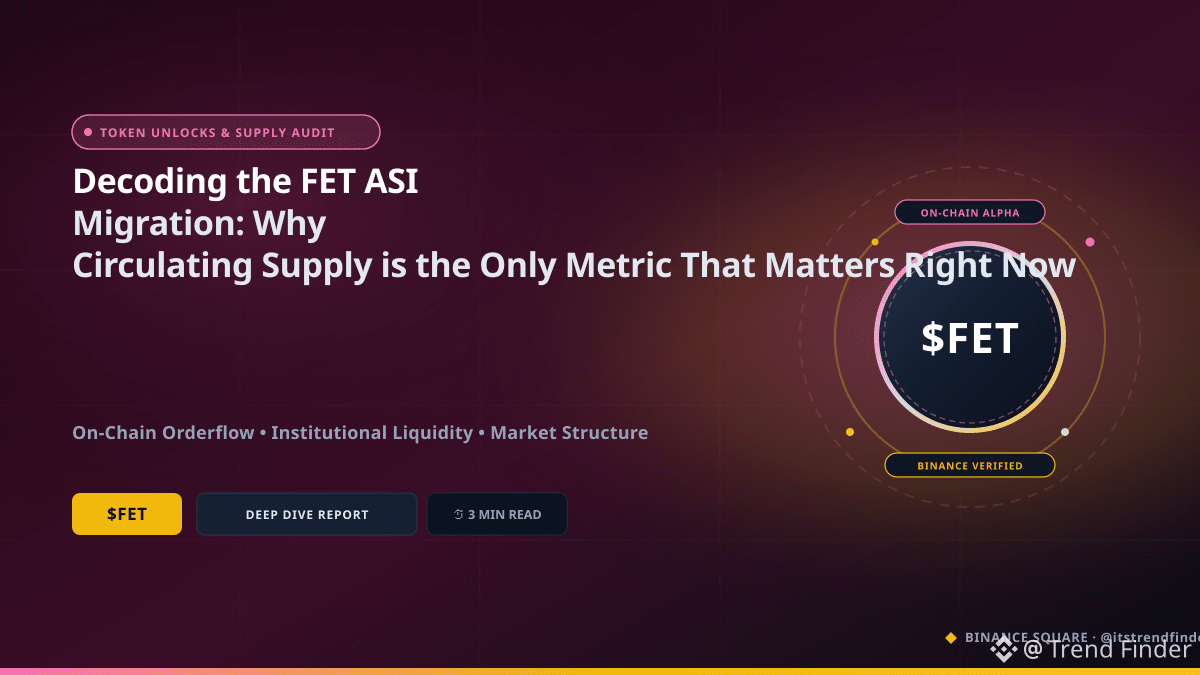
Decoding the FET ASI Migration: Why Circulating Supply is the Only Metric That Matters ...Decoding the FET ASI Migration: Why Circulating Supply is the Only Metric That Matters Right Now
The transition into the Artificial Superintelligence Alliance has fundamentally rewritten the supply-side rules for $FET. While the market gets distracted by daily volatility, the real story is buried in the smart contract balance of the migration treasury. We are currently navigating a phase where approximately 2.6 billion tokens are in circulation, but that number is far more nuanced than a simple supply cap.
The aggressive vesting cliffs that used to haunt early investors have mostly been navigated, but the shift to the ASI token structure introduces fresh distribution milestones. What is particularly interesting right now is the institutional rotation. We are seeing large holders move away from speculative spot positions and into long-term infrastructure staking. With over 30 percent of the circulating supply currently locked in staking contracts, the immediate sell-side pressure from earlier venture rounds is being effectively neutralized by protocol utility.
Unlike chains that rely on a hard-coded burn, the FET model is tethered to network demand and developer grants. The net inflation rate is currently fighting against a rising staking ratio, which creates a fascinating tug-of-war for liquidity. We are approaching a structural decoupling where the emission rate is finally being outpaced by ecosystem adoption. This is exactly the kind of maturity you want to see before the next macro cycle kicks into gear.
The focus for any serious researcher should be on the migration treasury flow rather than the short-term noise. The legacy dilution concerns are fading, but the speed at which the remaining supply is absorbed by the ASI ecosystem will determine the next leg of this trend. Do you think the current staking lockup is enough to offset the remaining linear unlocks, or are you waiting for more aggressive burn mechanics to be implemented for FET?
#TokenUnlocks #Tokenomics
Decoding the FET ASI Migration: Why Circulating Supply is the Only Metric That Matters ...
Decoding the FET ASI Migration: Why Circulating Supply is the Only Metric That Matters Right Now
The transition into the Artificial Superintelligence Alliance has fundamentally rewritten the supply-side rules for $FET . While the market gets distracted by daily volatility, the real story is buried in the smart contract balance of the migration treasury. We are currently navigating a phase where approximately 2.6 billion tokens are in circulation, but that number is far more nuanced than a simple supply cap.
The aggressive vesting cliffs that used to haunt early investors have mostly been navigated, but the shift to the ASI token structure introduces fresh distribution milestones. What is particularly interesting right now is the institutional rotation. We are seeing large holders move away from speculative spot positions and into long-term infrastructure staking. With over 30 percent of the circulating supply currently locked in staking contracts, the immediate sell-side pressure from earlier venture rounds is being effectively neutralized by protocol utility.
Unlike chains that rely on a hard-coded burn, the FET model is tethered to network demand and developer grants. The net inflation rate is currently fighting against a rising staking ratio, which creates a fascinating tug-of-war for liquidity. We are approaching a structural decoupling where the emission rate is finally being outpaced by ecosystem adoption. This is exactly the kind of maturity you want to see before the next macro cycle kicks into gear.
The focus for any serious researcher should be on the migration treasury flow rather than the short-term noise. The legacy dilution concerns are fading, but the speed at which the remaining supply is absorbed by the ASI ecosystem will determine the next leg of this trend. Do you think the current staking lockup is enough to offset the remaining linear unlocks, or are you waiting for more aggressive burn mechanics to be implemented for FET?
#TokenUnlocks #Tokenomics
1
12
·
--
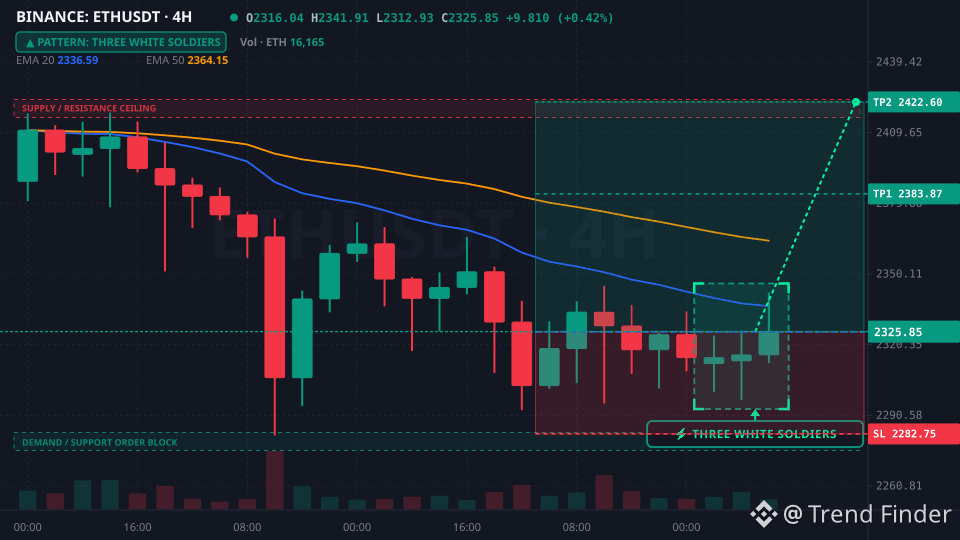
積極的なスポットの買い吸収により、$ETH は2316のEMA20サポートから力強く反発し、$BTC が市場の安定を支えています。4時間足の「三羽烏」ブレイクアウトは、機関投資家の需要が売り注文の流動性を吸収し、RSIが56のなか55ポイント上昇したことを裏付けています。
エントリー:2325.78 | 損切り:2282.75 | 利確1:2383.87 | 利確2:2422.6
#BinanceSquare #CryptoTrading #ETH
積極的なスポットの買い吸収により、$ETH は2316のEMA20サポートから力強く反発し、$BTC が市場の安定を支えています。4時間足の「三羽烏」ブレイクアウトは、機関投資家の需要が売り注文の流動性を吸収し、RSIが56のなか55ポイント上昇したことを裏付けています。
エントリー:2325.78 | 損切り:2282.75 | 利確1:2383.87 | 利確2:2422.6
#BinanceSquare #CryptoTrading #ETH
エントリー:2325.78 | 損切り:2282.75 | 利確1:2383.87 | 利確2:2422.6
#BinanceSquare #CryptoTrading #ETH
1
1
·
--
翻訳参照
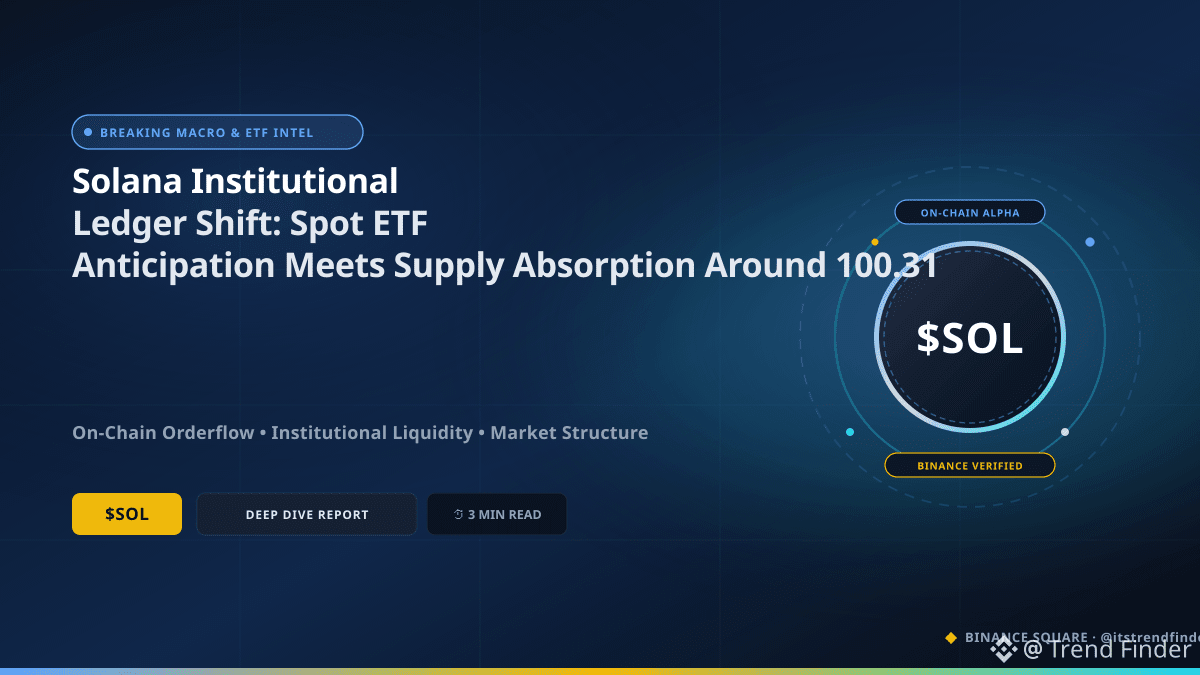
Solana Institutional Ledger Shift: Spot ETF Anticipation Meets Supply Absorption Around...Solana Institutional Ledger Shift: Spot ETF Anticipation Meets Supply Absorption Around 100.31
The silent rotation of institutional desks into the Solana ecosystem is reaching a critical inflection point that short-term momentum traders are completely overlooking. While the broader market stays glued to immediate volatility, on-chain metrics for $SOL show a massive migration of liquid supply into long-term validator staking, drastically tightening the active float while spot hovers near 100.31 USD.
Looking closely at ledger dynamics, large-scale entities are systematically soaking up unlock tranches off-exchange to prevent market slippage. Instead of taking liquidity exits into order books, institutional accounts are routing yield into decentralized settlement protocols and governance locks. This persistent supply absorption closely mirrors the structural accumulation phase we documented prior to the spot ETF approvals for BTC.
Regulatory tailwinds are accelerating this institutional desk migration. Standardized European frameworks under MiCA and updated custodial clarity across primary Asian financial hubs have cleared the compliance hurdles for major asset managers. As institutional treasuries seek high-throughput layer-one networks to complement their core allocation models, the push for a dedicated spot ETF is shifting from a speculative narrative into a calculated structural transition.
When off-exchange spot absorption accelerates while circulating float actively contracts, the order books become structurally illiquid on the ask side. The underlying metrics suggest long-term capital is building positions for the next macro expansion phase rather than playing short-term swings.
Are you seeing the same institutional accumulation patterns in on-chain validator data right now compared to earlier ETF approval cycles?
#BitcoinETF #CryptoNews
Solana Institutional Ledger Shift: Spot ETF Anticipation Meets Supply Absorption Around...
Solana Institutional Ledger Shift: Spot ETF Anticipation Meets Supply Absorption Around 100.31
The silent rotation of institutional desks into the Solana ecosystem is reaching a critical inflection point that short-term momentum traders are completely overlooking. While the broader market stays glued to immediate volatility, on-chain metrics for $SOL show a massive migration of liquid supply into long-term validator staking, drastically tightening the active float while spot hovers near 100.31 USD.
Looking closely at ledger dynamics, large-scale entities are systematically soaking up unlock tranches off-exchange to prevent market slippage. Instead of taking liquidity exits into order books, institutional accounts are routing yield into decentralized settlement protocols and governance locks. This persistent supply absorption closely mirrors the structural accumulation phase we documented prior to the spot ETF approvals for BTC.
Regulatory tailwinds are accelerating this institutional desk migration. Standardized European frameworks under MiCA and updated custodial clarity across primary Asian financial hubs have cleared the compliance hurdles for major asset managers. As institutional treasuries seek high-throughput layer-one networks to complement their core allocation models, the push for a dedicated spot ETF is shifting from a speculative narrative into a calculated structural transition.
When off-exchange spot absorption accelerates while circulating float actively contracts, the order books become structurally illiquid on the ask side. The underlying metrics suggest long-term capital is building positions for the next macro expansion phase rather than playing short-term swings.
Are you seeing the same institutional accumulation patterns in on-chain validator data right now compared to earlier ETF approval cycles?
#BitcoinETF #CryptoNews
1
1
·
--
SUIの構造的な底堅さと、FRBが重視するインフレ指標
SUIは現在、既知のトークン発行スケジュールと、特定の機関投資家による吸収との間で、興味深いせめぎ合いの渦中にあります。0.9023付近では、米経済分析局が12:30 UTCにPCEデータを発表する前に、市場が微妙な均衡を織り込んでいる様子が見られます。コアPCEの前年比に関する市場予想の中央値は2.6%ですが、$SUI のような高ベータ資産にとって本当の焦点は、個人消費支出の前月比予想である0.4%です。
SUIの流通供給量は、特に27億トークンの節目に近づくにつれて、たびたび議論の的となってきました。通常、こうしたロック解除の局面では予測可能な上値抵抗が生まれますが、直近48時間のオンチェーンデータには変化が見られます。大口ウォレットは本格的な蓄積局面に入り、インフレ指標が予想を下回った場合のリスクオンへの転換を事実上先回りしています。直近のFOMCの慎重姿勢とCPIの低下傾向を踏まえると、PCEが軟調な結果になれば、FRBが難しいかじ取りをうまく乗り切ったという見方が裏付けられ、レイヤー1の流動性に大きな追い風となるでしょう。
BTCとの相関はここ数週間で最も高く、SUIがもはや独自のエコシステム関連ニュースだけで取引されているのではなく、分散型インフラの成長を映すマクロ指標になっていることを示しています。消費者の活動が引き続き活発でありながら、物価上昇の再燃につながっていないことが消費データで示されれば、2.5~4%のボラティリティ拡大が見込まれます。今後数時間は、中央集権型取引所からの純流出を注意深く見ています。現在の供給吸収がPCE発表時の変動を乗り切れば、年初のトークン発行に起因する構造的な弱気圧力は、ようやく過去のものとなるかもしれません。
12:30 UTCのデータ発表を前に、皆さんはどのようにエクスポージャーを調整していますか?それとも、まずは発表直後の反応が落ち着くのを待ちますか?
_
#NFP #MacroData

1
4
·
--
静かな蓄積は、暗号資産版Twitterのトレンド欄に載ることはめったにありません。しかし私のチームは、現物価格が11.328付近で推移するなか、$LINK に興味深い乖離が生じていることを追跡しています。個人投資家のセンチメントが短期的な値動きに気を取られている一方で、オンチェーン台帳は、機関投資家のポジショニングと供給の構造的な吸収について、まったく異なる状況を示しています。
スマートマネーの保有層を詳しく見ると、1,000〜10,000トークンを保有するウォレットは、最近のすべての保ち合い局面を通じて、着実にポジションを拡大しています。この継続的な買い入れは、30日間の中央集権型取引所への純流入額にも表れており、一貫した流出が続いています。トークンは取引所の注文板から積極的に移動し、直接コールドストレージへ送られており、マーケットメーカーがすぐに利用できる流動性の高い供給量を大きく減らしています。
こうした動きは、長期保有者と短期投機筋のあいだで進む、より広範な変化に直結しています。長期保有者(LTH)と短期保有者(STH)の供給比率を見ると、流通供給量のうち休眠状態に入る割合が拡大しています。これは、分散型オラクル基盤や現実資産のトークン化において、ネットワークが果たす基盤的な役割への強い確信を反映しています。取引所の準備金が枯渇する一方で中規模のウォレットが積極的に蓄積を進めれば、マクロ需要が急増した際に典型的な供給ショックが起きるための条件が、静かに整っていきます。
現在、ほかのオラクル関連資産やインフラ関連資産でも、同様の構造的な蓄積パターンが見られますか? それとも、この動きはLINK特有のものでしょうか?
#OnChainData #WhaleAlert

1
1
·
--
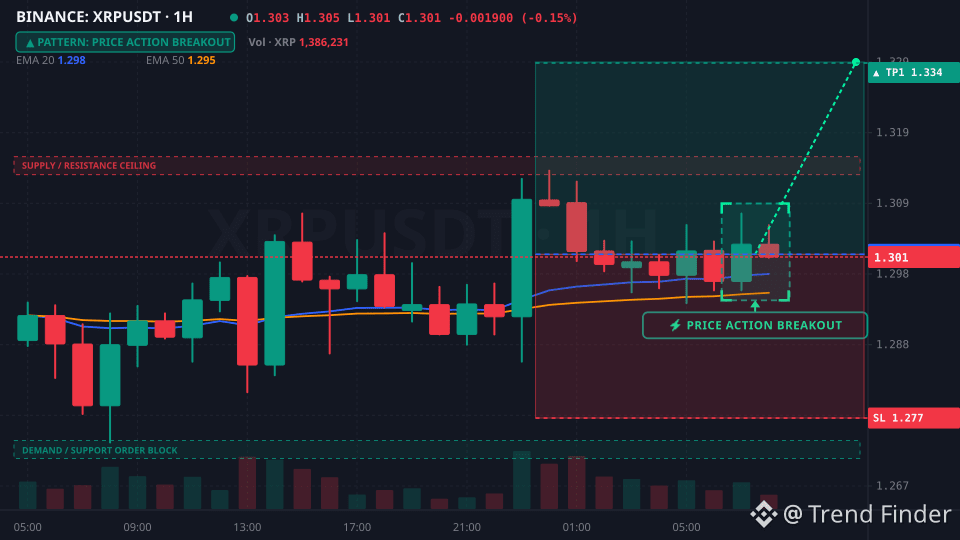
1.29付近では、遅れて参入したショート勢が機関投資家によって大規模に一掃され、$XRP が1時間足のブレイクアウトをさらに伸ばす道が開かれました。EMA20でのリアルタイムの吸収が、トレンドが加速局面に移行していることを示す一方、$BTC は安定を保っています。
エントリー:1.3011
SL:1.277
TP1:1.334
TP2:1.355
_
#BinanceSquare #CryptoTrading #XRP
1.29付近では、遅れて参入したショート勢が機関投資家によって大規模に一掃され、$XRP が1時間足のブレイクアウトをさらに伸ばす道が開かれました。EMA20でのリアルタイムの吸収が、トレンドが加速局面に移行していることを示す一方、$BTC は安定を保っています。
エントリー:1.3011
SL:1.277
TP1:1.334
TP2:1.355
_
#BinanceSquare #CryptoTrading #XRP
エントリー:1.3011
SL:1.277
TP1:1.334
TP2:1.355
_
#BinanceSquare #CryptoTrading #XRP
1
3
·
--
翻訳参照
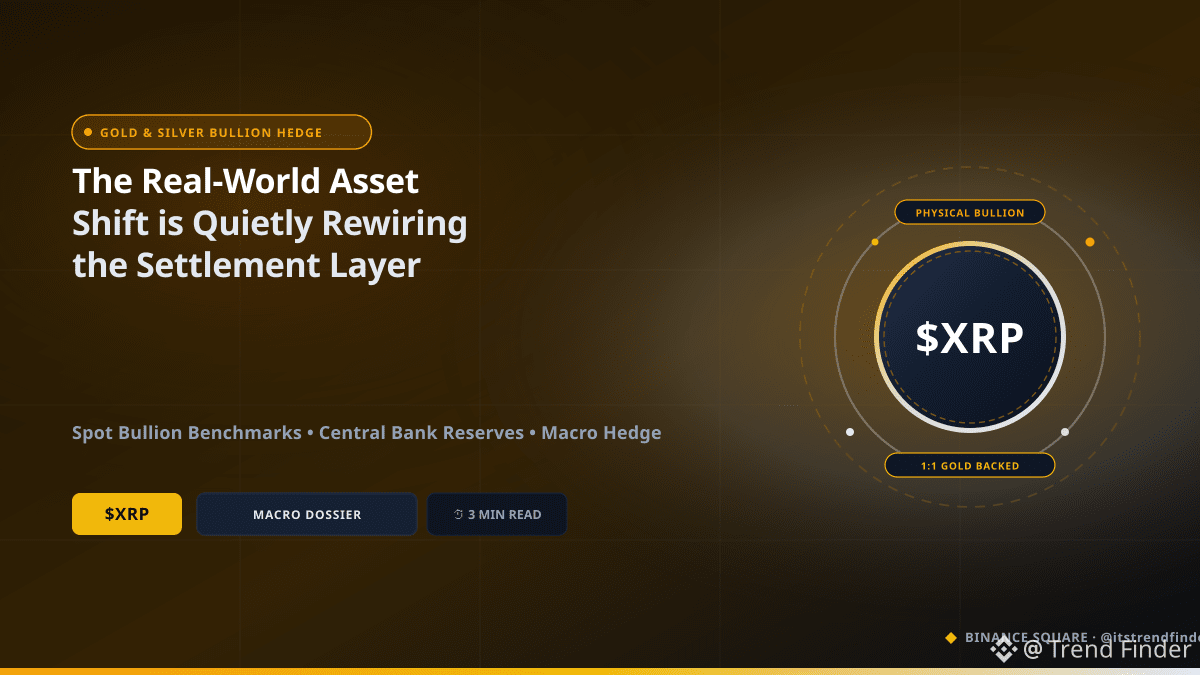
The Real-World Asset Shift is Quietly Rewiring the Settlement LayerThe Real-World Asset Shift is Quietly Rewiring the Settlement Layer
The intersection of physical bullion and distributed ledgers has moved from a niche experiment to a structural necessity. While most of the noise surrounds retail speculation, the actual move into on-chain liquidity for precious metals is reaching a critical inflection point. Gold is currently holding near 4140 per ounce and Silver is steady at 60.27, but the metric to watch is the gold-silver ratio at 68.5. Historically, this level of compression precedes major volatility that forces capital toward more efficient settlement rails.
This is where $XRP enters the picture. The narrative is shifting toward institutional-grade tokenization, specifically using the ledger to handle the clearing of assets like PAXG. By integrating London Good Delivery gold with 24/7 liquidity on Binance, we are seeing the end of the traditional two-day settlement lag. With XRP trading near a spot reference of 1.301, the network is proving it can handle the throughput required for these high-value settlements. Central banks have been aggressively accumulating reserves, and the smart money is clearly looking for a way to move that value without the friction of legacy banking hours.
Recent whale flows show a distinct preference for assets with high-velocity utility. When you consider the circulating float of XRP and the sheer volume of the total addressable market for institutional gold, the infrastructure gap becomes obvious. Tokenizing a physical bar and moving it across borders instantly isnt just a tech demo anymore; it is the blueprint for the next financial architecture. We are watching the liquidity bottleneck break in real-time as physical commodities find permanent homes on the ledger. This isnt about chasing green candles anymore; it is about who owns the rails for global value transfer.
Are you looking at tokenized gold as a hedge for your long-term position, or do you prefer holding the physical metal alongside your crypto?
#Gold #Silver
The Real-World Asset Shift is Quietly Rewiring the Settlement Layer
The Real-World Asset Shift is Quietly Rewiring the Settlement Layer
The intersection of physical bullion and distributed ledgers has moved from a niche experiment to a structural necessity. While most of the noise surrounds retail speculation, the actual move into on-chain liquidity for precious metals is reaching a critical inflection point. Gold is currently holding near 4140 per ounce and Silver is steady at 60.27, but the metric to watch is the gold-silver ratio at 68.5. Historically, this level of compression precedes major volatility that forces capital toward more efficient settlement rails.
This is where $XRP enters the picture. The narrative is shifting toward institutional-grade tokenization, specifically using the ledger to handle the clearing of assets like PAXG. By integrating London Good Delivery gold with 24/7 liquidity on Binance, we are seeing the end of the traditional two-day settlement lag. With XRP trading near a spot reference of 1.301, the network is proving it can handle the throughput required for these high-value settlements. Central banks have been aggressively accumulating reserves, and the smart money is clearly looking for a way to move that value without the friction of legacy banking hours.
Recent whale flows show a distinct preference for assets with high-velocity utility. When you consider the circulating float of XRP and the sheer volume of the total addressable market for institutional gold, the infrastructure gap becomes obvious. Tokenizing a physical bar and moving it across borders instantly isnt just a tech demo anymore; it is the blueprint for the next financial architecture. We are watching the liquidity bottleneck break in real-time as physical commodities find permanent homes on the ledger. This isnt about chasing green candles anymore; it is about who owns the rails for global value transfer.
Are you looking at tokenized gold as a hedge for your long-term position, or do you prefer holding the physical metal alongside your crypto?
#Gold #Silver
1
6
·
--
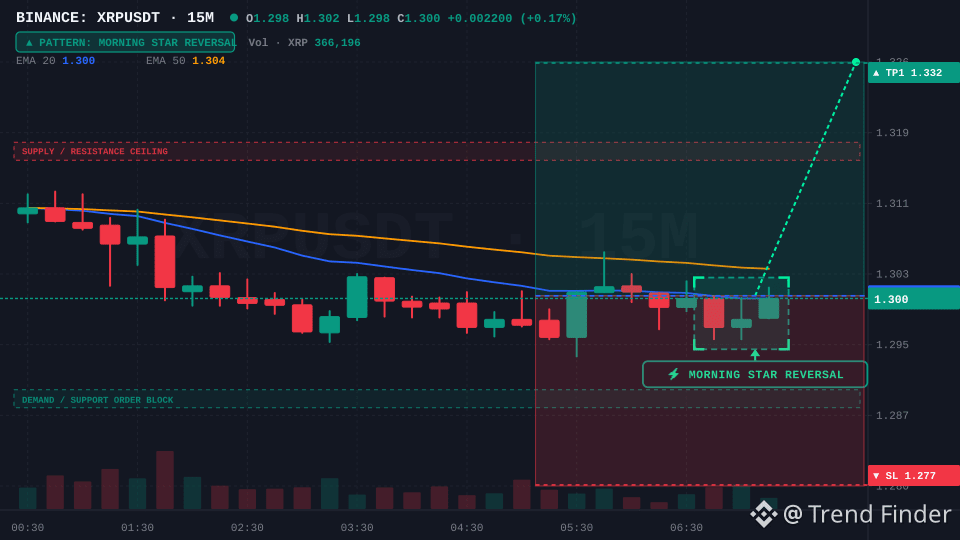
マーケットメーカーは明らかに$XRP の次の局面を先読みしており、売り側の流動性は枯渇しつつあります。$BTC の安定は、この15分足モーニングスターリバーサルが展開するのに最適な環境を提供しています。これらの水準での強いスポット吸収は、局所的な底値が形成されたことを示唆しています。
エントリー:1.3006 | ストップロス:1.277 | テイクプロフィット1:1.332 | テイクプロフィット2:1.354
#BinanceSquare #CryptoTrading #XRP
マーケットメーカーは明らかに$XRP の次の局面を先読みしており、売り側の流動性は枯渇しつつあります。$BTC の安定は、この15分足モーニングスターリバーサルが展開するのに最適な環境を提供しています。これらの水準での強いスポット吸収は、局所的な底値が形成されたことを示唆しています。
エントリー:1.3006 | ストップロス:1.277 | テイクプロフィット1:1.332 | テイクプロフィット2:1.354
#BinanceSquare #CryptoTrading #XRP
エントリー:1.3006 | ストップロス:1.277 | テイクプロフィット1:1.332 | テイクプロフィット2:1.354
#BinanceSquare #CryptoTrading #XRP
1
5
·
--
翻訳参照
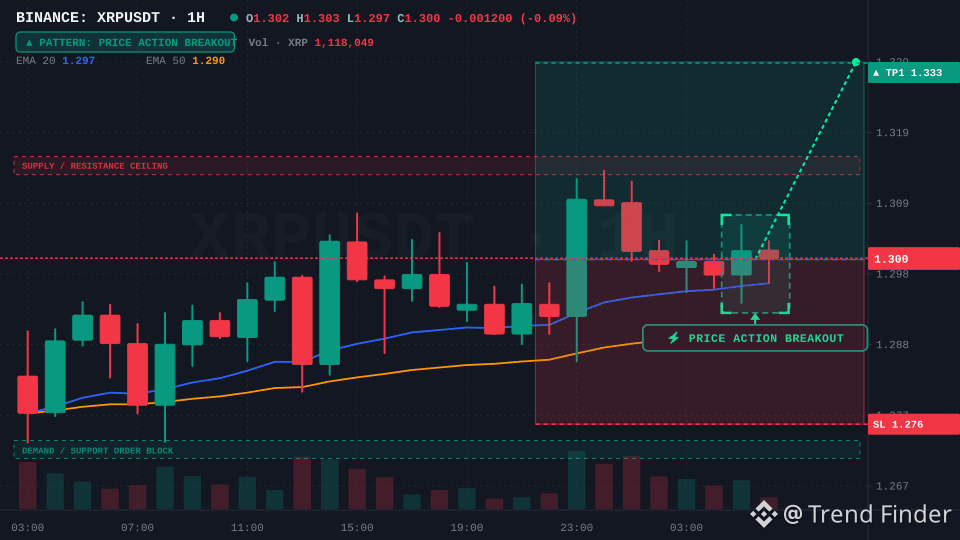
Institutional bid walls are eating up overhead supply on $XRP right alongside $BTC, mirroring true calm strength. This 1H breakout confirms a major shift in momentum as liquidity gaps clear above.
Entry: 1.3003
SL: 1.276
TP1: 1.333
TP2: 1.355
#BinanceSquare #CryptoTrading #XRP
Institutional bid walls are eating up overhead supply on $XRP right alongside $BTC , mirroring true calm strength. This 1H breakout confirms a major shift in momentum as liquidity gaps clear above.
Entry: 1.3003
SL: 1.276
TP1: 1.333
TP2: 1.355
#BinanceSquare #CryptoTrading #XRP
Entry: 1.3003
SL: 1.276
TP1: 1.333
TP2: 1.355
#BinanceSquare #CryptoTrading #XRP
1
2
·
--
翻訳参照
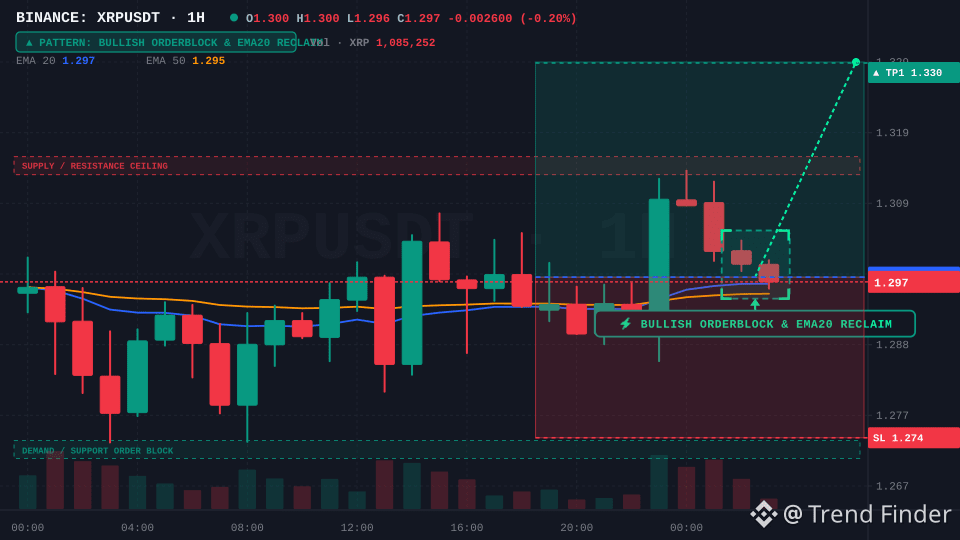
$XRP is showing real muscle as aggressive spot absorption swallows sellers right off the 1.2977 support while $BTC stabilizes. 1H EMA20 reclaim confirms the shift.
Entry: 1.2977
SL: 1.274
TP1: 1.33
TP2: 1.351
#BinanceSquare #CryptoTrading #XRP
$XRP is showing real muscle as aggressive spot absorption swallows sellers right off the 1.2977 support while $BTC stabilizes. 1H EMA20 reclaim confirms the shift.
Entry: 1.2977
SL: 1.274
TP1: 1.33
TP2: 1.351
#BinanceSquare #CryptoTrading #XRP
Entry: 1.2977
SL: 1.274
TP1: 1.33
TP2: 1.351
#BinanceSquare #CryptoTrading #XRP
1
29
ログインして、さらにコンテンツを読む
厳選トピックで世界の暗号資産トレーダーの仲間入り
⚡️ 暗号資産に関する最新かつ有益な情報が見つかります。
💬 世界最大の暗号資産取引所から信頼されています。
👍 認証を受けたクリエイターから、有益なインサイトを得られます。
メール / 電話番号