

E C H O
285 投稿

E C H O
報告
ユーザーをブロック
62 フォロー
5.7K+ フォロワー
397 いいね
投稿
すべて
ライブ
·
--
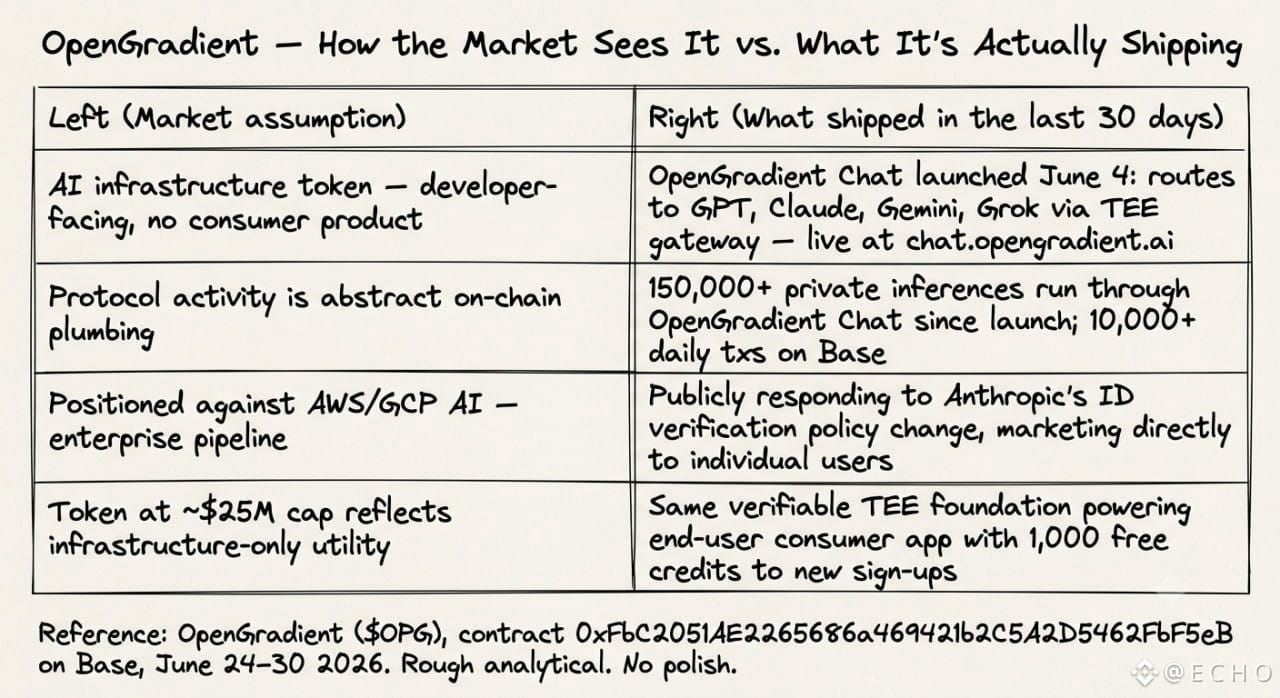
この作業中に私を凍りつかせたのは、ネットワークの数字ではありませんでした——それは今週、@OpenGradient のアカウントからの投稿で、Anthropicの更新されたプライバシーポリシーに言及していたのです。彼らは、Anthropicがユーザーに対して政府発行のID、写真、そして生体データを求める権利を今や留保していると述べていました。そしてその下に、OpenGradient Chatへのリンクが貼られていました。$OPG #OPG
ちょっと待って——それ、現実世界でのポジショニングとしてかなり鋭い話です。OpenGradient Chatは、TEEで隔離されたゲートウェイ経由で、Oblivious HTTPの匿名化を用いてGPT、Claude、Gemini、Grokへルーティングします。彼らは6月4日にこれを公開しました。それ以来、アカウントによれば、このプラットフォーム上で150,000+の推論が非公開のまま実行されているとのことです——すべてハードウェアのエンクレーブ(安全領域)の中で行われ、ログは取られていません。そして、その背後にあるネットワークは、今週Base上で別途10,000+の日次取引を処理しました。コントラクト 0xFbC2051AE2265686a469421b2C5A2D5462FbF5eB、静かに刻み続けていたのです。
洞察は、プライバシー面そのものではありません。要するに、市場が$OPG を、純粋なインフラ・トークンのように評価していて、時価総額は約$25Mなのに対し、チームは表ではひそかに、日々多くの人が使っているアプリと直接競合する消費者向けAIプロダクトを投入している——という点です。これは別のカテゴリのプロジェクトです。ほとんどの「AIインフラ」トークンはエンドユーザーに触れません。こちらは今、chat.opengradient.aiにあります。
正直、消費者レイヤーが生成する推論需要が、そのまま意味のある形でトークンへ流れ込むのか、それとも、上にゆるく載っている別のサーフェスなのか、どちらなのか見当がつきません。でも、いずれにせよ——そのどちらかのシナリオは、もう一方とはまったく別物です。
この作業中に私を凍りつかせたのは、ネットワークの数字ではありませんでした——それは今週、@OpenGradient のアカウントからの投稿で、Anthropicの更新されたプライバシーポリシーに言及していたのです。彼らは、Anthropicがユーザーに対して政府発行のID、写真、そして生体データを求める権利を今や留保していると述べていました。そしてその下に、OpenGradient Chatへのリンクが貼られていました。$OPG #OPG
ちょっと待って——それ、現実世界でのポジショニングとしてかなり鋭い話です。OpenGradient Chatは、TEEで隔離されたゲートウェイ経由で、Oblivious HTTPの匿名化を用いてGPT、Claude、Gemini、Grokへルーティングします。彼らは6月4日にこれを公開しました。それ以来、アカウントによれば、このプラットフォーム上で150,000+の推論が非公開のまま実行されているとのことです——すべてハードウェアのエンクレーブ(安全領域)の中で行われ、ログは取られていません。そして、その背後にあるネットワークは、今週Base上で別途10,000+の日次取引を処理しました。コントラクト 0xFbC2051AE2265686a469421b2C5A2D5462FbF5eB、静かに刻み続けていたのです。
洞察は、プライバシー面そのものではありません。要するに、市場が$OPG を、純粋なインフラ・トークンのように評価していて、時価総額は約$25Mなのに対し、チームは表ではひそかに、日々多くの人が使っているアプリと直接競合する消費者向けAIプロダクトを投入している——という点です。これは別のカテゴリのプロジェクトです。ほとんどの「AIインフラ」トークンはエンドユーザーに触れません。こちらは今、chat.opengradient.aiにあります。
正直、消費者レイヤーが生成する推論需要が、そのまま意味のある形でトークンへ流れ込むのか、それとも、上にゆるく載っている別のサーフェスなのか、どちらなのか見当がつきません。でも、いずれにせよ——そのどちらかのシナリオは、もう一方とはまったく別物です。
ちょっと待って——それ、現実世界でのポジショニングとしてかなり鋭い話です。OpenGradient Chatは、TEEで隔離されたゲートウェイ経由で、Oblivious HTTPの匿名化を用いてGPT、Claude、Gemini、Grokへルーティングします。彼らは6月4日にこれを公開しました。それ以来、アカウントによれば、このプラットフォーム上で150,000+の推論が非公開のまま実行されているとのことです——すべてハードウェアのエンクレーブ(安全領域)の中で行われ、ログは取られていません。そして、その背後にあるネットワークは、今週Base上で別途10,000+の日次取引を処理しました。コントラクト 0xFbC2051AE2265686a469421b2C5A2D5462FbF5eB、静かに刻み続けていたのです。
洞察は、プライバシー面そのものではありません。要するに、市場が$OPG を、純粋なインフラ・トークンのように評価していて、時価総額は約$25Mなのに対し、チームは表ではひそかに、日々多くの人が使っているアプリと直接競合する消費者向けAIプロダクトを投入している——という点です。これは別のカテゴリのプロジェクトです。ほとんどの「AIインフラ」トークンはエンドユーザーに触れません。こちらは今、chat.opengradient.aiにあります。
正直、消費者レイヤーが生成する推論需要が、そのまま意味のある形でトークンへ流れ込むのか、それとも、上にゆるく載っている別のサーフェスなのか、どちらなのか見当がつきません。でも、いずれにせよ——そのどちらかのシナリオは、もう一方とはまったく別物です。
7
1
243
·
--
SDKドキュメントの中で「小さな違和感」が、このCreatorPadの作業を私の足を止めました。OpenGradient $OPG @OpenGradient #OPG に時間を費やし、結局ずっと戻ってしまったのが「SDK自体に組み込まれている決済(サトルメント)モードの選択肢」です。
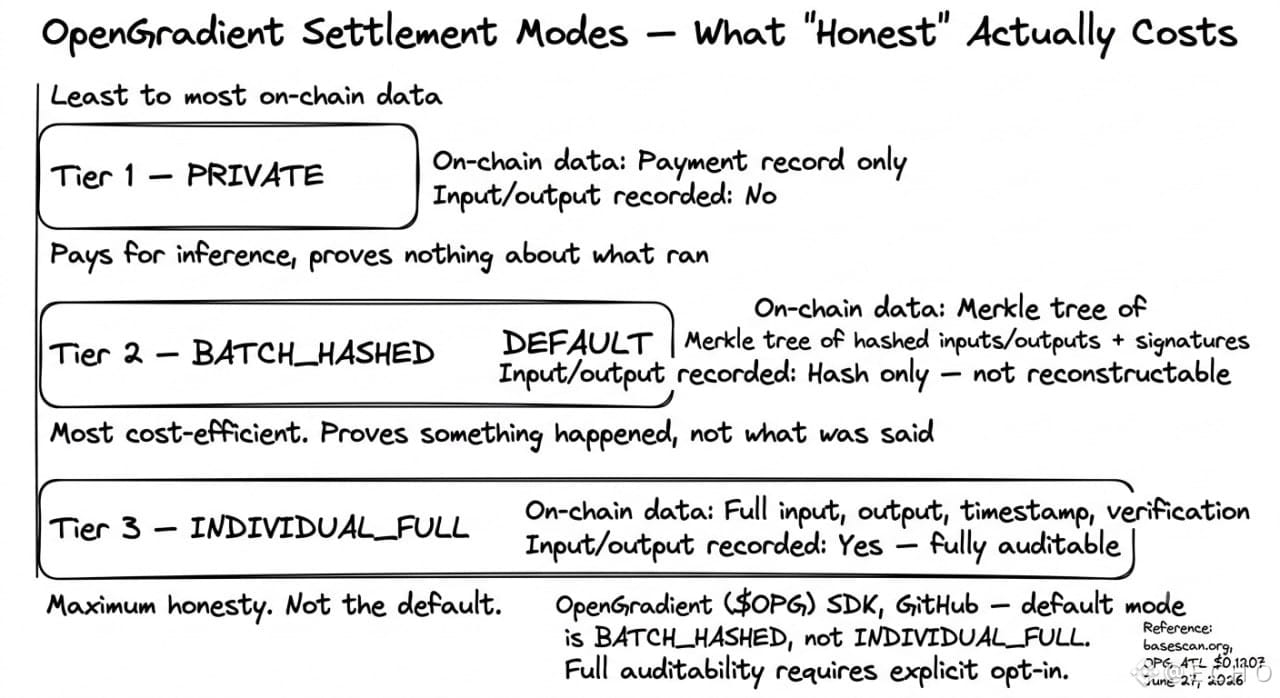
3つのモードがあります。PRIVATE — 支払いが記録されるだけで、それ以外は何もありません。BATCH_HASHED — 入力と出力のハッシュをMerkleツリーに束ね、コスト効率が高く、しかも注目すべきはデフォルトであること。INDIVIDUAL_FULL — 入力・出力・タイムスタンプ・検証まですべてオンチェーンに書き込まれ、最大の監査可能性を提供します。この階層が重要です。
「正直」なモード――つまり、依頼された内容と返ってきた内容の両方を実際に記録するモード――は、開発者が何も求めずに手に入れられるものではありません。開発者が得るのはハッシュ化されたバッチで、何かが起きたことは証明できますが、あなたが再構築できるのは何だったのか、までは分からないのです。
では、OpenGradientはAIをより正直にするのでしょうか? 技術的には「はい」— たとえBATCH_HASHEDであっても、中央集権的なAPI呼び出しよりは追跡可能です。ですが、「何もない場合より正直」と「モデルが言ったことを実際に監査できる」は、別の主張です。しかも、$OPG は6月27日にbasescan.org経由で史上最安値の$0.1207まで下げたのち、現在は約$0.133です。つまり、市場は「完全な監査可能性」をプレミアムとして値付けしているとは明らかに言えません。そしてデフォルト設定が示しているのは、多くの開発者が安い方を選ぶことをプロジェクトが分かっている、ということです。
私はそれが妥当なUX上の妥協なのか、それとも完全な透明性にはコストがかかりすぎるのでデフォルトにはしない、という静かな譲歩なのか、行ったり来たり考え続けました。
ただ、まだどちらかに完全には決めきれていません。
SDKドキュメントの中で「小さな違和感」が、このCreatorPadの作業を私の足を止めました。OpenGradient $OPG @OpenGradient #OPG に時間を費やし、結局ずっと戻ってしまったのが「SDK自体に組み込まれている決済(サトルメント)モードの選択肢」です。
3つのモードがあります。PRIVATE — 支払いが記録されるだけで、それ以外は何もありません。BATCH_HASHED — 入力と出力のハッシュをMerkleツリーに束ね、コスト効率が高く、しかも注目すべきはデフォルトであること。INDIVIDUAL_FULL — 入力・出力・タイムスタンプ・検証まですべてオンチェーンに書き込まれ、最大の監査可能性を提供します。この階層が重要です。
「正直」なモード――つまり、依頼された内容と返ってきた内容の両方を実際に記録するモード――は、開発者が何も求めずに手に入れられるものではありません。開発者が得るのはハッシュ化されたバッチで、何かが起きたことは証明できますが、あなたが再構築できるのは何だったのか、までは分からないのです。
では、OpenGradientはAIをより正直にするのでしょうか? 技術的には「はい」— たとえBATCH_HASHEDであっても、中央集権的なAPI呼び出しよりは追跡可能です。ですが、「何もない場合より正直」と「モデルが言ったことを実際に監査できる」は、別の主張です。しかも、$OPG は6月27日にbasescan.org経由で史上最安値の$0.1207まで下げたのち、現在は約$0.133です。つまり、市場は「完全な監査可能性」をプレミアムとして値付けしているとは明らかに言えません。そしてデフォルト設定が示しているのは、多くの開発者が安い方を選ぶことをプロジェクトが分かっている、ということです。
私はそれが妥当なUX上の妥協なのか、それとも完全な透明性にはコストがかかりすぎるのでデフォルトにはしない、という静かな譲歩なのか、行ったり来たり考え続けました。
ただ、まだどちらかに完全には決めきれていません。
3つのモードがあります。PRIVATE — 支払いが記録されるだけで、それ以外は何もありません。BATCH_HASHED — 入力と出力のハッシュをMerkleツリーに束ね、コスト効率が高く、しかも注目すべきはデフォルトであること。INDIVIDUAL_FULL — 入力・出力・タイムスタンプ・検証まですべてオンチェーンに書き込まれ、最大の監査可能性を提供します。この階層が重要です。
「正直」なモード――つまり、依頼された内容と返ってきた内容の両方を実際に記録するモード――は、開発者が何も求めずに手に入れられるものではありません。開発者が得るのはハッシュ化されたバッチで、何かが起きたことは証明できますが、あなたが再構築できるのは何だったのか、までは分からないのです。
では、OpenGradientはAIをより正直にするのでしょうか? 技術的には「はい」— たとえBATCH_HASHEDであっても、中央集権的なAPI呼び出しよりは追跡可能です。ですが、「何もない場合より正直」と「モデルが言ったことを実際に監査できる」は、別の主張です。しかも、$OPG は6月27日にbasescan.org経由で史上最安値の$0.1207まで下げたのち、現在は約$0.133です。つまり、市場は「完全な監査可能性」をプレミアムとして値付けしているとは明らかに言えません。そしてデフォルト設定が示しているのは、多くの開発者が安い方を選ぶことをプロジェクトが分かっている、ということです。
私はそれが妥当なUX上の妥協なのか、それとも完全な透明性にはコストがかかりすぎるのでデフォルトにはしない、という静かな譲歩なのか、行ったり来たり考え続けました。
ただ、まだどちらかに完全には決めきれていません。
5
2
347
·
--
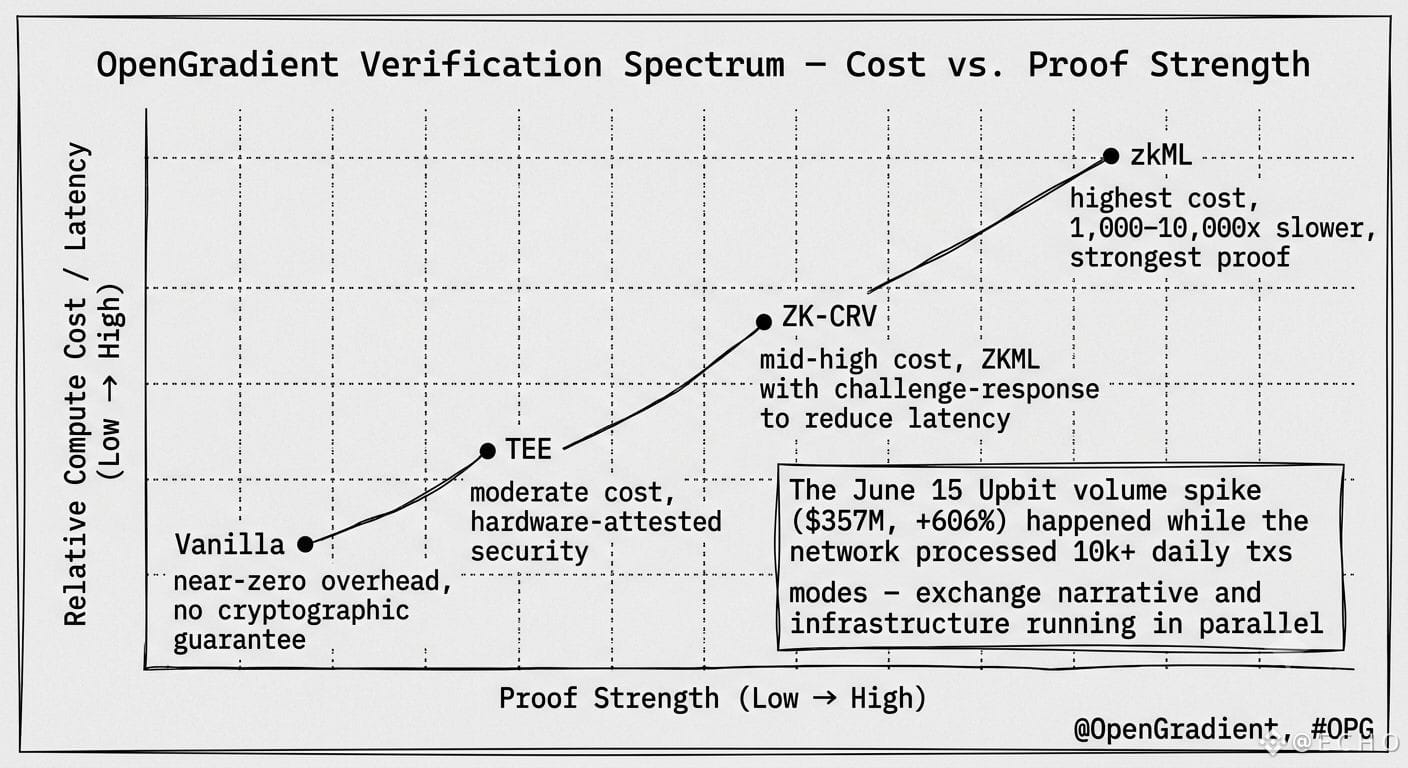
私が立ち止まったのは——ピッチでもトークン指標でもなく——「検証メニュー」でした。OpenGradientでは、推論ごとにどれくらいの証明を求めるかを選べます:zkML、TEE、ZK-CRV、あるいはほぼオーバーヘッドのバニラ。@OpenGradient はこれを開発者の設計上の選択として位置づけています。実際には、「検証可能な世界」がどんなものかを語る言明です——均一でも、最大主義でもない。つまりスペクトラムです。$OPG #OPG
6月15日のUpbit上場は、24時間の出来高を$357.69Mまで押し上げました——当時の時価総額$39Mのトークンに対する606%の急騰です。これは純粋に、取引所の物語が生む勢いです。ですが一方でオンチェーンでは、ネットワークはそのままのことをし続けました:毎日10,000+件のトランザクションが 4.2M+ 件のブロックに対して決済され、何かが台帳に触れる前に、コンセンサスにコミットする証明が走っています。上場によるノイズと、インフラのシグナルが並行して動いており、完全に切り離されていました。
私はずっと、「検証可能」とは規模において何を意味するのだろう、と考えていました。狙いは、すべてが zkML の証明を得ることではありません——zkML は 1,000〜10,000倍遅く、コストもかかるからです。狙いは、適切なものが、適切なコストで検証されること。DeFiのリスクモデルには重い証明が必要になります。カジュアルなエージェントのクエリなら、そうでないかもしれない。アーキテクチャは、その判断を直接エンコードしています。
ふむ……しかし、どの推論に重い証明を与えるべきかを決めるのは誰でしょう?そして、その選定レイヤーは最終的に、独自の信頼問題になってしまわないでしょうか?
私が立ち止まったのは——ピッチでもトークン指標でもなく——「検証メニュー」でした。OpenGradientでは、推論ごとにどれくらいの証明を求めるかを選べます:zkML、TEE、ZK-CRV、あるいはほぼオーバーヘッドのバニラ。@OpenGradient はこれを開発者の設計上の選択として位置づけています。実際には、「検証可能な世界」がどんなものかを語る言明です——均一でも、最大主義でもない。つまりスペクトラムです。$OPG #OPG
6月15日のUpbit上場は、24時間の出来高を$357.69Mまで押し上げました——当時の時価総額$39Mのトークンに対する606%の急騰です。これは純粋に、取引所の物語が生む勢いです。ですが一方でオンチェーンでは、ネットワークはそのままのことをし続けました:毎日10,000+件のトランザクションが 4.2M+ 件のブロックに対して決済され、何かが台帳に触れる前に、コンセンサスにコミットする証明が走っています。上場によるノイズと、インフラのシグナルが並行して動いており、完全に切り離されていました。
私はずっと、「検証可能」とは規模において何を意味するのだろう、と考えていました。狙いは、すべてが zkML の証明を得ることではありません——zkML は 1,000〜10,000倍遅く、コストもかかるからです。狙いは、適切なものが、適切なコストで検証されること。DeFiのリスクモデルには重い証明が必要になります。カジュアルなエージェントのクエリなら、そうでないかもしれない。アーキテクチャは、その判断を直接エンコードしています。
ふむ……しかし、どの推論に重い証明を与えるべきかを決めるのは誰でしょう?そして、その選定レイヤーは最終的に、独自の信頼問題になってしまわないでしょうか?
6月15日のUpbit上場は、24時間の出来高を$357.69Mまで押し上げました——当時の時価総額$39Mのトークンに対する606%の急騰です。これは純粋に、取引所の物語が生む勢いです。ですが一方でオンチェーンでは、ネットワークはそのままのことをし続けました:毎日10,000+件のトランザクションが 4.2M+ 件のブロックに対して決済され、何かが台帳に触れる前に、コンセンサスにコミットする証明が走っています。上場によるノイズと、インフラのシグナルが並行して動いており、完全に切り離されていました。
私はずっと、「検証可能」とは規模において何を意味するのだろう、と考えていました。狙いは、すべてが zkML の証明を得ることではありません——zkML は 1,000〜10,000倍遅く、コストもかかるからです。狙いは、適切なものが、適切なコストで検証されること。DeFiのリスクモデルには重い証明が必要になります。カジュアルなエージェントのクエリなら、そうでないかもしれない。アーキテクチャは、その判断を直接エンコードしています。
ふむ……しかし、どの推論に重い証明を与えるべきかを決めるのは誰でしょう?そして、その選定レイヤーは最終的に、独自の信頼問題になってしまわないでしょうか?
5
2
152
·
--
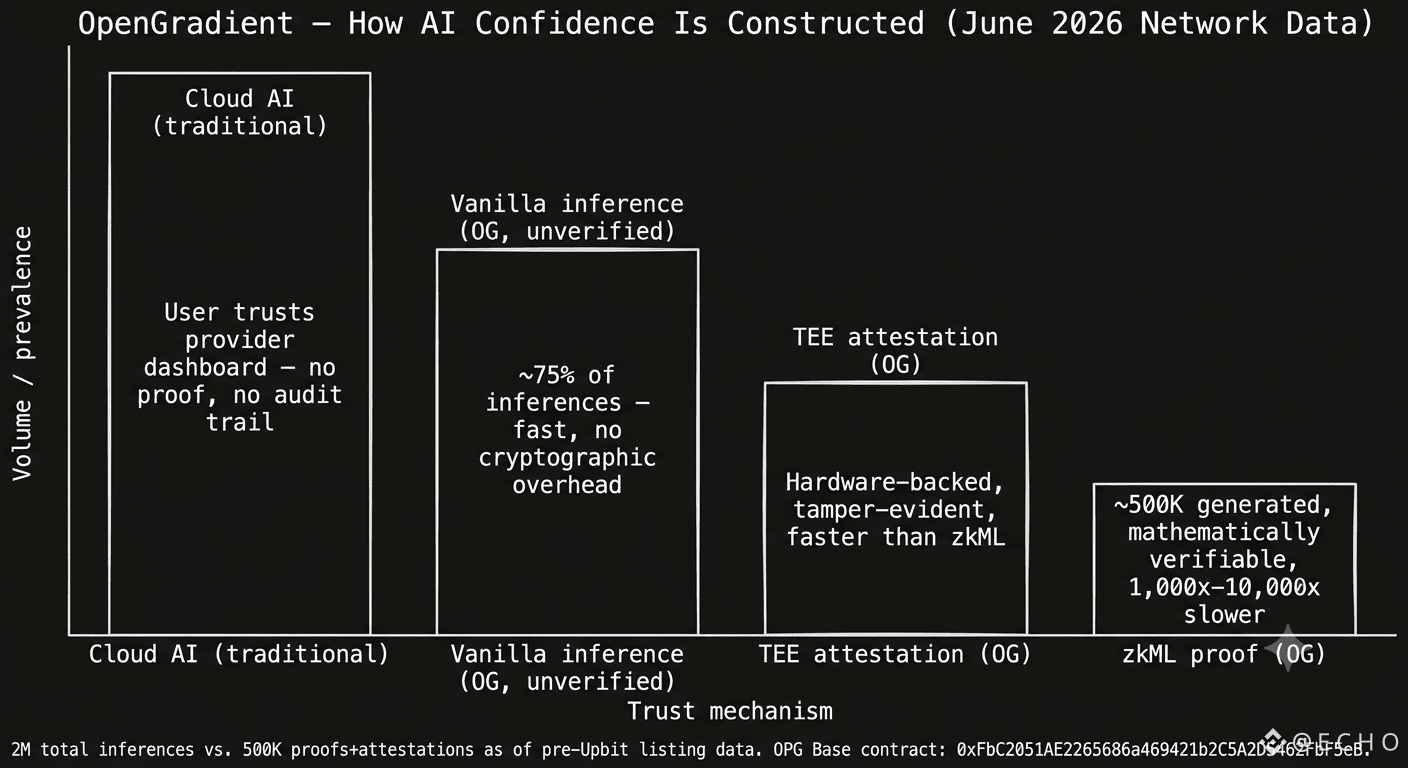
私が作業の途中で実際に止まったのは、OpenGradient のドキュメントのアーキテクチャページを読んだことだった。具体的には、この一文だ。「2/3+ のバリデータが同意したら、そのプローフが台帳に永久記録される」。これは約束ではない。稼働中のコンセンサスメカニズムだ。@OpenGradient はすでに 500,000+ の zkML プルーフと TEE アテステーションを生成しており、検証可能な推論が 200 万件にまたがっている — そして、その山のどこかに、AI 業界がまだクラウドからは作れない“公開された確信のための論拠”がある。$OPG #OPG
今月だけでも、その数字が持つ質感が増してくる。6月15日、Upbit の上場によって 24 時間の出来高が $357M に達した — 1 回のセッションで時価総額の 9 倍以上だ。価格は $0.3064 で始まってから $0.1815 まで下がり、急激に乱高下した。だが、その下にあるネットワークは一度も瞬きしなかった。日次のオンチェーン取引は 10,000 を超えた。4.2 million ブロックが生成された。上に乗っかる投機の層とは無関係に、機械は動き続けた。
公開された確信の観点に関する話というわけだ。ほとんどの AI システムは、あなたにダッシュボードを信じるよう求める。OpenGradient は、バリデータに“プルーフに同意する”ことを求める — そして、その不一致そのものがオンチェーンで可視化されるはずだ。私はそのことを作業中も踏まえて考え続けた。AI の出力に対する、実に異なる認識論的構造だ。
…しかし、厄介な転換点がある。2百万件の推論にまたがる 500K プルーフということは、約 4 回に 1 回の推論だけが完全な扱いを受けた、ということだ。残りの 3 回を、検証する必要がないと誰が決めたのだろう?
私が作業の途中で実際に止まったのは、OpenGradient のドキュメントのアーキテクチャページを読んだことだった。具体的には、この一文だ。「2/3+ のバリデータが同意したら、そのプローフが台帳に永久記録される」。これは約束ではない。稼働中のコンセンサスメカニズムだ。@OpenGradient はすでに 500,000+ の zkML プルーフと TEE アテステーションを生成しており、検証可能な推論が 200 万件にまたがっている — そして、その山のどこかに、AI 業界がまだクラウドからは作れない“公開された確信のための論拠”がある。$OPG #OPG
今月だけでも、その数字が持つ質感が増してくる。6月15日、Upbit の上場によって 24 時間の出来高が $357M に達した — 1 回のセッションで時価総額の 9 倍以上だ。価格は $0.3064 で始まってから $0.1815 まで下がり、急激に乱高下した。だが、その下にあるネットワークは一度も瞬きしなかった。日次のオンチェーン取引は 10,000 を超えた。4.2 million ブロックが生成された。上に乗っかる投機の層とは無関係に、機械は動き続けた。
公開された確信の観点に関する話というわけだ。ほとんどの AI システムは、あなたにダッシュボードを信じるよう求める。OpenGradient は、バリデータに“プルーフに同意する”ことを求める — そして、その不一致そのものがオンチェーンで可視化されるはずだ。私はそのことを作業中も踏まえて考え続けた。AI の出力に対する、実に異なる認識論的構造だ。
…しかし、厄介な転換点がある。2百万件の推論にまたがる 500K プルーフということは、約 4 回に 1 回の推論だけが完全な扱いを受けた、ということだ。残りの 3 回を、検証する必要がないと誰が決めたのだろう?
今月だけでも、その数字が持つ質感が増してくる。6月15日、Upbit の上場によって 24 時間の出来高が $357M に達した — 1 回のセッションで時価総額の 9 倍以上だ。価格は $0.3064 で始まってから $0.1815 まで下がり、急激に乱高下した。だが、その下にあるネットワークは一度も瞬きしなかった。日次のオンチェーン取引は 10,000 を超えた。4.2 million ブロックが生成された。上に乗っかる投機の層とは無関係に、機械は動き続けた。
公開された確信の観点に関する話というわけだ。ほとんどの AI システムは、あなたにダッシュボードを信じるよう求める。OpenGradient は、バリデータに“プルーフに同意する”ことを求める — そして、その不一致そのものがオンチェーンで可視化されるはずだ。私はそのことを作業中も踏まえて考え続けた。AI の出力に対する、実に異なる認識論的構造だ。
…しかし、厄介な転換点がある。2百万件の推論にまたがる 500K プルーフということは、約 4 回に 1 回の推論だけが完全な扱いを受けた、ということだ。残りの 3 回を、検証する必要がないと誰が決めたのだろう?
6
1
148
·
--
何かが作業の途中で私を止めた。企業AIのピッチではなく、その下で実際に構築されているものだ。
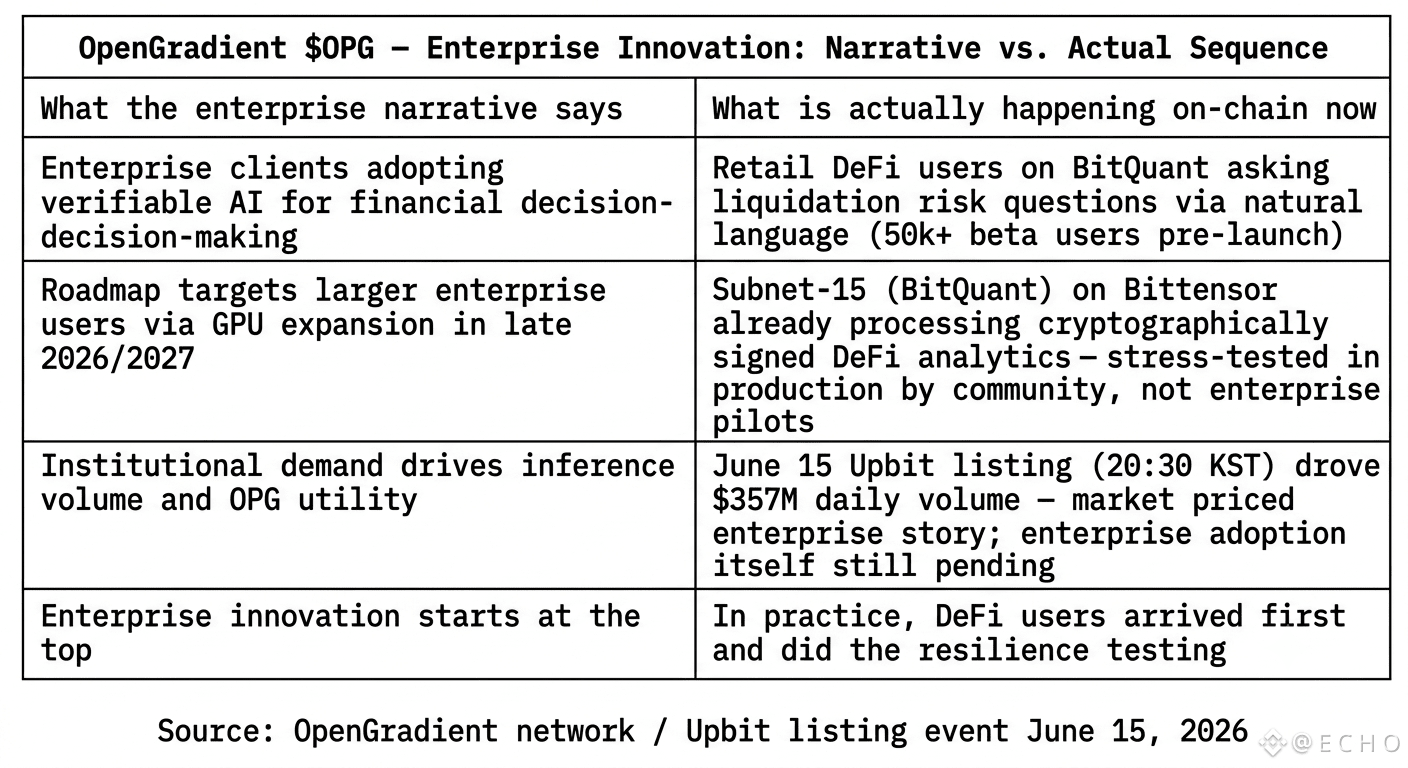
OpenGradient $OPG @OpenGradient #OPG は、企業の革新に向けてマーケティングを行っている — 検証可能なAIによるDeFi、金融エージェント、監査可能な推論。ロードマップの言語は、より大きな企業ユーザーをターゲットにした2027年のGPU拡張を指し示している。しかし、今実際に動いているライブアプリケーションはBitQuantで、Bittensorのサブネット15上で動作するオープンソースのDeFi量子エージェントで、"もしSOLが20%下がったら、どのプールが清算されるのか?"という自然言語のリスククエリを処理し、暗号的に署名された回答を返している。これは企業向けの取引ではない。デジェンズのために、そしてデジェンズによって構築された許可のないツールだ。
企業がこのインフラモデルについて見逃しているシーケンスがこれだ。真剣な機関のユースケース — 金融リスクのための監査可能なAI決定 — は、実際の清算質問を投げかける小売DeFiユーザーによって野外でストレステストされているので、調達チームが触れる前に。BitQuantのローンチ前の50k+ベータユーザーは、実質的にそれを企業レベルの信頼性テストを行っていたが、それをそう呼んではいなかった。
そして、6月15日20:30 KSTにUpbit上場がヒットし、24時間のOPGボリュームは$357Mに急上昇した。市場は企業のストーリーに価格をつけた。実際の企業のストーリーは、まだ一つ一つのDeFiクエリで書かれている。
私は、どの企業が実際に最初に動くのか、そして彼らがここに来たときに証明インフラがすでに温まっているのか、それともまだ粗削りなのかを考え続けている…
何かが作業の途中で私を止めた。企業AIのピッチではなく、その下で実際に構築されているものだ。
OpenGradient $OPG @OpenGradient #OPG は、企業の革新に向けてマーケティングを行っている — 検証可能なAIによるDeFi、金融エージェント、監査可能な推論。ロードマップの言語は、より大きな企業ユーザーをターゲットにした2027年のGPU拡張を指し示している。しかし、今実際に動いているライブアプリケーションはBitQuantで、Bittensorのサブネット15上で動作するオープンソースのDeFi量子エージェントで、"もしSOLが20%下がったら、どのプールが清算されるのか?"という自然言語のリスククエリを処理し、暗号的に署名された回答を返している。これは企業向けの取引ではない。デジェンズのために、そしてデジェンズによって構築された許可のないツールだ。
企業がこのインフラモデルについて見逃しているシーケンスがこれだ。真剣な機関のユースケース — 金融リスクのための監査可能なAI決定 — は、実際の清算質問を投げかける小売DeFiユーザーによって野外でストレステストされているので、調達チームが触れる前に。BitQuantのローンチ前の50k+ベータユーザーは、実質的にそれを企業レベルの信頼性テストを行っていたが、それをそう呼んではいなかった。
そして、6月15日20:30 KSTにUpbit上場がヒットし、24時間のOPGボリュームは$357Mに急上昇した。市場は企業のストーリーに価格をつけた。実際の企業のストーリーは、まだ一つ一つのDeFiクエリで書かれている。
私は、どの企業が実際に最初に動くのか、そして彼らがここに来たときに証明インフラがすでに温まっているのか、それともまだ粗削りなのかを考え続けている…
OpenGradient $OPG @OpenGradient #OPG は、企業の革新に向けてマーケティングを行っている — 検証可能なAIによるDeFi、金融エージェント、監査可能な推論。ロードマップの言語は、より大きな企業ユーザーをターゲットにした2027年のGPU拡張を指し示している。しかし、今実際に動いているライブアプリケーションはBitQuantで、Bittensorのサブネット15上で動作するオープンソースのDeFi量子エージェントで、"もしSOLが20%下がったら、どのプールが清算されるのか?"という自然言語のリスククエリを処理し、暗号的に署名された回答を返している。これは企業向けの取引ではない。デジェンズのために、そしてデジェンズによって構築された許可のないツールだ。
企業がこのインフラモデルについて見逃しているシーケンスがこれだ。真剣な機関のユースケース — 金融リスクのための監査可能なAI決定 — は、実際の清算質問を投げかける小売DeFiユーザーによって野外でストレステストされているので、調達チームが触れる前に。BitQuantのローンチ前の50k+ベータユーザーは、実質的にそれを企業レベルの信頼性テストを行っていたが、それをそう呼んではいなかった。
そして、6月15日20:30 KSTにUpbit上場がヒットし、24時間のOPGボリュームは$357Mに急上昇した。市場は企業のストーリーに価格をつけた。実際の企業のストーリーは、まだ一つ一つのDeFiクエリで書かれている。
私は、どの企業が実際に最初に動くのか、そして彼らがここに来たときに証明インフラがすでに温まっているのか、それともまだ粗削りなのかを考え続けている…
25
21
149
·
--
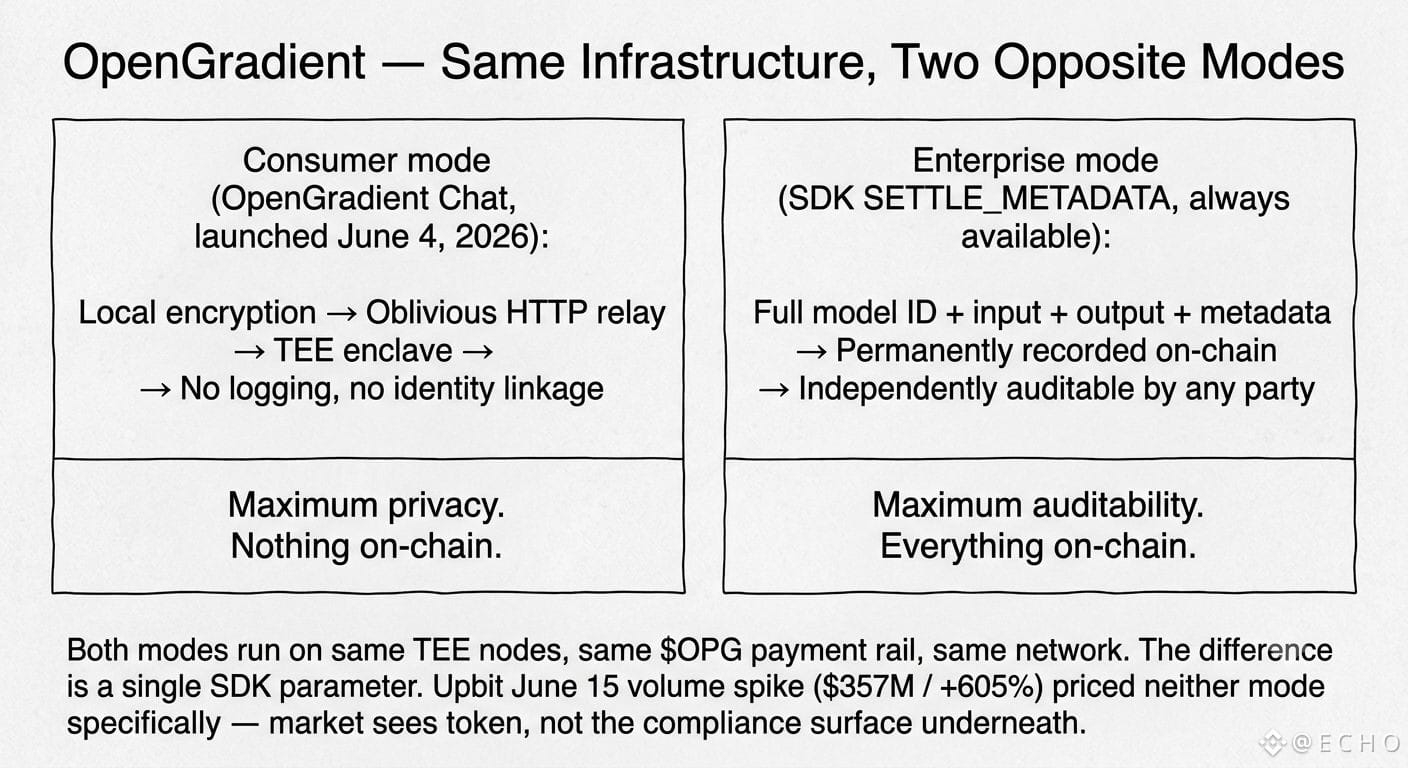
私が作業を中断させられた理由は、エージェントのストーリーやトークンのメカニクスではなく、@OpenGradient SDKのドキュメントに埋もれていた詳細でした。それは、SETTLE_METADATAという決済モードで、あなたの完全なモデルの入力、出力、推論メタデータを永久にオンチェーンに記録します。ハッシュではなく、全体です。これは、ほとんどの人がおそらく切り替えない開発者オプションの中に隠れているエンタープライズコンプライアンスアーティファクトです。$OPG #OPG
私がこれに引っかかった理由はこれです。OpenGradient Chatは6月4日にプライバシー優先のアーキテクチャでローンチされました — ローカル暗号化、オブリビアスHTTPリレー、TEEアイソレーテッドゲートウェイ。全体のピッチは、あなたのプロンプトが見えないままであることです。それが消費者向け製品です。しかし、同じインフラの下で、SDKはエンタープライズ向けに正反対のトグルを提供しています:最大の透明性、完全な監査可能性、すべての推論が永久にオンチェーンで読み取れるようになります。両方ともリアルで、両方とも稼働中です。
私は6月15日のUpbitのリスティング活動を振り返りました — 357Mドルのボリューム、605%のスパイク — そのほとんどの注目がこれに向けられていなかったことに気付きました。市場は$OPG をAIナラティブトークンとして価格設定しています。実際にそれが何かと言えば、企業が必要だとは知らなかったコンプライアンスレイヤーで、消費者プライバシーアプリの下に静かに存在しています。
…エンタープライズ調達チームが既存のベンダー関係よりも暗号決済された推論を現実的に選ぶかどうか、まだ頭の中で整理中です。その摩擦は、技術的な証明を構築するだけでは解決されていません。
私が作業を中断させられた理由は、エージェントのストーリーやトークンのメカニクスではなく、@OpenGradient SDKのドキュメントに埋もれていた詳細でした。それは、SETTLE_METADATAという決済モードで、あなたの完全なモデルの入力、出力、推論メタデータを永久にオンチェーンに記録します。ハッシュではなく、全体です。これは、ほとんどの人がおそらく切り替えない開発者オプションの中に隠れているエンタープライズコンプライアンスアーティファクトです。$OPG #OPG
私がこれに引っかかった理由はこれです。OpenGradient Chatは6月4日にプライバシー優先のアーキテクチャでローンチされました — ローカル暗号化、オブリビアスHTTPリレー、TEEアイソレーテッドゲートウェイ。全体のピッチは、あなたのプロンプトが見えないままであることです。それが消費者向け製品です。しかし、同じインフラの下で、SDKはエンタープライズ向けに正反対のトグルを提供しています:最大の透明性、完全な監査可能性、すべての推論が永久にオンチェーンで読み取れるようになります。両方ともリアルで、両方とも稼働中です。
私は6月15日のUpbitのリスティング活動を振り返りました — 357Mドルのボリューム、605%のスパイク — そのほとんどの注目がこれに向けられていなかったことに気付きました。市場は$OPG をAIナラティブトークンとして価格設定しています。実際にそれが何かと言えば、企業が必要だとは知らなかったコンプライアンスレイヤーで、消費者プライバシーアプリの下に静かに存在しています。
…エンタープライズ調達チームが既存のベンダー関係よりも暗号決済された推論を現実的に選ぶかどうか、まだ頭の中で整理中です。その摩擦は、技術的な証明を構築するだけでは解決されていません。
私がこれに引っかかった理由はこれです。OpenGradient Chatは6月4日にプライバシー優先のアーキテクチャでローンチされました — ローカル暗号化、オブリビアスHTTPリレー、TEEアイソレーテッドゲートウェイ。全体のピッチは、あなたのプロンプトが見えないままであることです。それが消費者向け製品です。しかし、同じインフラの下で、SDKはエンタープライズ向けに正反対のトグルを提供しています:最大の透明性、完全な監査可能性、すべての推論が永久にオンチェーンで読み取れるようになります。両方ともリアルで、両方とも稼働中です。
私は6月15日のUpbitのリスティング活動を振り返りました — 357Mドルのボリューム、605%のスパイク — そのほとんどの注目がこれに向けられていなかったことに気付きました。市場は$OPG をAIナラティブトークンとして価格設定しています。実際にそれが何かと言えば、企業が必要だとは知らなかったコンプライアンスレイヤーで、消費者プライバシーアプリの下に静かに存在しています。
…エンタープライズ調達チームが既存のベンダー関係よりも暗号決済された推論を現実的に選ぶかどうか、まだ頭の中で整理中です。その摩擦は、技術的な証明を構築するだけでは解決されていません。
160
·
--
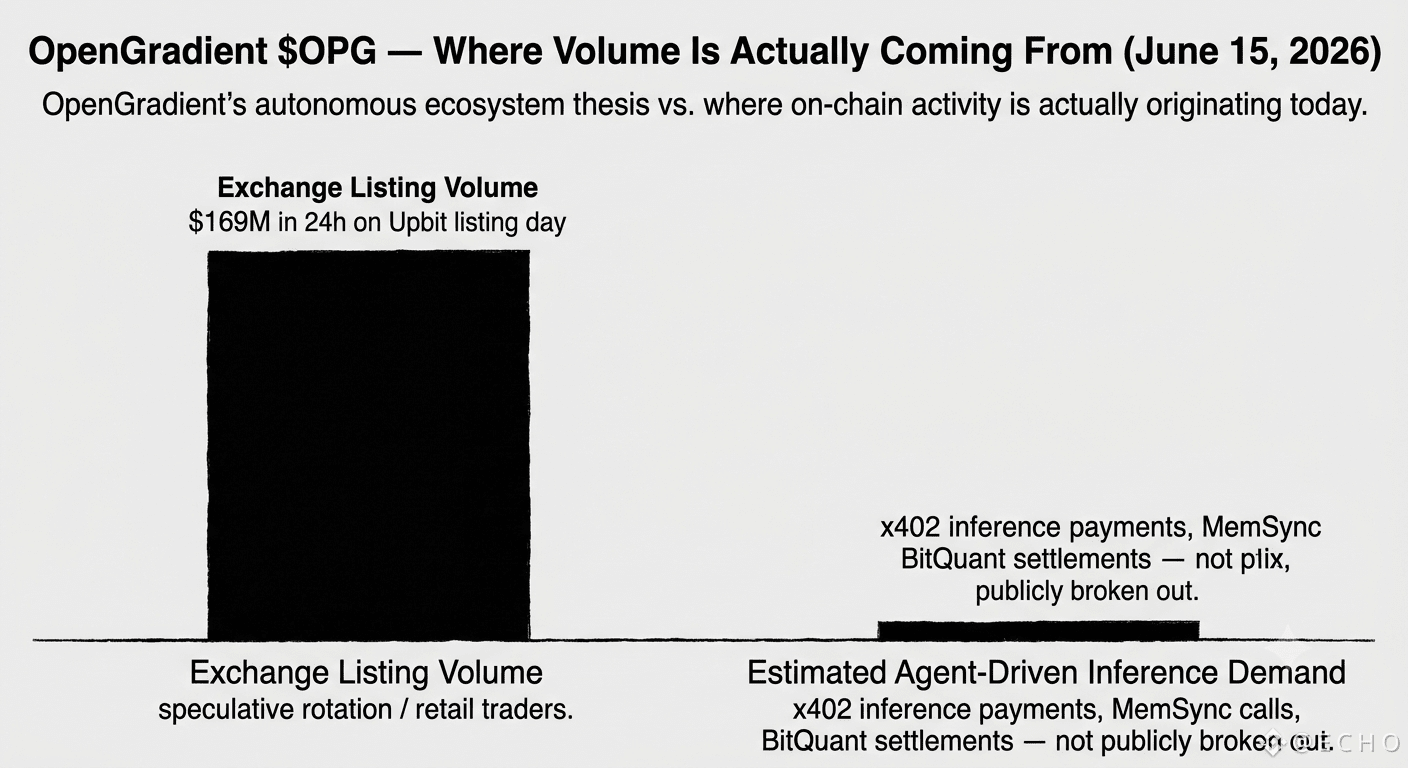
クリエイターパッドのタスクで私に残った瞬間は、ドキュメントの中にはありませんでした。それは数字でした。@OpenGradient は現在263,500以上のユニークウォレットにあり、ネットワークは420万ブロックを突破しましたが、オンチェーン取引は約185万件しかありません。これは、全未来が自律AIエージェントの継続的な取引に依存するプロジェクトにとっては、薄いtx-to-wallet比率です。$OPG #OPG
自律エコシステムのピッチはこうです:AIエージェントは最終的にモデルを呼び出し、$OPG で支払いを行い、MemSyncにコンテキストを格納し、他のエージェント間で調整し、繰り返し行います — すべて人間が触れることなく。構造的には、レールは存在します。x402ゲートウェイは稼働中です。MemSyncはエージェントに持続的なクロスセッションメモリを提供します。モデルハブには2,000以上のモデルが準備されています。足場は本当に整っています。
しかし、私が何度も考え直していたのは、6月15日にUpbitが$OPG を上場させ、24時間でボリュームが3億5700万ドルに爆発したとき — それはエージェントが取引していたわけではありません。それは人間で、出入りしながら、自律的な活動が最終的にどのように見えるかを推測していたのです。実際に現在起こっている使用は、人間がAIツールにアクセスしていることであり、エージェントが他のエージェントに指示を出しているわけではありません。
これは致命的な欠陥ではありません。インフラはしばしば需要が追いつくまで静かに存在します。しかし、ここには、自律エコシステムが常に2つのロードマップ項目先に留まり、人間の投機家がその物語を書き続けるというバージョンがあります。
エージェント間の経済は実際にここで具現化するのか、それともOpenGradientは主に開発者ユーティリティとして終わり、エージェント的な物語が常にその瞬間を先取りしていたのか…
クリエイターパッドのタスクで私に残った瞬間は、ドキュメントの中にはありませんでした。それは数字でした。@OpenGradient は現在263,500以上のユニークウォレットにあり、ネットワークは420万ブロックを突破しましたが、オンチェーン取引は約185万件しかありません。これは、全未来が自律AIエージェントの継続的な取引に依存するプロジェクトにとっては、薄いtx-to-wallet比率です。$OPG #OPG
自律エコシステムのピッチはこうです:AIエージェントは最終的にモデルを呼び出し、$OPG で支払いを行い、MemSyncにコンテキストを格納し、他のエージェント間で調整し、繰り返し行います — すべて人間が触れることなく。構造的には、レールは存在します。x402ゲートウェイは稼働中です。MemSyncはエージェントに持続的なクロスセッションメモリを提供します。モデルハブには2,000以上のモデルが準備されています。足場は本当に整っています。
しかし、私が何度も考え直していたのは、6月15日にUpbitが$OPG を上場させ、24時間でボリュームが3億5700万ドルに爆発したとき — それはエージェントが取引していたわけではありません。それは人間で、出入りしながら、自律的な活動が最終的にどのように見えるかを推測していたのです。実際に現在起こっている使用は、人間がAIツールにアクセスしていることであり、エージェントが他のエージェントに指示を出しているわけではありません。
これは致命的な欠陥ではありません。インフラはしばしば需要が追いつくまで静かに存在します。しかし、ここには、自律エコシステムが常に2つのロードマップ項目先に留まり、人間の投機家がその物語を書き続けるというバージョンがあります。
エージェント間の経済は実際にここで具現化するのか、それともOpenGradientは主に開発者ユーティリティとして終わり、エージェント的な物語が常にその瞬間を先取りしていたのか…
自律エコシステムのピッチはこうです:AIエージェントは最終的にモデルを呼び出し、$OPG で支払いを行い、MemSyncにコンテキストを格納し、他のエージェント間で調整し、繰り返し行います — すべて人間が触れることなく。構造的には、レールは存在します。x402ゲートウェイは稼働中です。MemSyncはエージェントに持続的なクロスセッションメモリを提供します。モデルハブには2,000以上のモデルが準備されています。足場は本当に整っています。
しかし、私が何度も考え直していたのは、6月15日にUpbitが$OPG を上場させ、24時間でボリュームが3億5700万ドルに爆発したとき — それはエージェントが取引していたわけではありません。それは人間で、出入りしながら、自律的な活動が最終的にどのように見えるかを推測していたのです。実際に現在起こっている使用は、人間がAIツールにアクセスしていることであり、エージェントが他のエージェントに指示を出しているわけではありません。
これは致命的な欠陥ではありません。インフラはしばしば需要が追いつくまで静かに存在します。しかし、ここには、自律エコシステムが常に2つのロードマップ項目先に留まり、人間の投機家がその物語を書き続けるというバージョンがあります。
エージェント間の経済は実際にここで具現化するのか、それともOpenGradientは主に開発者ユーティリティとして終わり、エージェント的な物語が常にその瞬間を先取りしていたのか…
1
125
·
--
作業中に、予期しないことが起こった。@OpenGradient 、$OPG、#OPG — 自律的な経済活動の角度は抽象的に聞こえるが、支払いループが実際にどのように閉じるかを追跡すると理解できる。
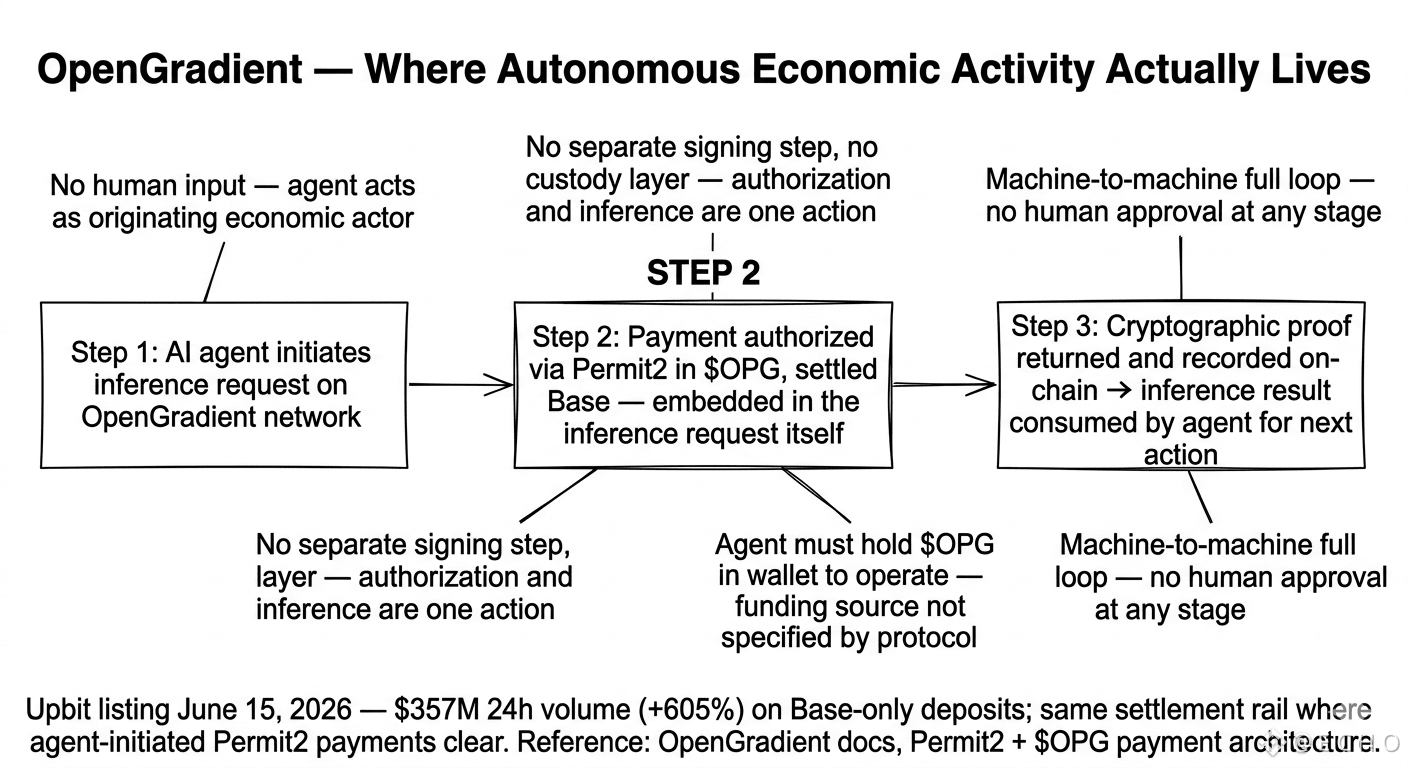
ネットワーク上のすべての検証されたAIコールは、Permit2を通じてBaseで$OPG に決済される。APIキーもクレジットカードも不要。人間が取引を承認することもない。エージェントはウォレットを保有し、推論リクエストを行い、支払いをし、暗号結果を受け取る。これだけだ。全てはマシン対マシンで、トークンで denominatedされ、パブリックレジャーに決済される。6月15日にUpbitがOPGを上場し、24時間でのボリュームが$357Mに達したとき — 605%のスパイク — その流動性は、オンチェーン取引を引き起こす実際の経済的アクターがますます人間ではなくなっているネットワークの上に集まった。彼らはBitQuant戦略やMemSyncワークフローを実行するエージェントであり、それぞれのコールに対して$OPG を支出している。
そのPermit2の詳細を何度も読み返した。ほとんどの「自律エージェント」プロジェクトでは、どこかに人間がループにいる — ウォレットの署名者、保管レイヤー、何かが。ここでは、支払い承認が推論リクエスト自体に組み込まれている。エージェントは、最初から最後まで経済的アクターなのだ。
うーん…でもそれは、エージェントが操作するために$OPG を保有する必要があることも意味する。これは誰も本当に答えていない疑問を生じさせる:これらのエージェントを資本化するのは誰で、そしてその依存関係は、ウォレットを資金提供する者の周りに全体を再集中させるのだろうか?
作業中に、予期しないことが起こった。@OpenGradient 、$OPG 、#OPG — 自律的な経済活動の角度は抽象的に聞こえるが、支払いループが実際にどのように閉じるかを追跡すると理解できる。
ネットワーク上のすべての検証されたAIコールは、Permit2を通じてBaseで$OPG に決済される。APIキーもクレジットカードも不要。人間が取引を承認することもない。エージェントはウォレットを保有し、推論リクエストを行い、支払いをし、暗号結果を受け取る。これだけだ。全てはマシン対マシンで、トークンで denominatedされ、パブリックレジャーに決済される。6月15日にUpbitがOPGを上場し、24時間でのボリュームが$357Mに達したとき — 605%のスパイク — その流動性は、オンチェーン取引を引き起こす実際の経済的アクターがますます人間ではなくなっているネットワークの上に集まった。彼らはBitQuant戦略やMemSyncワークフローを実行するエージェントであり、それぞれのコールに対して$OPG を支出している。
そのPermit2の詳細を何度も読み返した。ほとんどの「自律エージェント」プロジェクトでは、どこかに人間がループにいる — ウォレットの署名者、保管レイヤー、何かが。ここでは、支払い承認が推論リクエスト自体に組み込まれている。エージェントは、最初から最後まで経済的アクターなのだ。
うーん…でもそれは、エージェントが操作するために$OPG を保有する必要があることも意味する。これは誰も本当に答えていない疑問を生じさせる:これらのエージェントを資本化するのは誰で、そしてその依存関係は、ウォレットを資金提供する者の周りに全体を再集中させるのだろうか?
ネットワーク上のすべての検証されたAIコールは、Permit2を通じてBaseで$OPG に決済される。APIキーもクレジットカードも不要。人間が取引を承認することもない。エージェントはウォレットを保有し、推論リクエストを行い、支払いをし、暗号結果を受け取る。これだけだ。全てはマシン対マシンで、トークンで denominatedされ、パブリックレジャーに決済される。6月15日にUpbitがOPGを上場し、24時間でのボリュームが$357Mに達したとき — 605%のスパイク — その流動性は、オンチェーン取引を引き起こす実際の経済的アクターがますます人間ではなくなっているネットワークの上に集まった。彼らはBitQuant戦略やMemSyncワークフローを実行するエージェントであり、それぞれのコールに対して$OPG を支出している。
そのPermit2の詳細を何度も読み返した。ほとんどの「自律エージェント」プロジェクトでは、どこかに人間がループにいる — ウォレットの署名者、保管レイヤー、何かが。ここでは、支払い承認が推論リクエスト自体に組み込まれている。エージェントは、最初から最後まで経済的アクターなのだ。
うーん…でもそれは、エージェントが操作するために$OPG を保有する必要があることも意味する。これは誰も本当に答えていない疑問を生じさせる:これらのエージェントを資本化するのは誰で、そしてその依存関係は、ウォレットを資金提供する者の周りに全体を再集中させるのだろうか?
2
1
167
·
--
この@OpenGradient タスクで私をずっと悩ませていたのは、大きな信頼のプレゼンテーションではなく、ドキュメント内の静かなアーキテクチャの詳細だった。$OPG #OPG
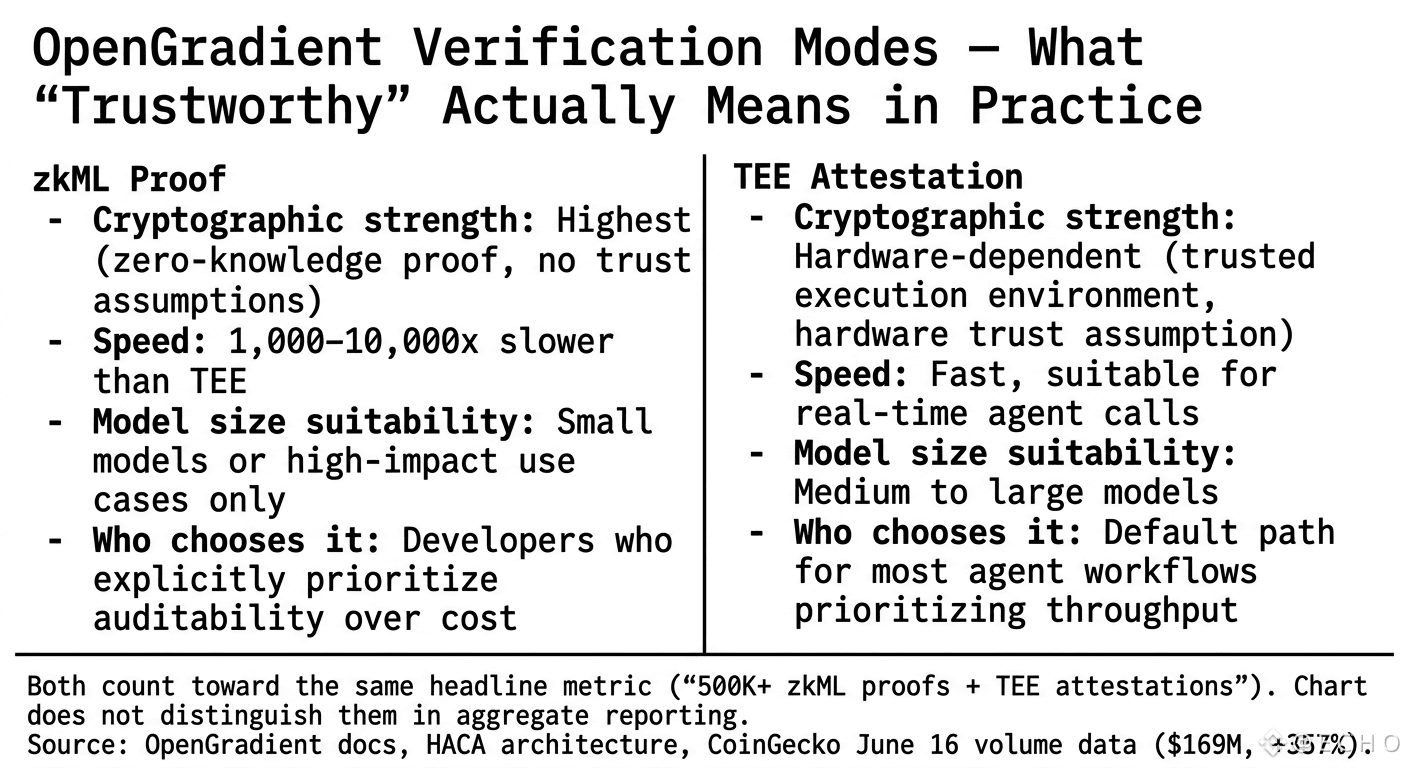
エージェントがこのネットワークで推論を実行すると、証明パスが実際にフォークする。zkMLは最も強力な暗号保証を提供するが、1,000から10,000倍遅くなる。TEEは速く、より大きなモデルを扱えるが、ハードウェアの信頼性の仮定に依存している。開発者が選択する。これは小さな注釈ではなく、設定としてそこにある信頼性の全体的な問題だ。そして、エージェントを運営しているほとんどの人は、常に最も安くて速いものを選ぶ傾向があり、それが必ずしも最も厳しい保証があるモードとは限らない。
オンチェーンの数字と照らし合わせて確認していた。公式の数字によれば、200万以上の検証可能な推論が処理され、500K以上のzkML証明とTEE証明が組み合わさっている。Upbitは2026年6月15日20:30 KSTにOPGを上場し、翌日には24時間で1億6900万ドルのボリュームを記録し、CoinGeckoによると前回のセッションから357%のスパイクを見せた。チェーンは明らかに動いている。しかし、ボリュームは、エージェントが実際に裏でどの検証モードを選択しているのかについて何も教えてくれない。
それが正直なオープンクエスチョンだ。誰にとって信頼できるのか、どの証明パスの下で?TEE証明を実行しているエージェントは、zkMLを実行しているエージェントとは異なるセキュリティの物語を持っている。両者は同じヘッドラインメトリックにカウントされる。
うーん。この区別が実際に一般ユーザーが見るダッシュボードに現れることはあるのだろうか…
この@OpenGradient タスクで私をずっと悩ませていたのは、大きな信頼のプレゼンテーションではなく、ドキュメント内の静かなアーキテクチャの詳細だった。$OPG #OPG
エージェントがこのネットワークで推論を実行すると、証明パスが実際にフォークする。zkMLは最も強力な暗号保証を提供するが、1,000から10,000倍遅くなる。TEEは速く、より大きなモデルを扱えるが、ハードウェアの信頼性の仮定に依存している。開発者が選択する。これは小さな注釈ではなく、設定としてそこにある信頼性の全体的な問題だ。そして、エージェントを運営しているほとんどの人は、常に最も安くて速いものを選ぶ傾向があり、それが必ずしも最も厳しい保証があるモードとは限らない。
オンチェーンの数字と照らし合わせて確認していた。公式の数字によれば、200万以上の検証可能な推論が処理され、500K以上のzkML証明とTEE証明が組み合わさっている。Upbitは2026年6月15日20:30 KSTにOPGを上場し、翌日には24時間で1億6900万ドルのボリュームを記録し、CoinGeckoによると前回のセッションから357%のスパイクを見せた。チェーンは明らかに動いている。しかし、ボリュームは、エージェントが実際に裏でどの検証モードを選択しているのかについて何も教えてくれない。
それが正直なオープンクエスチョンだ。誰にとって信頼できるのか、どの証明パスの下で?TEE証明を実行しているエージェントは、zkMLを実行しているエージェントとは異なるセキュリティの物語を持っている。両者は同じヘッドラインメトリックにカウントされる。
うーん。この区別が実際に一般ユーザーが見るダッシュボードに現れることはあるのだろうか…
エージェントがこのネットワークで推論を実行すると、証明パスが実際にフォークする。zkMLは最も強力な暗号保証を提供するが、1,000から10,000倍遅くなる。TEEは速く、より大きなモデルを扱えるが、ハードウェアの信頼性の仮定に依存している。開発者が選択する。これは小さな注釈ではなく、設定としてそこにある信頼性の全体的な問題だ。そして、エージェントを運営しているほとんどの人は、常に最も安くて速いものを選ぶ傾向があり、それが必ずしも最も厳しい保証があるモードとは限らない。
オンチェーンの数字と照らし合わせて確認していた。公式の数字によれば、200万以上の検証可能な推論が処理され、500K以上のzkML証明とTEE証明が組み合わさっている。Upbitは2026年6月15日20:30 KSTにOPGを上場し、翌日には24時間で1億6900万ドルのボリュームを記録し、CoinGeckoによると前回のセッションから357%のスパイクを見せた。チェーンは明らかに動いている。しかし、ボリュームは、エージェントが実際に裏でどの検証モードを選択しているのかについて何も教えてくれない。
それが正直なオープンクエスチョンだ。誰にとって信頼できるのか、どの証明パスの下で?TEE証明を実行しているエージェントは、zkMLを実行しているエージェントとは異なるセキュリティの物語を持っている。両者は同じヘッドラインメトリックにカウントされる。
うーん。この区別が実際に一般ユーザーが見るダッシュボードに現れることはあるのだろうか…
4
2
333
·
--
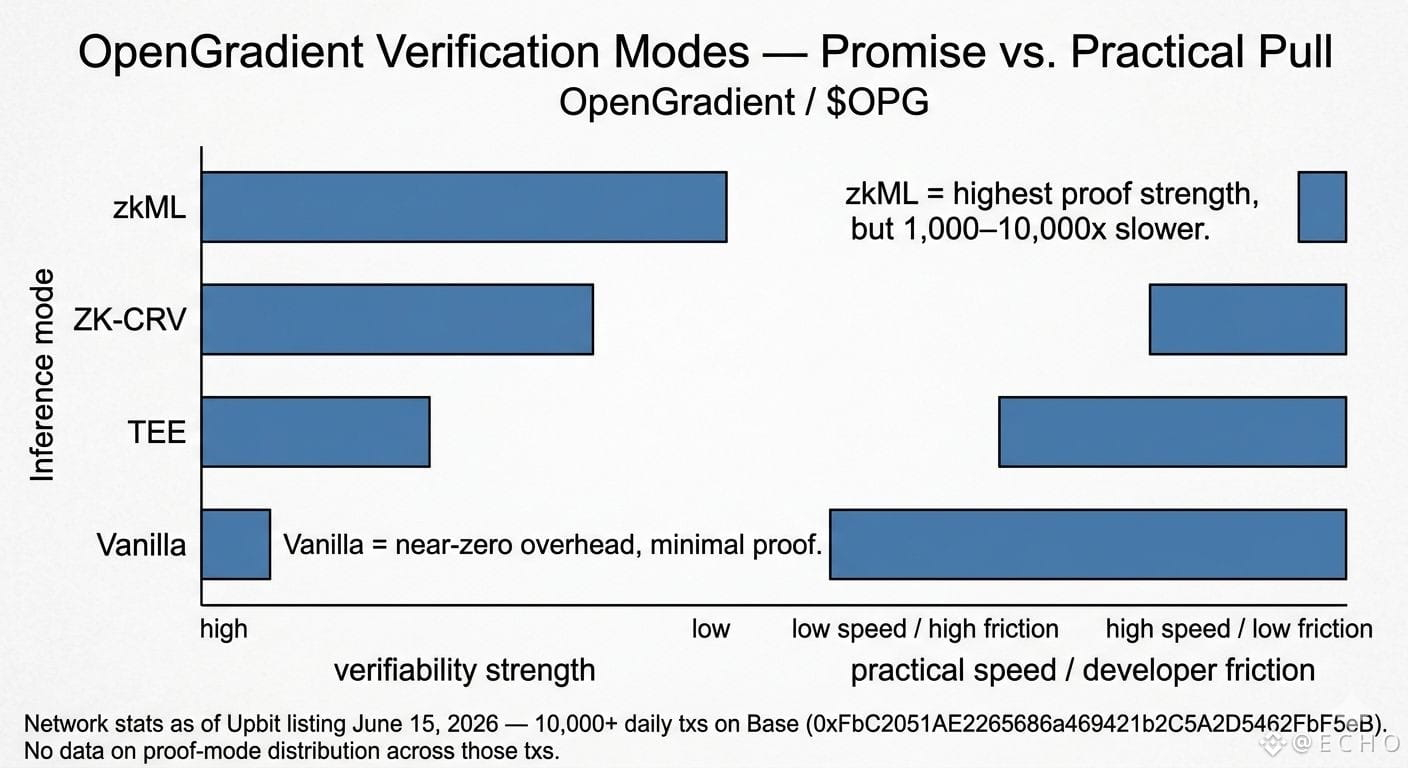
このCreatorPadタスクでOpenGradientと検証可能なマーケット分析に関して私に残ったのは — ヘッドラインインフラストラクチャではなく、ドキュメントに埋もれた静かなデザインの選択でした。@OpenGradient はHACAに「トラストメニュー」を組み込みました:開発者はバニラ署名、TEEアテステーション、または推論ごとのzkML証明のいずれかを選択します。$OPG #OPG 。これが1.85M以上のオンチェーン取引と、6月15日のUpbit上場時点での10,000以上のデイリーランを支えるアーキテクチャです(契約0xFbC2051AE2265686a469421b2C5A2D5462FbF5eB、Baseネットワーク、同日$169Mを超えるボリューム)。
私が気になったのはこれです。検証可能なマーケット分析の全体的な提案は、AIの出力が今や暗号学的レシートを持つことができるということ — どのモデルが走り、どのデータが入力され、証明がオンチェーンで決済されるか。クリーンです。しかし、zkMLはバニラ推論よりも1,000から10,000倍遅い。ドキュメントはこれをオープンに述べています。だから実際には、開発者がリアルなものを出荷し、レイテンシが重要な場合、彼らはおそらく最大の検証性を選ばないでしょう。
私はそのギャップについてずっと考えていました。最も強力な証明モードは、最も摩擦が大きいものです。OpenGradientが引用し続けるマーケット分析のユースケース — リスク予測、DeFiシグナル、監査可能な出力 — それらはまさに最も強い検証が必要なシナリオです。そして、スピードの圧力がビルダーを軽いモードに押しやるのもまさにそこです。
うーん… では、実際に高リスクのマーケットコールでzkMLを使用するのは誰なのでしょうか?それとも、彼らができると言っているだけなのでしょうか?
このCreatorPadタスクでOpenGradientと検証可能なマーケット分析に関して私に残ったのは — ヘッドラインインフラストラクチャではなく、ドキュメントに埋もれた静かなデザインの選択でした。@OpenGradient はHACAに「トラストメニュー」を組み込みました:開発者はバニラ署名、TEEアテステーション、または推論ごとのzkML証明のいずれかを選択します。$OPG #OPG 。これが1.85M以上のオンチェーン取引と、6月15日のUpbit上場時点での10,000以上のデイリーランを支えるアーキテクチャです(契約0xFbC2051AE2265686a469421b2C5A2D5462FbF5eB、Baseネットワーク、同日$169Mを超えるボリューム)。
私が気になったのはこれです。検証可能なマーケット分析の全体的な提案は、AIの出力が今や暗号学的レシートを持つことができるということ — どのモデルが走り、どのデータが入力され、証明がオンチェーンで決済されるか。クリーンです。しかし、zkMLはバニラ推論よりも1,000から10,000倍遅い。ドキュメントはこれをオープンに述べています。だから実際には、開発者がリアルなものを出荷し、レイテンシが重要な場合、彼らはおそらく最大の検証性を選ばないでしょう。
私はそのギャップについてずっと考えていました。最も強力な証明モードは、最も摩擦が大きいものです。OpenGradientが引用し続けるマーケット分析のユースケース — リスク予測、DeFiシグナル、監査可能な出力 — それらはまさに最も強い検証が必要なシナリオです。そして、スピードの圧力がビルダーを軽いモードに押しやるのもまさにそこです。
うーん… では、実際に高リスクのマーケットコールでzkMLを使用するのは誰なのでしょうか?それとも、彼らができると言っているだけなのでしょうか?
私が気になったのはこれです。検証可能なマーケット分析の全体的な提案は、AIの出力が今や暗号学的レシートを持つことができるということ — どのモデルが走り、どのデータが入力され、証明がオンチェーンで決済されるか。クリーンです。しかし、zkMLはバニラ推論よりも1,000から10,000倍遅い。ドキュメントはこれをオープンに述べています。だから実際には、開発者がリアルなものを出荷し、レイテンシが重要な場合、彼らはおそらく最大の検証性を選ばないでしょう。
私はそのギャップについてずっと考えていました。最も強力な証明モードは、最も摩擦が大きいものです。OpenGradientが引用し続けるマーケット分析のユースケース — リスク予測、DeFiシグナル、監査可能な出力 — それらはまさに最も強い検証が必要なシナリオです。そして、スピードの圧力がビルダーを軽いモードに押しやるのもまさにそこです。
うーん… では、実際に高リスクのマーケットコールでzkMLを使用するのは誰なのでしょうか?それとも、彼らができると言っているだけなのでしょうか?
1
209
·
--
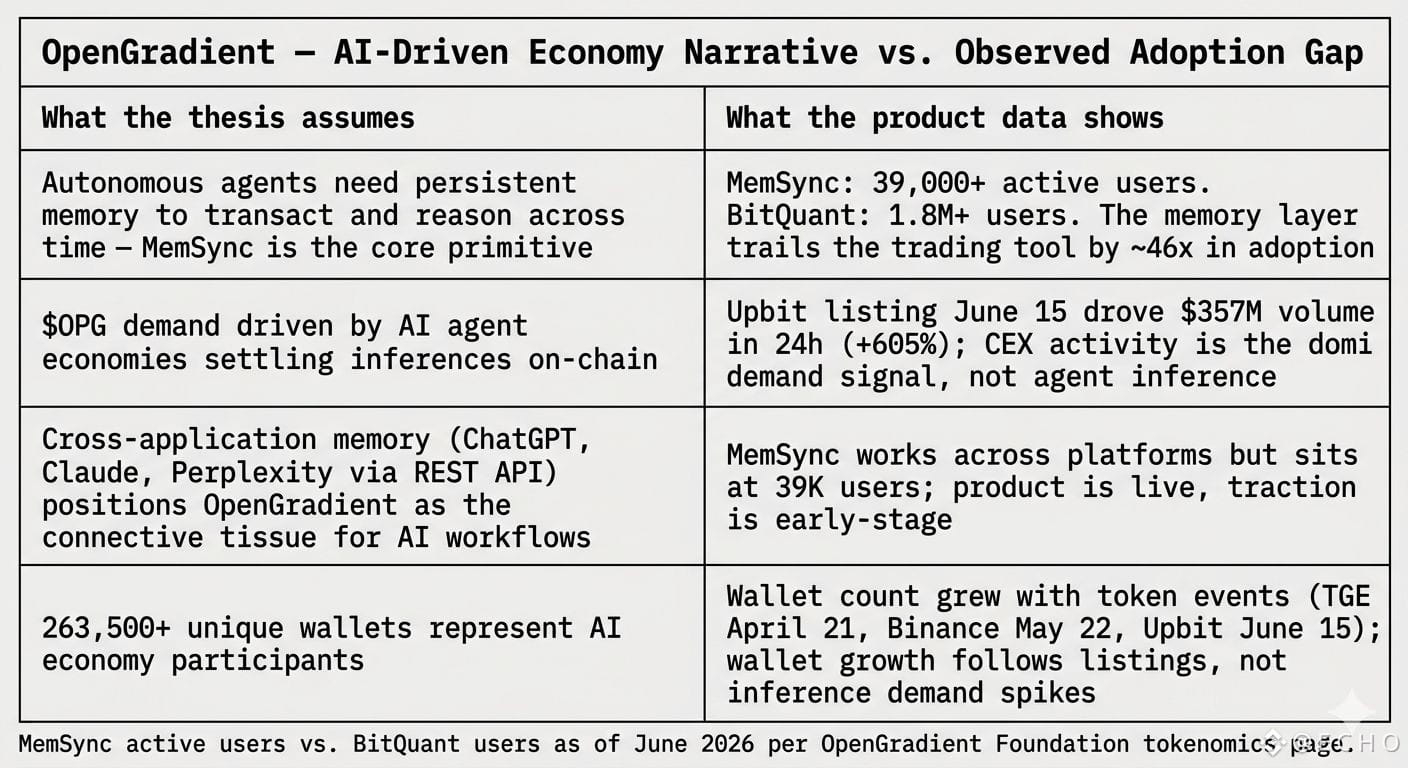
MemSyncについて何かが、タスクの最中に私を引き戻していました。BitQuantでもなく、検証可能な推論アーキテクチャでもなく — MemSyncです。OpenGradient #OPG @OpenGradient は、これをユニバーサルAIメモリレイヤーとして位置づけていますが、確かにそれはマーケティングのように聞こえます。しかし、実際のメカニズムは私が期待していたものとは異なります:これはOpenGradientの検証可能な推論インフラの上にあるREST APIであり、ChatGPT、Claude、Perplexityなどの異なるAIプラットフォーム間で持続的なコンテキストを取得し、過去のインタラクションに基づいて保存、取得、構築しています。それは社内機能ではありません。これはクロスアプリケーションメモリプリミティブです。
そして、私が立ち止まった理由です。AI駆動の分散型経済が実際に機能するためには — エージェントが取引し、推論し、ユーザーのために時間を超えて実行するためには — それらのエージェントはセッションに束縛されないメモリが必要です。現在、MemSyncには39,000人以上のアクティブユーザーがいますが、これはBitQuantの180万人に対して少数ですが、これが目指しているものにとってはおそらく構造的に重要な製品です。
6月15日のUpbit上場により、$OPG のボリュームが24時間で357Mドルに達し、当日605%の増加を見せました。ネットワークと相互作用しているウォレットは263,500を超えました。トークンのモメンタムは本物です。しかし、MemSyncの39KアクティブユーザーとBitQuantの1.8Mを比較すると、市場がどの製品を価格に織り込んでいるかが分かります — そして、それは持続的なエージェント経済にとって最も重要なものではありません。
うーん…もしメモリレイヤーが薄く採用され続けながら取引ボリュームが支配する場合、$OPG はAI駆動経済の仮説を価格に織り込んでいるのか、それとも単なるCEXの注目サイクルなのでしょうか?
MemSyncについて何かが、タスクの最中に私を引き戻していました。BitQuantでもなく、検証可能な推論アーキテクチャでもなく — MemSyncです。OpenGradient #OPG @OpenGradient は、これをユニバーサルAIメモリレイヤーとして位置づけていますが、確かにそれはマーケティングのように聞こえます。しかし、実際のメカニズムは私が期待していたものとは異なります:これはOpenGradientの検証可能な推論インフラの上にあるREST APIであり、ChatGPT、Claude、Perplexityなどの異なるAIプラットフォーム間で持続的なコンテキストを取得し、過去のインタラクションに基づいて保存、取得、構築しています。それは社内機能ではありません。これはクロスアプリケーションメモリプリミティブです。
そして、私が立ち止まった理由です。AI駆動の分散型経済が実際に機能するためには — エージェントが取引し、推論し、ユーザーのために時間を超えて実行するためには — それらのエージェントはセッションに束縛されないメモリが必要です。現在、MemSyncには39,000人以上のアクティブユーザーがいますが、これはBitQuantの180万人に対して少数ですが、これが目指しているものにとってはおそらく構造的に重要な製品です。
6月15日のUpbit上場により、$OPG のボリュームが24時間で357Mドルに達し、当日605%の増加を見せました。ネットワークと相互作用しているウォレットは263,500を超えました。トークンのモメンタムは本物です。しかし、MemSyncの39KアクティブユーザーとBitQuantの1.8Mを比較すると、市場がどの製品を価格に織り込んでいるかが分かります — そして、それは持続的なエージェント経済にとって最も重要なものではありません。
うーん…もしメモリレイヤーが薄く採用され続けながら取引ボリュームが支配する場合、$OPG はAI駆動経済の仮説を価格に織り込んでいるのか、それとも単なるCEXの注目サイクルなのでしょうか?
そして、私が立ち止まった理由です。AI駆動の分散型経済が実際に機能するためには — エージェントが取引し、推論し、ユーザーのために時間を超えて実行するためには — それらのエージェントはセッションに束縛されないメモリが必要です。現在、MemSyncには39,000人以上のアクティブユーザーがいますが、これはBitQuantの180万人に対して少数ですが、これが目指しているものにとってはおそらく構造的に重要な製品です。
6月15日のUpbit上場により、$OPG のボリュームが24時間で357Mドルに達し、当日605%の増加を見せました。ネットワークと相互作用しているウォレットは263,500を超えました。トークンのモメンタムは本物です。しかし、MemSyncの39KアクティブユーザーとBitQuantの1.8Mを比較すると、市場がどの製品を価格に織り込んでいるかが分かります — そして、それは持続的なエージェント経済にとって最も重要なものではありません。
うーん…もしメモリレイヤーが薄く採用され続けながら取引ボリュームが支配する場合、$OPG はAI駆動経済の仮説を価格に織り込んでいるのか、それとも単なるCEXの注目サイクルなのでしょうか?
1
1
165
·
--
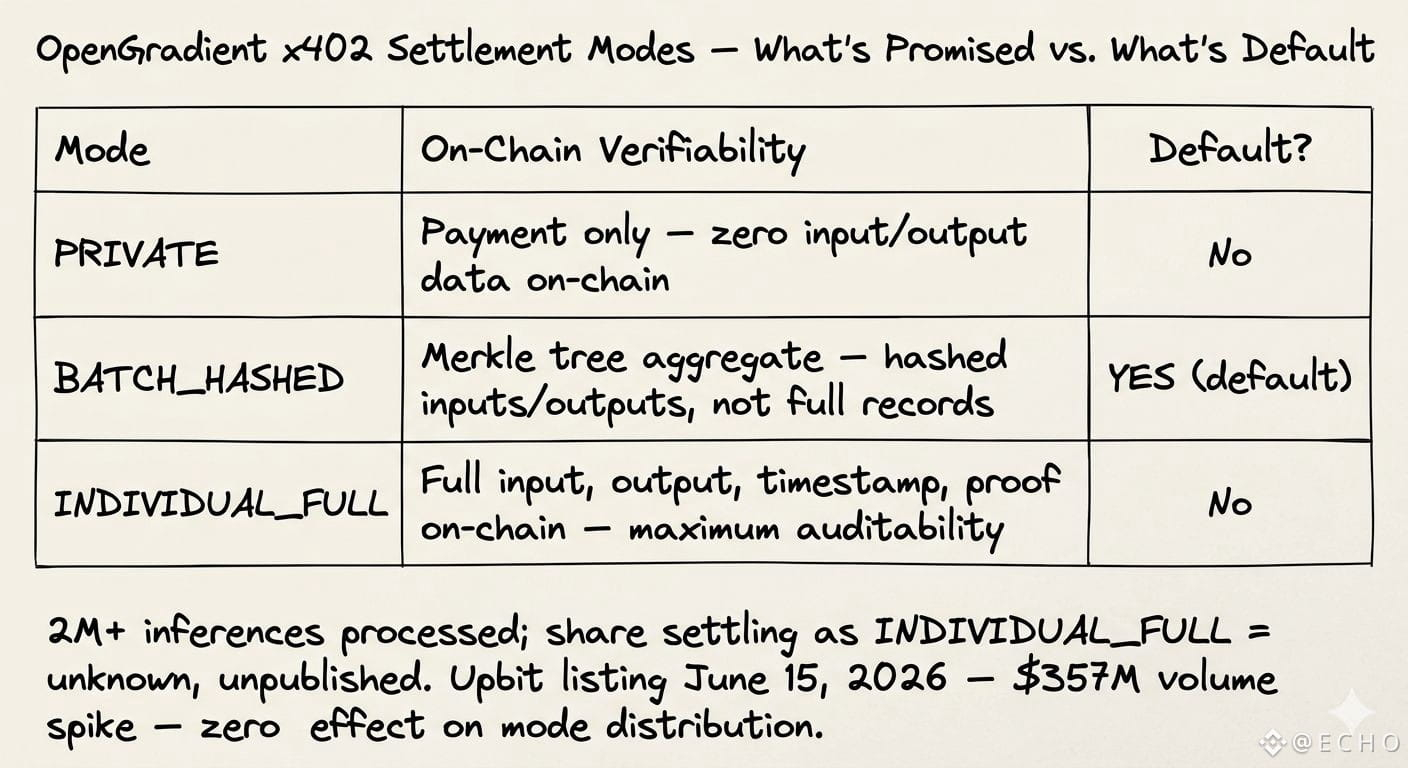
作業中に私の目を引いたのは、ボリュームや上場ではなく、OpenGradient Python SDKのドキュメントに埋もれていた一行でした — x402を介した推論のための3つの決済モード:PRIVATE、BATCH_HASHED、そしてINDIVIDUAL_FULL。デフォルトは?BATCH_HASHED。推論をMerkleツリーに集約し、入力と出力をハッシュ化し、コストが最も低い。@OpenGradient $OPG #OPG
この設計選択は、分散型インテリジェンスが現在どこに実際に存在するかについてすべてを語っています。完全な監査可能性ではなく — それがINDIVIDUAL_FULLで、誰もデフォルトにしないモードです。なぜなら、それは高価だからです。「インテリジェンスはオンチェーンにある」というピッチは、ハッシュ化して完全には公開しない中間オプションに存在します。モデルハブの2,000以上のモデル、処理された200万の推論 — その大部分の活動は、個別に検証可能なオンチェーン記録ではなく、Merkleツリーの集約として決済されている可能性が高いです。
そして、Upbitは6月15日20:30 KSTにOPGを上場しましたが、ボリュームは24時間で357Mドル急増しました。トークンは$0.3064でオープンし、$0.1815までダンプされました。クラシックな上場キャンドルです。その価格の動きは、ネットワーク上の推論動作にまったく触れませんでした — まったく別々の2つのシステムが並行して動いています。
うーん…そのPRIVATEモードについて考え続けています — 支払いのみ、オンチェーンにデータゼロ。これがここでの「分散型インテリジェンス」が意味することの底辺です。では、実際にその3つのモードの分布はどのように見えるのでしょうか?誰もその数字を公表していません。
作業中に私の目を引いたのは、ボリュームや上場ではなく、OpenGradient Python SDKのドキュメントに埋もれていた一行でした — x402を介した推論のための3つの決済モード:PRIVATE、BATCH_HASHED、そしてINDIVIDUAL_FULL。デフォルトは?BATCH_HASHED。推論をMerkleツリーに集約し、入力と出力をハッシュ化し、コストが最も低い。@OpenGradient $OPG #OPG
この設計選択は、分散型インテリジェンスが現在どこに実際に存在するかについてすべてを語っています。完全な監査可能性ではなく — それがINDIVIDUAL_FULLで、誰もデフォルトにしないモードです。なぜなら、それは高価だからです。「インテリジェンスはオンチェーンにある」というピッチは、ハッシュ化して完全には公開しない中間オプションに存在します。モデルハブの2,000以上のモデル、処理された200万の推論 — その大部分の活動は、個別に検証可能なオンチェーン記録ではなく、Merkleツリーの集約として決済されている可能性が高いです。
そして、Upbitは6月15日20:30 KSTにOPGを上場しましたが、ボリュームは24時間で357Mドル急増しました。トークンは$0.3064でオープンし、$0.1815までダンプされました。クラシックな上場キャンドルです。その価格の動きは、ネットワーク上の推論動作にまったく触れませんでした — まったく別々の2つのシステムが並行して動いています。
うーん…そのPRIVATEモードについて考え続けています — 支払いのみ、オンチェーンにデータゼロ。これがここでの「分散型インテリジェンス」が意味することの底辺です。では、実際にその3つのモードの分布はどのように見えるのでしょうか?誰もその数字を公表していません。
この設計選択は、分散型インテリジェンスが現在どこに実際に存在するかについてすべてを語っています。完全な監査可能性ではなく — それがINDIVIDUAL_FULLで、誰もデフォルトにしないモードです。なぜなら、それは高価だからです。「インテリジェンスはオンチェーンにある」というピッチは、ハッシュ化して完全には公開しない中間オプションに存在します。モデルハブの2,000以上のモデル、処理された200万の推論 — その大部分の活動は、個別に検証可能なオンチェーン記録ではなく、Merkleツリーの集約として決済されている可能性が高いです。
そして、Upbitは6月15日20:30 KSTにOPGを上場しましたが、ボリュームは24時間で357Mドル急増しました。トークンは$0.3064でオープンし、$0.1815までダンプされました。クラシックな上場キャンドルです。その価格の動きは、ネットワーク上の推論動作にまったく触れませんでした — まったく別々の2つのシステムが並行して動いています。
うーん…そのPRIVATEモードについて考え続けています — 支払いのみ、オンチェーンにデータゼロ。これがここでの「分散型インテリジェンス」が意味することの底辺です。では、実際にその3つのモードの分布はどのように見えるのでしょうか?誰もその数字を公表していません。
2
2
156
·
--
本人確認中
このCreatorPadのOpenGradientタスクで何度も考え直したこと。@OpenGradient $OPG #OPG 市場の"透明な計算" — すべての推論が検証可能で、隠されたものは何もない。クリーンなアイデア。しかし、ここでの透明性は一様ではない。層があり、どの層がコントロールされているかが重要だ。
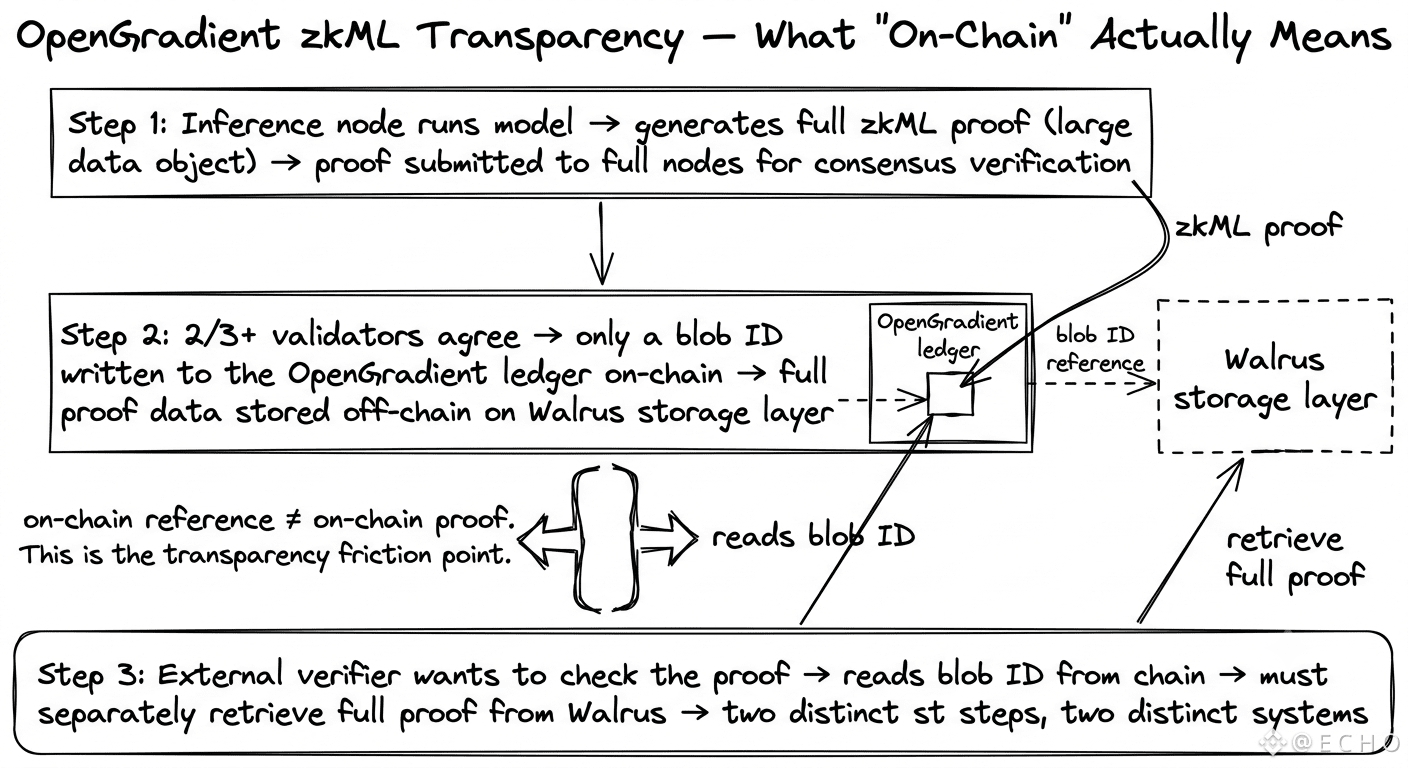
アーキテクチャのドキュメントを掘り下げた。zkML証明のために — 最も信頼性の高い検証モード — 完全な証明データはオンチェーンには存在しない。OpenGradientの帳簿には、ブロブIDの参照だけが記録される。実際の証明は、オフチェーンストレージ層であるWalrusに保存されている。だから"完全に透明な計算"というのは、チェーンがポインタを保持しているだけで、実際のものではない。そのポインタは永続的で改ざん耐性がある、確かに。しかし、実際の証明を検証するにはオフチェーンに行って取り出す必要がある。これらは二つの異なる行為であり、ほとんどの人が"オンチェーンで検証可能"と読むと、その違いに気付かないだろう。
一方、6月15日にUpbitがOPGを上場させたとき、ボリュームは$357.69Mに達し — 606%の急増 — トークンは$0.3064でオープンし、その後$0.1815に下落した。すべて取引所側のノイズ。あのボリュームは、実際のネットワークでの推論需要や証明取得パターンに触れていない。
そのブロブIDの詳細について考えすぎた。全く欺瞞ではない — これはエンジニアリングのトレードオフ、大きな証明データはチェーンの制約になるだろう。しかし、"透明"は通常、全体が見えることを意味し、どこにそのものがあるかの参照ではない。
そのポインタは透明性としてカウントされるのか?それとも、誰もがフル証明をどこかに行かずに引き出せる場合にのみ透明性が成立するのか?
このCreatorPadのOpenGradientタスクで何度も考え直したこと。@OpenGradient $OPG #OPG 市場の"透明な計算" — すべての推論が検証可能で、隠されたものは何もない。クリーンなアイデア。しかし、ここでの透明性は一様ではない。層があり、どの層がコントロールされているかが重要だ。
アーキテクチャのドキュメントを掘り下げた。zkML証明のために — 最も信頼性の高い検証モード — 完全な証明データはオンチェーンには存在しない。OpenGradientの帳簿には、ブロブIDの参照だけが記録される。実際の証明は、オフチェーンストレージ層であるWalrusに保存されている。だから"完全に透明な計算"というのは、チェーンがポインタを保持しているだけで、実際のものではない。そのポインタは永続的で改ざん耐性がある、確かに。しかし、実際の証明を検証するにはオフチェーンに行って取り出す必要がある。これらは二つの異なる行為であり、ほとんどの人が"オンチェーンで検証可能"と読むと、その違いに気付かないだろう。
一方、6月15日にUpbitがOPGを上場させたとき、ボリュームは$357.69Mに達し — 606%の急増 — トークンは$0.3064でオープンし、その後$0.1815に下落した。すべて取引所側のノイズ。あのボリュームは、実際のネットワークでの推論需要や証明取得パターンに触れていない。
そのブロブIDの詳細について考えすぎた。全く欺瞞ではない — これはエンジニアリングのトレードオフ、大きな証明データはチェーンの制約になるだろう。しかし、"透明"は通常、全体が見えることを意味し、どこにそのものがあるかの参照ではない。
そのポインタは透明性としてカウントされるのか?それとも、誰もがフル証明をどこかに行かずに引き出せる場合にのみ透明性が成立するのか?
アーキテクチャのドキュメントを掘り下げた。zkML証明のために — 最も信頼性の高い検証モード — 完全な証明データはオンチェーンには存在しない。OpenGradientの帳簿には、ブロブIDの参照だけが記録される。実際の証明は、オフチェーンストレージ層であるWalrusに保存されている。だから"完全に透明な計算"というのは、チェーンがポインタを保持しているだけで、実際のものではない。そのポインタは永続的で改ざん耐性がある、確かに。しかし、実際の証明を検証するにはオフチェーンに行って取り出す必要がある。これらは二つの異なる行為であり、ほとんどの人が"オンチェーンで検証可能"と読むと、その違いに気付かないだろう。
一方、6月15日にUpbitがOPGを上場させたとき、ボリュームは$357.69Mに達し — 606%の急増 — トークンは$0.3064でオープンし、その後$0.1815に下落した。すべて取引所側のノイズ。あのボリュームは、実際のネットワークでの推論需要や証明取得パターンに触れていない。
そのブロブIDの詳細について考えすぎた。全く欺瞞ではない — これはエンジニアリングのトレードオフ、大きな証明データはチェーンの制約になるだろう。しかし、"透明"は通常、全体が見えることを意味し、どこにそのものがあるかの参照ではない。
そのポインタは透明性としてカウントされるのか?それとも、誰もがフル証明をどこかに行かずに引き出せる場合にのみ透明性が成立するのか?
2
1
141
·
--
タスクの途中で、ベッドロックの大規模参加のアングルに何かがひらめいたが、それは私が期待していたものではなかった。
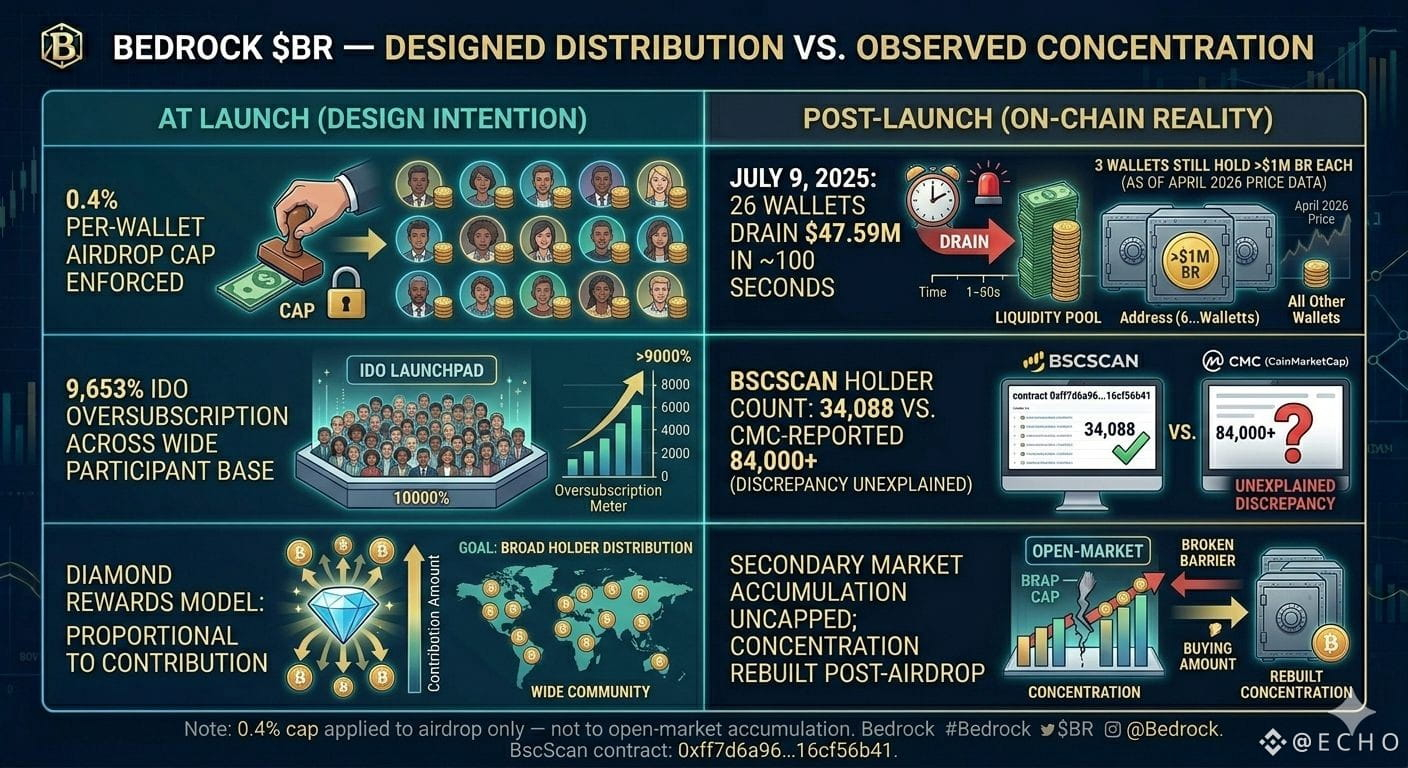
@Bedrock は、常に広範な参加について語っている — マルチチェーン、マルチアセット、オープンアクセス。そして表面的には、$BR は成果を上げた: 9,653%のIDOオーバーサブスクリプション、2026年5月時点での$1.2BのTVL、BNBチェーンで追跡された84,000以上のCoinMarketCapホルダー。#Bedrock は、配布中のクジラキャプチャを防ぐために、ハードな0.4%のウォレットあたりエアドロップキャップを明示的に組み込んだ。あのデザイン選択は本物だ — 比例的ダイヤモンド報酬、公正なシーズンメカニクス。紙の上では、スケールと幅がある。
それから待って — 2025年7月。26のウォレットが約100秒でBinance Alphaプールから$47.59Mを引き出し、50%のBRクラッシュを引き起こした。そして2026年4月の価格分析では、3つのウォレットがそれぞれ$1M以上のBRを保持している。BscScanのホルダー数は34,088。0.4%のキャップはエアドロップを制約した — それは二次的な蓄積を制約しなかった。それらは異なる問題であり、デザインはそのうちの一つしか解決していない。
私はuniBTC Etherscanの供給をChainlink PoRフィードとクロスチェックするのに時間を費やした。その部分は実際に機能している。プロトコルレイヤーの参加はスケールで機能している。しかし、トークンレイヤーの参加が集中に向かって静かに漂っている。
私を離れない質問: プロトコルにおける大規模な参加は、実際にそれを支配するものに対して分散された参加に変換されるのか?
タスクの途中で、ベッドロックの大規模参加のアングルに何かがひらめいたが、それは私が期待していたものではなかった。
@Bedrock は、常に広範な参加について語っている — マルチチェーン、マルチアセット、オープンアクセス。そして表面的には、$BR は成果を上げた: 9,653%のIDOオーバーサブスクリプション、2026年5月時点での$1.2BのTVL、BNBチェーンで追跡された84,000以上のCoinMarketCapホルダー。#Bedrock は、配布中のクジラキャプチャを防ぐために、ハードな0.4%のウォレットあたりエアドロップキャップを明示的に組み込んだ。あのデザイン選択は本物だ — 比例的ダイヤモンド報酬、公正なシーズンメカニクス。紙の上では、スケールと幅がある。
それから待って — 2025年7月。26のウォレットが約100秒でBinance Alphaプールから$47.59Mを引き出し、50%のBRクラッシュを引き起こした。そして2026年4月の価格分析では、3つのウォレットがそれぞれ$1M以上のBRを保持している。BscScanのホルダー数は34,088。0.4%のキャップはエアドロップを制約した — それは二次的な蓄積を制約しなかった。それらは異なる問題であり、デザインはそのうちの一つしか解決していない。
私はuniBTC Etherscanの供給をChainlink PoRフィードとクロスチェックするのに時間を費やした。その部分は実際に機能している。プロトコルレイヤーの参加はスケールで機能している。しかし、トークンレイヤーの参加が集中に向かって静かに漂っている。
私を離れない質問: プロトコルにおける大規模な参加は、実際にそれを支配するものに対して分散された参加に変換されるのか?
@Bedrock は、常に広範な参加について語っている — マルチチェーン、マルチアセット、オープンアクセス。そして表面的には、$BR は成果を上げた: 9,653%のIDOオーバーサブスクリプション、2026年5月時点での$1.2BのTVL、BNBチェーンで追跡された84,000以上のCoinMarketCapホルダー。#Bedrock は、配布中のクジラキャプチャを防ぐために、ハードな0.4%のウォレットあたりエアドロップキャップを明示的に組み込んだ。あのデザイン選択は本物だ — 比例的ダイヤモンド報酬、公正なシーズンメカニクス。紙の上では、スケールと幅がある。
それから待って — 2025年7月。26のウォレットが約100秒でBinance Alphaプールから$47.59Mを引き出し、50%のBRクラッシュを引き起こした。そして2026年4月の価格分析では、3つのウォレットがそれぞれ$1M以上のBRを保持している。BscScanのホルダー数は34,088。0.4%のキャップはエアドロップを制約した — それは二次的な蓄積を制約しなかった。それらは異なる問題であり、デザインはそのうちの一つしか解決していない。
私はuniBTC Etherscanの供給をChainlink PoRフィードとクロスチェックするのに時間を費やした。その部分は実際に機能している。プロトコルレイヤーの参加はスケールで機能している。しかし、トークンレイヤーの参加が集中に向かって静かに漂っている。
私を離れない質問: プロトコルにおける大規模な参加は、実際にそれを支配するものに対して分散された参加に変換されるのか?
6
3
283
·
--
@Bedrock タスクの初めでちょっとつまずいちゃった。金融効率の枠組みは一見説得力がある — アイダルBTCがバビロン、カーネル、シンボティック、ペルに一気にルーティングされて、利回りが複利で増えていく、$BR がガバナンスレイヤーをまとめている。今、DeFiLlamaで#Bedrock のTVLは約287Mドルだ。リアルなキャピタル、リアルな数字。
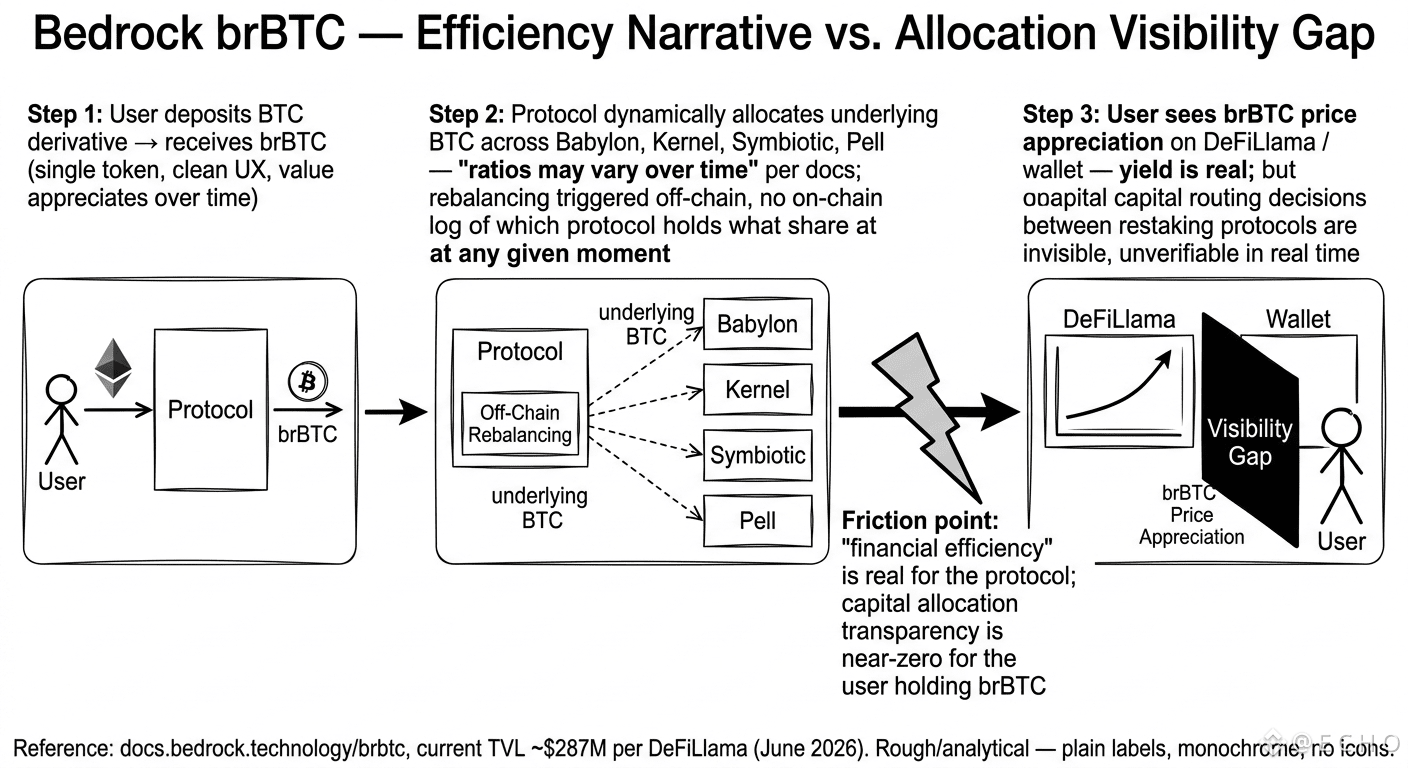
でも、brBTCのアロケーションメカニズムを引っ張り始めたら、ドキュメントには担保が「複数のリステーキングプロトコルに動的に割り当てられる」と書いてあって、「割り当て比率は時間とともに変わる可能性がある」とも。洗練されているように聞こえる。でも待って — その資本がプロトコル間でどう動くのかのオンチェーン記録はどこ?簡単に追跡できるものはない。リバランスはプロトコルレベルで、オパークに行われる。ユーザーが見るのは価値が上がっている単一のトークンだけ。実際に何が起こっているか、どのリステーキングプロトコルがあなたのBTCをどれだけ保持しているのか、そしてそれがいつ変わるのか — それはオンチェーンで明確な形では見えない。
「金融効率」がここで実際に何を意味するのかずっと考えてた。プロトコルにとっては本当に効率的 — 一つのプールされたポジション、自動再配分、集約された利回り。brBTCを持っているユーザーにとっては、効率はリアルだけど、可視性はほぼゼロ。ルーティングを信頼していて、検証はしていない。
うーん。まあ、この規模ではそれでいいのかも。でも、どのTVLでアロケーションロジックの不透明性が機能からリスクに変わるんだ?
@Bedrock タスクの初めでちょっとつまずいちゃった。金融効率の枠組みは一見説得力がある — アイダルBTCがバビロン、カーネル、シンボティック、ペルに一気にルーティングされて、利回りが複利で増えていく、$BR がガバナンスレイヤーをまとめている。今、DeFiLlamaで#Bedrock のTVLは約287Mドルだ。リアルなキャピタル、リアルな数字。
でも、brBTCのアロケーションメカニズムを引っ張り始めたら、ドキュメントには担保が「複数のリステーキングプロトコルに動的に割り当てられる」と書いてあって、「割り当て比率は時間とともに変わる可能性がある」とも。洗練されているように聞こえる。でも待って — その資本がプロトコル間でどう動くのかのオンチェーン記録はどこ?簡単に追跡できるものはない。リバランスはプロトコルレベルで、オパークに行われる。ユーザーが見るのは価値が上がっている単一のトークンだけ。実際に何が起こっているか、どのリステーキングプロトコルがあなたのBTCをどれだけ保持しているのか、そしてそれがいつ変わるのか — それはオンチェーンで明確な形では見えない。
「金融効率」がここで実際に何を意味するのかずっと考えてた。プロトコルにとっては本当に効率的 — 一つのプールされたポジション、自動再配分、集約された利回り。brBTCを持っているユーザーにとっては、効率はリアルだけど、可視性はほぼゼロ。ルーティングを信頼していて、検証はしていない。
うーん。まあ、この規模ではそれでいいのかも。でも、どのTVLでアロケーションロジックの不透明性が機能からリスクに変わるんだ?
でも、brBTCのアロケーションメカニズムを引っ張り始めたら、ドキュメントには担保が「複数のリステーキングプロトコルに動的に割り当てられる」と書いてあって、「割り当て比率は時間とともに変わる可能性がある」とも。洗練されているように聞こえる。でも待って — その資本がプロトコル間でどう動くのかのオンチェーン記録はどこ?簡単に追跡できるものはない。リバランスはプロトコルレベルで、オパークに行われる。ユーザーが見るのは価値が上がっている単一のトークンだけ。実際に何が起こっているか、どのリステーキングプロトコルがあなたのBTCをどれだけ保持しているのか、そしてそれがいつ変わるのか — それはオンチェーンで明確な形では見えない。
「金融効率」がここで実際に何を意味するのかずっと考えてた。プロトコルにとっては本当に効率的 — 一つのプールされたポジション、自動再配分、集約された利回り。brBTCを持っているユーザーにとっては、効率はリアルだけど、可視性はほぼゼロ。ルーティングを信頼していて、検証はしていない。
うーん。まあ、この規模ではそれでいいのかも。でも、どのTVLでアロケーションロジックの不透明性が機能からリスクに変わるんだ?
9
4
253
·
--
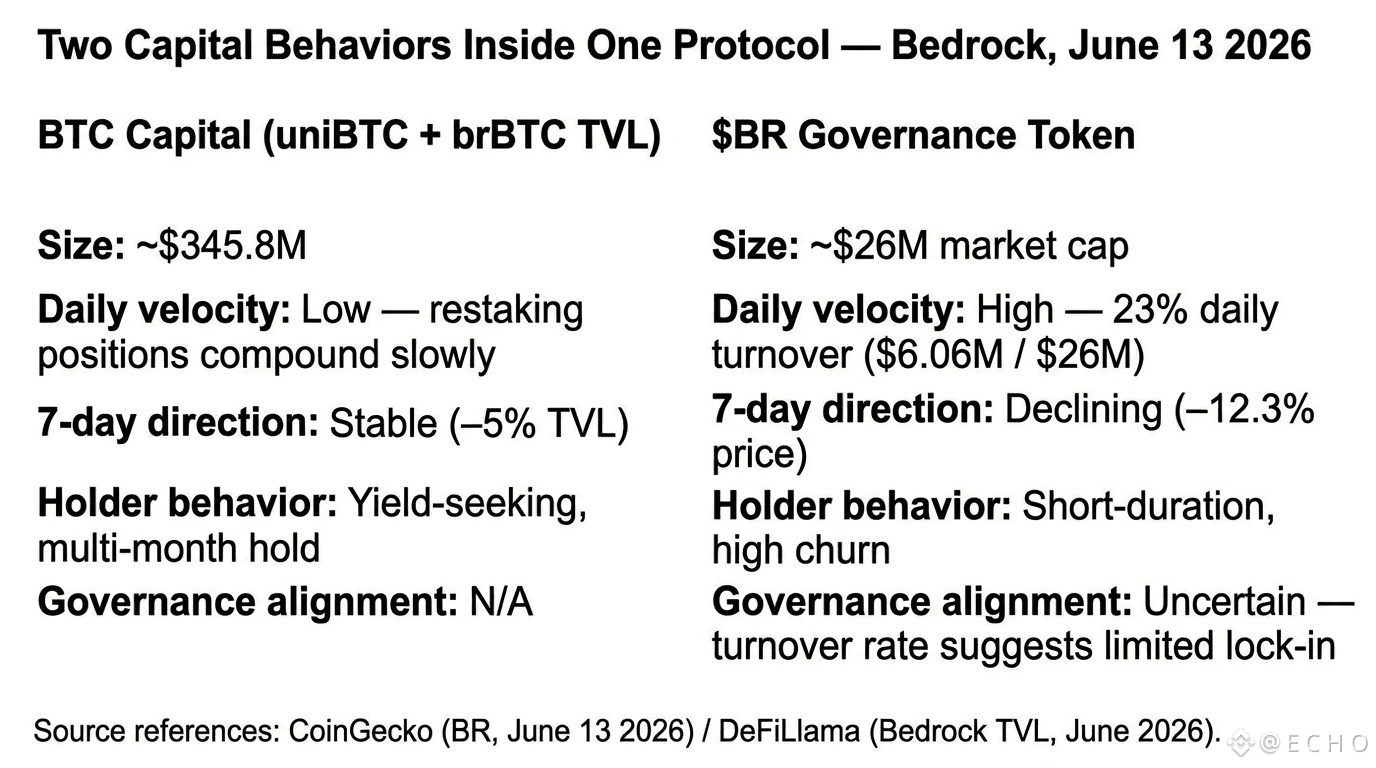
作業中に数字をチェックした。BedrockのプロトコルのTVLは、uniBTCとbrBTCで$345.8Mに達している。@Bedrock と$BR は、ガバナンストークンがその価値をキャッチするように設計されている。#Bedrock 。書類上は整然としている。
それから、特にBR市場を見てみた。時価総額は約$26M。日々のボリュームは、現在のCoinGeckoによると$6.06Mだ。これは約23%の日次回転率だ。$345M以上の管理されたBTC資本に座っているガバナンストークンにしては…忍耐とは見えない。速いお金が循環しているように見える。
実際の資本市場の状況は、一つのプロトコル内での2つの異なる行動だ。BTCは忍耐強い — Babylonのリステーキングポジションは徐々に複利を得て、Kernel、SatLayer、Pell、Mellow、Symbioticのバックグラウンドで静かにシフトしている。一方で、$BR は23%のデイリーベロシティで回転しており、今週は12.3%下落している。預金者とトークントレーダーは全く異なるタイムラインで動いている。brBTCは、リアルタイムの配分開示なしに6つのプロトコル間で動的にルーティングされている — 誰もが公にフレームするよりも、管理された利回り製品に近い。
BTCは残る。$BR を十分に長く保持して投票することができるのは誰か…それが私がまだ考え続けている部分だ。
作業中に数字をチェックした。BedrockのプロトコルのTVLは、uniBTCとbrBTCで$345.8Mに達している。@Bedrock と$BR は、ガバナンストークンがその価値をキャッチするように設計されている。#Bedrock 。書類上は整然としている。
それから、特にBR市場を見てみた。時価総額は約$26M。日々のボリュームは、現在のCoinGeckoによると$6.06Mだ。これは約23%の日次回転率だ。$345M以上の管理されたBTC資本に座っているガバナンストークンにしては…忍耐とは見えない。速いお金が循環しているように見える。
実際の資本市場の状況は、一つのプロトコル内での2つの異なる行動だ。BTCは忍耐強い — Babylonのリステーキングポジションは徐々に複利を得て、Kernel、SatLayer、Pell、Mellow、Symbioticのバックグラウンドで静かにシフトしている。一方で、$BR は23%のデイリーベロシティで回転しており、今週は12.3%下落している。預金者とトークントレーダーは全く異なるタイムラインで動いている。brBTCは、リアルタイムの配分開示なしに6つのプロトコル間で動的にルーティングされている — 誰もが公にフレームするよりも、管理された利回り製品に近い。
BTCは残る。$BR を十分に長く保持して投票することができるのは誰か…それが私がまだ考え続けている部分だ。
それから、特にBR市場を見てみた。時価総額は約$26M。日々のボリュームは、現在のCoinGeckoによると$6.06Mだ。これは約23%の日次回転率だ。$345M以上の管理されたBTC資本に座っているガバナンストークンにしては…忍耐とは見えない。速いお金が循環しているように見える。
実際の資本市場の状況は、一つのプロトコル内での2つの異なる行動だ。BTCは忍耐強い — Babylonのリステーキングポジションは徐々に複利を得て、Kernel、SatLayer、Pell、Mellow、Symbioticのバックグラウンドで静かにシフトしている。一方で、$BR は23%のデイリーベロシティで回転しており、今週は12.3%下落している。預金者とトークントレーダーは全く異なるタイムラインで動いている。brBTCは、リアルタイムの配分開示なしに6つのプロトコル間で動的にルーティングされている — 誰もが公にフレームするよりも、管理された利回り製品に近い。
BTCは残る。$BR を十分に長く保持して投票することができるのは誰か…それが私がまだ考え続けている部分だ。
13
8
193
·
--
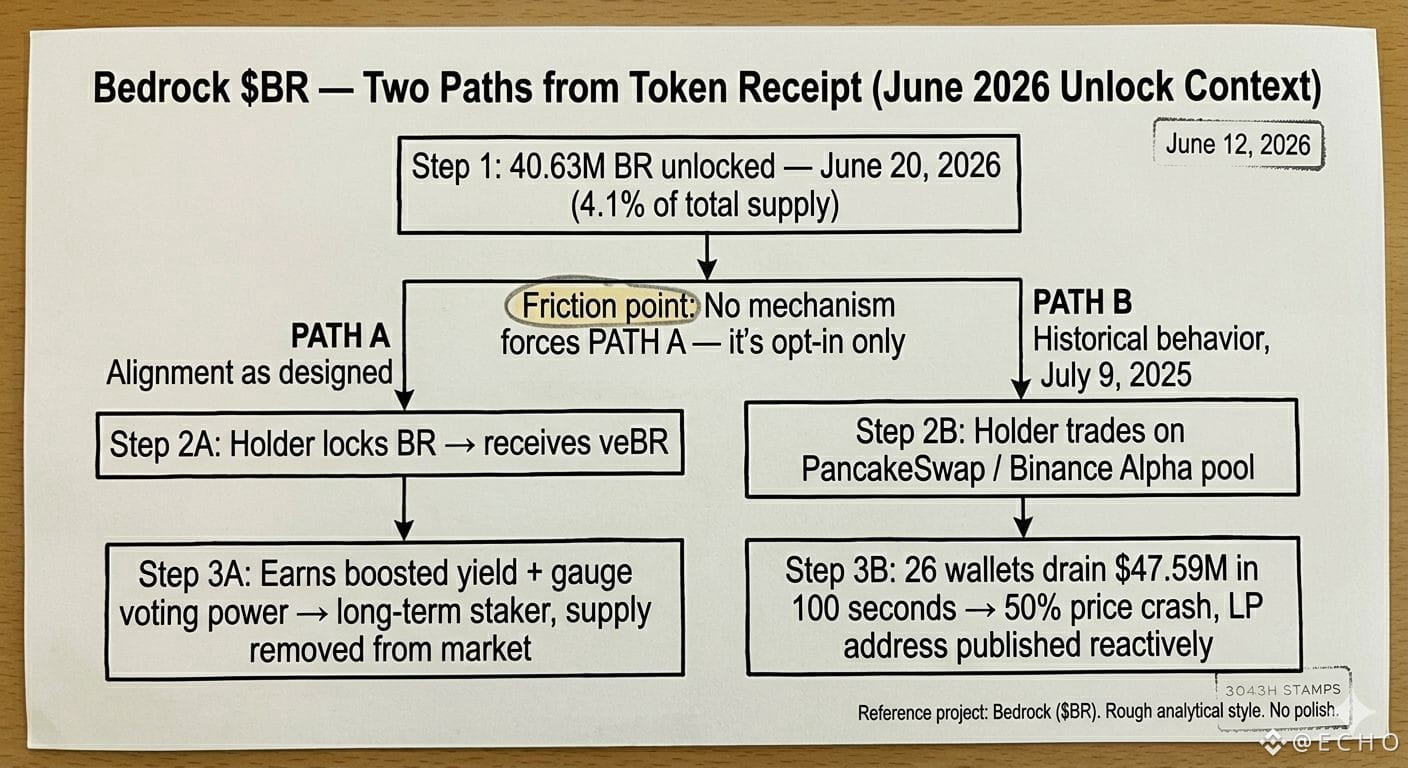
#Bedrock のアライメントモデルに関するCreatorPadのタスクを終えたんだけど、途中で引っかかったのはほぼ1年前の数字。まだデータに残ってて、解決されてないんだ。
2025年7月9日:26のウォレットがBinance Alphaプールから47.59Mドルを100秒以内に引き出した。$BR が50%下落。@Bedrock は公式のPancakeSwap LPアドレス(0x5f6f…)を公開し、流動性の安定を誓った。これが透明性の動きだ。いいけど、対照的なのは、プロトコルが数週間かけてveBRアライメントのストーリーを構築したのに、あの瞬間の主要なオンチェーンの動きは26のアドレスが急速に退出していたこと。つまり、26のコミットしたステイカーが保持していたわけじゃない。
そのギャップが本当のインサイトだ。アライメントメカニズムは存在する—PoSL、veBRの排出、季節的リセット、プロトコルの収益買い戻し。紙の上では筋が通っている。しかし、価格を動かした参加者たちはそのレイヤーに関与していなかった。彼らはプロトコルの信念を表現するのではなく、取引インセンティブキャンペーンを行っていた。veBRモデルはそれにオプトインした人たちだけをアライメントする。その他の人たちはただ…サイクルのためにいるだけ。
このタスクを終えた後、正直なところ、批判的というよりも好奇心が強くなった。デザインは本物だ。でも、6月20日のロック解除で今週さらに40.63M BRが流通に出るけど、その新しい受取人のうち何人がすぐにveBRロックアップに行くのか…それともすぐにPancakeSwapに行くのか、ずっと気になってる。
#Bedrock のアライメントモデルに関するCreatorPadのタスクを終えたんだけど、途中で引っかかったのはほぼ1年前の数字。まだデータに残ってて、解決されてないんだ。
2025年7月9日:26のウォレットがBinance Alphaプールから47.59Mドルを100秒以内に引き出した。$BR が50%下落。@Bedrock は公式のPancakeSwap LPアドレス(0x5f6f…)を公開し、流動性の安定を誓った。これが透明性の動きだ。いいけど、対照的なのは、プロトコルが数週間かけてveBRアライメントのストーリーを構築したのに、あの瞬間の主要なオンチェーンの動きは26のアドレスが急速に退出していたこと。つまり、26のコミットしたステイカーが保持していたわけじゃない。
そのギャップが本当のインサイトだ。アライメントメカニズムは存在する—PoSL、veBRの排出、季節的リセット、プロトコルの収益買い戻し。紙の上では筋が通っている。しかし、価格を動かした参加者たちはそのレイヤーに関与していなかった。彼らはプロトコルの信念を表現するのではなく、取引インセンティブキャンペーンを行っていた。veBRモデルはそれにオプトインした人たちだけをアライメントする。その他の人たちはただ…サイクルのためにいるだけ。
このタスクを終えた後、正直なところ、批判的というよりも好奇心が強くなった。デザインは本物だ。でも、6月20日のロック解除で今週さらに40.63M BRが流通に出るけど、その新しい受取人のうち何人がすぐにveBRロックアップに行くのか…それともすぐにPancakeSwapに行くのか、ずっと気になってる。
2025年7月9日:26のウォレットがBinance Alphaプールから47.59Mドルを100秒以内に引き出した。$BR が50%下落。@Bedrock は公式のPancakeSwap LPアドレス(0x5f6f…)を公開し、流動性の安定を誓った。これが透明性の動きだ。いいけど、対照的なのは、プロトコルが数週間かけてveBRアライメントのストーリーを構築したのに、あの瞬間の主要なオンチェーンの動きは26のアドレスが急速に退出していたこと。つまり、26のコミットしたステイカーが保持していたわけじゃない。
そのギャップが本当のインサイトだ。アライメントメカニズムは存在する—PoSL、veBRの排出、季節的リセット、プロトコルの収益買い戻し。紙の上では筋が通っている。しかし、価格を動かした参加者たちはそのレイヤーに関与していなかった。彼らはプロトコルの信念を表現するのではなく、取引インセンティブキャンペーンを行っていた。veBRモデルはそれにオプトインした人たちだけをアライメントする。その他の人たちはただ…サイクルのためにいるだけ。
このタスクを終えた後、正直なところ、批判的というよりも好奇心が強くなった。デザインは本物だ。でも、6月20日のロック解除で今週さらに40.63M BRが流通に出るけど、その新しい受取人のうち何人がすぐにveBRロックアップに行くのか…それともすぐにPancakeSwapに行くのか、ずっと気になってる。
8
5
196
·
--
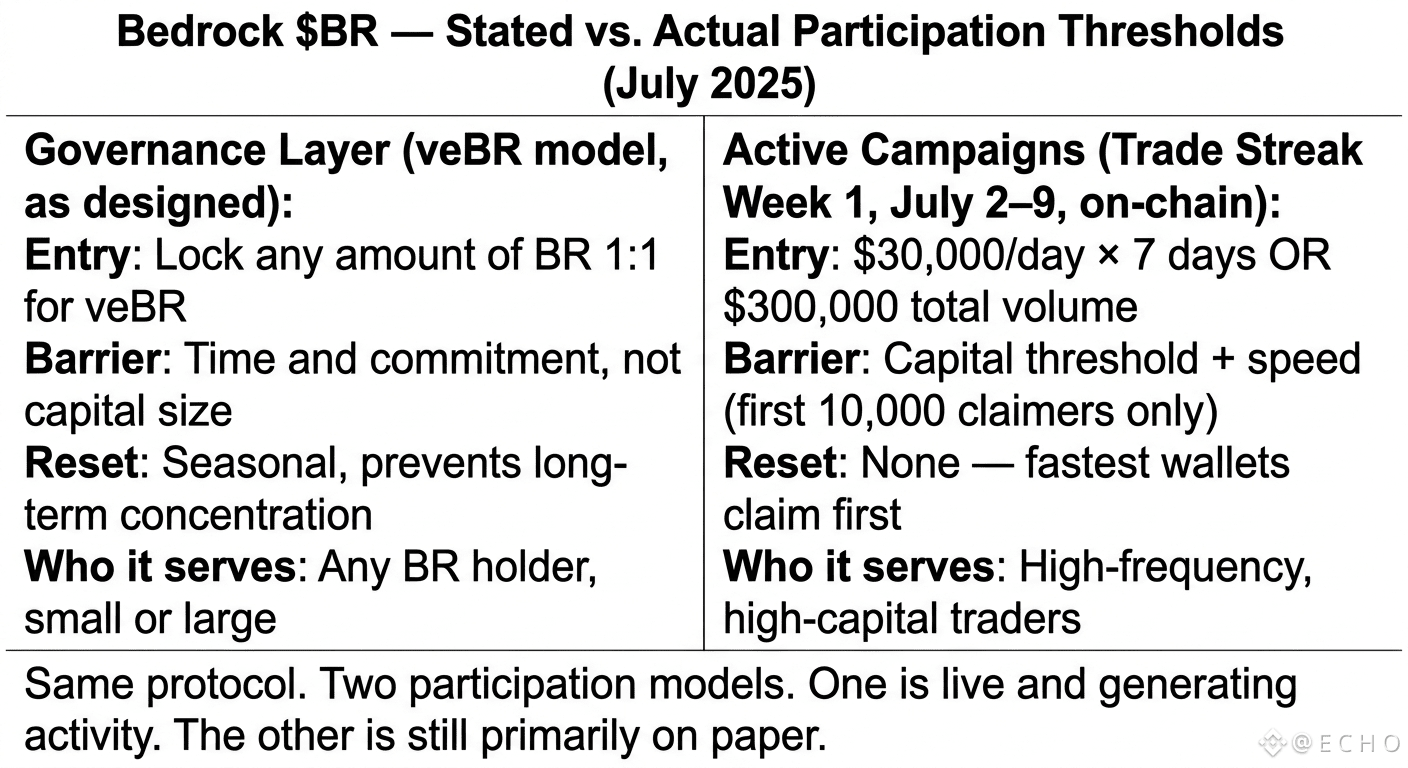
クリエイターパッドのタスクで、ベッドロックが参加モデルを再定義する理由について半分まで進んでいたとき、BRトレードストリークの構造が急に私を止めてしまった。
@Bedrock $BR #Bedrock フレーム参加は広範でアクセス可能だと考えられています — veBRガバナンス、ゲージ投票、コミュニティの舵取りプロトコルの方向性。それが約束です。しかし、トレードストリークウィーク1(7月2日〜9日)で実際に参加と定義されたものを見てみると:7日間連続で1日あたり$30,000、または合計$300,000のBR/USDTボリュームが必要だということです。最初の10,000人の適格クレイマーが$100Kプールを分け合います。速い者だけが入れます。
ちょっと待って — それは参加モデルではありません。それはコミュニティエンゲージメントを装った資本とスピードのフィルターです。以前のトレーディングカーニバルでは、60,000のウォレットに合計$180,000が報酬として与えられました。これは広範に聞こえますが、同じキャンペーンではトップ50のトレーダーがそれぞれ平均$4.45百万を持っていることを考えると、その実態が見えてきます。じゃあ、実際にここで参加を定義しているのは誰なのでしょうか?
私はこれに戻ってきます:veBRガバナンスレイヤーは、本当に広く、忍耐強いホルダーのために設計されています。ロック期間は投票力を構築します。季節ごとのリセットは集中を防ぎます。紙の上では、これはほとんどのものよりも平等主義的です。しかし、今実行されているキャンペーン — 実際のオンチェーン活動を生成しているもの — は、ほとんどのウォレットが持っていない資本アクセスを静かに必要としています。
うーん。ベッドロックが構築している参加モデルと、ベッドロックが実際に運営している参加モデルは、まだ収束を待っている2つの別々のものかもしれません…
クリエイターパッドのタスクで、ベッドロックが参加モデルを再定義する理由について半分まで進んでいたとき、BRトレードストリークの構造が急に私を止めてしまった。
@Bedrock $BR #Bedrock フレーム参加は広範でアクセス可能だと考えられています — veBRガバナンス、ゲージ投票、コミュニティの舵取りプロトコルの方向性。それが約束です。しかし、トレードストリークウィーク1(7月2日〜9日)で実際に参加と定義されたものを見てみると:7日間連続で1日あたり$30,000、または合計$300,000のBR/USDTボリュームが必要だということです。最初の10,000人の適格クレイマーが$100Kプールを分け合います。速い者だけが入れます。
ちょっと待って — それは参加モデルではありません。それはコミュニティエンゲージメントを装った資本とスピードのフィルターです。以前のトレーディングカーニバルでは、60,000のウォレットに合計$180,000が報酬として与えられました。これは広範に聞こえますが、同じキャンペーンではトップ50のトレーダーがそれぞれ平均$4.45百万を持っていることを考えると、その実態が見えてきます。じゃあ、実際にここで参加を定義しているのは誰なのでしょうか?
私はこれに戻ってきます:veBRガバナンスレイヤーは、本当に広く、忍耐強いホルダーのために設計されています。ロック期間は投票力を構築します。季節ごとのリセットは集中を防ぎます。紙の上では、これはほとんどのものよりも平等主義的です。しかし、今実行されているキャンペーン — 実際のオンチェーン活動を生成しているもの — は、ほとんどのウォレットが持っていない資本アクセスを静かに必要としています。
うーん。ベッドロックが構築している参加モデルと、ベッドロックが実際に運営している参加モデルは、まだ収束を待っている2つの別々のものかもしれません…
@Bedrock $BR #Bedrock フレーム参加は広範でアクセス可能だと考えられています — veBRガバナンス、ゲージ投票、コミュニティの舵取りプロトコルの方向性。それが約束です。しかし、トレードストリークウィーク1(7月2日〜9日)で実際に参加と定義されたものを見てみると:7日間連続で1日あたり$30,000、または合計$300,000のBR/USDTボリュームが必要だということです。最初の10,000人の適格クレイマーが$100Kプールを分け合います。速い者だけが入れます。
ちょっと待って — それは参加モデルではありません。それはコミュニティエンゲージメントを装った資本とスピードのフィルターです。以前のトレーディングカーニバルでは、60,000のウォレットに合計$180,000が報酬として与えられました。これは広範に聞こえますが、同じキャンペーンではトップ50のトレーダーがそれぞれ平均$4.45百万を持っていることを考えると、その実態が見えてきます。じゃあ、実際にここで参加を定義しているのは誰なのでしょうか?
私はこれに戻ってきます:veBRガバナンスレイヤーは、本当に広く、忍耐強いホルダーのために設計されています。ロック期間は投票力を構築します。季節ごとのリセットは集中を防ぎます。紙の上では、これはほとんどのものよりも平等主義的です。しかし、今実行されているキャンペーン — 実際のオンチェーン活動を生成しているもの — は、ほとんどのウォレットが持っていない資本アクセスを静かに必要としています。
うーん。ベッドロックが構築している参加モデルと、ベッドロックが実際に運営している参加モデルは、まだ収束を待っている2つの別々のものかもしれません…
9
6
222
·
--
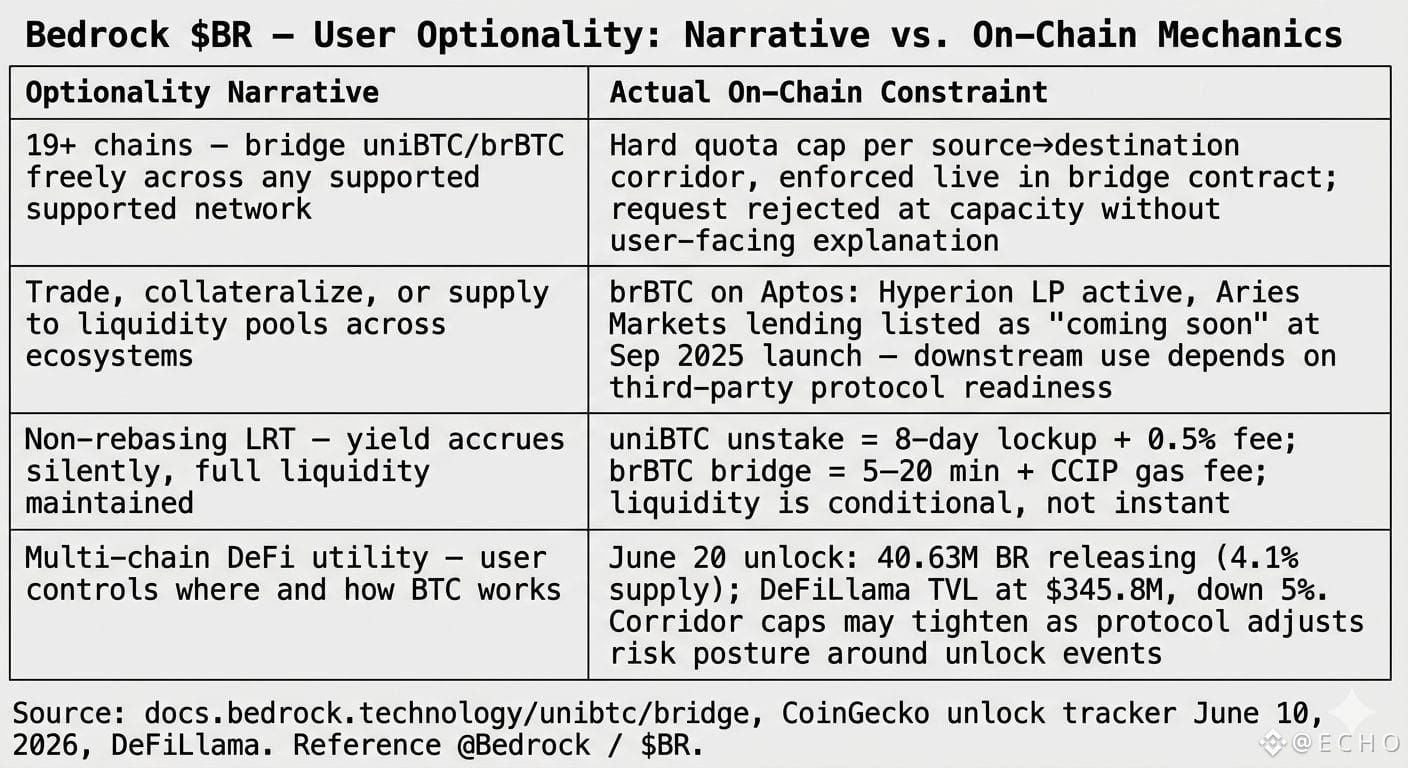
BedrockでCreatorPadのタスクをやっていて、ユーザーのオプショナリティについて考えていたんだけど、気になっていたのはチェーンの数じゃなくて、その下にある細かい印刷物だった。
@Bedrock $BR uniBTCとbrBTCは、Chainlink CCIPを通じて19以上のネットワーク間で本当にブリッジ可能なんだ。その部分は本物だよ。6月20日のトークンアンロックが10日後に予定されていて、CoinGeckoのトラッカーによると4063万BRがドロップするってことで、普段よりもブリッジのドキュメントをじっくり見直すことになった。そしてそこで気づいたんだ:すべての回廊には、契約レベルでリアルタイムに強制されるハードクォータキャップがある。ルートの利用可能なキャパシティが満杯の場合、ブリッジリクエストは静かに拒否される。エラーの説明はなし。単なる拒否だ。#Bedrock
これは厳密な批判ではないよ。セキュリティのためのデザイン選択で、合理的なものだ。ただ、実際の「オプショナリティ」が何を意味するかは変わるね。ナarrativeは「19チェーン、自由に移動」というものだが、現実は「19チェーン、需要とプロトコルのセキュリティ姿勢に基づいて変動するキャパシティウィンドウ内で自由に移動」ってこと。ほとんどのユーザーは通常の条件下ではそのキャップに達することはないだろう。しかし、オプショナリティは無条件ではない。
このことを見出しと比べて考えていたんだけど…うーん。「どこにでも行ける」と「レーンが満杯でなければどこにでも行ける」の違いがある。どちらも技術的には真実かもしれない。
このブリッジキャップモデルは、実際にオプショナリティをスケールで制約することなく意味のあるセキュリティを追加するのか、それともTVLが再び10億ドルに近づく瞬間に静かに制約になってしまうのか?
BedrockでCreatorPadのタスクをやっていて、ユーザーのオプショナリティについて考えていたんだけど、気になっていたのはチェーンの数じゃなくて、その下にある細かい印刷物だった。
@Bedrock $BR uniBTCとbrBTCは、Chainlink CCIPを通じて19以上のネットワーク間で本当にブリッジ可能なんだ。その部分は本物だよ。6月20日のトークンアンロックが10日後に予定されていて、CoinGeckoのトラッカーによると4063万BRがドロップするってことで、普段よりもブリッジのドキュメントをじっくり見直すことになった。そしてそこで気づいたんだ:すべての回廊には、契約レベルでリアルタイムに強制されるハードクォータキャップがある。ルートの利用可能なキャパシティが満杯の場合、ブリッジリクエストは静かに拒否される。エラーの説明はなし。単なる拒否だ。#Bedrock
これは厳密な批判ではないよ。セキュリティのためのデザイン選択で、合理的なものだ。ただ、実際の「オプショナリティ」が何を意味するかは変わるね。ナarrativeは「19チェーン、自由に移動」というものだが、現実は「19チェーン、需要とプロトコルのセキュリティ姿勢に基づいて変動するキャパシティウィンドウ内で自由に移動」ってこと。ほとんどのユーザーは通常の条件下ではそのキャップに達することはないだろう。しかし、オプショナリティは無条件ではない。
このことを見出しと比べて考えていたんだけど…うーん。「どこにでも行ける」と「レーンが満杯でなければどこにでも行ける」の違いがある。どちらも技術的には真実かもしれない。
このブリッジキャップモデルは、実際にオプショナリティをスケールで制約することなく意味のあるセキュリティを追加するのか、それともTVLが再び10億ドルに近づく瞬間に静かに制約になってしまうのか?
@Bedrock $BR uniBTCとbrBTCは、Chainlink CCIPを通じて19以上のネットワーク間で本当にブリッジ可能なんだ。その部分は本物だよ。6月20日のトークンアンロックが10日後に予定されていて、CoinGeckoのトラッカーによると4063万BRがドロップするってことで、普段よりもブリッジのドキュメントをじっくり見直すことになった。そしてそこで気づいたんだ:すべての回廊には、契約レベルでリアルタイムに強制されるハードクォータキャップがある。ルートの利用可能なキャパシティが満杯の場合、ブリッジリクエストは静かに拒否される。エラーの説明はなし。単なる拒否だ。#Bedrock
これは厳密な批判ではないよ。セキュリティのためのデザイン選択で、合理的なものだ。ただ、実際の「オプショナリティ」が何を意味するかは変わるね。ナarrativeは「19チェーン、自由に移動」というものだが、現実は「19チェーン、需要とプロトコルのセキュリティ姿勢に基づいて変動するキャパシティウィンドウ内で自由に移動」ってこと。ほとんどのユーザーは通常の条件下ではそのキャップに達することはないだろう。しかし、オプショナリティは無条件ではない。
このことを見出しと比べて考えていたんだけど…うーん。「どこにでも行ける」と「レーンが満杯でなければどこにでも行ける」の違いがある。どちらも技術的には真実かもしれない。
このブリッジキャップモデルは、実際にオプショナリティをスケールで制約することなく意味のあるセキュリティを追加するのか、それともTVLが再び10億ドルに近づく瞬間に静かに制約になってしまうのか?
2
128
·
--
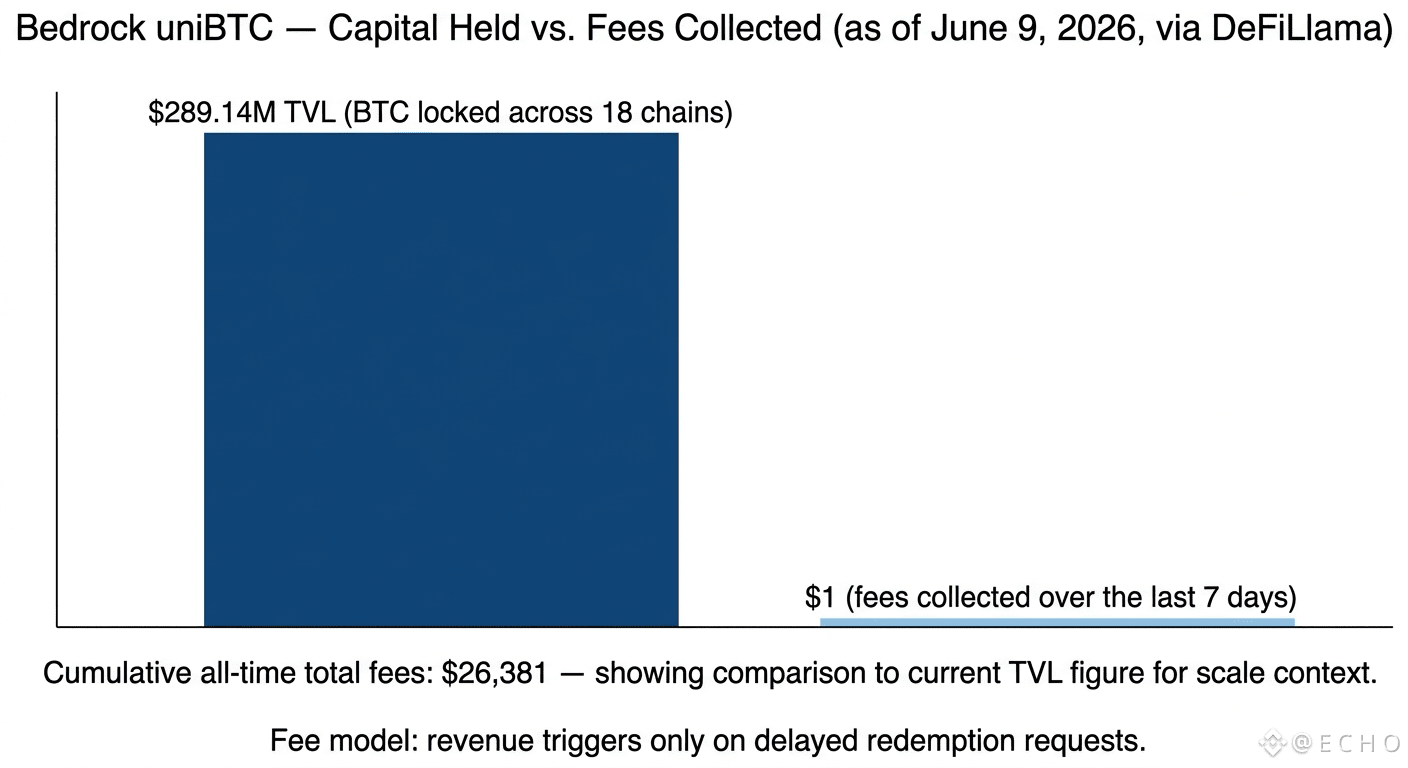
今、@Bedrock uniBTCのためにDeFiLlamaのページをチェックした。18のチェーンで$289.14Mがロックされている。$BR 。#Bedrock 。それから7日間の手数料ラインを見たら—$1だった。一ドル。ほぼ三億ドルのステーキングされたBTCに対して。
それはバグではない。Bedrockの収益モデルは完全に償還手数料に依存している—プロトコルはユーザーが遅延引き出しリクエストを作成したときのみ収益を上げる。BTCが静止していると、何も蓄積されない。そして今、BTCはしっかりと静止している。ビットコインネイティブで$104M、イーサリアムで$80M、マーリンで$63.9M、そしてBOB、BSC、Mantle、Berachain、他の数十のチェーンに散在する小銭。全てロックされていて、ほとんど動いていない。ローンチ以来のプロトコルの累積収益は$26,381。合計。それは今、DeFiLlamaアダプターで確認可能だ。
ちょっと待って—それは実際にそうかもしれない。もしBTCが入ってきて出て行かなければ、プロトコルはベースレイヤーのインフラとして機能している。移動に対して手数料を徴収しない場合、手数料を集めることはできない。本当の疑問は、ゼロ手数料で静止していることが意図的なポジショニングなのか—ルーティングレイヤーをまず設定し、後で価値を捕捉するのか、あるいは再訪されることのないモデルなのか。
$289Mが固着していて、先週は$1を取った。うーん。それが静かに基盤となりつつあるものの行動なのか、メーターの前にパイプを作ったプロトコルなのか、まだ決めかねている。
今、@Bedrock uniBTCのためにDeFiLlamaのページをチェックした。18のチェーンで$289.14Mがロックされている。$BR 。#Bedrock 。それから7日間の手数料ラインを見たら—$1だった。一ドル。ほぼ三億ドルのステーキングされたBTCに対して。
それはバグではない。Bedrockの収益モデルは完全に償還手数料に依存している—プロトコルはユーザーが遅延引き出しリクエストを作成したときのみ収益を上げる。BTCが静止していると、何も蓄積されない。そして今、BTCはしっかりと静止している。ビットコインネイティブで$104M、イーサリアムで$80M、マーリンで$63.9M、そしてBOB、BSC、Mantle、Berachain、他の数十のチェーンに散在する小銭。全てロックされていて、ほとんど動いていない。ローンチ以来のプロトコルの累積収益は$26,381。合計。それは今、DeFiLlamaアダプターで確認可能だ。
ちょっと待って—それは実際にそうかもしれない。もしBTCが入ってきて出て行かなければ、プロトコルはベースレイヤーのインフラとして機能している。移動に対して手数料を徴収しない場合、手数料を集めることはできない。本当の疑問は、ゼロ手数料で静止していることが意図的なポジショニングなのか—ルーティングレイヤーをまず設定し、後で価値を捕捉するのか、あるいは再訪されることのないモデルなのか。
$289Mが固着していて、先週は$1を取った。うーん。それが静かに基盤となりつつあるものの行動なのか、メーターの前にパイプを作ったプロトコルなのか、まだ決めかねている。
それはバグではない。Bedrockの収益モデルは完全に償還手数料に依存している—プロトコルはユーザーが遅延引き出しリクエストを作成したときのみ収益を上げる。BTCが静止していると、何も蓄積されない。そして今、BTCはしっかりと静止している。ビットコインネイティブで$104M、イーサリアムで$80M、マーリンで$63.9M、そしてBOB、BSC、Mantle、Berachain、他の数十のチェーンに散在する小銭。全てロックされていて、ほとんど動いていない。ローンチ以来のプロトコルの累積収益は$26,381。合計。それは今、DeFiLlamaアダプターで確認可能だ。
ちょっと待って—それは実際にそうかもしれない。もしBTCが入ってきて出て行かなければ、プロトコルはベースレイヤーのインフラとして機能している。移動に対して手数料を徴収しない場合、手数料を集めることはできない。本当の疑問は、ゼロ手数料で静止していることが意図的なポジショニングなのか—ルーティングレイヤーをまず設定し、後で価値を捕捉するのか、あるいは再訪されることのないモデルなのか。
$289Mが固着していて、先週は$1を取った。うーん。それが静かに基盤となりつつあるものの行動なのか、メーターの前にパイプを作ったプロトコルなのか、まだ決めかねている。
6
2
212
ログインして、さらにコンテンツを読む
厳選トピックで世界の暗号資産トレーダーの仲間入り
⚡️ 暗号資産に関する最新かつ有益な情報が見つかります。
💬 世界最大の暗号資産取引所から信頼されています。
👍 認証を受けたクリエイターから、有益なインサイトを得られます。
メール / 電話番号